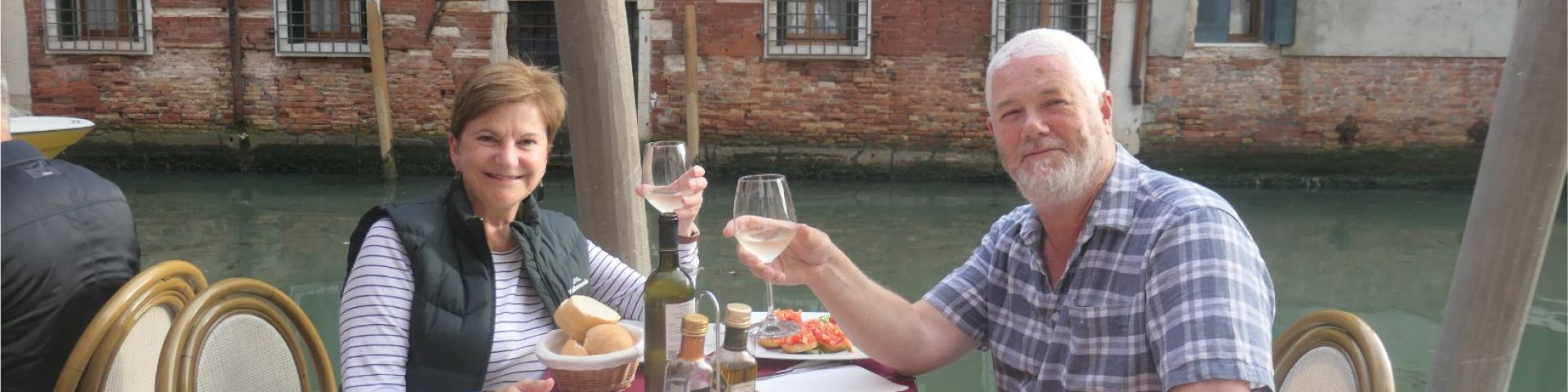
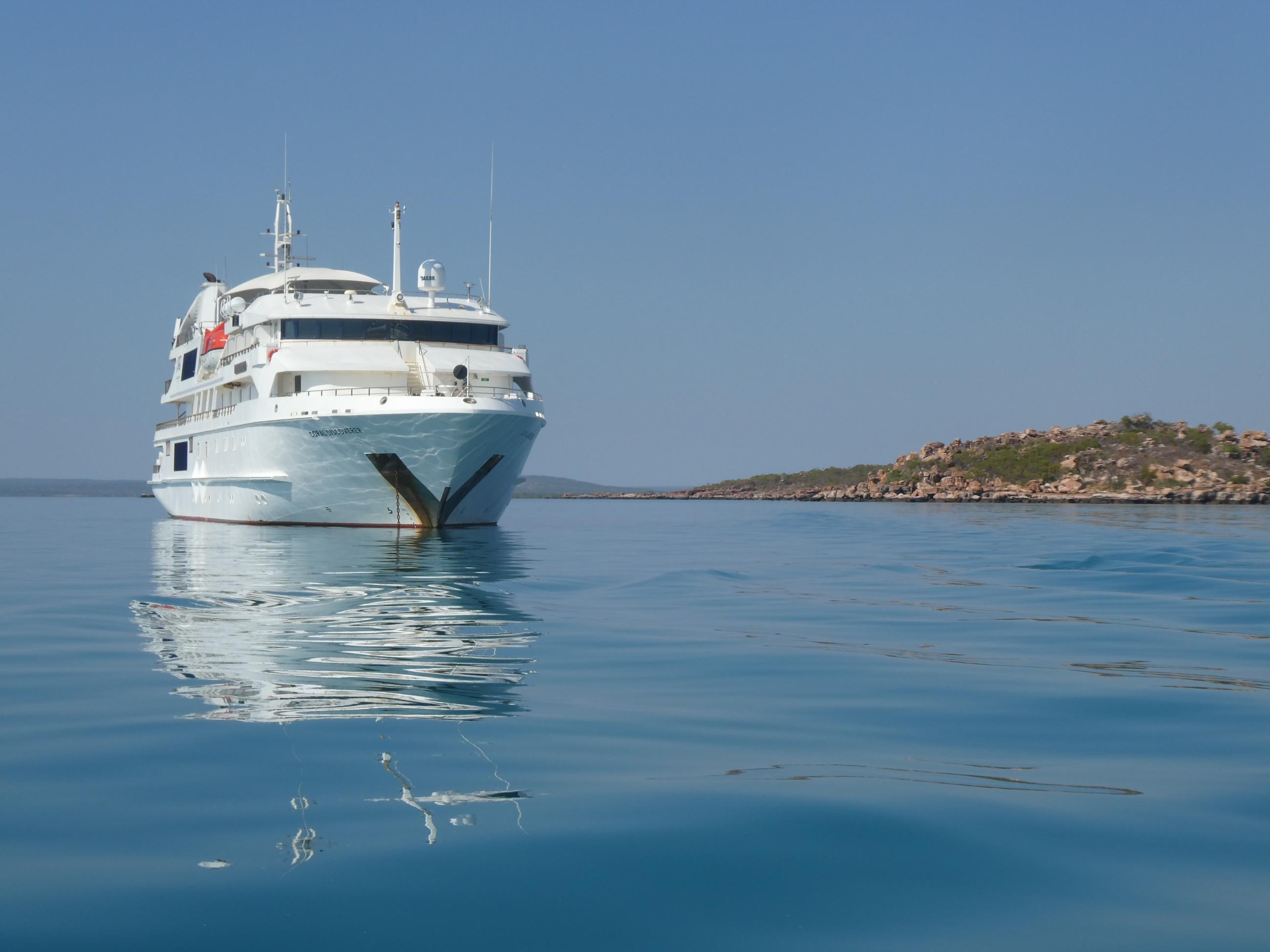
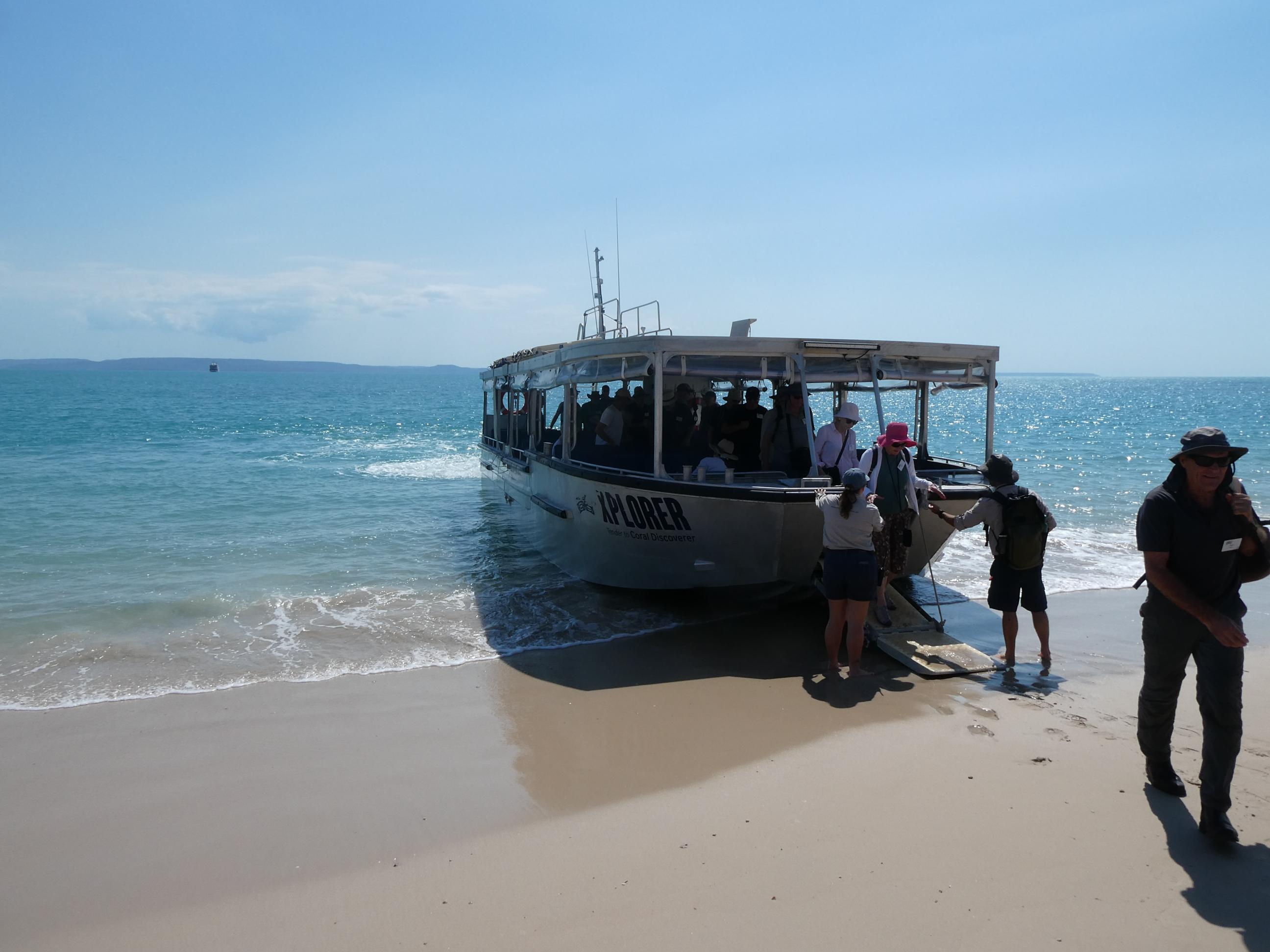
Last night at dinner, we got the welcome news that marine authorities had given their approval for our ship to continue its voyage to Broome. They acknowledged that our oil leak was negligible and unlikely to cause any significant pollution. The ship will have to be put into dry dock in December for the damaged oil seal to be repaired. After a ‘booze cruise’ around Cape Rulhieres in the Xplorer to watch the sun go down with the help of a few drinks, we pulled up anchor and began moving again.
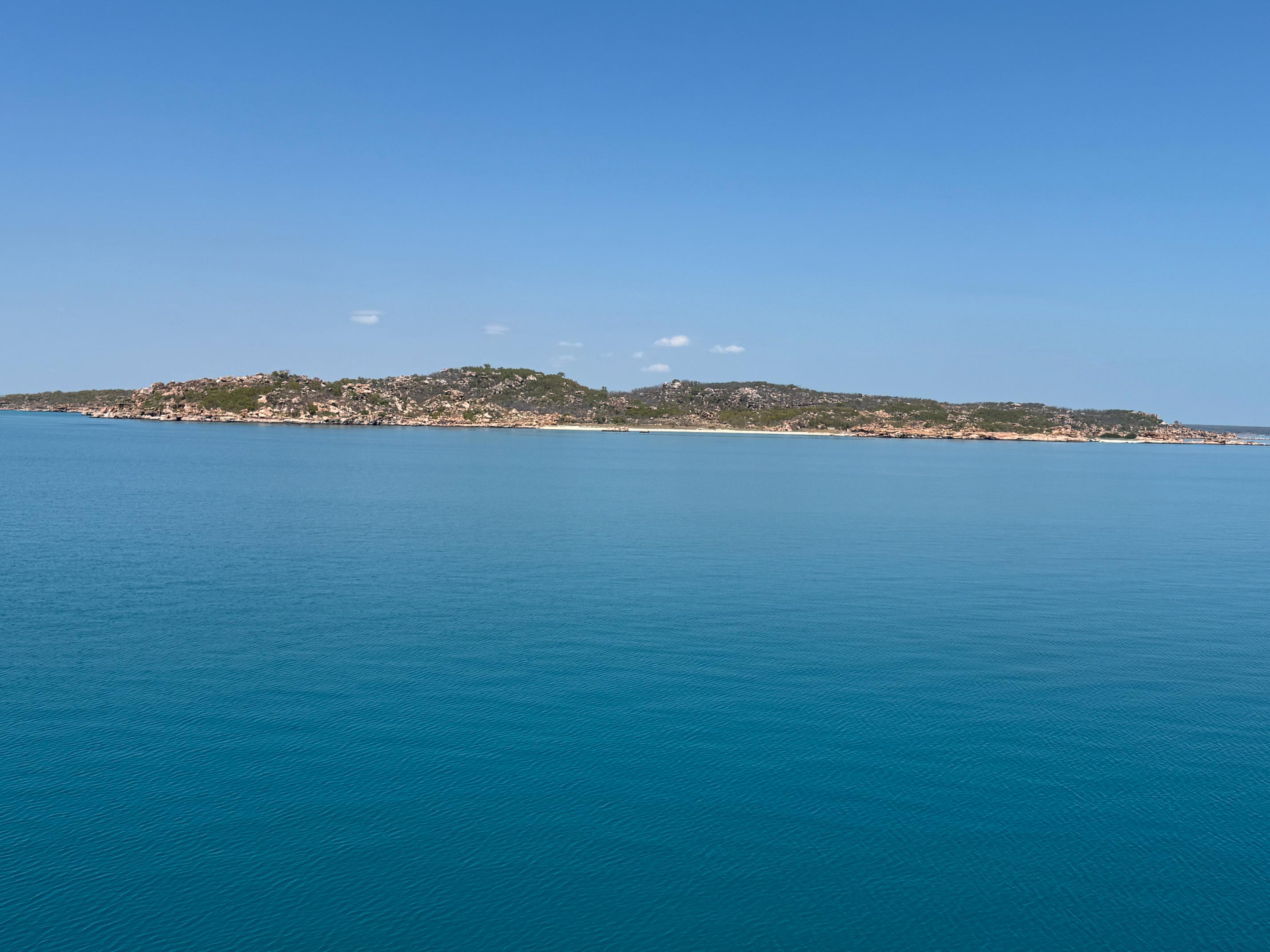
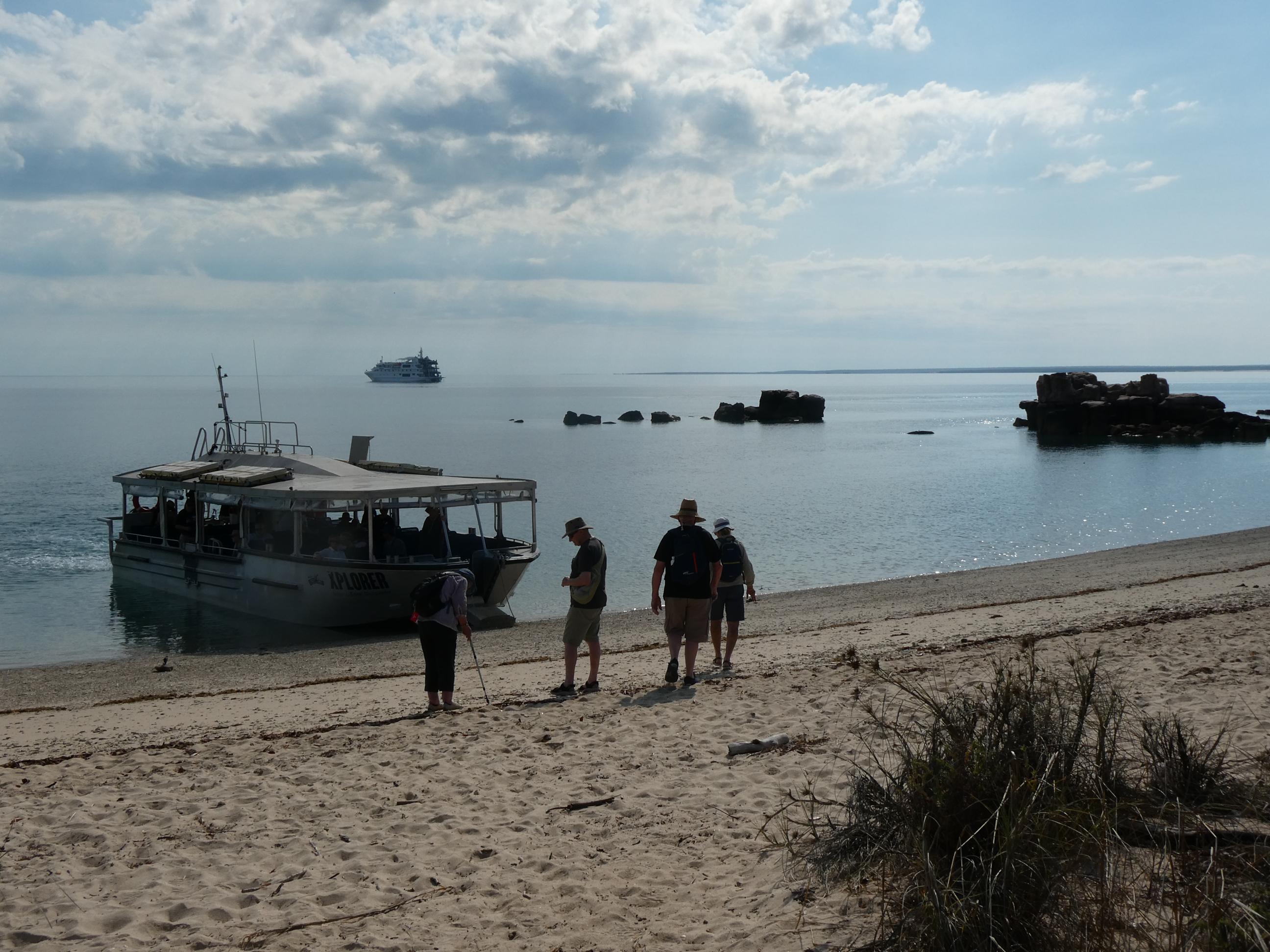
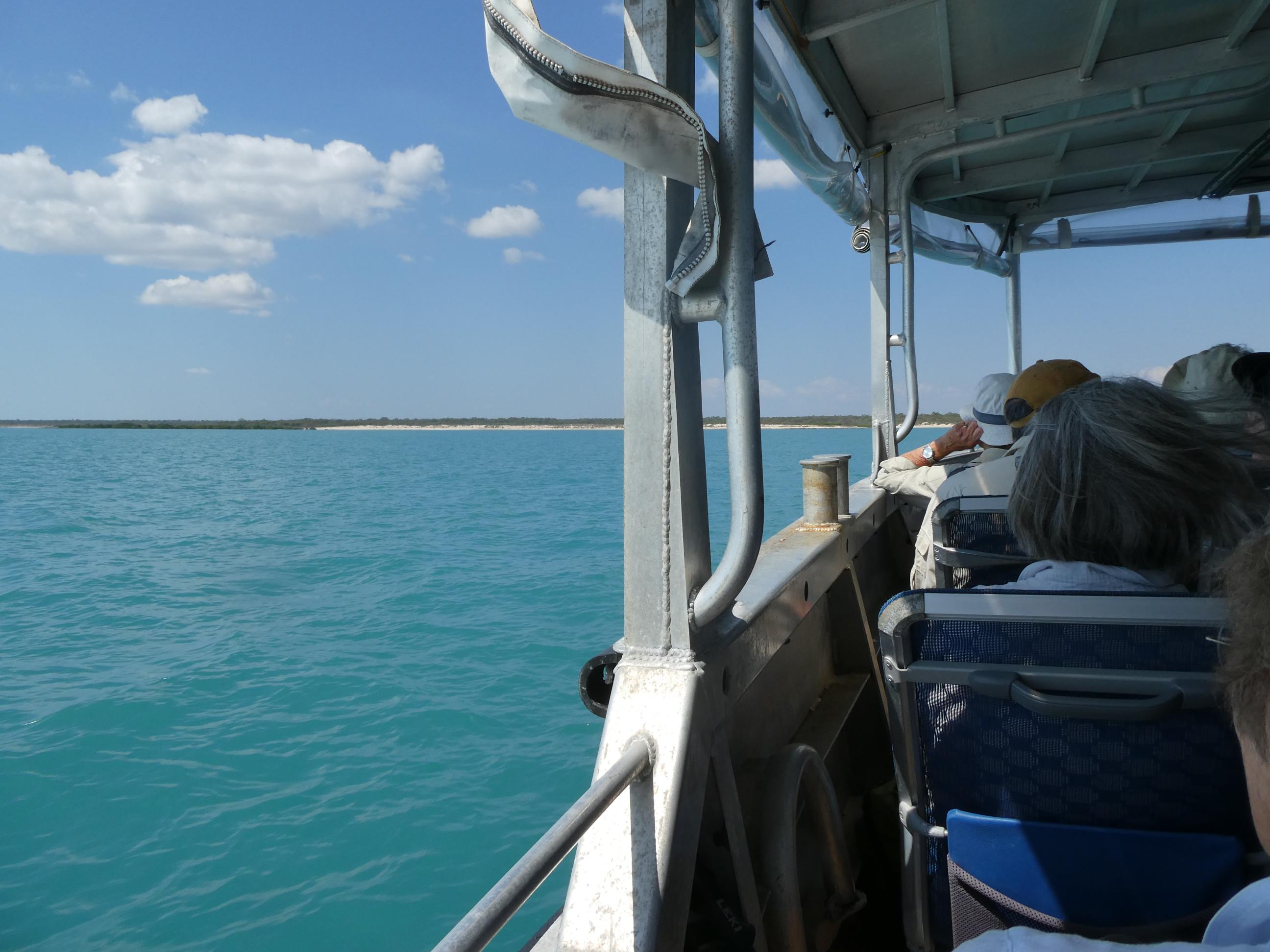
This morning we dropped anchor in Vansittart Bay. We boarded the tender and made our way to Jar Island. When Phillip Parker King landed on the island in the early 1800s, he discovered pottery shards on the island. They’d been left there by the Macassans, who came across in their boats from Indonesia, as they had done for hundreds of years, to collect the sea creatures known as trepang. They cooked and dried them on the beach to prepare them for the voyage back to Indonesia. The shards King had found had come from a pottery vessel once used by the Macassans, so he named the place Jar Island.
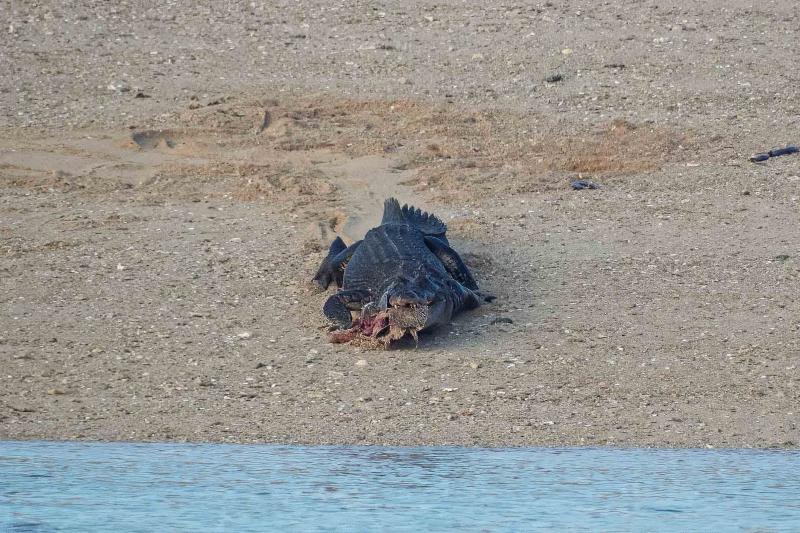
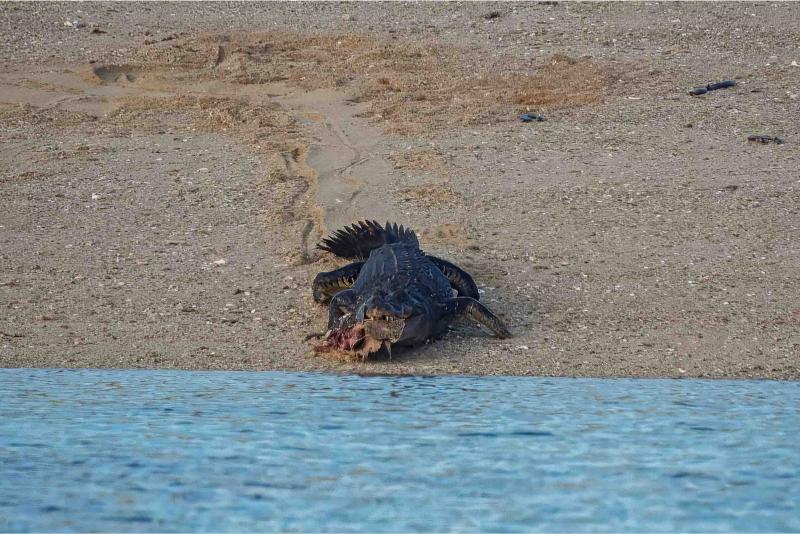
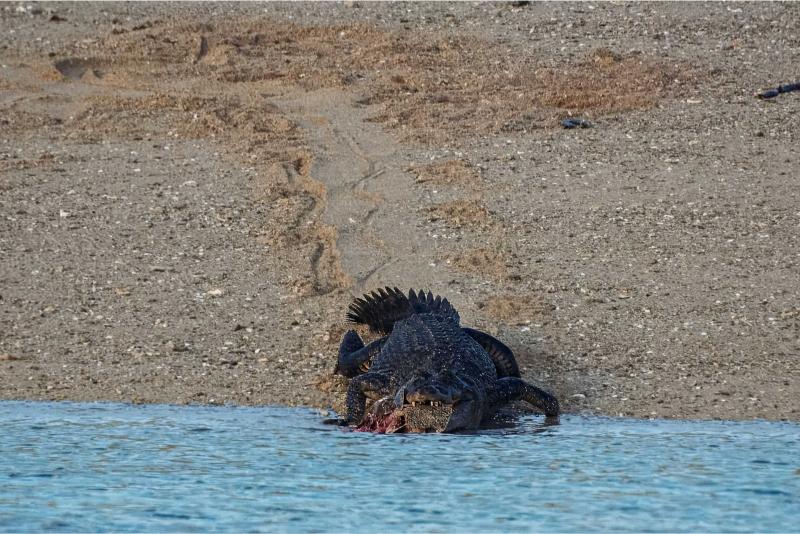
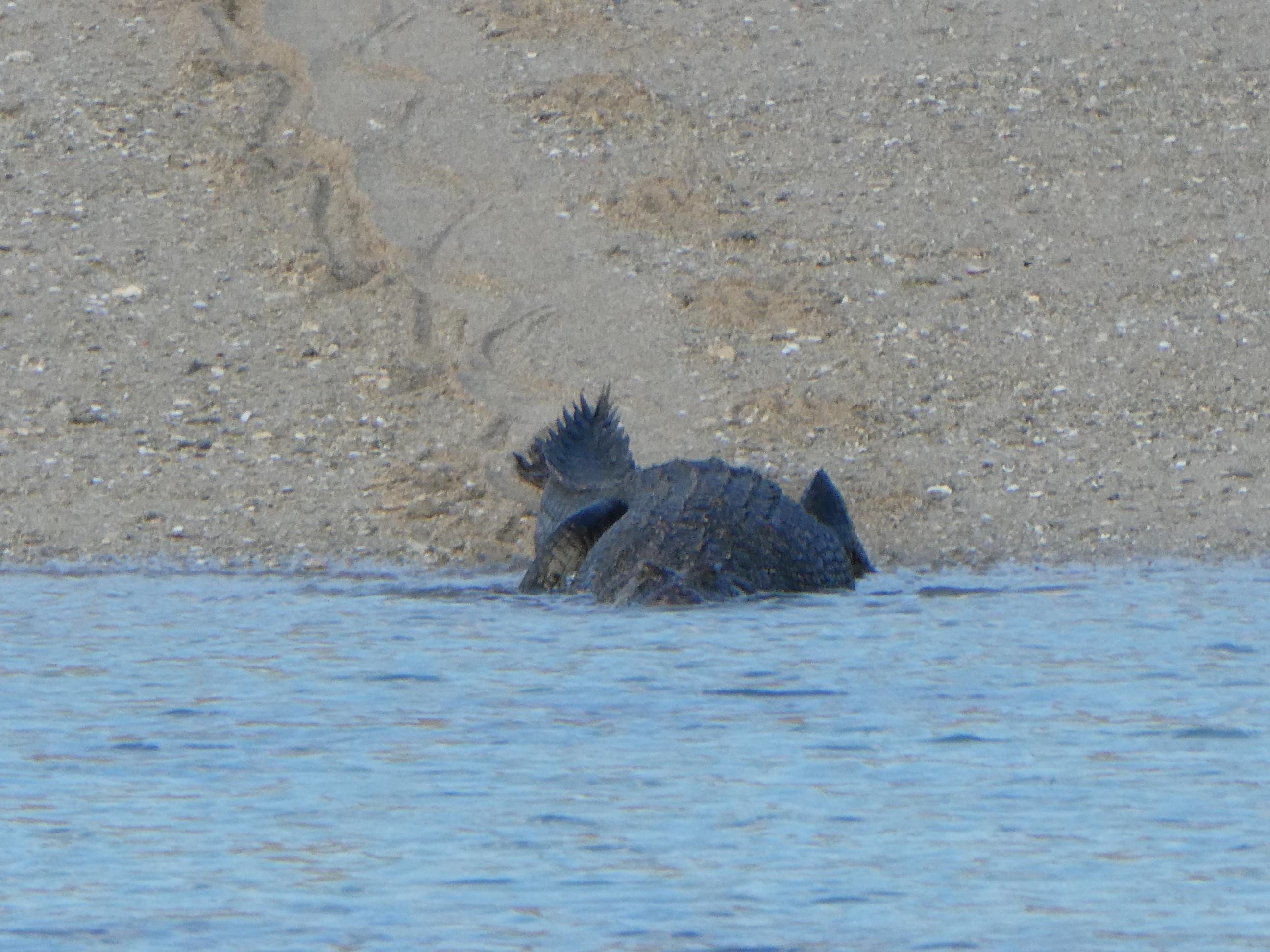
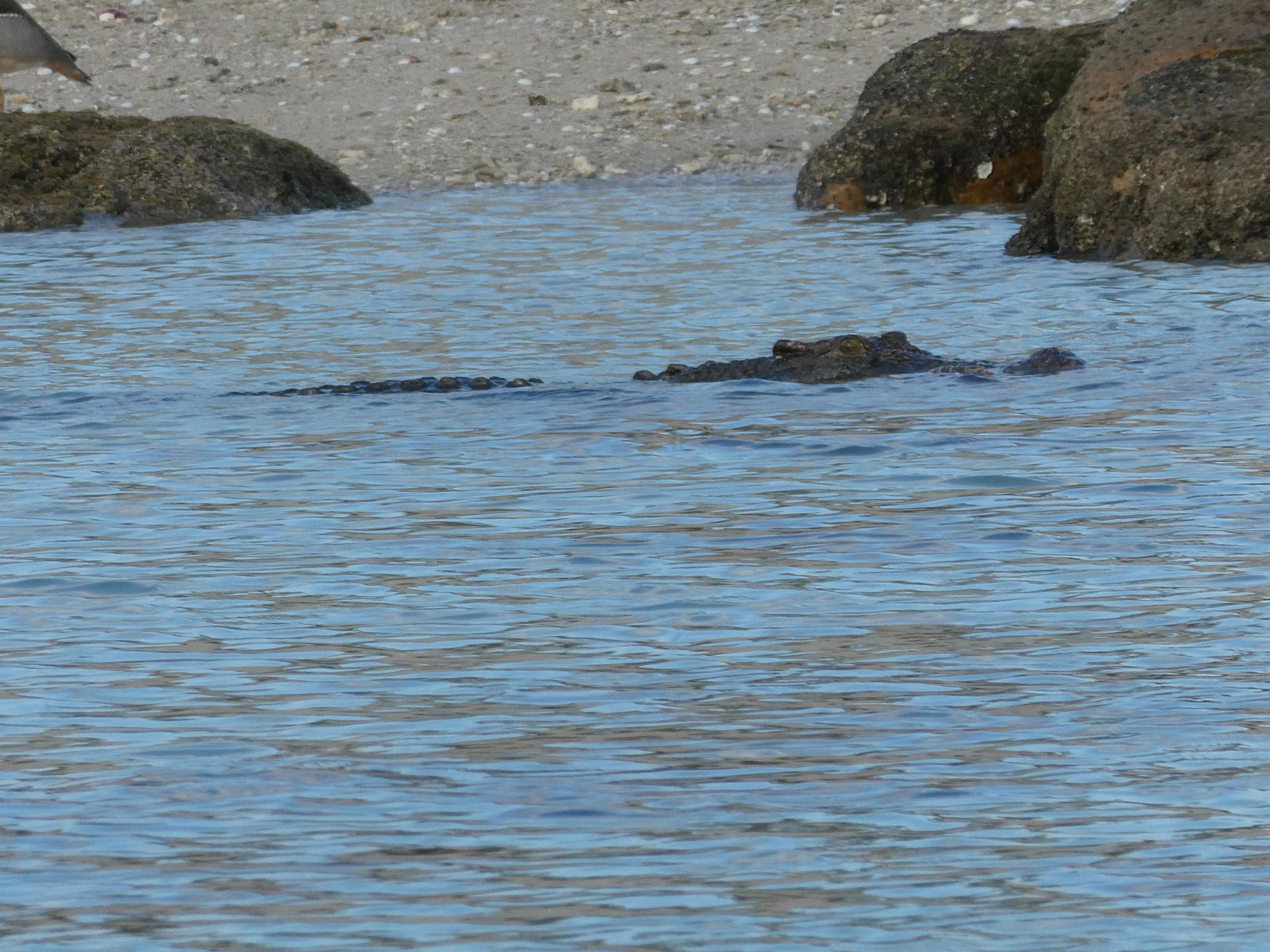
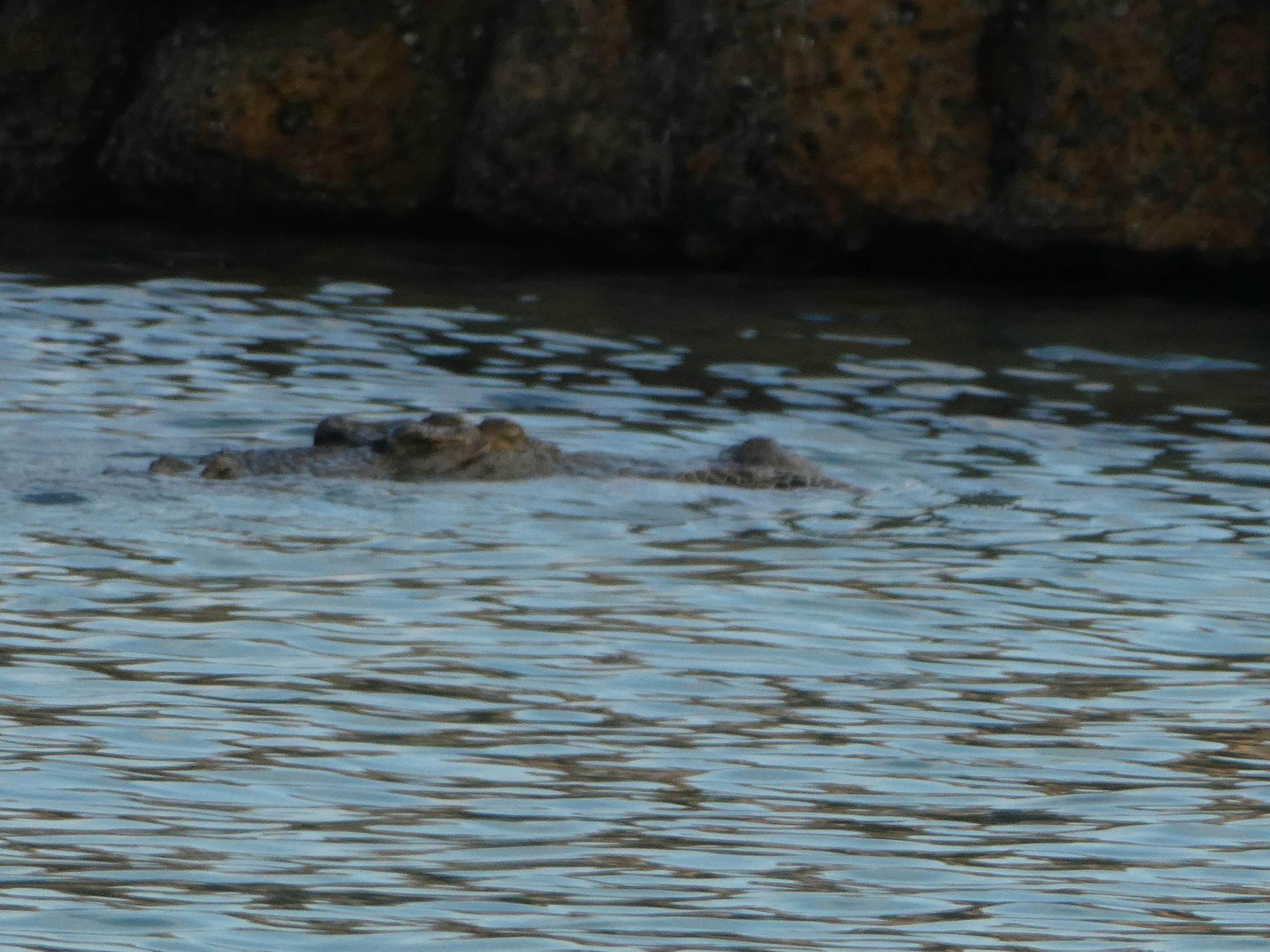
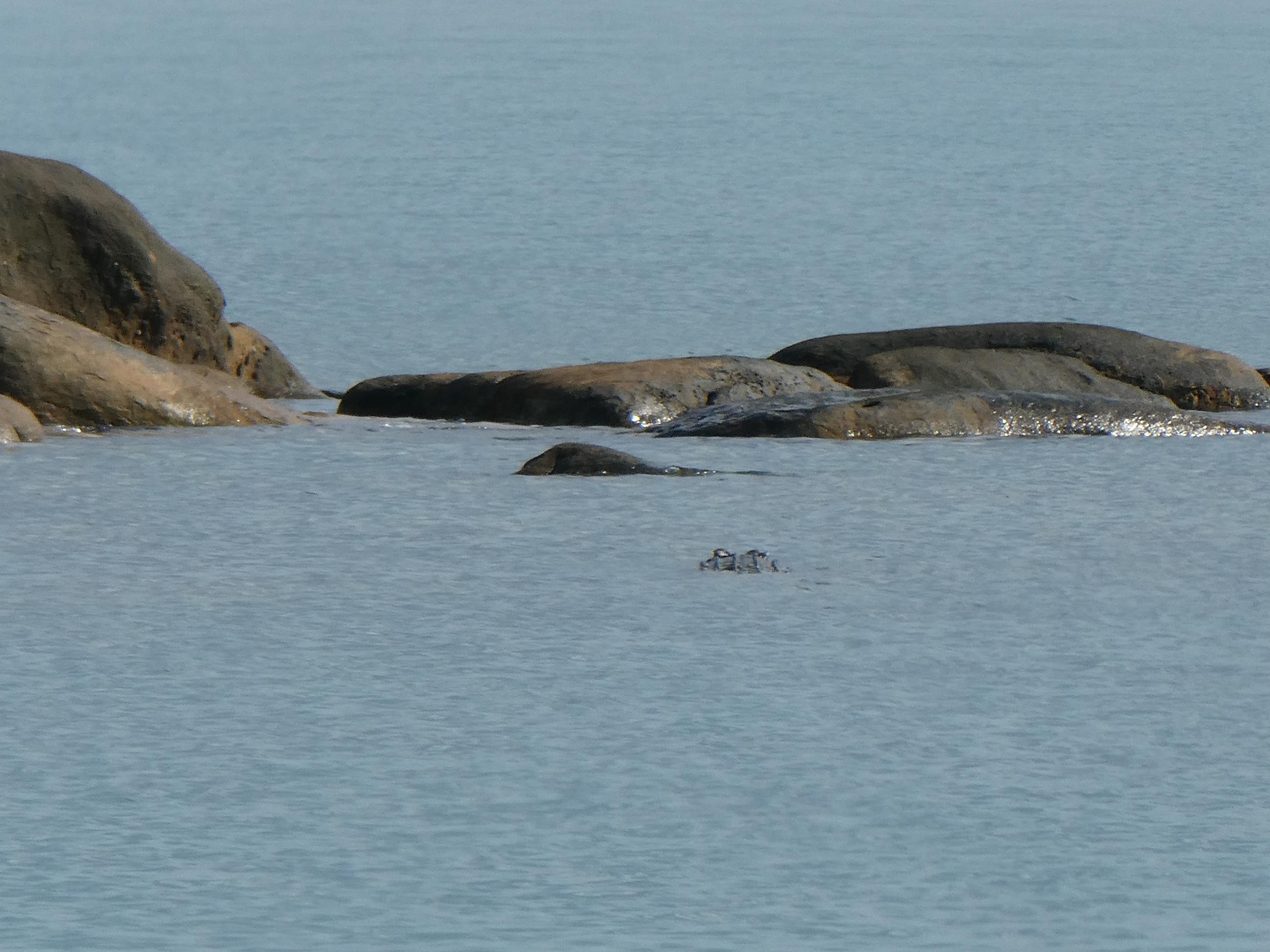
As our tender approached the island, a large crocodile was devouring a turtle it had killed. When it became aware of our approach, the crocodile quickly headed for the water with the turtle still in its mouth. We delayed our arrival until it was safely in the water. It swam around to the point about a hundred metres away and remained there for the rest of our time on Jar Island. We could see its eyes and nostrils protruding above the surface. Our guides assured us it would not return to the beach while we were there, so we left the vessel and made our way up the sand dune.
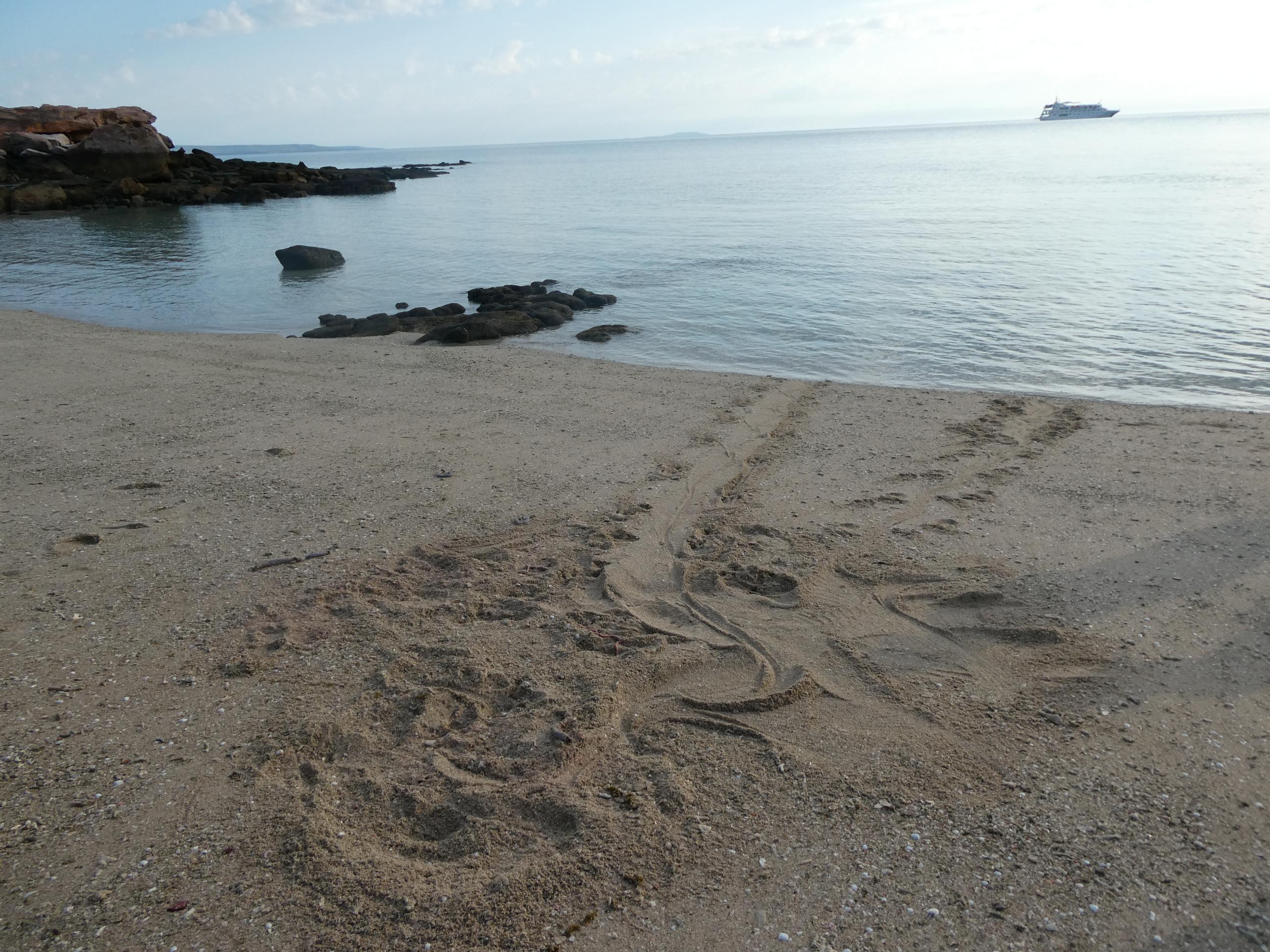
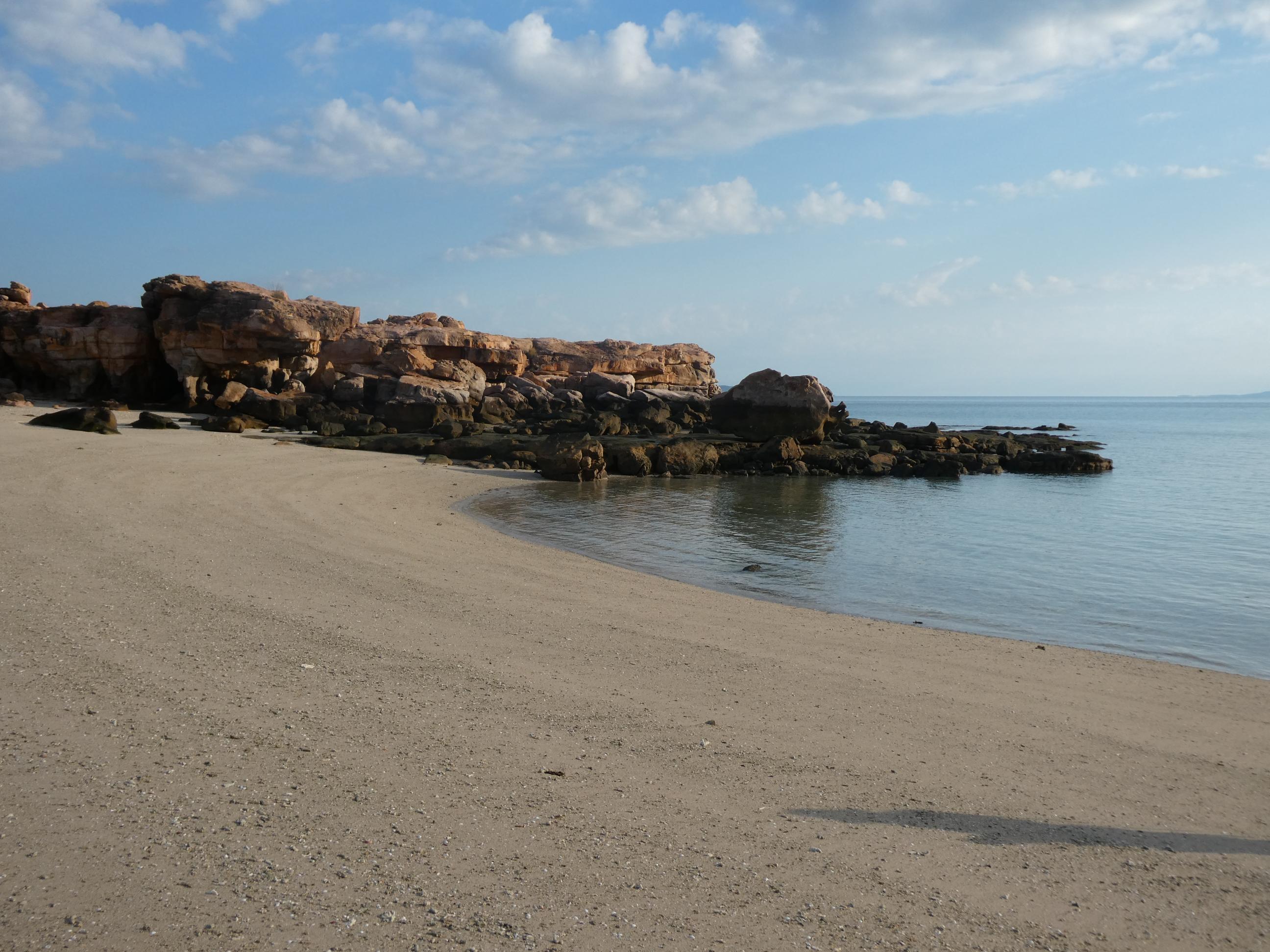

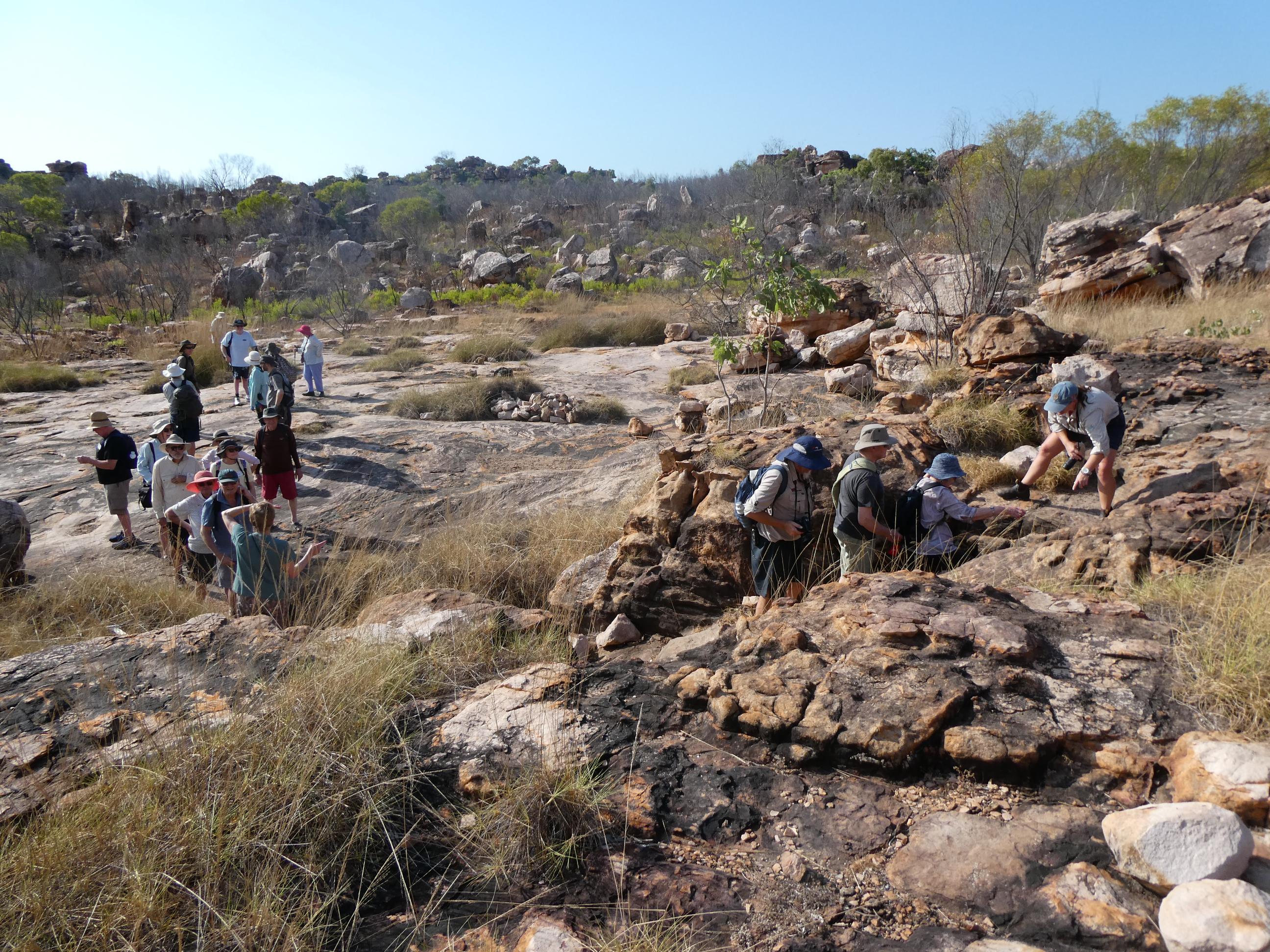
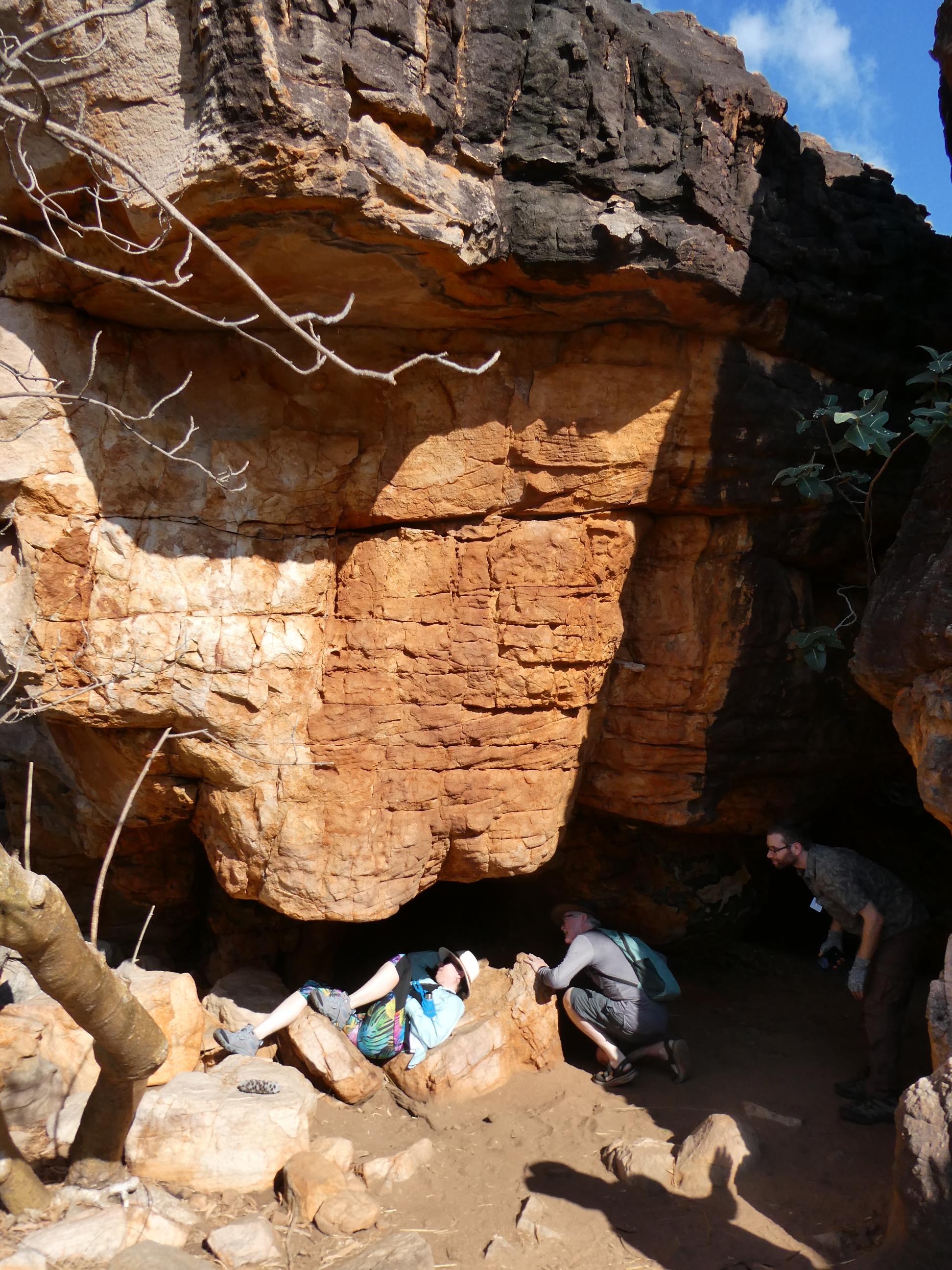
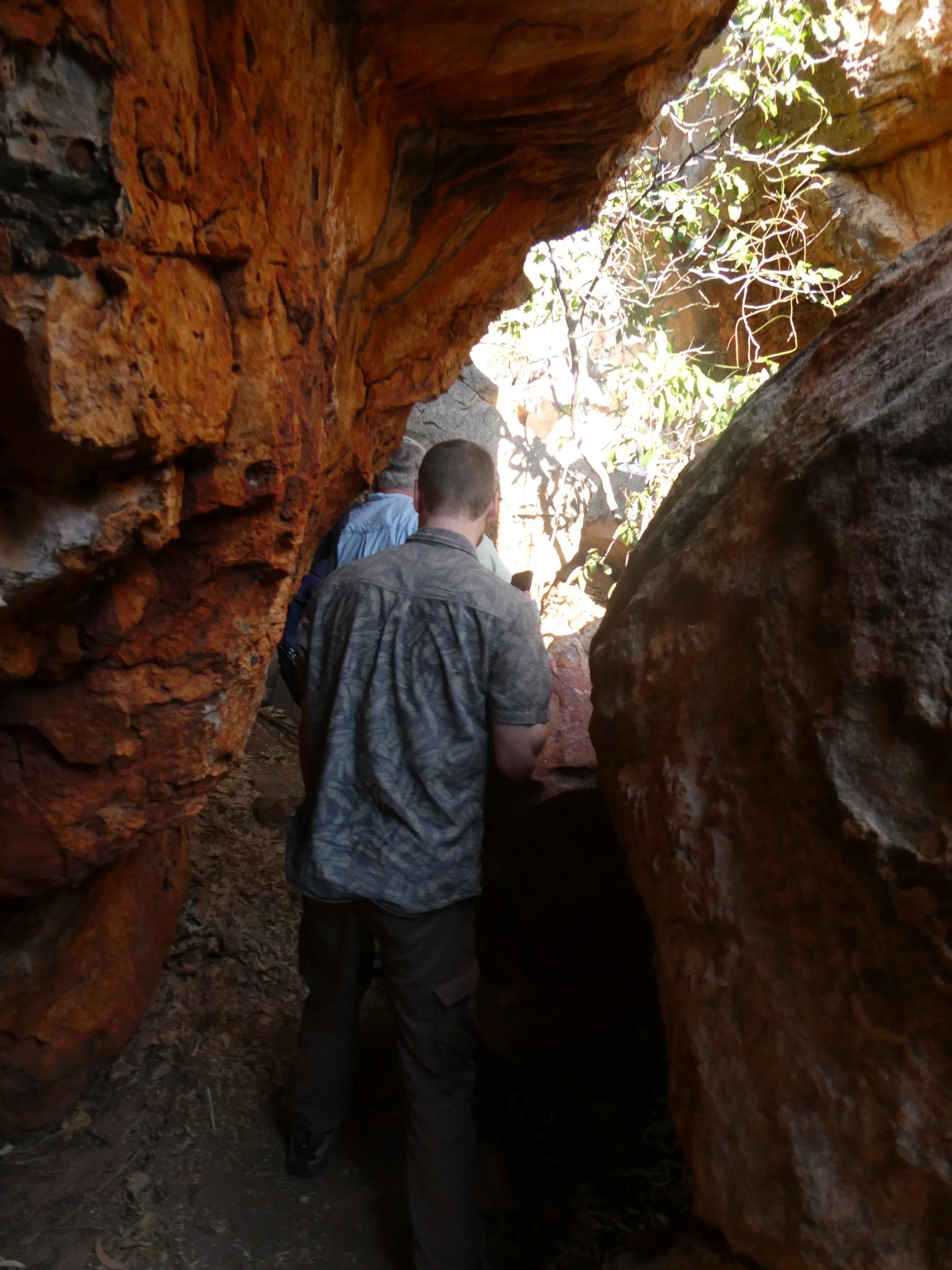
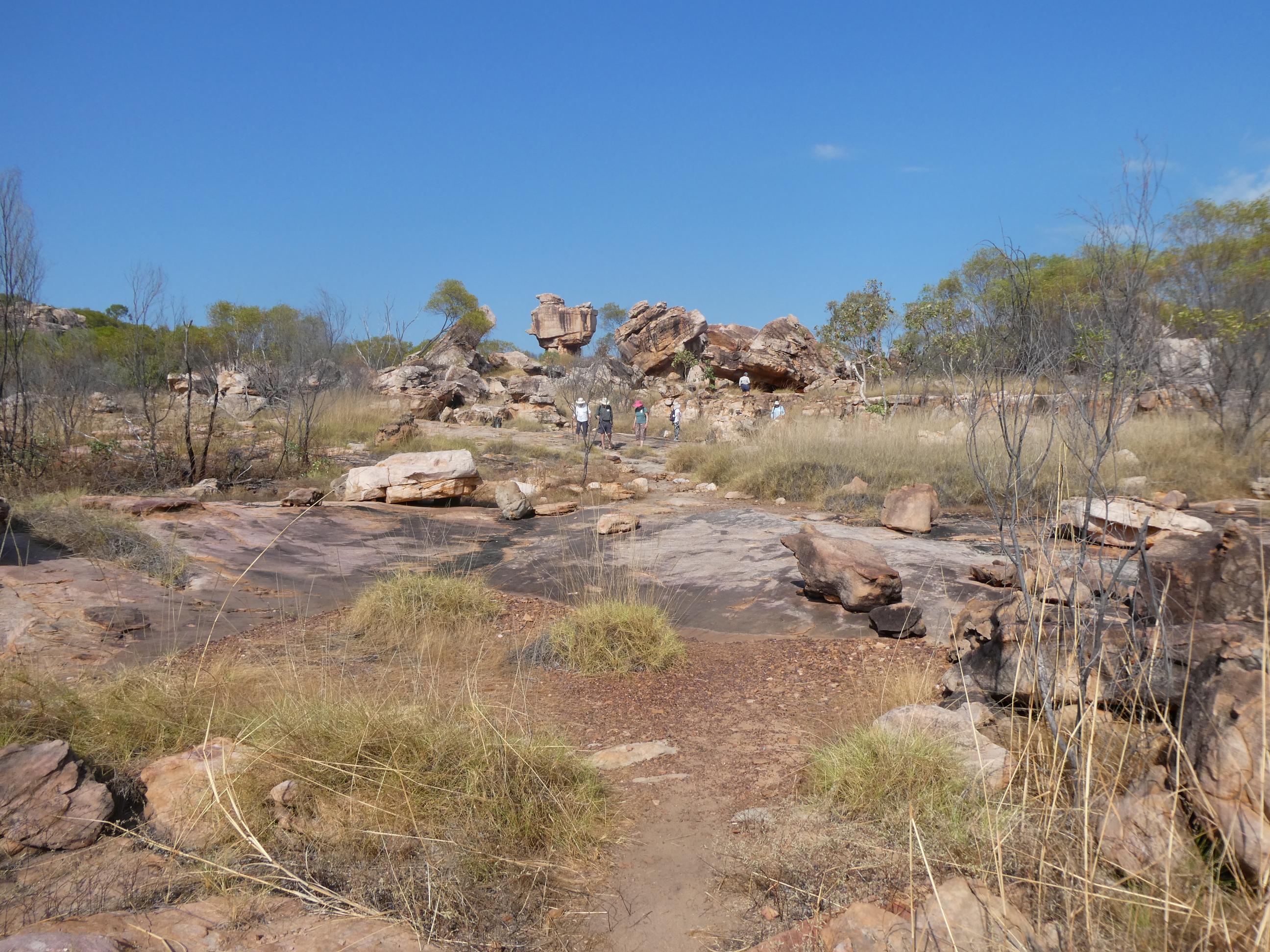
We walked a fairly short distance through the scrub until we reached a site where a number of large sandstone rocks had come to rest millions of years ago. There were large overhangs, crevasses and sheltered rock walls where the indigenous people who once inhabited the island had left ochre paintings of creatures, objects and spirit beings.
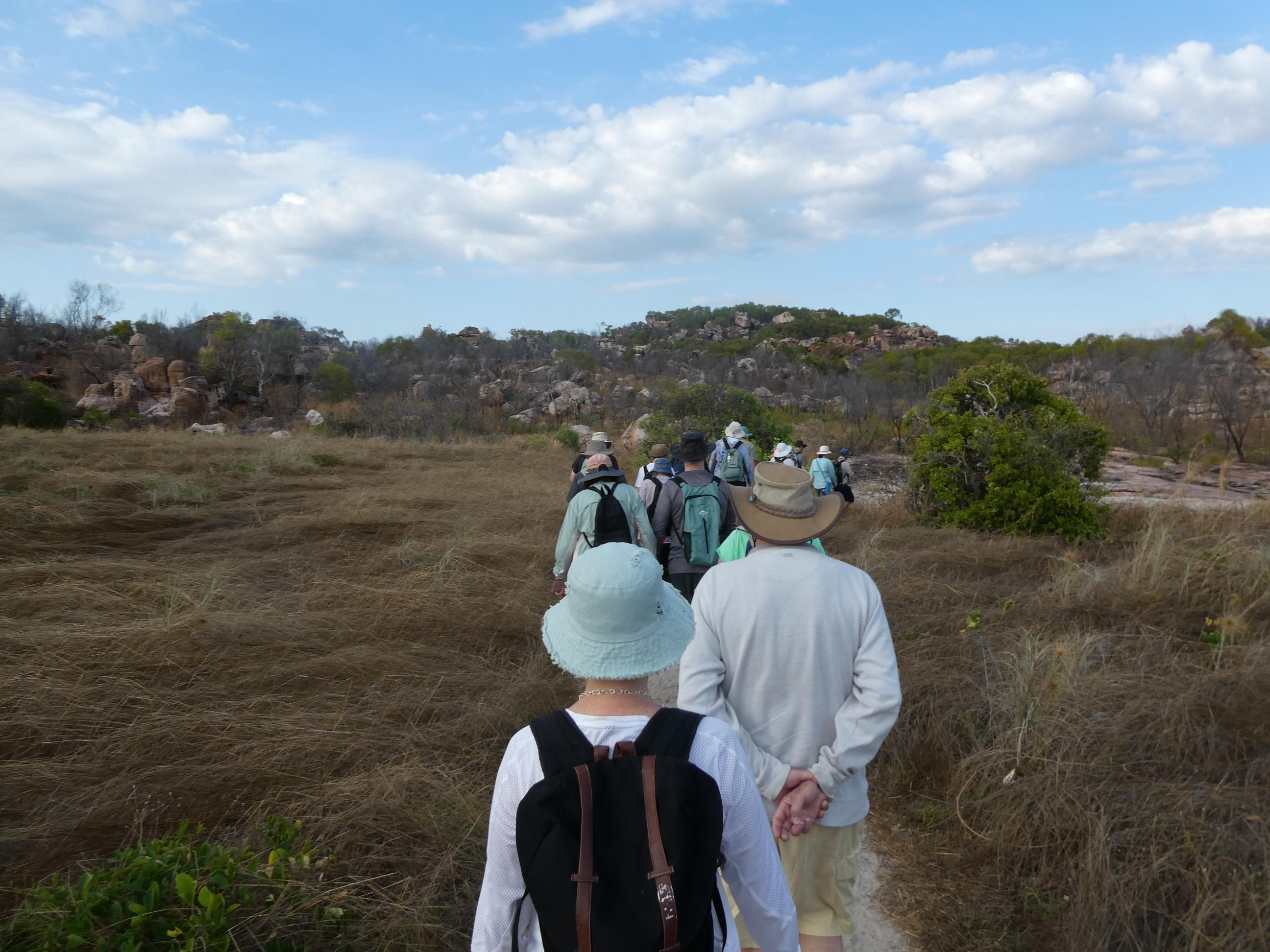
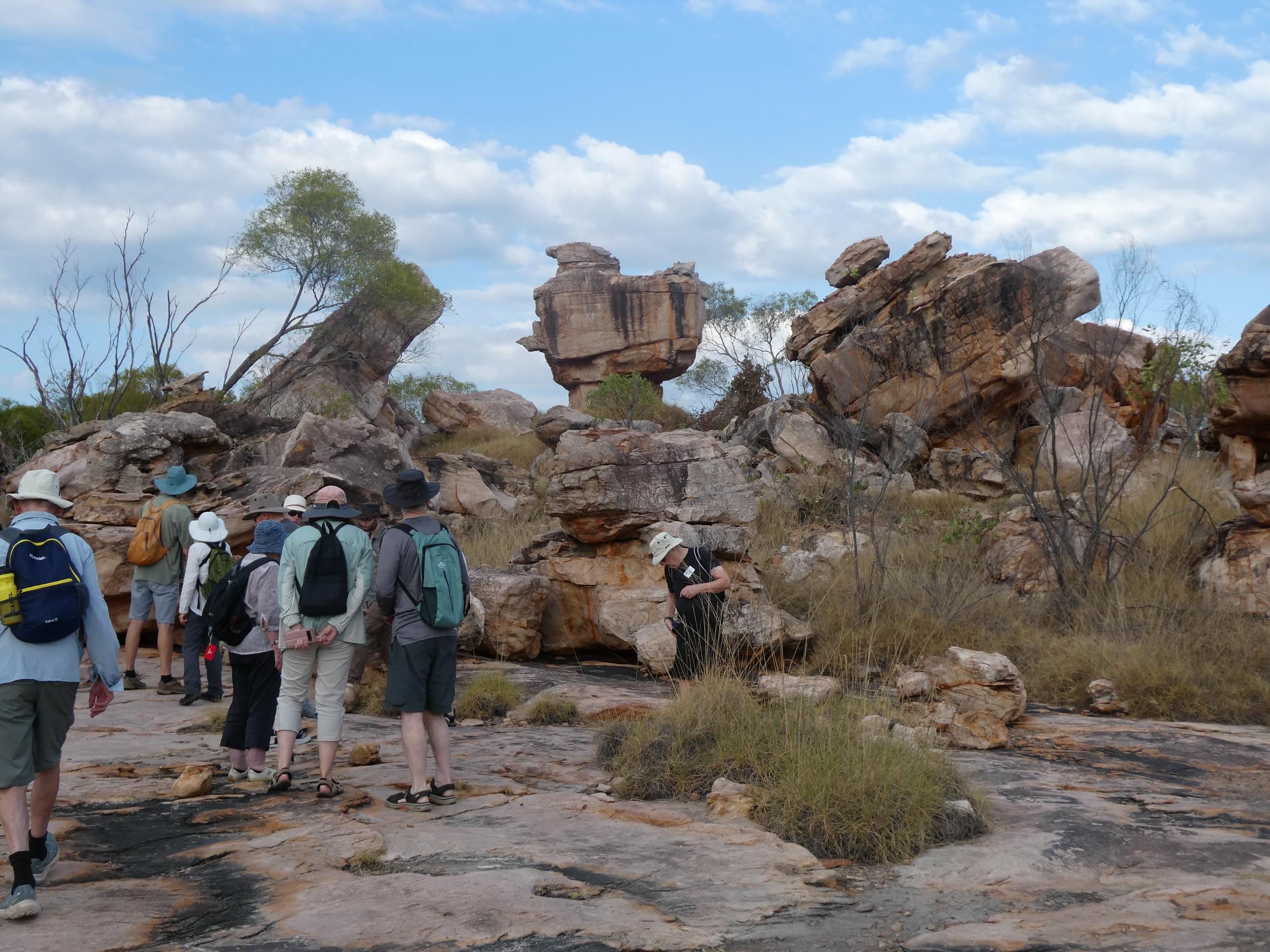
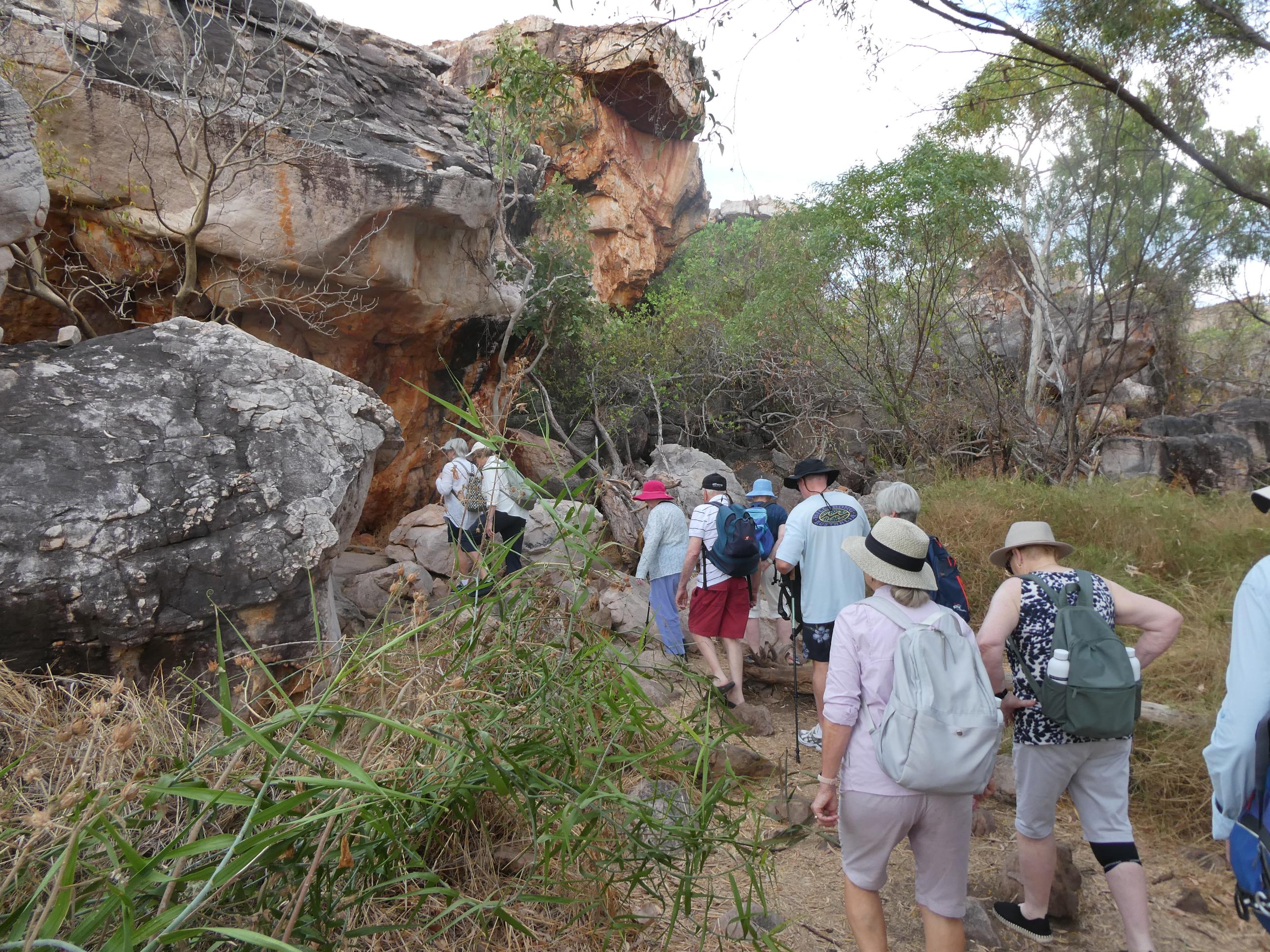
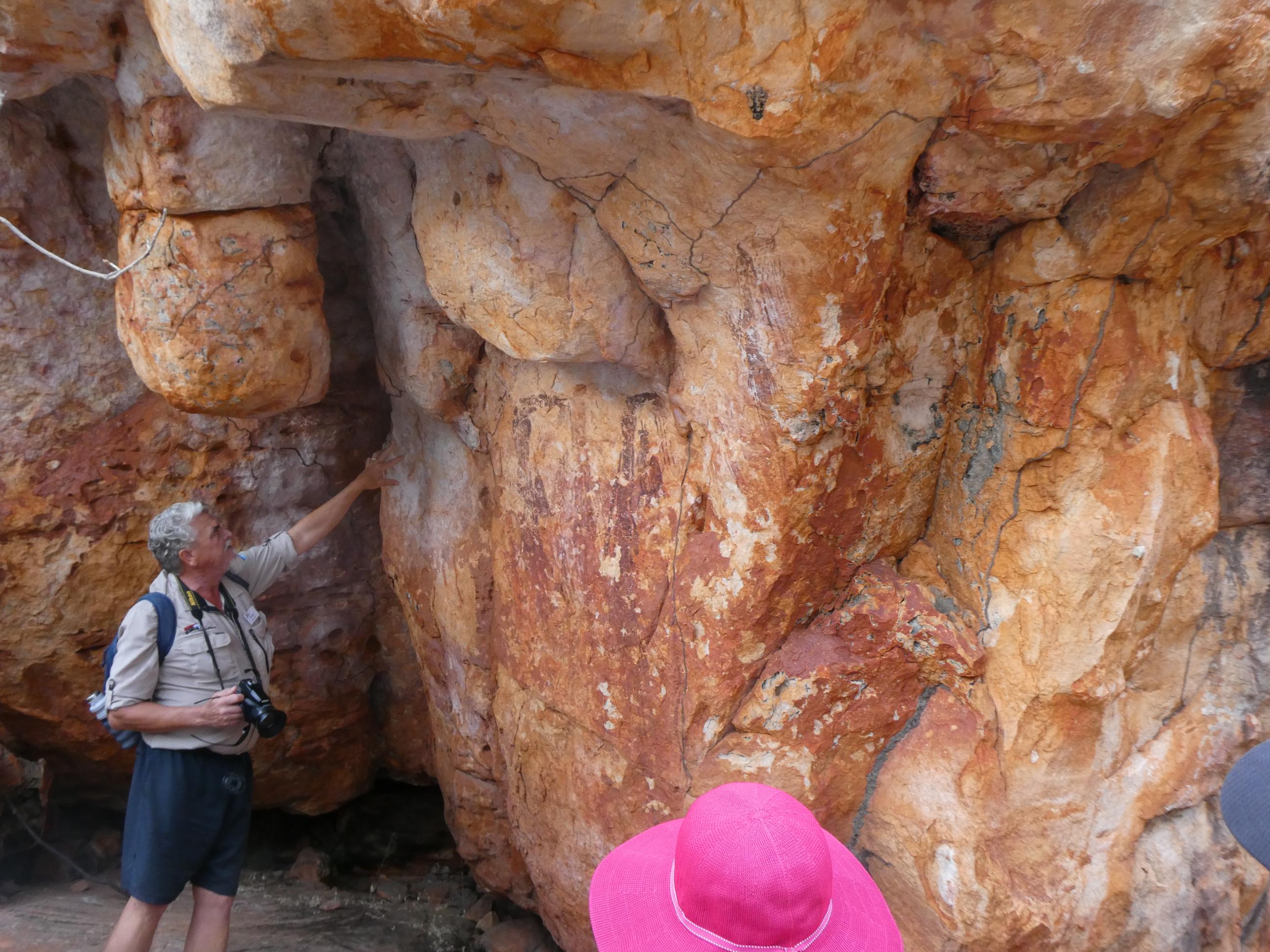
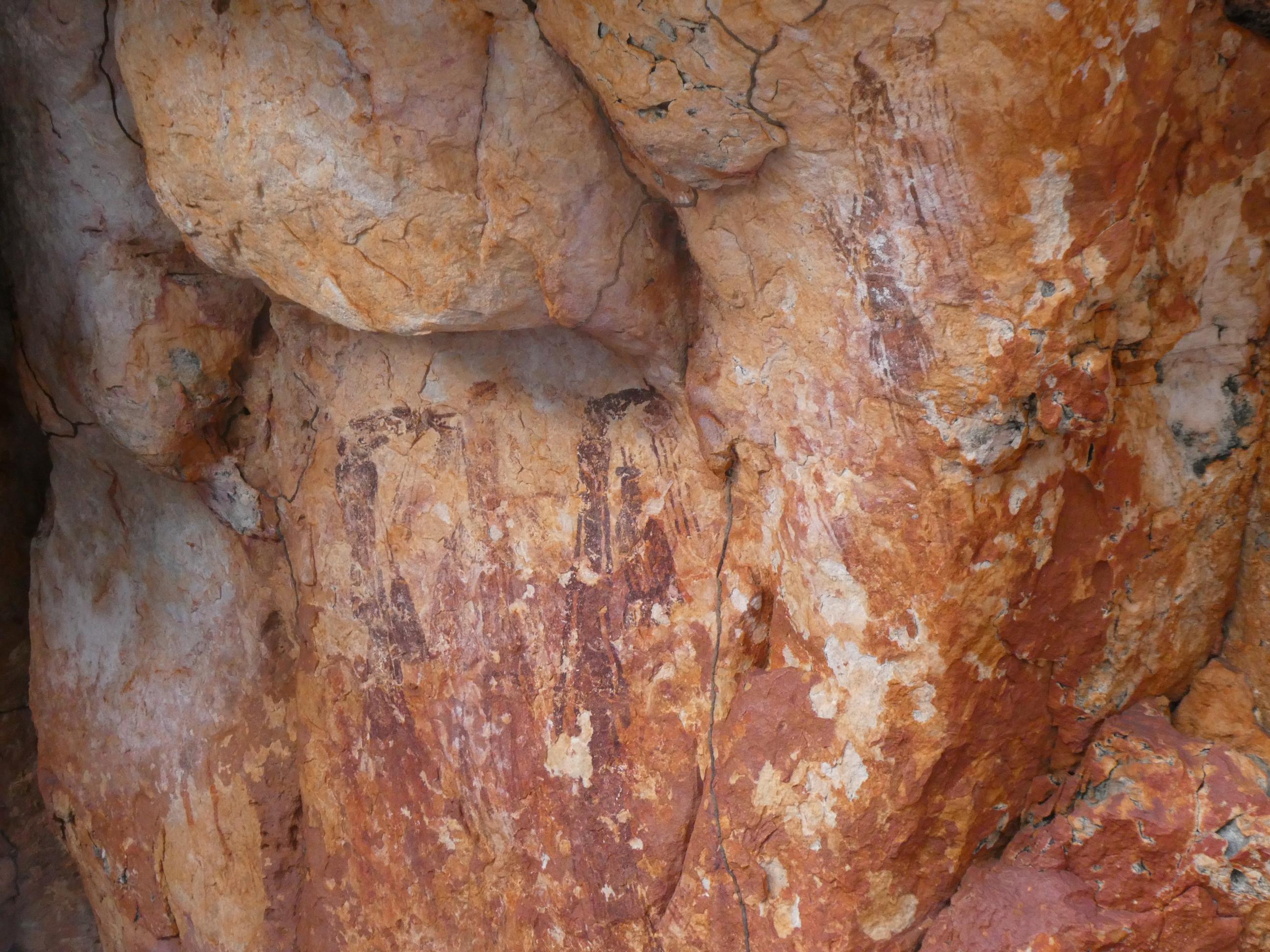
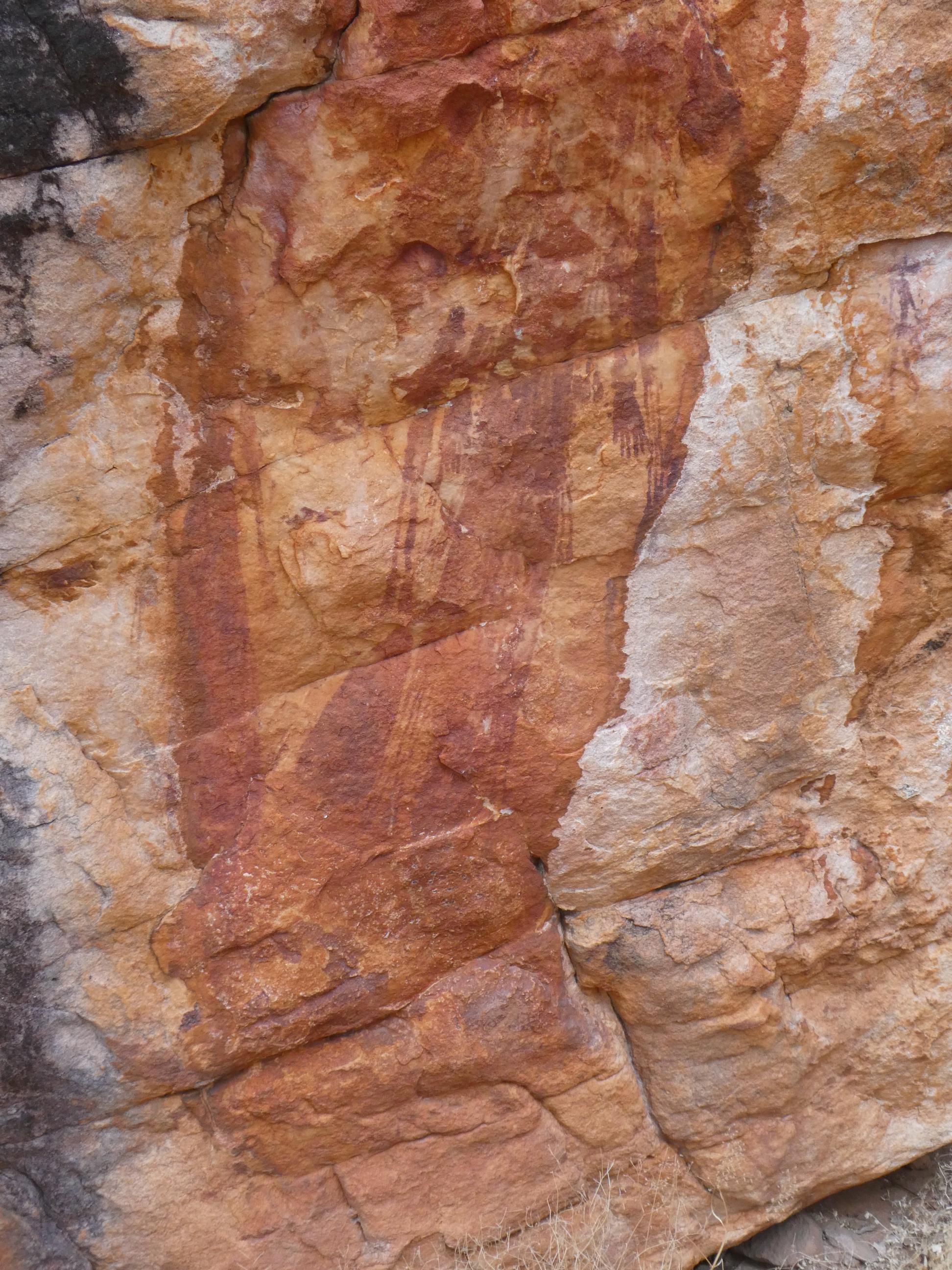
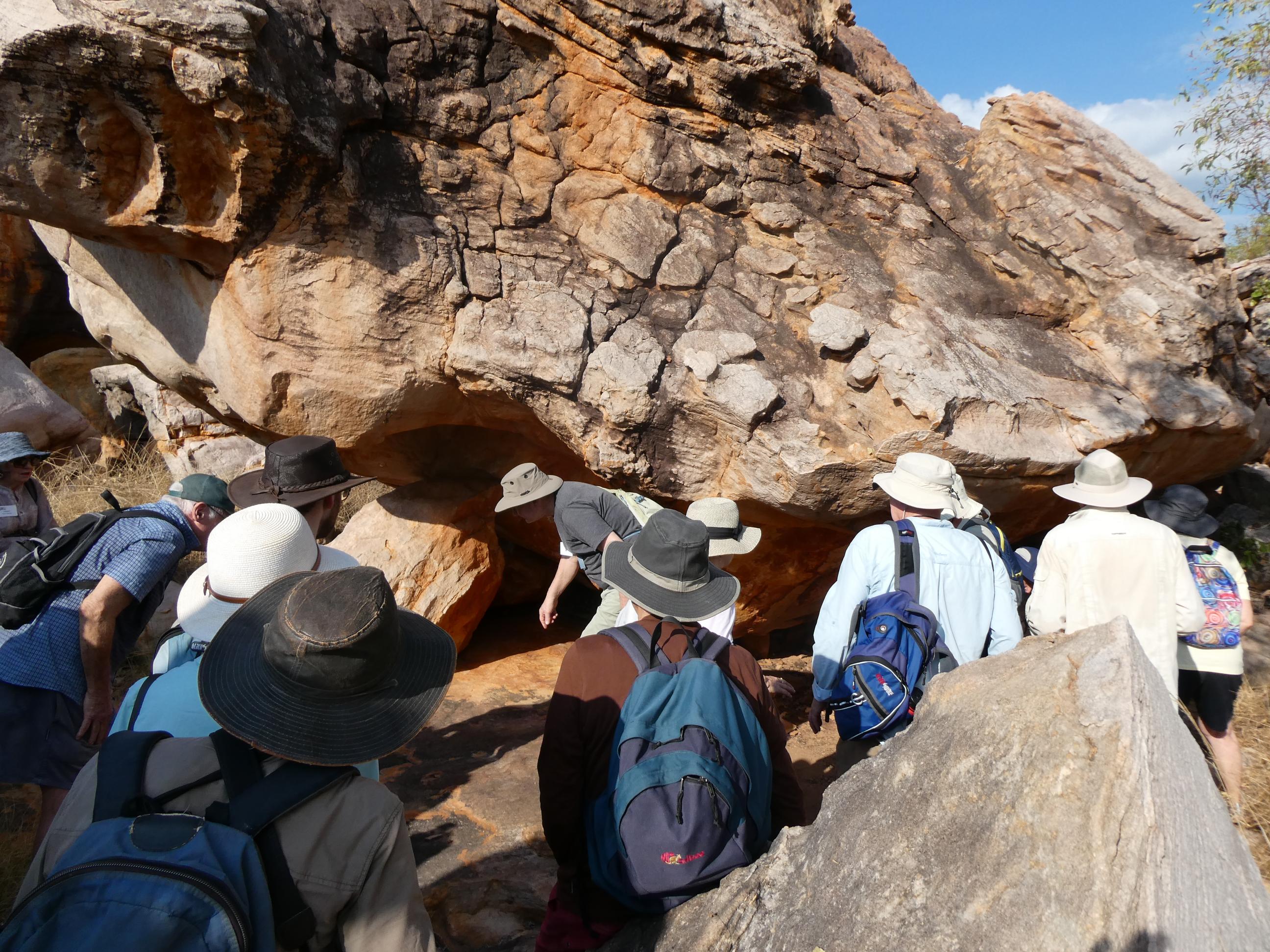
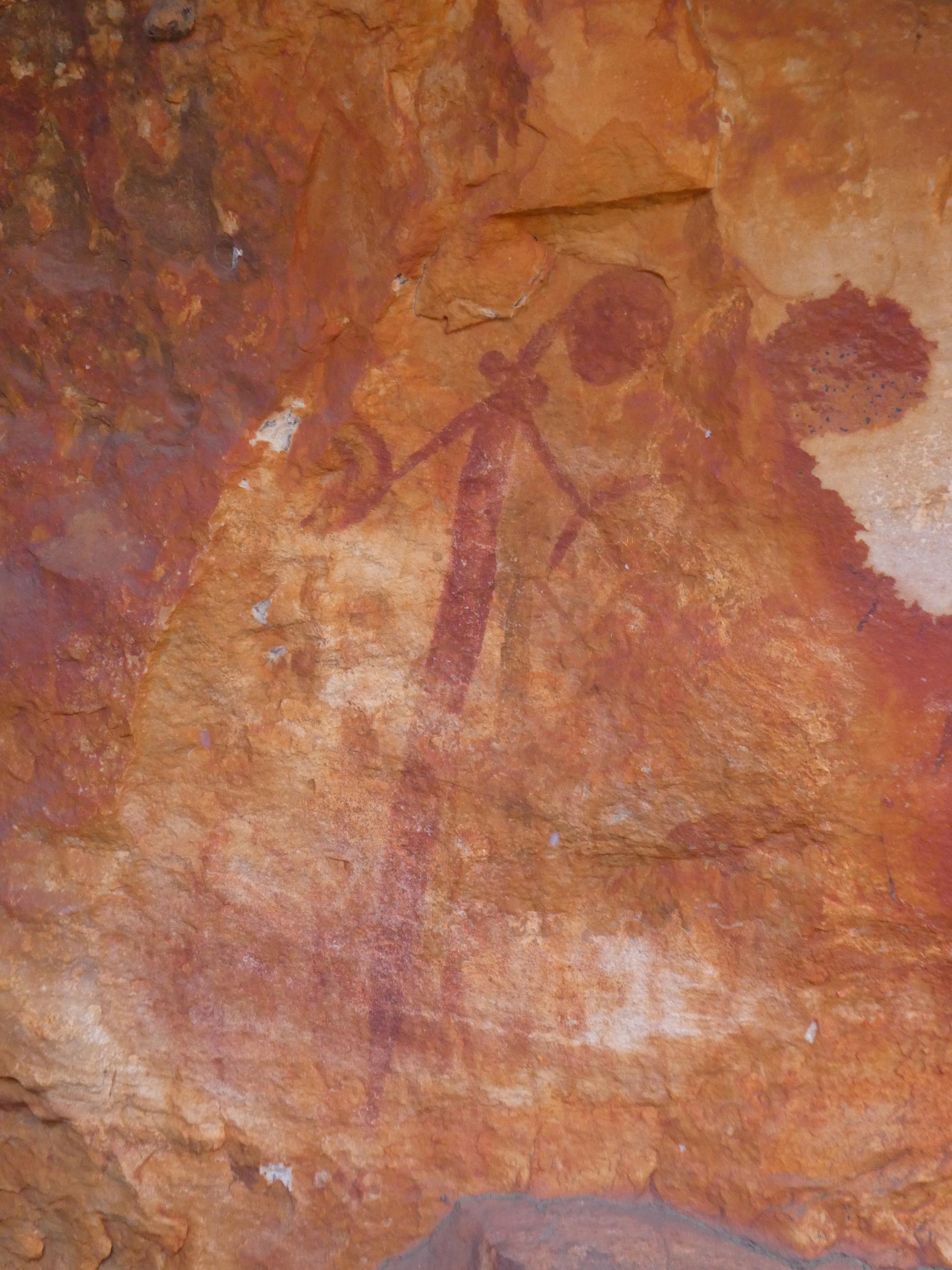
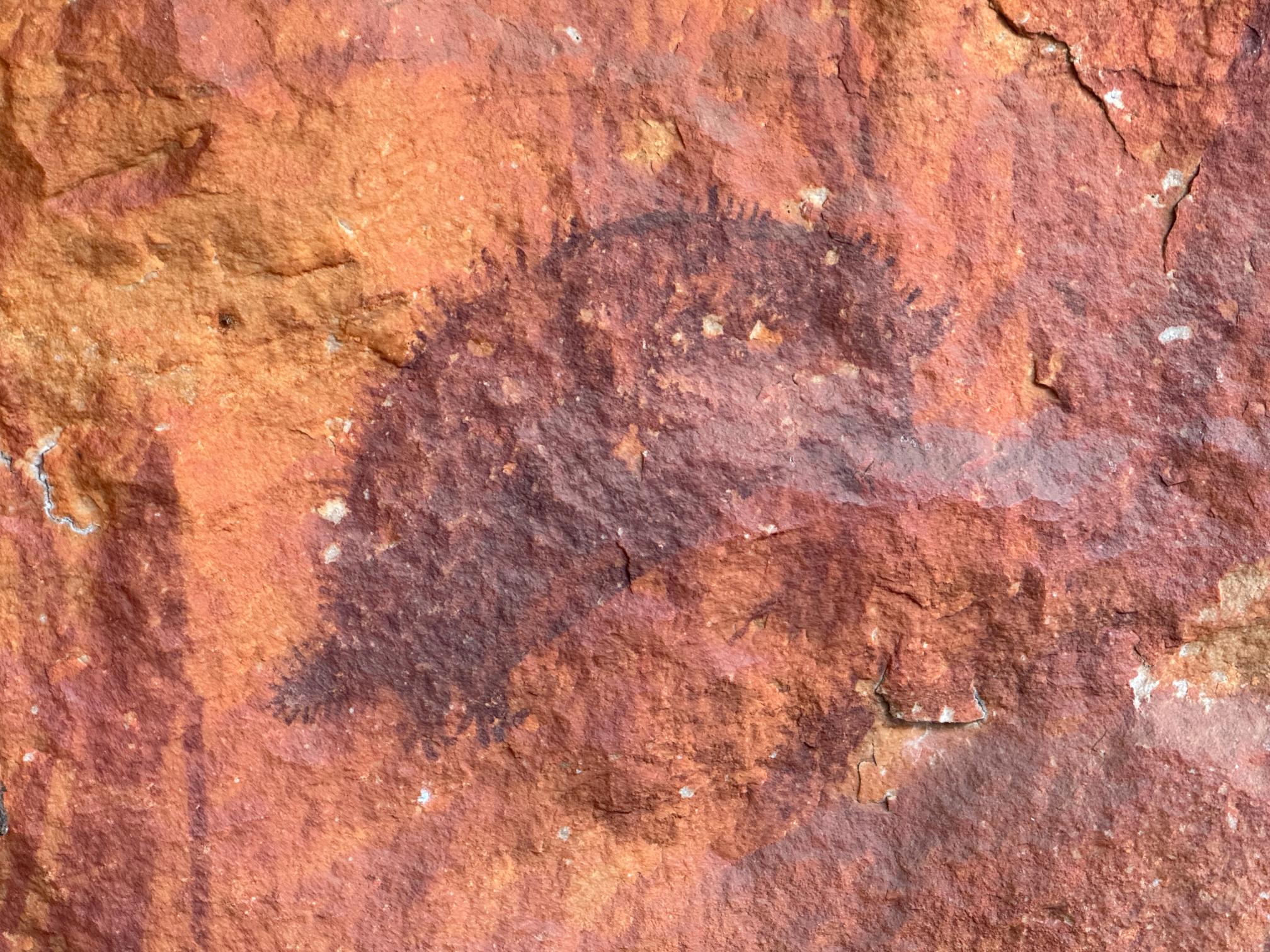
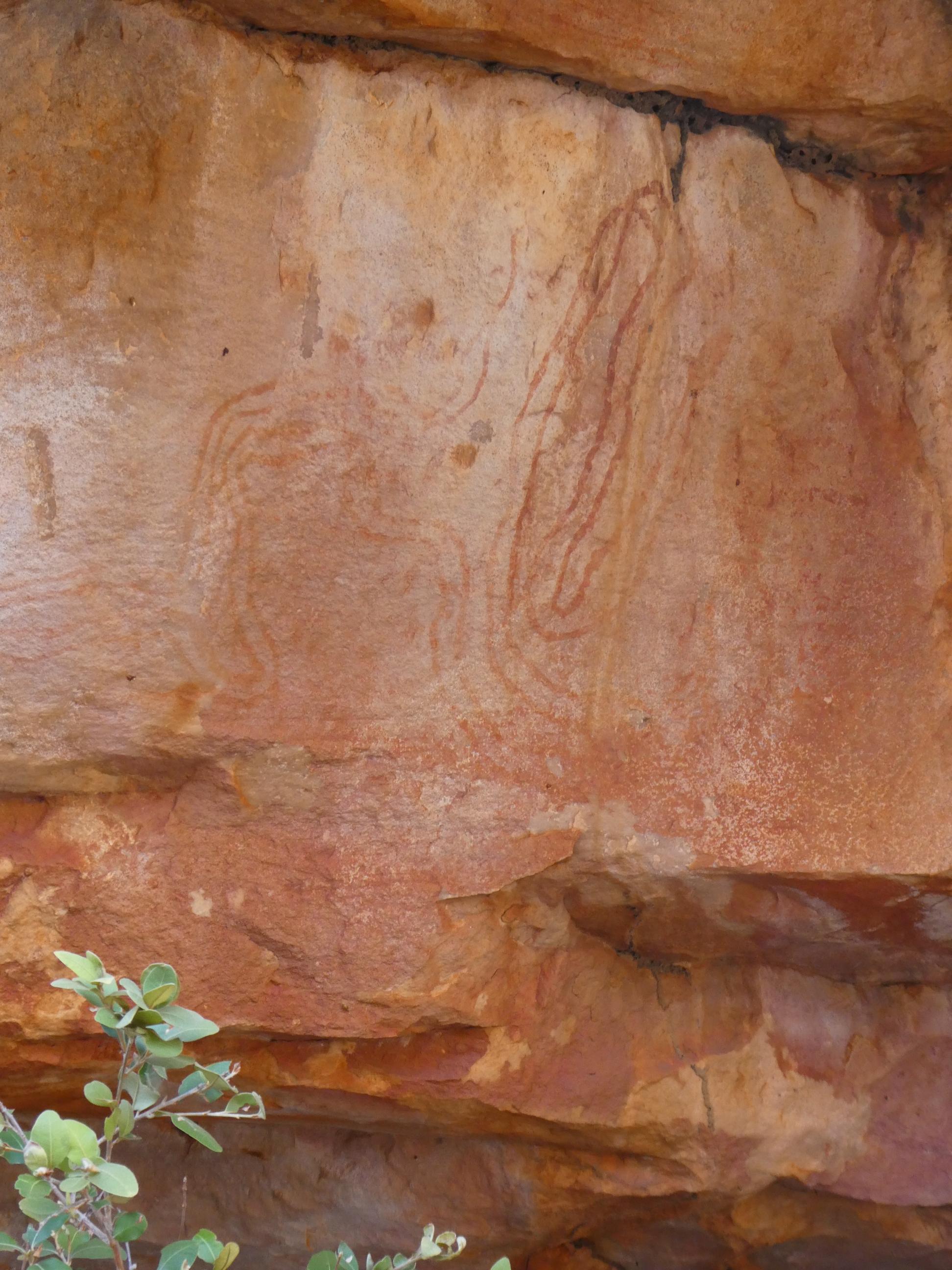
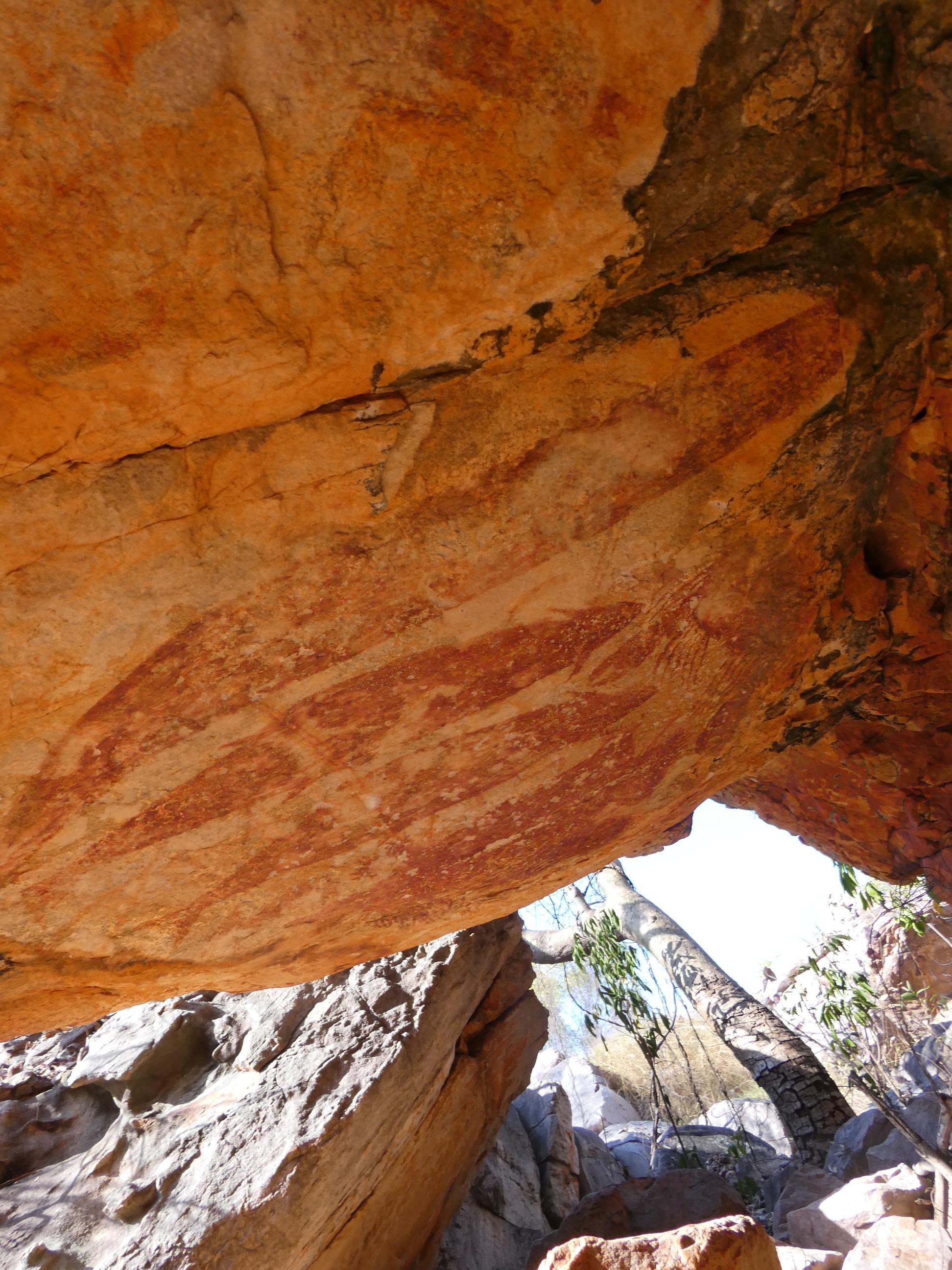
The style of rock art here was once referred to as Bradshaw rock art, but today it is known as Gwion Gwion rock art. Our guides led us to three different galleries, all within a short distance of each other. Access to one of the galleries was graded as ‘difficult’, so Marg and I gave that one a miss, but Rod and Cornelia made it up there and back without any issues. The art was not as clearly defined here as that which we’d recently seen at Ubirr and Injalak Hill, perhaps because of weathering, and it featured many beings that I know little about. I’d be interested to have some of the stories explained to me. The first set of images here are from what our guides called the ‘easy access’ gallery.
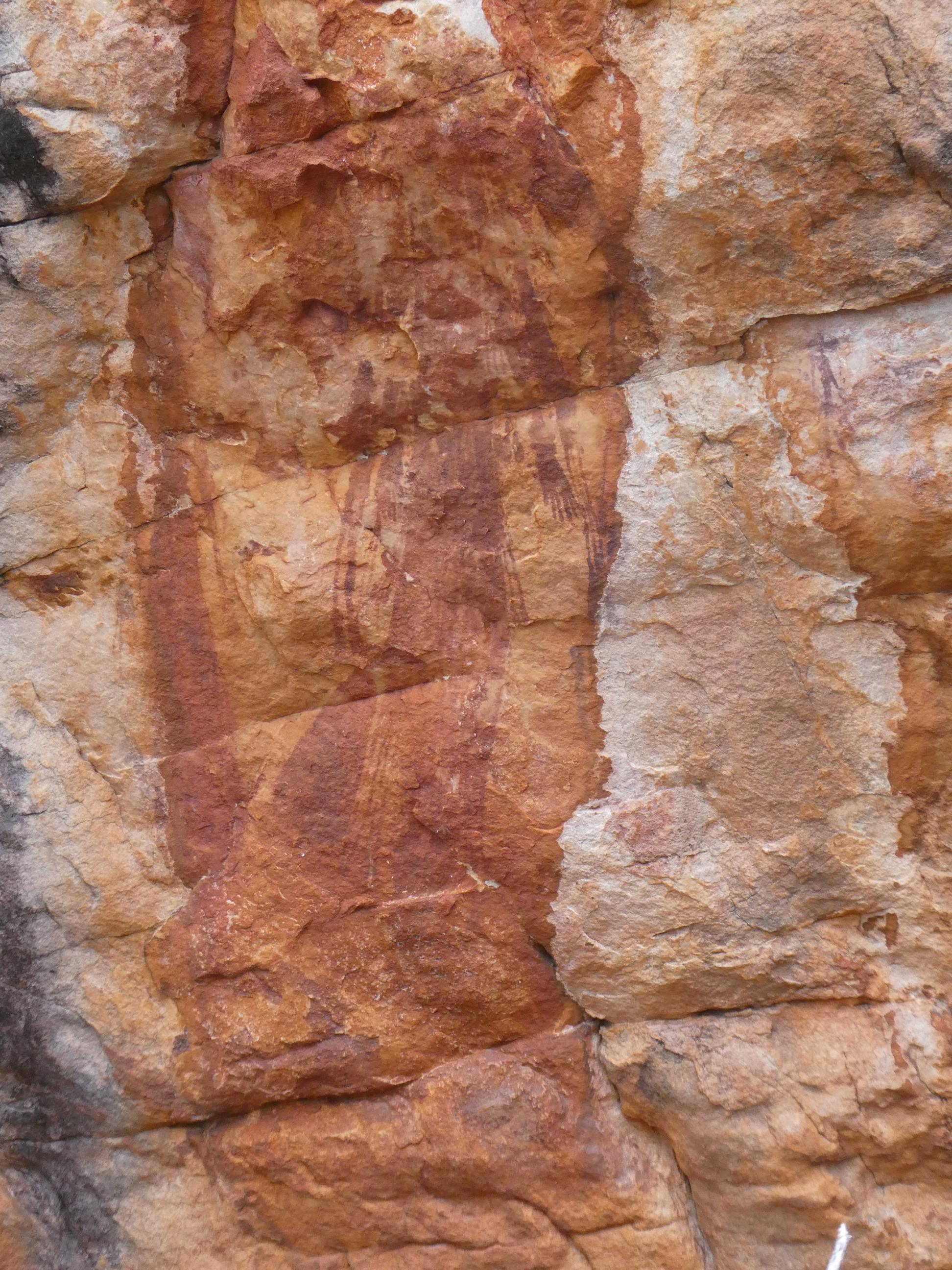
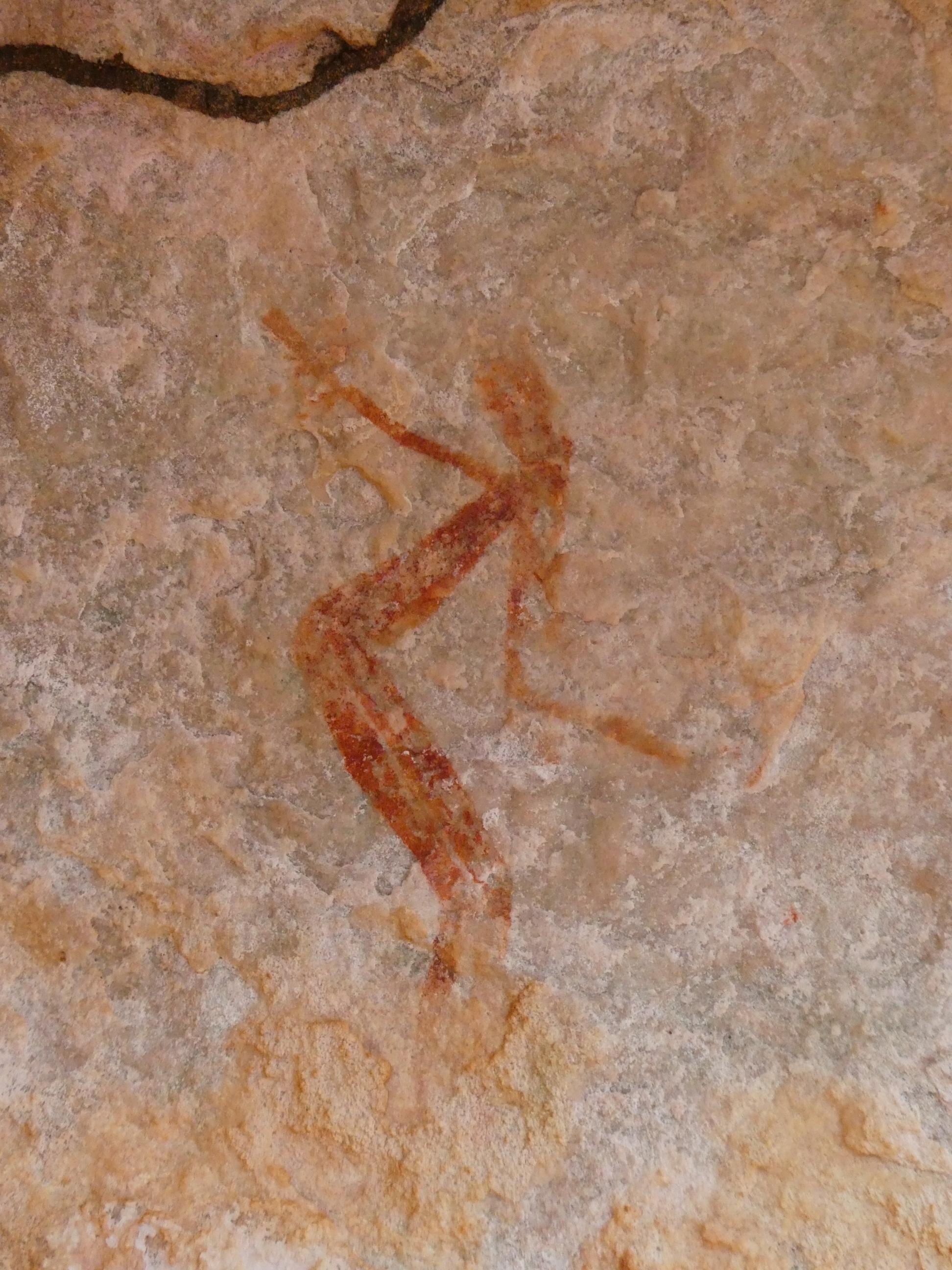
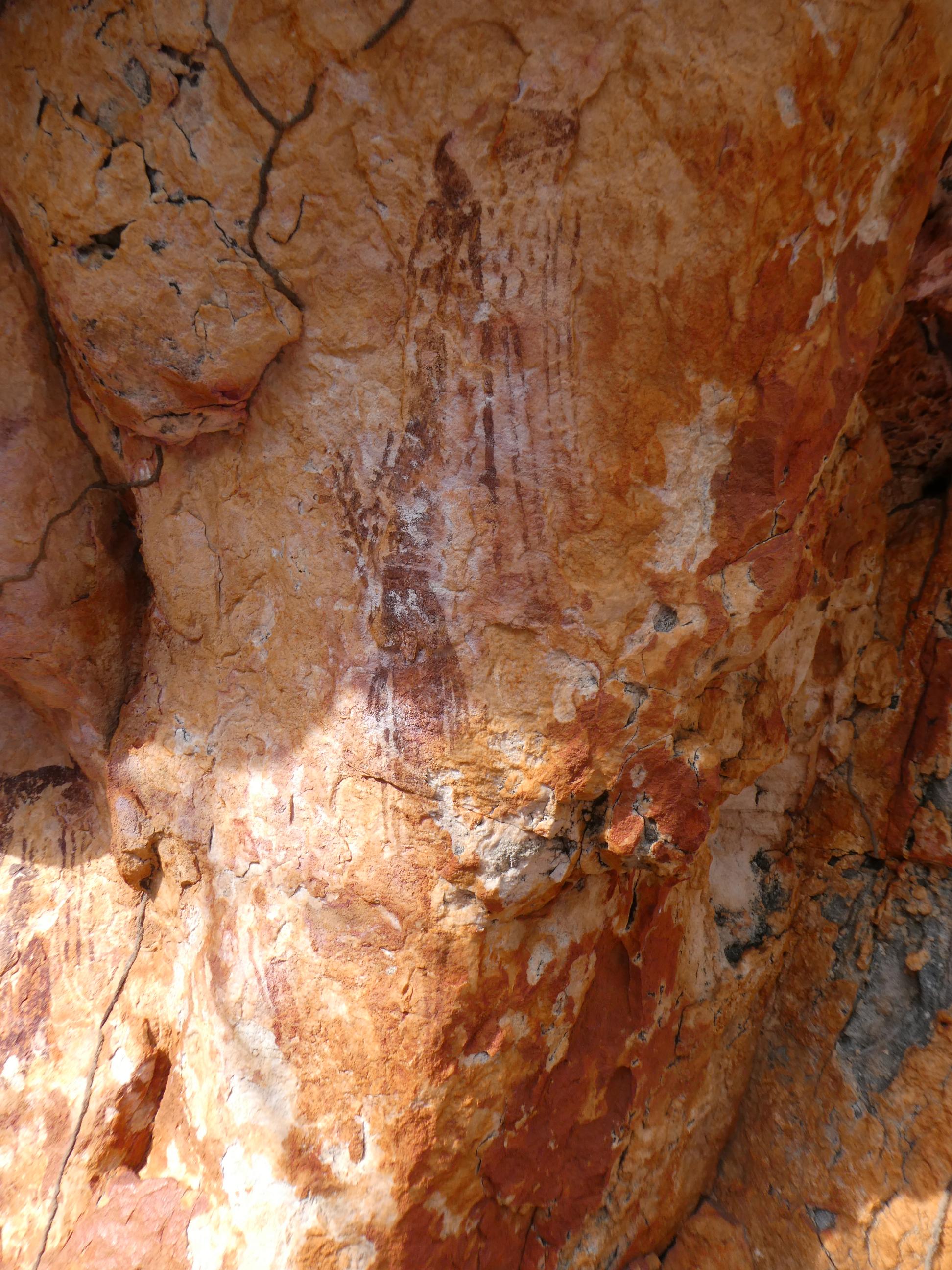
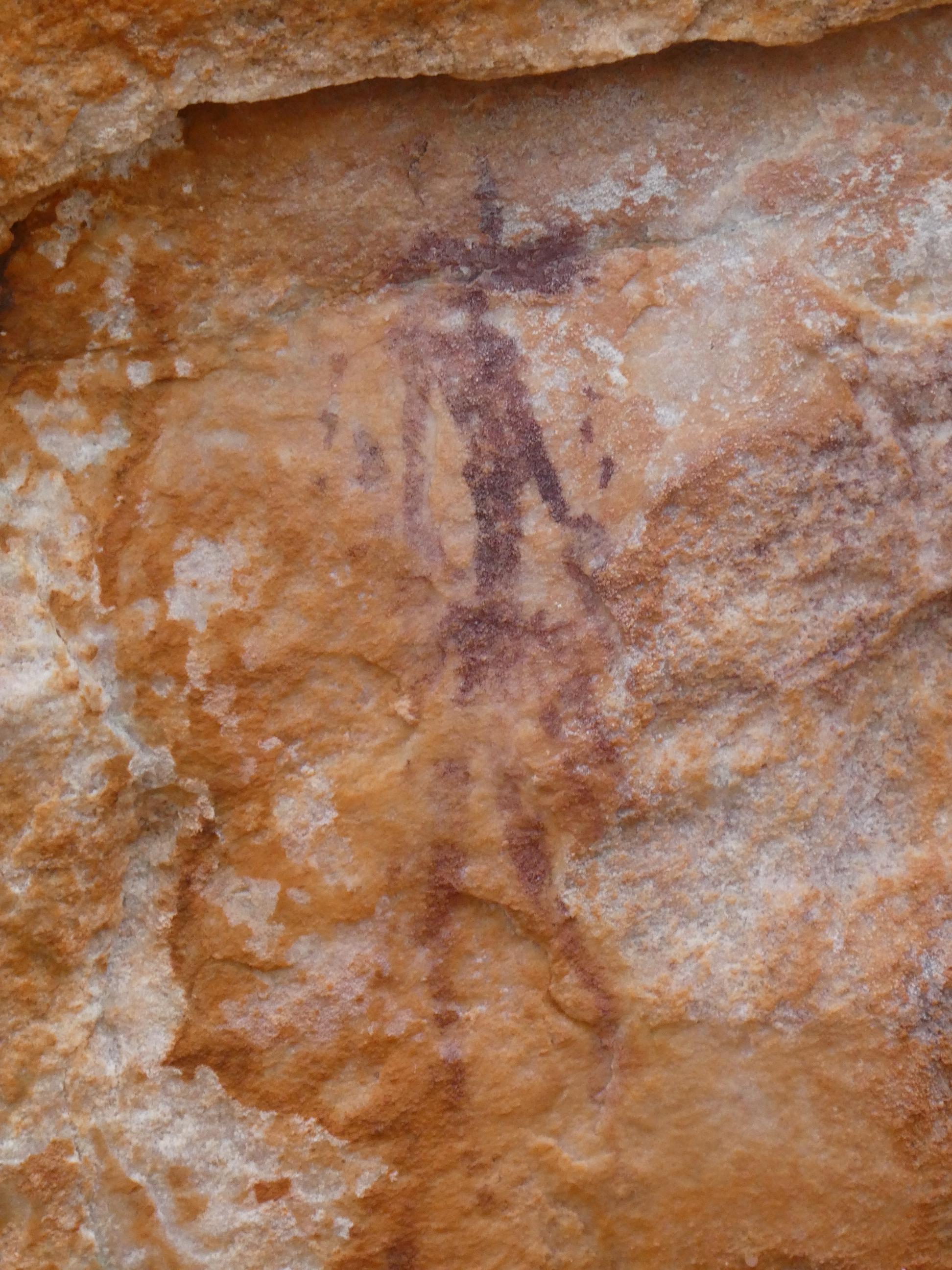
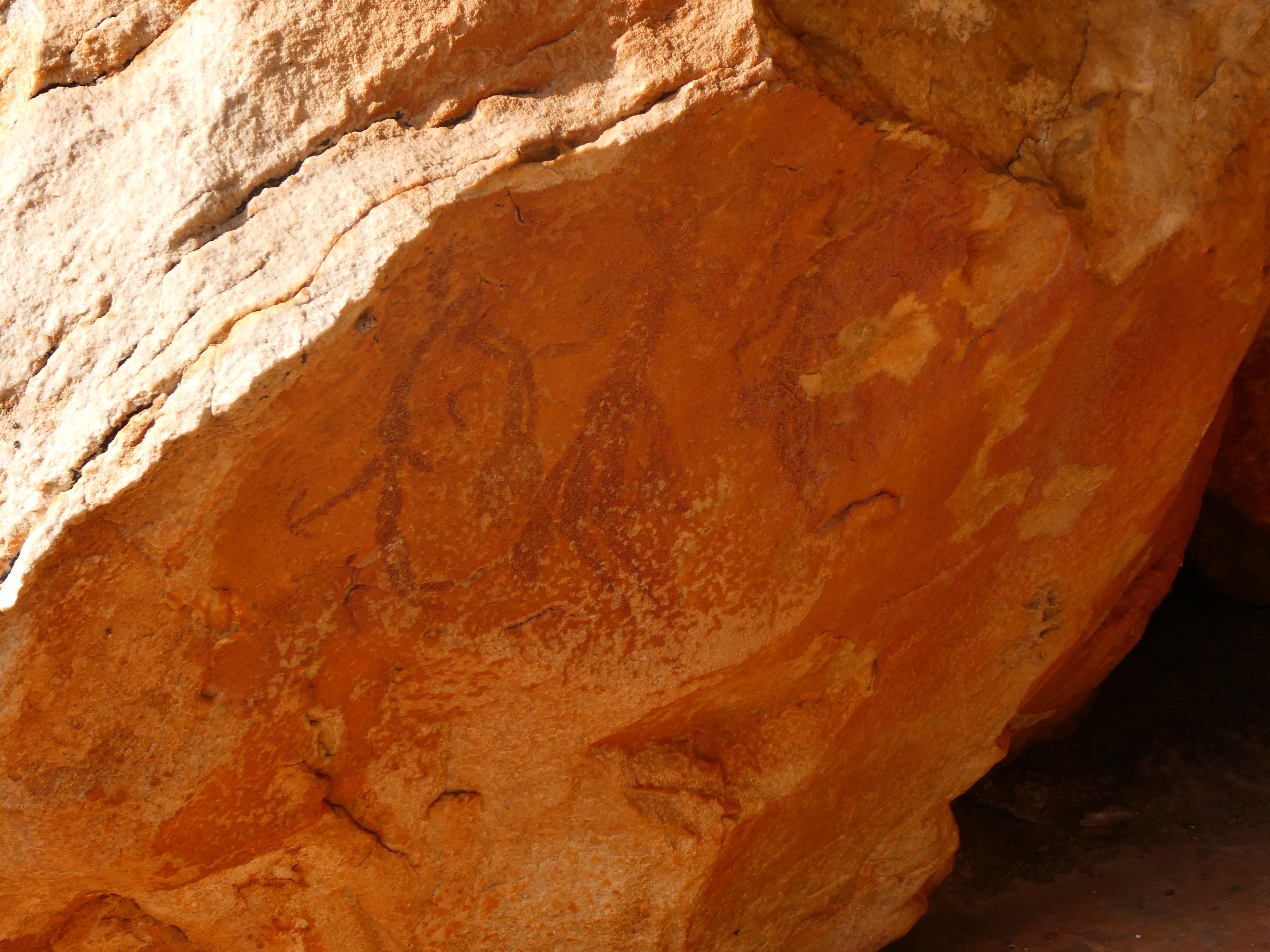
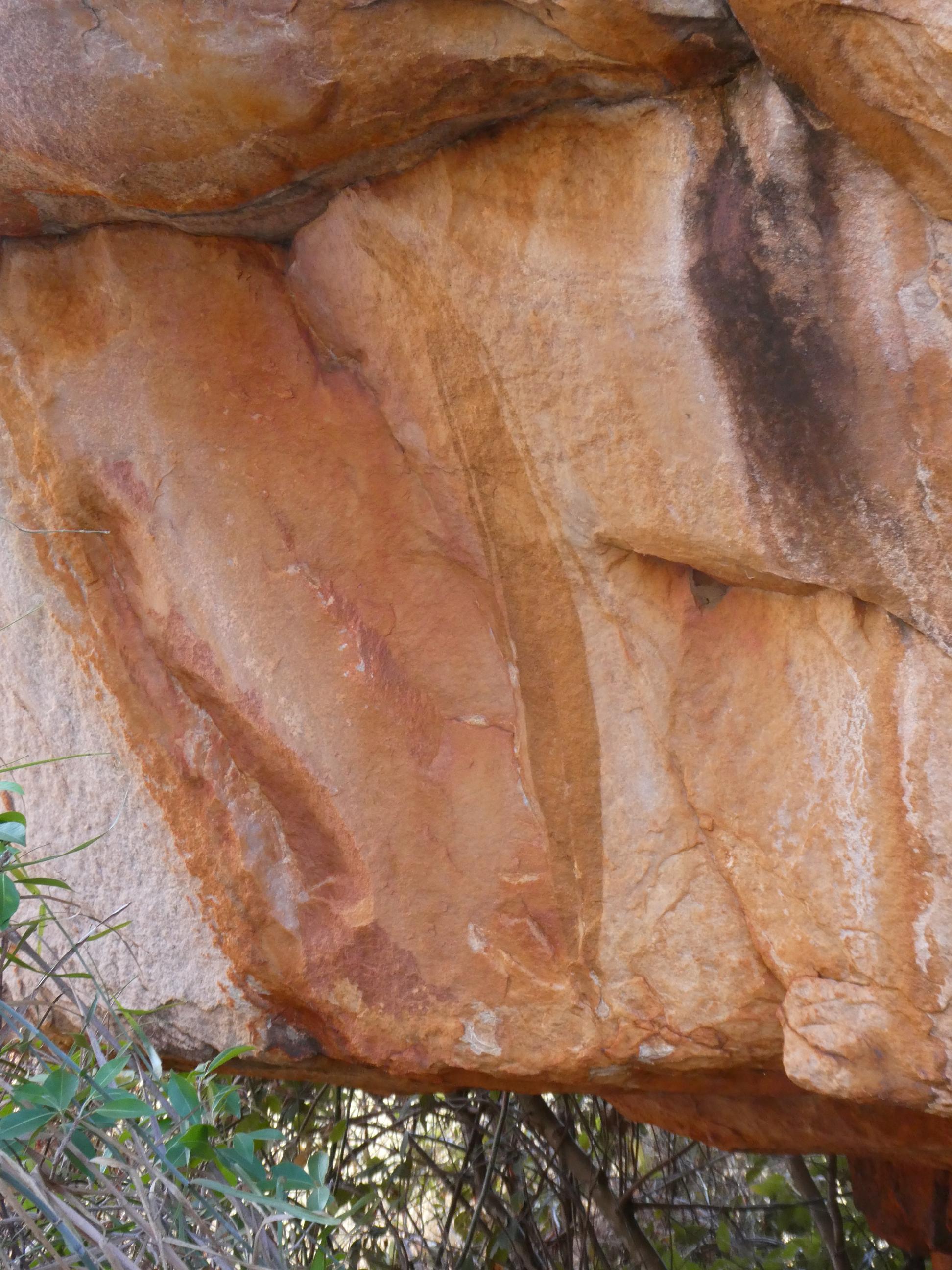
Not too far away, with a ‘moderate scramble’ over the rocks, we reached another gallery. There were some fish paintings here that I really liked, but to view them properly would require me to lie on my back beneath a huge boulder. I doubted my ability to do that and get up on my feet again, so I just reached my camera down beneath the rock, pointed and clicked. Luckily, it worked and I got a good pic without having to squeeze my aging body in under the rock. My other favourite here was the echidna painting.

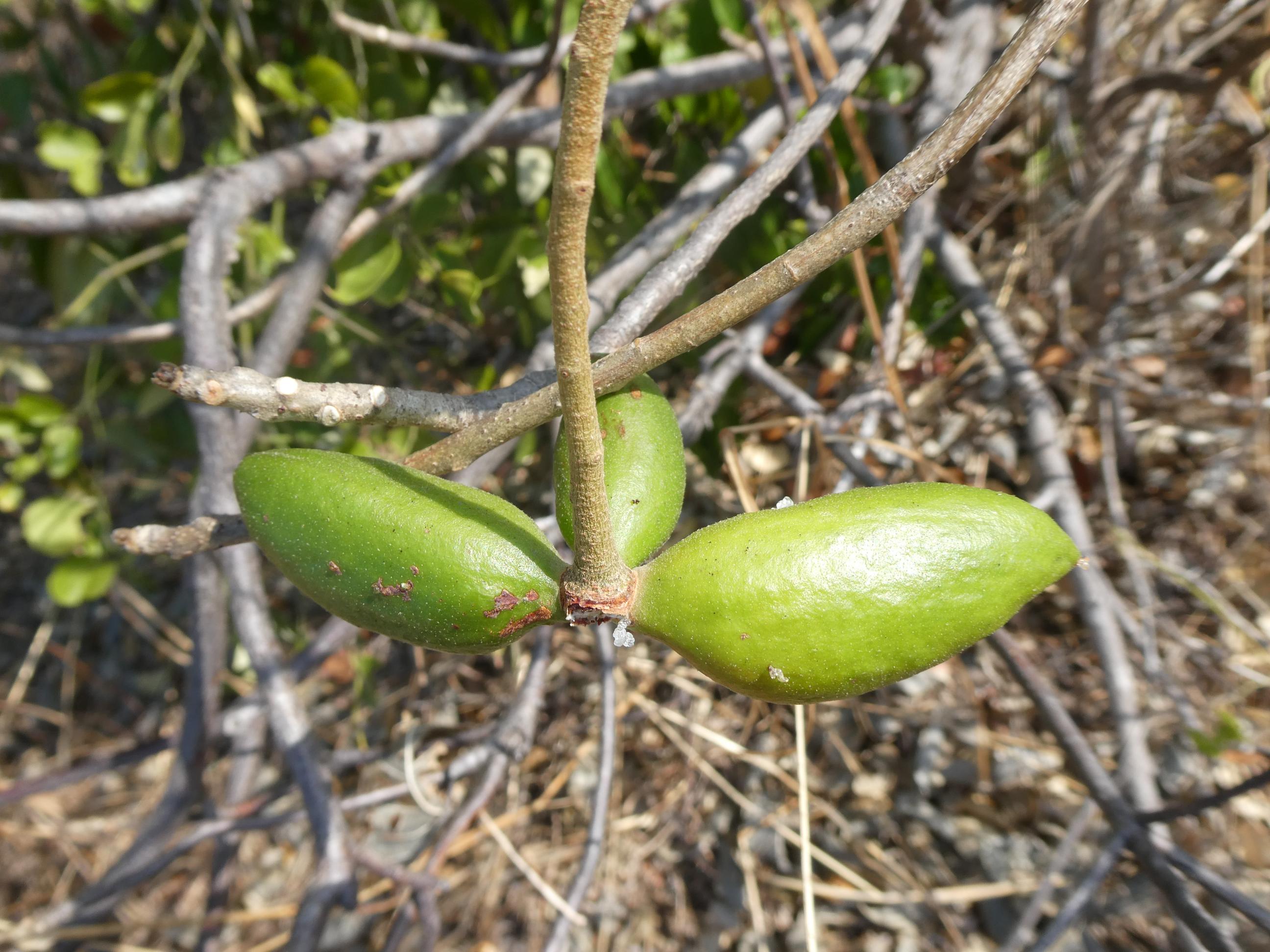
We walked back to the beach, where our tender was waiting to take us back to the ship. I stopped at a plant with interesting fruit. I thought they might be finger limes, but later found out then were bush bananas. Apparently they make pretty good bush tucker. As we pulled away from the beach, our friend the croc was still where we’d left it, out near the rocky point at the end of the beach. No doubt it was keeping an eye on us as we motored away. The water was as still as a mill pond in Vansittart Bay when we returned to our ship.
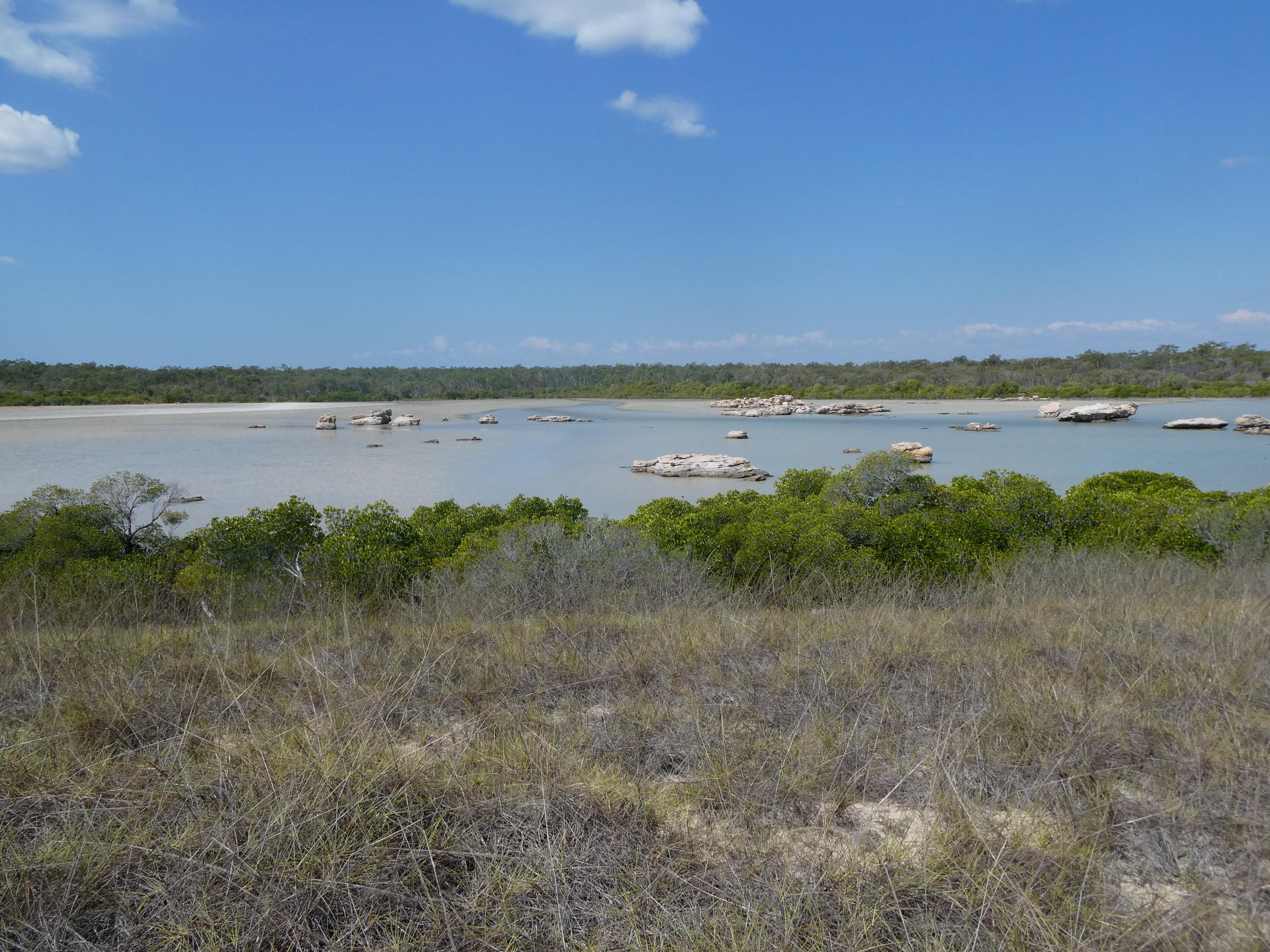
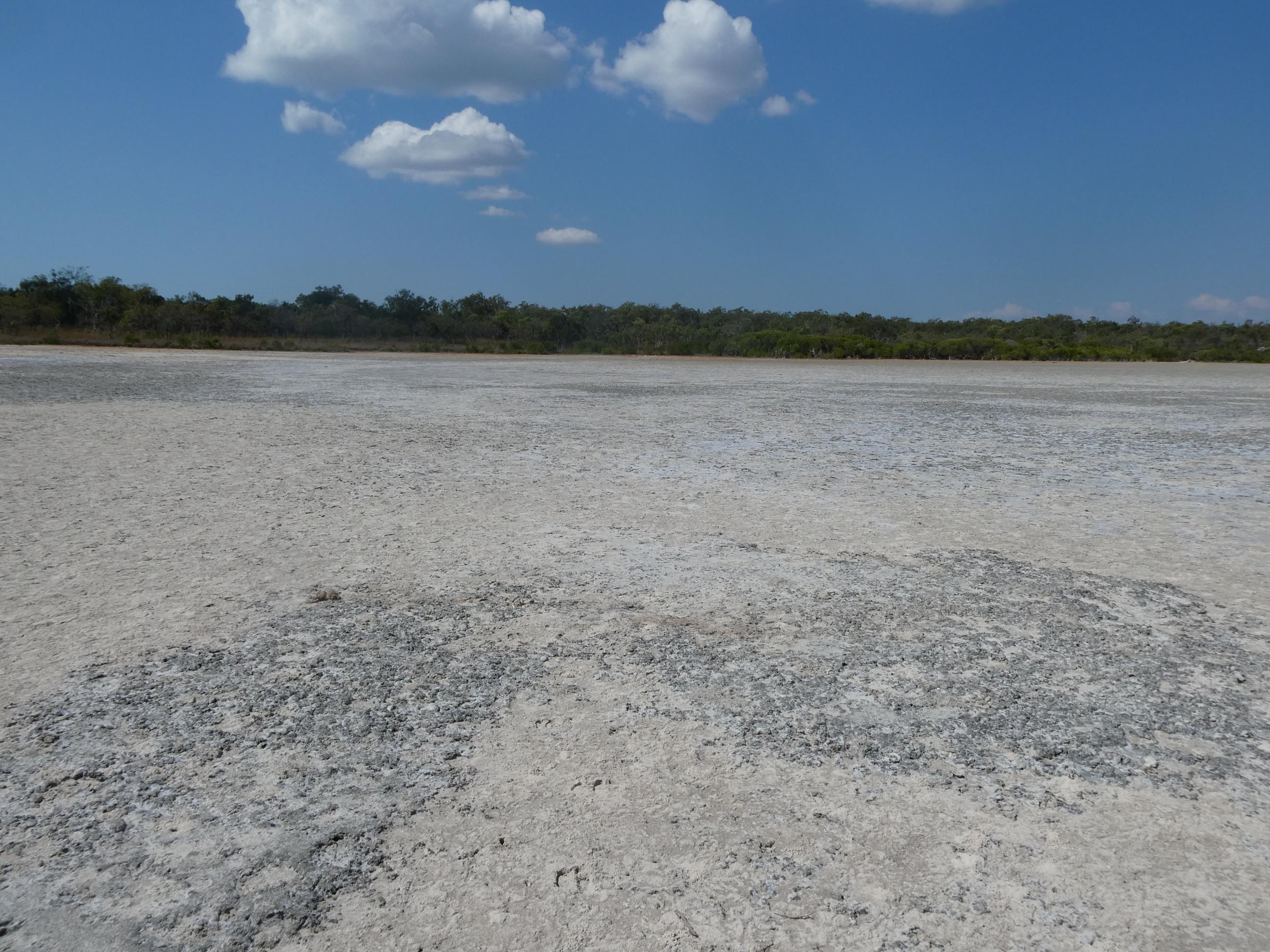
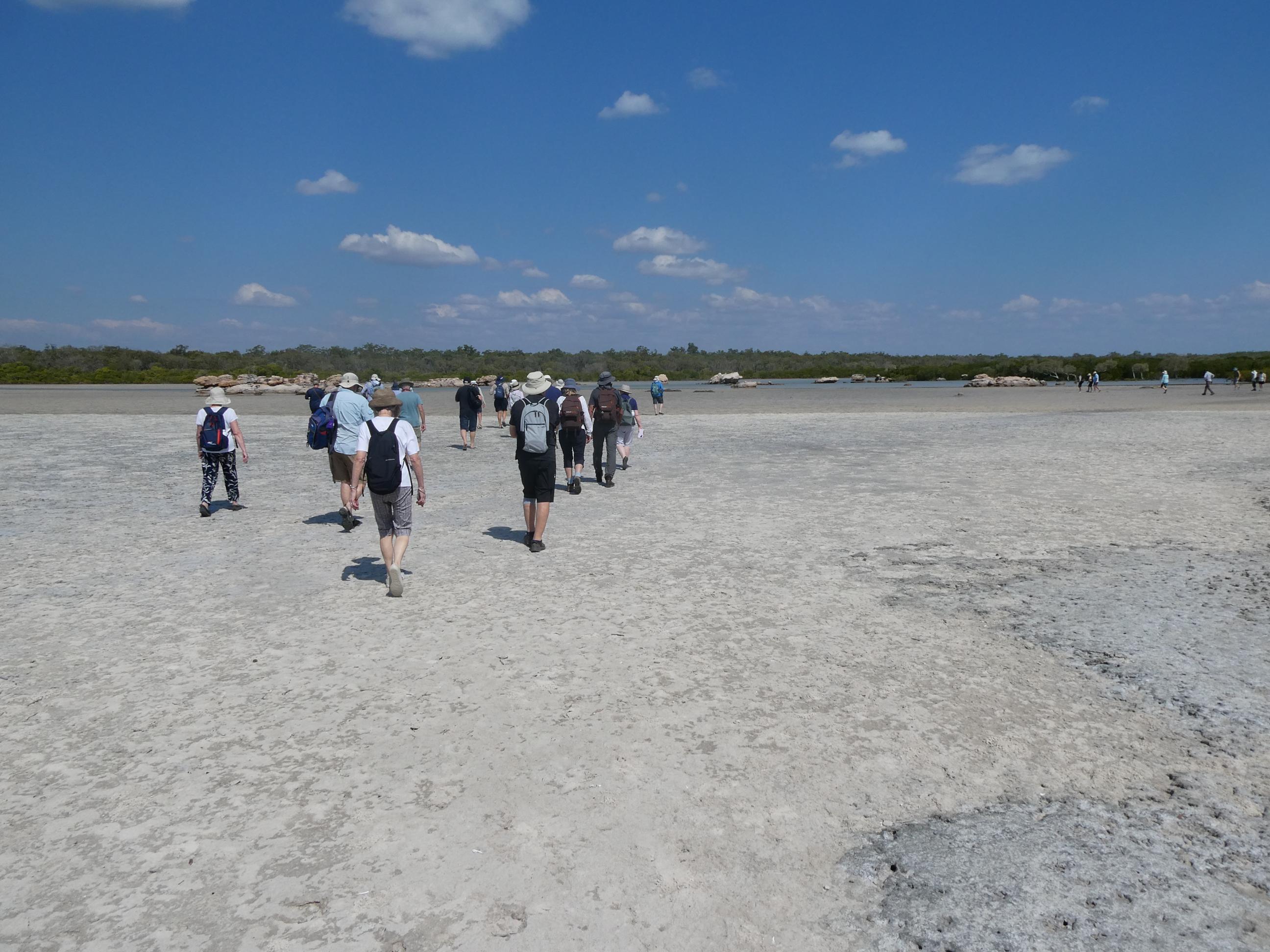
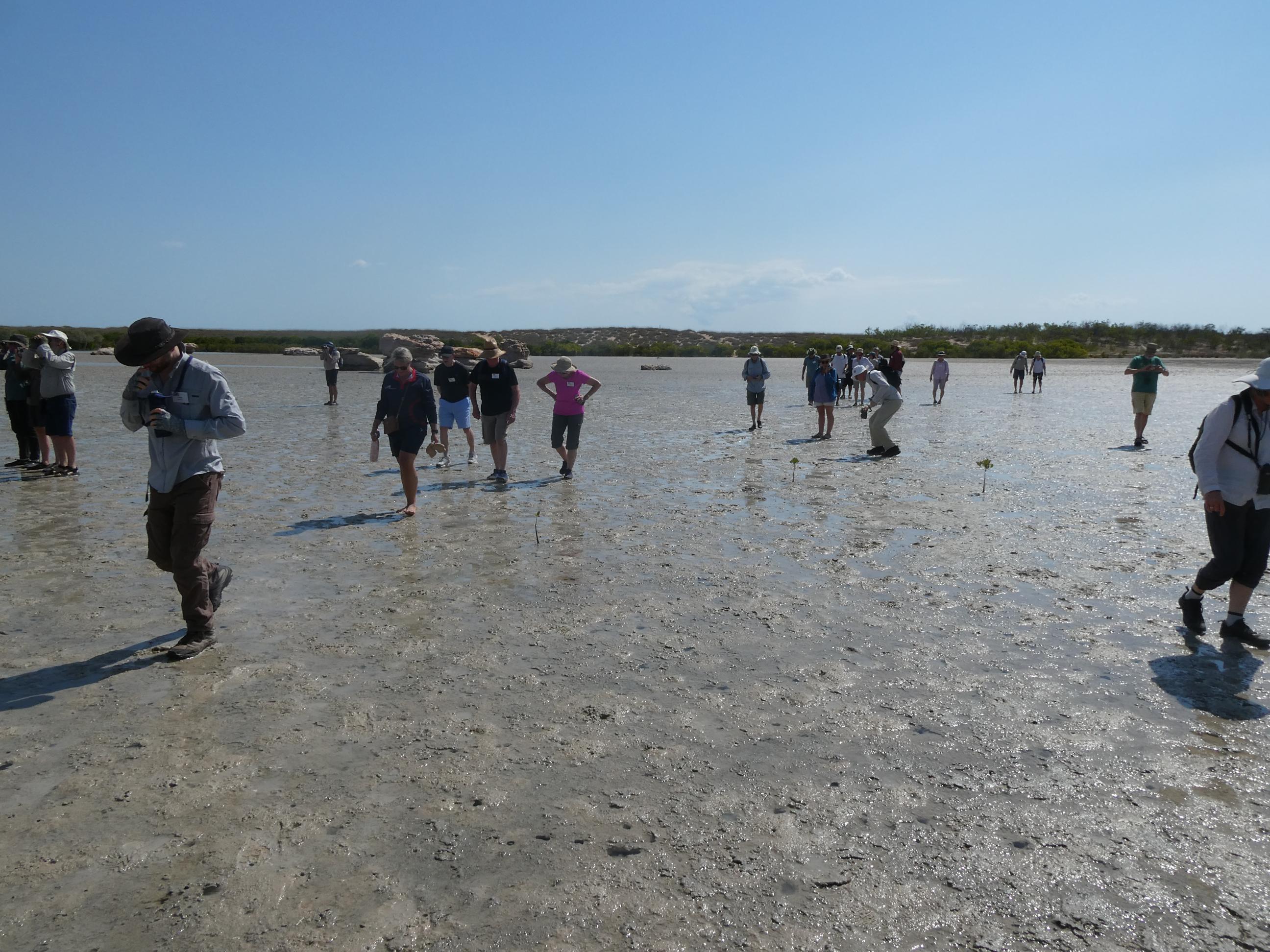
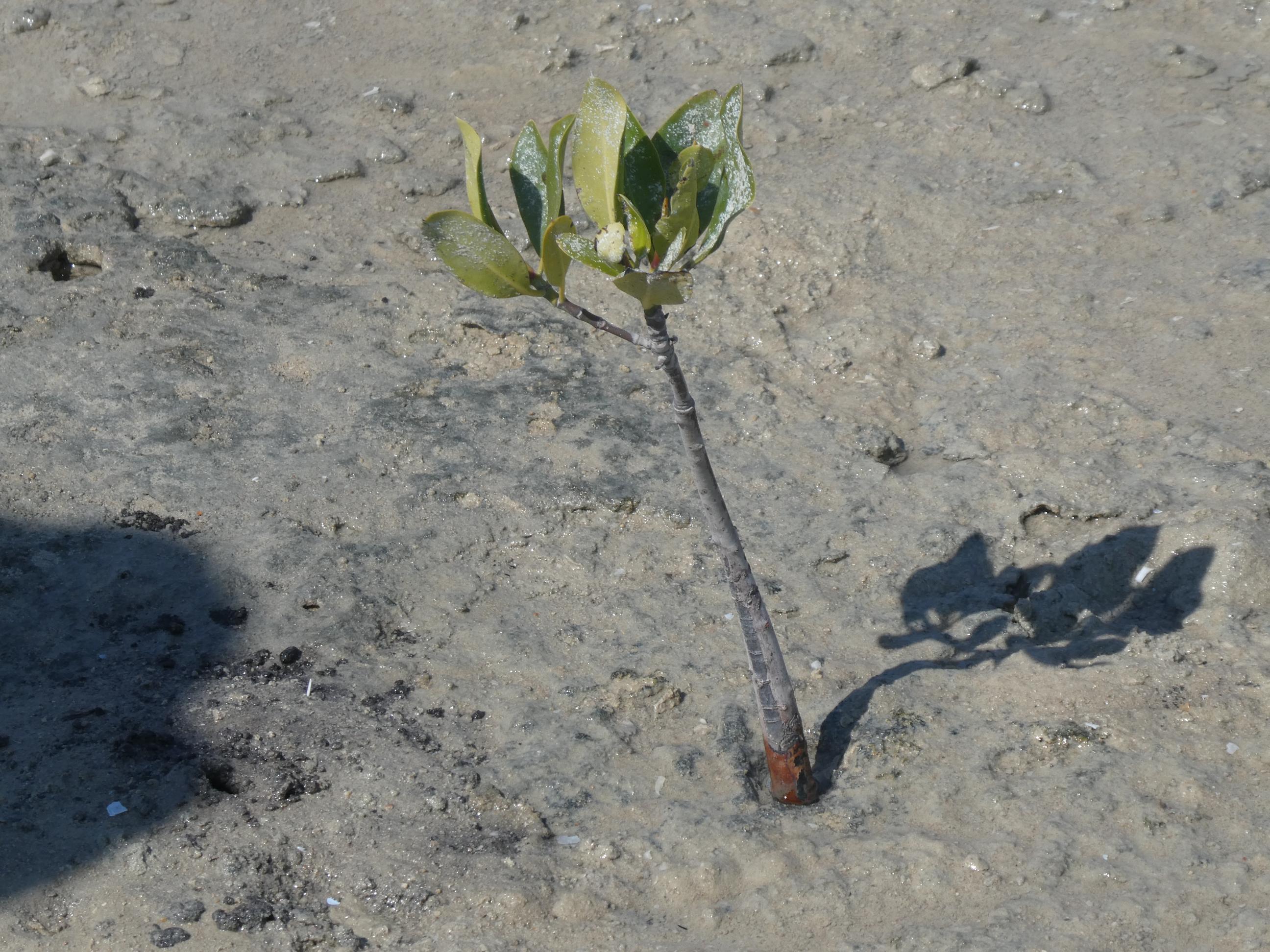
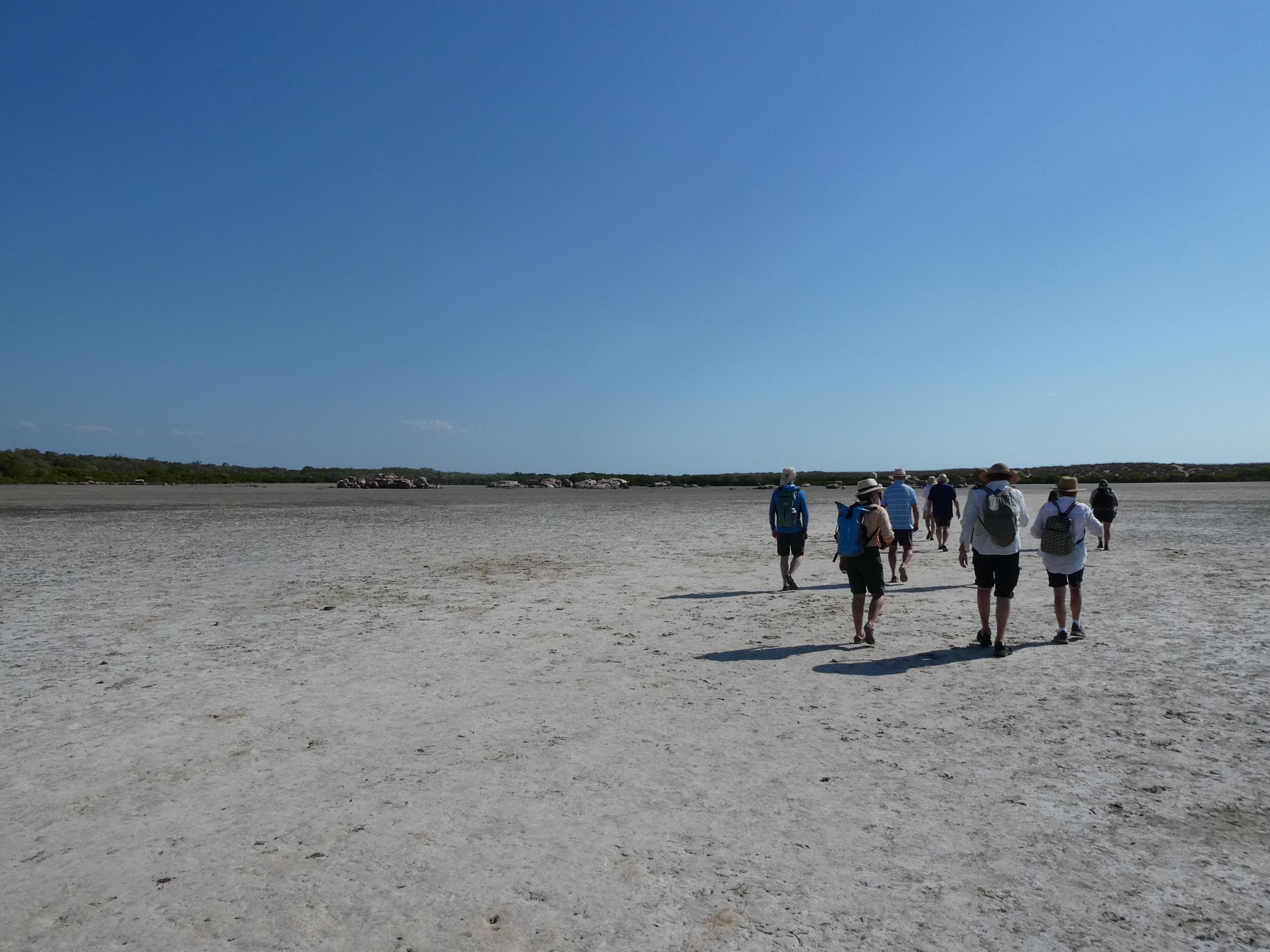
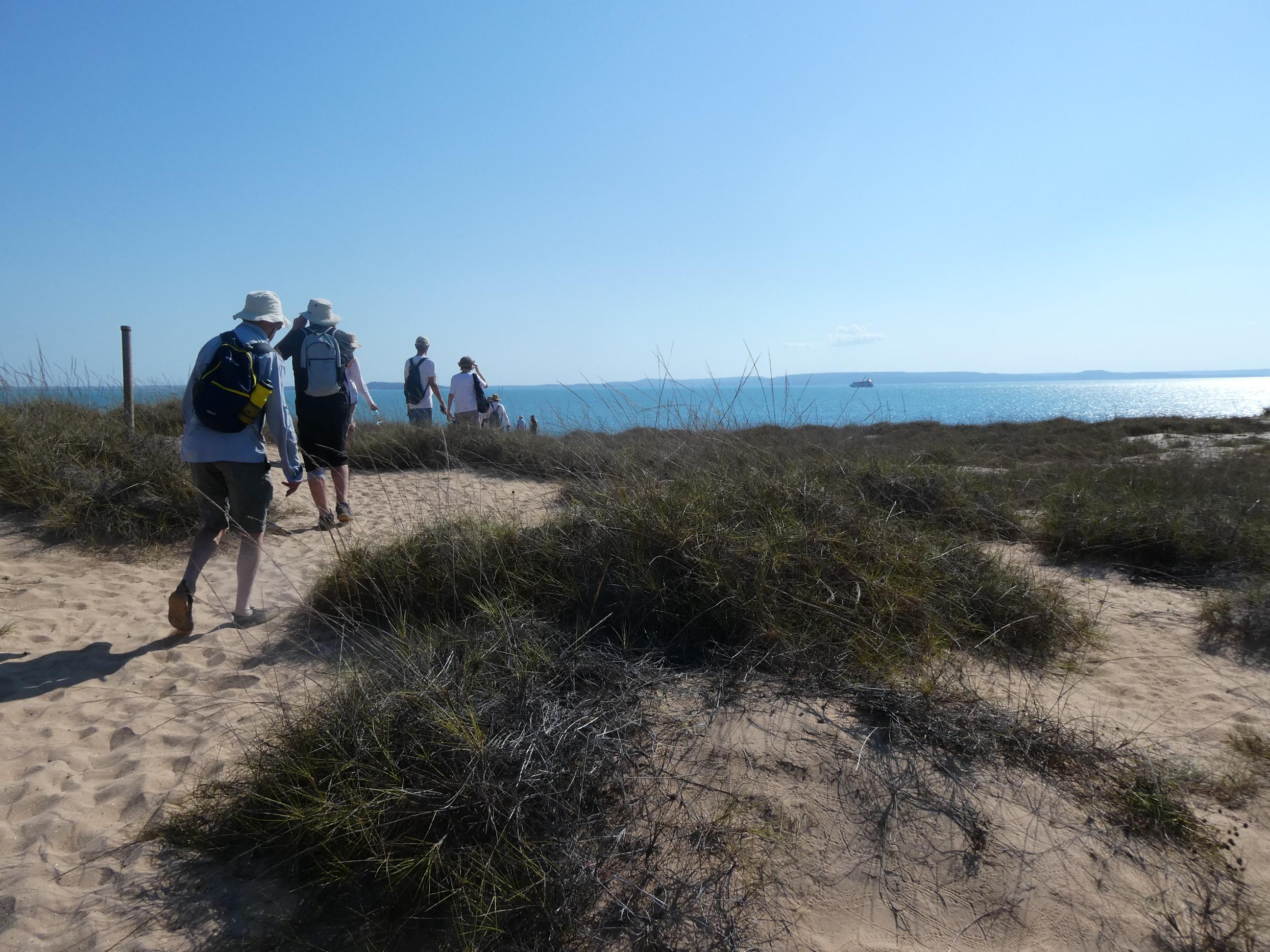
After lunch we were out on the tender in Vansittart Bay once again. This time it brought us to a beach on the Anjo Peninsula mainland. Our tour director David told us that this land was part of a large cattle station, where the stock roamed freely as there were no fences. There were no crocs on this beach and no evidence that they’d been here earlier in the day. We walked up over a sand dune and found ourselves facing a large tidal flat. The tide was out and we were able to walk across it. The outer edges were hard and crusty from drying in the sun, but then we had to walk through a large area that was sloppy and wet underfoot. It had recently been submerged. As we approached, hundreds of crabs scattered and disappeared under the sand. Tiny mudskippers flopped over the sand. They weren’t easy to spot, but were fun to watch when we found them. Occasionally a small plant forced its way up through the mud. I had a feeling this place would be teeming with life once we’d gone, no matter what level the tide was at.
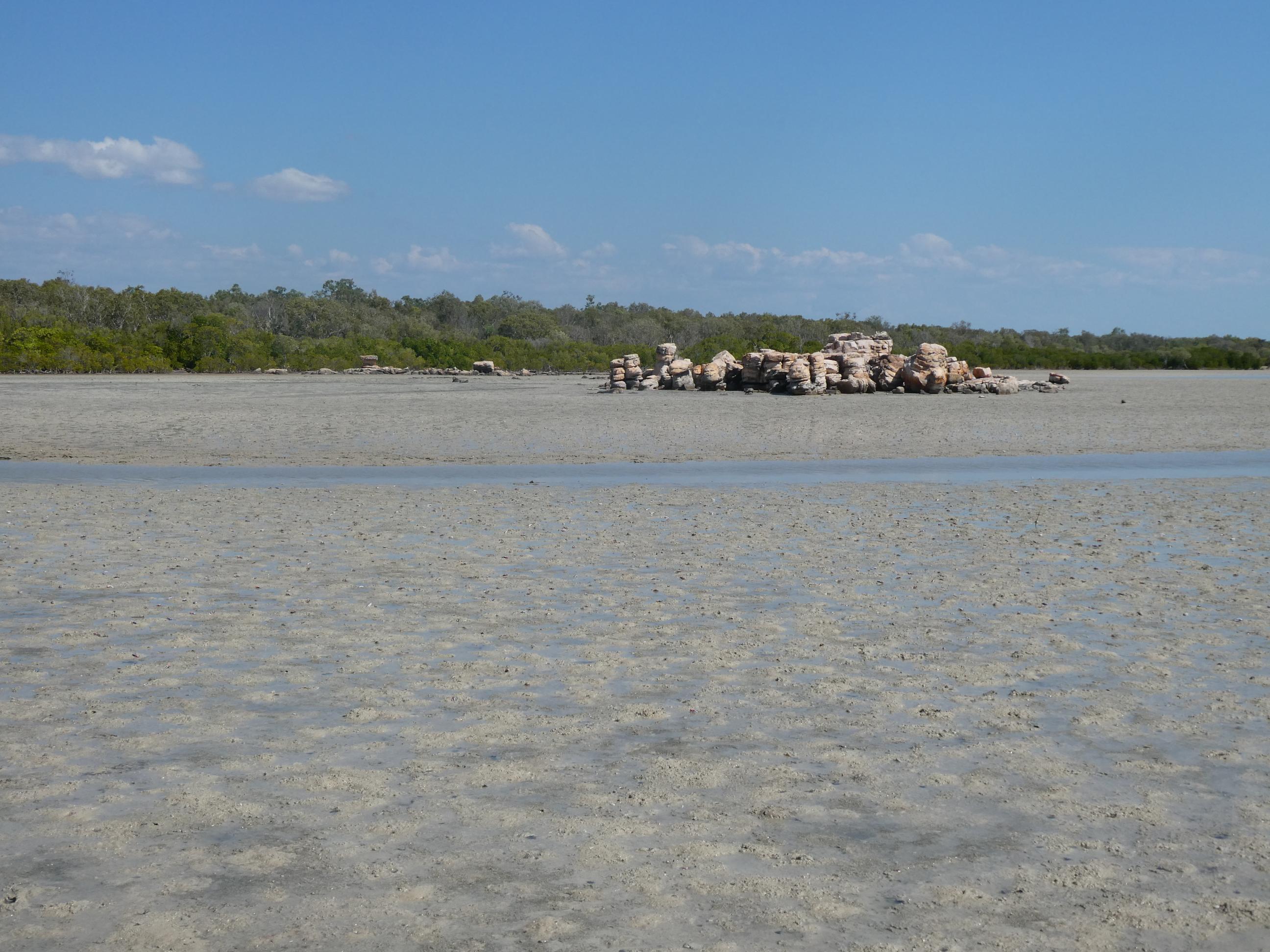
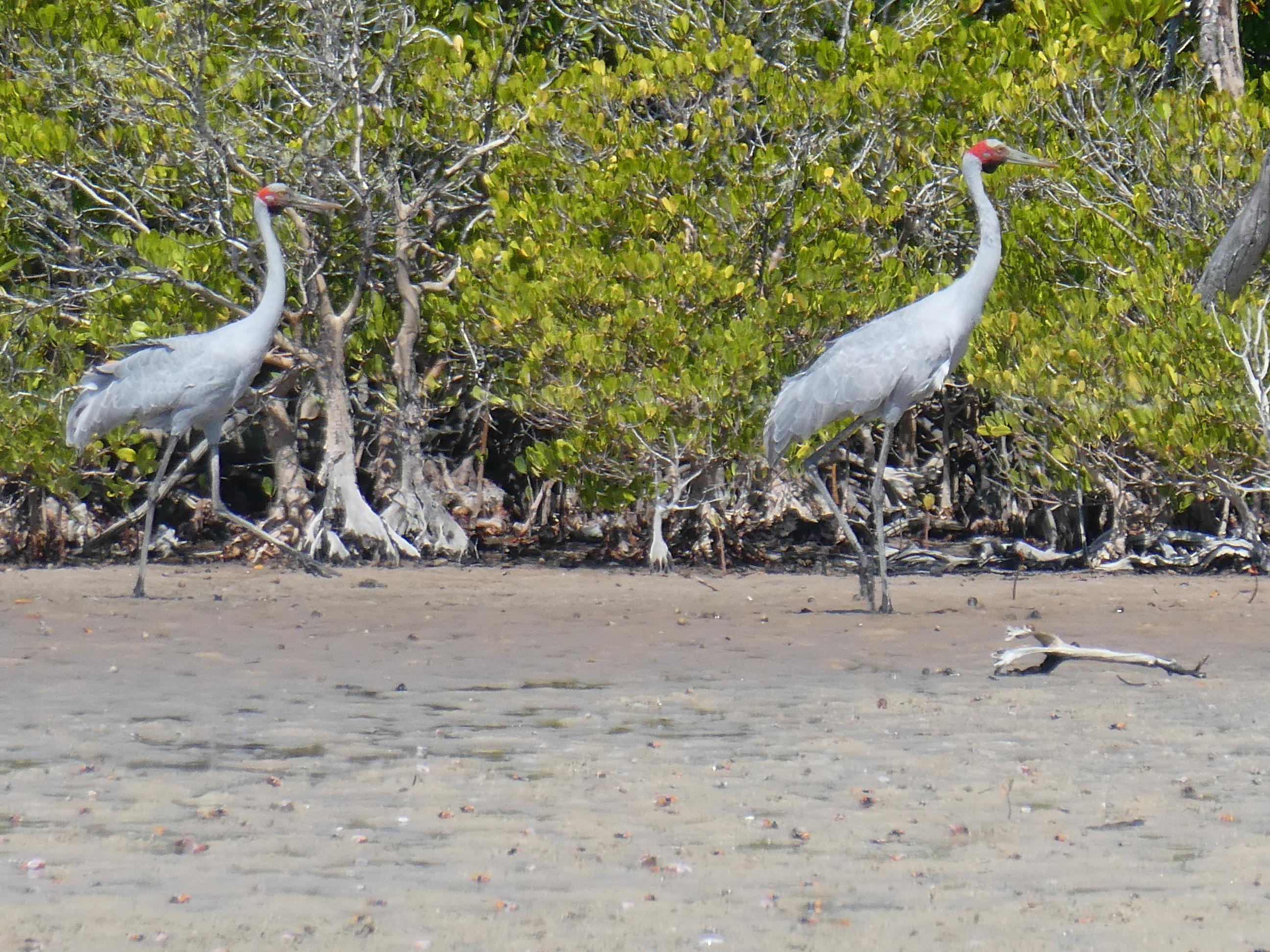
We stopped to watch a handsome pair of brolgas make their way across the far side of the tidal flat, just where the mangroves began. They must have been aware of our presence, but continued on their way while we all watched in fascination. When they took flight, they were graceful, but disappeared behind some rocks before I could get my camera up.
Just beyond the tidal flat, a short walk through the scrub, we came upon a crashed DC3. It’s something I would never have ever expected to find in such a remote place. It was an American plane flying vital supplies north to Broome in February 1942. As darkness was falling, and with Broome not yet in sight, the pilot realised he had made a terrible error in his navigation. He’d overshot Broome by 400 km and his fuel tank was critically low. He realised he had to bring his plane down in the bush. He brought the plane in low and slow, employing his wing flaps to stall the approach. He managed to avoid low trees and brought the plane in on its belly. All four men aboard survived uninjured. It was a very skilful landing with more than just an ounce of luck. In Broome, people realised the plane had not come in when expected, and a few days later the wreckage was spotted and the crew were rescued. As aircraft parts and supplies were of high importance during the war, another party was sent in to retrieve anything salvageable from the wreckage. In recent times, fishermen apparently removed some of the fuselage to repair a section of their boat. It was gratifying to find the plane free of graffiti, despite it lying here for over 80 years.
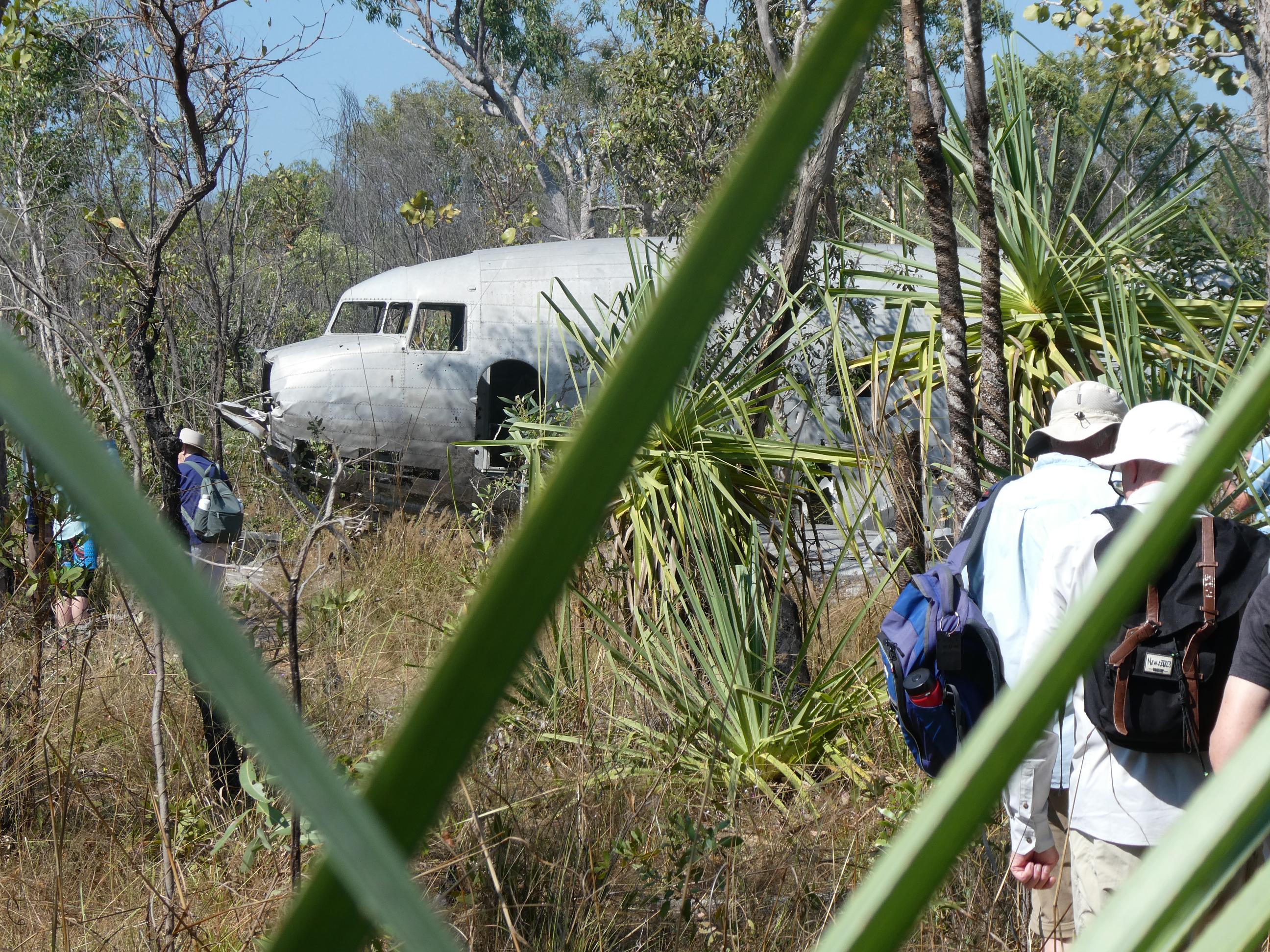
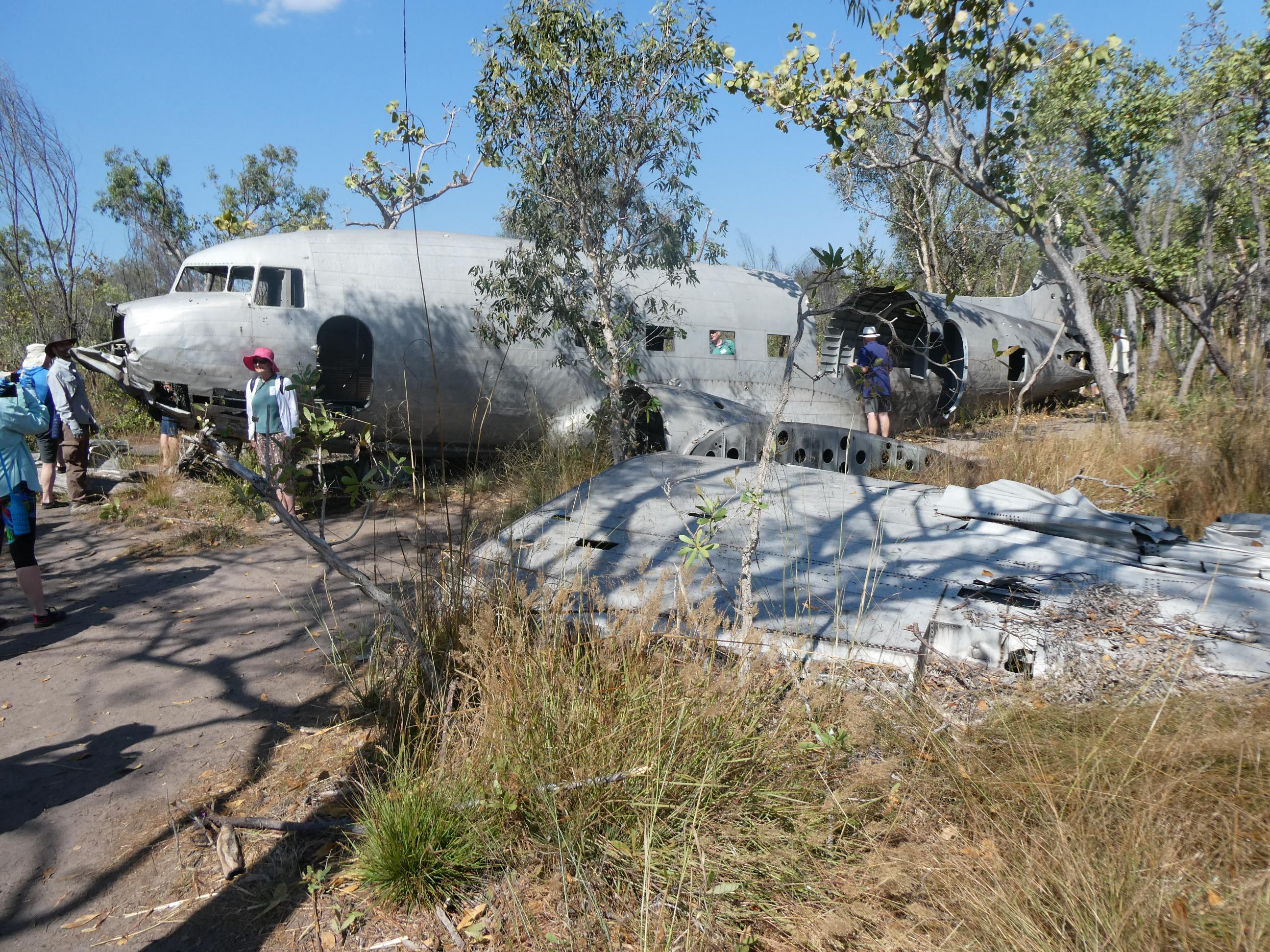
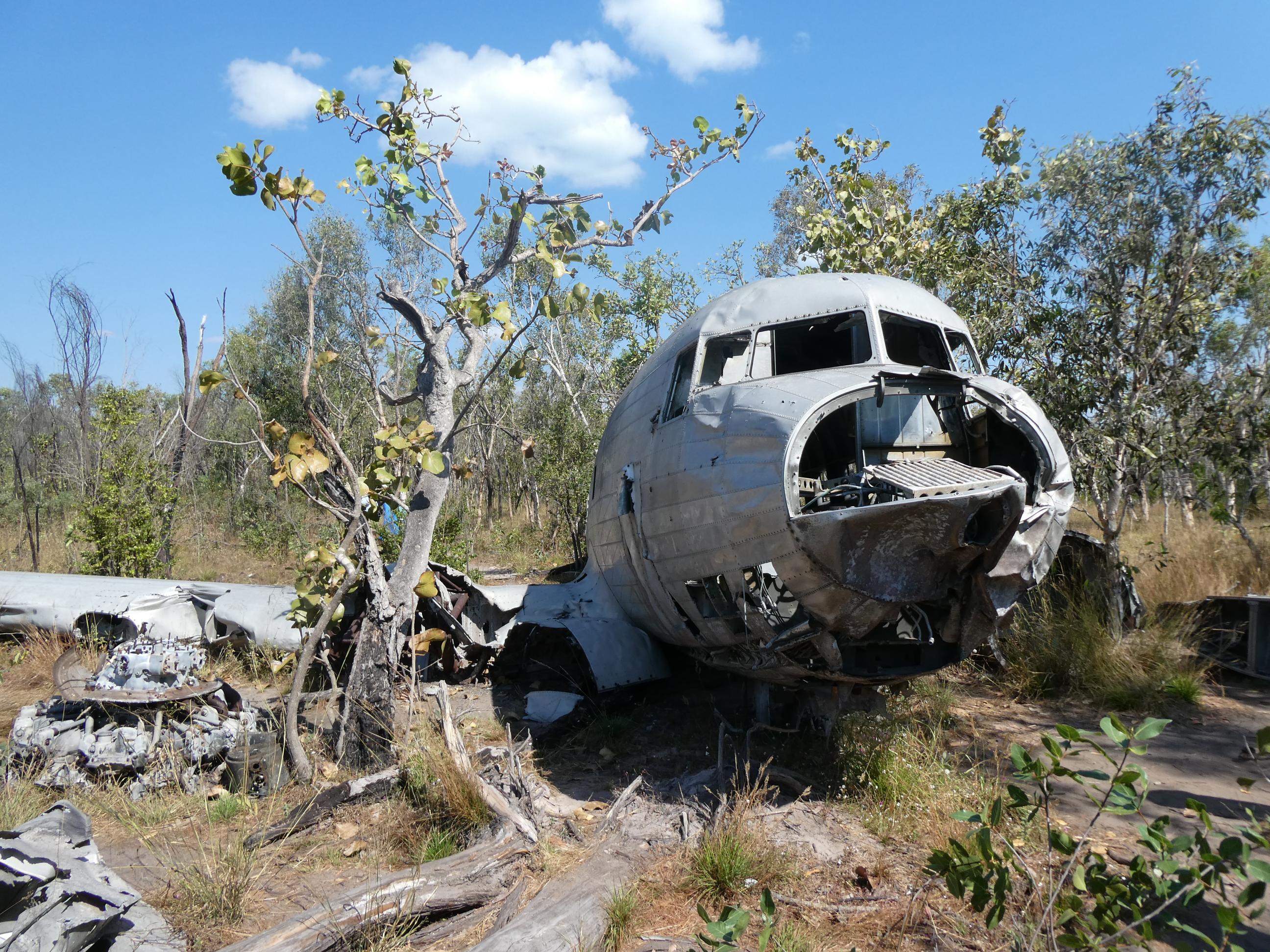
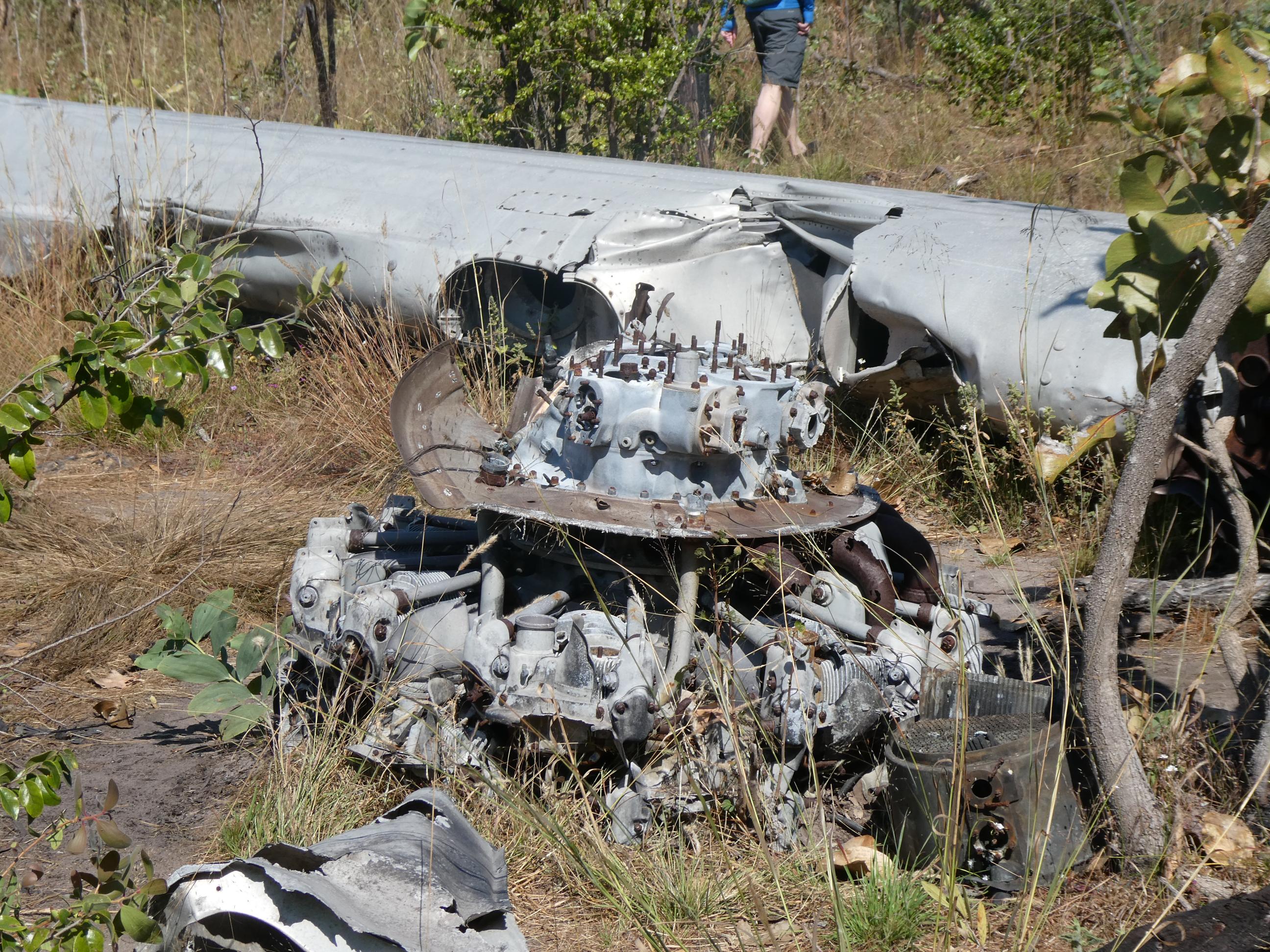
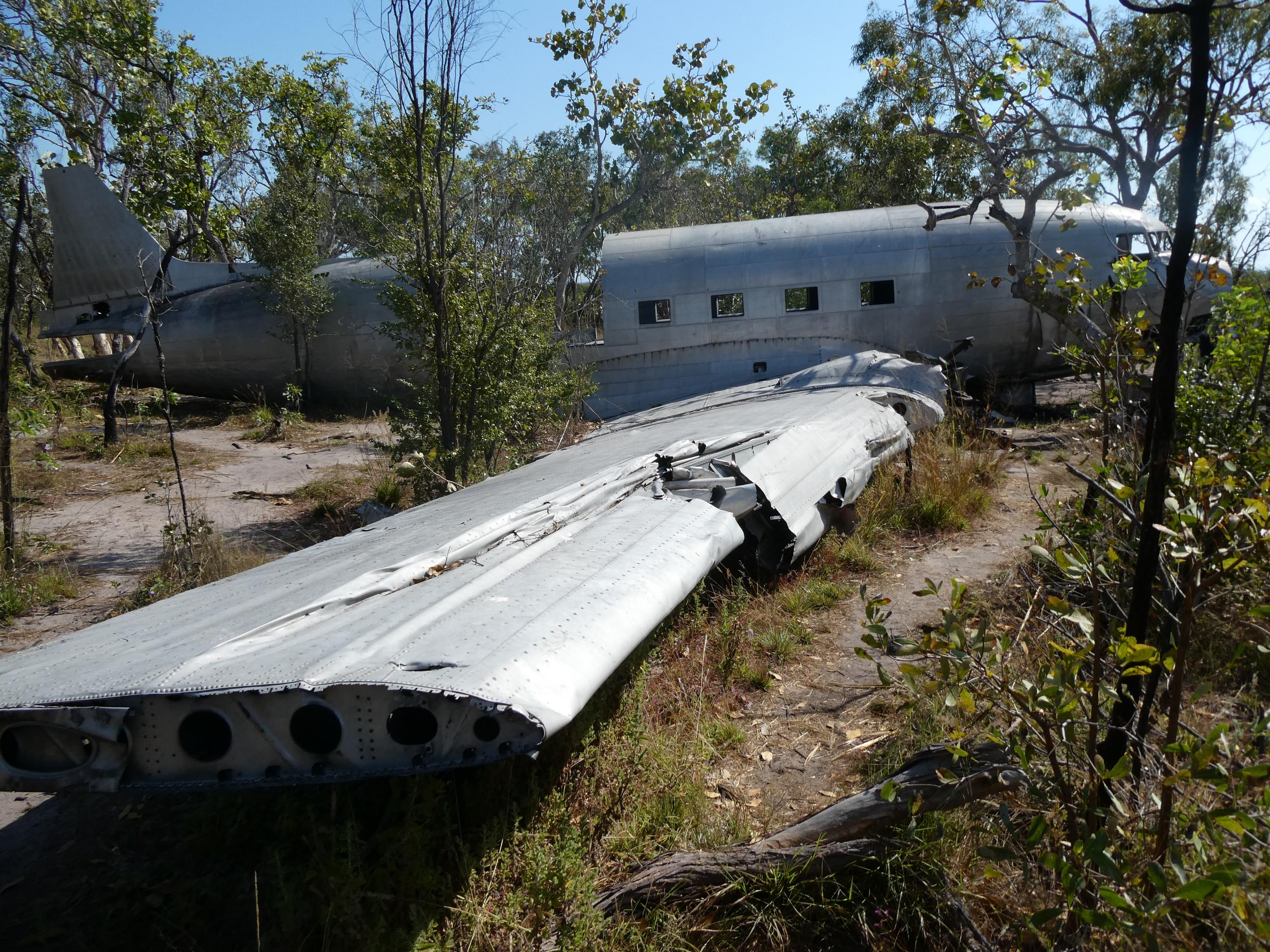
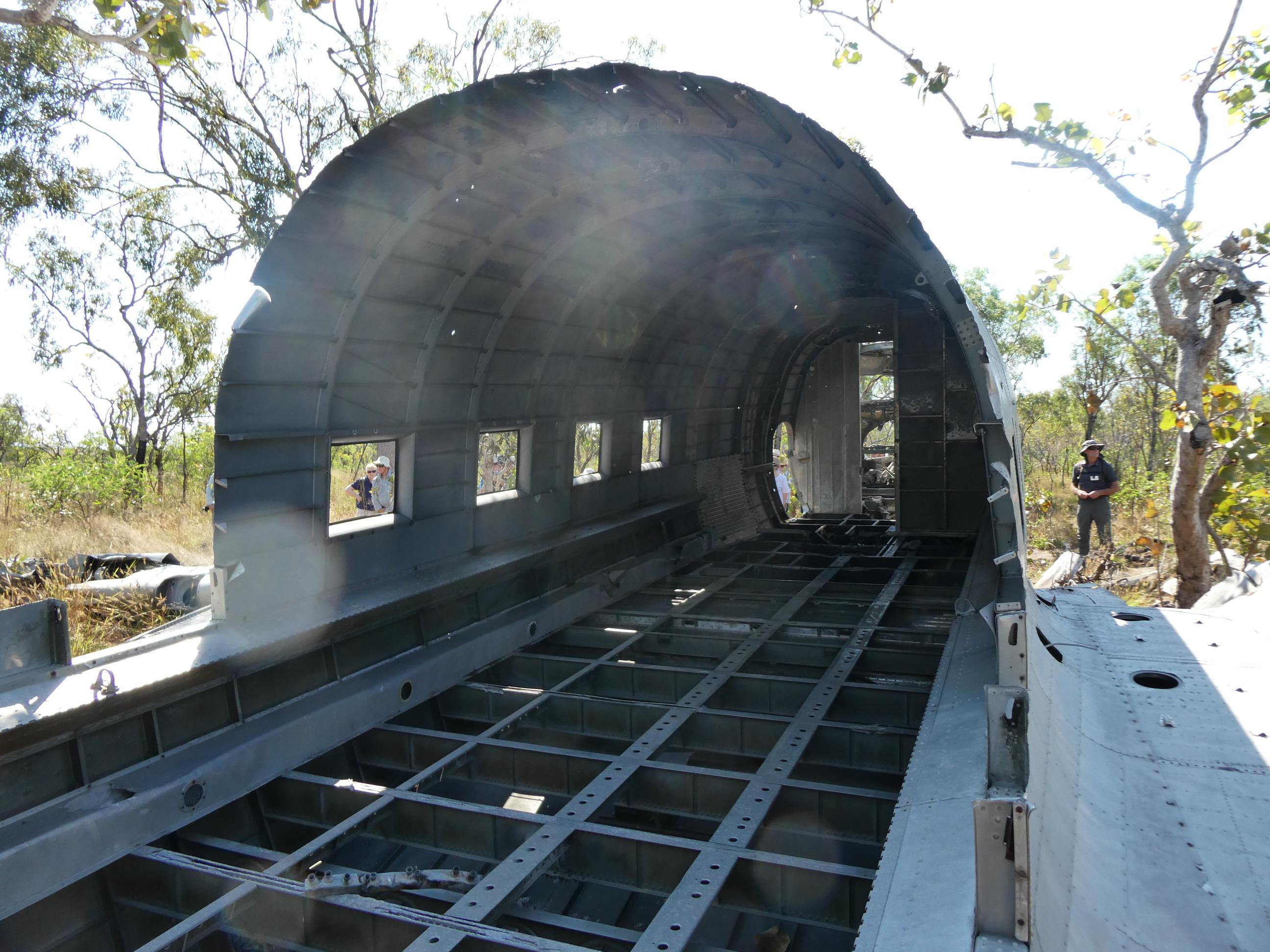
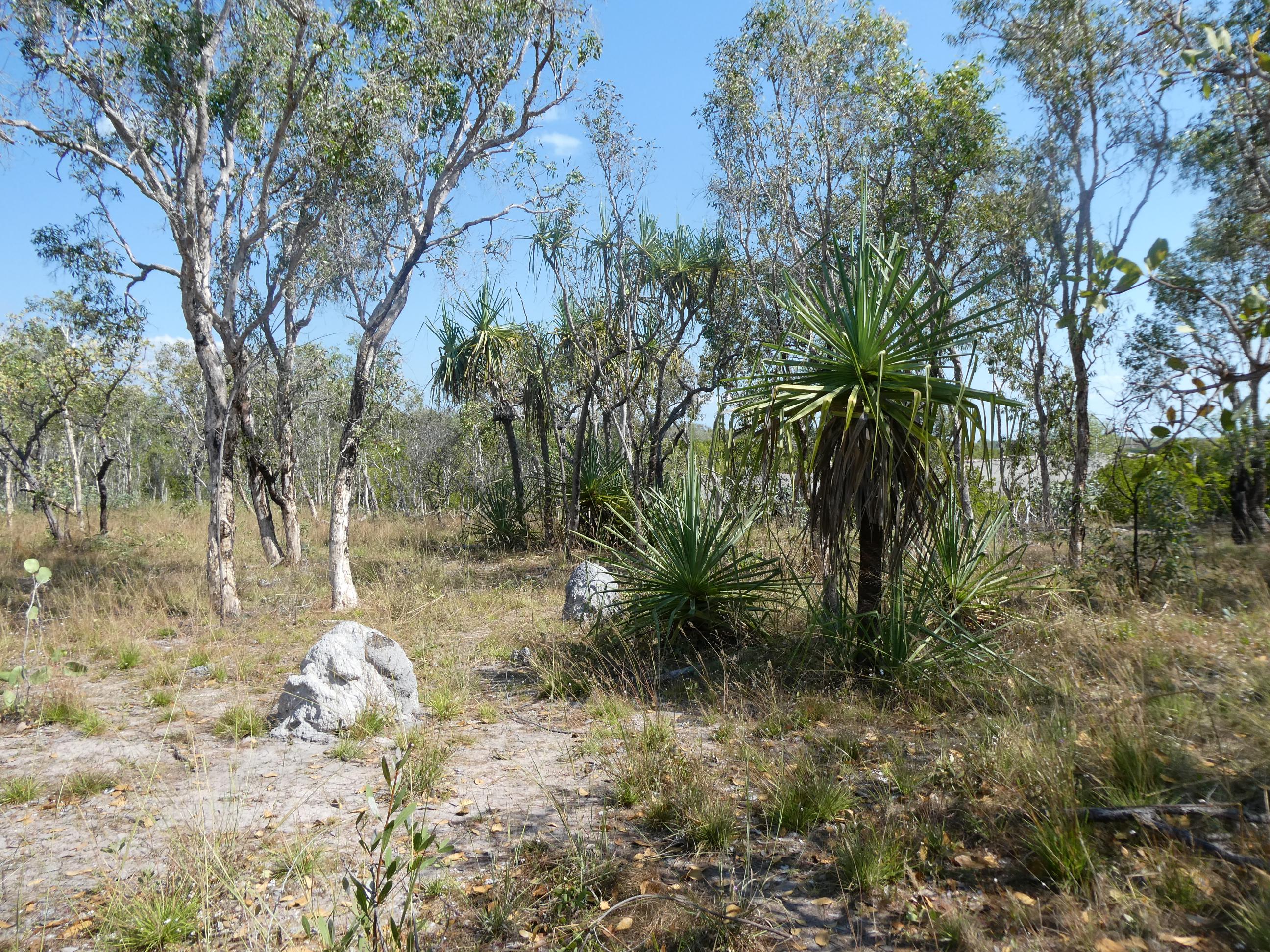
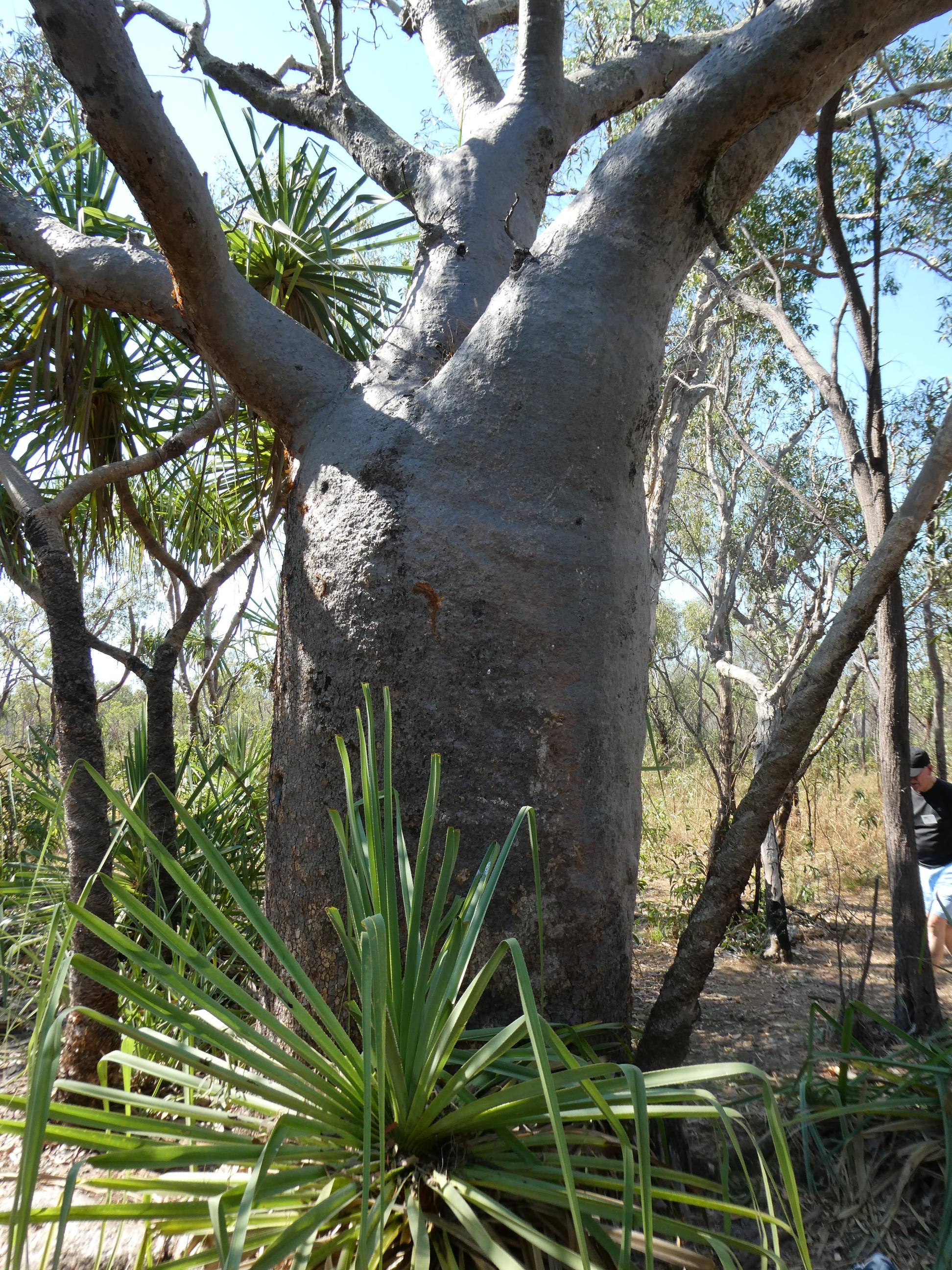
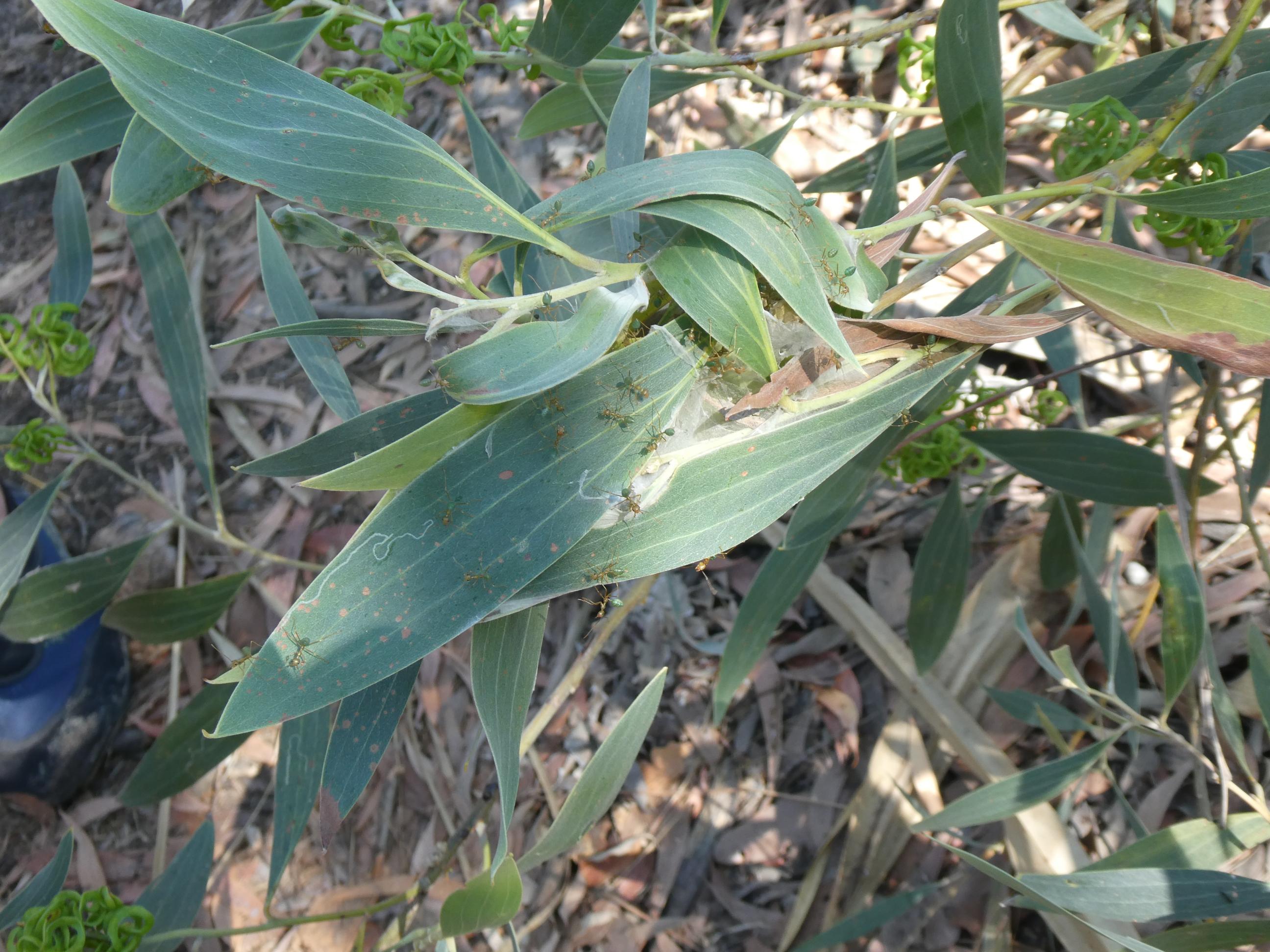
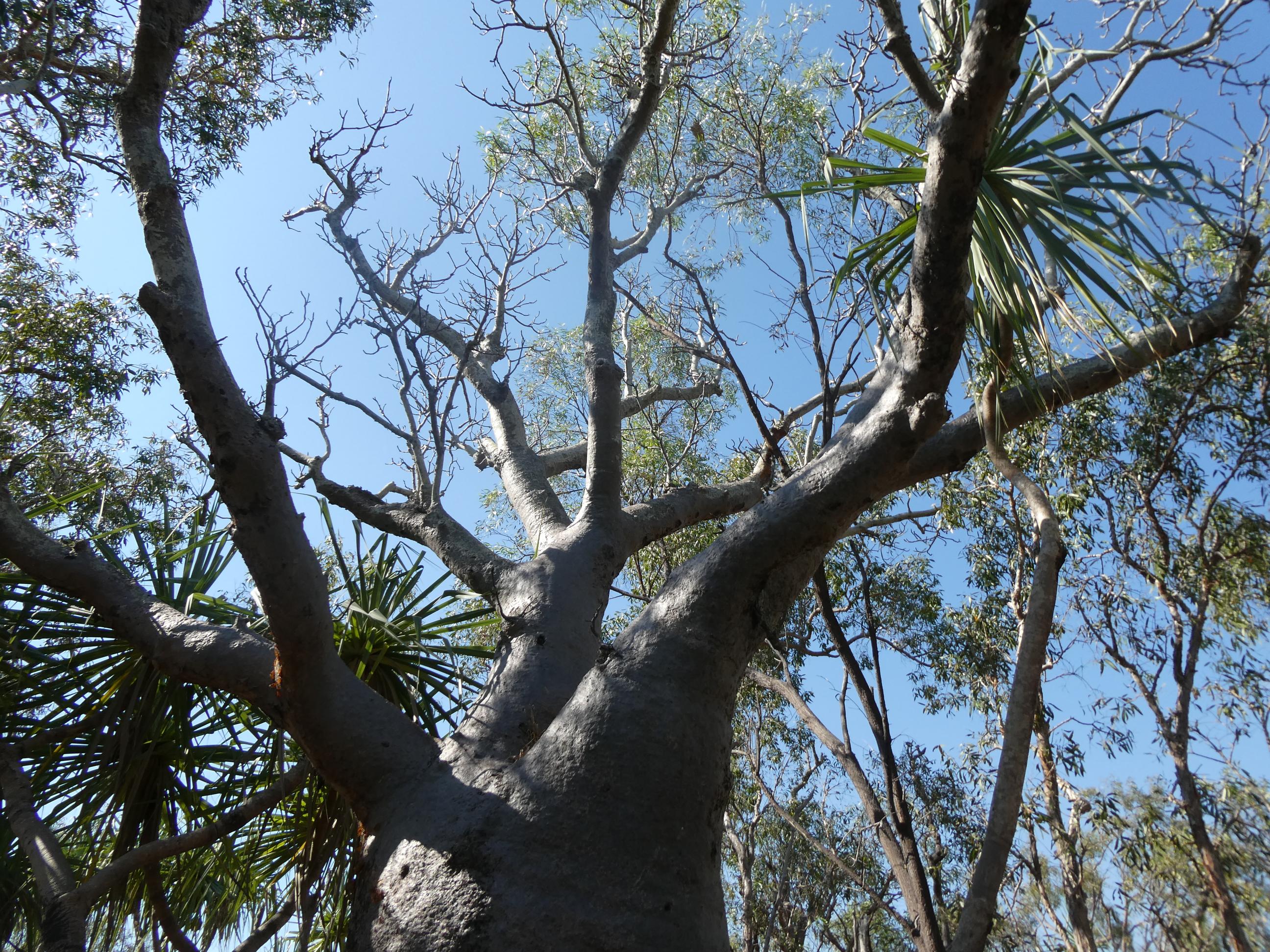
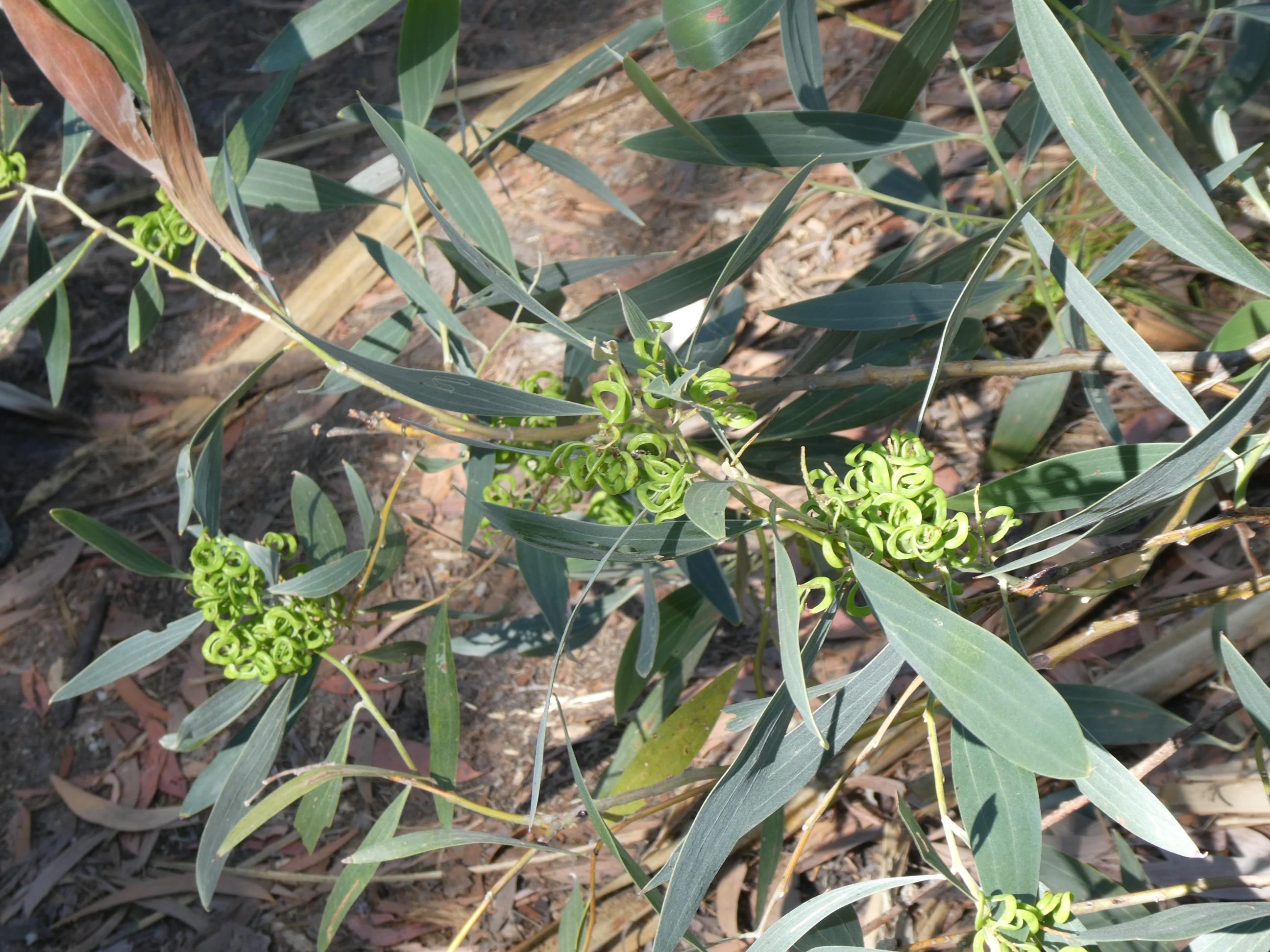
The scrub surrounding the plane crash site had a few surprises for us too. A large boab tree was just metres away. It looks as though it has been here for a very long time. I expected to find others in the vicinity, but it seems to be the only one. Our guides have visited this site many times, and none of them have ever seen another boab tree in this part of Vansittart Bay landscape. Some of the plants were crawling with green ants. They are edible, and produce a citrus-like taste from the bulb near their abdomens. You can see them if you look closely at the photo here of the green leaves.
We walked back across the tidal flat. Thankfully the tide was still out and the water had not yet come in. The surface had hardened a little more under the hot sun. We made our way back to our ship. After dinner it pulled up the anchor and departed for tomorrow’s adventures near Wollaston Island.


Glad the delays are behind you. Continuing to enjoy your posts.
Mark
LikeLiked by 1 person