We had more disappointing news yesterday. Our oil leak had returned during the cruise from Darwin. Our ship’s captain notified marine authorities once he became aware of it, and we waited all day to hear what their response was. The oil only leaks while we are cruising, so the ship remained at anchor in Koolama Bay. By late last night, we still hadn’t heard, so we are still at anchor in Koolama Bay today and have definitely lost another day from our original itinerary, which is disappointing, but not the end of the world. It’s really beautiful here and our crew have contingency plans while they await instructions.
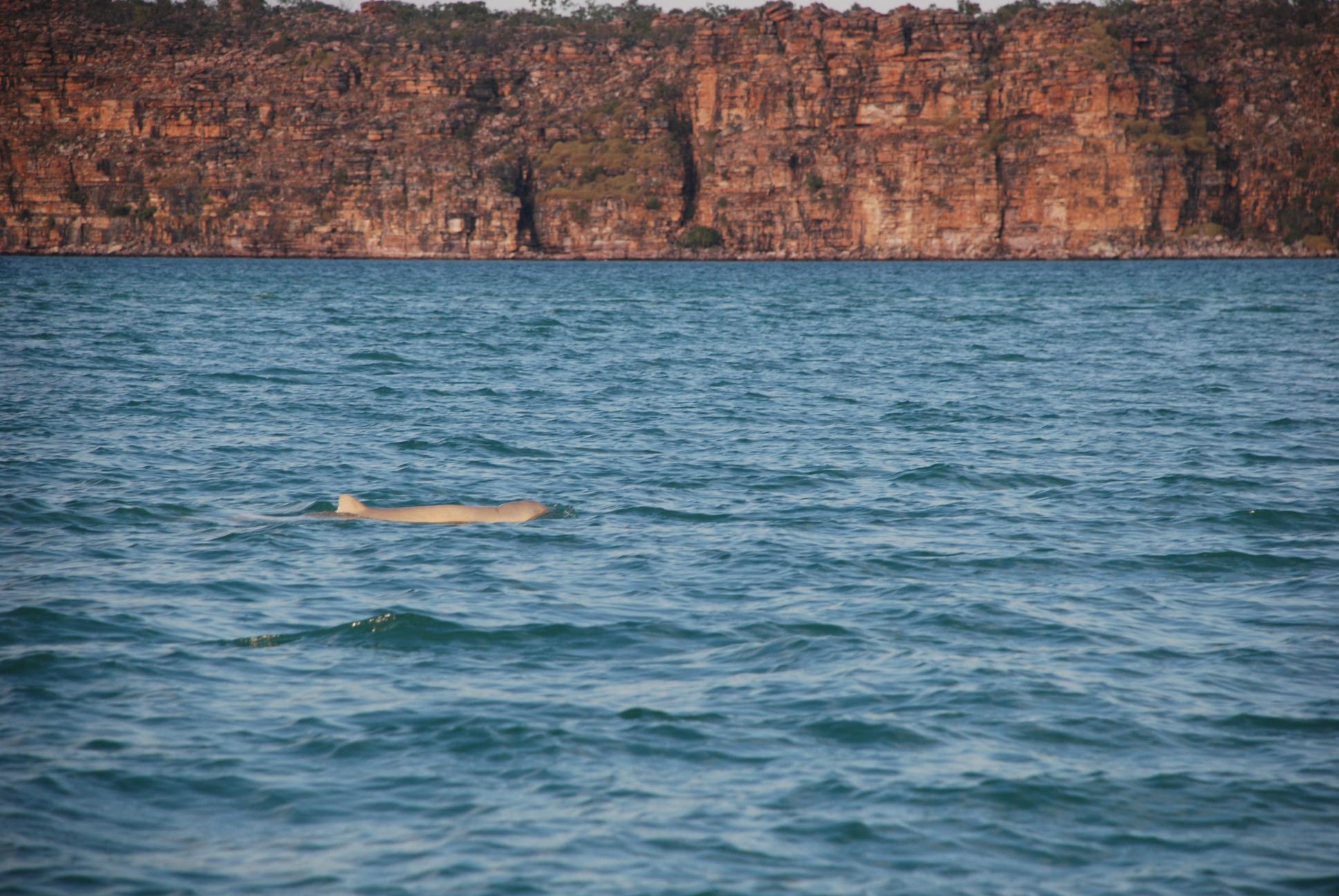
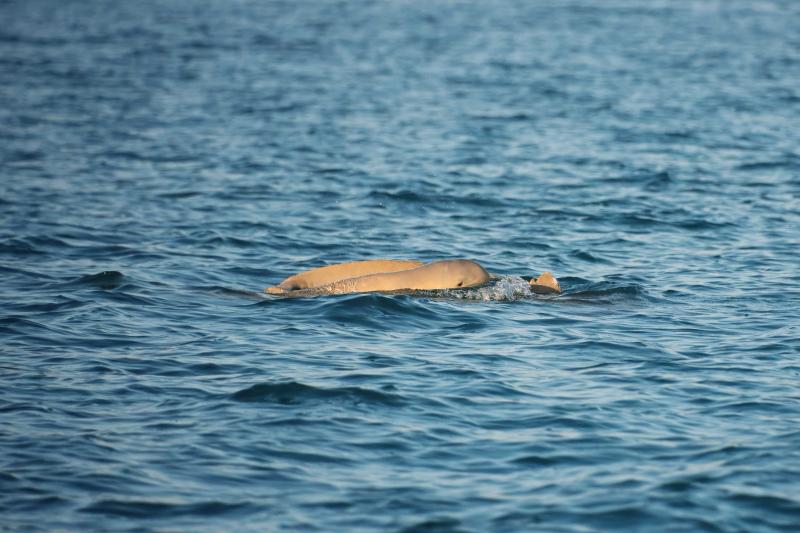
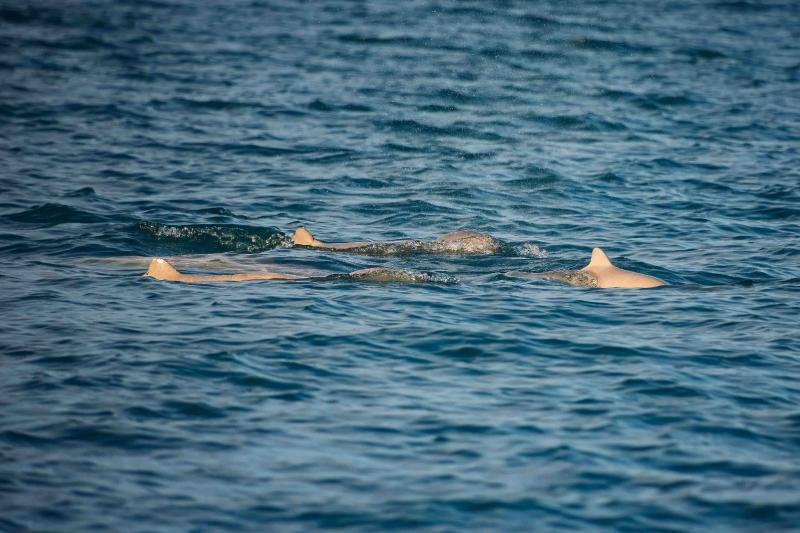
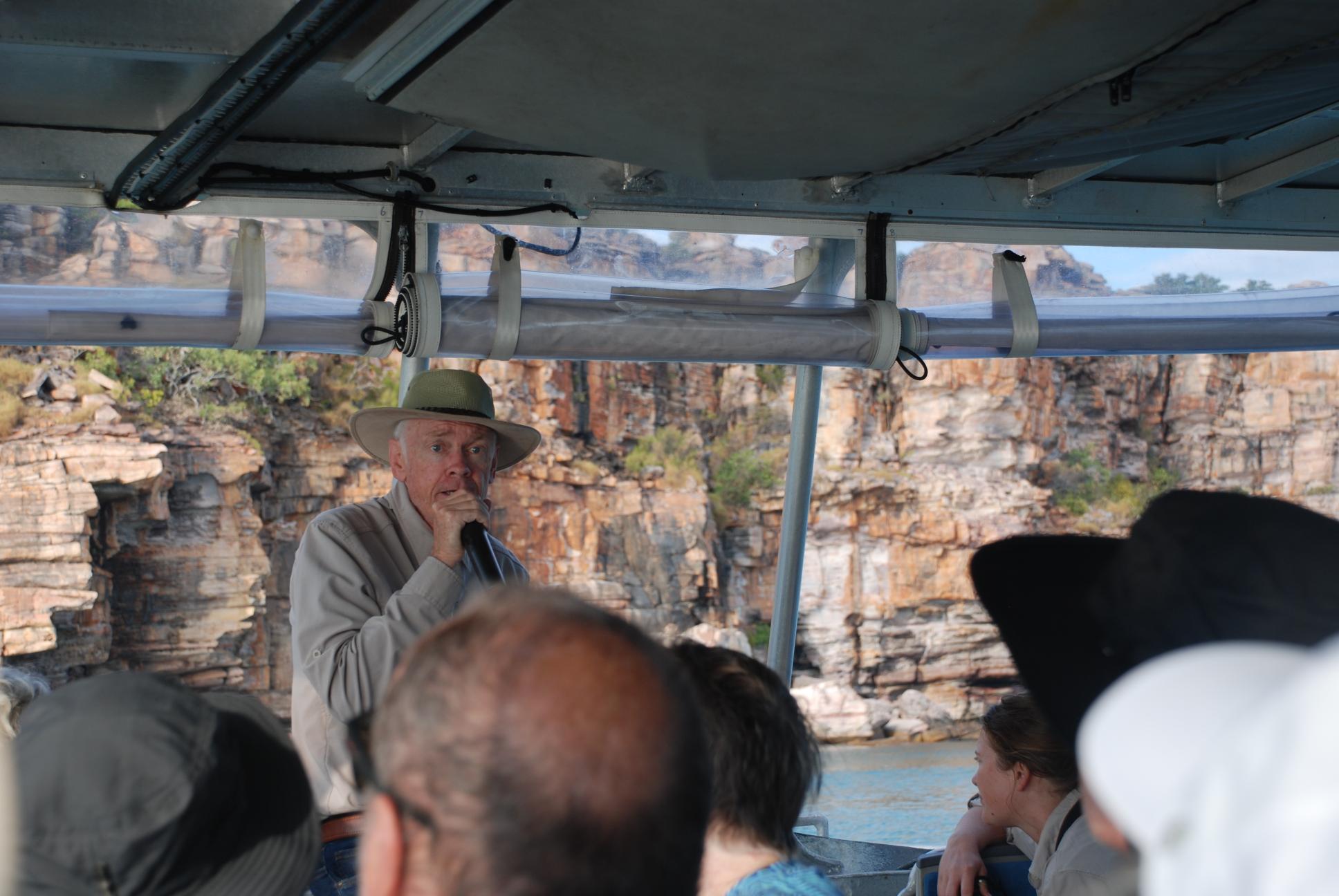
This morning, the tender brought us to another part of Koolama Bay that wasn’t on the original agenda. It turned out to be a really wonderful nature adventure. Five minutes after we began our short trip into Tranquil Bay, a small pod of snub-nosed dolphins was spotted. Our tour director David has a wealth of knowledge of the Kimberley, and he was quite excited about seeing them in this location, because he said they’re rarely spotted here. They swam alongside us for quite a time. Craig, who is steering the tender, made sure the people on both sides of the vessel got a good, long look at the dolphins, so no one needed to stand up and crowd over to the other side to see them. He continued to do this very skilfully whenever we came across wildlife or a feature of the landscape, gently moving the boat around so as to give everyone a chance to have a look and take a photo without needing to frighten the wildlife or cause it to move away.
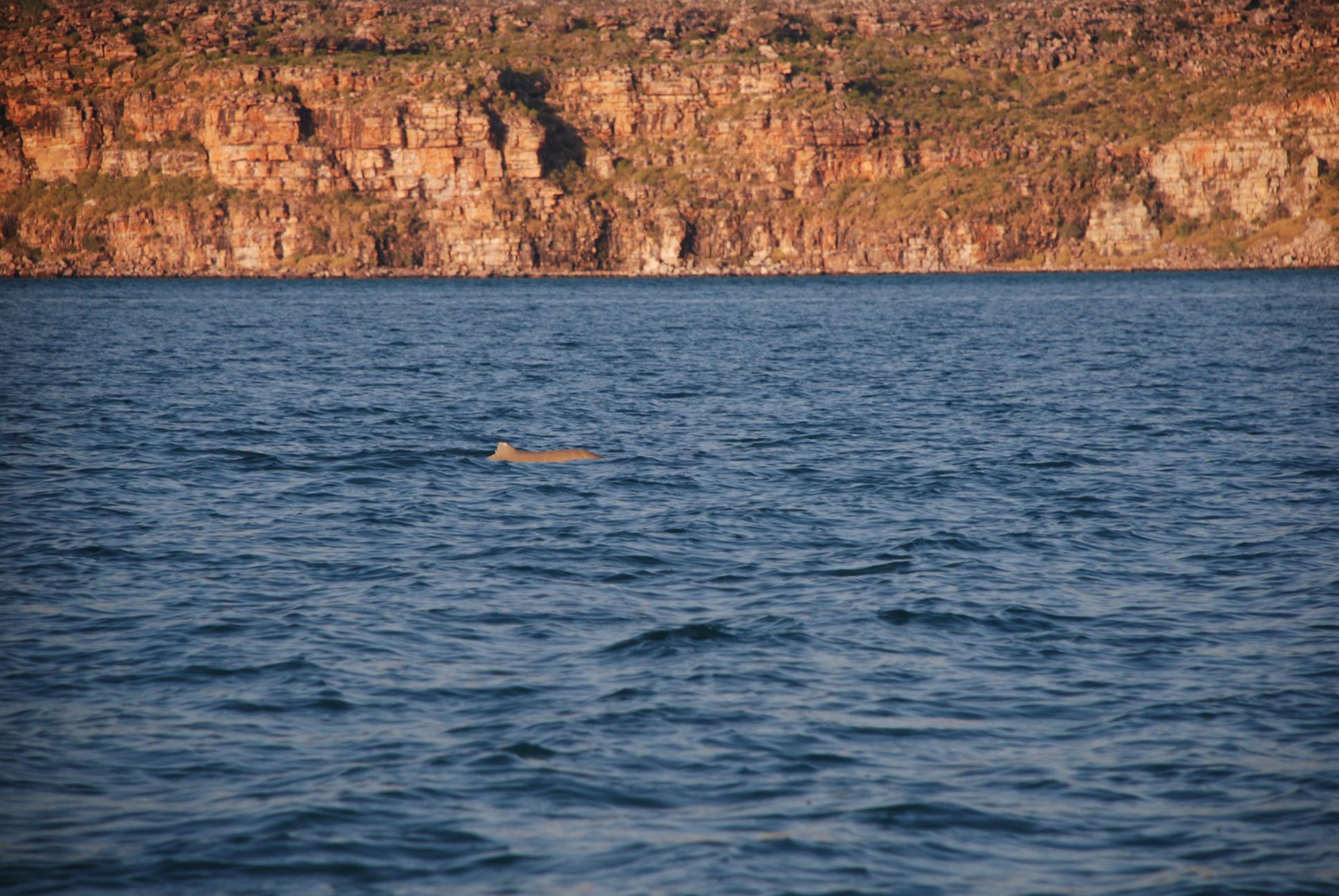
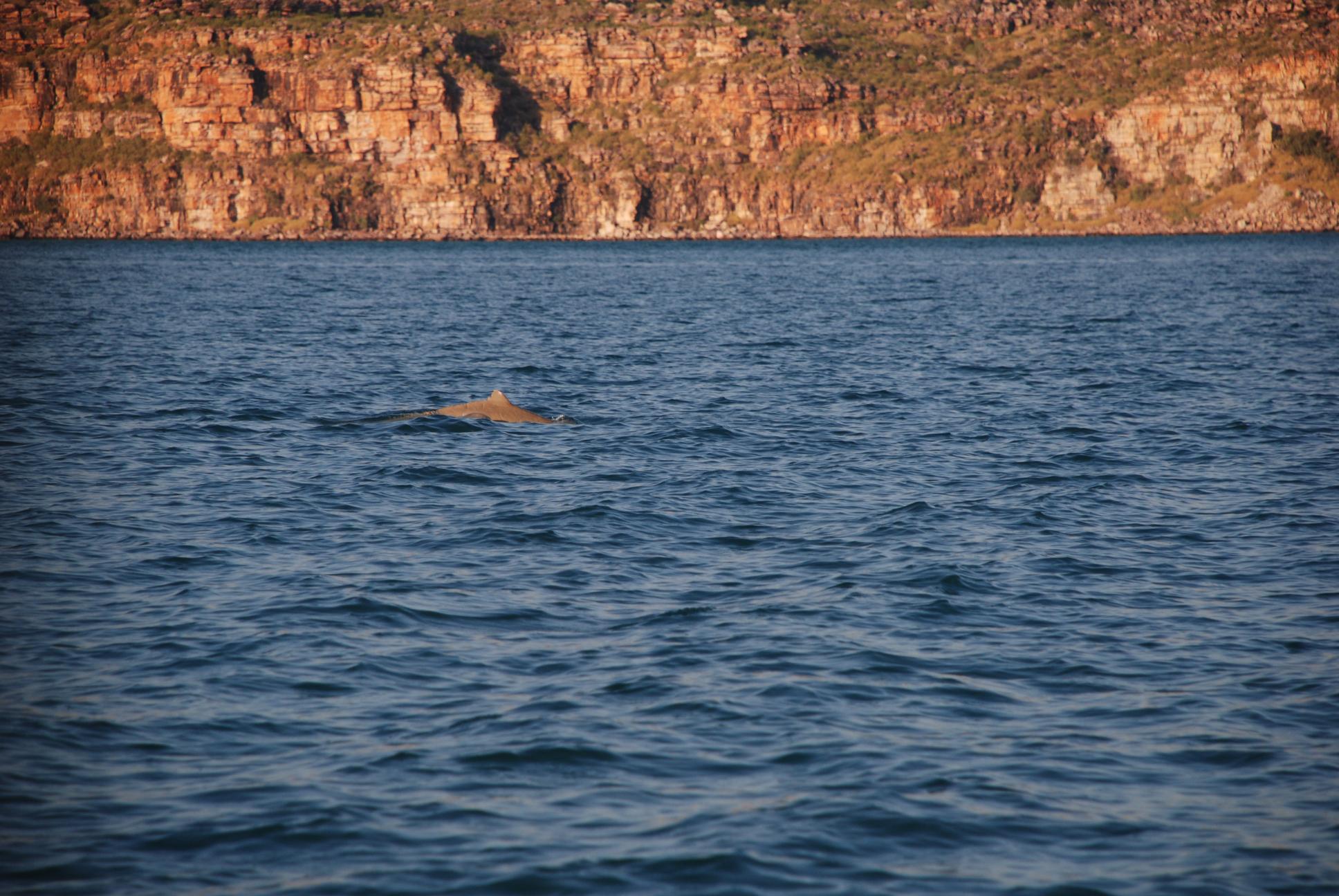
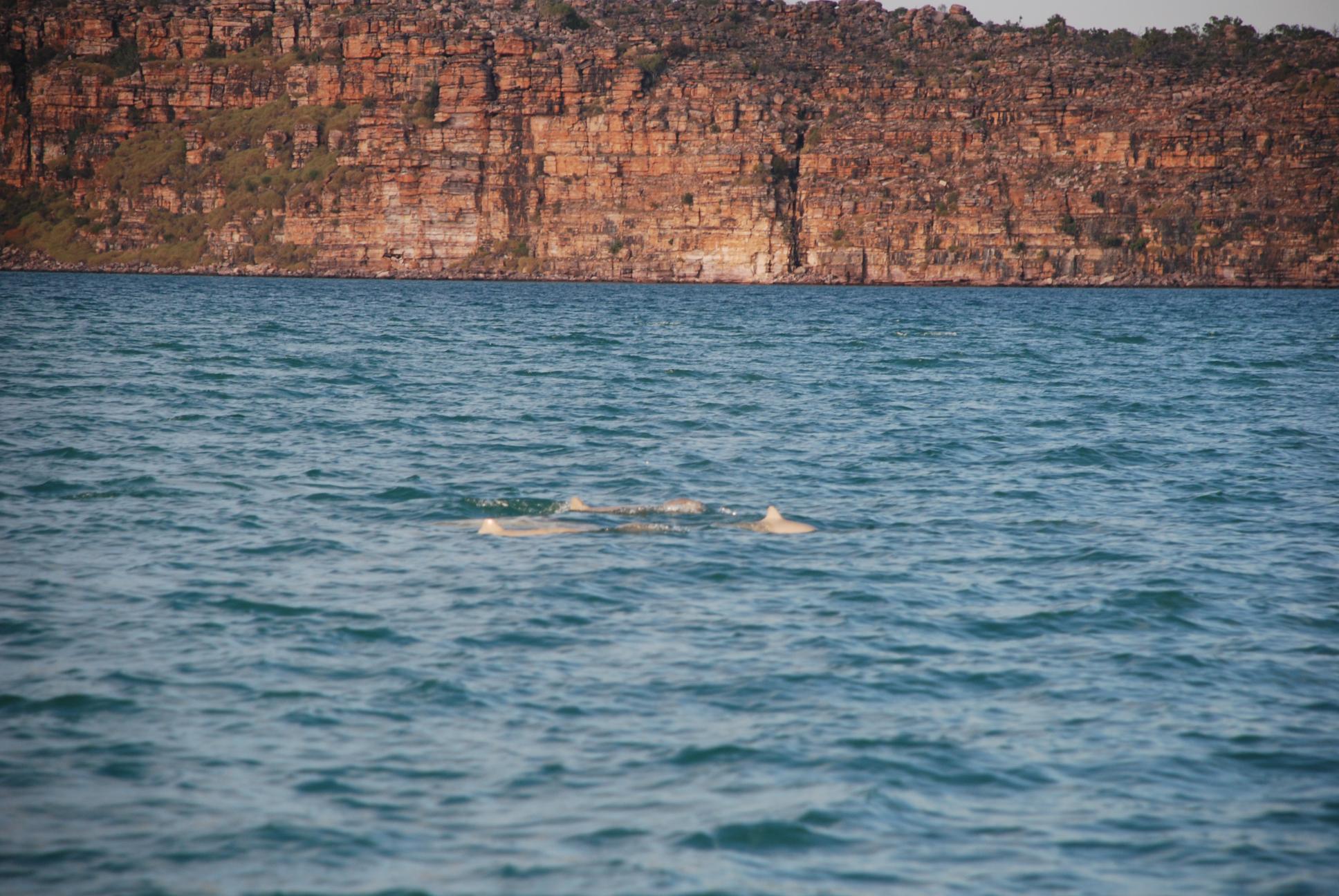
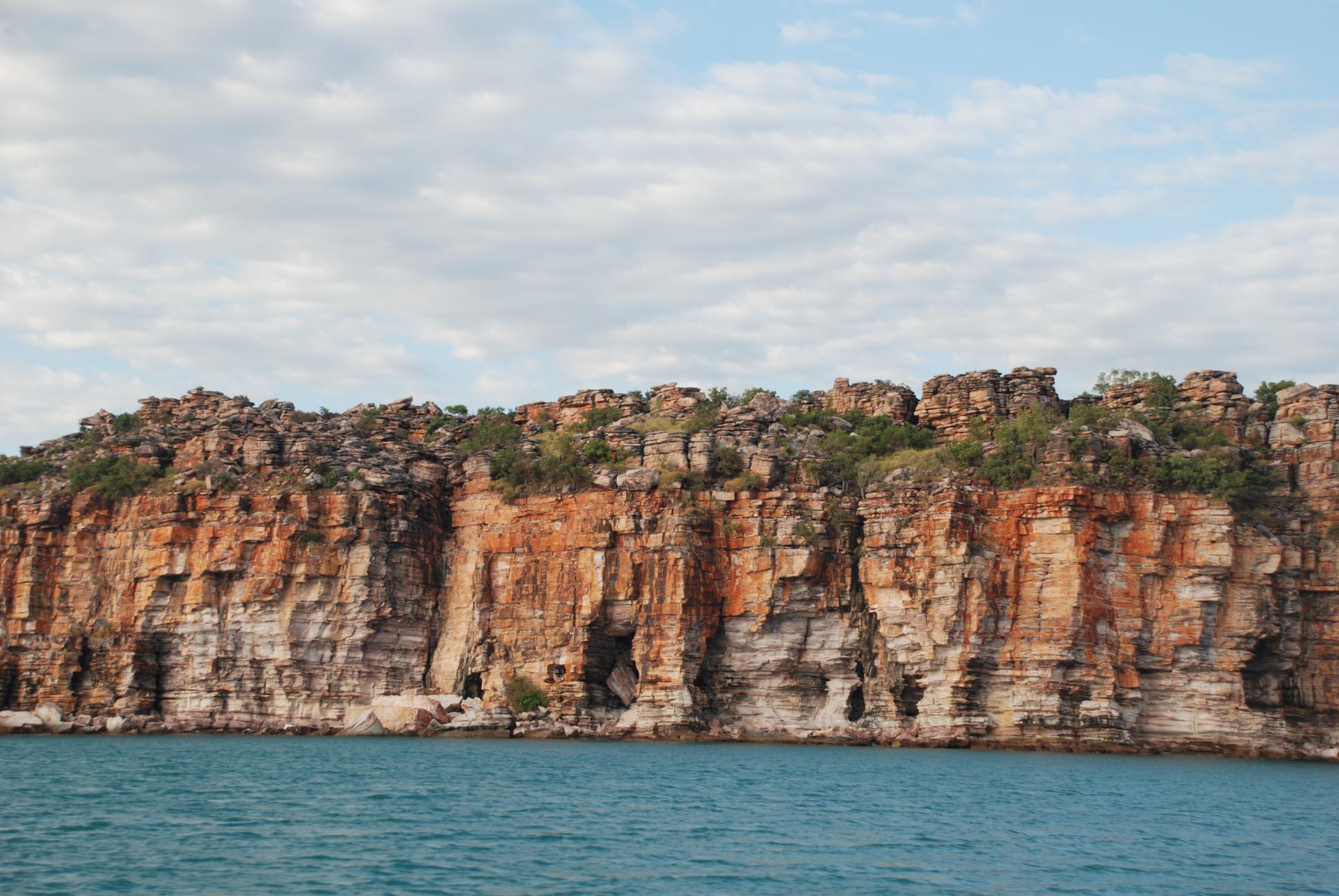
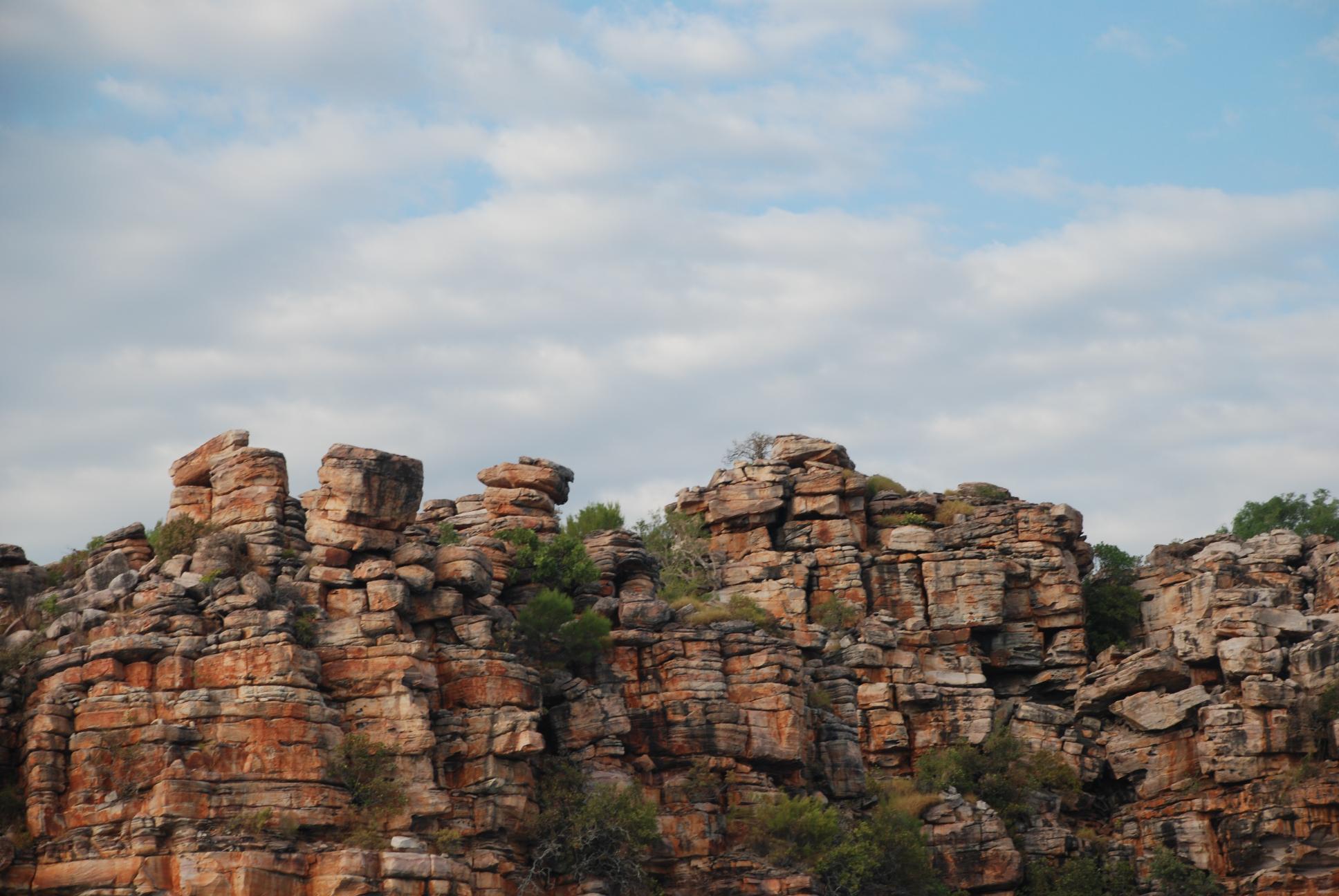
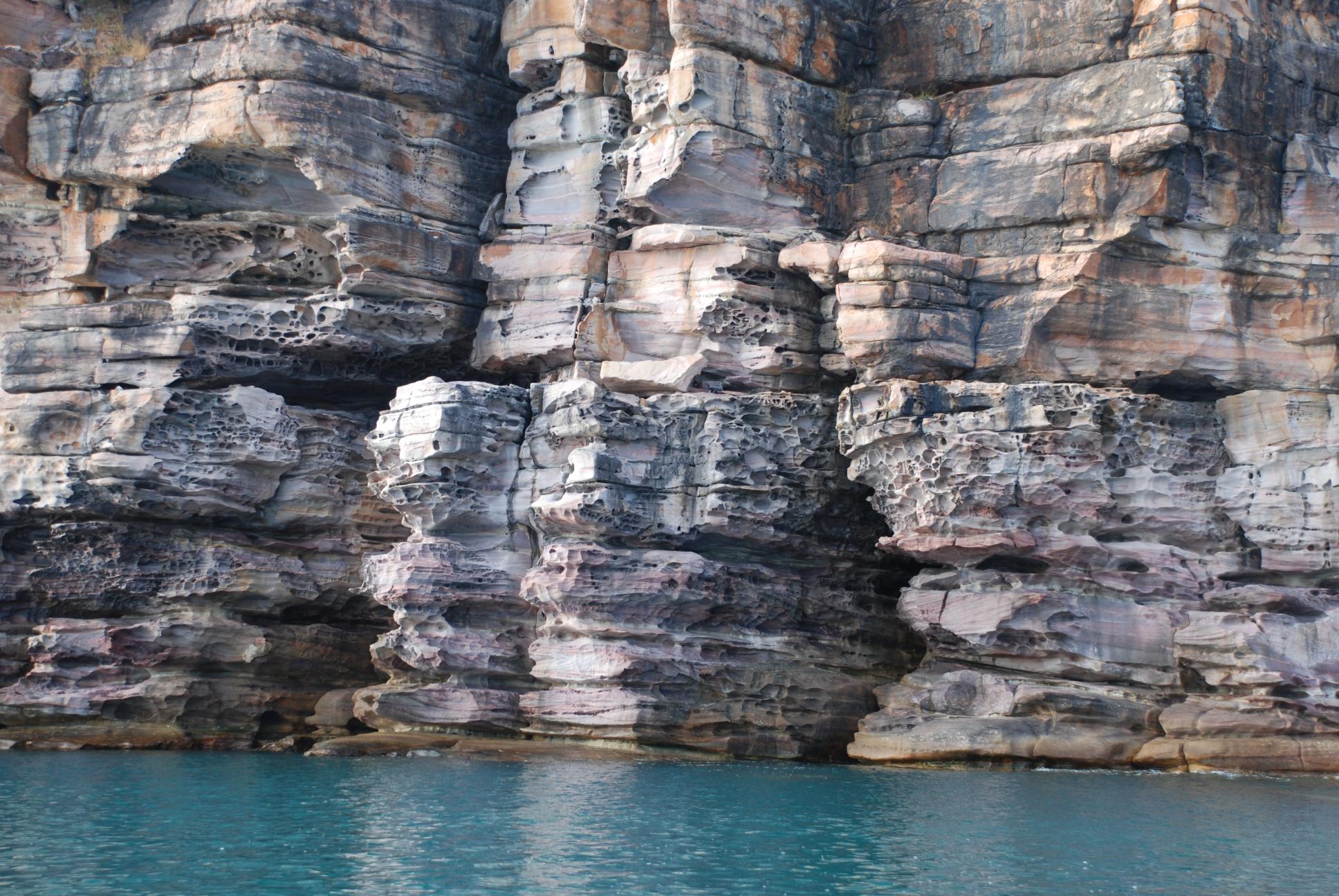
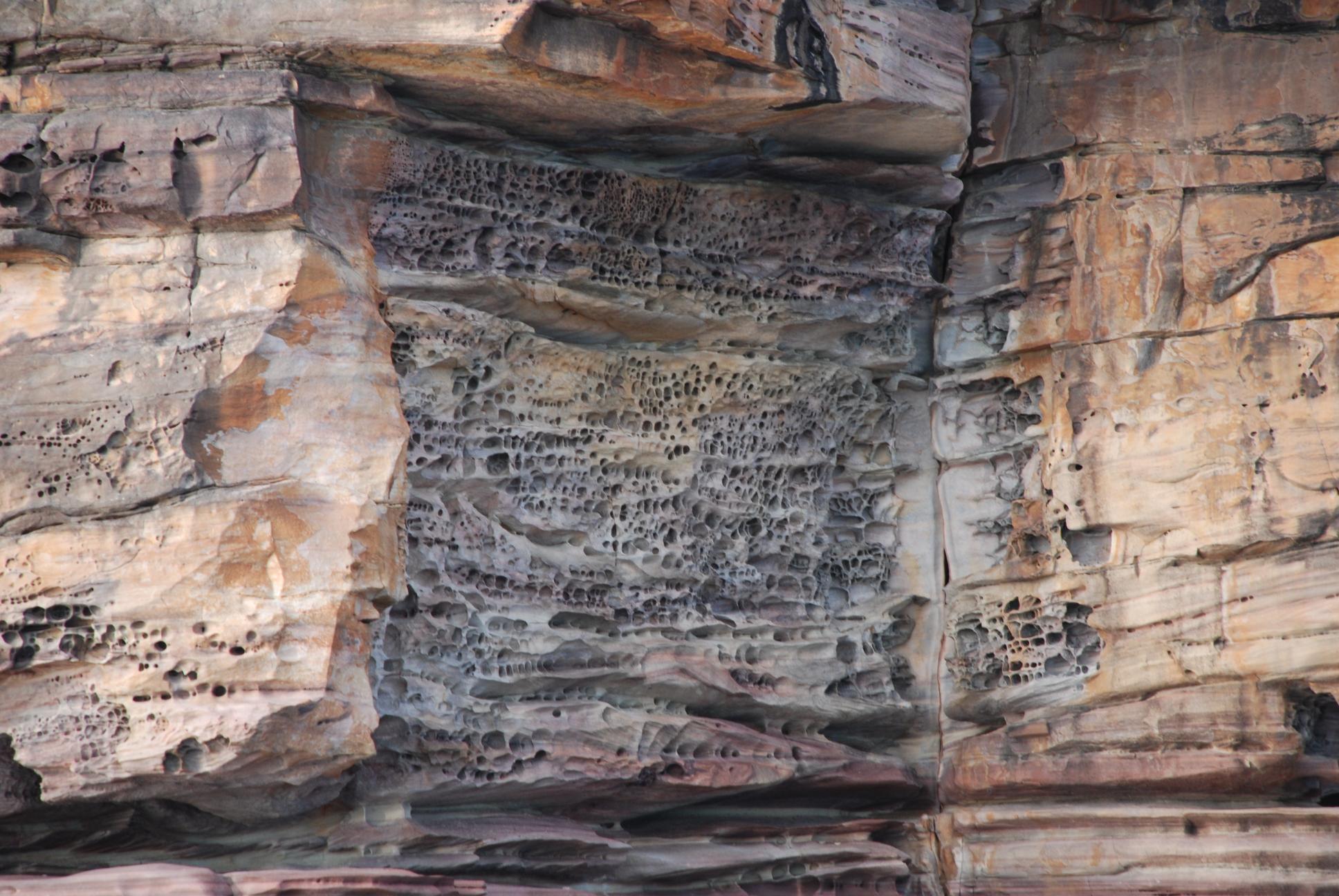
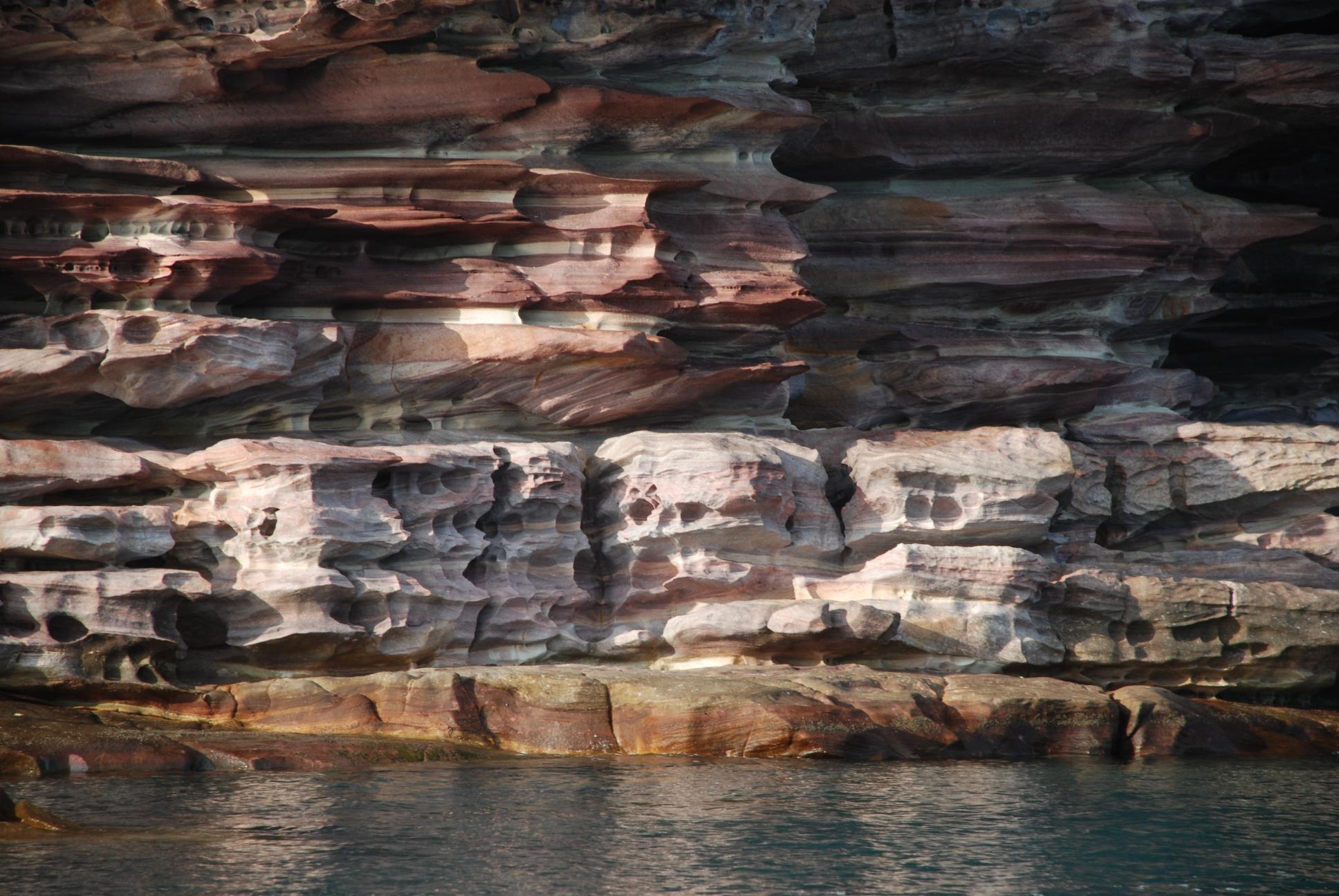
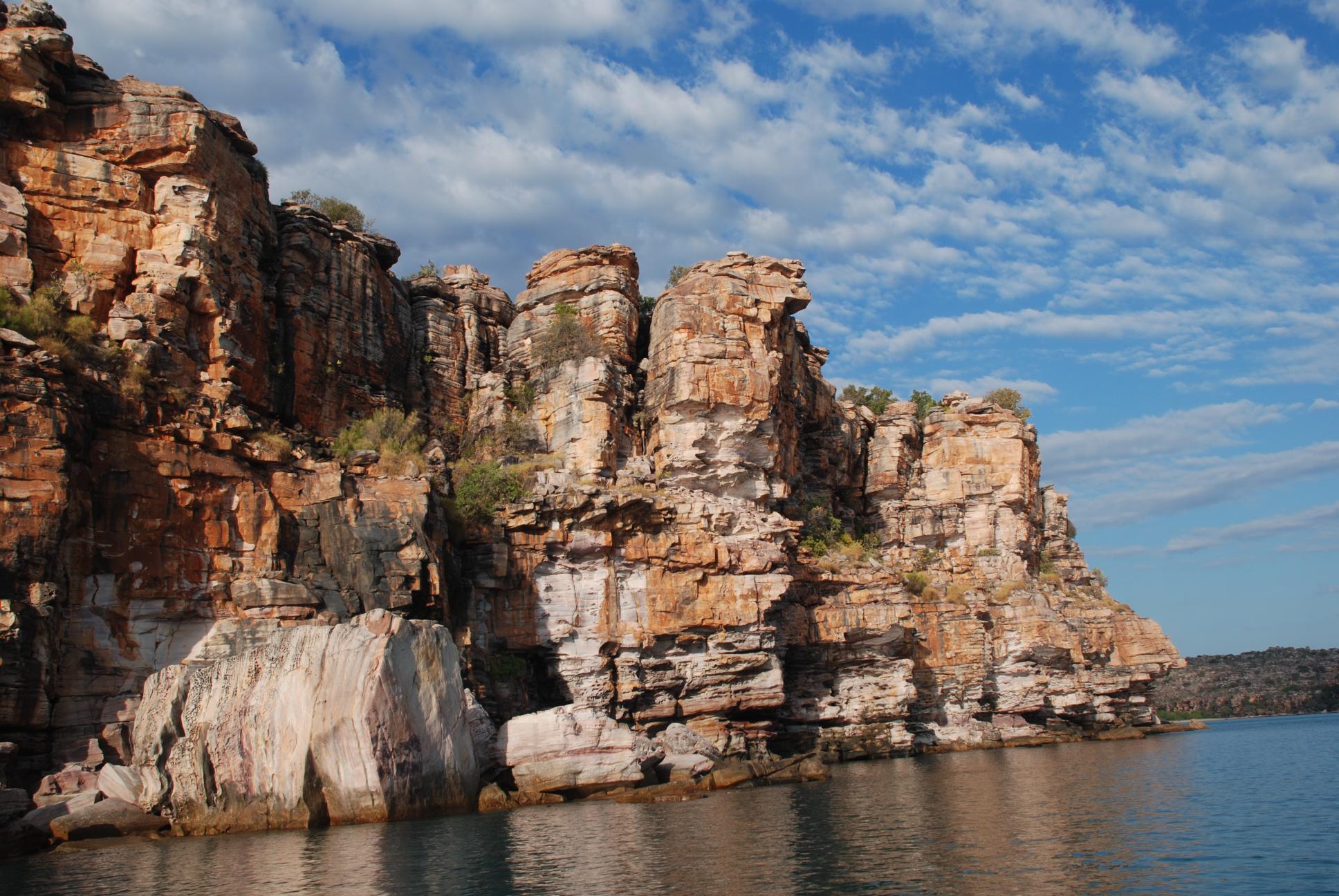
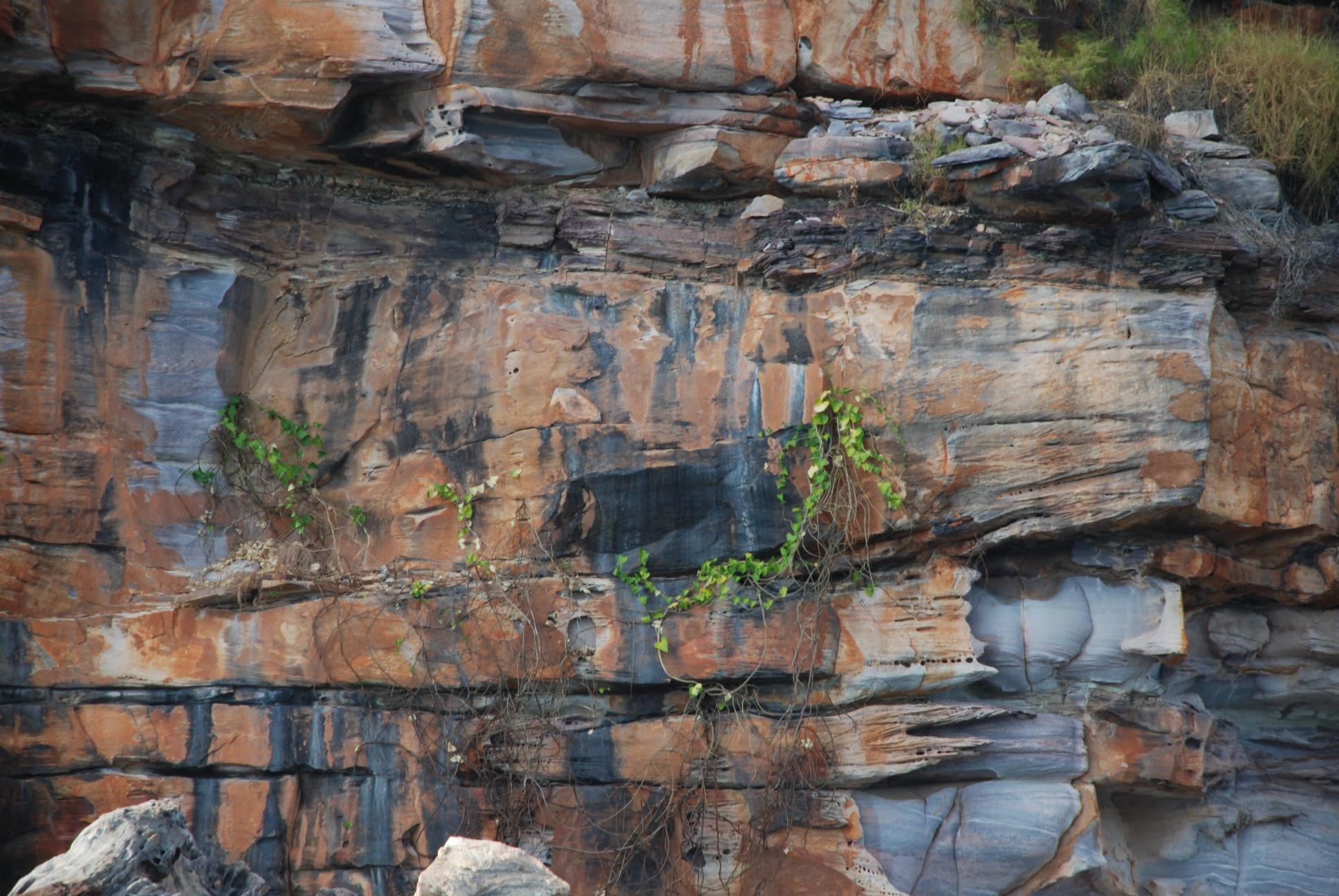
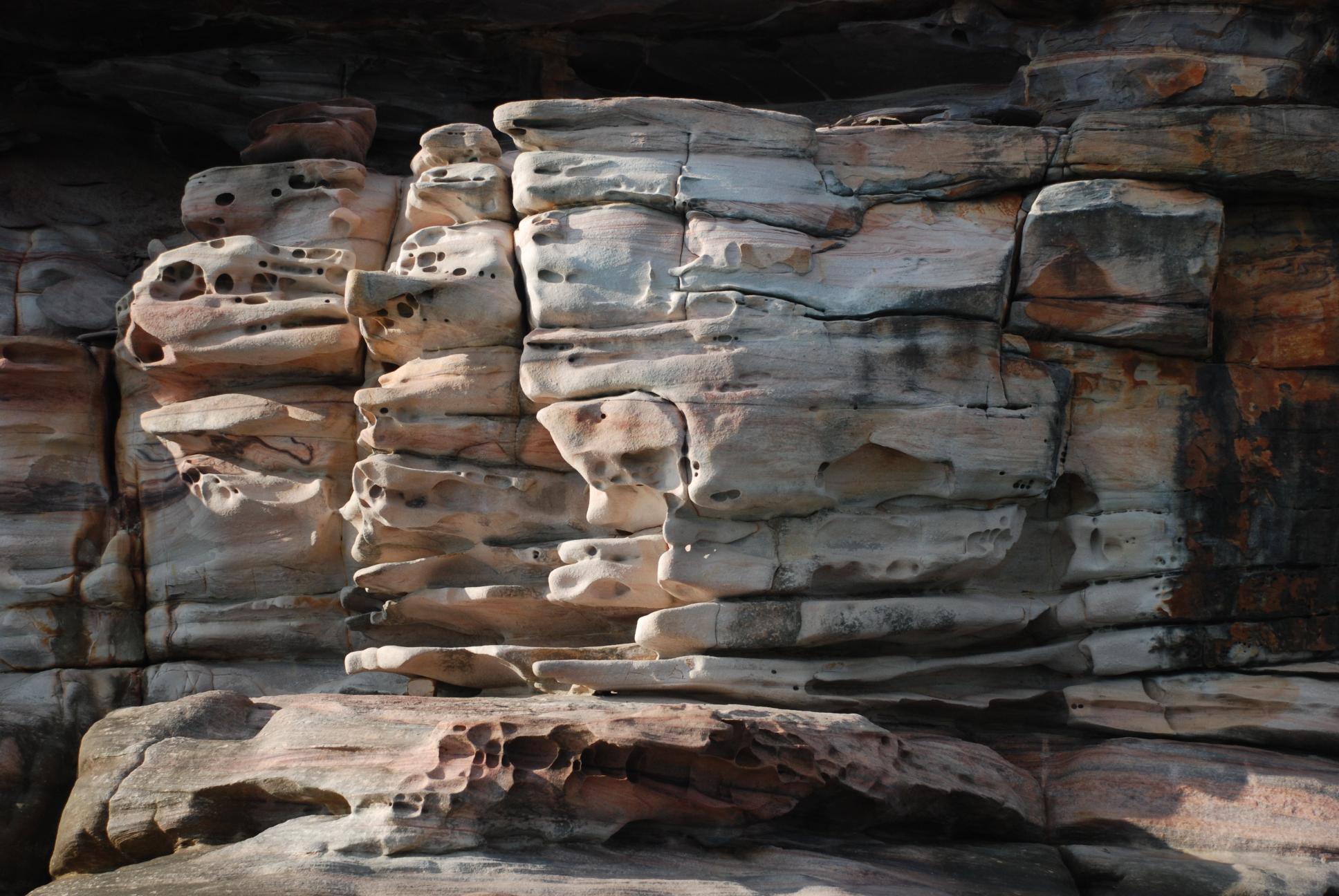
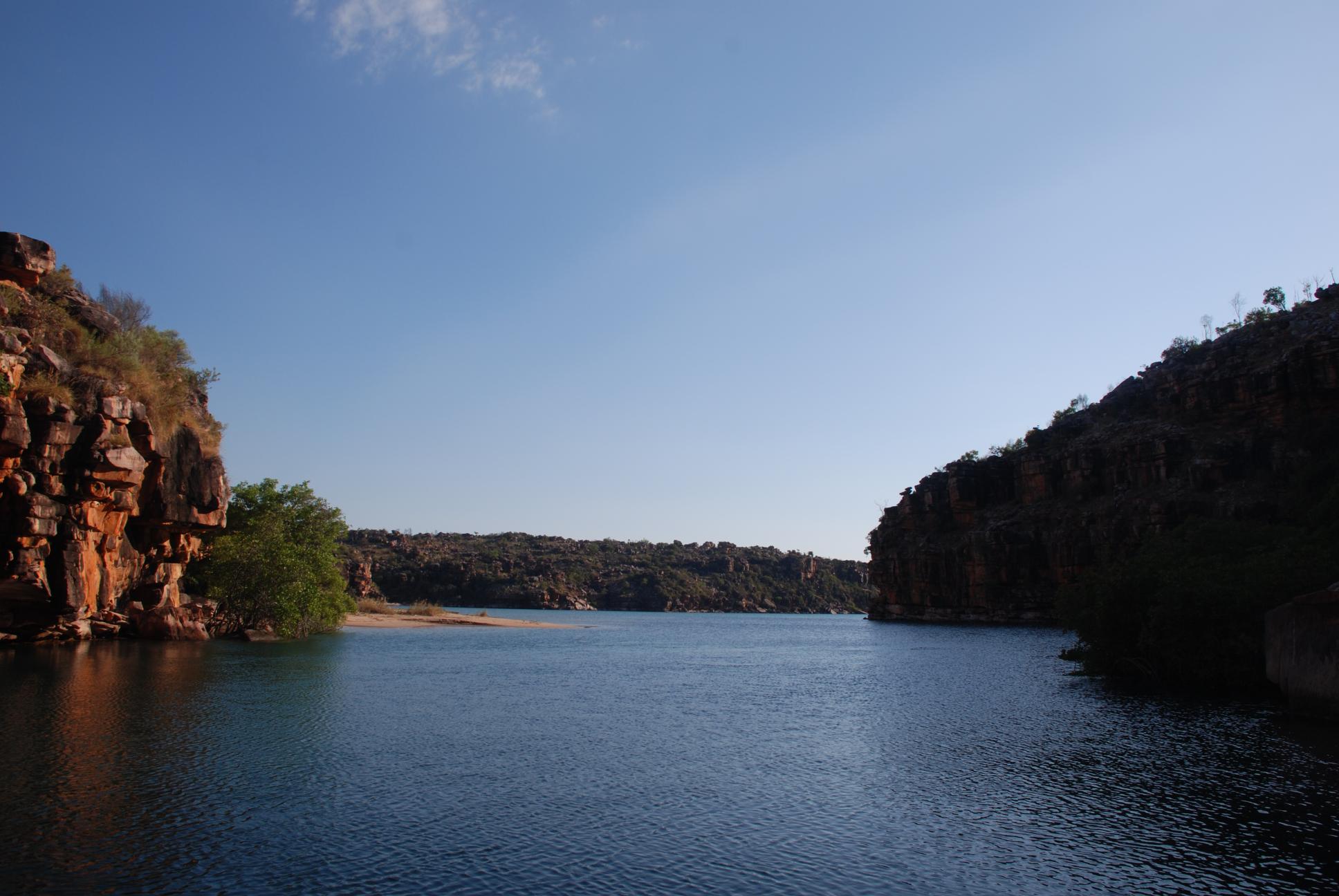
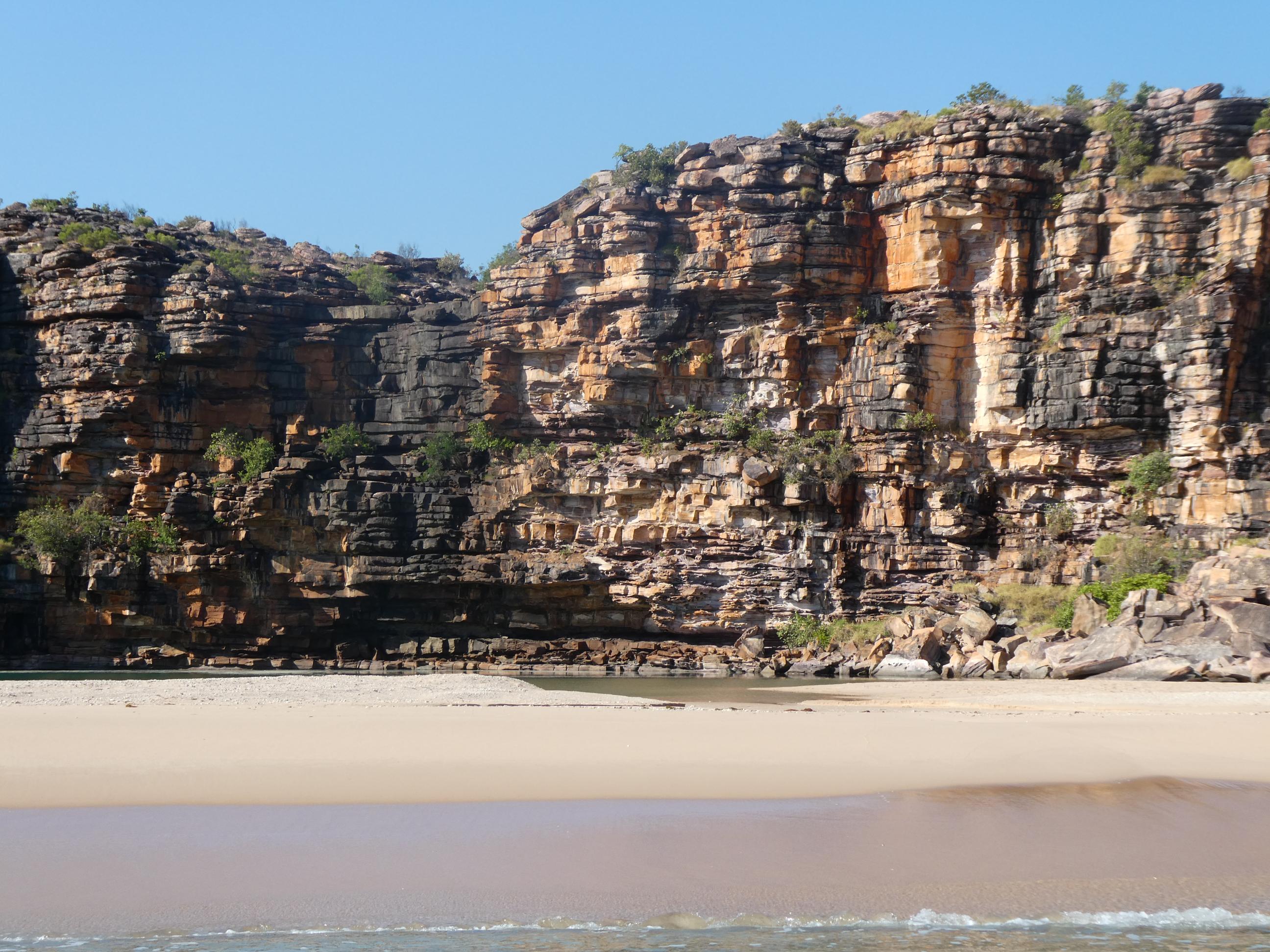
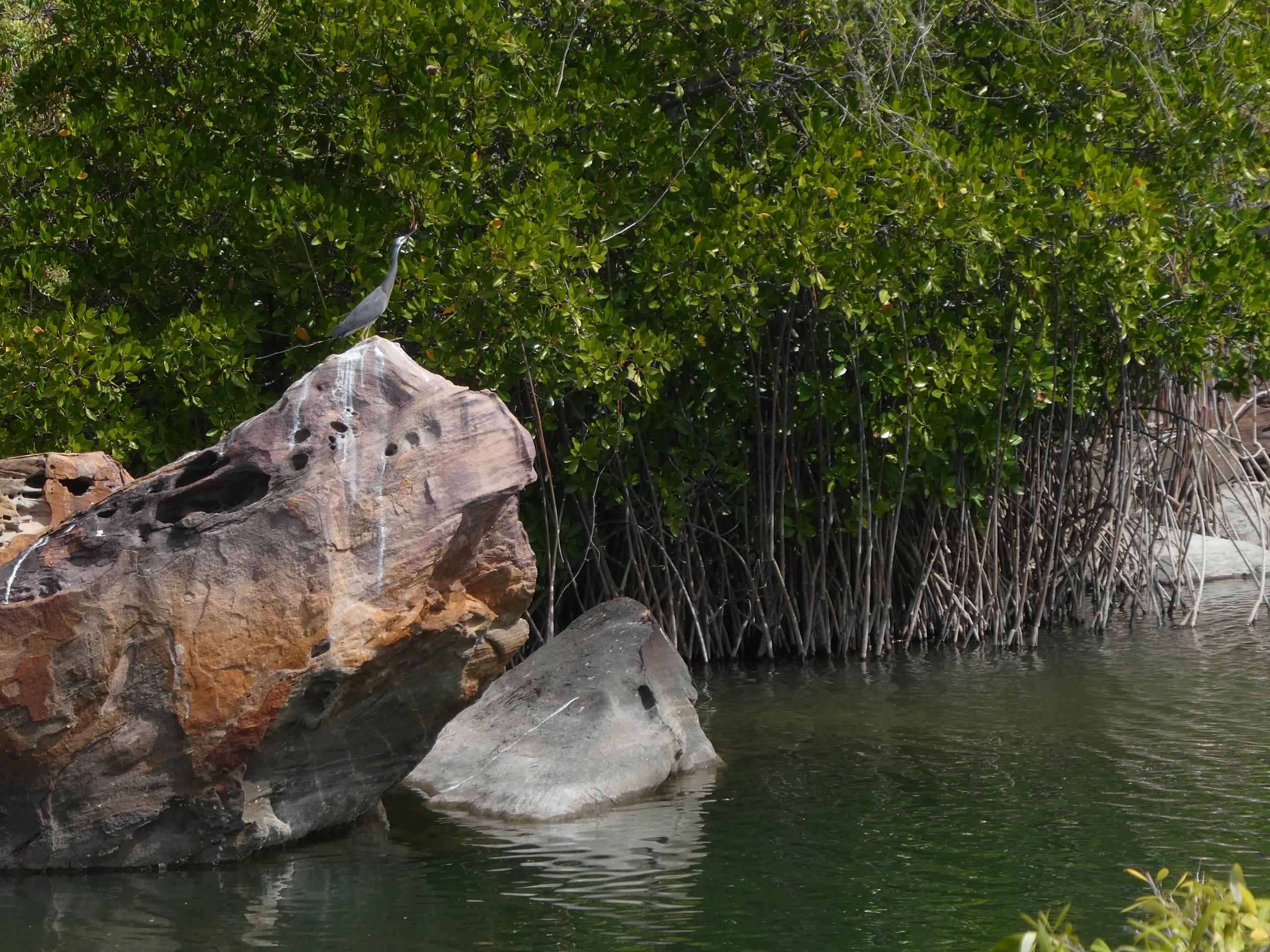
We pulled into the aptly named Tranquil Bay. It’s not particularly large, but the landscape is quite appealing. The sandstone cliff walls are similar to those we visited yesterday along the King George River, but they’re not as high. The tender is able to come in very close to the rocks, revealing all sorts of intricate patterning that the erosion from tides and weathering over eons has created. The vessel moved on to Pangali Cove, where mangroves had taken root. It was clear from the exposed roots that the tide was currently low. The contrast of green leaves, red stone and blue skies was striking. My Dad was a landscape painter. I think he would have liked it here.
Pangali Cove has a sheltered beach and a freshwater lagoon, which appears to have been fed by a waterfall during wet season, though it was not flowing today. The first officer of the Koolama, members of his crew and some of his passengers came to shore here after the ship was bombed by the Japanese in 1942. The water would have been welcome. I wonder what they might have found to eat around here. After a time, they began the long trek towards the Drysdale River Mission.
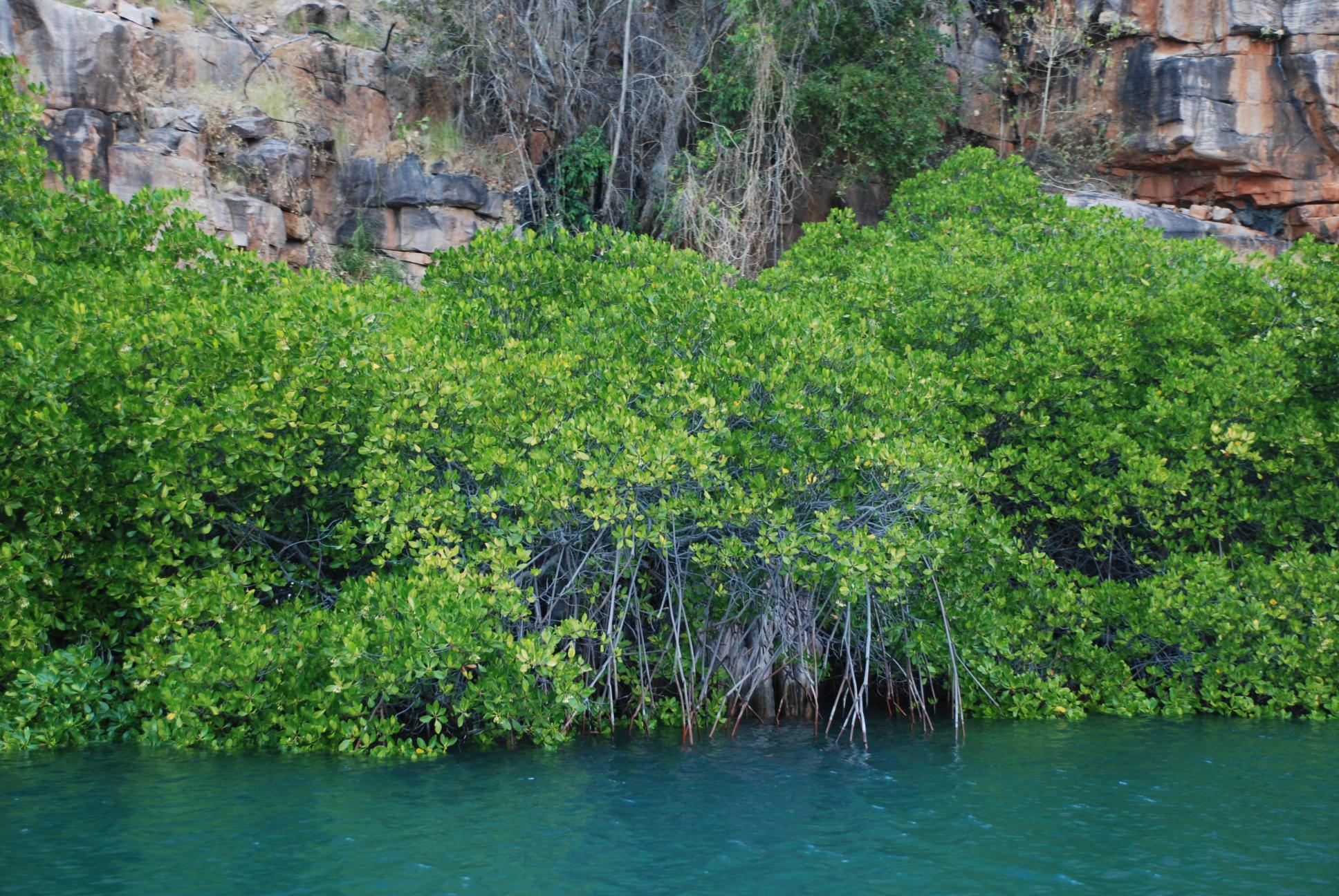
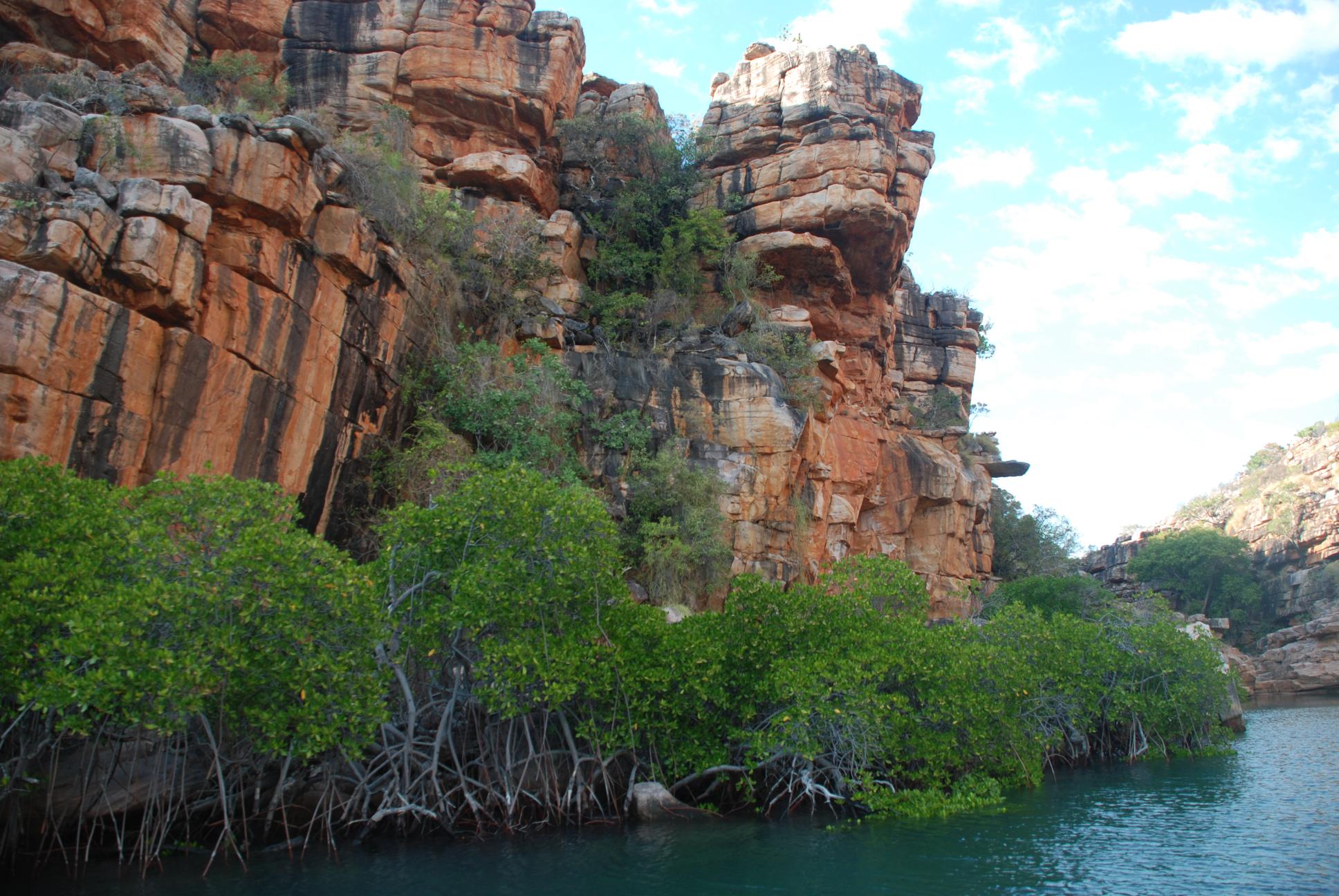
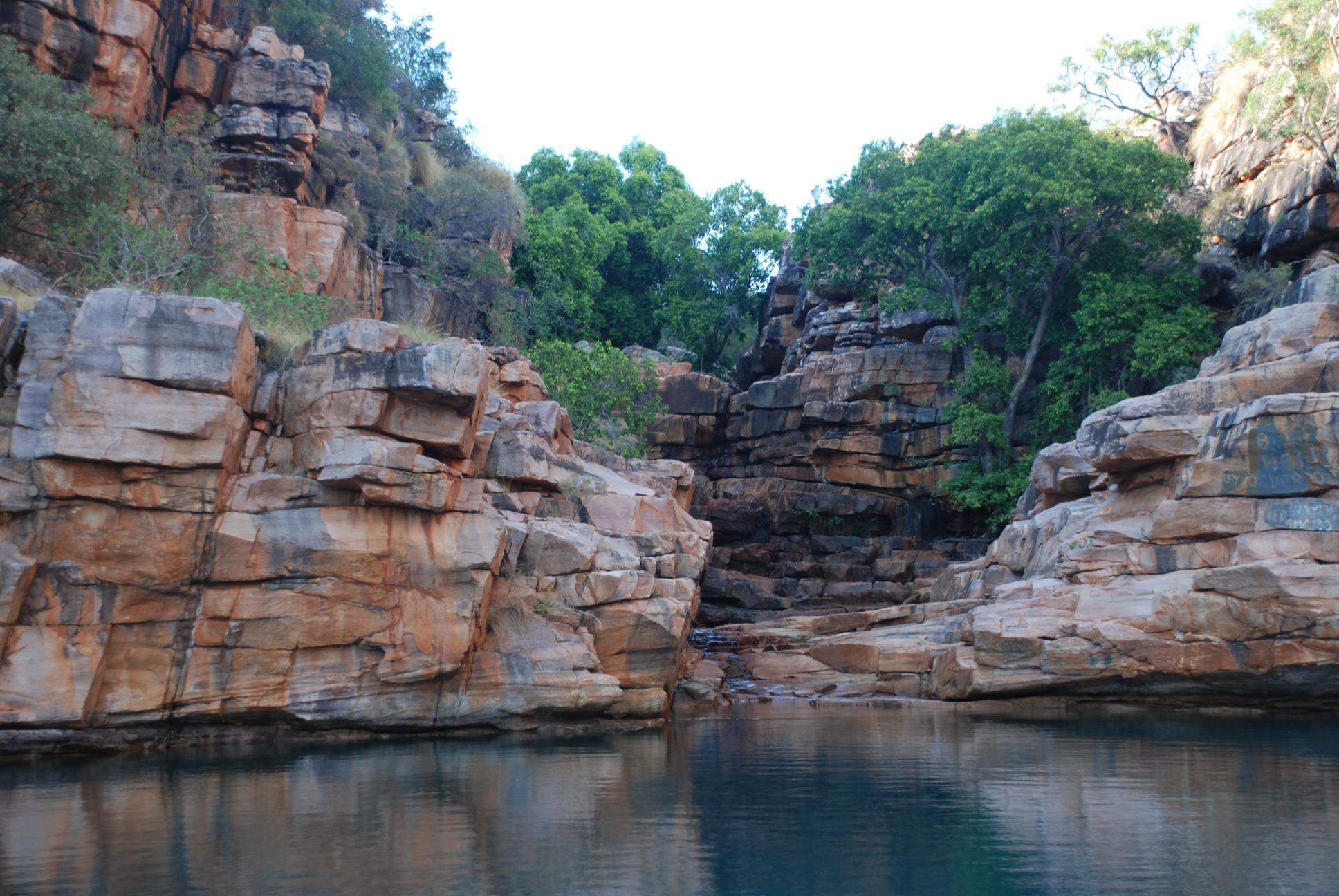
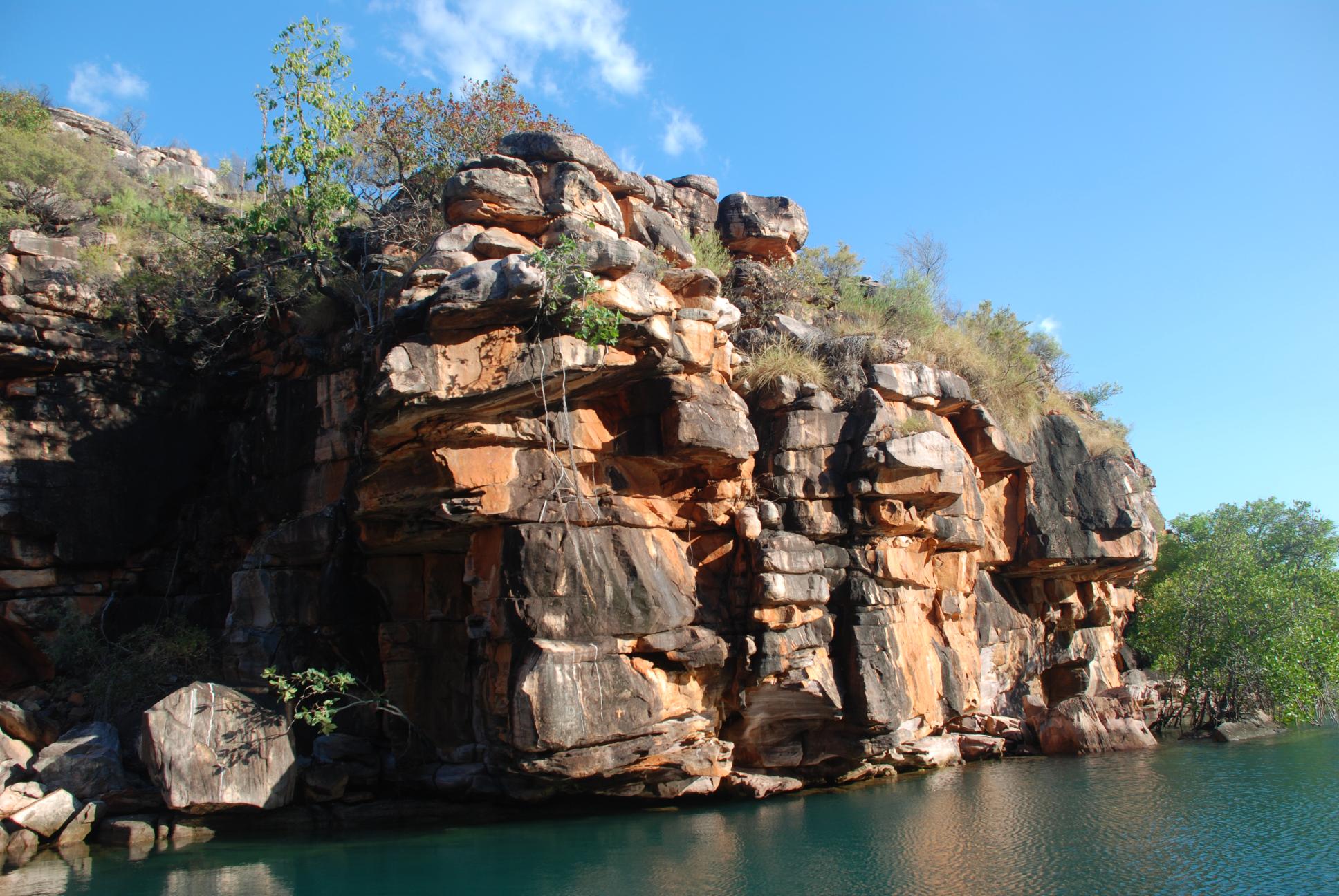
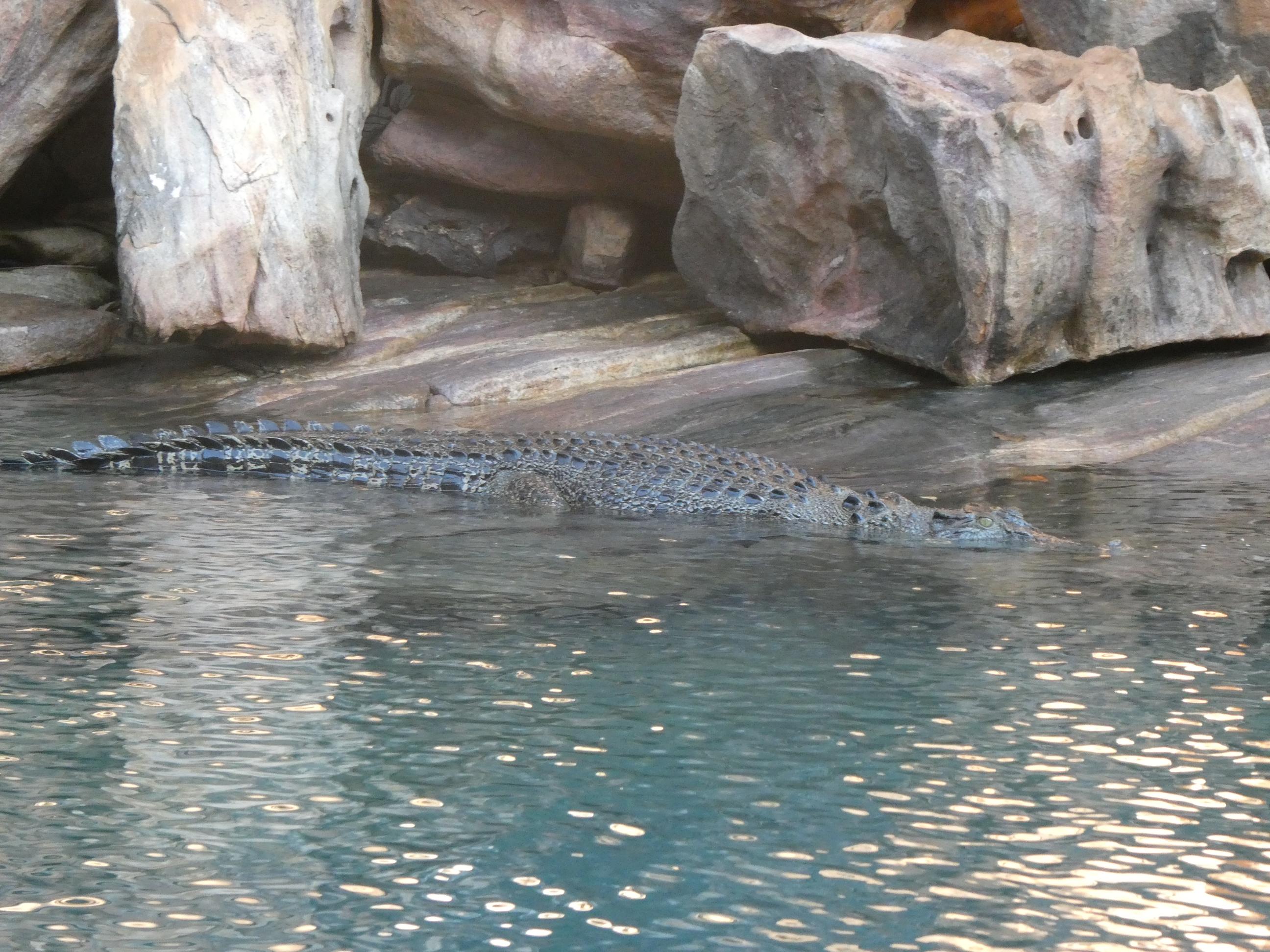
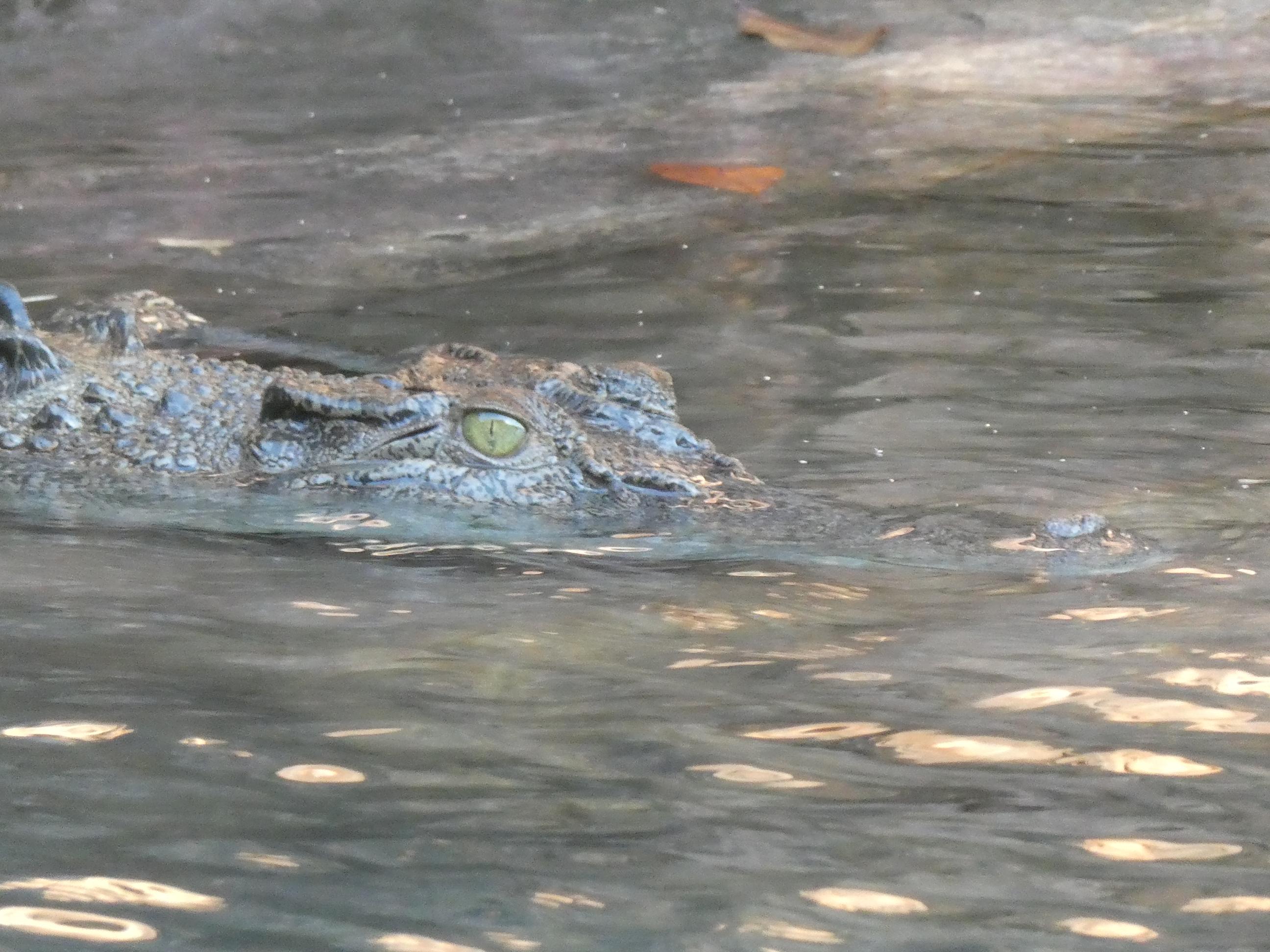
Someone spotted a stationary saltwater crocodile in by the rocks. Craig brought the tender in gently so we all had a chance to view the croc and take photos without needing to disturb it. We stayed there for a few minutes while the tender slowly spun around and the croc never moved an inch. Nevertheless, it never took its eyes off us.
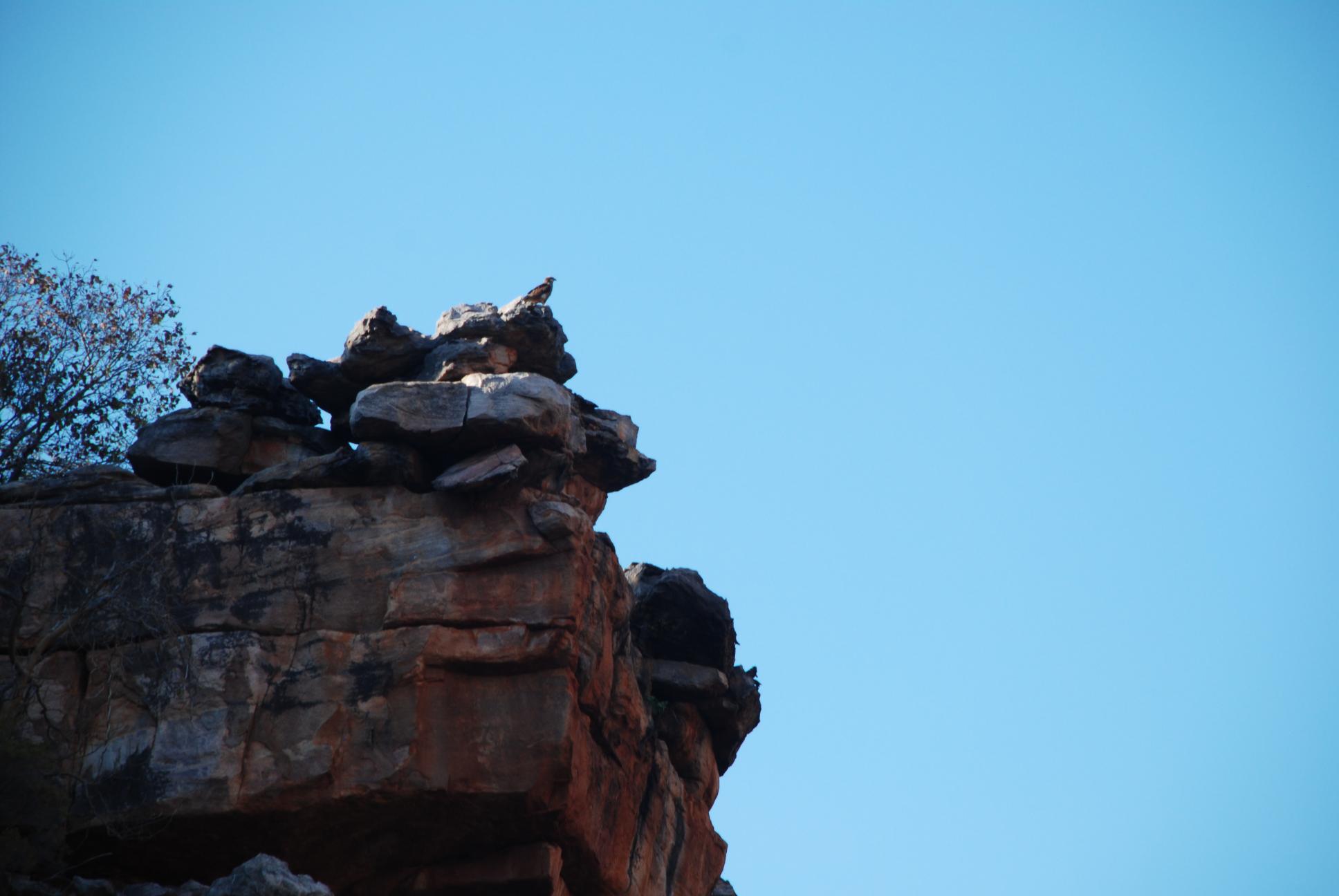
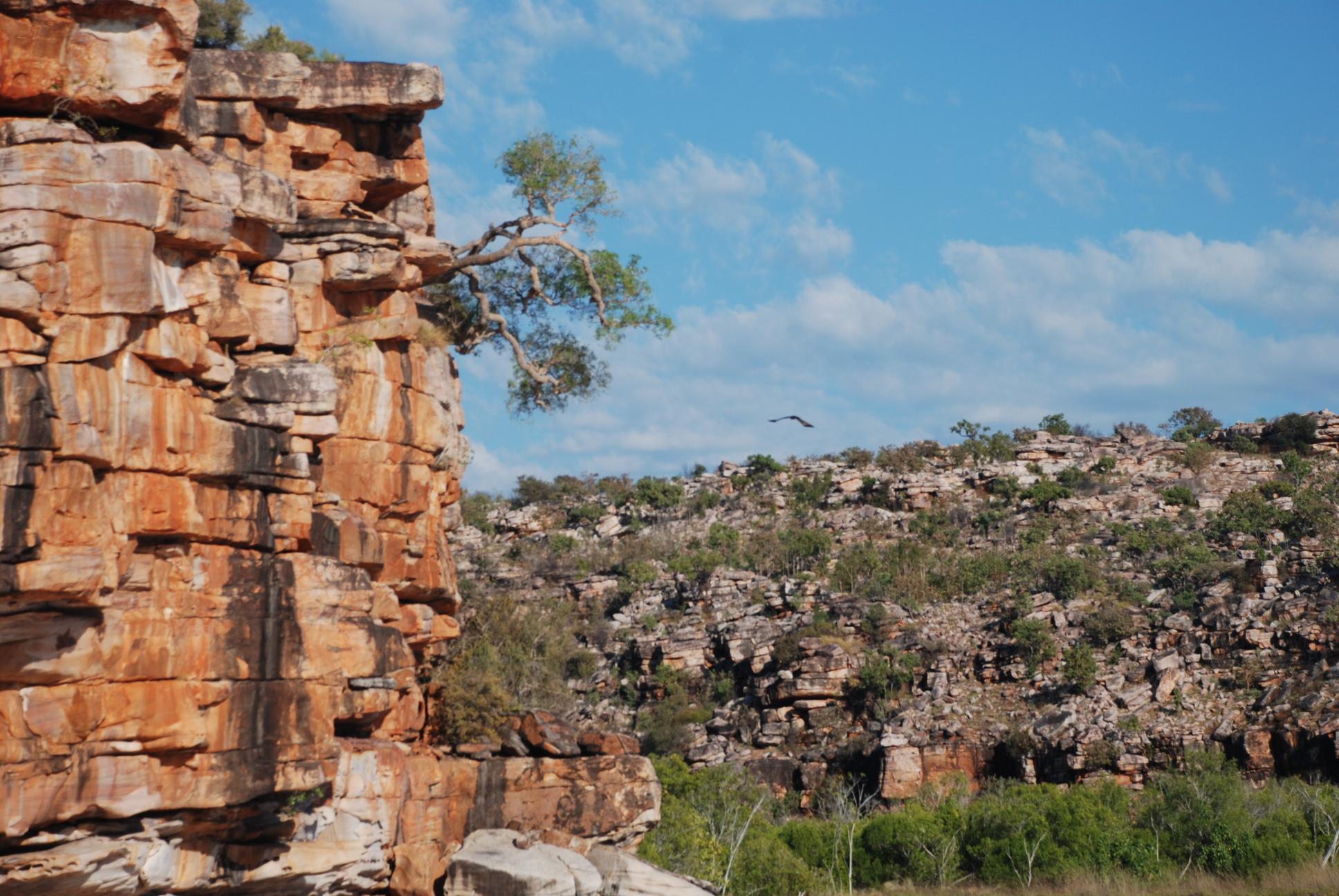
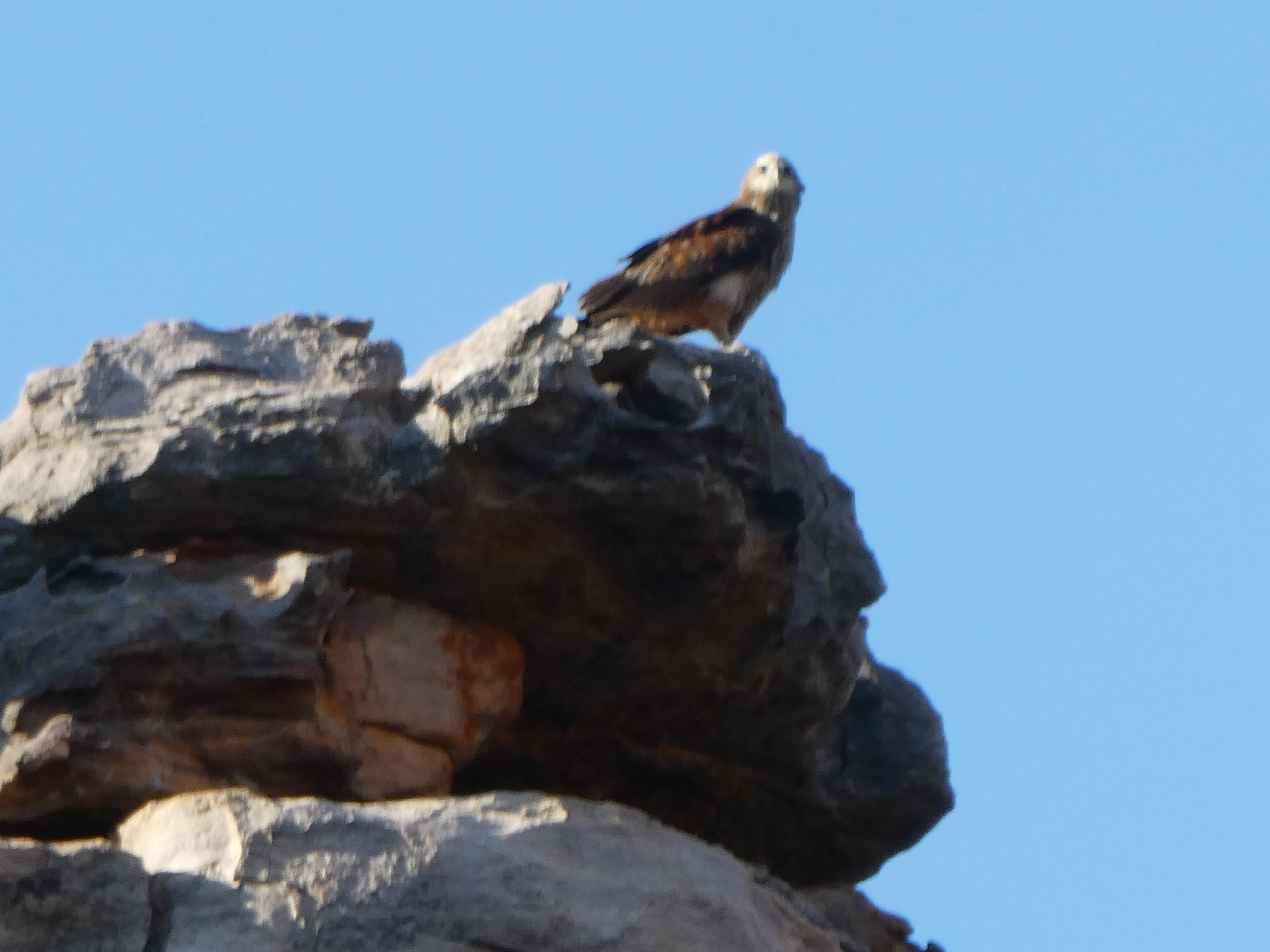
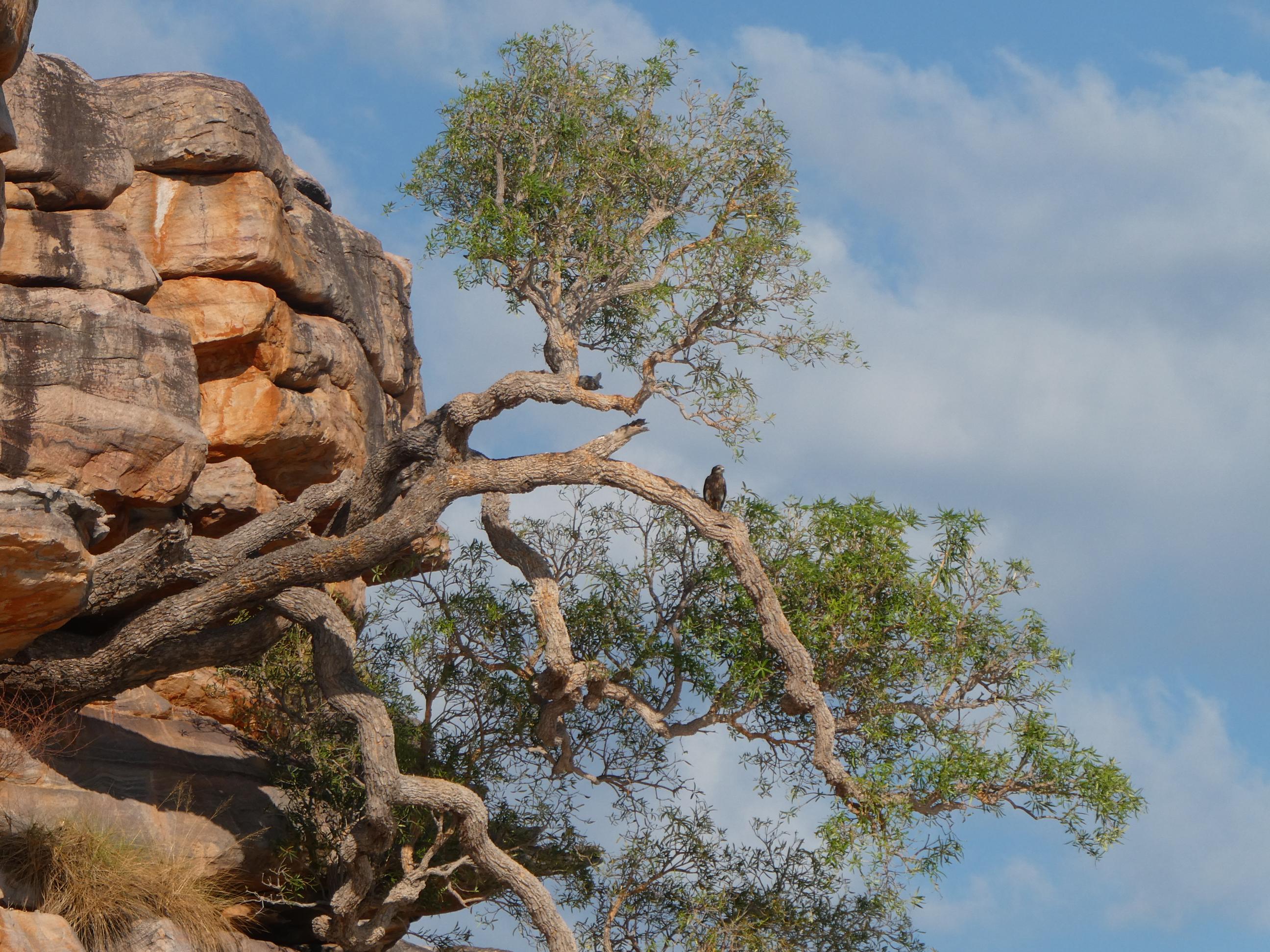
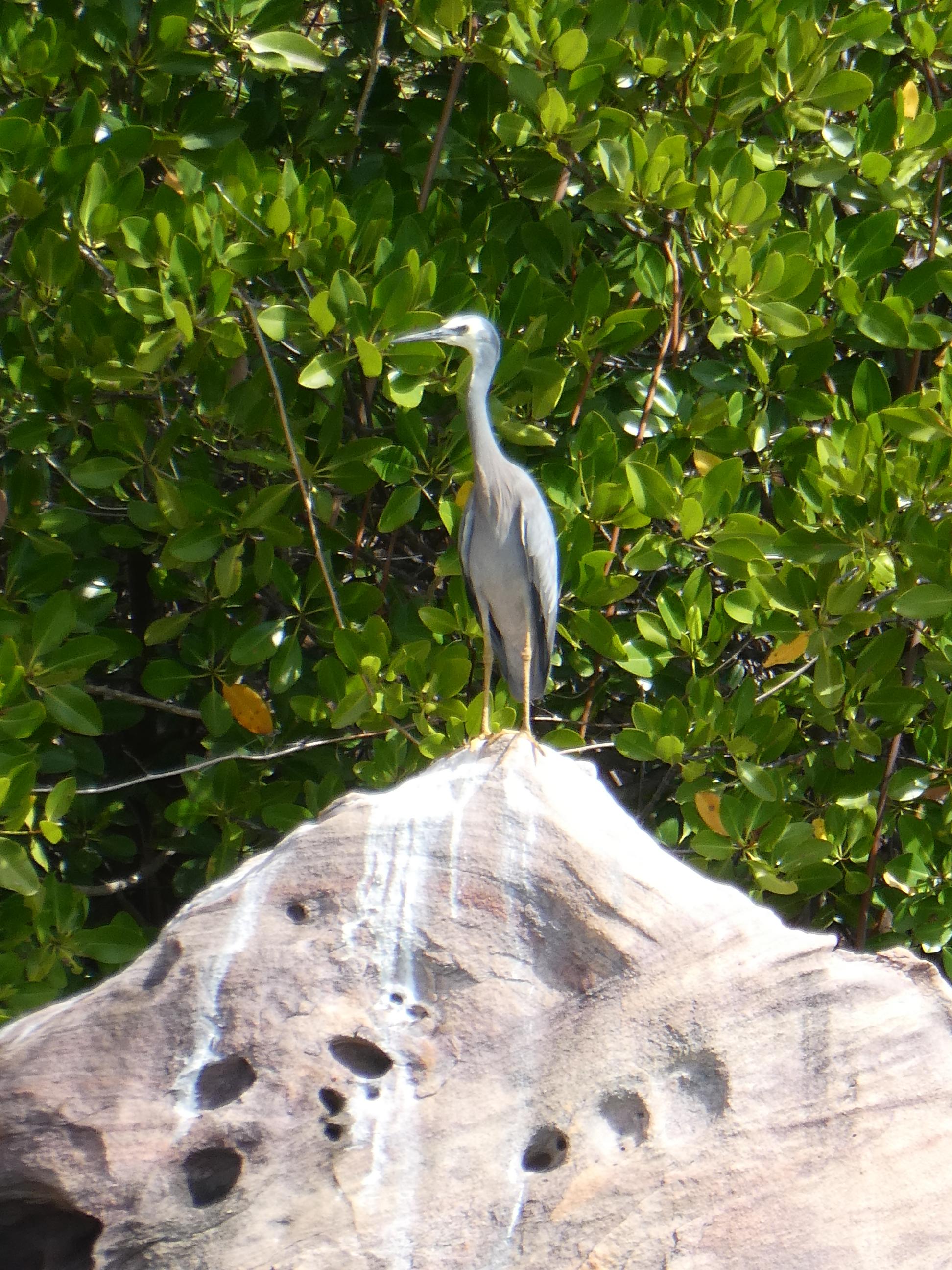
David, our cruise director, Richard, our biologist, and Garry, our geologist, were all getting excited by the birdlife we were seeing. Richard was taking lots of photos with his long lens that hopefully we’ll receive copies of once the trip is concluded. They spotted a whistling kite perched high on a rock at the top of a cliff. Once again, Craig silently moved the boat around so we could all see it. After a time, the bird flew across the water to a lone tree growing at right angles from a cliff. I imagine it must spend a lot of time perched on each of those wonderful vantage points, watching bel
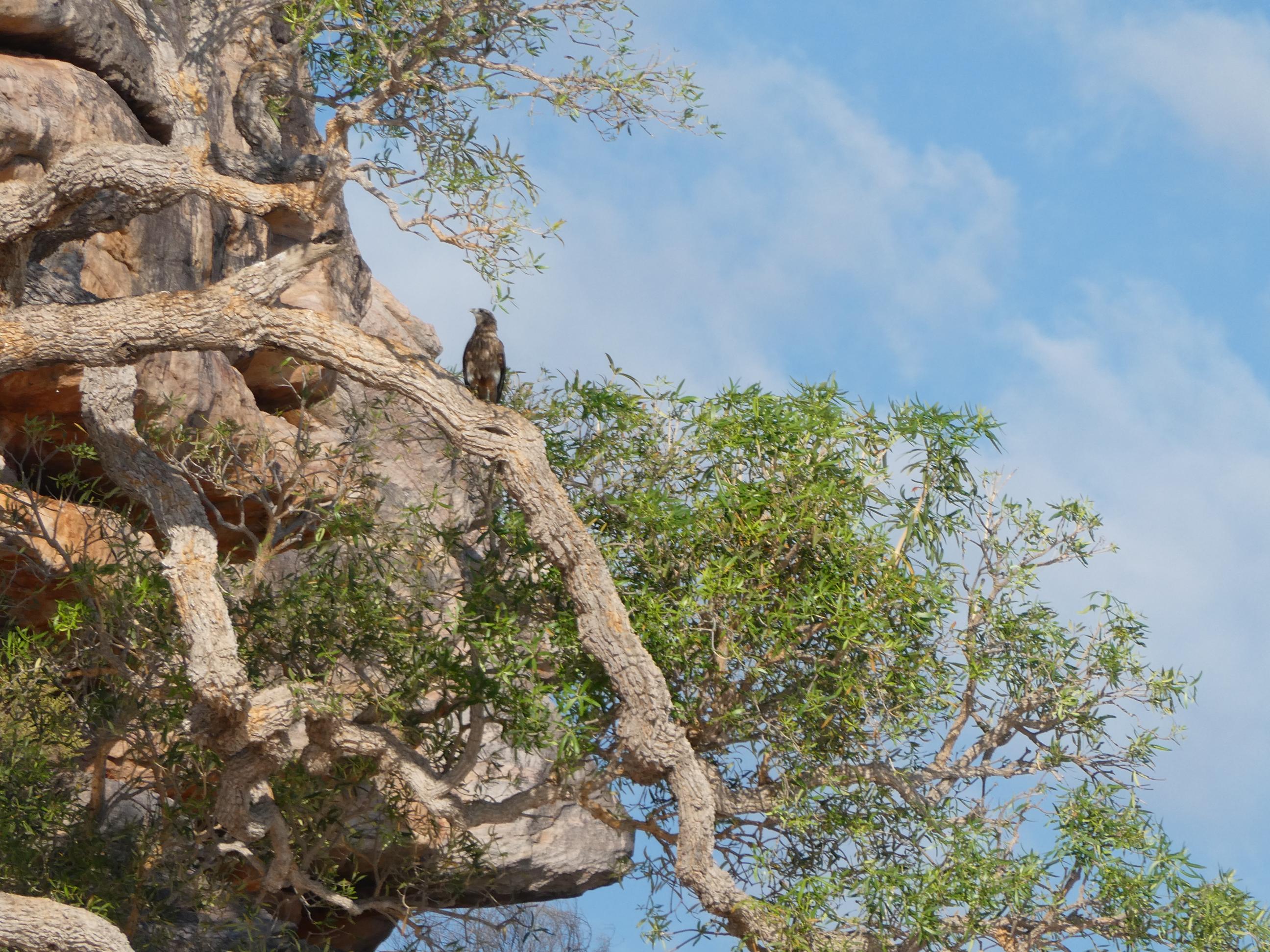
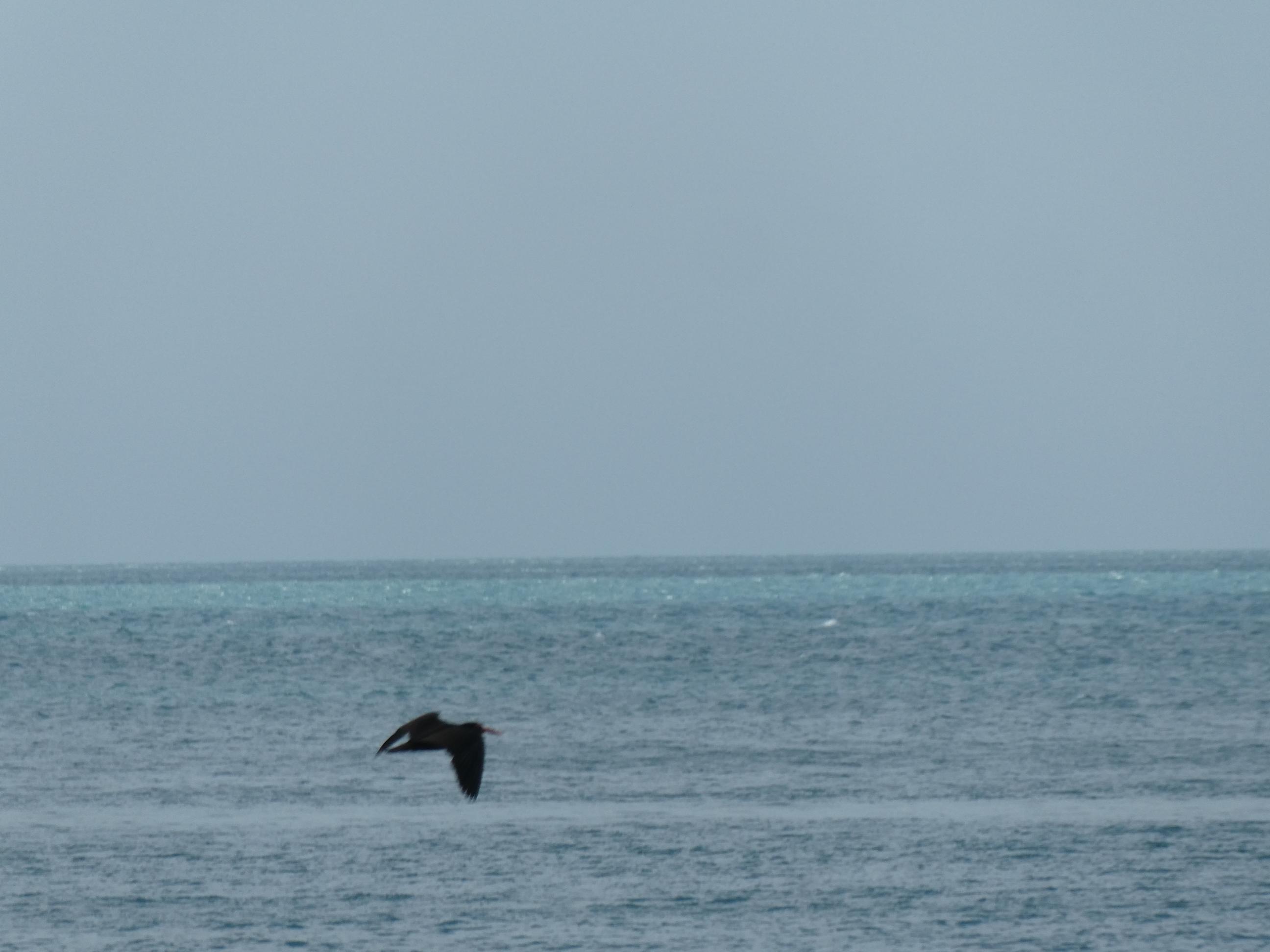
Sooty oyster catchers, with their distinctive bright red beaks and eyes, sauntered across the beach.
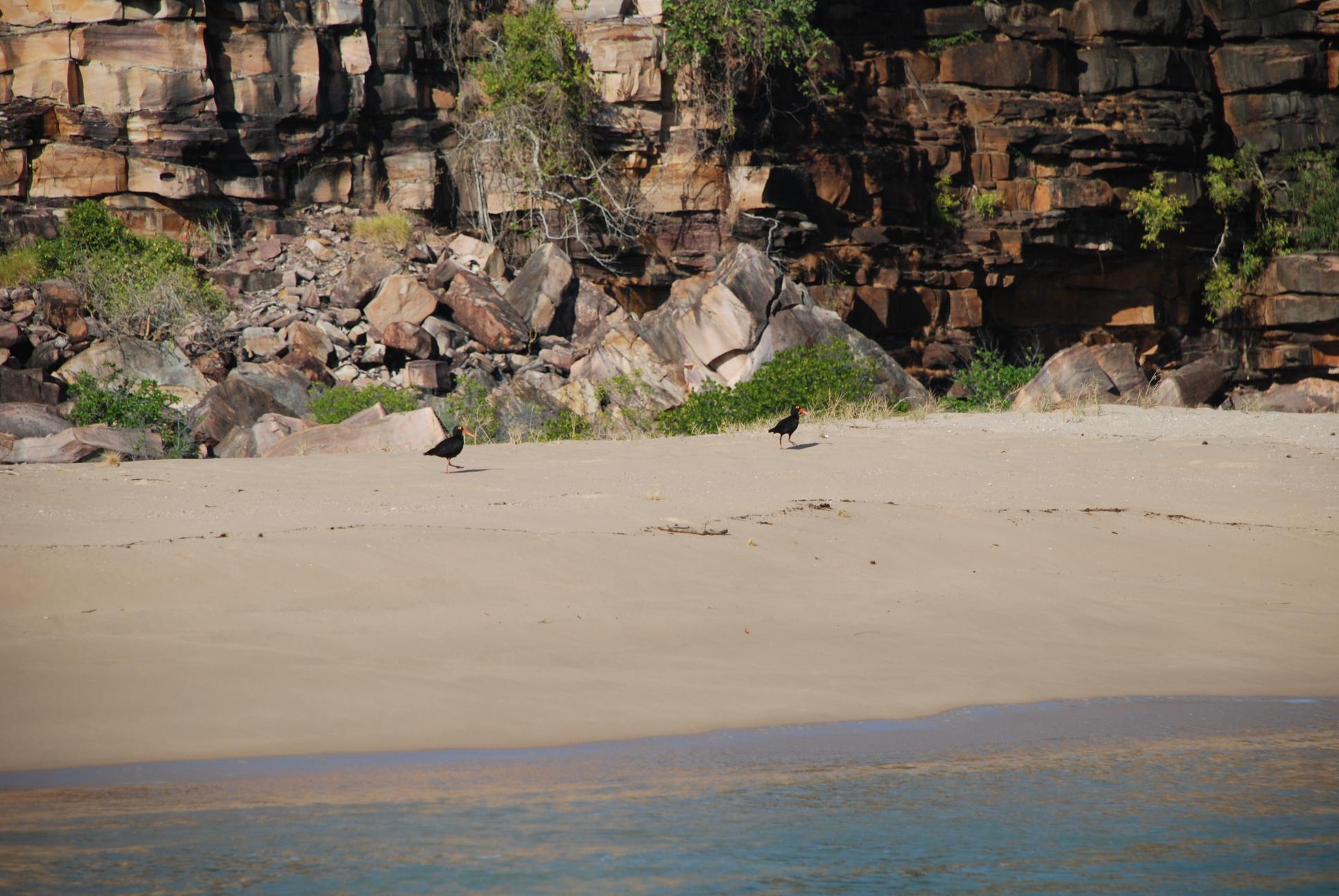
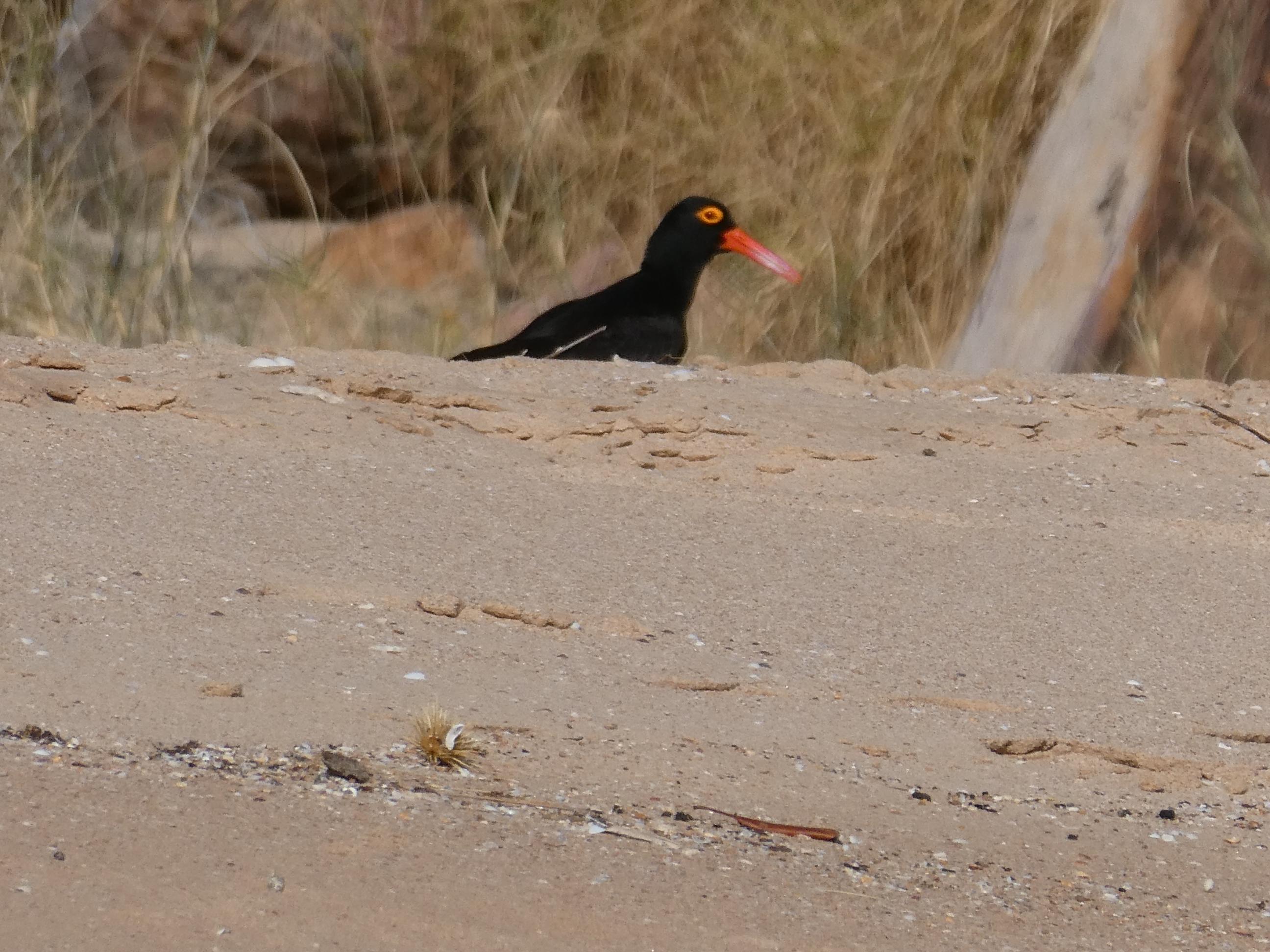
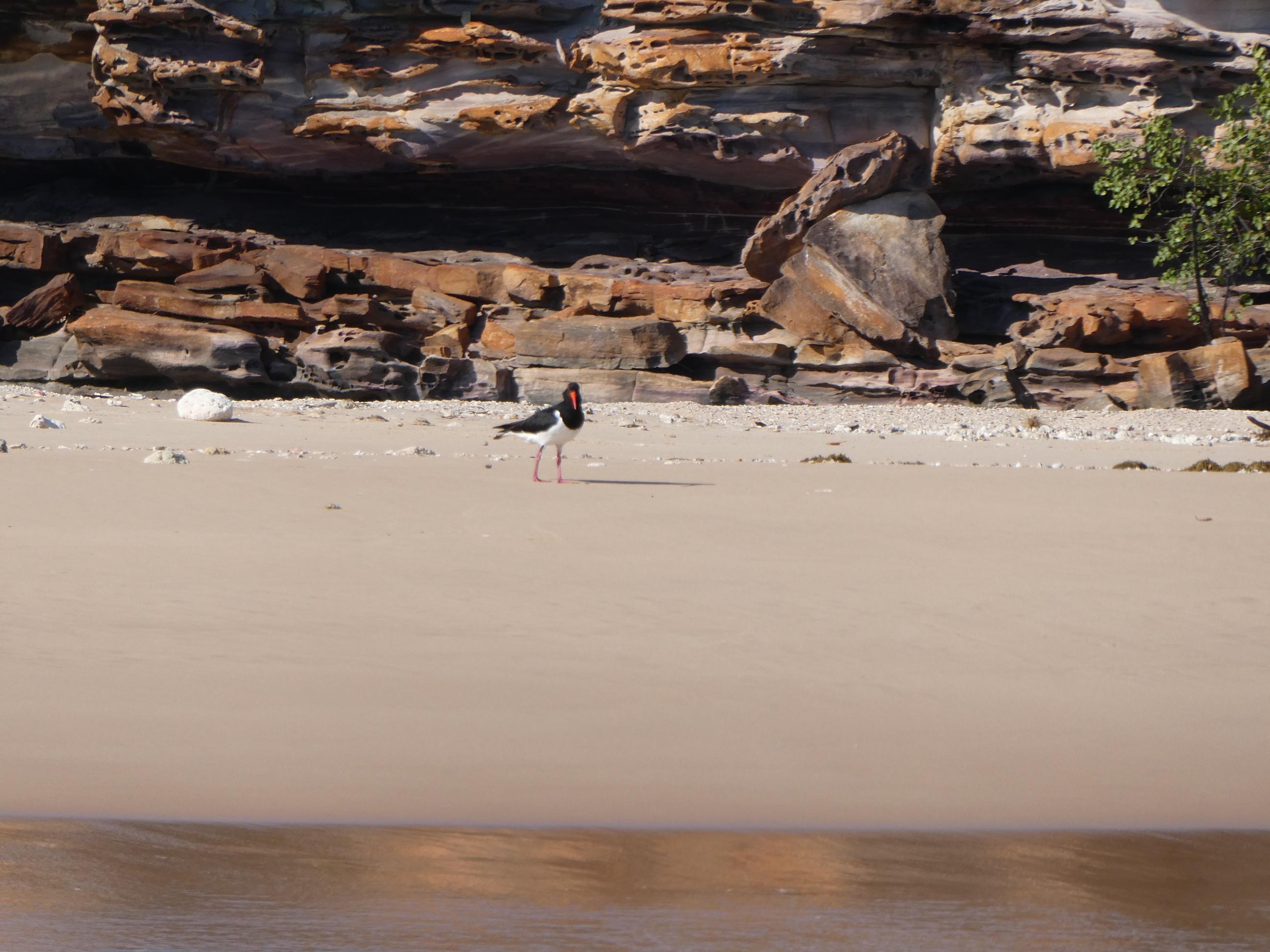
A little further down the shore, their cousins the pied oyster catchers were on patrol.
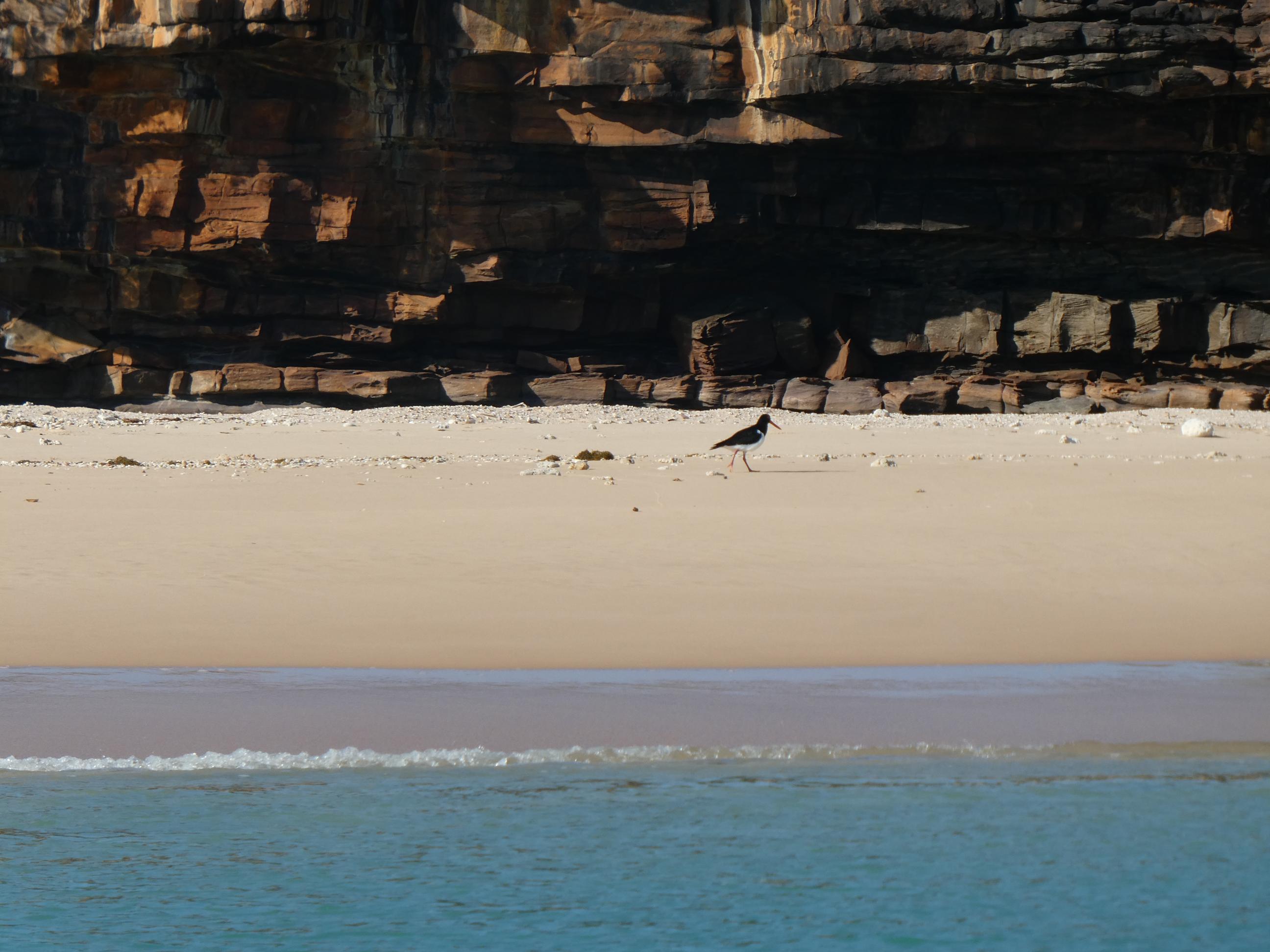
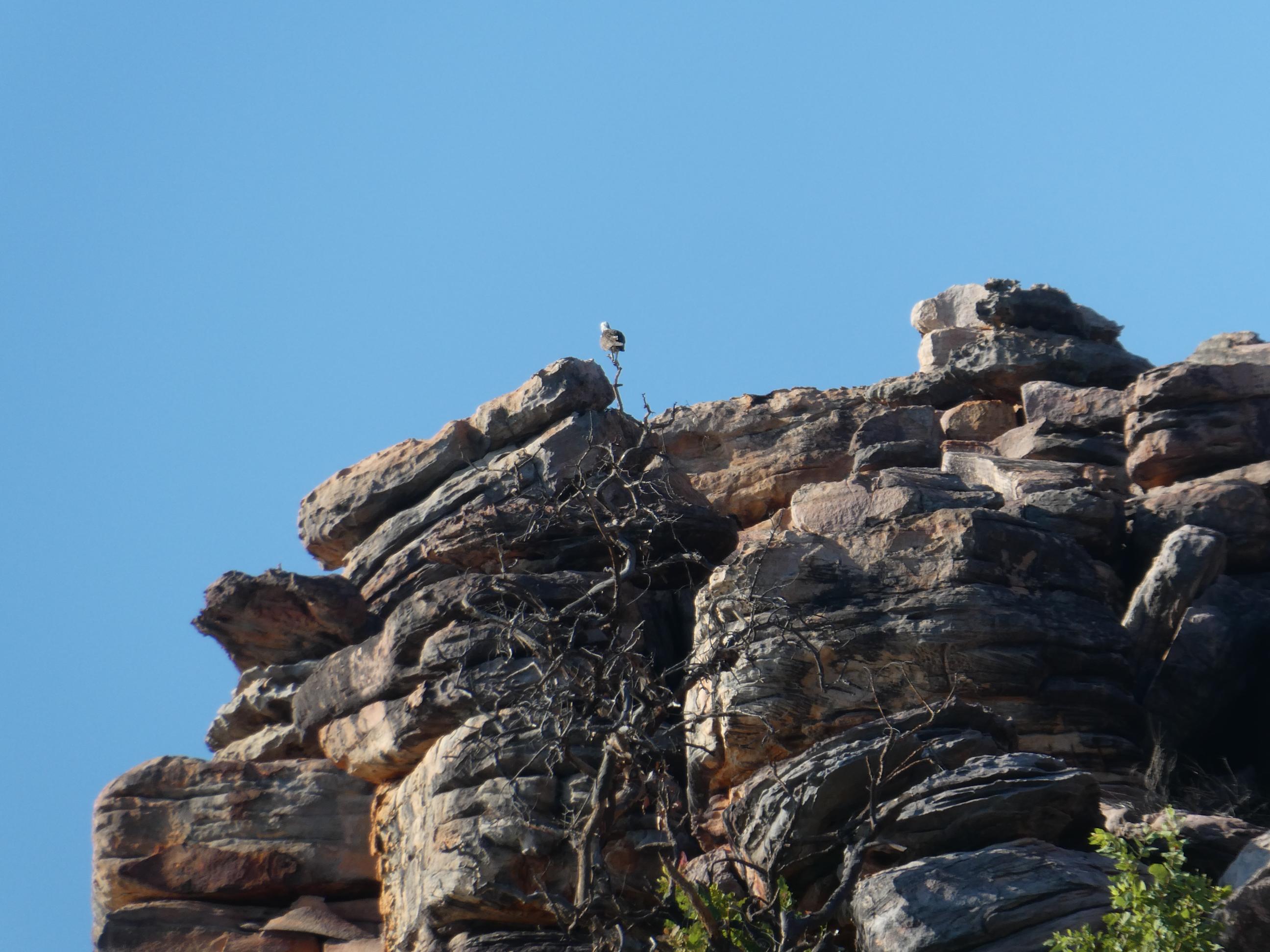
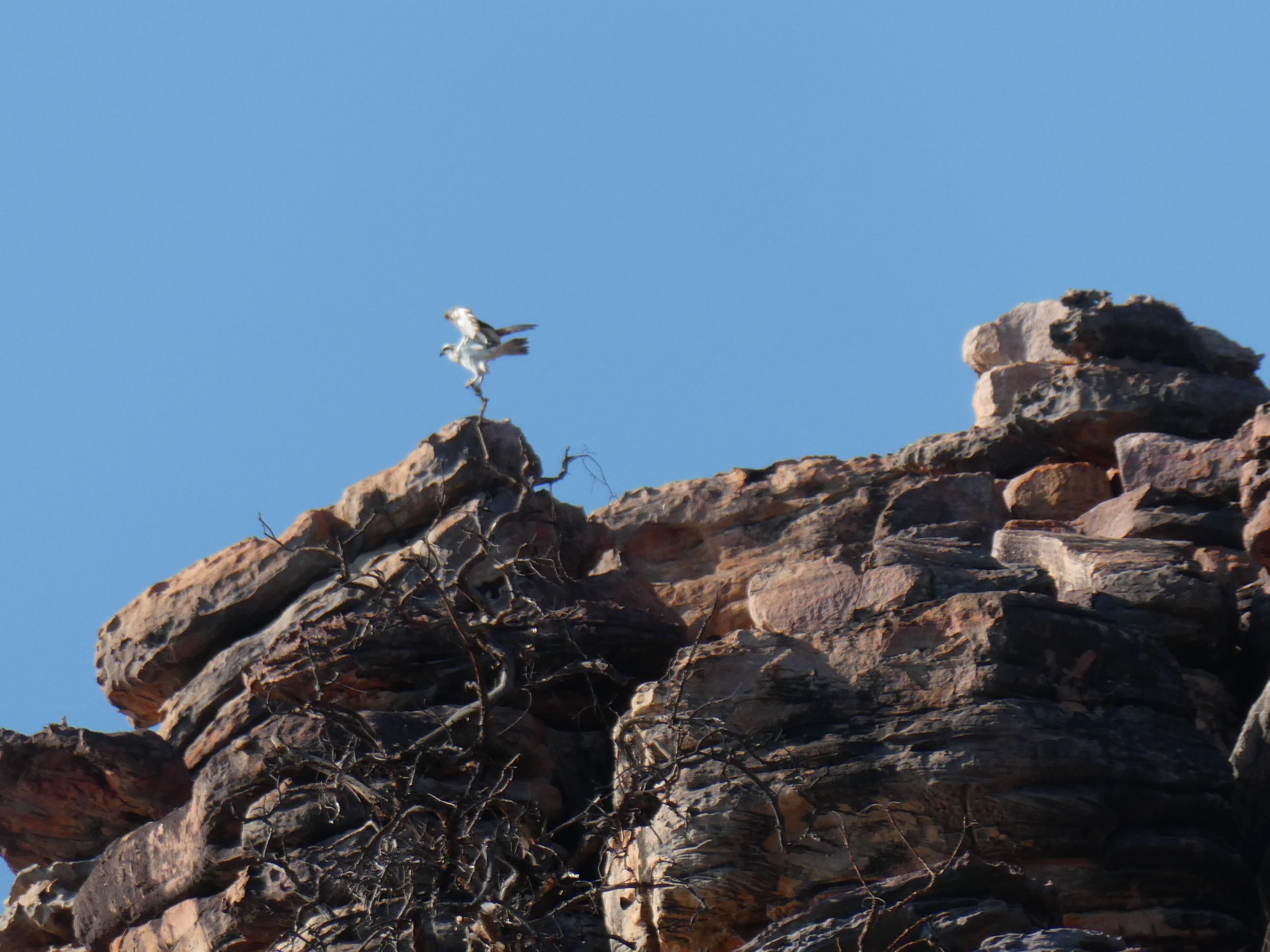
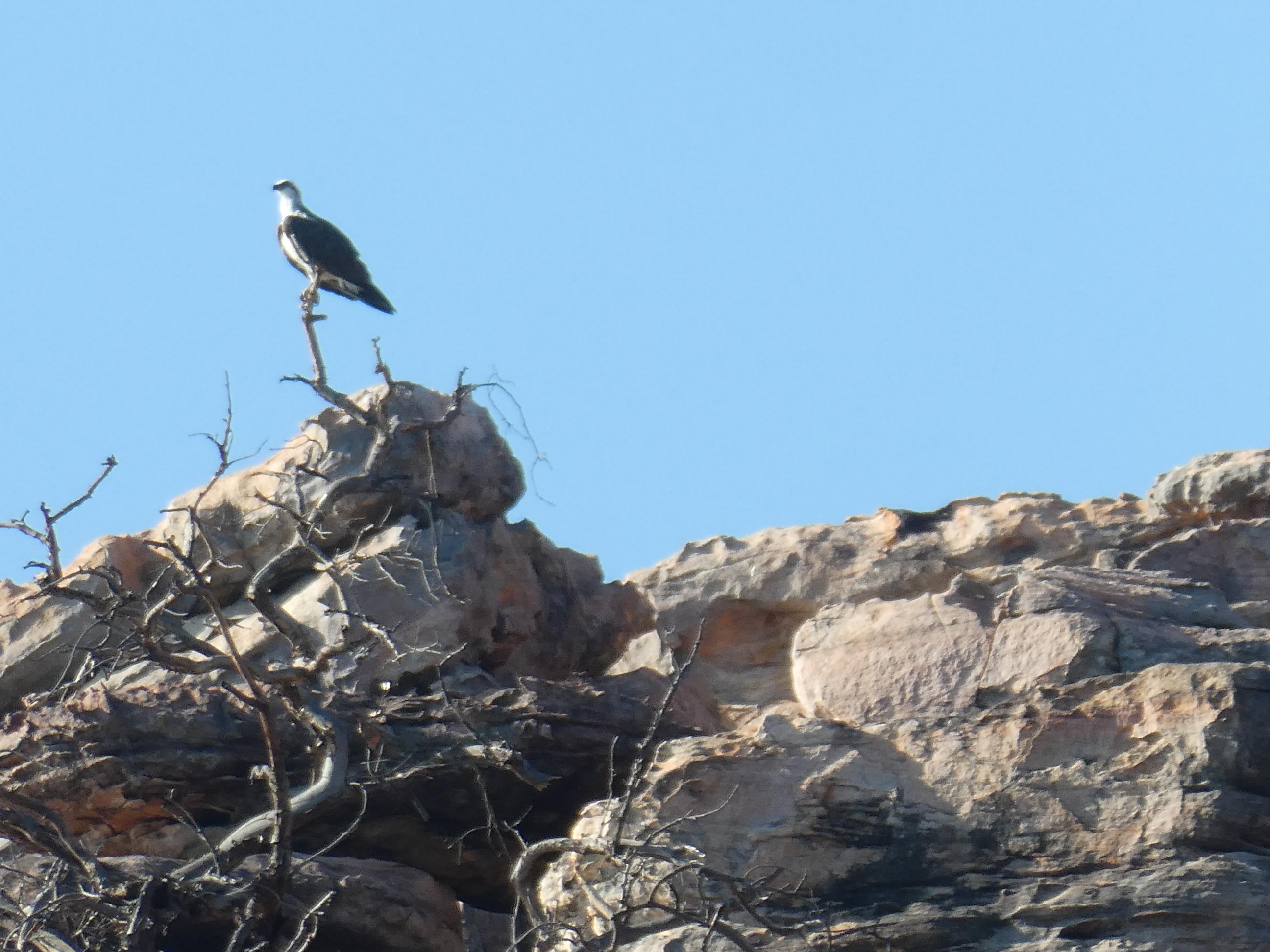
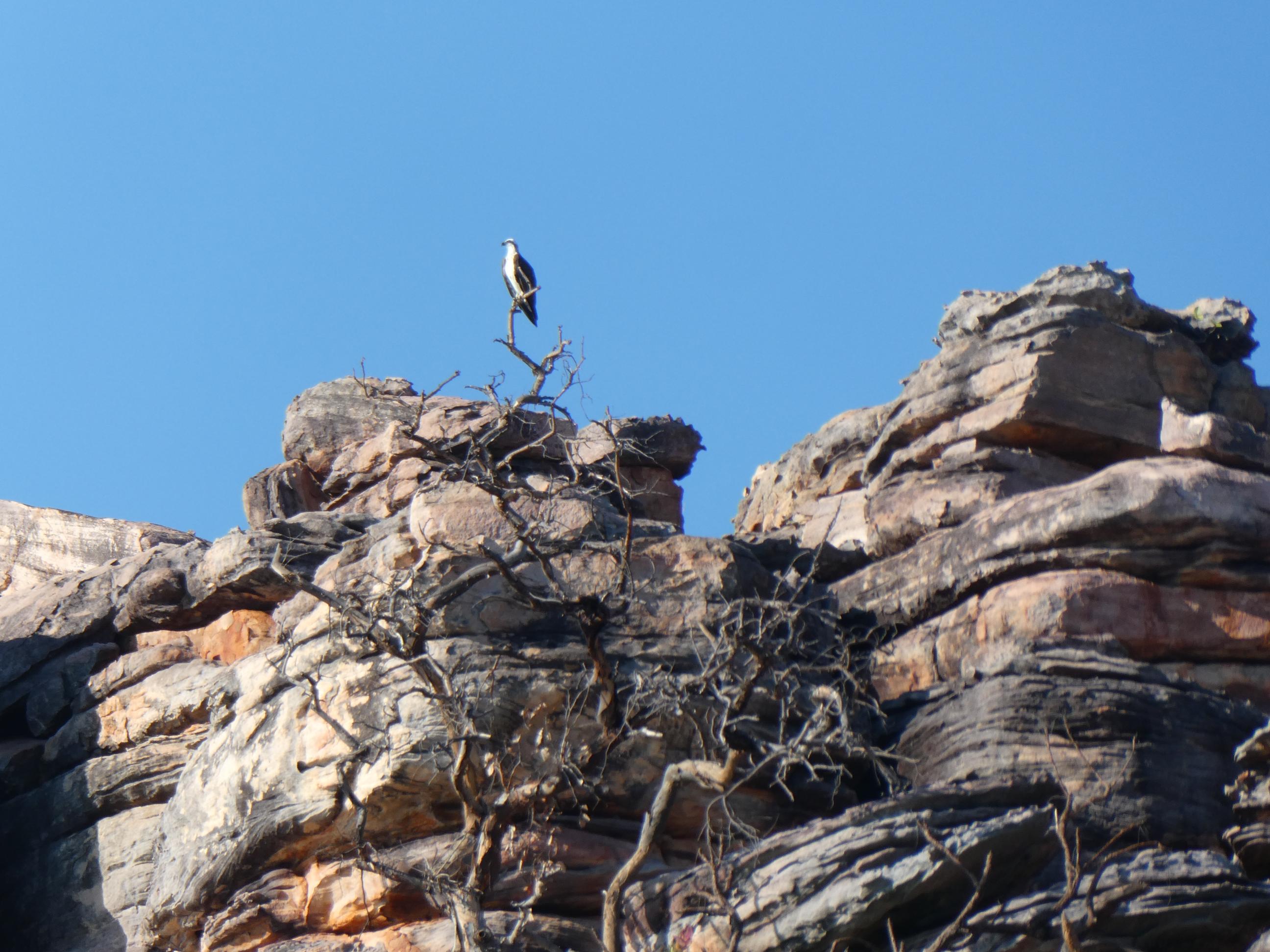
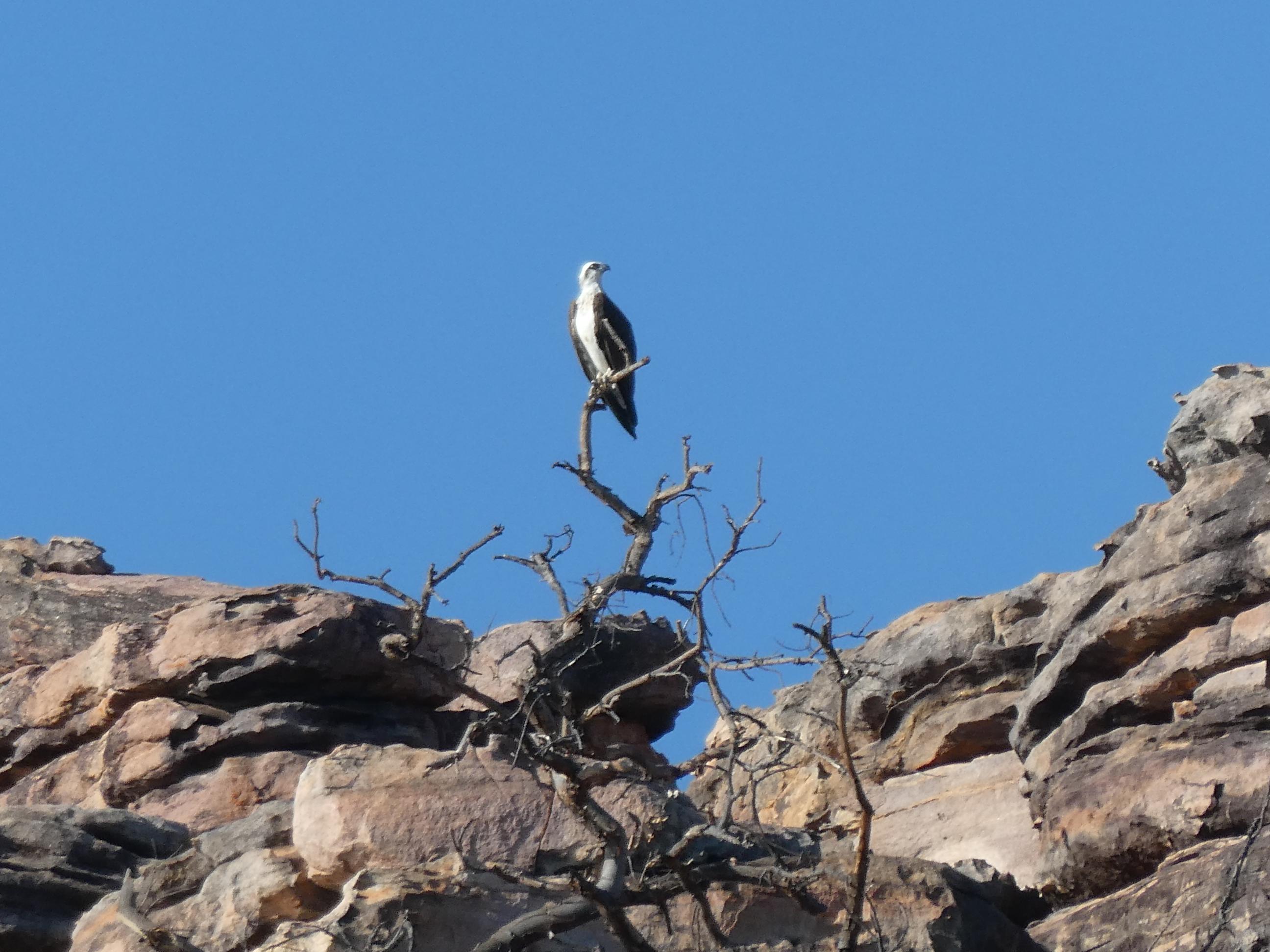
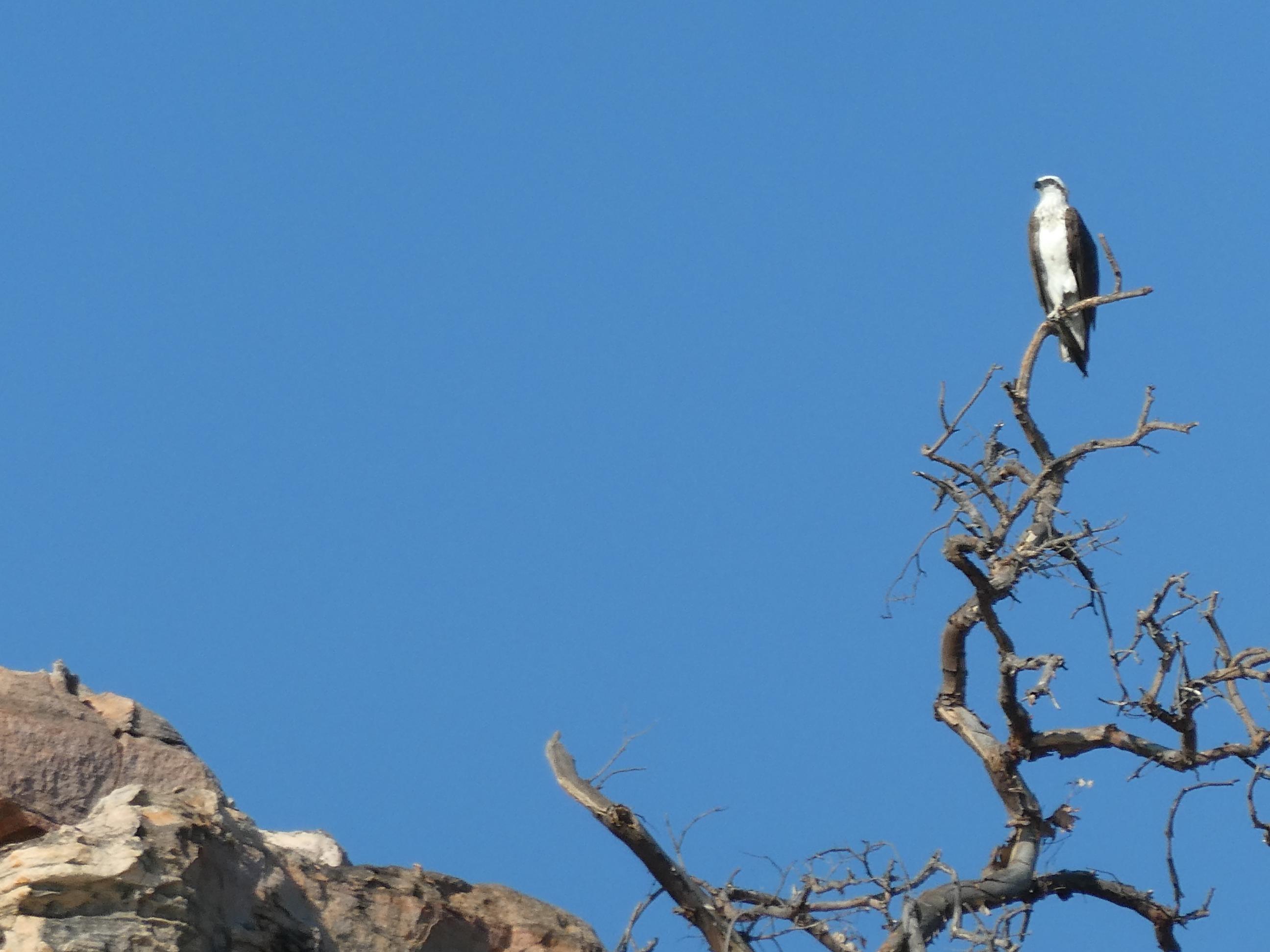
We spied an osprey on a high rocky ledge. It’s a majestic bird of prey and they can apparently be seen along the Kimberley coastline if you keep an eye out for them. It watched us as we passed.
On our way back to the ship, we passed a small colony of crested terns on a couple of exposed rocks.
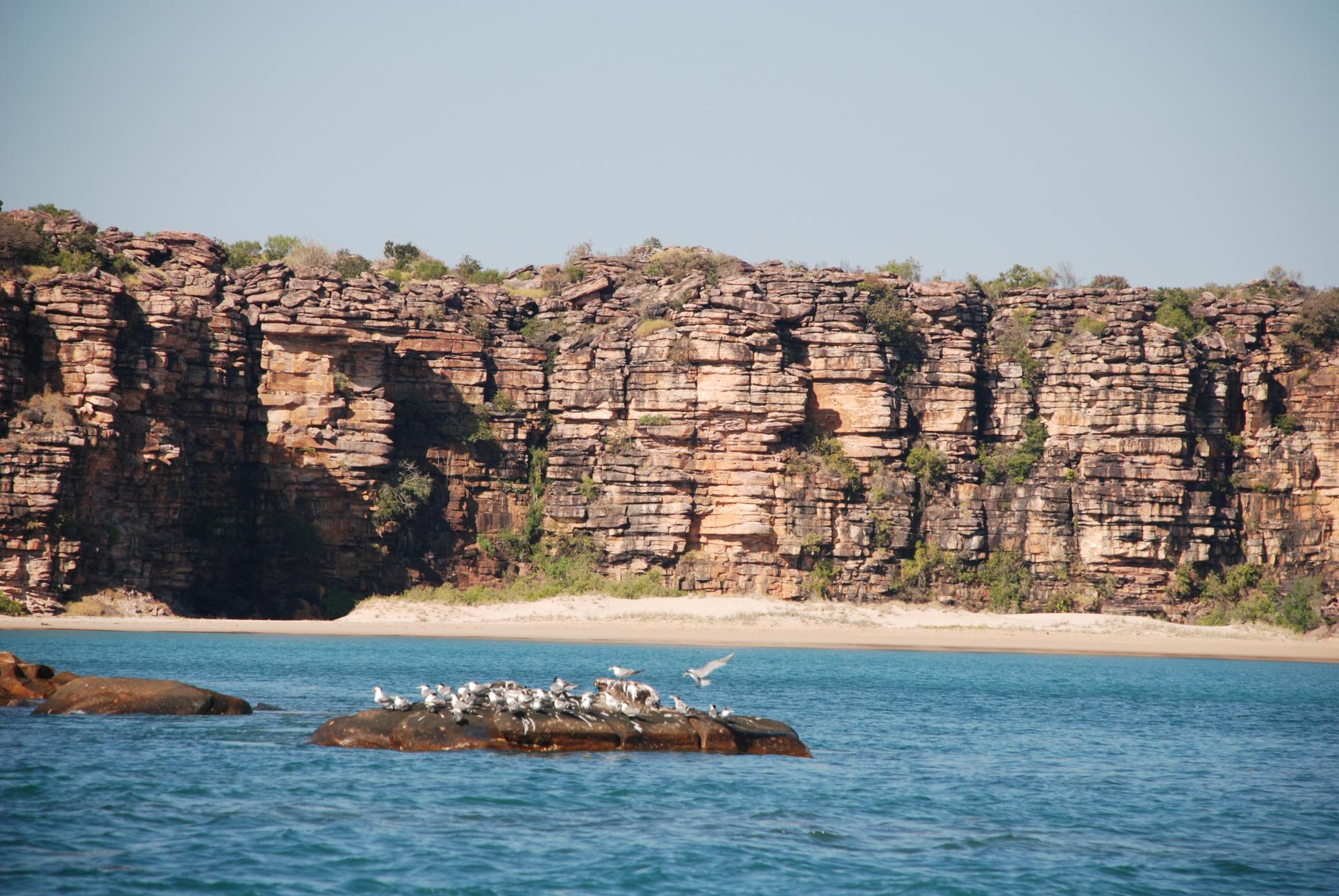
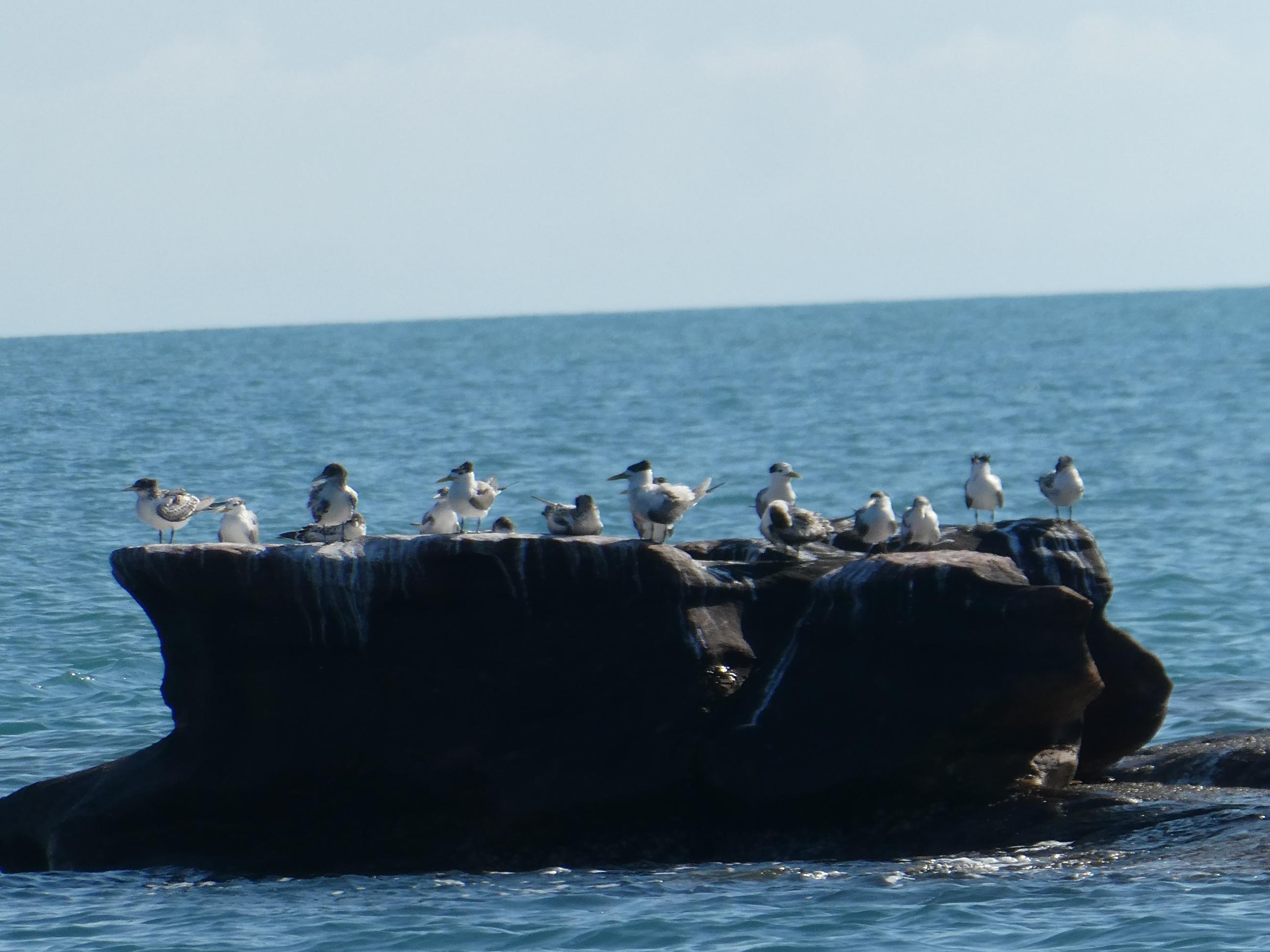
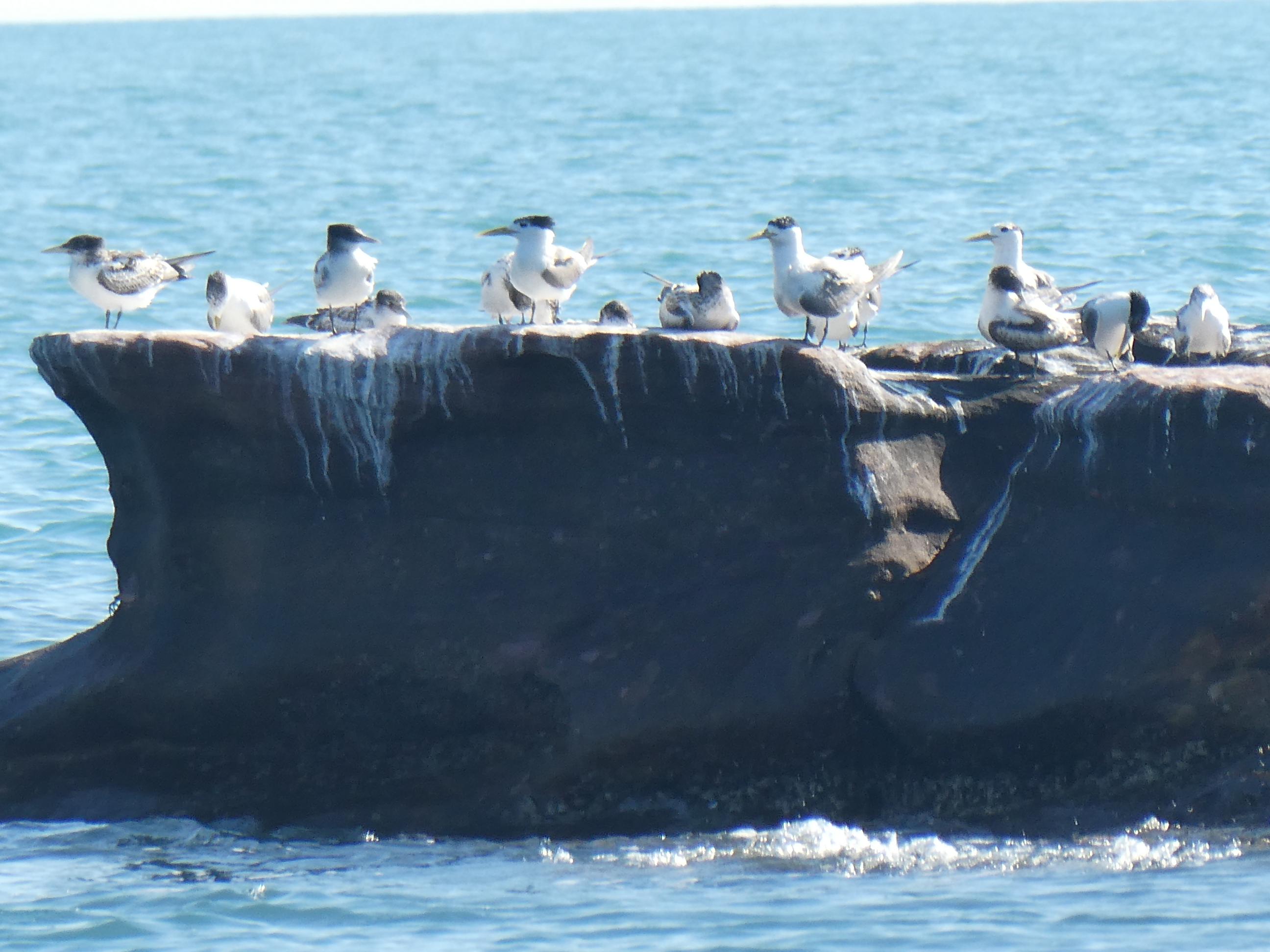
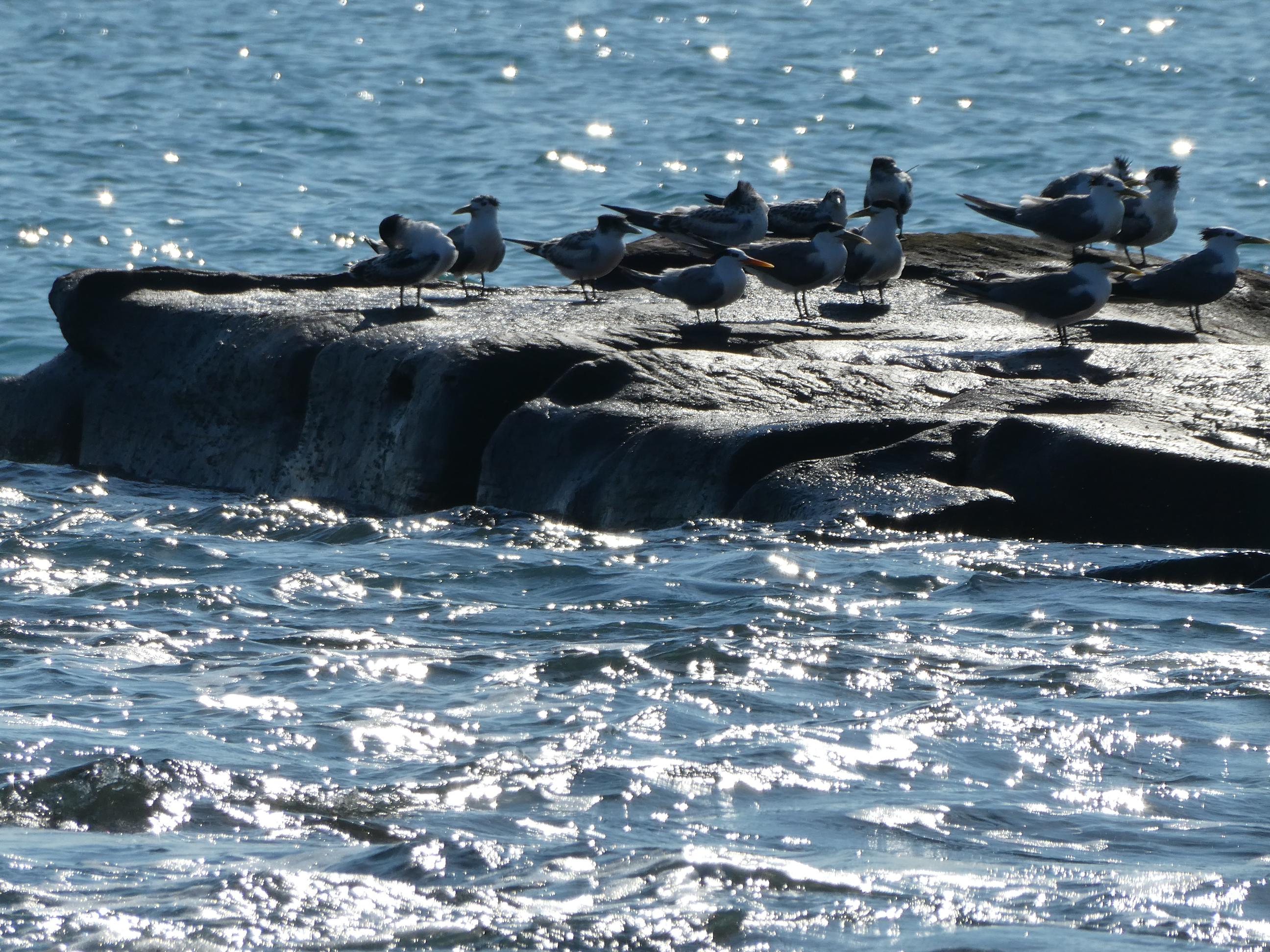
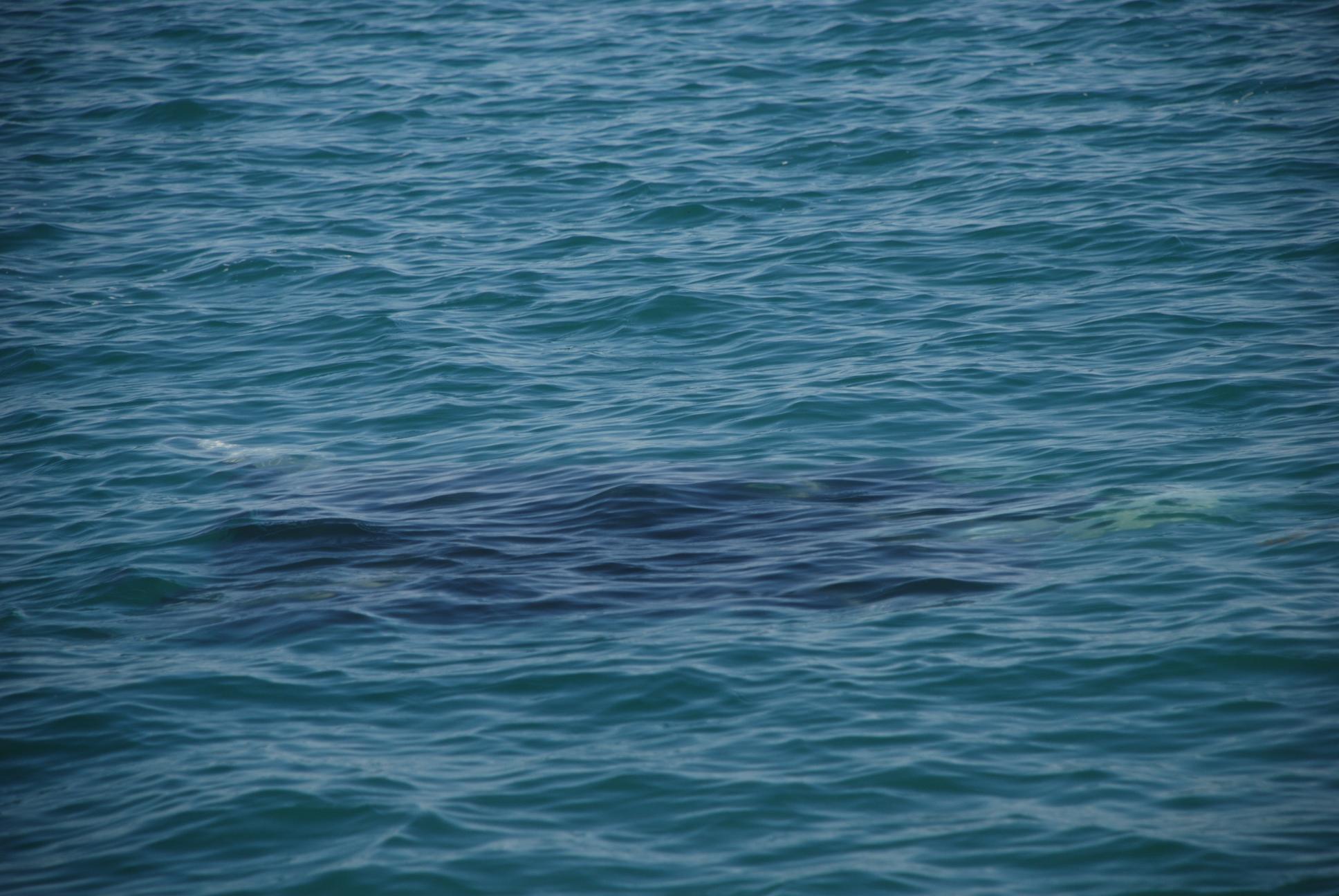
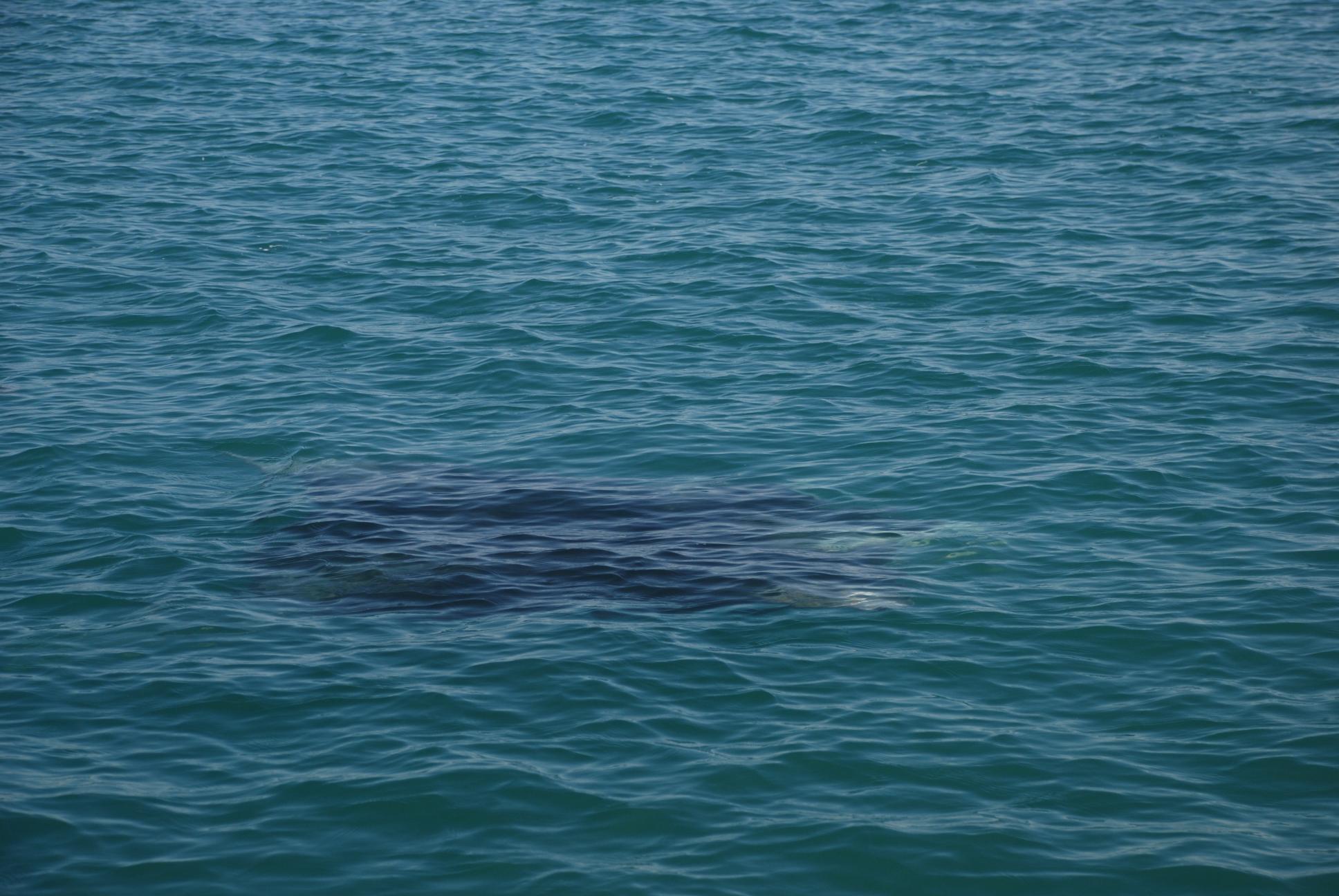
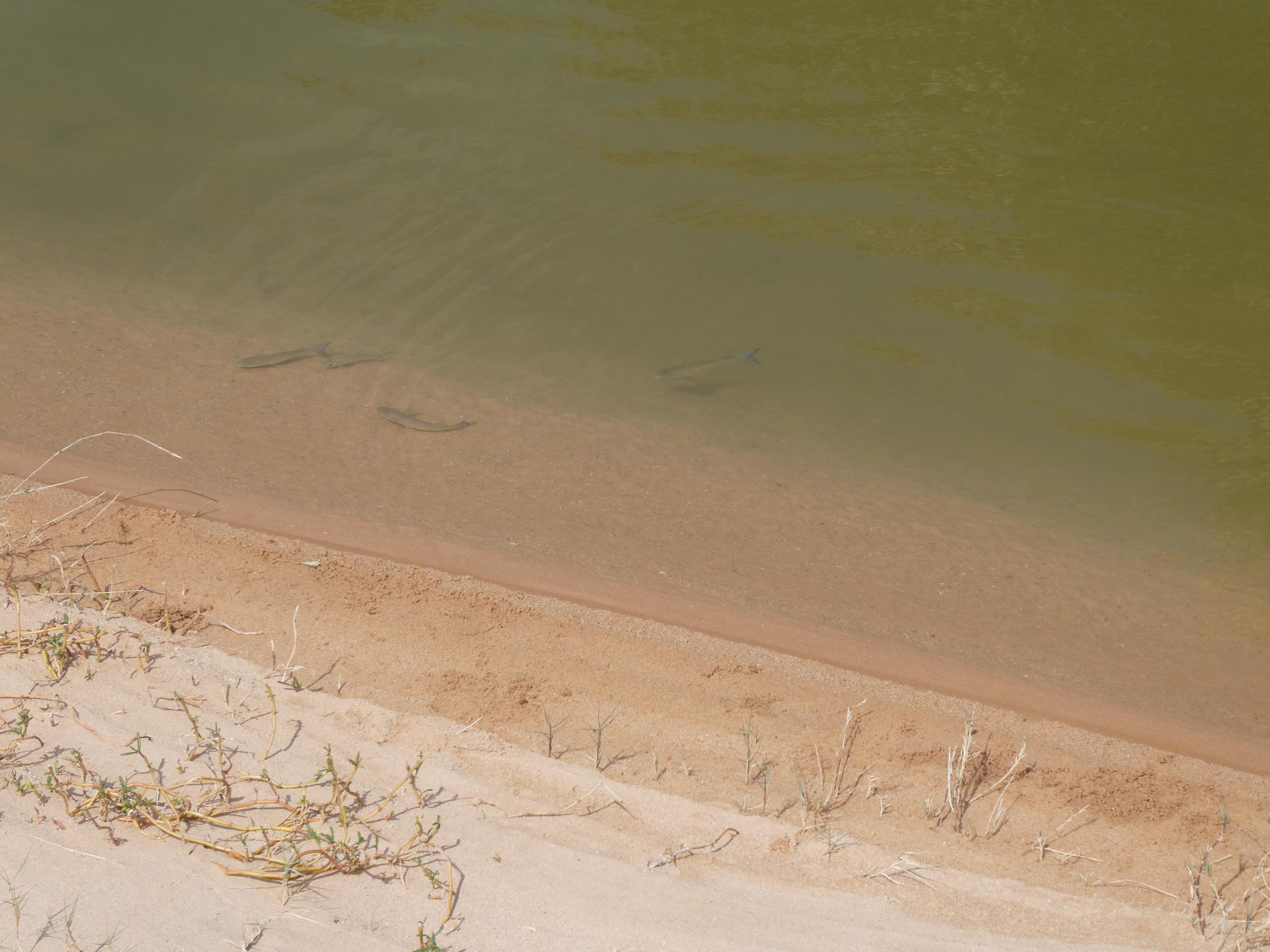
A little farther out to sea, a large manta swam towards our boat. If you look closely at these photos you’ll be able to make out its shape. A school of fish followed, close to the surface. As it neared the boat, the manta dived and we lost sight of it.
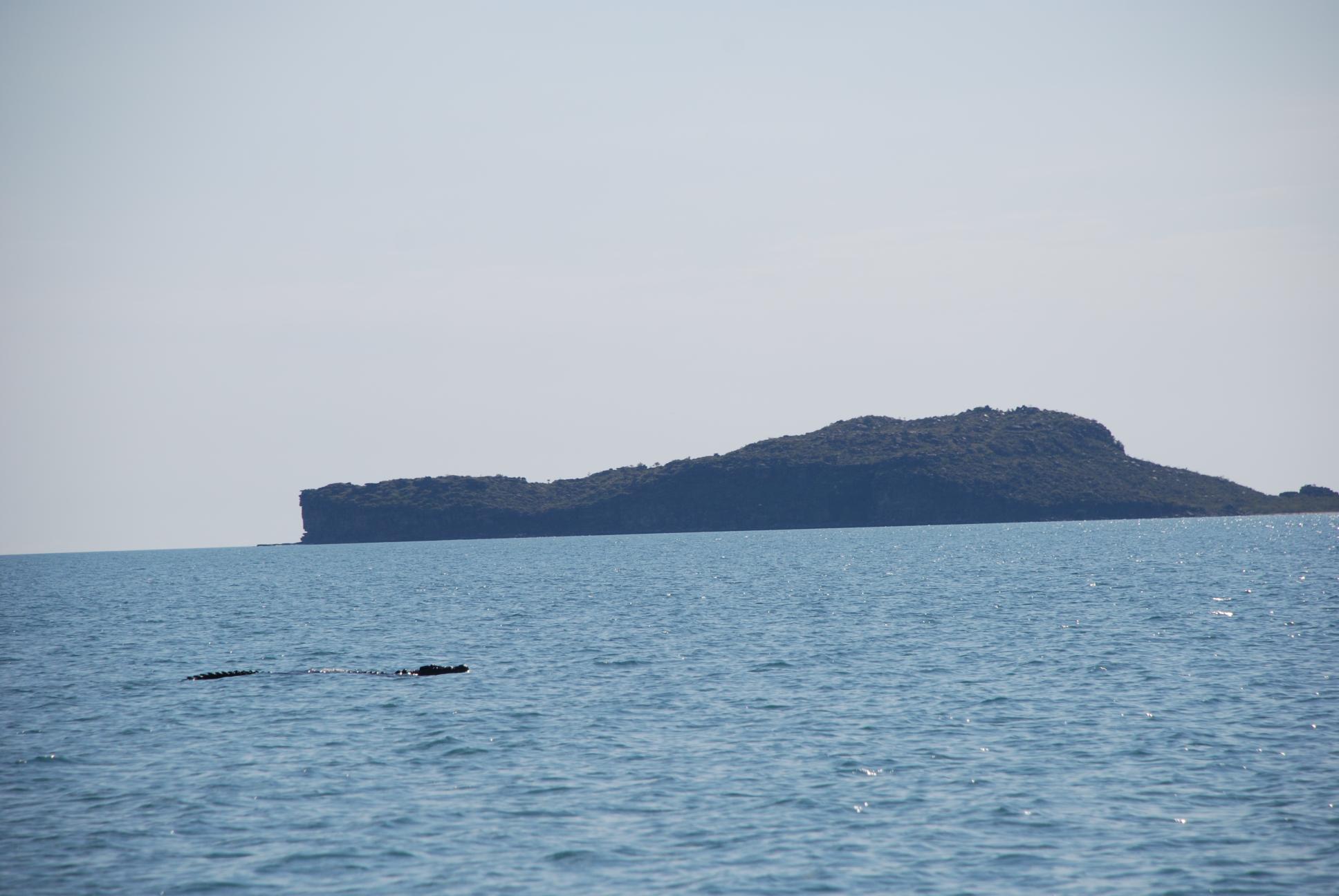
Quite a long way offshore, we spotted a large crocodile, the biggest we’ve seen to date. David had said there was a big croc that frequented this bay, and maybe this was it. Craig killed the engine and we tried to drift closer to the crocodile, but it disappeared beneath the surface and that was our final sighting. Luckily, I got a photo before it went.
At lunch back on our ship, the captain addressed us. He told us that the company’s office back in Cairns was in dialogue with the marine authorities about our situation, but they were yet to reach agreement on what should happen next. So, for the moment, we would have to remain anchored in Koolama Bay. Then David stepped up to say that we’d been in touch with the traditional owners, the Balanggarra people, who had given us permission to go on land. So in the afternoon, we boarded the tender again and returned to the beach with the freshwater lagoon, where we were able to spend about forty minutes exploring the surrounds.
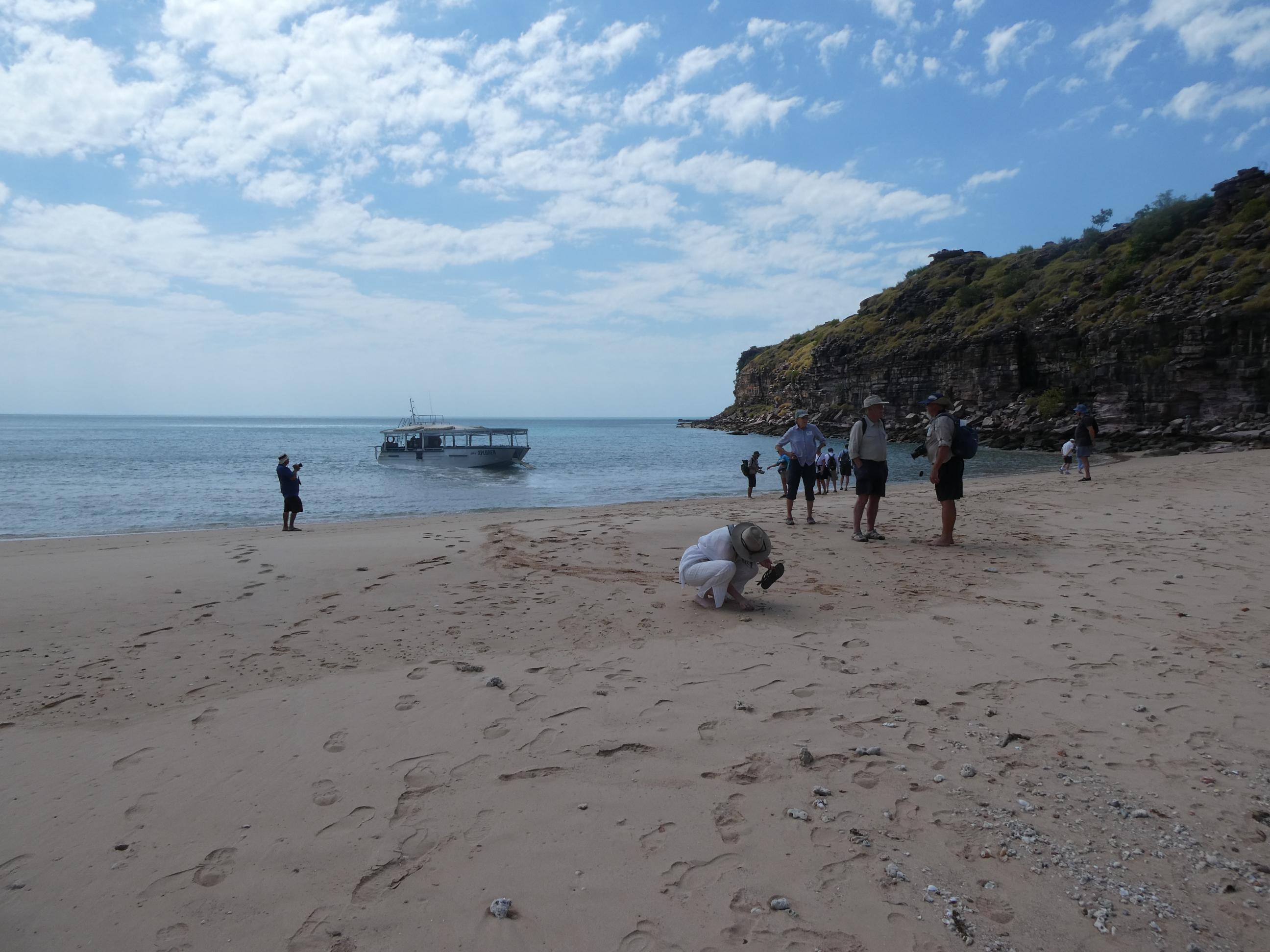
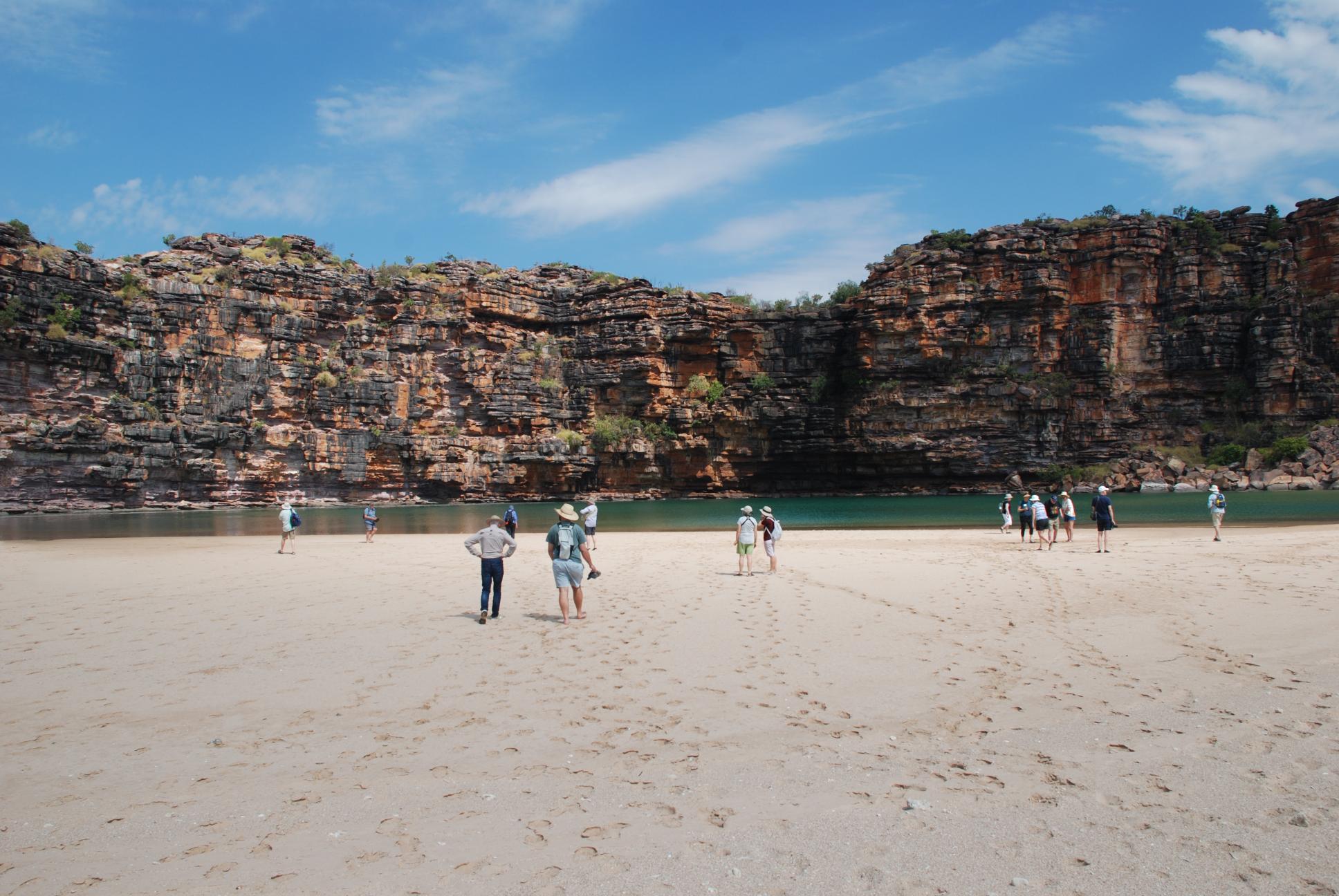
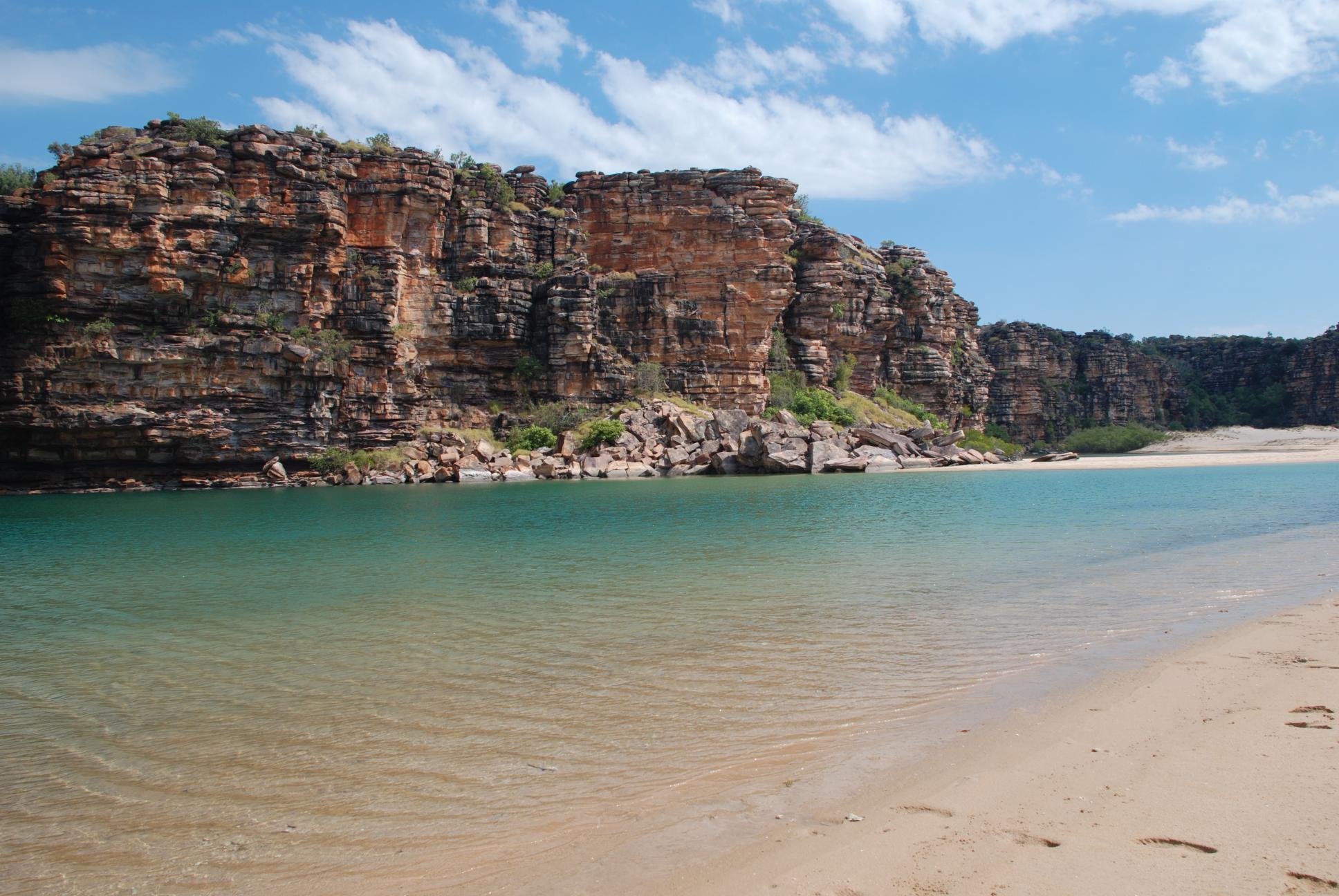
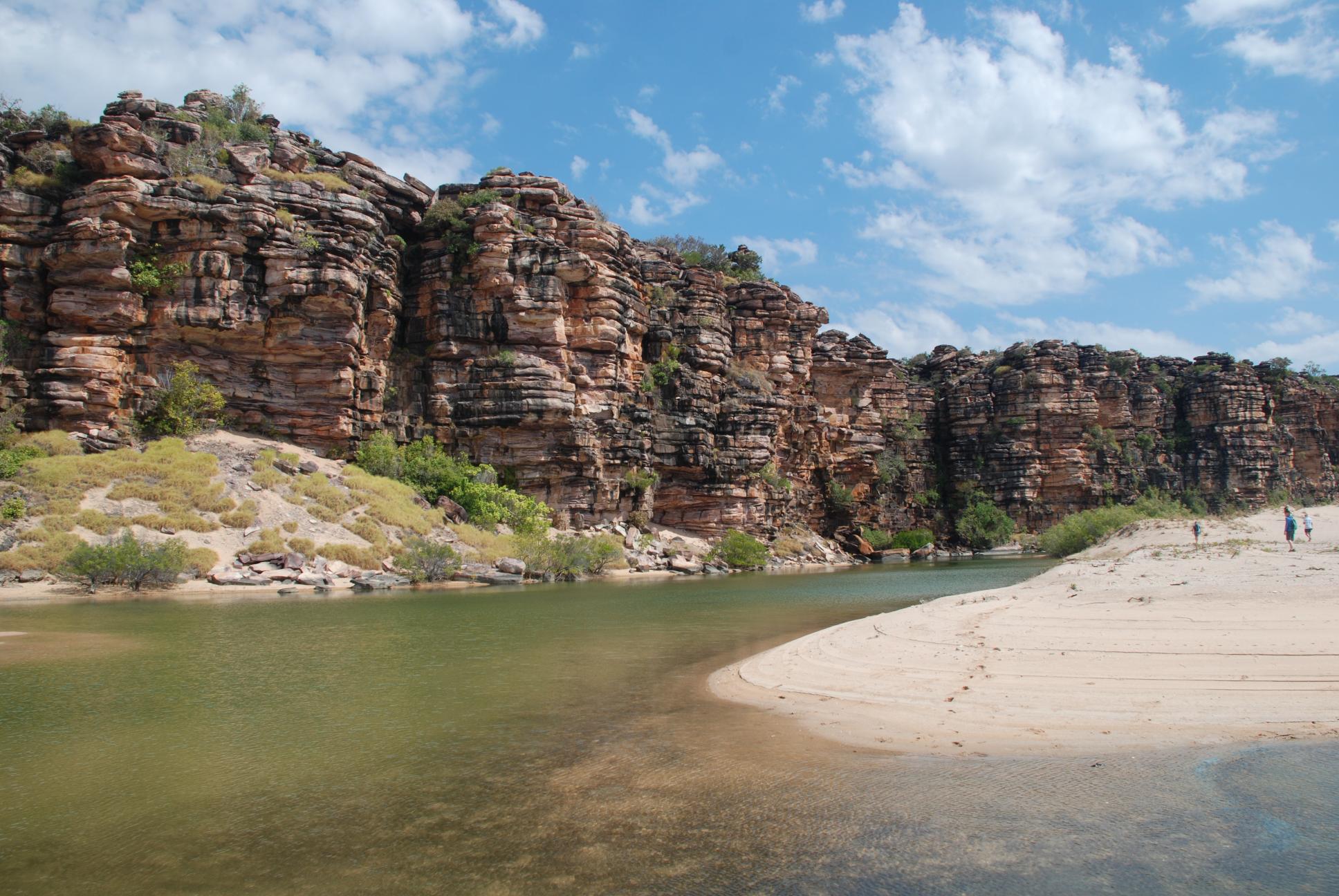
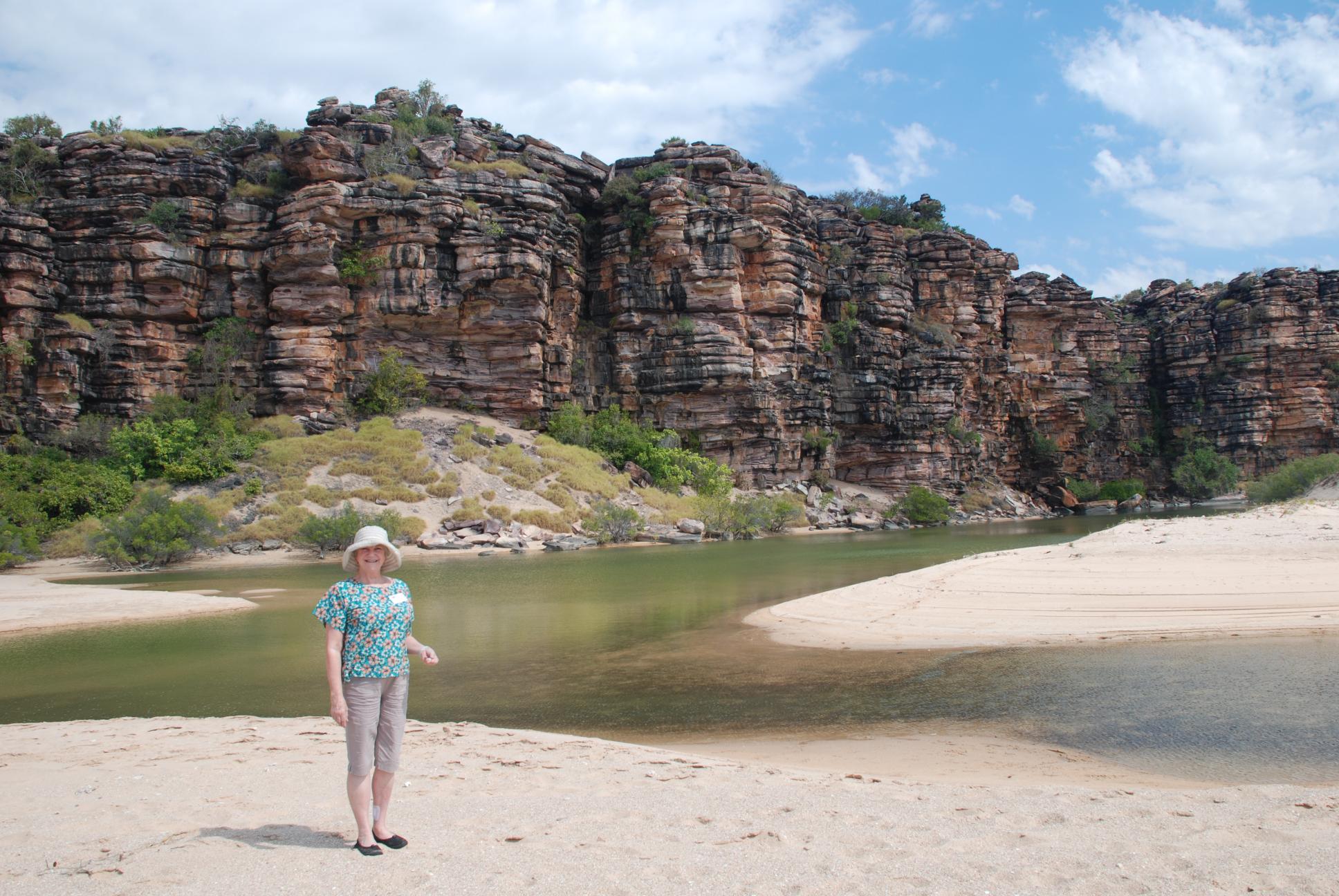
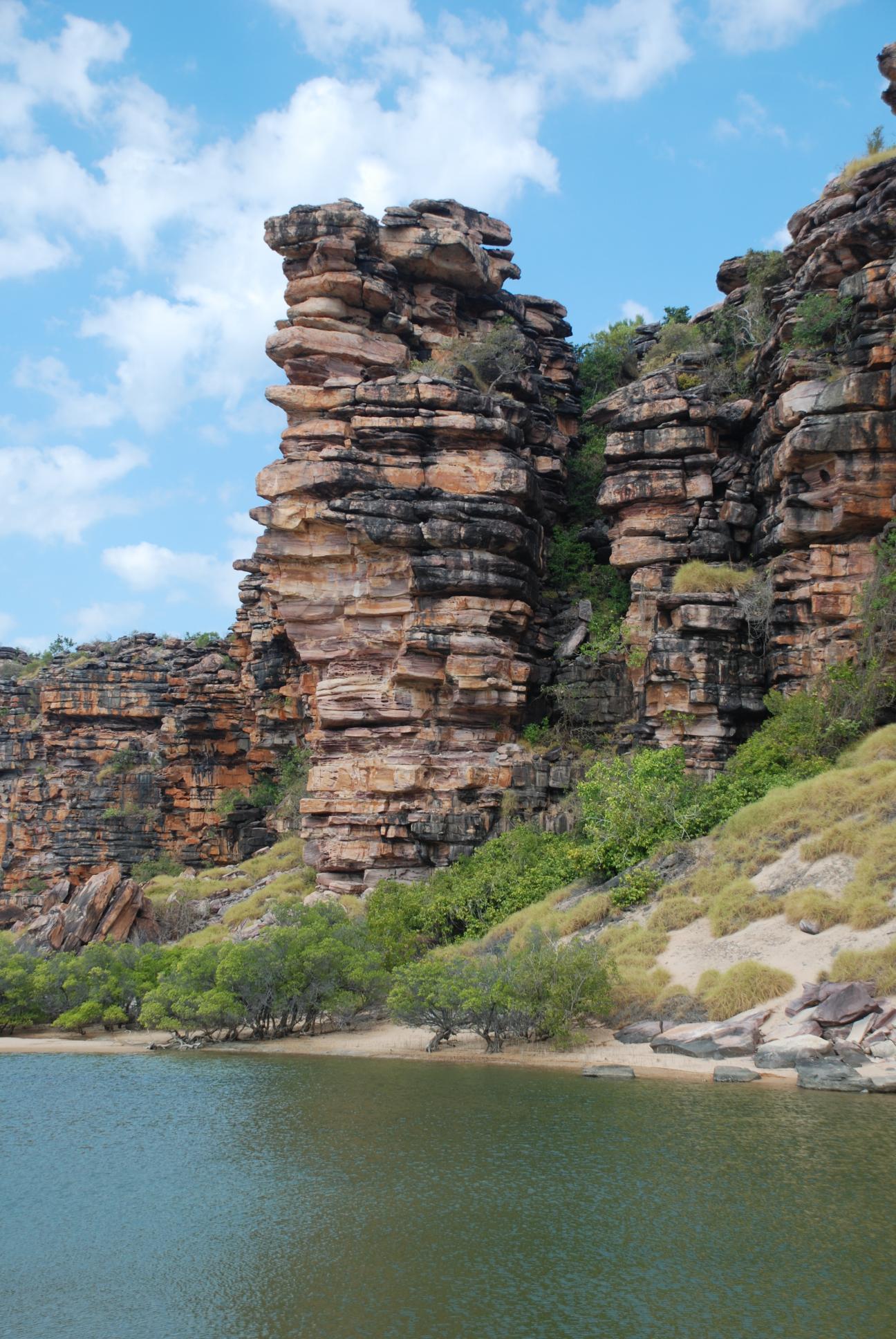
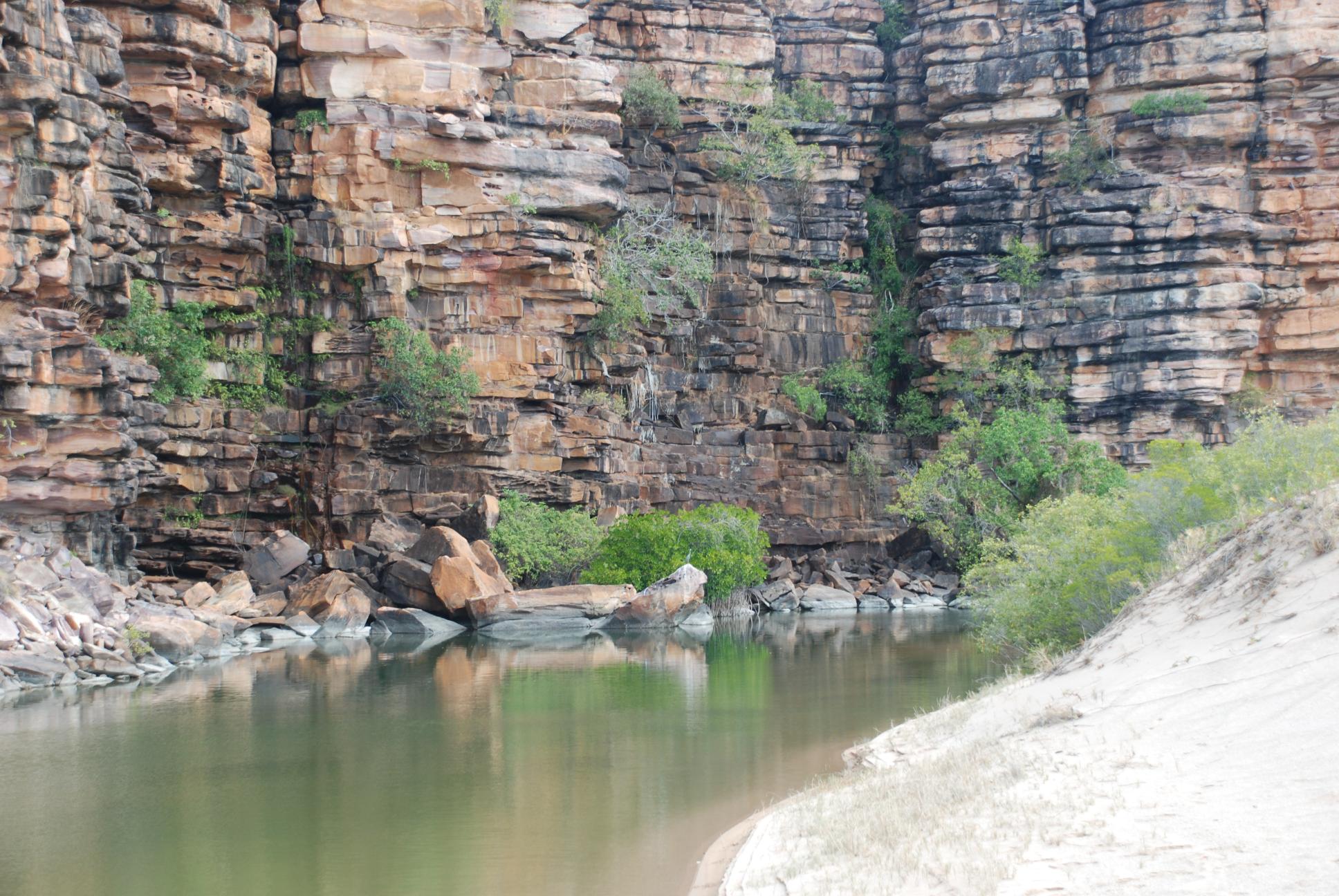
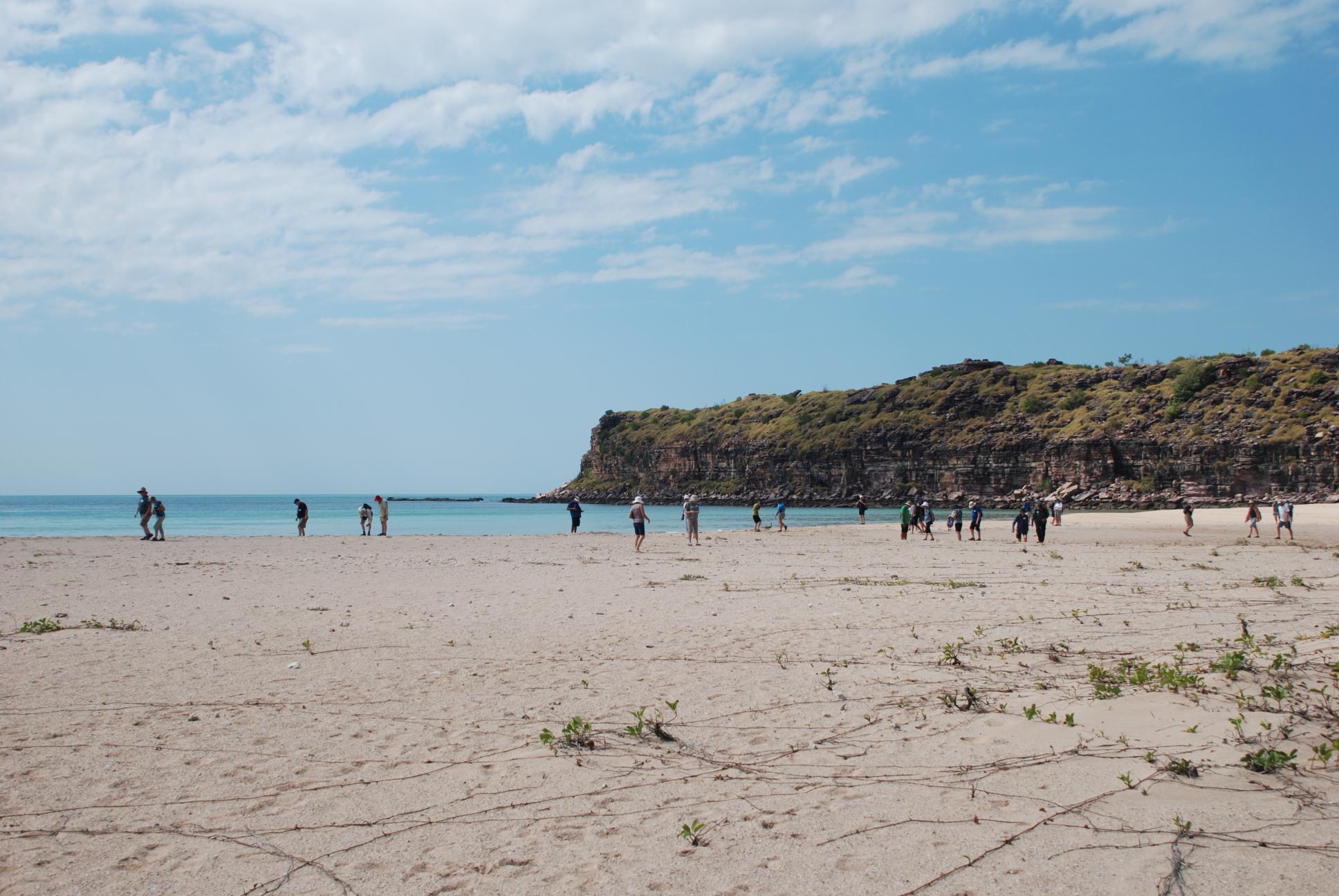
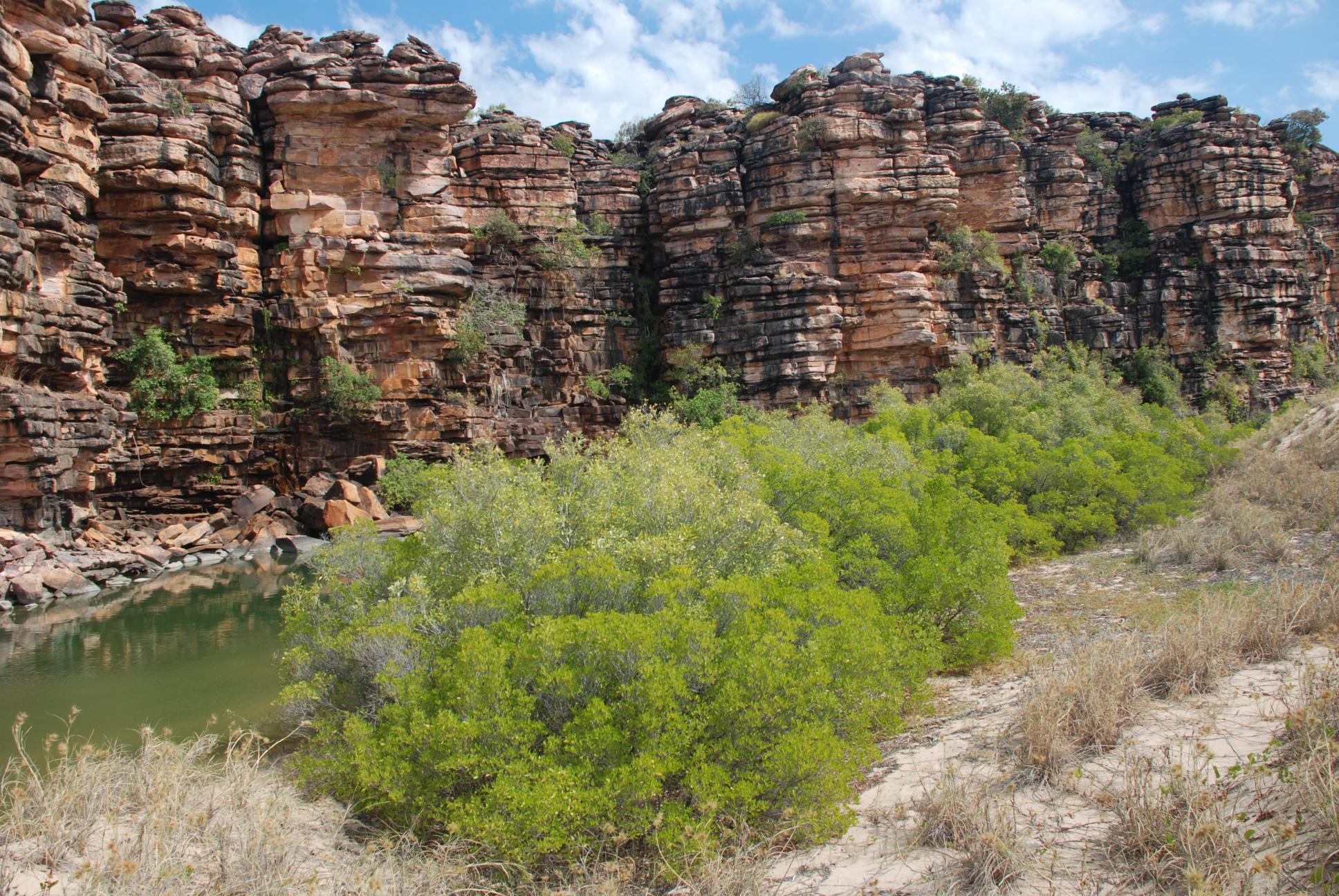
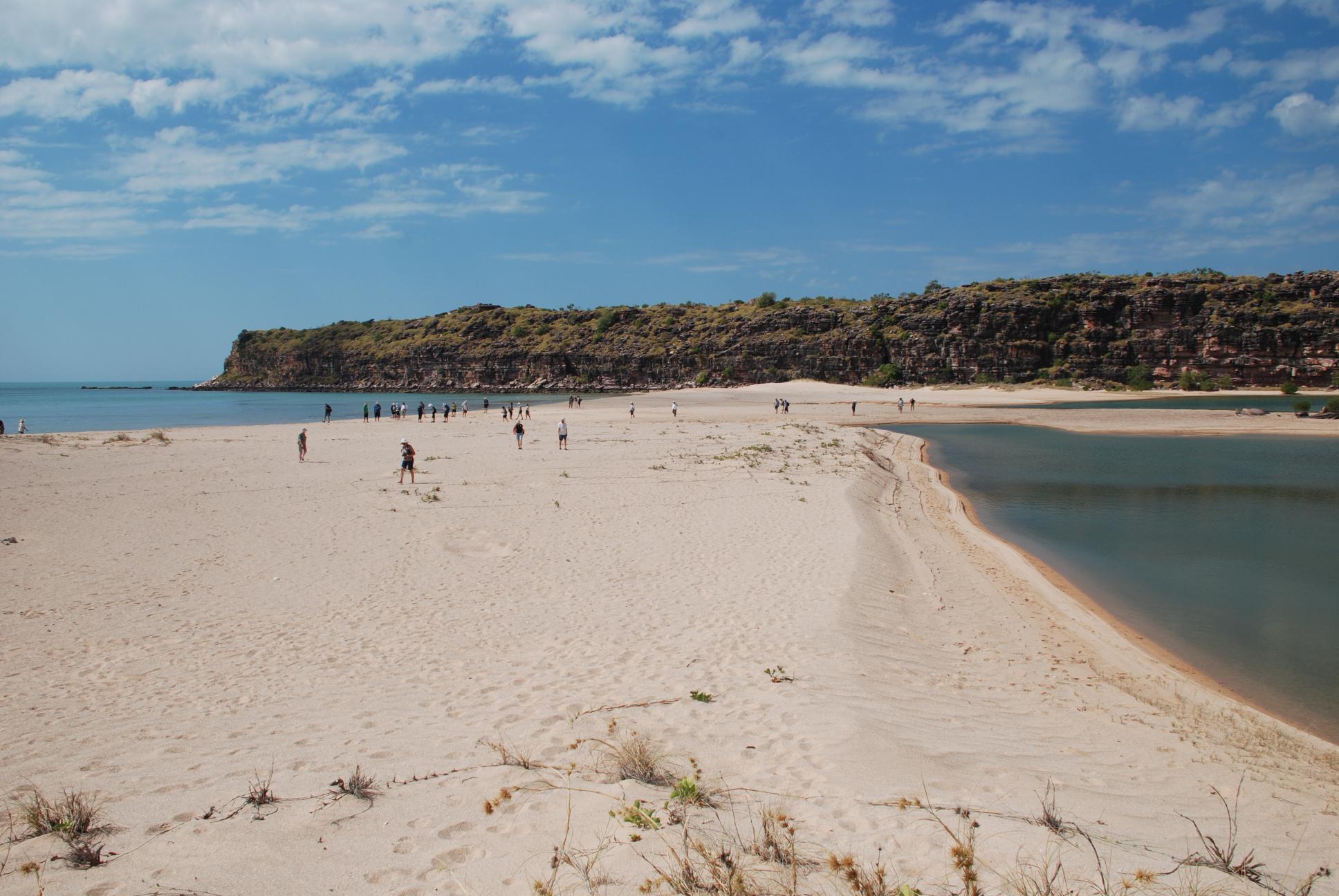
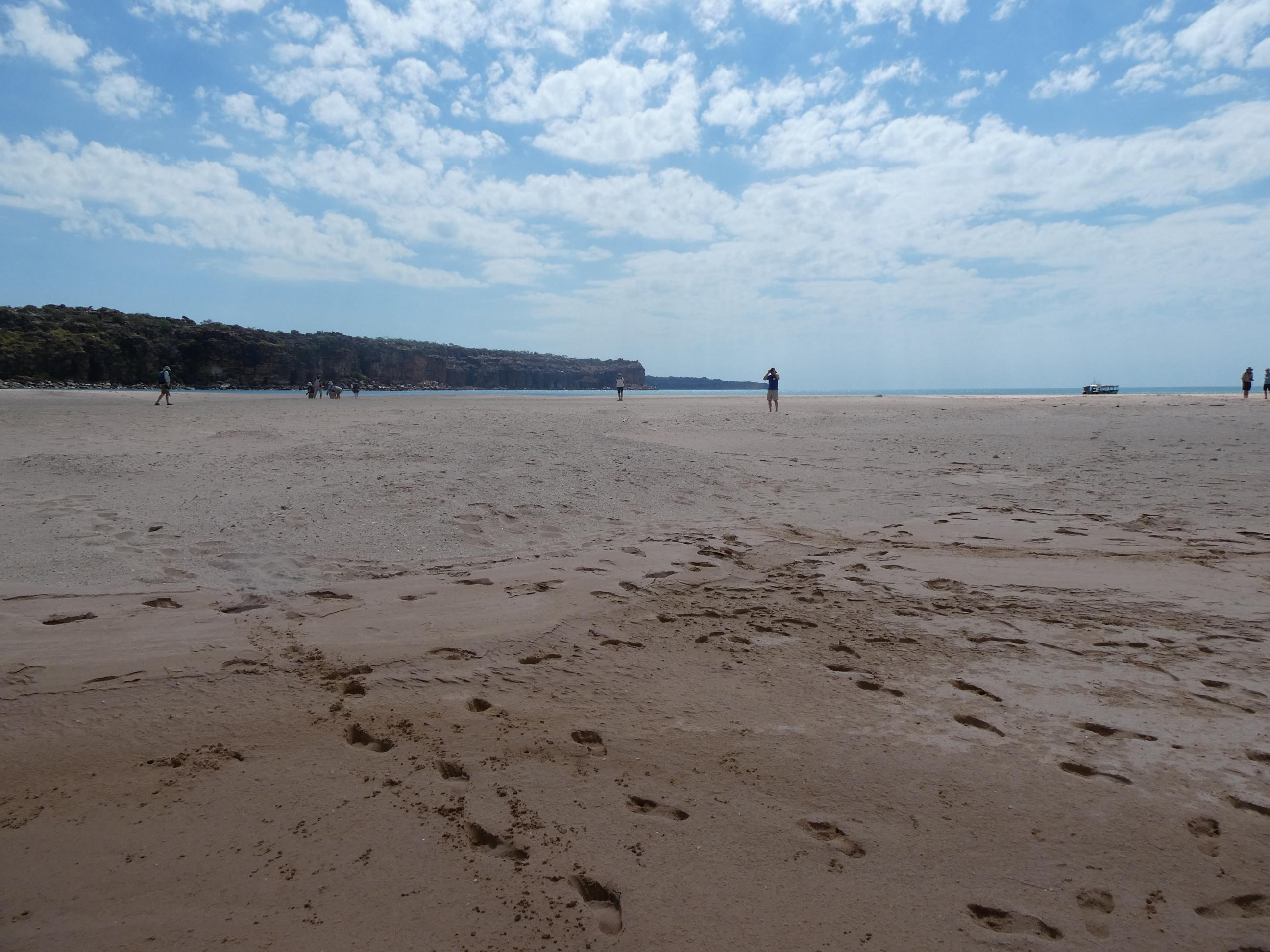
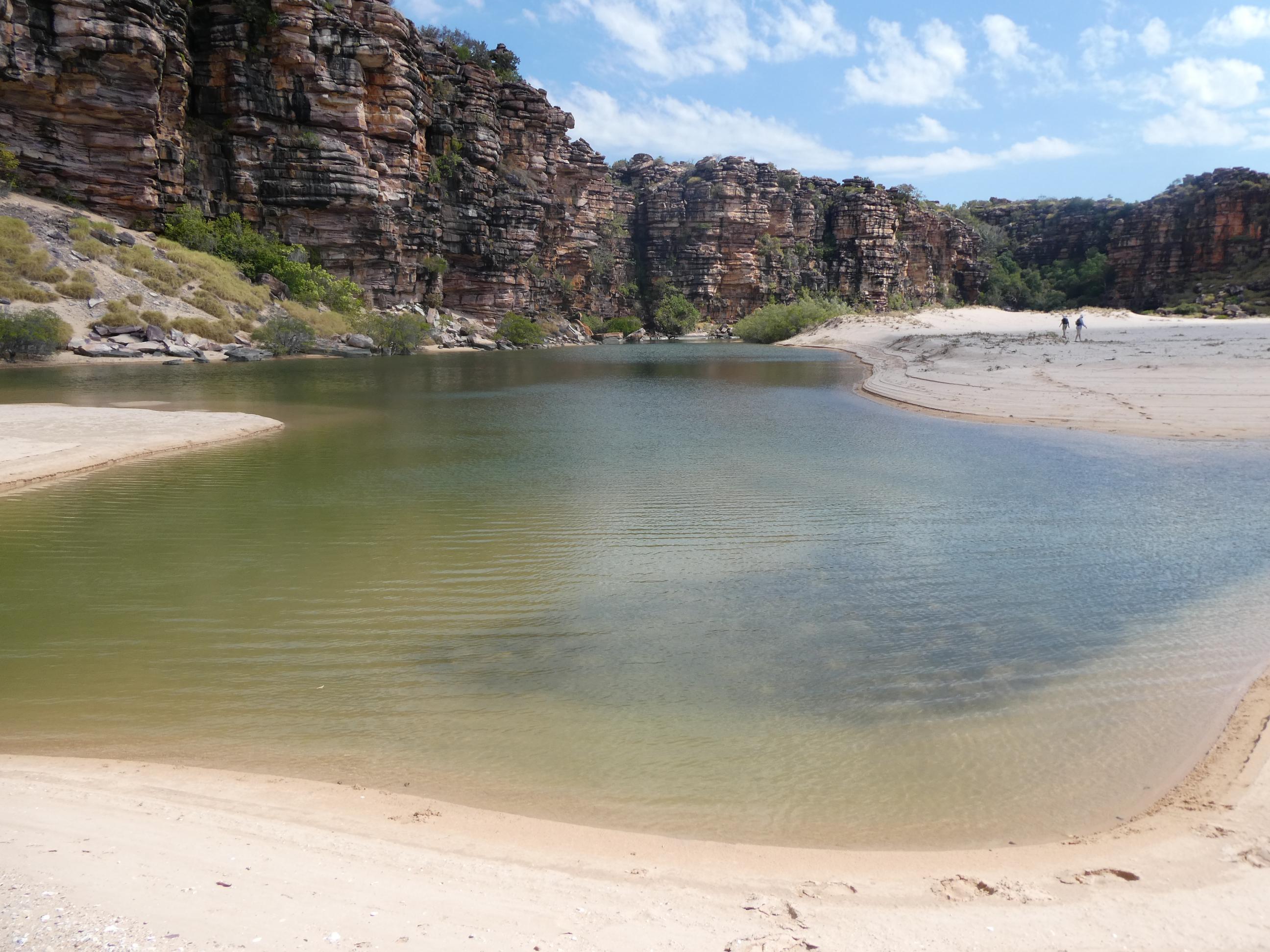
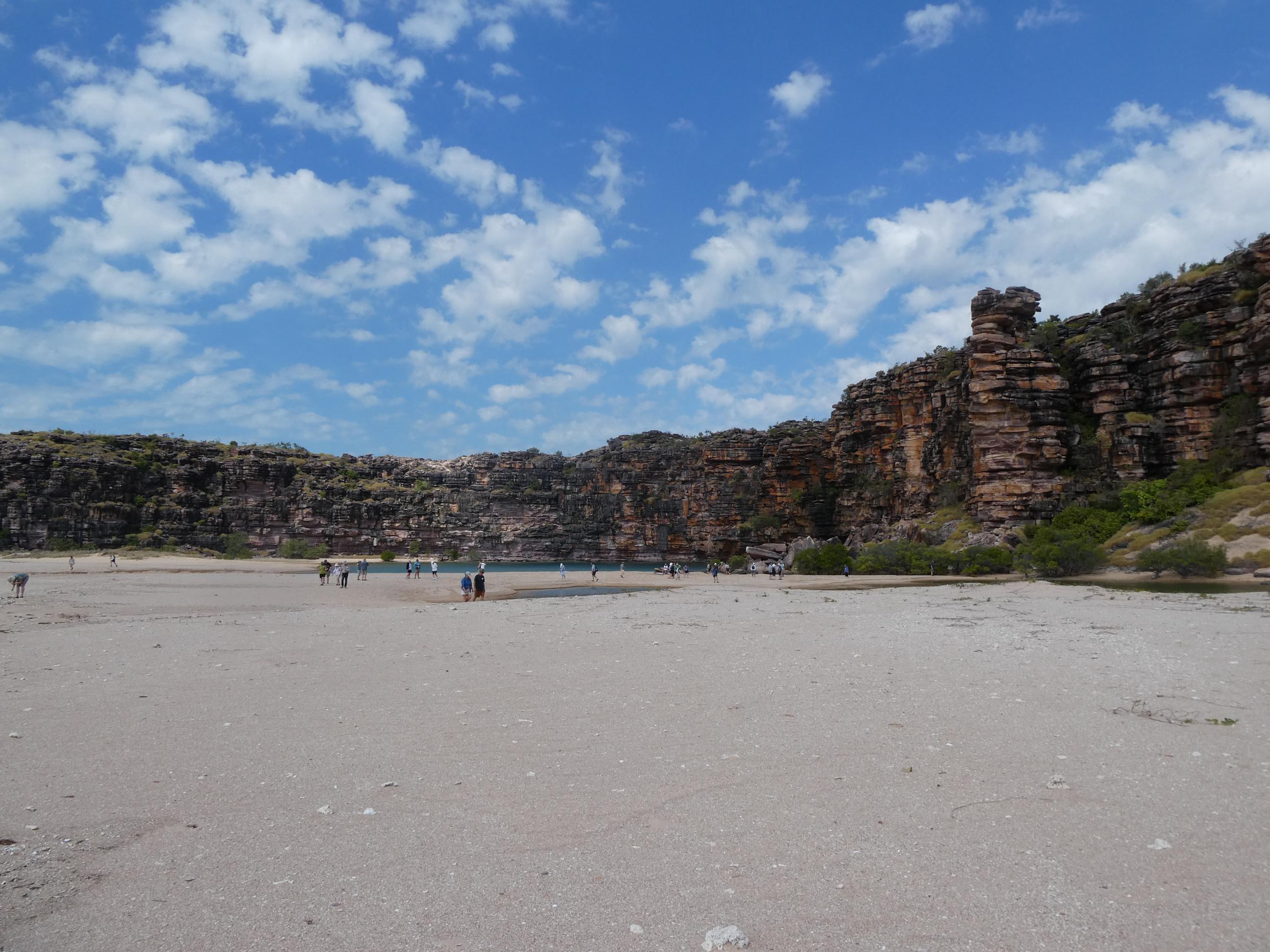
We spotted the place where a crocodile had dragged itself up out of the lagoon and across the sand. There was a long wavy groove in the soft sand with footprints either side. Fortunately, it was well gone by the time we arrived. Although, to be honest, I kind of wished I had at least seen it.
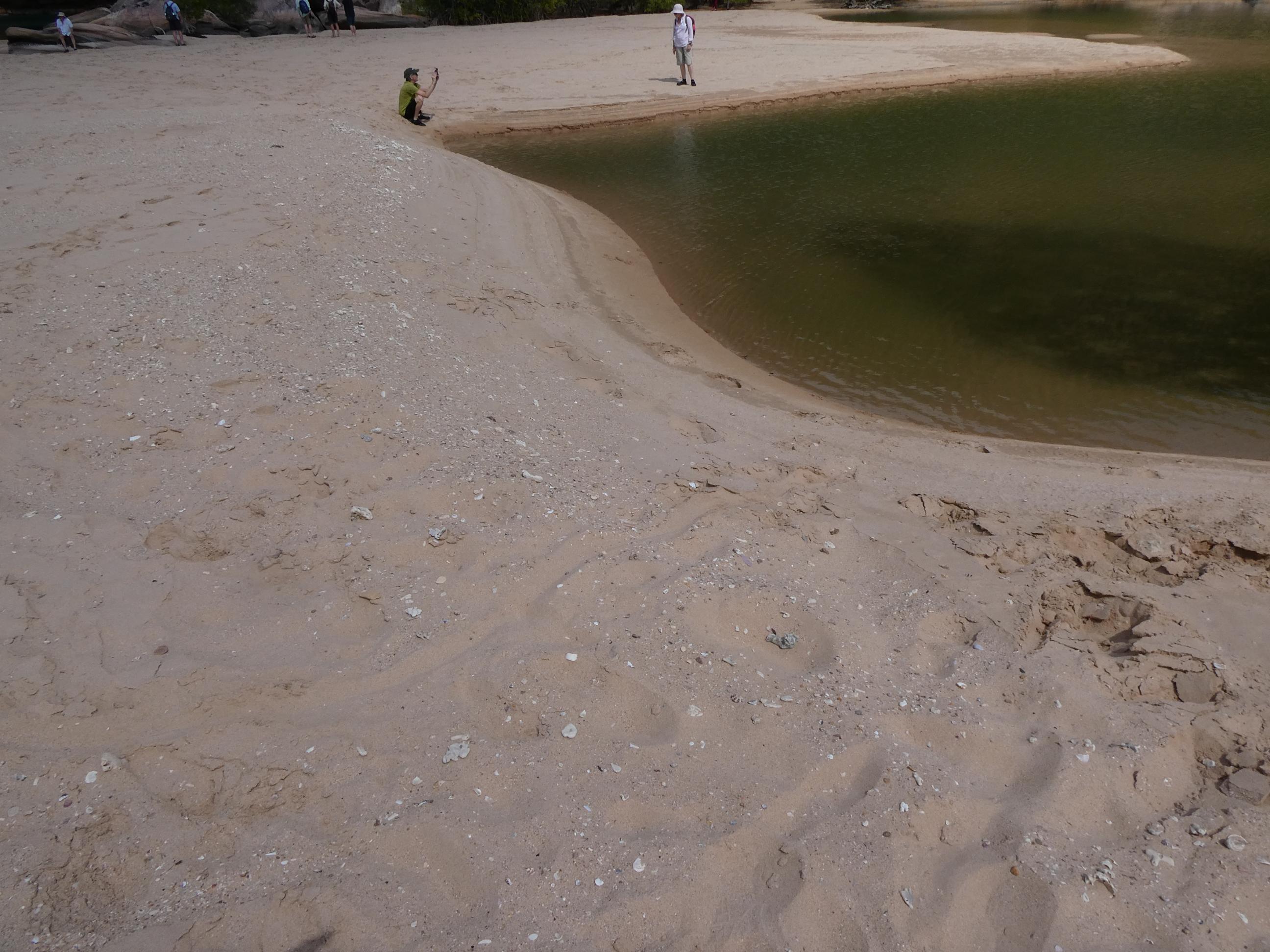
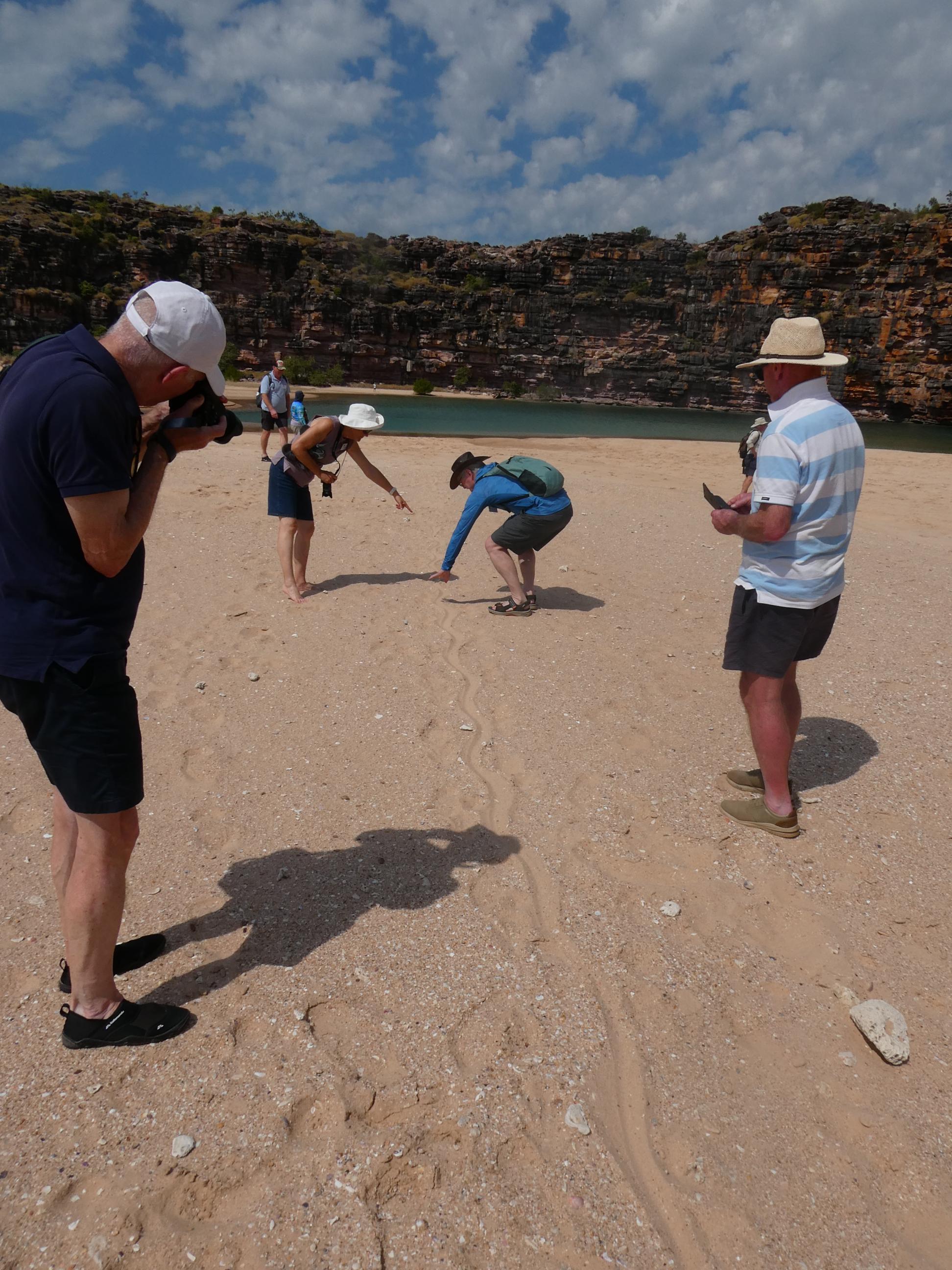
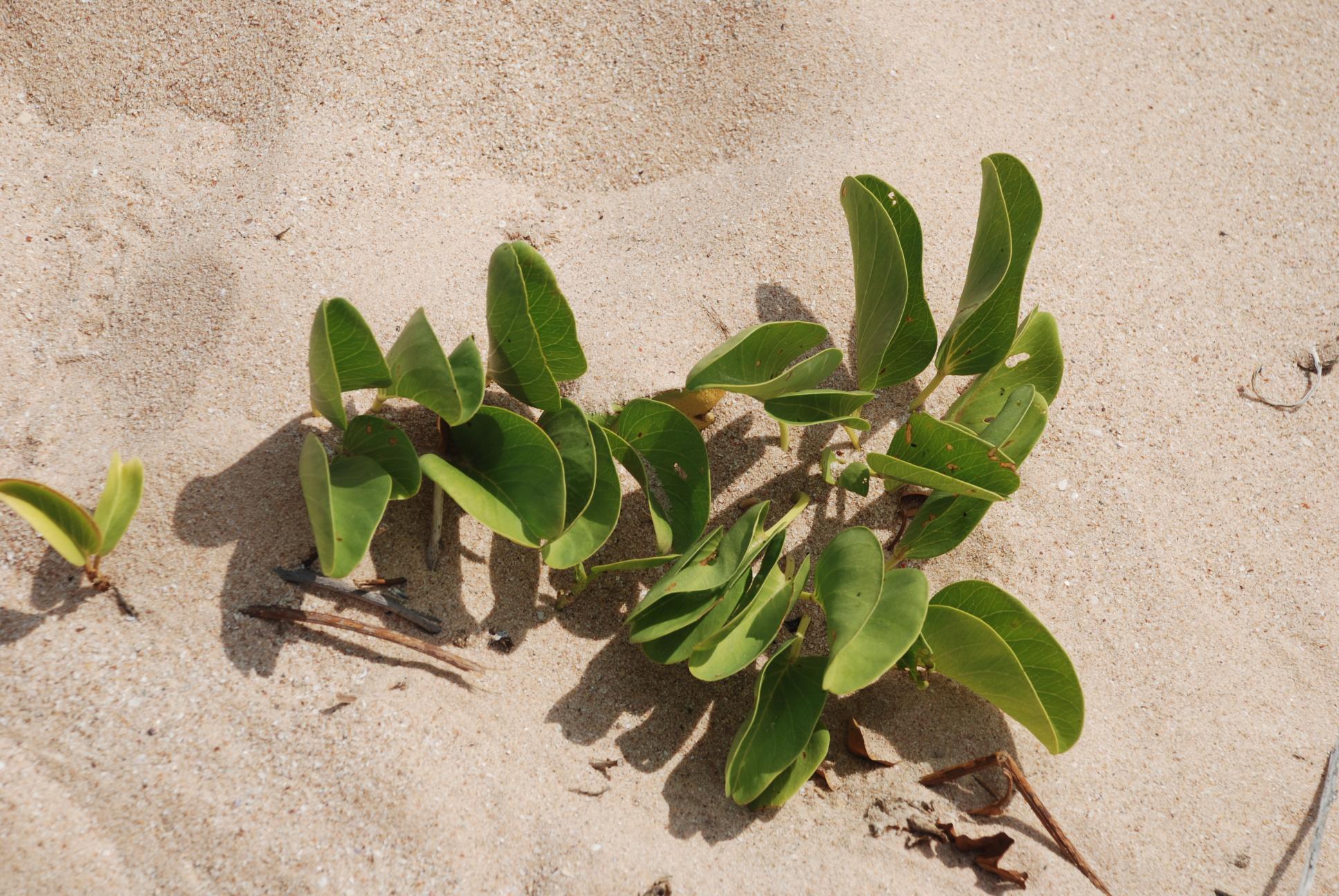
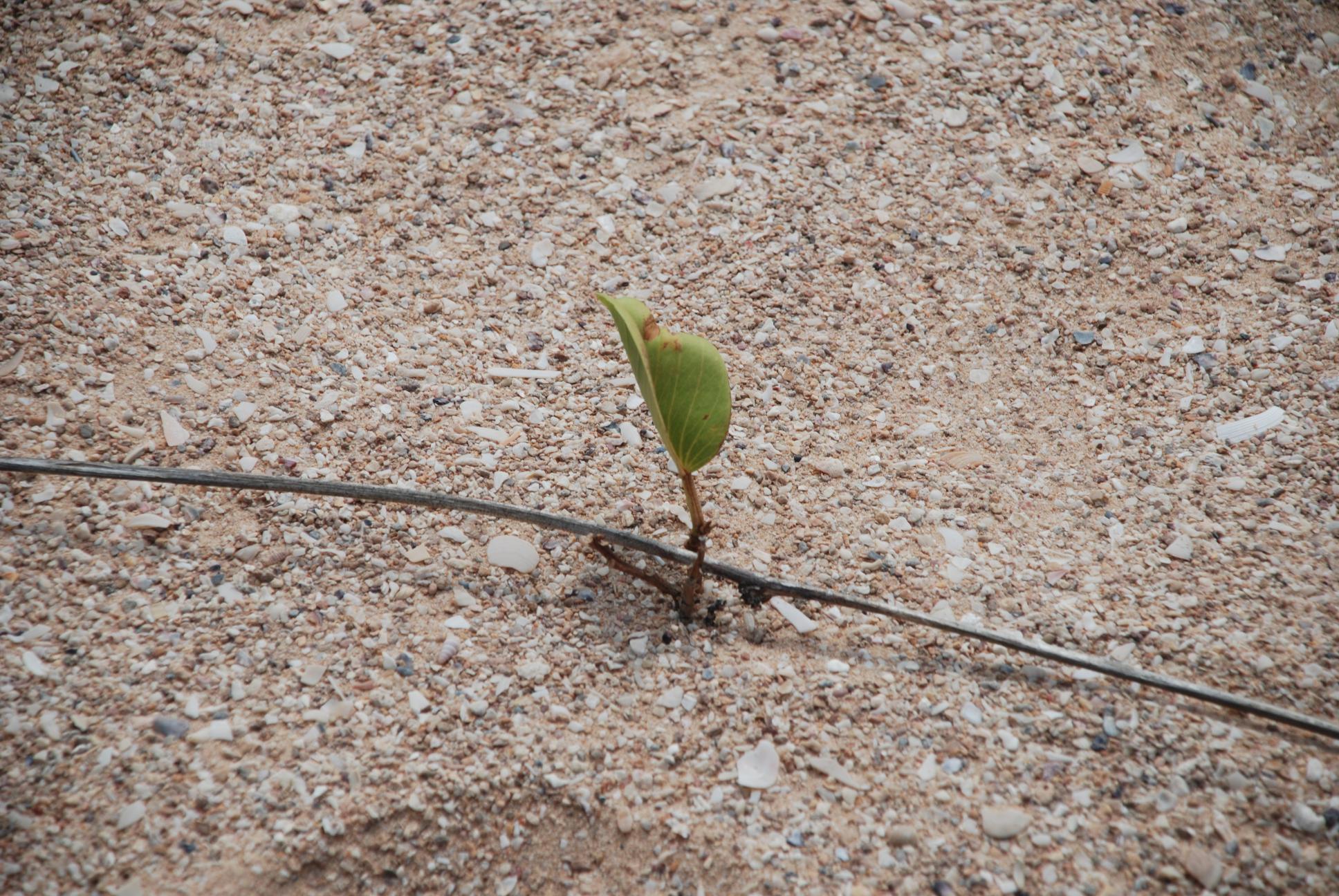
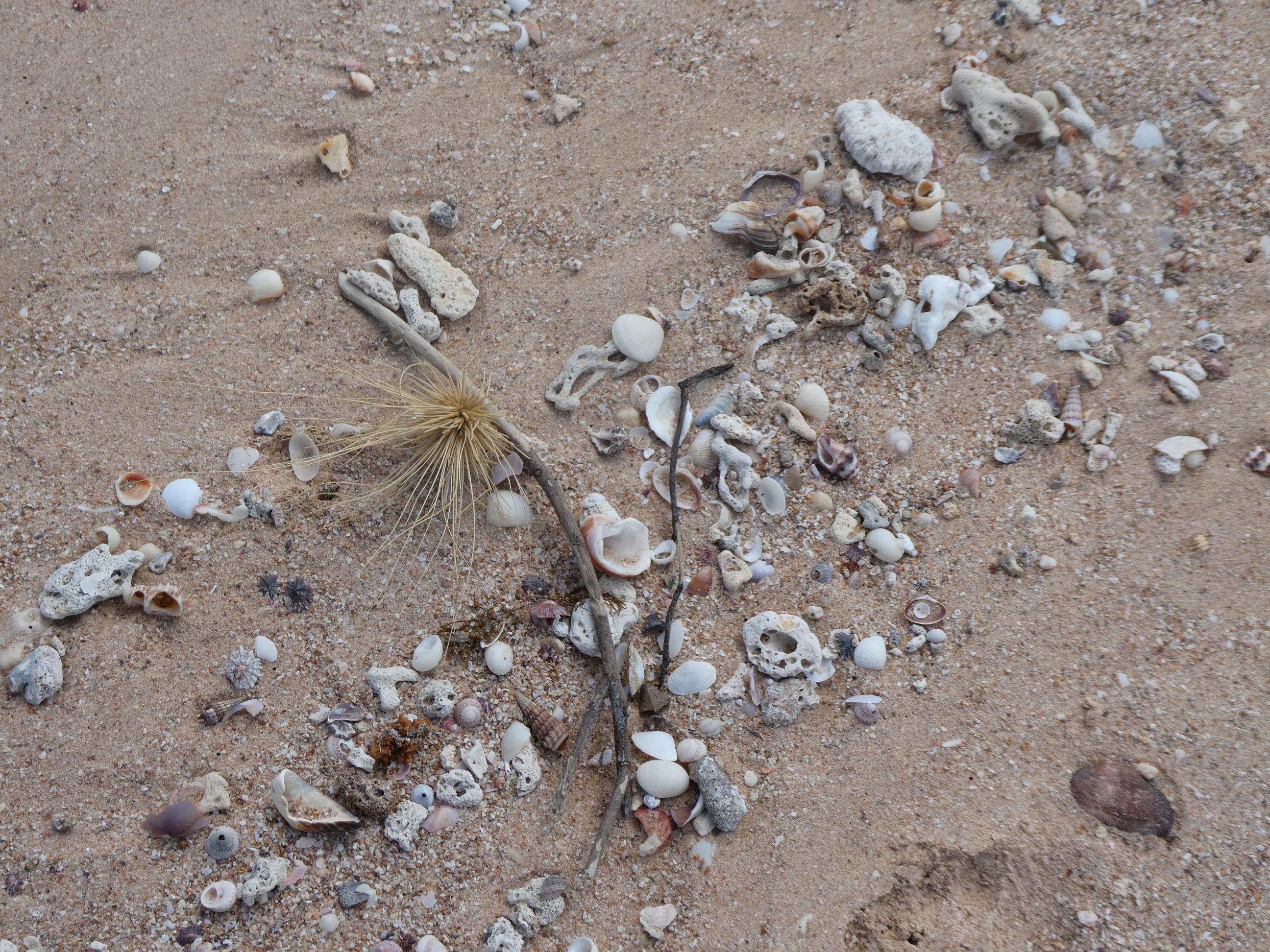
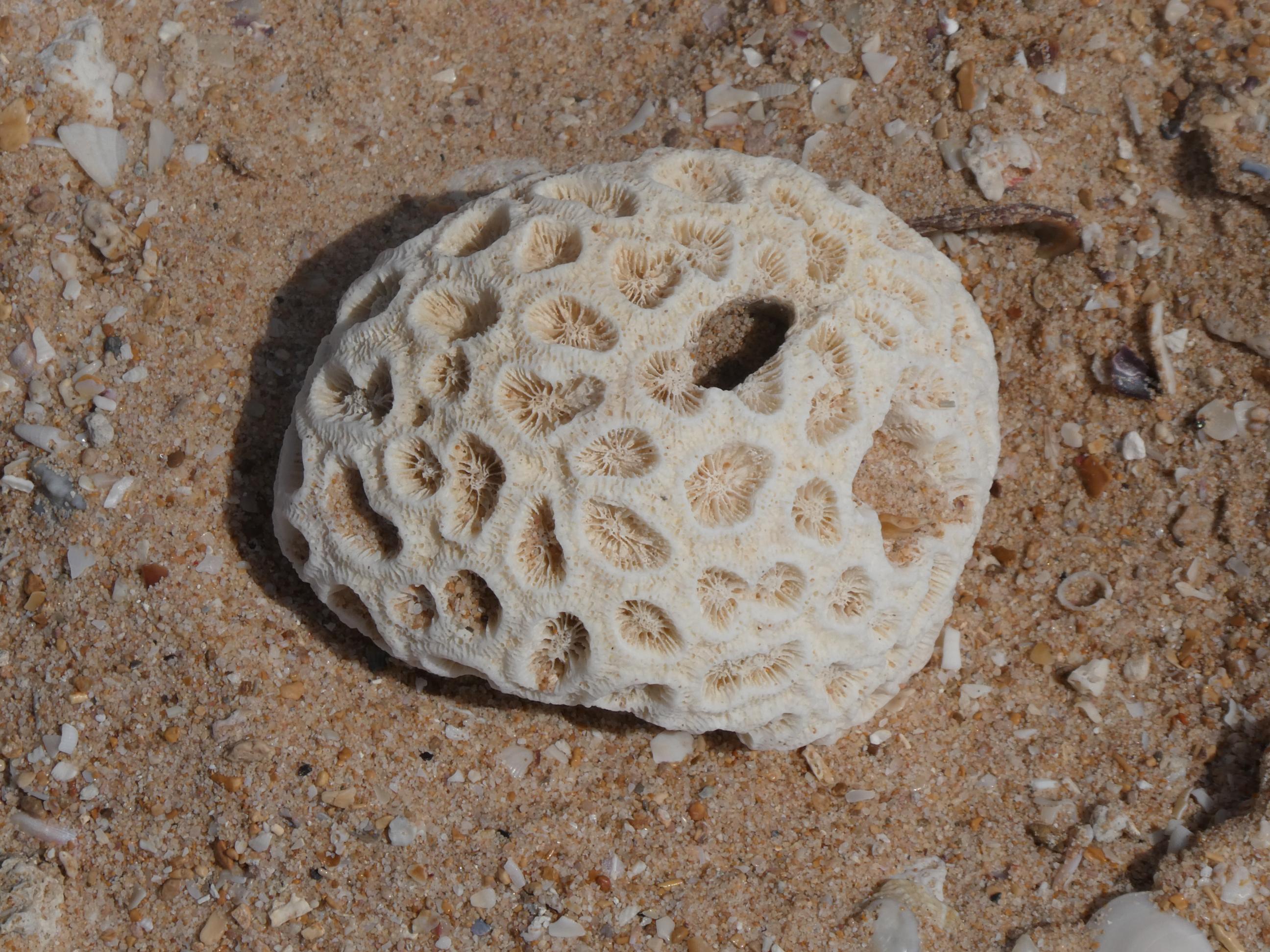
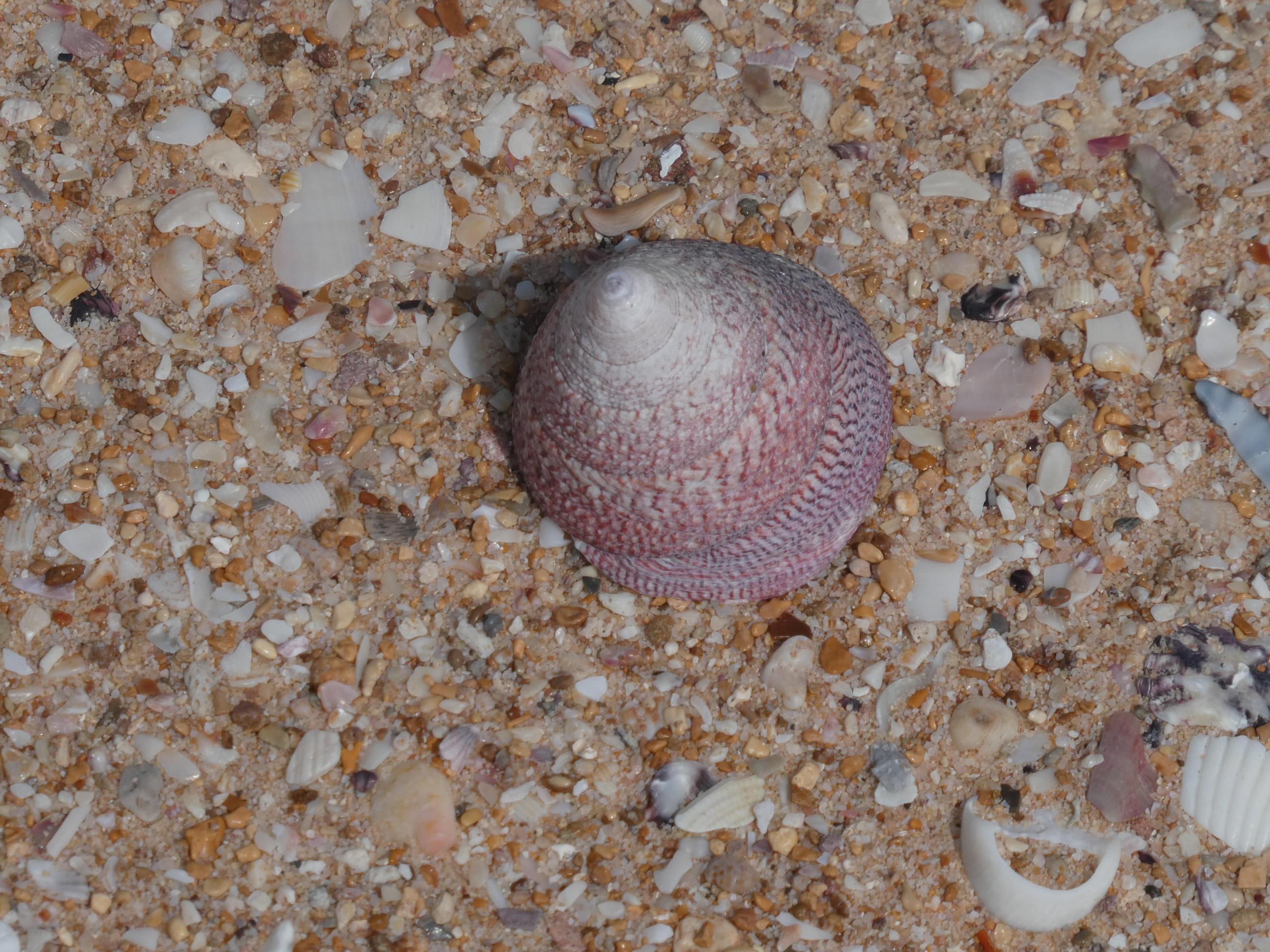
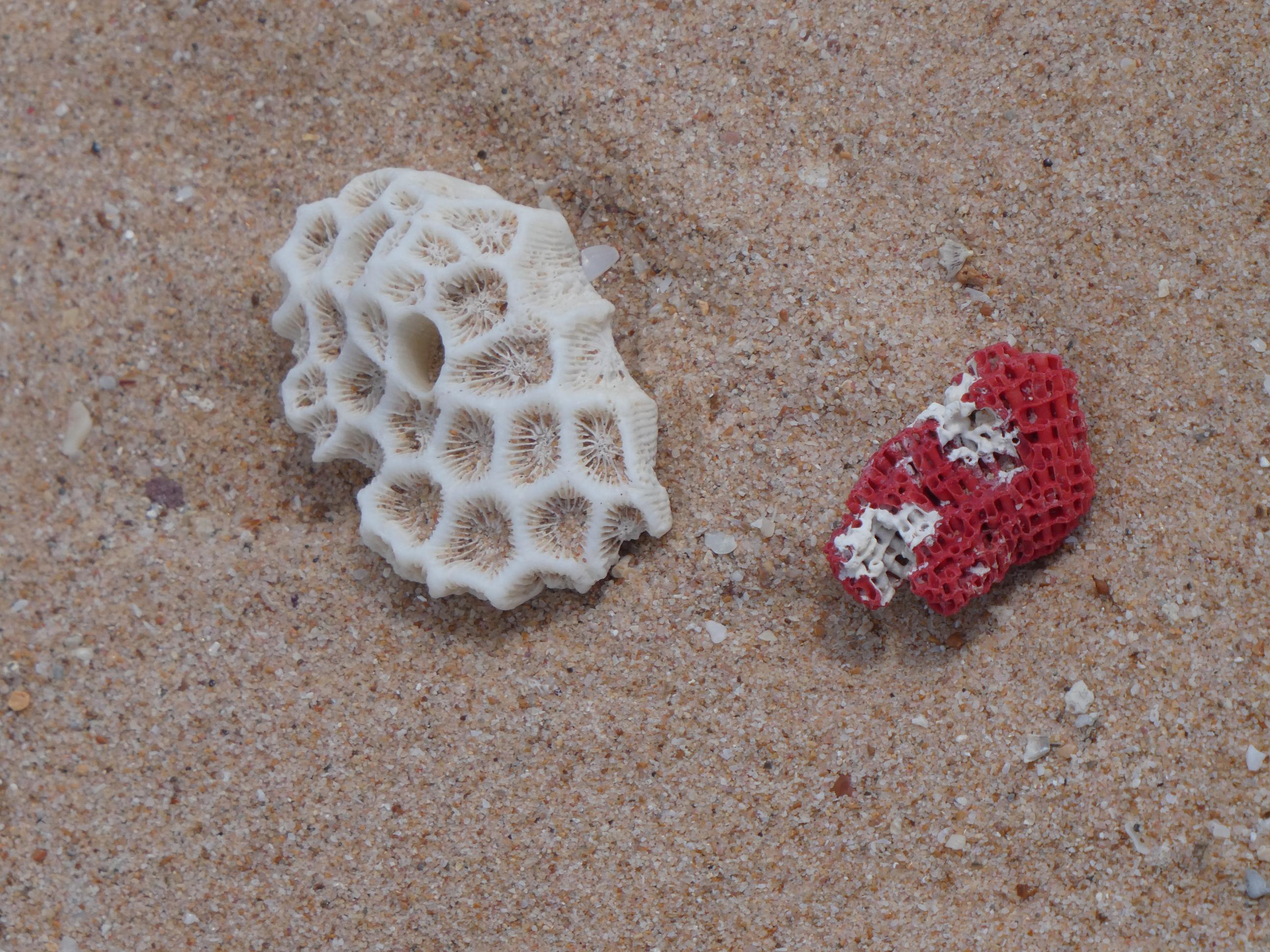
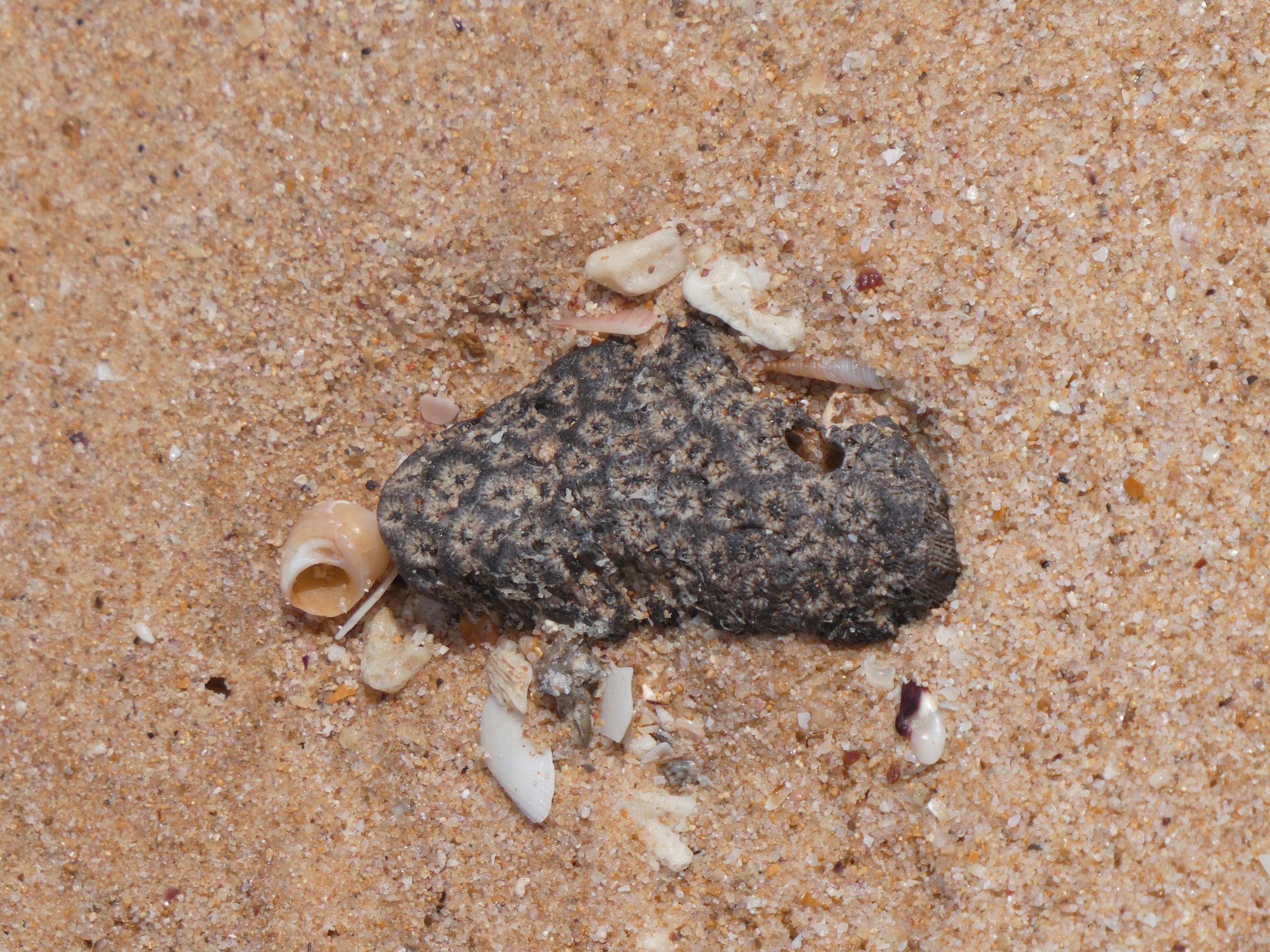
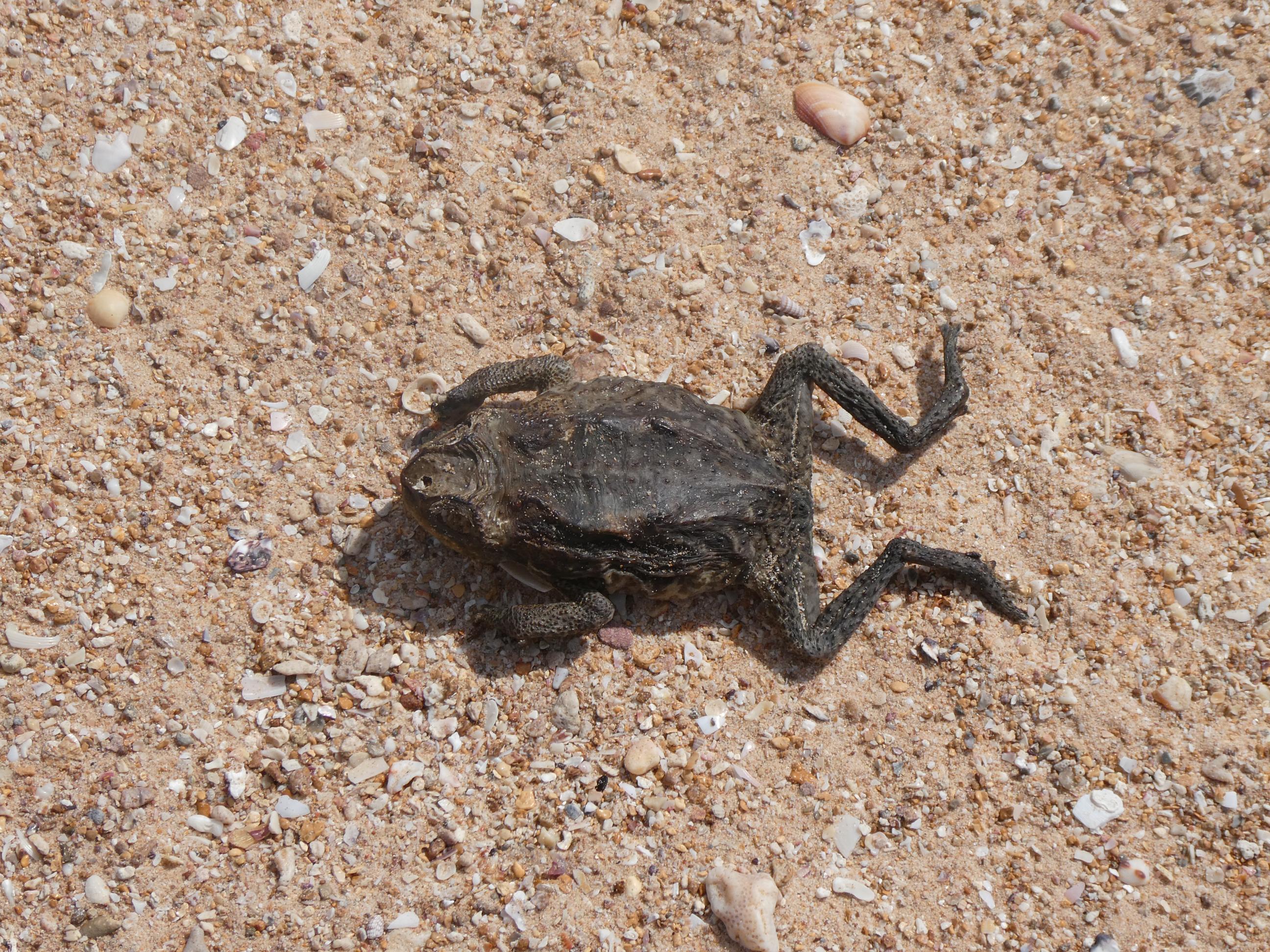
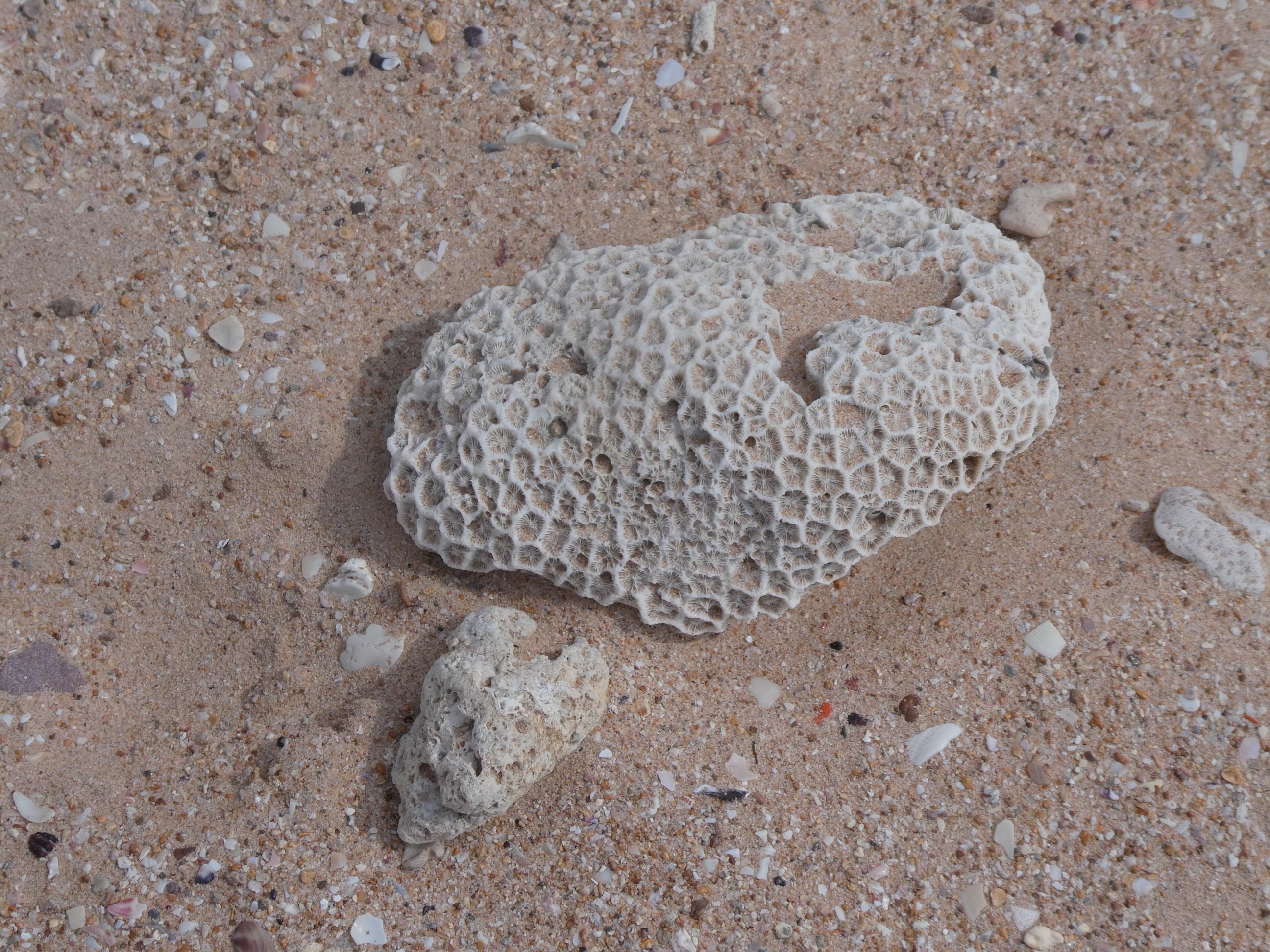
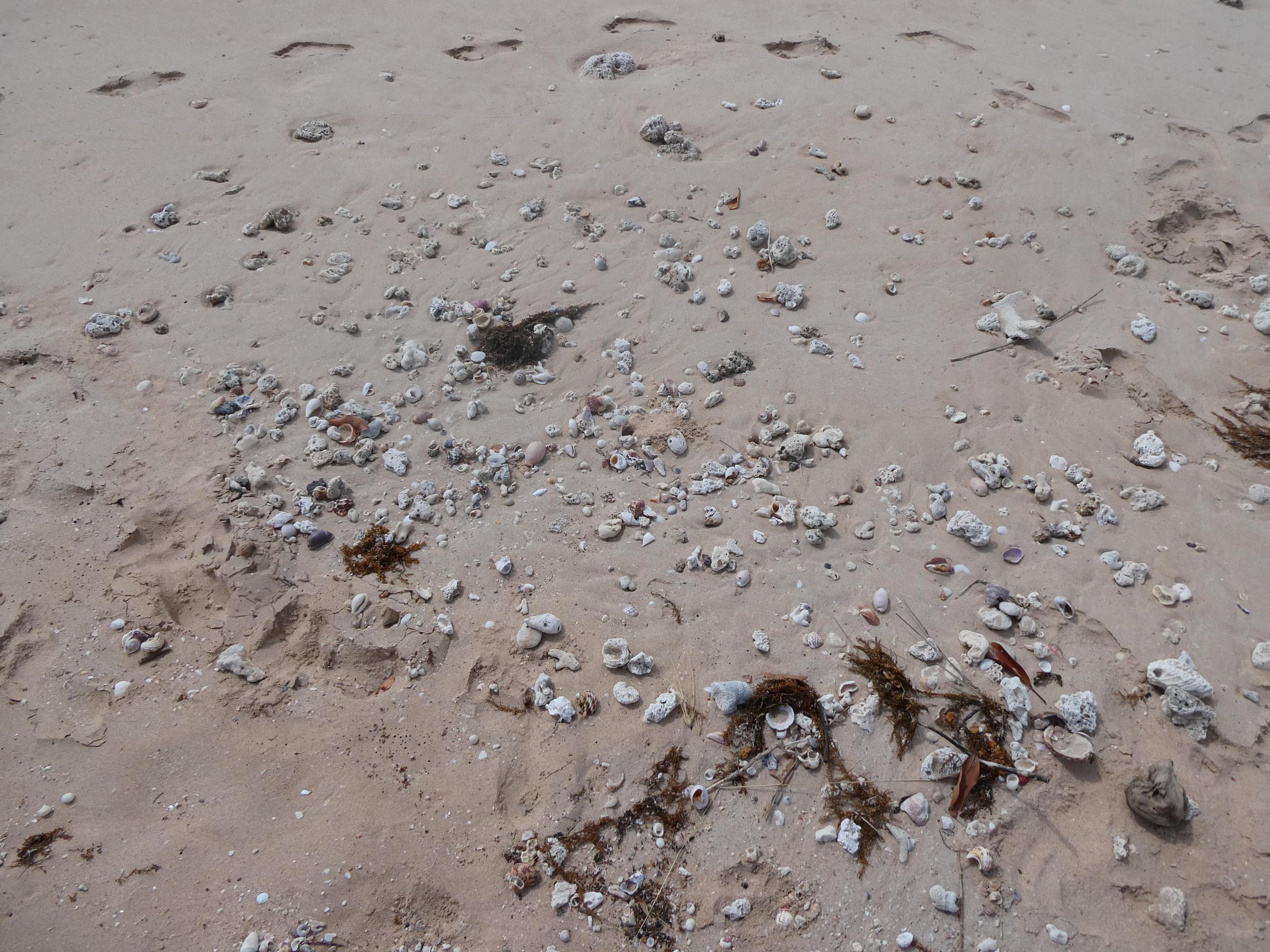
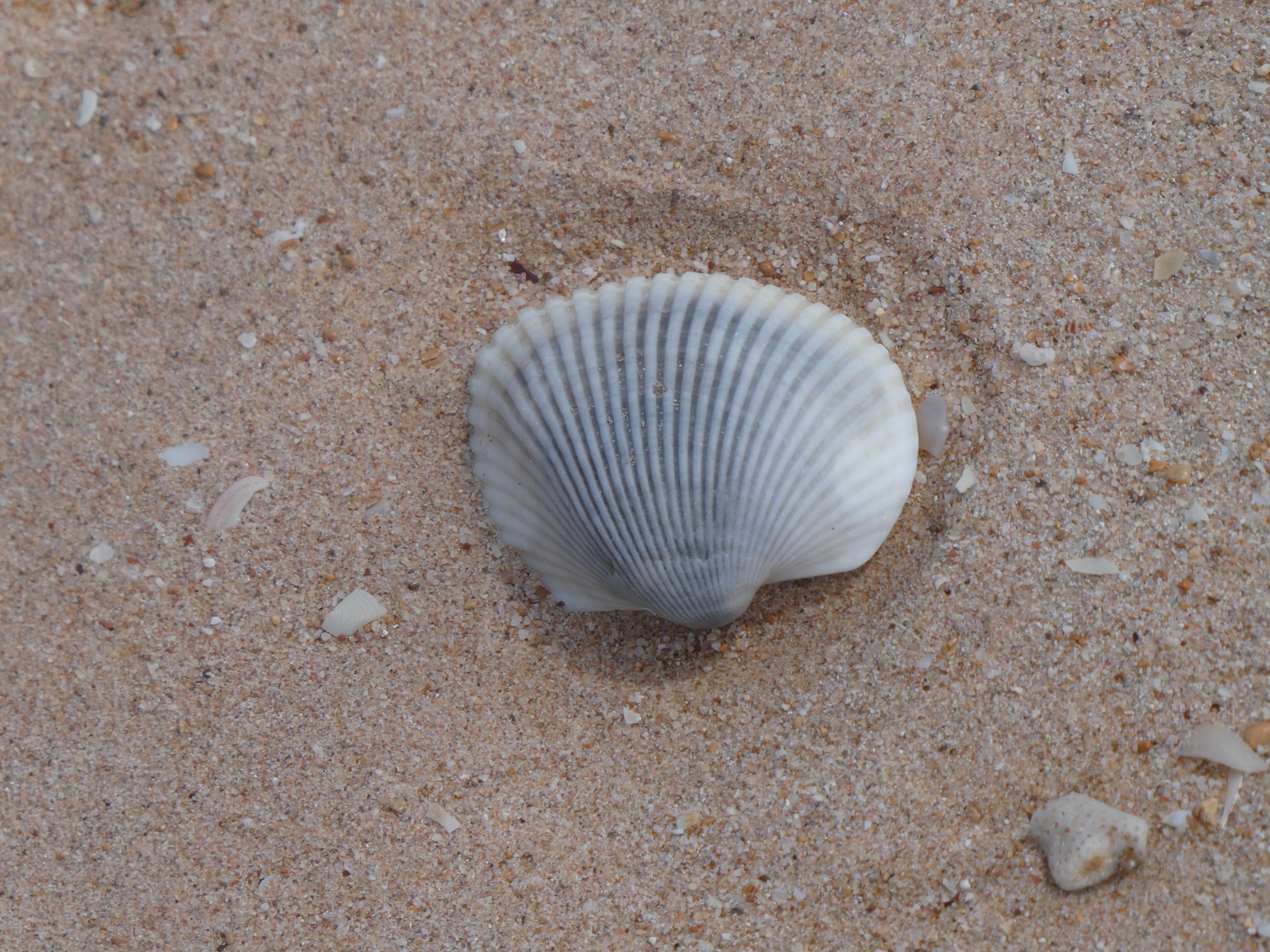
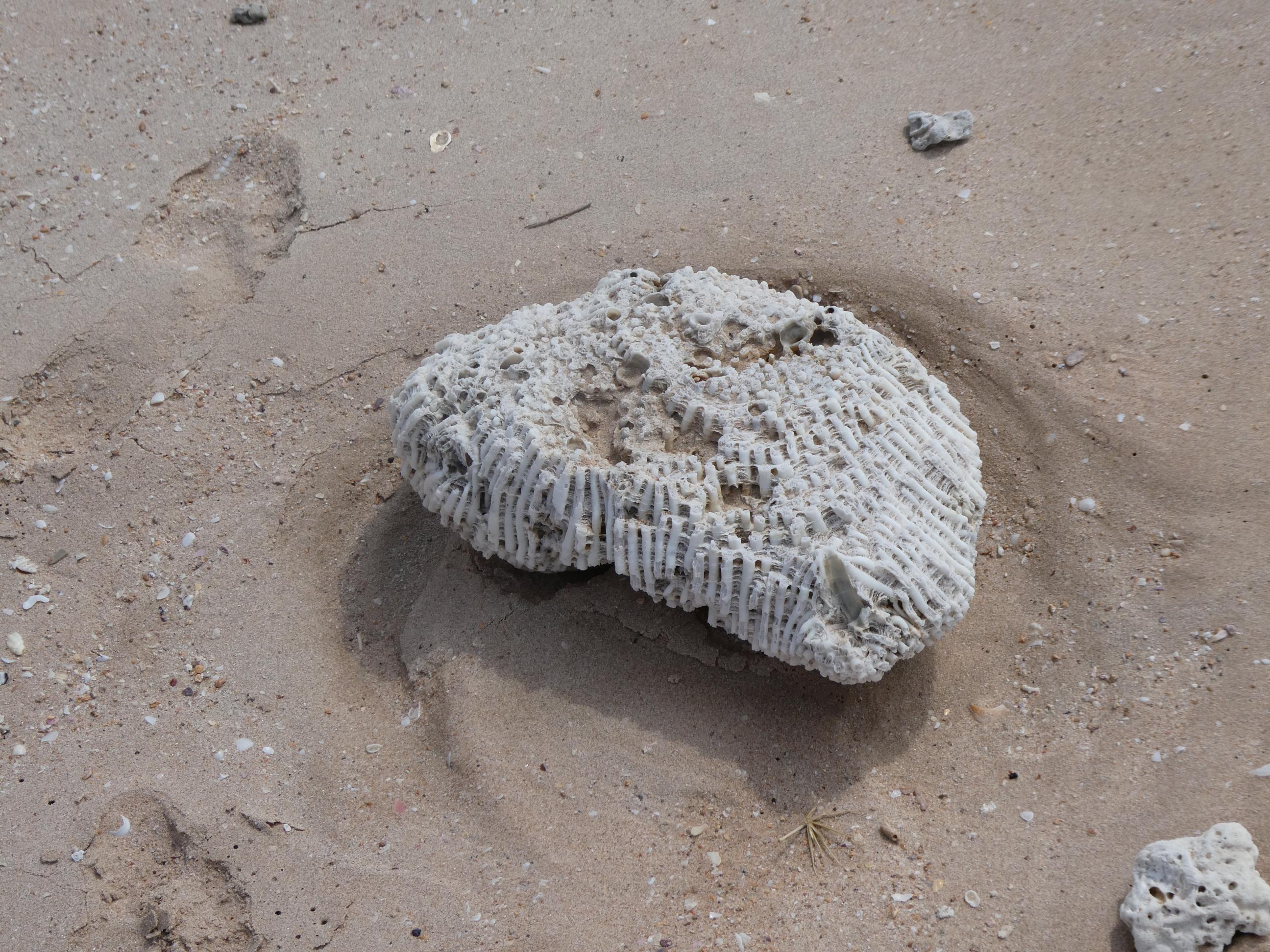
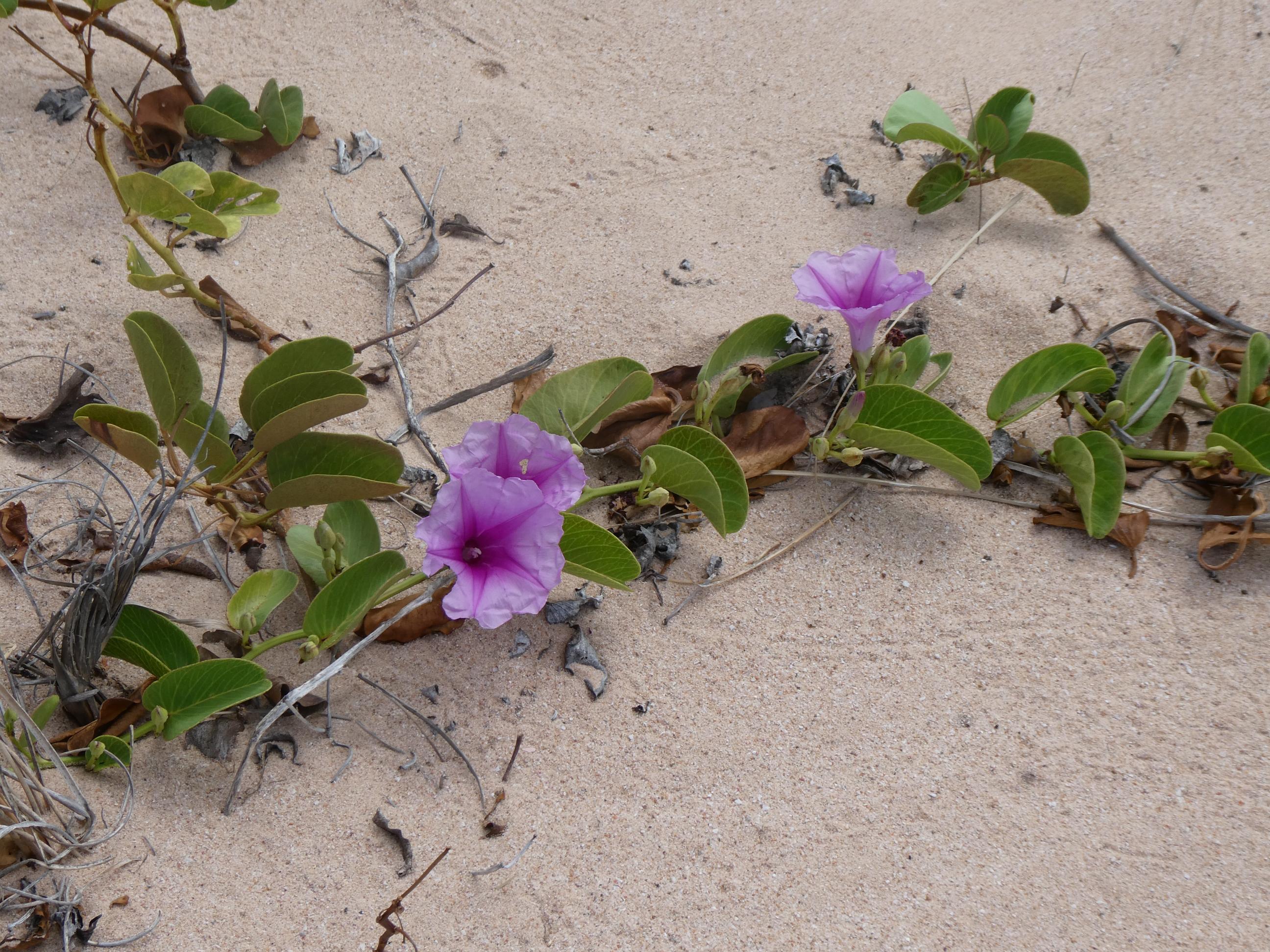
Although the spectacular Kimberley sandstone cliffs and the beautiful blue sky was a sight to behold, one of the most enjoyable things about this land excursion was what I could find when I looked down. The sea had washed up all kinds of shells, corals and driftwood. We found the sun dried carcass of a cane toad. There were some plants struggling to get a foothold in the sand dunes. Of course, the motto on such excursions must always be ‘take only photos, leave only footprints.’ I guess much of what I saw will be under water again soon when the tide rises.


Hope the oil leak is repaired soon but how wonderful you get to experience lots more of this beautiful country.
LikeLike