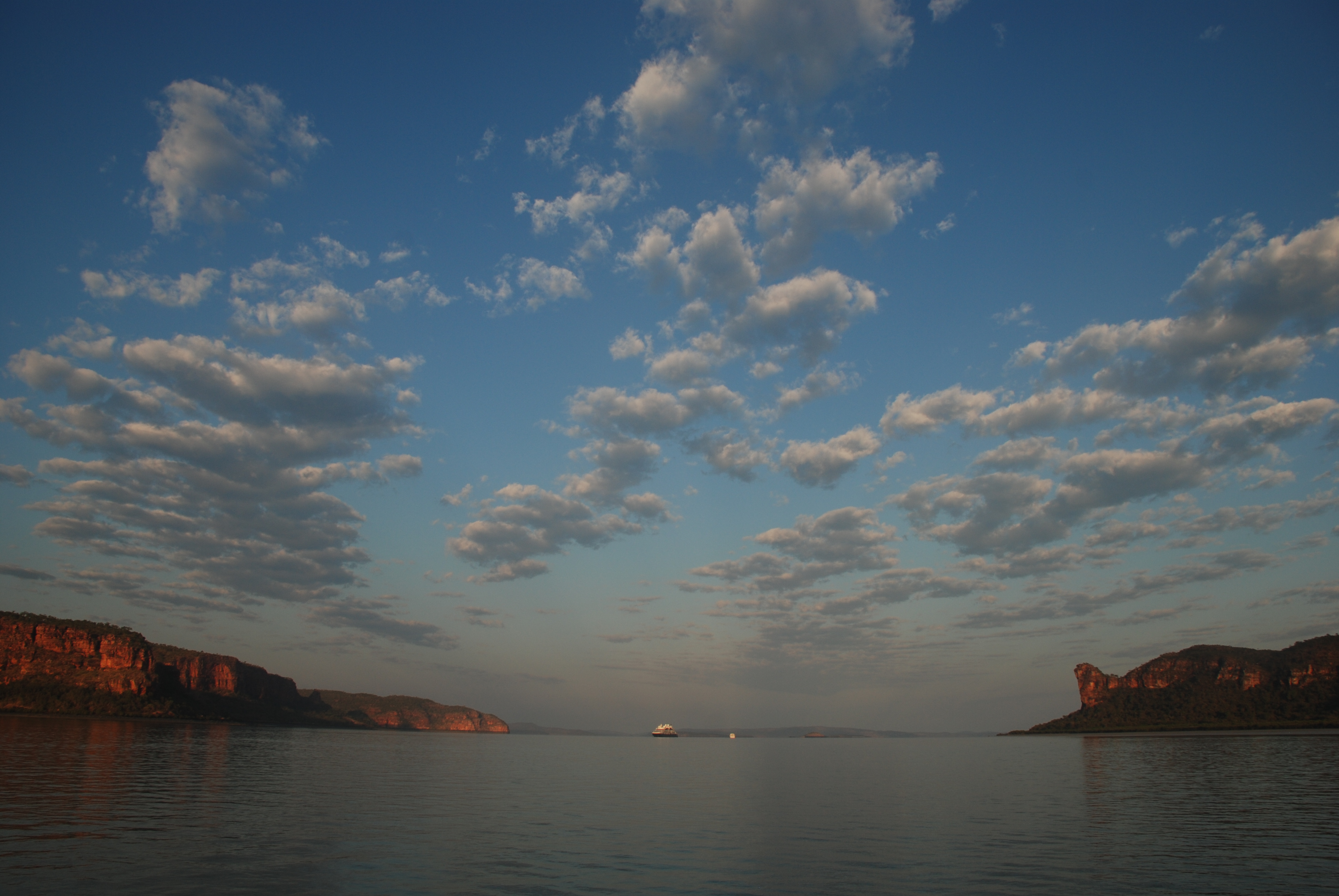
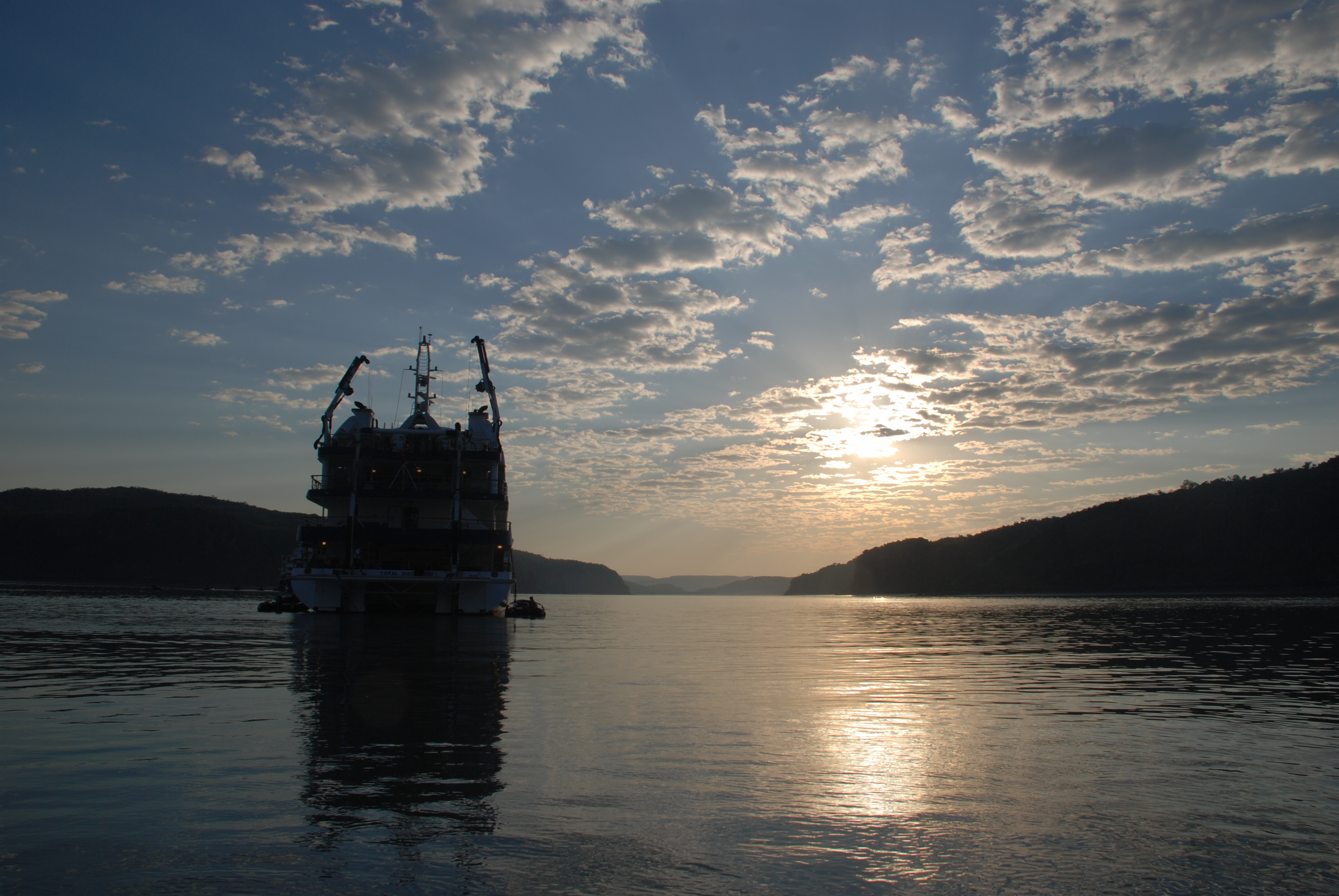
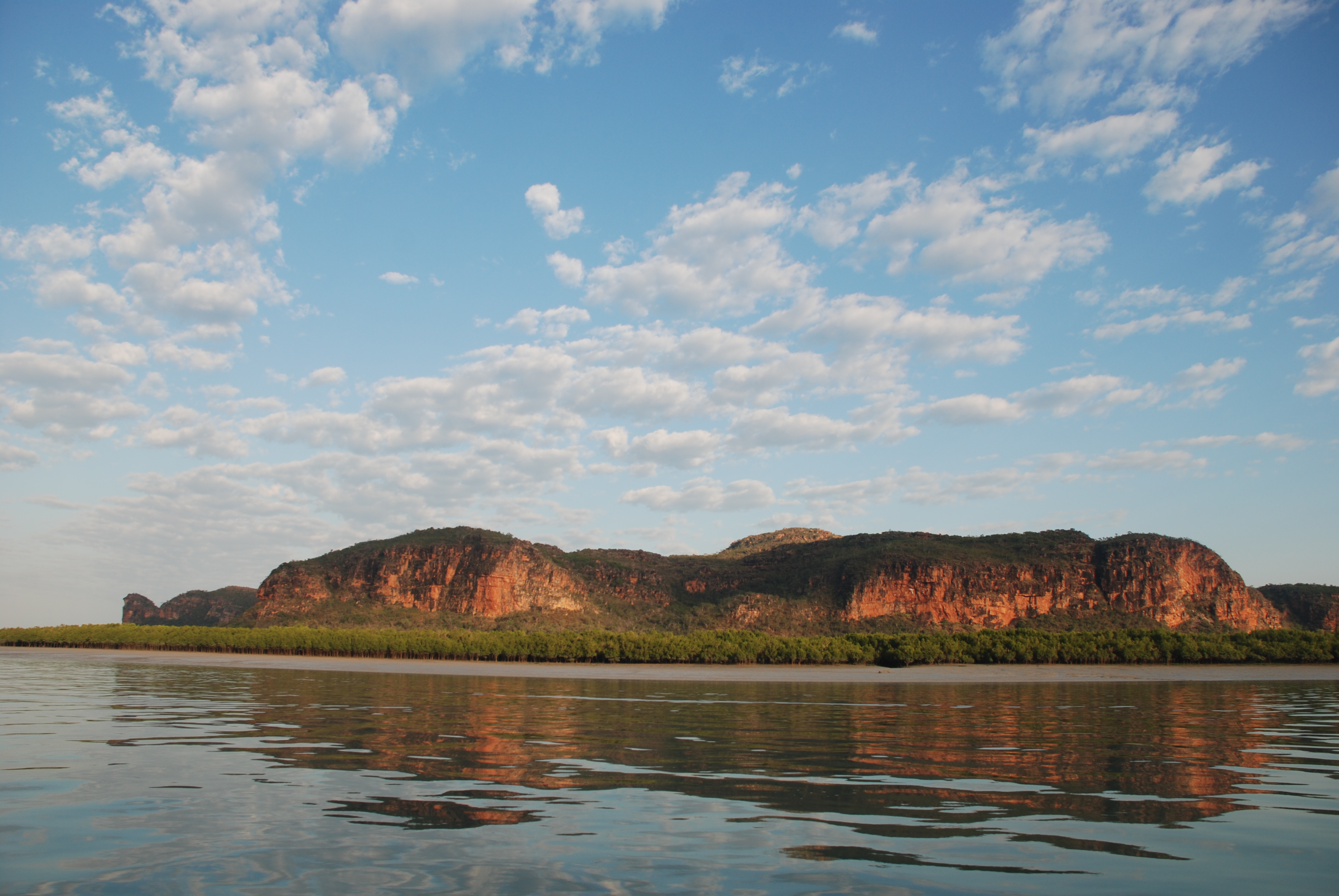
Early this morning, our ship dropped anchor in Prince Frederick Harbour at the mouth of the Hunter River. The sun’s morning light illuminated the reddish sandstone walls of the cliffs along the river and there were white clouds in the sky. It was a glorious sight to begin the day.
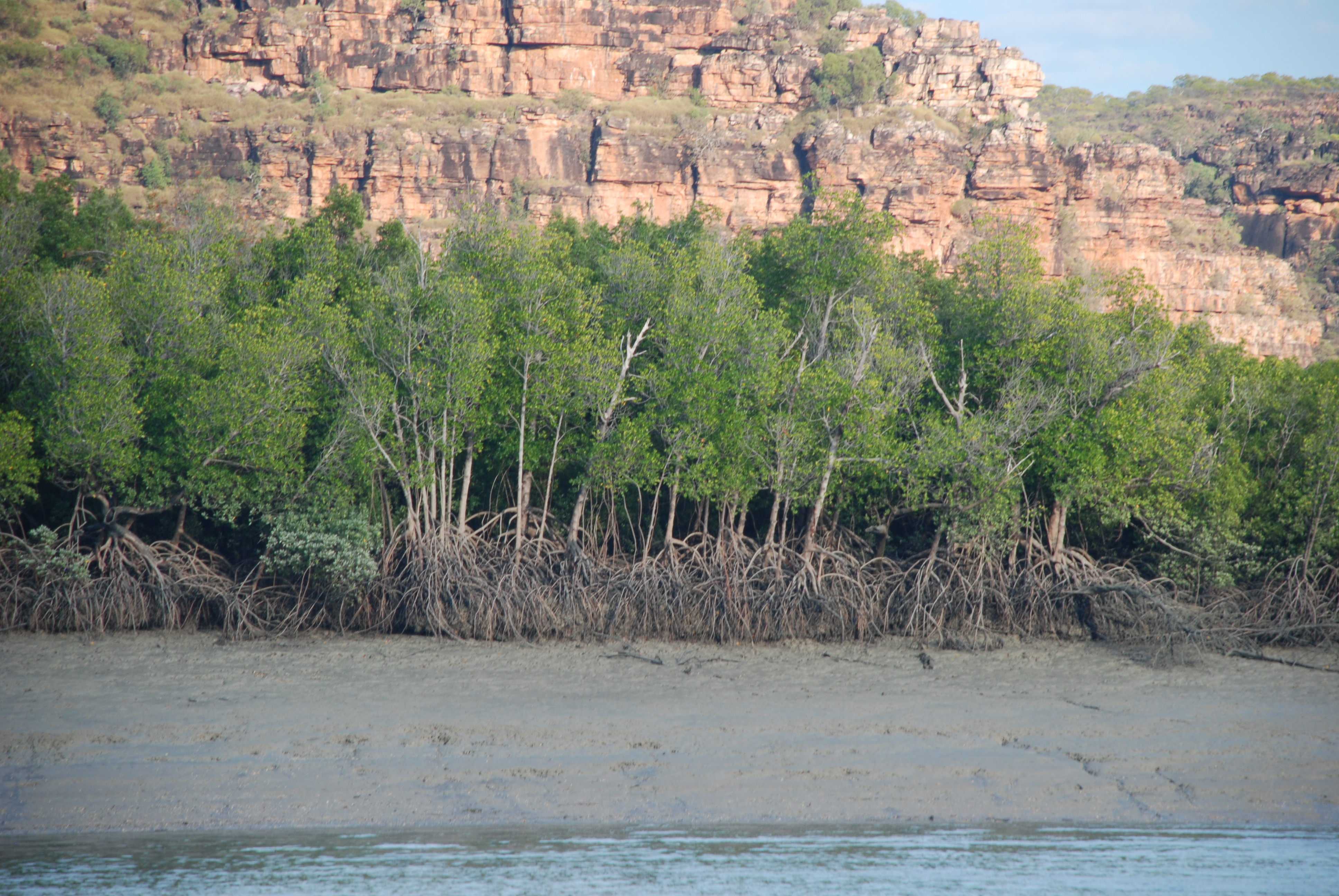
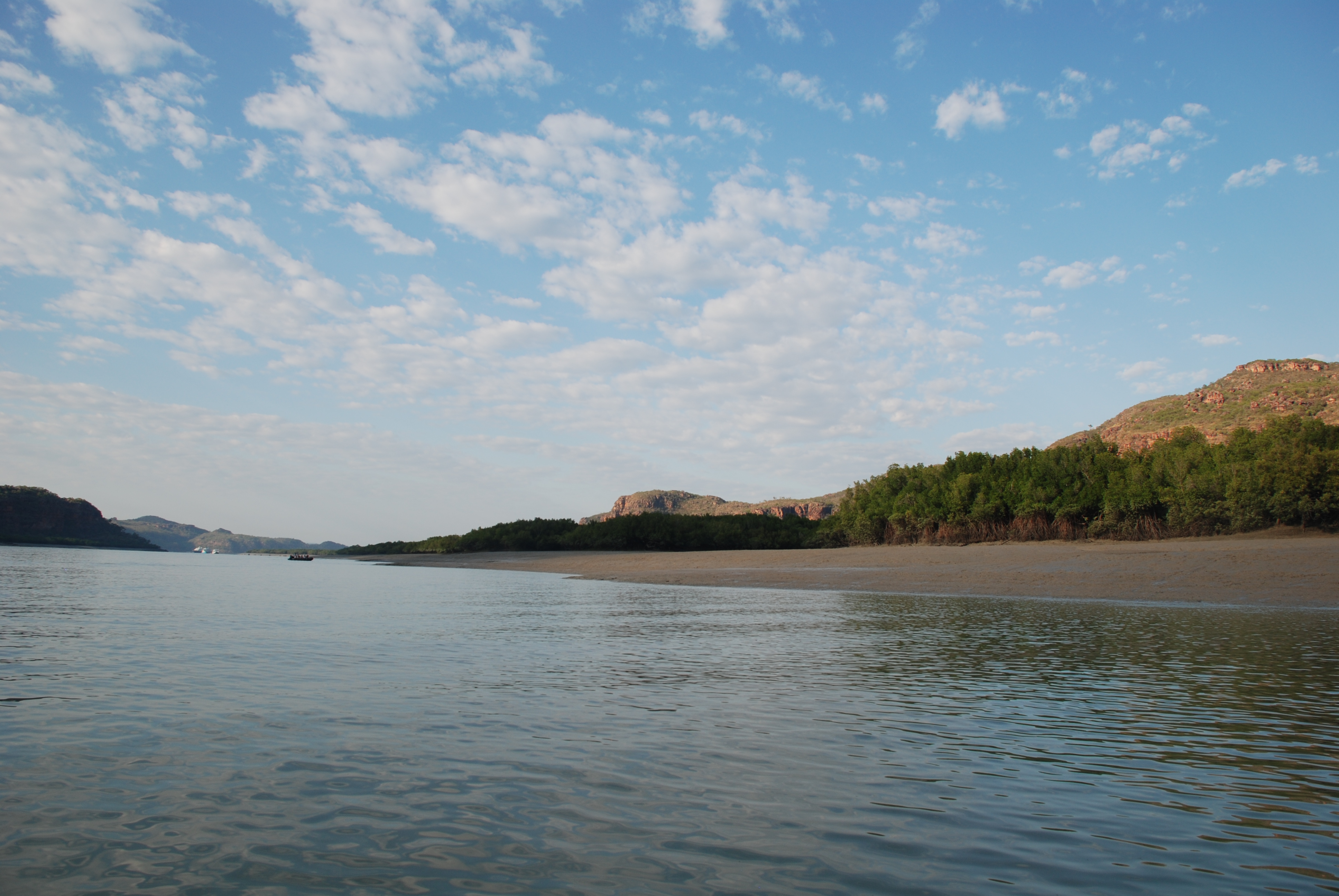
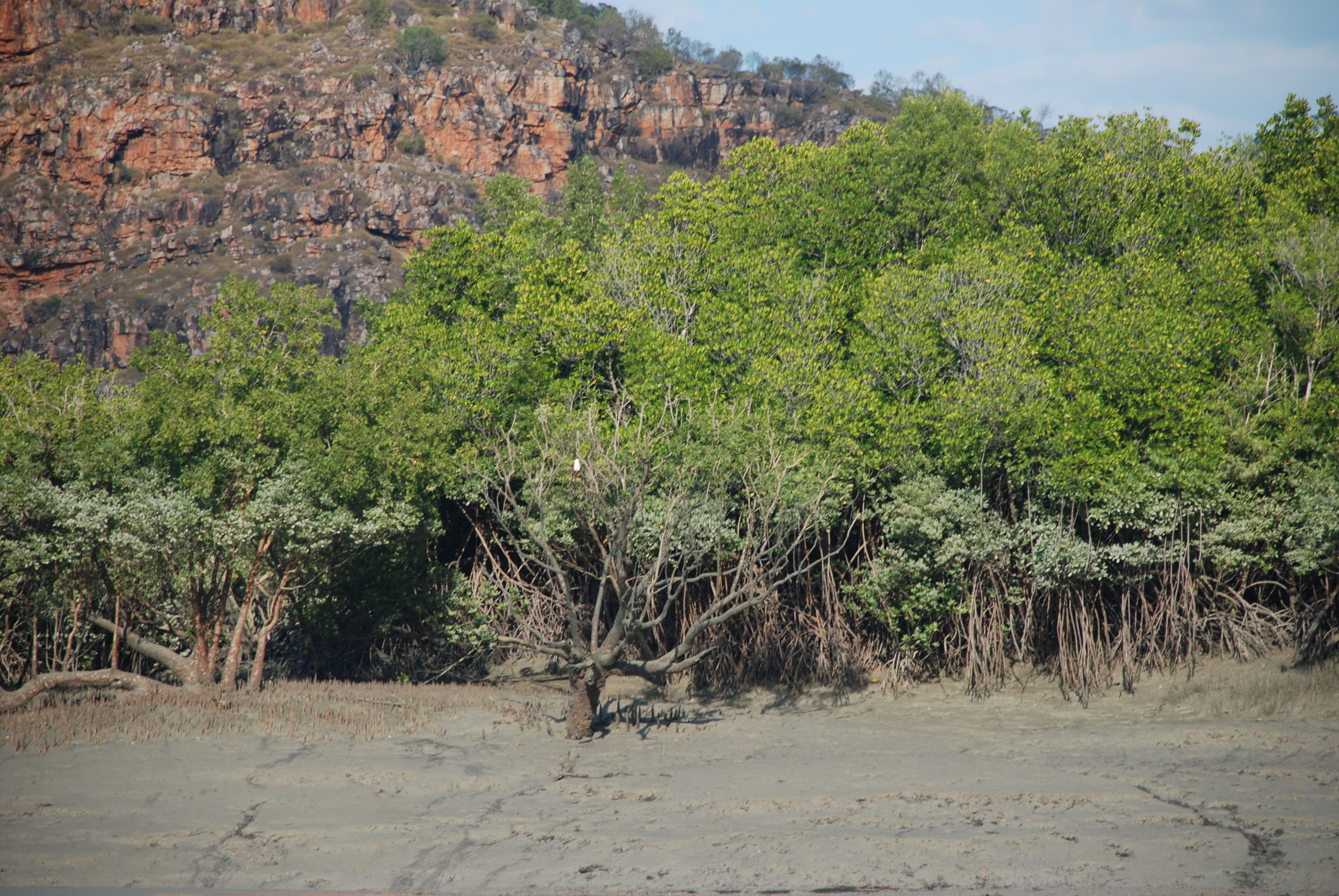
We boarded the tender and headed down one of the tributaries named Porosus Creek. The tide was out and the mud banks on either side of the creek were exposed. The tide was so low that the exposed mangroves were sitting well above the water level of the creek. Our guides had promised us that Porosus Creek would be a haven for wildlife if we kept our eyes open. I wondered where the name Porosus originated from. I soon discovered that the Latin name for the saltwater crocodile, apex predator of the Kimberley, is Crocodylus porosus.
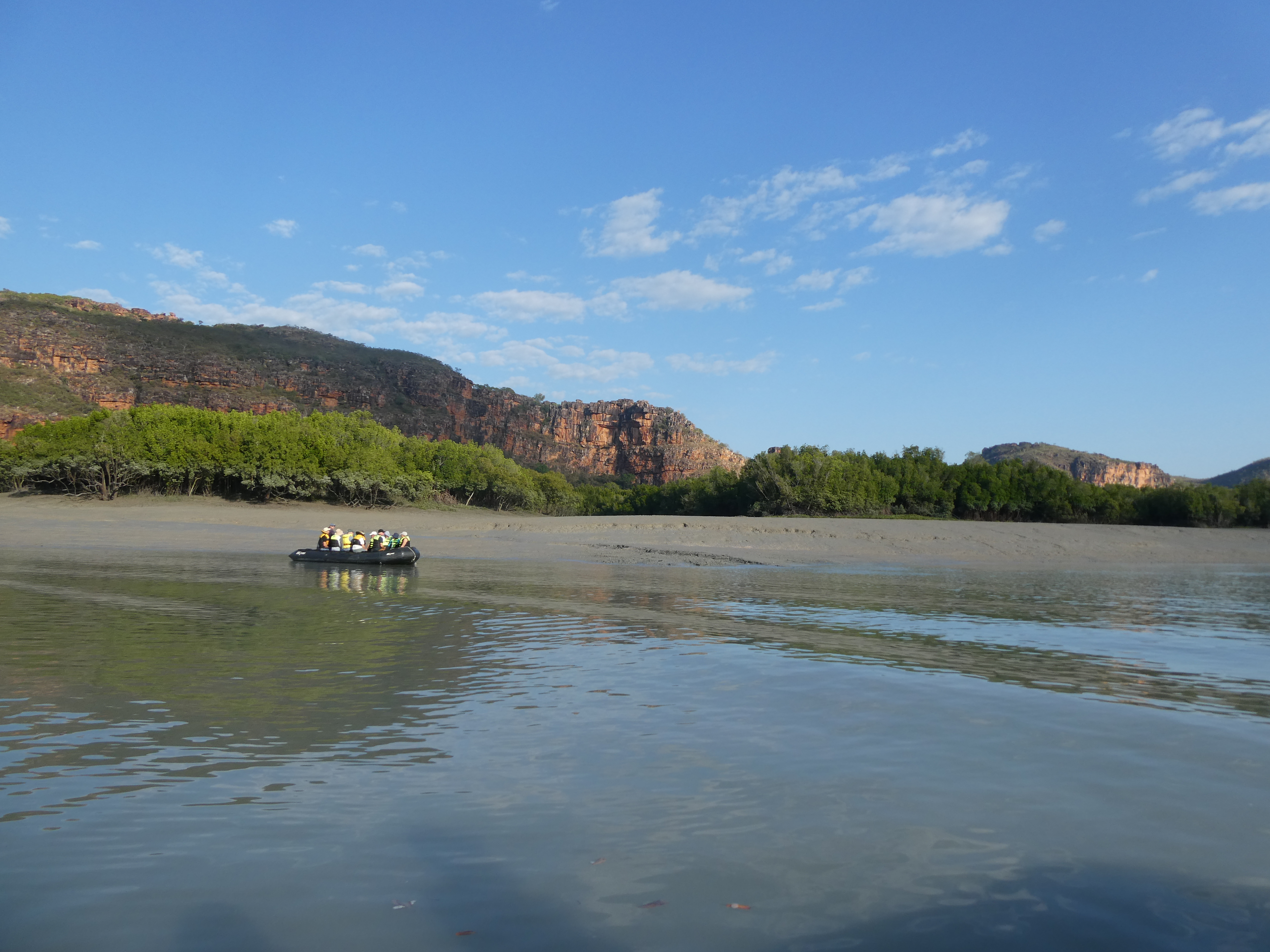
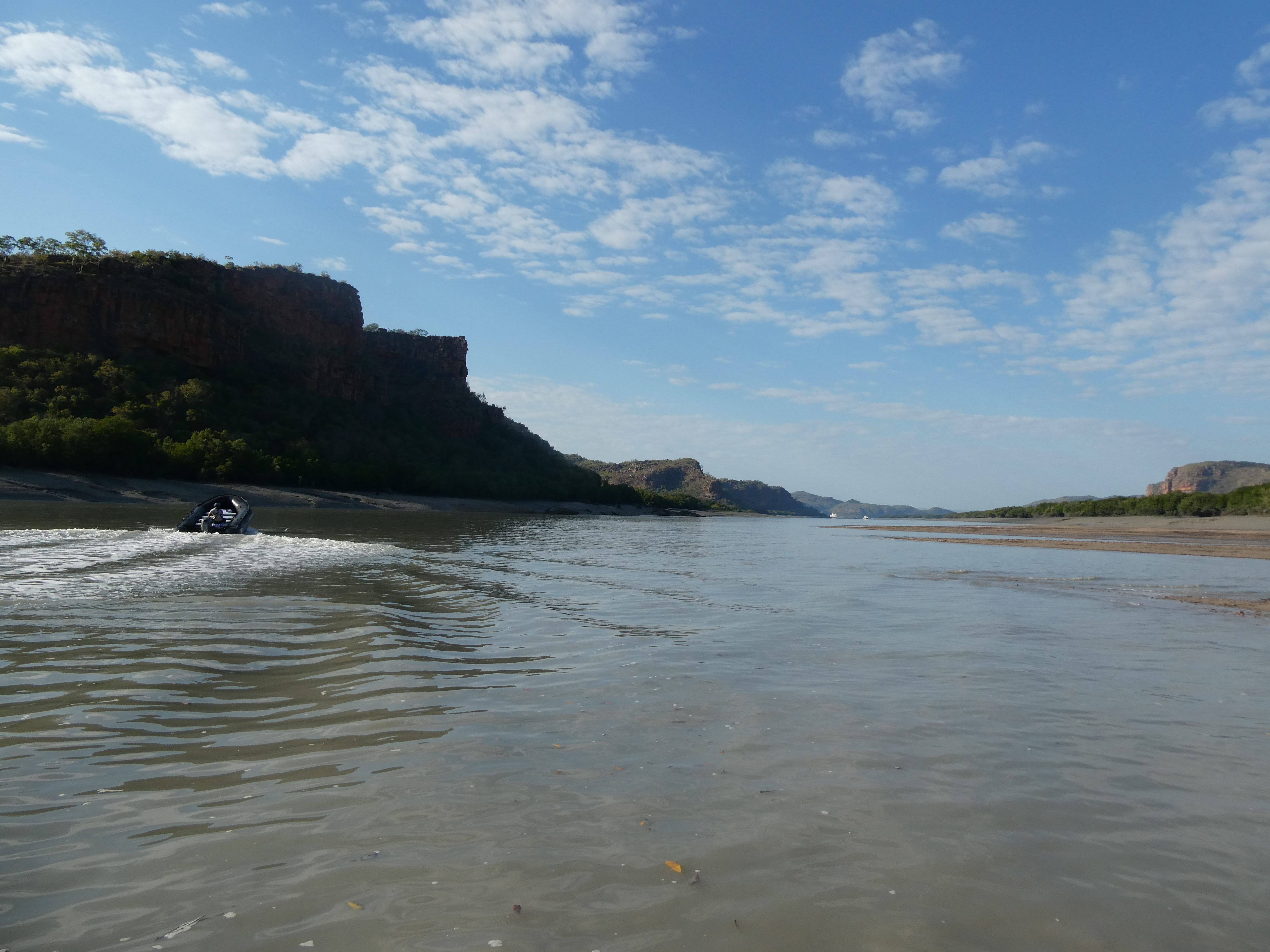
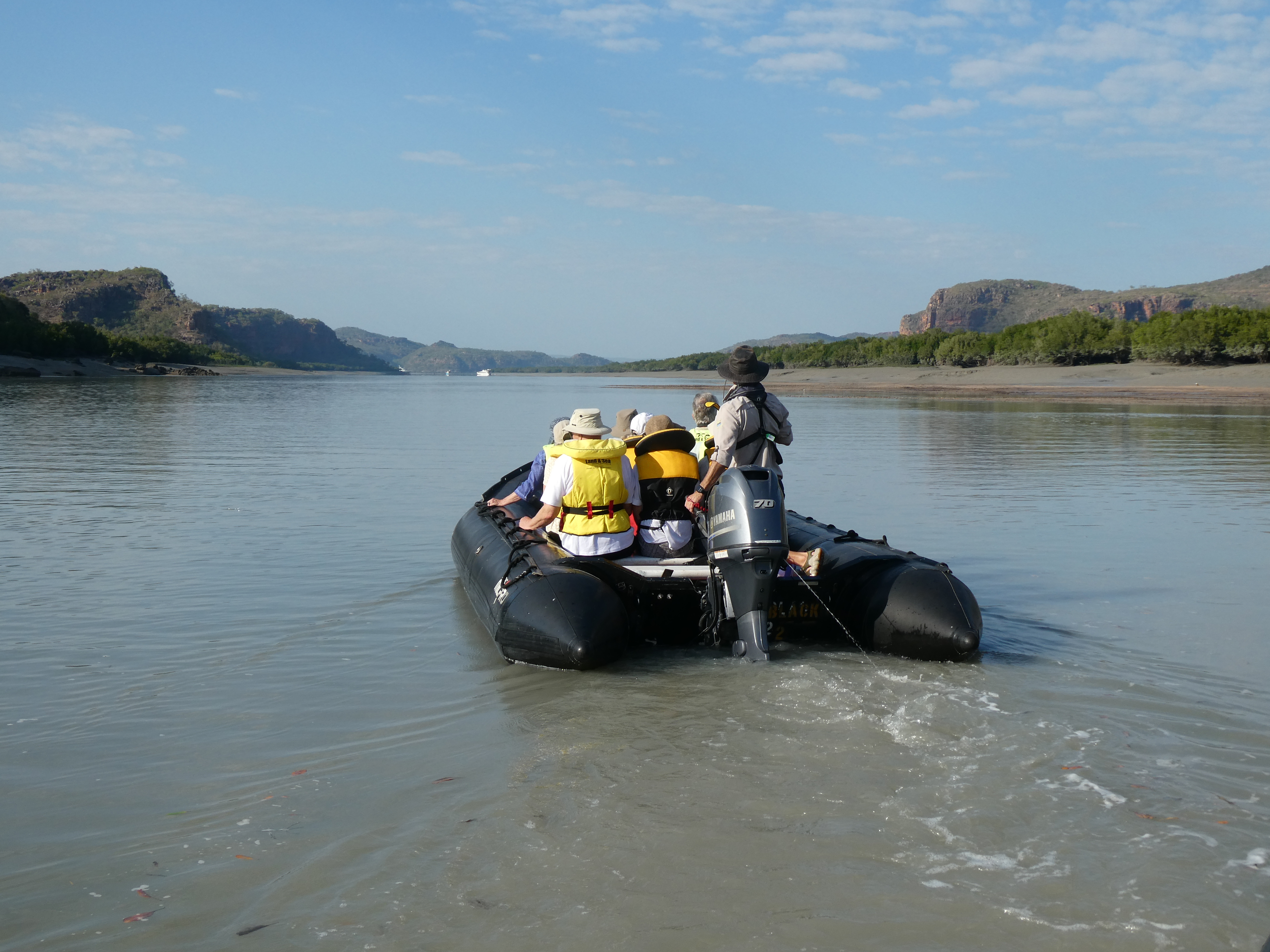

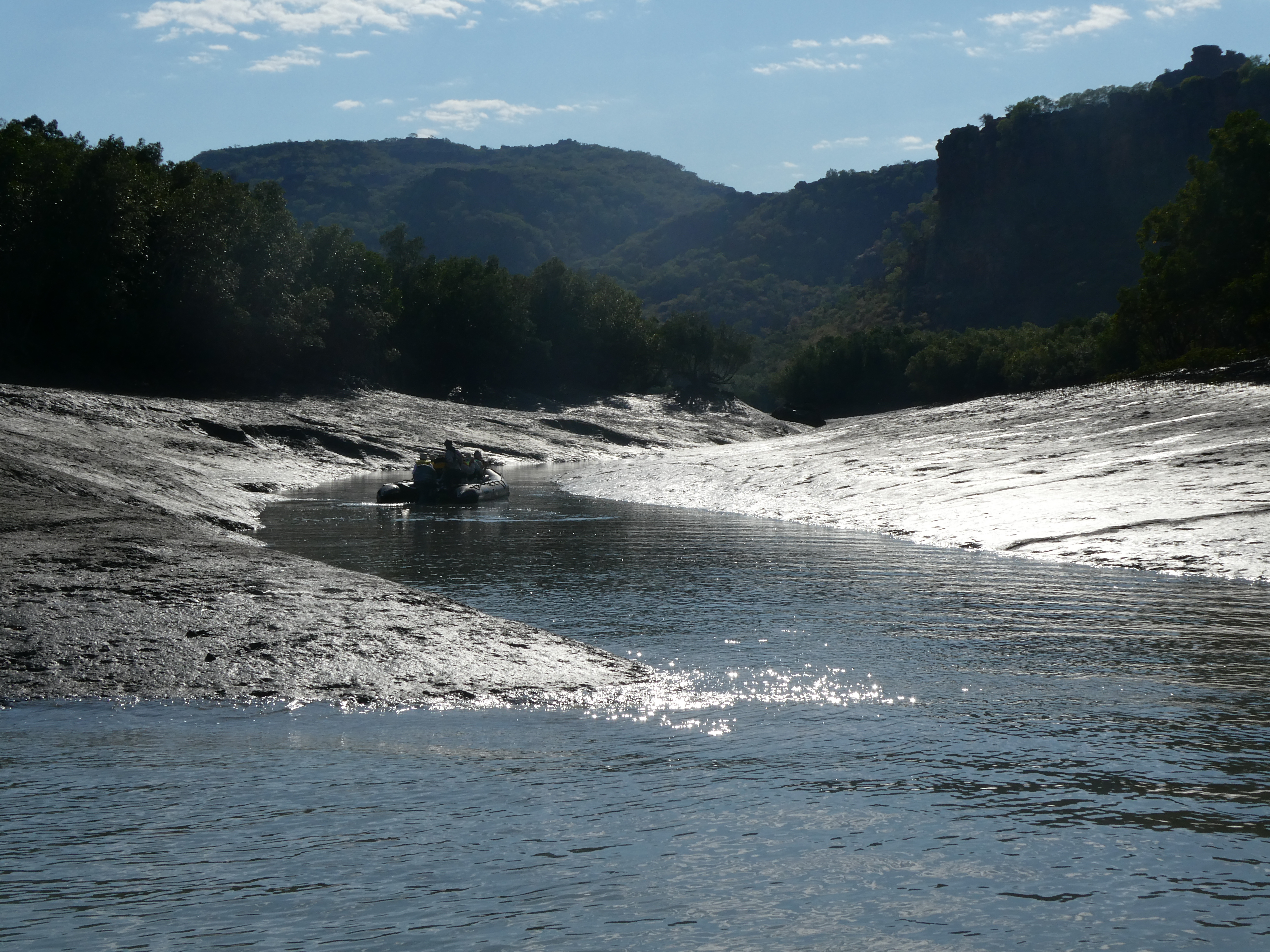
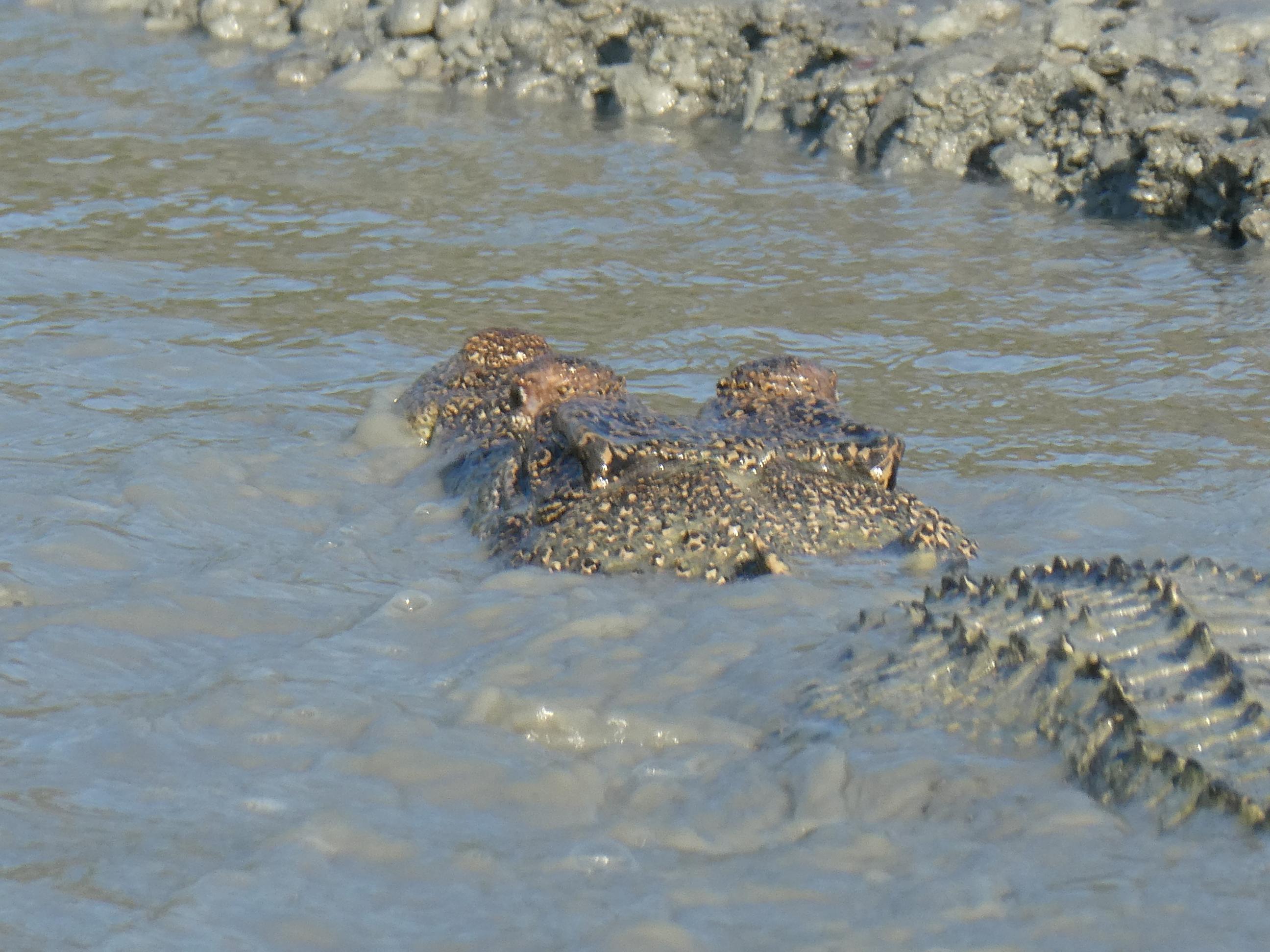
We slowly drifted down the creek. It wasn’t long before we spotted a croc on one of the mudbanks. It wasn’t perturbed by our presence, so we were able to bring the vessel up close alongside it and gently turn the boat around so that people on both sides of our tender had an opportunity to get a close look at it. Personally, I’m fascinated with saltwater crocodiles, which have now been in existence for over 200 million years – a remarkable feat on a planet that has been through continental shifts, extinction events and a number of ice ages. Getting up close to them has been one of the highlights of this trip for me.
In small groups, we boarded the zodiacs to explore further down the creek and along the river banks in our quest to explore this wonderful ecosystem at close range. We found three more crocodiles while we were in the zodiac. The most interesting of these was a relatively big croc which positioned itself at the mouth of a rivulet running through the mudbank and into the main creek. There was a significant flow of water down the rivulet. Any poor fish being carried down to the creek by the rivulet would swim right into the waiting crocodile’s deadly jaws. The croc waited patiently without moving a muscle. The sensors in its skull would have alerted it if any food was coming its way. The trap was set. We moved on before anything remarkable happened, but I hope it was rewarded with a catch.
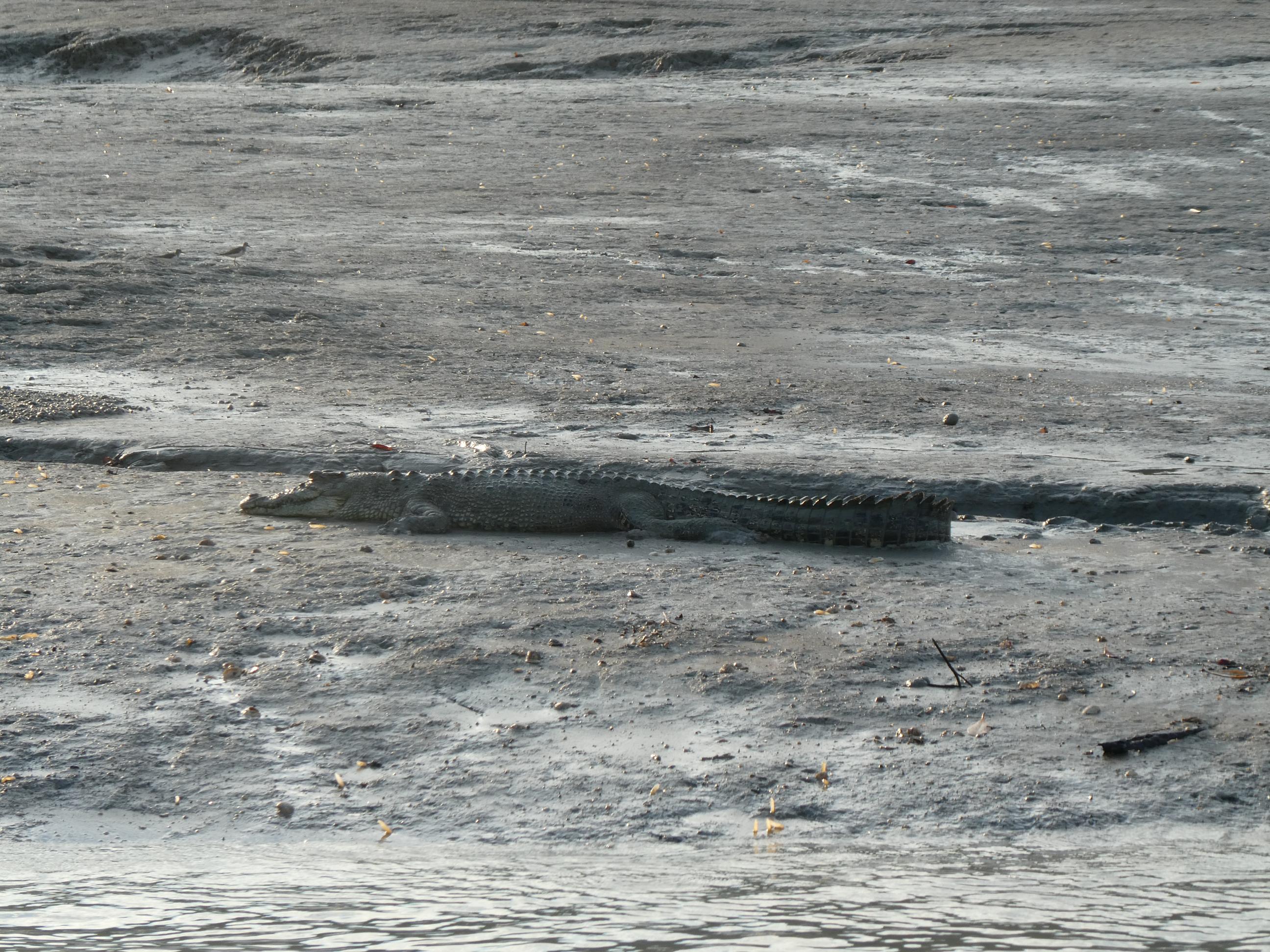

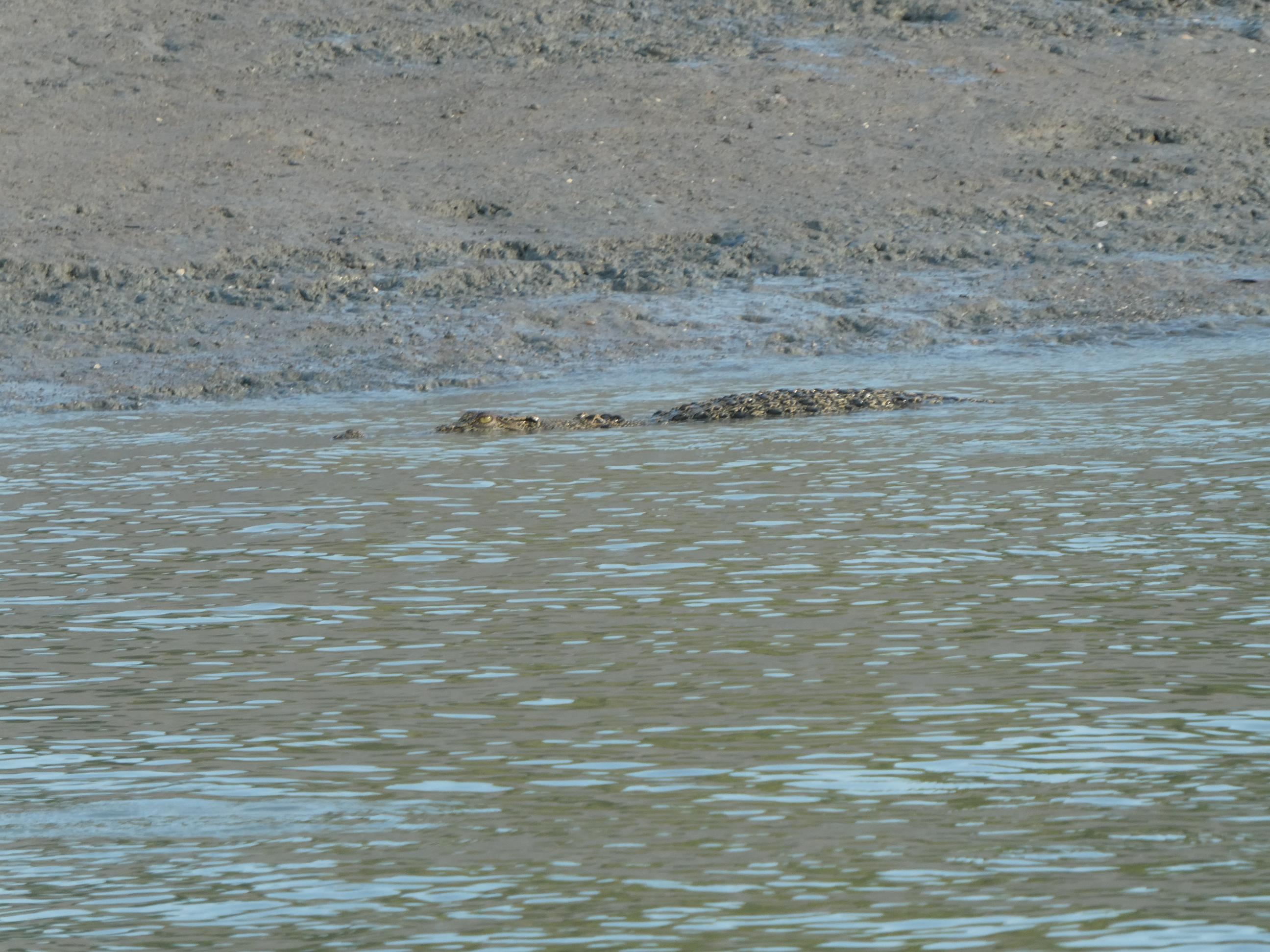
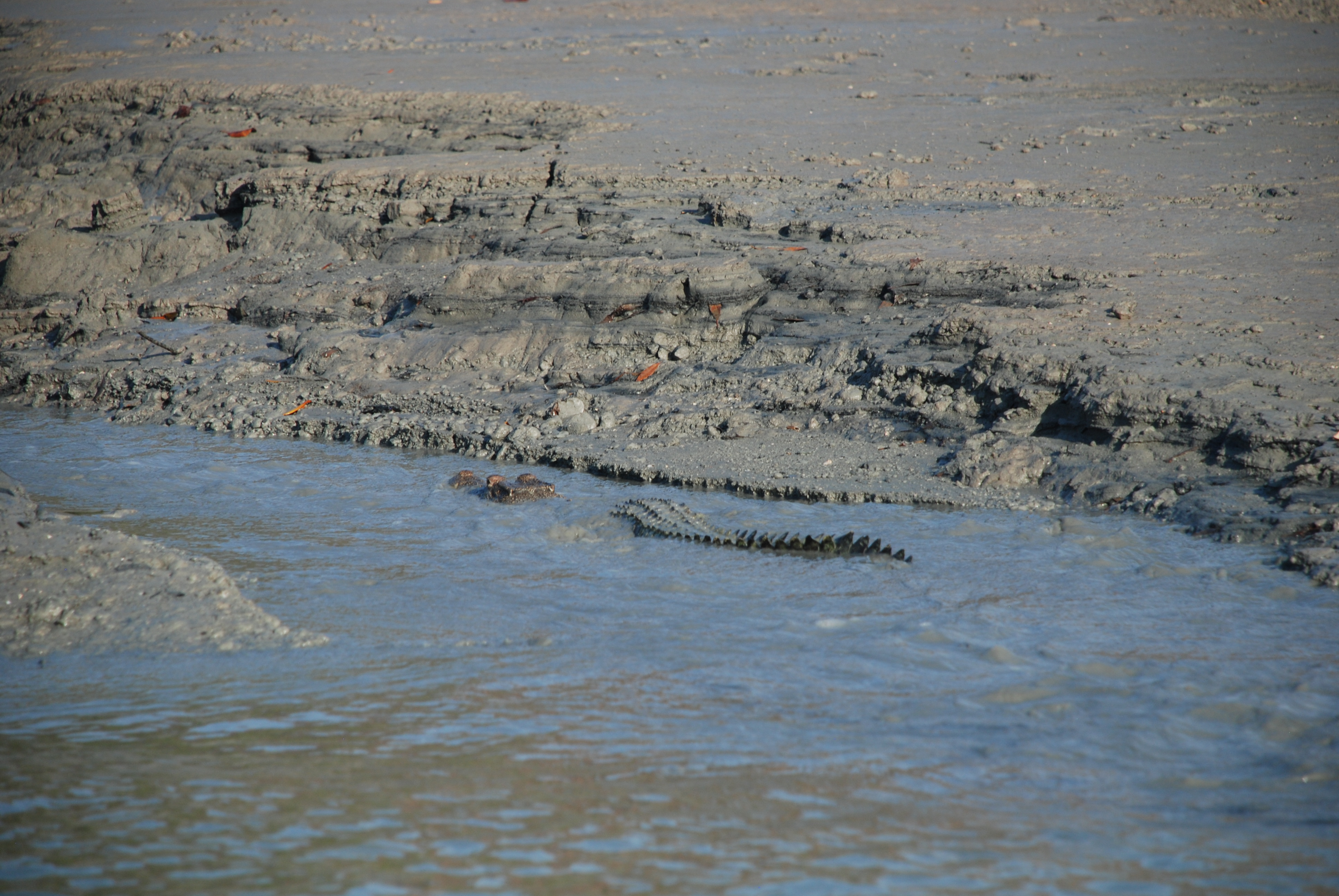
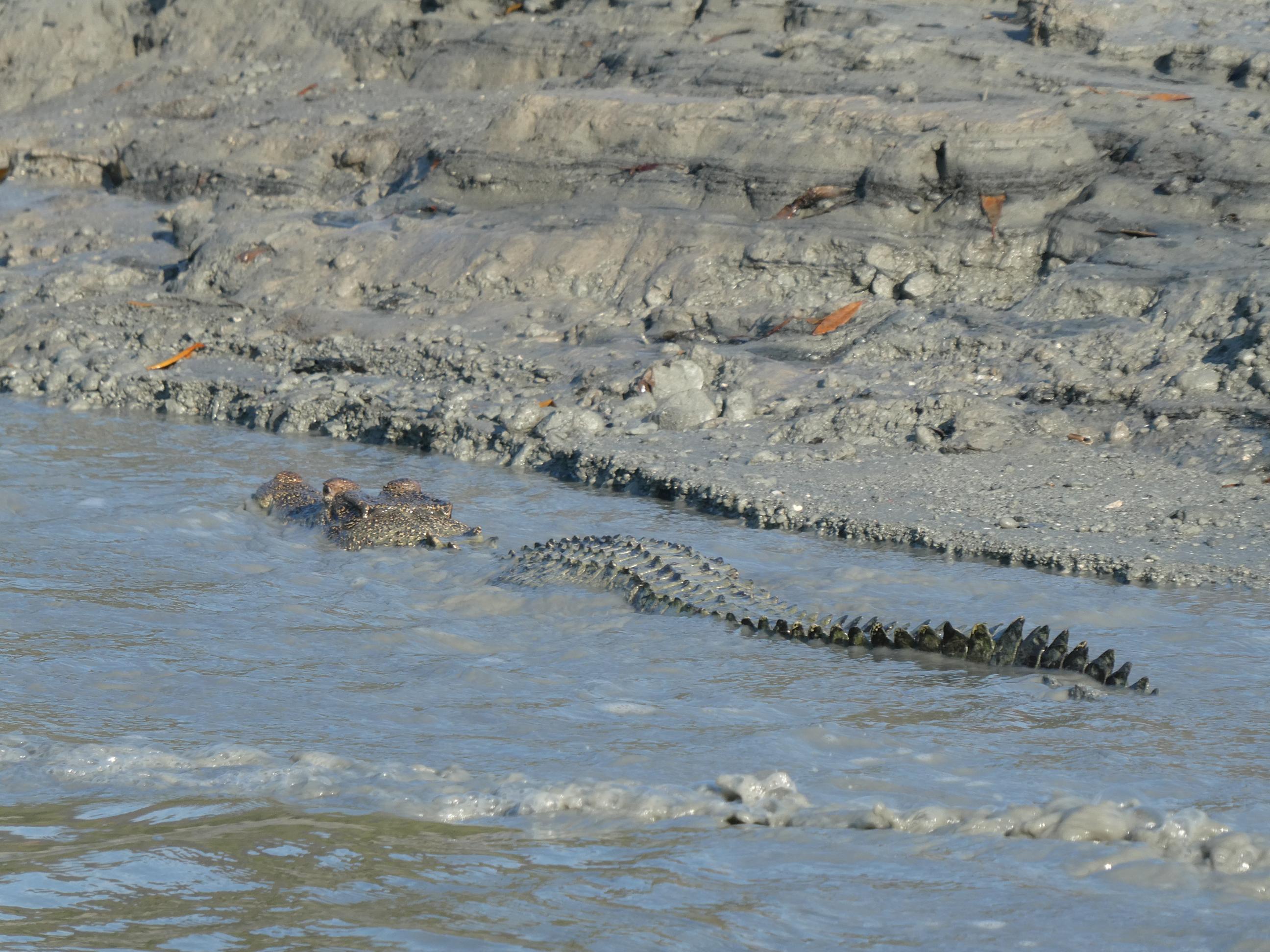
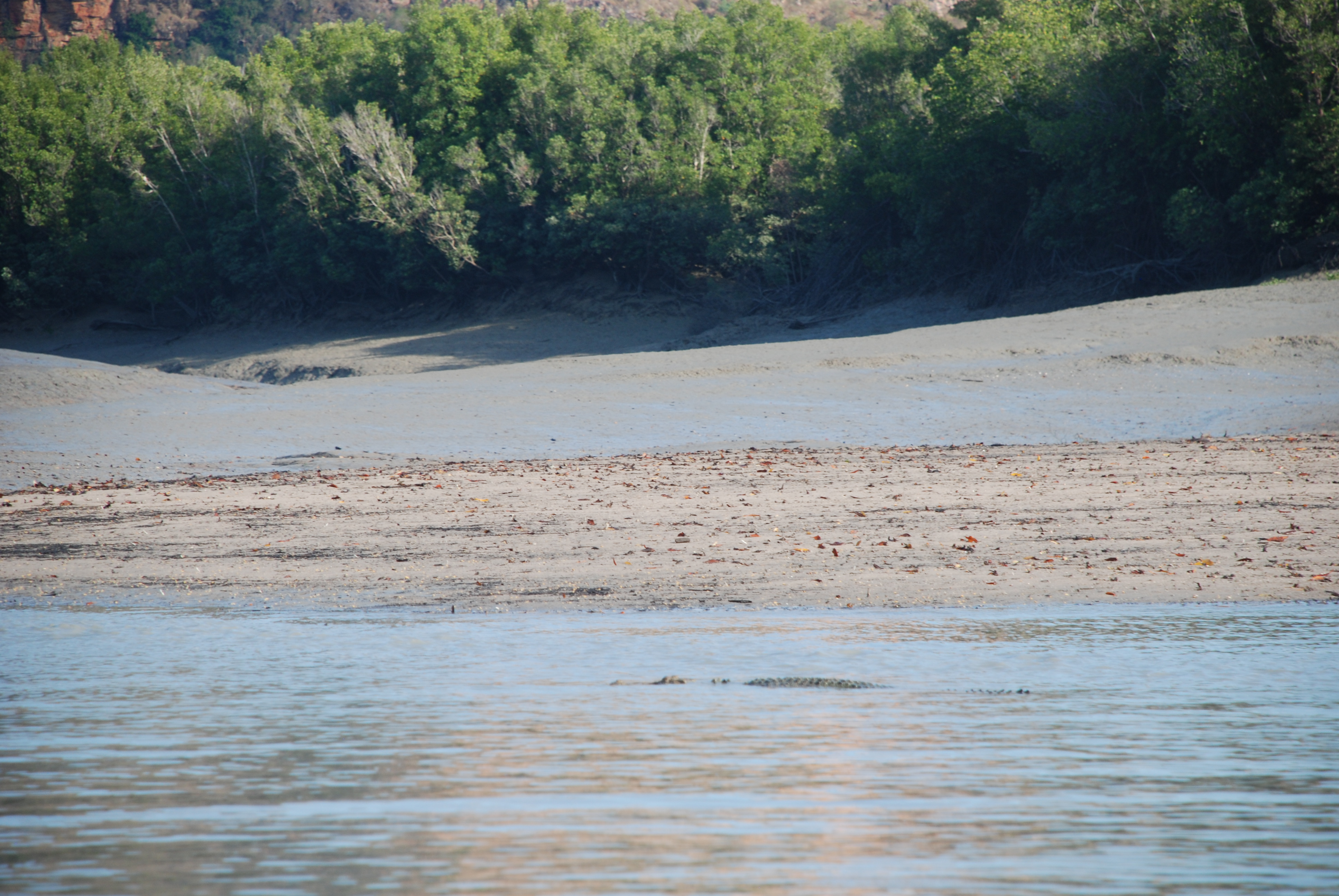

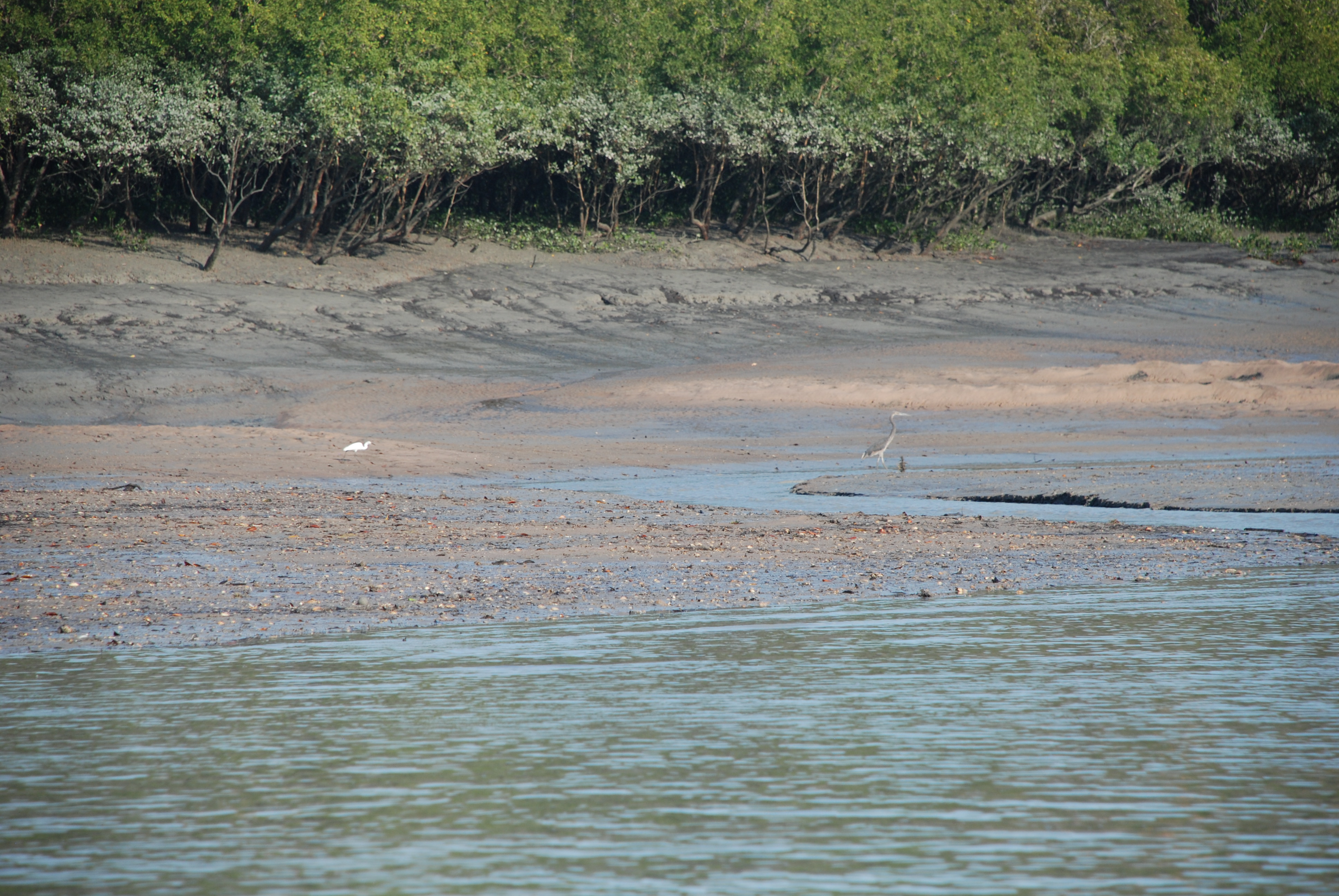
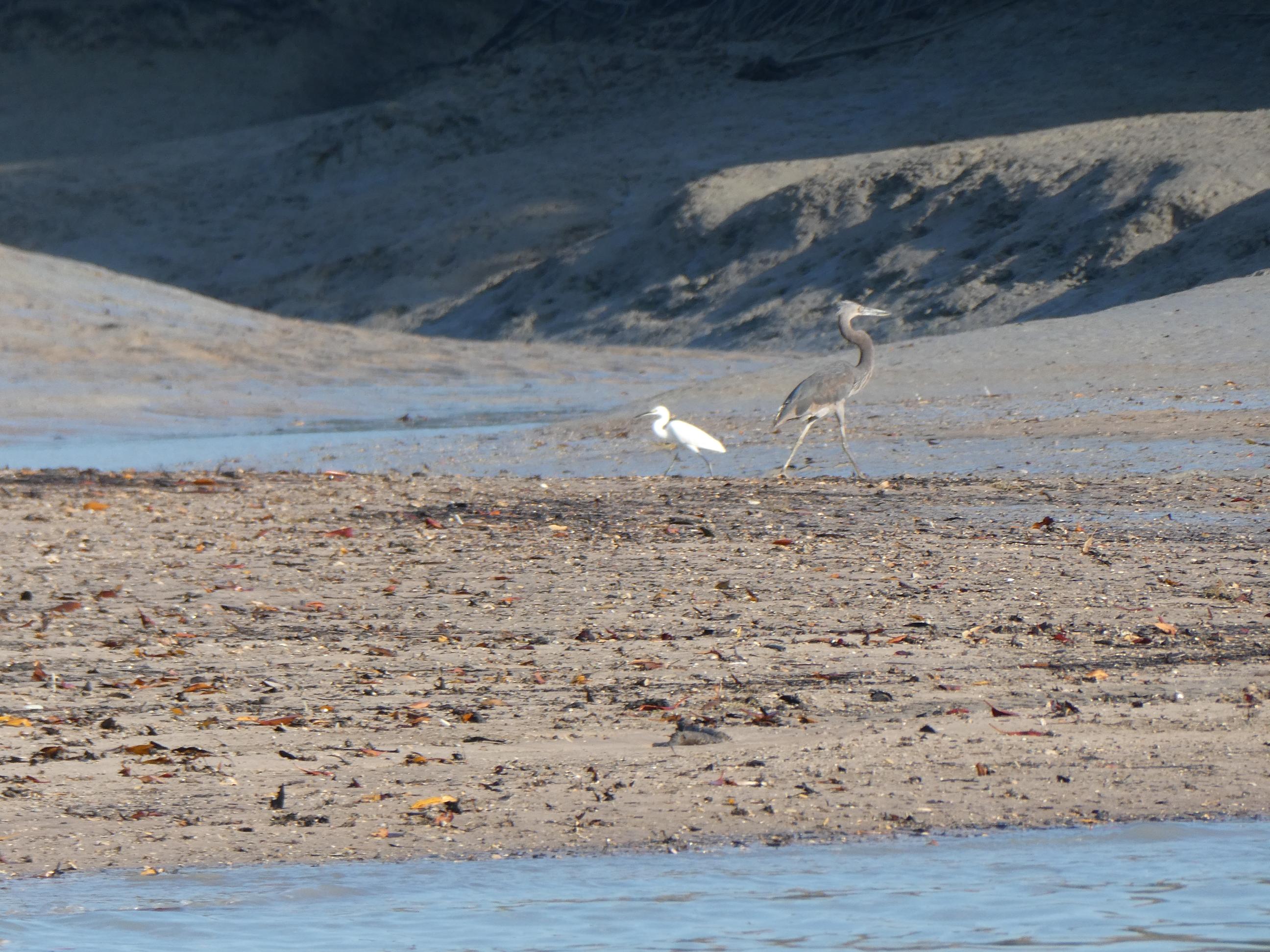
On the same muddy banks of the creek, only metres from the crocodile, three birds captured my interest. They seemed unperturbed by the croc’s presence, and it paid the birds no heed. A beautiful white wading bird, the little egret, was the first to appear. Soon a strikingly handsome black-headed heron joined it. They strutted back and forth across the muddy creek bank. Soon a beautiful brown and white raptor, the brahminy kite joined them. I was lamenting the fact that I didn’t have a better zoom lens, but thankfully my brother Rod did, and he shared a few of his best photos with me when we got back to our ship. If you closely at the last photo in this set, you will see the brahminy kite, the black-headed heron AND the crocodile in the one shot, though you might at first miss the croc. Watching wildlife up close in its natural environment has been one of the great joys of this Kimberley cruise.

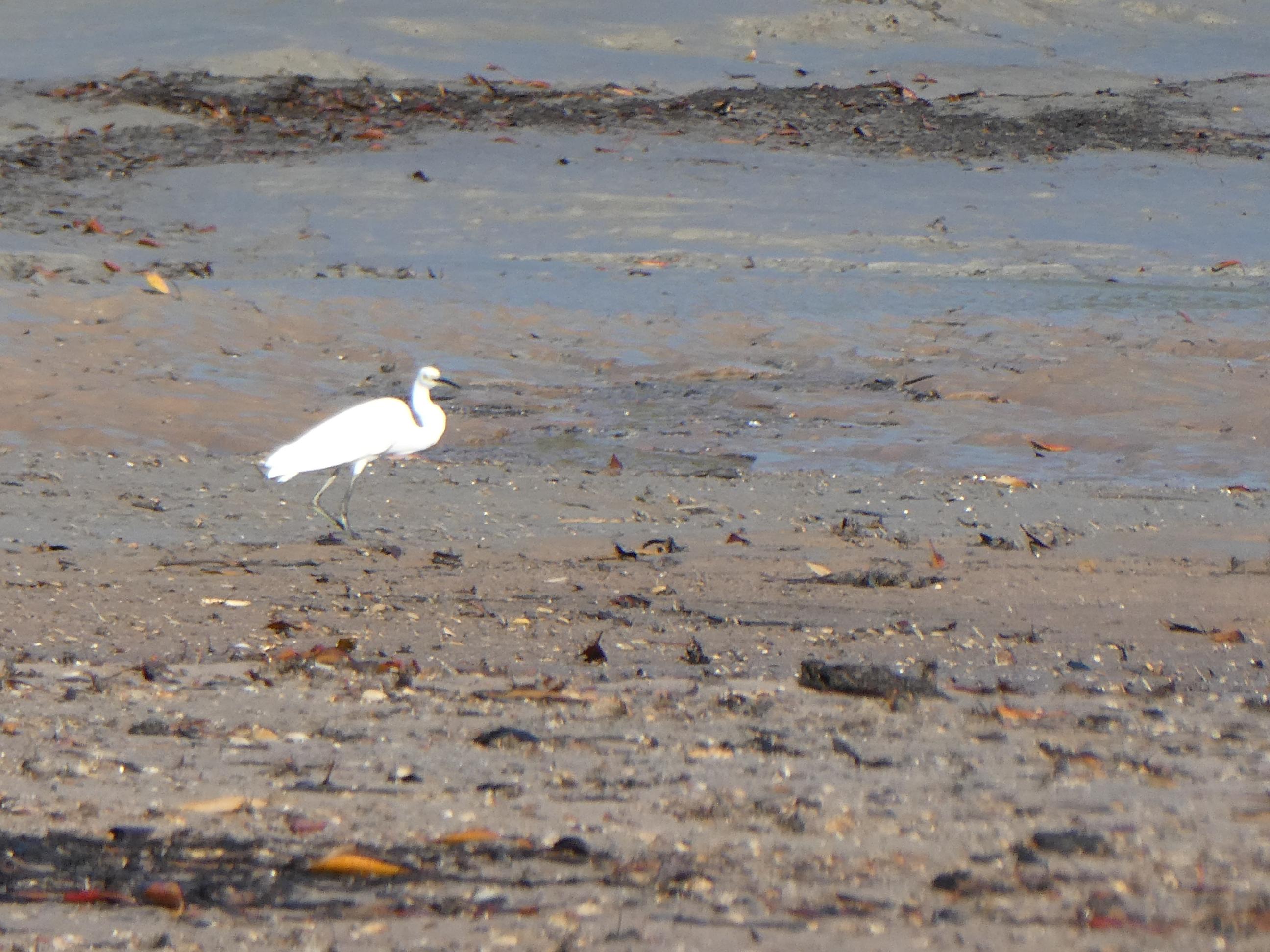
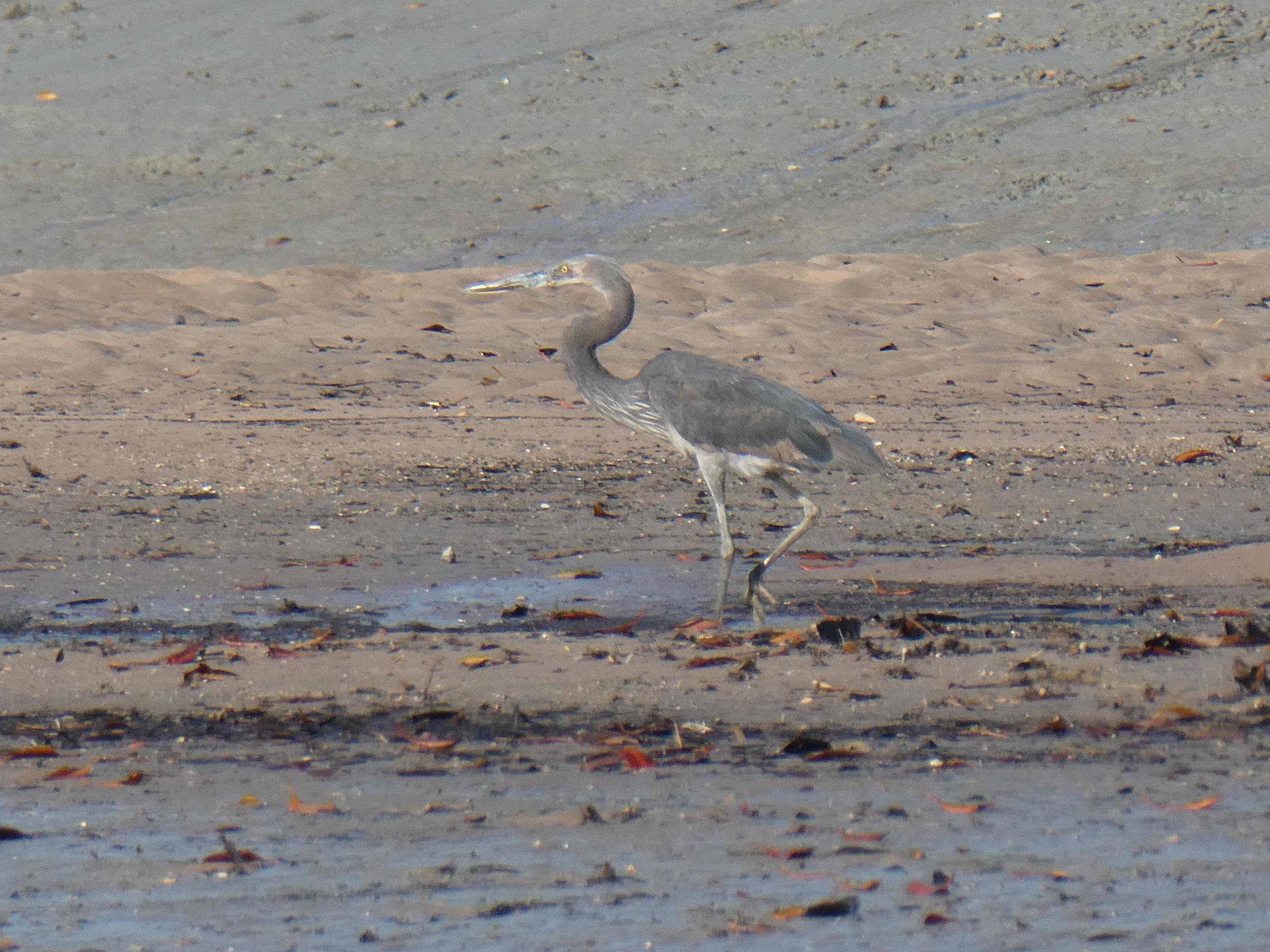
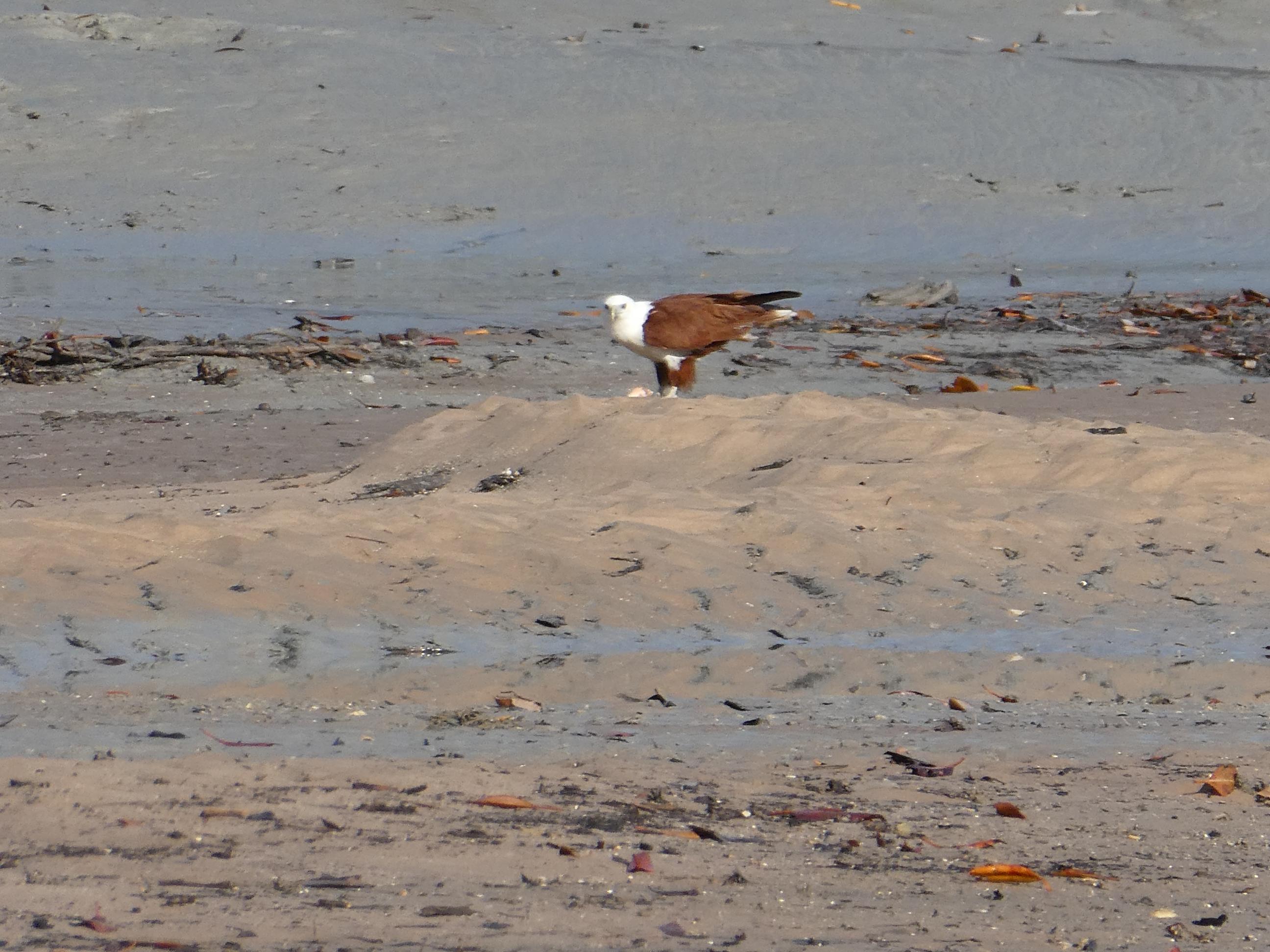
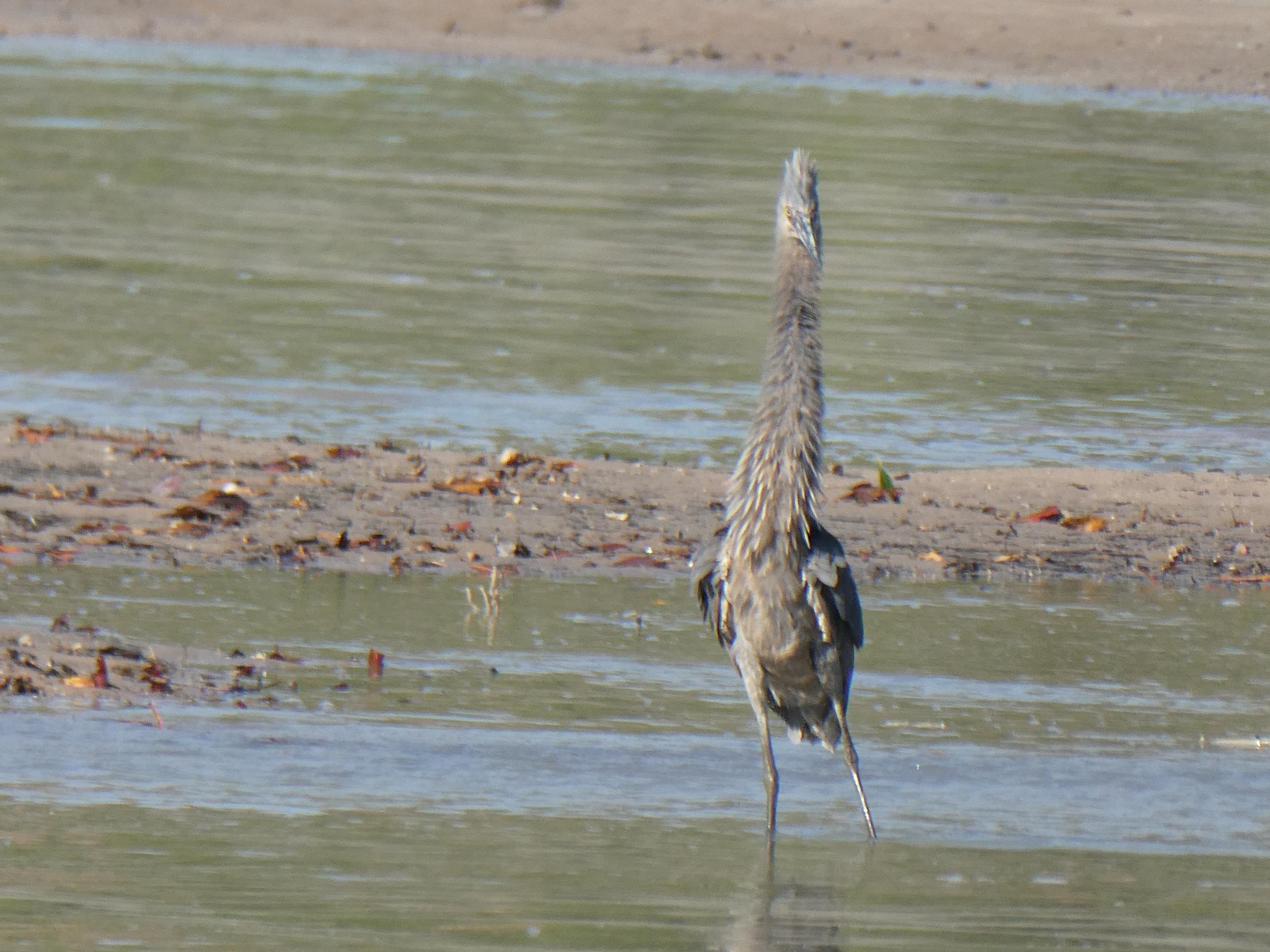
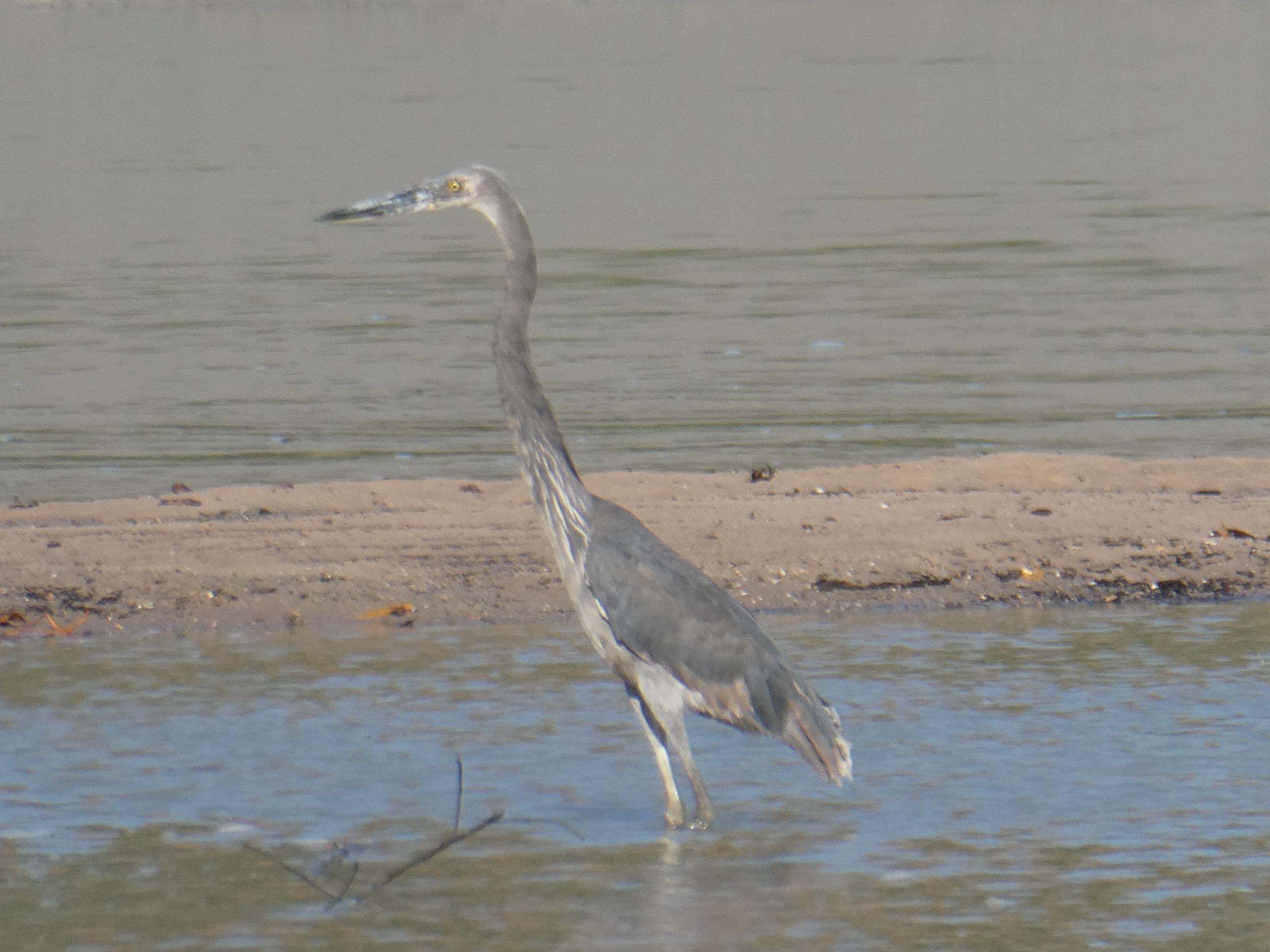
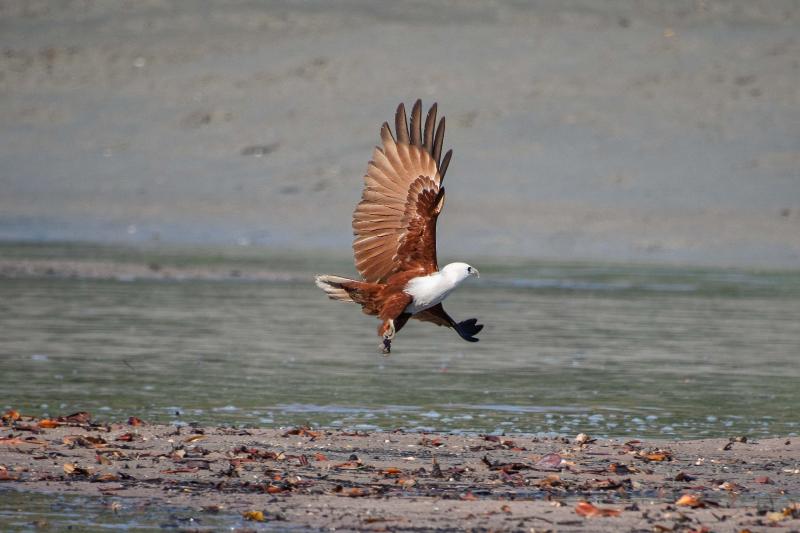
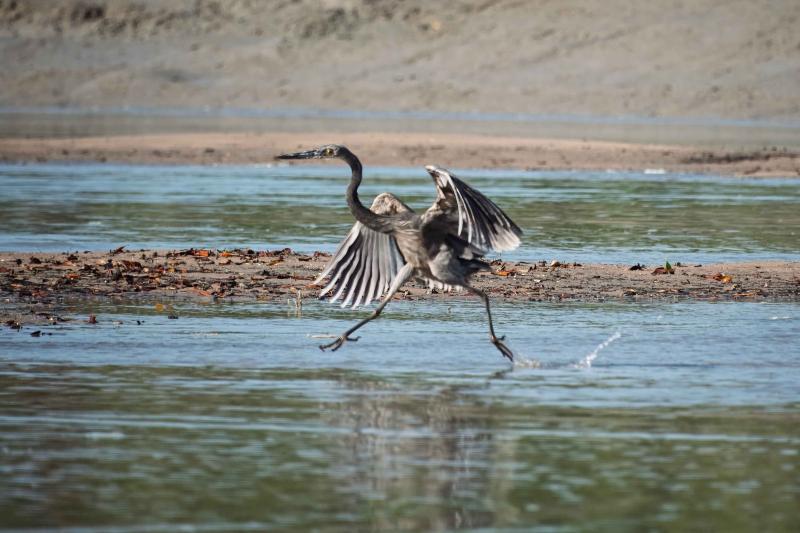
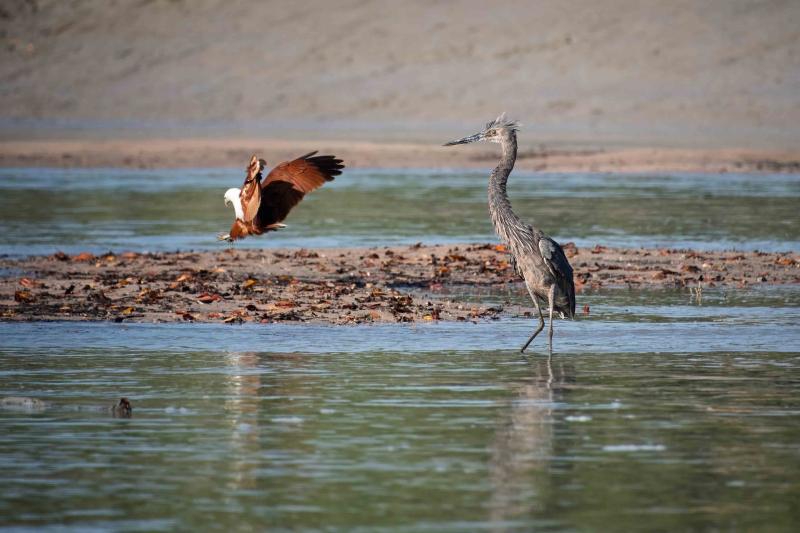
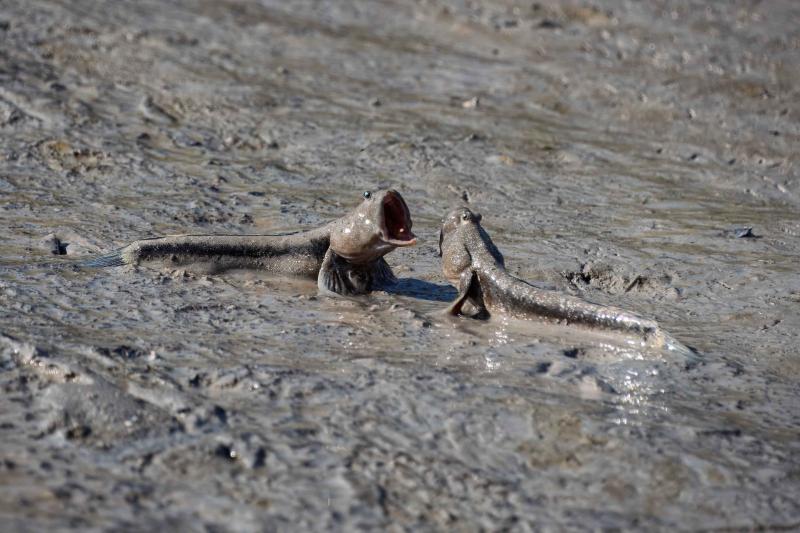
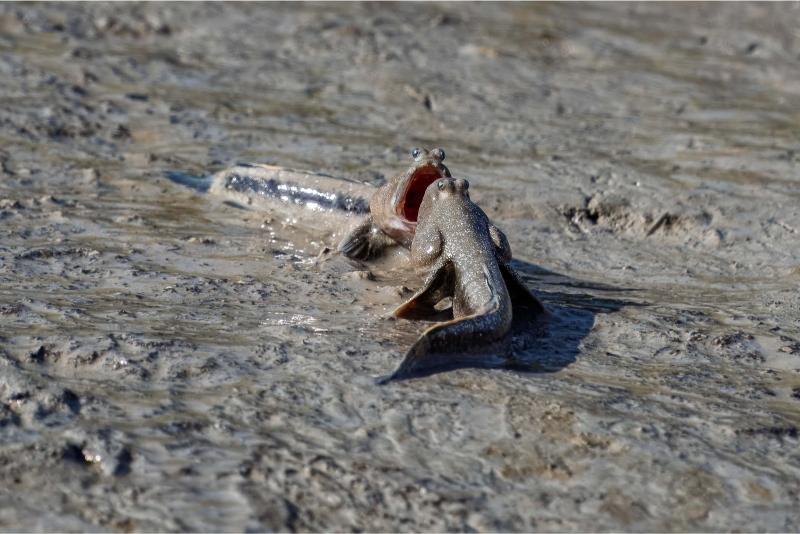
Marg and I returned to the tender in our zodiac and another group replaced us. The tide had turned by this time and this group was able to travel a small way up one of the tributaries as water levels began to increase. They were able to watch fiddler crabs as they hurried to their holes in the mud and disappeared from sight. They were also treated to the spectacle of mudskippers fighting. We were back on the tender and could see them from a distance, but Rod and Cornelia were in the zodiac by this time and Rod sent me these fantastic photos of two aggro mudskippers going into battle with each other. When everyone had had a turn in the zodiacs, the tender returned us to our ship for lunch.
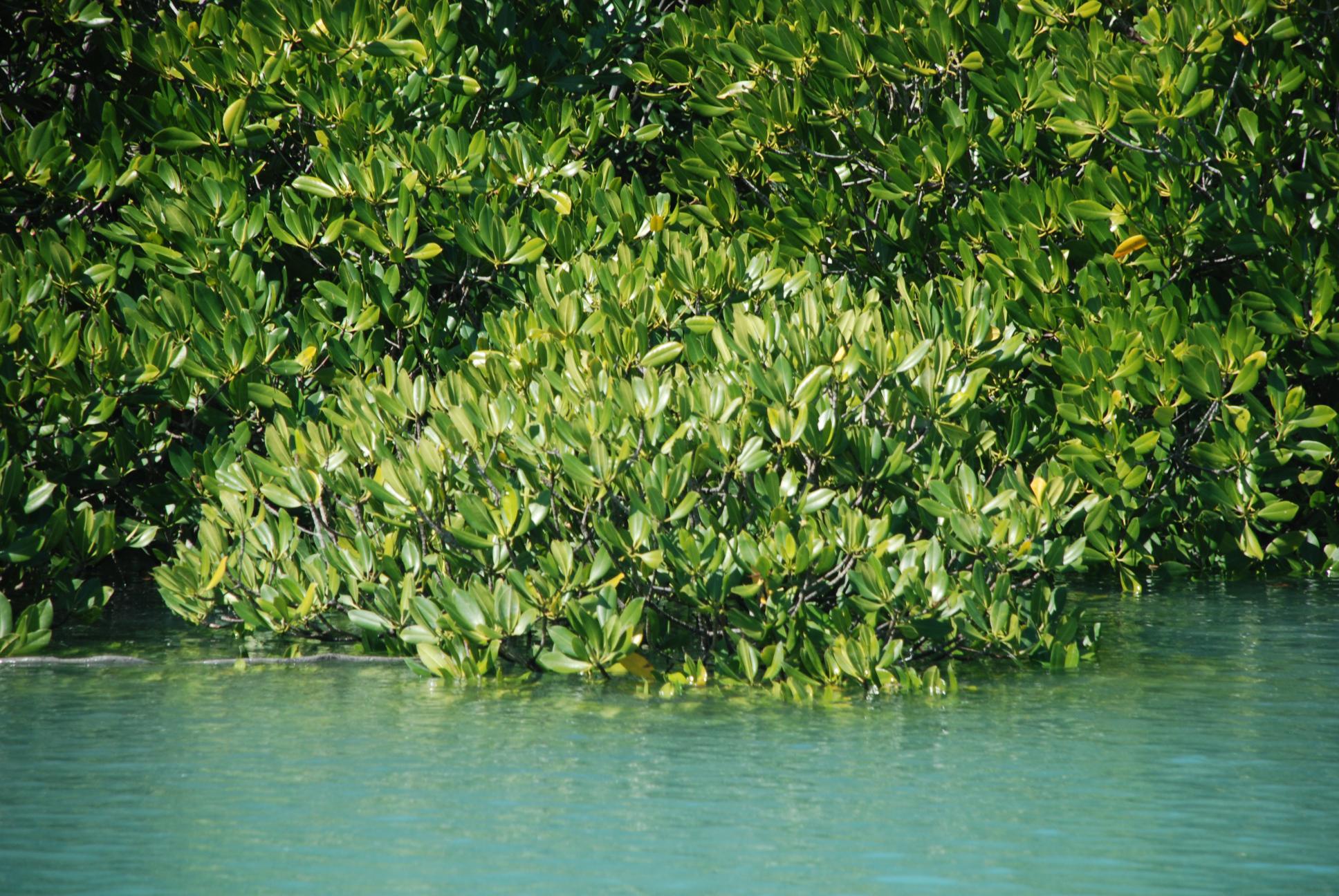
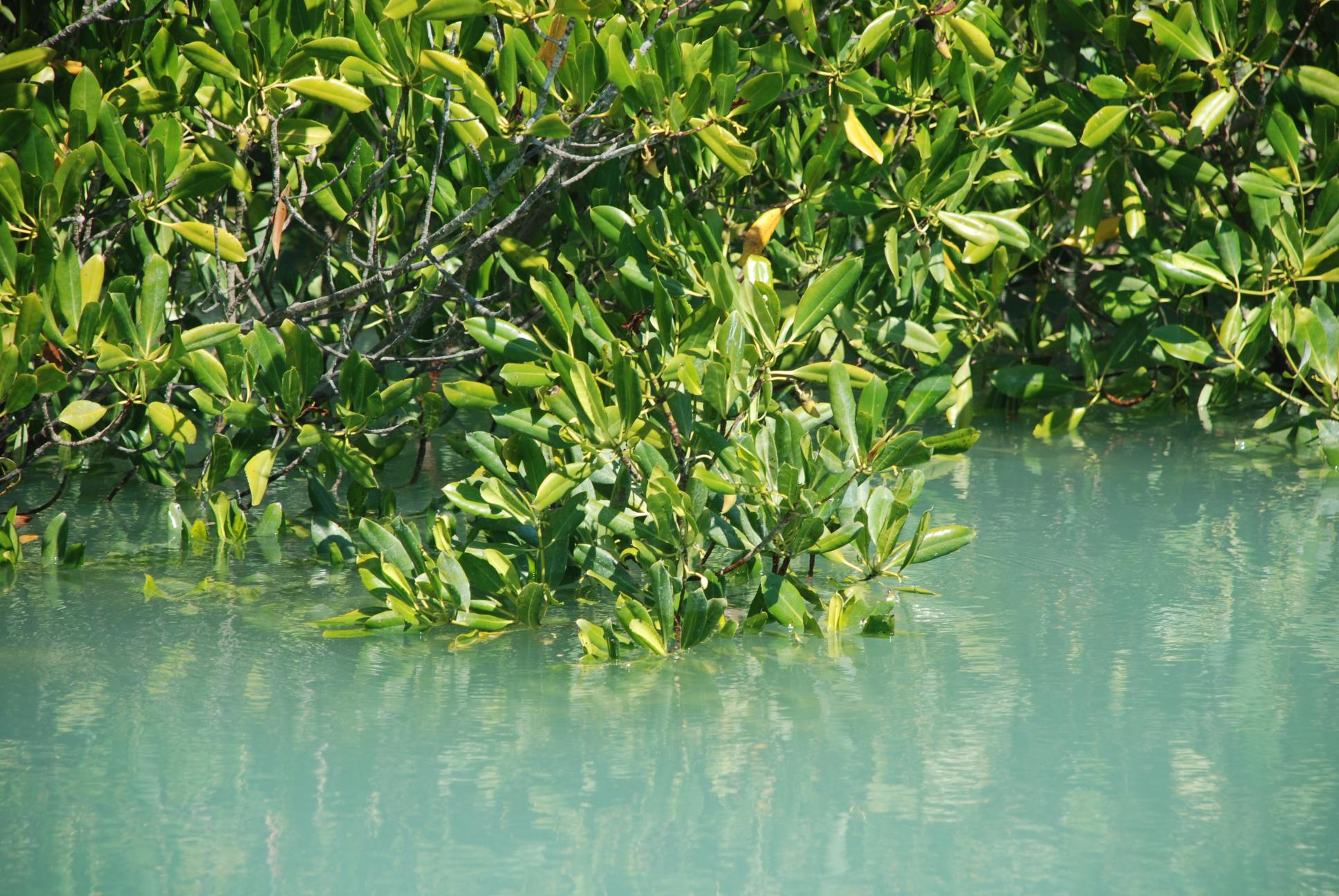
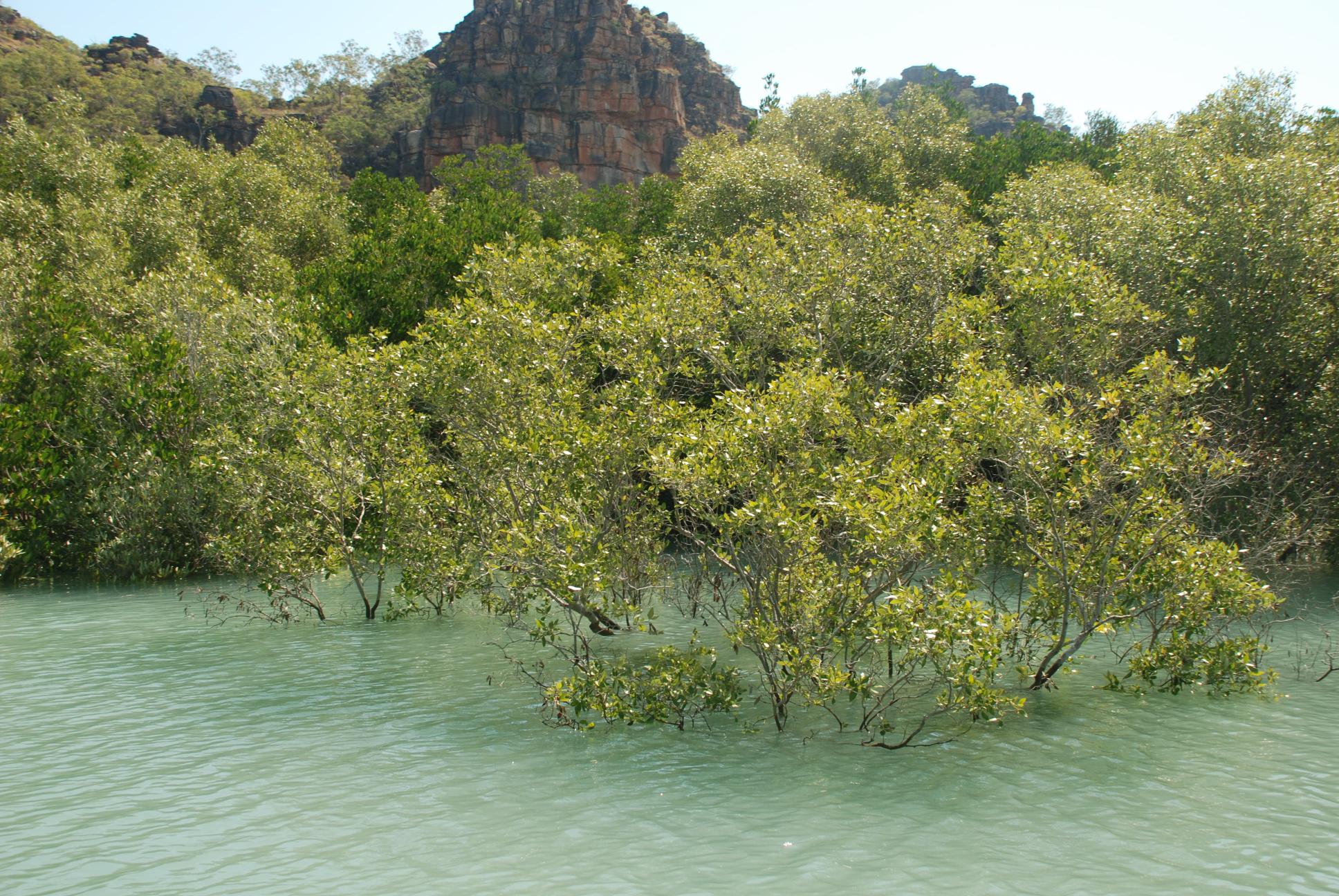
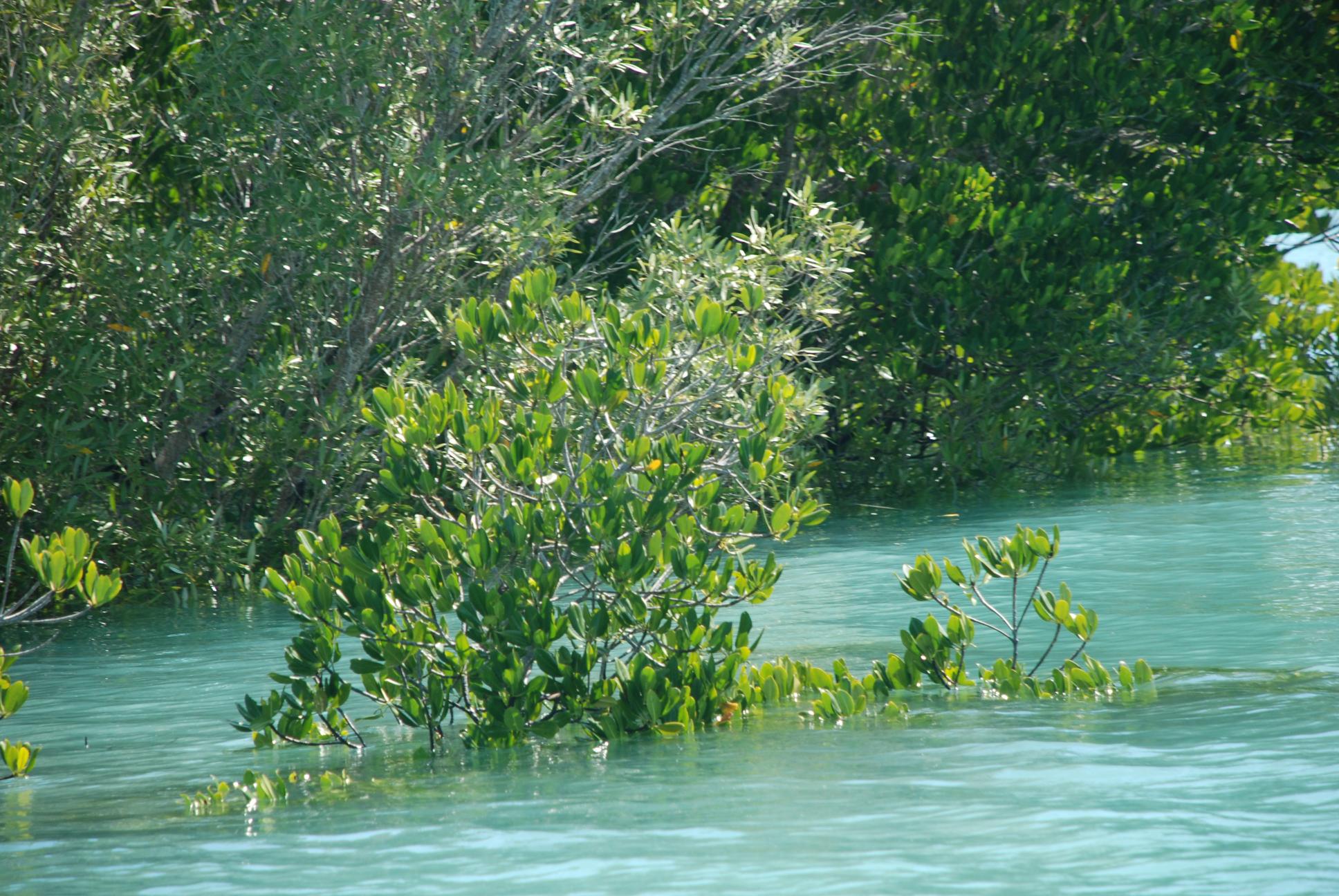
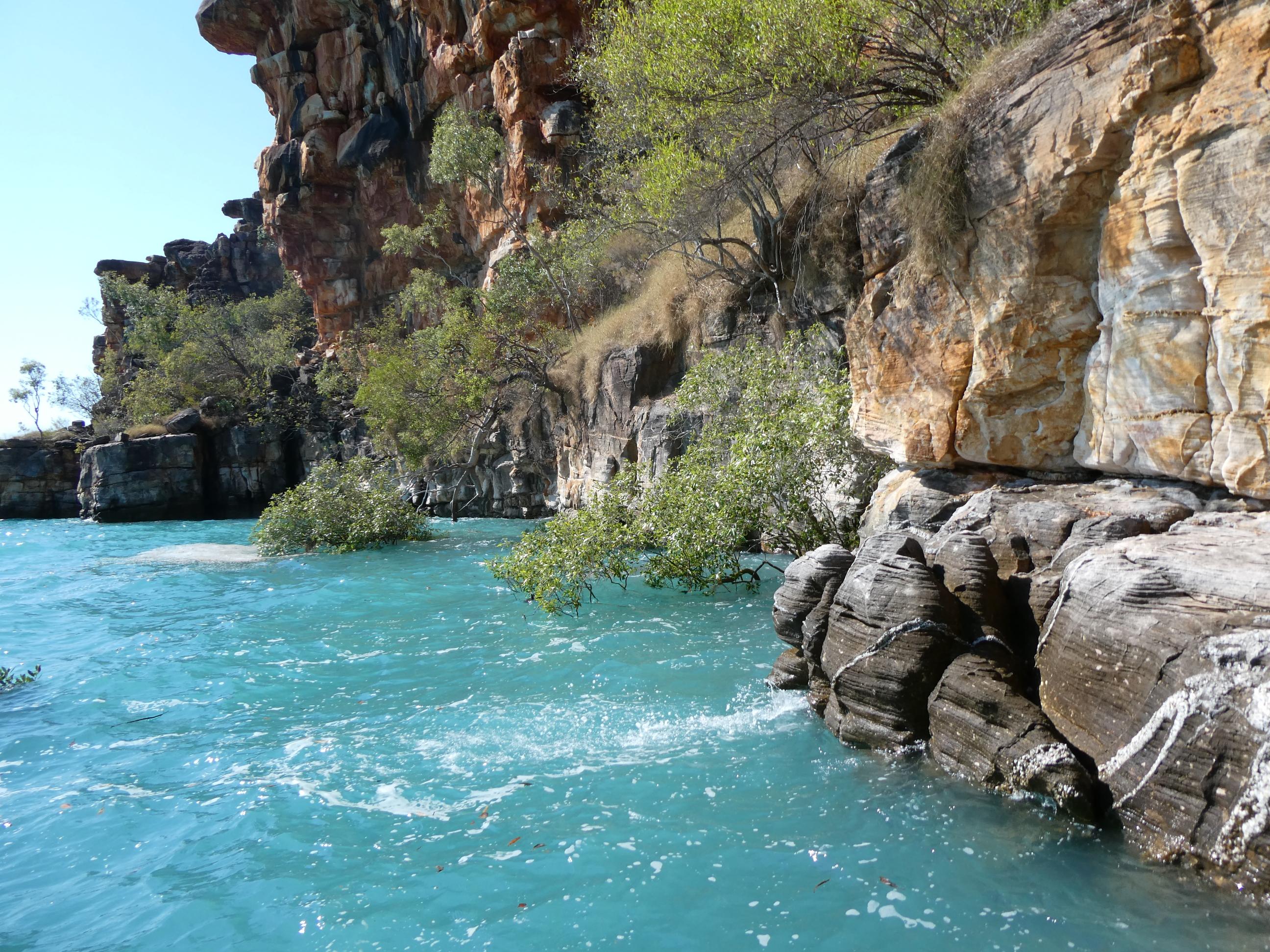
After lunch, we were back in the tender for another excursion. This time we headed in the opposite direction, away from the Hunter River and across open water to the upper reaches of Prince Frederick Harbour. There was an unusually high spring tide. The water level had risen to 9 metres higher than it was when we first ventured out in the morning. We drifted slowly through a mangrove forest that was partially submerged. In fact, some mangrove trees were almost completely submerged. The water was translucent and had a milky appearance. Magnificent red sandstone escarpments provided the backdrop. David asked us for silence and we listened to the birdsong, which was wonderful, though we only spied a couple of sandpipers as we drifted. David said he couldn’t even tell us the name of the place where we were and he suggested we probably wouldn’t find it on Google Maps if we went looking for a backwater, as there was every likelihood it would all be land at other times of the day. Although we didn’t seen any creatures, I enjoyed the opportunity to explore the fascinating intertidal mangrove zone at both low and high tides today. It’s critically important to the Kimberley ecosystem, protecting the banks from erosion, providing shelter and food for many species and sequestering large amounts of carbon and preventing it from escaping into the atmosphere.
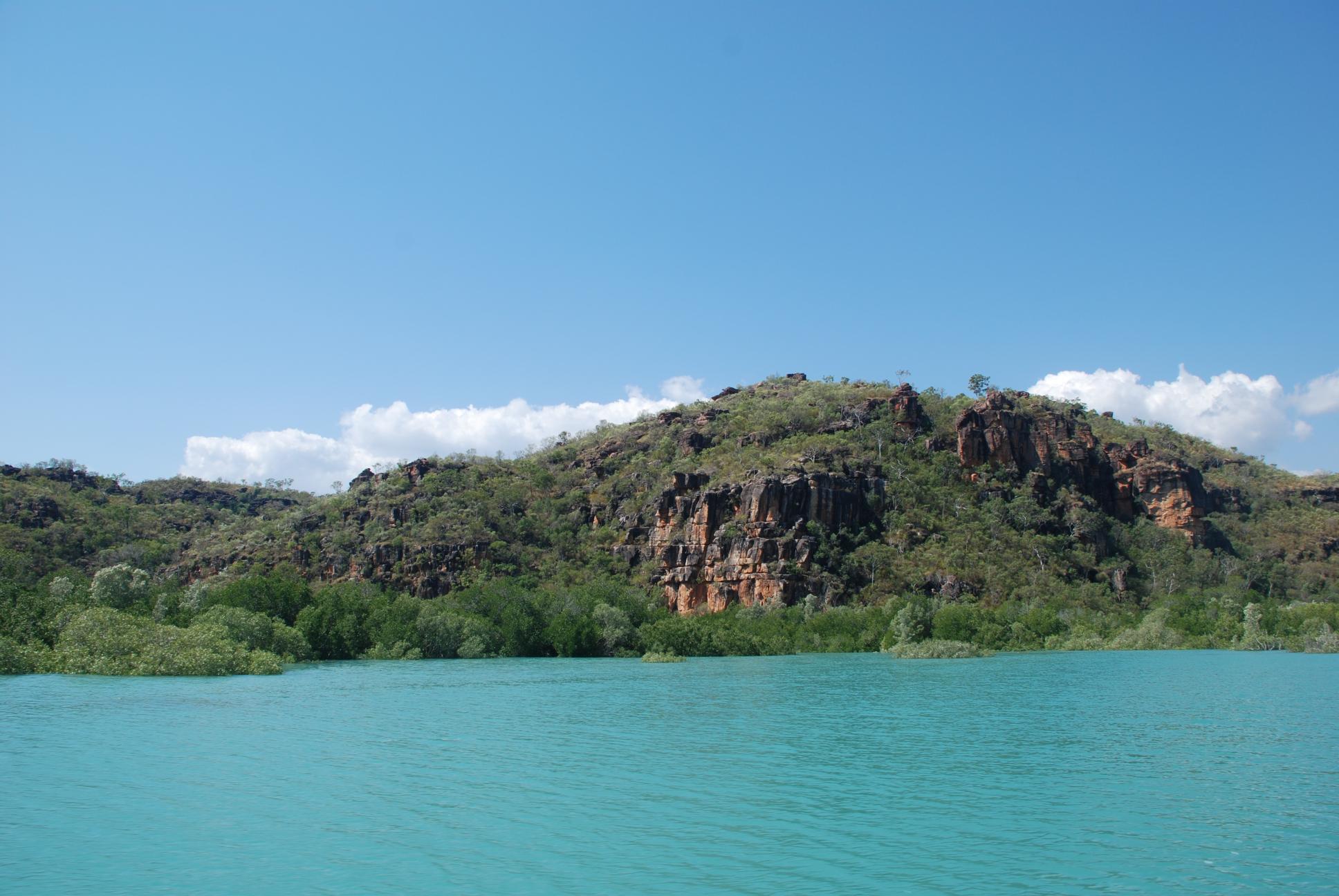

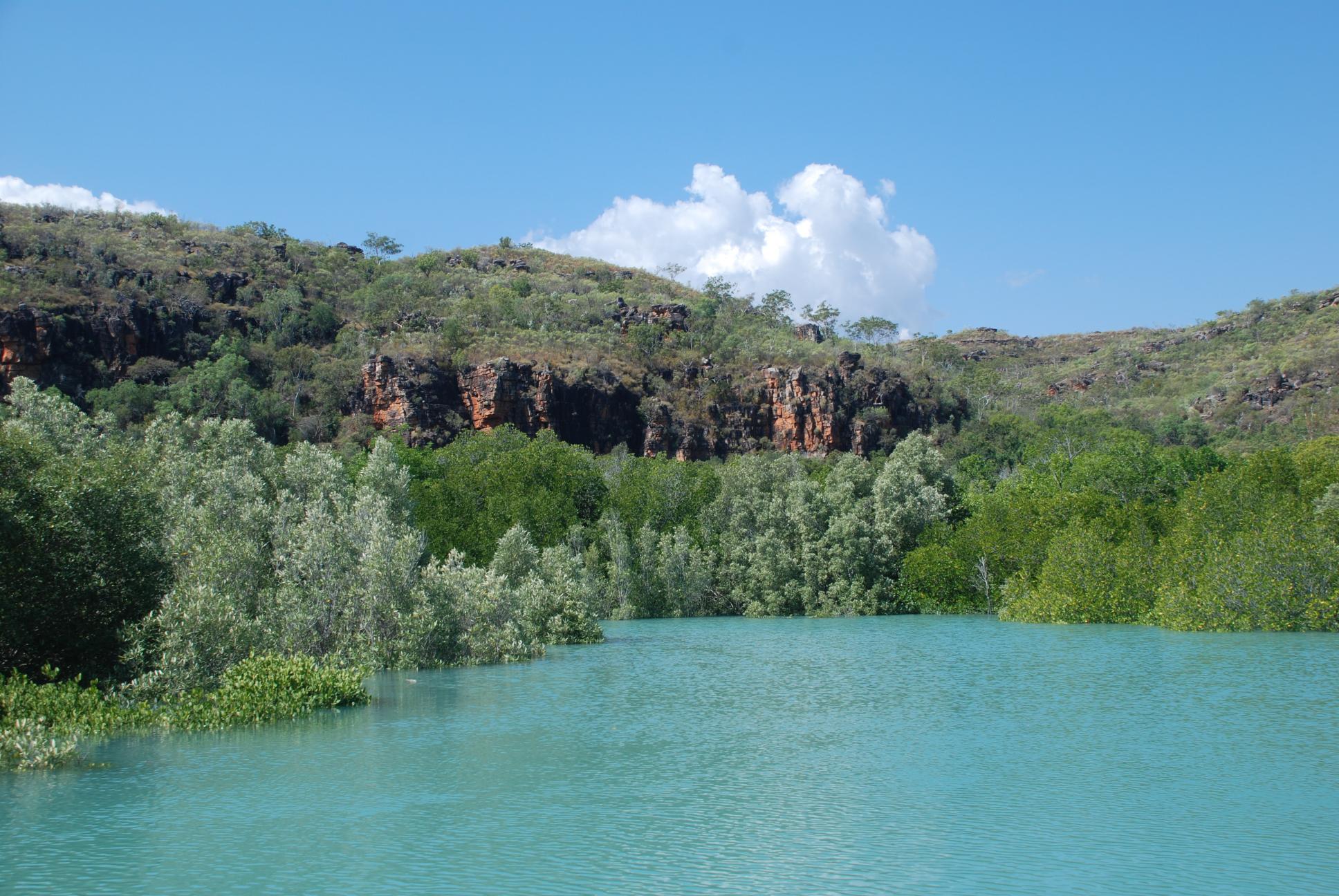
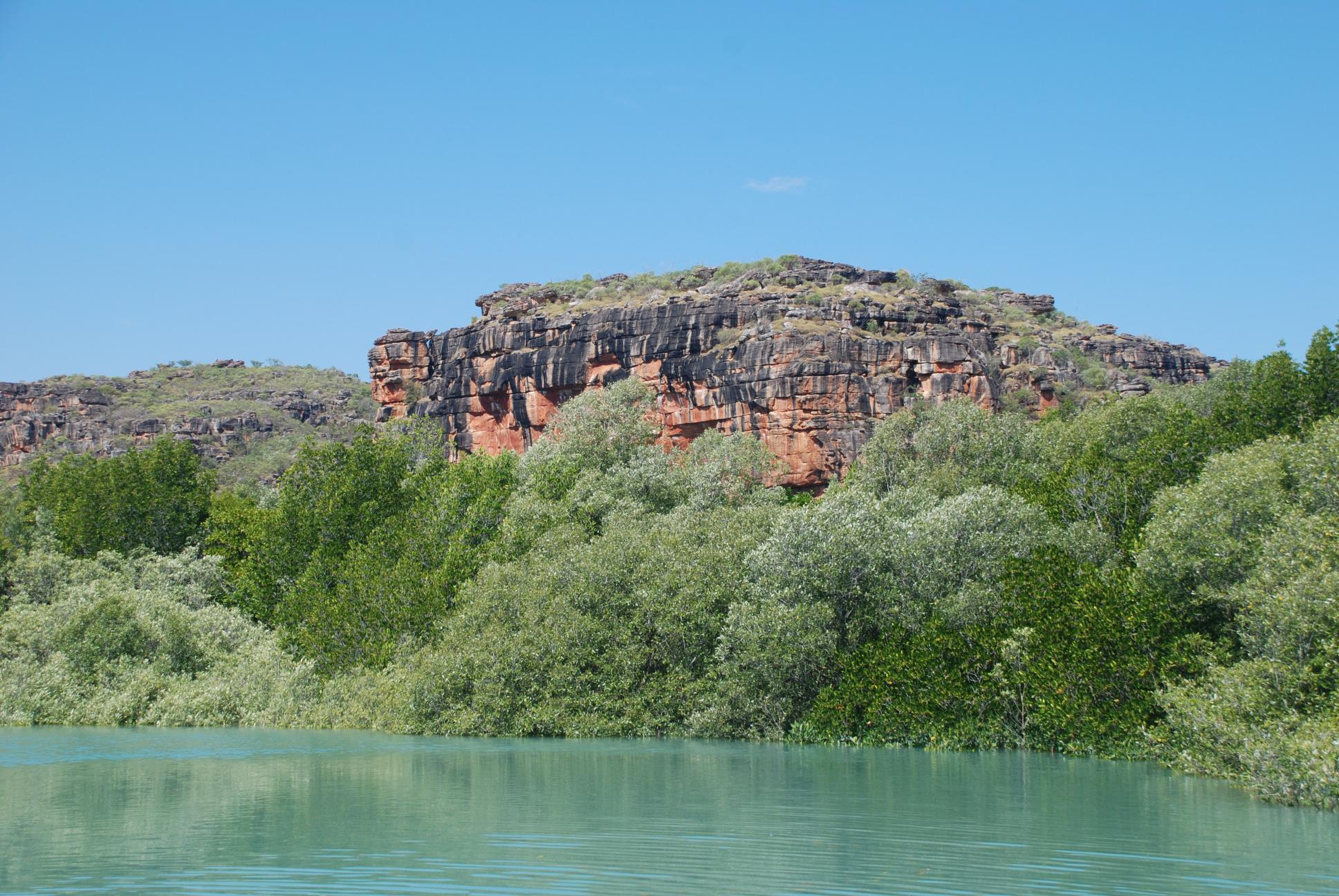
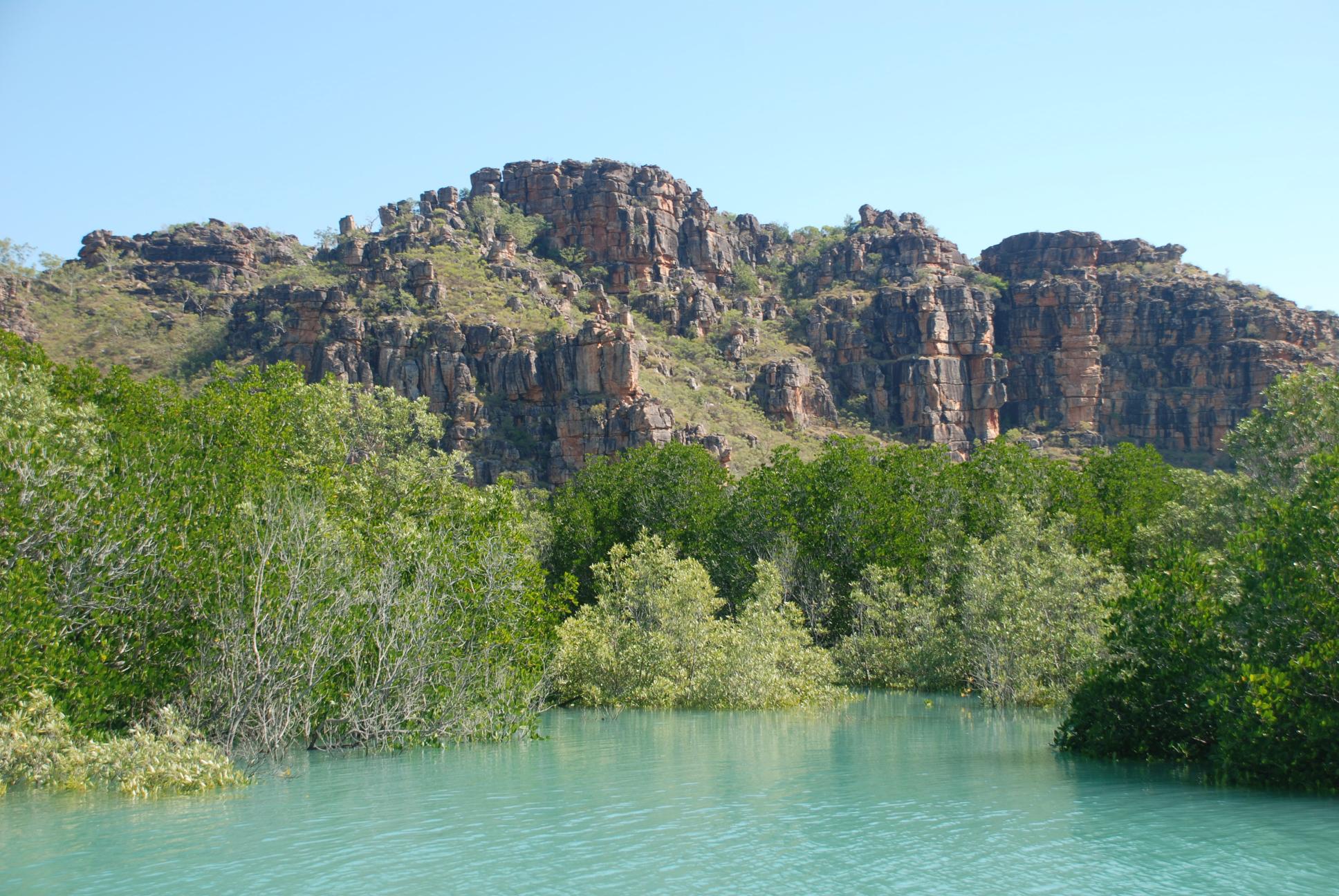

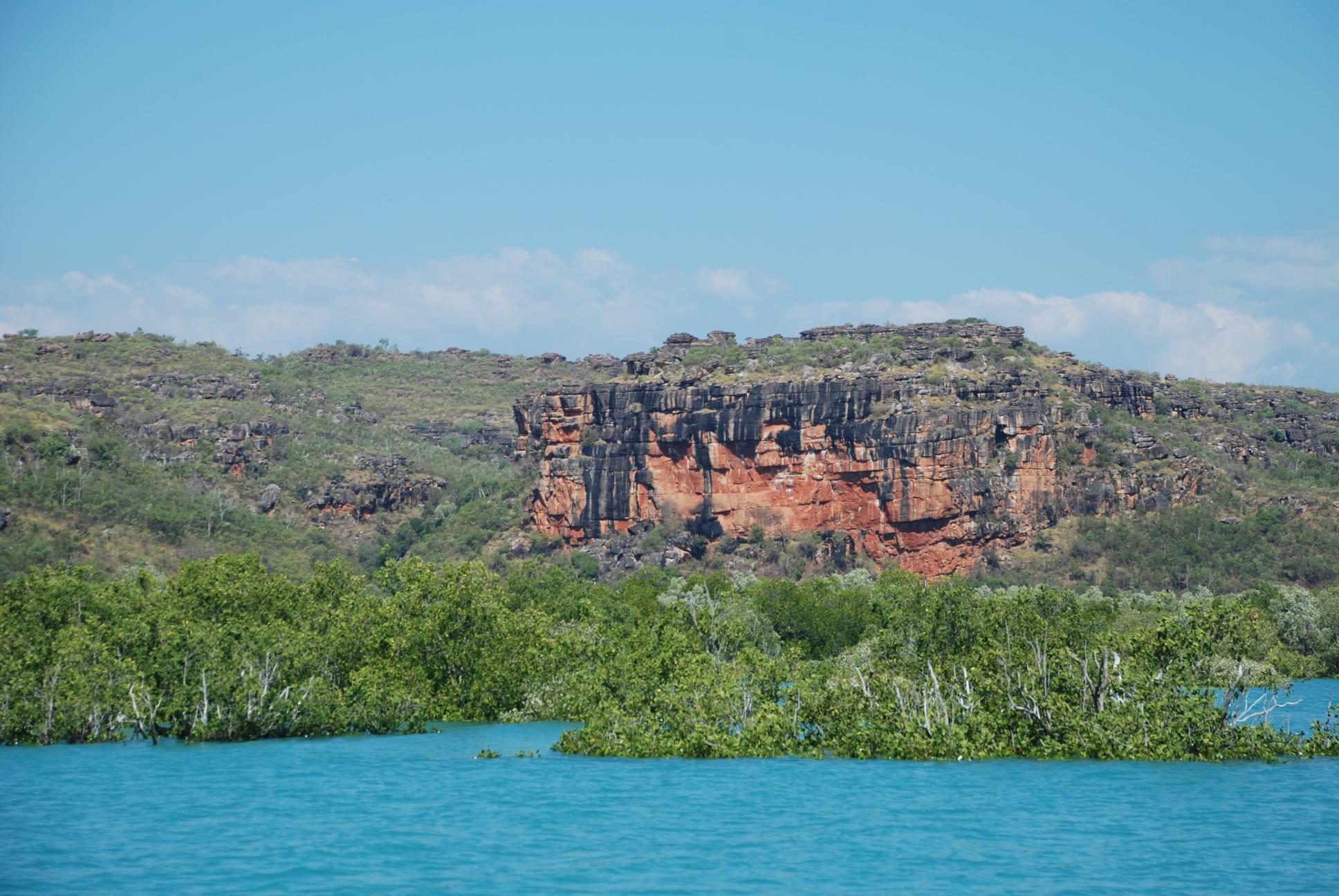
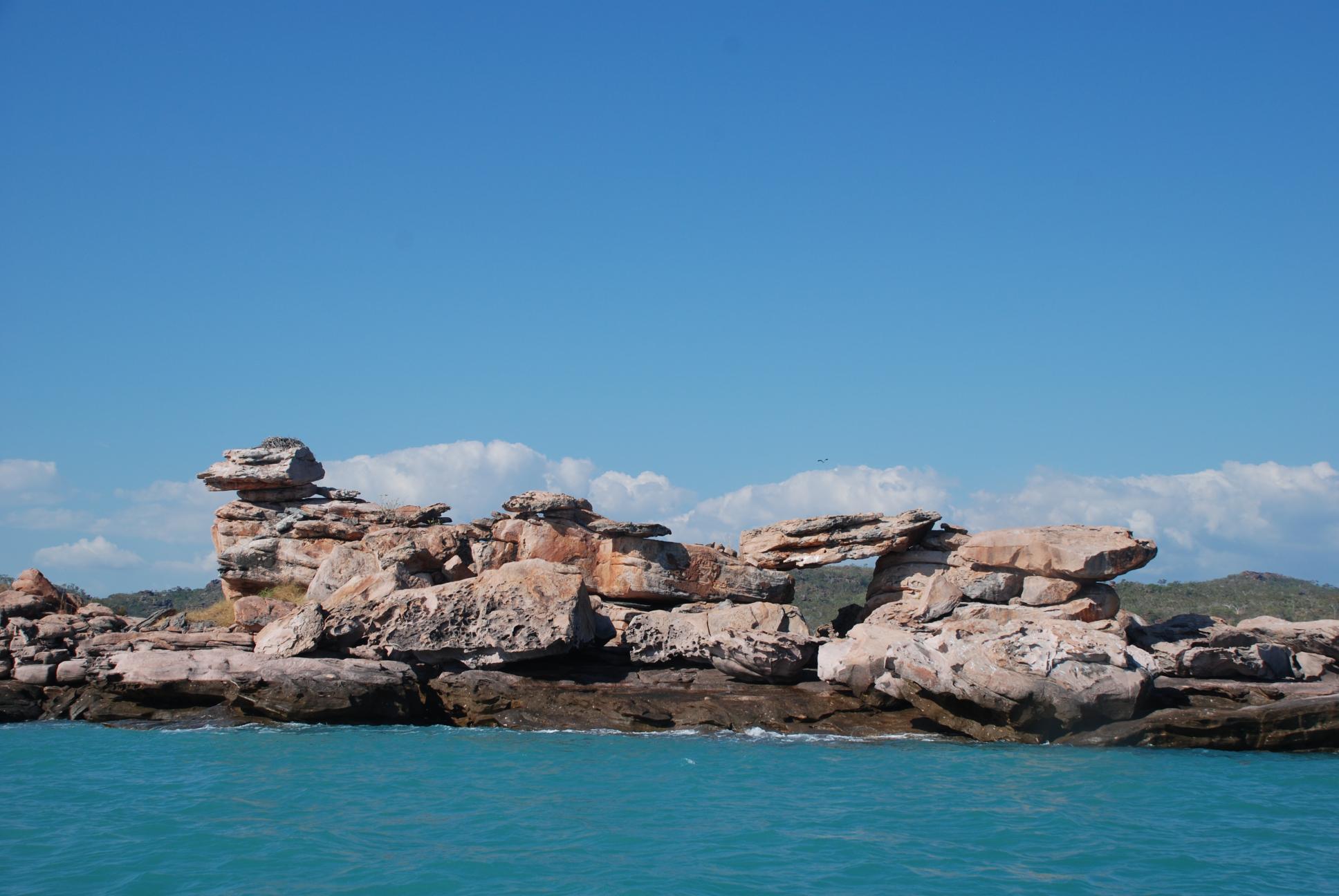
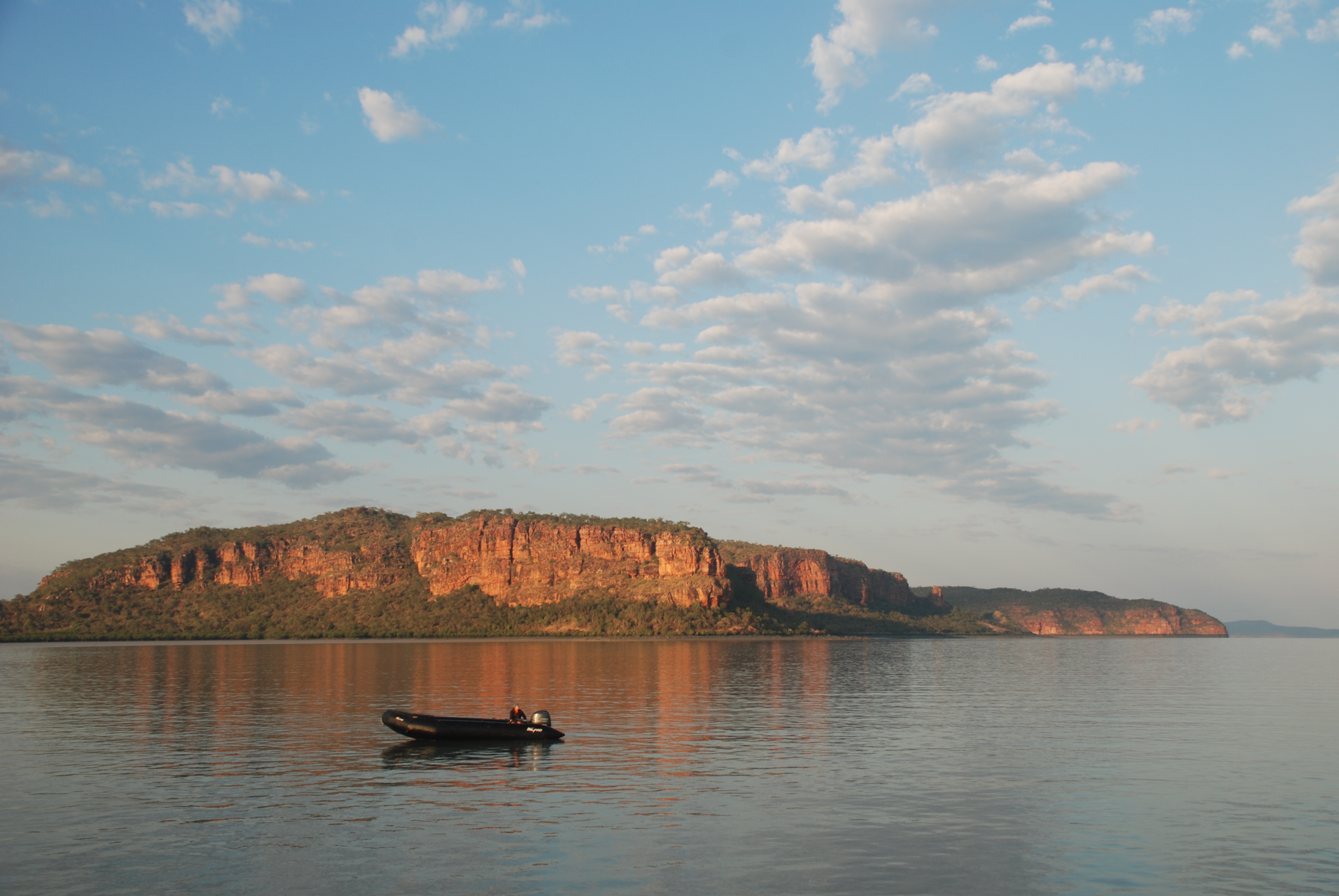
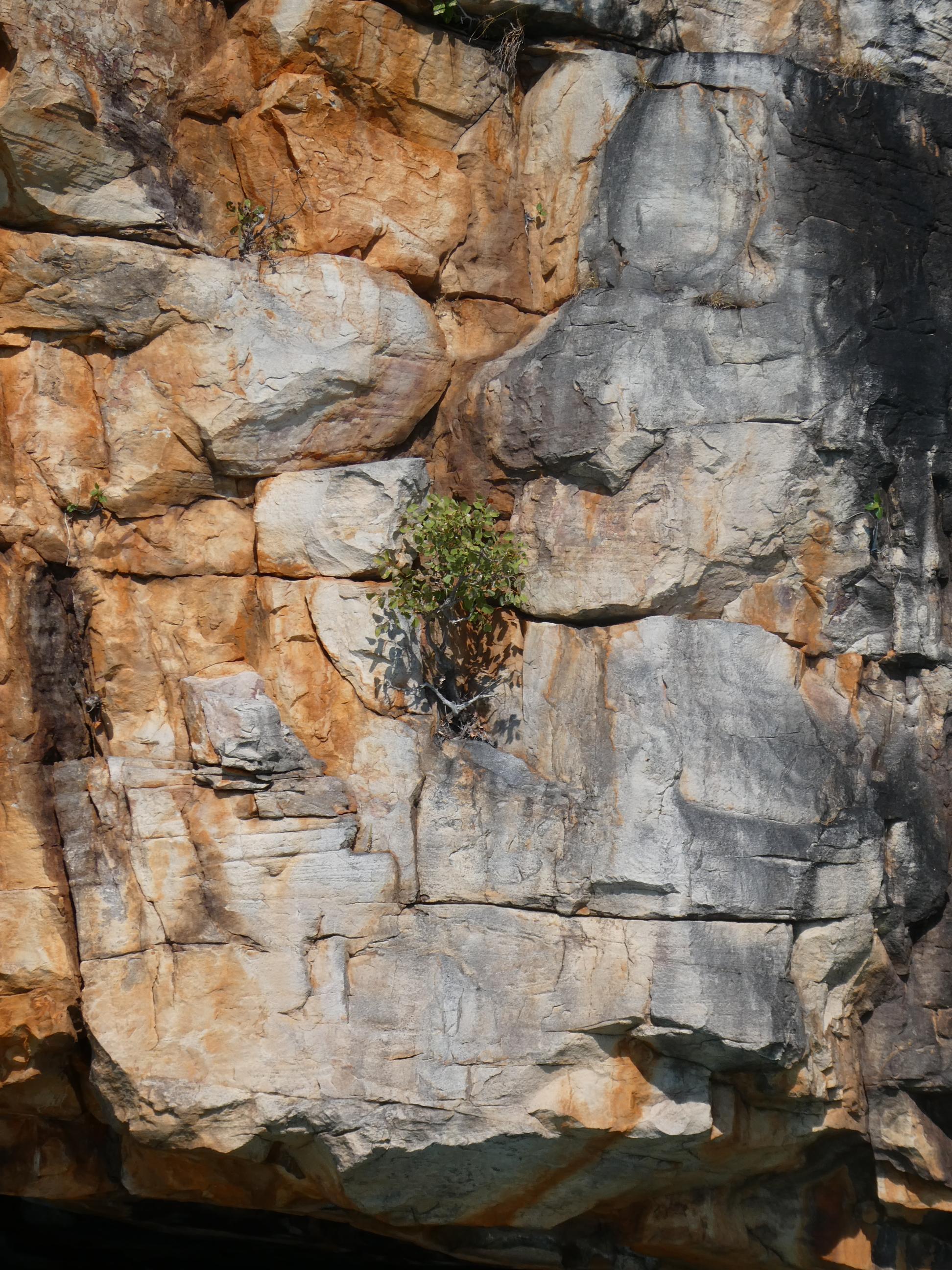
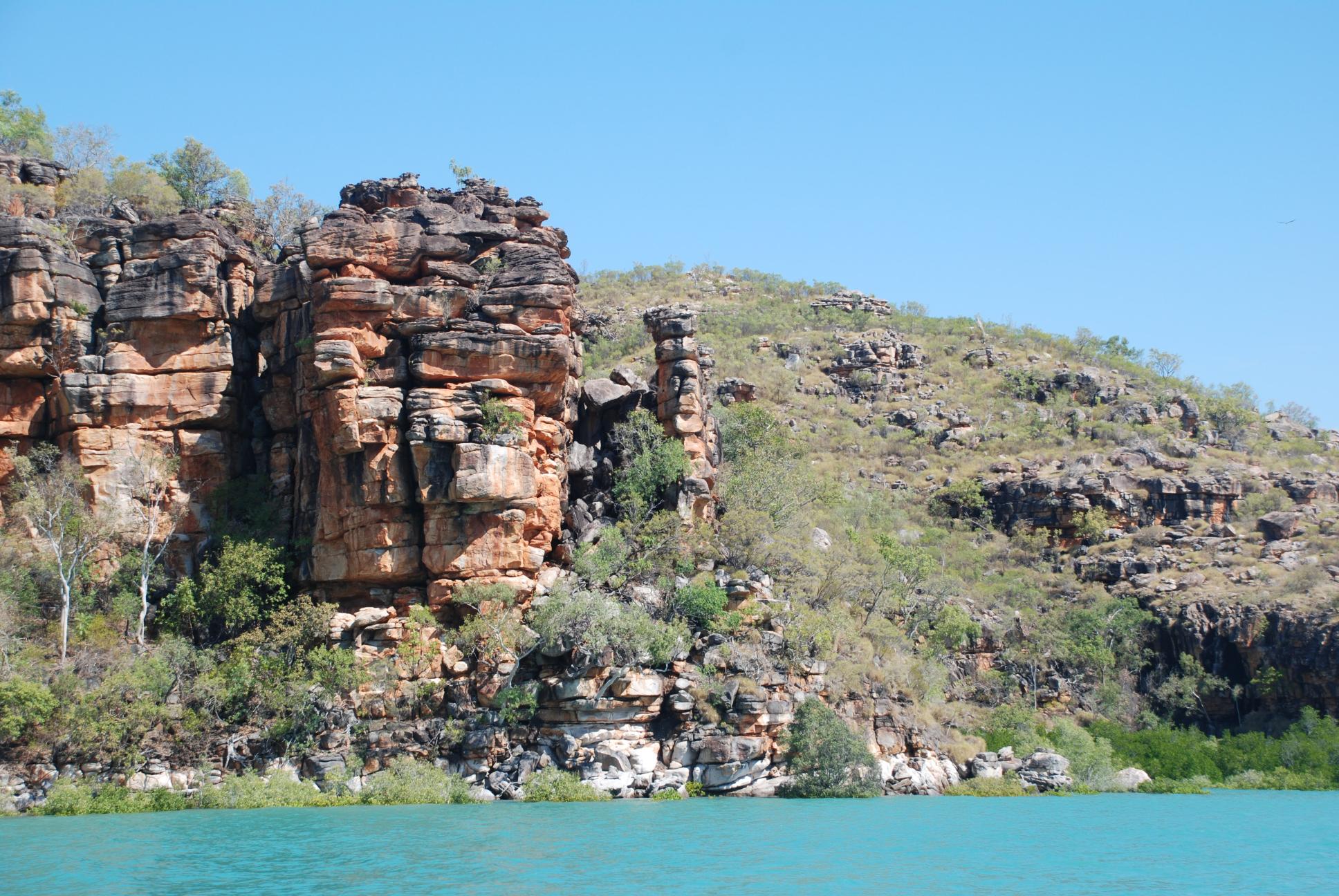
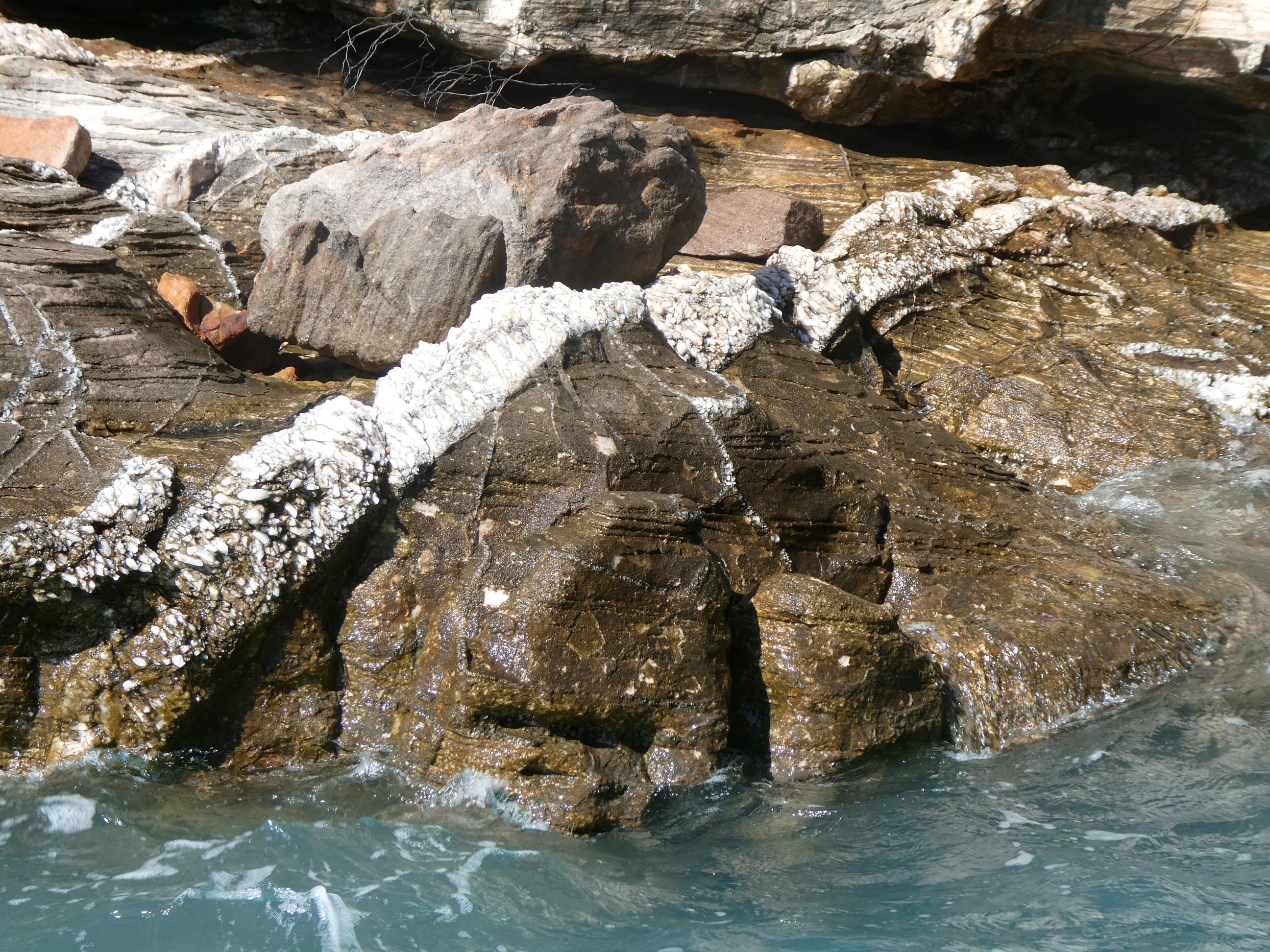
We left the mangroves behind and began our return journey to the cruise ship. Now it was time to turn my gaze once more to the amazing sandstone cliffs along the shore. Our resident geologist, Garry, told us these rocks were created 1.84 million years ago and are identified as King Leopold sandstones. They are some of the oldest rocks on earth. And I’d say they are also some of the most picturesque rocks on earth, especially when contrasted against the striking blue Kimberley sea and sky. Apparently there’s a good deal of quartz distributed throughout these rocks, which means there are both soft and hard parts of the sandstone. The softer parts have been eroded, while the hard parts have stayed in place. An outcome of this is that large overhangs jut out in places where you might expect them to fall and sometimes large boulders are left balancing atop cliffs with very little visible means of support. It really is a breathtaking landscape to behold.
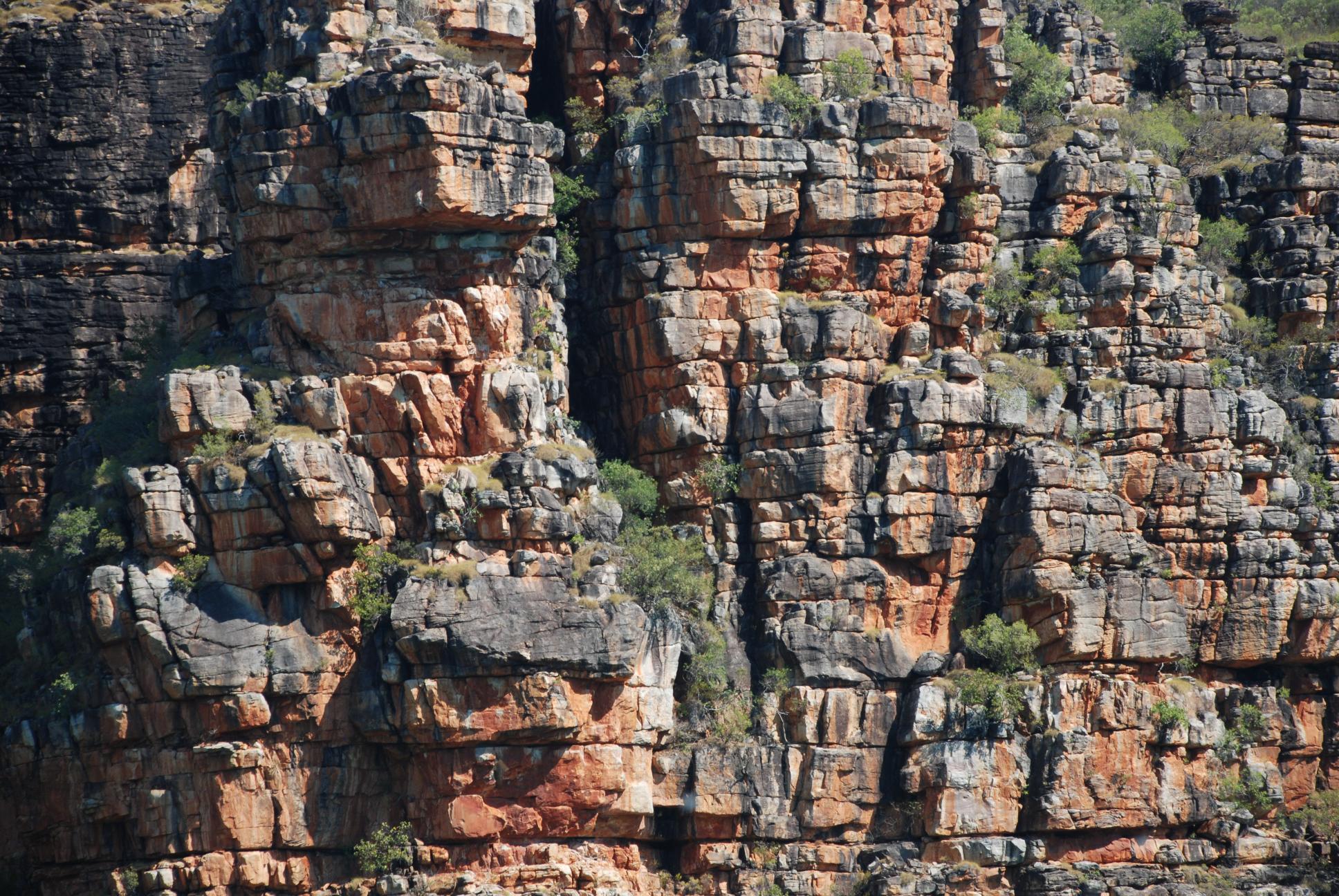
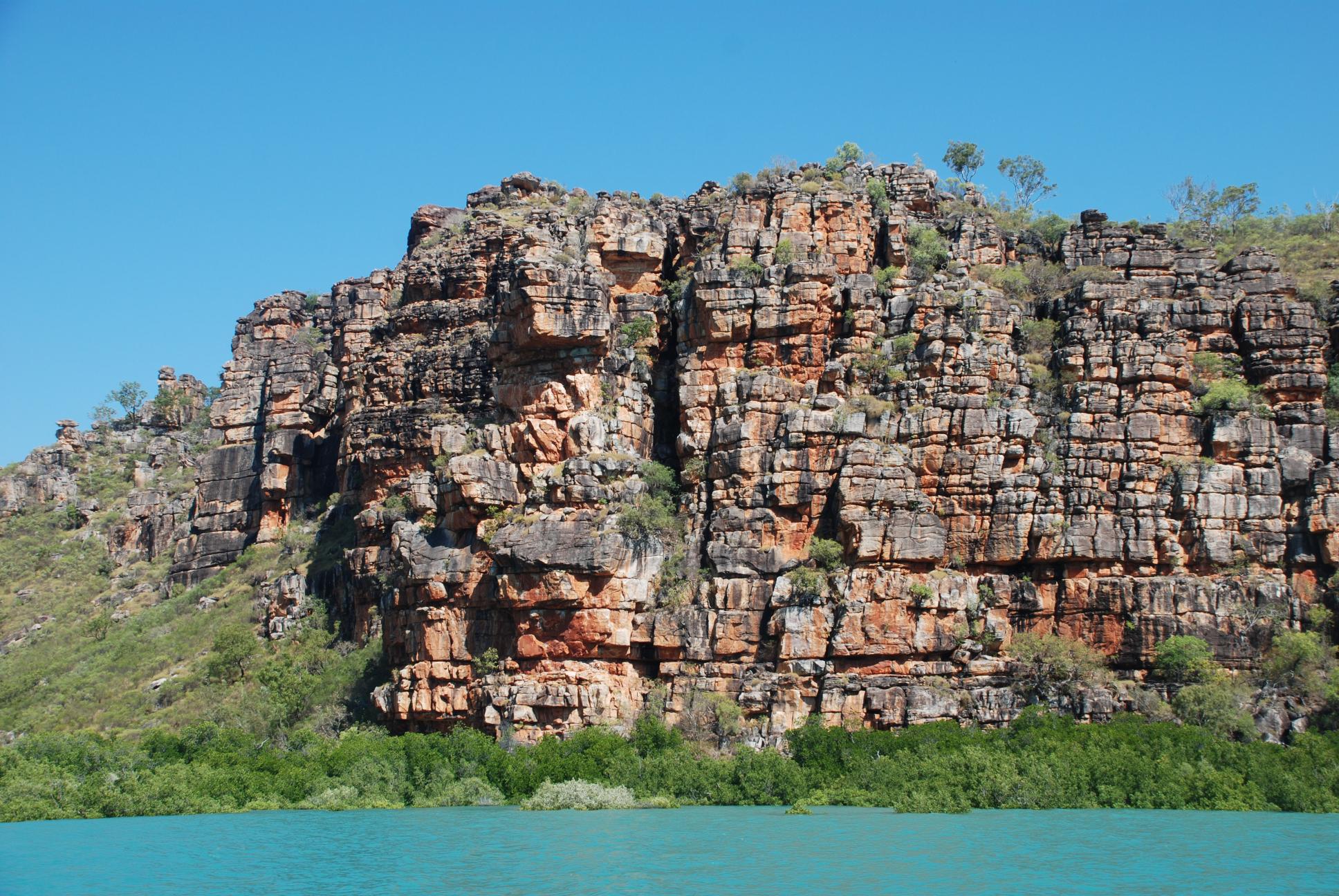
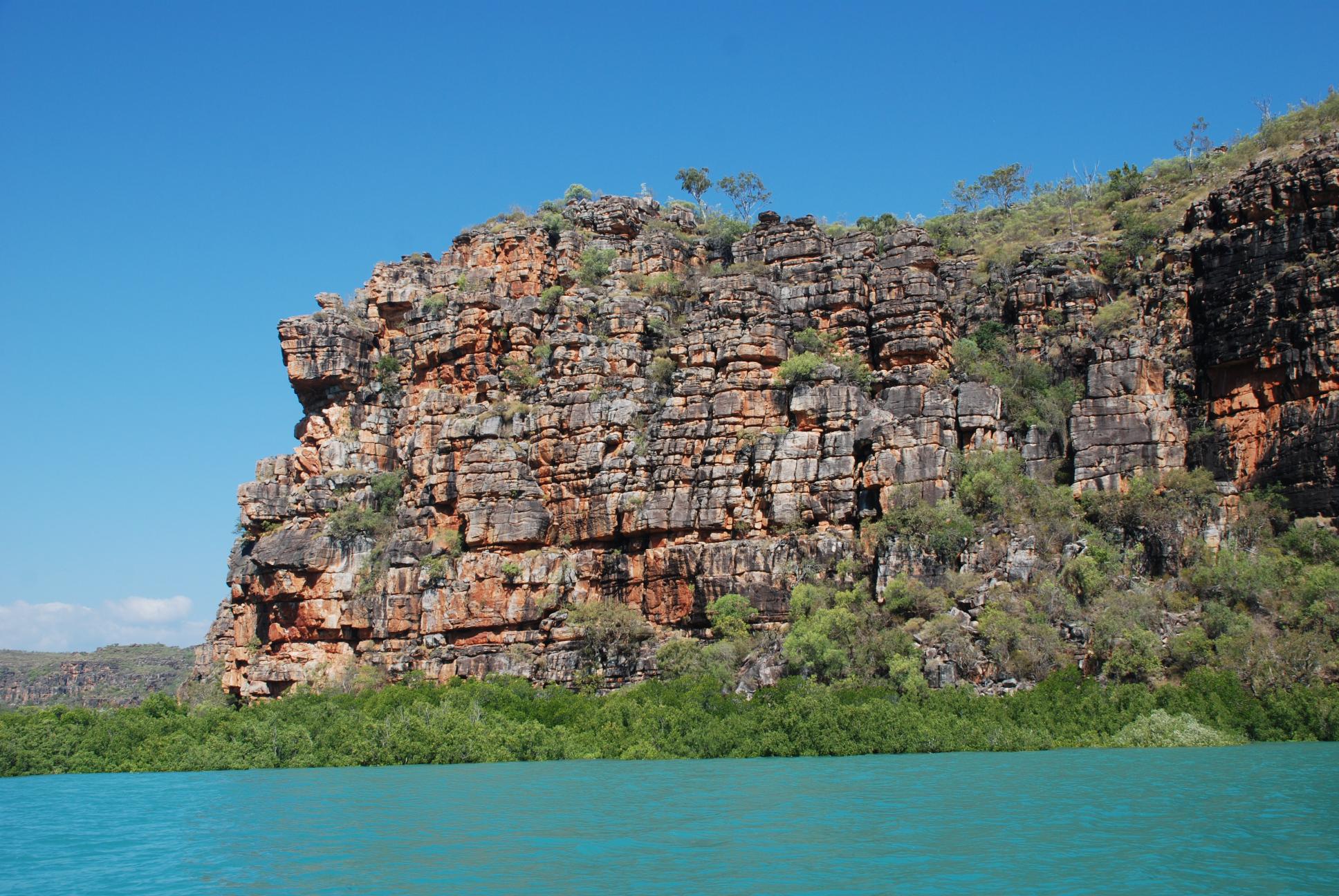
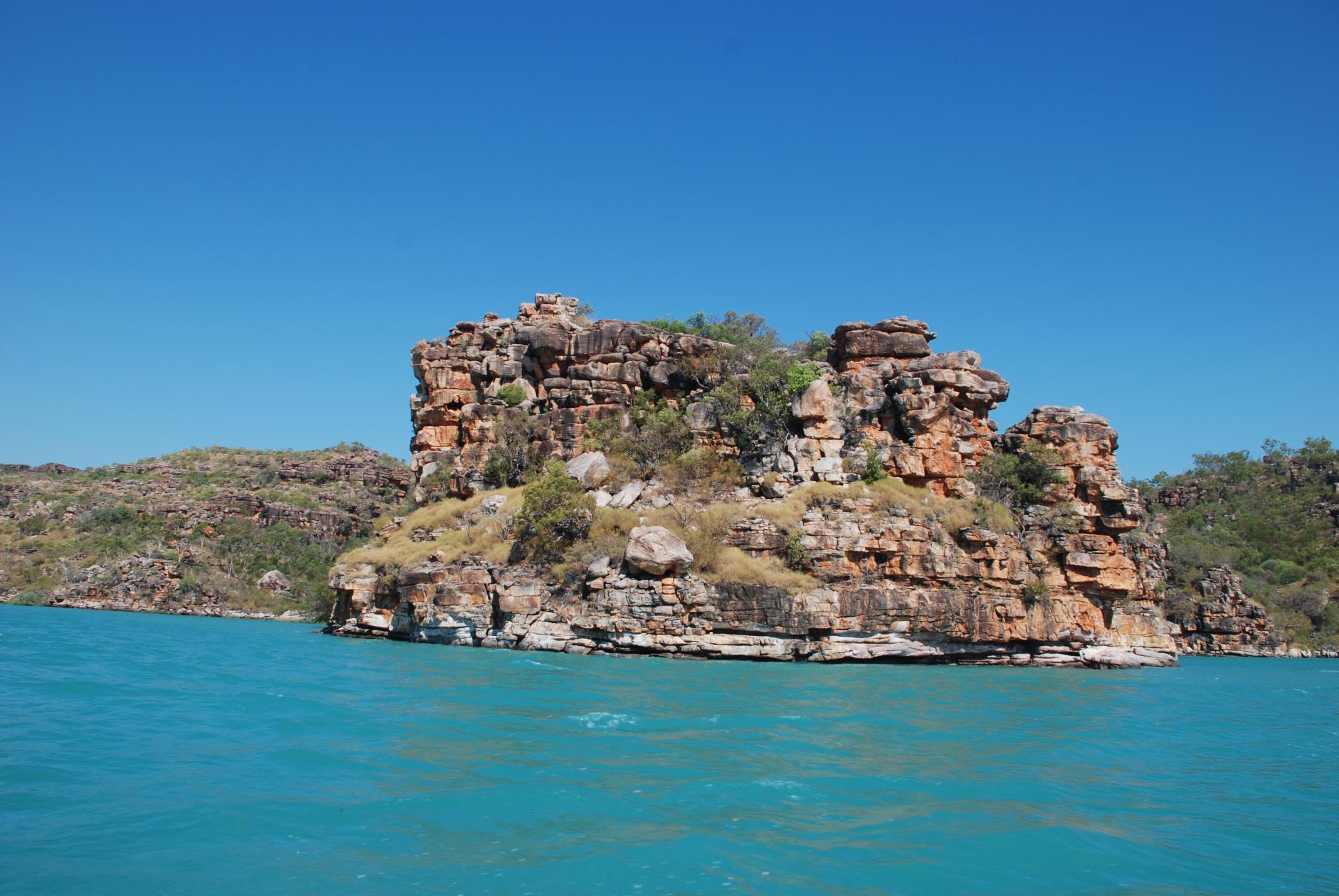
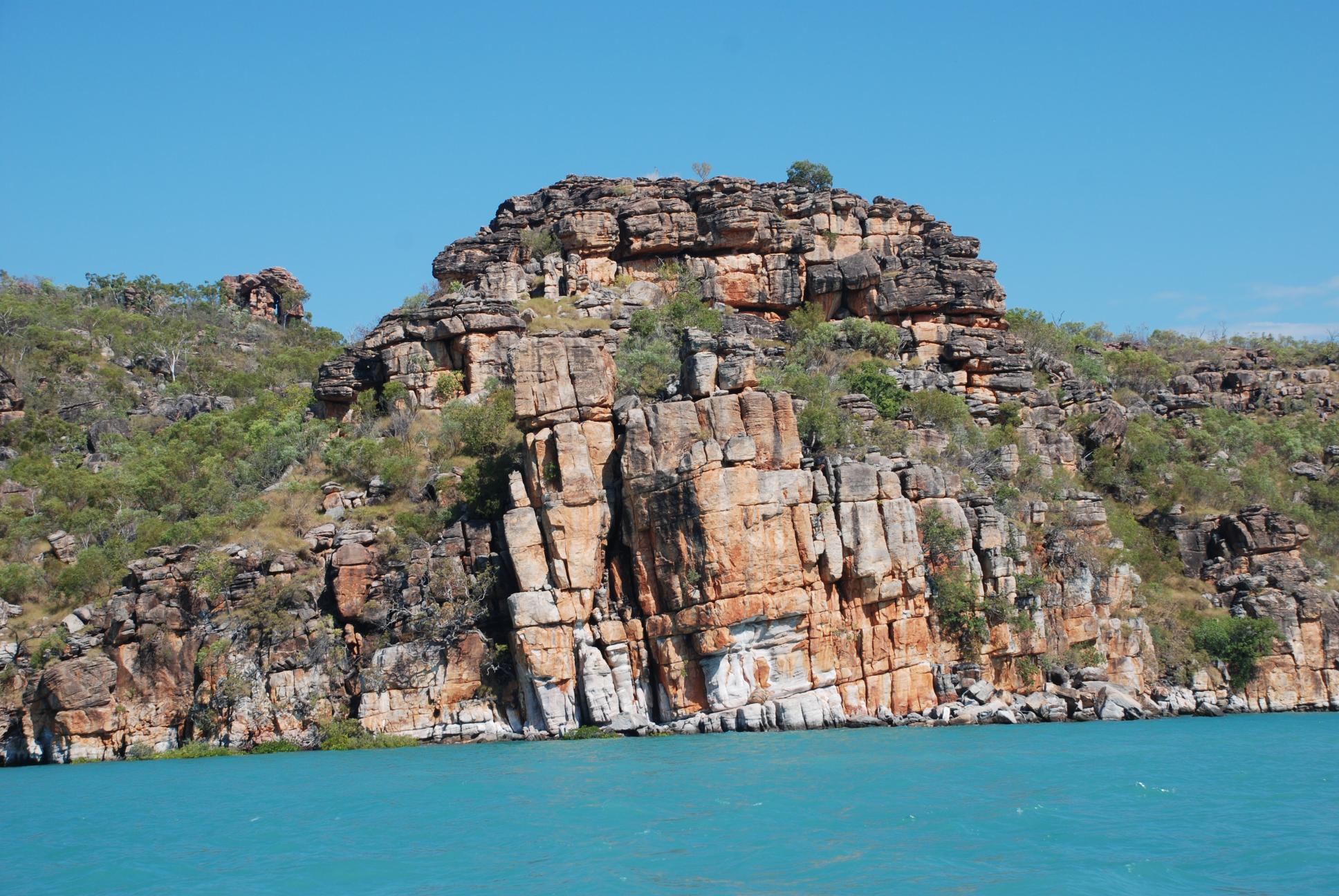
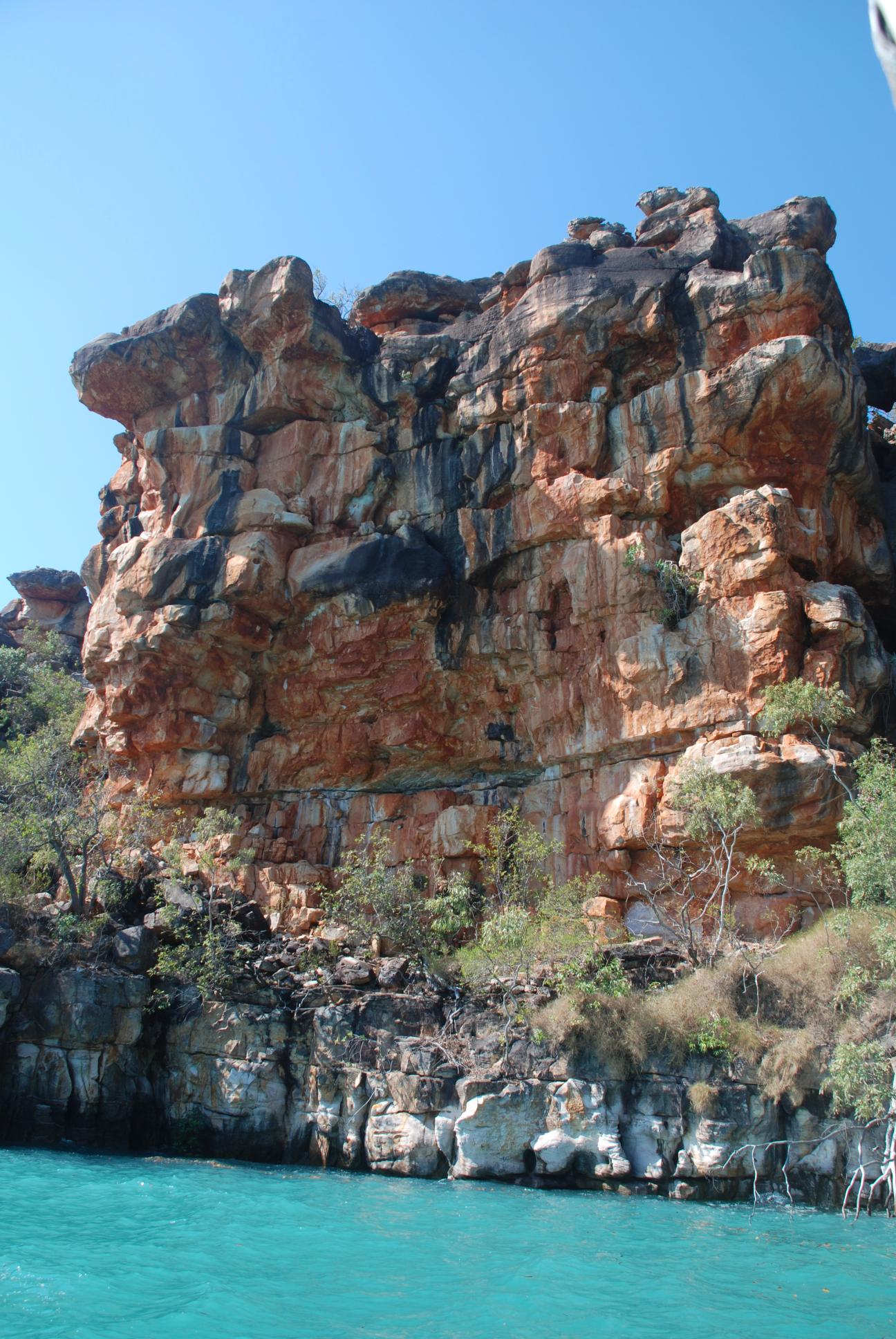
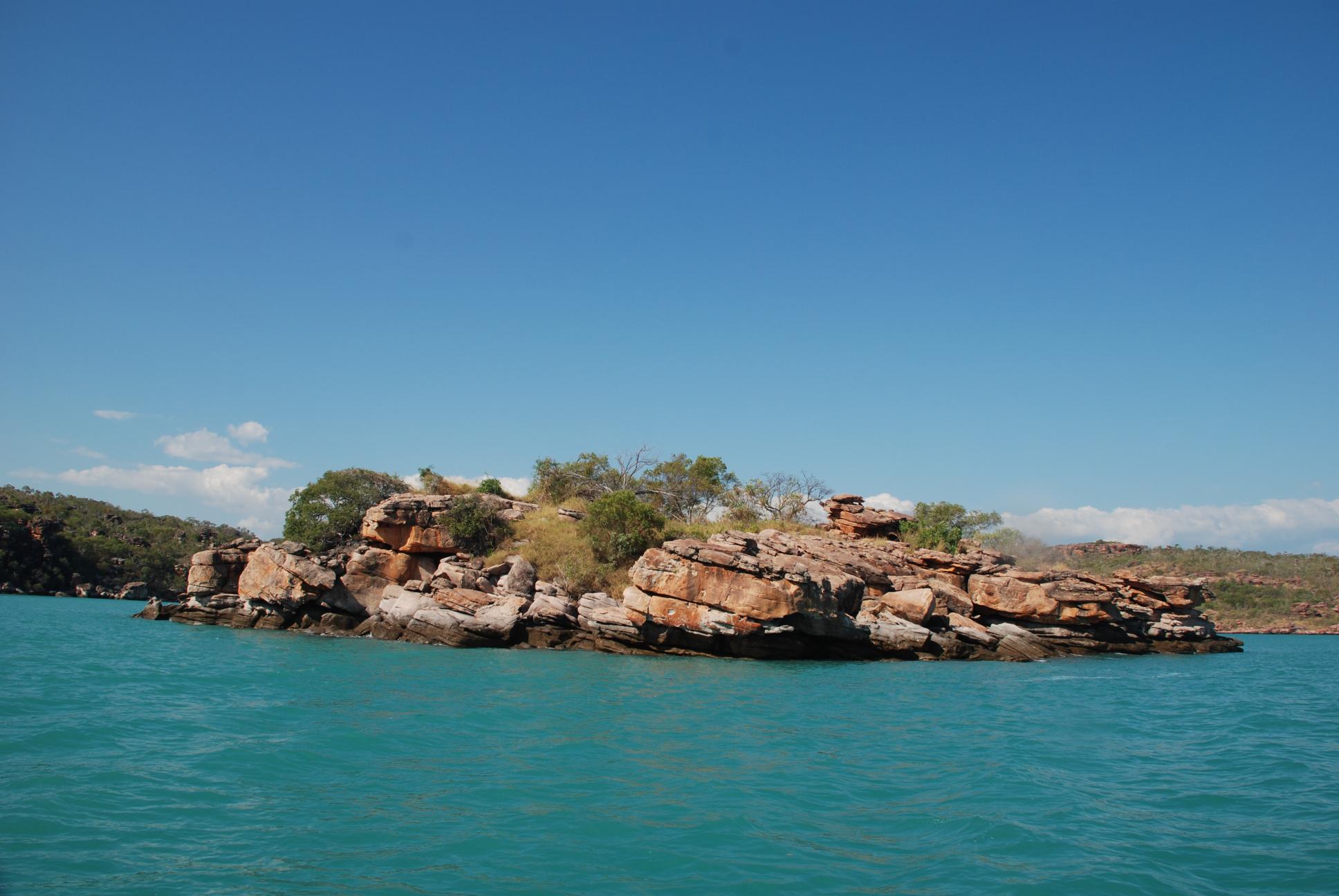
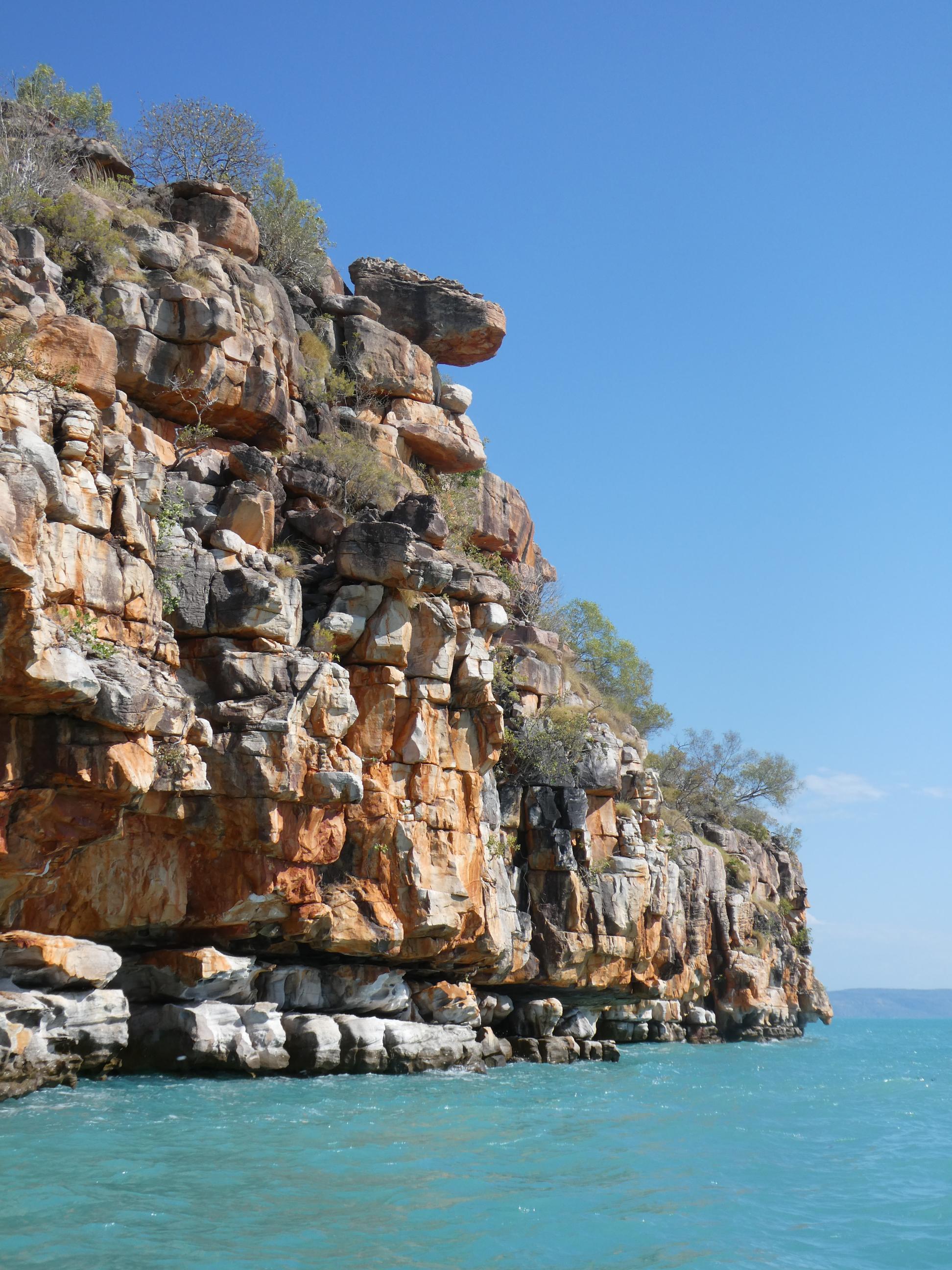
One particular geological feature that defies belief is Thor’s Hammer. It’s a tall vertical sandstone pillar with a very large hammerhead-shaped rock balancing on top. The laws of physics would suggest that it should topple, which it probably will one day. One possible reason why the sandstone pillar is so sturdy is that it is laced with a good deal of quartz, making it resistant to rapid erosion.
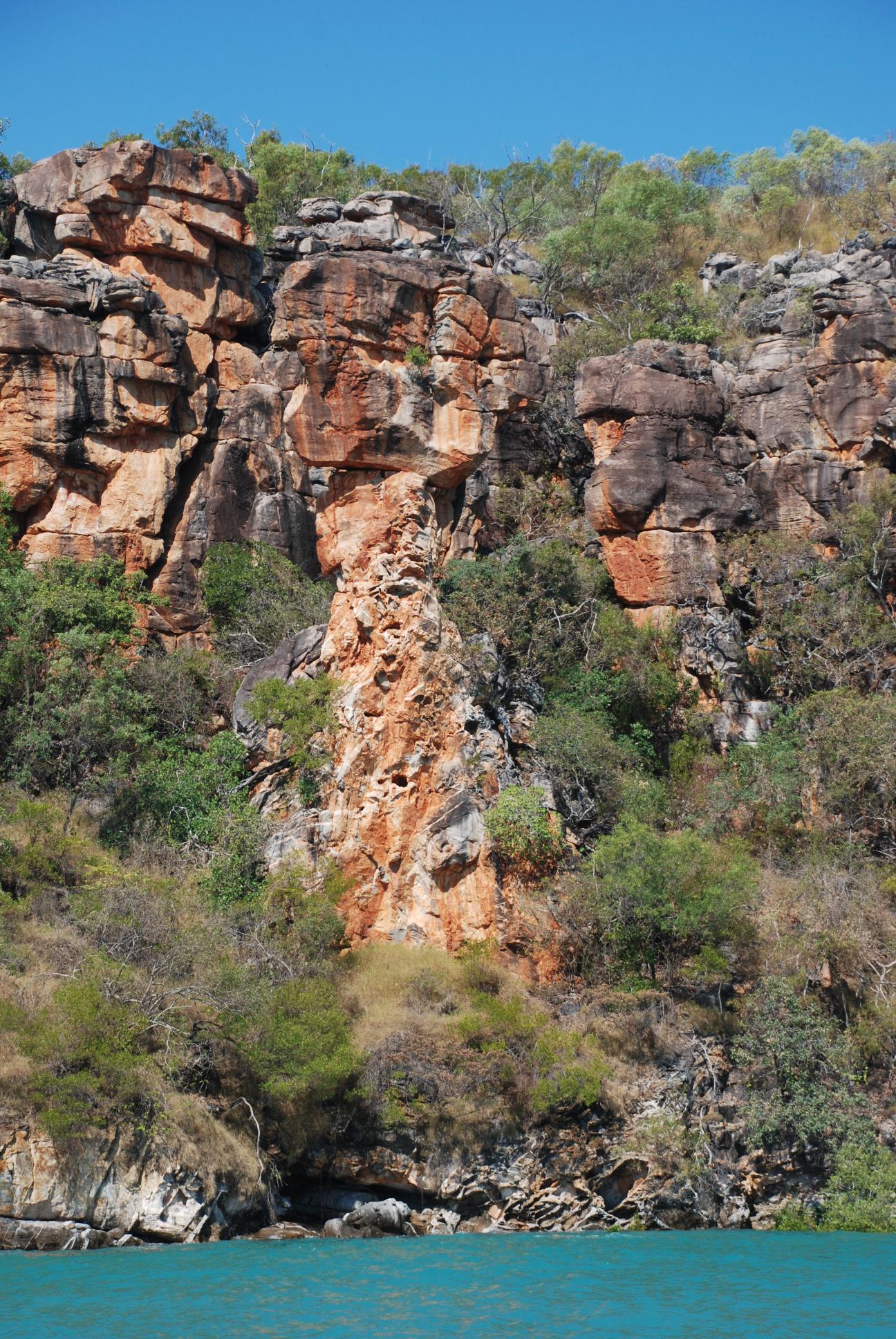
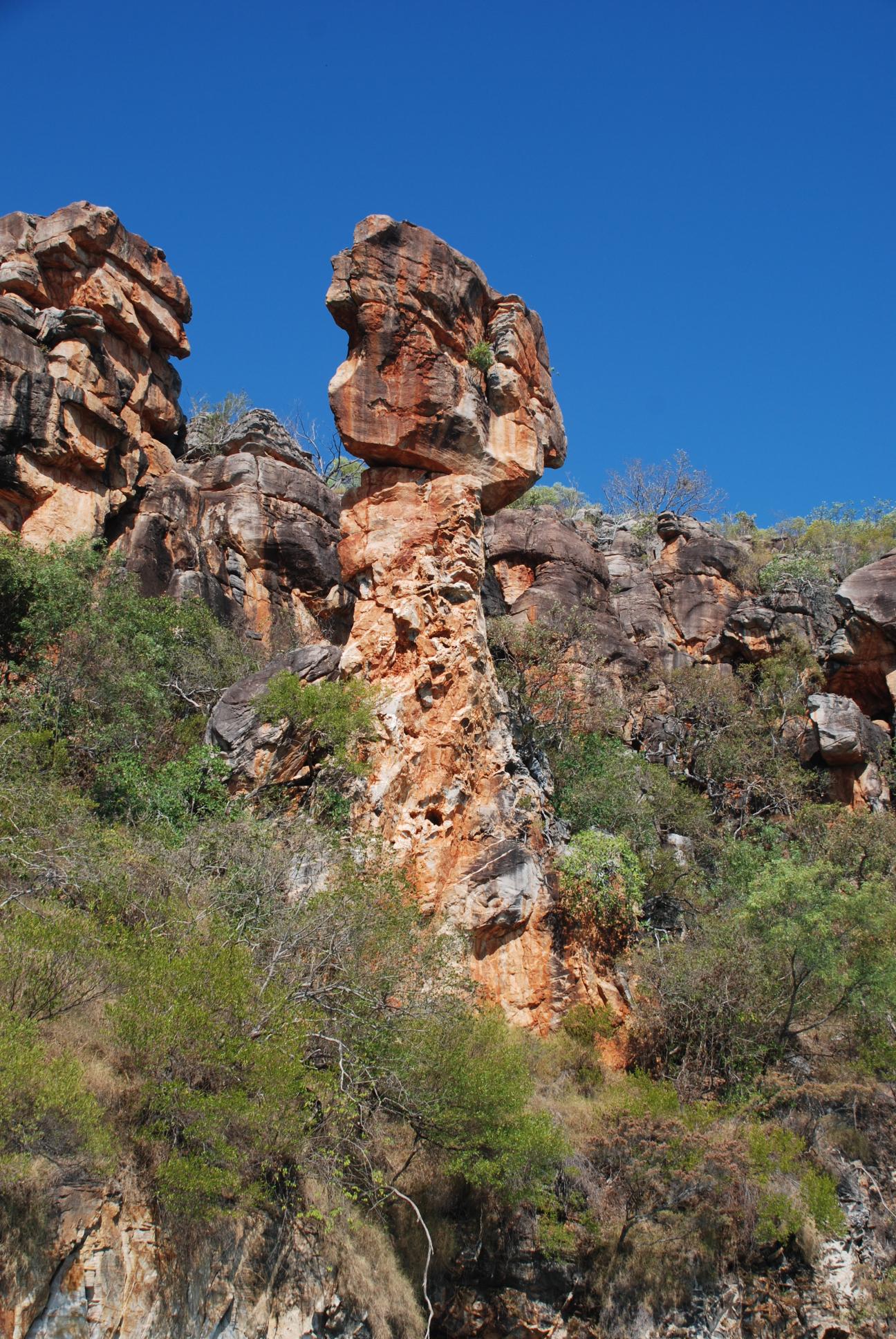
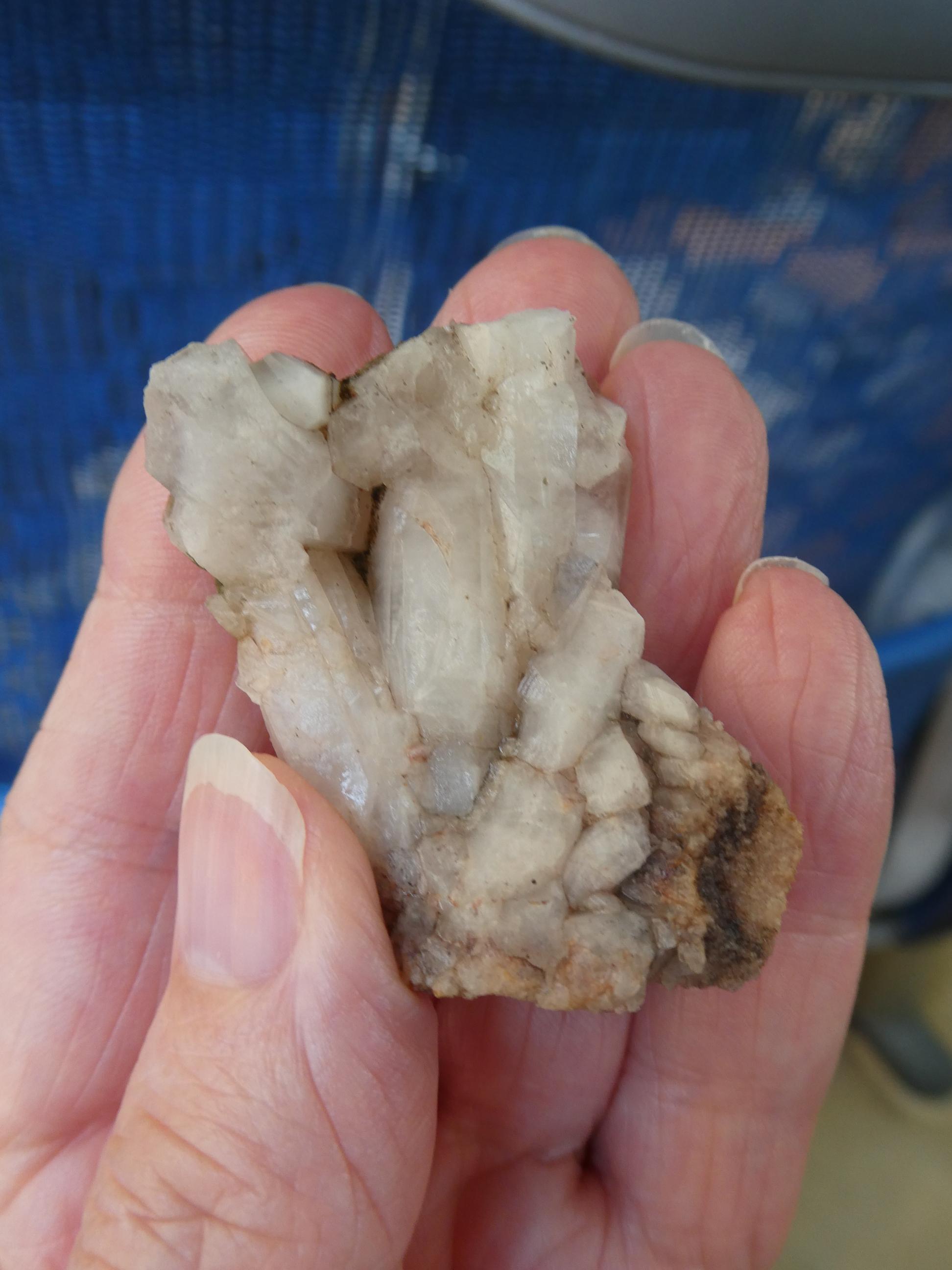
More of the quartz can be found at the waterline directly beneath Thor’s Hammer. It has been under such immense pressure over eons that large translucent crystals have formed.

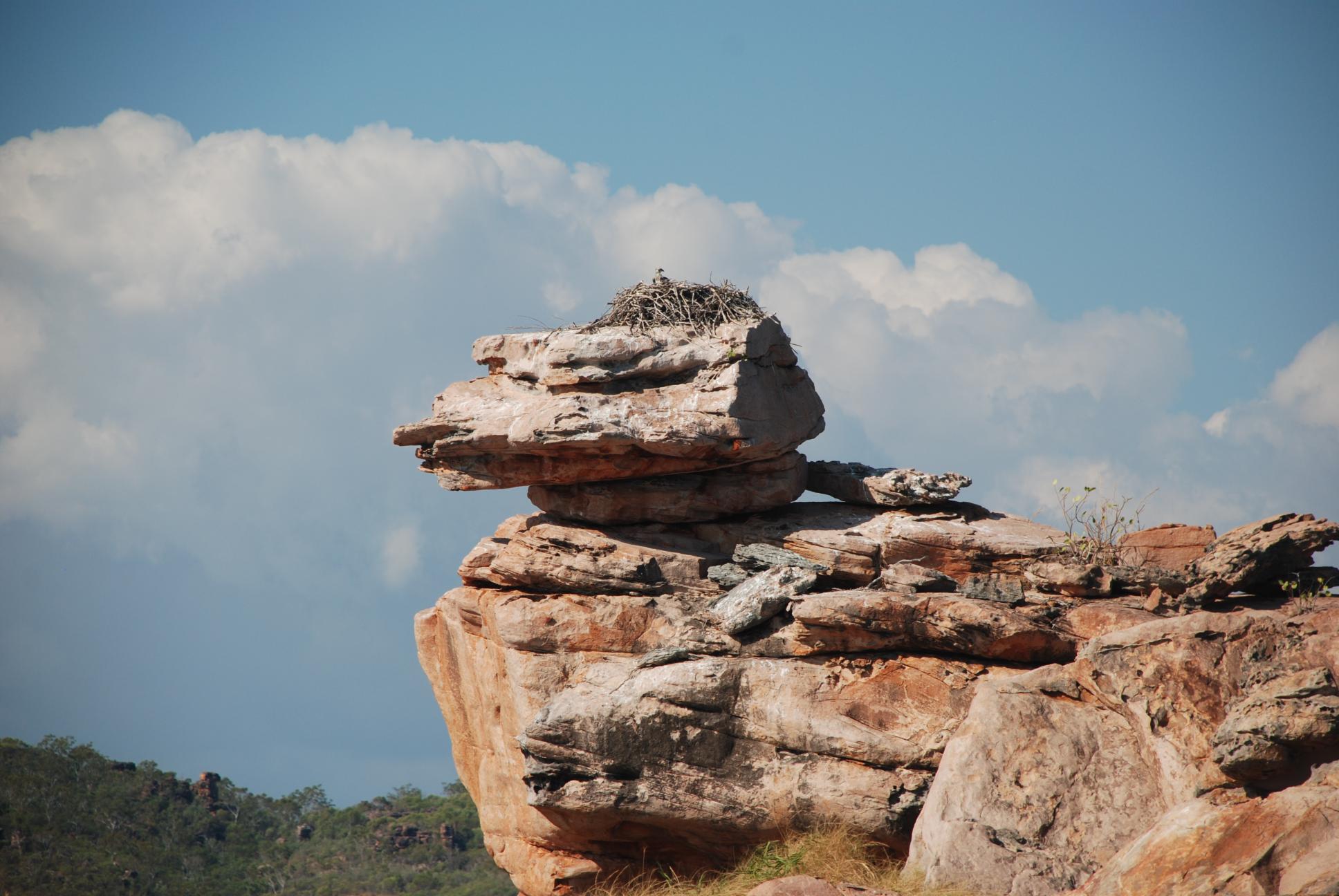
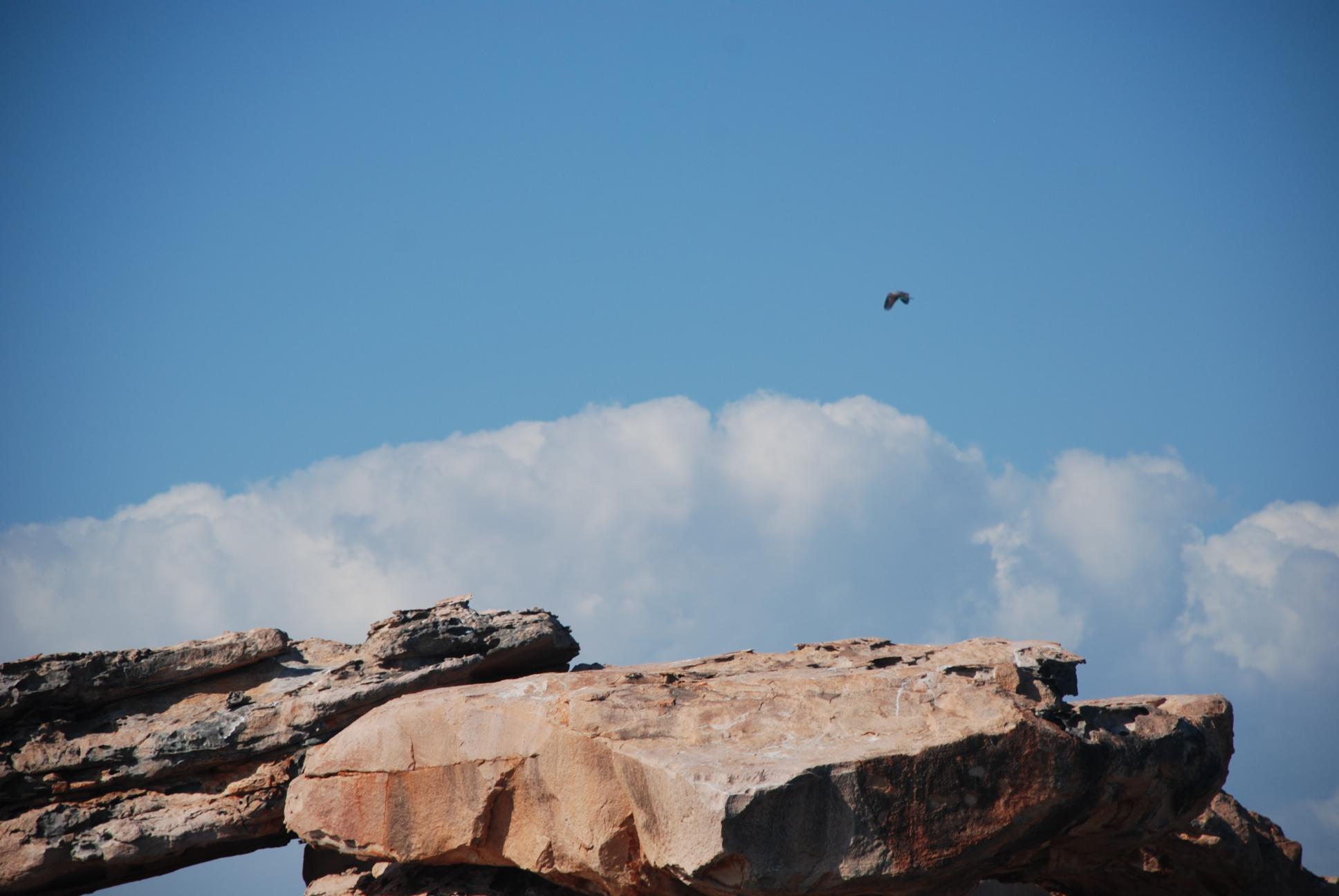
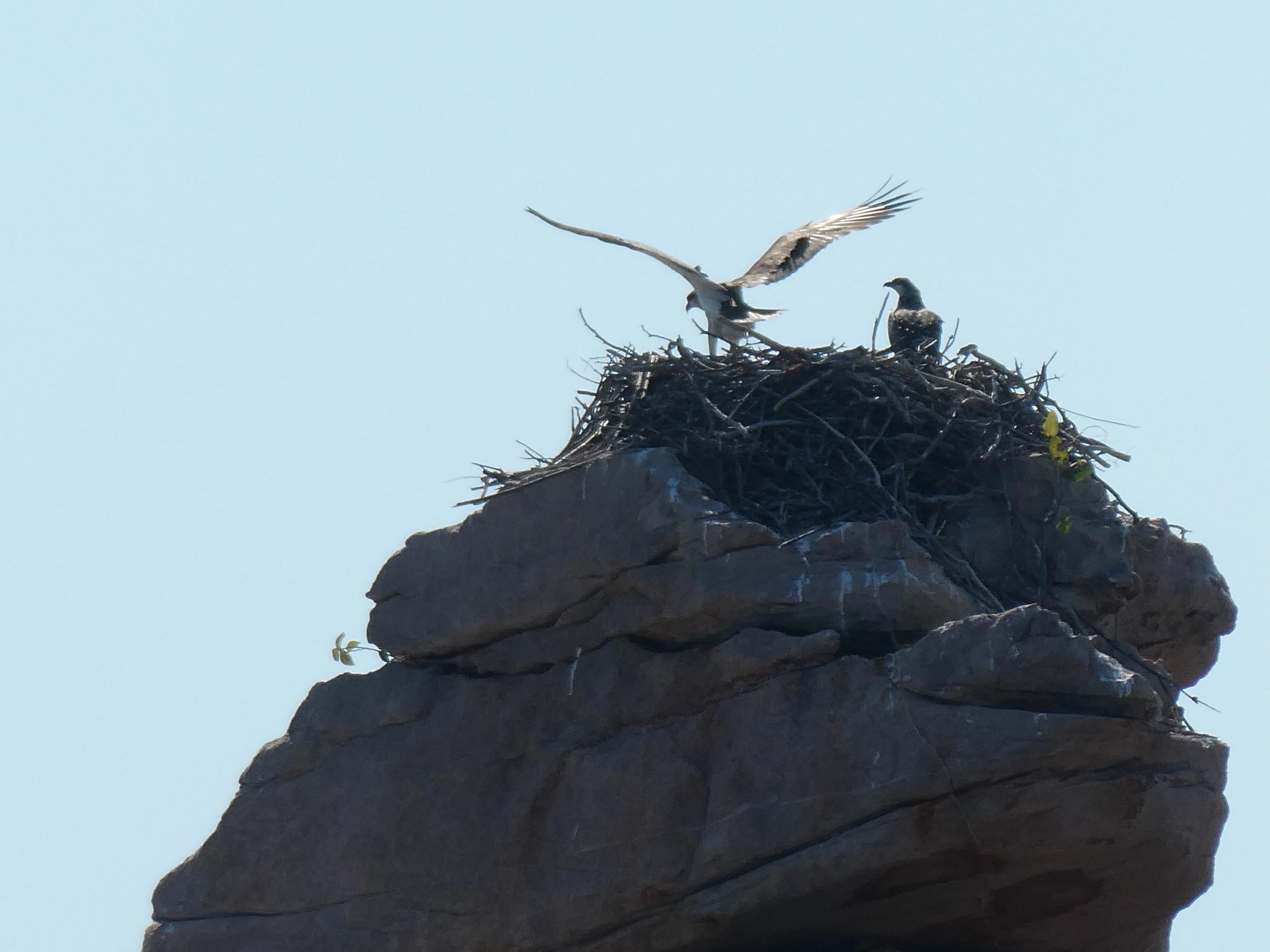
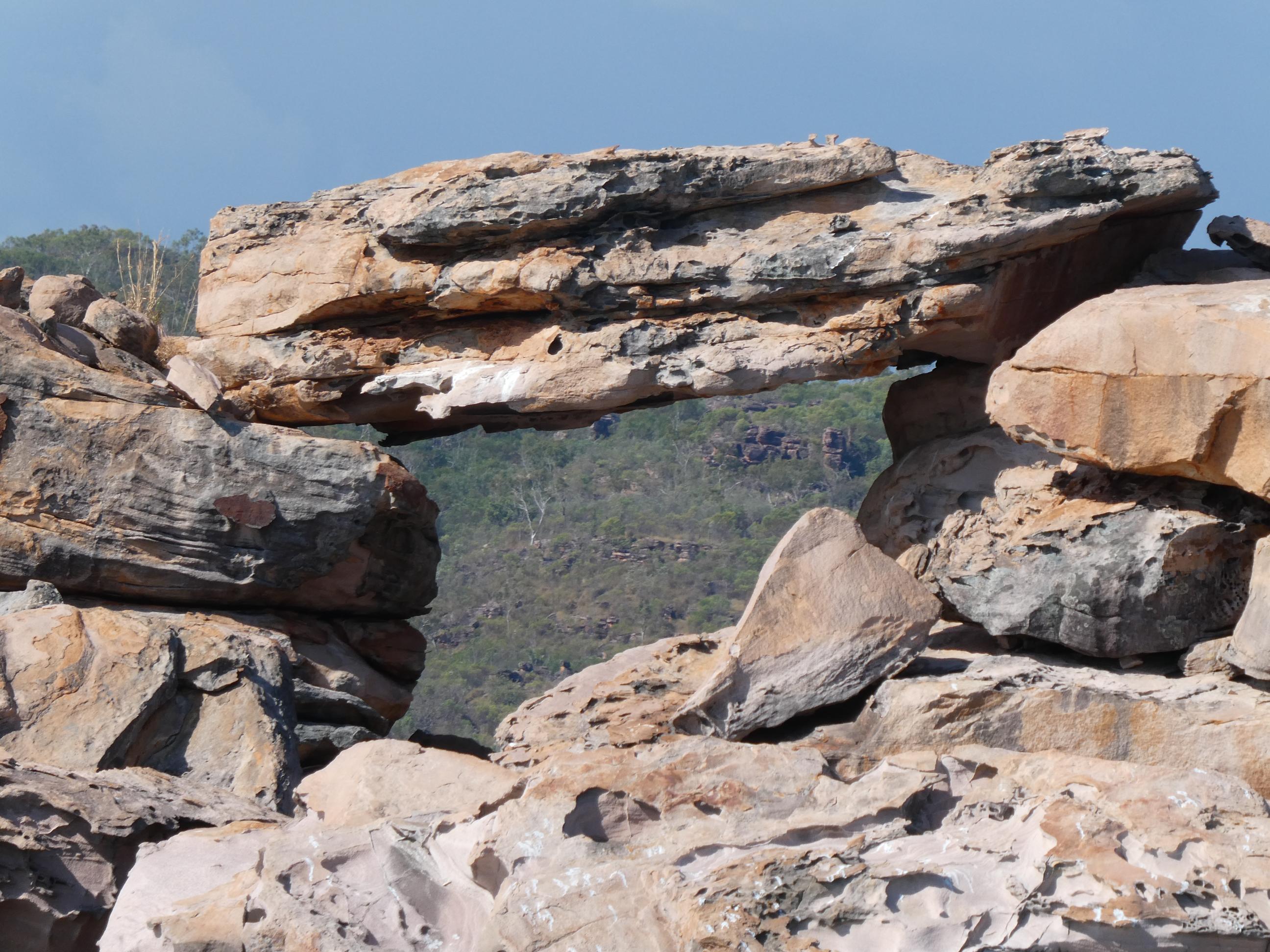
Our final stop on the way back to the boat was at another unusual geological feature, where a collapsed boulder was suspended over a couple of other rocks, forming a natural bridge. As we brought the tender in for a closer look, we soon spotted an osprey’s nest at the other end of the rock formation. That was a highlight. I love seeing the magnificent ospreys of the Kimberley coastline. Their nests are quite spectacular, both in regard to their location and their construction. The birds are so handsome. When they spread their wings to take flight, it’s a thing of beauty, and when they’re sitting on the nest casting a keen eye over their territory they look quite regal. I hope we see a few more before this trip ends.