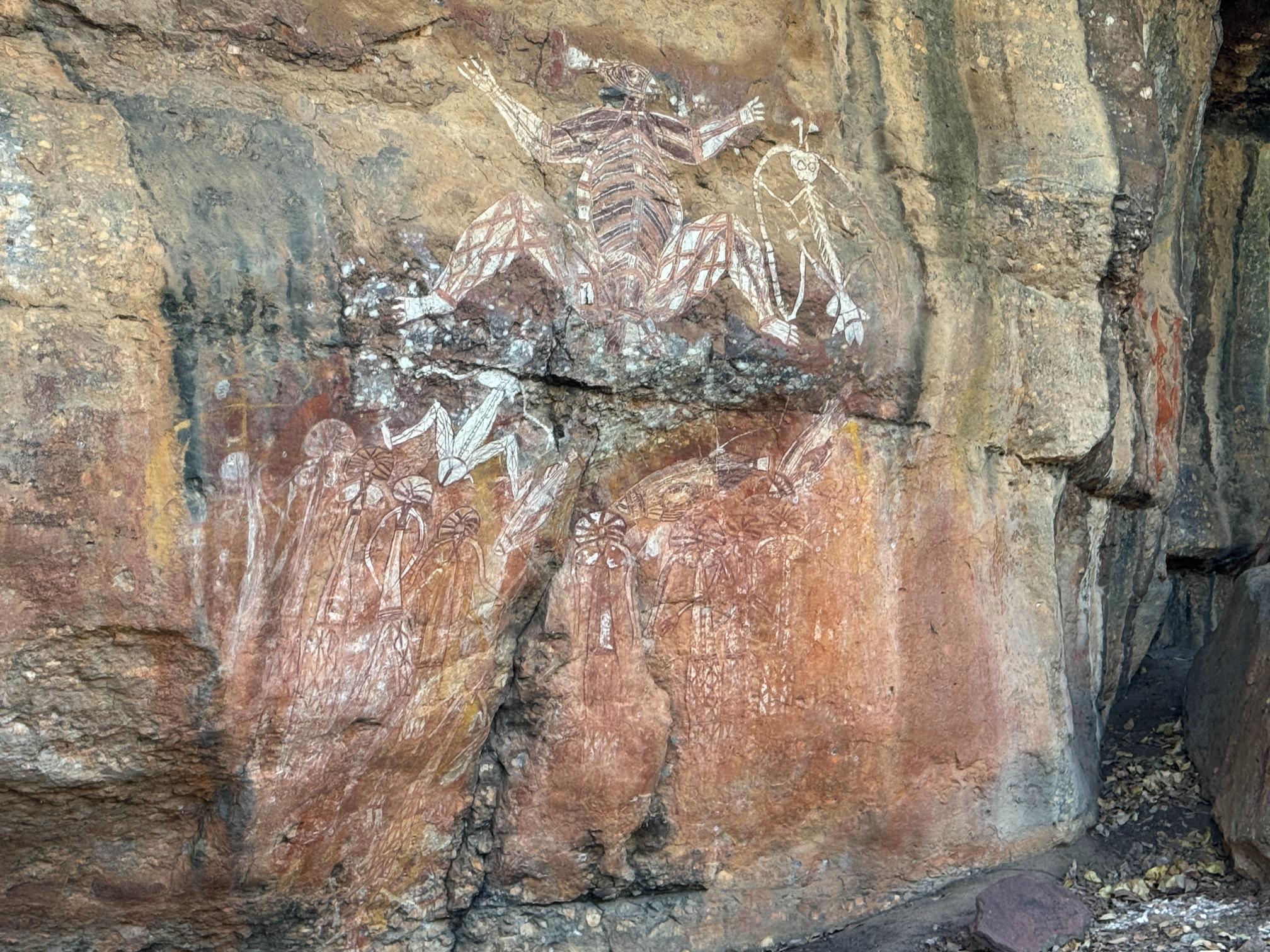
This morning we checked out of our Jabiru hotel and drove south to Burrunguy, formerly known as Nourlangie Rock. Like Ubirr, that we visited two days earlier, Burrunguy also lies within the boundaries of Kakadu National Park. The entire national park is included on UNESCO’s World Heritage register due to both the uniqueness of its natural environment and the cultural significance of the indigenous rock art sites it contains. Burrunguy is one of those very important rock art sites.
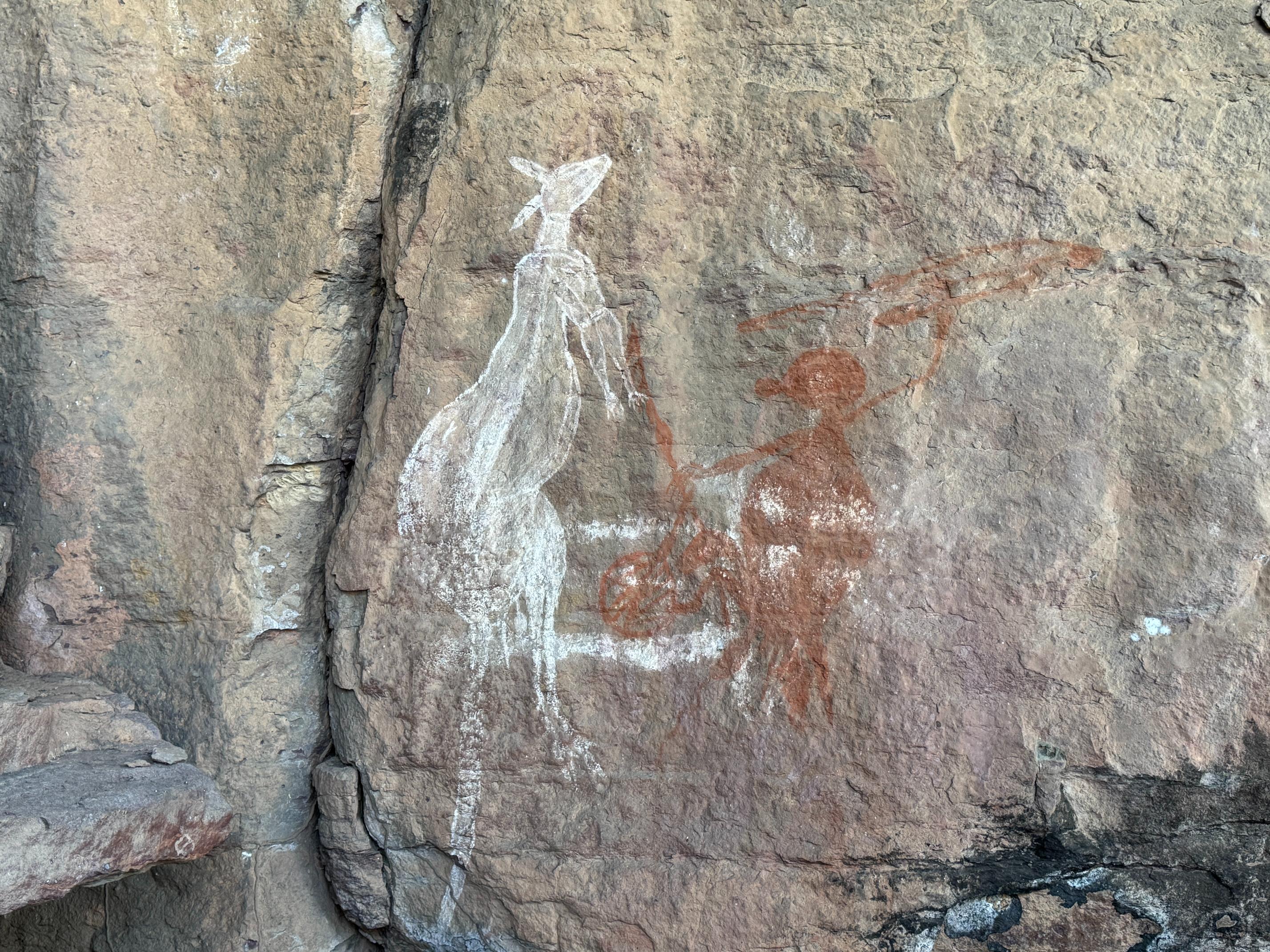
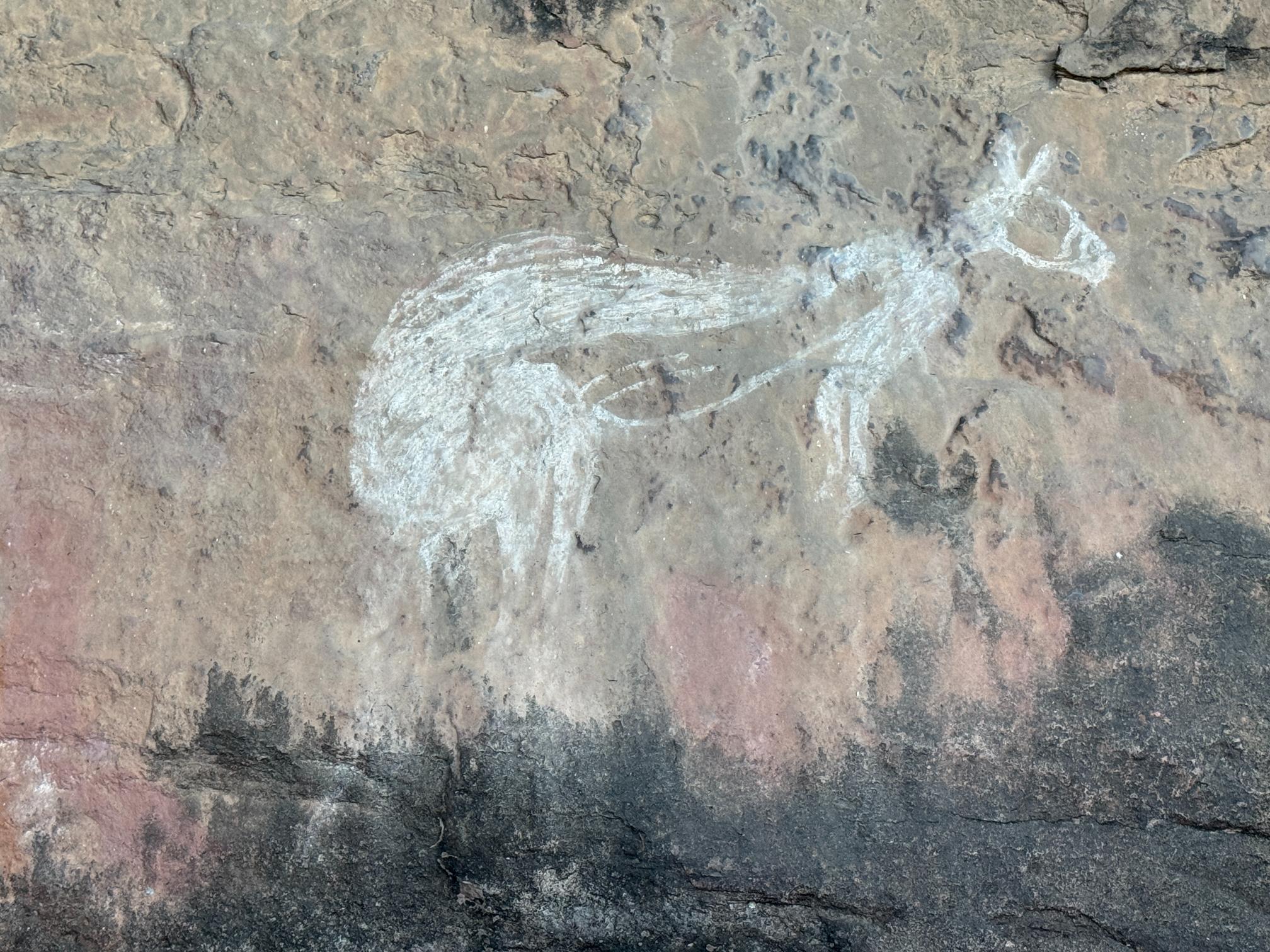
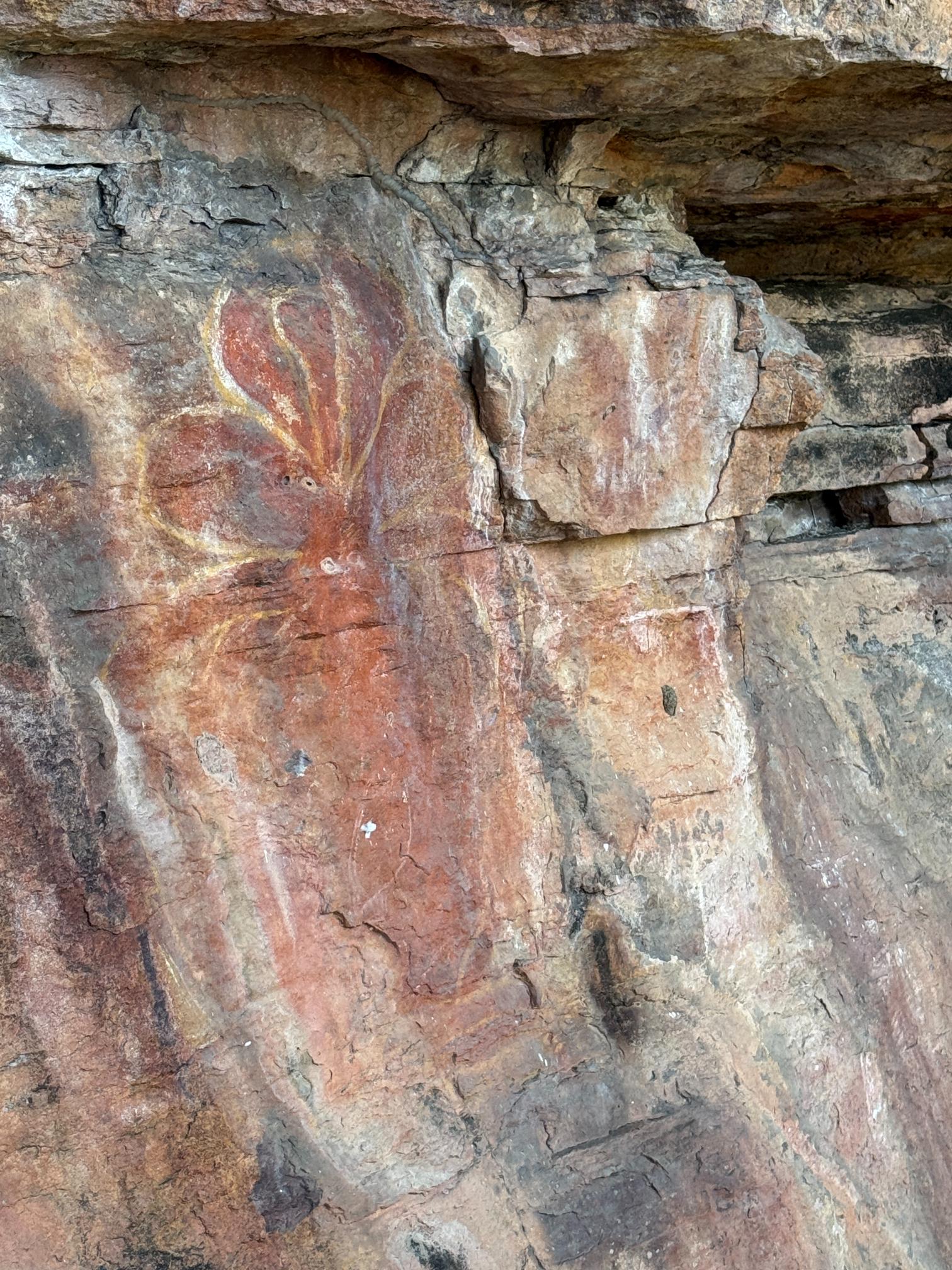
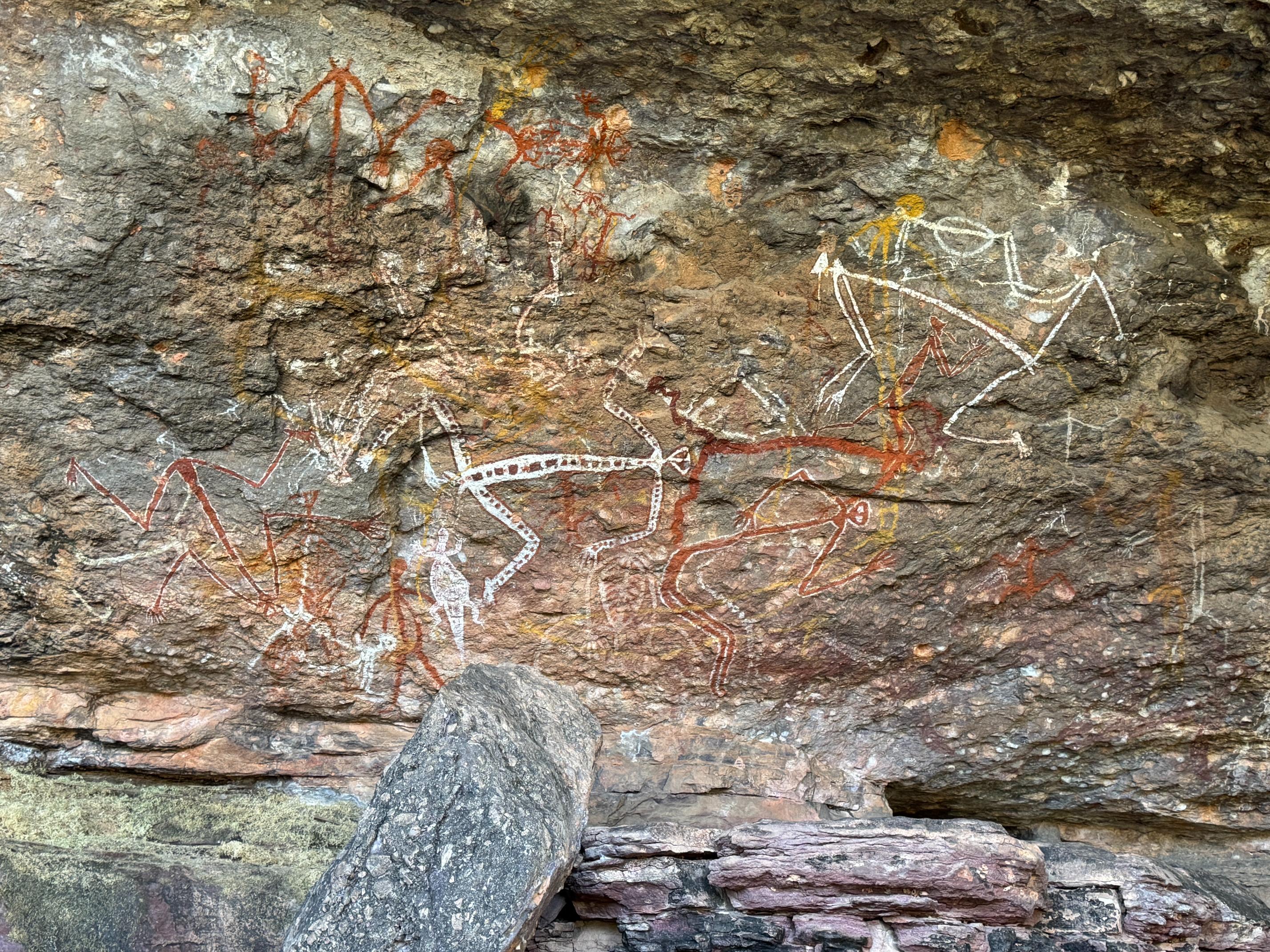
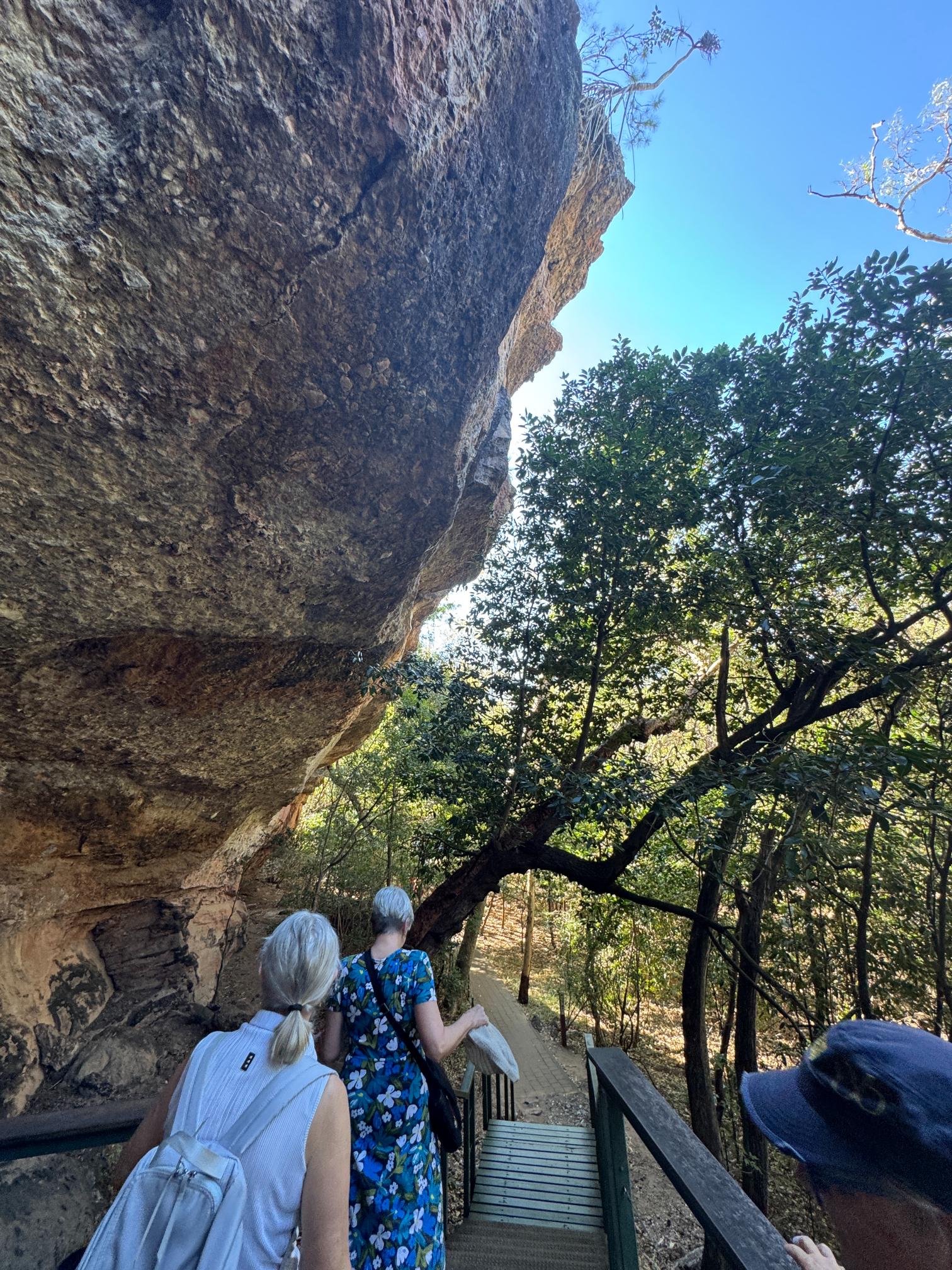
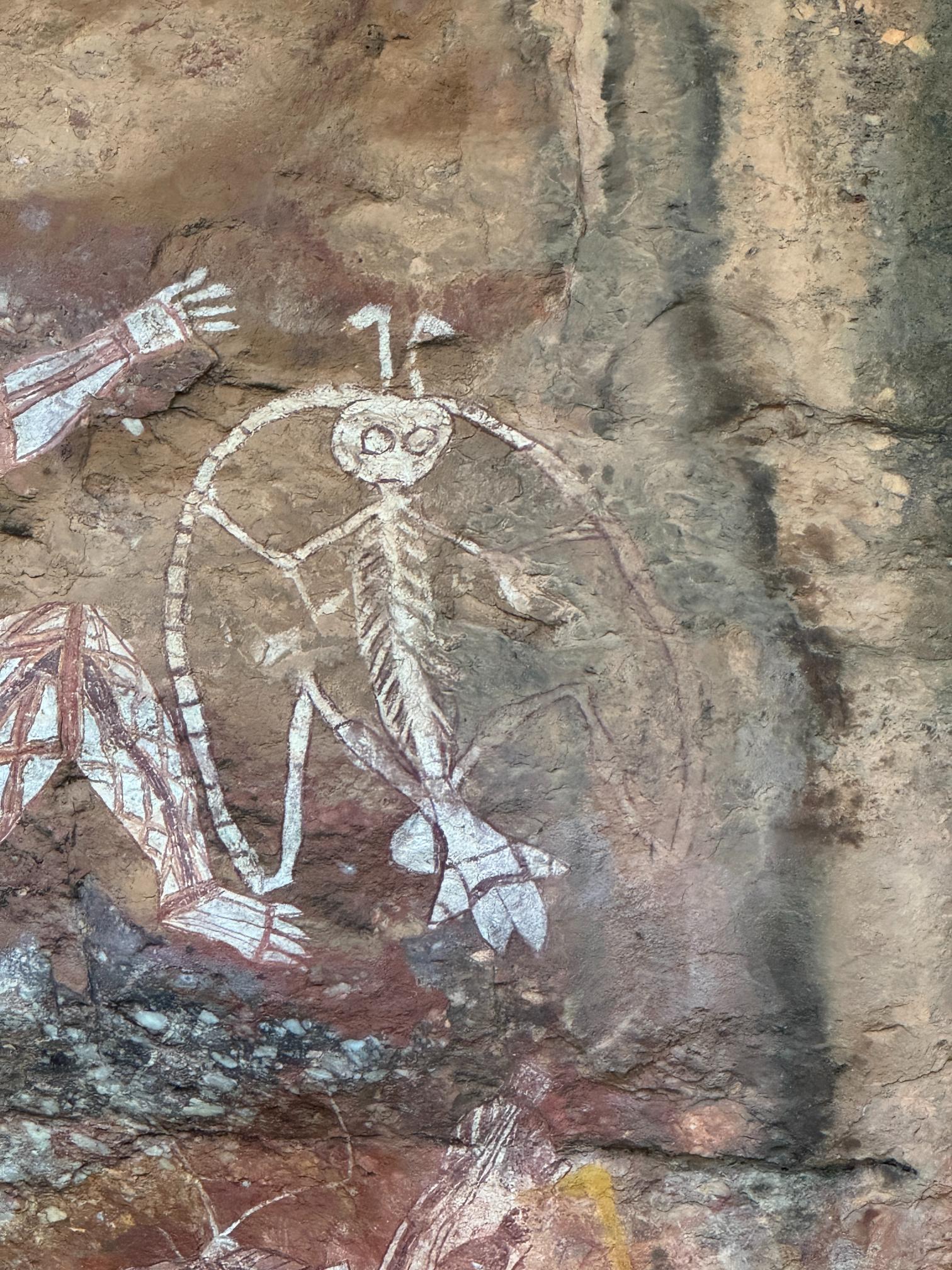
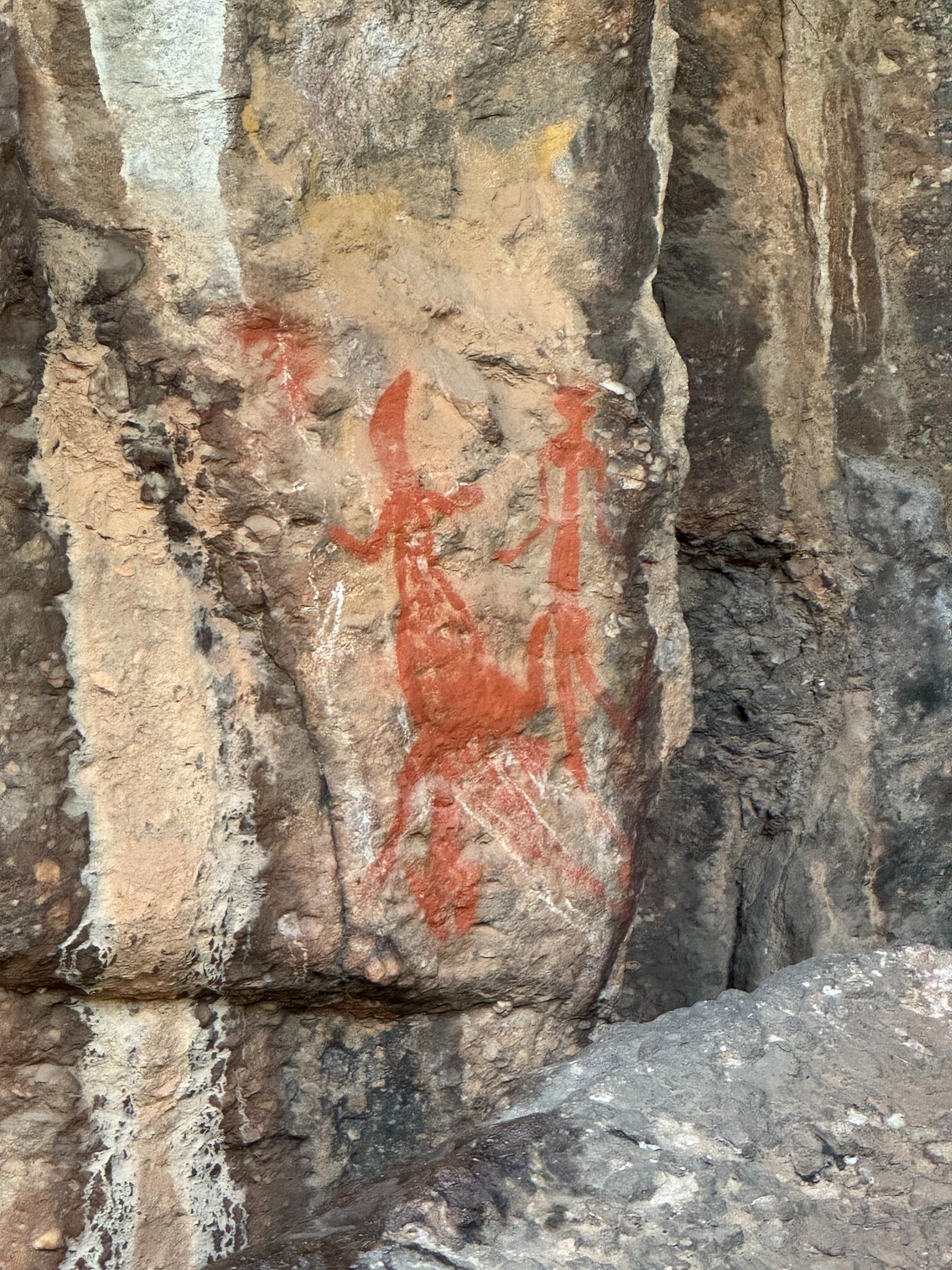
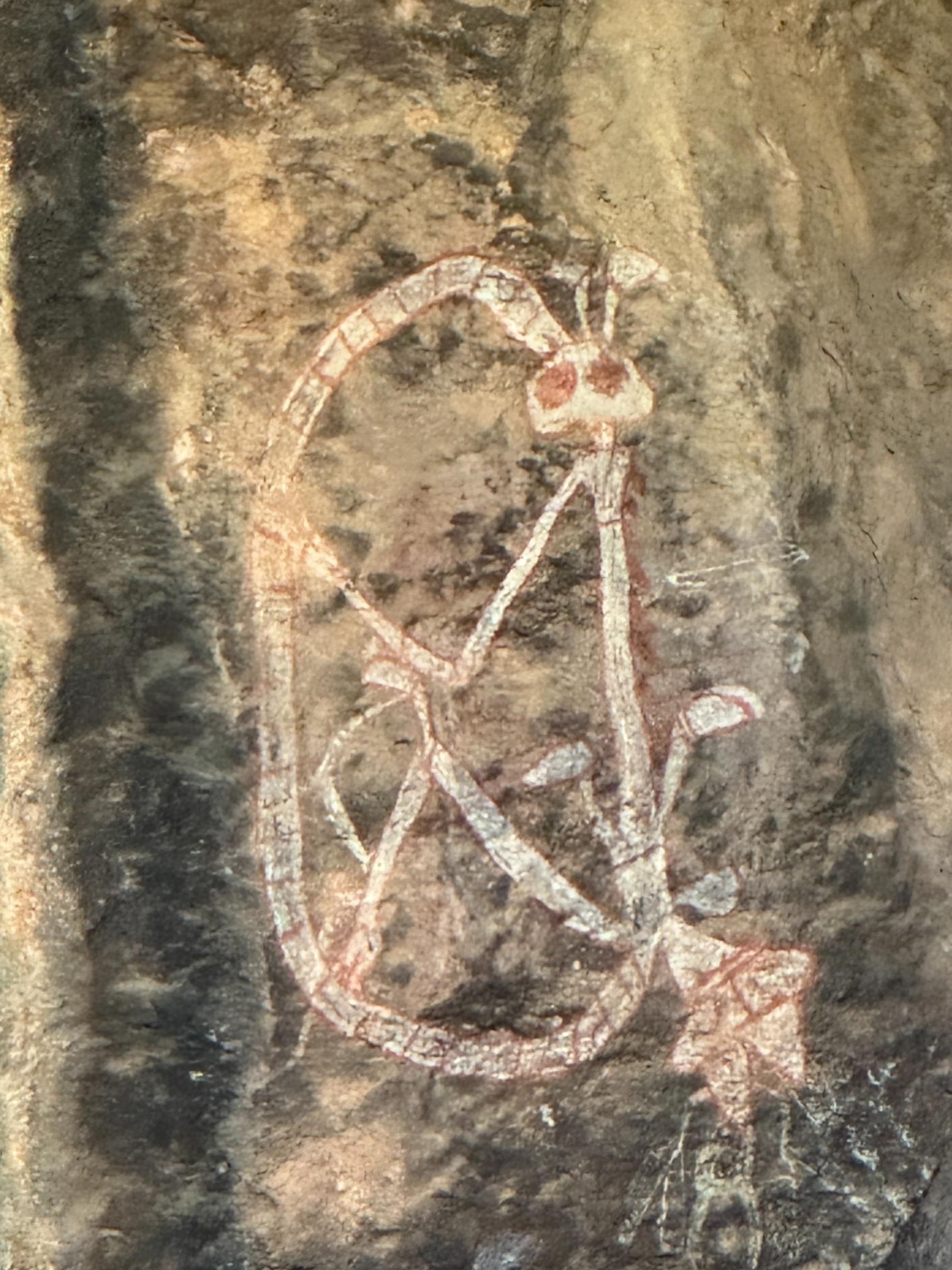
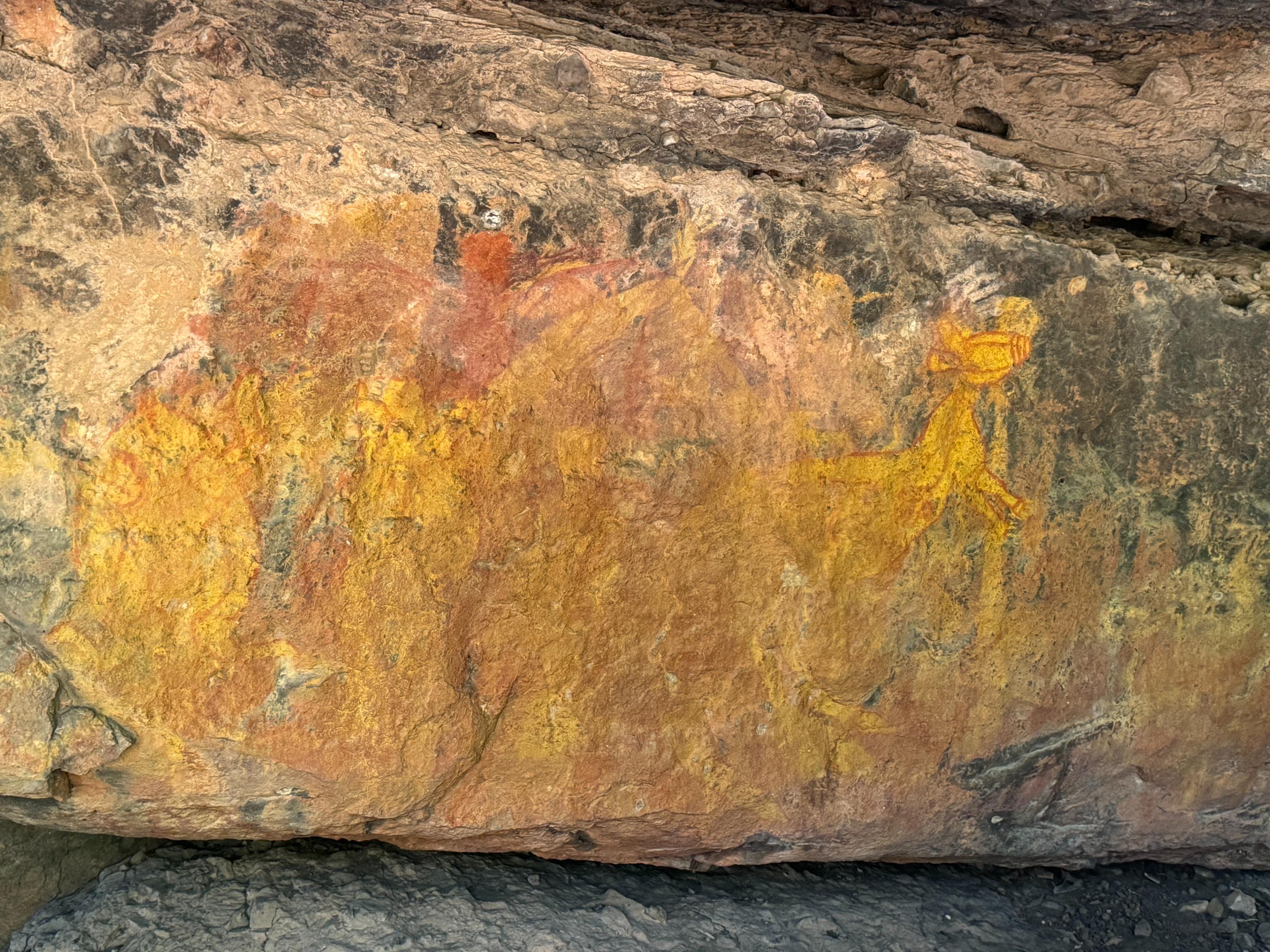
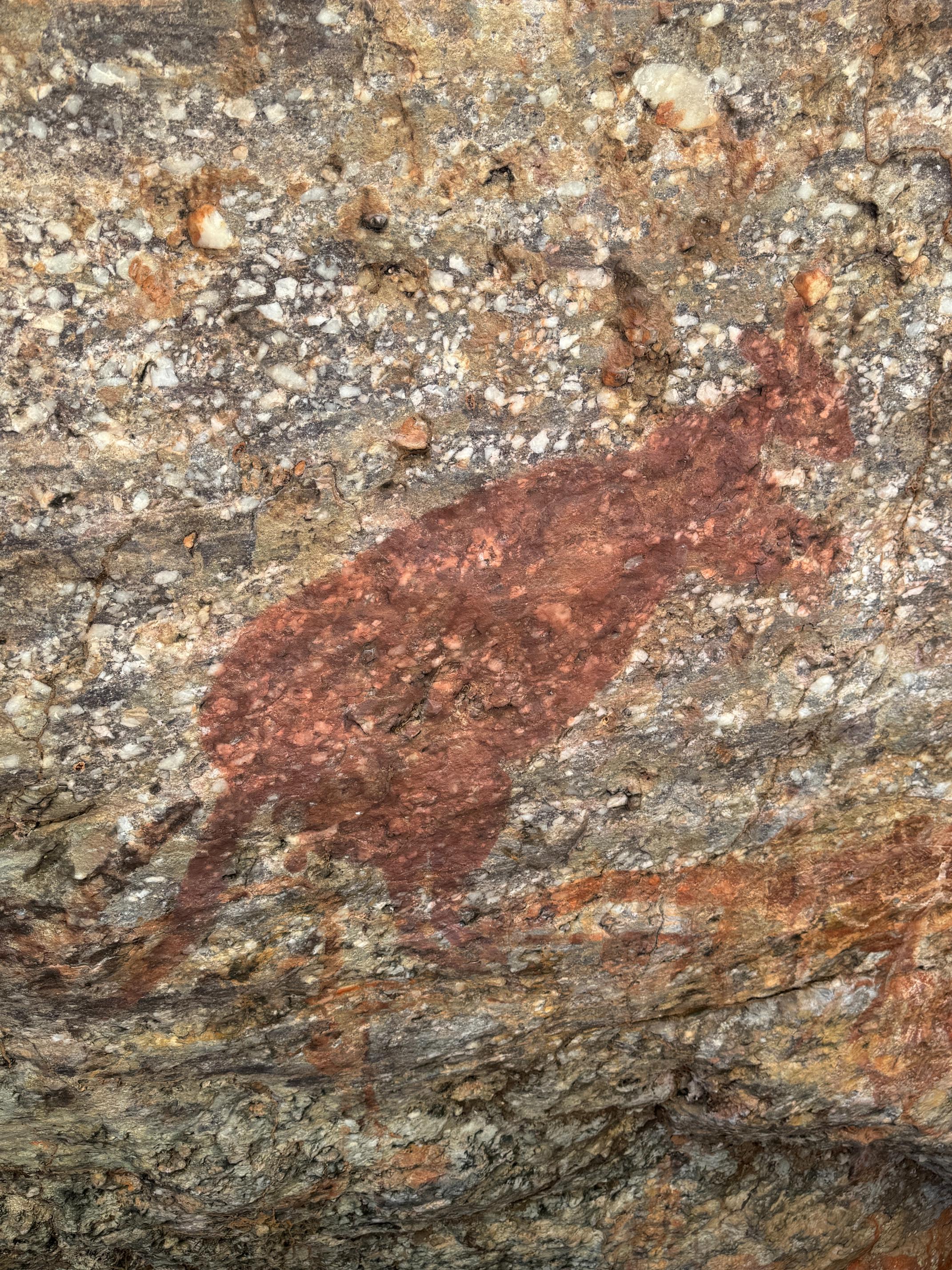
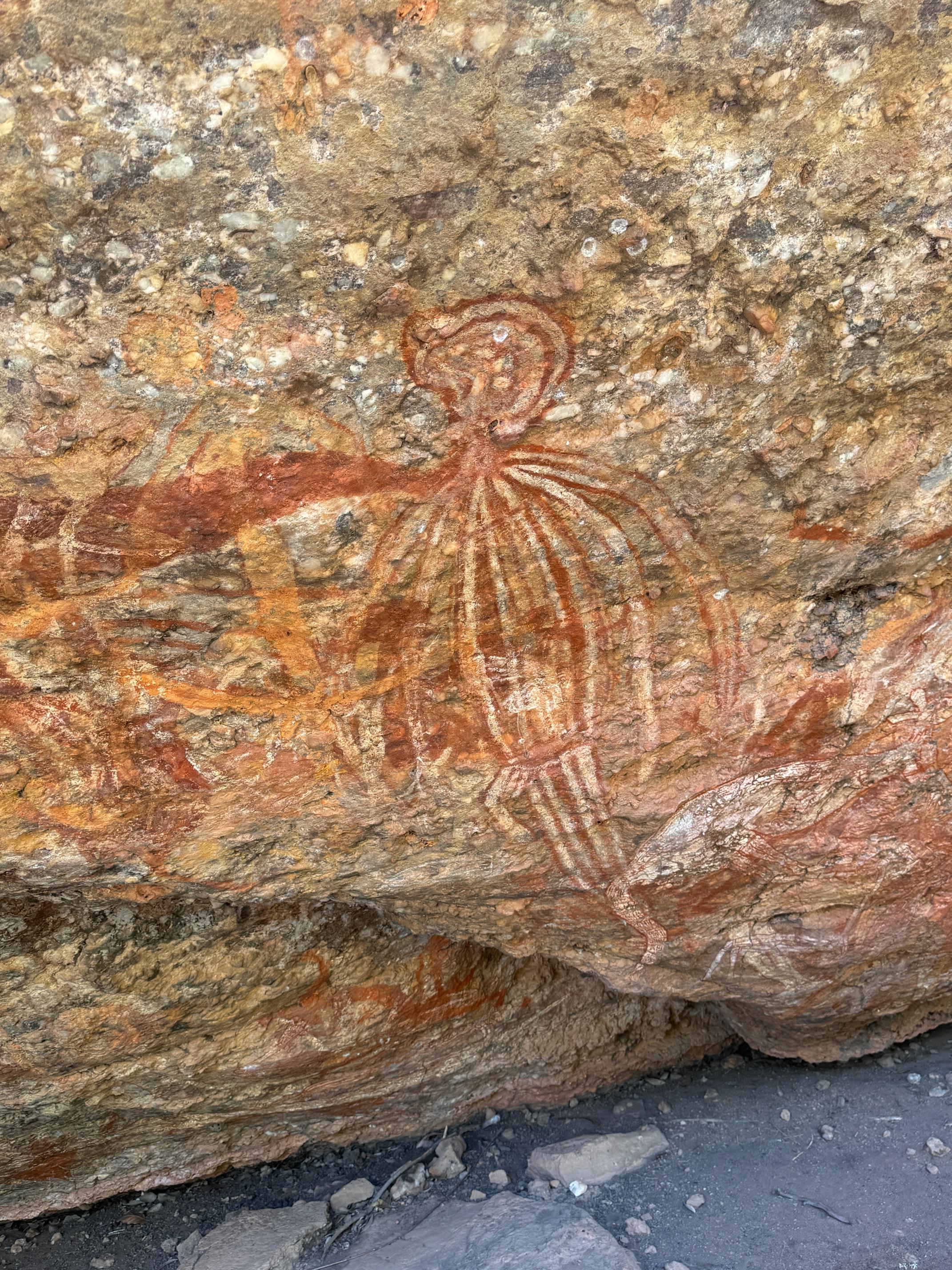
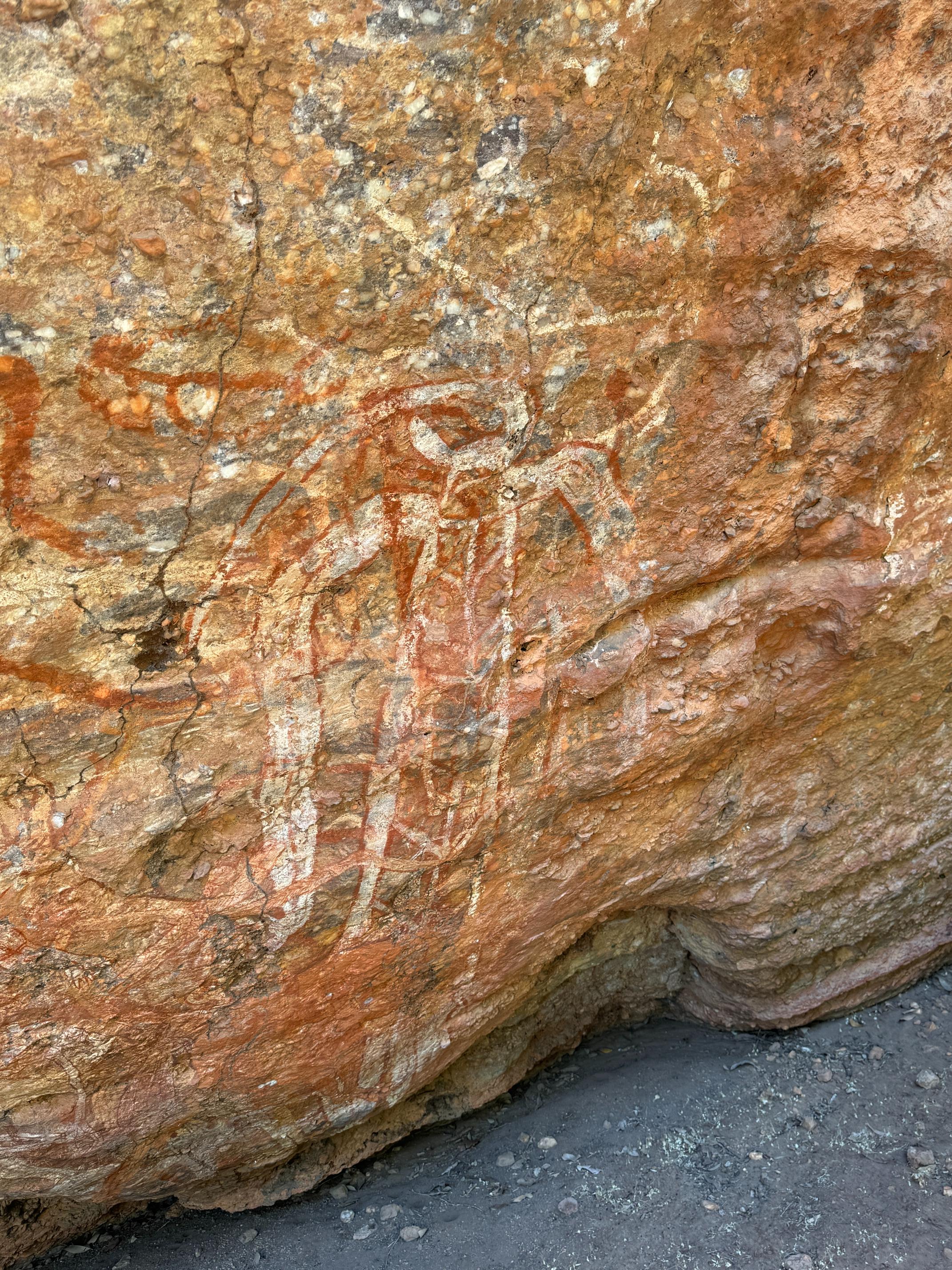
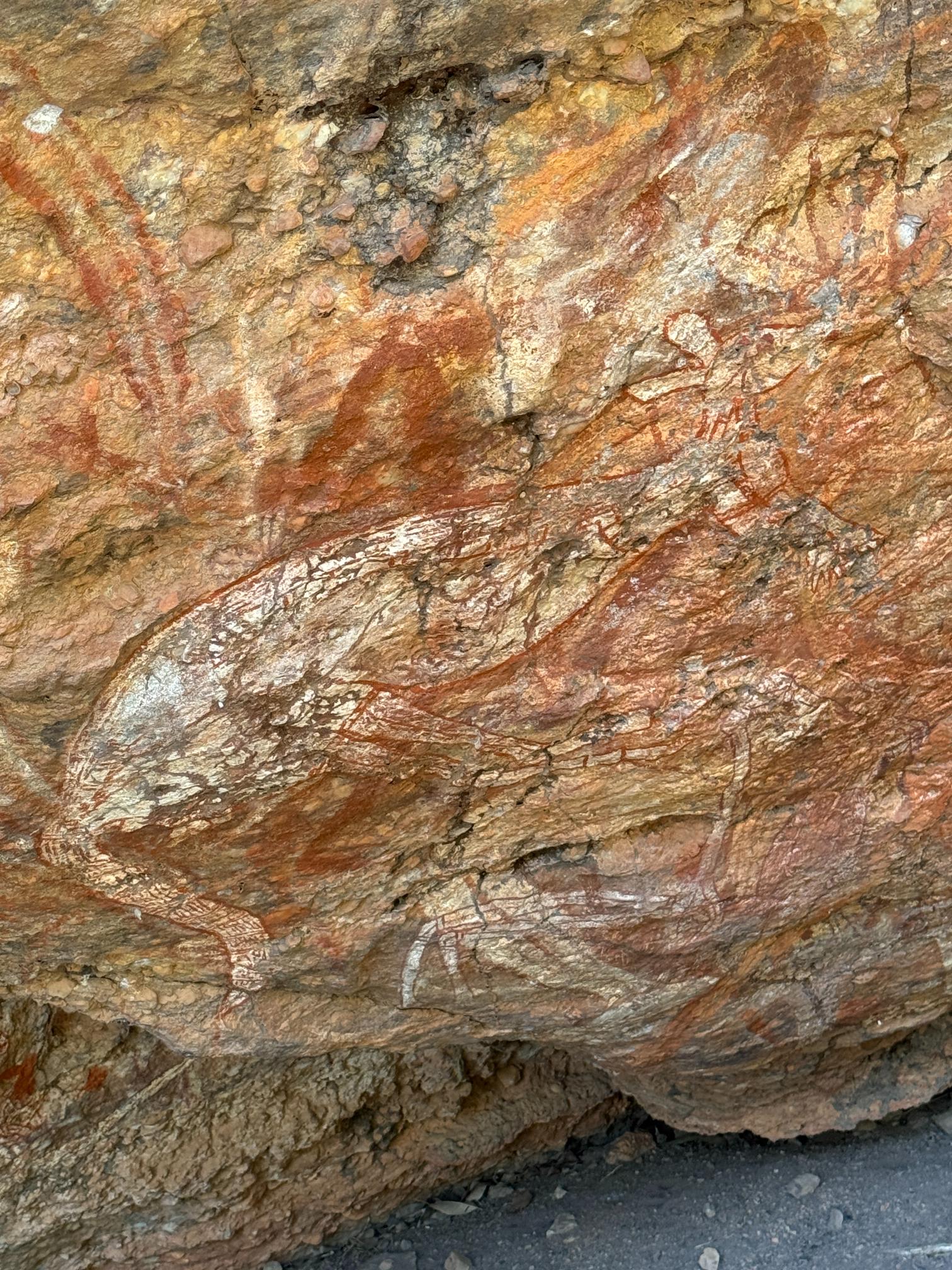
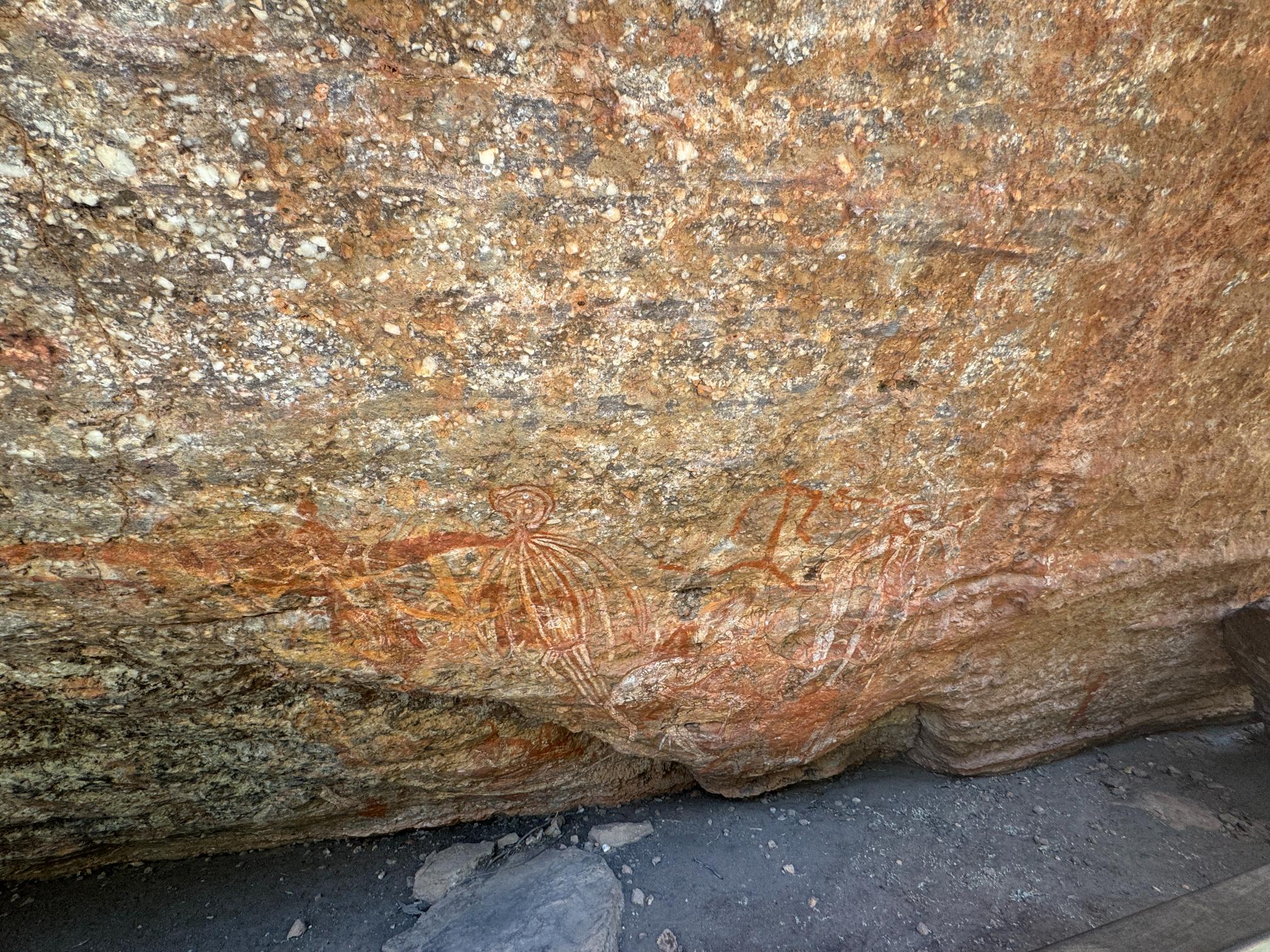
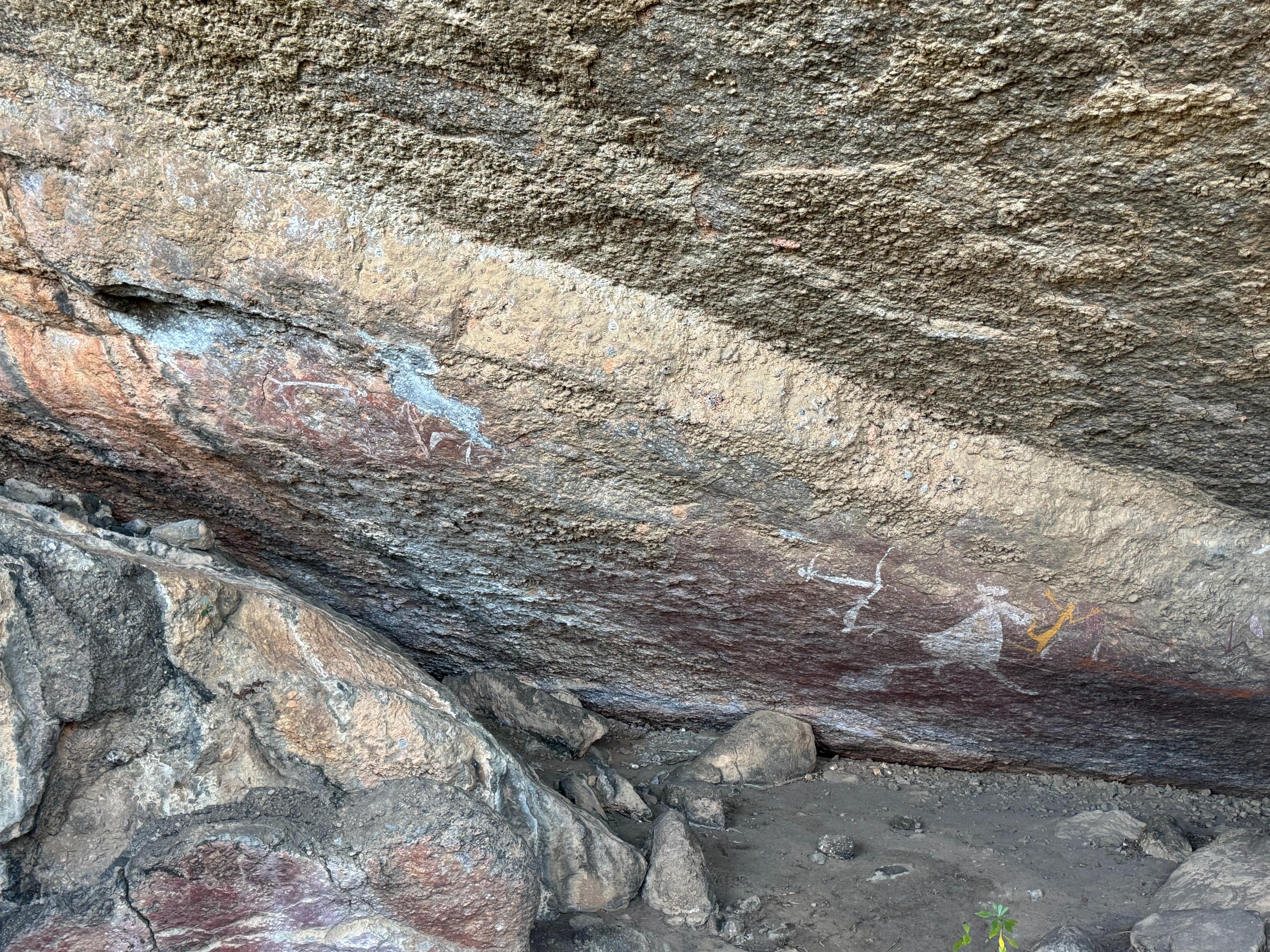
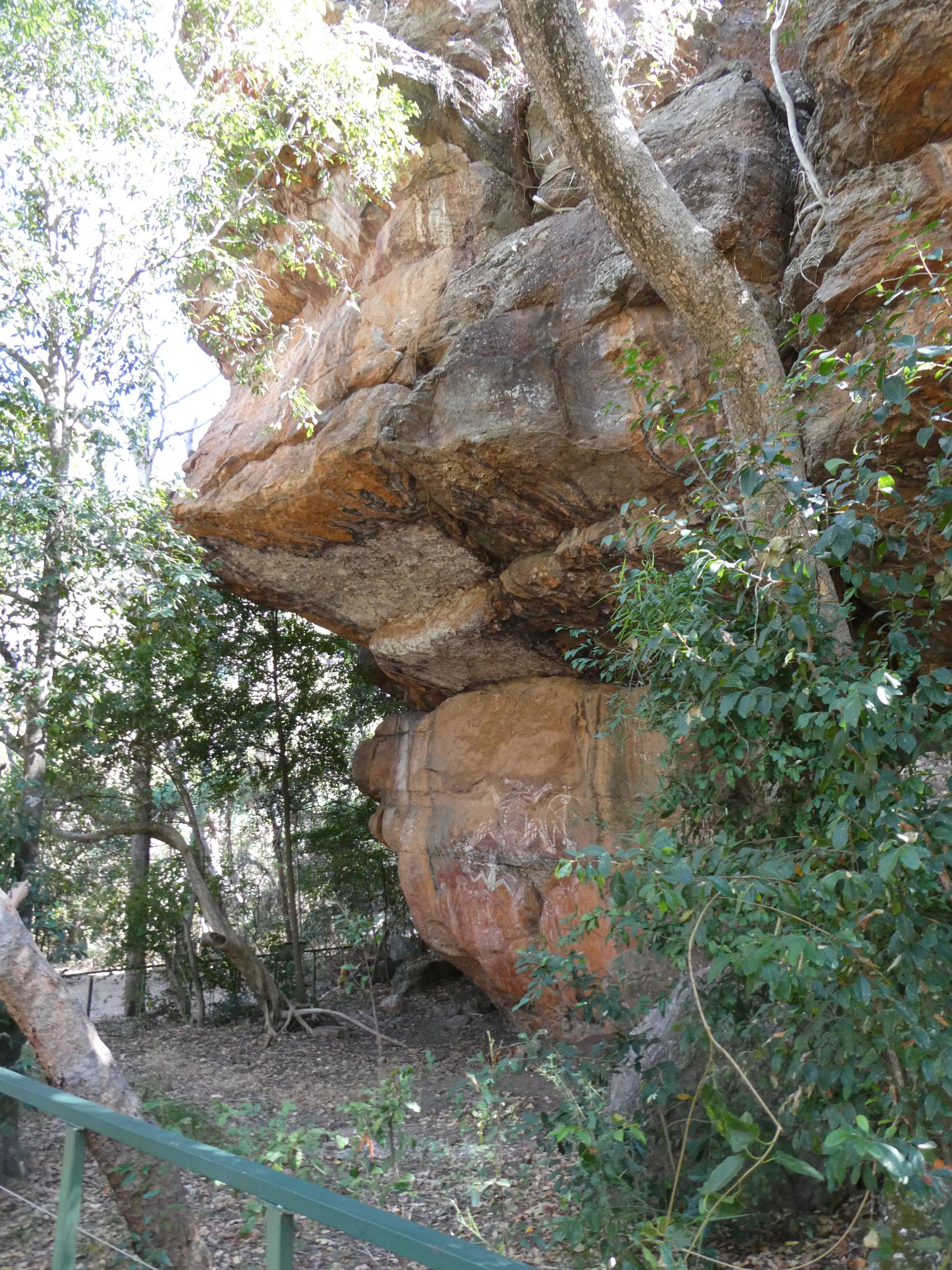
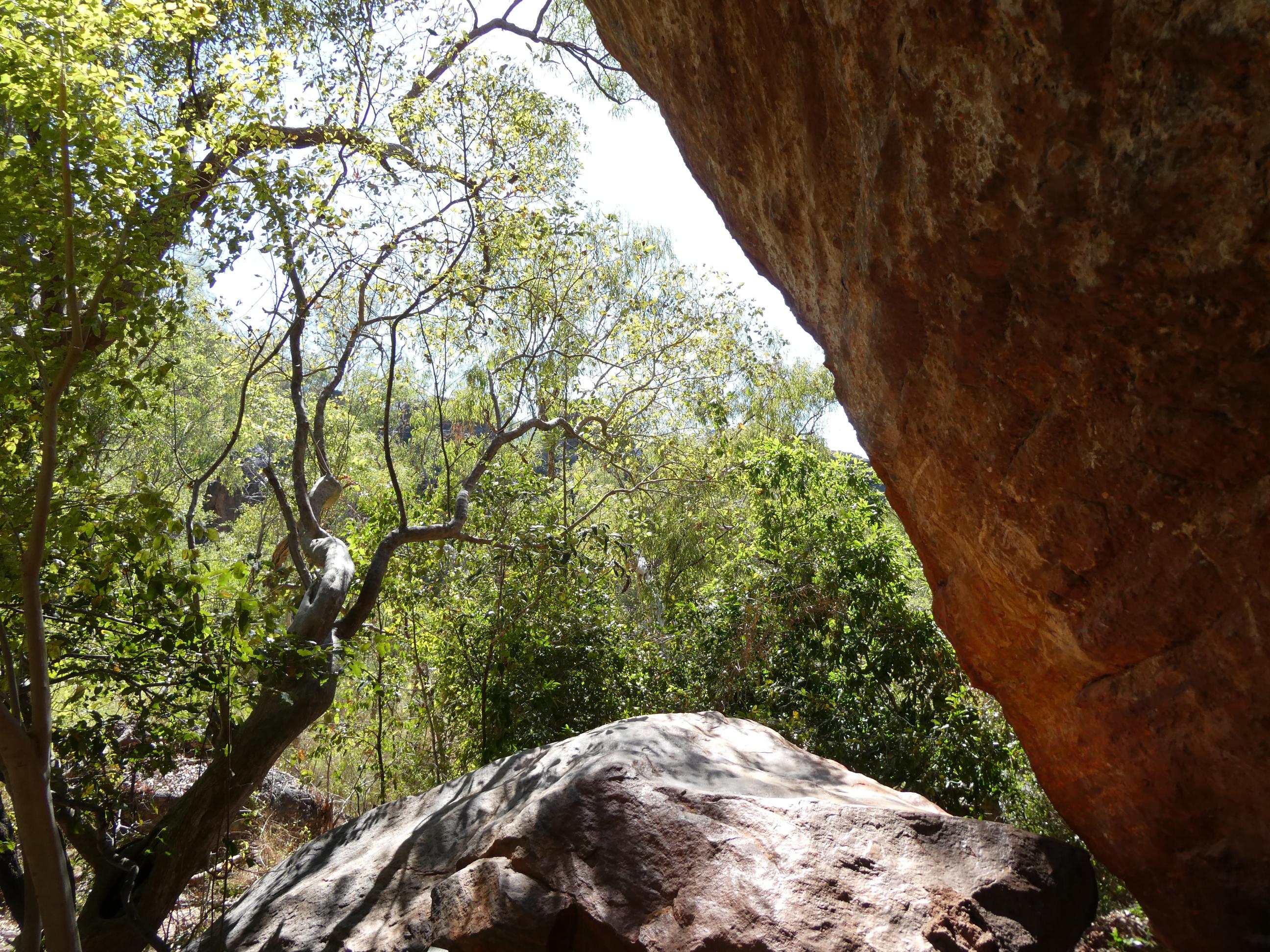
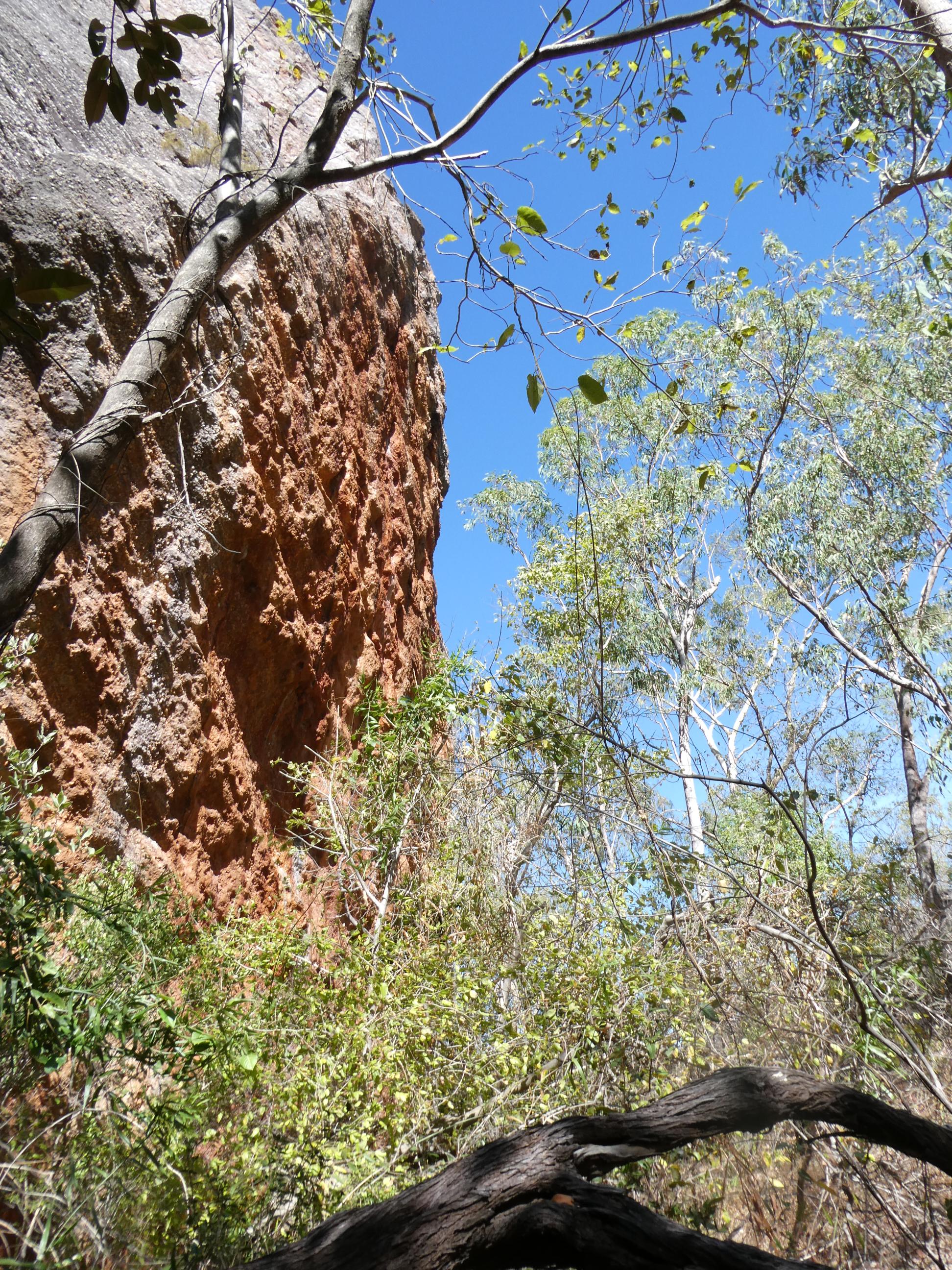
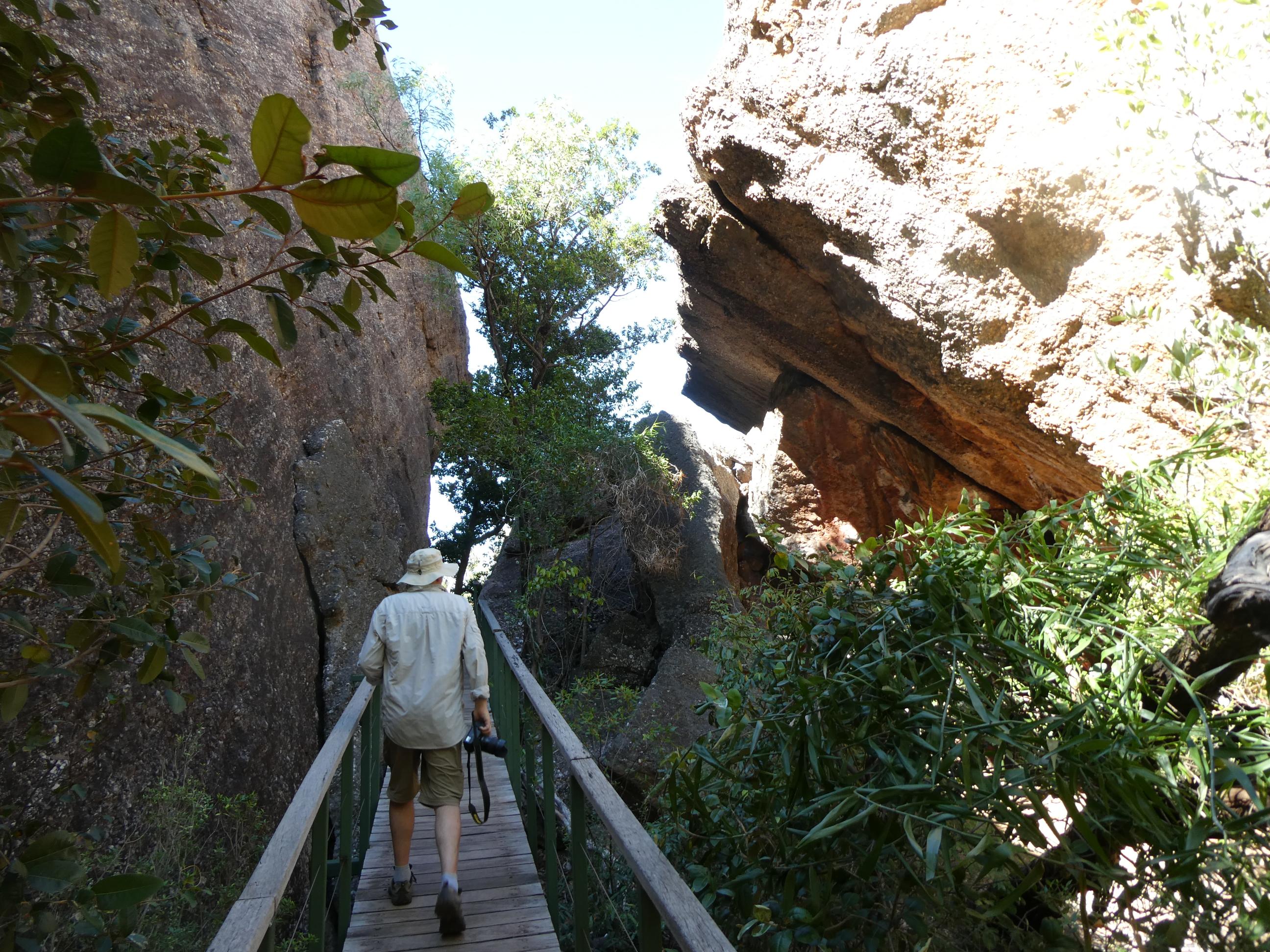
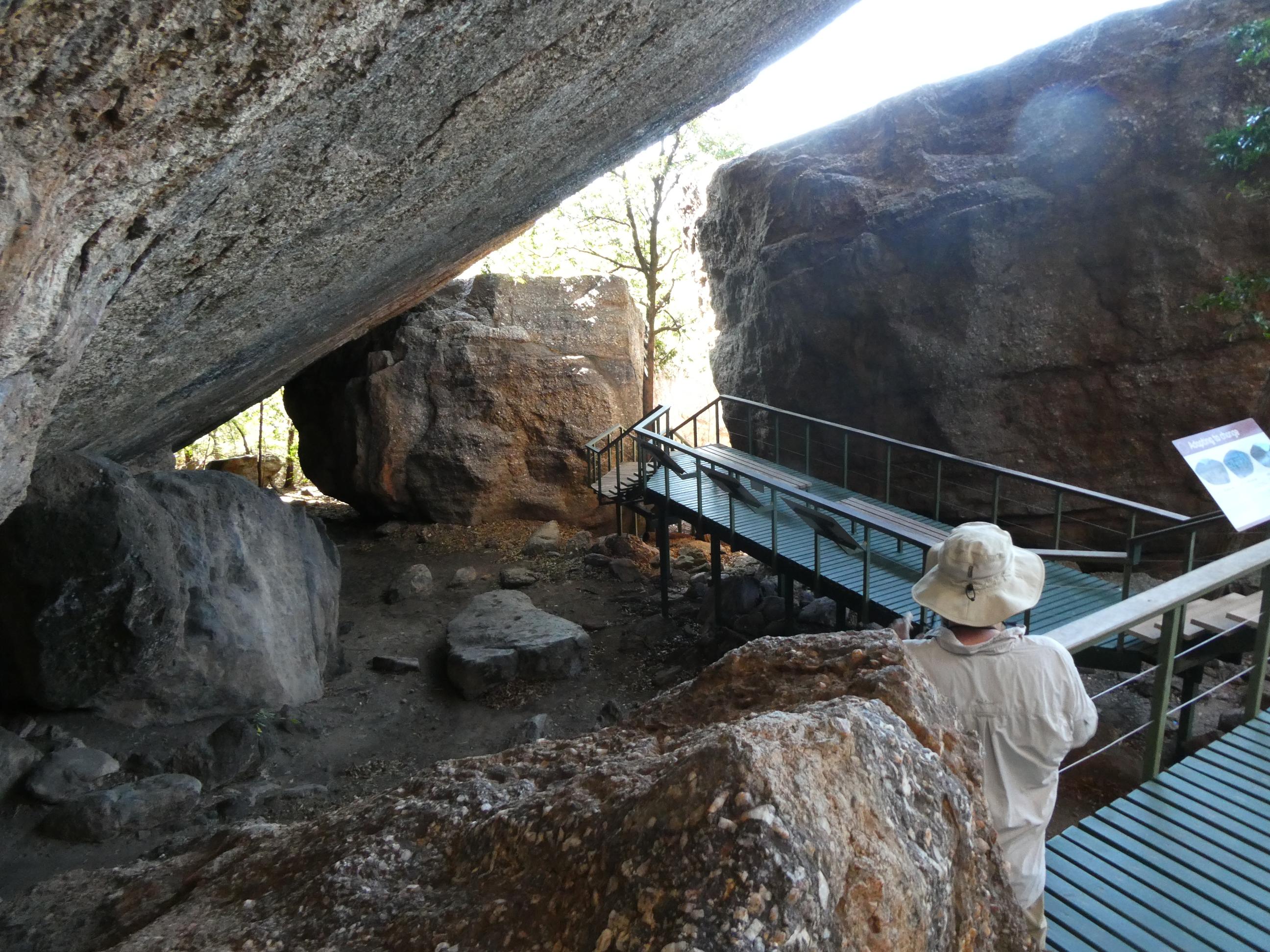
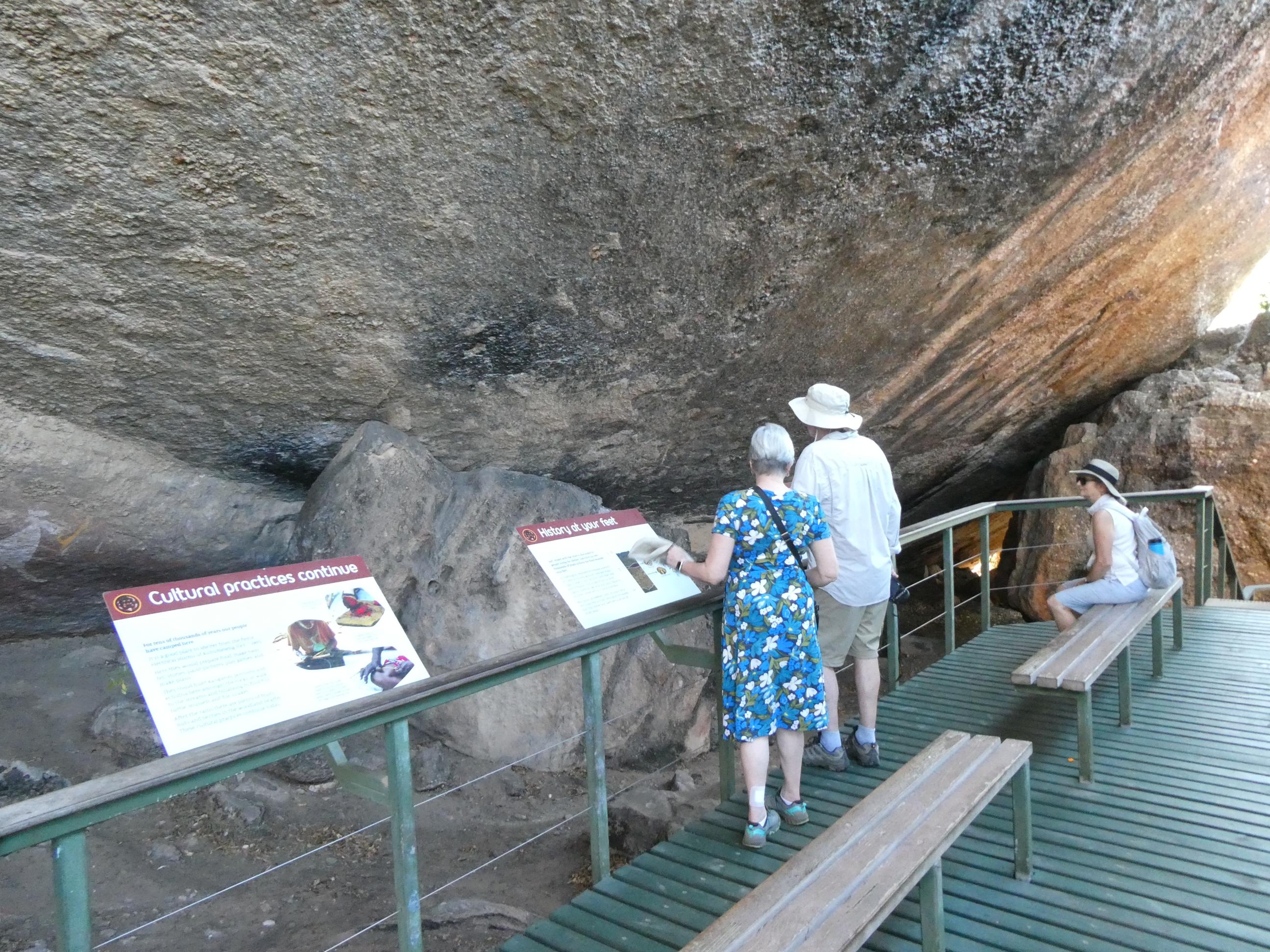
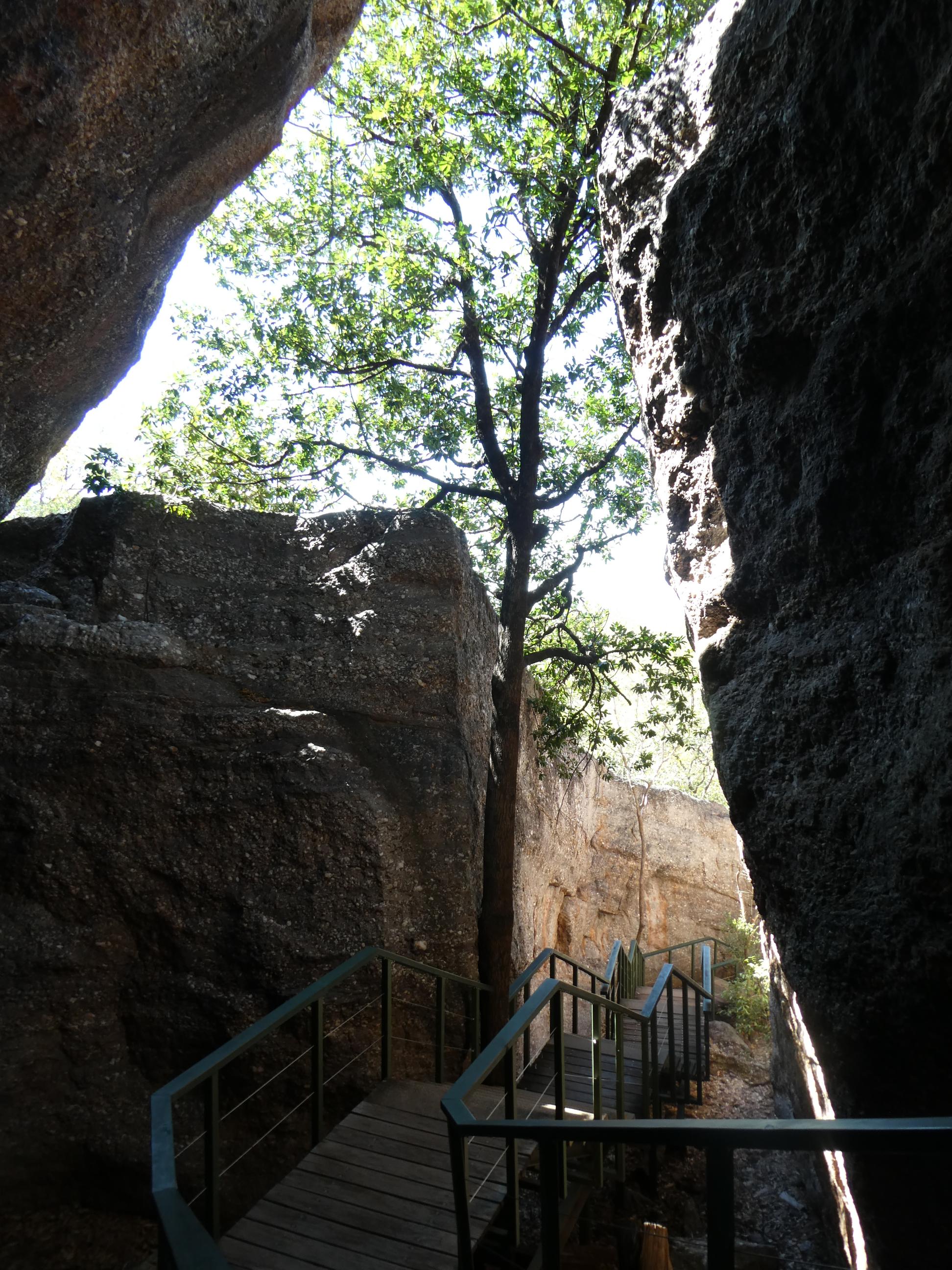
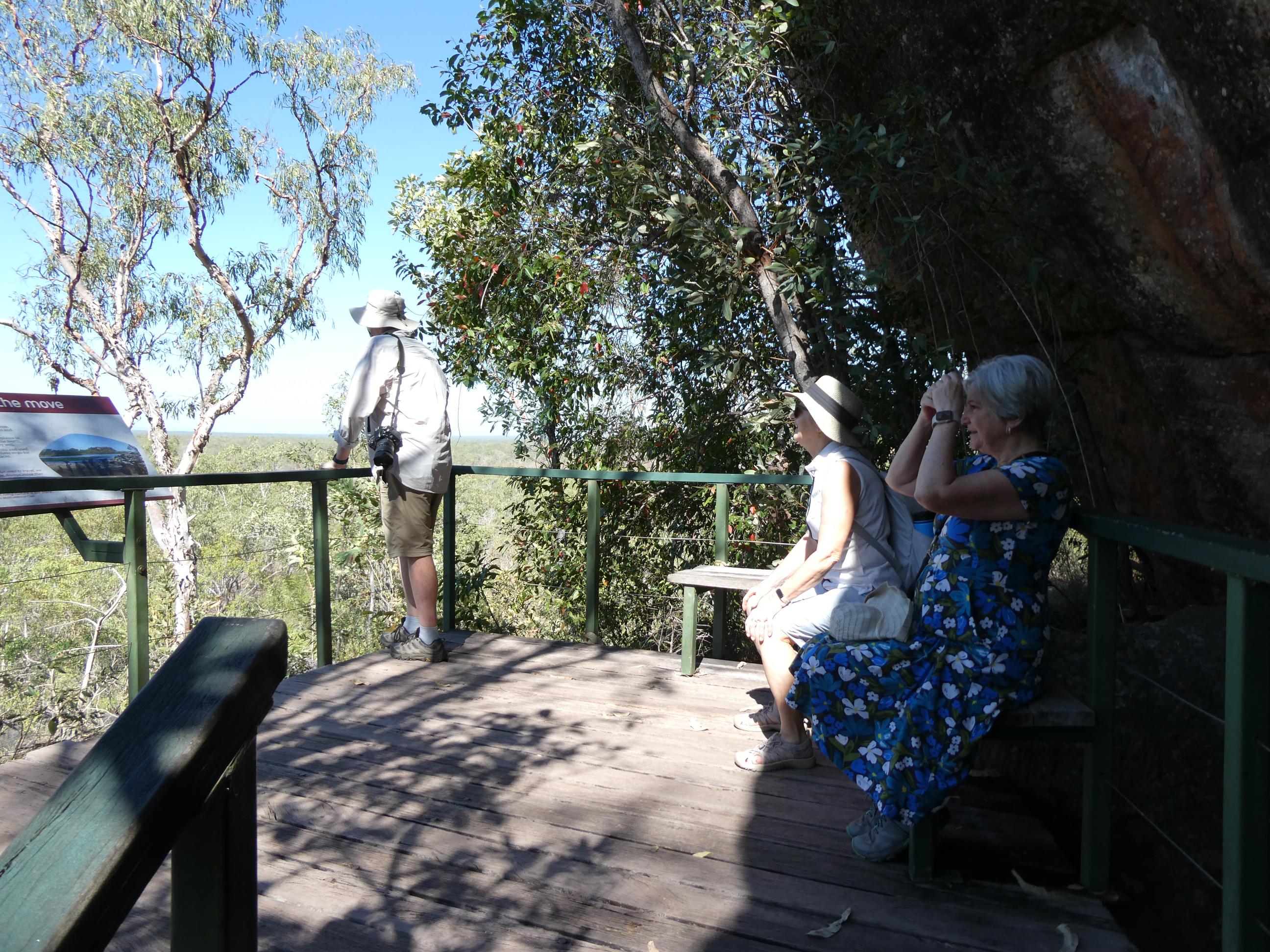
Similarly to Ubirr and Injalak Hill, Burrunguy is part of a large sandstone formation rising up above the scrubby forest surrounding it. It does not appear to be as extensive as Injalak Hill, or perhaps even Ubirr. There’s not a lot of climbing required, and well maintained walking paths and viewing platforms make it easy to get up close to view the paintings. The paintings were created using red, yellow and white ochre, and most vary in age between about one thousand years and up to twenty thousands years old. They were created by the Gun-djeihmi people, the traditional owners of this land. The Anbangbang Shelter also contains some art from the 1960s.
We first visited the Anbangbang Gallery, where the paintings are the most recently created art works open to visitors. They feature some of the animals the artists hunted for food, as well as humans and spirit creatures associated with the people’s mythology. As with the other rock art sites we’ve recently visited, the sheltering overhanging sandstone rocks provide very effective protection from the wind and rain, ensuring the paintings have endured for such along periods of time. We also visited the Incline Gallery and the vast Anbangbang Shelter, where more wonderful examples of ancient rock art adorned the walls.
The art works we’ve viewed at Ubirr, Injalak Hill and Burrunguy have been painted in a style, common to this region of Northern Australia, often referred to as X-Ray art. Although they may feature similar themes, they are vastly different in appearance to the indigenous dot paintings associated with Central Australia.
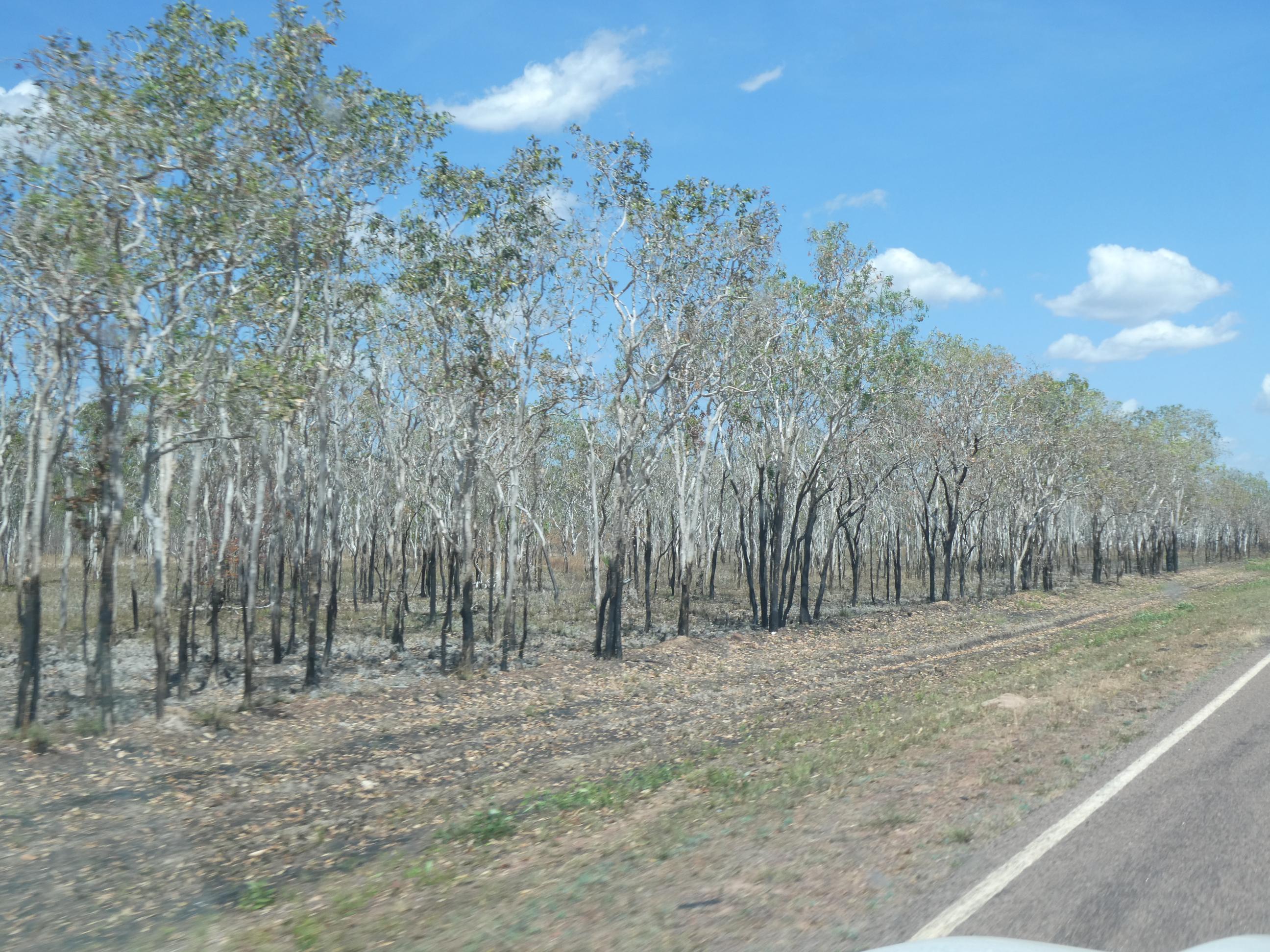
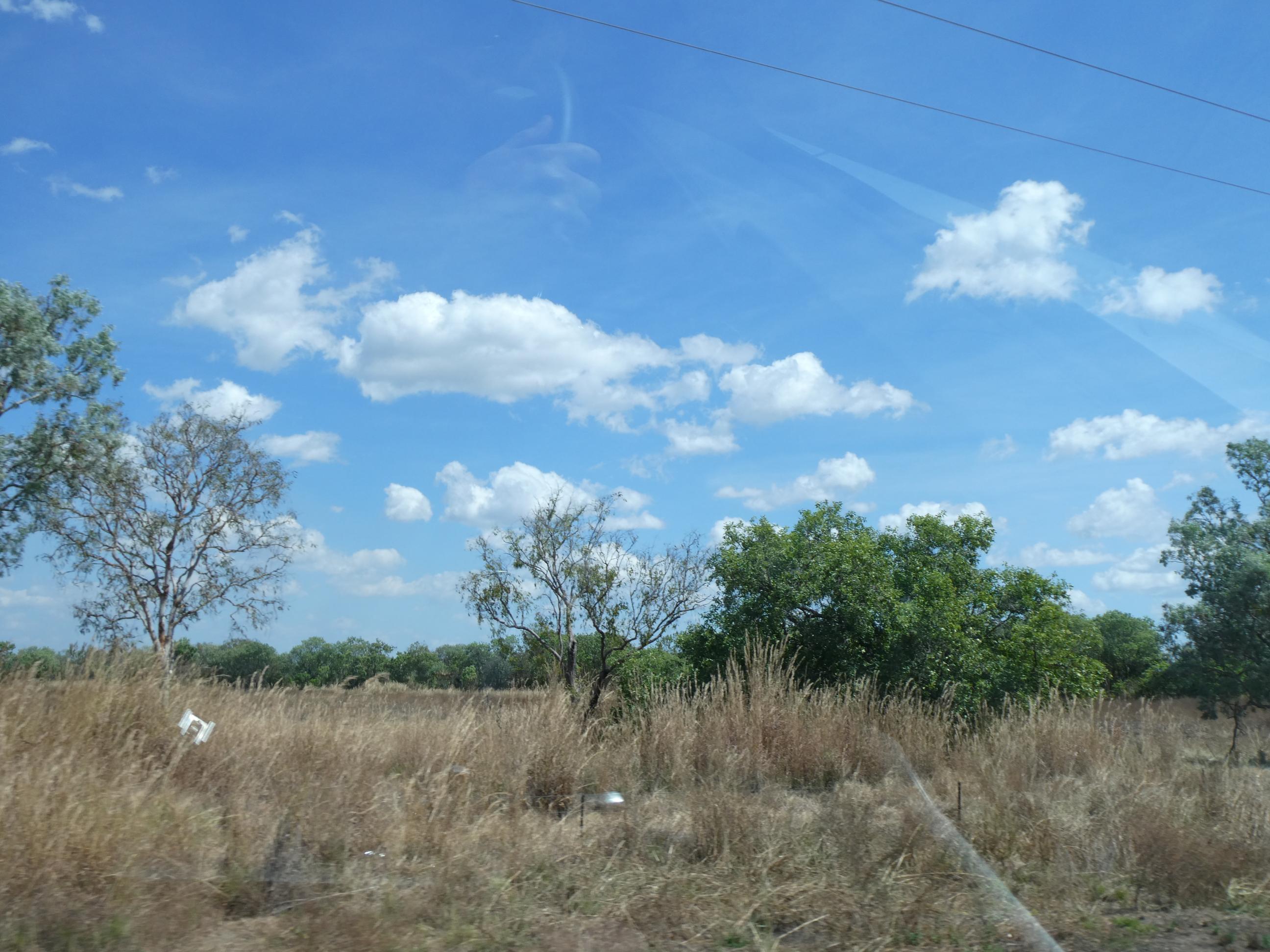
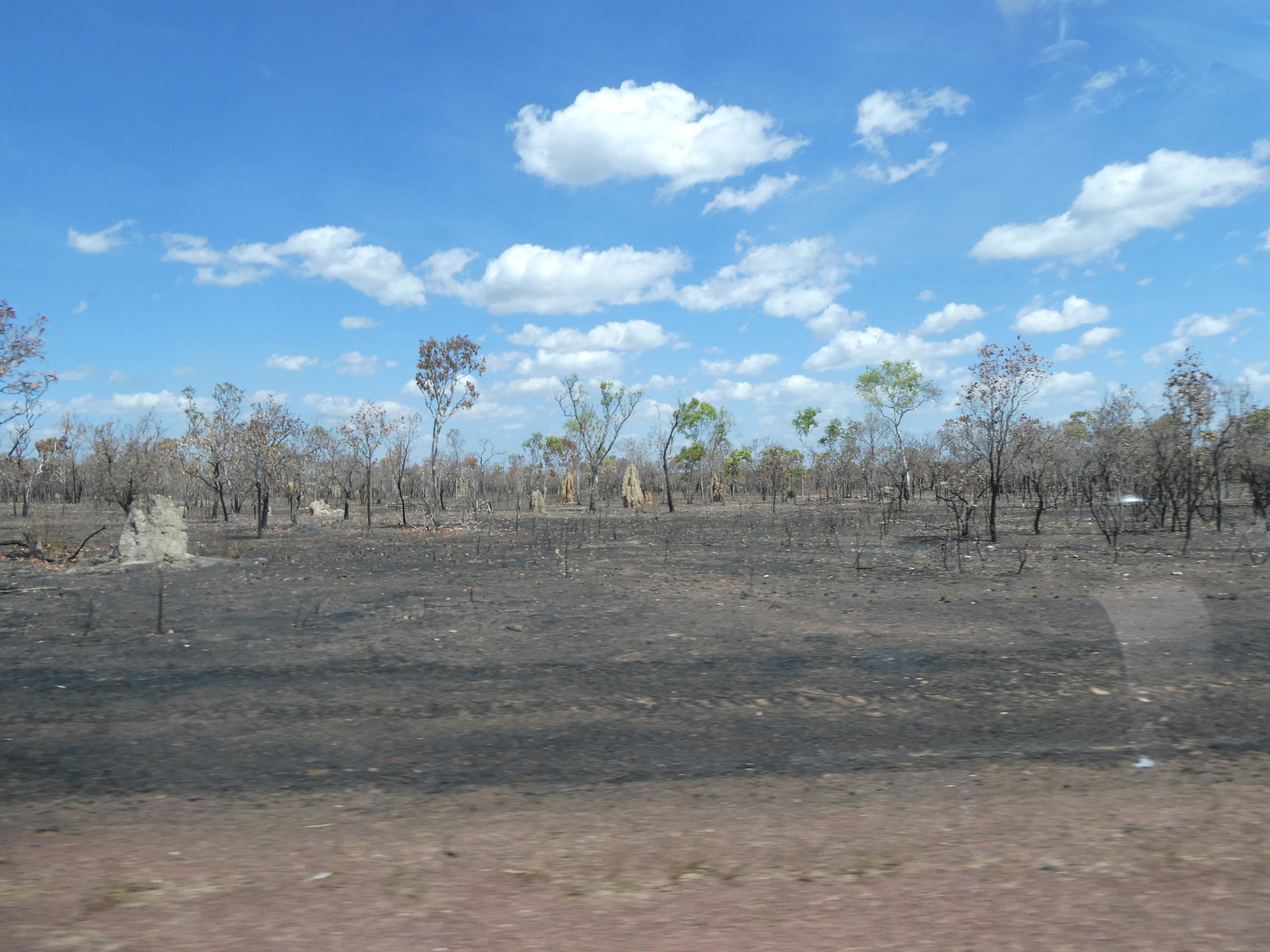
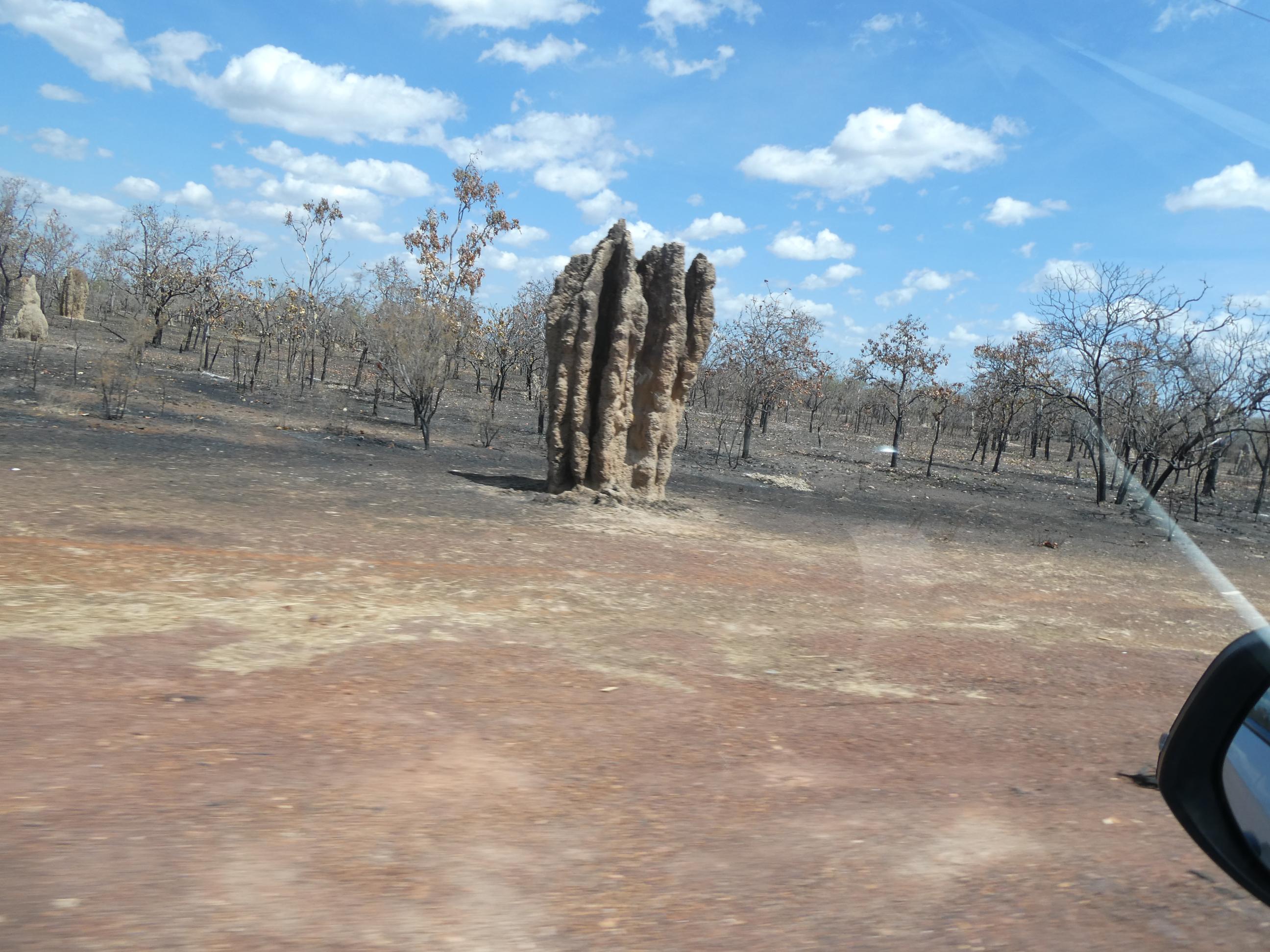
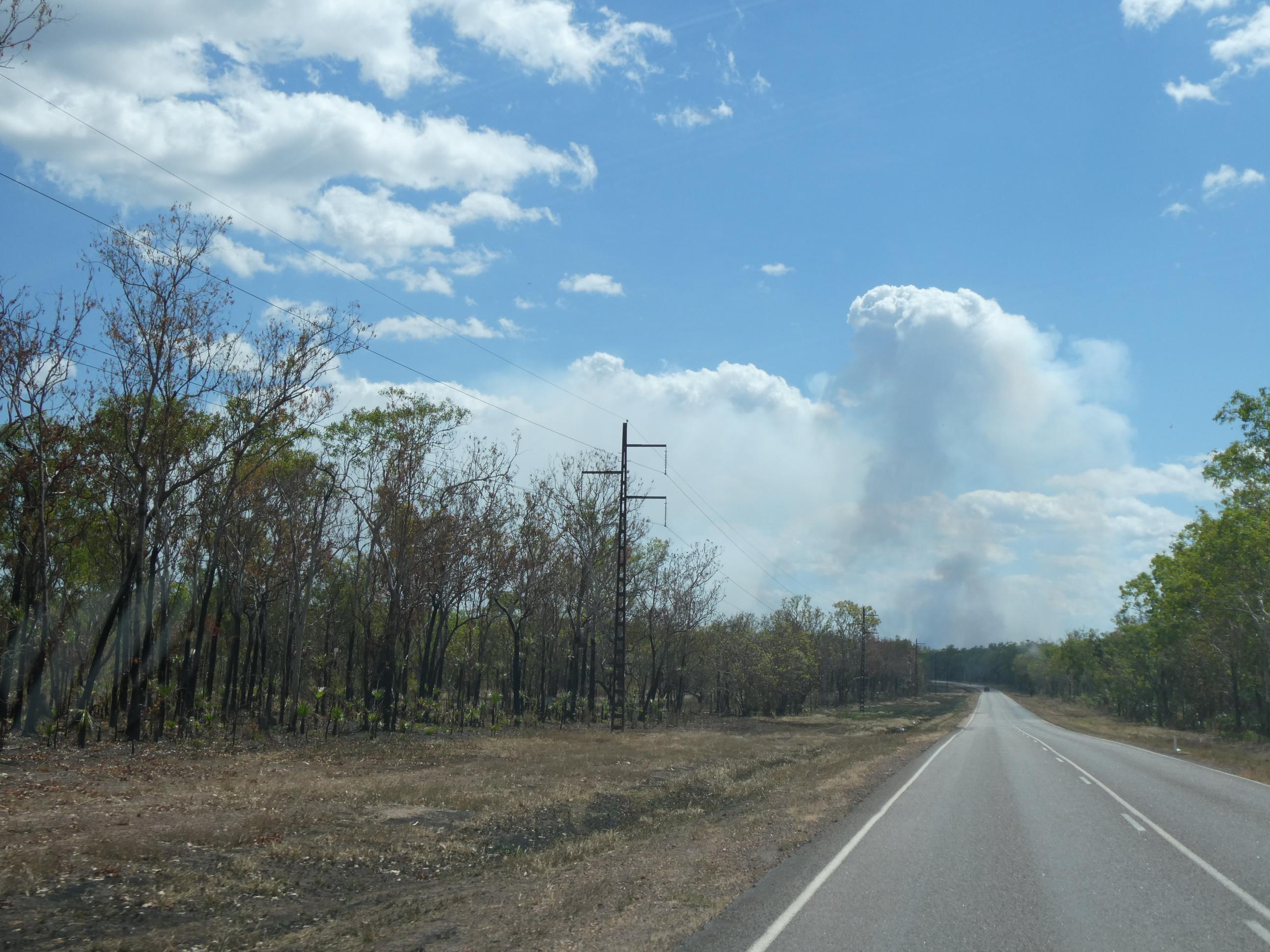
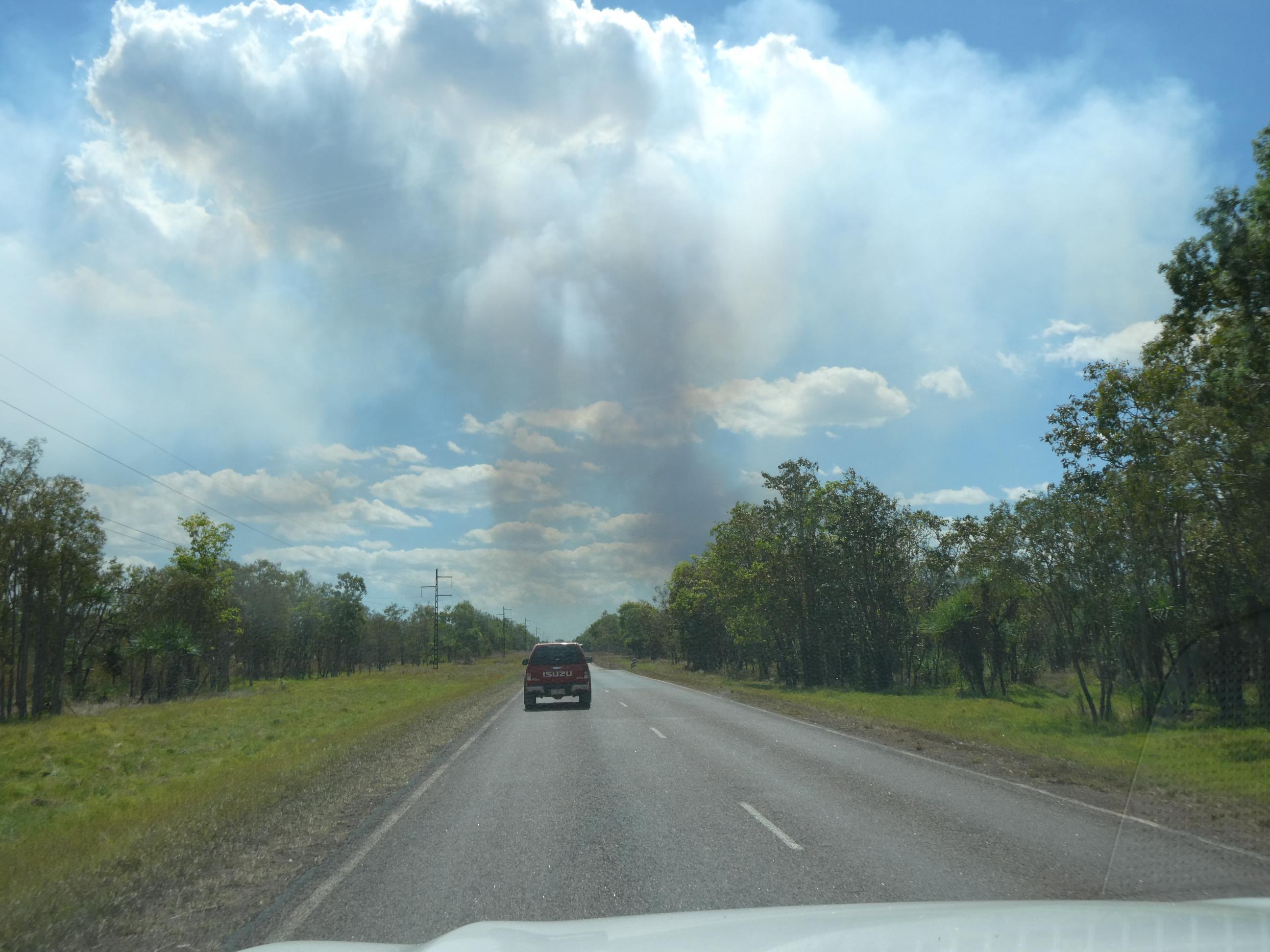
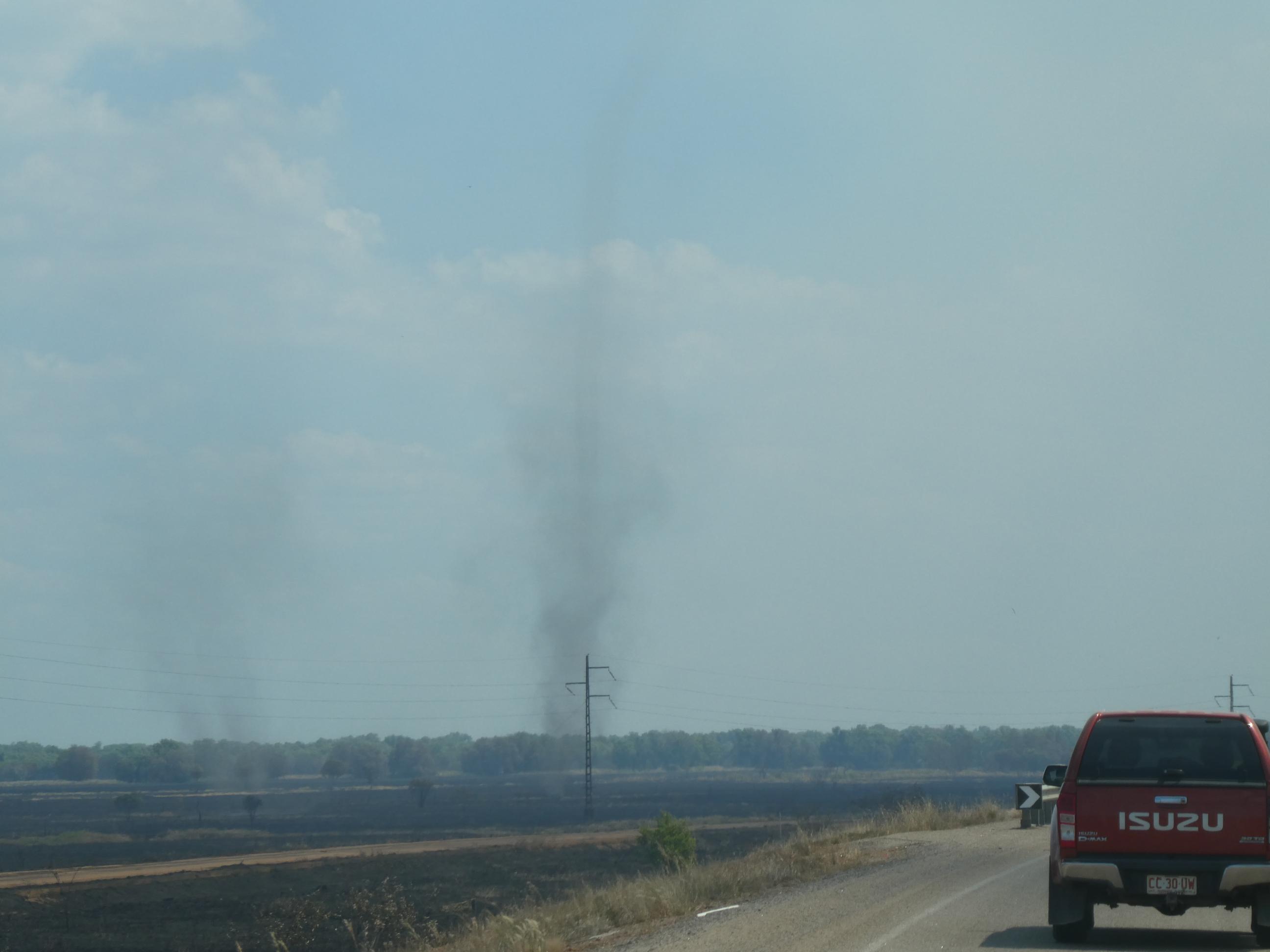
After leaving Burrunguy, we turned onto the Arnhem Highway and headed back towards Darwin. We had a drive of a couple of hours ahead of us, so we broke the journey midway for a lunch stop at the Corroboree Park roadhouse once more. Just about the entire length of the journey was through thinly treed, scrubby forest. Many sections of the forest had recently been burned for the purpose of land management. The earth was often scorched and the pungent smell of smoke and ash was present. Occasionally, we saw large plumes of smoke from these fires in the distance. Today we also had some white fluffy clouds in the sky for the first time since we arrived up here. One time I even spotted a couple of smoky willy-willies, spiral columns of wind, whirling around in a recently burnt field.
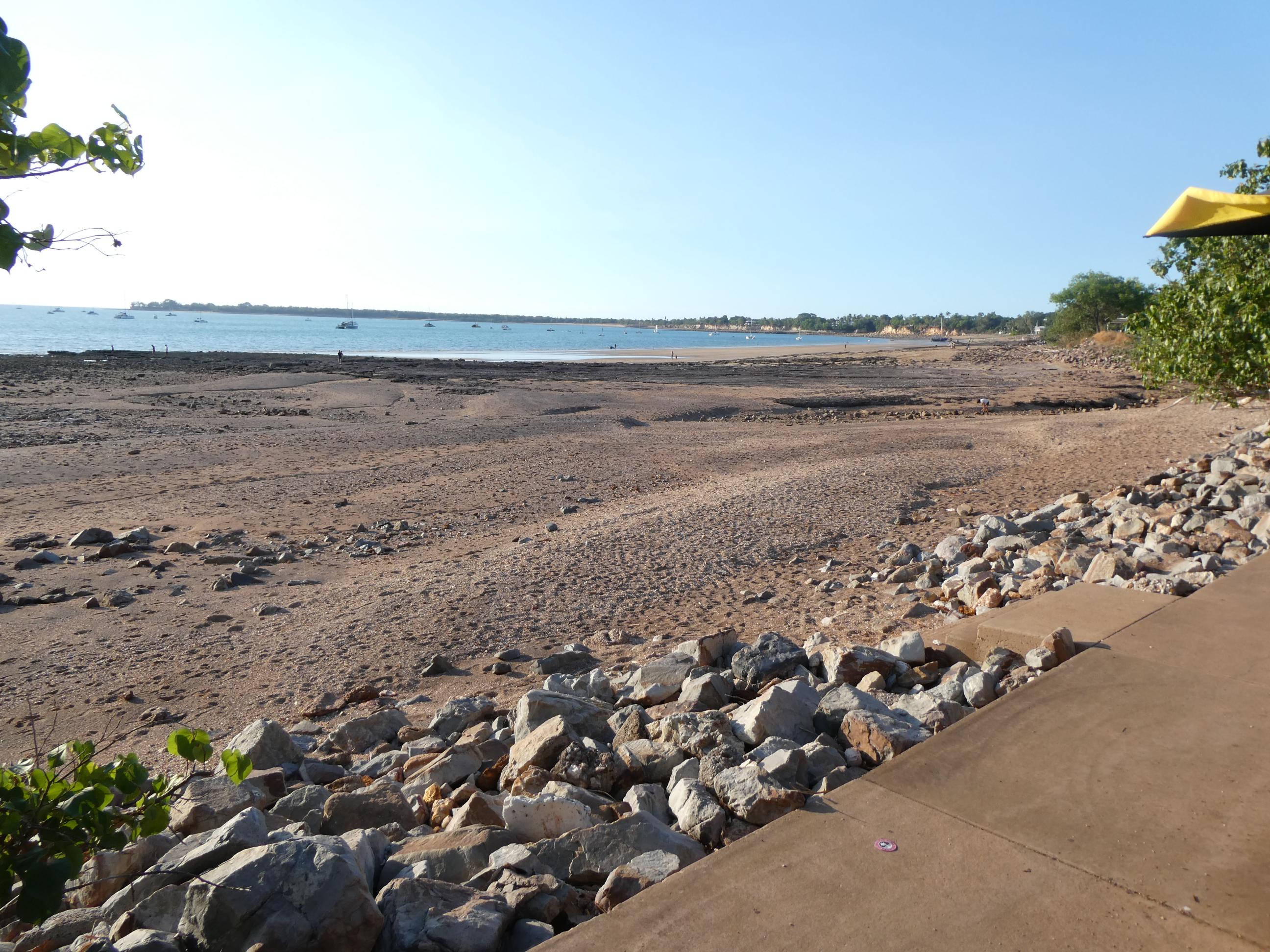
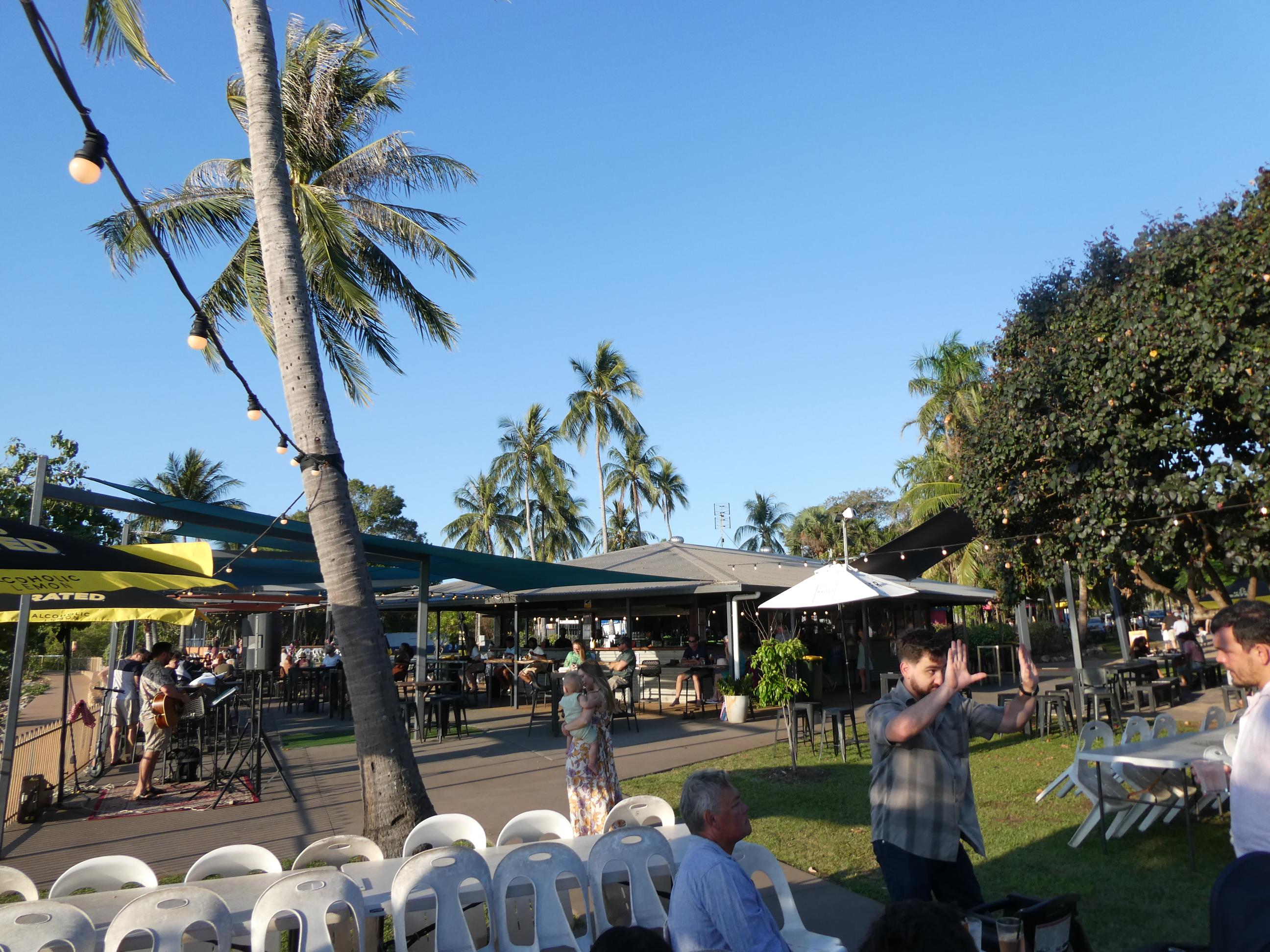
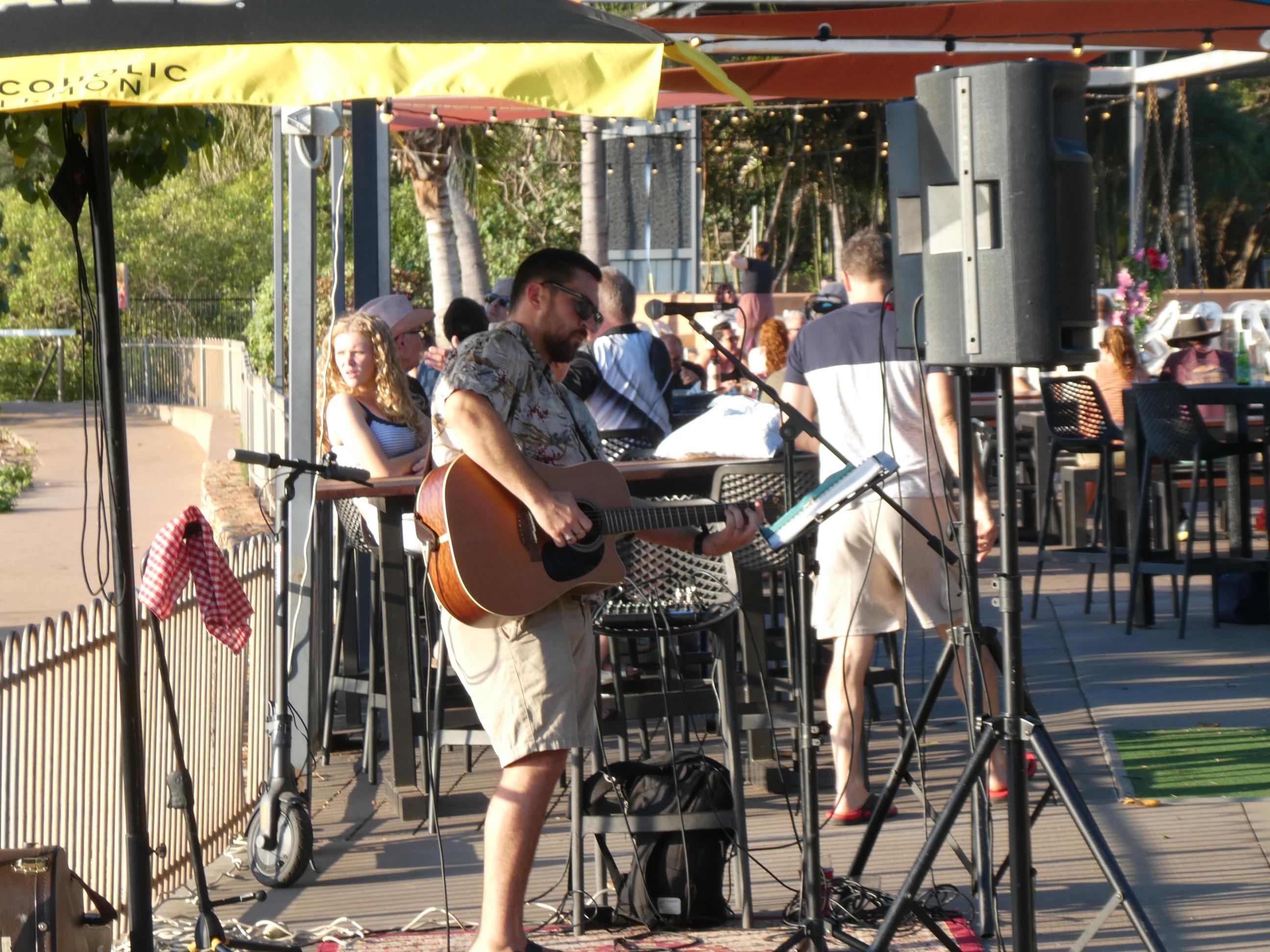
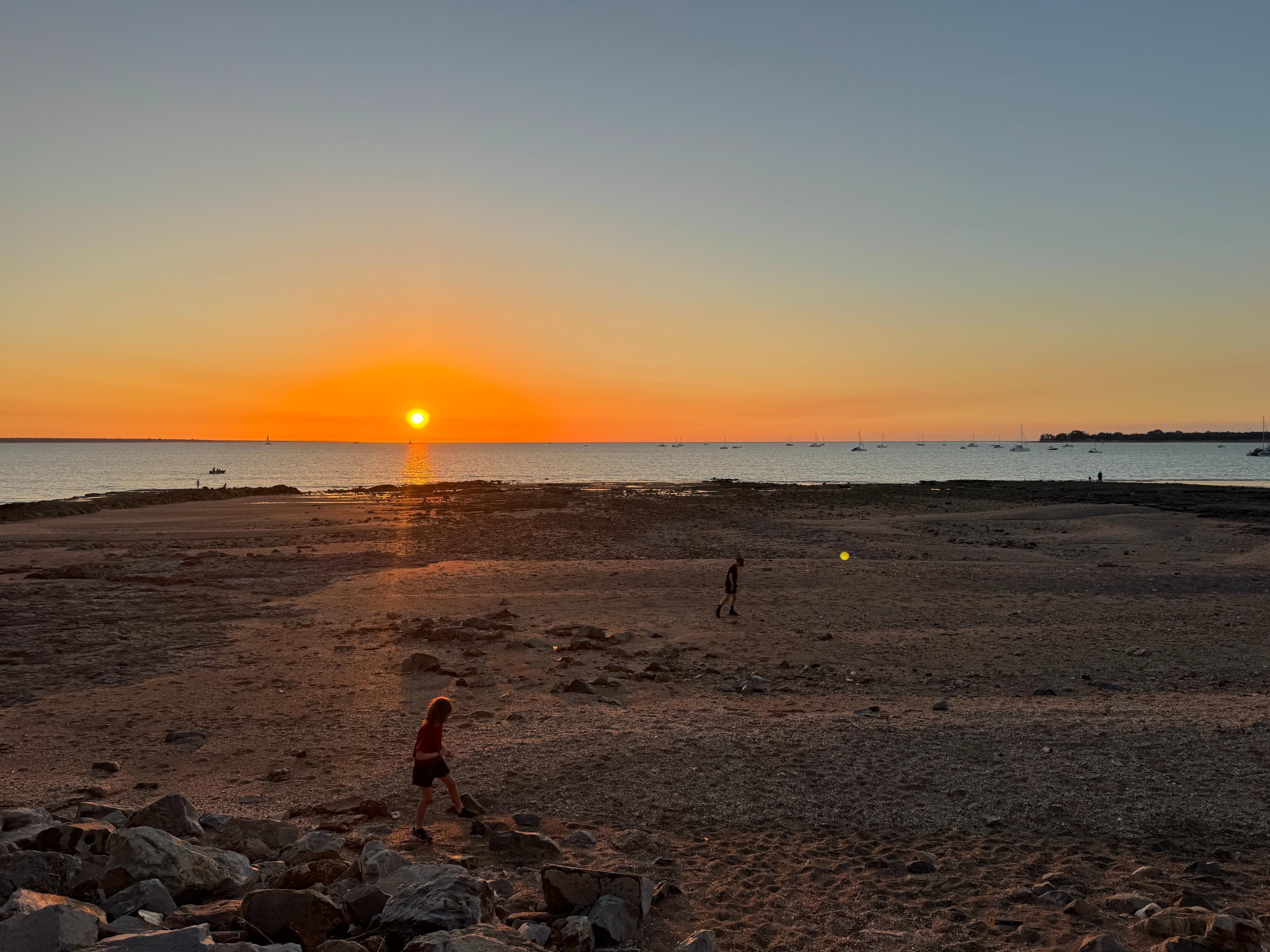
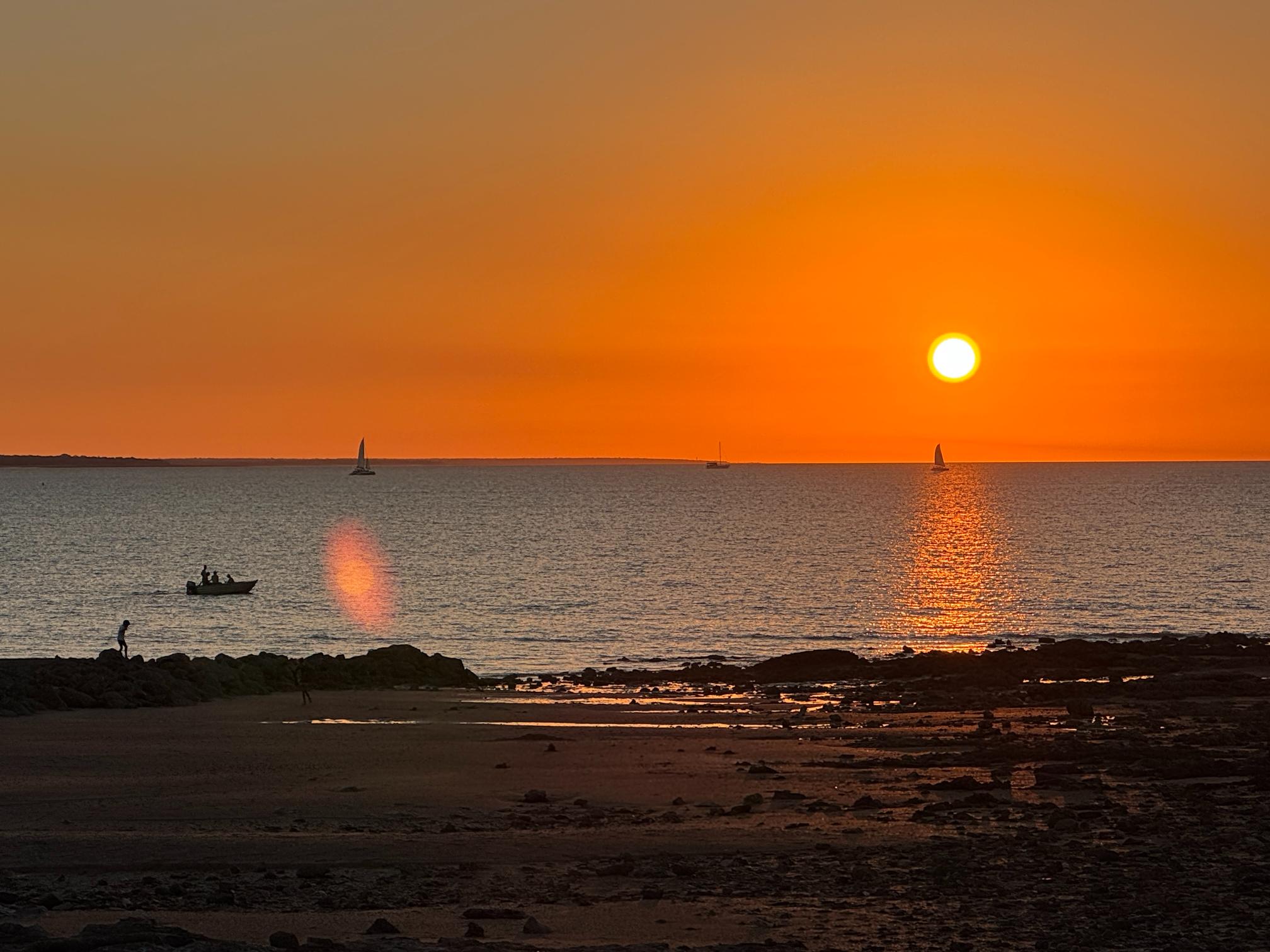
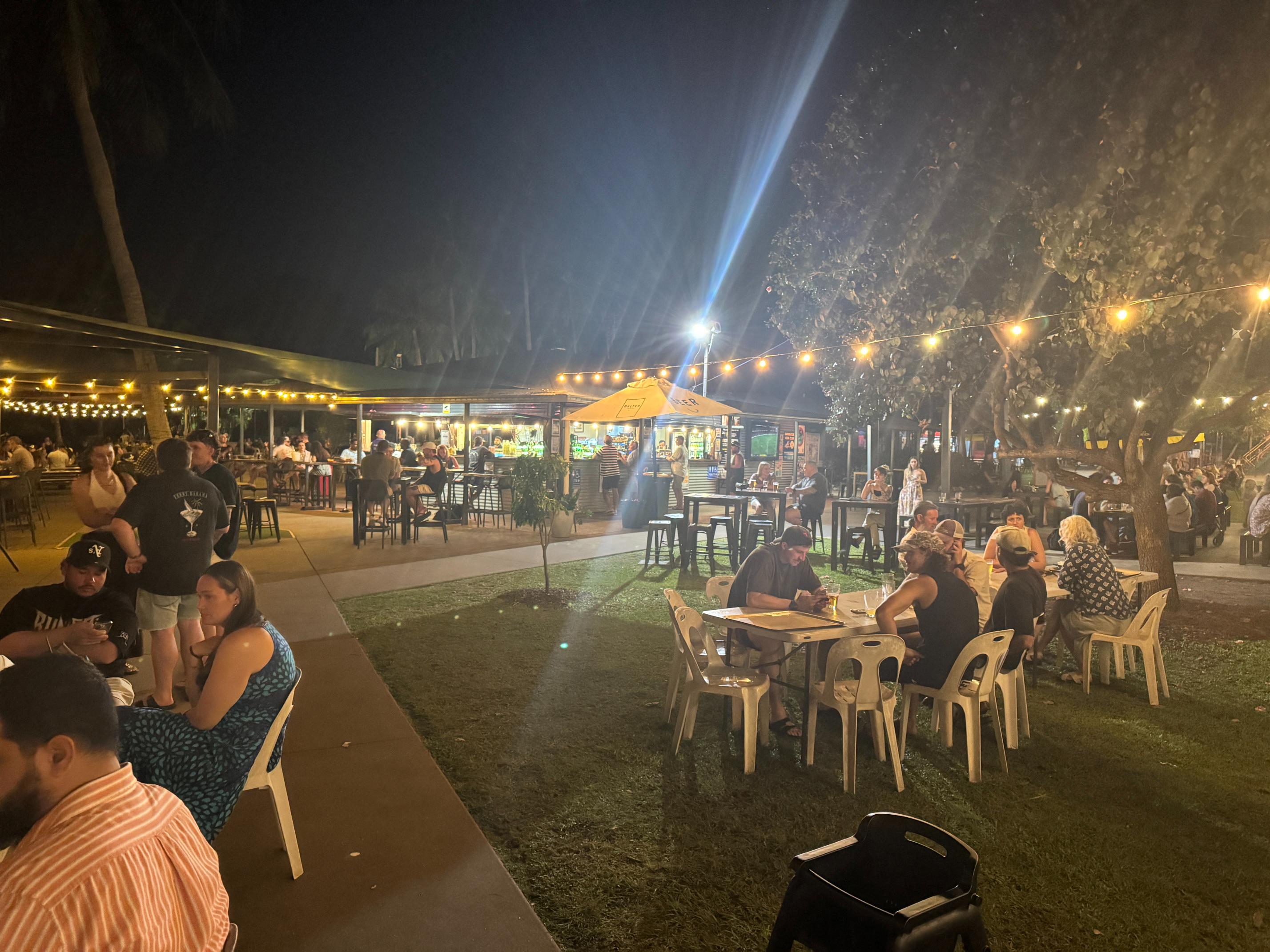
This evening Rod drove us down to Fannie Bay for dinner at the Darwin Ski Club, which proved to be a very popular place for a Saturday evening. Thankfully, Rod had made a booking, so we had a great table down near the beach. We enjoyed a great meal and a glass of wine to the accompaniment of live music and the glorious display of the setting sun over the water. It was a nice way to end another good day.