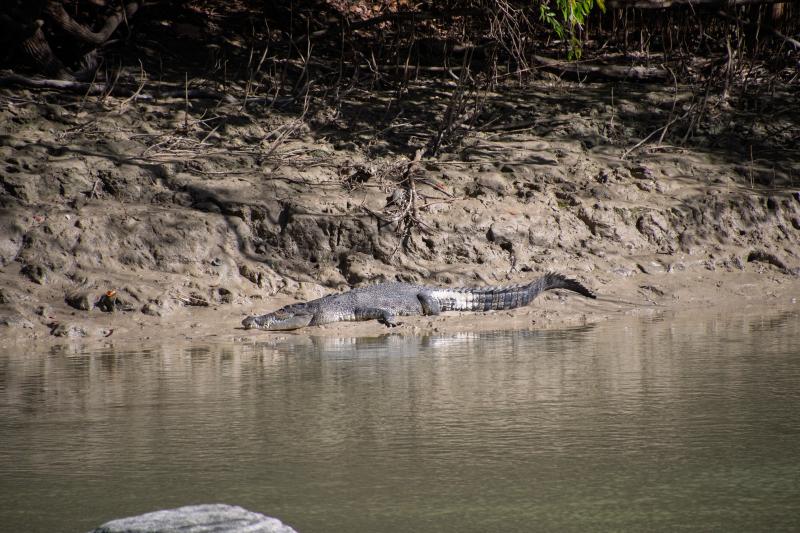
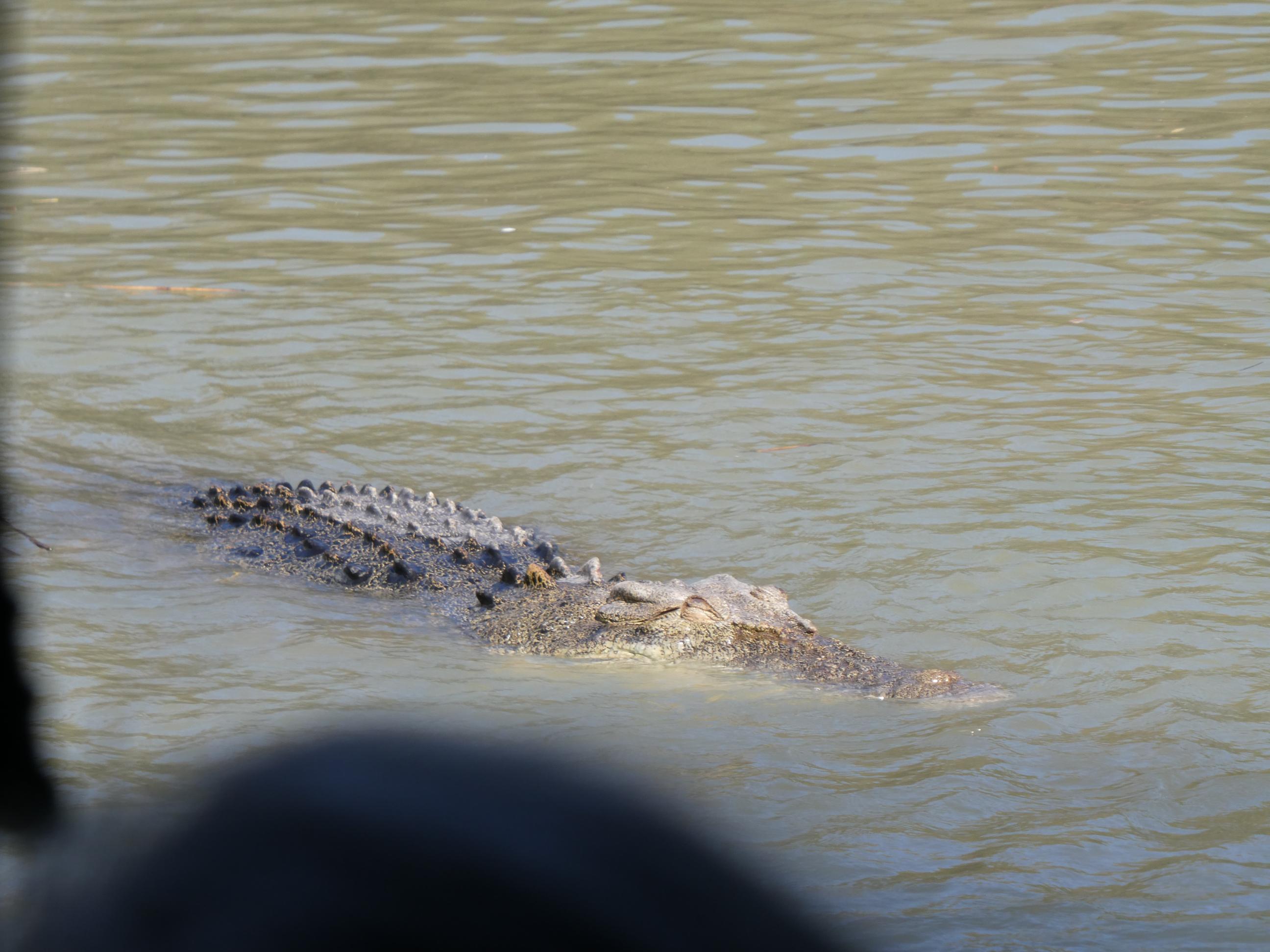
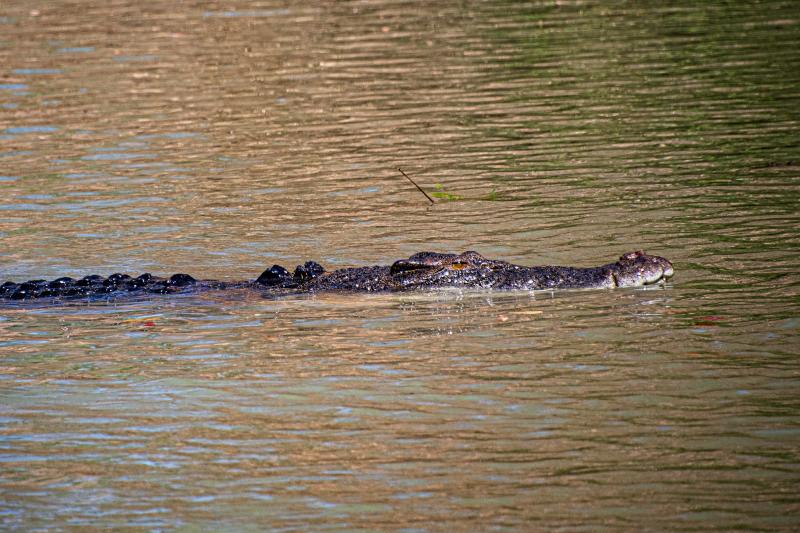
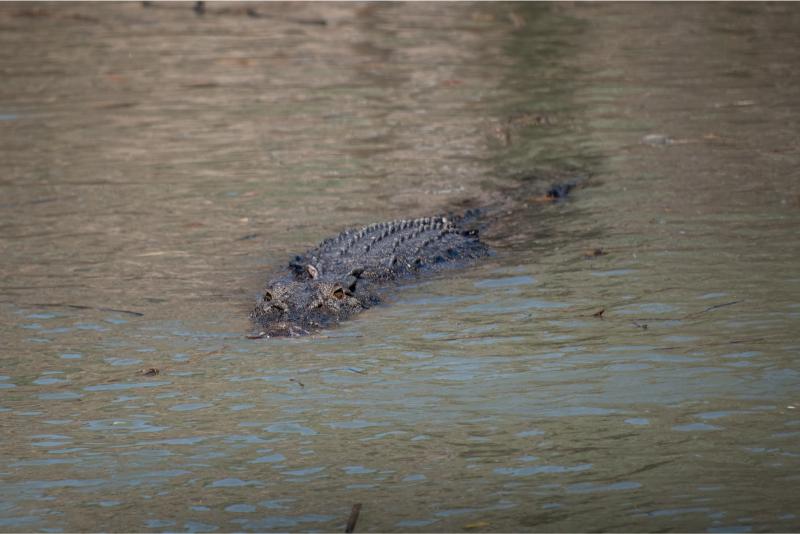
Today we joined a small tour group for a visit to Arnhem Land. Arnhem Land, which borders the eastern side of Kakadu National Park, is aboriginal land. It’s managed by the Northern Land Council, which represents the traditional owners of the land. There are two hurdles to cross before visiting Arnhem Land. The first is to acquire a permit from the Northern Land Council, which makes it advisable to go with a recognised tour company, who have no trouble obtaining the permits. The second hurdle can be far more challenging. You have to cross the East Alligator River at Cahill’s Crossing. The river is tidal, so the crossing may be submerged. Large saltwater crocodiles cruise around the crossing, often coming in for a closer look when a vehicle begins to cross. If the water is too deep, it is advisable to park the vehicle and wait until the level subsides enough for a safe crossing. If ever a vehicle were to come to grief, I imagine the crocs would be on the spot within seconds.
When we crossed this morning, the tide was low and the crossing was exposed, so our transit was easy and safe. Several crocs swam towards us, while others lazed on the muddy banks. We stopped on the approach to the crossing to give an indigenous man a lift. He certainly couldn’t have walked across the crossing. It wouldn’t have been safe. We gave him a ride all the way into Gunbalanya.
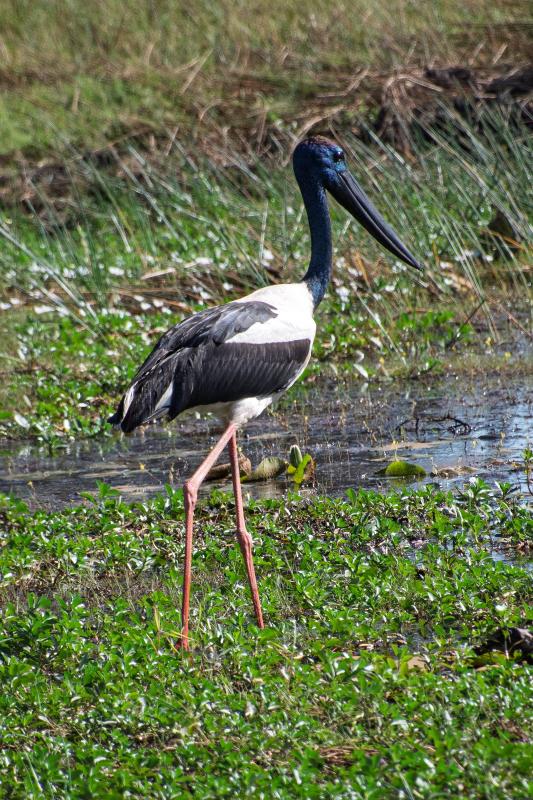
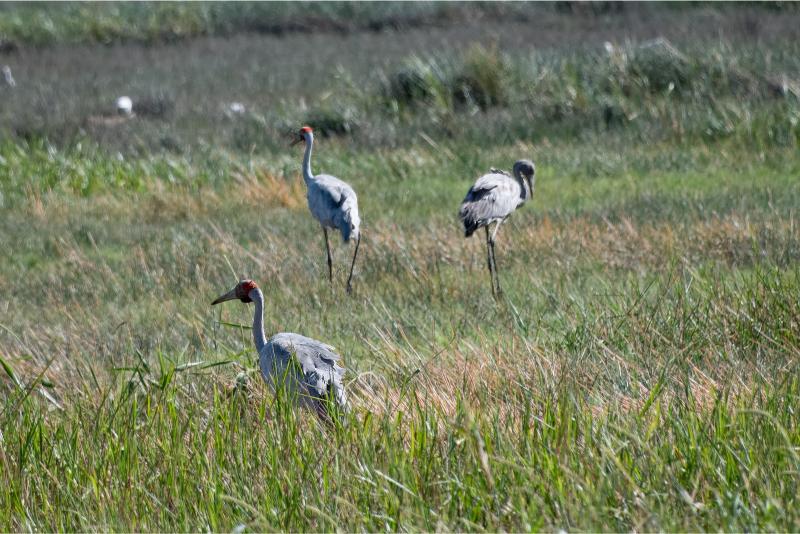
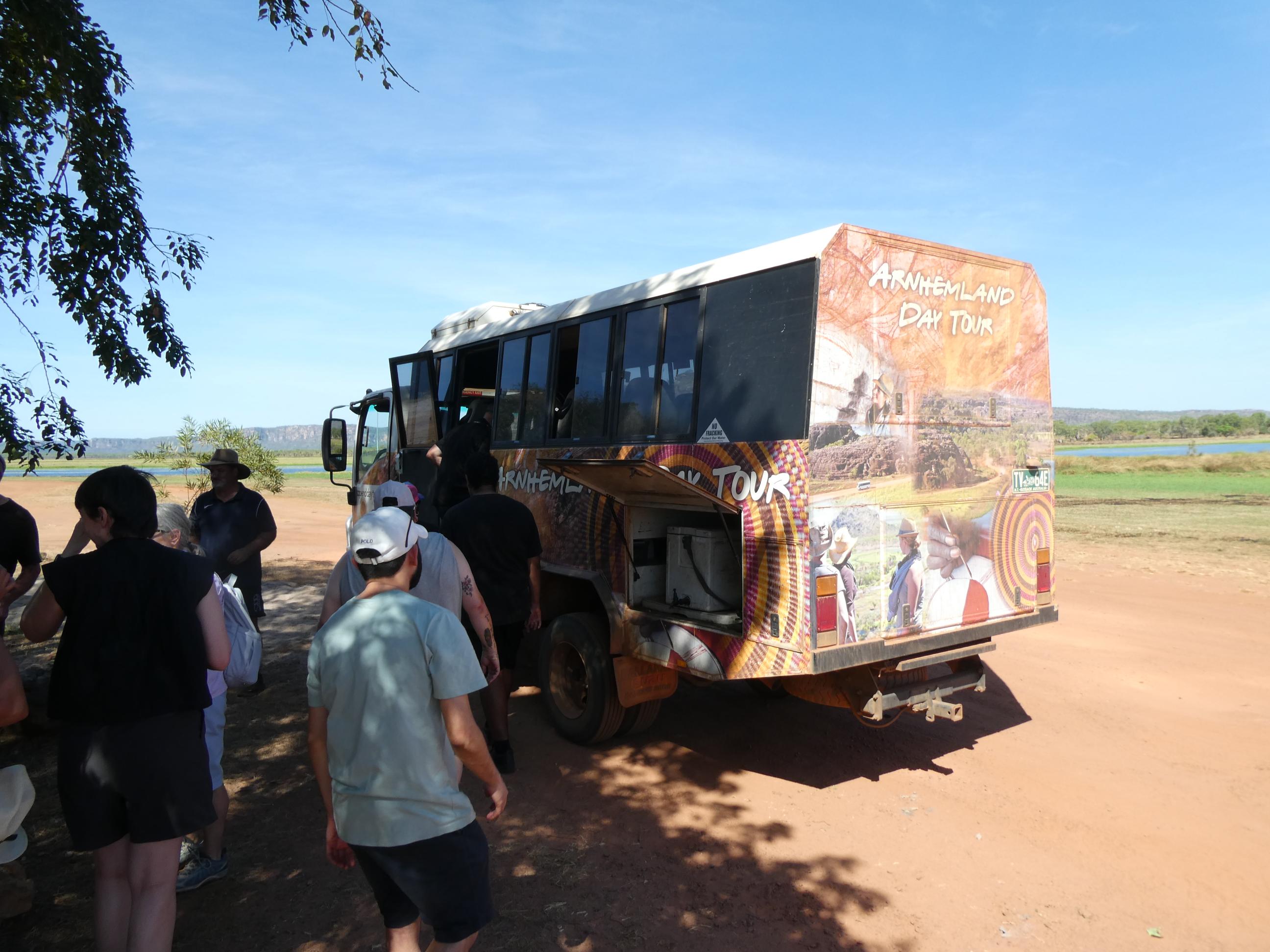
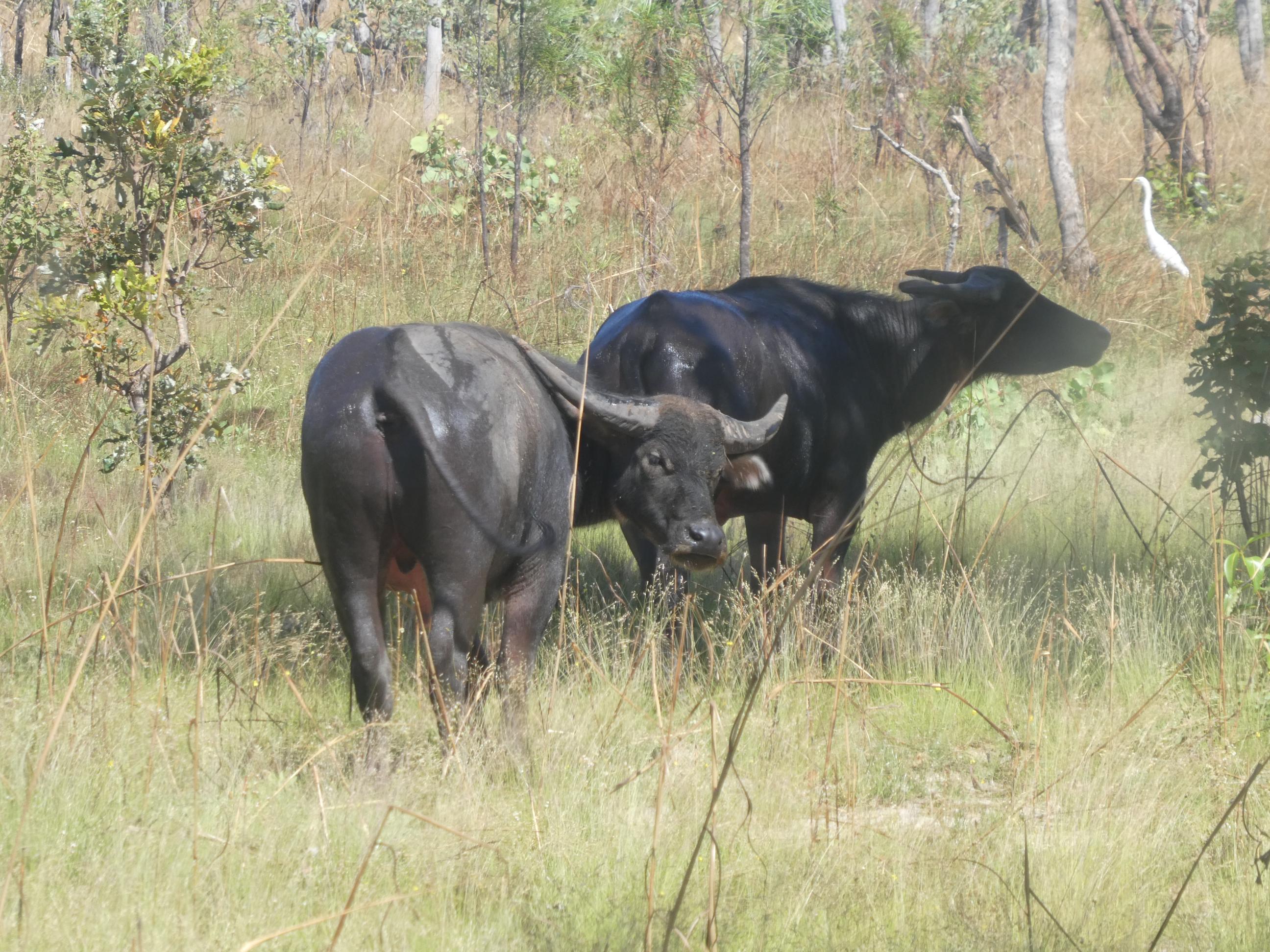
Our tour vehicle had departed from Darwin early this morning and picked up a few guests at locations along the way. We were the last pickup destination, so unfortunately we’d been left with the worst seats on the bus for taking photos at Cahill’s Crossing and a few other places in Arnhem Land where we spotted some of the wildlife, including two of the most iconic birds of the Top End – the jabiru and the brolga. Thankfully Rod got a few better shots than I could and generously shared them with me. Interestingly, as our tour vehicle was pulling in to our hotel to pick us up this morning, we watched as a latch flew open and the esky containing all our morning tea and lunch fell out onto the road. When the driver pulled up, he was unaware it had happened until we pointed out the fallen esky about a hundred metres away on the entry road.
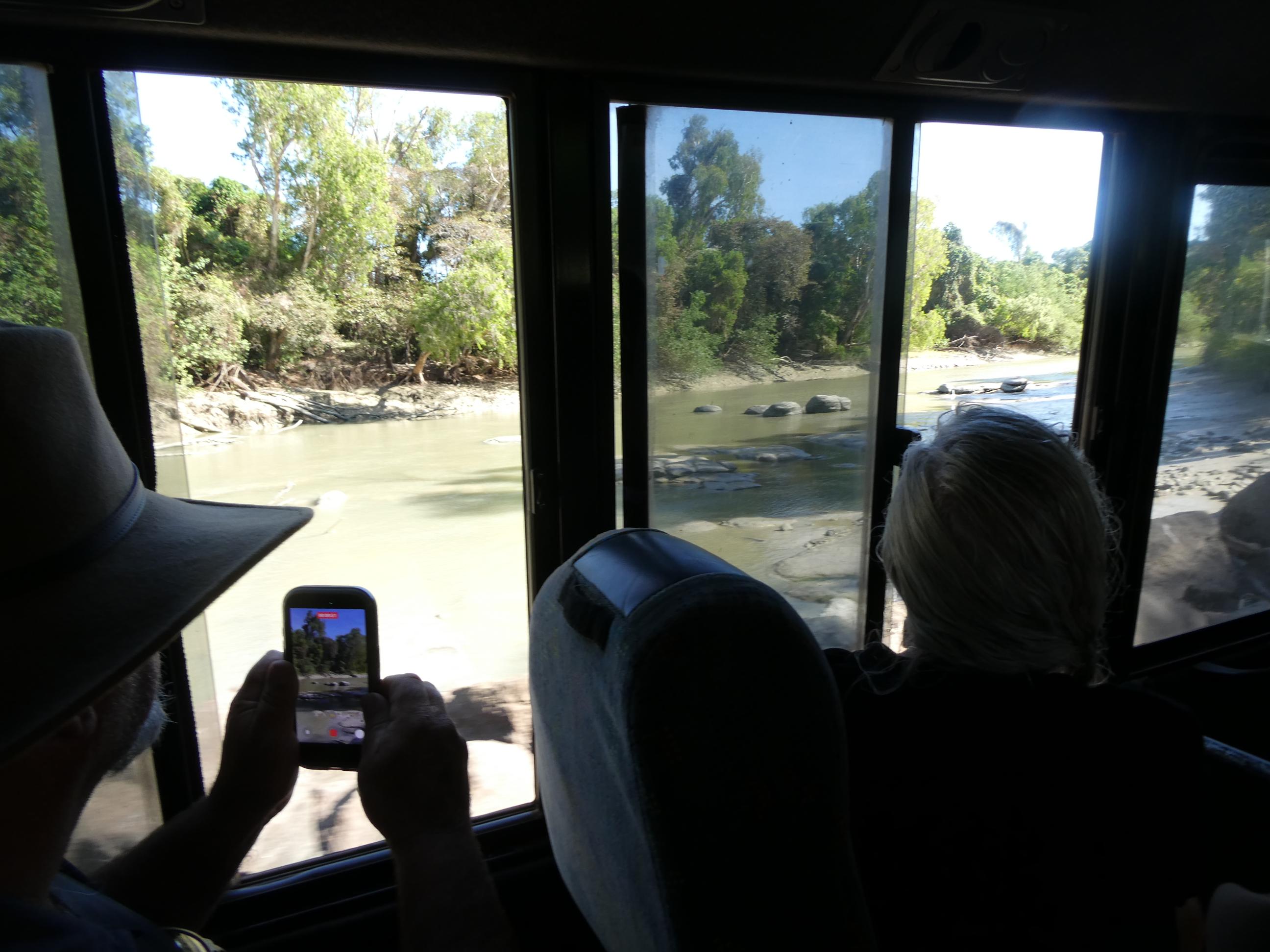
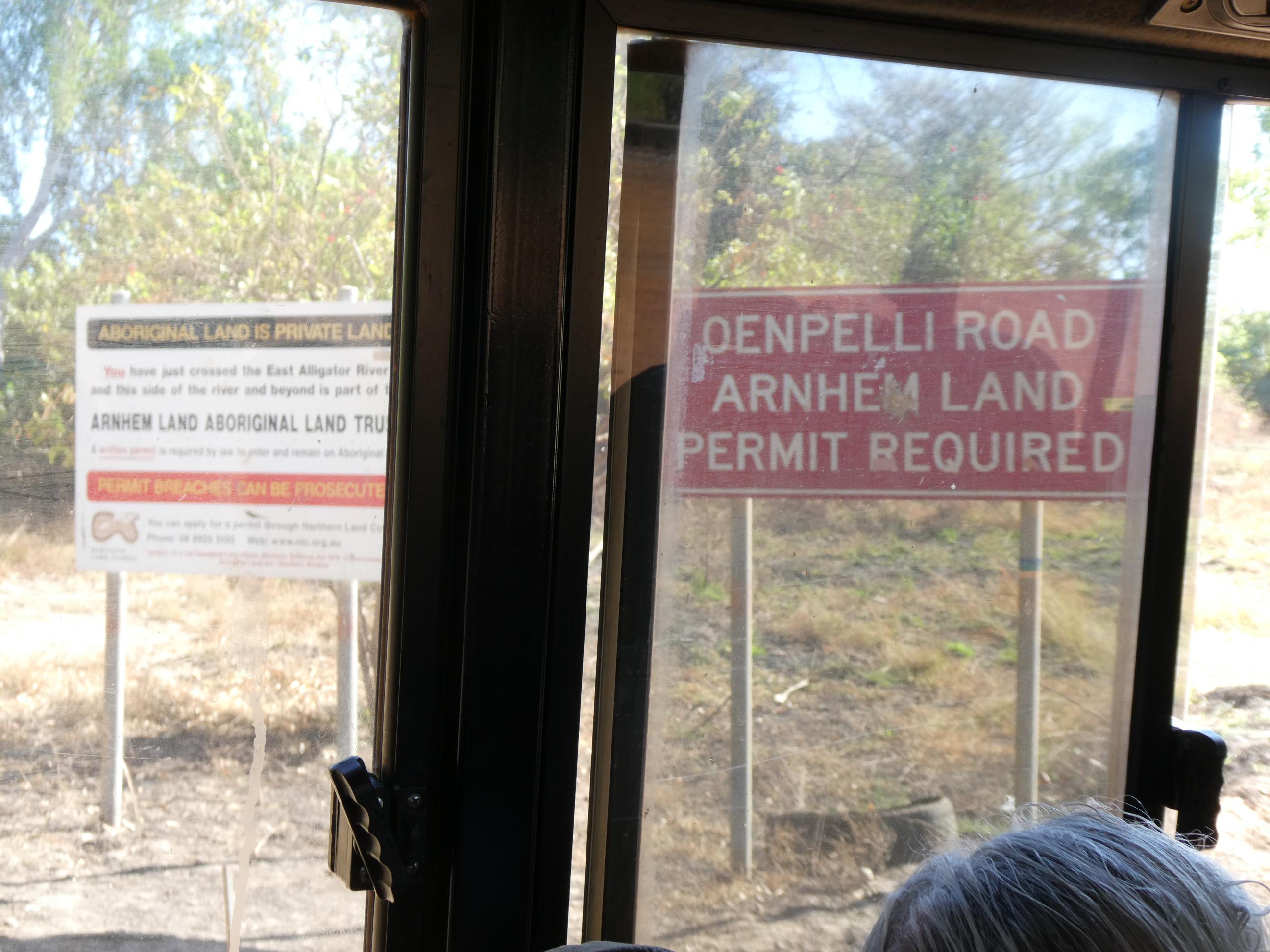
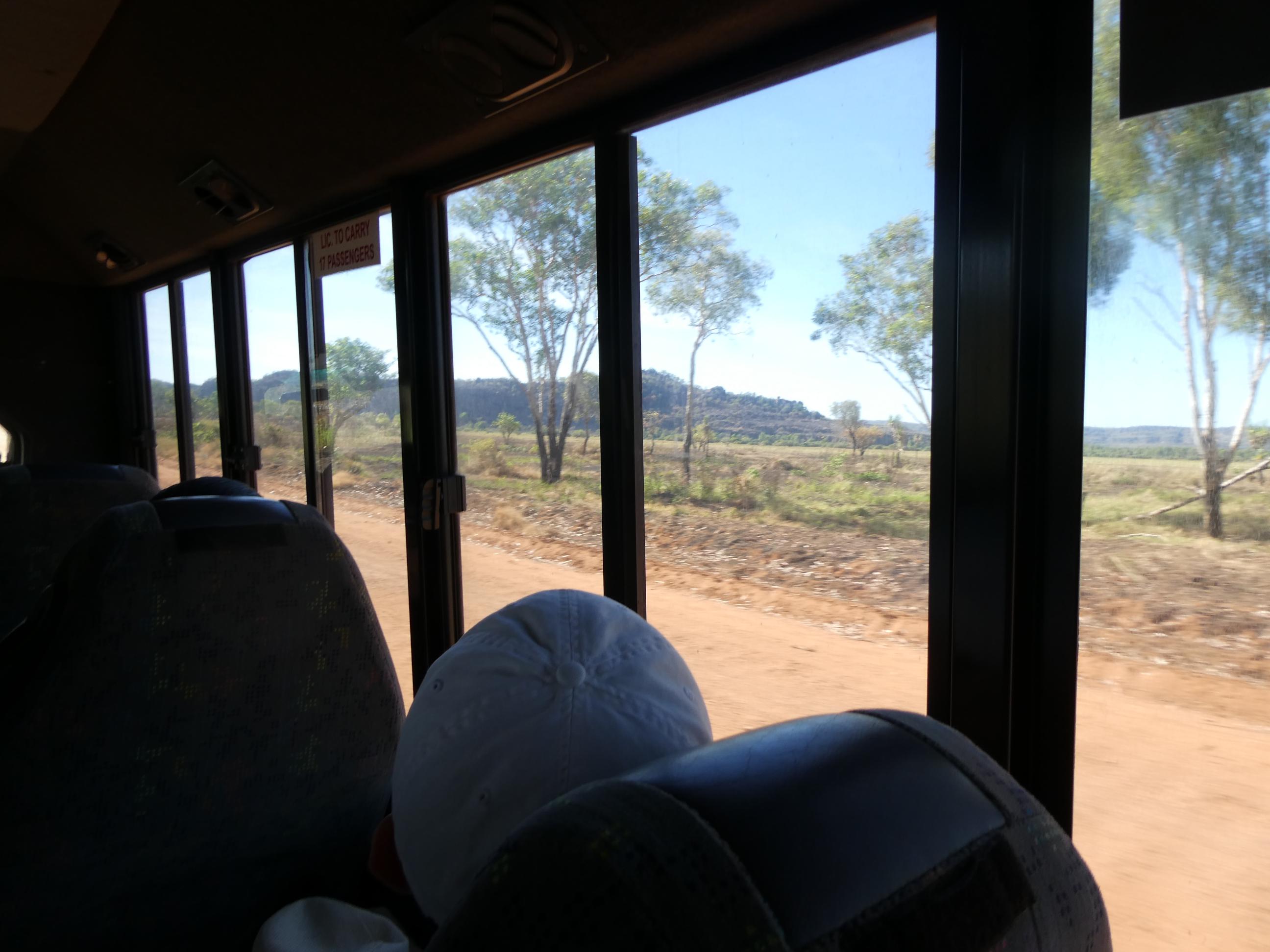
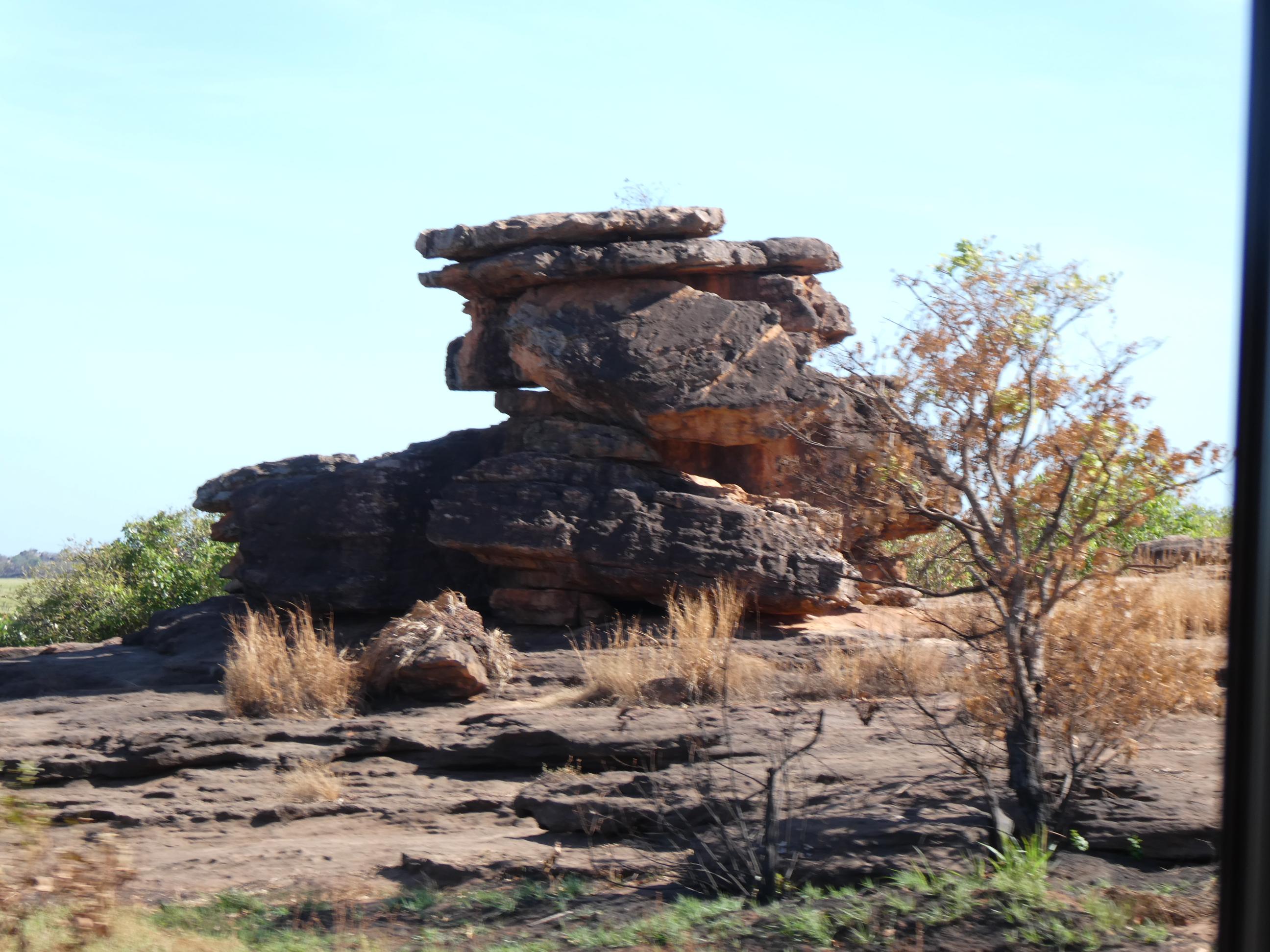
Once we entered Arnhem Land, we were on unsealed, heavily corrugated roads. We had to travel slowly and it’s fair to say we were jolted around the entire way from the crossing to Gunbalanya. Gunbalanya is the indigenous name for the community. It’s other ‘whitefella’ name is Oenpelli. The community has grown since we last visited in 2000. Our driver, Tim, told us that a number of new houses have recently been built and that there’s currently plenty of employment available in the small town. I think the current population is only 200-300, although I heard that many people return home for the wet season, where all the surrounding country is submerged under water and the houses usually, but not always, remain just inches above the water level. Apparently crocs sometimes come right into the town when the water levels are up.
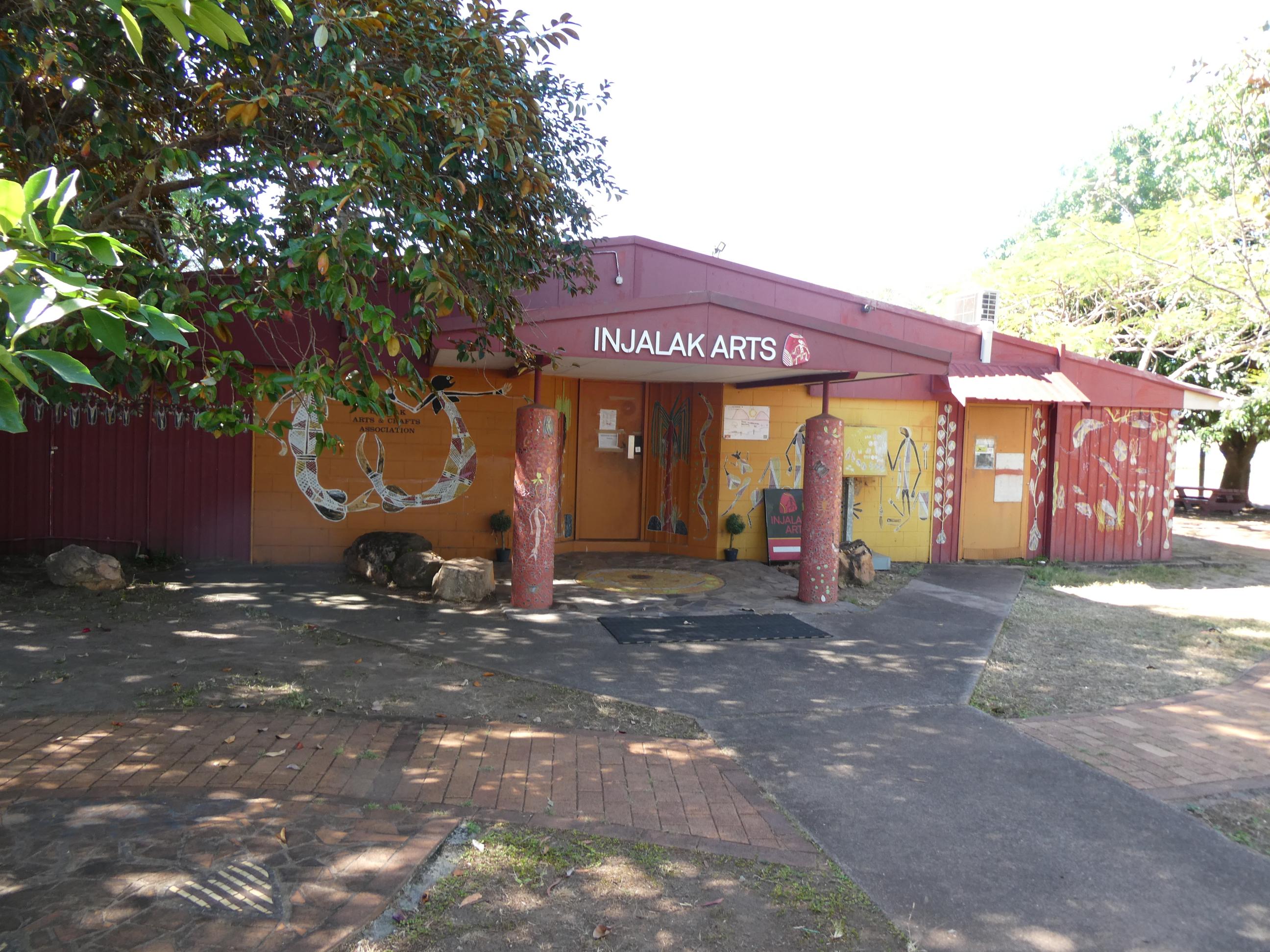
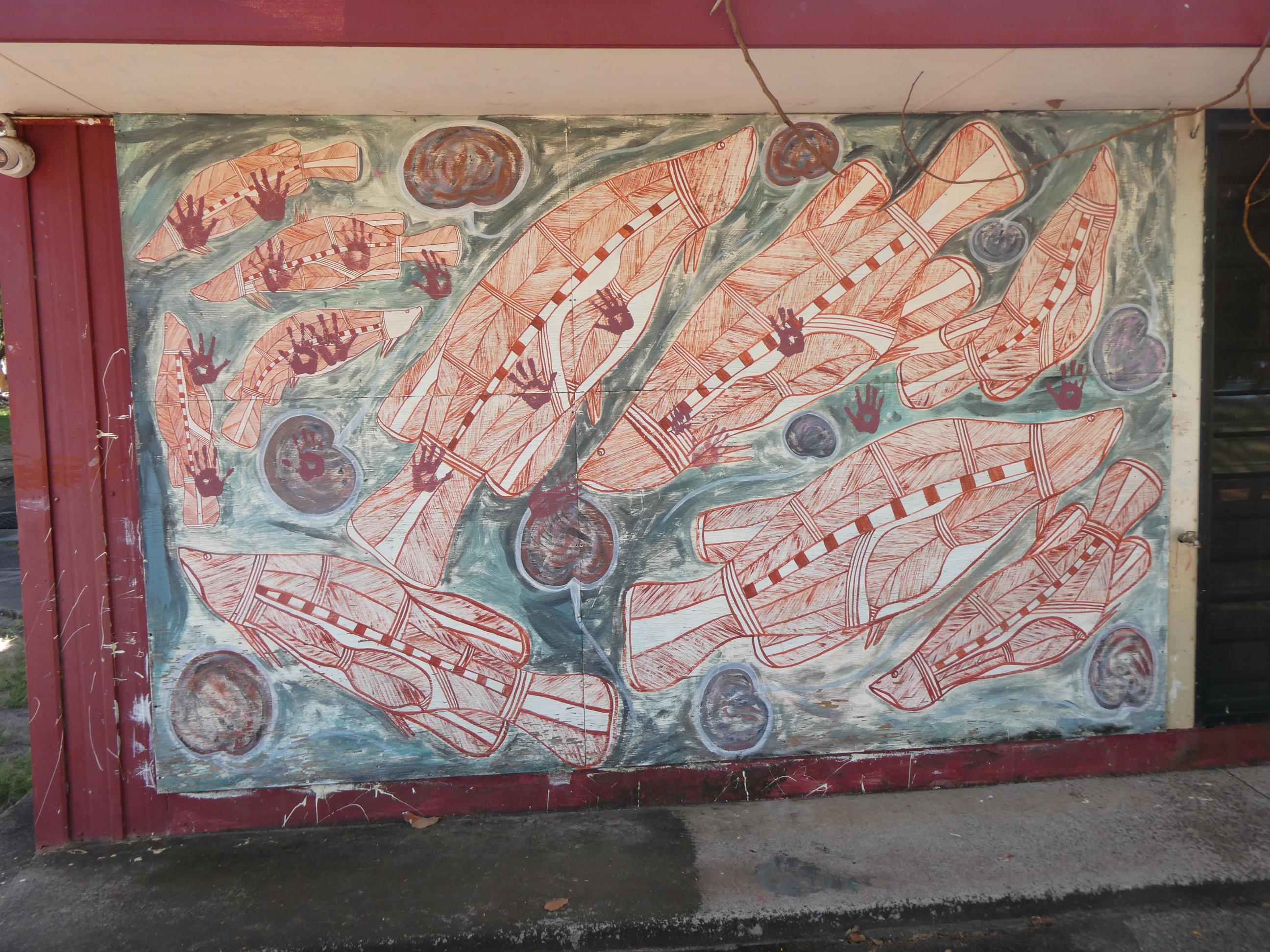
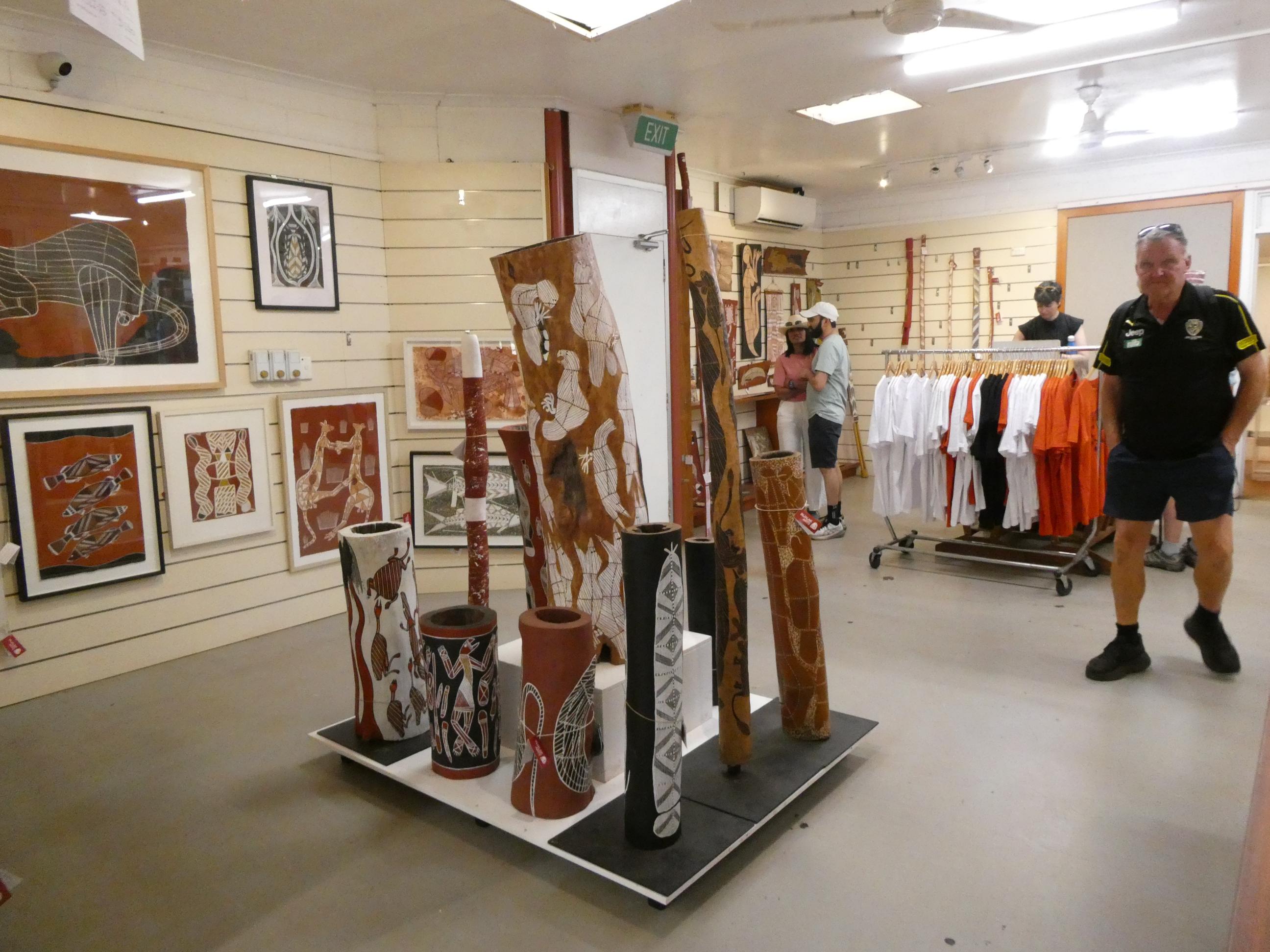
Our first stop was at the Injalak Arts Centre. This is a co-operative enterprise that supports many of the very talented indigenous artists who live in the town. They come here to paint. Their paintings are on sale here and can be mailed all over the world. Clothing and printed fabrics with indigenous designs are also on sale here. Some of the Injalak artists have achieved fame well beyond Australia. The last time we were here, we bought three paintings. One still hangs in our lounge room and I look at it and admire it almost every day. My brother and his wife also have some wonderful Injalak art works on their walls at home. Today, there were no artists painting when we visited. Before we left the arts centre, we took a morning tea break and made up our lunch wraps so we could carry them up to the rock art sites with us. Our indigenous guide, Craig joined us.
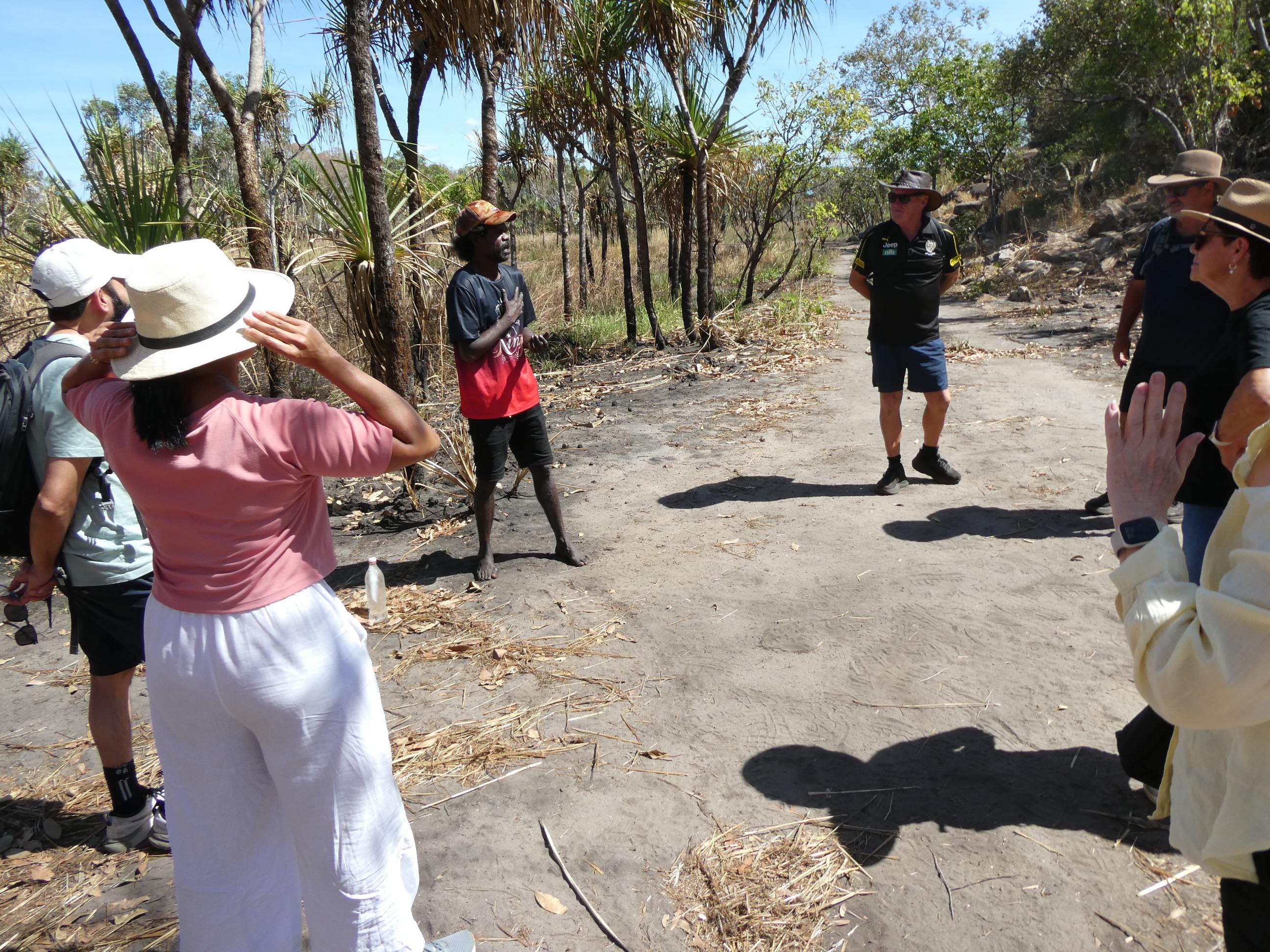
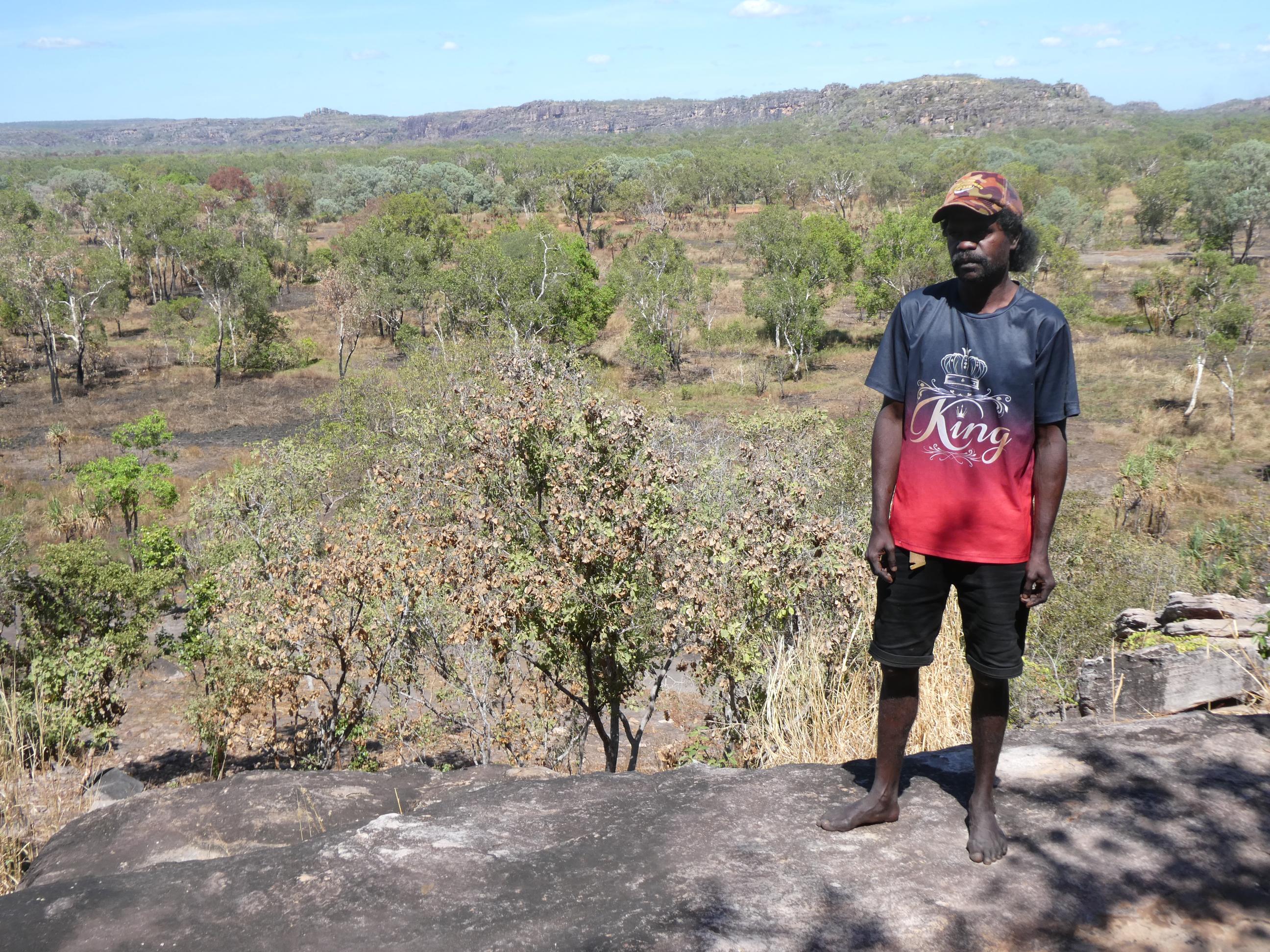
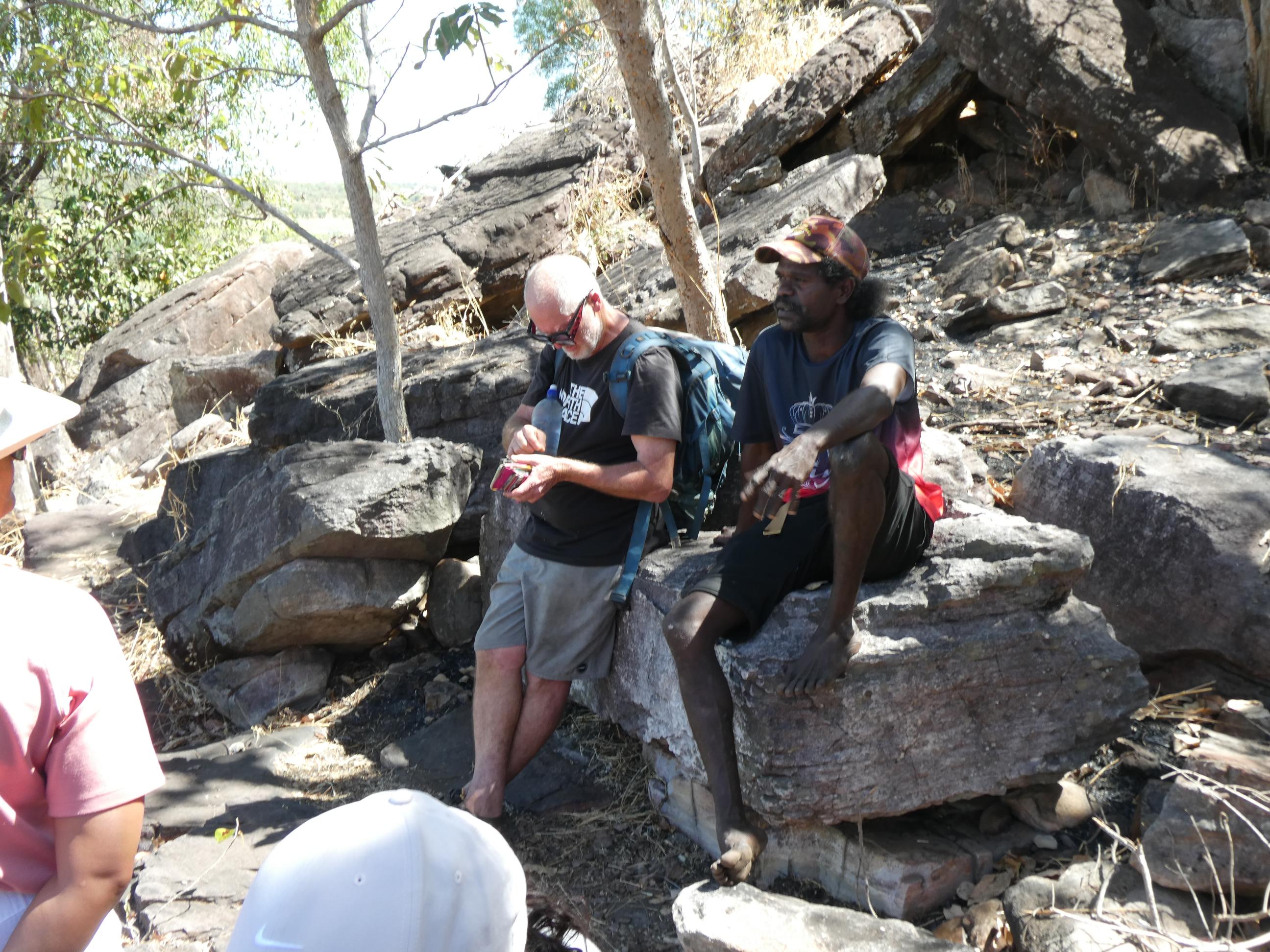
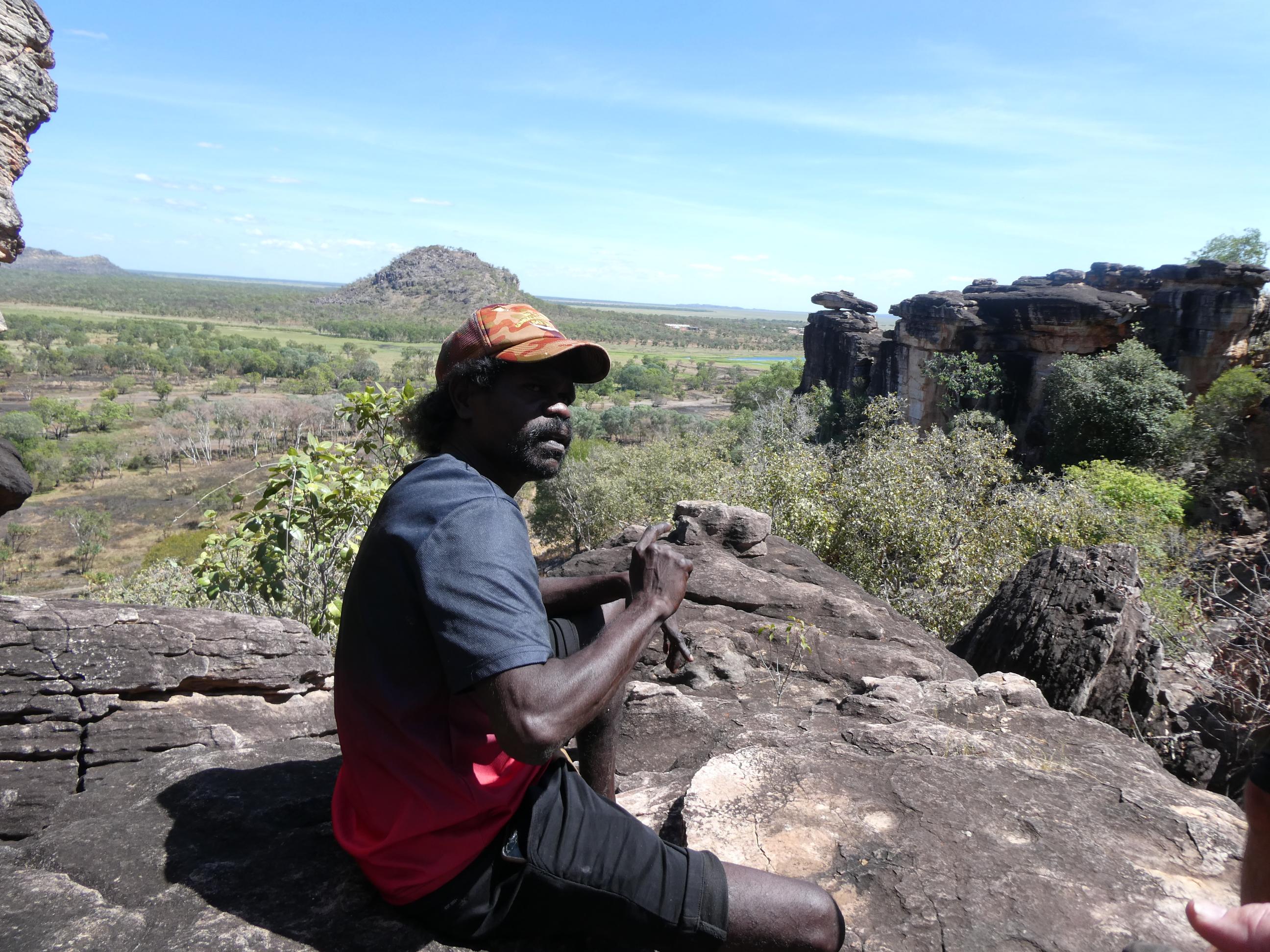
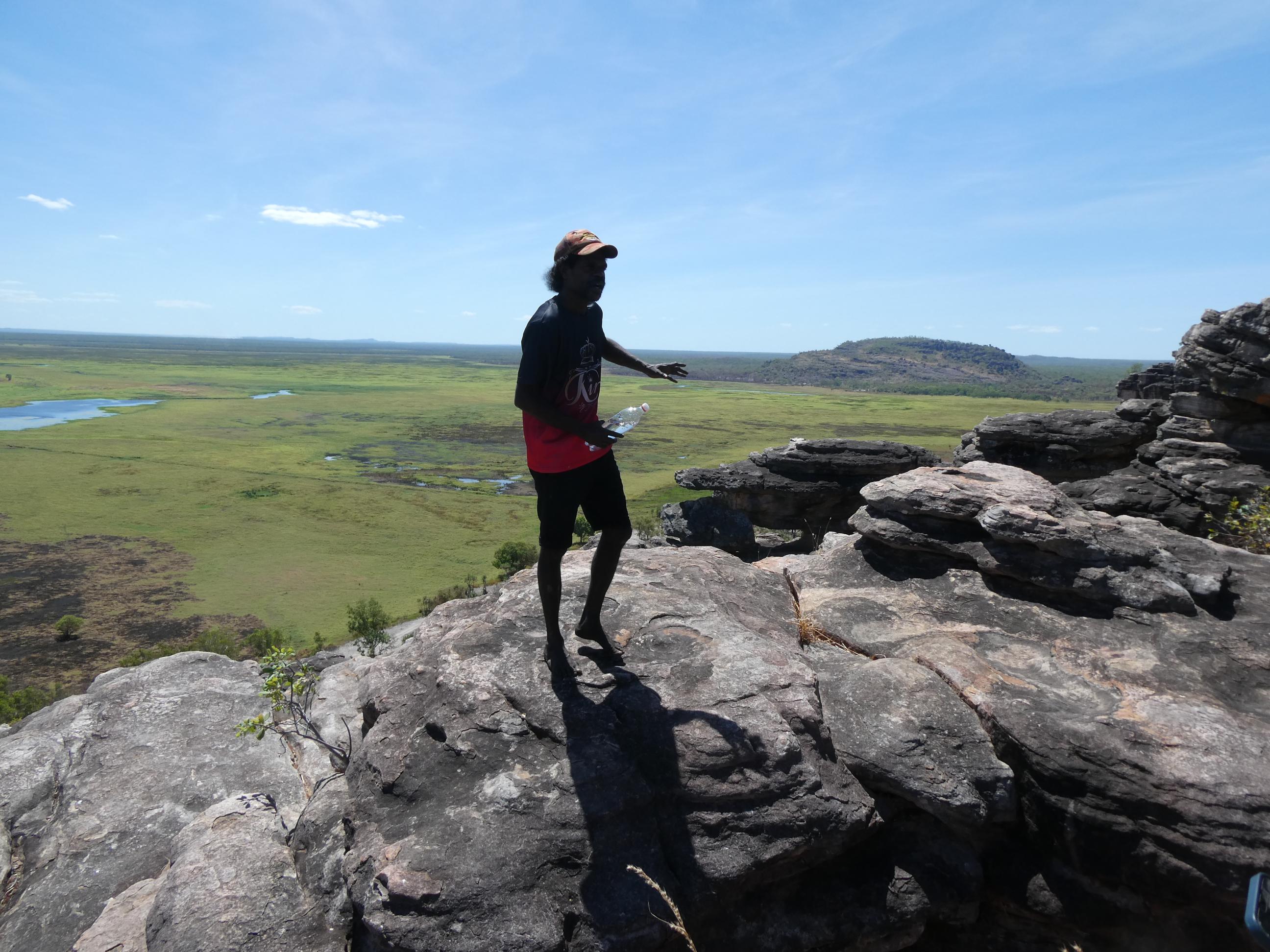
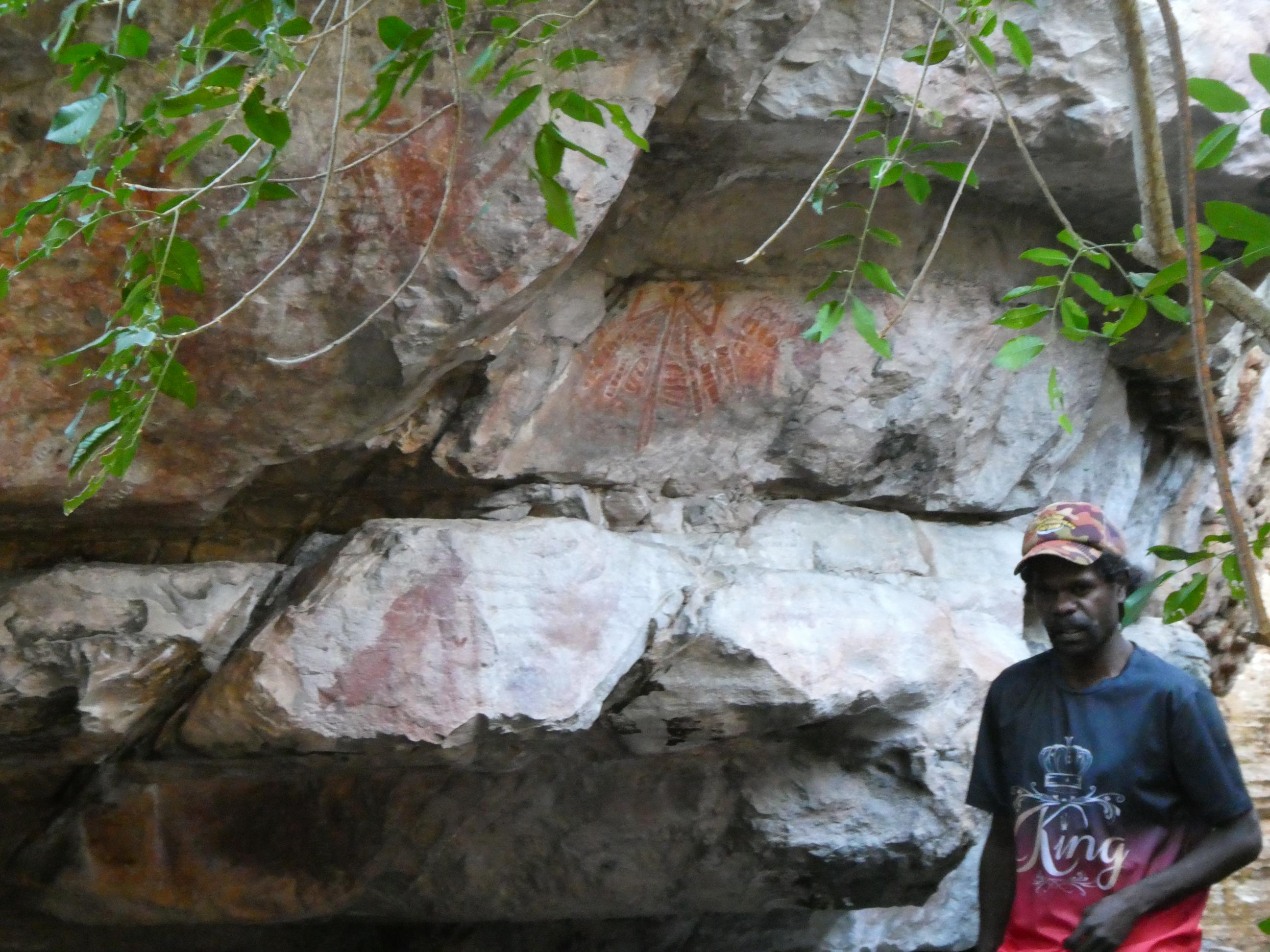
Craig is a Bininj man. He was not wearing shoes. He told us he had to wear them when he worked as a ranger for the Parks Service, but otherwise he didn’t see a need for them when he was on his country. He didn’t learn to speak English until he was a teenager, but he wasn’t shy and tried to answer all our questions. I thought he did a pretty good job, although there were some things he told us that I just missed altogether. He was certainly very knowledgeable, and keen to pass on stories about his people and his culture. He said there were some things he couldn’t tell us because that was the women’s responsibility. Over the course of the day, Craig told us about the history of the rock art sites, the roles of some of the people in his community, the laws that must be obeyed, the birds and animals of the region, the seasonal changes to the landscape, and the customs to be observed when people die. He wanted us to know these things. He told us he also wanted his young daughter to know and understand these things. I asked if he taught this lore to her and he replied that he could not because that was the women’s responsibility. While I listened to Craig so earnestly speaking about the different aspects of his world, it made me realise how strong the connections were between the indigenous people and the country they call home.
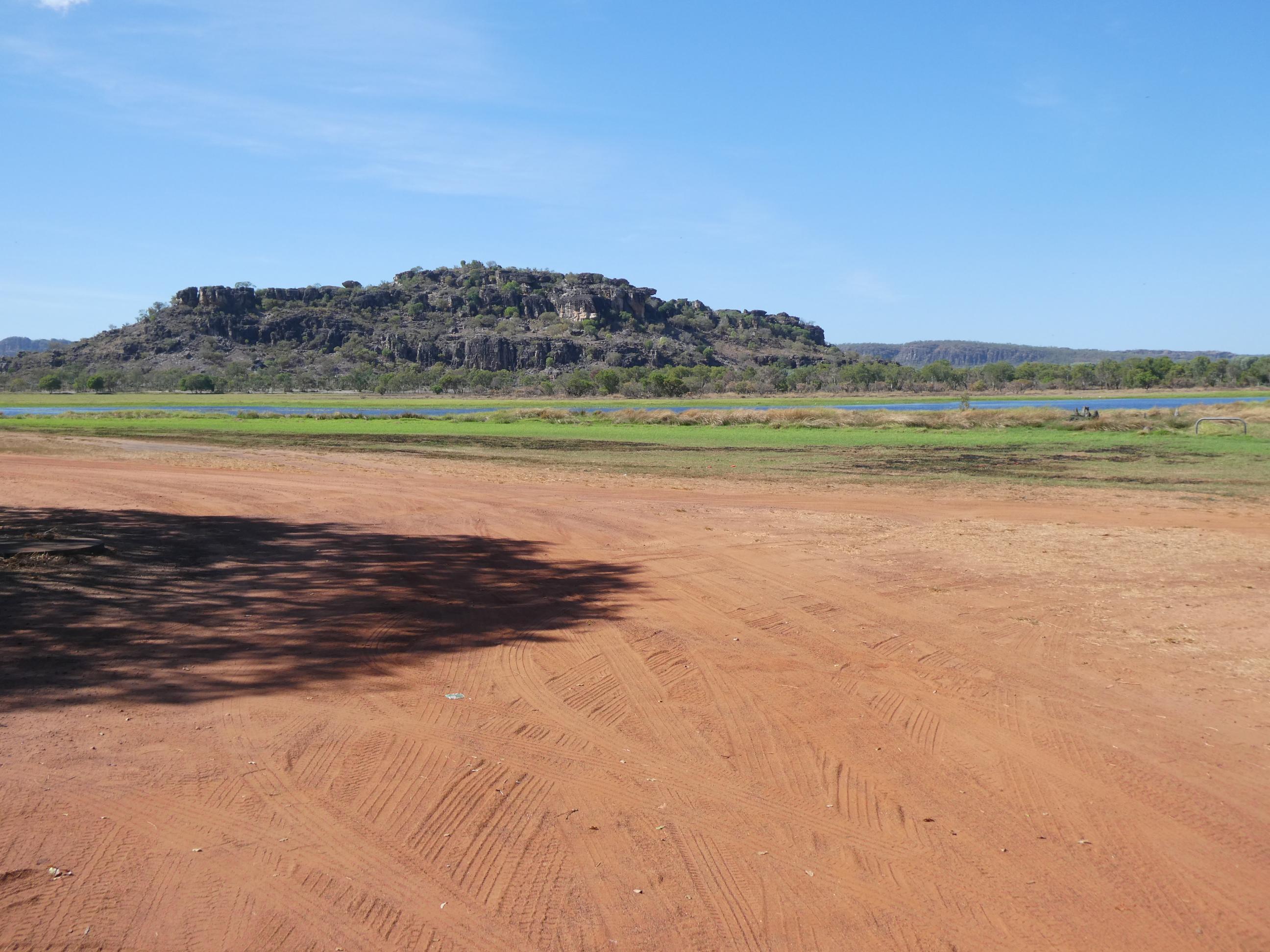
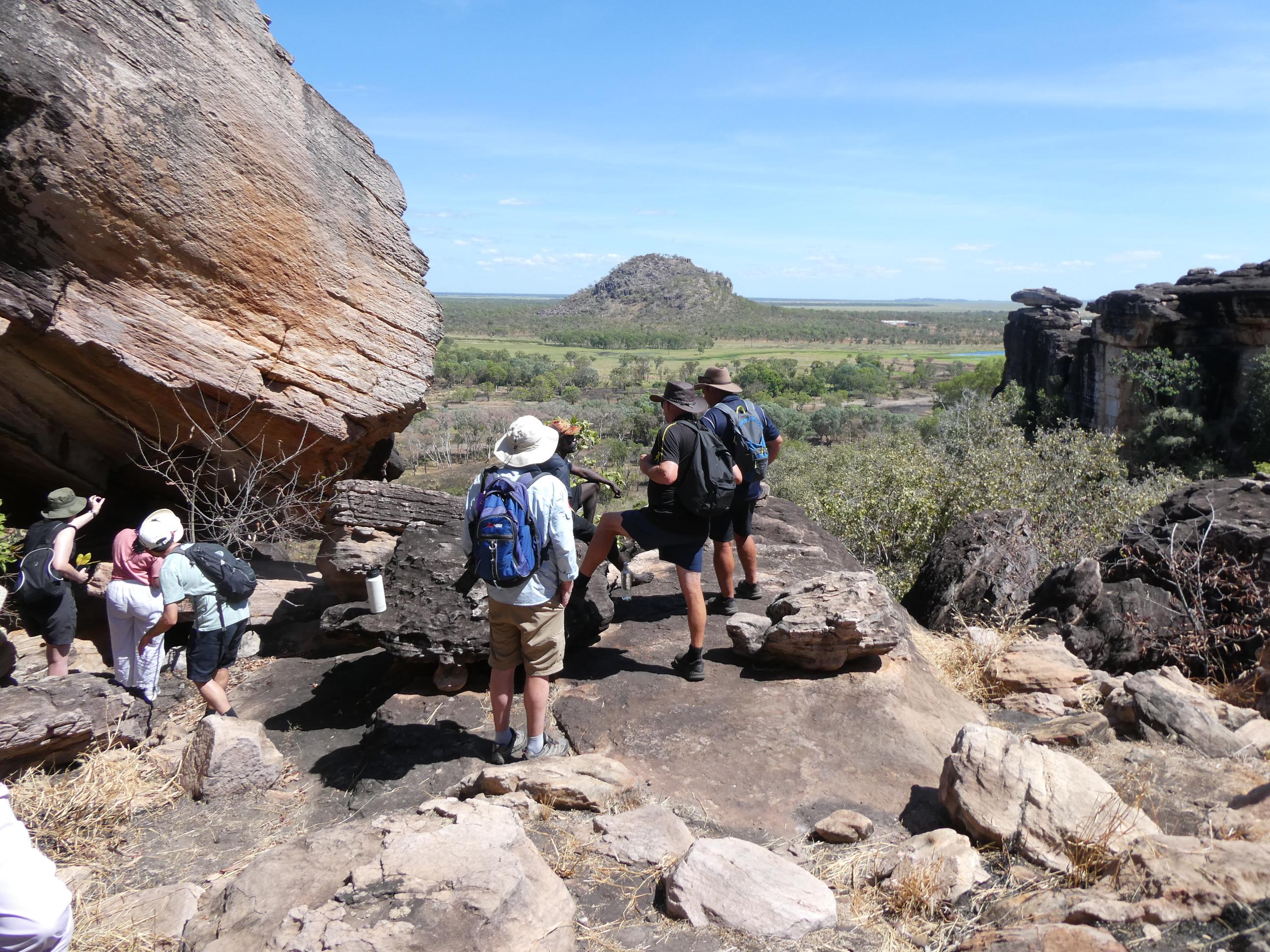
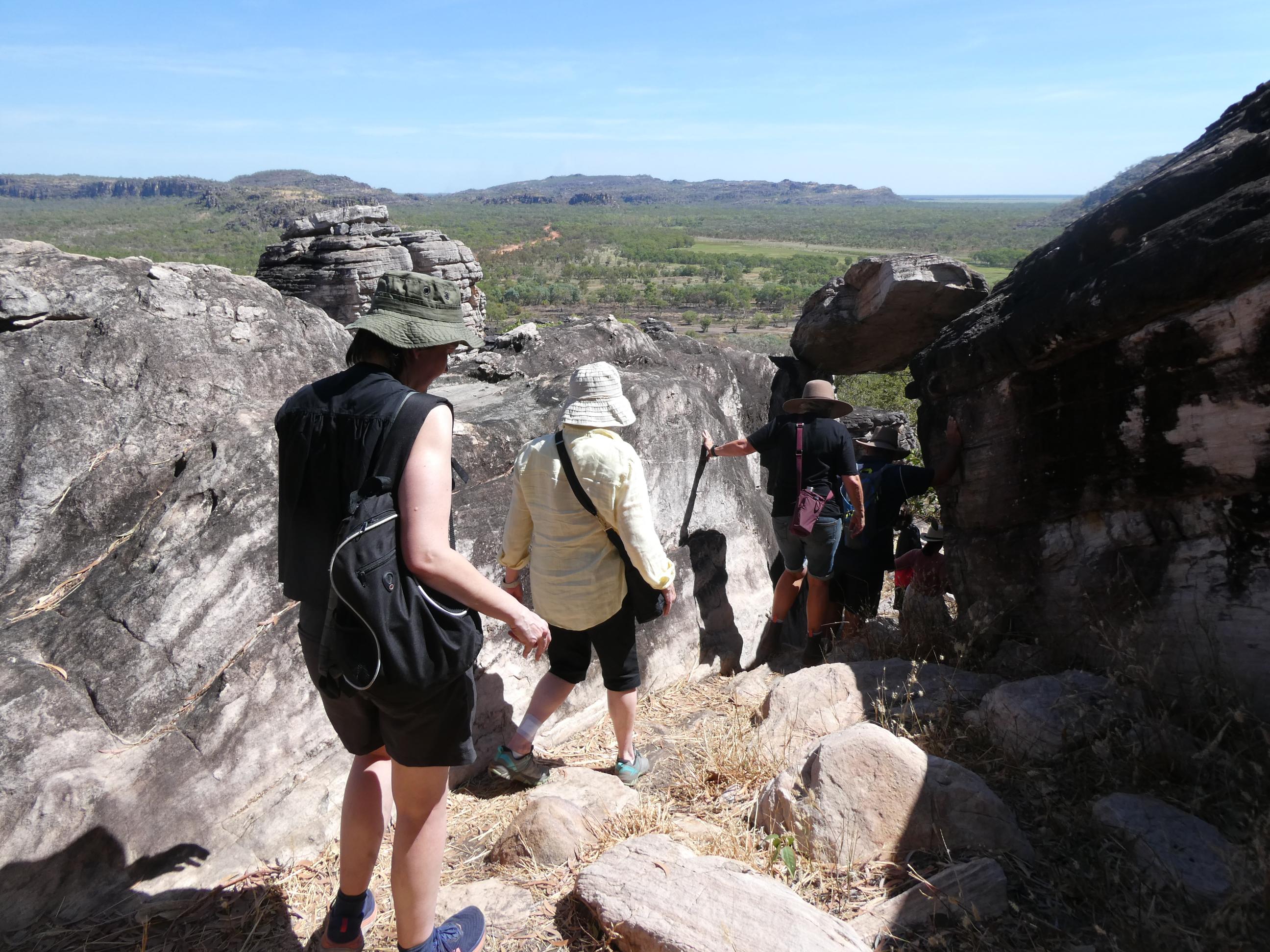
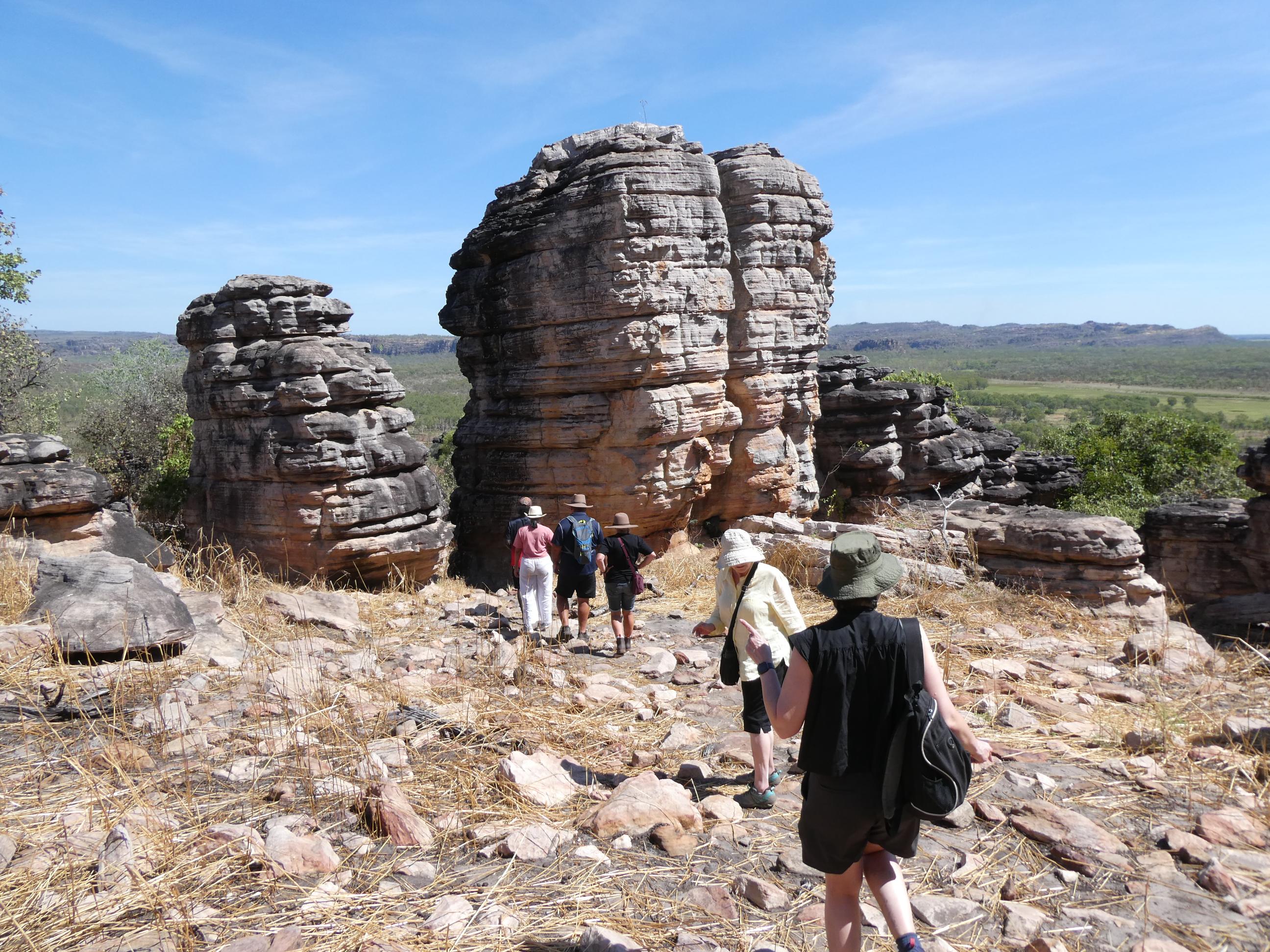
We drove around to the base of Injalak Hill, about ten minutes from Gunbalanya on the far side of the lagoon. There are no signs, no rangers, no car parks, no marked or sealed trails and no fees. Craig led us directly up the hill. It was hot and there wasn’t a cloud in the sky. I thought his bare feet must have been burning as he walked over the uneven rocks, but he never missed a beat. I took a hiking pole, which lessened the jarring on my left knee, and I was grateful for that. Injalak Hill is not a particularly high hill and not always steep either. It’s a rocky outcrop formed from sedimentary rock, which was once part of the seabed, I believe. Surrounding the hill was scrubland on one side and a floodplain on the other. The locals call this part of Arnhem Land ‘Stone Country’. It’s easy to see why.
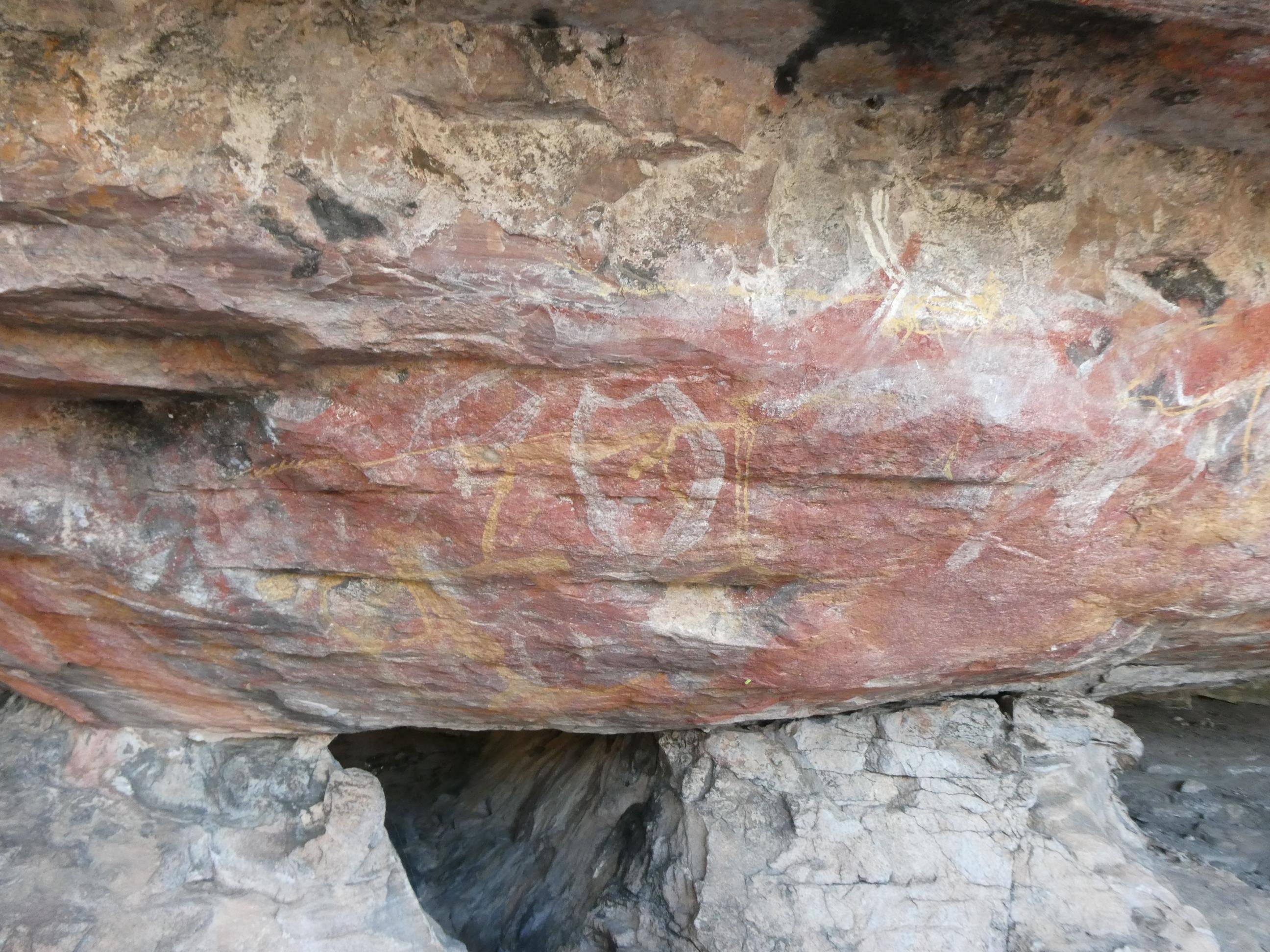
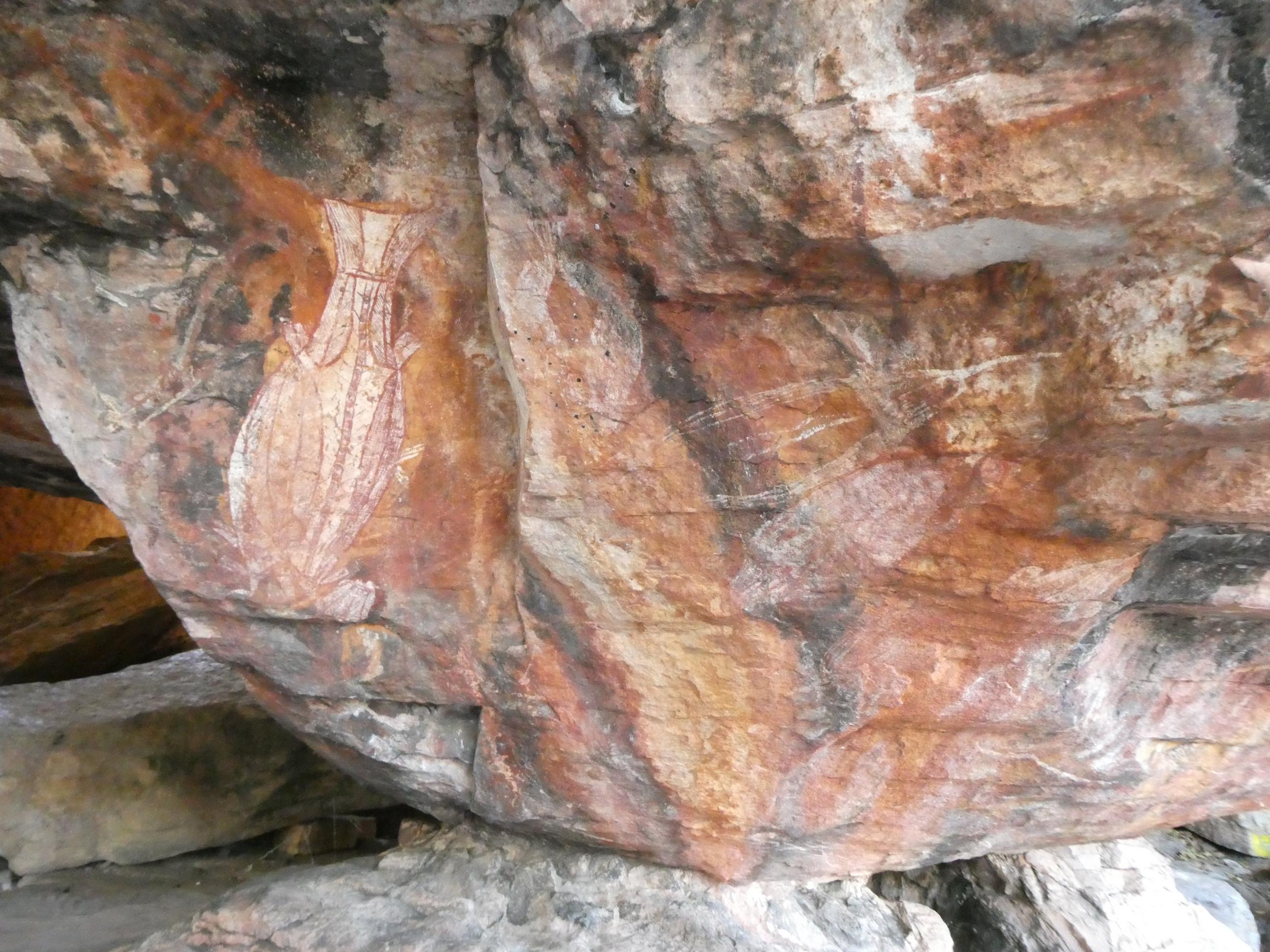
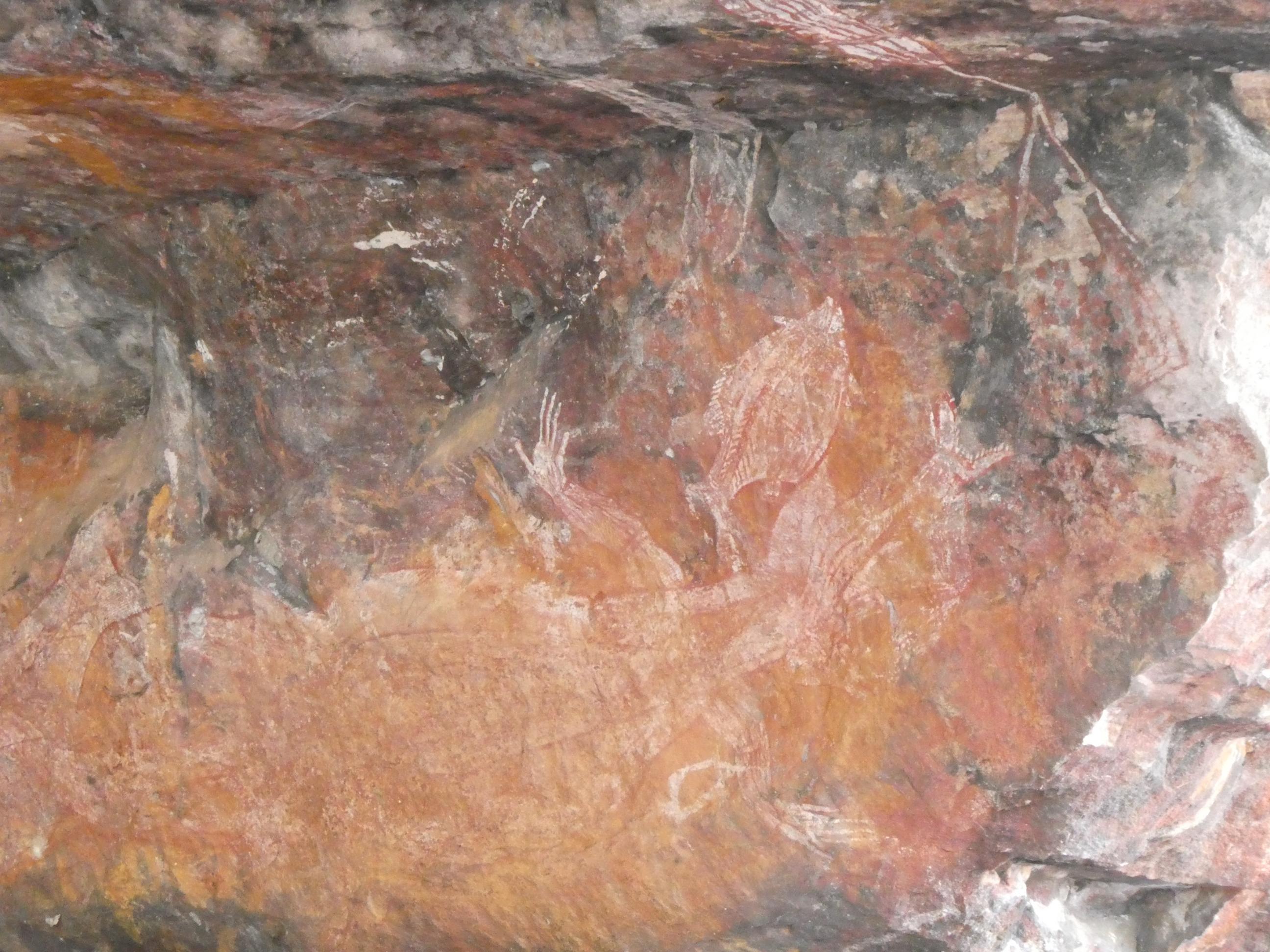
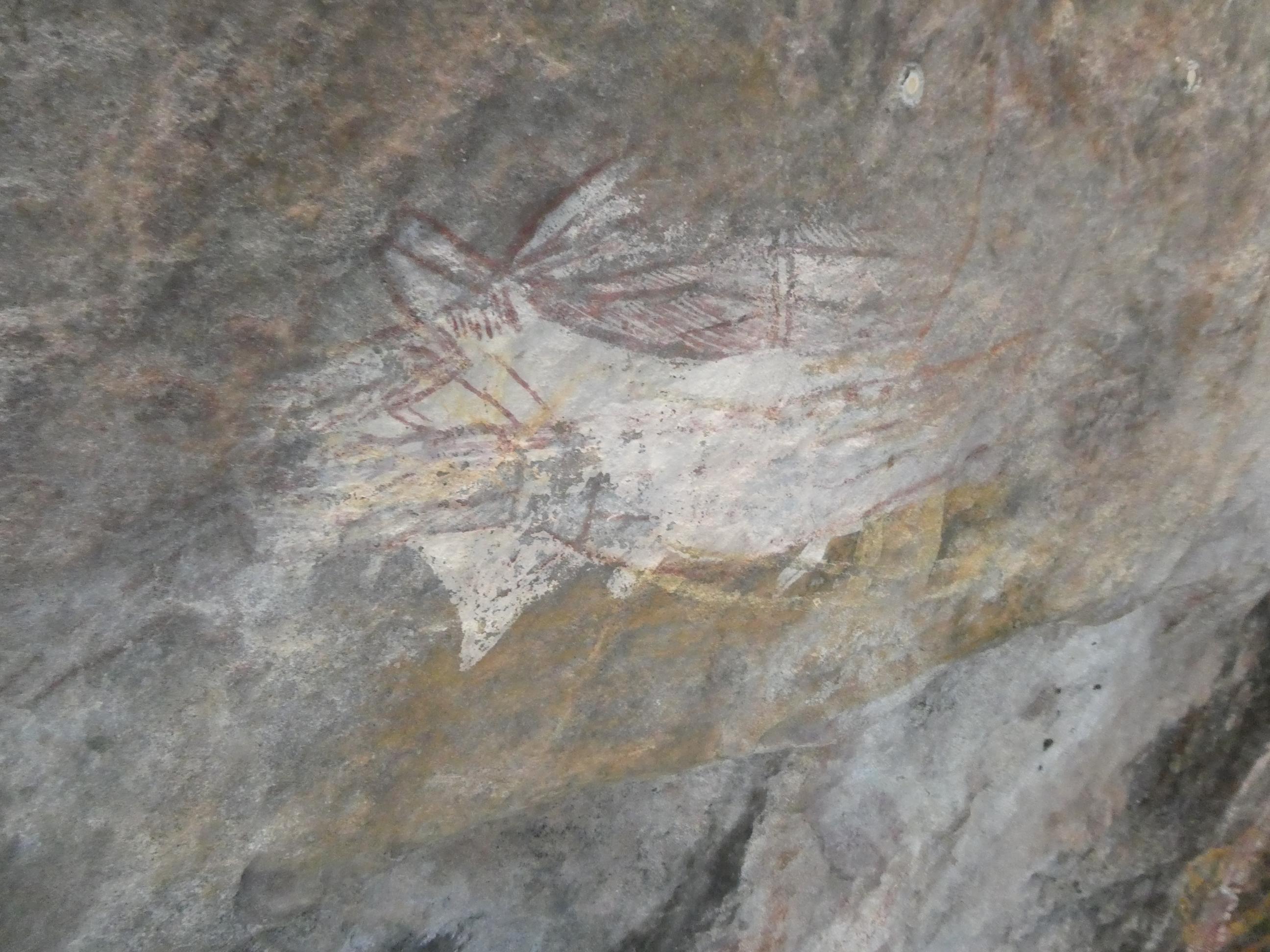
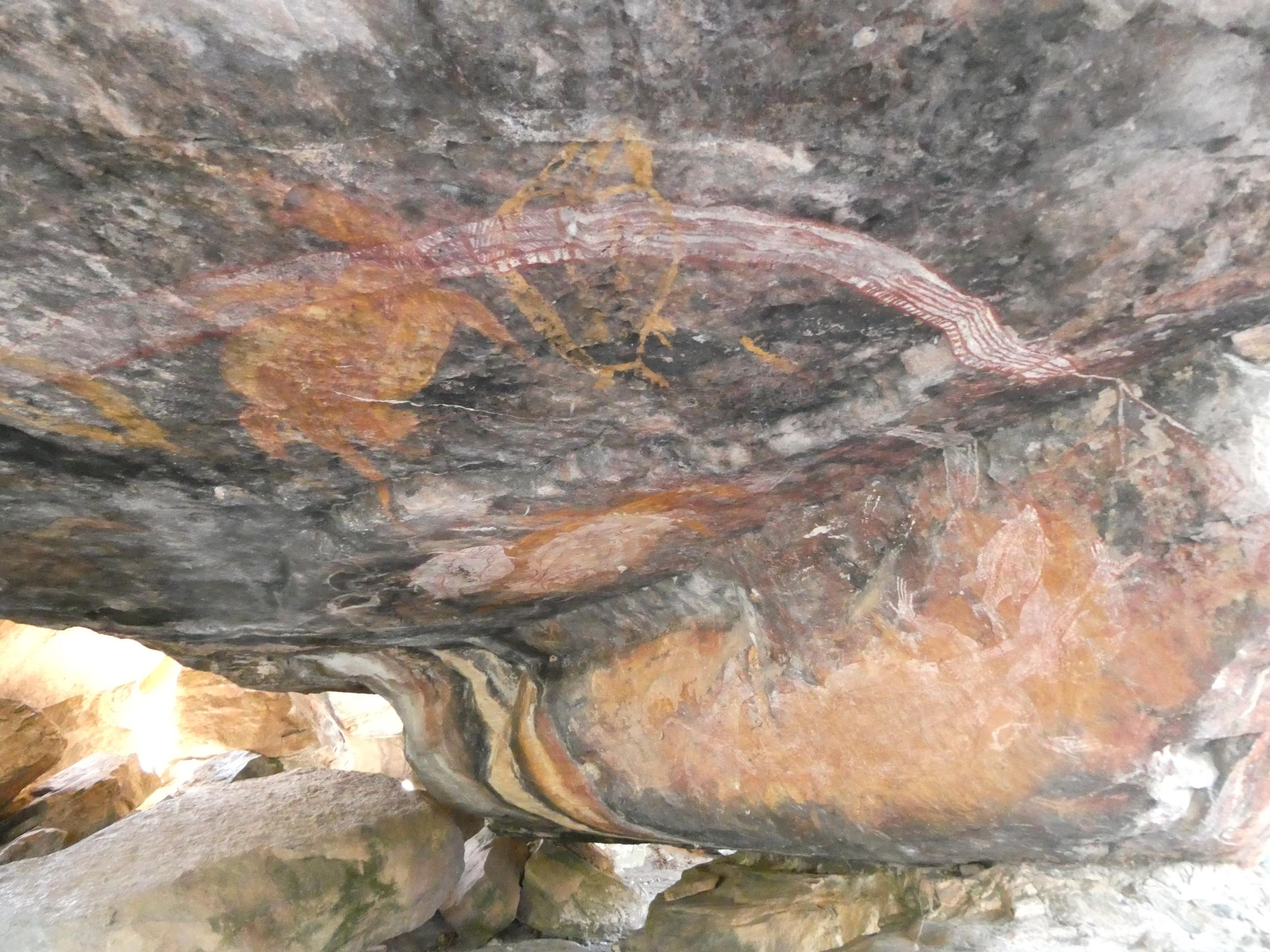
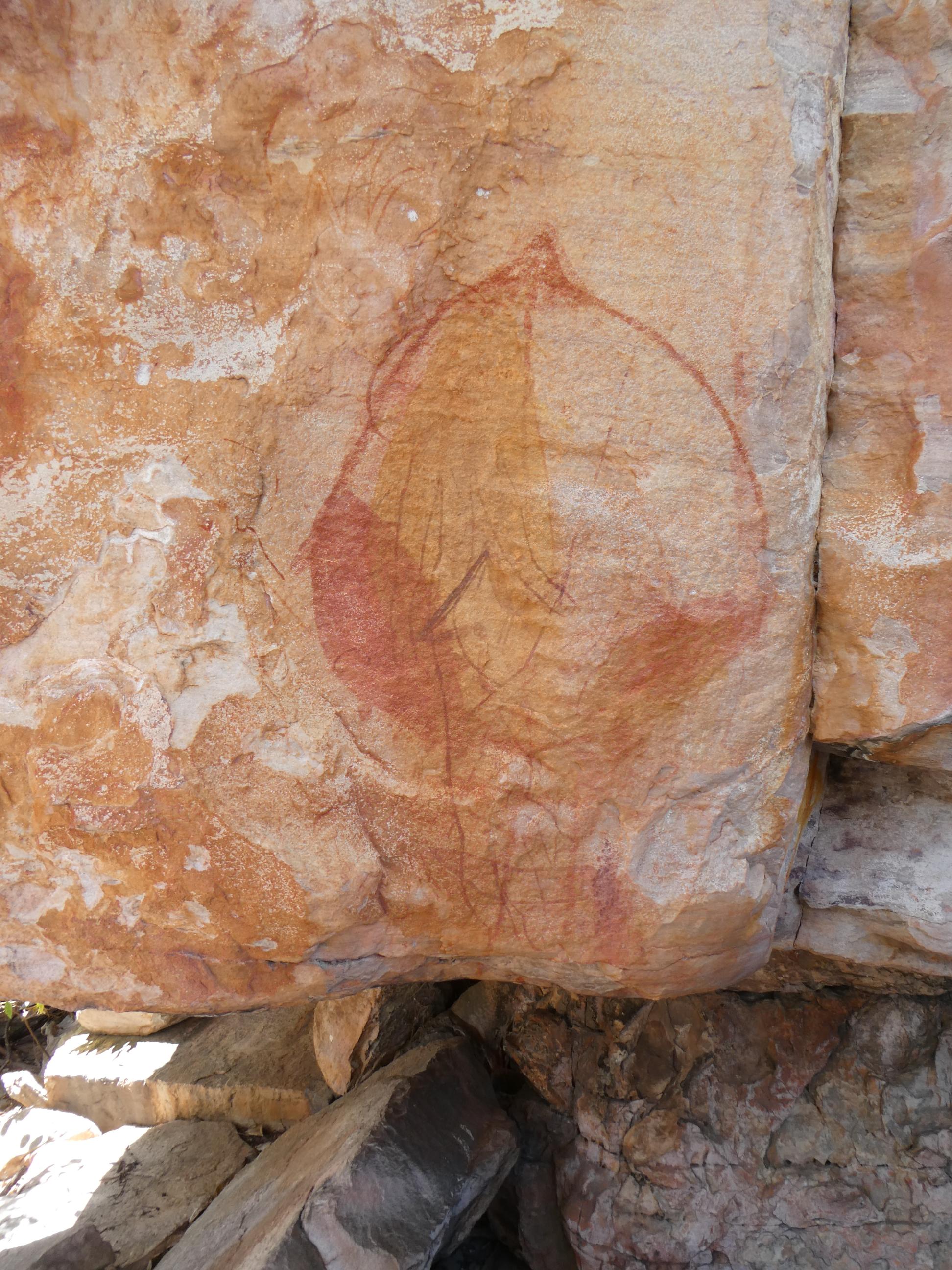
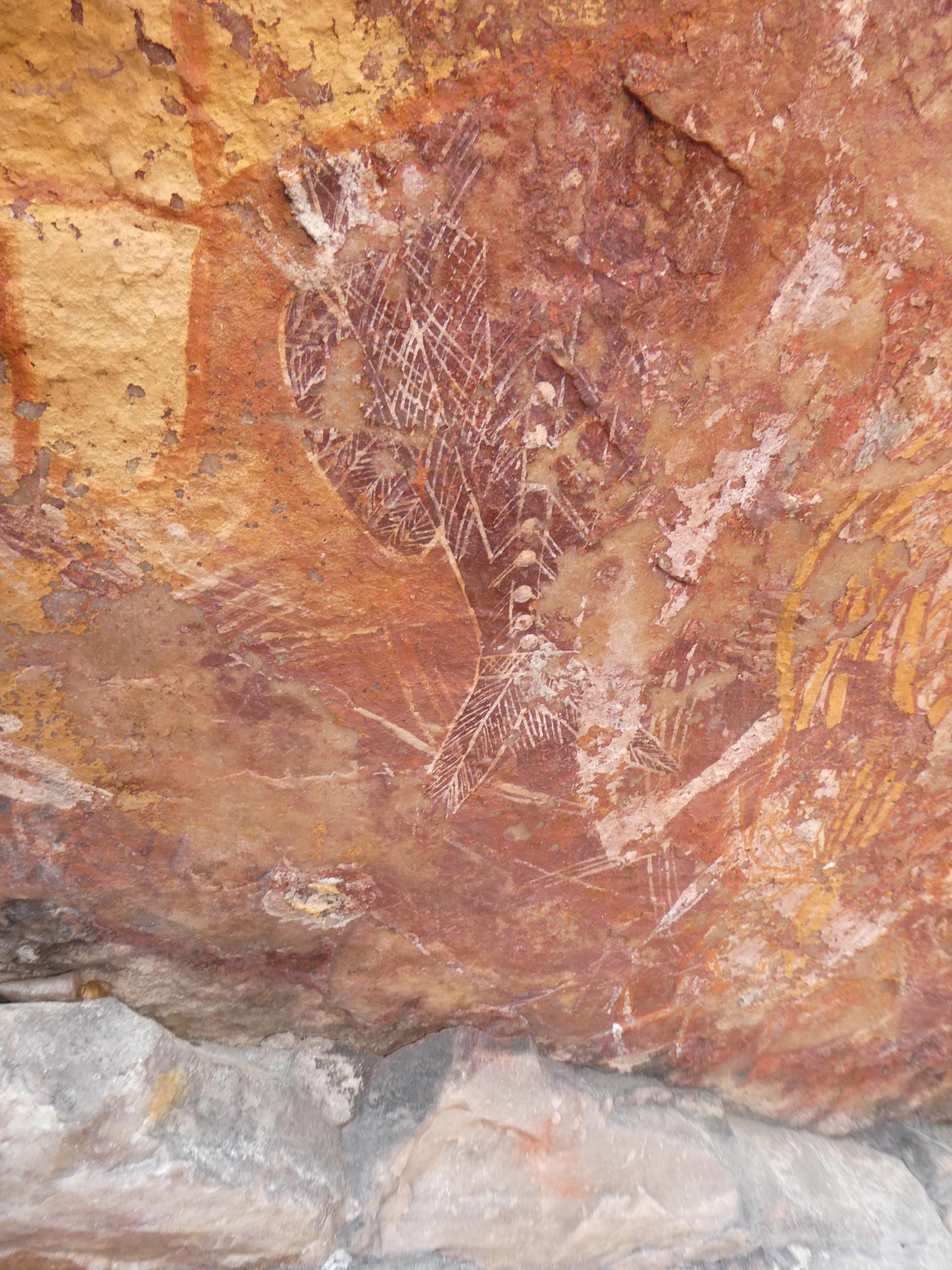
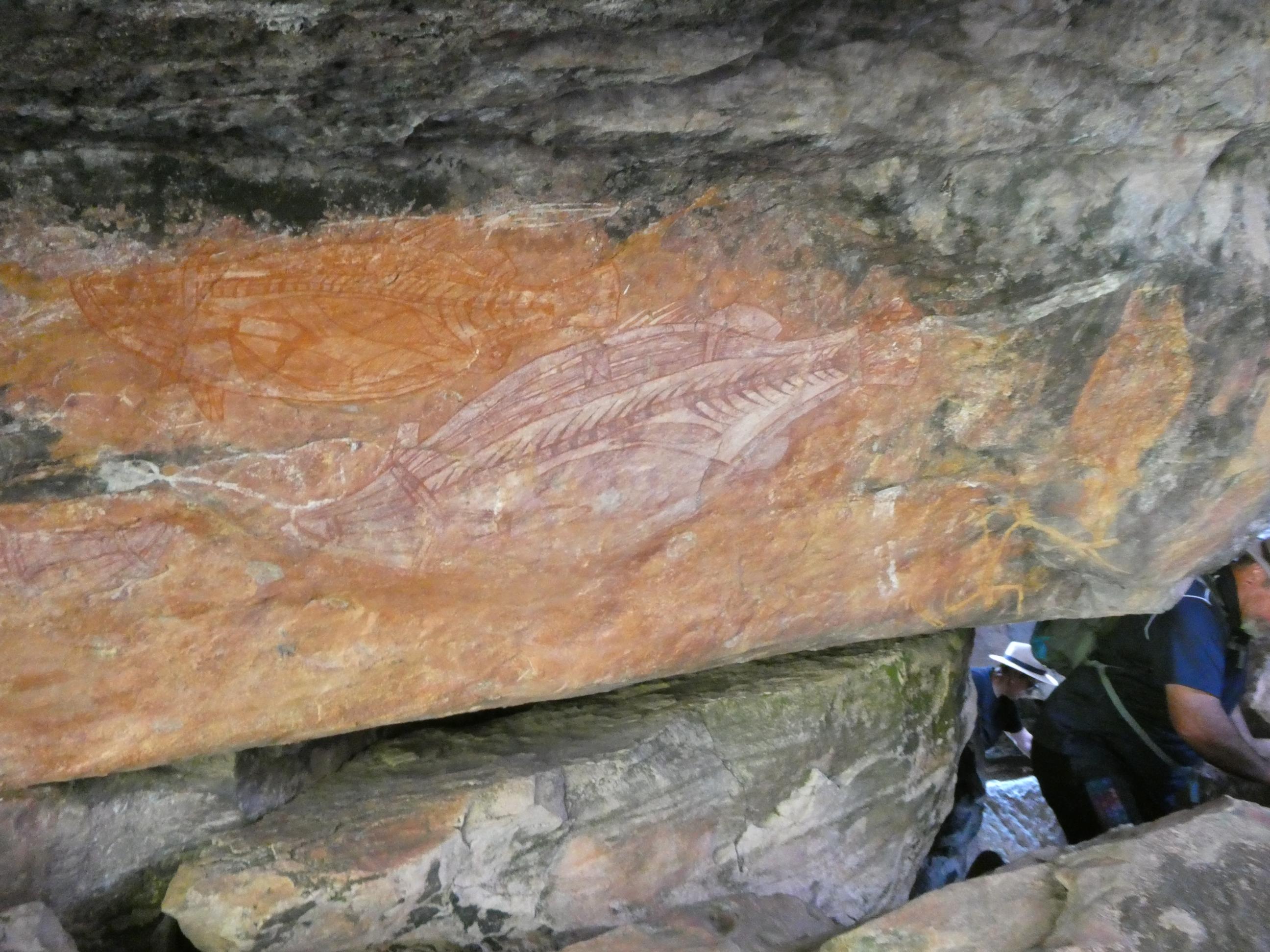
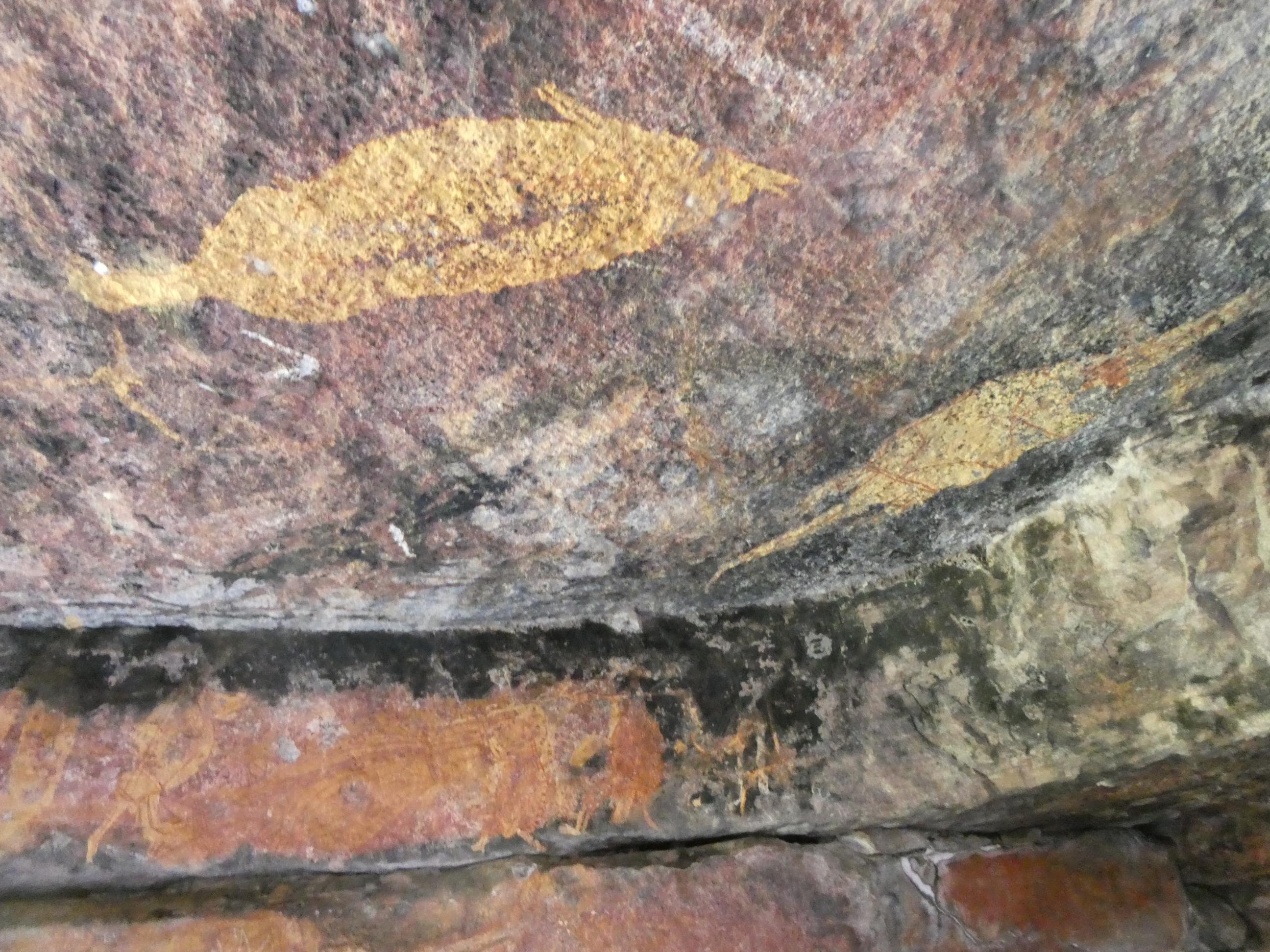
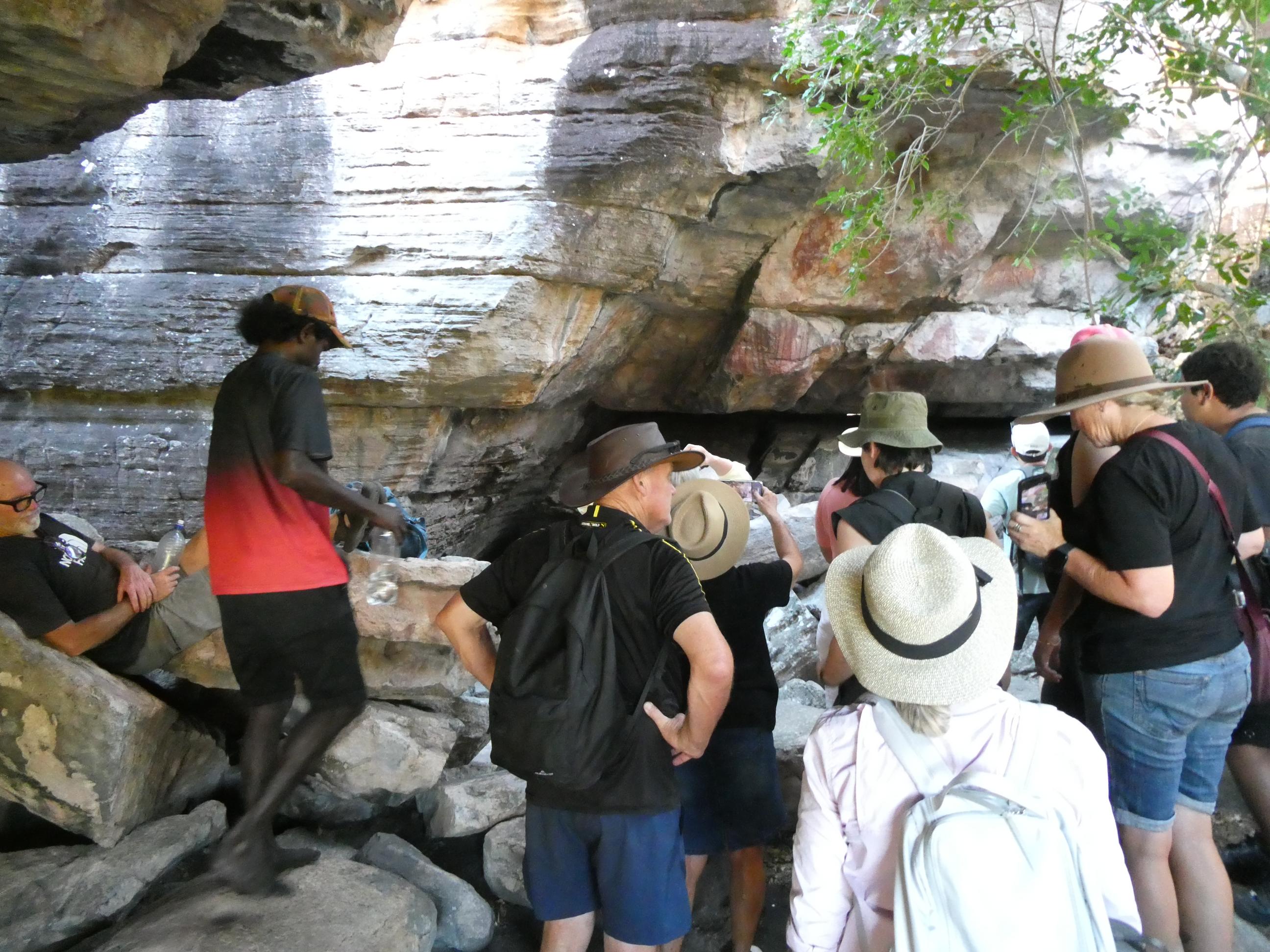
Thankfully, Craig stopped fairly often, as there was a lot to see and absorb. He didn’t speak to us when we reached a new site, but instead waited for the questions to come. There were many, and he felt comfortable answering almost all of them. There’s a lot I still need to understand about much of the rock art we saw today, but hopefully the photos that follow will speak for themselves,
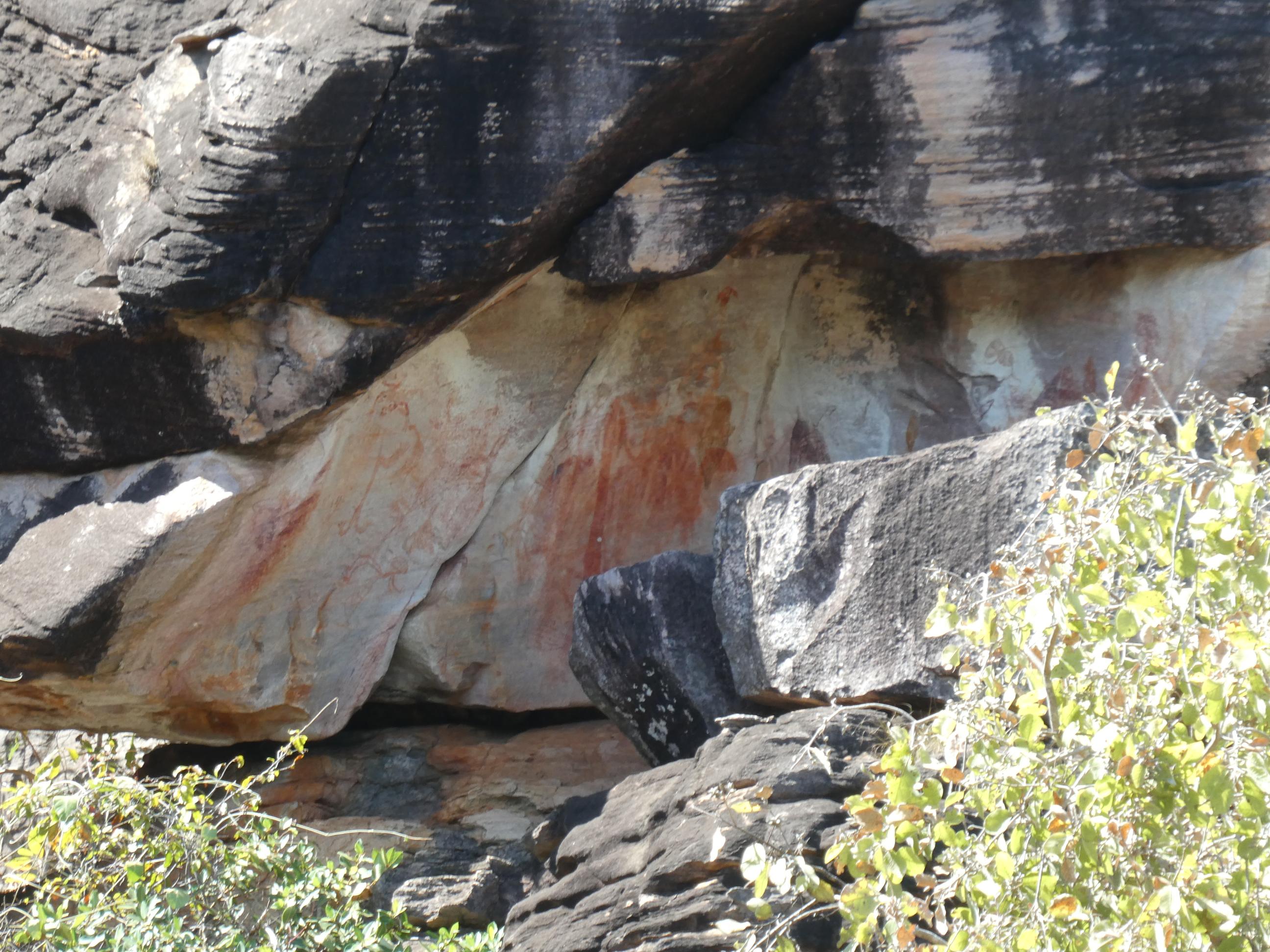
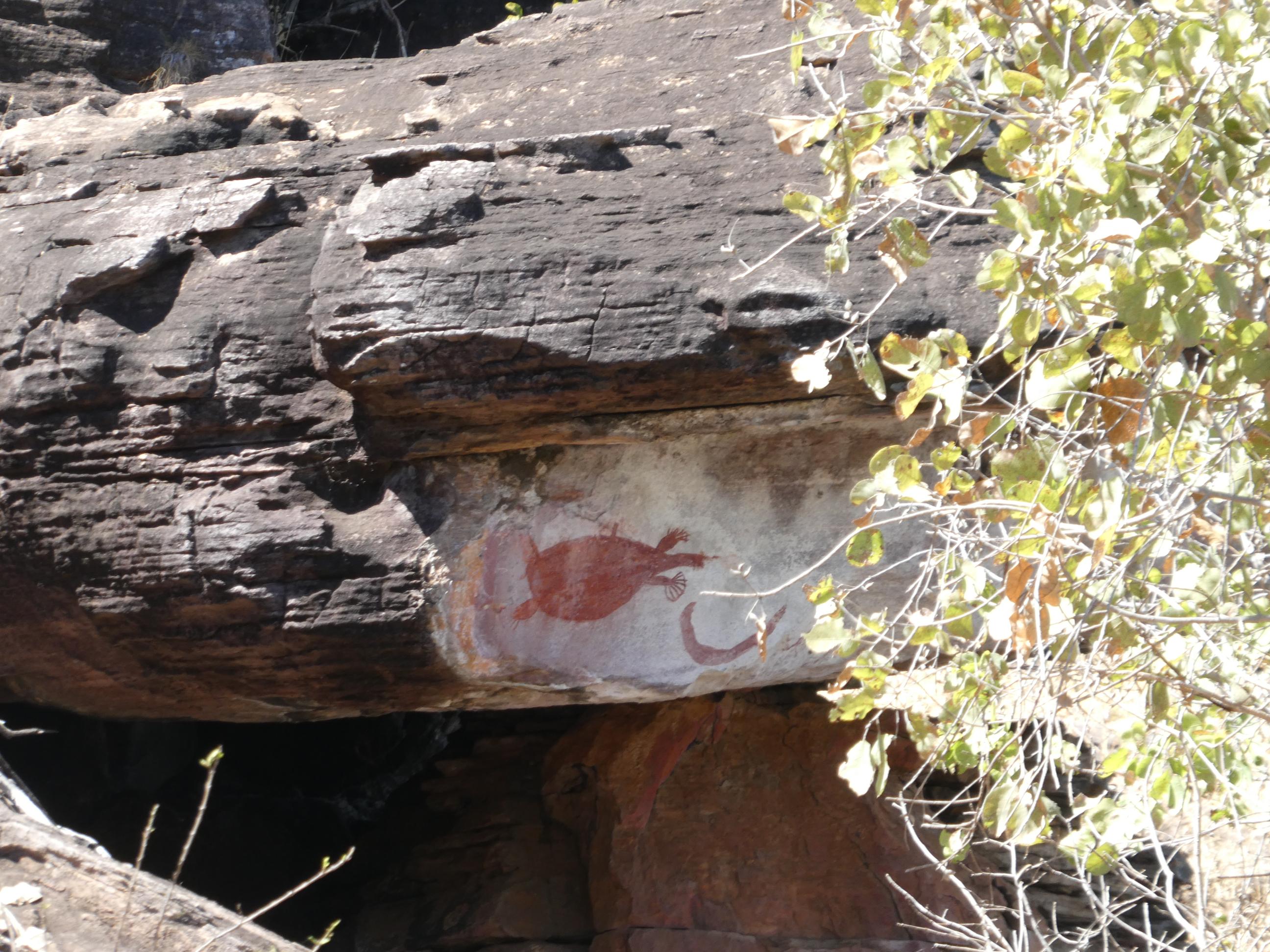
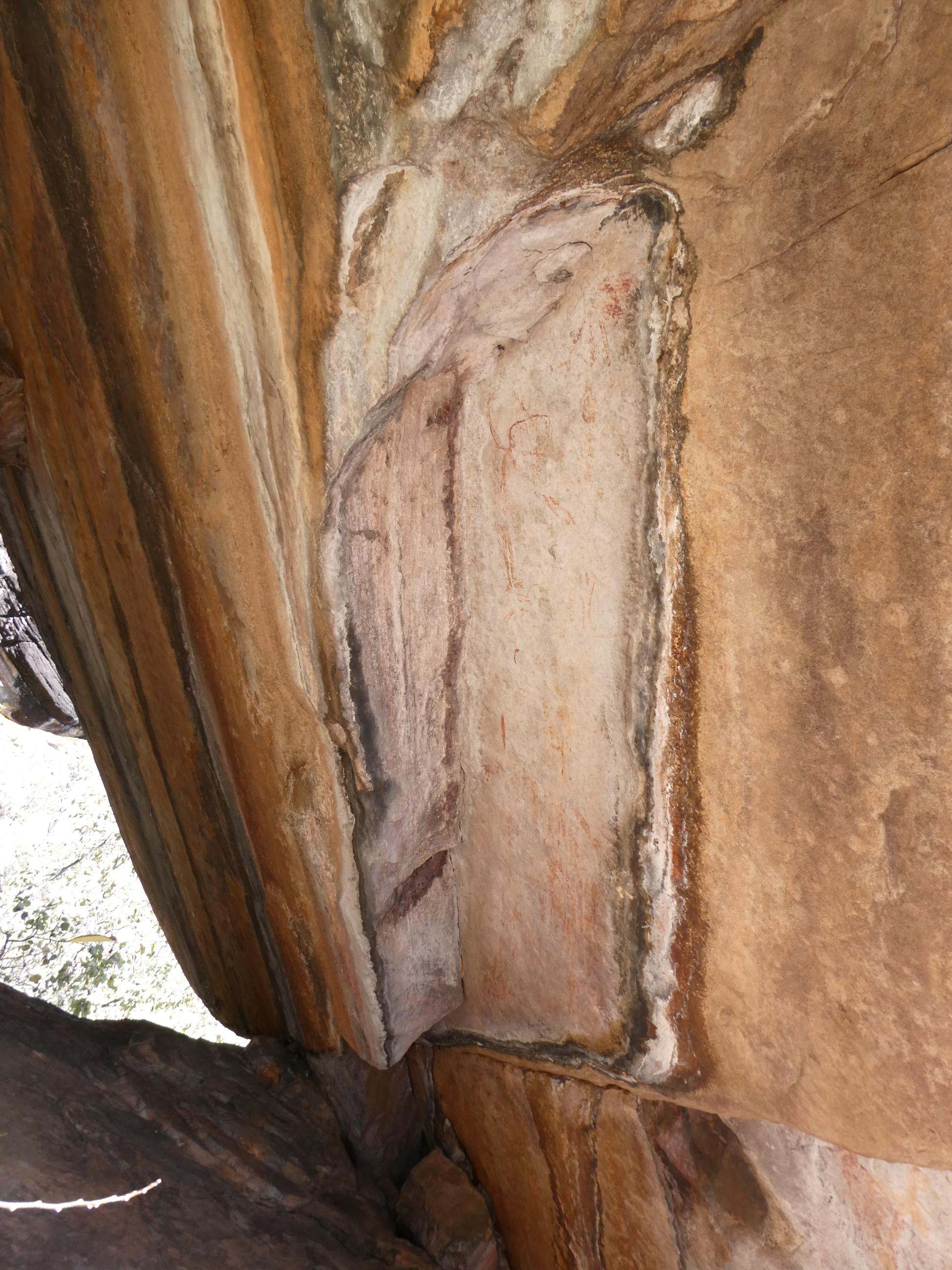
Much of the art, which we were told can be dated back as far as 19,000 years ago, is still in very good condition, protected from the elements by large rocky overhangs that form large open shelters and caves in many locations across the site. Craig showed us that the ochre, which is ground from materials found nearby, is mixed with the sticky sap of the milkwood tree to form the paints that the artists used. The sticky ochre-based paint would seep 2-3mm into the porous sandstone surface, ensuring that the paintings could not be easily worn away, even by the passage of time. There were many images of recognisable creatures here – long-necked tortoises, file snakes, barramundi, kangaroos, crocodiles, dingoes, lizards and thylacines among them. We also saw spirits, such as the Lightning Man, and another bad spirit I didn’t catch the name of. Craig said there were stories attached to each of the spirits
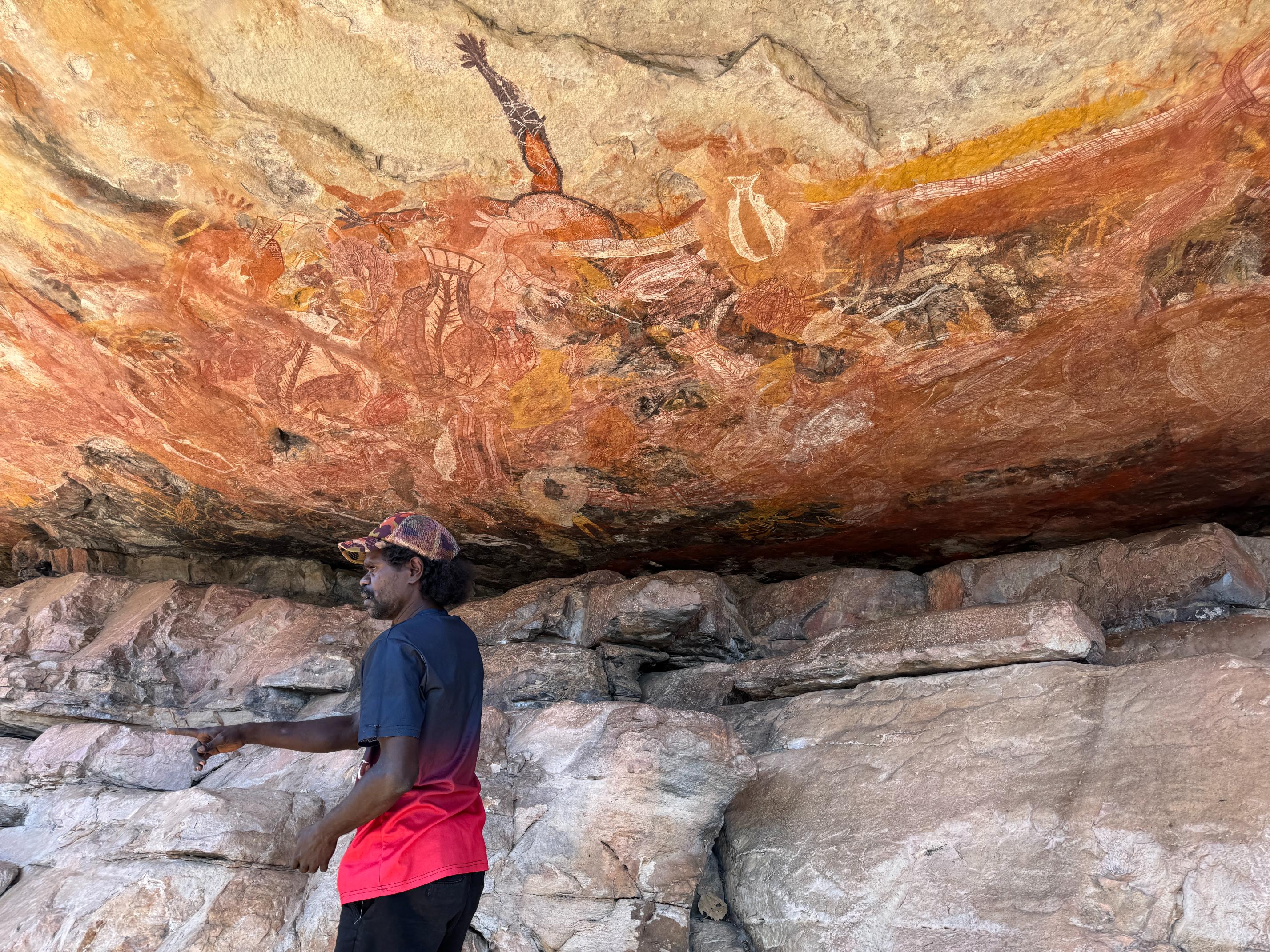
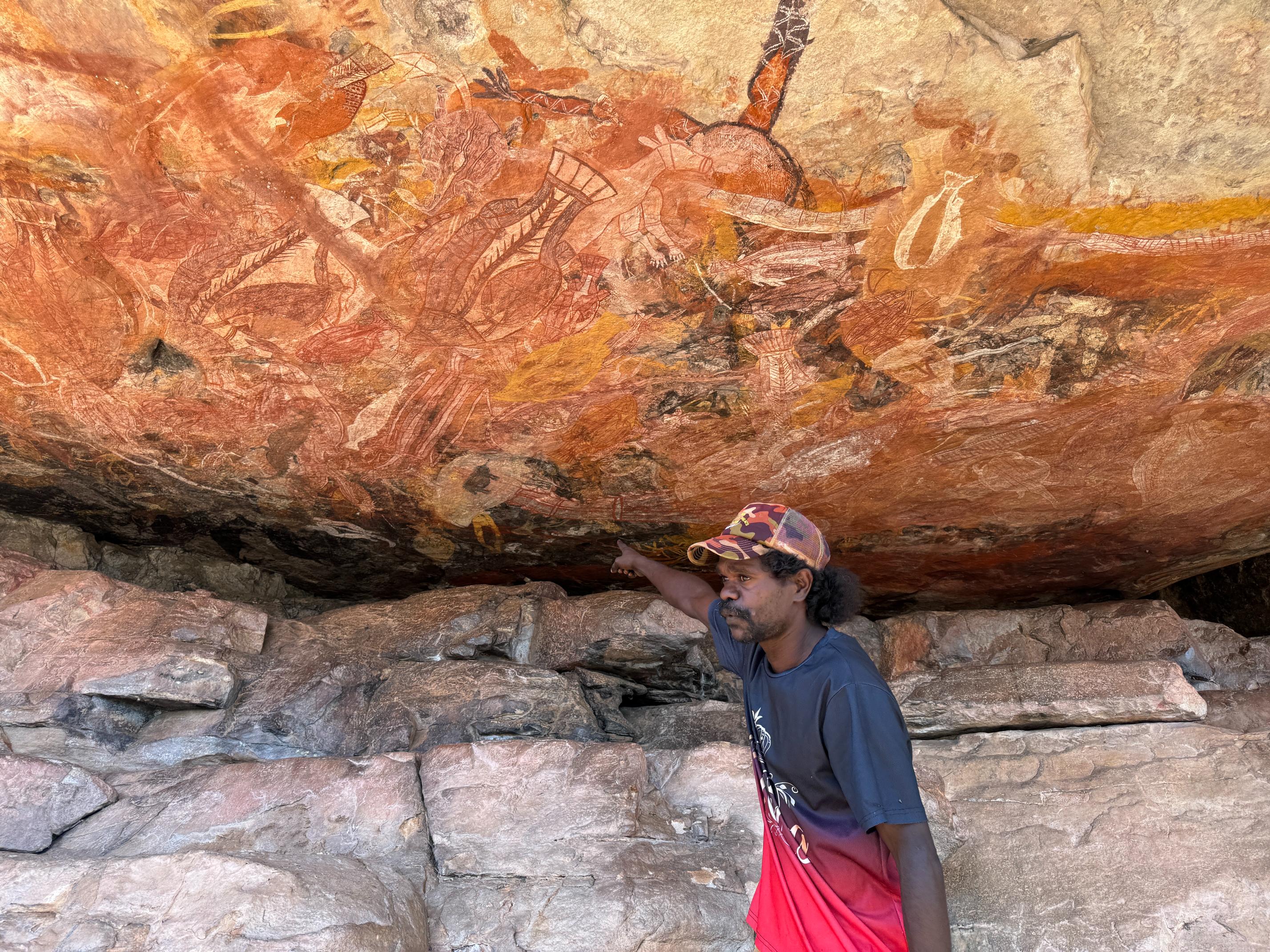
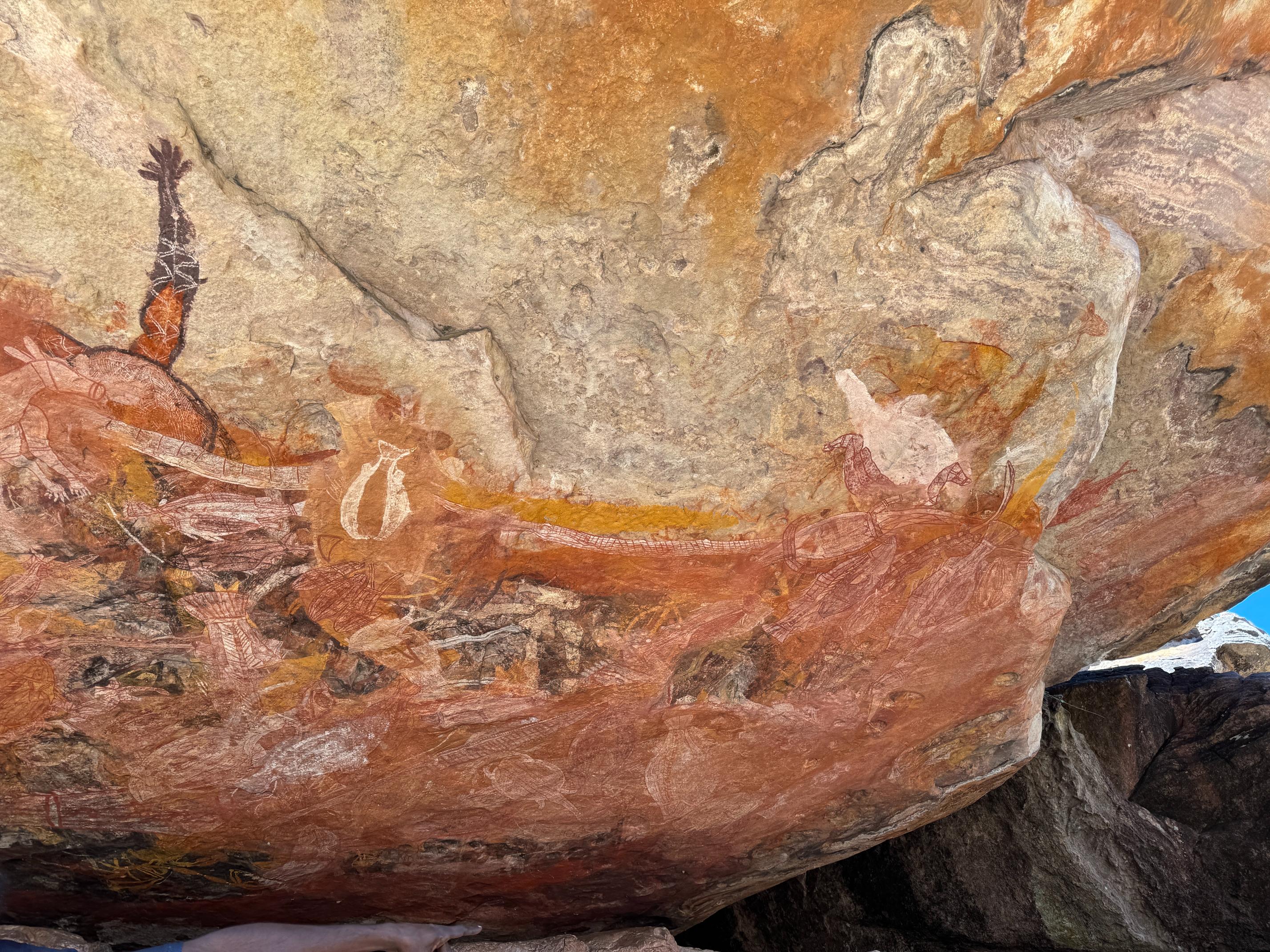
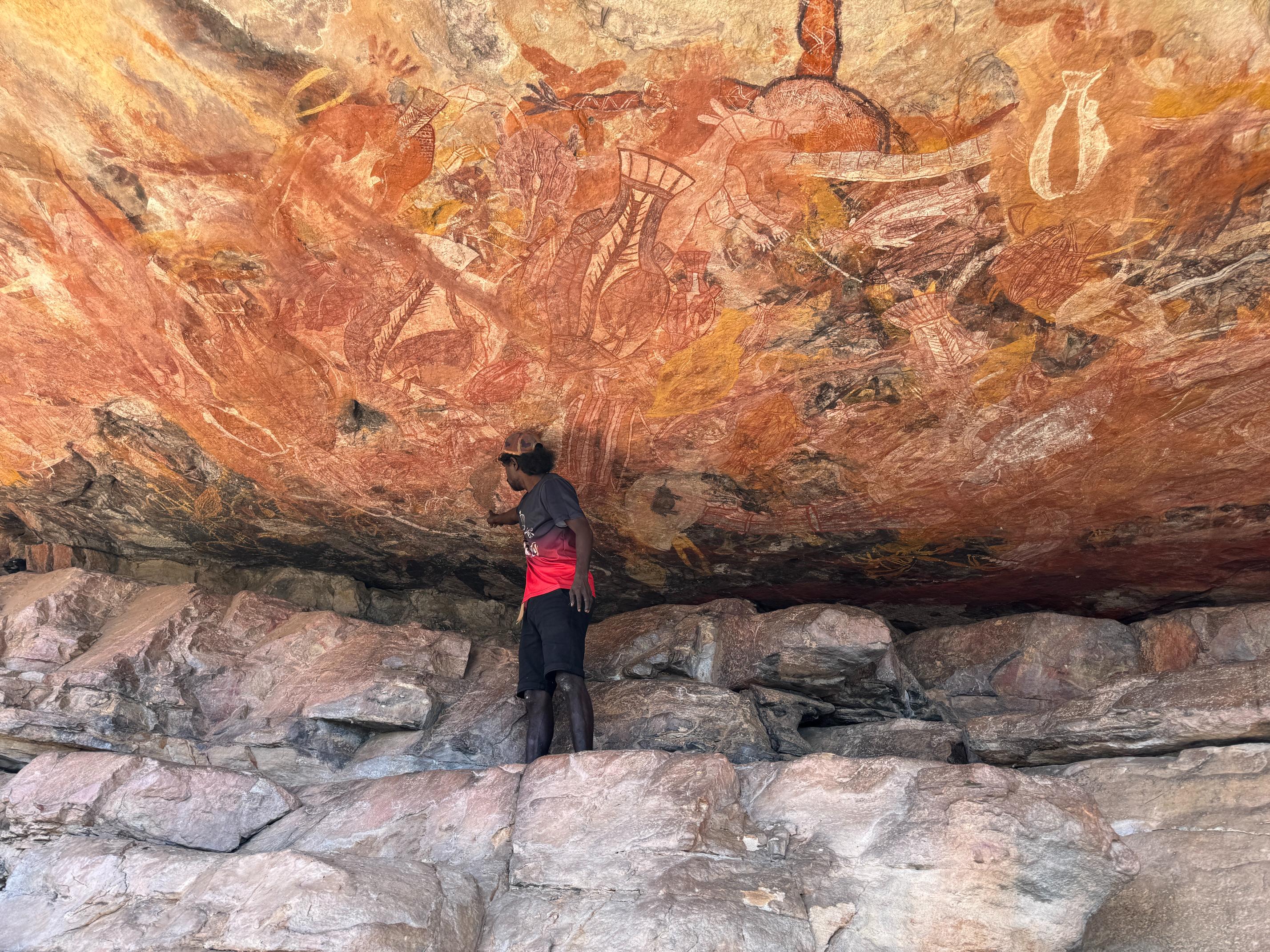
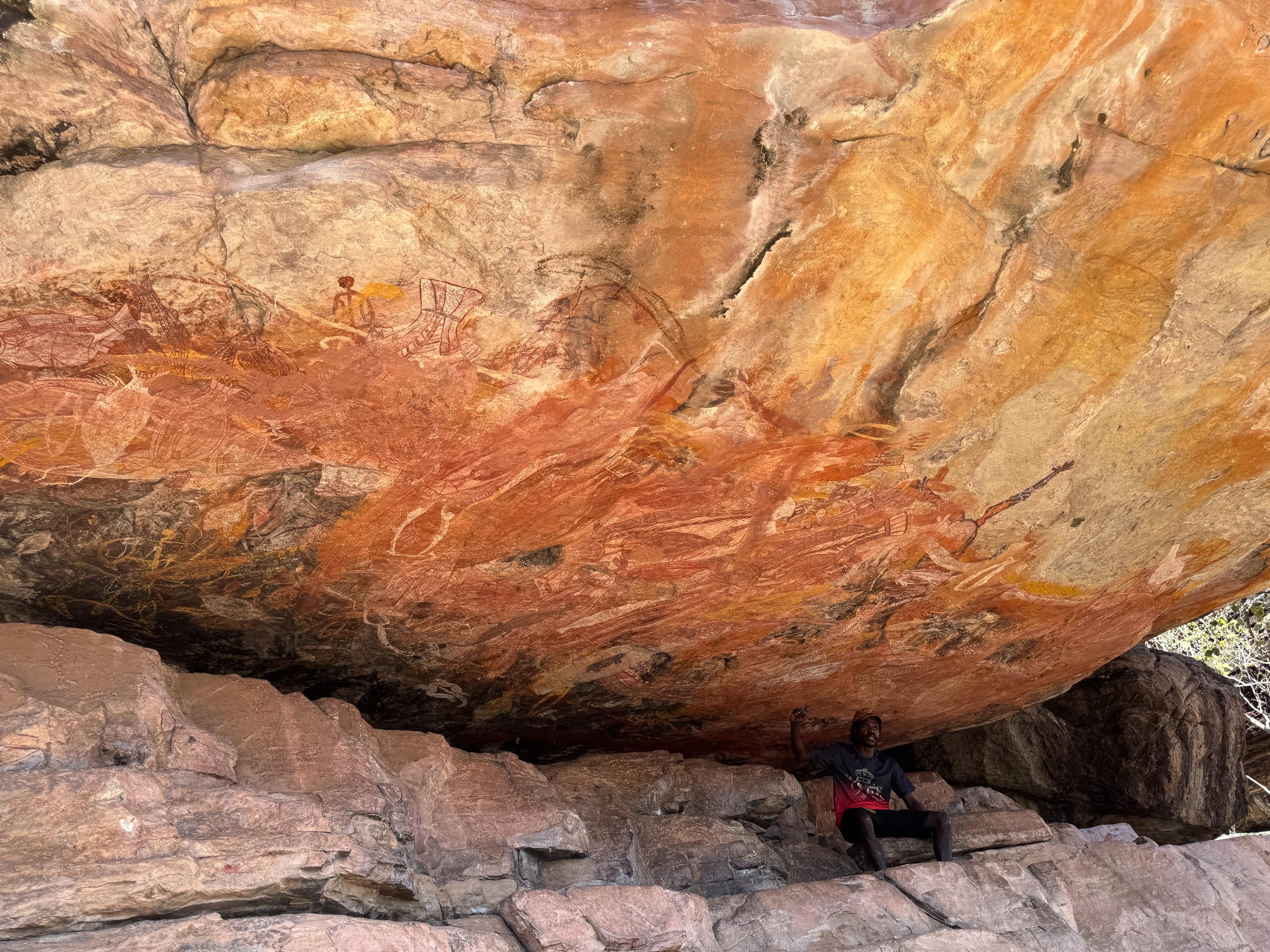
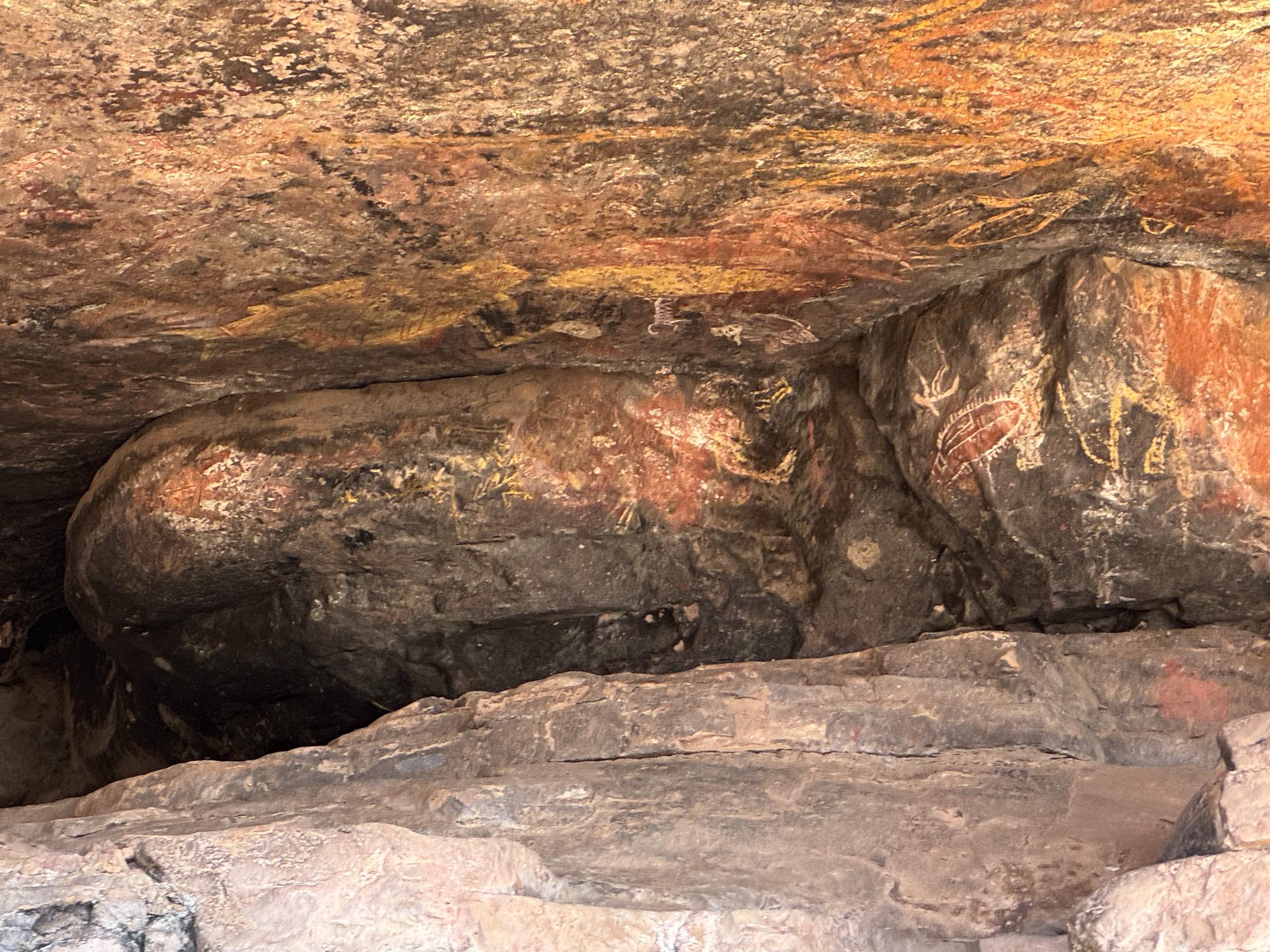
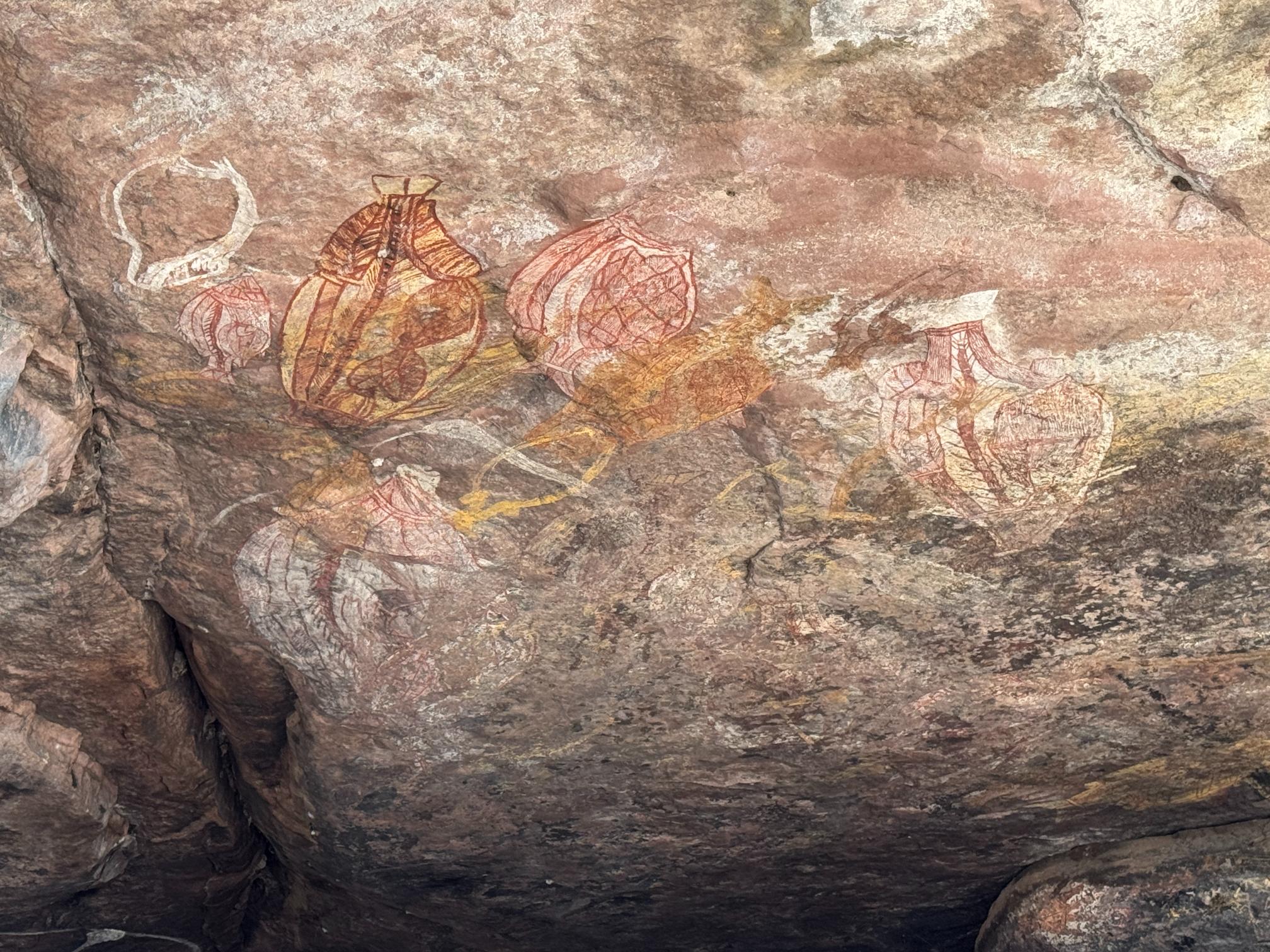
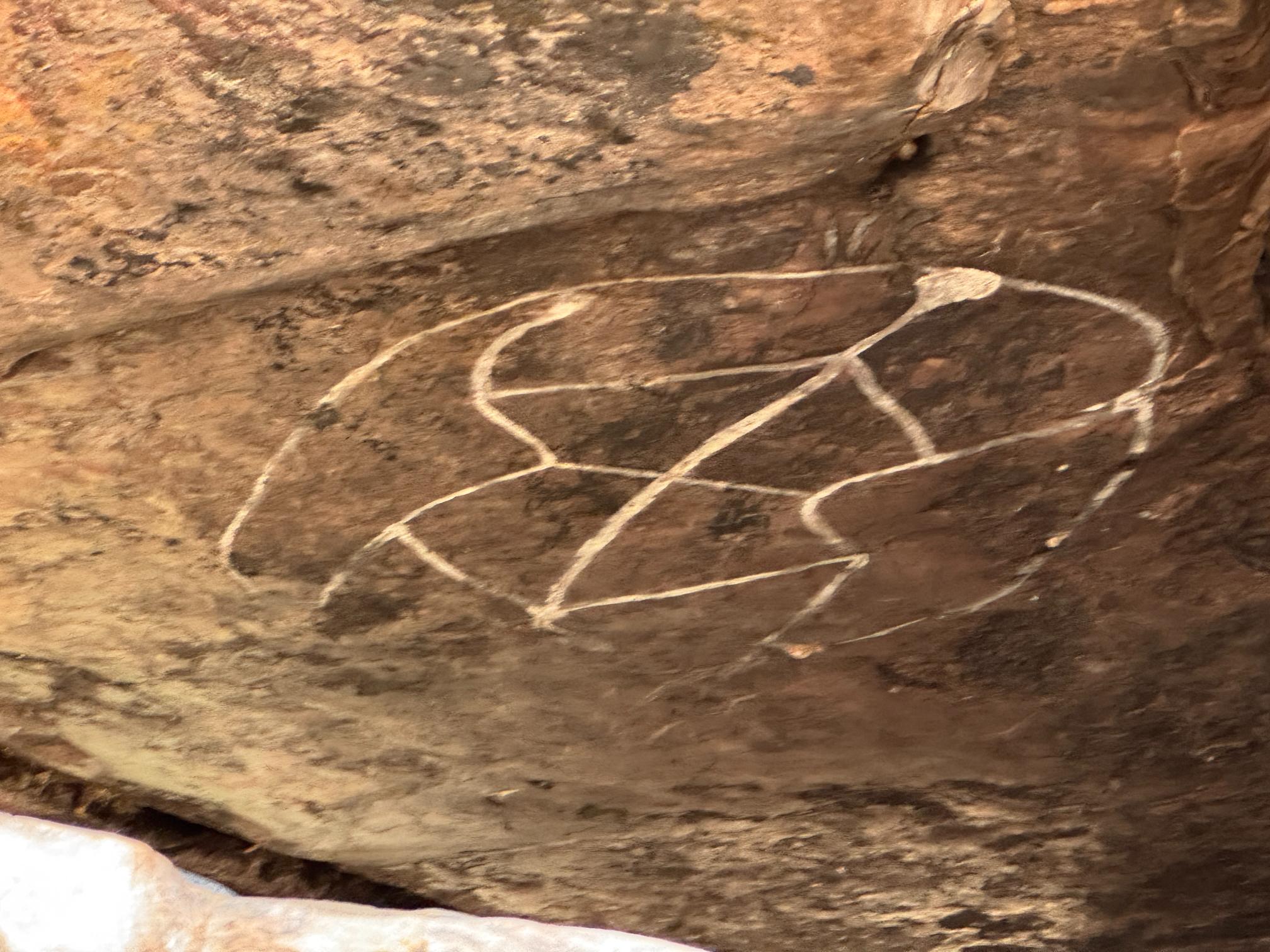
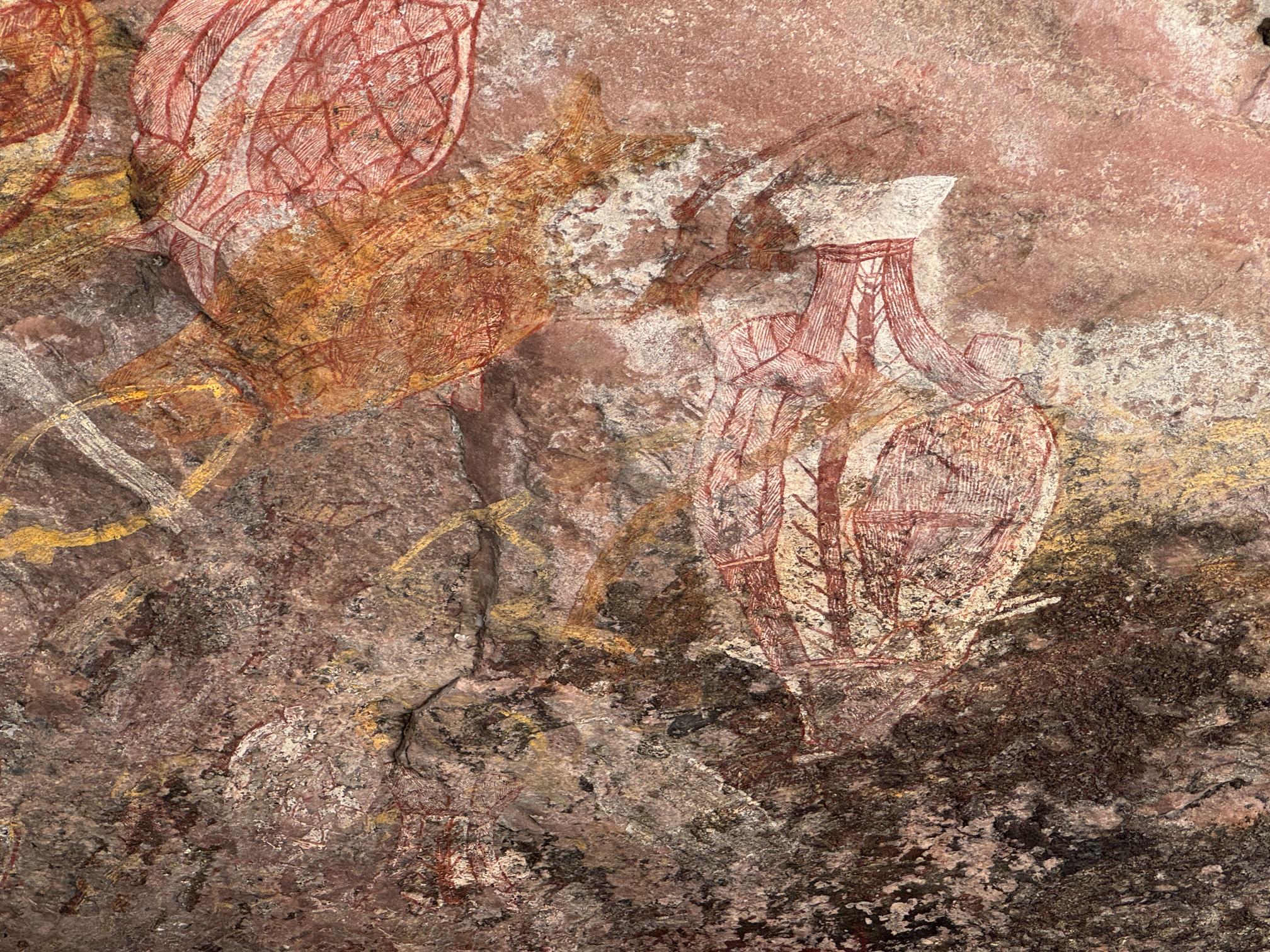
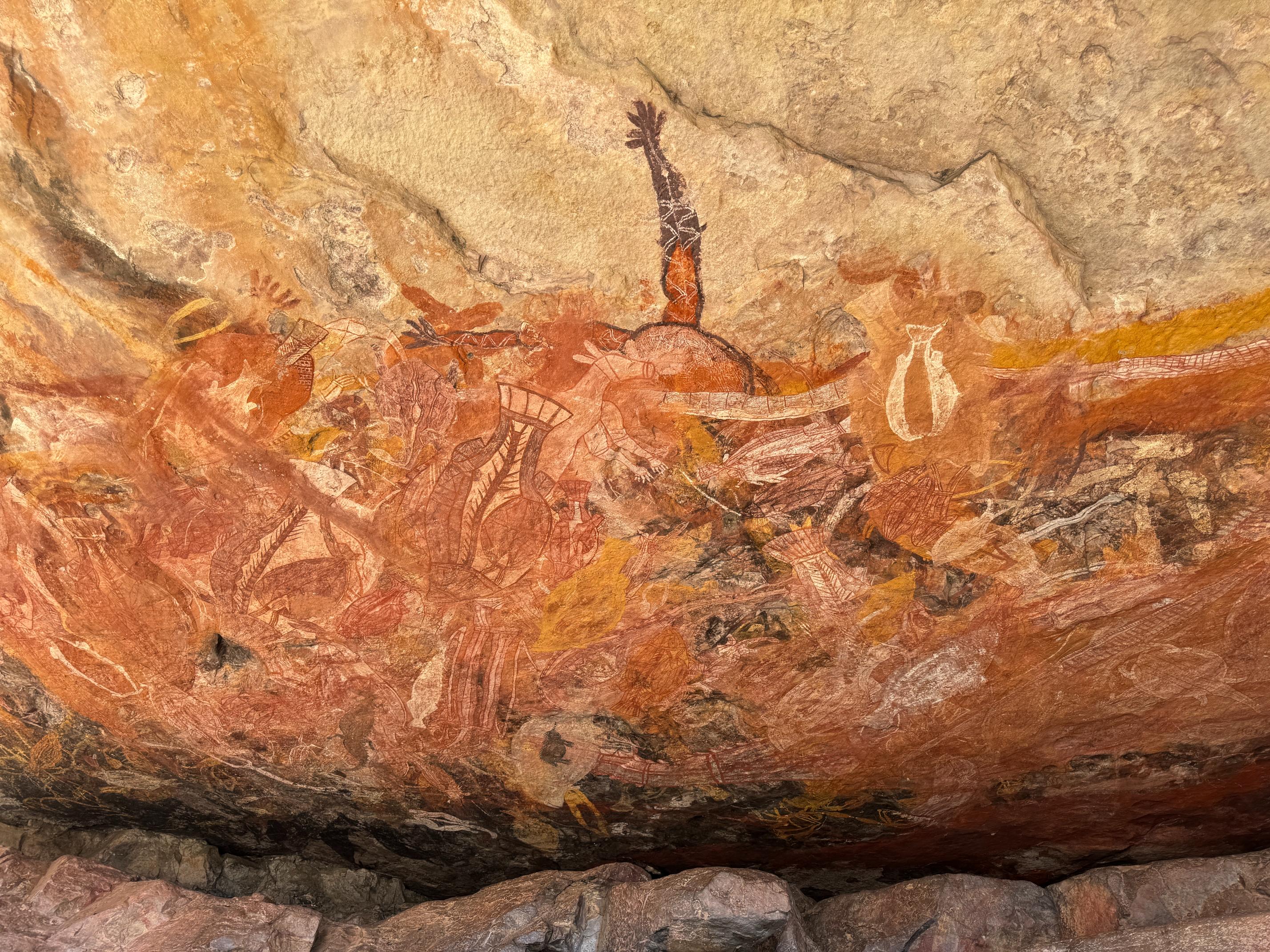
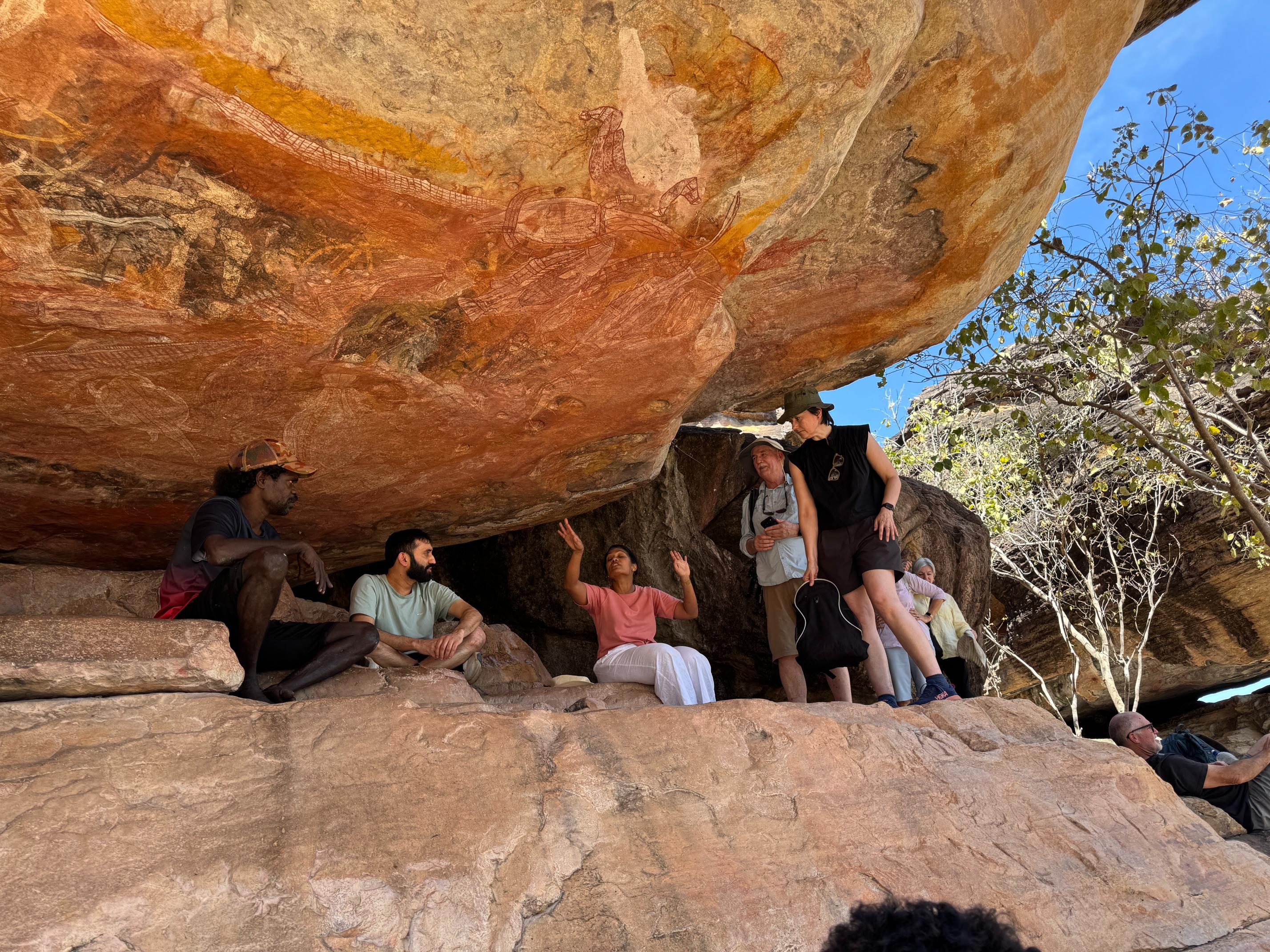
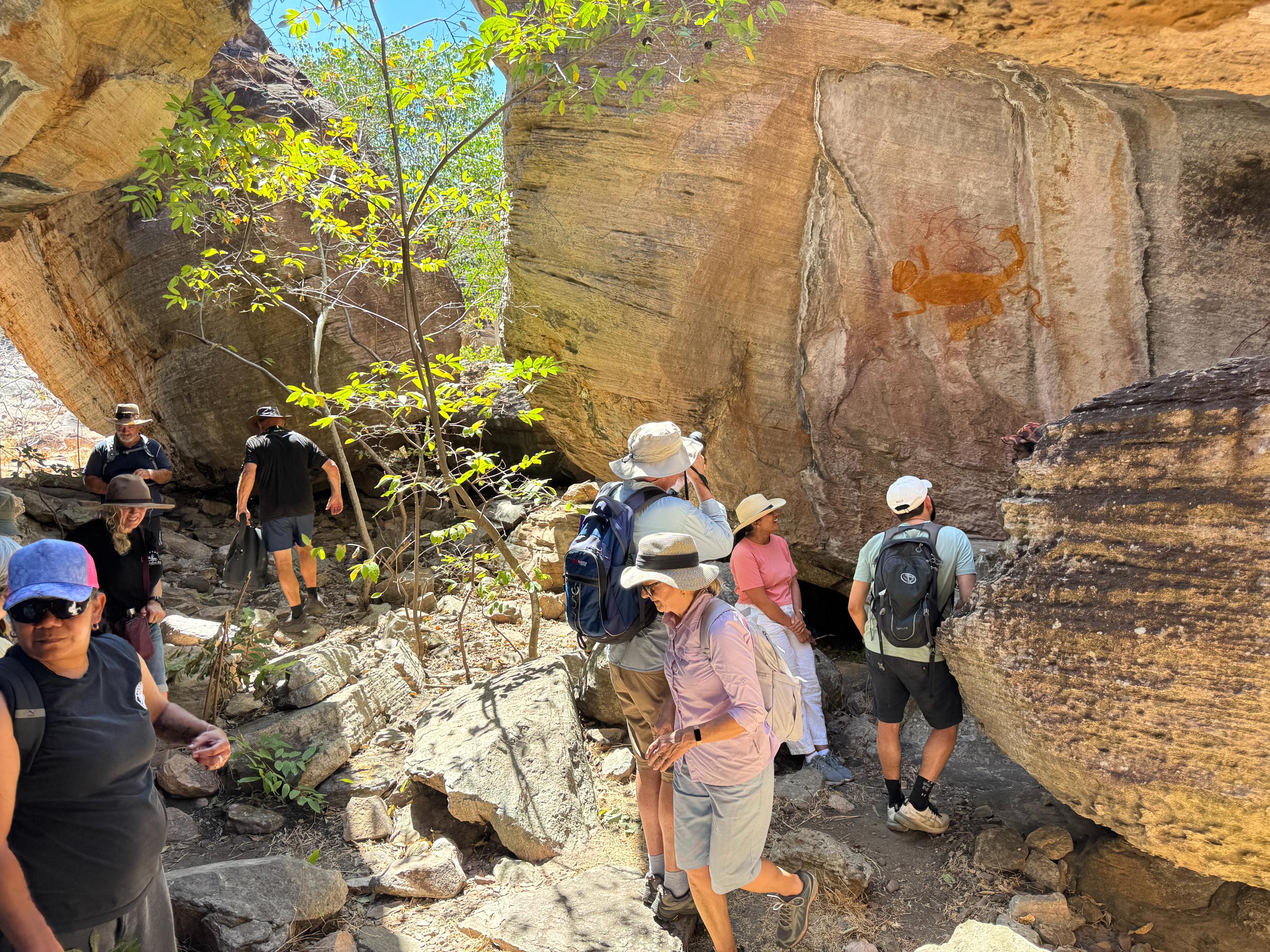
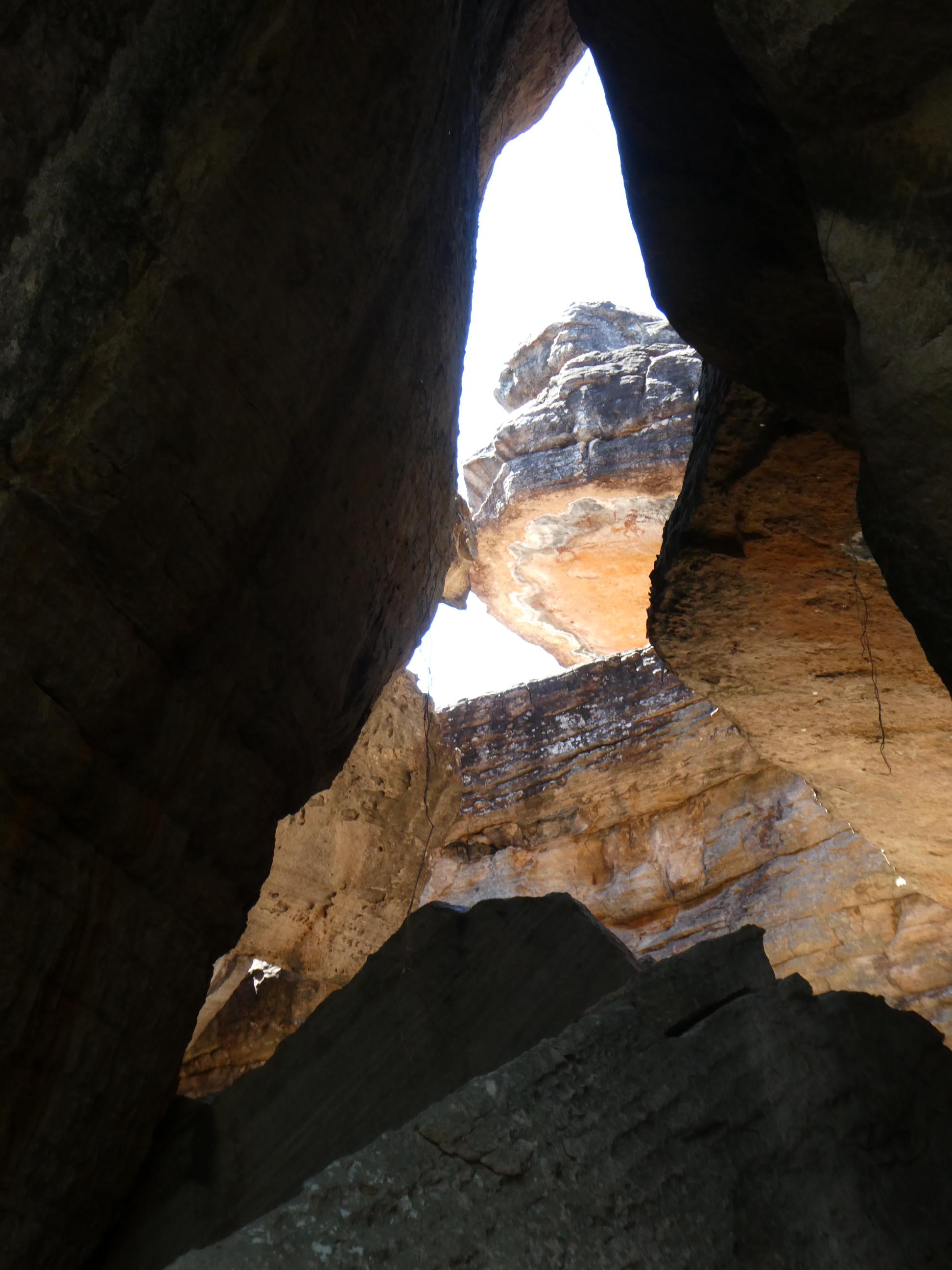
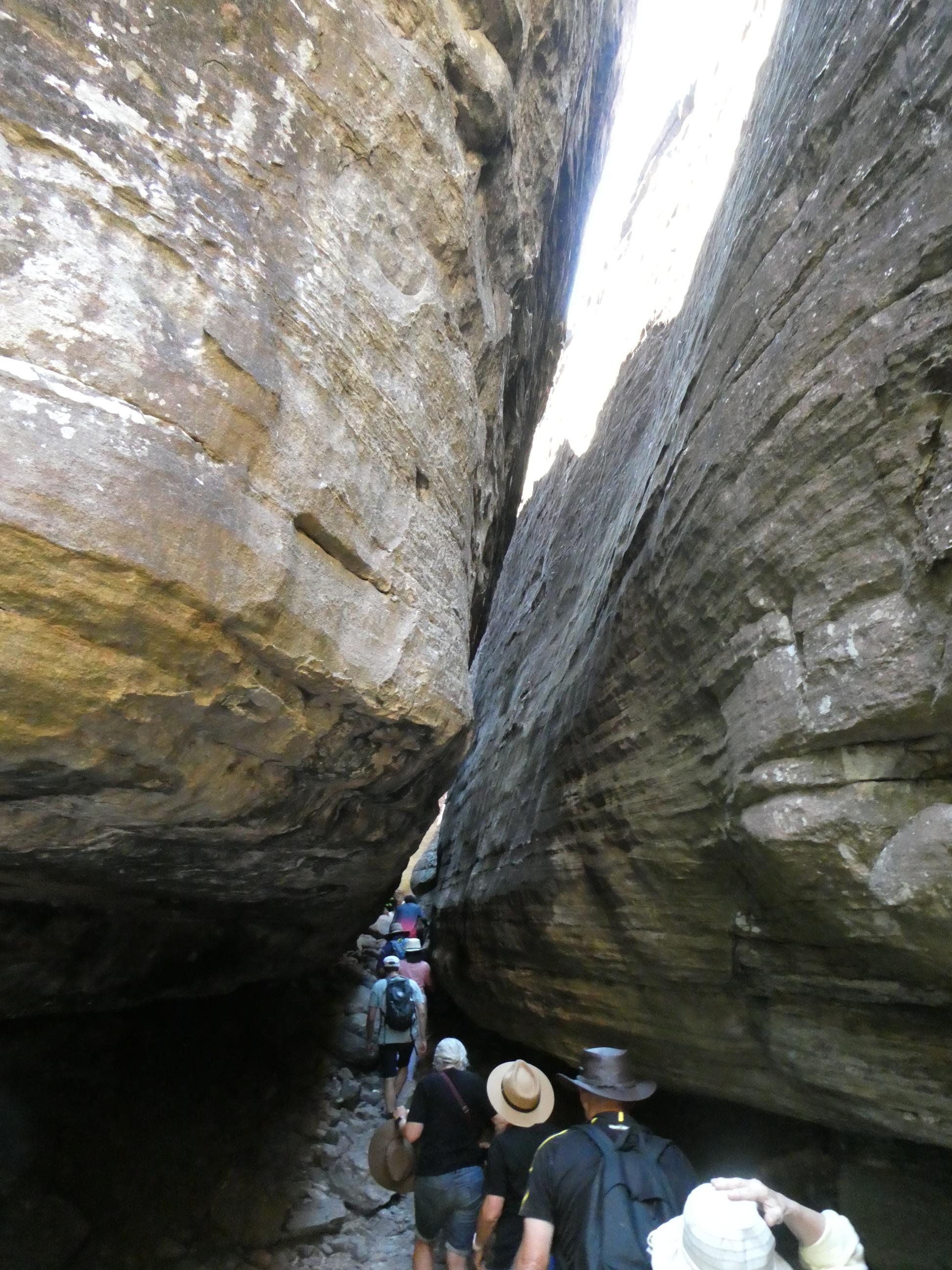
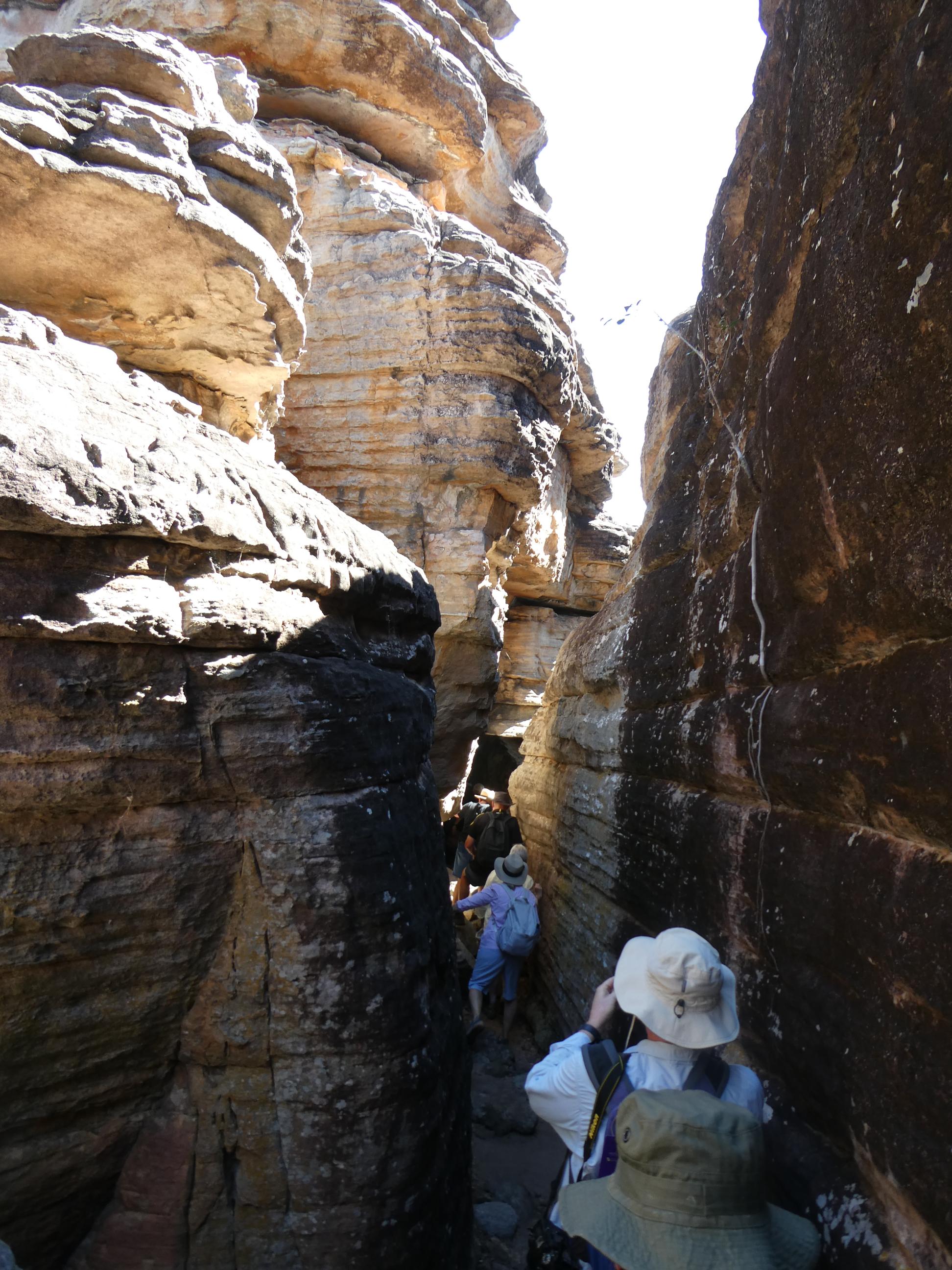
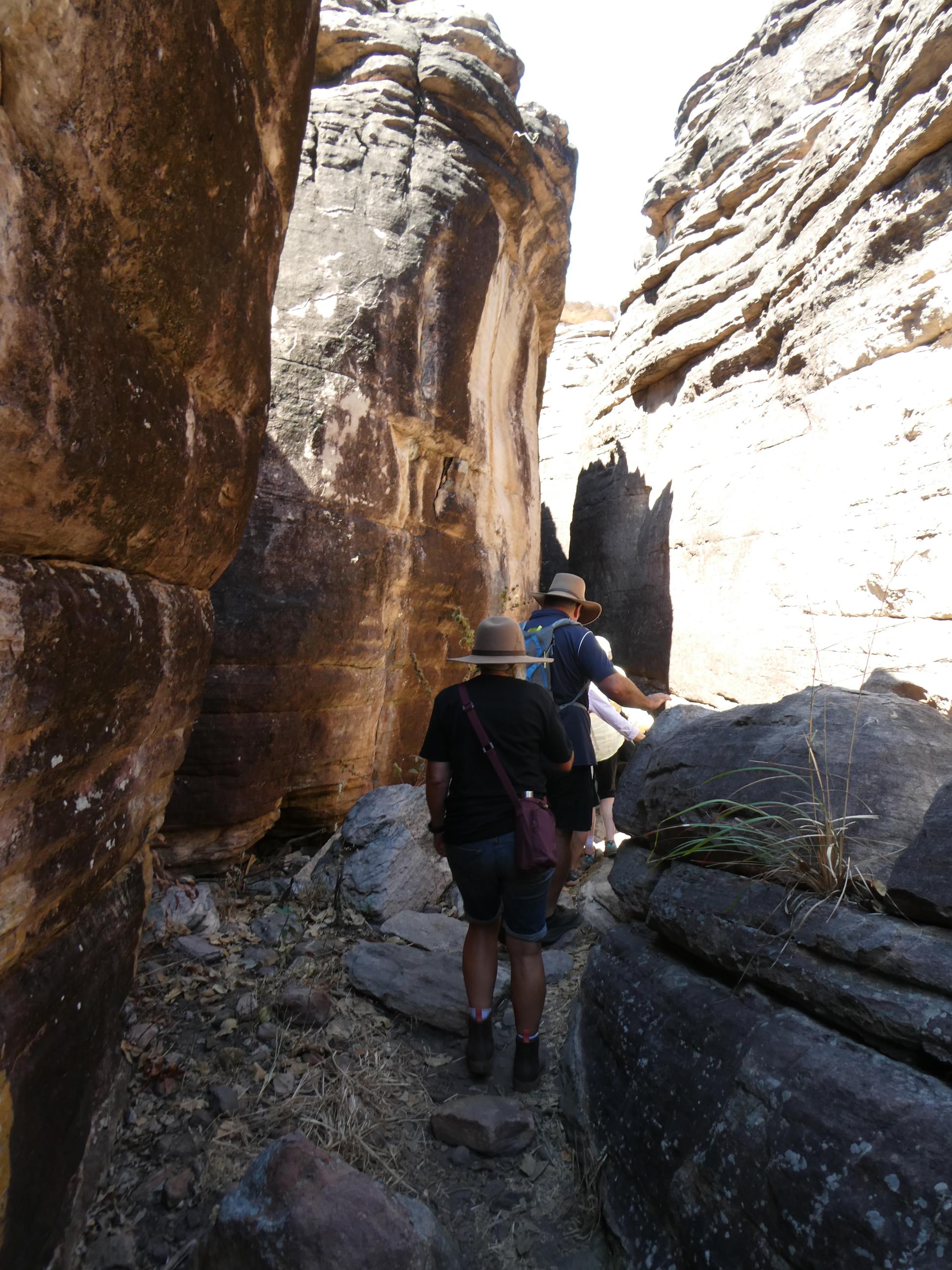
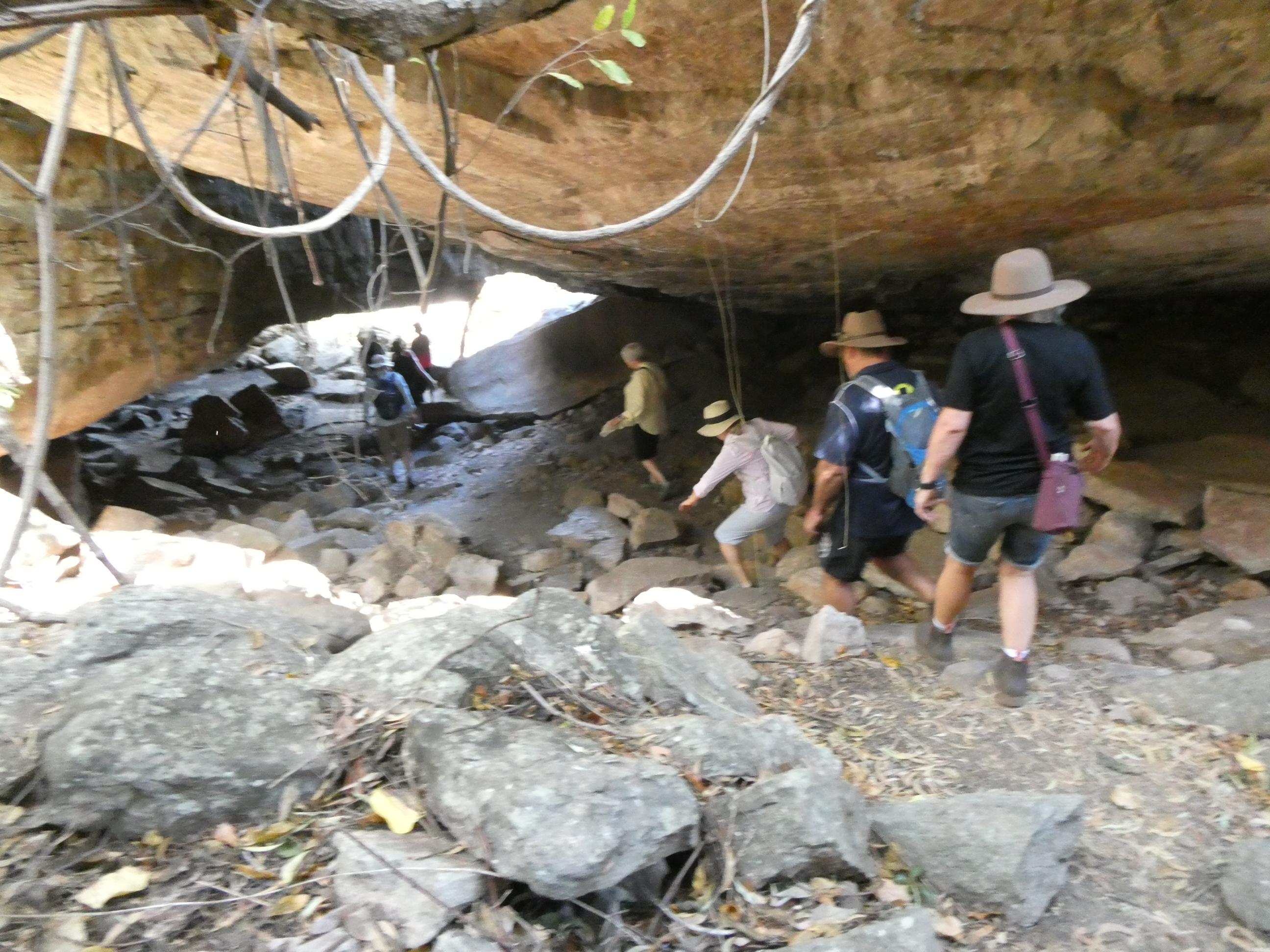
When we left one gallery, we’d often have to negotiate a narrow, rocky traverse between two huge boulders, or climb up and over a pile of large uneven stones to reach the next one. Often, between galleries, there were occasional stand-alone paintings in places where it was too awkward to stop for a photo. Some galleries had so many different paintings, I just had to stop and put my camera away for a while. We frequently spied intricate paintings in totally inaccessible places. Craig was never able to explain some of those. I was in awe of what I was viewing.
Craig asked us to follow him and not take any photos. He led us to a burial site. It was familiar. Marg and I had visited the same site 26 years ago with Tess and Casey. The site was basically in a large, spacious cave beneath a very large overhanging rock. On a prominent rock in the centre of the cave, someone had placed a large number of stone tools used by the Bininj people – grinding stones, spear and axe handles and so on. The last time we were in this place, there were no stone tools. Instead, there was a pile of bones. Craig said they had been shifted to another part of the cave about twenty years ago. He told us of the British men who came to the cave just at the end of WWII and stole the bones of his people’s ancestors. It took nearly 70 years and a petition to Canberra to have them returned. Indigenous language groups from all over the country came to Injalak to the burial cave to celebrate the return of the bones to the place where they belonged. He said that everyone was so happy. He painted his body with red ochre and joined others in dancing as the bones were placed safely in a narrow crevice within the cave. Craig spoke aloud in his own language to one of the ancestors, then invited us up to view the bones. He said it was his people’s way to place a dead person’s body in a hollow log or a cave or under a tree, rather than bury them deep in the ground, which he said was what the Macassars (white people) had told them they should do.
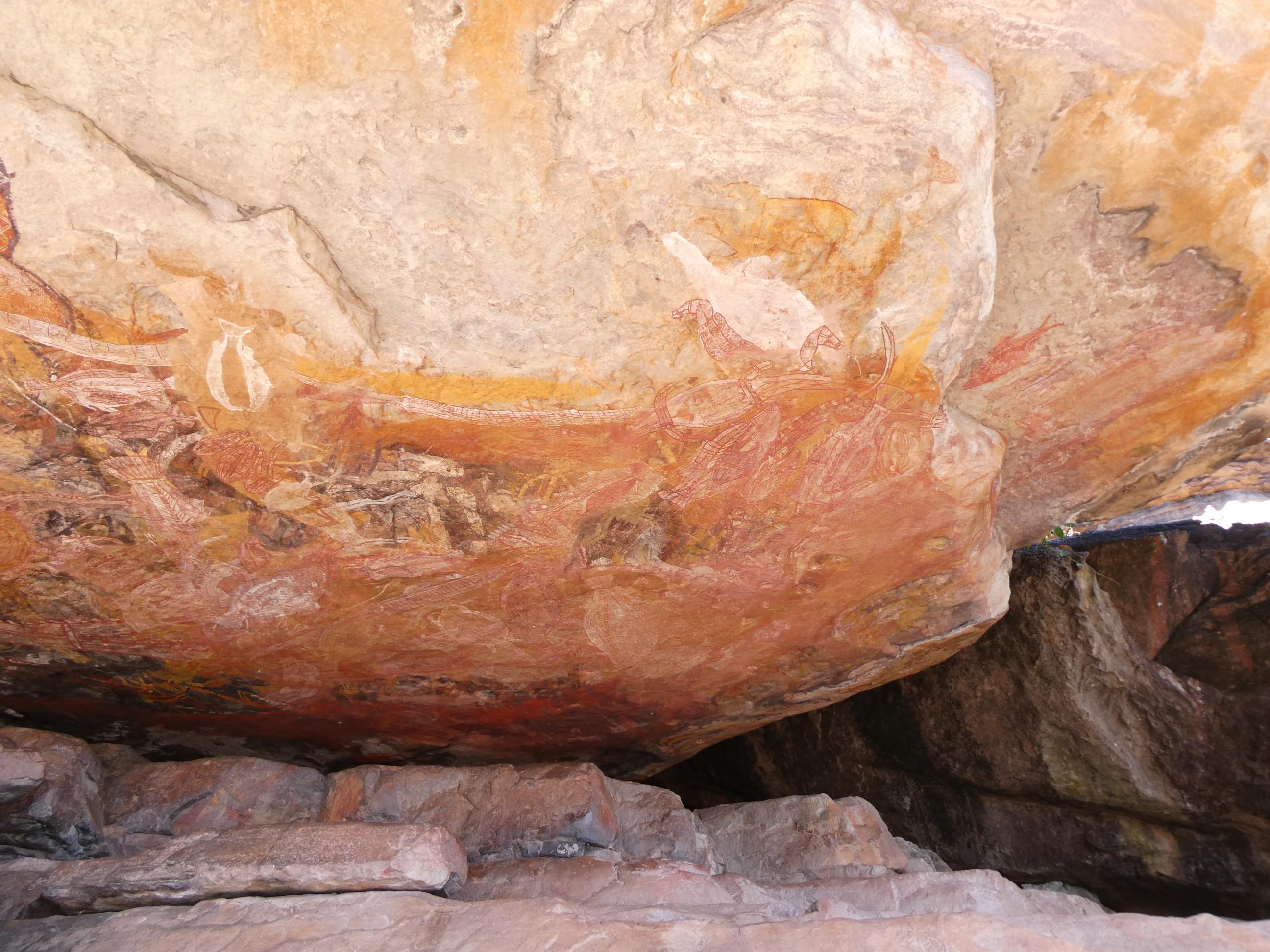
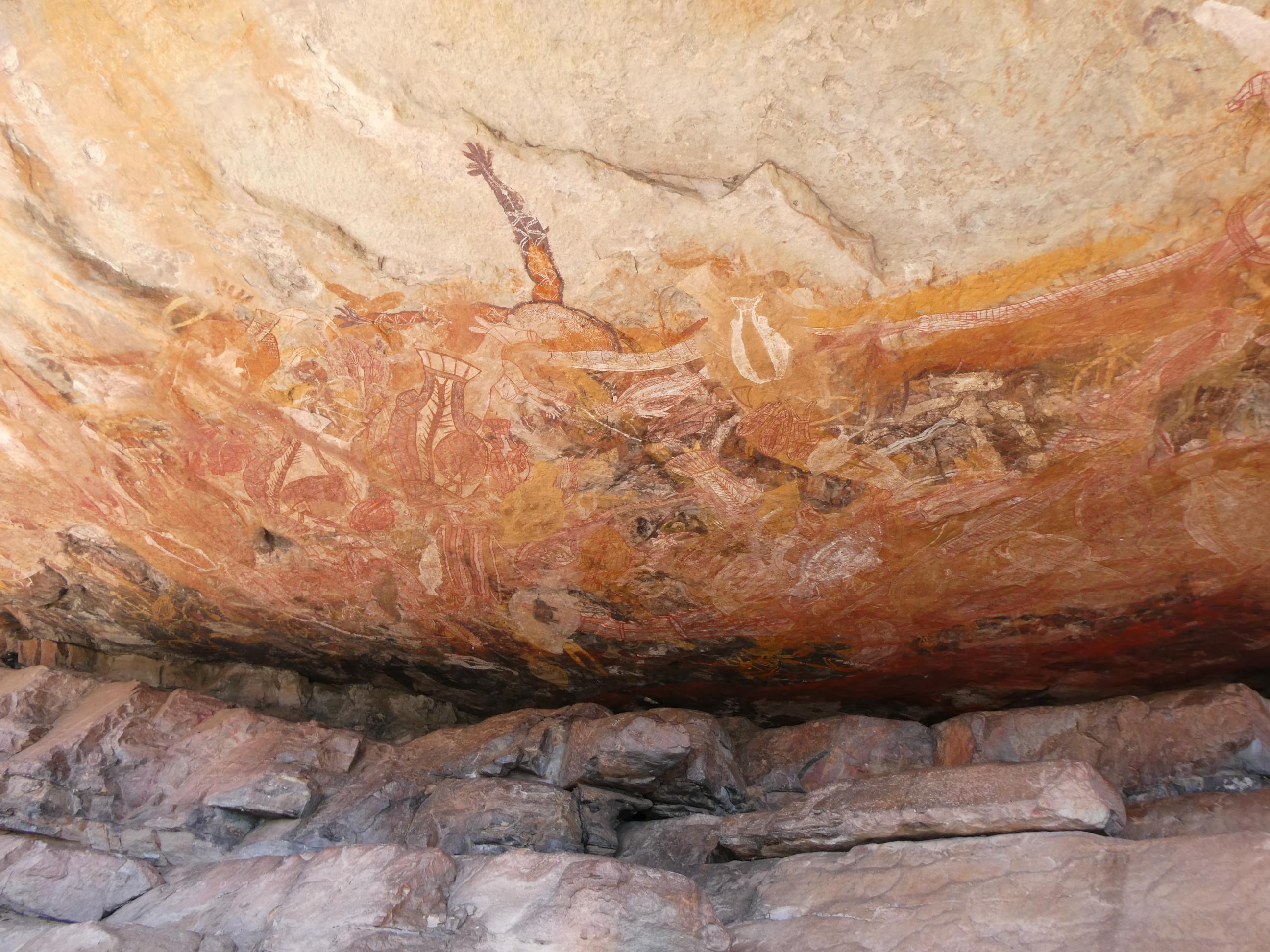
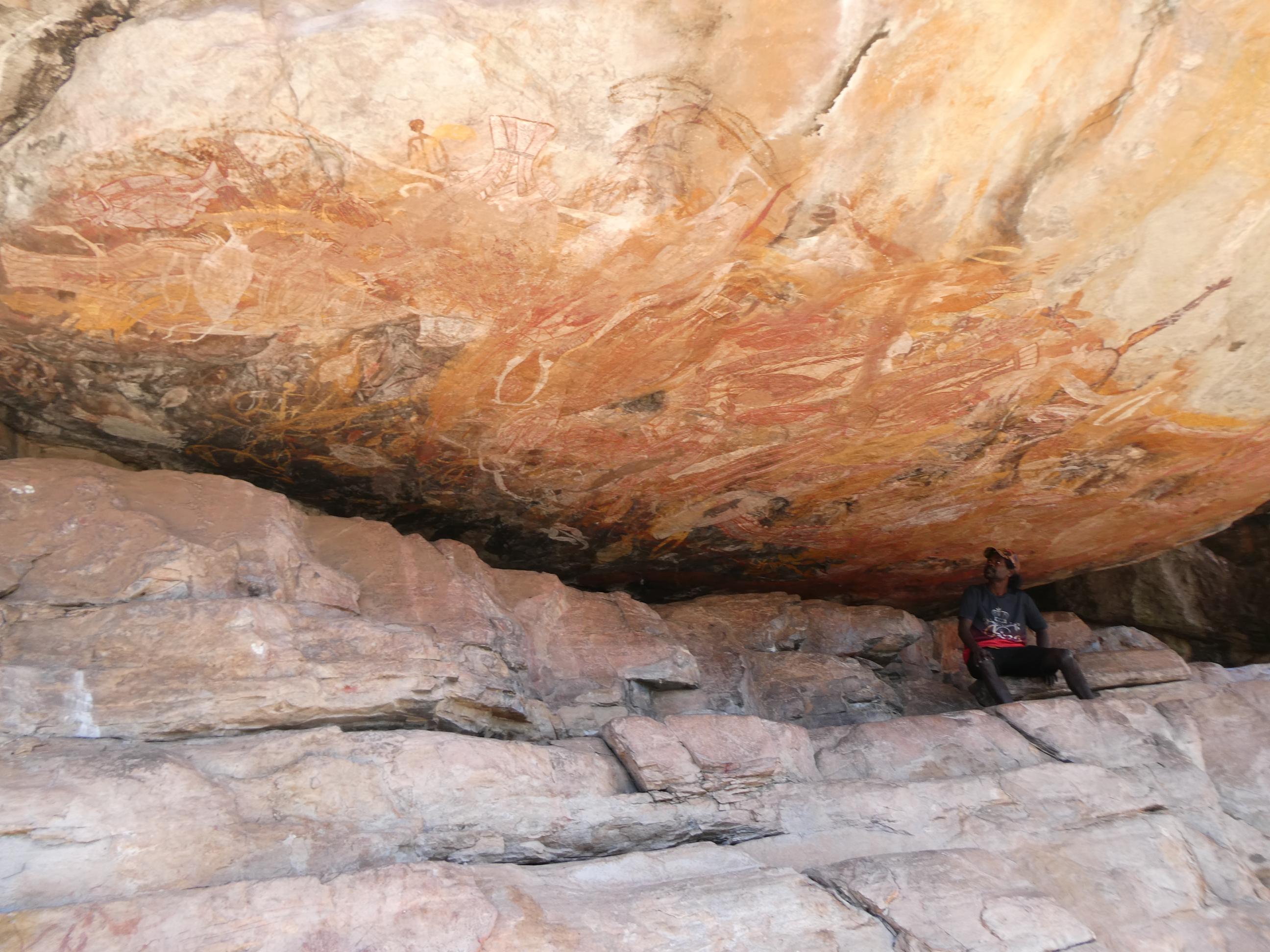
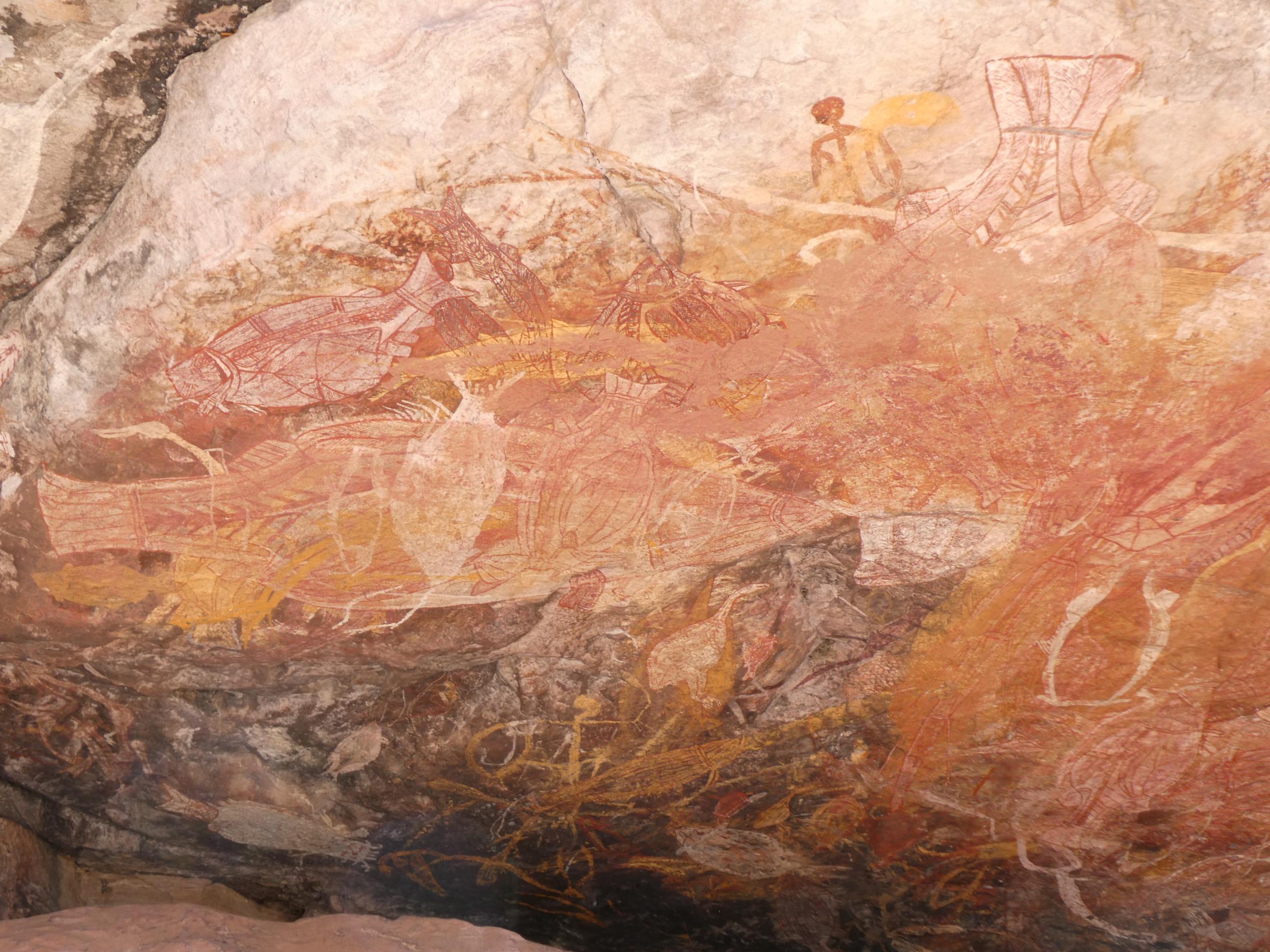
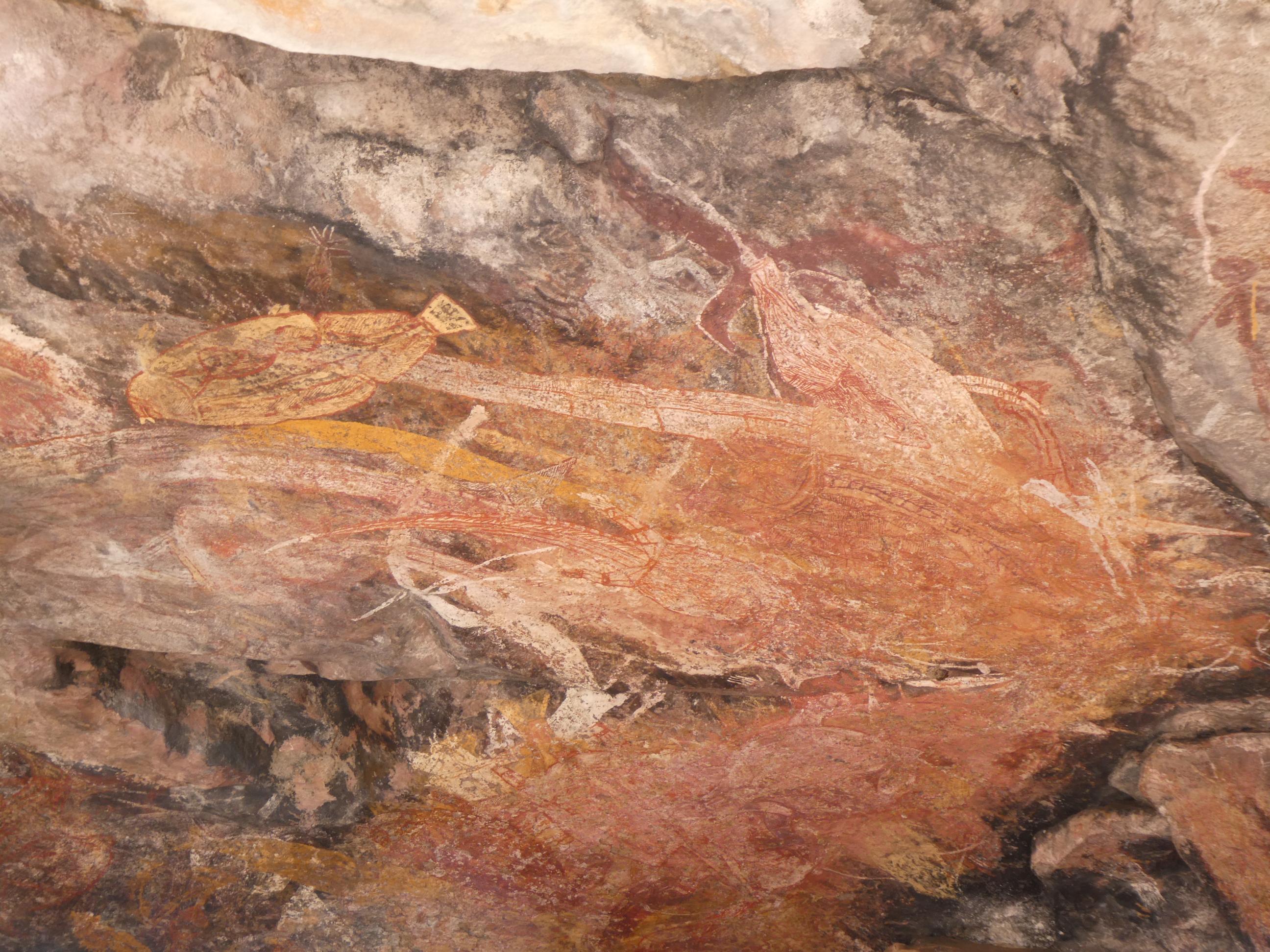
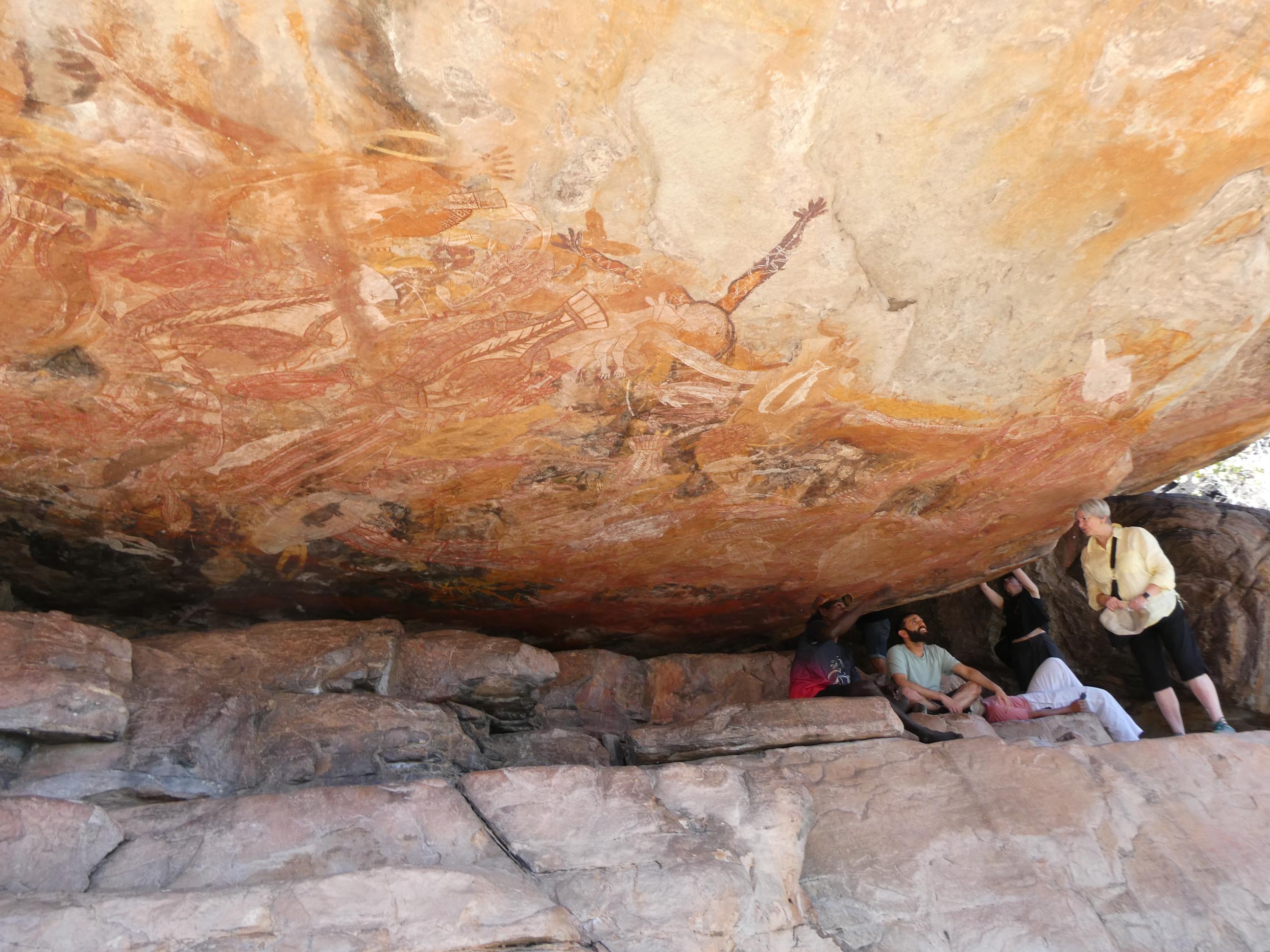
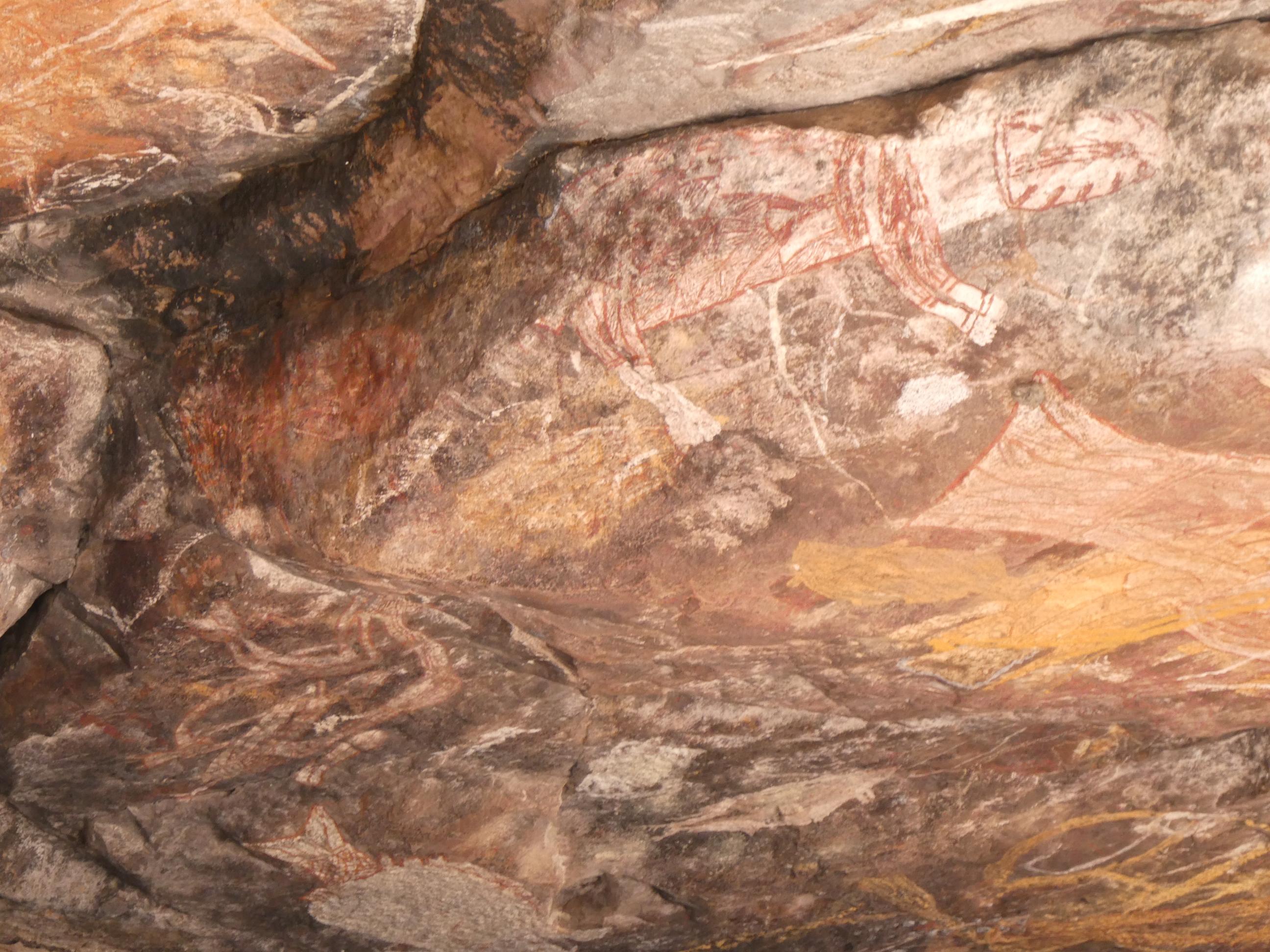
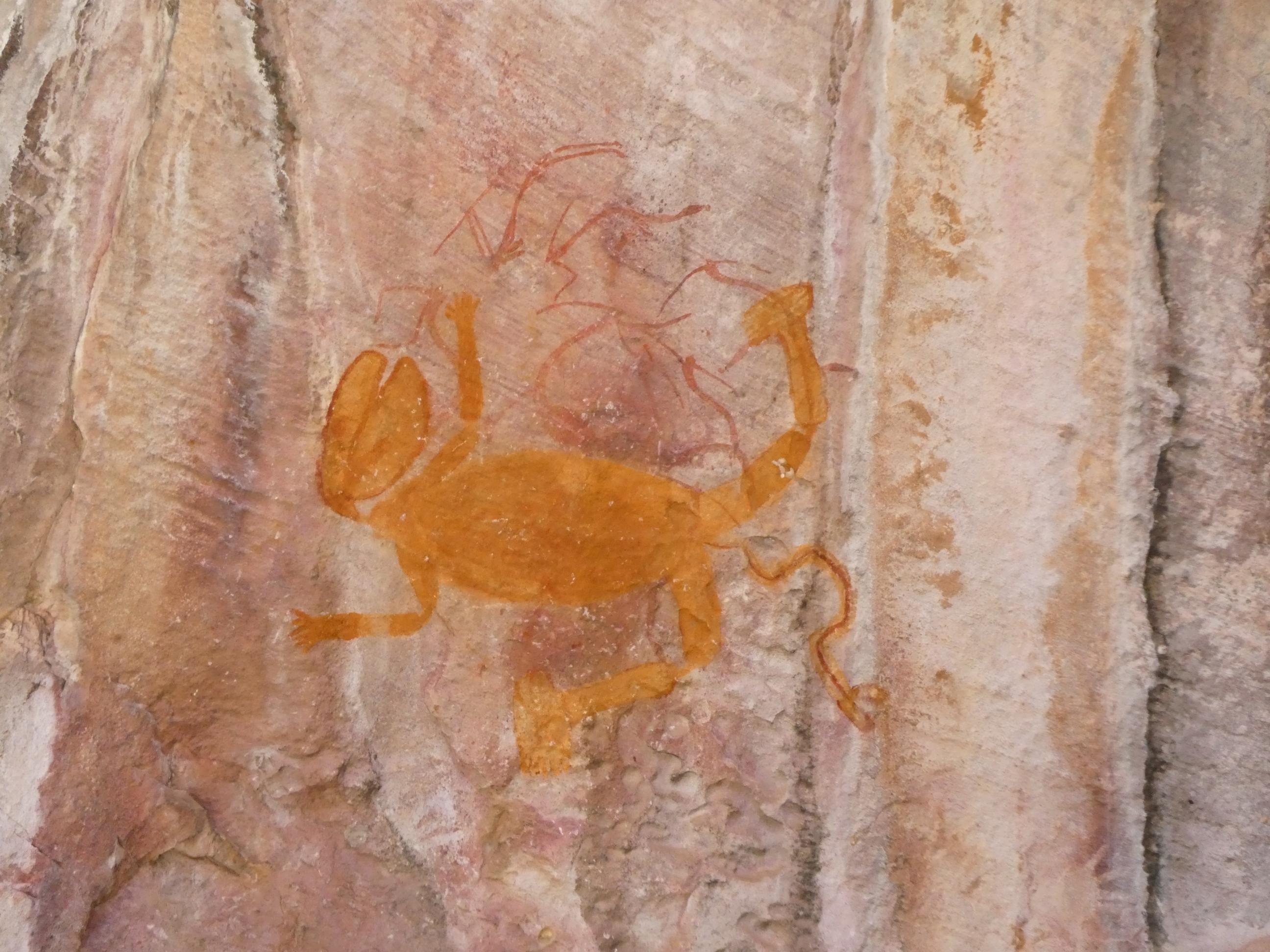
We stopped to eat lunch just past the burial site, near a ledge. We had clear views out on either side of the hill and across the lagoon to Gunbalanya. After taking in the amazing panoramas we found a spot to sit and eat beneath a large sheltering overhang. What a wonderful setting for a midday meal.
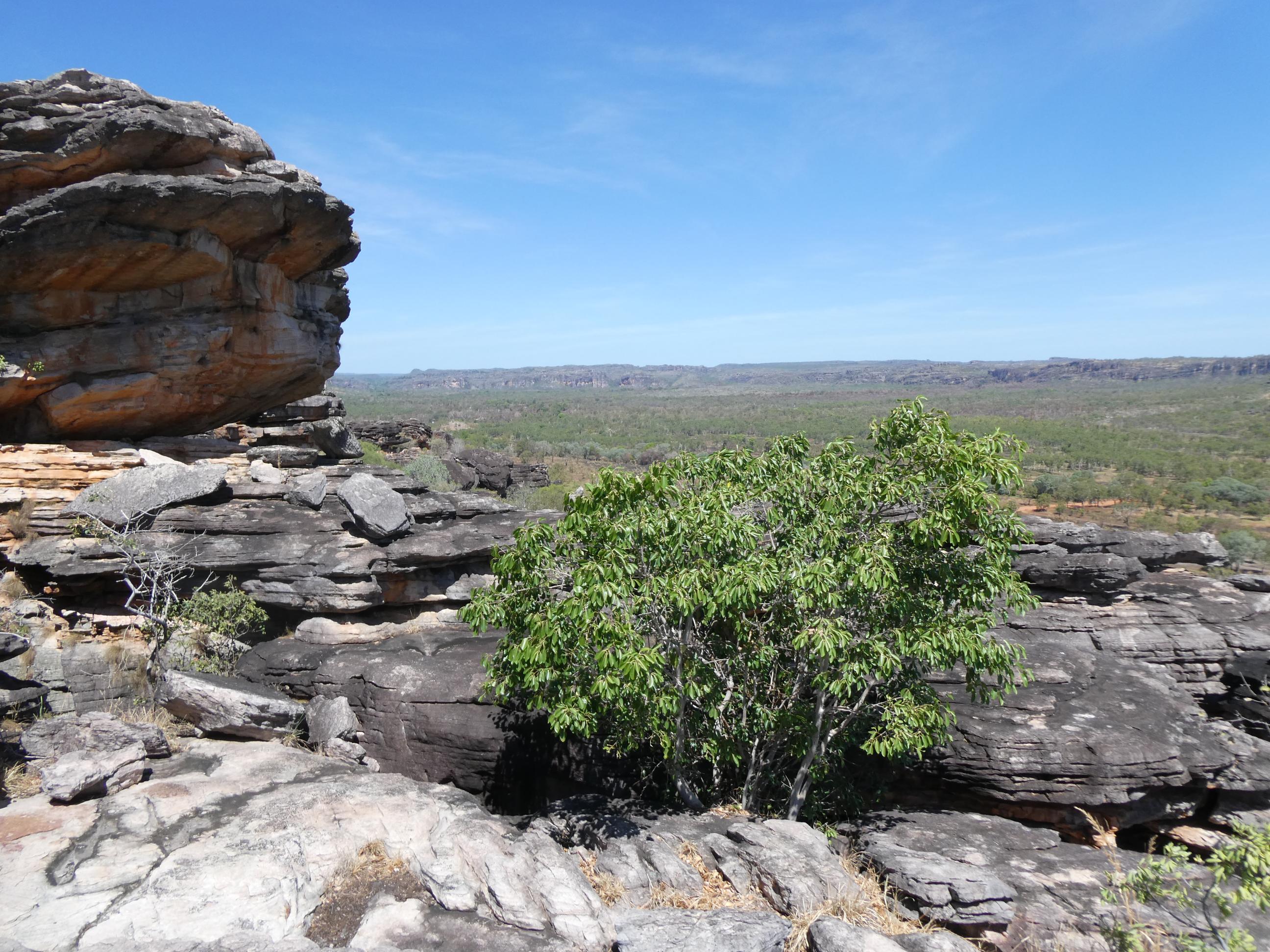
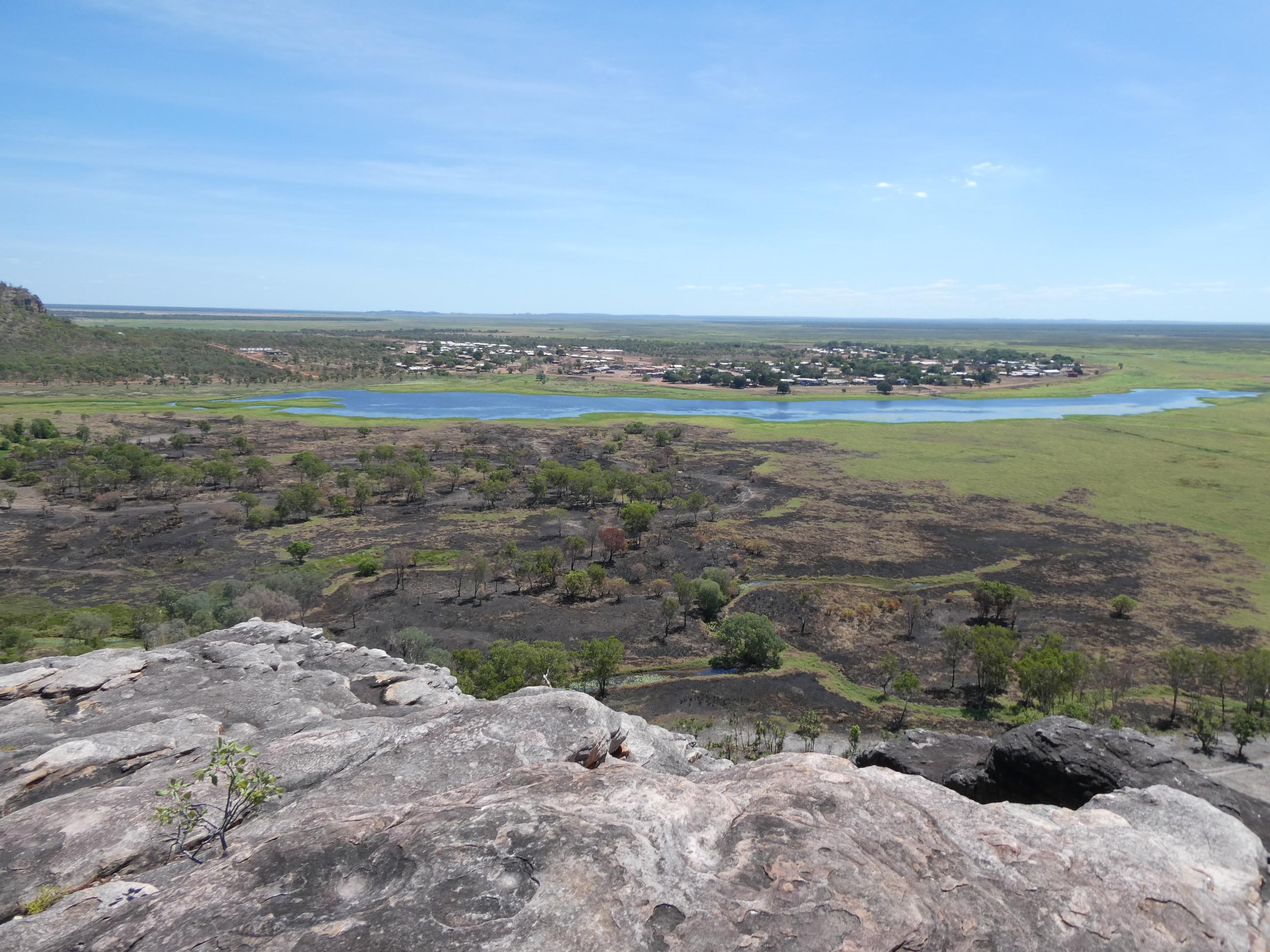
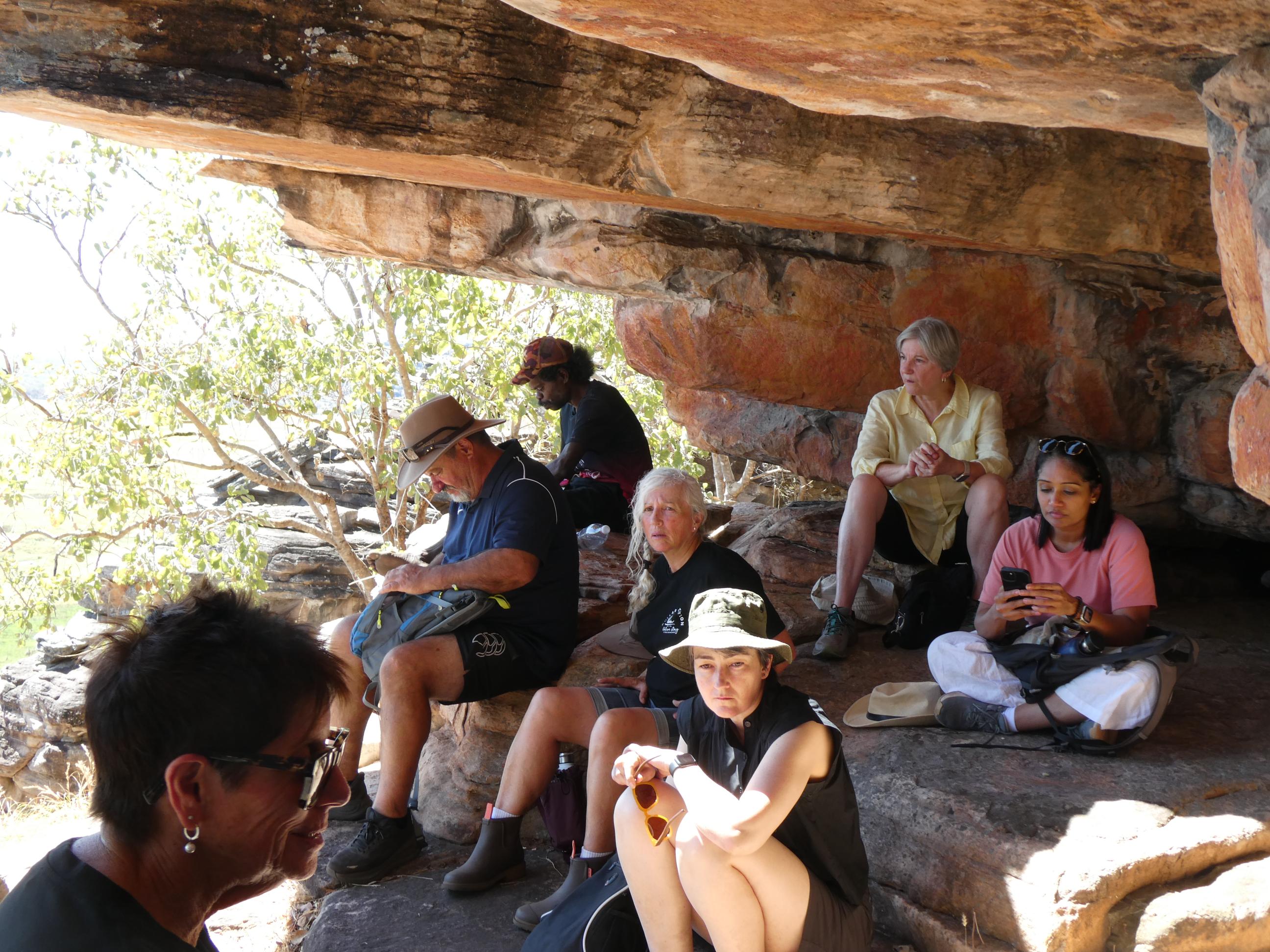
After lunch we passed through a few more galleries before beginning our descent to the base of the hill. It wasn’t always easy going on this part of the walk. There was lots of up and down climbing over uneven rocks, and on several occasions we had to squeeze through very narrow places. Eventually, we made our way back to the vehicle. It had been an enthralling few hours,
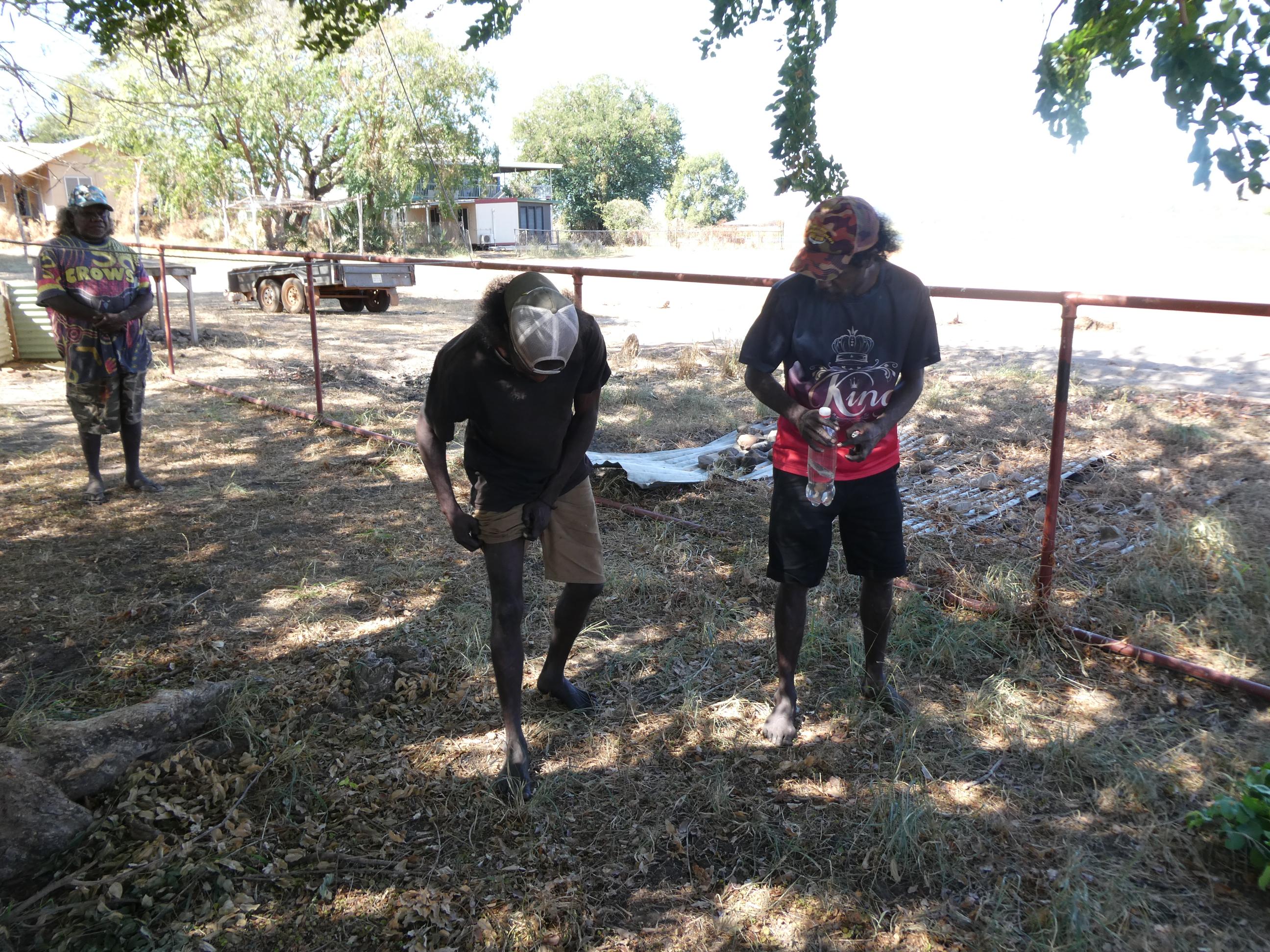
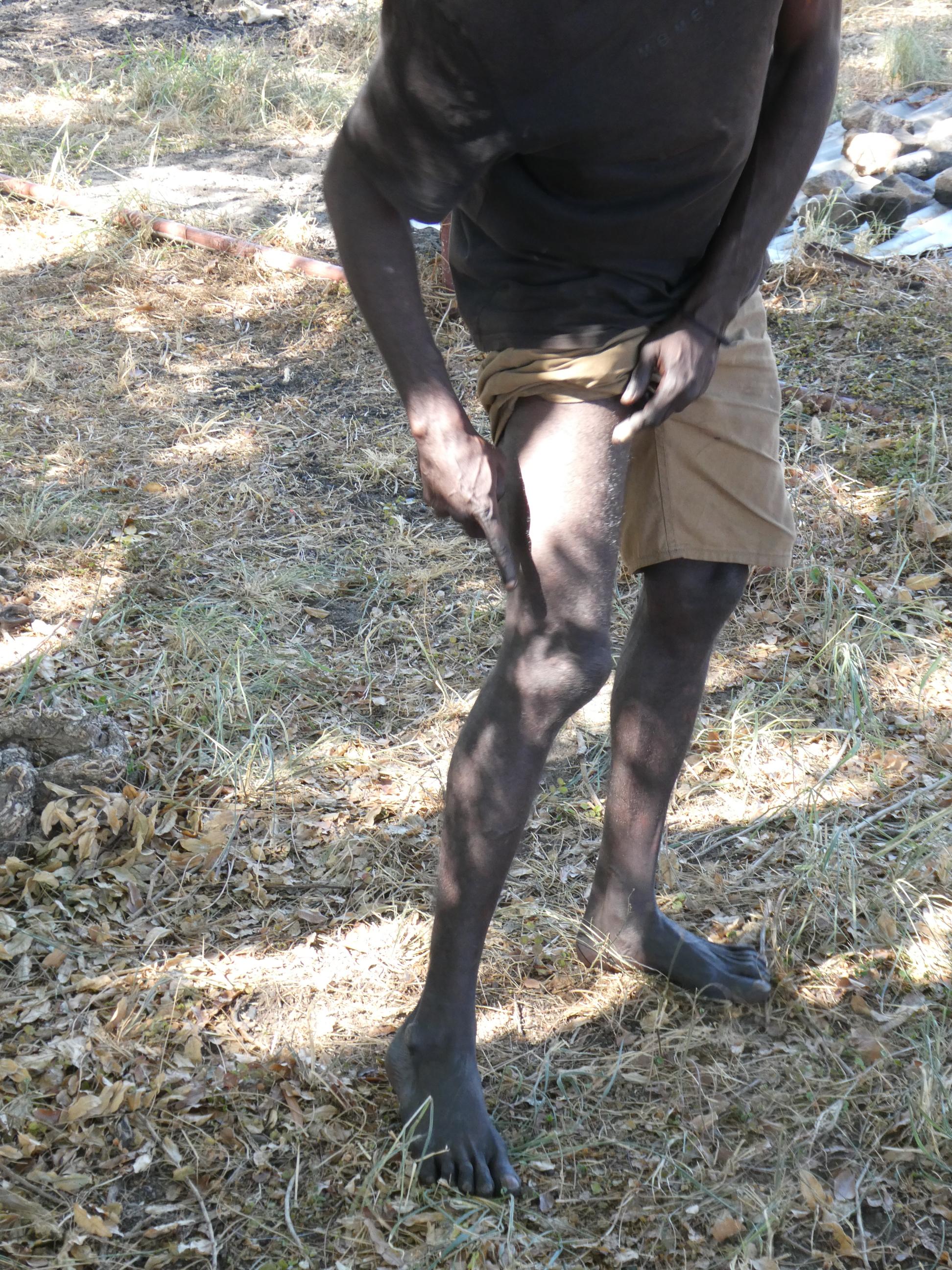
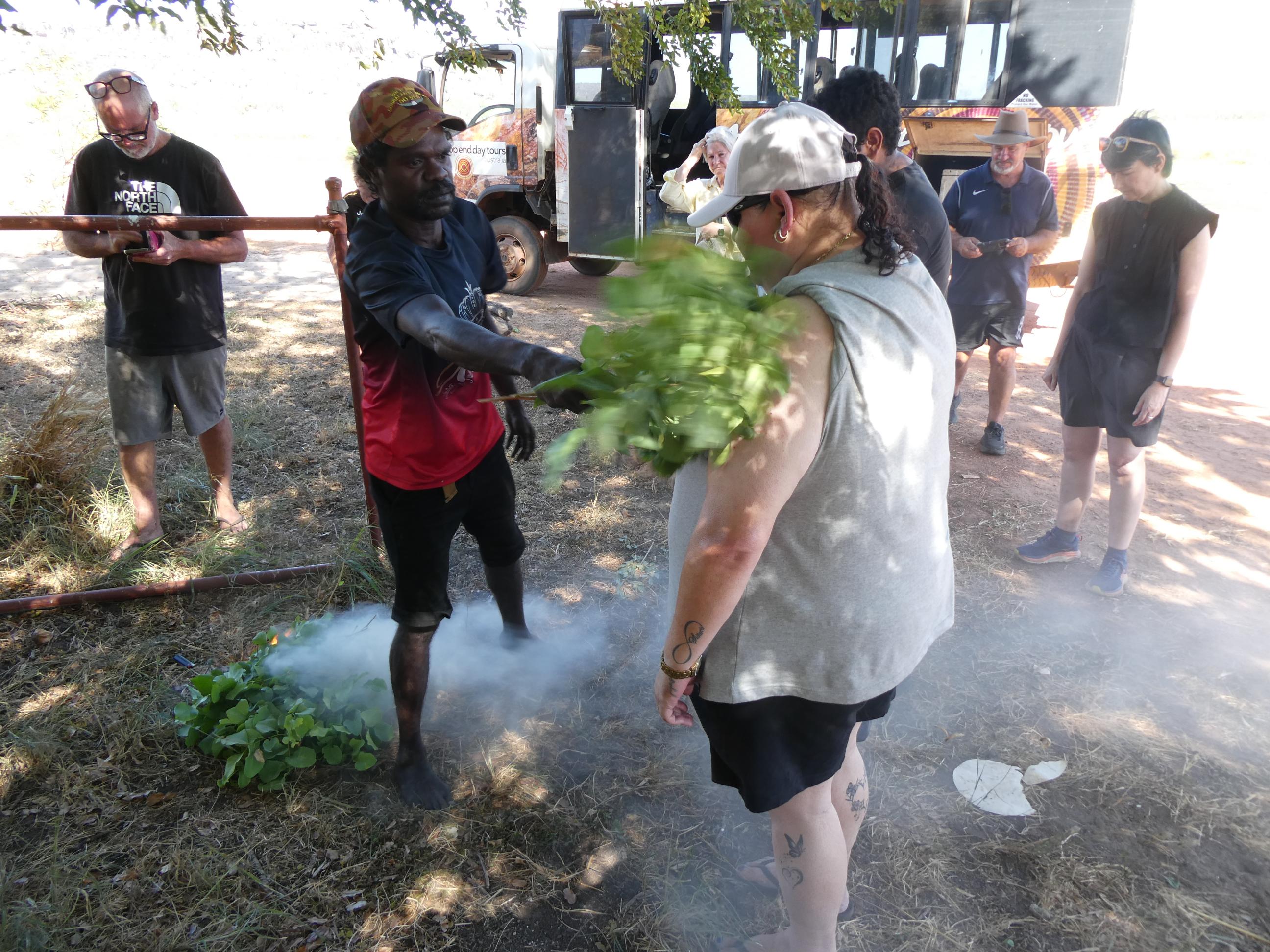
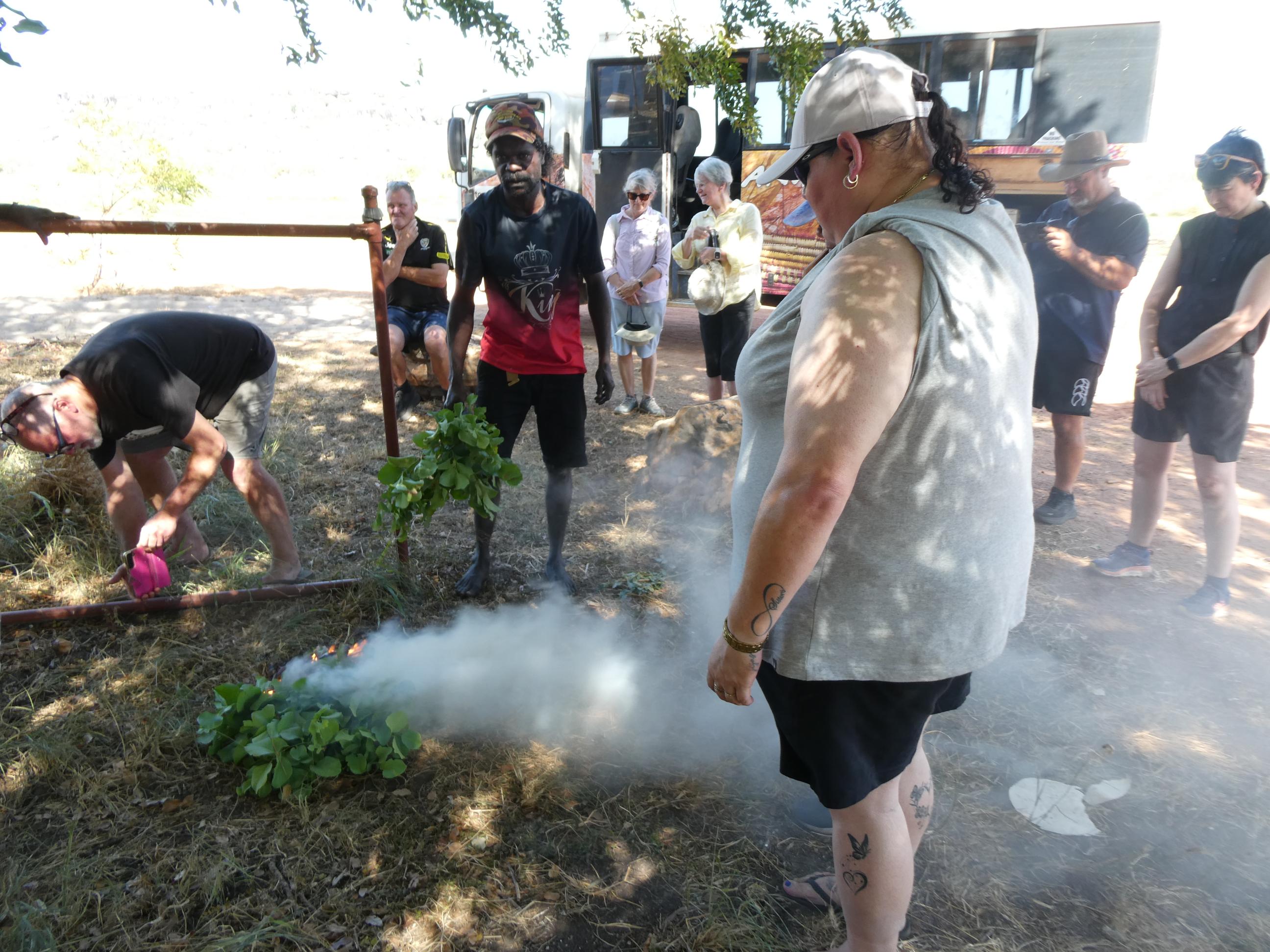
We stopped at Gunbalanya to drop Craig off. He had one more important task to perform. Three of the people on our tour were indigenous people from Western Australia. Craig performed a smoking ceremony for them to ensure the bad spirits that inhabit the Injalak Hill do not follow them back home to Western Australia. He was joined by his twin brother, Nick, who pulled up his shorts to show us a scar that ran all the way down to his ankle, the result of being bitten by a relatively small crocodile last year. A short time later, back at Cahill’s Crossing, the big crocs were on the move once again as we slowly made our way across the East Alligator River. Thankfully, the tide was once again low and we were able to cross safely as the crocs watched from just a few metres away.


Oh my what an exciting and eventful day for you all.
LikeLiked by 1 person