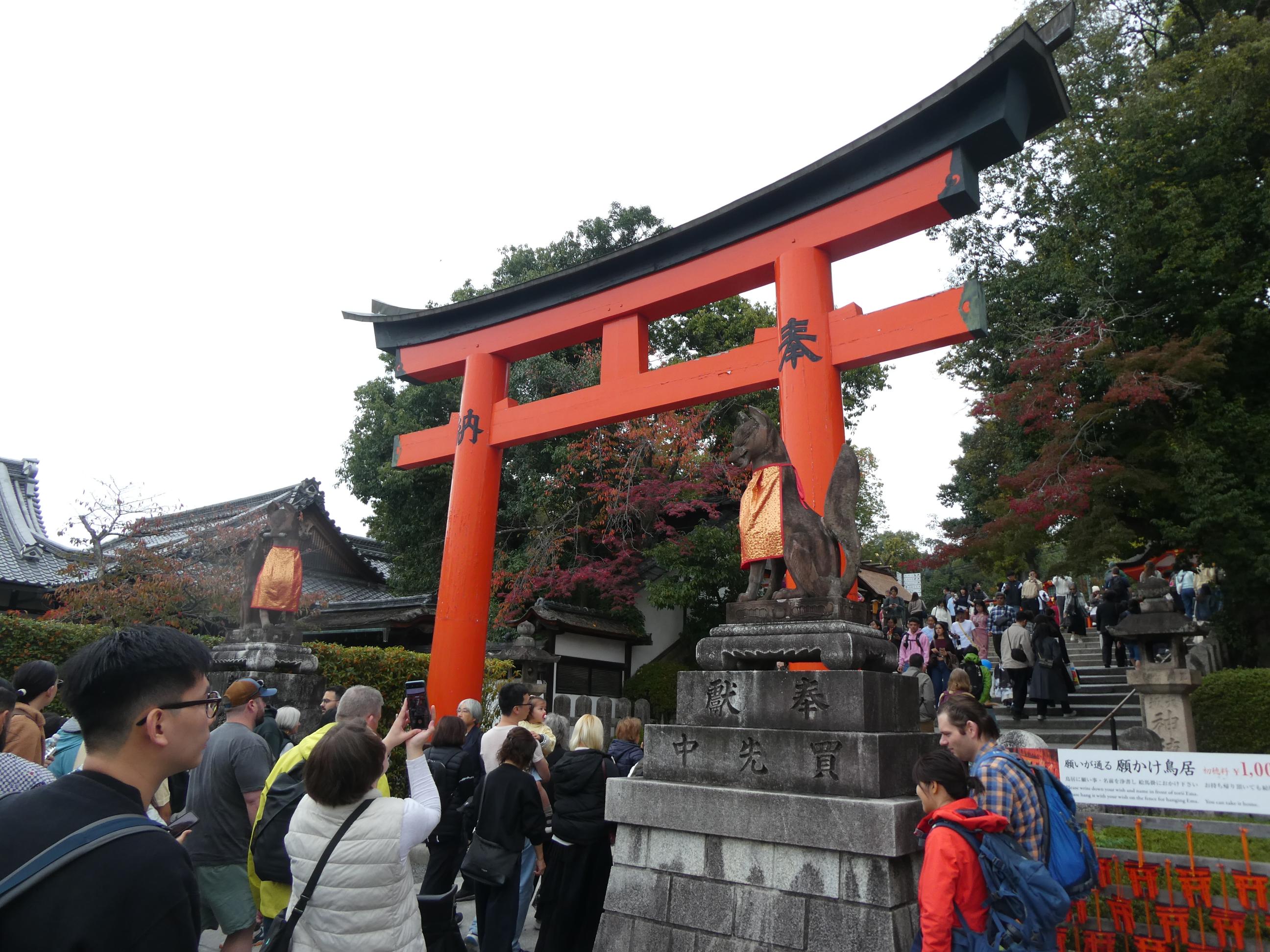
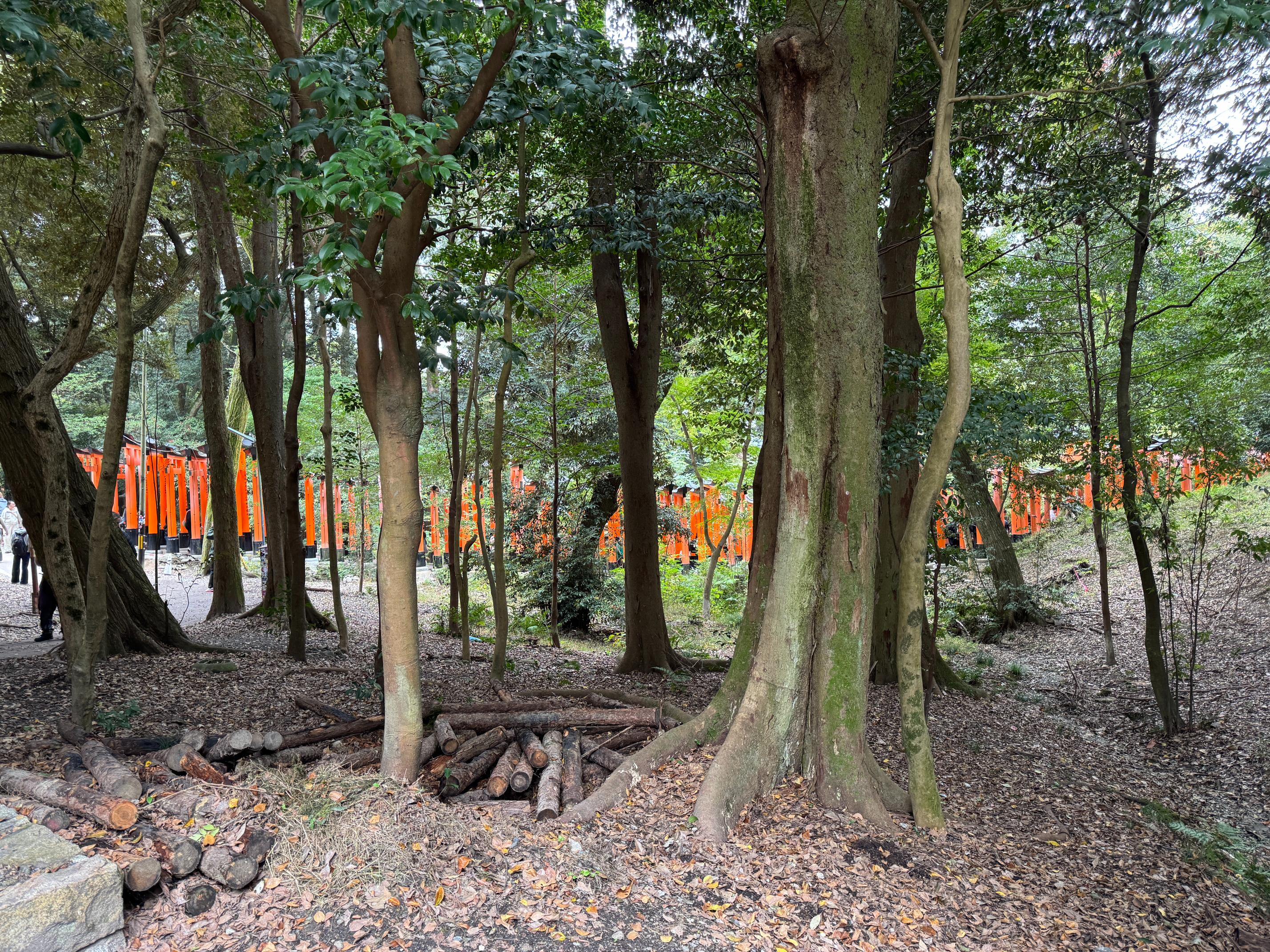
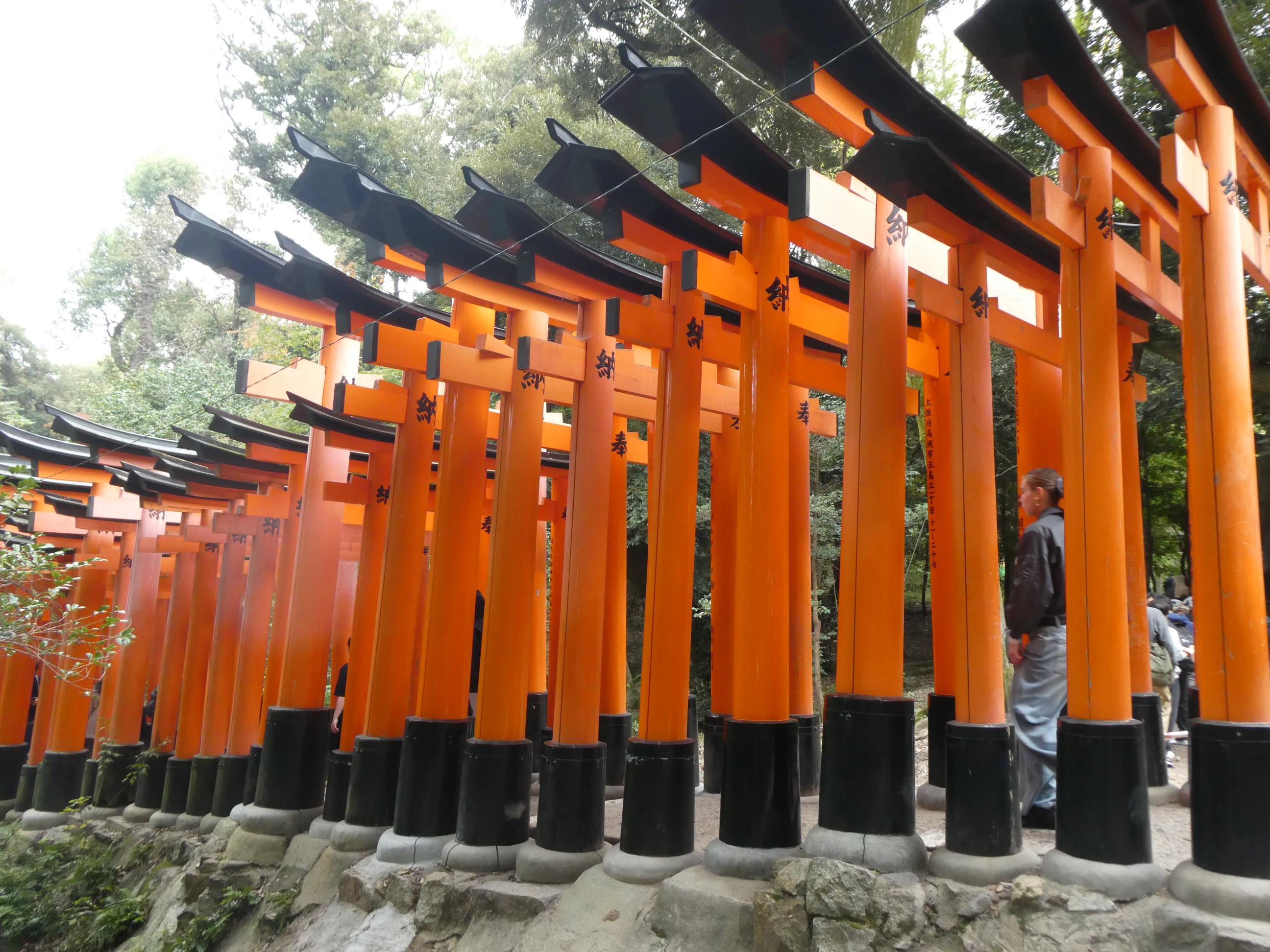
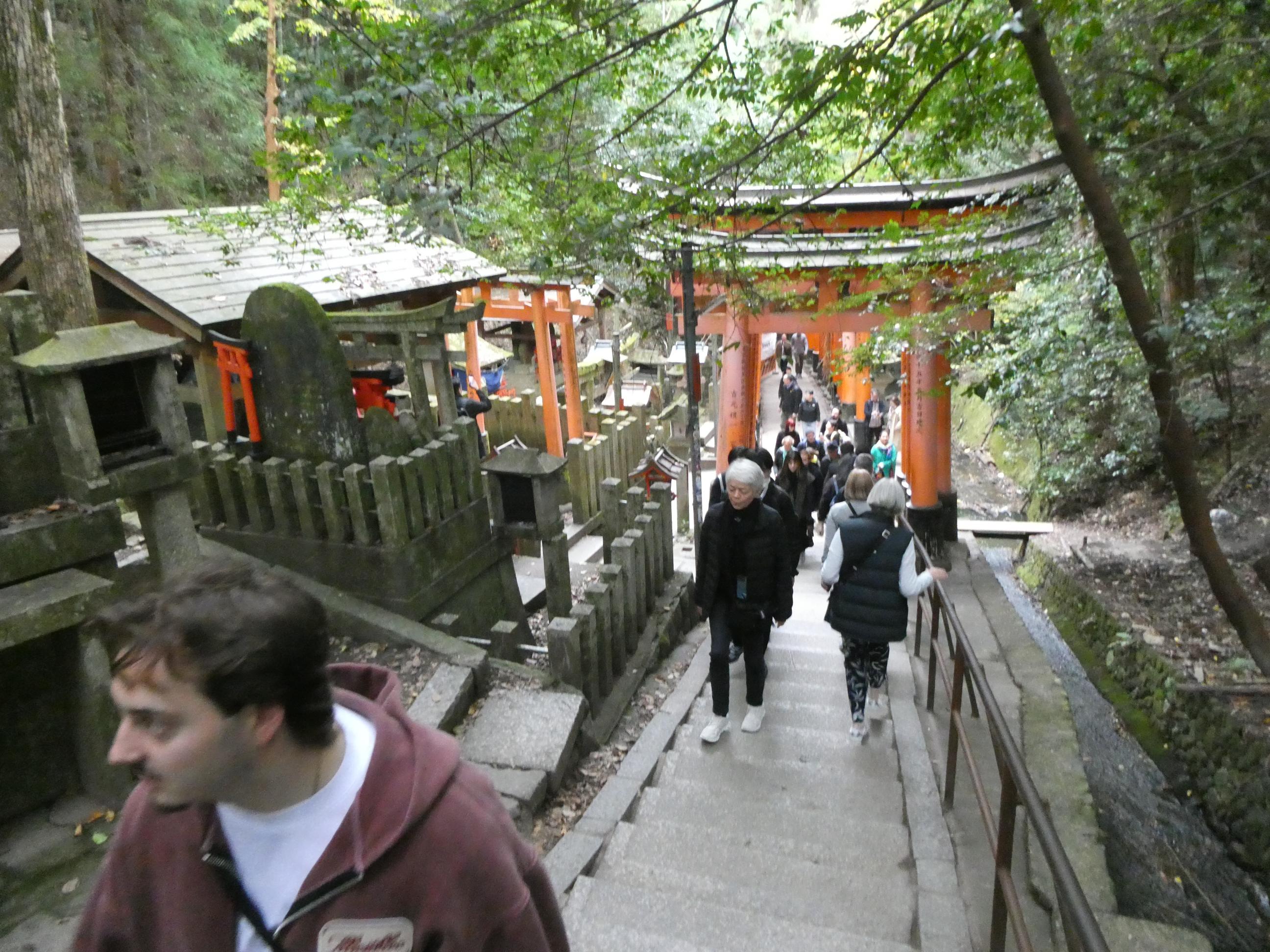
This morning we caught the Nara Line train to Inari, the second stop on the line and still within the city of Kyoto. Directly across the road from the railway station was the Fushimi Inari-Taisha, the Shinto shrine famous for its thousands of reddish-vermillion coloured Torii gates, which is featured on most Japan tour brochures and which also featured in the movie ‘Memoirs of a Geisha’.
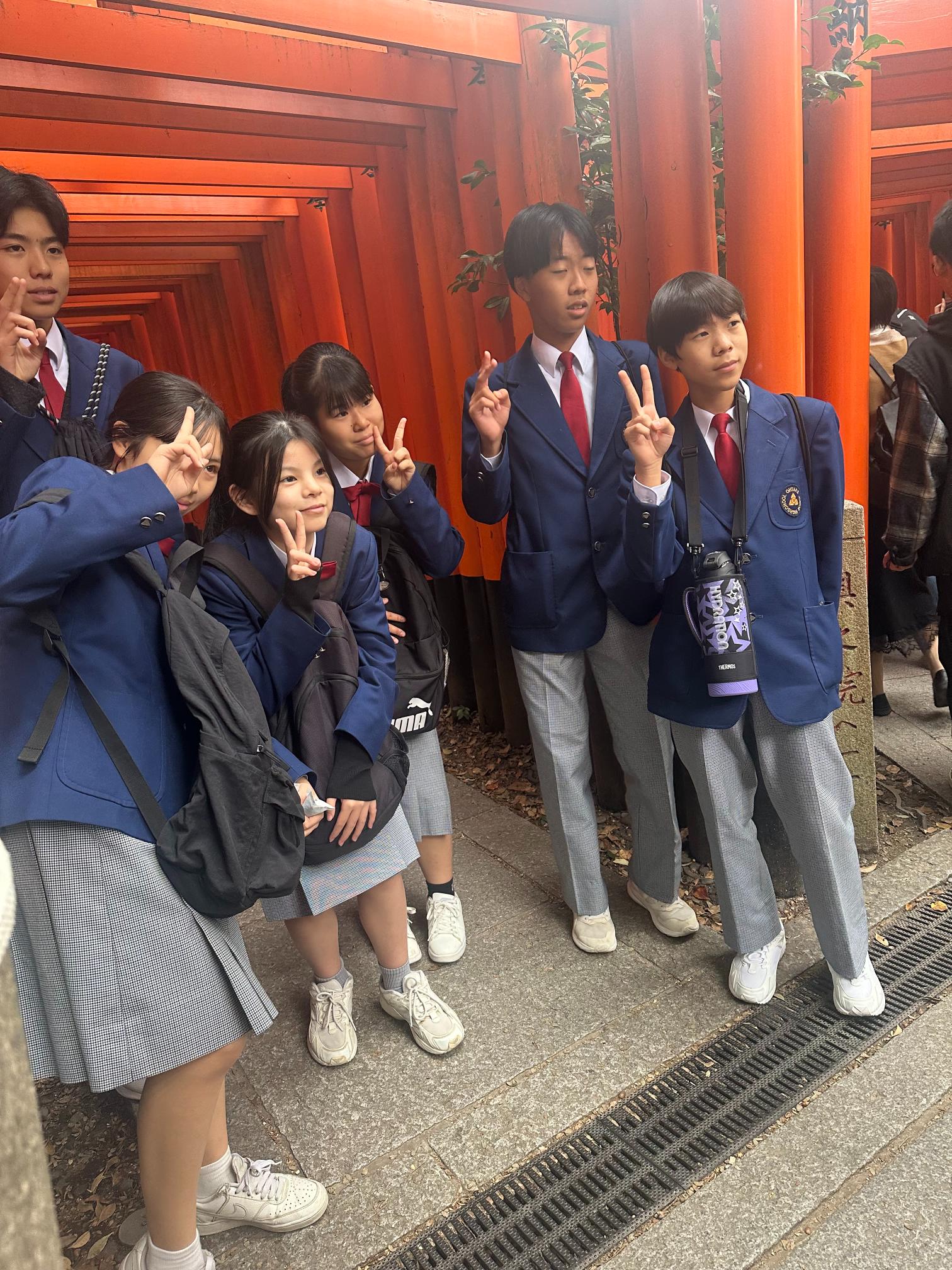
There was quite a large crowd when we arrived, just as we’ve encounted at other tourist attractions in Kyoto. A guide told us that all Japanese schools have a small window in their annual calendars in which they must organise all school excursions and overnight trips. The time for that window is now. Due to its cultural and historical importance, Kyoto has become like a magnet which lures school trips from all over the country. The guide said this is the reason for the large crowds we’ve been contending with. There are literally thousands of students in Kyoto at the moment visiting the same tourist attractions we’re visiting at exactly the same time.
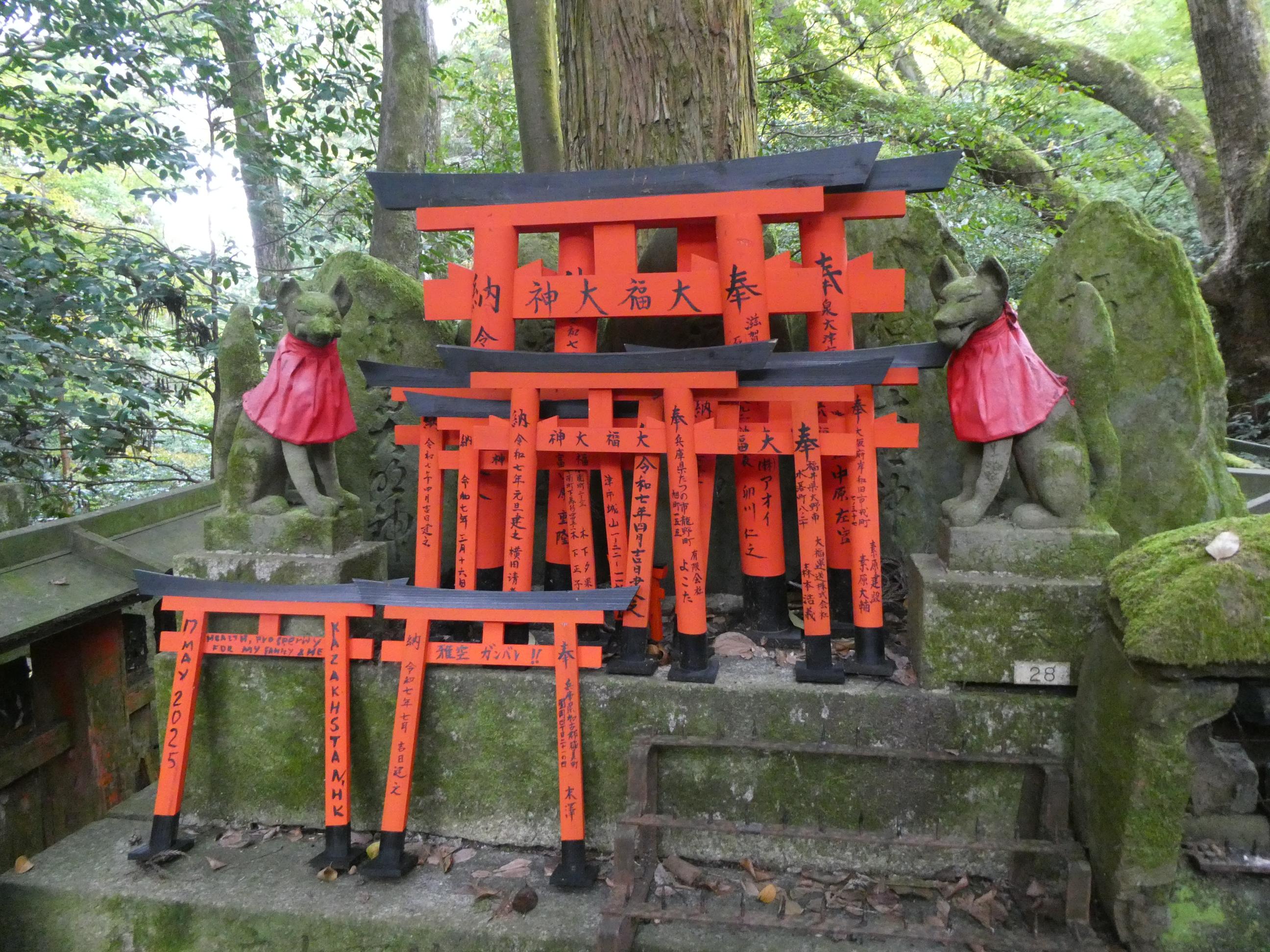
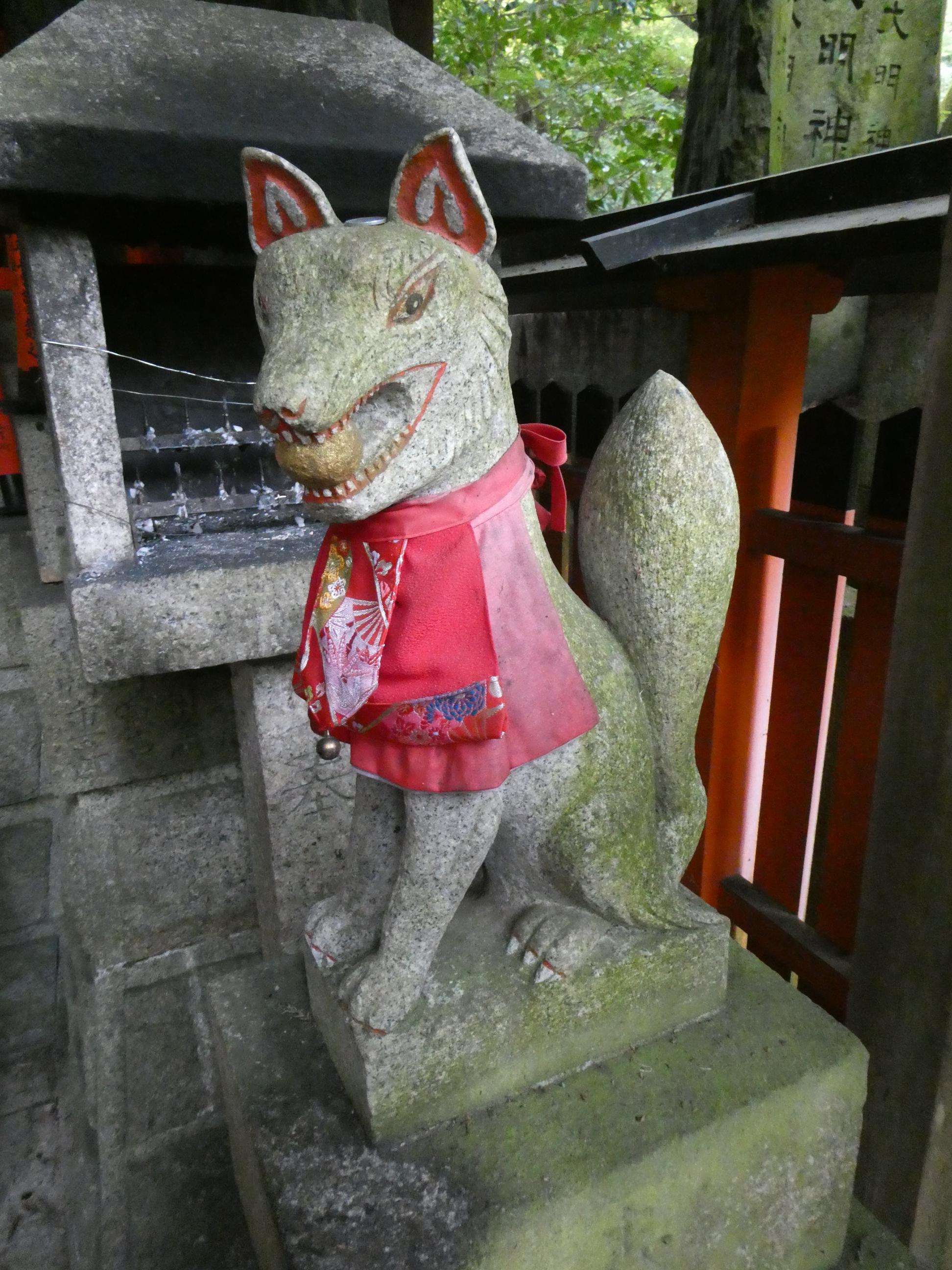
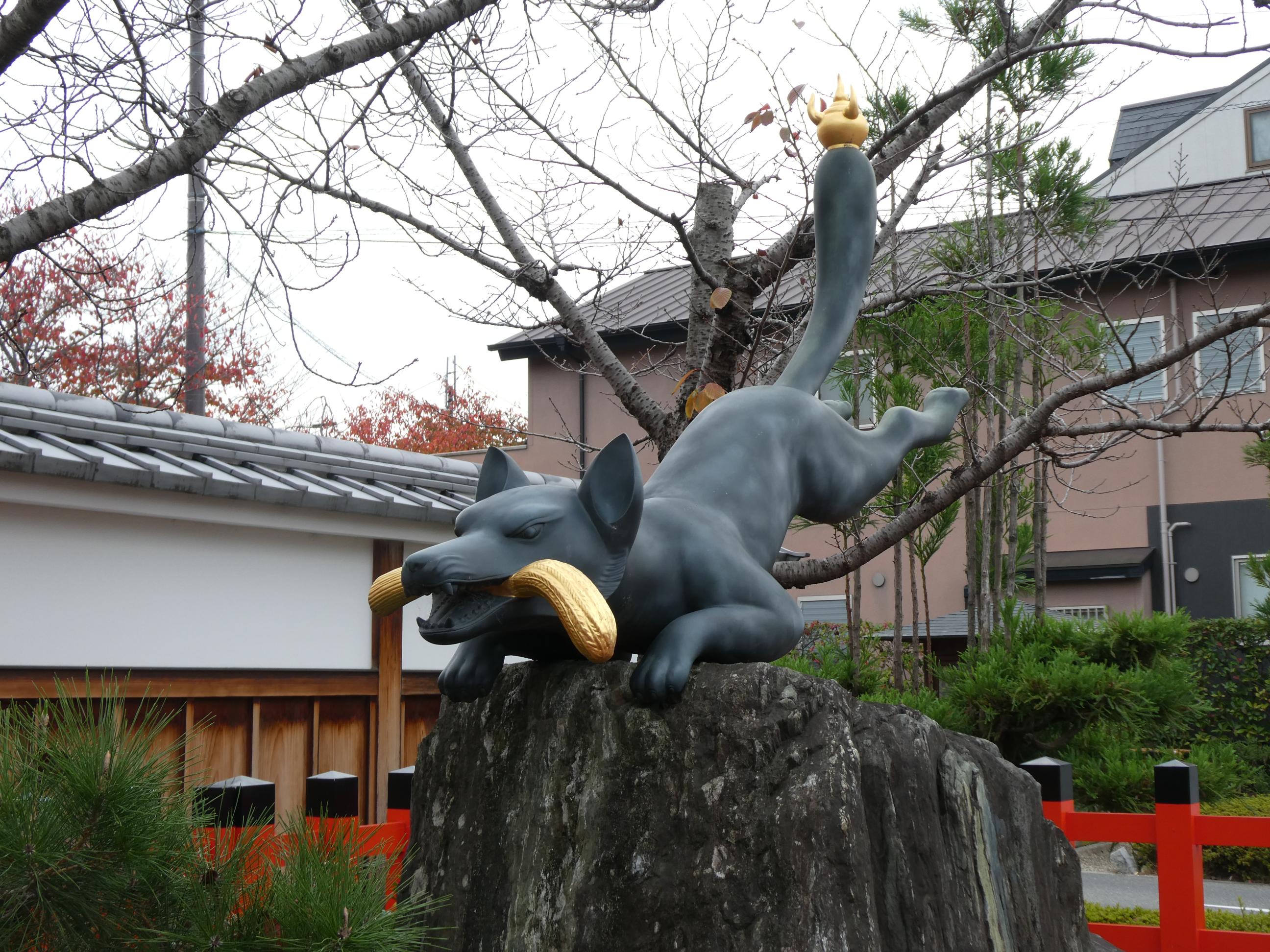
Inari is the name of one of the Shinto kami, or deities, and is something akin to the nature spirit responsible for agriculture and rice. Foxes are thought to be Inari’s messengers, and you will see a fox sculpture at the entrance to the temple complex and many other fox sculptures and icons at regular intervals throughout the shrine.
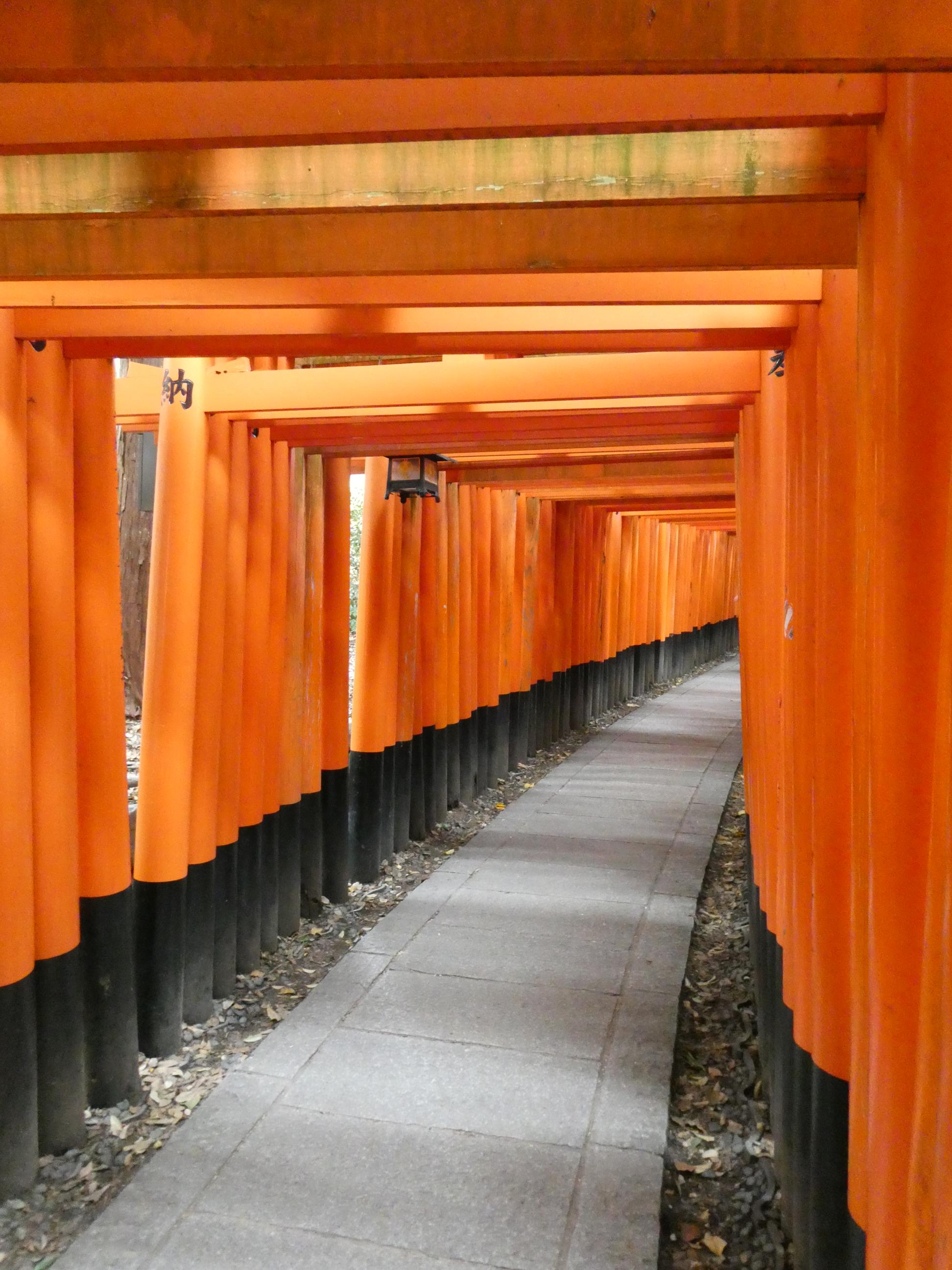
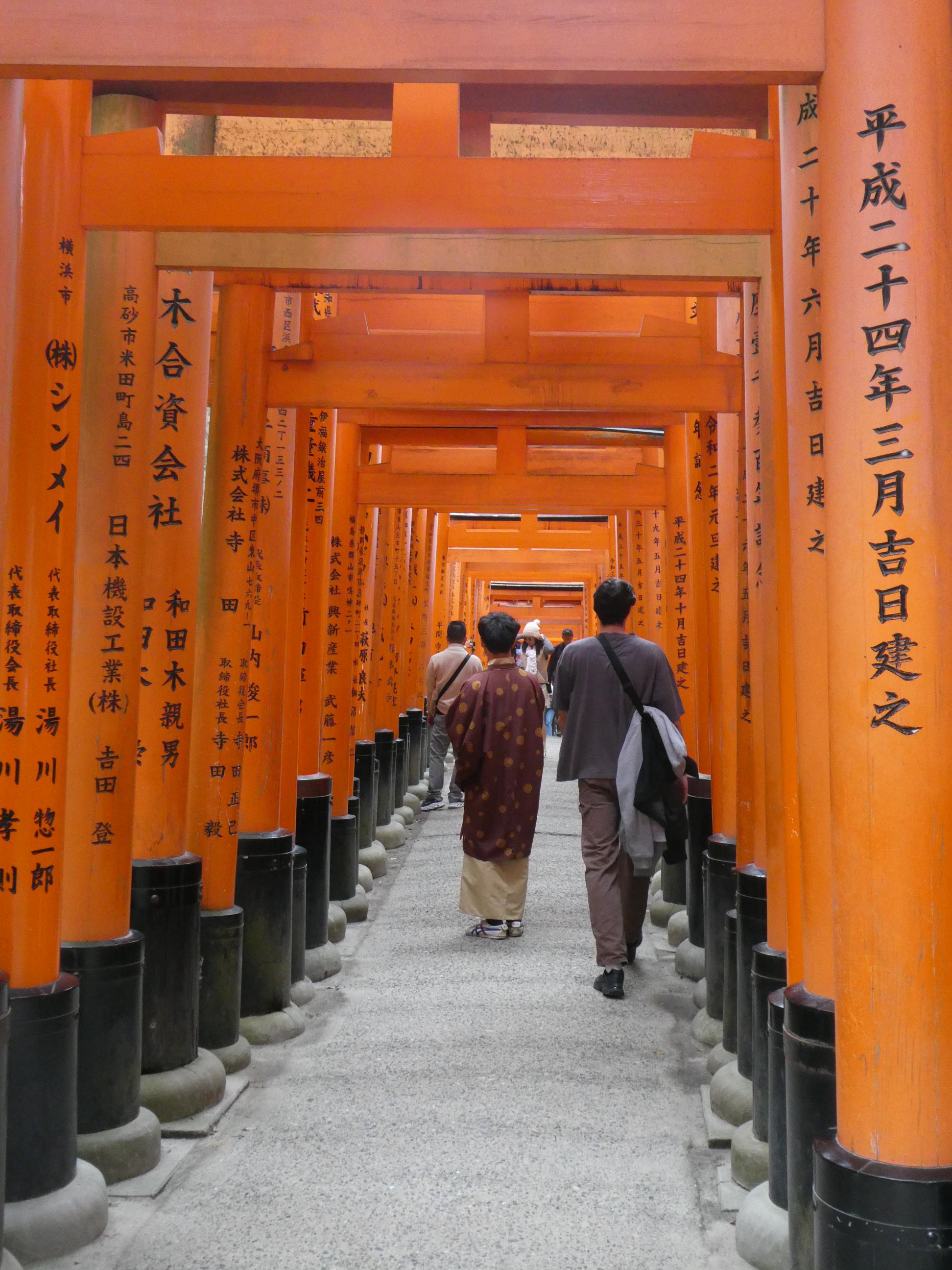
The main feature of the Inari shrine is the long trail of over 800 Torii gates known as the Senbon Torii, which apparently requires a good deal of strenuous hiking. There is a network of other, less demanding hiking trails at Fushimi, and each of these also features large numbers of the red Torii gates. All trails lead to small shrines. All in all, there are currently over ten thousand torii gates at Fushimi. Each gate is a donation from either a business or an individual. The donor’s name and date of donation are inscribed in hiragana characters on the back of the columns. We chose not to hike the entire length of the Senbon Torii, which takes between two and three hours to complete and involves a lot of walking uphill. For starters, there was a crush around the entrance to the trail as tourists and school students all seemed to want to begin the hike at about the same time. We just walked in for a short distance to get a sense of what the rest of the trail would be like, then we turned around and retraced our steps until we were out in the open once again. We moved across to the network of lesser trails and walked them instead. There was much less of an incline and the trails were much less crowded. Despite that, we were still able to enjoy the experience of walking through tunnels created by the vast numbers of torii gates. In the end, I’m not sure how many of the trails we walked. There seemed to be new paths going off in different directions on a regular basis. There was no pattern or order to it. When we thought we’d seen and done enough, we headed back to the exit and over the road to the station to wait for the next train to come along to take us to Nara.











The city of Nara is about 50 kilometres directly south of Kyoto. It takes just over an hour on a local train stopping at all stations. We boarded the train at Inari and soon all found seats. But Ian and I didn’t last too long on the seats because they were heated. In fact, because they were bloody hot and we were cooking. I don’t understand why anyone needs to sit on a train seat so hot at 11.00 am on a pleasant autumn day. Marg and Theresa stuck it out, but Ian and I stood for quite a while until we discovered cooler seat corners further down the carriage and moved ourselves away from our wives for the rest of the long journey to Nara.
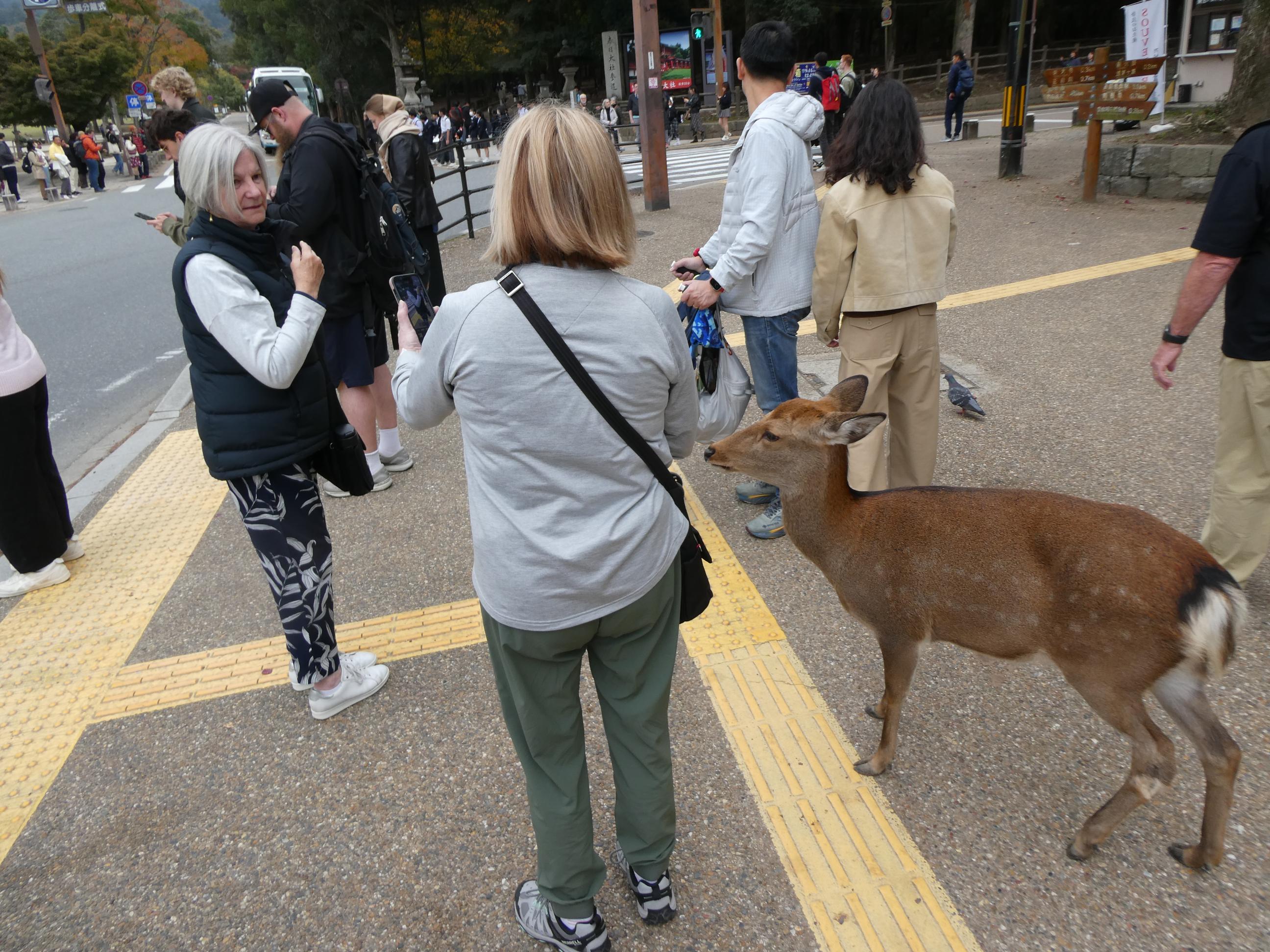
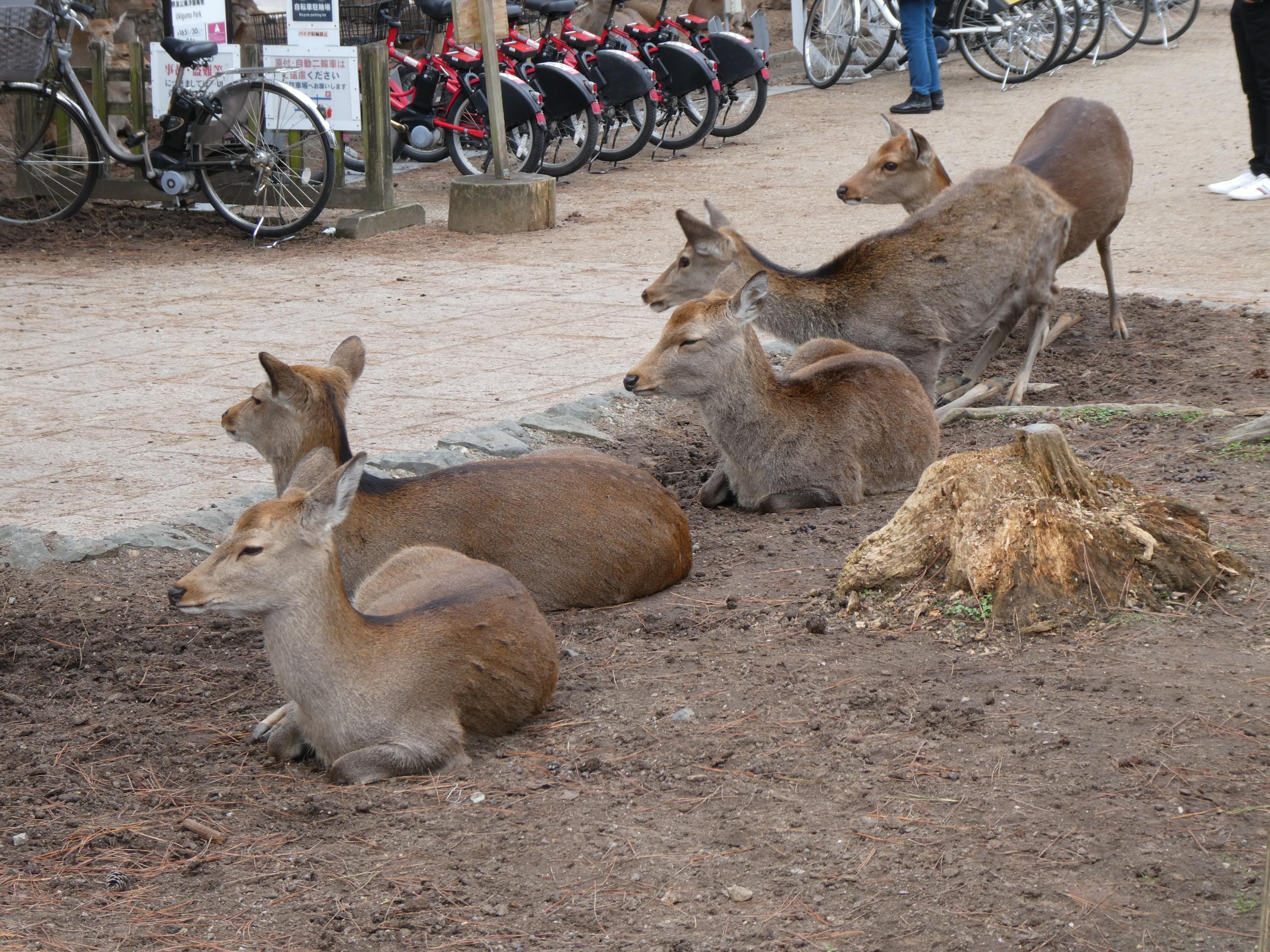
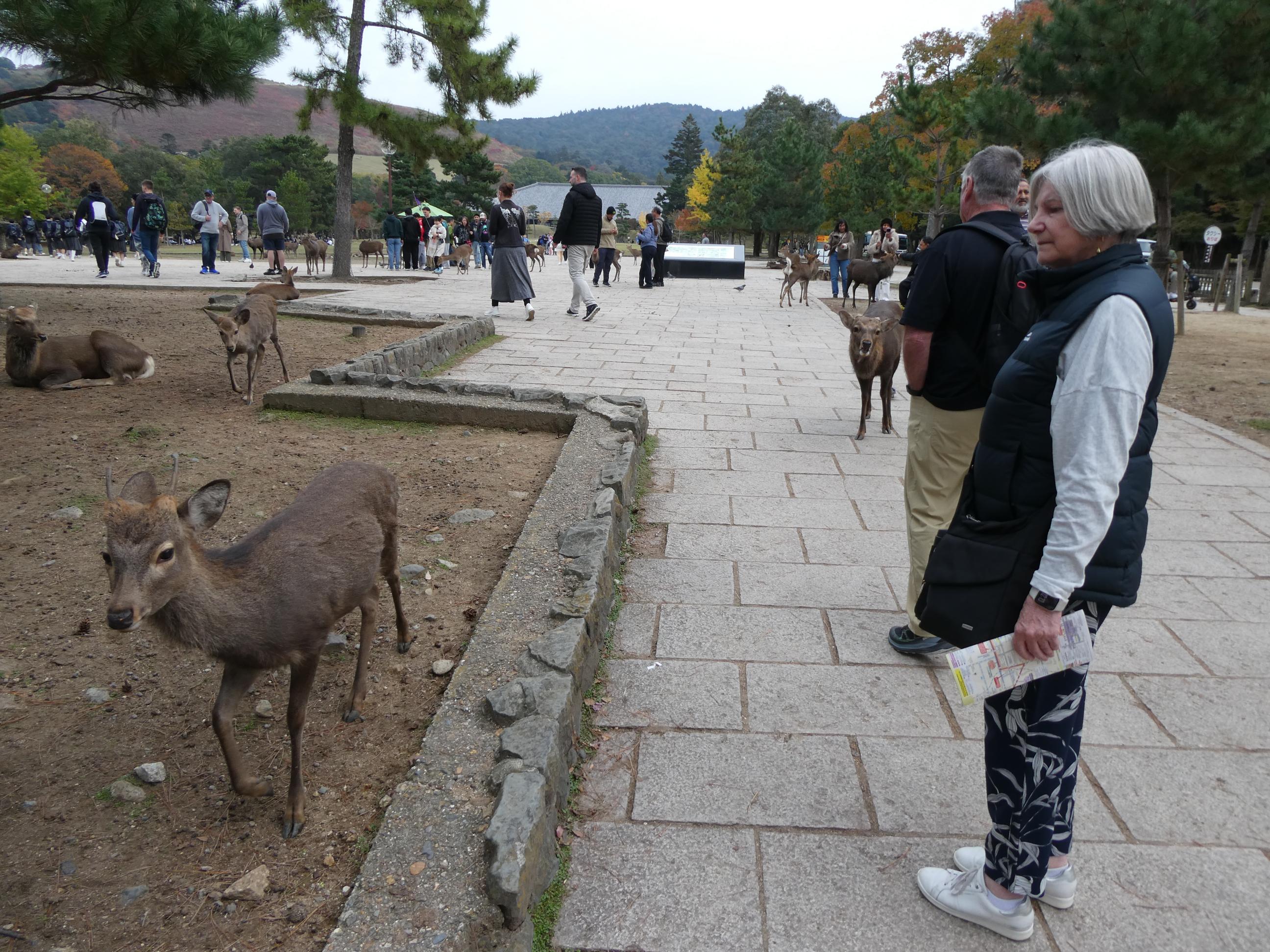
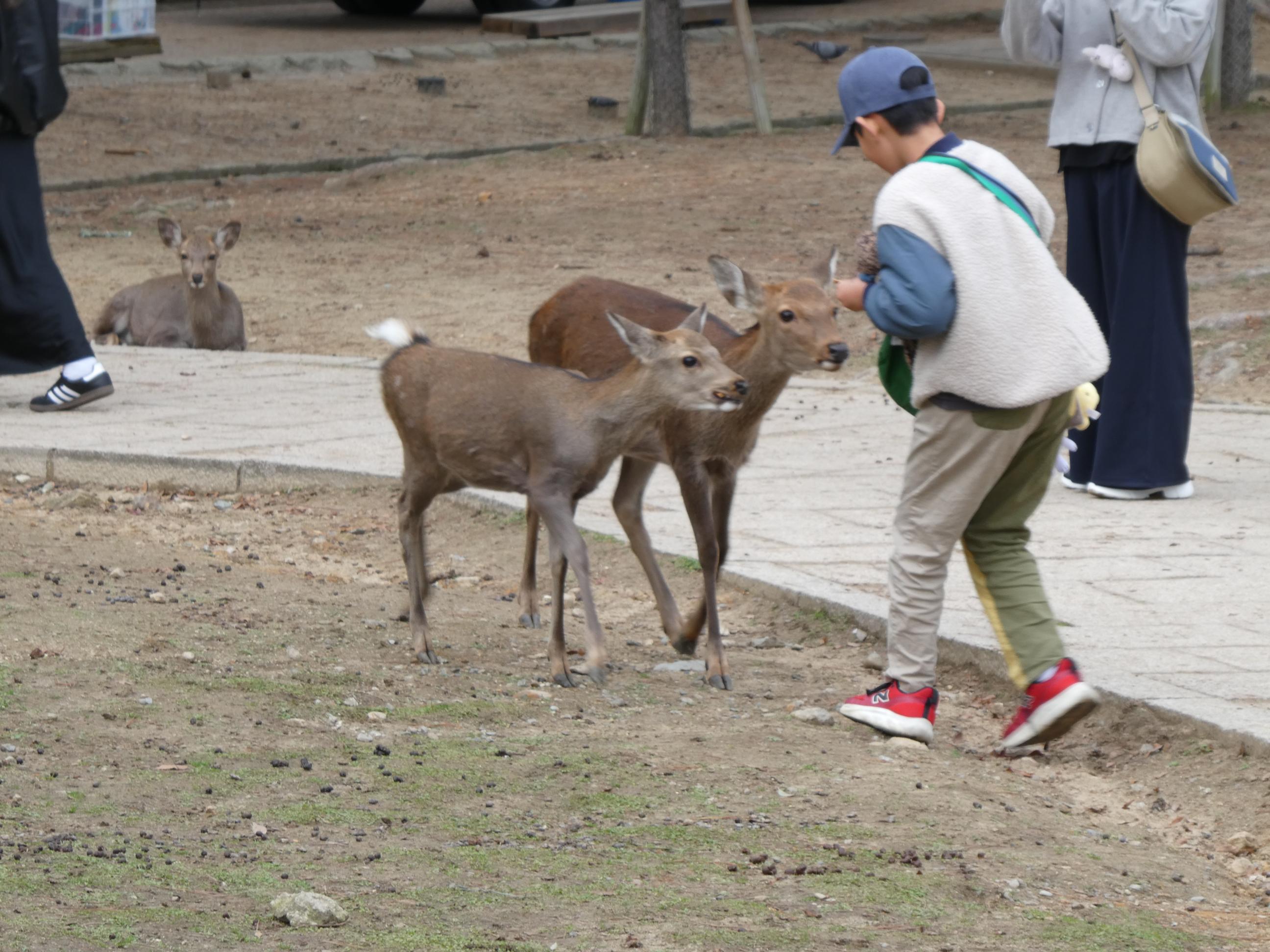
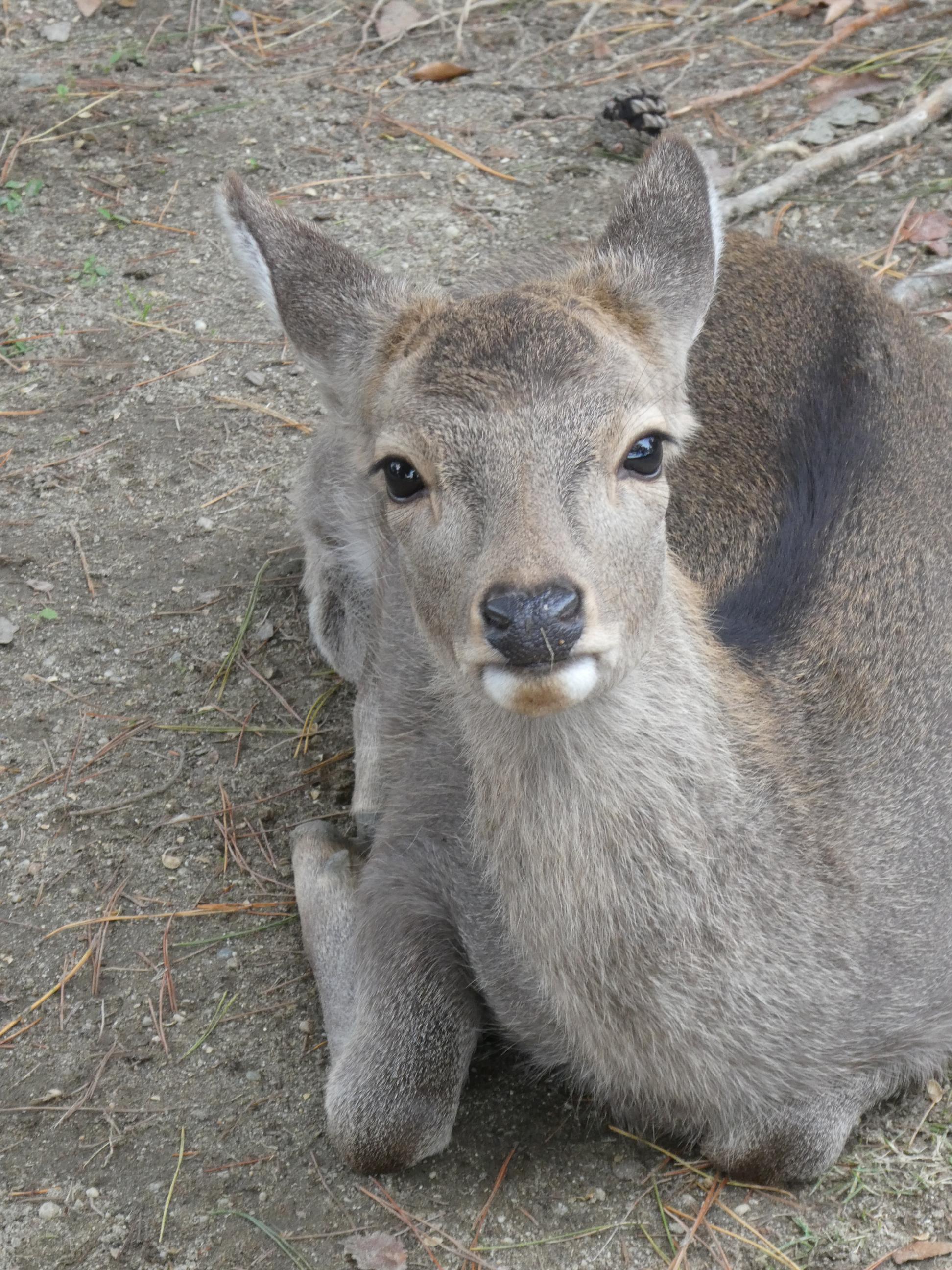
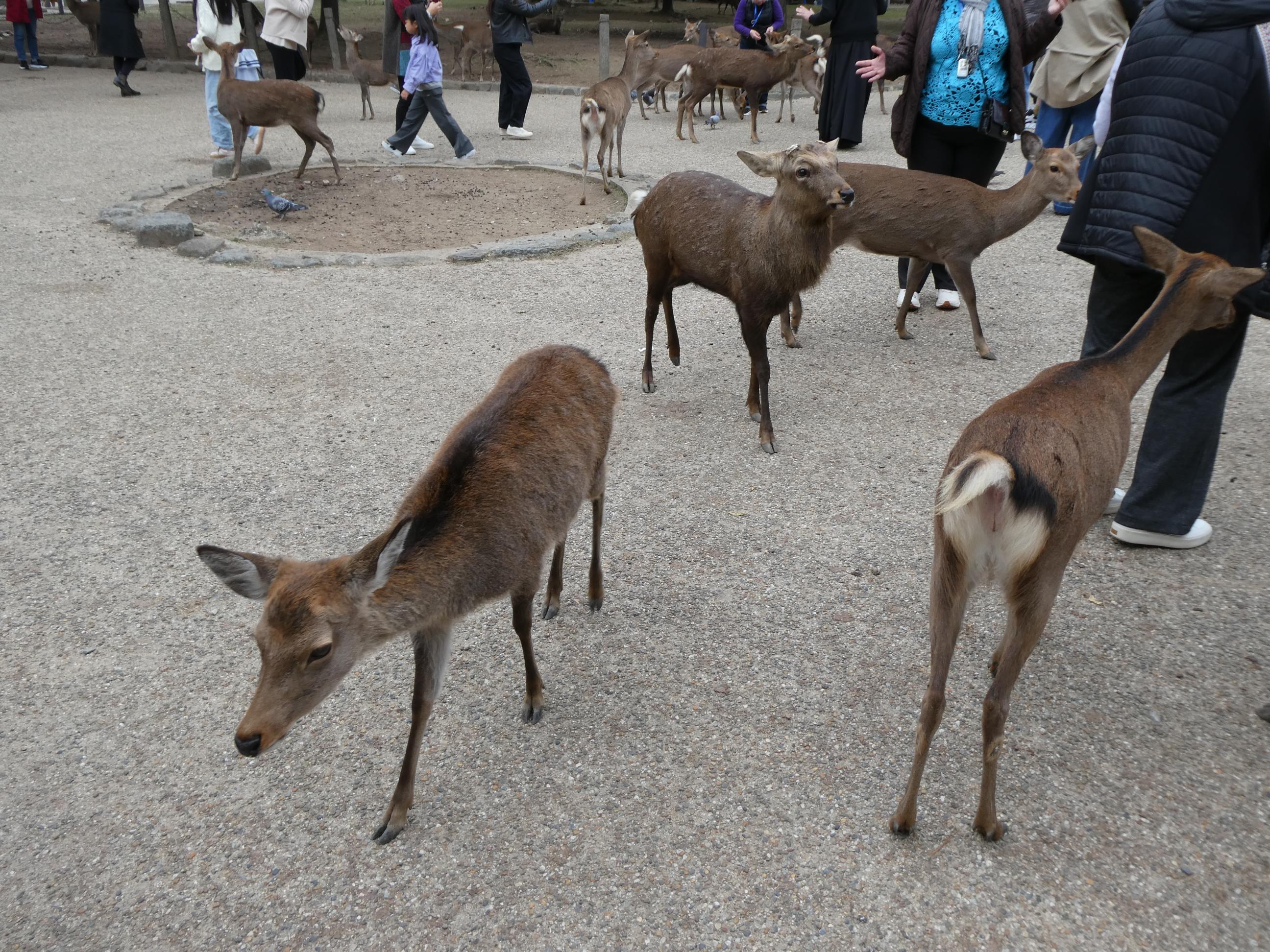
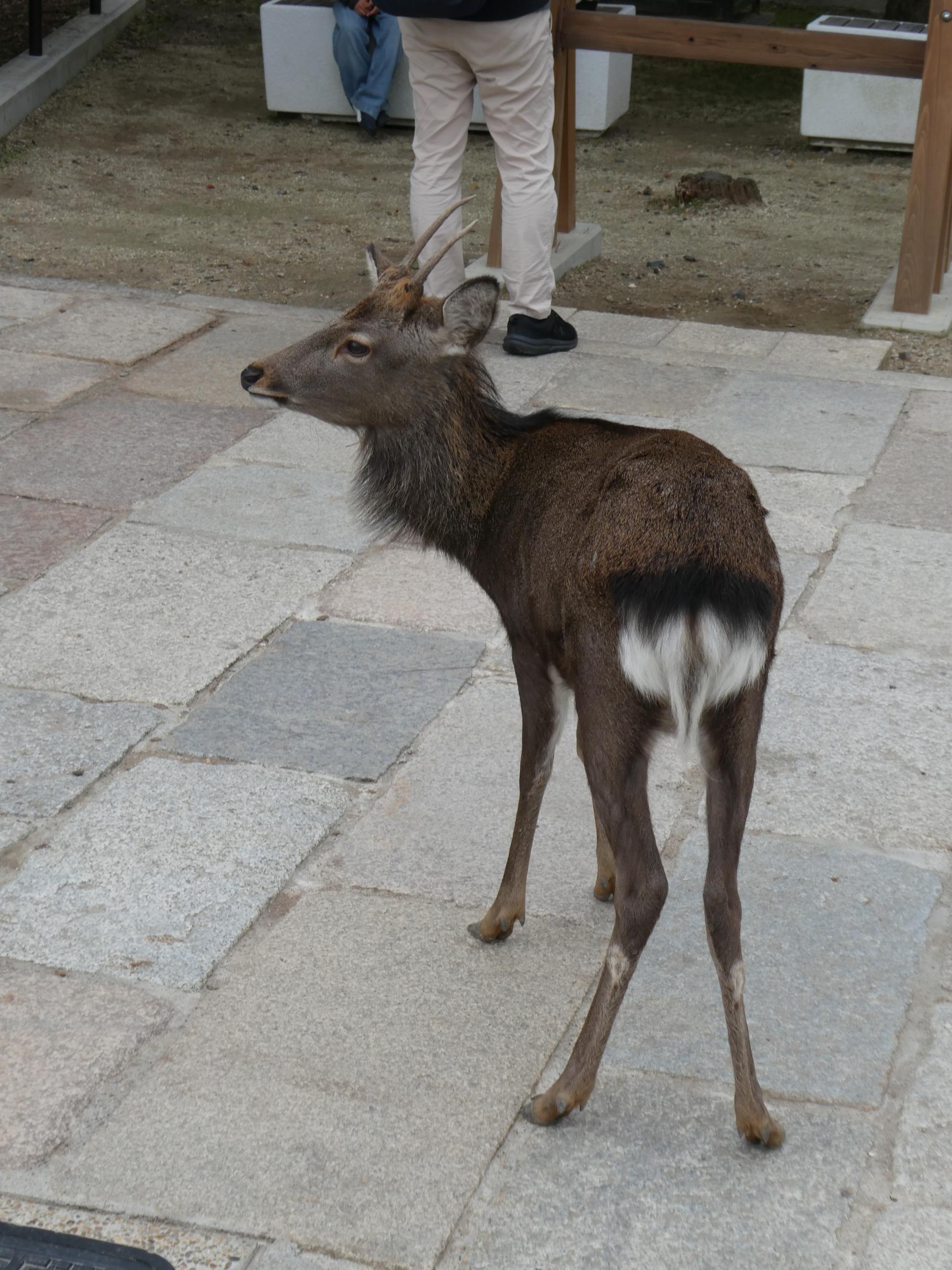
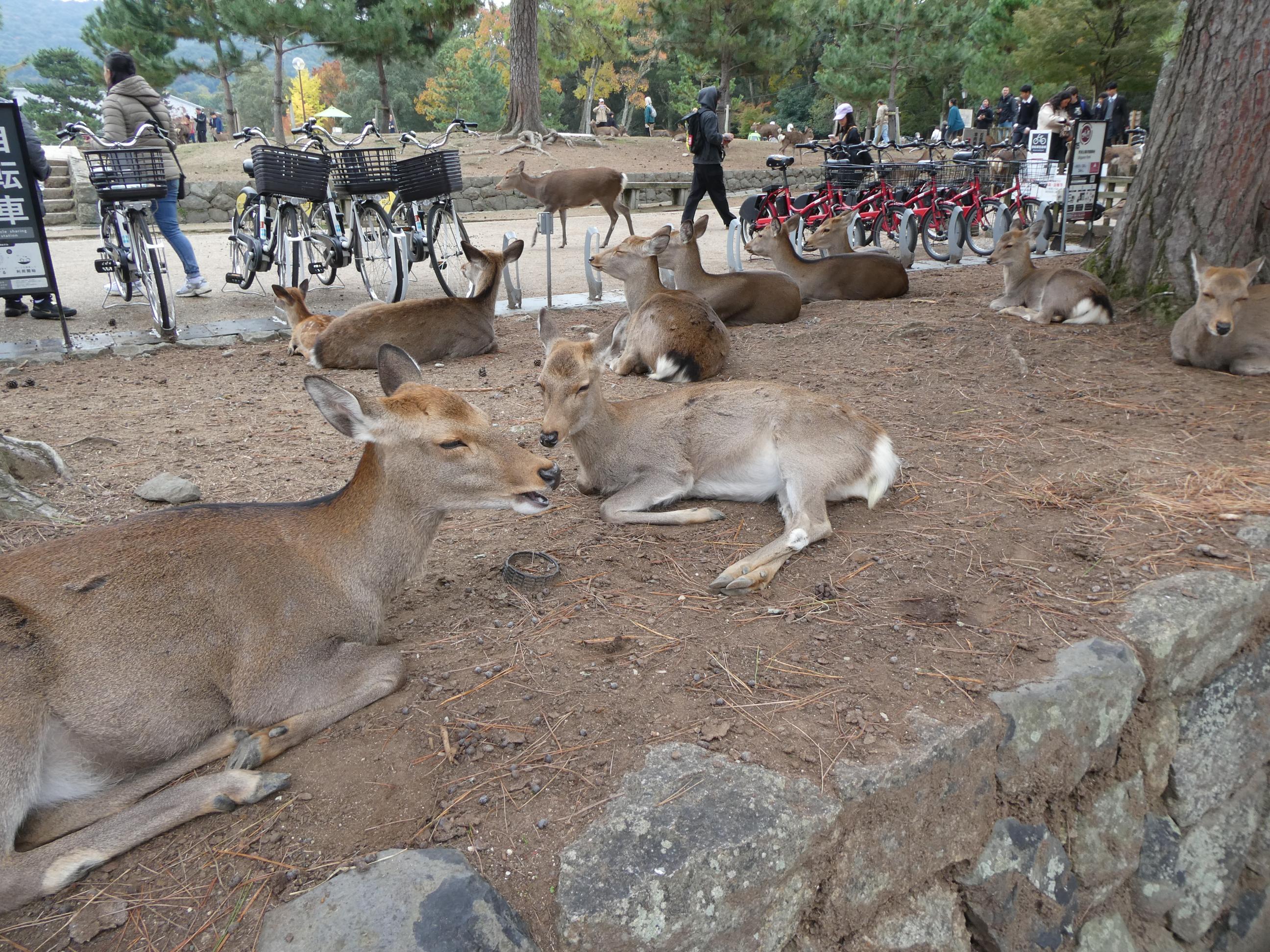
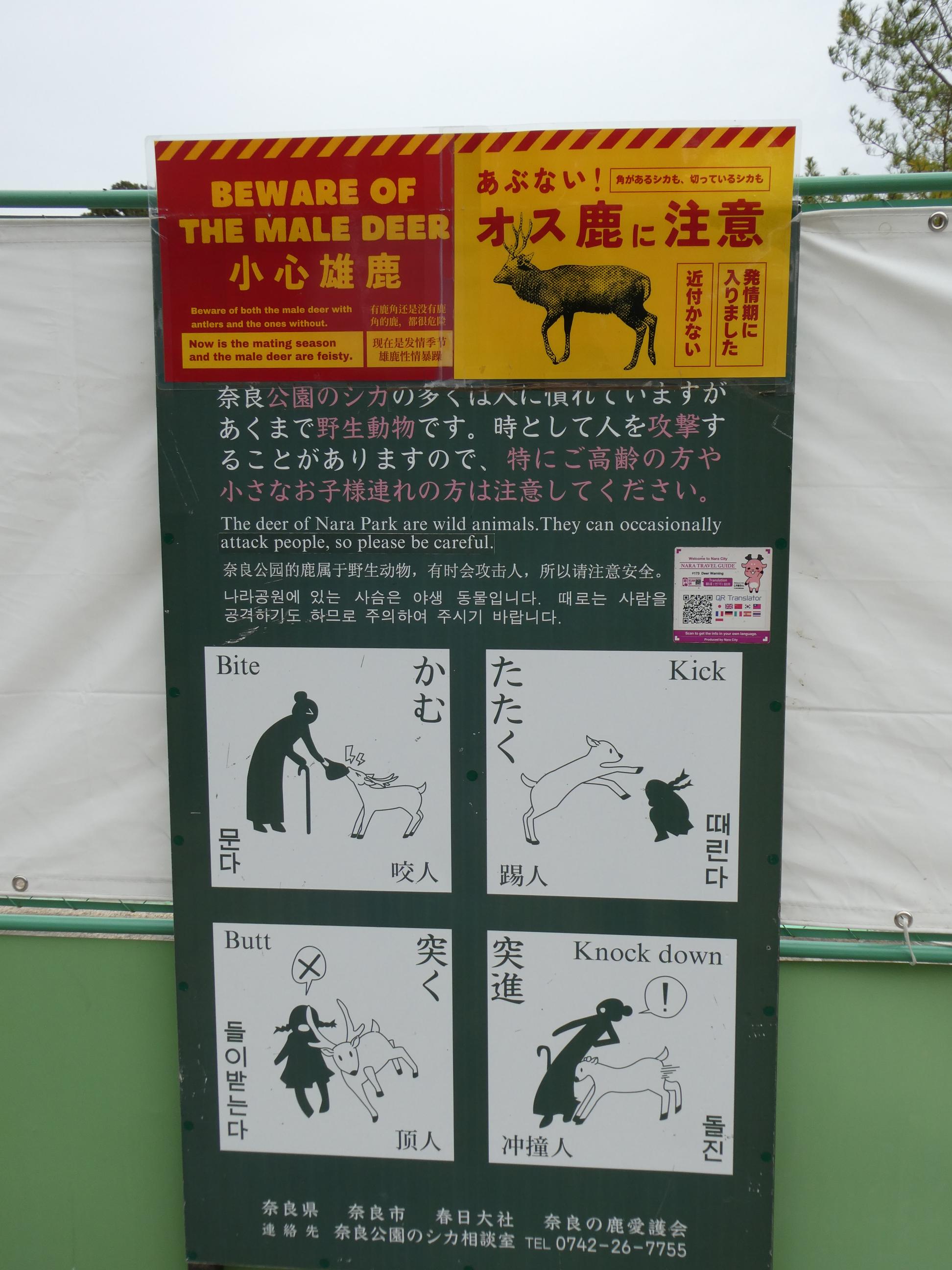
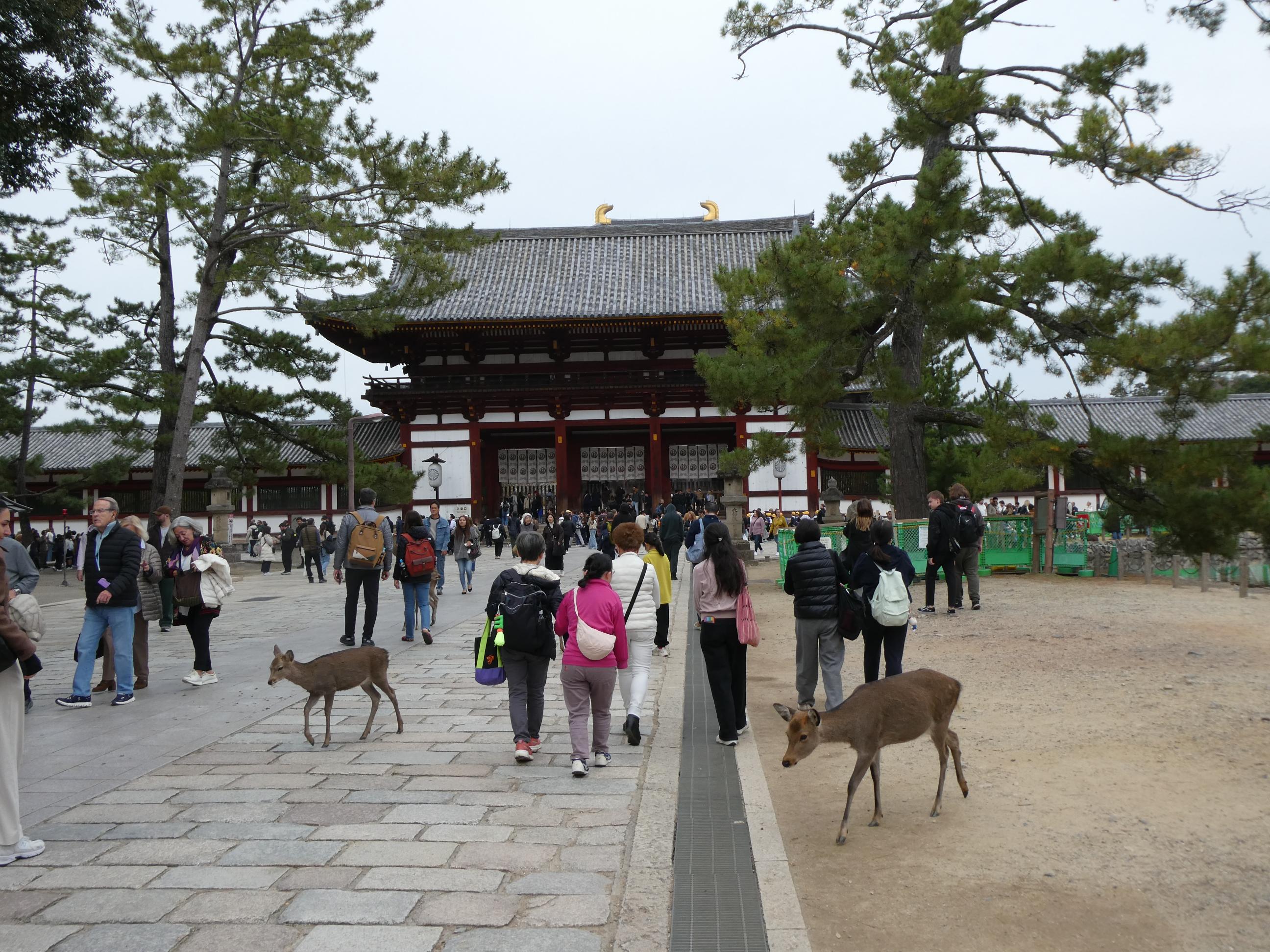
Haydn’s itinerary suggested we should walk through the town to Nara Park, but our first impressions of the town were that it looked quite ordinary, and we also discovered that it would be a 2.1 kilometre walk. We took a bus instead and were at Nara Park about 5 minutes later. We knew we would see deer at Nara Park, but were still a little taken aback with just how many there were. There were literally hundreds, probably thousands of deer, either kneeling, resting or nonchalantly wandering along tourist paths near the souvenir shops and temples. Some people purchased deer cakes and fed them by hand to the creatures. Large signs warned us to stay away from any of the males, which could be recognished by their antlers. They could cause trouble, and even injury. The deer had no fear of humans, and would come right up to you. I watched some people relax their guard after patting a deer on the head. A couple of times I saw a deer suddenly lunge towards a person trying to interact with it. On both occasions, the person got an almighty fright and took off. One came up to me. It appeared to be very gentle, so I stroked its neck and shoulders. In response, it sunk its teeth into the tail of my shirt and tugged. I instinctively swatted it away, but it left me with a soggy corner of my shirt for a while. Five minutes later, a different deer grabbed the map out of Marg’s hand and appeared to want to eat it. A Japanese woman saw this and gave the deer a whack on the nose and a ‘jolly good talking to’. The deer dropped the map and sheepishly went on its way. Marg held on a little tighter after that. The deer seemed to rule the entire park, going wherever they wanted, whenever they wanted, and we had to find a way around them. I enjoyed seeing mankind and nature sharing the one space at the same time and interacting in ways which were non-threatening to both species.






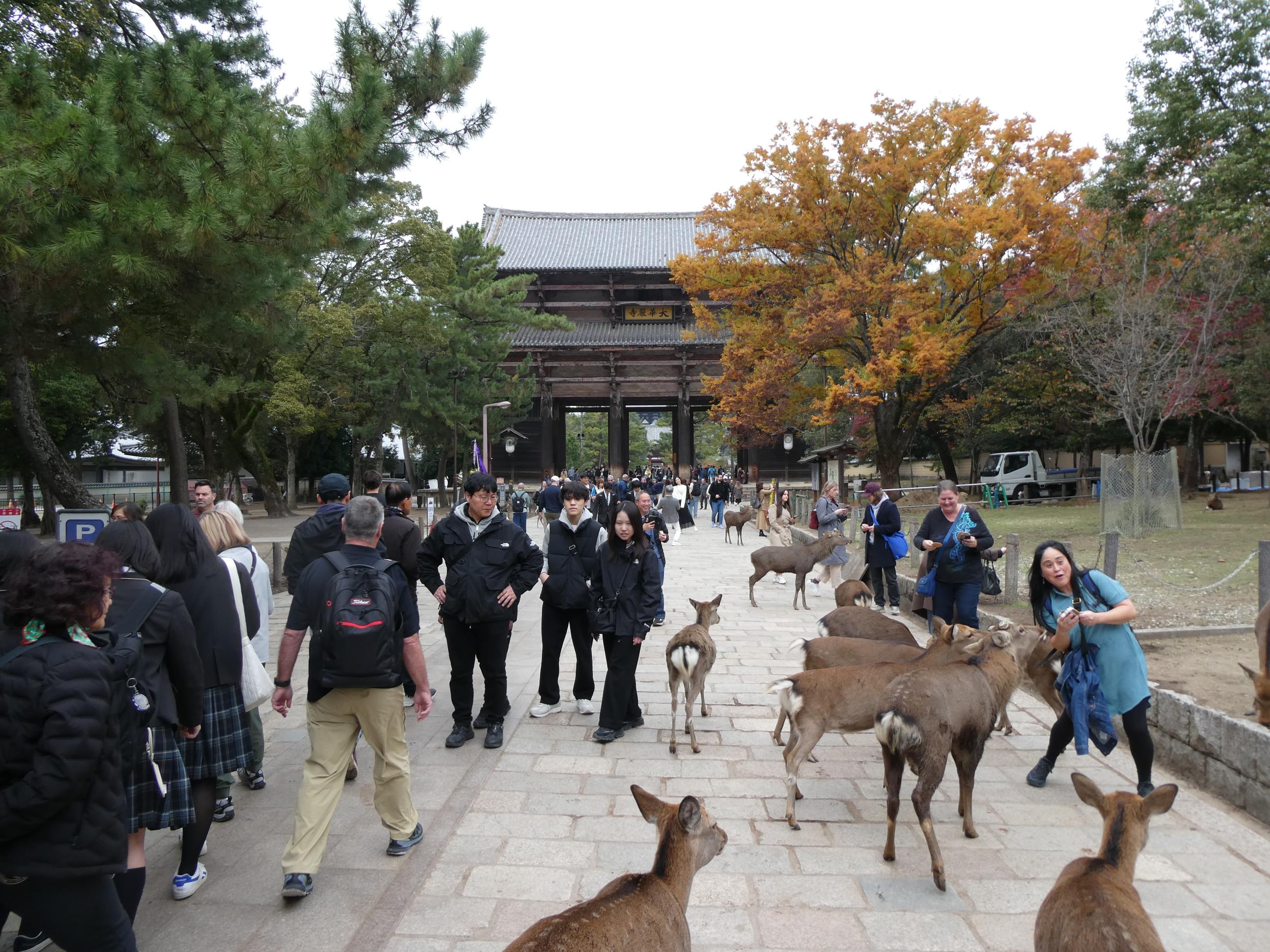




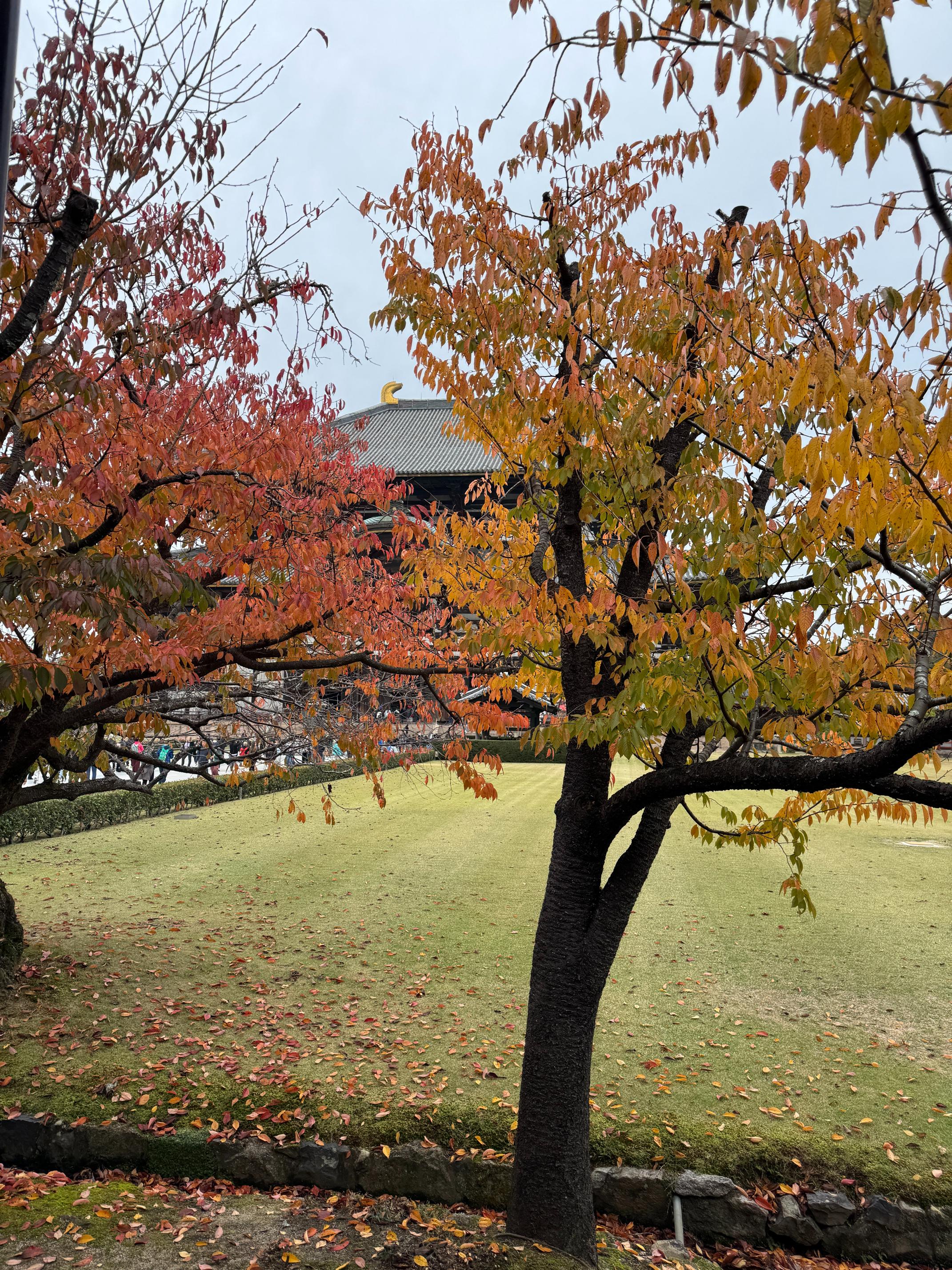
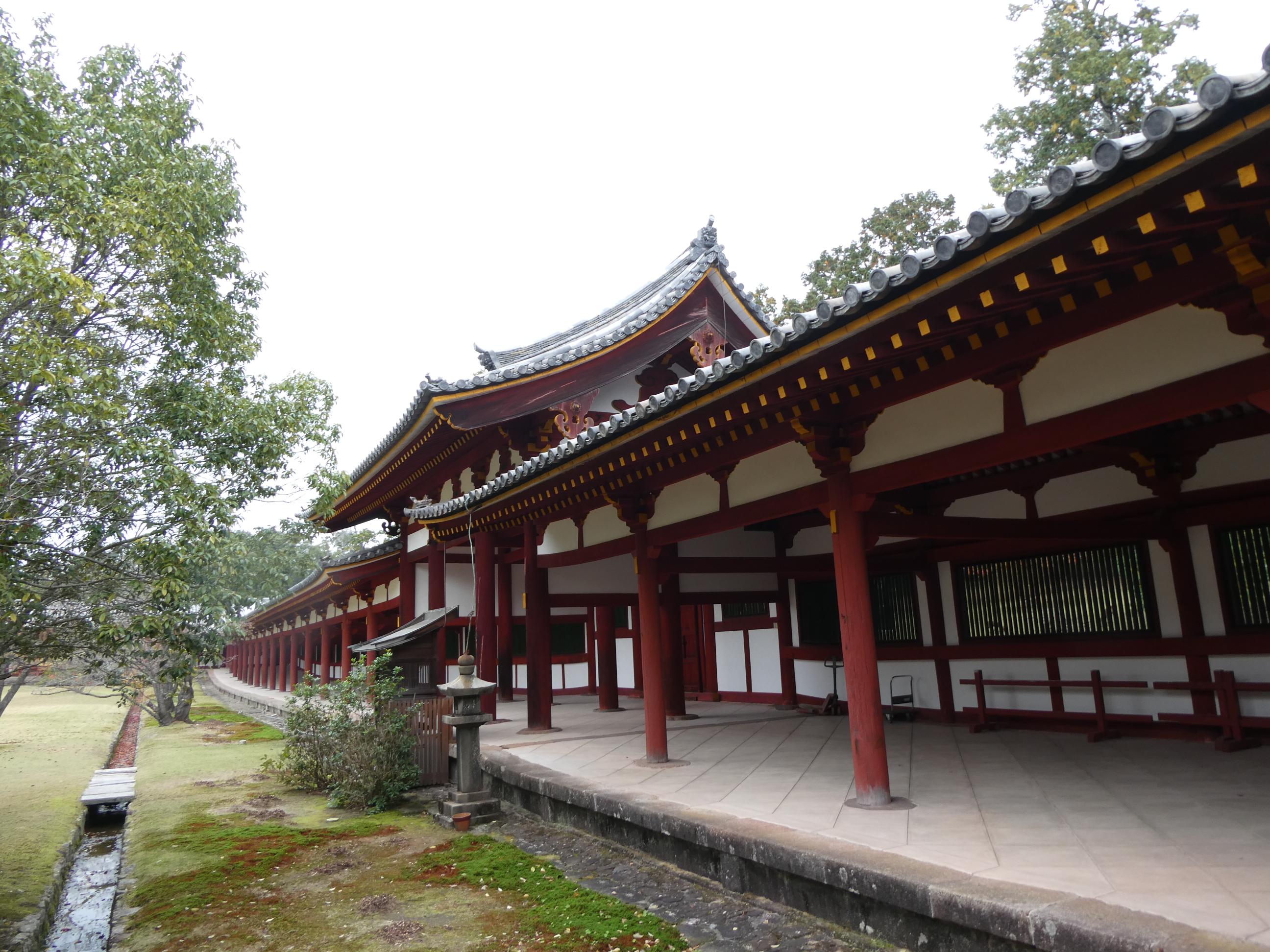
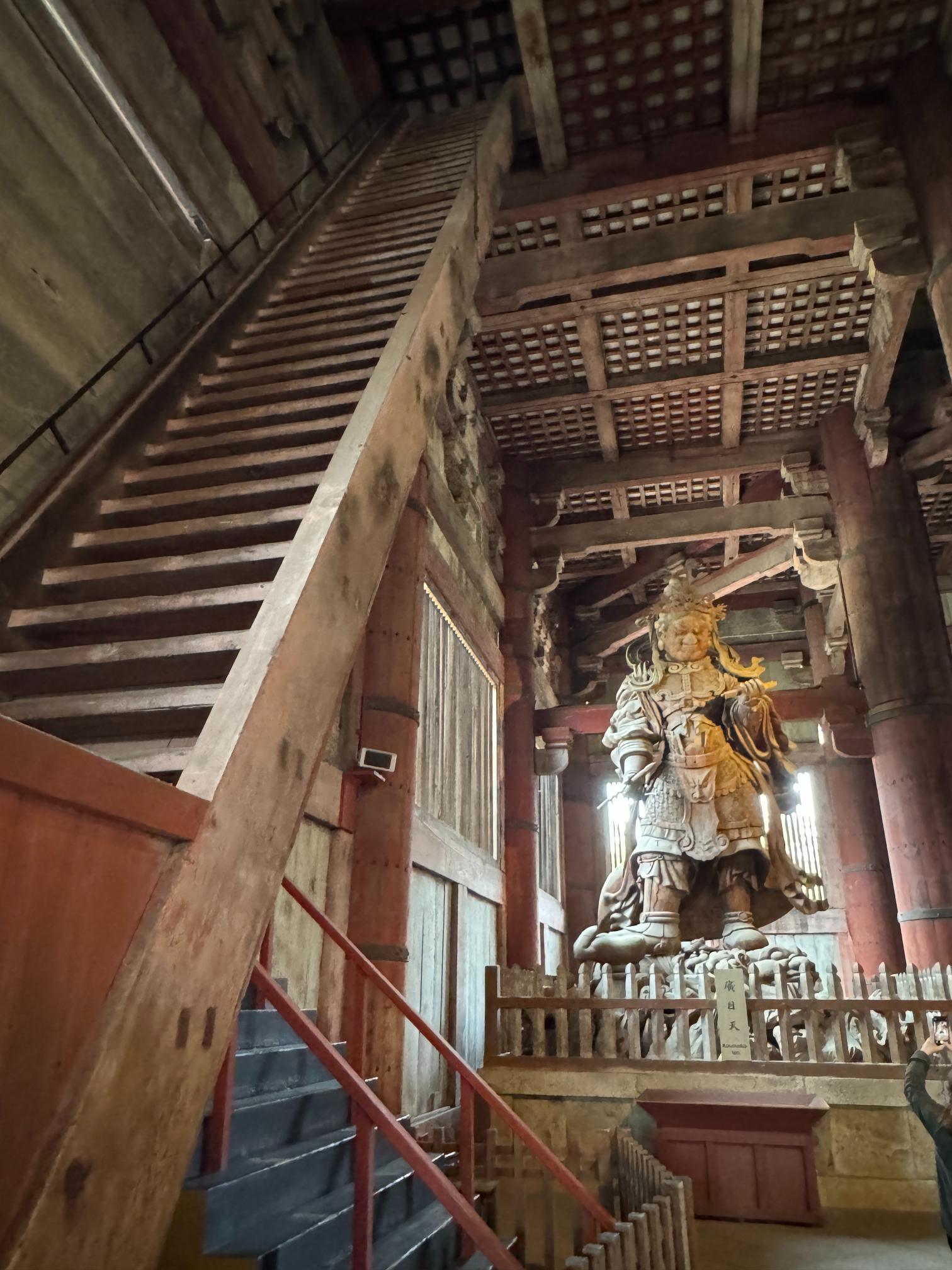
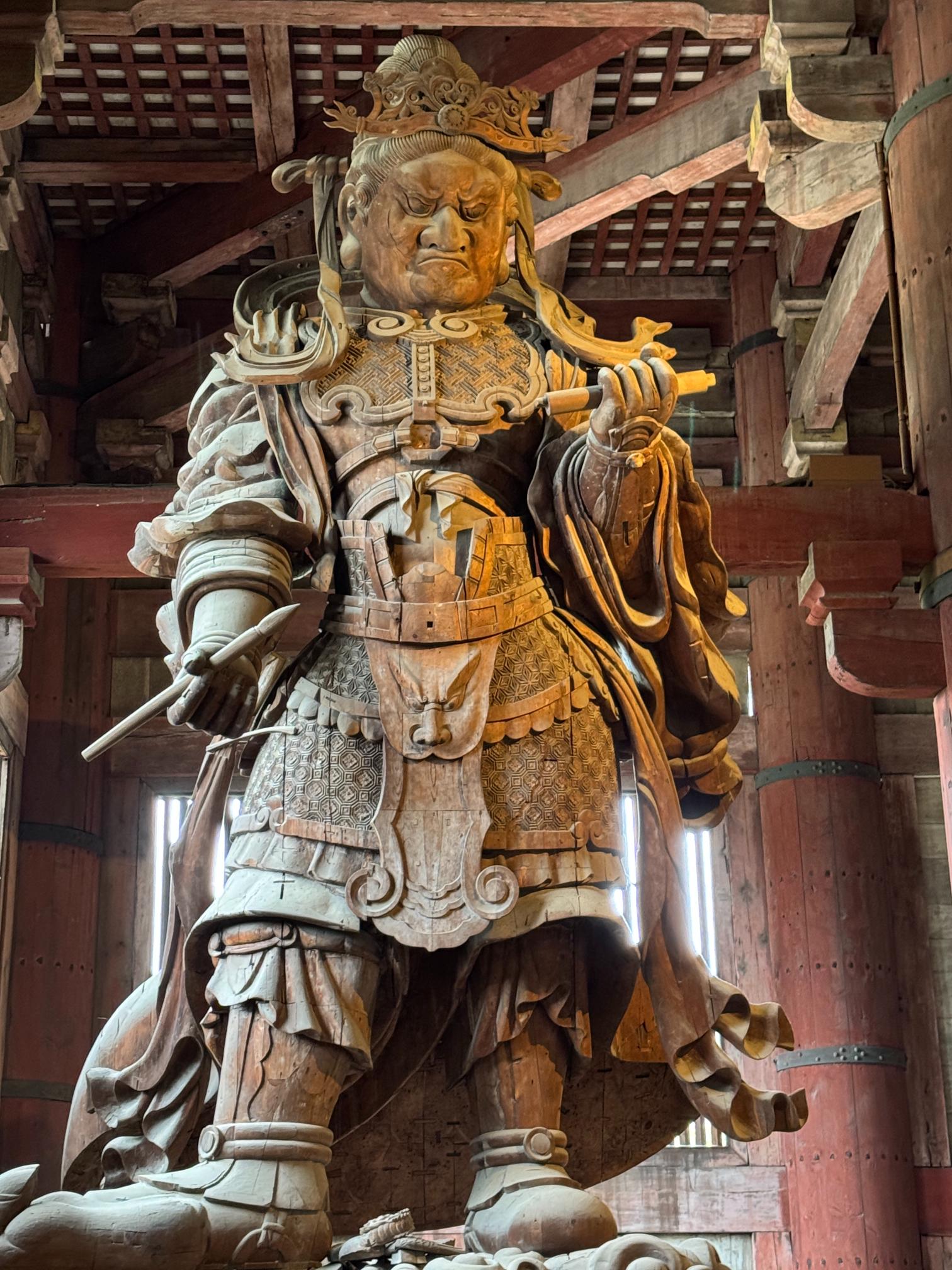
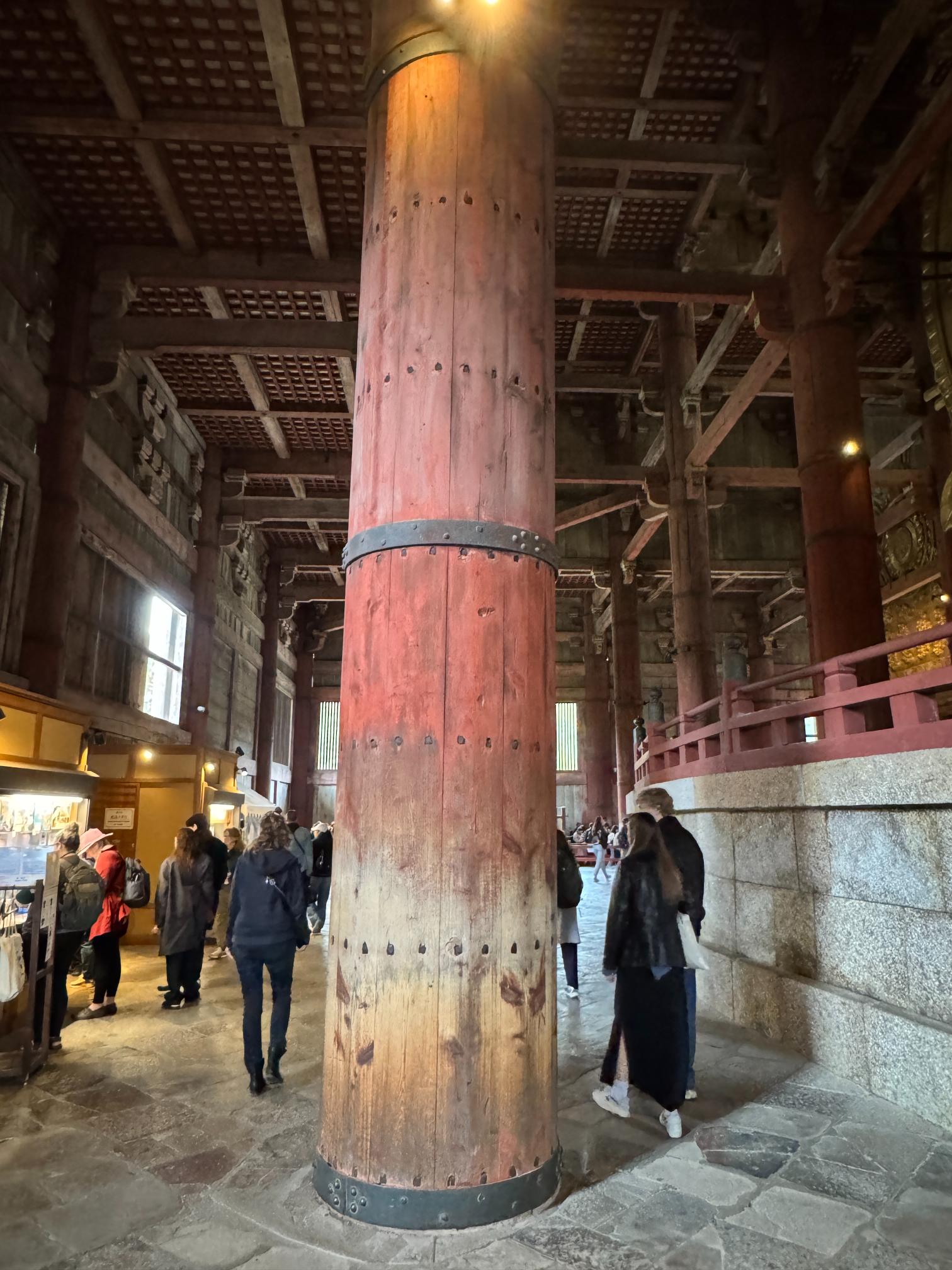
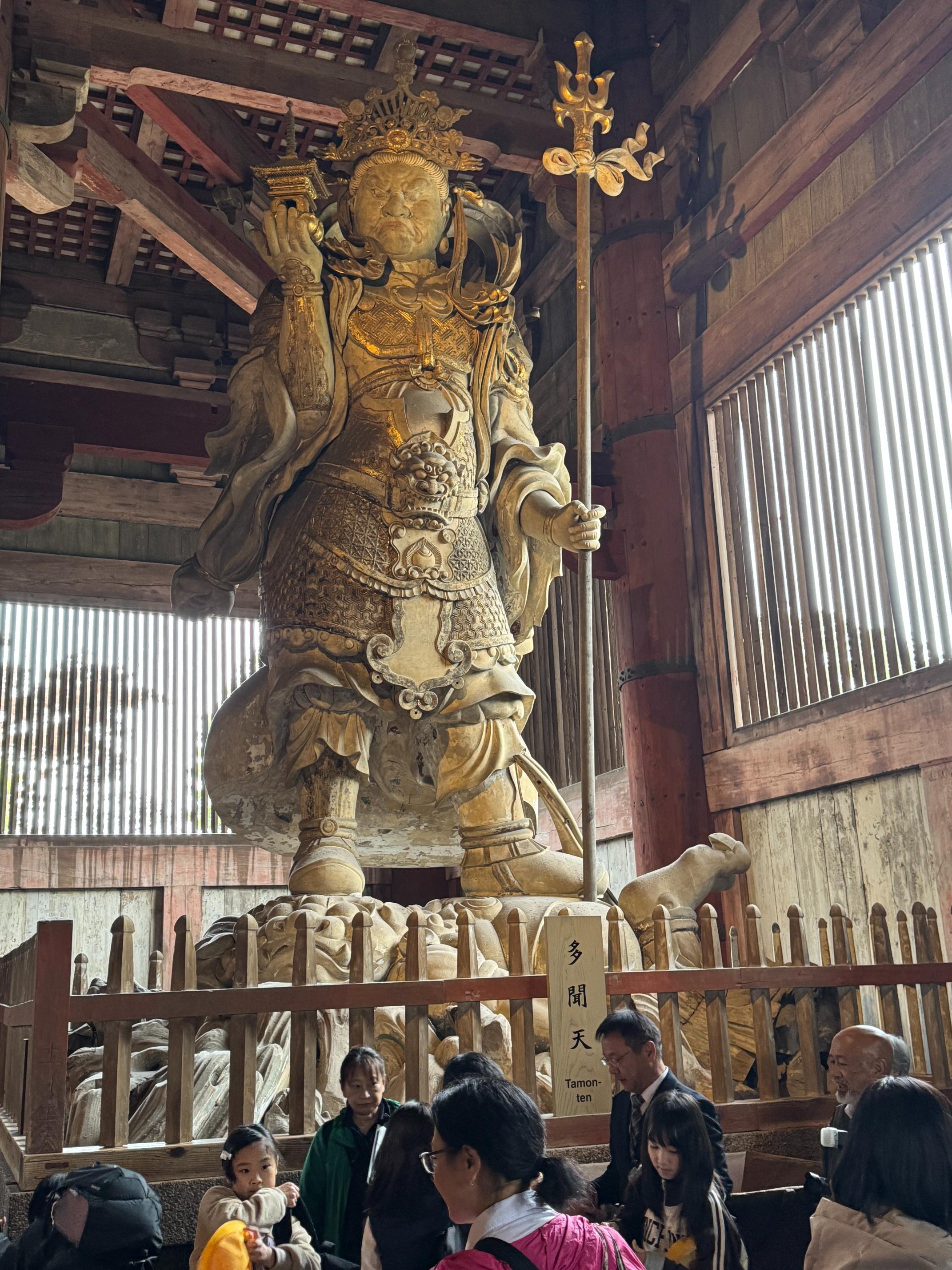
At one end of the park is the huge Todai-ji Buddhist Temple, which was originally built in the year 752. The temple is said to be the world’s largest wooden structure. The temple has been listed by UNESCO as a World Heritage Site. There were plenty of deer in the temple forecourt and bothering people in the queue, but none were permitted inside the temple complex. A noticeboard informed us that seismic dampers were recently placed beneath the columns in one section of a verandah, as well as between the columns and the roof beams. The thinking behind this is that, if an earthquake was to come, it would shake the buildings without collapsing all of the columns.




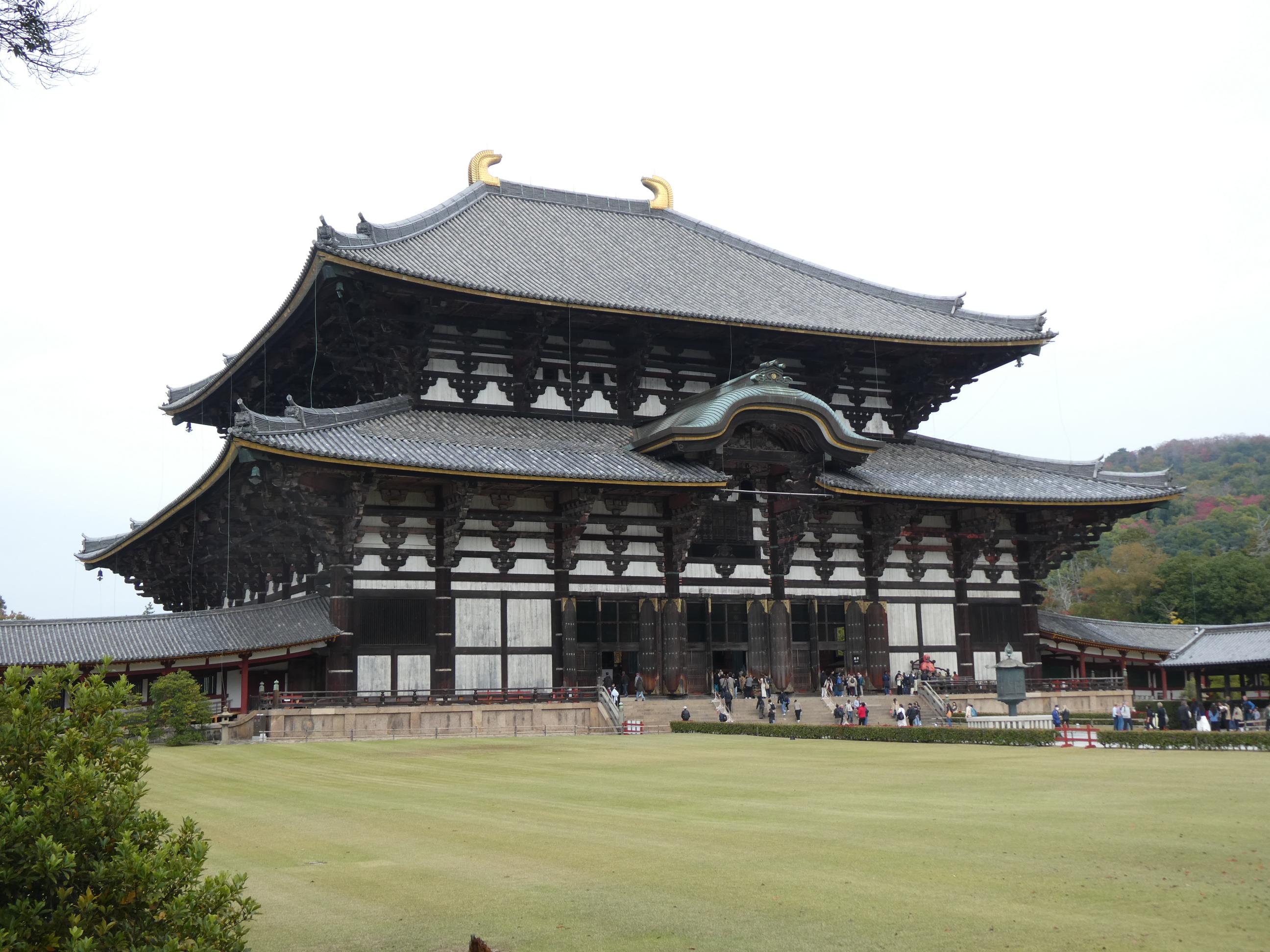
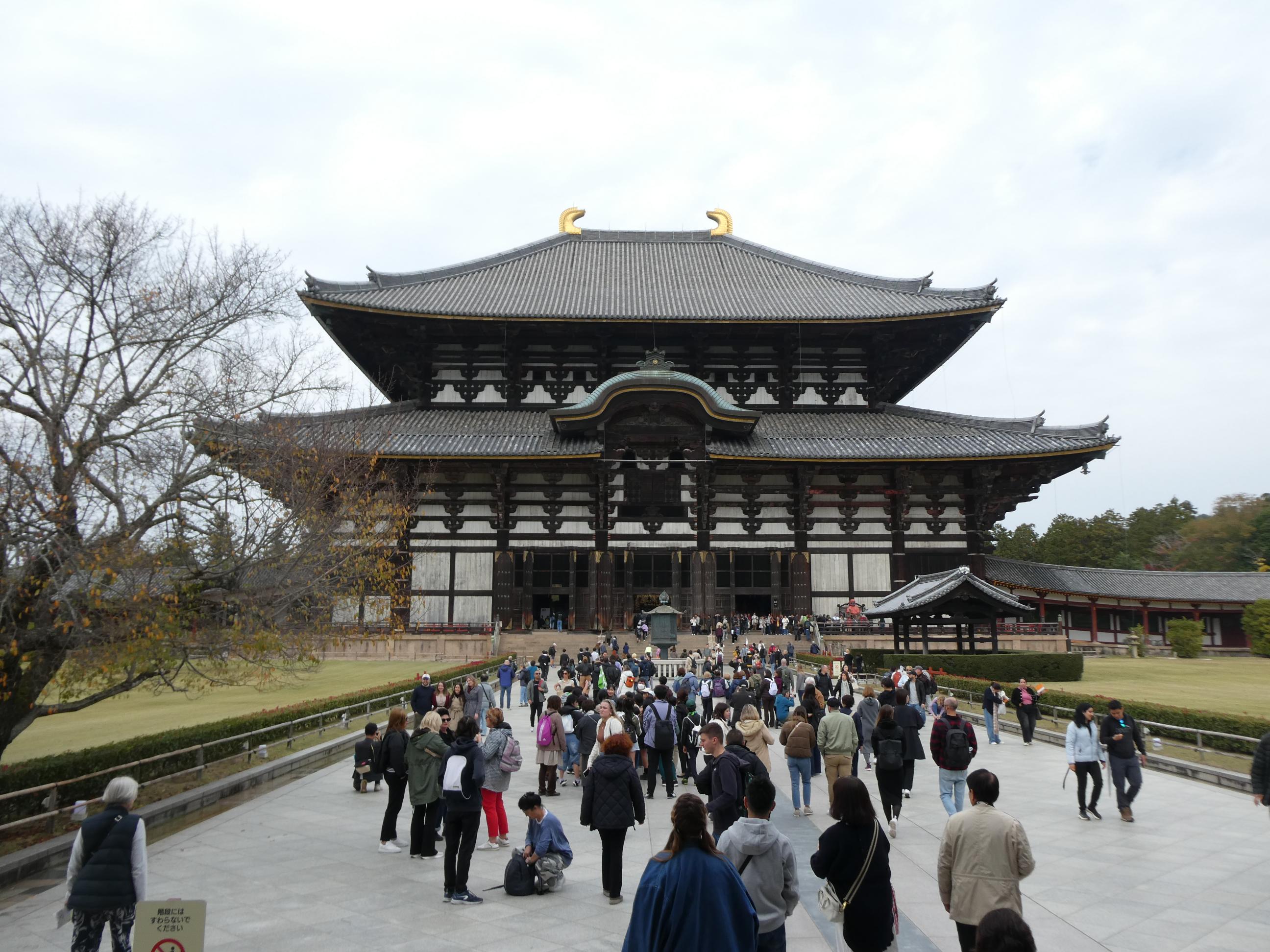



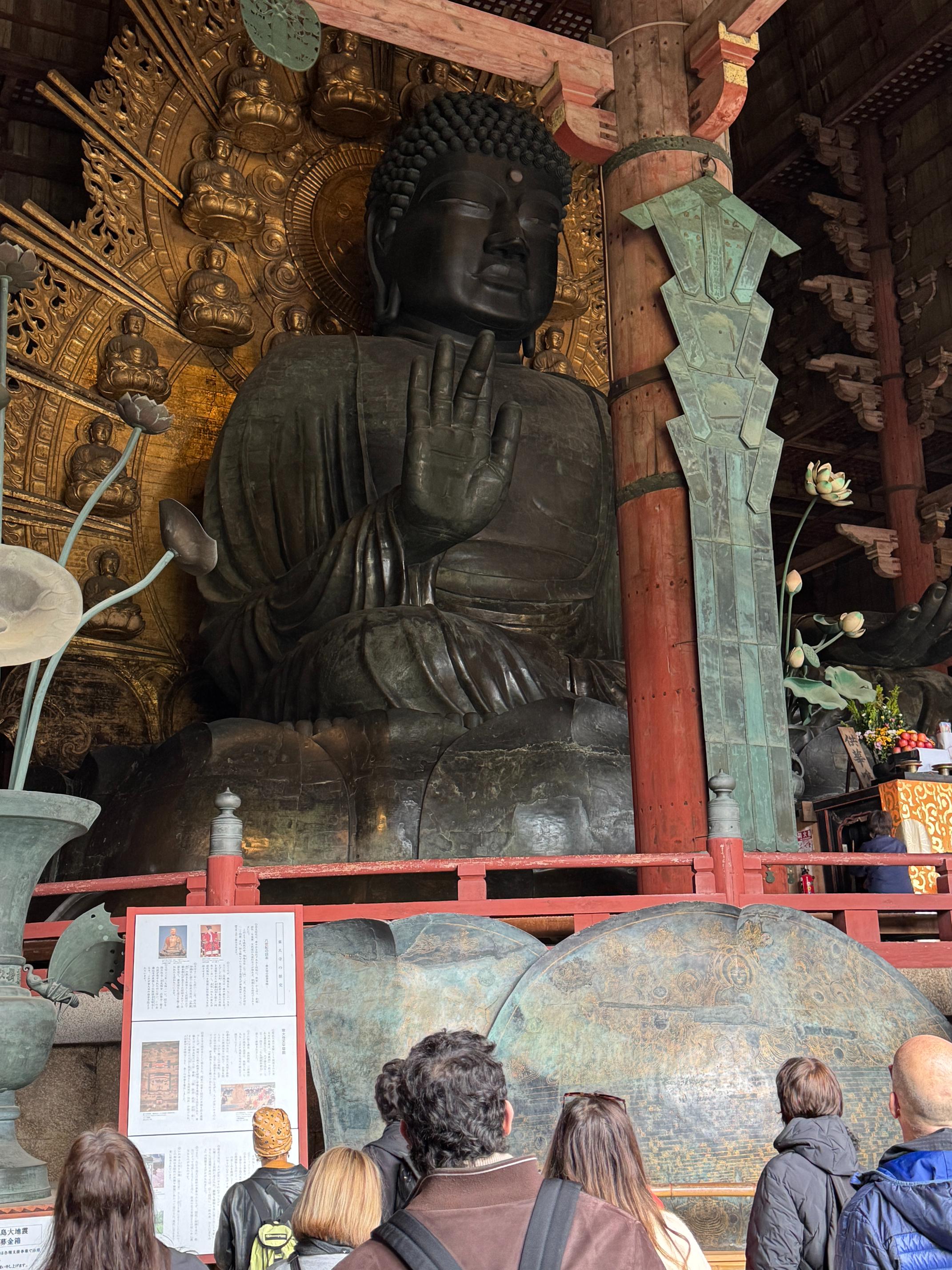
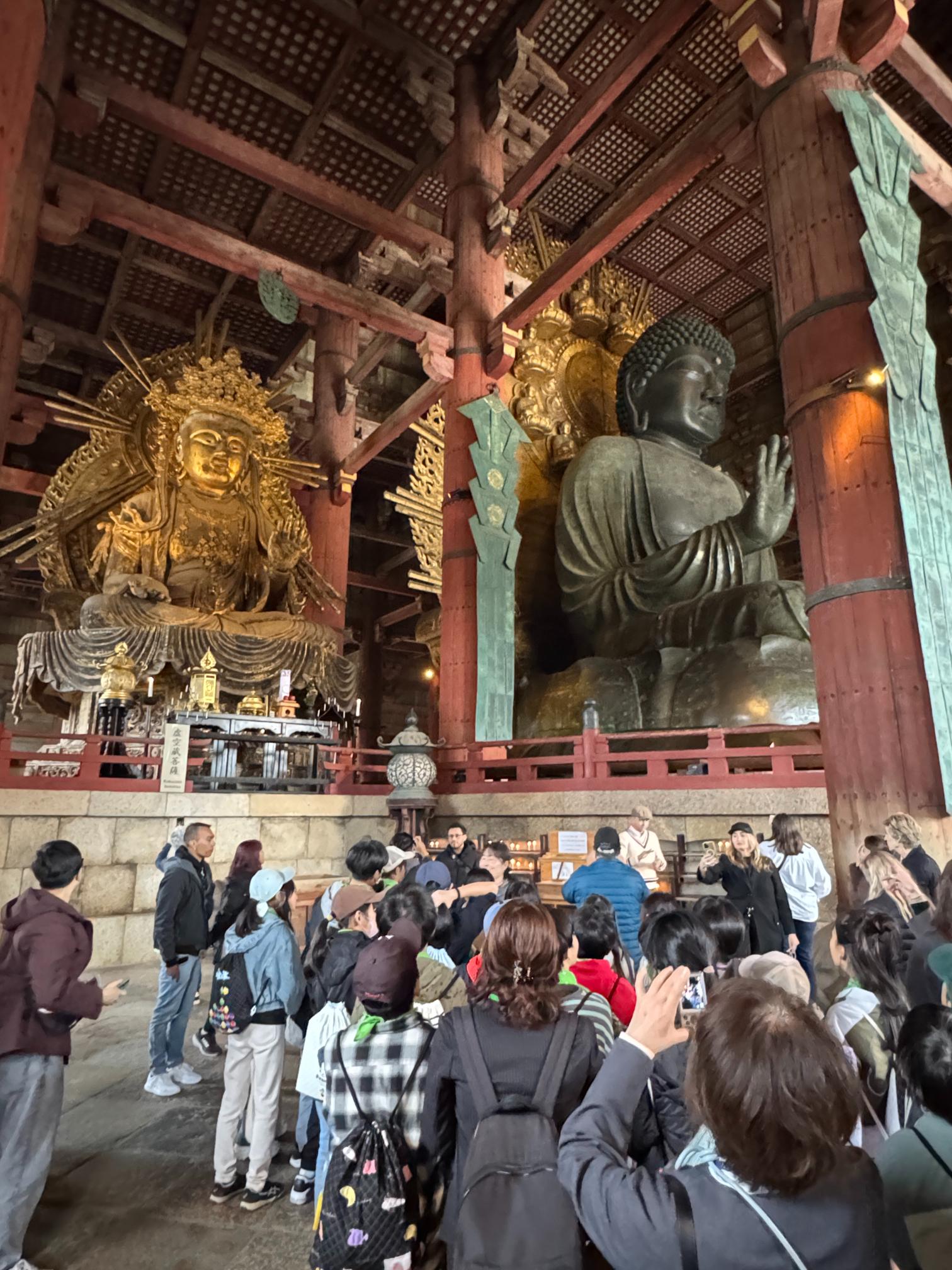
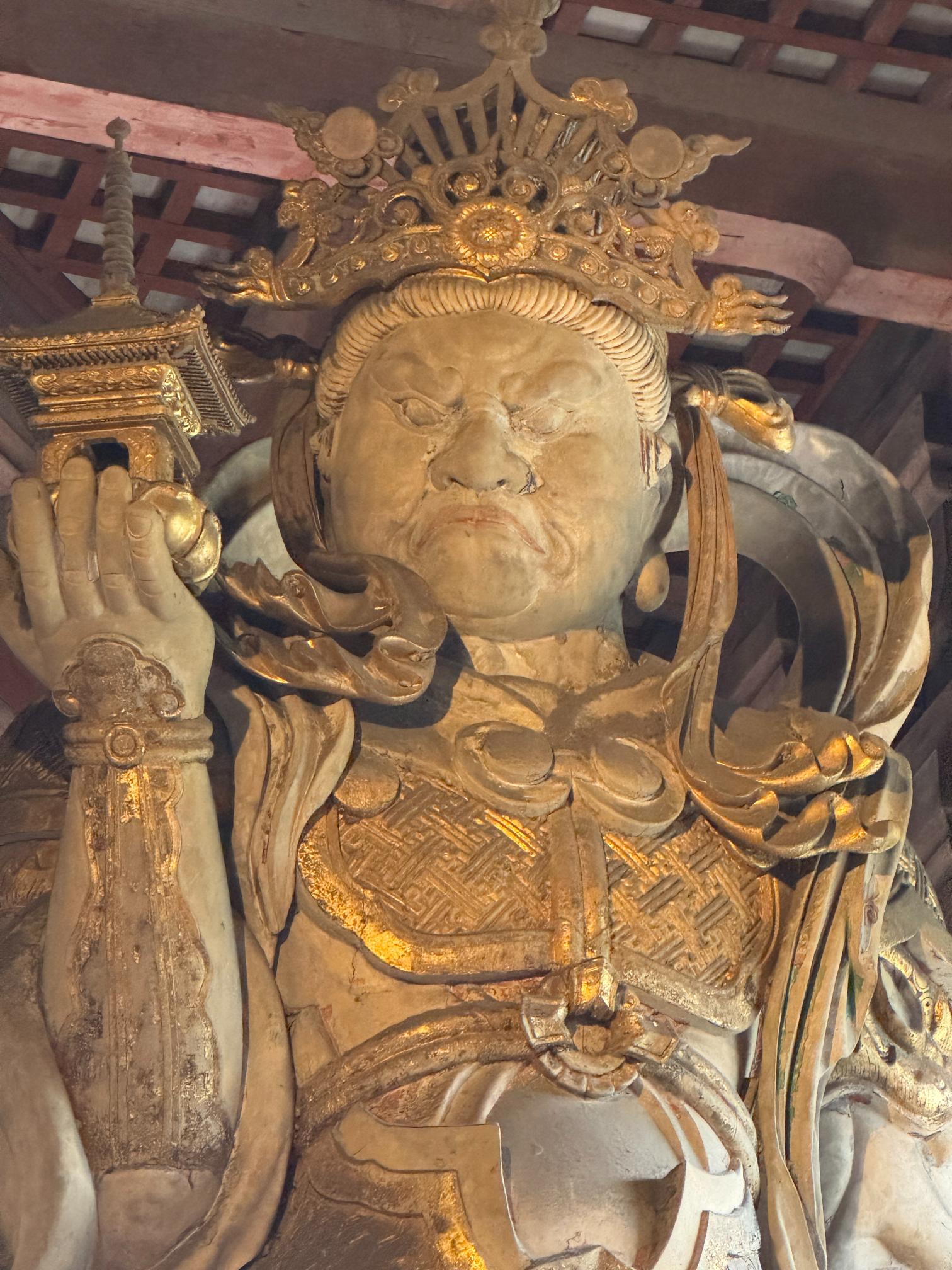
Inside the great hall of the temple, sits a fifteen metre high Buddha. It is claimed to be the world’s largest bronze statue of the Buddha Vairocana. His hand is the same size as an adult human. The Buddha is flanked on each side by a Bodhisattva, or a being on the path to nirvana who has delayed their enlightenment to assist others. We spent some time walking around the Great Buddha and his companions and marvelling at the sturdiness of the huge wooden pillars. There were a couple of groups of yellow-hatted school children in there with us, but they were quite well behaved and didn’t bother us. I’ve been surprised to see all the younger school groups wearing yellow hats. With so many different schools all visiting tourist sites like this one, you’d think it would make more sense for different schools to have different coloured hats so you could tell them apart in crowded places.
We caught the bus back to Nara Station, where a train was already waiting. We climbed aboard for the hour long journey back to our Kyoto hotel.




 On The Road With Garry
Wow. You guys have certainly experienced a lot of Japan and its culture. Photos are wonderful Garry. Bet you can’t wait to get your photos in your photo books when you get home.
LikeLiked by 1 person
I’m sure that will keep me busy for a few weeks, Janie
LikeLike