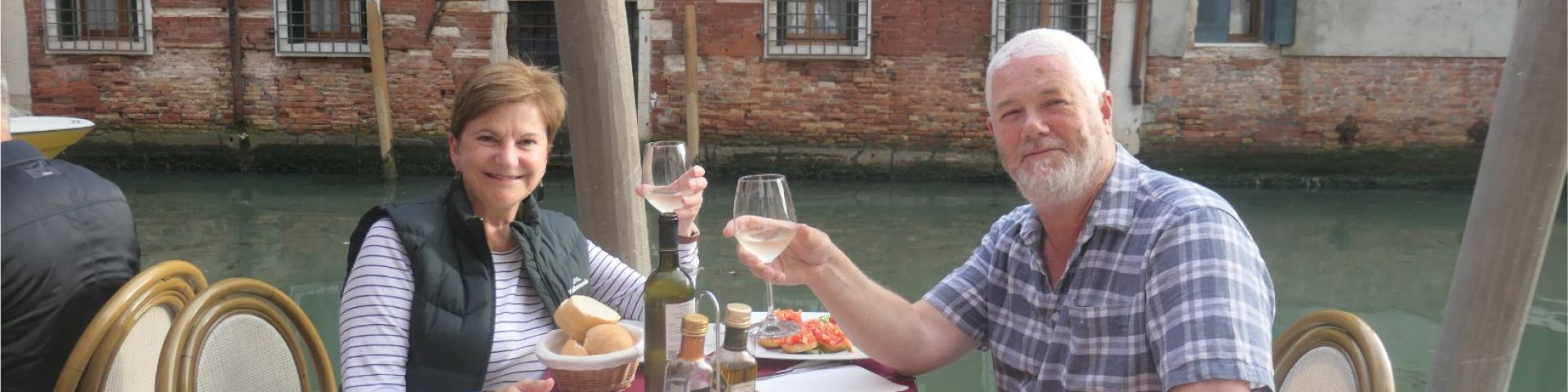
Today we finished our amazing journey along the fabulous scenic coastal route that begins in the very north of Northern Ireland and winds its way down the west coast to the very south of Ireland – the aptly named Wild Atlantic Way. We left the route in a couple of places, but essentially it was our constant companion from about the time we visited the Giant’s Causeway until we left Dunlough Castle and headed inland to Cork this afternoon. It’s taken us through some of Ireland’s wildest places, like Donegal, Connemara, the Aran Islands, the Dingle Peninsula and the southernmost point of the Irish mainland, Mizen Head. We’ve seen lots of history, including prehistoric ringforts, beehive huts, monasteries, castles and abandoned cottages from the time of the famine. We’ve met some fantastic, friendly people, like Peter the baker in Waterville, Daire at Pearse’s cottage, Stephen and his pony on Inis Mor and Breda, our host in Killarney. We’ve listened to some brilliant pub music in Galway and Doolin and eaten some great food along the way. And, perhaps best of all, we’ve driven through some of the most beautiful landscape we could ever wish to see. From the high sea cliffs of Moher and Kerry, to the towering mountains of Donegal and the Dingle Peninsula, to the crashing Atlantic waves and the long sandy beaches, to the ferny forests and green fields with their drystone walls that give us cause to rightly call Ireland ‘The Emerald Isle’, the west coast of Ireland is truly captivating. Even the strong winds and persistent rain didn’t spoil a single moment for us. If it wasn’t for my brother, Rod, being prepared to do all the driving, often up and down winding, single track roads, we could never have seen and done what we did, so I’m very grateful for his willingness to do that, and for his expert driving.
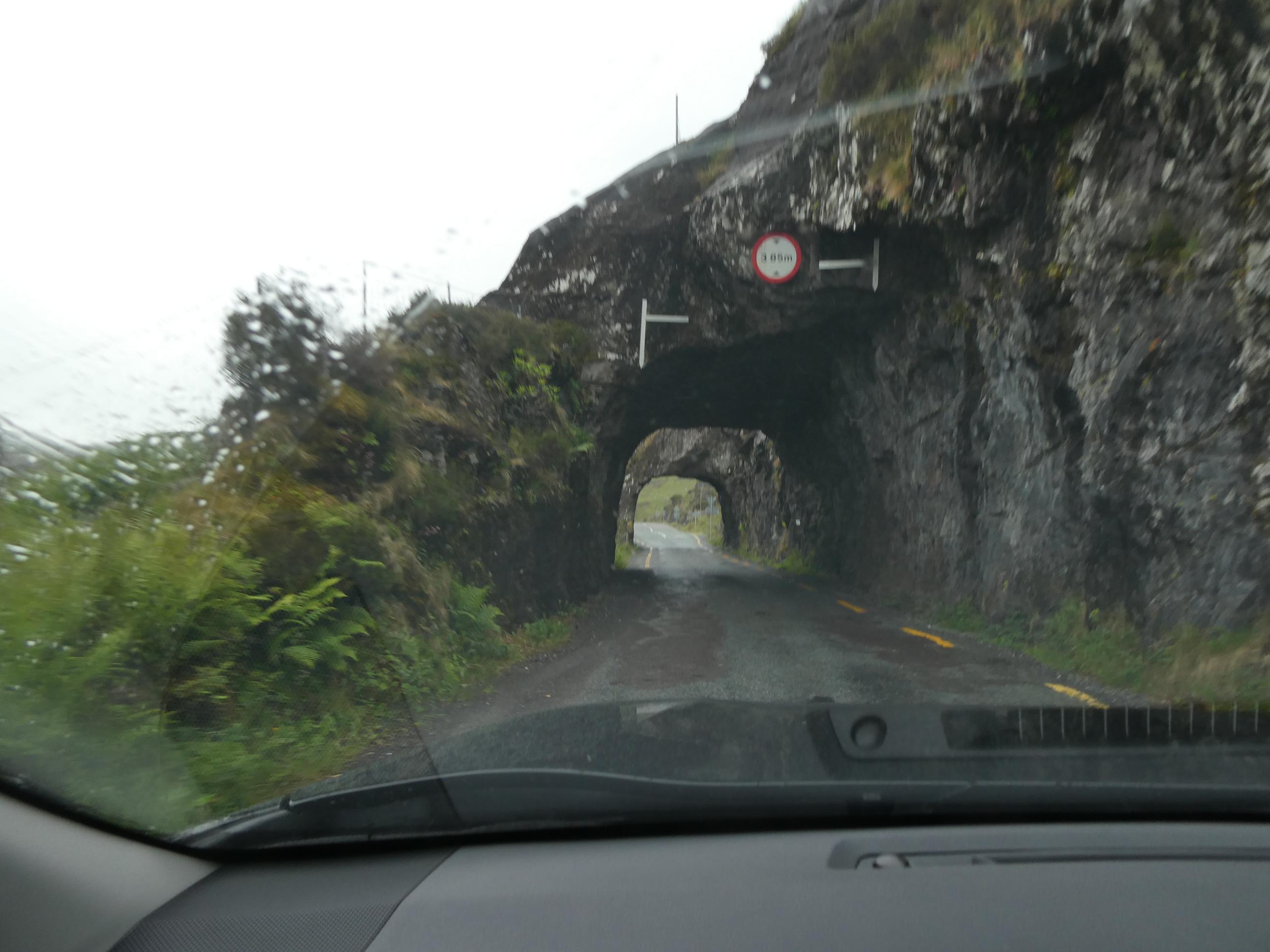
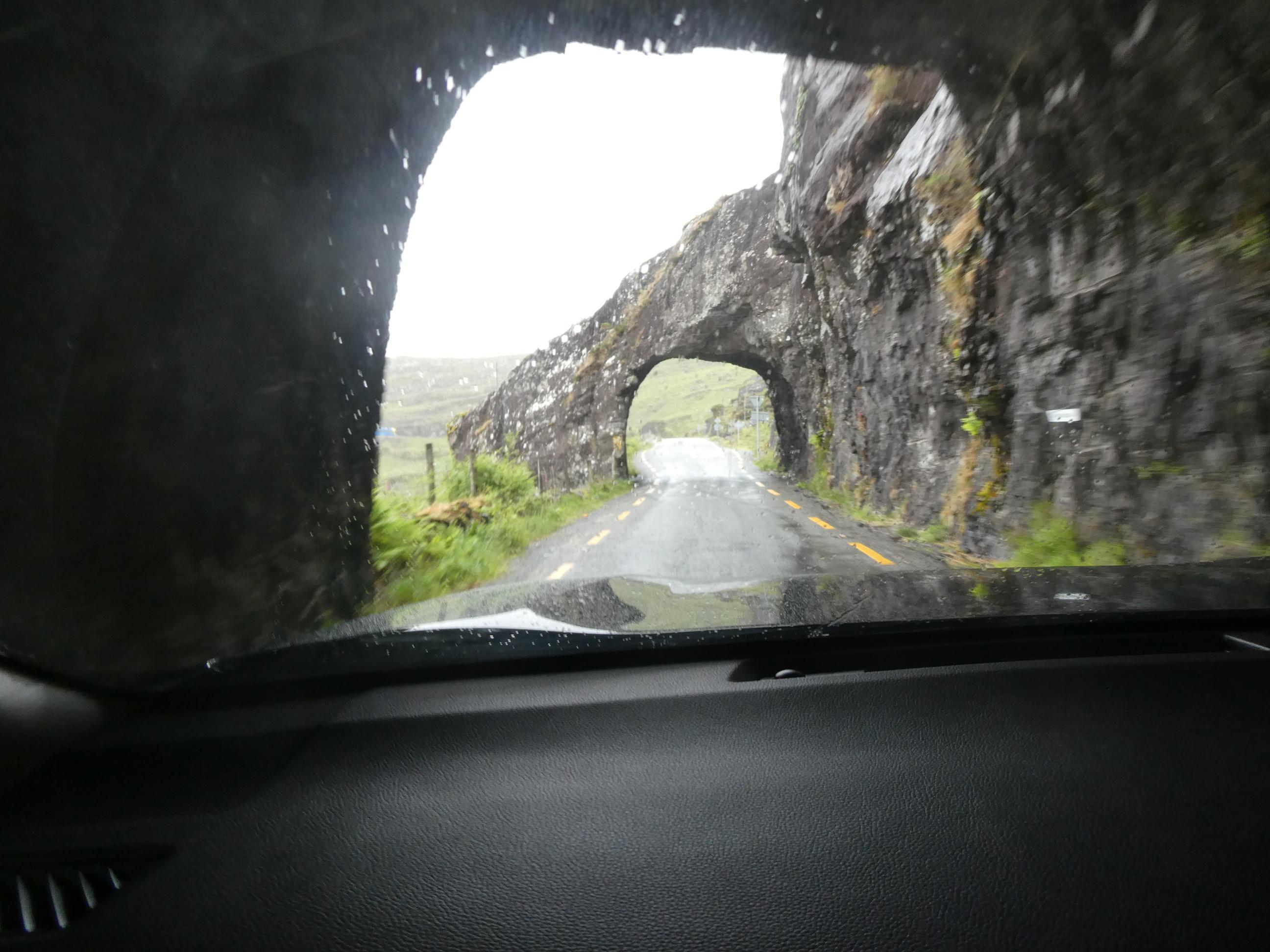
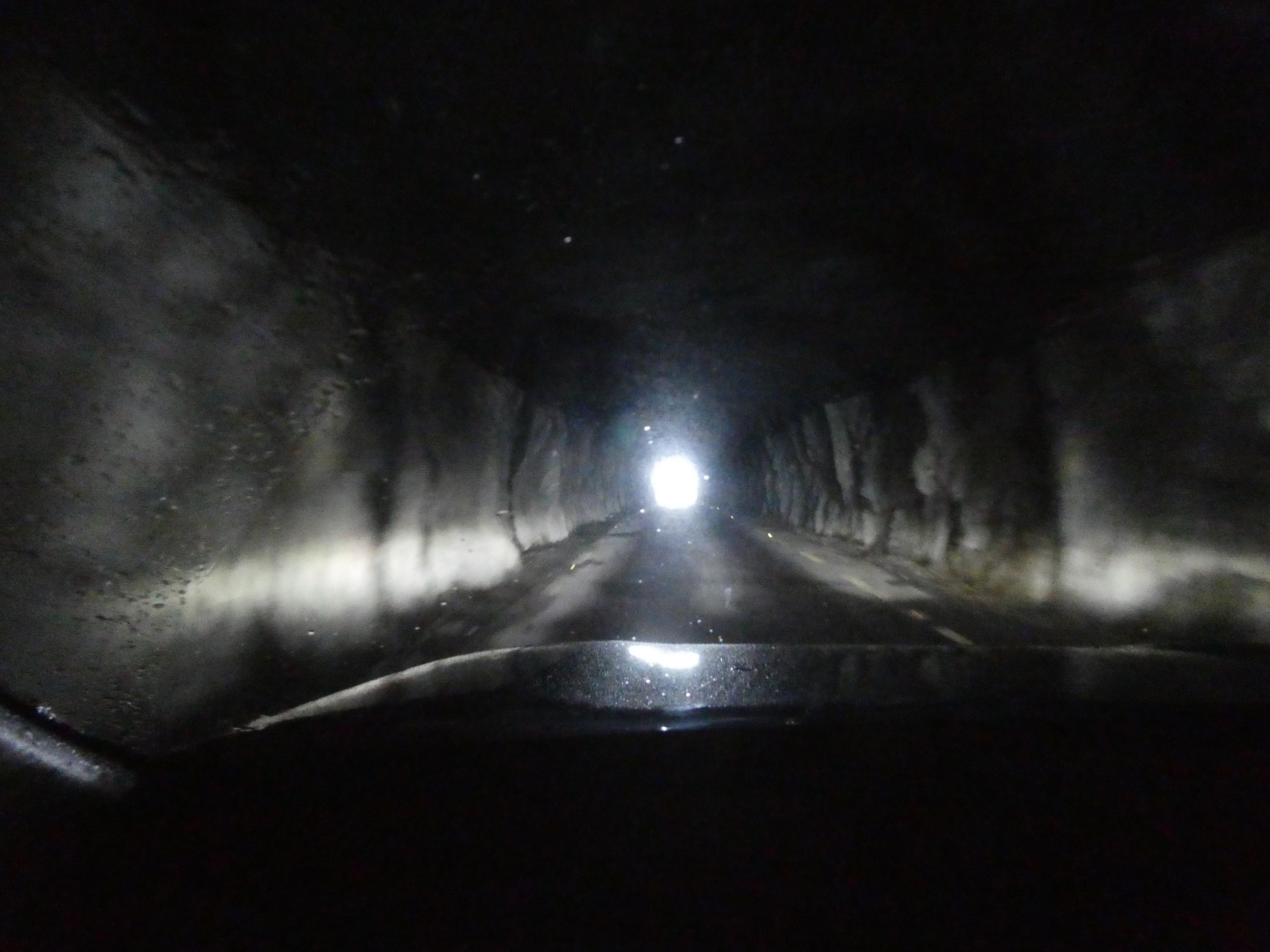
We left Killarney after breakfast and drove to Kenmare, where we were just a couple of days ago. From there we drove south. The road climbed through rugged, grassy terrain to a high pass through the Caha Mountains. The Caha Pass is 307 metres above sea level, and you have to pass through a series of three short tunnels and one long one cut through the rock before you begin the descent. The tunnels were cut by hand in the early 1800s, a remarkable feat of engineering. From the pass, the road took us down to the coastal village of Glengarriff.
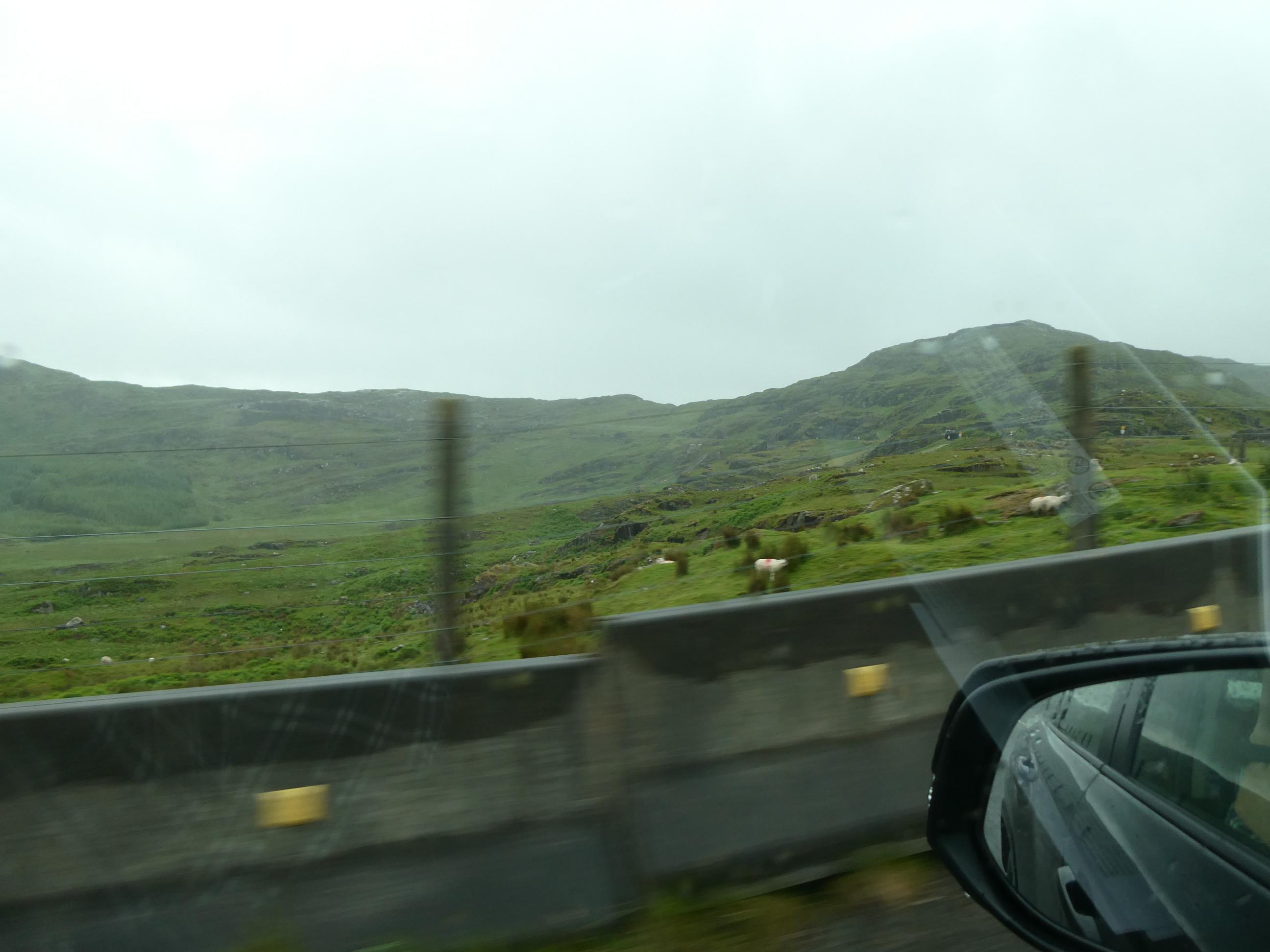



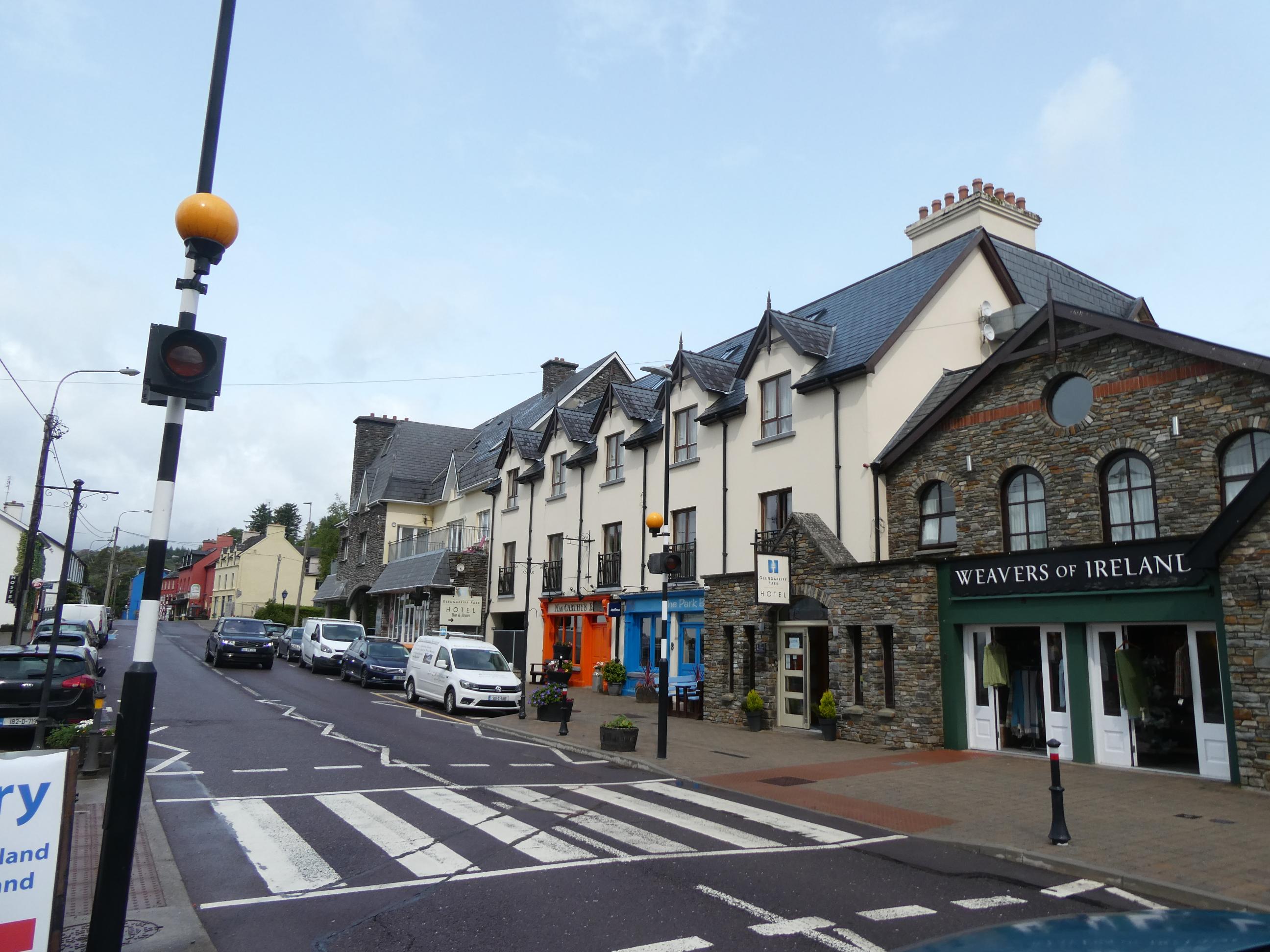
In Glengarriff Rod and Cornelia walked a couple of scenic paths around the Blue Lake. I did the first part with them, then went to find Marg. Guess what she was doing? That’s right. Buying wool. Thankfully she arranged for it to be mailed home, as our suitcases are quite full right now. We drove on through Bantry and alongside it’s beautiful bay. I’ve known about it ever since I first heard Van Morrison sing ‘Maid of the County Down’, a beautiful song with the chorus line:
‘From Bantry Bay down to Derry Quay
And from Galway to Dublin Town
No maid I’ve seen like the brown colleen
That I met in the County Down’
Guess what I’ve been singing in my head ever since we drove through it.


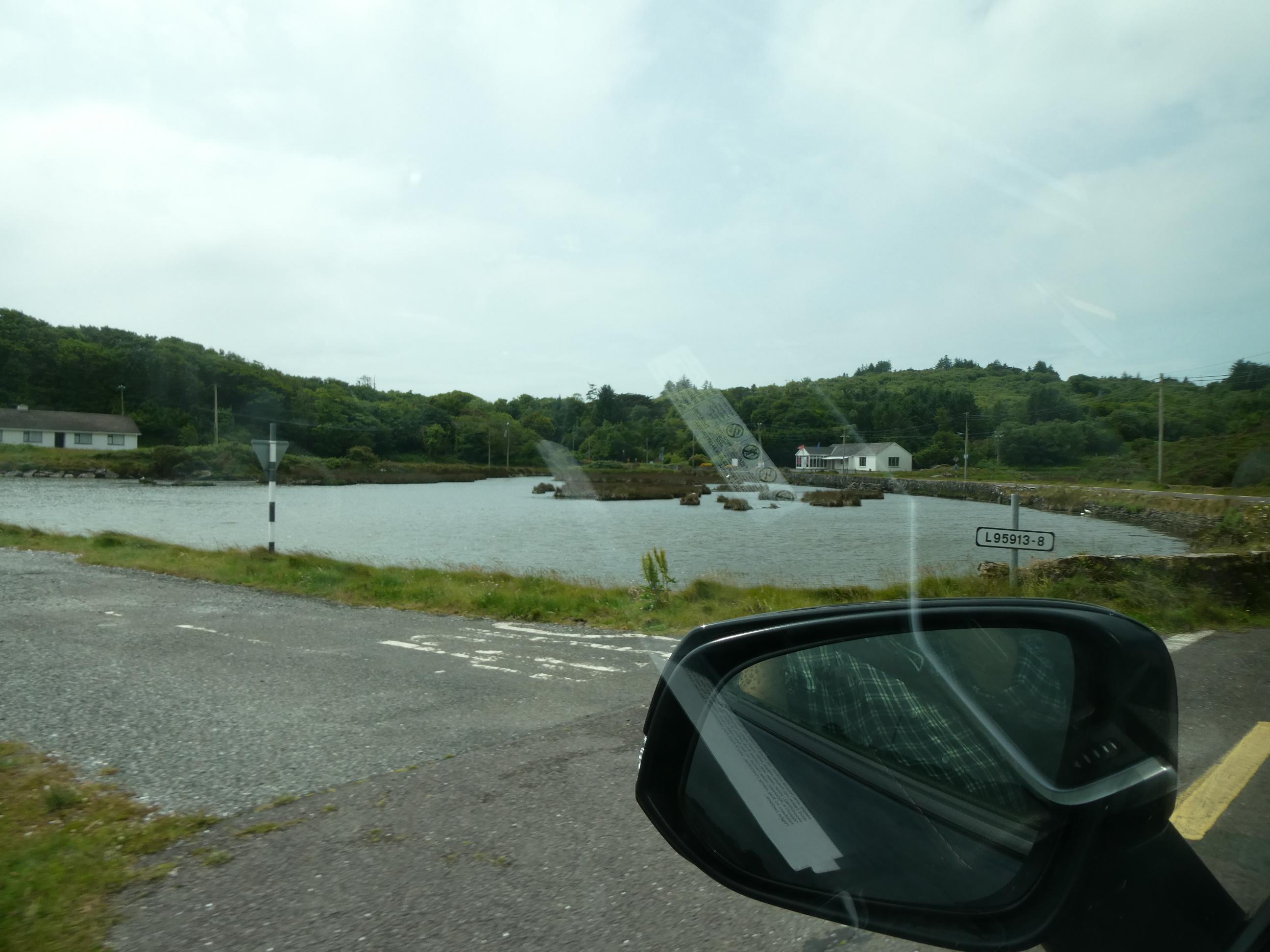
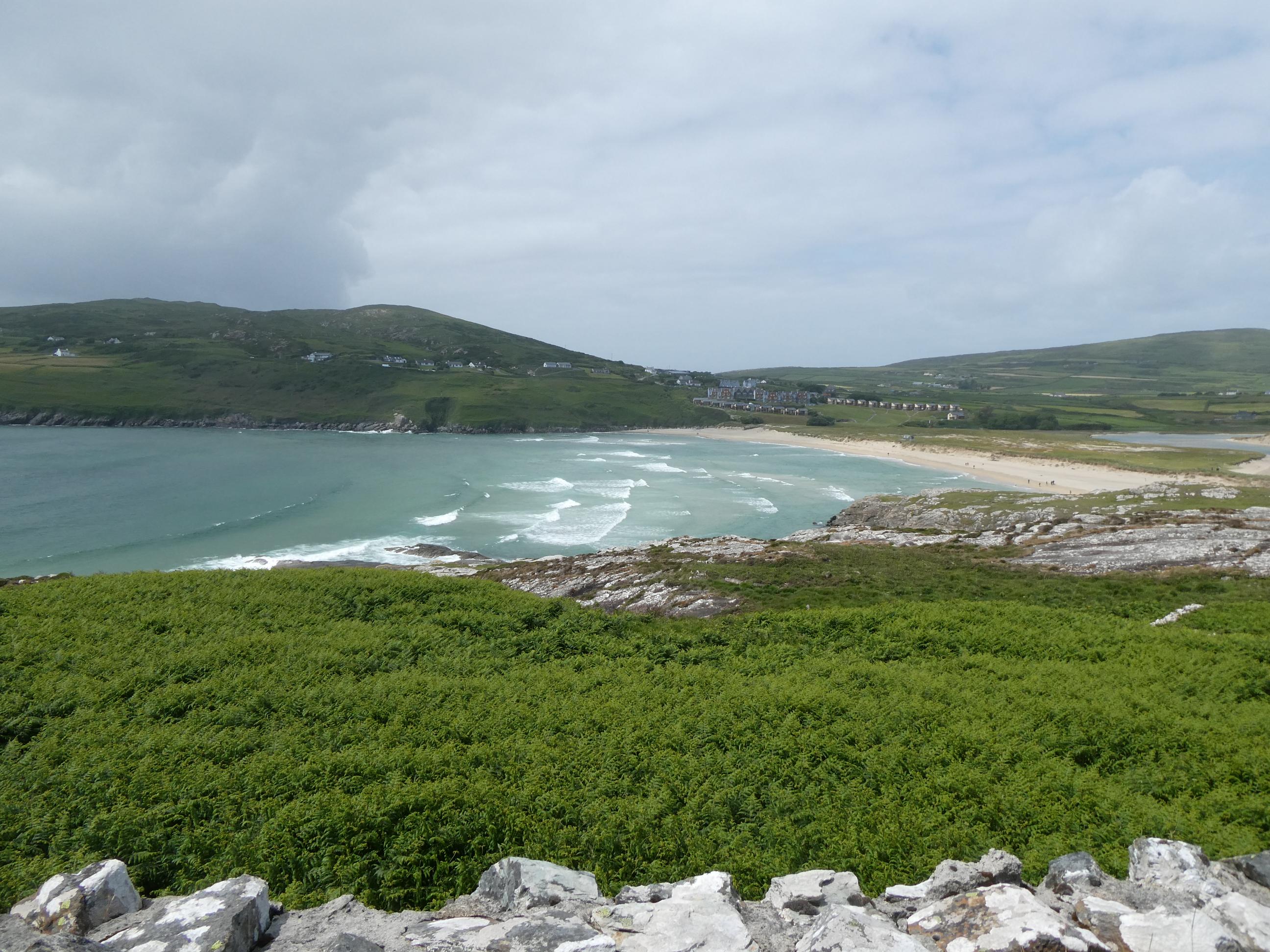
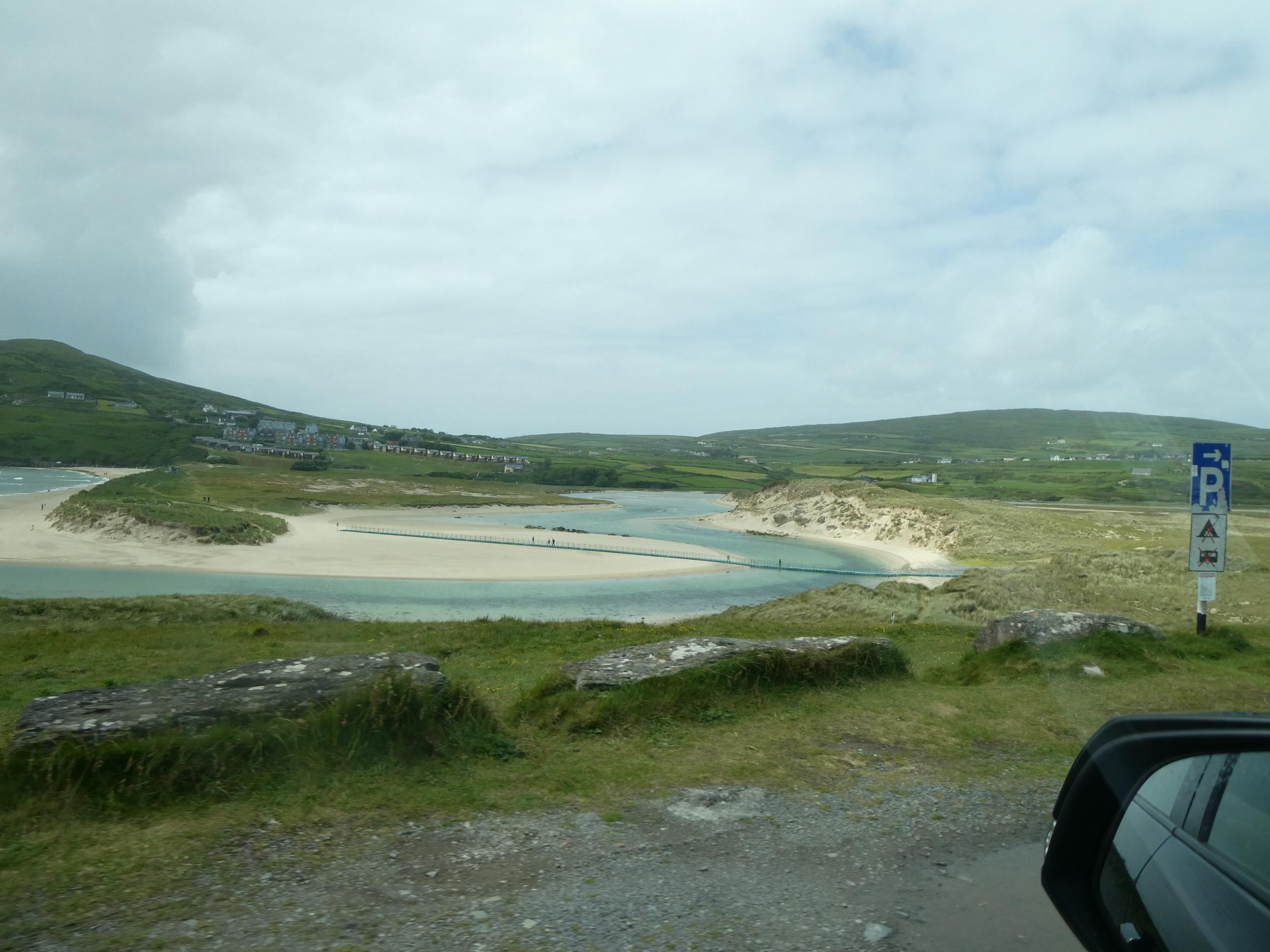
We drove into a beautiful fishing village called Crookhaven and stopped for lunch. It’s right on the most southwestern point of the Irish mainland. It’s in an idyllic setting, with a sheltered harbour, azure blue waters and a long, sandy beach. It has a small population, but apparently attracts several hundred holiday makers every summer. I’m not at all surprised. We ate at the Crookhaven Inn and I thought the meal was great and the coffee was the best I’ve had in Ireland. After a rainy start to the day, we now had blue skies and it was quite warm.
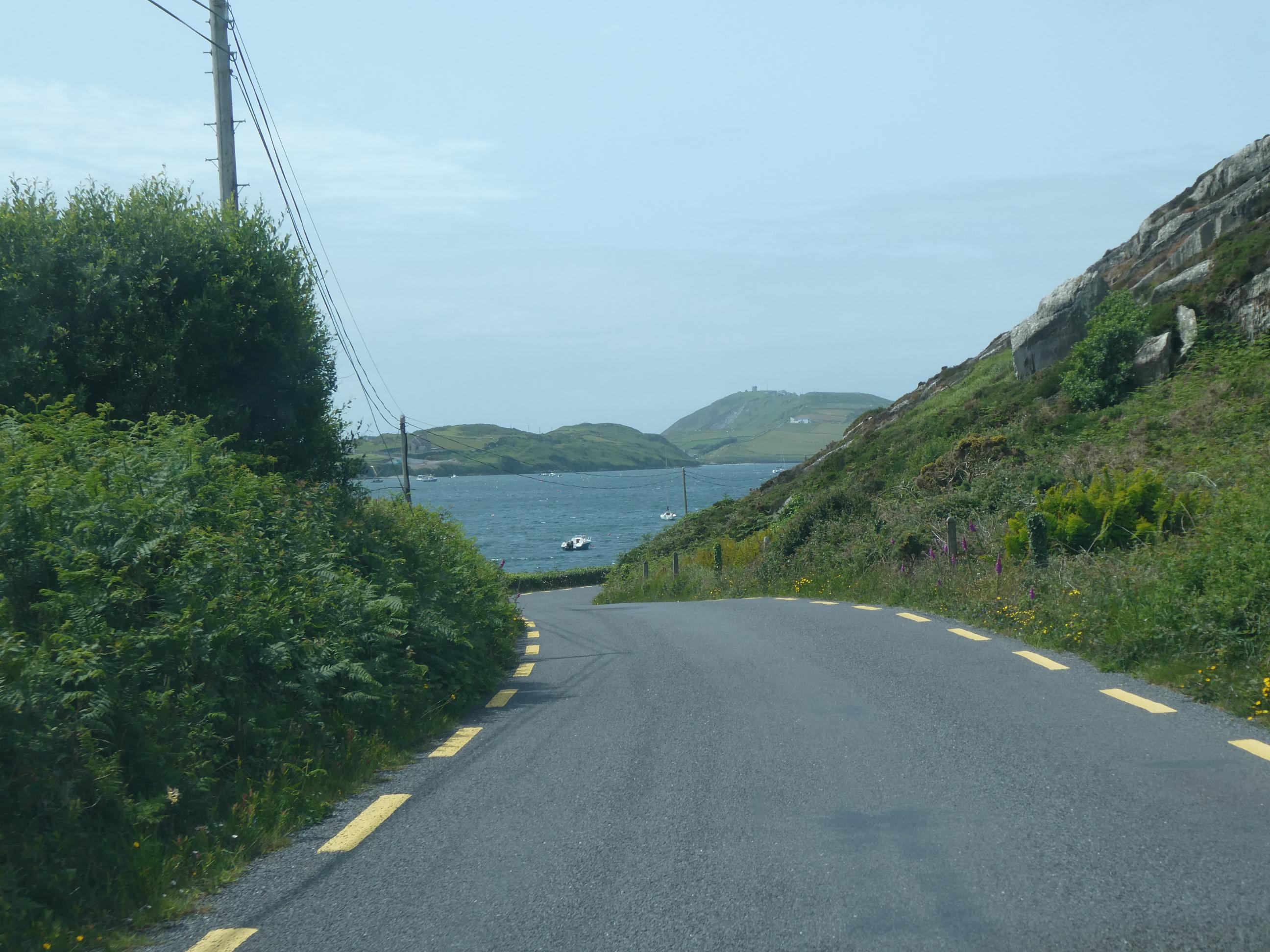
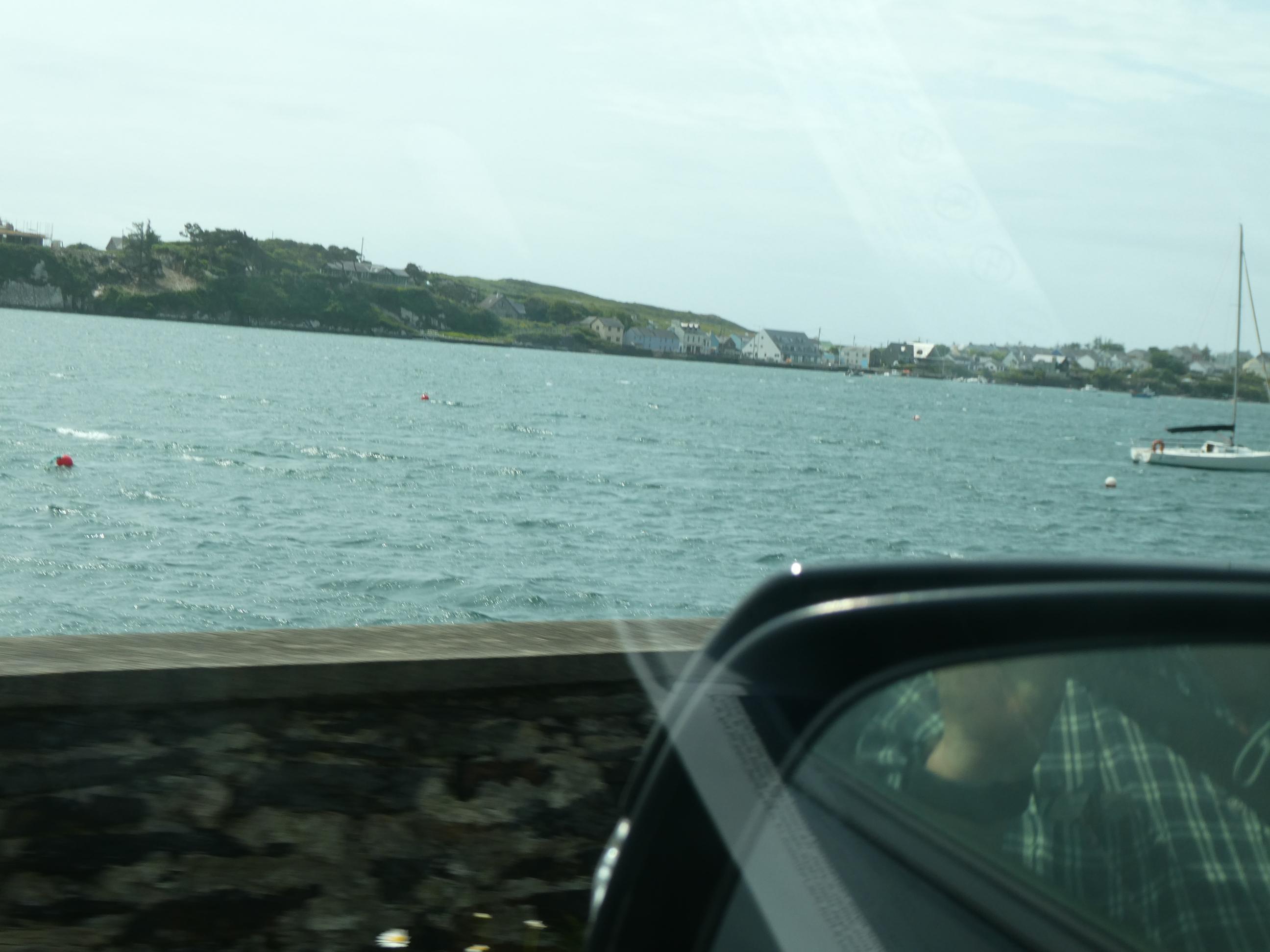

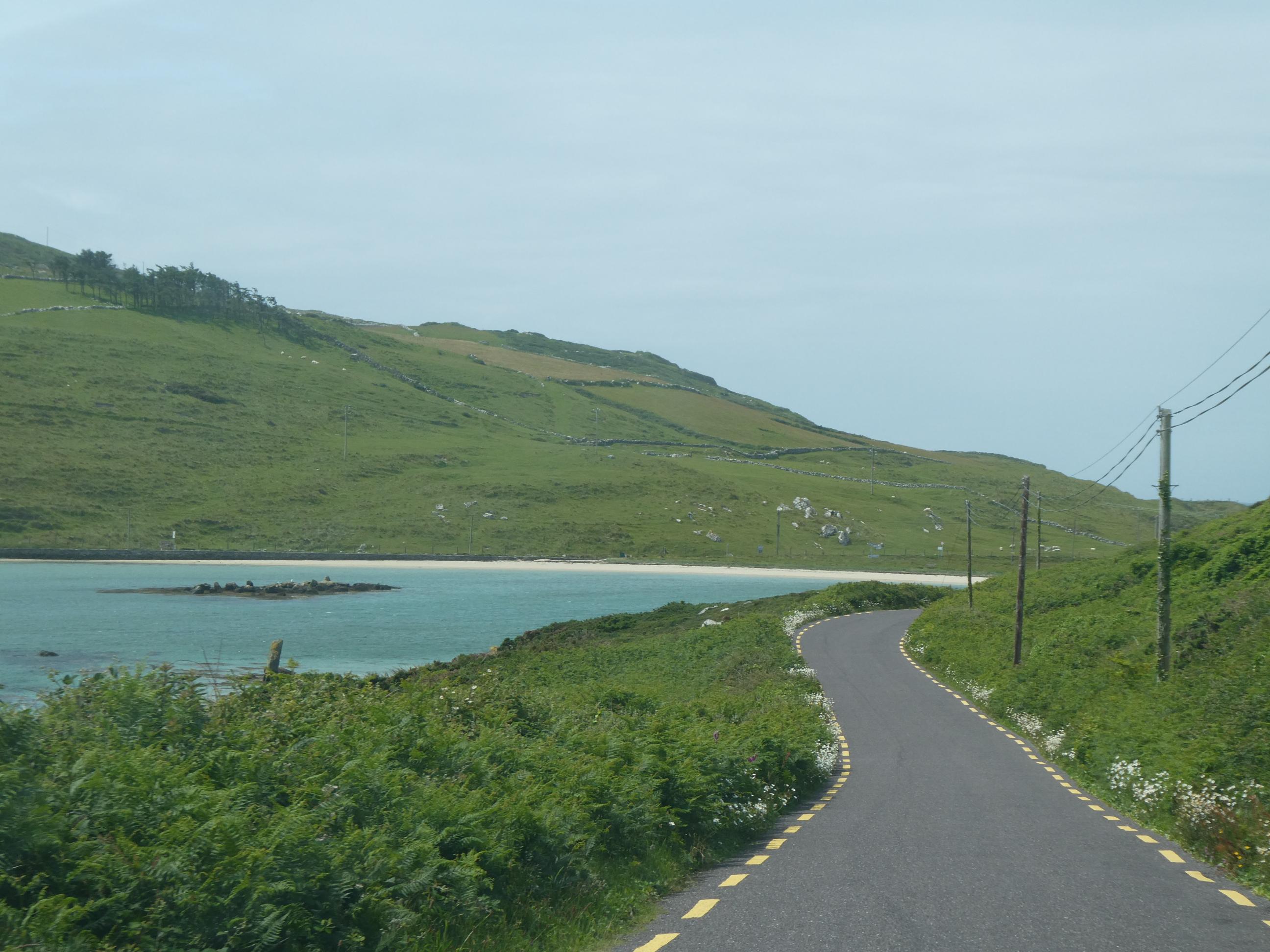
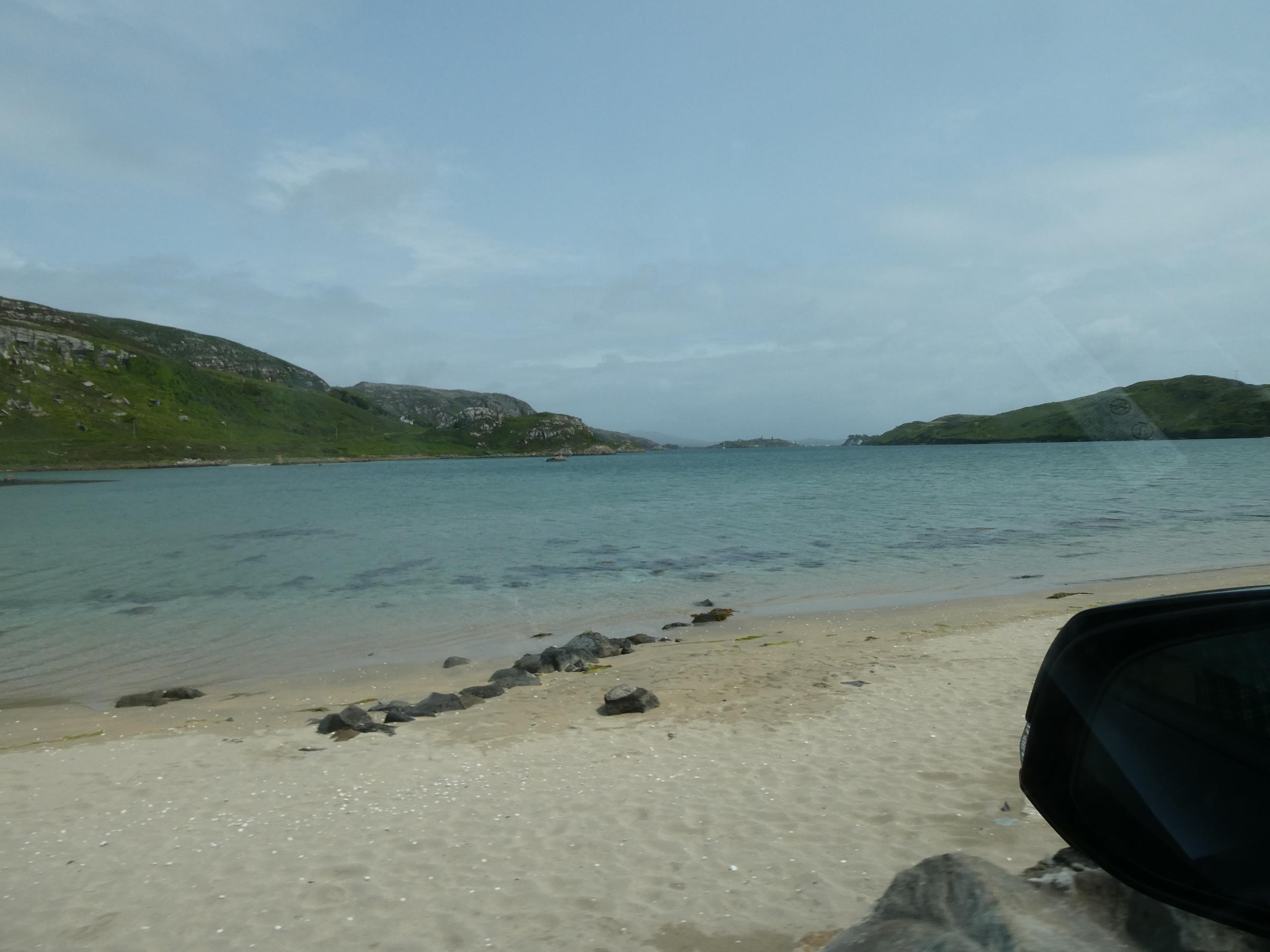
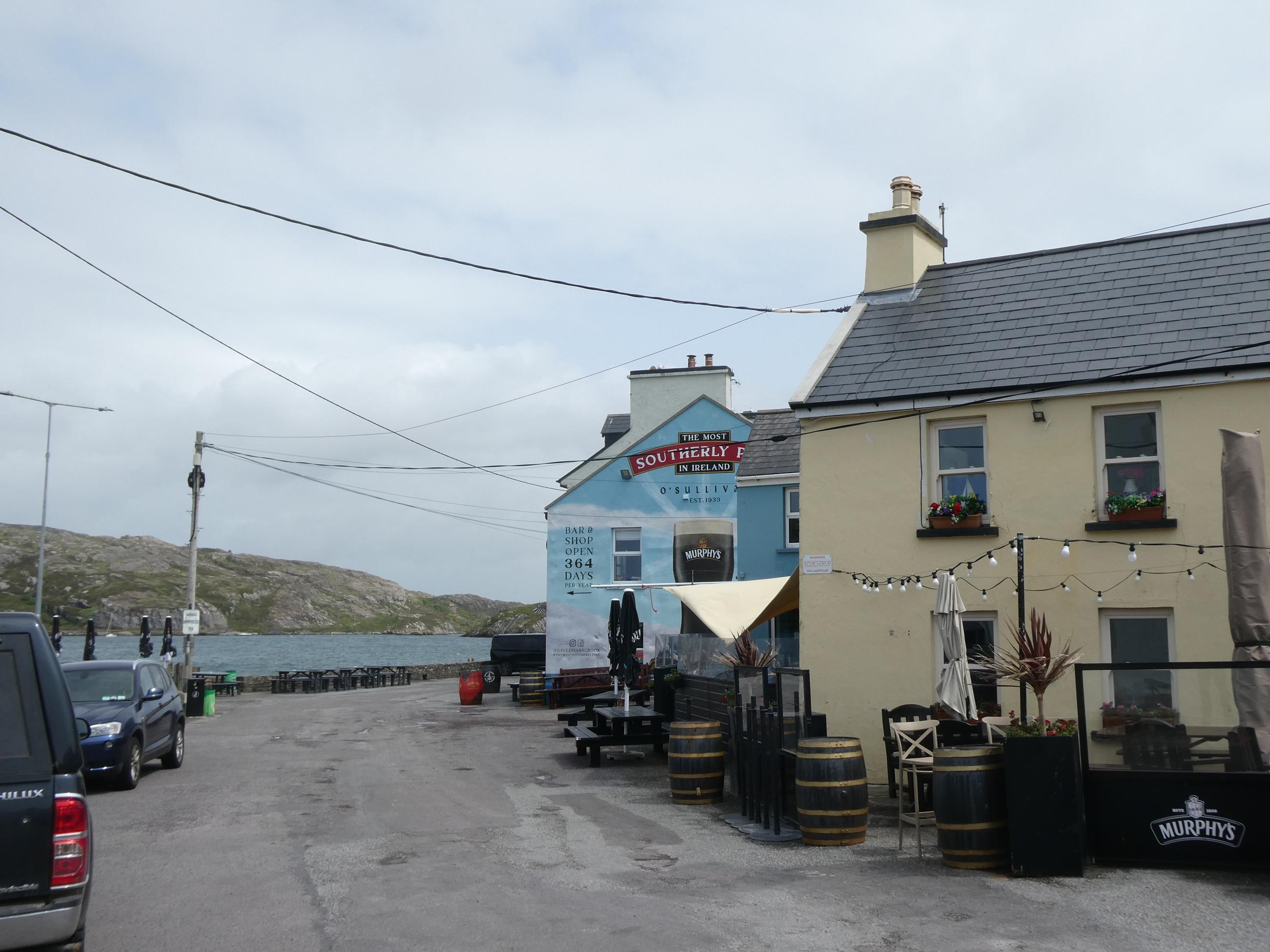
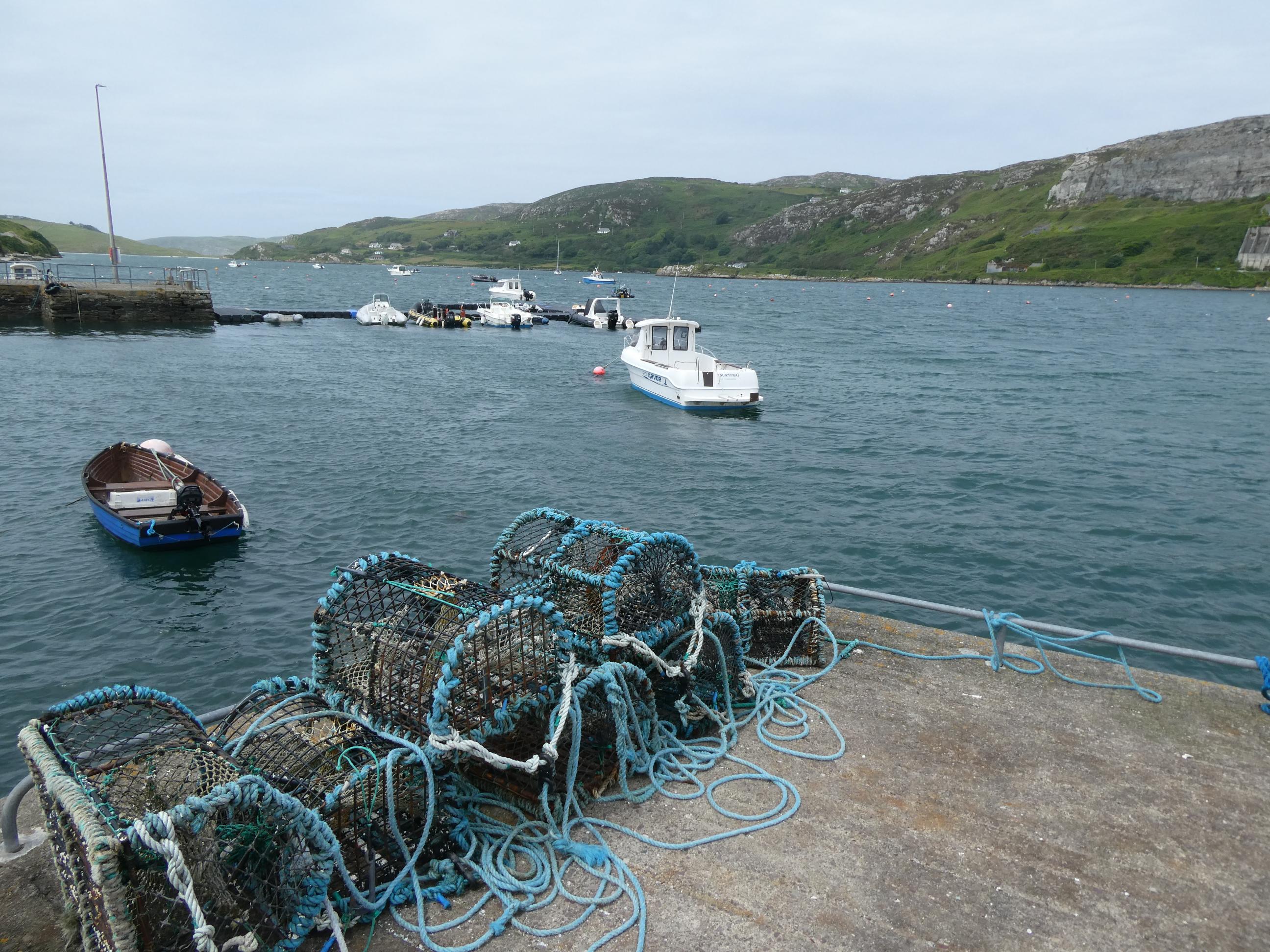
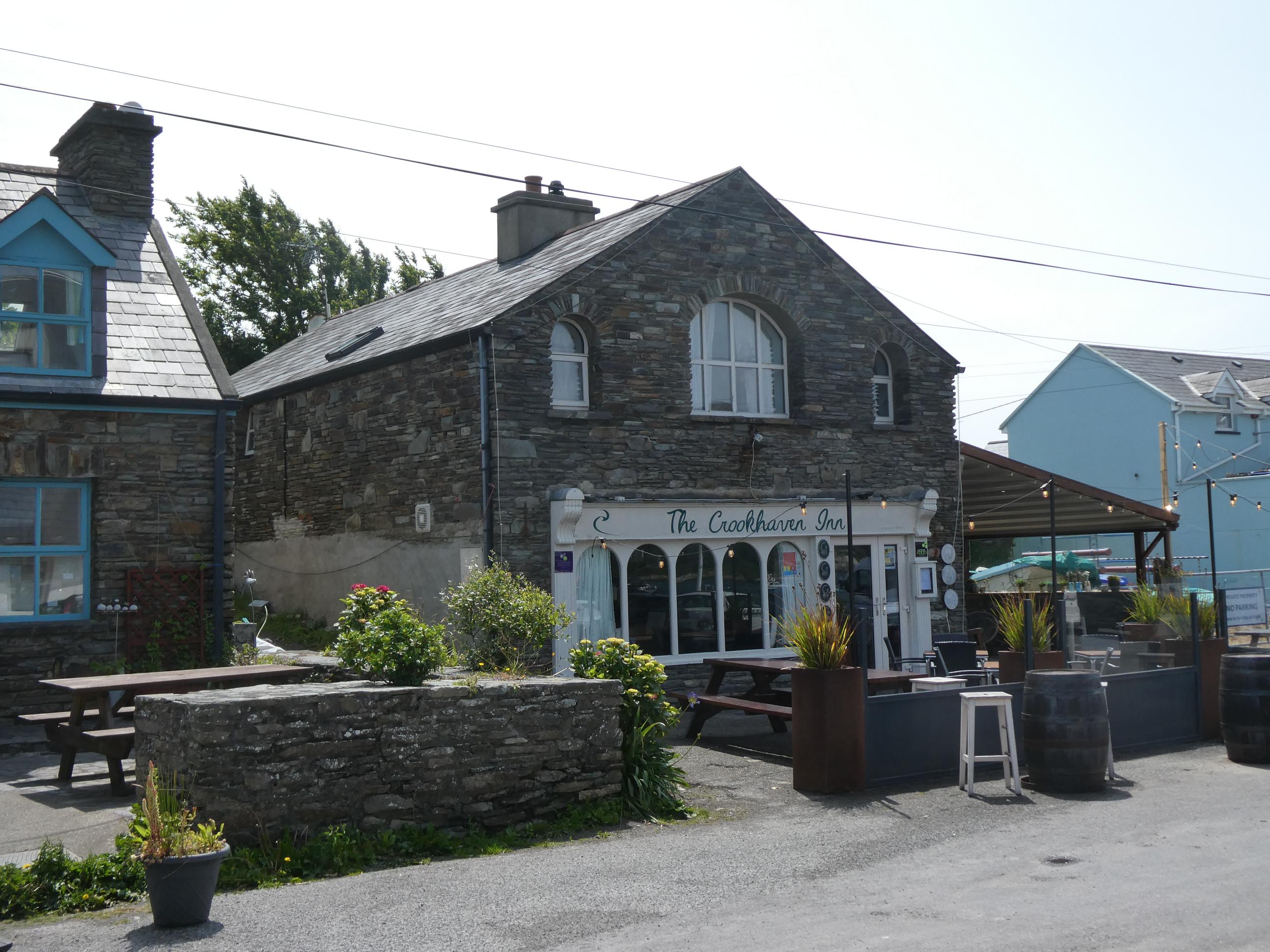
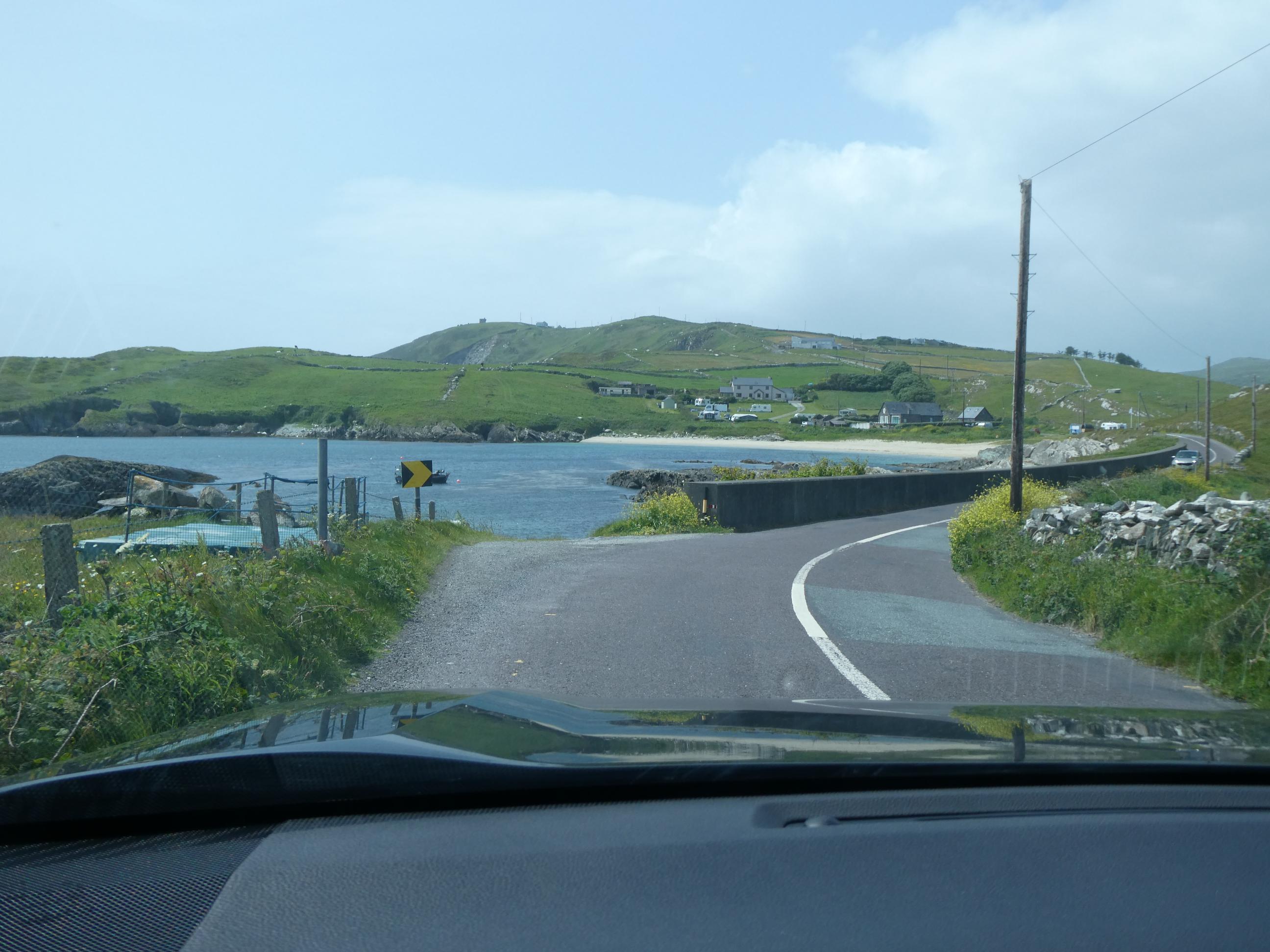
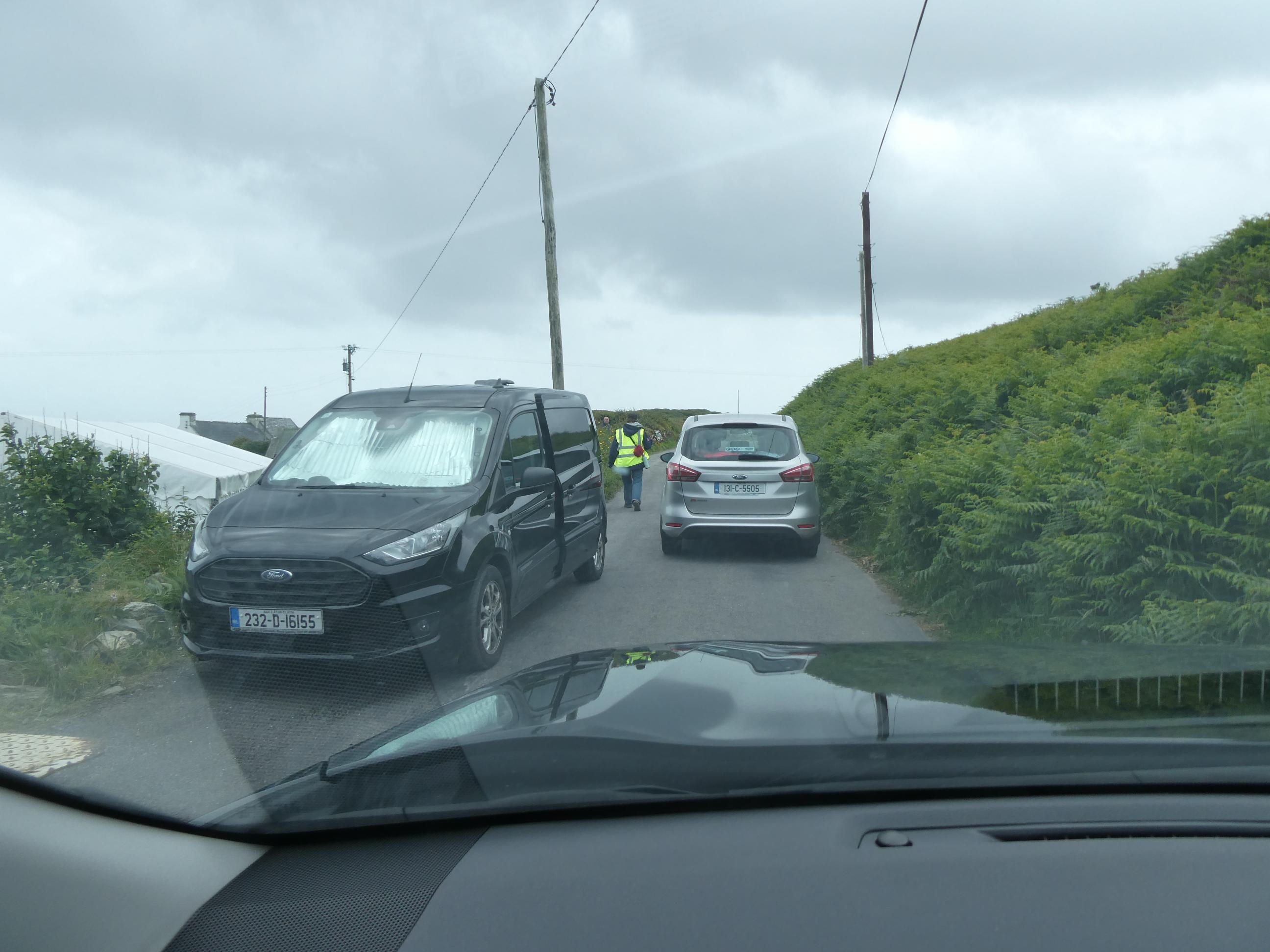
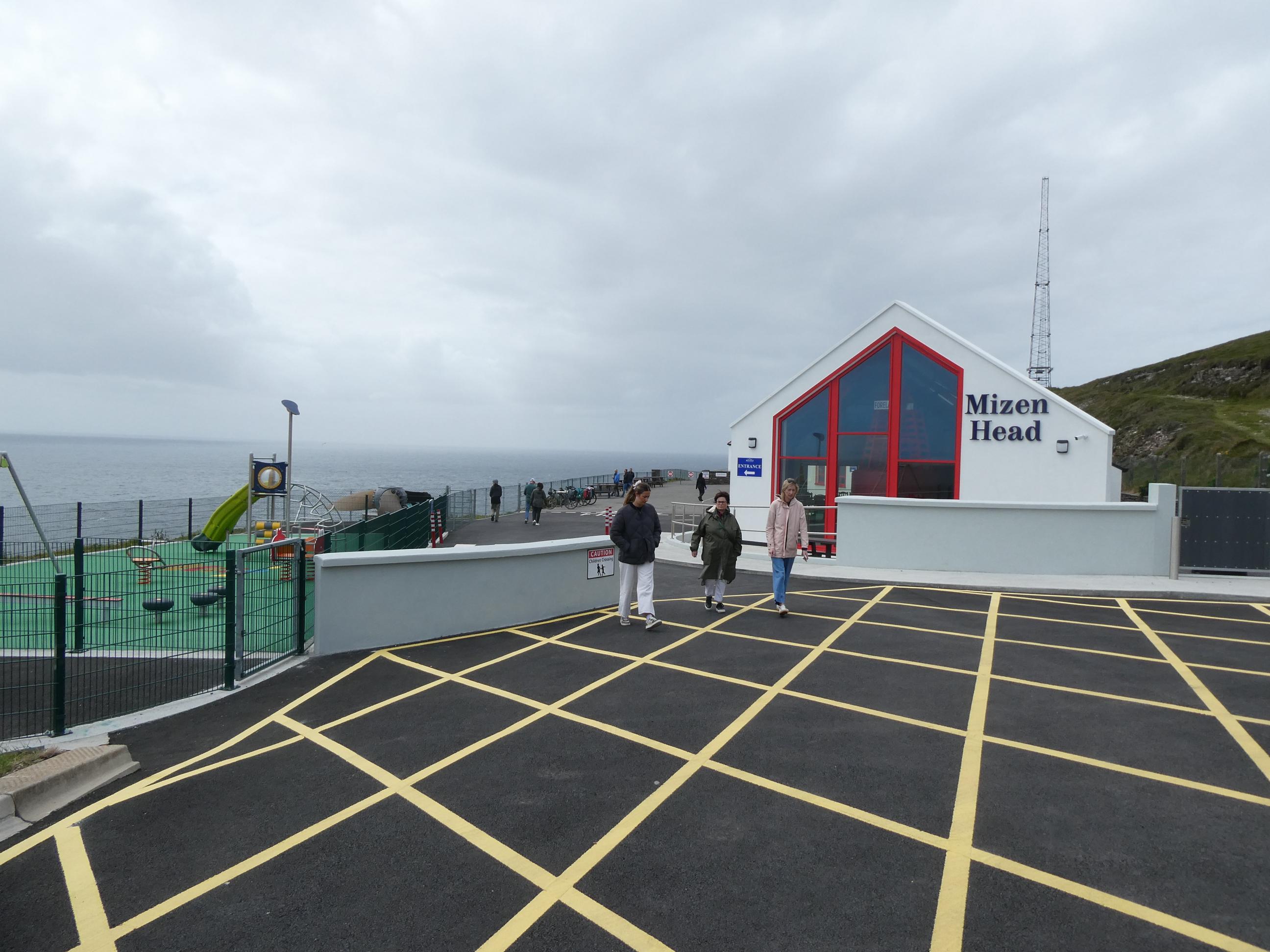
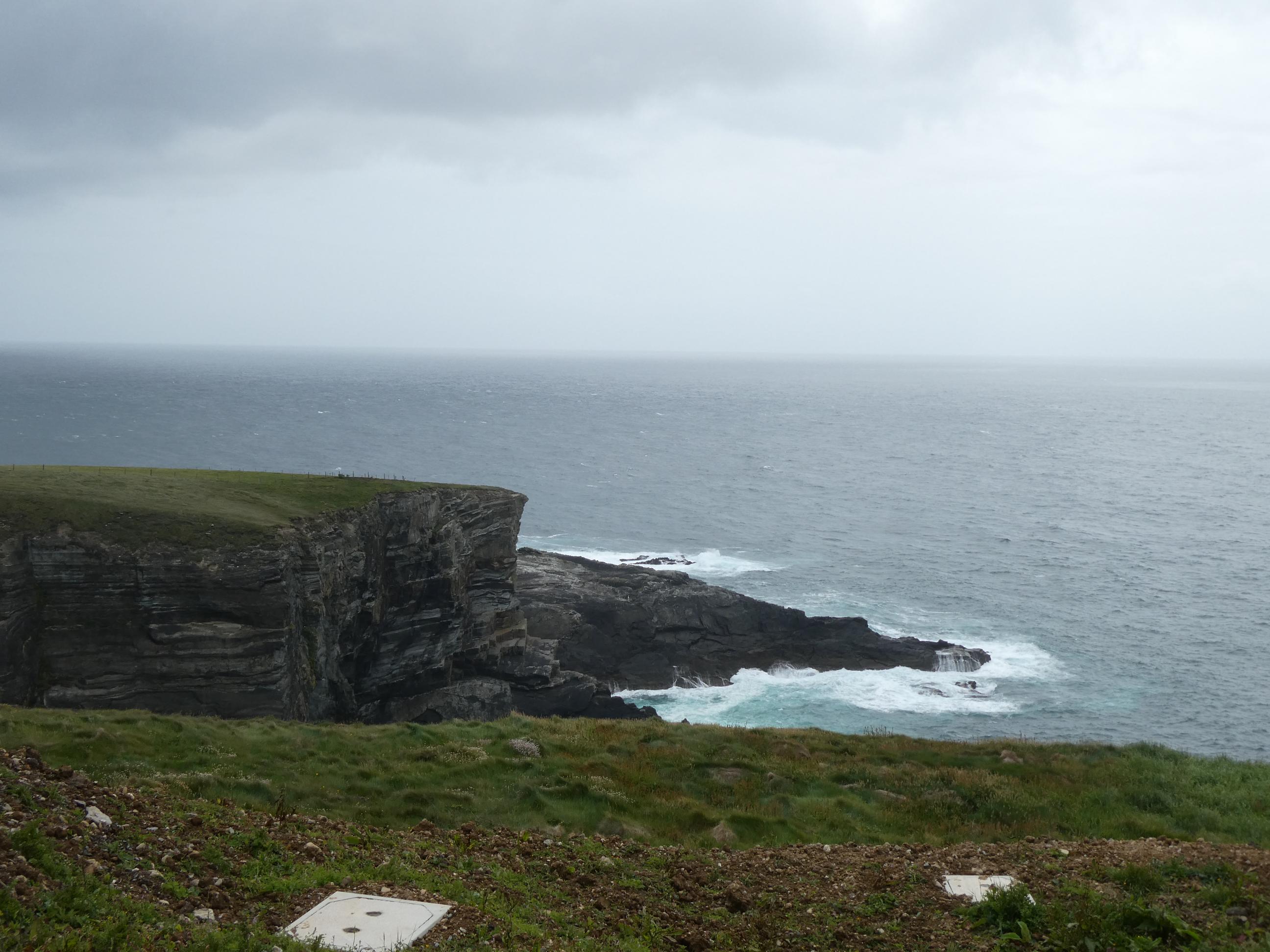
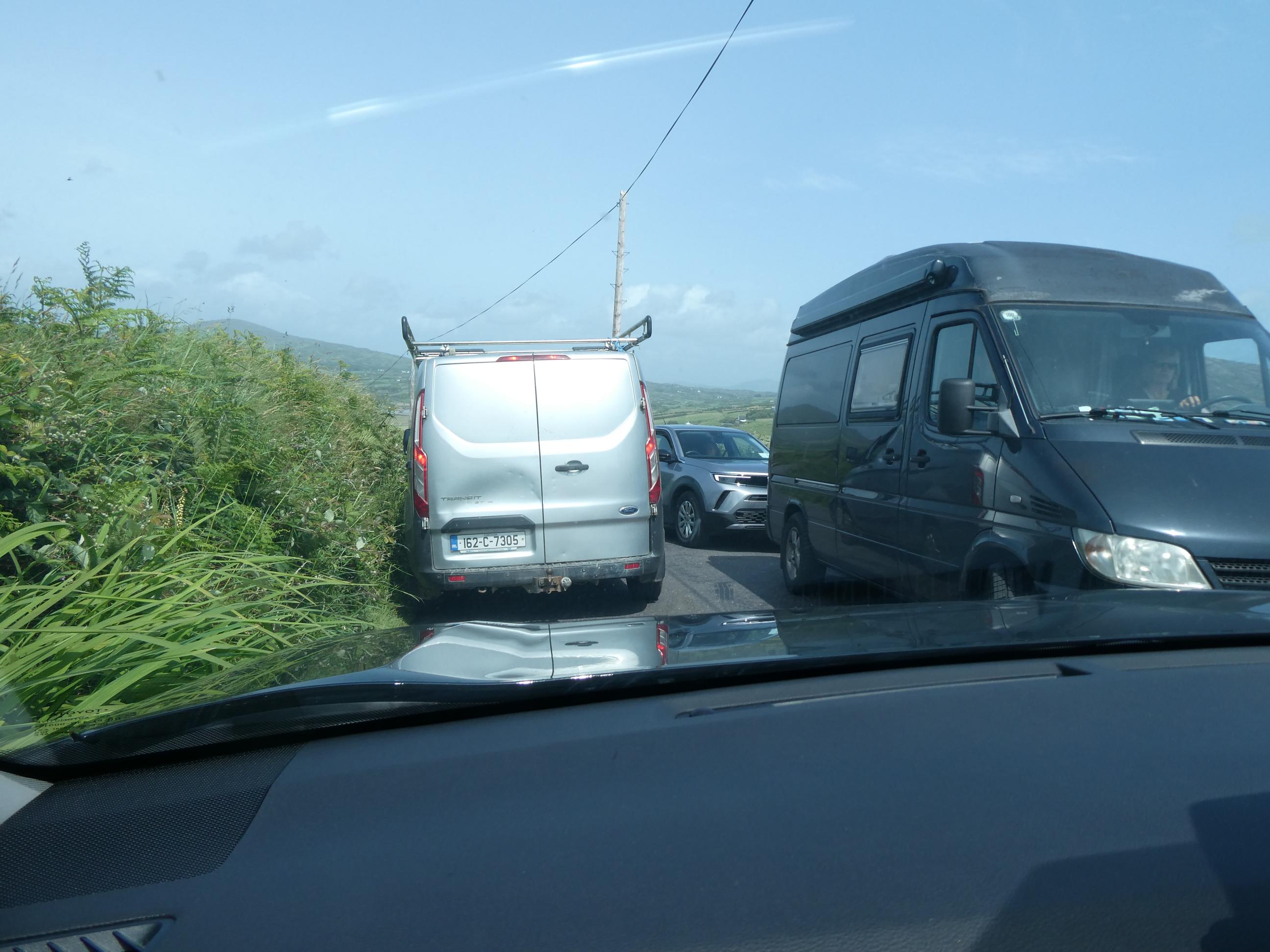
Just past Crookhaven, we came to Mizen Head. You (almost) can’t go any farther south on the Irish mainland than this point. It was a winding, narrow road into the visitors’ centre carpark, and several times we had to squeeze in tight to passing place where the road widened marginally to allow oncoming traffic to slowly and carefully edge past us. It got so tight in one place where an attendant had to guide us past a number of long trucks parked by the side of the road. We realised they were a film crew, and I discovered later that they’re filming scenes here for ‘The Body is Water’. I don’t know anything else about the film, but will keep my eye out for it. ‘Star Wars: The Last Jedi’ also contains scenes filmed here. I didn’t pay to walk over the bridge to the headland, where there is a short walk, but Rod and Cornelia did. Marg and I were happy just to enjoy the scenery around the visitors’ centre and wait for them to return. Rod shared his photos of the bridge and the narrow gorge on the headland (below).
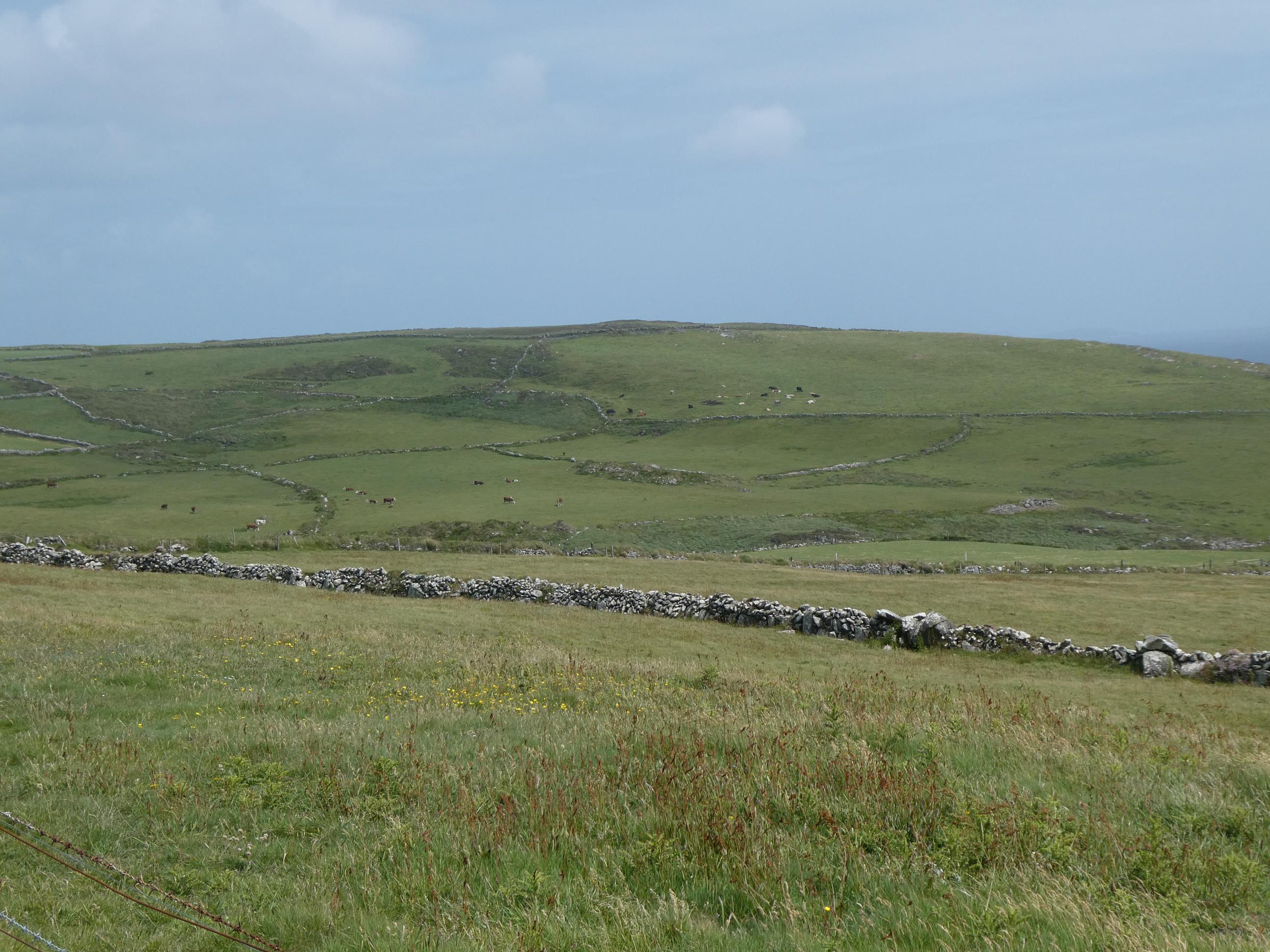
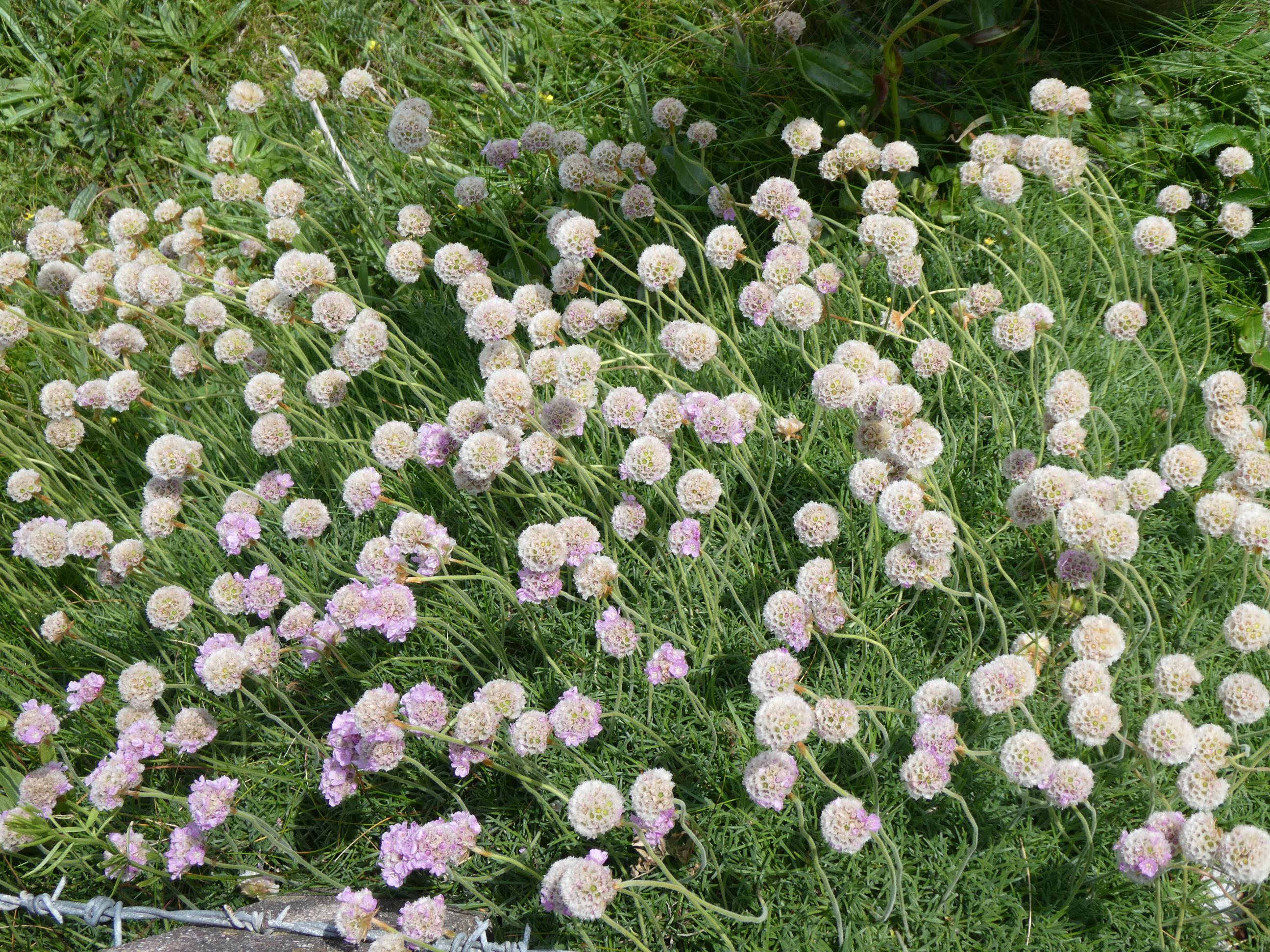


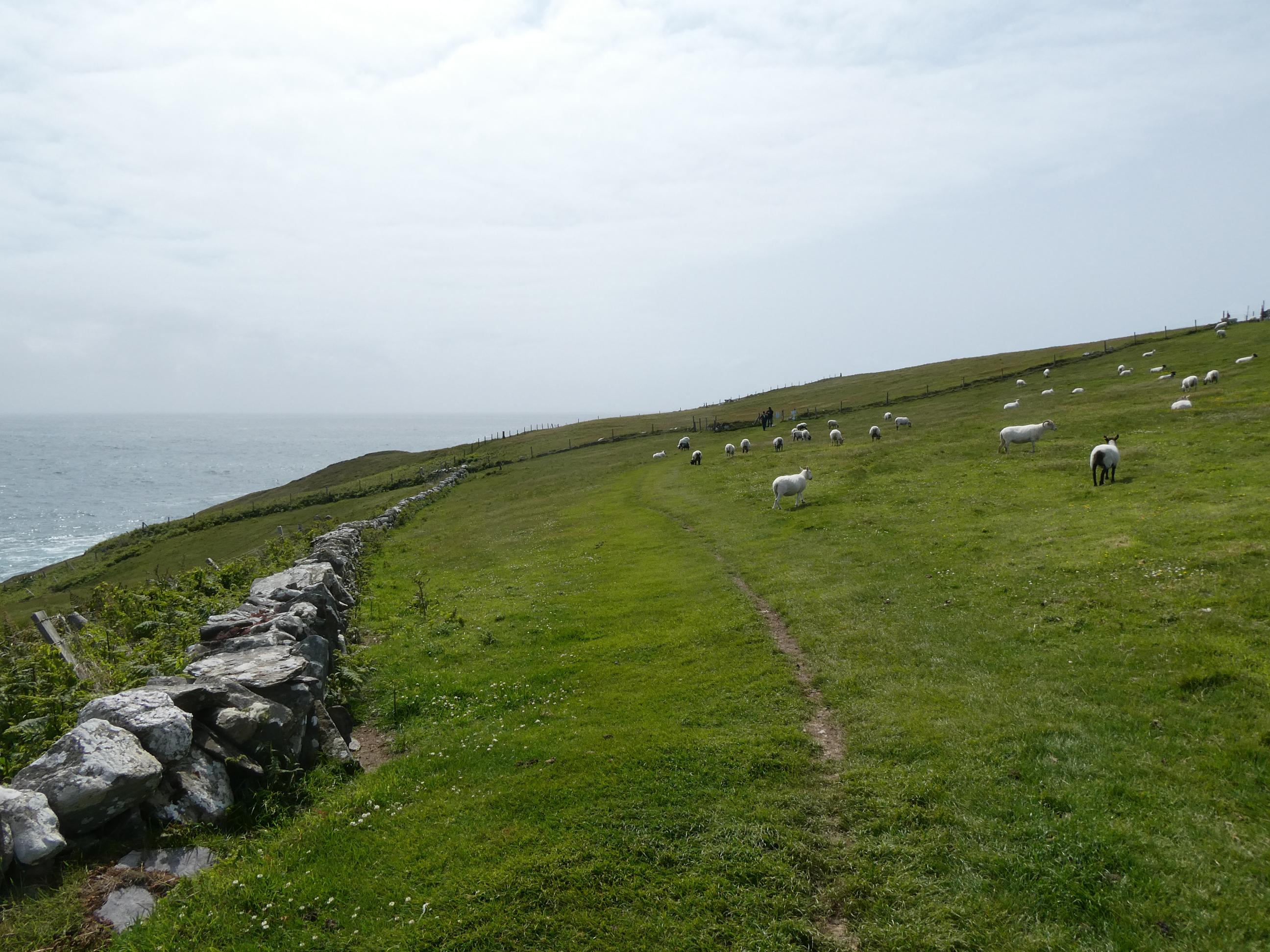
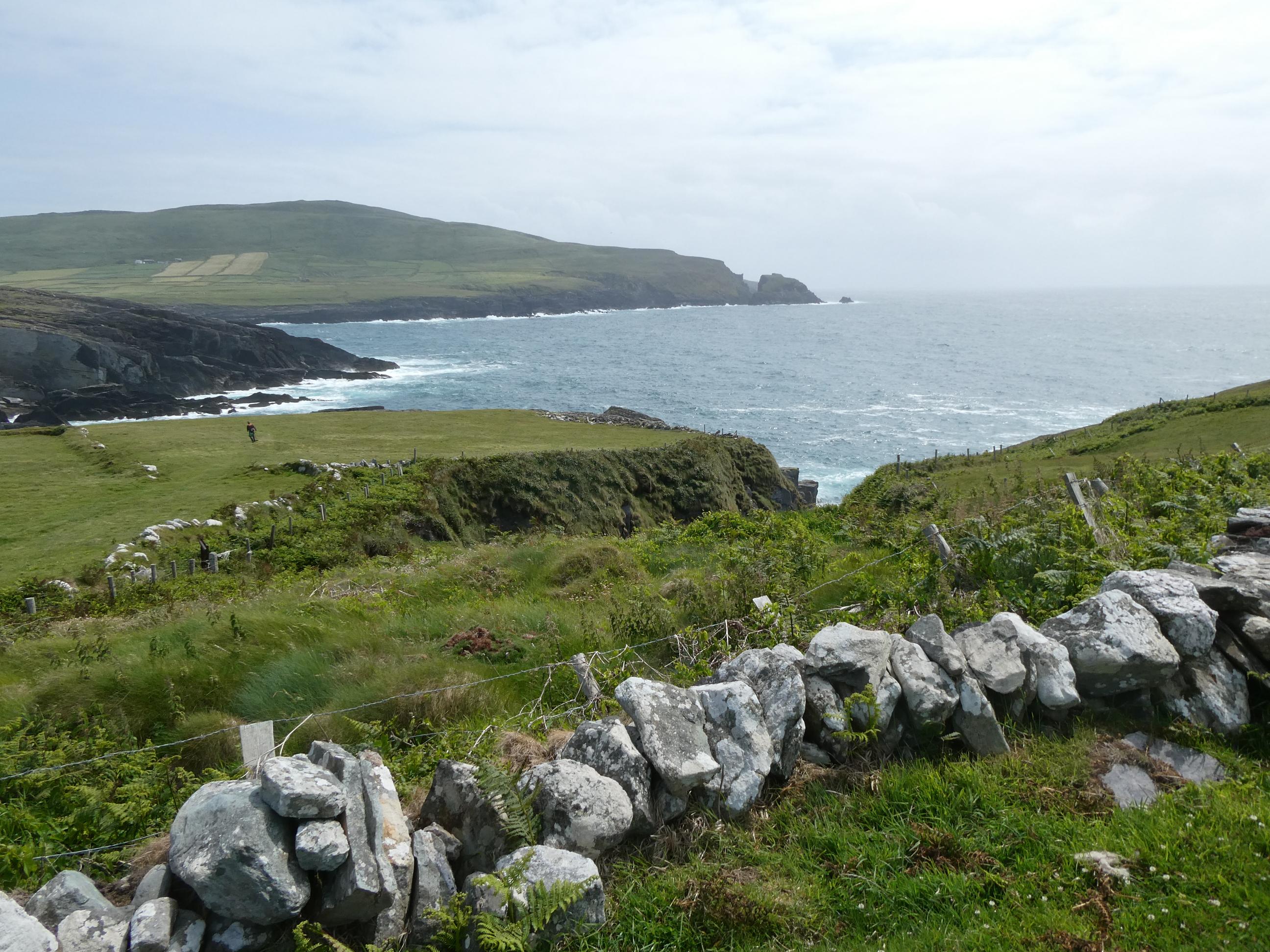
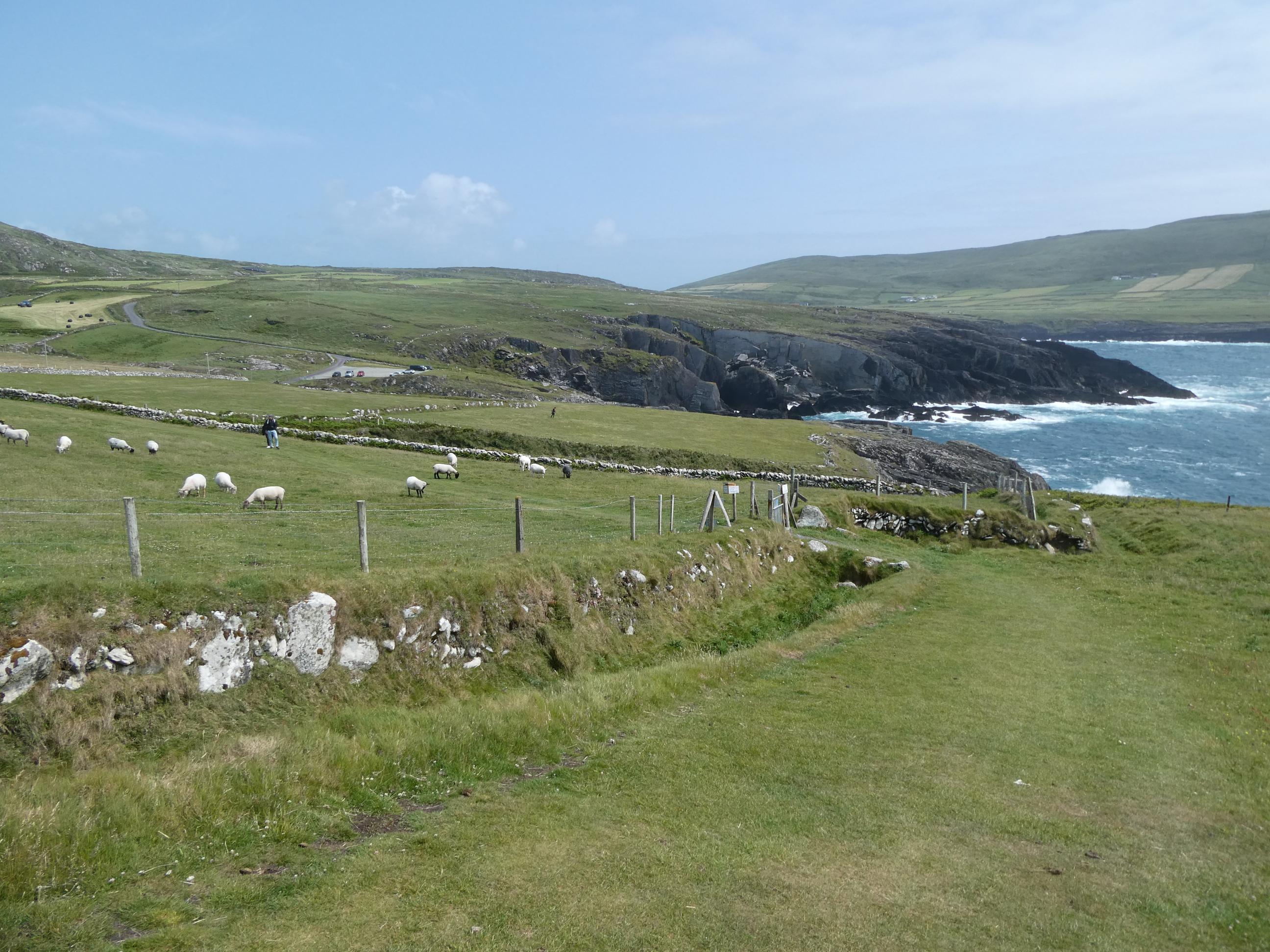
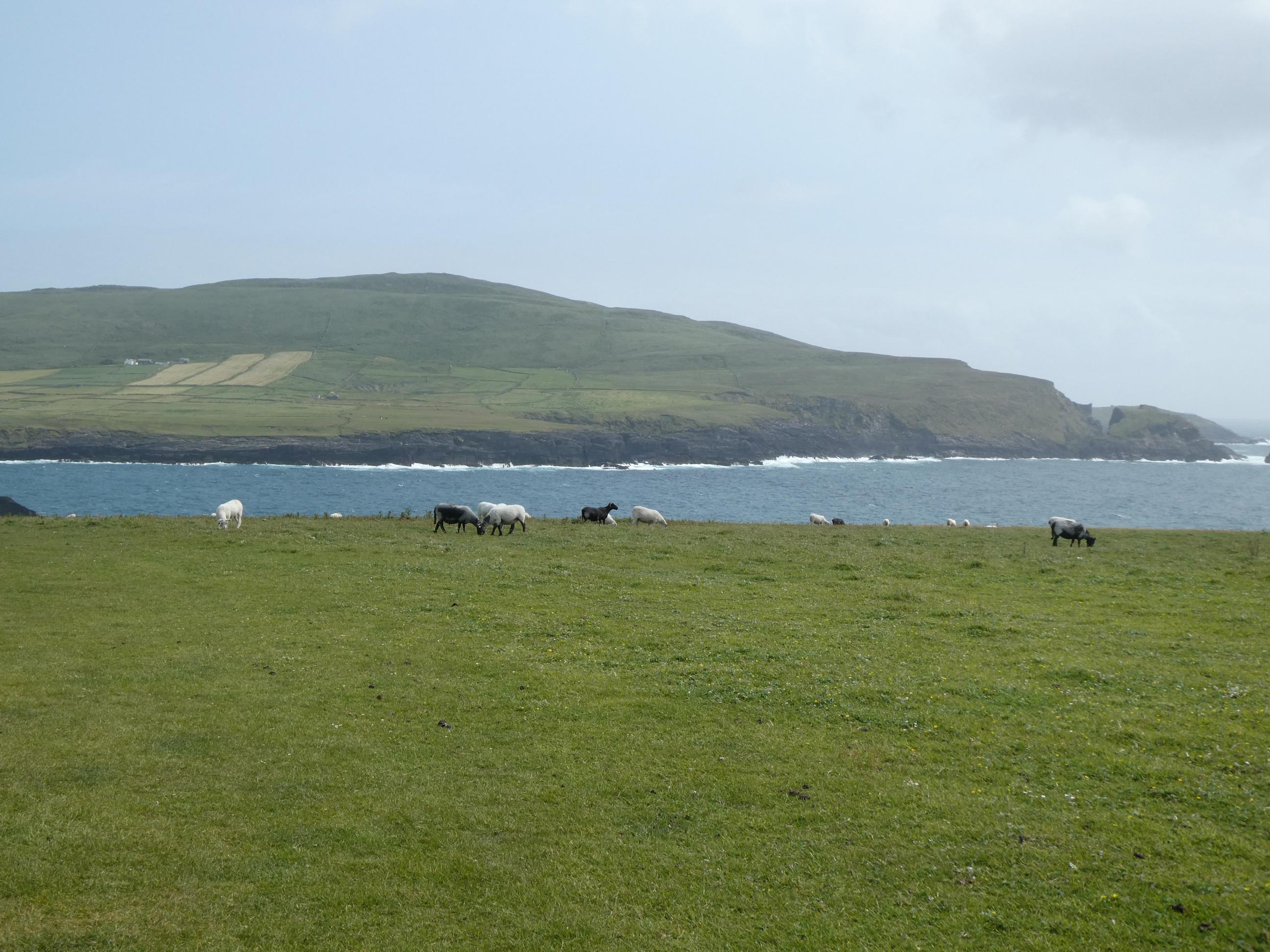
I had seen a photo of Dunlough Castle, and suggested to Rod that it might be worth a look. We drove up and down probably the roughest track (you probably should call it a road, but it was really, really tight and bumpy) until we reached the carpark. The castle wasn’t in sight, and a sign said it was on private land about a 500 metre walk away. The walk took us through the farmer’s gate and into some of his sheep paddocks. Interestingly we could see him in the distance cutting grass on one of his fields with a hedge trimmer!! You can barely see him doing this in the third photo below. Personally, I would have just opened the gate and let a few sheep in to do the job. Most of the walk to the castle viewpoint was uphill, including one very steep section. We covered much, much more than 500 metres – I estimate it was about three times that distance. I was sweating and puffing and wondering if we’d ever get to see the castle. I stopped, and pondered turning around and heading back to the car. Suddenly up ahead, I could see Cornelia waving me on. Another few minutes and I was up on the next ridge with her and Rod, looking down on the ruins of a castle in a stunning setting, facing out over the Atlantic Ocean. The castle was built by the Normans in 1207, and is one of the oldest castles in Ireland. It sits on Three Castles Head, so named because of the three towers still standing. It was a long walk back to the car, but at least most of it was downhill. The sun was out and it was quite warm.



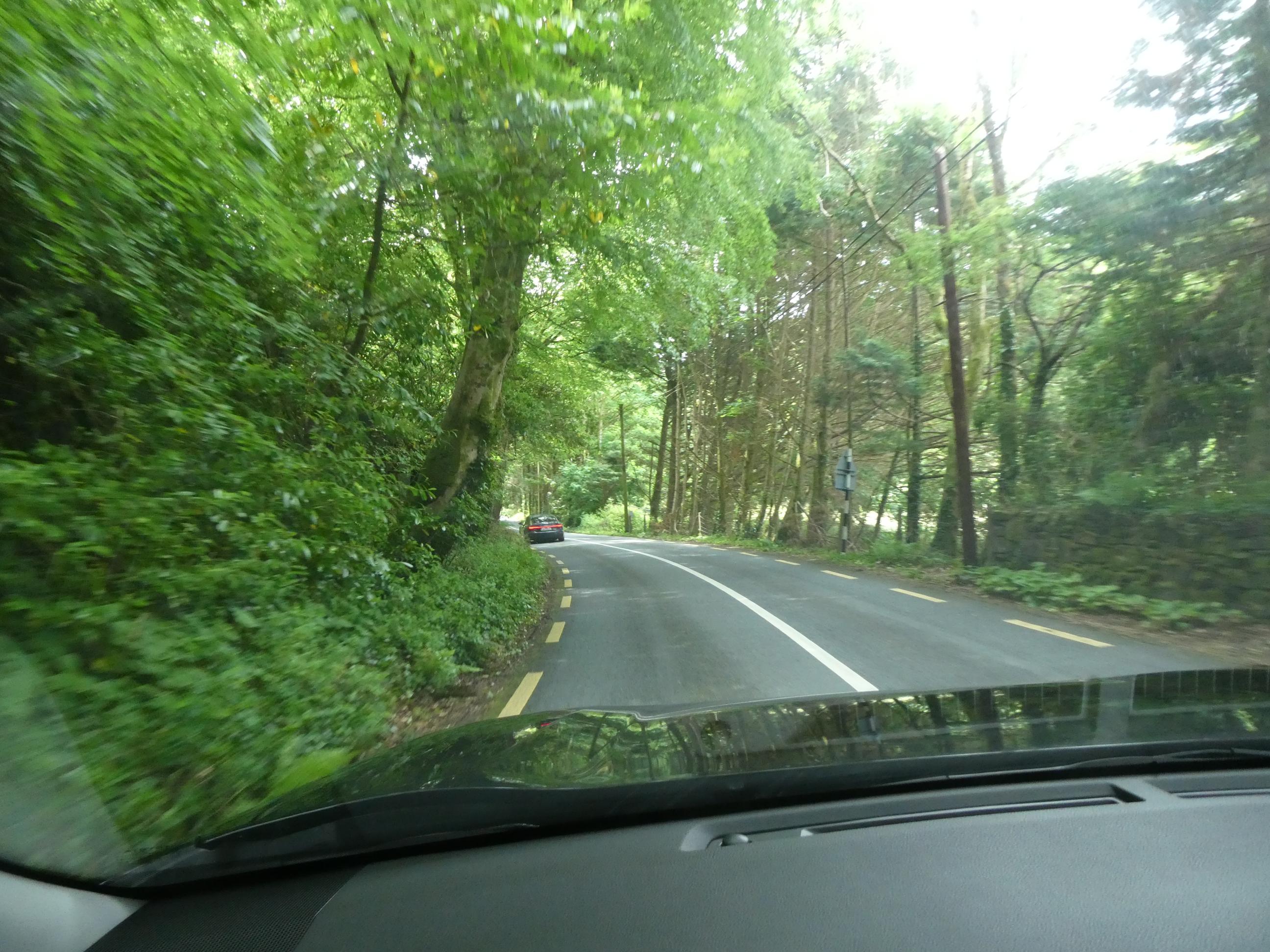
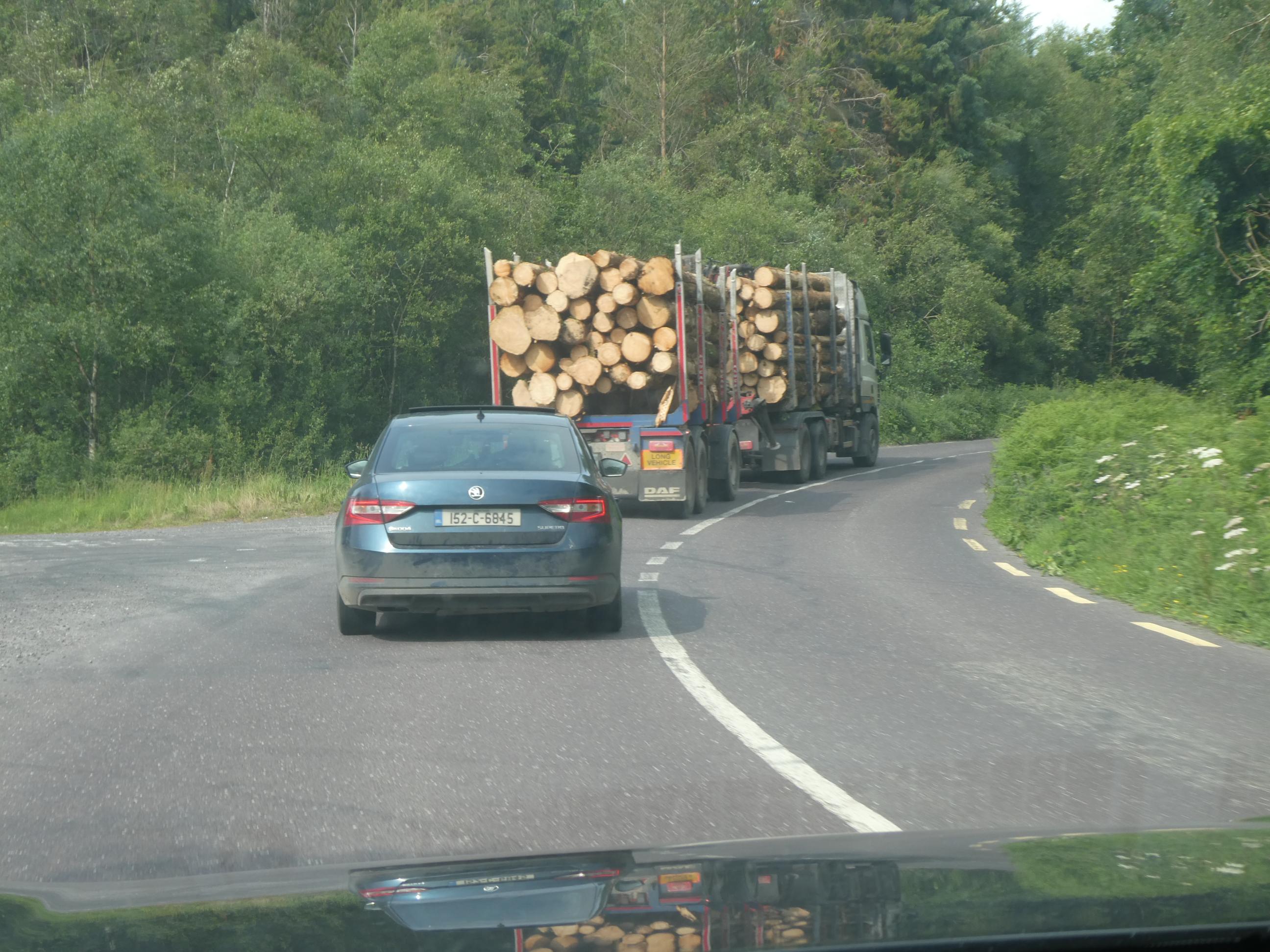
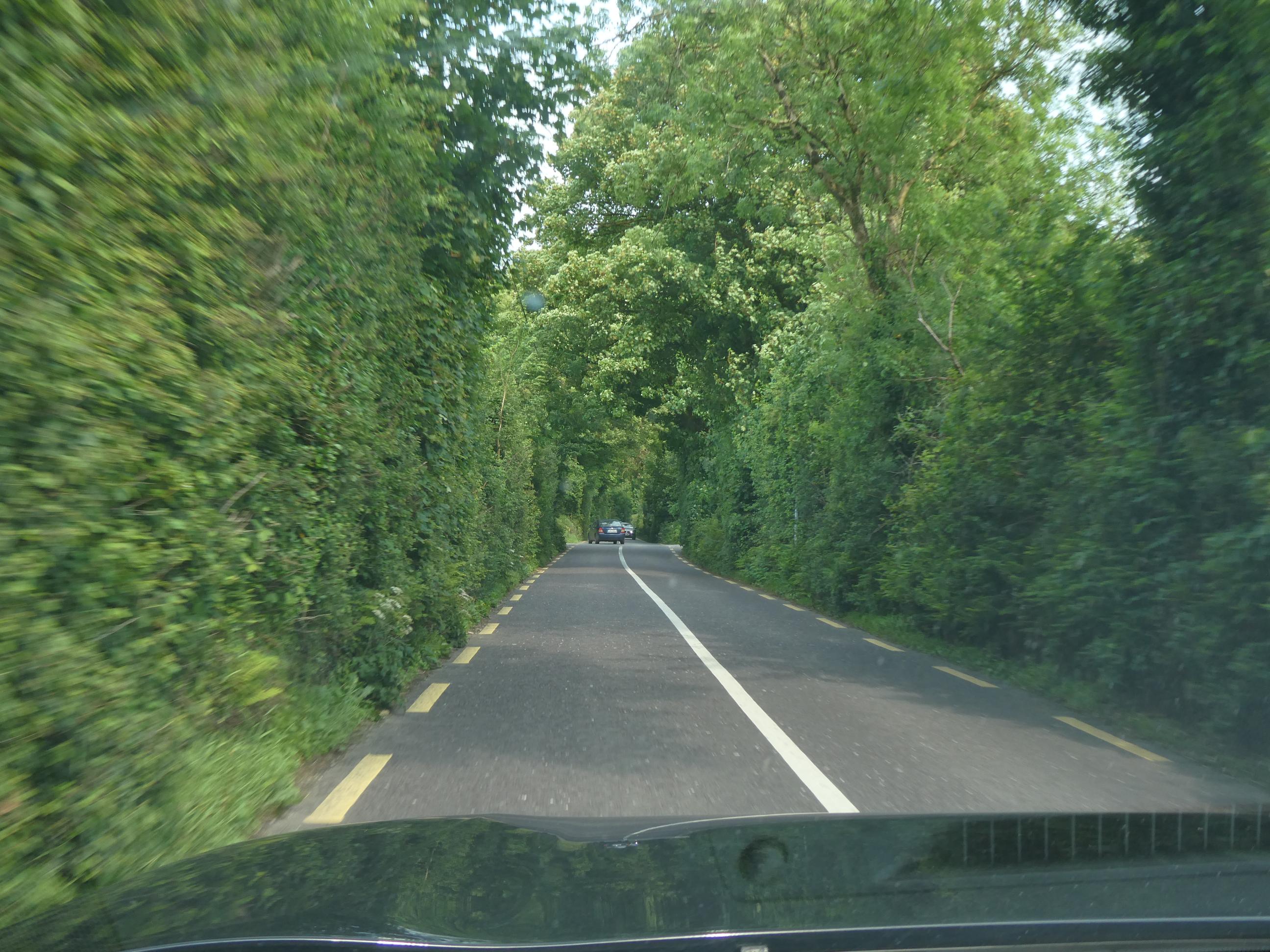
We left the Wild Atlantic Way and headed for Cork. It was already late afternoon and we had a two hour drive ahead of us. There were no more single track roads to negotiate, although some of the dual carriage roads were still quite narrow in places and often very windy. They have virtually no passing lanes, so it’s frustrating to get caught behind a timber truck on a long stretch. Sometimes you just have to be bold and take your chances to scoot past them when you can see nothing coming towards you. Approaching Cork, we got onto a main highway, where the traffic flowed quite well. When we reached the city, however, we spent quite a long time covering the final few blocks in heavy traffic congestion.



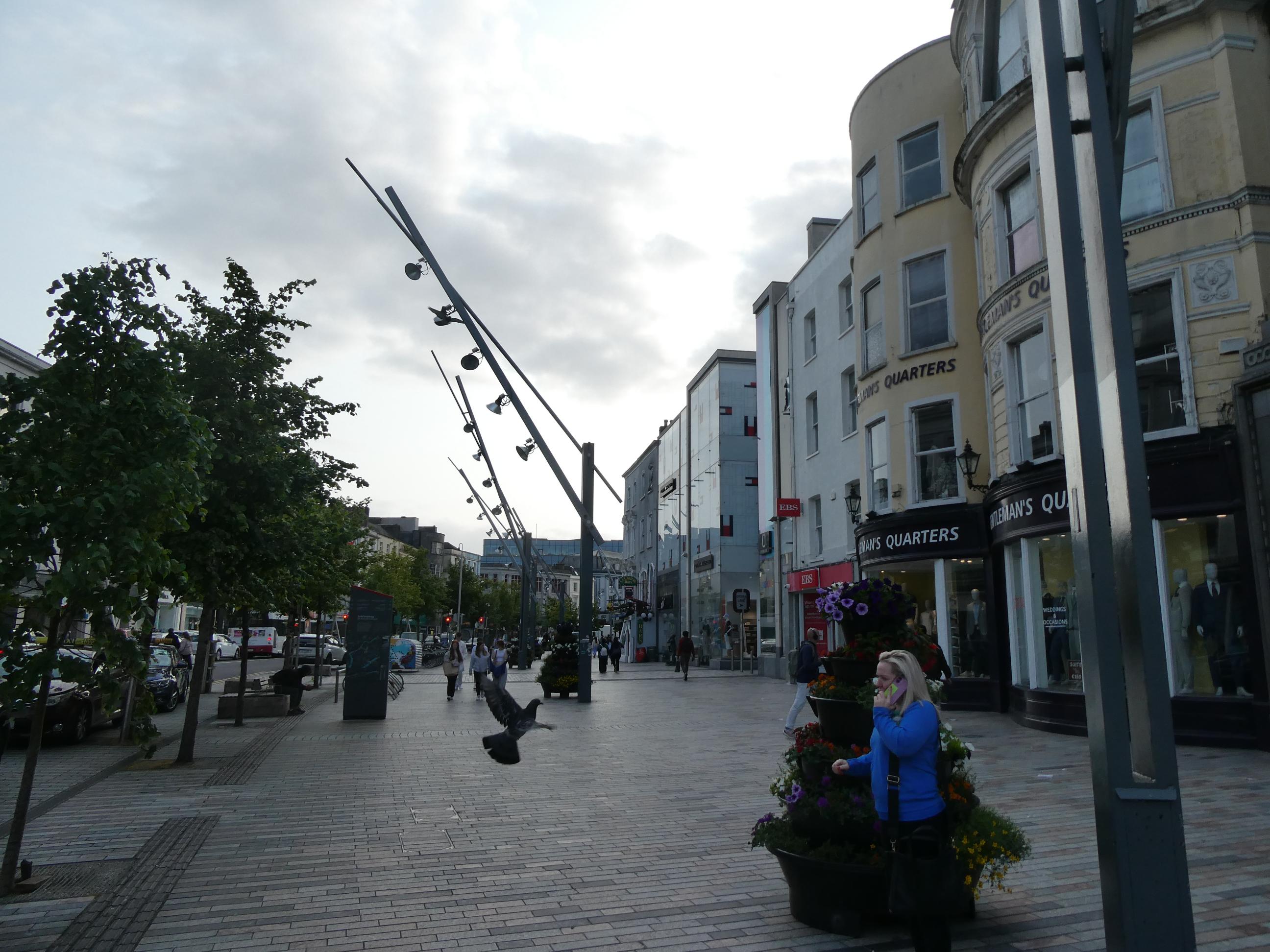
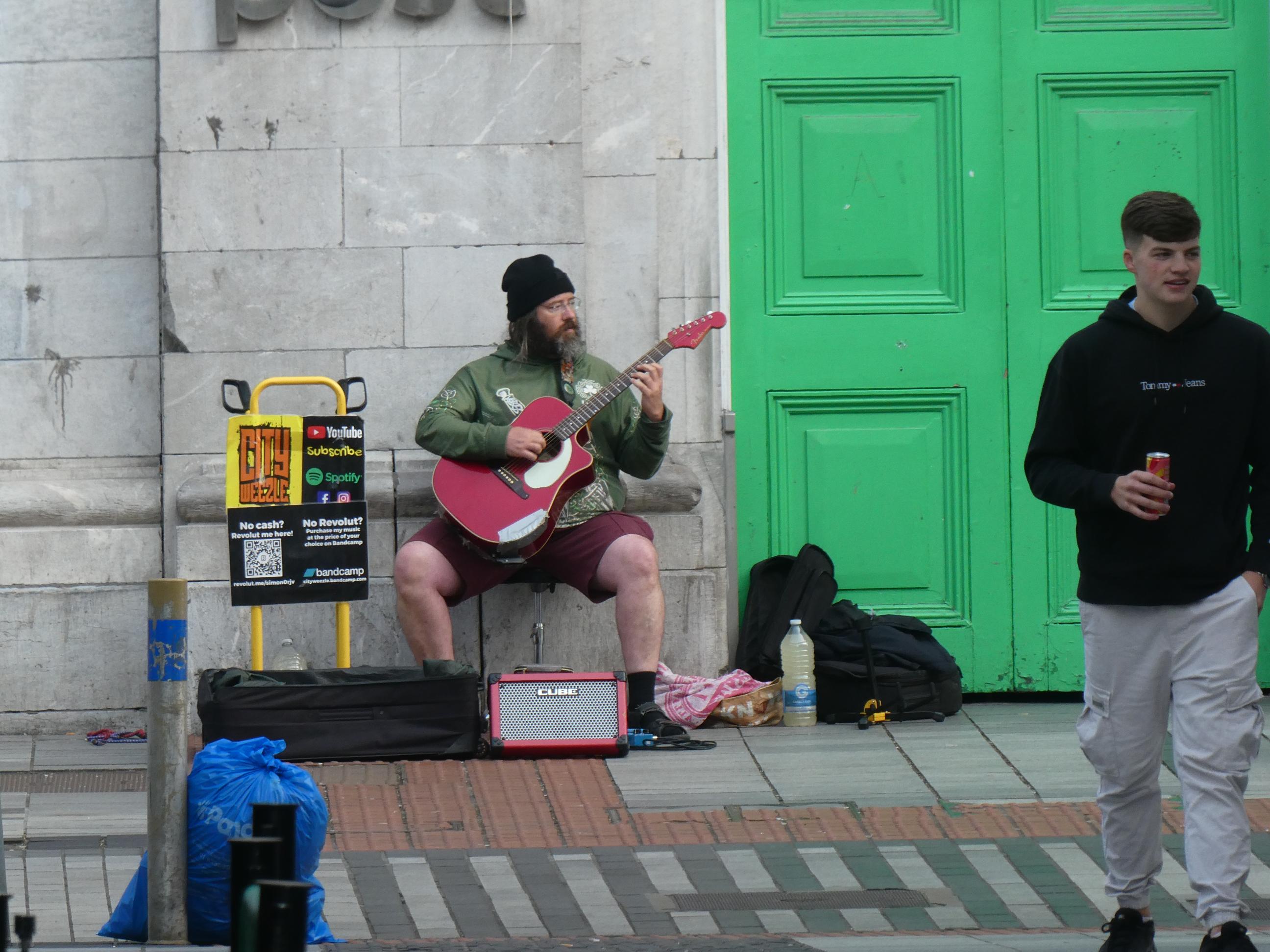
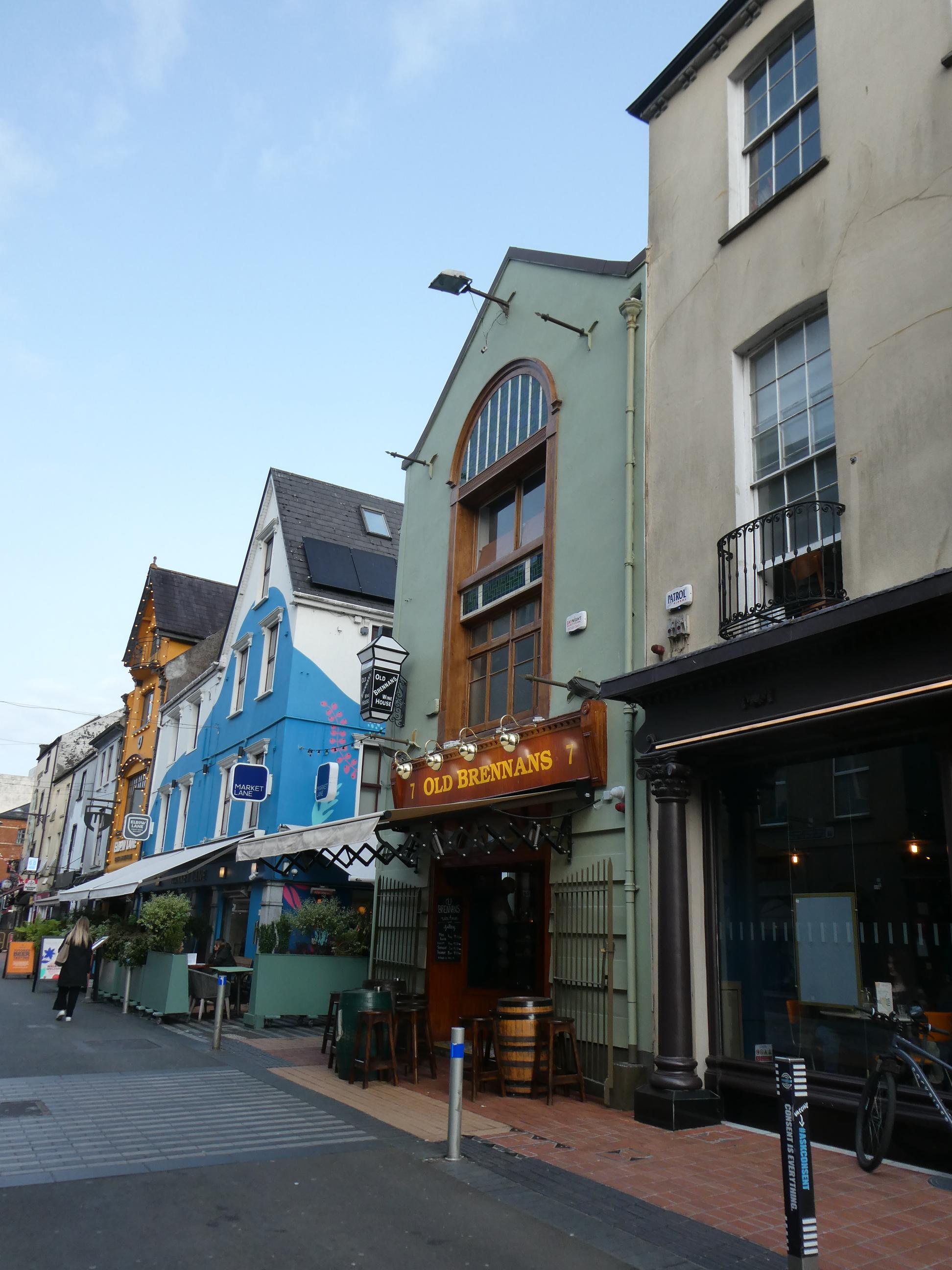
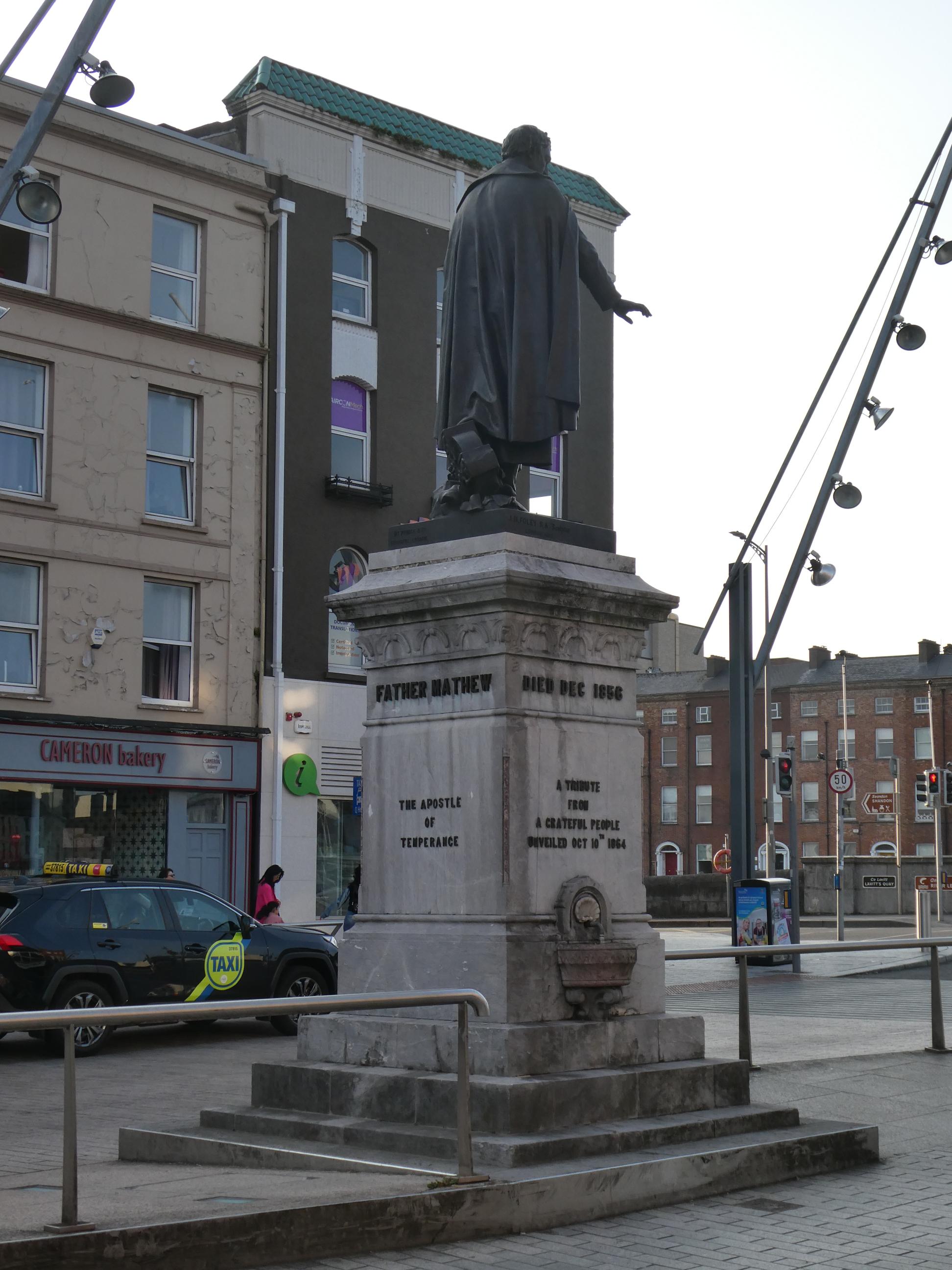
We crossed the River Lee into Cork City looking for a place for dinner. The first place we tried had a 45-minute wait, so we kept walking until we found a really nice bar with plenty of tables available. Now we’re in Cork, I feel it’s appropriate to replace Guinness with the local brew, Murphy’s. I think it tastes just as good. We didn’t see a lot of Cork City tonight, but I did notice quite a few pubs, which made me smile when I saw that they’ve erected a statue to Father Mathew, The Apostle of Temperance. You’ve got to be kidding, don’t you. The city and the county are even named after one of the major components of a bottle of wine!



 On The Road With Garry
Amazing views.
LikeLiked by 1 person