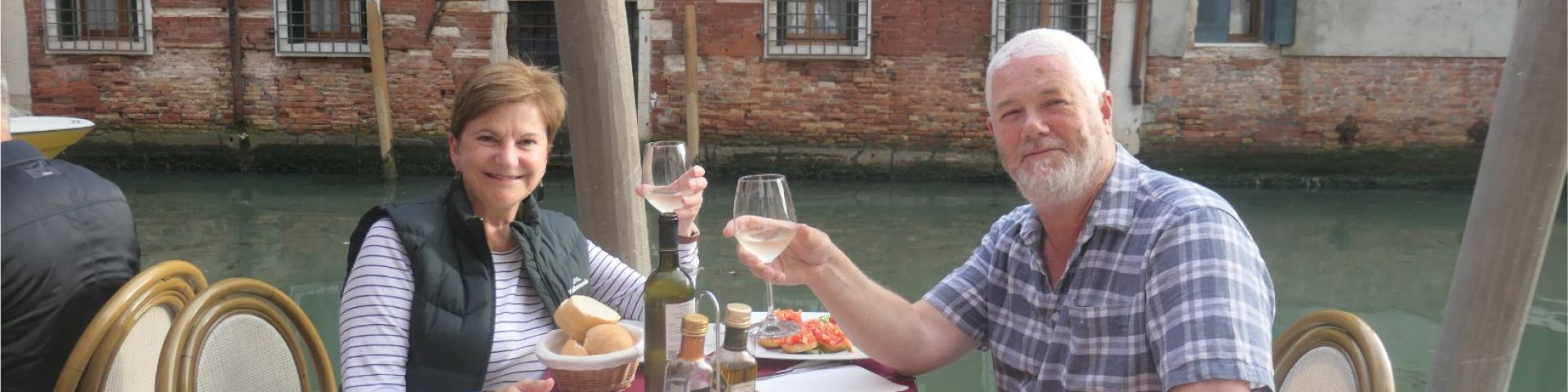
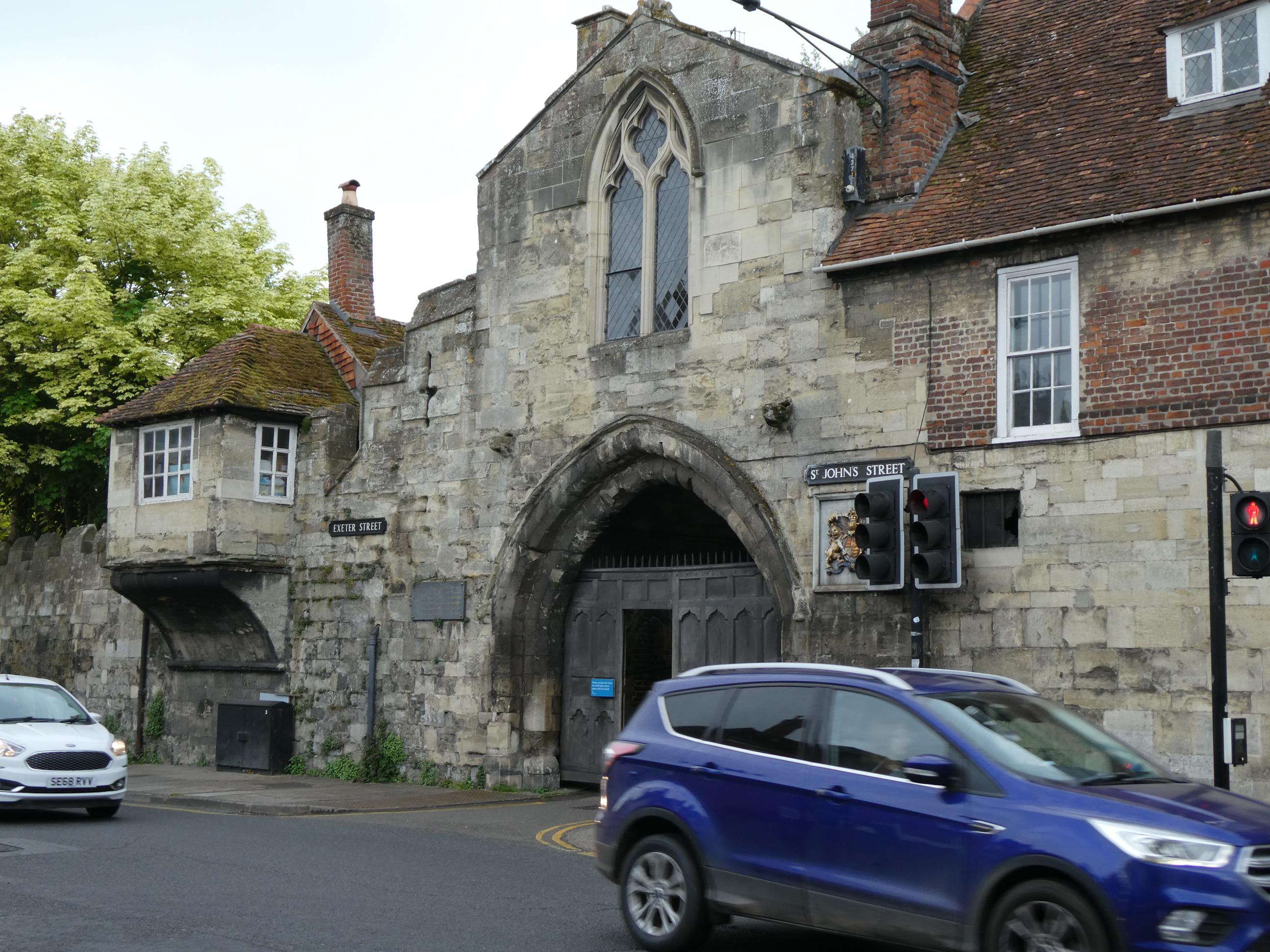
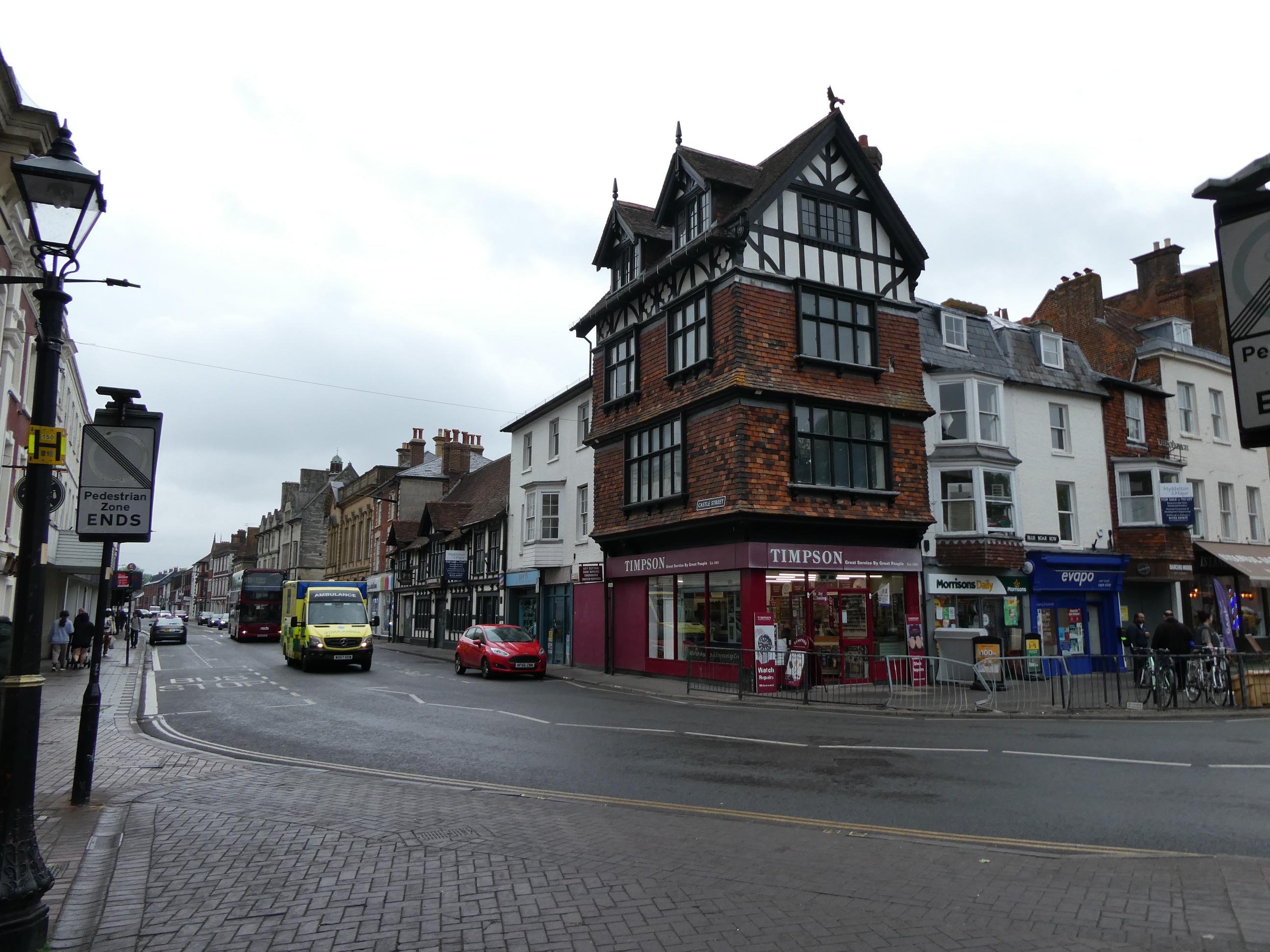
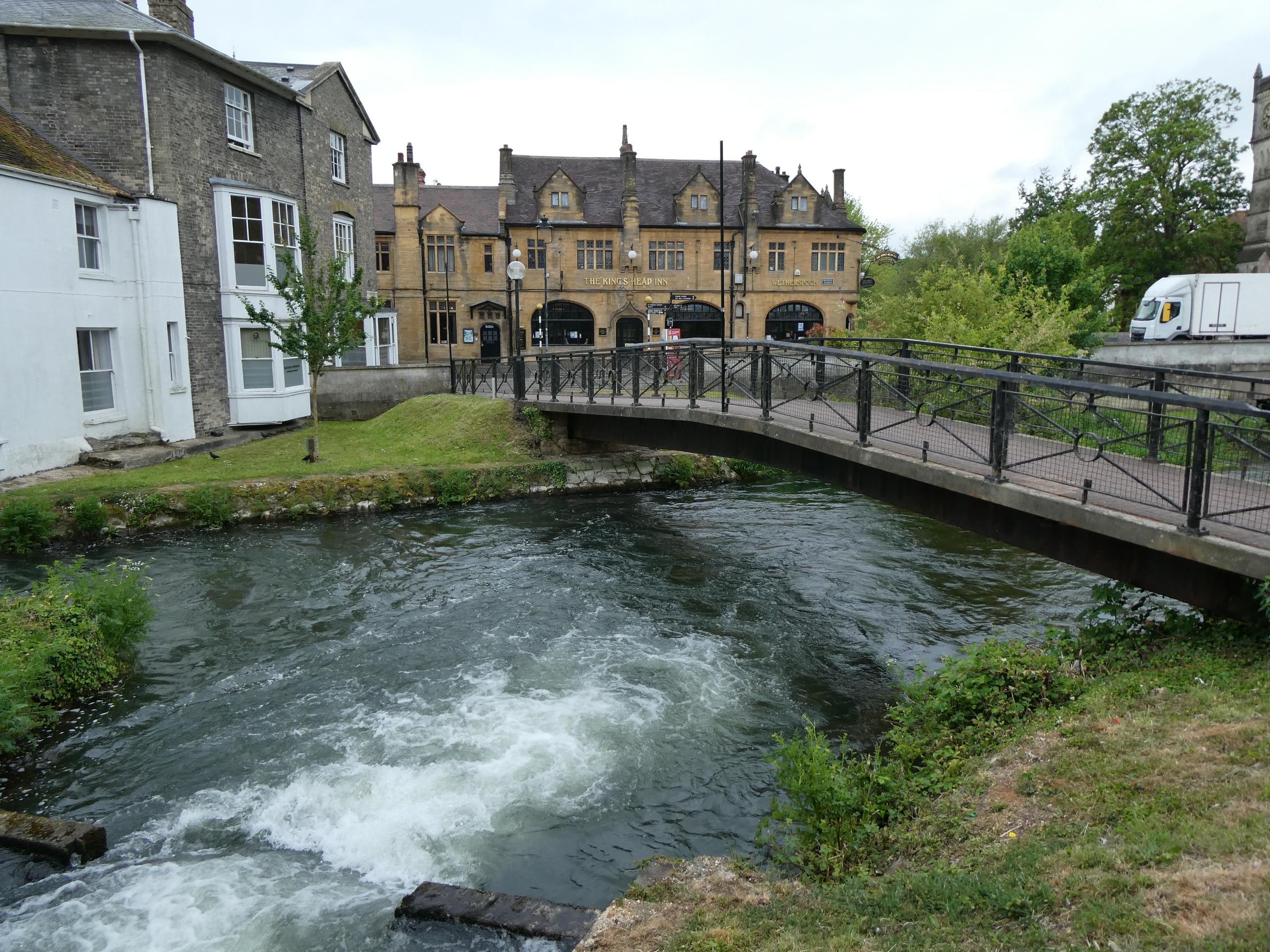
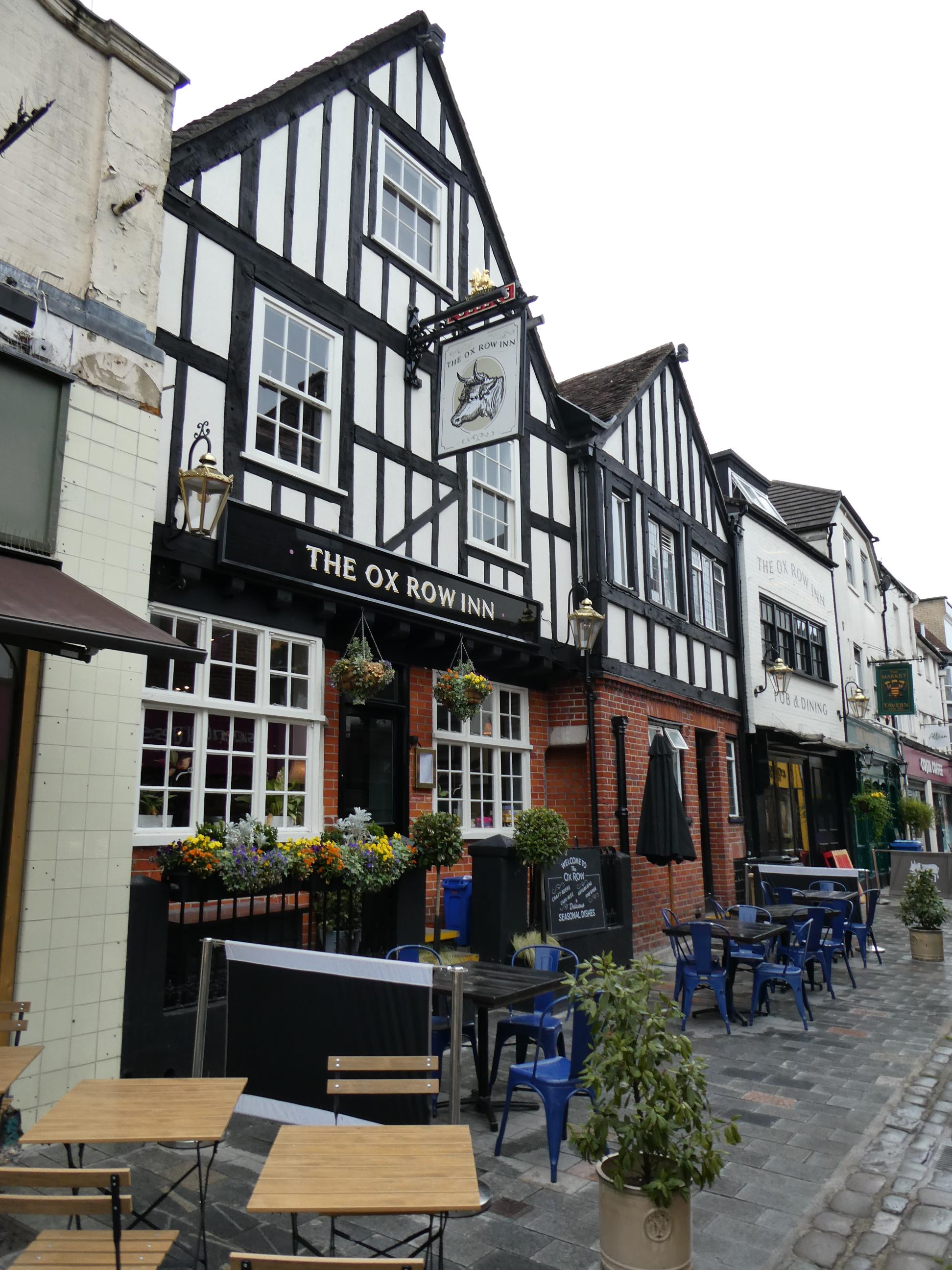
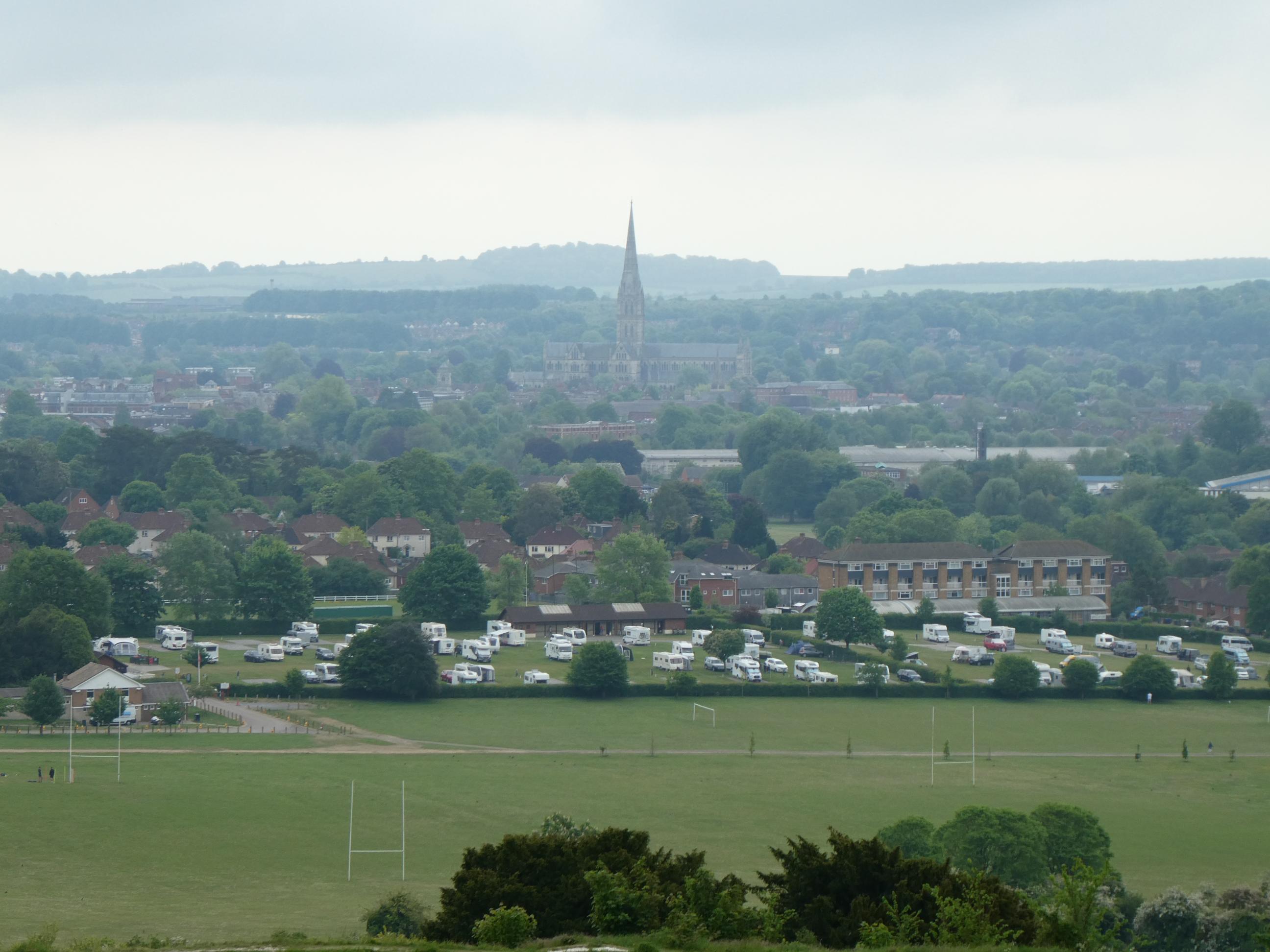
This morning after breakfast we took the opportunity to wander through a part of Salisbury that we didn’t see yesterday. The town centre is not very big, which surprised me a little as it’s such a famous town. There are some beautiful old Tudor style buildings in and around the town, with their distinctive whitewashed brick walls with the rough-cut half timbering. Our hotel, Chapter House, is one of them, with parts of the building dating back to the 1200s. Unfortunately its facade is currently hidden by scaffolding, so it was not possible to get a good photo of it. It had rained overnight, though perhaps just a drizzle. The skies were overcast, in complete contrast to the beautiful weather we’ve had previously since we arrived in England. We left Salisbury not long before 10 o’clock and headed for Old Sarum, just a short distance away.



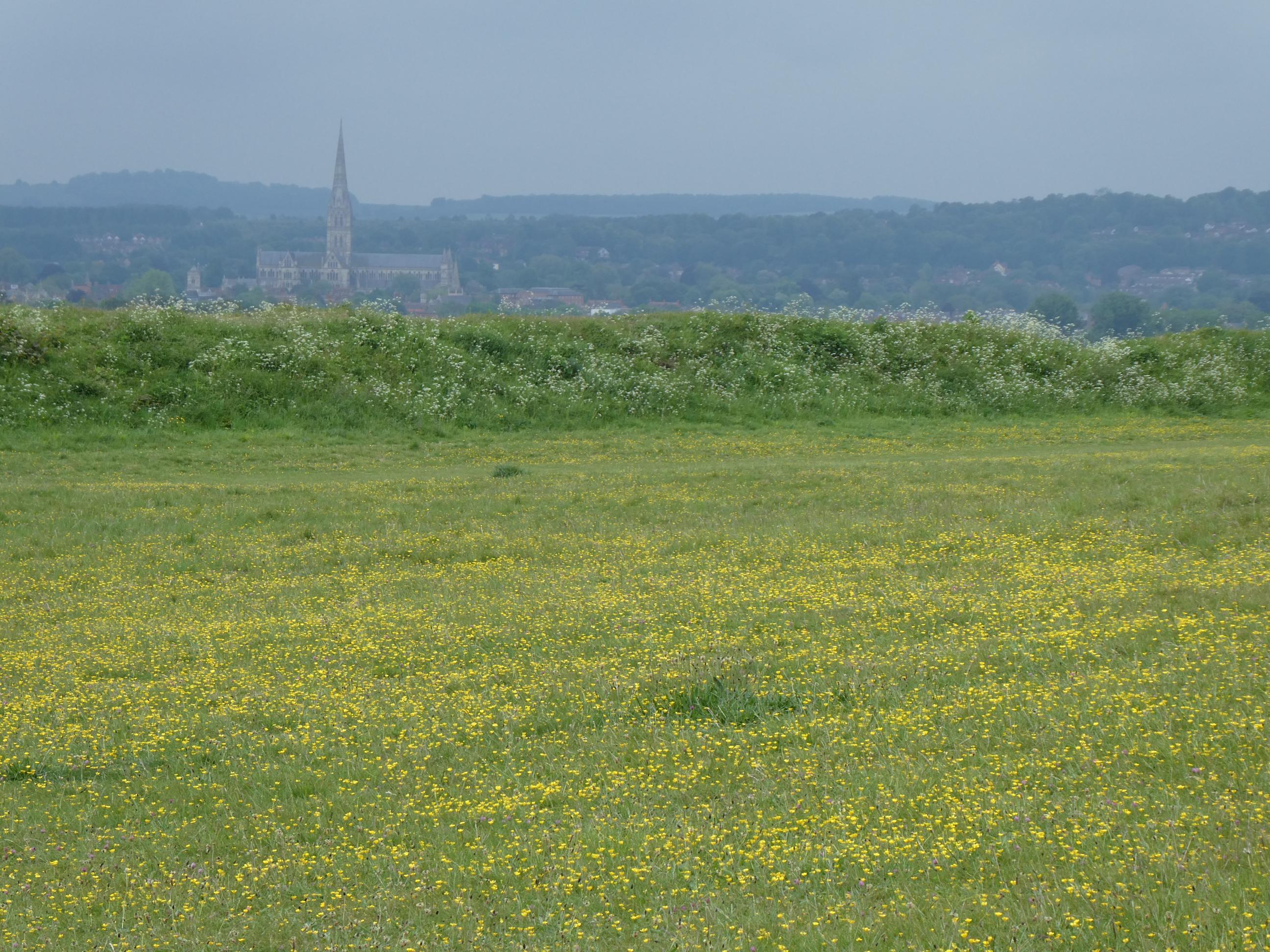
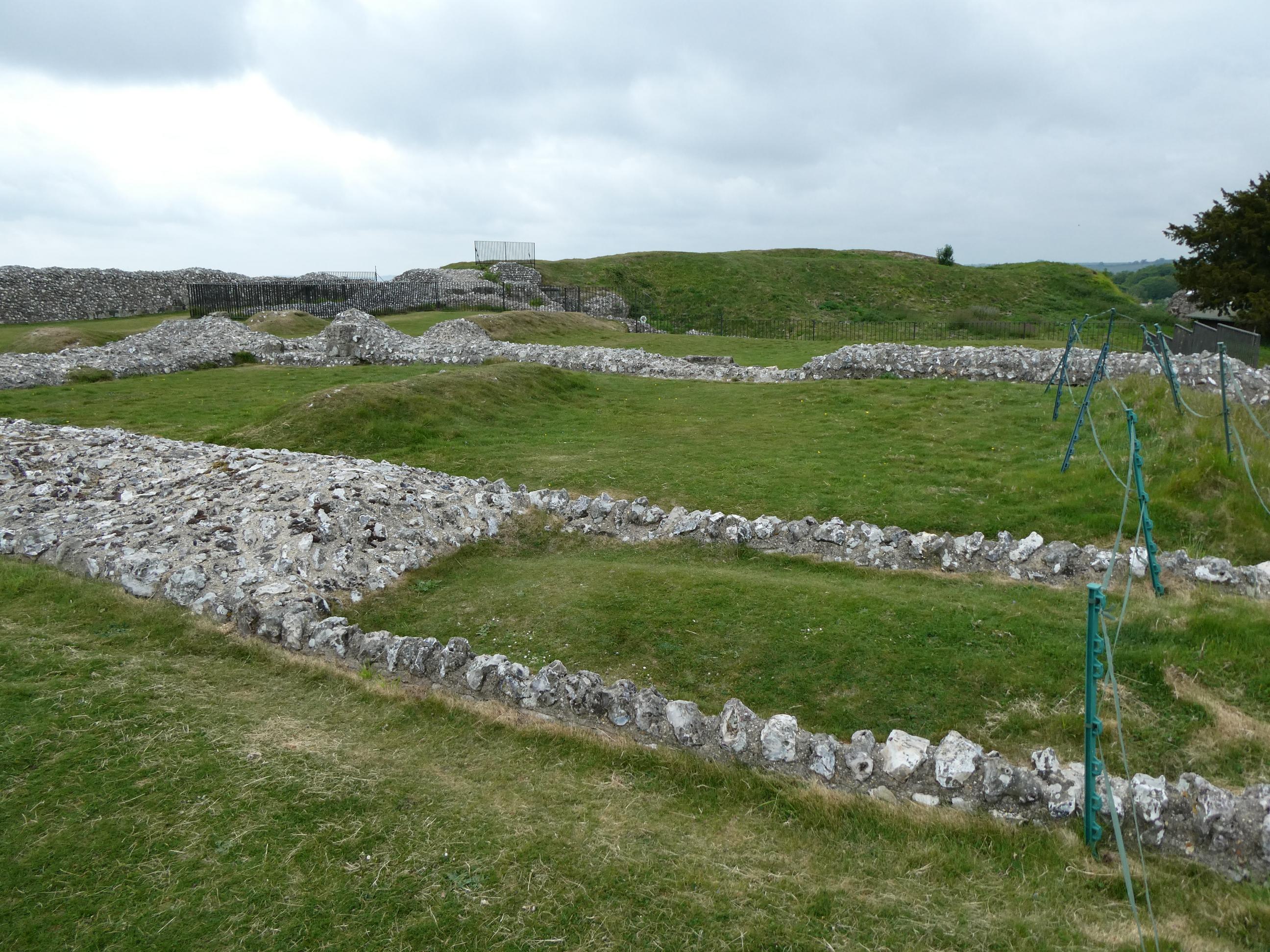
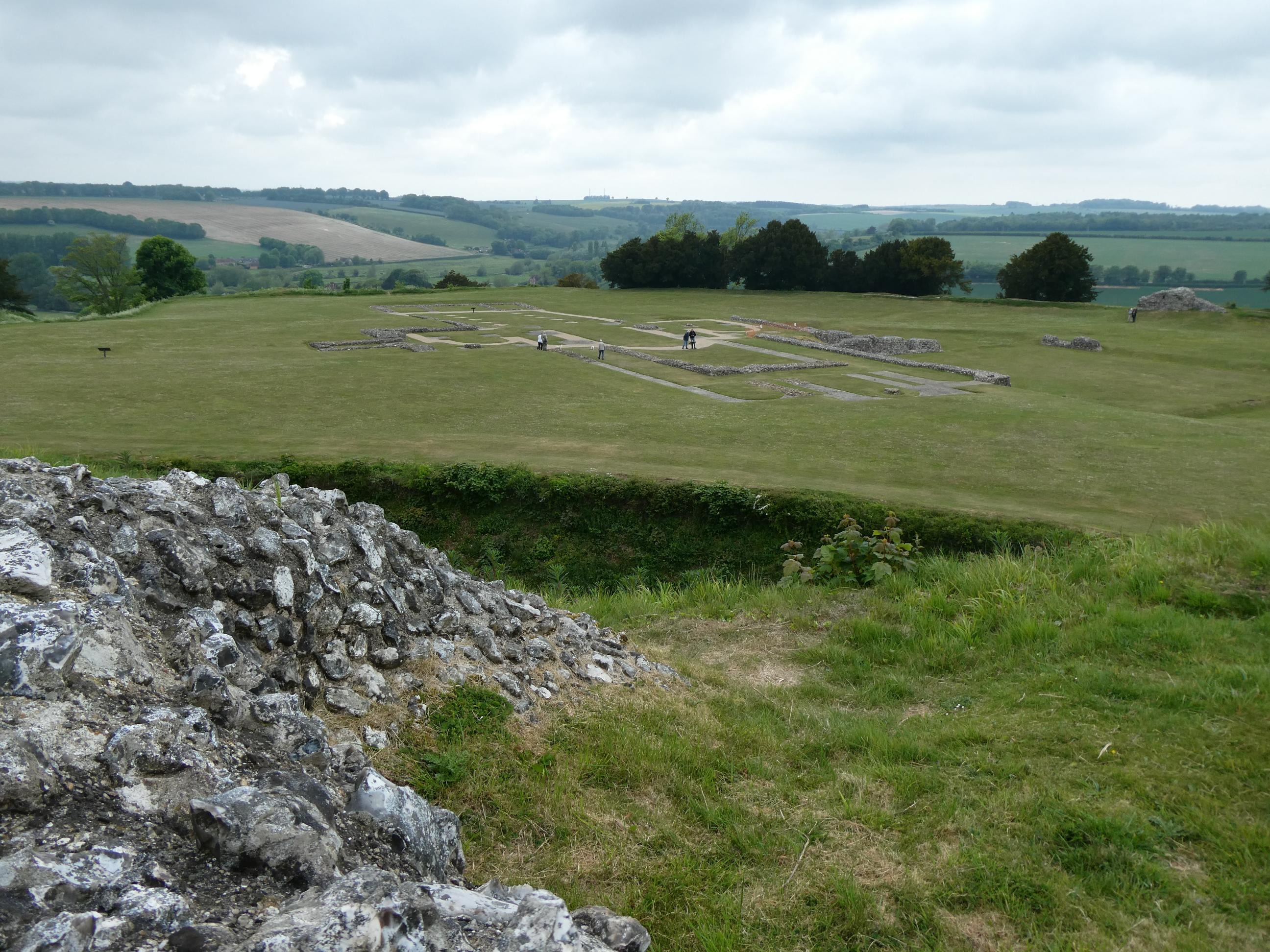
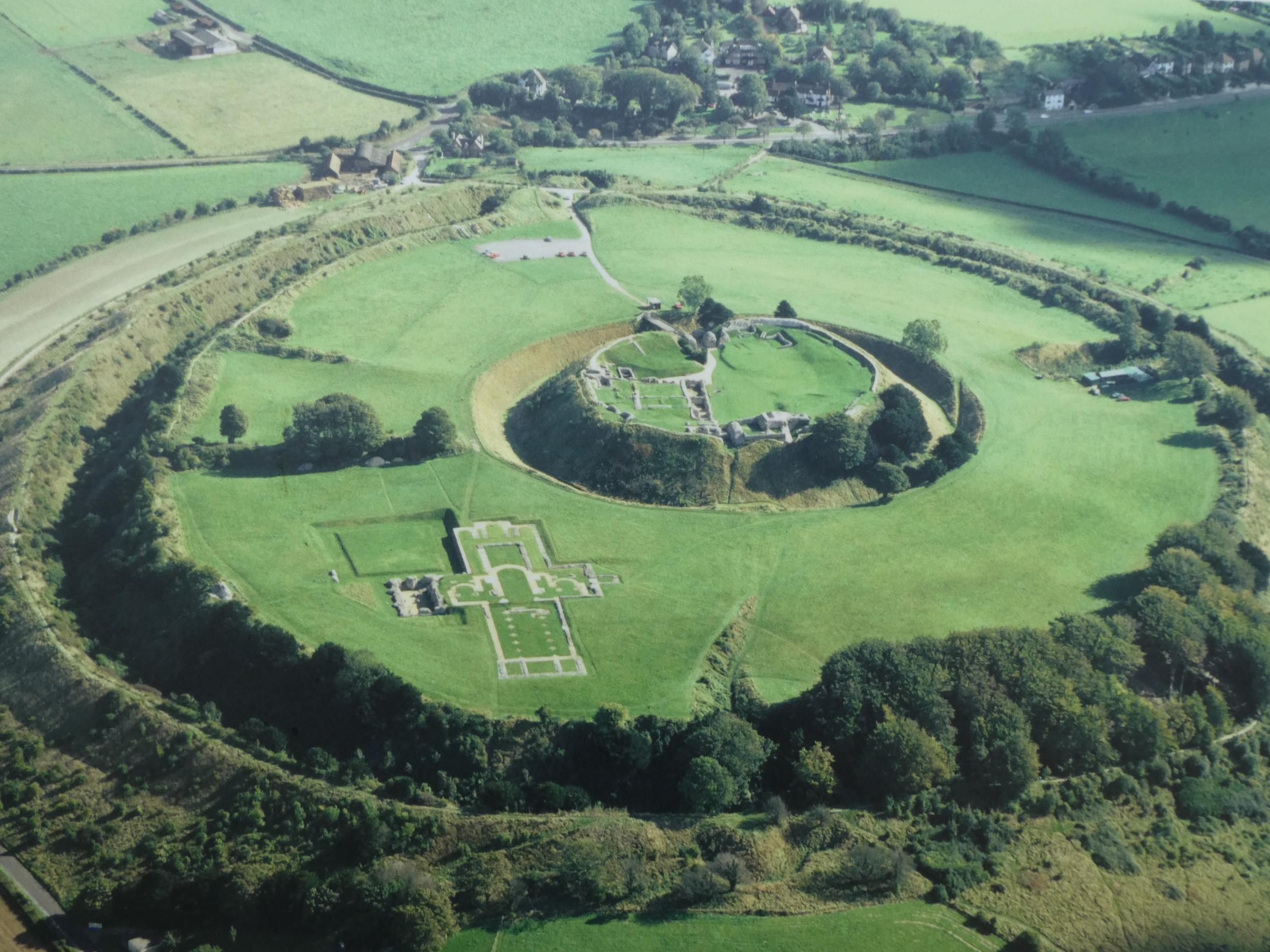
Old Sarum is the site of a former castle once occupied by English kings. It sits upon a hilltop within sight of Salisbury. The castle was demolished centuries ago and most of the stone was removed from the site at the time. Today a deep moat surrounds a raised earthen mound, which was once an Iron Age hill fort. The masonry is only intact to the height of a few metres, but it is possible to view it in such a way as to make out where the different parts of the original castle would have been. Illustrated information panels dotted around the site explain how life would have been for the people who lived here. Upon entry, we were warned to watch our step to avoid stepping into a rabbit hole or a mole hole. There only a handful of other tourists on site, so it was refreshing to be able to explore Old Sarum without crowds. For a time, Old Sarum played an important role in English history. William the Conqueror built the castle, and King Henry I and other Plantagenet kings ruled from here at times. The Magna Carta was once held here. As well as Iron Age inhabitants, at various times in English history it was occupied by the Romans, Saxons, Vikings and Normans. We spent about half an hour here exploring the ruins, before returning to the car and heading towards Bath.




We drove to Bath, about an hour away, leaving Wiltshire and entering Somerset. The route took us through lots of rolling low hills and open green fields. Bushy hedgerows on either side of the road often concealed what lay behind them. Sometimes tall, leafy trees along the roadside almost blocked out the sun. Sometimes it was the striking white blooms of the hawthorns that dominated the hedgerows. We didn’t pass through many villages, but the roadsigns indicated that they were never too far away. Many of them had quaint names. We arrived at our hotel in Bath around midday and were fortunate enough to learn that our rooms had already been cleaned and we could get the keys immediately. We’re staying one night in a beautiful place called Tyndall Villa.


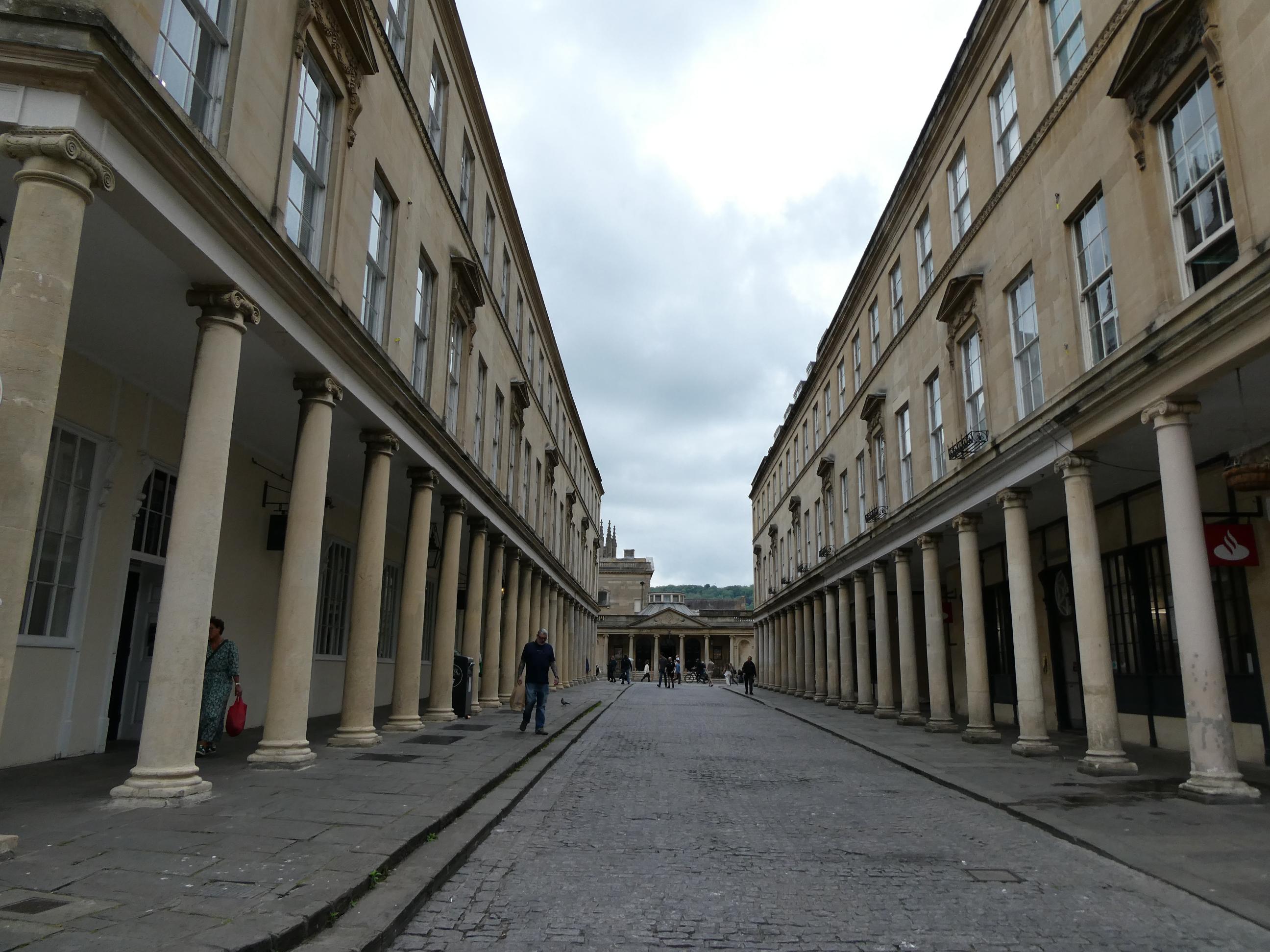

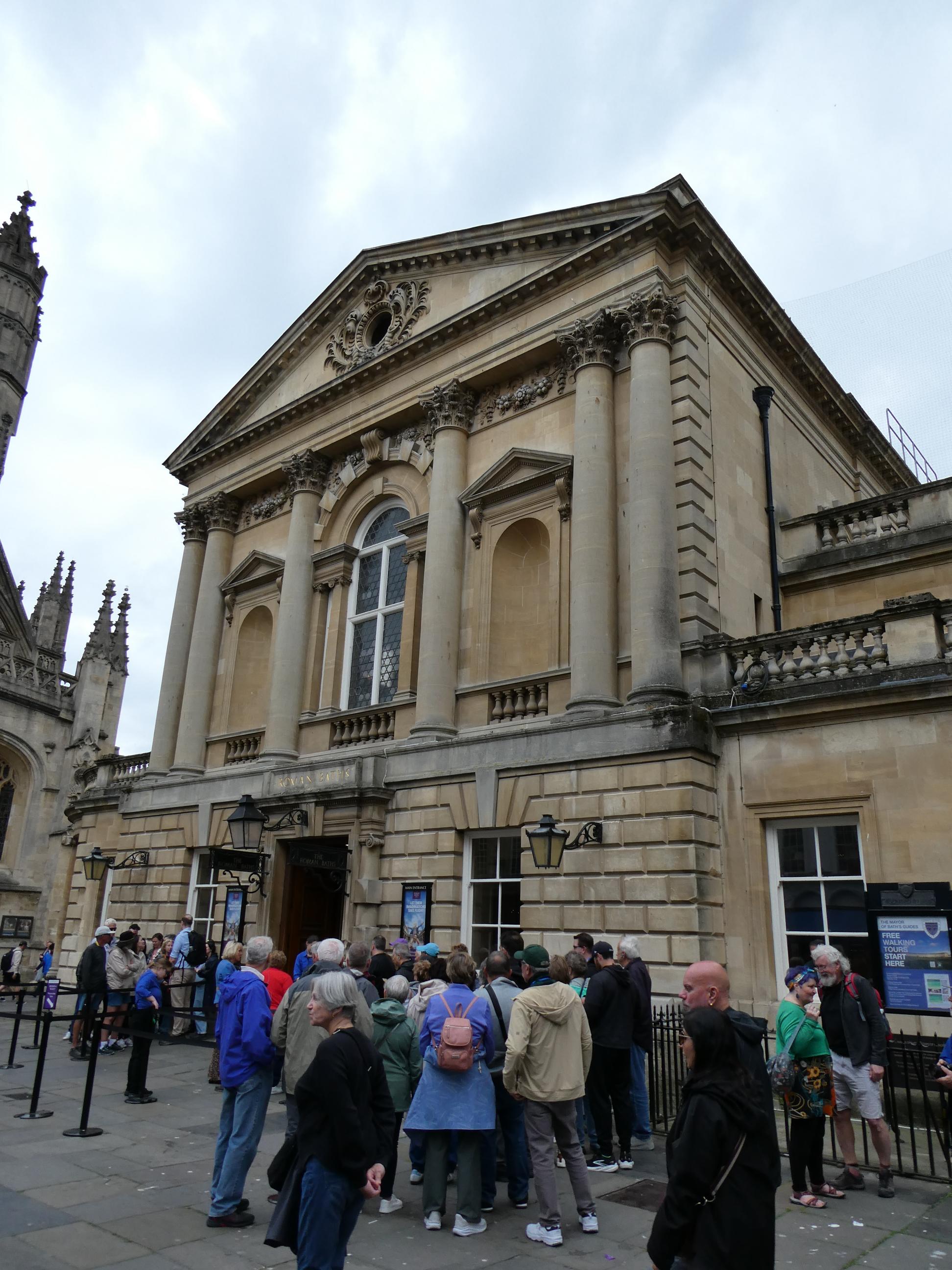
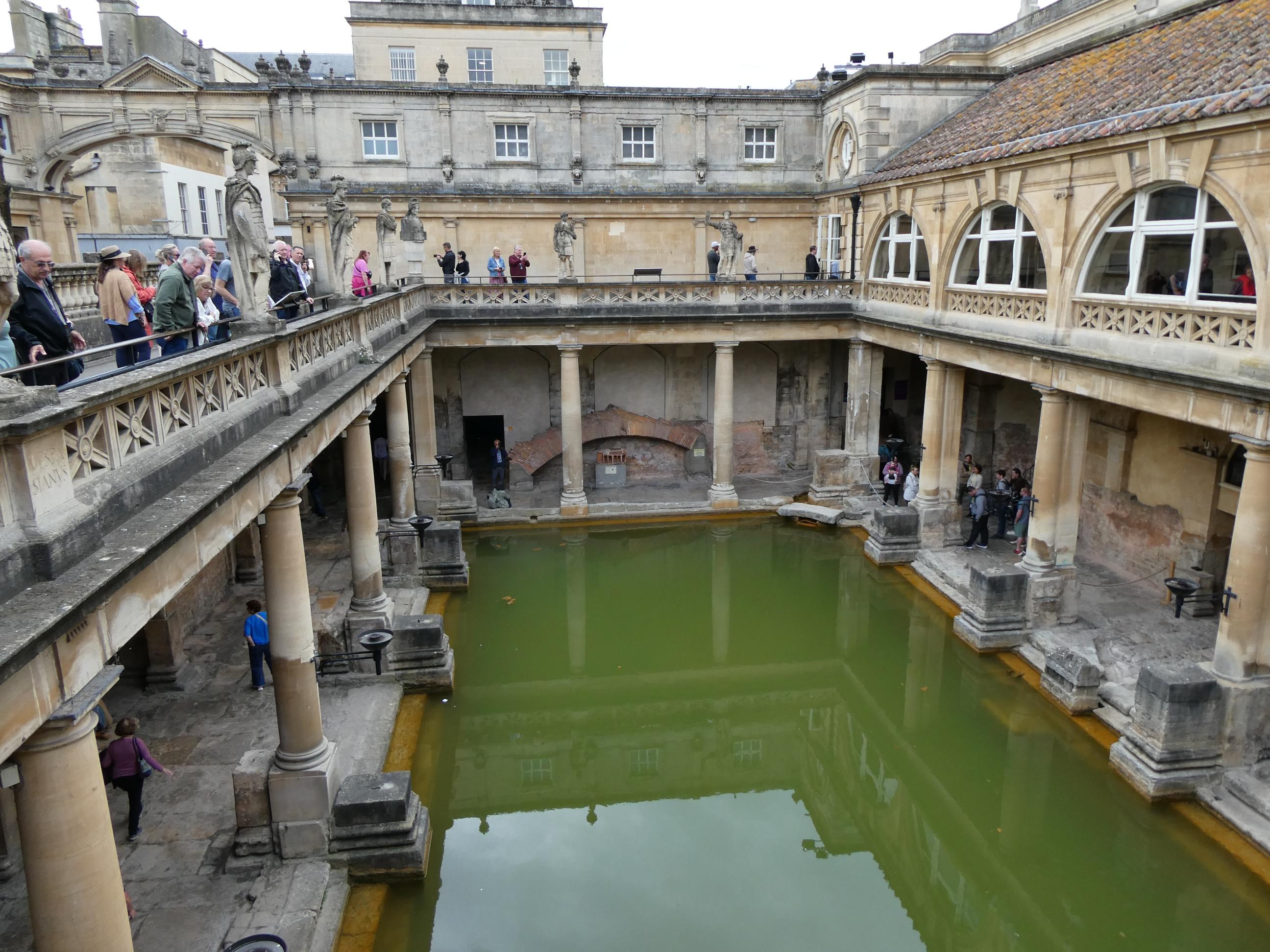
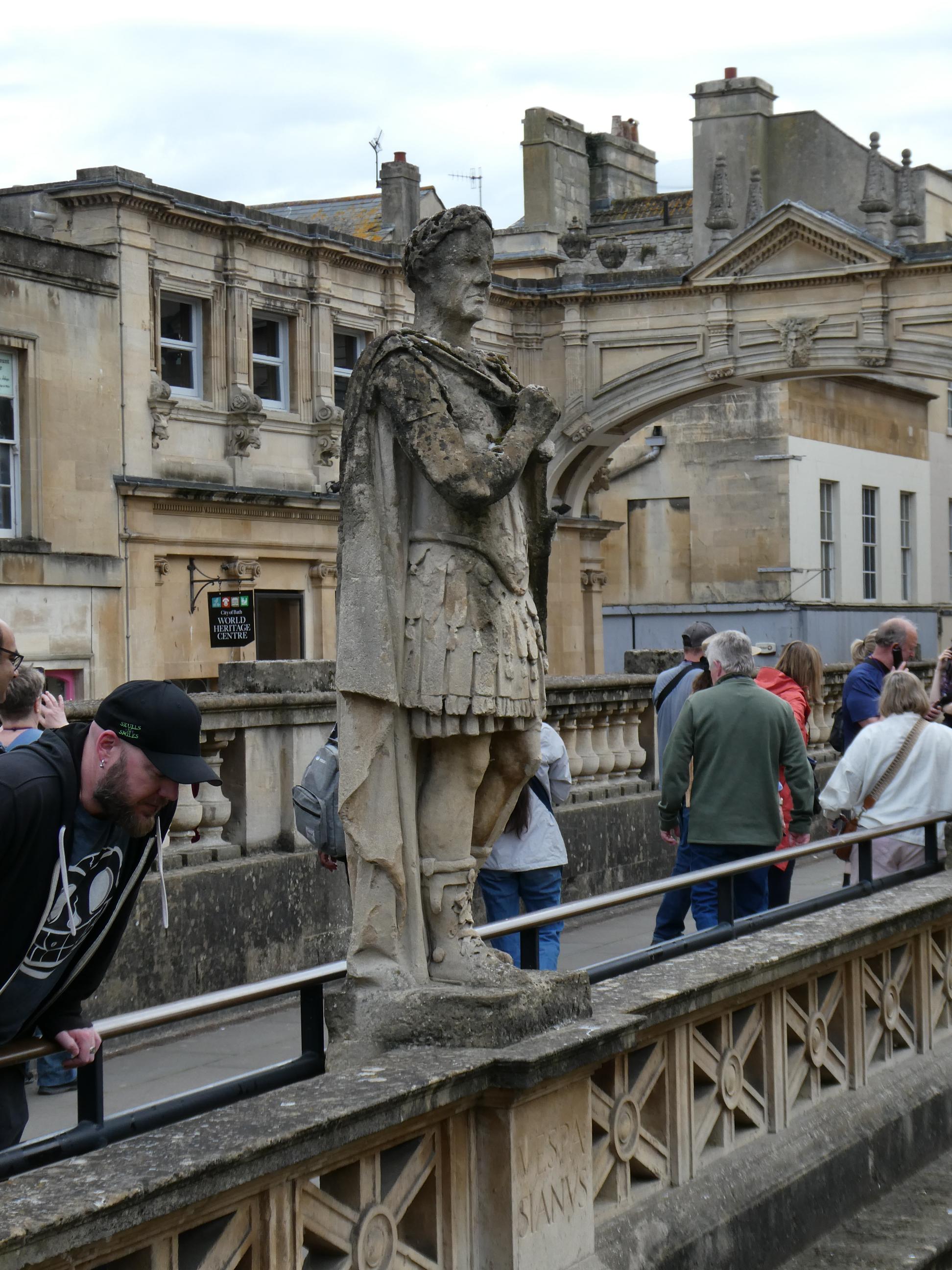
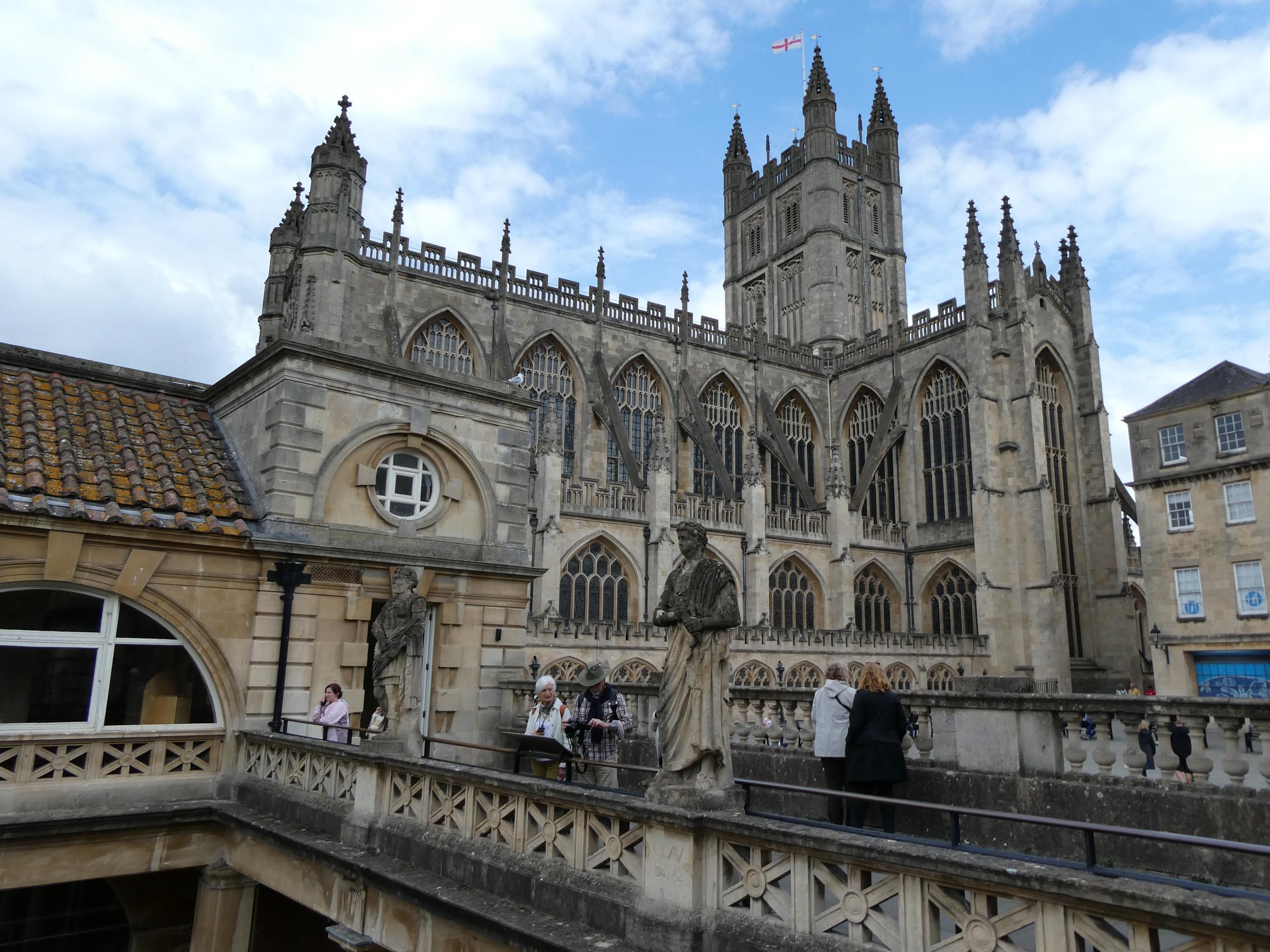
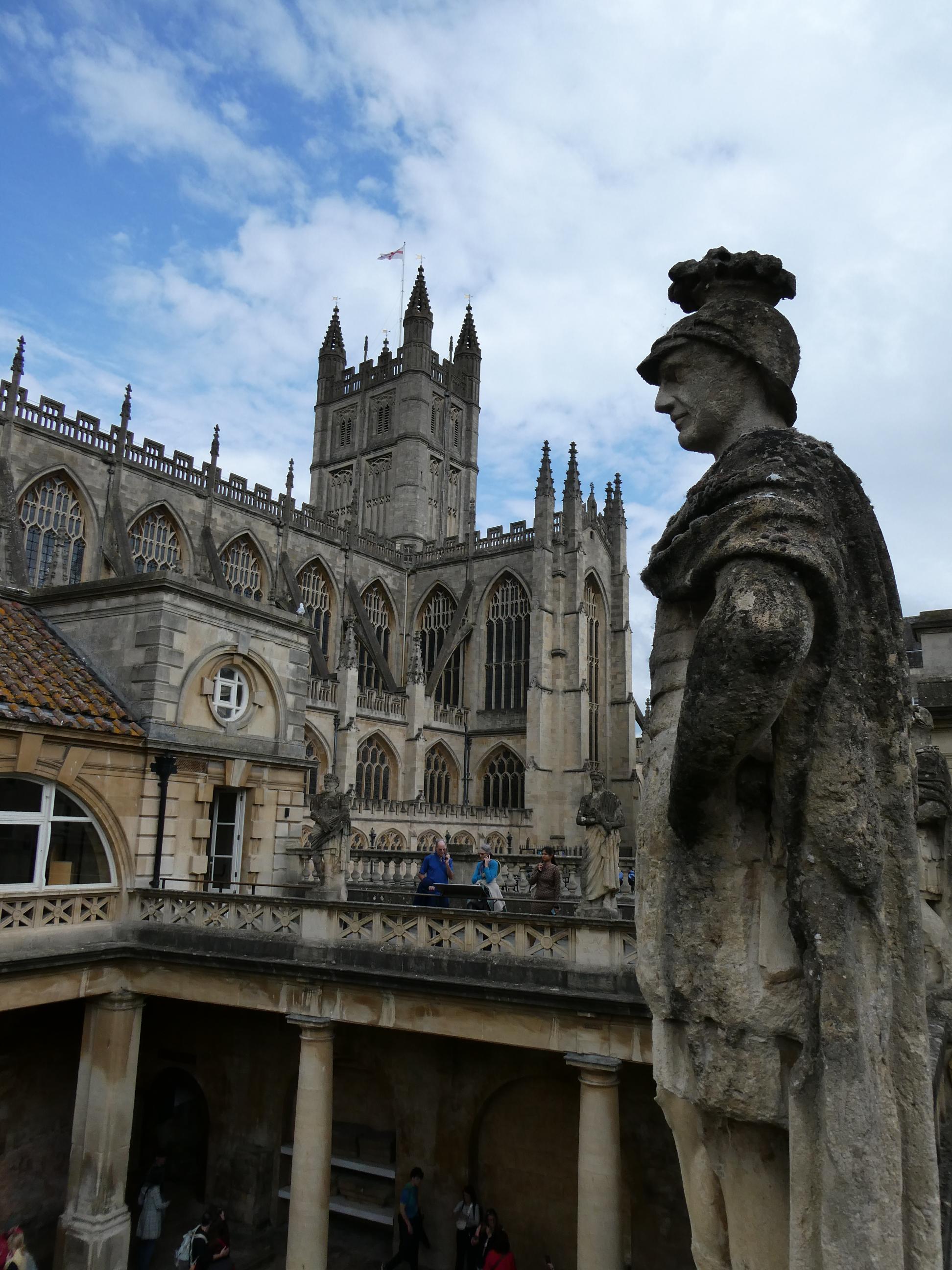
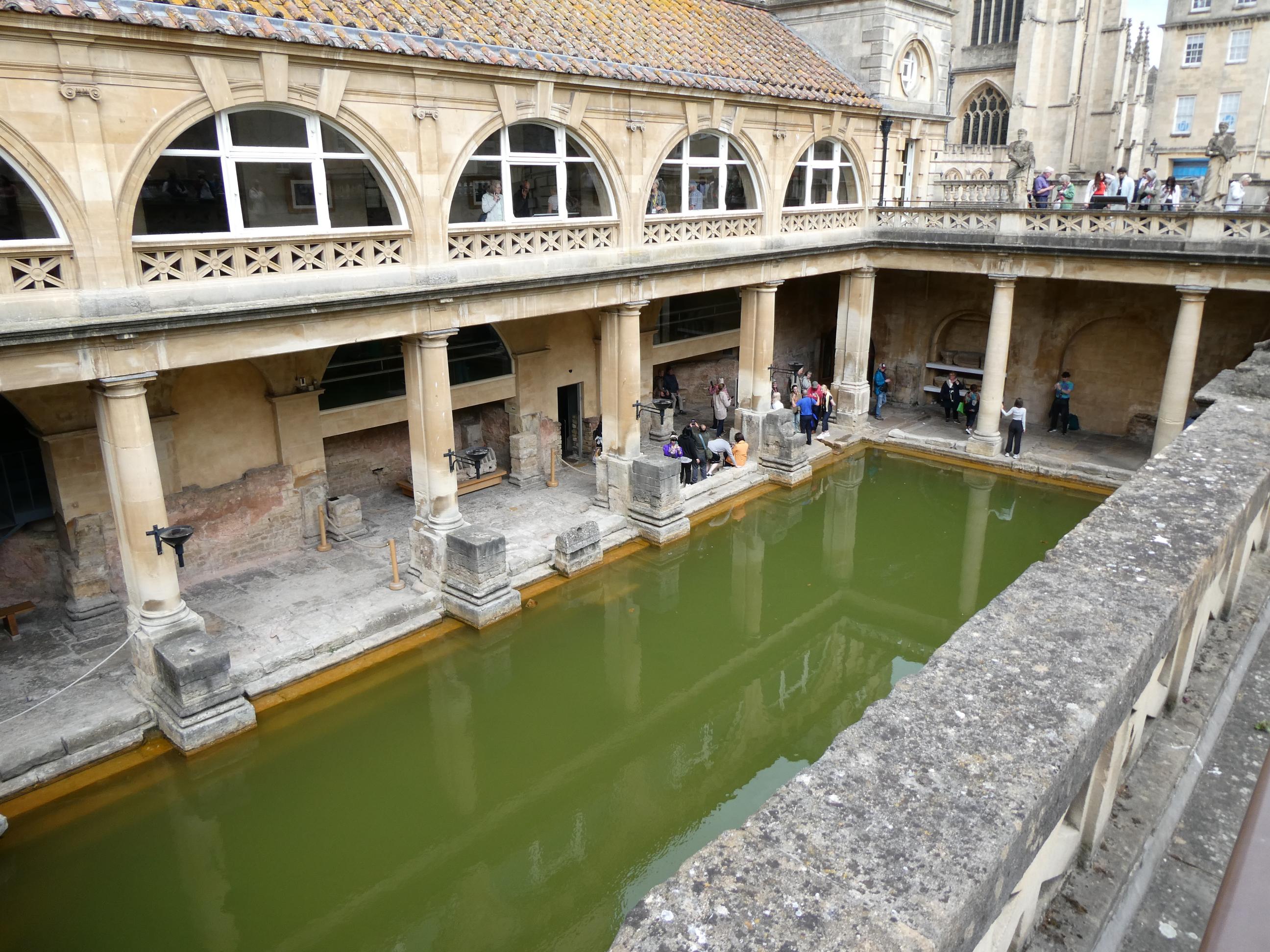
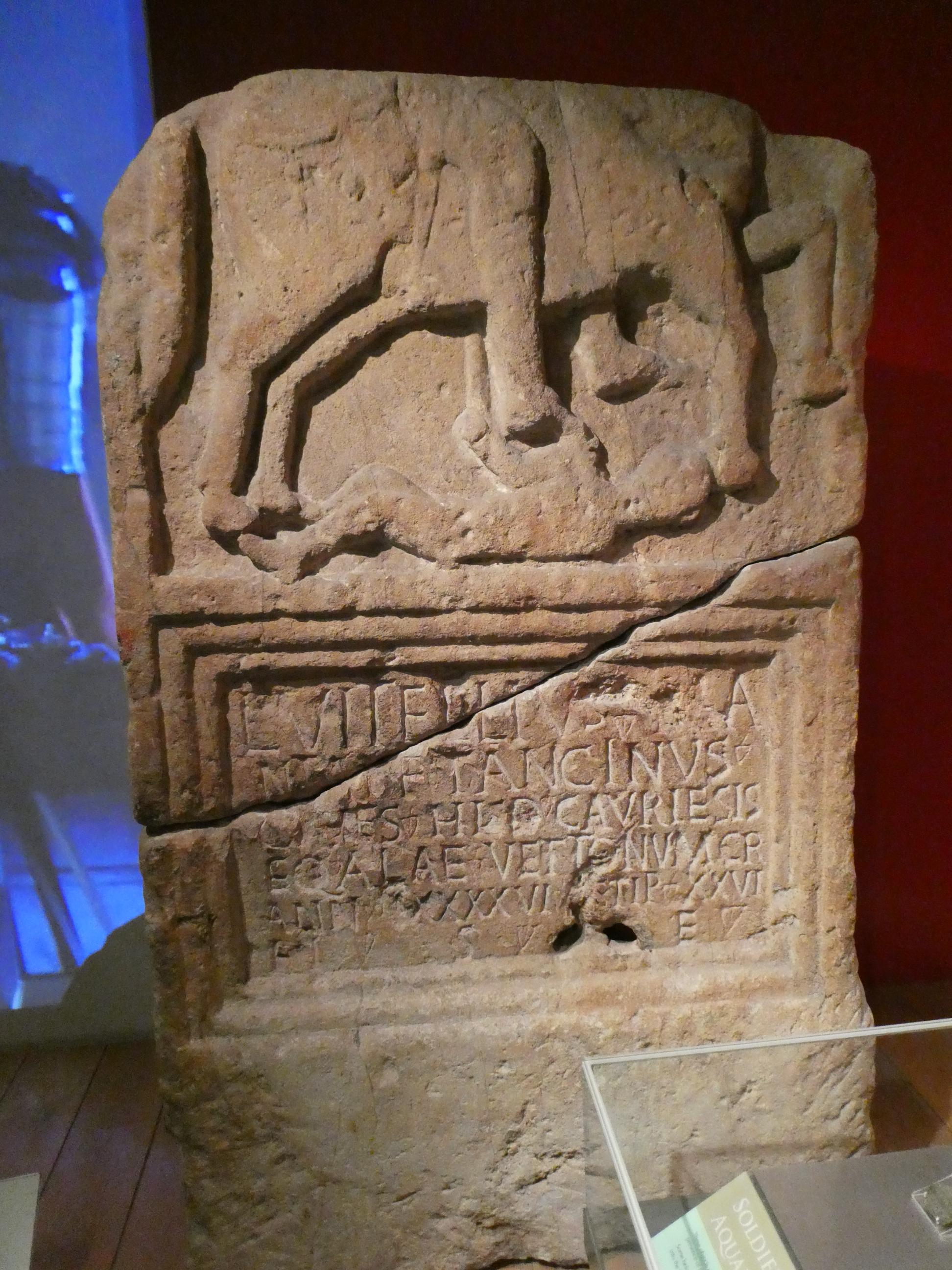
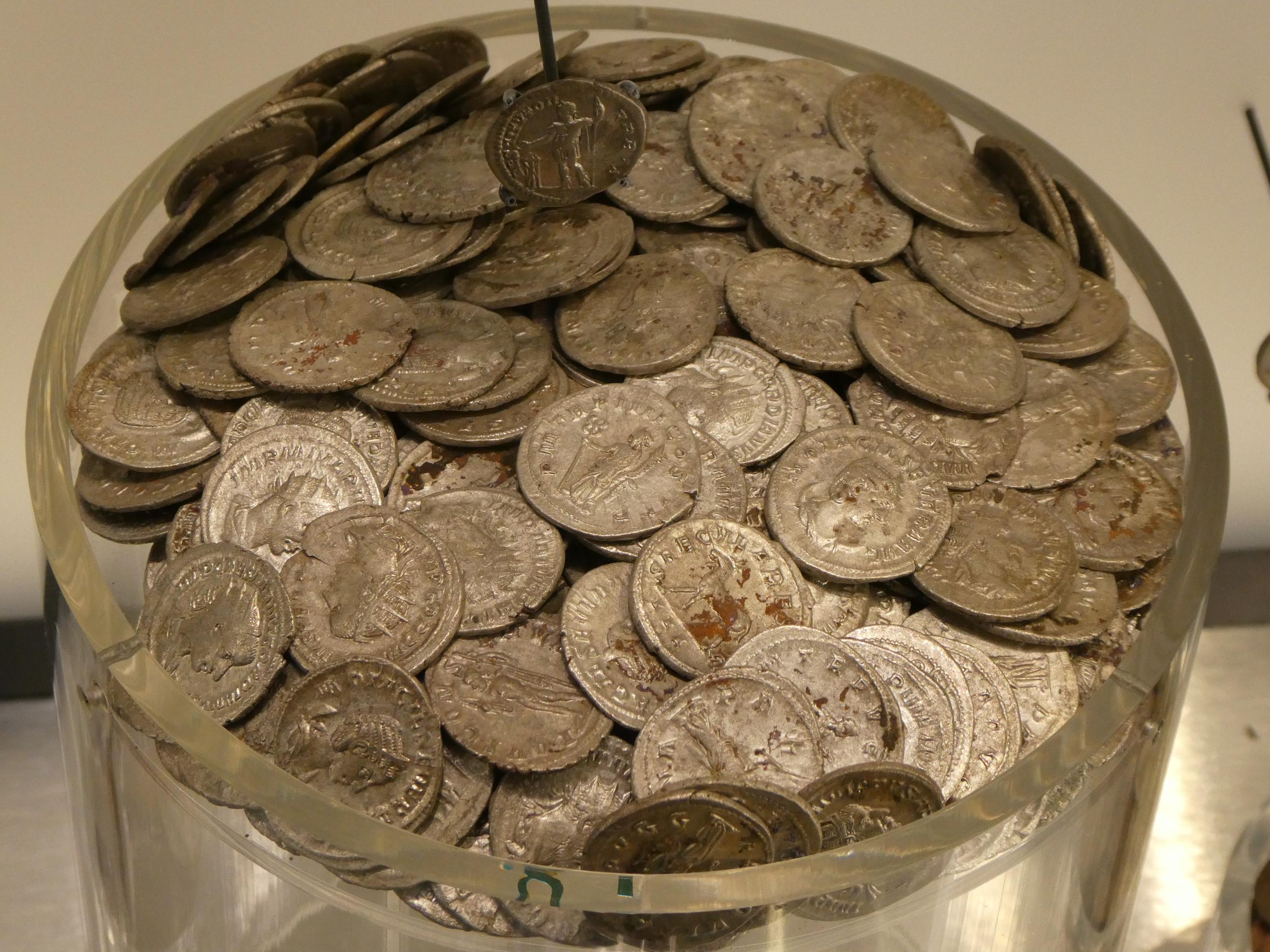
We walked down the hill into Bath and found a cafe for lunch, then walked around to the Roman Baths, where we had a 2pm booking. It was our second visit to the Baths. There’s a lot more to see here than just the famous Great Bath itself. It’s a very well organised museum that allows you to follow a numbered route, beginning on the upper terrace overlooking the Great Bath and leading you through several levels to a series of rooms that included facilities where the Romans could change, exercise, take a sauna or have a dip in a chilly plunge pool. Some of these rooms are at subterranean level. Along the way, there are many display cases featuring artefacts from this site and other parts of Roman Britain, often accompanied by film projections showing how the Romans may have used these objects. An audio guide is provided for all visitors. The Romans called this place Aquae Sulis, and built this complex over hot springs. 1,170,000 litres of naturally heated water (46°C) rises here each day. Believing the heated water to be a gift from the gods, they built a temple dedicated to Minerva Sulis and worshipped here, in addition to bathing and socialising, The Great Bath itself is the main attraction for visitors. But the water it contains is only suitable for looking, not for swimming in. It’s green and gives off steam from the heat. Precipitated clumps of minerals form, interact with bacteria and infectious viruses, and float on the surface. Lead from the ingenious plumbing the Romans used poisons the water as well. Some of the rooms were even heated by circulating air heated by the spring water beneath the floors. I’m in awe of what the Romans achieved here two thousand years ago, and I’m grateful that much of it has survived to this day. As I was leaving the Baths, I took a paper cup and sampled the warm spring water that permanently flows from a tap for visitors. It tasted okay.
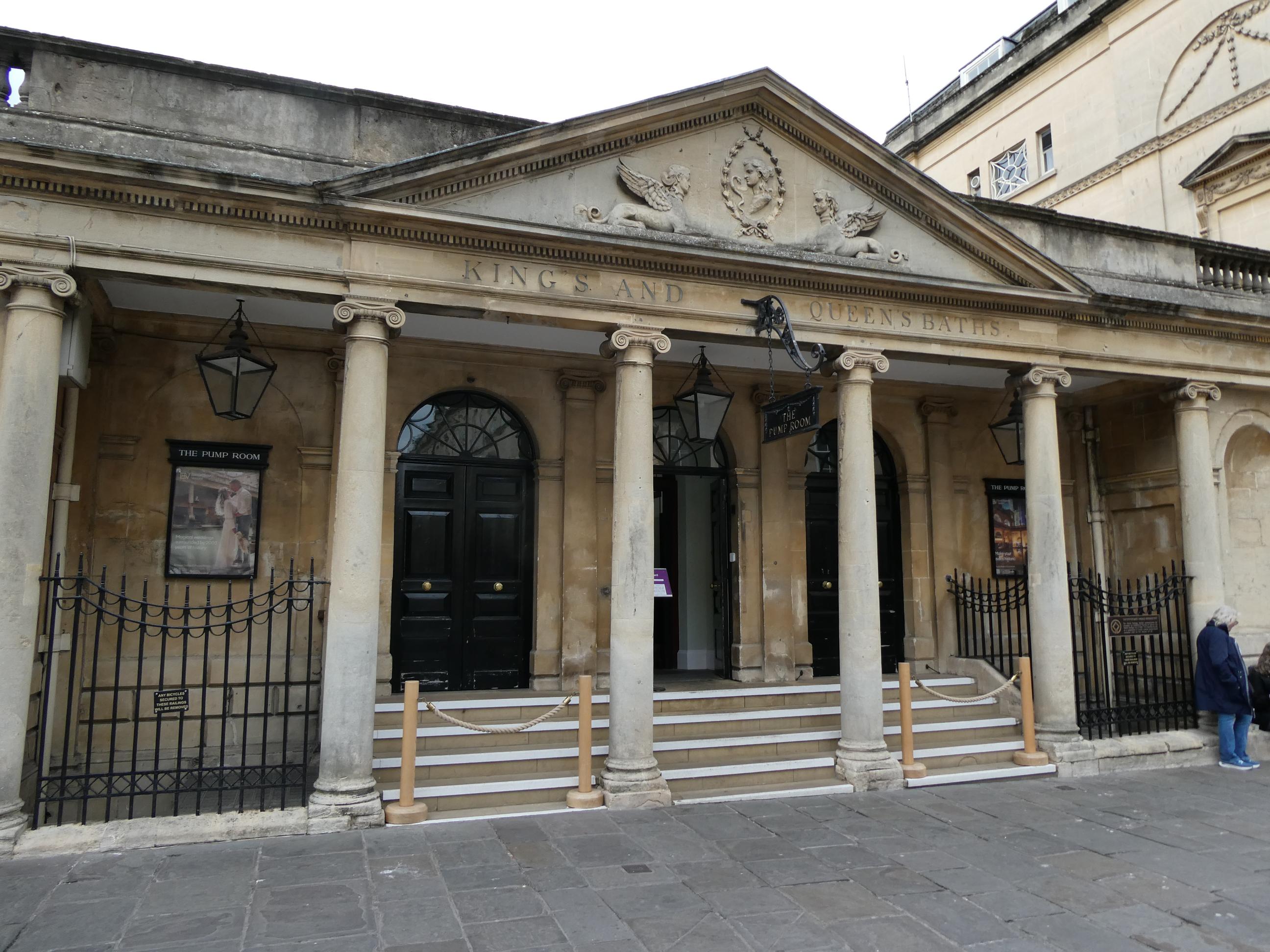


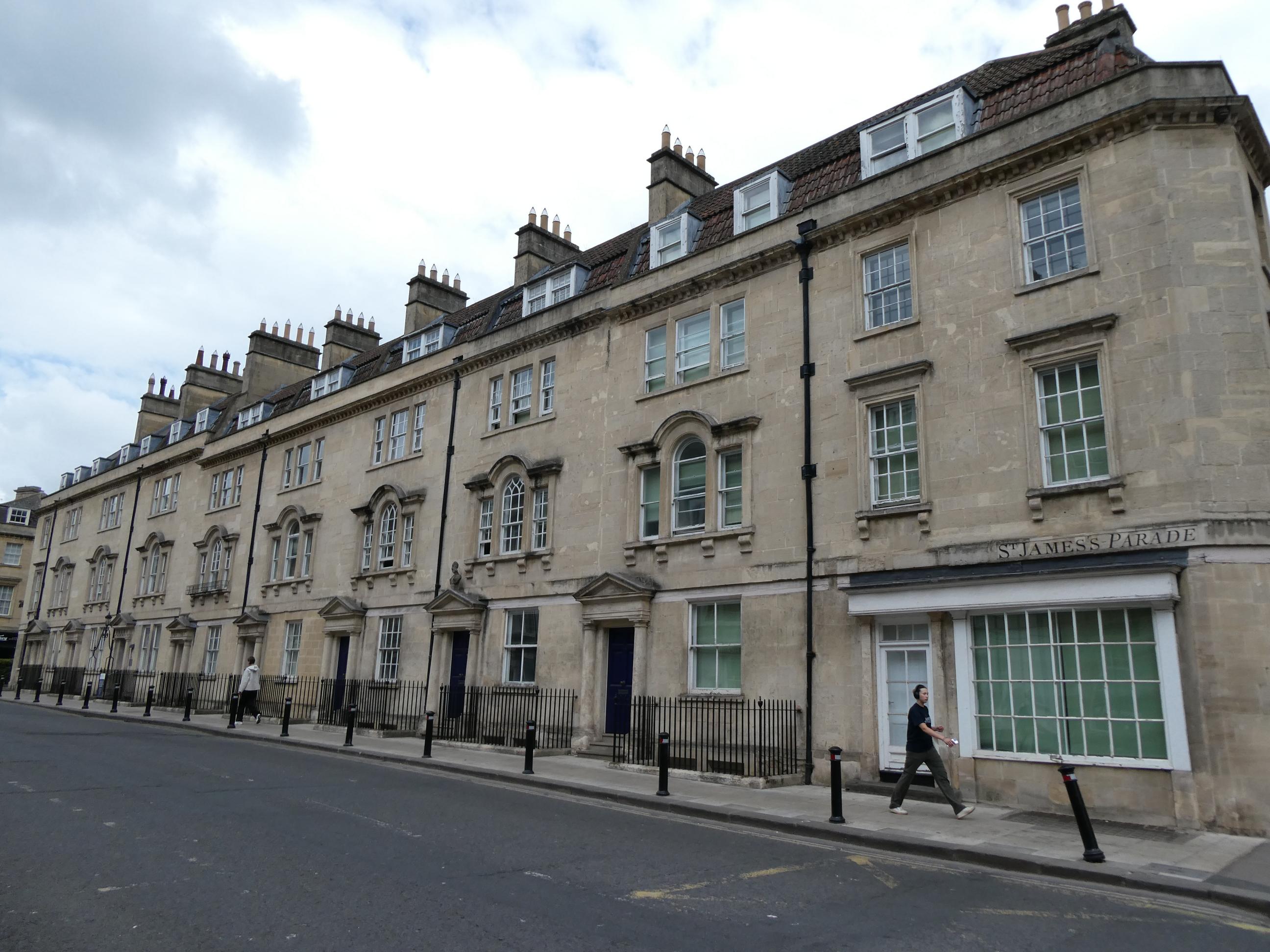
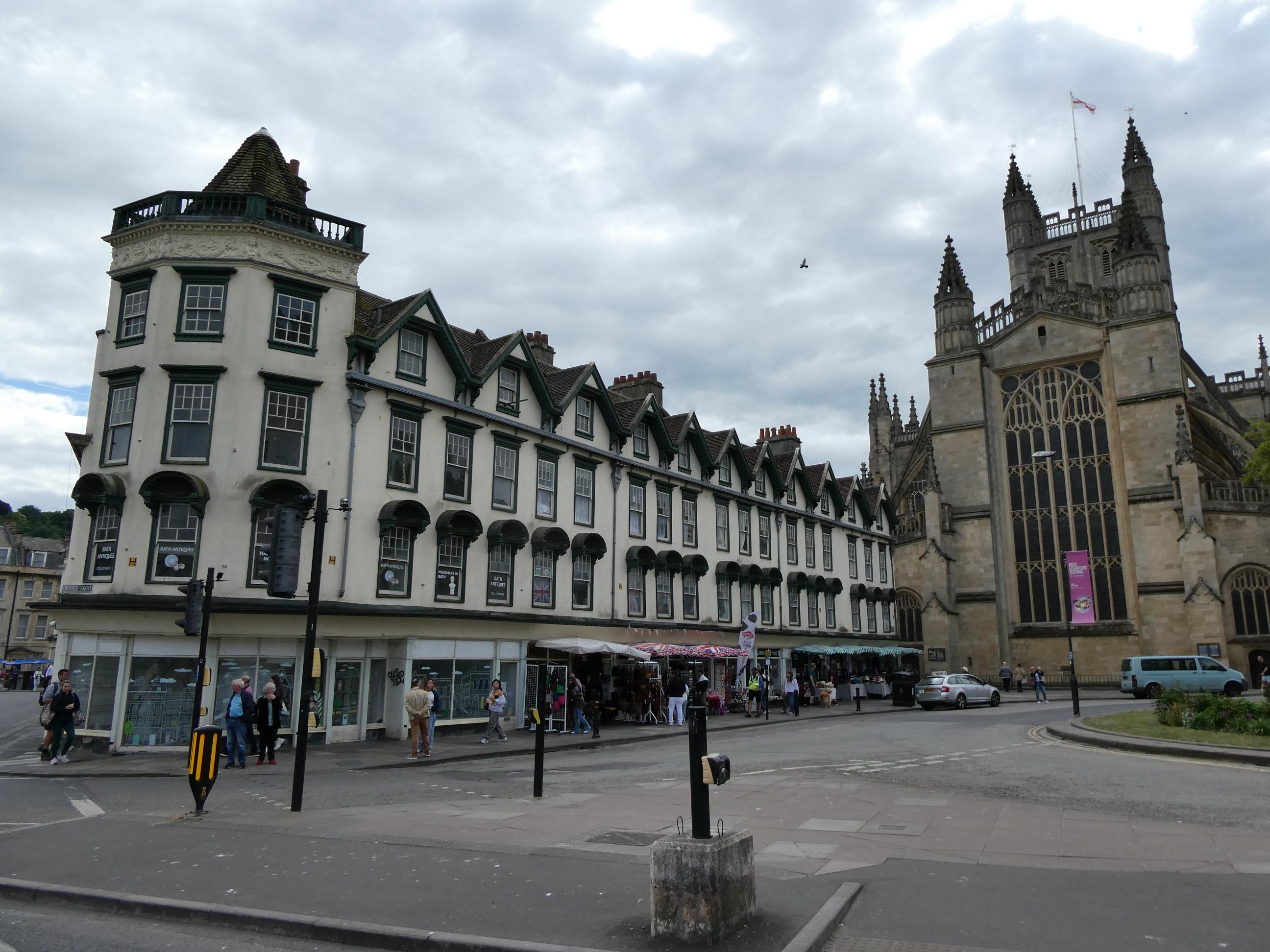
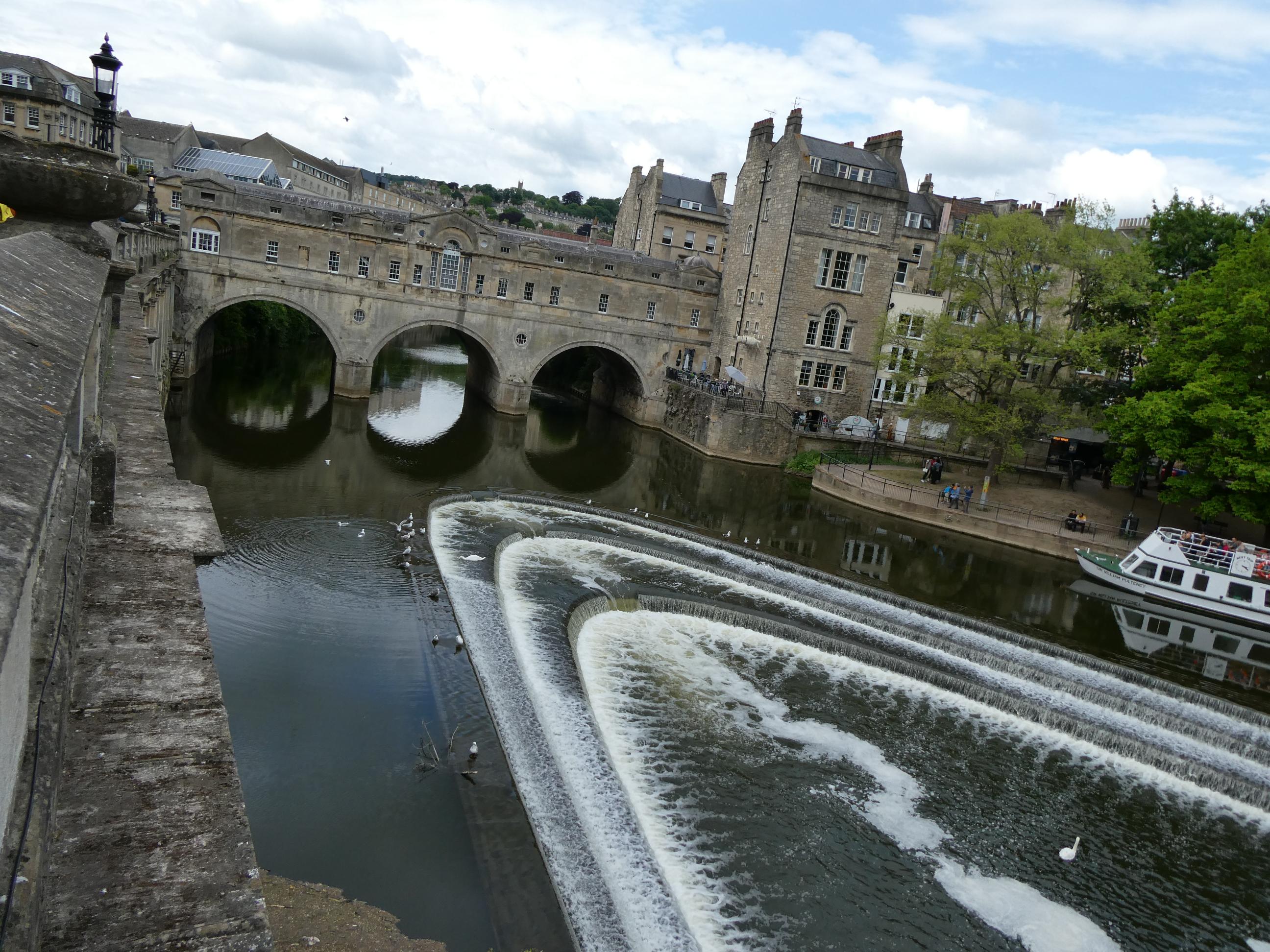
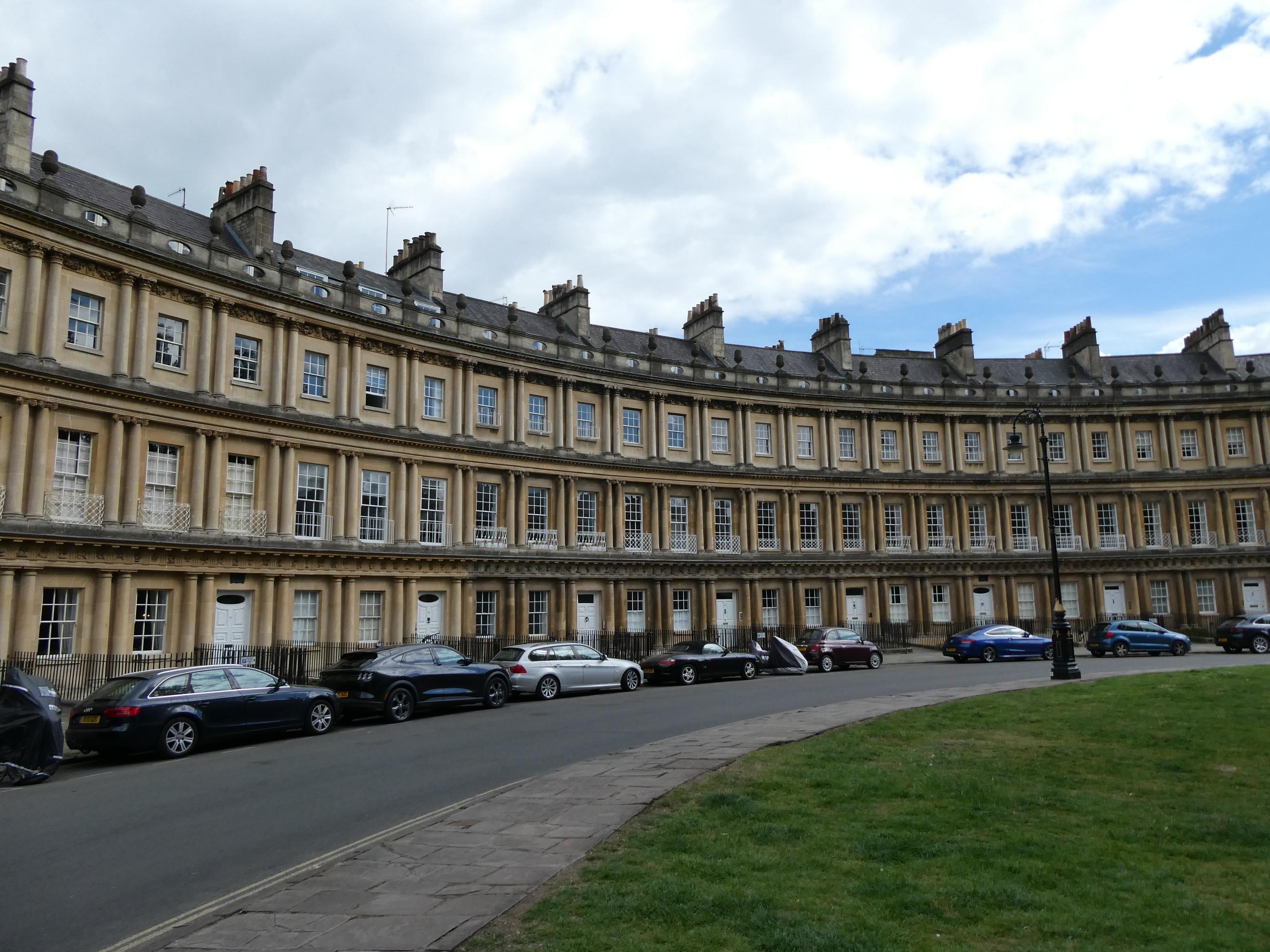
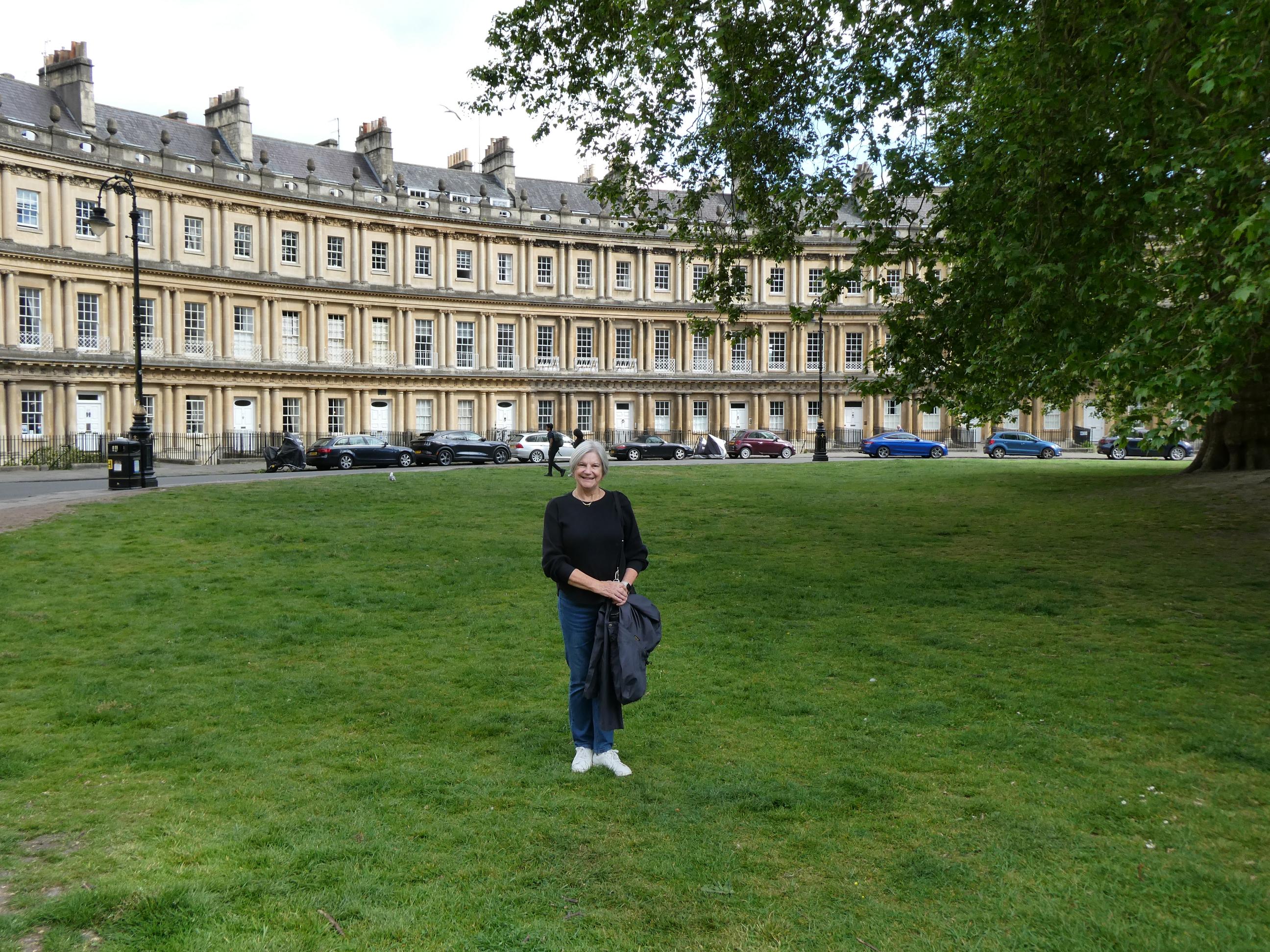
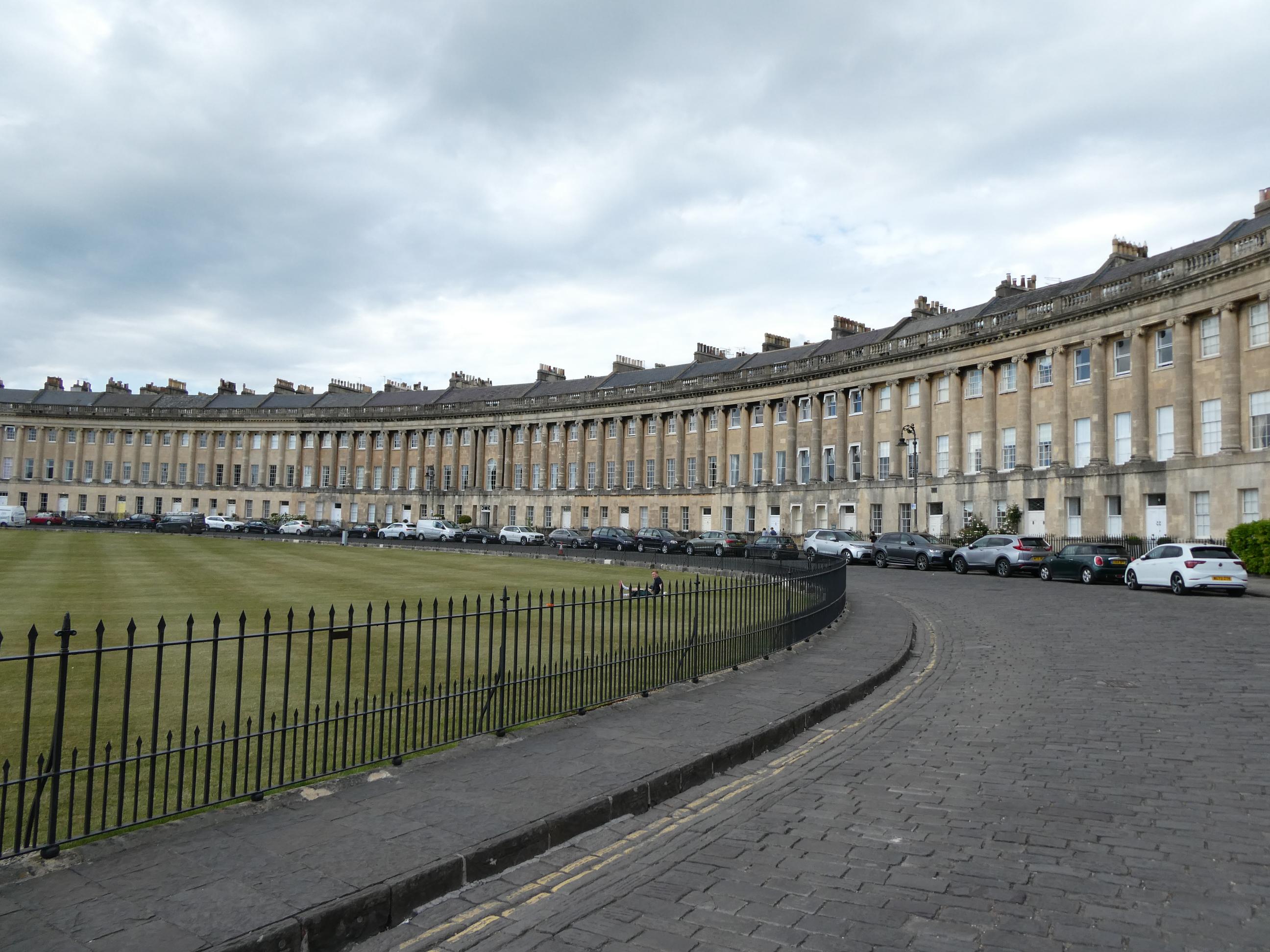
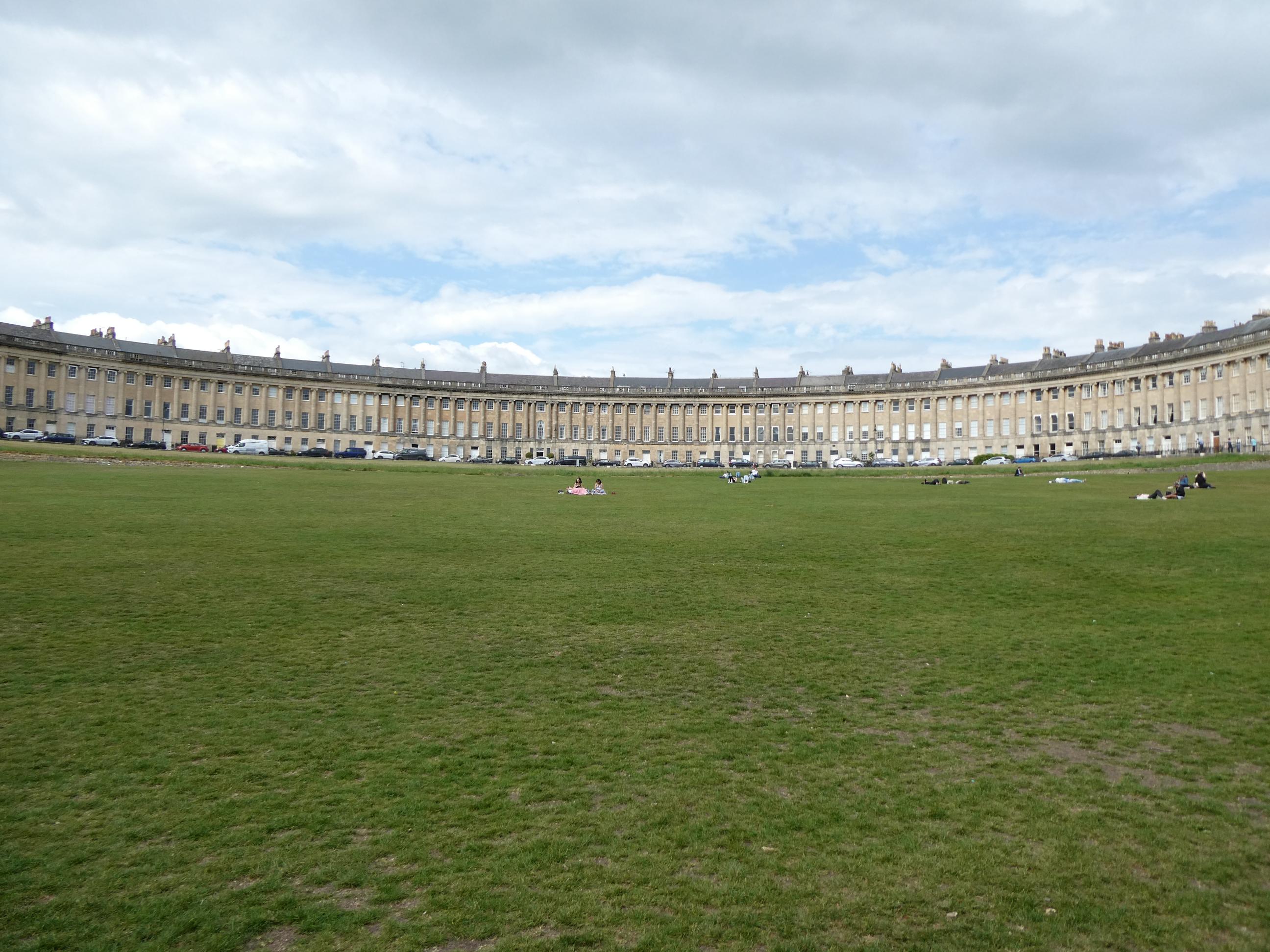
Rod found a walking tour of Bath on his phone, so we followed that through the town. The World Heritage-listed Georgian architecture here is quite remarkable. Much of it features long, impressive terraces, all made from the same honey-coloured stone, known as Bath Stone. Many of the great buildings of Bath were built around the same time, the 1700s, giving them a distinctive similarity. It’s a very beautiful city, a place that visitors could never forget. Three features of the architecture of the town that I found memorable are the Pulteney Weir, The Circus and the Royal Crescent. The Pulteney Weir appears as a series of steps in the River Avon as it flows through Bath. The weir was constructed fairly recently in response to a terrible flood that caused great damage to the city. The steps control the flow of water down the river and ensure that major damage from any future flooding will be avoided, which is important in a city with so much heritage. The Circus is a collection of three curved terraces of Georgian townhouses. Together they form a circle around a beautiful green lawn and a number of large trees. Just around the corner from the Circus is the Royal Crescent, a single curved structure featuring thirty terraced houses that sweeps around a great lawn. Marg knows it well from the movie of Jane Austen’s film ‘Persuasion’. It’s grand in every sense of the word.
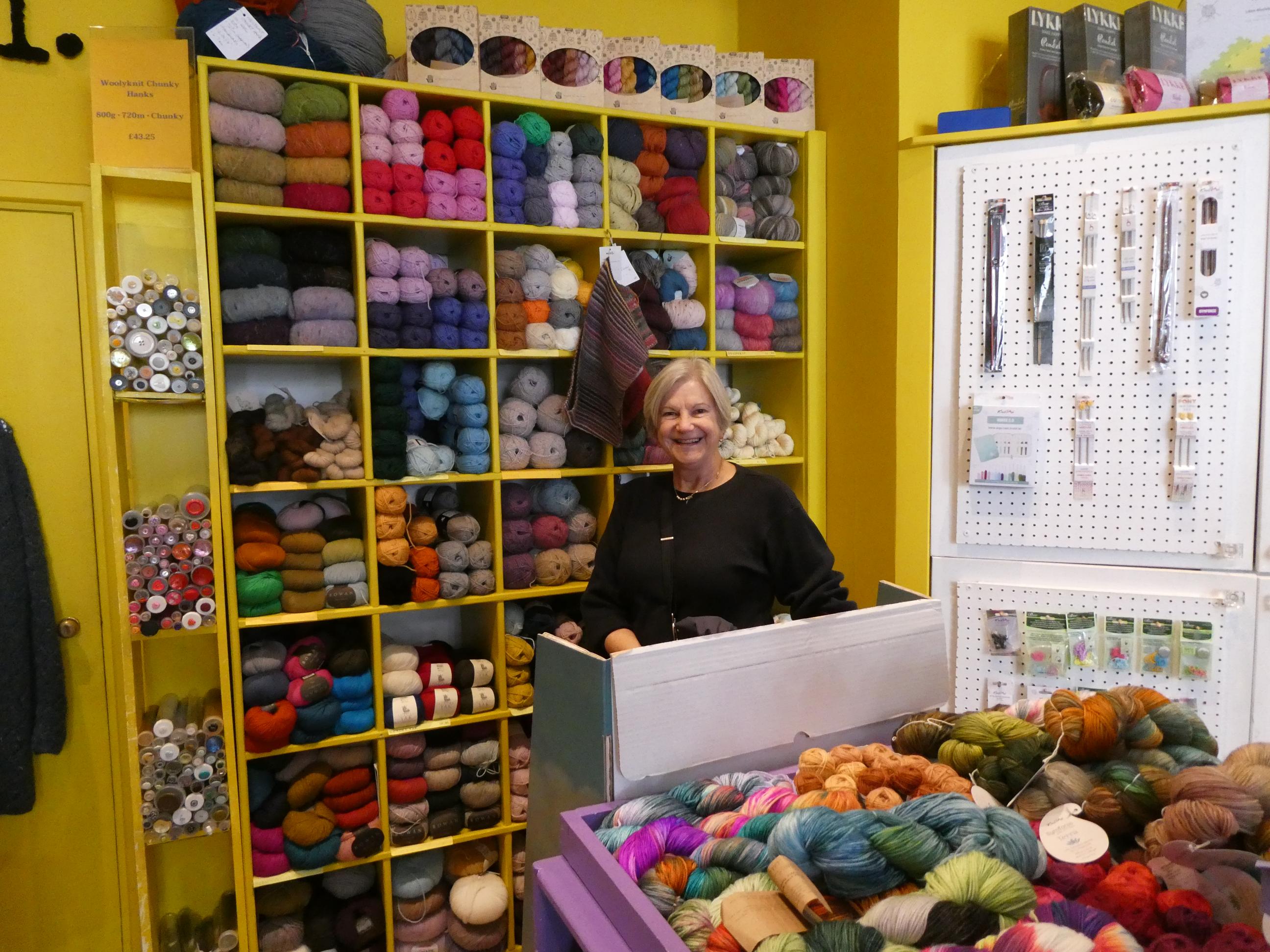
With a little time on our hands, Marg googled the address of Bath’s wool store, aptly named ‘Wool’. It’s a tradition on our travels to visit such stores – and to spend money in each one. As our cases are already pretty full, Marg only bought one skein, but I think she’ll get a nice shawl or similar from it. We found a bar, The Crystal Palace, and stopped for a drink. We stayed on for dinner, and chatted to a young lady working behind the bar who is soon coming to Melbourne for a year of travel and adventure. It was a long walk uphill all the way back to our accommodation.











sounds awesome. Love Bath. Hope sunshine comes back for you.
LikeLiked by 1 person
Those Romans. Innovation.
LikeLiked by 1 person