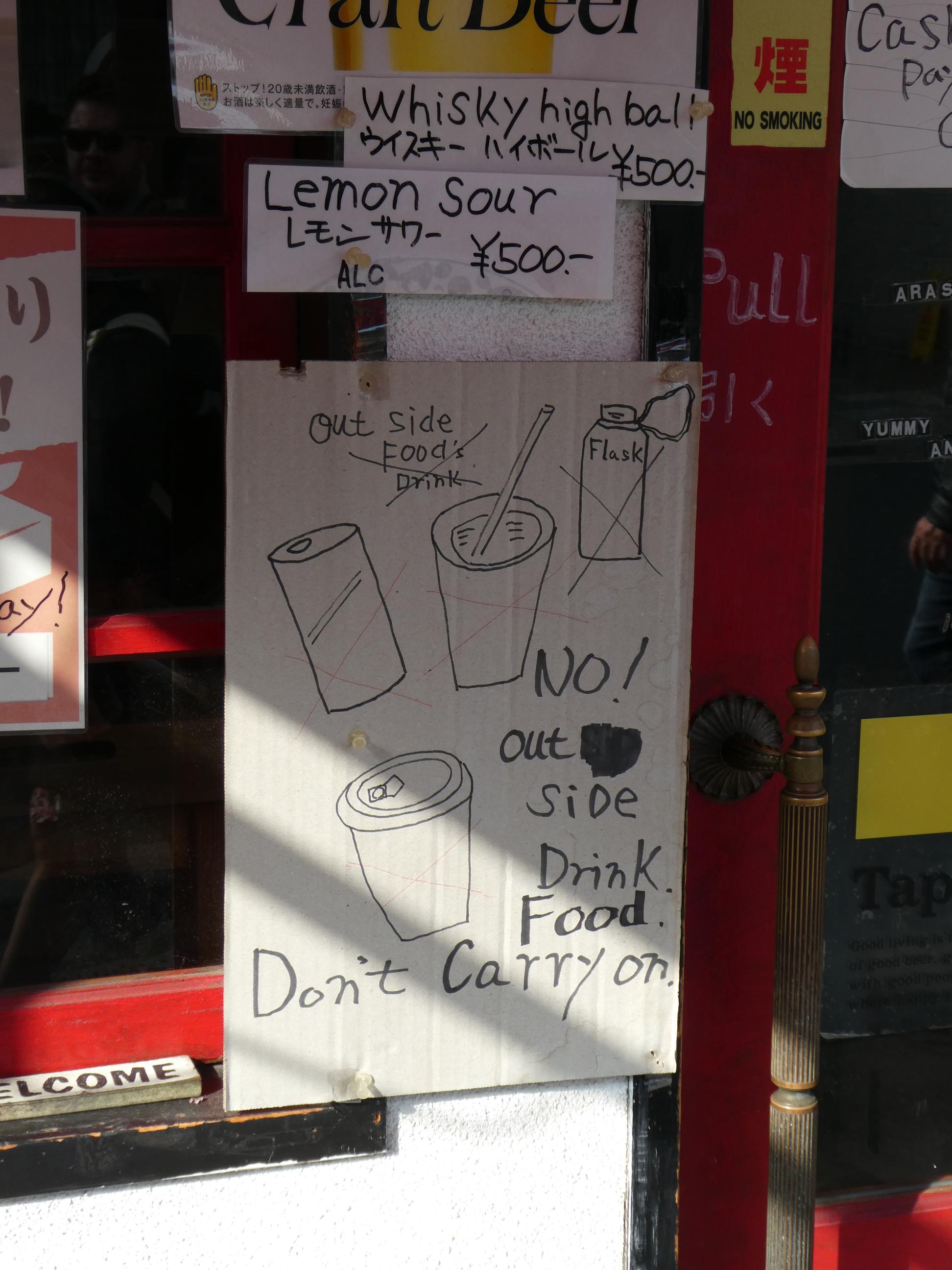
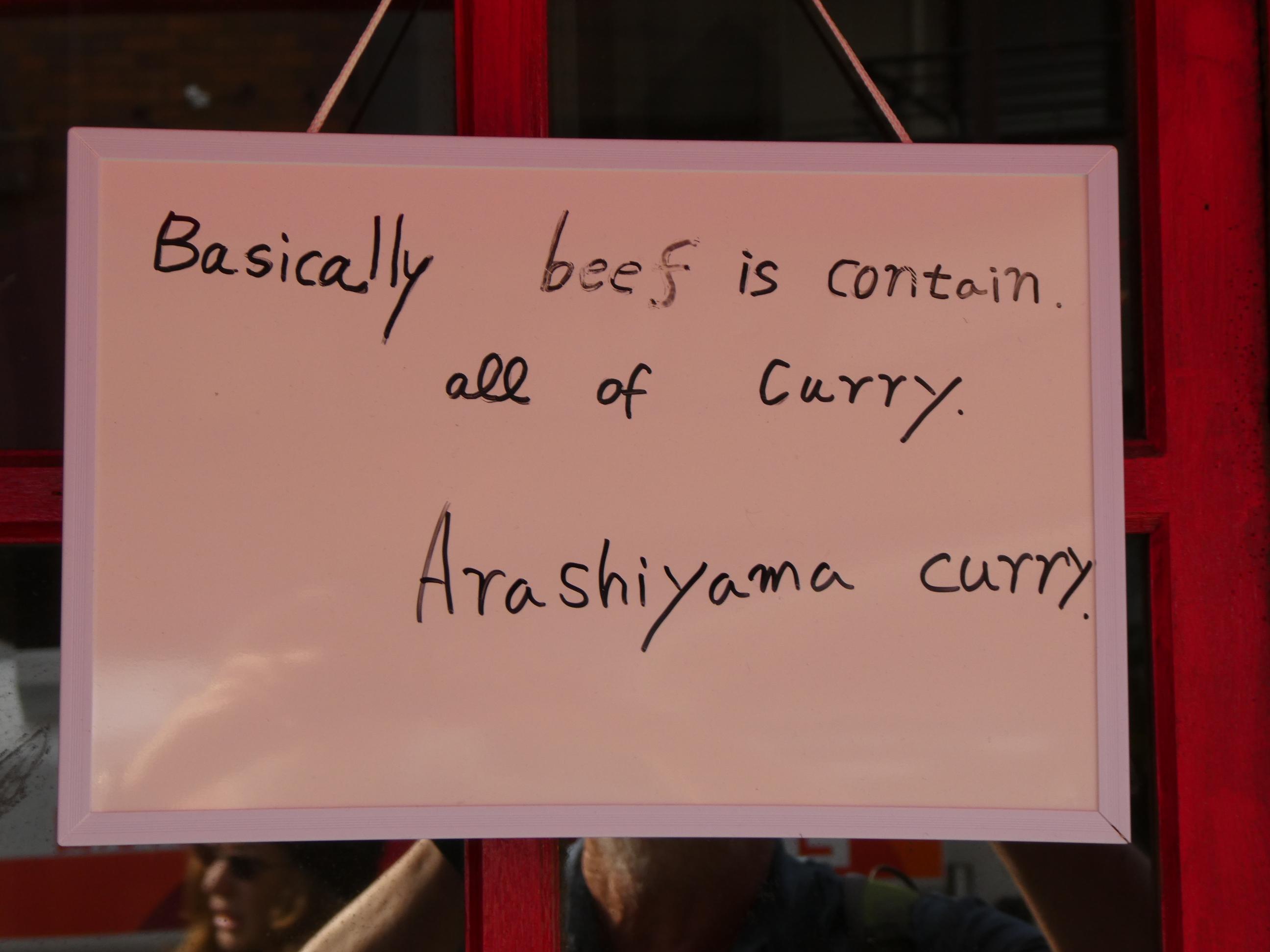
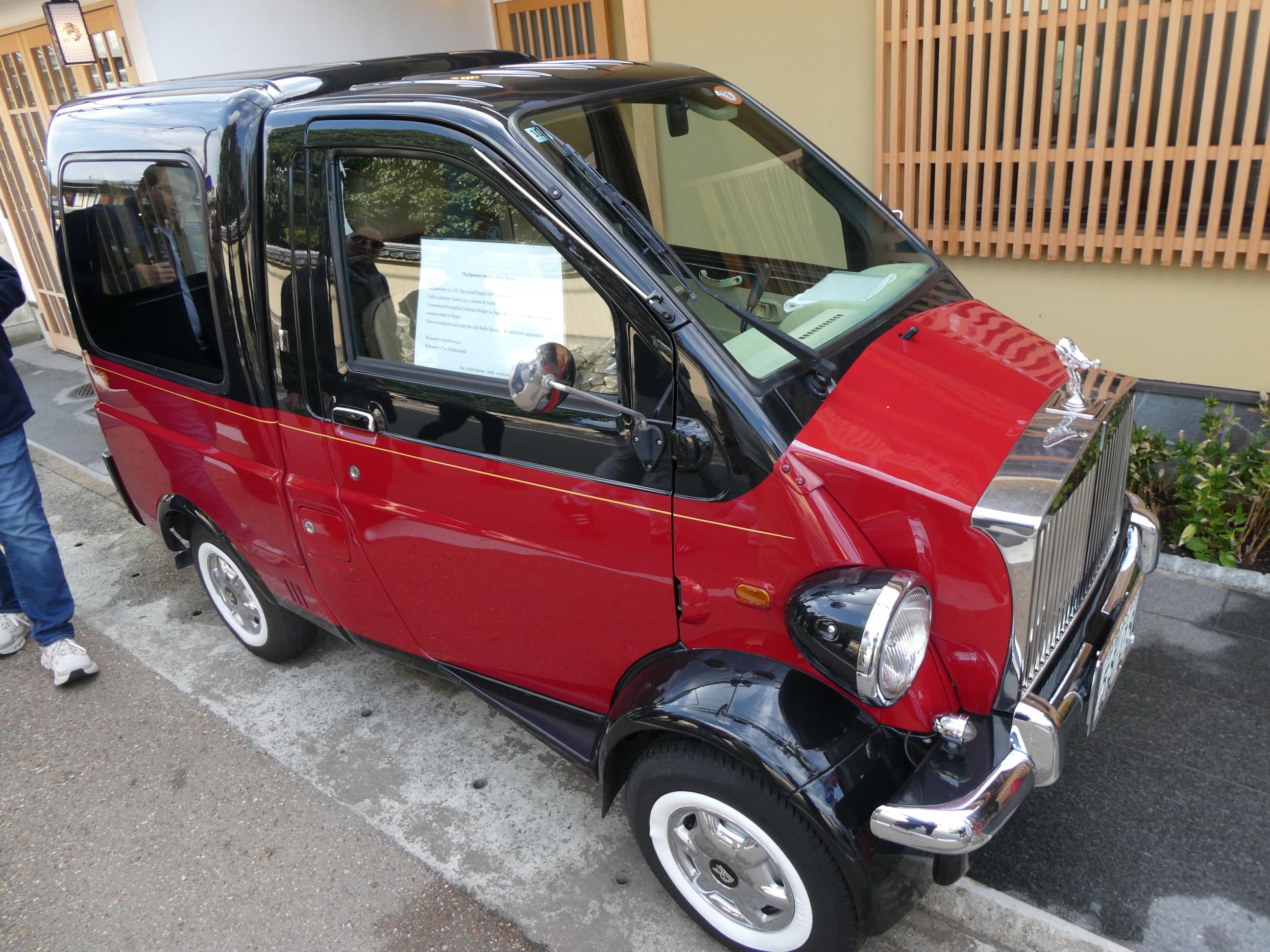
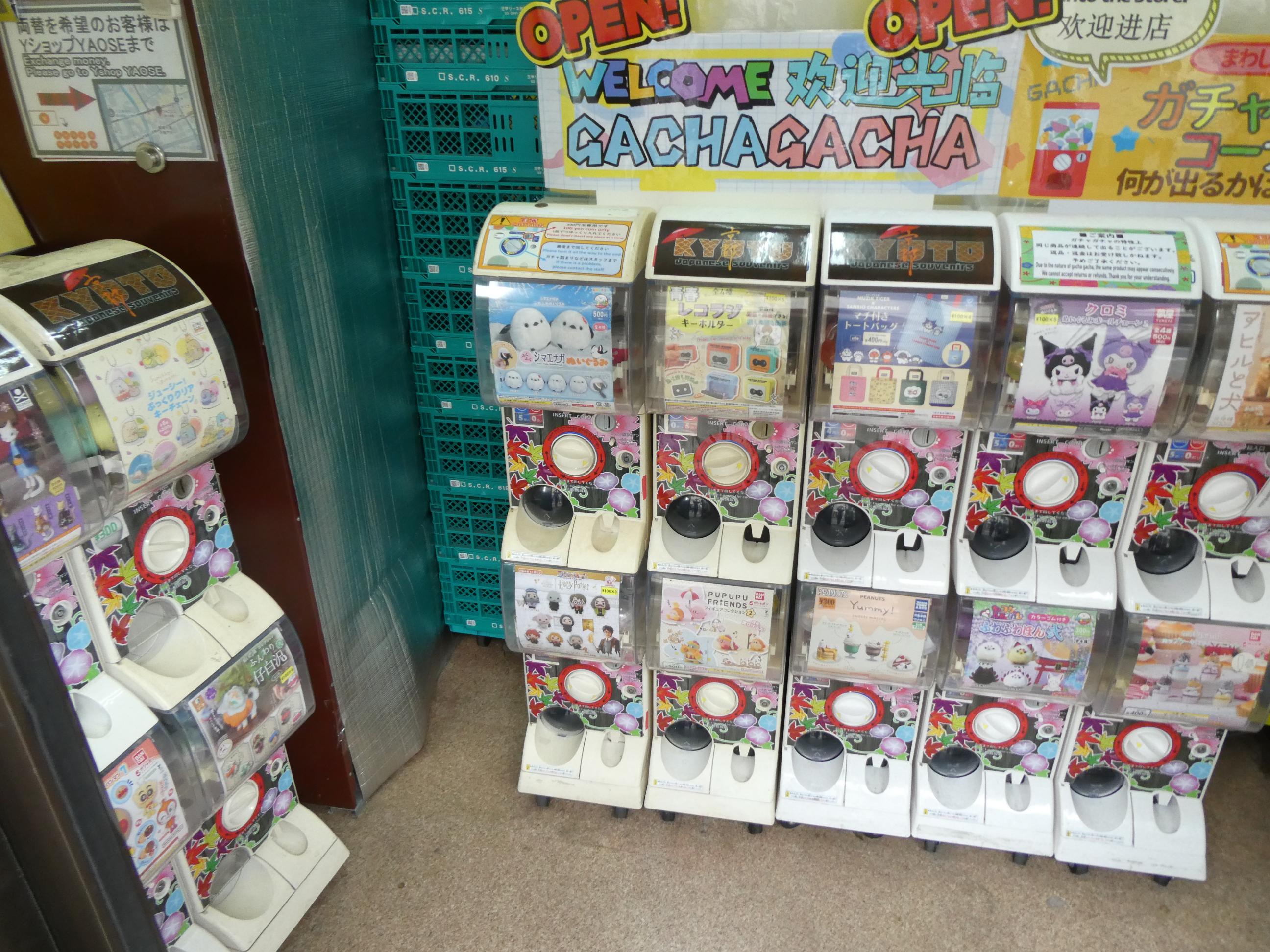
This morning we caught a local train to Arashiyama on the outskirts of Kyoto. The train was quite crowded by the time we arrived, and when most people got off at the same station we did, we knew we’d be dealing with large crowds again. It was about a 15 minute walk through the town to Tenryu-ji Temple. I laughed at a few funny signs along the way and was amused by two signs side by side that said ‘no bicycle/bicycle’. We passed a couple of small shops that only contained gachapon machines. These machines are everywhere in Japan and are hugely popular. You pay between 100 yen and 500 yen (AU $1-5), turn the handle, and receive a randomly issued toy in a plastic capsule. Each machine has a different theme. Some contain tourist souvenirs, some anime characters, some miniature food or household items, some even contain tiny Karcher hardware items. The name ‘gachapon’ comes from the ‘gacha’ sound of the hand crank turning and the ‘pon’ sound of the capsule dropping. We also walked past Japan’s smallest Rolls Royce parked in the street.



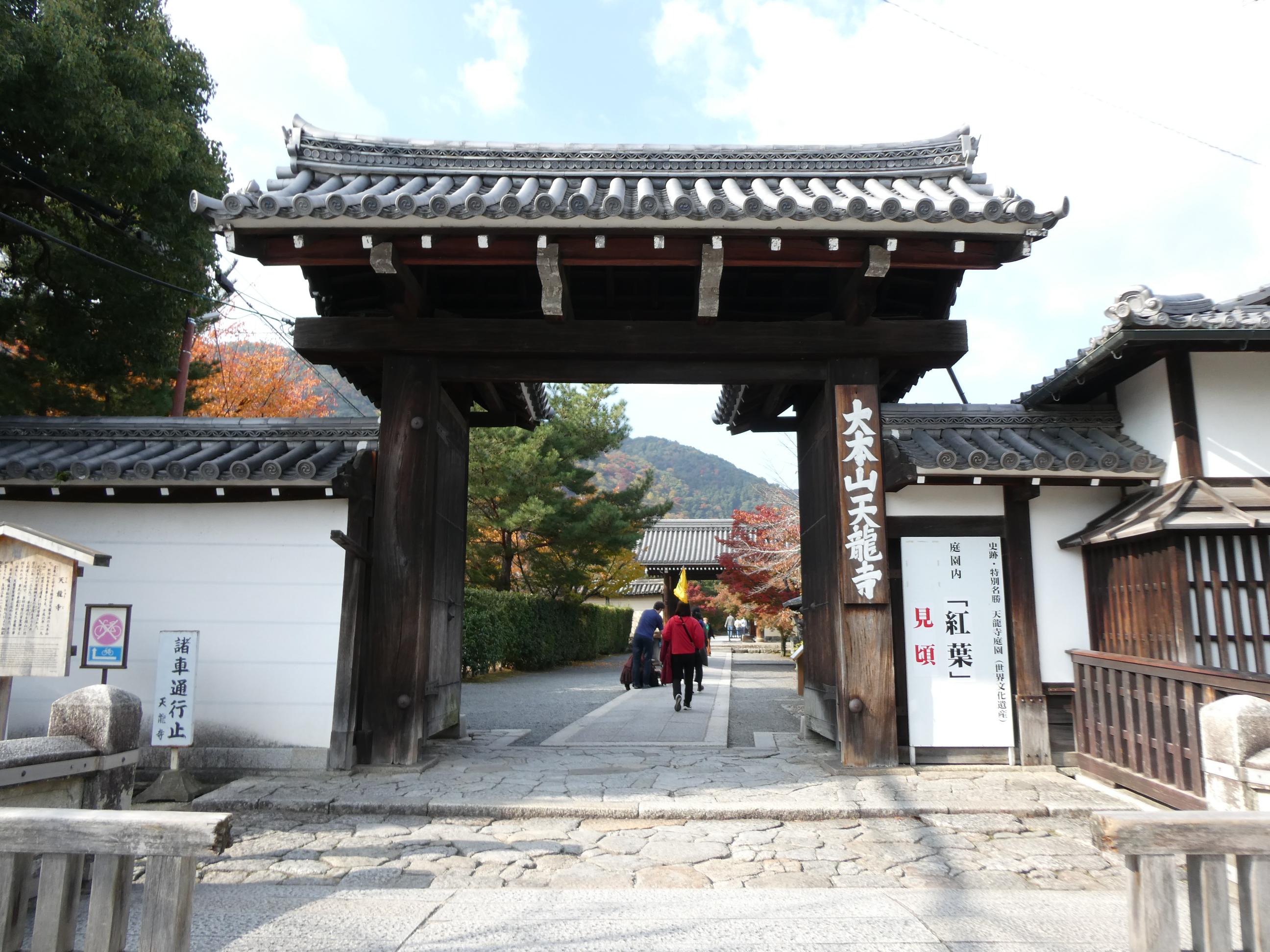
Tenryu-ji Temple is translated as ‘Temple of the Heavenly Dragon’. This Zen Buddhist temple was founded in 1339 and most buildings were constructed by 1343. The temple has been destroyed or damaged by fire eight times, so most of the present buildings only date back as far as the 1860s. The garden, which was designed and constructed in the 1300s and still essentially retains its original form. The garden was listed as a World Heritage Site in 1994.
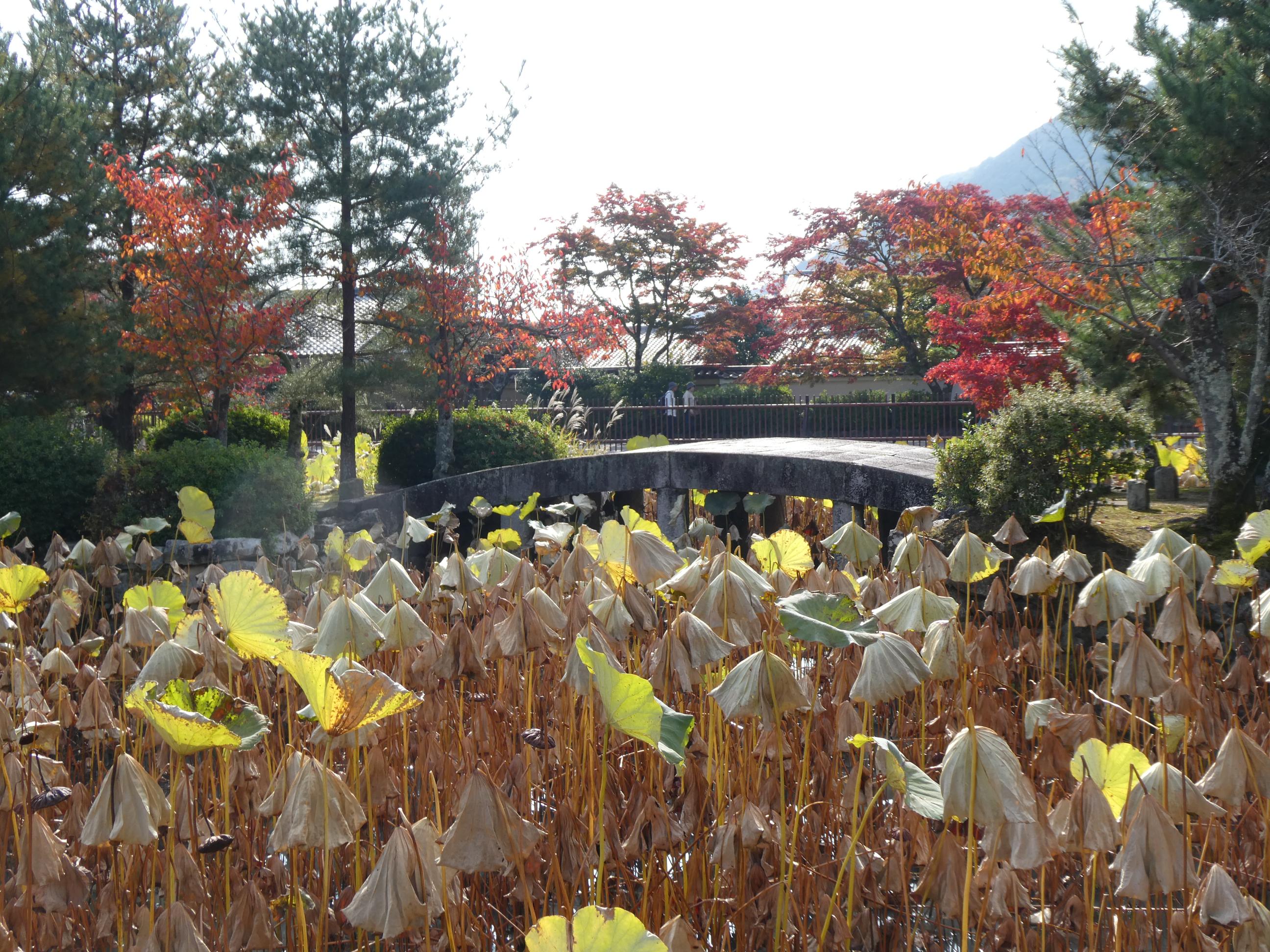
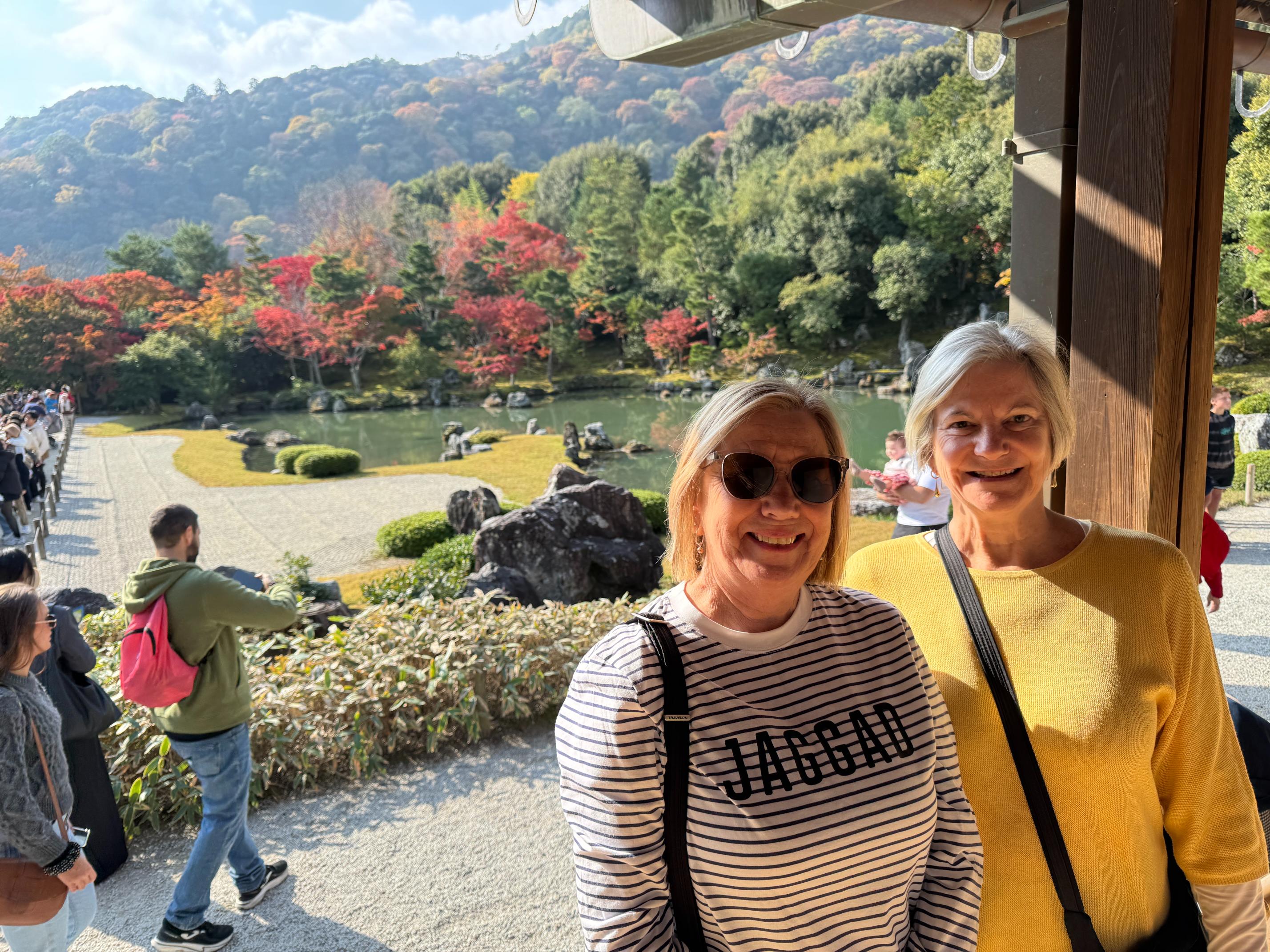
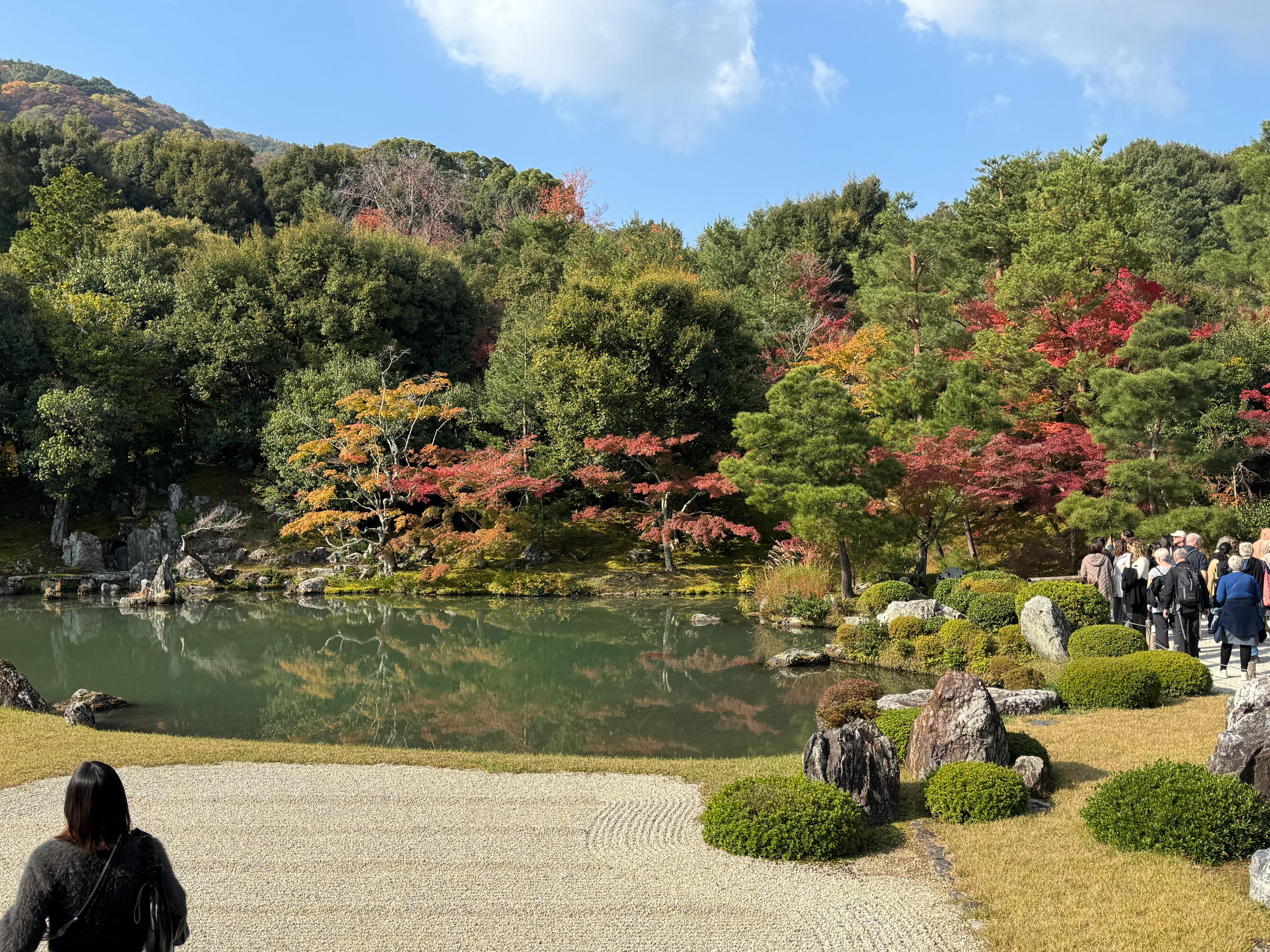
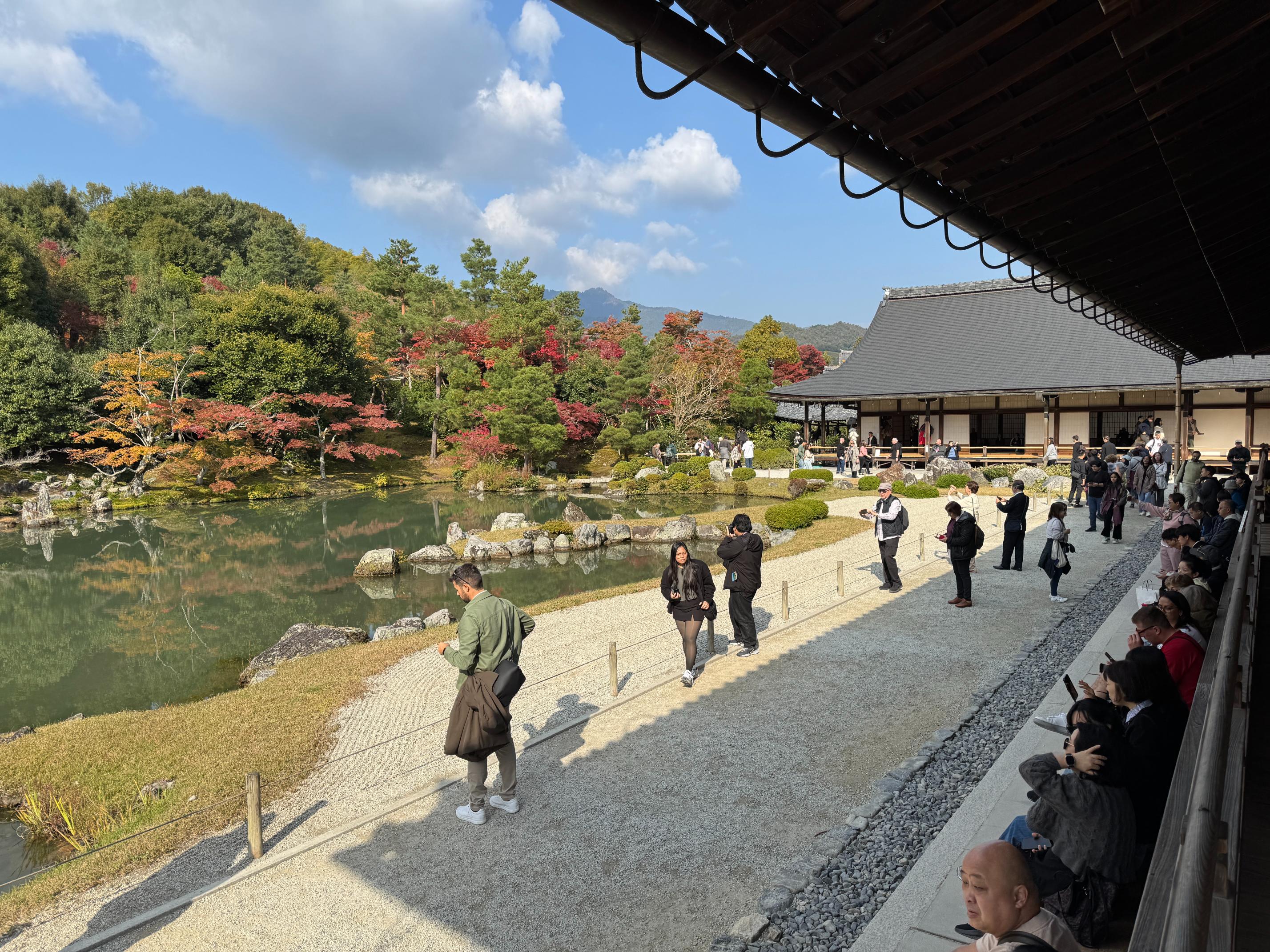
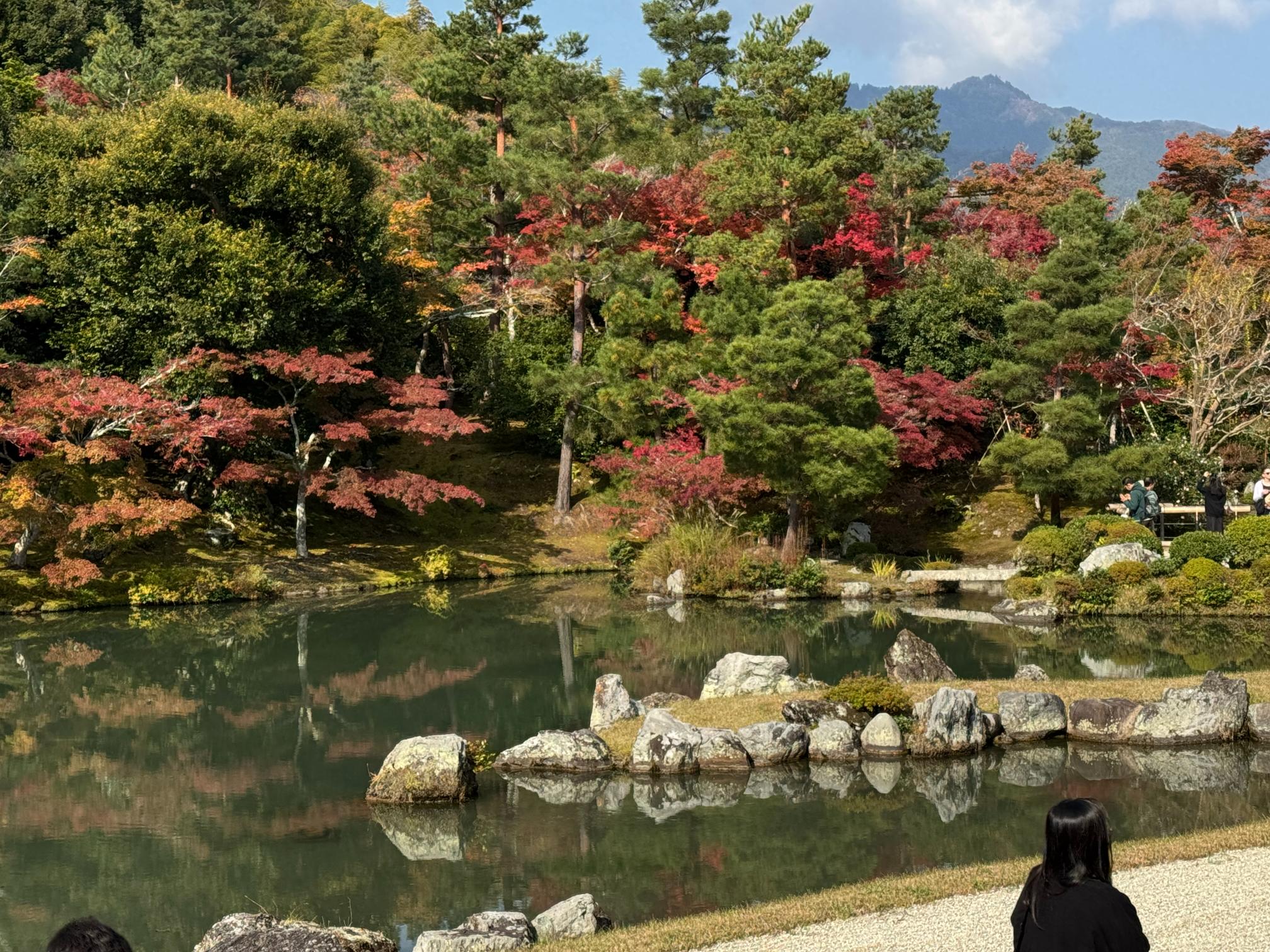
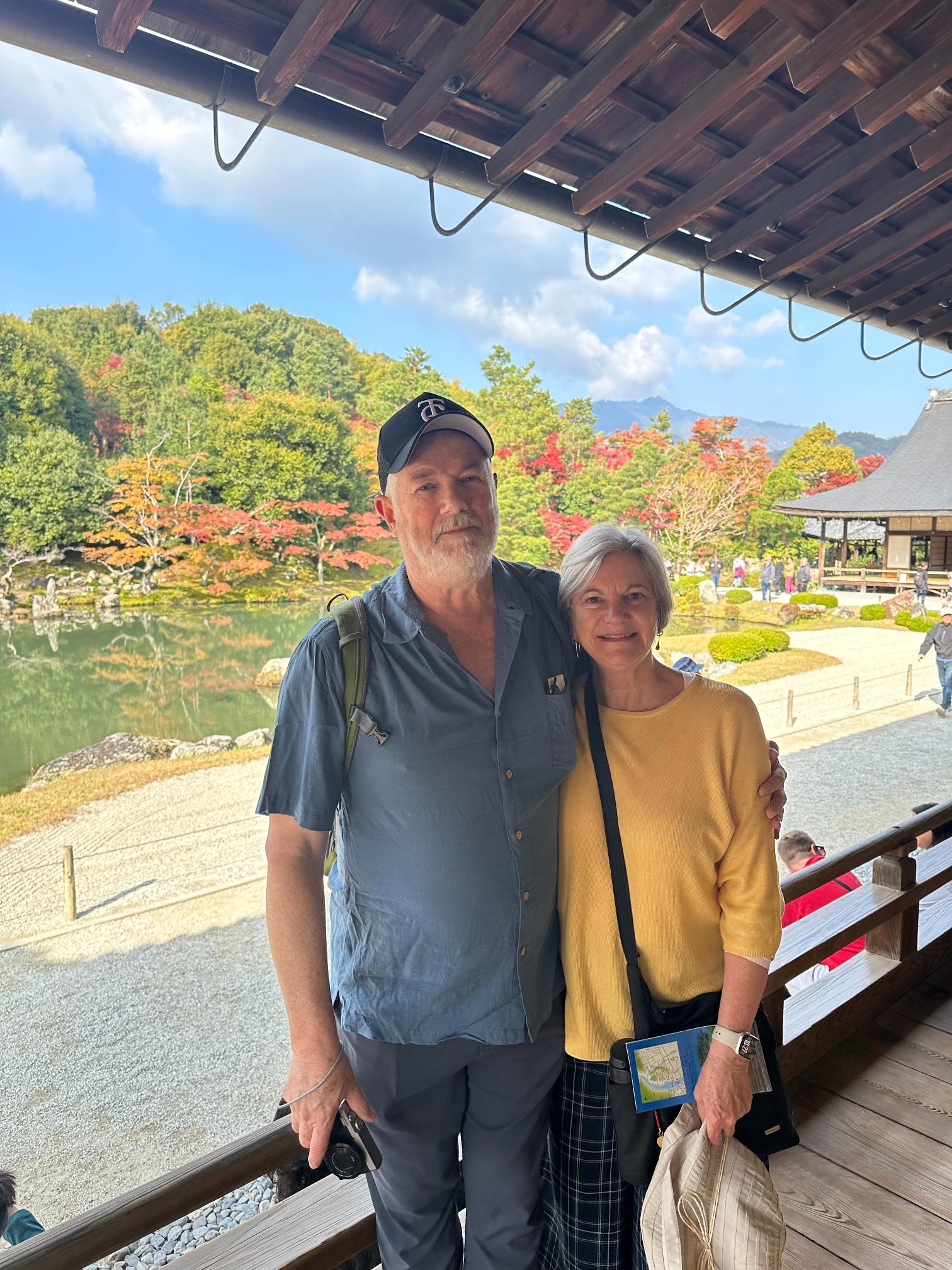
We removed our shoes at the entrance to the temple and walked along verandahs attached to some of the main halls. These verandahs afforded wonderful views across the small lake to the beautiful garden that lay beyond, where the autumn foliage was putting on a show. It was an eye catching sight, and, judging by the large numbers of people taking photos here, a very popular one. We proceeded beyond the main halls, and walked along corridors which connected other parts of the temple complex, in a building style which we’ve grown accustomed to in recent days. The corridors were open along both sides, allowing visitors to admire the garden as they walked between structures.






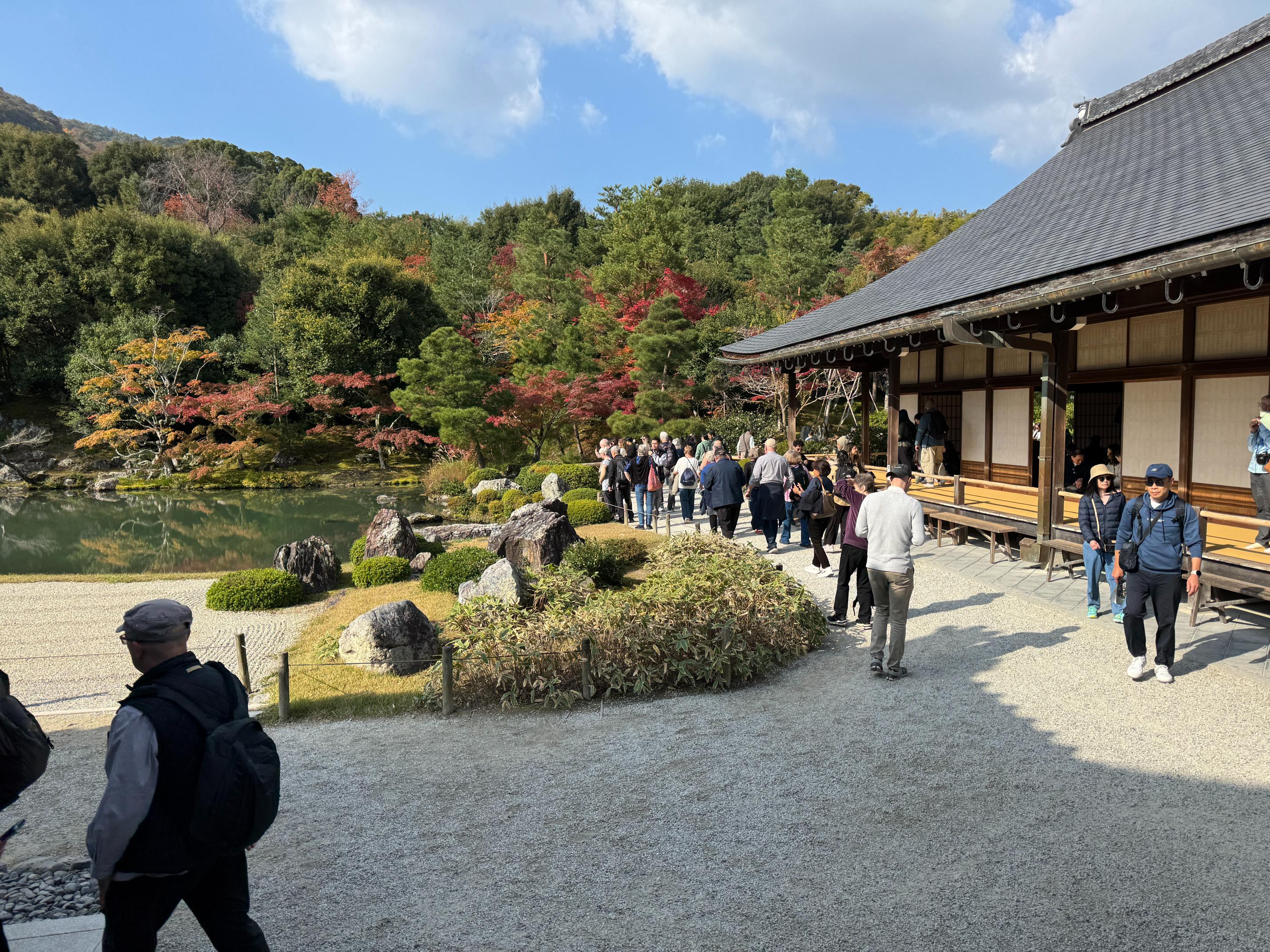
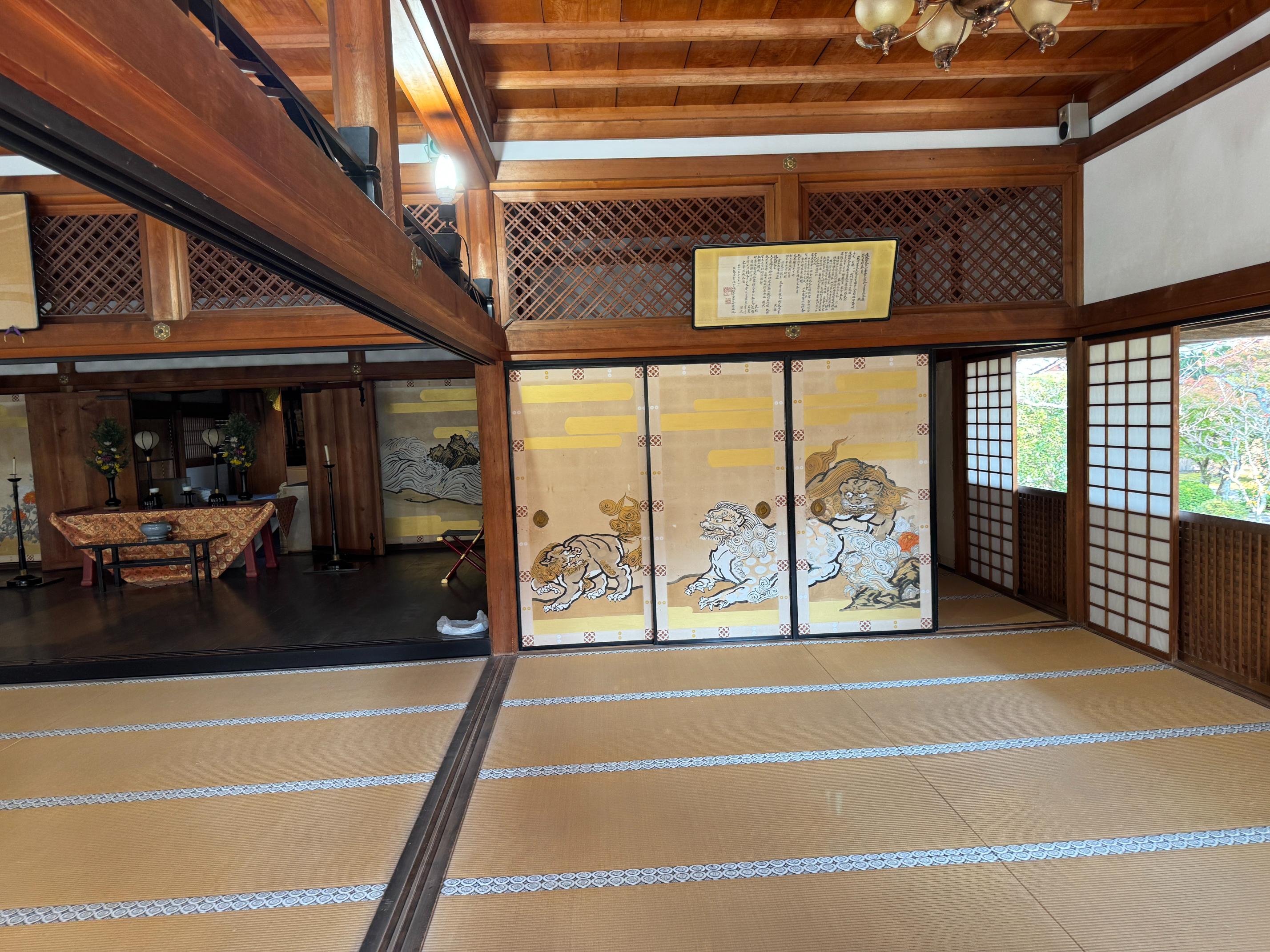
The halls in the temple were built in typical Japanese style, with sliding doors, woven floor mats and little or no furniture. One part of a large room appeared to be a classroom, with low writing desks. Some of the walls featured large painted murals, while others featured decorated panels. In one hall was a large Buddhist shrine. Seeing all the wood used to build a place like this, it didn’t surprise me when I learnt of how many fires had damaged this complex.


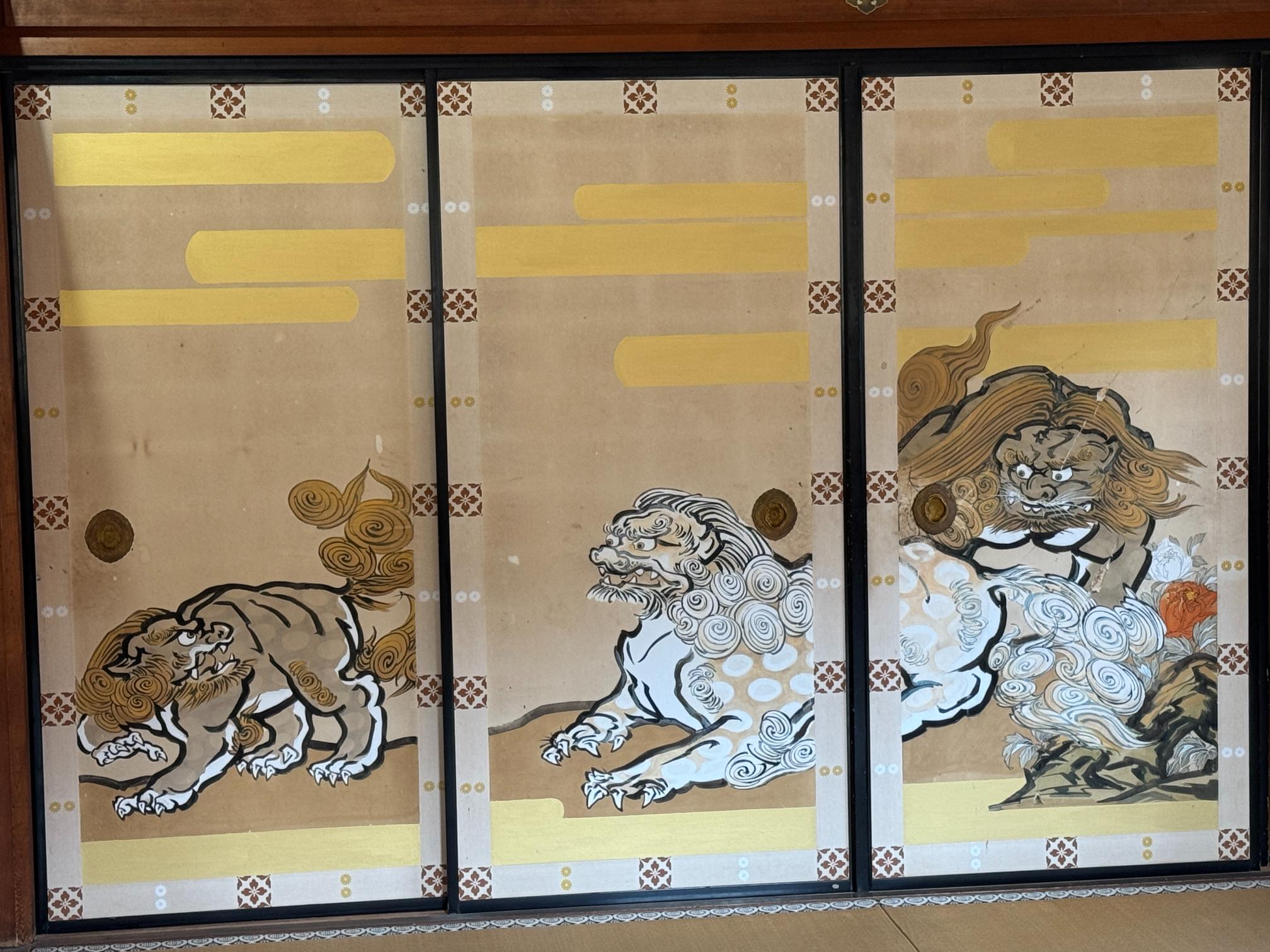


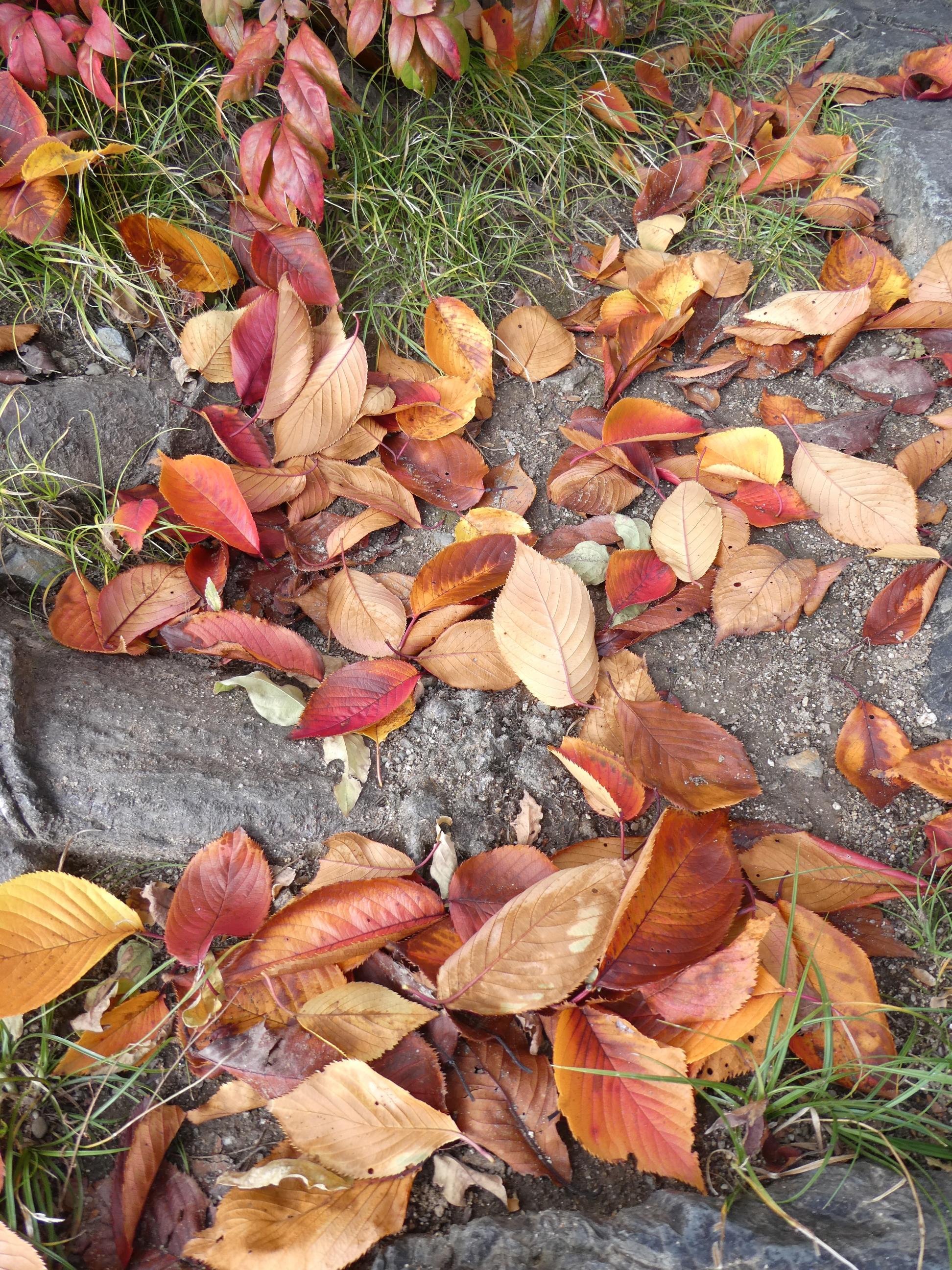
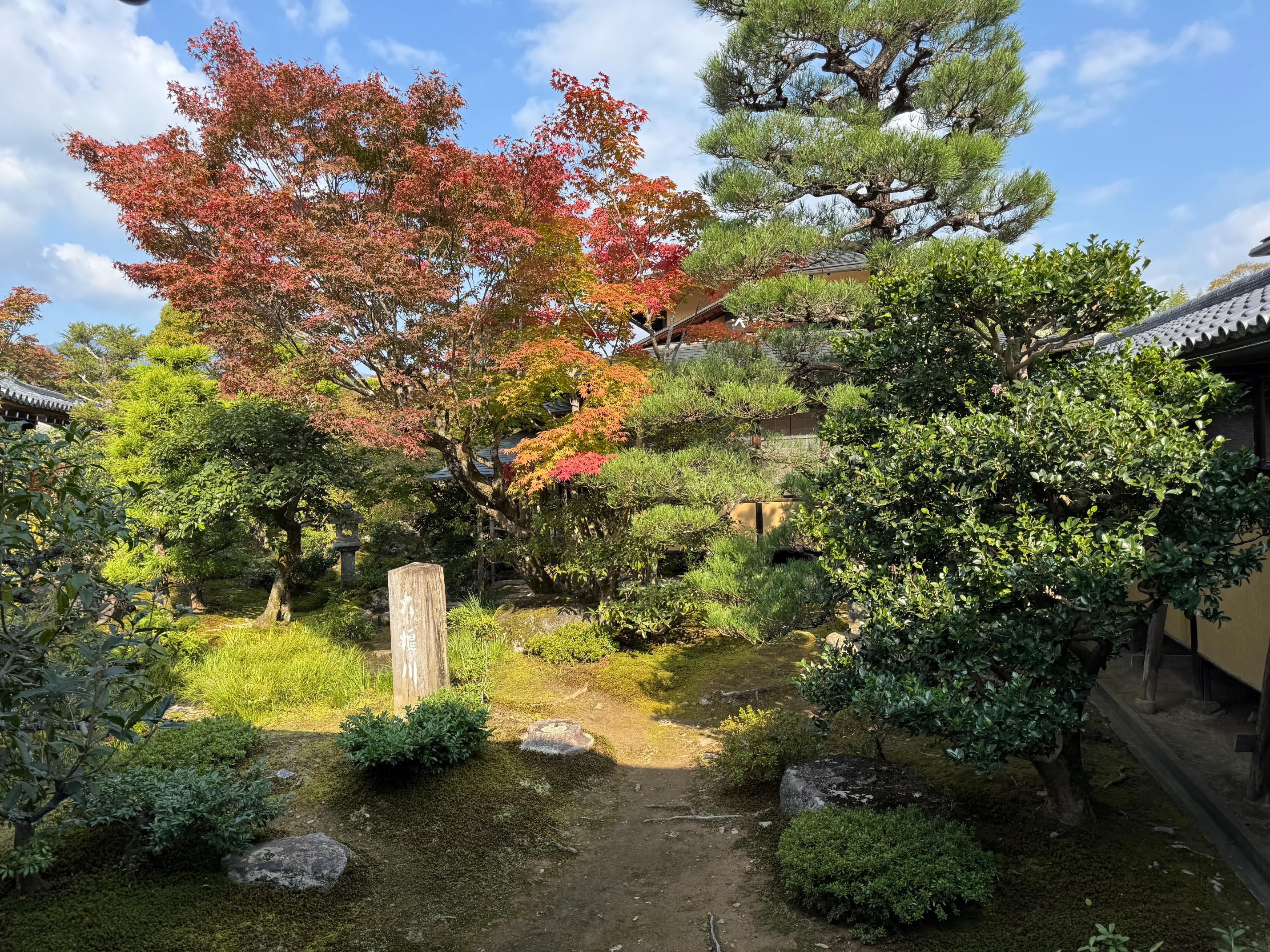
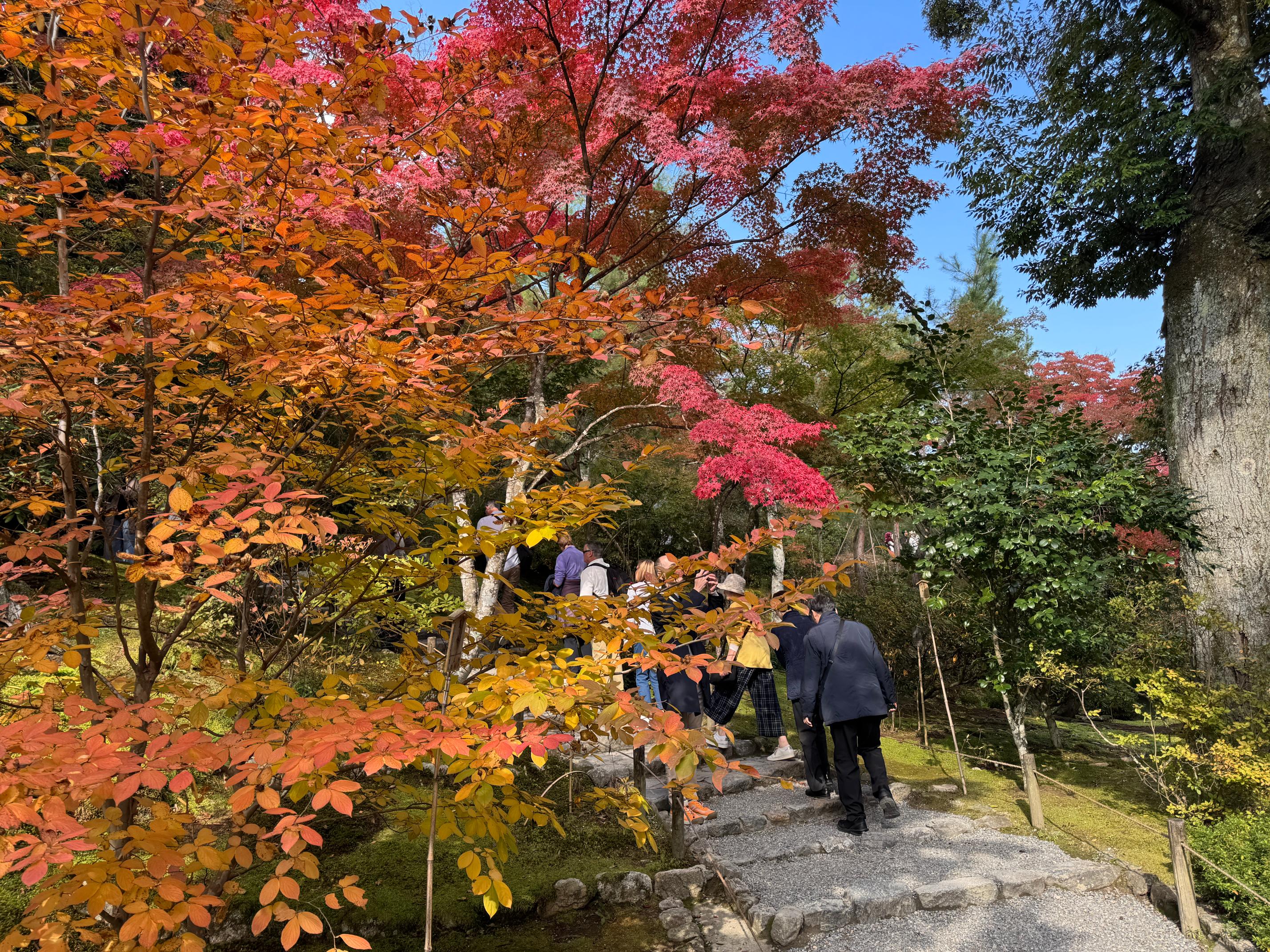
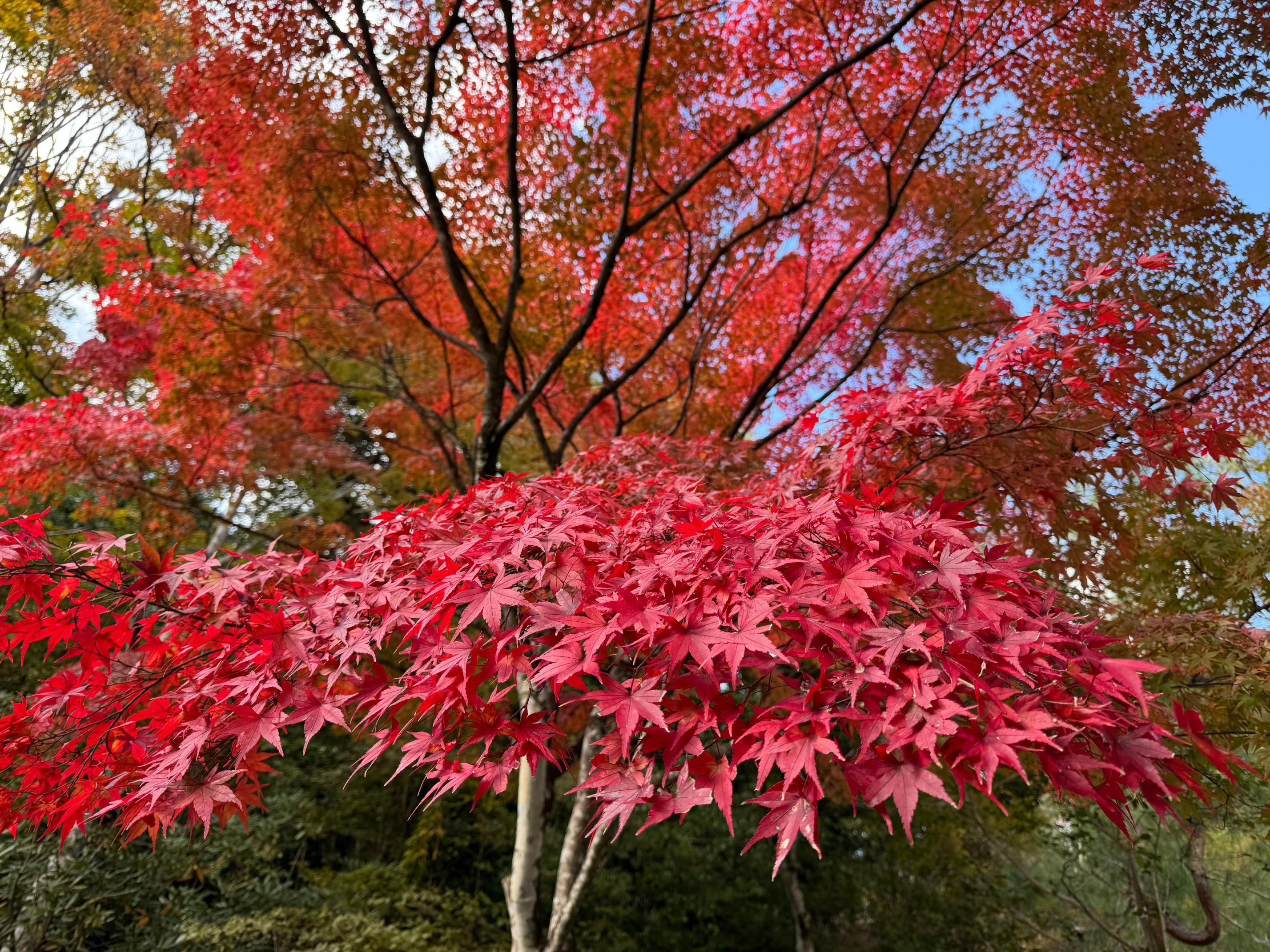
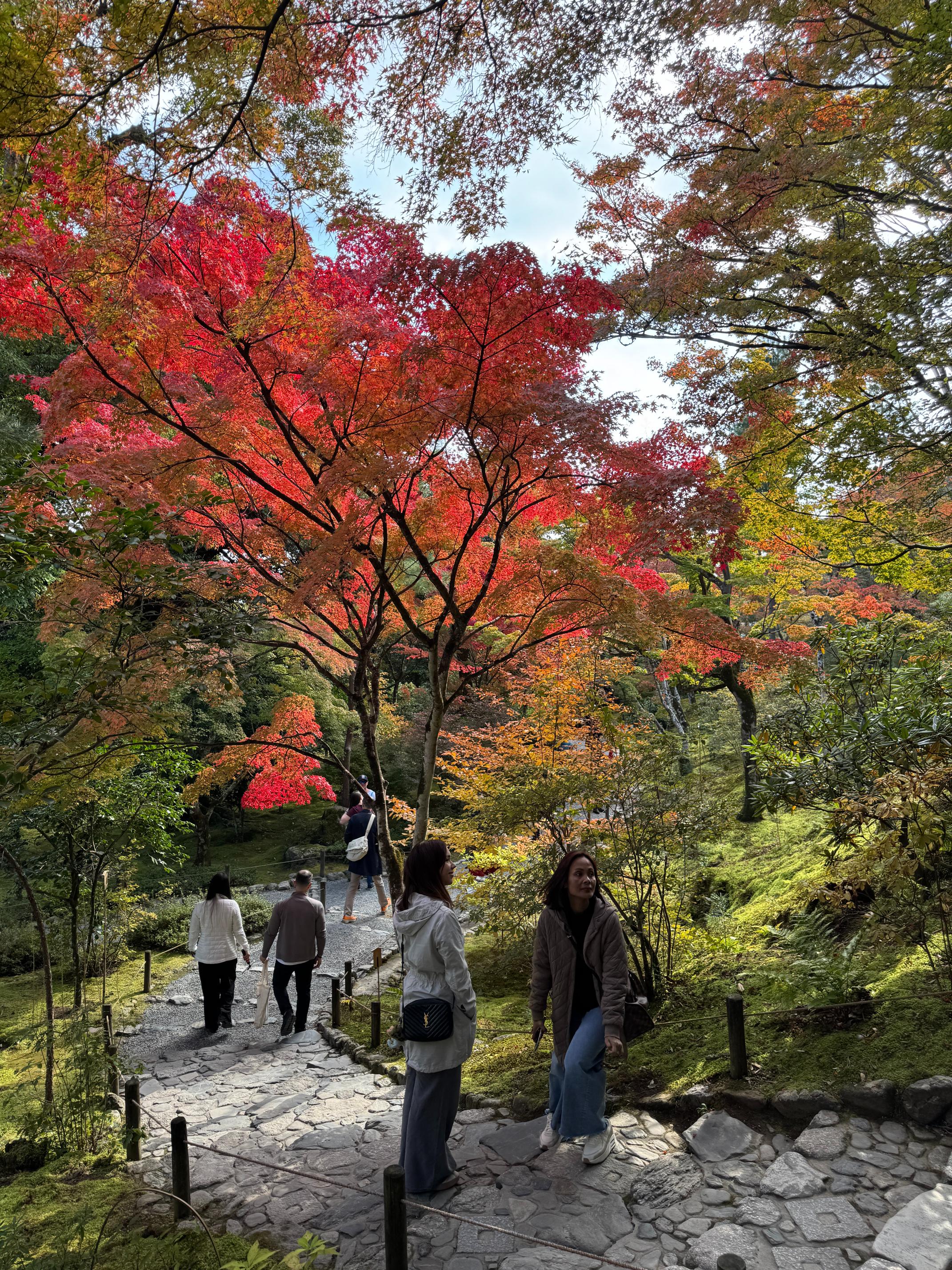
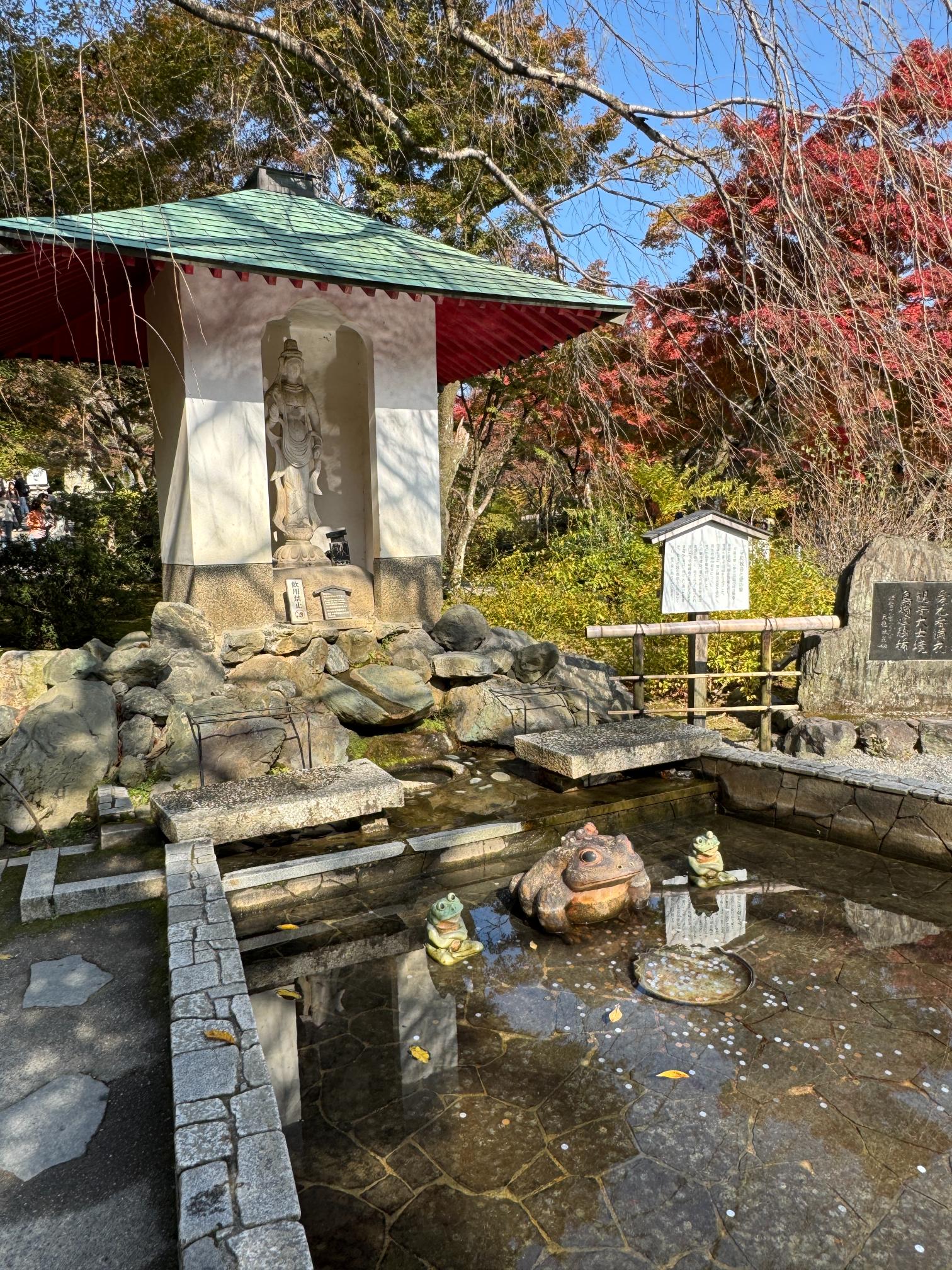
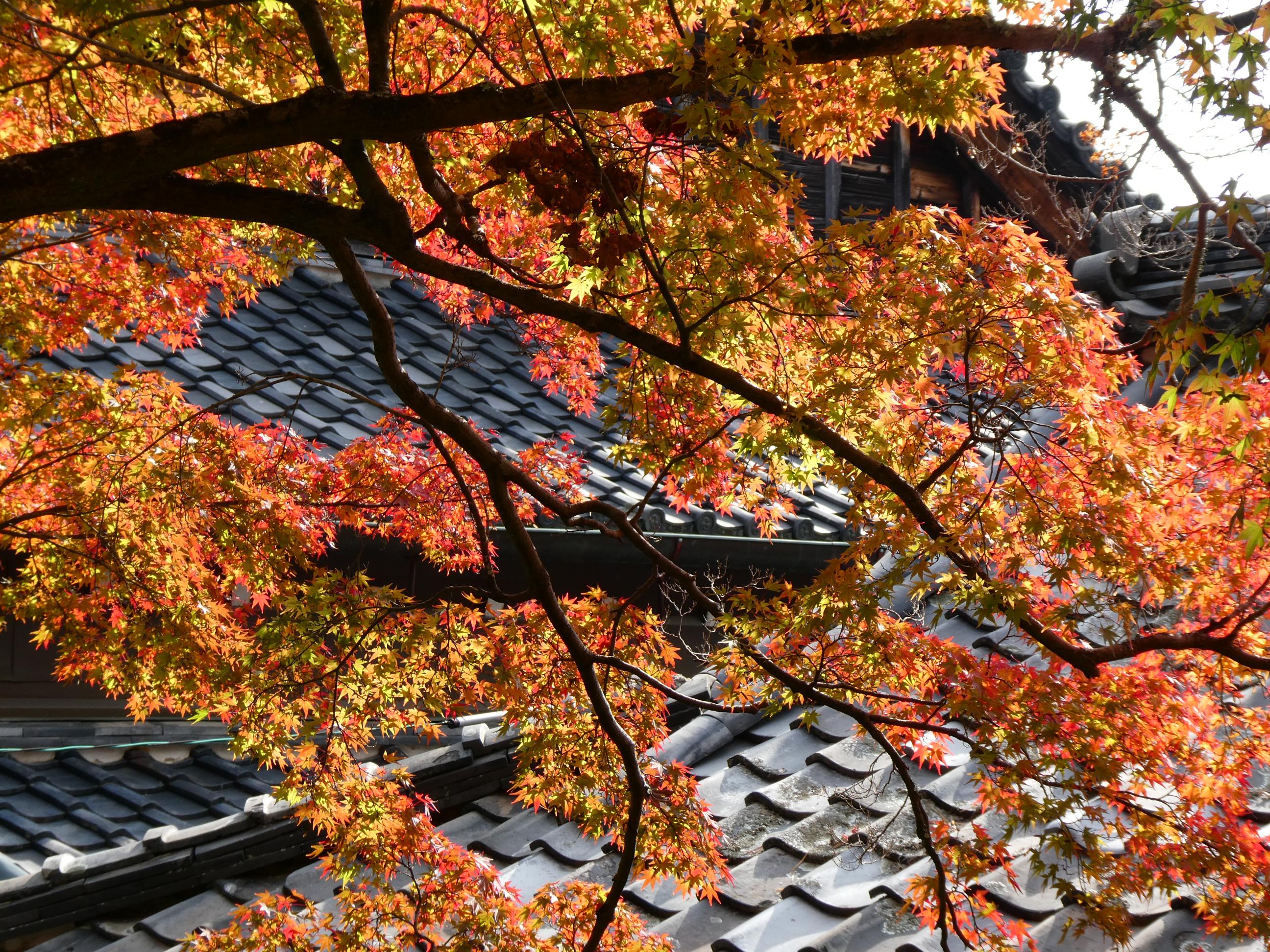
We returned to the temple to collect our shoes, and headed out into the garden. A winding, undulating path took us through some of the most spectacular autumn foliage we’ve seen since we arrived in Japan. We were lucky to have blue skies and plenty of sunlight falling on the leaves, creating the kind of scenes you might once have found on a postcard or perhaps a jigsaw puzzle. It was an absolute delight to wander through this garden, and I think it’s probably my favourite of all the beautiful ones we’ve seen over here. I won’t write any more. I’ll let the photos speak for themselves. I hope you take the time to click on some of the photos to enlarge them. Aren’t those colours amazing.






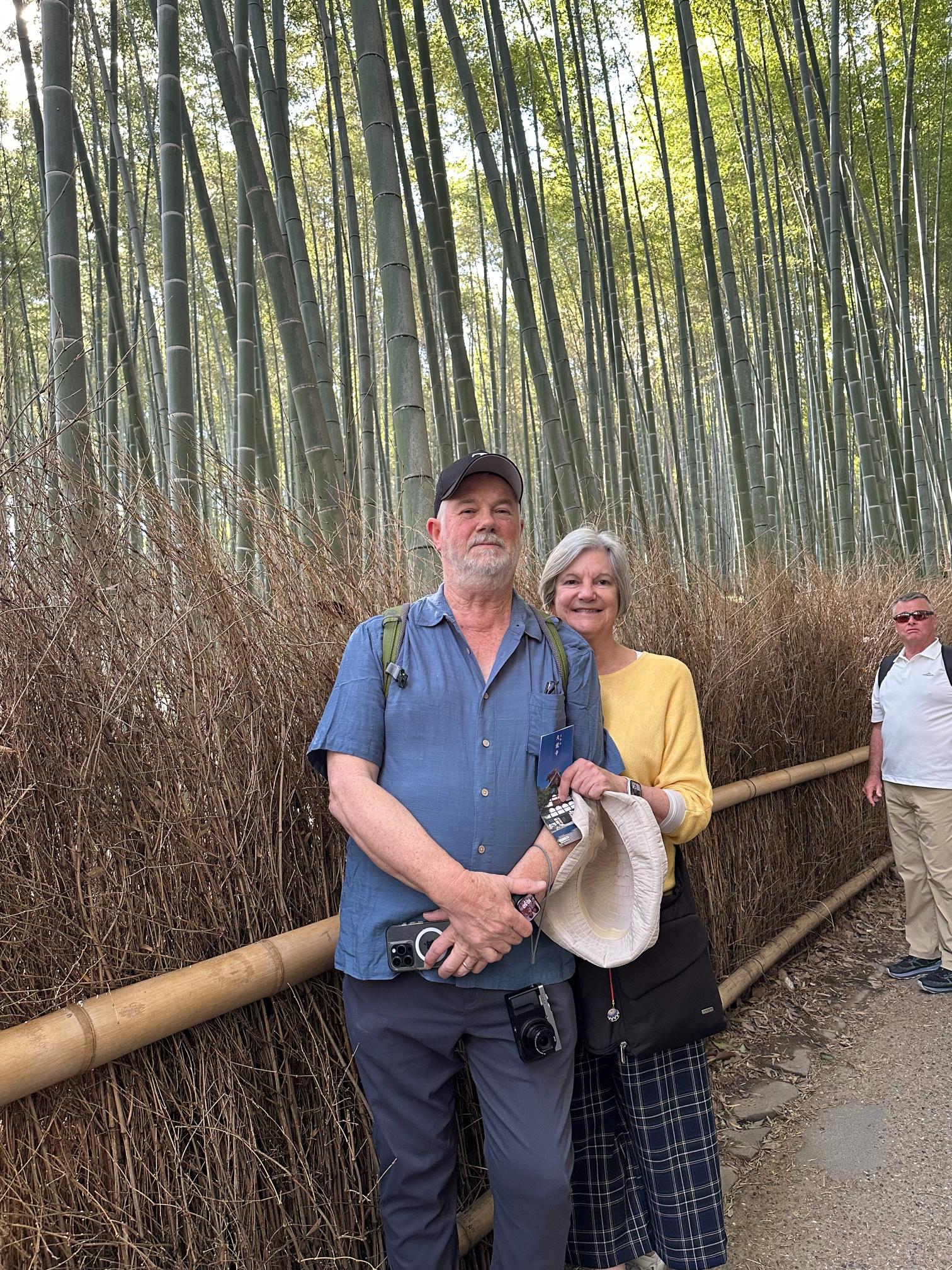
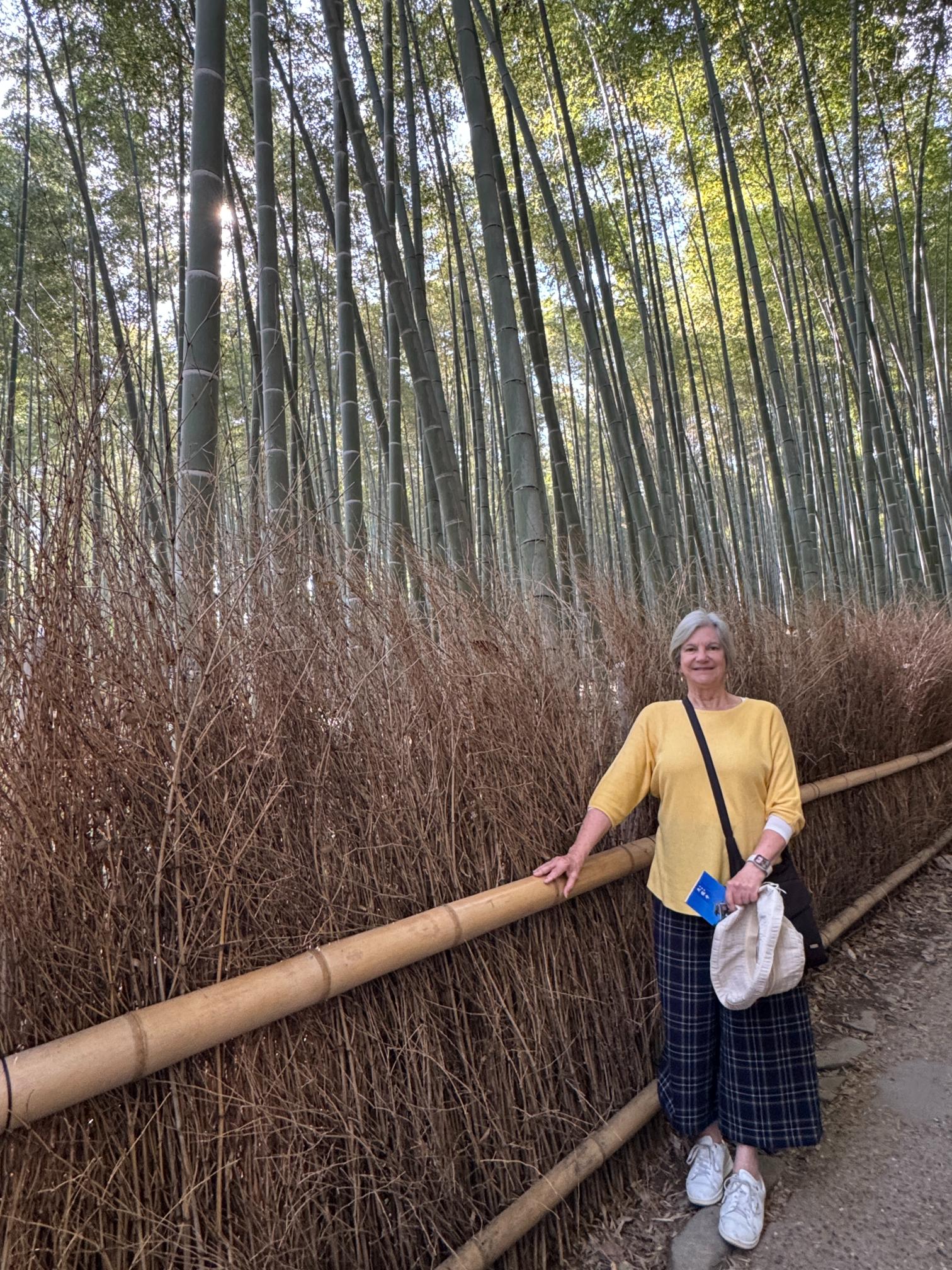
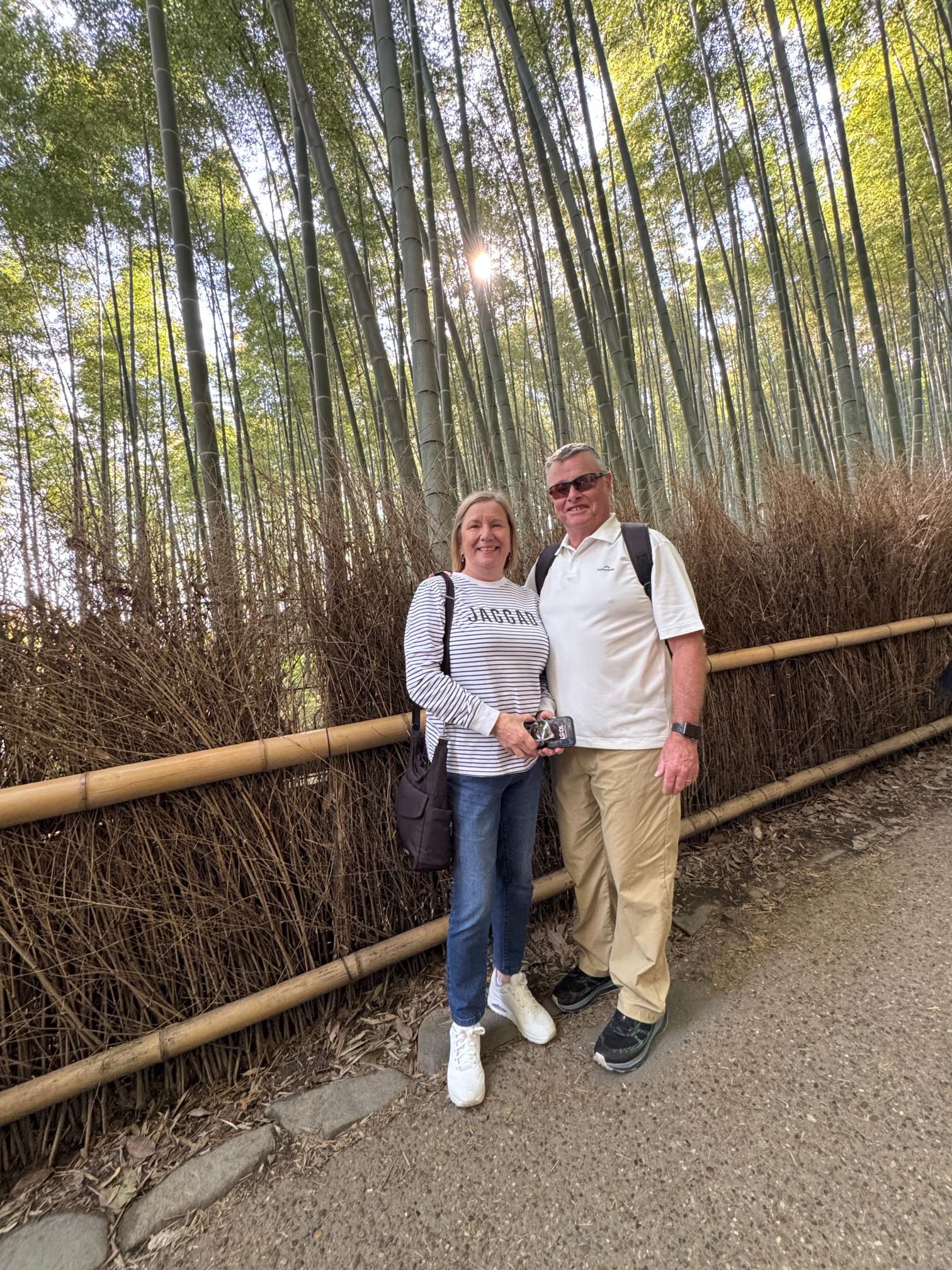
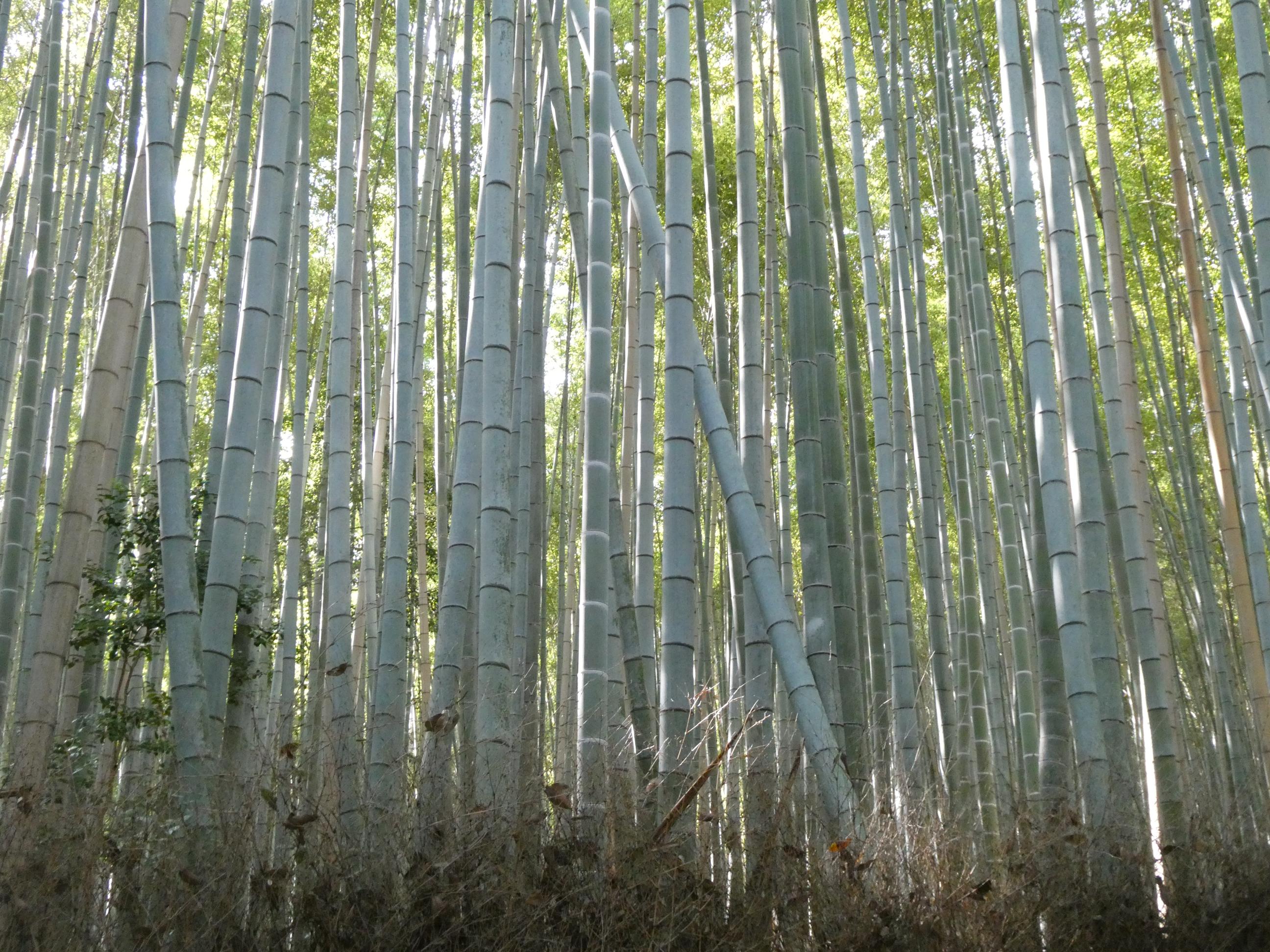
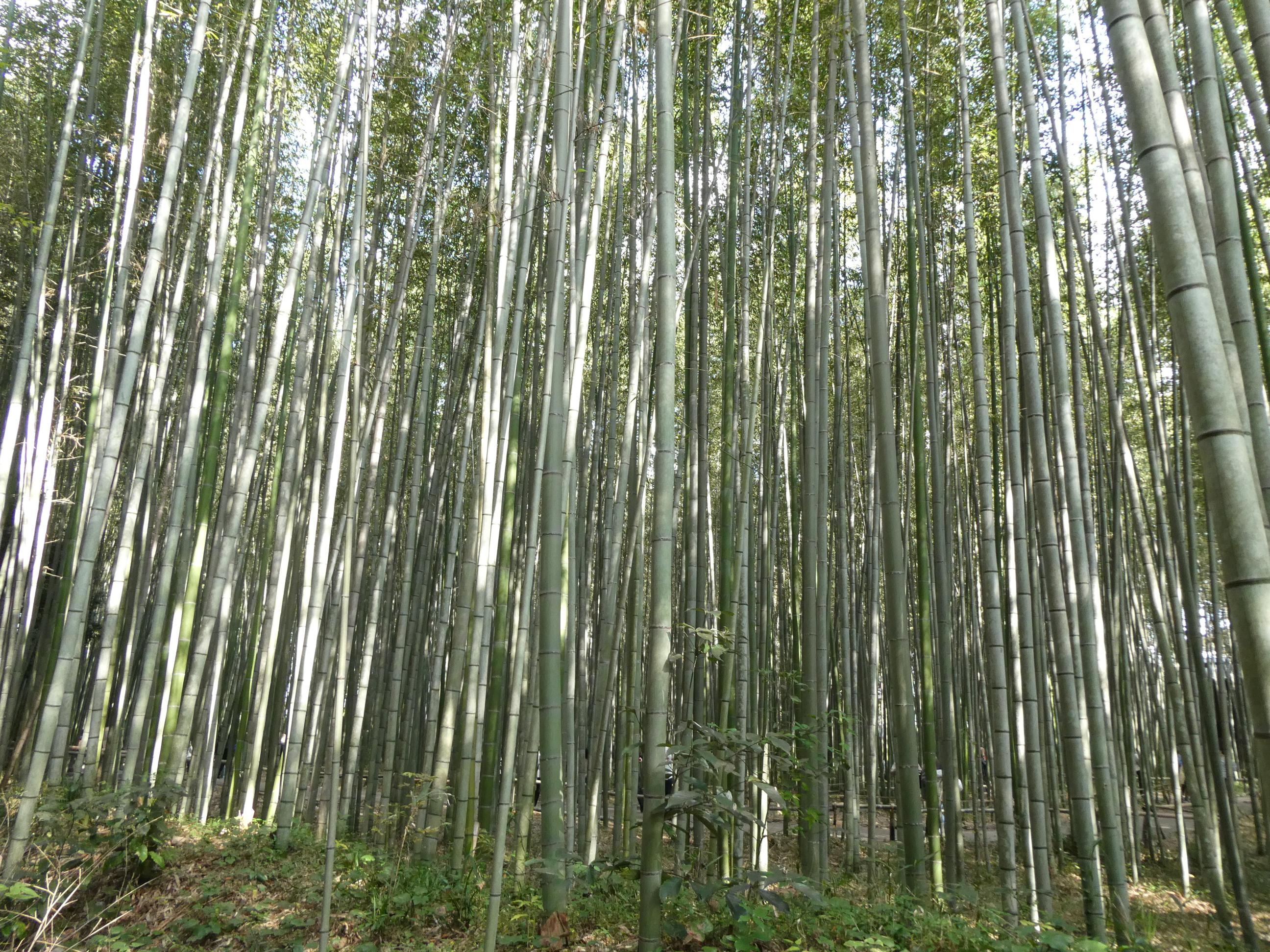
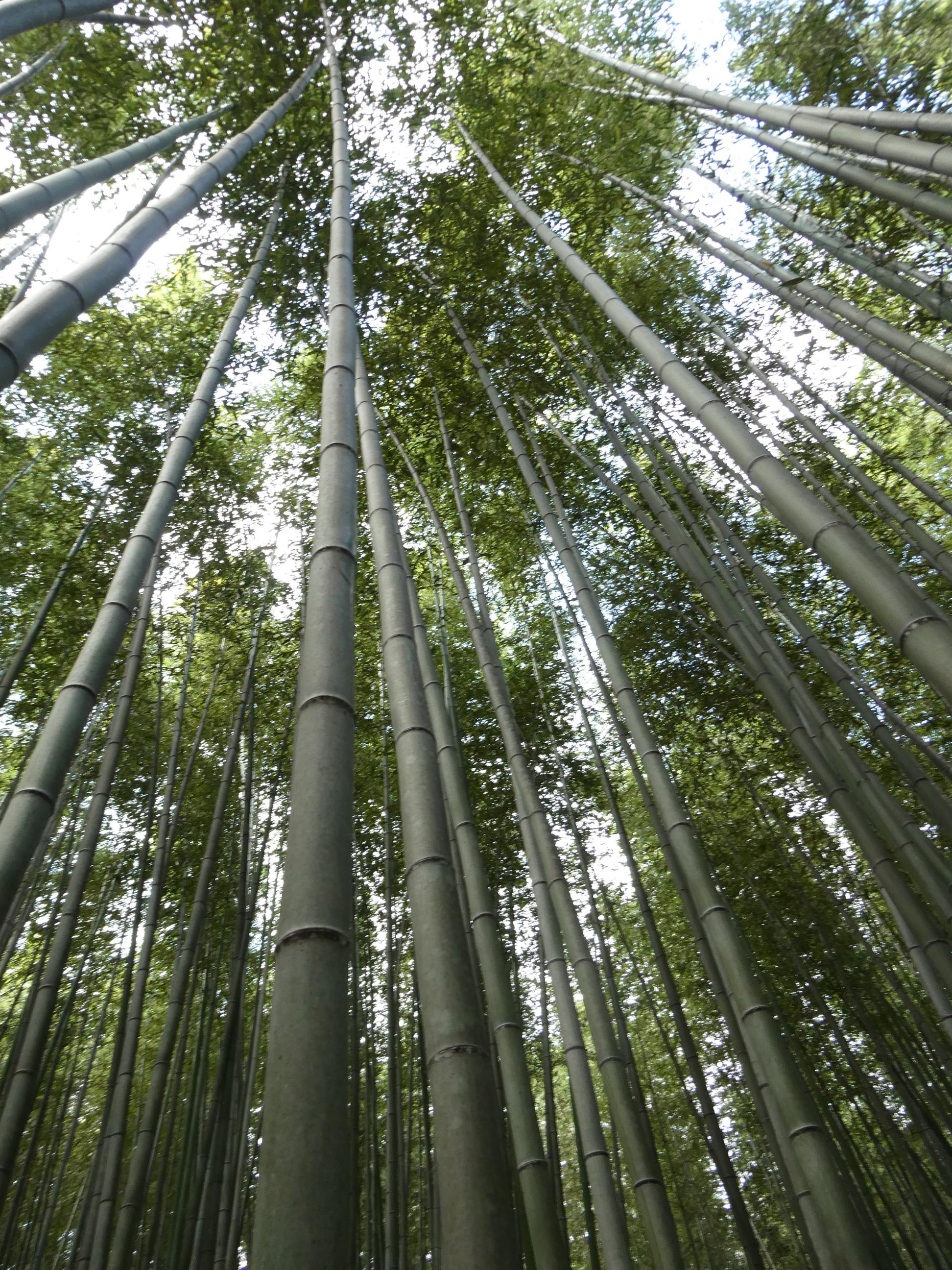
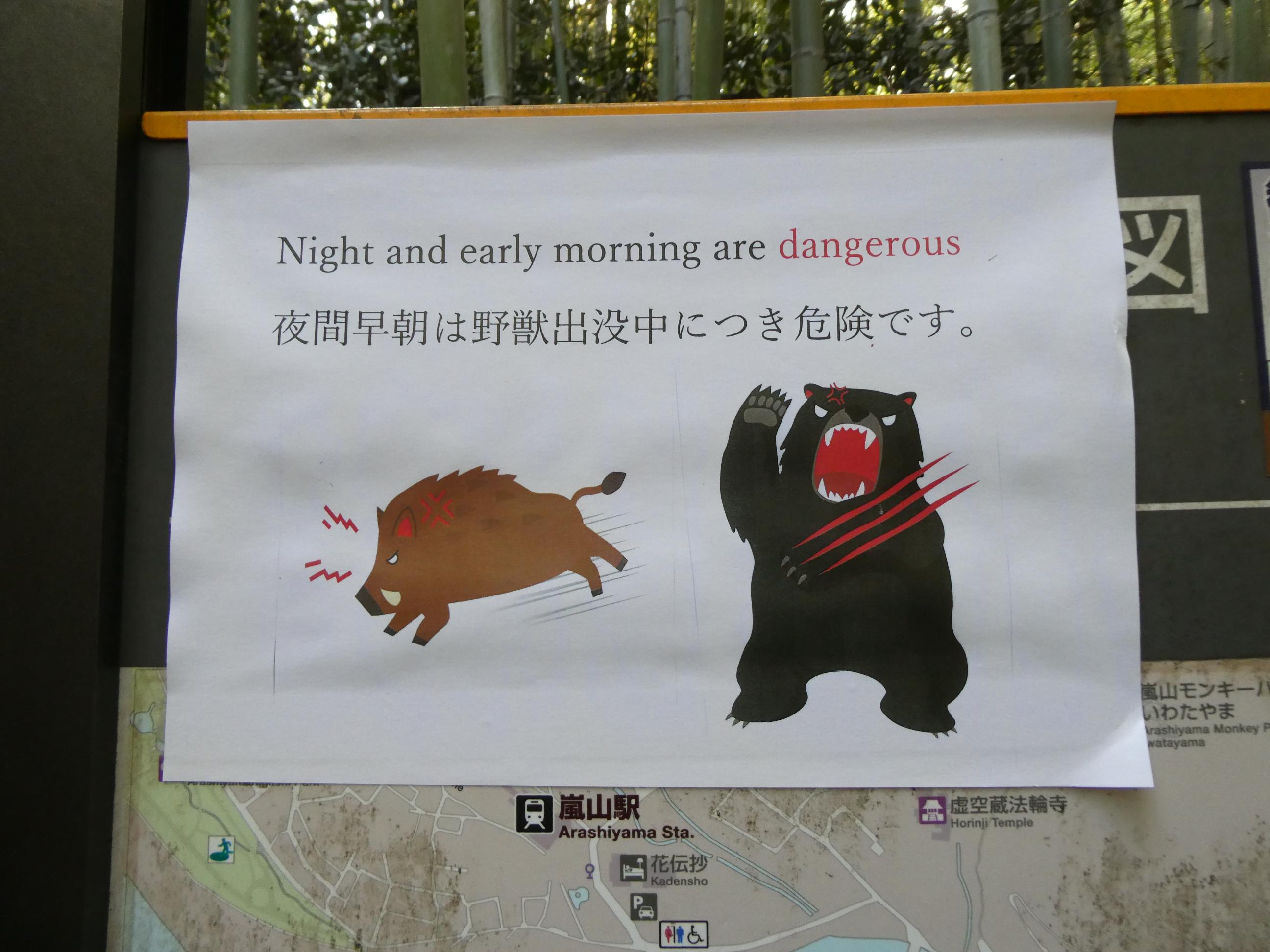
The path from the temple garden led directly into the path through the bamboo grove, although once we entered that path we were not permitted to re-enter the garden. I’ve seen a number of photos of the bamboo groves in tourist brochures, as well as in the photo libraries of family and friends who’ve visited here. In most of those photos, the person being photographed is usually the only one in sight, with dense stands of bamboo surrounding them on both sides of the path and very little sunlight peeking through. We weren’t that lucky today, as there were far too many people on the path, so the best we could do was to go to one side of the path and take the shot looking out into the forest behind, rather than taking a shot where the person stood in the centre of the path, with the path receding behind them into the distance. I think a shot like that would have shut out most of the sunlight between individual plants and just produced a dense ‘wall’ of bamboo behind the subject of the photo. Unfortunately, in the shots I have here, the sunlight between the trees makes the forest appear to be perhaps ‘thinner’ than it really was. We’ve certainly picked the best time of year for the autumn leaves for our trip, but unfortunately it coincides with school excursion season and, of course, a huge influx of tourists at this time to see the autumn leaves. I’d love to be alone in a bamboo grove like this, just for five minutes. We stopped to enjoy some traditional tunes played by the only buskers I’ve seen so far on this trip. The bamboo flute player played a slow, calming tune, whereas the handpan drum player was more upbeat. The bamboo grove might give the appearance of being a silent and reflective place, but when it’s dark there’s a chance wild boar or bears might inhabit the same spaces that we did today.






We passed a craftsman on the path splitting bamboo and creating beautiful fragile dragonflies. They balance lightly on the very fine tip he carves at the front of the dragonfly’s head, and give the appearance of a dragonfly in nature gently alighting on a leaf or a twig. Marg couldn’t resist and bought one, although they weren’t really cheap. We decided on one the same colour as the Torii gates to remind us of our time in Japan.


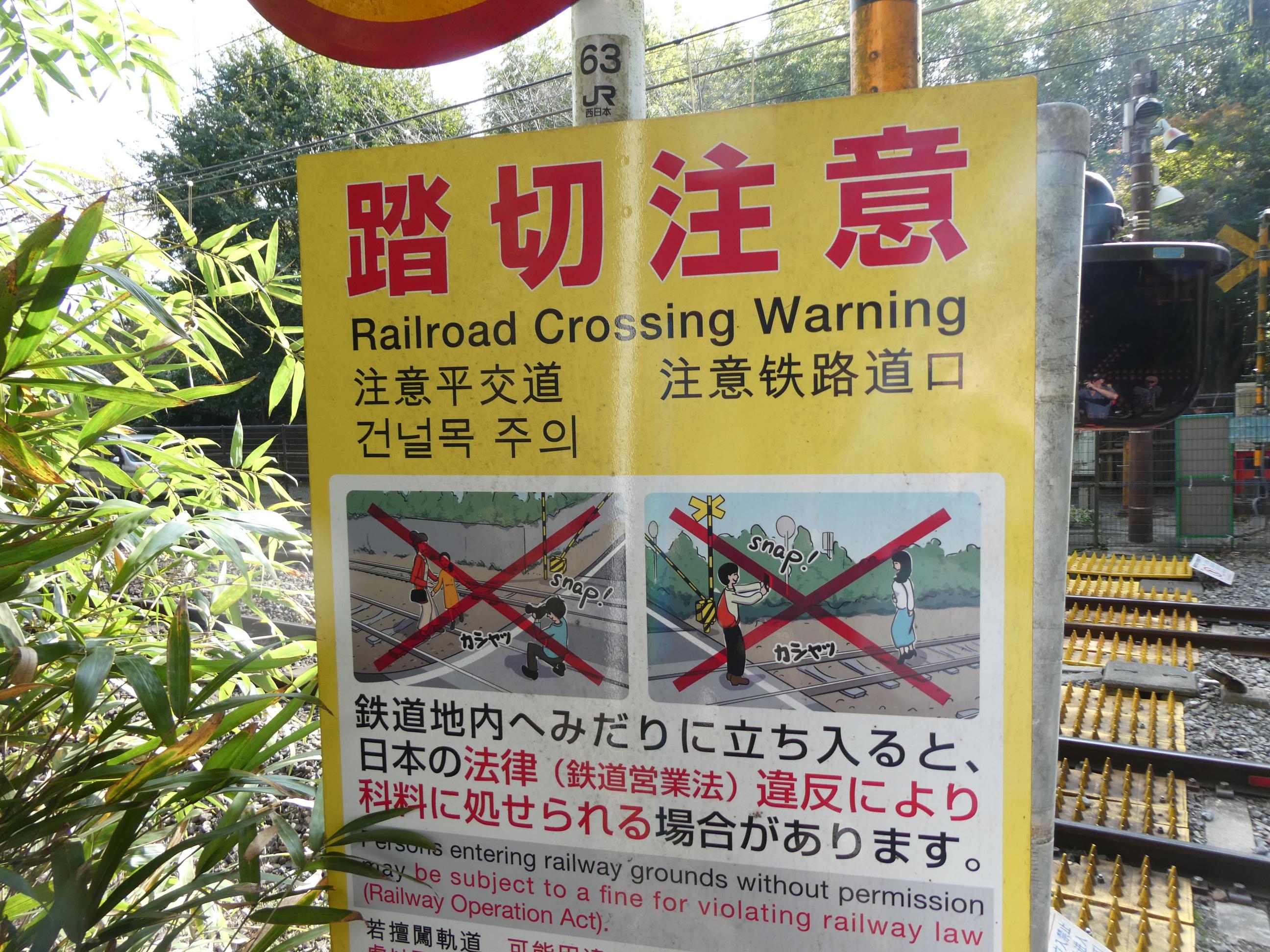
A train track cut across the path through the bamboo grove, so we waited patiently for the train to go hurtling past. While I was waiting, I amused myself with the graphic on the warning sign.


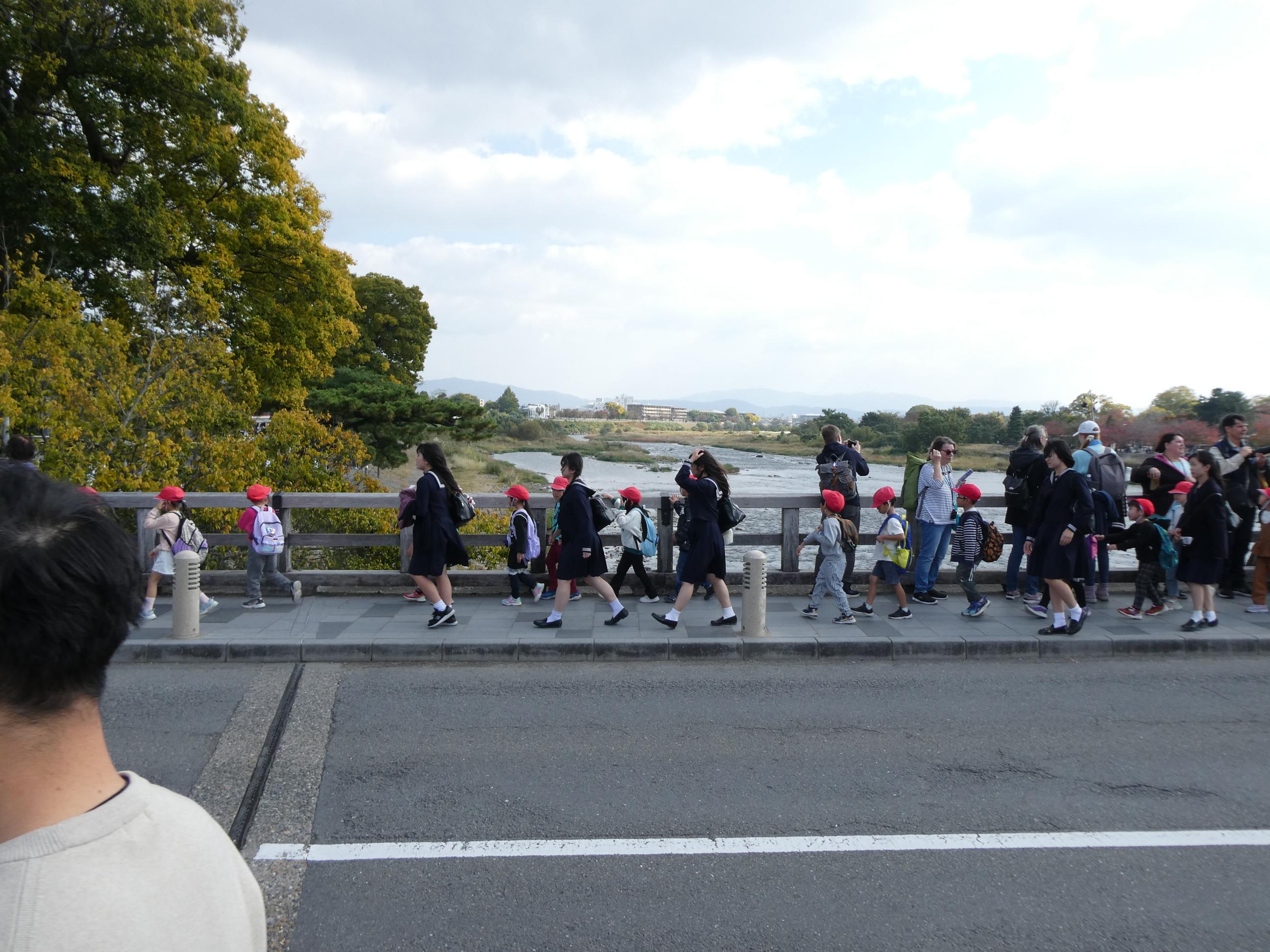
We walked along the main street of the town to the Togetsukyo Bridge which spans the Katsura River. It’s a popular place for photographers to gather, and it was quite busy when we were there. Crossing the bridge at the same time as us was a school group wearing red hats, which pleased me because every other school we’ve seen has had yellow hats, which must make it nearly impossible for the teachers to identify the students from their school when they’re in a large crowd that also contains students from other schools. Lots of people were taking to the water in boats and, no doubt, enjoying the beautiful autumn colours on the mountainside adjacent to the river.




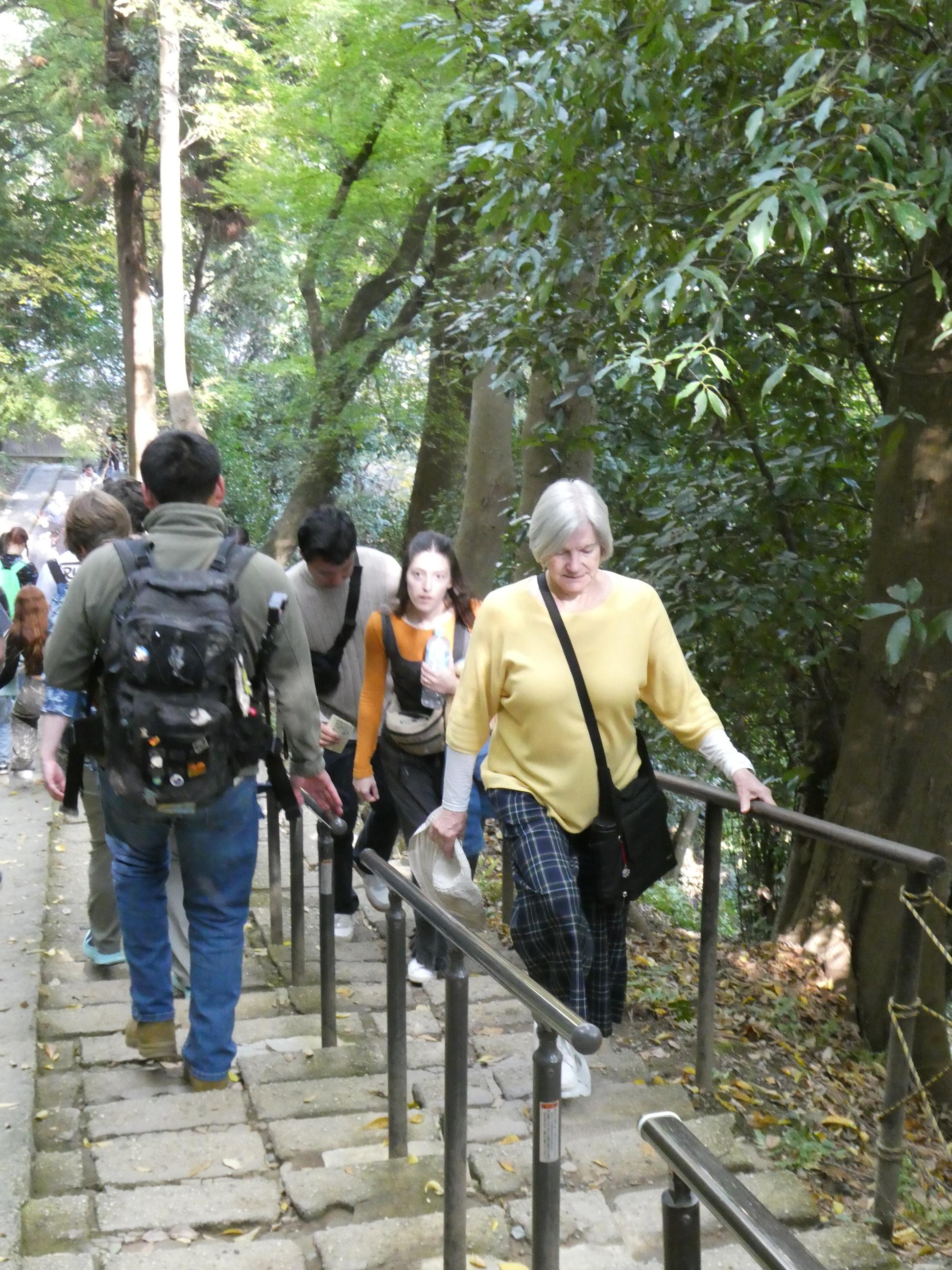
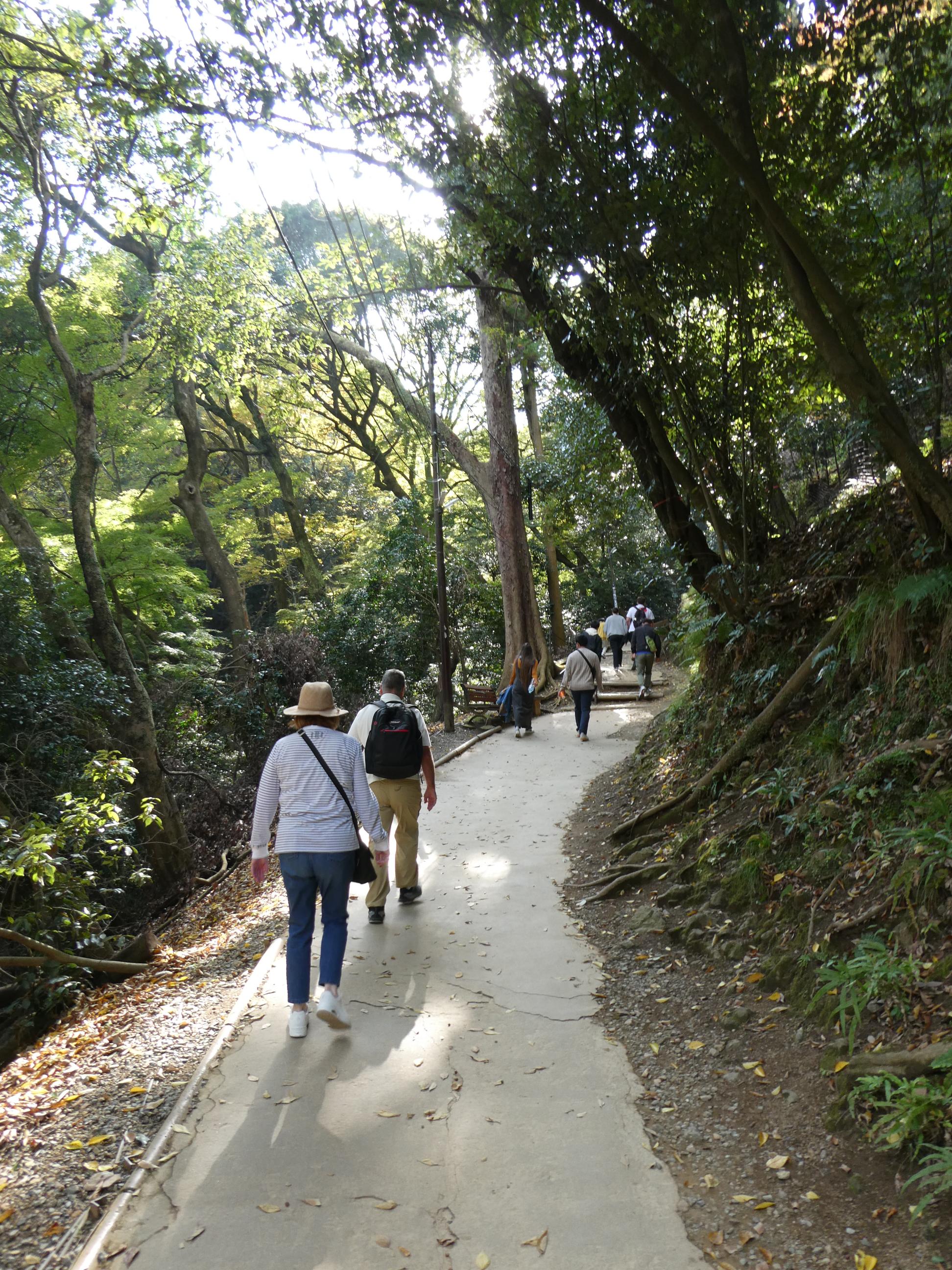
On the far side of the bridge was a steep winding path that led to the monkey park high on the mountainside. Signs told us it would be a 20-minute climb. Marg and I probably needed every minute of that time and maybe even more. I was quite puffed when I finally reached the top, but I kept reassuring myself that it was worth the effort because the return journey would be downhill all the way. Once we reached the monkey park we were afforded fantastic views out over Kyoto and its surrounds.



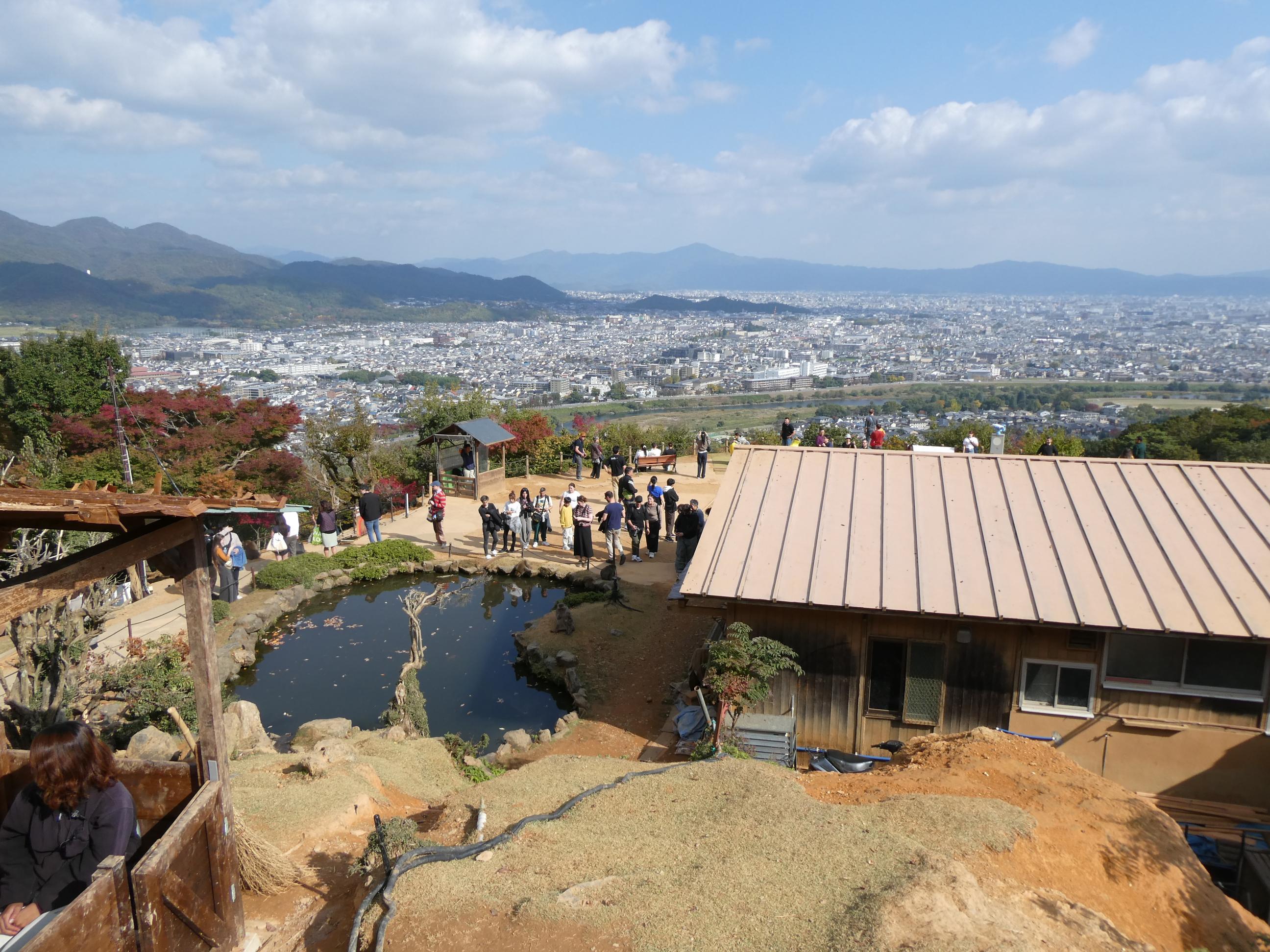
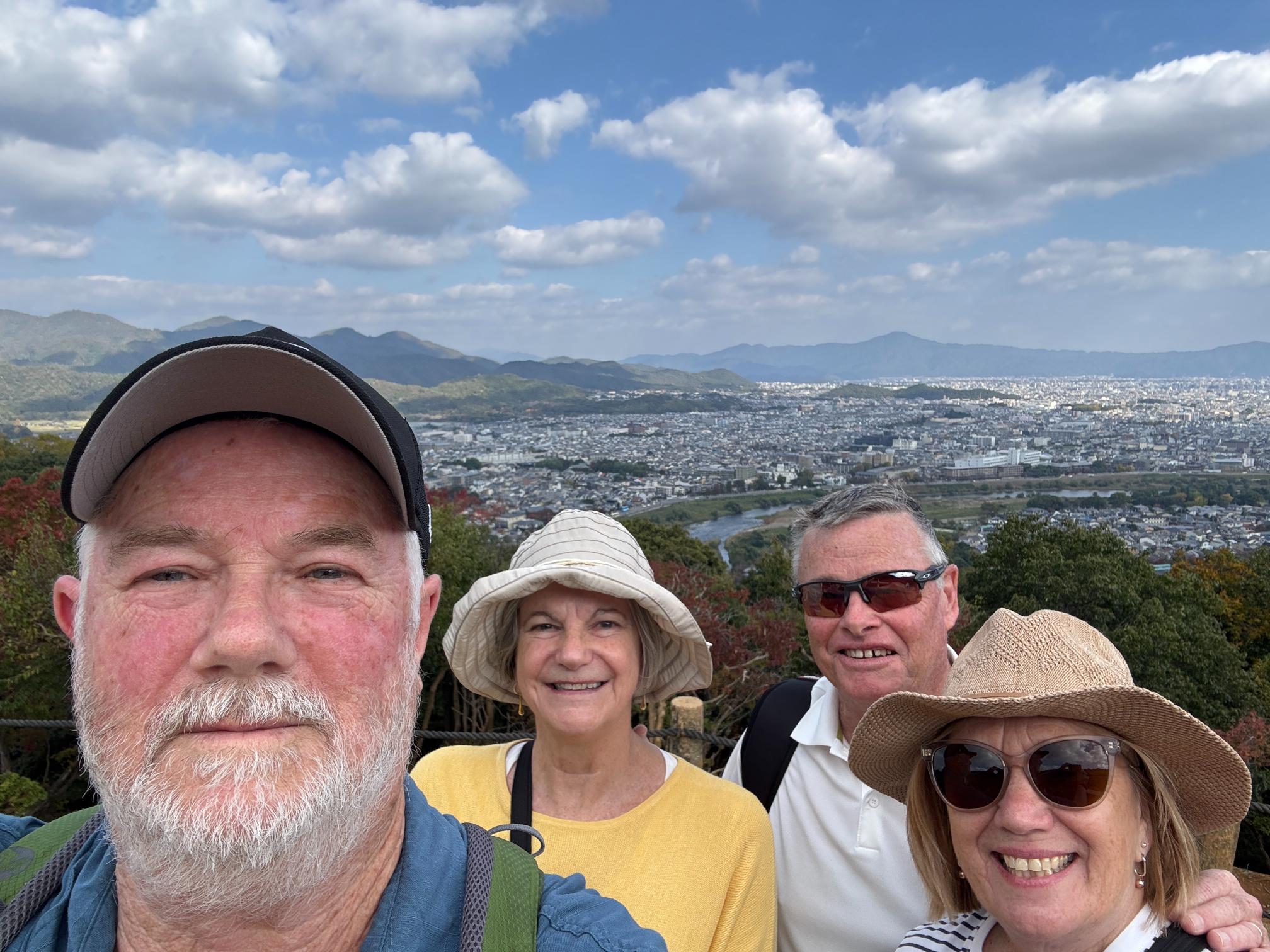

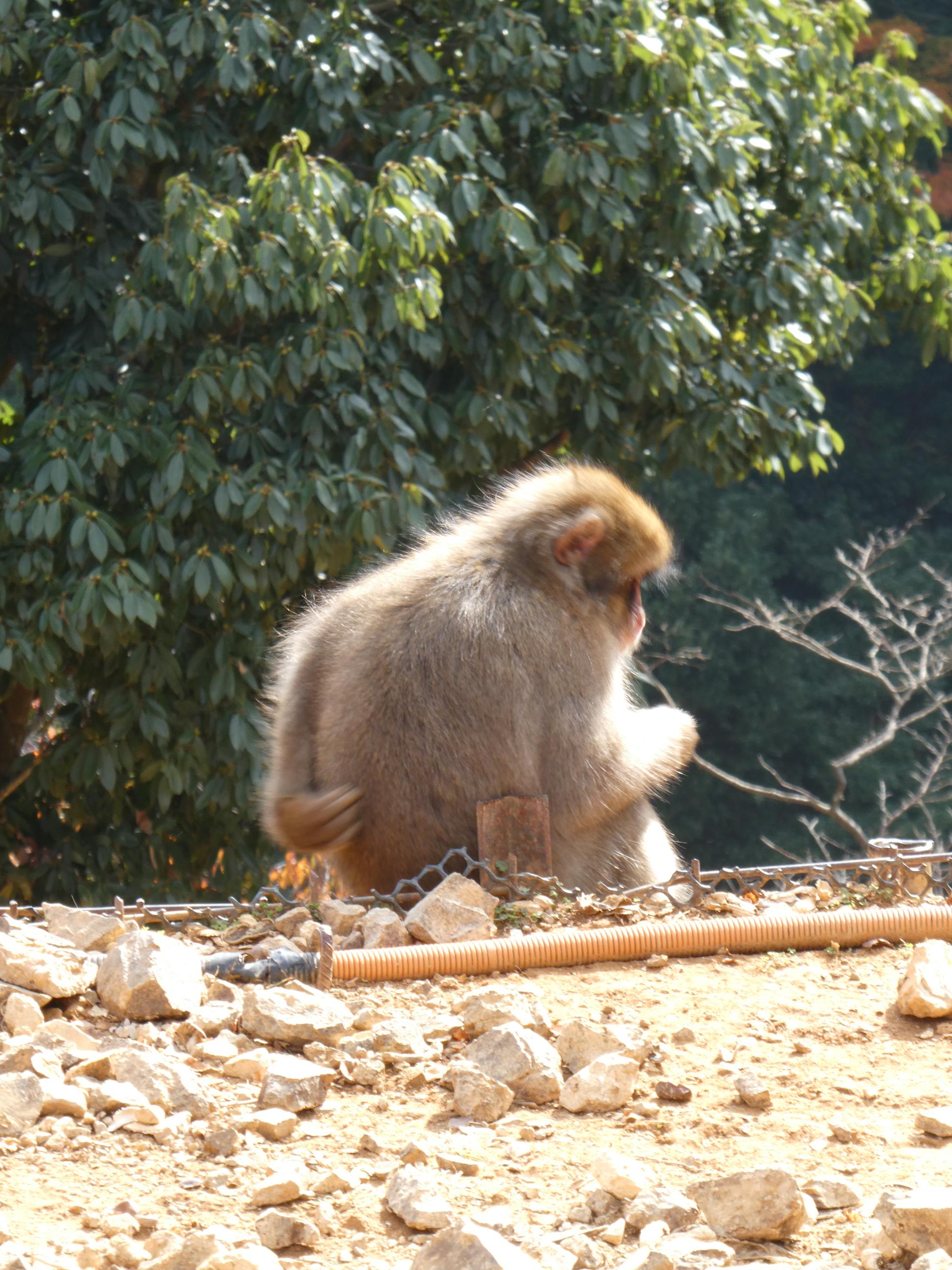
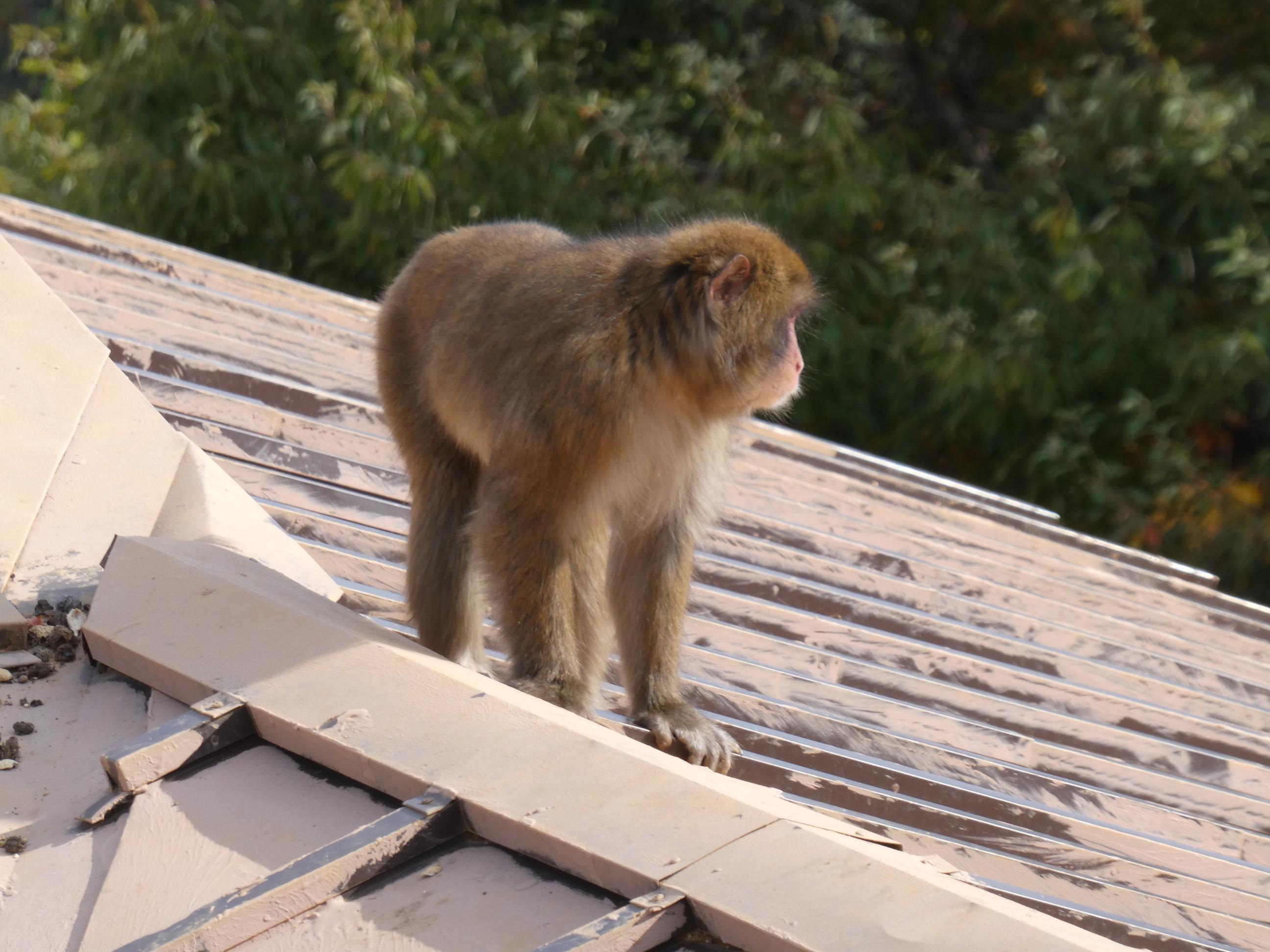
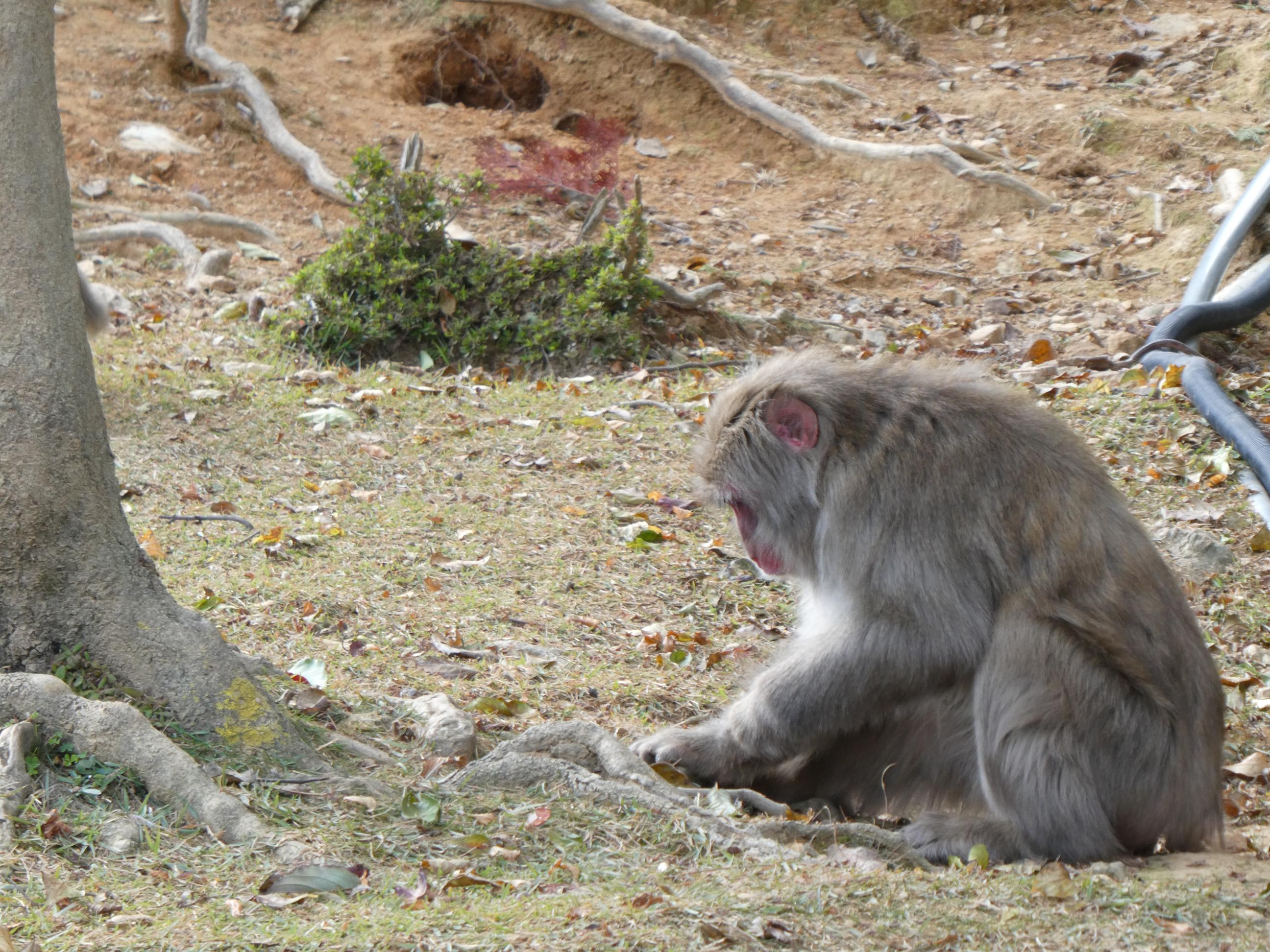
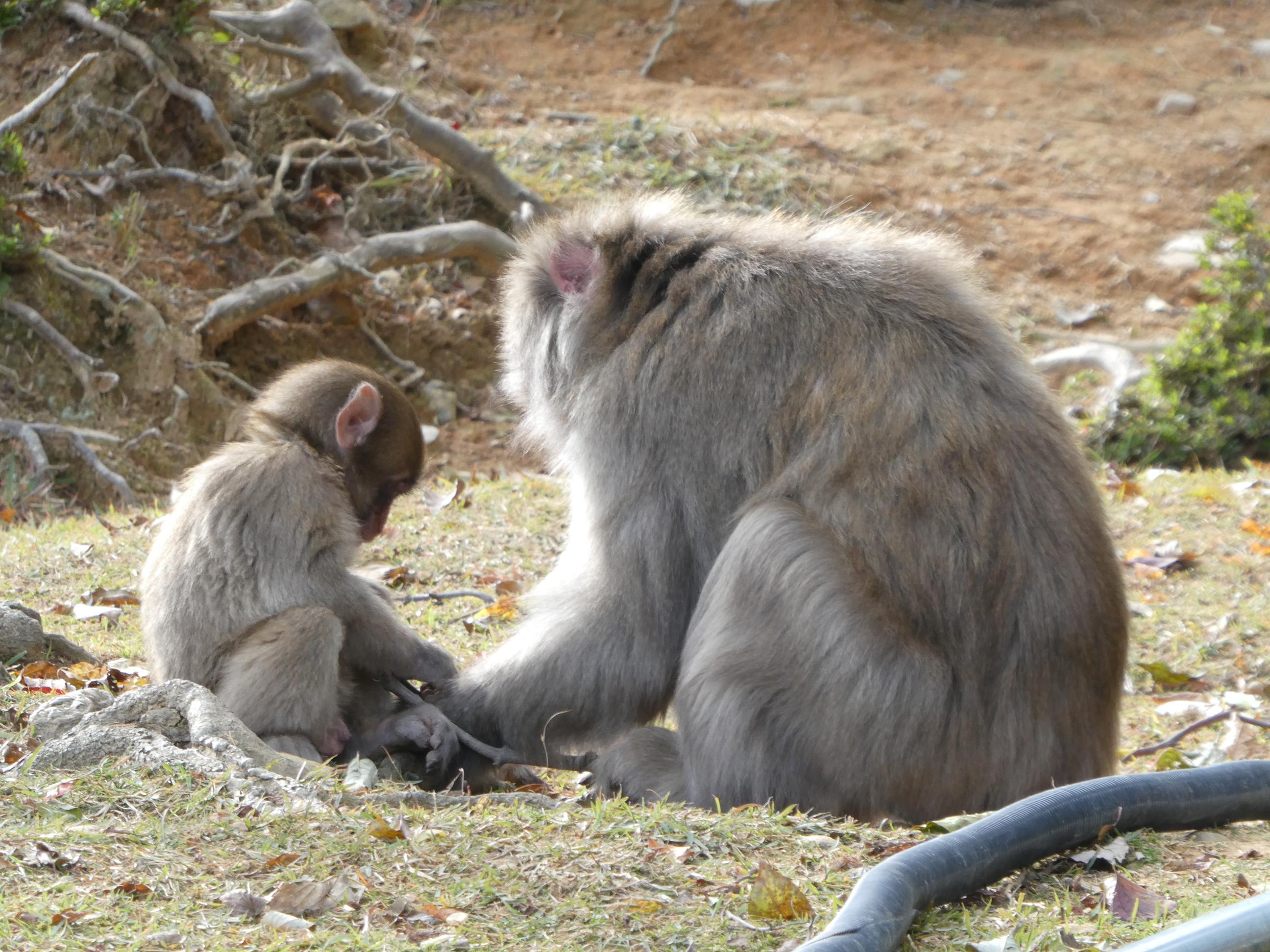
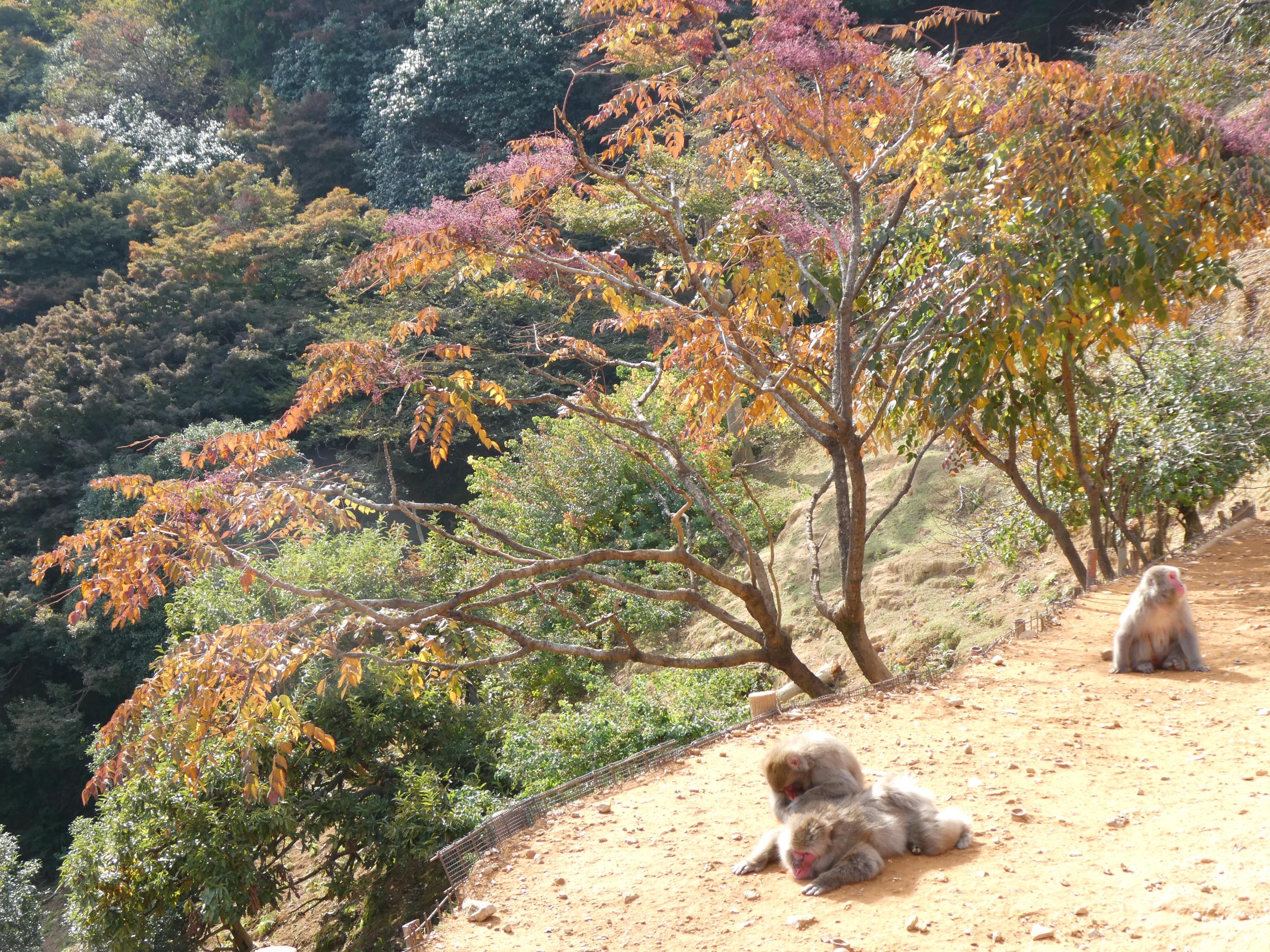
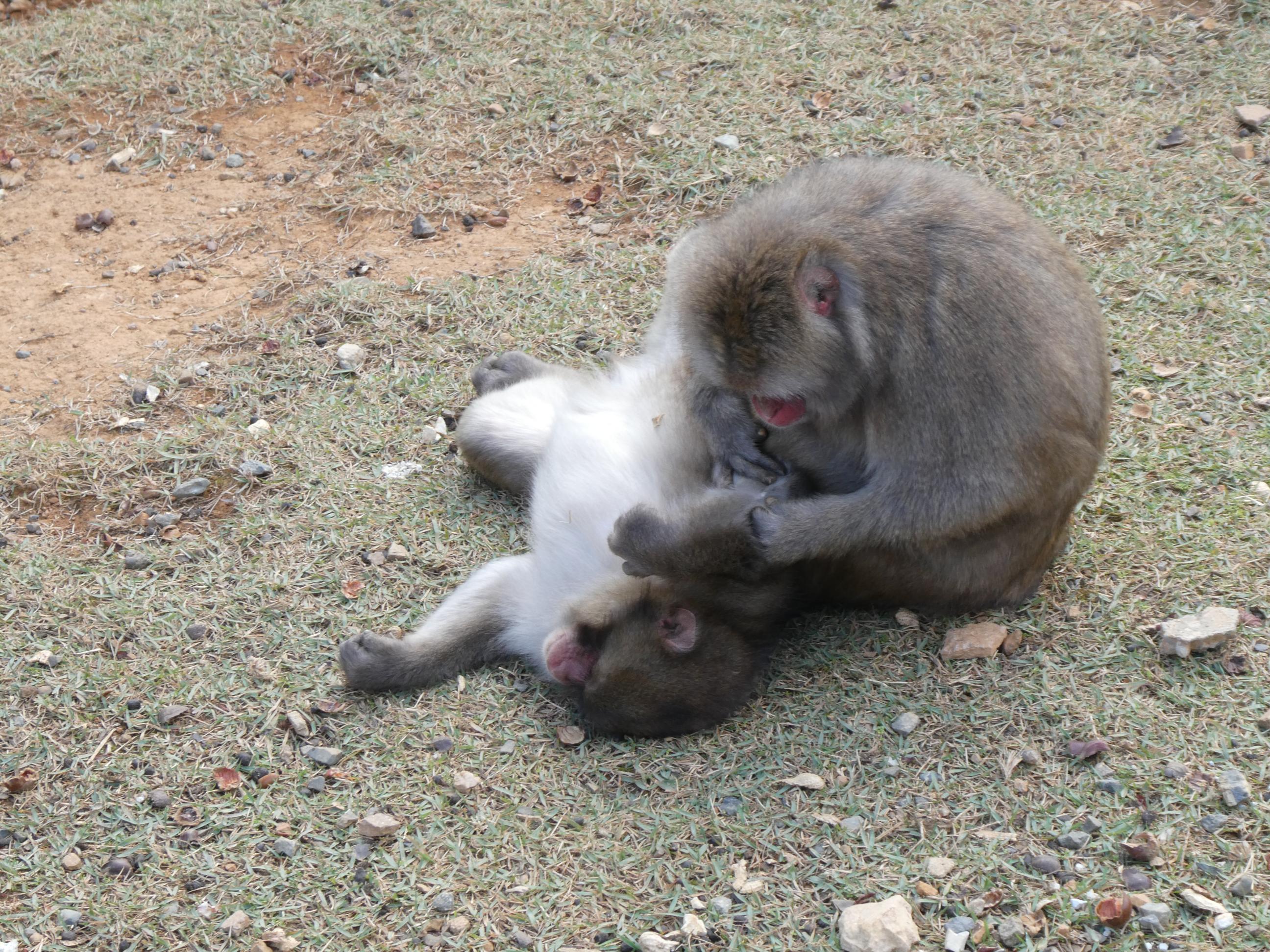
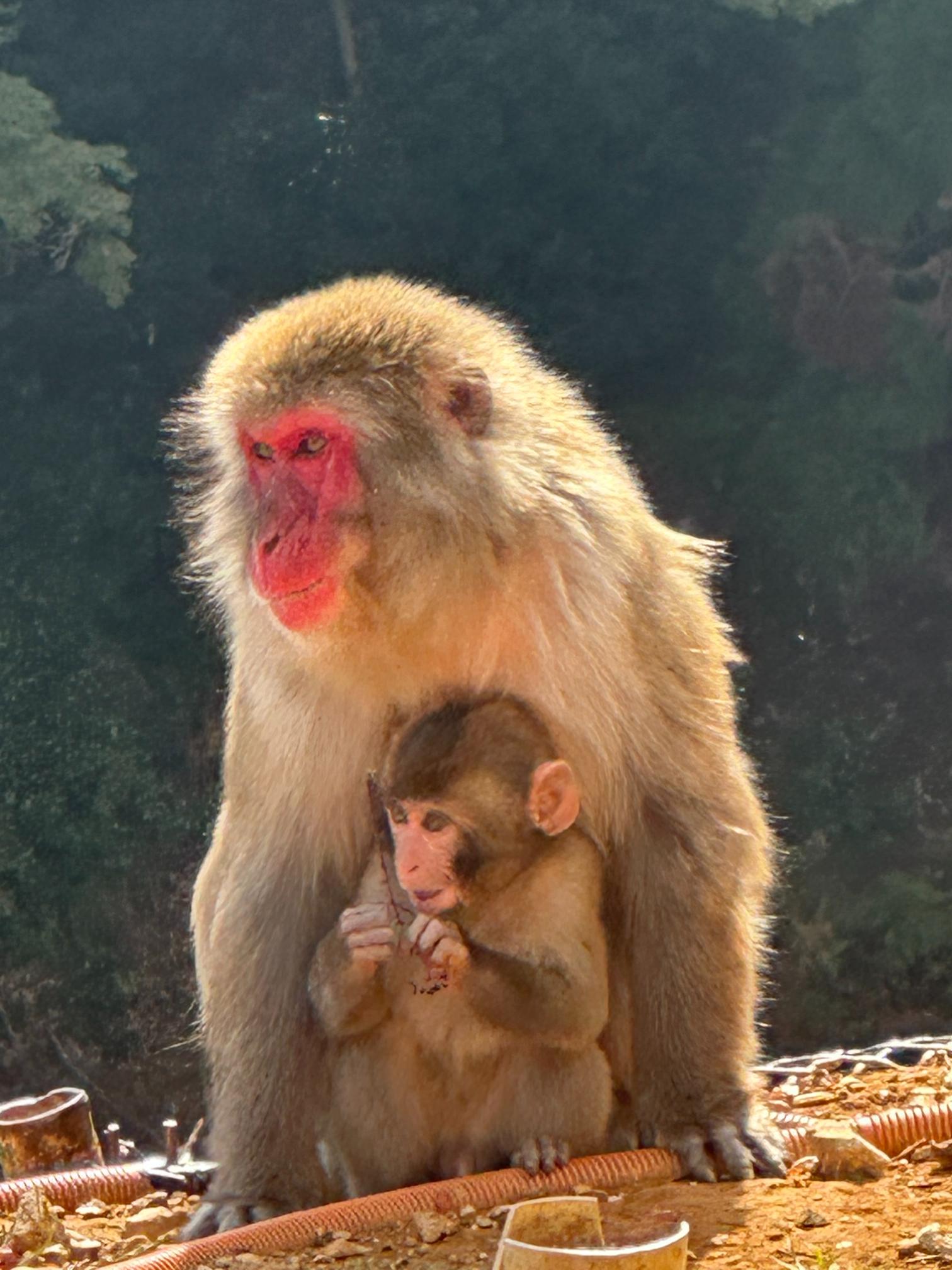
The monkeys at the park are northern macaques, the only species of macaque which can live north of the sub-tropics, where the climate is colder and sometimes snows. They live in the surrounding forests, but wander in to the park, which is really just an open space and a building and little else. At the park they sit around within metres of tourists, paying them little attention. Often you will see a pair grooming themselves, or a mother taking care of an infant. Sometimes they climb up onto the roof of the admin centre. We’re told they won’t cause us any harm as long as we don’t attempt to feed them and don’t come too close or stare into their eyes. Of course, in the short time I was there I observed several ignorant people breaking all these simple rules. A couple of the attendants came out of the building to announce that they were about to feed the monkeys, and they asked us to stand around the perimeter of a large circle. They called out loudly towards the forest, and the macaques came in quickly from all directions to wait in the centre of the open space. We watched as the attendants distributed some food, though not as much as I would have imagined. There was no squabbling or aggression as the short feeding session took place, which also was a bit of a surprise. We were probably up there for about half an hour watching the behaviour and enjoying the antics of the monkeys. I like seeing wildlife in this sort of environment. They all appear to be well cared for, and at the end of the day they’ll all go back into the forest. When I saw Theresa’s photos, I ‘borrowed’ a few of them too because I liked them so much – they’re the last four.






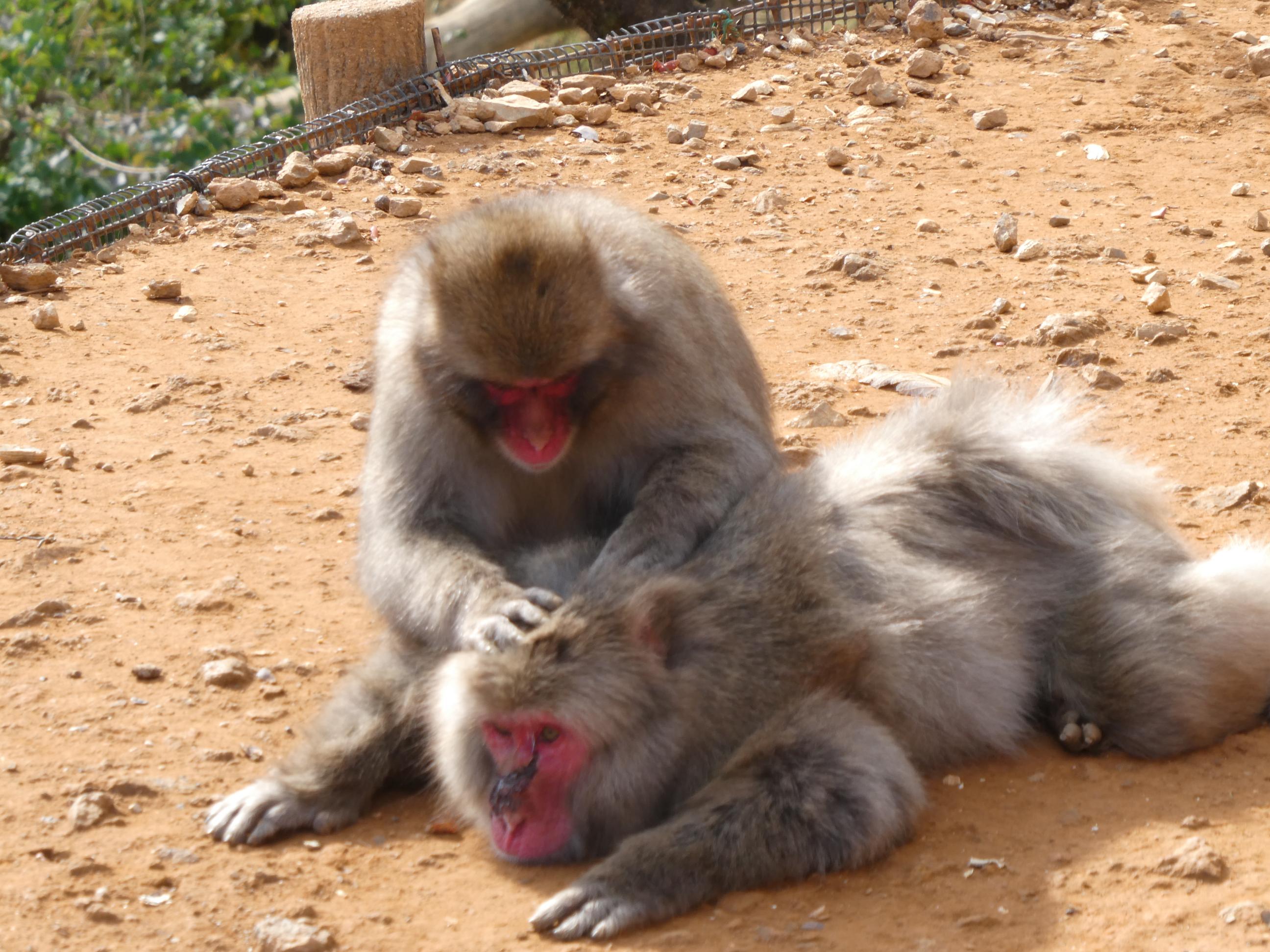


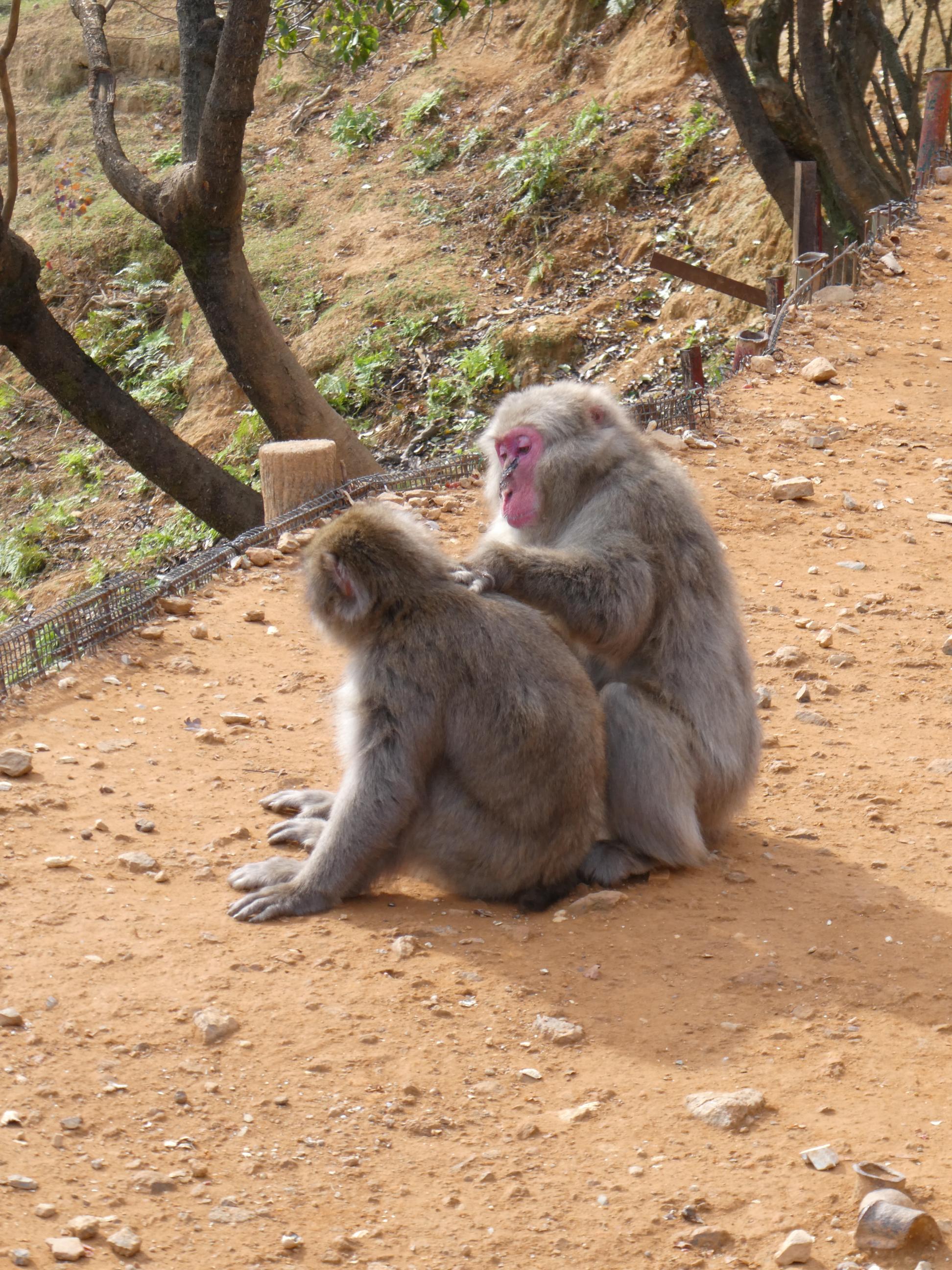


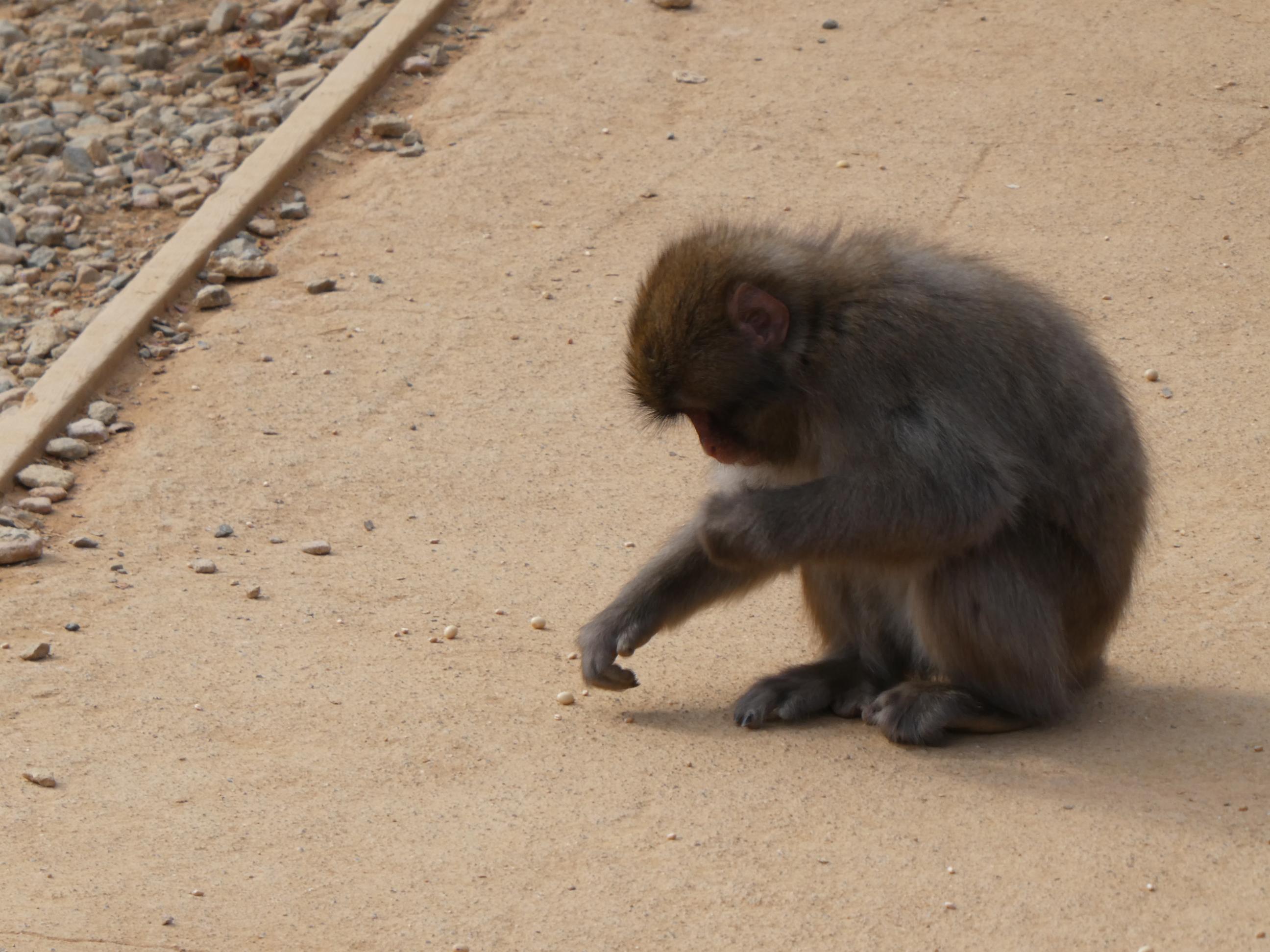

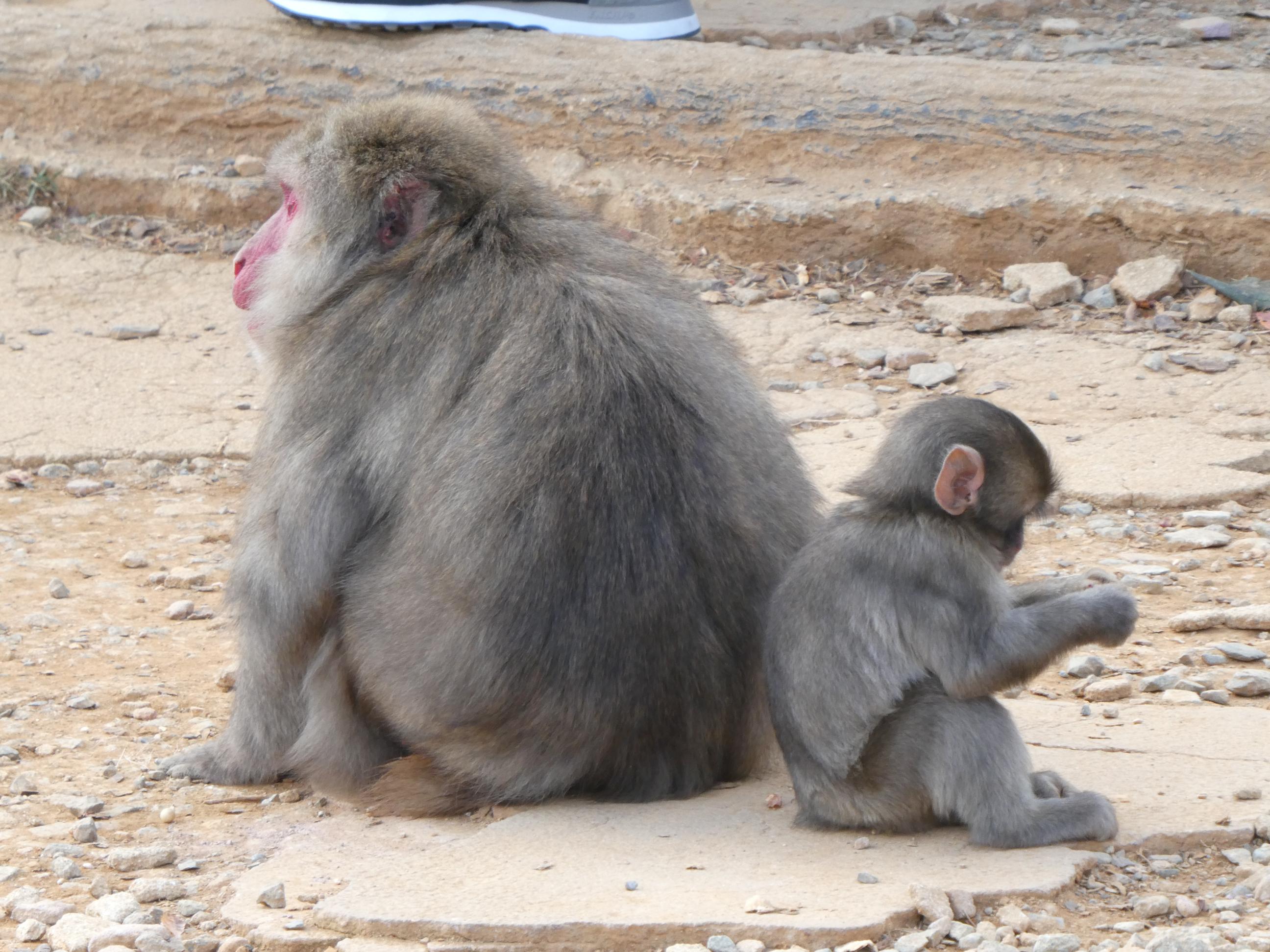



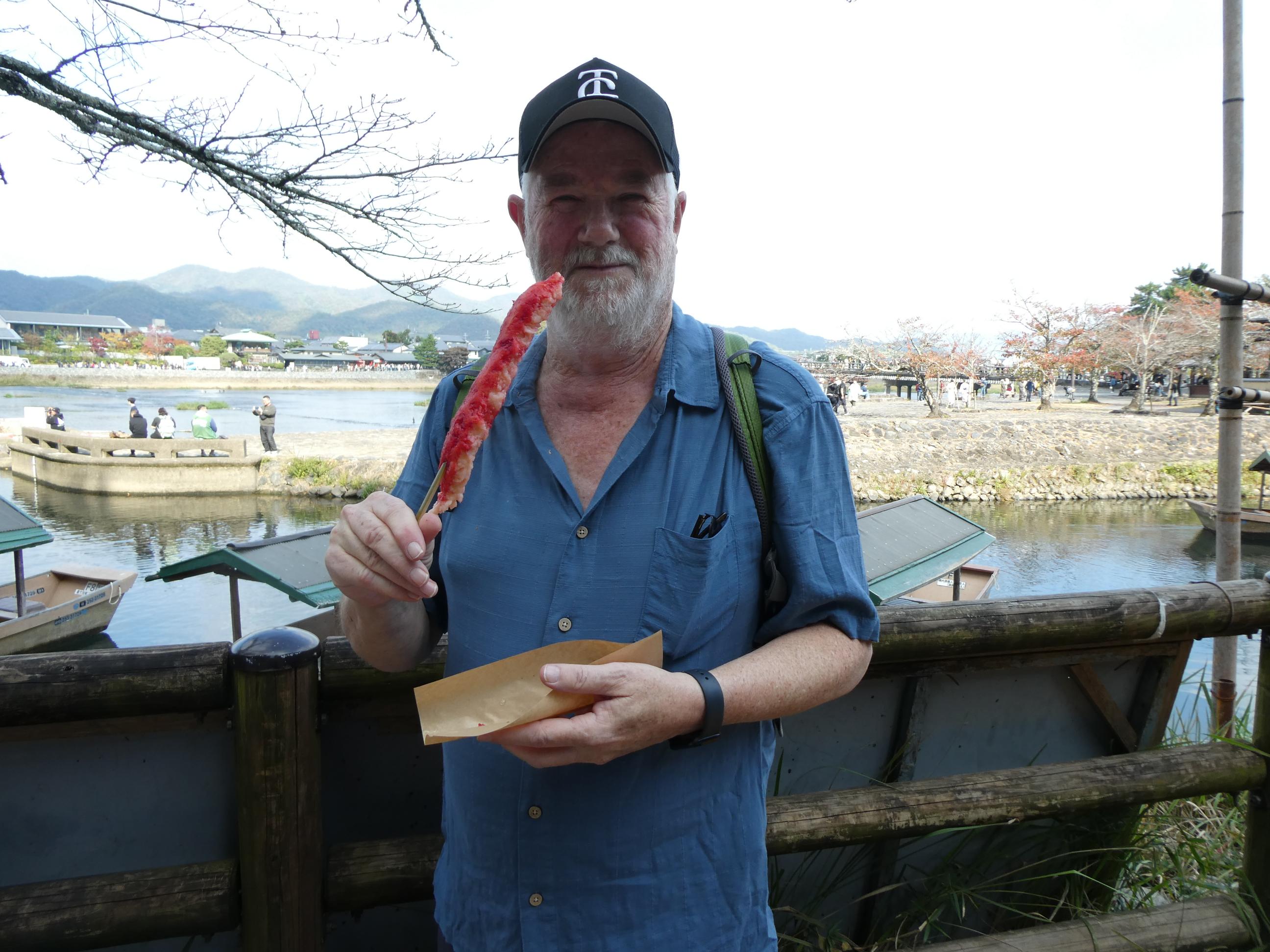
I enjoyed the downhill return journey, which is much more my style. At the bottom of the steps a vendor was selling big juicy crab skewers. I just had to have one. So I did. Yum!

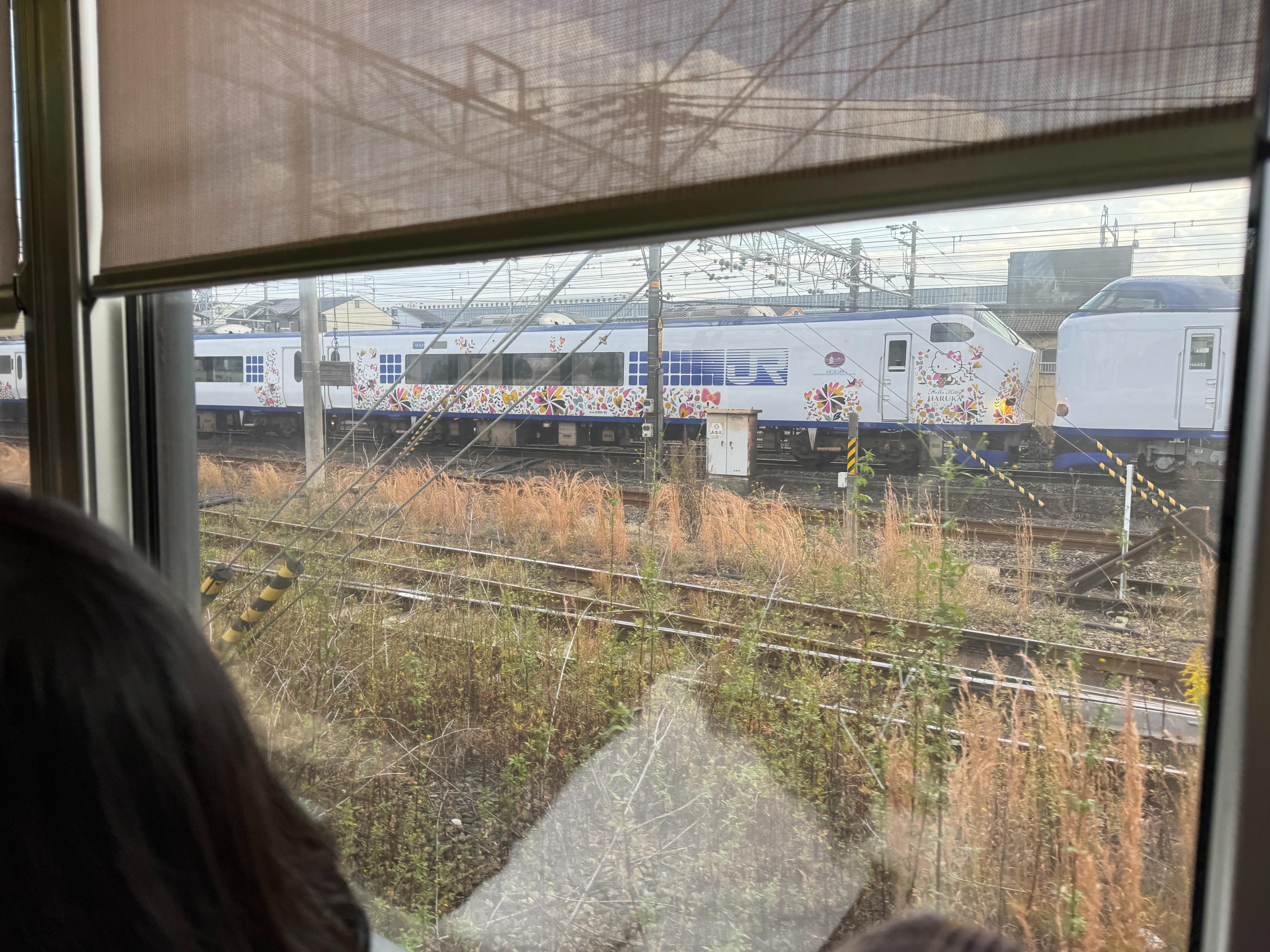
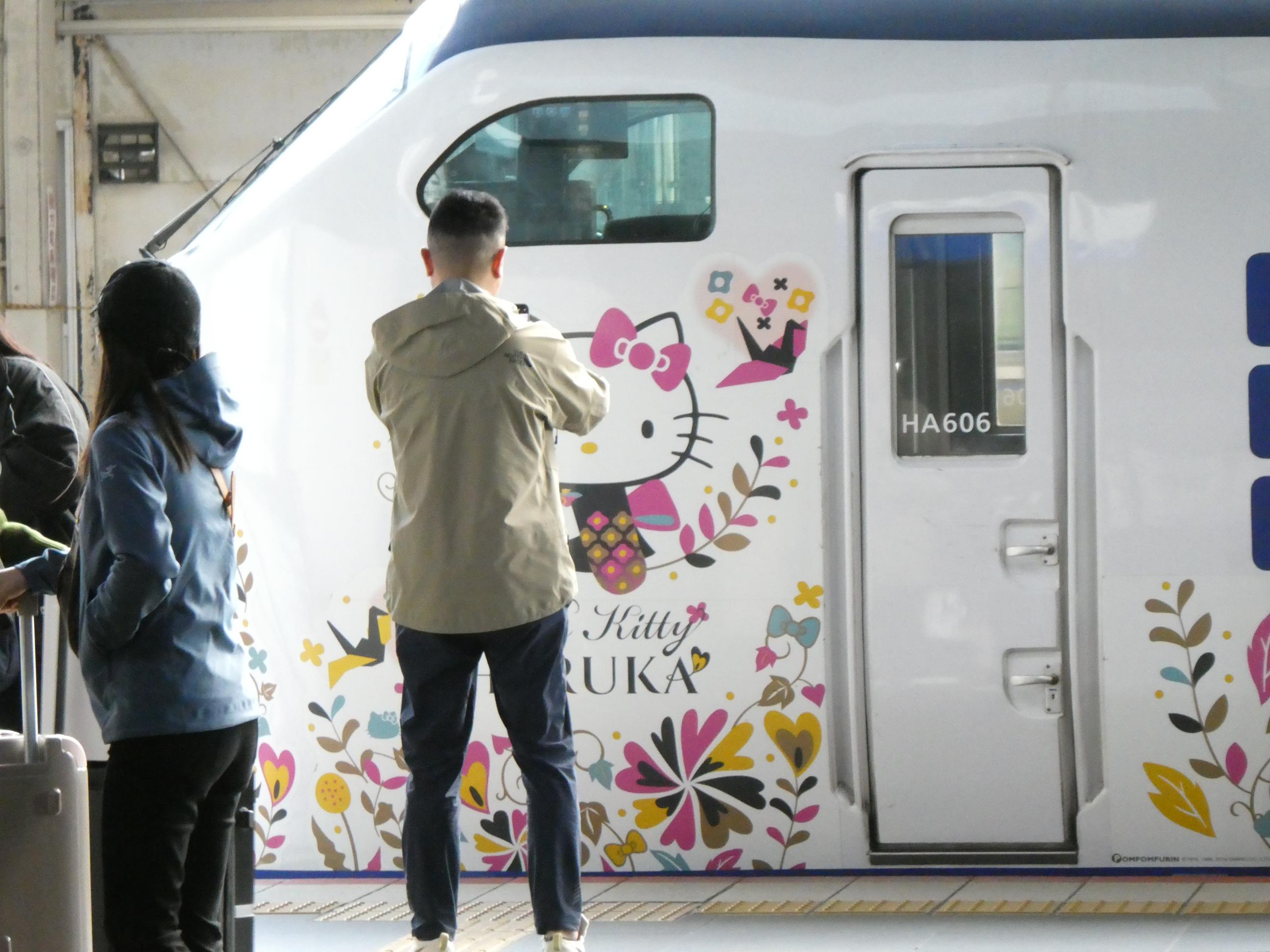
As our train was pulling back into Kyoto station, a train on another line came in on our right. It was a Hello Kitty train. I took a few photos to show my granddaughter, Layla. She adores Hello Kitty. I’m sure she’d like a ride on that train.
 On The Road With Garry