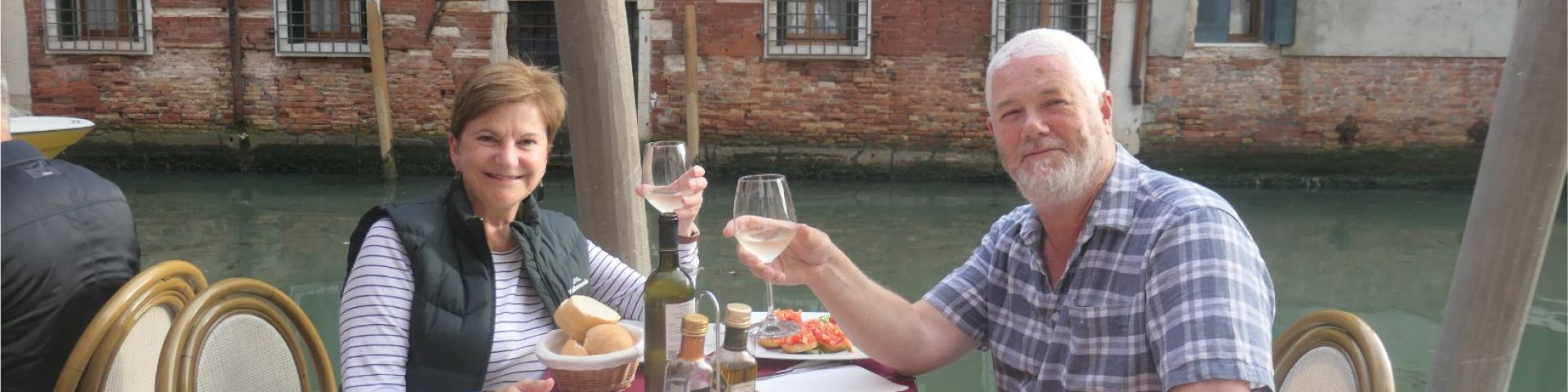
This morning we needed an early breakfast, as we were due at a bus stop ten minutes’ walk from our hotel by 8.10 am. At our arranged time of 7.00 am, we arrived at one of the two restaurants on the lobby floor and discovered there were queues at each. We joined the queue at one of them and waited ten minutes before they were able to find us a table. In the meantime, the queues for both breakfast buffets grew until they almost stretched right across the lobby. The reason for so many people all wanting breakfast at the same time can only be because quite a few bus tour groups came in last night, and they were all probably told to have a 7.00 am breakfast and be ready to leave by 8.00am. Some of those who came down just after 7 o’clock would have been lucky to get a table much before 7.30. What made it worse was that this is the only hotel we’ve stayed at on this trip that didn’t include breakfast in our package. We enquired about it at the desk and were told just to turn up and show our room key, but when we showed up this morning, the staff member on the door expressed concern when we did not produce breakfast vouchers. We gave her our room numbers, expecting the cost of our breakfast to be added to our tab, but she insisted on us paying before we entered the room. Ian didn’t even bring his wallet down, but luckily I had mine, so I paid and she got me to write down our room numbers, sign something and wait until she could hand me a receipt. In the meantime, the queue behind us was growing longer and some people were looking mighty frustrated because they hadn’t eaten yet and had a bus to catch. When we got into the room, it was the worst breakfast we’d had on tour, which probably didn’t surprise me. It’s a pity because it’s a nice hotel, our room is a good one and the location, only a couple of hundred metres from the station, is excellent.
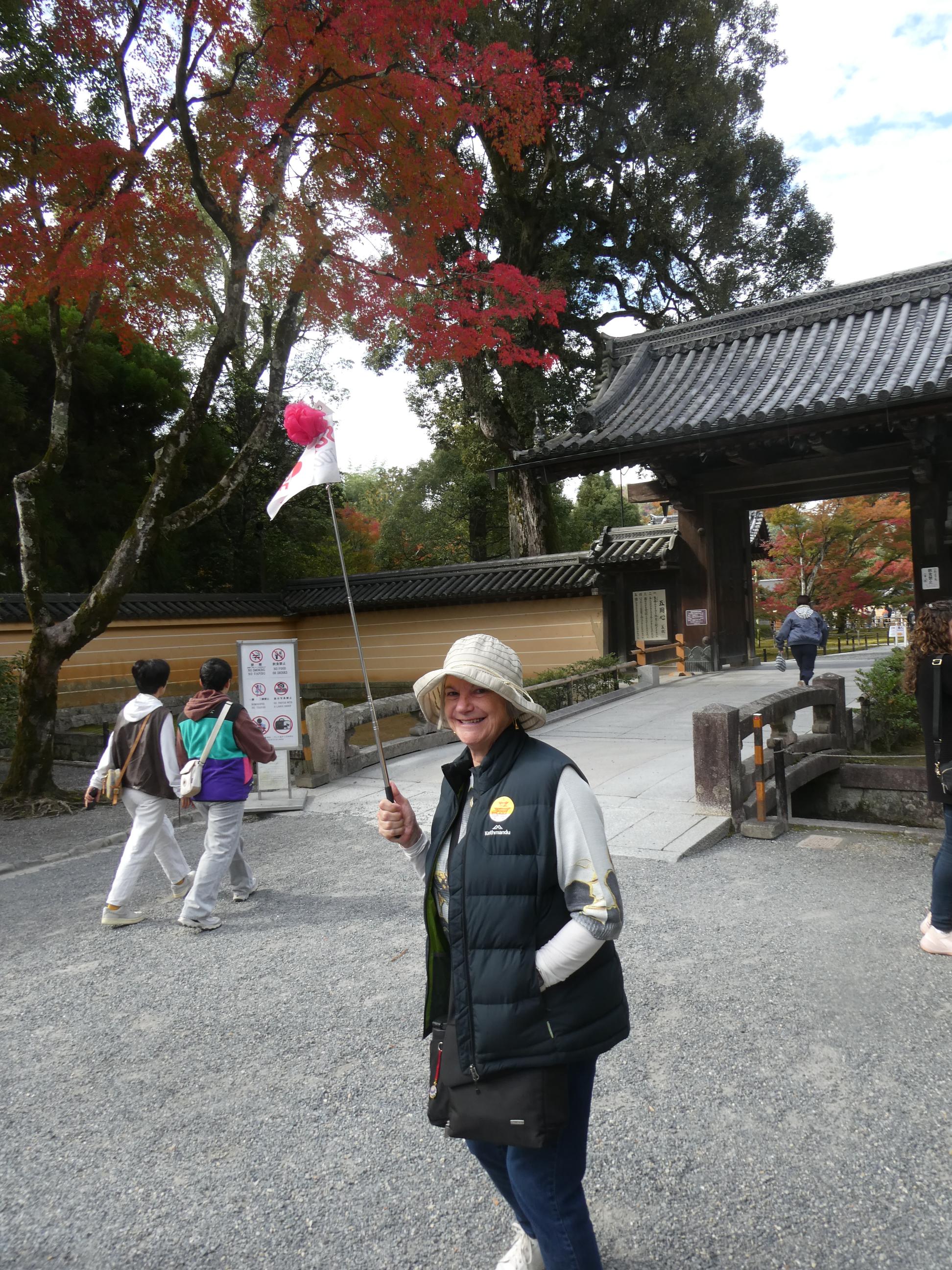
This morning we joined a very small group of about 12 people on a half day tour of historic sites linked to the era when Japan was ruled from Kyoto by an Emperor. Our delightful tour guide, Momo, spoke very good English, and gave us a fascinating introduction to the contrasting roles of the Emperor and the Shogun before we reached our first destination. We visited three sites, and there were large crowds of tourists at each one. We could always easily find our bus in the parking lot because it was the only one covered in ninjas.

Our first stop was at Nijo-Jo Castle. The castle was built in 1603 by Tokugawa Ieyasu, the founder of the Tokugawa Shogunate that ruled Japan between 1603 and 1867. After many years of civil war between the rulers of the east and the west of the country, Tokugawa Ieyasu took control and unified Japan. Under the Tokugawa Shogunate, Japan enjoyed 260 years of peace, stability and prosperity, and the arts and culture flourished. The ruling Emperor appointed Tokugawa Ieyasu as Shogun after his victory in the famous Battle of Sekigahara in 1600. A Shogun could only be appointed by an Emperor. The Shogun remained subservient to the Emperor or the Emperor’s messenger, whereas everyone else was subservient to the Shogun. When Tokugawa Ieyasu took control as Shogun, he became the political and military ruler of Japan, and the Emperor’s role became a symbolic one.
At the time Tokugawa Iyeasu became Shogun, Kyoto was the Imperial capital of the country where the Emperor was based, whereas the Shogun based himself at Edo (nowadays known as Tokyo), from where he controlled the military and administered the law. Very occasionally the Shogun (fifteen generations of Shoguns from the Tokugawa family ruled Japan) would visit Kyoto, and when he did, his residence was the Nijo-Jo Castle. But, more often than not, he was absent from Kyoto, and in his place he appointed Samurai warriors to be stationed at the castle. In 1867, the fifteenth Tokugawa Shogun announced the end of the shogunate rule and handed political power back to the Emperor. This was the beginning of the Meiji period of Japanese history, when Japan opened its borders to the world and rapidly changed from a feudal society to a modern society. Nijo-Jo Castle was the place where the Tokugawa Shogunate era of feudal rule began and ended, and also the place where the Meiji period began, so it has a very special place in Japanese history. In 1867, when power was restored to the Emperor at the castle, the event was known as the Meiji Restoration.
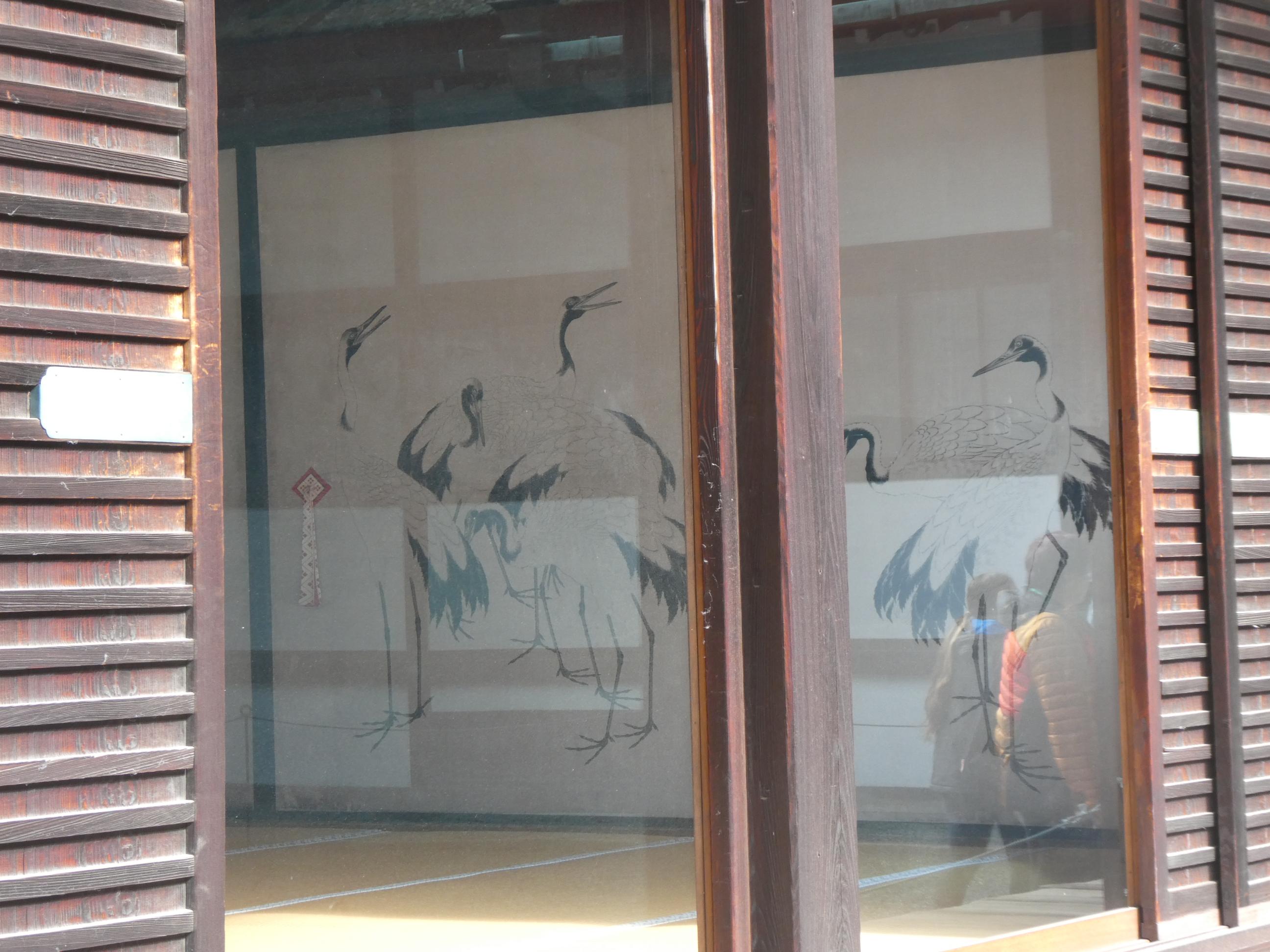
I really enjoyed my visit to Nijo-Jo Castle, but unfortunately photography was not permitted anywhere within the structure itself. That’s a real pity because, after we’d removed our shoes and begun walking the corridors, the walls of every room we passed were covered from floor to ceiling in the most beautiful painted works of the shogunate era you could wish to see. Each room was large, covered in floor mats and devoid of furniture, so the wall paintings were the feature that took your eye. In one corridor, as we walked past beautiful bird paintings, we heard what we thought were birds chirping. I later learnt these were the famous ‘nightingale floors’ that make a chirping sound when you walk upon them. Once I’d been told that their purpose was to alert the occupants of the presence of enemies, but apparently it’s just clamps moving against nails in the beams that support the floor. One room was set up with mannequins in period costume, physically arranged to show how the Shogun would have sought the counsel of his senior advisers. He was on a higher floor level than those who ranked beneath him. It was only in the room where the Shogun met with the Emperor’s messenger that the Shogun knelt on the lower level. Unsurprisingly, Nijo-Jo Castle is a World Heritage Site.


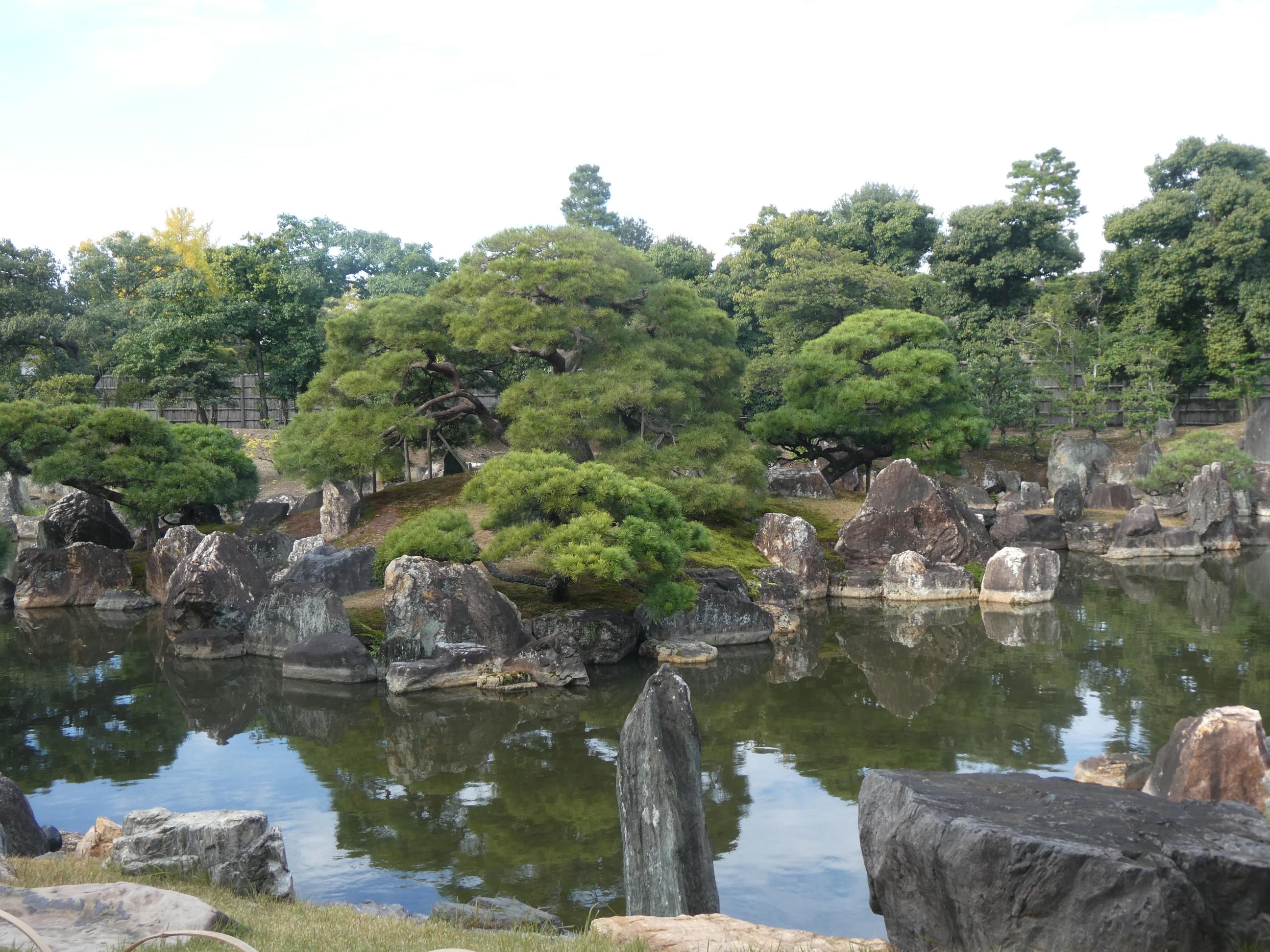


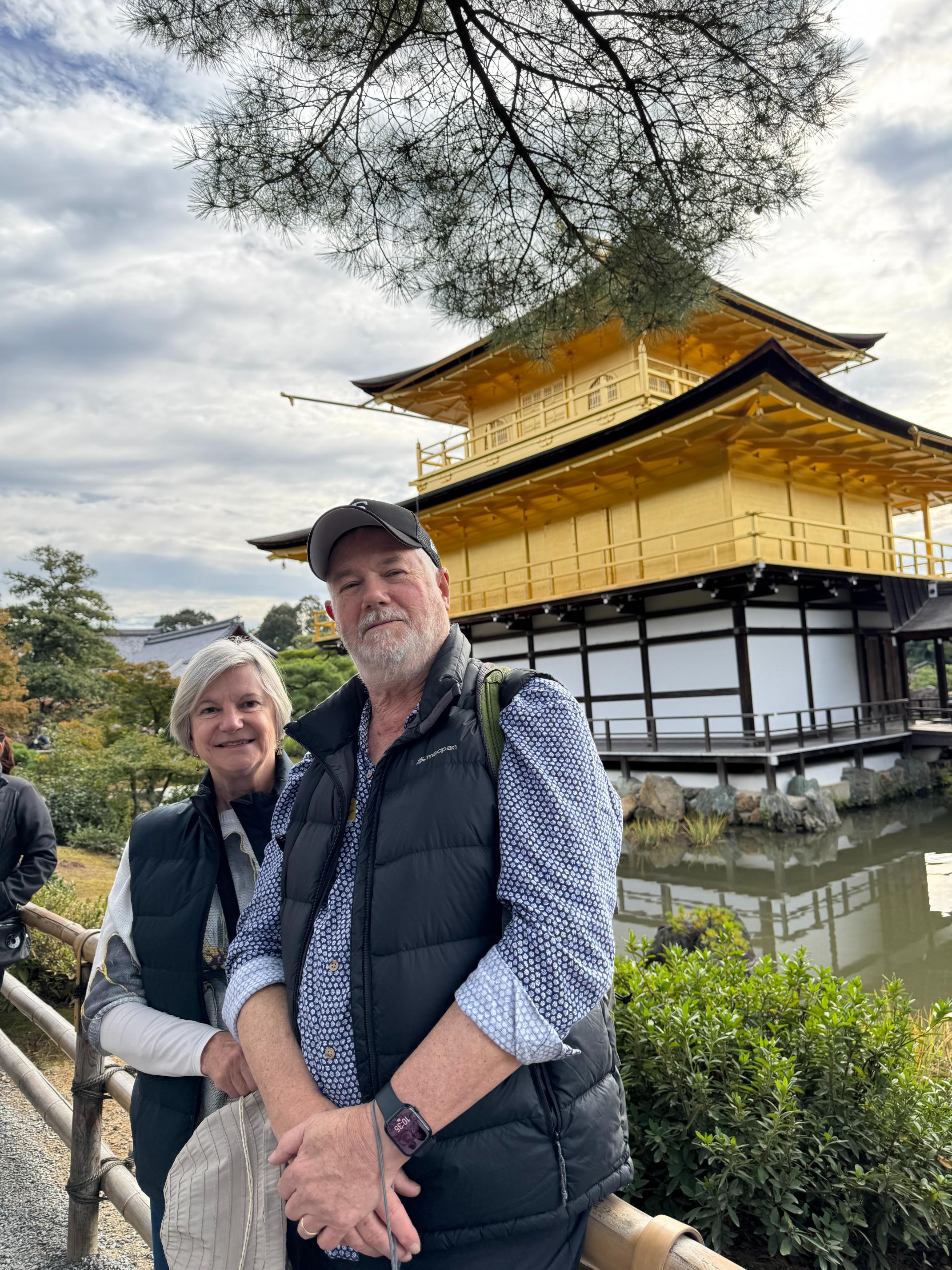
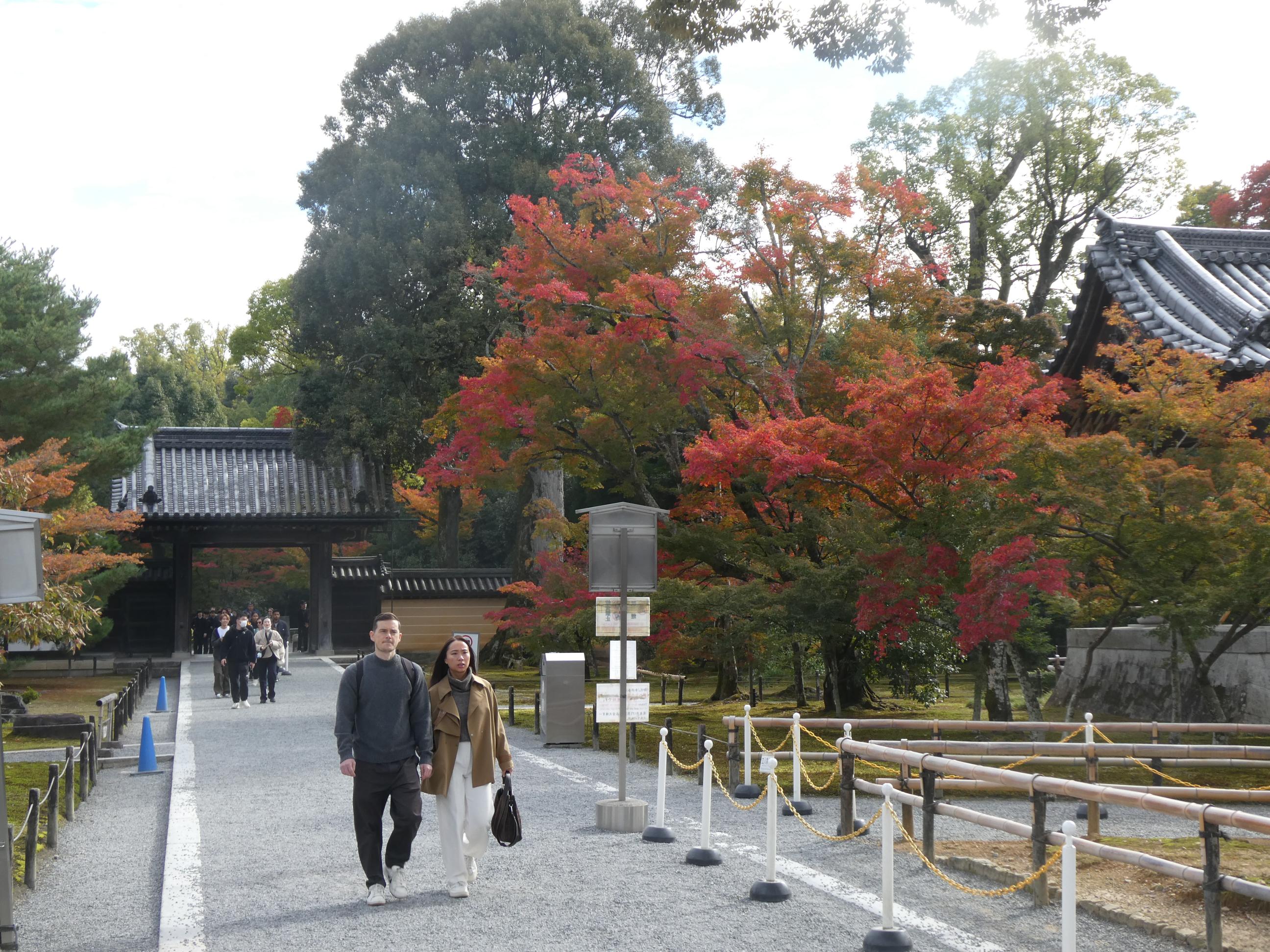
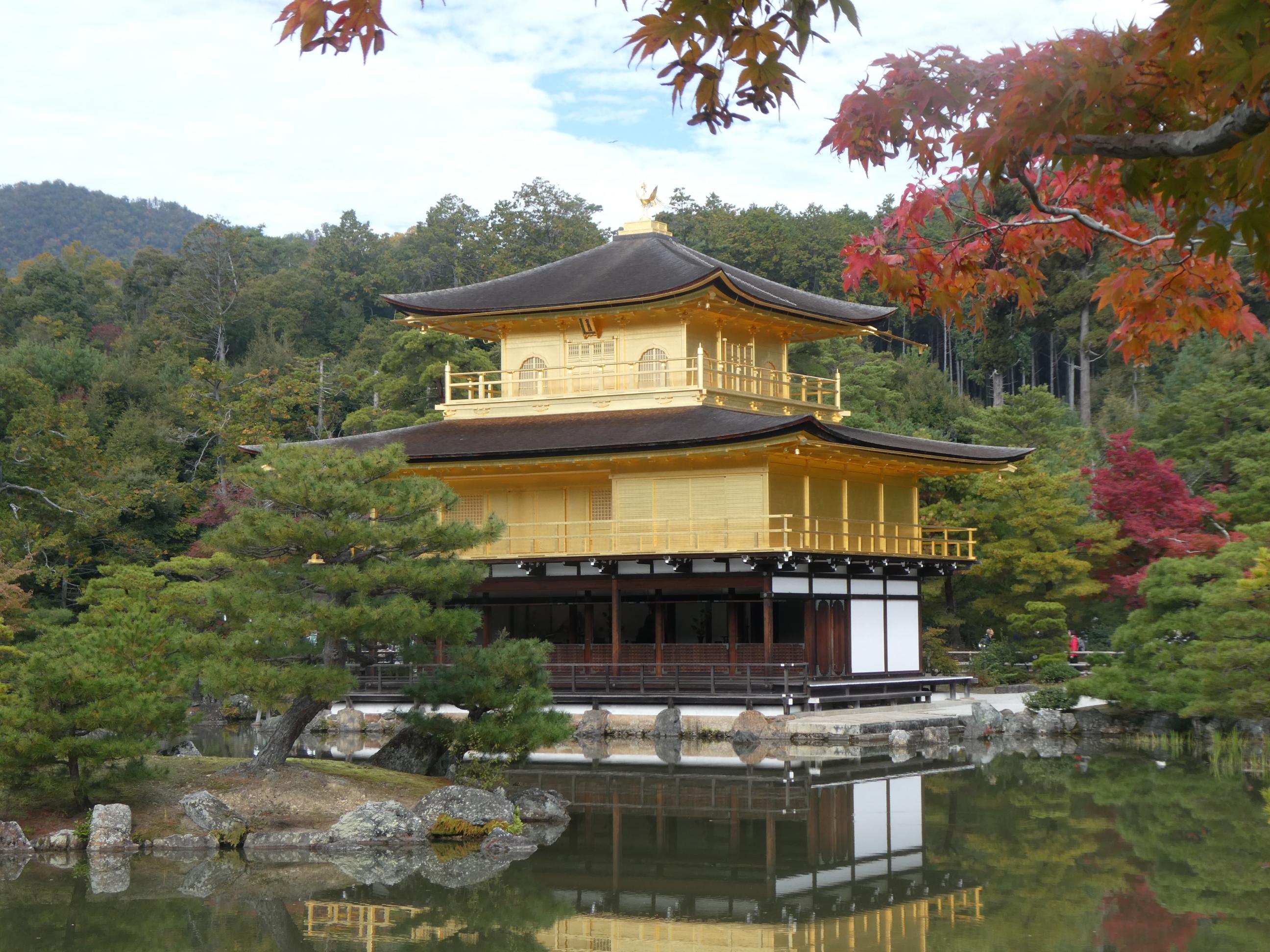
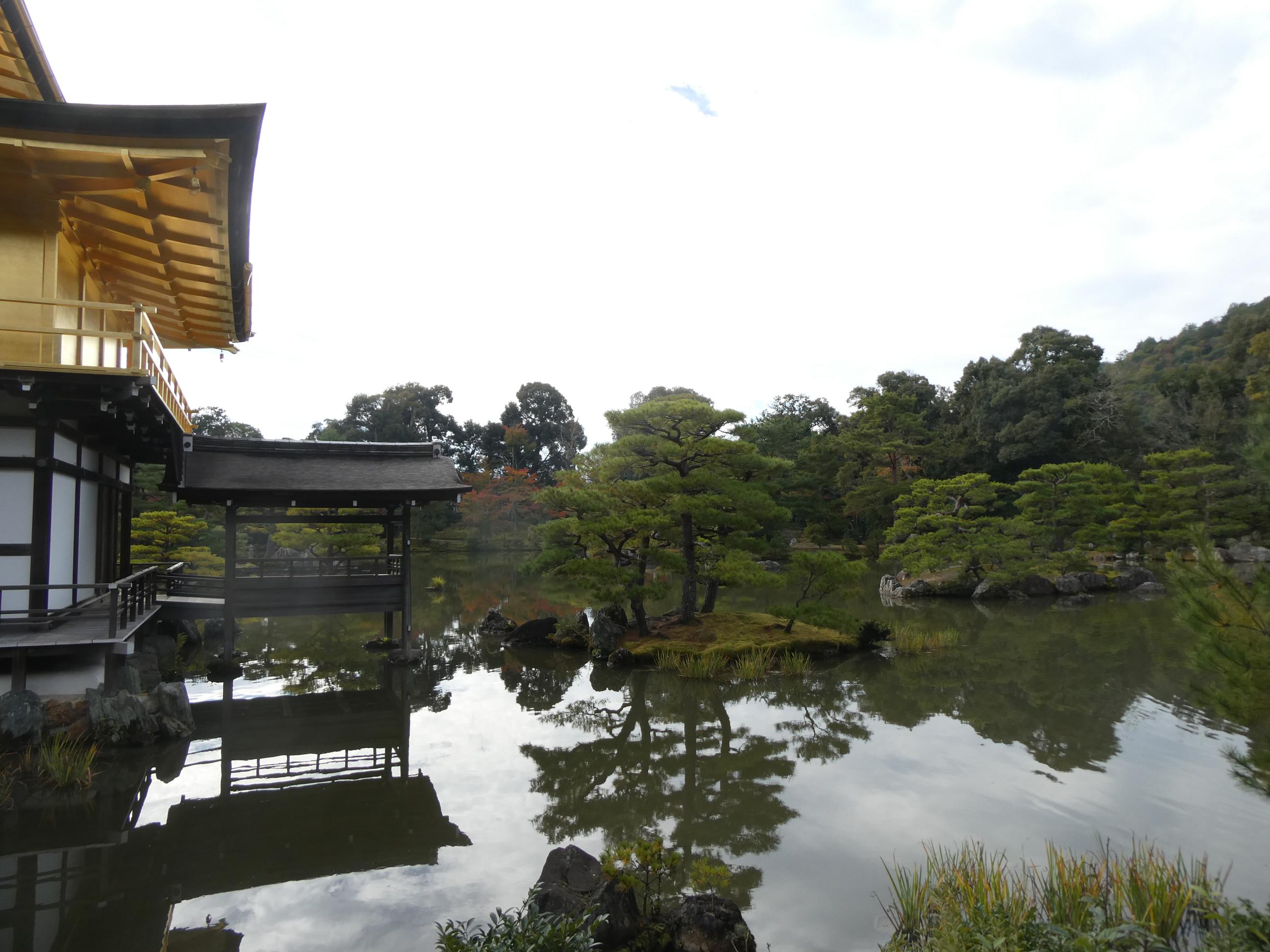
Our next stop was Kinkaku-ji Temple, a Zen Buddhist temple often referred to as the Golden Pavilion Temple. Kinkaku-ji is also a World Heritage Site. The pavilion has three storeys, and each one is of a different architectural style. The first floor has a wooden exterior and a large verandah, and was originally the Shogun’s villa. Its purpose is to welcome visitors. When it was built in 1397, it was the only level. The second storey was added soon after the original villa was built. This level was built in the samurai style and contains a hall for meeting guests and a Buddhist shrine. The third storey was built on Zen Buddhist principles and contains sacred objects, including Buddha’s ashes (as I’m sure other temples across Asia also claim to do). The top two levels are coated in gold leaf, weighing, in total, around 20 kilograms. In 1950, the original structure was burnt to the ground by a novice monk, who then attempted to take his own life. He was imprisoned, and later released when he was diagnosed with a mental illness. No one really understands why he did it, but our guide said it was because he loved the temple so much that he felt he had to do it. The current structure was rebuilt in 1955.
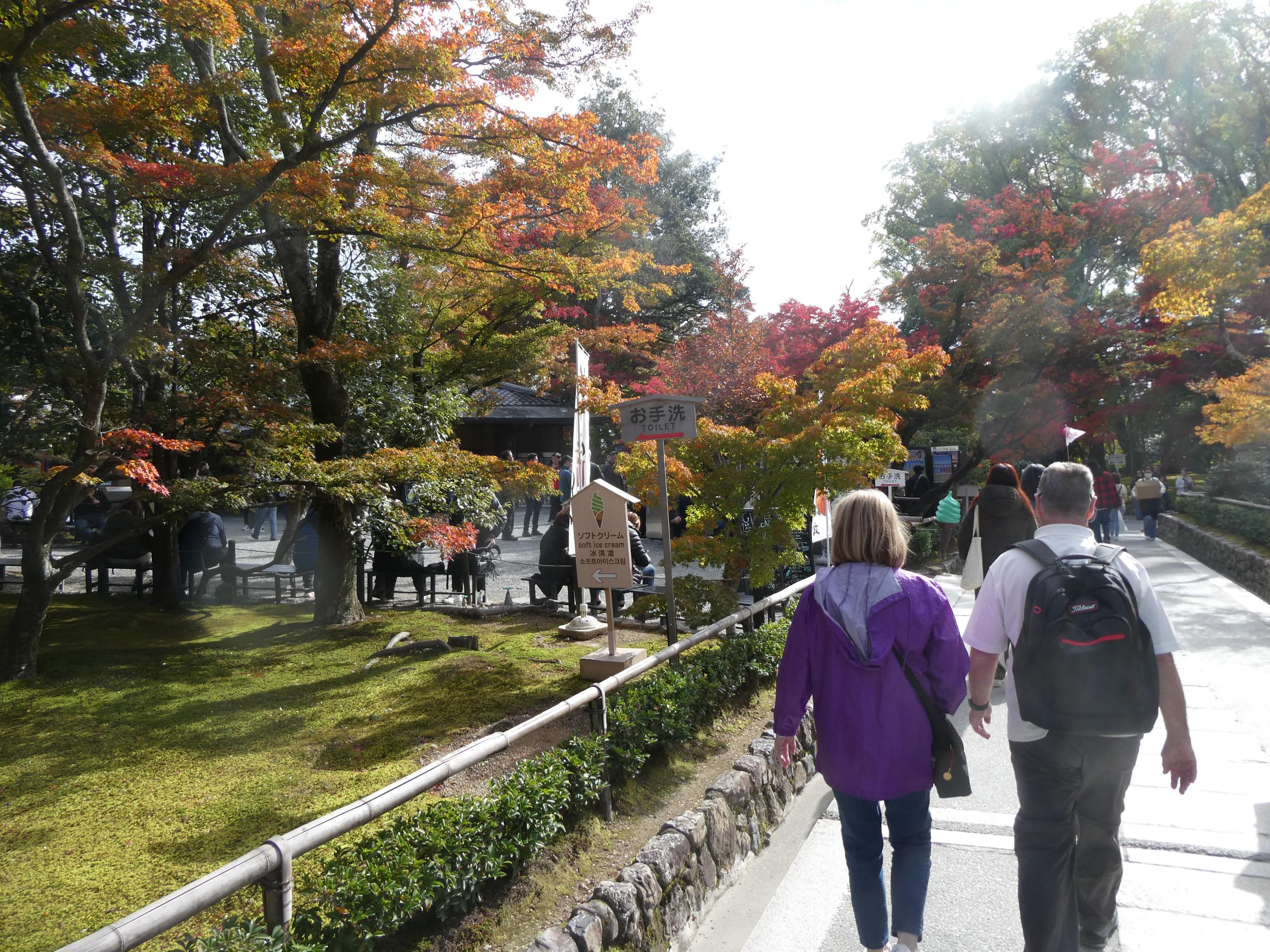
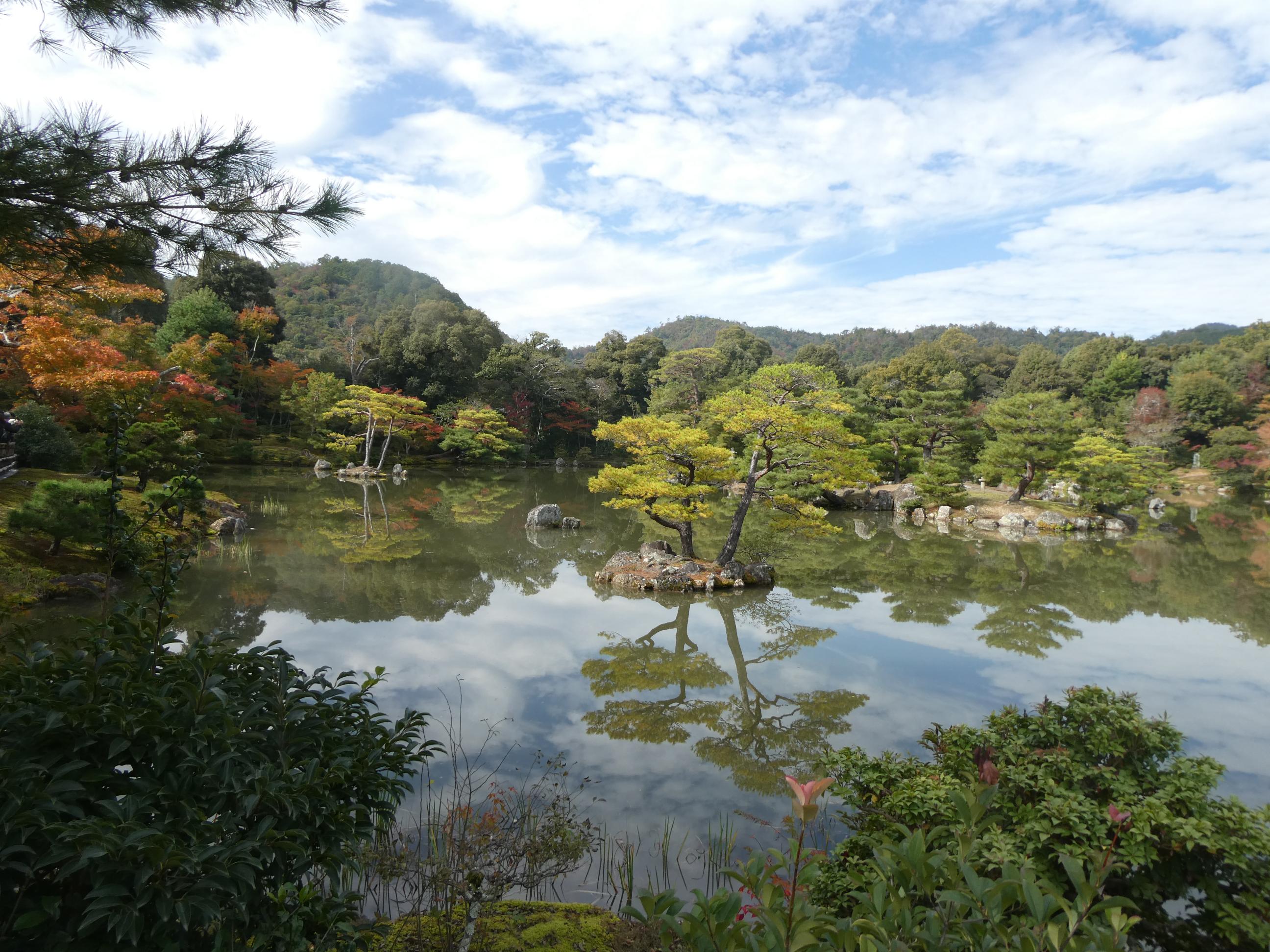
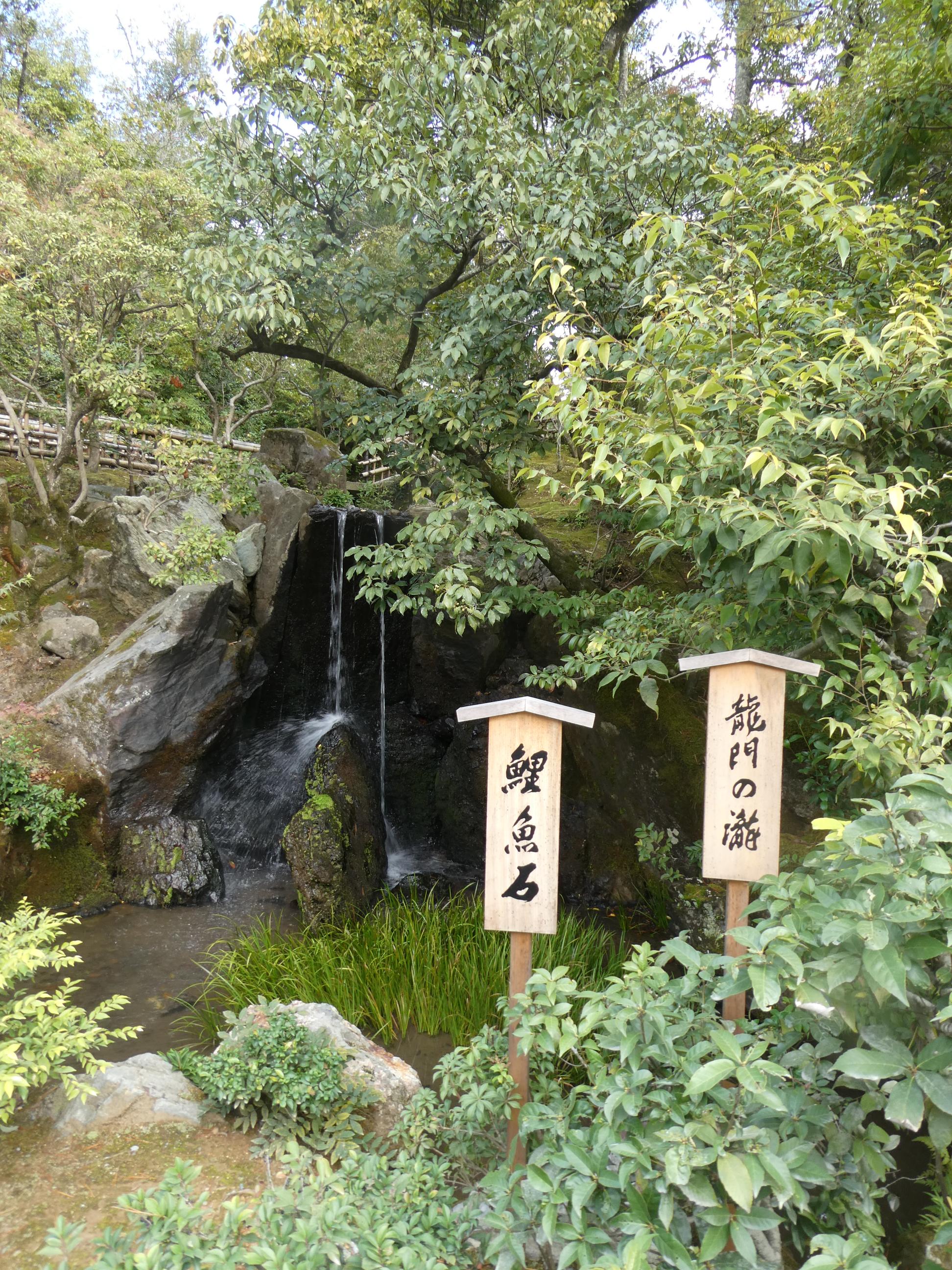
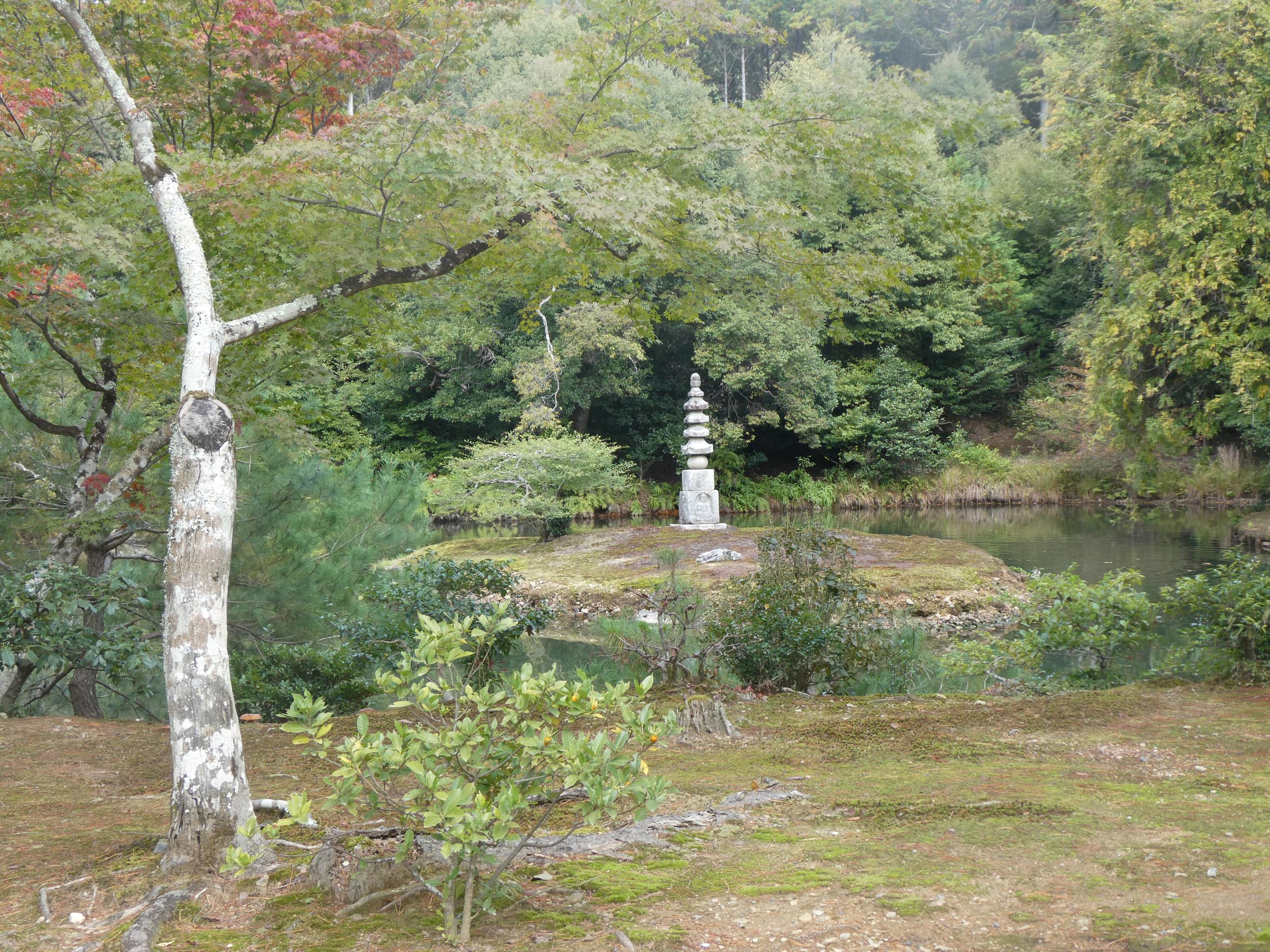
As you can see from the photos, the setting for the temple is quite striking, with a lake and beautiful gardens providing photographers with dream shots regardless of where the photos are taken from. As we’ve deliberately timed our visit here to coincide with the best of the autumn leaf colours, we’ve probably seen the temple at its best. The path around the lake was very crowded in all the good photo spots, but thankfully most people took their shot and moved on. Entry to the pavilion was not available. We also saw a 600-year old pine tree, its branches well supported so that they don’t break under the enormous weight they must carry. The pines we’ve seen all over Japan are really wonderful, especially those twisted into strange shapes that are surprisingly pleasing to the eye. The Japanese revere the pine as a symbol of longevity because its needles stay the same colour forever. I must admit, I’m losing count of how many stunningly beautiful Japanese gardens we’ve wandered through now, but I honestly can’t get enough of them. Put simply, they are masterpieces of man’s design and nature’s beauty.

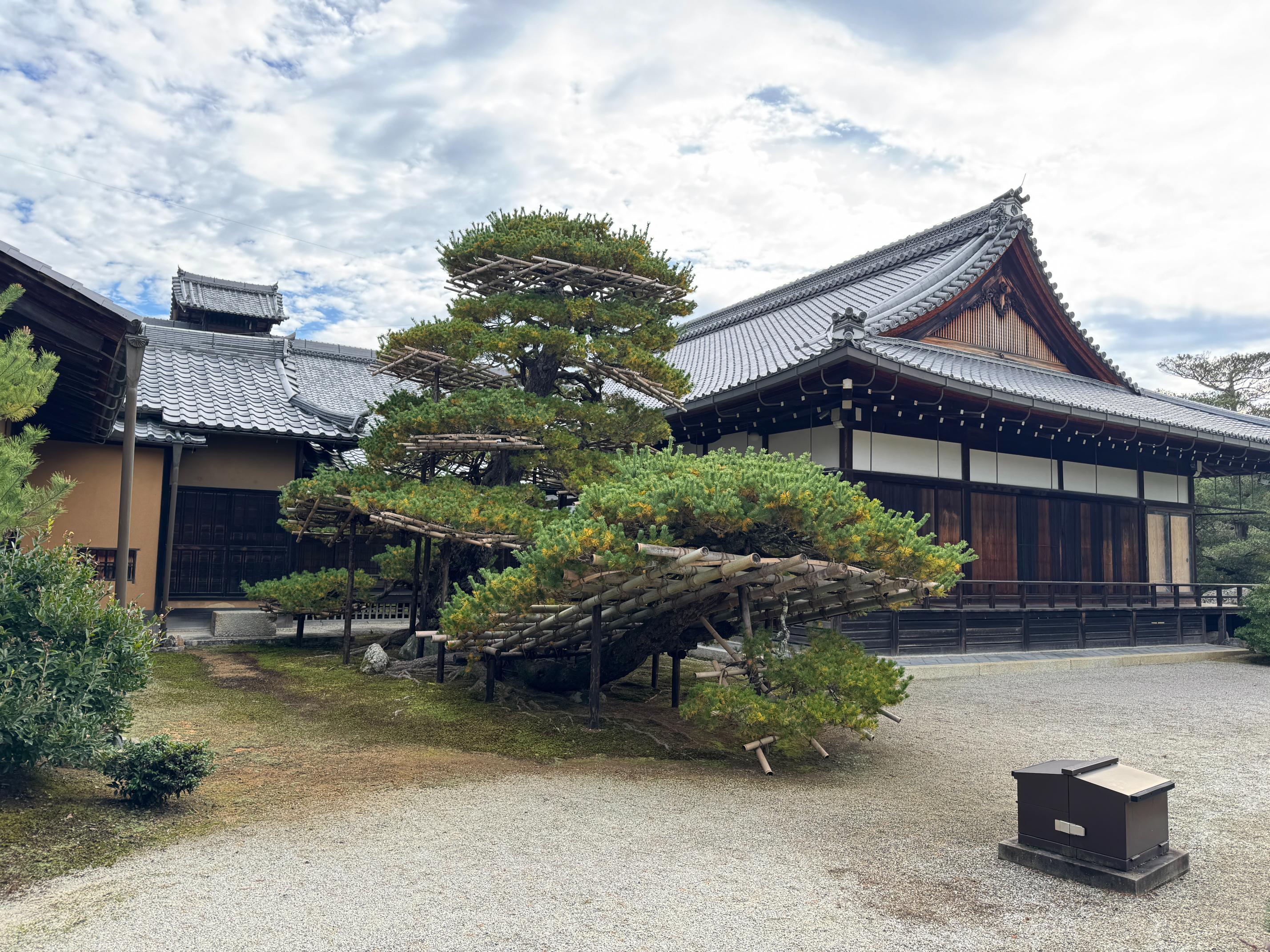



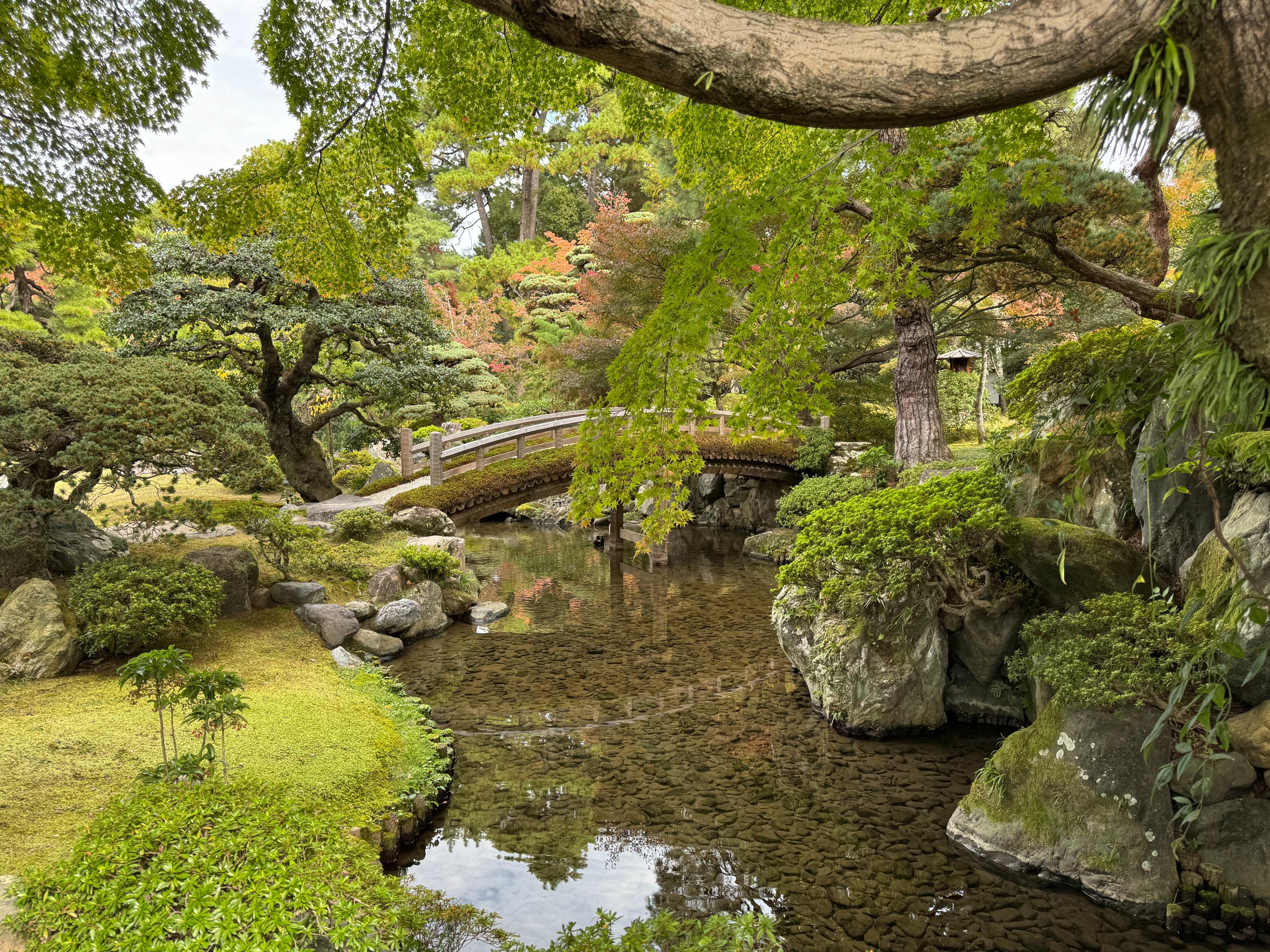



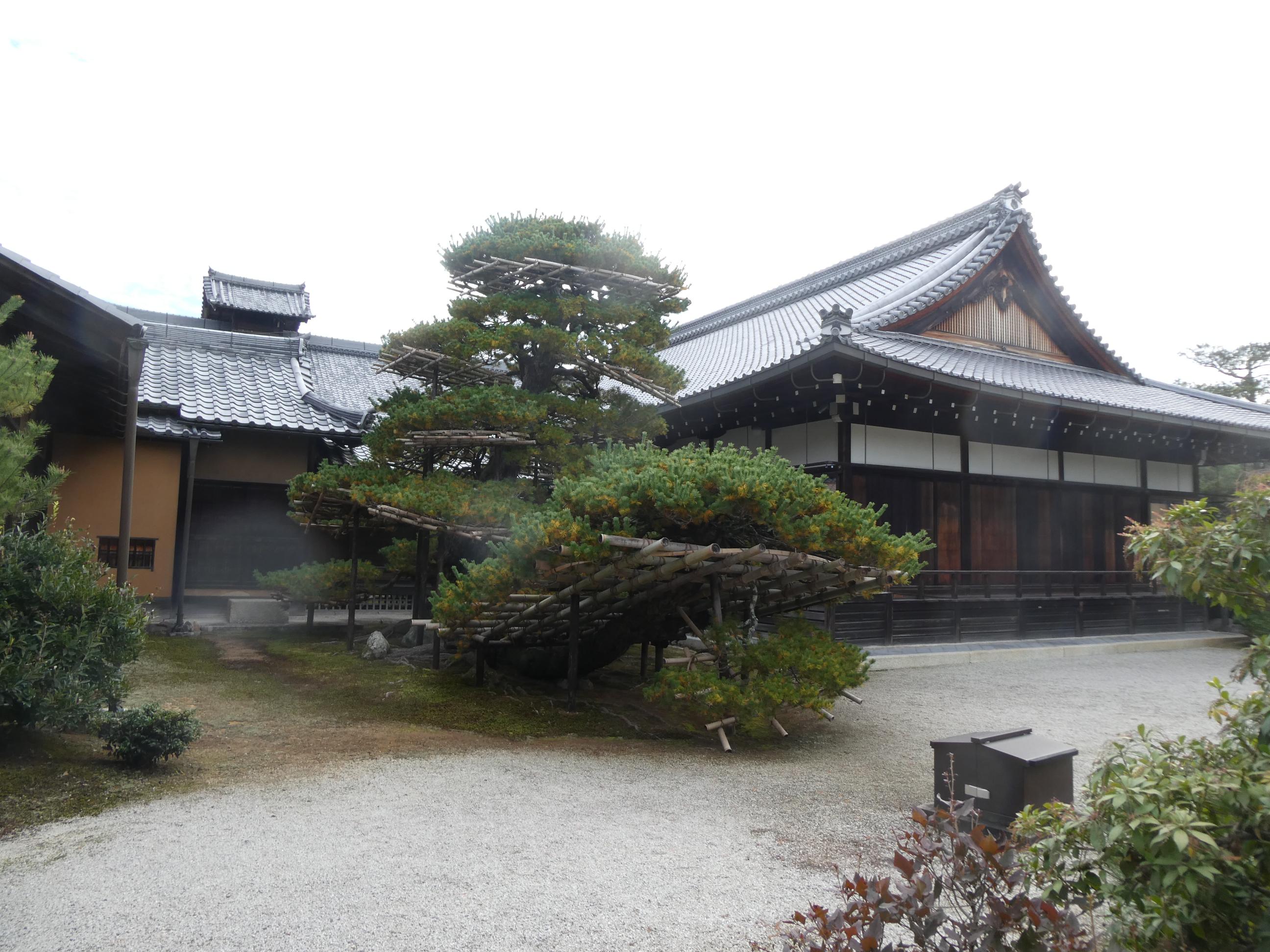


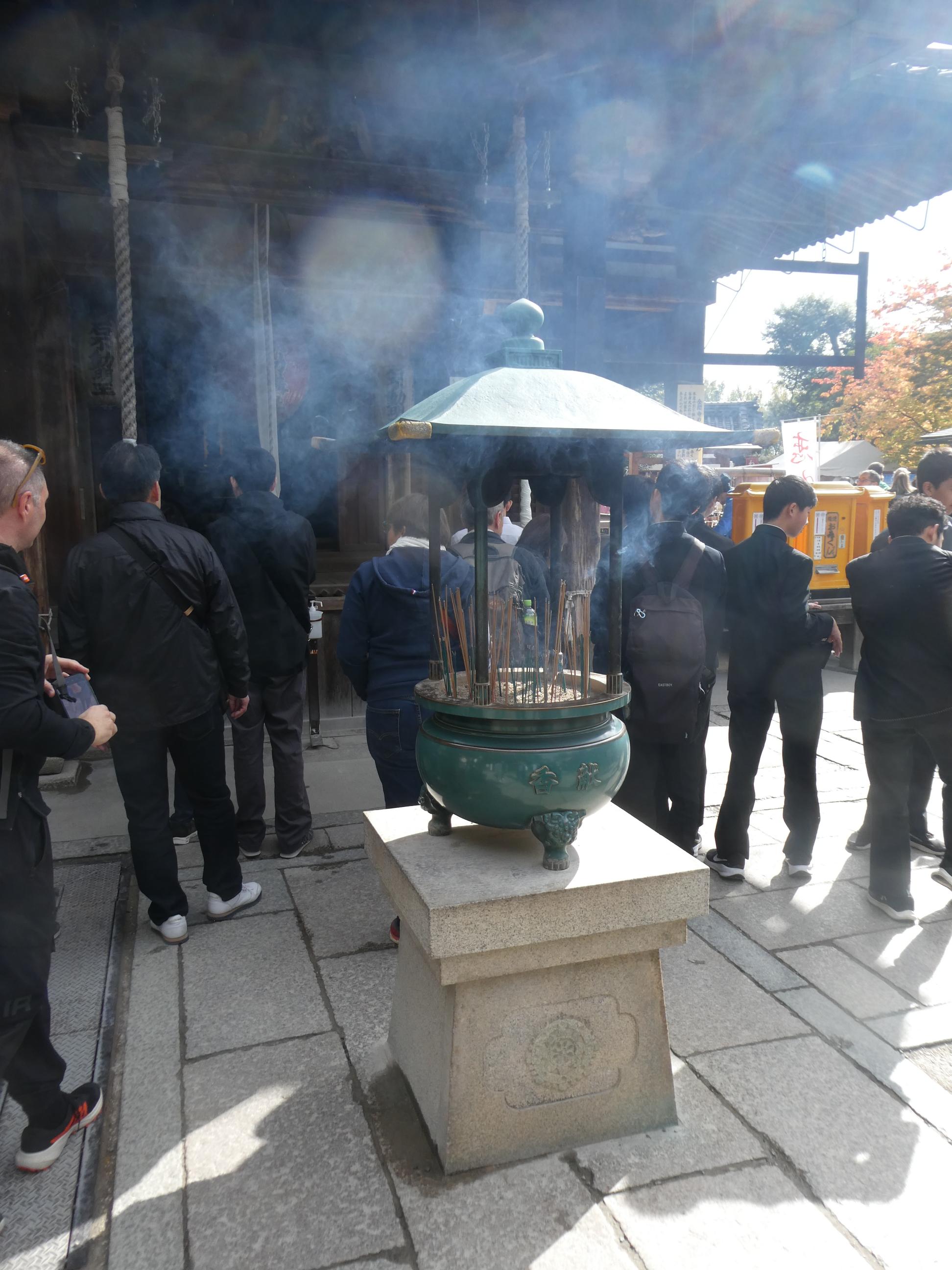
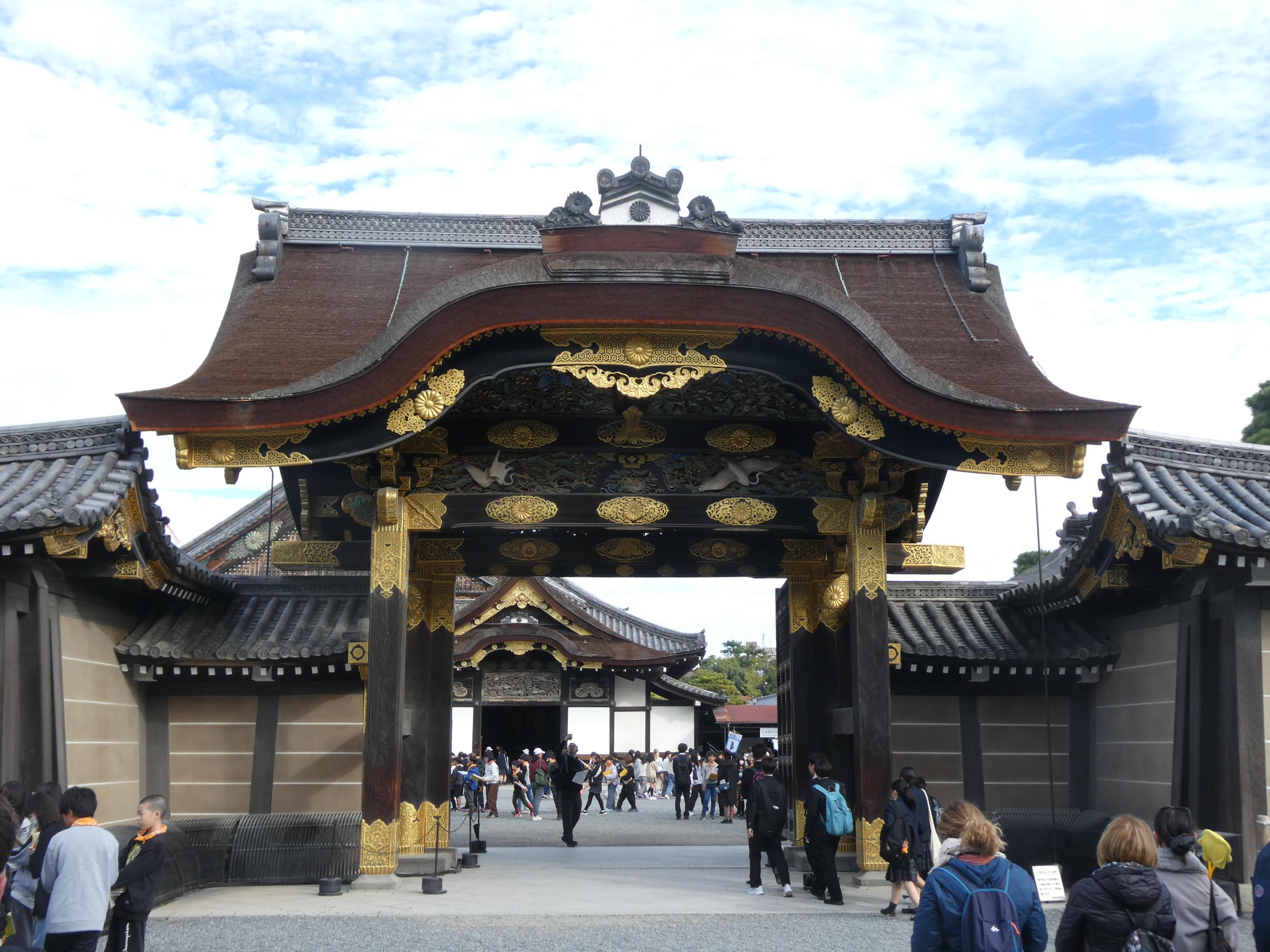
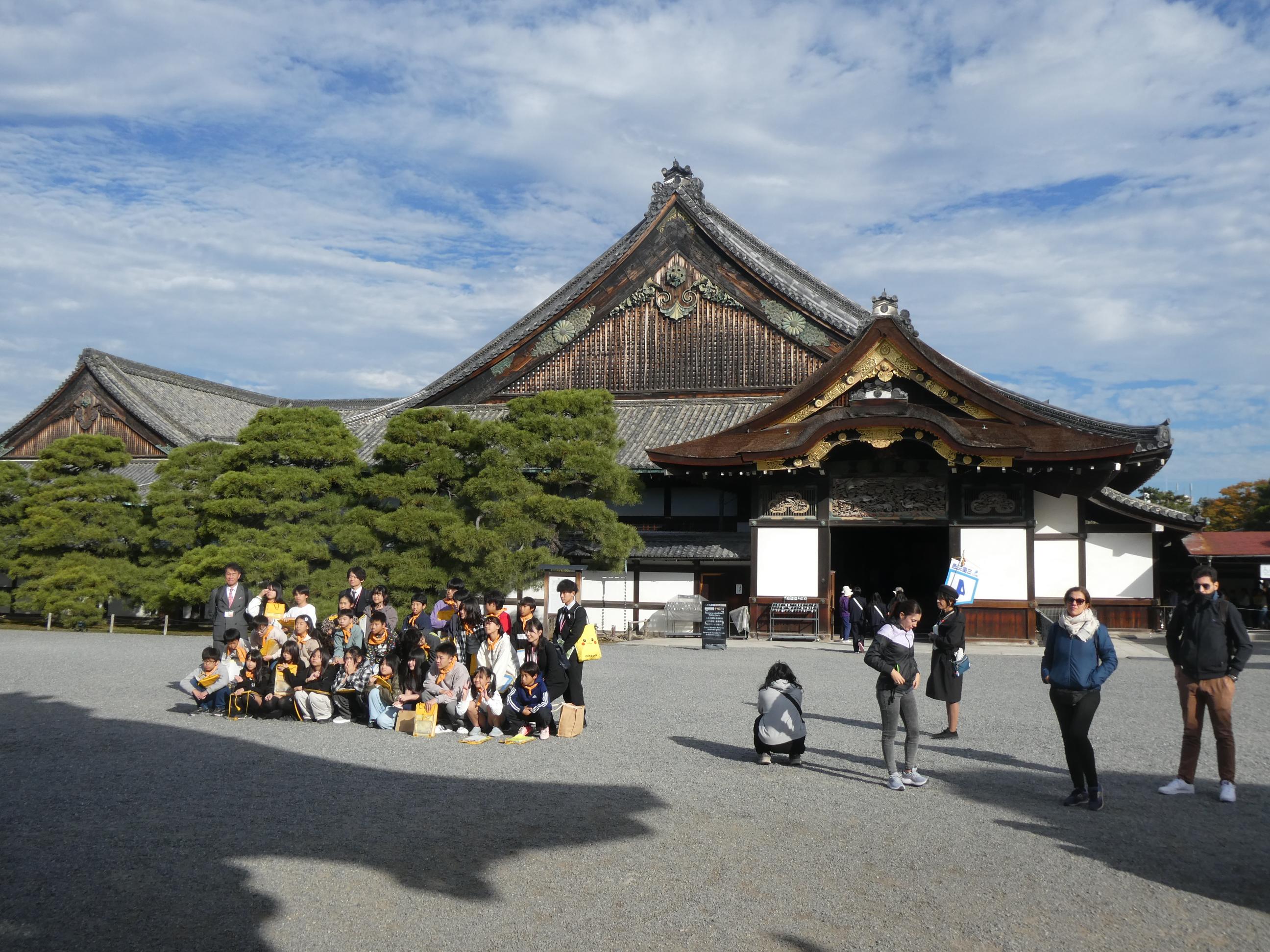
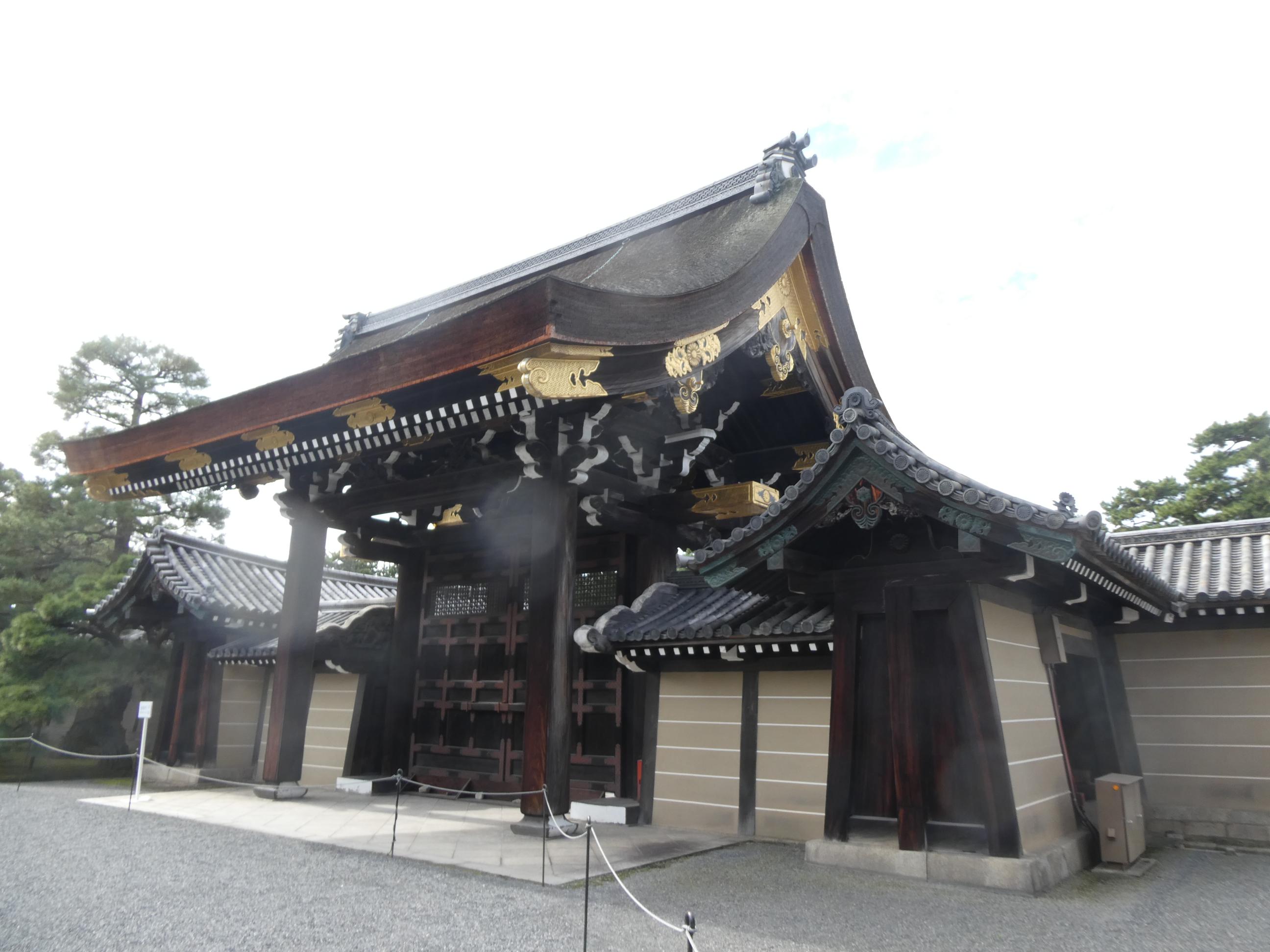
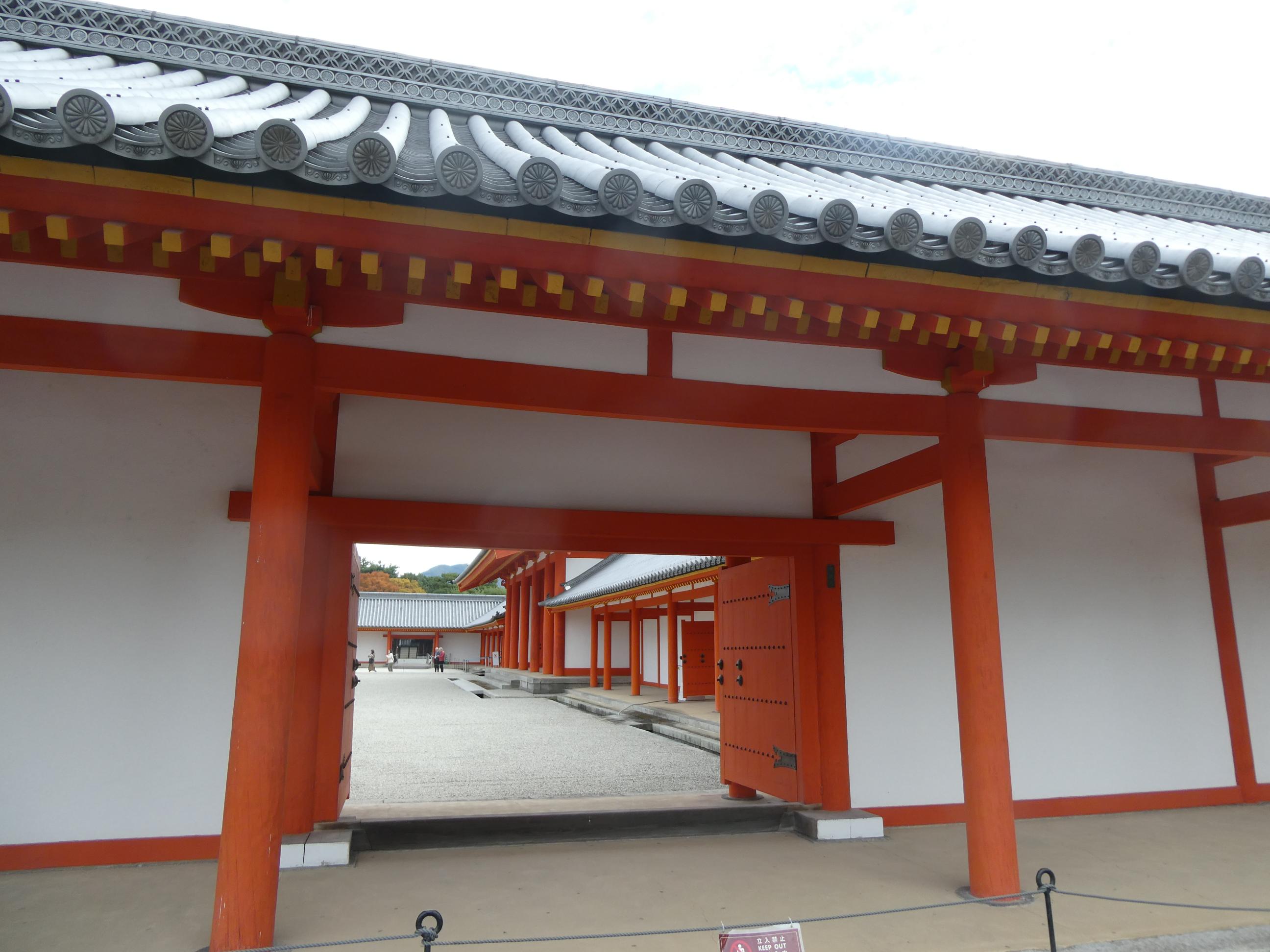
The final destination on our morning tour was the Imperial Palace. Prior to the Meiji Restoration, Kyoto was the Imperial capital of Japan, and the Emperor was based here. From 1868, the Emperor’s base was moved to the Imperial Palace in Tokyo, which we saw from across the moat, but could not visit, early in our trip. The Emperor and his family remain figureheads in Japan today and rarely leave the palace. The Emperor only generally visits Kyoto two or three times a year these days, often for ceremonial purposes, and always takes residence at the Kyoto Imperial Palace when he does. Security was tighter at the gate here. He had to pass through bag checks and wear visitor tags. There were plenty of security people in uniform keeping an eye on things throughout the palace grounds. We walked around the main part of the palace, where apparently only men are allowed when the Emperor is in residence, but were not permitted to enter any buildings. Built of timber, the palace has been damaged or destroyed by fire on multiple occasions since it was originally built in 794, and has been reconstructed several times. You might be able to see, in the photos below, that key pillars used in the entrance gates and at the main door that only the Emperor can use have been placed on top of bases at their feet. The purpose of these is that, if an earthquake occurs, the pillar may rock back and forth or even bounce up and down on the base, but will not snap off at ground level and cause the building to collapse. Apparently the ancient design feature has been quite successful over time, including when the massive quake hit nearby Kobe in 1995.


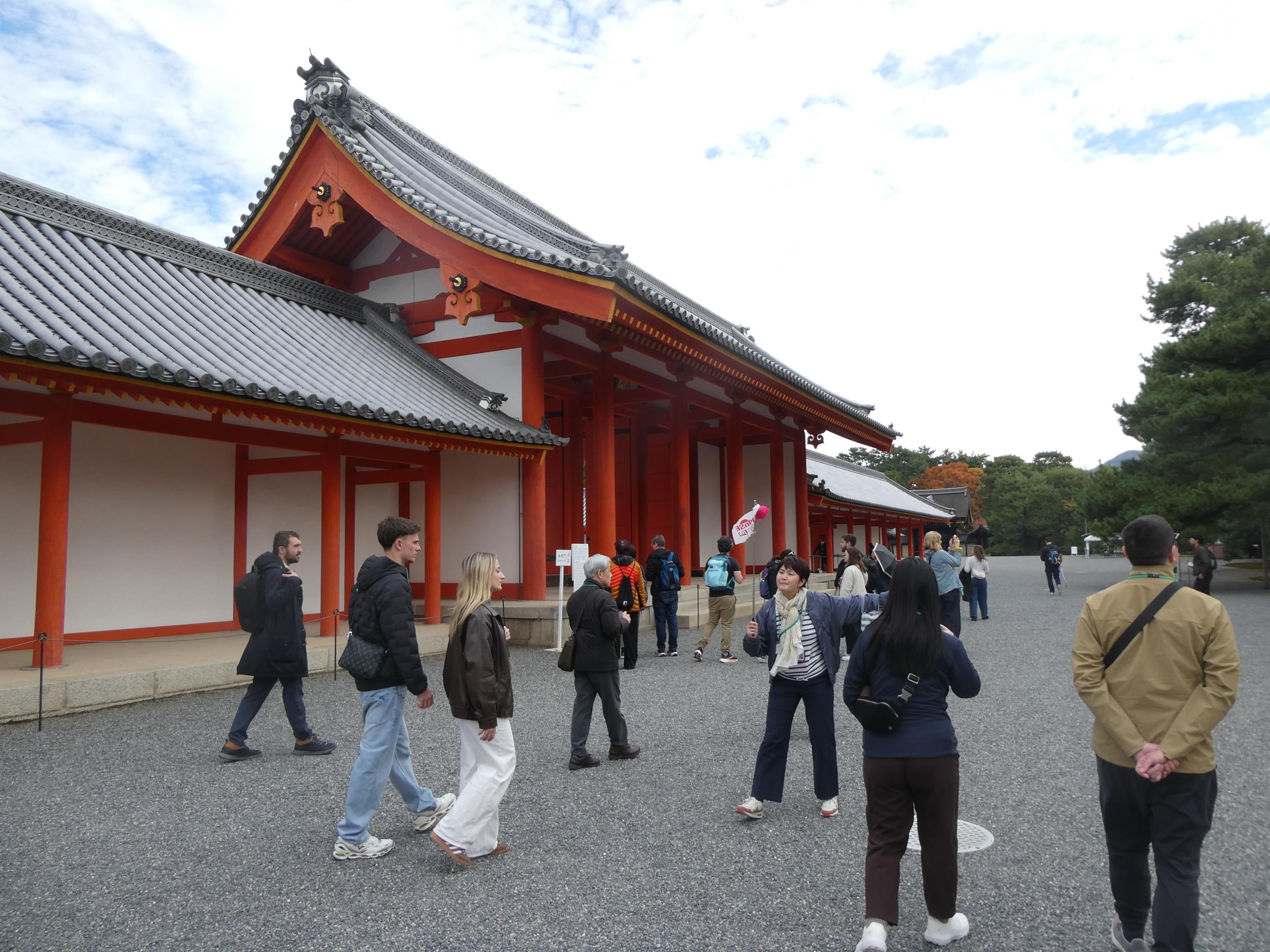
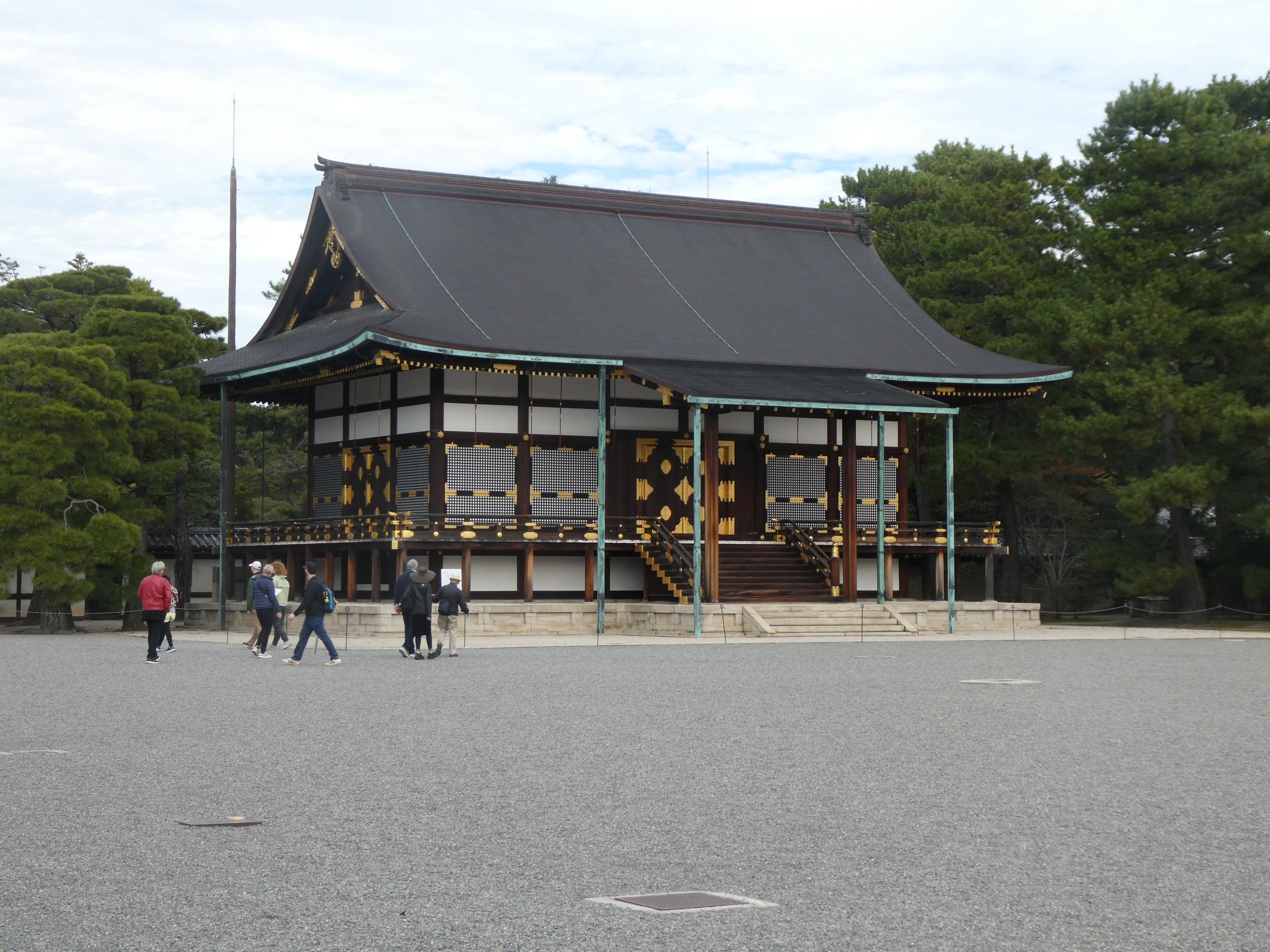


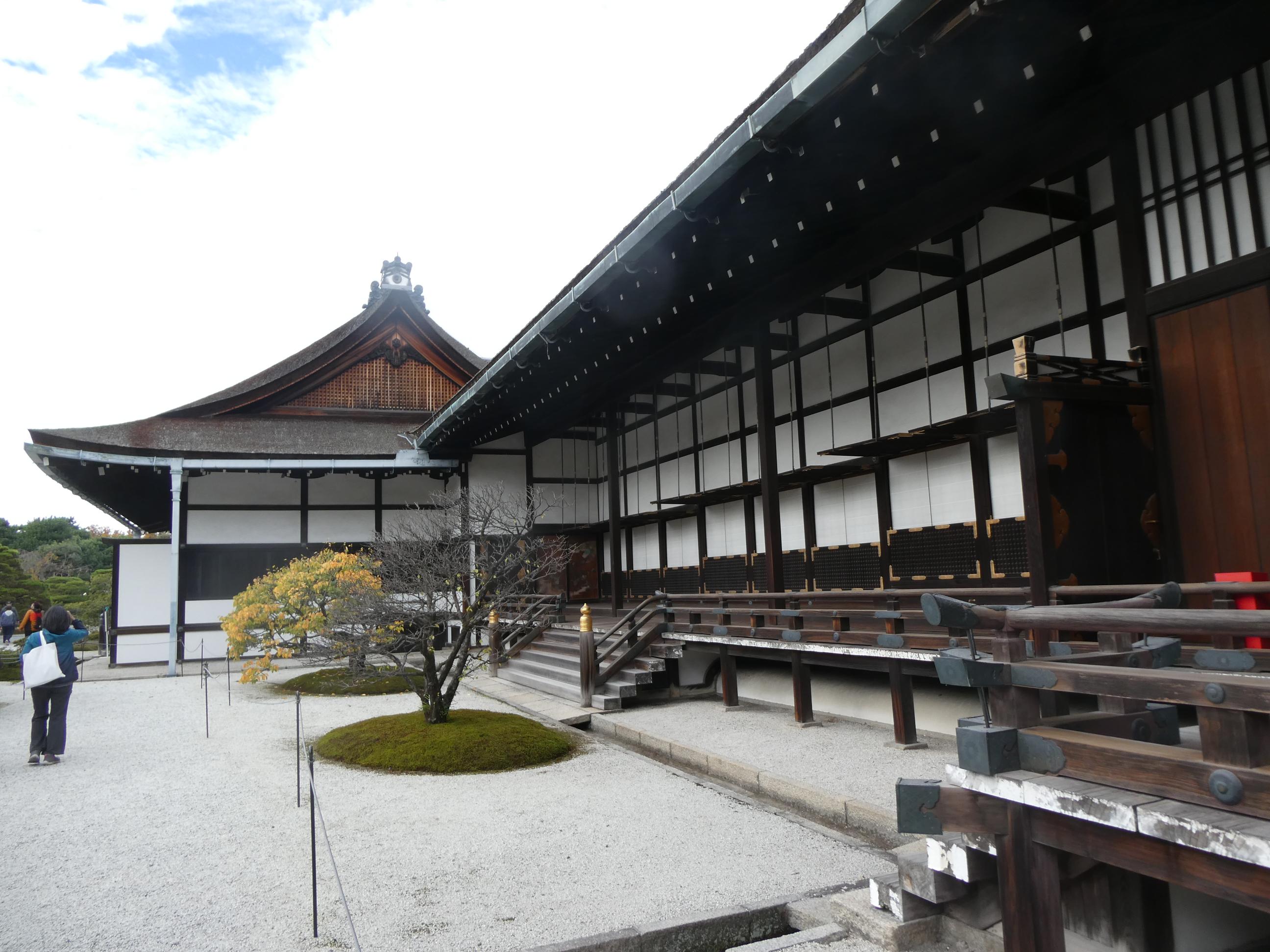


Our tour bus dropped us off near our hotel and we found a place nearby for lunch. We quickly popped back into the hotel to drop off some souvenir purposes, then set off again, this time on foot, on a new mission. Theresa had some important shopping to take care of. She found out that there was a shop in Kyoto that sold the item she’d been searching for all over Japan, and it was only a twenty minute walk from our hotel, so off we went. Sure enough, we found the shop and the desired item, meaning that we’ve now purchased most of the things we want to bring home as gifts for our families and friends. Hopefully the zips on our suitcases will still close.
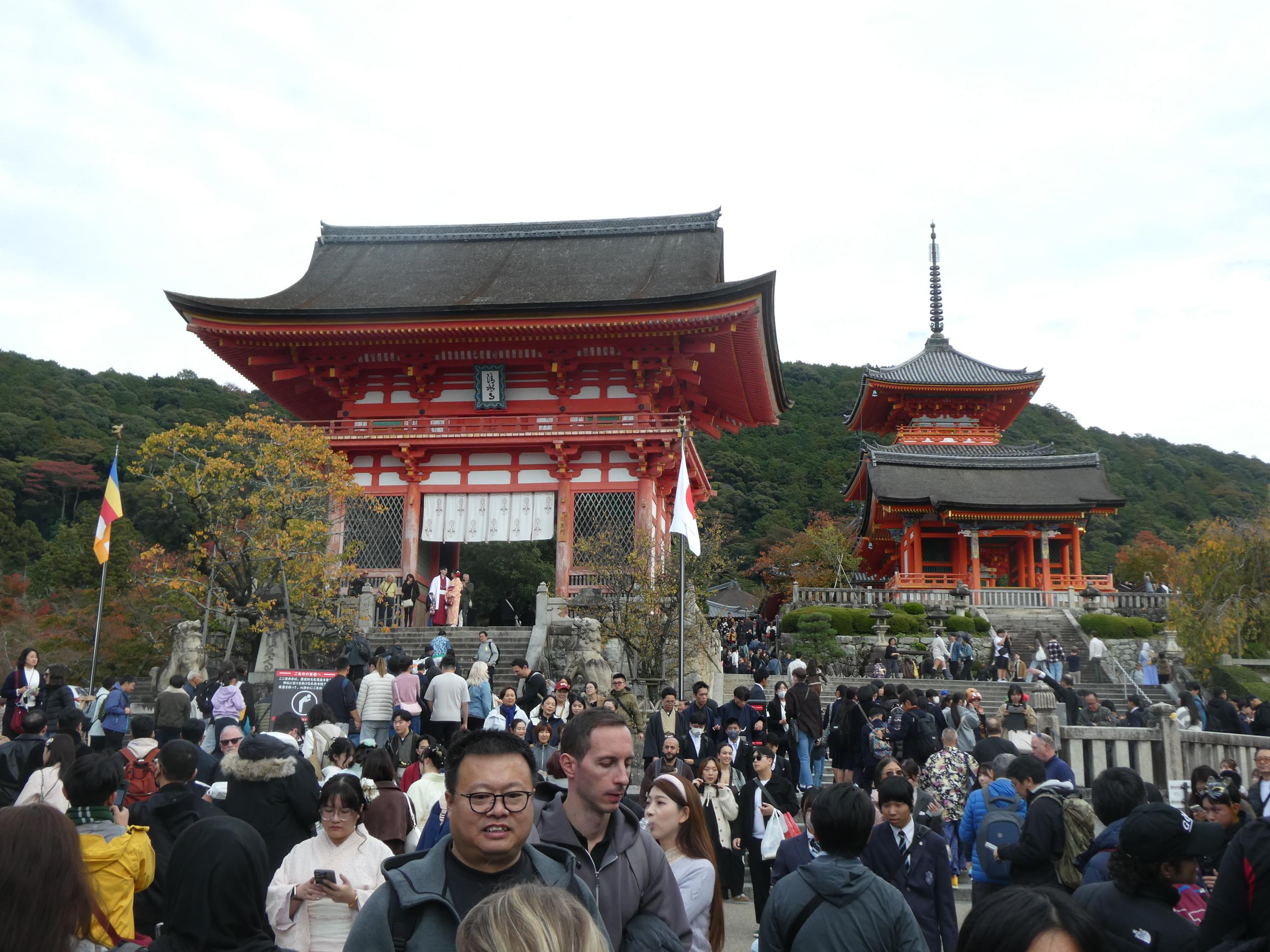
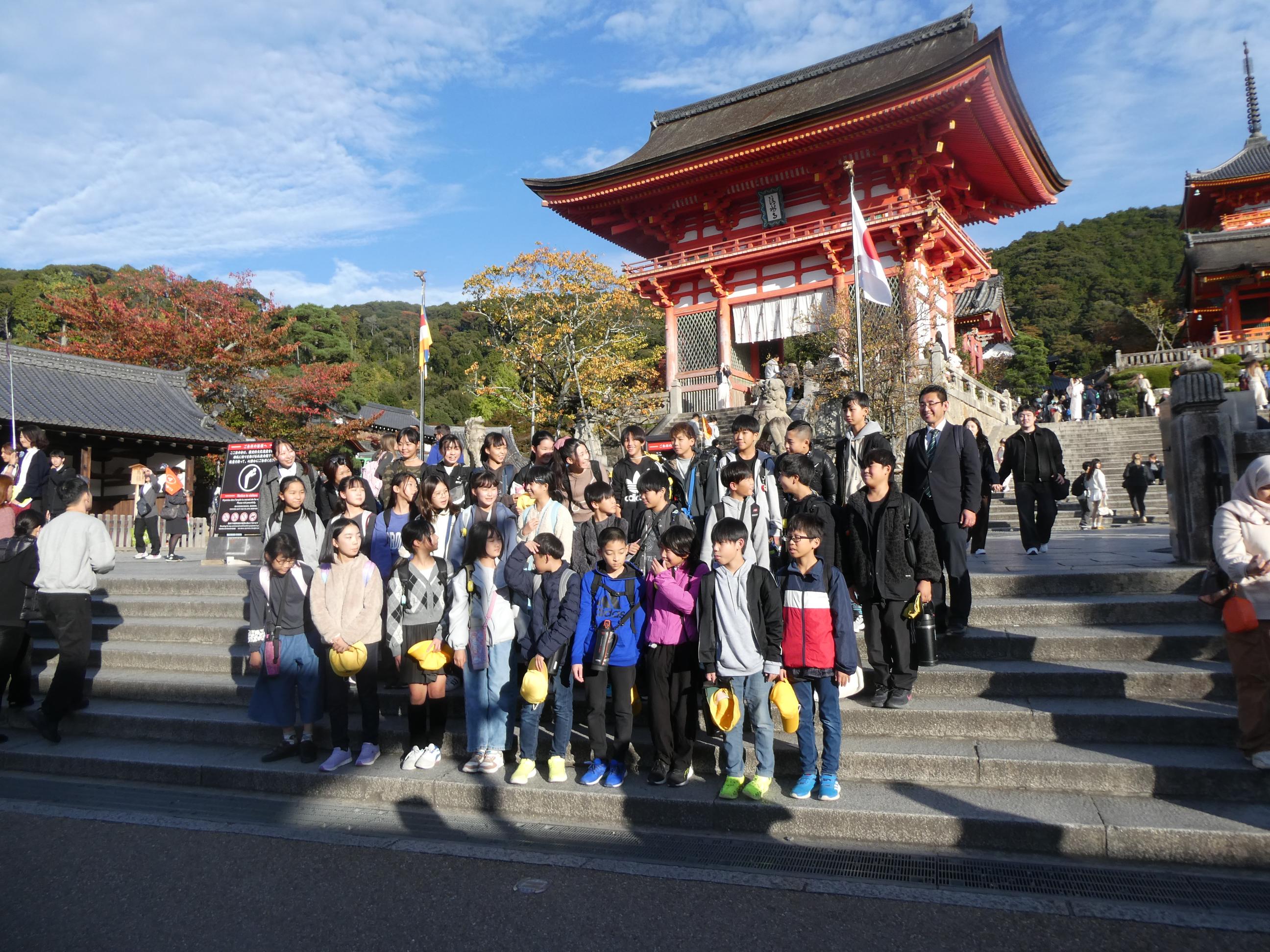
It was after 2.30 pm when we arrived at the bus stop to catch the local bus to Kiyomizu-dera Temple, but we discovered the bus was still over twenty minutes away, so we hailed a taxi instead. We didn’t know much about the temple at this point, but soon found out that it was a very popular tourist spot, even on a Wednesday afternoon. When our taxi turned into a narrow hilly street, it suddenly was forced to slow to a crawl and inch its way forward through streams of people walking the other way. We could see way up the hill that traffic, mainly taxis, was moving at snail’s pace, and hundreds, perhaps thousands, of people were either coming from or walking towards what must be the temple, though it was still out of sight. Our driver finally got us far enough up the hill that he dropped us off and we started walking. It was a challenge trying to progress up the hill with such a swarm of people coming the other way, especially as quite a few school groups were amongst the crowd and not all of them were orderly or considerate of the people around them. The road was lined on both sides with souvenir shops and food vendors, which made it even harder to make any progress, as people were not only ascending or descending the hilly street, but also crossing back and forth from one side to another. It was crazy.
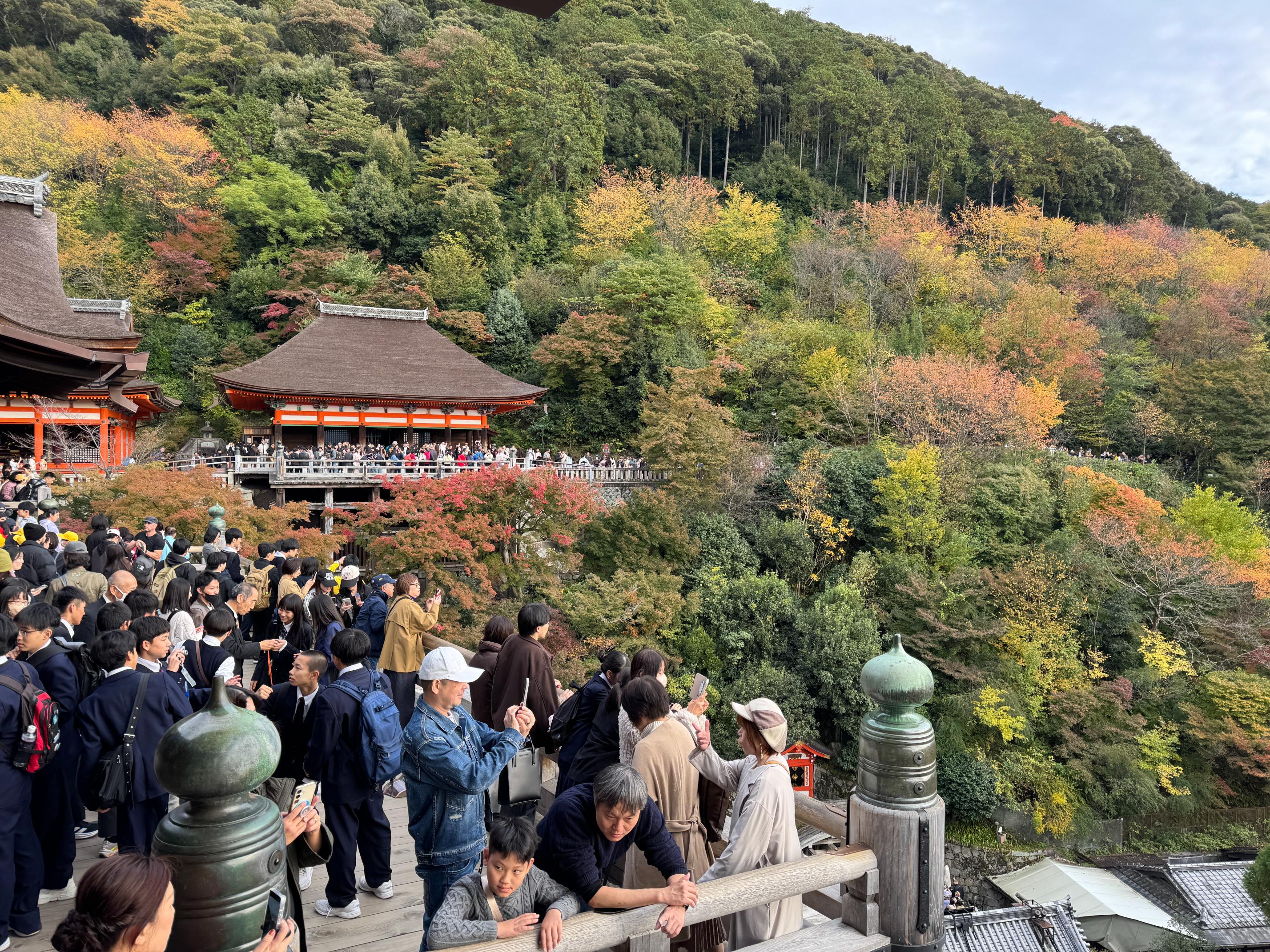
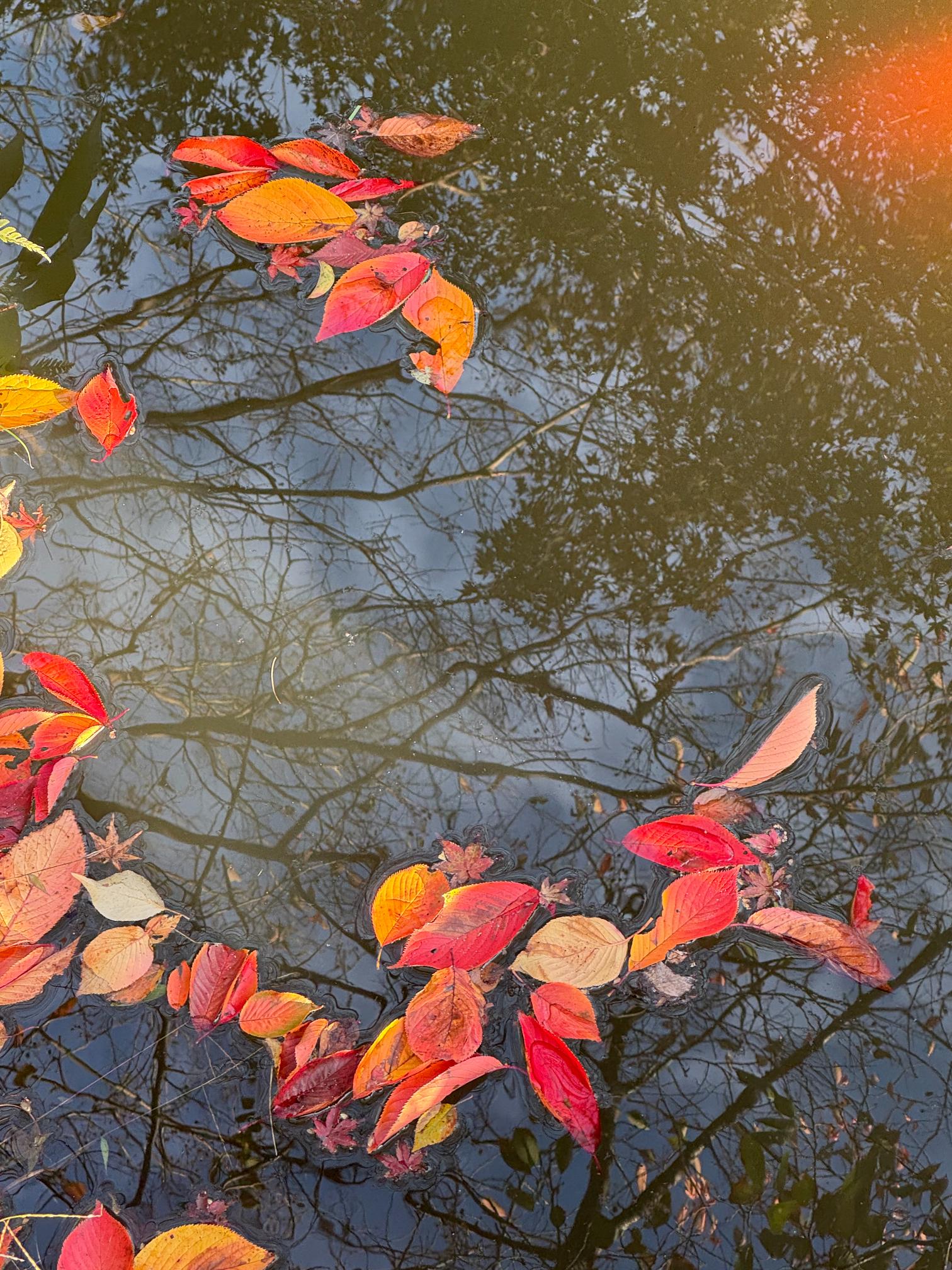
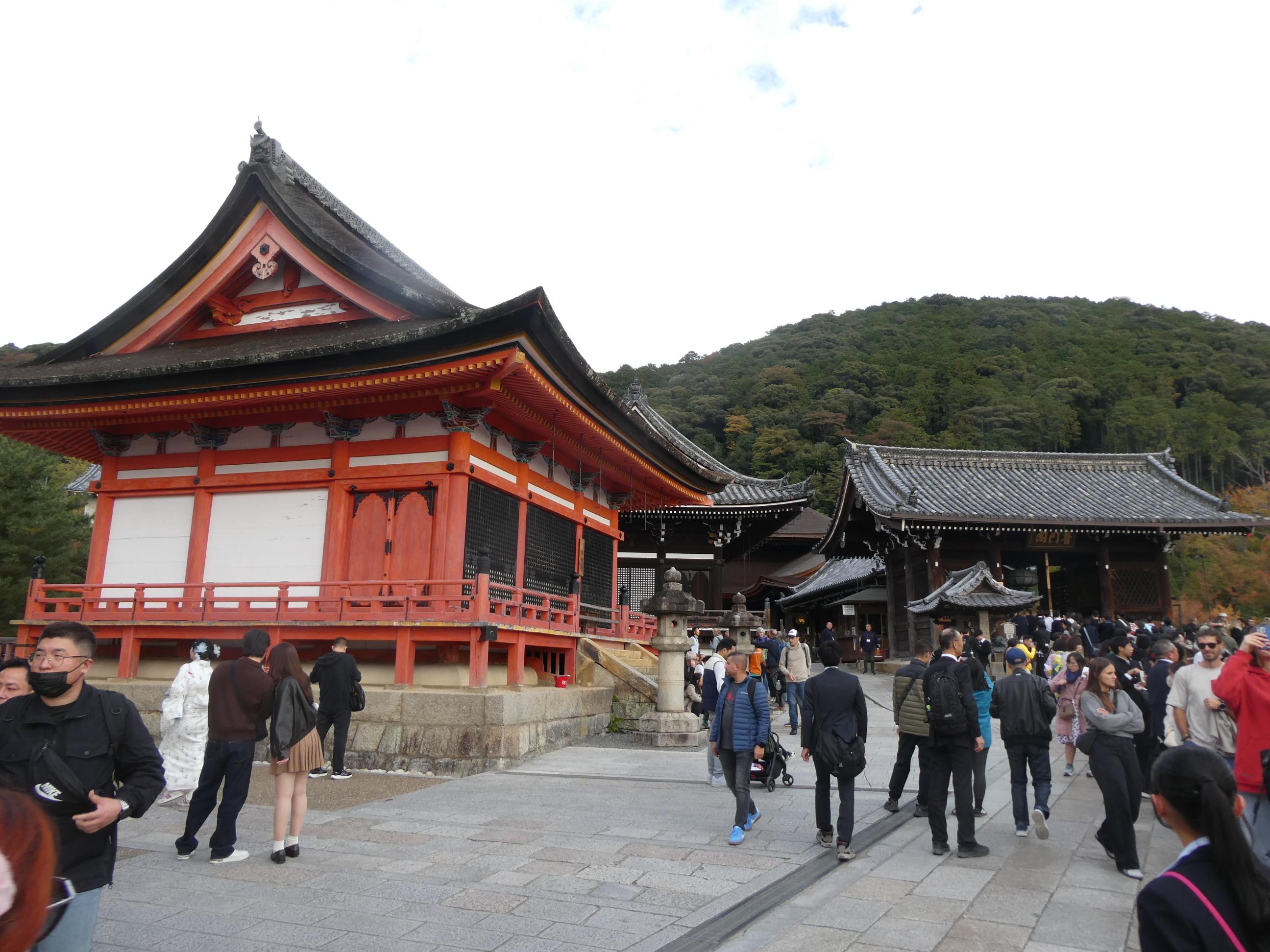
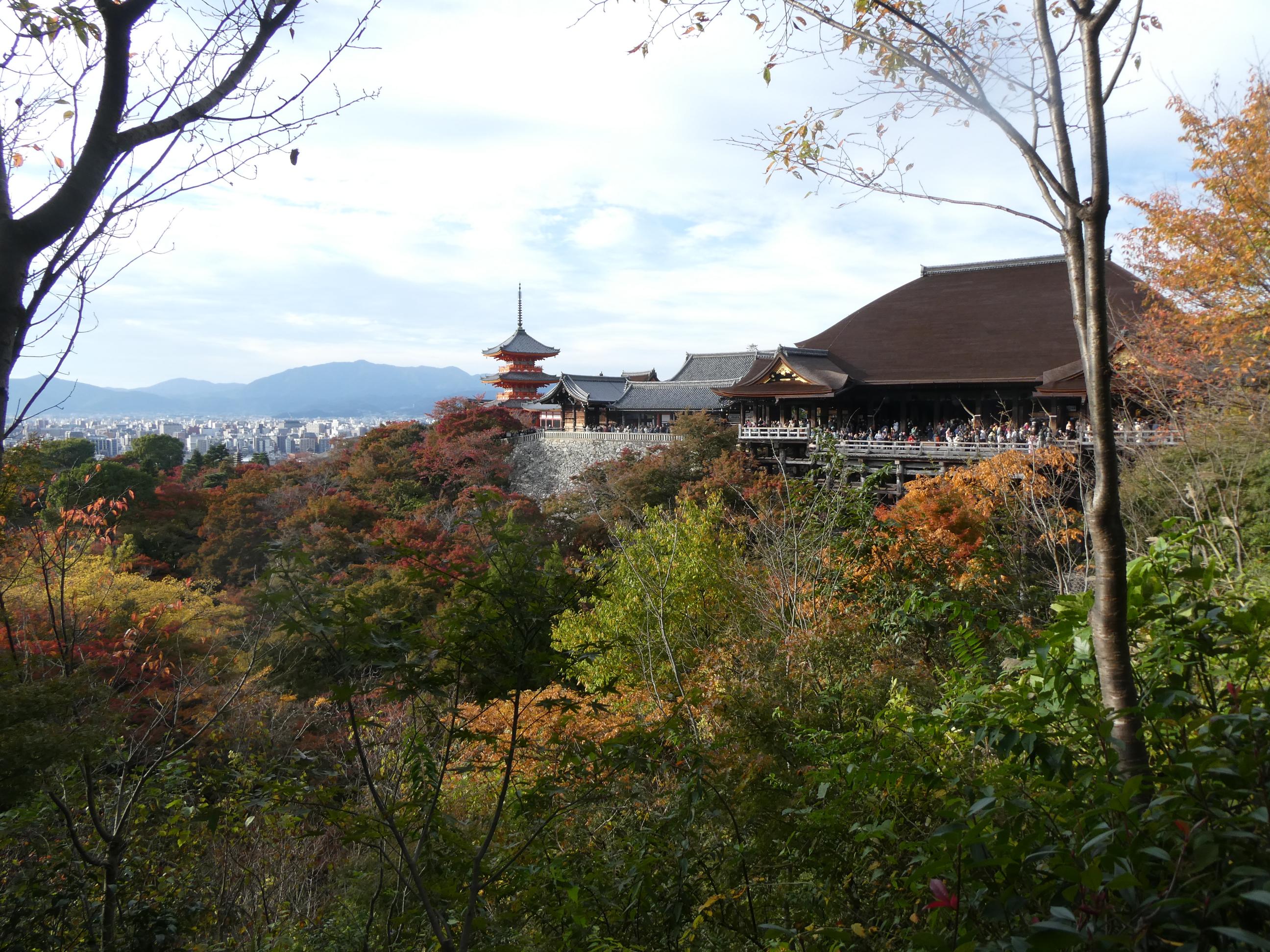
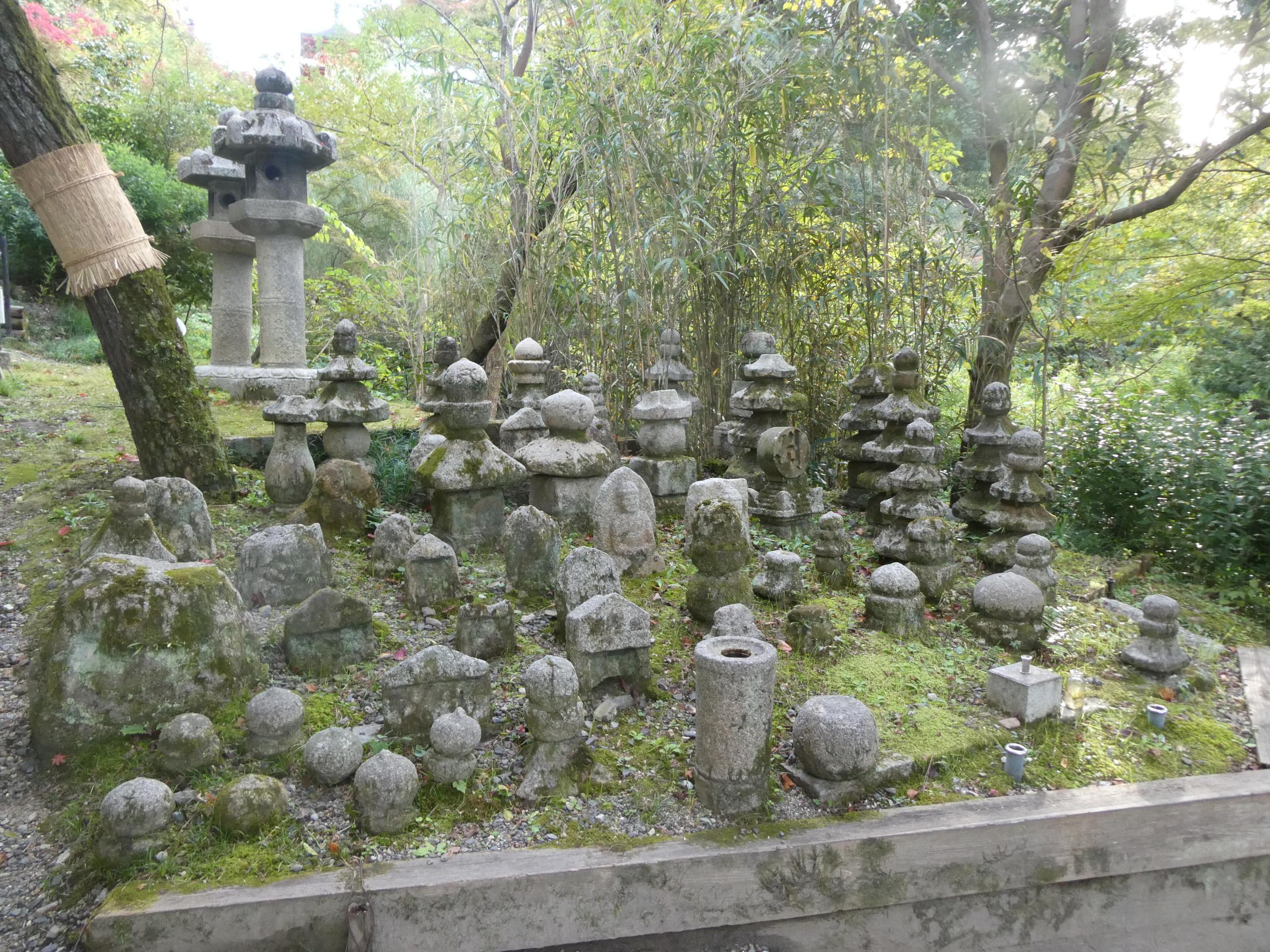
Nevertheless, when we eventually got to the top of the hill and climbed the last few steps to the temple complex, the effort in getting there proved to be worthwhile. Whilst the buildings were beautiful, and contained some really interesting Buddhist statues and religious icons, it was the large viewing platform that was clearly the main attraction of this place. From the platform, panoramic views of the city of Kyoto could be seen, but it was the surrounding forest with its resplendent autumn colours that most phones and cameras were pointed at. Of course, the best photo spots were also the most crowded, especially as lots of people spent ages taking multiple shots in slightly different poses before swapping places with the person with the camera and repeating the process all over again, while others like me just stood there trying to find a way to squeeze through the press of bodies and get to the wall to grab a quick snap. It would have been impossible to try to get a dog in a pram up there today. I’d hate to see what it’s like on a weekend or a public holiday. Marg did a little more souvenir shopping on the way back down, so she was happy.
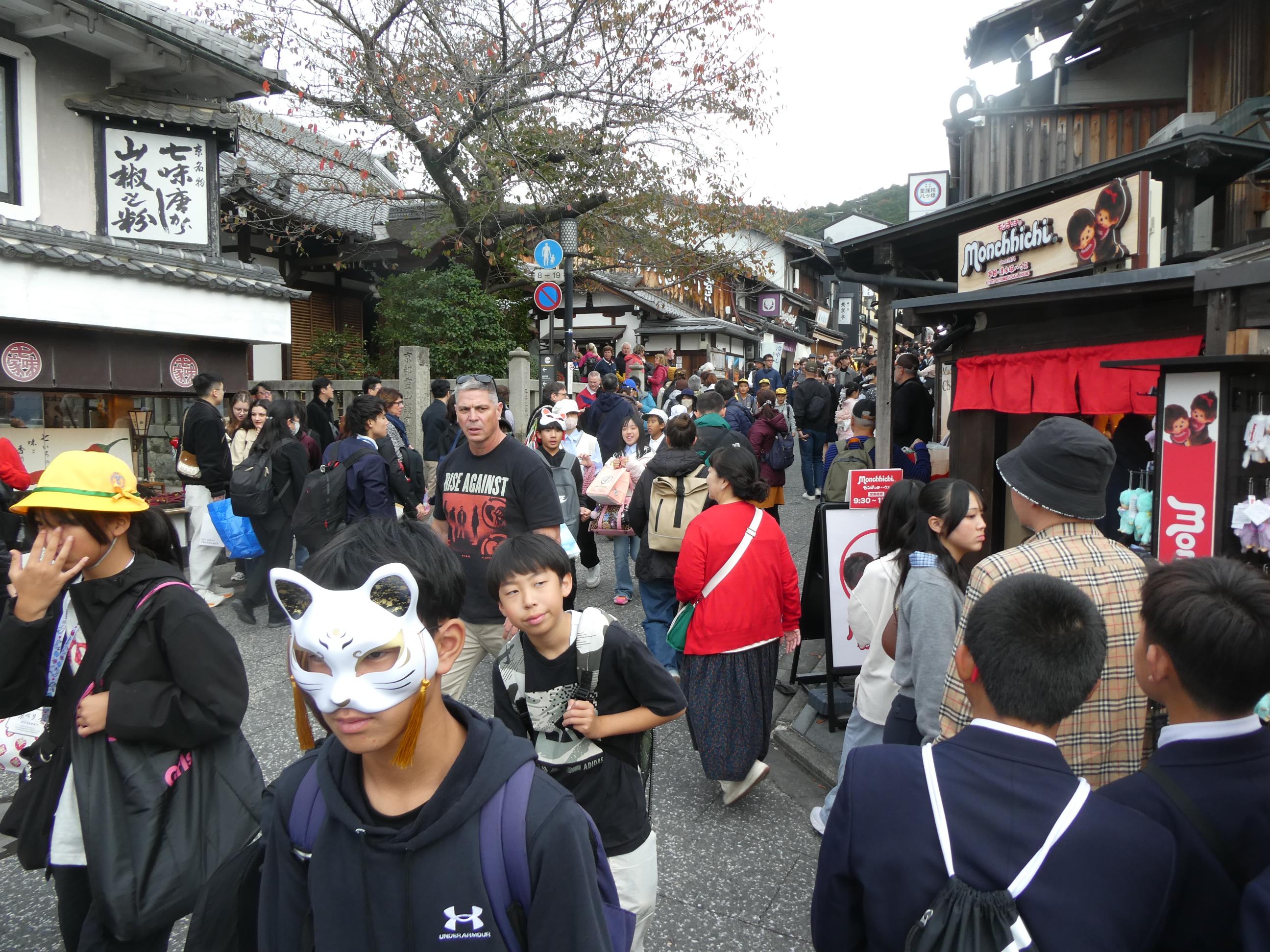







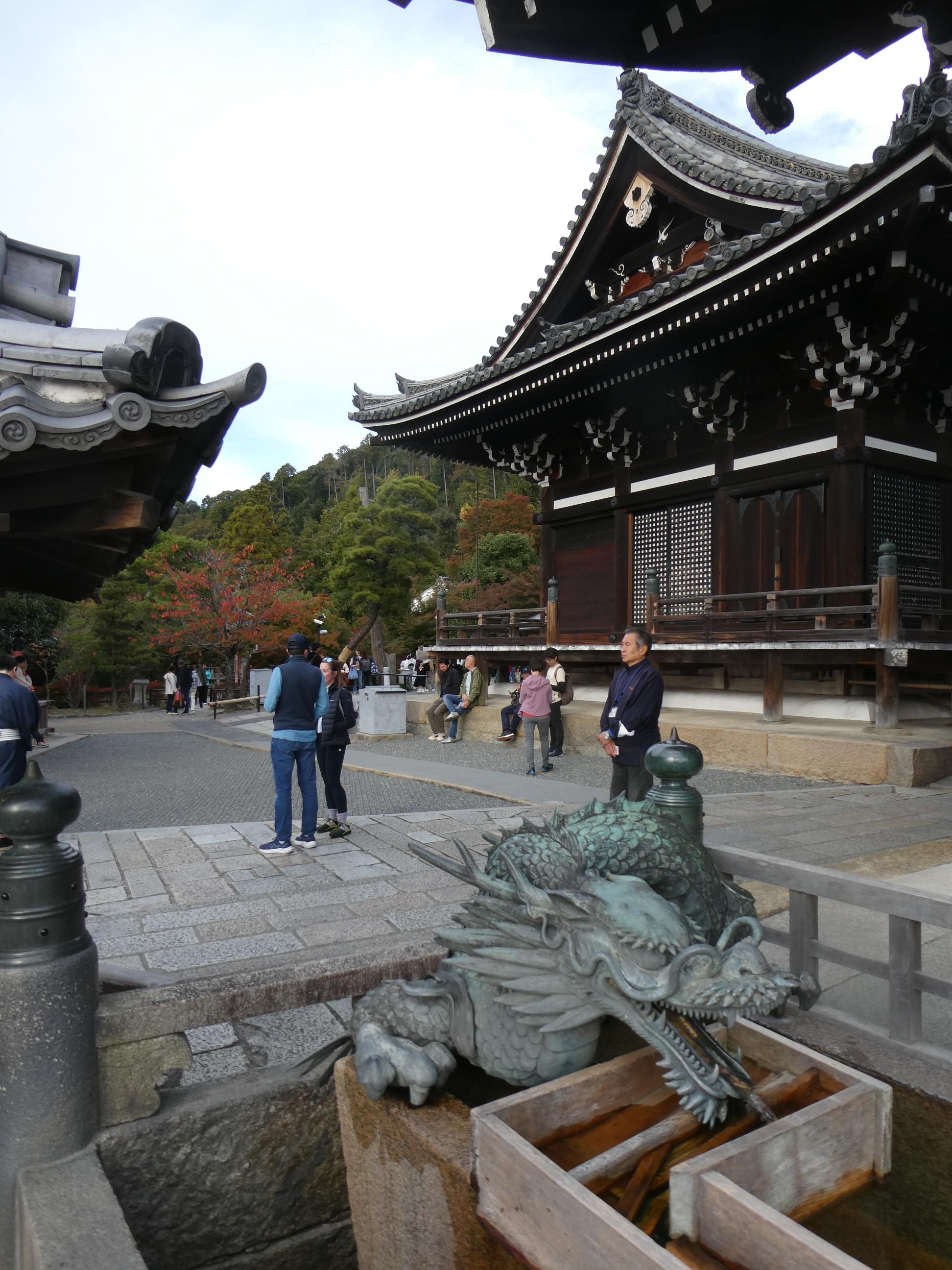
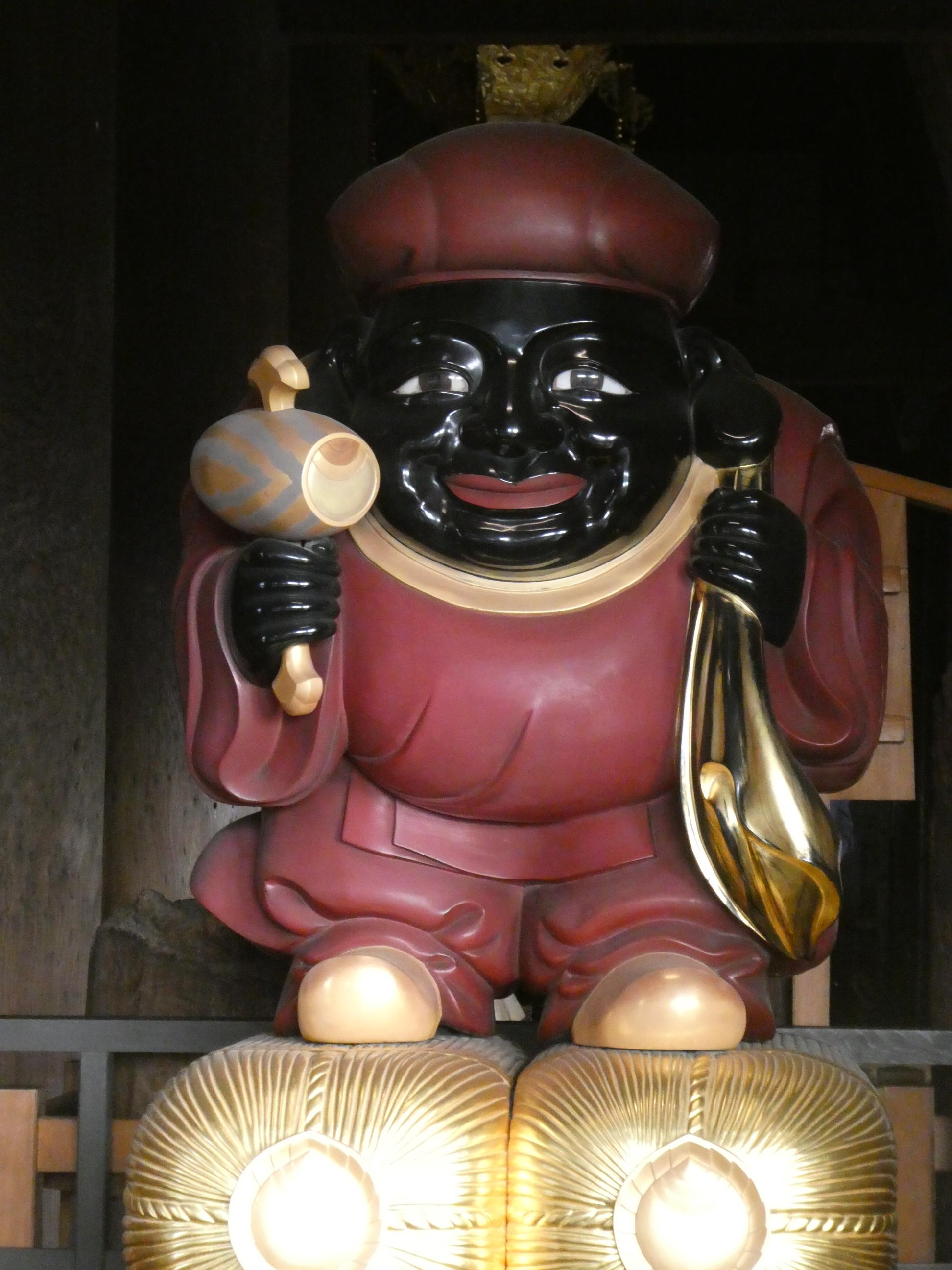

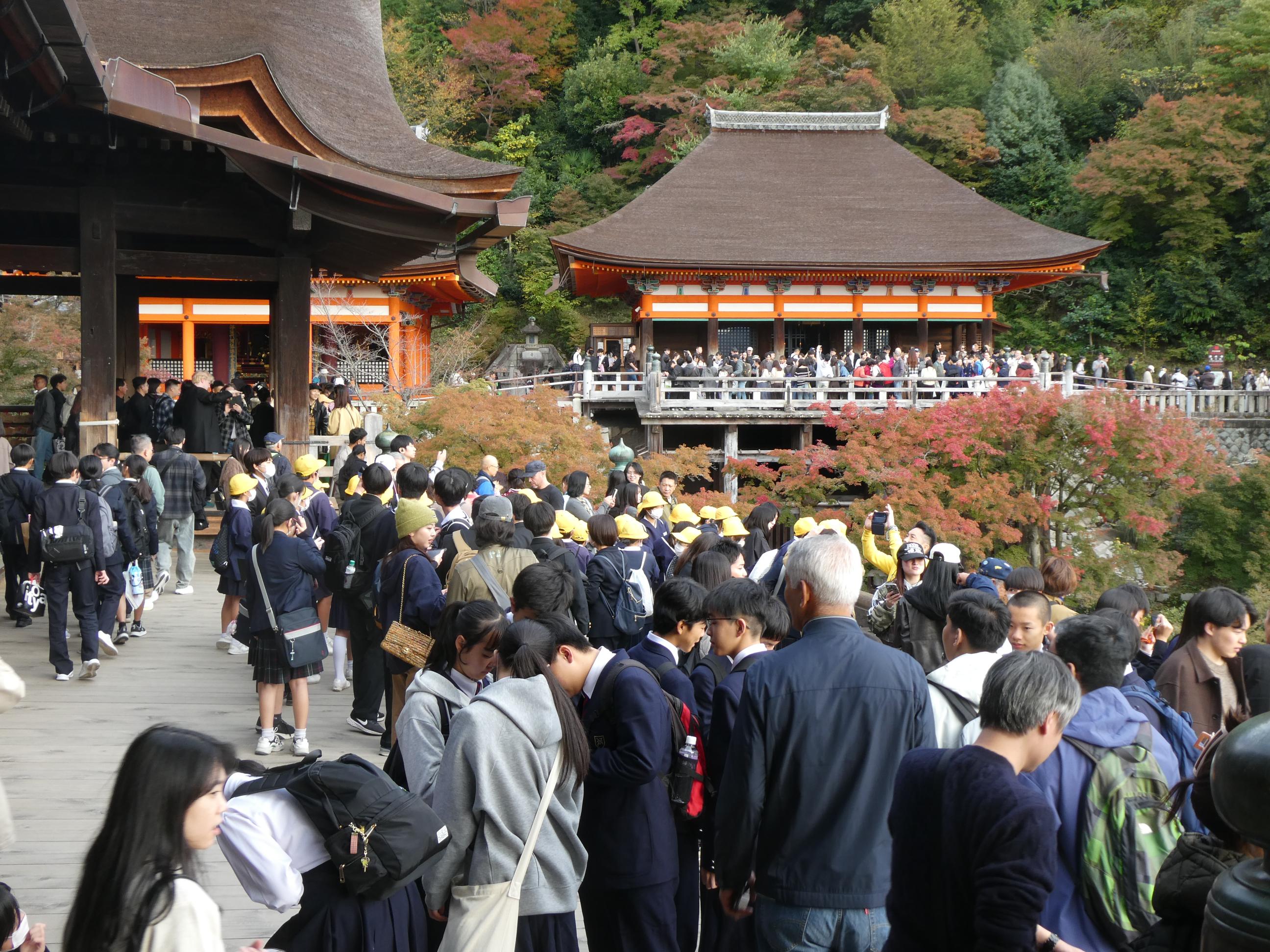

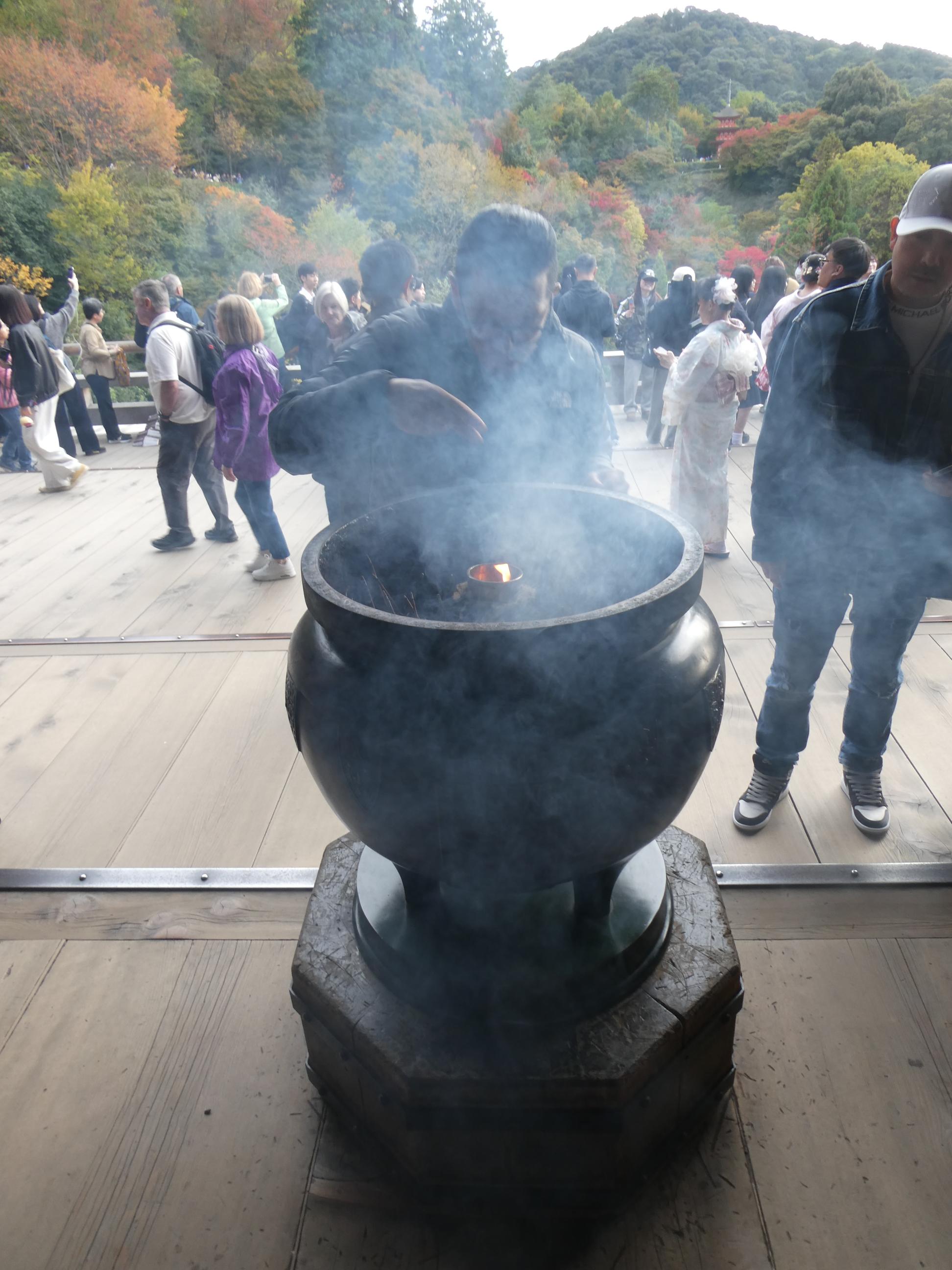








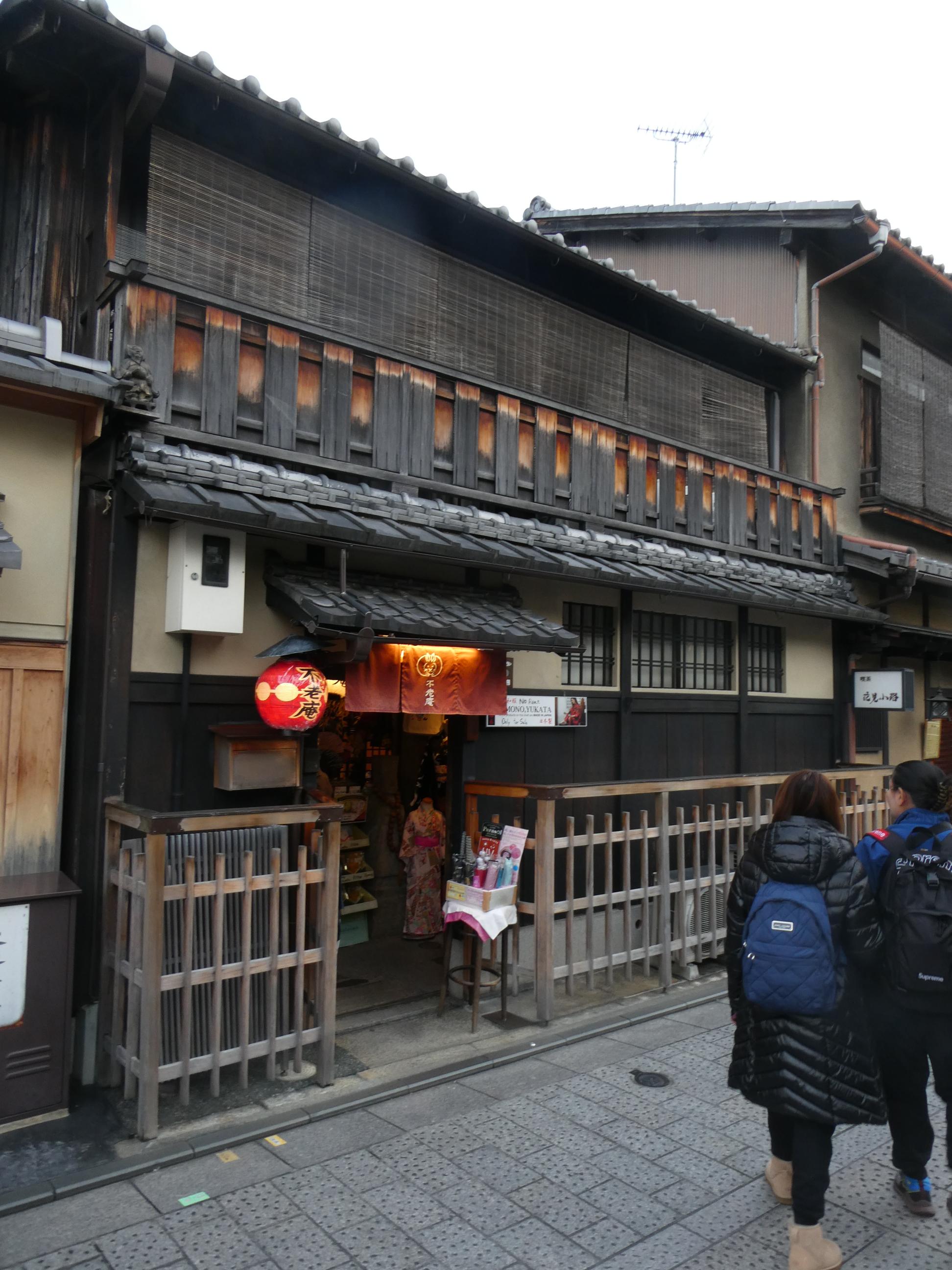
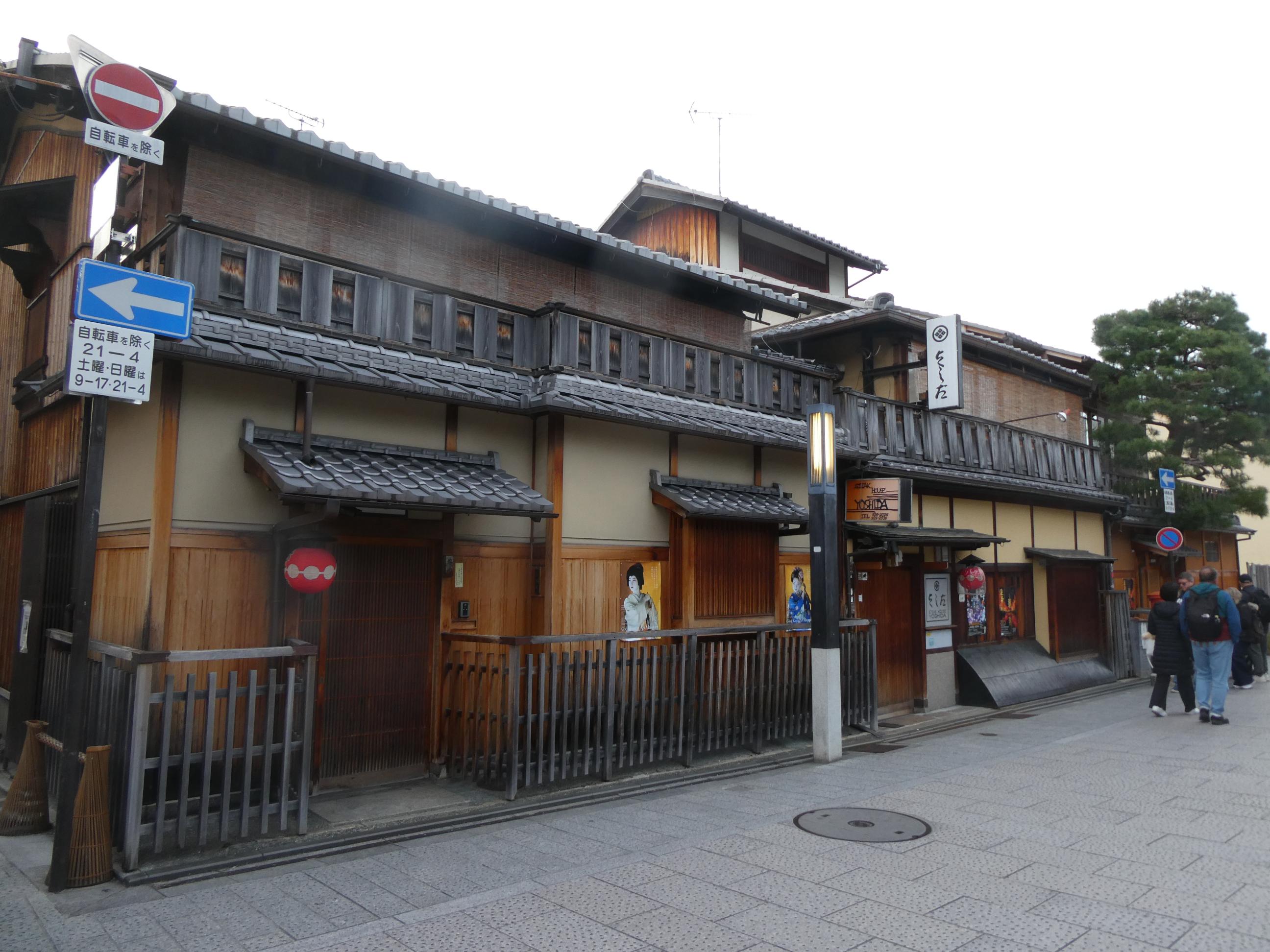
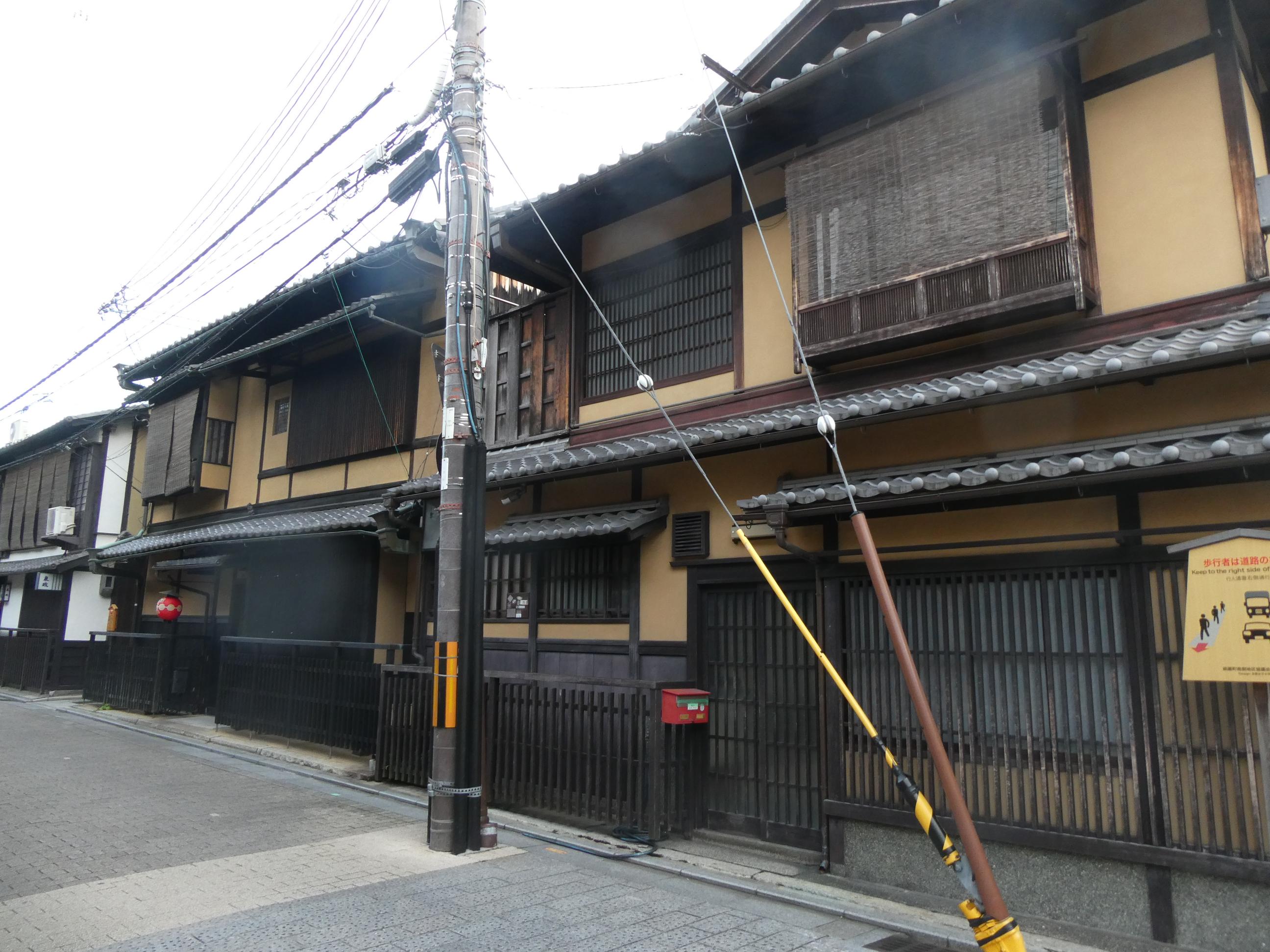
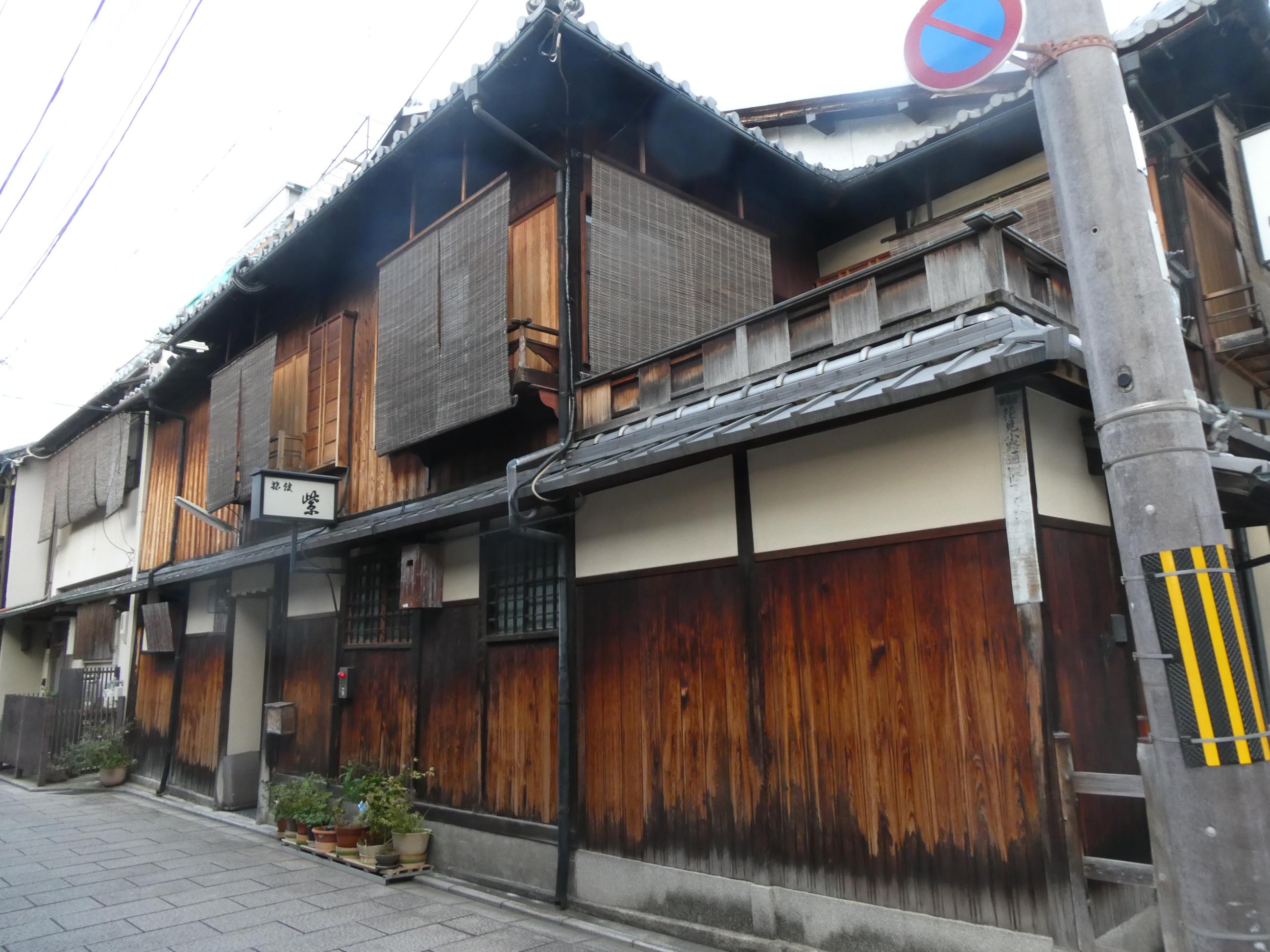
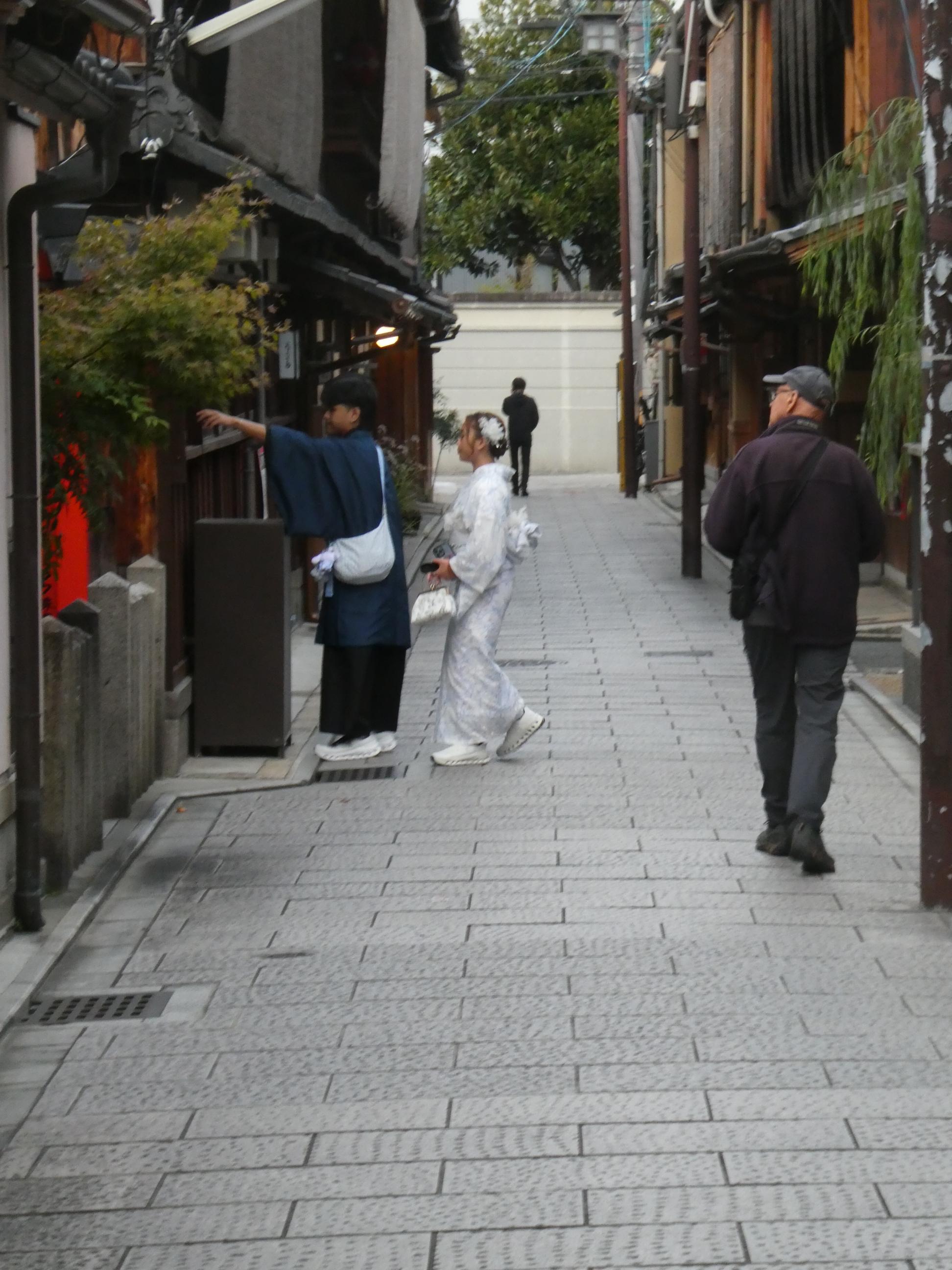
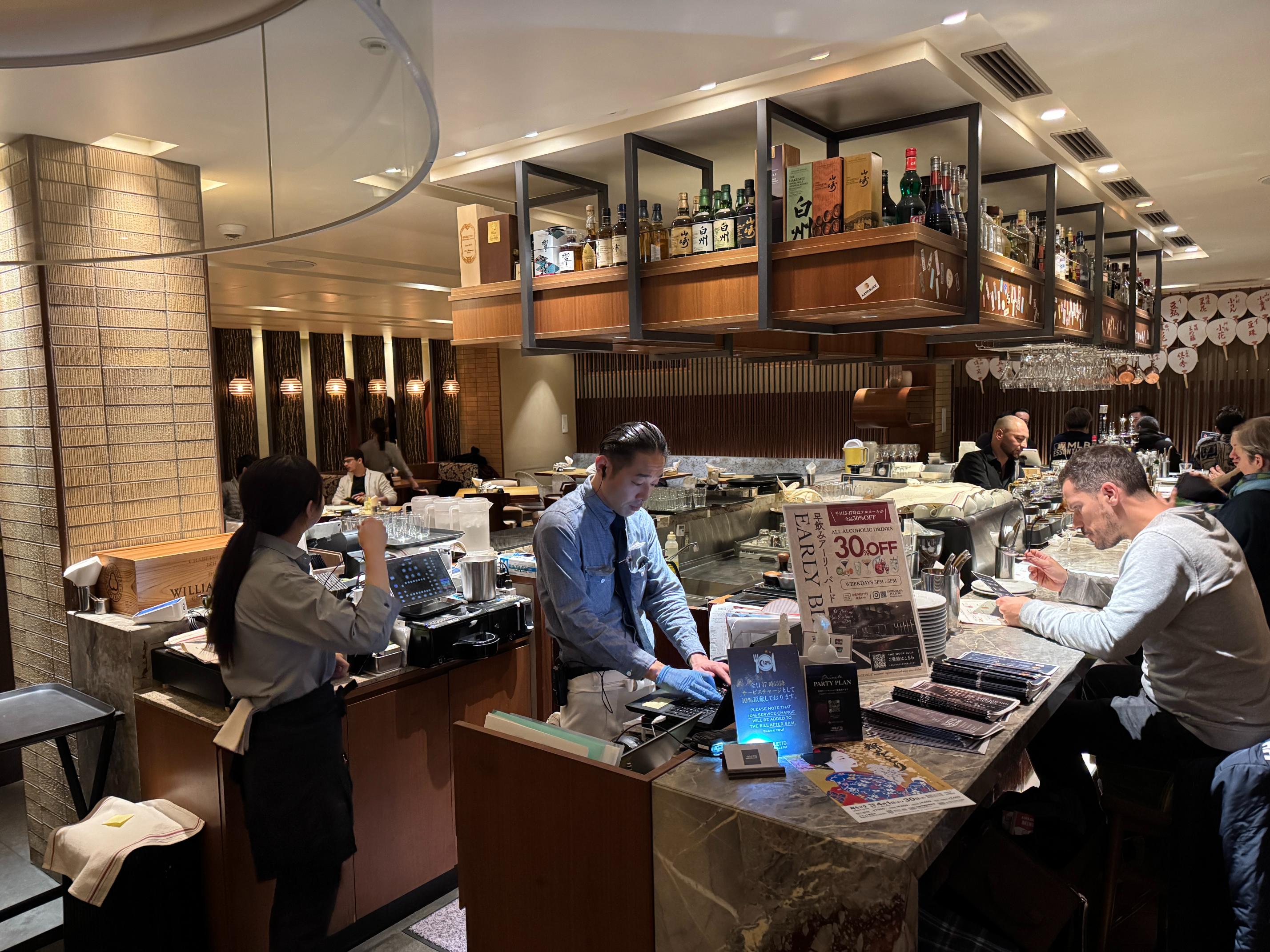
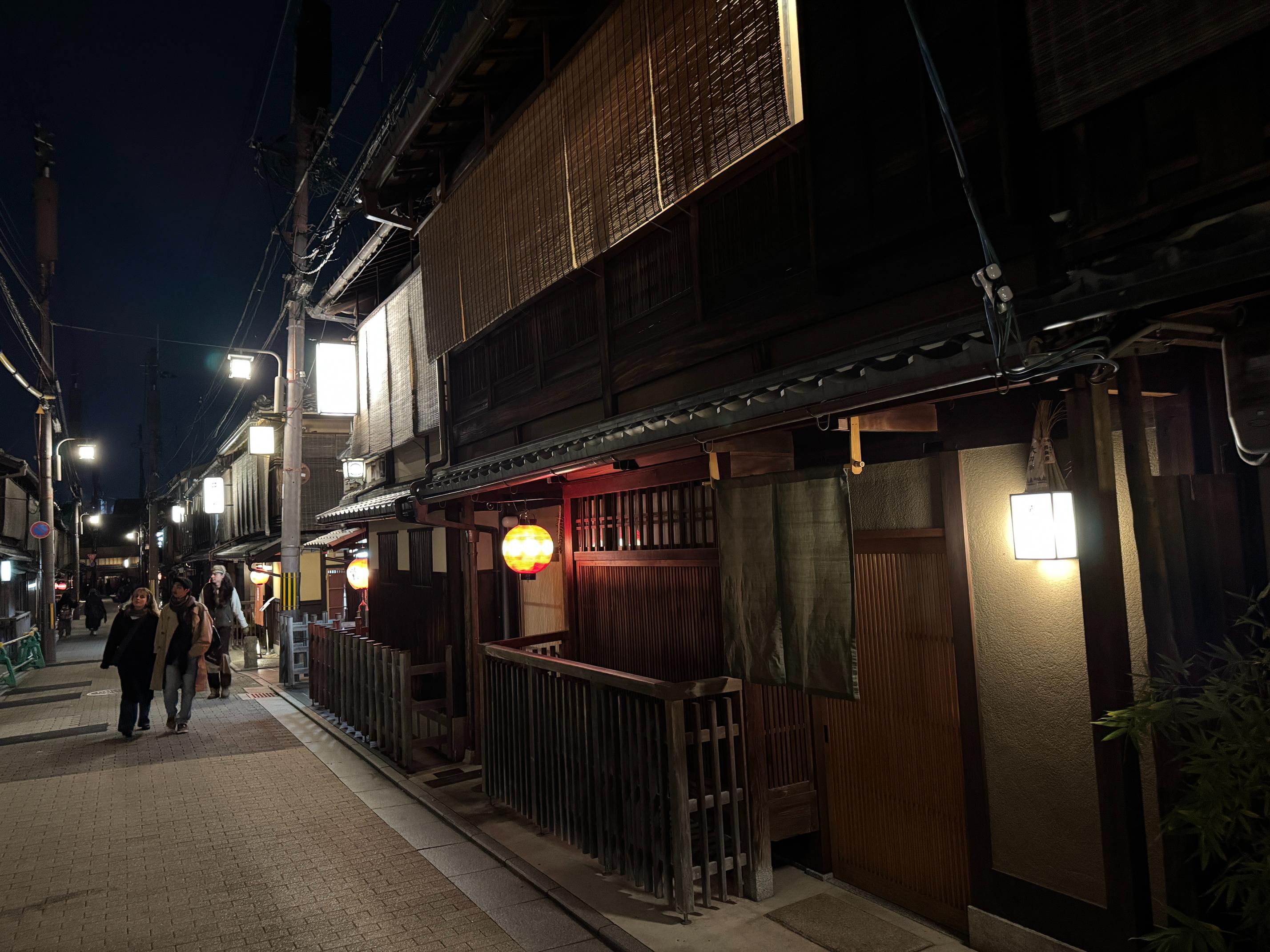
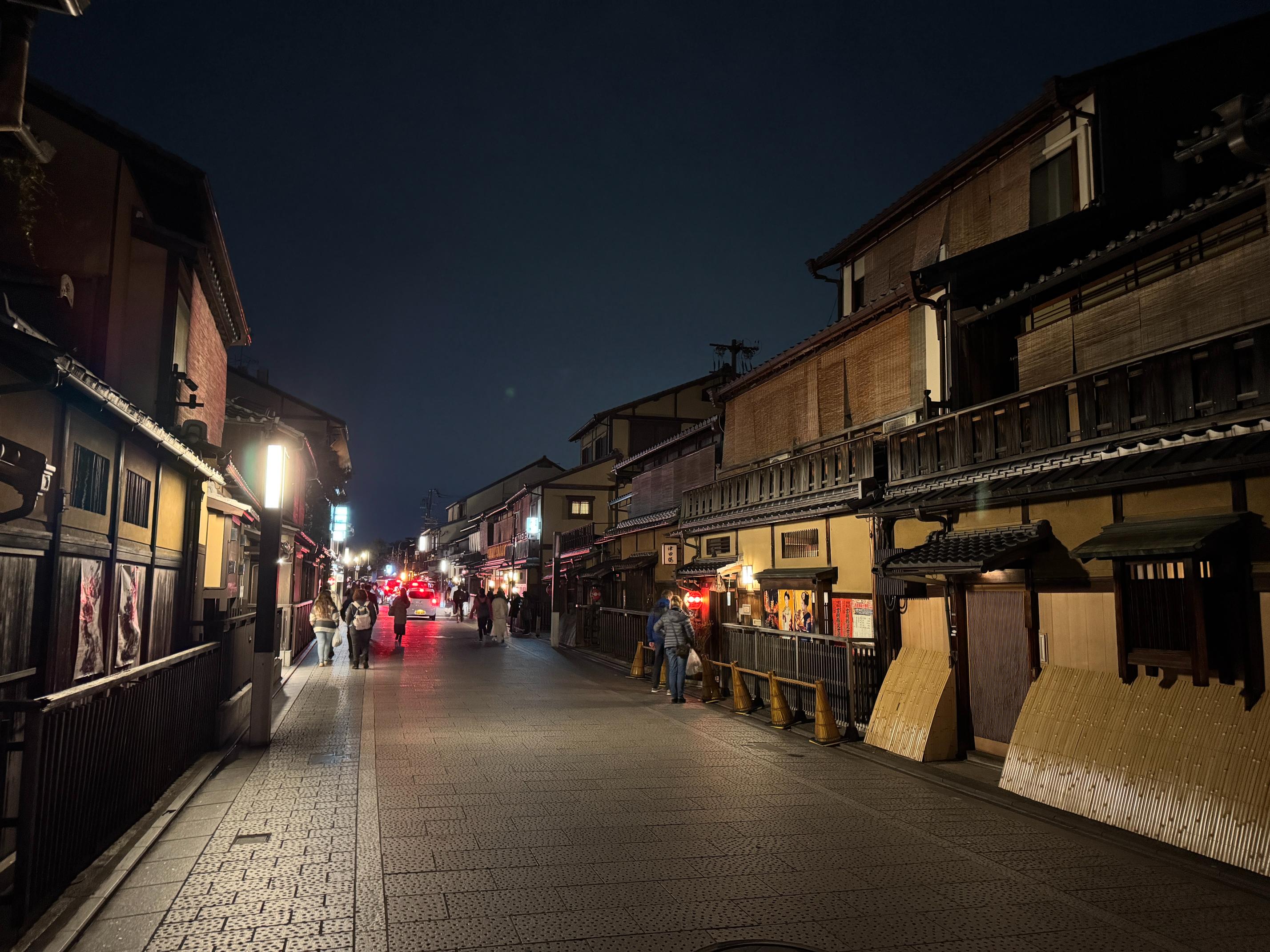
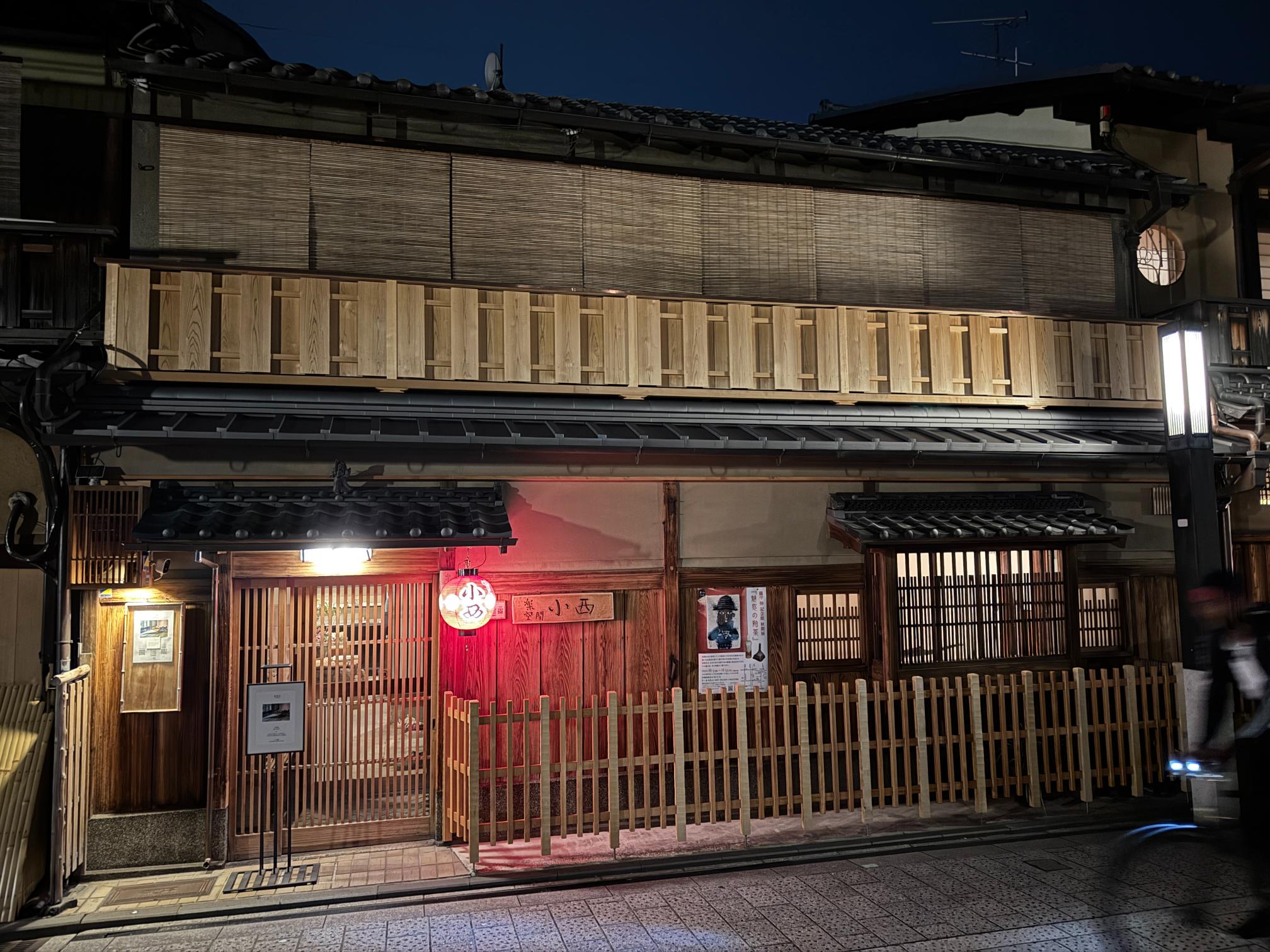
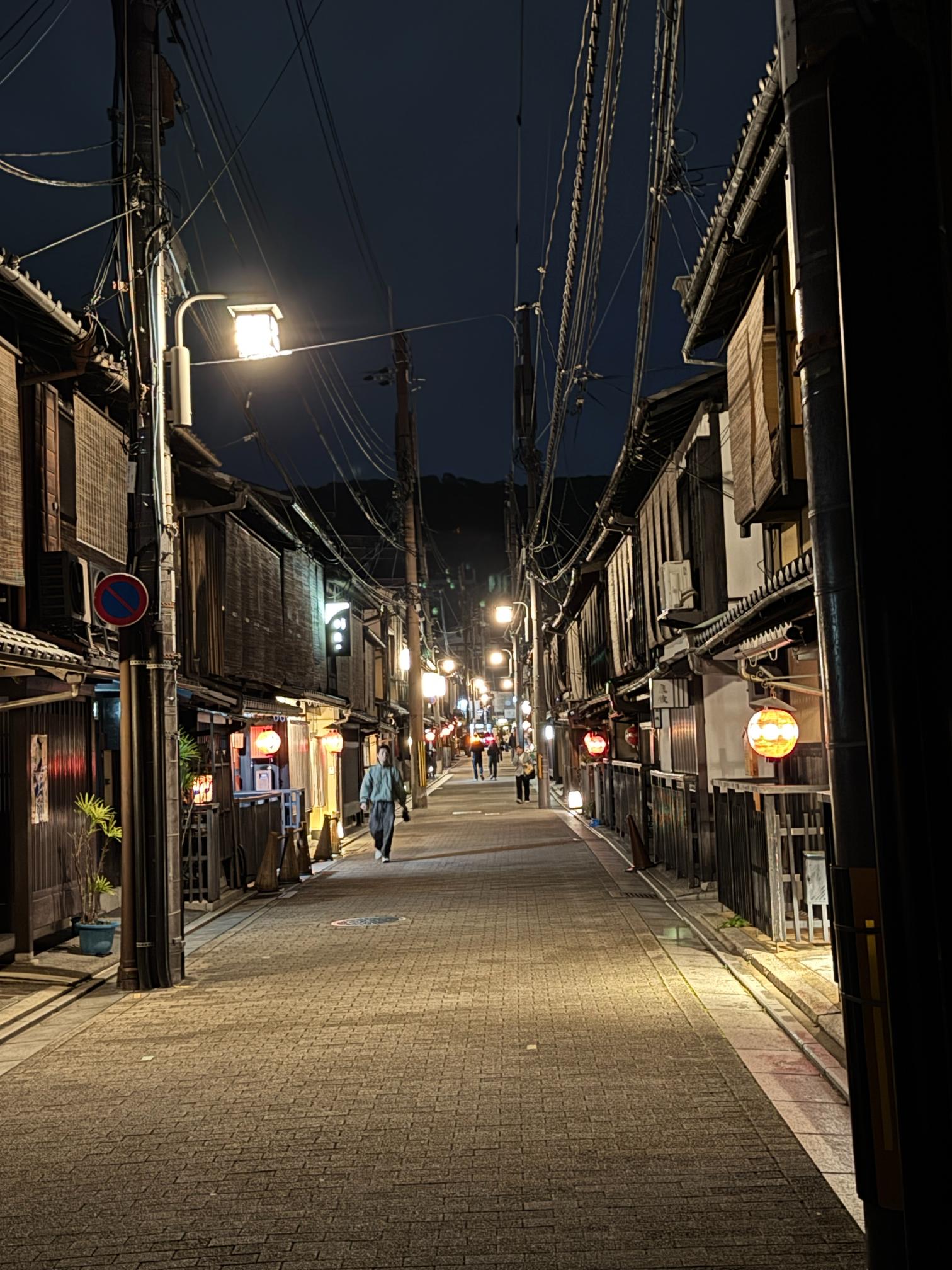
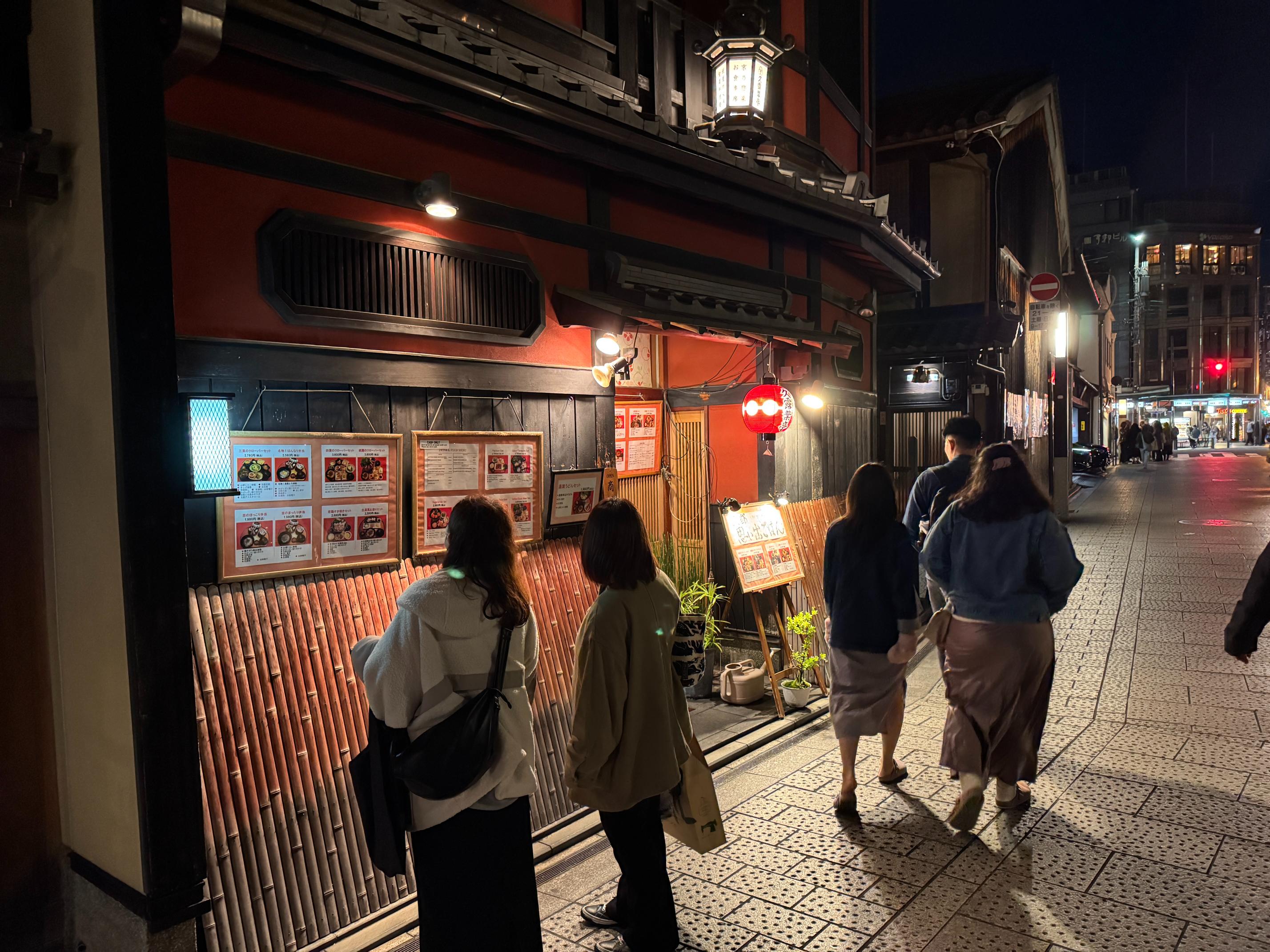
We caught another taxi just a few blocks from the temple site to Gion, Kyoto’s famous Geisha district. We were told that there might be a chance we could spot a geisha hurrying to an appointment in the late afternoon, but we certainly didn’t see any today. I think it might be a rare occurrence these days. There were signs forbidding the photographing of some side streets or, in fact, of any geishas, and massive penalties applied if you were caught doing it. The streets were lined with wooden buildings in the traditional Japanese style. Many of them seem to be transformed into restaurants or perhaps teahouses or sake houses today, but it’s difficult to tell because there is almost no signage to indicate what’s behind the sliding doors. We were lucky to come across a really nice bar/dining place during happy hour, so we stayed for a couple of cocktails, cheese platters and a meal. When we emerged, the red lanterns were out and the street looked great. We found another taxi to take us home. It was a pretty big day, but a good one.




 On The Road With Garry
Wonderful photos. It’s a dream destination, but rather popular from what I gather. How did you manage the forbidden photos of the Geisha? I know- discreetly! xx
LikeLike
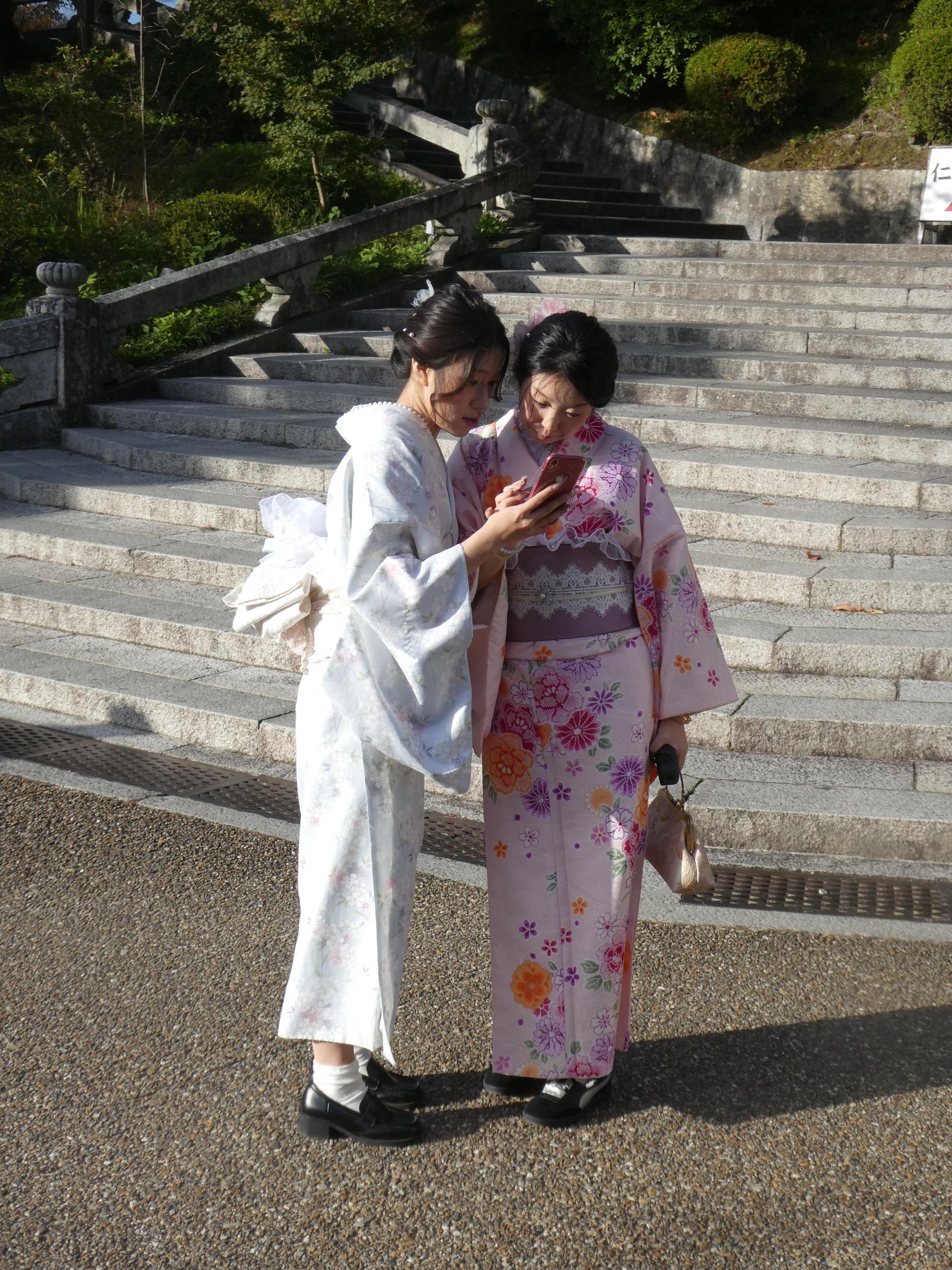
There are no geisha photos here. We didn’t see any. Lots of people rent kimonos to visit tourist sites
LikeLiked by 1 person