We arrived in Kyoto this morning. We’re here for the last five nights of our Japan tour. Our hotel is just a few minutes’ walk from the station, so we wandered over and checked in our luggage. Then we headed back to the station to find the platforms for the subway line. We rode the subway train two stops to Shijo Station. It was a crowded train, though not as crowded as the one we came back to the hotel on later in the day.


Before we left Australia, our daughter Tess advised us not to buy things we wanted to bring home too early in the itinerary, as then we would have to cart them all over Japan. She told us that almost anything we saw in other Japanese cities, we could almost certainly also get in Kyoto. So now we’re here, there’s just a few things we need to buy as gifts for family back home. Today’s afternoon itinerary suggested that we should check out the Nishiki Food Market, where we would find lots of great food, but might also find the other things we were looking for.
I think I love Asian food markets more than the other members of our tour party. For starters, I love to photograph the stalls and the food vendors. I particularly like finding unusual food items we would never see back in Australia. And, secondly, as a lover of Japanese food, I’m keen to sample some of the street food I see as I travel. I just love street food. Sometimes I feel a little guilty when I stop to buy something from a stall, then wait to have it freshly cooked in front of me, then have to sit and eat it where I bought it because walking and eating in Japan is very strictly frowned upon, and all the while my companions are waiting for me. If they went ahead and I tried to catch up, I’d probably never find them again in the busy crowds. Marg and Theresa and Ian are good sports about it and I know they don’t mind, but in a food market it’s always going to be me who holds everyone up. The other reasons I love Asian food markets so much are the wonderful smells, even the fishy ones, and the general hustle and bustle of activity.
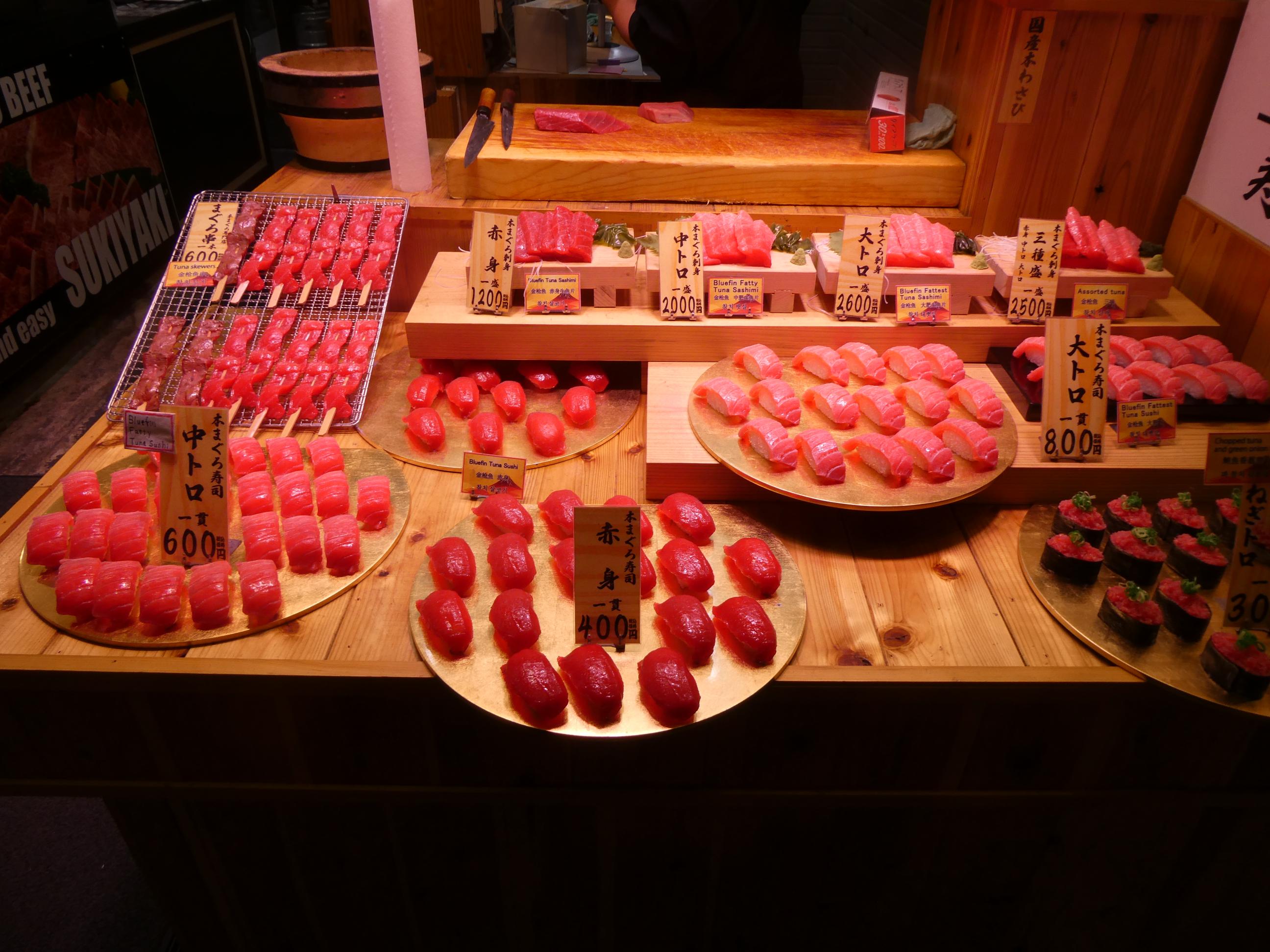
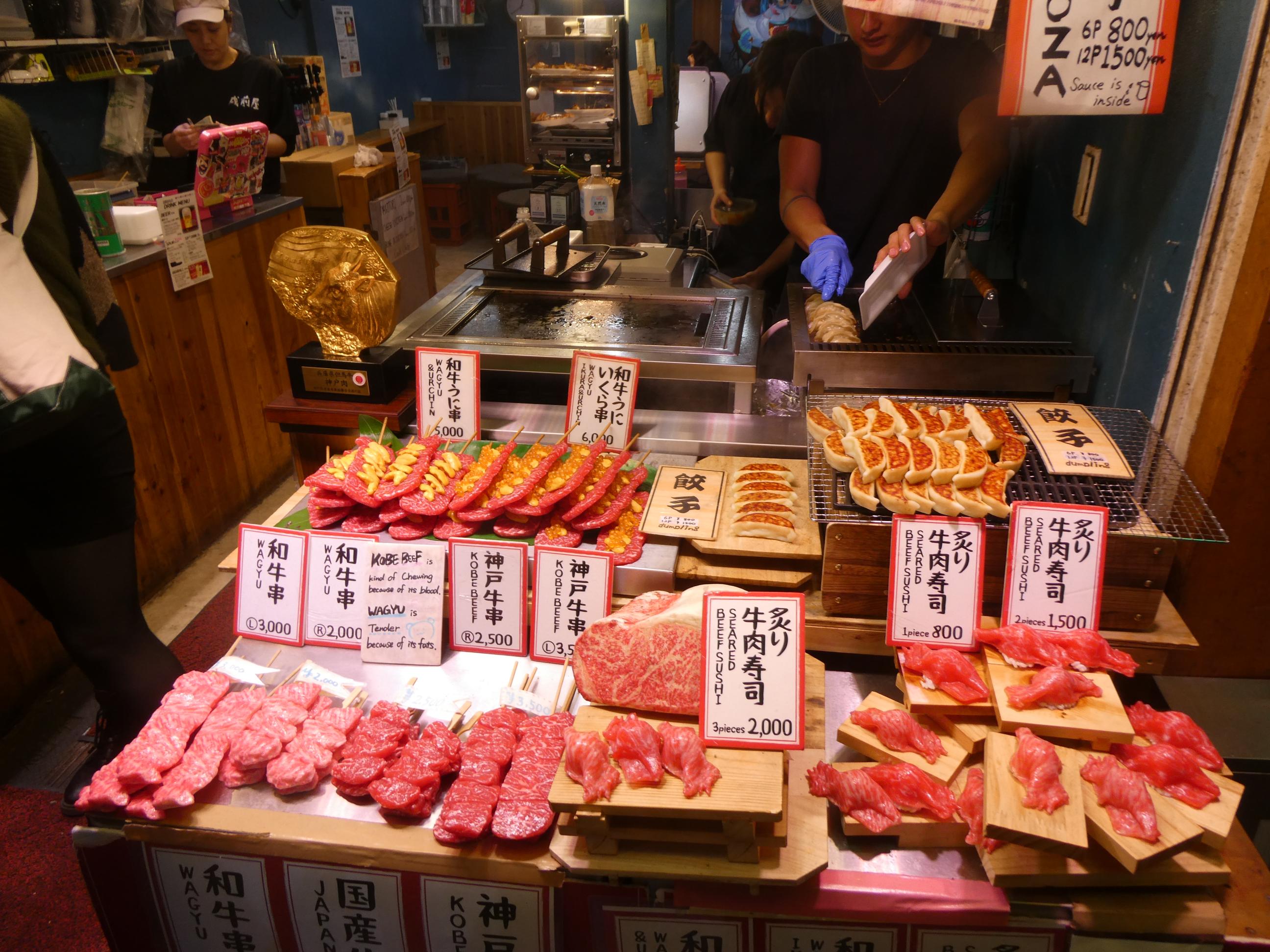
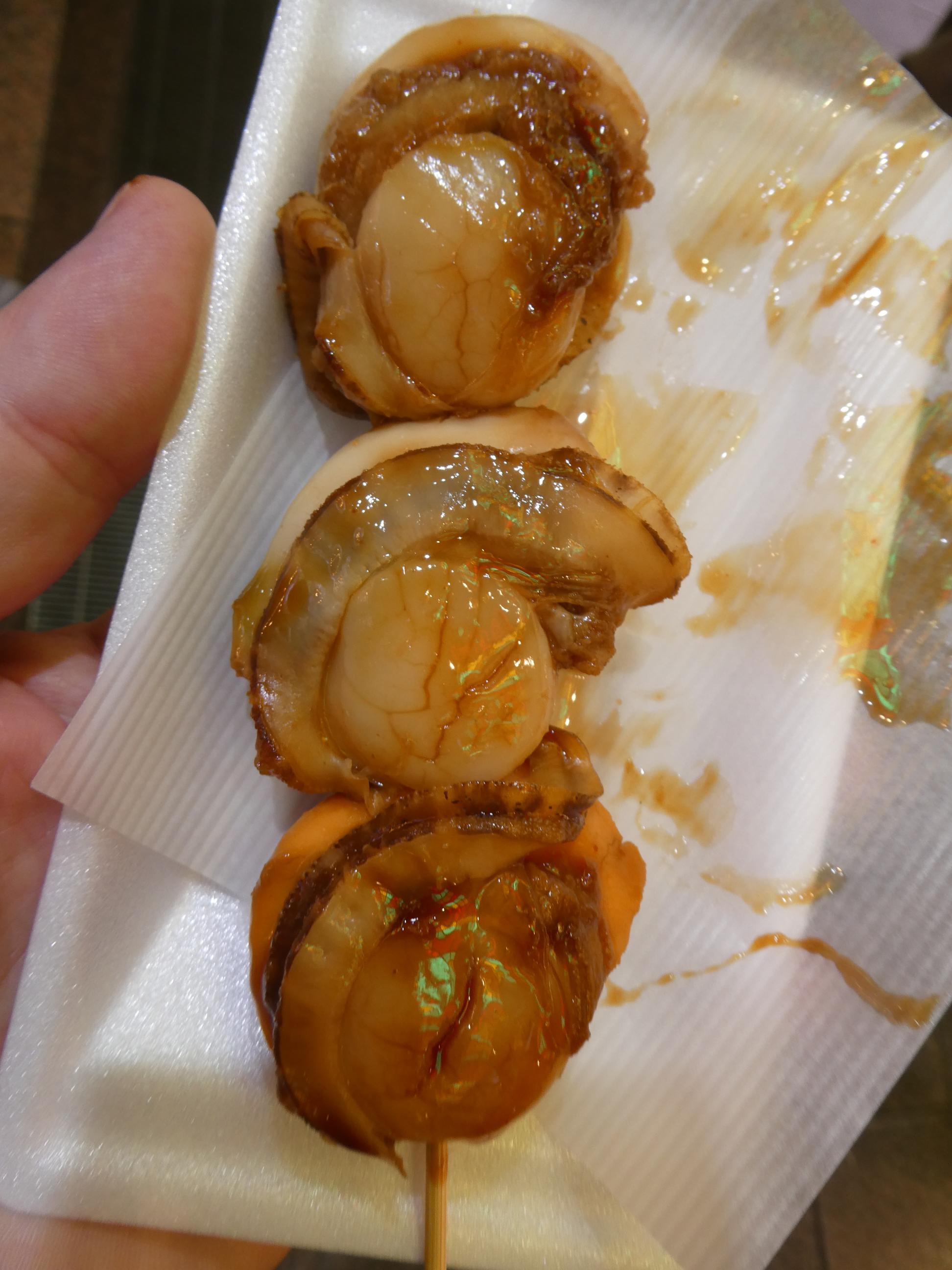
I particularly love seafood – fish, prawns, octopus, squid, mussels and scallops. I was literally salivating after walking past the first two or three stalls. Everything looked so fresh and inviting. Many of the vendors would take the skewered items from the display and give them a few minutes on a smoking grill or pop them into a deep fryer before handing them over. As you can imagine, you can smell them before you even see them half the time. I don’t think Marg, who doesn’t eat seafood, would have enjoyed that experience as much as I did. And then there were the sashimi stalls with their glistening red, perfectly cut slices of tuna shining like the russet autumn leaves on a maple tree. They looked sooo good. As did the kaarage (Japanese fried chicken) and the Kobe beef skewers. I resisted temptation for as long as I could, but when Marg and Theresa disappeared into a shop and it looked like they might not emerge for a while, I dug out 600 yen from my pocket and purchased three plump, juicy scallops in yakitori sauce on a skewer. OMG, they were delicious. I was cautioned by the lady who sold them that I mustn’t eat them while walking, so I moved out of people’s way and devoured them, one by one. Marg bought a drink and was also forbidden to move, so we suggested to Theresa and Ian that they should keep moving and we’d eventually find them when we were allowed to move again. A loudspeaker announcement came over, warning people that they must not eat while moving. There were signs at regular intervals stating that walking and eating was banned. After Theresa and Ian had gone ahead, and Marg was still only midway through her drink, I snuck back to the seafood vendor and bought another scallop skewer. I probably could have eaten more, but I was saving myself for dinner.






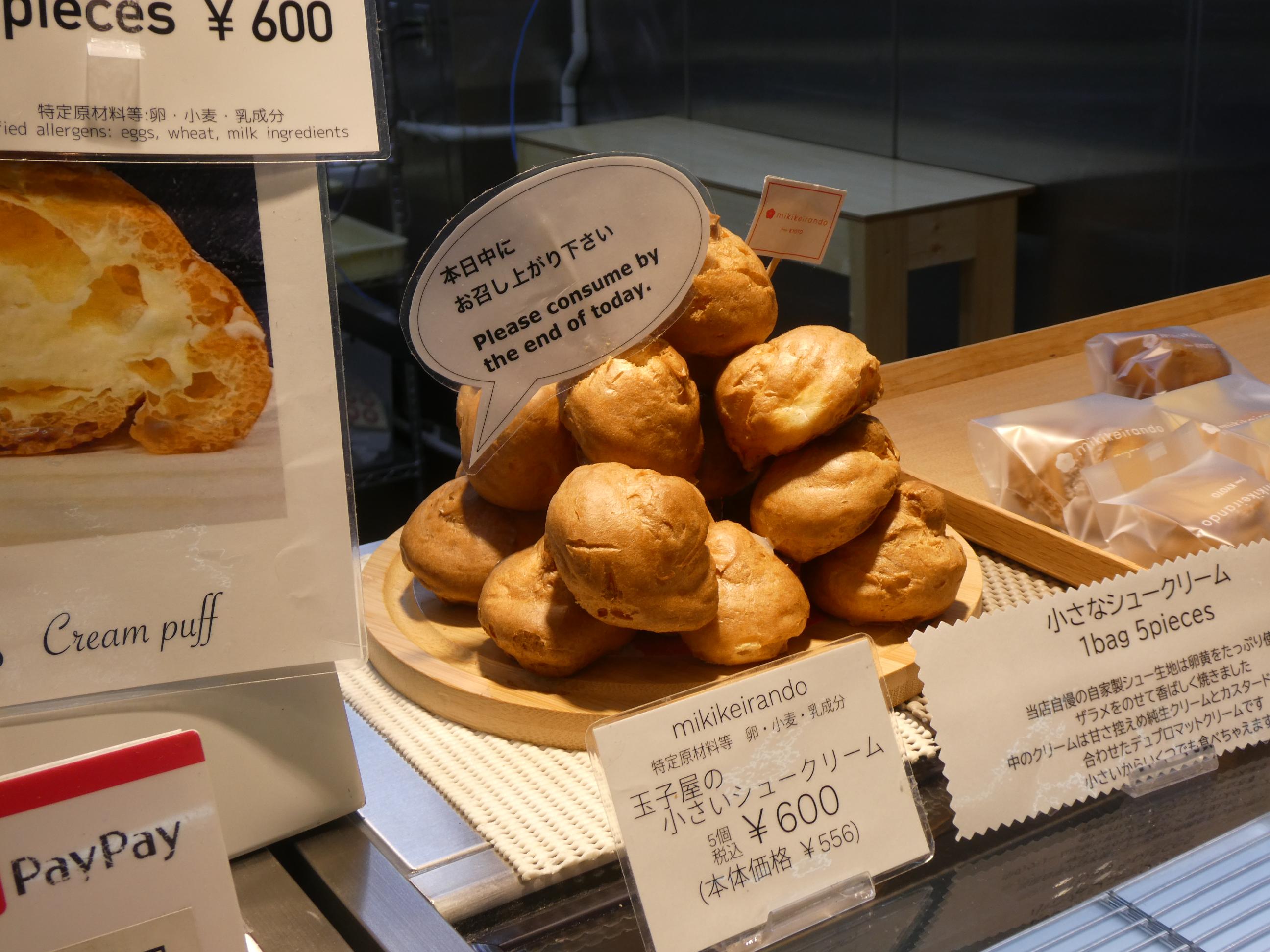

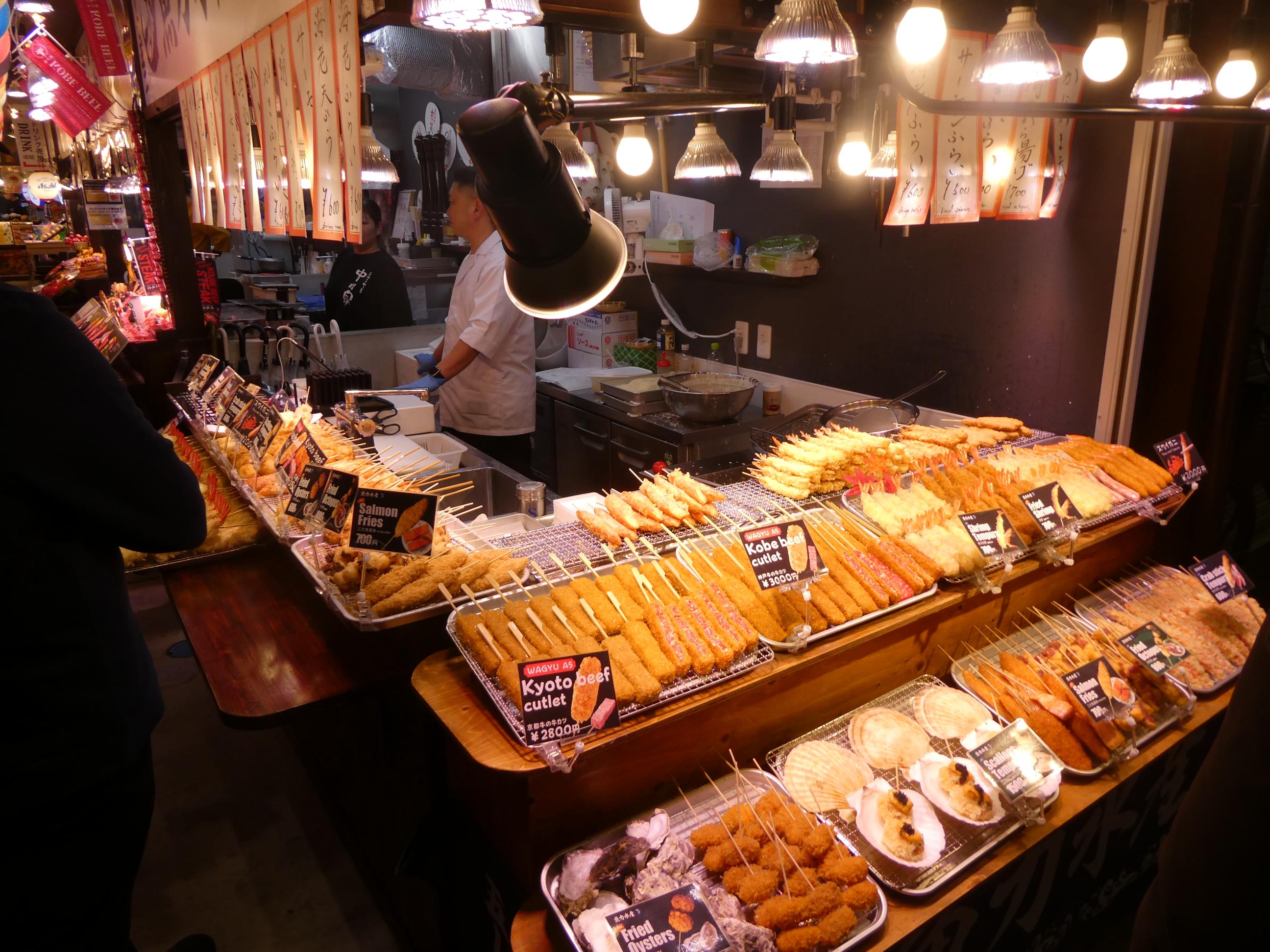


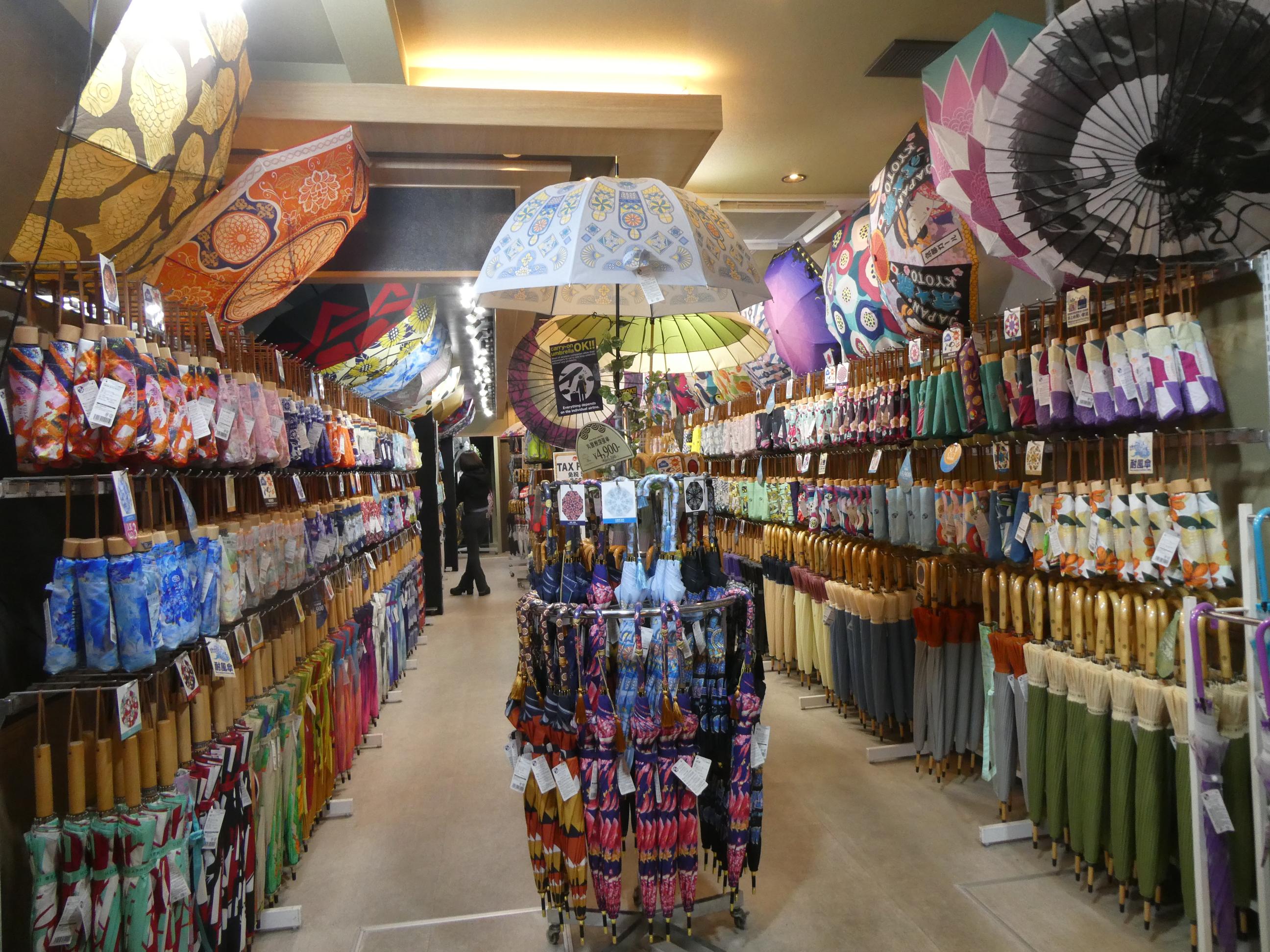
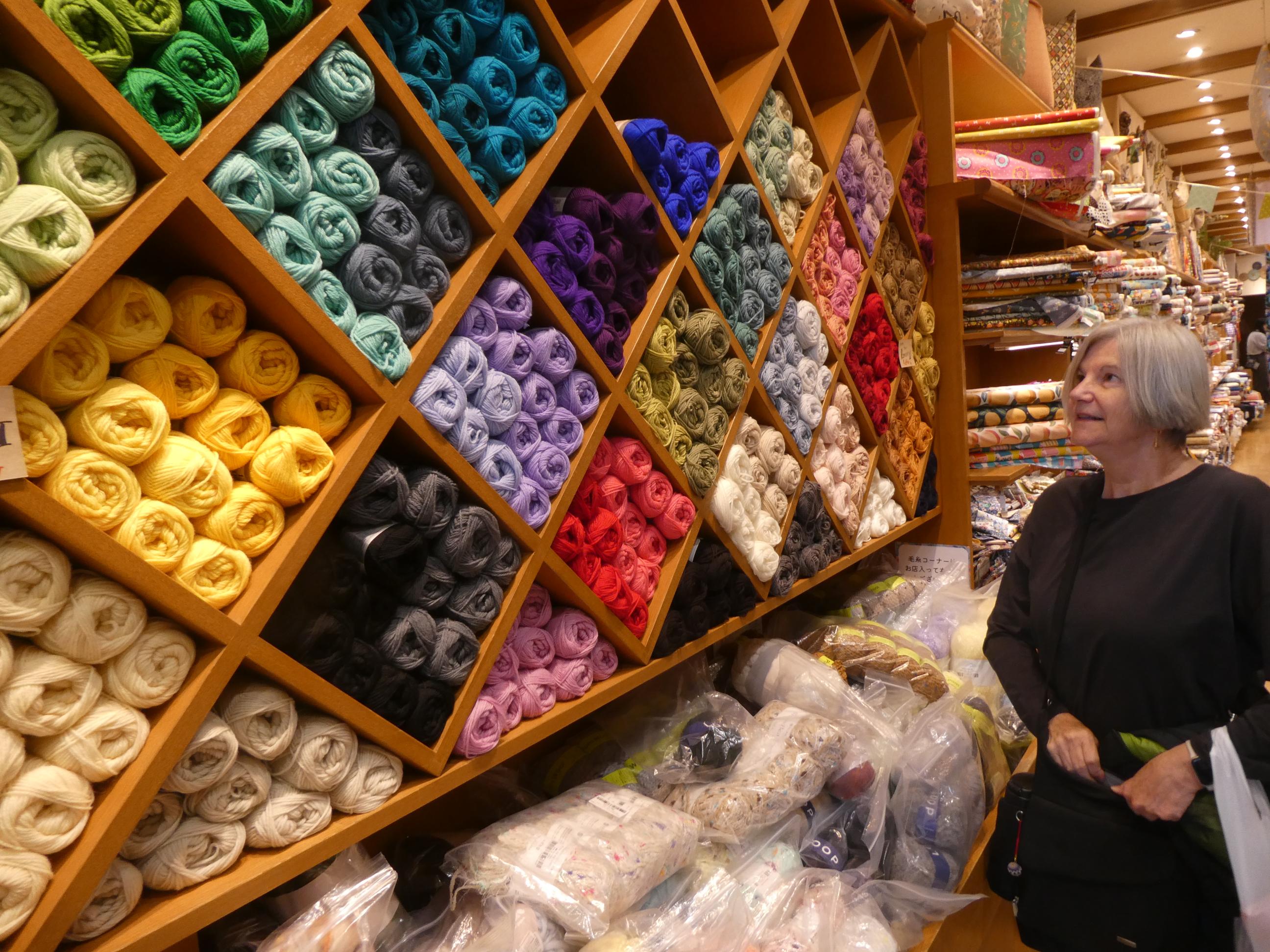
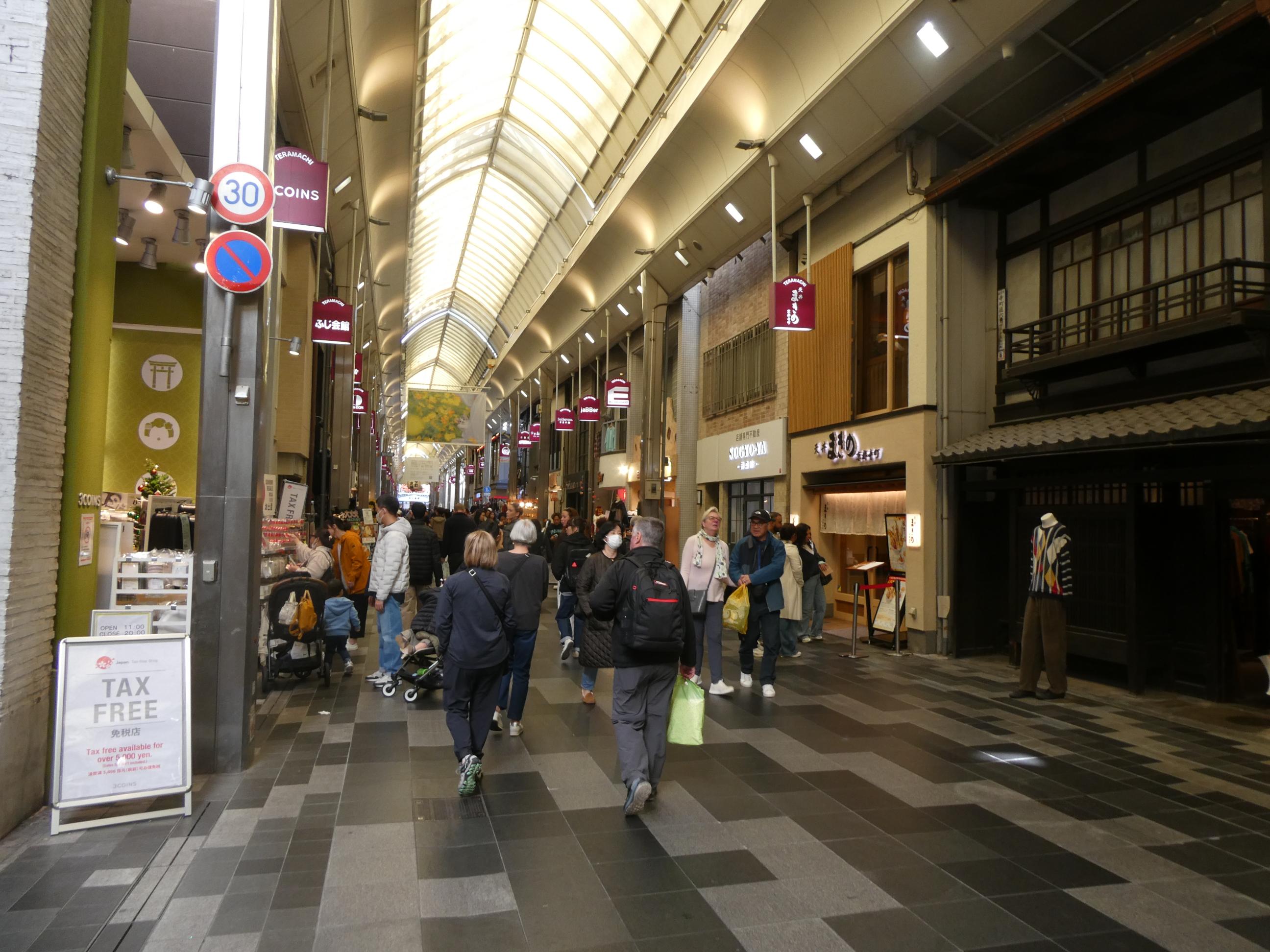
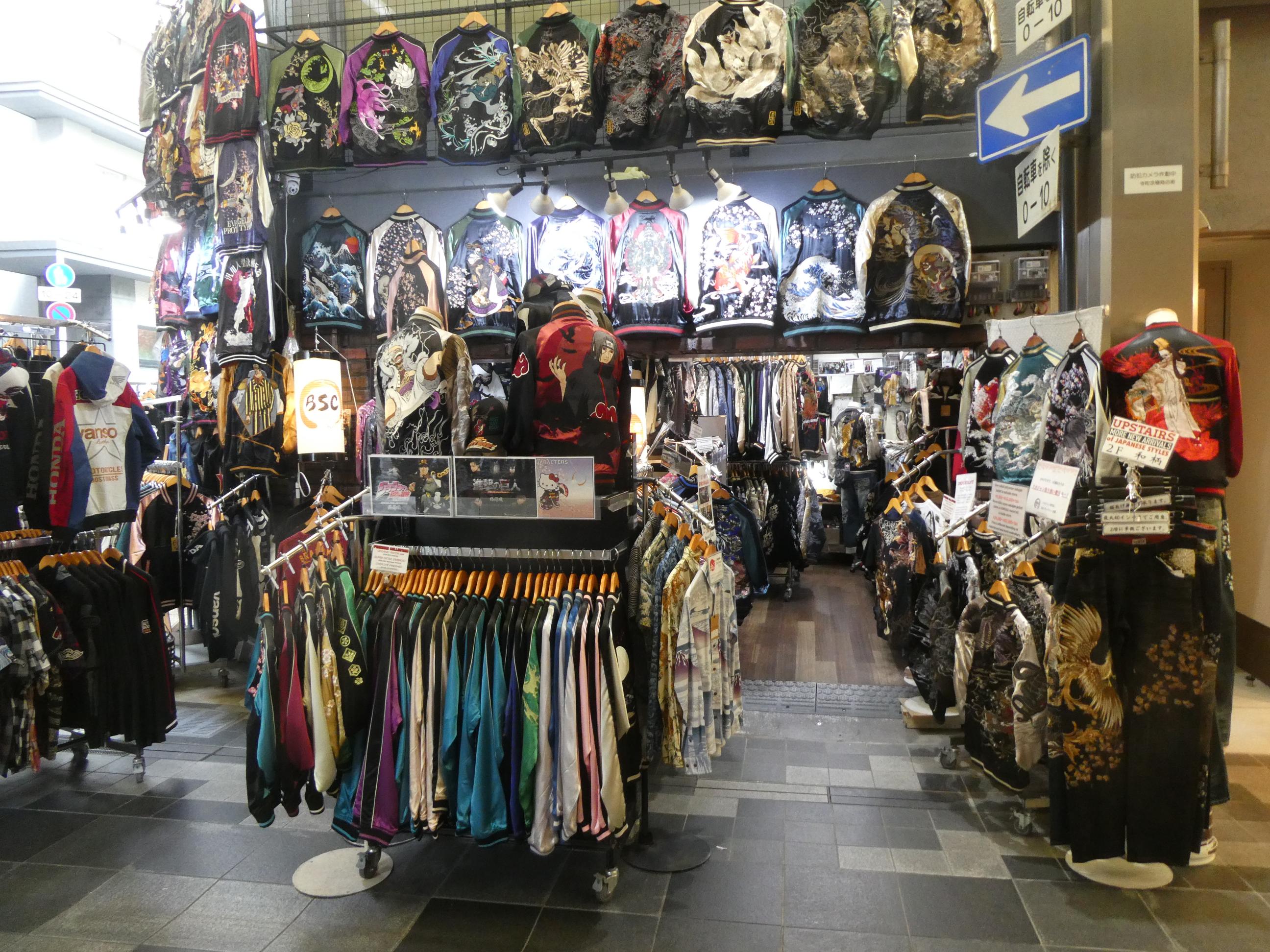
The long corridors of food stalls and shops were endless. Eventually, we left most of the food behind, to be replaced with stores selling souvenirs, garments, shoes, umbrellas, chopsticks, Japanese knives and, yes, wool. Marg stumbled upon it. Normally on our travels she googles it in advance and then we try to find the address. This one was pure serendipity, and her face lit up. Her elation didn’t last, however, as it was New Zealand wool, rather than Japanese wool, on sale and she knew she could get it back home. Wherever we’ve been on our recent travels, Marg has tried to buy some wool from the actual region, so it holds special memories of her visit when she gets around to knitting or crocheting with it. Anyway, we found a few things that we’d been looking for to bring home, and this time we purchased them because we’ve finished moving between hotels. Marg was very happy with her purchases.
After stopping for her drink and my scallop skewers, Marg and I had lost sight of Theresa and Ian. We made our way through the crowds and found them surrounded by three young Japanese girls. They were practising their English, and quite possibly were undertaking some form of learning or assessment task for their schooling. One girl was reading questions aloud from her phone and we were answering them for her in English. The others were just nodding, but the girl with the phone appeared to have a better grasp on the language, and often indicated that she understood our answers. Ian said she asked them lots of questions before Marg and I turned up.
We started heading back to the subway station we’d arrived at, but Google Maps was saying it was about 20 minutes’ walk. We’d certainly covered a bit of distance in the long corridors of the shopping precinct, and we didn’t feel like retracing our steps, as that would have taken up back through the market and all the crowds. We found another route, where we could skirt around the perimeter of the shopping district, and it eventually brought us back to the station. We caught a very crowded subway train back to Kyoto Station. It was so crowded, in fact, that Marg and I had to go to a different door to Theresa and Ian, and both couples only just managed to squeeze in far enough that the carriage doors would close. It reminded me a lot of the very crowded trains I’ve caught home from the footy at the MCG after blockbuster Collingwood games. Next to Kyoto Station was a shopping centre where Theresa knew there was a shop she wanted to find. We seemed to walk around in circles for quite some time before we magically found it. She bought what she was looking for and we all headed back to our hotel, although for a time we weren’t really sure whether we were going in the right direction or not. I think it was the most confused we’ve been in a railway station since our first day at Shinjuku.





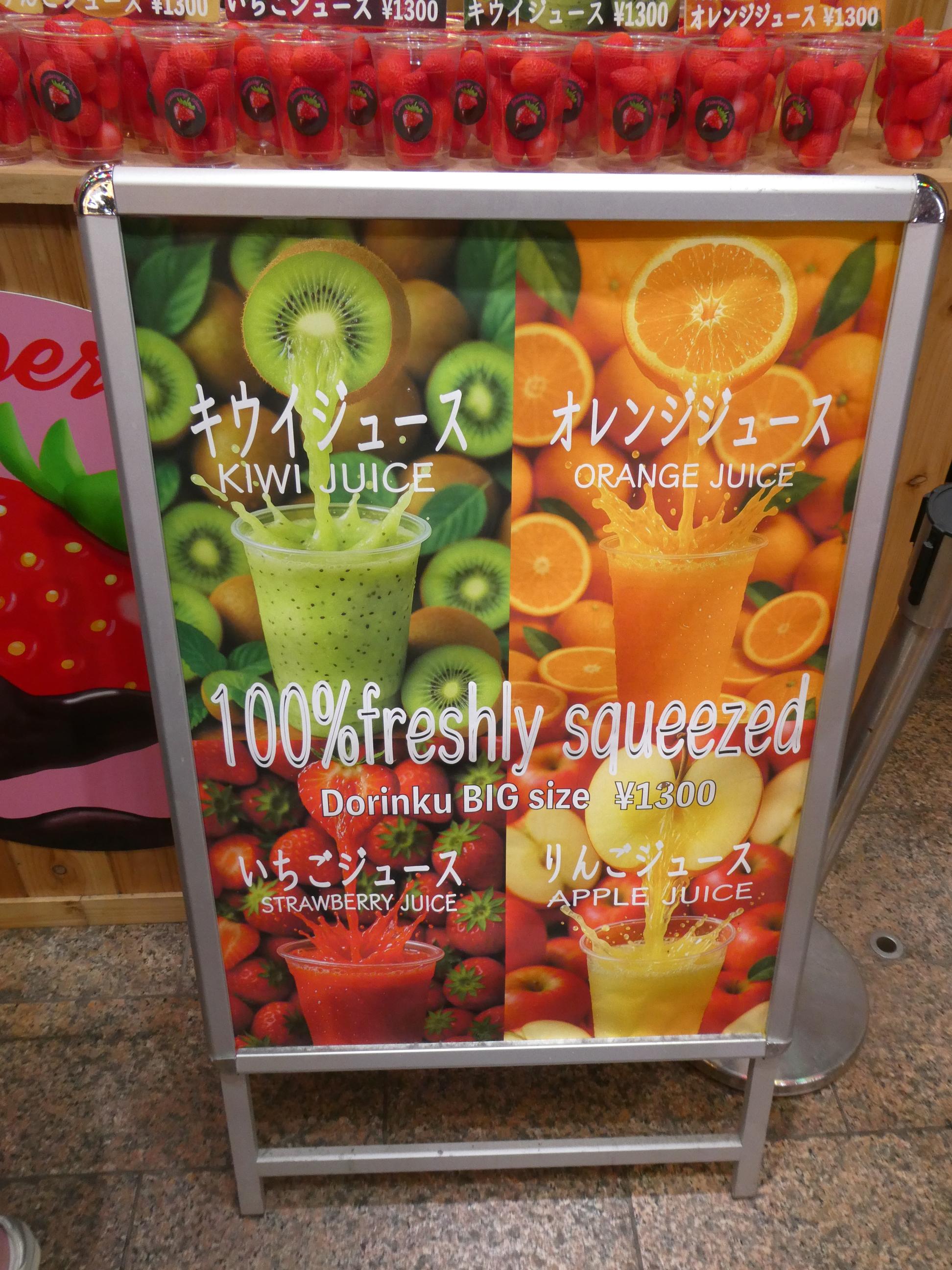
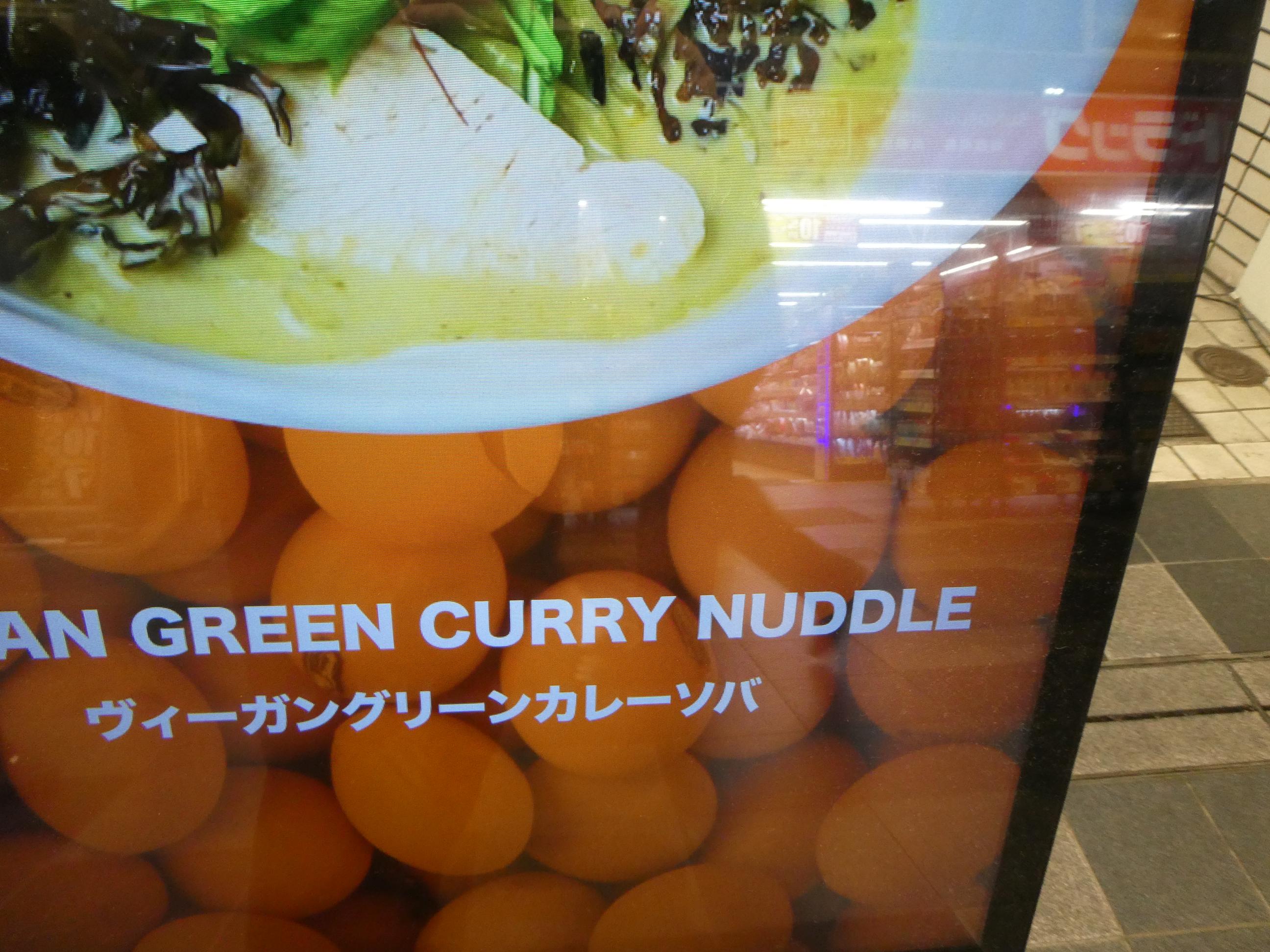
Here’s just a few signs that made me laugh as we walked through the food market. The first one, which advertises fruit juice, encourages you to ‘dorinku BIG size’. The Mumokuteki store sells ‘goods & wares’, although its advertising says it sells ‘goods & wears’ and sometimes even ‘goods & wers’. It obviously doesn’t sell dictionaries. The noodle shop advertises nudles (which I wasn’t quick enough to photograph) and nuddles. One store advertised that it sold no items costing 110 yen, and another just couldn’t stress enough how much it detested people bringing food into the store. Signspotting is a fun activity you can enjoy in any Japanese shopping centre. I love it.




 On The Road With Garry