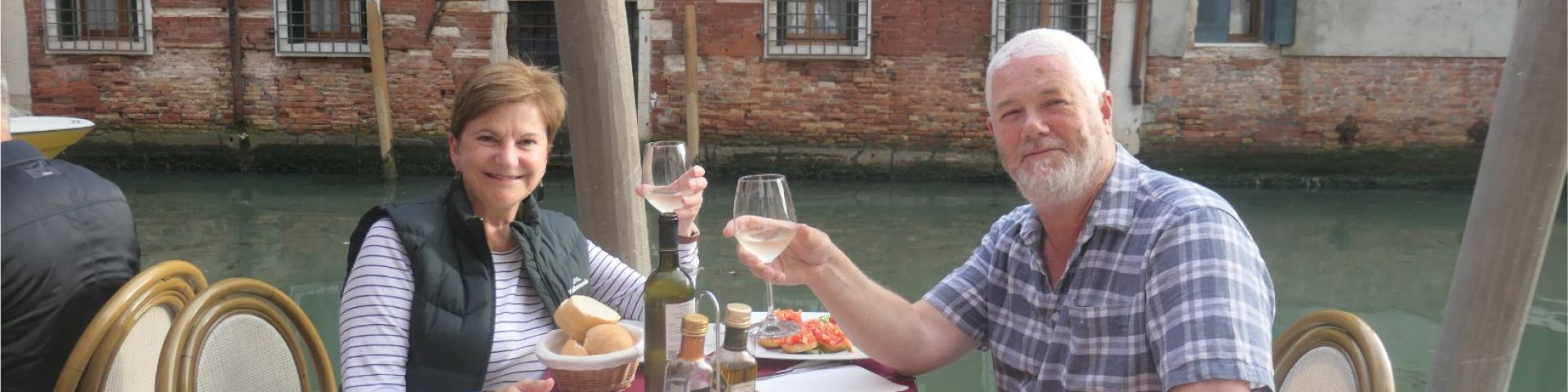
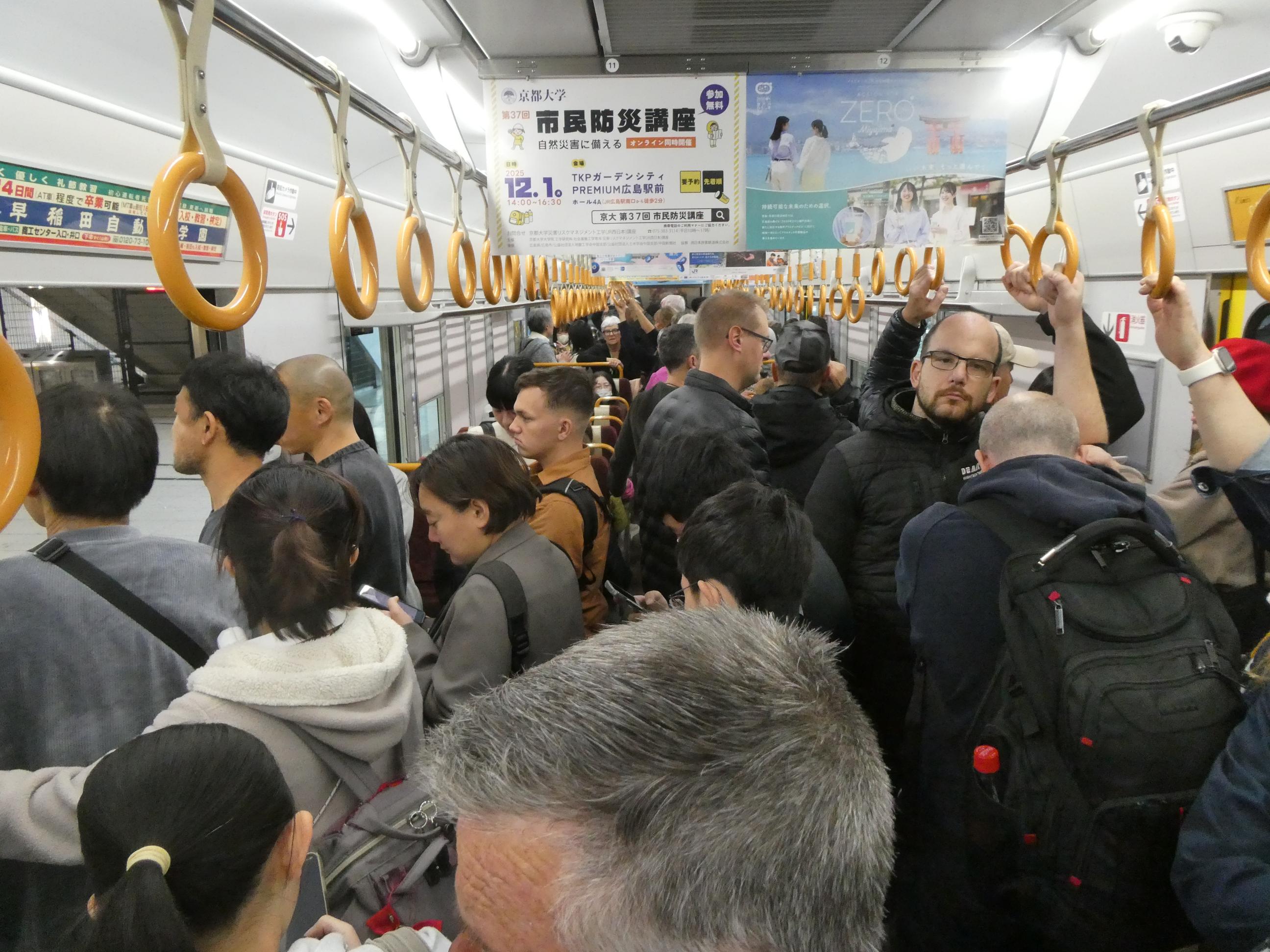
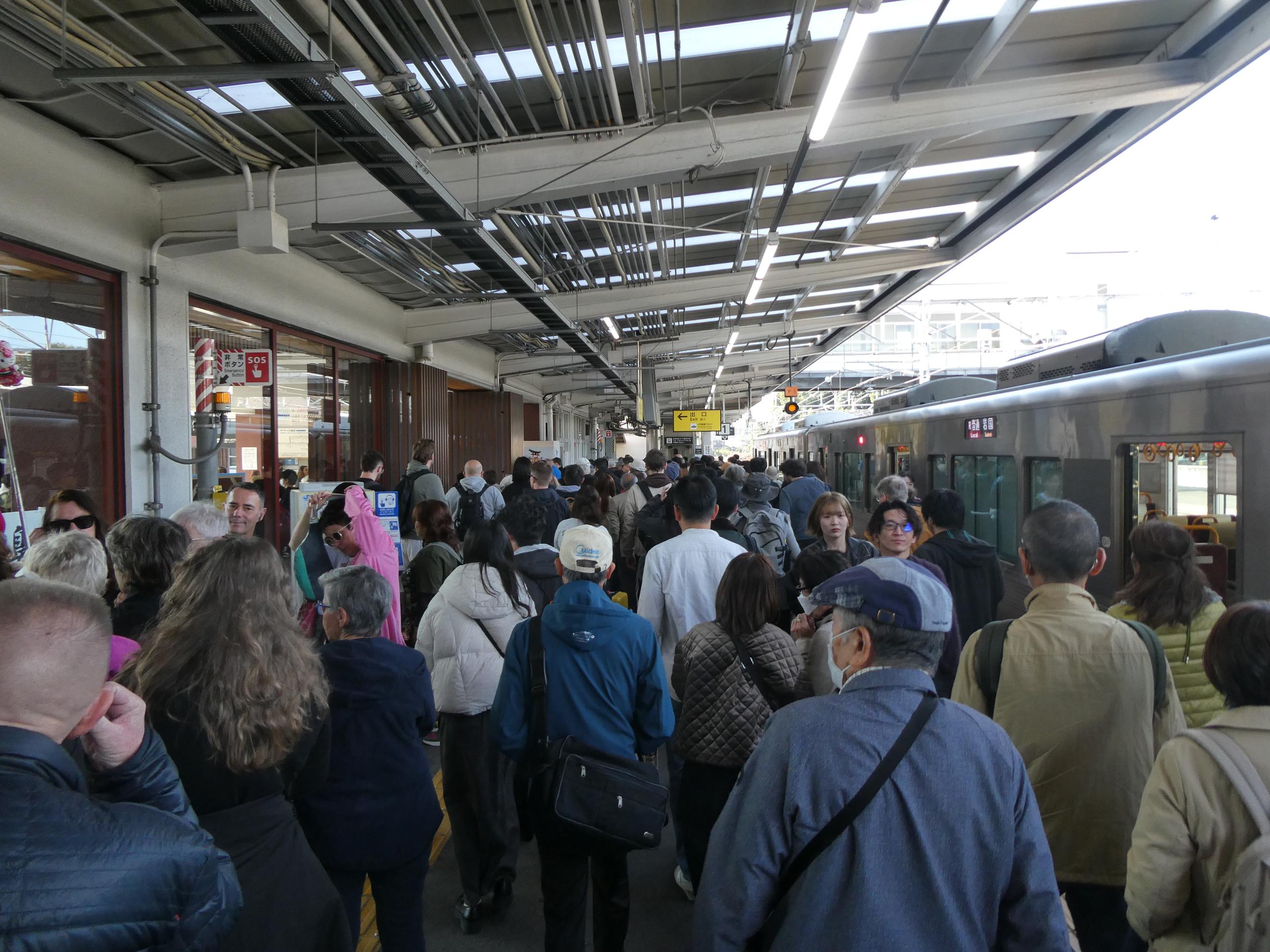
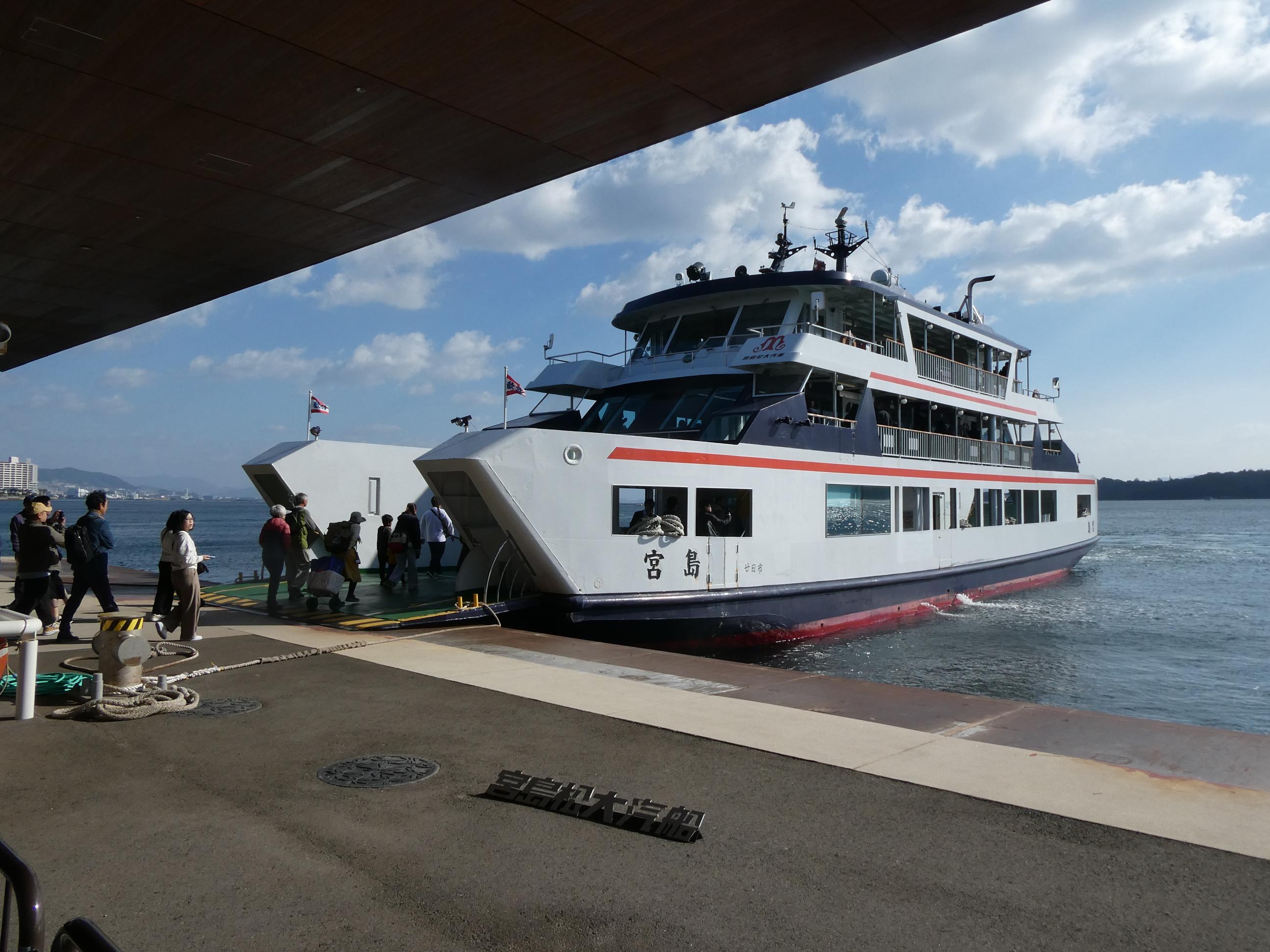
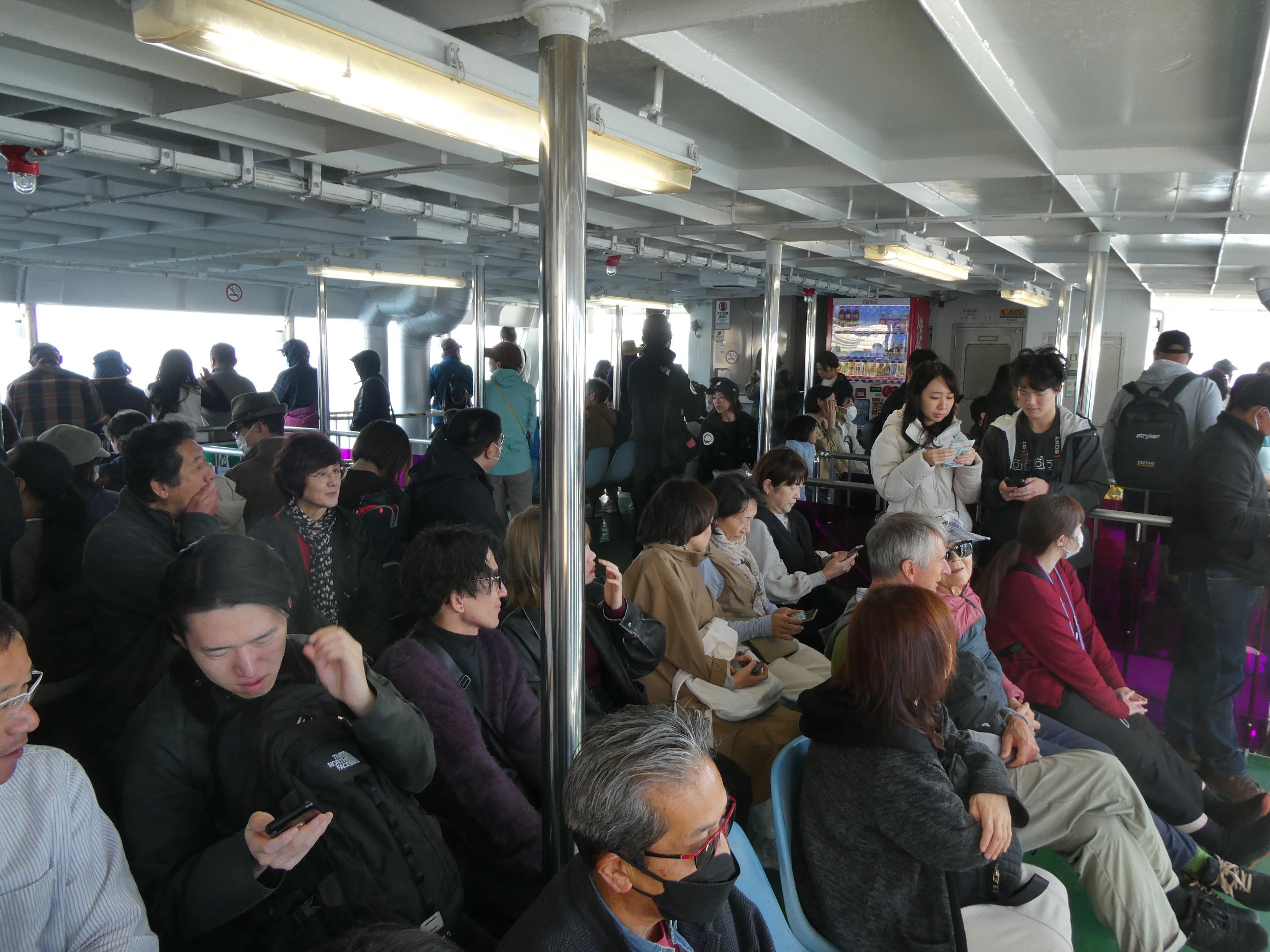
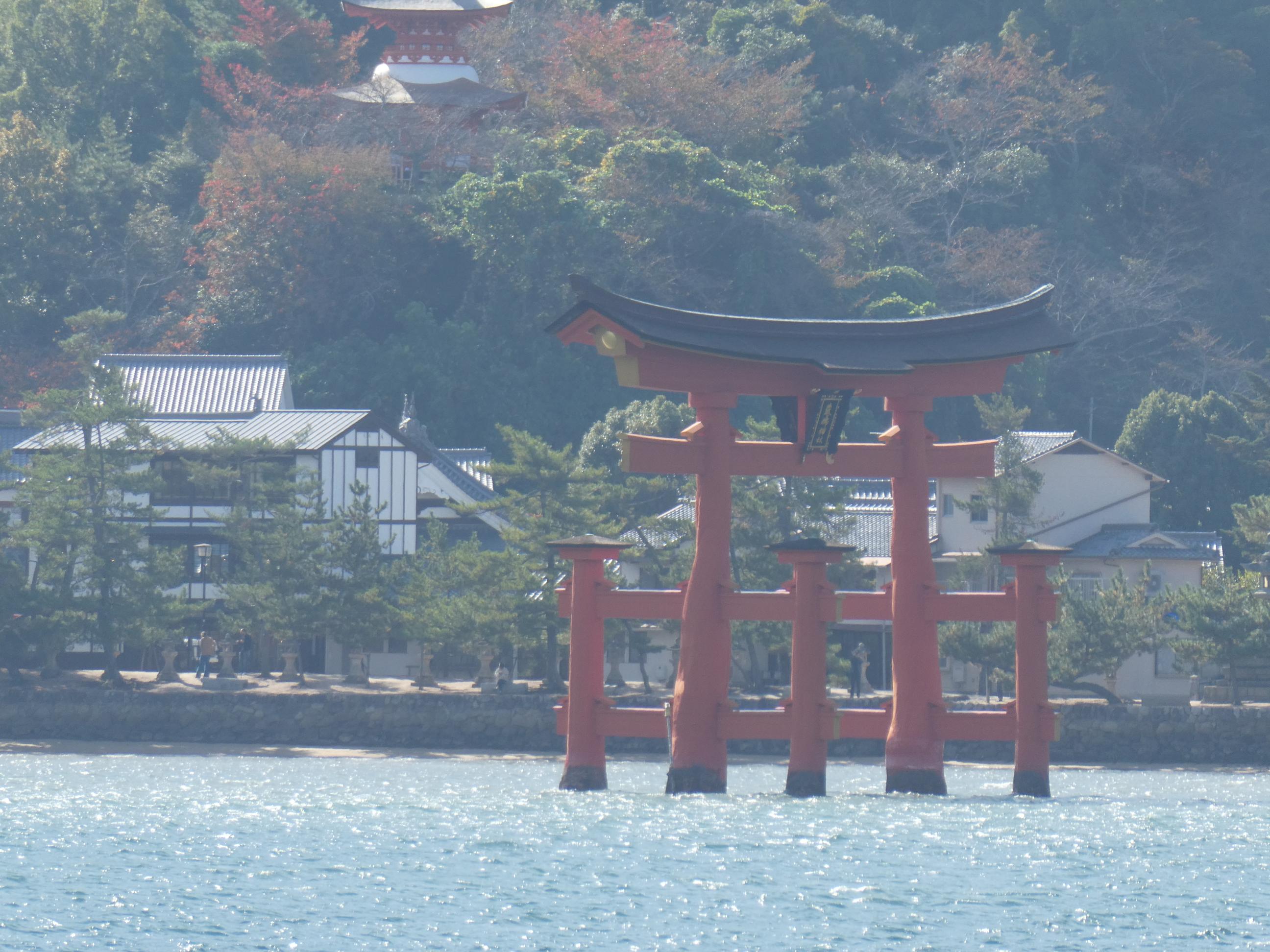
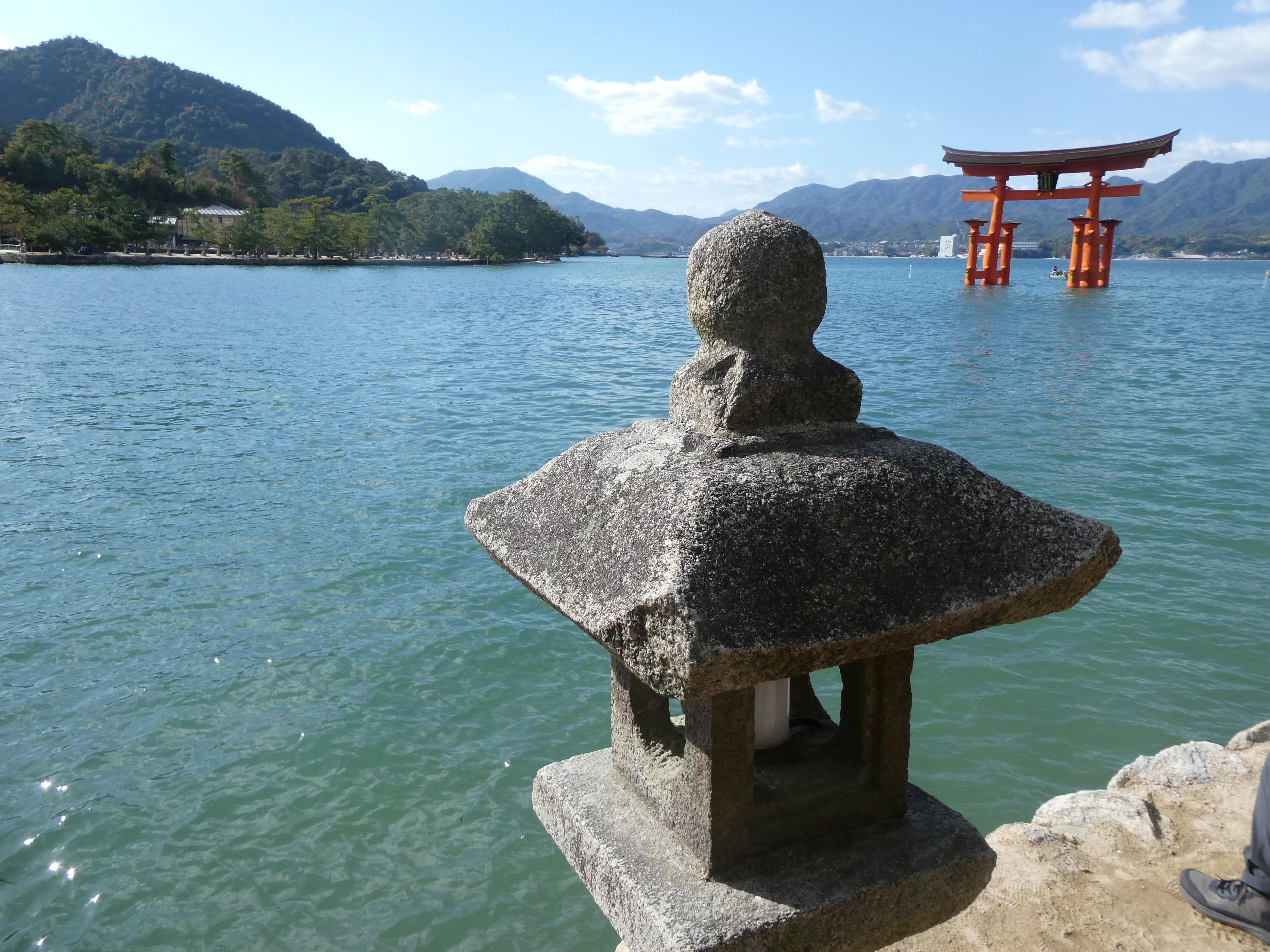
This morning we caught a train to the ferry terminal for Miyajima Island. It’s a very popular destination with both Japanese people and tourists, and this was evident by the crush of people in the train all heading there. A short walk from Miyajimaguchi Station was the ferry terminal. It was just a ten-minute journey across to the island. Sometimes known as Shrine Island, Miyajima is a sacred island for followers of the main religions in Japan, Shintoism and Buddhism. The island has been designated as a Special Historic Site and Special Place of Scenic Beauty by the Japanese government. Coming in on the ferry, I had my first look at the famous red wooden O-Torii Gate.

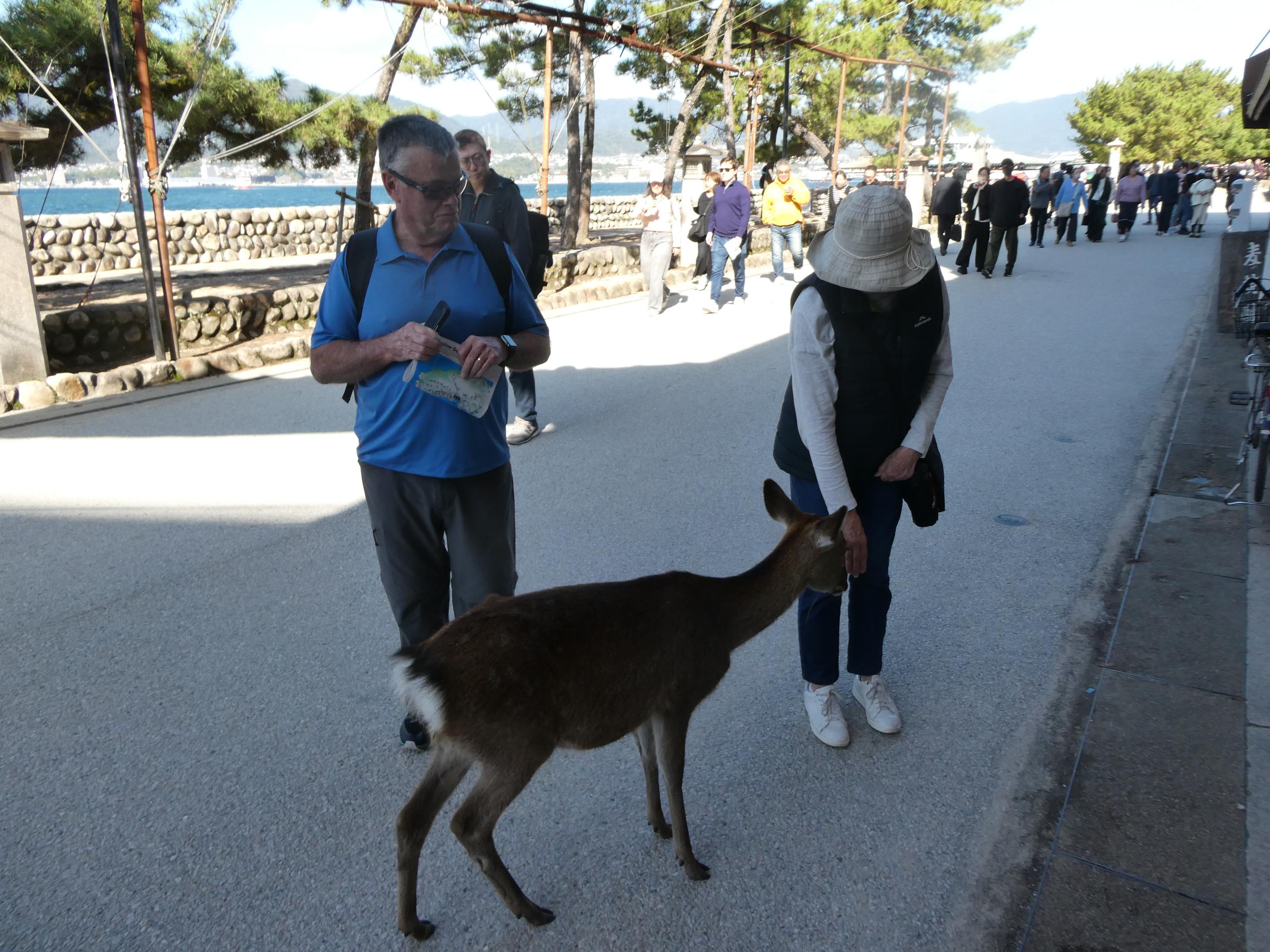
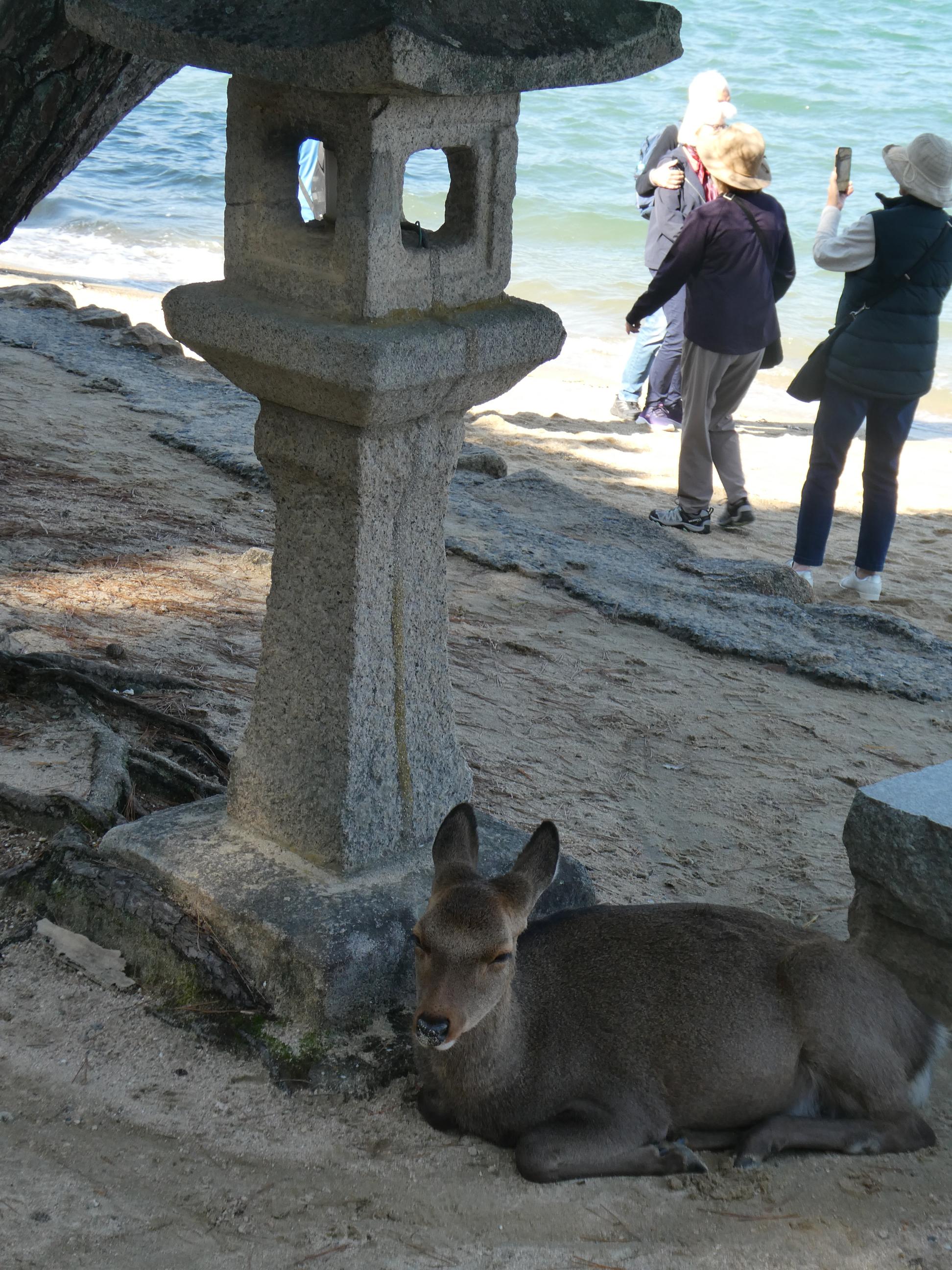
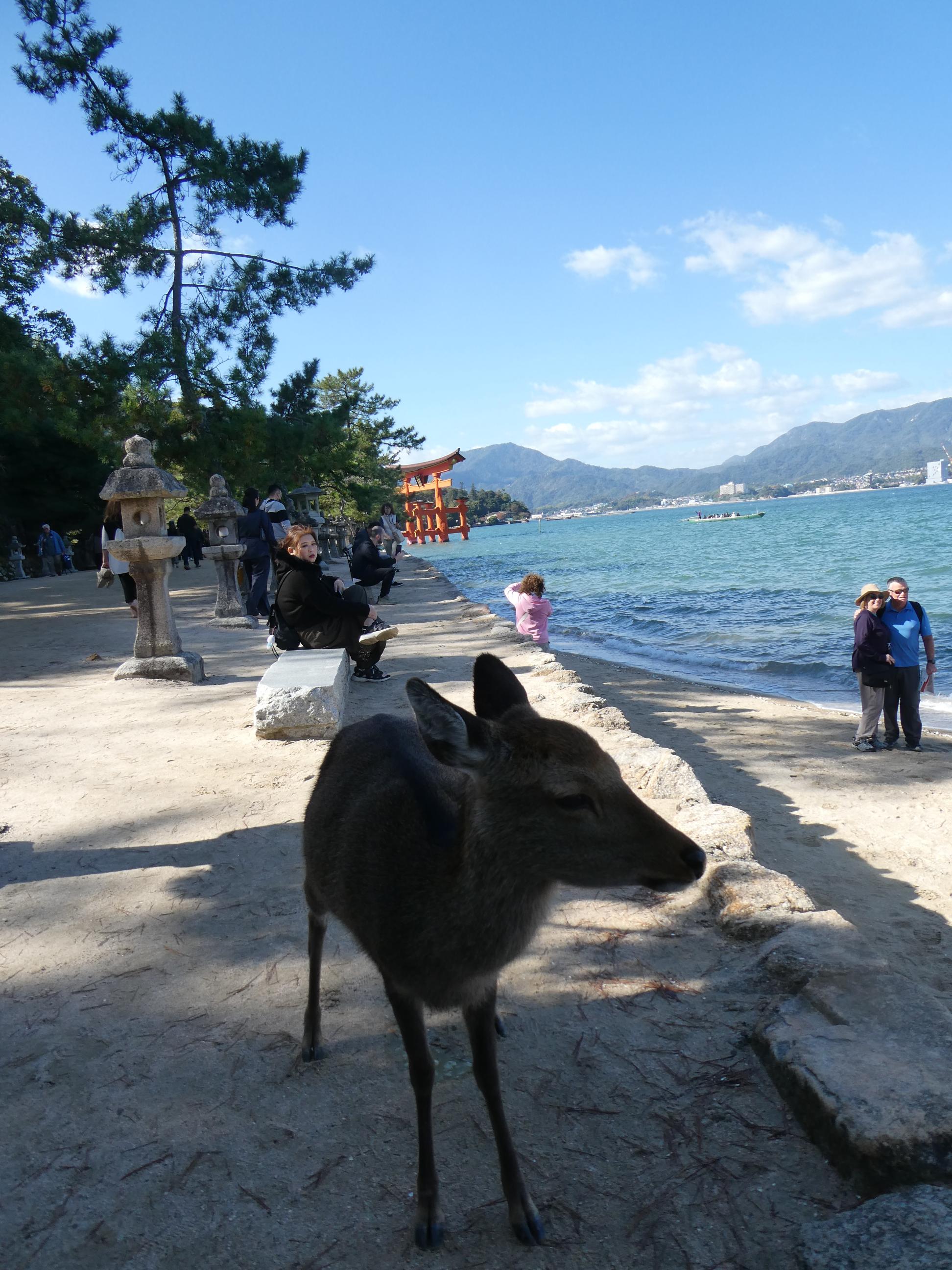
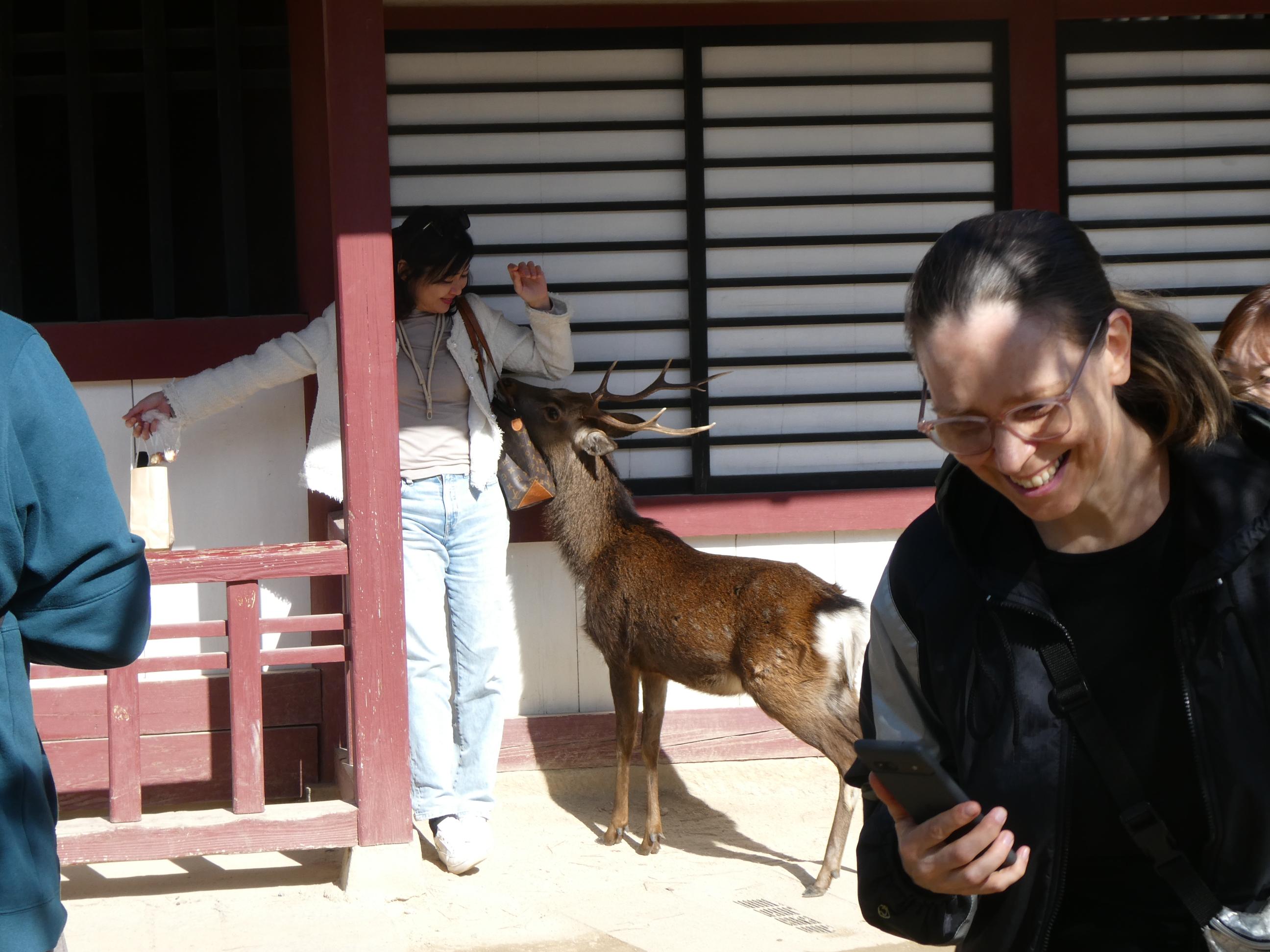
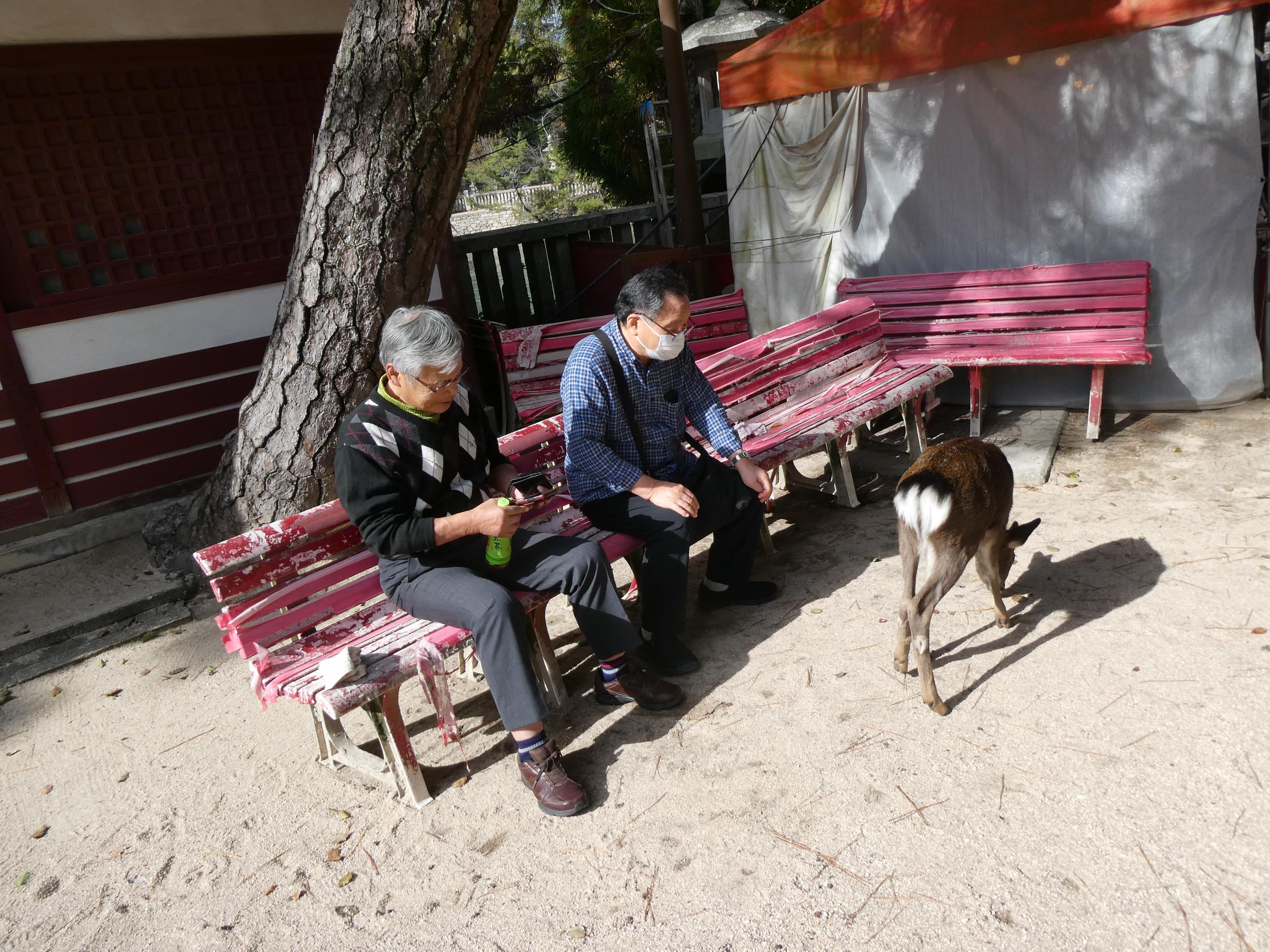
Upon arrival, we basically followed the crowd, who were all heading in the same direction – towards the O-Torii Gate. We chanced upon a deer, then another. They were clearly very accustomed to sharing the same space as humans, and wandered up to people without any fear, gently nudging them sometimes and then moving on. Signs warned us not to get so close to those with antlers, as it was mating season and they can get a bit aggro. We only saw a small number with antlers across the entire day. They are actually Japanese sika deer, a species native to East Asia. The deer are protected, and it is forbidden by law to feed them, as it discourages them from finding their own natural food sources. In the Shinto religion, these deer are actually considered to be messengers of the gods, so they are sacred.
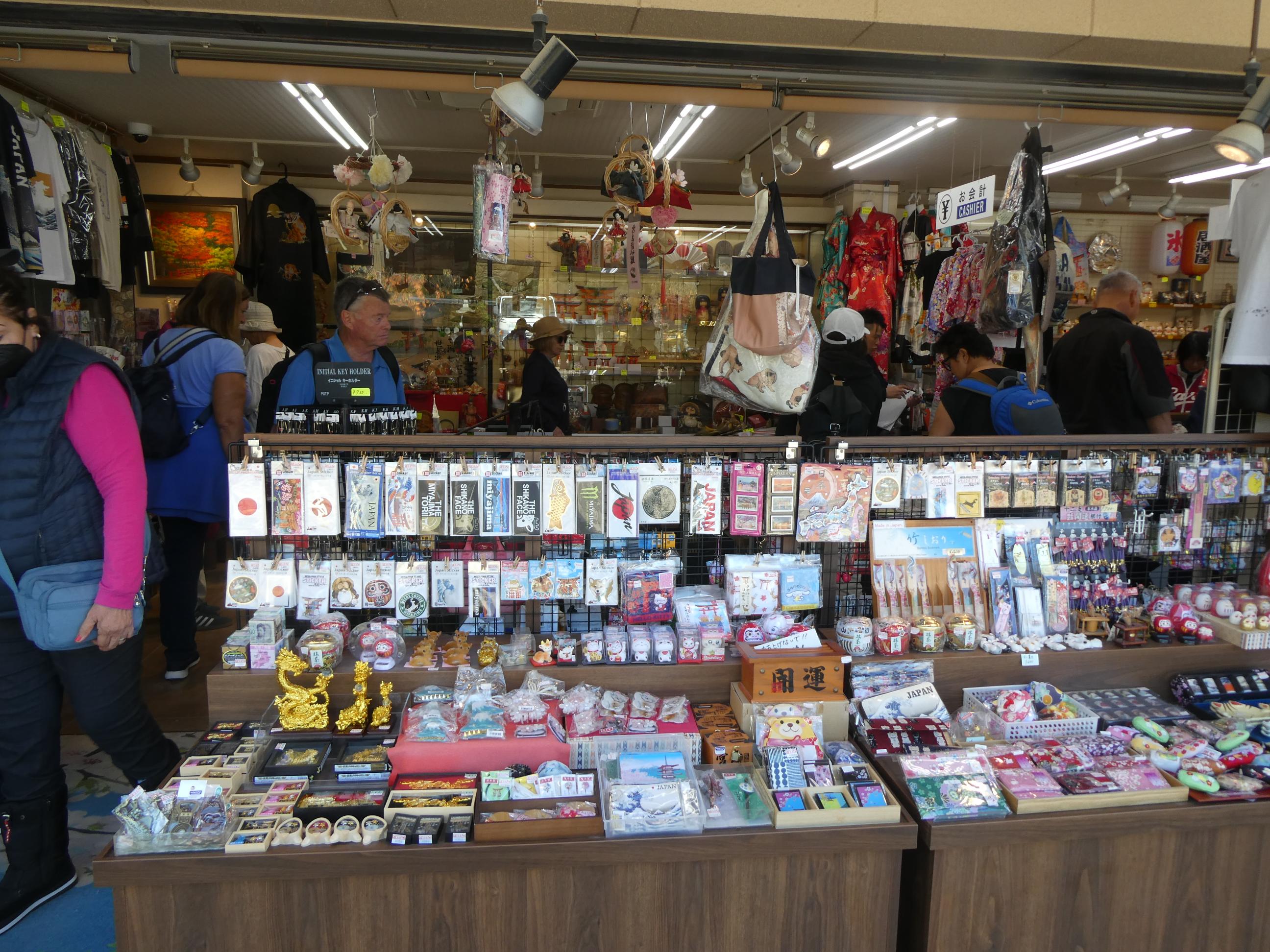
Marg and Theresa have been keen to bring home genuine Japanese-made kokeshi dolls as souvenirs. They’ve looked for them throughout Japan, but have been quite disciplined in not buying any just yet. They’ve been waiting until we reach Kyoto tomorrow, which will be our final hotel. We’ll be there for five nights before flying home, so any wooden doll purchased in Kyoto will not have to be carted around Japan in our luggage. Today, on Miyajima Island, they found some of the best kokeshi dolls they’d seen anywhere in the country, and eventually bought one each towards the end of our time on the island. Before doing so, they explored many of them in the main streets, looking for the dolls they liked best, as well as keeping an eye out for things to bring home for the rest of their respective families.


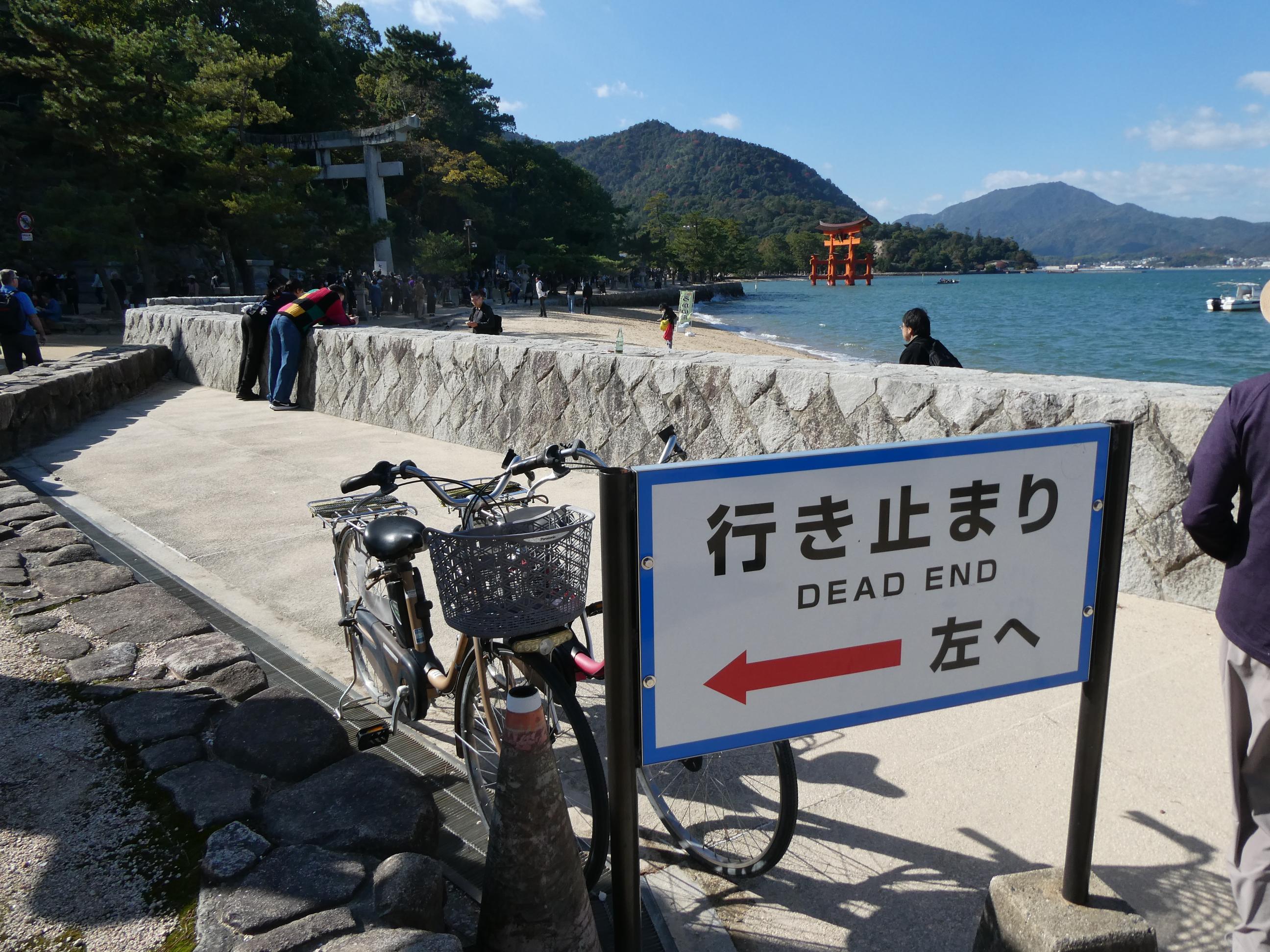
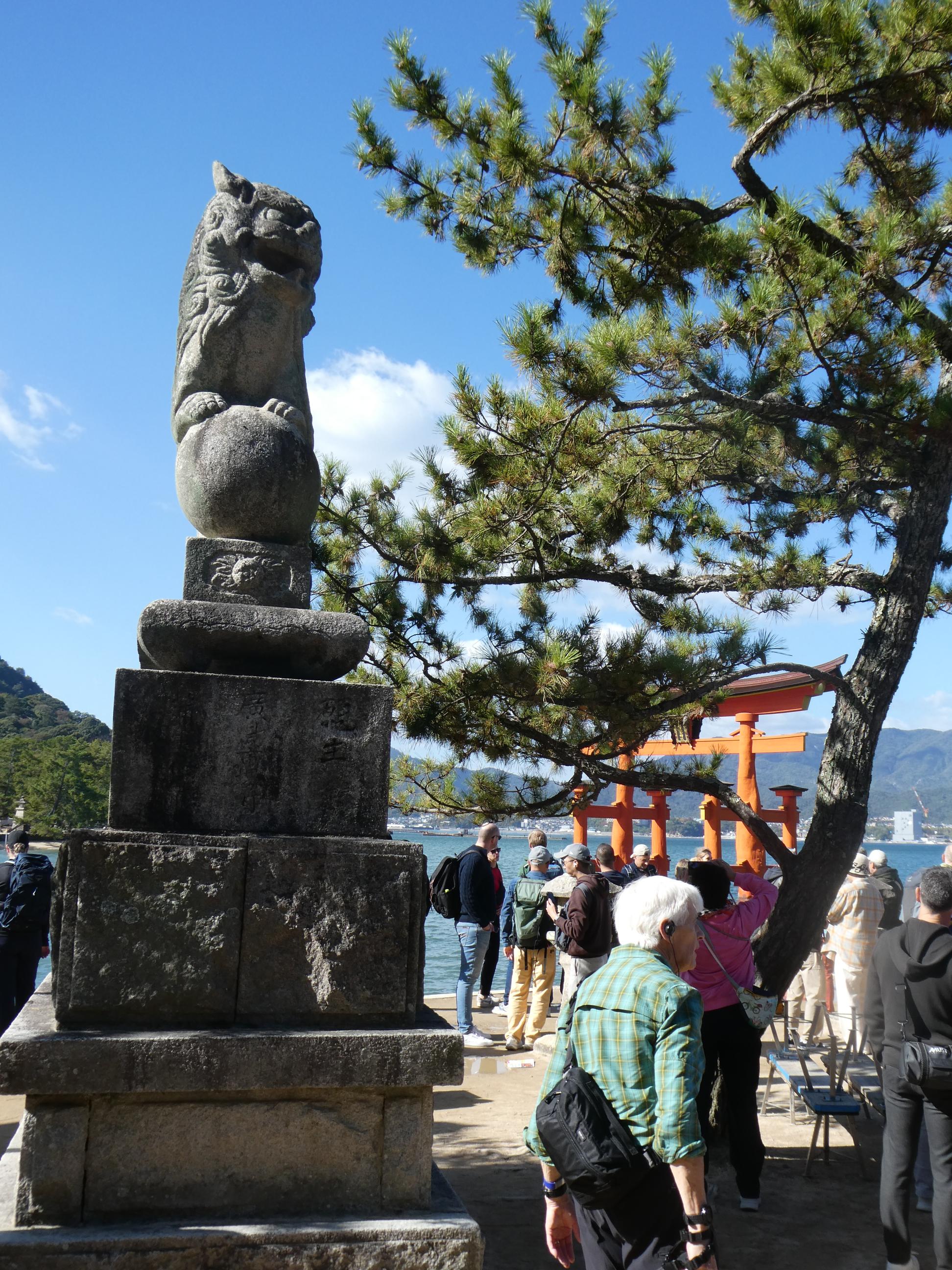

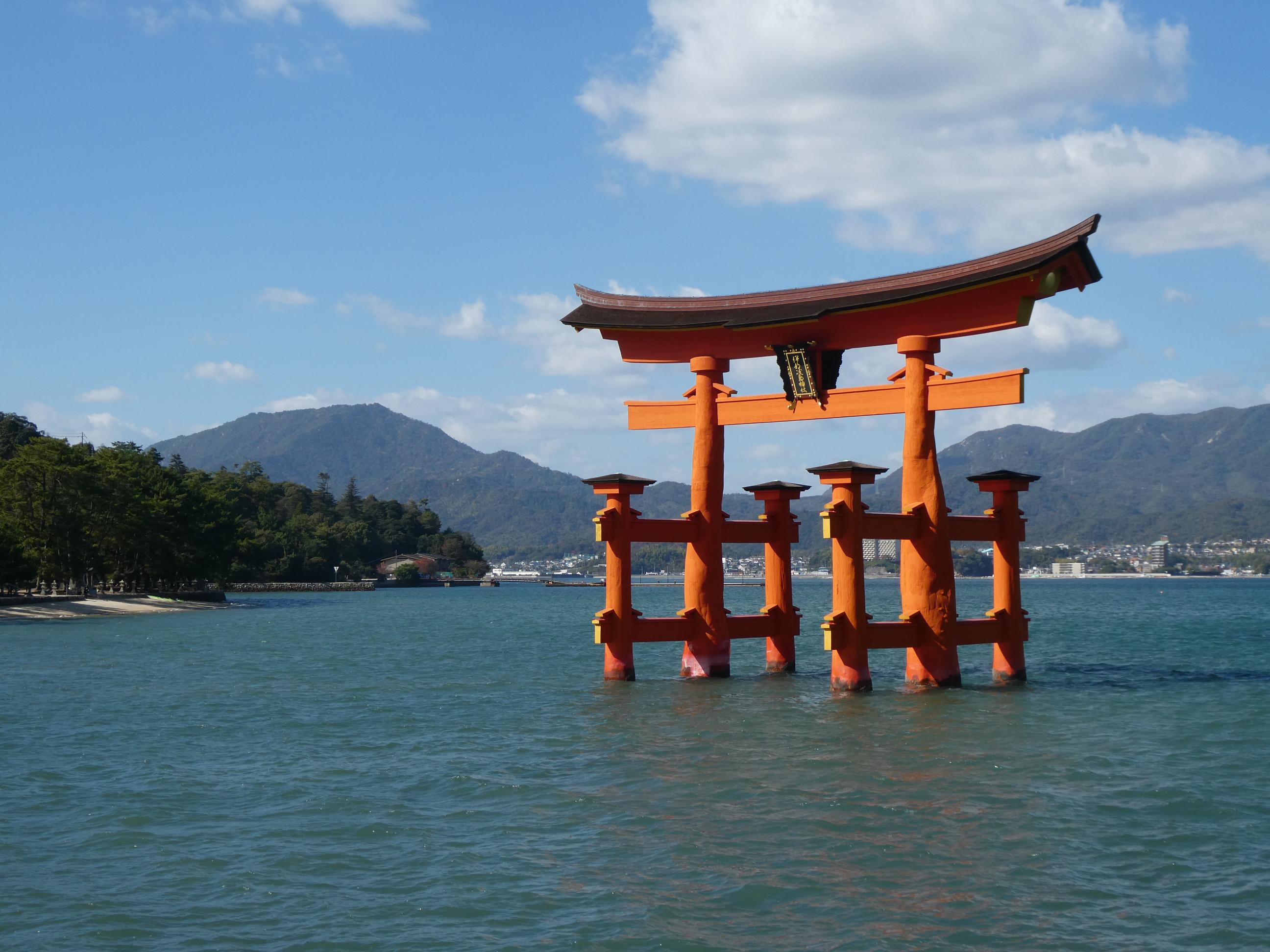
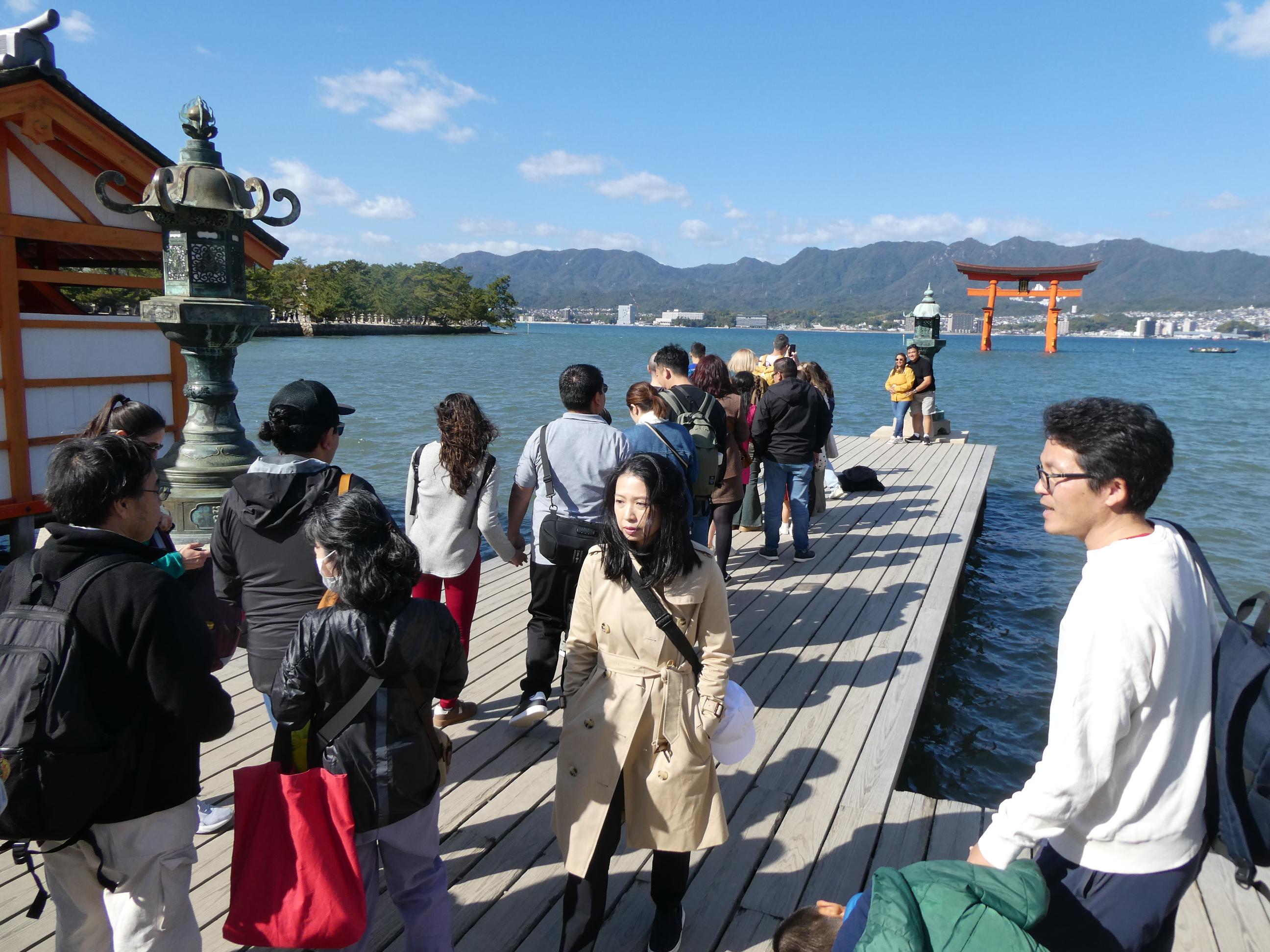
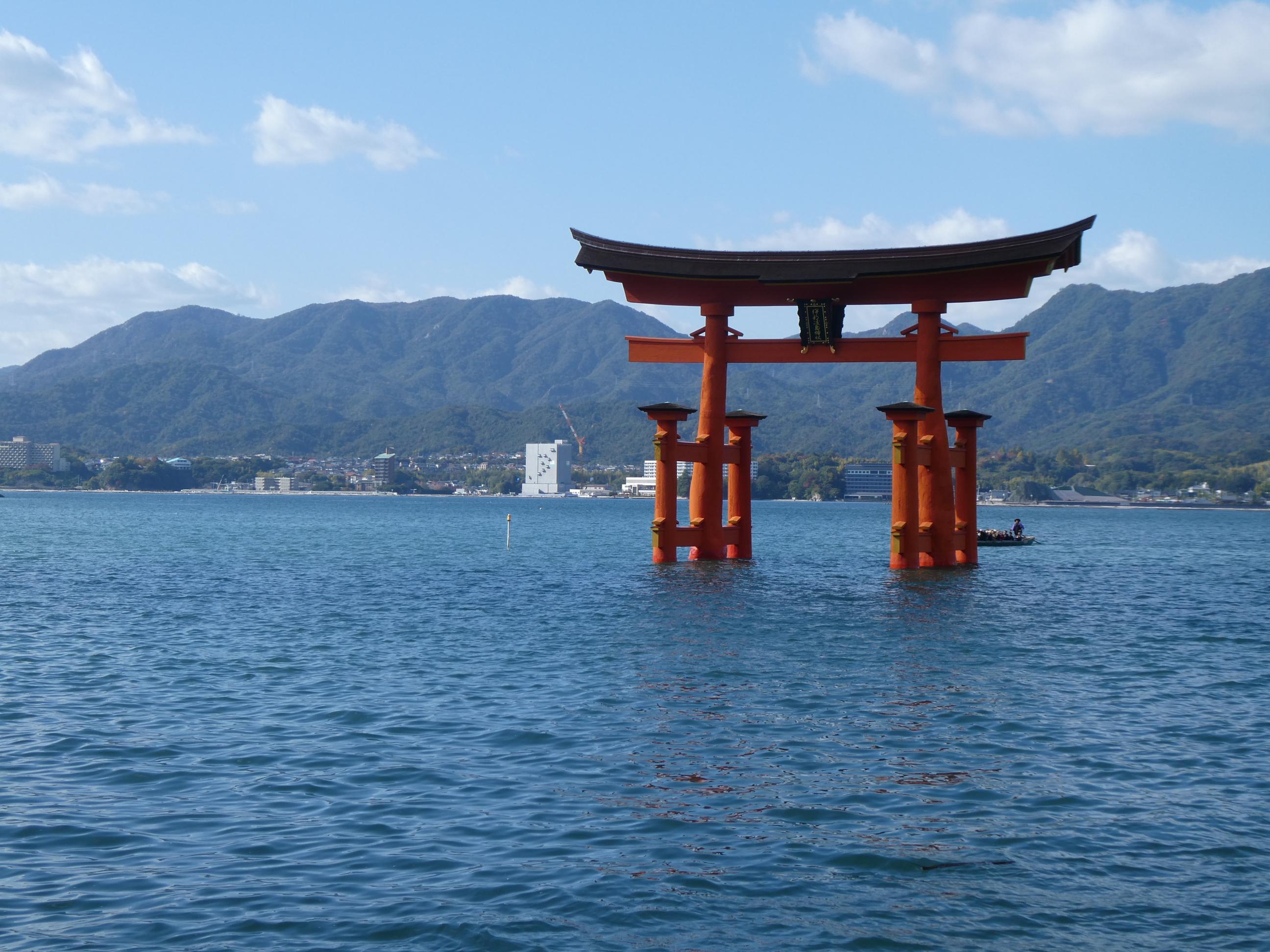
The huge red O-Torii Gate is the most visible symbol of Miyajima. It’s located in the sea, approximately 200 metres in front of the main part of Itsukushima Shrine, and is actually considered a part of the shrine. The gate is considered so important, it has been designated as a National Important Cultural Property by the government. The gate, which was built in 1875, stands over 16 metres high and weighs about 60 tons. The pillars are made from camphor and cedar timber.
We took a leisurely stroll along the beachfront towards the gate, stopping every now and again for a photo from a new angle. Just about everyone else on the island was doing the same thing, so it got fairly congested in the best photo spots.
I should perhaps outline the importance of the torii gates you might have seen in some of my posts from different parts of Japan. They’re the symbolic gateways between the everyday secular world we live in and the sacred space of a Shinto shrine. When you pass through a torii gate, you are, in a way, moving from the human world into the realm of the gods – essentially, they are the entryways to sacred spaces. Shintoism is the native religion of Japan. Followers worship the spiritual powers of nature, of the rivers and mountains, of the rocks, the trees and the creatures. The rituals practised in Shintoism attempt to maintain a harmonious relationship between nature, humans and the spiritual beings, which are known as kami. This is why so many Shinto shrines can be found in places of natural beauty. It’s a religion I can identify with in many ways. I first encountered elements of Shintoism when I watched Hayao Miyazaki’s beautiful animated film ‘Spirited Away’. If you haven’t seen it, I can recommend it.




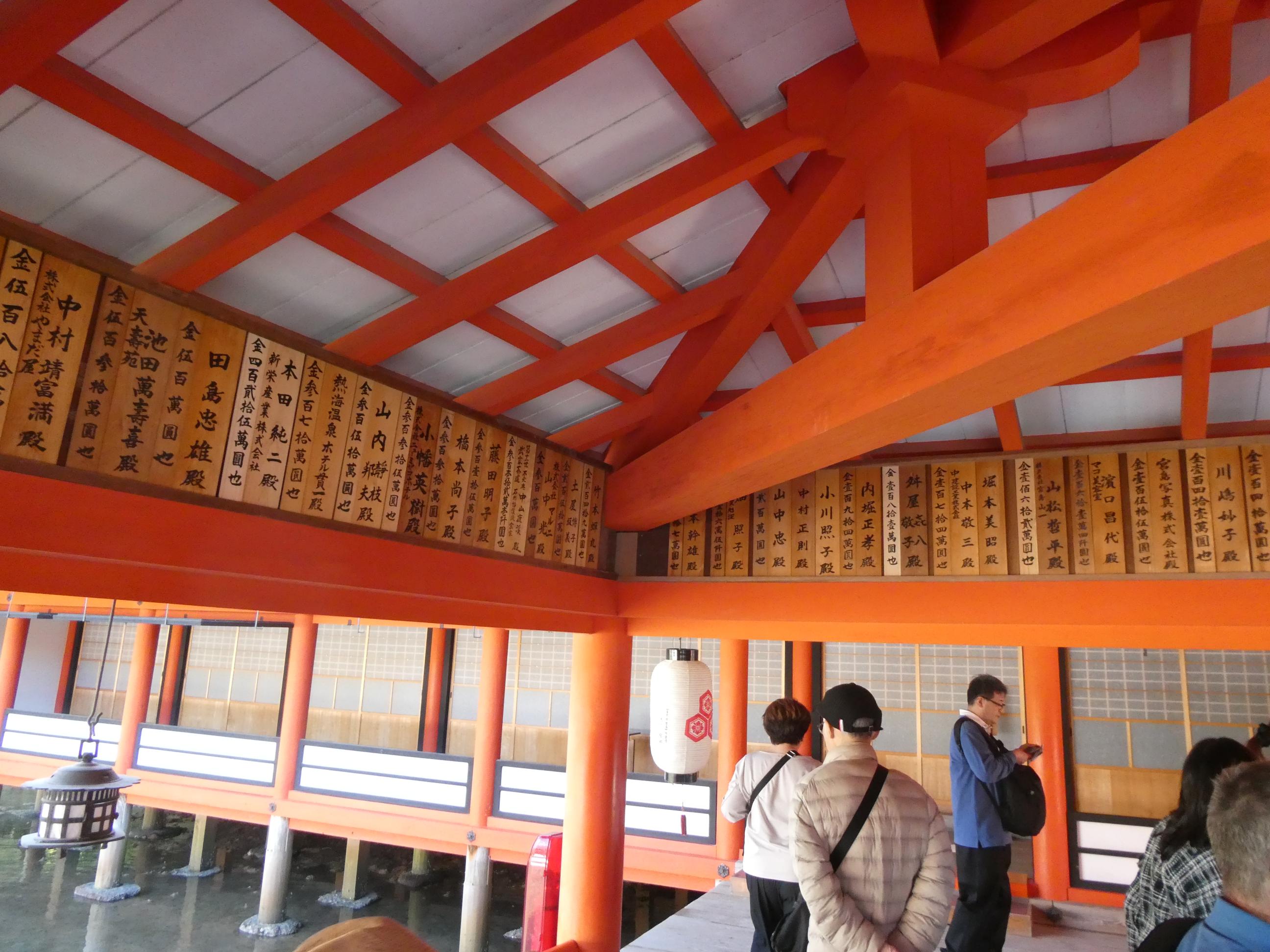
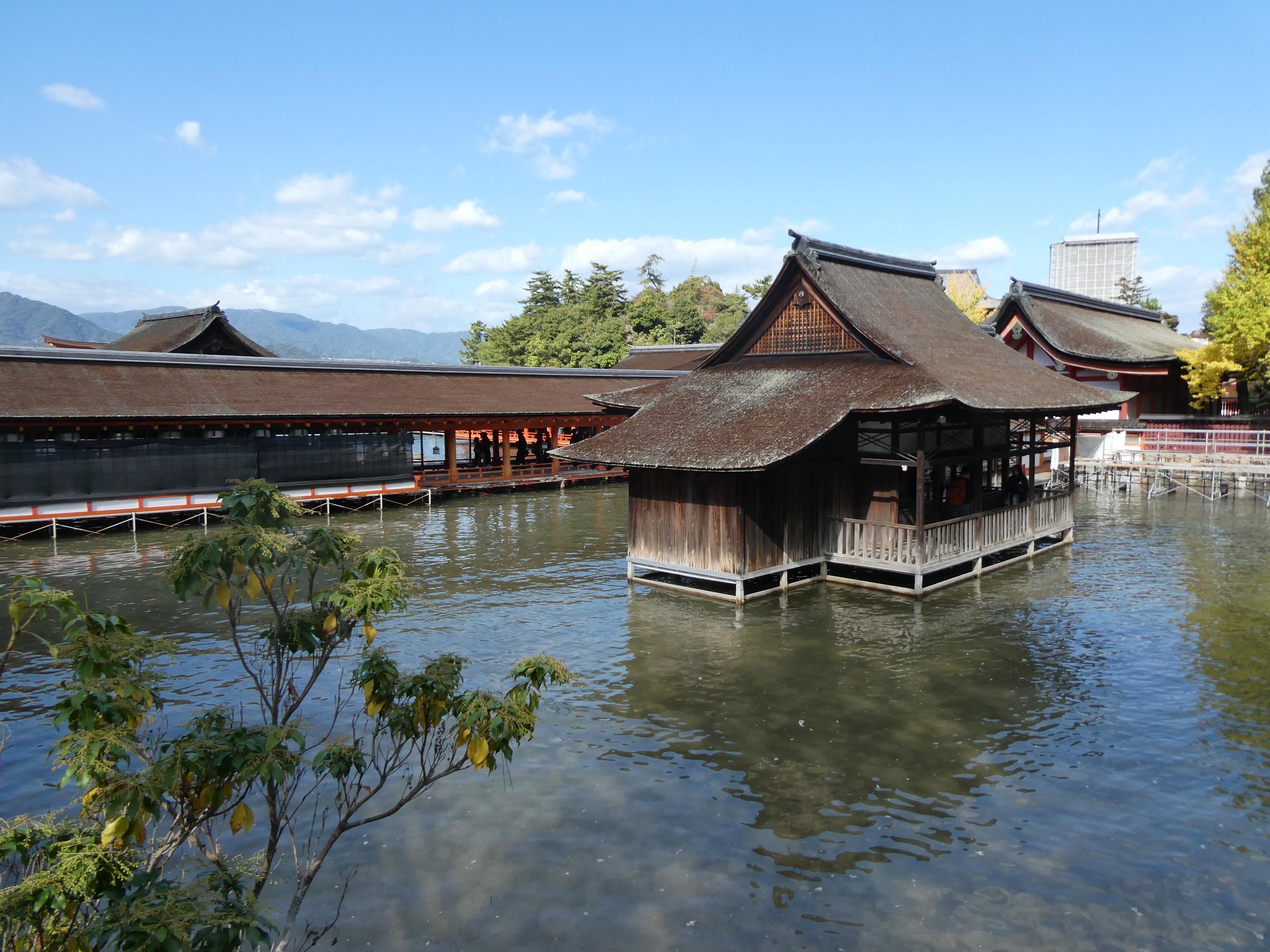
As I mentioned, the O-Torii Gate is actually a part of the Itsukushima Shrine. The shrine has a rather unique design and construction, as it stands in the sea in front of the heavily forested Mount Misen. There are a number of different rooms and halls in the shrine, all connected by long red corridors. The red colour, or vermillion to be perfectly correct, is believed to keep evil spirits away. The shrine has survived in its current structure since 1168. In 1996, the shrine was officially designated as a Cultural World Heritage Site. The shrine is dedicated to three deities.
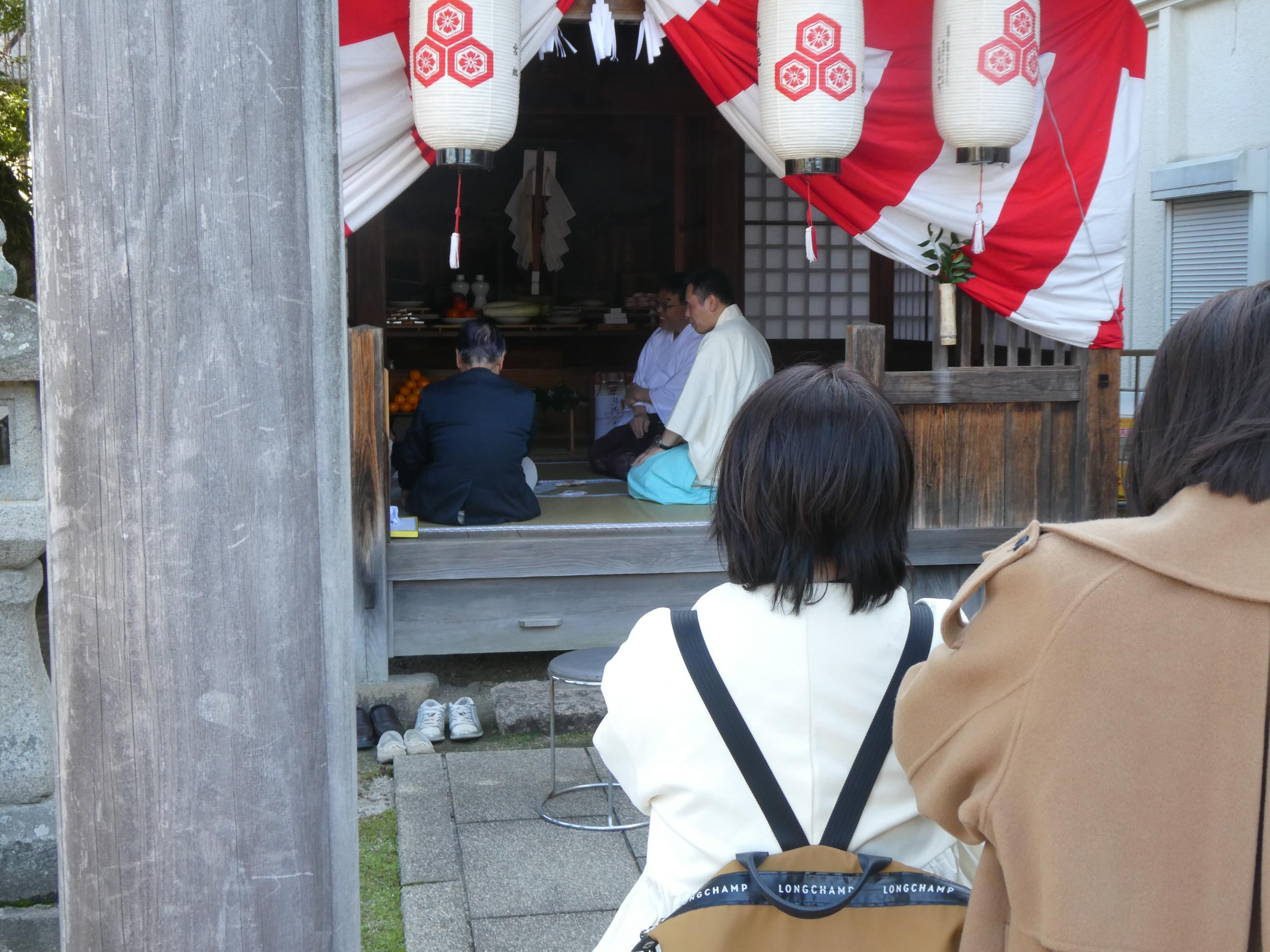
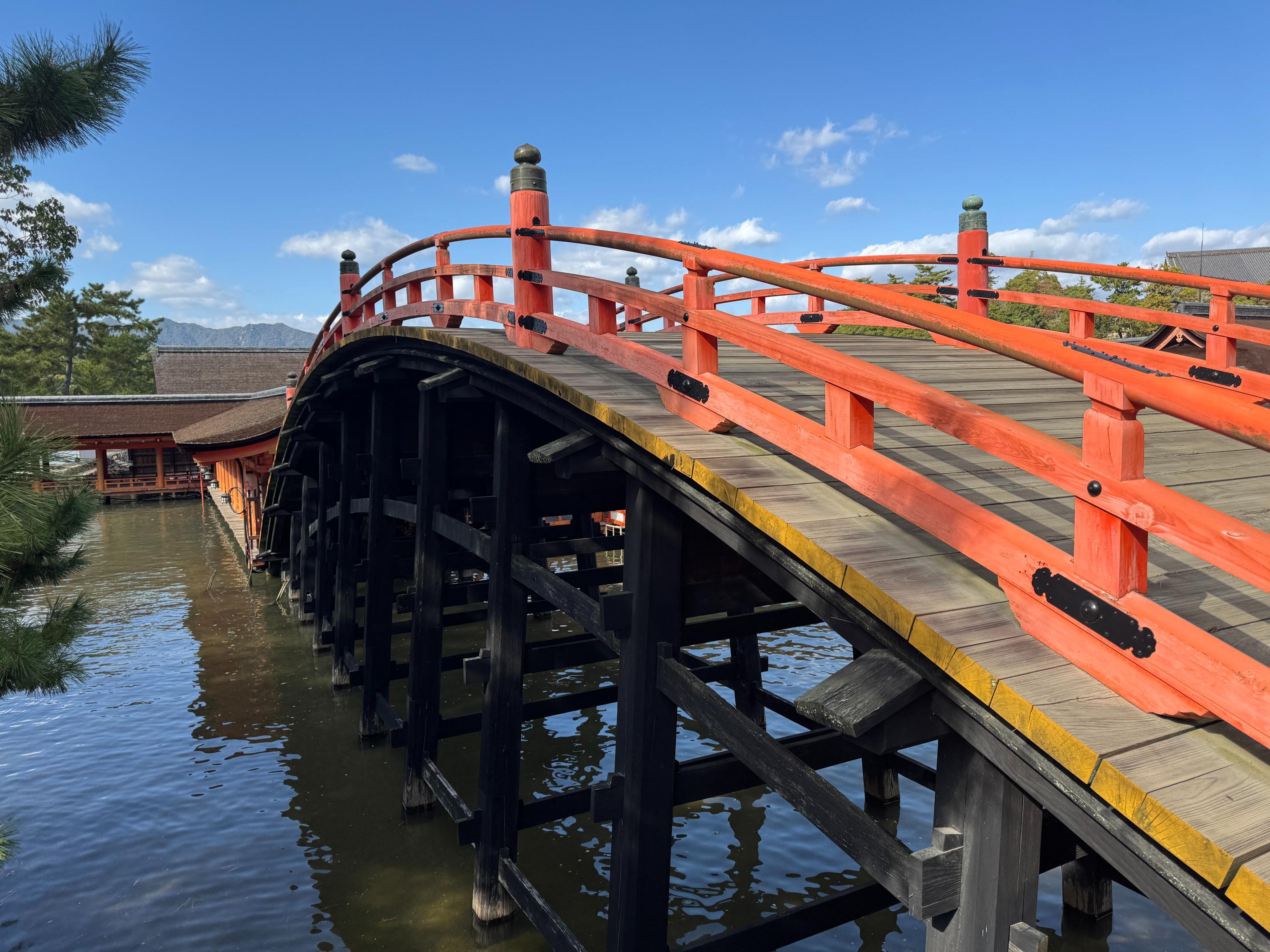
We joined a very long queue to enter the shrine, but the reason a queue formed was probably only due to the time people took to purchase their entry tickets. Given its spacious corridors, once people entered the shrine, the foot traffic moved relatively quickly. We learnt, the other day at Himeji Castle, that having a guided tour is often the best way to truly learn about a place. We didn’t have a guide today, but I saw much on my journey through the shrine that I didn’t understand, and I would have loved hearing someone explain it to me on the spot. Although I’m not at all religious, I do respect the role faith plays in people’s lives and I’m always interested to learn more about their beliefs, places of worship and religious rituals. I was fascinated to watch a family enter a hall and participate in some form of a ritual with a man who I presume to be a Shinto priest. I avoided the long line of people queueing up to get to the end of a jetty so they could have their photo taken with the Torii gate as a backdrop. I was also fascinated by the half moon bridge, which must have been very challenging for people in slippery wooden sandals to walk over in days of old.








Upon leaving the shrine we were once again surrounded by souvenir shops and street food vendors, but we found a steep path, adjacent to a temple, that climbed to the Tahoto Pagoda. it was disappointing when we finished the climb to discover it was all roped off. It’s not a tall pagoda, standing at just over 15 metres in height, but it has stood for over 500 years, which says something about the quality of its construction. Marg spotted a sign pointing to the Daishoin Temple, so we headed in that direction.

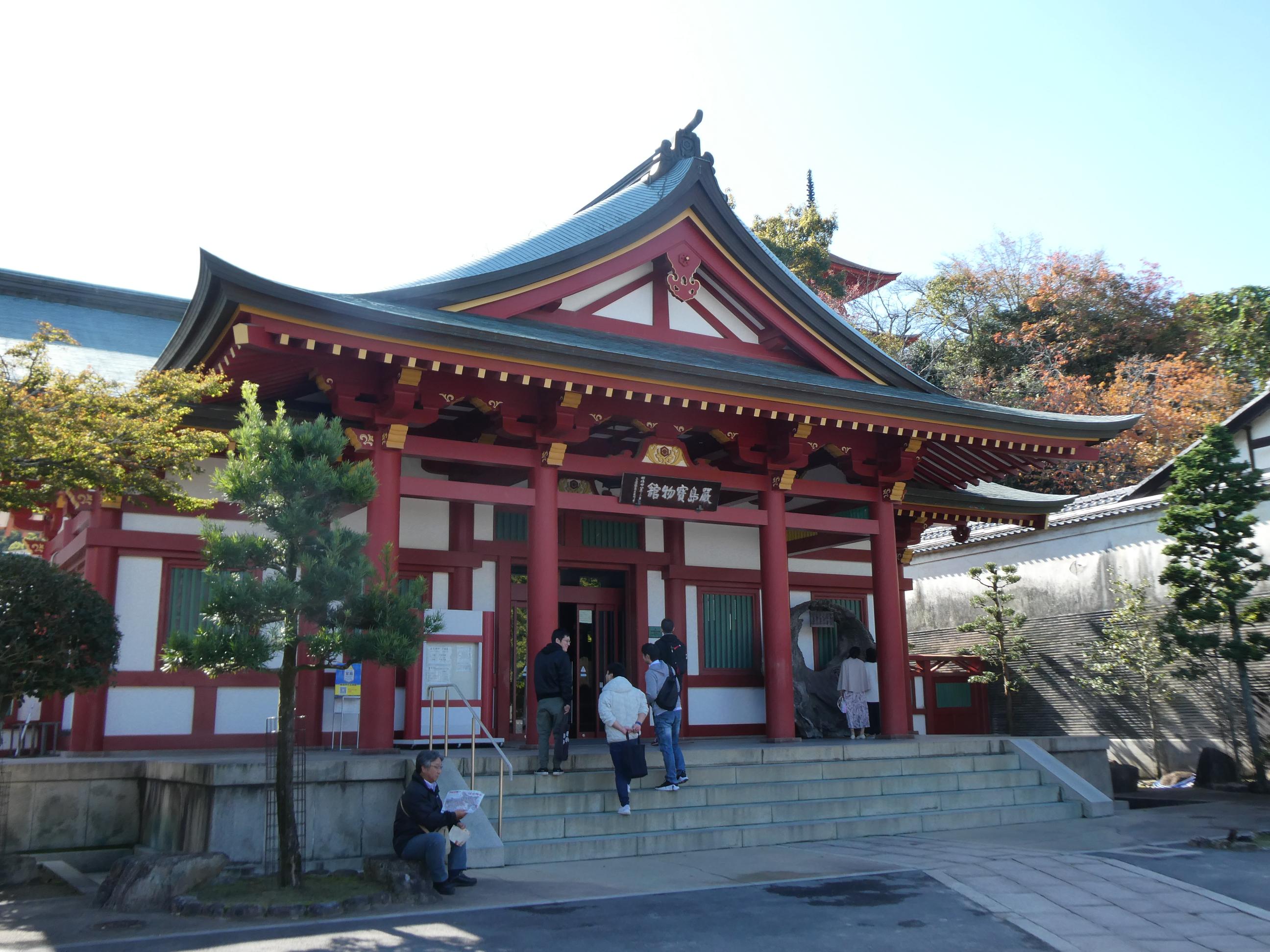


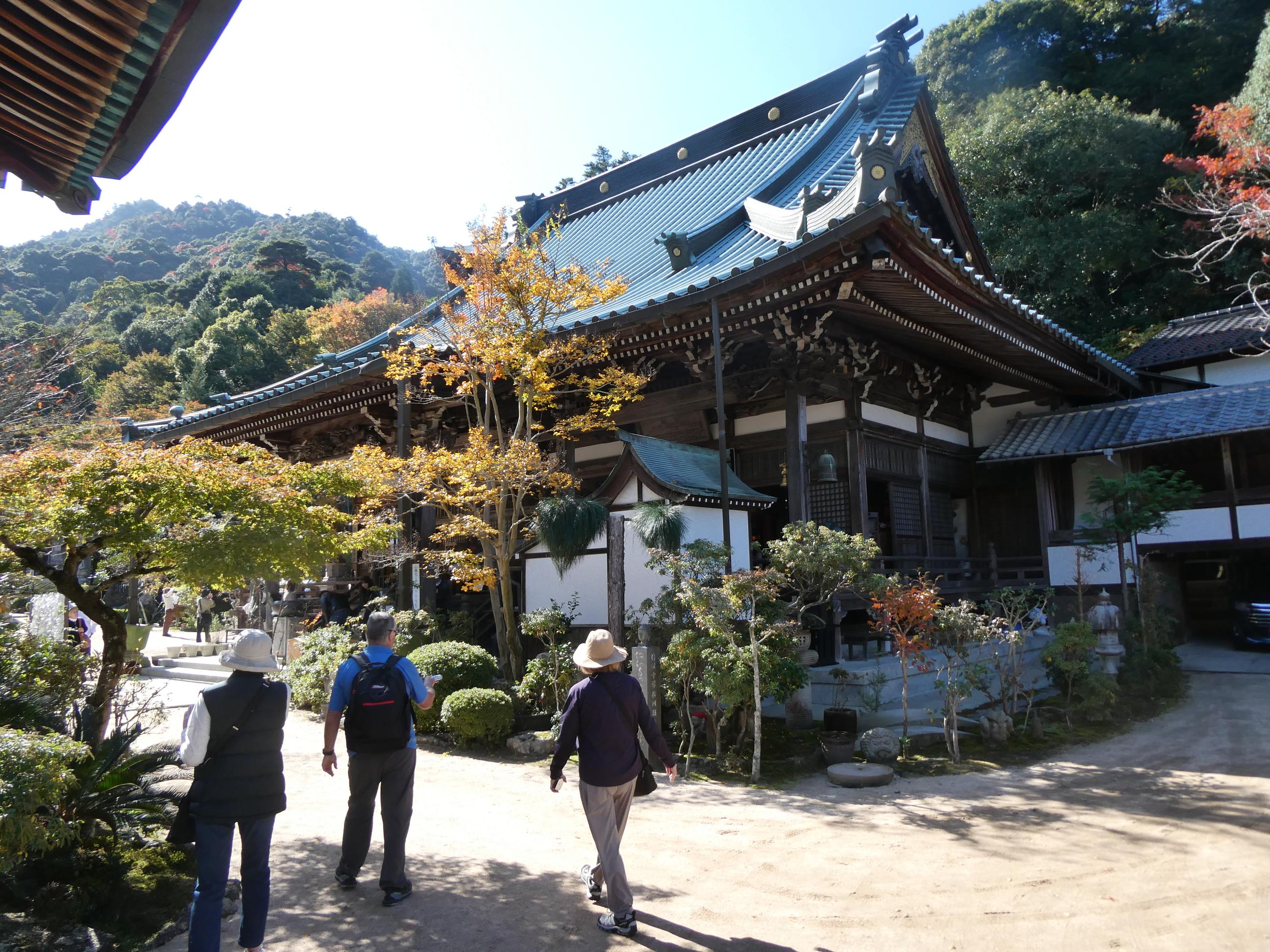
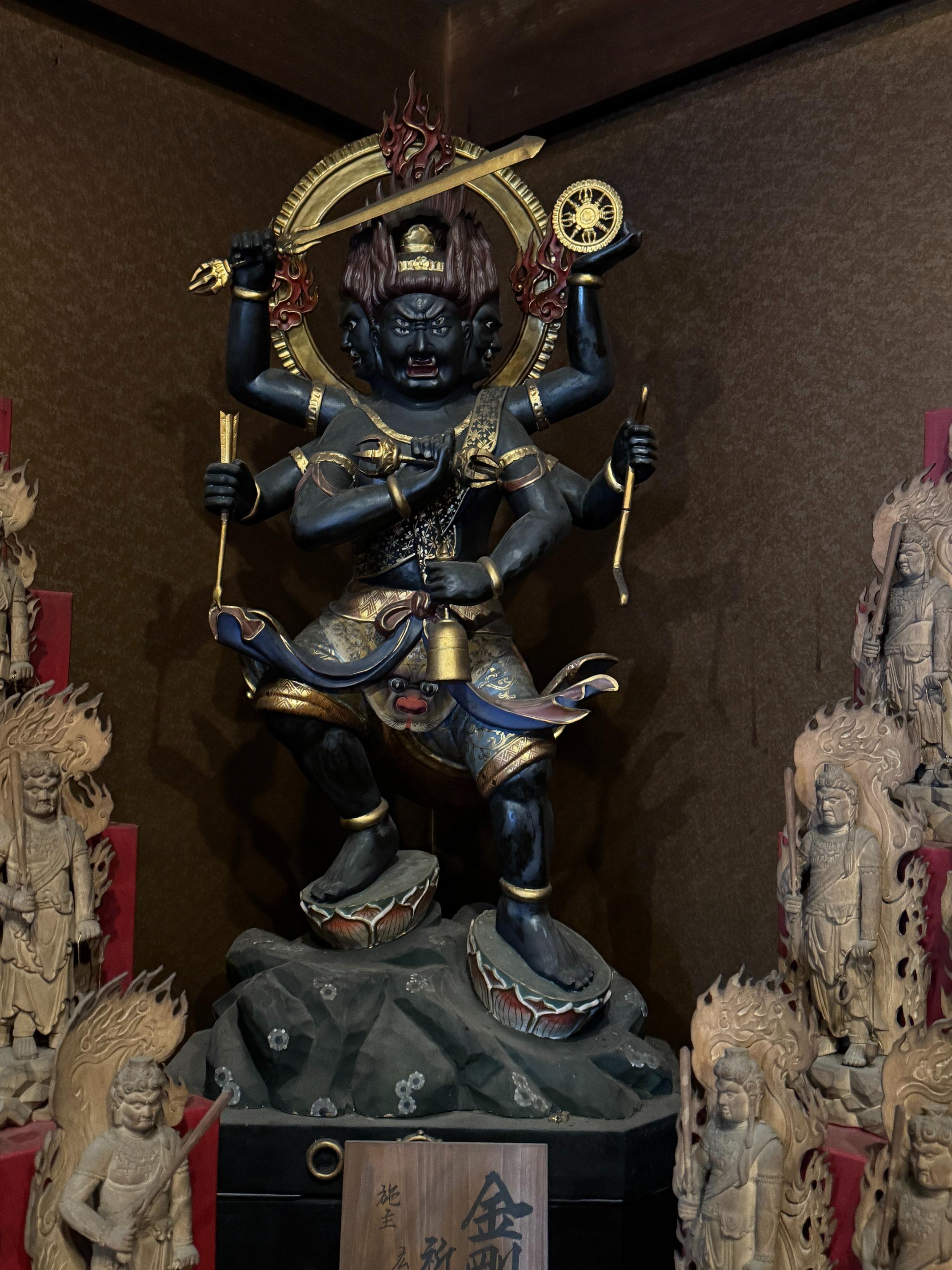
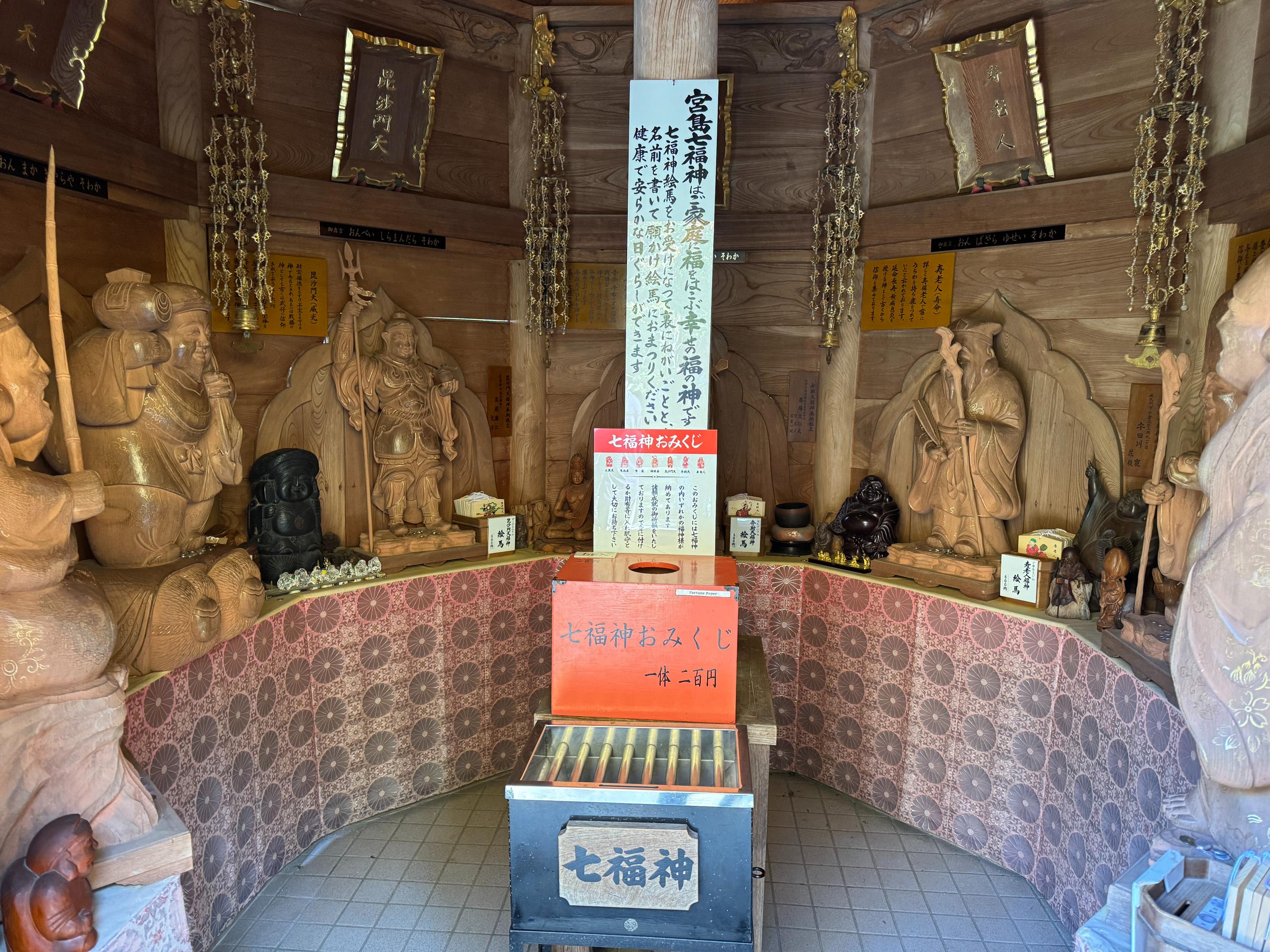
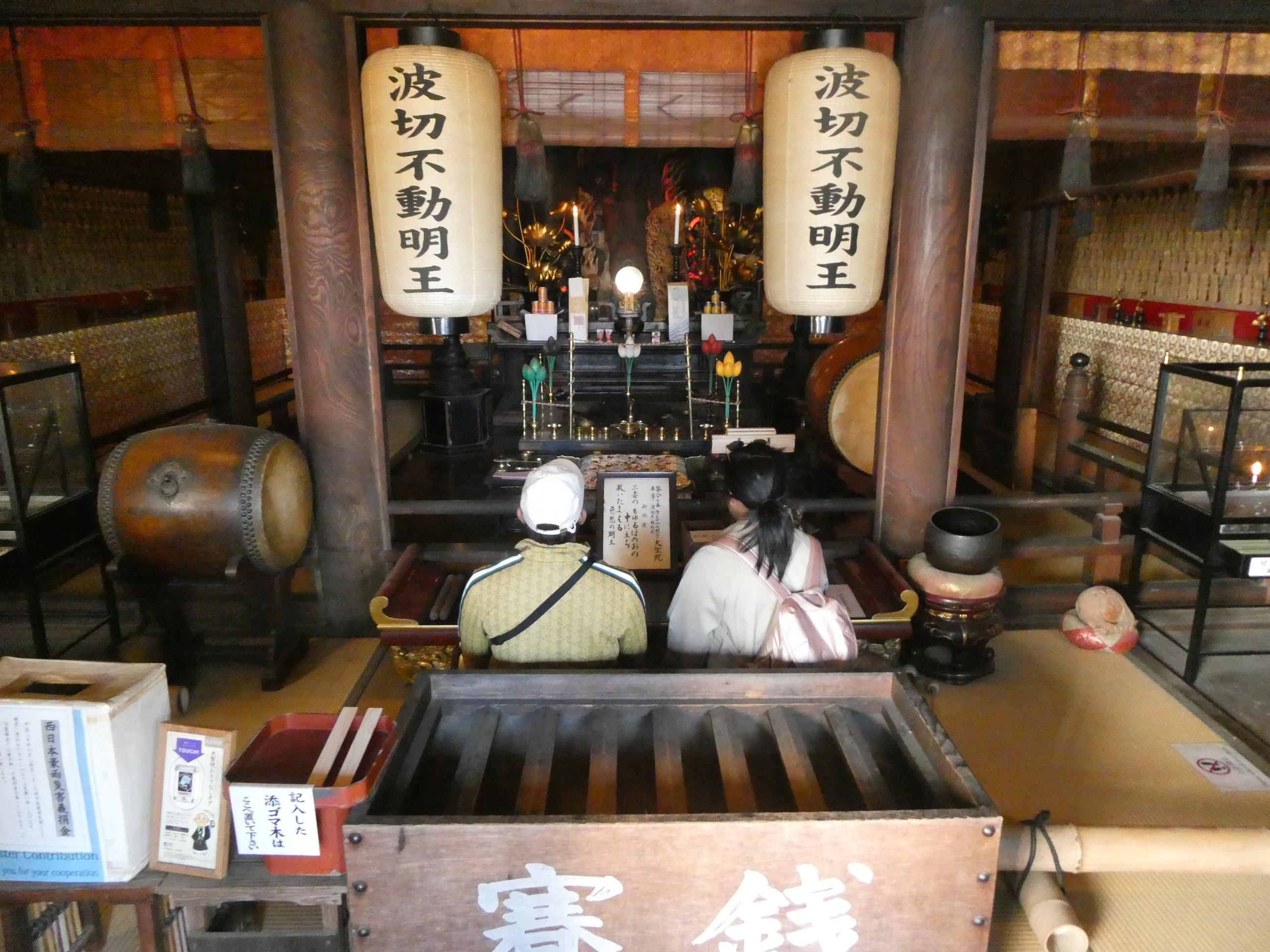
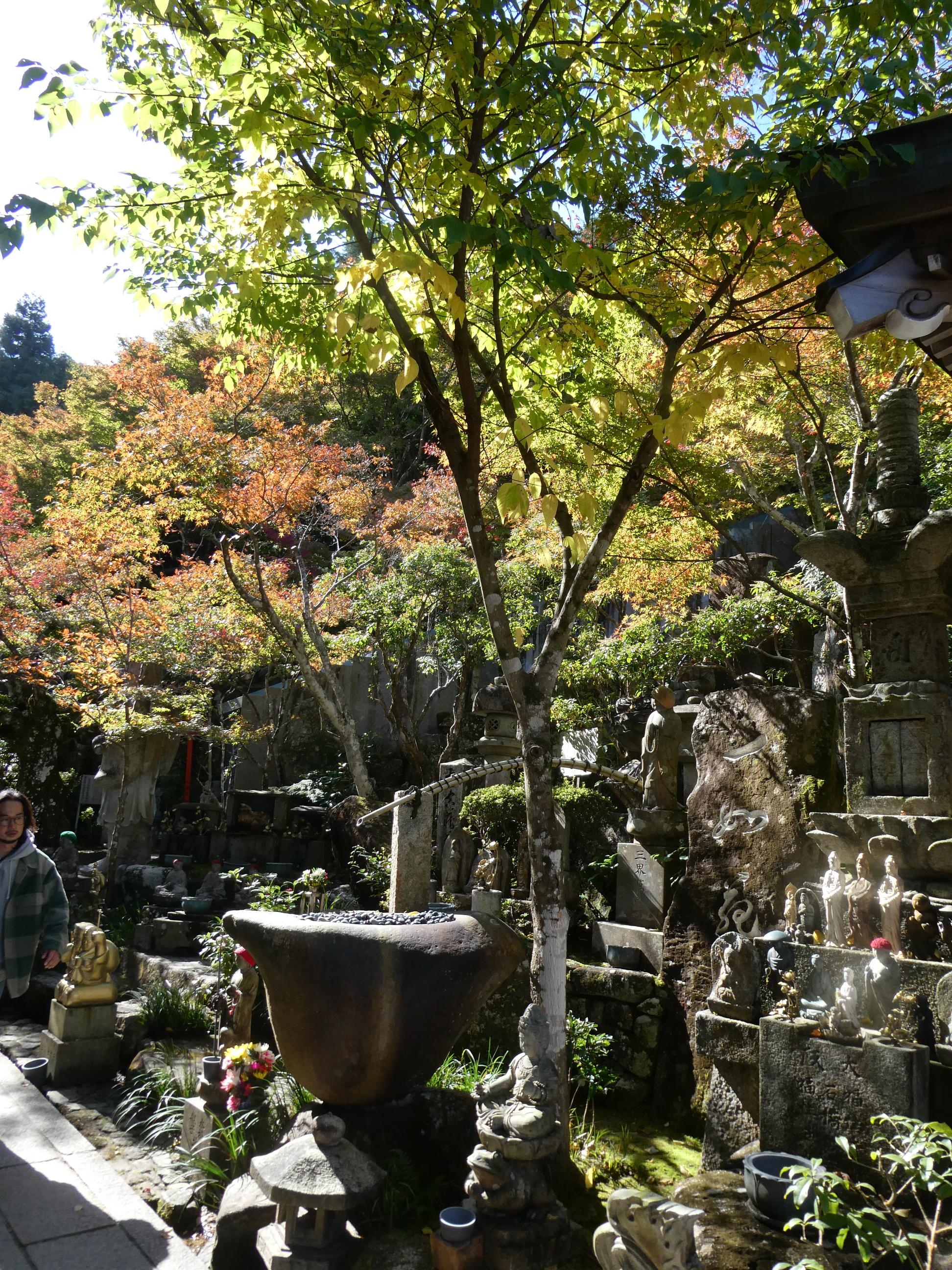
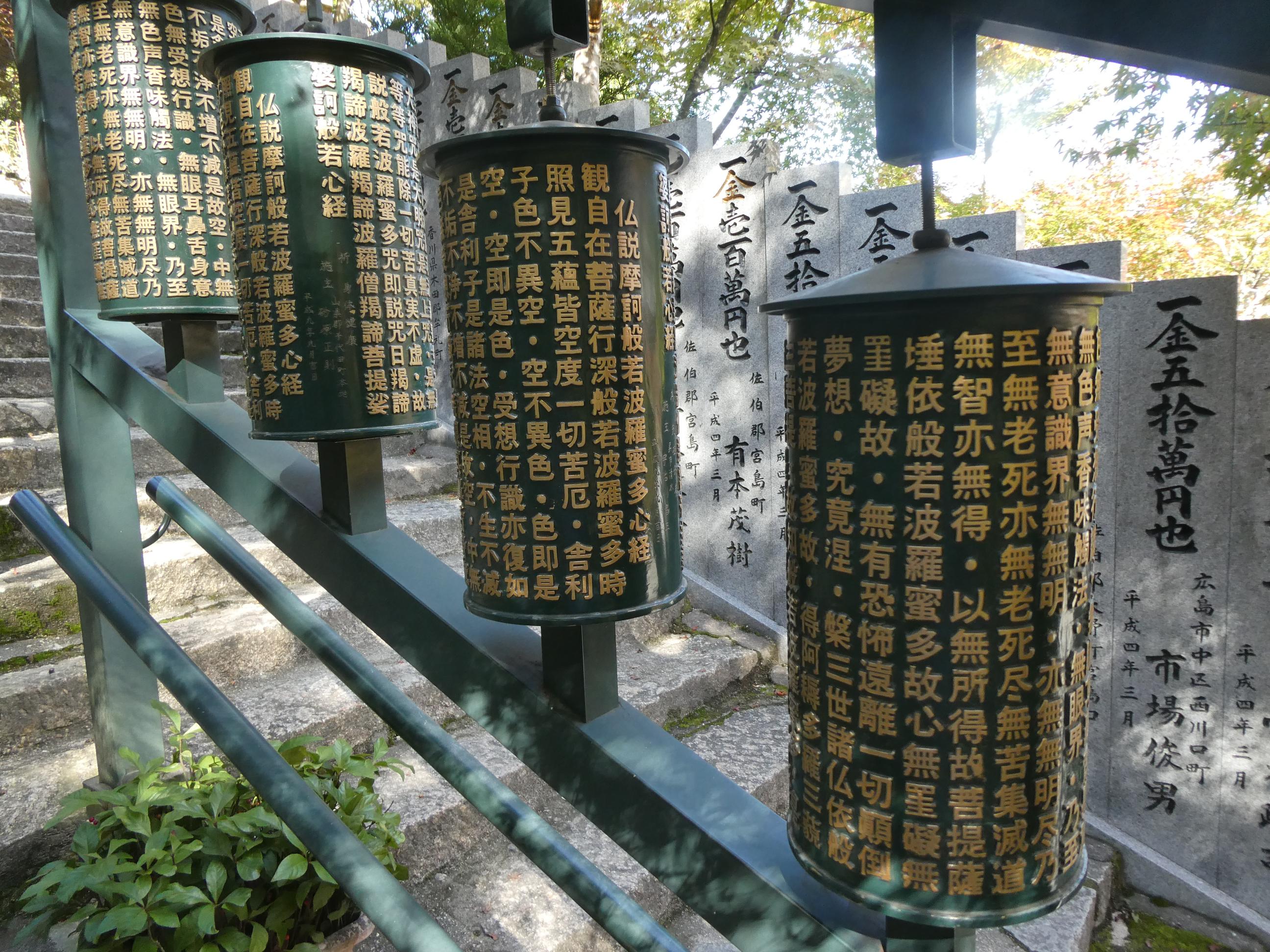
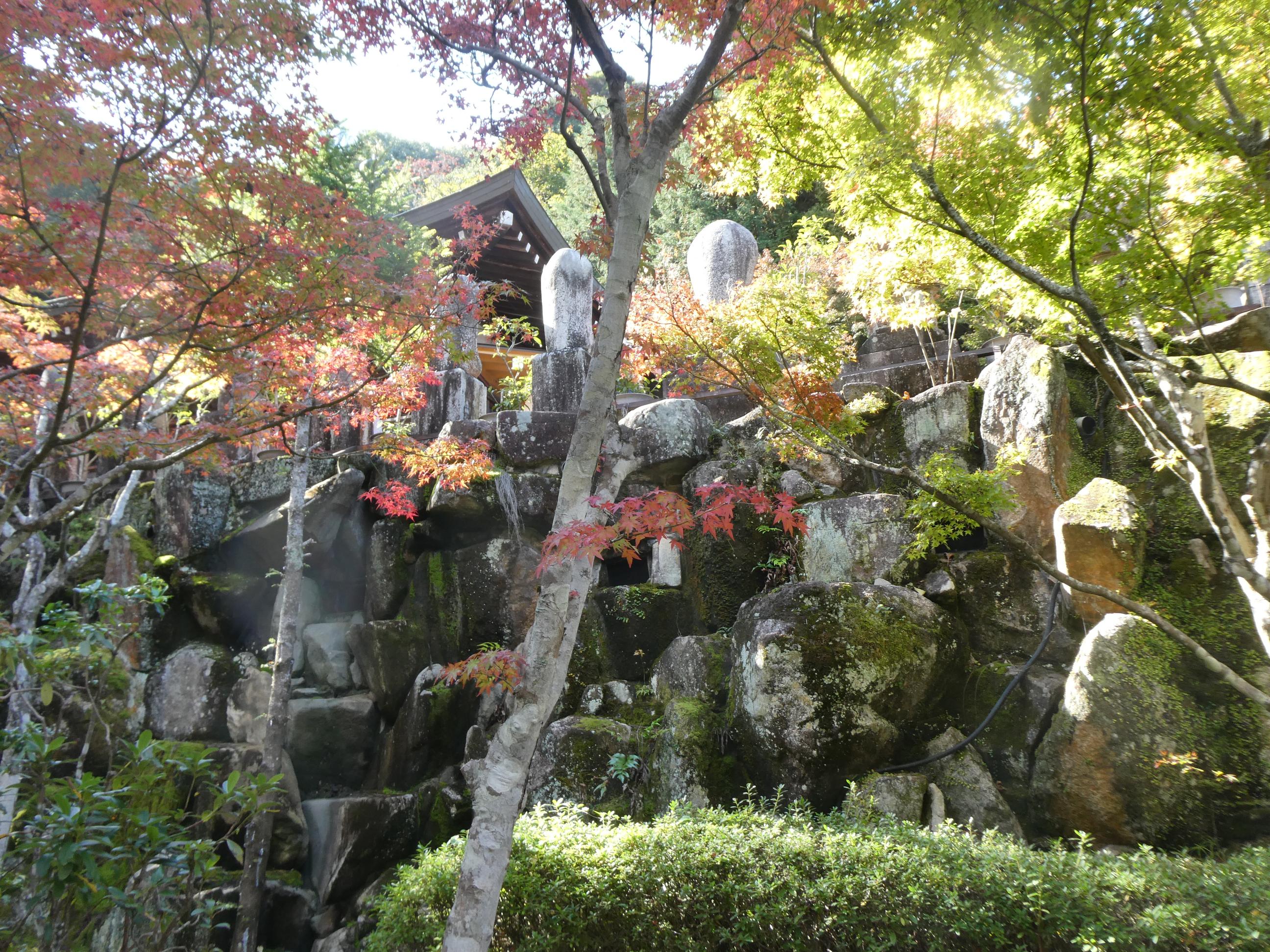
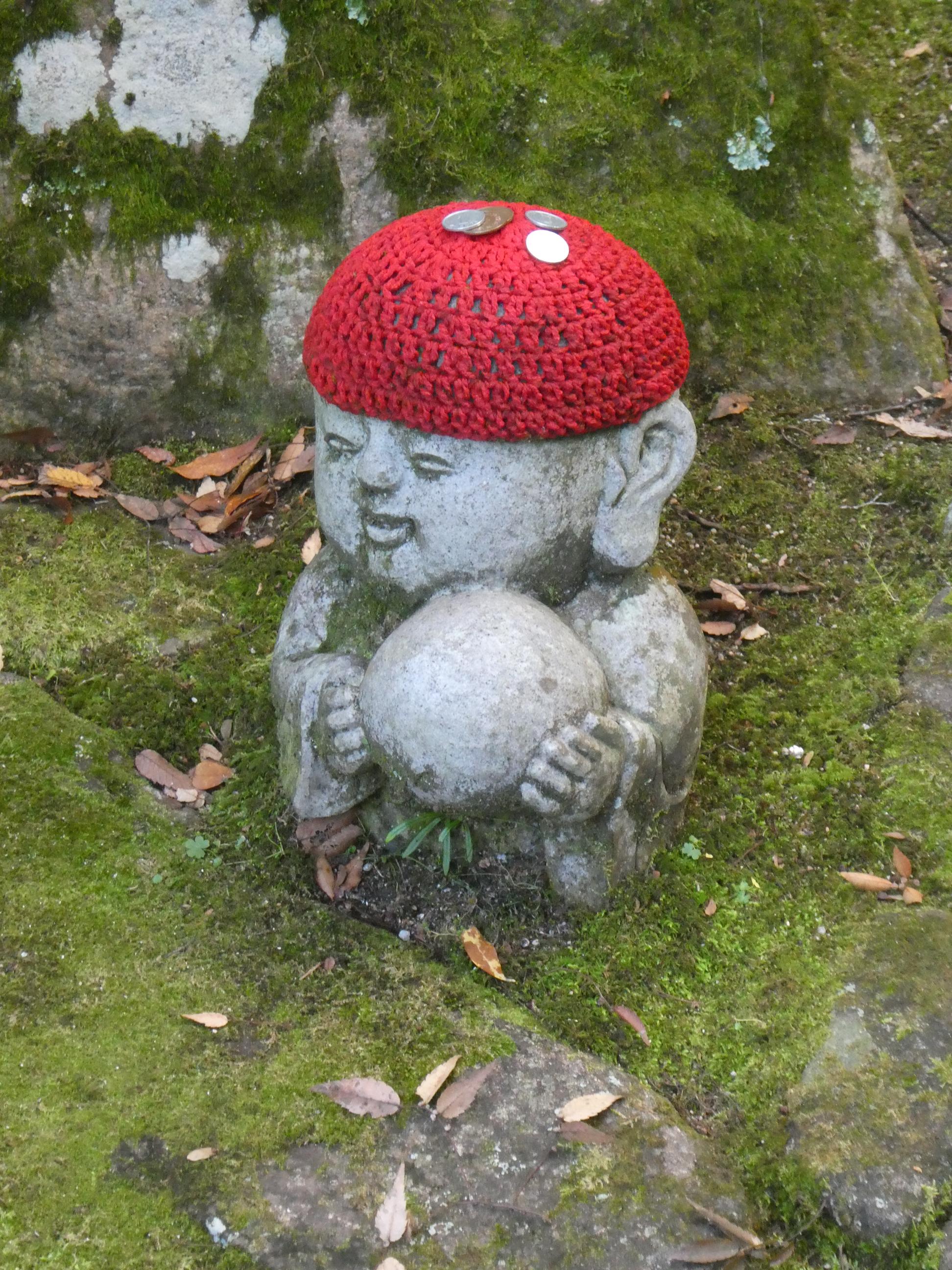
The Daishoin Temple complex was my favourite part of Miyajima. It’s the home of the Omuro Branch of the Shingon denomination of Buddhism. It was founded in 806 by a man who stopped here to perform rituals after making his way home from China. There are six major halls in the temple complex. I enjoyed walking up and down the paths and stairways here. There were prayer wheels all the way up some of the steepest and longest sets of stairs. If I remember correctly from when I first encountered them in Nepal in 1983, as a prayer wheel spins it send prayers off on the winds to do good in the world. Every complete spin repeats a mantra. I enjoyed the statuary, both large and small, and its location in amongst the natural vegetation. I enjoyed the harmony that existed between the natural environment and the human-made structures and objects. And I really enjoyed the beautiful gardens, which could very well have been natural, but I’m sure were well tended. Once again, an English-speaking guide in this incredible place would have been invaluable, despite the fact that it was, in its simplest form, just a delightful space to spend some time in.
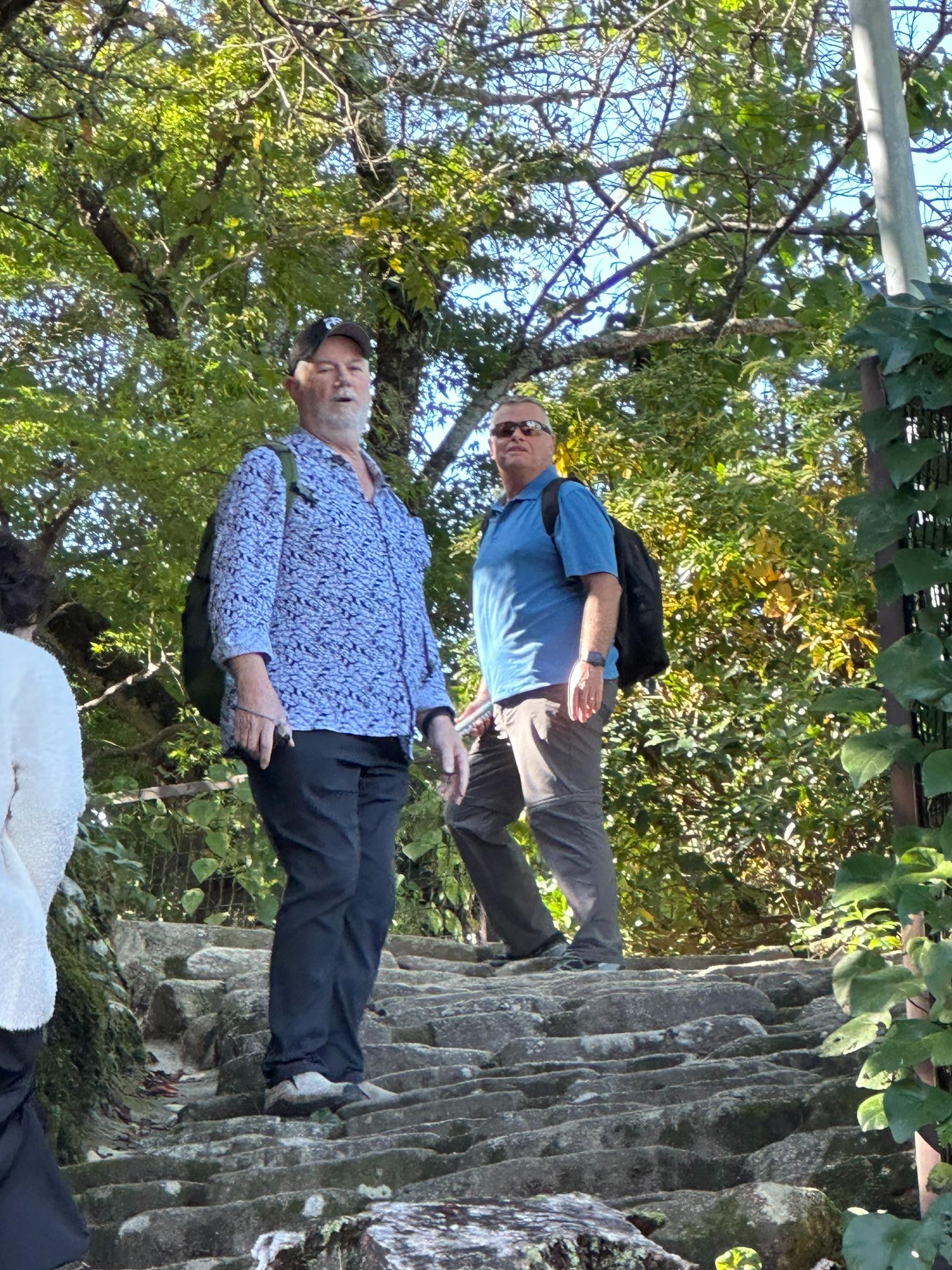



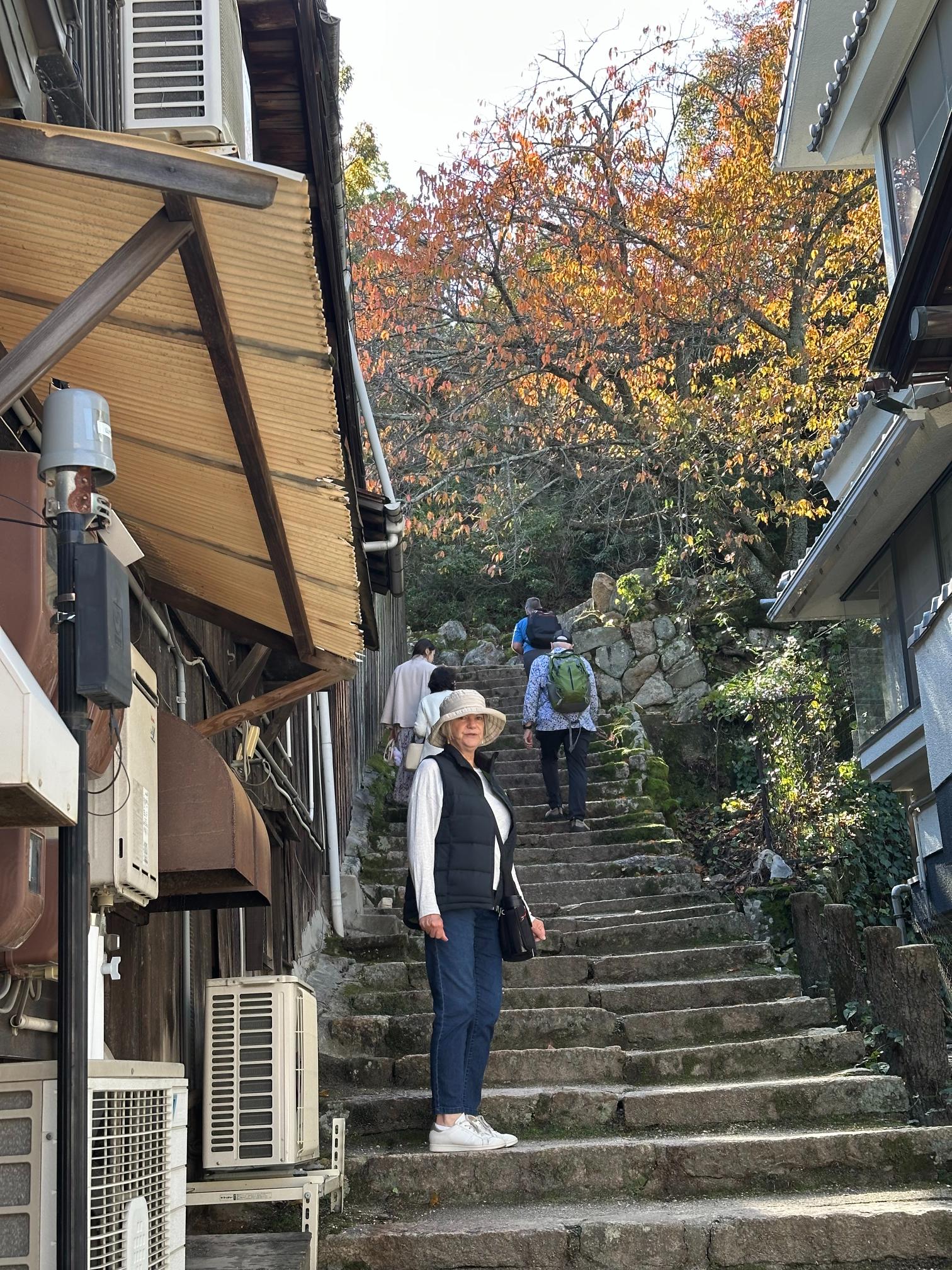














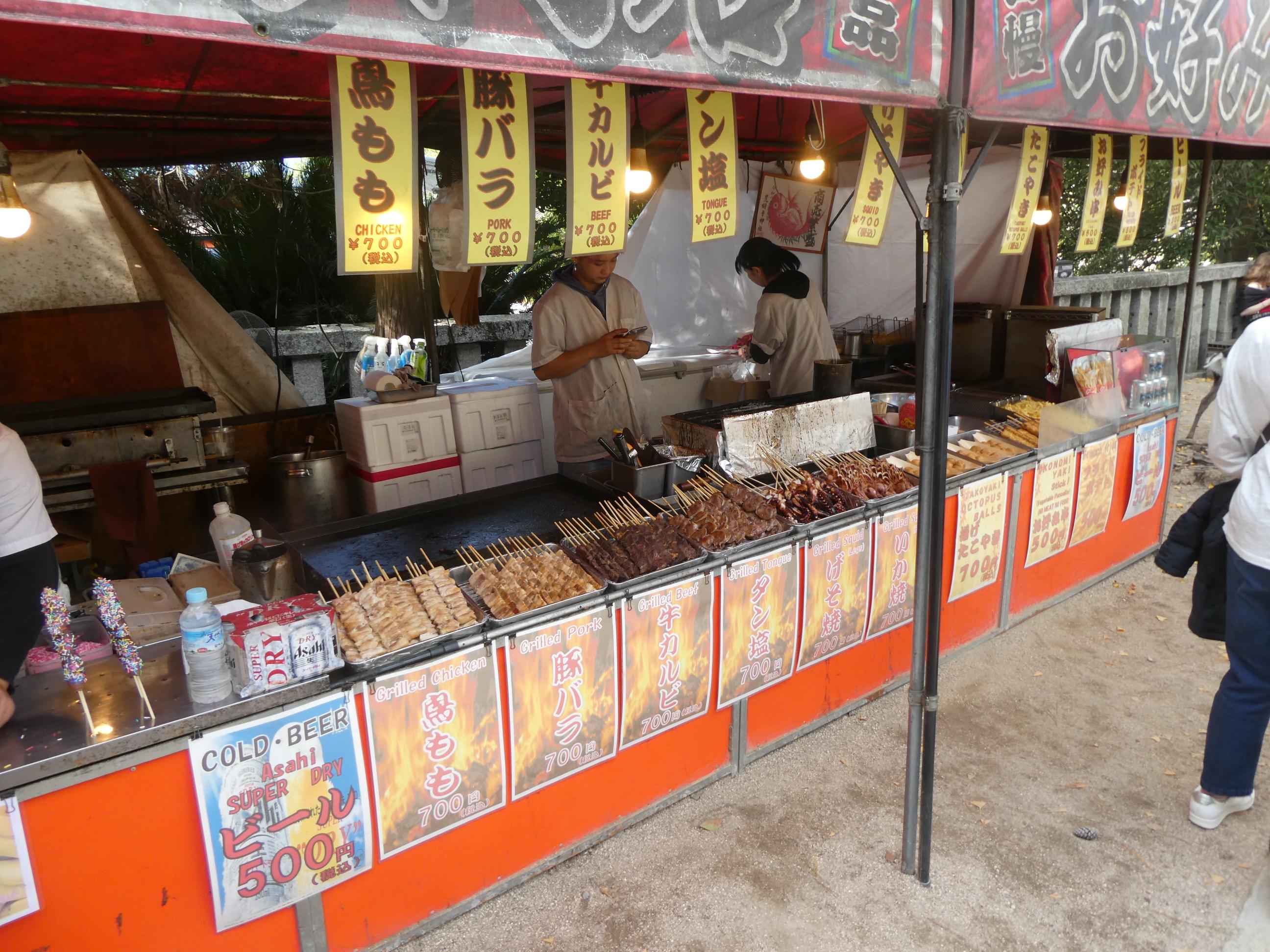
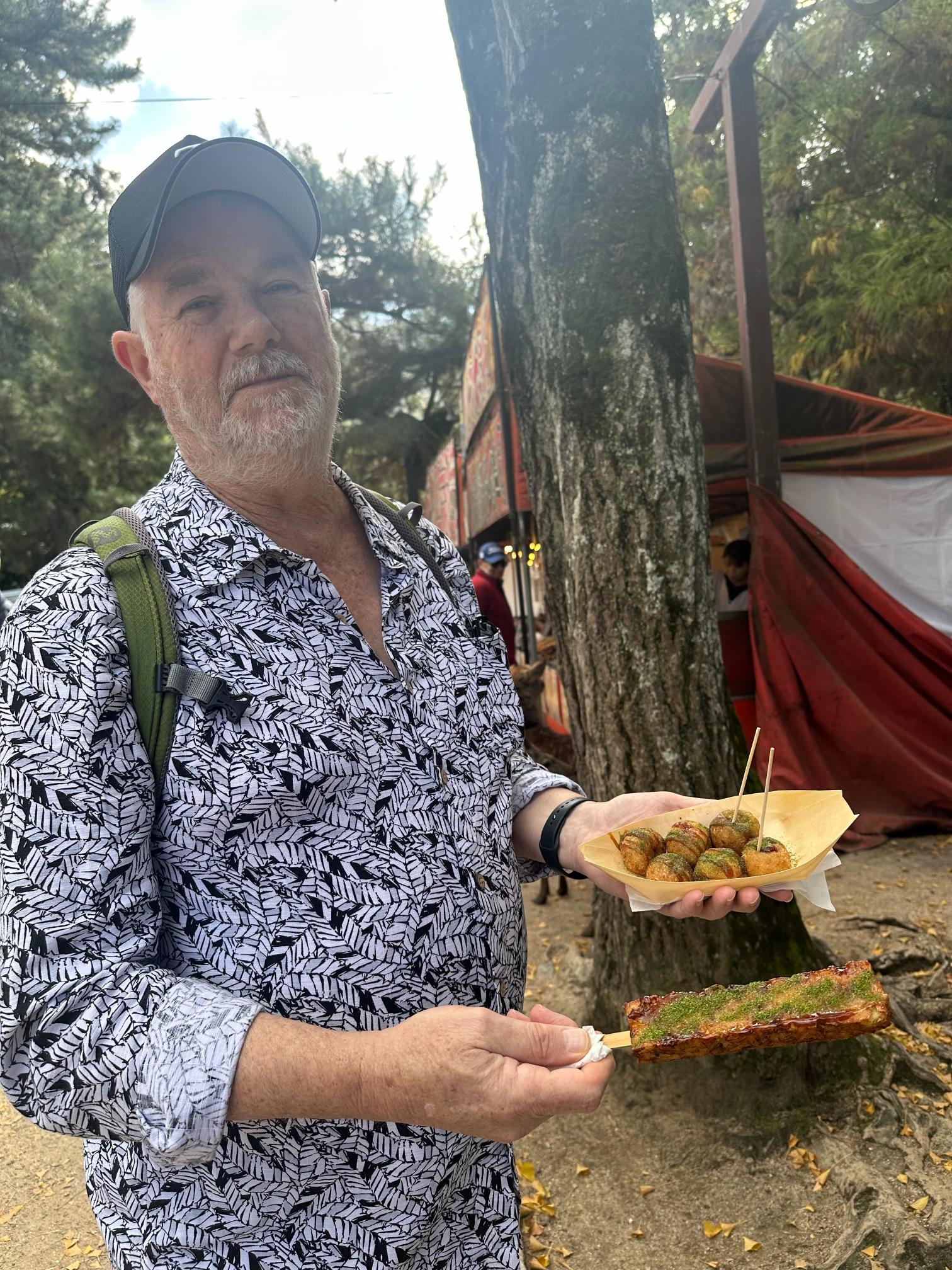
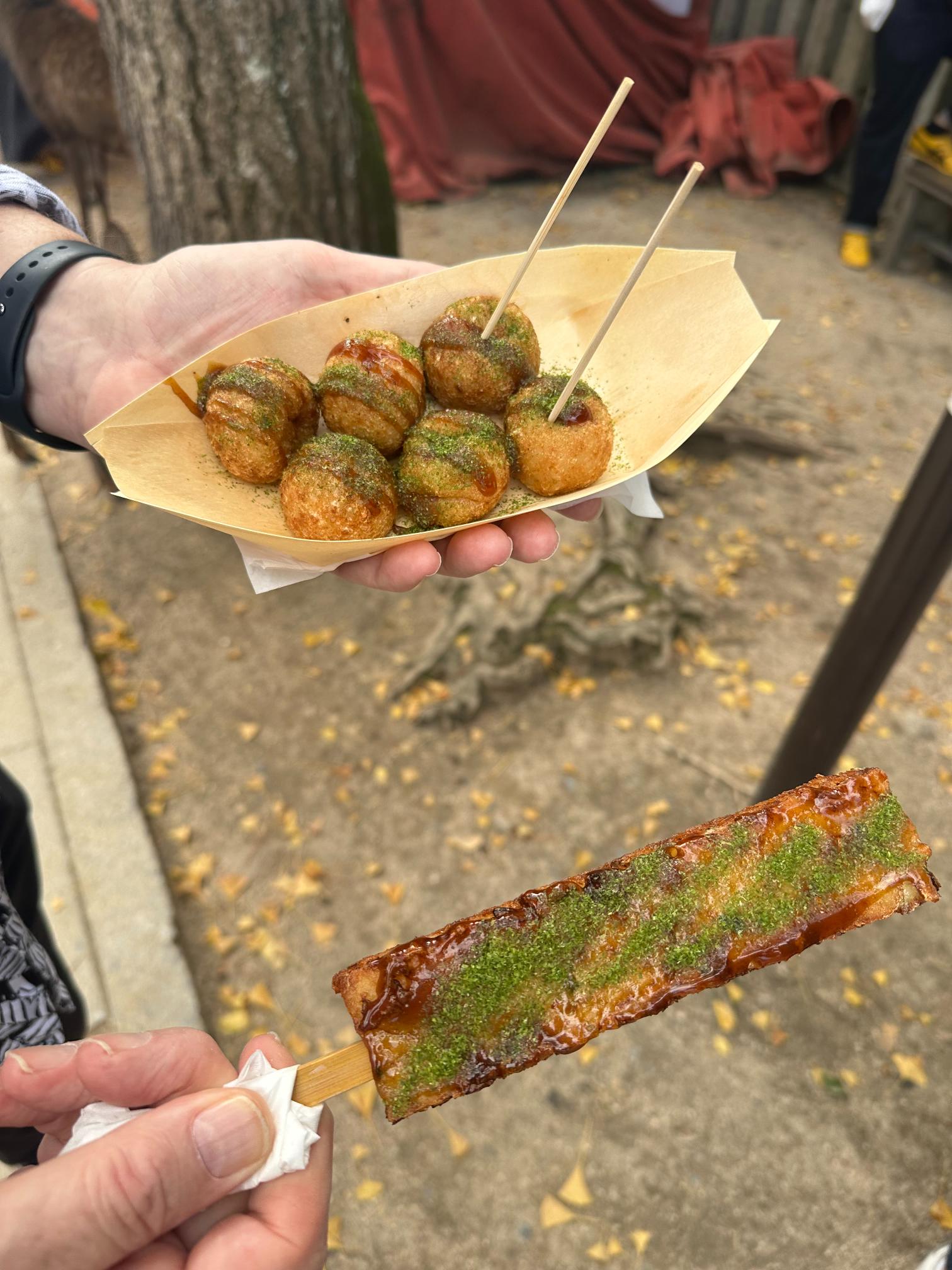
We slowly made our way back to the ferry, stopping frequently to look in the souvenir shops, or, in my case, to sample the street food. First I tried the Miyajima Fried Chicken, which says in brackets ‘Non-fried’. A little later, I ate some octopus balls and okonomiyaki on a stick. The chicken was the best of the three, and the okonomiyaki stick was a bit bland and nothing like the real thing. As we passed the shrine and the O-Torii Gate again, it was clear that the tide had come in a fair way since we arrived on the island. Now the shrine appeared to be floating, which no doubt its designers intended. It really looked quite beautiful. We boarded the ferry for the short trip back to the mainland, then caught the train back to Hiroshima. We all agreed we’d had a fantastic day on the island.










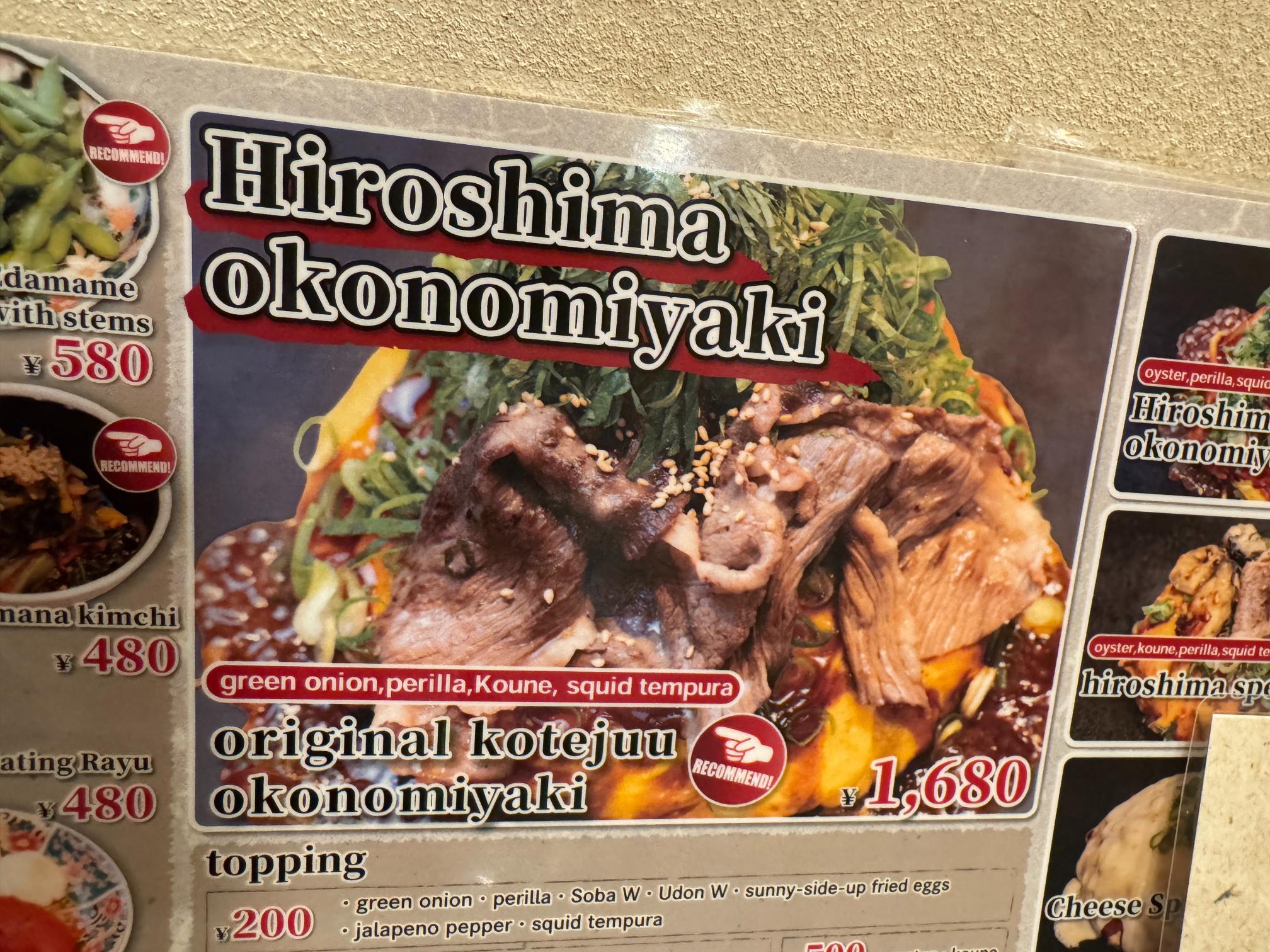
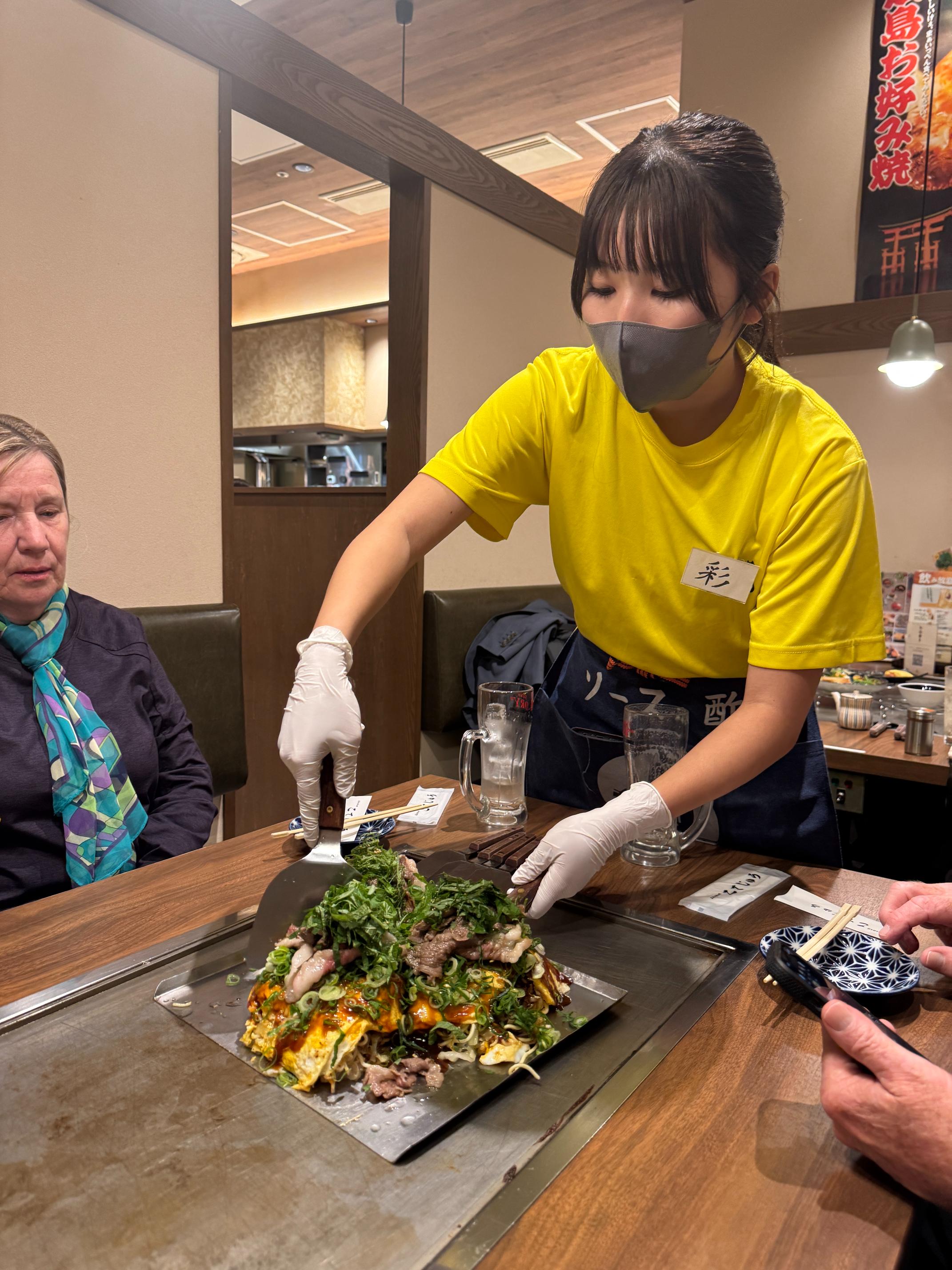
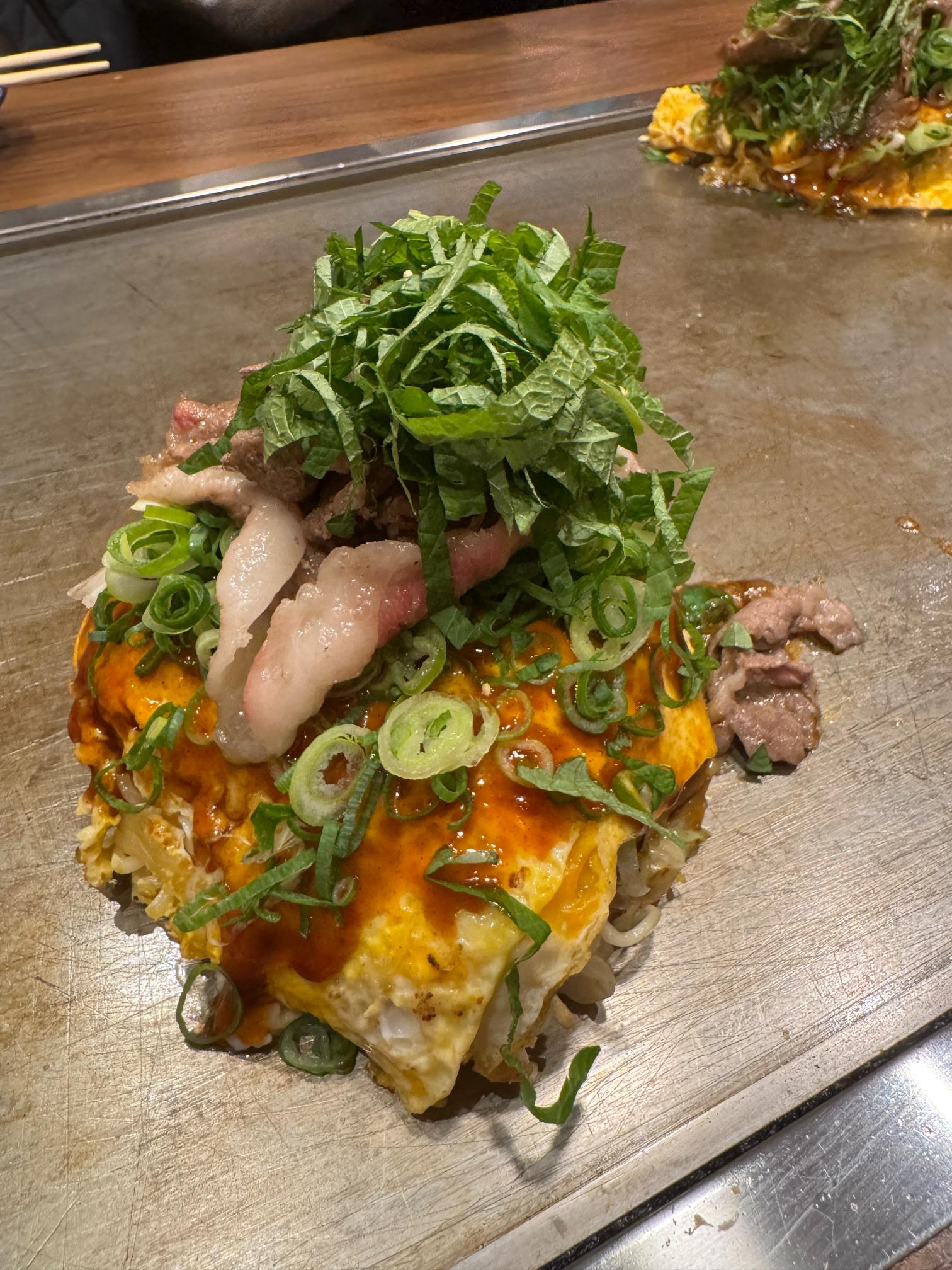
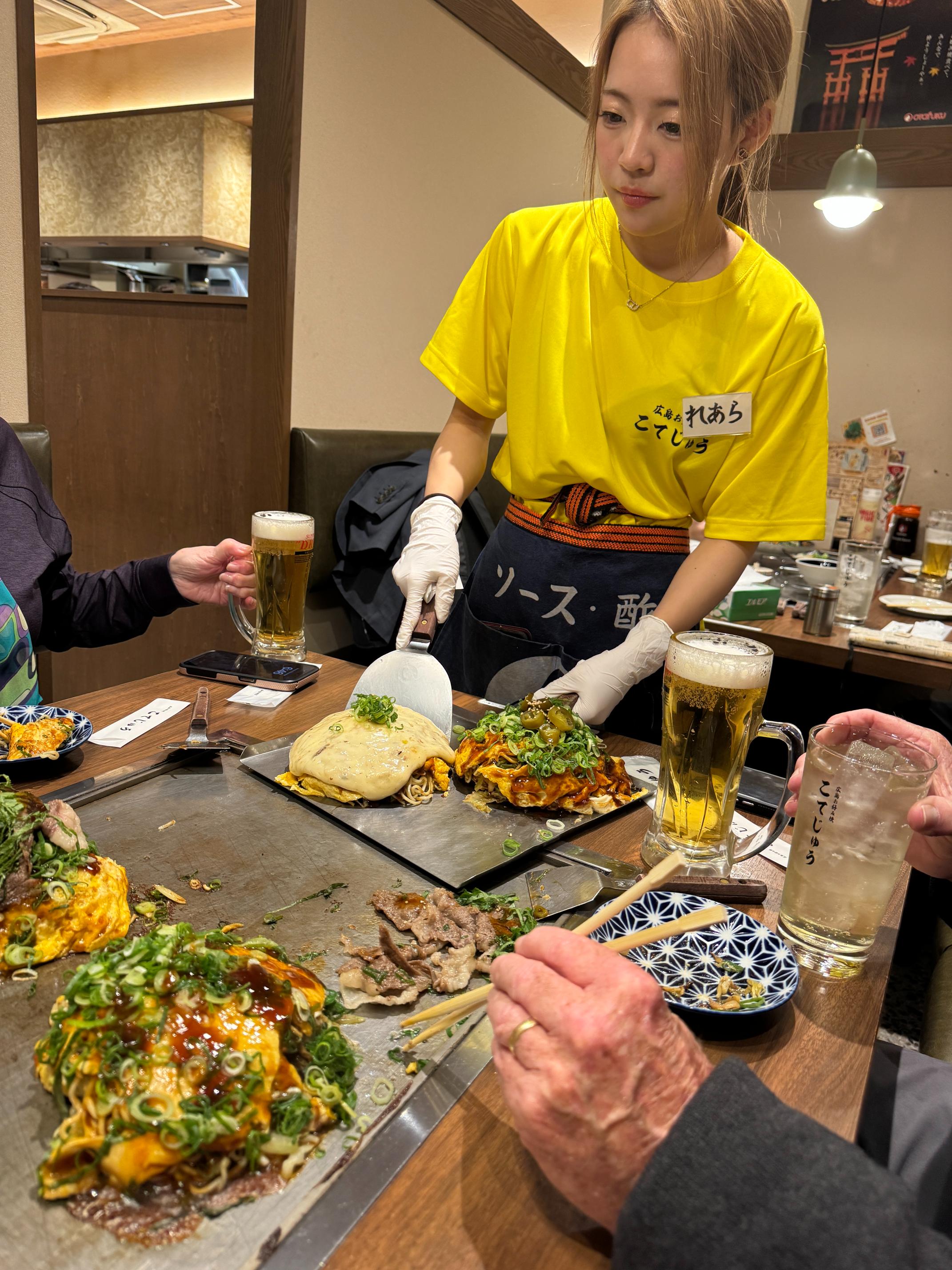
For dinner tonight, we went in search of okonomiyaki again, but this time, rather than searching the streets around our hotel, we found a place in the huge food court of the shopping mall connected to our hotel and the railway station. Our okonomiyaki was prepared in the kitchen and then served onto a heated metal plate at our table. We used a spatula with a sharp edge to cut away pieces of the okonomiyaki and scoop it onto the plate, then ate it with chopsticks. I read that okonomiyaki originated as a local dish in the 1950s when food was still quite scarce in Hiroshima, especially flour. A very small pancake was formed on the grill and vegetables and meat were piled on top, then it was all flipped so that the pancake was on top. The heat from the grill caused the meat and vegetables to steam, which cooked the pancake. Back at our hotel, we stopped in the dining room for a Japanese whisky and a creme brulee to finish off our day.



 On The Road With Garry
Beautiful pictures again Garry. Looks like the weather was great too. Amazing place.
LikeLiked by 1 person
Thank you Janie 🙂
LikeLike