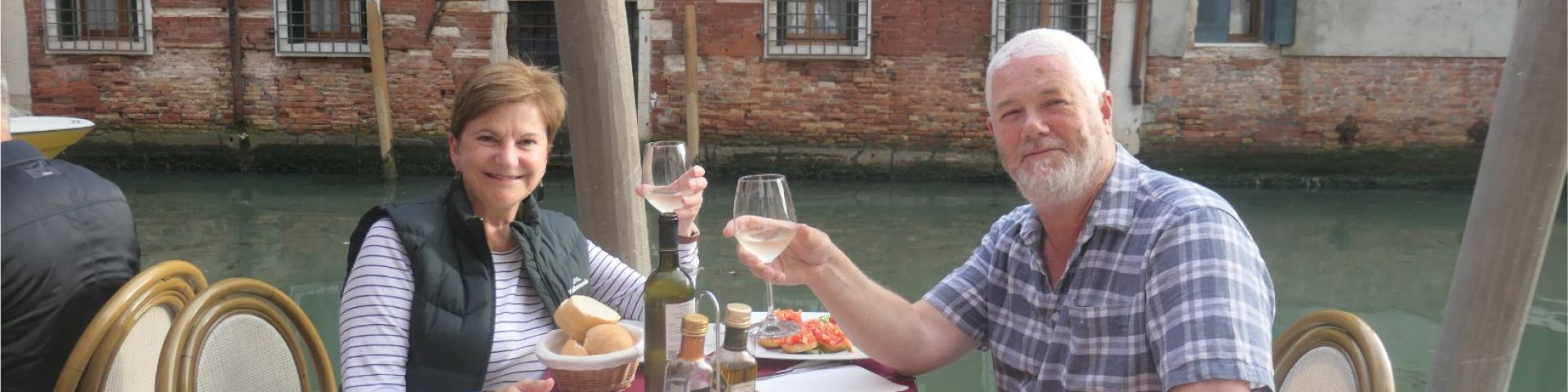
Today was one of the few days when we could allow ourselves a bit of a sleep-in and a later breakfast, as our hotel was right next to the station and our train didn’t leave until 10.11 am. The Okayama marathon was well underway in the streets below by the time we sat down to breakfast on the 17th floor. Yesterday we had sunshine and blue sky all day, but this morning there was intermittent rain and a cloudy haze hung over the city.
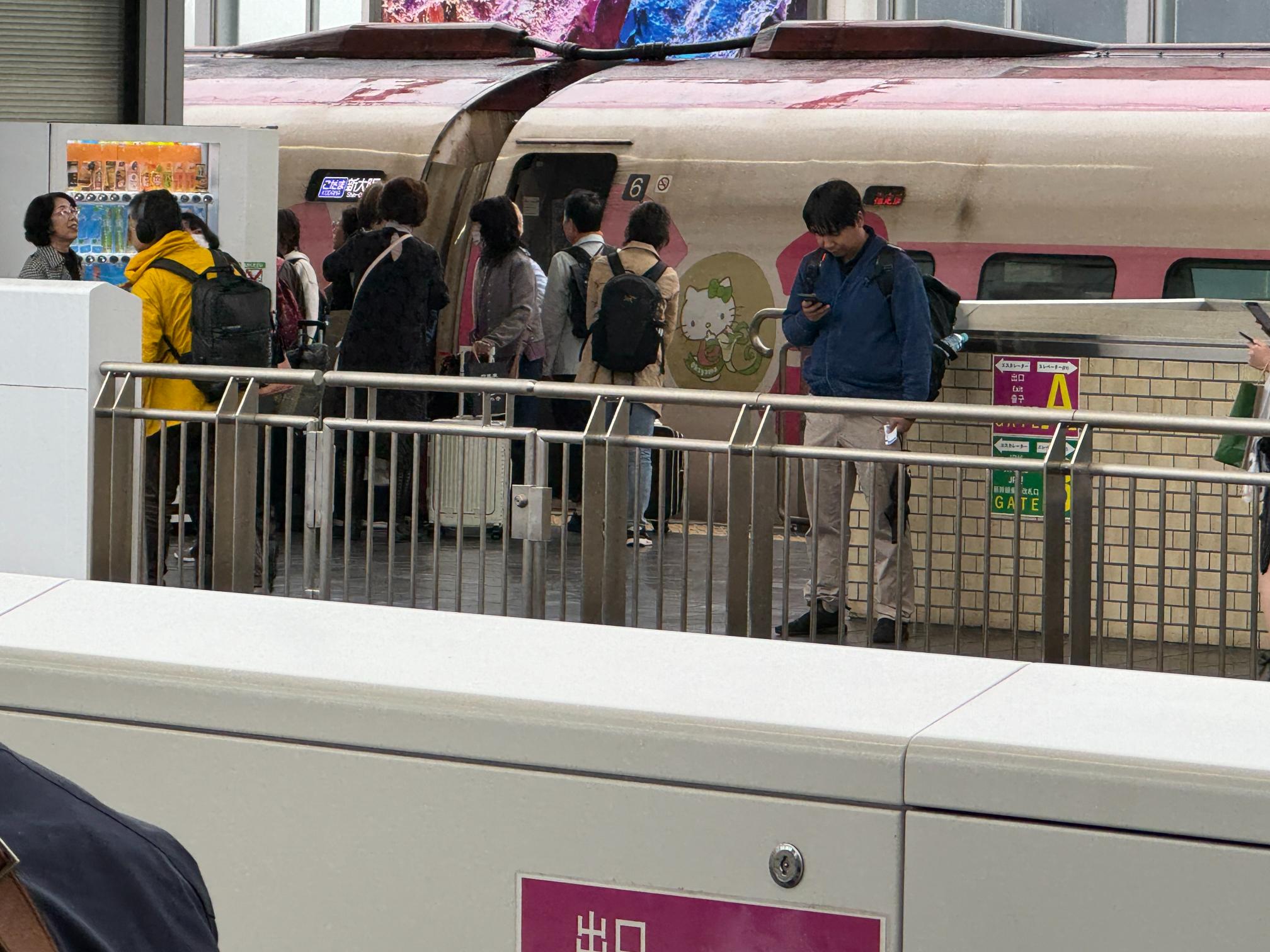
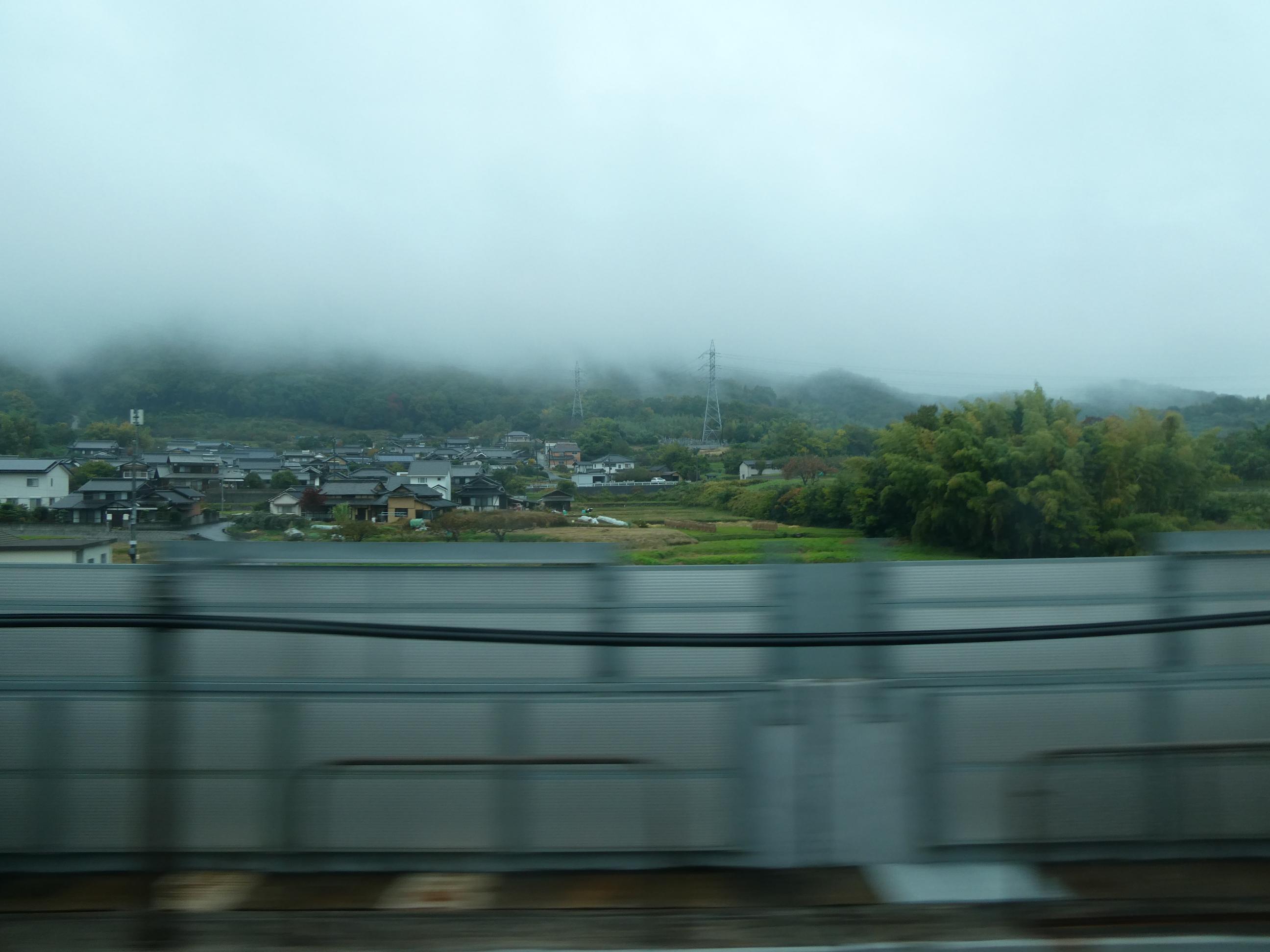
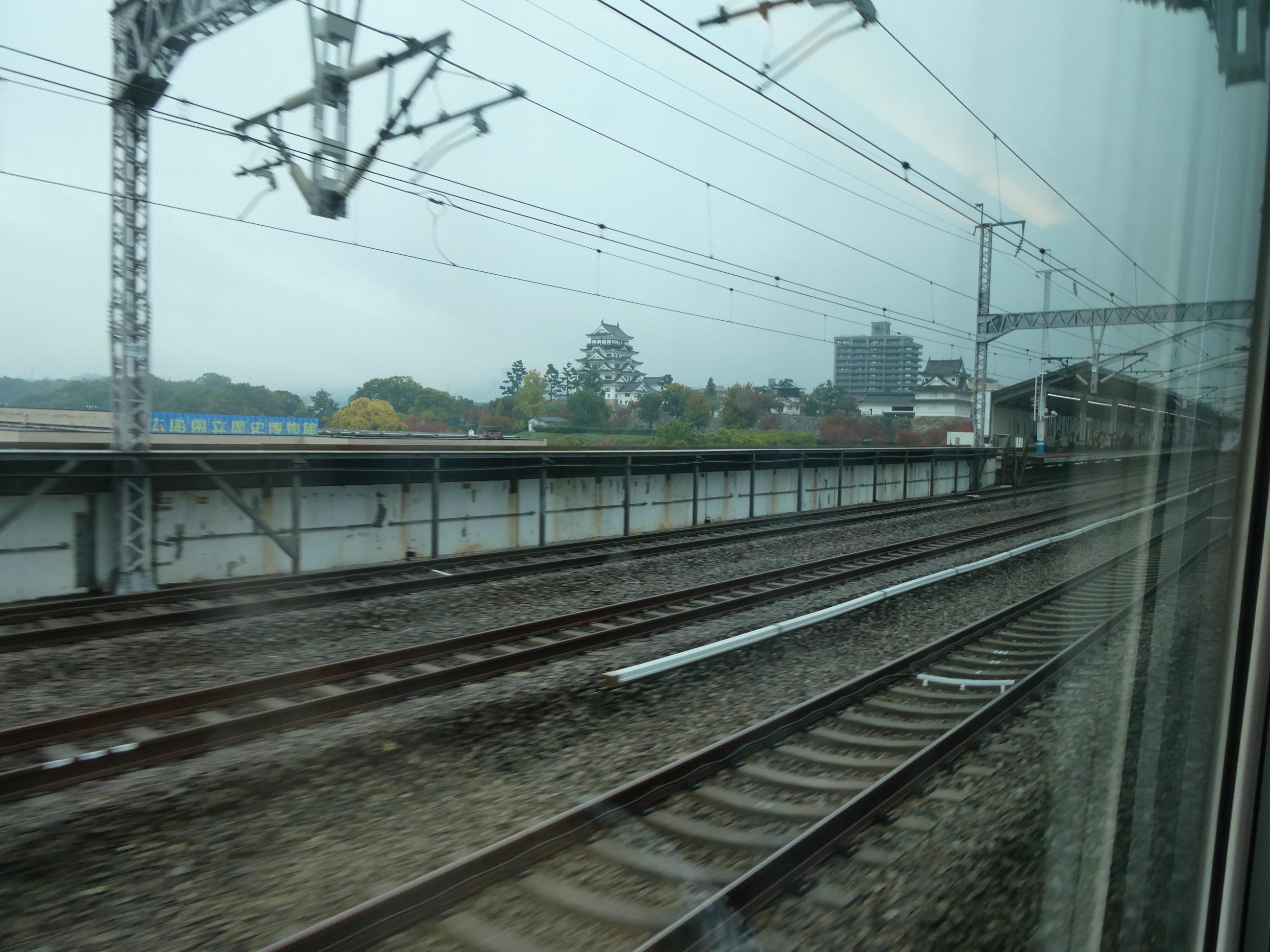
While waiting for our Shinkansen train, I watched a pink one arrive on another platform. Beside every door for the entire length of the train was the image of Hello Kitty. It was a Hello Kitty bullet train! I took a photo and sent it to my daughter Casey to show my granddaughter Layla. Layla loves Hello Kitty and I’m sure she’d like a ride on that train. The weather was gloomy and visibility was limited all the way from Okayama to Hiroshima, a 40-minute ride. The one thing that caught my eye, fleetingly as bullet trains go very, very fast, was Fukuyama Castle. I saw it coming up and it looked magnificent, but, by the time I got my camera switched on and focused, is was disappearing behind me. You can see it in the last photo if you look closely.



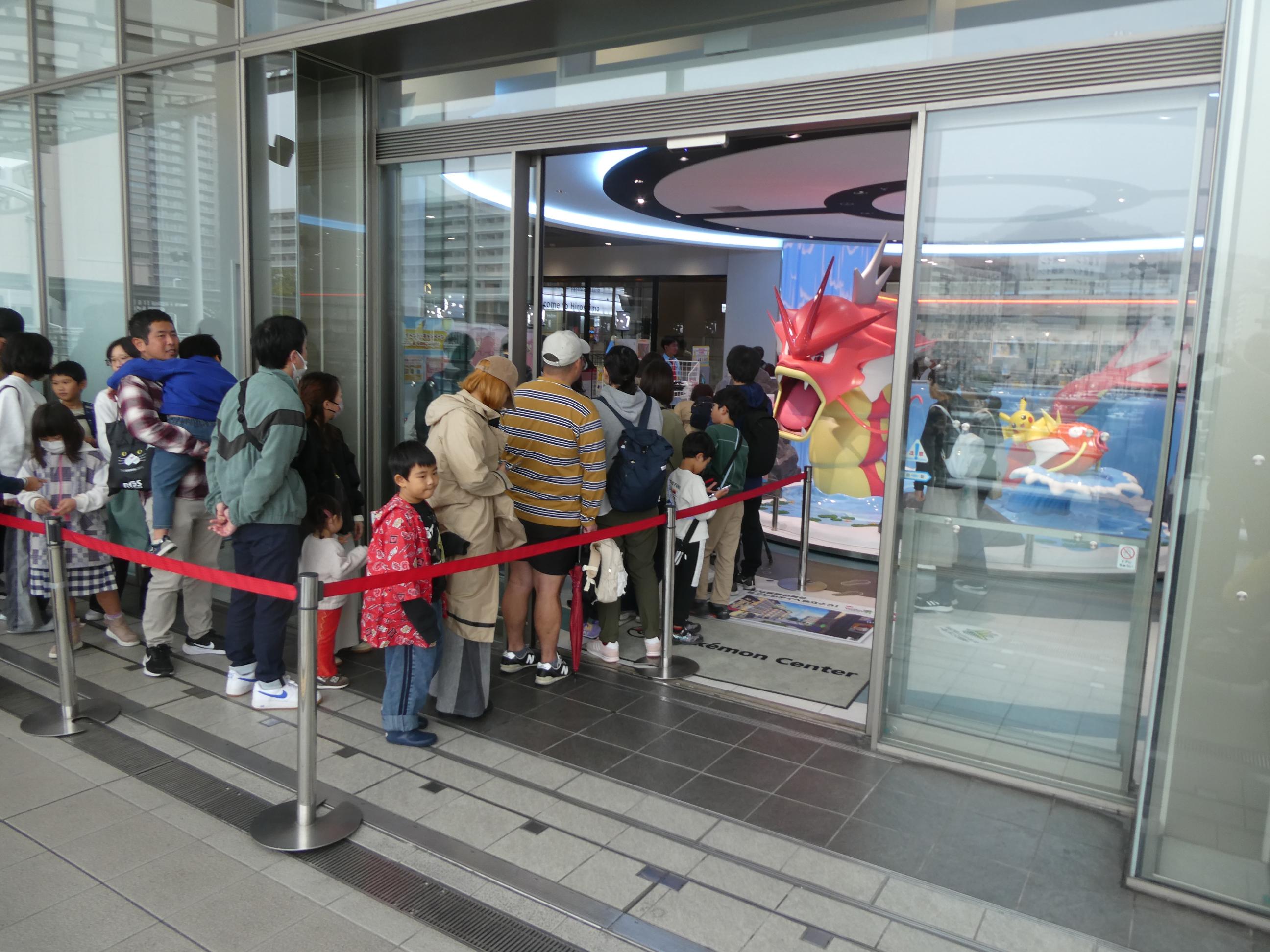
It was only about a one minute walk from the exit of Hiroshima Station to our hotel, but on the way we passed a Pokemon store. There was a queue of parents and kids out the door and inside there was frantic activity on machines and in games rooms. Pokemon is everywhere over here, and I’ve even seen adults walking around with Pokemon gear.


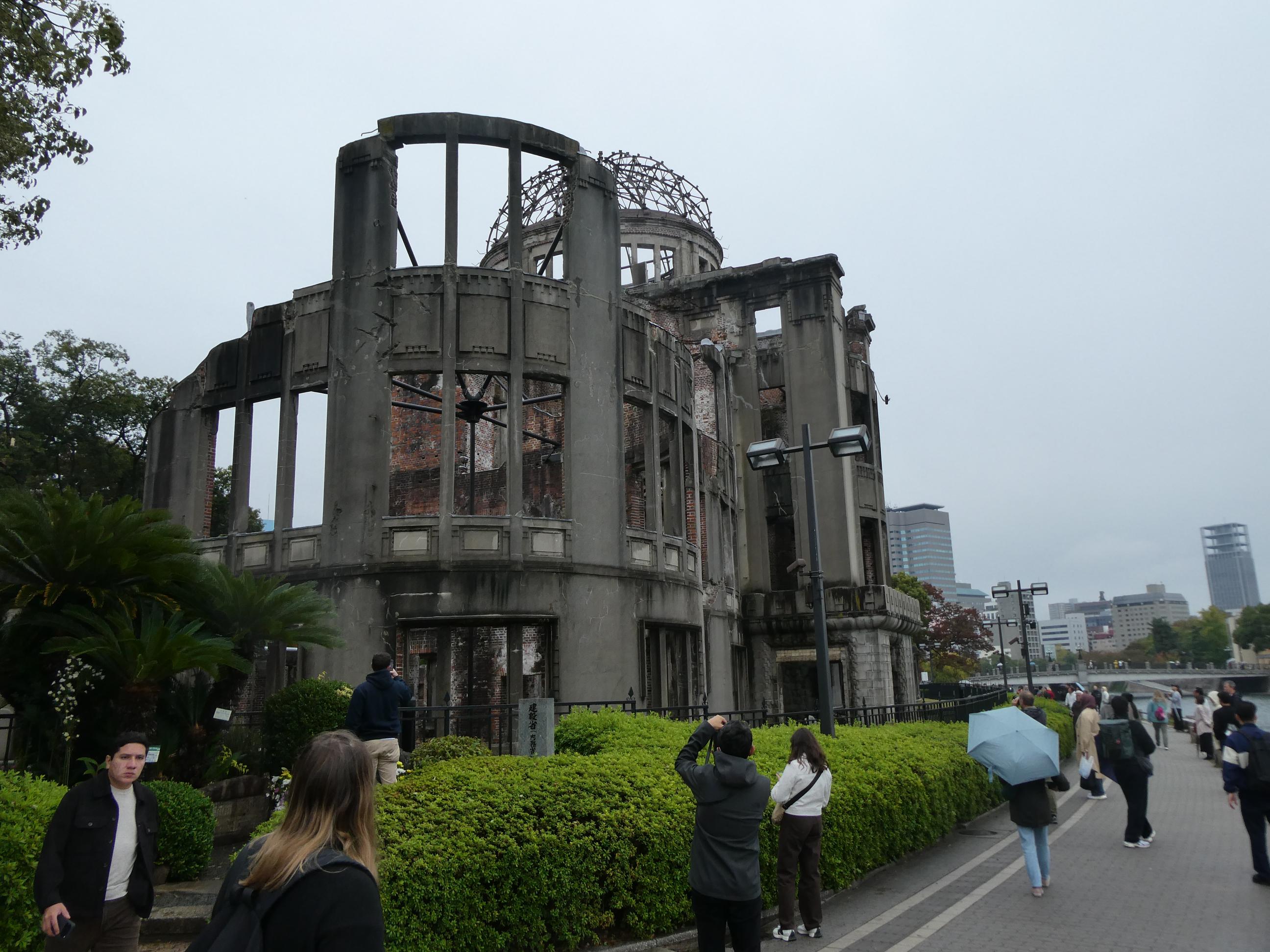
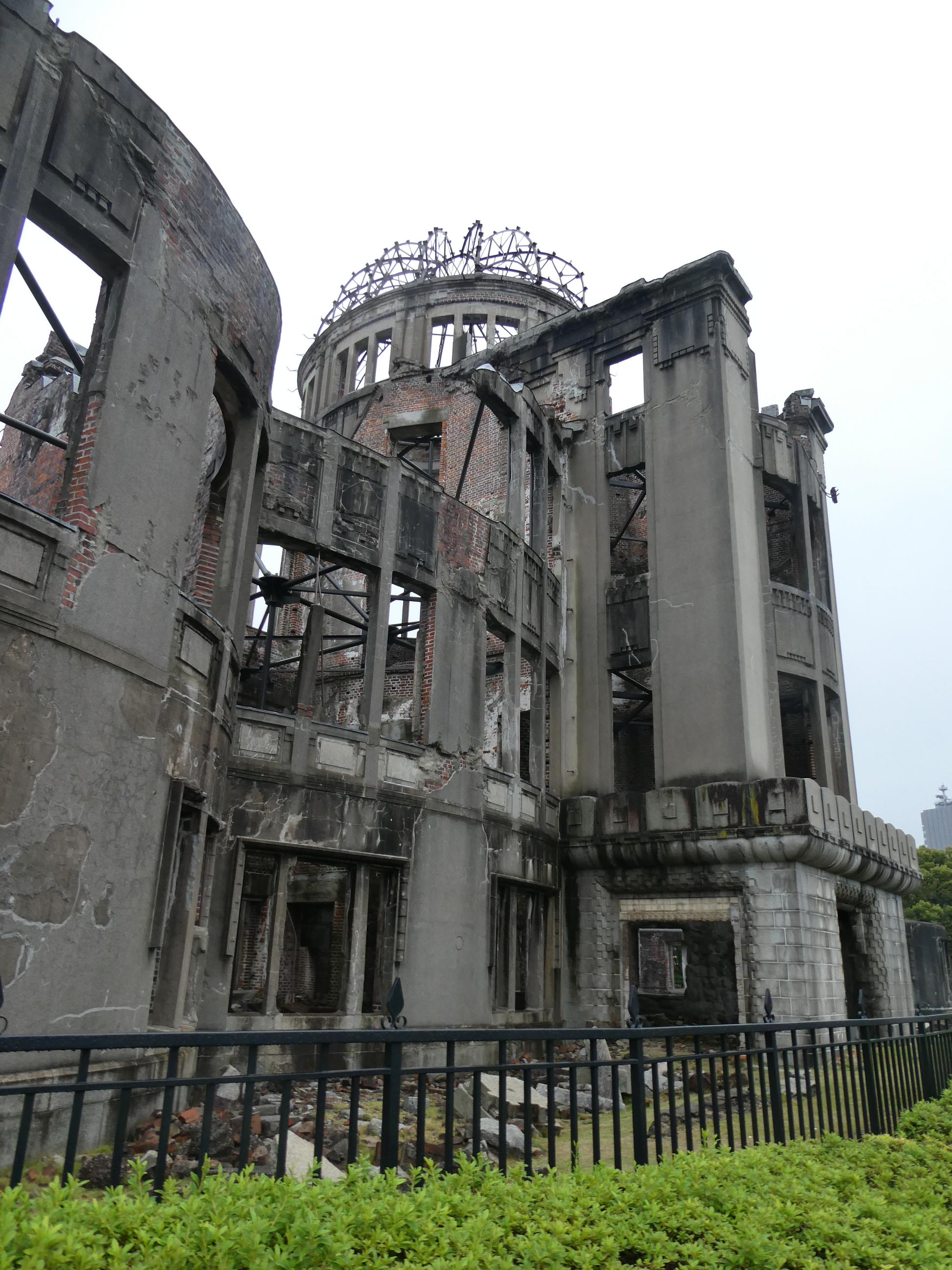
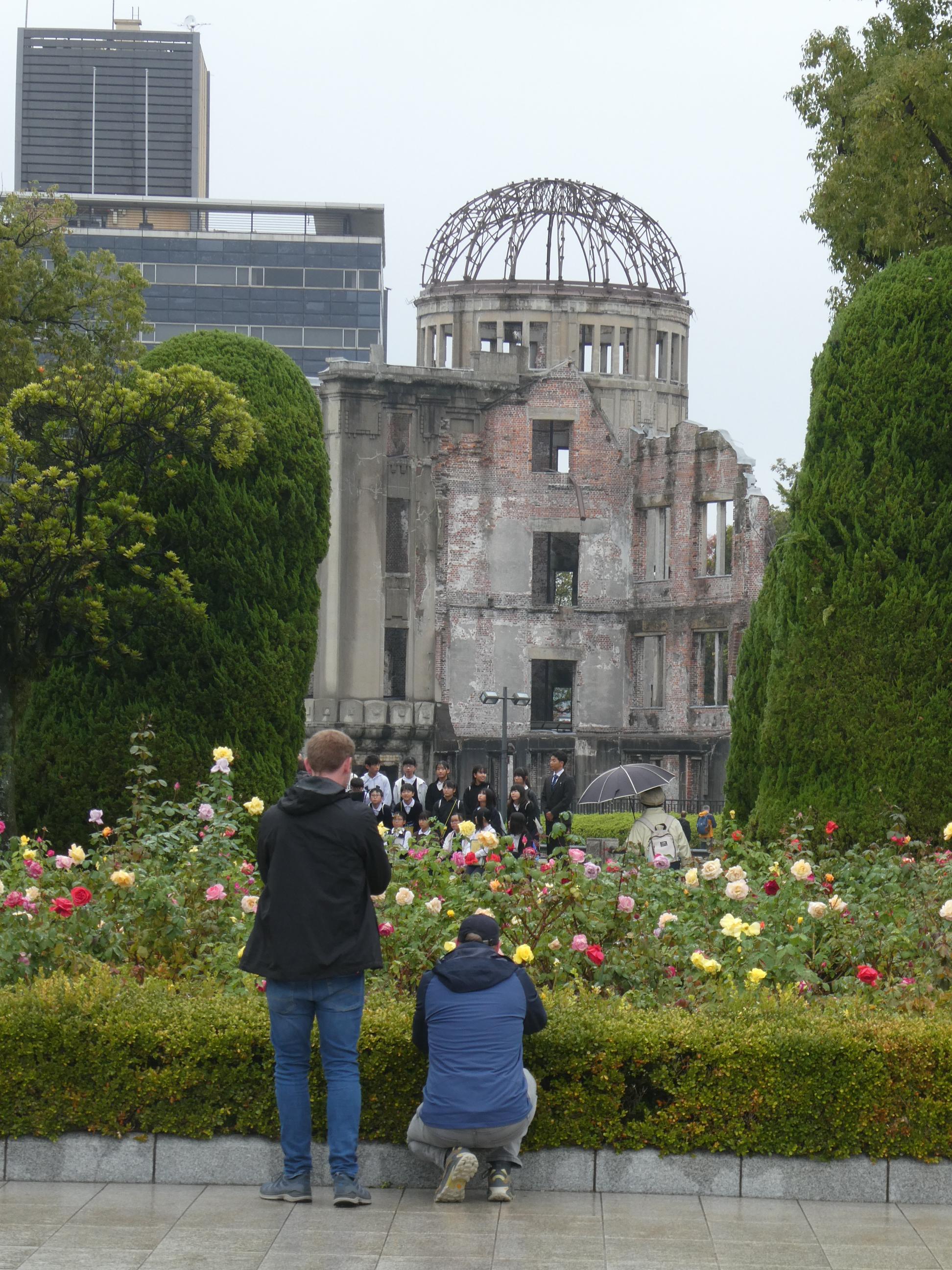
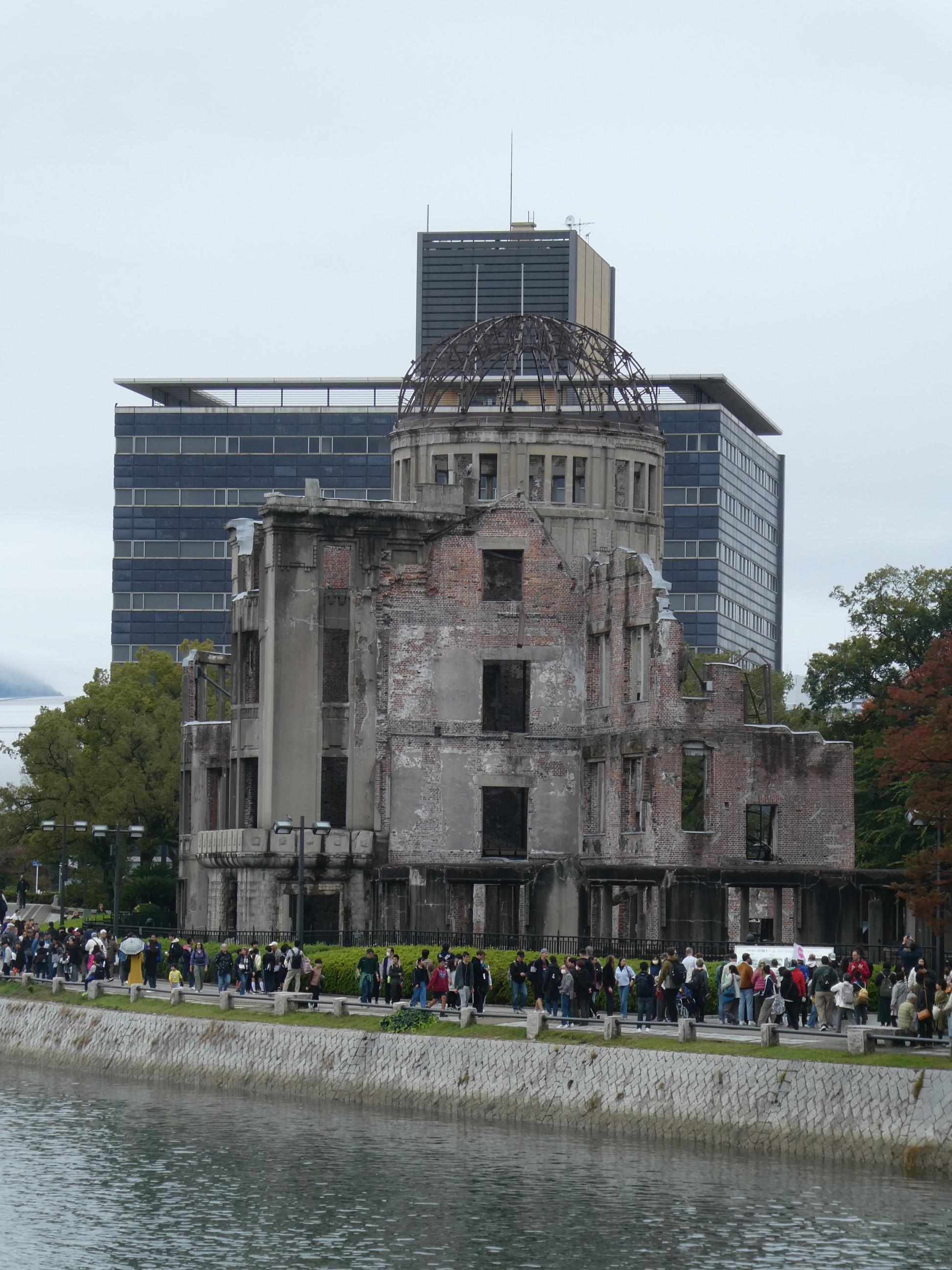
We took a fifteen minute streetcar ride from out the front of our hotel to the historic site now known as the Atomic Bomb Dome. The site is a ruined building, where everything has been left just the way it was after the world’s first atomic bomb was dropped on Hiroshima, a strategic port city, on August 6, 1945. The building was almost directly beneath the bomb when it detonated 600 metres above the ground, obliterating every other structure within a wide radius and instantly killing everyone in the building. The building, formerly known as the Hiroshima Prefectural Industrial Promotion Hall, kept its shape because its columns resisted the downward force of the blast from directly overhead. The decision was made to preserve the ruined building in the exact state it was immediately after the bombing, as a reminder to the world about the most destructive force ever created by mankind and as a symbol of hope for world peace and the removal of all nuclear weapons. In 1996, the Atomic Bomb Dome, officially known as the Hiroshima Peace Memorial, was granted World Heritage status by UNESCO. At the time, the United States, the world power responsible for dropping the bomb, expressed reservations about the proposed listing and dissociated itself from the decision.
I’ve seen various figures, but somewhere around 70,000 citizens of Hiroshima, mainly civilians, are believed to have perished instantly in the bomb blast. Others received horrendous burns and other crippling injuries, and many suffered poisoning from radiation. By the end of 1945, it’s estimated about 140,000 people had died. People continued to become severely ill or die from the effects of the radiation for many years to come, and it’s estimated that over 220,000 deaths in total resulted from the bomb blast. The water supplies, the crops and the soil all became contaminated from the deadly radiation. Three days after Hiroshima, the United States Air Force dropped a second atomic bomb on Nagasaki, resulting in tens of thousands of more deaths and severe injuries. Six days later, the Japanese Emperor Hirohito officially announced his country’s surrender. Many people believe Japan was on its knees and down for the count already before the bomb was dropped, and that surrender was imminent anyway. They regard the dropping of the two bombs as an unnecessary loss of innocent human lives.





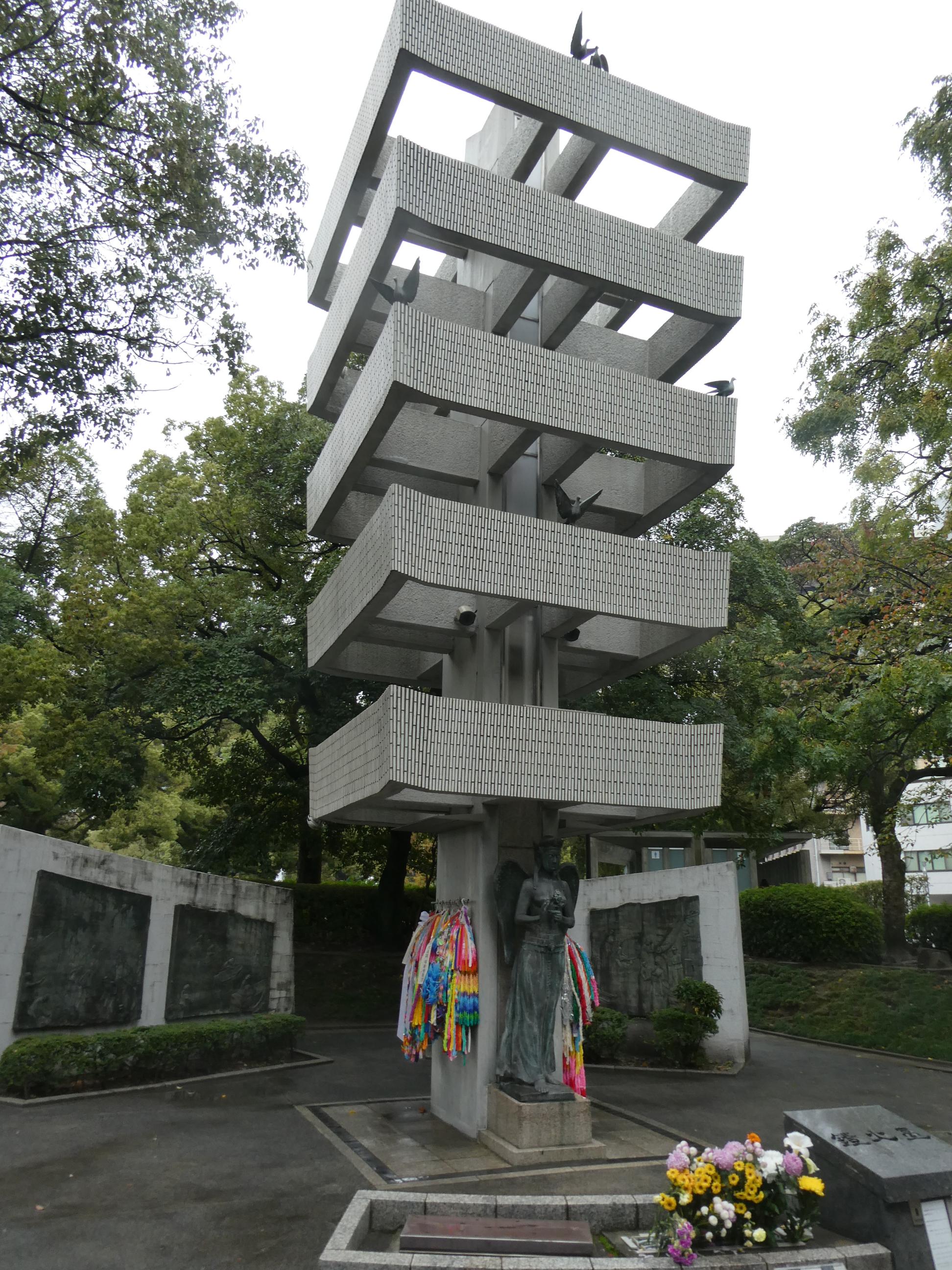
In the Memorial Peace Park, there are a number of different memorials. The one in the photos below is the Memorial Tower to the Mobilised Students. During the war, many students were mobilised to assist with vital services, such as food production, necessary to support their country’s war effort. The tower was built to console the souls of over 10,000 students who were mobilised and lost their lives to bombing during the Pacific War, including all of those who died as a result of the Hiroshima bombing. The memorial tower features a statue of the Japanese goddess of peace.
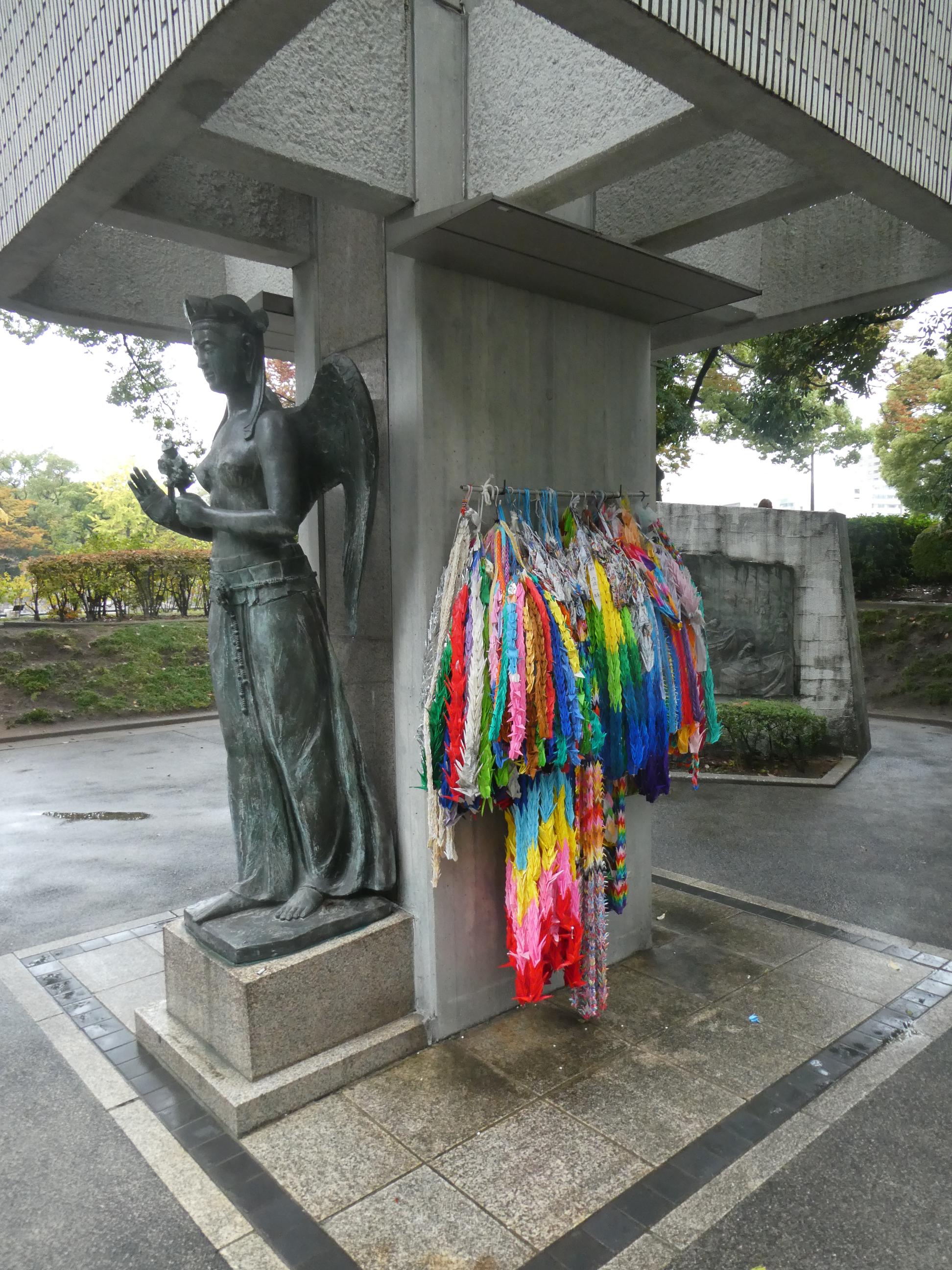

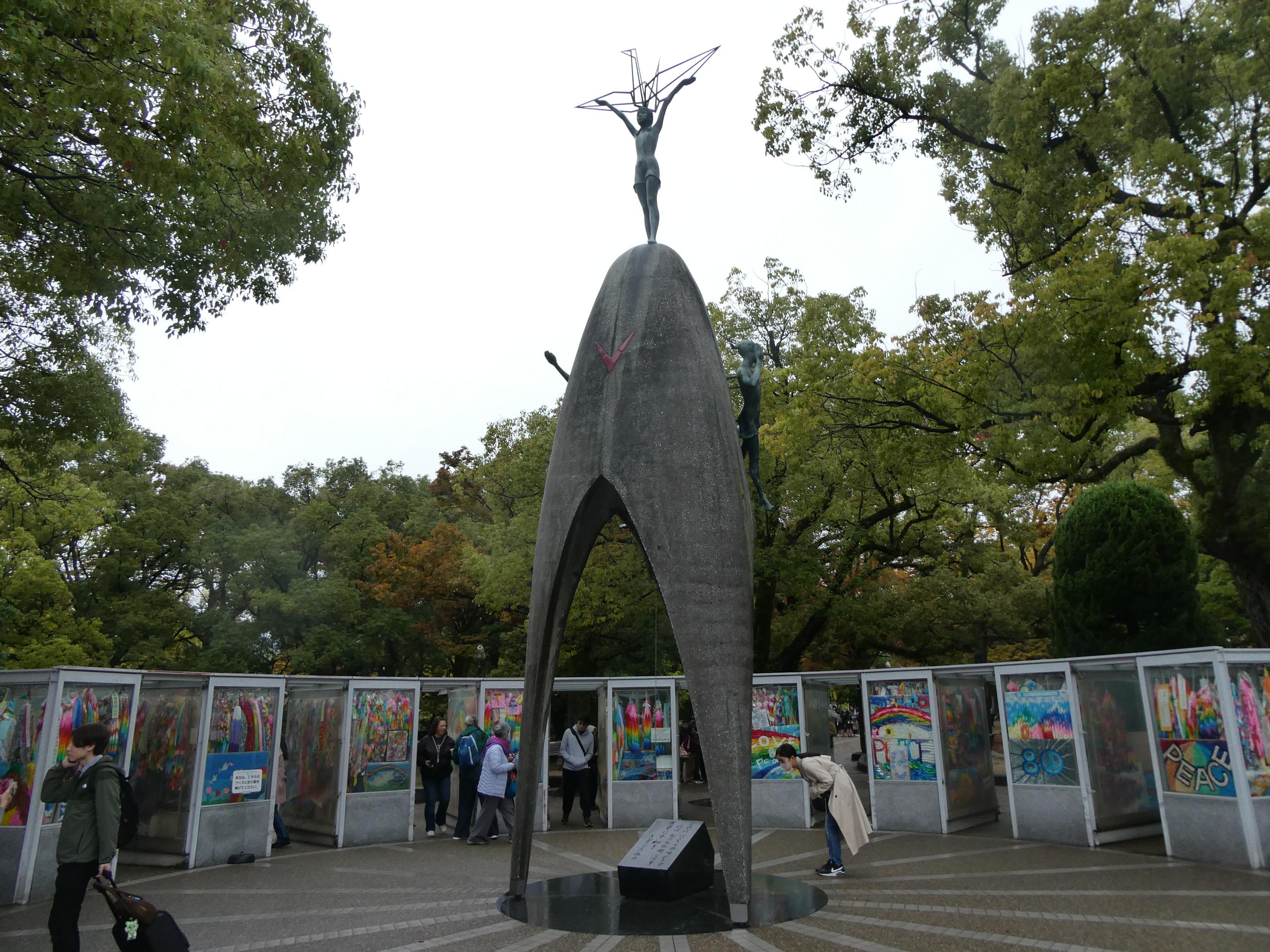
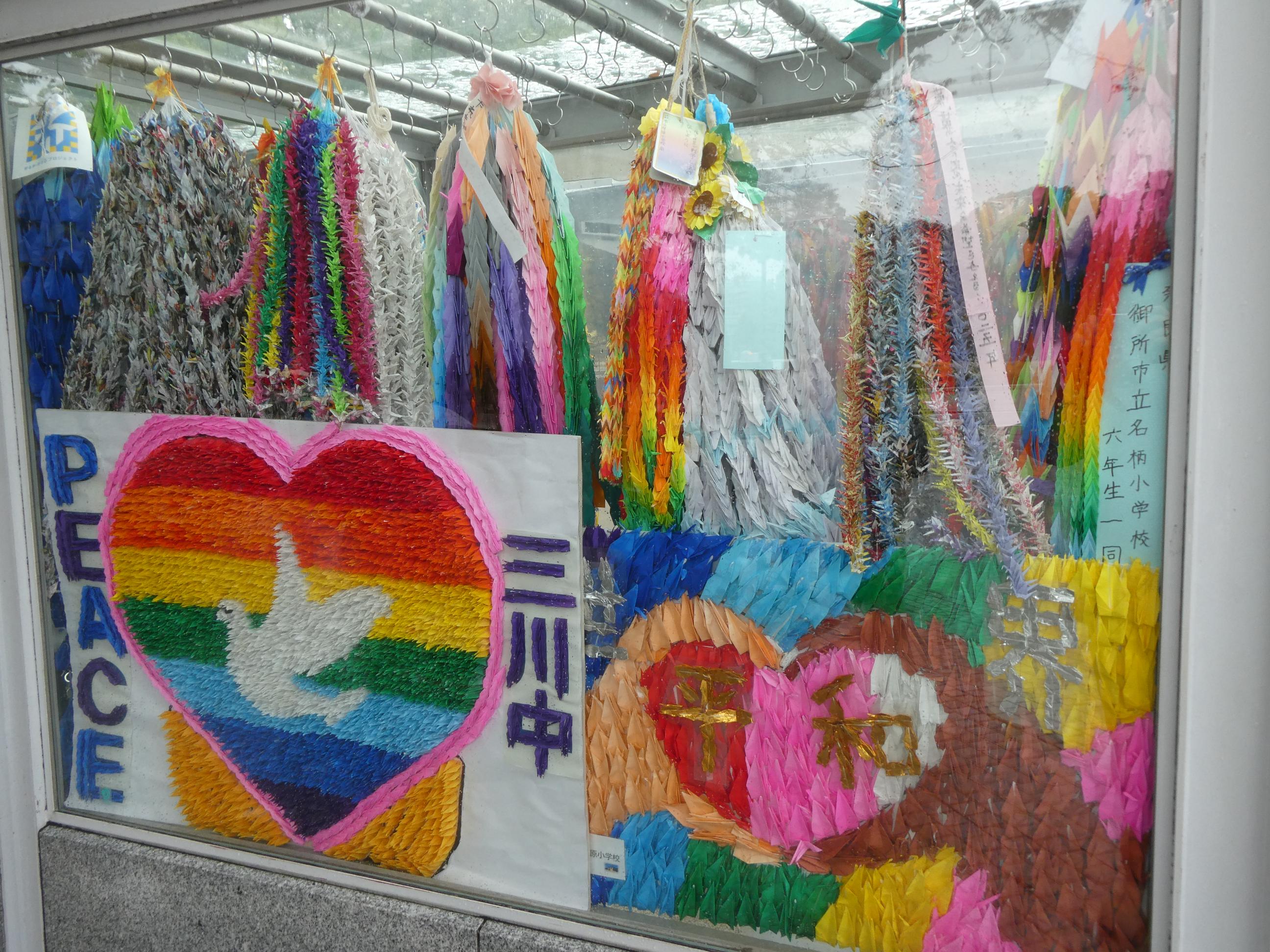
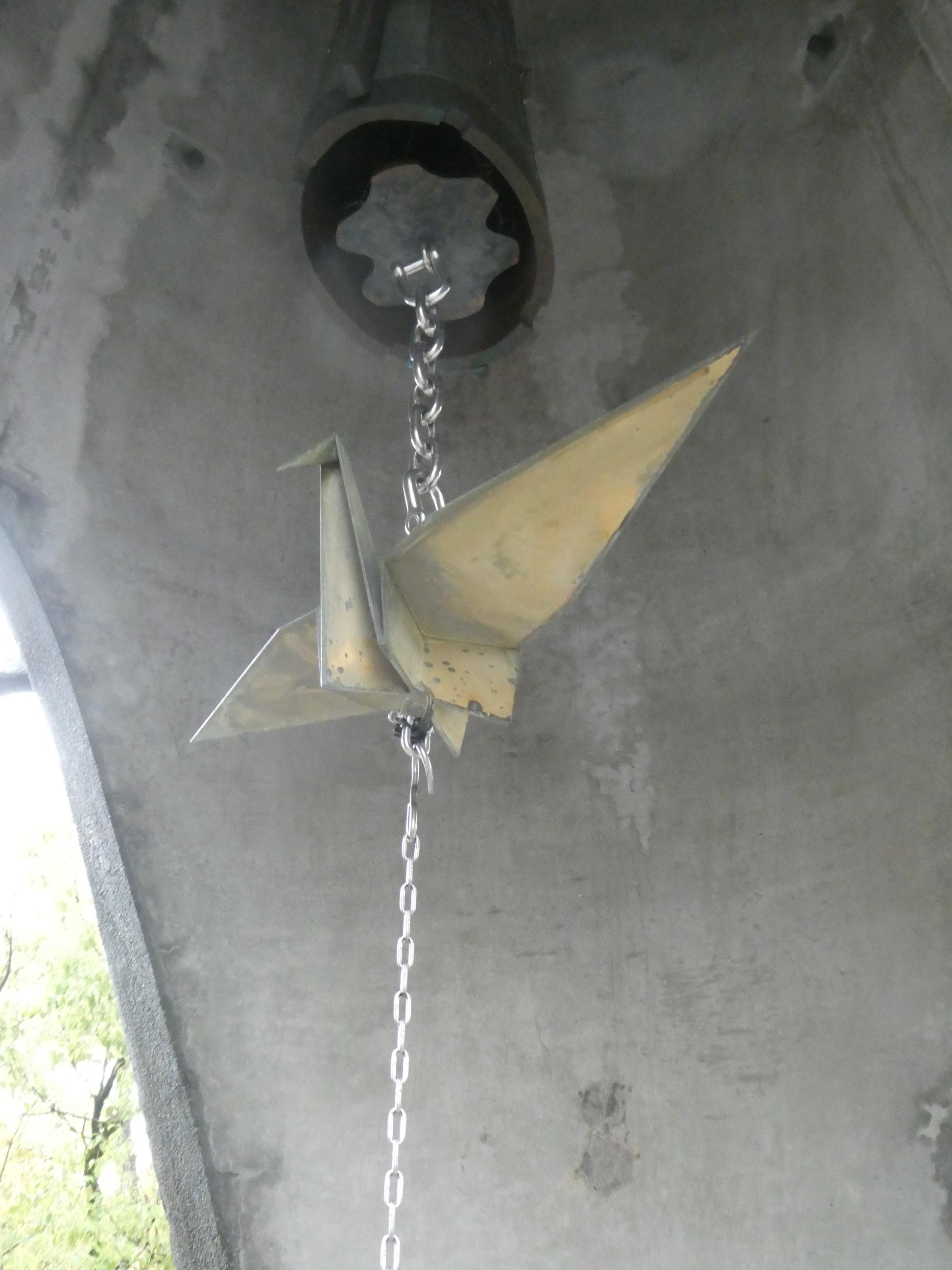
Also featured in the Memorial Peace Park is the Children’s Peace Monument, a memorial to all children who died as a result of the bombing. The girl featured on the top of the monument is Sadako Sasaki, who died of leukaemia caused by radiation poisoning ten years after the bombing. There was a beautiful, but very sad children’s book that I read aloud to a number of my primary classes called ‘Sadako and the Thousand Paper Cranes’. When Sadako became ill, she wanted to get well again and return to school to be with her friends. She’d heard an old story that said if you were ill and folded one thousand paper cranes, your wish to get better would come true. Sadako set out to fold one thousand paper cranes, but she died, aged 12, before she completed the task. Her classmates finished it for her. Sadako’s actual shoes and some of her cranes are in the final photos below. Today, people from all over the world fold paper cranes as a symbol of peace, and bring them or send them to the Peace Park, where they are displayed surrounding Sadako’s statue.






Elsewhere in the Memorial Peace Park is a rose garden that symbolises peace and hope. Apparently the initial garden was a gift from the United Kingdom, but now I believe Hiroshima also exchanges roses with other world cities that have endured war and are rising again like Hiroshima has done.
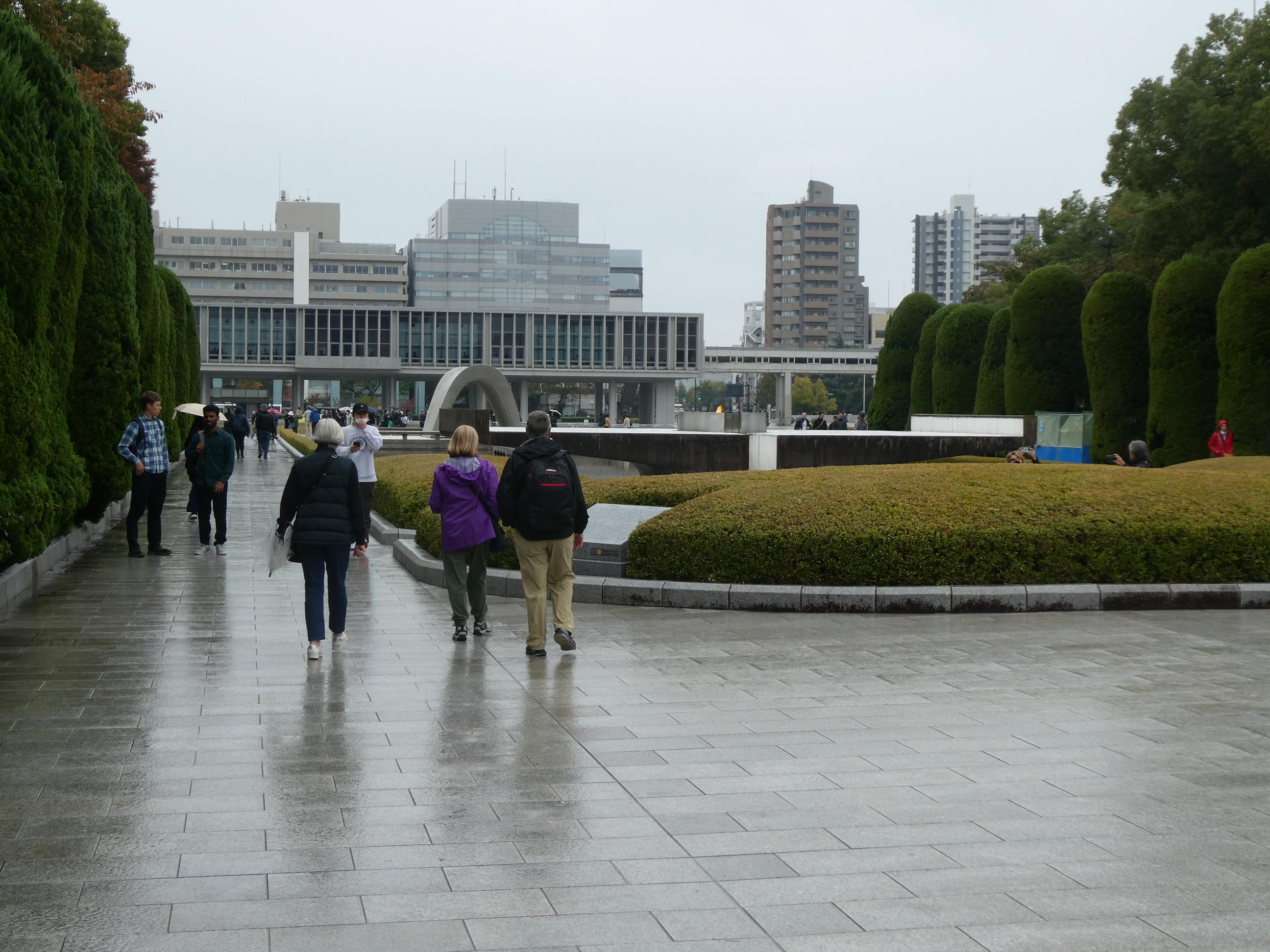
In the centre of the park is a arched monument which covers a cenotaph that bears the names of everyone who lost their lives in the bombing. The arch design is intended to represent the provision of shelter for the victims. It aligns perfectly with the bomb dome and the peace flame. A long, silent queue of people lined up to photograph the three monuments aligned and to pause for a moment to reflect on the terrible loss of human life. An epitaph at the cenotaph can be translated as ‘Let all the souls here rest in peace for we shall not repeat the evil’. At the far end of a shallow pool, aligned with the cenotaph, is the peace flame, which has burned continuously since it was first lit in 1964 and will not be extinguished until all of the world’s nuclear weapons have been destroyed.




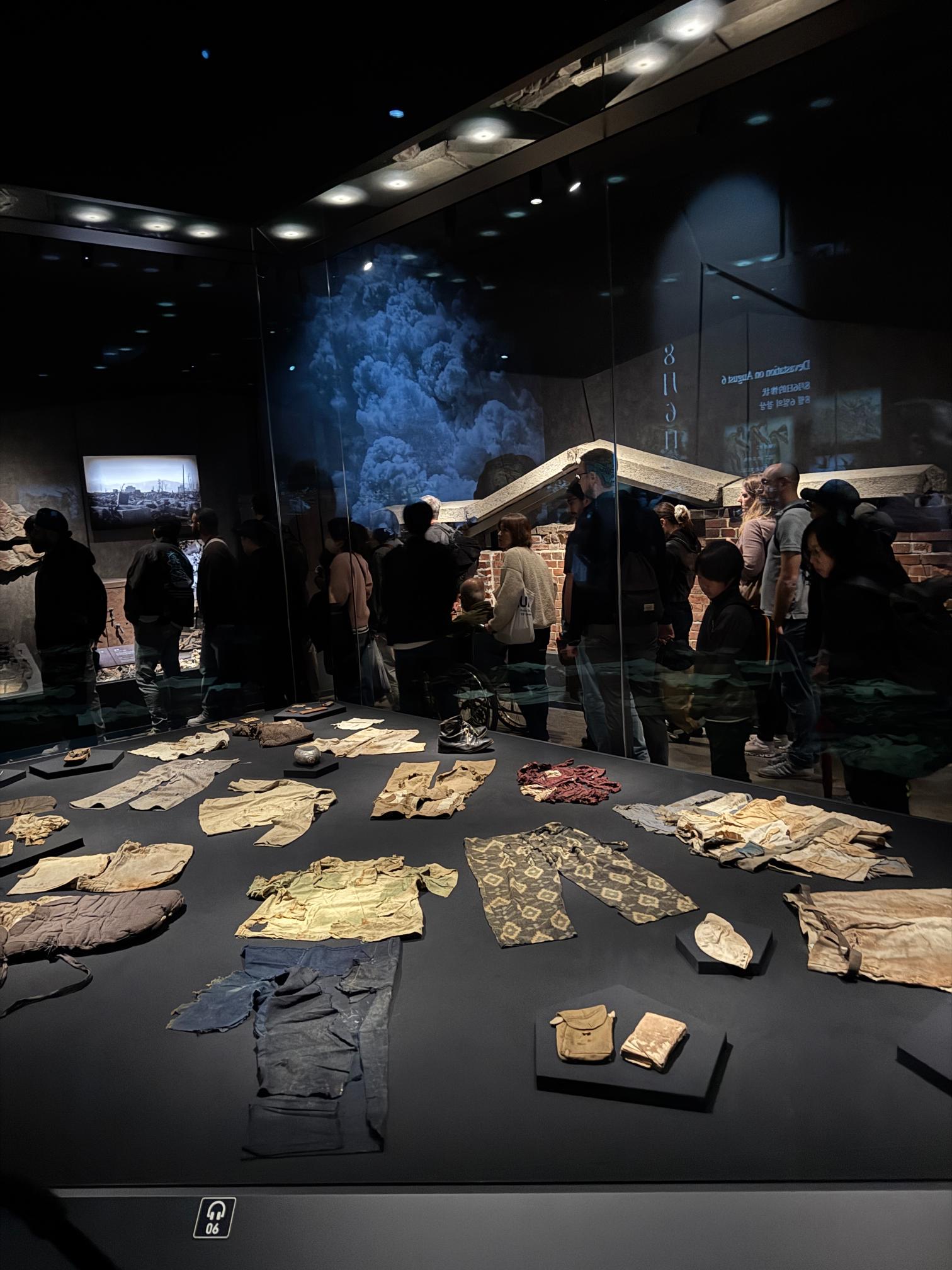
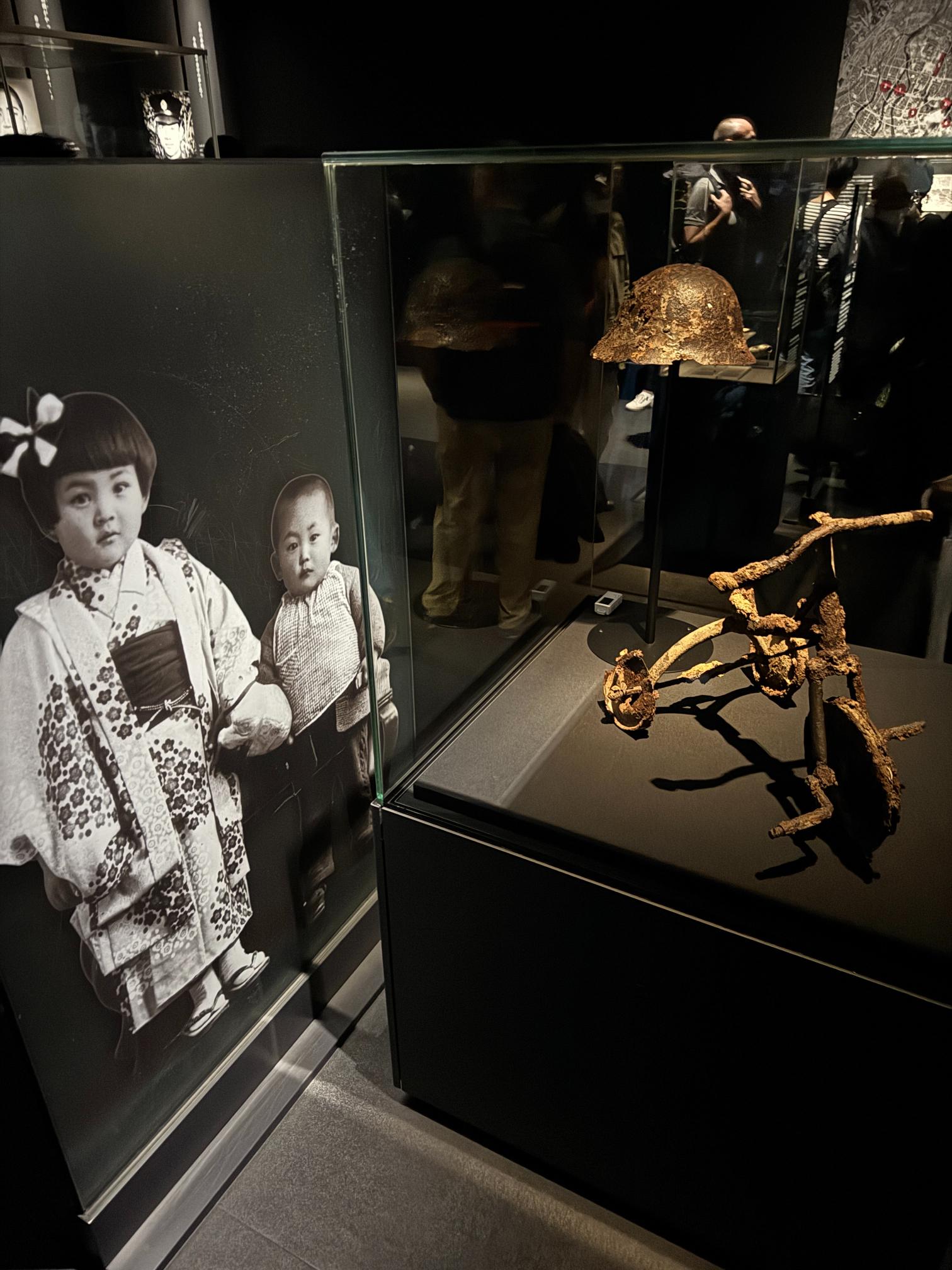
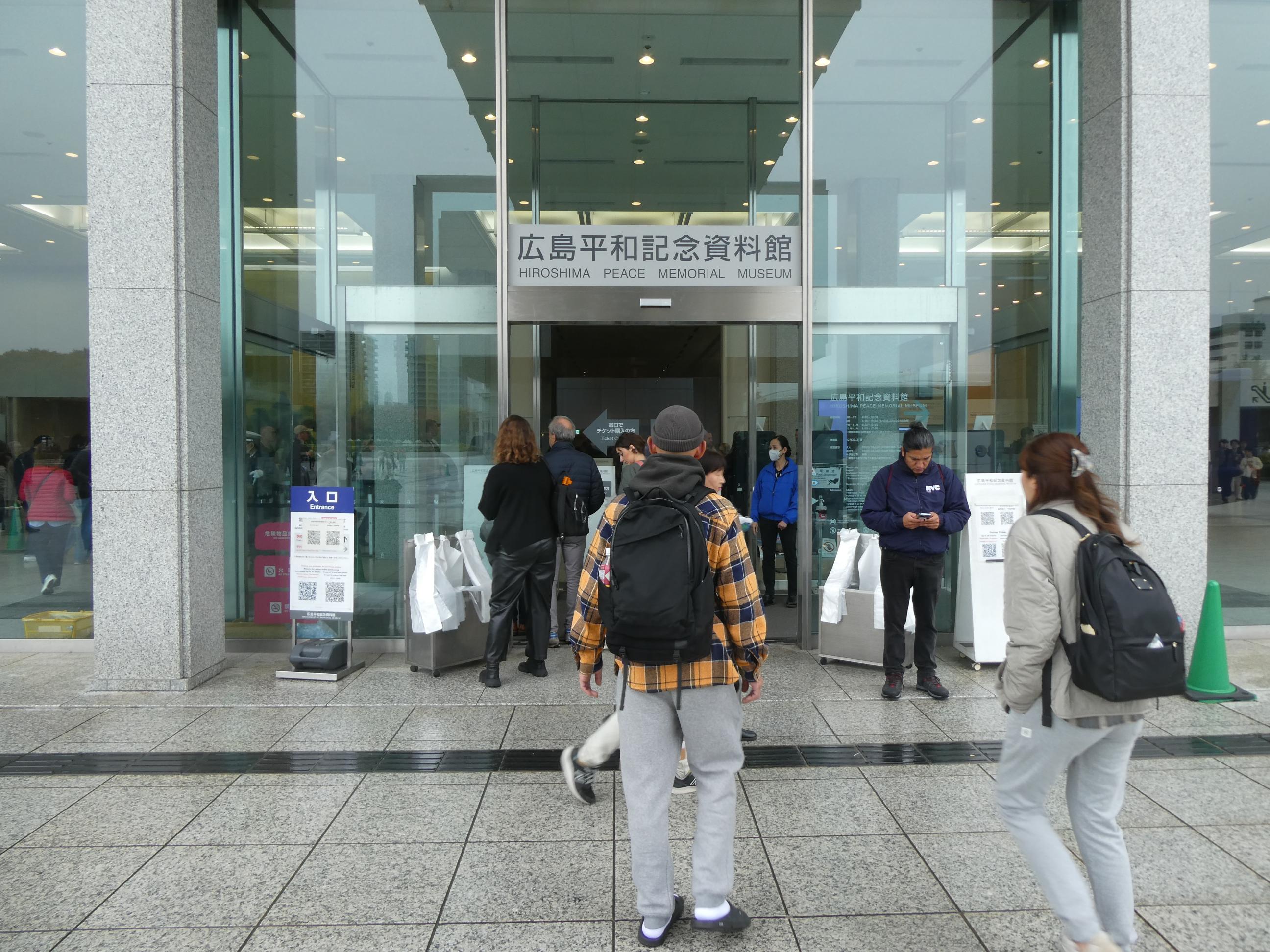
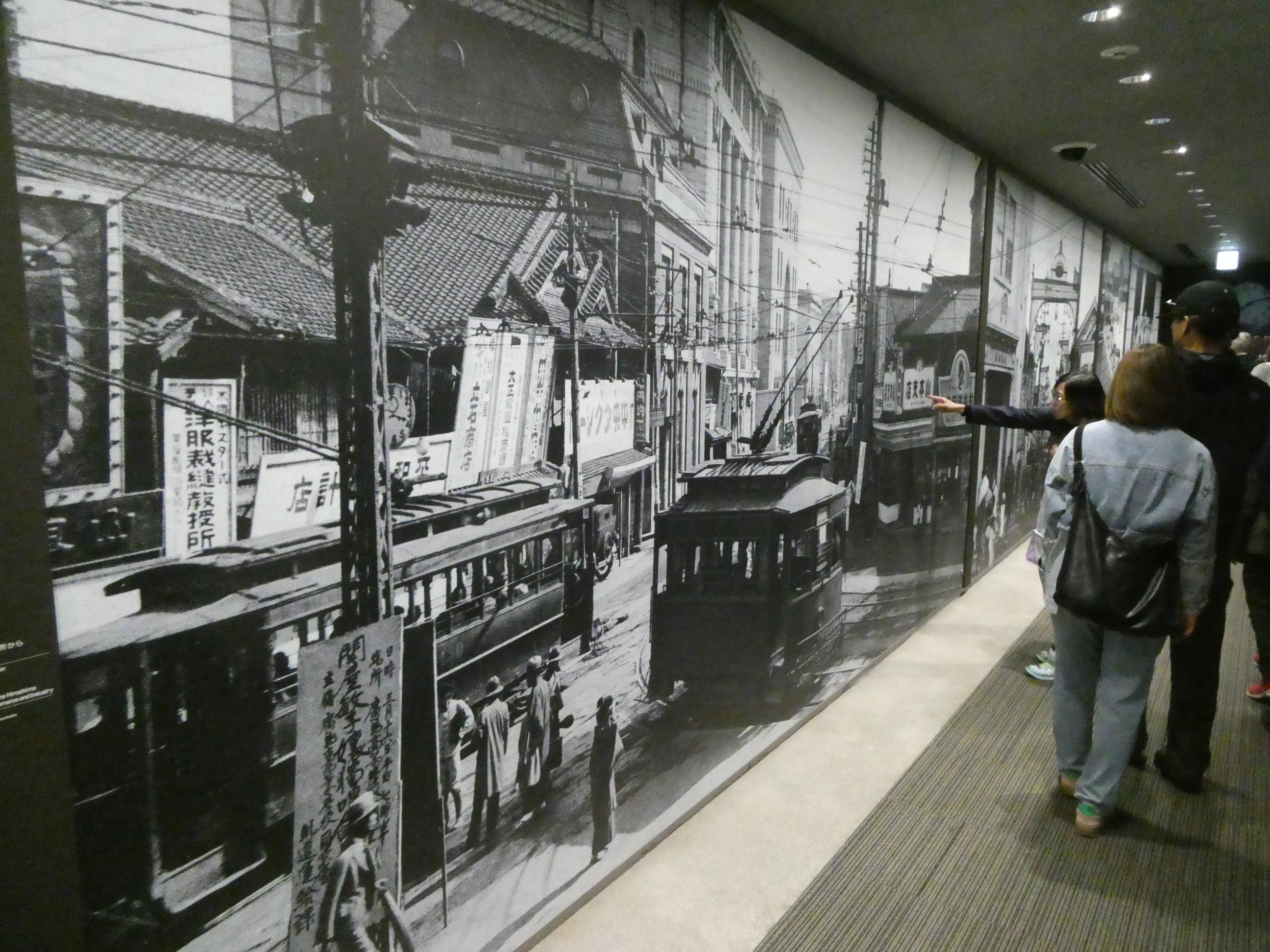
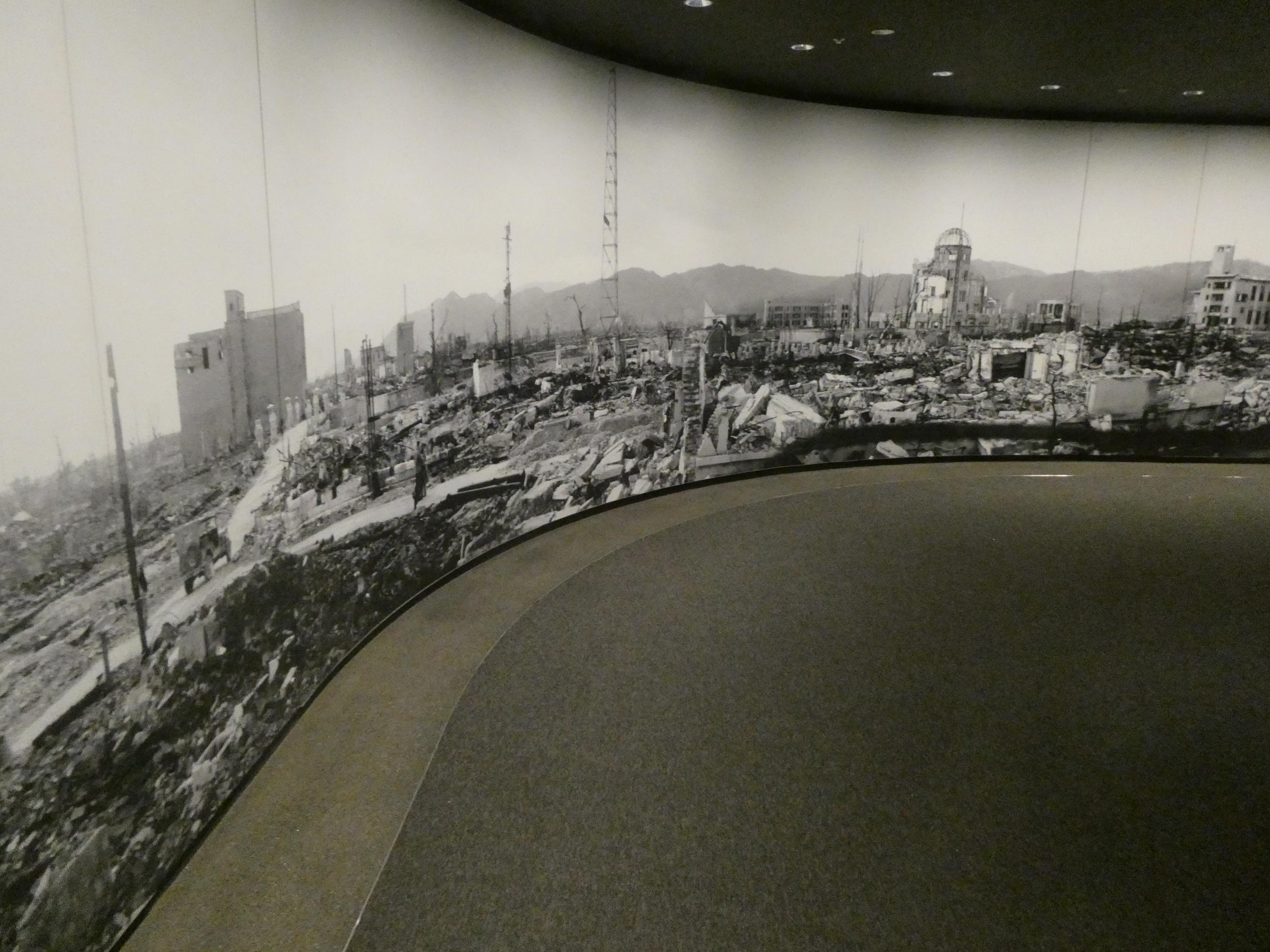
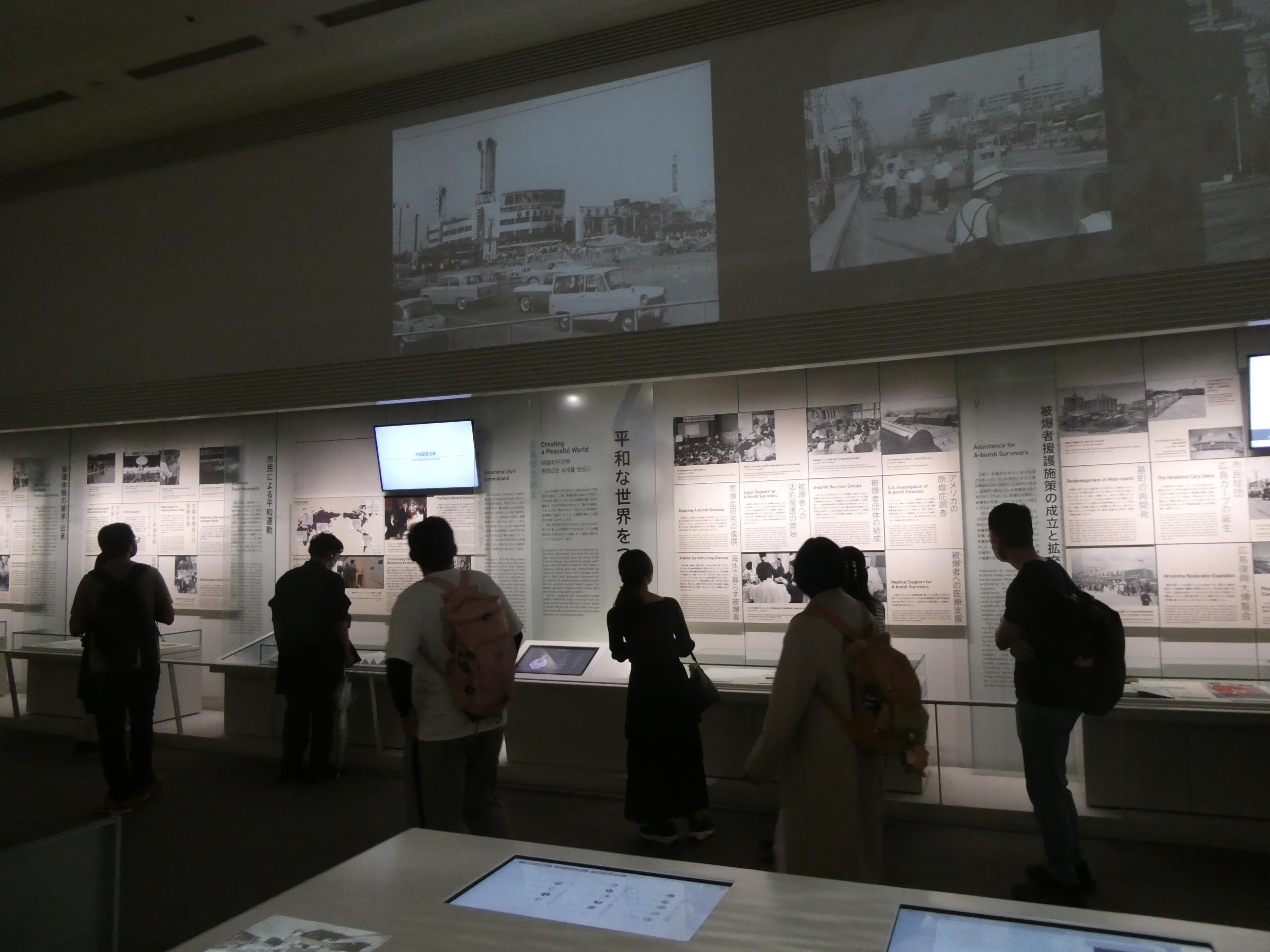
If those peace monuments leave you feeling reflective and sombre, a visit to the museum confronts you with the grim reality of what actually happened to real people in Hiroshima on August 6 1945 and in the years that followed. Many of the photos, illustrations and artefacts are confronting and very graphic. There’s no escaping the horrors of nuclear war as you shuffle slowly past the exhibits. Marg said she couldn’t even look at many of the ones featuring innocent child victims. Remarkably, some residents of Hiroshima took photos of the destruction and the suffering on, or just after, the day of the bombing, and these photos are reproduced from floor to ceiling height in grim, grainy detail. You can’t ‘not’ see them. They feature scores of people with horrific burns amidst a cityscape that has just been obliterated. It’s gut wrenching stuff, and heartbreaking when you consider these people were often just civilians whose families were as precious to them as ours are to us. I just felt really sad it ever happened when I walked out of the last exhibition room, and very hopeful it will never happen again, regardless of who is to blame for starting a war.






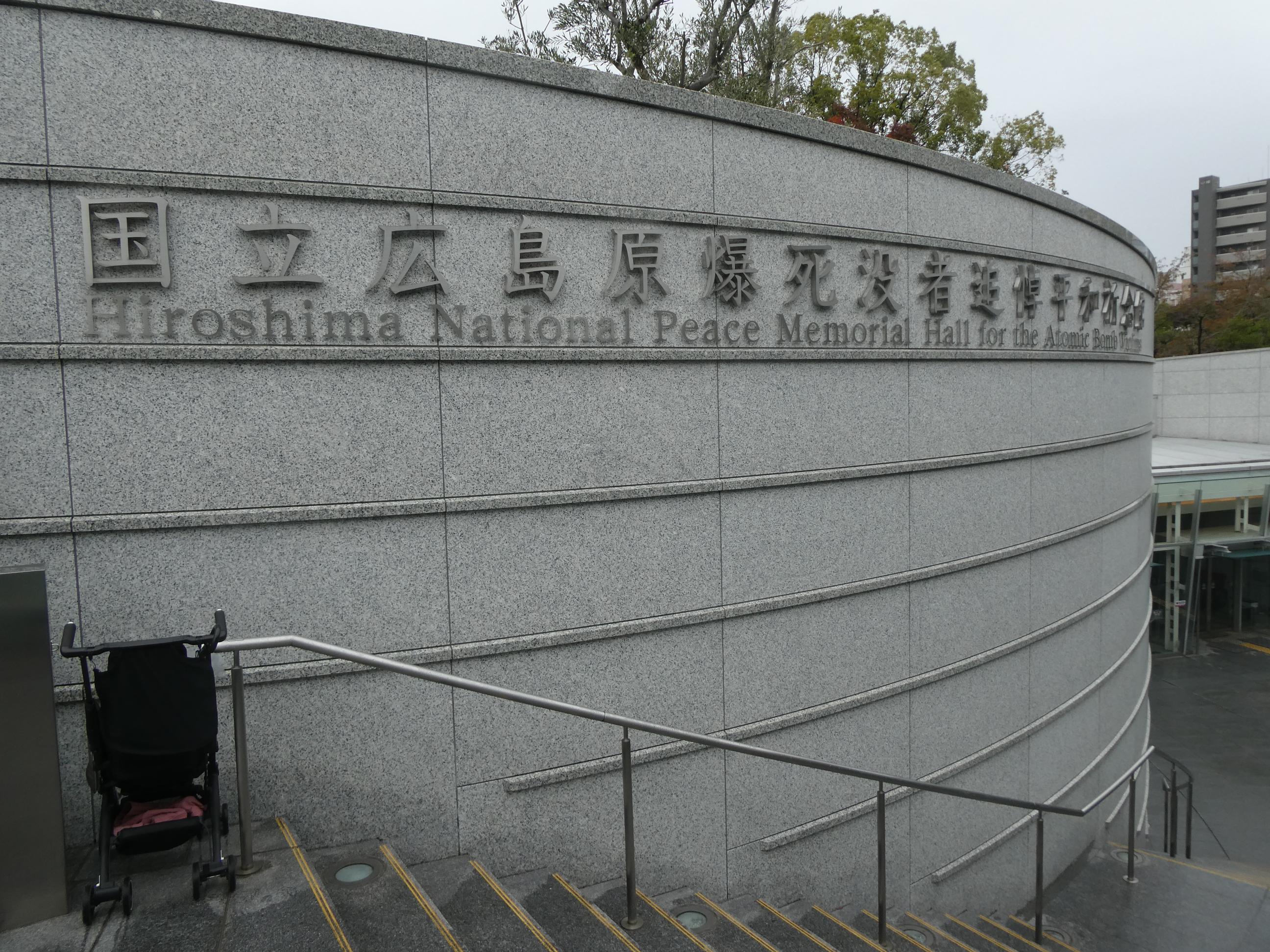
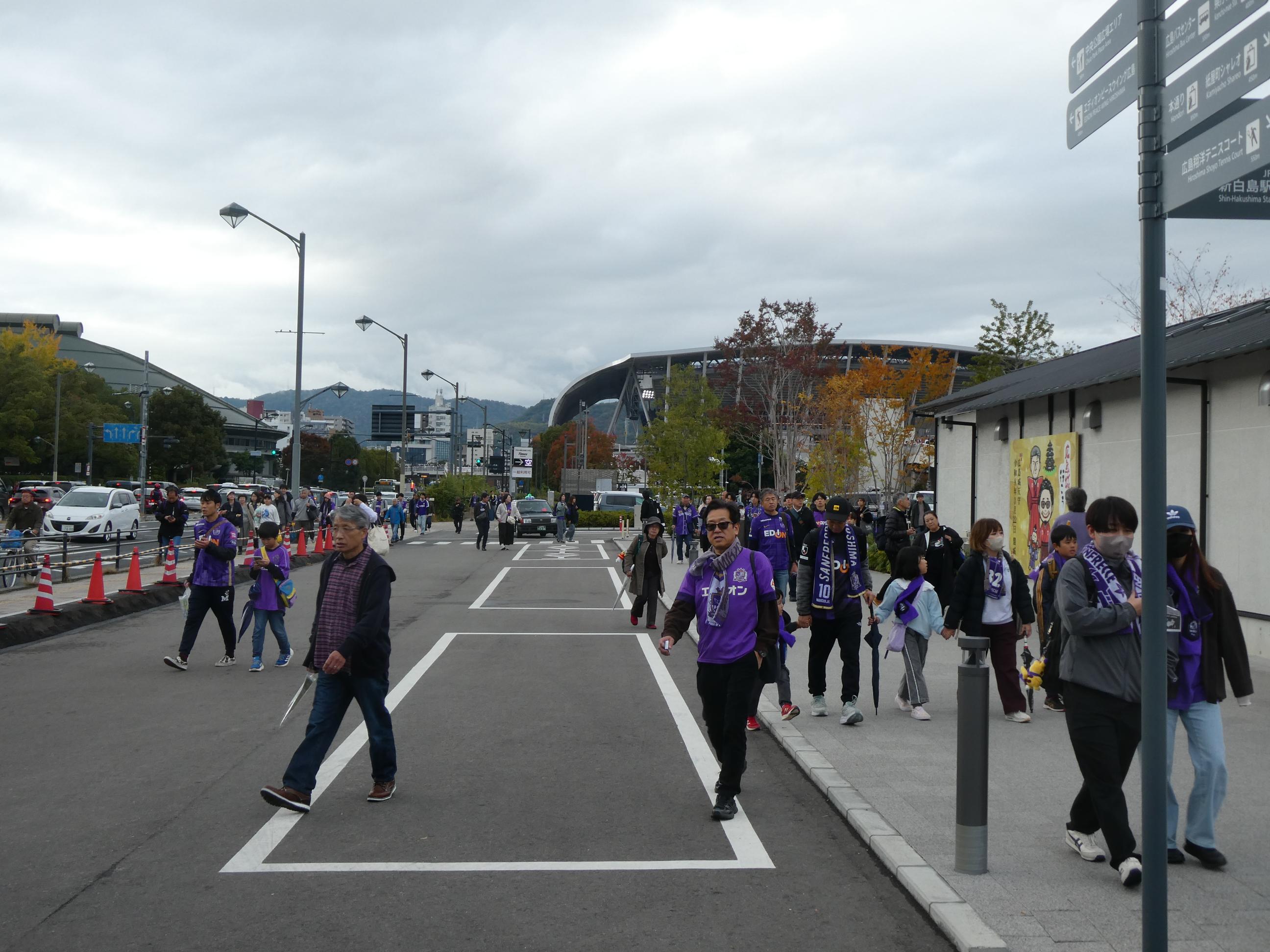
It was time to lighten the mood. As we headed out of the memorial park, we passed one more monument – the Peace Memorial Hall for Atomic Bomb Victims, though we didn’t go in. It was almost 2.00 pm and we were in search of food. We passed a young couple with a single small child in a stroller, two dogs in a larger pram and another dog in a backpack. I guess that’s one way to go on a family outing. Then a guy passed me with a small pooch with a large wind-up key on its back. What the? Is it just for decoration or does the guy just use it to pick the dog up and carry it? Or, perhaps this sounds a little crazy, is the dog actually a lifelike toy that needs to be wound up with a key to make it work? It was Sunday afternoon, and hordes of purple clad supporters leaving a sporting stadium brought a warm feeling to my heart, as that could very well have been me on a winter Sunday, exiting a Collingwood game.

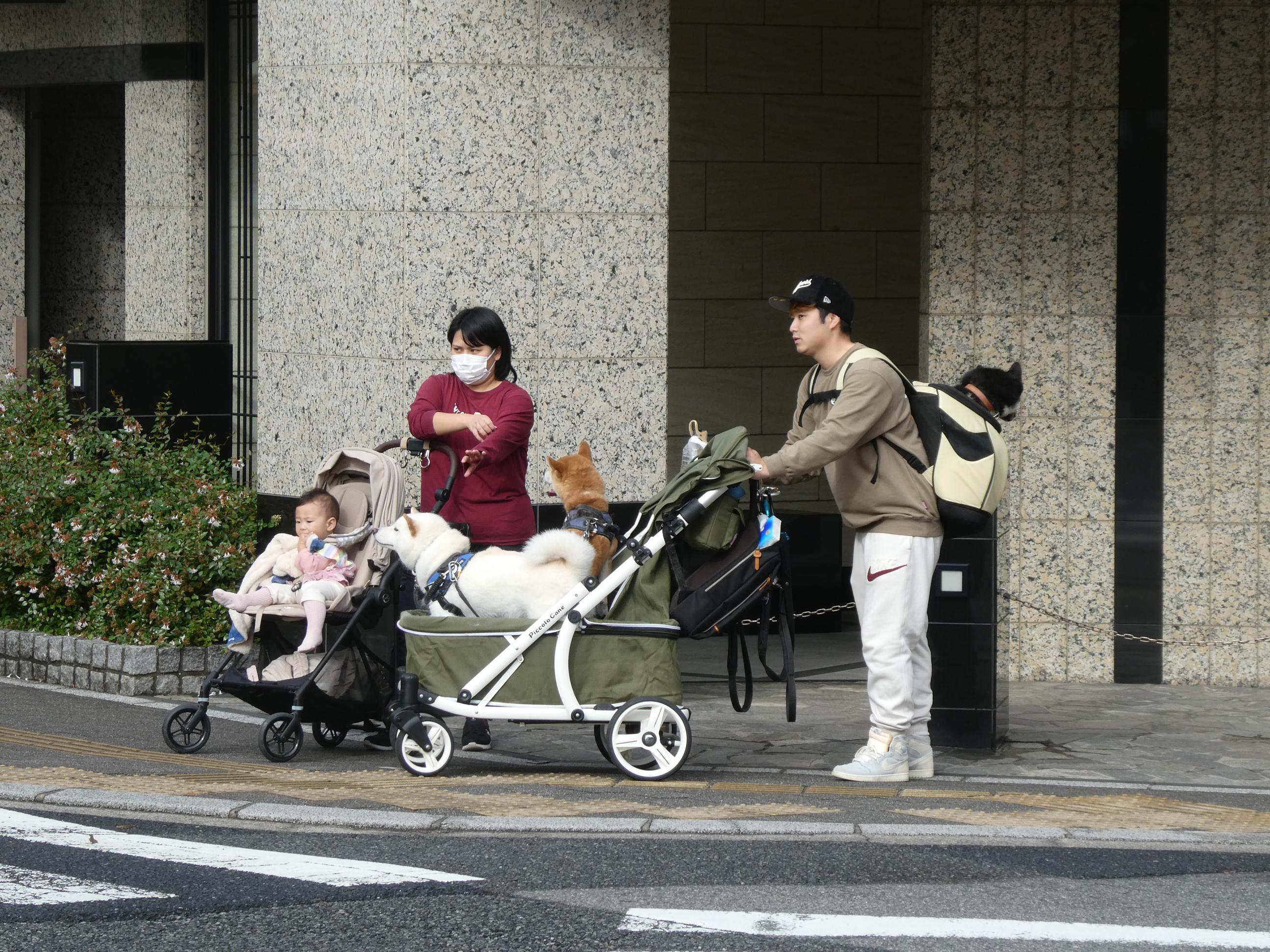

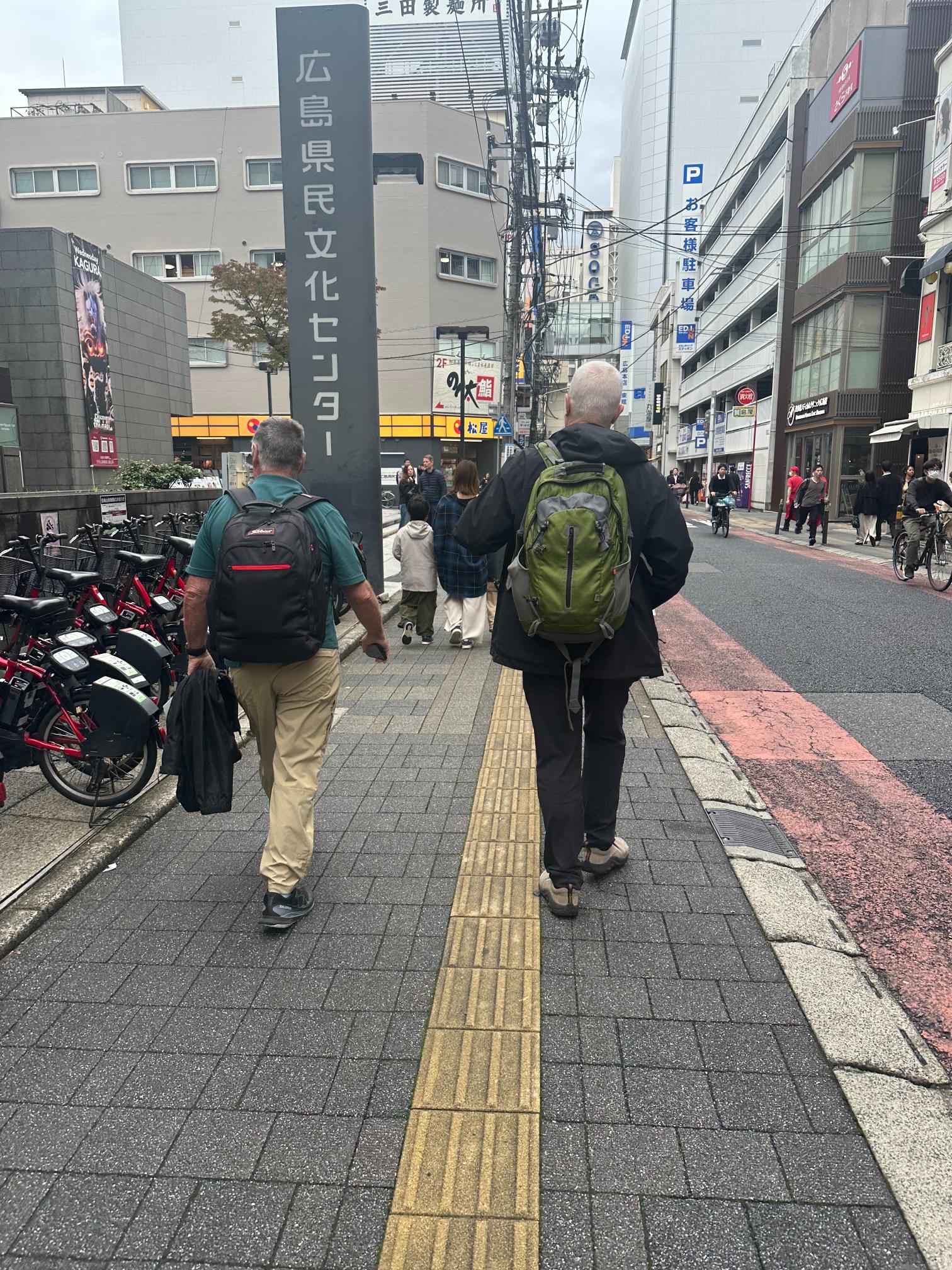
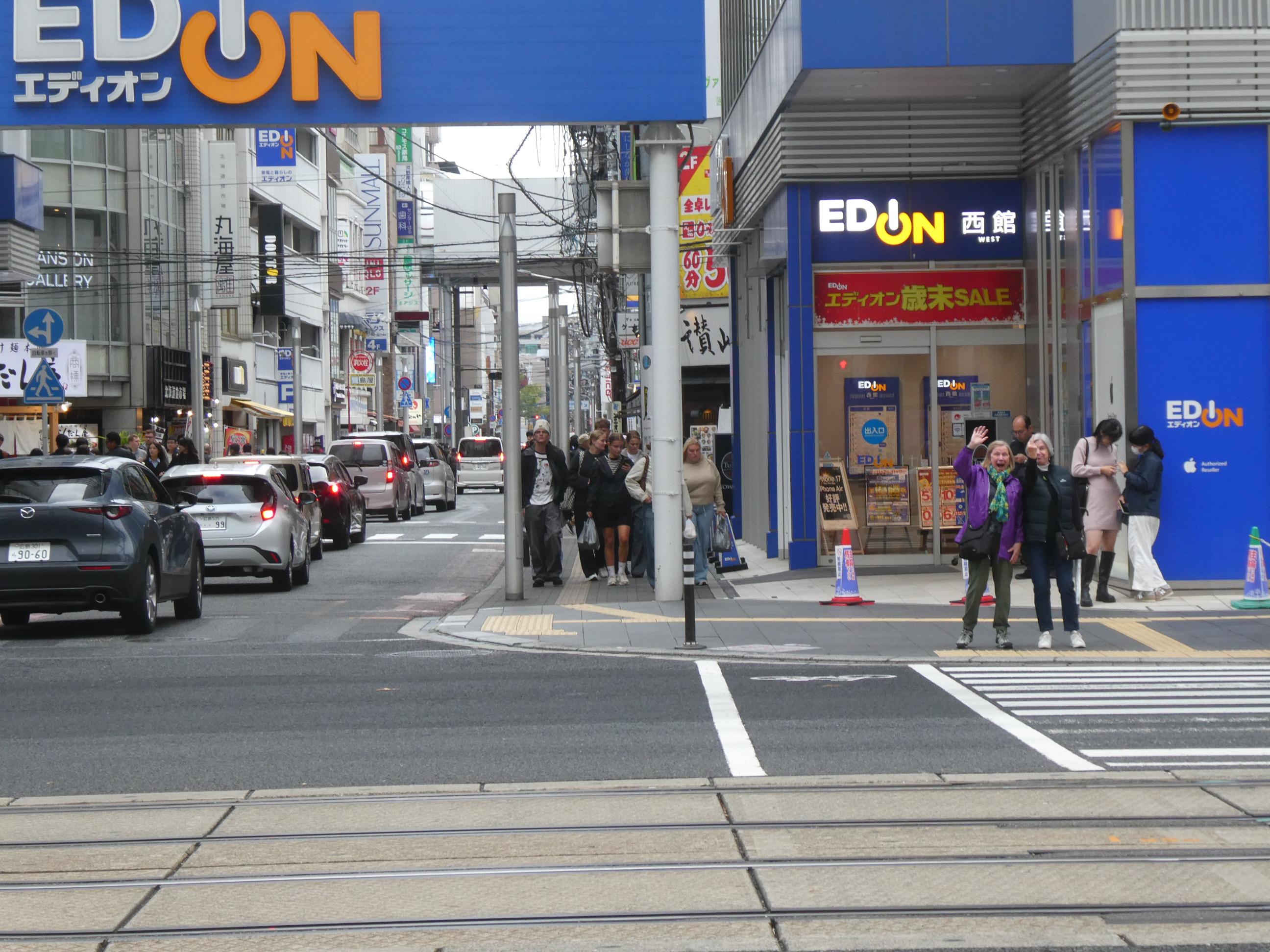
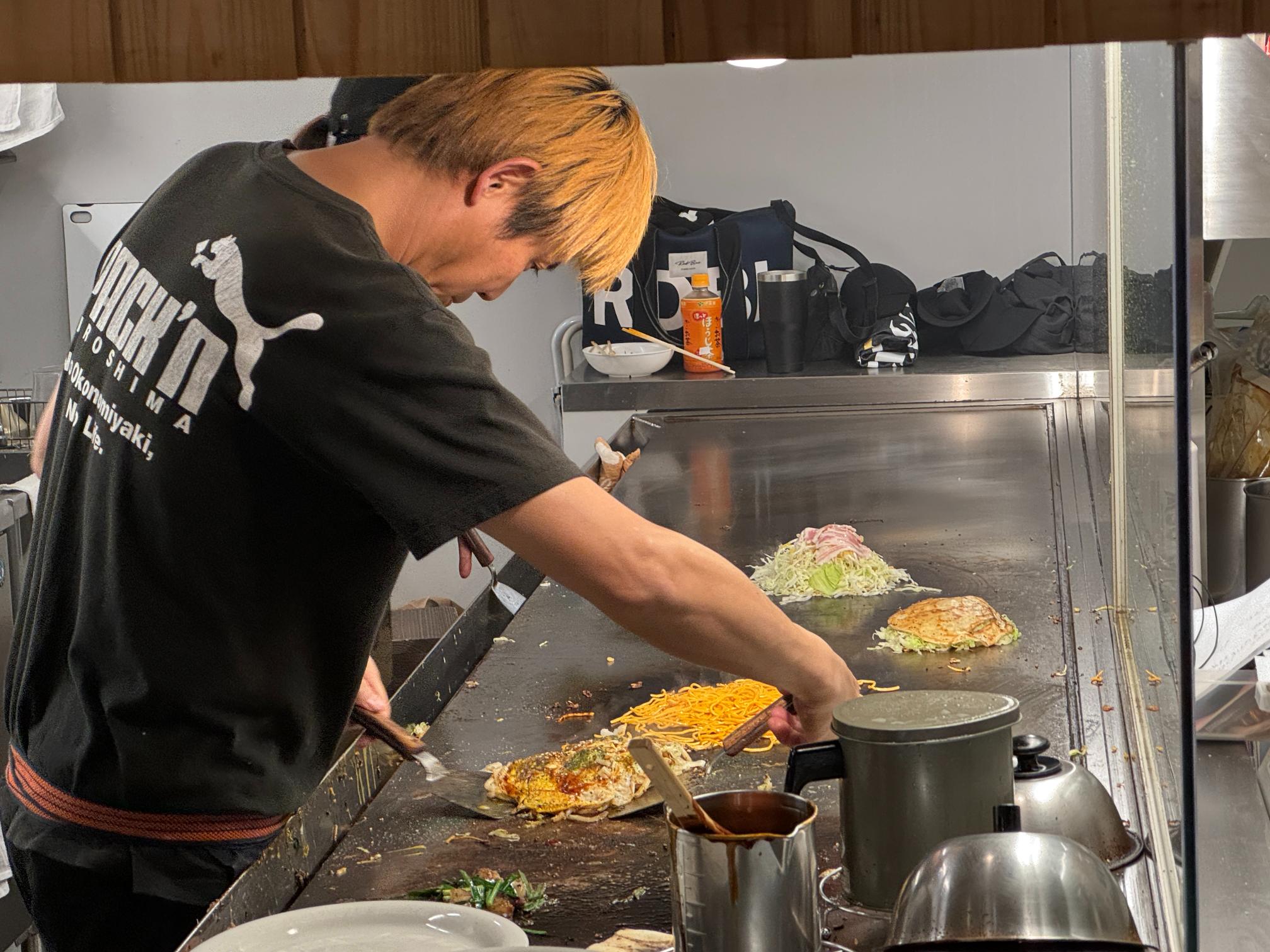
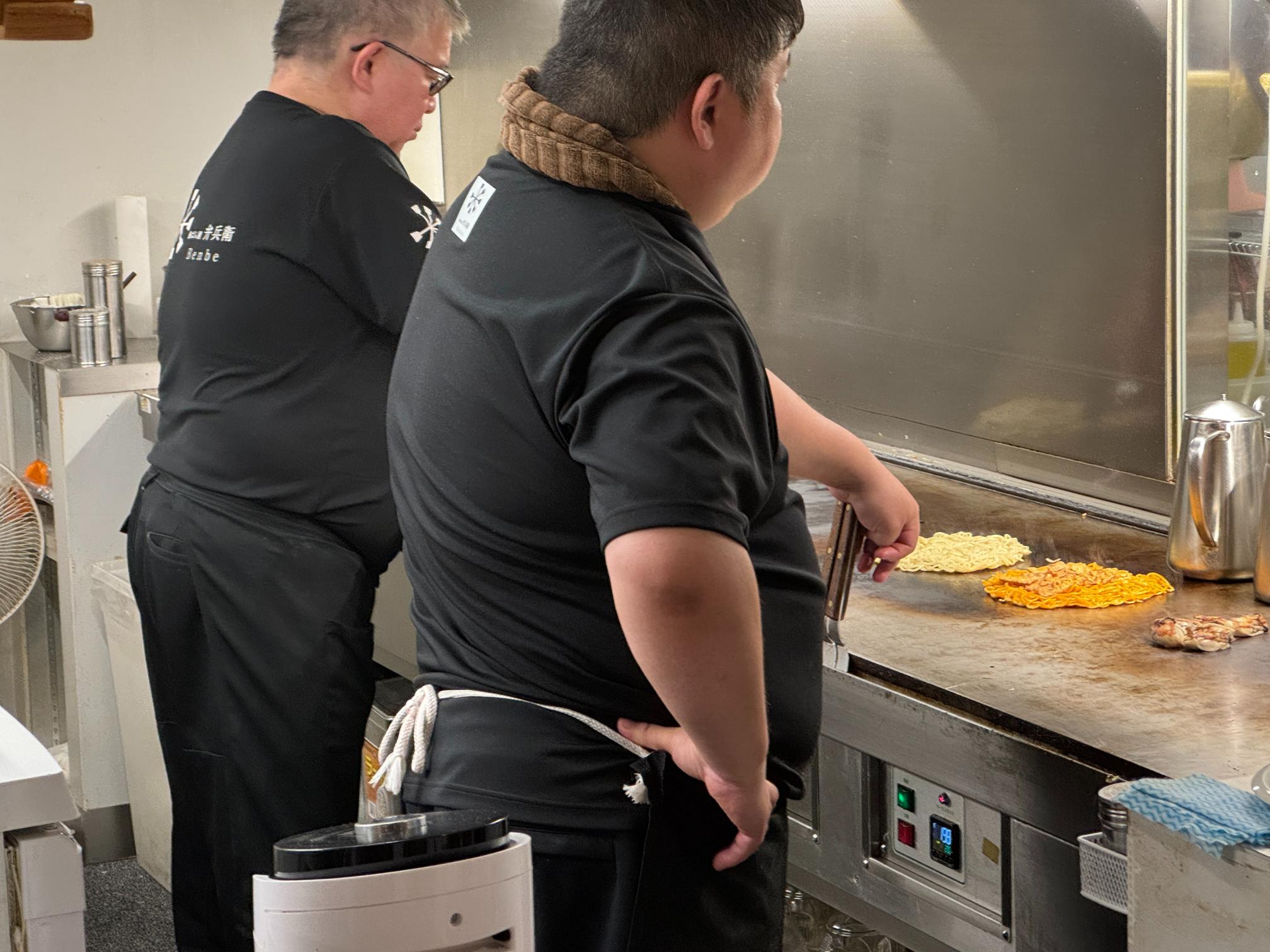
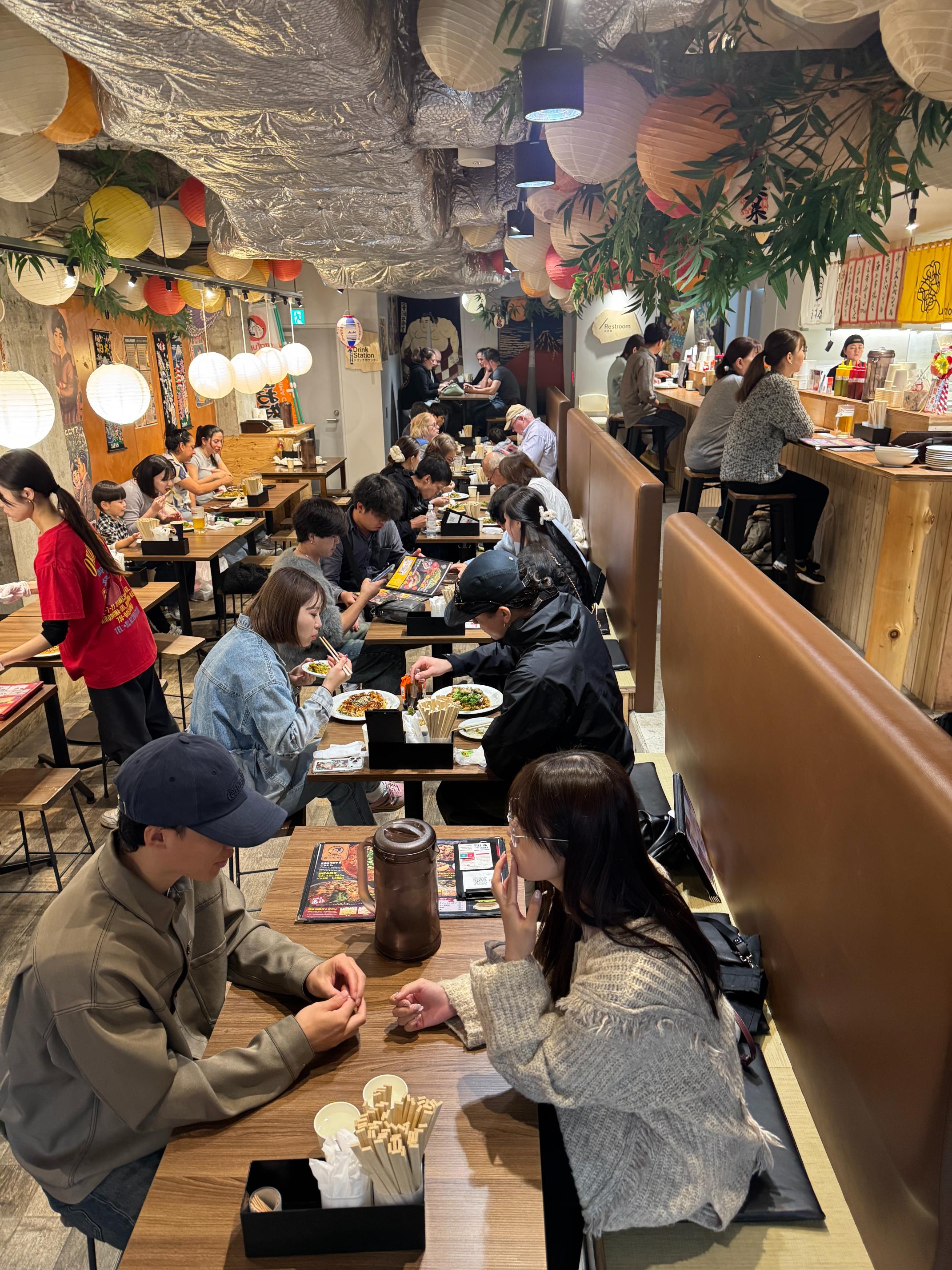
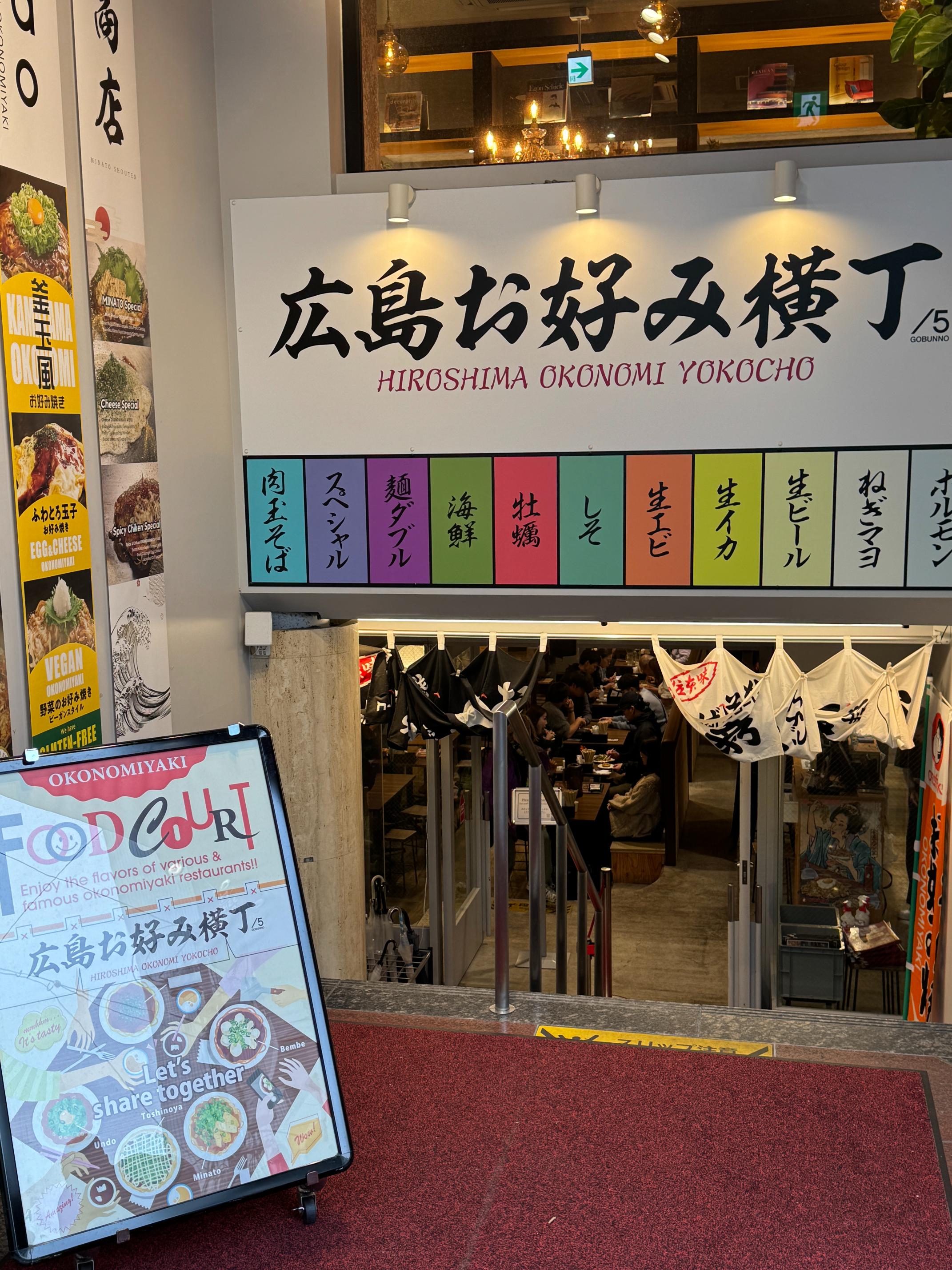
As I said, we were in search of food. And I was also on a mission, that I now revealed to my companions. Ever since we decided to come to Japan, I’ve had it in my head to eat an authentic okonomiyaki, or Japanese pancake, in Japan. I’ve had a few in Melbourne and they come close to being my favourite food. I knew Hiroshima was the home of the okonomiyaki, and I was determined to have one. So, despite the fact that the others were all probably looking for something lighter, I said to them that, no matter what they were having, I was going to have an okonomiyaki. I found a place and the menu looked amazing. The place was pretty cool too because you could watch the chefs at work and there was a lovely smokey food smell like you might get in a street food market. Marg, Theresa and Ian all opted for an okonomiyaki as well. Mine arrived first and I didn’t even wait for their plates to arrive. I dived in. I can’t tell you how good it was. I just don’t have the words. Man, it was good! The others all thought so to, so I was mightily pleased. That was the one thing I’ve wanted since I booked the trip, and now I’ve had it, I’m satisfied.





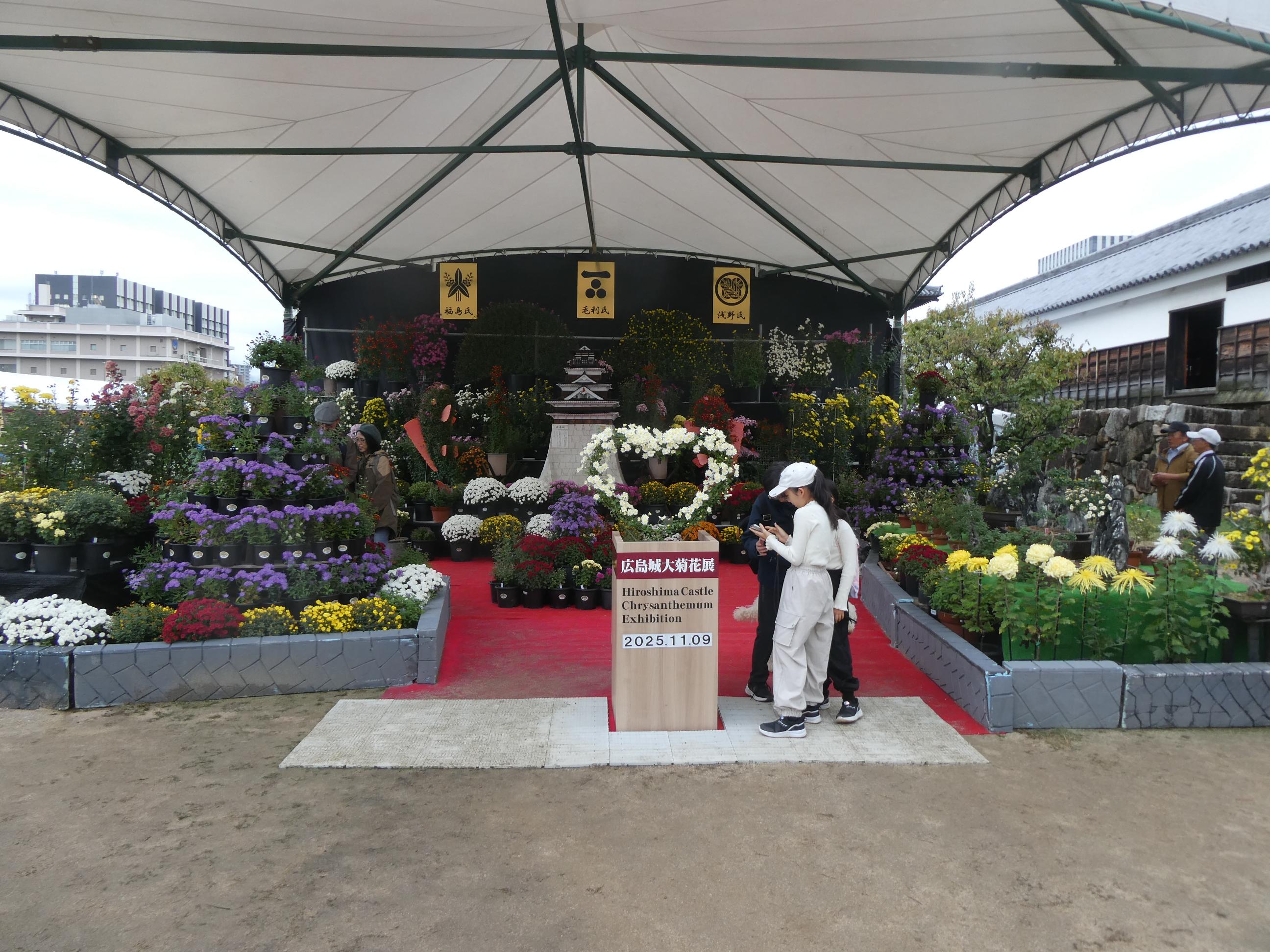
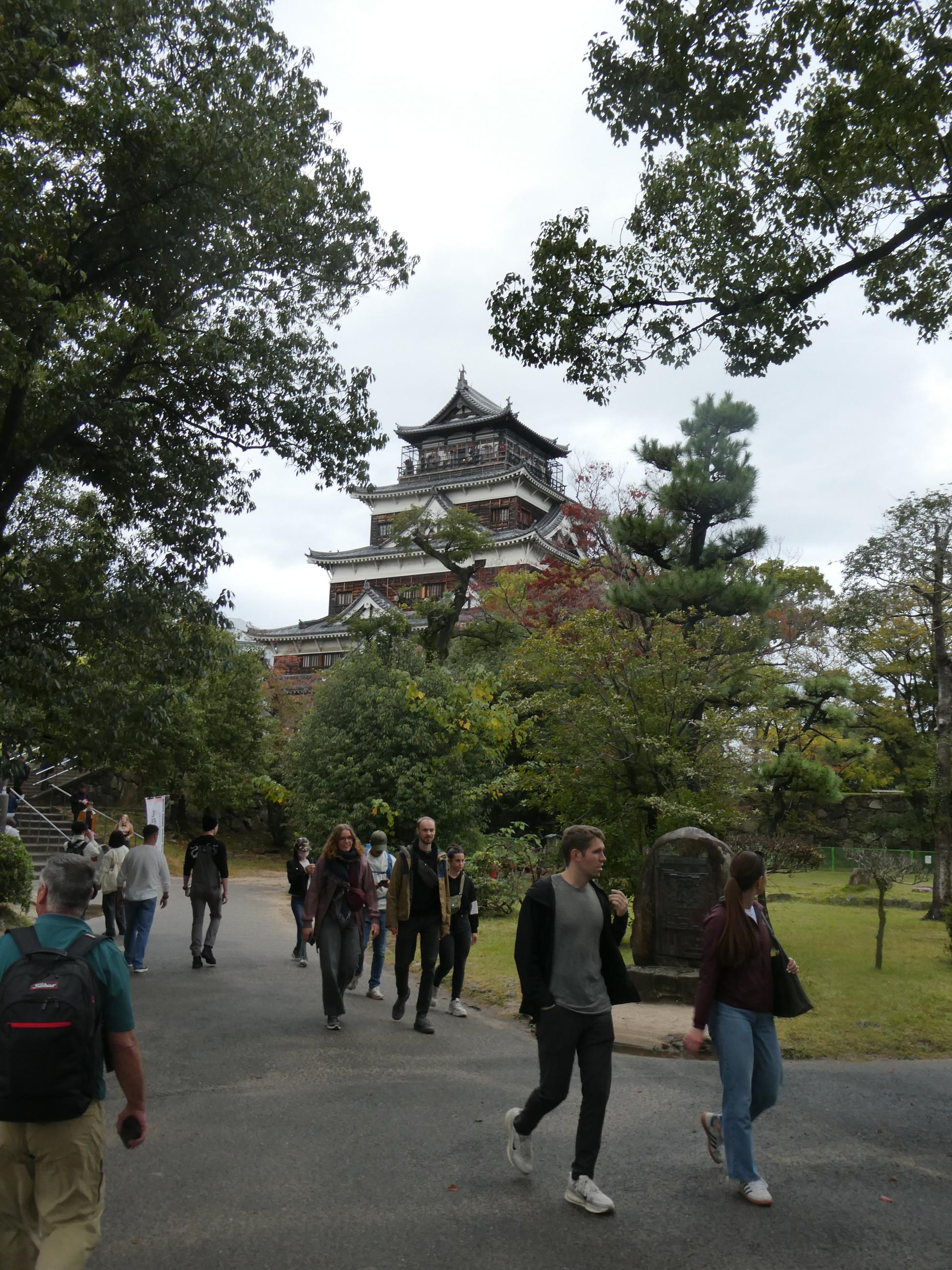
After lunch, all feeling rather full, we walked a few blocks to Hiroshima Castle. Of course, the original was totally obliterated by the bomb, so today’s castle is a faithful reconstruction based on the plans of the original. It was reconstructed in the late 1950s. When we got to the castle entrance, there was a large crowd around the base, and we could see lots of people gathered on the upper level as well. We figured it would be another crush, just as it was at Himeji Castle yesterday, and that, being a relatively recent reconstruction, it might not have any of the old -world charm that a more authentic building would have. It was nearly 4 o’clock and we still hadn’t checked in at our hotel. We decided to give the interior of the castle a miss on this occasion, and grabbed a taxi back to our hotel.







They put Ian and Theresa on the 16th floor, and Marg and I are on the 17th. It’s the first time on this trip our rooms have not been virtually next to each other. The view from up here is pretty good. Despite the cloudy gloom of the morning and the mrain some parts of the city appeared to have received earlier in the day, the skies were clearing by late afternoon.

 On The Road With Garry