Our itinerary offered us two options for today. We could either catch a train to Kurashiki and explore it museums, craft shops and cafes along a tree-lined canal, or we could catch a different train to Himeji and visit Himeji Castle. I asked my brother last night what he would recommend. He told me that he had only been to Kurashiki, but would certainly recommend it. I also had a set of written notes from my daughter, Tess, who raved about Himeji Castle and said it was a must-see. We took a vote and Himeji got the nod. So this morning, we allowed ourselves a later breakfast, then jumped on a bullet train just over 20 minutes down the line to Himeji.
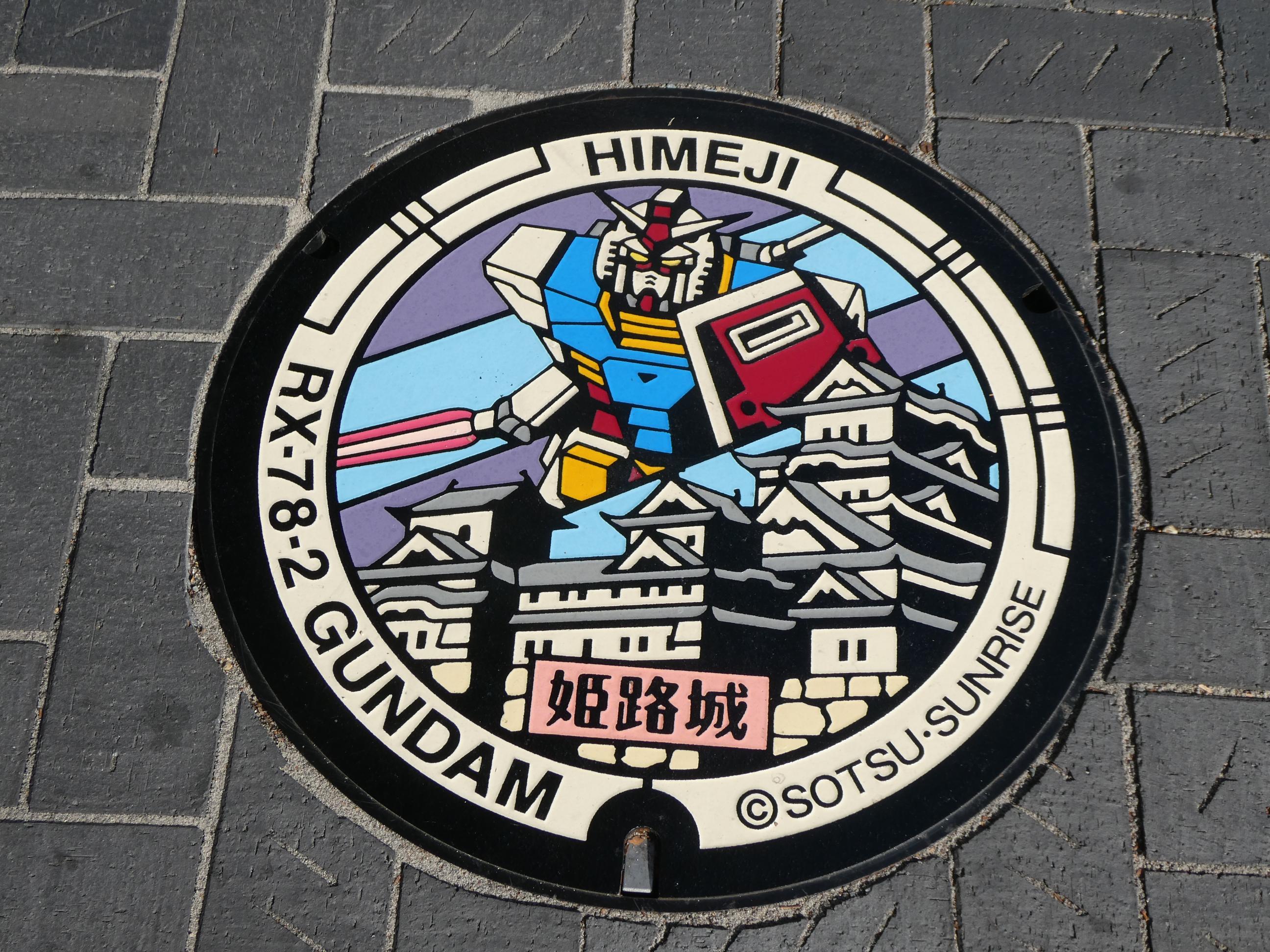
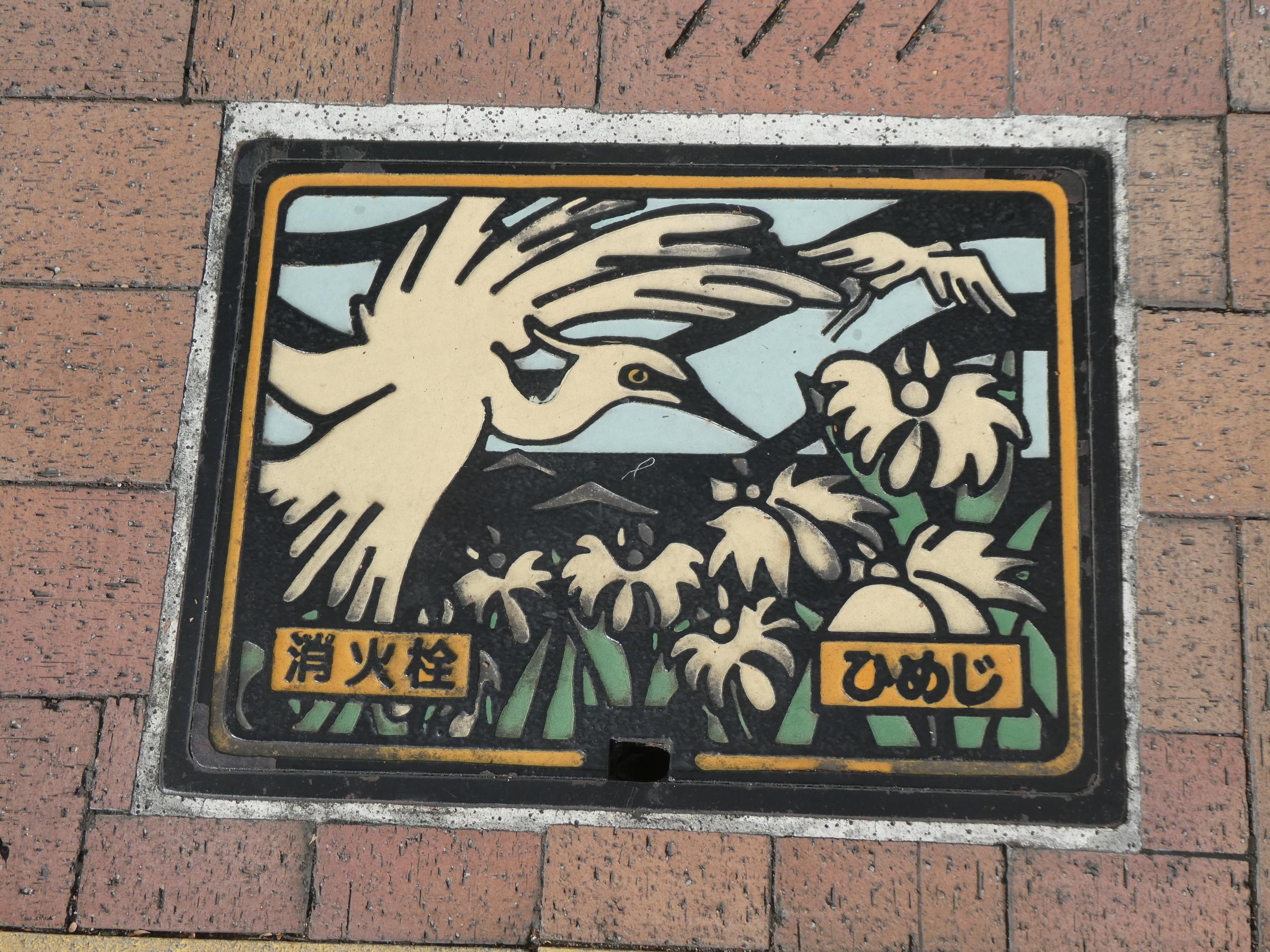
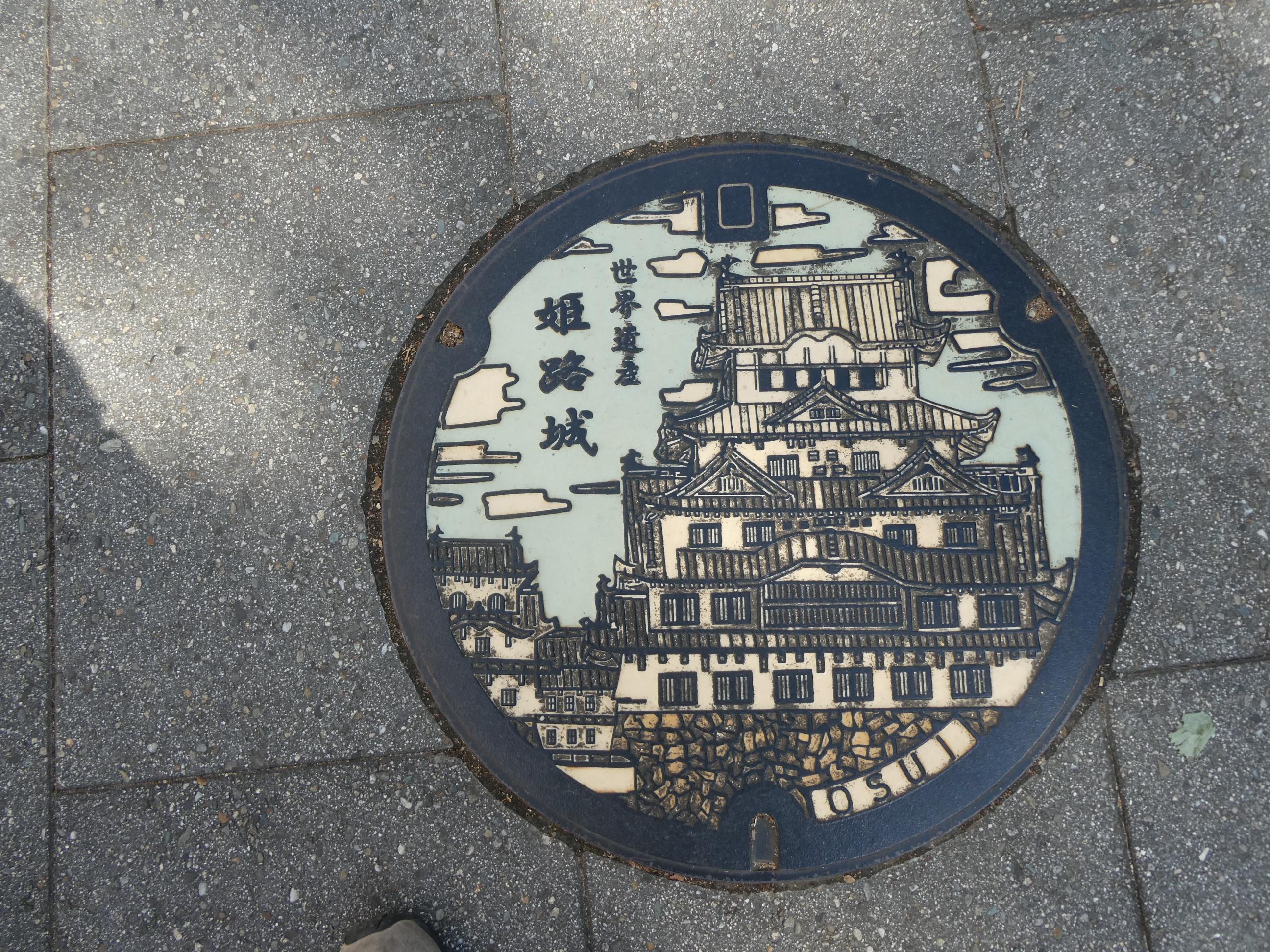
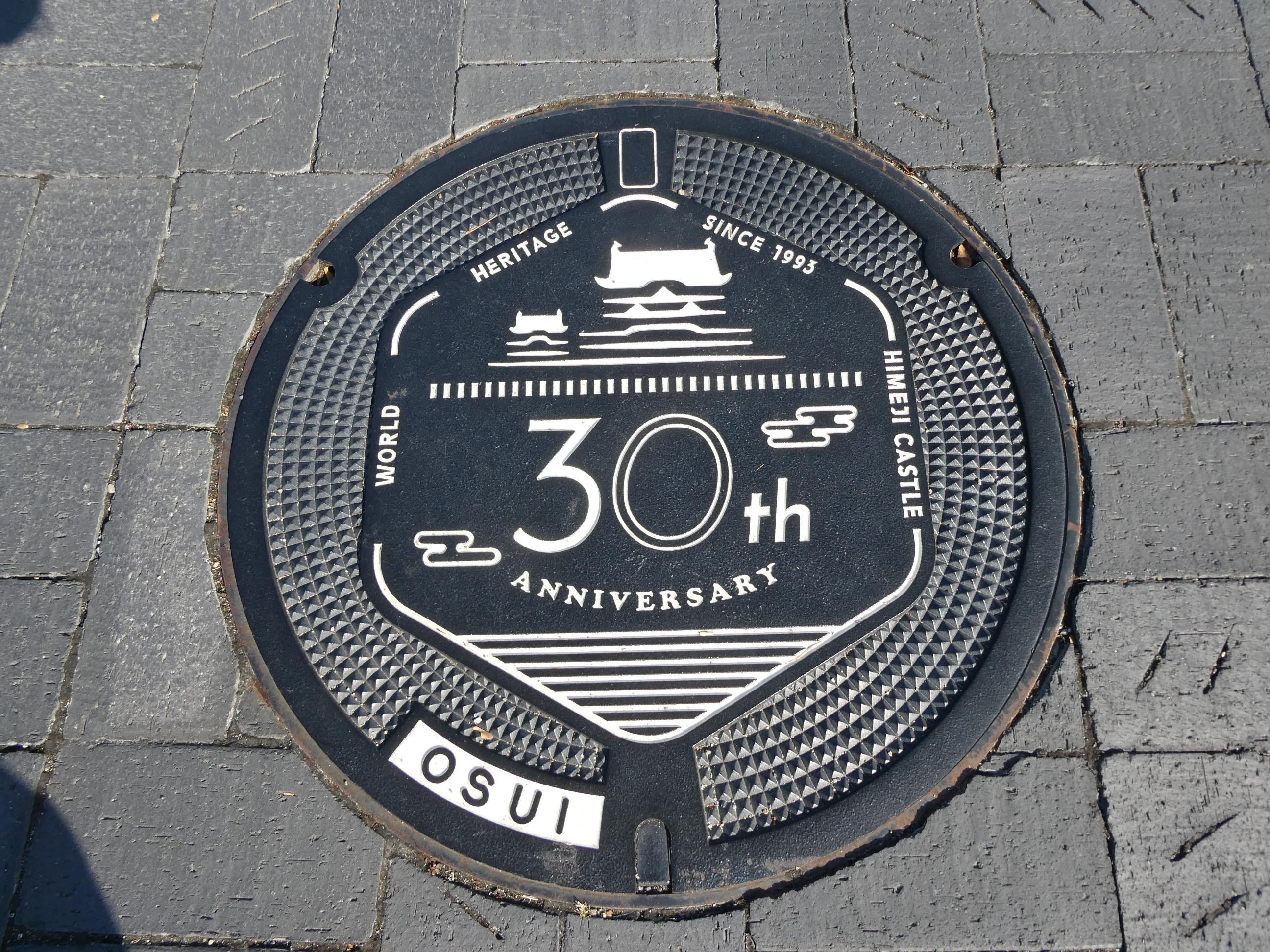
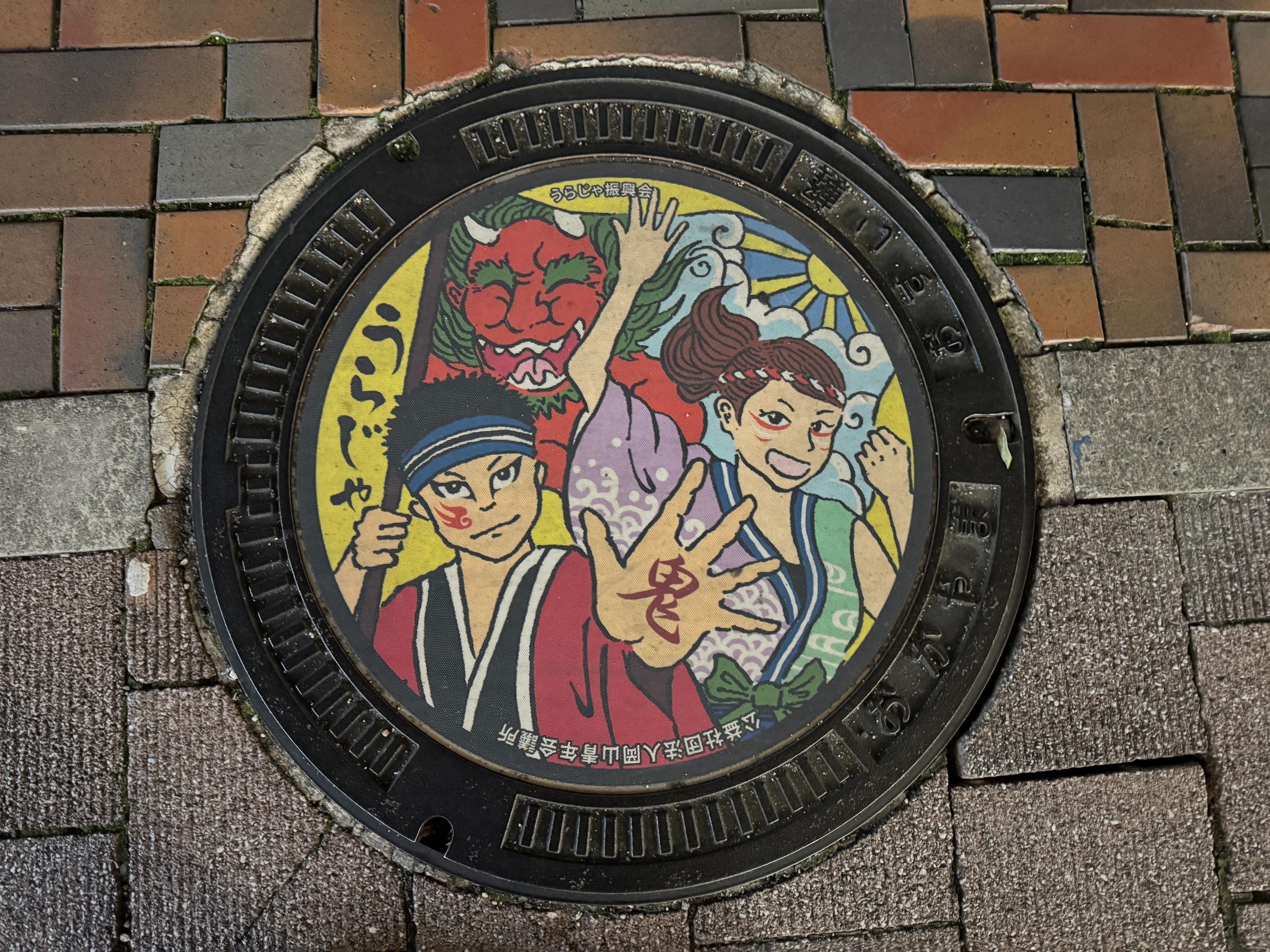
The castle is visible at the end of the road from the railway station, and it was a leisurely walk that took us about 15 minutes to complete. Along the way, I took note of some of the manhole covers. I’d read in a book before I came to Japan that there are thousands of different designs all over the country, and that some of them are real works of art. Below you can see a range I noticed between the station and the castle.
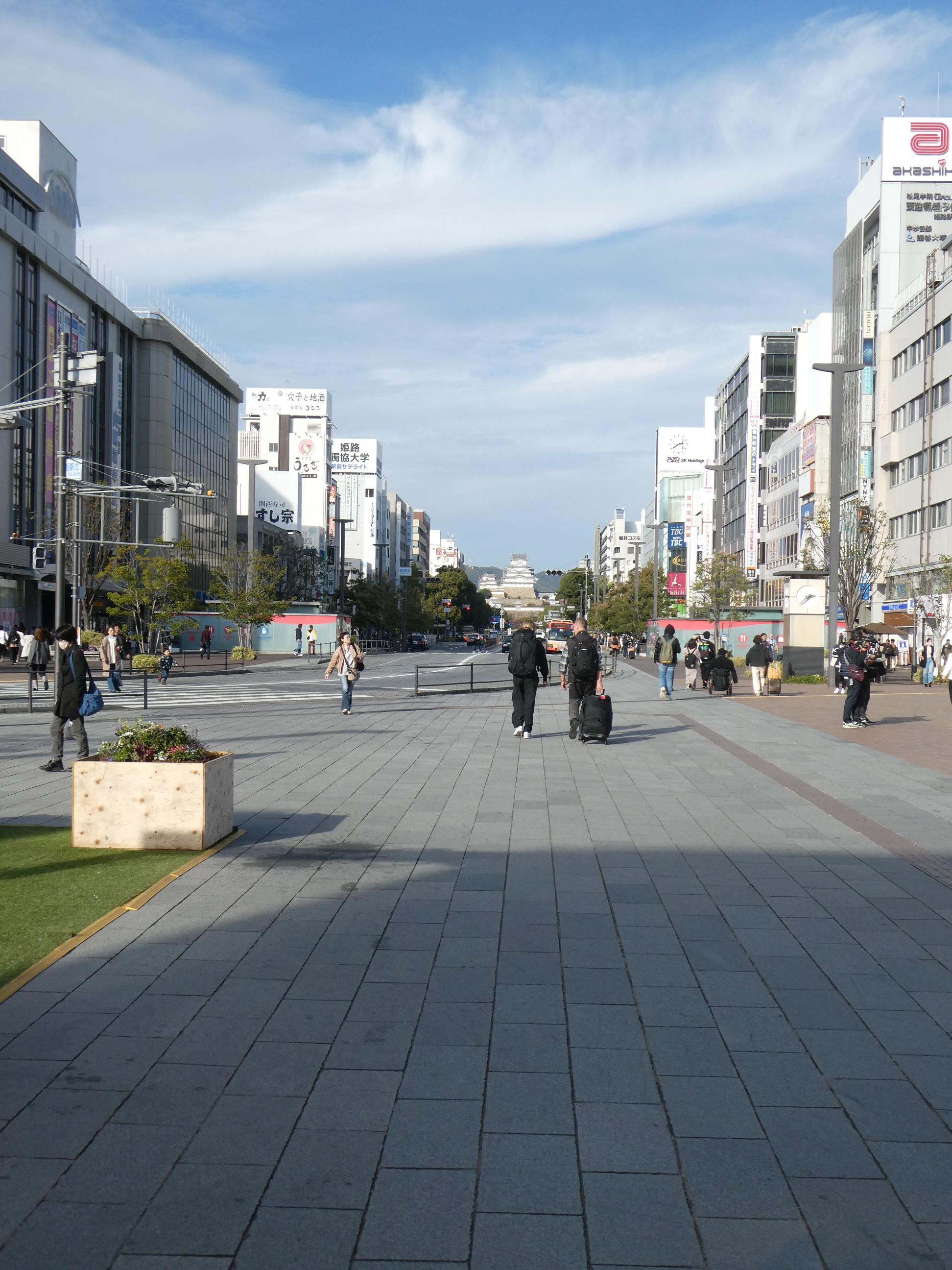

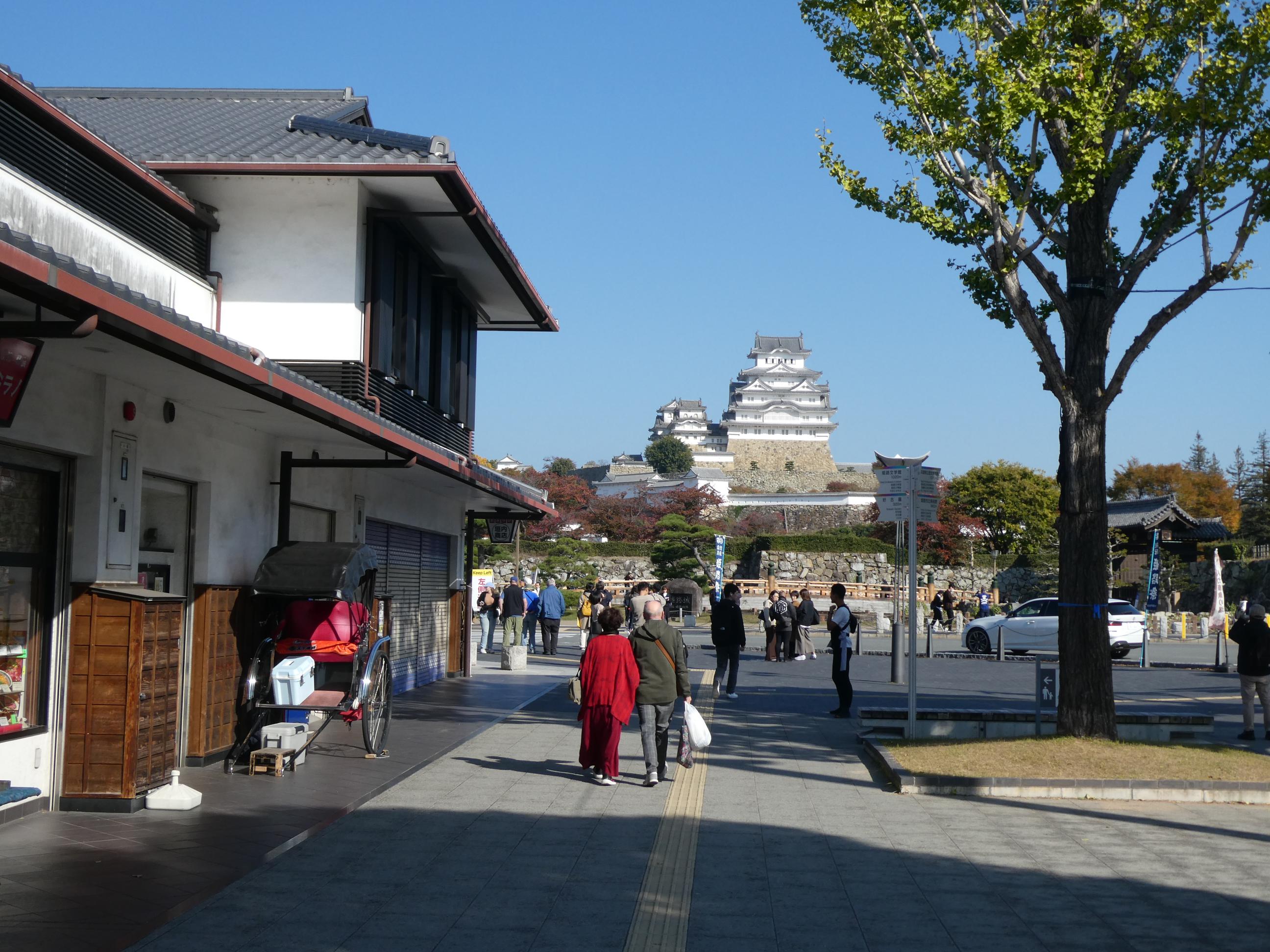
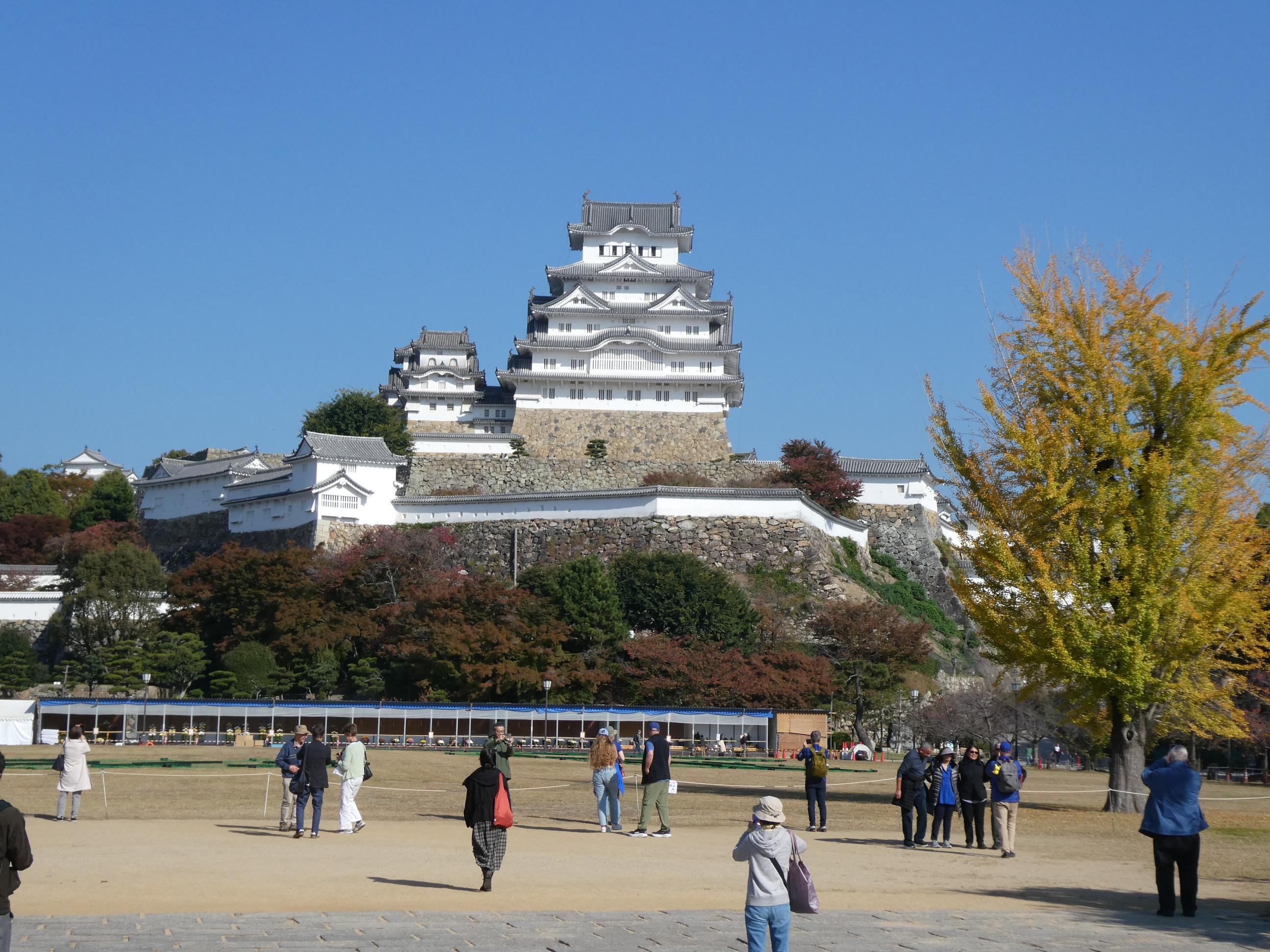
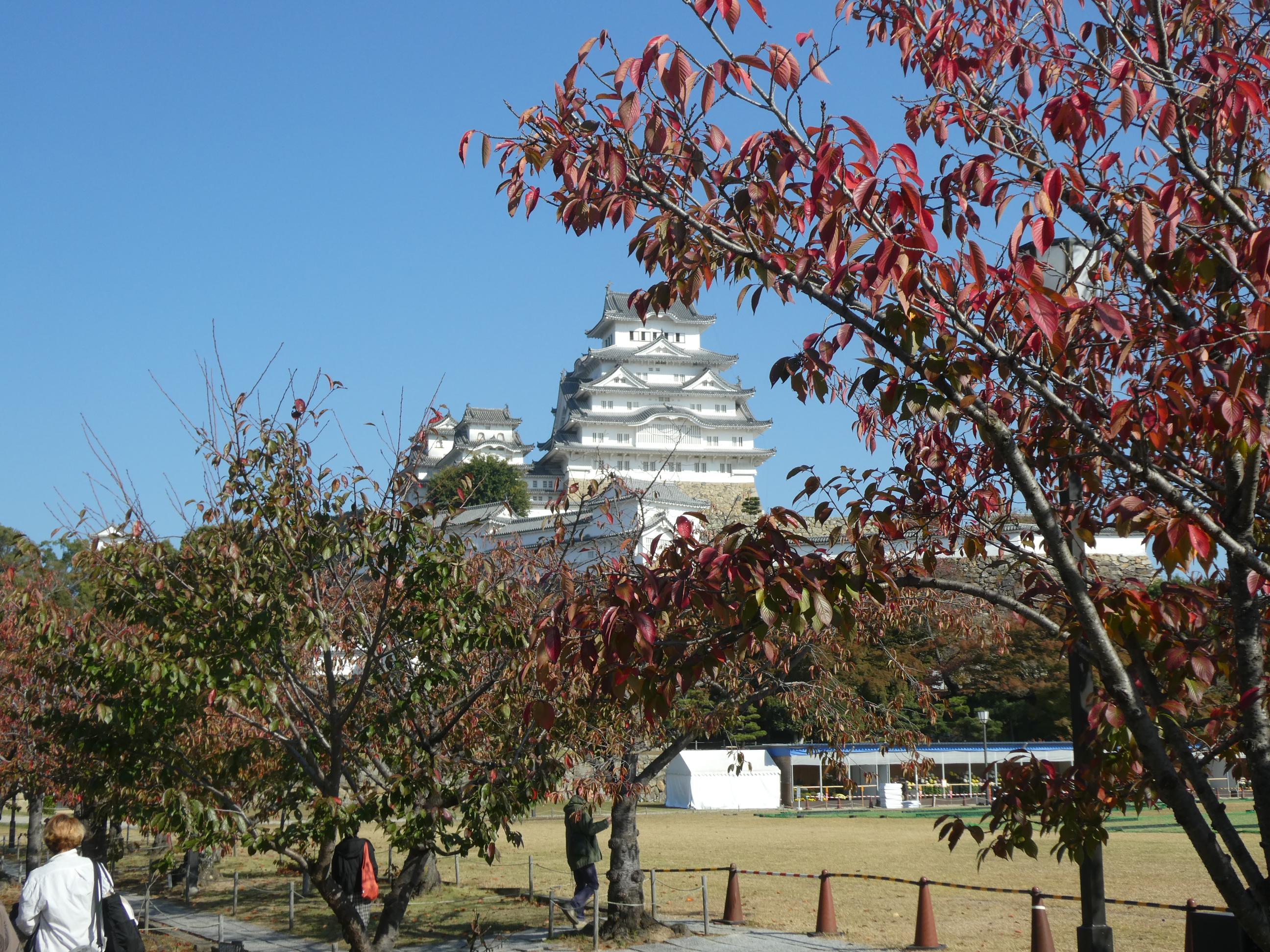
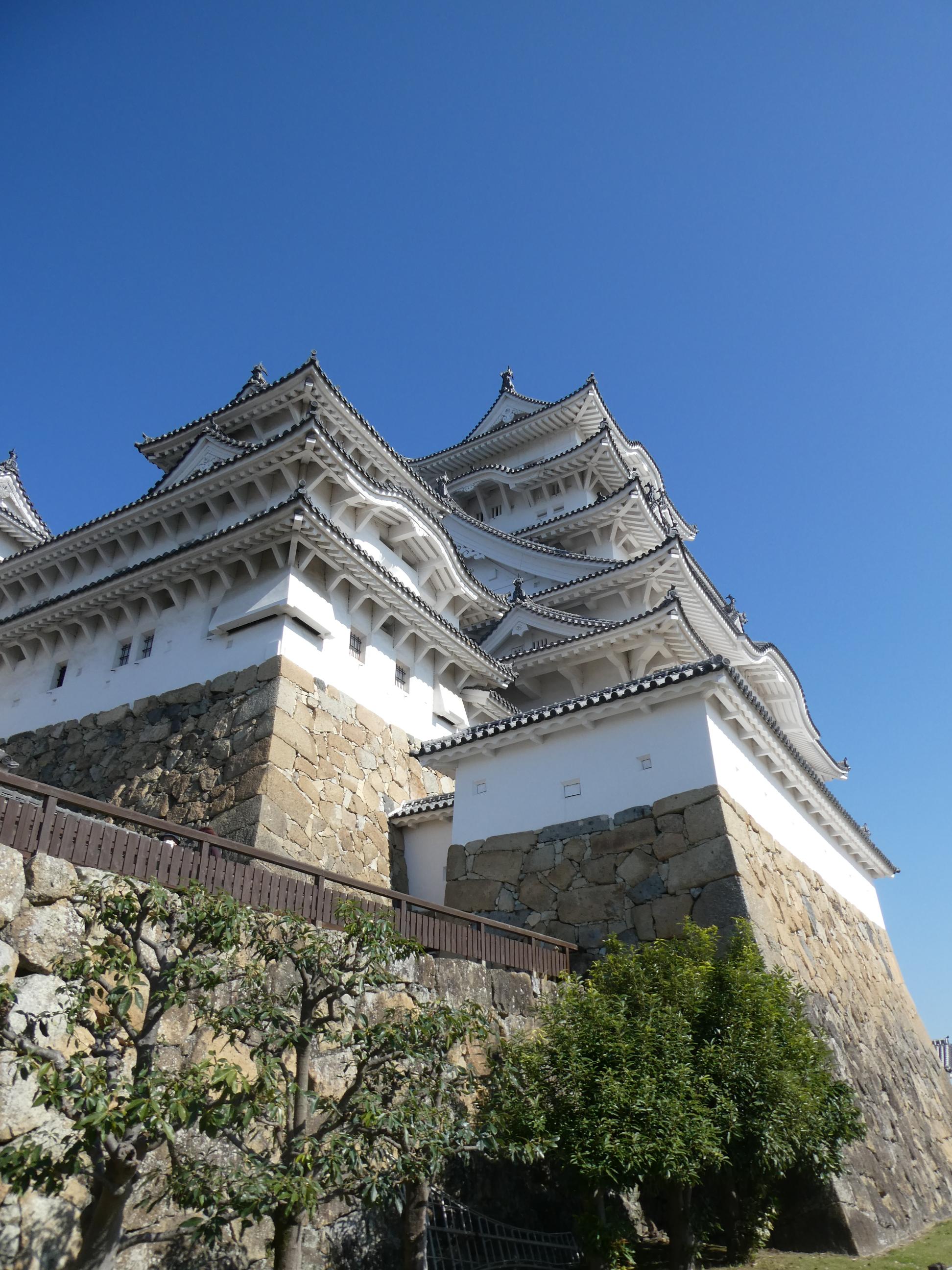
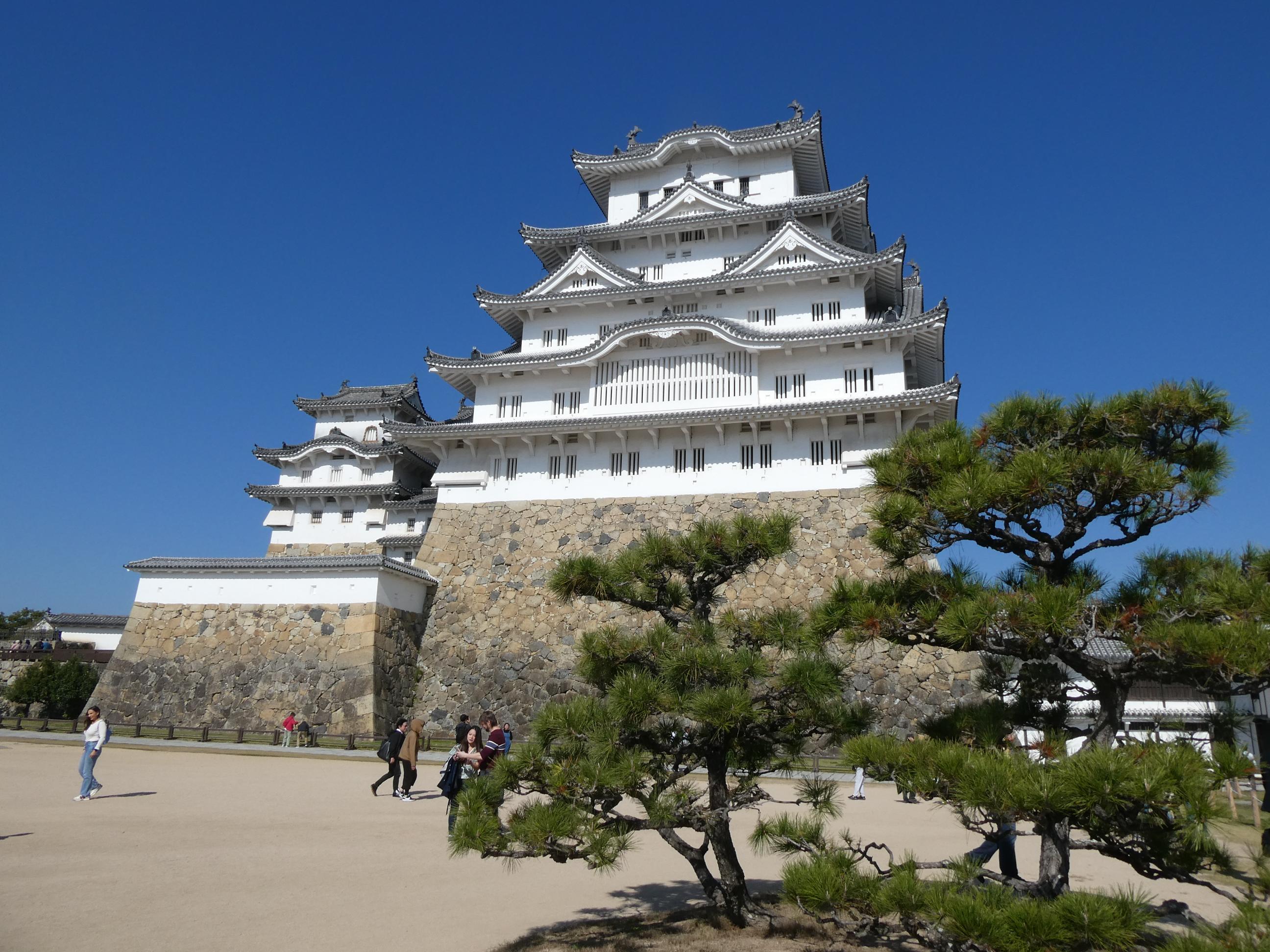
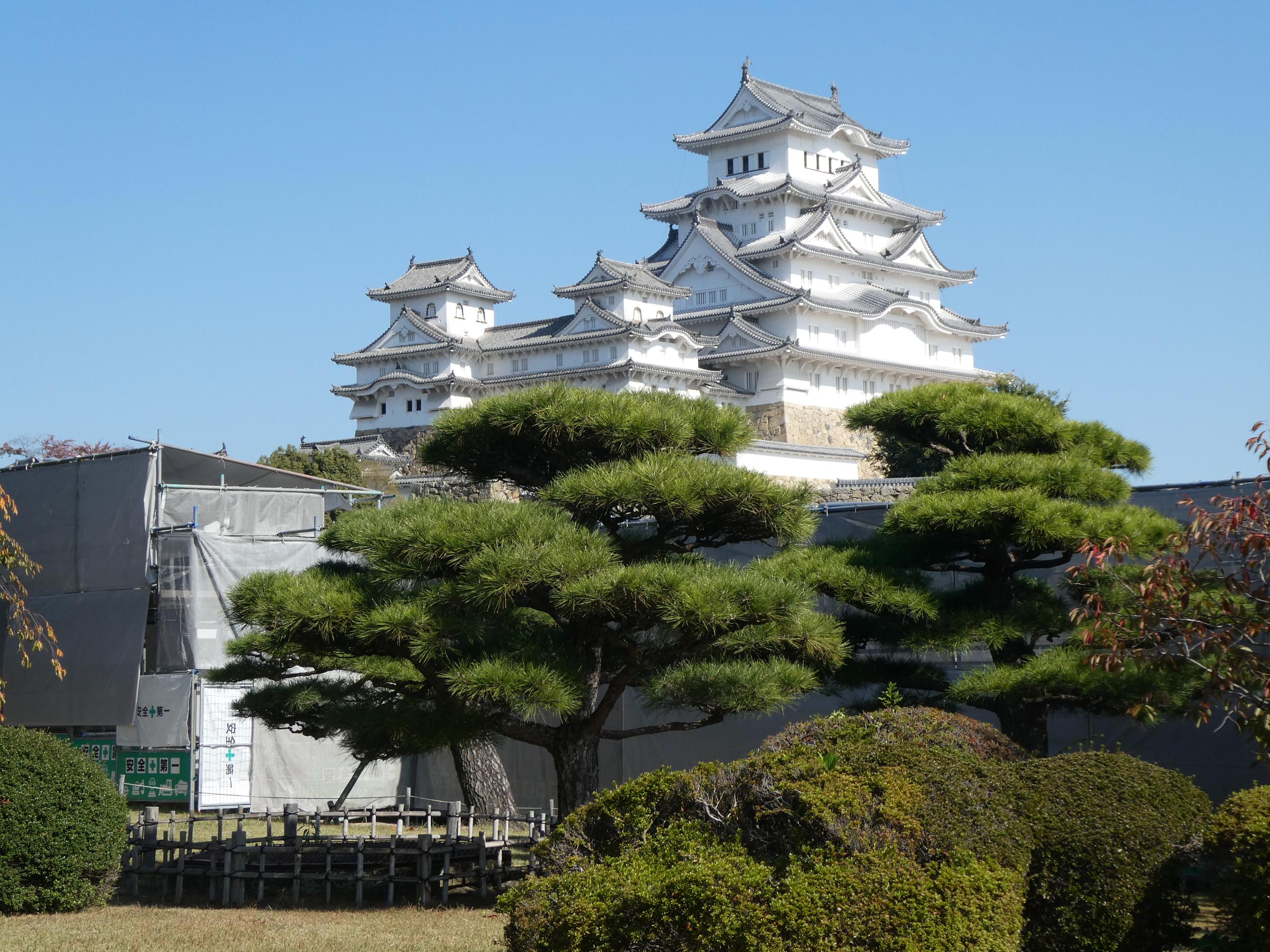
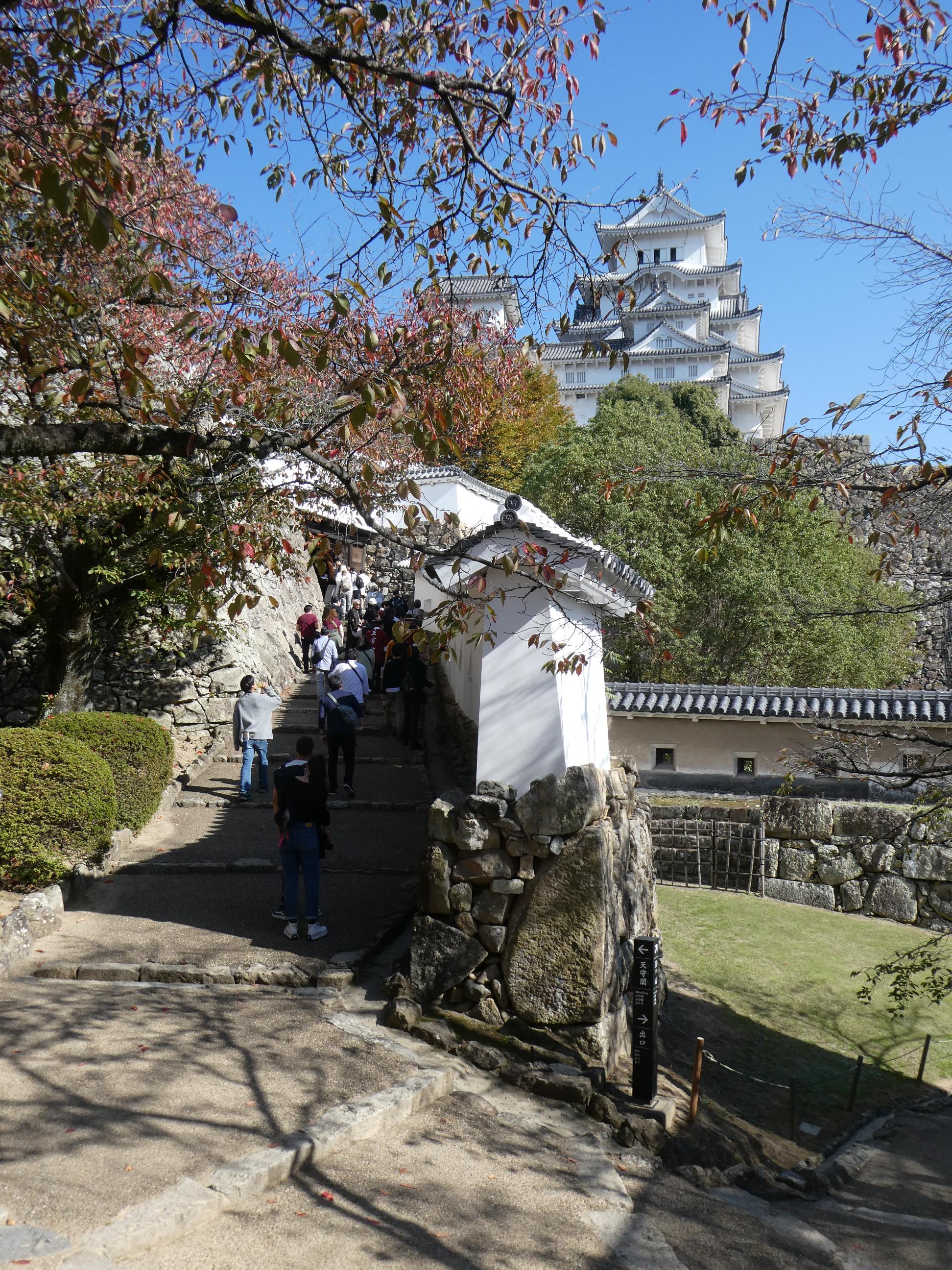
Today was a really beautiful autumn day. The sun was warm and the sky was cloudless. The castle looked radiant with its stark whiteness contrasting against the blue sky. It’s known as the ‘White Heron Castle’ here in Japan, because of those white plaster fireproof walls. The castle has been granted World Heritage status by UNESCO, and in Japan, it is recognised as a National Treasure. Our itinerary notes suggested we could arrange for an English language guided tour at the ticket window, but the tickets were only available from vending machines and we couldn’t find anywhere to book a tour. We began walking, but soon came across two tourists with an infant who appeared to be listening to a guide. We moved closer and could hear the commentary was in English. We interrupted and asked if the lady speaking was a volunteer guide. She was. We asked the guide and the others if we could join them and they said, ‘Of course.’ I can’t tell you how lucky we were. We spent over two hours with that group and they were great company. And our guide, Chizuru, who was a member of the Volunteer Guides Association of Himeji Castle, was just fantastic. She was a walking encyclopaedia in relation to what she knew about the castle, and she was funny and patient and couldn’t do enough for us. And it didn’t cost us a cent. Here in Japan, there is no tipping, so we couldn’t even reward her for her efforts. If we’d have walked through the castle on our own, we would have enjoyed it but learned very little. With a guide, we learned heaps and obviously enjoyed it even more. If ever you come here, be sure to find an English language guide. There are seventy of them, apparently.
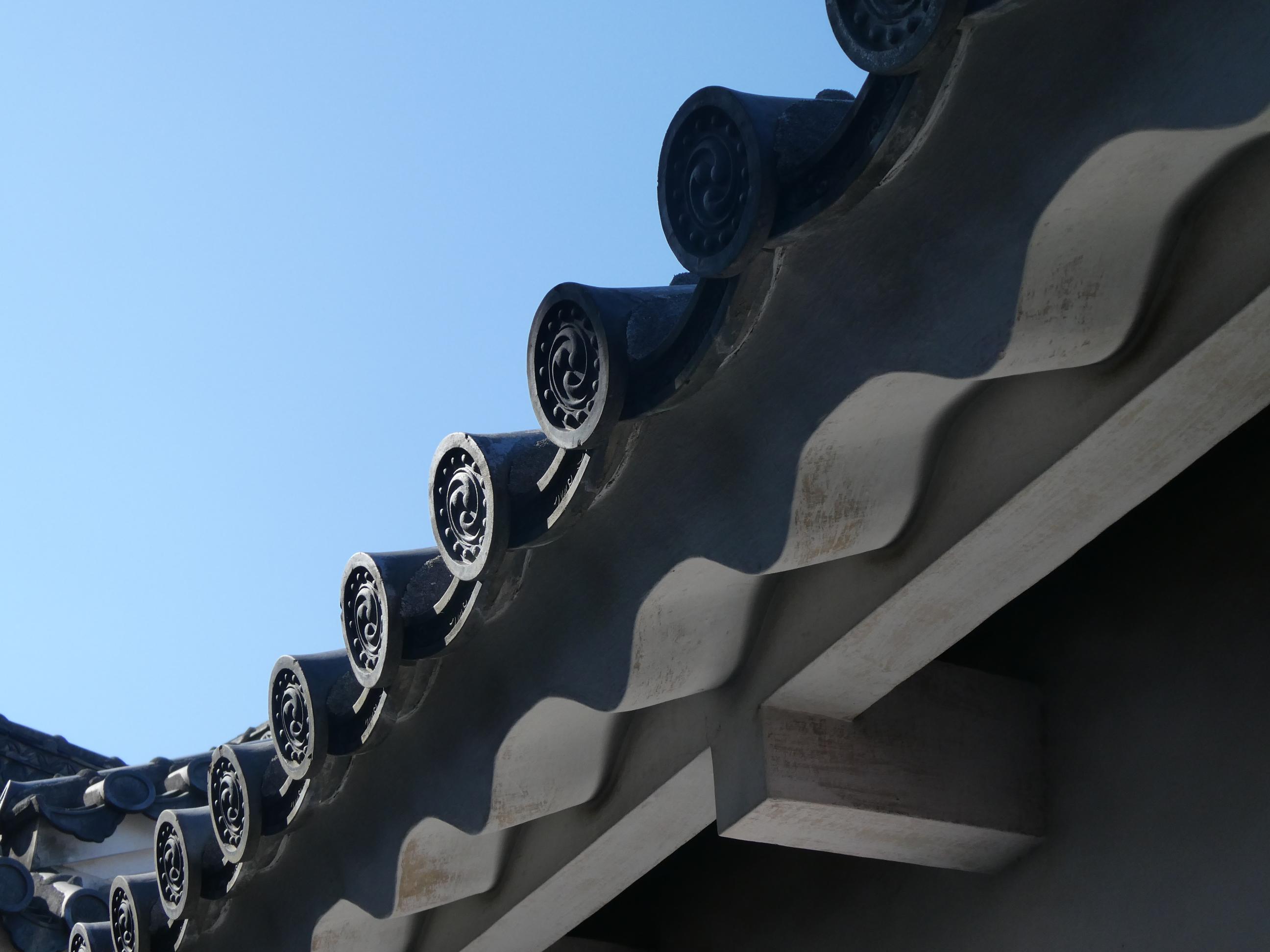
Himeji Castle is Japan’s most visited castle. Its main keep was built between 1601 and 1609 by Ikeda Terumasa. The castle was built with many features to protect the inhabitants from invaders, though it has never been involved in a single siege or battle. Whereas many other wooden castles in Japan have been wholly or partially destroyed by fire, earthquakes or WW2 bombing, Himeji Castle has emerged unscathed. In order to preserve the castle for future generations, it has been determined that the castle’s keeps, gatehouses and towers must be completely restored, piece by piece, every fifty years. The last restoration took six years, of which the first year was required just to erect the scaffolding.


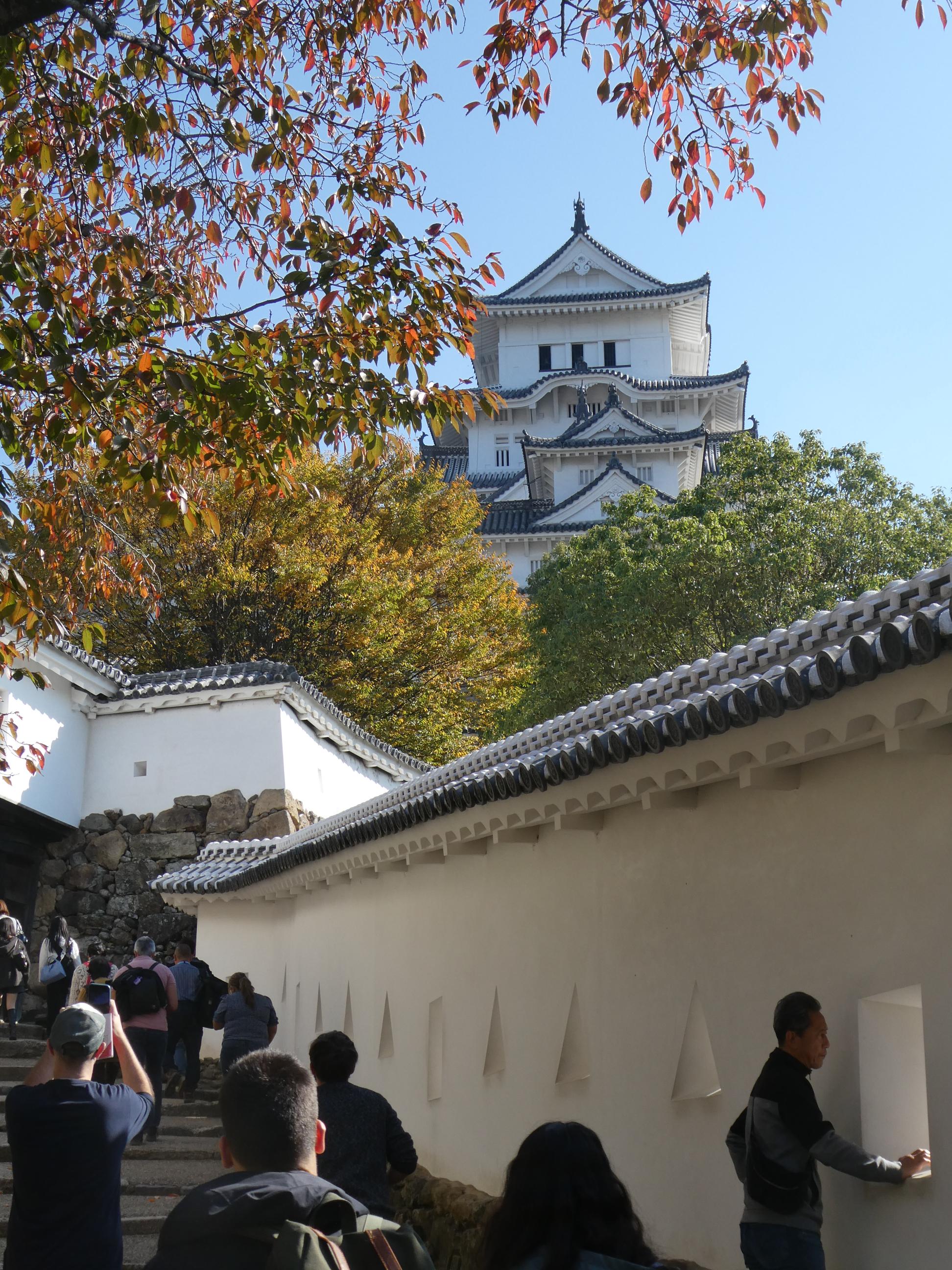
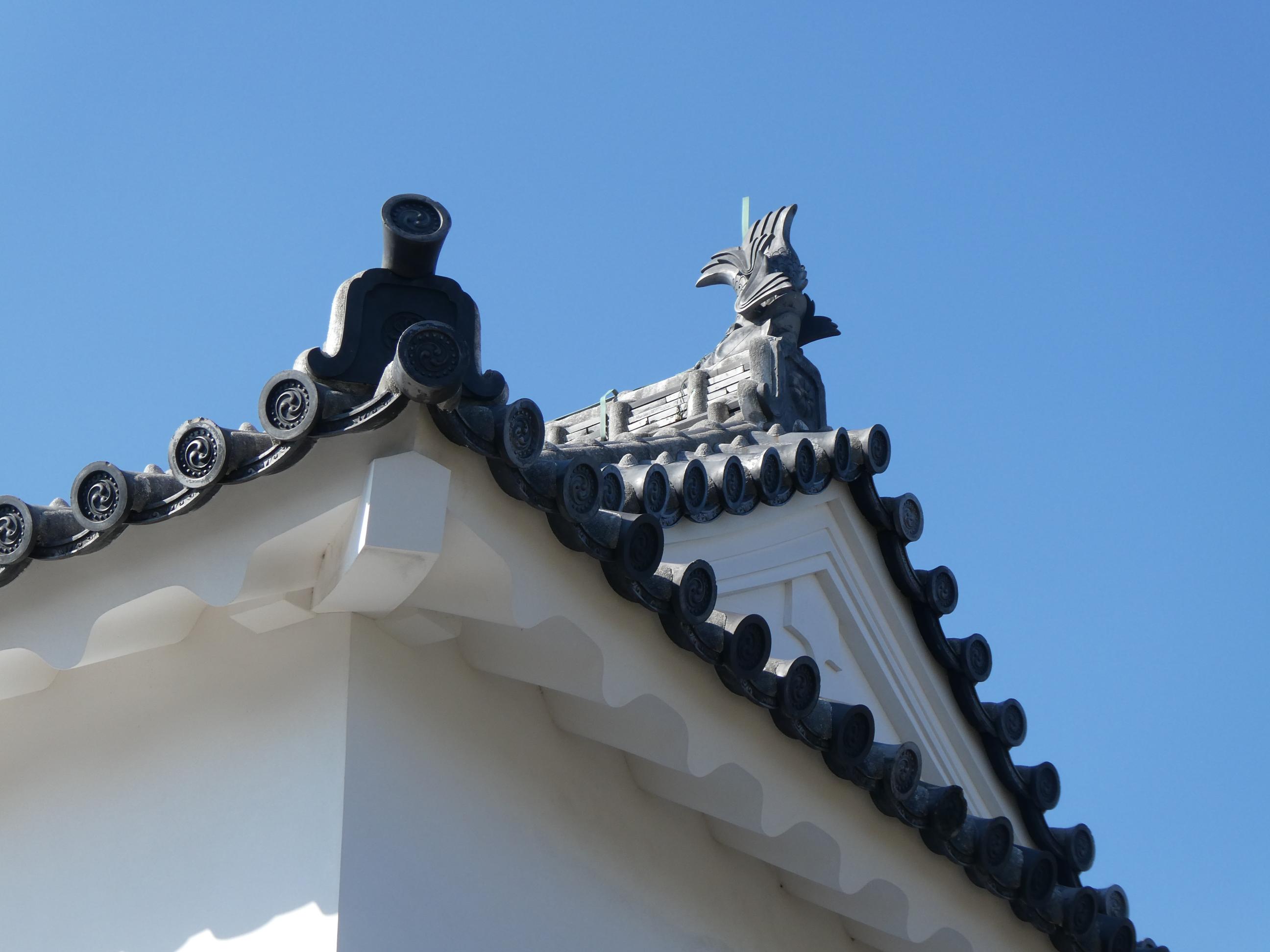
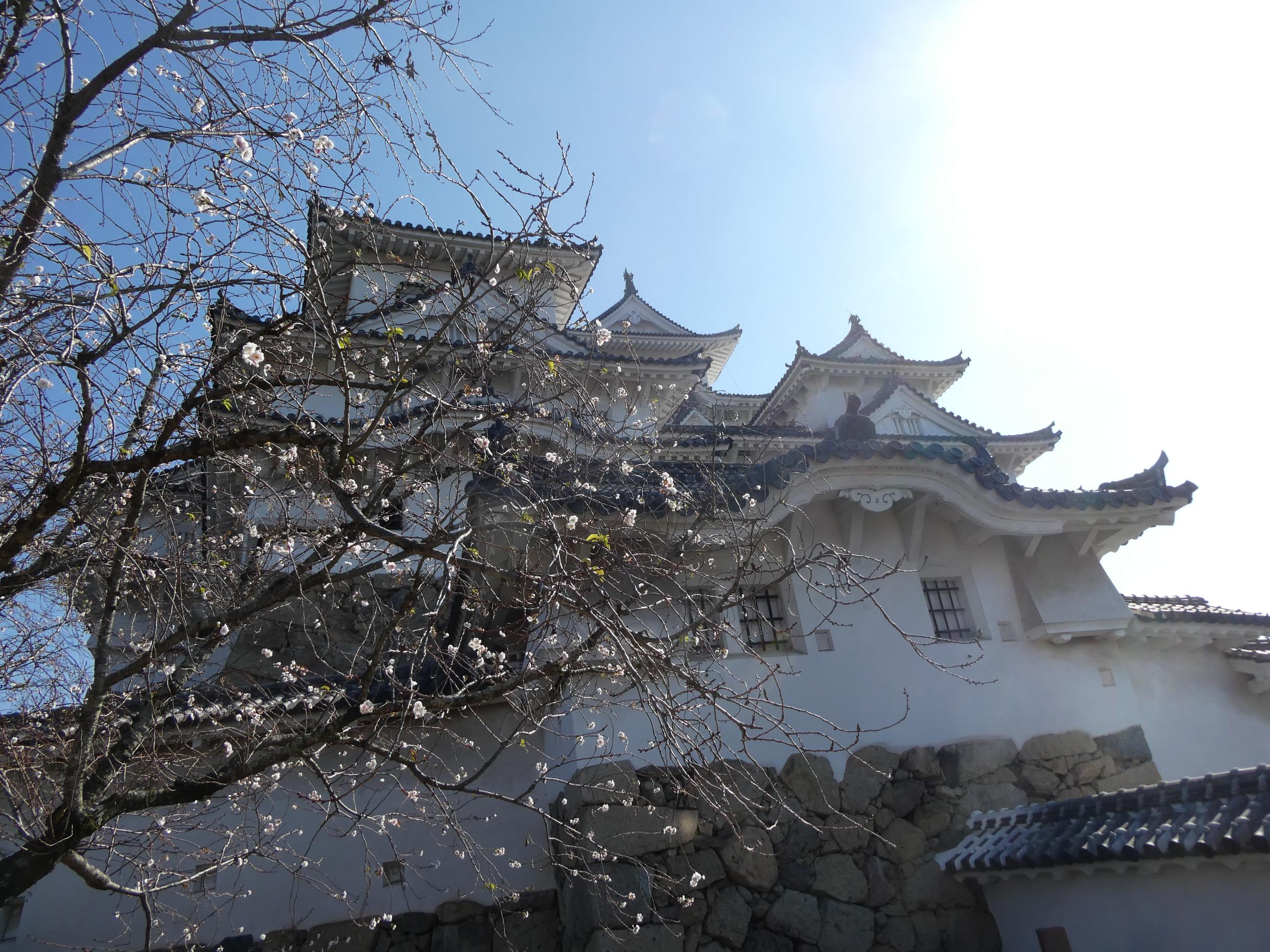
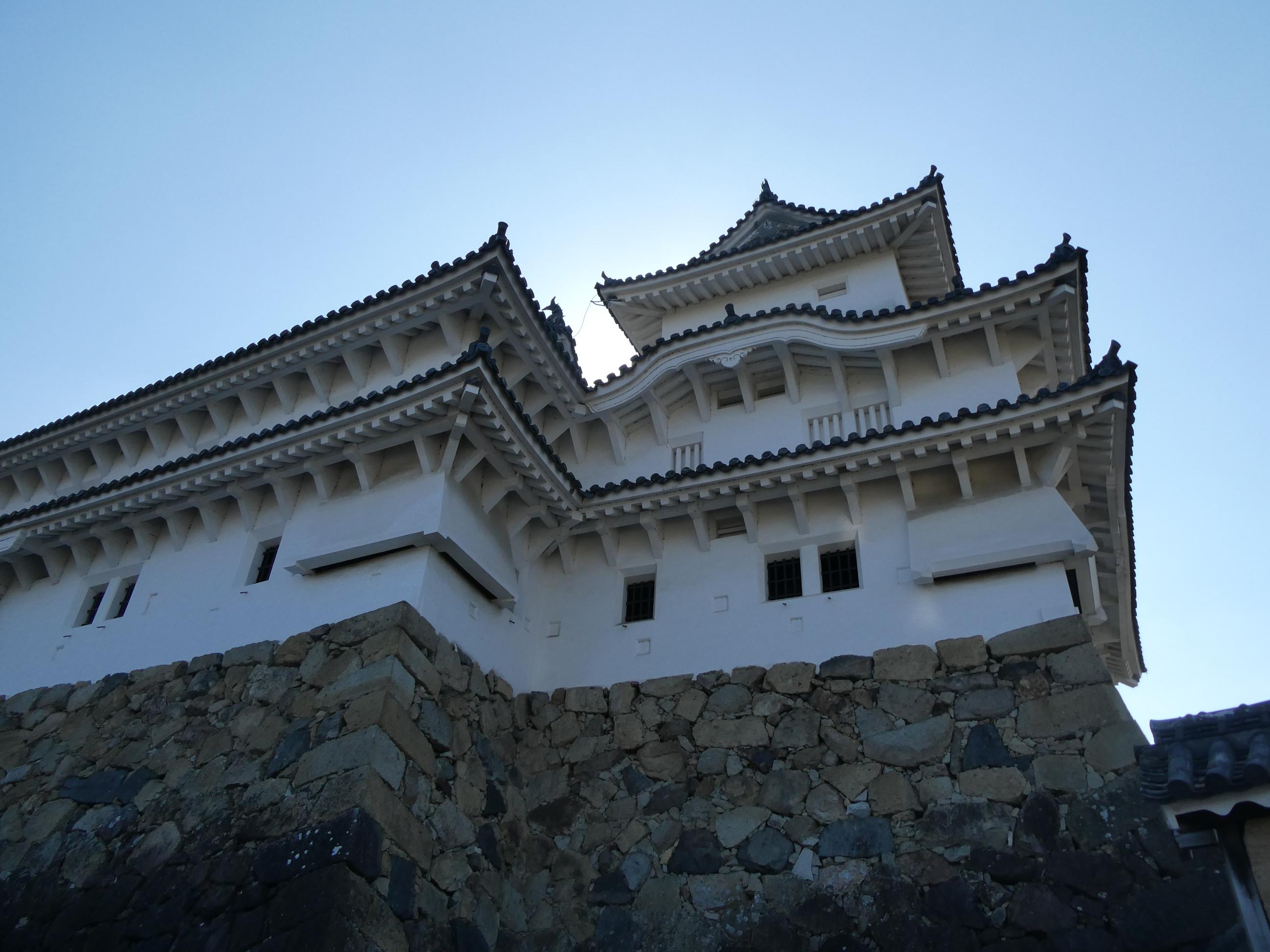
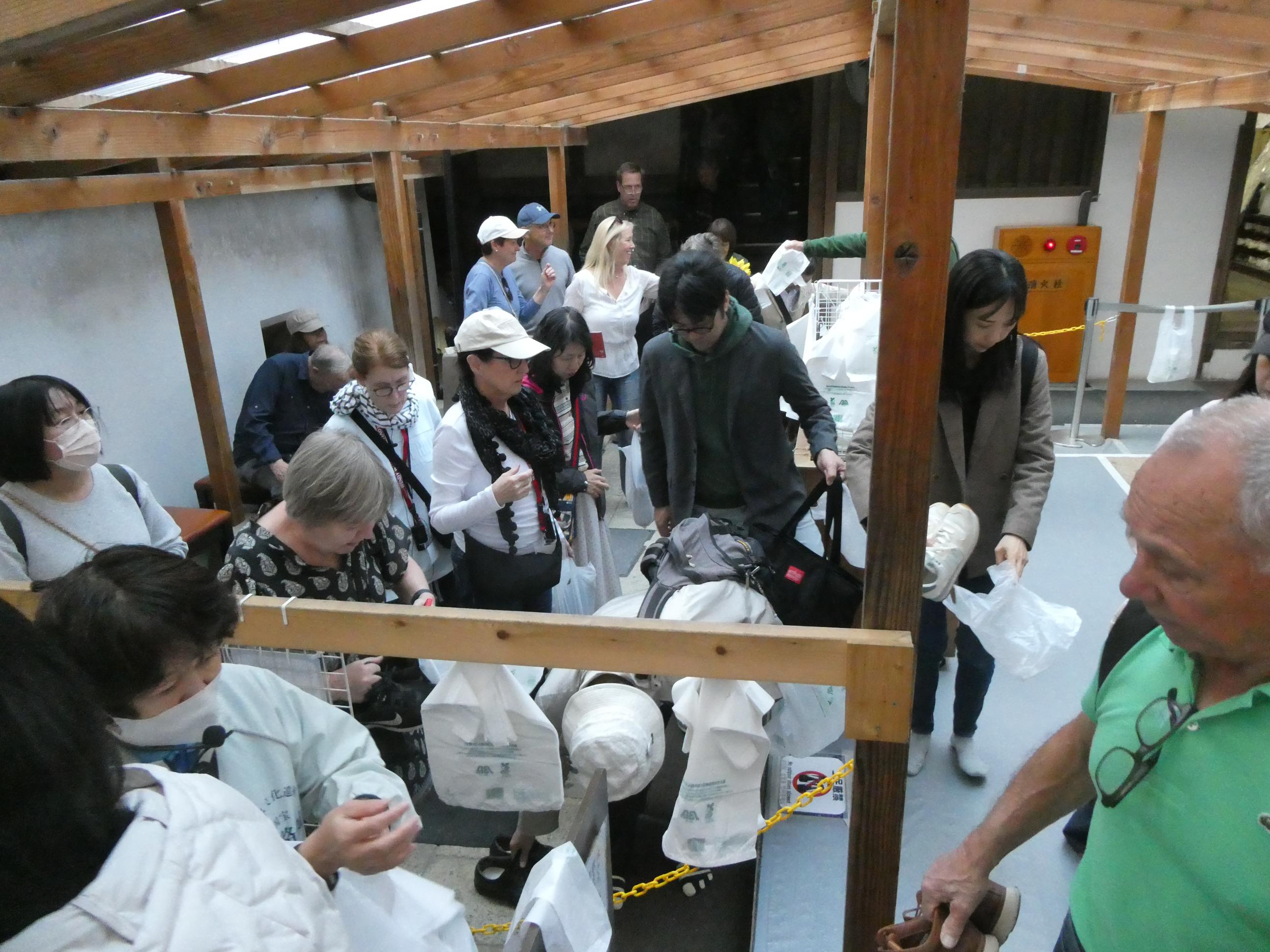
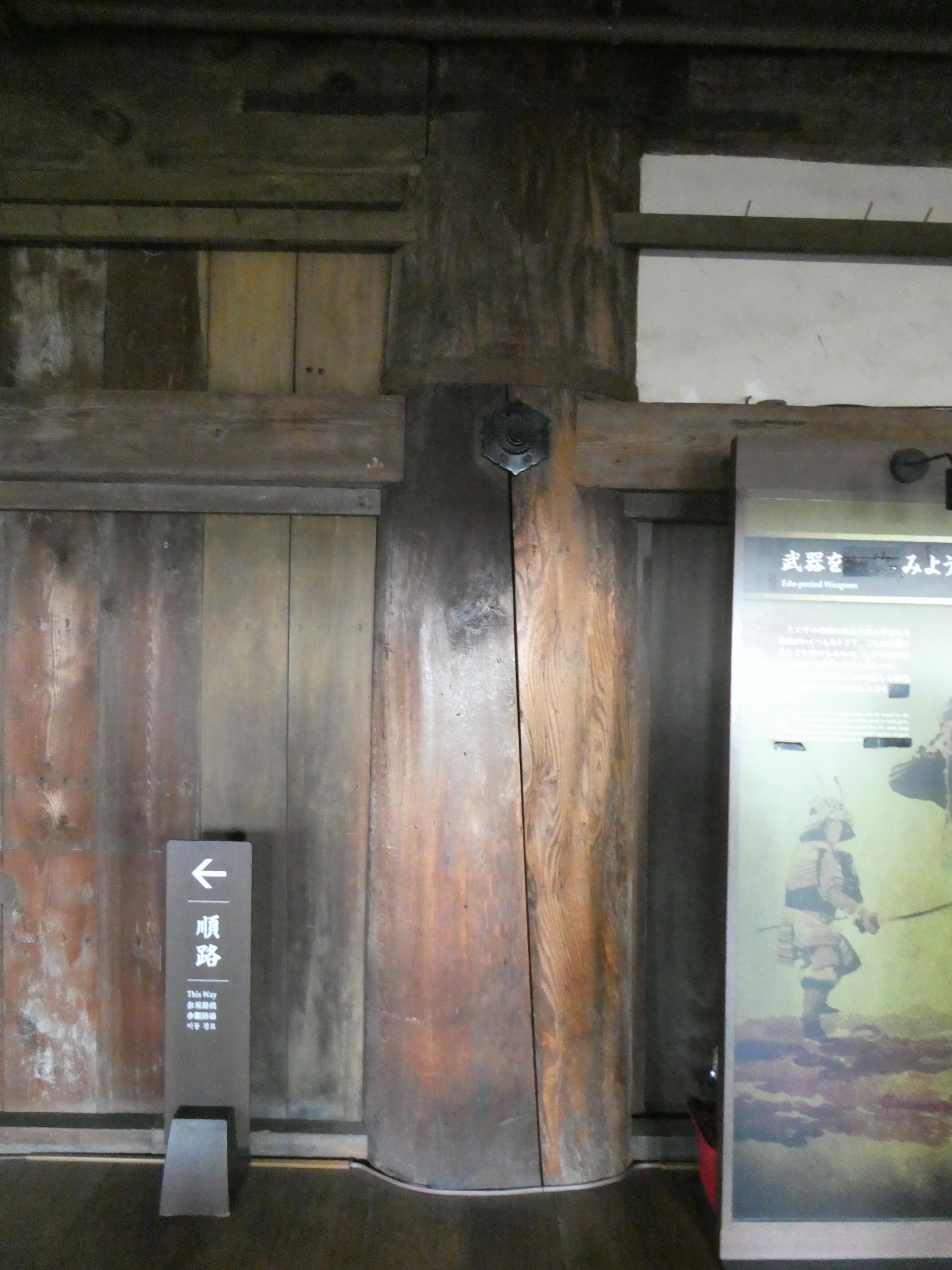
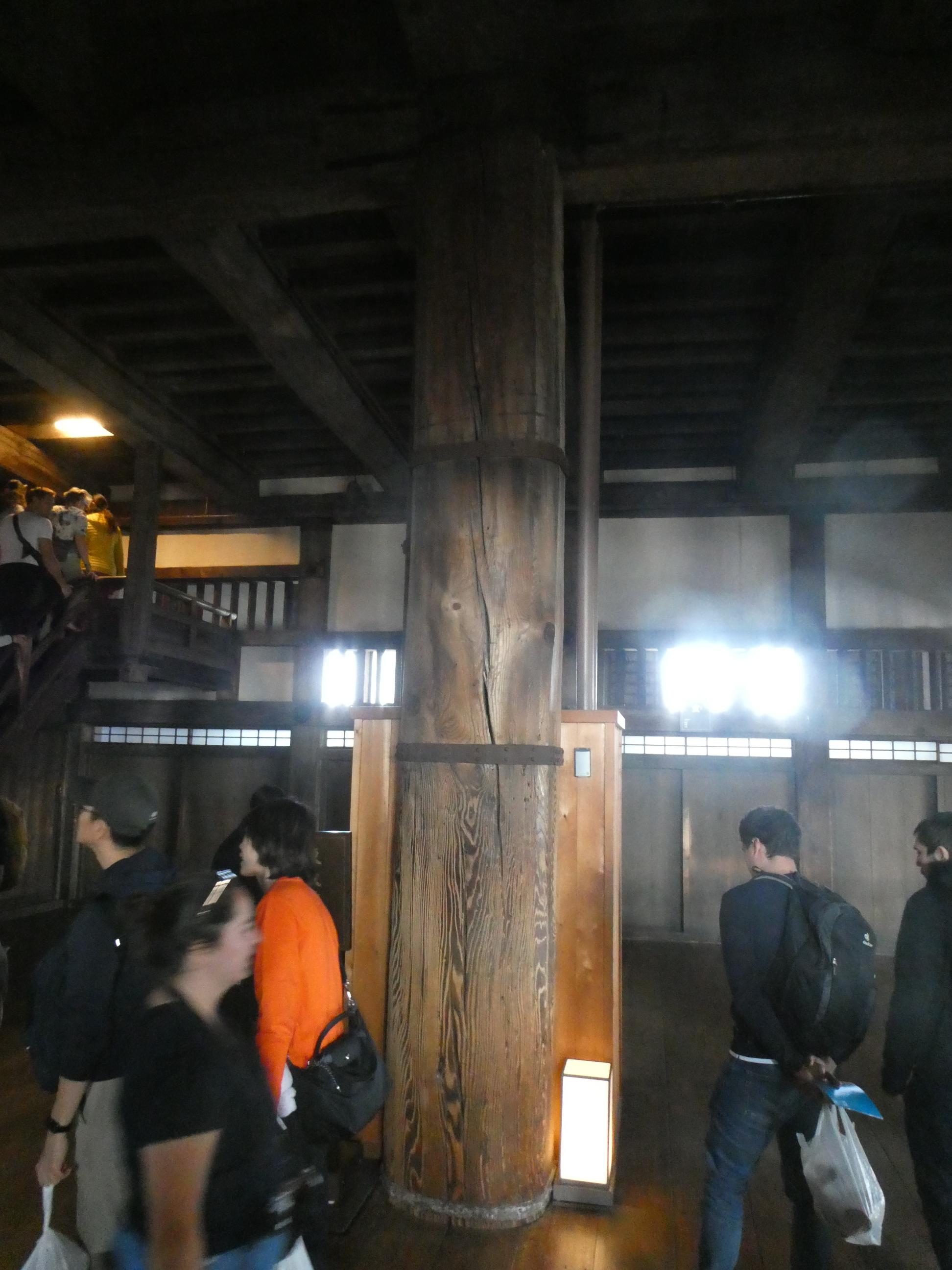
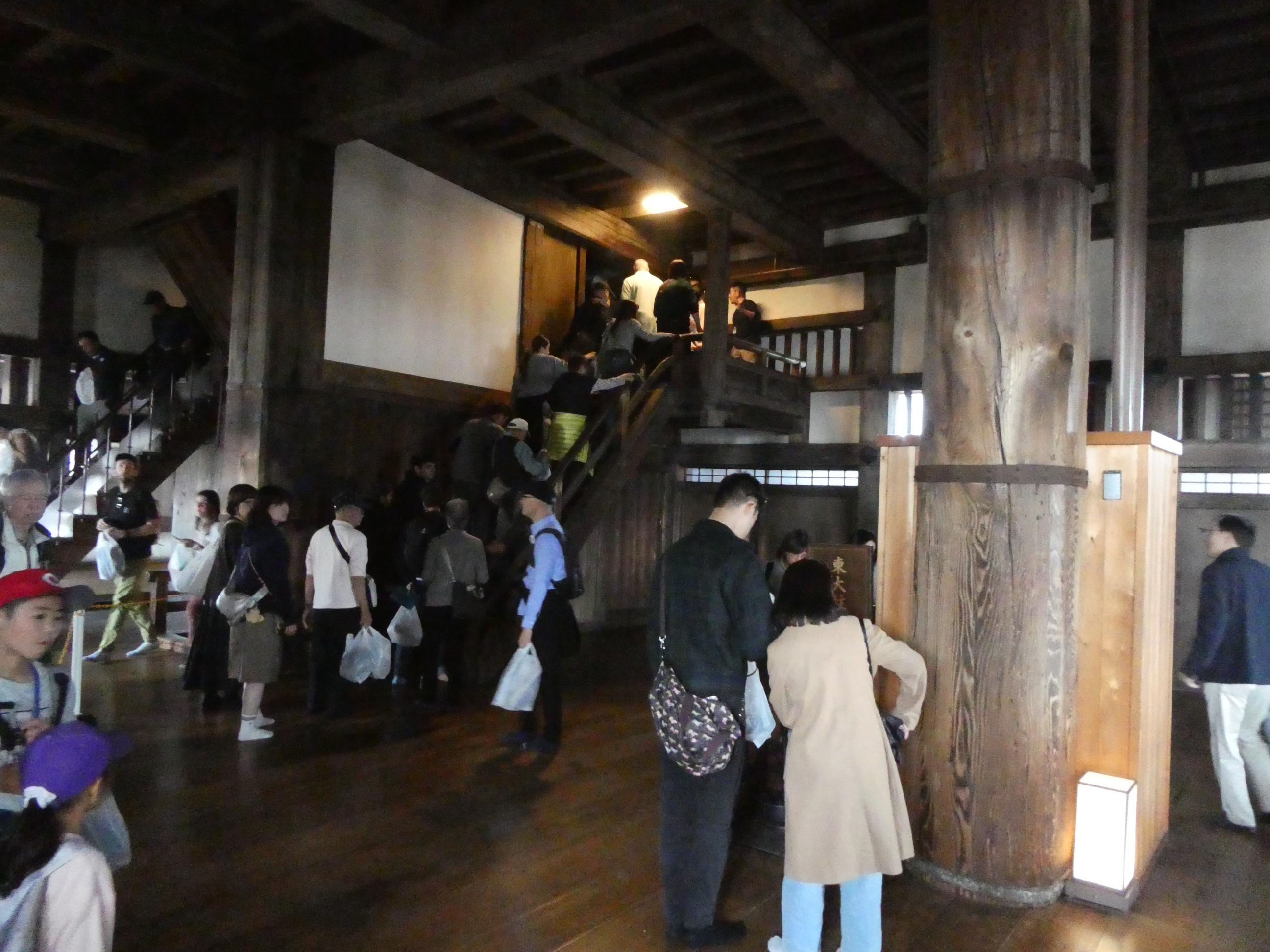
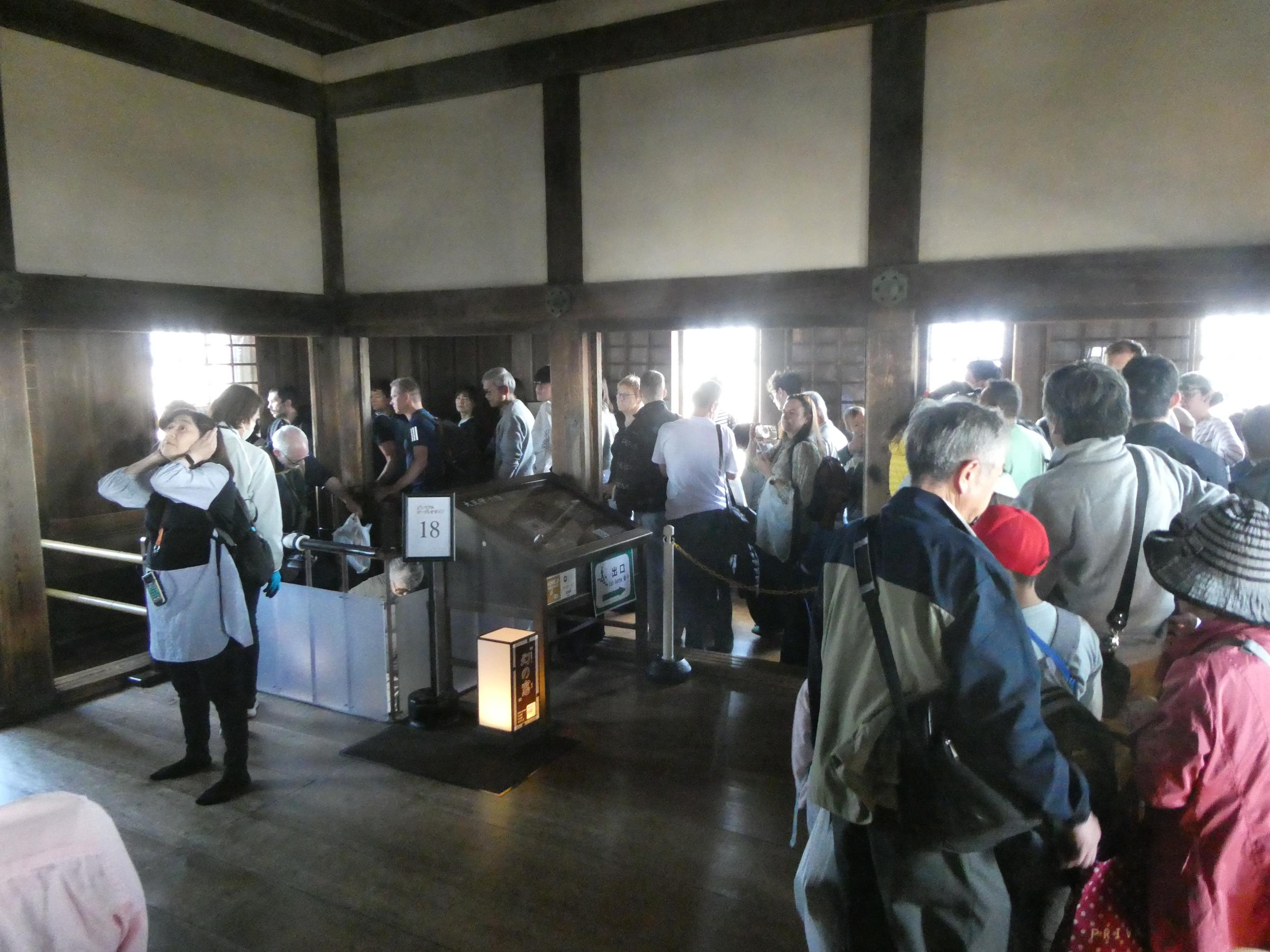
Chizuru, our guide, took us into the lowest level of the main keep. We were required to remove our shoes, as is the custom here, and carry them through the keep in a plastic bag. In some places we were walking on the original timbers, so the shoe removal serves a conservation purpose as well as a cultural one. The purpose of a castle keep is to be a place to retreat to during a siege. It needs to be the strongest part of a castle, and the part that can best be defended against an invading enemy. In this keep, two mighty central columns extend from the ground level to the fifth storey. One is formed from a single 25 metre piece of timber, while the other is formed from two lengths of wood joined together.
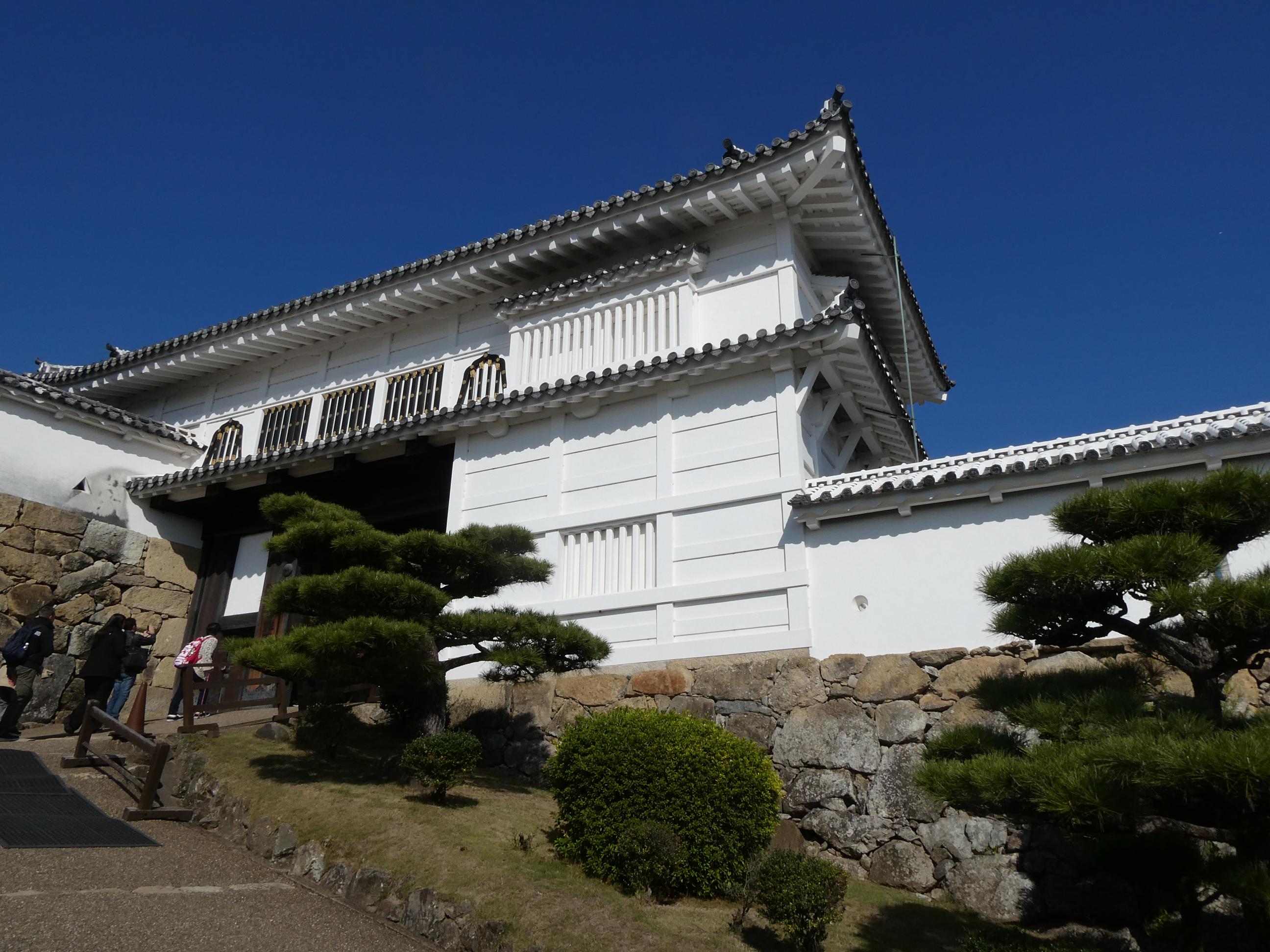
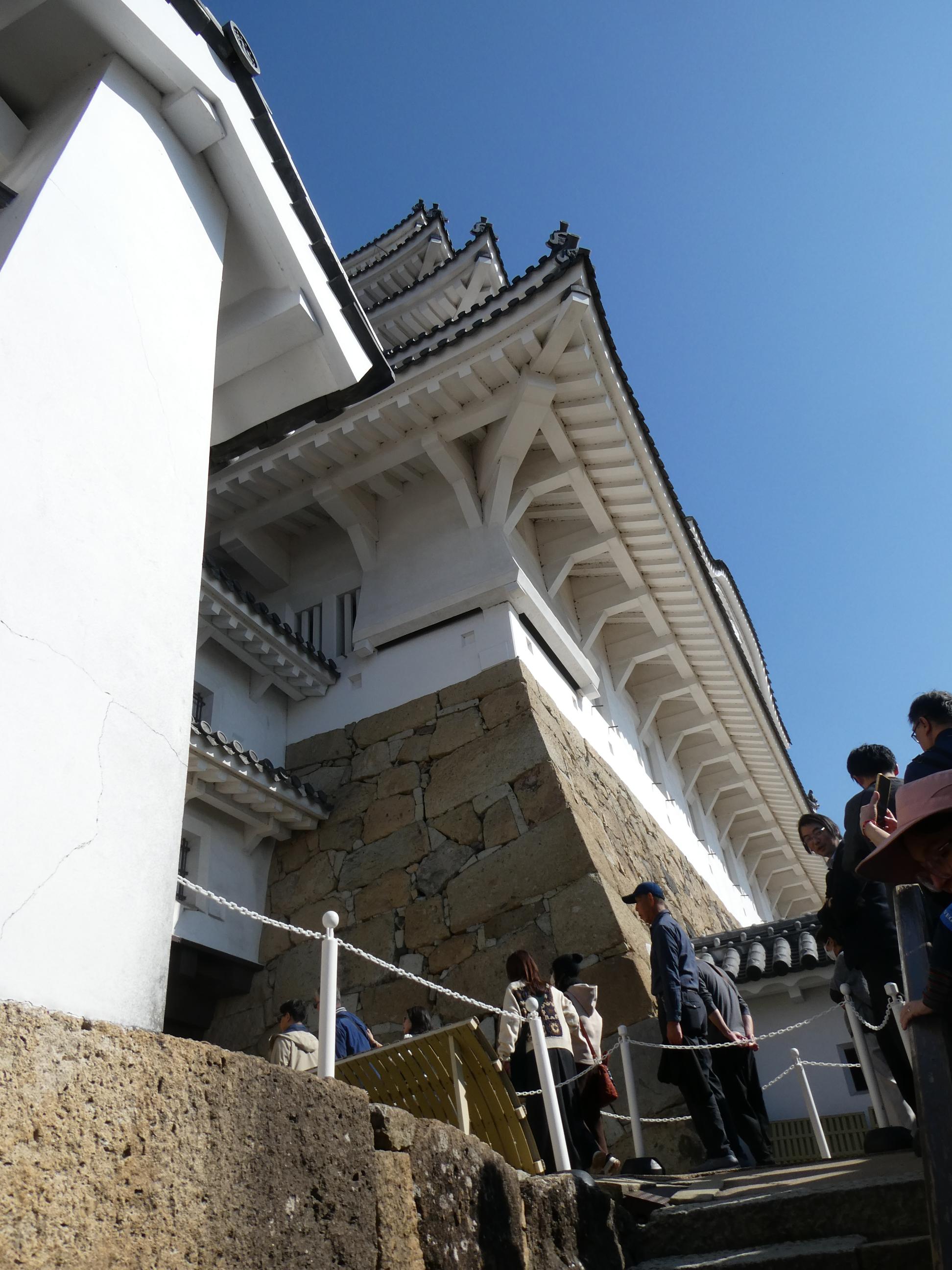
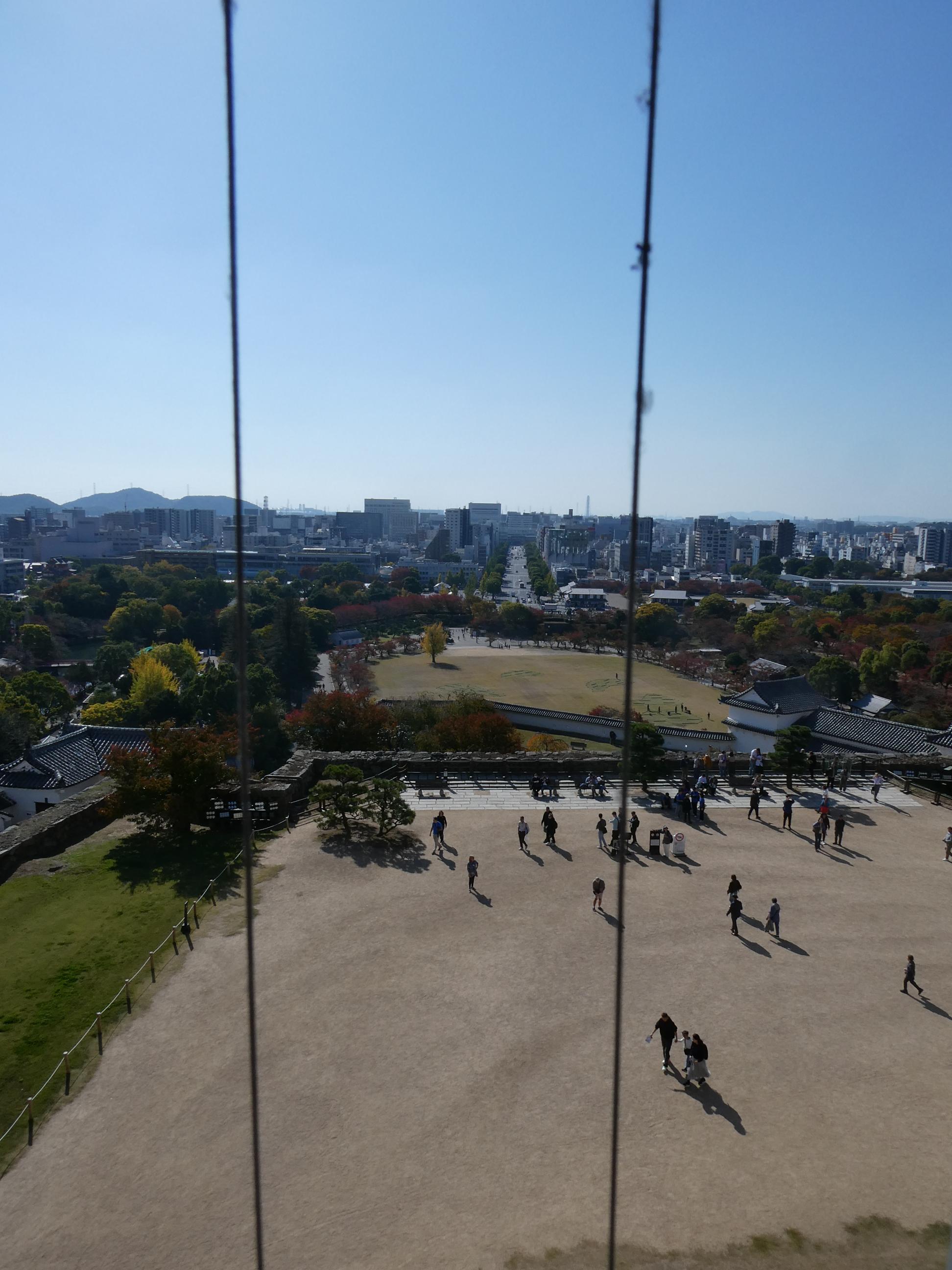
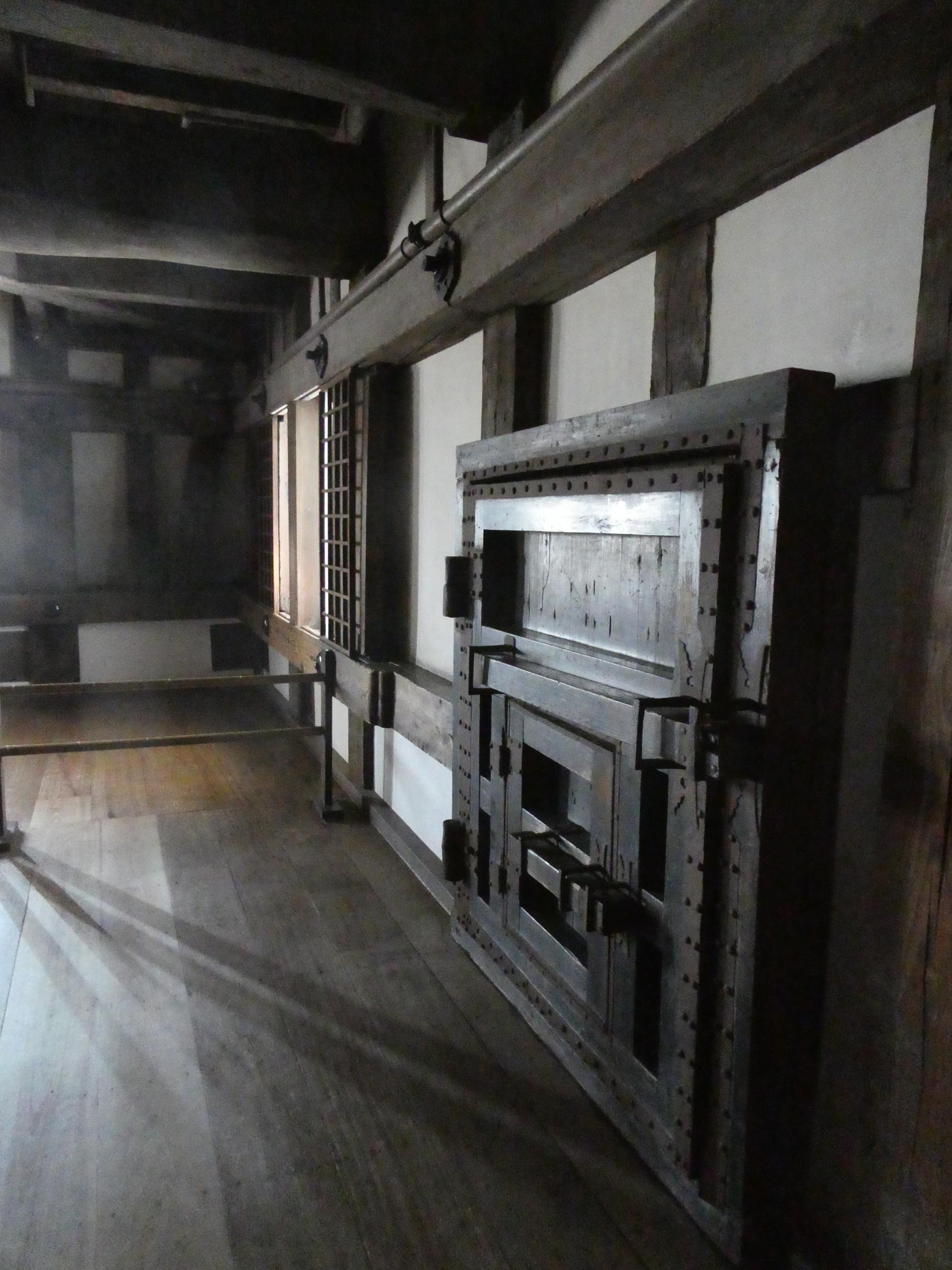
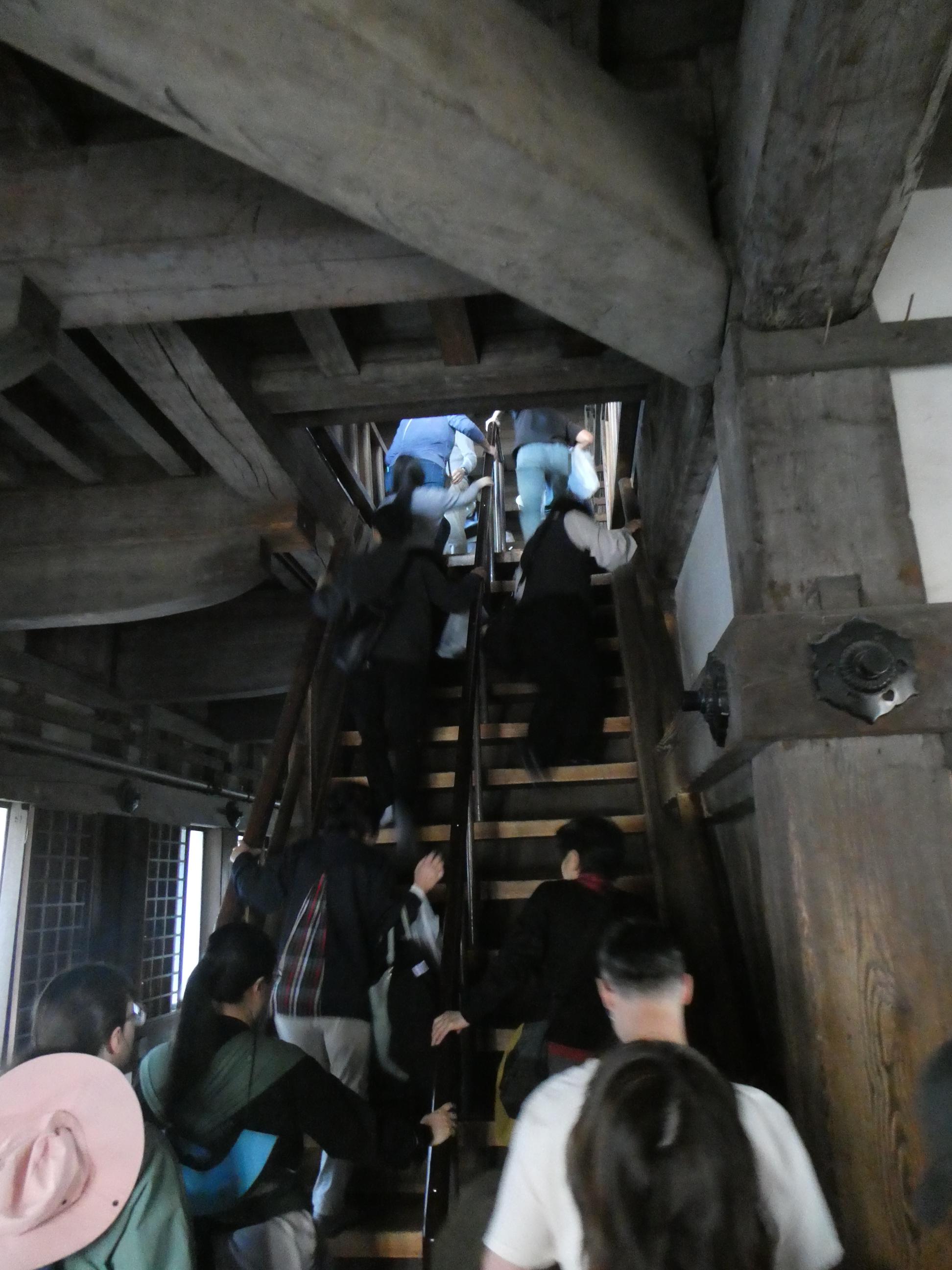
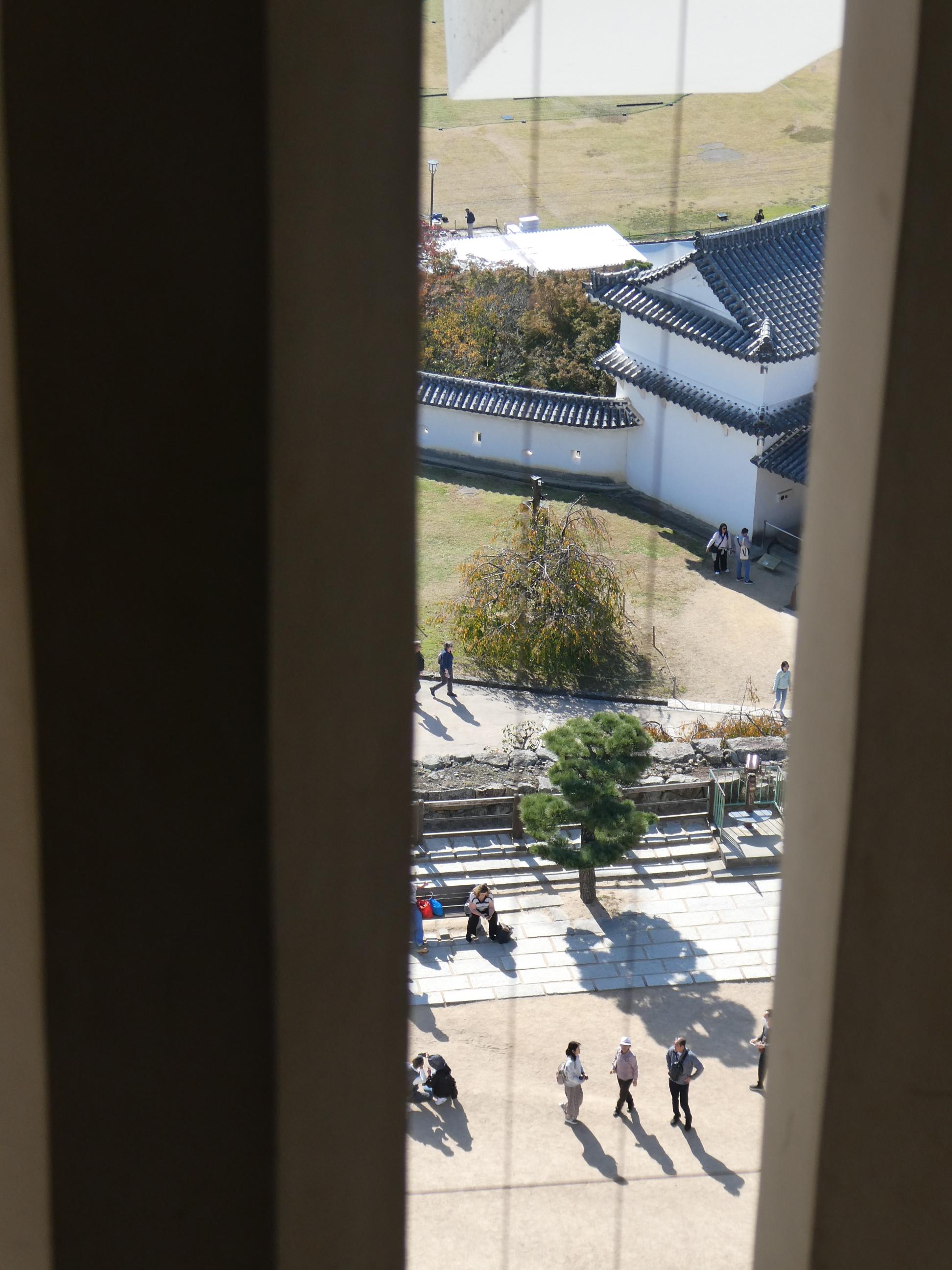
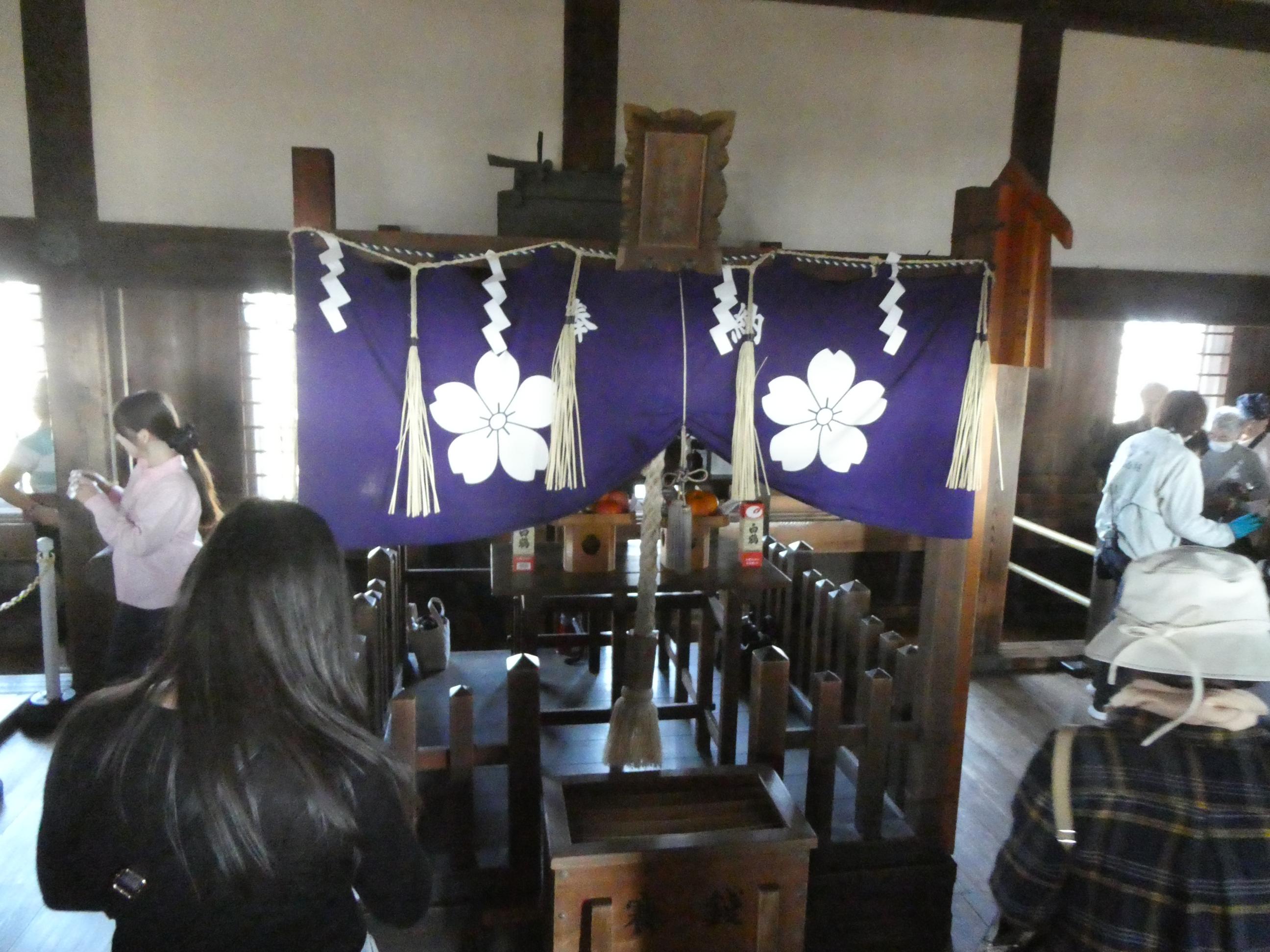
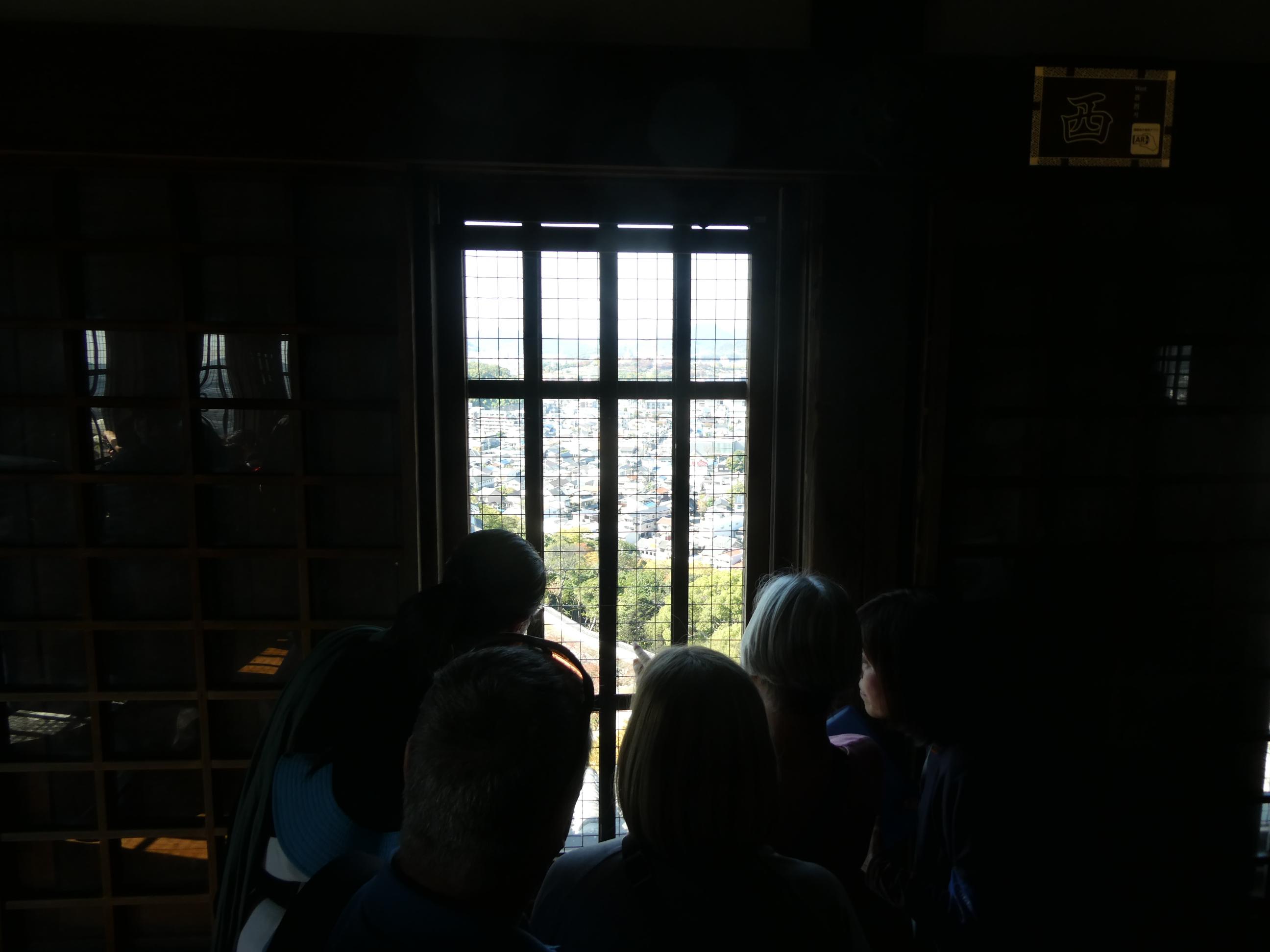
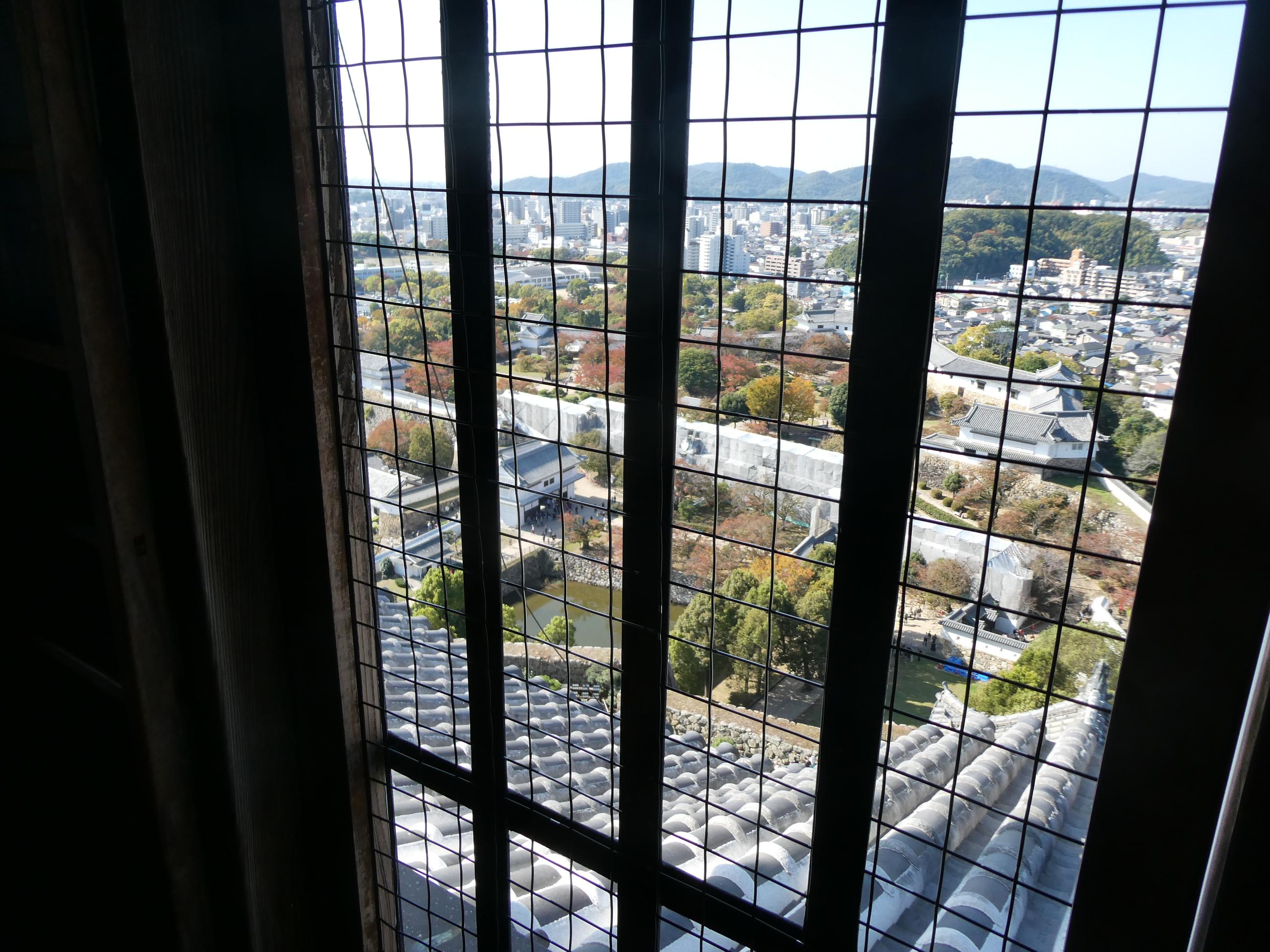
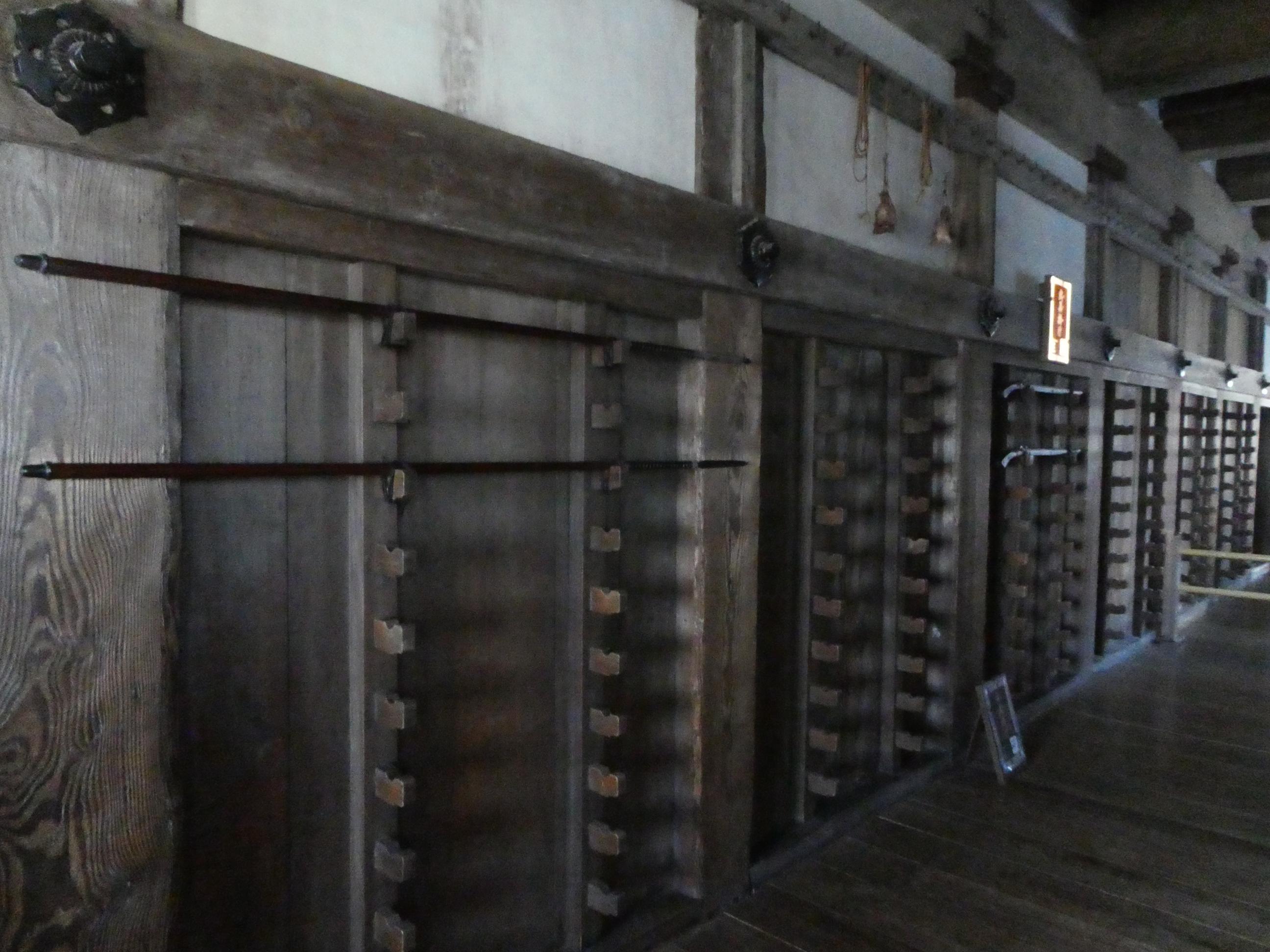
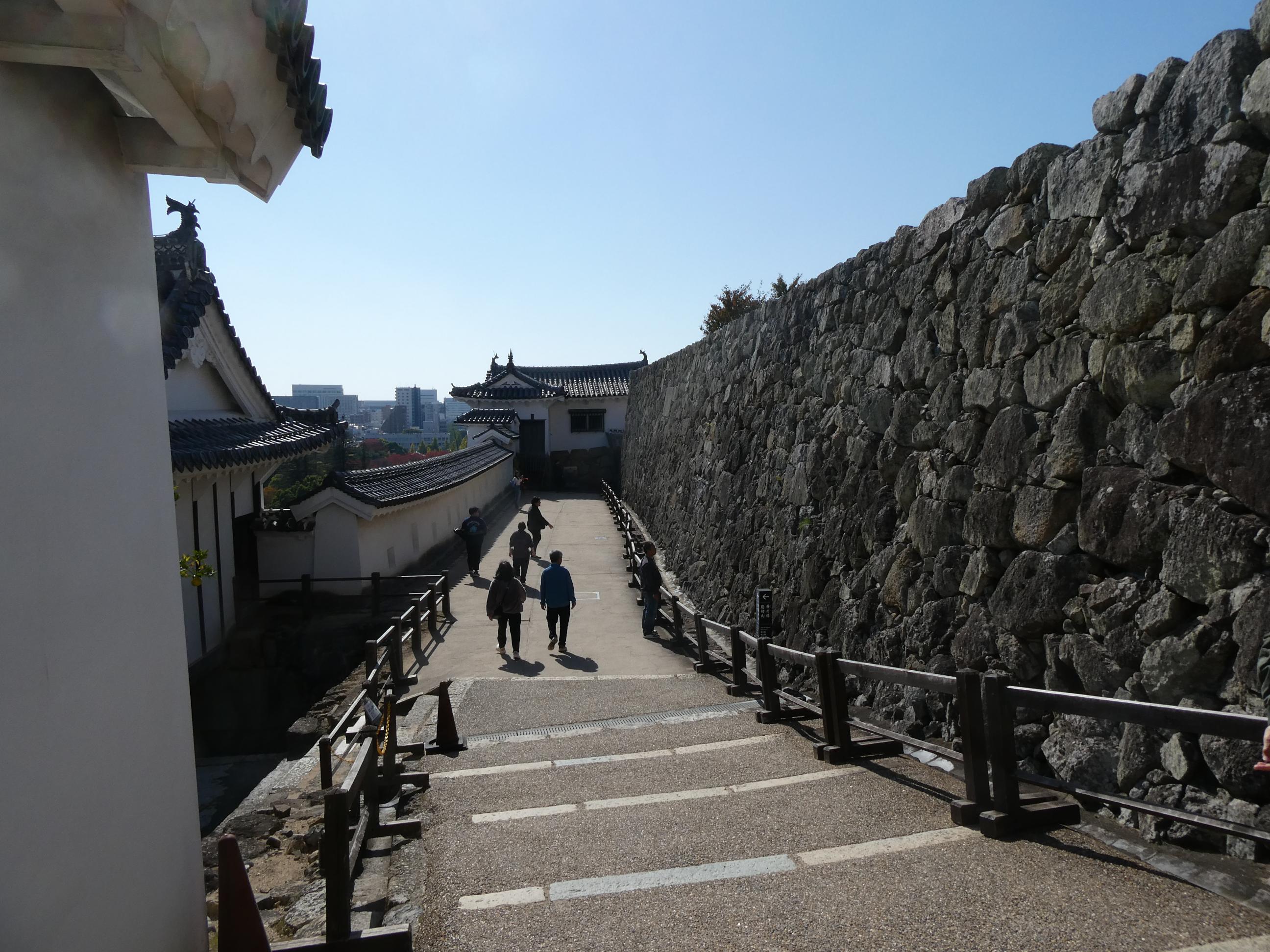
From the moment we stepped inside the keep and began ascending the steep stairs to higher levels, Chizuru pointed out many features that would aid in the defence of the castle. Beyond the mighty stone parapet walls and the series of sturdy gates and watchhouses which protected the keep at all points of entry, multiple design features were incorporated to stop most invaders in their tracks. Just a few examples include fire retardant plaster sealing on the roof tiles, wooden bars to prevent entry and deflect arrows over the windows, rectangular slits in the walls for archers to aim through and triangular slits for gunners, placed at different heights for sitting, kneeling or standing. There were sliding panels to cover stairwells, trapdoors, hidden wall cavities, holes to drop rocks through and many more features I can’t recall. There were secret passageways, hidden entrances, descending paths that were meant to confuse people ascending, and even a hidden storey that cannot be seen from the ground. It was ingenious design, and must have made the castle absolutely impenetrable. The defensive features of the main keep were never put to the test, because Japan entered a time of peace, not long after the keep was built, which lasted over 260 years. Fortunately it was not a target of Allied forces in the closing days of WW2, when many of Japan’s major cities suffered heavy bombing.
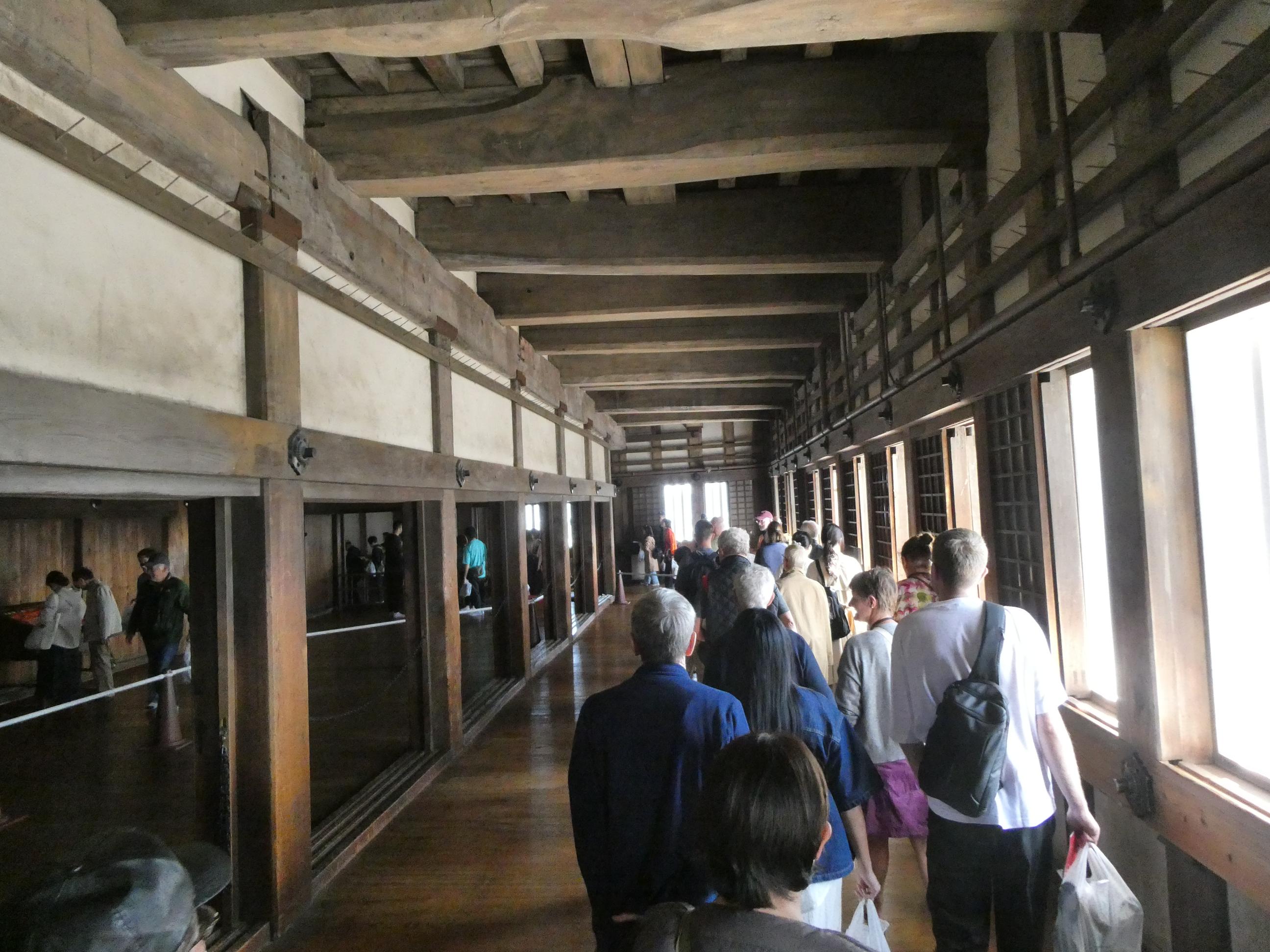
It took us quite some time to ascend to the top storey, mostly due to the huge Saturday crowd, but also because Chizuru frequently stopped us to point things out, explain design features and answer our questions. Coming back down the steep stairs took less time. We probably spent an hour in there and it was very, very interesting.

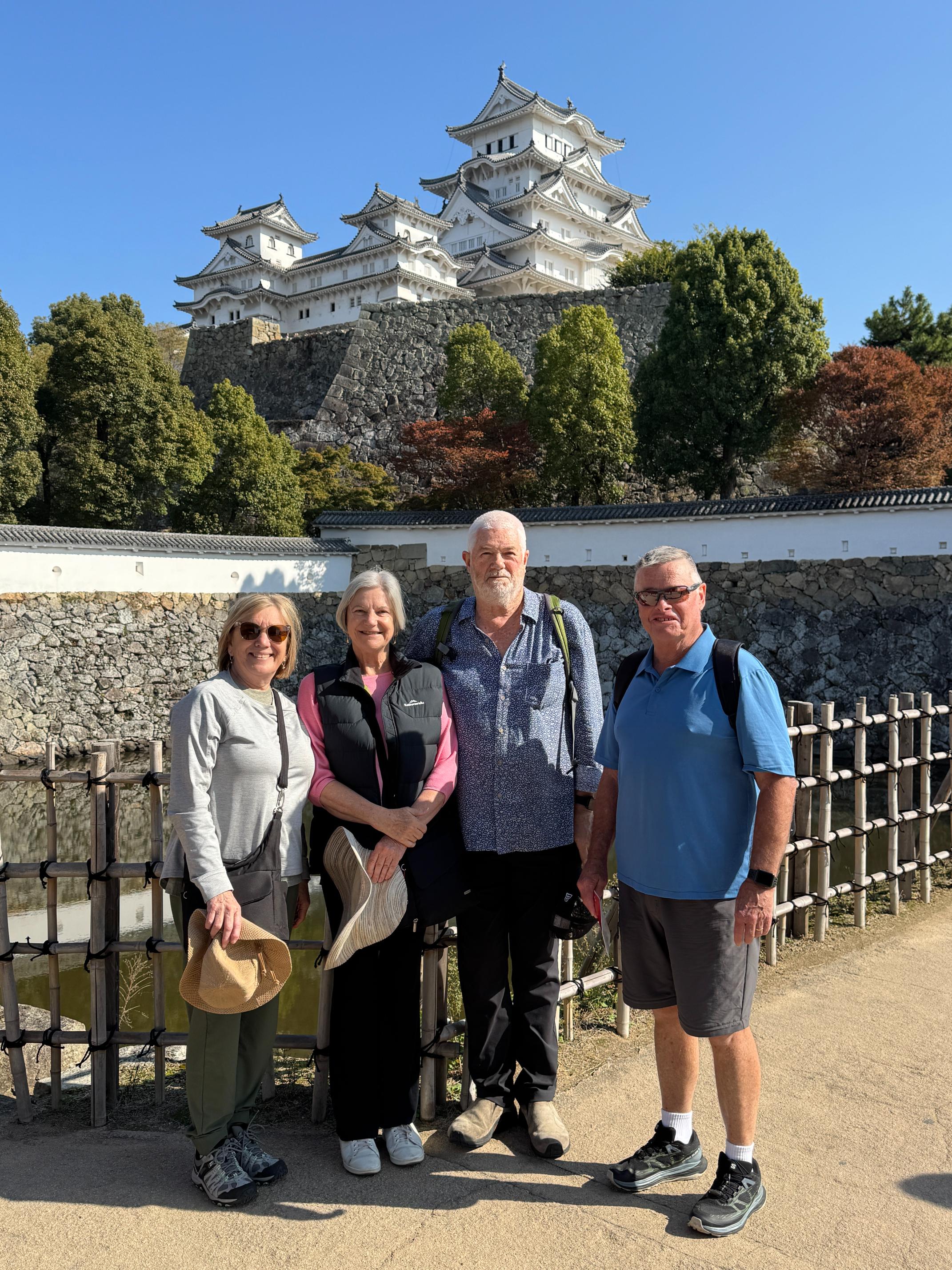
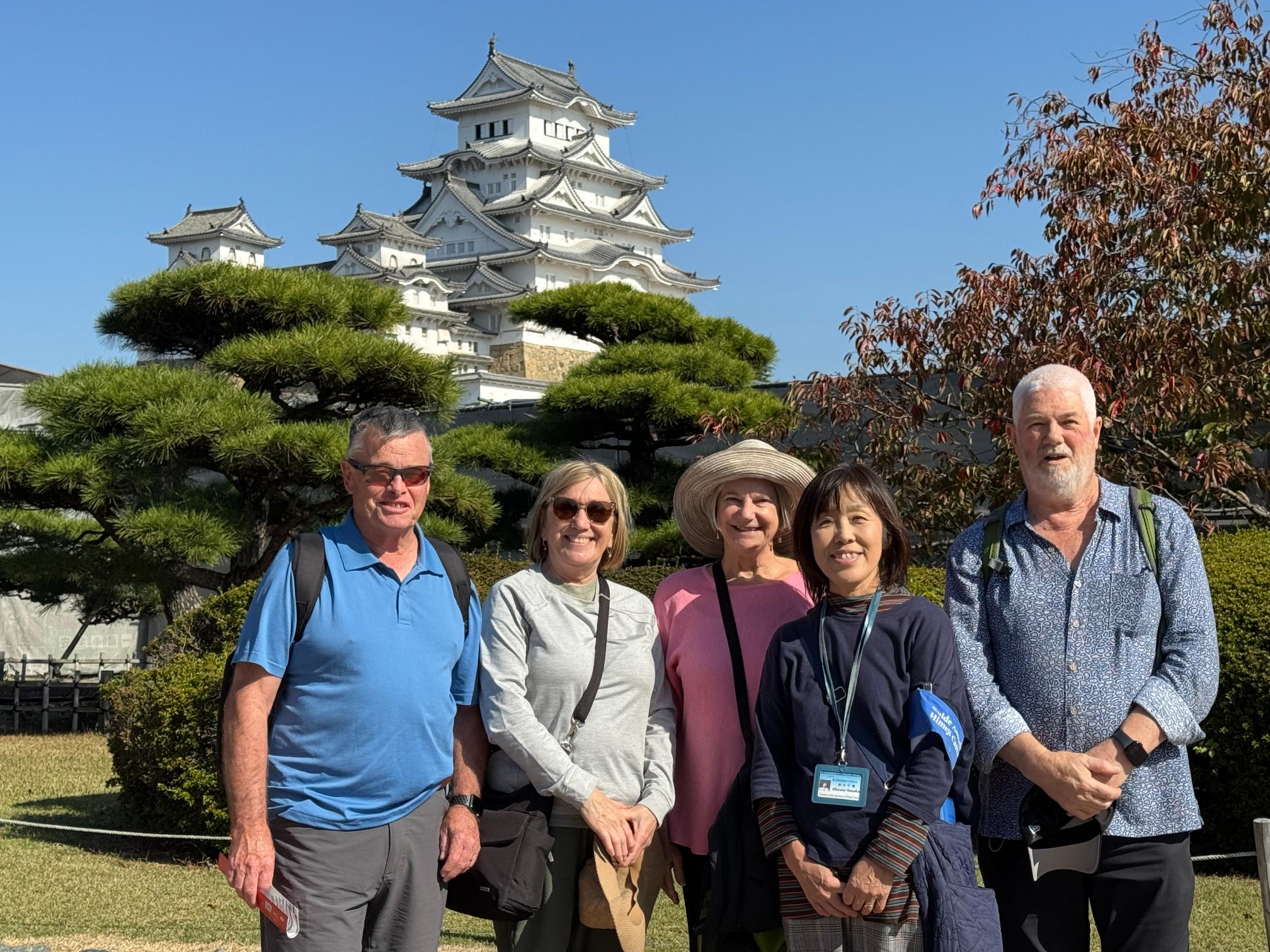
Back out in the fresh air again, we stopped for a photo with Chizuru. She offered to continue on with us through other parts of the complex, but we thought she needed a break. We thanked her and posed for a photo with her. I kept a note of her name, so I could record in this blog how grateful we were for her wonderful voluntary service.
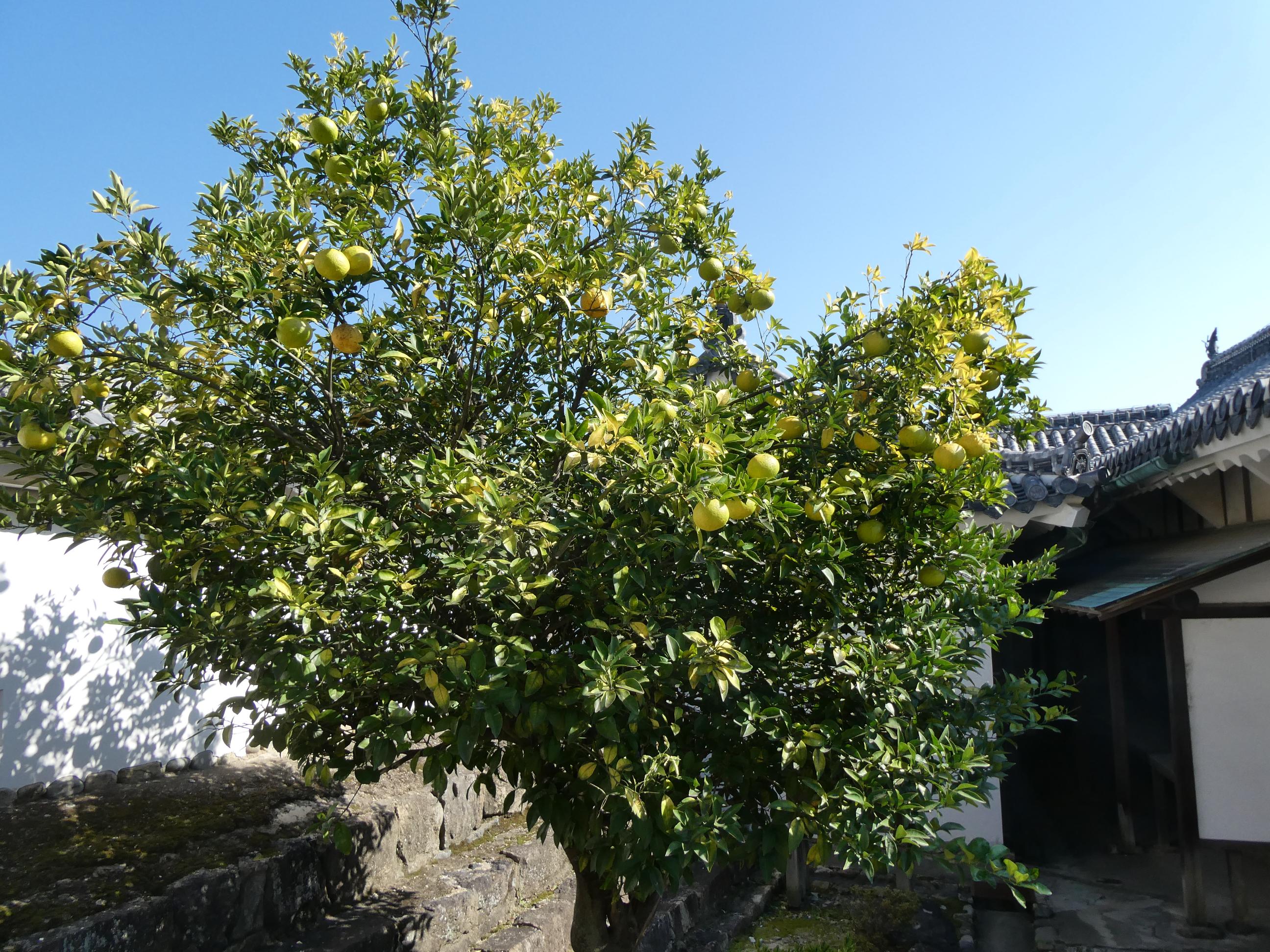
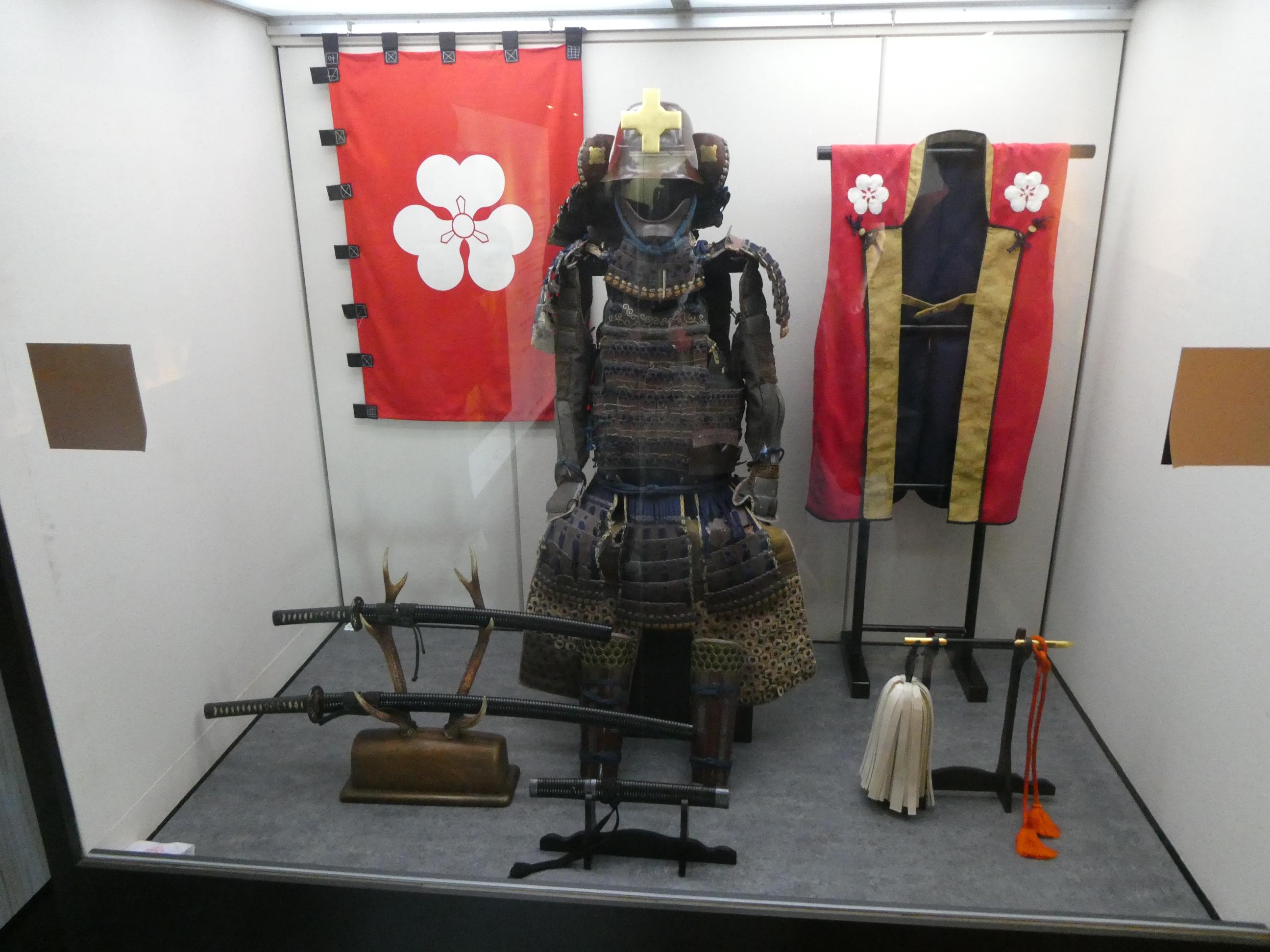
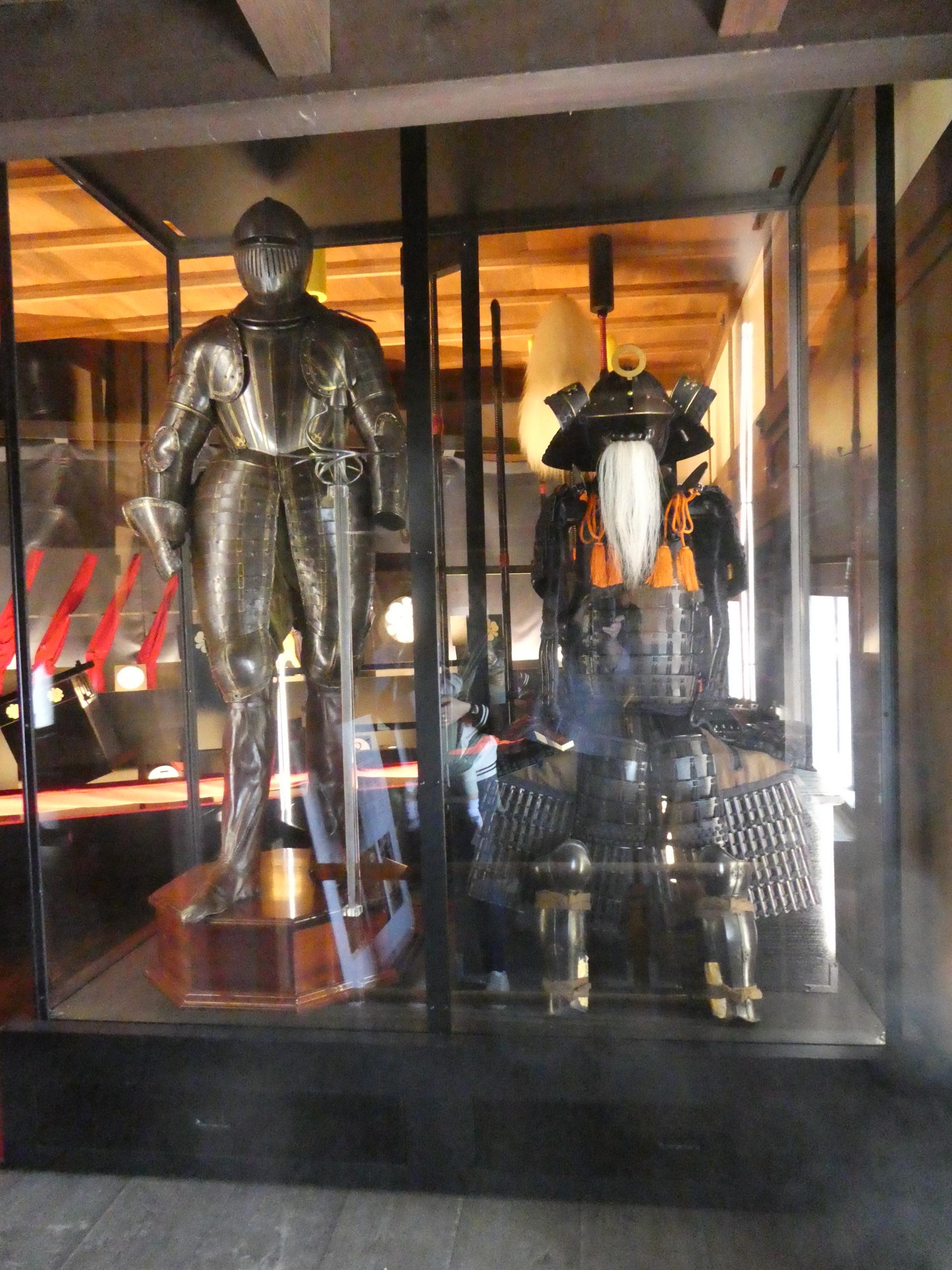
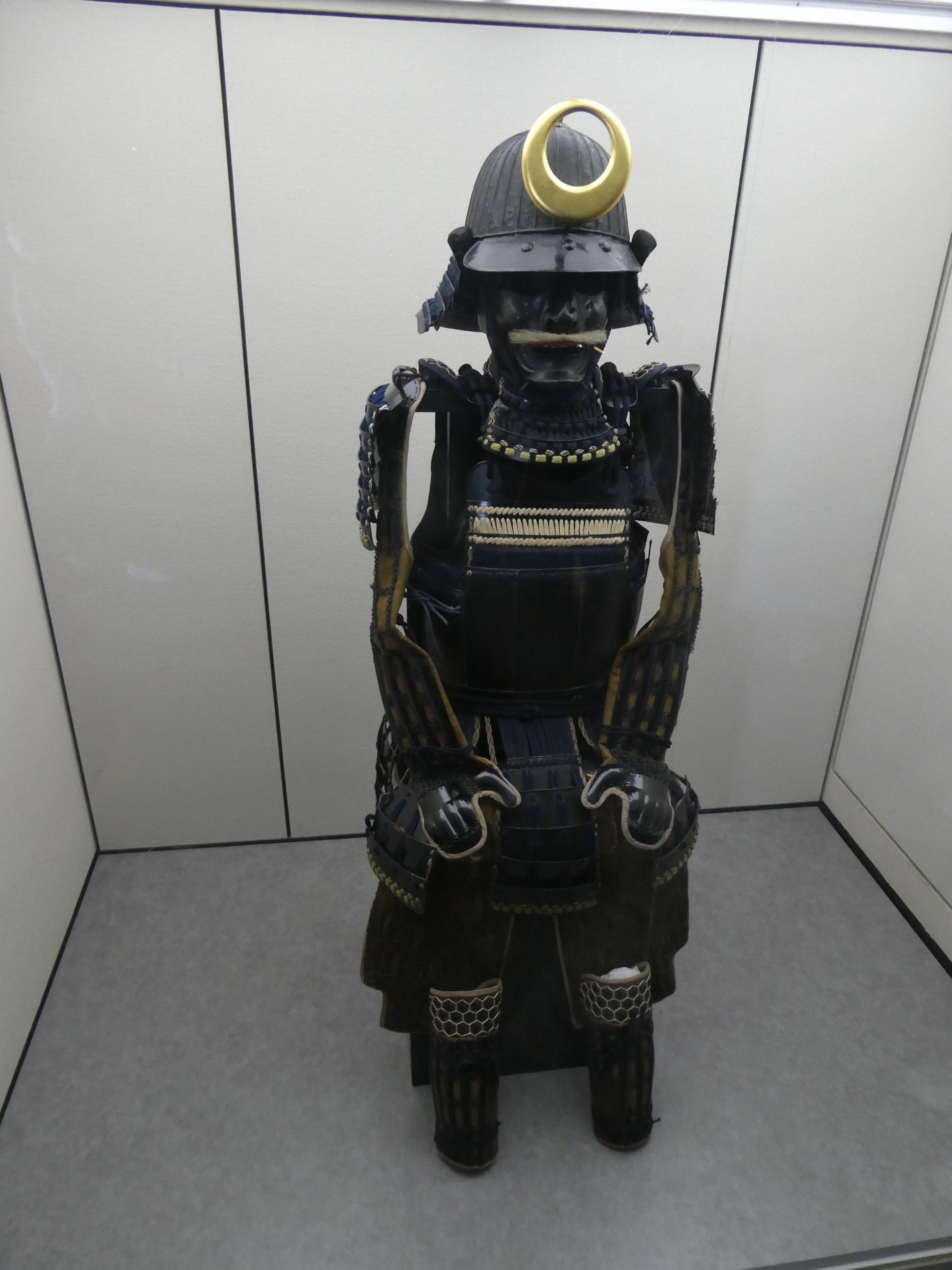

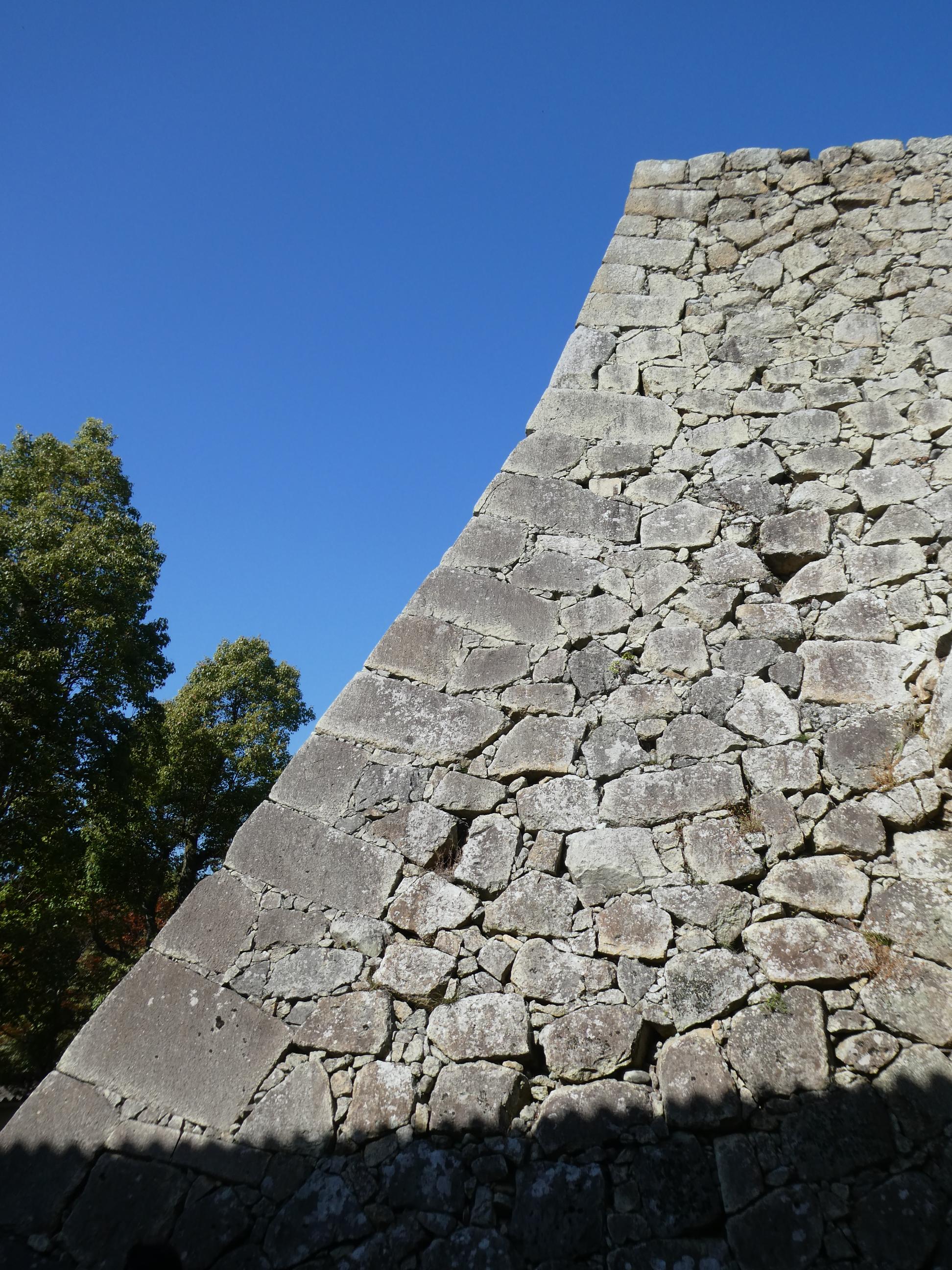
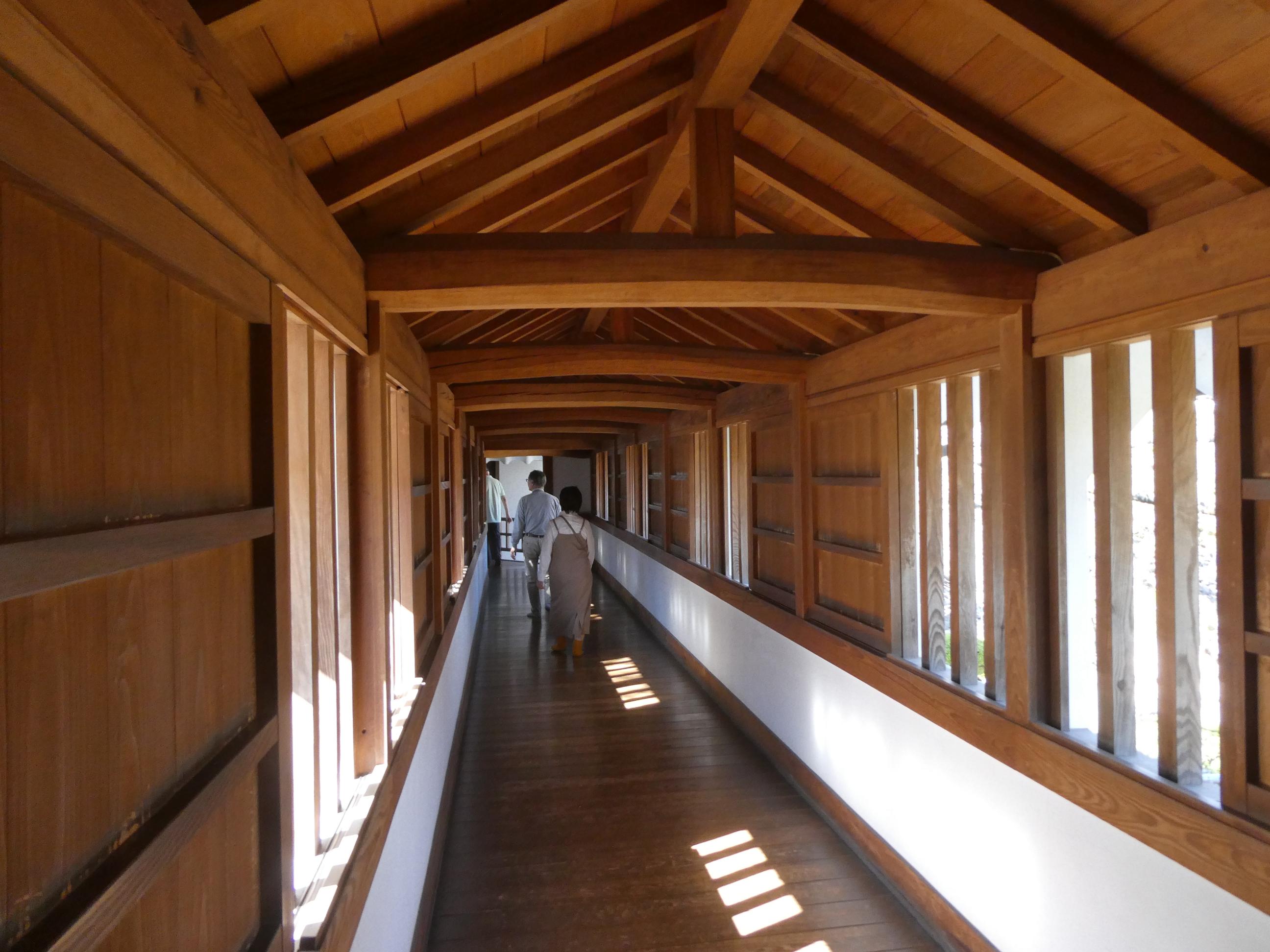
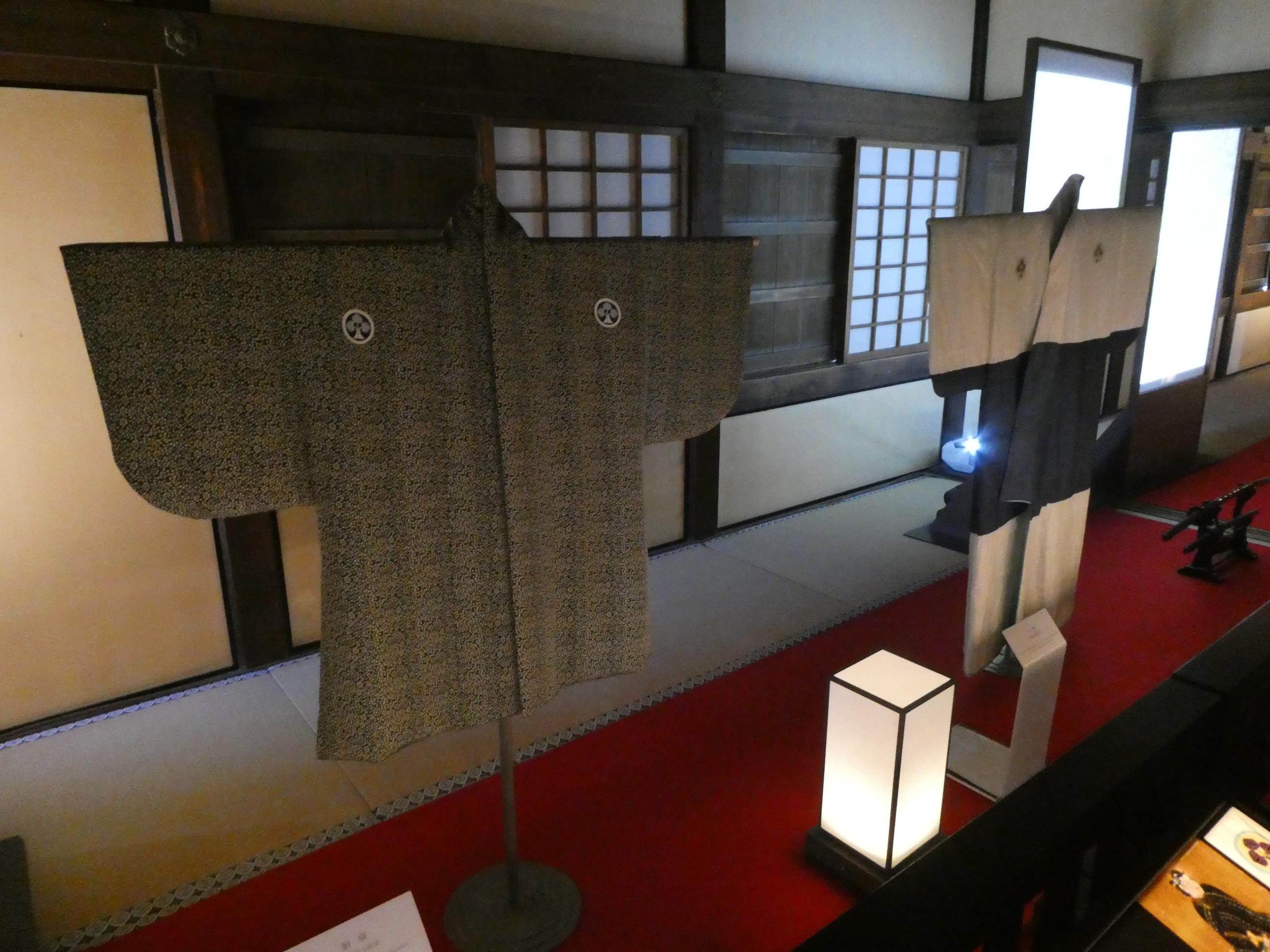

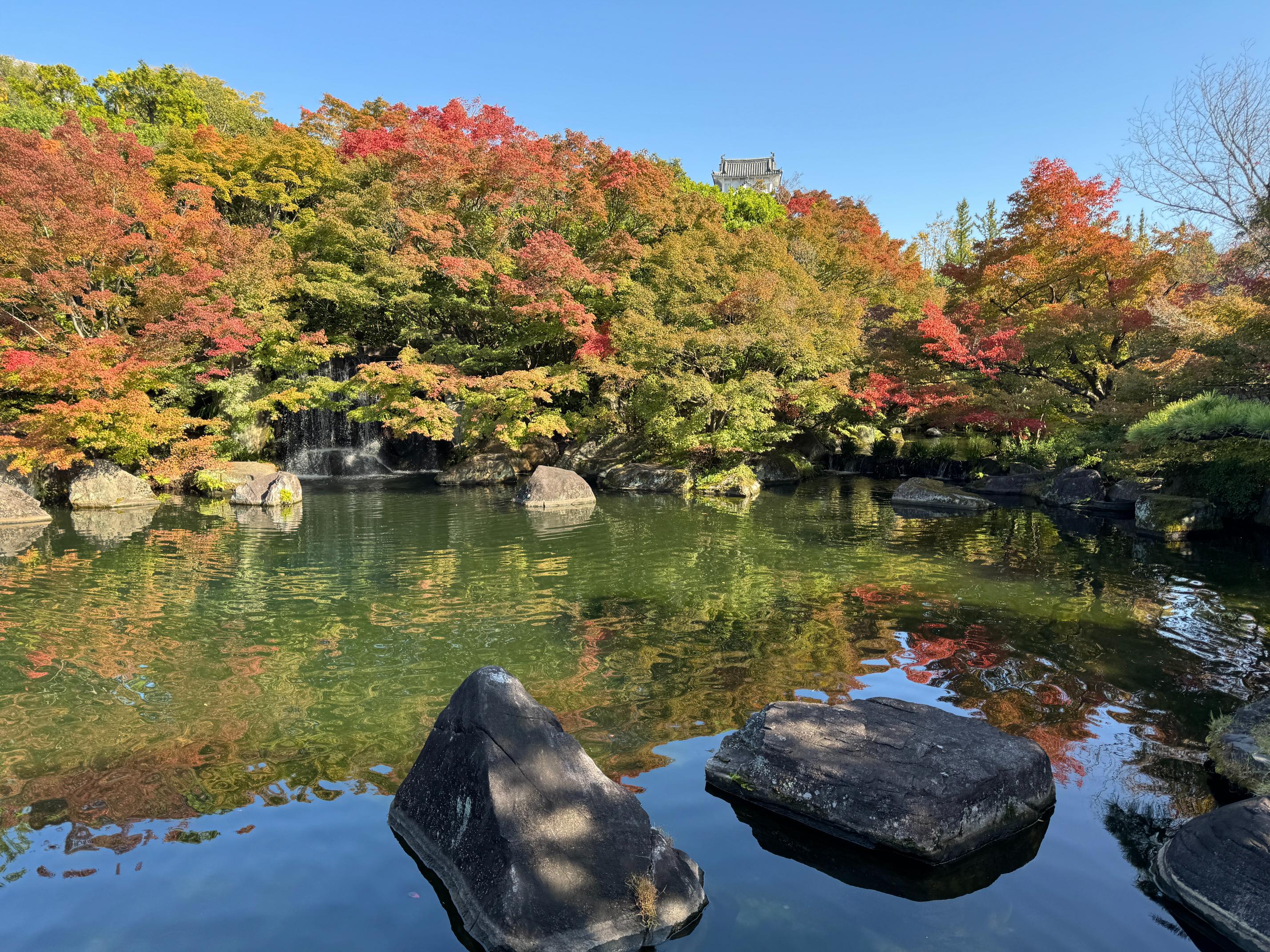
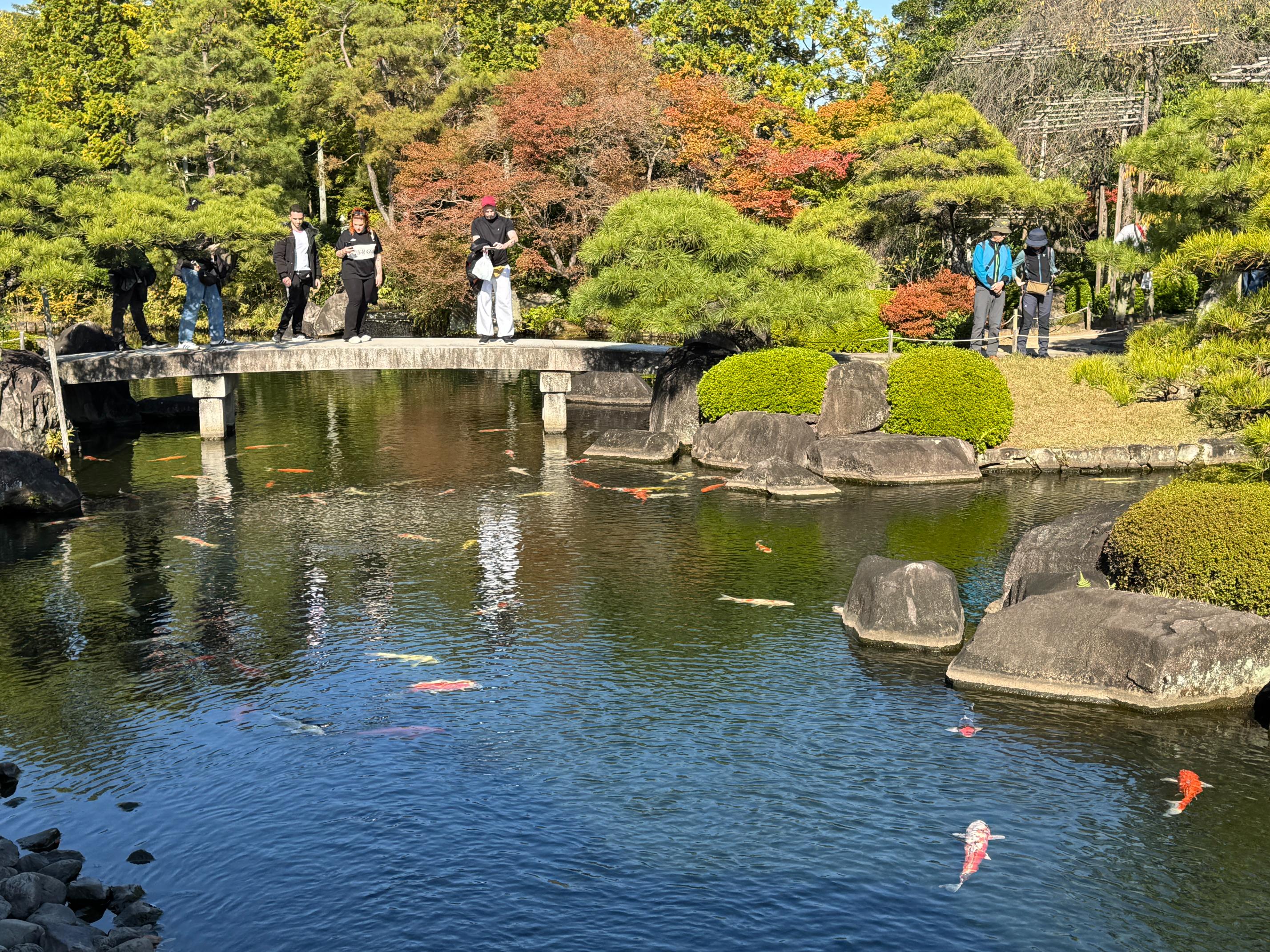
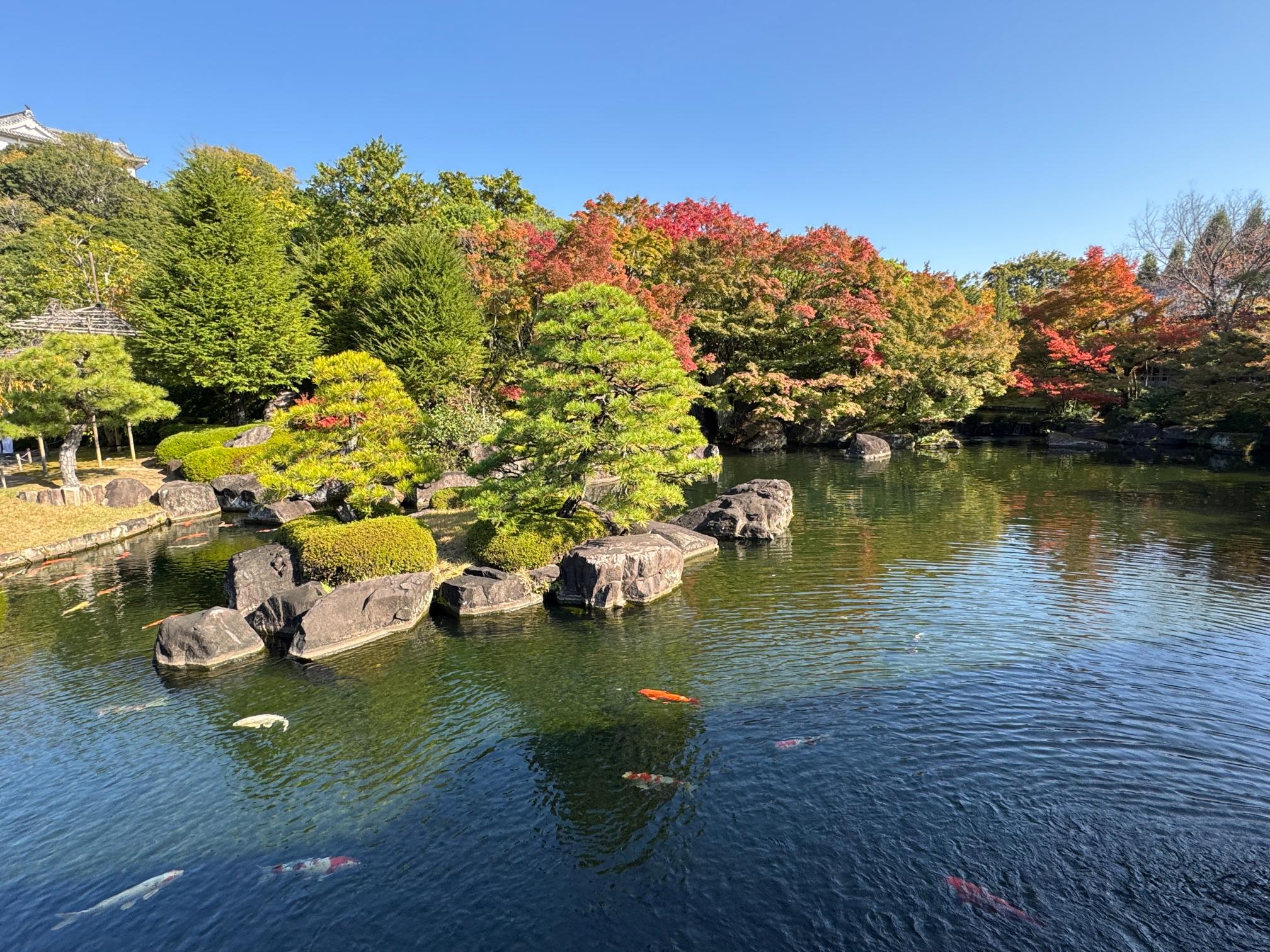
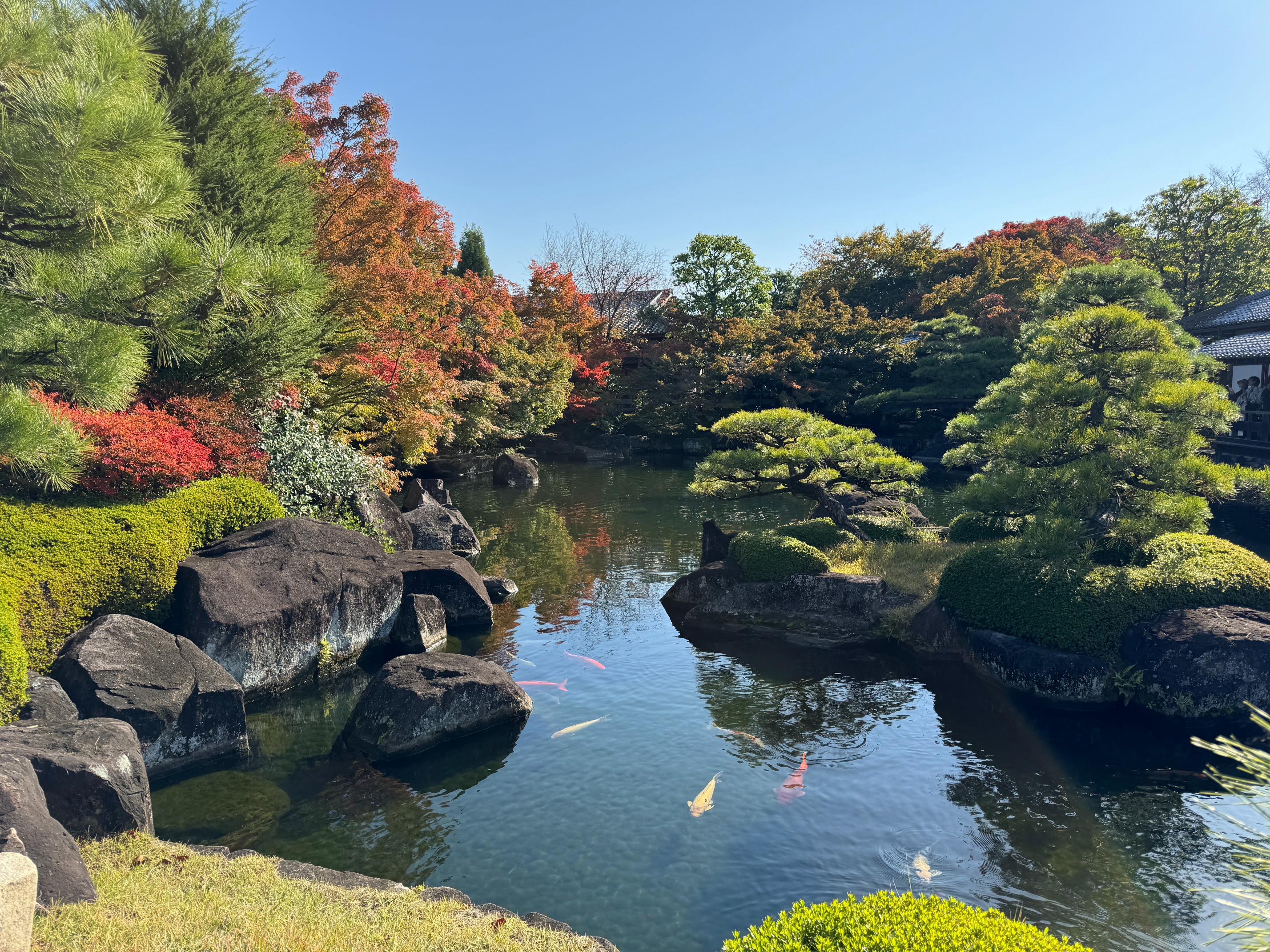
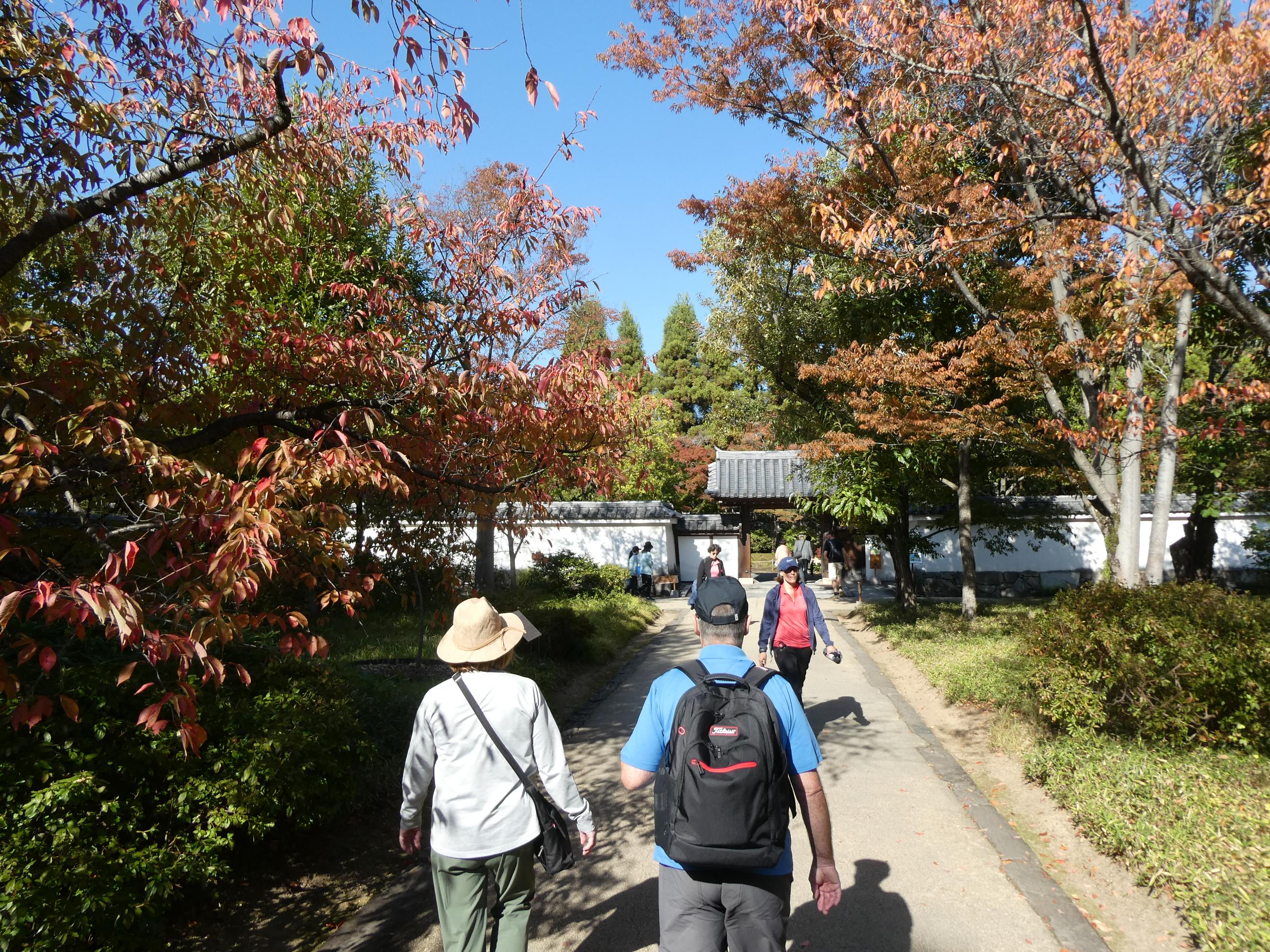
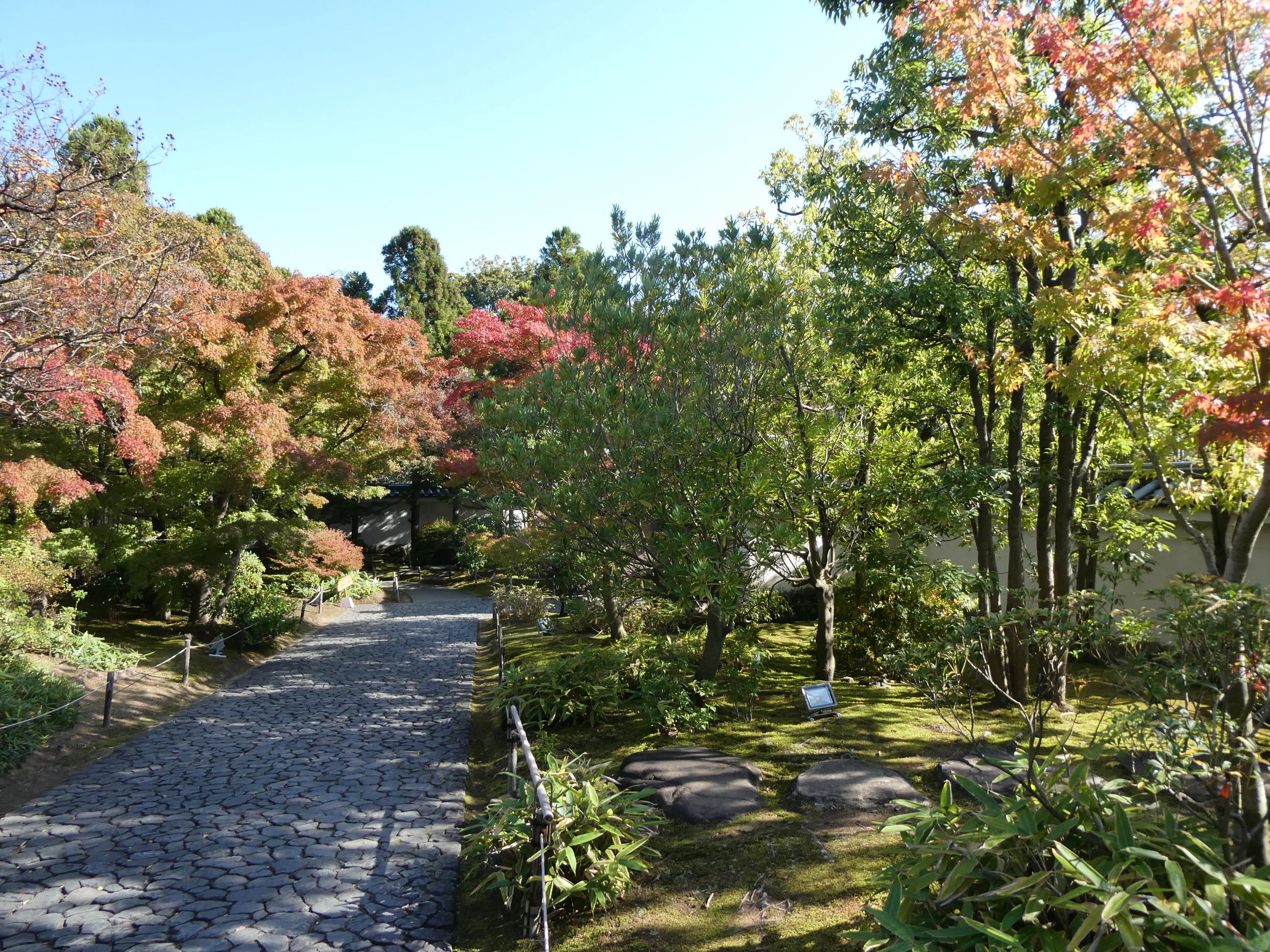
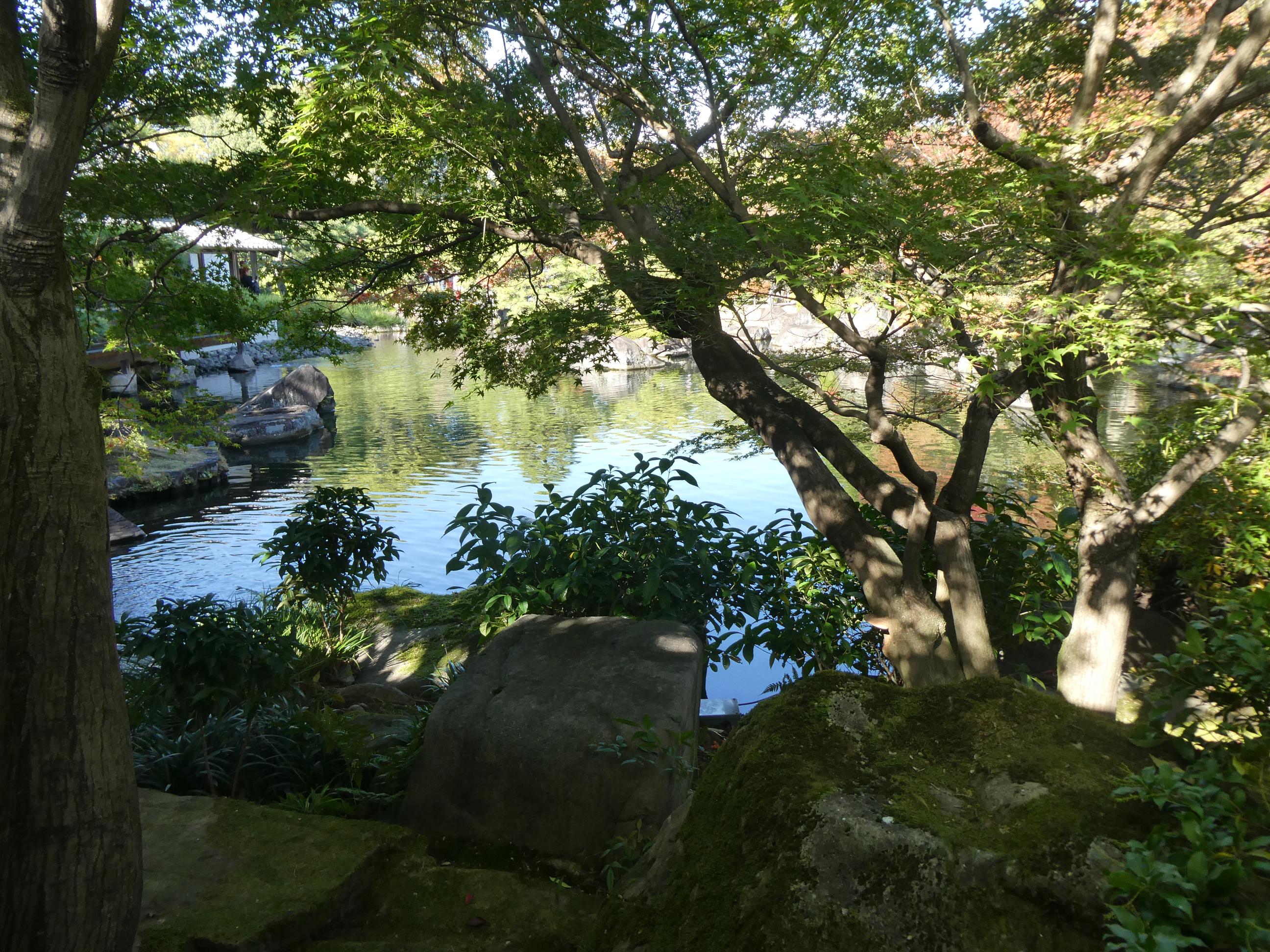
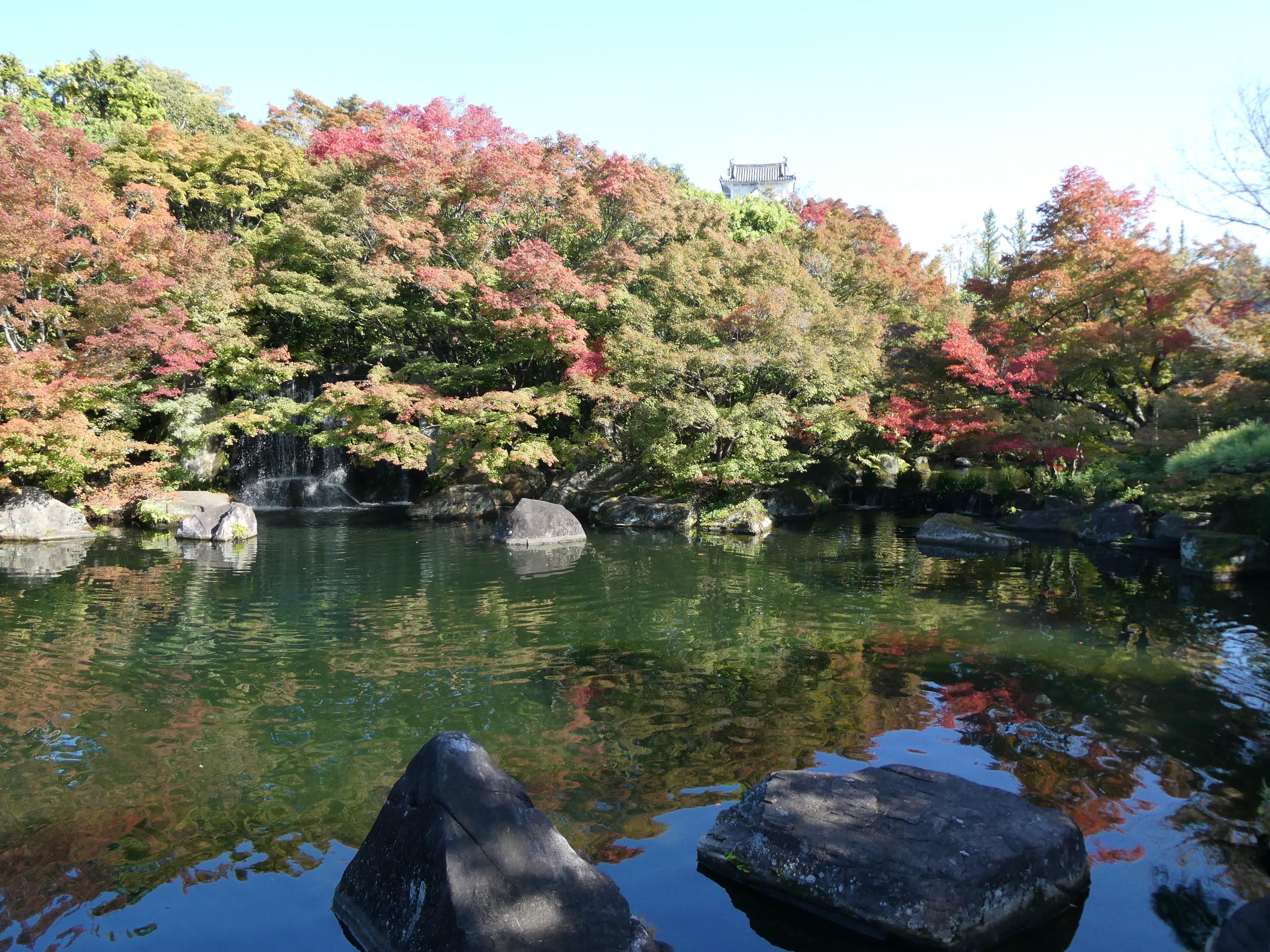
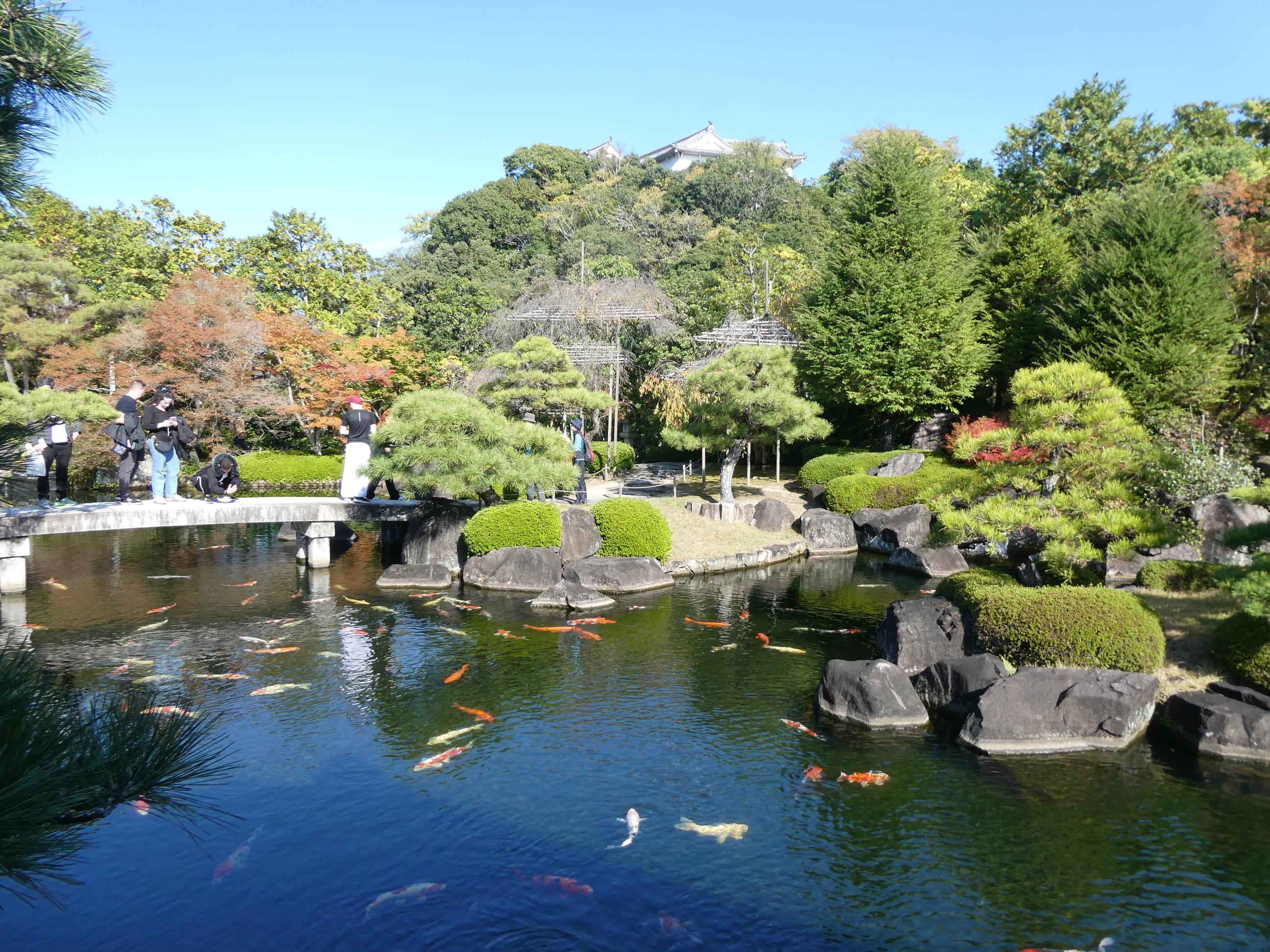
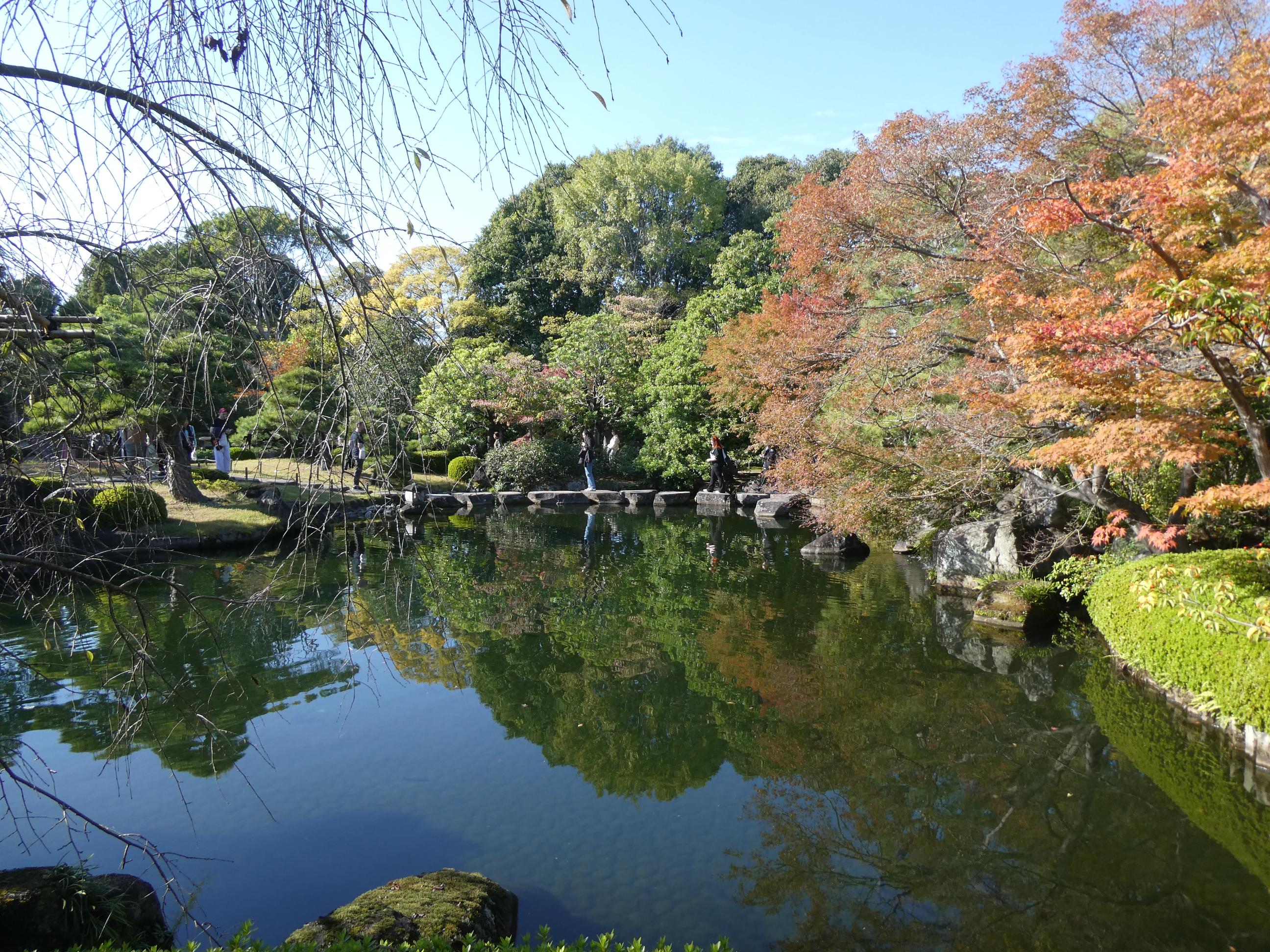
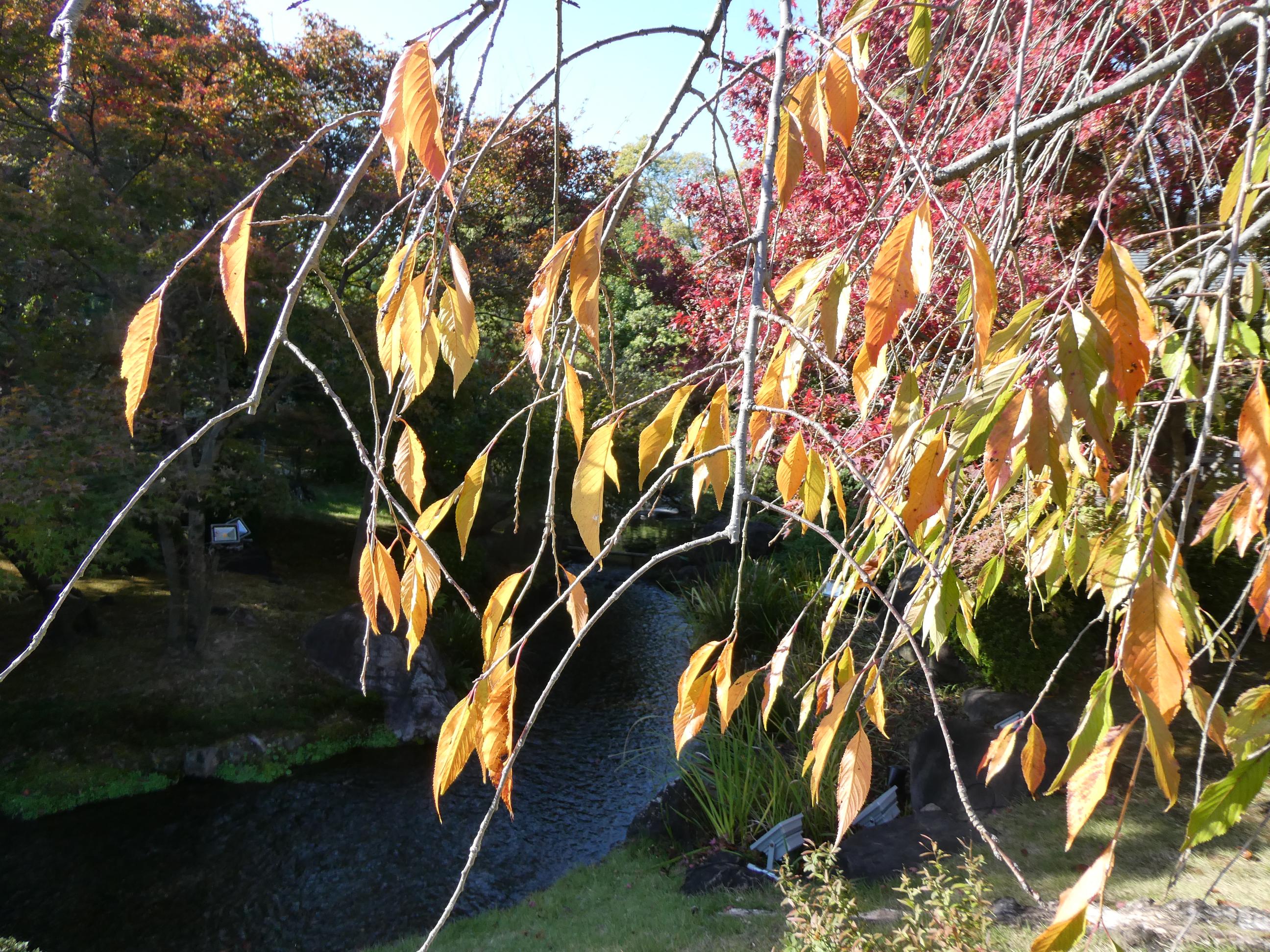
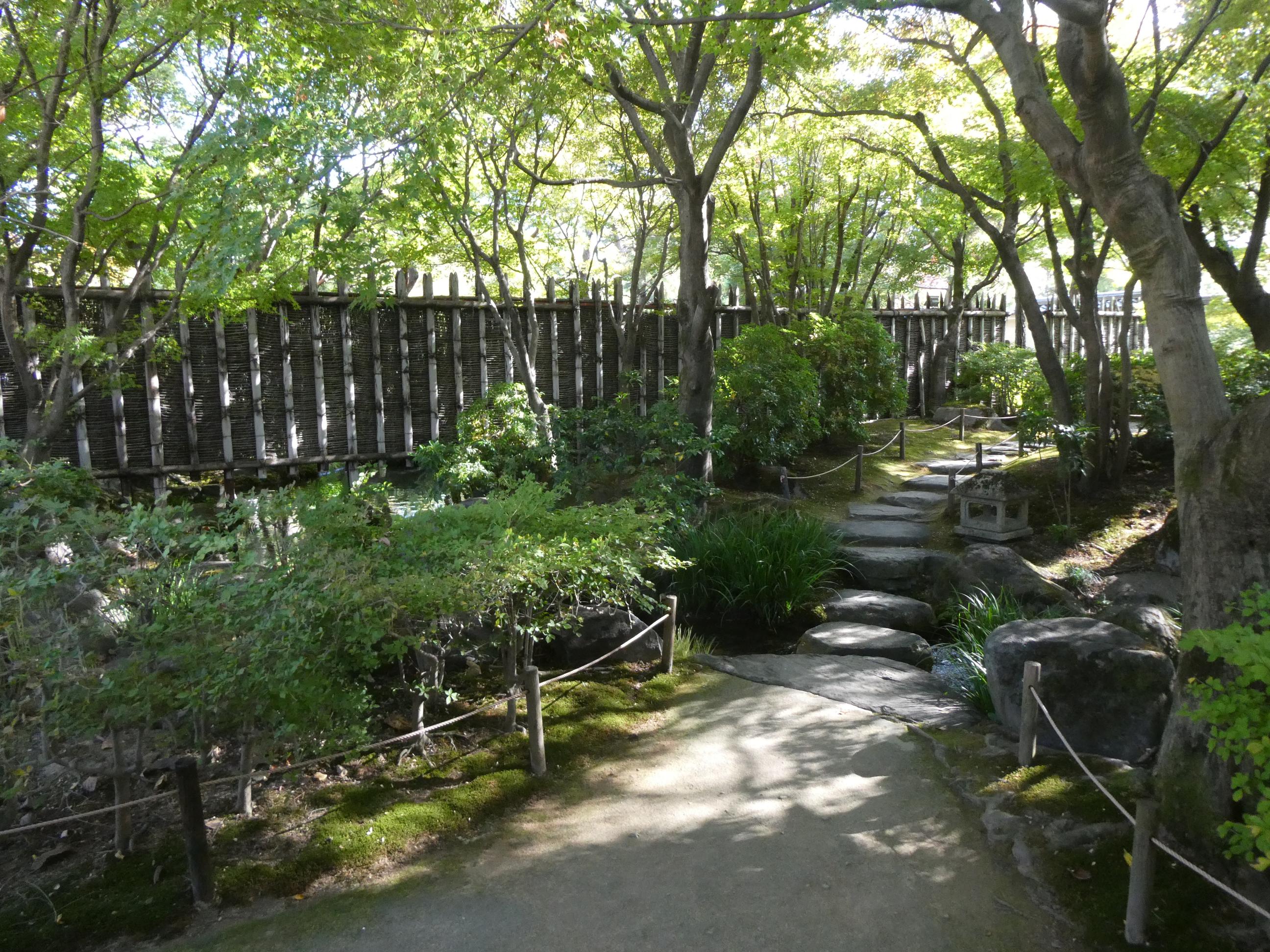
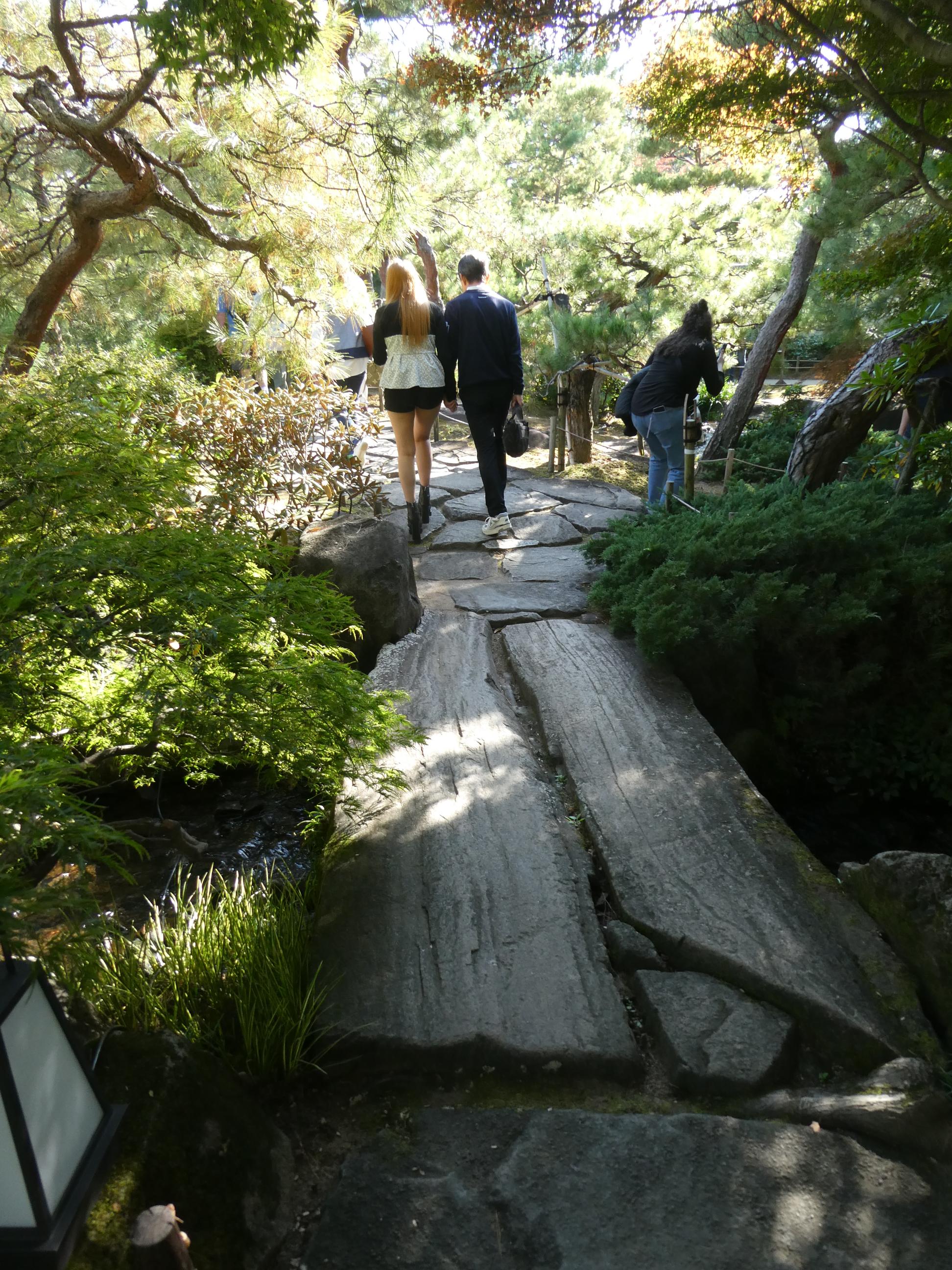
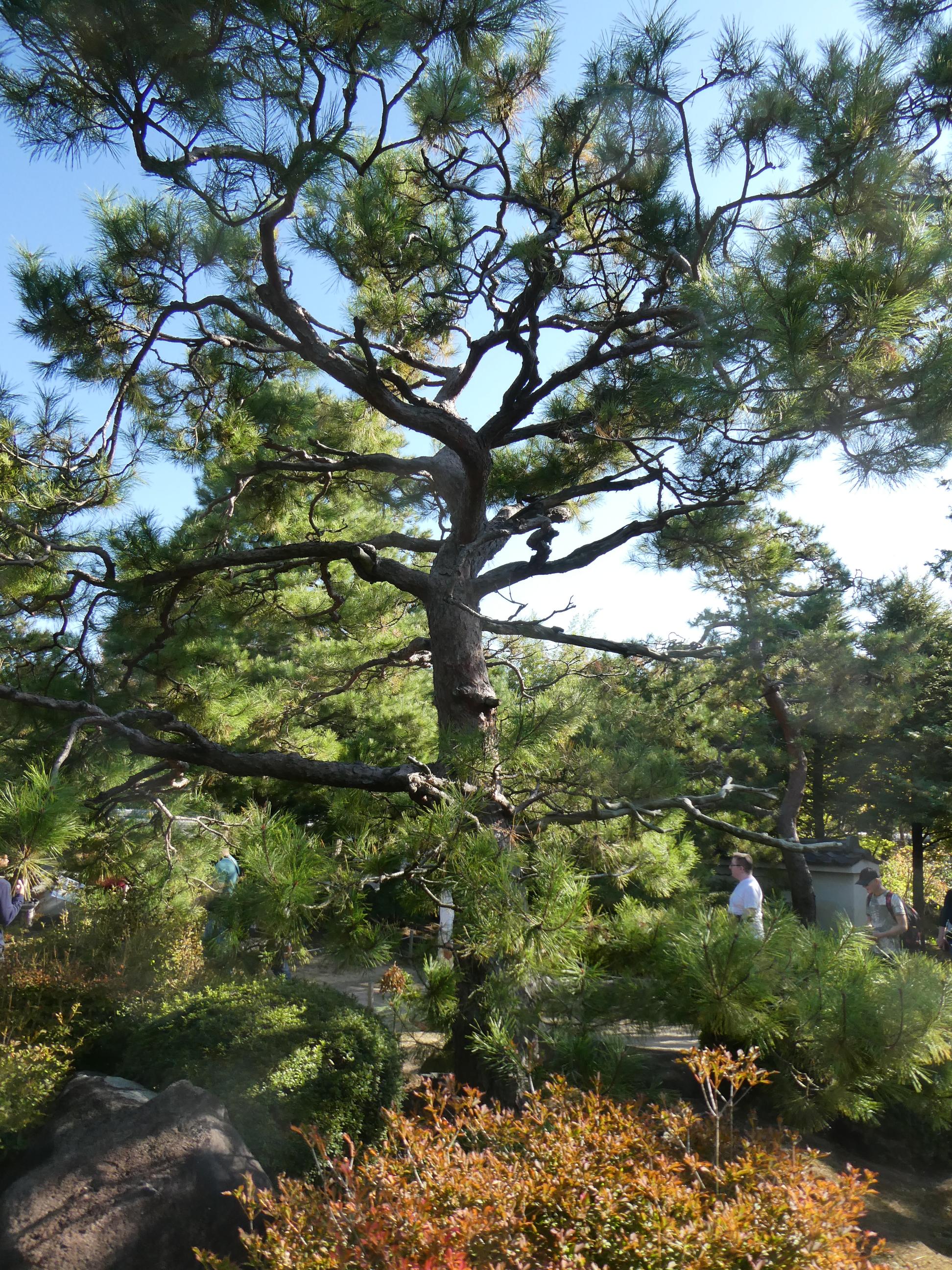
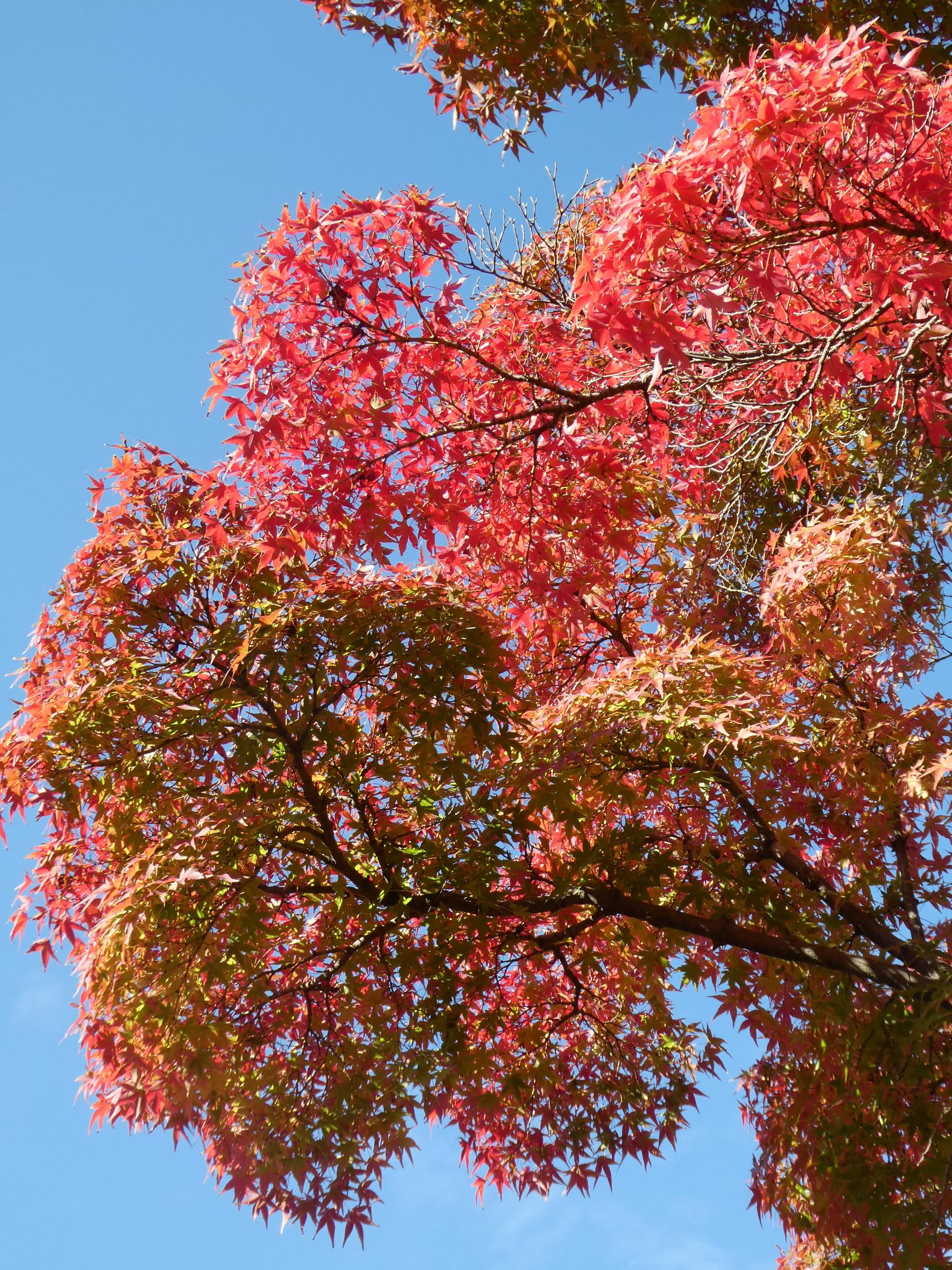
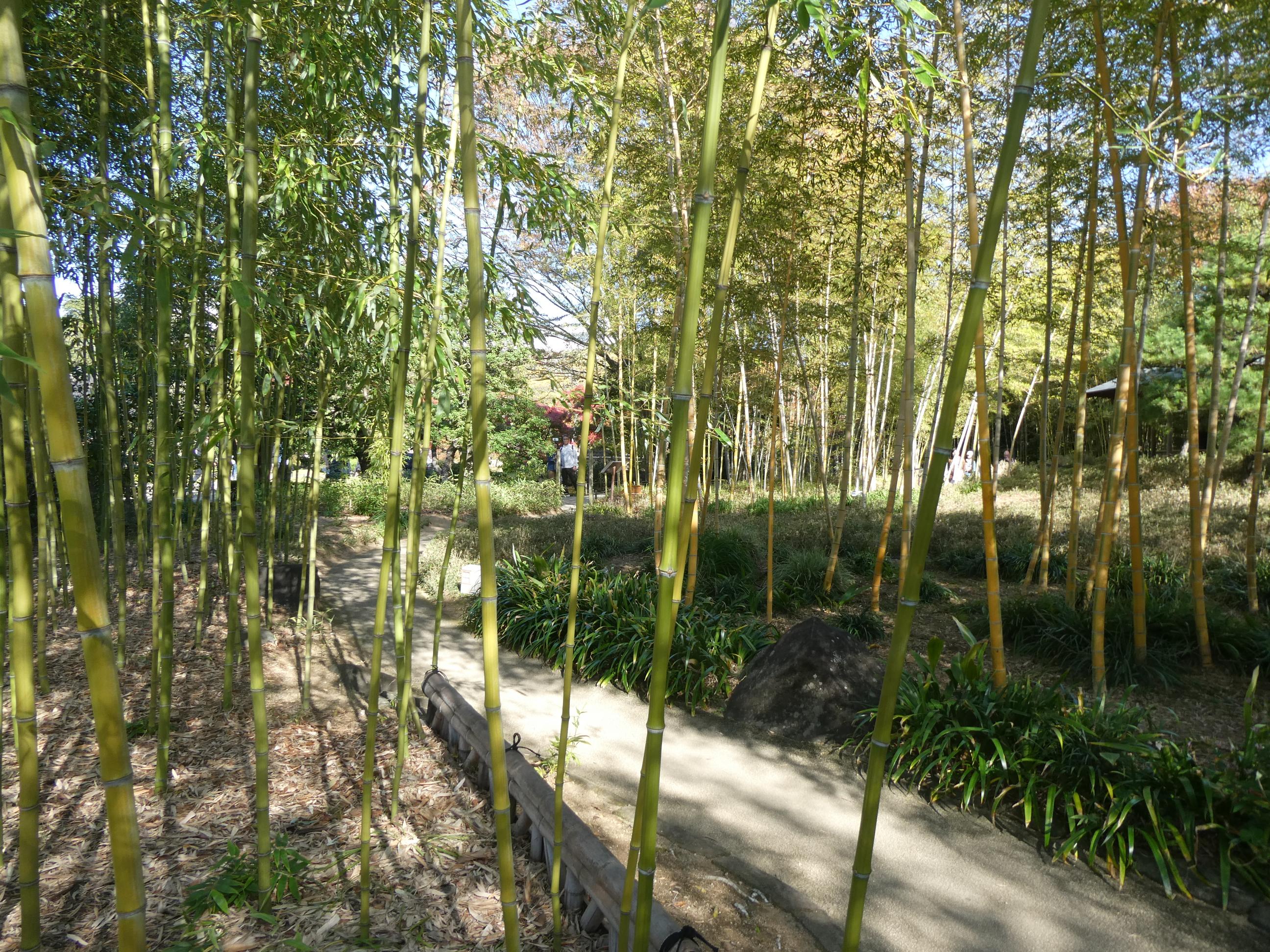
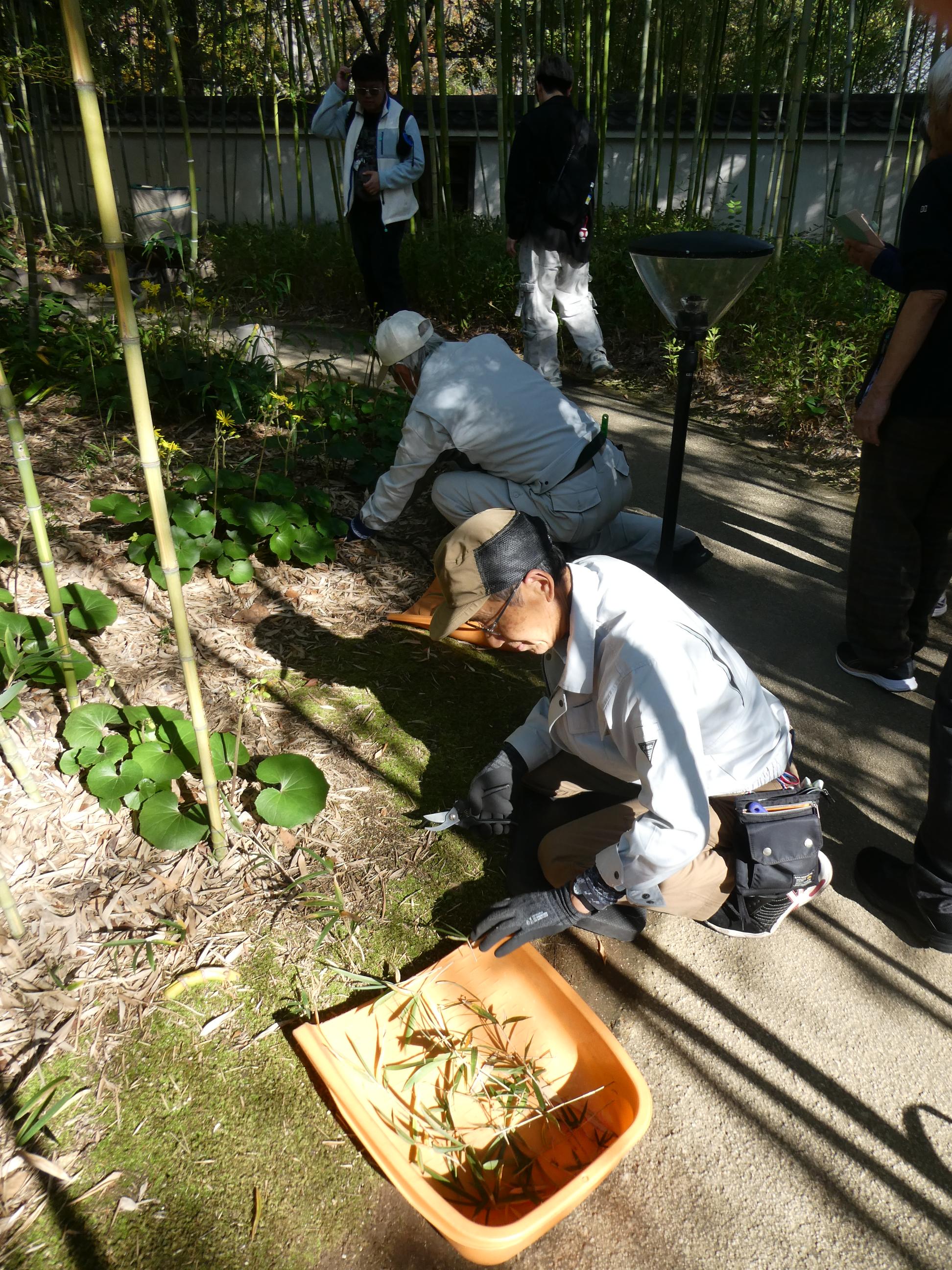
Adjacent to the castle grounds, on the other side of the moat, was the Koko-En Garden, a garden of the Western Residence of Himeji Castle. The garden was divided into nine (I think) different sections – the bamboo grove, the seedlings, the flat landscape etc. We wandered through all of them, enjoying the aesthetic design features Japanese landscape designers seem to love so much – stepping stones, winding paths, koi ponds, trickling water, manicured pines, areas of light and shade, contrasting colours and so on. I think this is the fifth garden we’ve visited in Japan and it’s definitely one of my favourites. Eventually we left. It was after 1.30 pm and I was hungry.


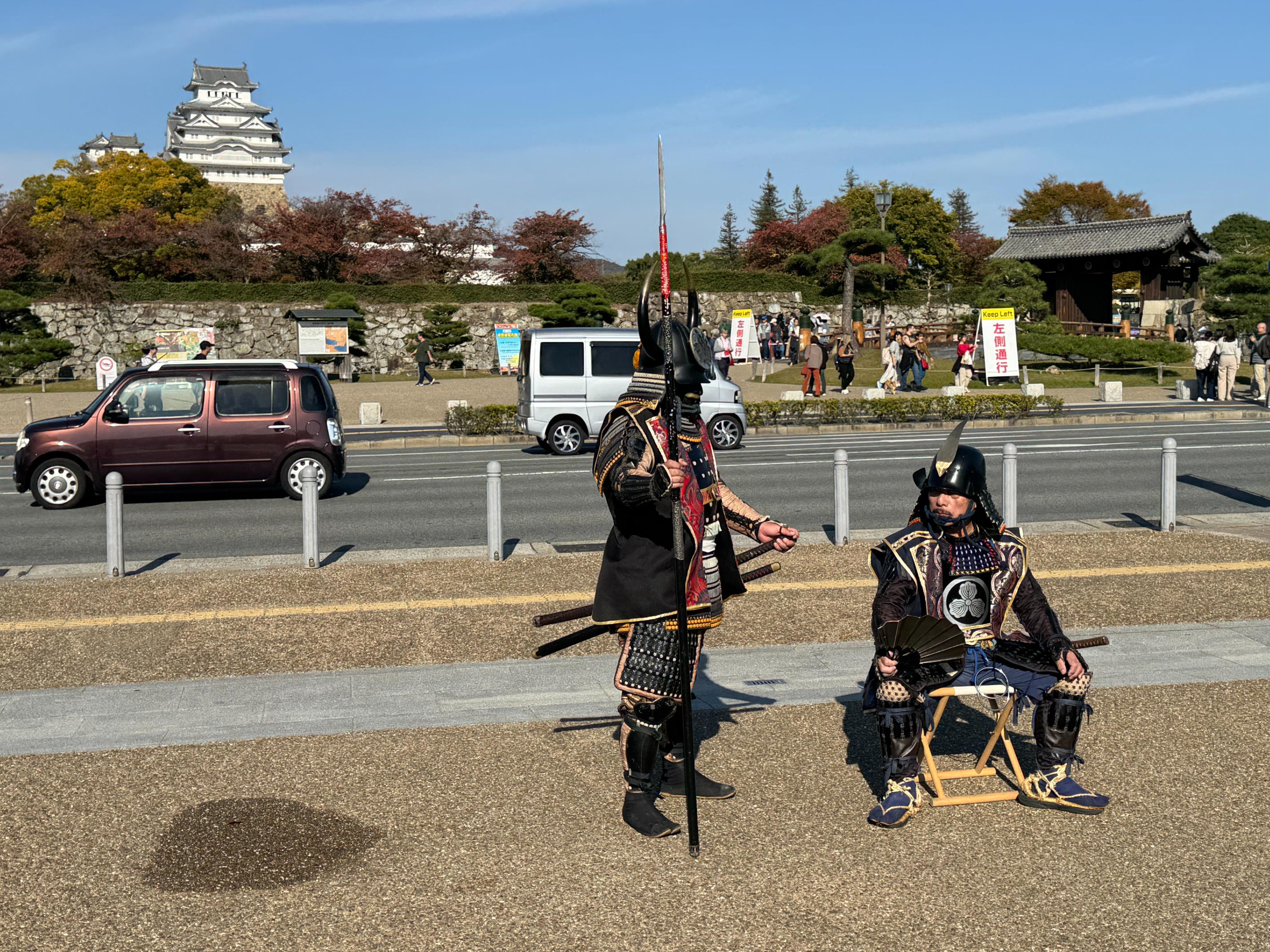
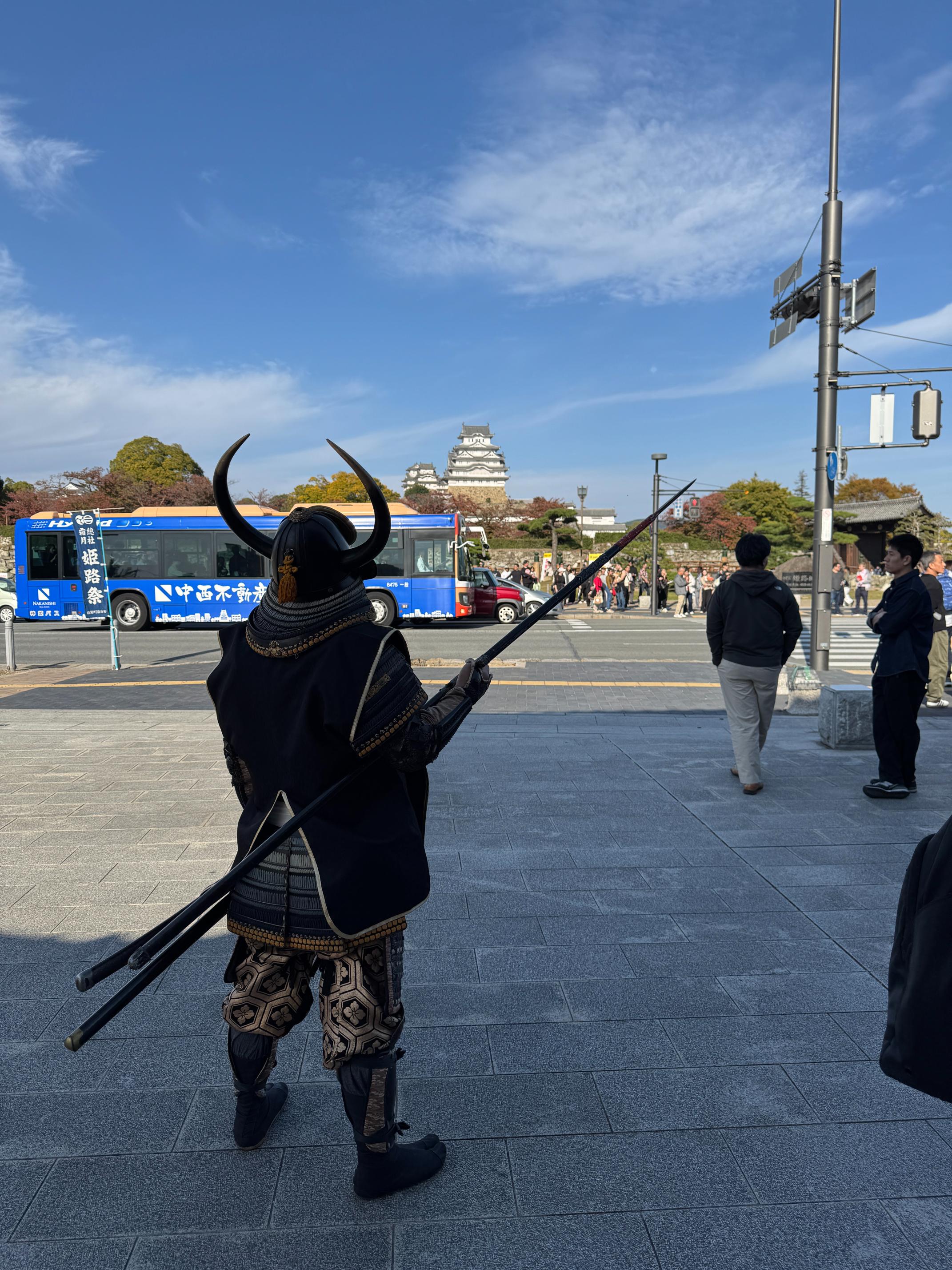
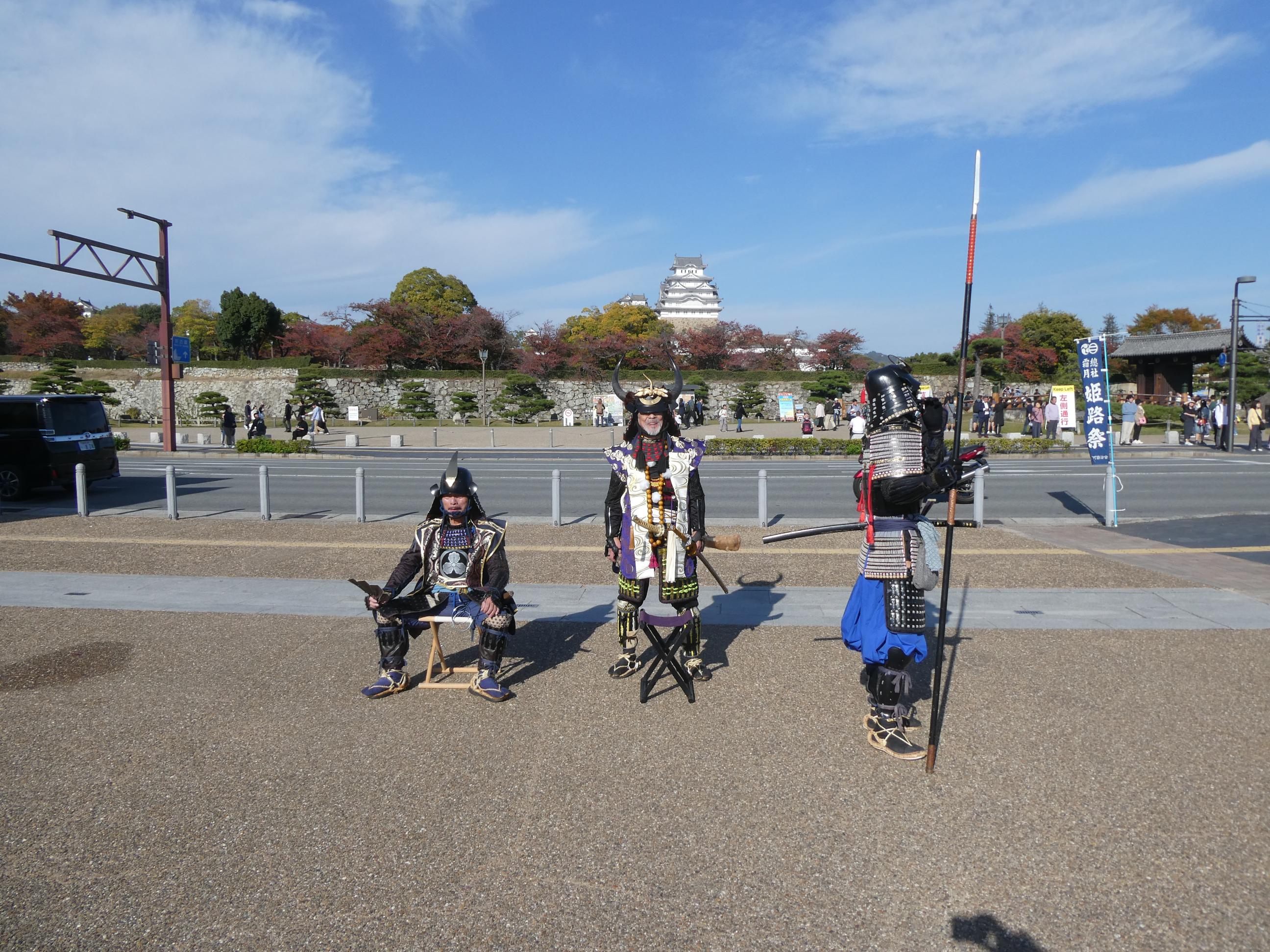
There were some food vendors serving street food across the road. I had a beef bun, which was rather good, and we all had ice creams. I just caught the tail end of these Samurai warriors as they posed for photos and hammed it up for the tourists. And, they didn’t hold their hands out for money afterwards. That’s been very refreshing over here.

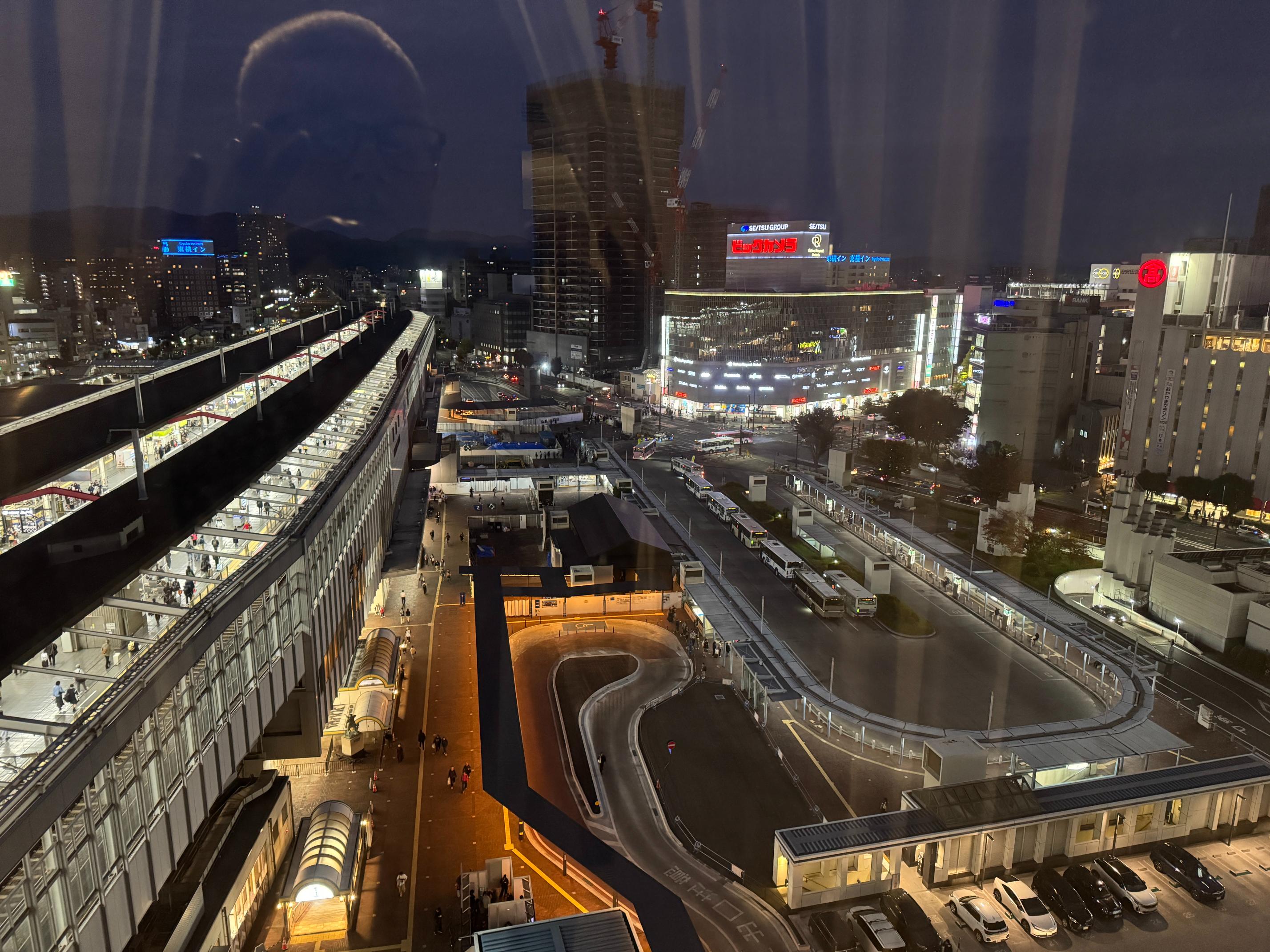
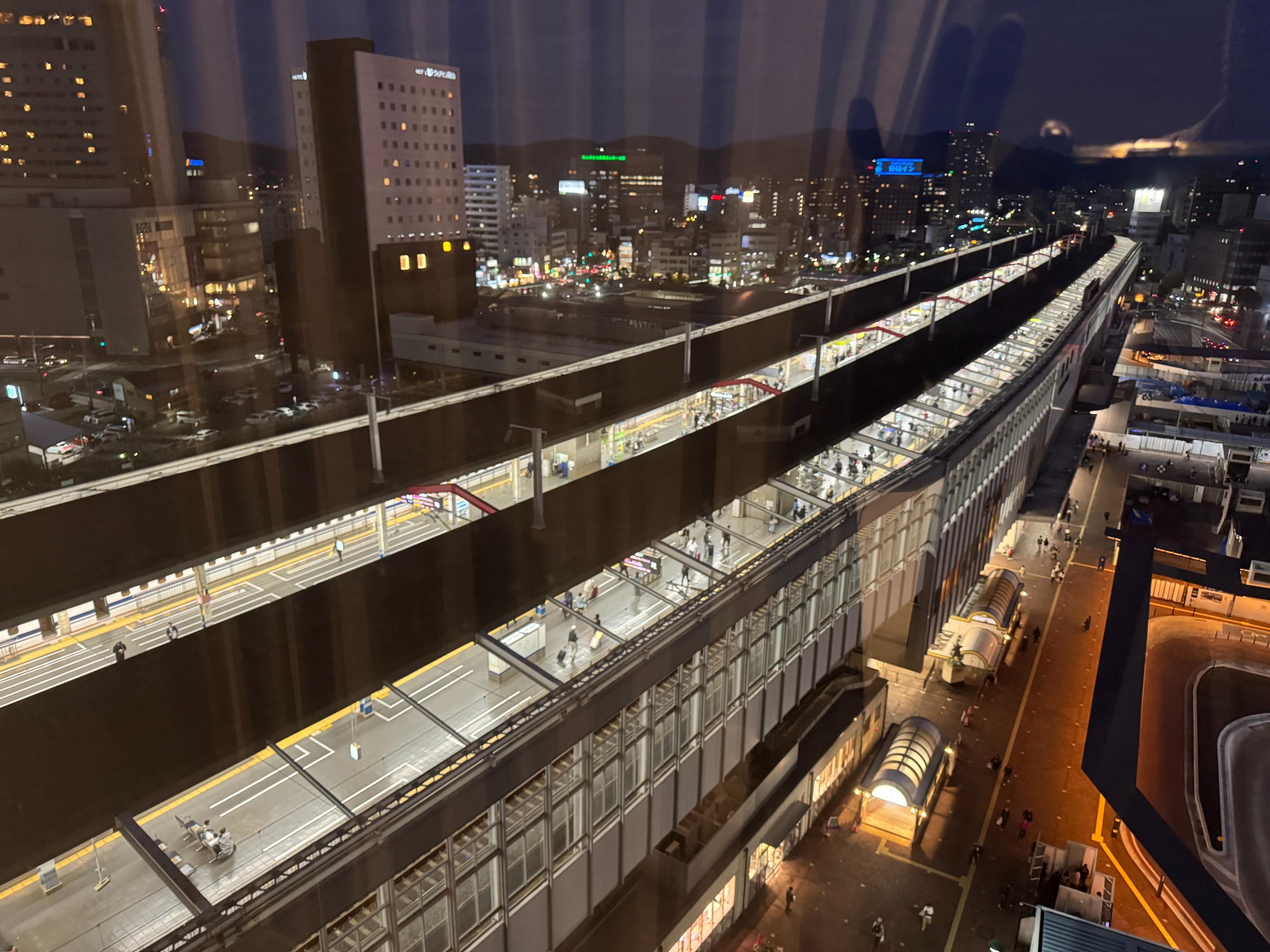
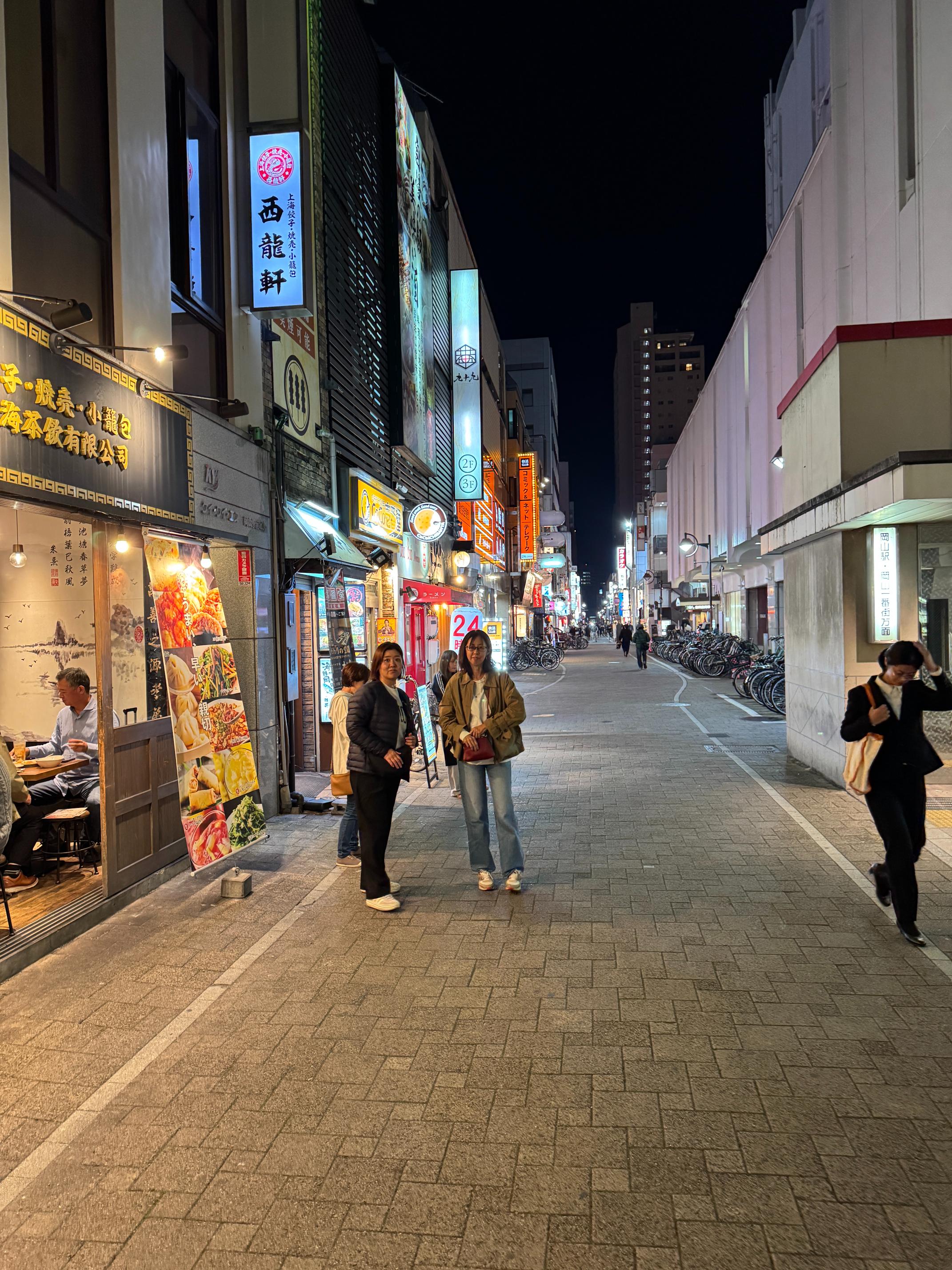
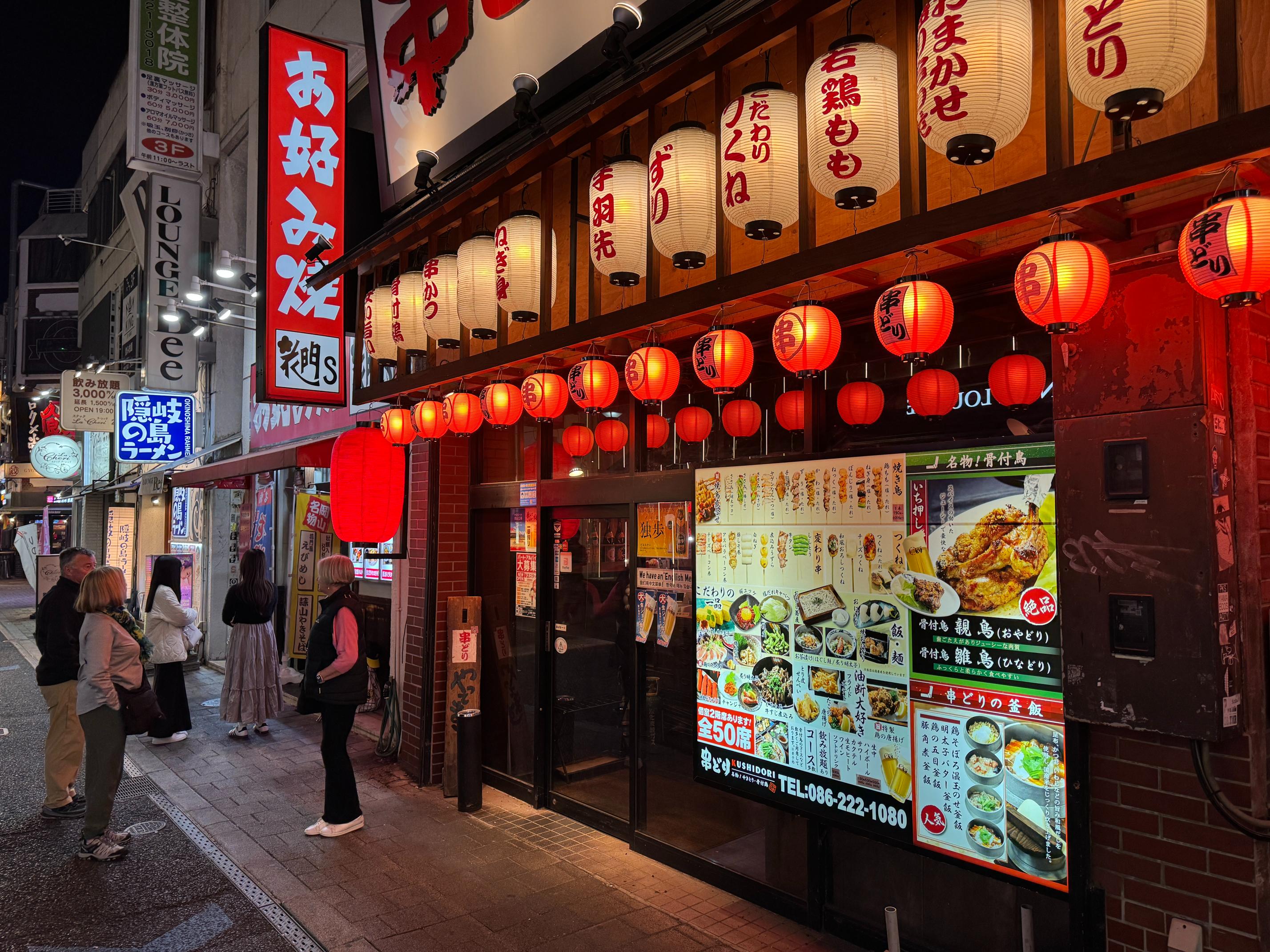
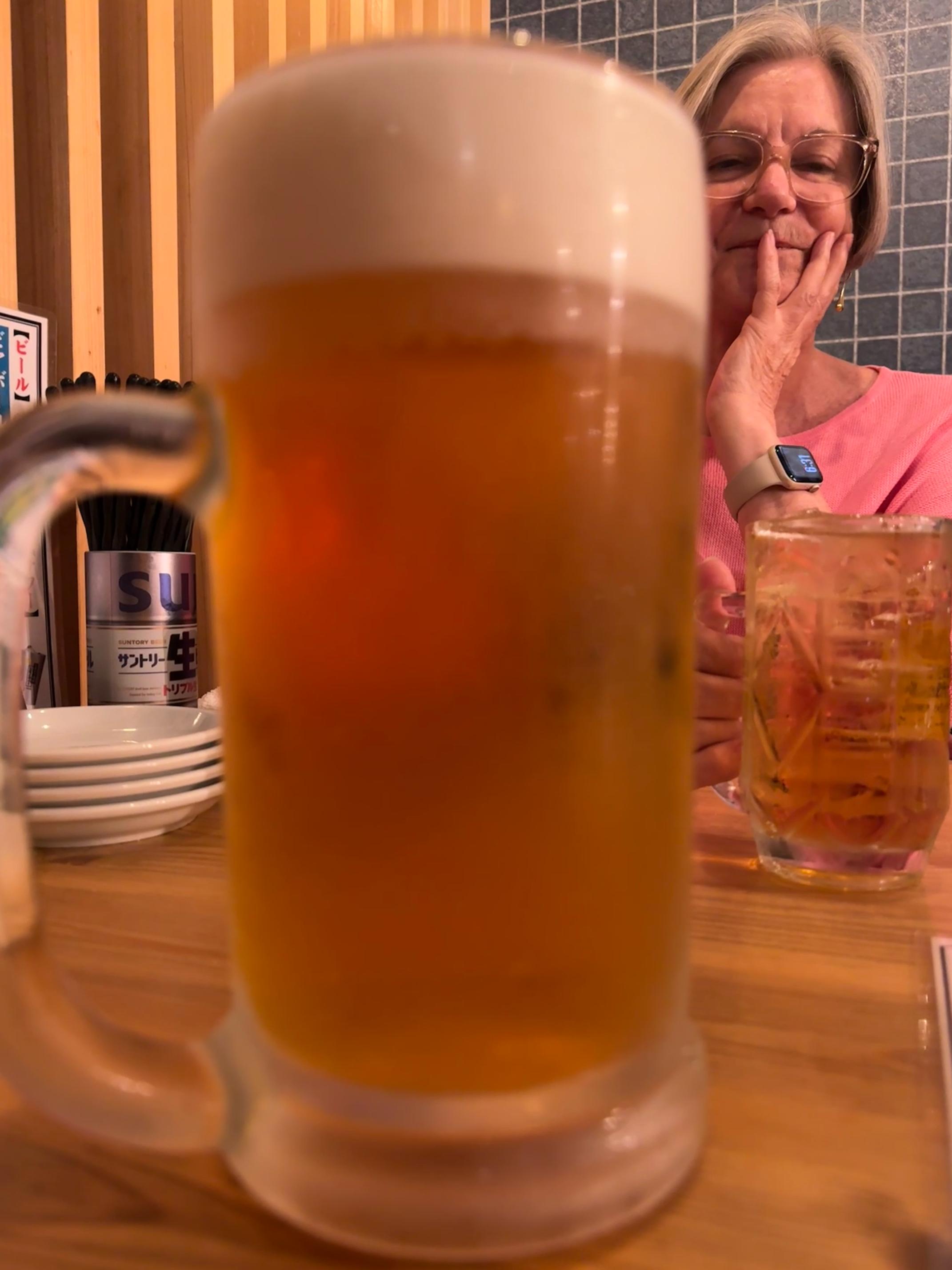
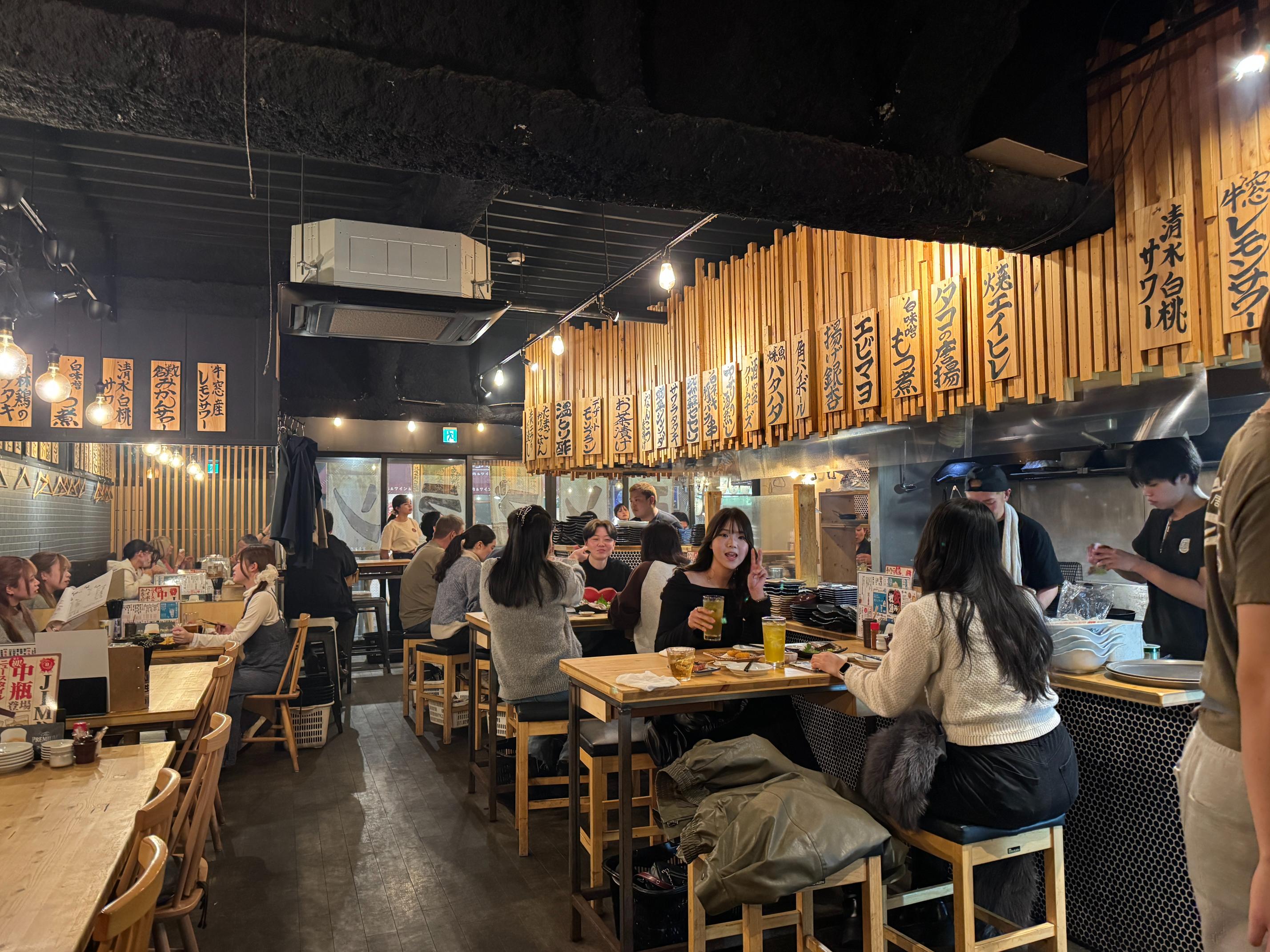
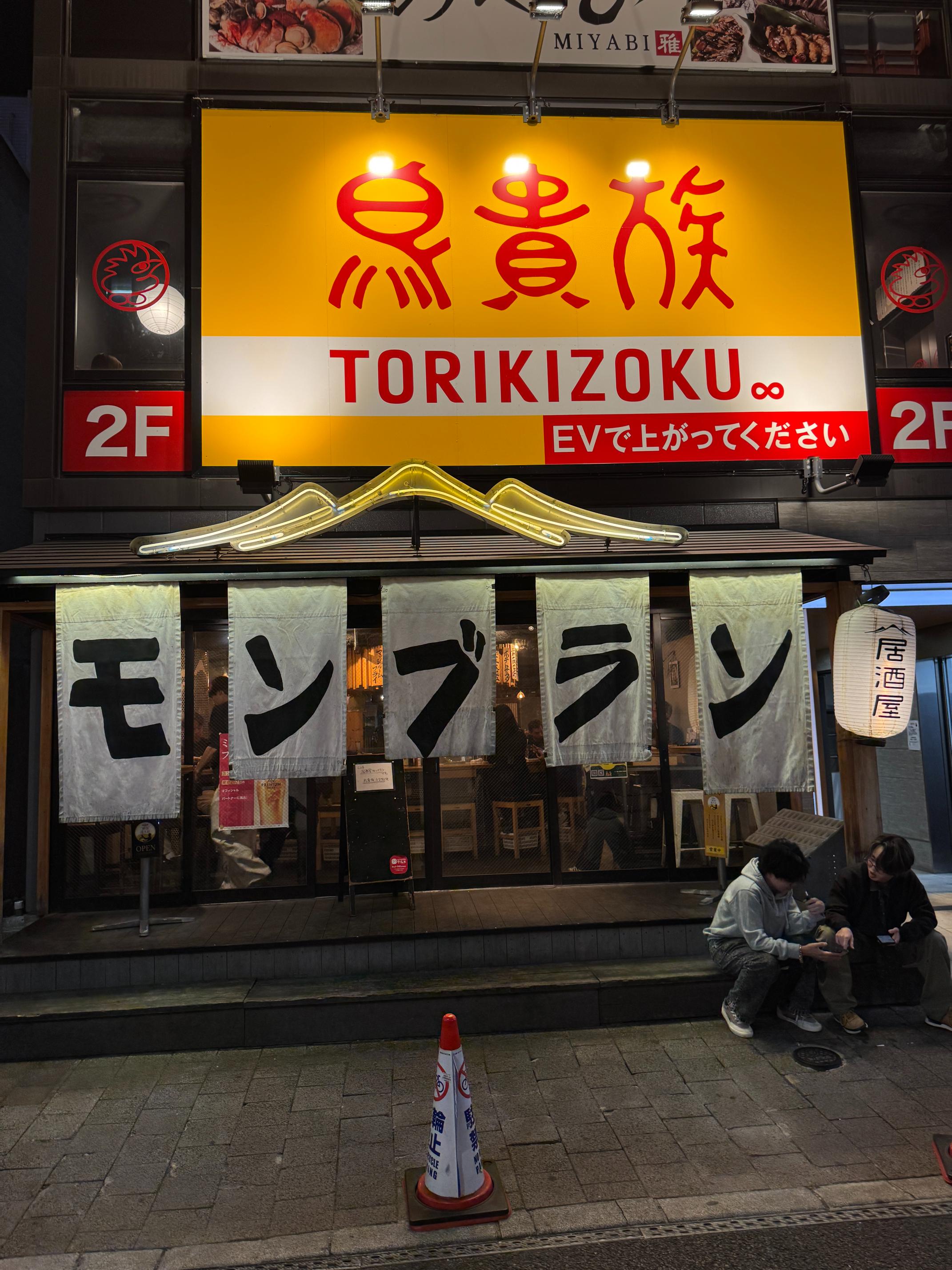
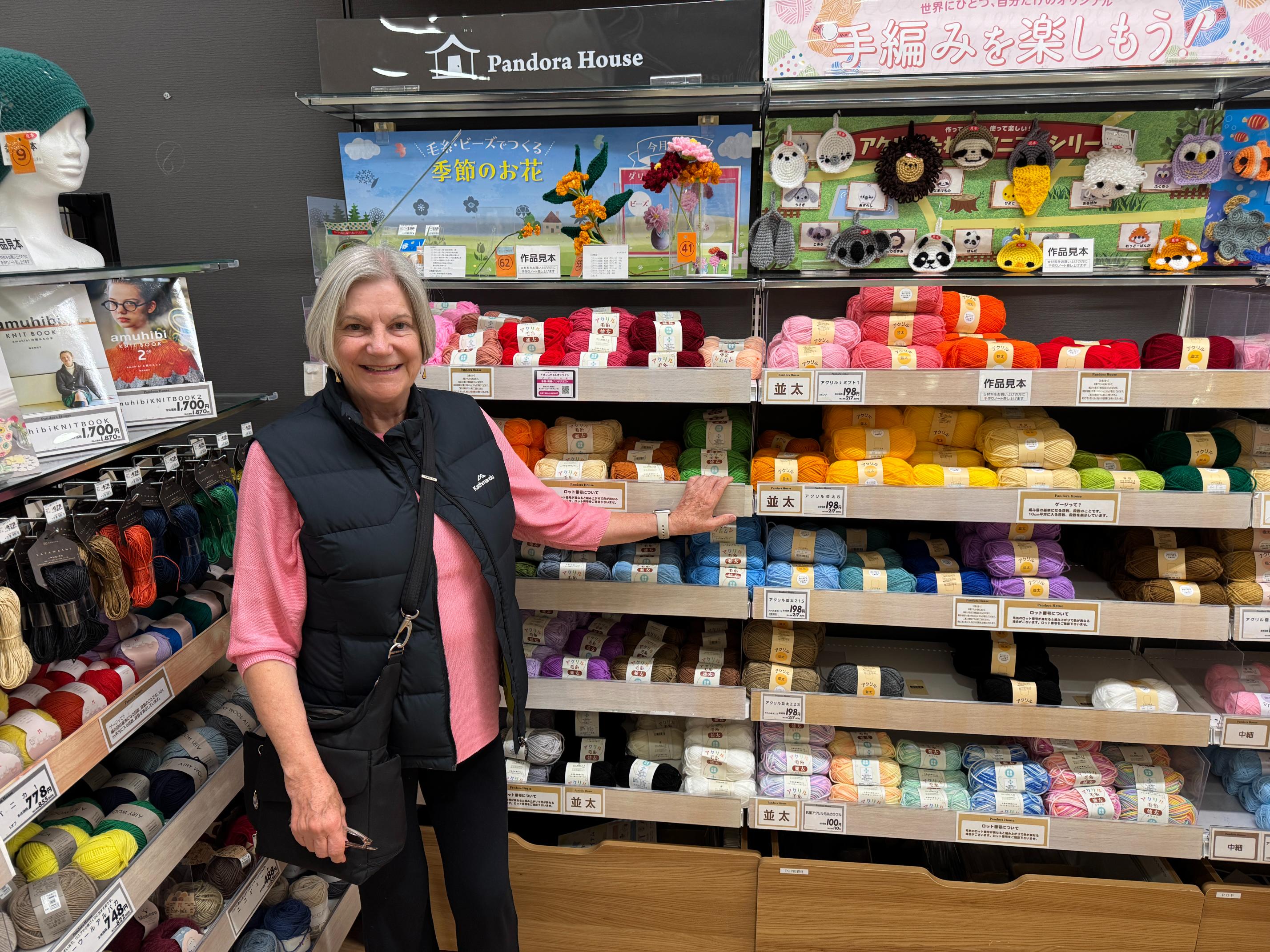
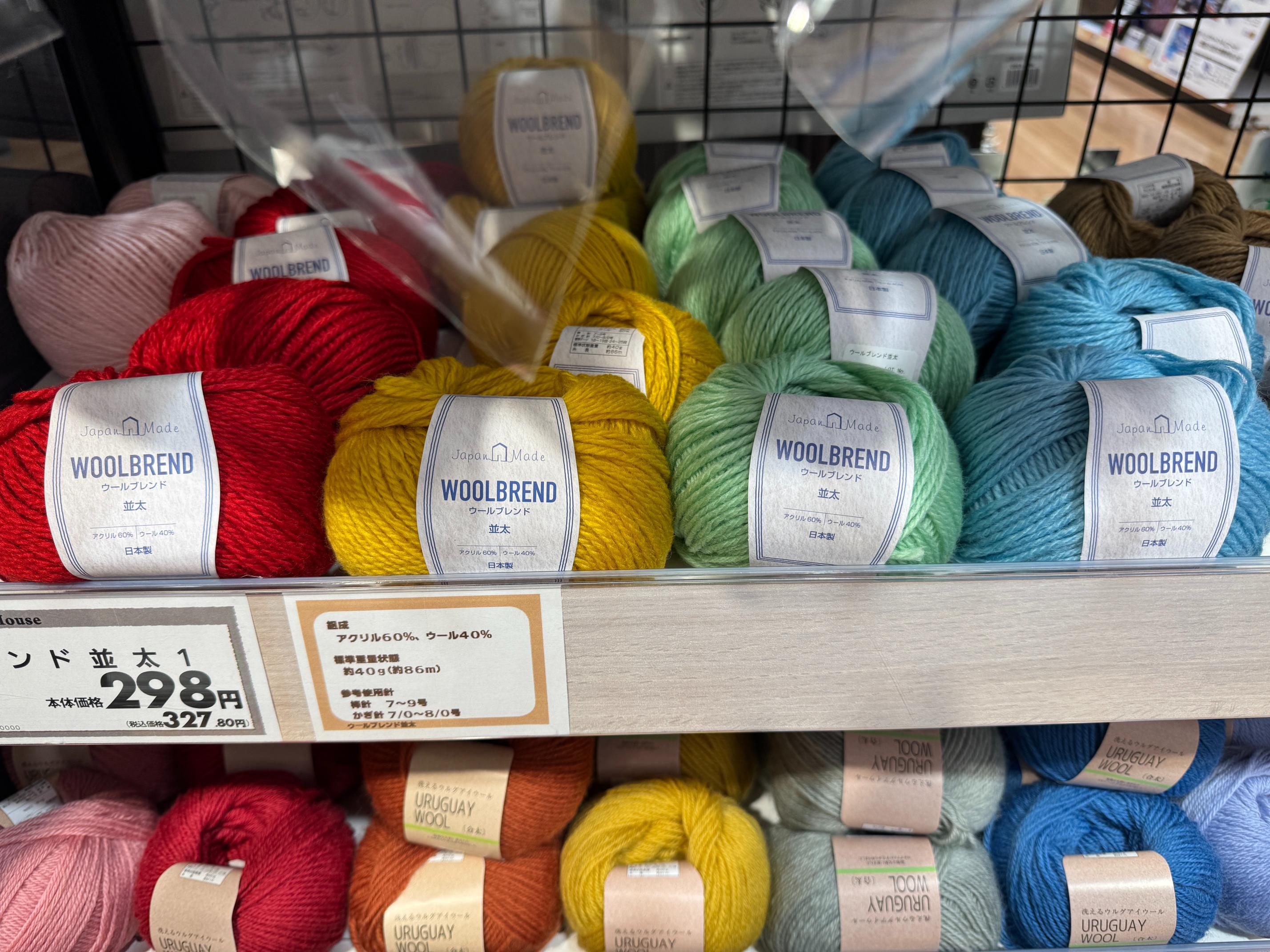
Back in Okayama, we ventured out at about 6 pm to find somewhere for dinner. We’re on the ninth floor of a big hotel right next to the busy railway station, and within a couple of blocks we have big shopping malls and lots of eating places. We took our time looking at the photos on the billboards, trying to figure out what sort of food each was serving and also peeking inside to see if there were free tables. We found one we liked the look of and went in, even though we really had little idea of what might be on the menu. We ordered drinks. The beers come out in glasses so big and heavy, I can only lift them with my dominant hand. Then we picked out a few different things we liked on the menu and they came out on share places – edamame, french fries, Japanese fried chicken, pork skewers, deep fried octopus etc. It was a pretty good dinner and I liked the venue. Walking back to our hotel, we detoured for Marg and Theresa to check out a craft shop they’d been searching for without success before dinner. Marg was happy to be in a Japanese wool shop at last, though disappointed to find out very little of the wool came from Japan. I had to laugh when Theresa showed me the brand of the wool – a lovely example of Japanese English.
 On The Road With Garry
Sounds like you made the right choice to see the Castle and very fortunate you had a guided tour.
LikeLiked by 1 person