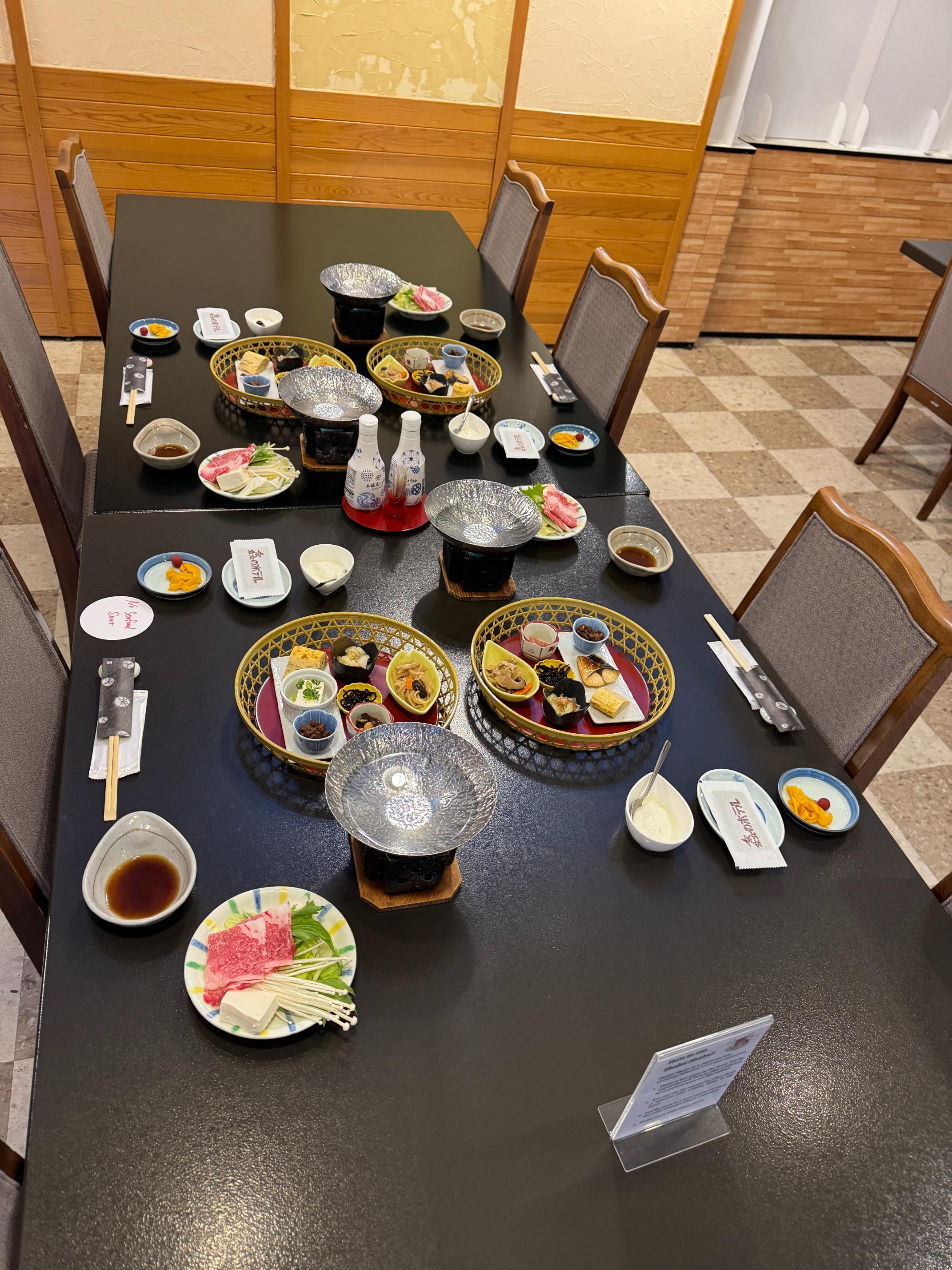
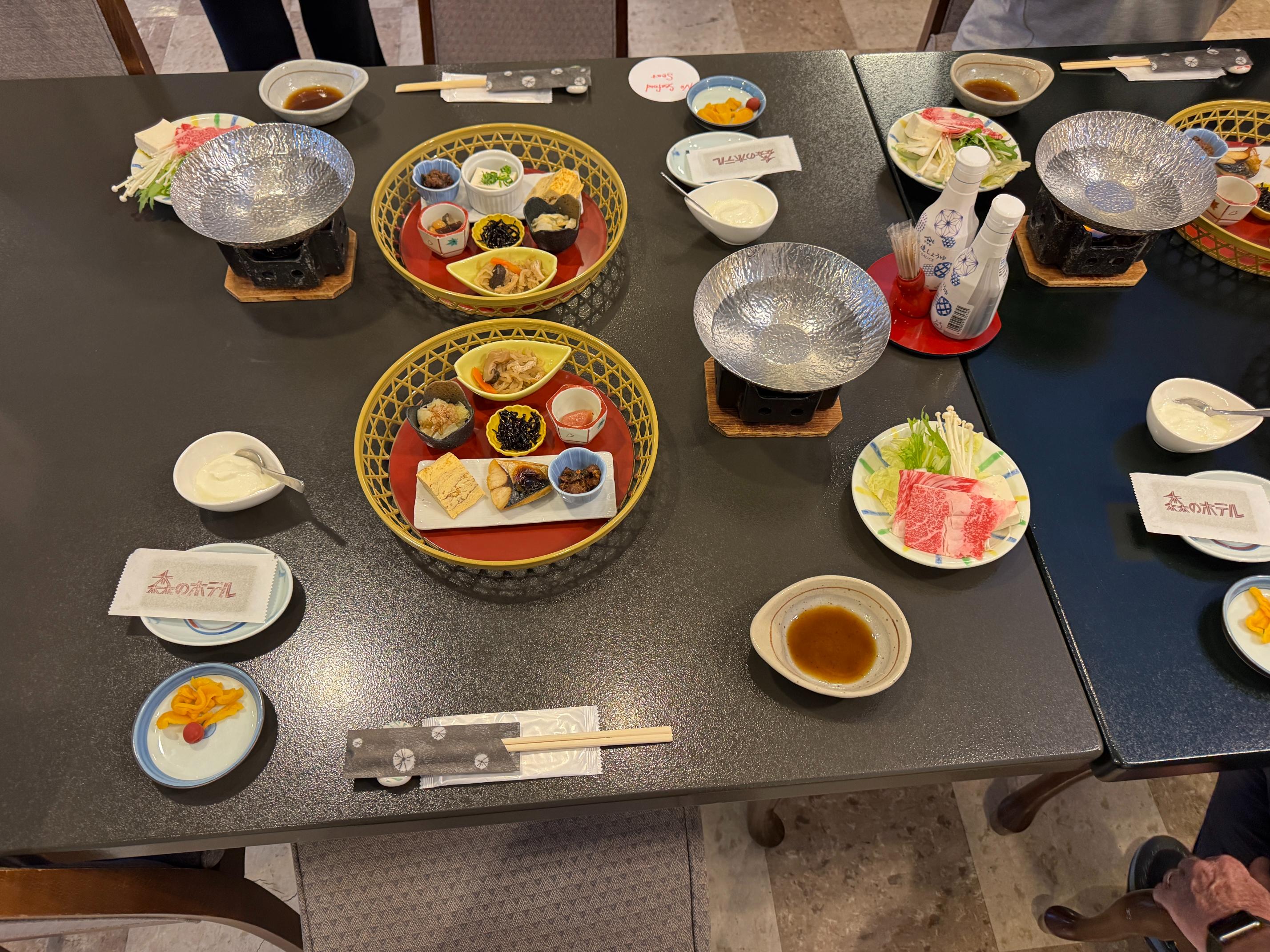
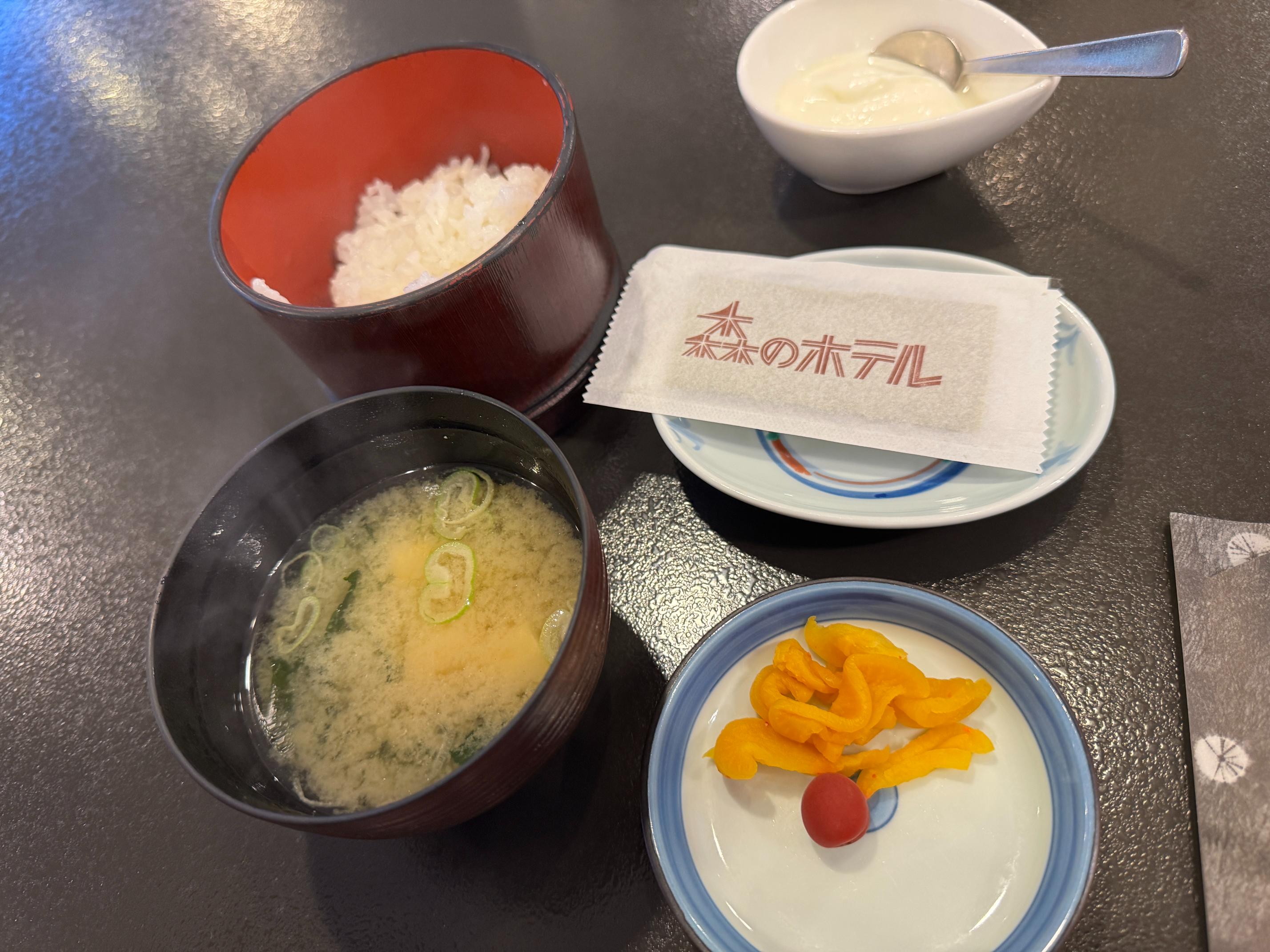
We began the day with a traditional Japanese breakfast because we are staying in a ryokan, which is Japanese-style accommodation. We were going on a 7.8 km hike today, so we wanted a breakfast that would give us energy for the walk, but not one that would fill us up so we felt bloated. Our Japanese breakfast more than filled us and we all had to leave some of it uneaten, which seems a pity. I guess the feature dish, which is the one to be eaten last, was the shabu shabu, which is cooked on the table and then eaten with chopsticks by dipping the elements into ponzu sauce. I did enjoy it though.

Our itinerary for the day began with: ‘Board the Ltd Express Shinano #4 train at 9.16 am to Nakatsugawa Station (9.51 am arrival). Quickly make your way to the Bus Zone and board the local bus to Magome-Juku at 9.55 am.’ We knew that was going to be tight, but figured it would be a small rural town like the one we were staying in with only a couple of railway platforms and a bus stop right outside the station. At best, we’d have 4 minutes to scamper down the platform, climb a set of stairs and descend another, get through the ticket gate, then race out to the bus before it departed. It was important to catch it because the next done didn’t leave for another 50 minutes. But when we got to Kiso-Fukushima Station, we saw that our Ltd Express #4 train’s departure time was 9.19 am (not 9.16 am as our itinerary stated), which would mean it would get to Nakatsugawa at 9.54 am and leave us one minute to get to the bus. It got worse. We met a British couple on the platform who had a complete railway timetable, and they informed us that our train would now get in at 9.56 am, one minute after our bus would have left for Magome. There was nothing we could do. Pulling into Nakatsugawa, we all waited by the door of the carriage and burst out as soon as it opened. Thankfully there were no stairs and the gate was open for us to run through without having to show our tickets. The bus stop was about fifty metres away. There were two buses. All of us ran towards the back one, but the British guy ran towards the front one. It pulled away just as he was adjacent to the driver’s window. Thankfully there was a woman standing outside the door of the second bus who confirmed it was a Magome bus. The driver was standing in the doorway ready to depart, but she asked him to wait a minute while we all purchased our tickets and jumped on. We were lucky the precision that the Japanese are famous for was just a little bit off today. Almost every other bus or train we’ve caught has run exactly to the timetable. Anyhow, the bus ride to Magome probably took about 40 minutes and it was stunningly beautiful – tall mountains, dense forests, autumn foliage and rock strewn rivers all the way.
In feudal Japan, the major towns of Kyoto and Edo (Tokyo) were connected by a historic inland road through the mountains of central Japan. The road was called the Nakasendo. It was over 530 km long and passed through 69 post towns. The towns provided lodgings, food and supplies for travellers along the road. Merchants, traders, feudal lords, samurai, peasants and pilgrims walked the Nakasendo road. Today, most of the original road has been replaced by modern highways, but in the Kiso Valley some sections of the old Nakasendo still remain and are popular hiking trails for tourists. A 7.8 kilometre section of the trail between post towns Magome-juku and Tsugamo-juku has been well preserved, and this was the trail we would walk today.
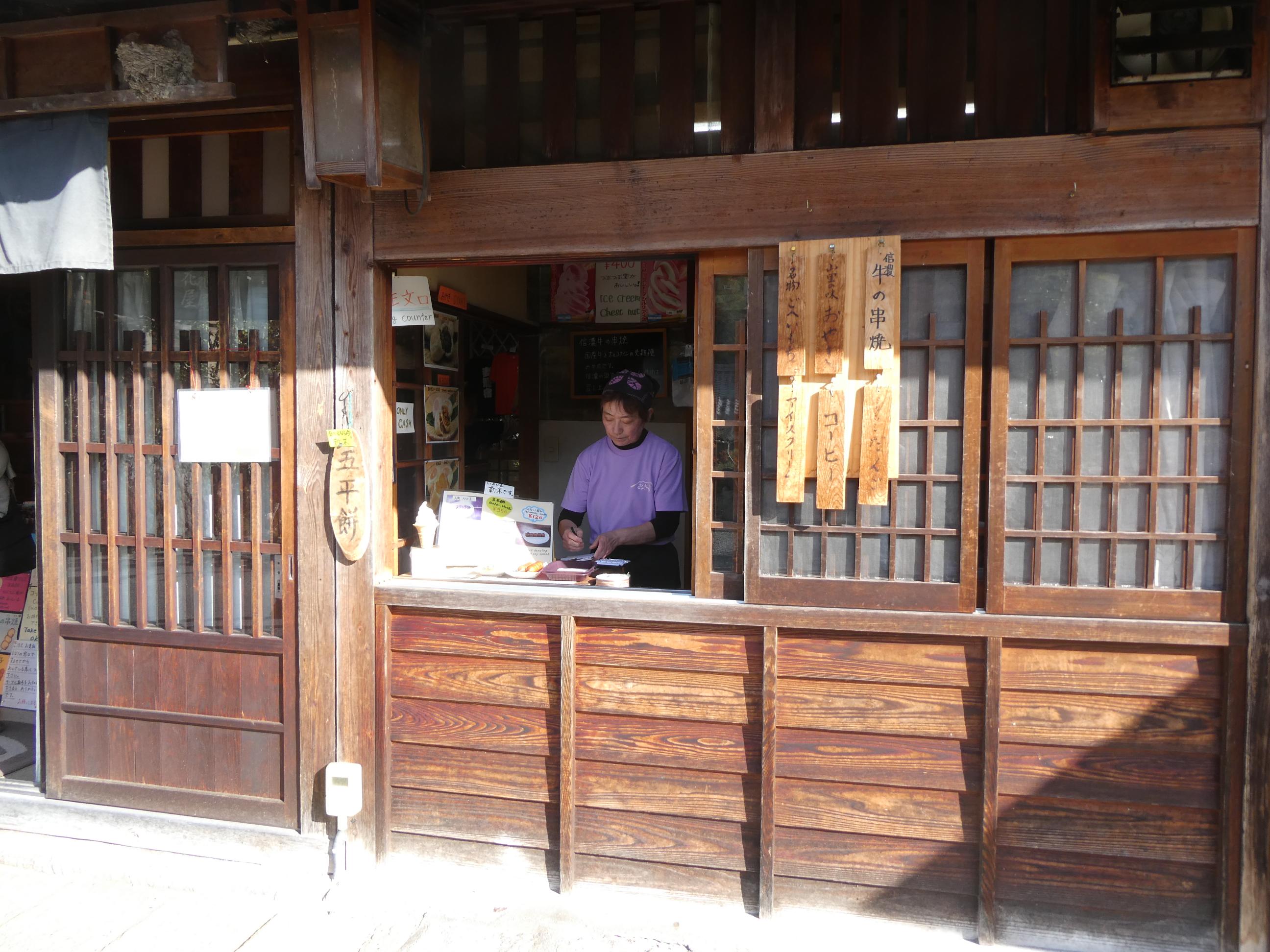
It was a beautiful sunny morning in Magome as we began our walk. I’d brought along a lightweight trekking pole to help me on the ascent and descent of steep sections of the trail. It came in handy straight away, because the first section of the trail through the main street of Magome was uphill all the way. The street was lined with traditional wooden houses, and there were souvenir shops, food vendors and teahouses aplenty in this first section of the trail. Marg and I stopped for an ice cream before we went any further. I honestly thought my locally produced yuzu honey ice cream was just about the best I’ve ever had.
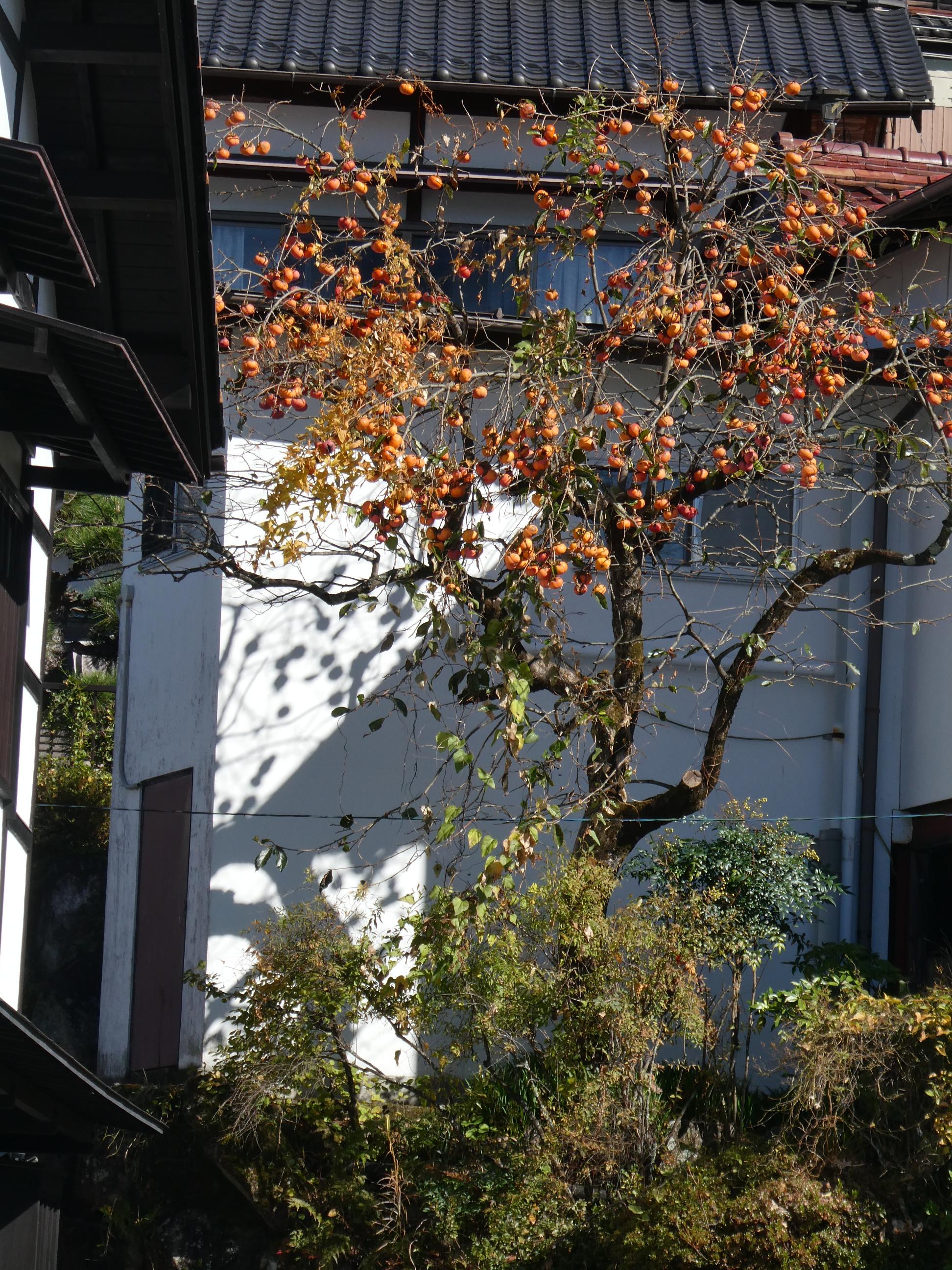


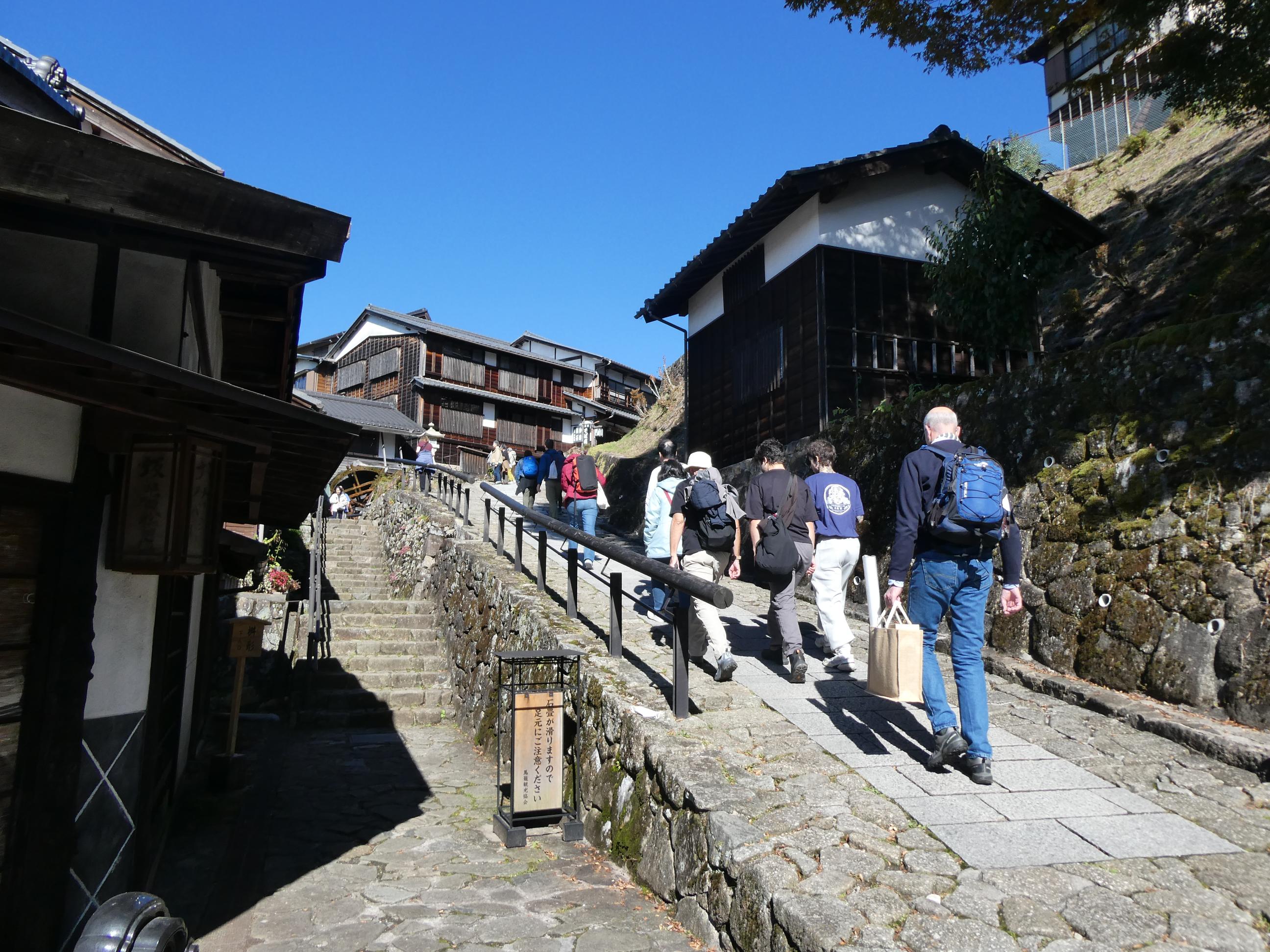


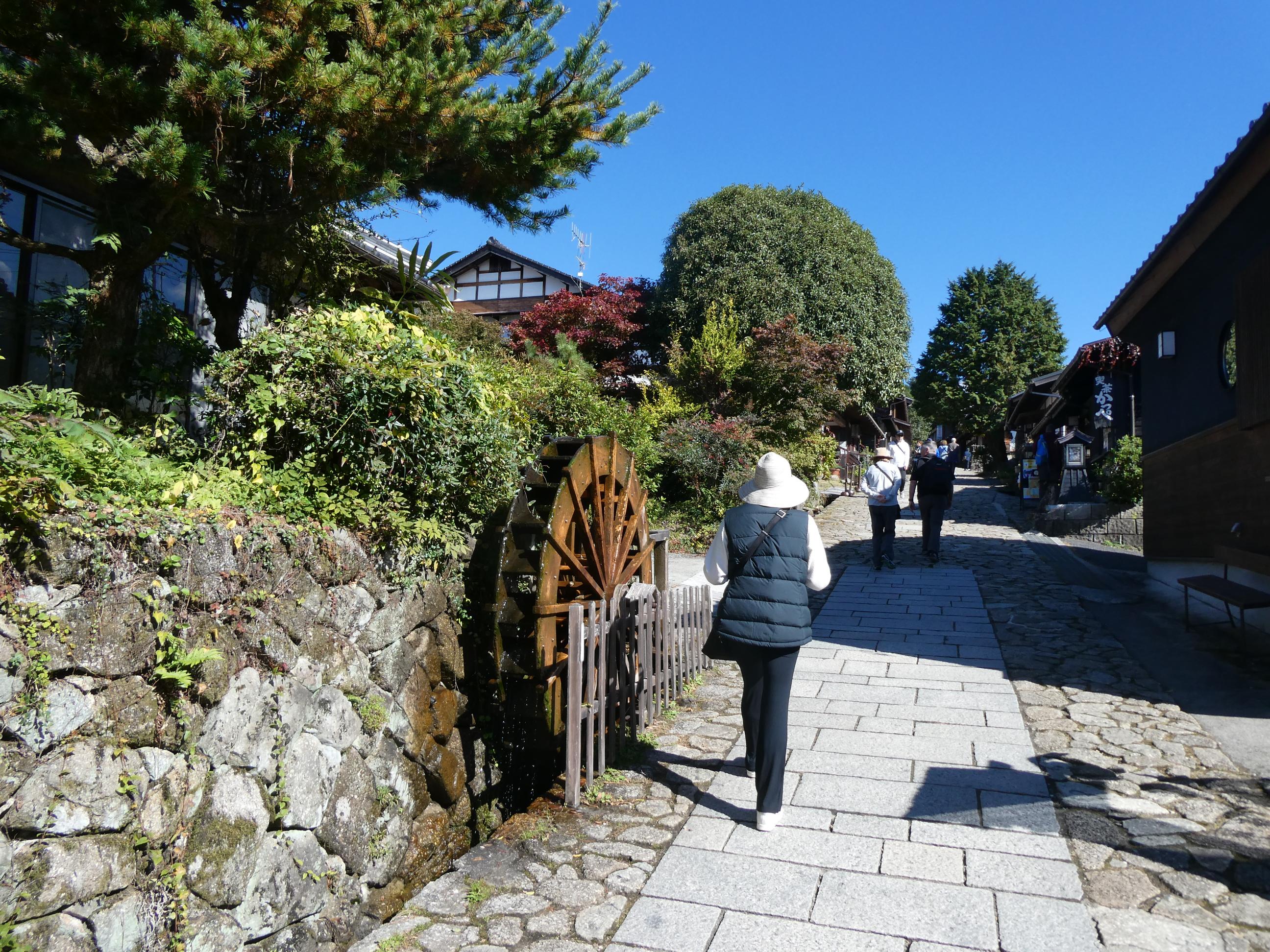

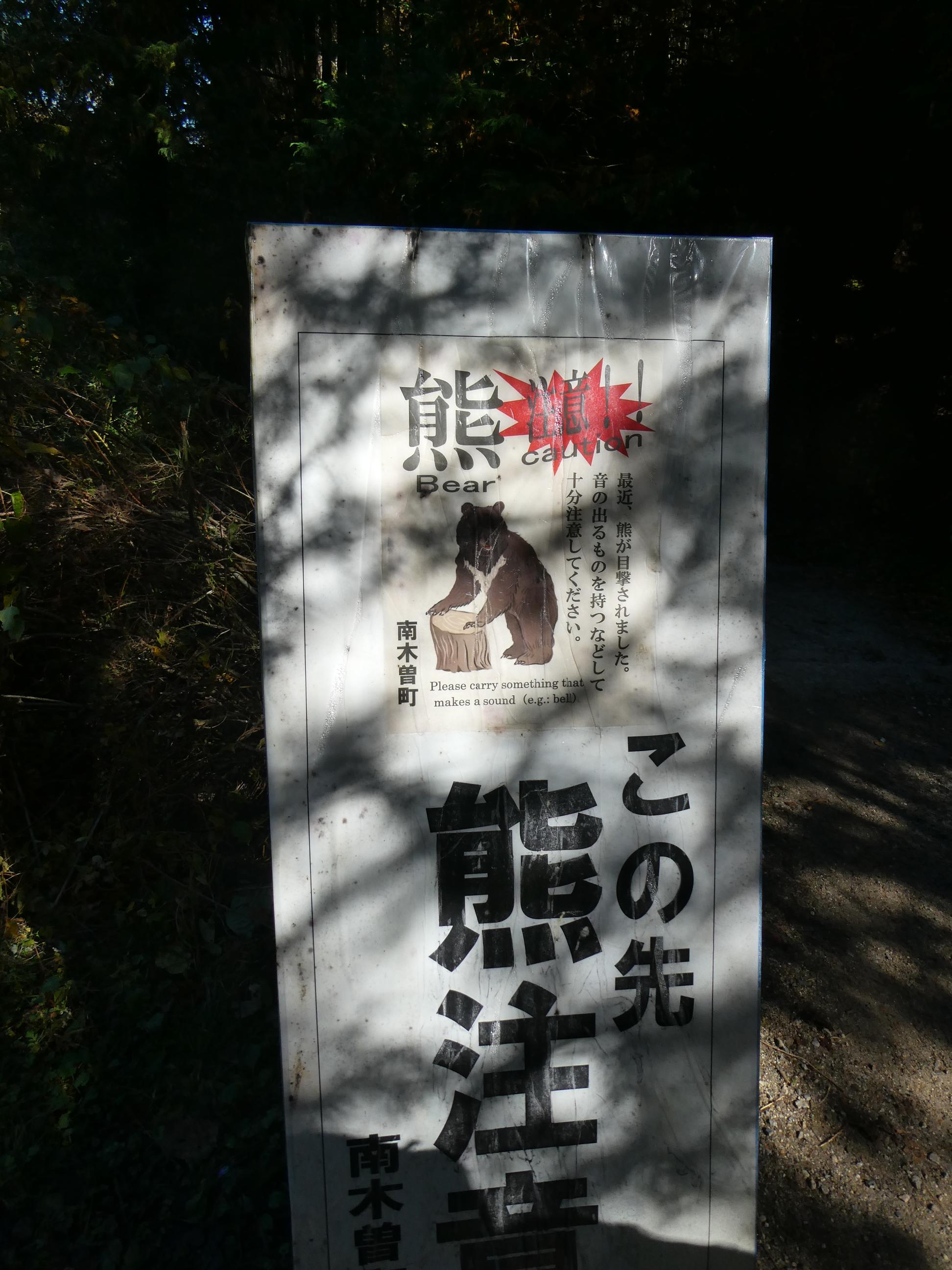
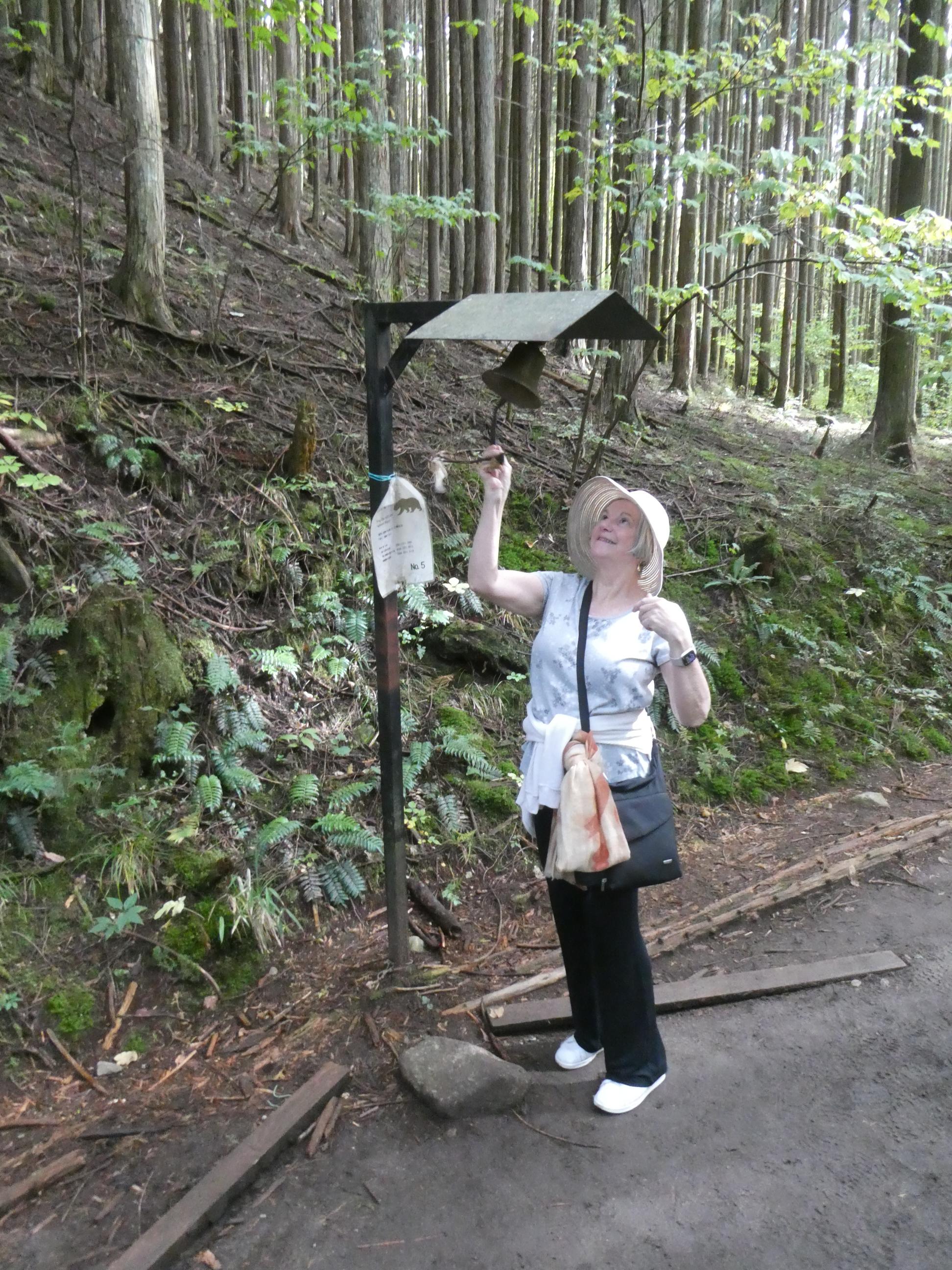
We crossed a modern-day road and left the town behind. A year or two back, my brother Rod and his wife Cornelia had walked this trail and loved it. They encouraged us to do it too. They’re good, experienced walkers, but they know I’m not. I was worried about how I’d go if I had too many hilly sections to climb, so I messaged Rod last night and he told me that, as best he could recall, there was a bit of a climb for about the first fifteen minutes and then it was fairly flat. Perhaps his memory was playing tricks on him, because I found the going pretty tough for quite a while. The trail just seemed to be going up and up and up, and often in full sun. It’s been chilly here in the mountains and I hadn’t dressed for a hot day in full sunlight. Mind you, others on the trail who must have been much fitter than me seemed to be handling the climb okay. I plodded on, taking a break when I needed one. Ian and Theresa were well ahead of me. Marg kindly stayed with me. I was glad I had my trekking pole. It was great on the stairs and the uneven, cobbled sections. It’s spring loaded, so also absorbs the shock on descents really well. Along the way we passed through small communities, and occasionally had to cross a road. There were signs warning of bears in the area, but they are apparently shy around humans and keep their distance. Walkers are encouraged to keep talking as they walk, and have bear bells and whistles to alert the bears of your presence. Today there were many walkers on the trail, so it was a safe bet there wouldn’t be any bears encounters to worry about. Nevertheless, I had my bear bell attached to my pack and I kind of liked the sound as I walked along – a bit like a small wind chime on a breezy day. The countryside was absolutely beautiful.

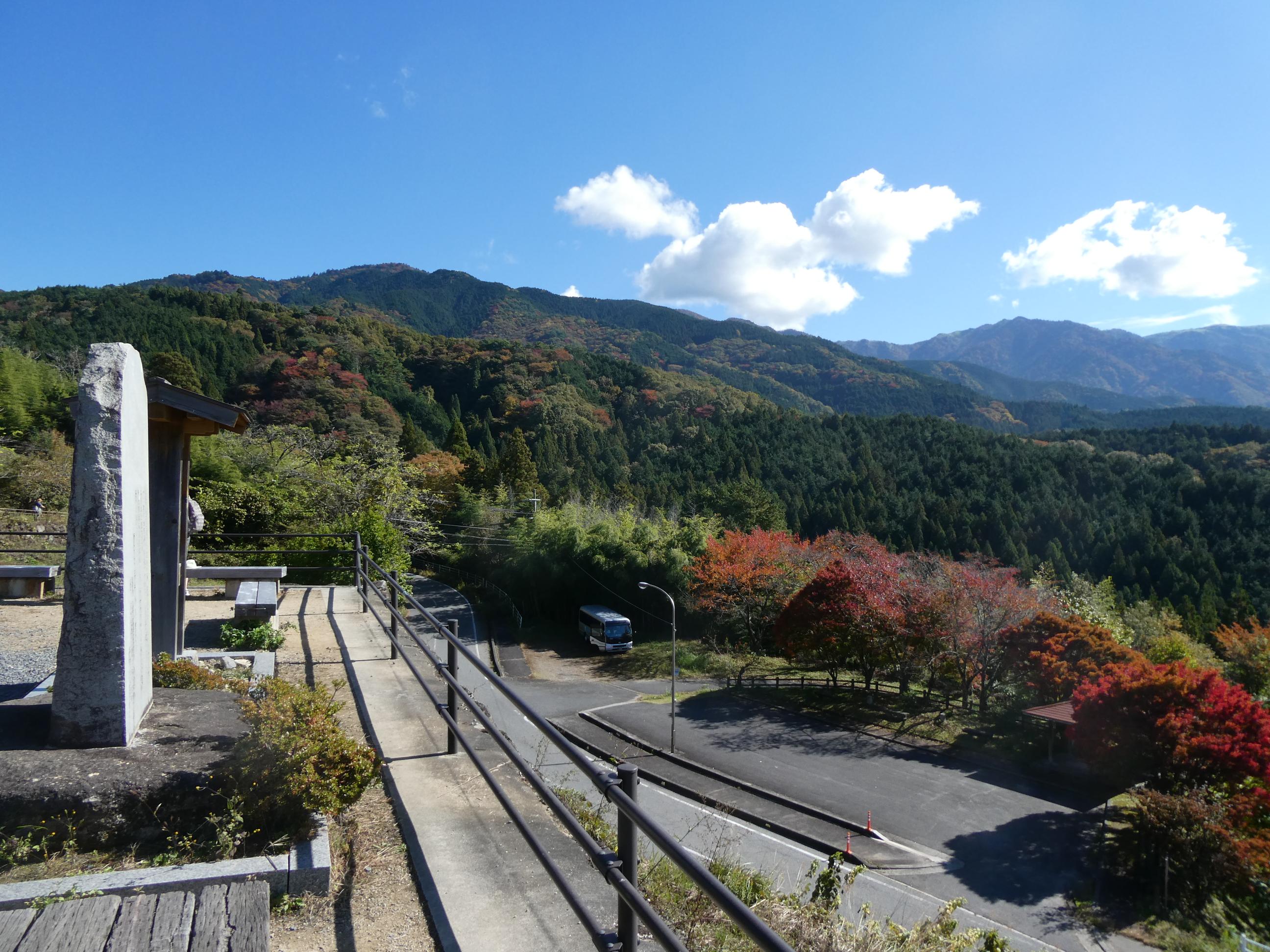


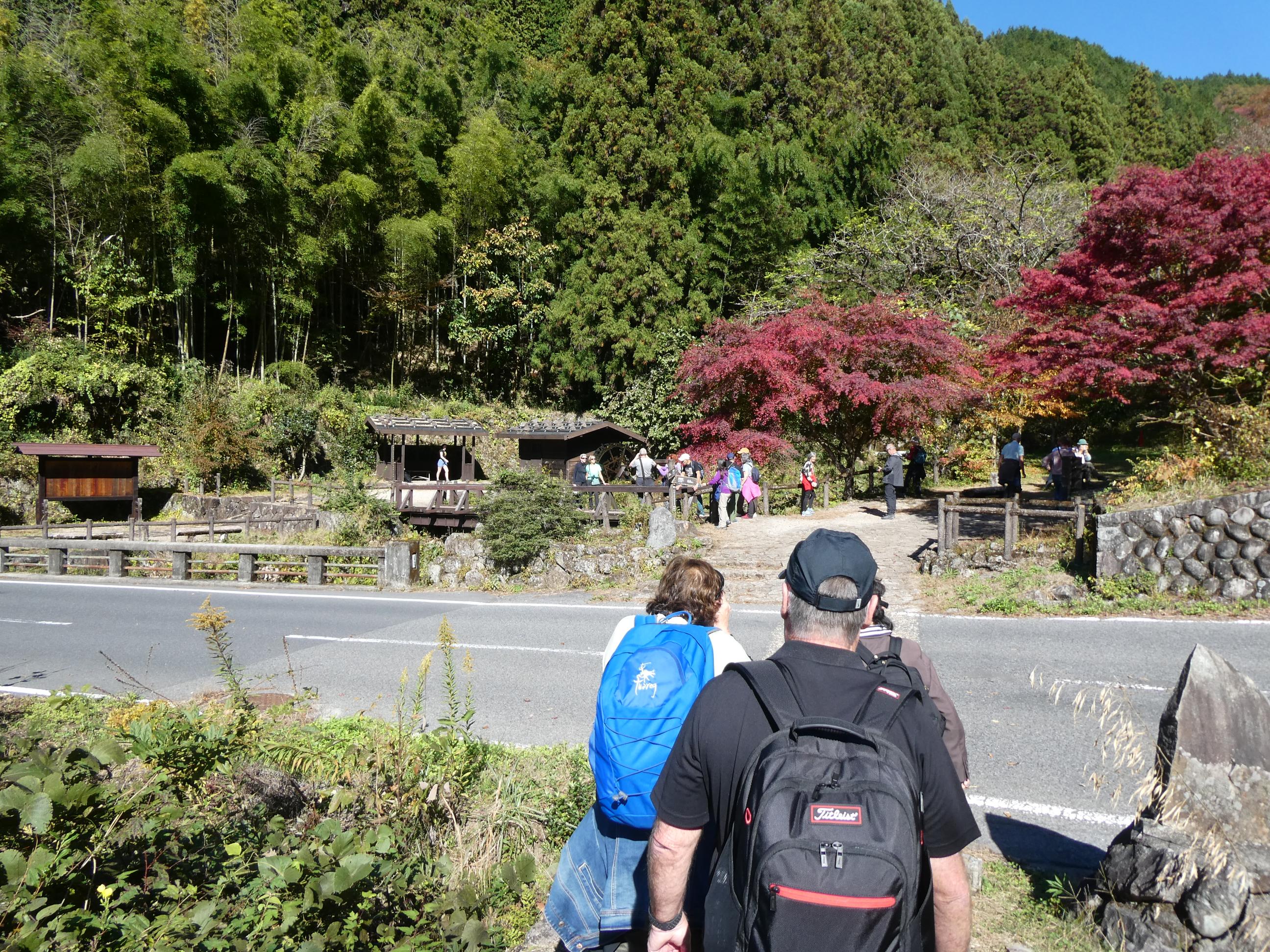

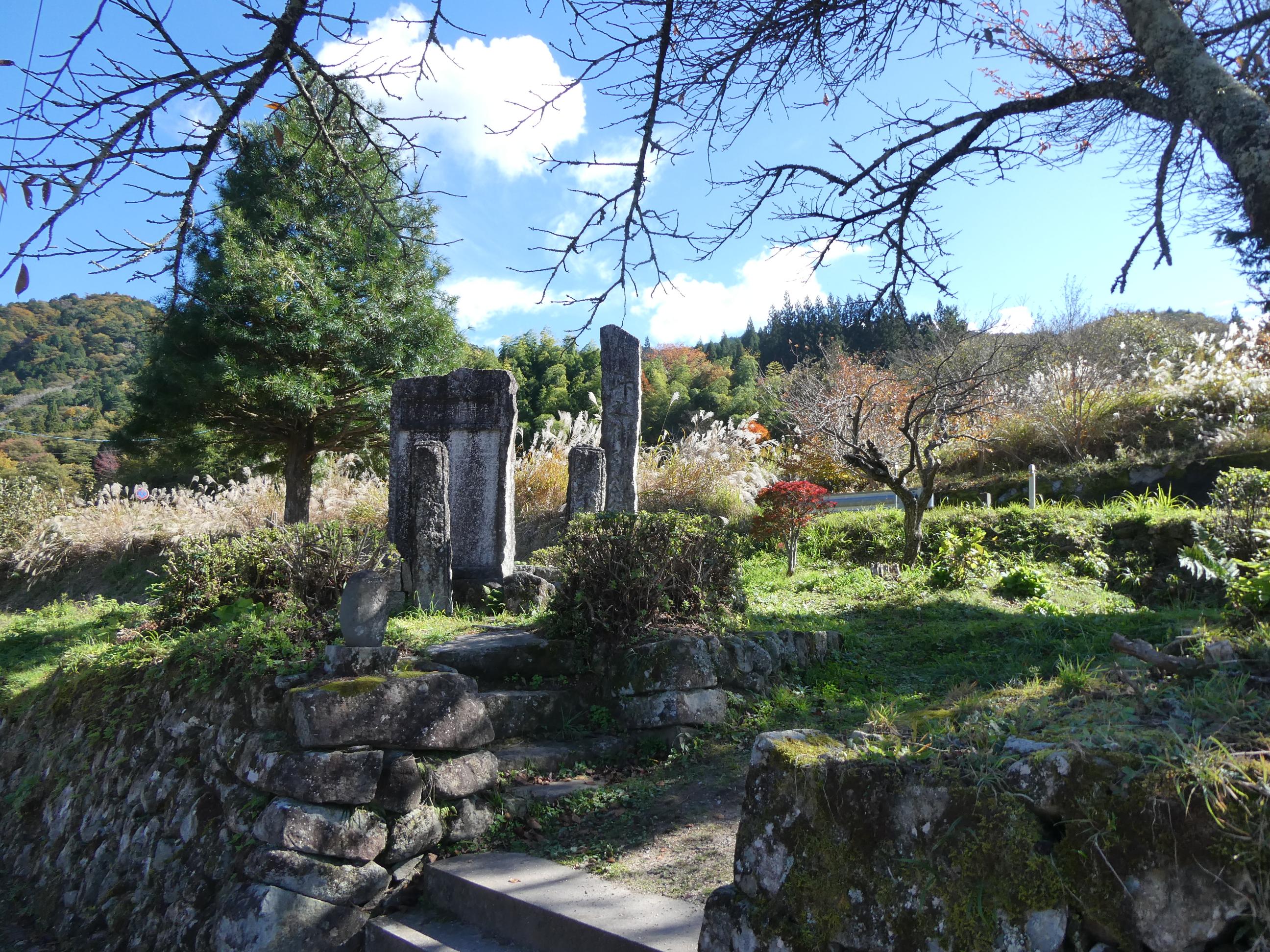
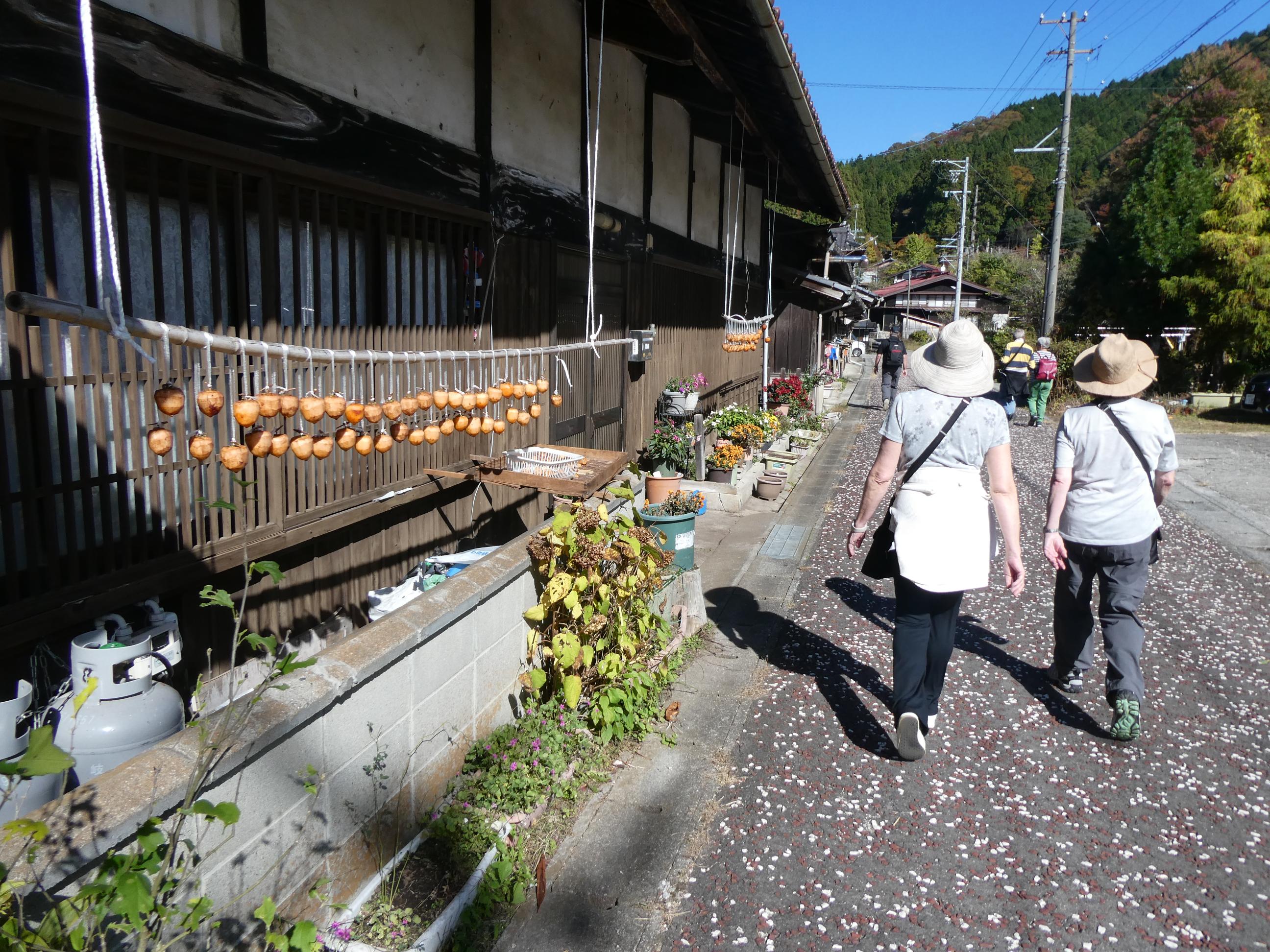
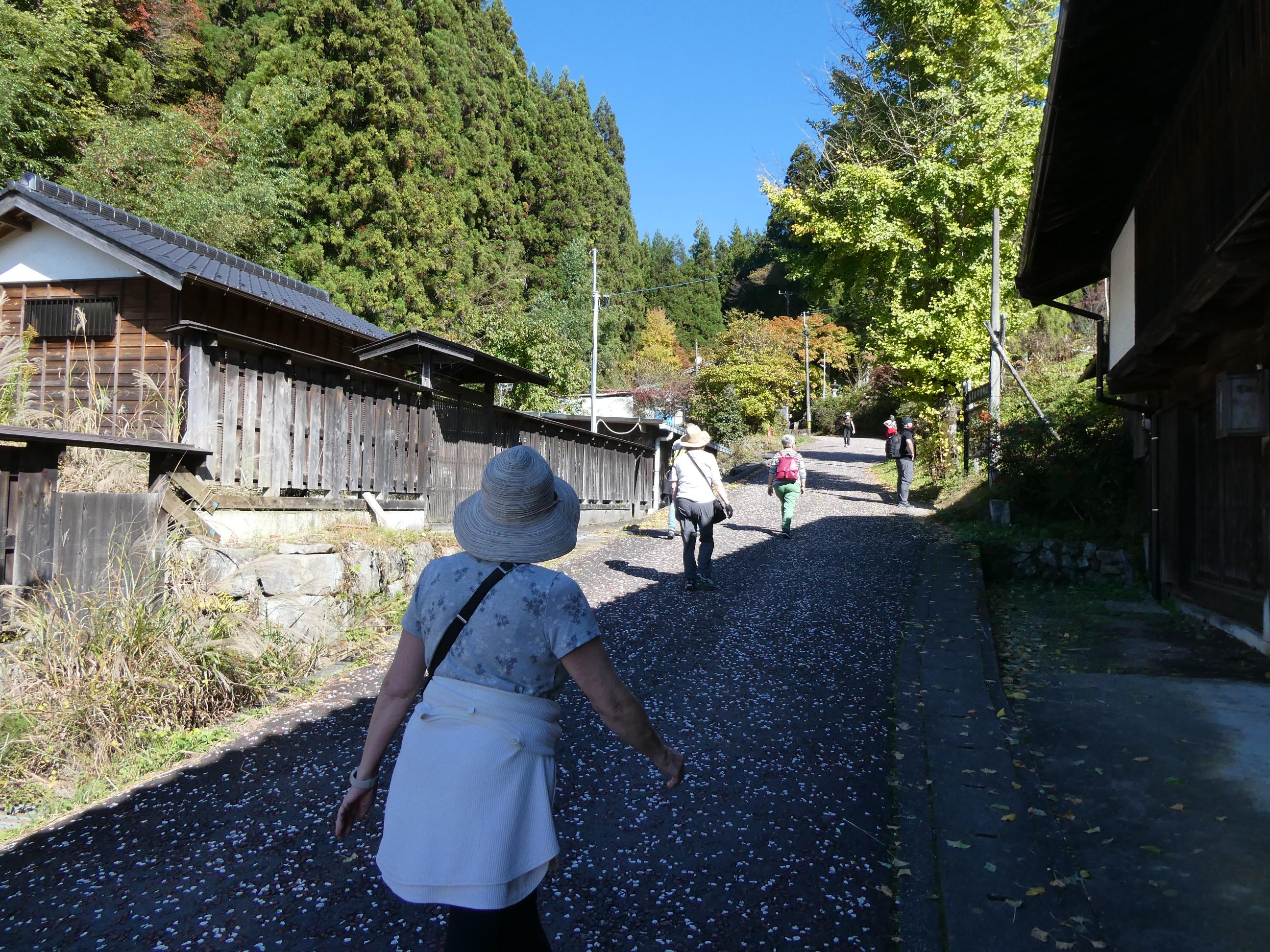

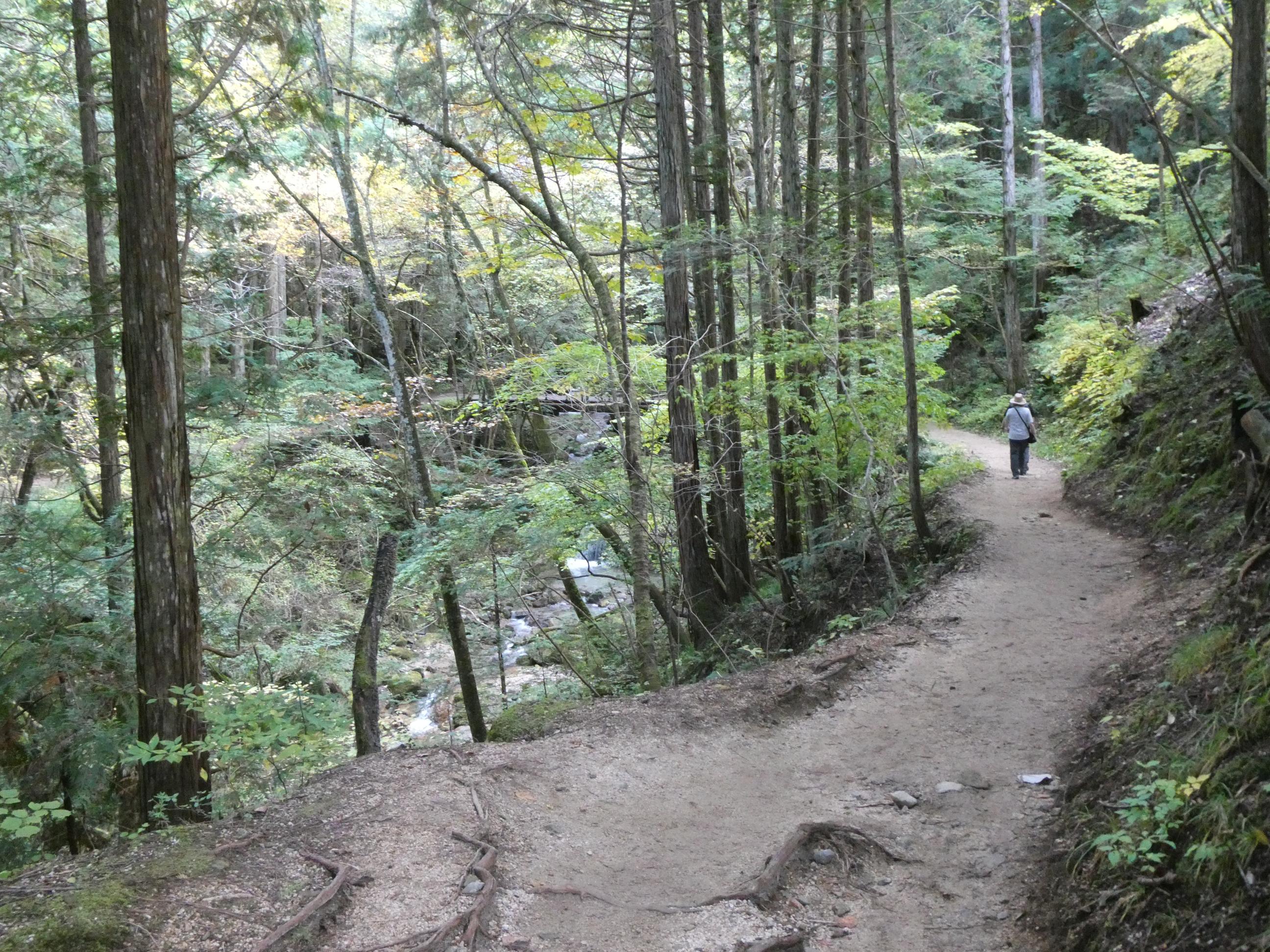
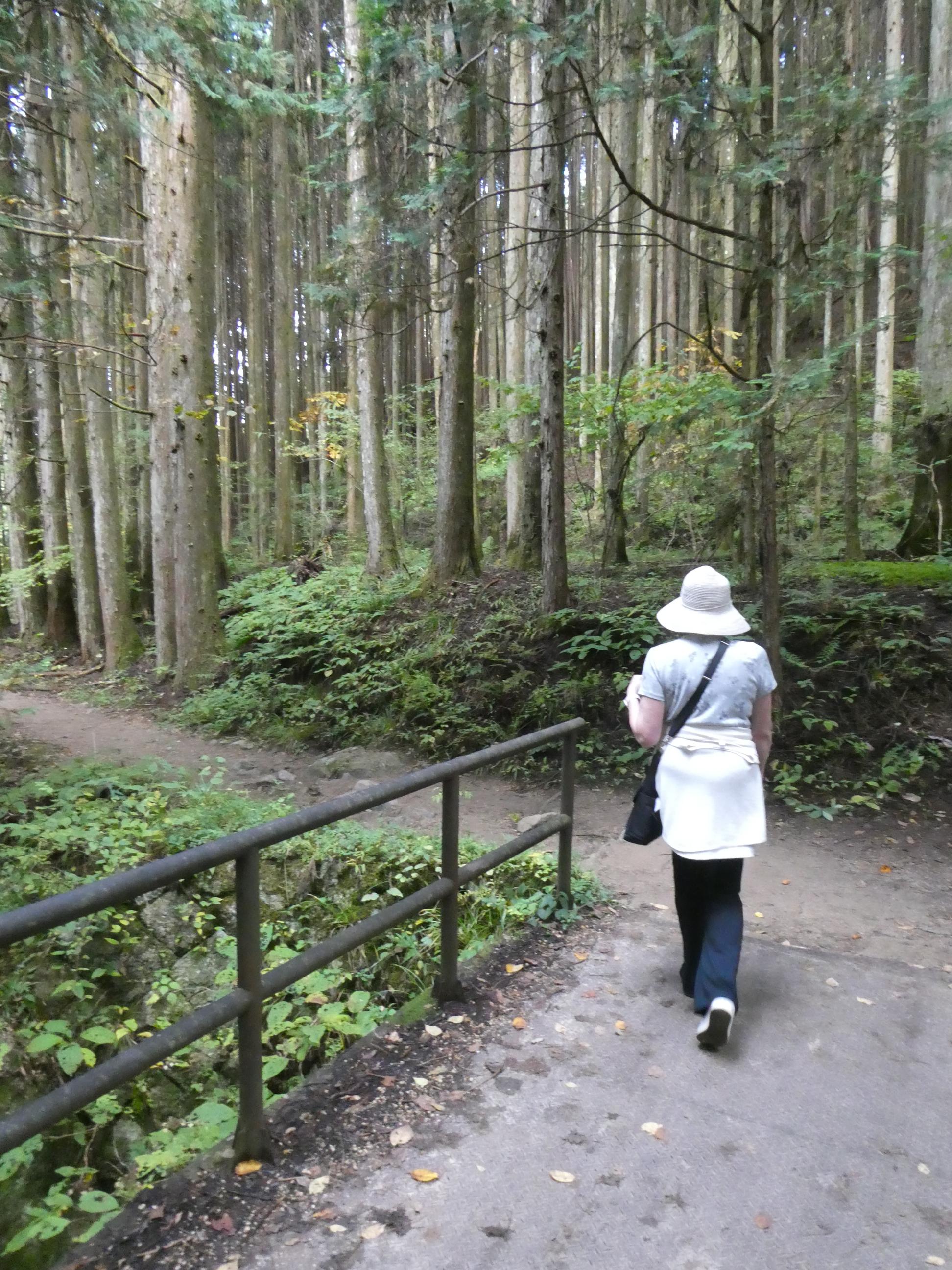
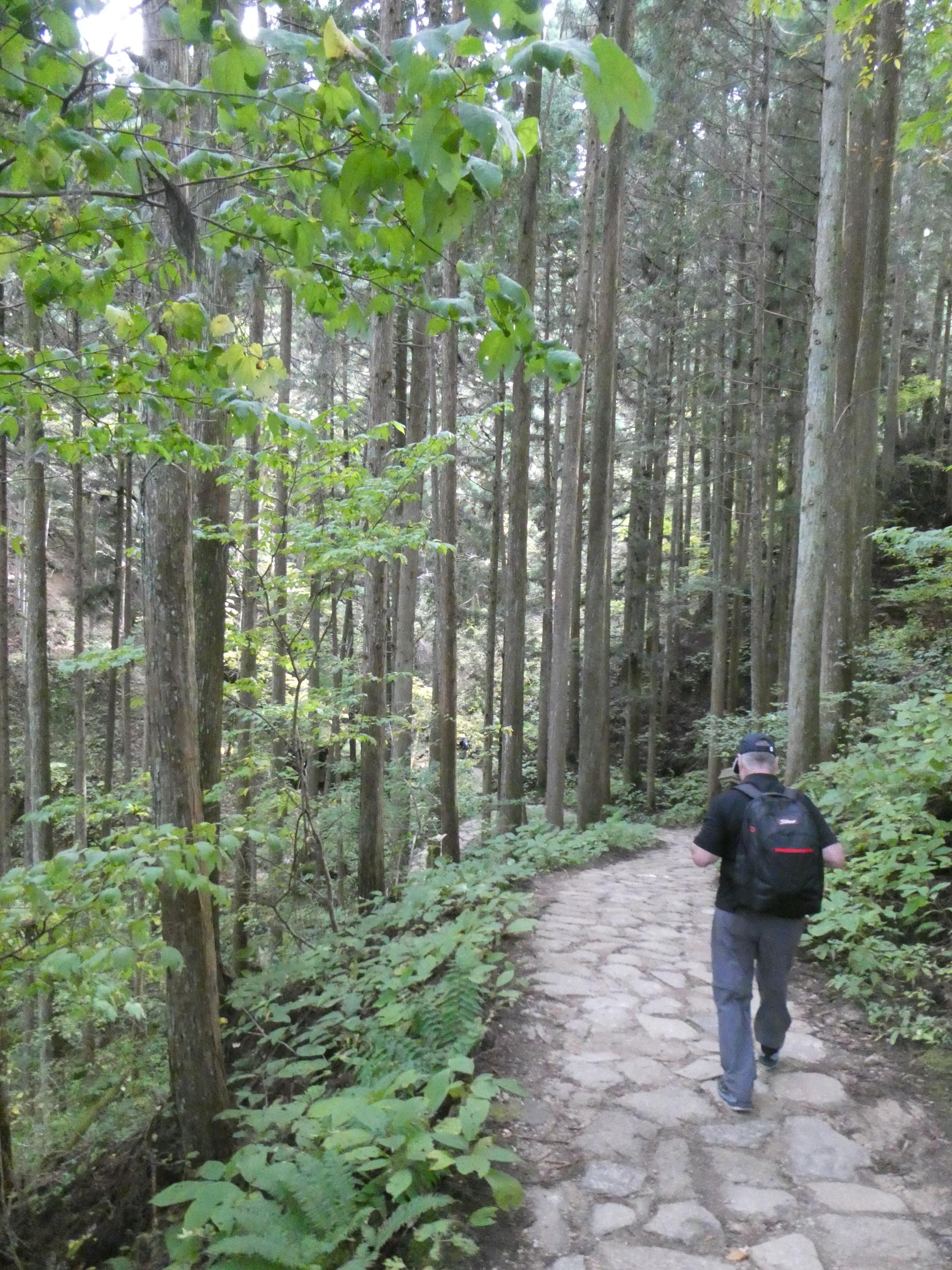
We came over a crest and the climb finally ended. I was puffing like a steam train by then. I was so pleased to begin a descent. These days my aging knees often hurt from the impact of just walking down a set of steps, but today I found the shock absorption of the trekking pole was just brilliant on these sections. I soon got my breath back and put the difficulty of the hill climb out of my mind. We had moved out of direct sunlight into the shade of tall forest trees and walking suddenly became a lot easier and more enjoyable again. Ian and Theresa often walked ahead of Marg and me, so unfortunately many of my photos of them are of their backs, and sometimes they are tiny figures dwarfed by forest giants and you’ll need to look very carefully to find them in some of the photos. Rod had told me it was a must to stop at the teahouse on the trail, so we did. There was a lovely old guy in there offering us free cups of green tea and lollies. The green tea was refreshing, and just the thing I needed. I even took a lolly, thinking the sugar might give me a bit of energy. We left the guy a reasonable donation and continued on our way. At this stage, Rod’s description was pretty accurate. The trail was mostly flat and walking was easy and fun. We kept ringing the bear bells we passed – just for fun, we thought, but, oh, maybe also because they might actually keep real bears away.
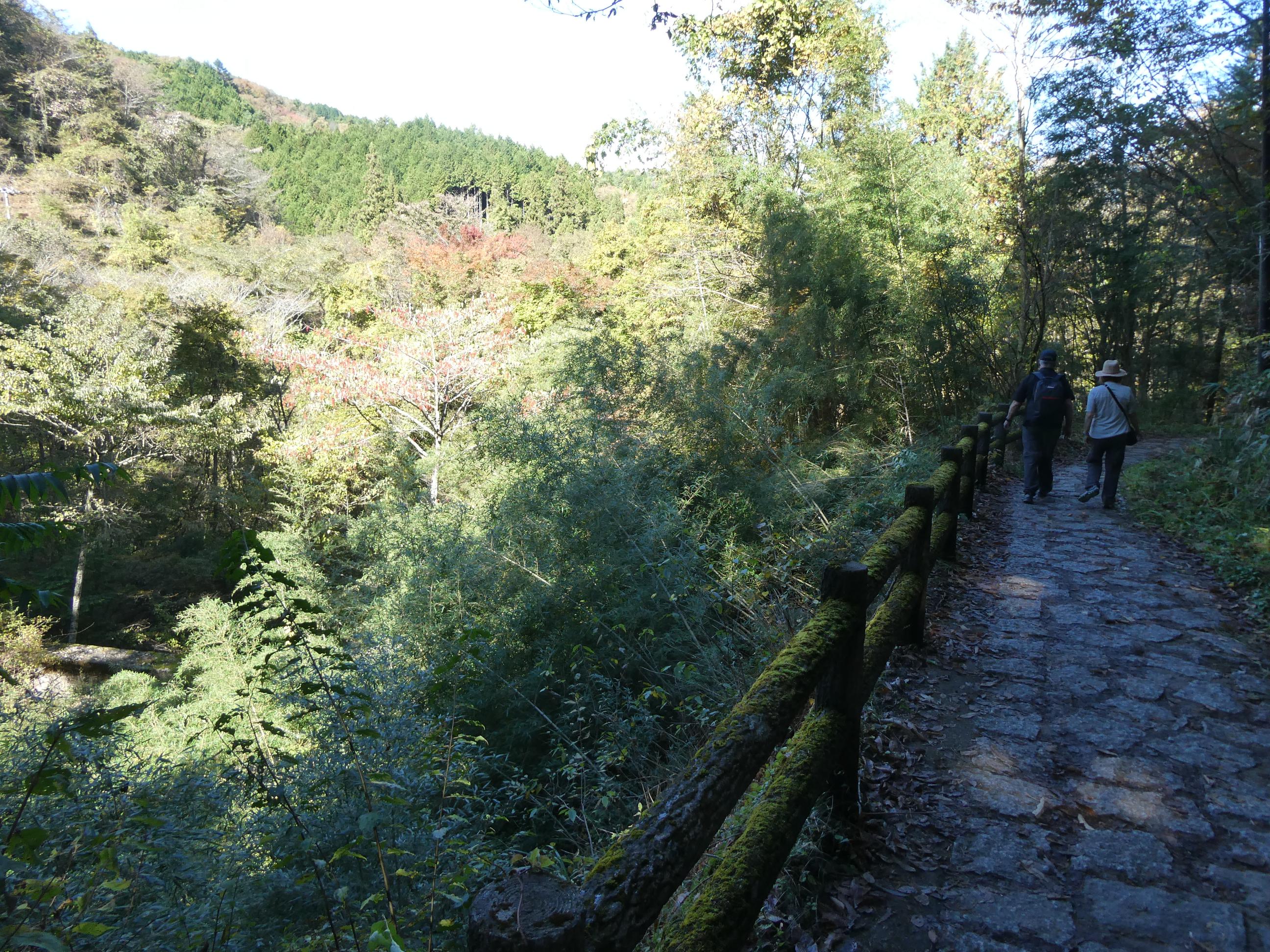
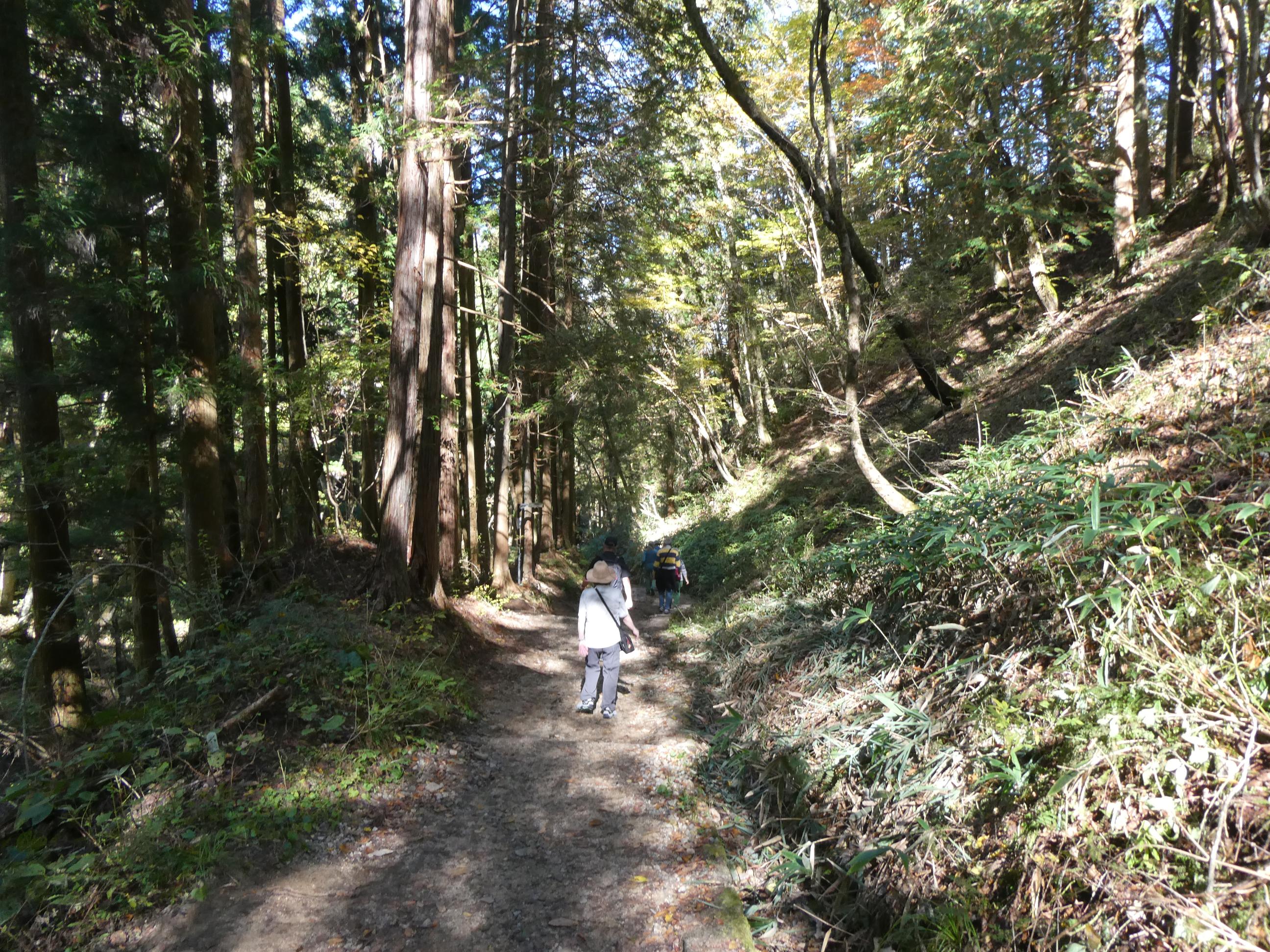
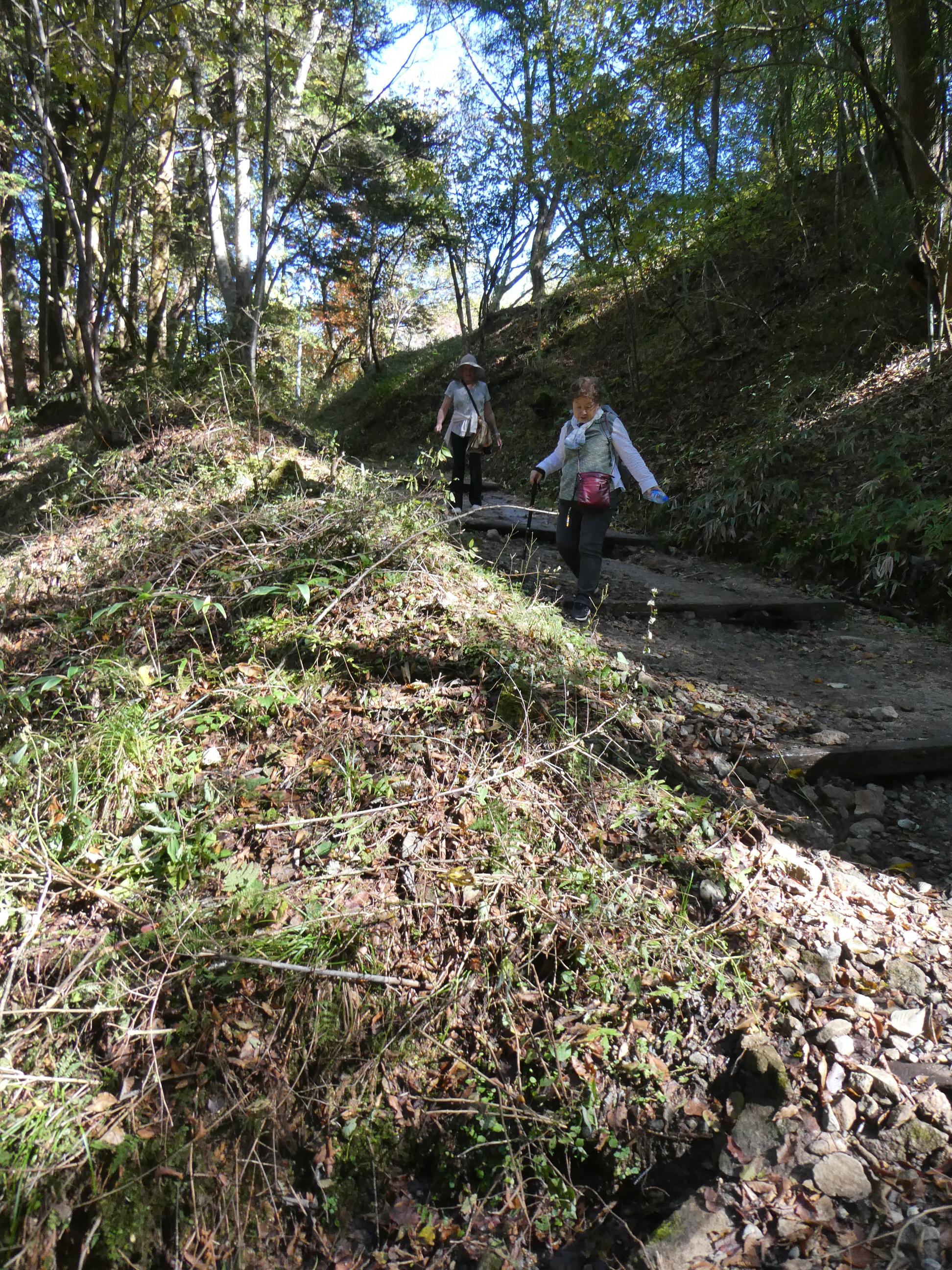


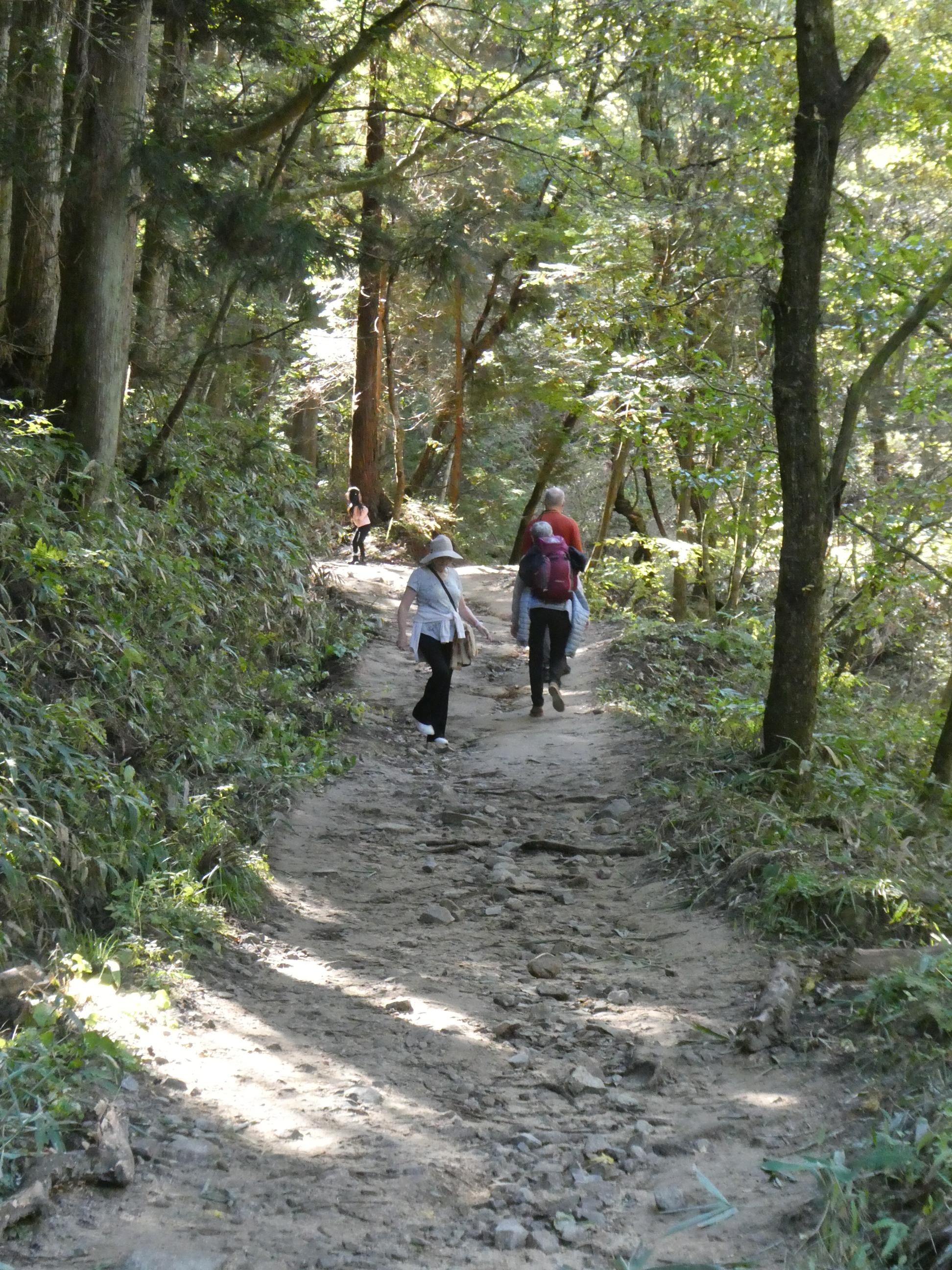

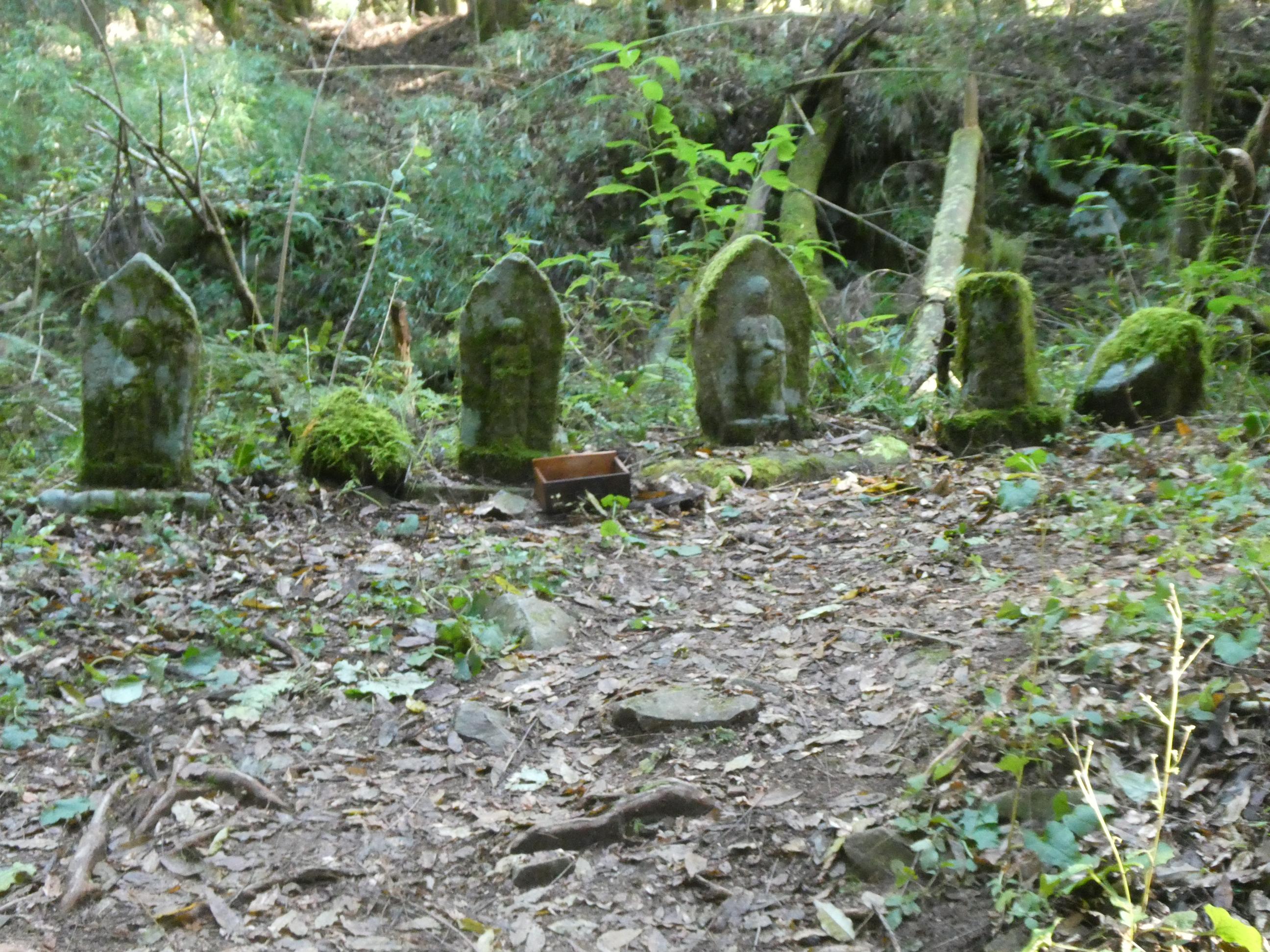
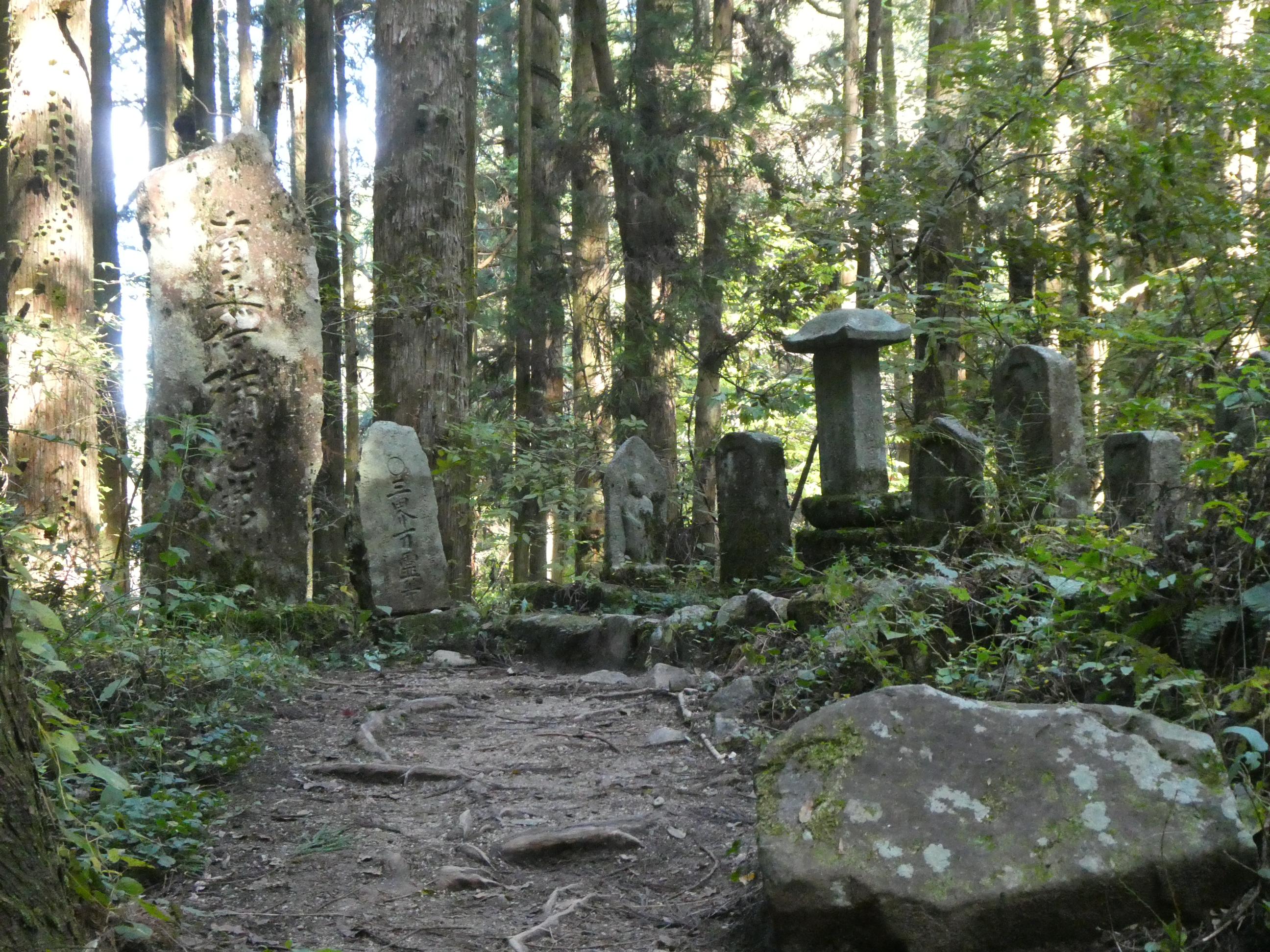
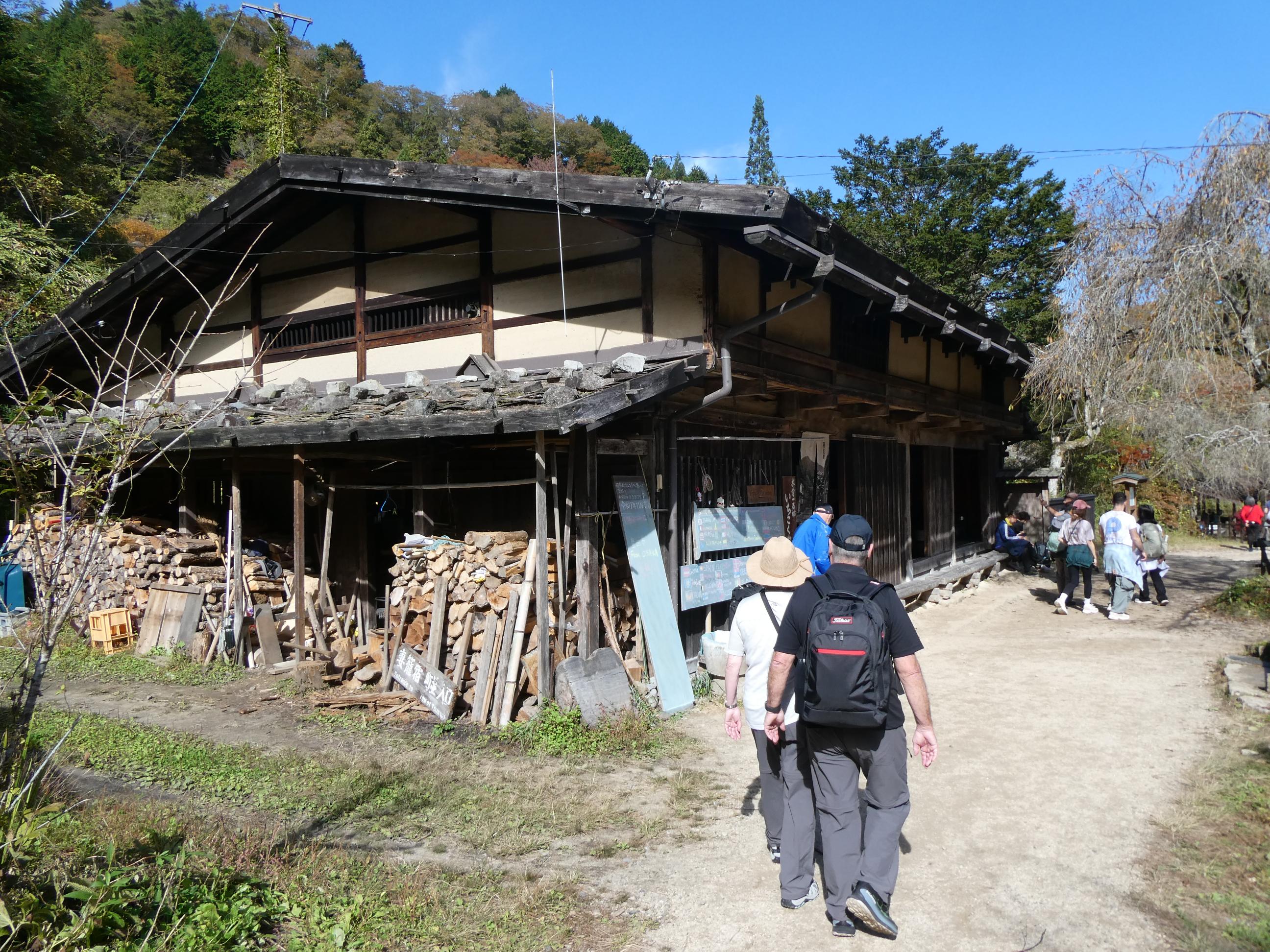


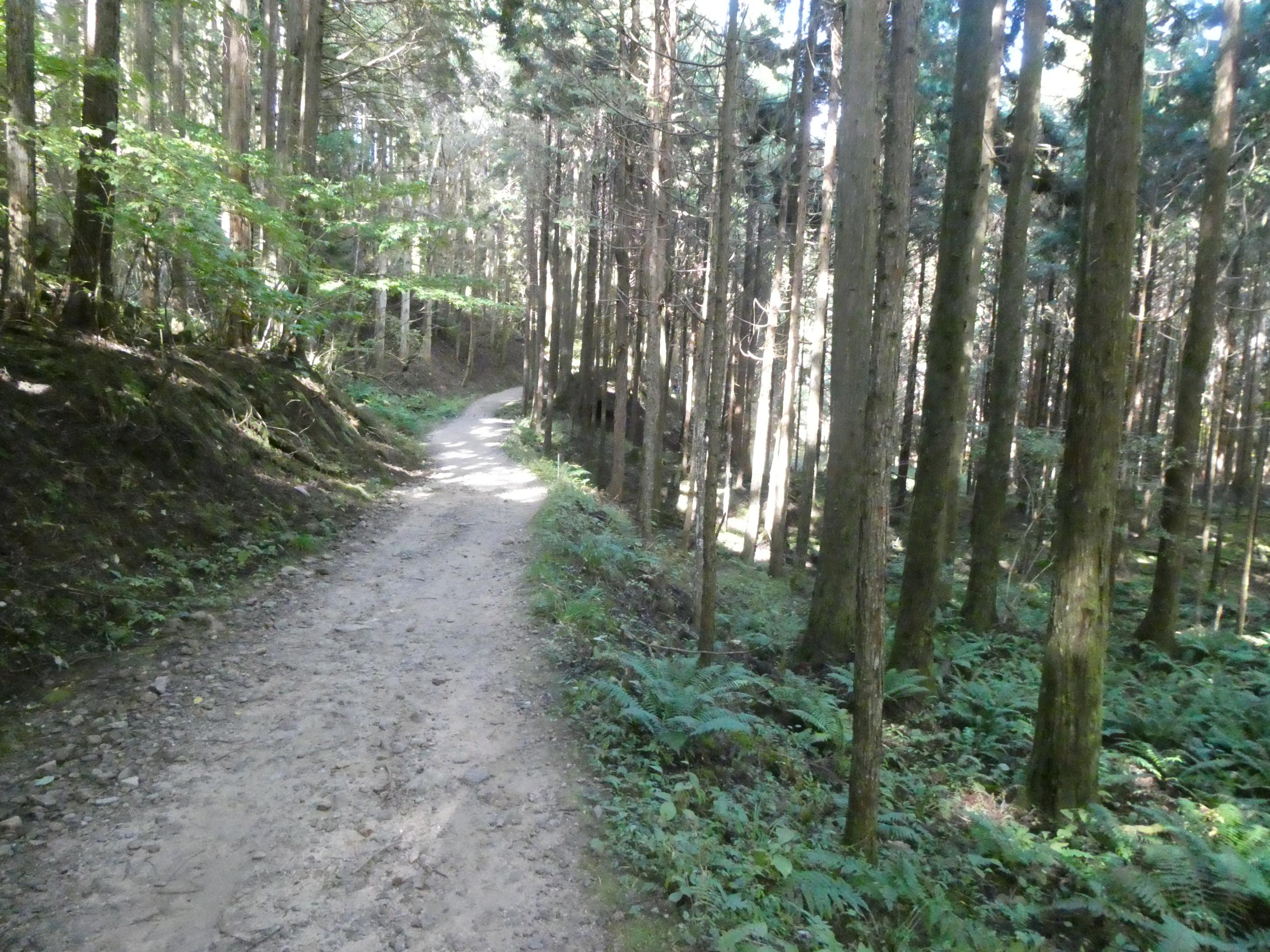
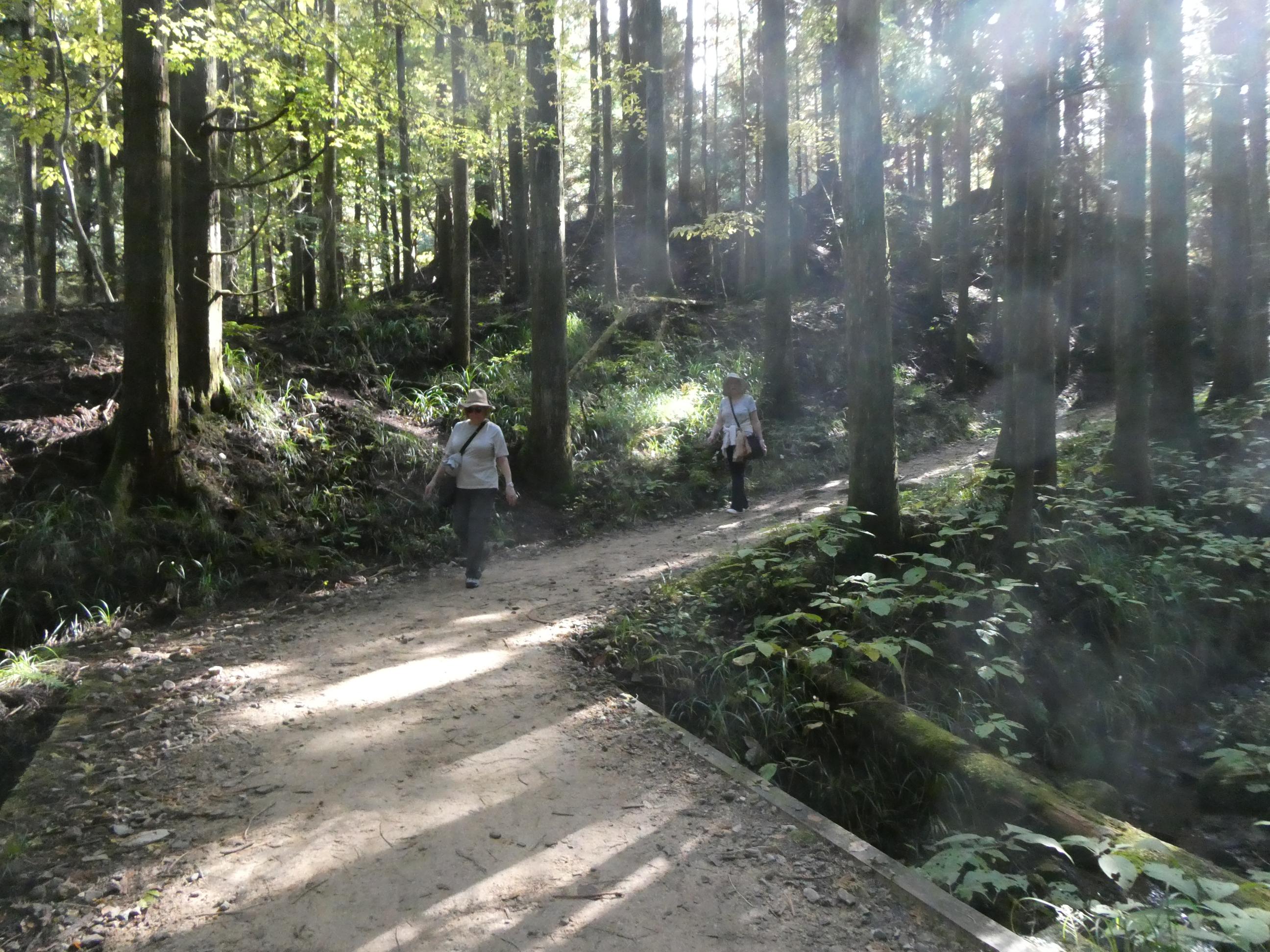

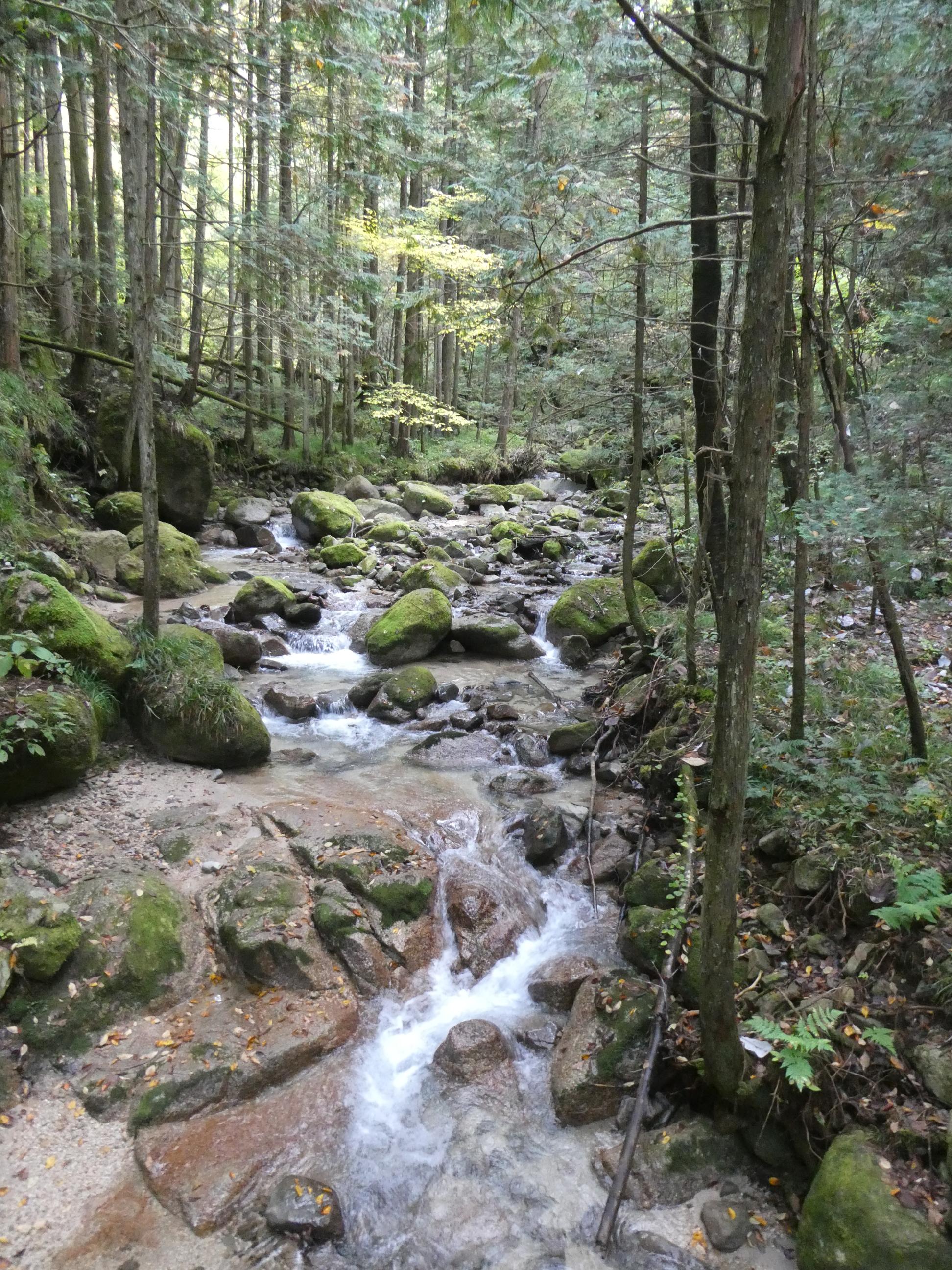
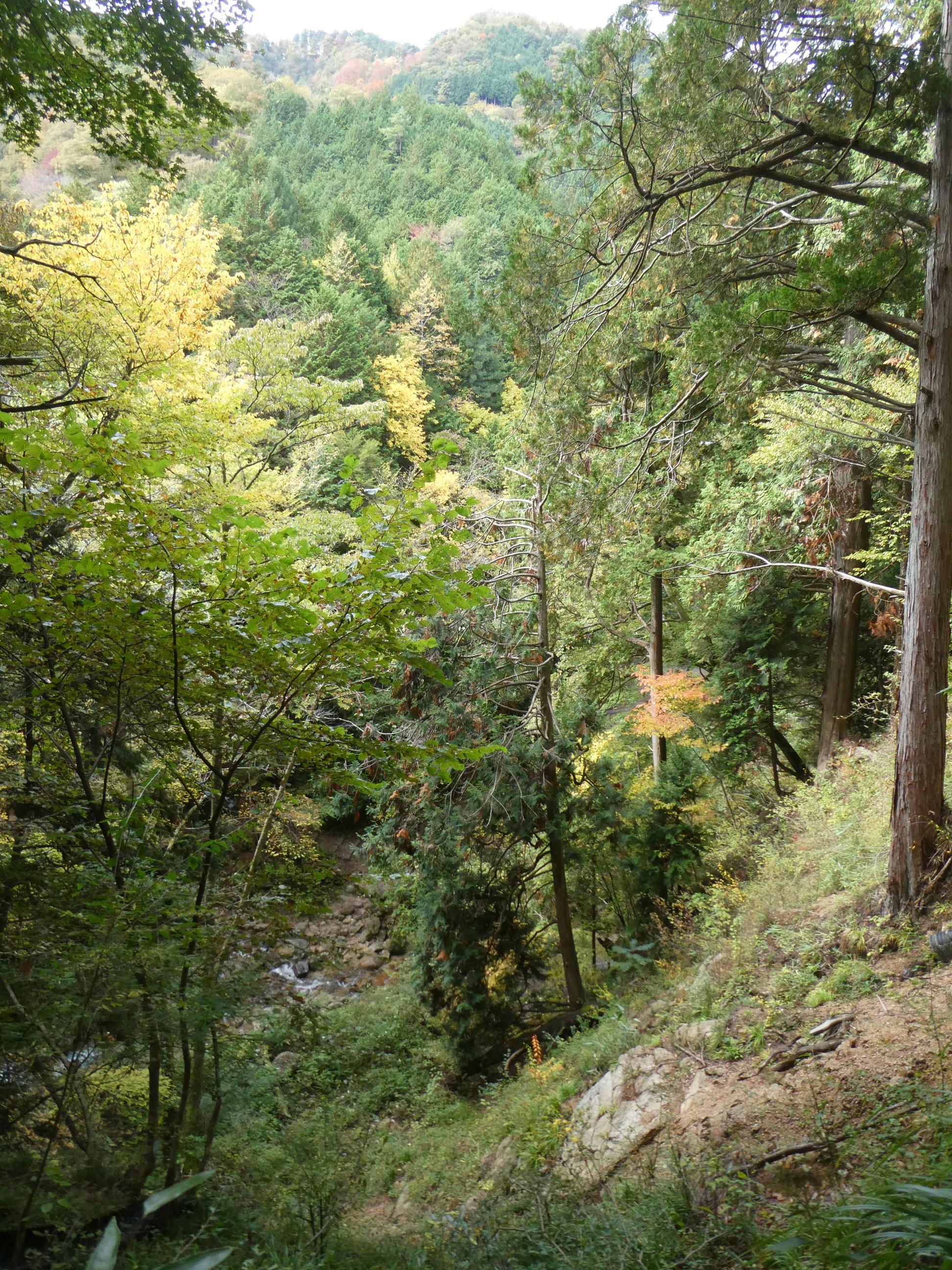
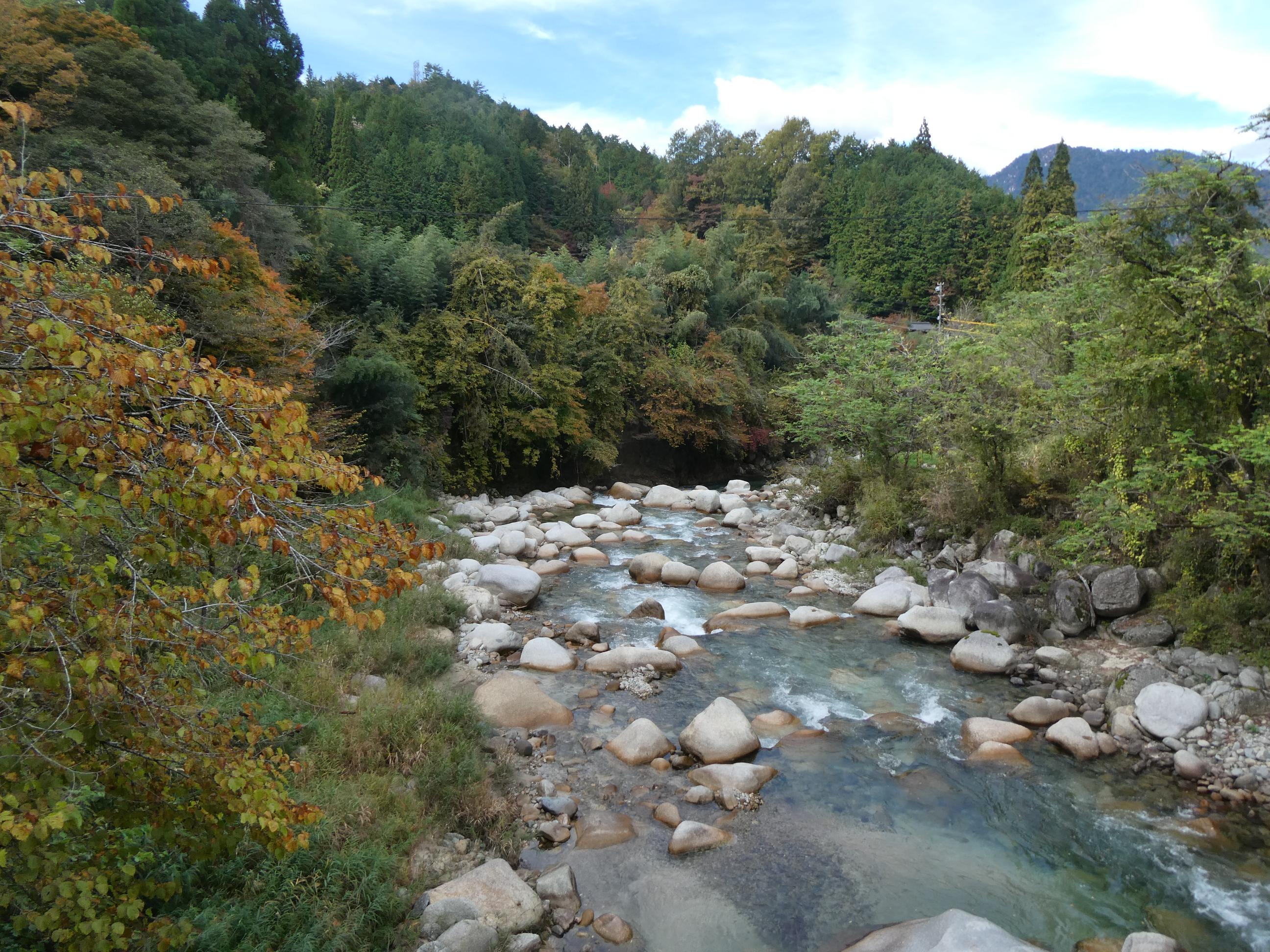
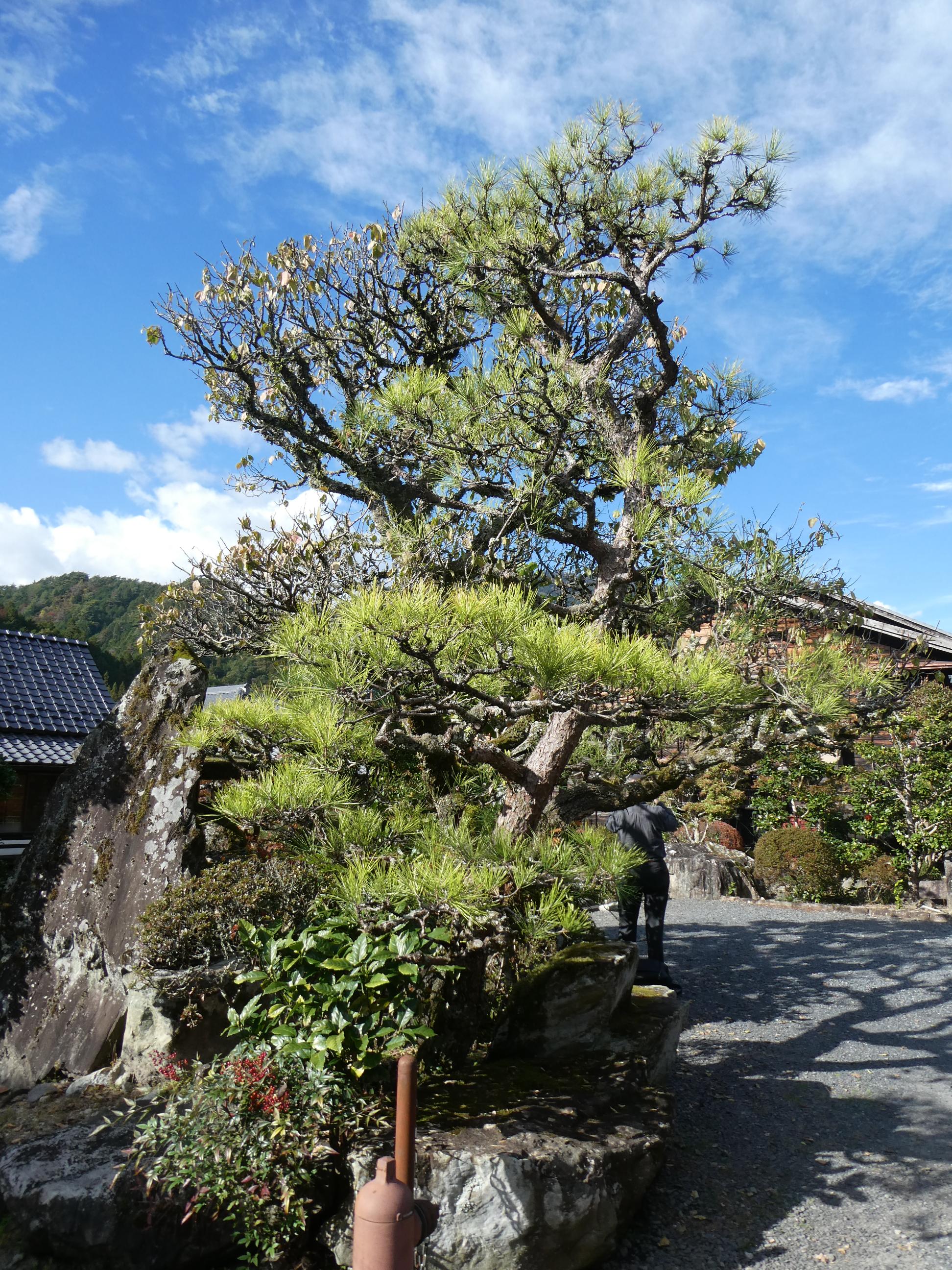
Some of the highlights of the trail for me were the times we were in view of a stream, which often flowed alongside the path or had to be crossed by a small bridge. Often these were good places to stop and have all of our group catch up before moving on. They were also, of course, very picturesque parts of the forest to enjoy. I also liked walking amongst the very straight, tall pines. I’ve written frequently about the autumn foliage of the maples and the oaks here in Japan, but the pines are also beautiful in their own way. In parks and gardens, we’ve loved the ornamental pine varieties, carefully tended to take on the aesthetic shapes often associated with bonsai. But in the forests, the tall pines are quite majestic. When you stand there and look straight up, you can’t help but marvel at how amazing nature is.


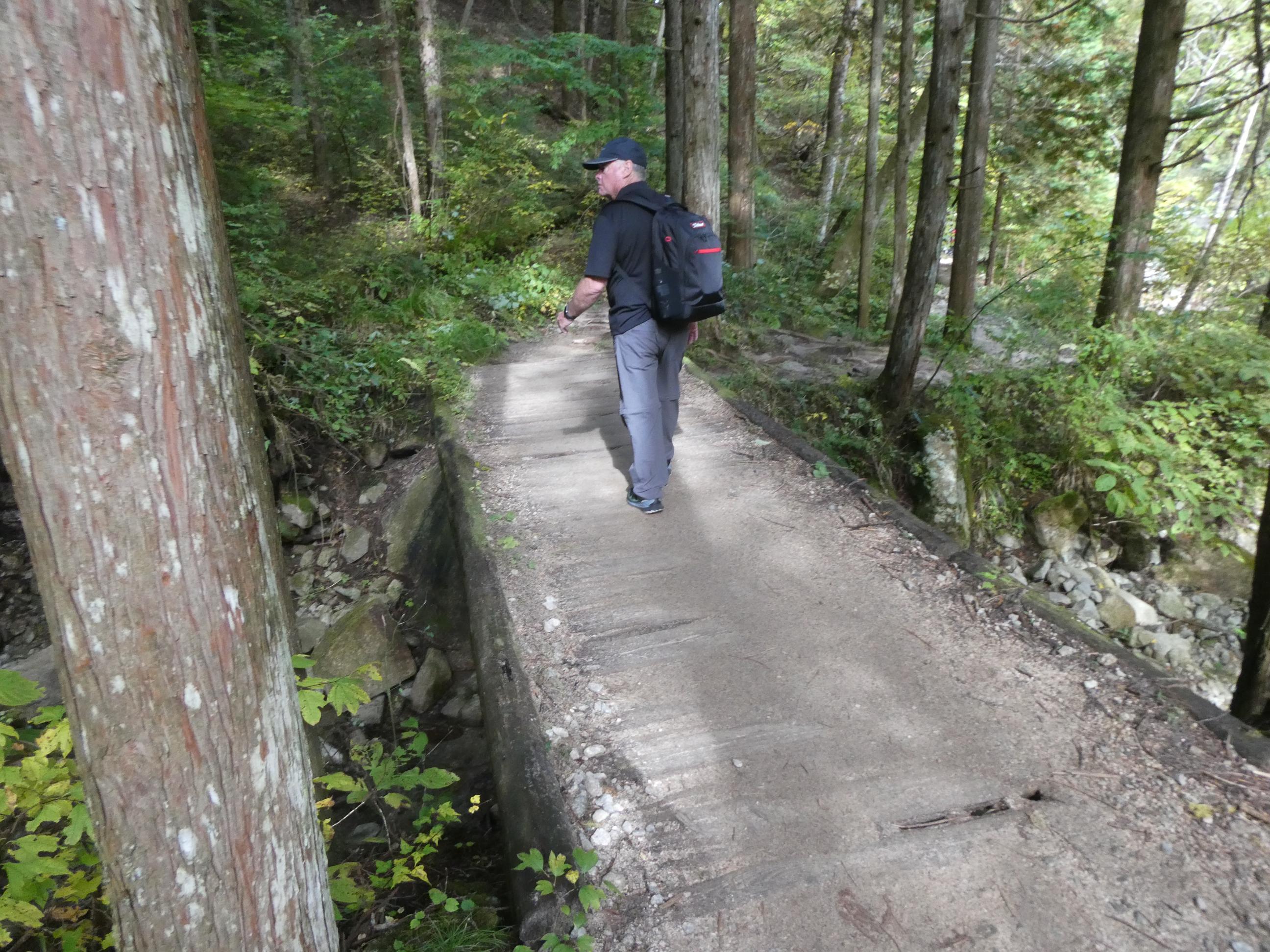
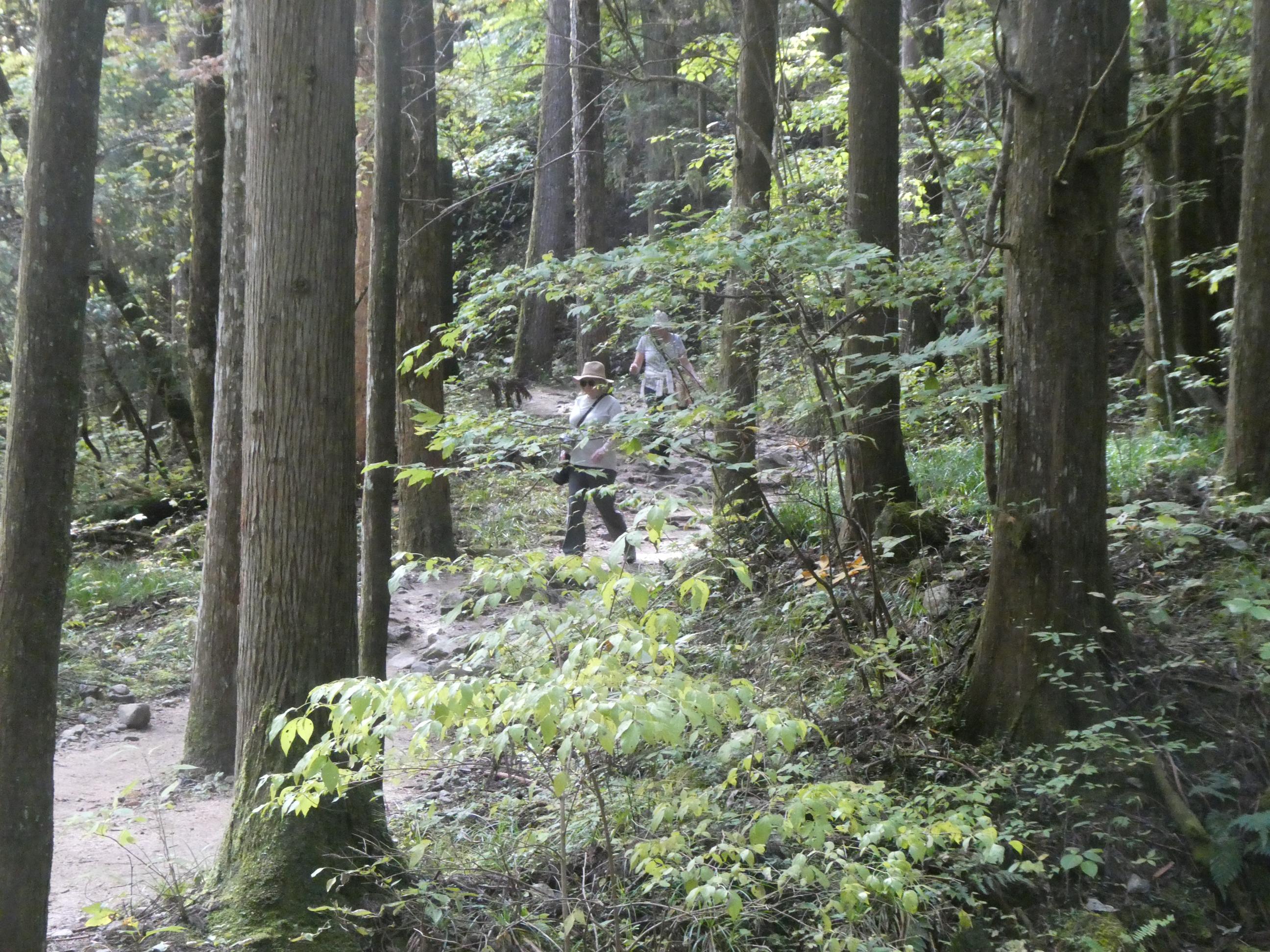



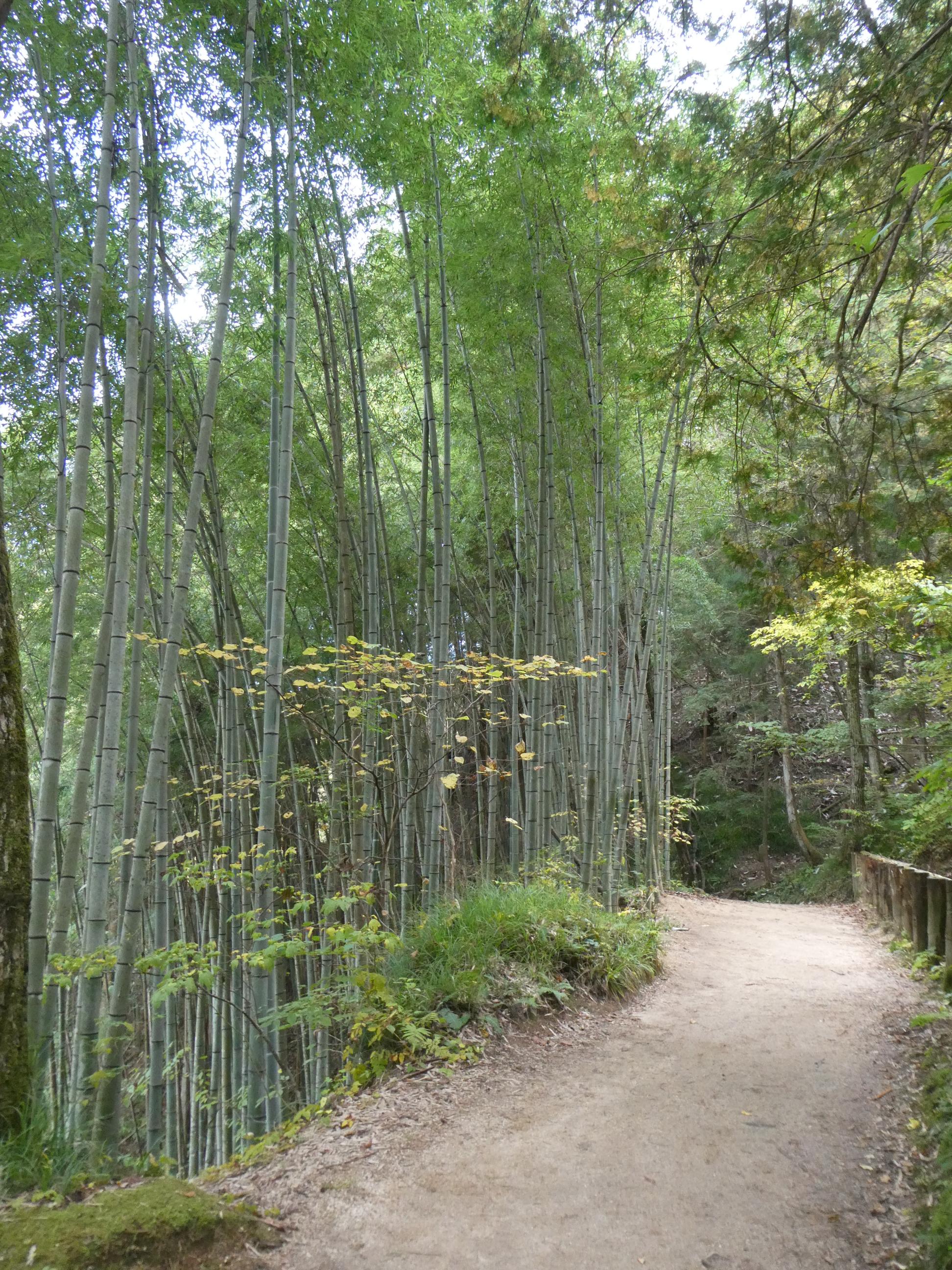
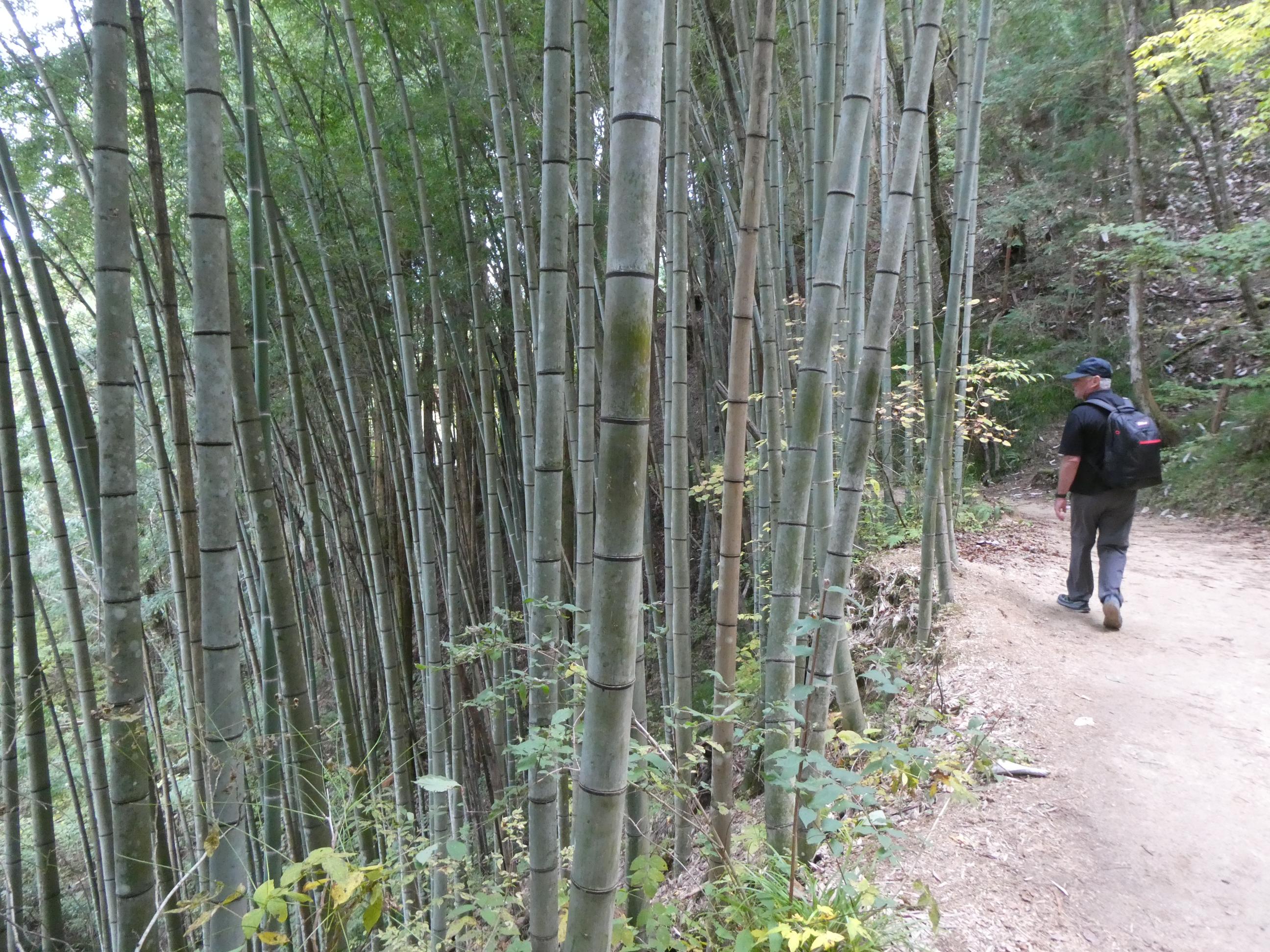
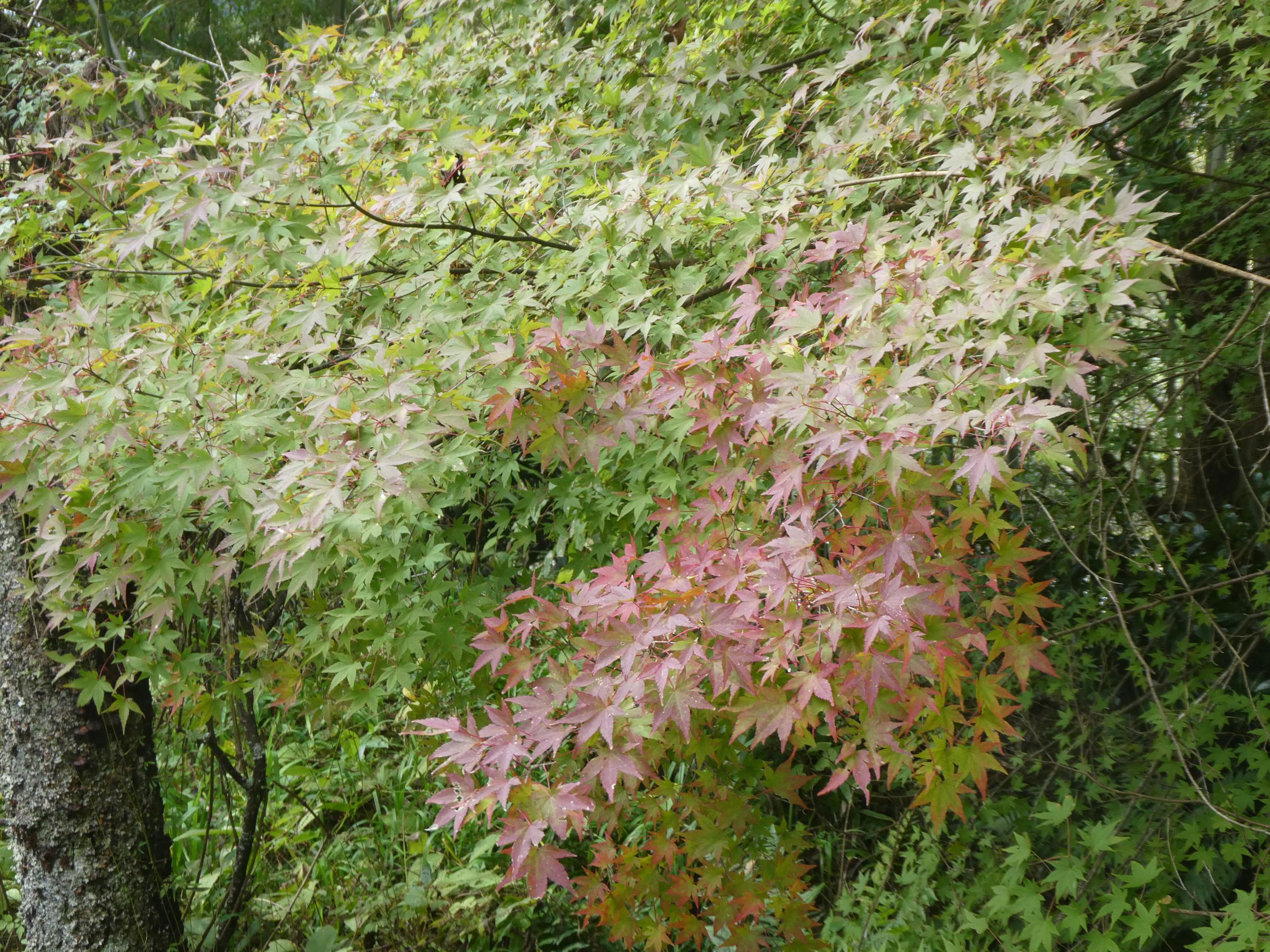
After a time, the pines gave way to a bamboo forest. It’s the first one I’ve seen here in Japan. Bamboo is something I’m quite in awe of, because of how many things it can be used for. Over here we’ve seen beautiful furniture and parts of traditional houses made from bamboo, as well as implements for use around the homes and gardens. But also I’ve been wearing bamboo shirts around Japan, which are probably the most comfortable shirts I’ve ever worn, and at home we have bamboo pillows. What a remarkable plant. The bamboo forest, I might add, was also a thing of beauty to walk through. The dense forest began to thin out. Maples and oaks became more prevalent. It had been a long, long time since I’d have to puff and pant up a slope, and now the path was mainly flat, or a gentle decline, with some steeper descents from time to time. Small farms appeared and we crossed a few roads.




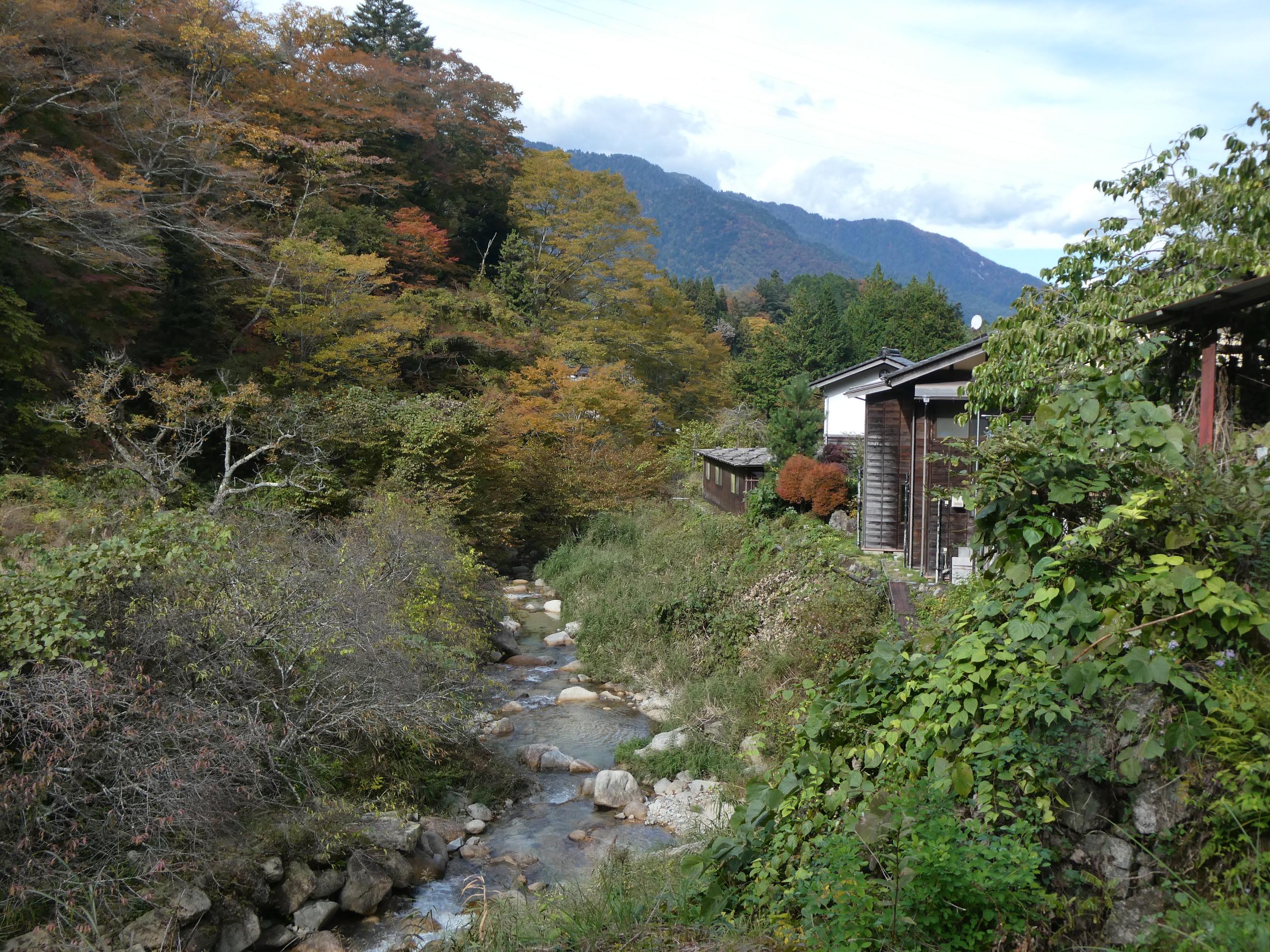
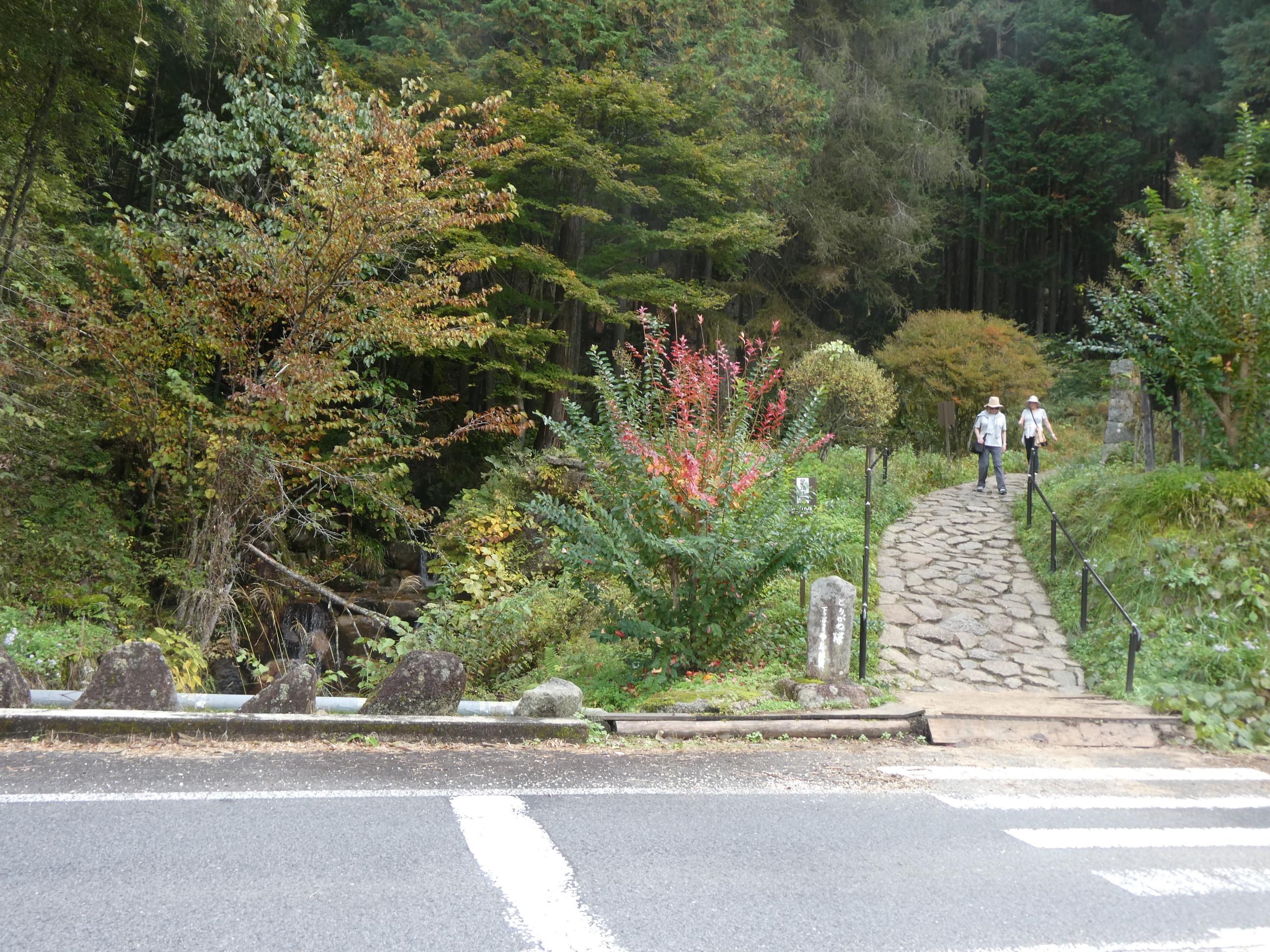


The final couple of kilometres of the trail were in more open country, often still descending gently. Ian and I walked together, reflecting on how much we’d enjoyed the trail. Theresa and Marg followed. There were others on the trail around us who we’d seen on the train and bus this morning, and at various points along the trail, so it seemed we were covering the distance in a similar time to most of the leisurely hikers. We’d been told it would take about three hours. Early on, when I was struggling with the hills, I wondered if I could do it in that time, but after those initial challengers I found the going pretty comfortable all the rest of the way.


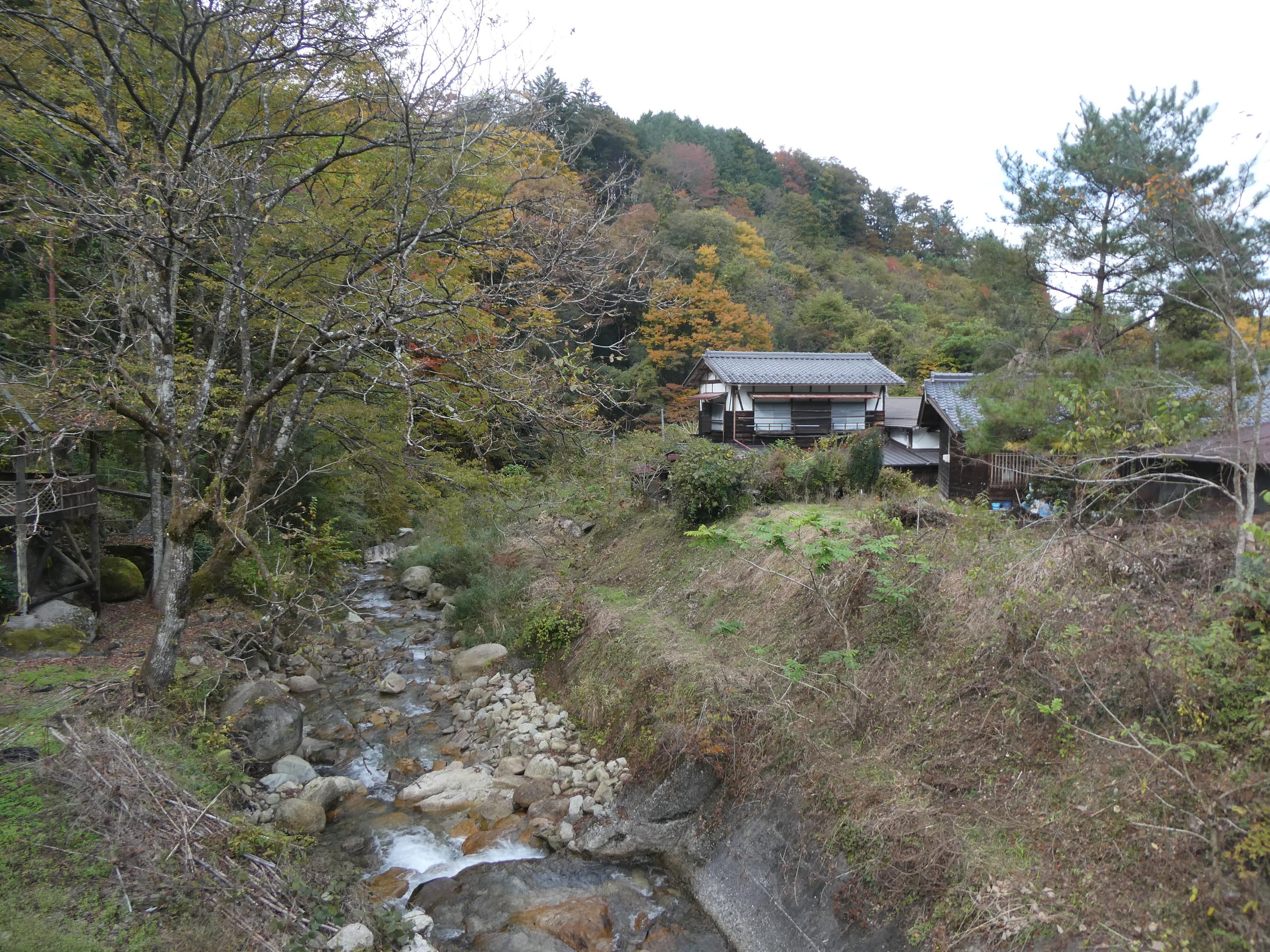

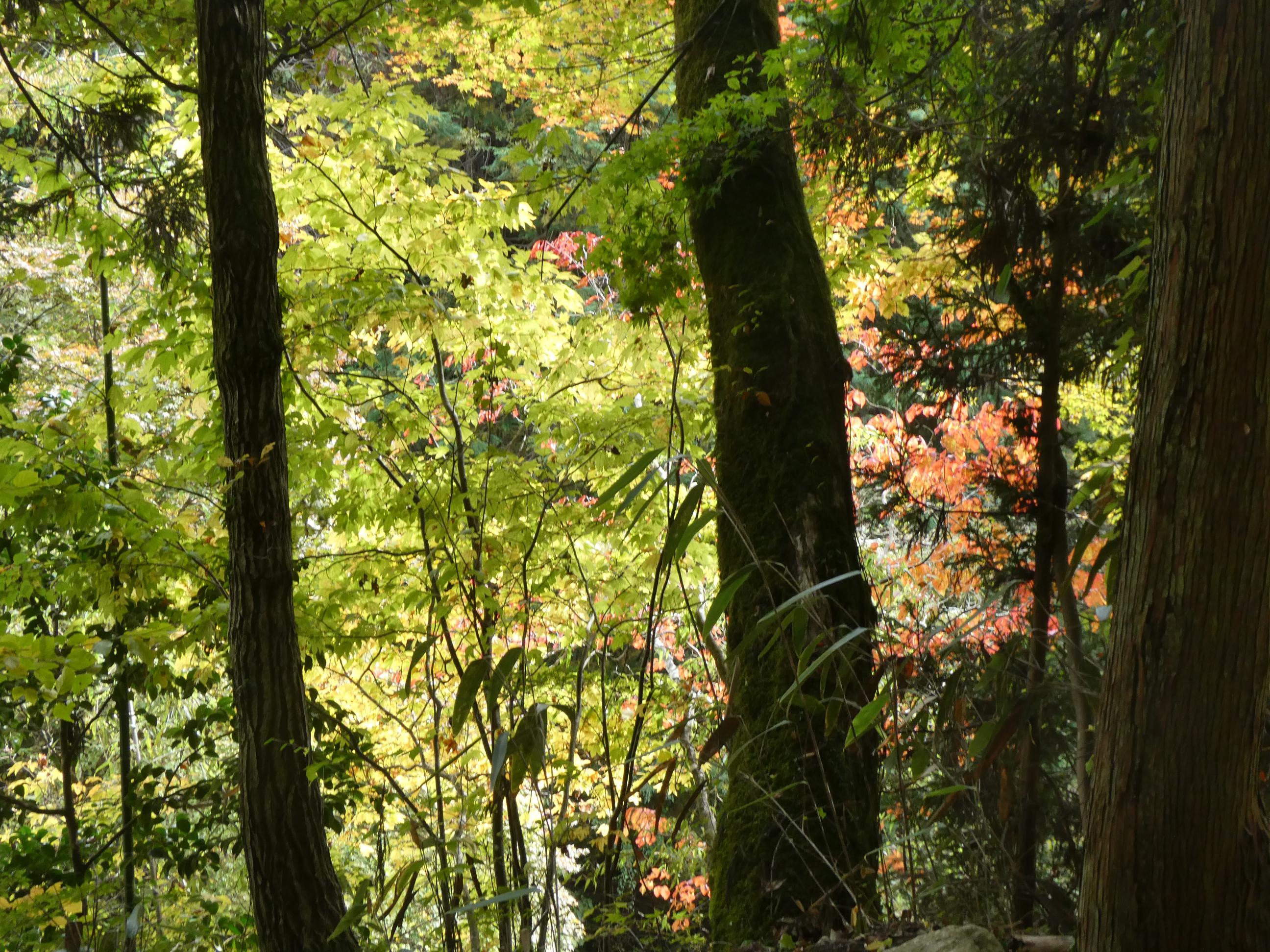



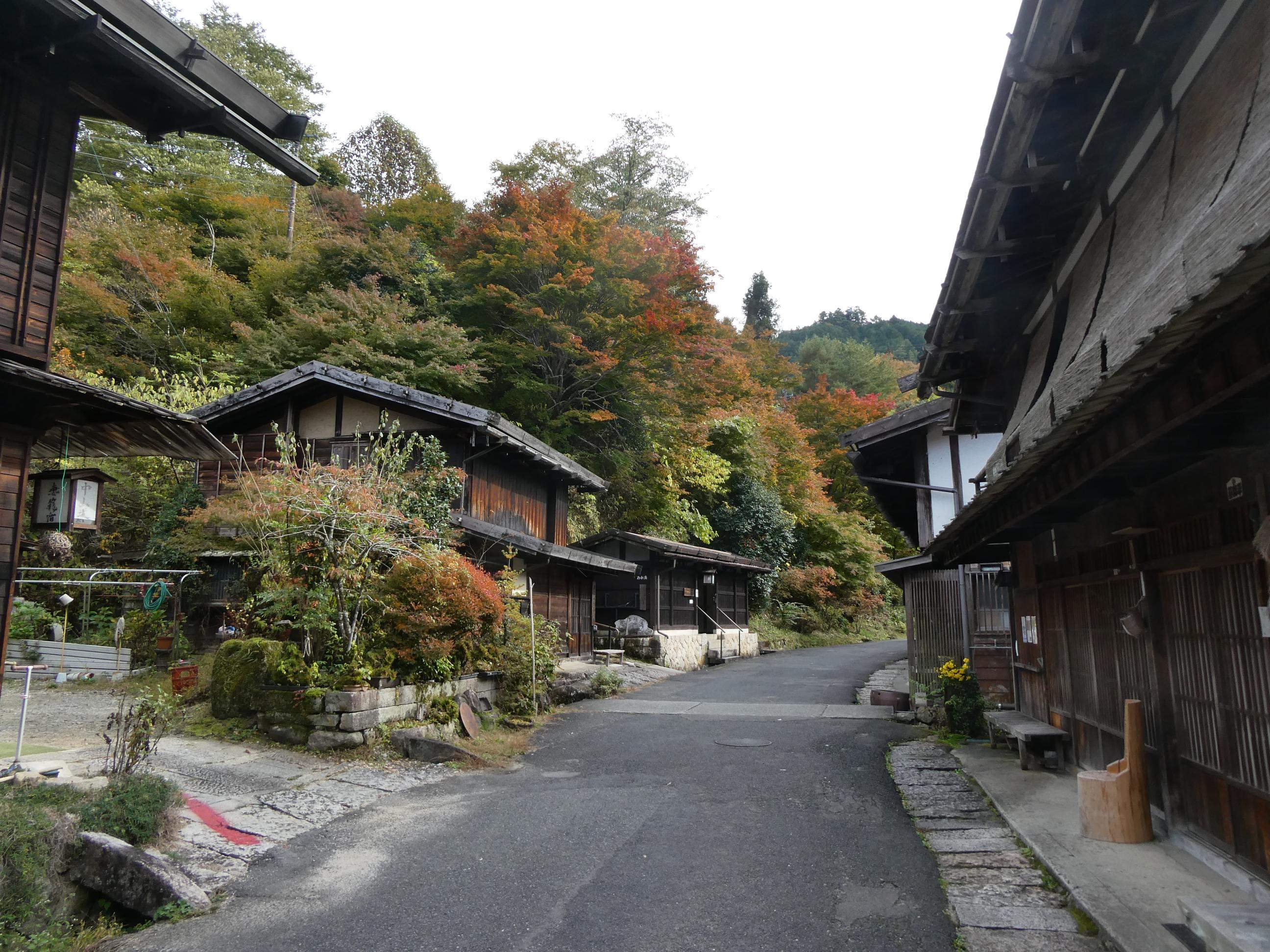
We walked into Tsumago about 1.30 pm. It’s another very well preserved post town from the original Nakasendo road, and quite similar to Magome. Tsugamo also features many traditional wooden houses, shops, restaurants, galleries and teahouses along its main street. It was time for another ice cream, our reward for completing the trail, and I snuck in a beef skewer as well because they looked so delicious I just had to have one.



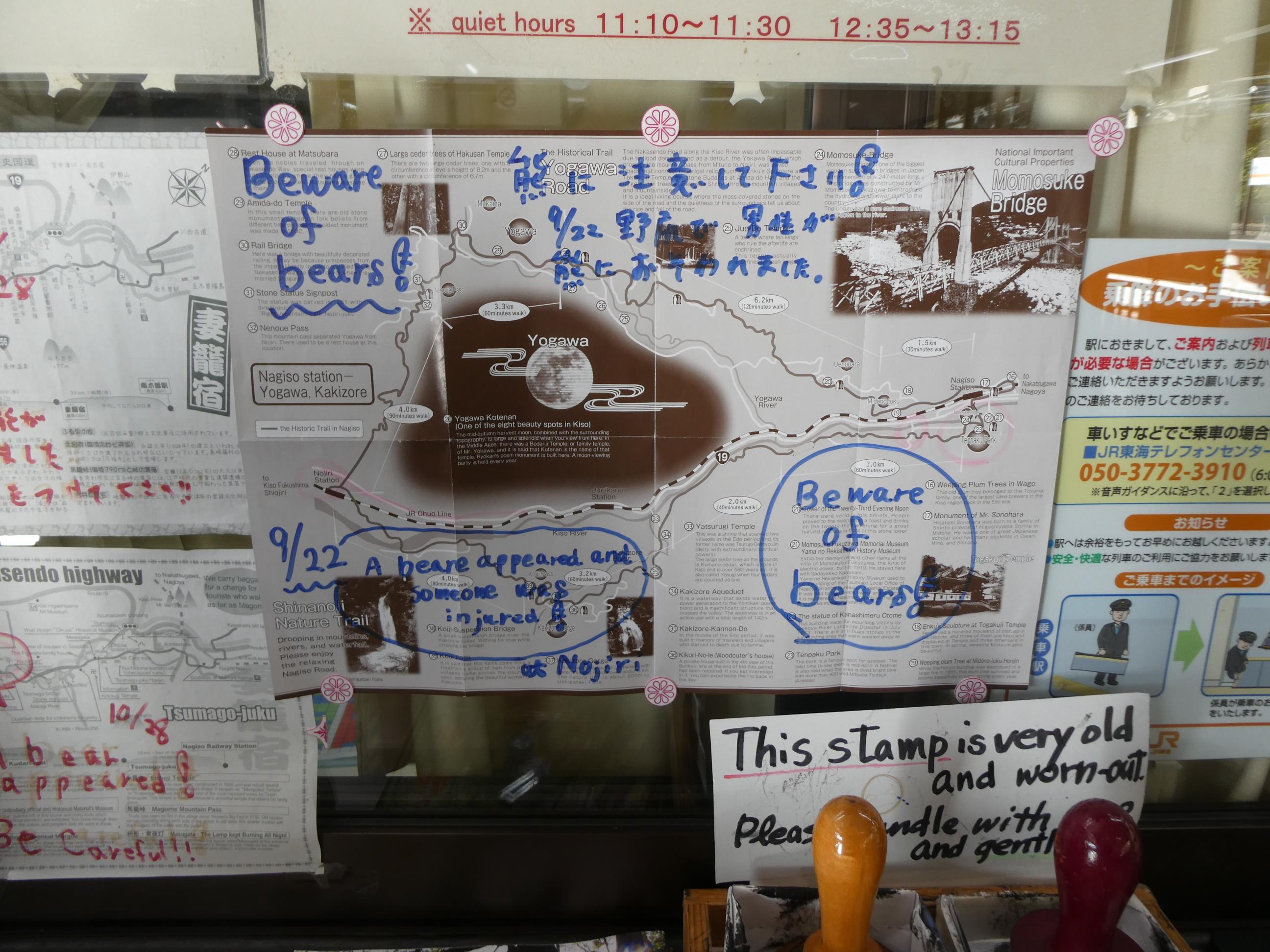
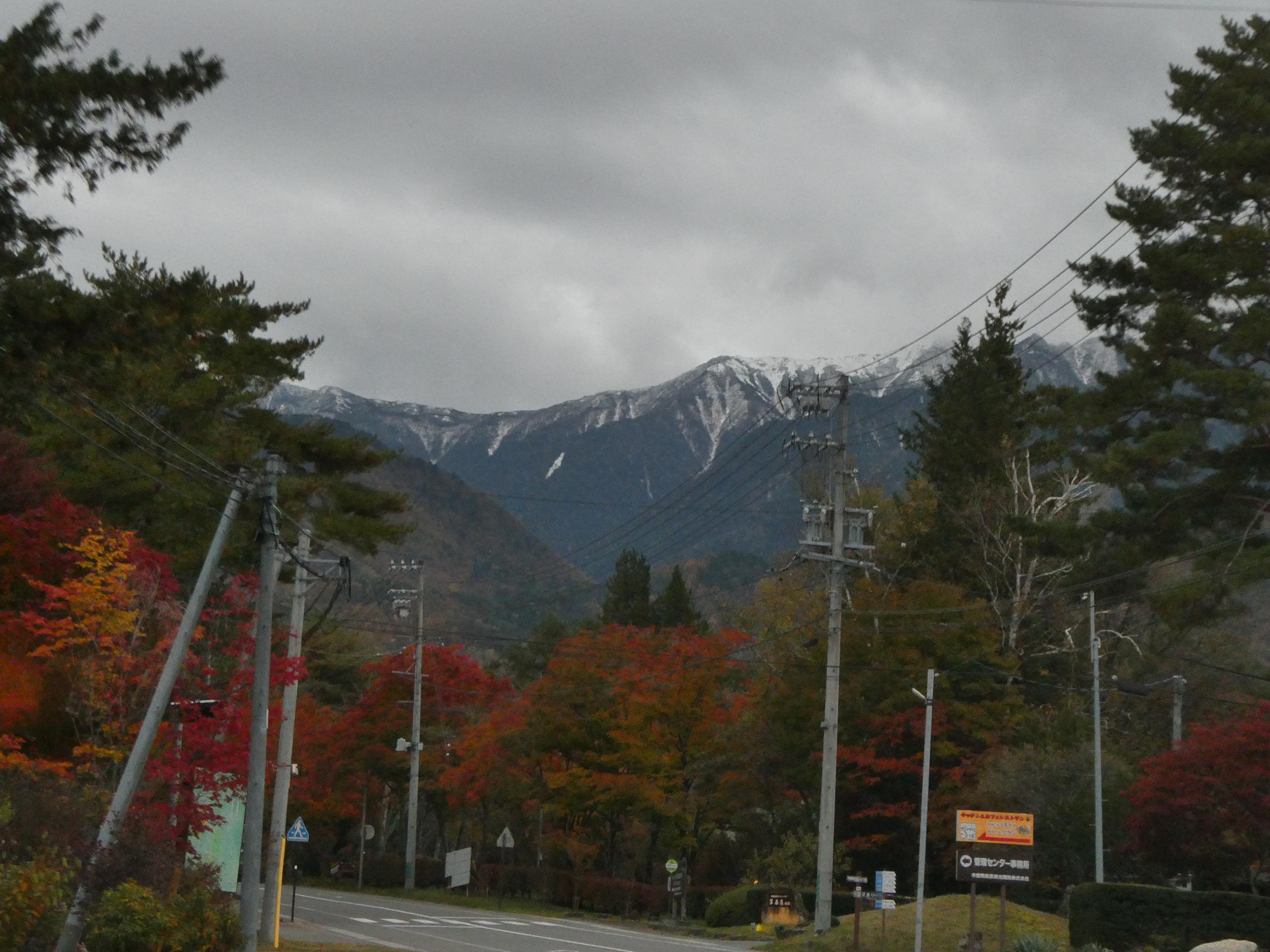
We were well ahead of our itinerary schedule, so rather than waiting ages for a bus, we found a taxi and took it to Nagiso, where we caught an early train back to Kiso-Fukushima. At Nagiso railway station, I noticed a sign on the window that said a bear had injured someone in the vicinity in late September. I wonder if that person was carrying a bear bell. At Kiso-Fukushima, we caught another taxi back to our hotel, which is about 10 minutes distant by car. I sat in the front seat and had my camera ready as we came up the road approaching our hotel, because I wanted to get a better photo of the snow capped mountains nearby. Today, they were shrouded in clouds, so I’ll finish with yesterday’s photo that probably should have appeared on last night’s blog. Tomorrow I think we leave Japan’s fabulous mountains, where we’ve been for the past few days. I think they are something really special.


 On The Road With Garry
Glad you didn’t encounter any bears on your hike. Beautiful scenery.
LikeLiked by 1 person