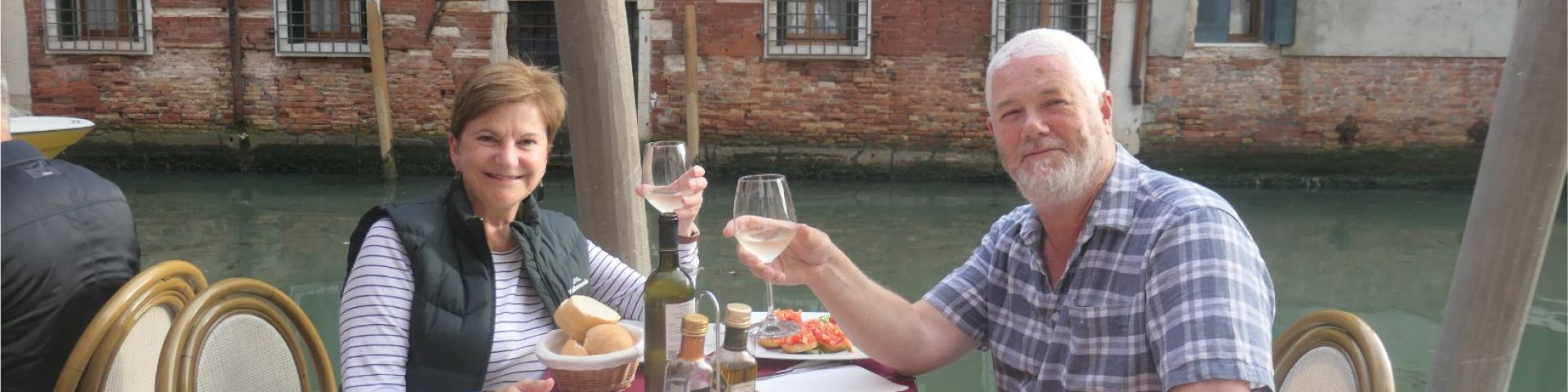
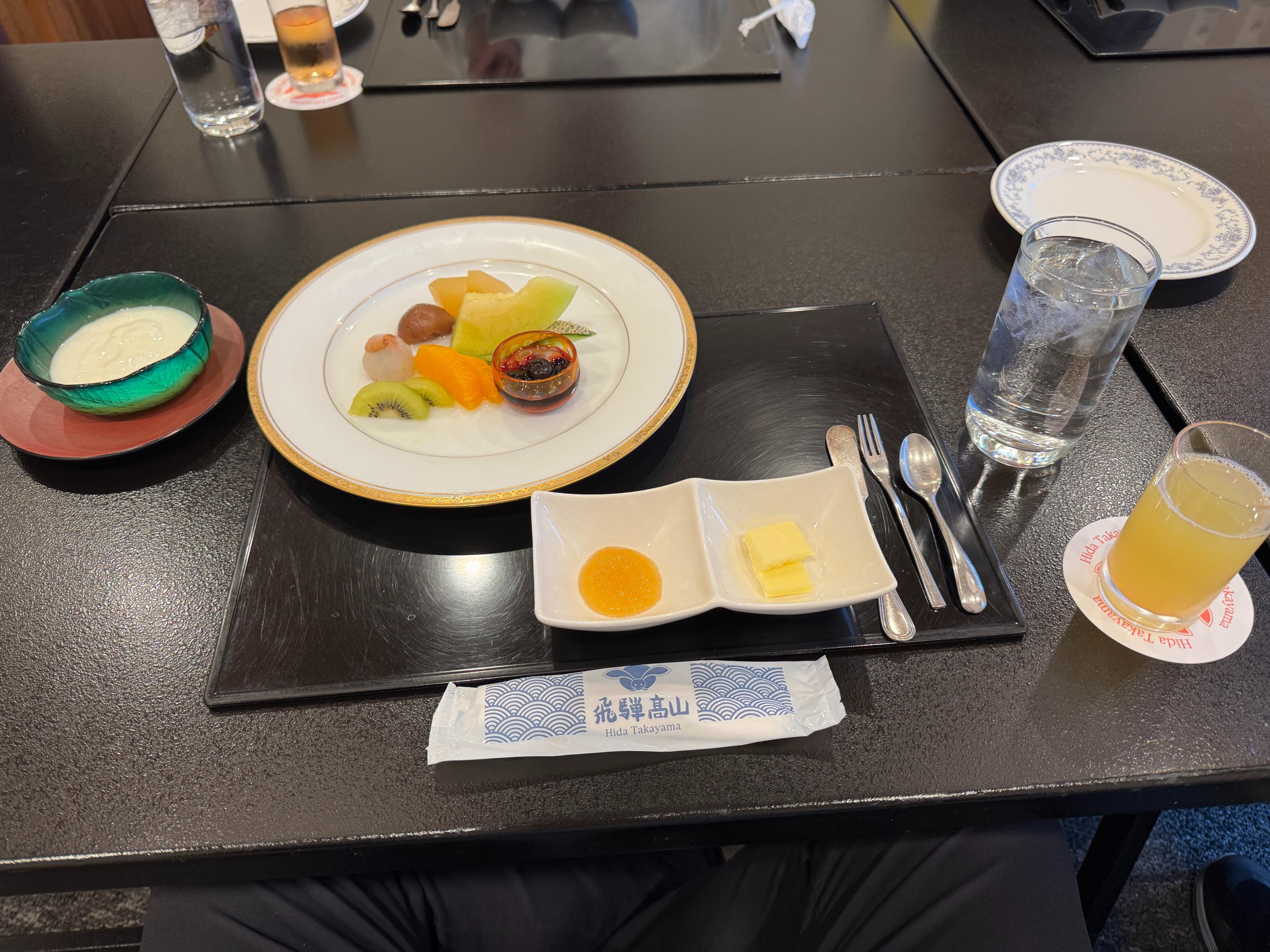
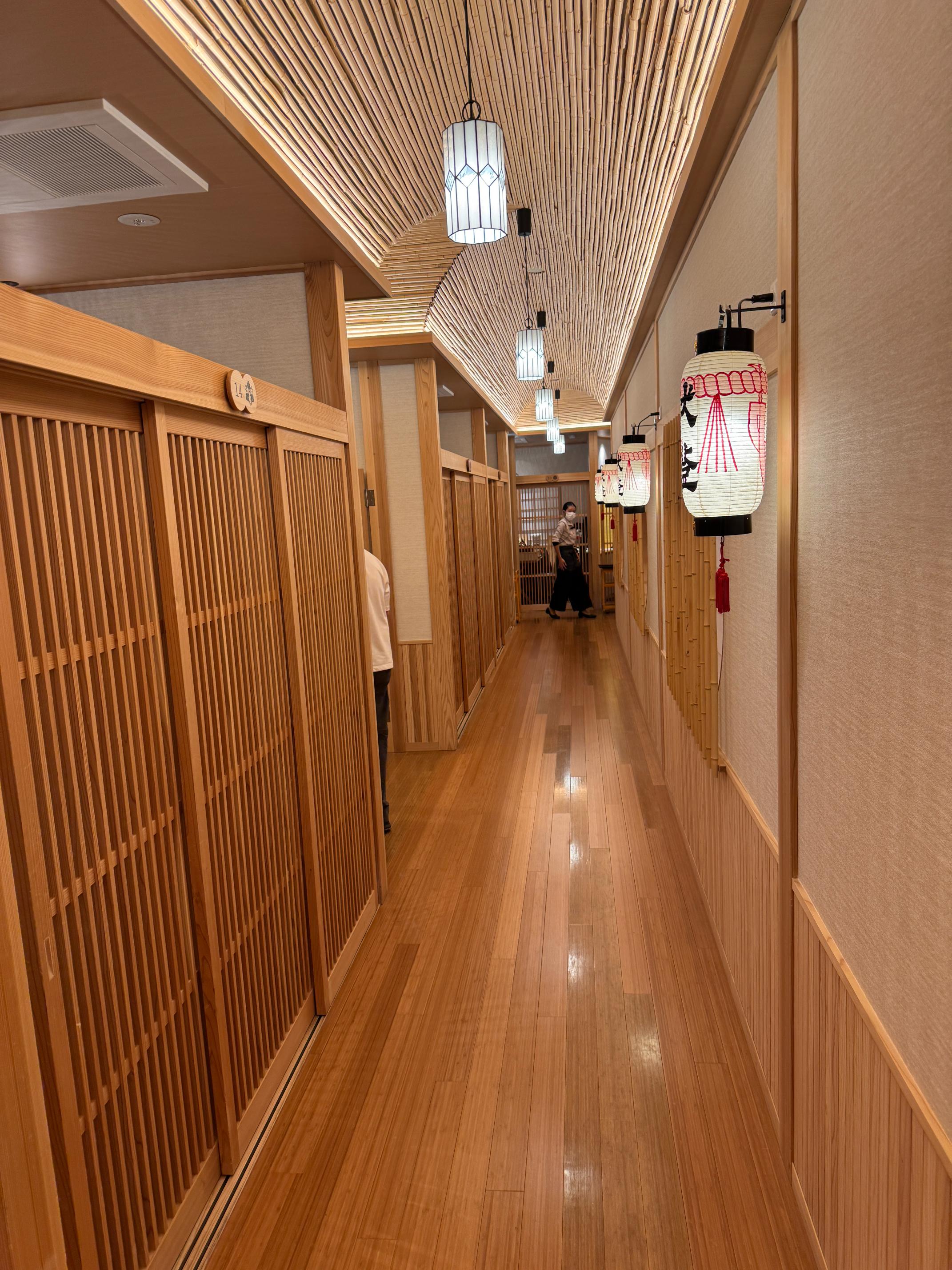
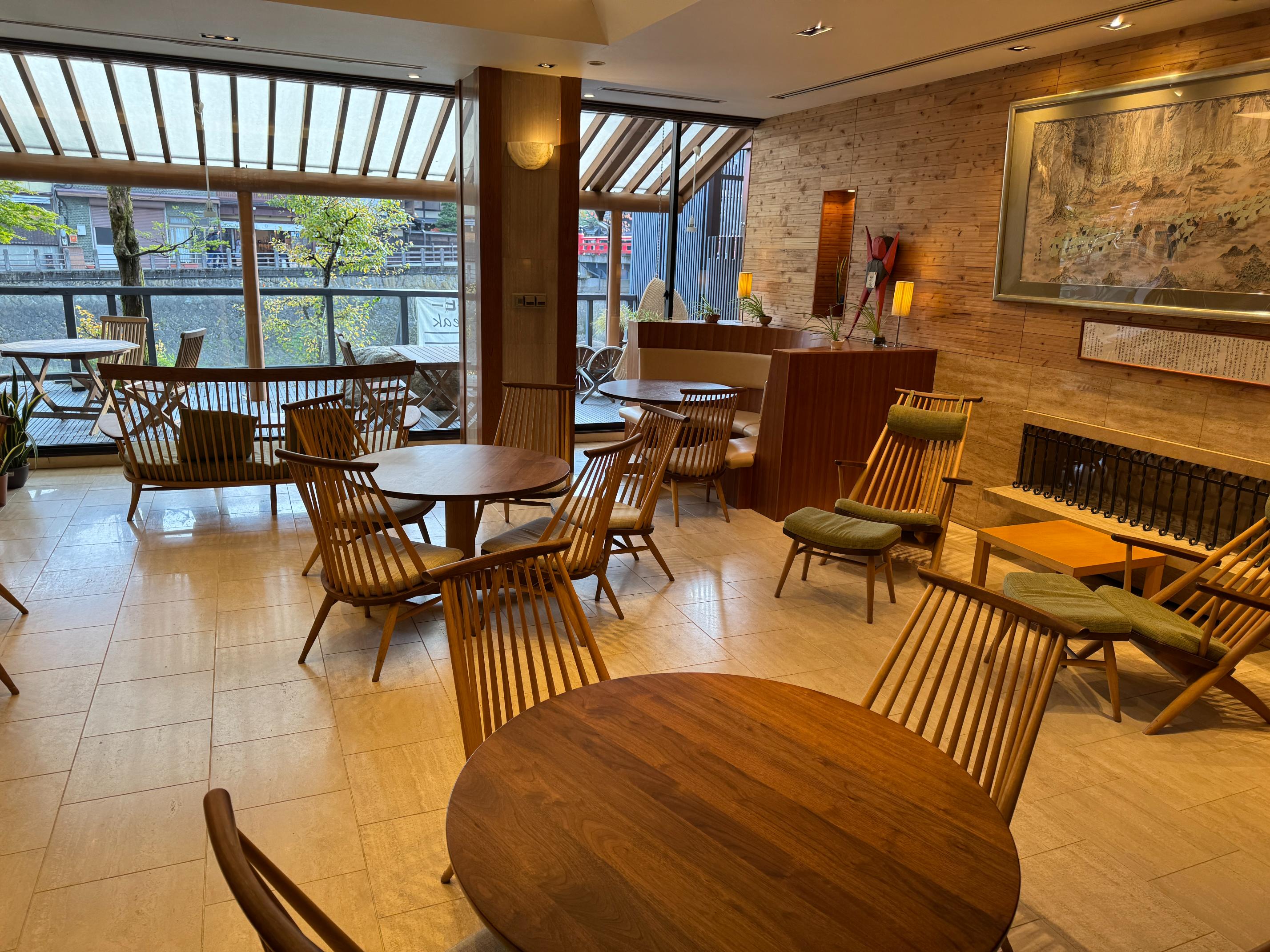
After struggling to finish the delicious ten course dinners they served in our Takayama hotel, and needing to catch an early train, we opted for the c’ontinental’ breakfast this morning, rather than the Japanese breakfast with its multiple dishes and the ‘western’ breakfast, which we’d had the previous day, but still was much more than we could eat. The first photo below is the continental breakfast (minus the toast, which was already in the toaster). I was expecting a slice of bread and a little box of Rice Bubbles, but even their continental breakfast looks classy when it’s served. Every meal at this hotel is served in our own private room by ladies in traditional dress (and sometimes by an engaging young man from Myanmar). I really enjoyed staying at the Honjin Hiranoya Bekkan, even though I struggled with the Japanese bedding on the first night. The staff and facilities are wonderful. We never got around to trying the onsen, though they gave each of us a traditional Japanese outfit to wear – some patrons even wore this gear to dinner.
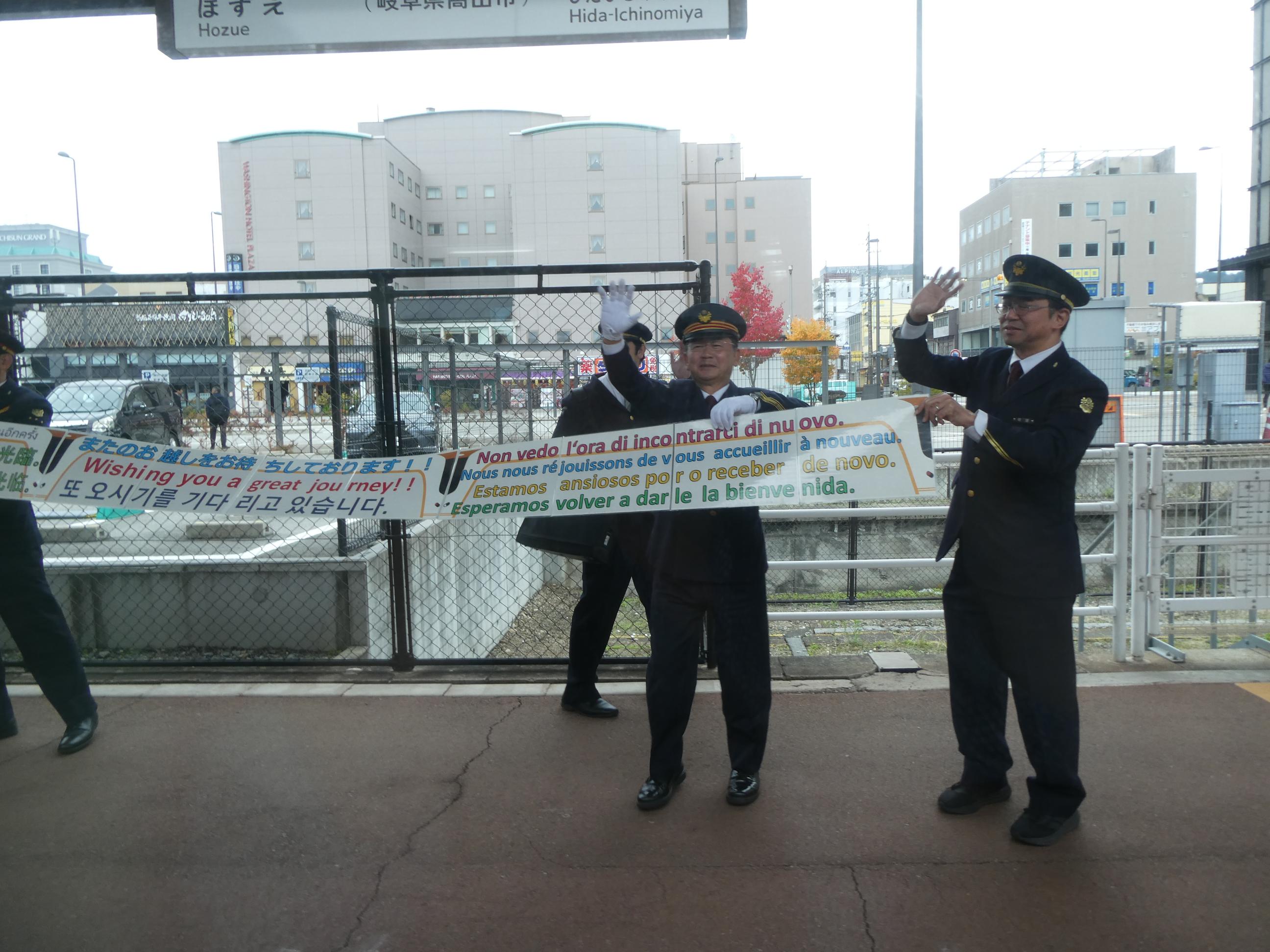
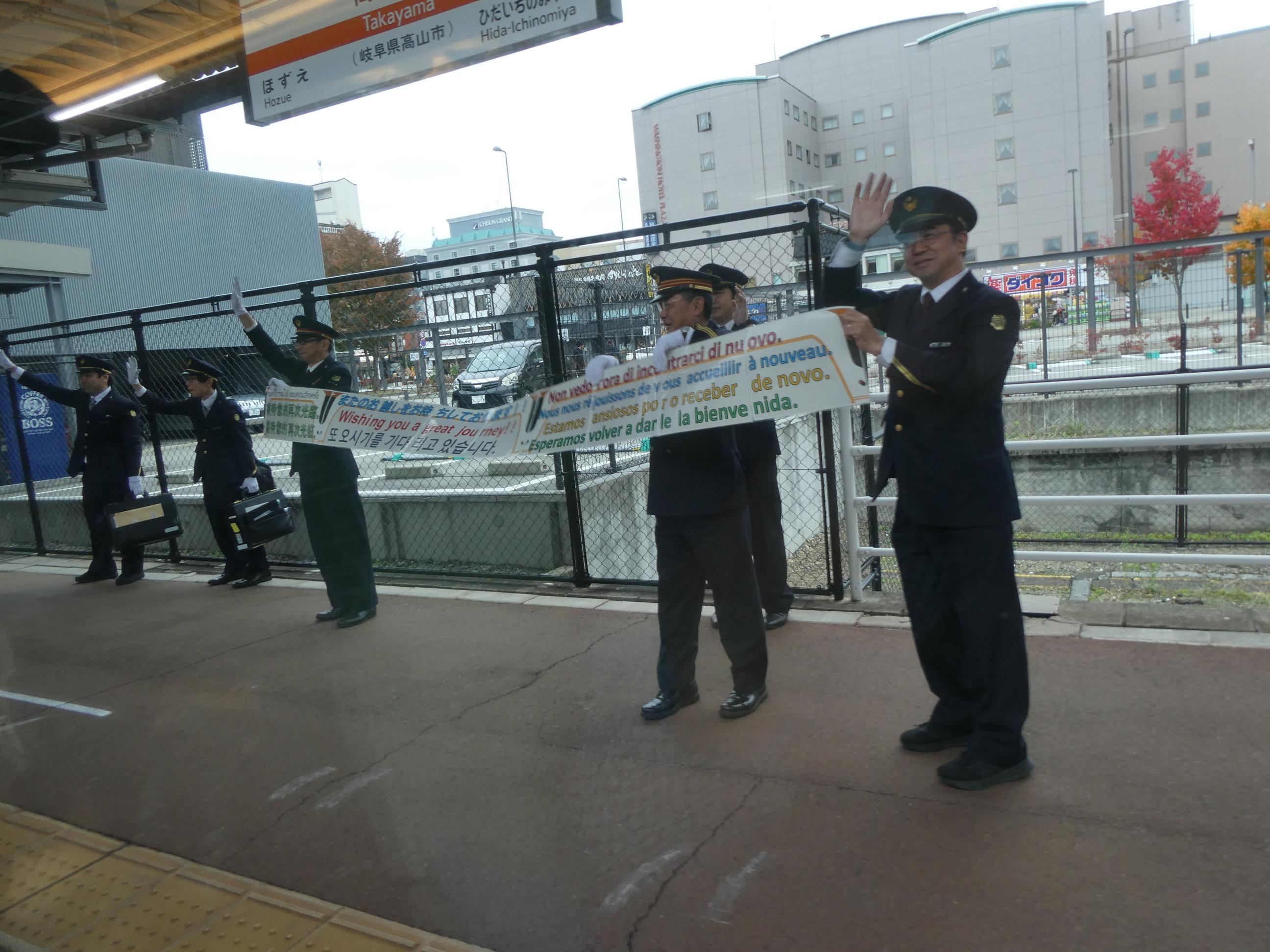
We had to catch three trains today. None of them was a Shinkansen. Our hotel host drove us to the railway station after breakfast. We waited on the platform while chatting to Dennis and Kay from East Doncaster, who we’ve kept bumping into over the last 3 or 4 days. We discovered that they booked their tour with Haydn at Japan Package Tours too, hence some similarities in parts of our itineraries. What a pleasant surprise it was when the railway station staff came to the end of the platform to wish everyone a safe journey as the train was leaving. I wasn’t really surprised. The Japanese people we’ve encountered, almost without exception, have been friendly, courteous and willing to help, even when it means interrupting what they’re doing. Even the people on the street or passengers on the train we’ve had to ask a question have answered with a smile and a bow of the head. Theresa found one exception to this in the Kanazawa Omicho Market a few days ago when she tried to take a photo of a seafood stall and the guy behind the counter barked at her and pointed to a very small ‘No photos sign’. It’s good to know that even in Japan there’s at least one grumpy old man.
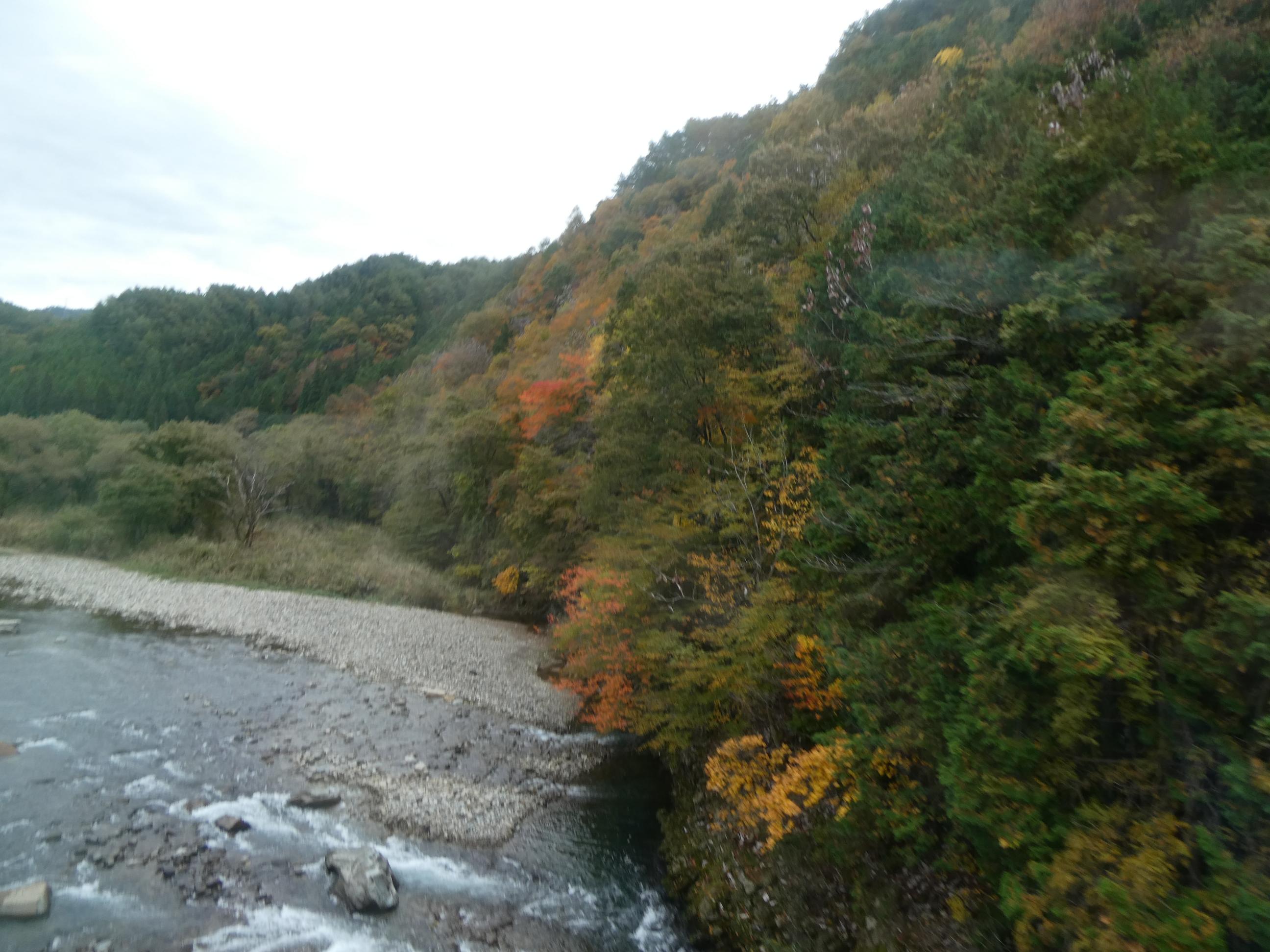
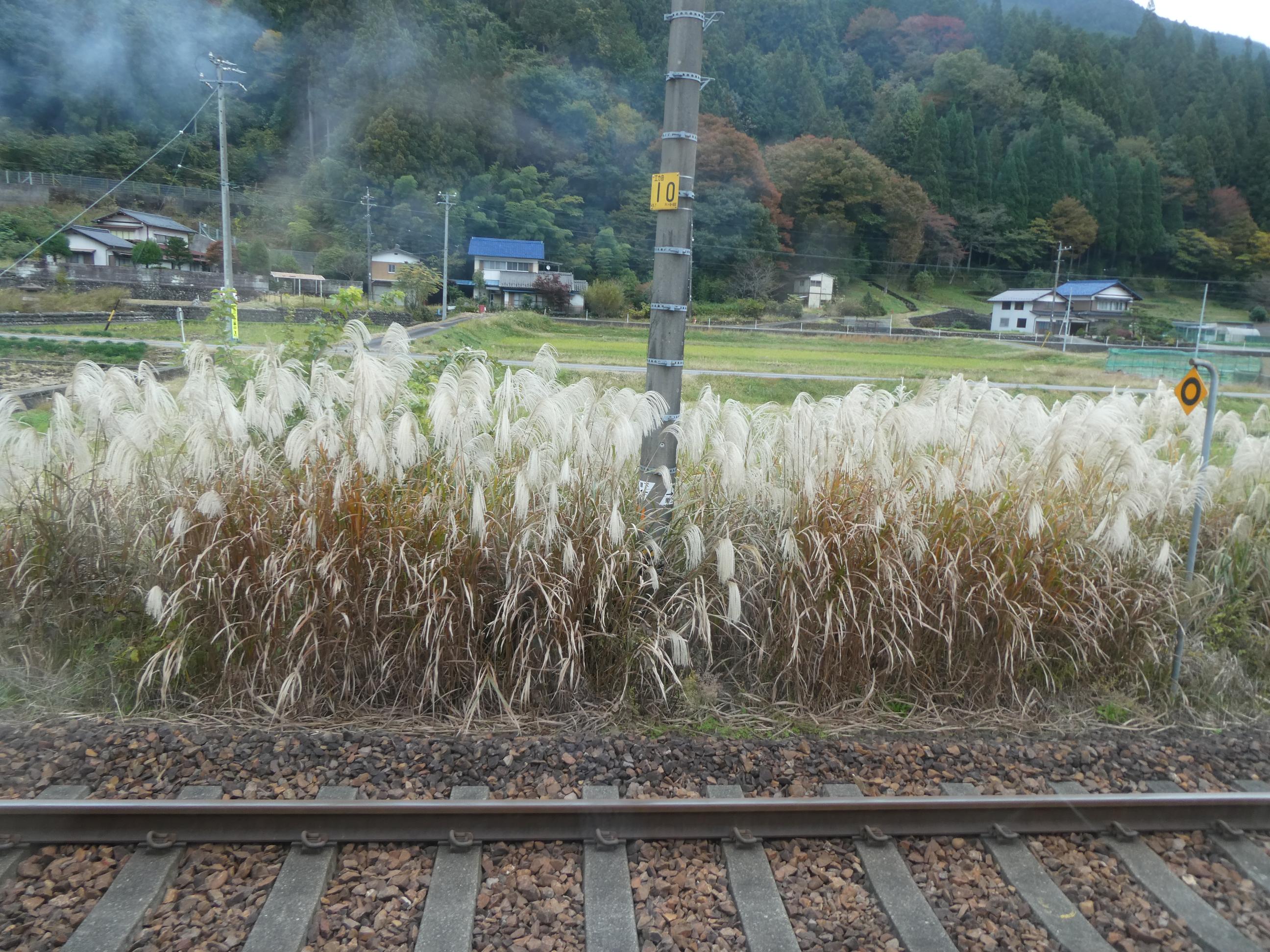
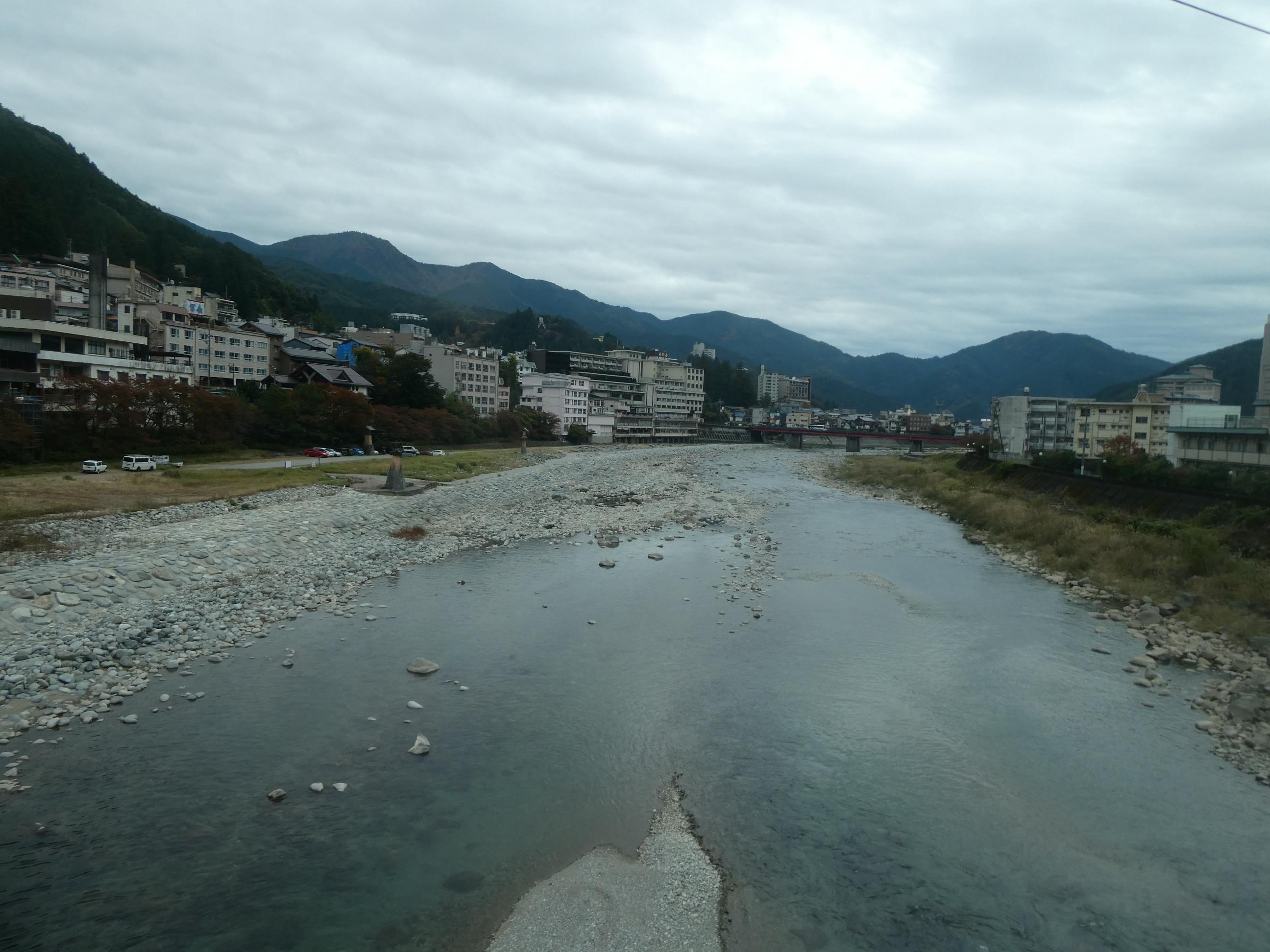
Our first train journey was almost two hours. It took us at a leisurely pace through the mountains, following the course of a river. The scenery was beautiful. The Japanese seem to always tunnel through mountains for their roads and railway lines, rather than winding around them. It’s very different to other parts of the world where you can look out one side of the train or car and see a steep drop to a valley way below and sometimes have to hold your breath on tight corners. In Japan, we just come to a mountain and basically go straight through it in a tunnel and emerge into the sunlight on the far side. Given the destruction this country had to recover from after the Second World War, and the constant threat of natural disasters, it’s remarkable how impressive their infrastructure is. Their roads and rail networks have been fantastic.
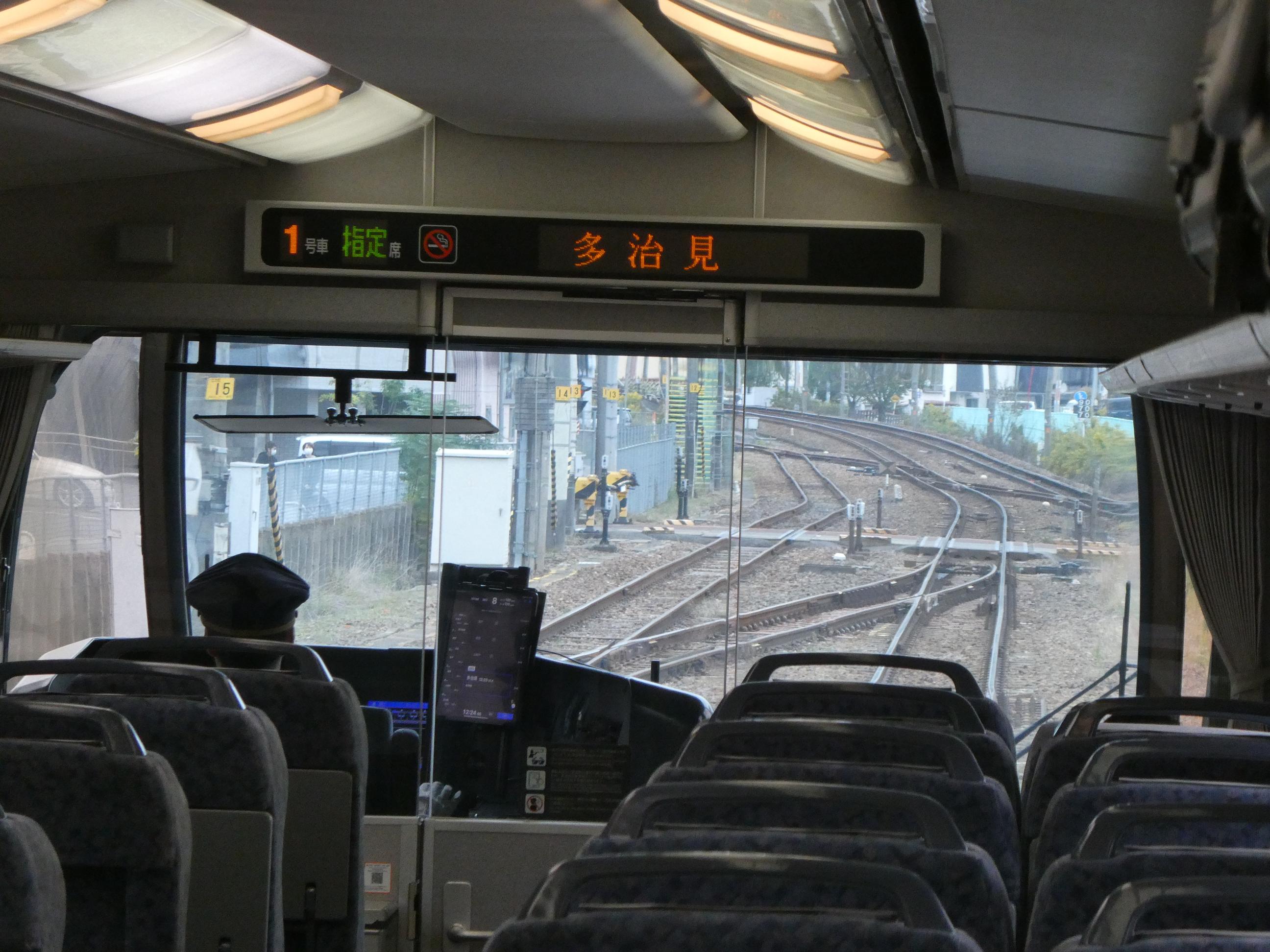
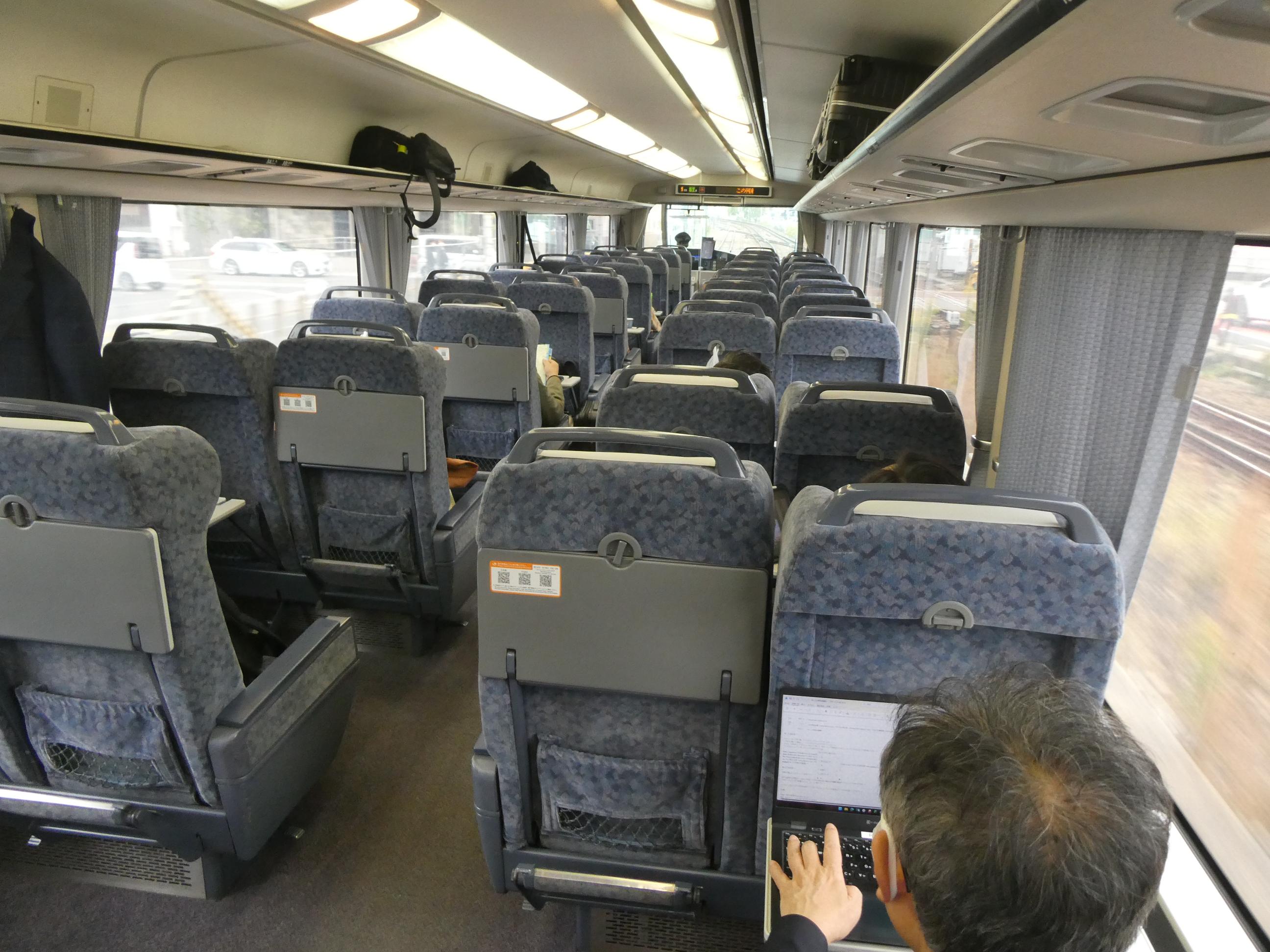
We were due to arrive at Mino-Ota at 11.18 am and change to another platform to catch our second train at 11.24 am. It was cutting it fine, especially when we weren’t sure or which platform to go to or the layout of the station. Worse still, our train got in late and it was actually 11.21 am when we hefted our suitcases onto the platform. Even worse than that, our carriage was at the far end of the platform from the stairs. We bolted down the platform as quick as our geriatric legs would carry us, avoiding dawdling passengers and trying to find a sign to show the way. Above my head I saw a sign in Japanese characters with the numbers 12.23 next to it and a large platform number 3. That was our next train. We were on Platform 1. I picked up both my suitcases and Ian grabbed his and we charged up two flights of stairs, across to the next platform, and down those stairs as fast as we could go, with Theresa and Marg hot on our heels. Below me, at the bottom of the stairs, I could see a train guard holding his baton, just about to wave to the driver to take off. ‘Tashimi?’ I called out to him. He heard me, and pointed to the open door at the bottom of the stairs. We all jumped on and he waved the driver off just seconds later. Phew! We didn’t have reserved seats on the short trip to Tashimi and their was no luggage space. We just dumped our suitcases on some empty seats and a lovely old Japanese couple voluntarily moved back a seat so we could sit together. One end of the carriage was full of school kids going on an excursion. From Tashimi, we had another very relaxing one hour journey to Kiso Fukushima, which lies in the Kiso River valley. I’m really enjoying Japanese train travel.

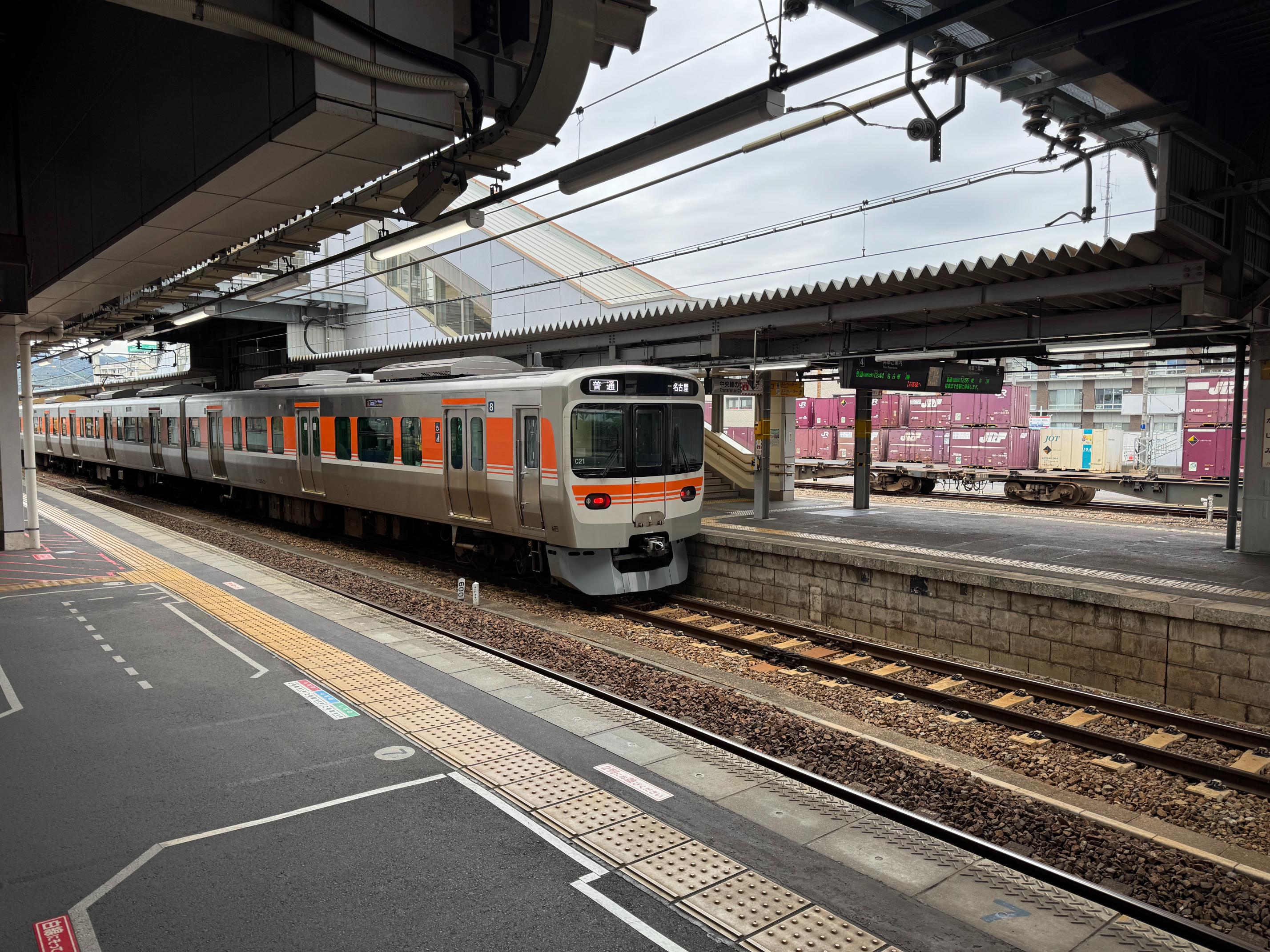
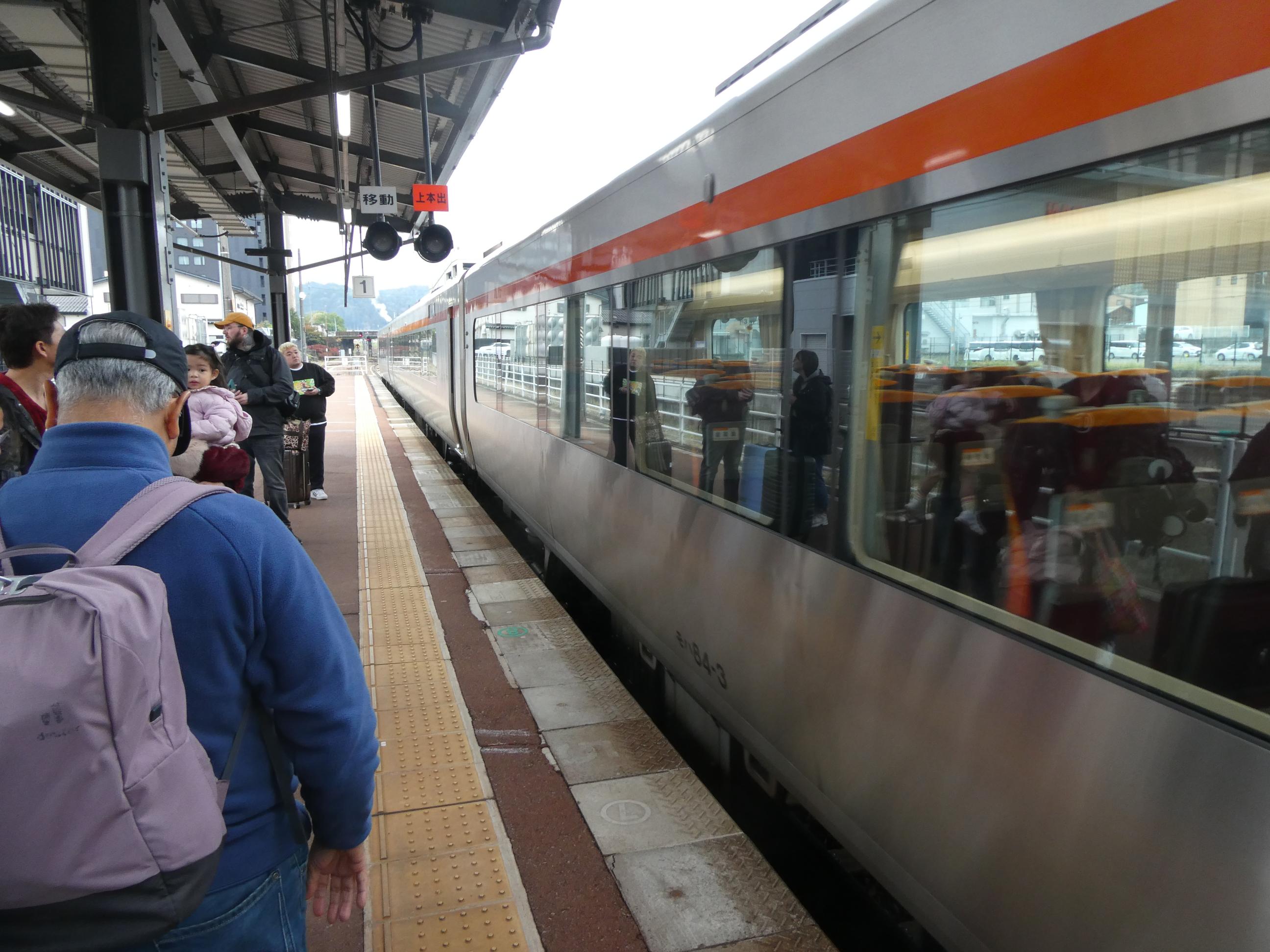



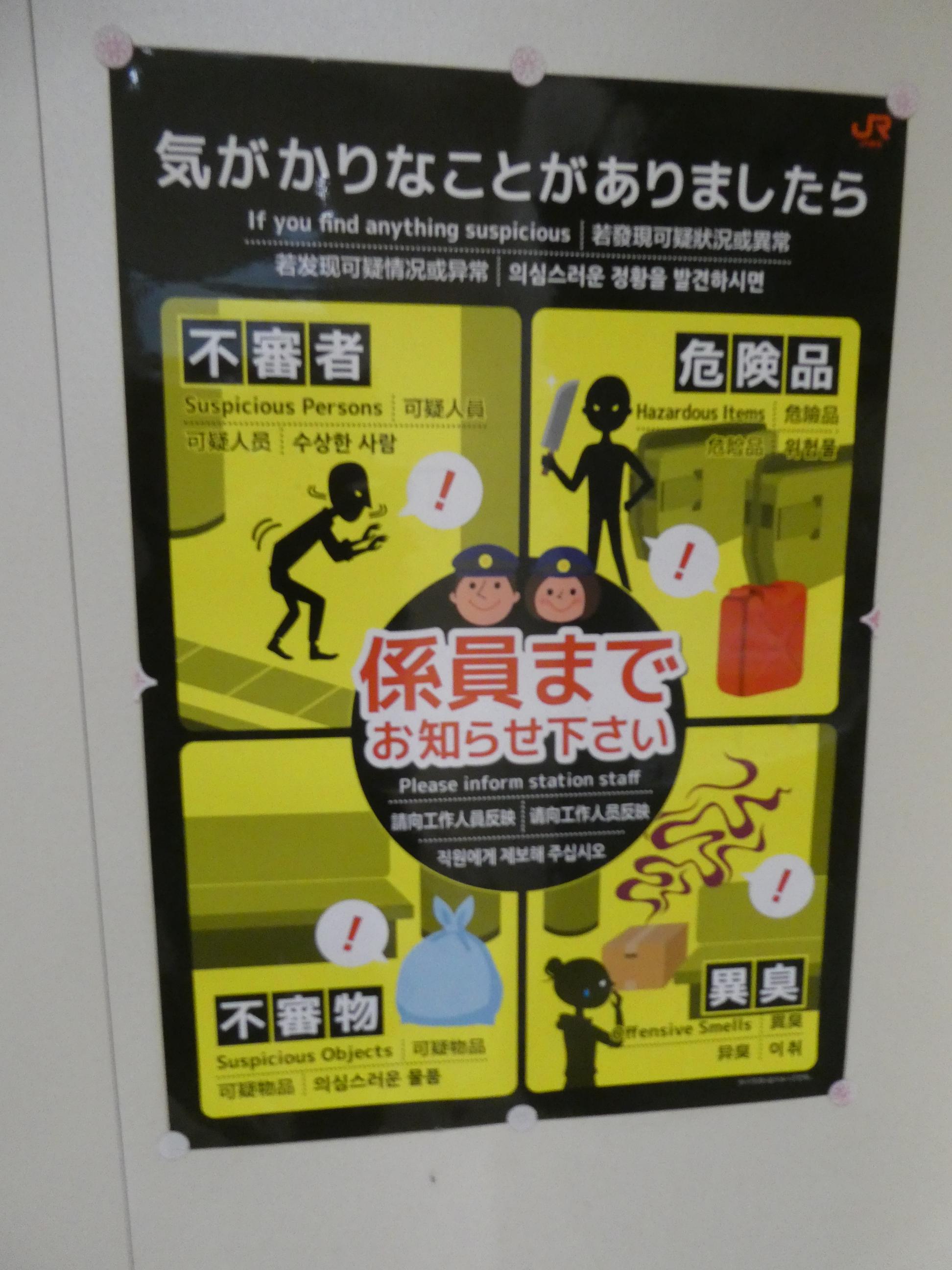
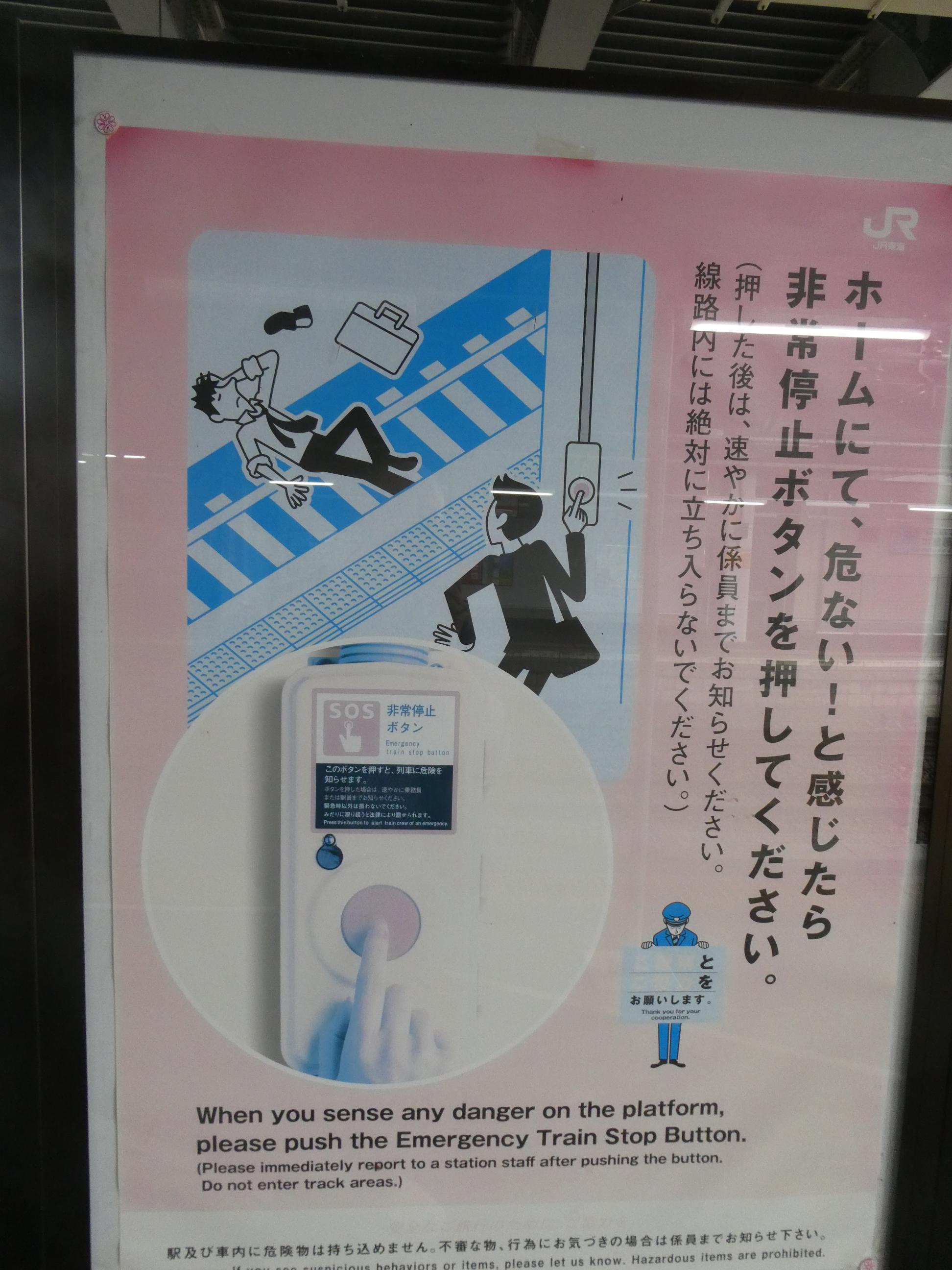
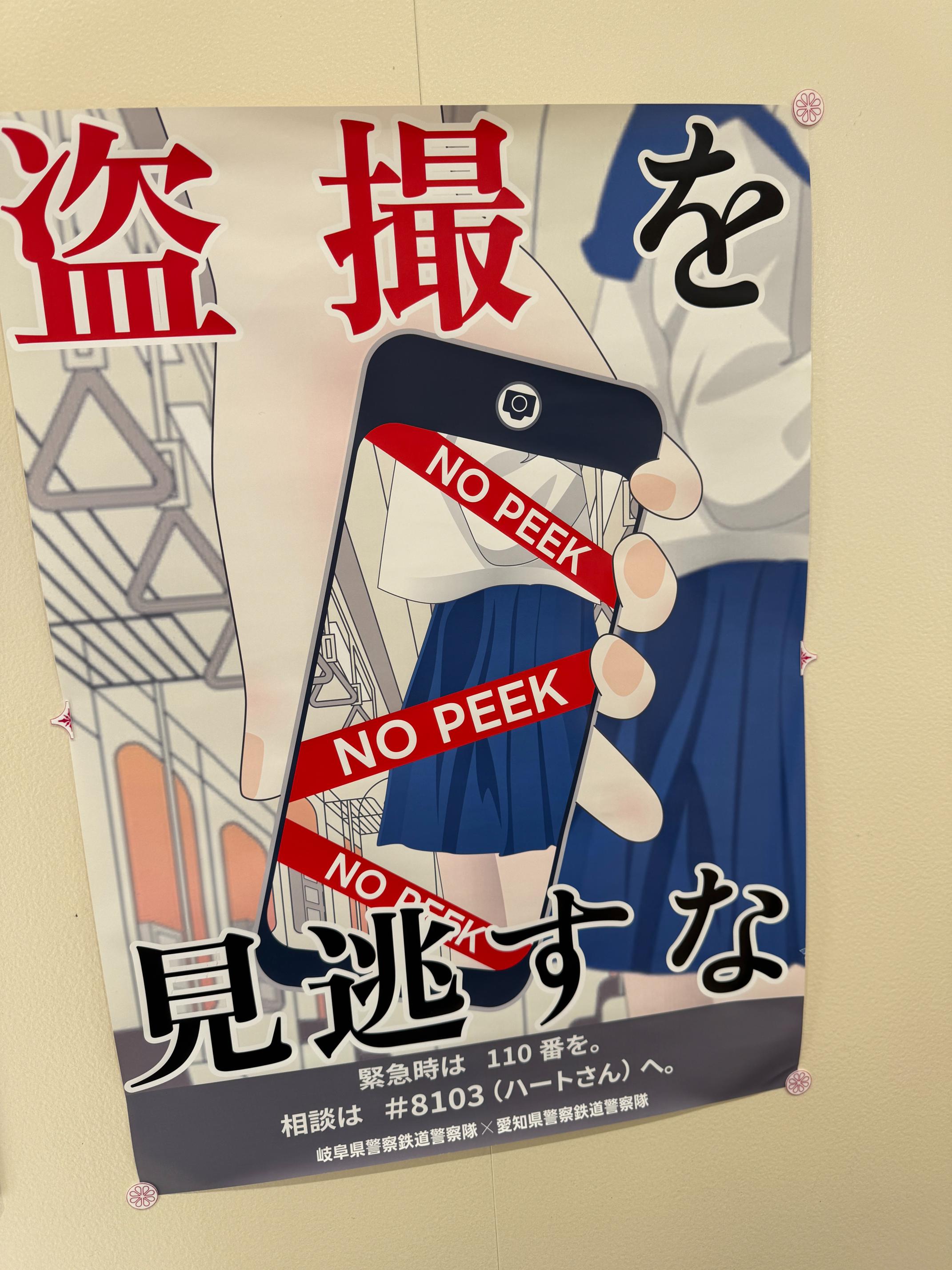
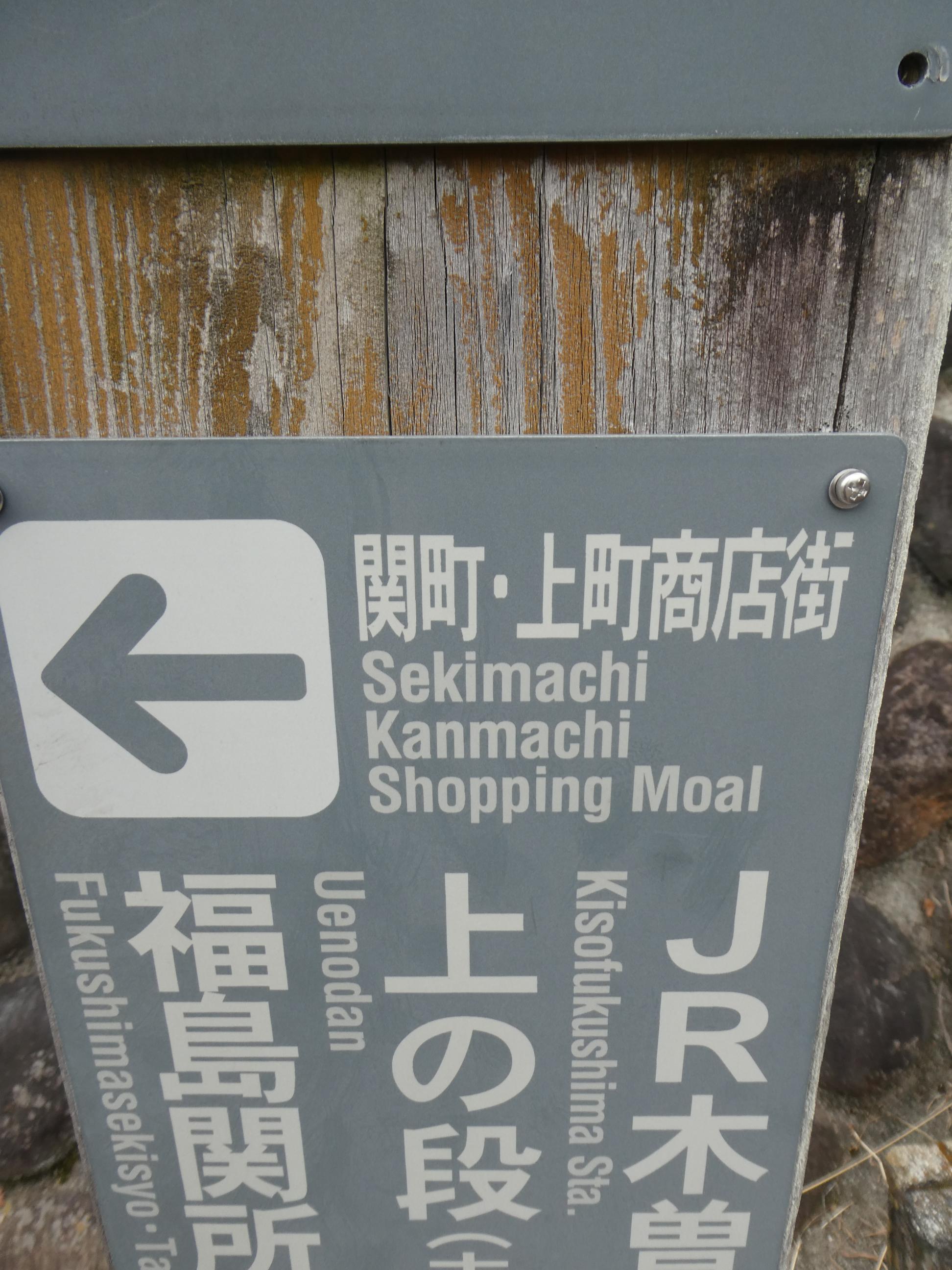
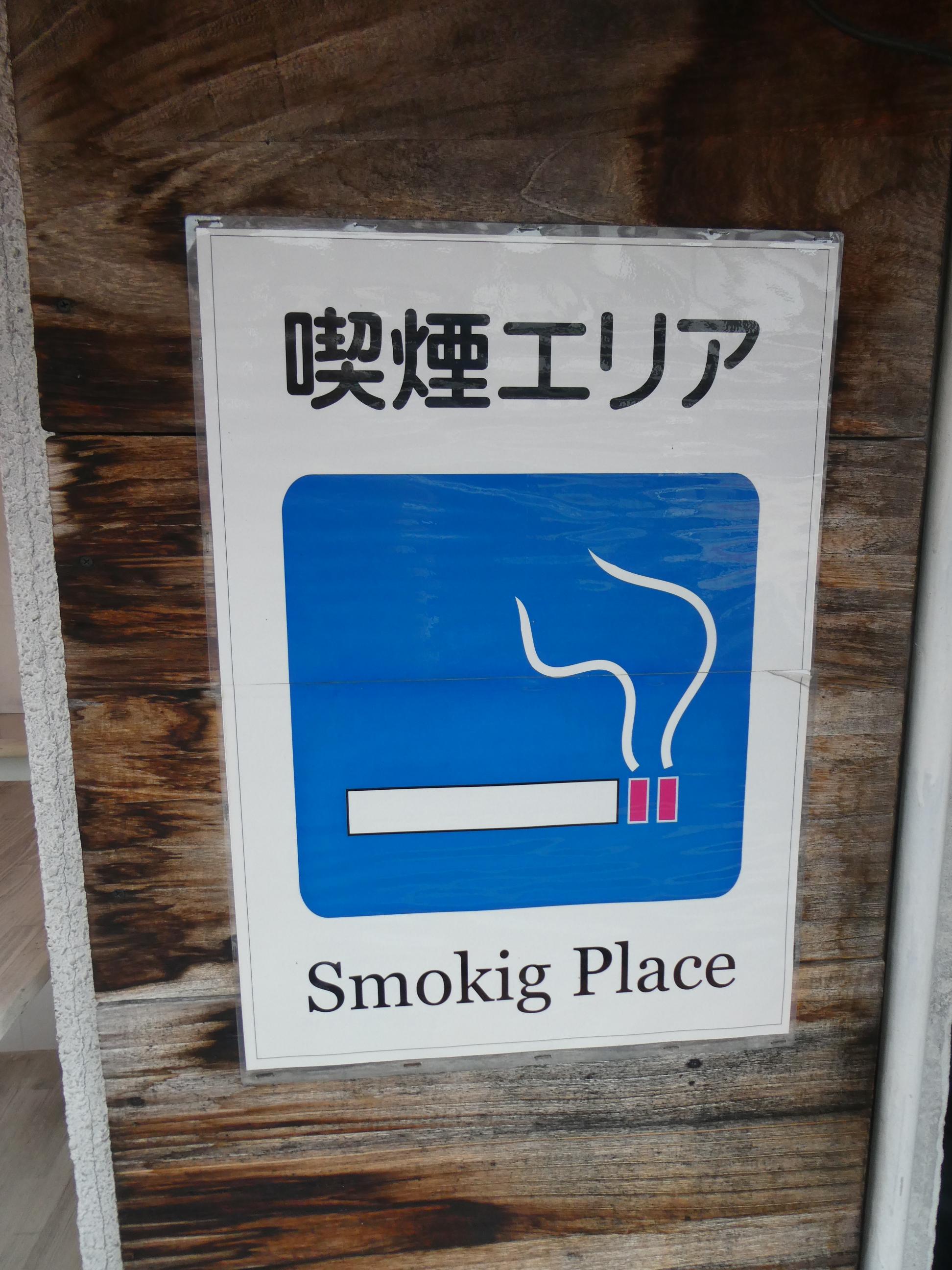
We’ve spent a bit of time in Japanese railway stations and on platforms now, and some of the graphics on the signs are rather amusing. Of course, some of them deal with very serious subject matter which I don’t find amusing. And while we’re on the subject of amusing signs, the last three are from our walk around the town later in the day. I wonder if anyone’s ever felt hungry and rung for a tomato home delivery.




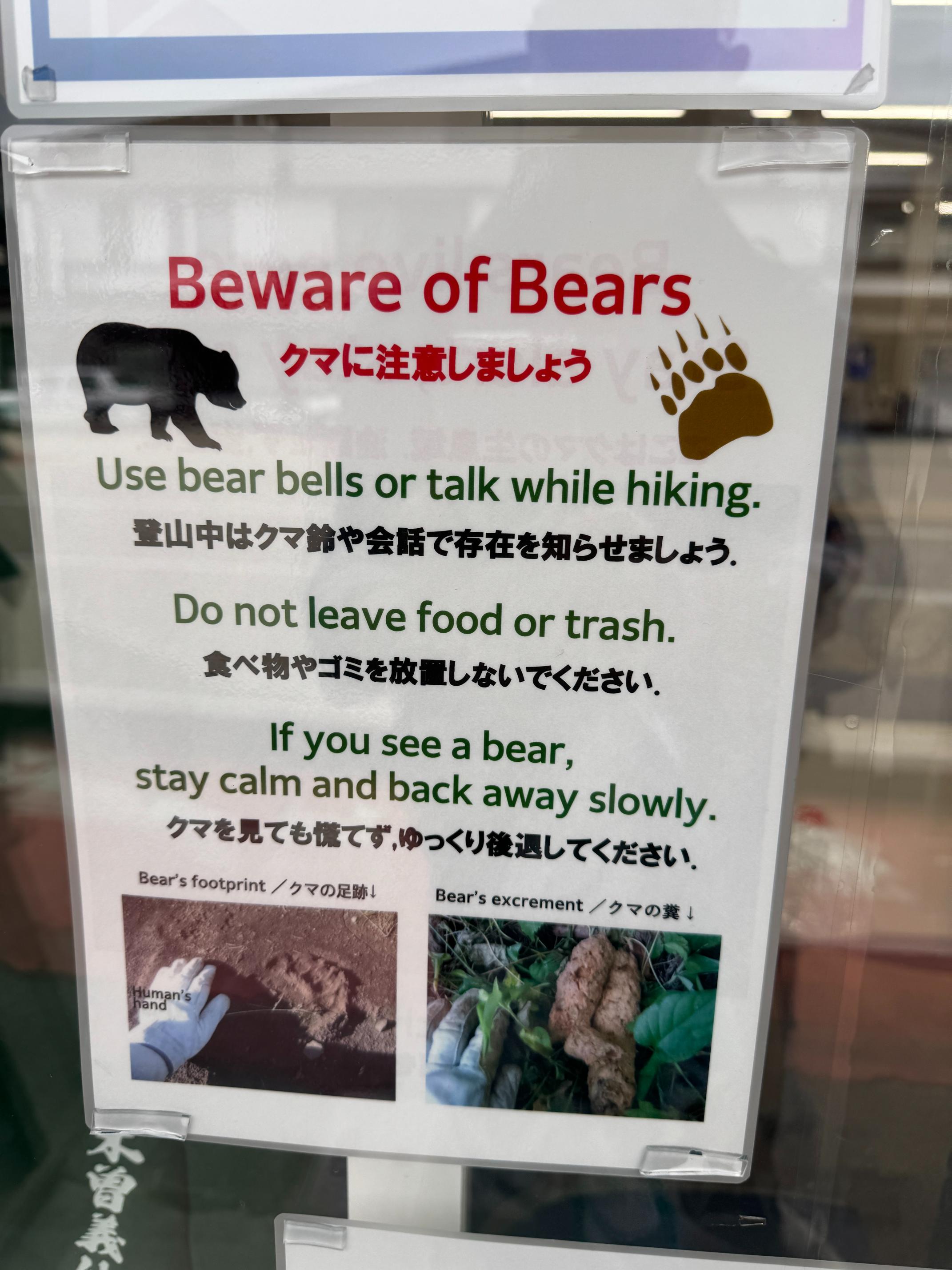
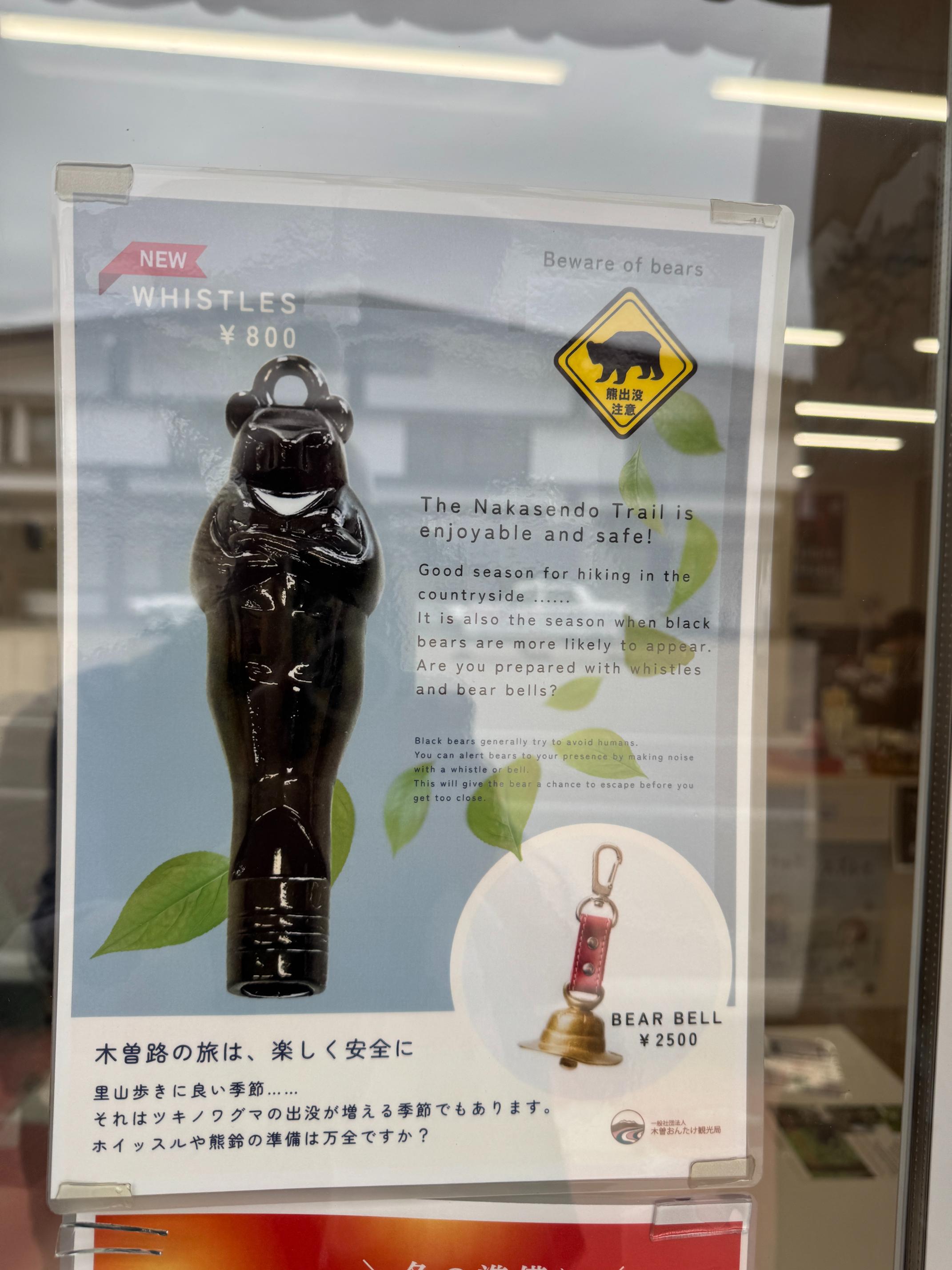
The tourist information centre was across the road from the railway station. We left our luggage there for a few hours while we explored some of the town. I took note of these two posters on the window, because they refer to the walk we’ll be doing tomorrow. I went back into the centre and bought a bear bell and a bear whistle. Marg might not agree, but I’d love to see a bear tomorrow – in the distance, of course.
As our final train didn’t get in until almost 1.30 pm, we were all feeling a bit peckish. We passed a small bakery with pastries that looked pretty good. We ate them while we walked through the streets. It’s considered bad manners to do this in Japan, but the streets were empty and we had things to do before we were due to pick up our luggage. Fukushima is a very ancient town that dates back to the Edo period. The Edo period was a time from the early 1600s until 1868, when the country was ruled from Edo (modern day Tokyo). It was a time of relative peace and stability in Japan and a time when the arts and culture flourished. During the Edo period, the country was ruled by the Tokugawa shoguns, and the country’s borders were closed to foreigners. When the Edo period ended, Japan reverted to being ruled by an emperor again.
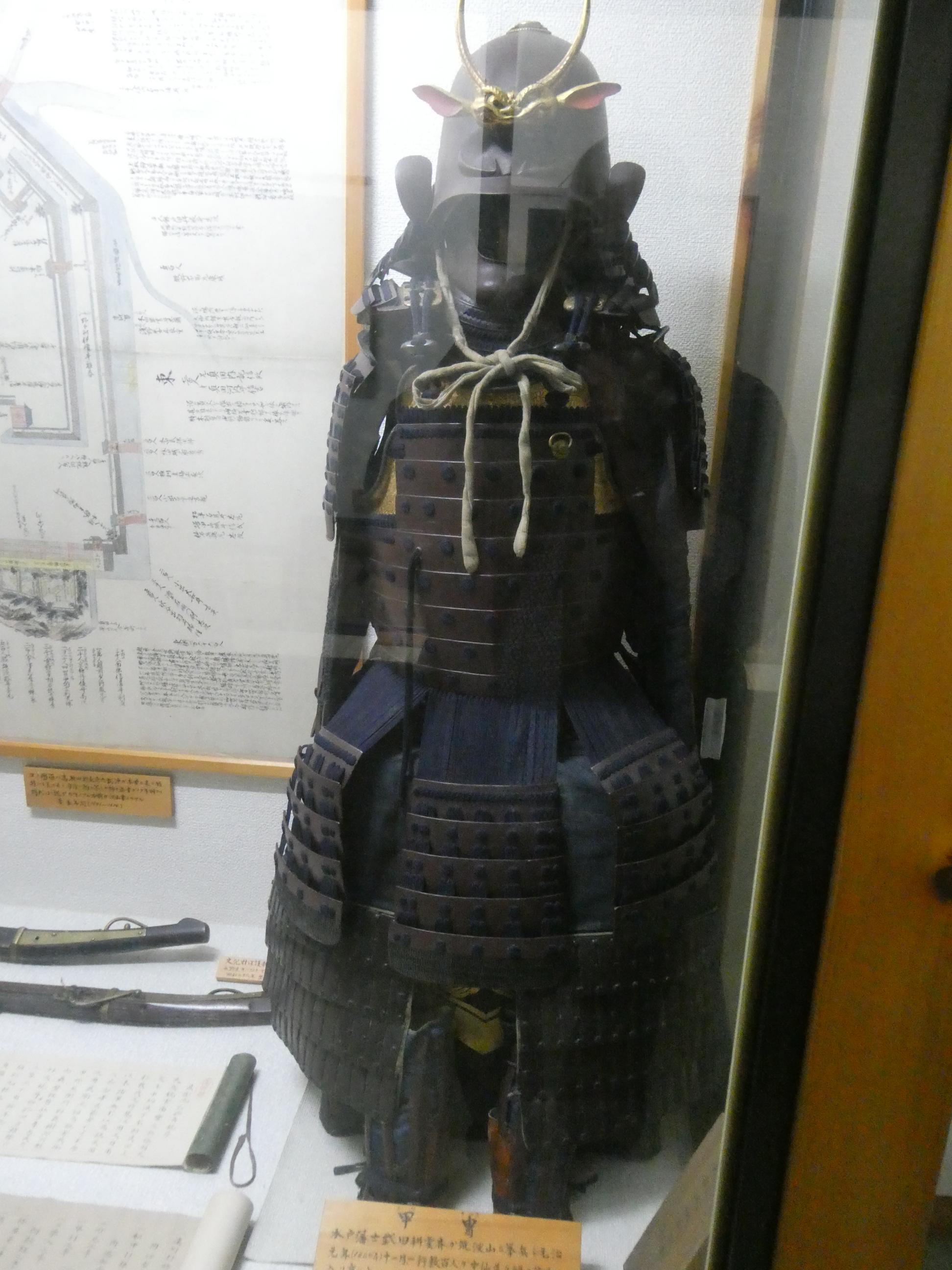
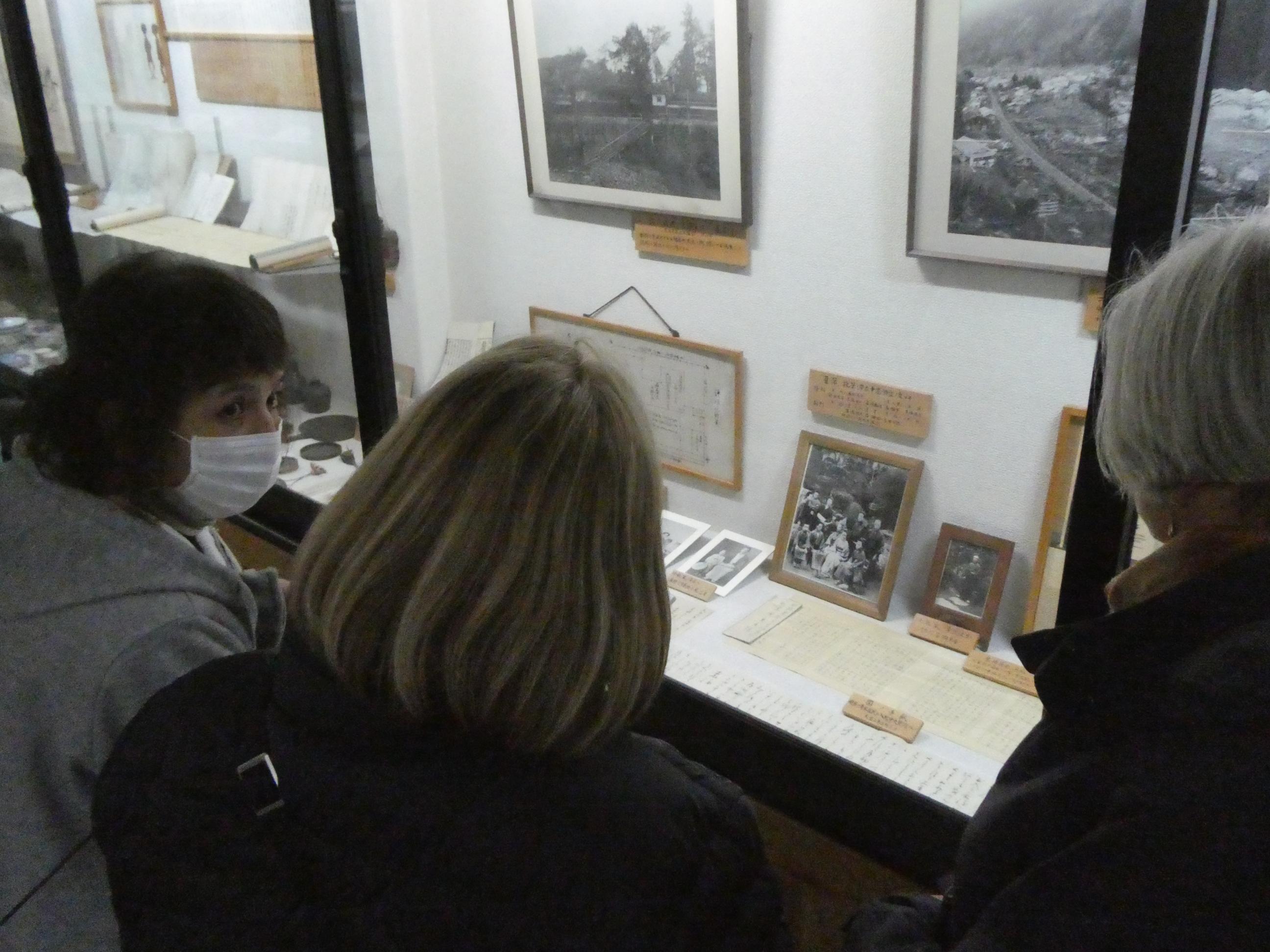
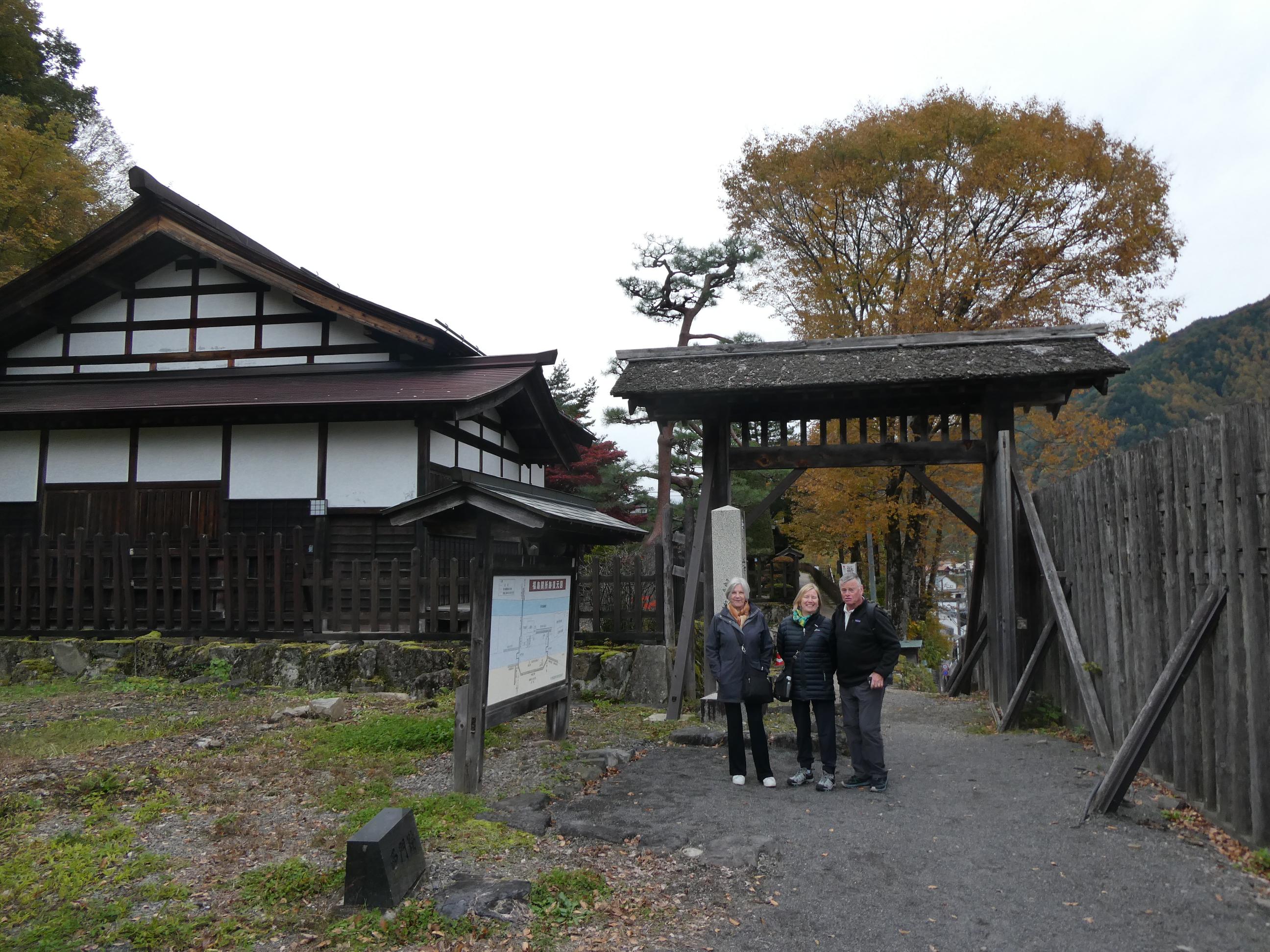
During the Edo period, all traffic between Kiso Fukushima and Edo, the base of the shogun, was monitored by checkpoints along the route, which followed the Kiso Valley. The checkpoints were used to enforce the laws of the shogunate, control the movement of weapons and control the movement of valuable commodities like timber. Travellers were required to show their passes before they would be allowed to proceed to the next checkpoint. In Kiso Fukushima, a samurai had been appointed to ensure maintain control on behalf of the ruler in Edo. We visited a museum located close to one of the original checkpoints. The lady at the museum told us that it was the home of her ancestors, and that she was a direct descendant of a samurai. She spoke in broken English, so I didn’t catch a good deal of her story, but she spoke very proudly of the roles played by members of her family over the generations, going back as far as the 1600s. Her museum was full of artefacts from her family’s history, including very old items of clothing, maps, paintings, tools and equipment used for making traditional medicines. There were also passes once used by travellers passing through the checkpoint. The lady was very proud of the achievements of her grandfather, who seemed to have a special relationship with the famous Japanese writer Tōson Shimazaki. Although I missed a lot of what she was saying, I really liked the lady, I greatly admired her understanding of her family’s history, and I thoroughly enjoyed the museum visit.




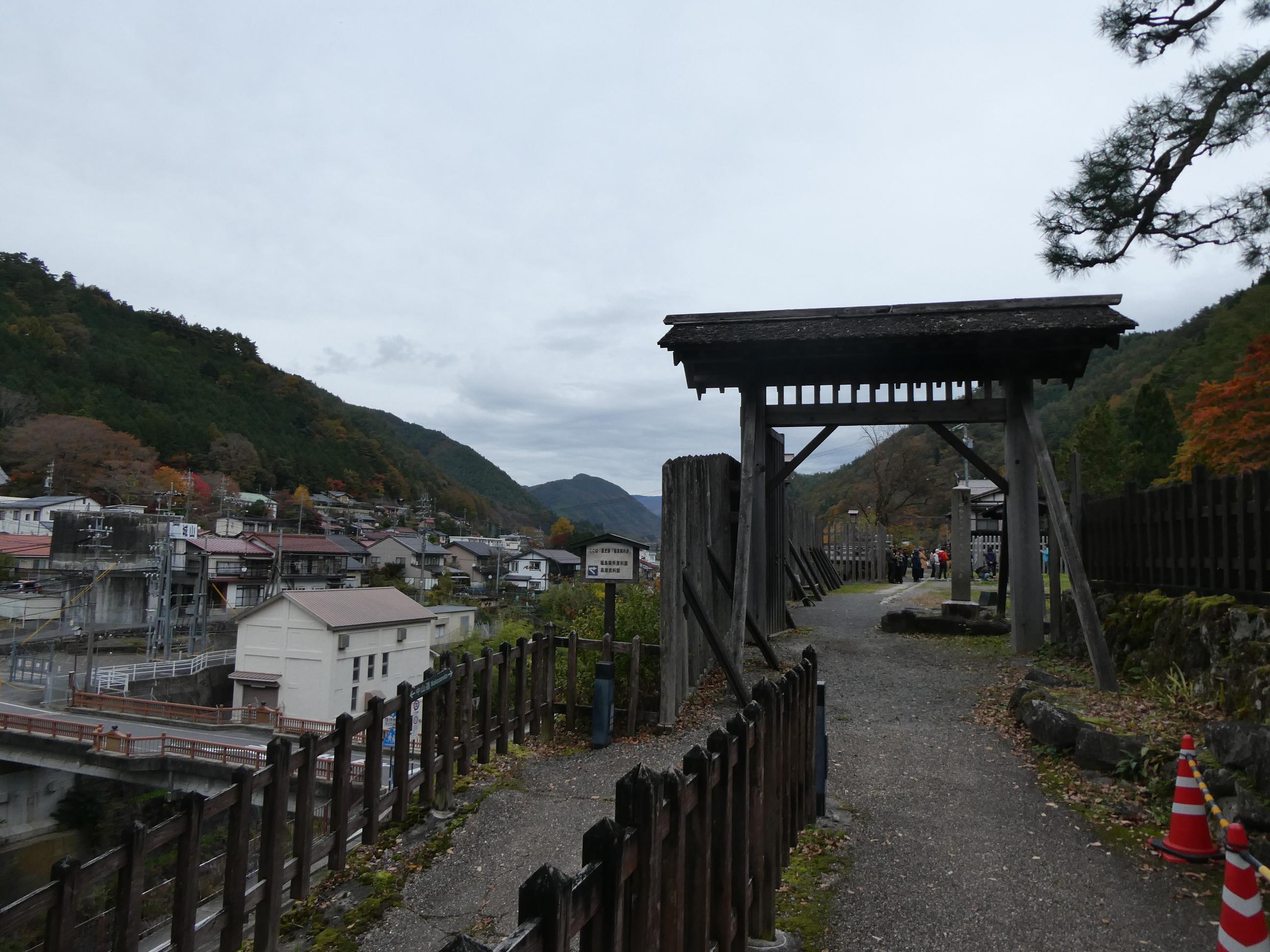
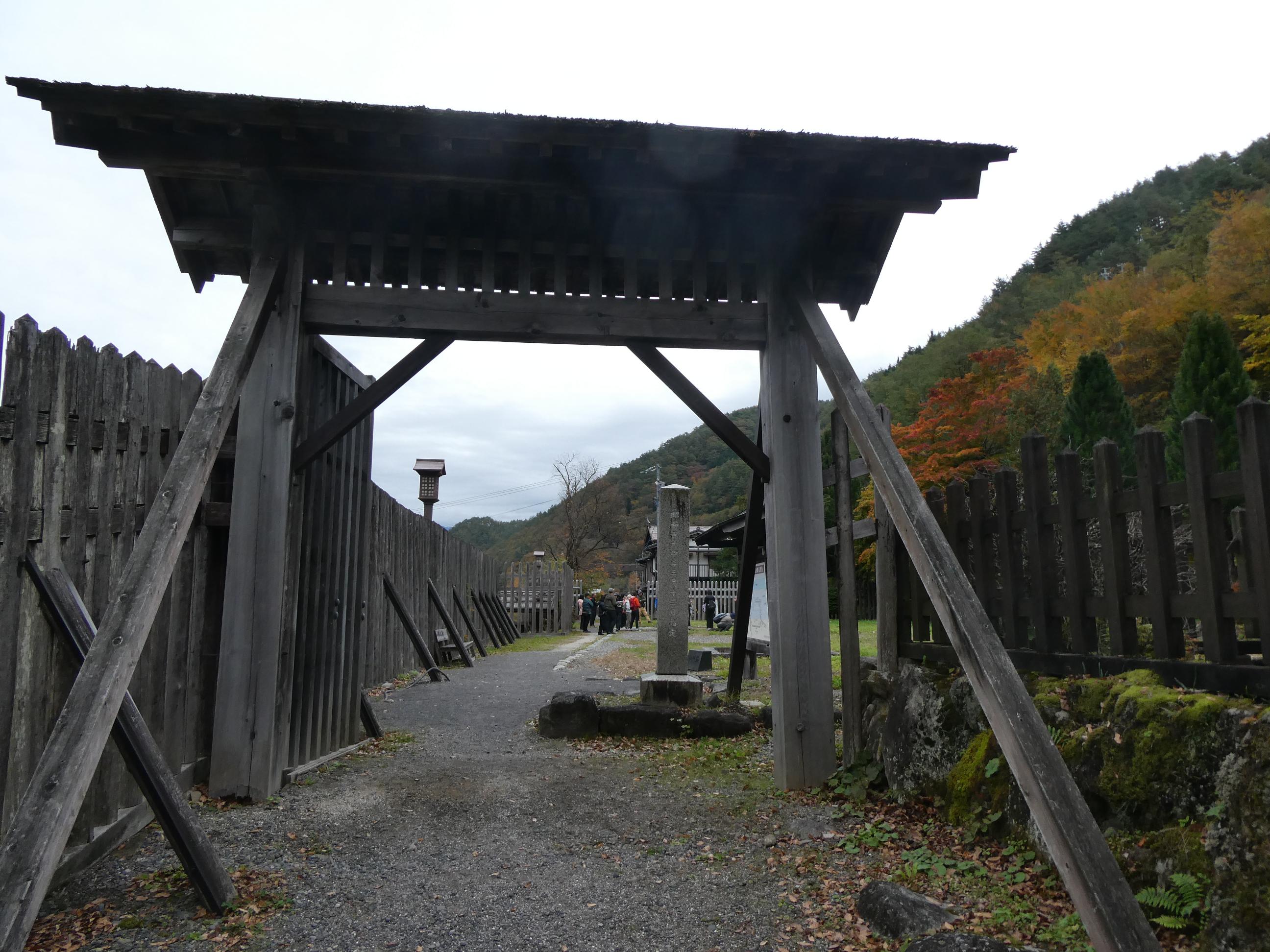
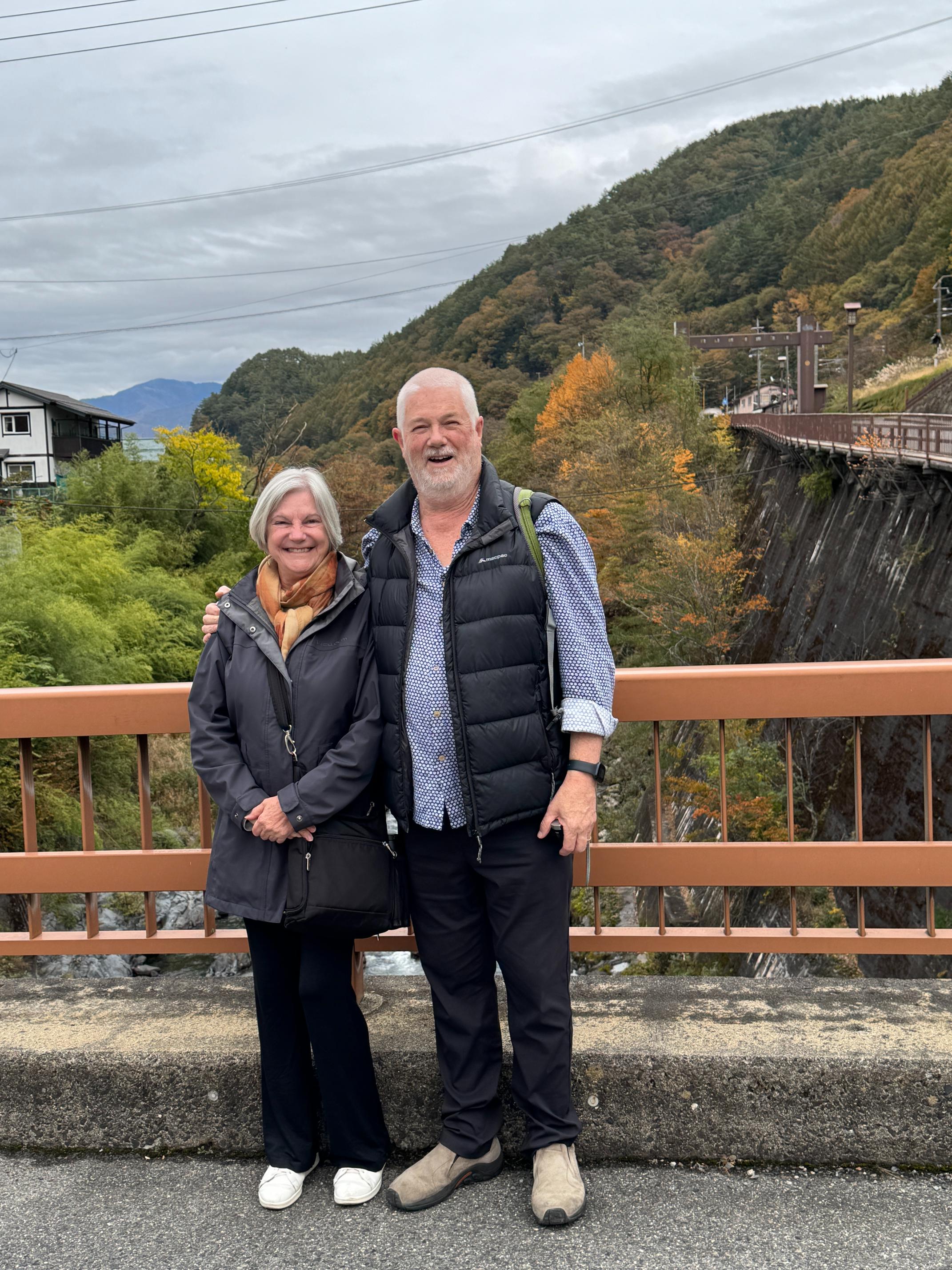
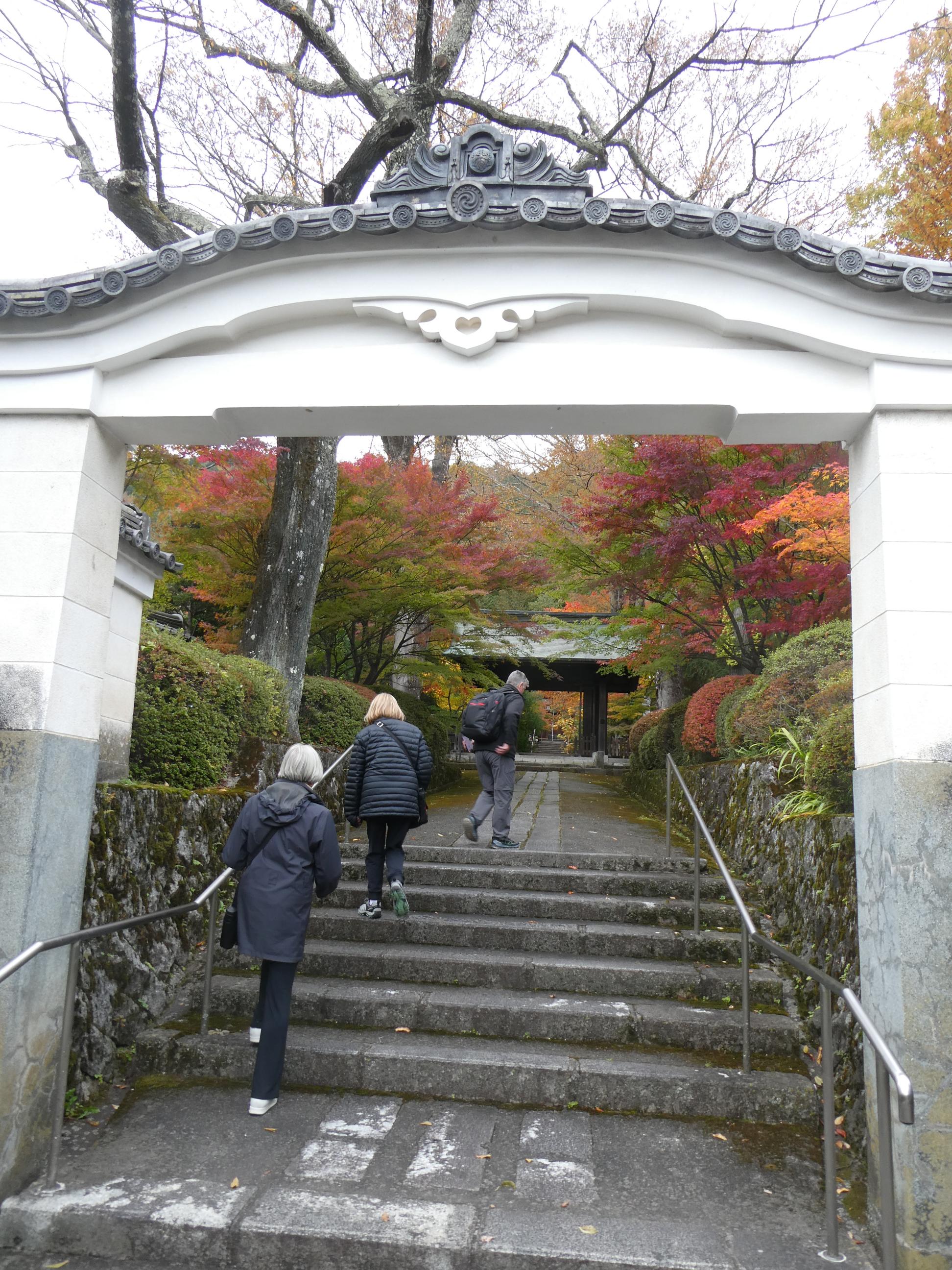
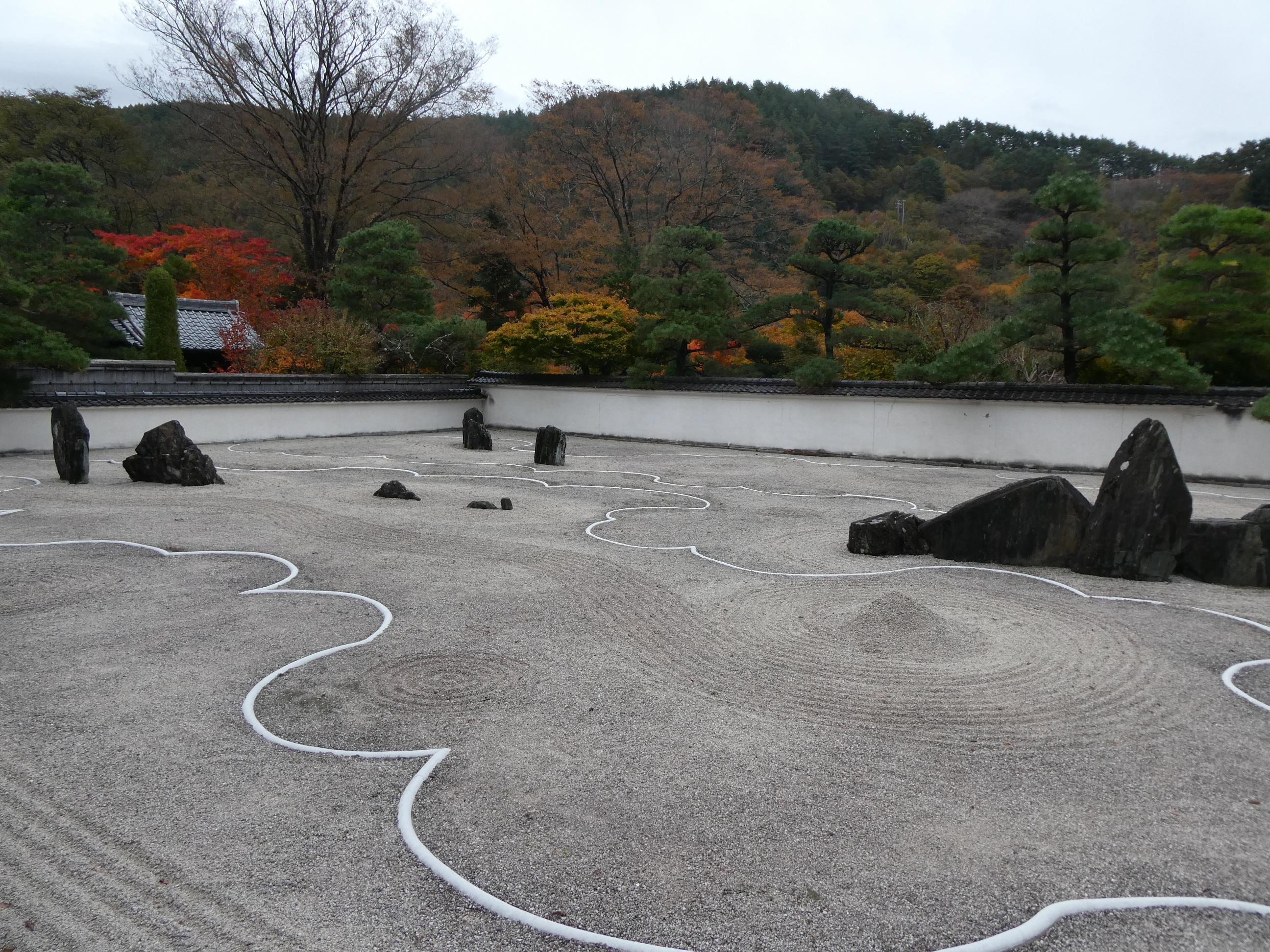
We walked across the Tekisho Bridge, stopping for a photo, and entered the grounds of Kozenji Temple on the other side. We certainly picked the right time of year to visit. The autumn foliage of the temple garden was quite breathtaking in its display of colours. It’s not a large garden, compared with the one we visited in the rain in Kanazawa a few days ago, but it was an absolute delight to walk through. Also featured here is Asia’s largest dry stone garden. The temple itself was closed to visitors, but we were able to visit a hall where the work of local artisans was on display.
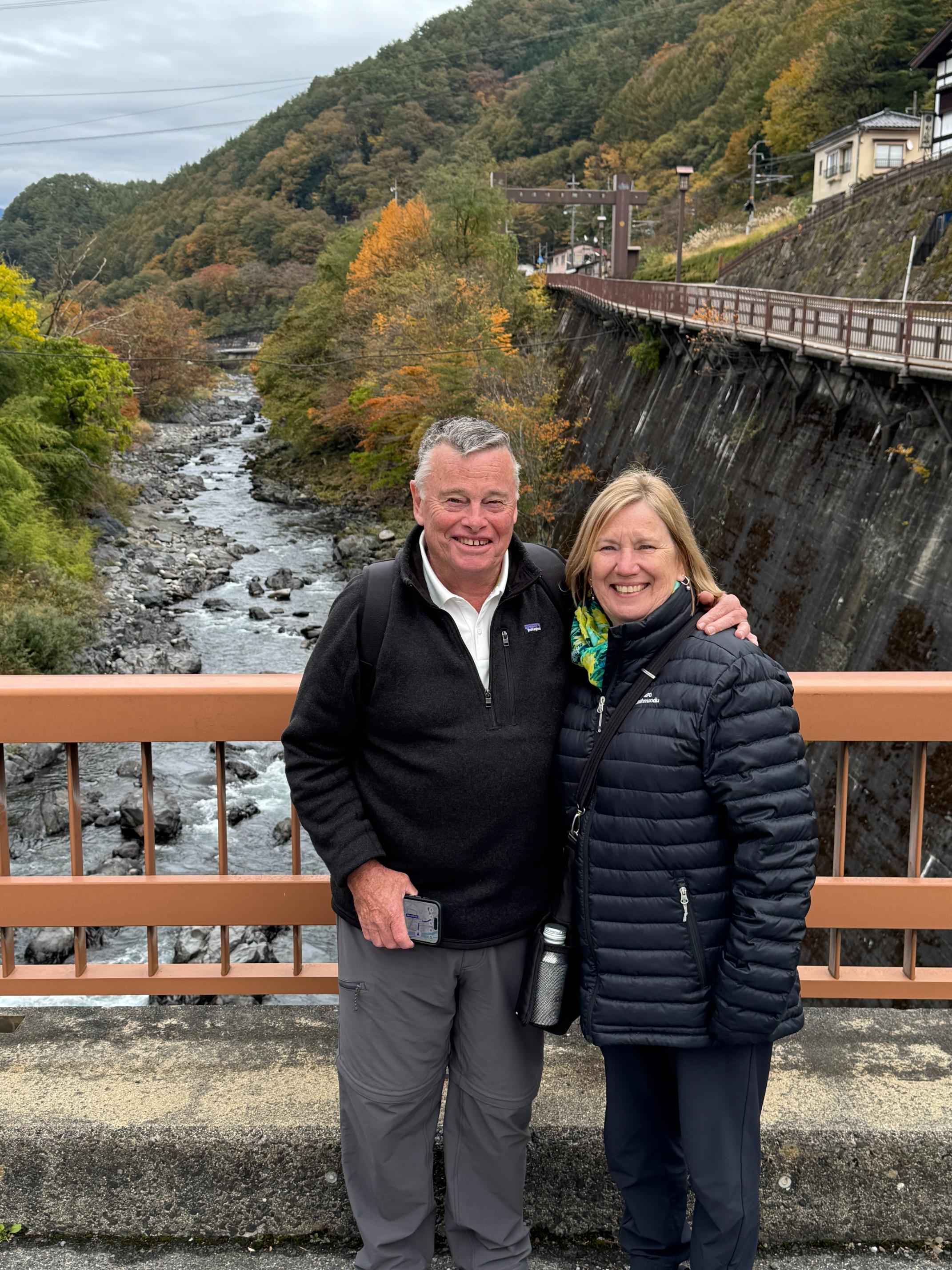


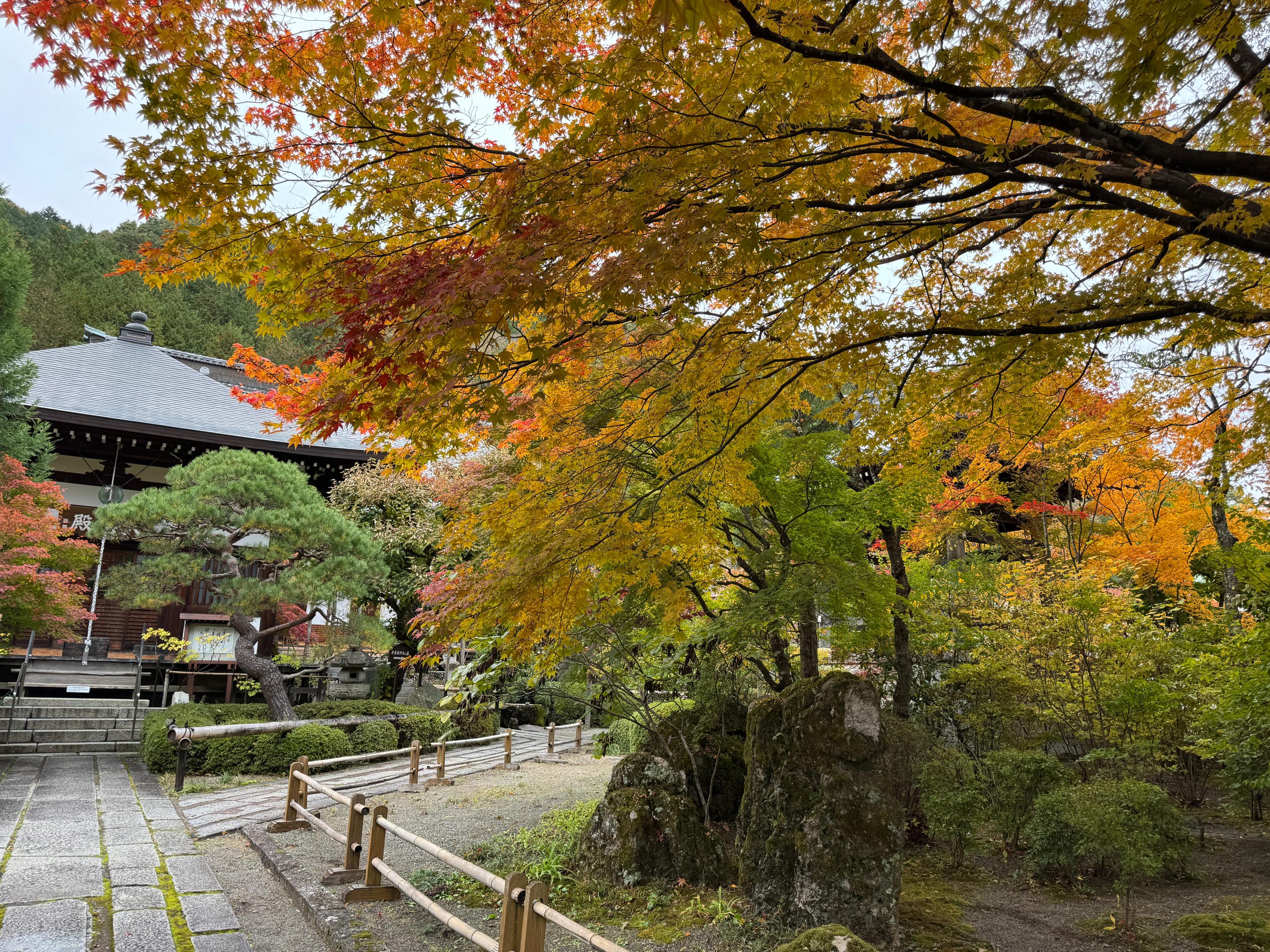


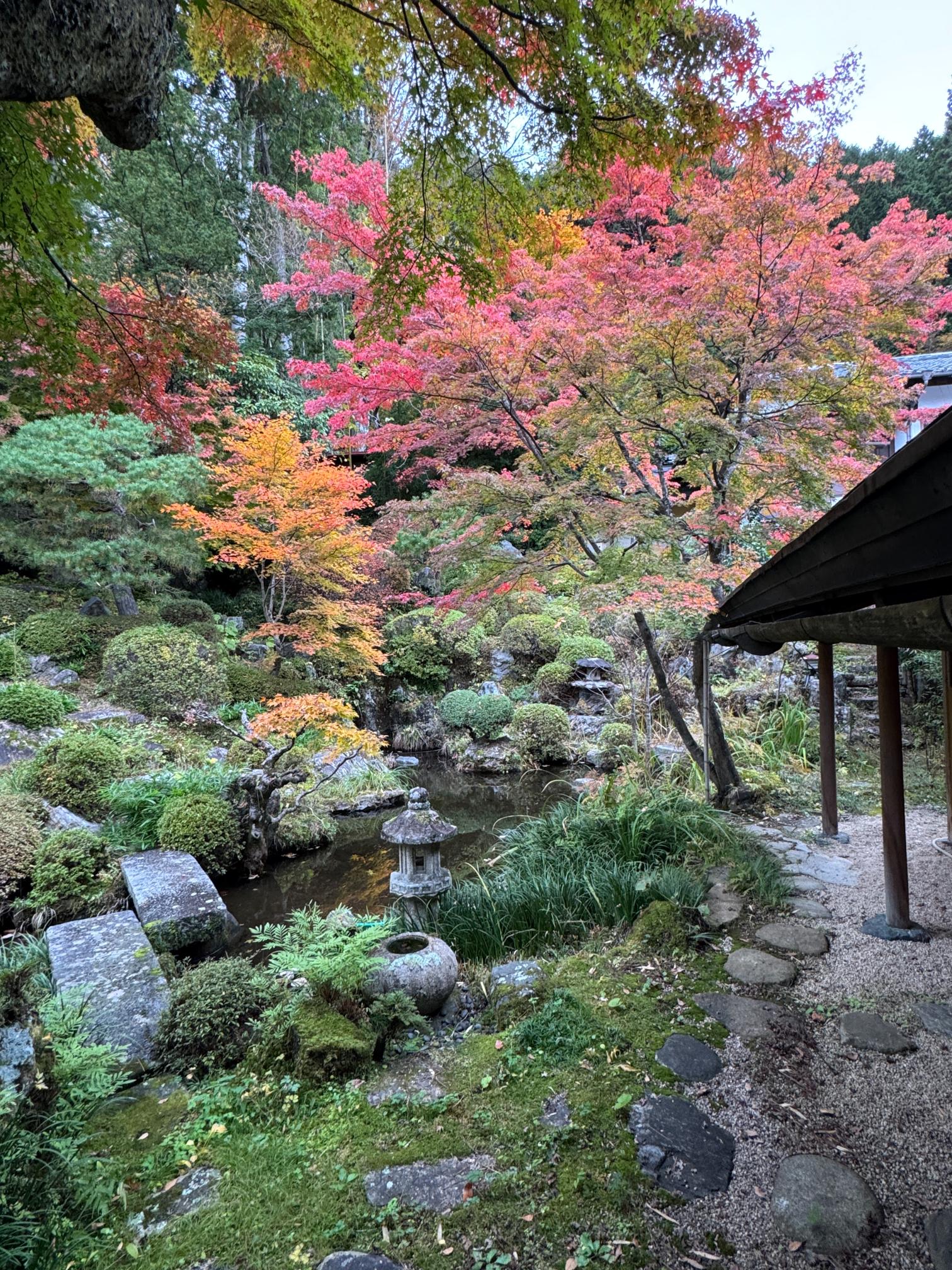

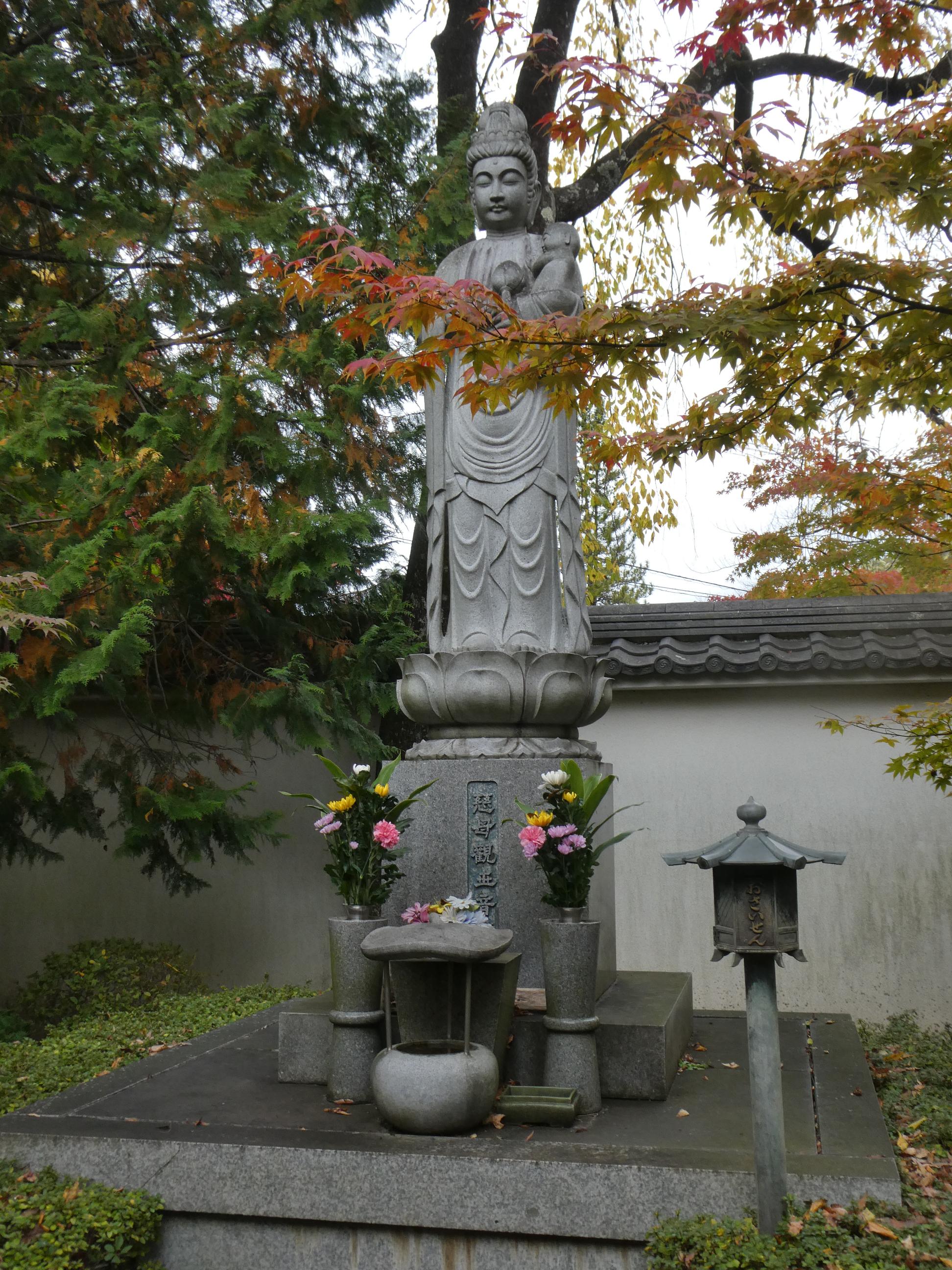


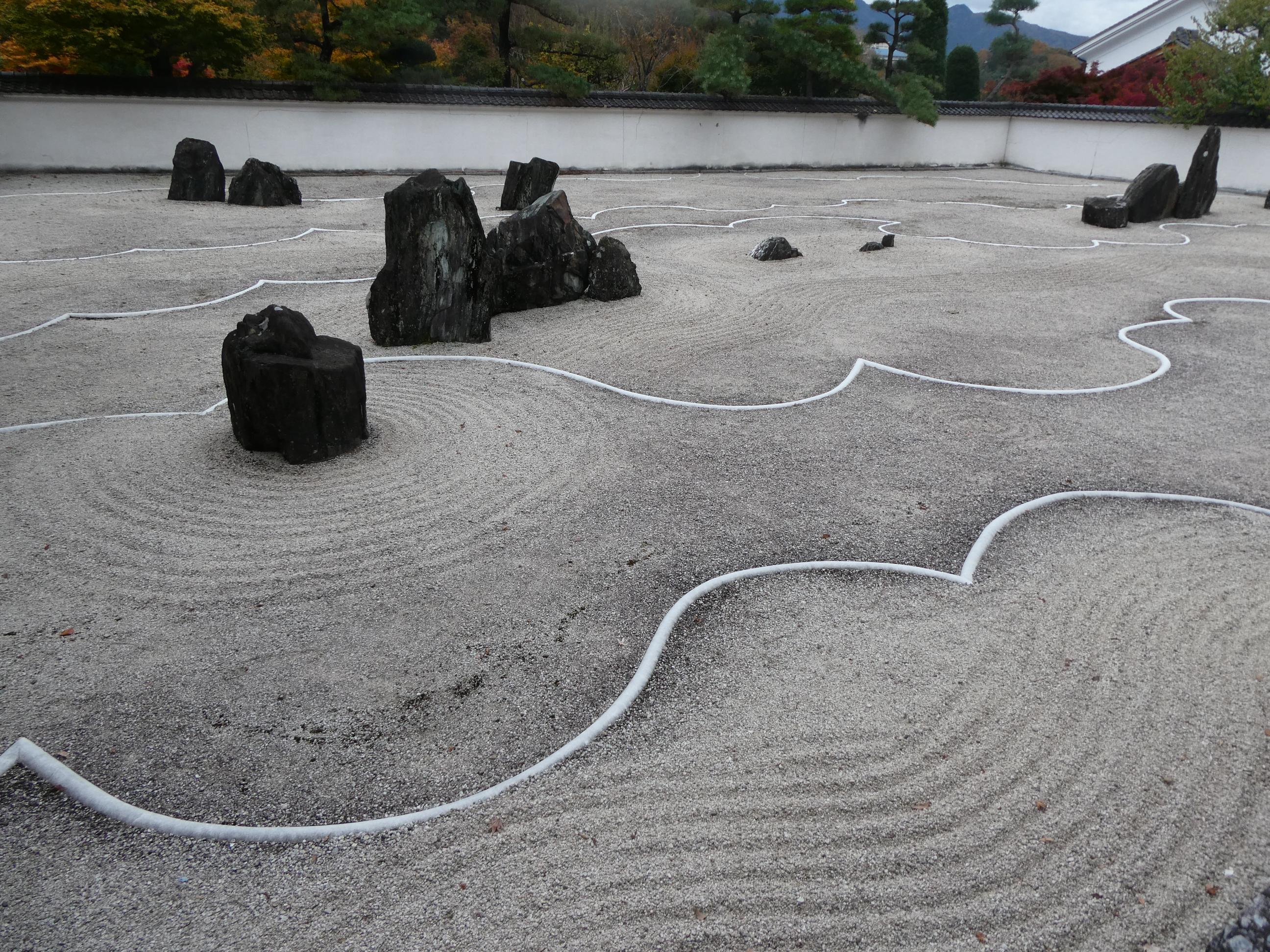


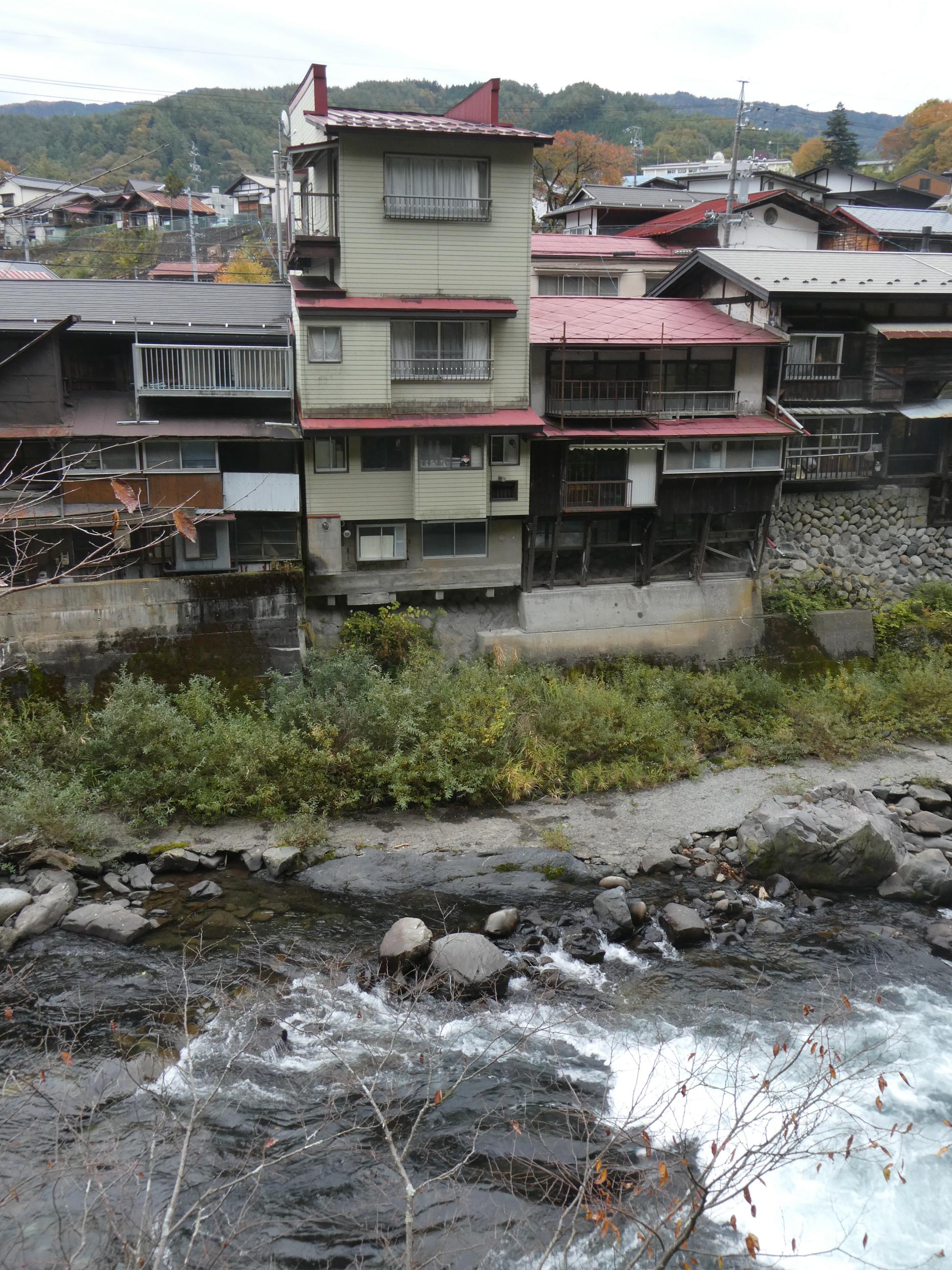
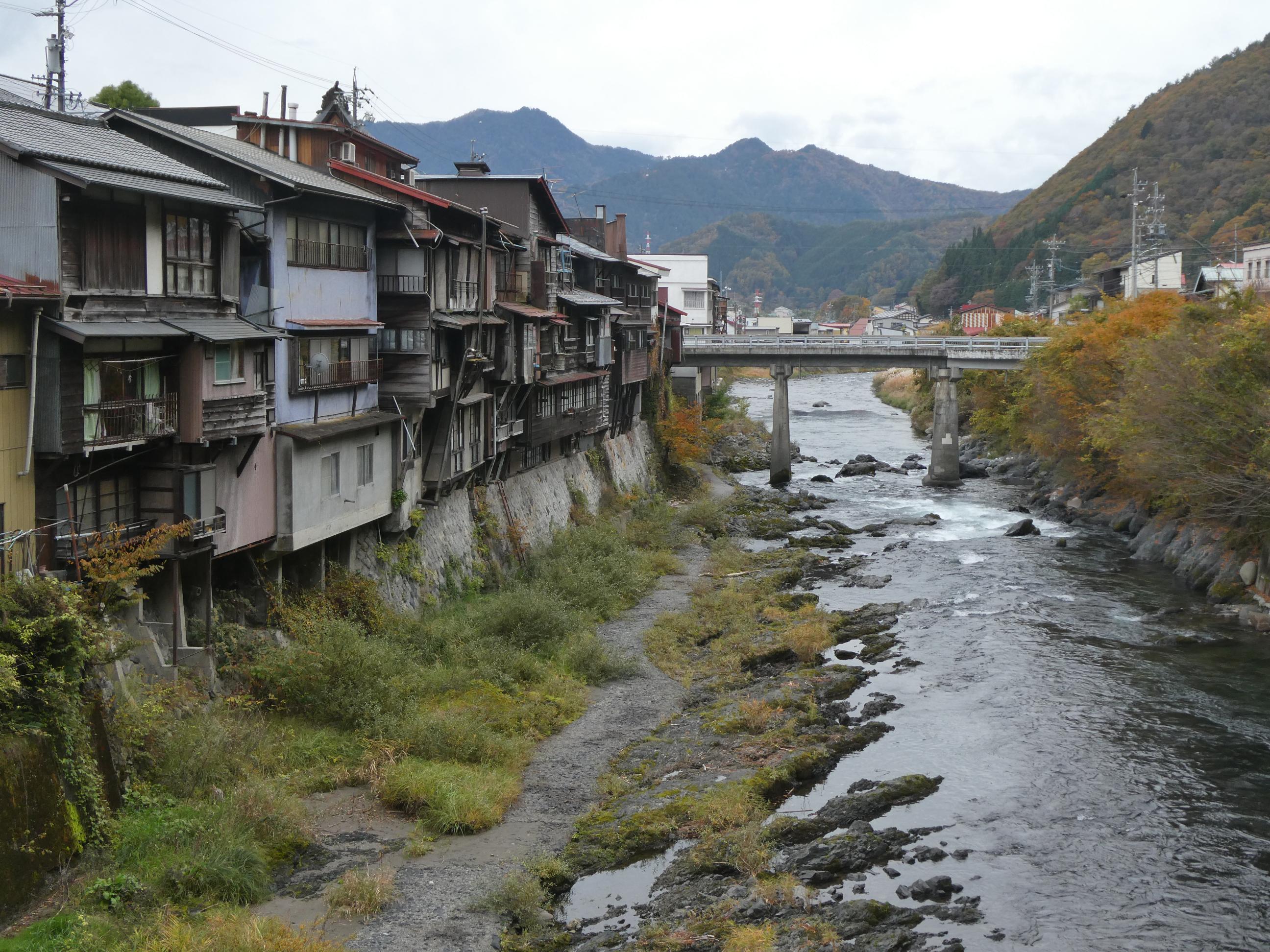
Our walk back to the tourist information centre to collect our luggage gave us an opportunity to have a close look at a cemetery. You see these from the train in every village you pass. I’d like someone to explain to me some of the features of these monuments and gravestones. They appear to be well maintained. Walking along the Kiso River, I wondered if any of the houses perched precariously over its banks have ever come to grief in times of flood.


We took a taxi to our hotel. It’s quite some way out of town, in the mountains, surrounded by autumn foliage and in the shadow of snow capped mountains. It’s Japanese style accommodation again, known as a ryokan. This one is a little more comfortable than the last one in terms of me working on this blog. For the past few nights I was sitting on a foot stool with no table, balancing my Macbook on my knees. Today, I was able to fashion a chair out of a small table and use the box holding the tea cups as a makeshift desk. We’ll sleep on the futons again tonight, but we’ve added an extra futon beneath what was laid out for us, so I’m hoping for a little more comfort for my aging bones.


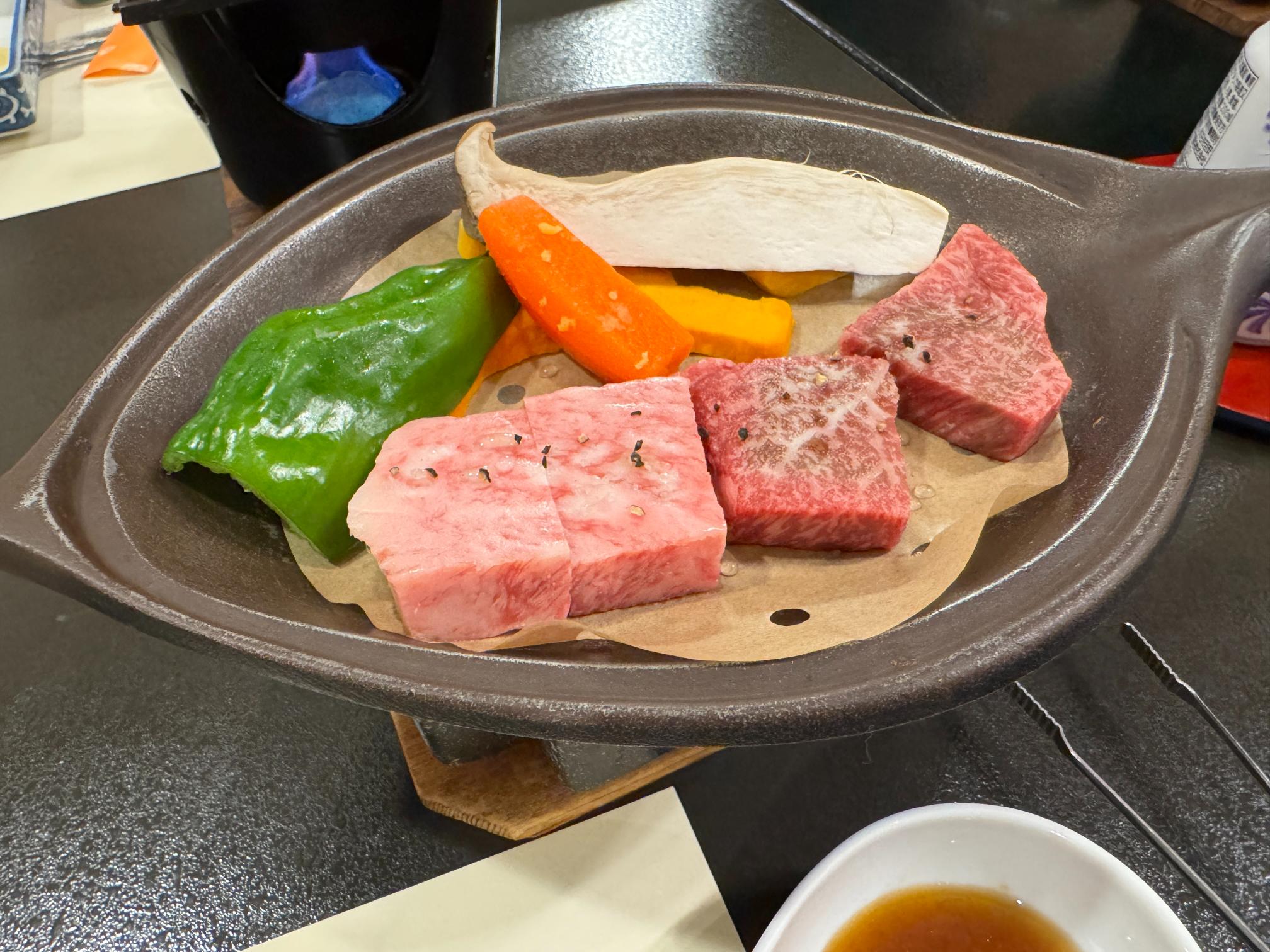
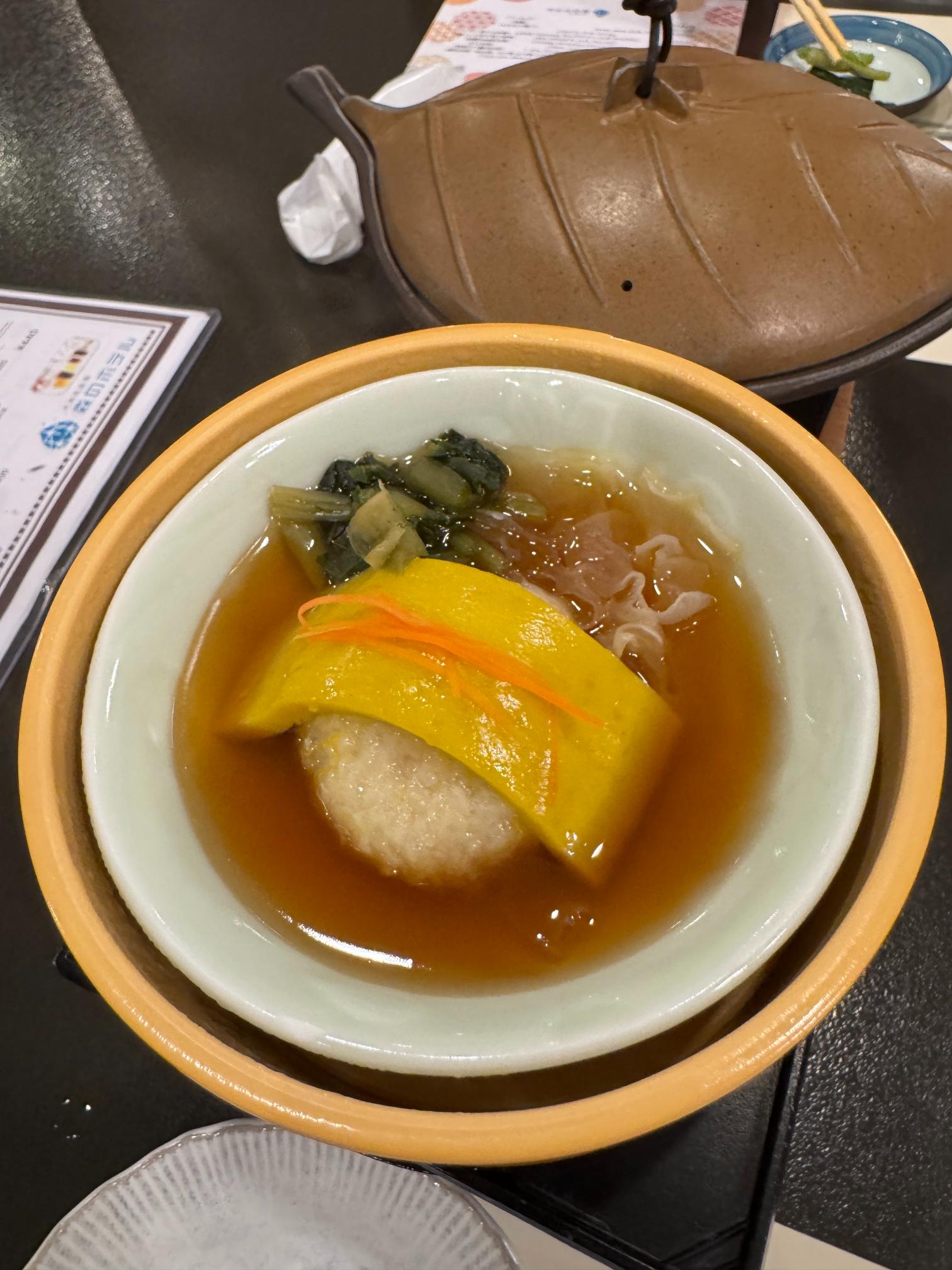
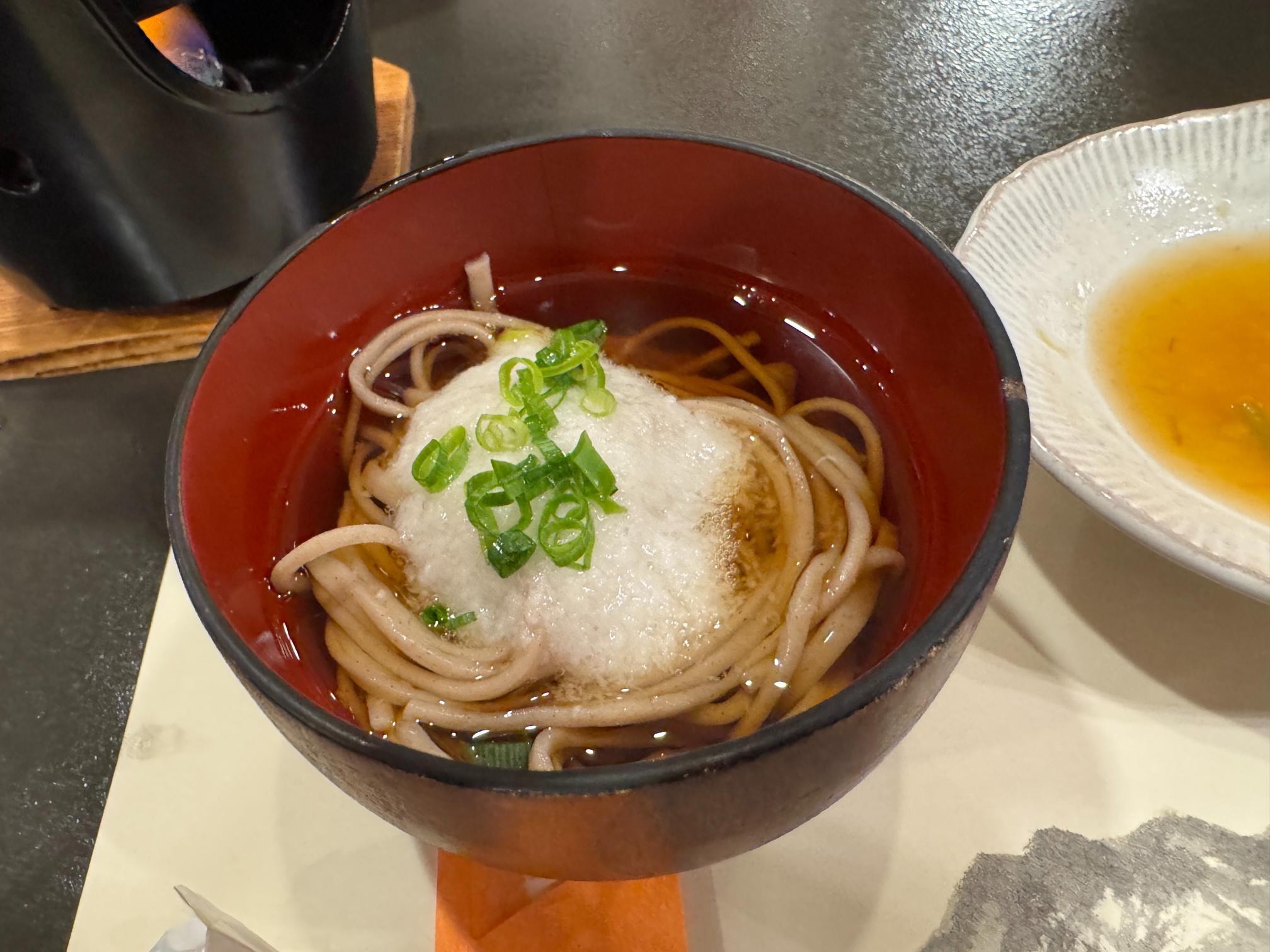
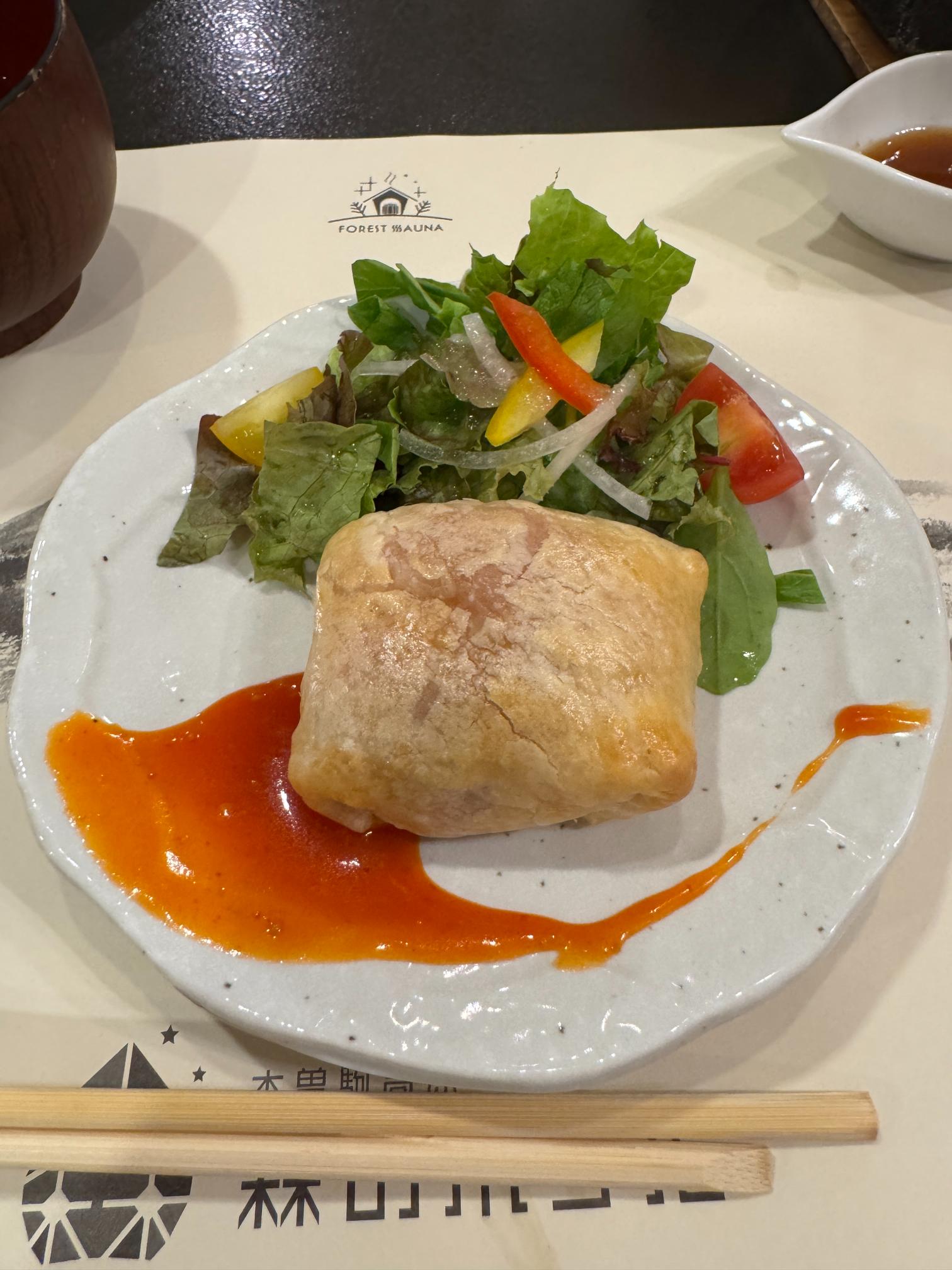
I’ve been too tired over the past two evenings, and blogging was too difficult in the last hotel, to be able to give you a sense of what dinner looks like in a ryokan. But I can assure you that we’ve had similar dinners the past two nights as well – all prepared with minute attention to colour, texture, flavour, balance etc. The Japanese chefs in our past two hotels are not only highly skilled at preparing food, but are also gifted artists who lay out food on a plate which is aesthetically pleasing. It’s been a highlight of our trip to sit down together for a meal like this and have each course served and every component explained to us by the wonderful wait staff. Sayonara.




 On The Road With Garry
Wow. Glad you’re feeling better Garry. Hope your suitcases weren’t as heavy as the ones in Scotland we all had. You certainly picked right time of the year to see the beautiful gardens. They are spectacular. Say hi to Marg, Theresa and Ian for us.
LikeLiked by 1 person
Thanks Janie. Much better now. Much smaller and lighter suitcases too. Marg says Hi 🙂
LikeLike