Our hotel in Nikko was about ten minutes by car out of town, so we needed a taxi to get us and our luggage to the railway station this morning. We had to catch an 8.48am local train back to Utsunomiya, but our hotel staff had told us that taxis were scarce at that time of day and couldn’t be reserved in advance. We decided to check out at 7.30 am, and just hope that somewhere in Nikko a taxi driver had started work early. Thankfully, we only had to wait 15 minutes, although we needed two separate vehicles to fit all our suitcases in. This, of course, meant we got to the station in time for an even earlier train, so we jumped on that one. We found seats and pulled our suitcases in close. After a couple of stops, the carriage filled up with people going to work or to school. They stood in silence all the way to Utsunomiya – you could have heard a pin drop. Amazing!
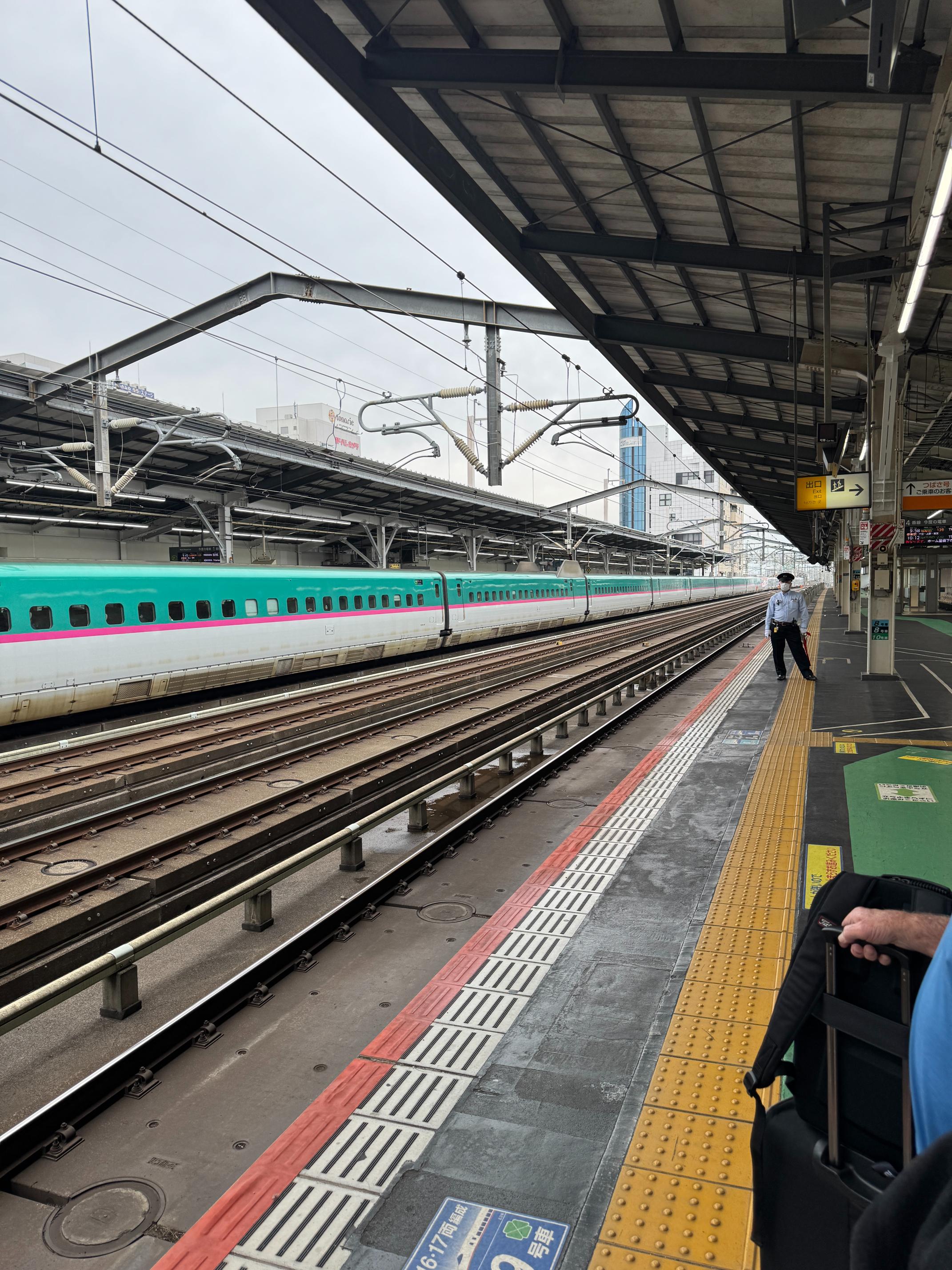
Etiquette is very important here in Japan. We were reminded of that on the platform at Utsunomiya when a large poster cautioned people against walking while looking at their phones. I wish there were a few of those plastered around Melbourne. Because we got to Utsunomiya early, we had time for a coffee and cake before boarding a Shinkansen for a short trip to Omiya. There we changed to a second Shinkansen for a longer journey that began climbing to a higher elevation before reaching Nagano, host city of the 1998 Winter Olympics.



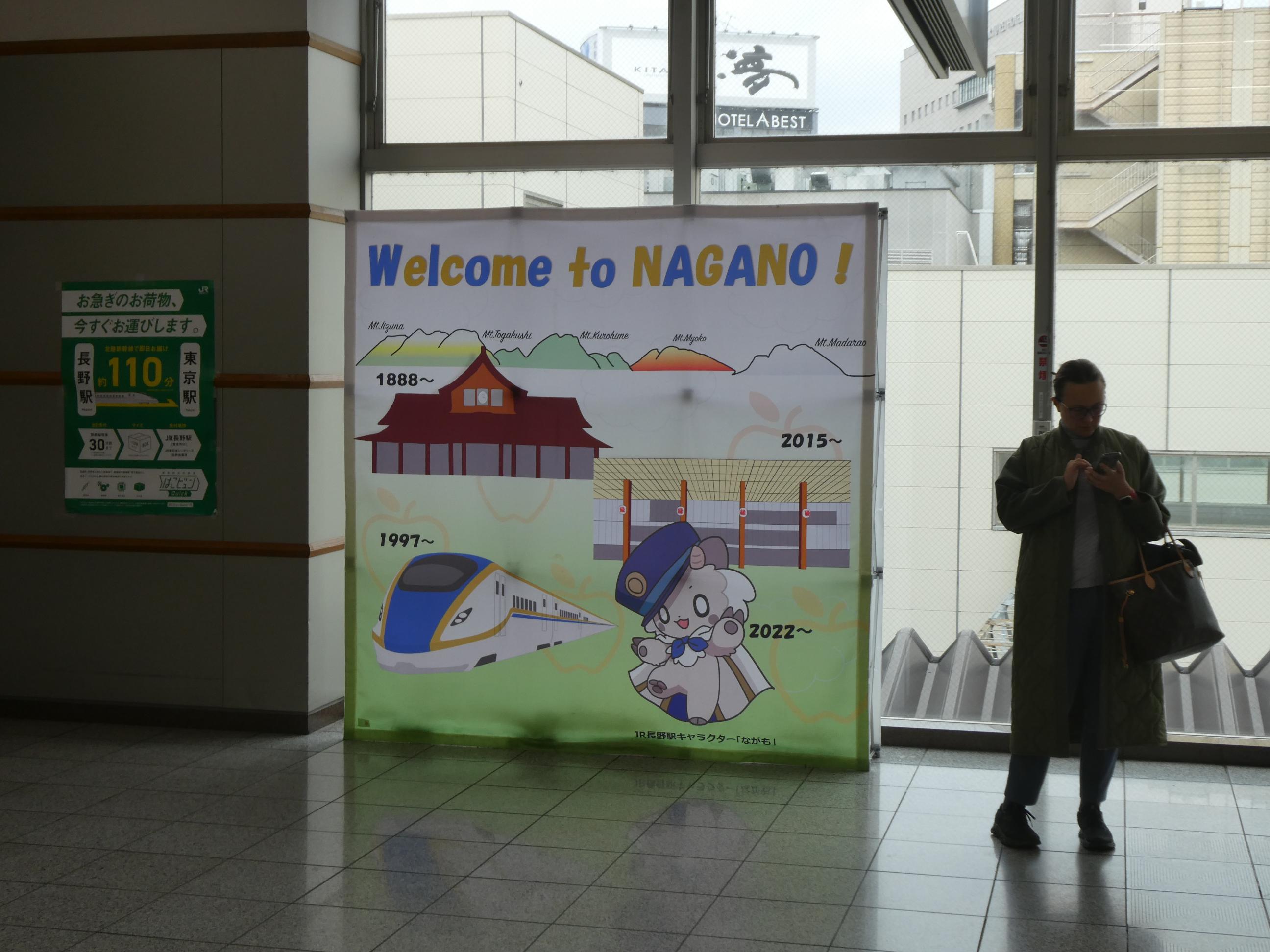
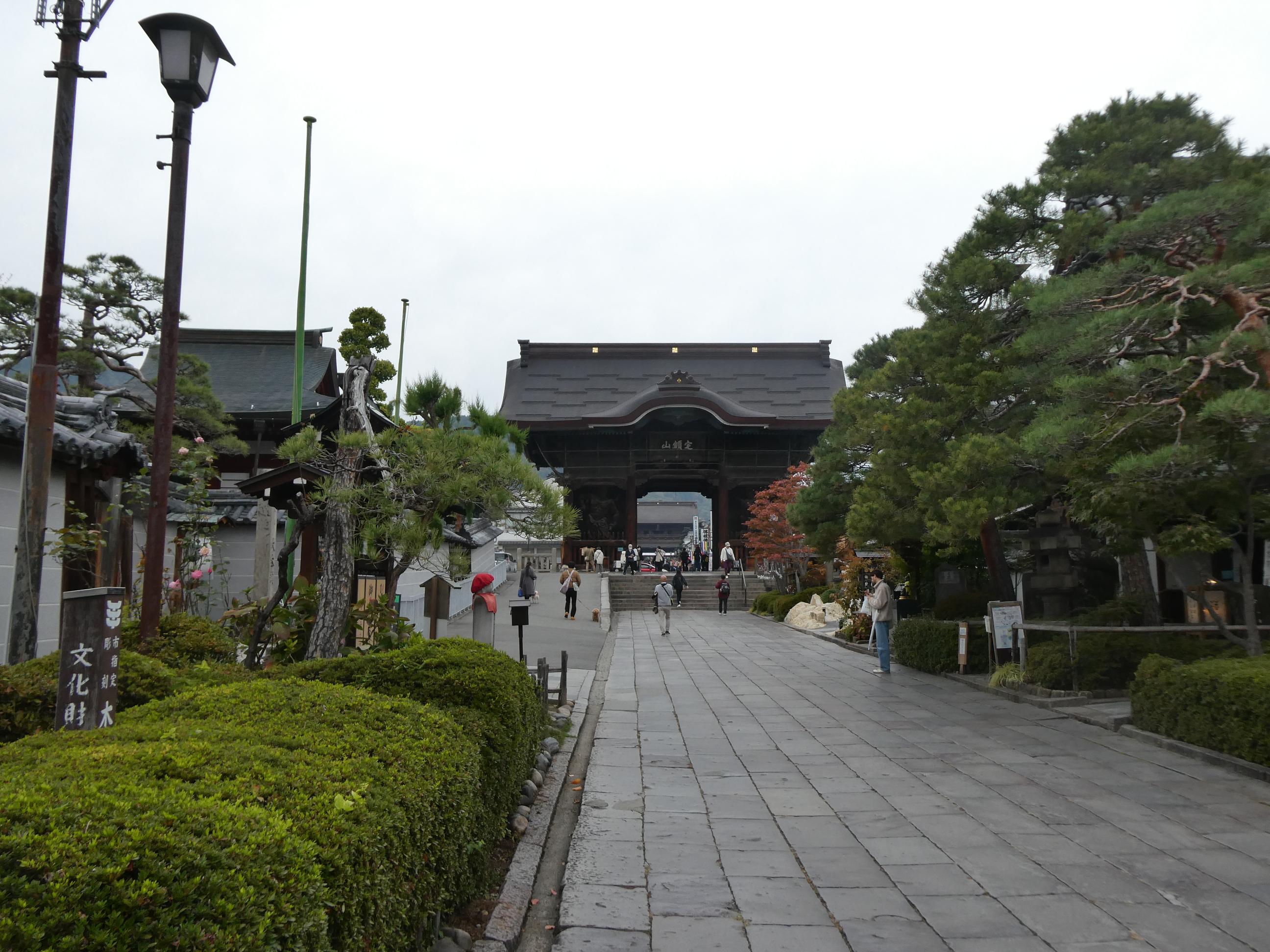
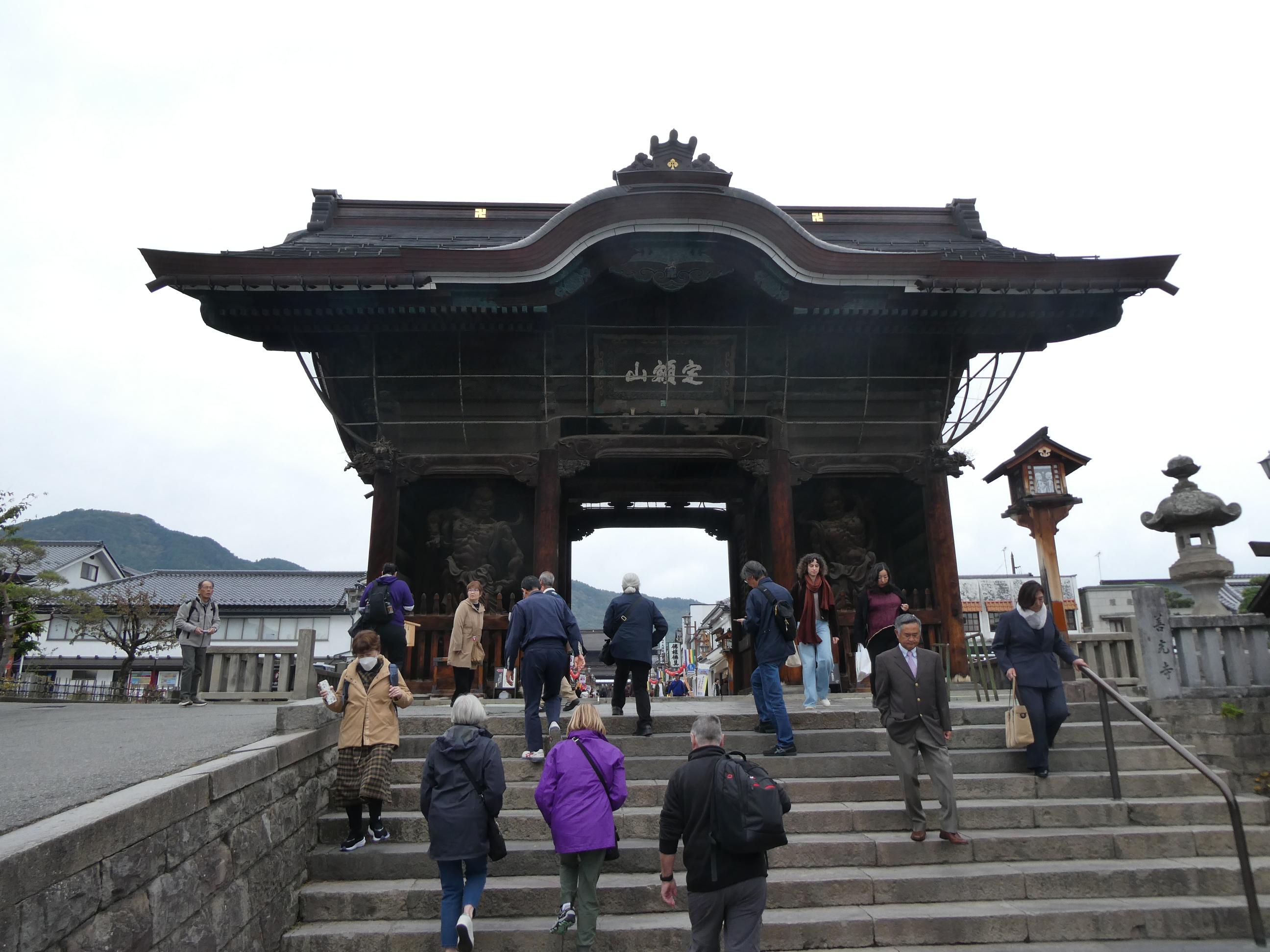
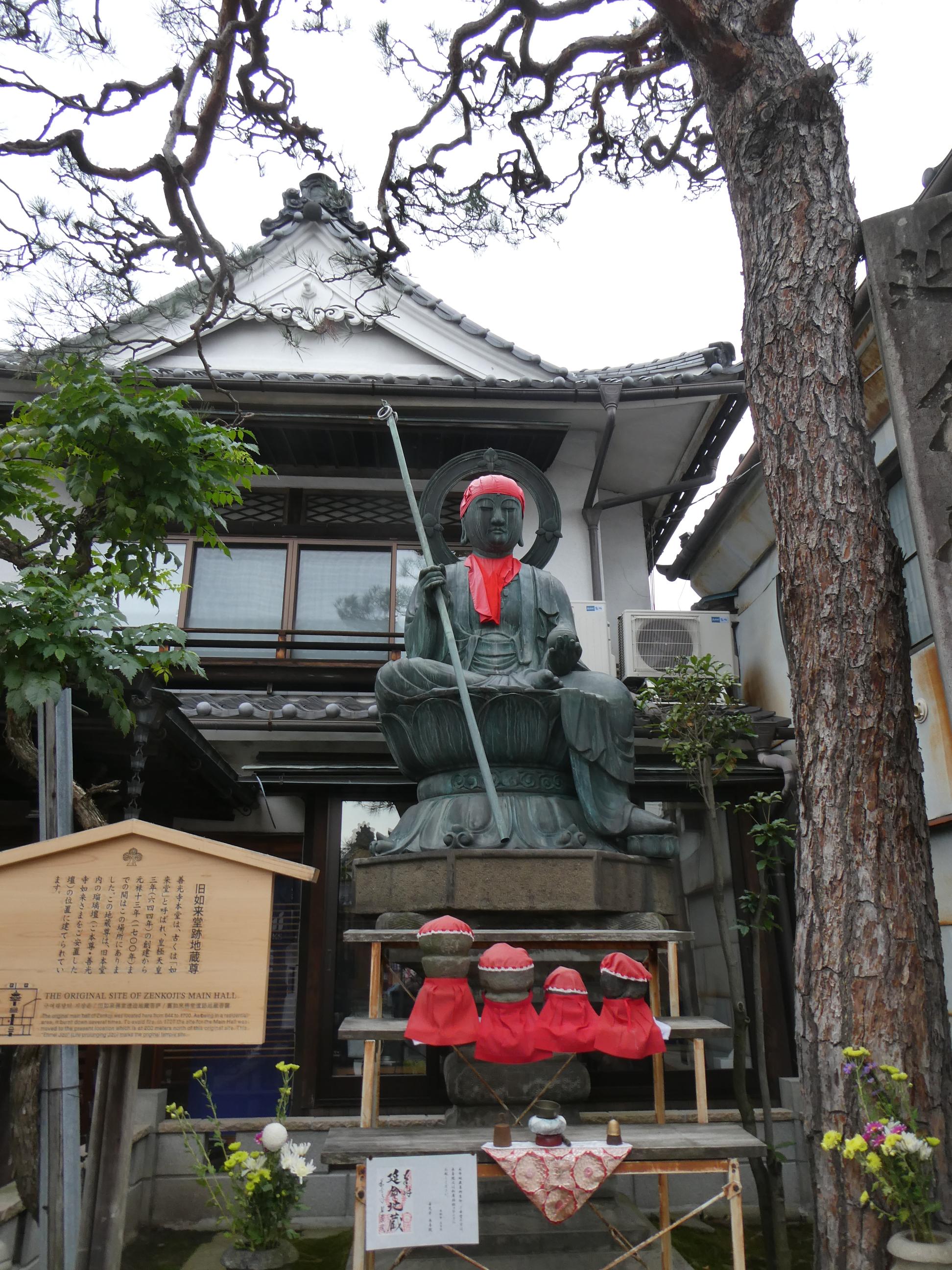
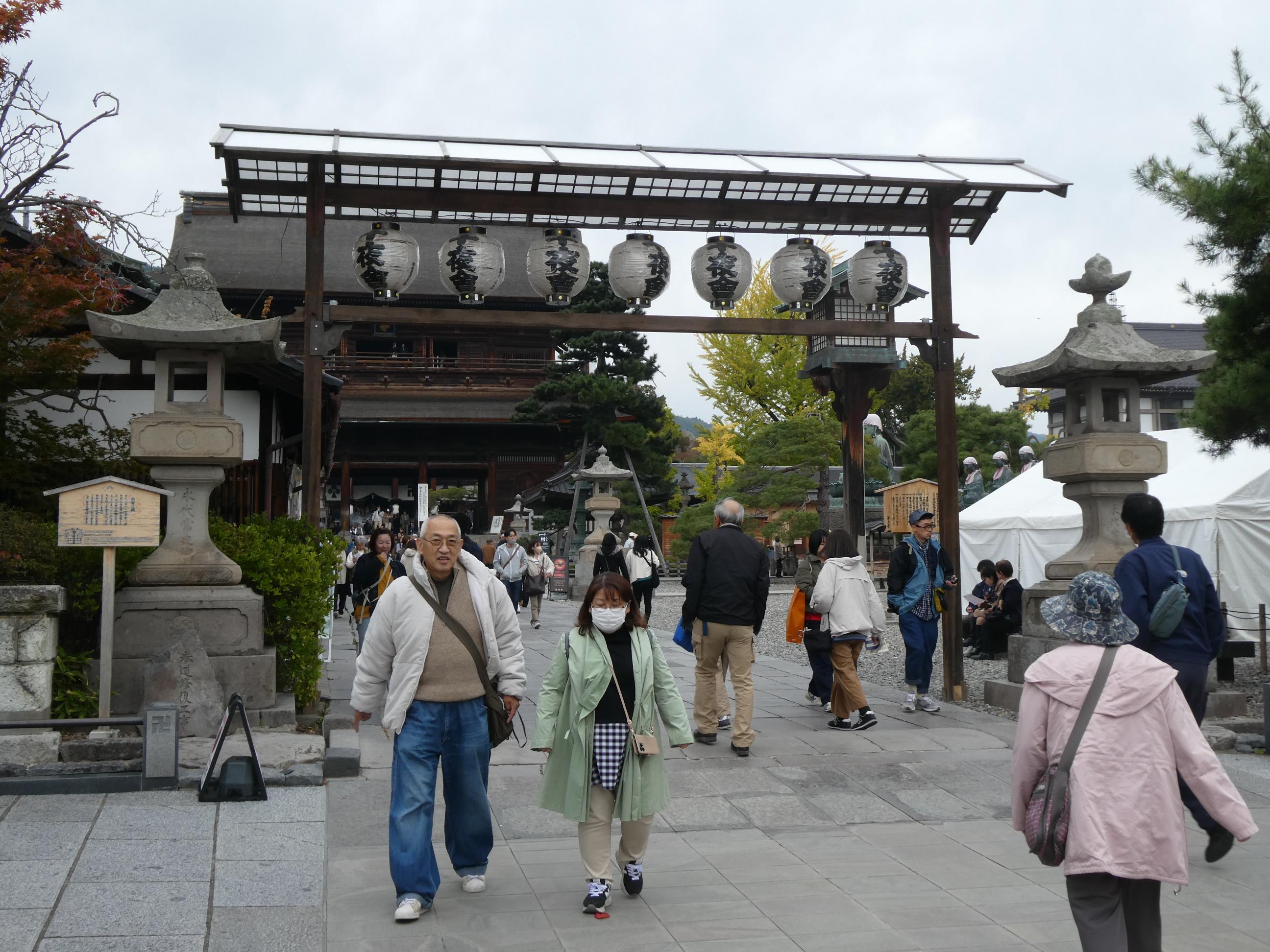
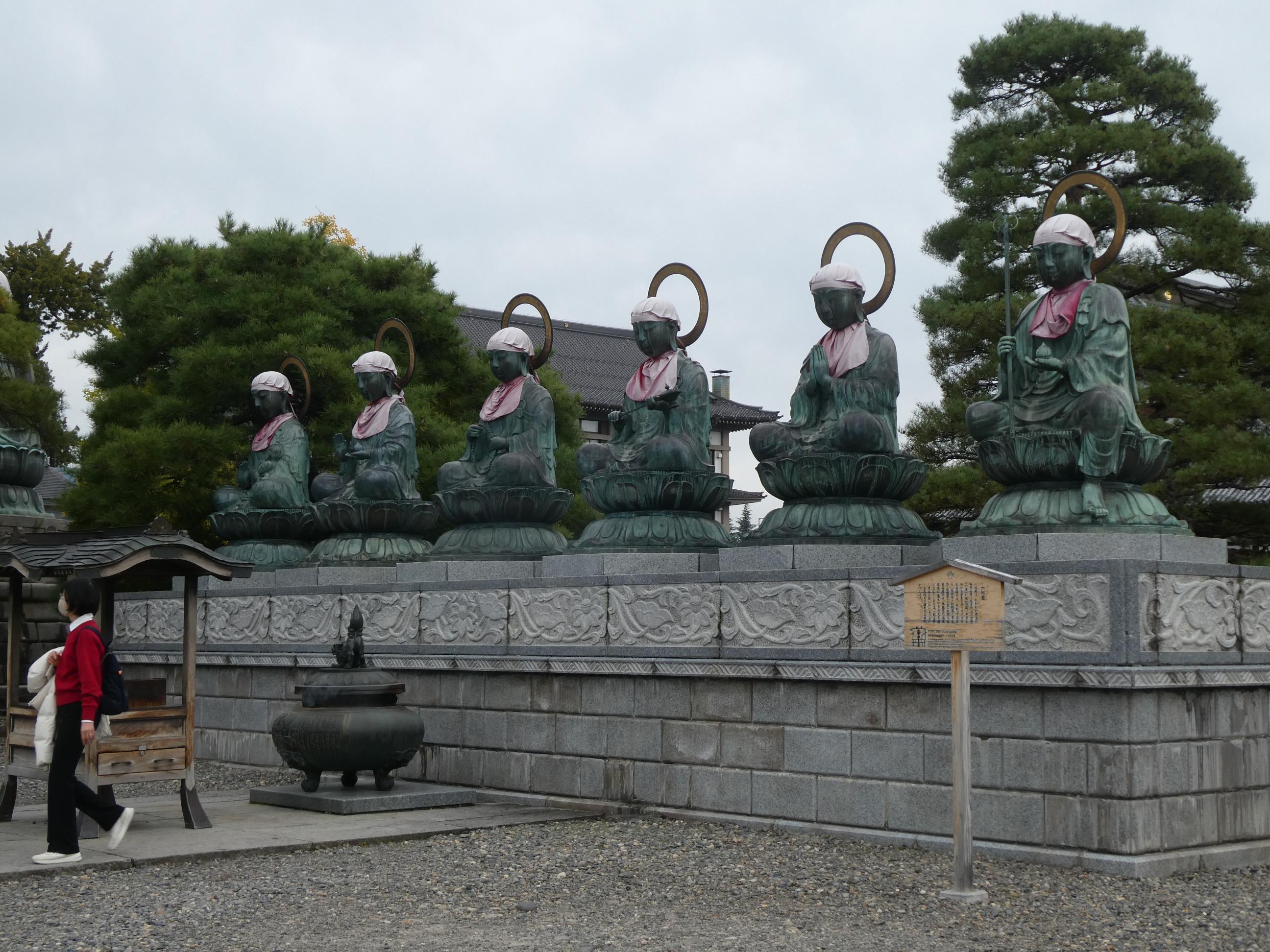
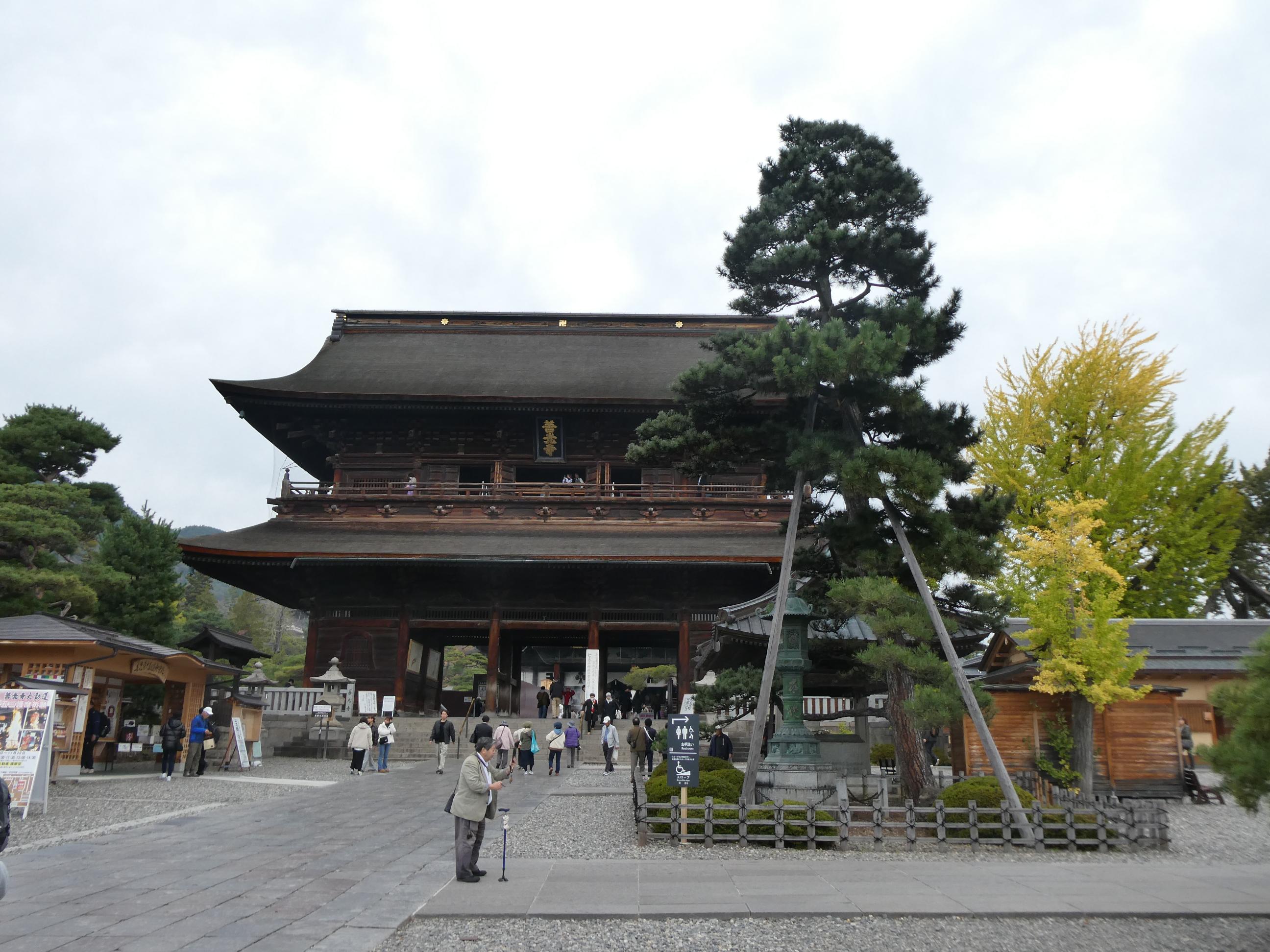
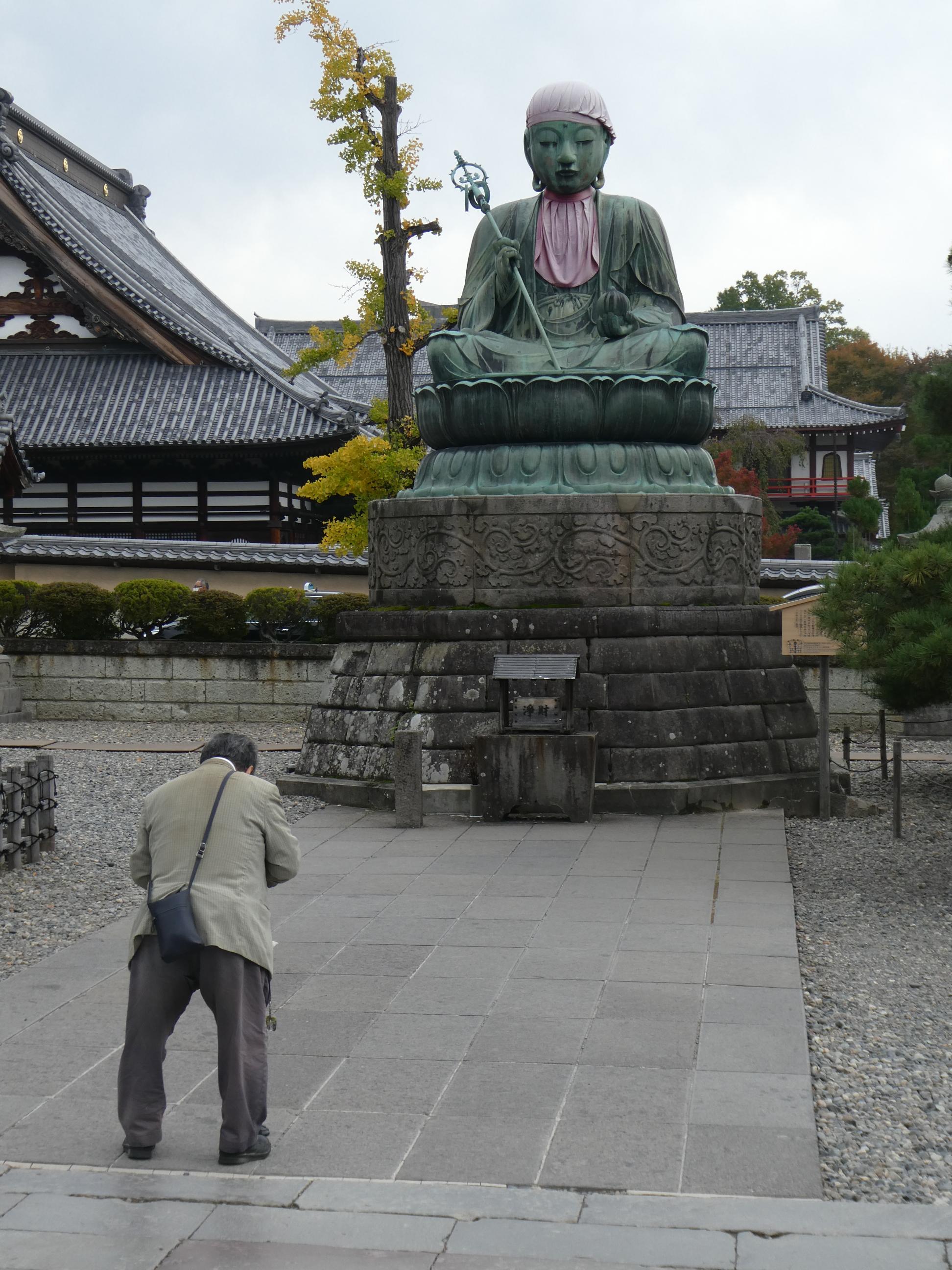
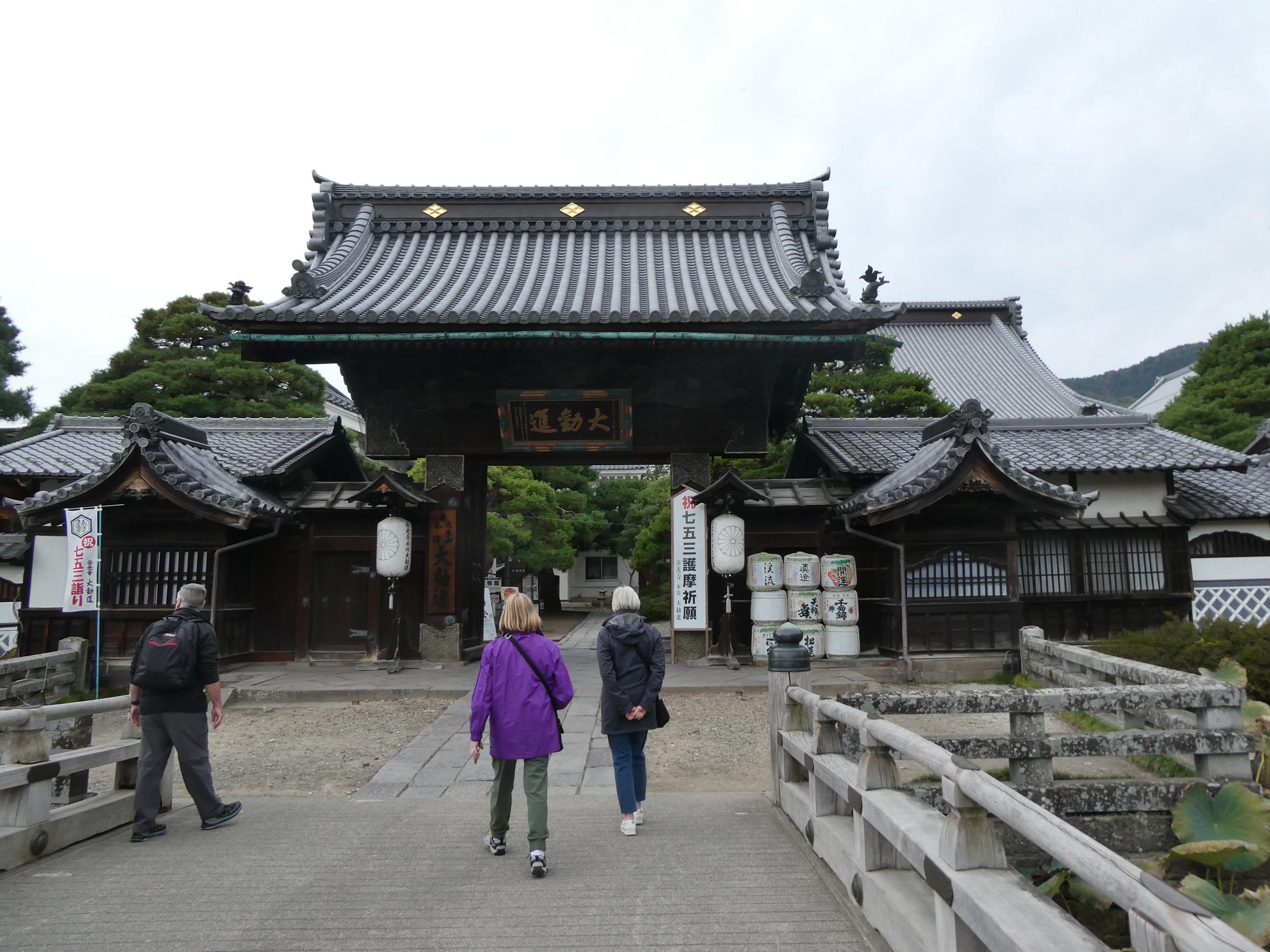
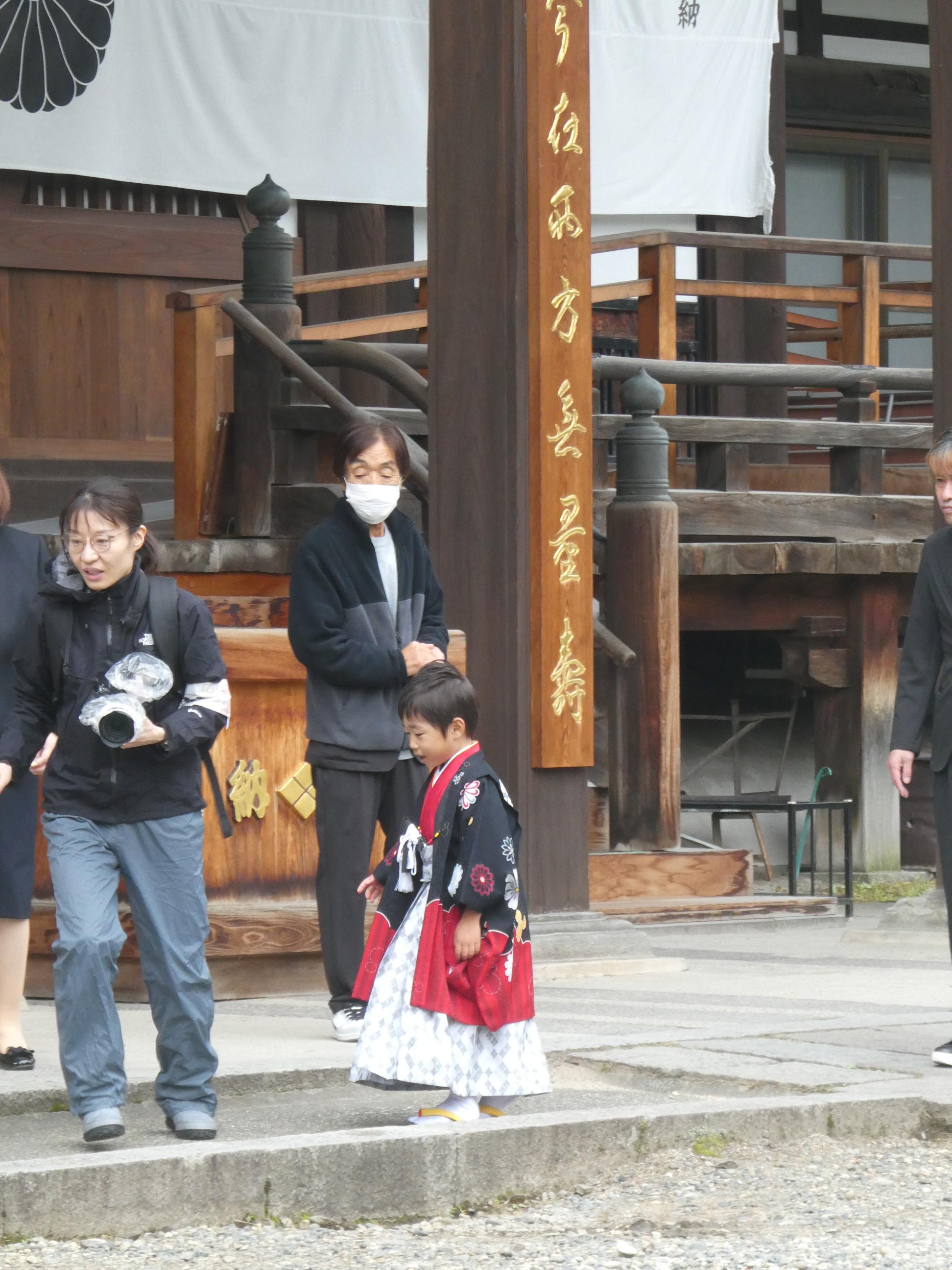
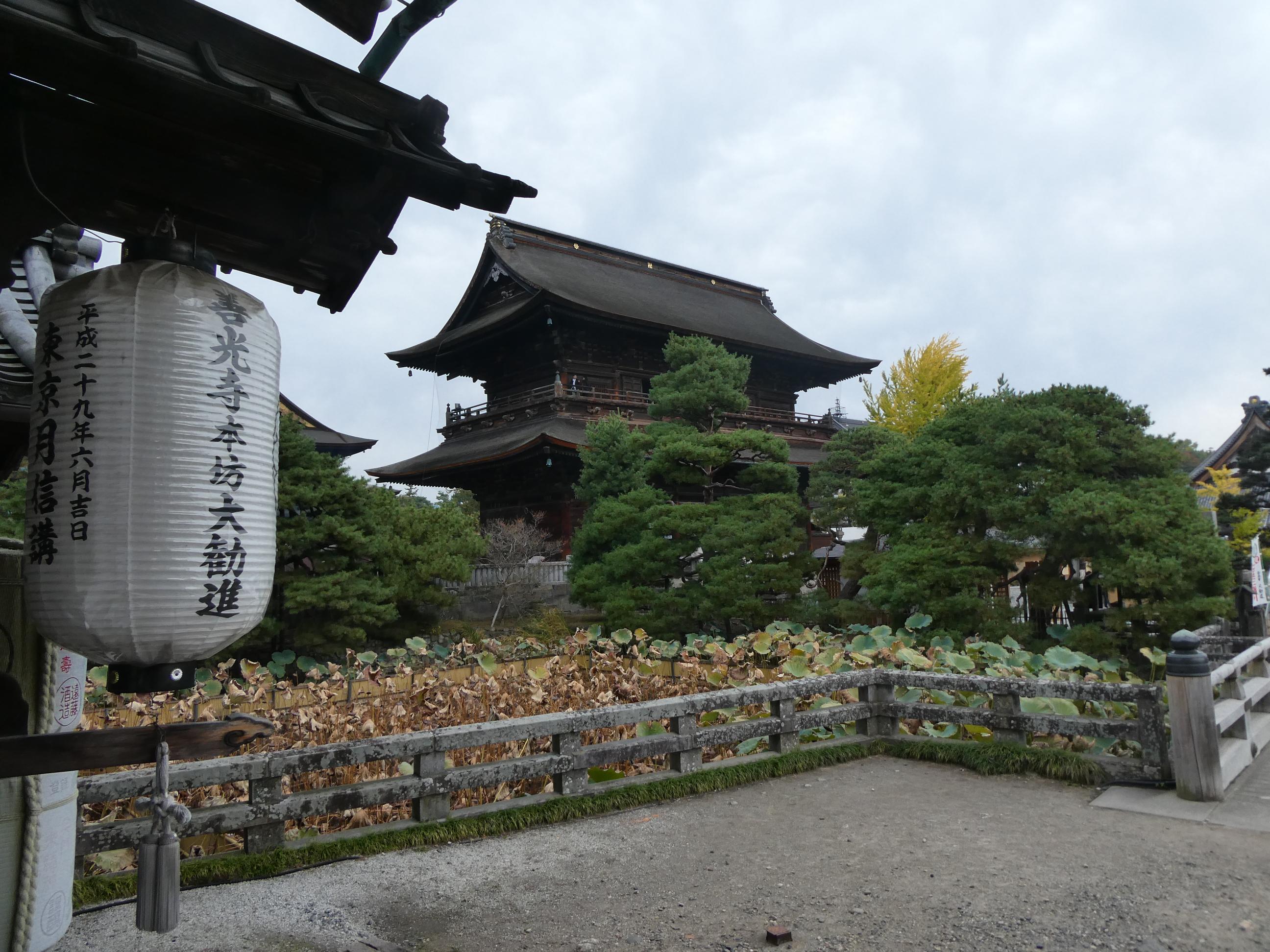
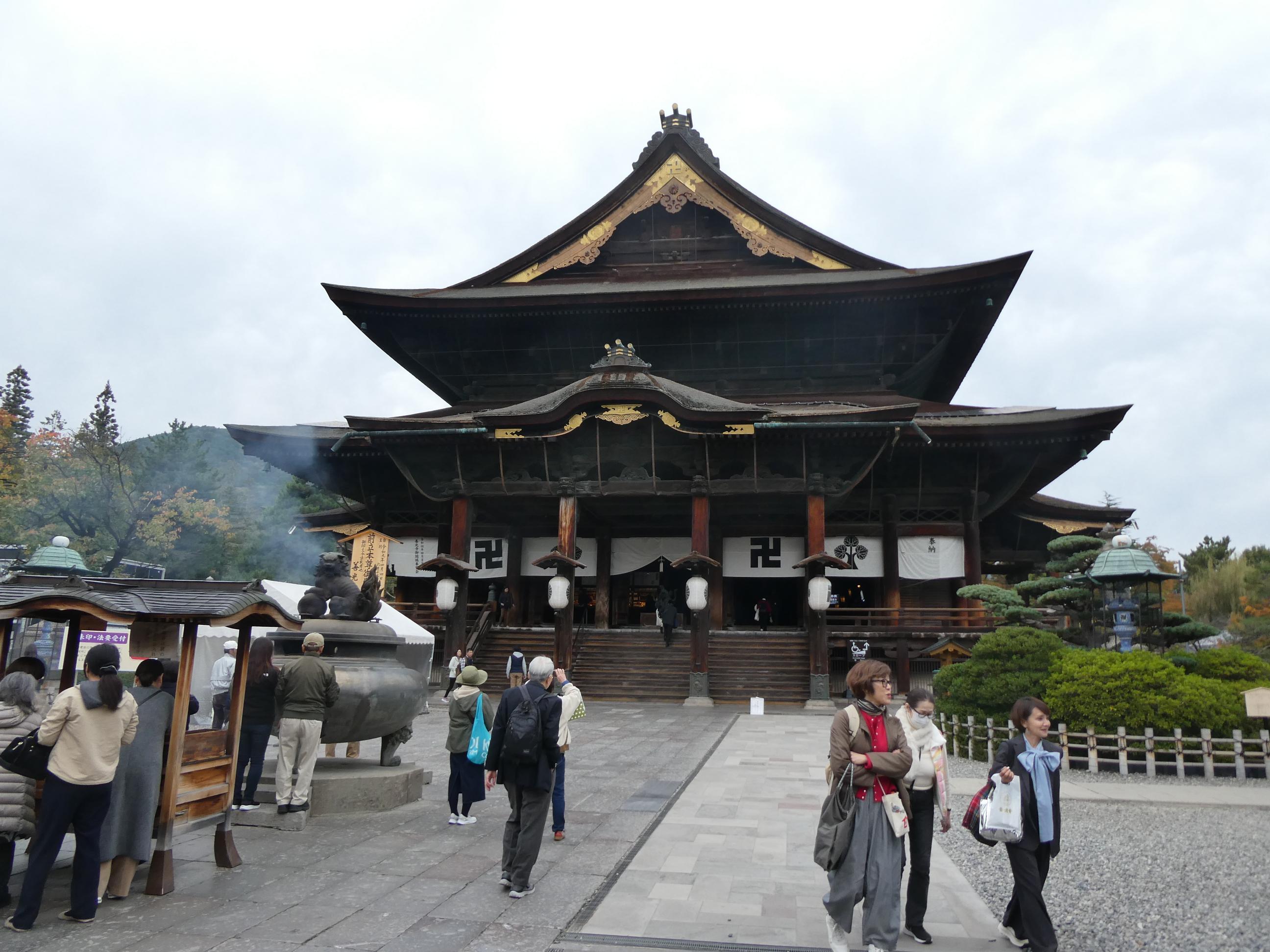
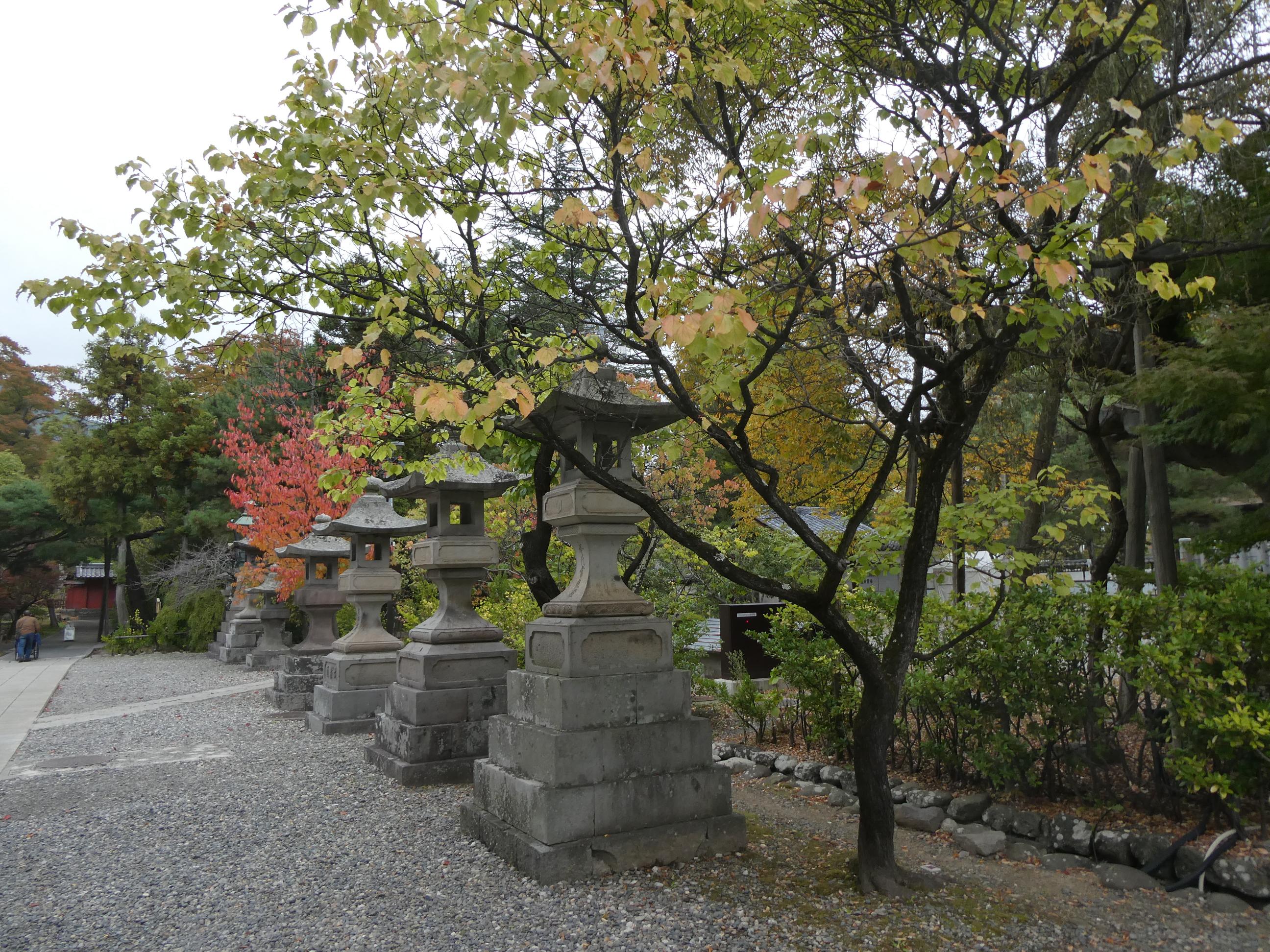
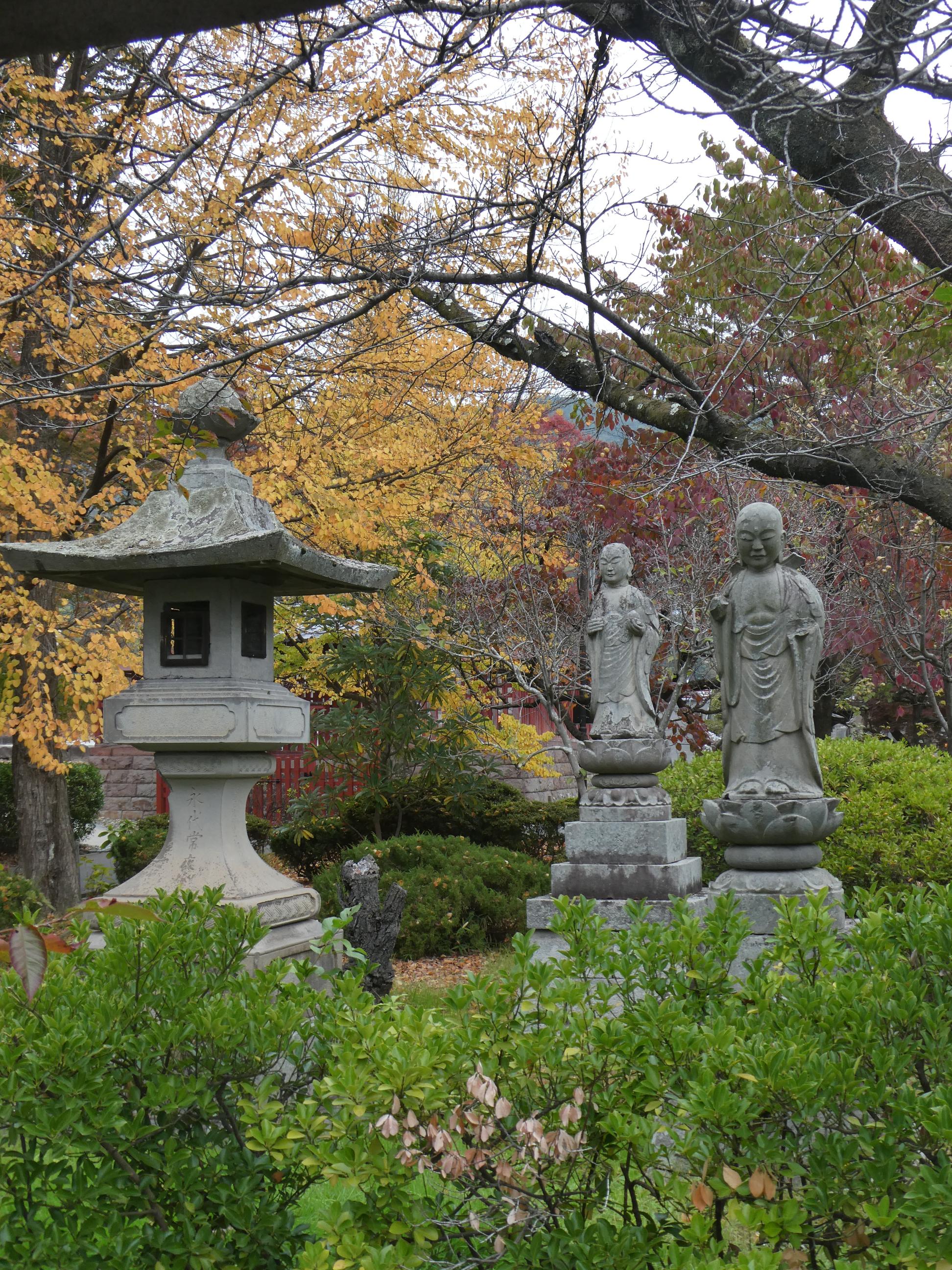
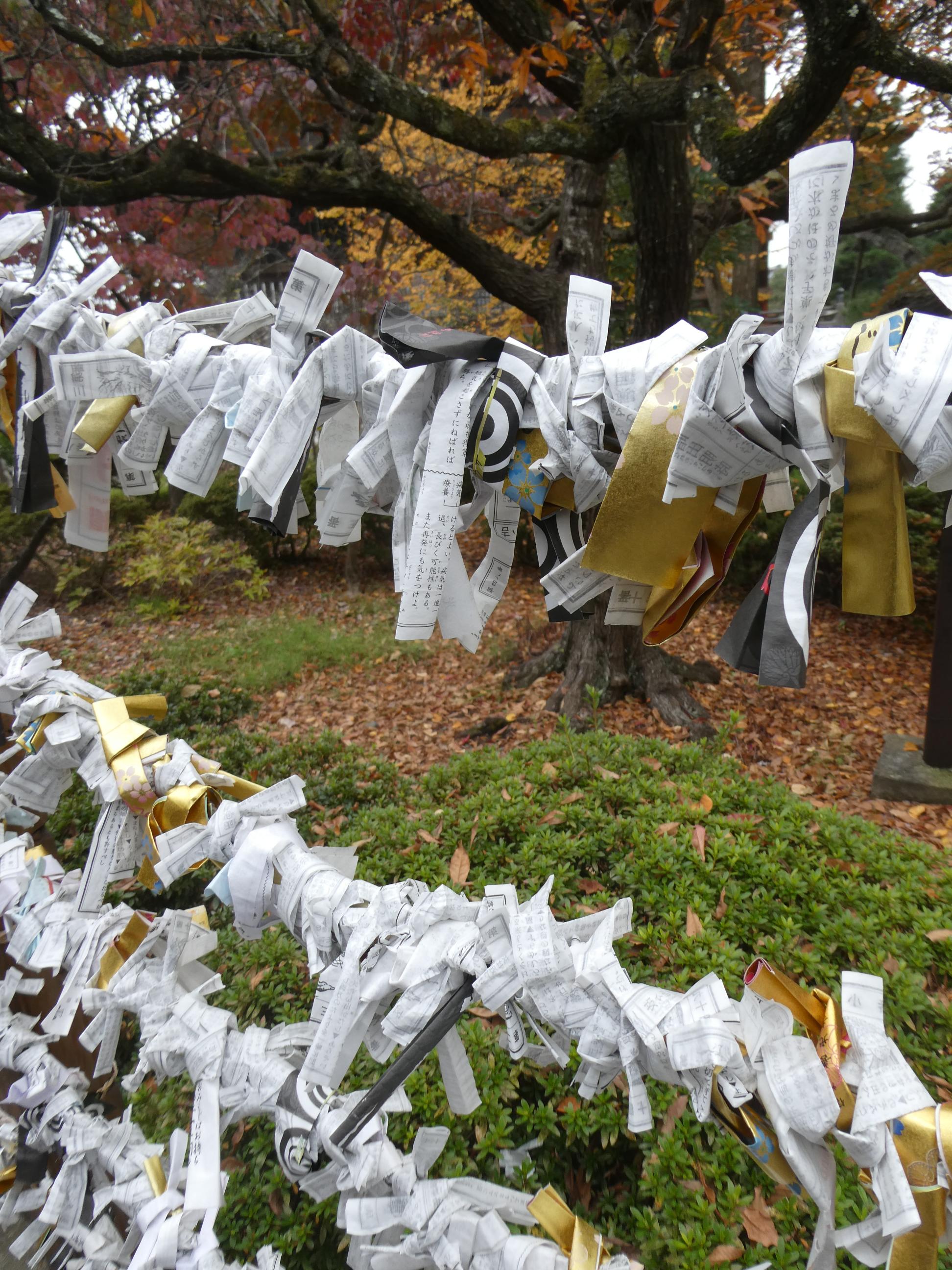
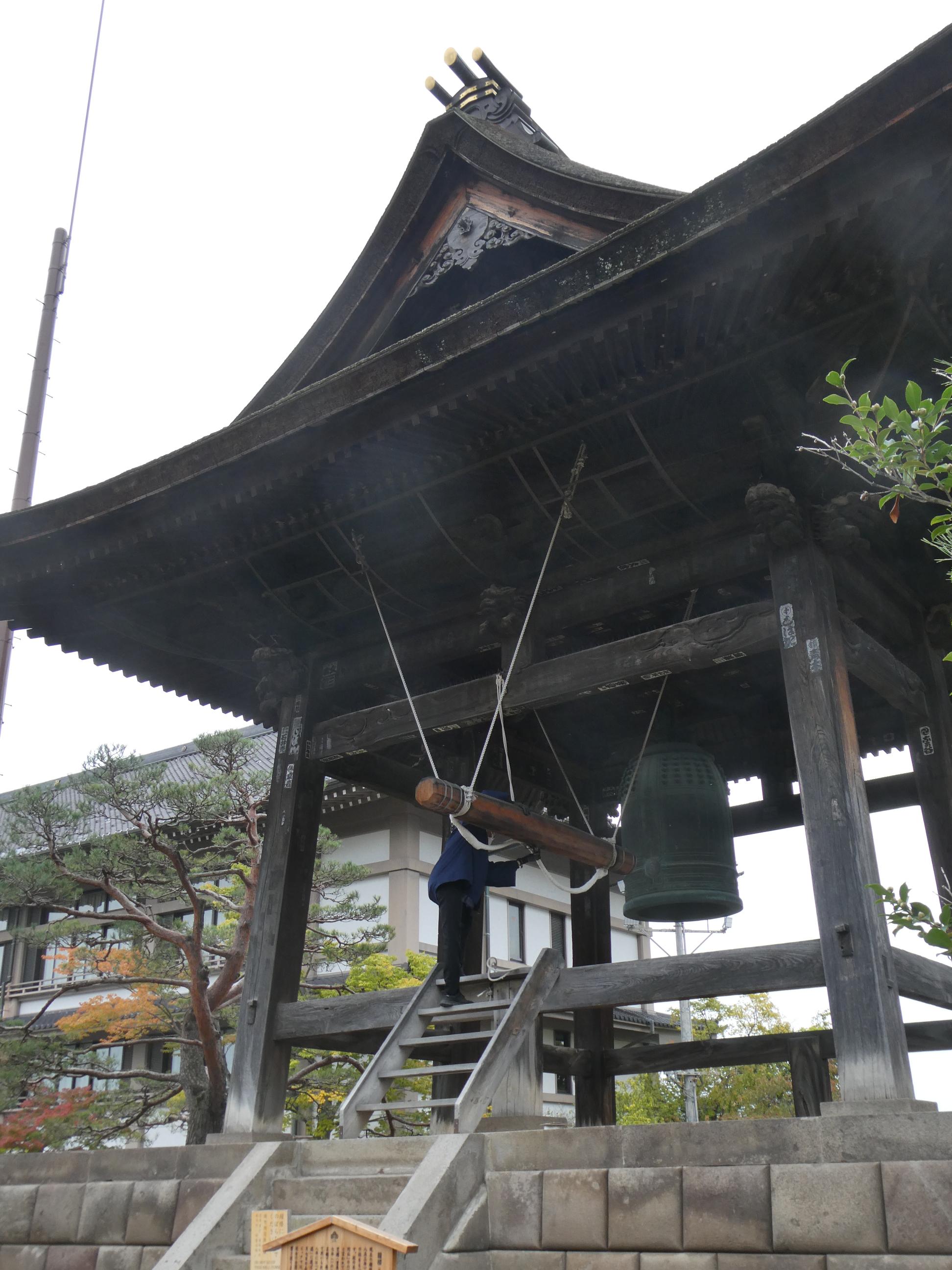
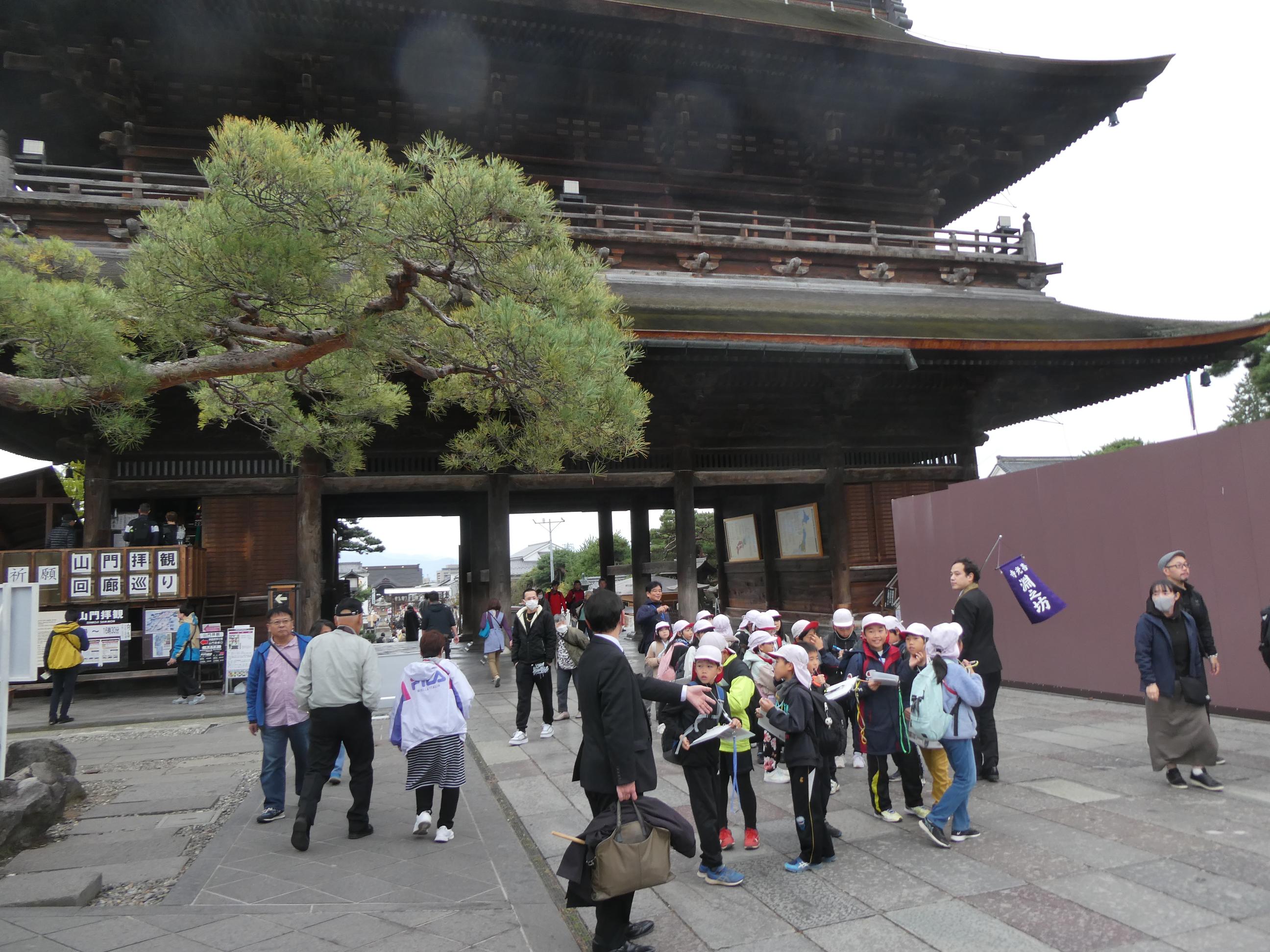
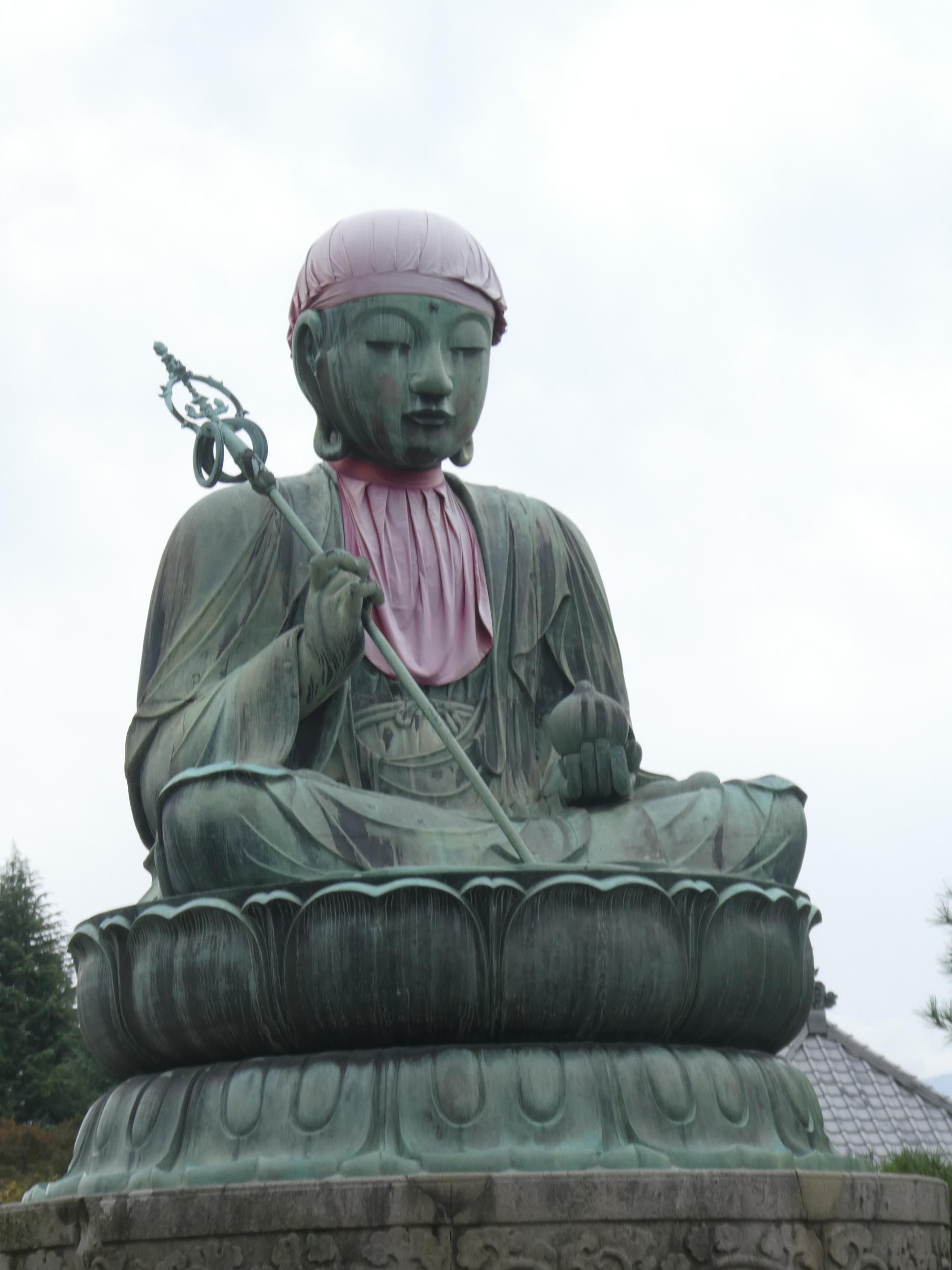
A driver from our hotel was waiting for us at Nagano. Our first stop was Zenkoji Buddhist Temple, which dates back over 1400 years. It’s a popular place of pilgrimage for many Japanese people who come to worship here. In the busy shopping street leading to the temple gate, they stop to buy souvenirs and a range of different street foods.
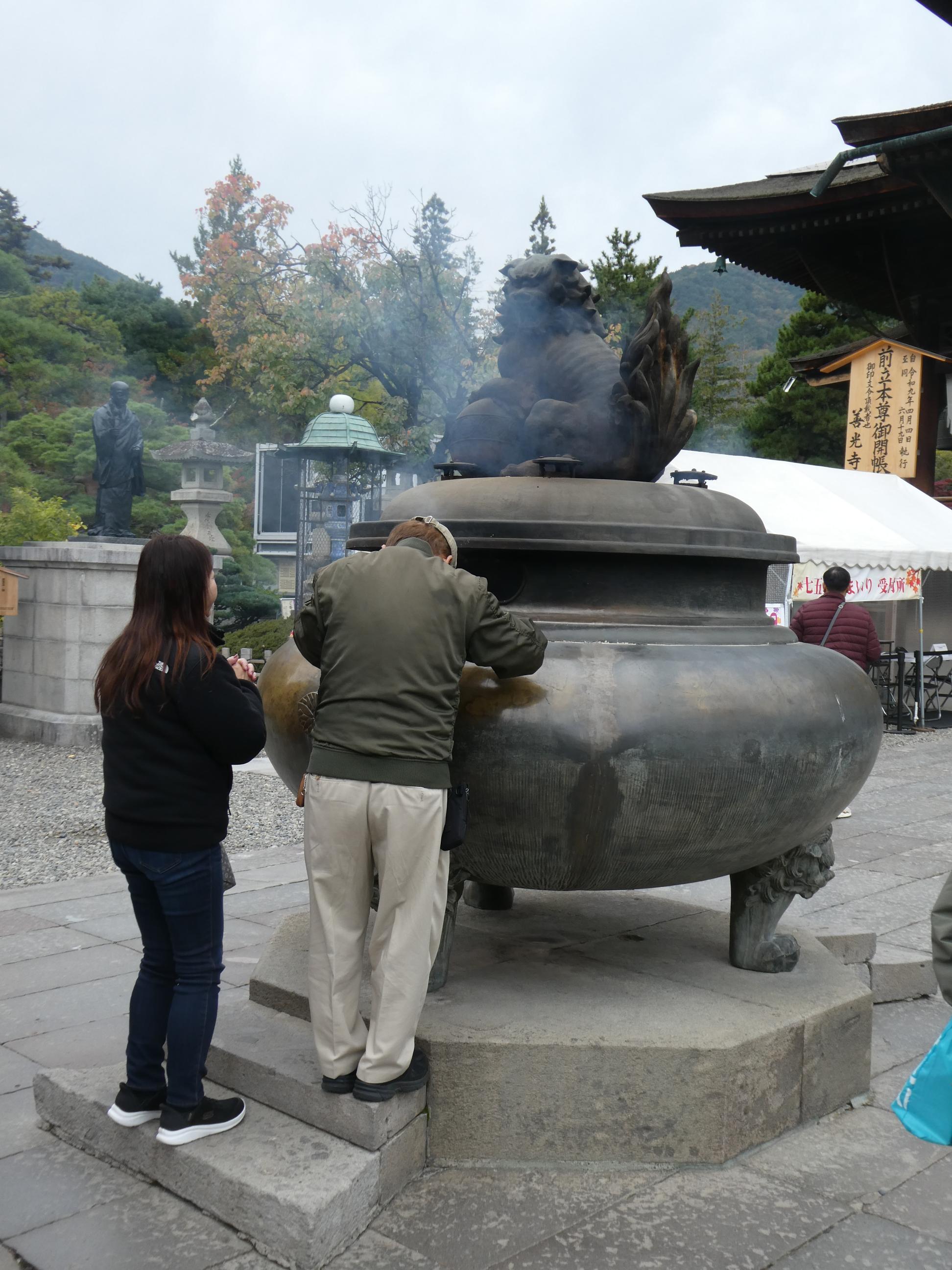
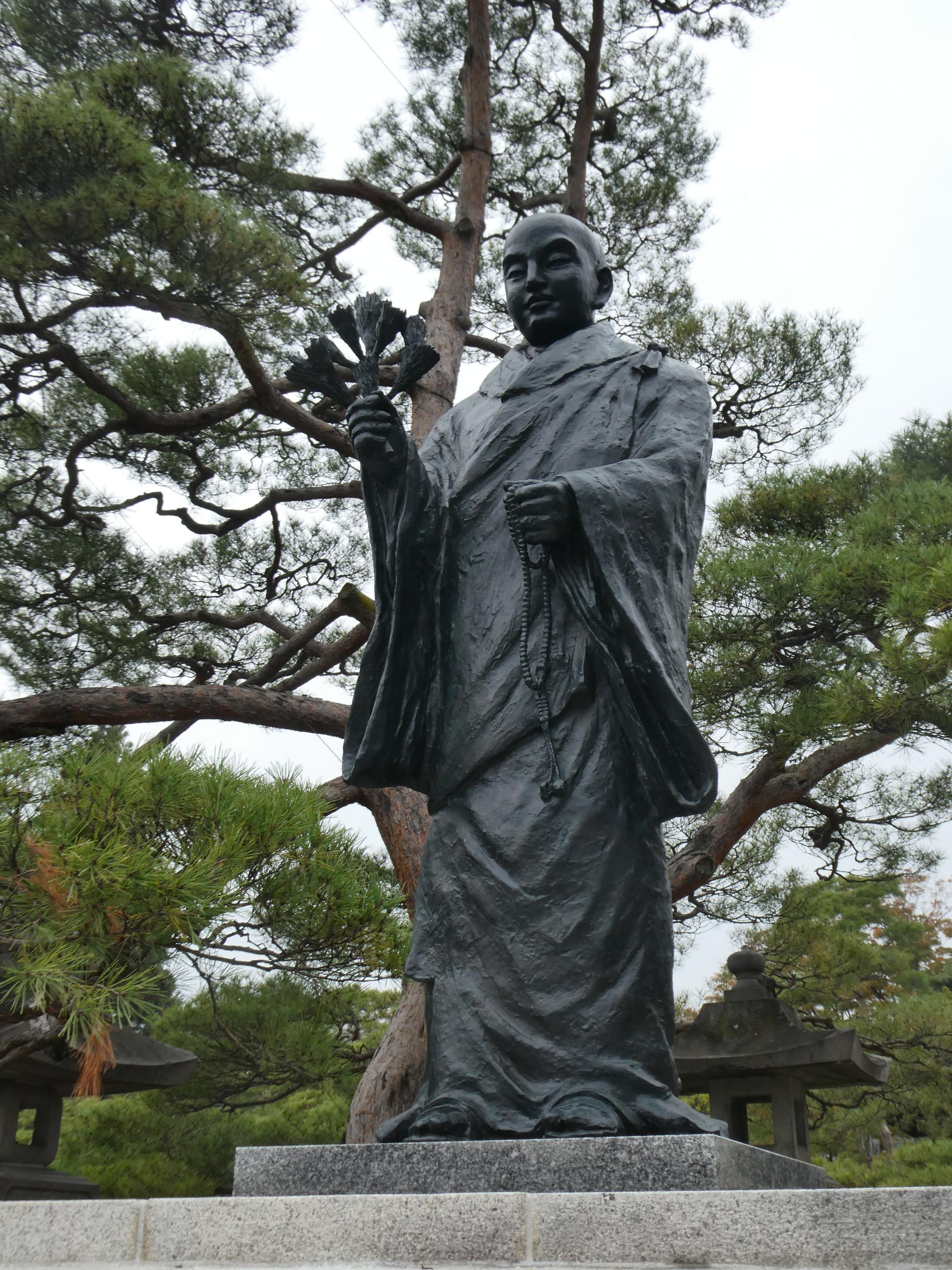
We only had time to visit the Main Hall, where no photography was permitted. Before climbing the steps to the hall, worshippers cleanse their bodies with smoke from a large incense burner to bring good health and fortune. Visitors are asked to remove their shoes and carry them with them through the hall in a plastic bag. Within the Main Hall is the Worshippers’ Hall, a place for prayer, where all people are welcome to pray and be blessed, regardless of their religious beliefs. Proceeding into the Inner Sanctuary, there are statues of Zenkoji’s founder and his family. The hall famously also houses a very sacred statue known as an Amida triad, which displays three standing images sharing a single halo, but it is never on display. It is considered to be the first Buddhist image brought into Japan.
What came next took me by surprise. We were given a sheet of paper which told us we would be descending into a crypt, into a world of complete darkness where we could ‘experience the world without light after our death’. We should proceed forward in the darkness, through what was called the O-Kaidan Meguri, always keeping our right hand touching the wall to guide us through. No lighting from watches or phones was permitted. We were told this was one of the holiest places in the temple. By keeping one’s hand at waist level height while moving along the wall, the aim was to touch a metal bar on the wall. Known as the Jomae, this metal bar was part of the door lock leading ‘towards the Paradise Pure Land’. The Jomae was situated directly beneath the main holy image of the triad I mentioned earlier. Ian and Theresa were ahead of me. We kept talking to each other in the darkness, but suddenly Theresa lost touch with the wall and I heard her on my left. I reached out and found her hand and guided her back to the wall. Thankfully, we all touched the Jomae and are guaranteed an invitation to Paradise. Marg’s not so keen on dark tunnels, so she waited outside. I’m afraid she’ll have to find an alternate way to go to Paradise.

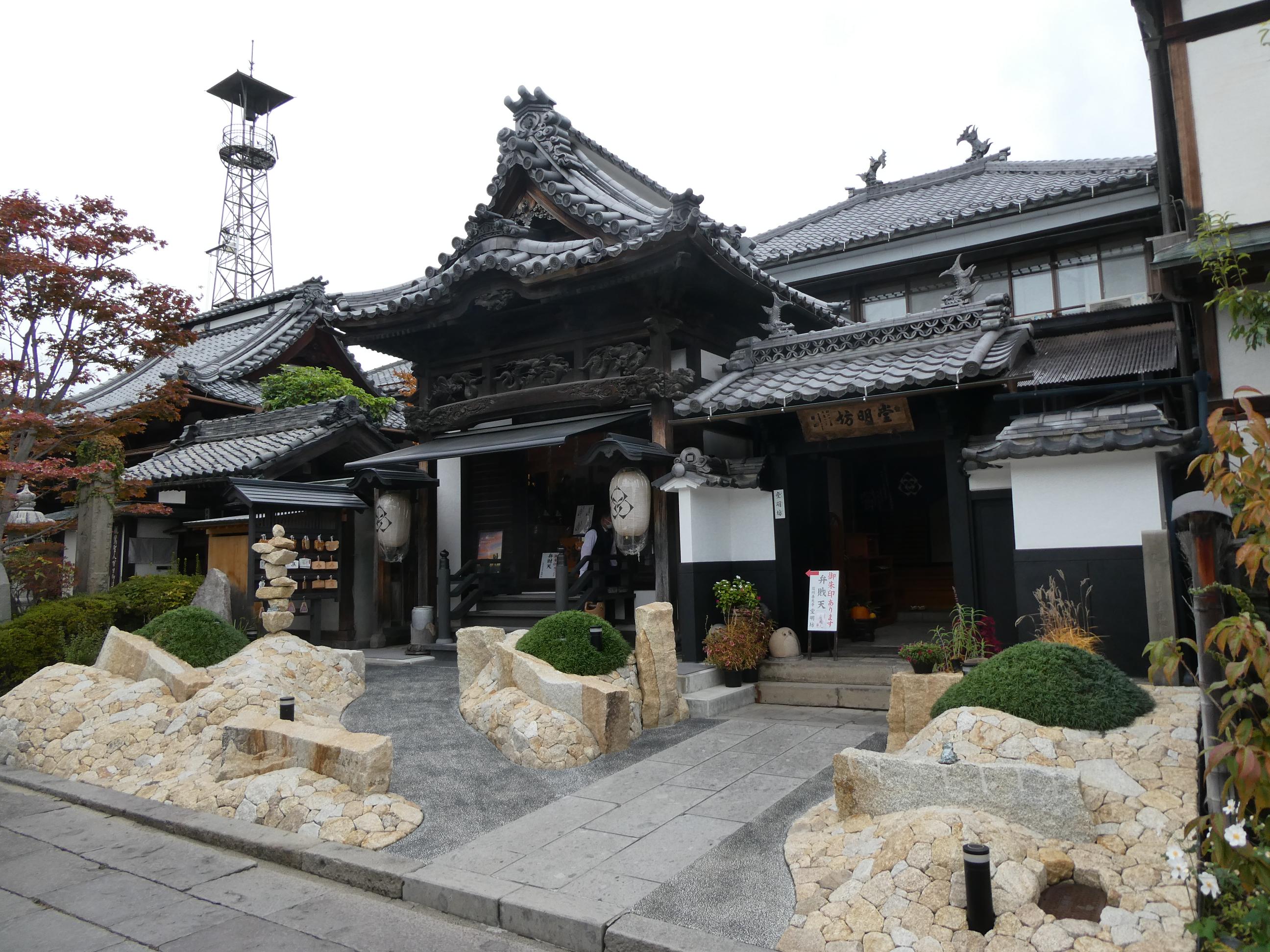
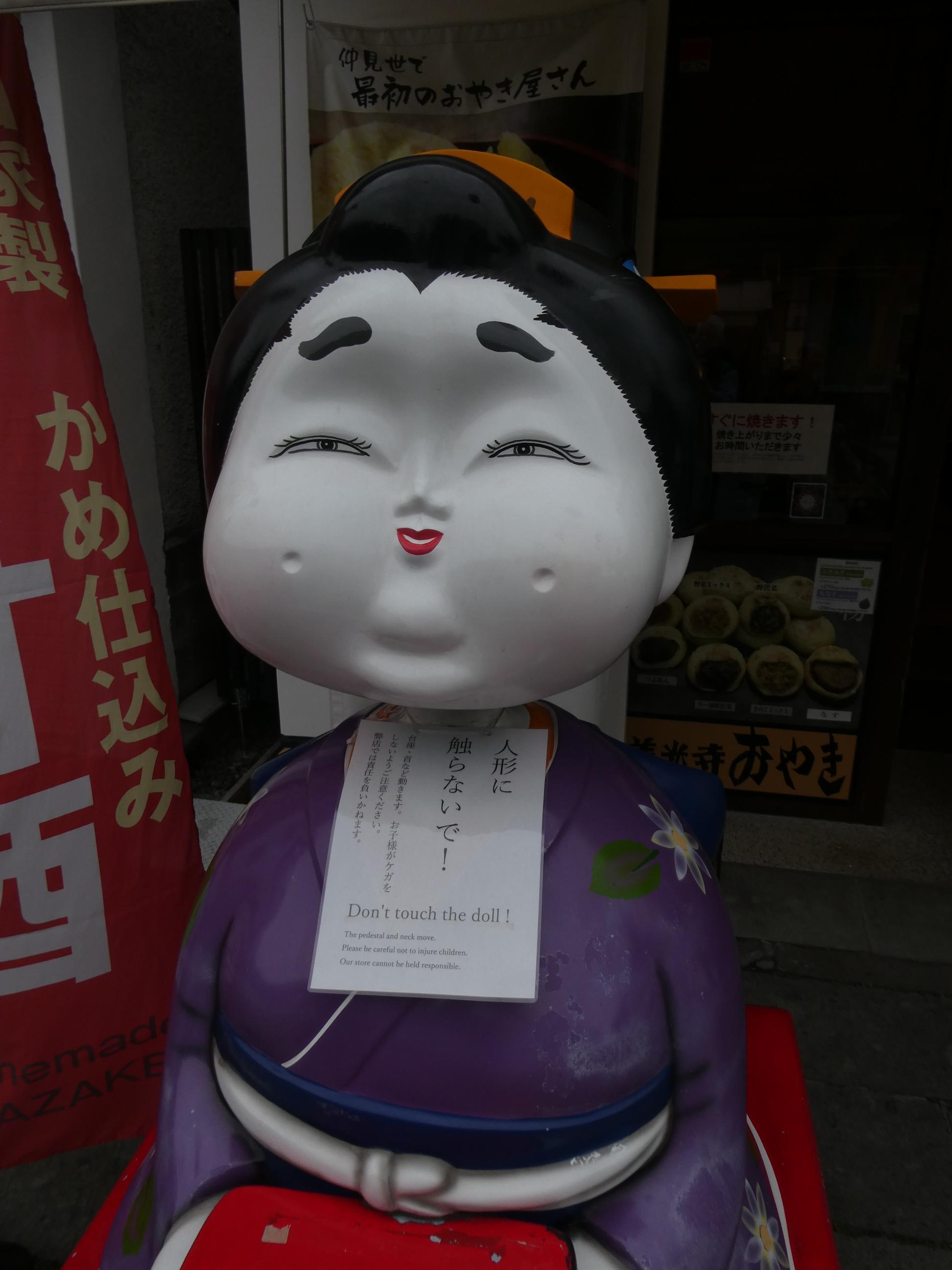
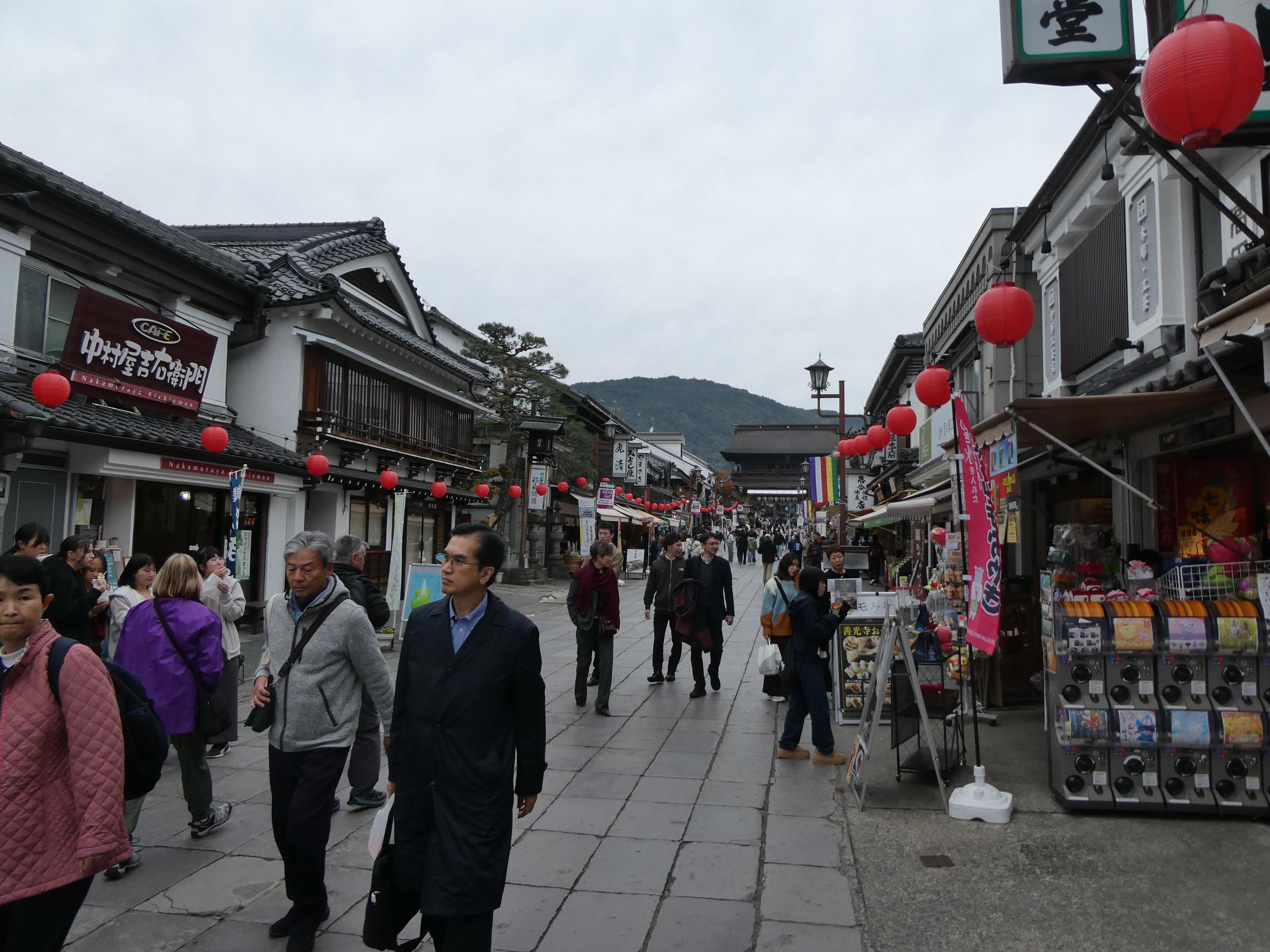
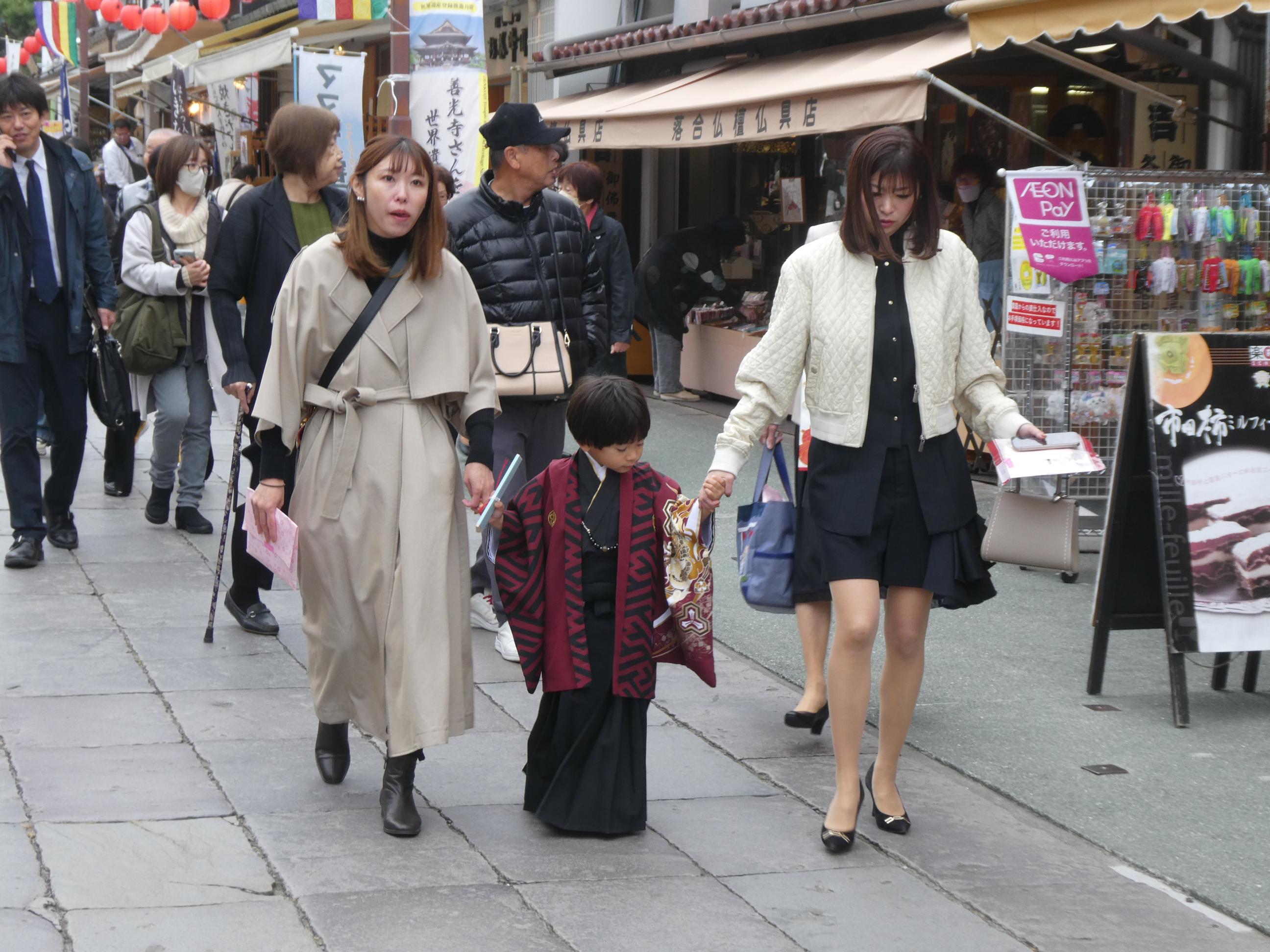





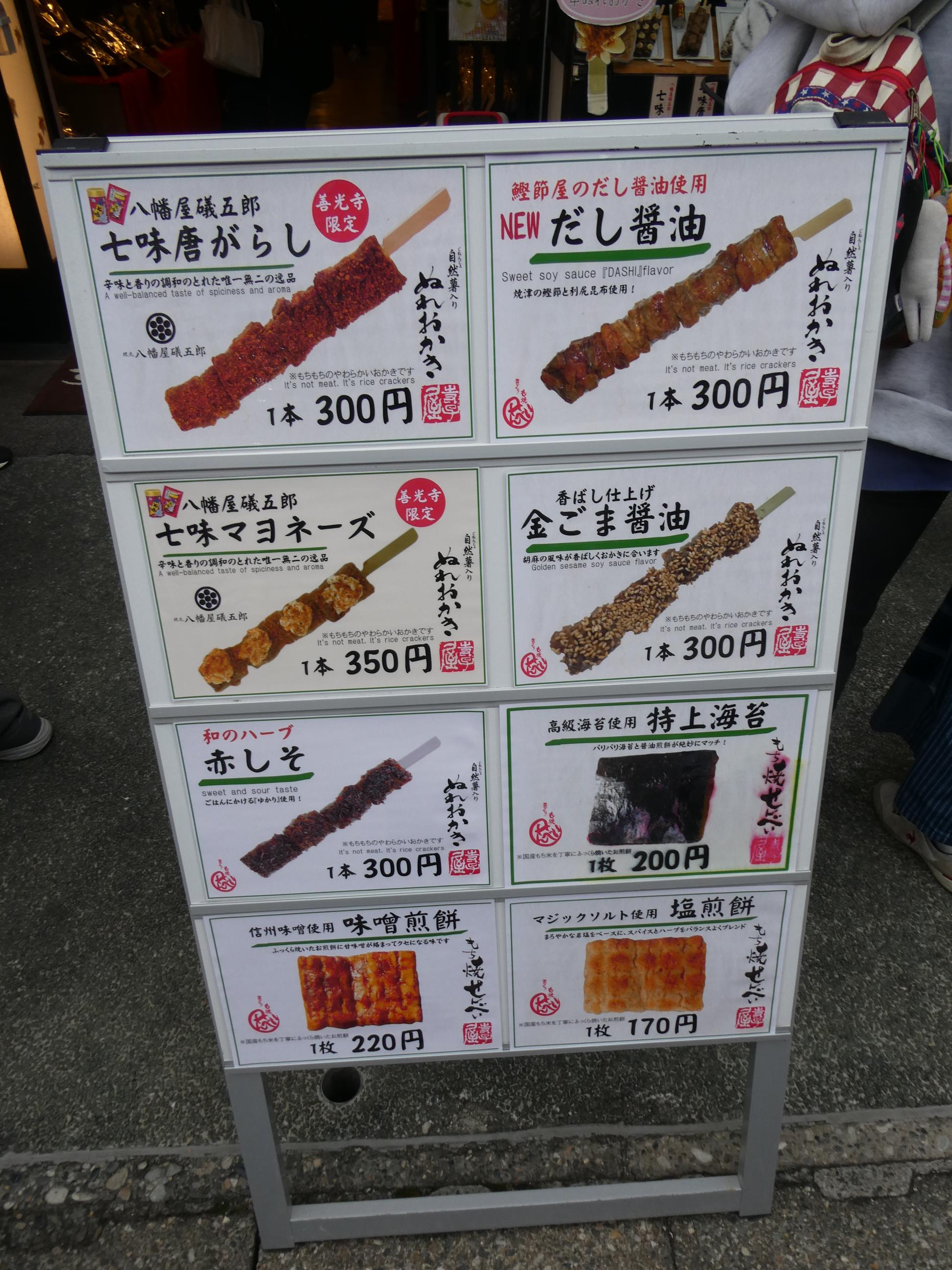
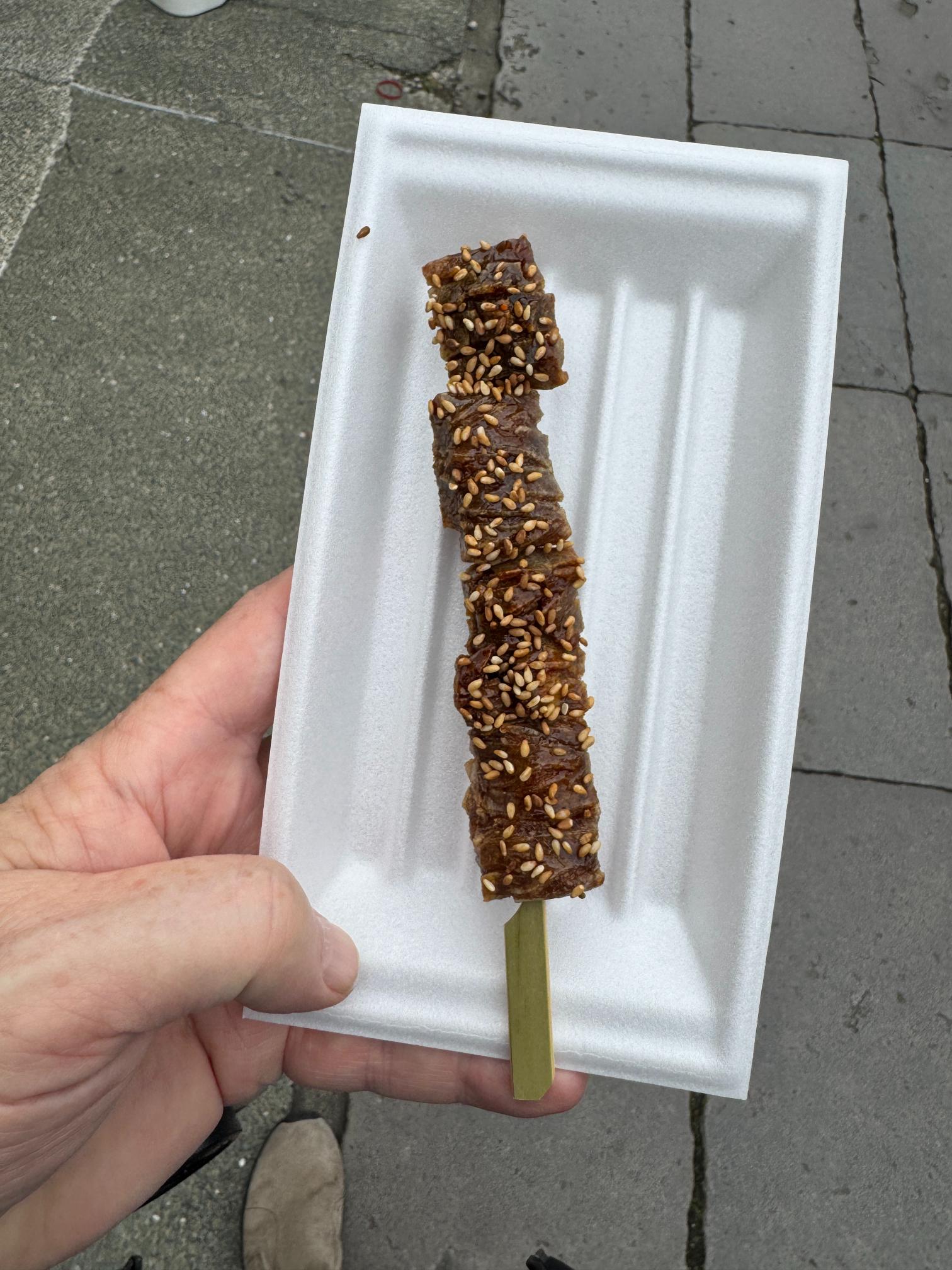
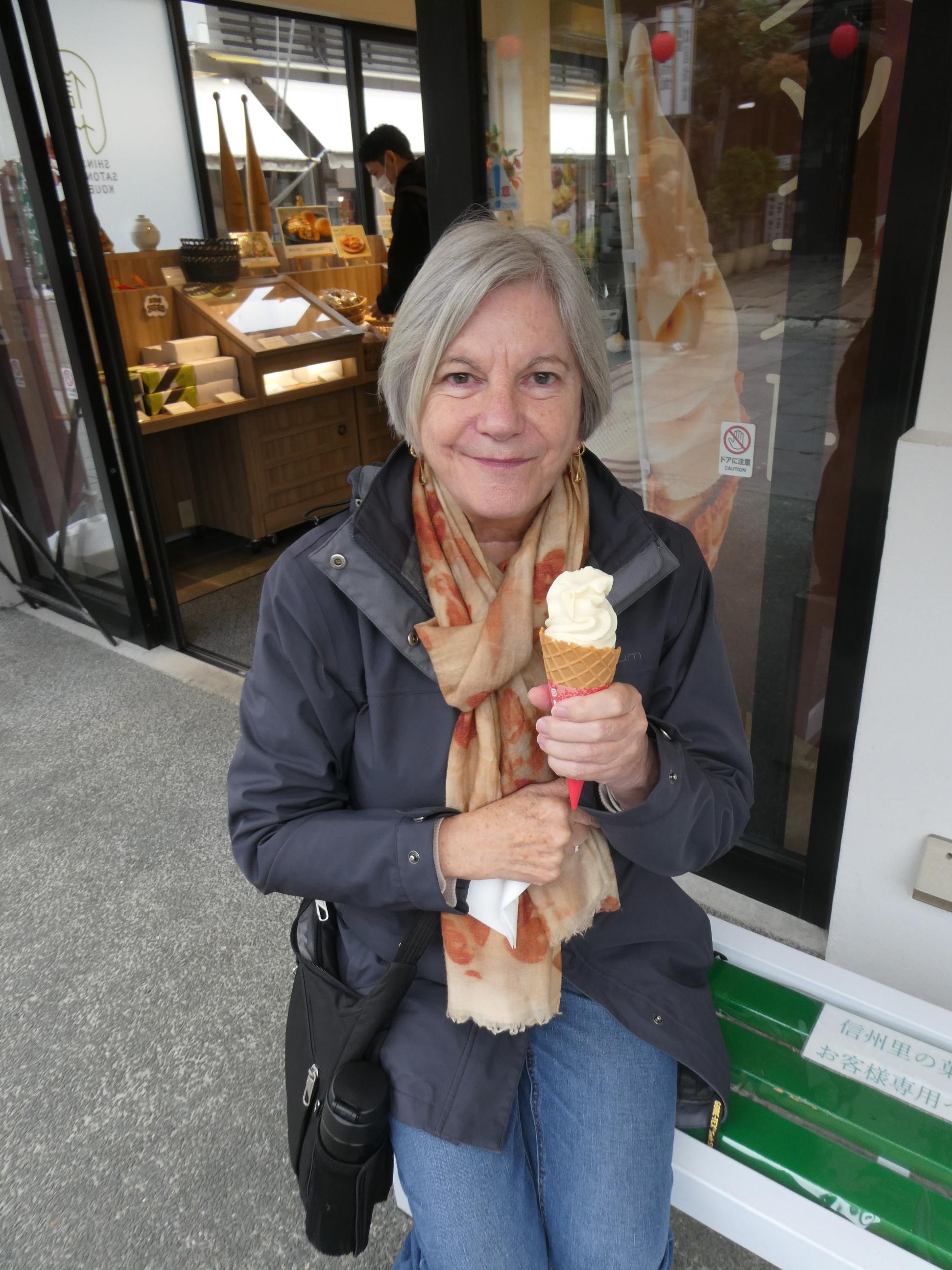
After leaving the temple, we headed back to the shopping strip. We figured we’d better find something to eat before meeting up with our driver. The street food look delicious at most stalls, though I wasn’t always sure what it contained. I found something I liked the look of called oyaki, which are essentially Japanese stuffed dumplings made from dough and wrapped around a range of different fillings. I got in early and ate one stuffed with chicken and green onion before any of my companions ate (I was hungry and couldn’t wait for them) and it tasted good, if a little doughy. A few minutes later we all chose an oyaki we liked the look of and that became our lunch. This time I tried a beef one – the chicken was better. I also saw skewers that looked quite tasty, although when I got up close and read the poster, I discovered they were actually skewers of rice, rather than meat. I tried a golden sesame skewer and loved it. Heading back to our vehicle, we bought chestnut ice cream cones. They were absolutely delicious, although I tried to finish mine quickly before I reached the car and gave myself the dreaded ‘brain freeze’. I should have known better.

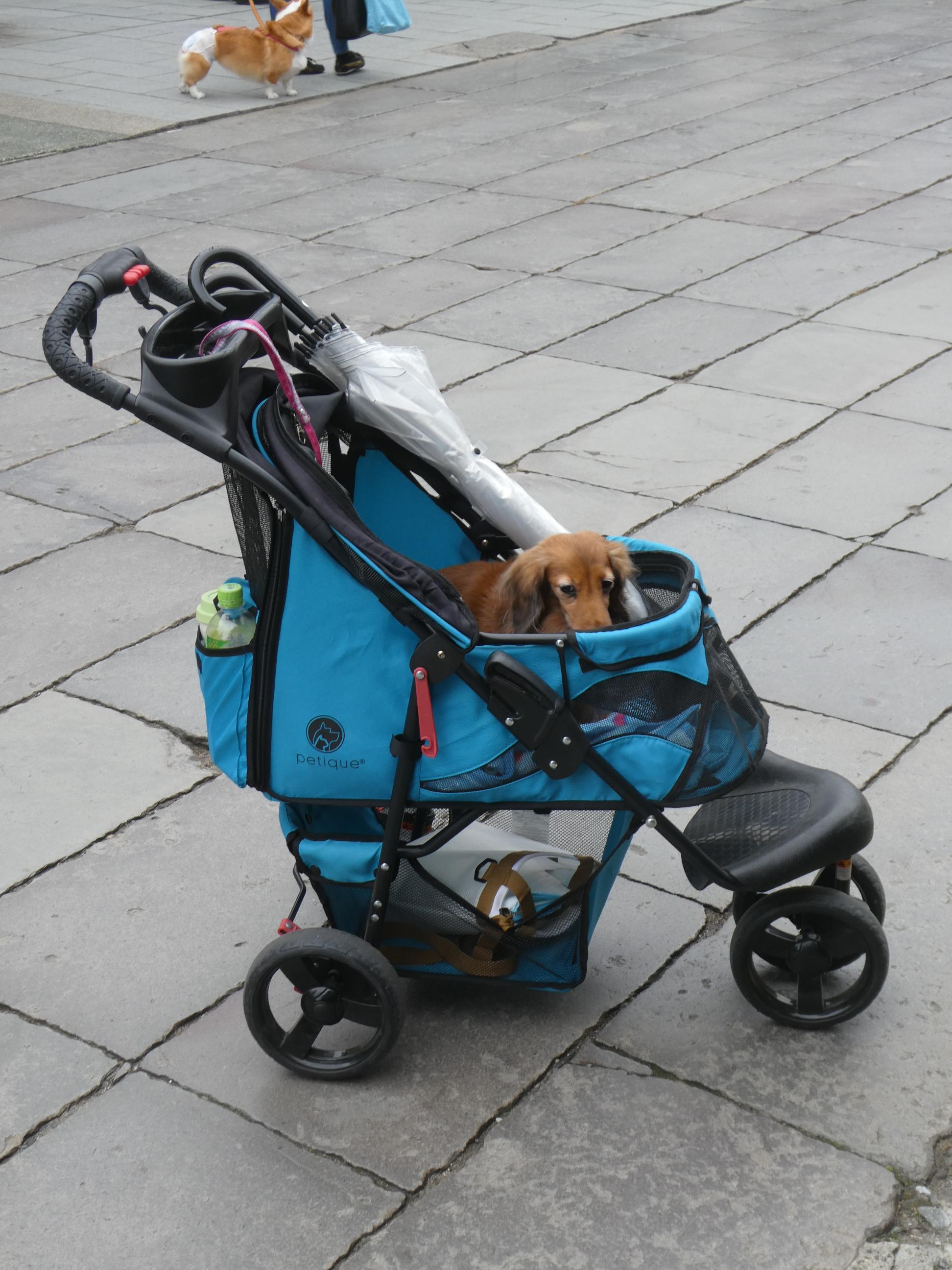
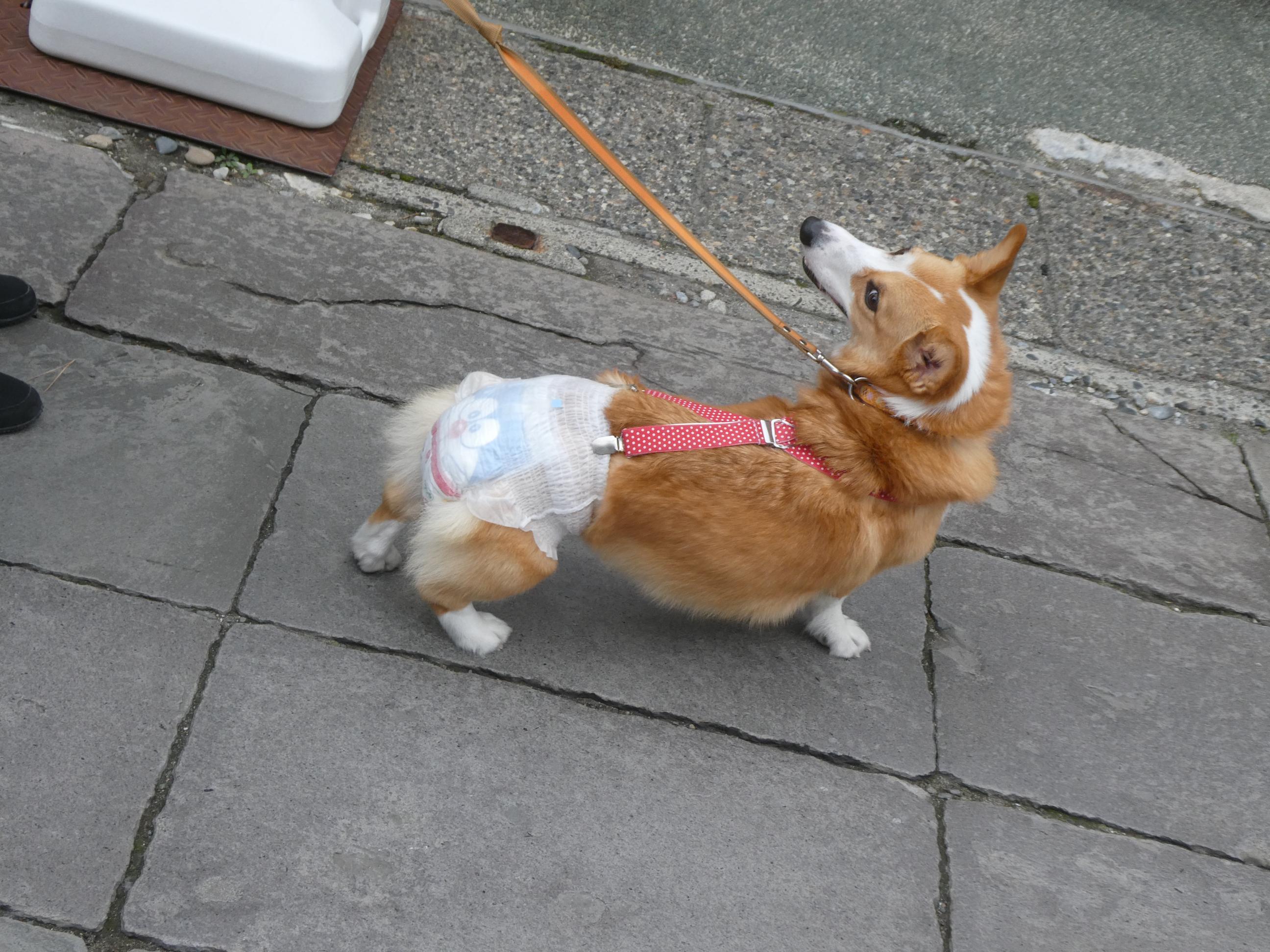
There were more dogs in prams and strollers here. I’ve seen a few now and I’m getting used to it, although I think dogs look brilliant when they’re on all fours. I fail to see what the attraction of a dog in a pram is. Anyhow, it all got a little weirder when we spotted a little corgi with a nappy. No wonder I haven’t seen any dog droppings fouling the footpaths over here. My friend, Helena, was over here a couple of weeks ago and saw one in a skirt and sunglasses!
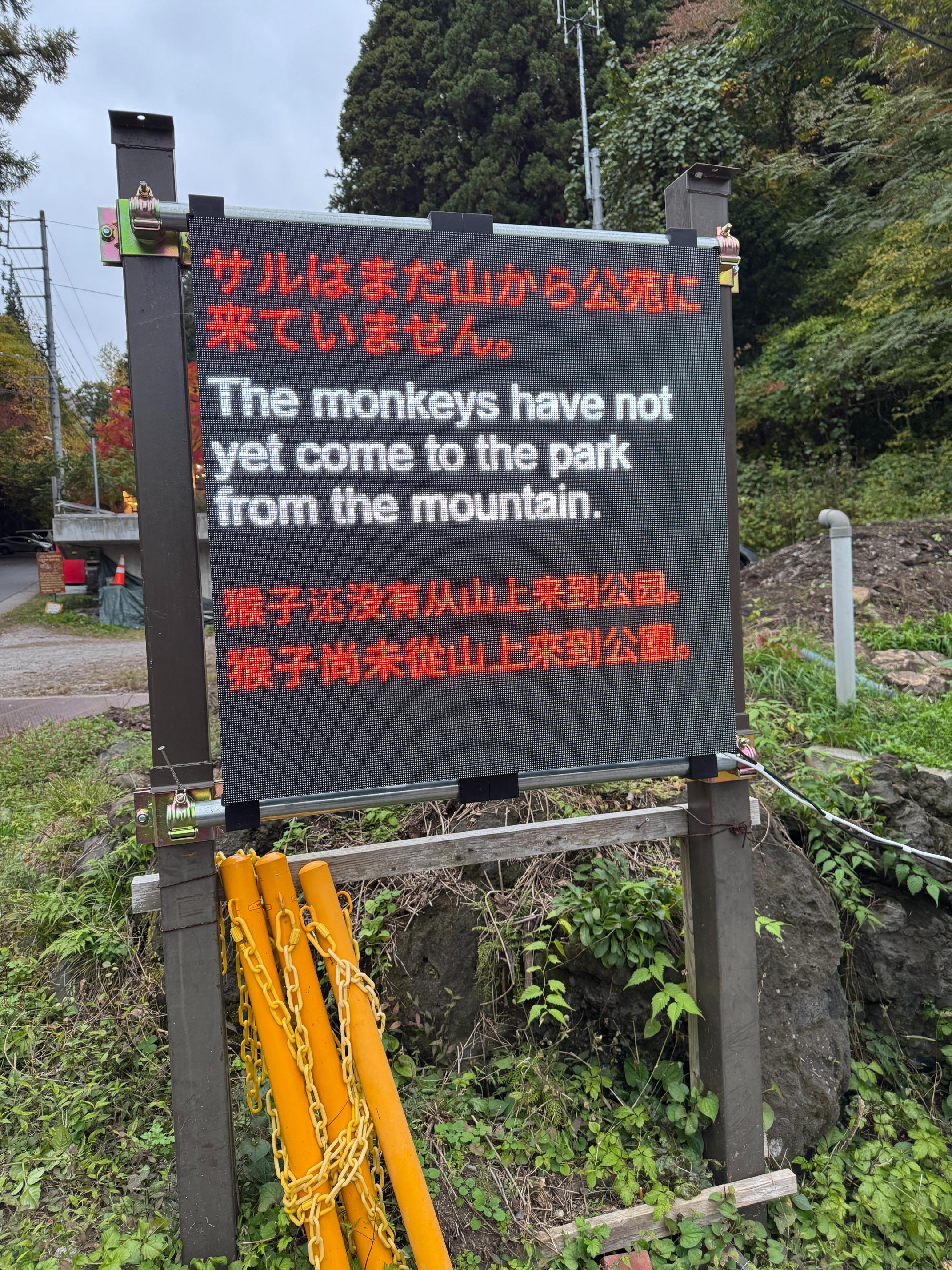
The real reason we asked our travel agent to add in a Nagano visit was to see the snow monkeys it’s famous for. My brother Rod and his wife Cornelia had visited Japan last year and came up to Nagano to visit the snow monkey park, where they got some amazing photos. Rod told me at the time that they’d heard that the monkeys didn’t always venture out of the forest to visit the hot springs where the tourists gather, hoping to see them. When I asked our travel guy, he laughingly suggested that the staff there had ways of making sure the monkeys came down to the springs each day by going into the forest and making lots of noise to drive them down to the peace and quiet of the thermal pool. He was pretty sure we’d see them. Anyhow, we were full of hope when we set off from Nagano for the one hour drive higher up into the mountains to the monkey park. We passed many apple orchards, where the branches of the trees were heavily laden with fruit, and also what I think were grape vines protected under shade cloth, presumably from the frosts.
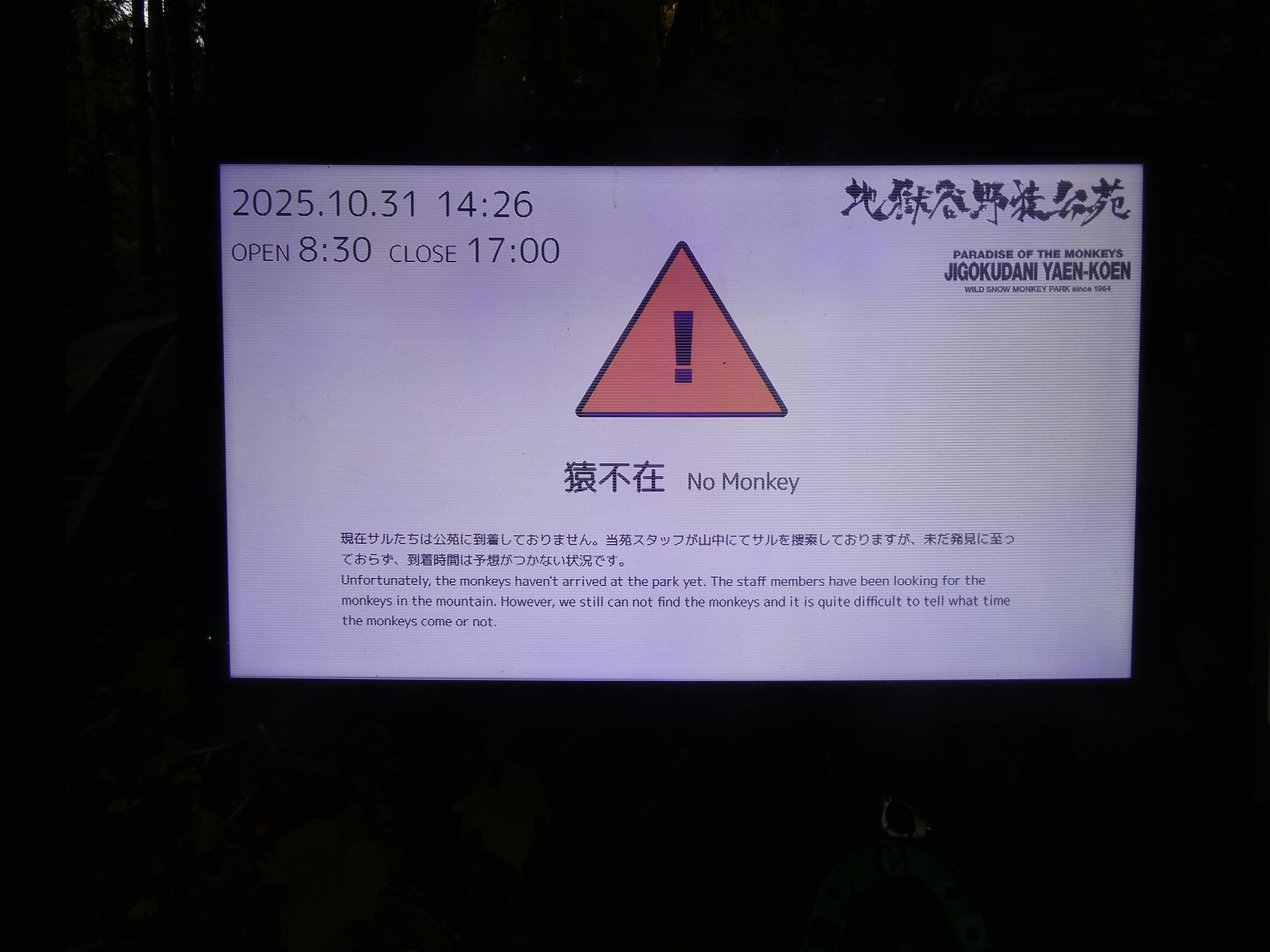
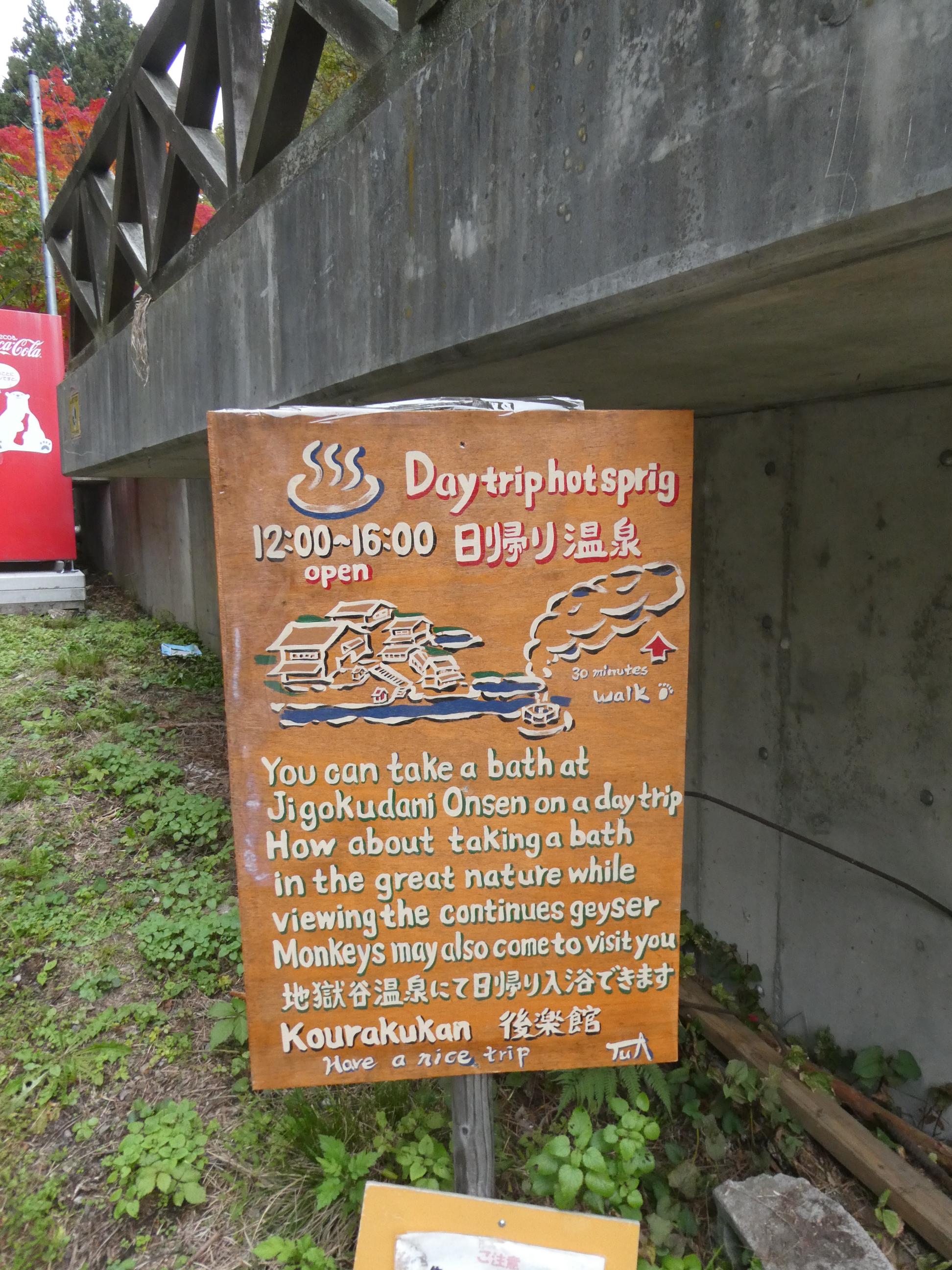
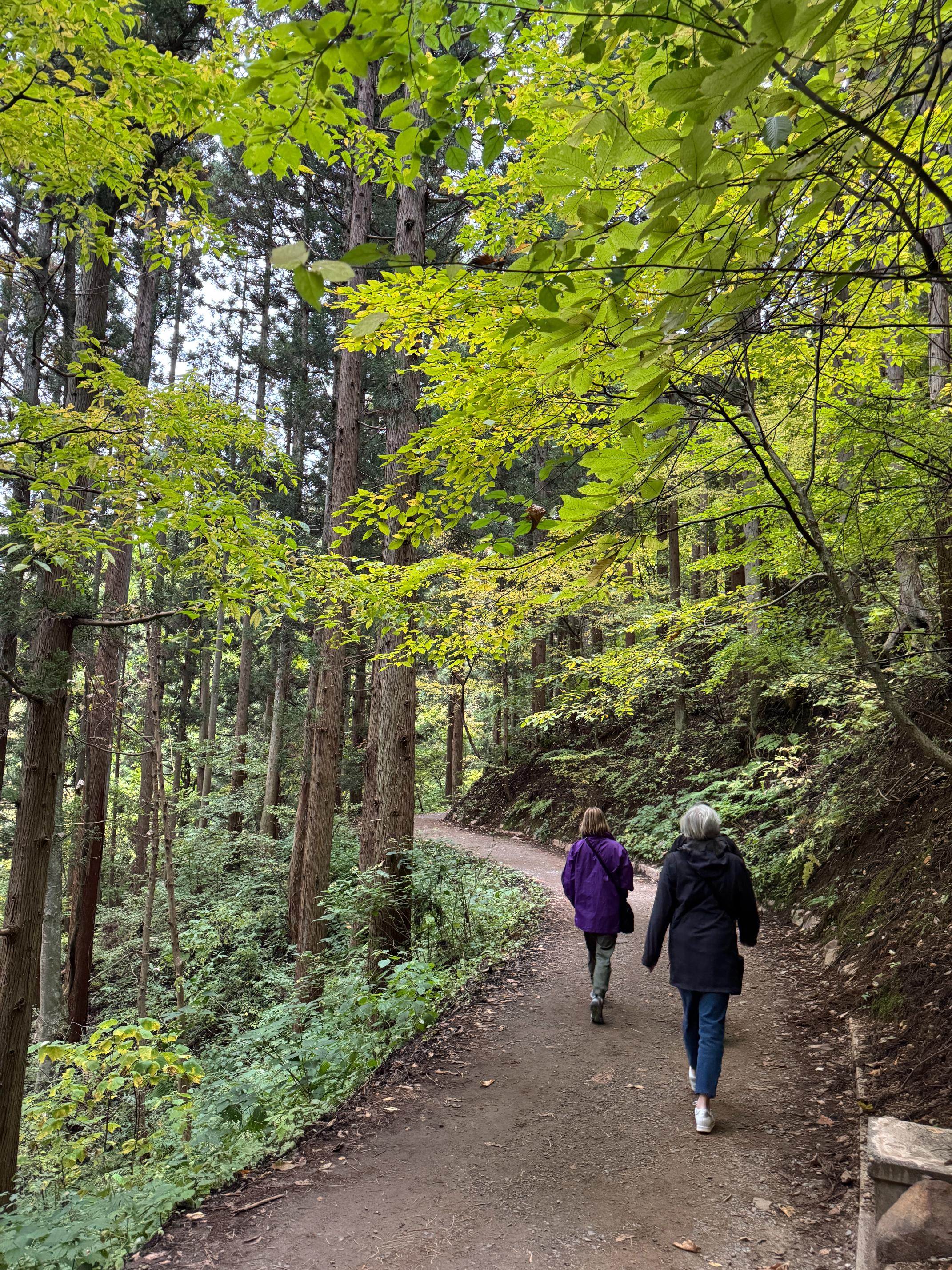
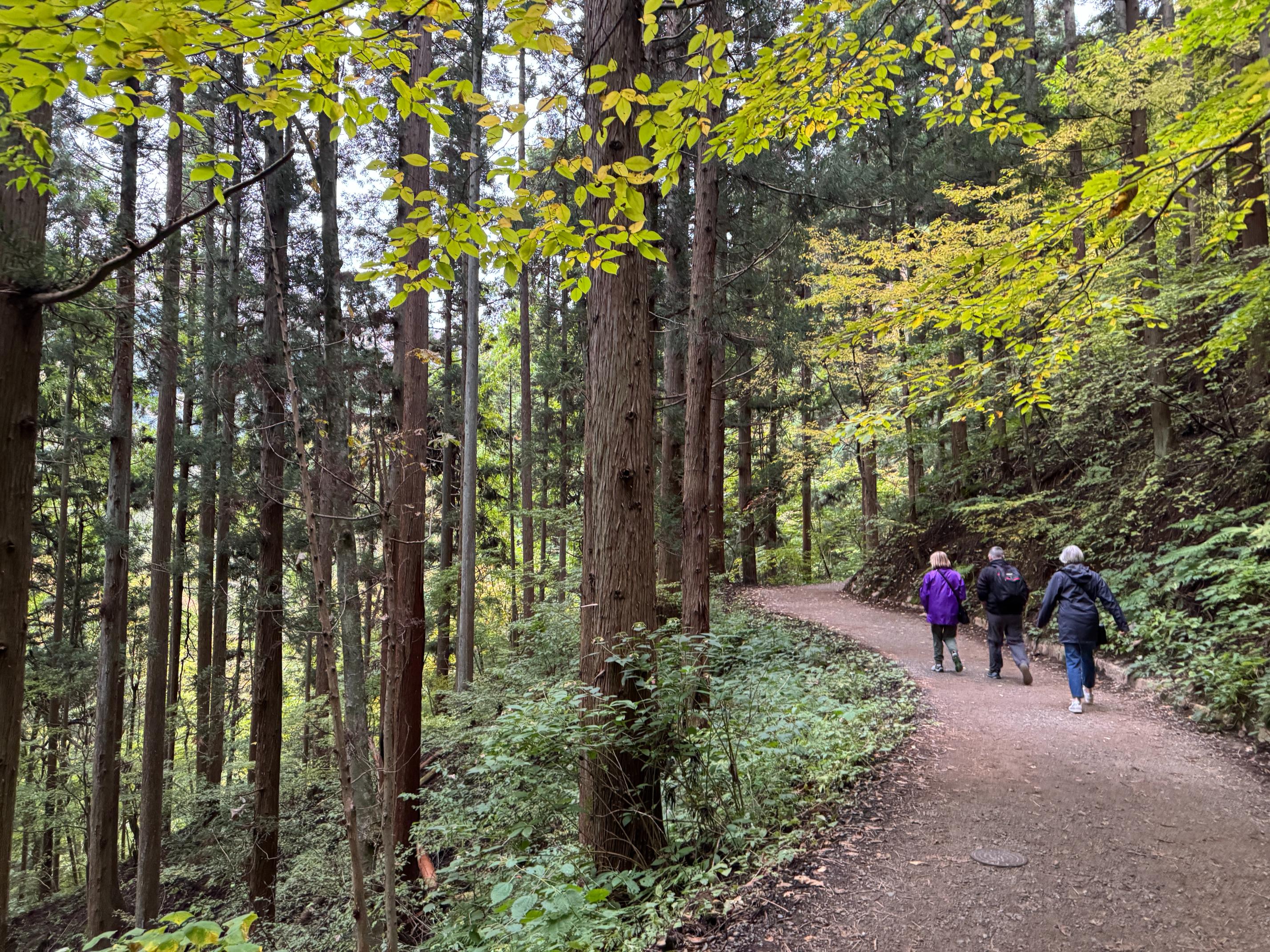
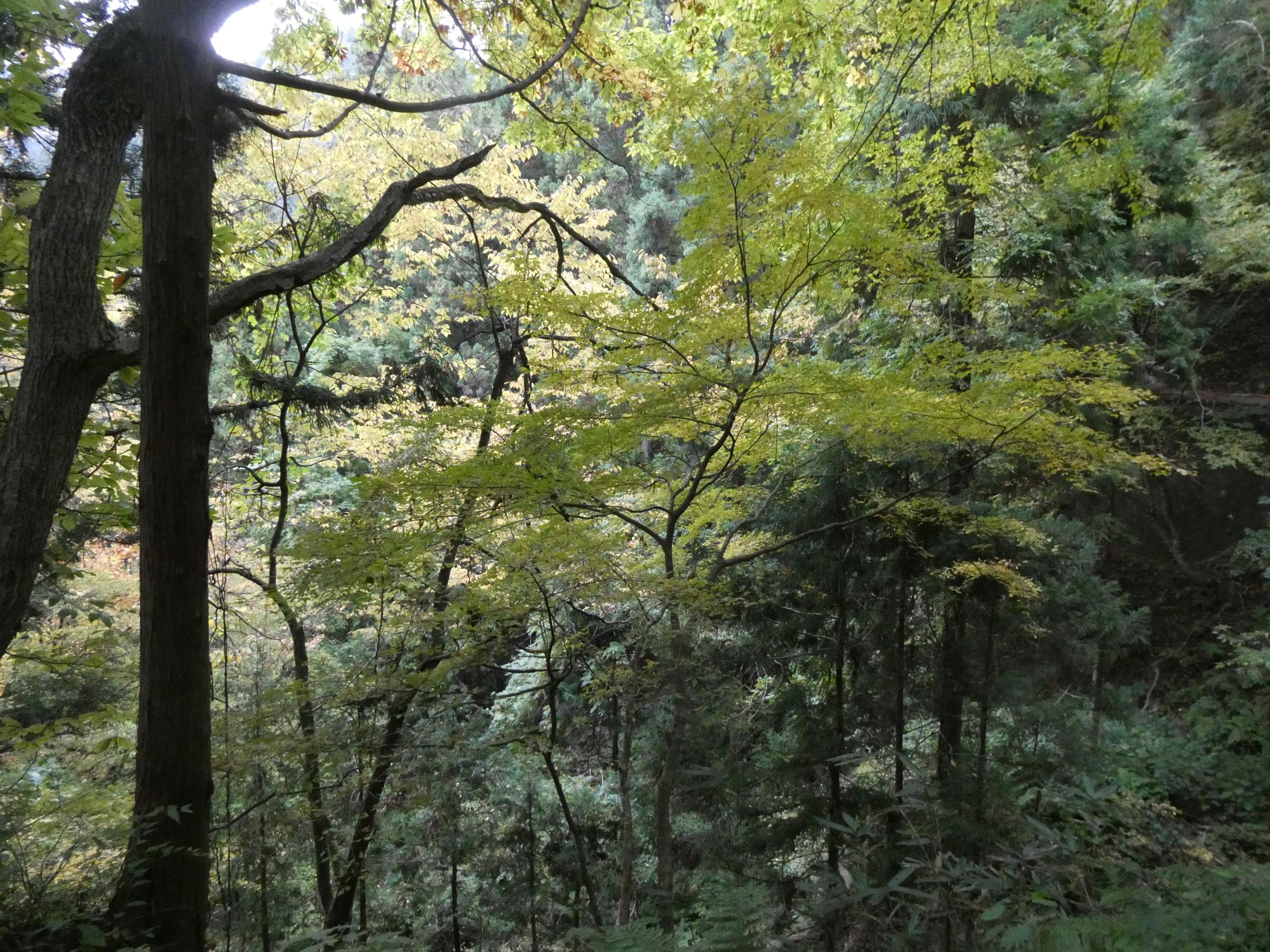
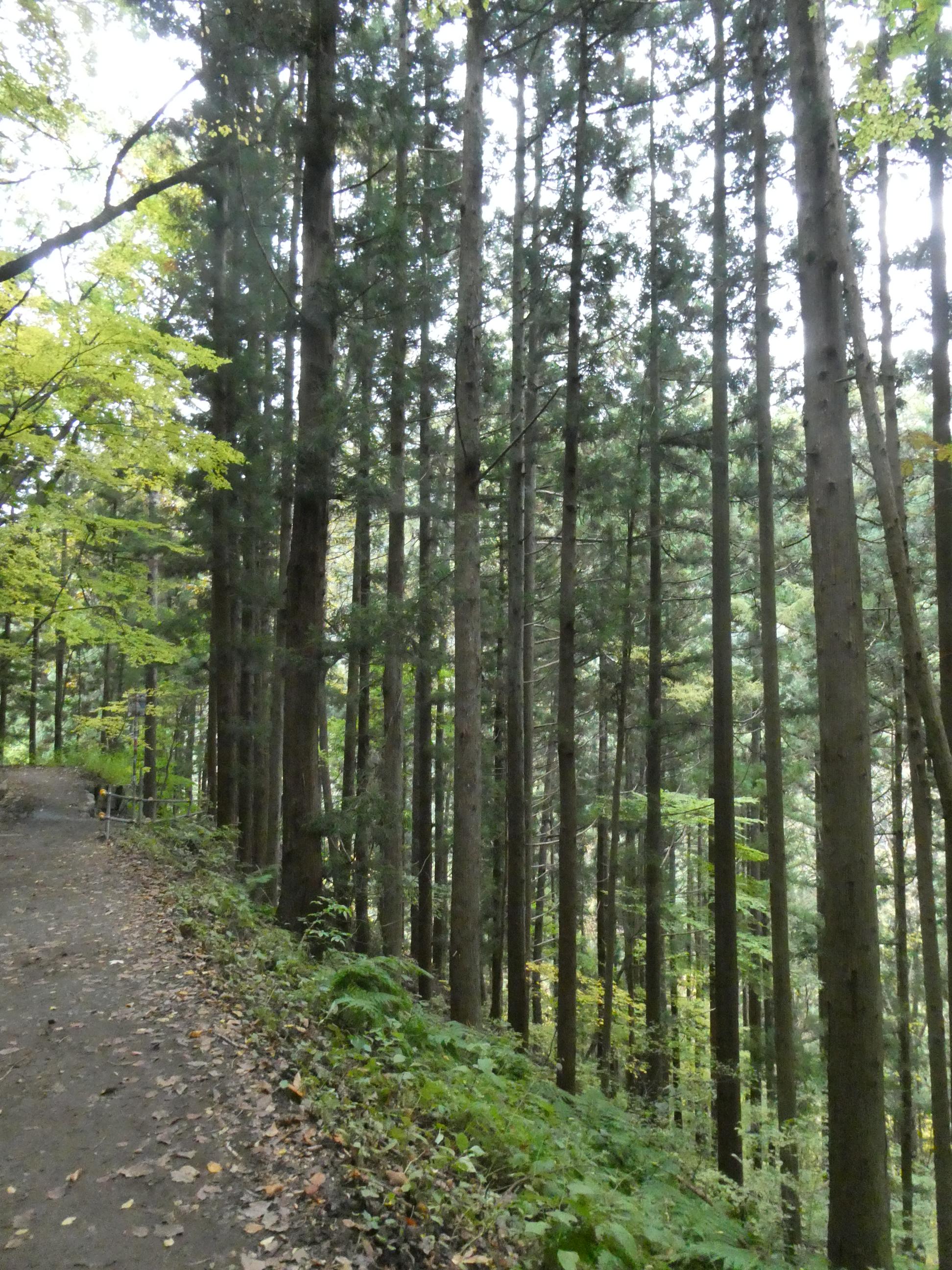
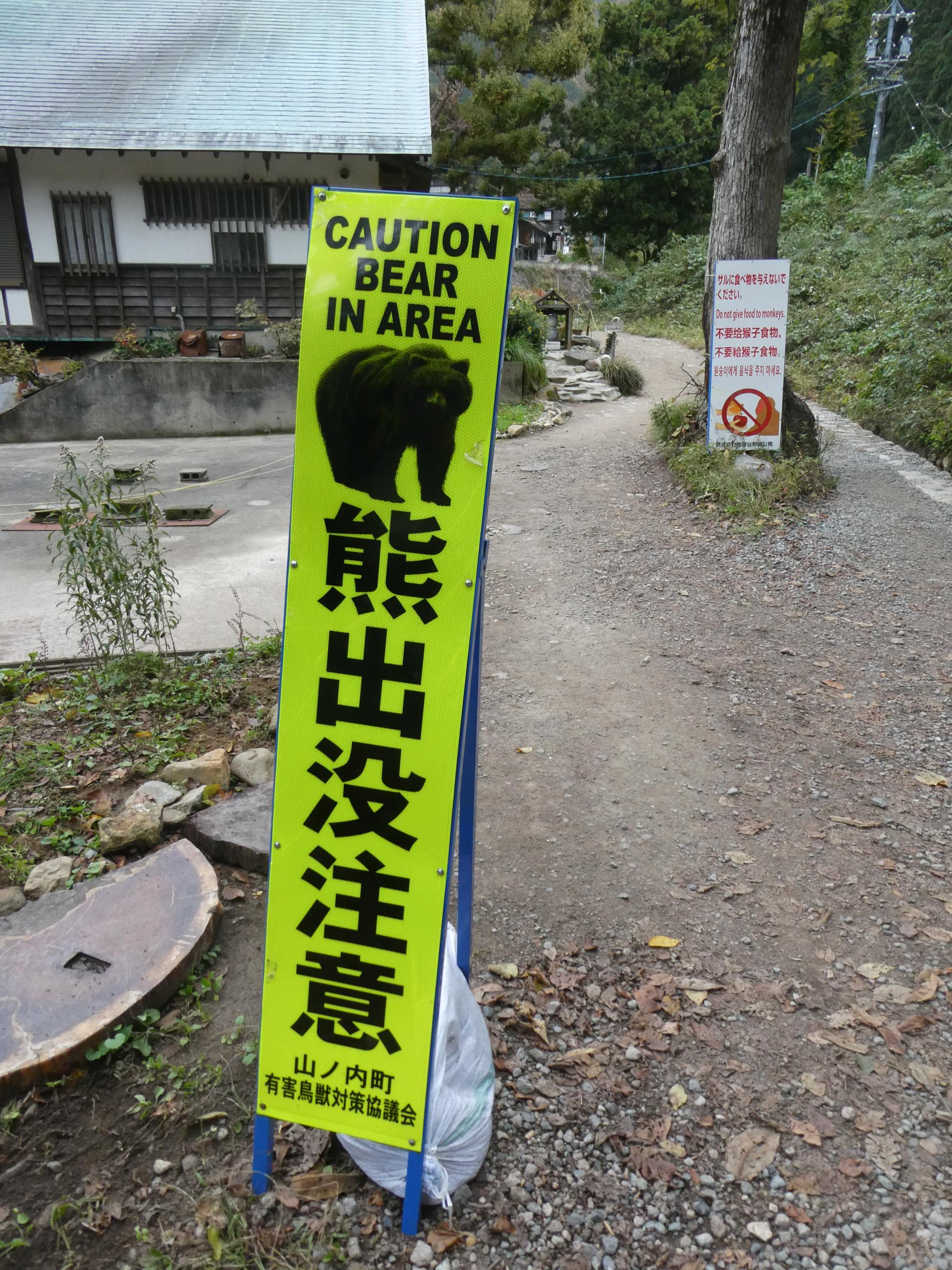
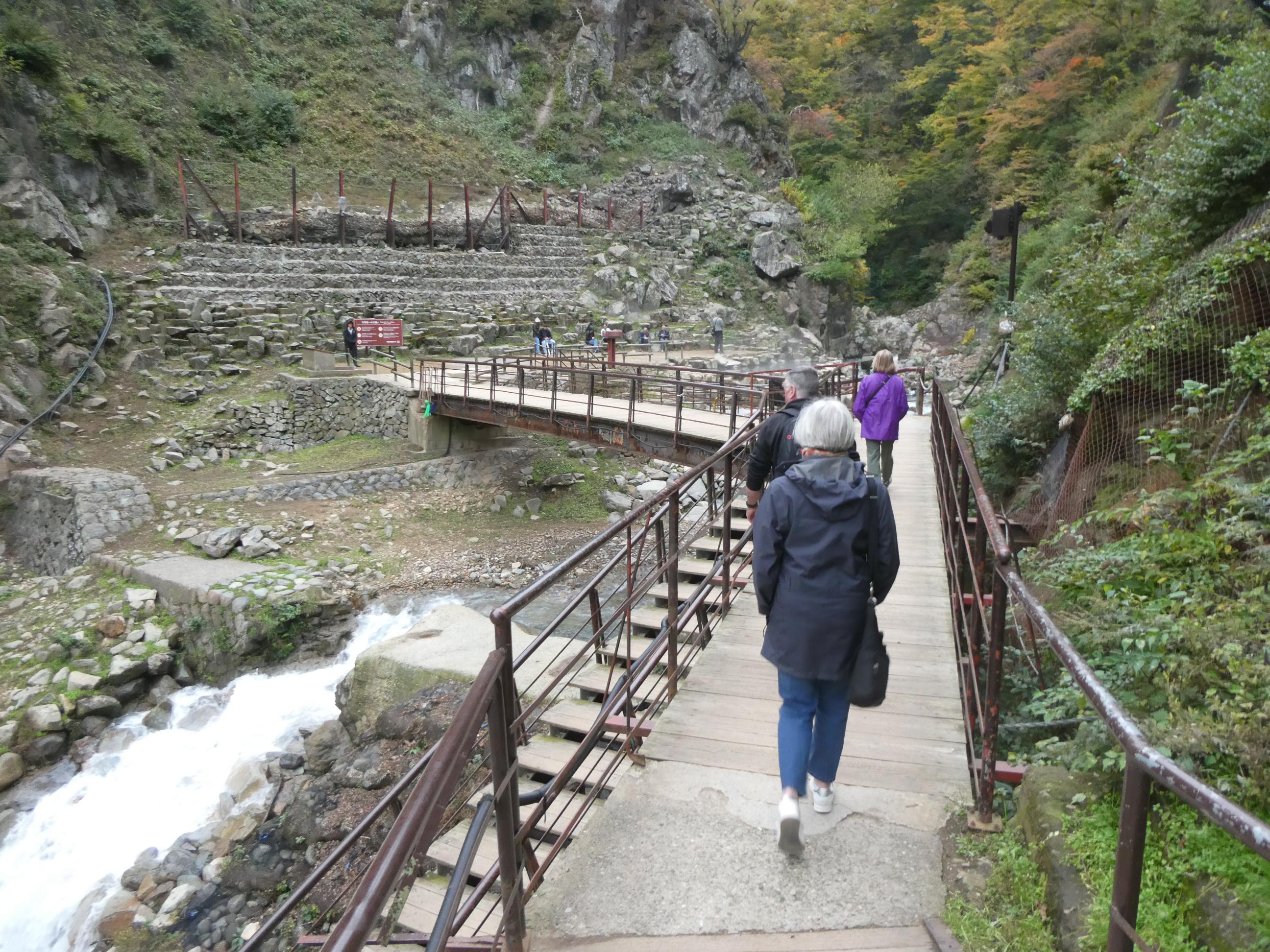
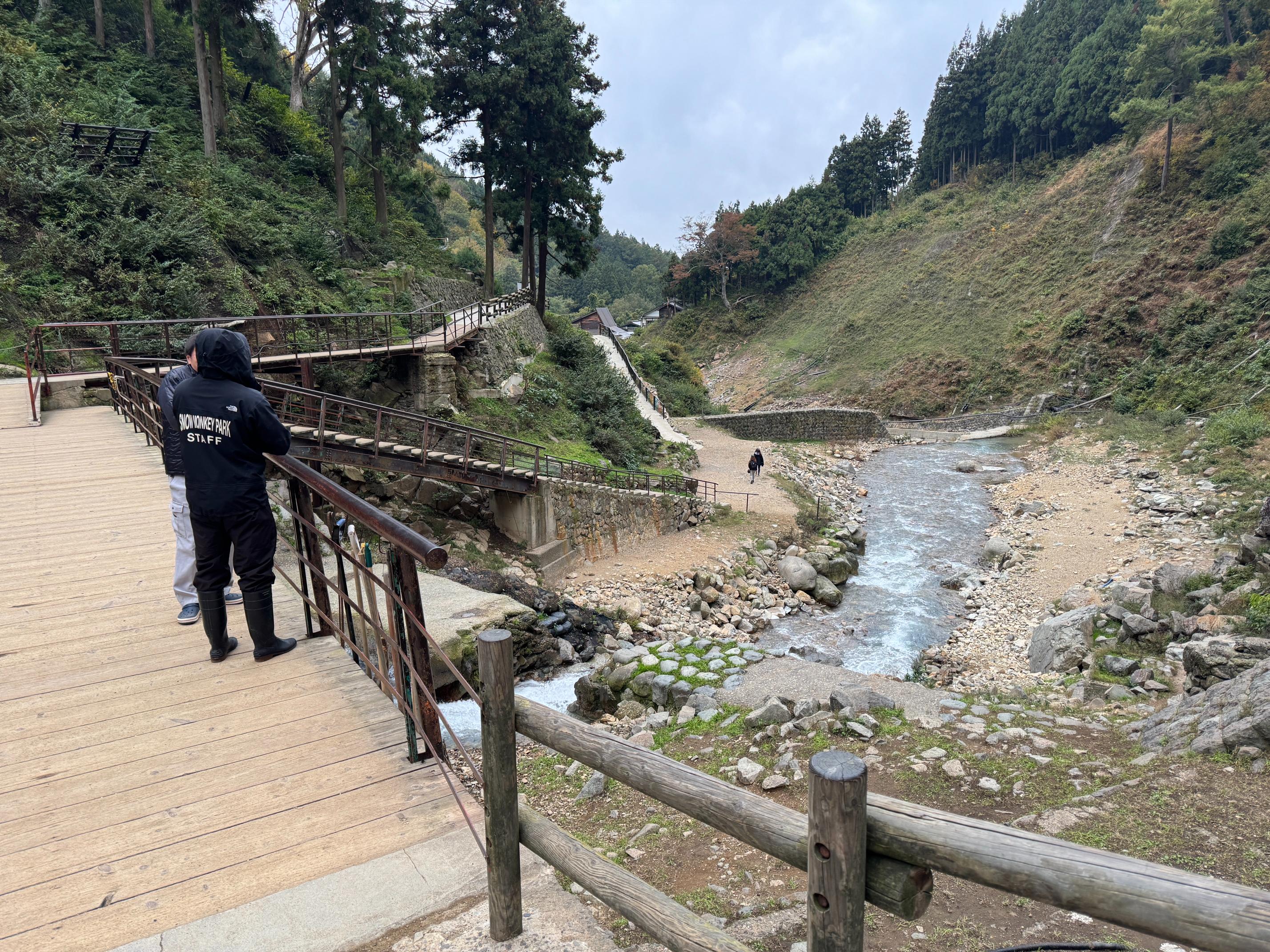
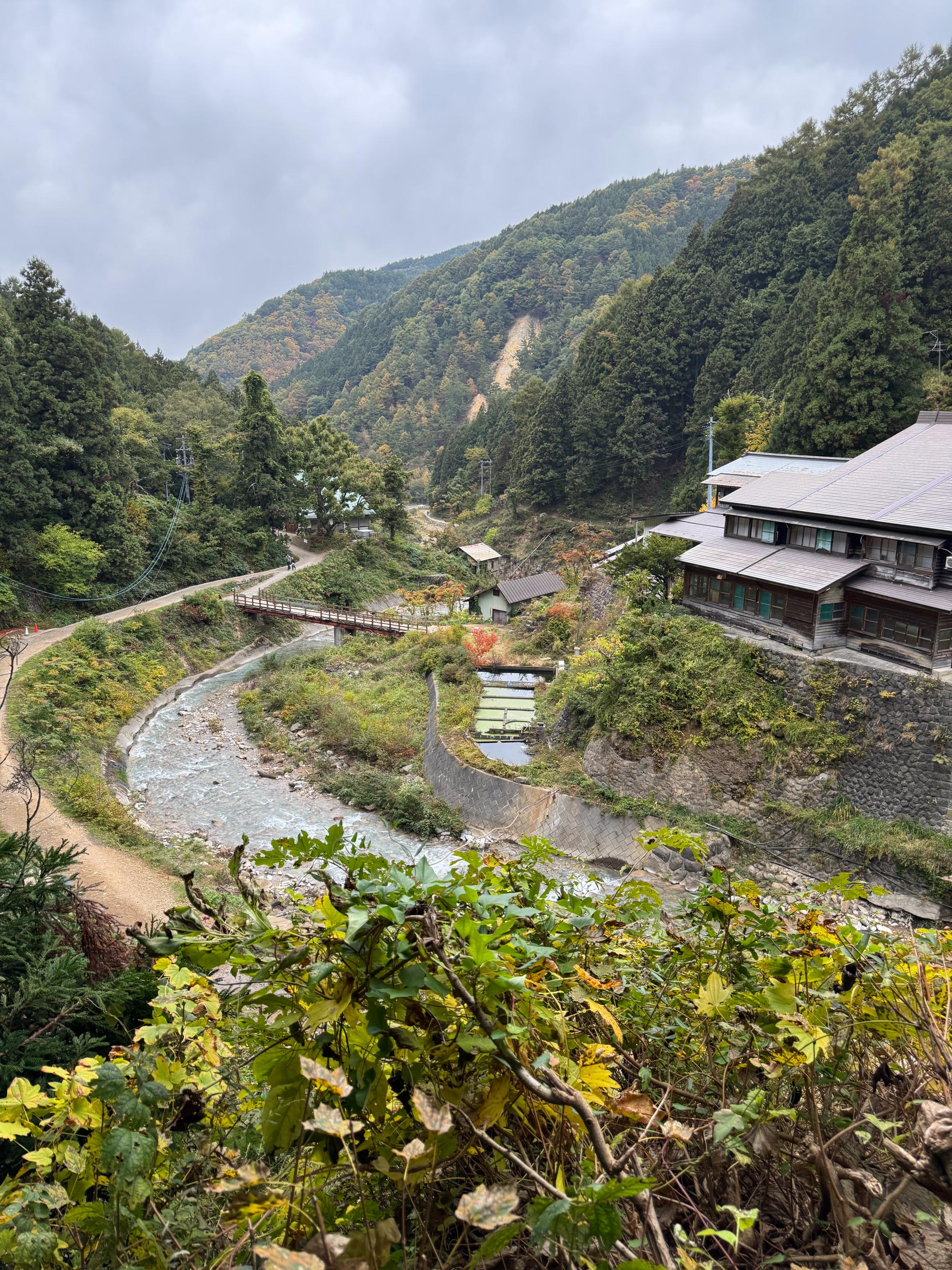
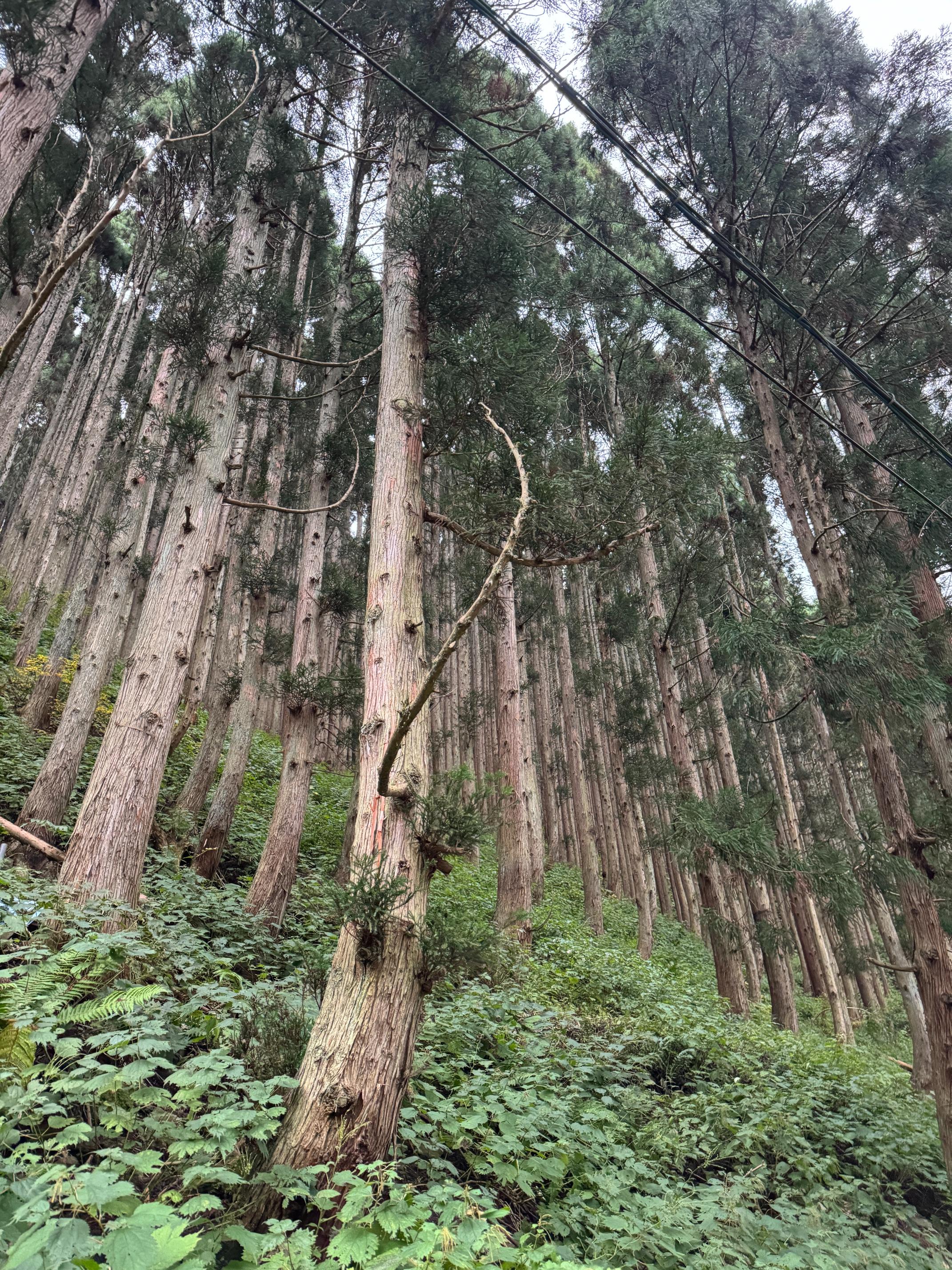
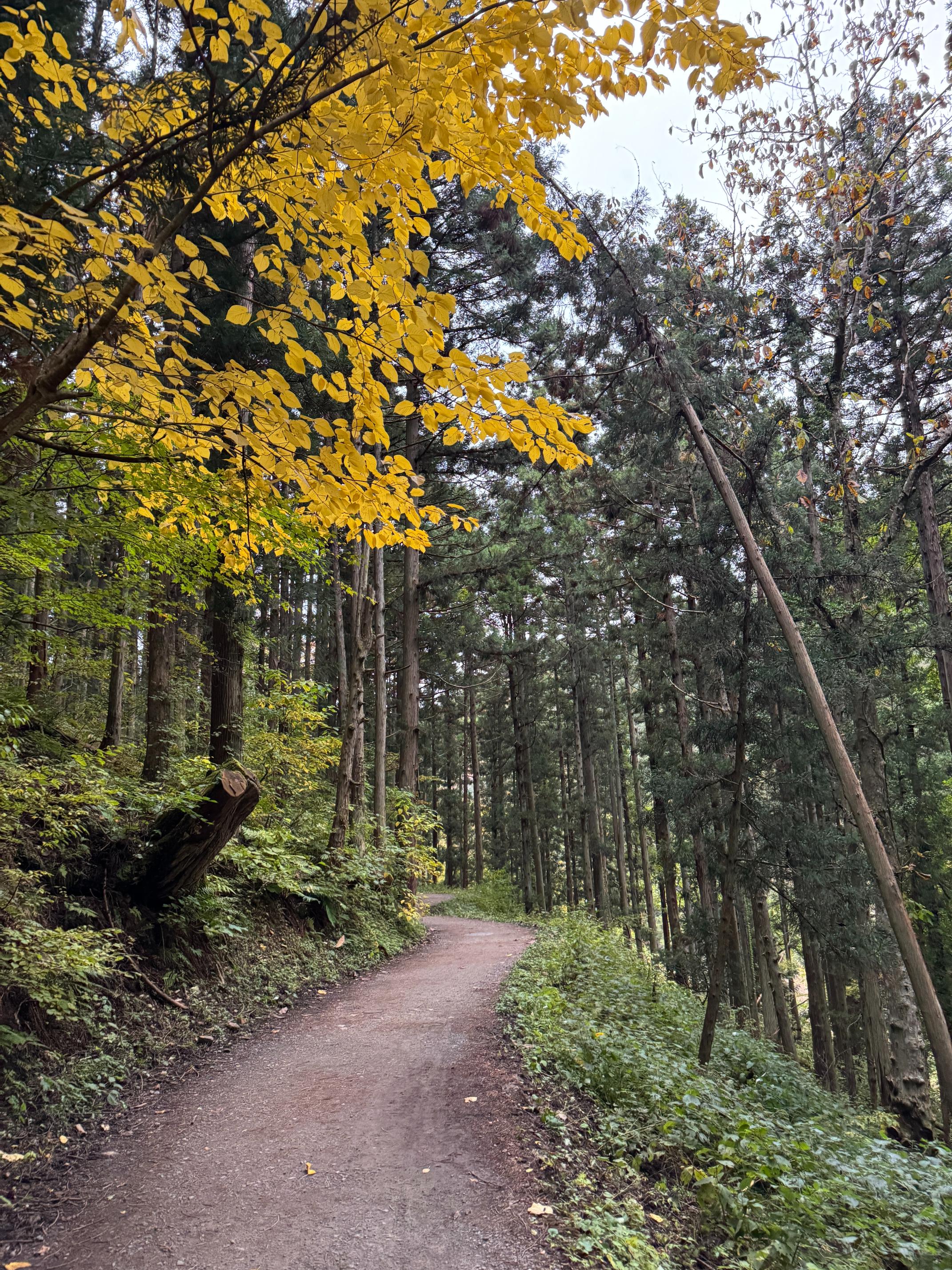
Upon arrival at the car park below the Jigokudani Snow Monkey Park we were greeted with bad news. Several screens informed us that no monkeys had yet come down to the park from the mountain today. There was, however, just a little ray of hope because we were also told that people were out trying to find them. It was a 30-minute, 2 km walk, partially uphill, from the car park to the monkey park, where an onsen, or thermal bath, was also situated. The walk took us through a beautiful forest, full of tall timber. I really enjoyed the walk. We passed a few groups heading the other way, back to the car park. None of them were English speakers, so we couldn’t understand what they were saying, but their body language suggested that the visit to the monkey park had not produced a positive outcome for them. Approaching the onsen, we passed a sign warning us that bears were in the vicinity. ‘Ah,’ I thought, ‘if there are no snow monkeys, maybe I’ll see a bear instead.’ But that was just a fleeting thought and I quickly pushed it out of my mind.
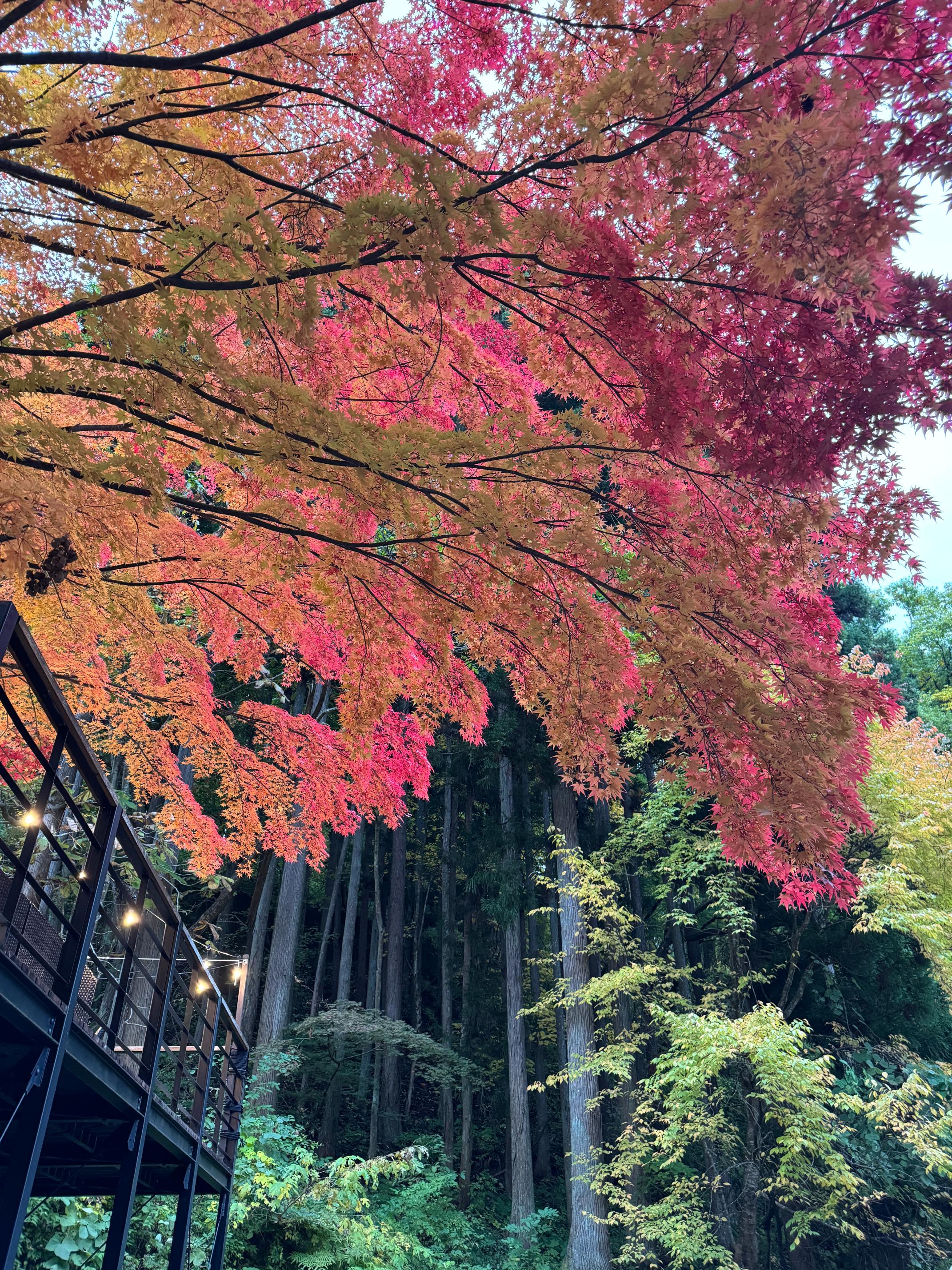
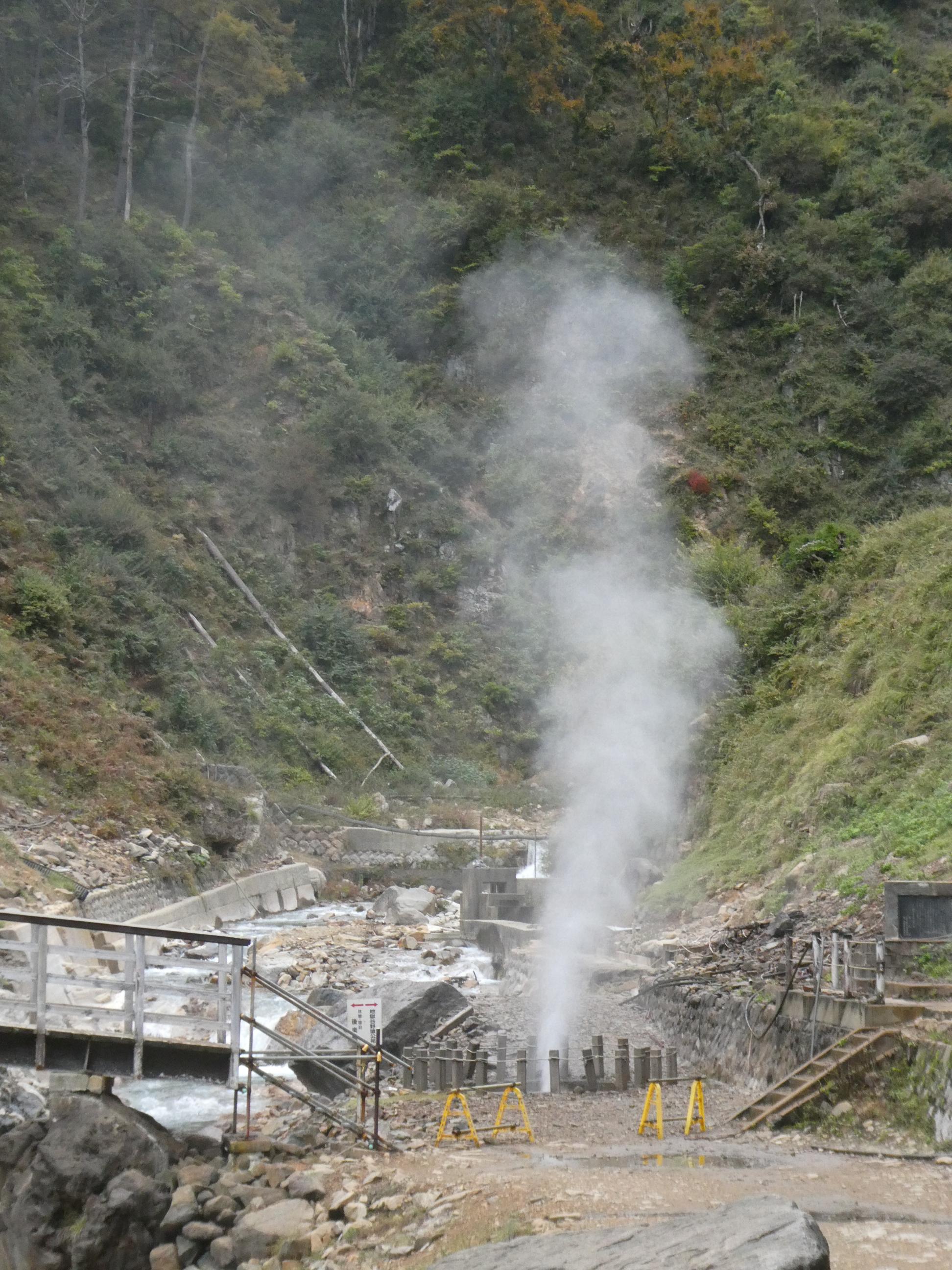
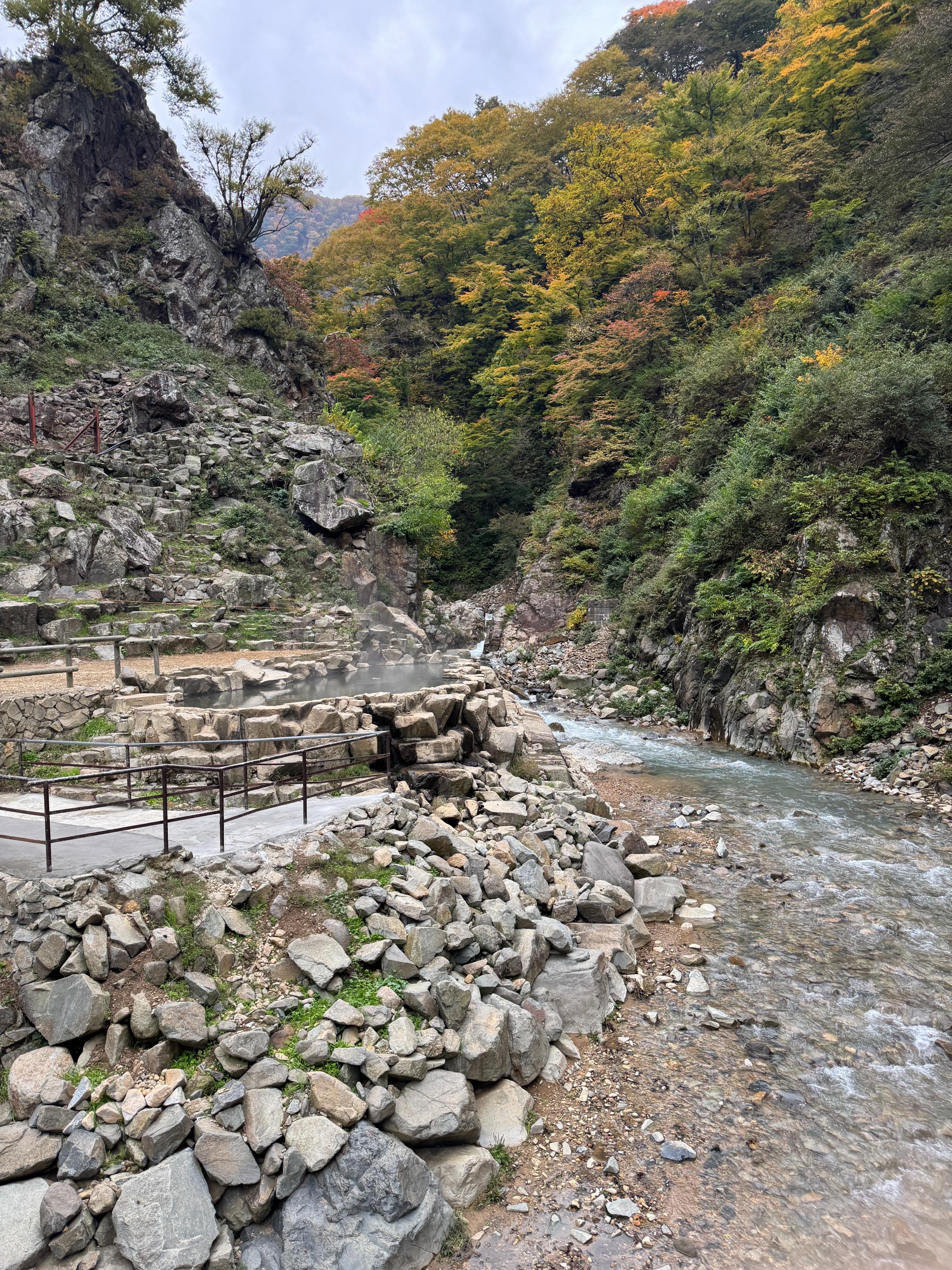
Passing the onsen, I saw my first geyser, though I didn’t go up close as the sulphur smell was strong. We wandered on to the thermal pool and viewing area where they monkeys can sometimes be seen at close range. It was in a beautiful setting. A narrow, rocky stream flowed between two steep hillsides resplendent with autumn tones. Beside the viewing area was a shallow thermal pool, steam rising from its surface. The stench of sulphur was quite strong. As I said, the setting was beautiful … but it would have been even better if there were monkeys in it. The monkeys, by the way, are actually Japanese macaques, and they’re fairly unique as most monkeys live in tropical or subtropical climates, whereas these live in colder regions, including those where it snows in winter. We waited around for about twenty minutes. It was pretty clear we wouldn’t see any monkeys today, so we crossed back over the bridge and headed for the car park. At the information centre, we spoke to a lady behind the counter who told us that the monkeys had only visited the pool on nine days in October. She also said that they came only one time in October last year. Oh well, at least we tried. I grabbed an information pamphlet on my way out and discovered that, in autumn, the snow monkeys go foraging for food and searching for new mates, and both activities often lead them well away from the park. Although it was only 4 pm, it was quite dark walking back along the forest trail in the shadow of the gargantuan tree trunks all around us. Eventually we reached the car park without seeing a single snow monkey. We had reached a ‘ded end’ in our quest.






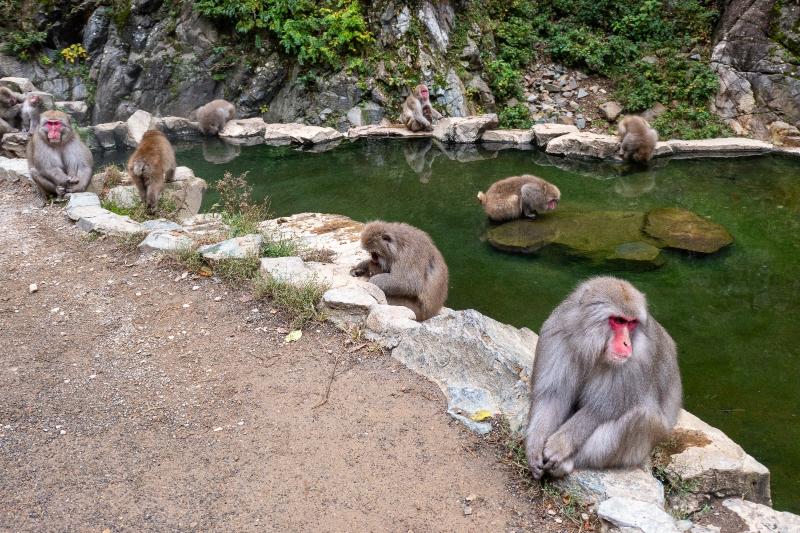
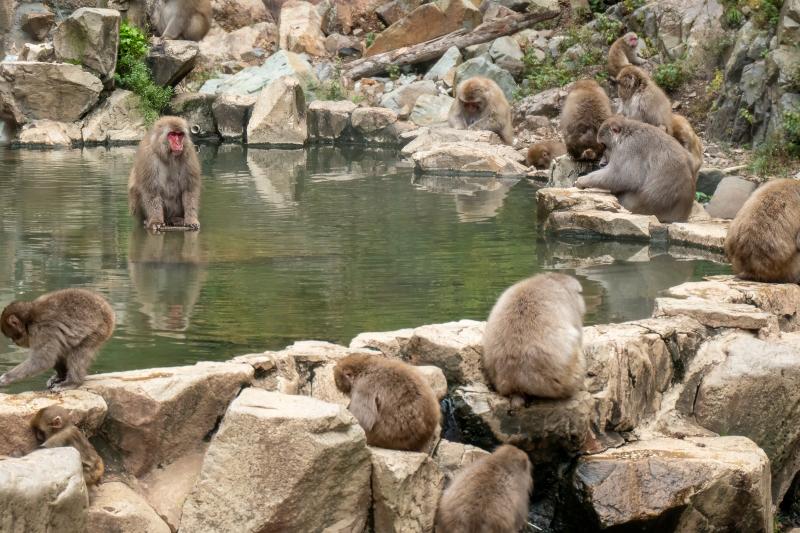
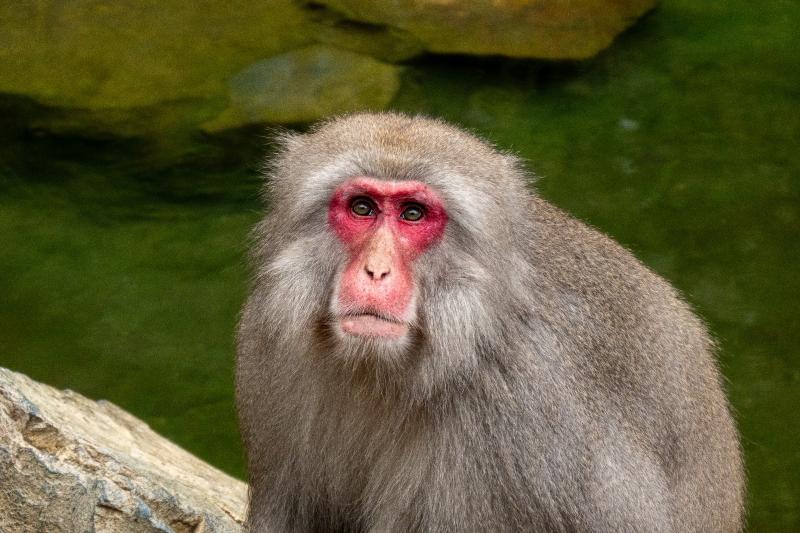
I’m sorry to disappoint you. I’m sure you’d like to see some snow monkeys after reading all that. Here you are then, courtesy of my brother Rod. These are some of the images he took on the day he watched lots of monkeys come down through the forest to the pool. I think they’re amazing.
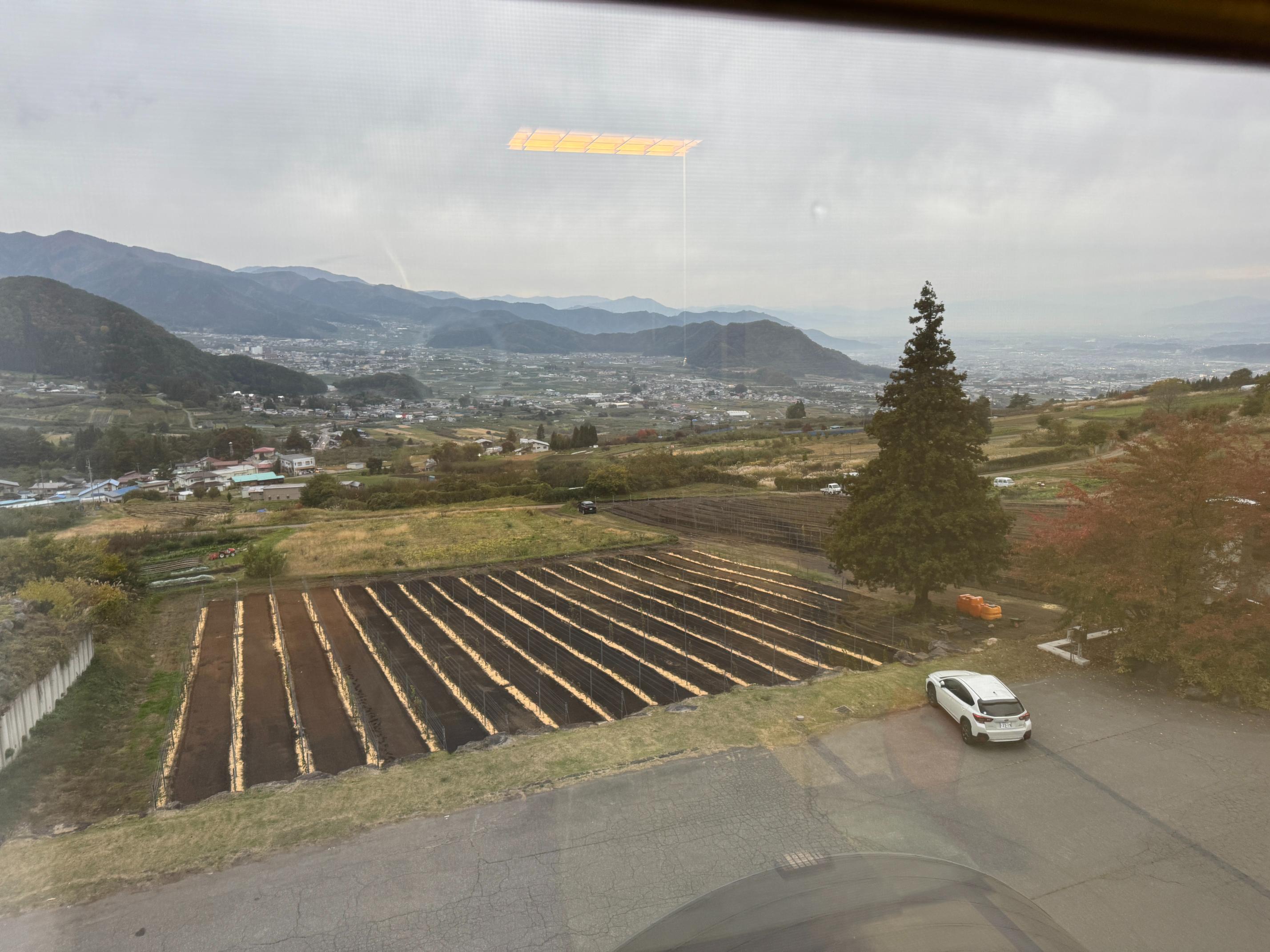
After leaving the monkey park, our driver brought us to our hotel, which is situated near the summit of Mt Kosha. You can see the view from our room in the first photo below. The hotel is a busy ski resort in the winter, but today the four of us are the only guests staying in the entire hotel. Our driver pulled up to drop us off at the door, then got out of the vehicle and raced up to the desk where he suddenly became the receptionist and handed us our room keys. We’re staying on the fourth floor, which seems strange, given that we’re the only ones here. It’s partially a Japanese style room, as you can see in the photo below, but thankfully the beds are off the floor and there is a desk for me to sit at and and write this blog post.

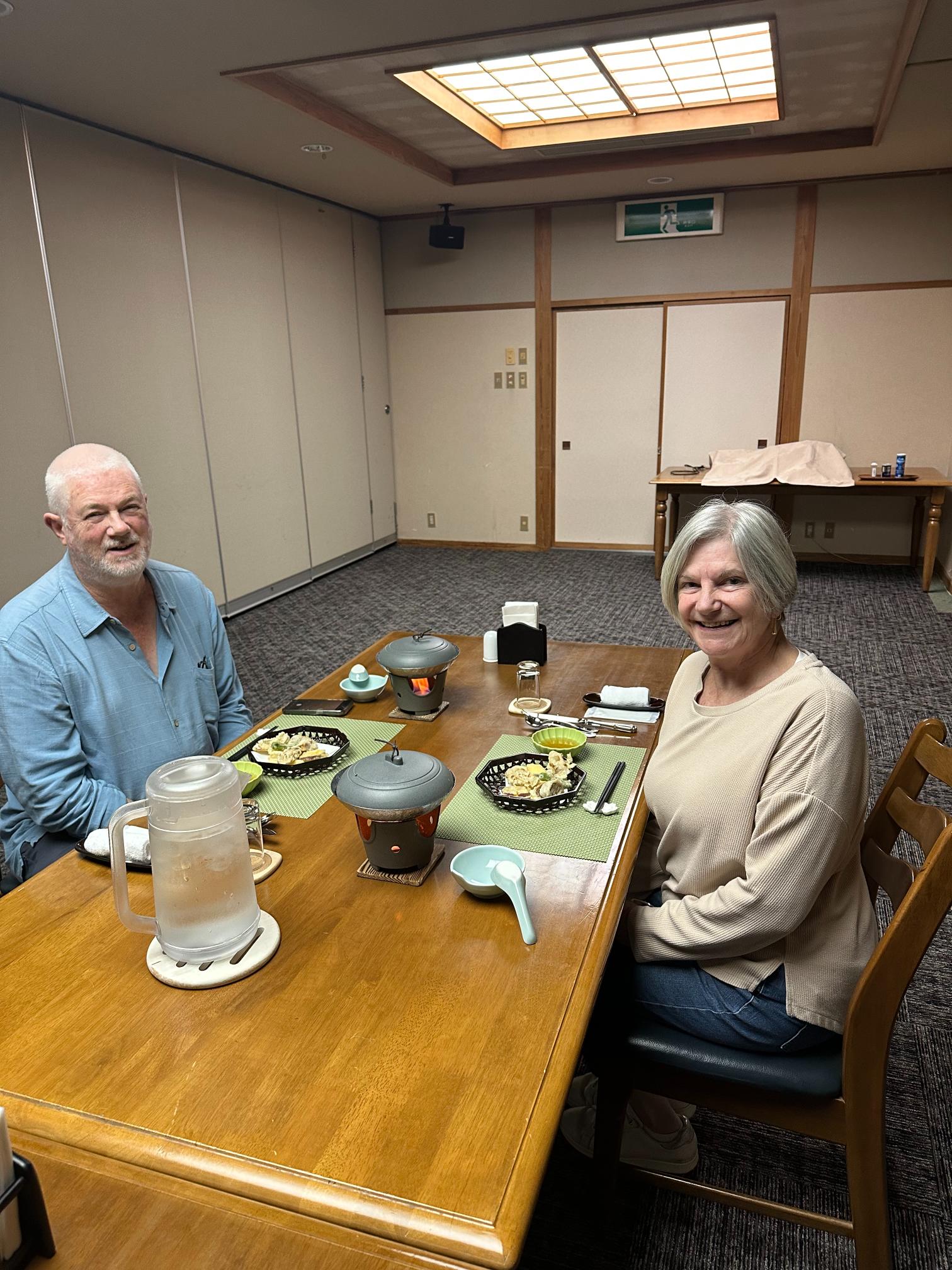
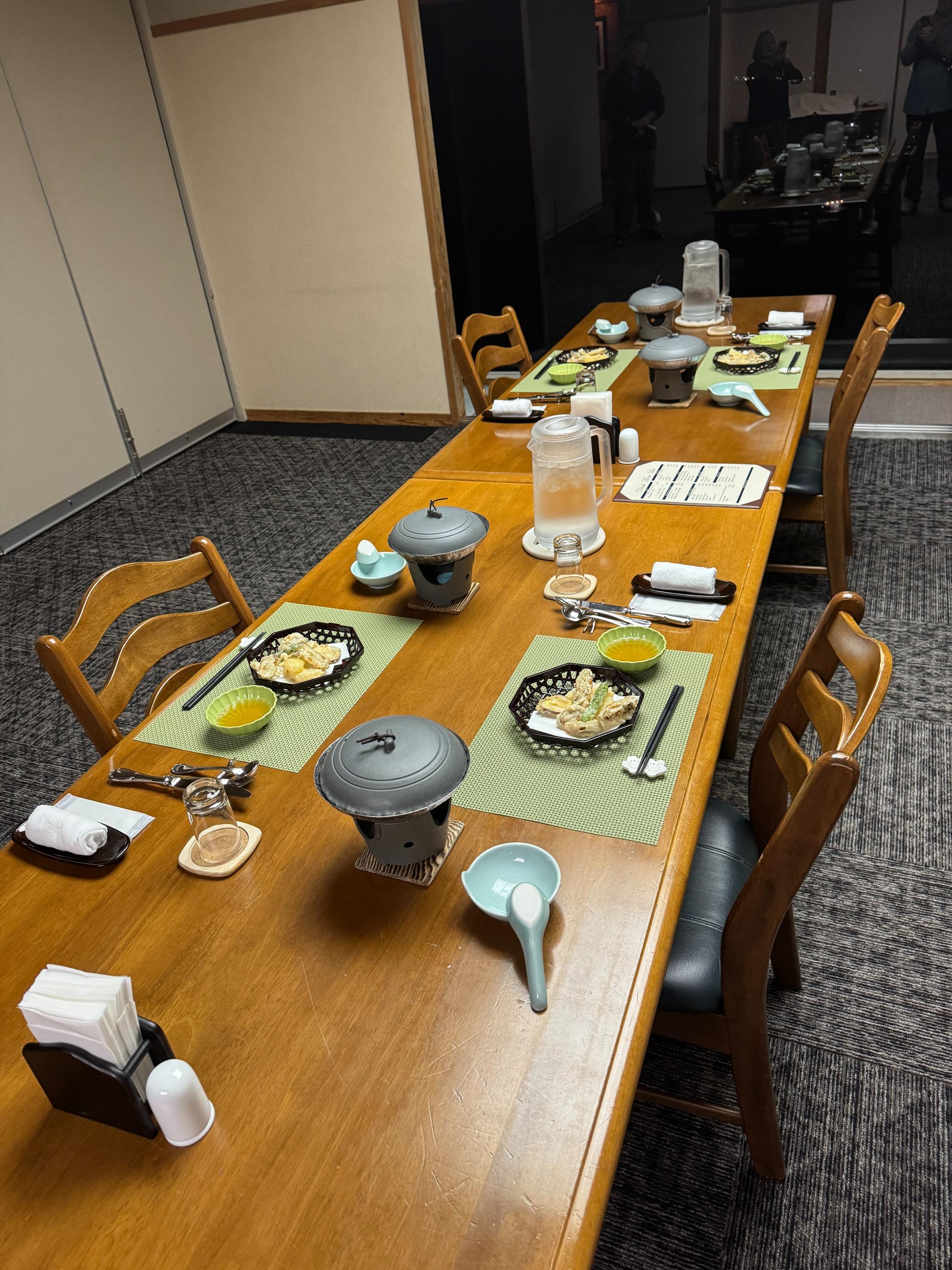
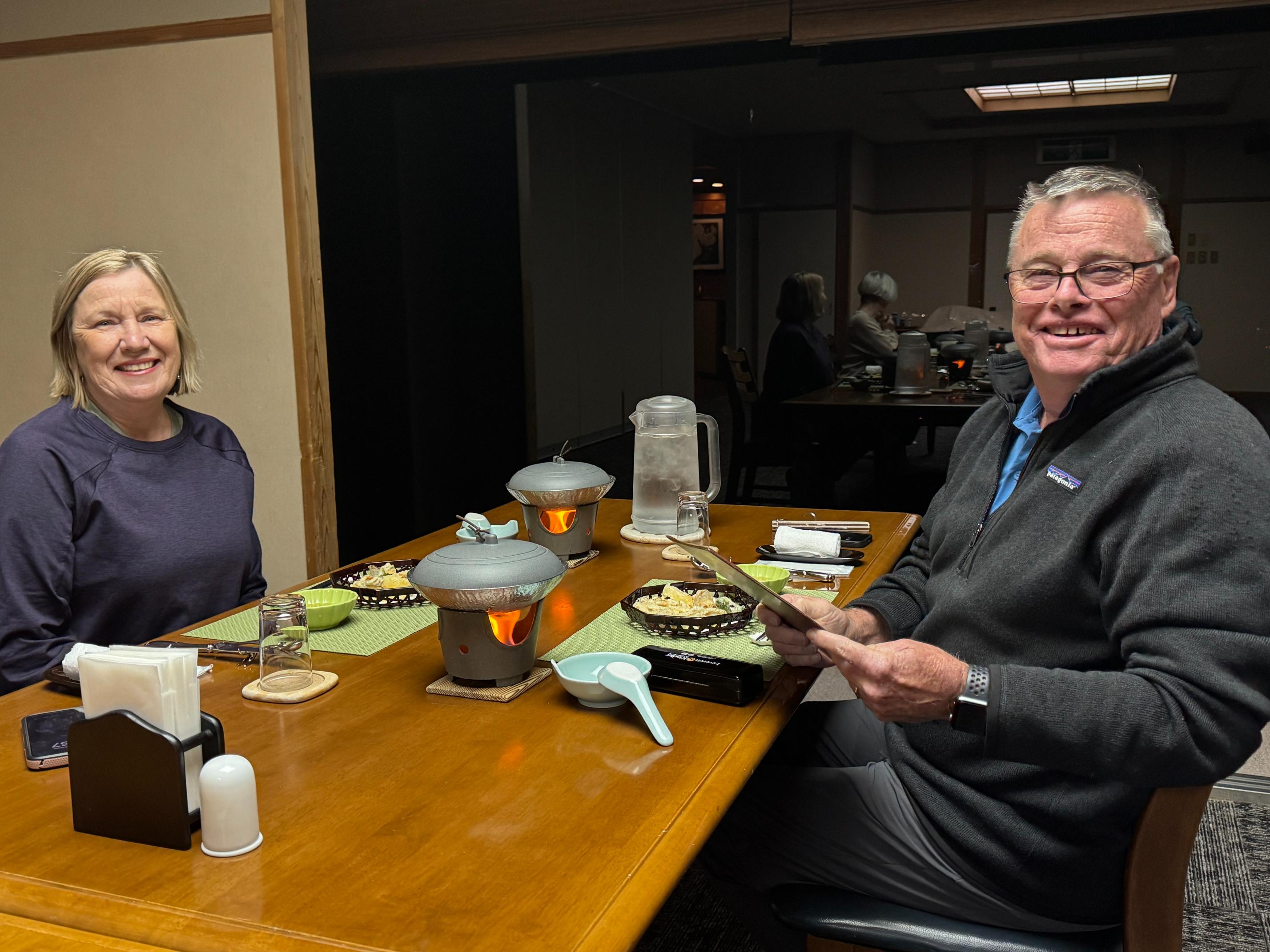
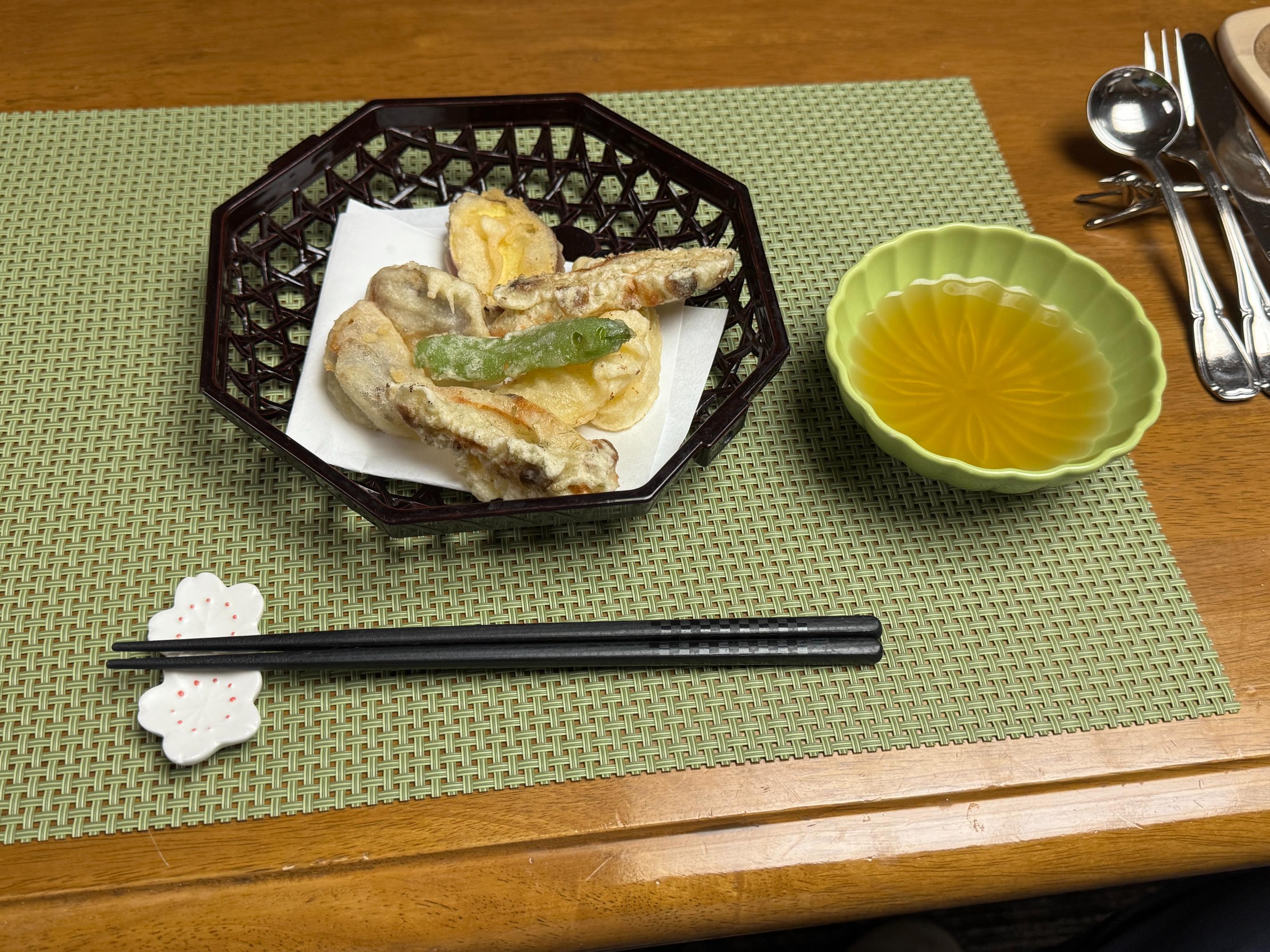
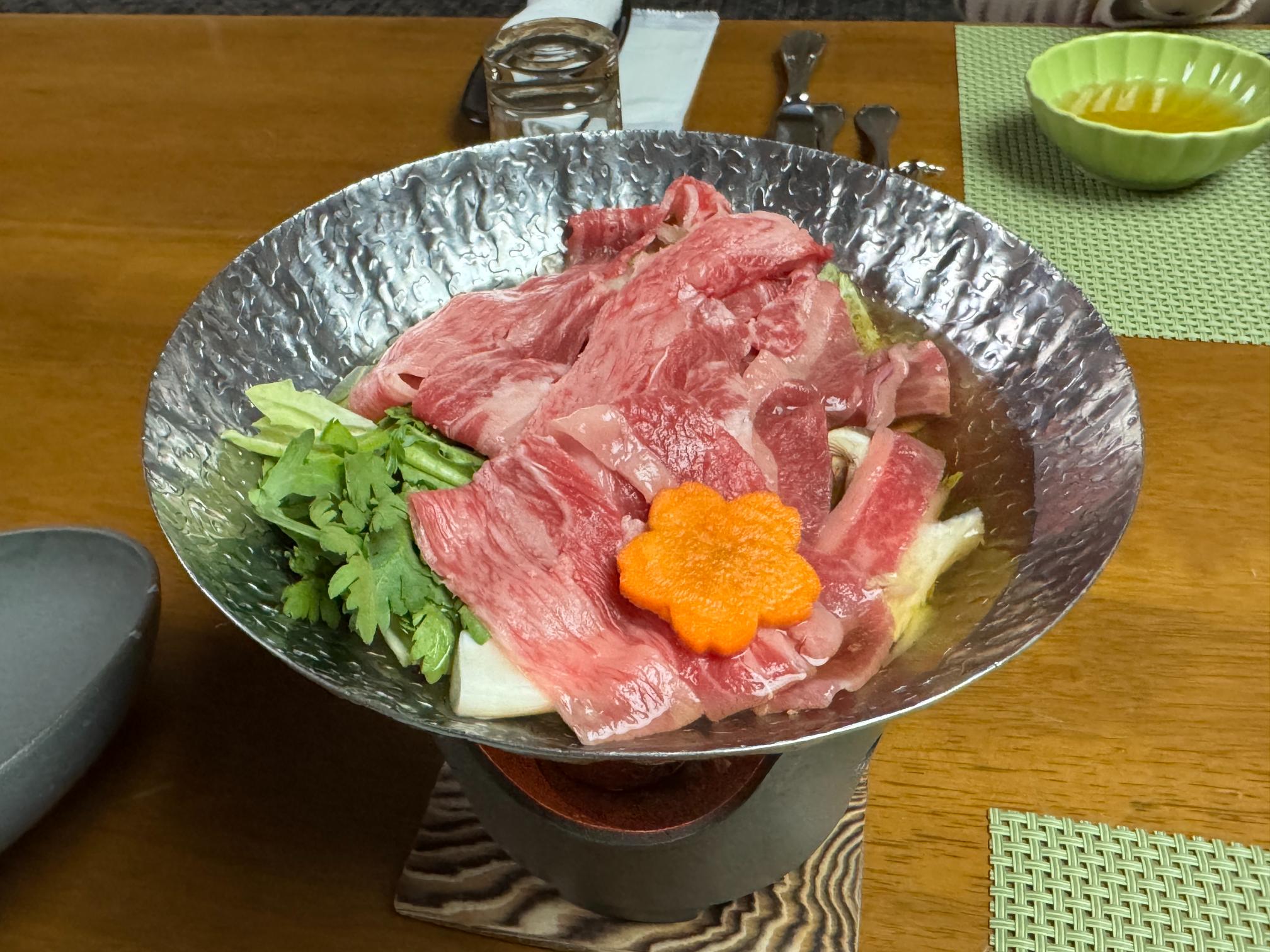
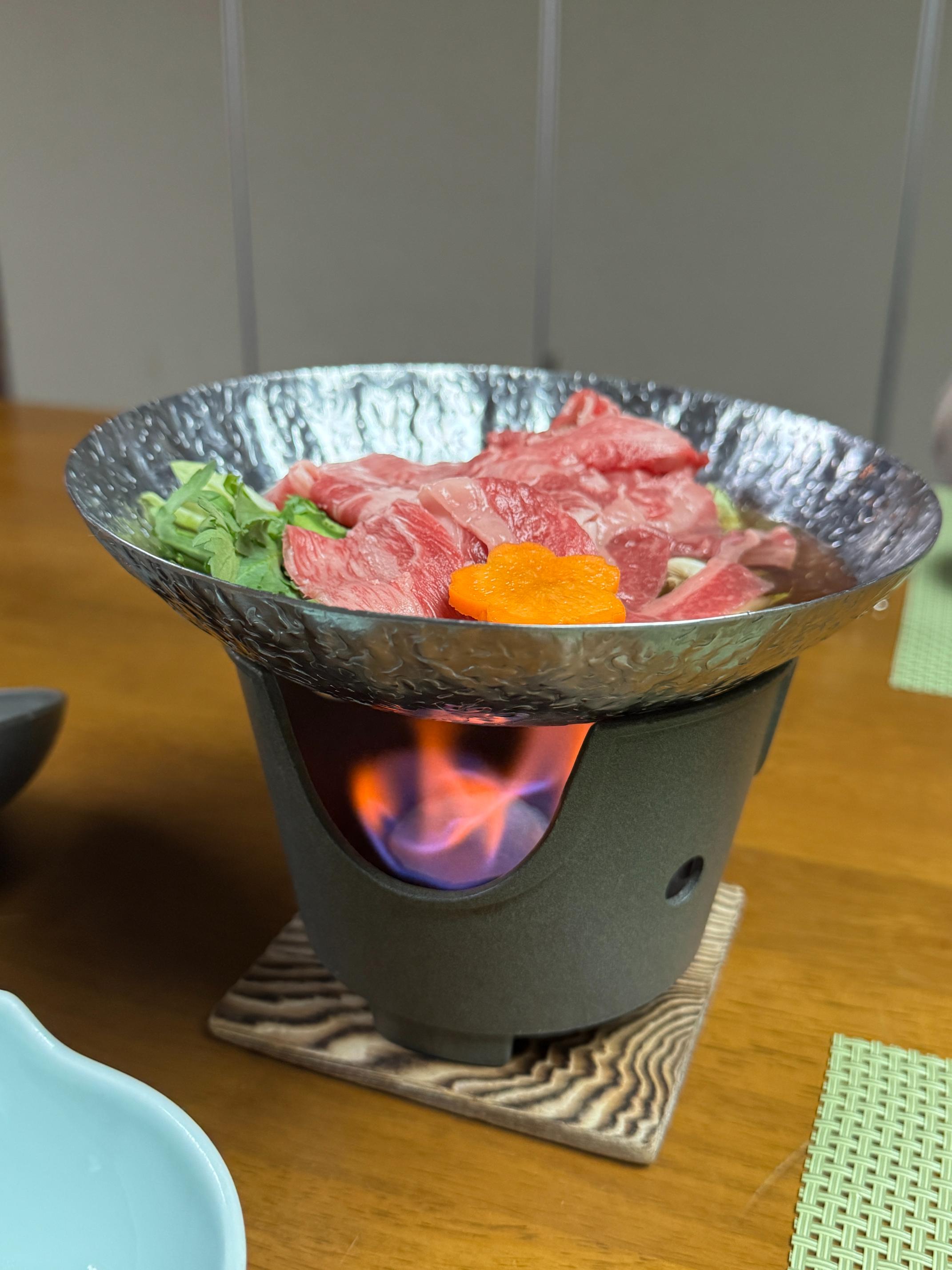
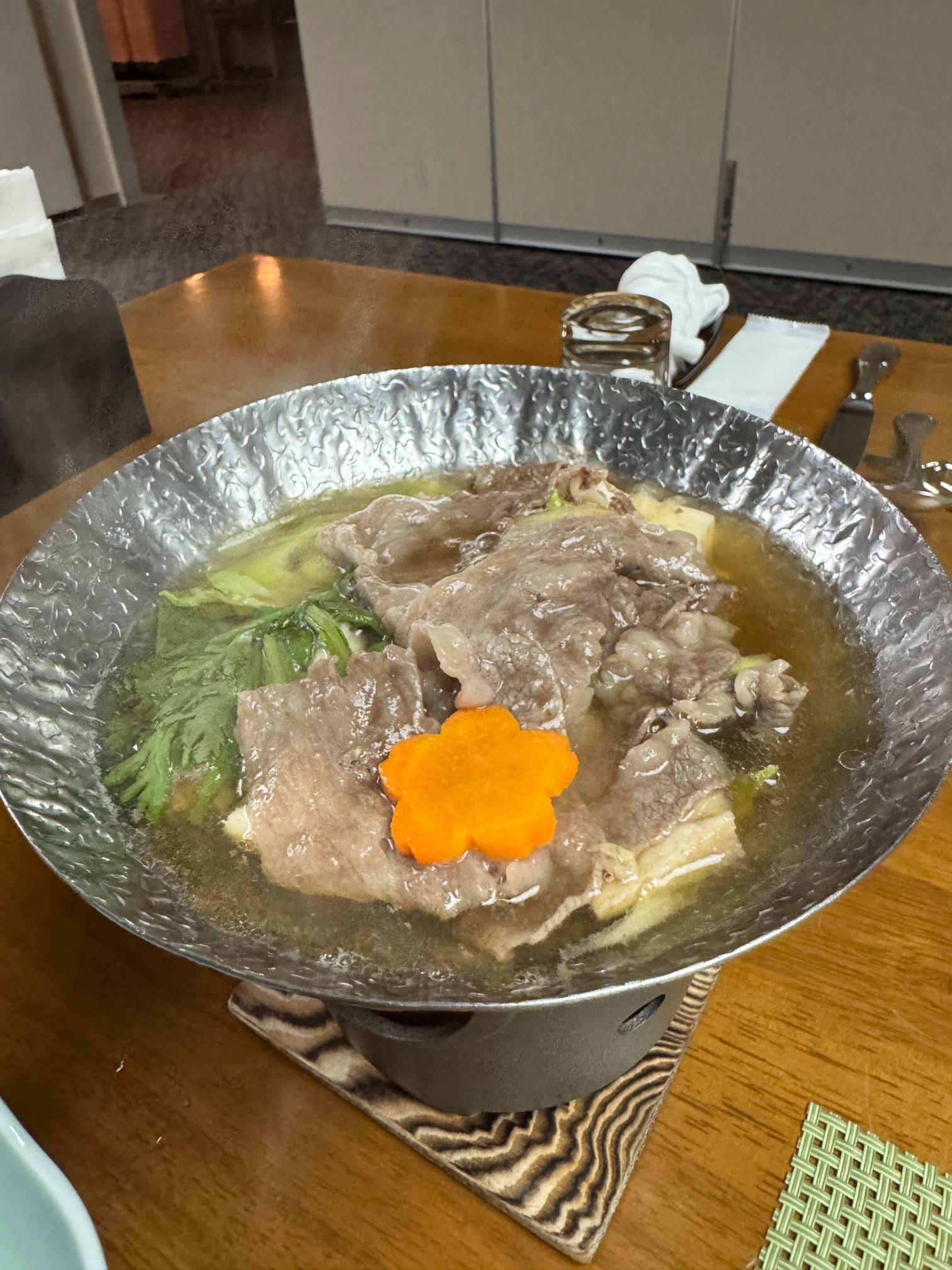
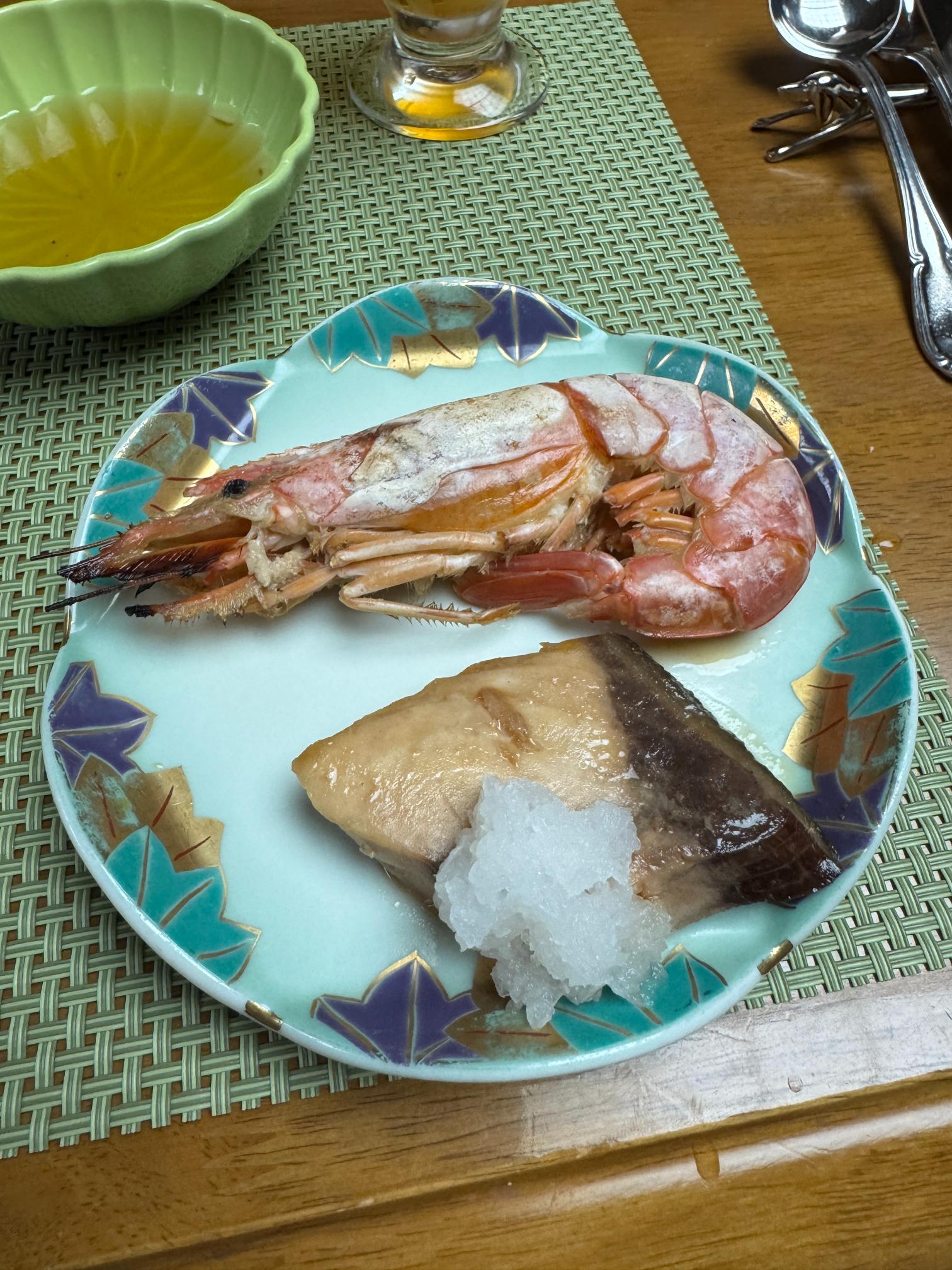
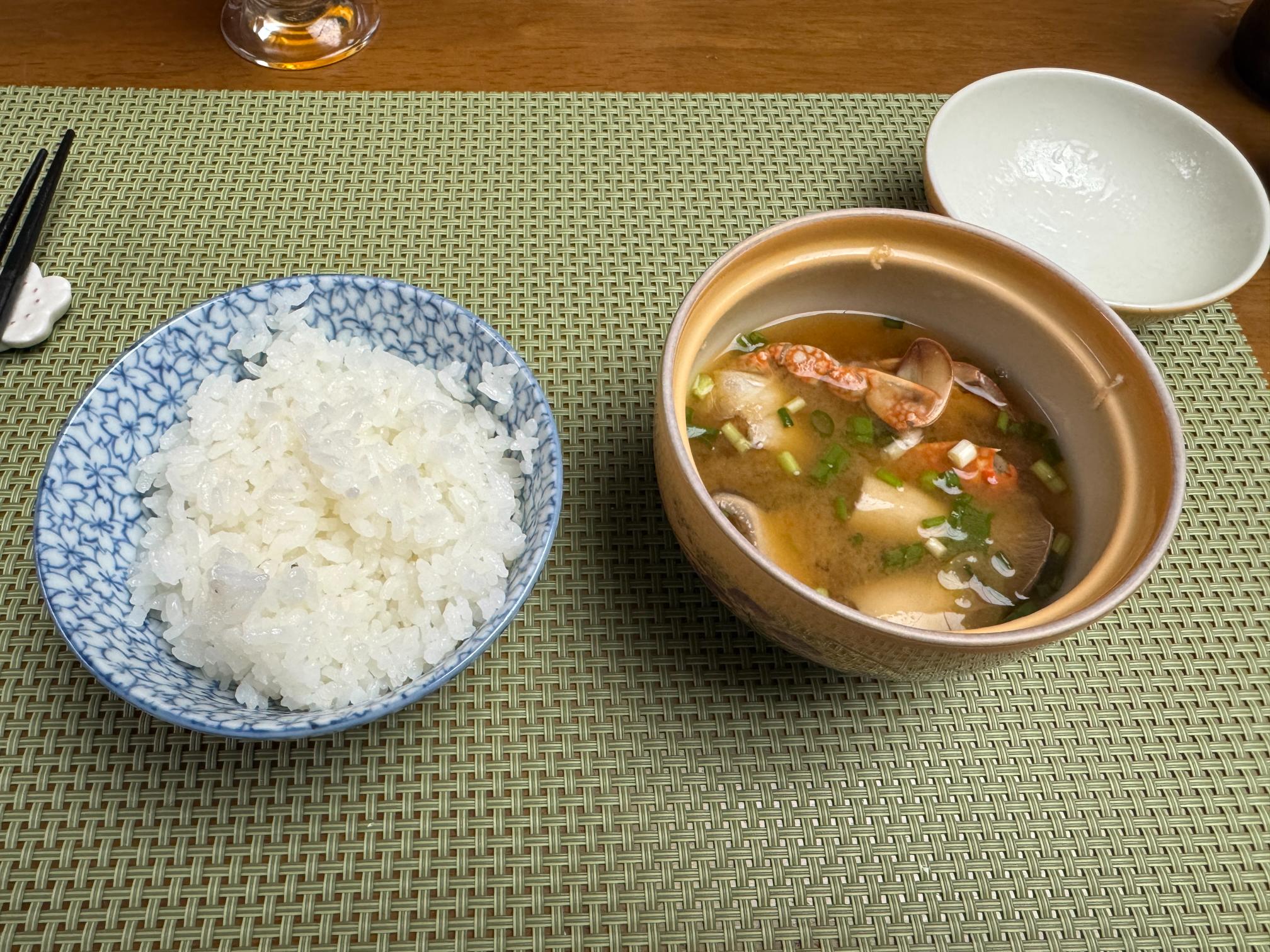
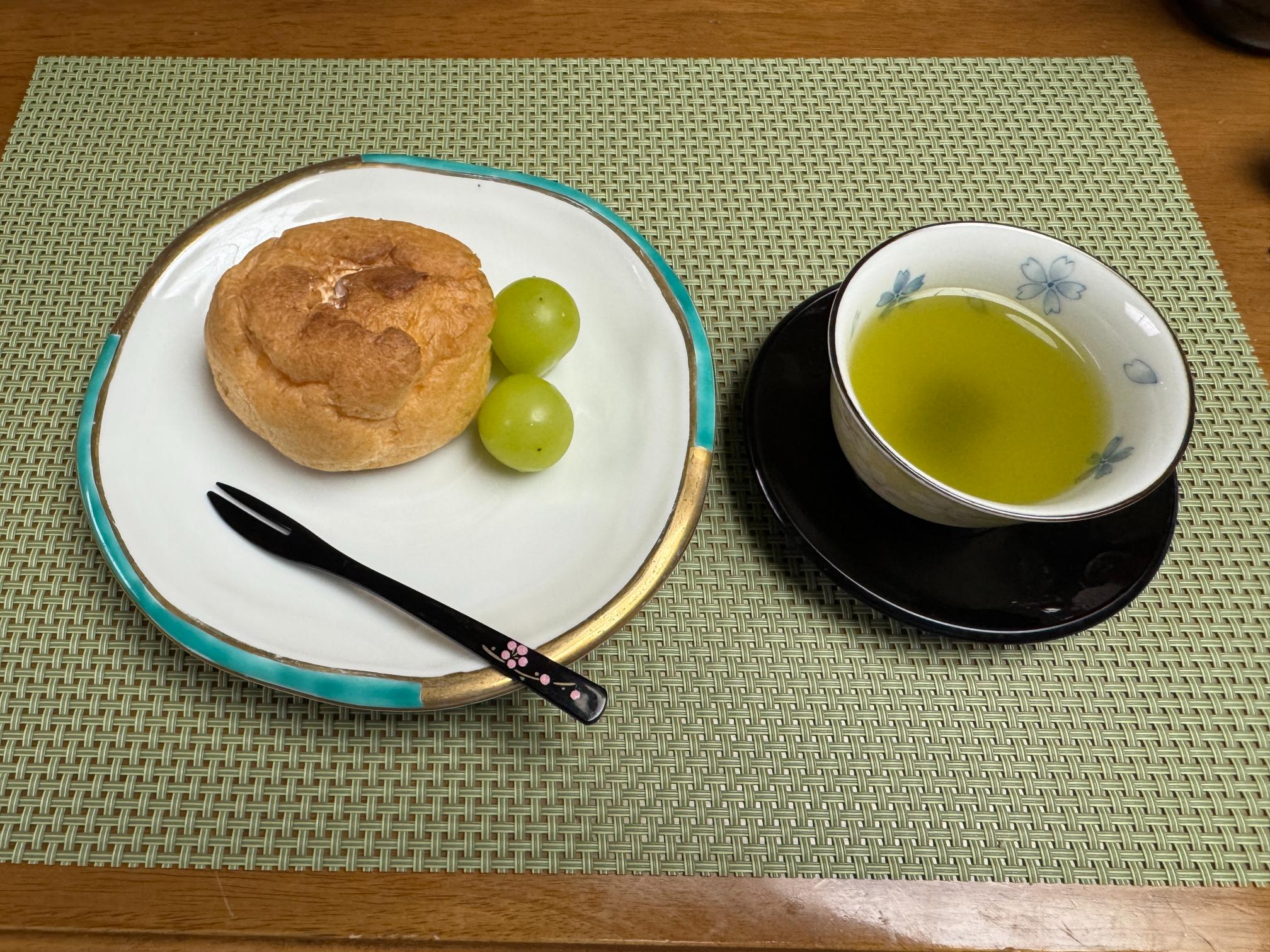
Because we’re a long way from any town, dinner was provided for us at the hotel tonight. Most of the main dining room was blocked off and we were brought into a private dining area where two tables were invitingly laid out for our meal. Don’t be fooled by how far our seats are from Theresa and Ian’s. We’re still talking to each other, although it did feel a little weird sitting so far apart. Nevertheless, the food was traditional Japanese fare and it was delicious. The lady who cooked the food doubled as the waitress, and she was delightful. Each of us began with a dish of tempura which we dipped into a bowl of soup. There was a hot pot bubbling away while we ate the first dish. Soon we were served a large prawn and a slice of fish. When our host discovered Marg didn’t eat seafood, she went away and soon returned with another dish of tempura (while I ate Marg’s prawn). Then there was a crab soup with rice followed by a custard-filled dessert with grapes and green tea. We’re having breakfast here in the morning too, and I can’t wait to see what they serve up.
 On The Road With Garry