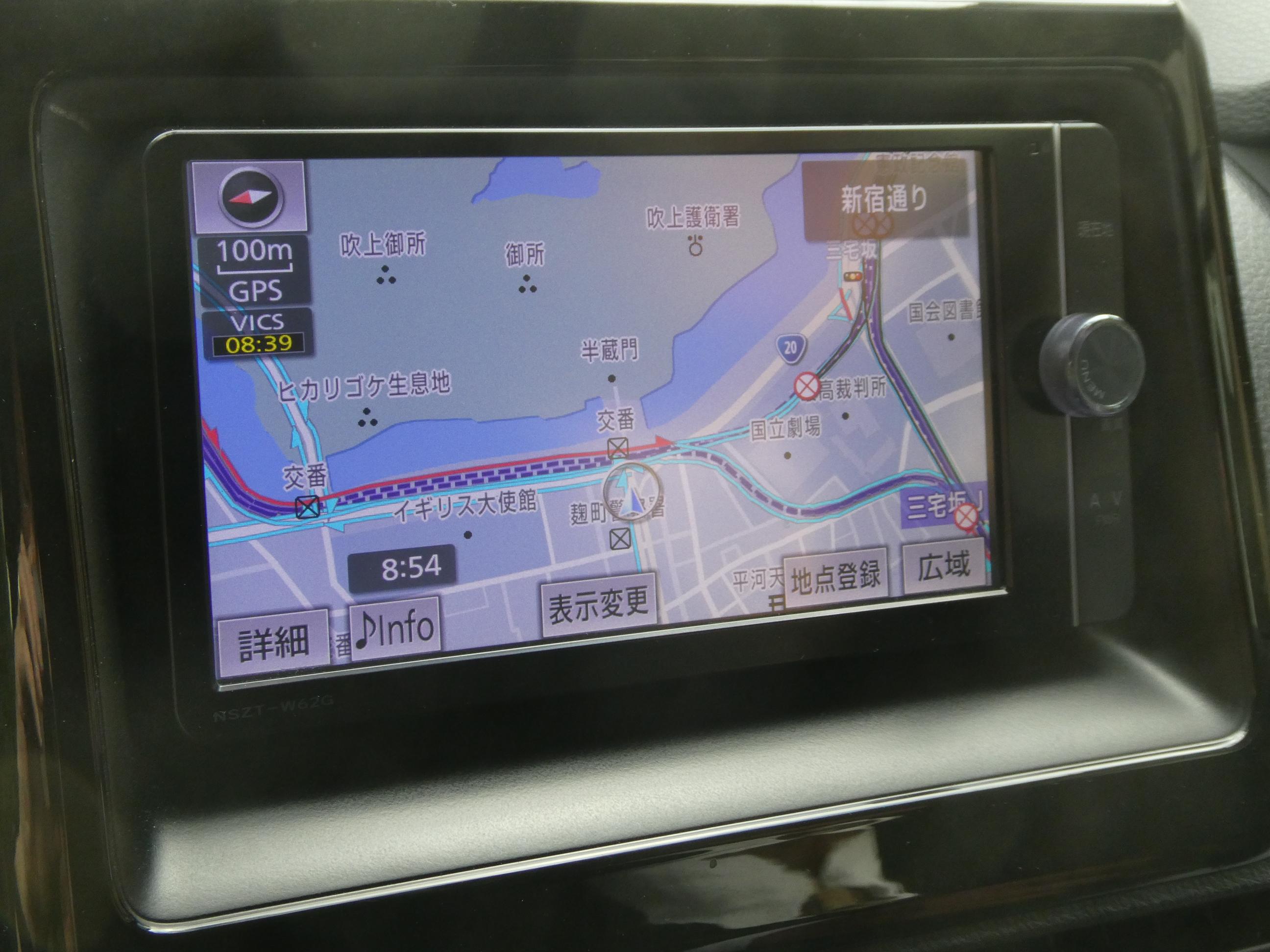
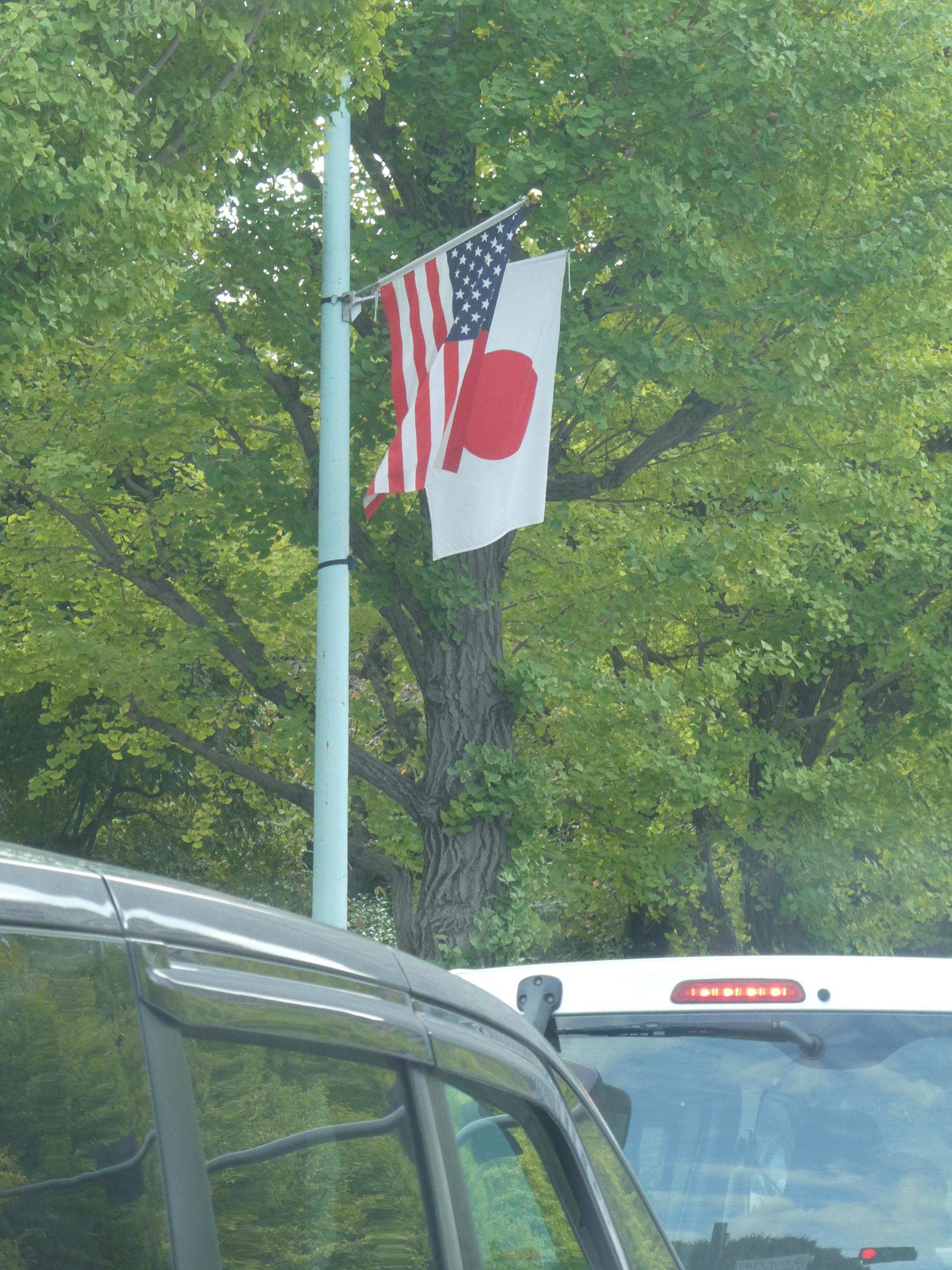
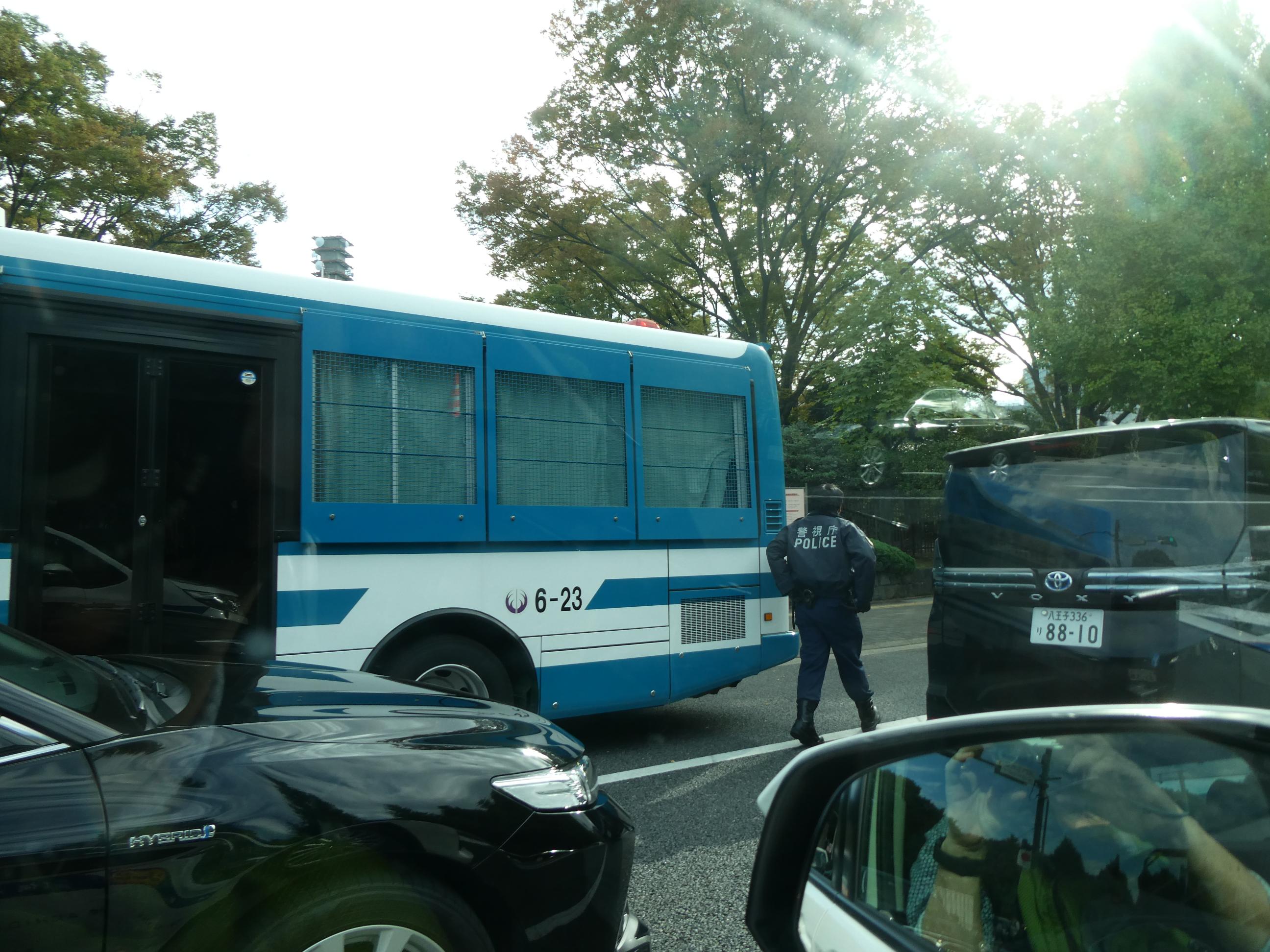
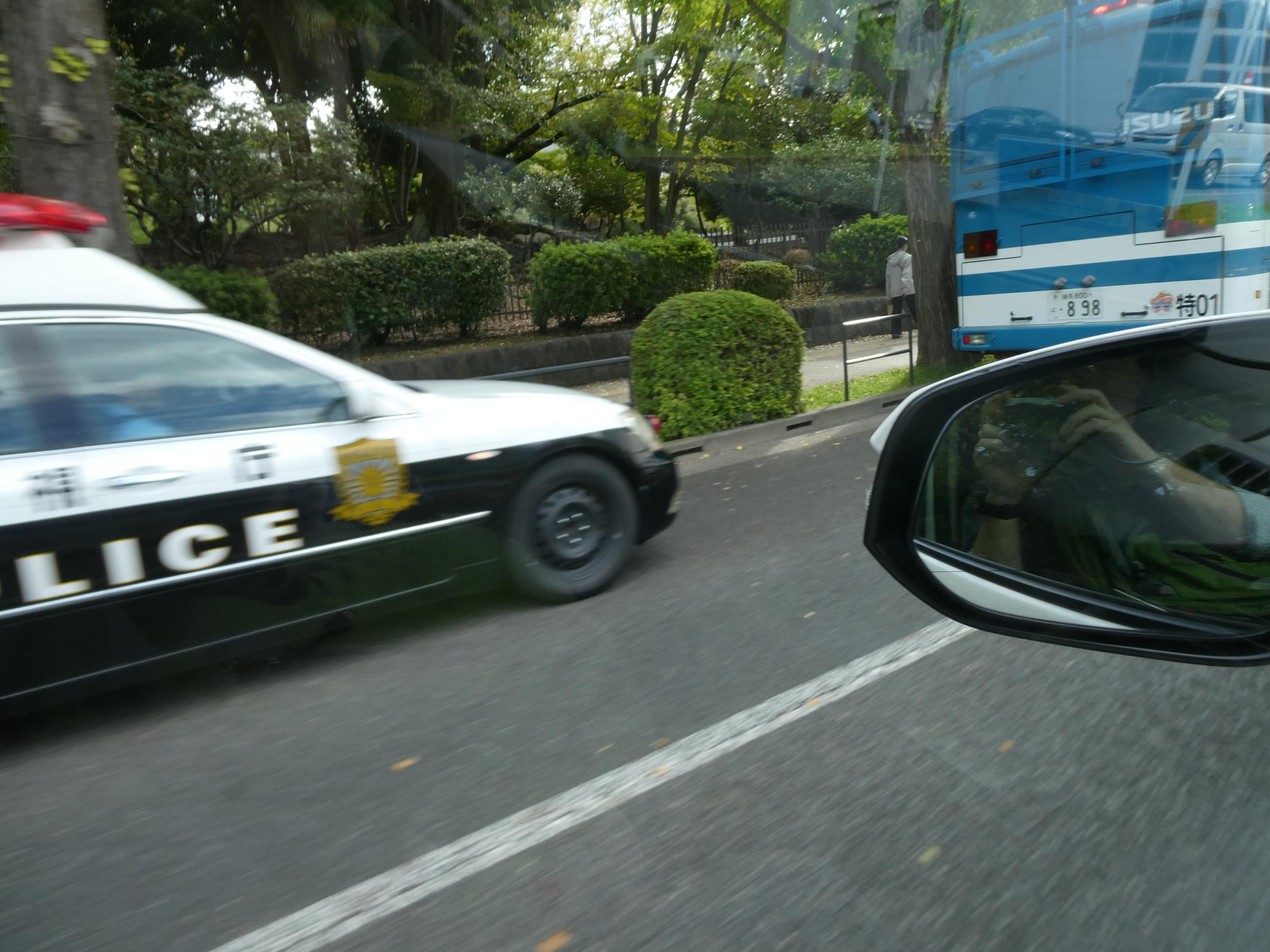
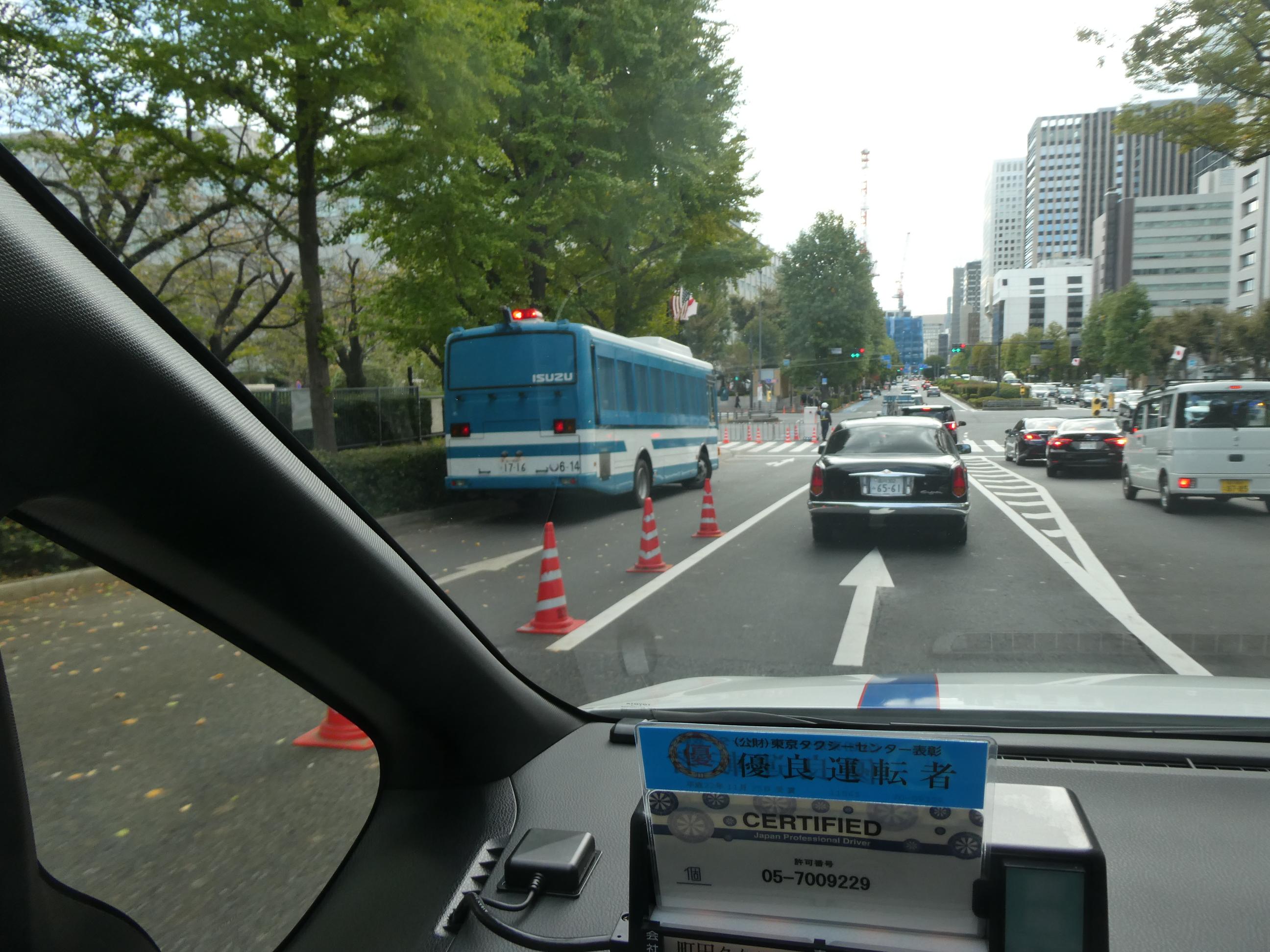
This morning we were due to leave Tokyo on the 10.11am Shinkansen to Utsunomiya. We took a taxi from our hotel to Tokyo Station, leaving at 8.30 am as we wanted to give ourselves plenty of time to find the right platform and also be first in line to board our carriage so we could get our luggage stowed before someone else filled the limited available spaces. And, of course, we also figured that Donald Trump would be flying out of Tokyo this morning and there might be delays. Sure enough, our ride, which would normally take about 25 minutes, took 50 minutes because we had to cross right through the same area that Trump would be travelling in. We sat still and watched the traffic lights change multiple times before we could get across several intersections. There were big blue police vans everywhere and hundreds of witches’ hats closing off lanes. Thankfully, it appeared that Trump had left just before us, and police appeared to be removing blockages as we neared the station. I’ll bet the Japanese are saying good riddance to that pest.

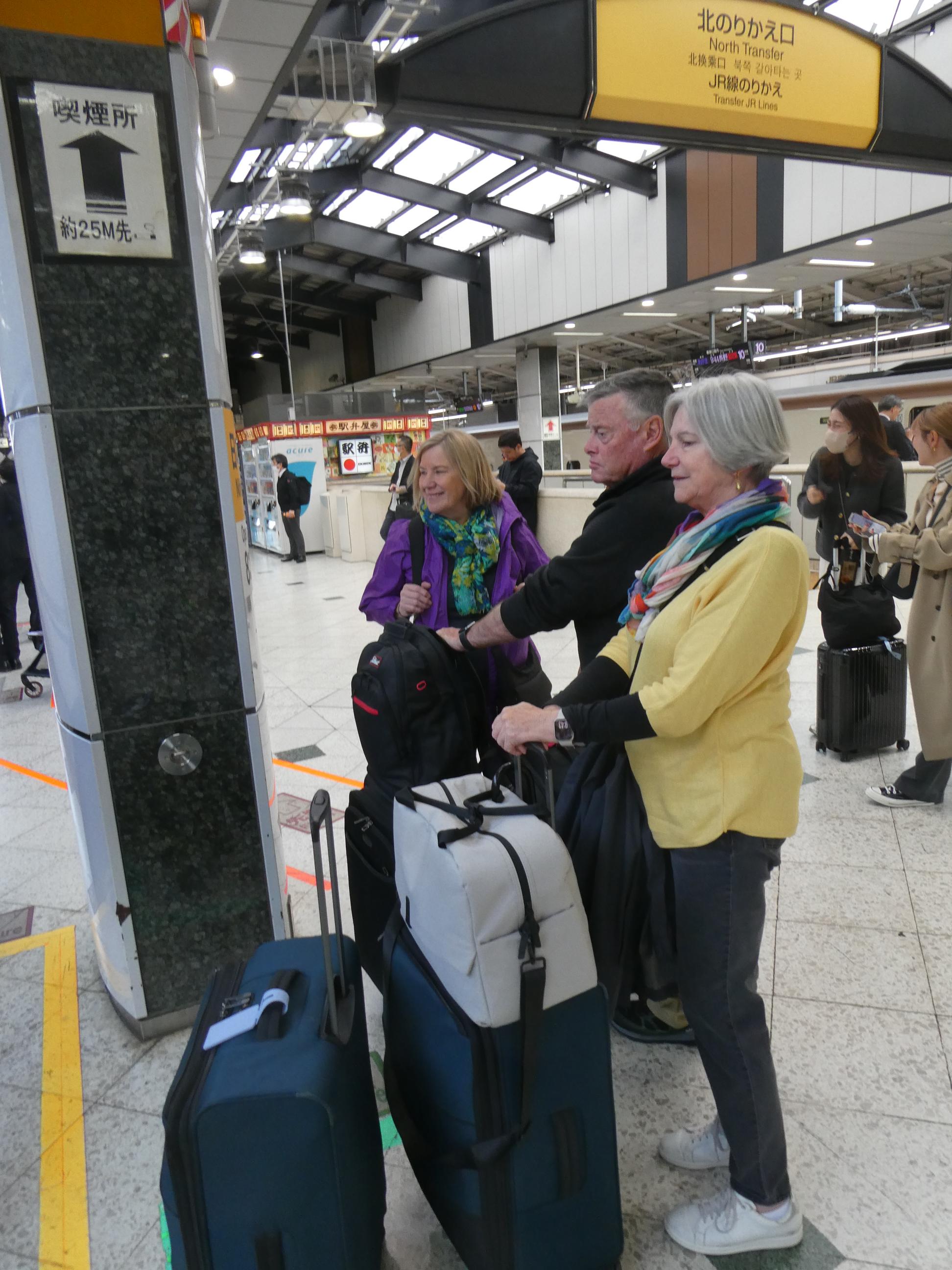
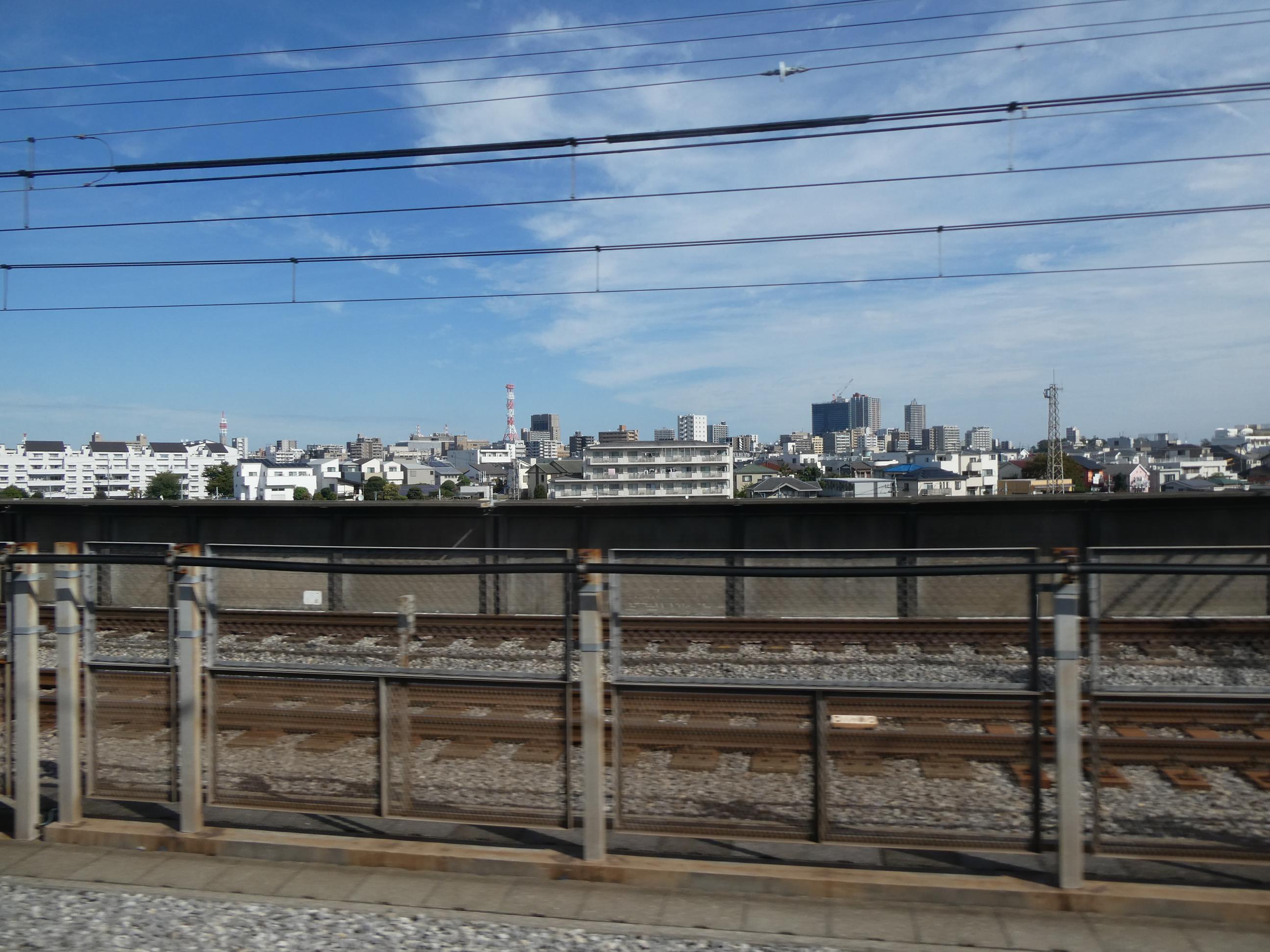
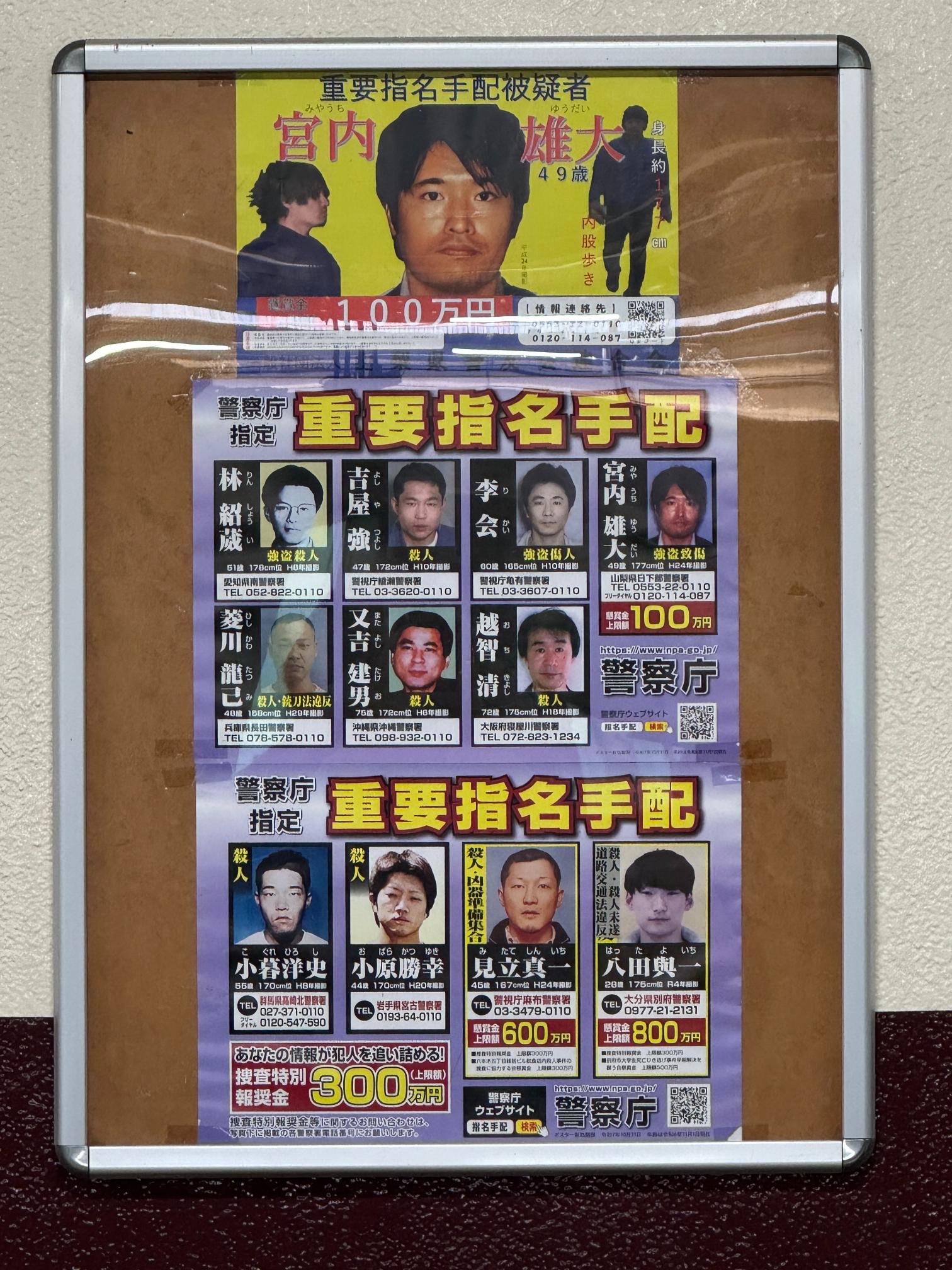
We made it to the platform with plenty of time to spare, but had to wait to board our train until the cleaning crew had made the carriage spotless. Thankfully, we got our suitcases stowed and the train began its northward journey just a minute or two after we boarded. As I mentioned in an earlier post, riding on the Shinkansen is an extremely comfortable way to travel. I thought we might eventually leave Tokyo and pass through countryside or farm areas, but for much of the 52 minute journey, the surroundings on both sides of the train could only be described as built-up areas. We left the Shinkansen at Utsunomiya and waited about 15 minutes on the platform before boarding the local train to Nikko. Right behind me on the wall was a poster displaying portraits of a bunch of morose-looking men. It reminded me of some of the election advertising posters I had seen in India, where mug shot-like portraits of dodgy-looking candidates are plastered all over walls. I checked the text on the poster with Google Translate. They were mug shots all right, and it was a wanted poster for criminals, including one man Google defined as ‘majestic’. I thought that was a strange thing to adorn a railway station wall, but I guess in a country with a population as large as Japan’s, the poster would be seen by hundreds, maybe thousands, of commuters every day.


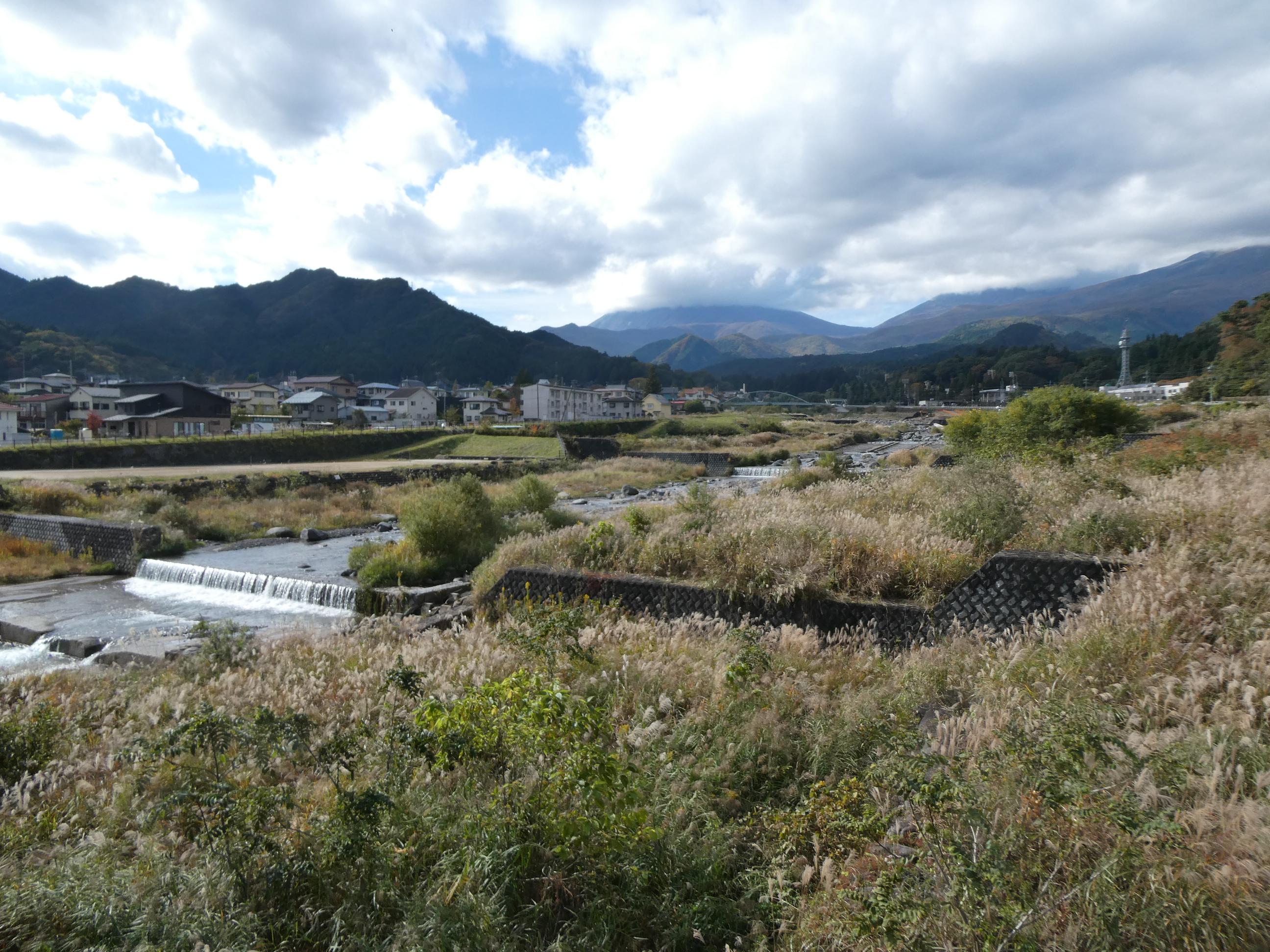
The Nikko train took us up into the hills in the final stages of its journey. We stepped out of the railway station into a very quiet little town that seemed vastly different from the hustle and bustle of Tokyo that we’d just left behind.
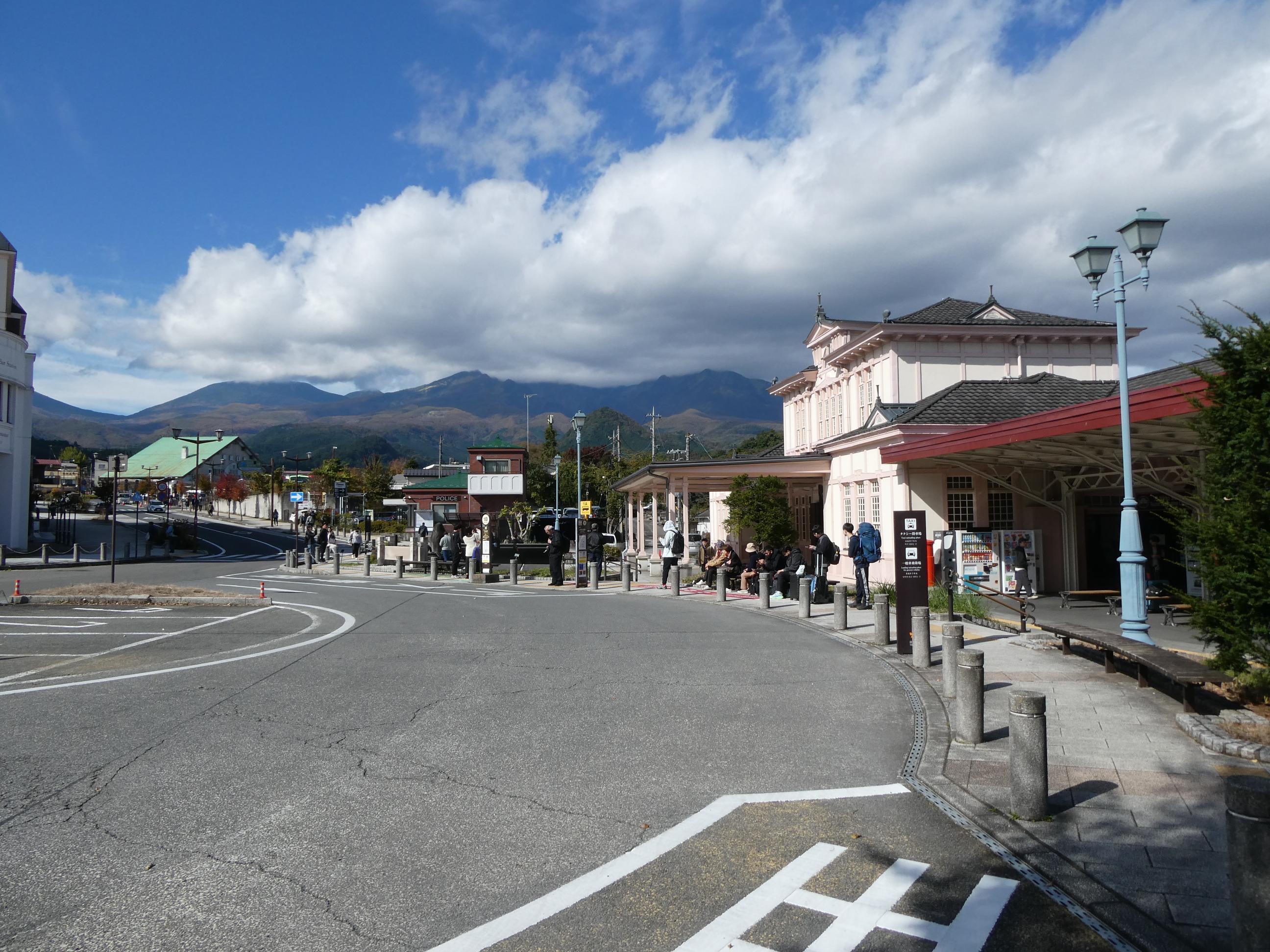
We waited at the taxi stand outside the station for about fifteen minutes and not a single taxi arrived. I went looking for help and found a lady who raced out of her office and pointed up the street to another railway station a couple of hundred metres away. We wheeled our suitcases up there and waited another ten minutes before a taxi came. I hailed him, but he said he was already booked. But then he asked where we wanted to go, and when I told him the name of our hotel, he said ‘Okay, that’s not far’, jumped out of his car and proceeded to load our cases. It was only about an eight minute ride to our hotel, but it was uphill all the way.
We were told our rooms wouldn’t be ready before 3 pm, so we asked to have our luggage stored and walked back down the hill into Nikko to find a place to eat lunch. Despite the fact that we’ve been told it’s a popular tourist town, and that autumn leaves season is the best time to visit, it was surprising that there didn’t seem to be that many dining places in Nikko and that quite a few of those that existed were closed for the day. Eventually we found a place that sold cakes and coffee, so we made do with that.
We found the bus stop and rode the bus up another hilly street (I think it’s probably the main street) to a stop named Shinkyo, which means ‘sacred bridge’. Here there is a beautiful red lacquered wooden bridge spanning the Daiya River. Legend has it that a Buddhist monk named Shodo Shonin (who was born in 735 AD) and his companions needed to cross the river here in order to eventually reach the summit of nearby Mount Futara. The river’s rushing torrent prevented them. Shodo began to pray, and soon a god with two serpents in his hands appeared on the far side of the river. The god released the serpents , which immediately connected the two sides of the river, allowing Shodo and his followers to cross. When they looked back, the god and the serpents had disappeared. Shodo is regarded as the founder of Nikko. The current bridge was opened in 1904.
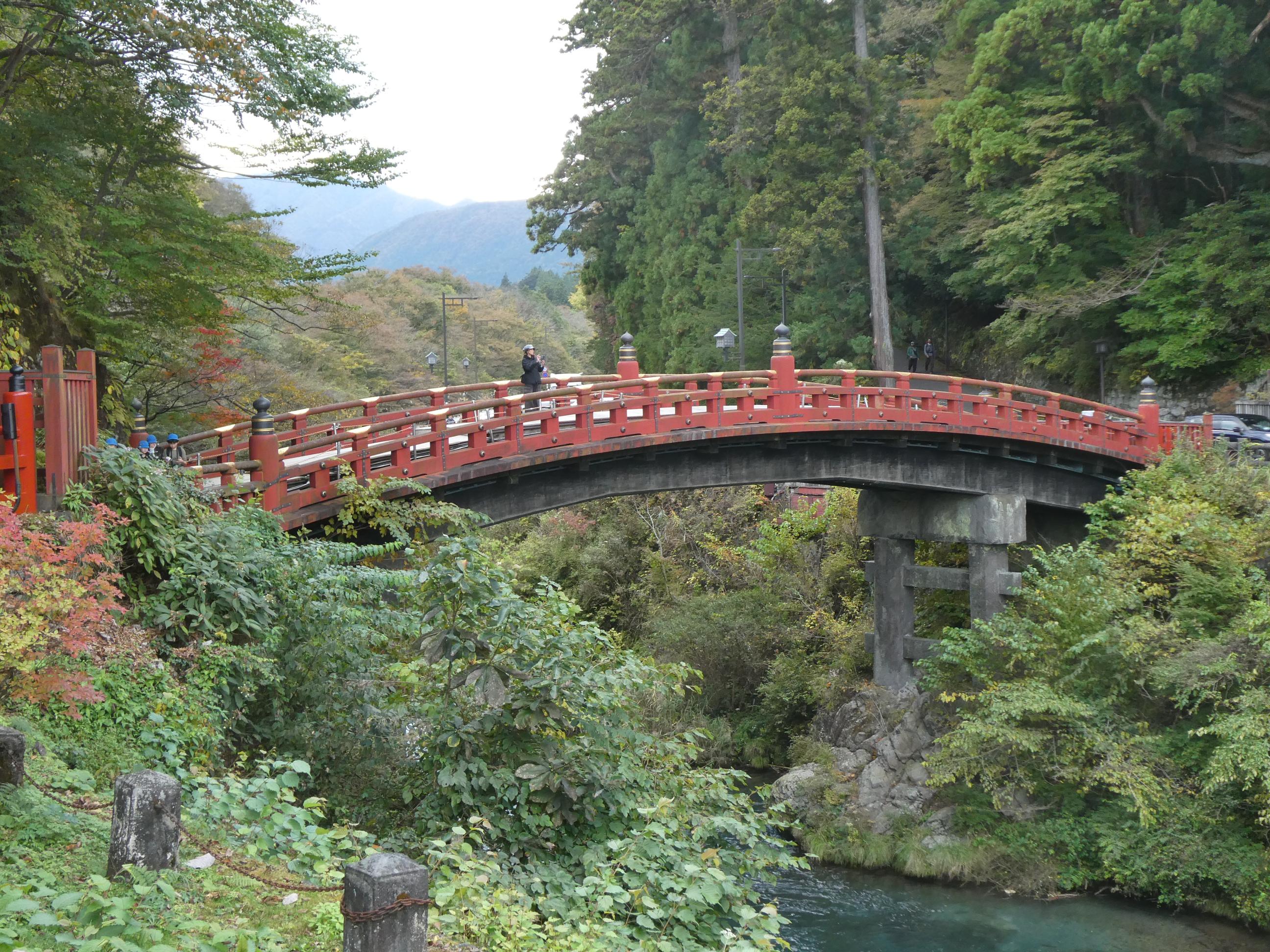
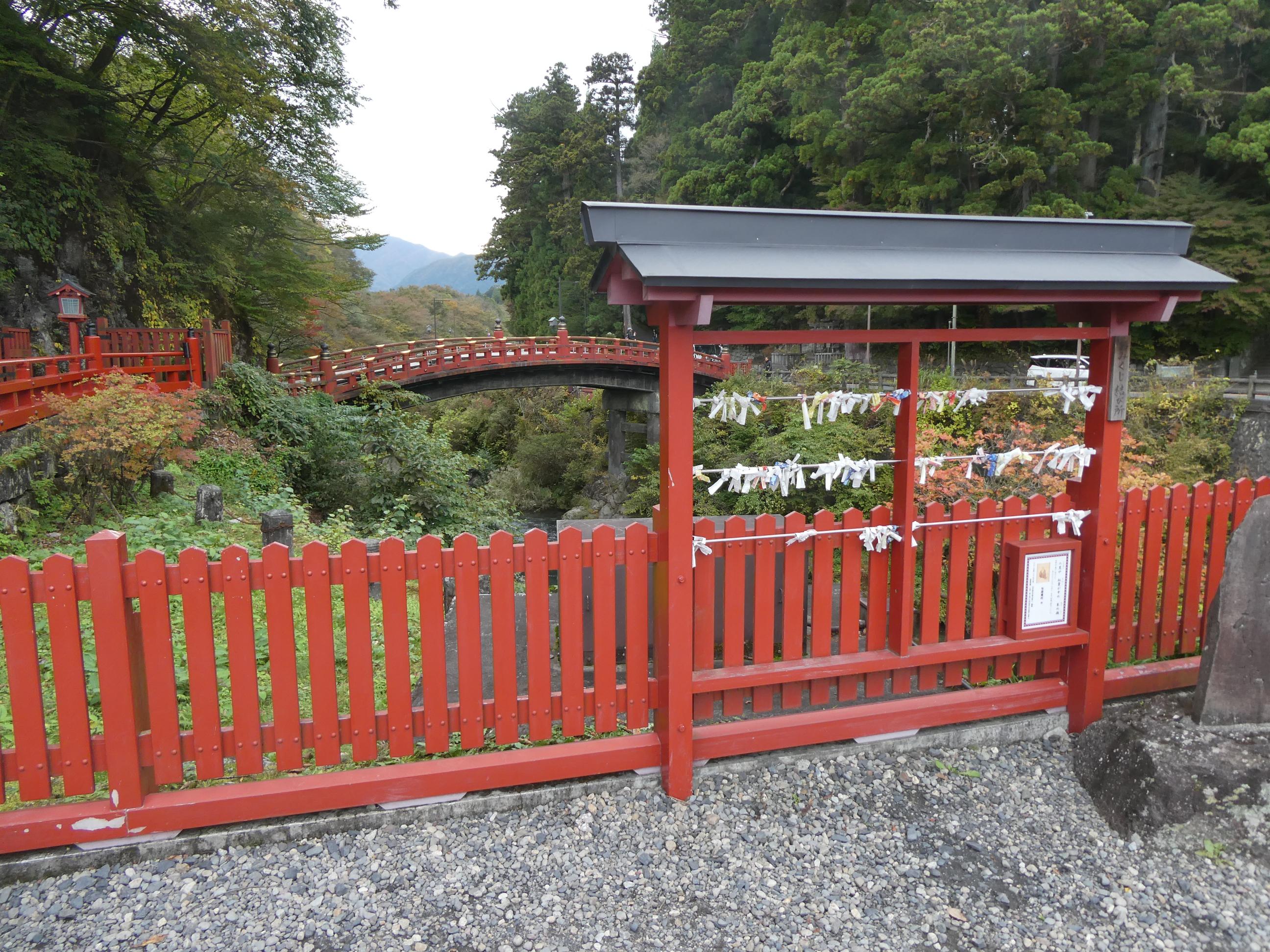
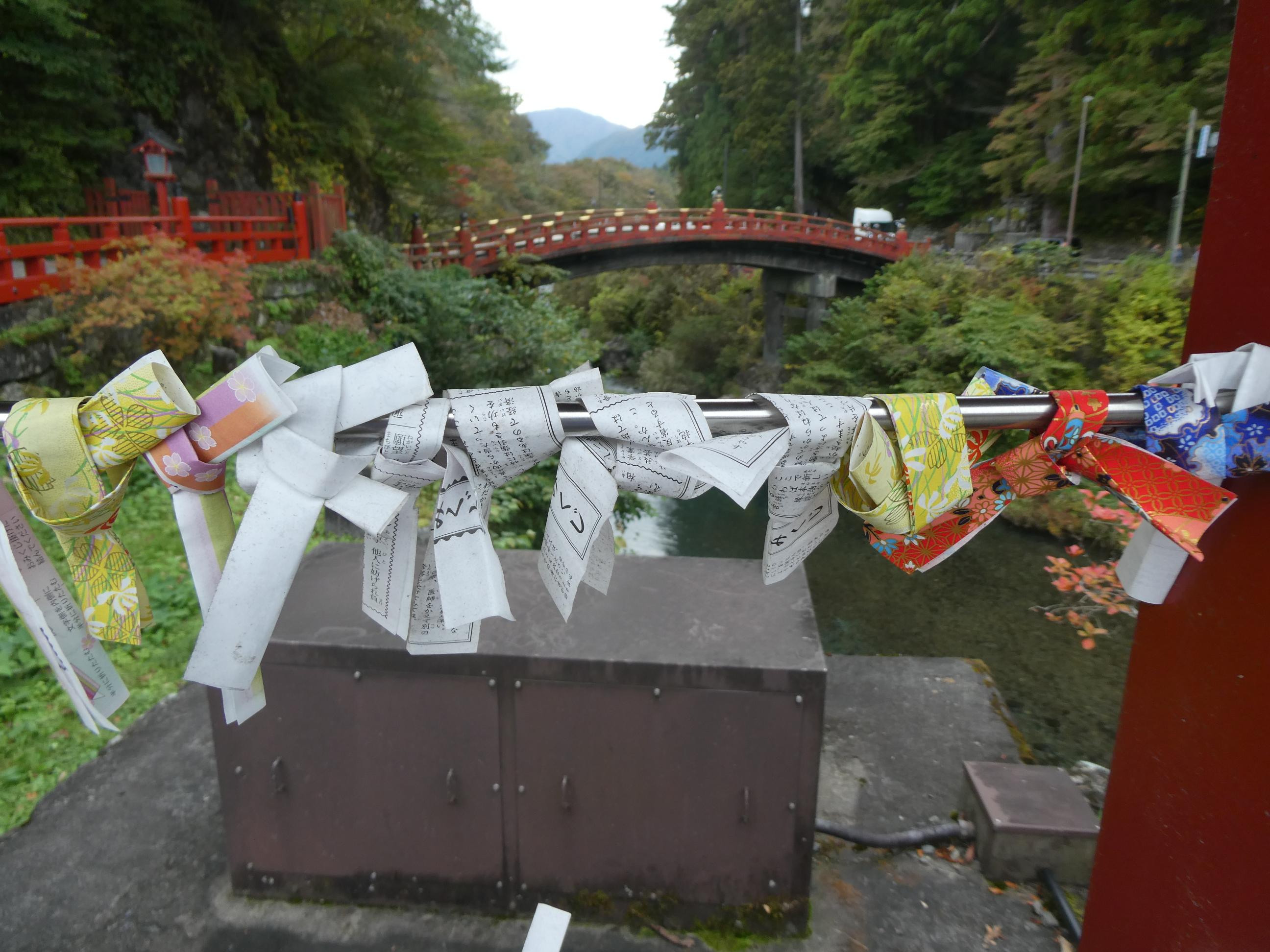
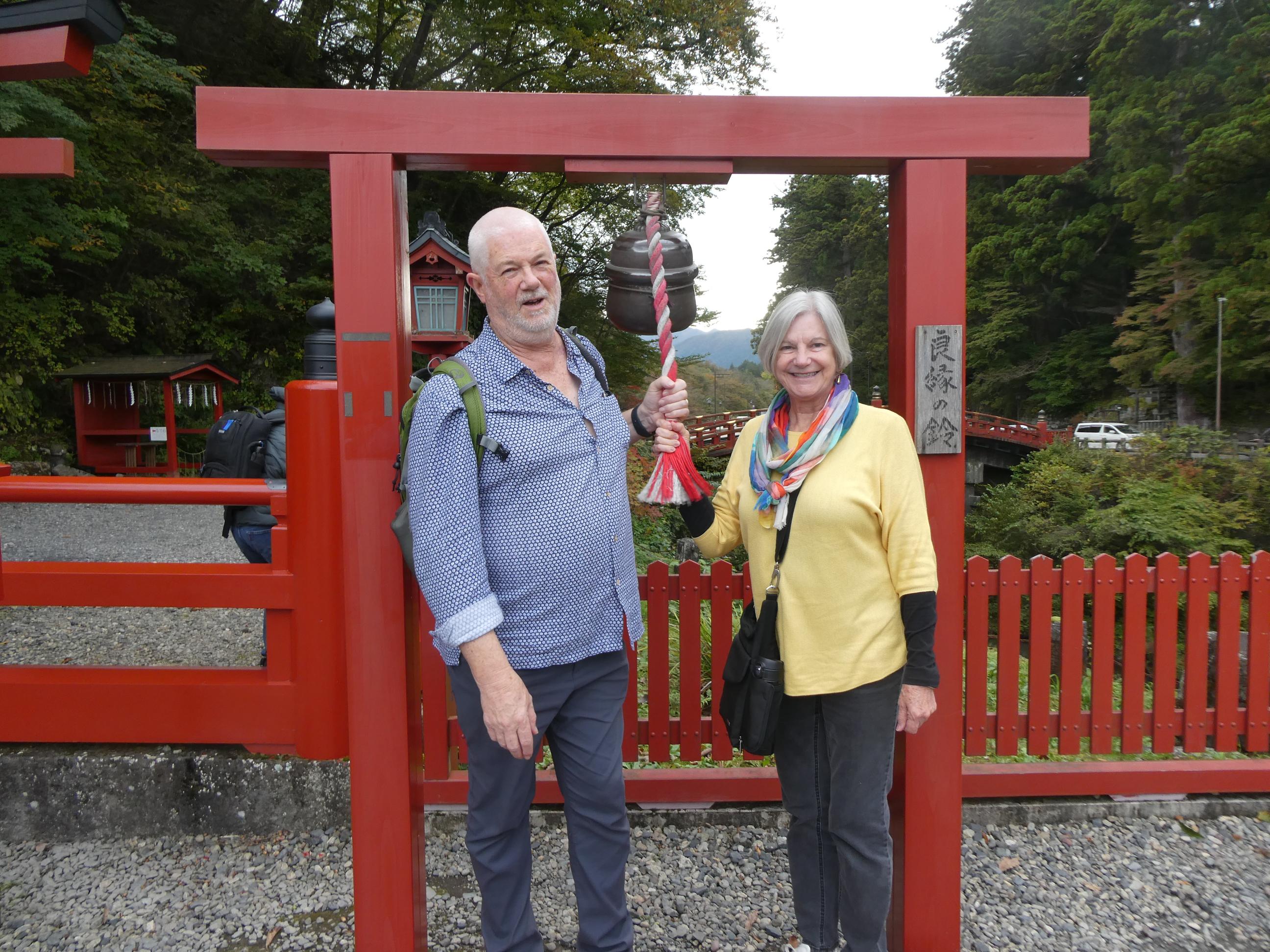
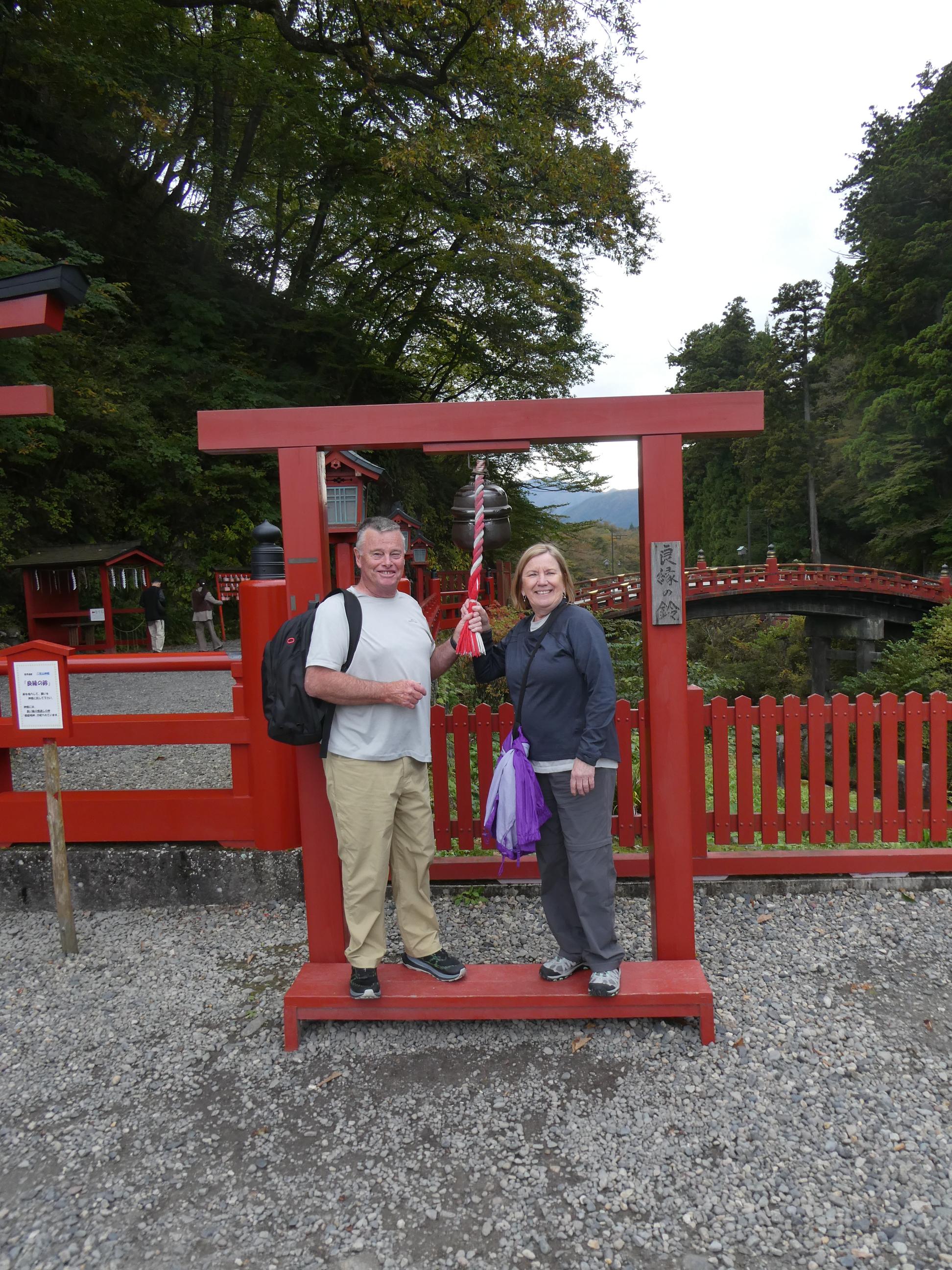
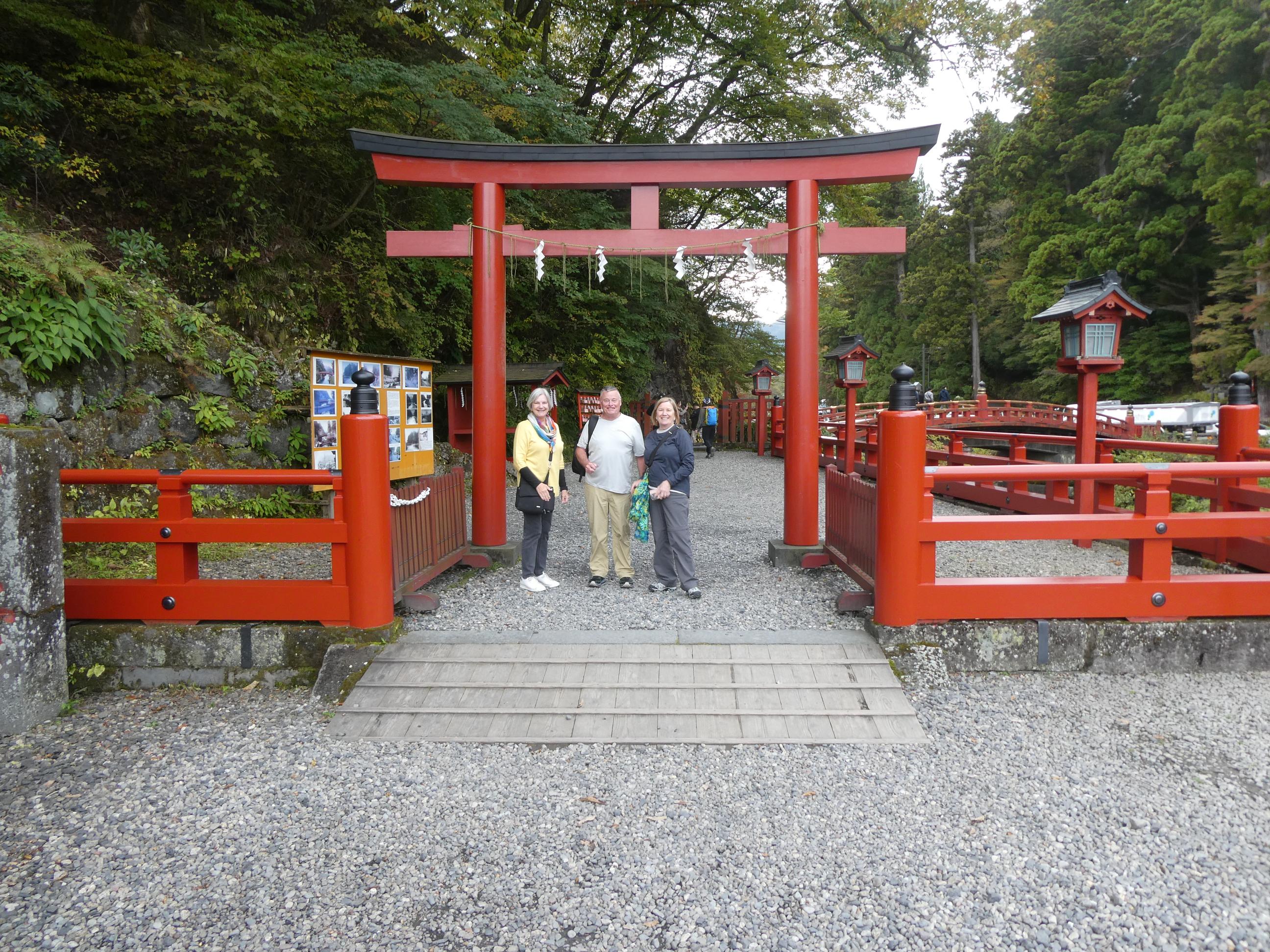

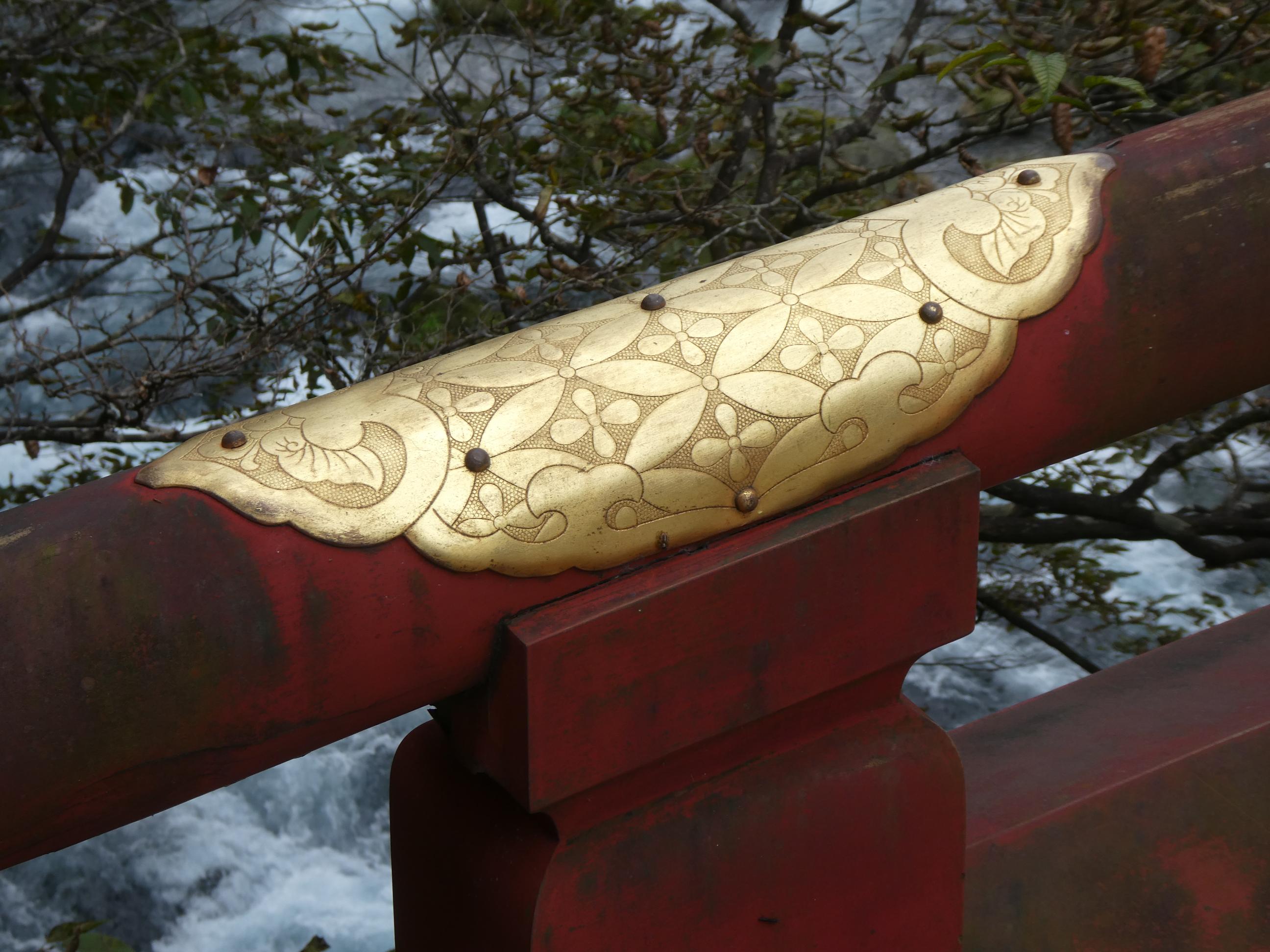
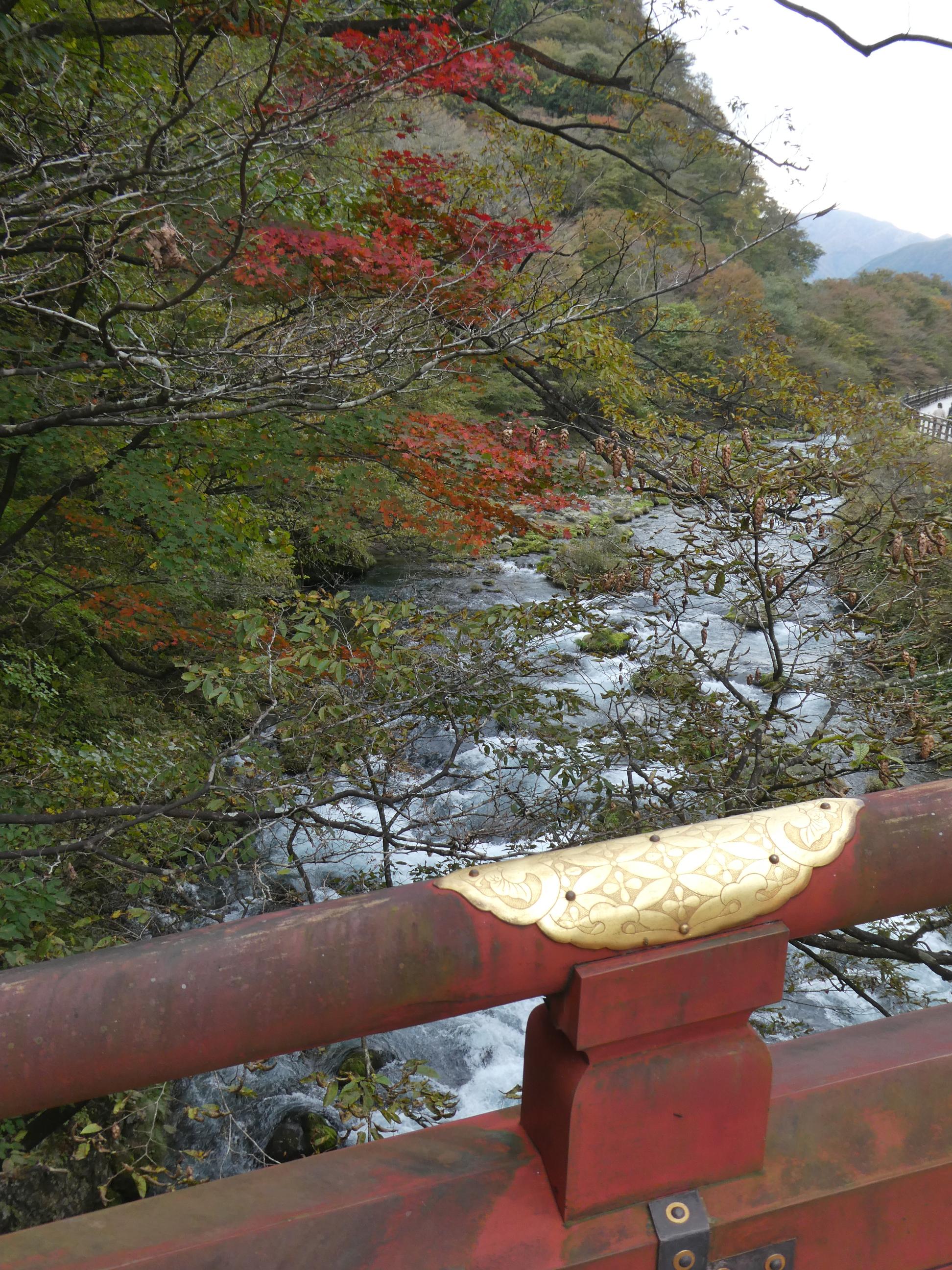
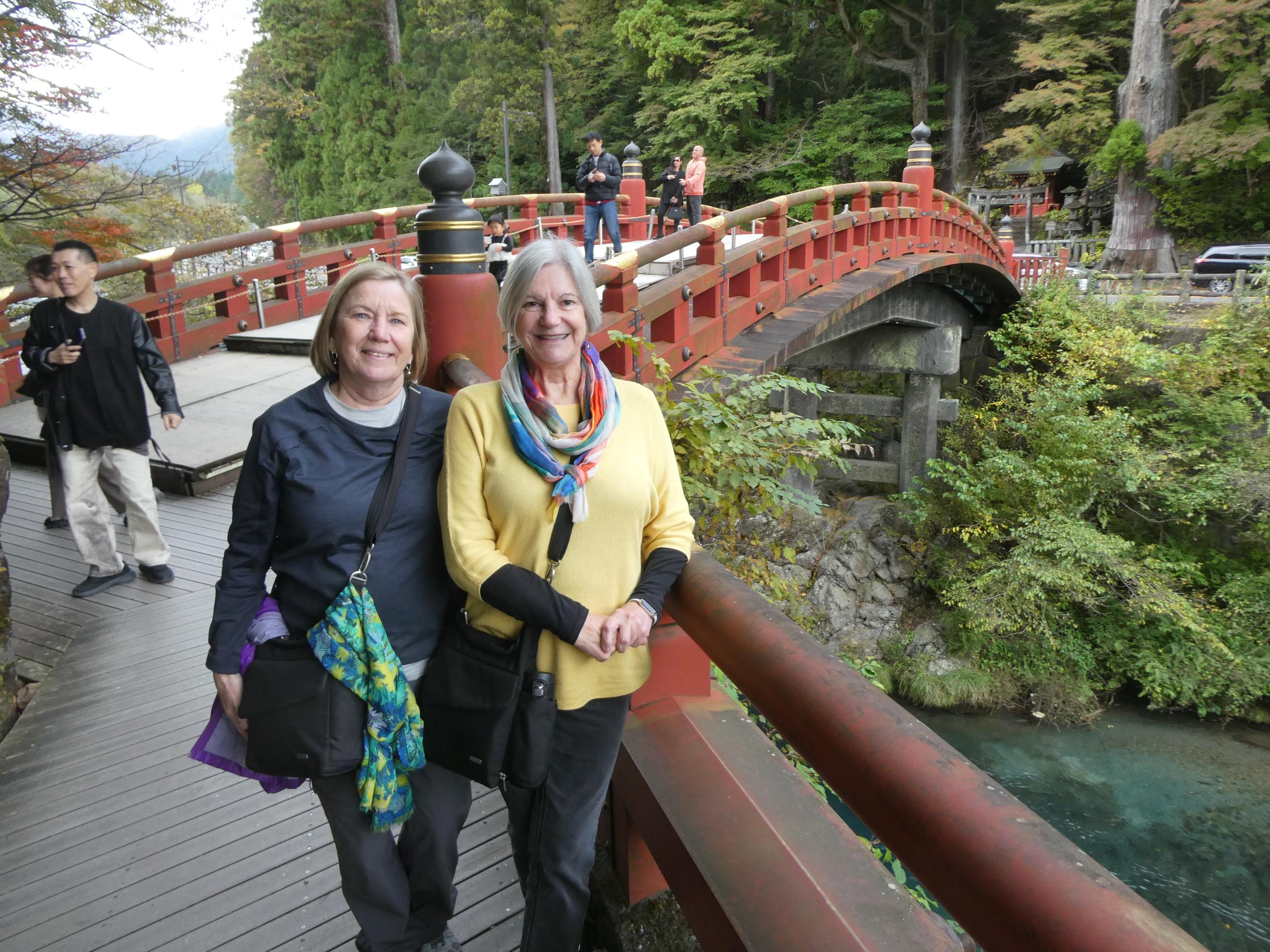
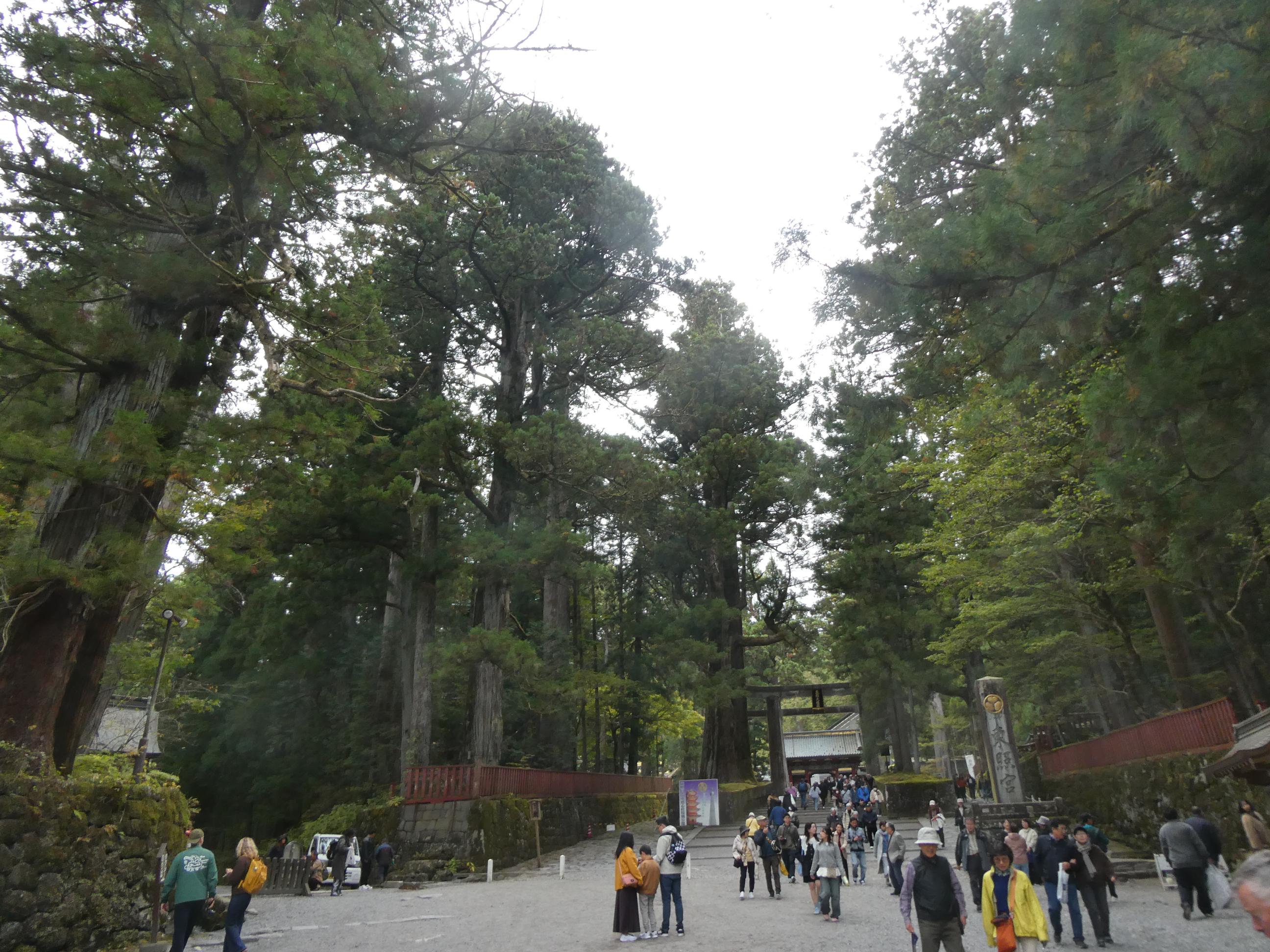
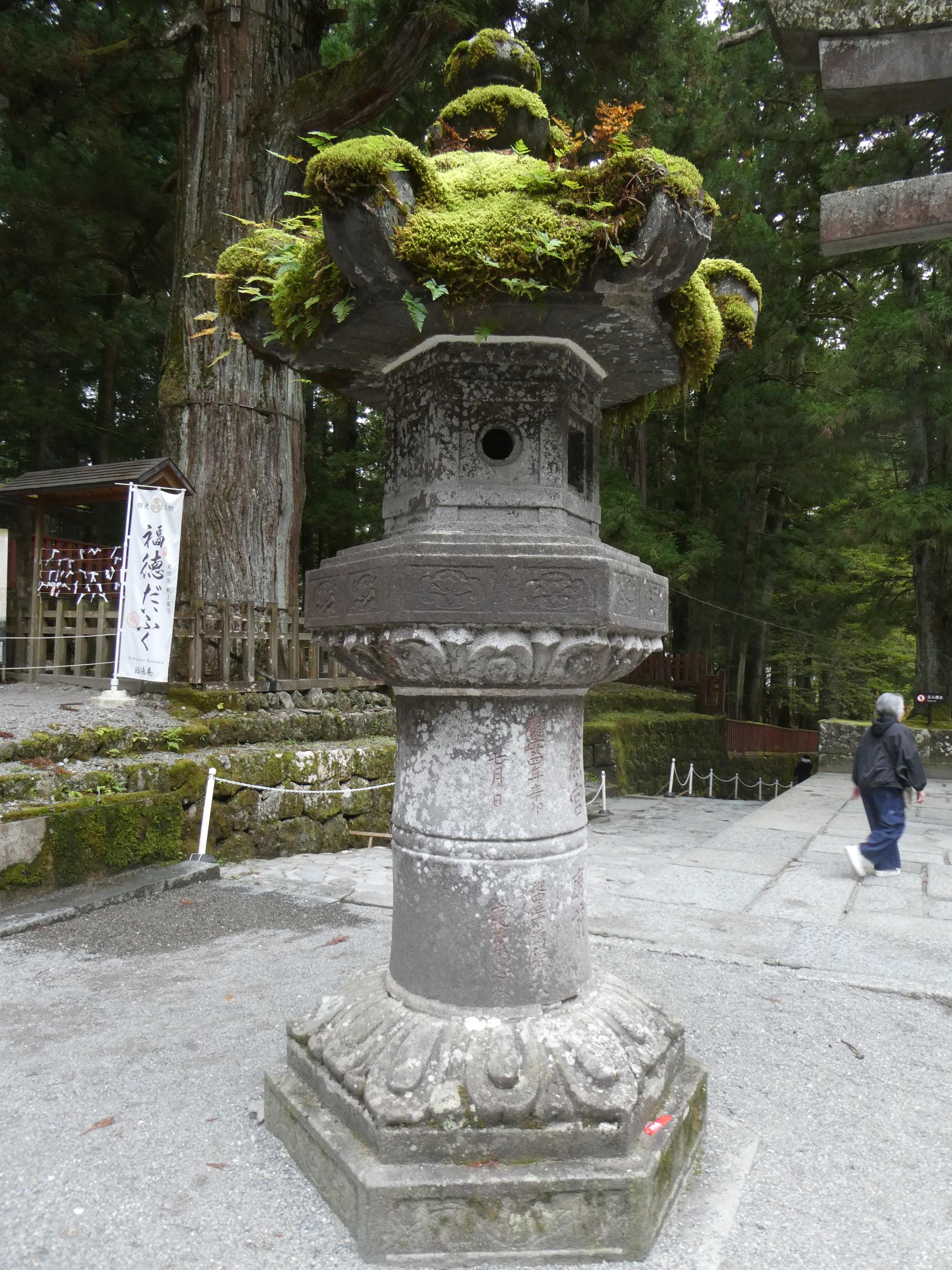
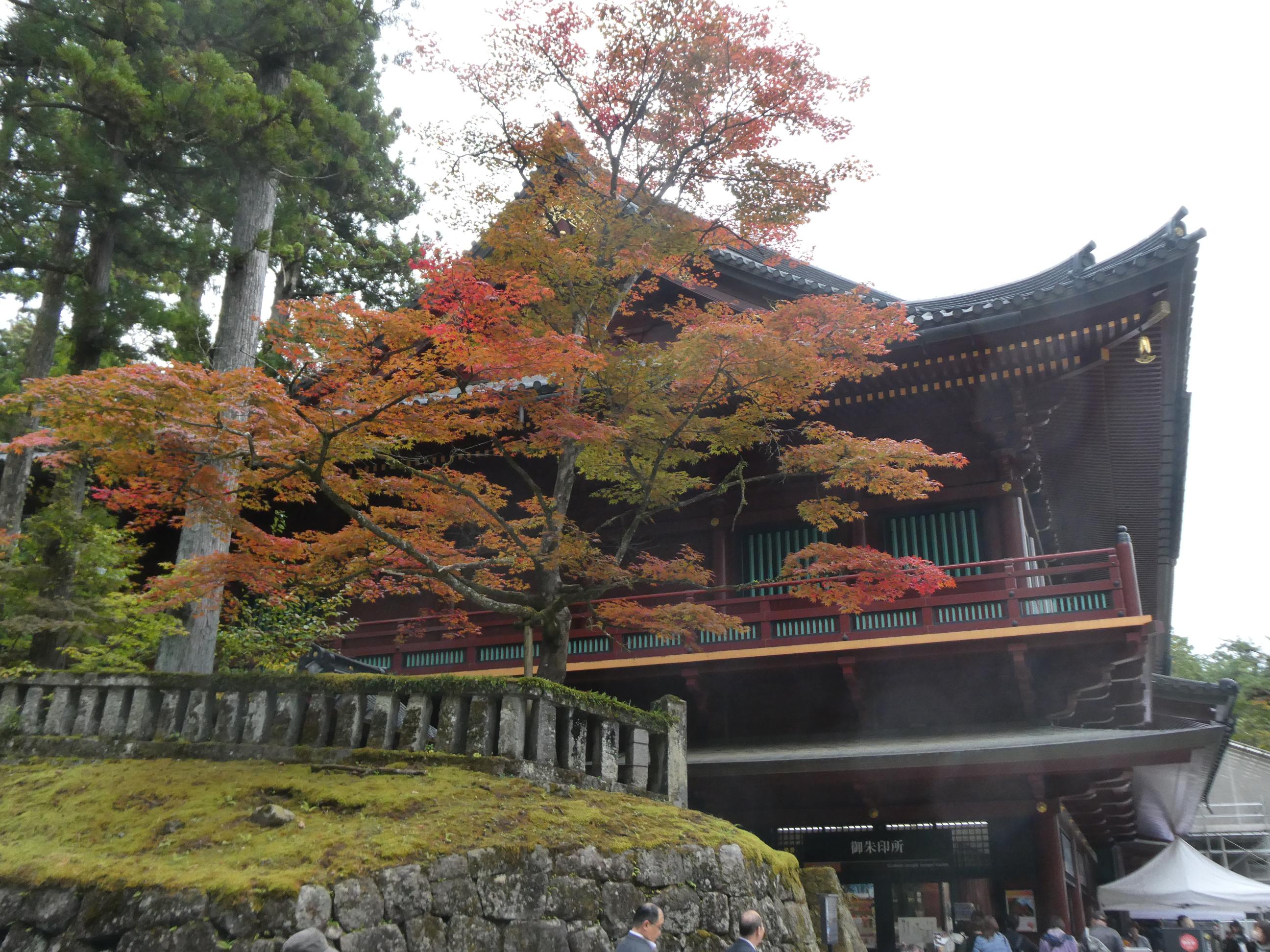
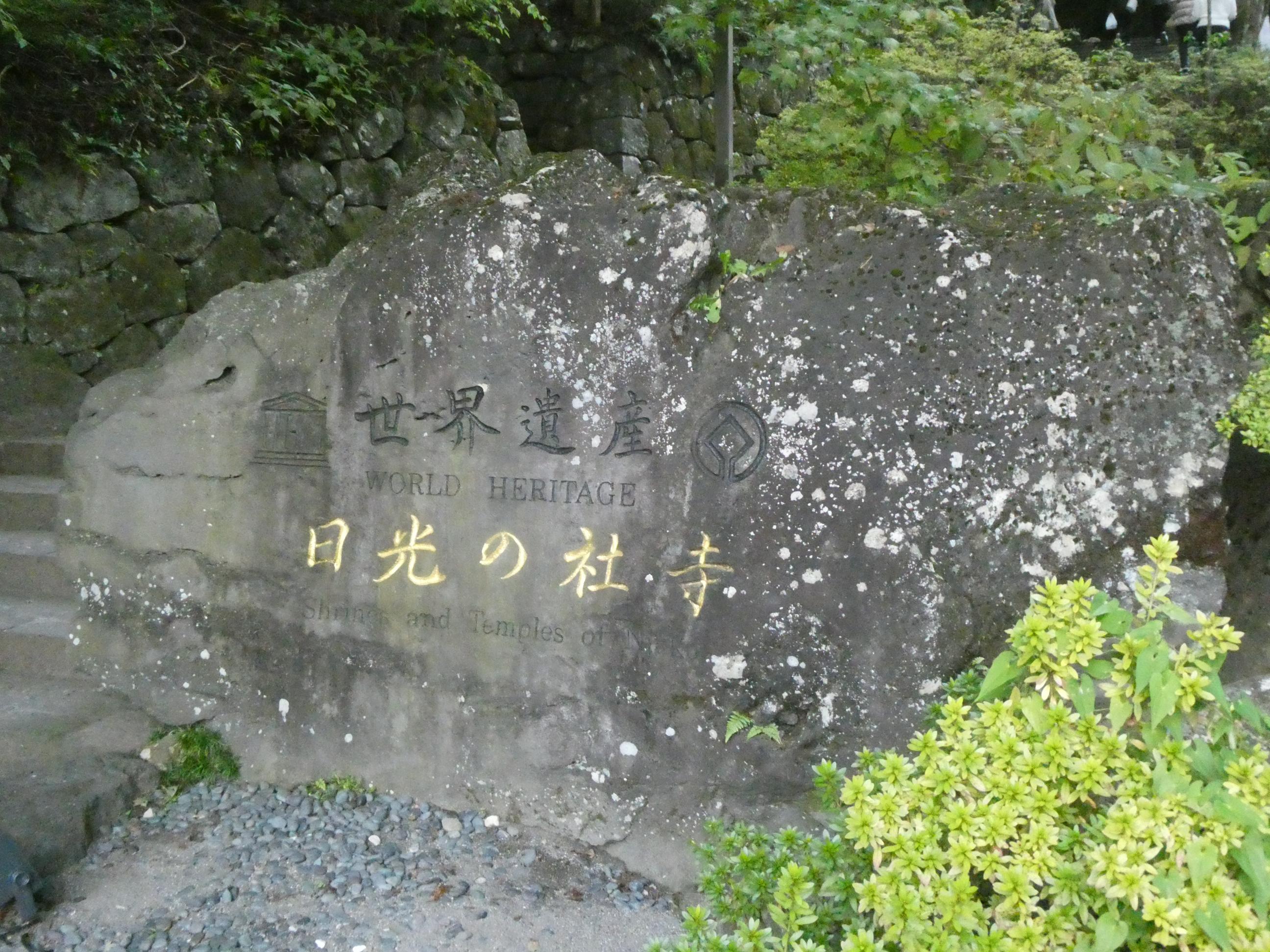
Across the road from the Shinkyo Bridge is the entrance to the Shrines and Temples of Nikko complex. It is also an entrance to Nikko National Park. The shrines and temples complex comprises of 103 structures, including ruins and relics, surrounded by natural forest and nestled into the mountains. There are two Shinto Shrines and one Buddhist Temple, as well as other structures belonging to them. The oldest structure is believed to have been constructed in the 8th century, but most of the religious structures were built in the 17th century. The site is one of stunning beauty. It was awarded UNESCO World Heritage status in 1999.
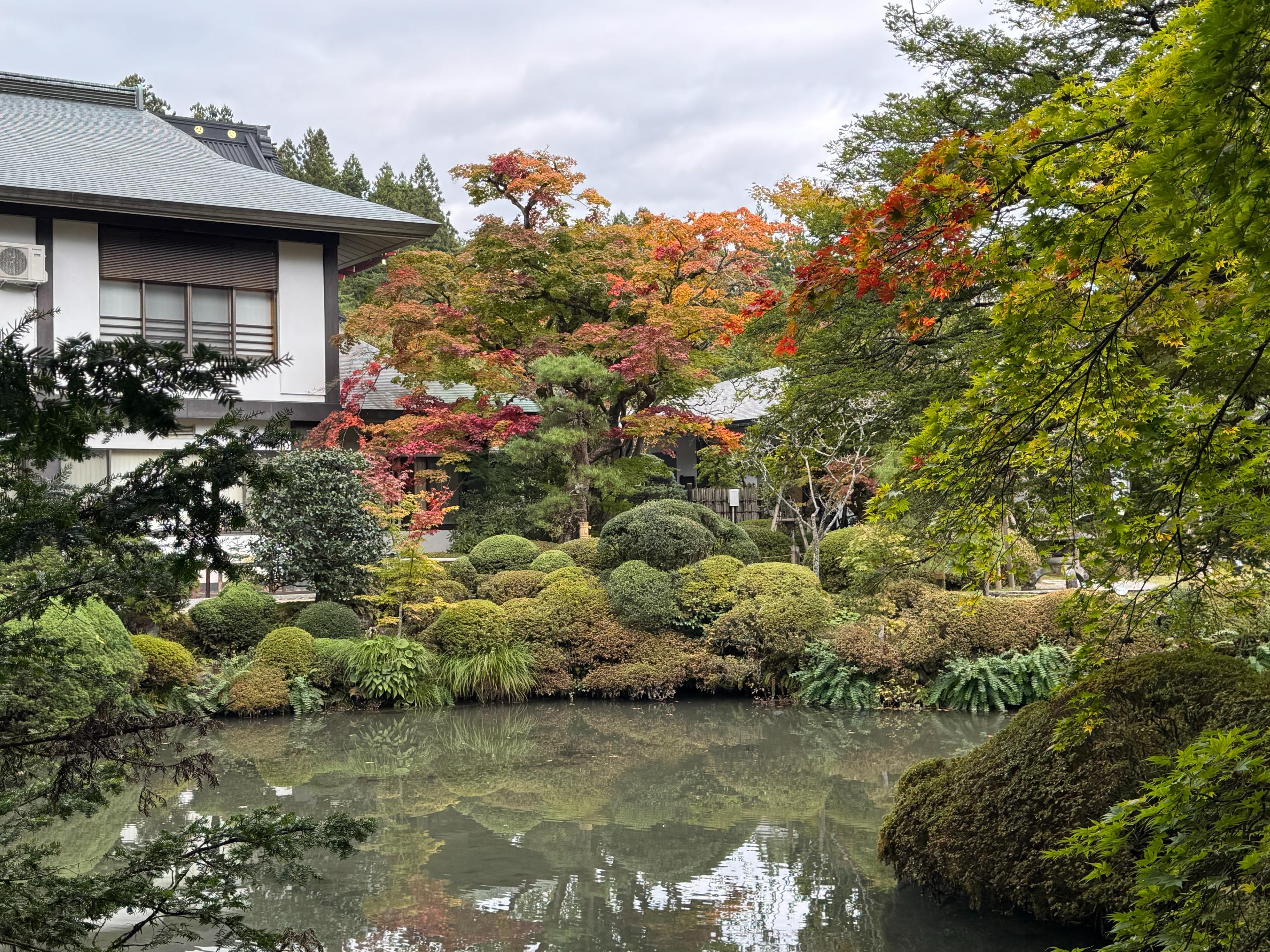
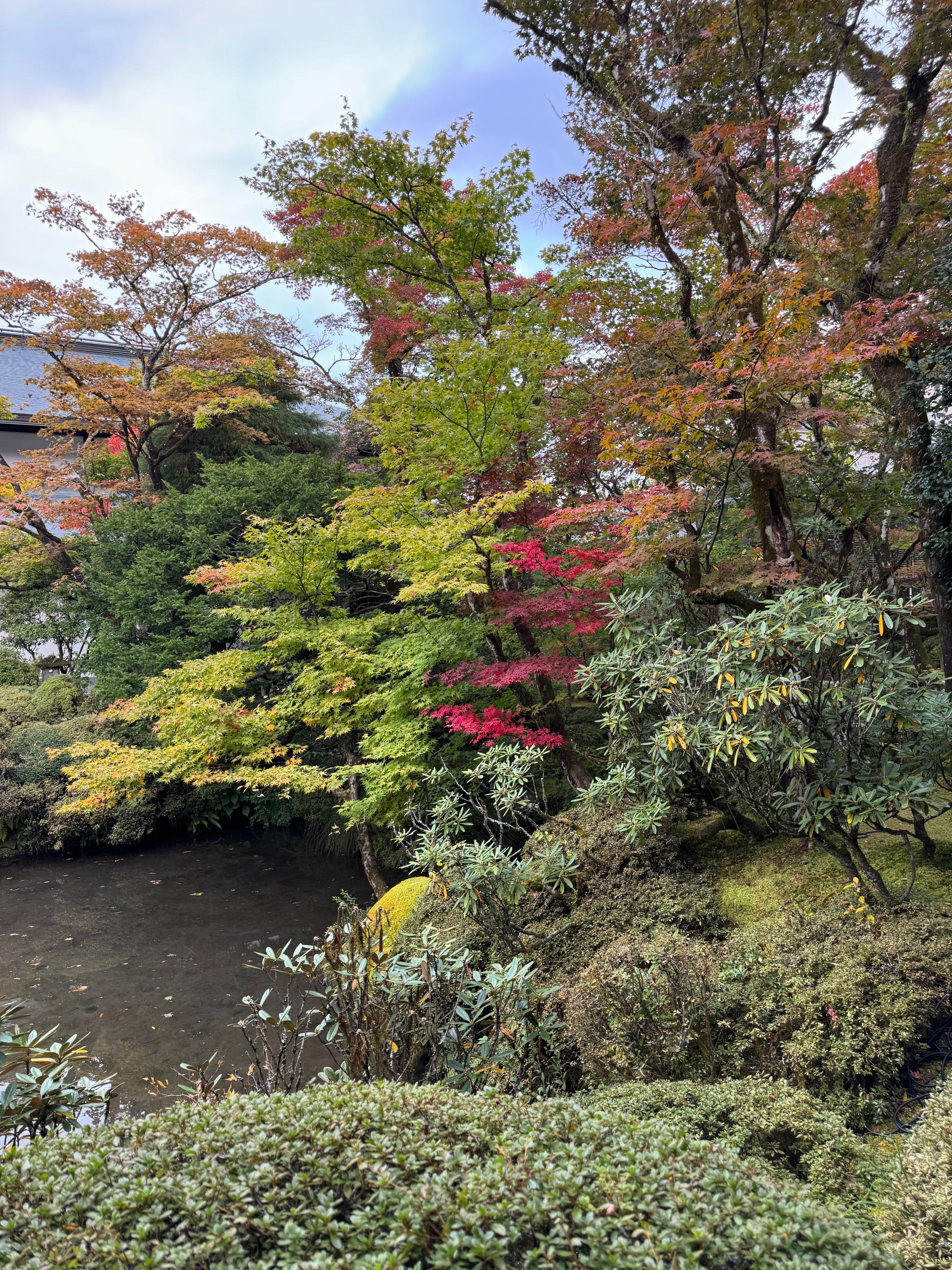
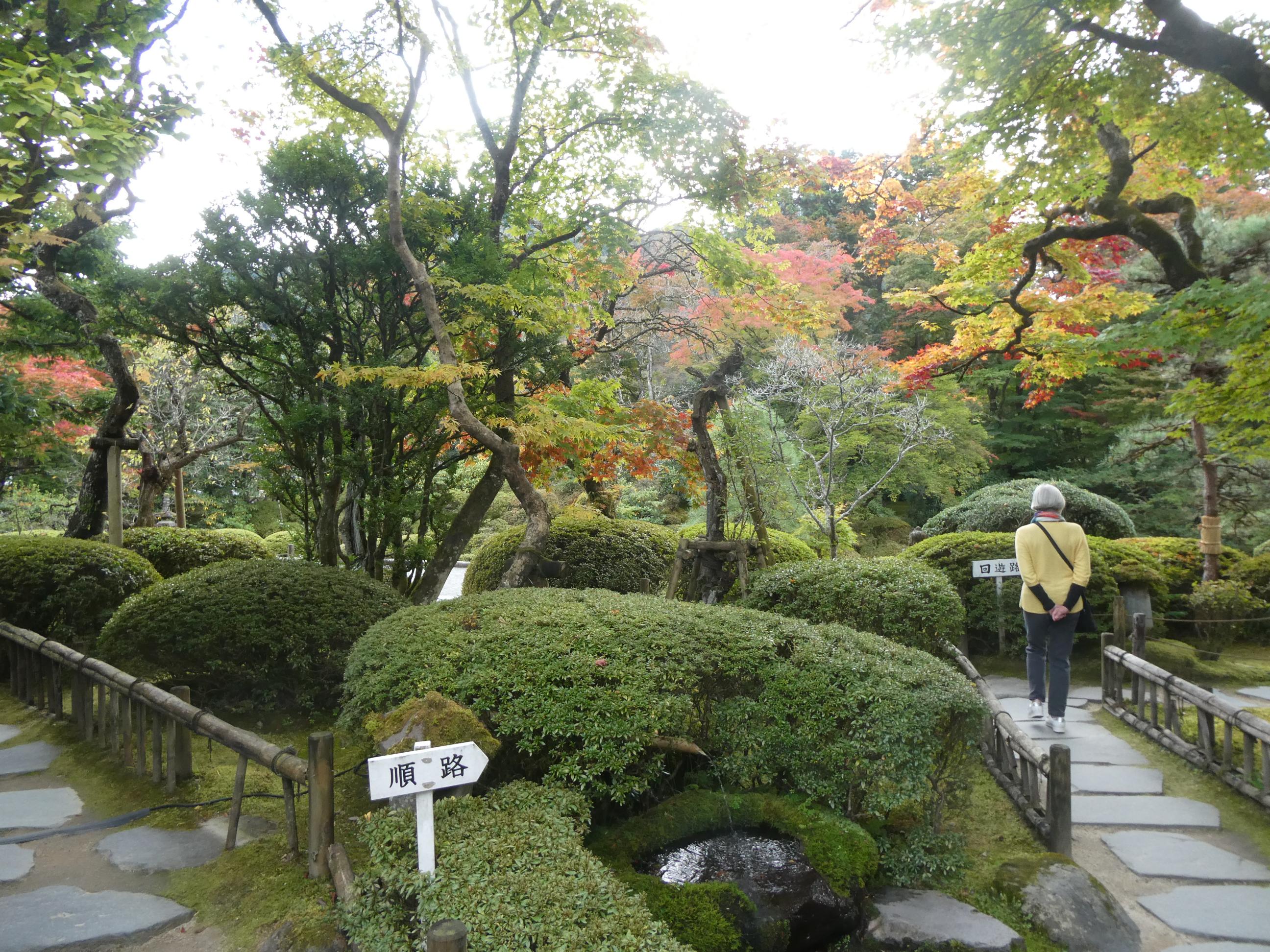
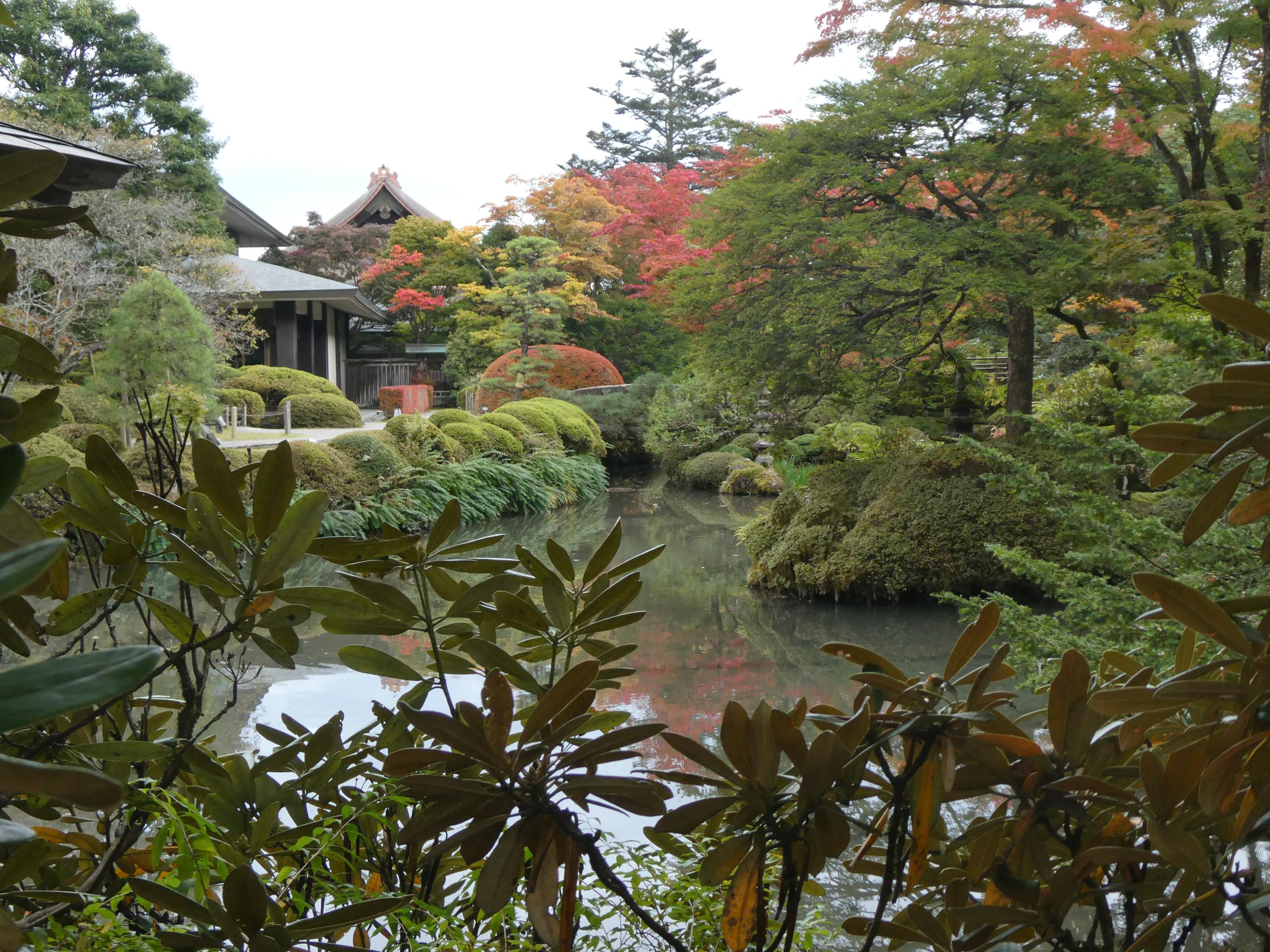
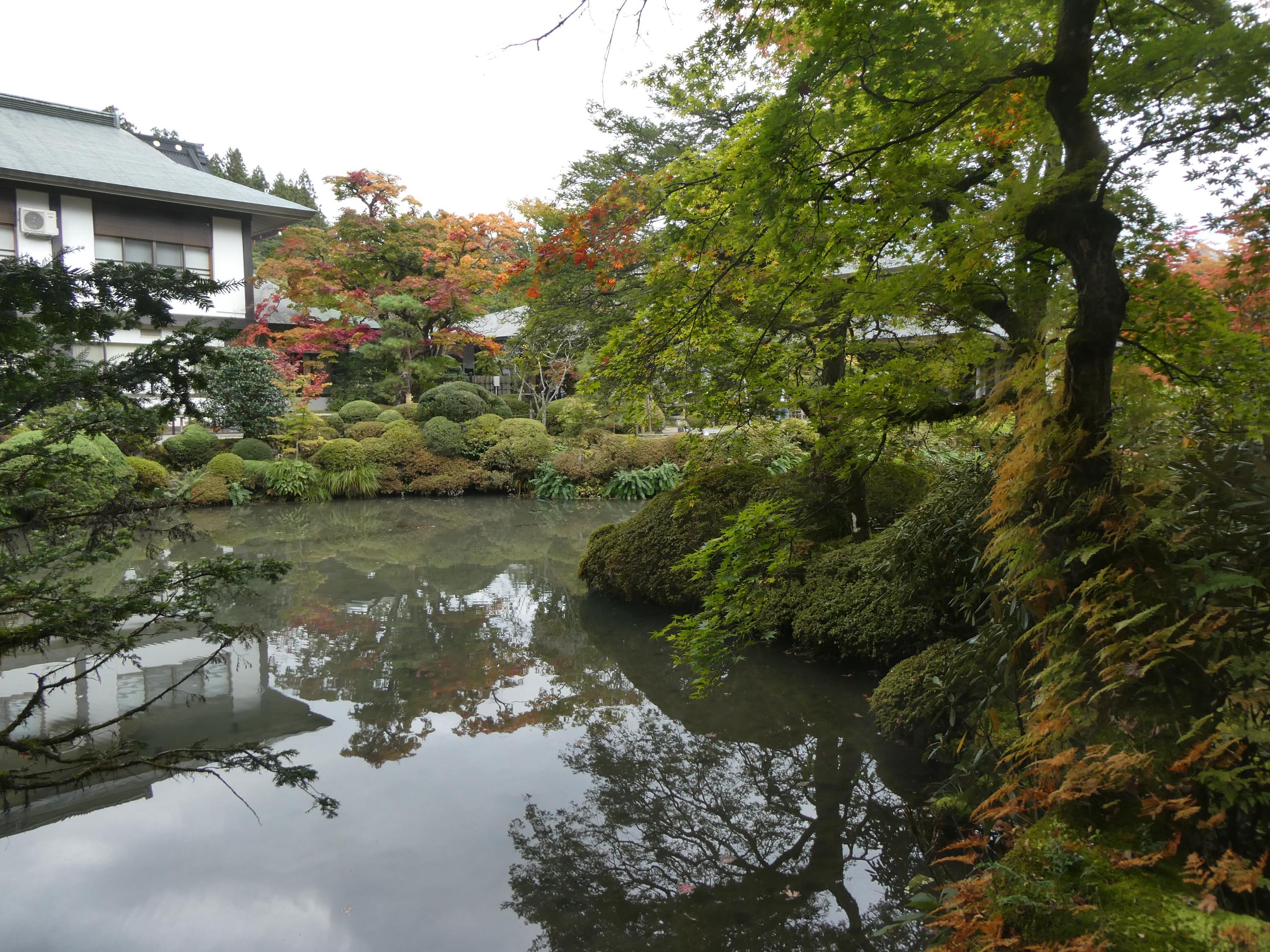
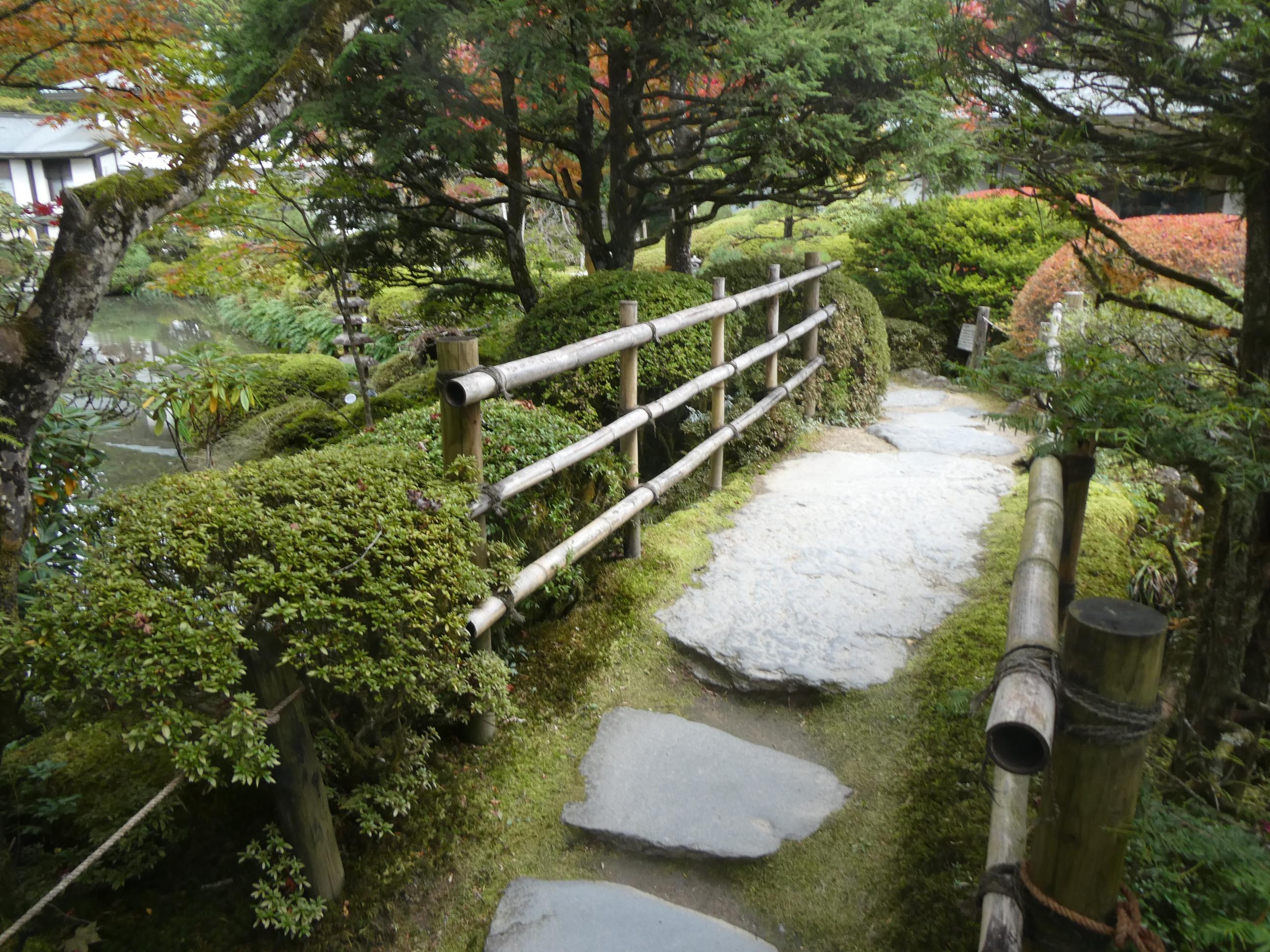
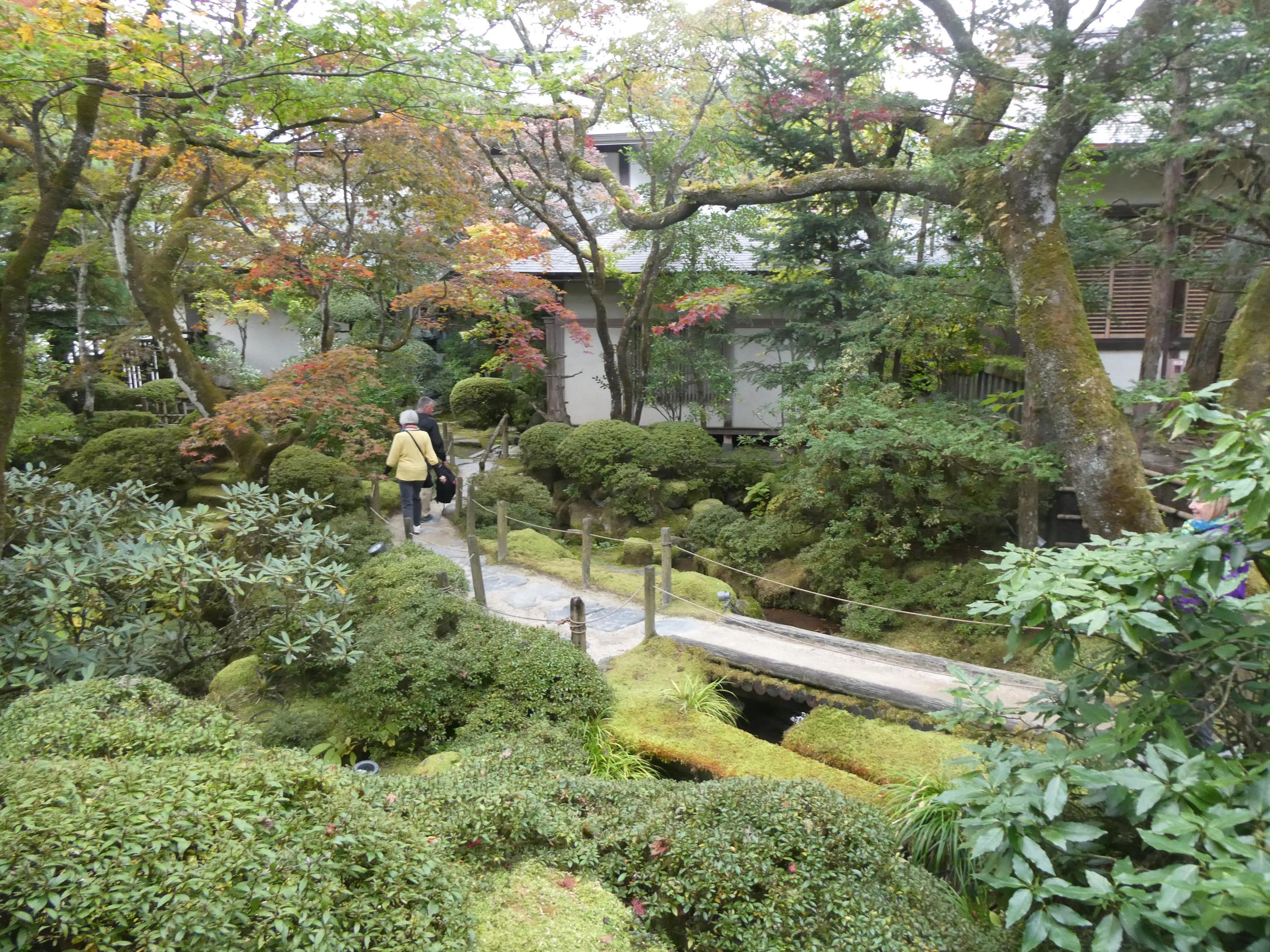
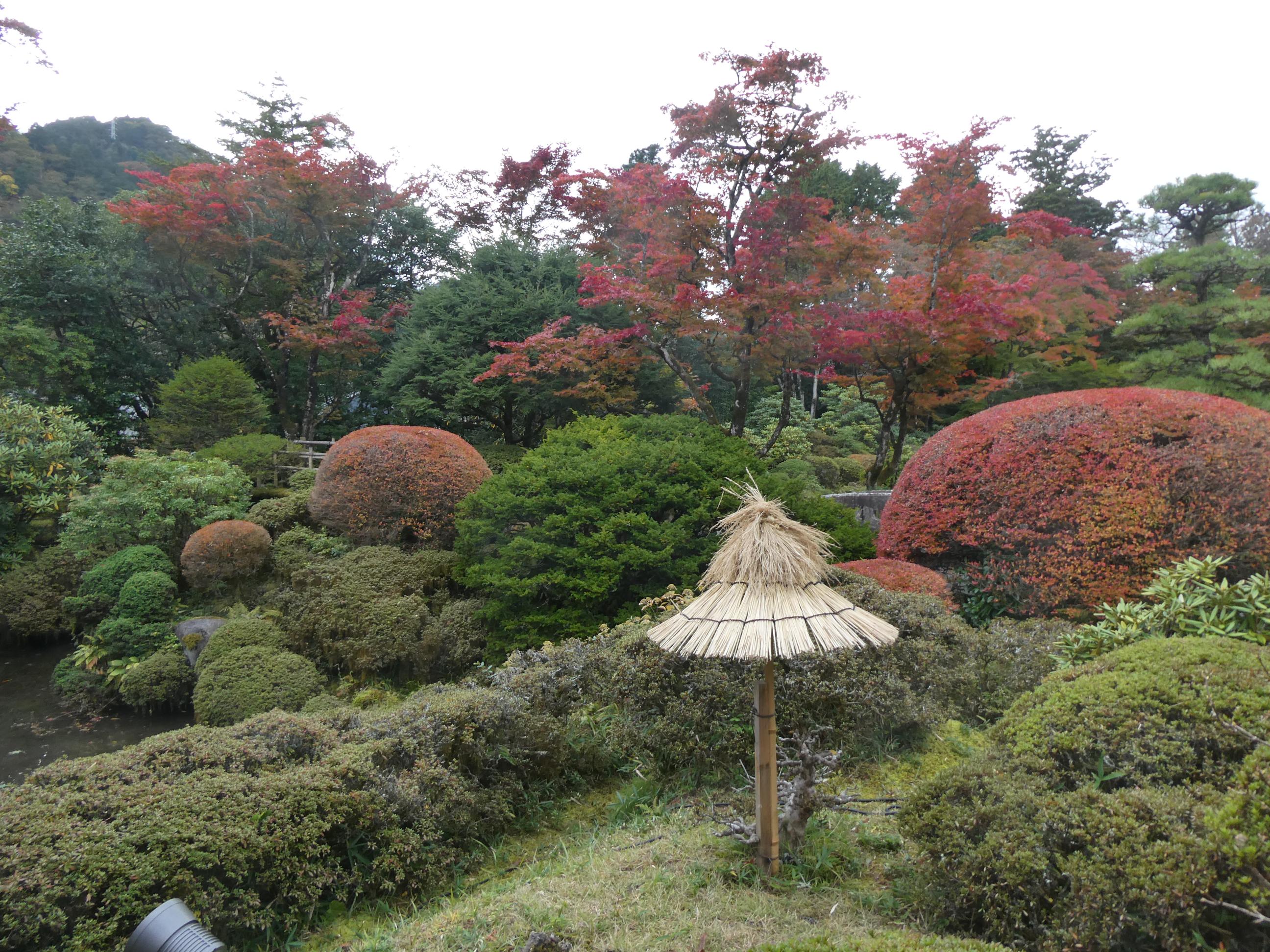
One of the first features we visited today was the Shoyo-En Garden, which was once the private garden of an imperial prince. It dates back over 300 years. The garden features an undulating path which winds around a large pool where koi fish swim. There are mossy rocks, rhododendrons, azaleas, and the famed maple trees that attract so many visitors to Japan to see their autumn leaves at this time of year. Whereas the heritage gardens of Europe are often orderly and symmetrical, this Japanese garden is harmonious because of its organic blend of shapes and sizes and colours.





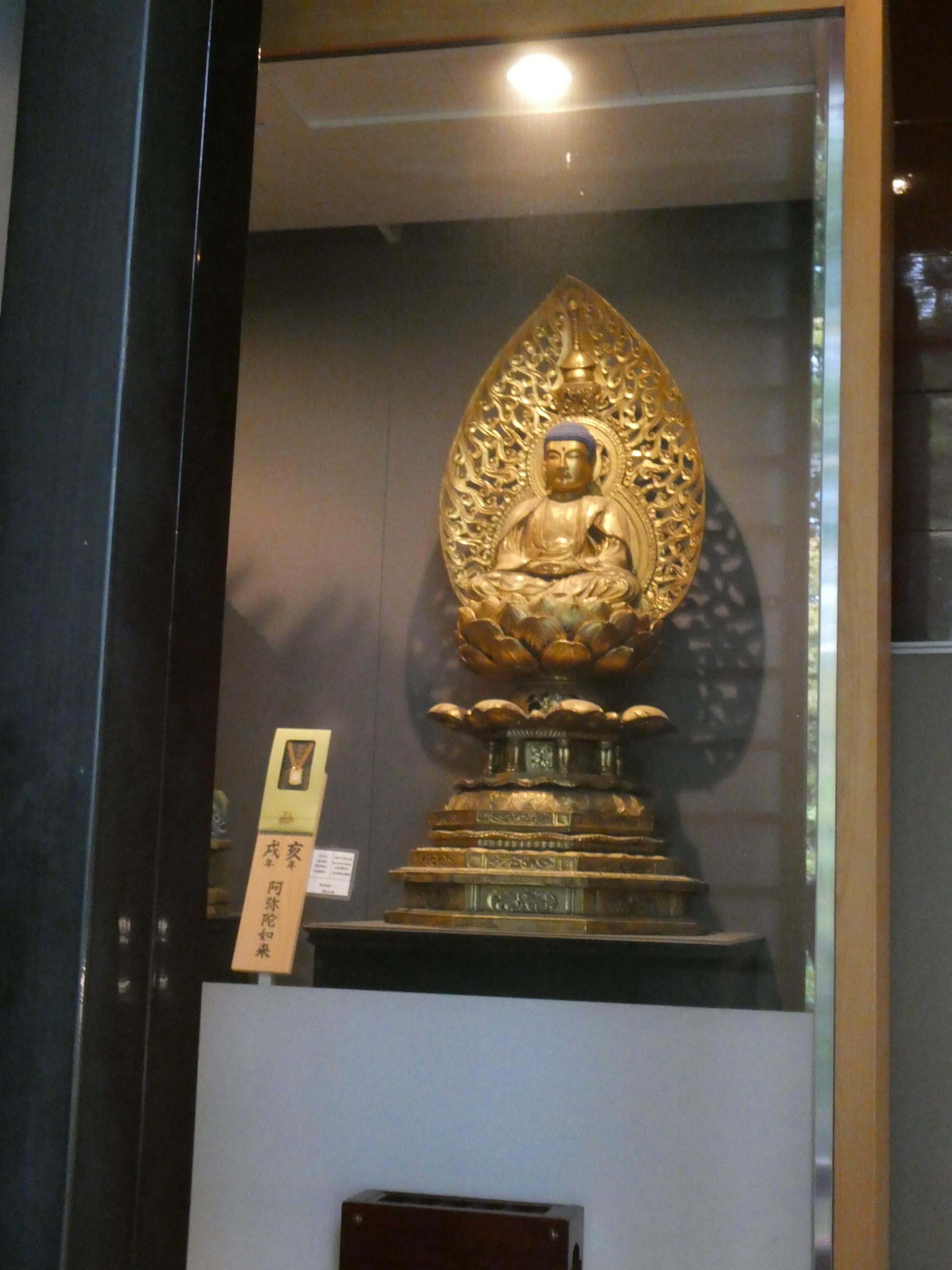
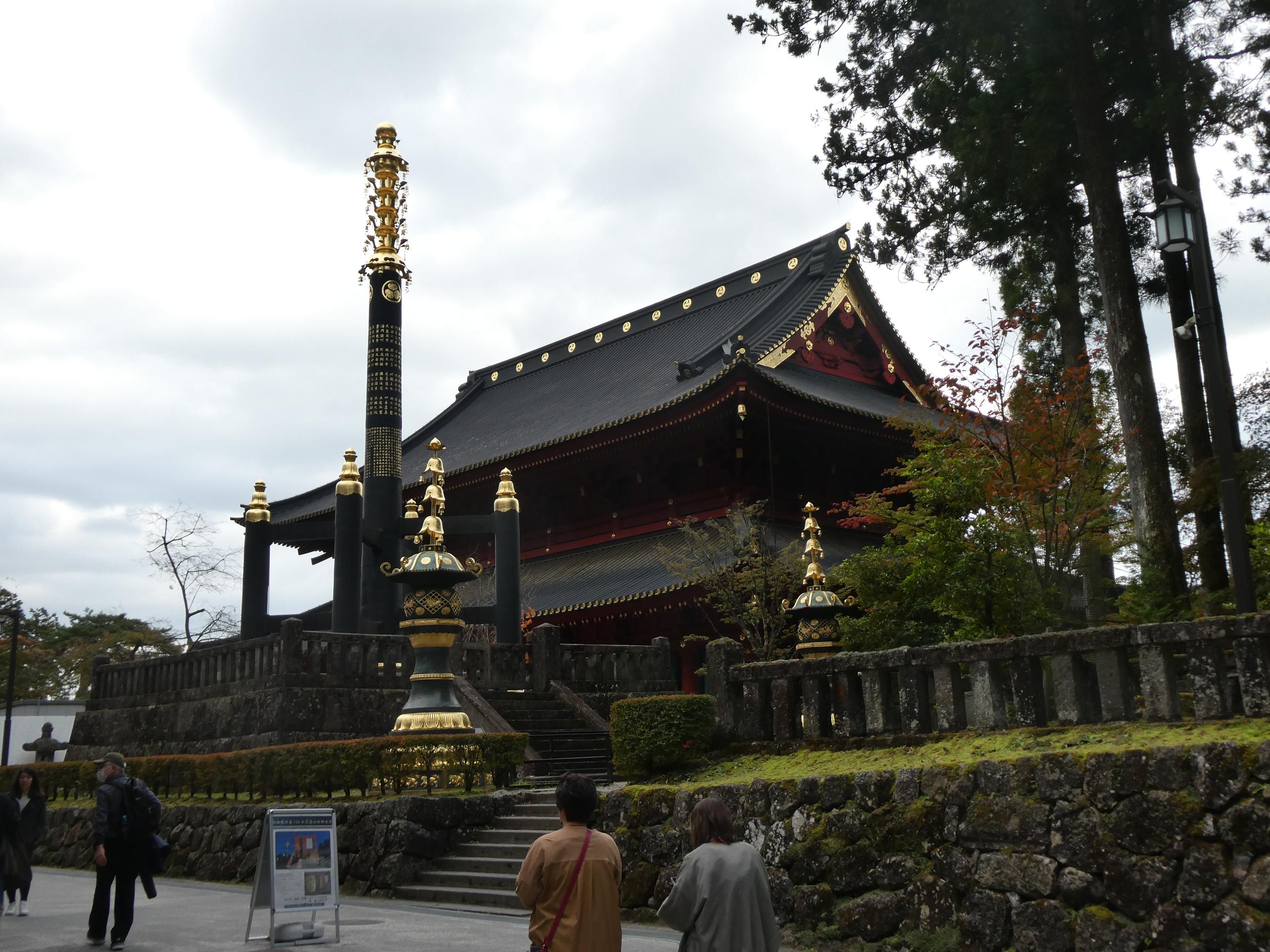
It would not have been possible to visit all of the shrines and temples in the complex today. We were able to tour the Rinnoji Temple, which is quite grand and imposing. It is adjacent to the Japanese garden we visited. Taking photos inside the temple is not permitted, which is a pity because I would have loved to show you the three massive golden Buddhas. I’m afraid the best I can do is to include a photo of the Buddhas on the entrance ticket, which you can see below. Those Buddhas really don’t bear comparison with the real things, however. Just past the rear of the Rinnoji Temple is the Sorinto Pillar, which was built in the 17th century to symbolise world peace. We never made it as far as the Shinto shrines today.
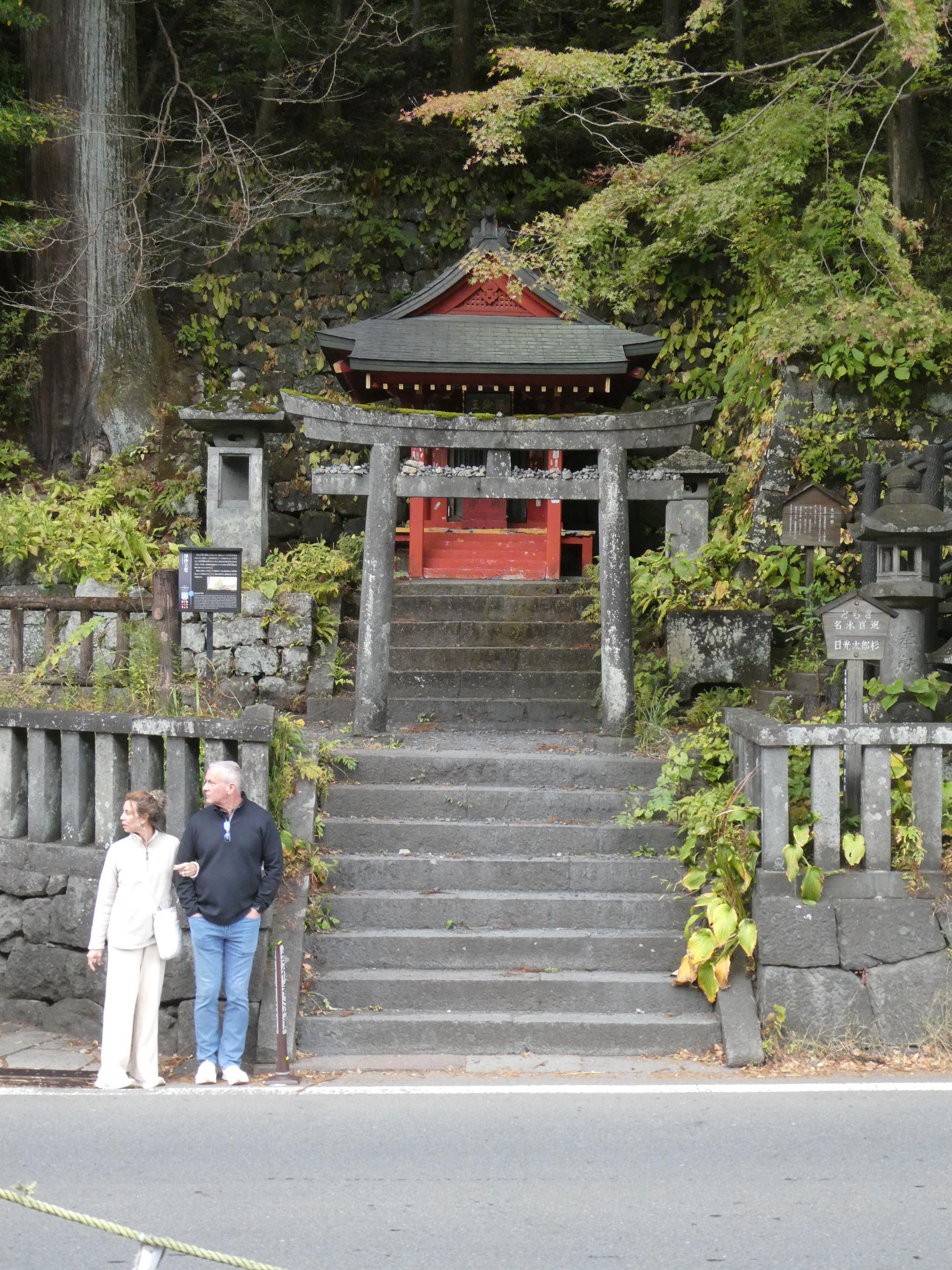
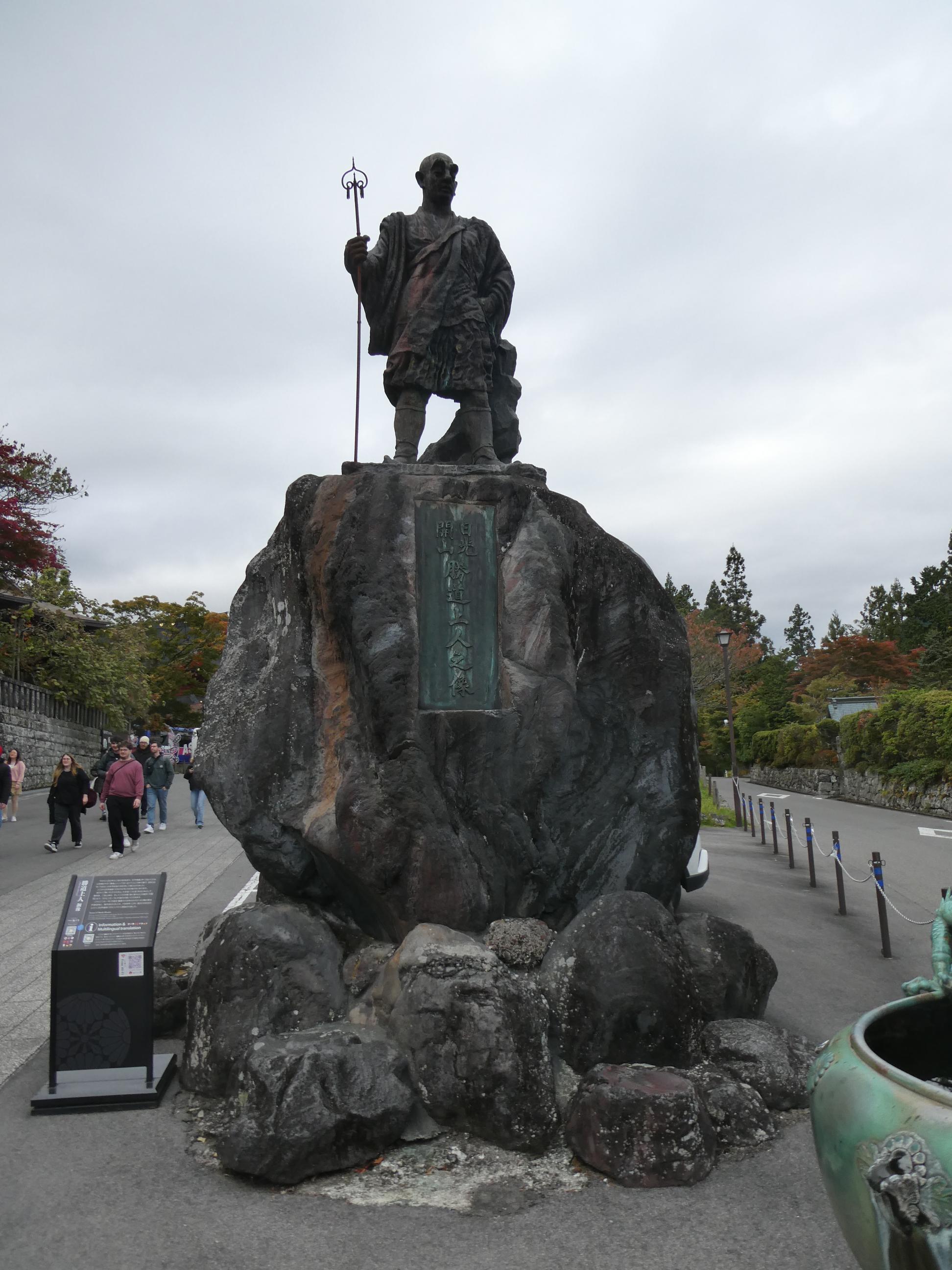
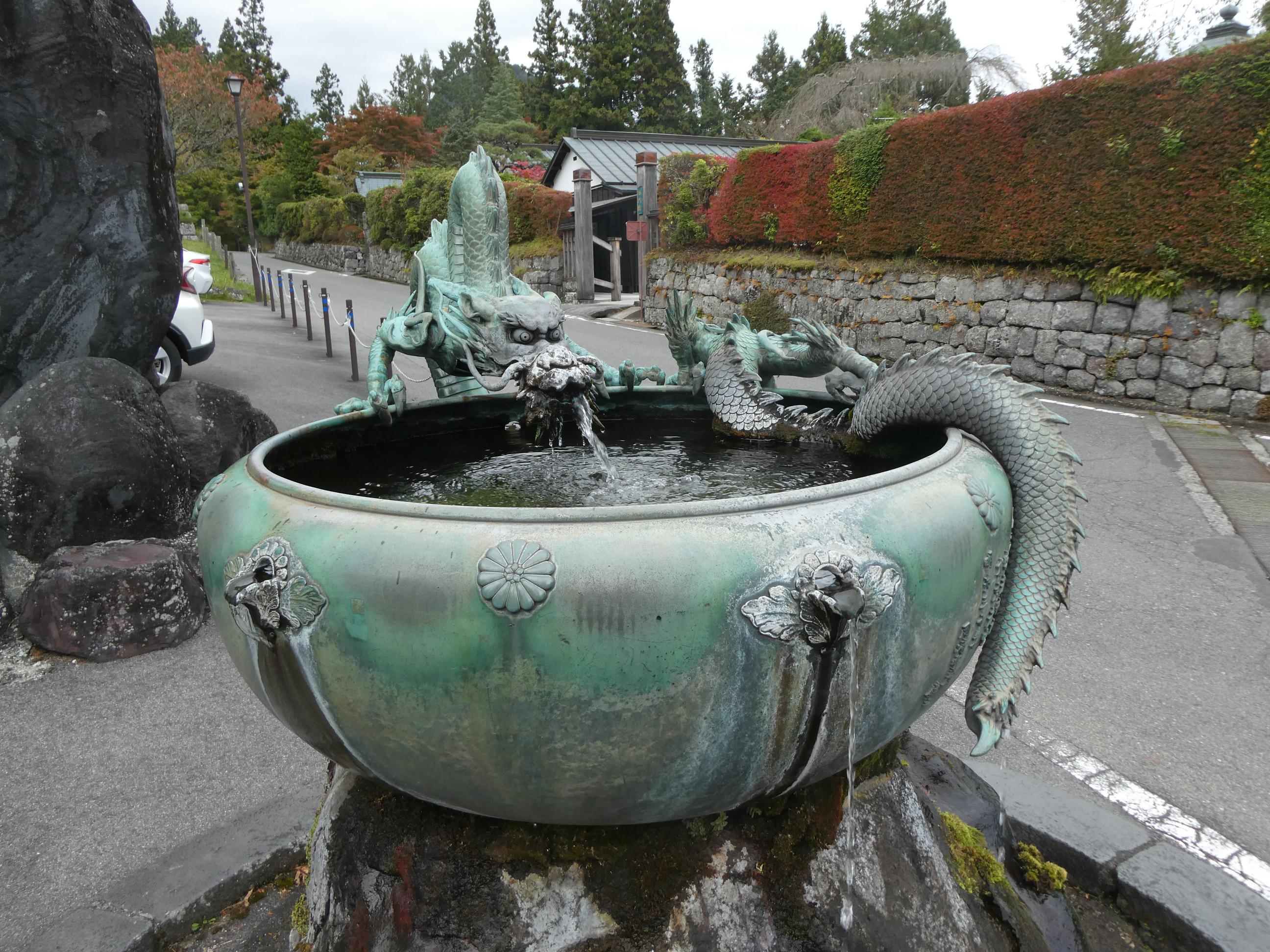
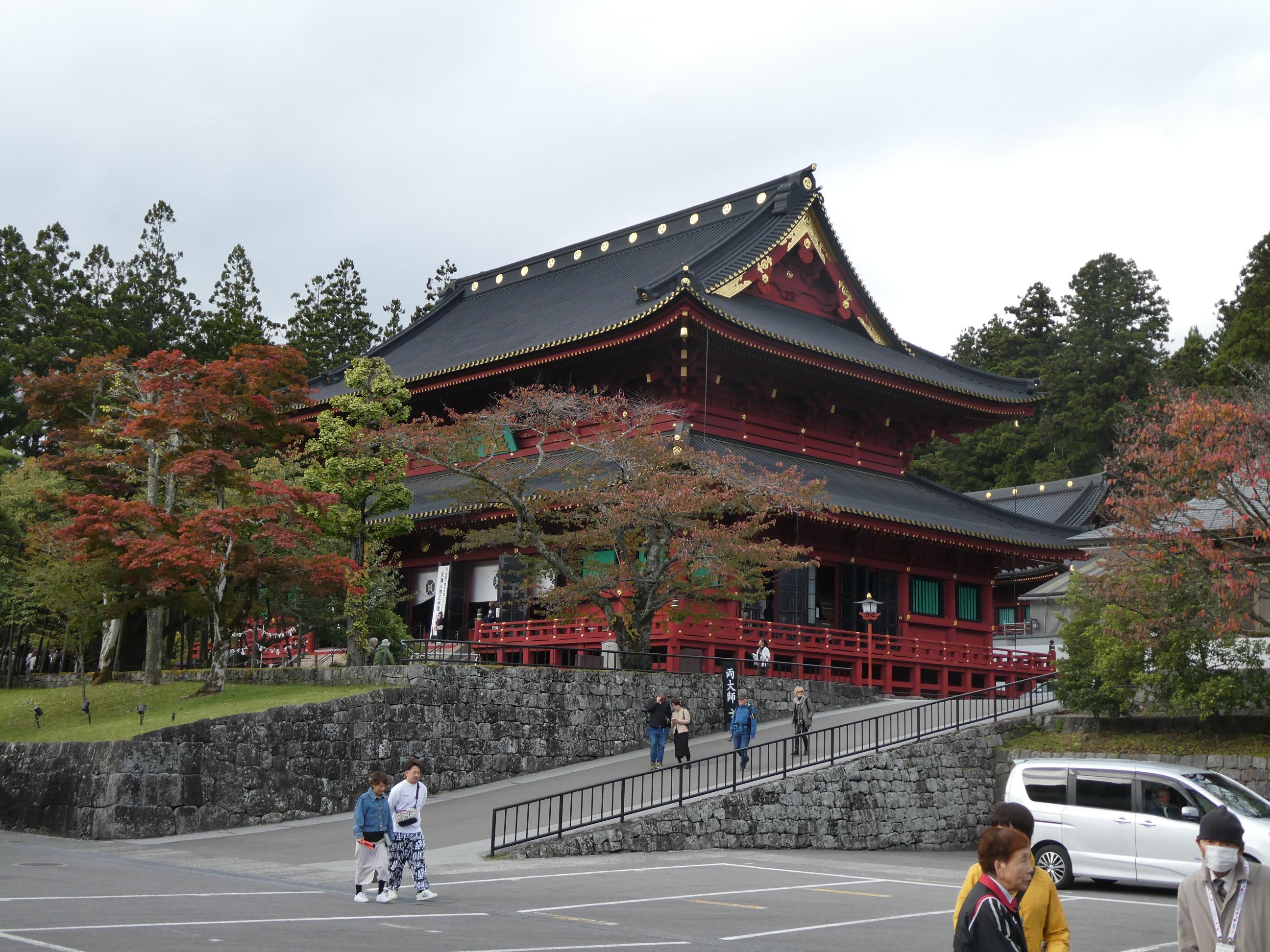
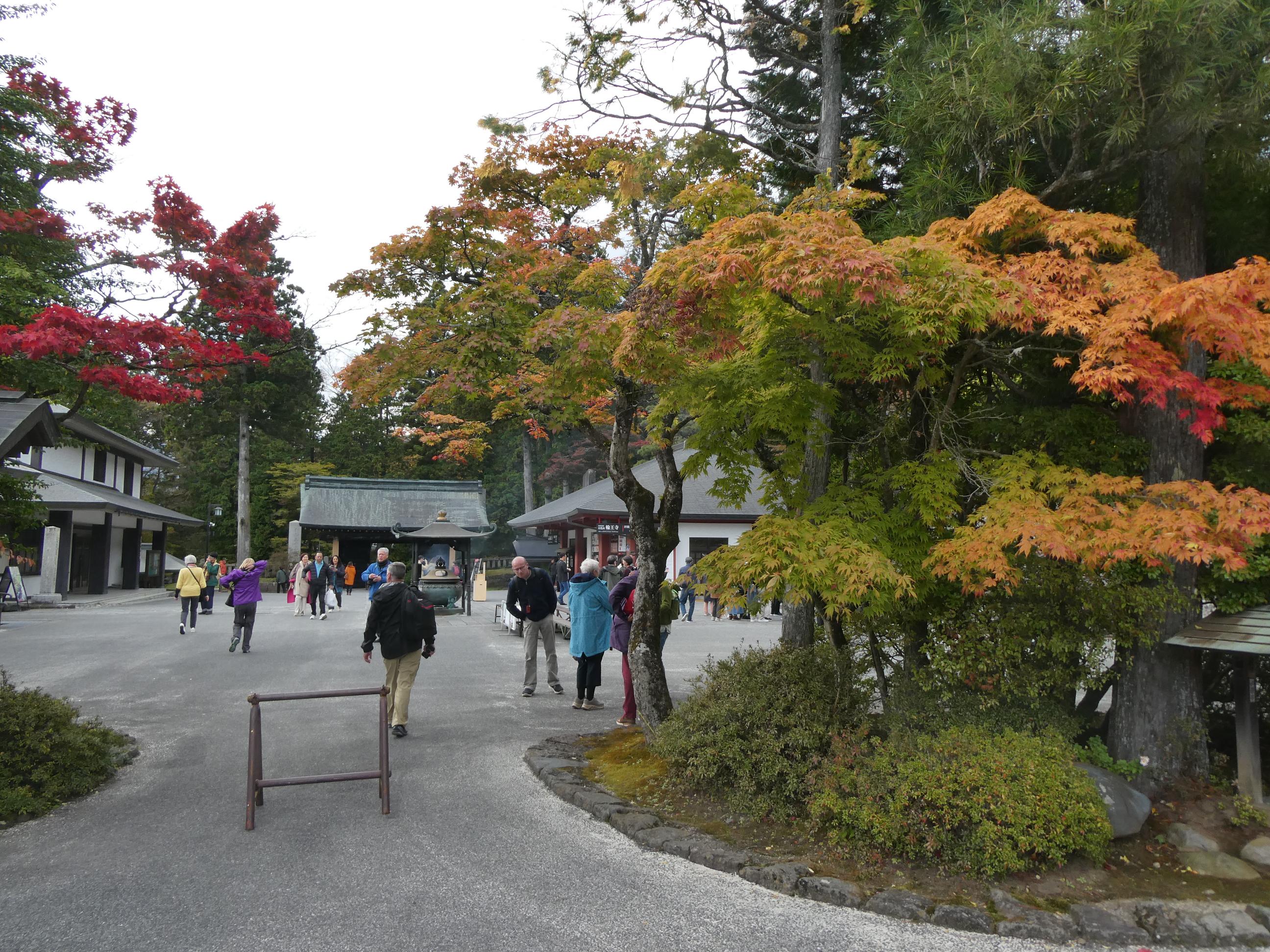
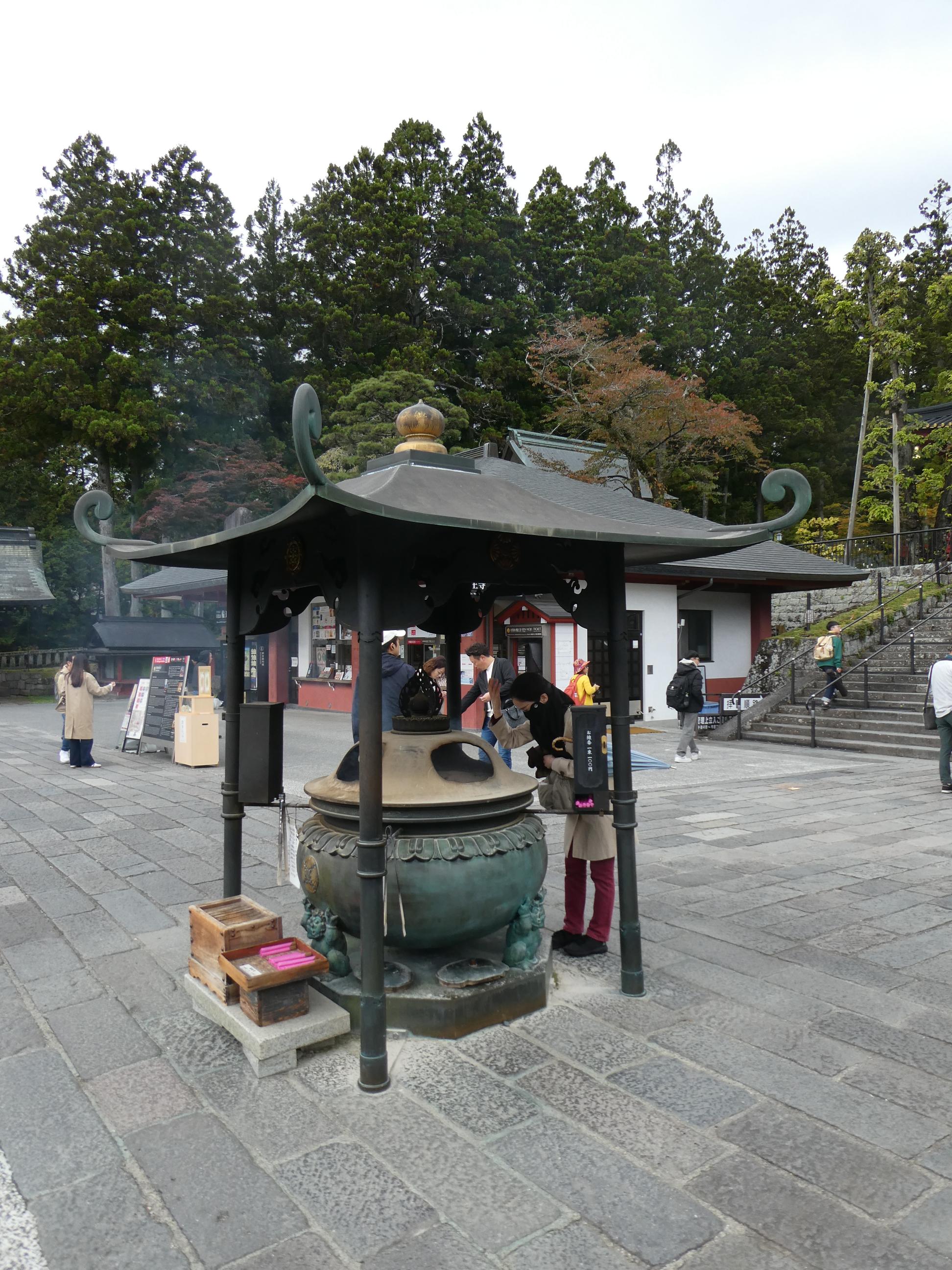
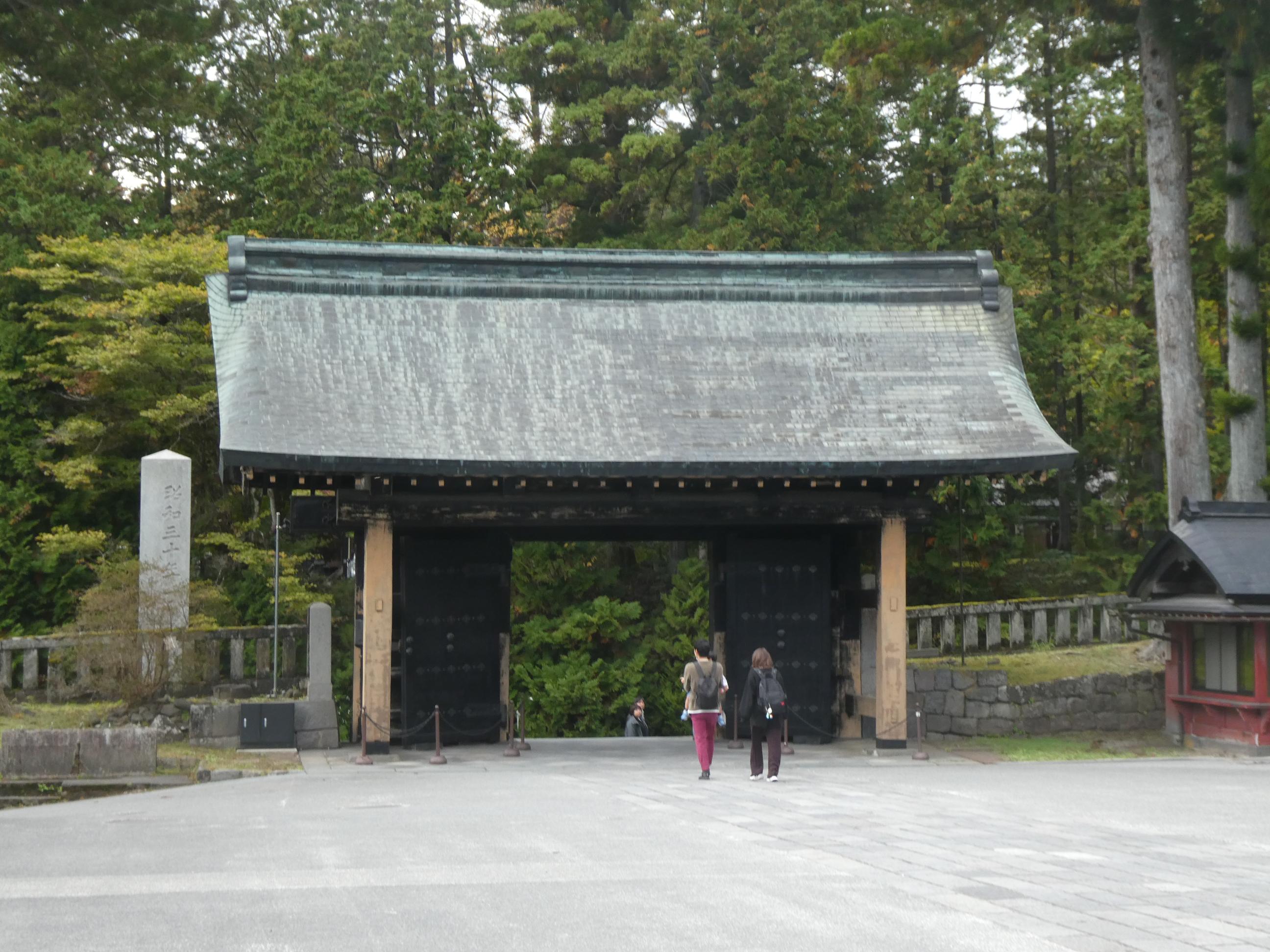
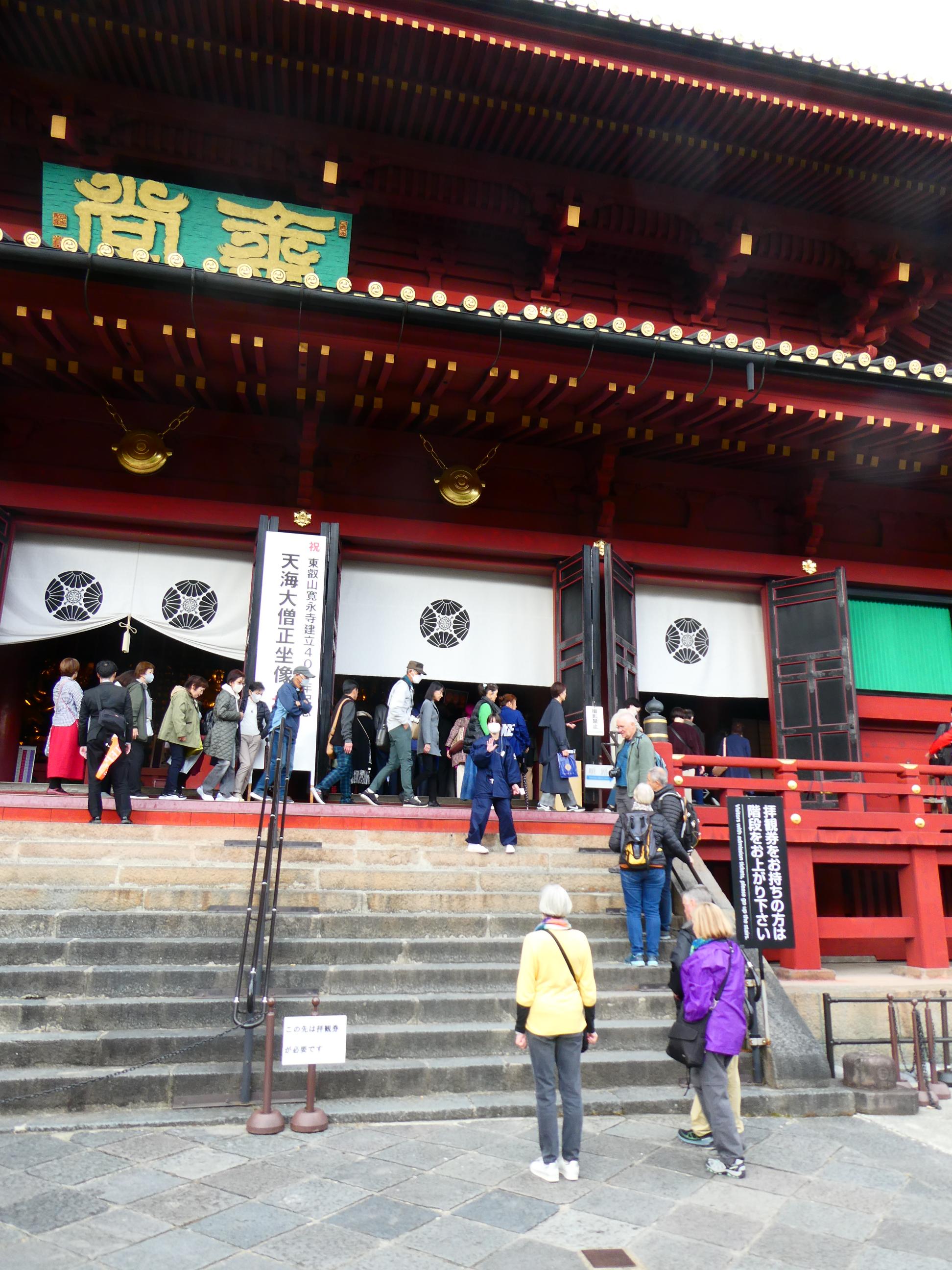

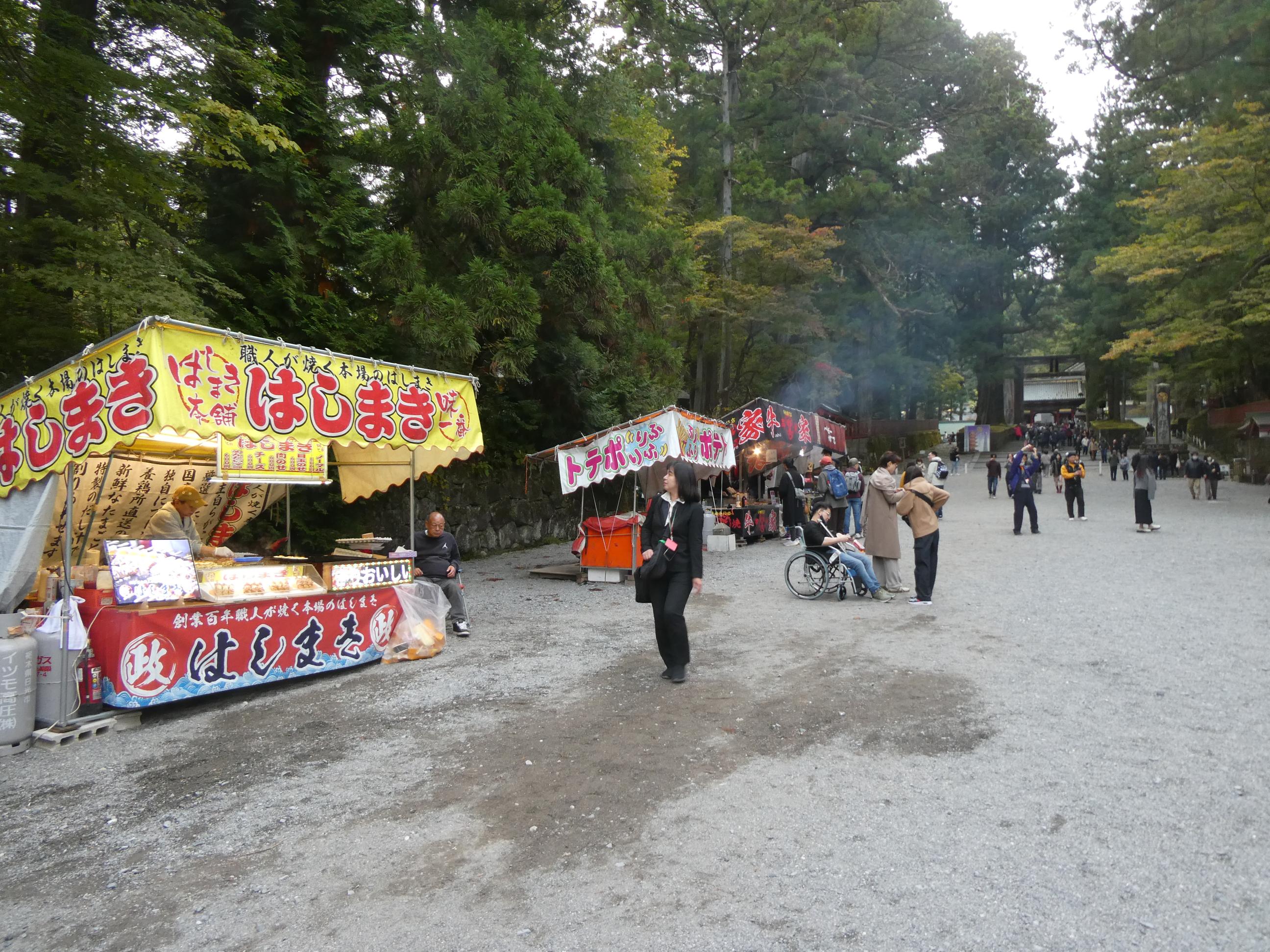
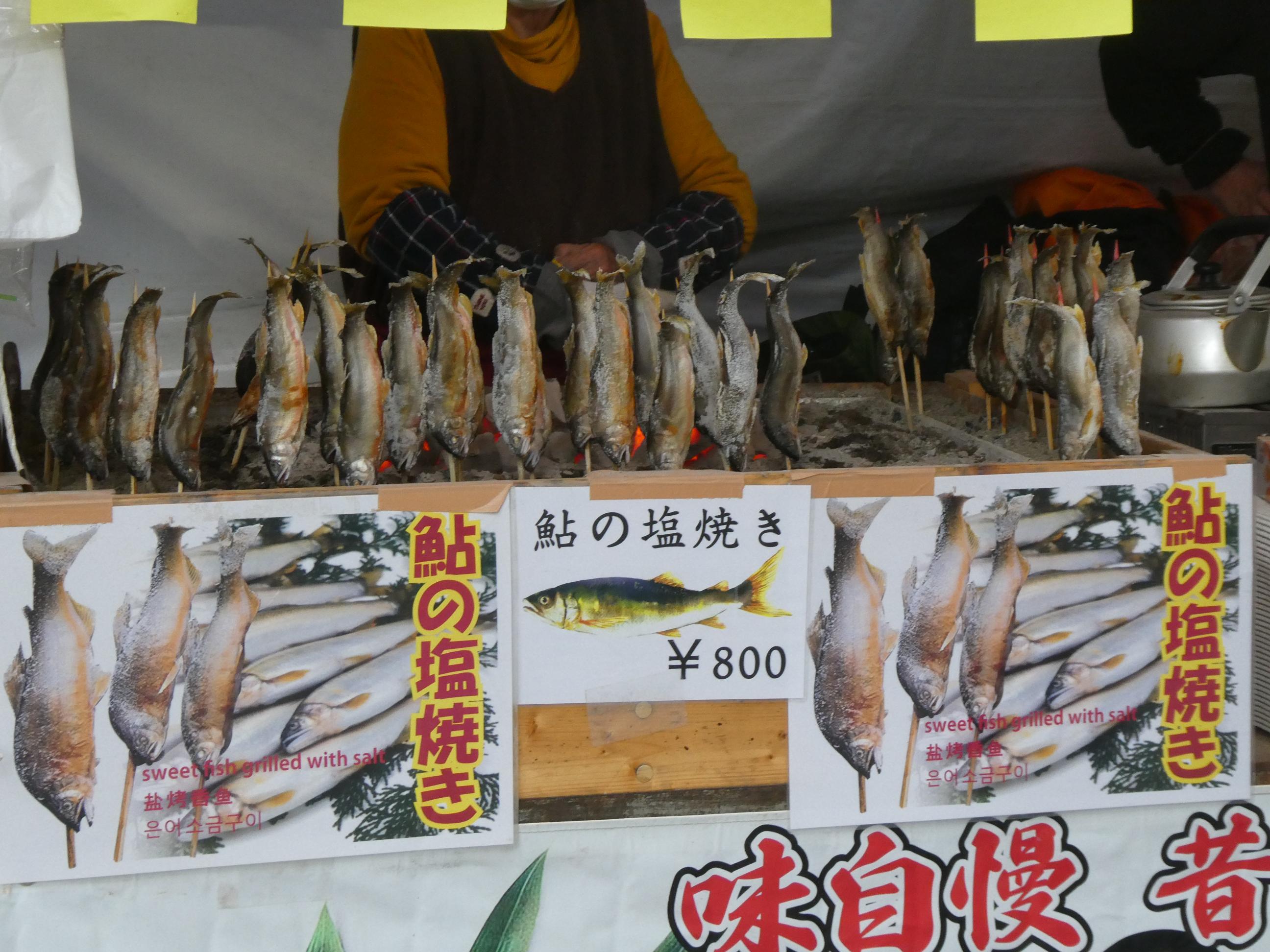
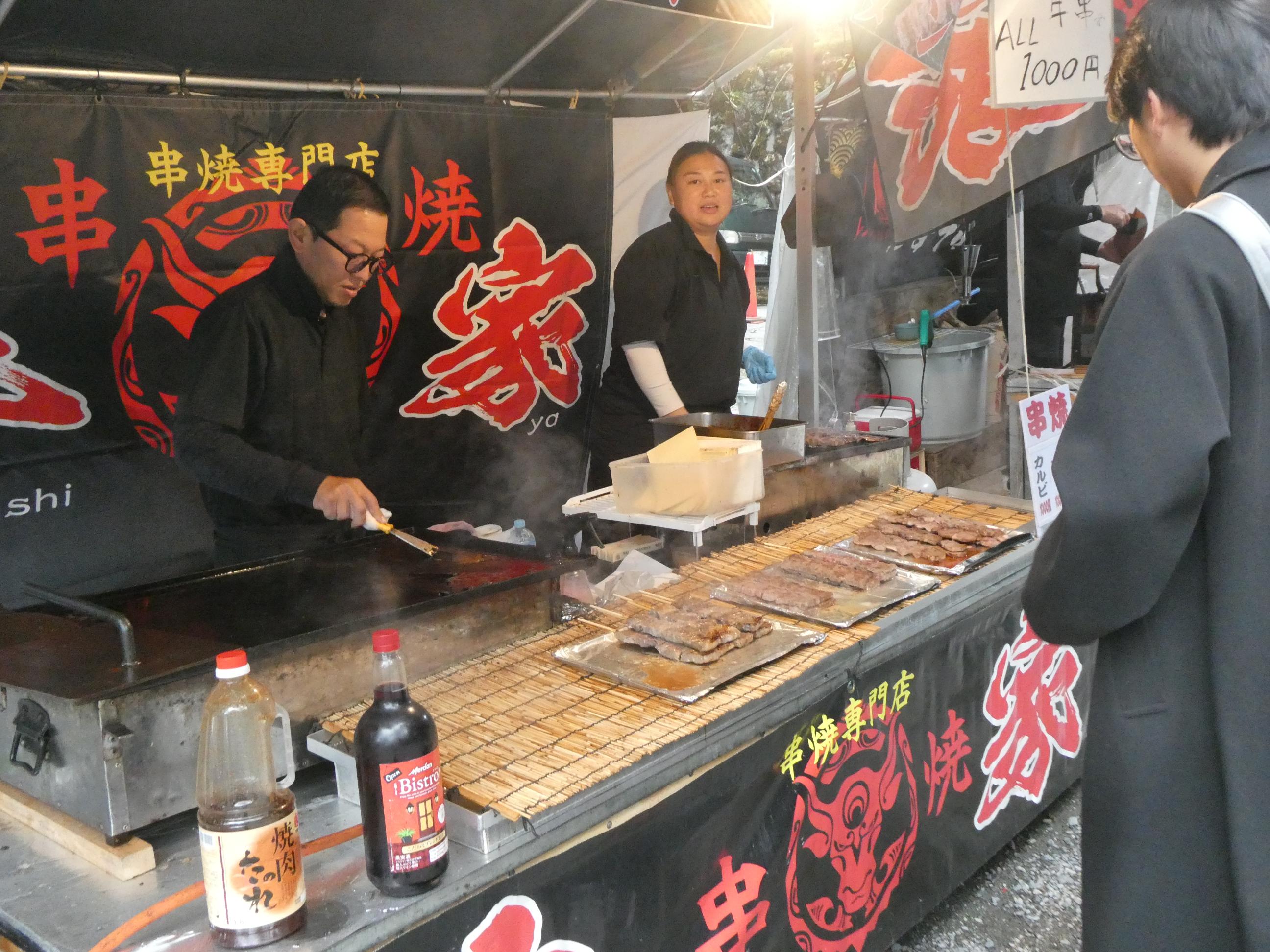
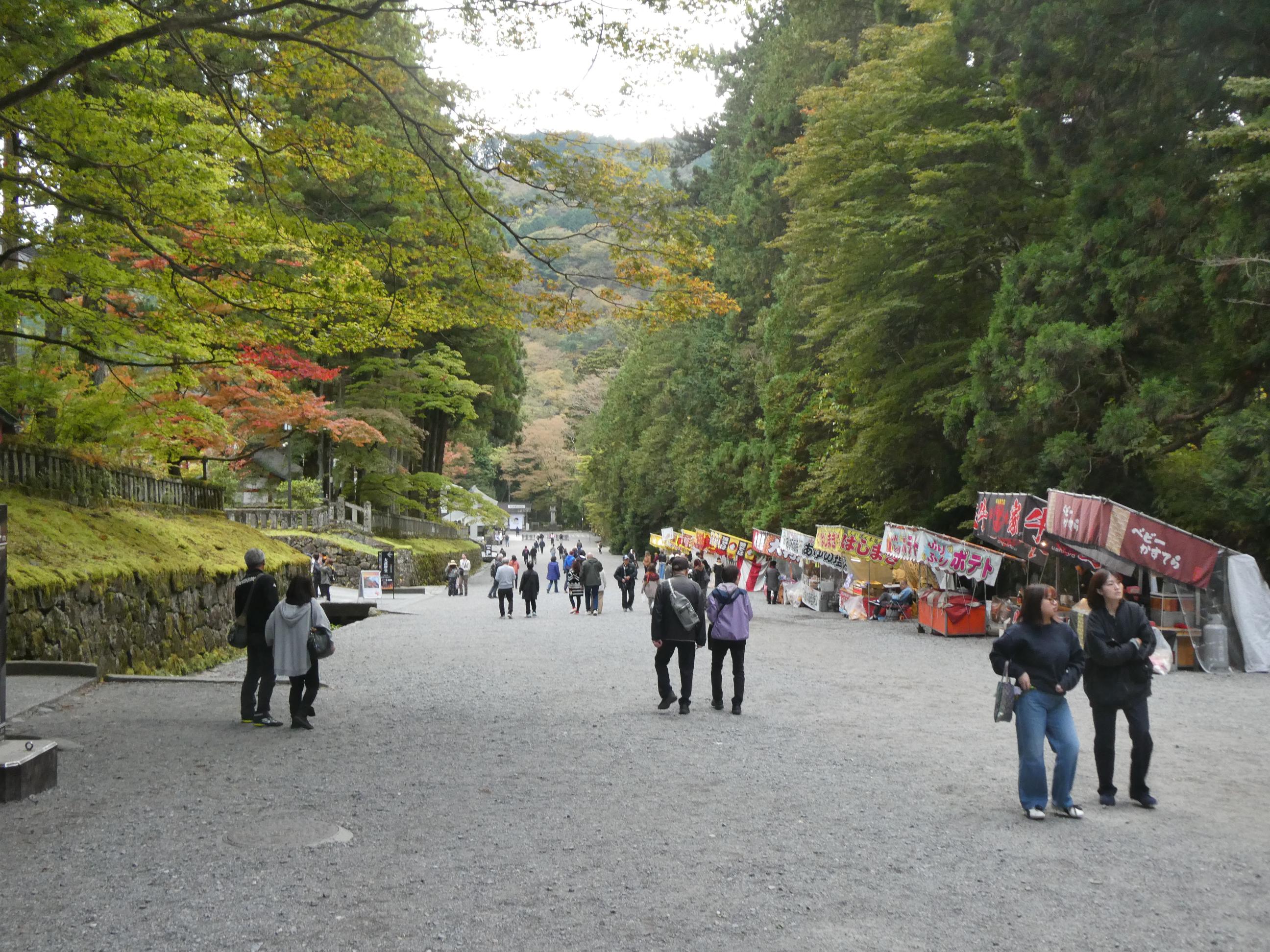
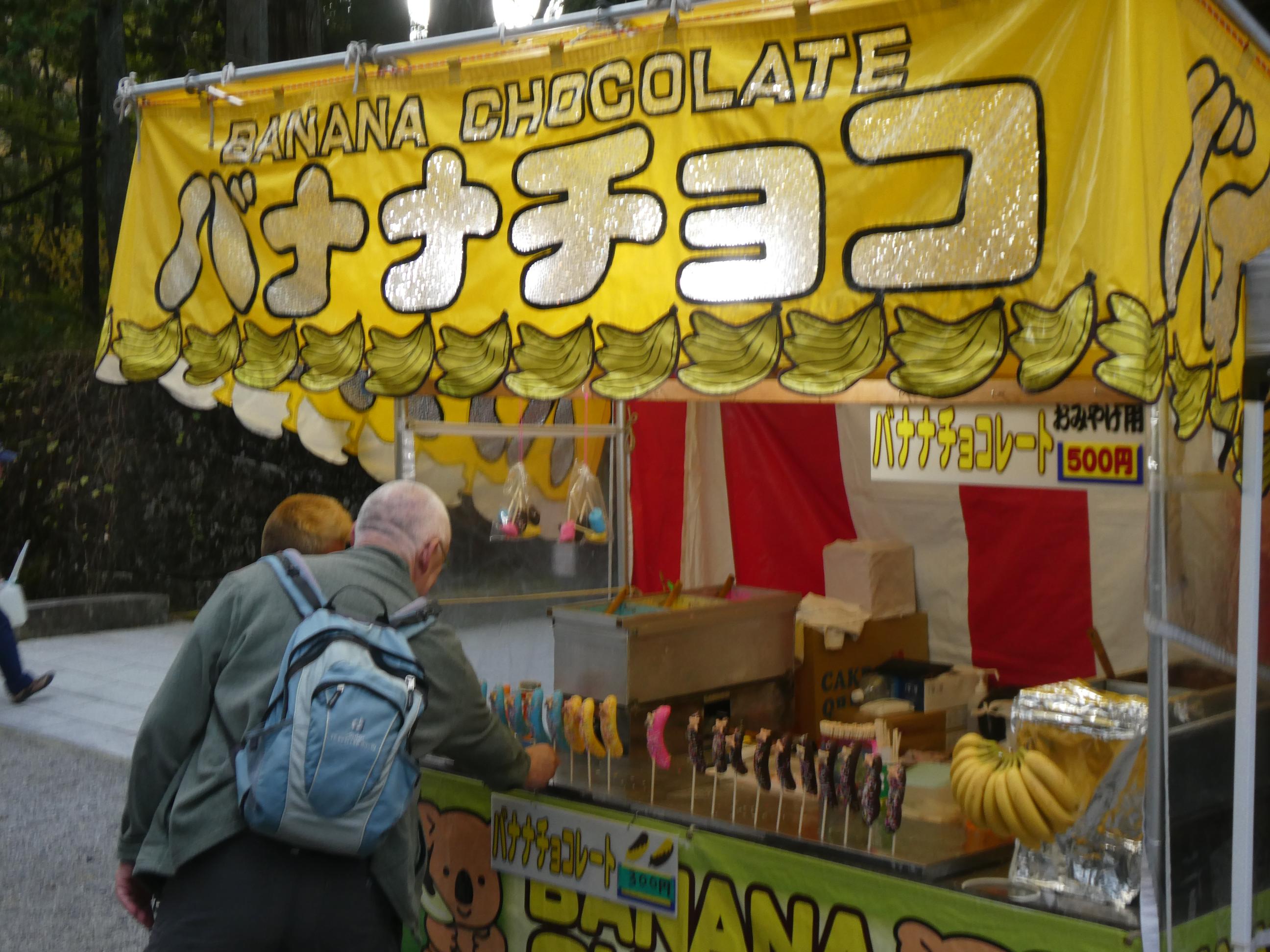
We walked up the hill past the street food stalls. Some of the food on offer smelled and looked amazing, though I wasn’t so keen on the skewered fish. After a bit more of a climb we passed under a large Torii gate and came upon the five storied pagoda, resplendent with its multi-coloured paintwork. The pagoda is also a Buddhist structure.
We decided not to go any further into the complex, though there were many other structures to see. We were tired and we wanted to get back to our hotel to check into our rooms. We decided to walk back down the main street and check out possible places to eat dinner before catching a cab back to our hotel from outside the railway station. Once again, we were dumbfounded by how many restaurants in Nikko were closed and how few taxis there were. It just seemed like a good opportunity had been missed, especially during tourist season. Midway down the hill we found the Nikko Information Centre. There we found a pamphlet from an eating establishment just a little further down the hill on the same side of the road. The woman in the information centre told us it had only opened in October. We found the restaurant. It was open, so we went in and booked. Then we managed to find a taxi to take us back to the hotel. Our rooms were ready and our suitcases were already in our rooms. Our luck was changing.
Later in the afternoon, a hotel staff member drove us directly to the restaurant and dropped us at the door. We had a fantastic meal there. In fact, we enjoyed it that much, we made a reservation for tomorrow night as well, as we are staying another night in Nikko.


 On The Road With Garry