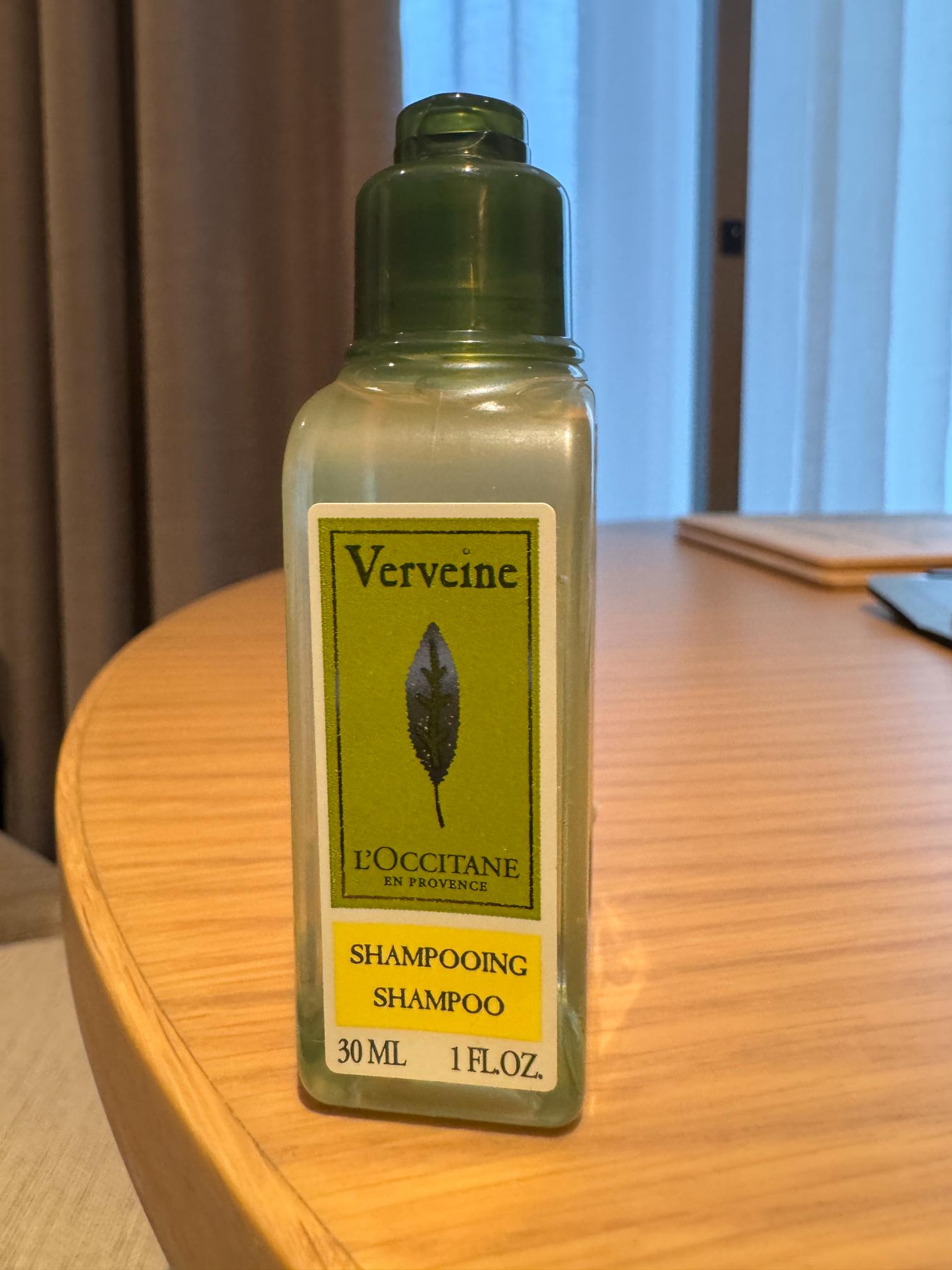
I love the quirkiness of strange Japanese inventions and some of the wonderful examples of language that gets lost in translation. Even in our hotel room this morning, Marg made me a coffee with a scary looking sachet that closely resembled a large spider settling into my cup. In the shower, I had the unique opportunity of washing my hair with ‘shampooing shampoo’. I’ll be keeping a lookout for more of the same during my time in Japan.

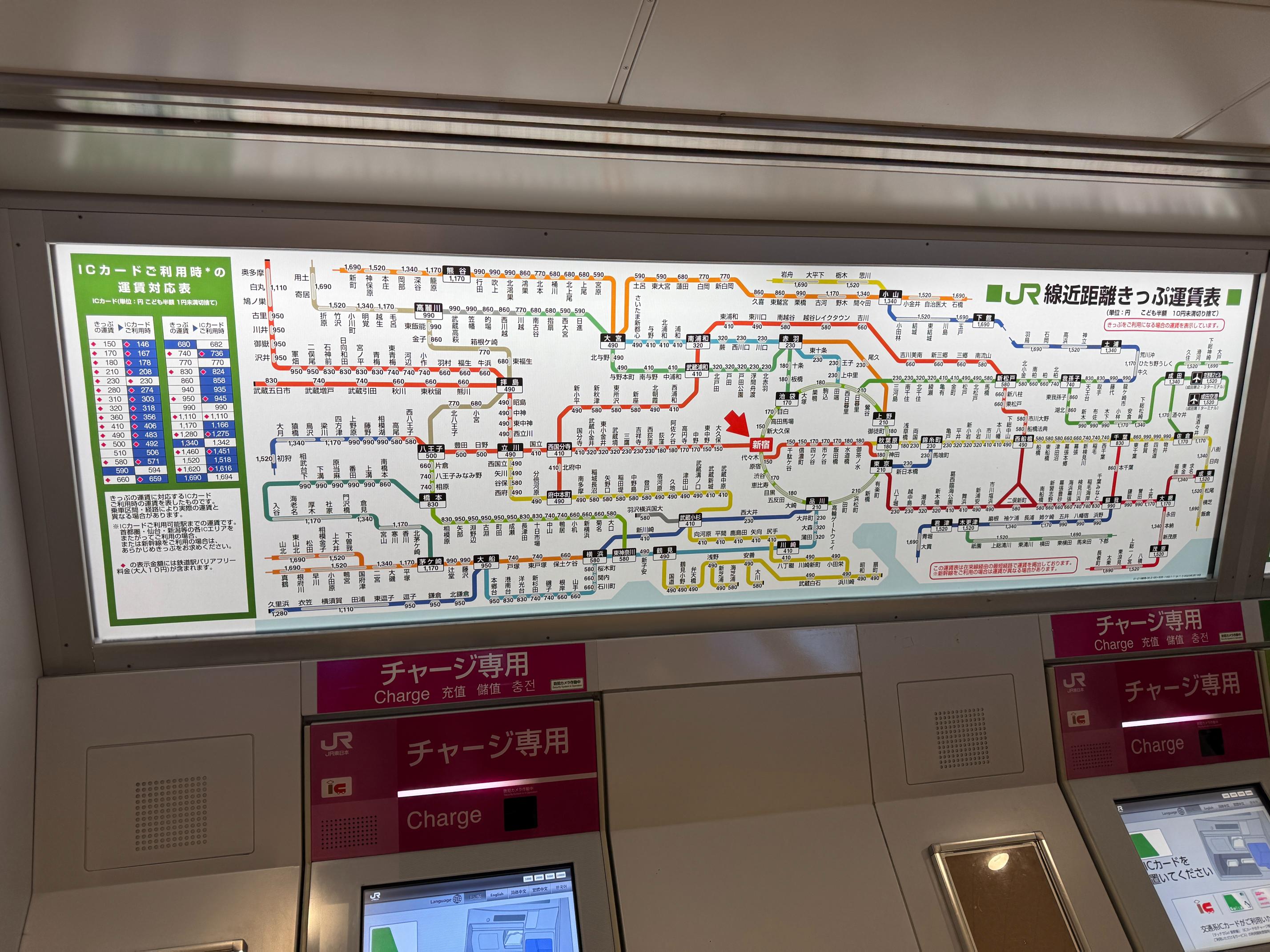
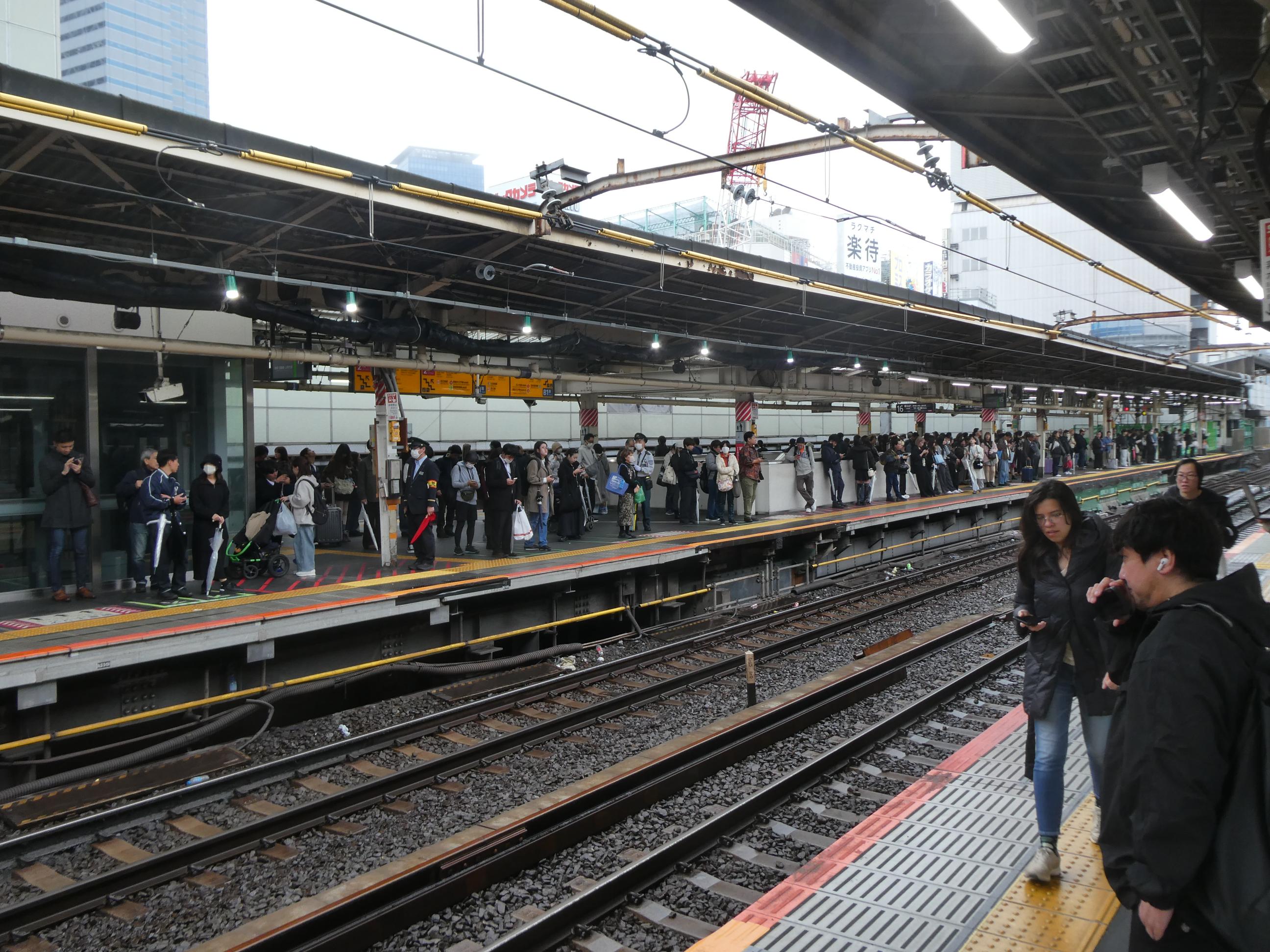
We all did a much better job of finding our way through the labyrinth of Shinjuku Station this morning, and quickly identifying the correct line and the exact train we needed. Nevertheless, it was gratifying to receive confirmation from one of the fantastic Japan Rail platform guys that we we were definitely about to board the correct train.

Harajuku was our destination, just one station down the line from Shinjuku. There’s a very popular thoroughfare there named Takeshita Street. It seems to attract both tourists and locals alike and is clearly a place to visit if you’re interested in Japanese pop culture. We had a lot of fun wandering down the street, checking out all the weird and wonderful places doing business there. There were lots of stores where you could get a bite to eat, although not everything on sale looked very savoury, or, indeed, healthy. There was a good deal of sugary confectionery on offer – some of it rather colourful and much of it appearing as if it had come straight from the set of the Charlie and the Chocolate Factory movie. Lots of the food places had quirky names like Strawberry Fetish and Long, Longer, Longest. People dressed in garish costumes touted for your custom as you passed them buy. Then there were the fashion shops with the high platformed heeled shoes and the sort of costumes that would turn heads while you walked down the street or that would make you the star of the show at a fancy dress ball. Unlike other parts of Tokyo we’ve visited, where everyone observes near silence and decorum while walking down the street, the patrons in Takeshita Street were laughing and talking and generally just having a great time. It just had that feel good vibe about it.
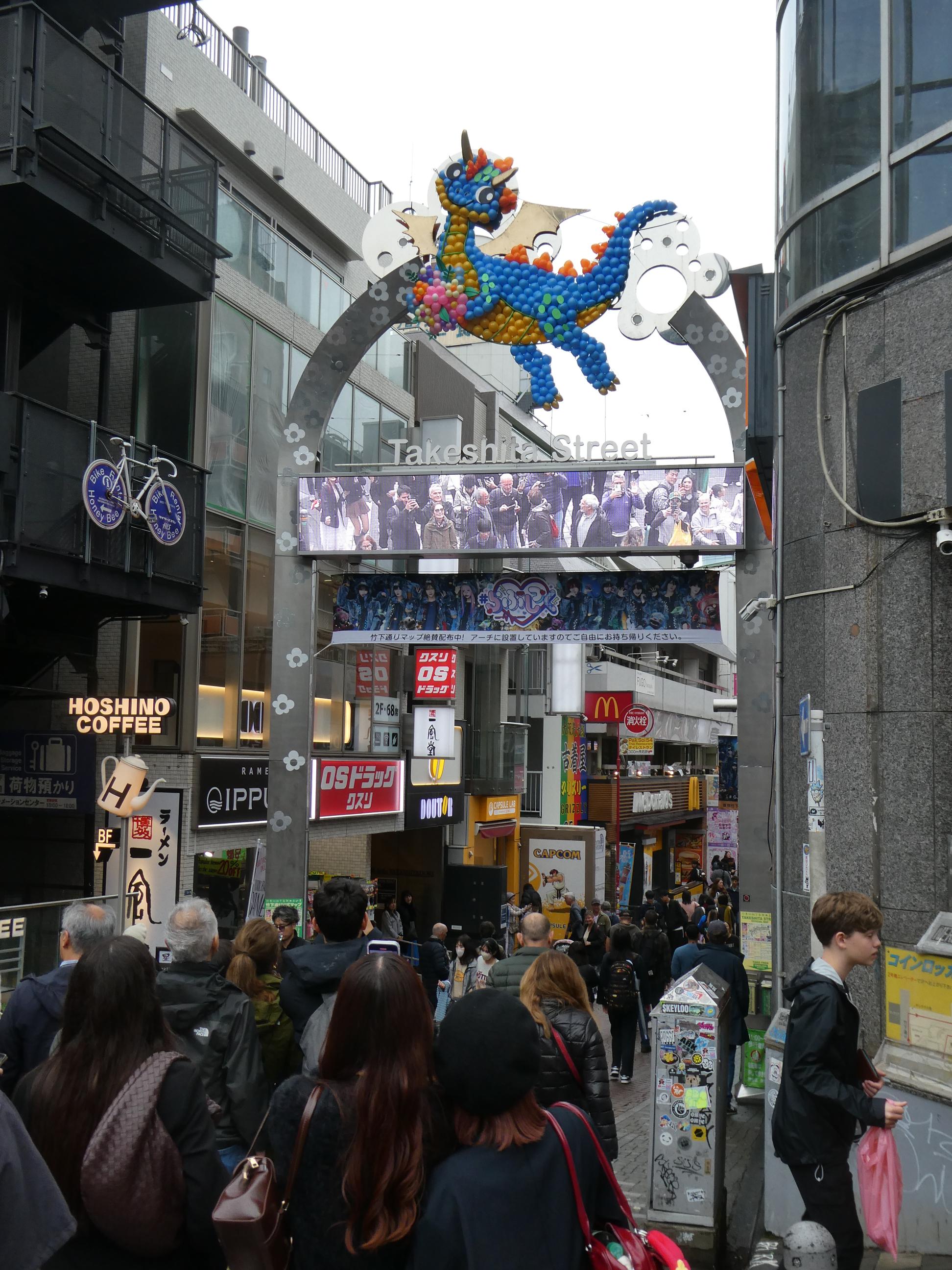

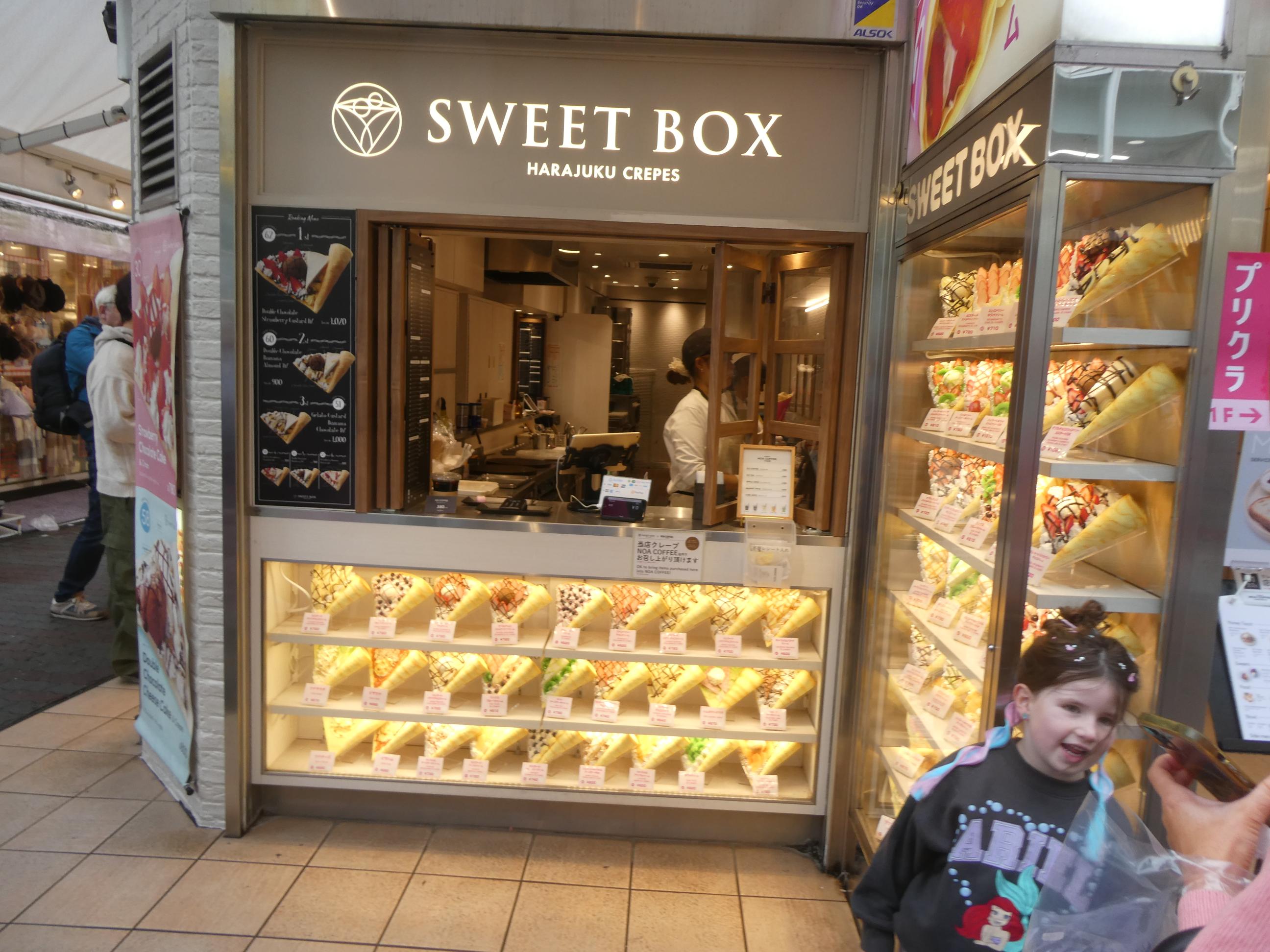
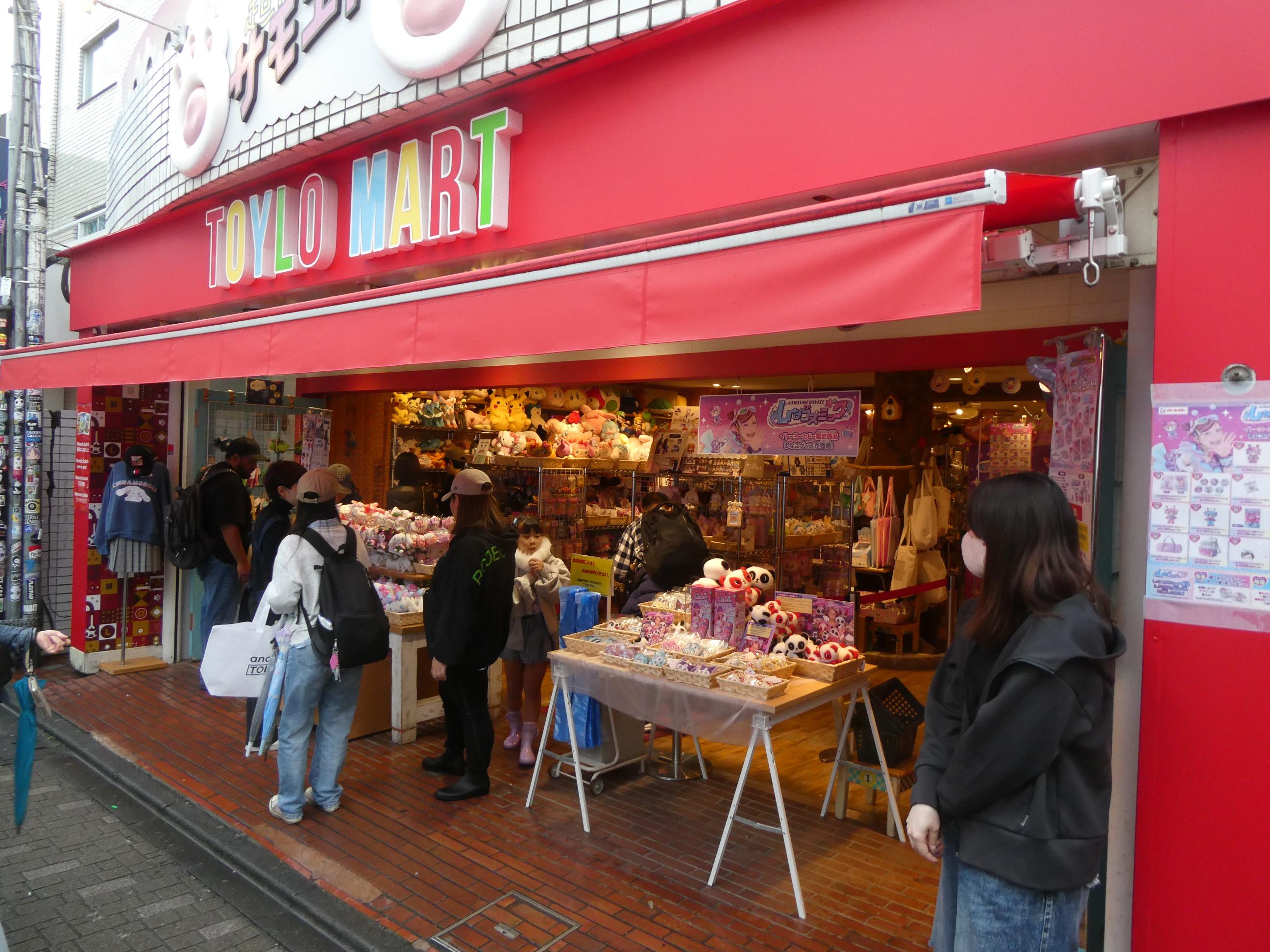


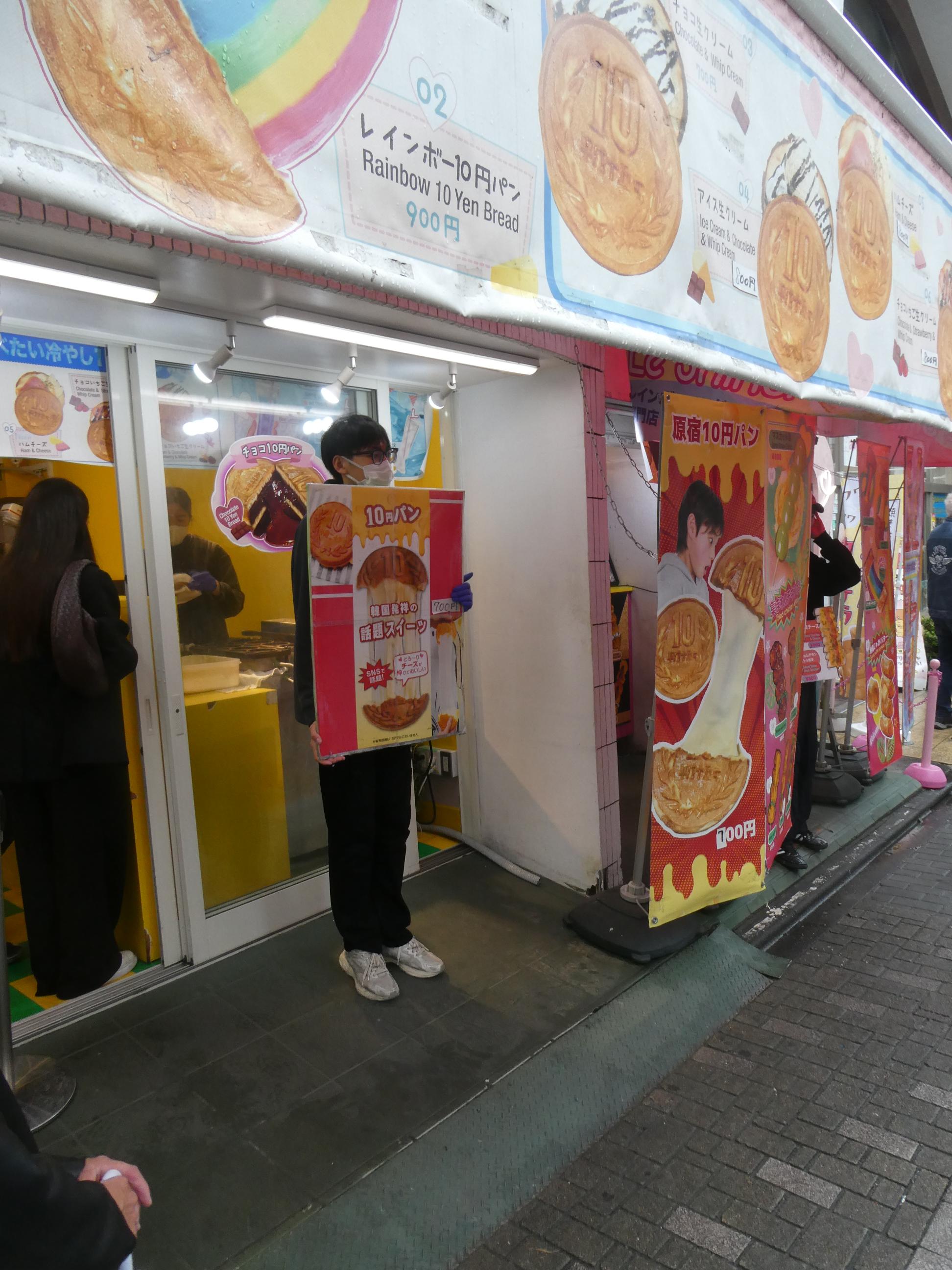
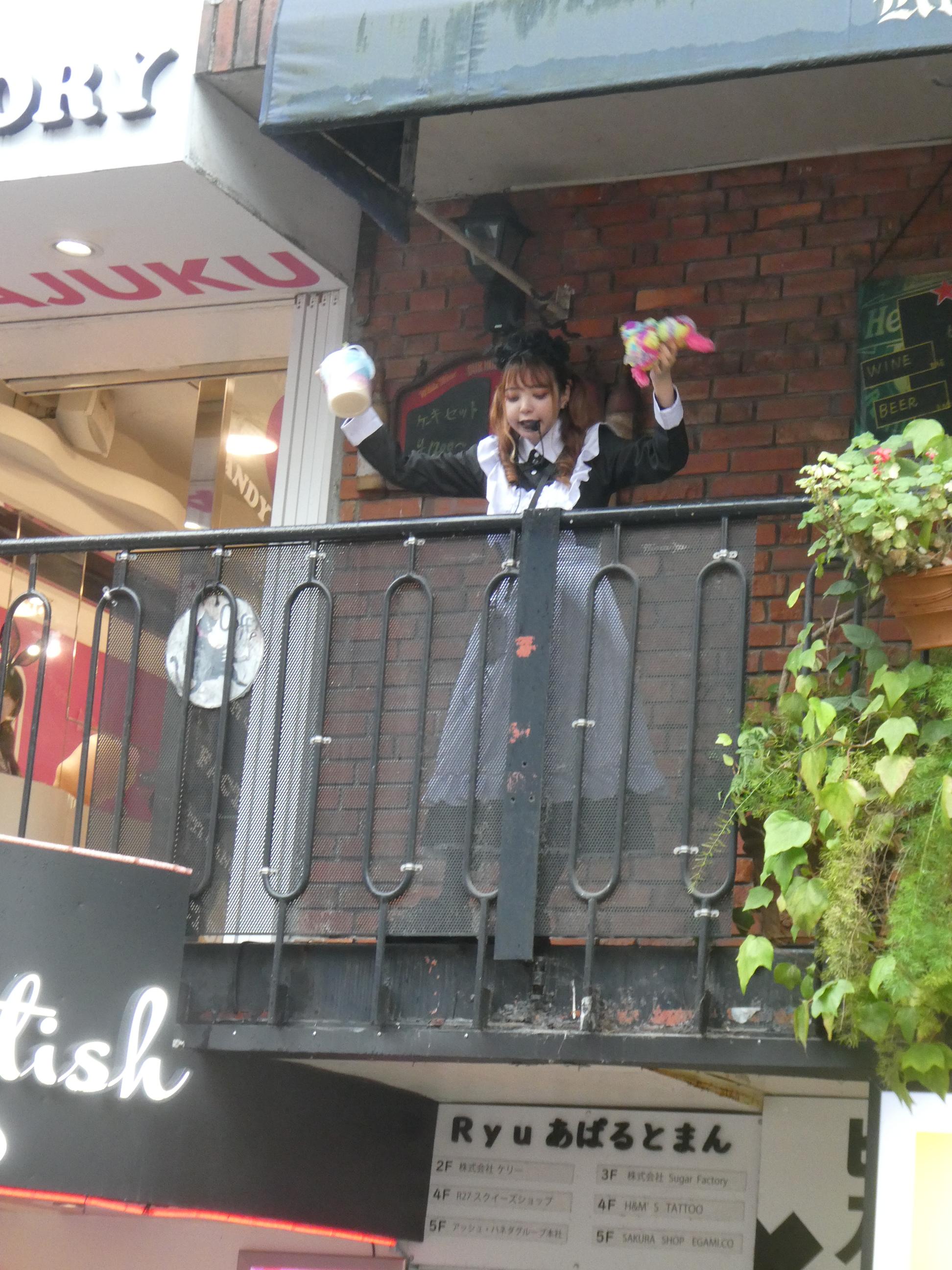
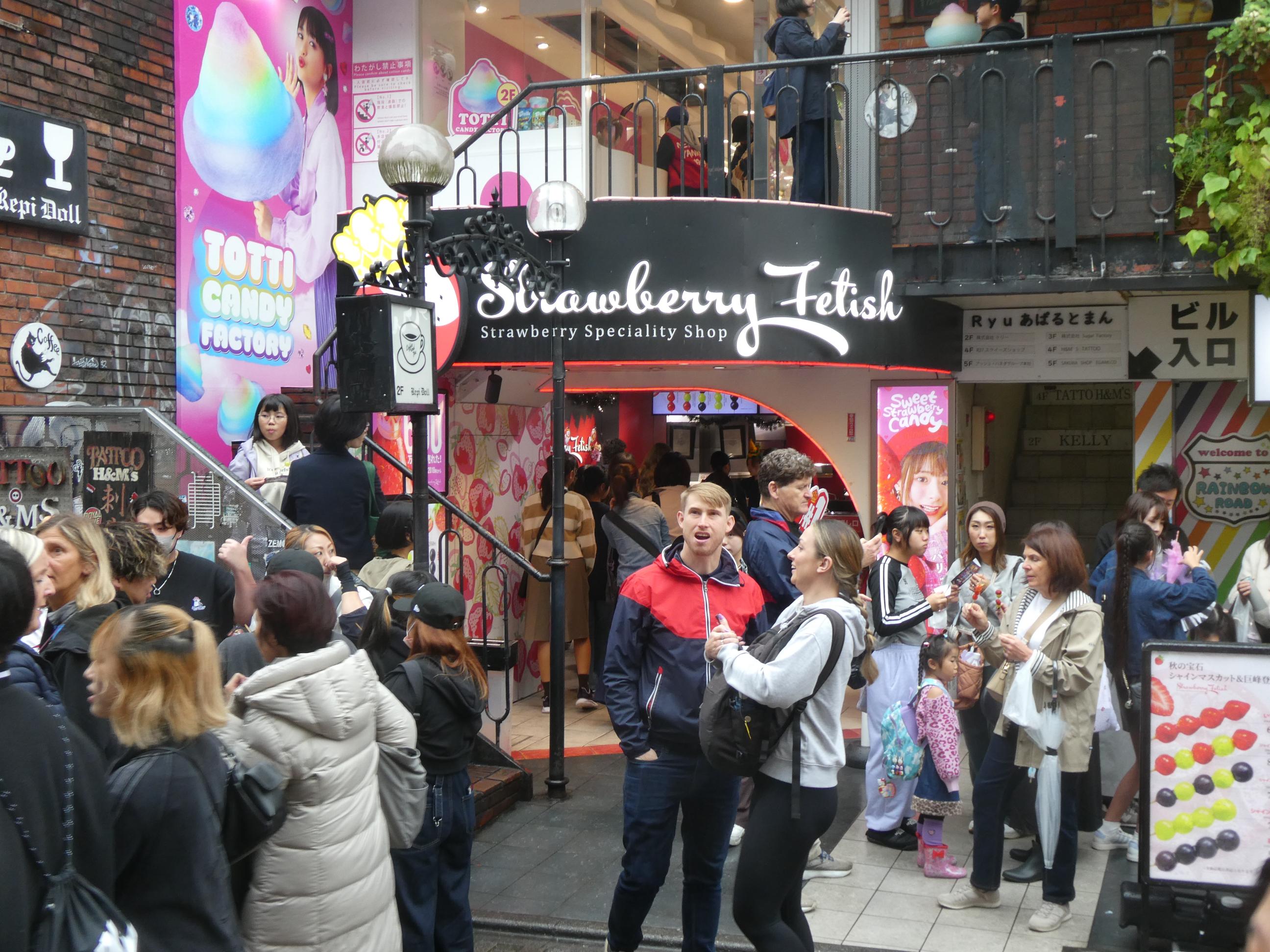
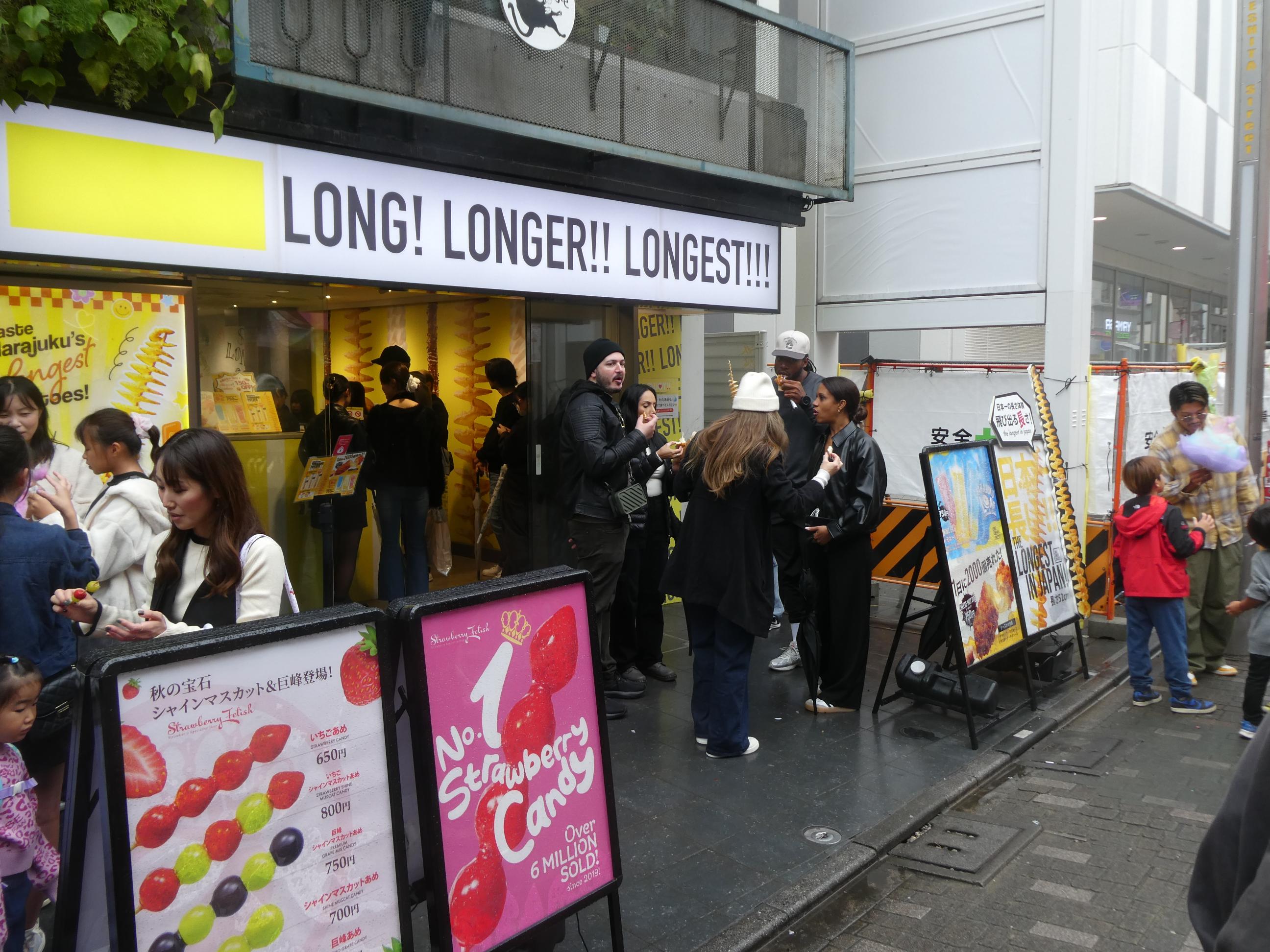

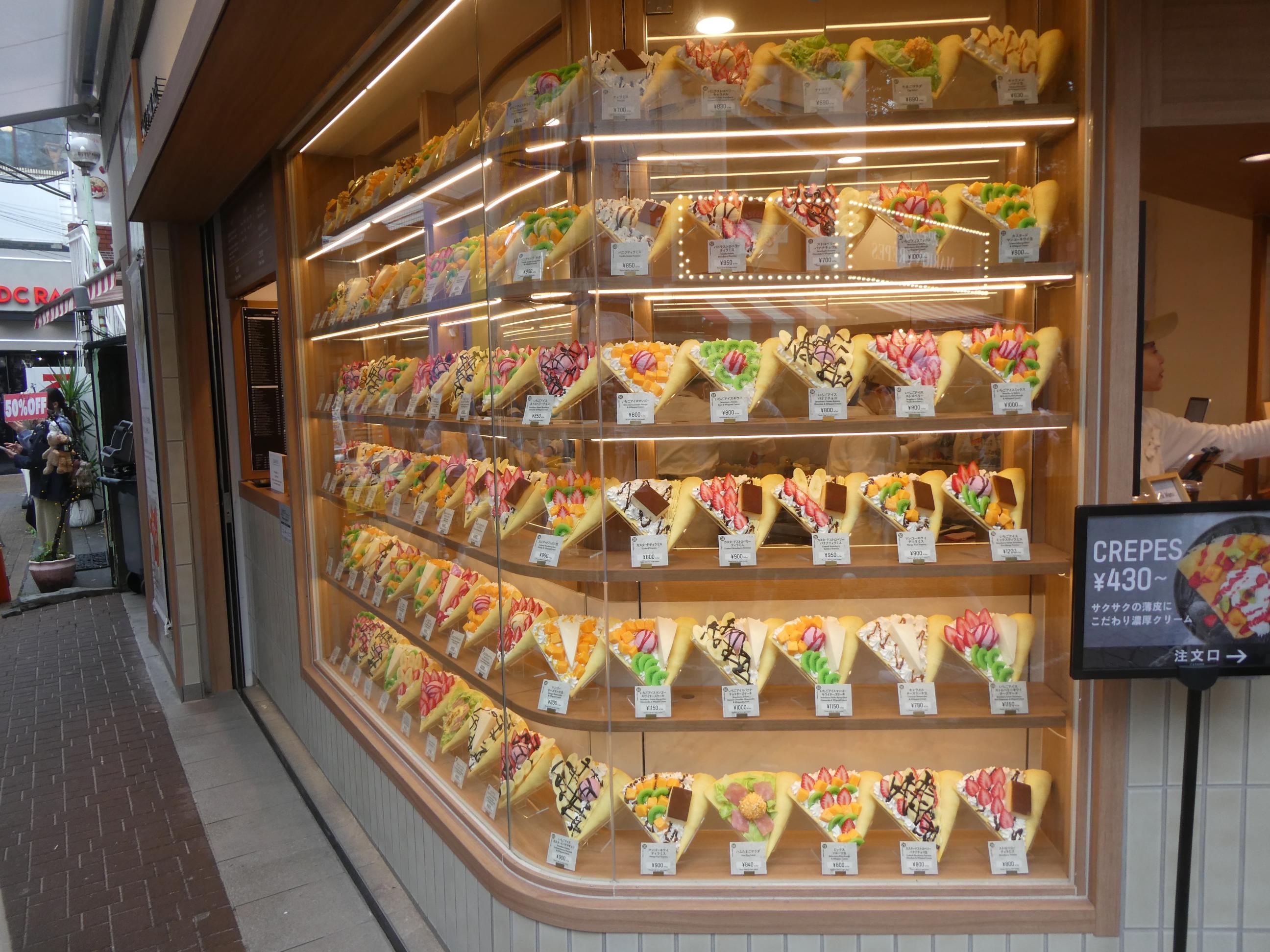


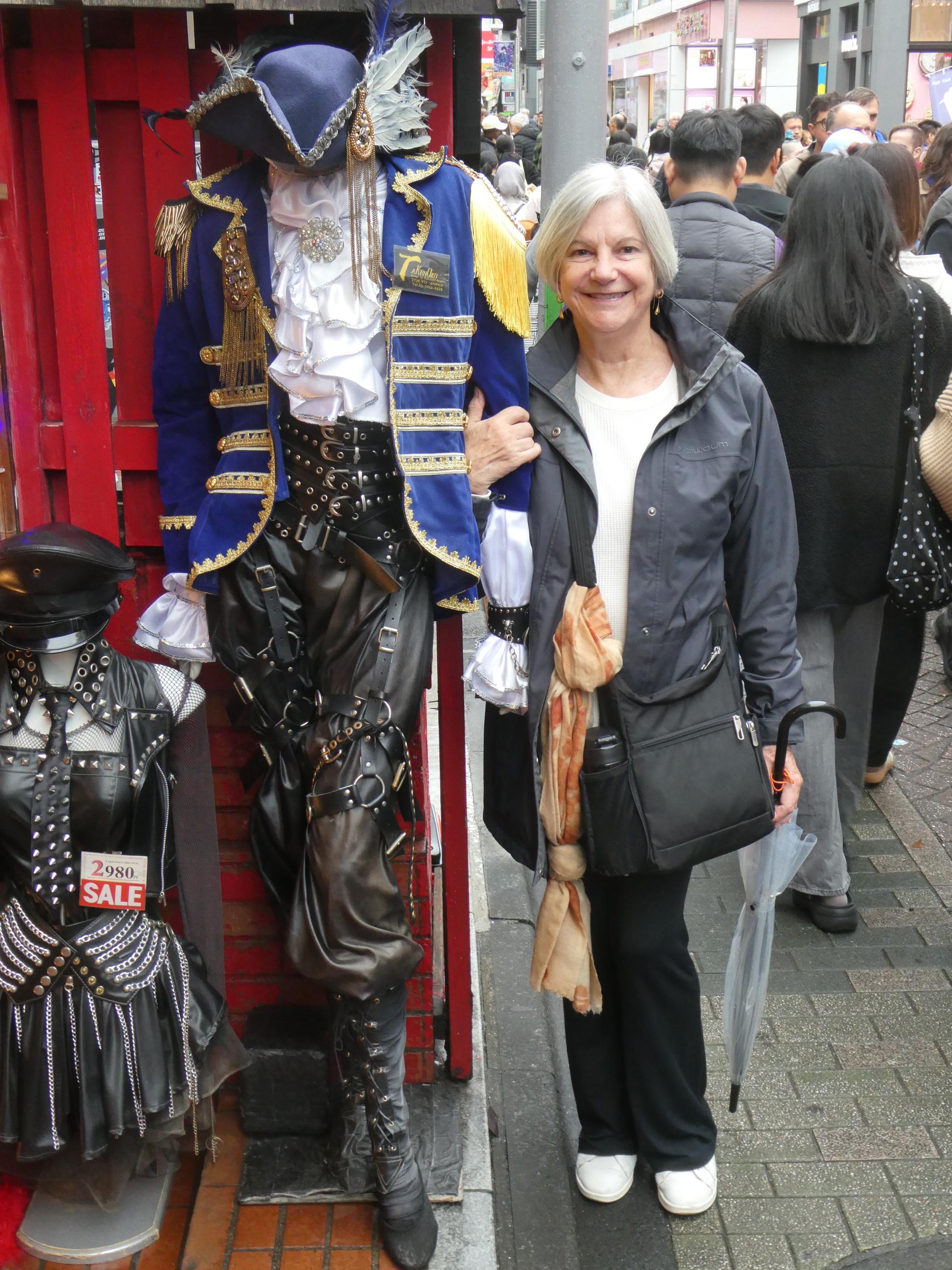
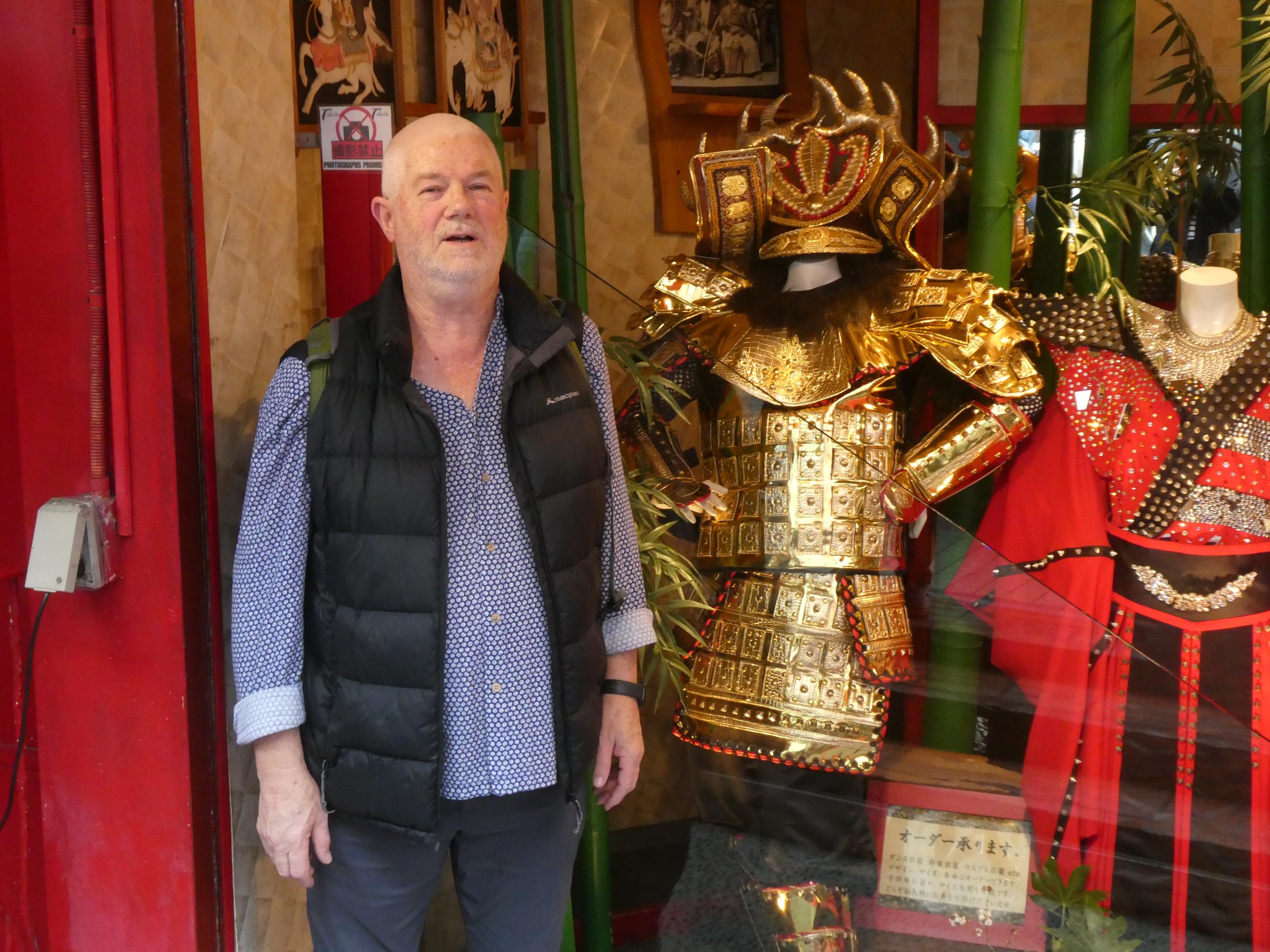
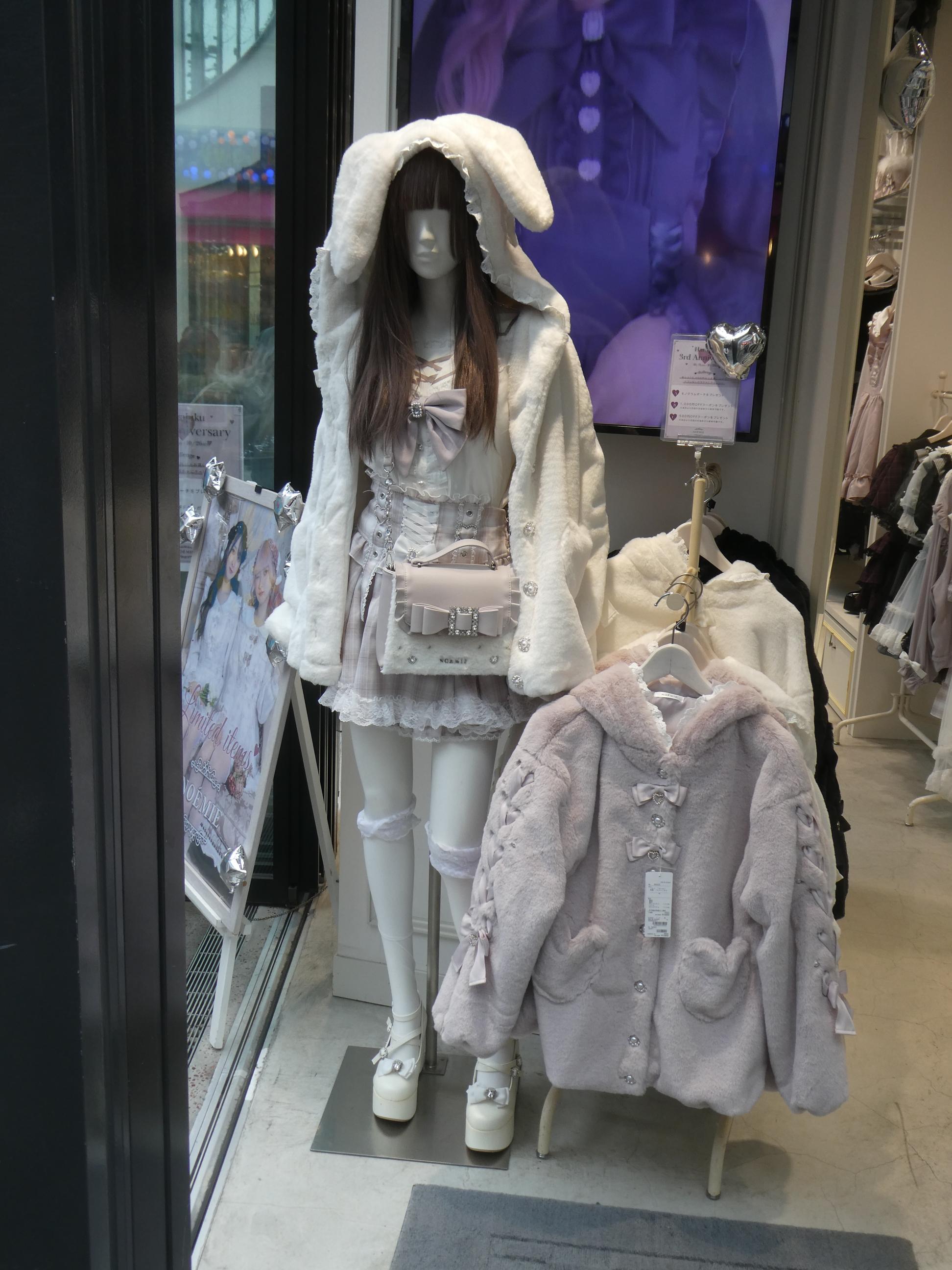

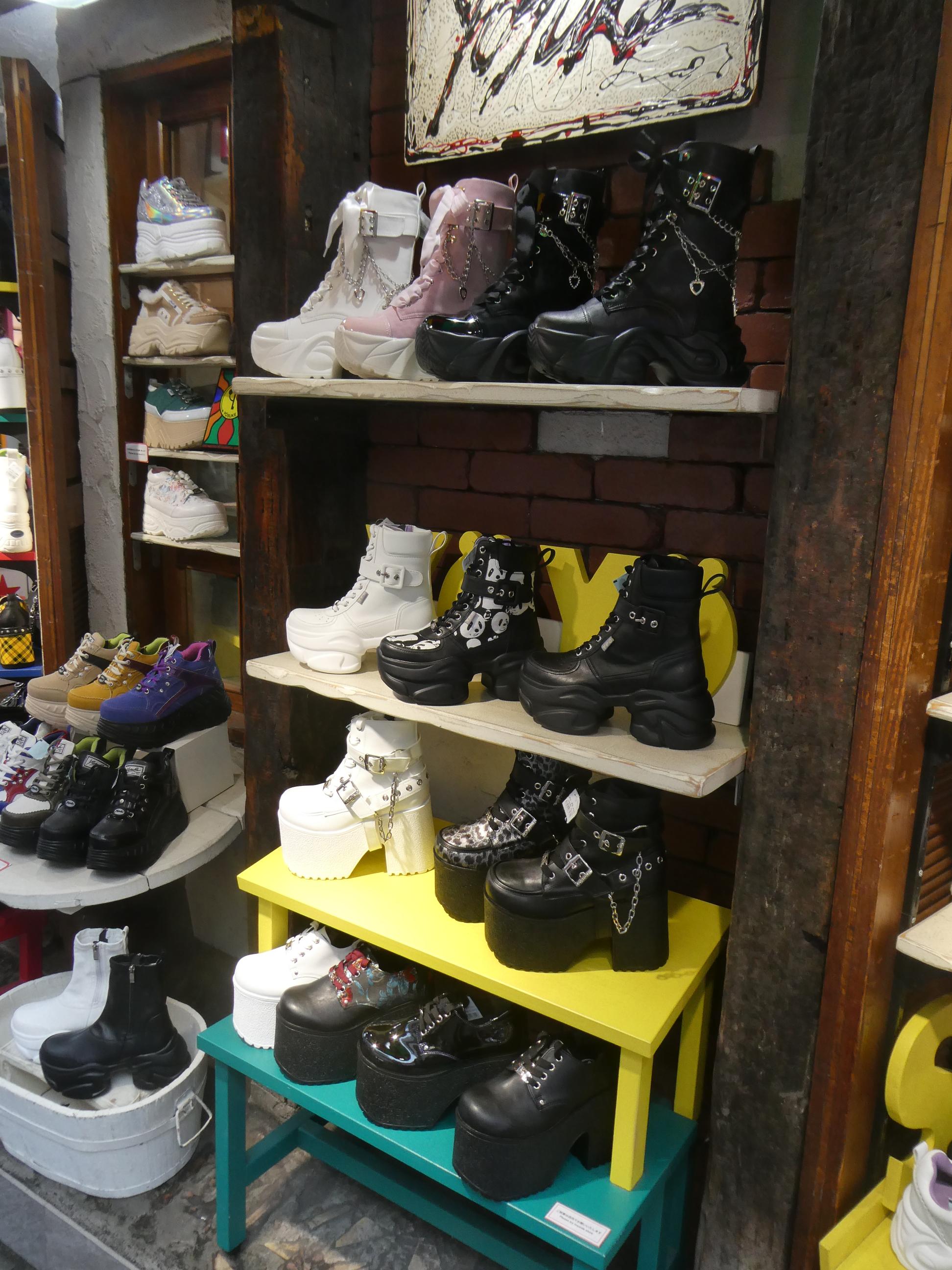


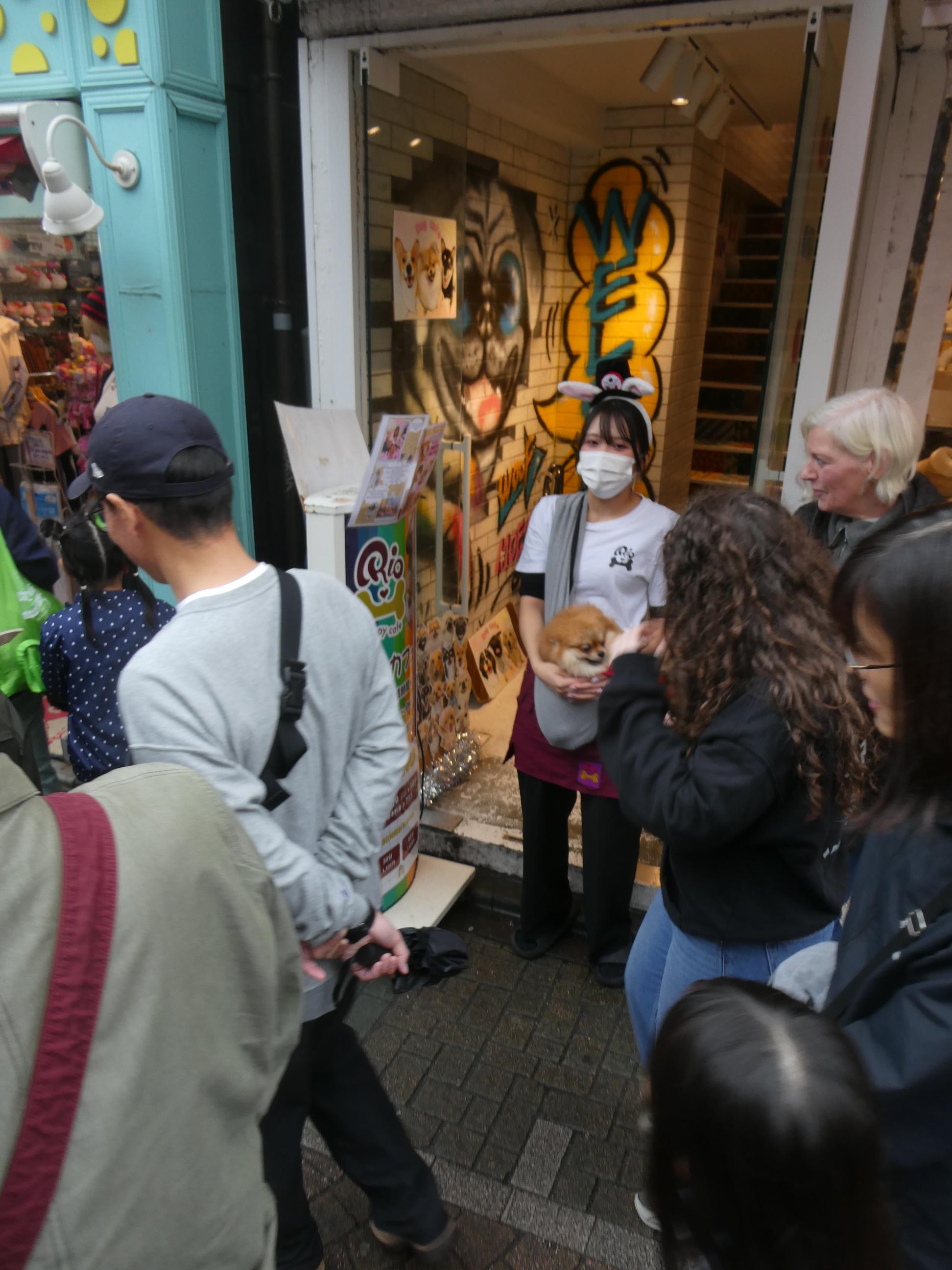
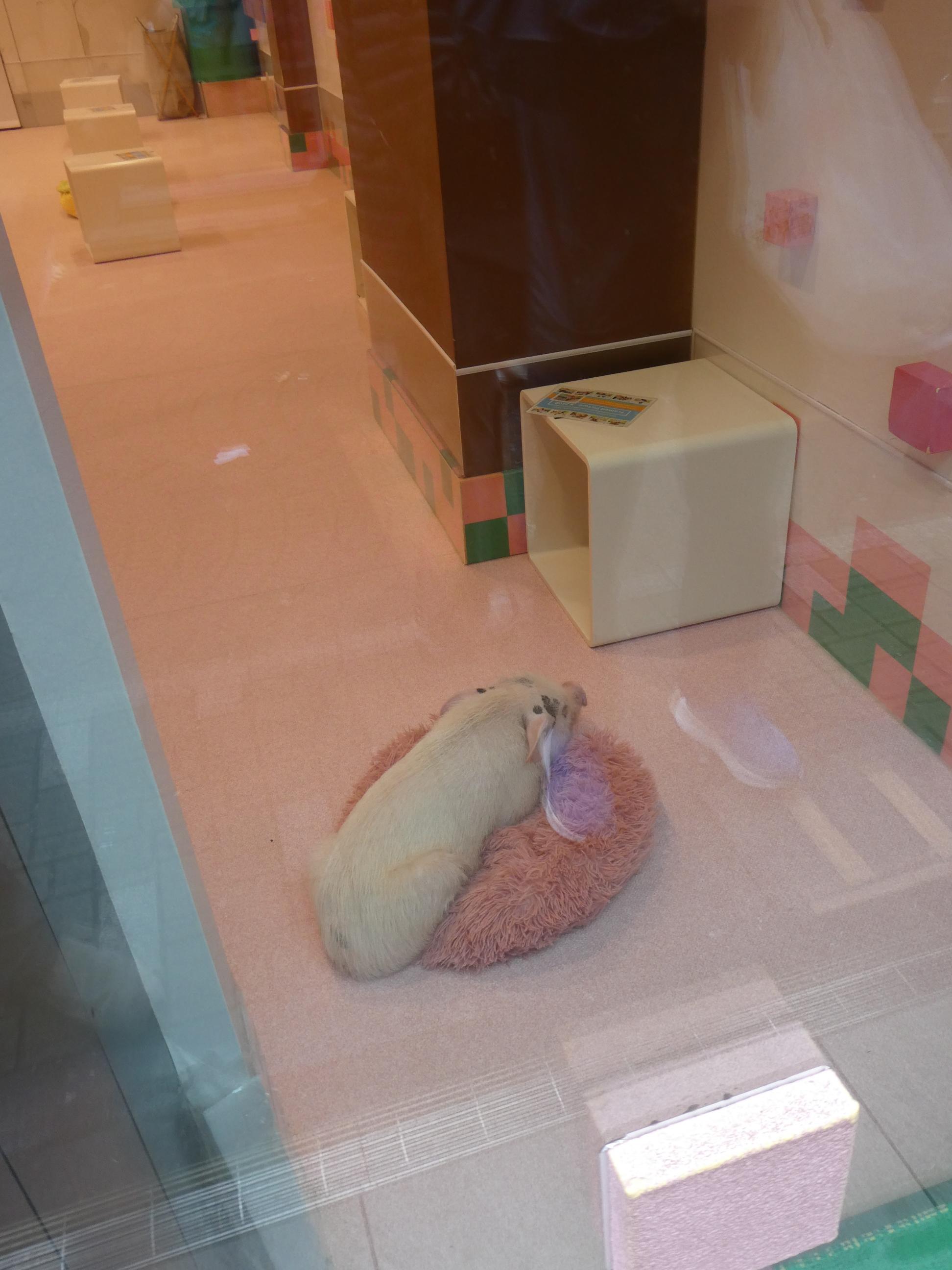
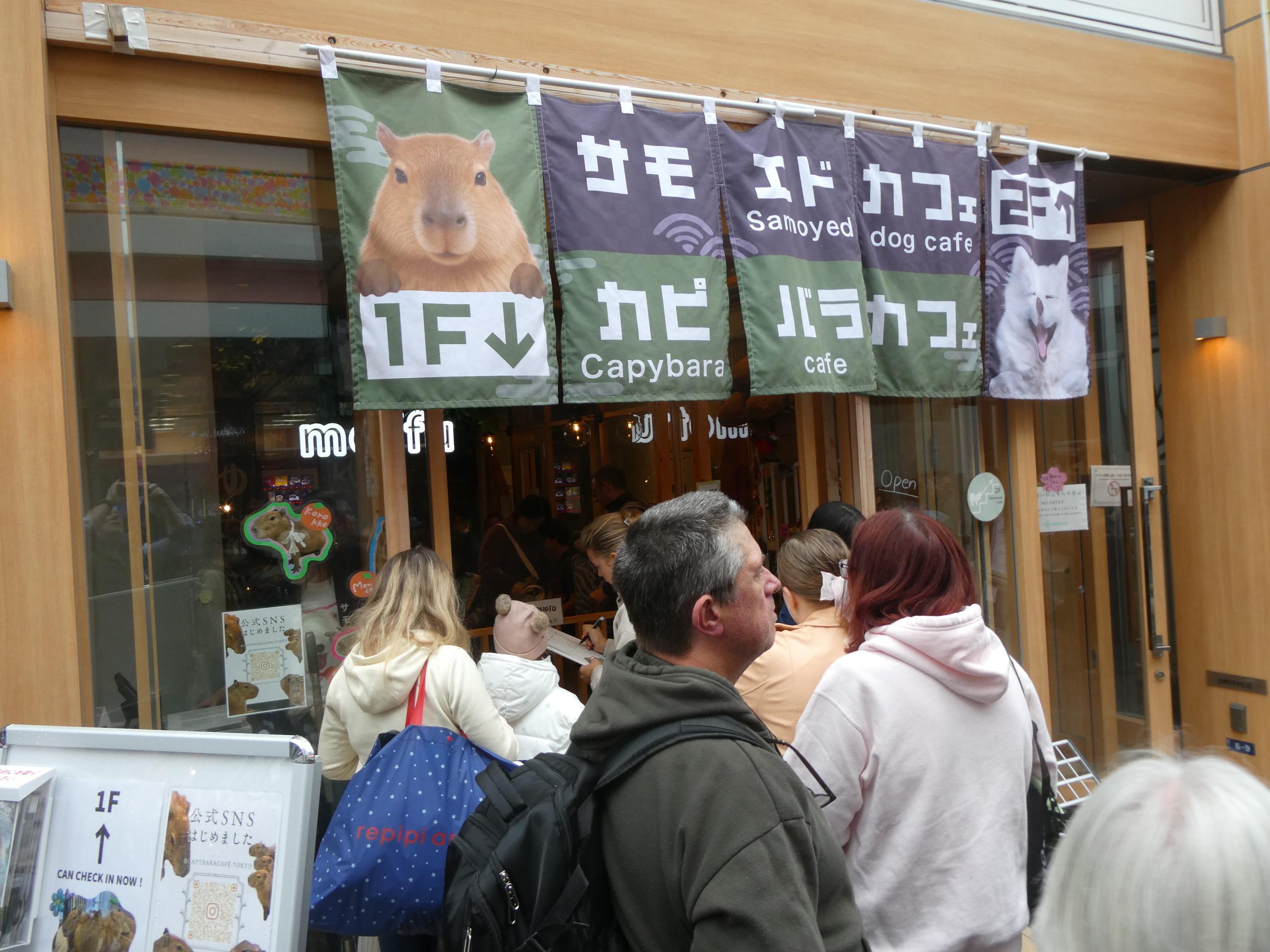
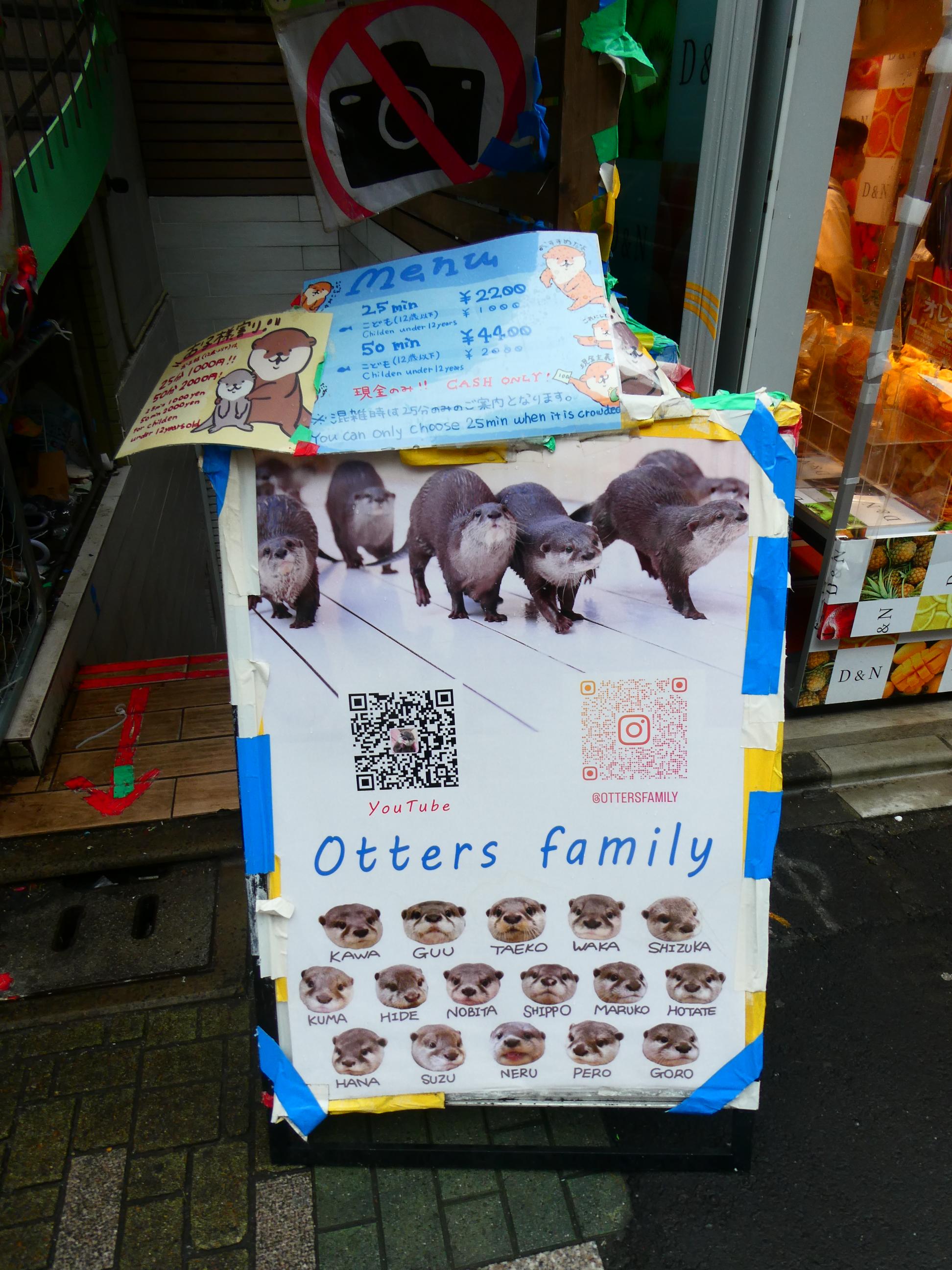
The thing I found weirdest, and somewhat uncomfortable about, in Takeshita Street, was the obsession some people seemed to have with holding small animals. I was a little taken aback when a woman I walked past held out a small samoyed pup in her arms and indicated that I might like to come over and hold it for a while. ‘What a strange thing to do,’ I thought. It got a little weirder when I passed a pig cafe and saw a number of seemingly ordinary folk cuddling small pigs, sometimes three or four at a time. ‘Okay,’ I thought, ‘if these are my choices, maybe I should go back and find the lady with the samoyed.’ After all, it wouldn’t be the first, and it probably won’t be the last dog I’ll ever have the pleasure of holding. Just past the pig cafe, it got a little weirder still when I came upon a place where you could hold a capybara. ‘Wow, there’s a unique opportunity,’ I thought. But I ventured on and soon was sorely tempted by the chance to hold an otter or two. ‘Now that might be fun,’ I thought. ‘I do love otters.’ I looked around for Marg, Theresa and Ian, but I could no longer spot them in the crowd. For a moment I wanted to shout to them, ‘Hey, come back! There’s otters!’ But the moment passed and I hastened my steps in search of my traveling companions. By the time I caught up with them, any temptation of holding a small creature for a few minutes of bliss was gone from my thoughts. No doubt I’ll be tempted again before I leave Japan.





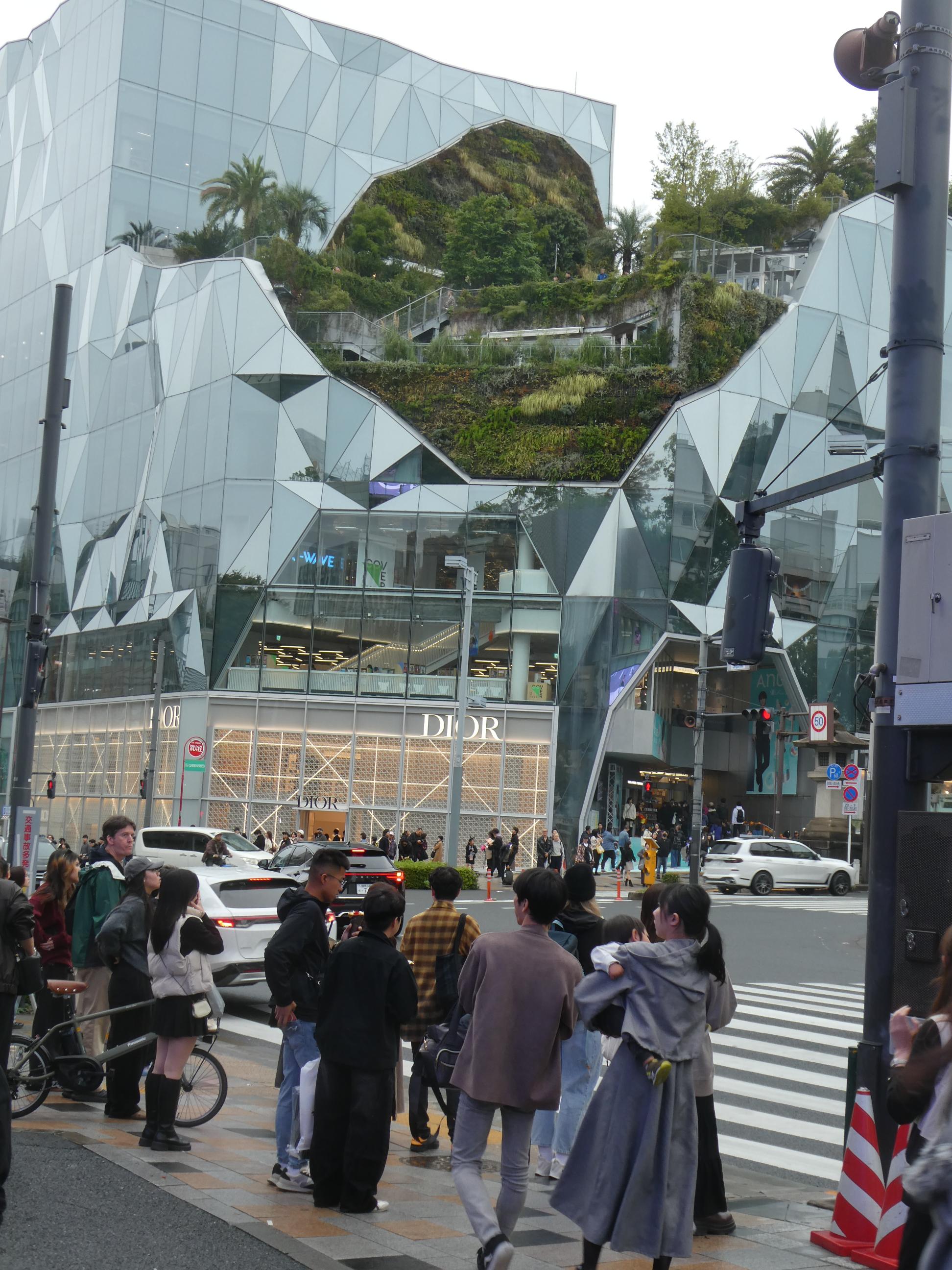
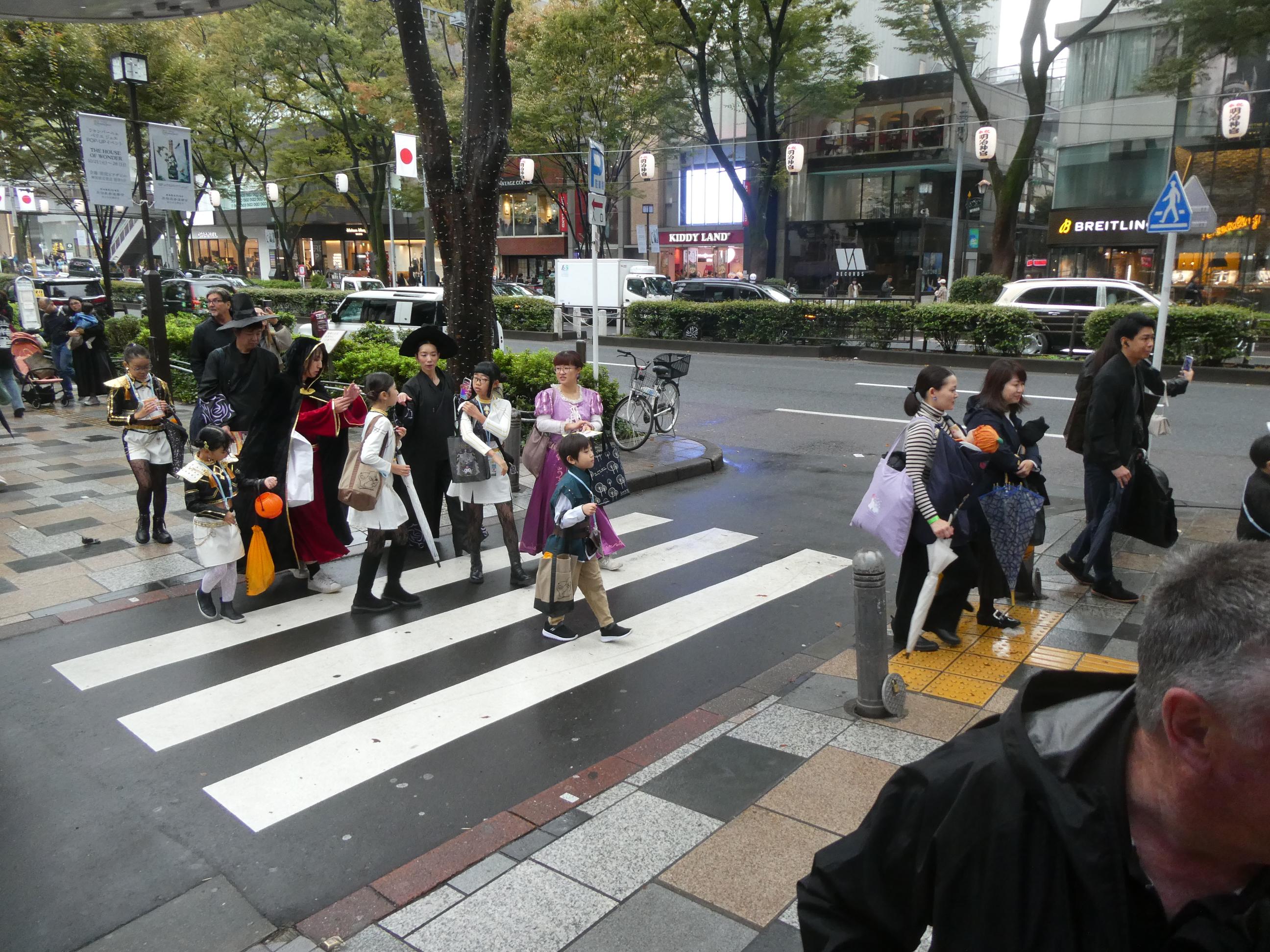
Leaving the excitement of Takeshita Street behind, we turned a corner into Omotesando Boulevard, which was home to some rather impressive structures, like the Dior building with the rooftop garden in the second photo below. Thankfully, despite the serious cash some of the larger establishments required you to have at your disposal before you could even walk through their doors, this street also had more than its fair share of quirky places too. I was pleased to see that Japanese pop culture had infiltrated Omotesando Boulevard too.
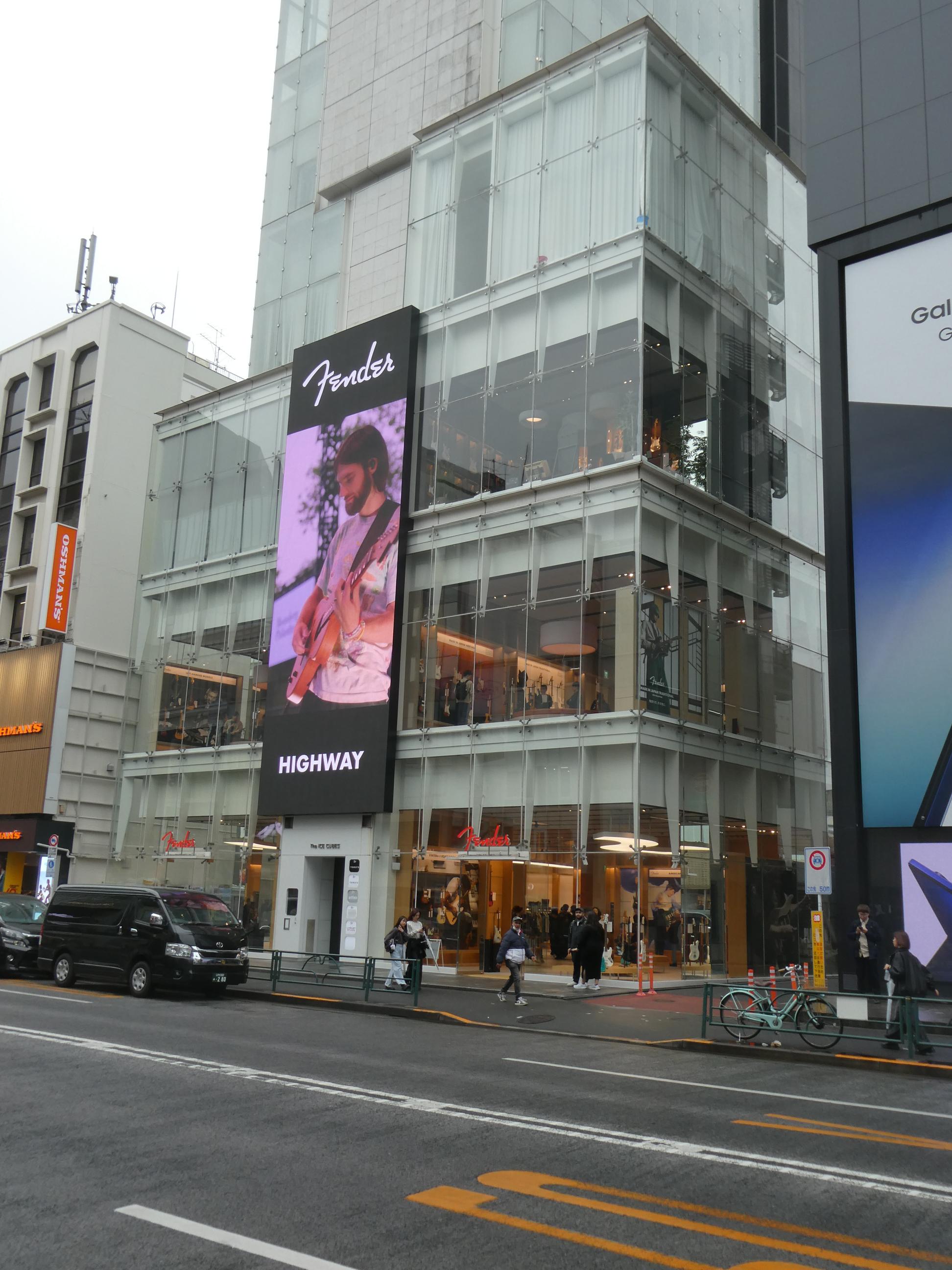
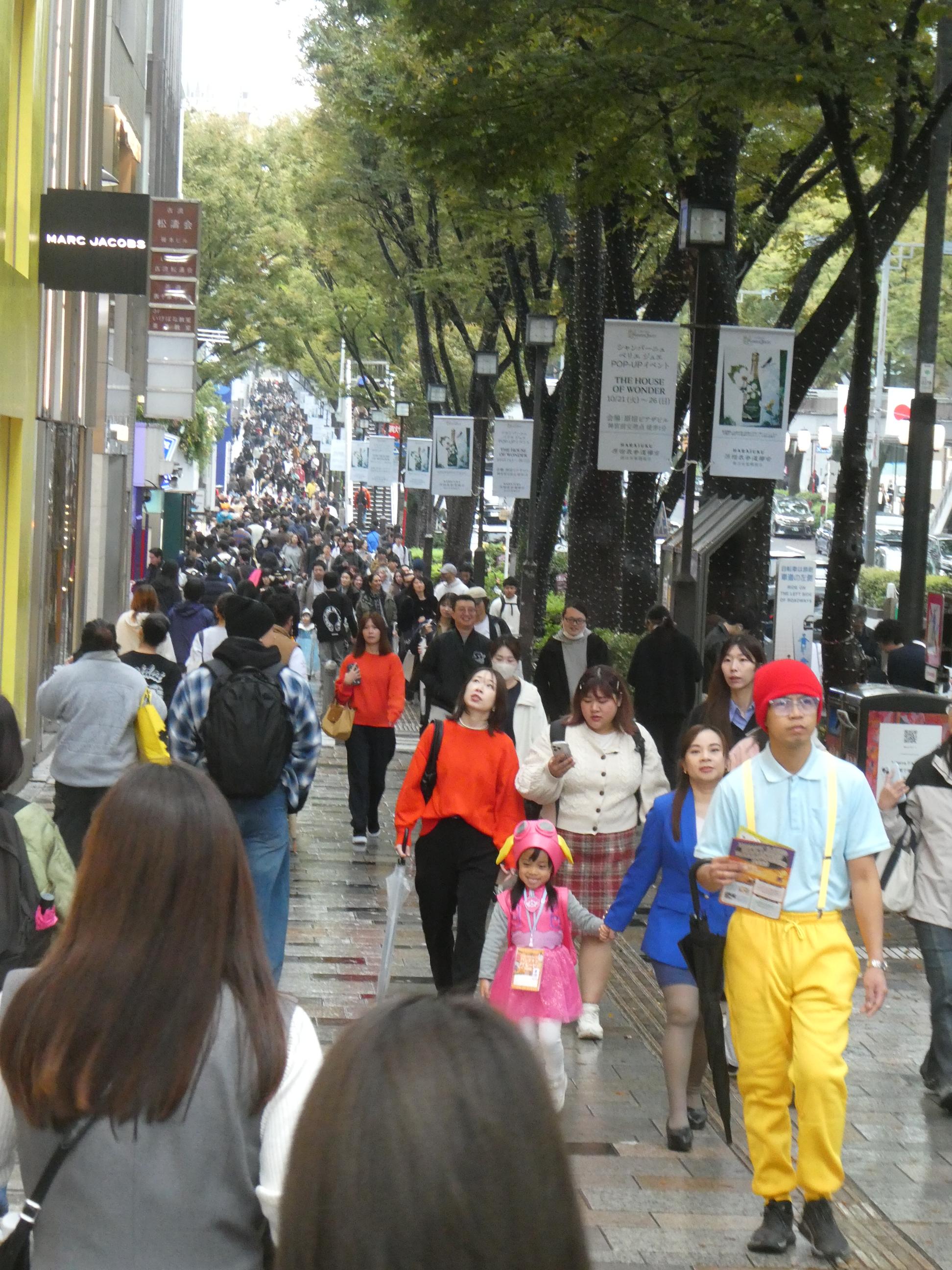
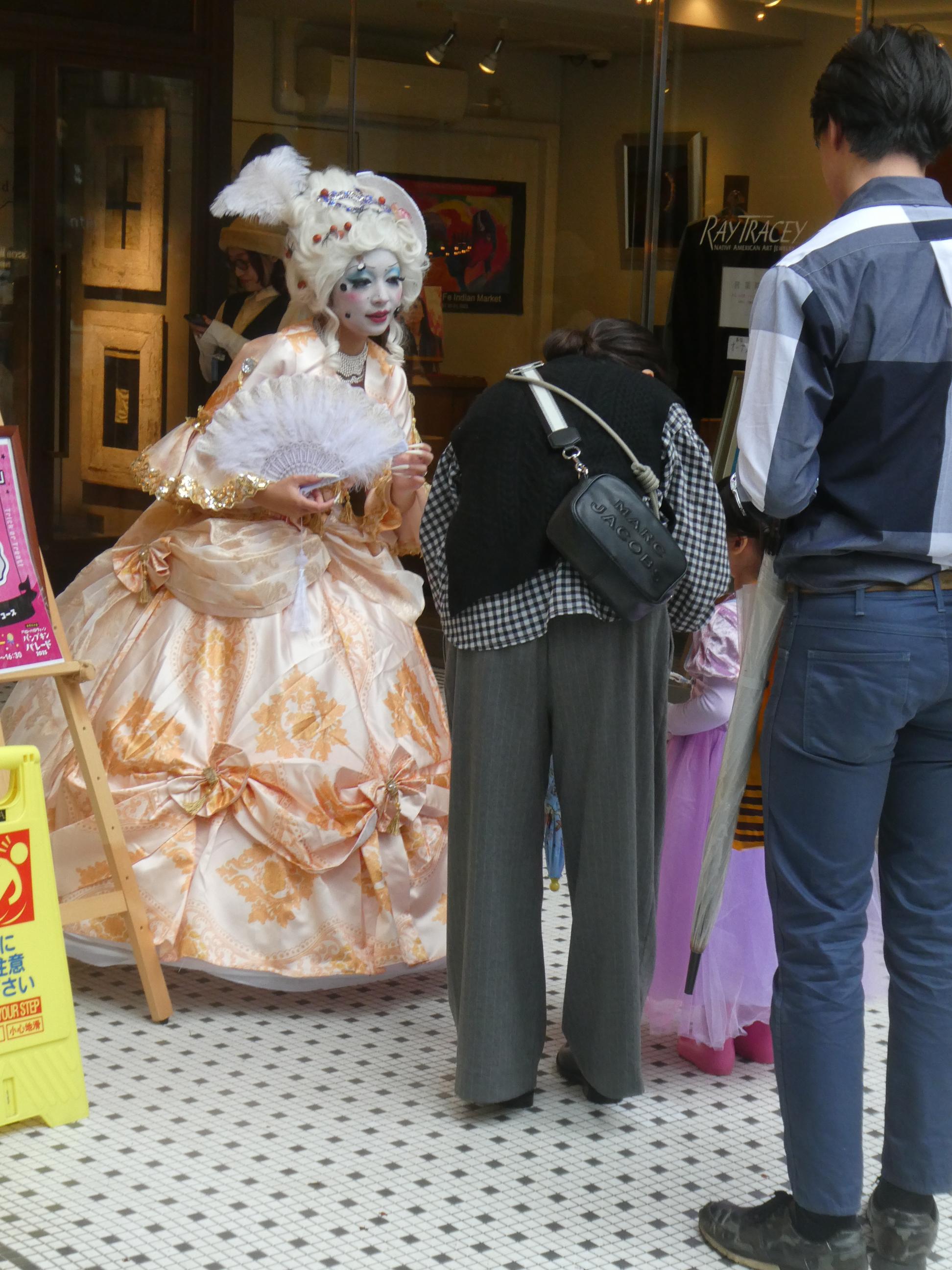
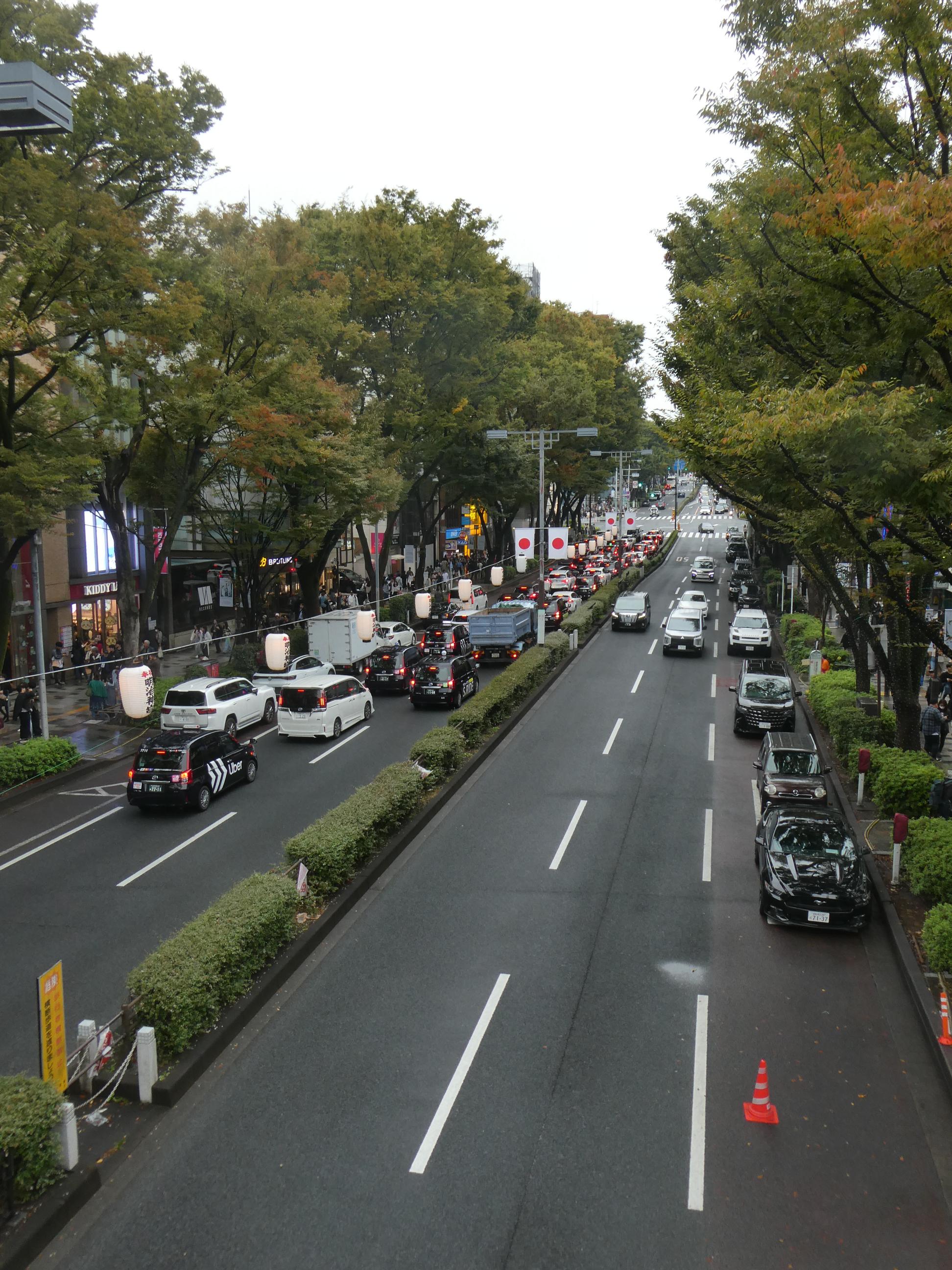
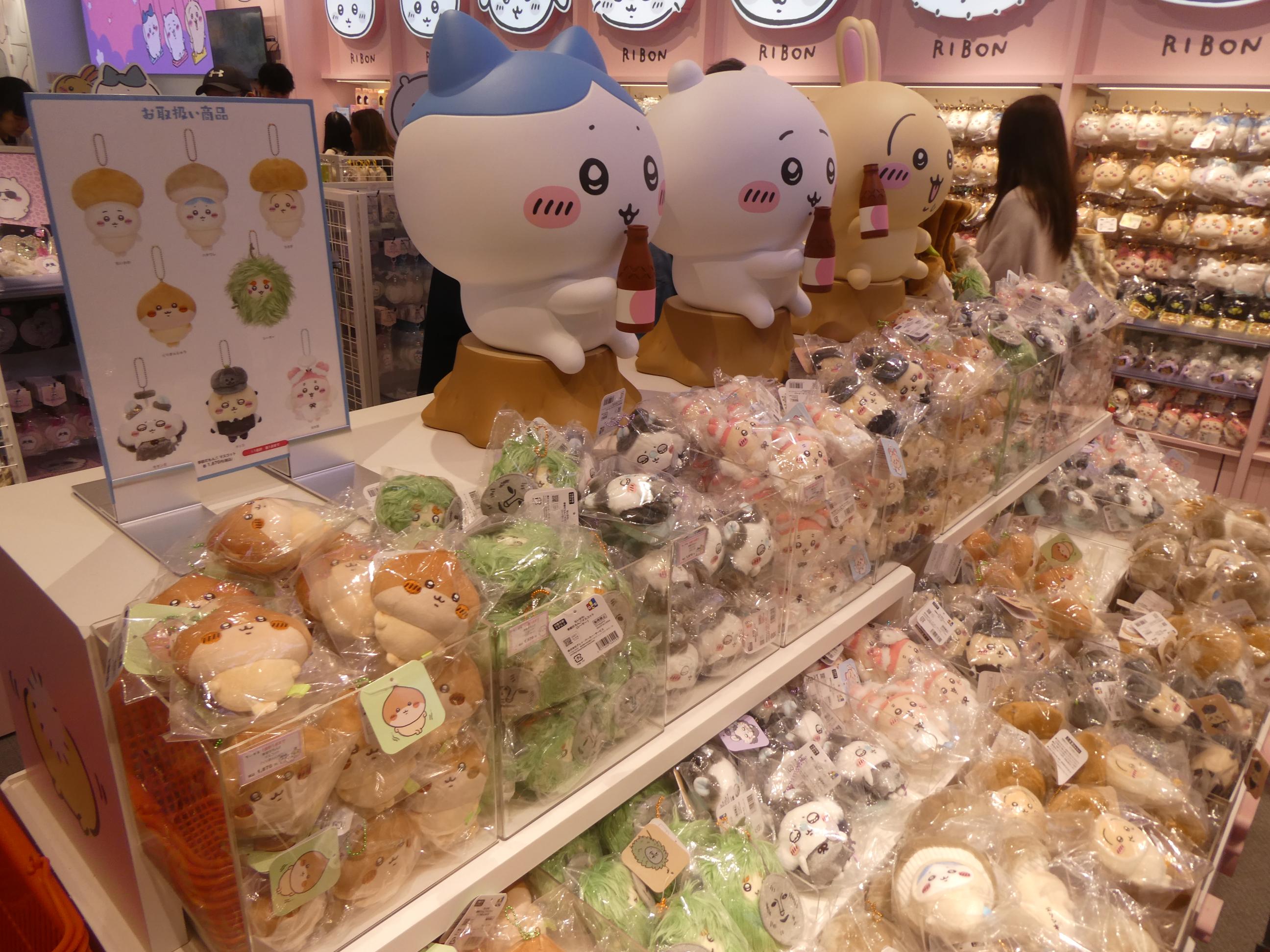
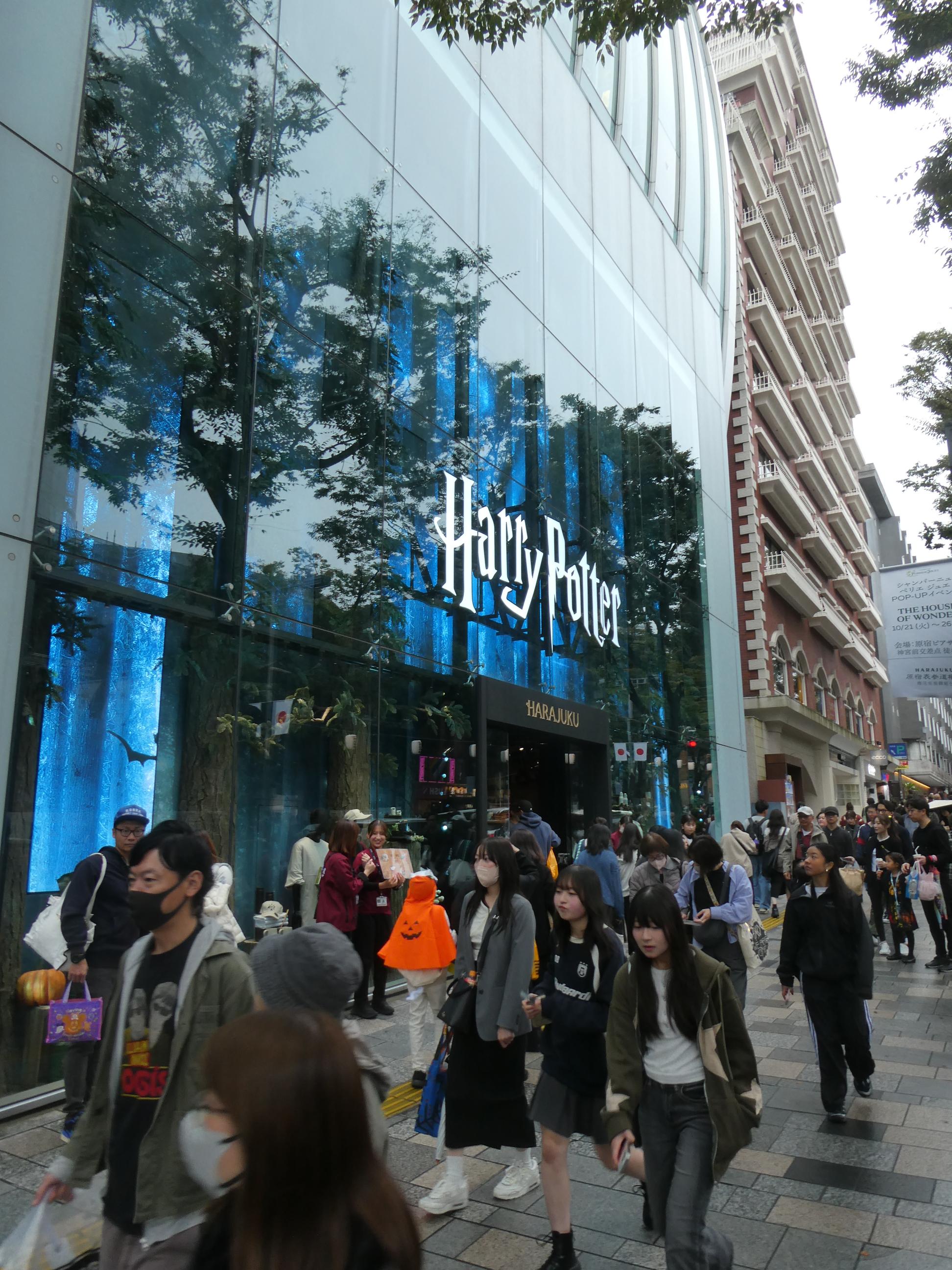

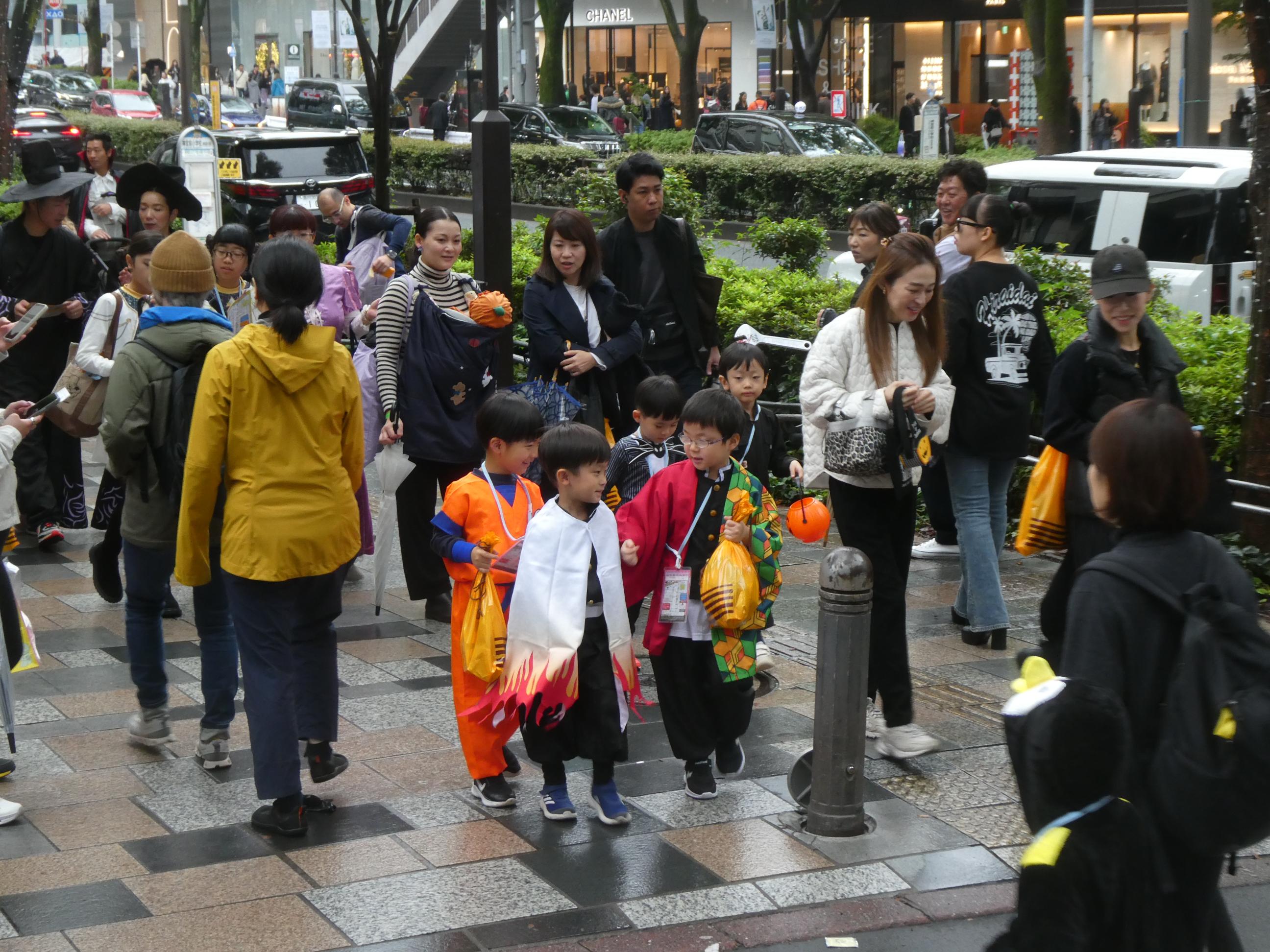
We deliberately planned our trip to Japan to coincide with the autumn leaves, but it also happens to coincide with Halloween. There were plenty of Halloween specials on offer in the stores we passed in Harajuku and we saw many groups of children and adults in costume. Despite many aspects of the culture we’ve seen today being uniquely Japanese, it’s clear that Halloween is also a very popular event in Tokyo. What I liked about the Halloween costumes I saw today was that many of them weren’t at all scary, but rather just fun costumes that would make kids happy. And in almost every group we saw, the adults were also in costume and sharing in the fun. In a few places, the groups gathered around people who I think were handing out treats. Once again, there was a good vibe you could sense when people in costume walked past. I needed to be wary of photographing kids, so I refrained from zooming in on any of the costumes, but some of them looked amazing.



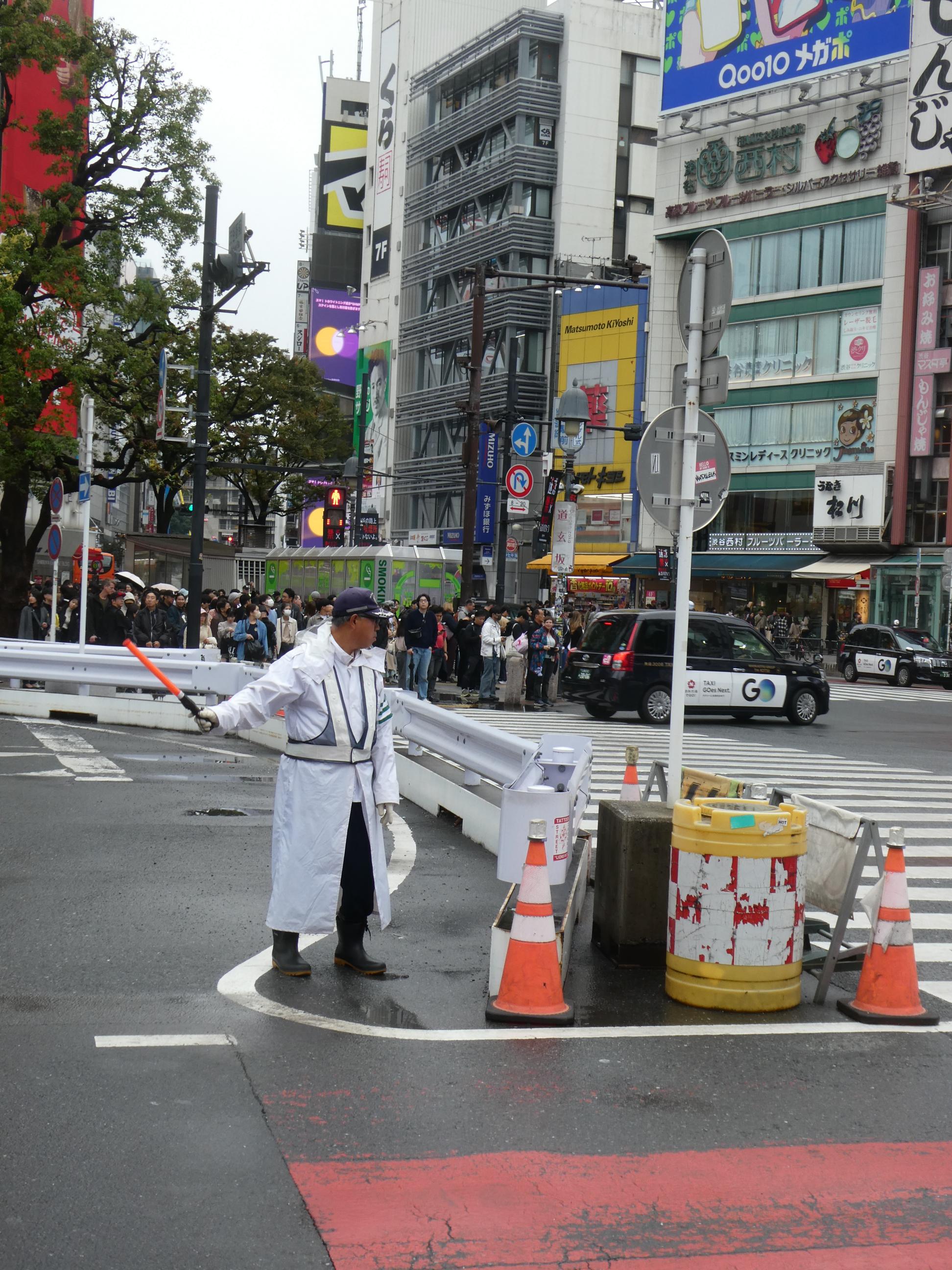
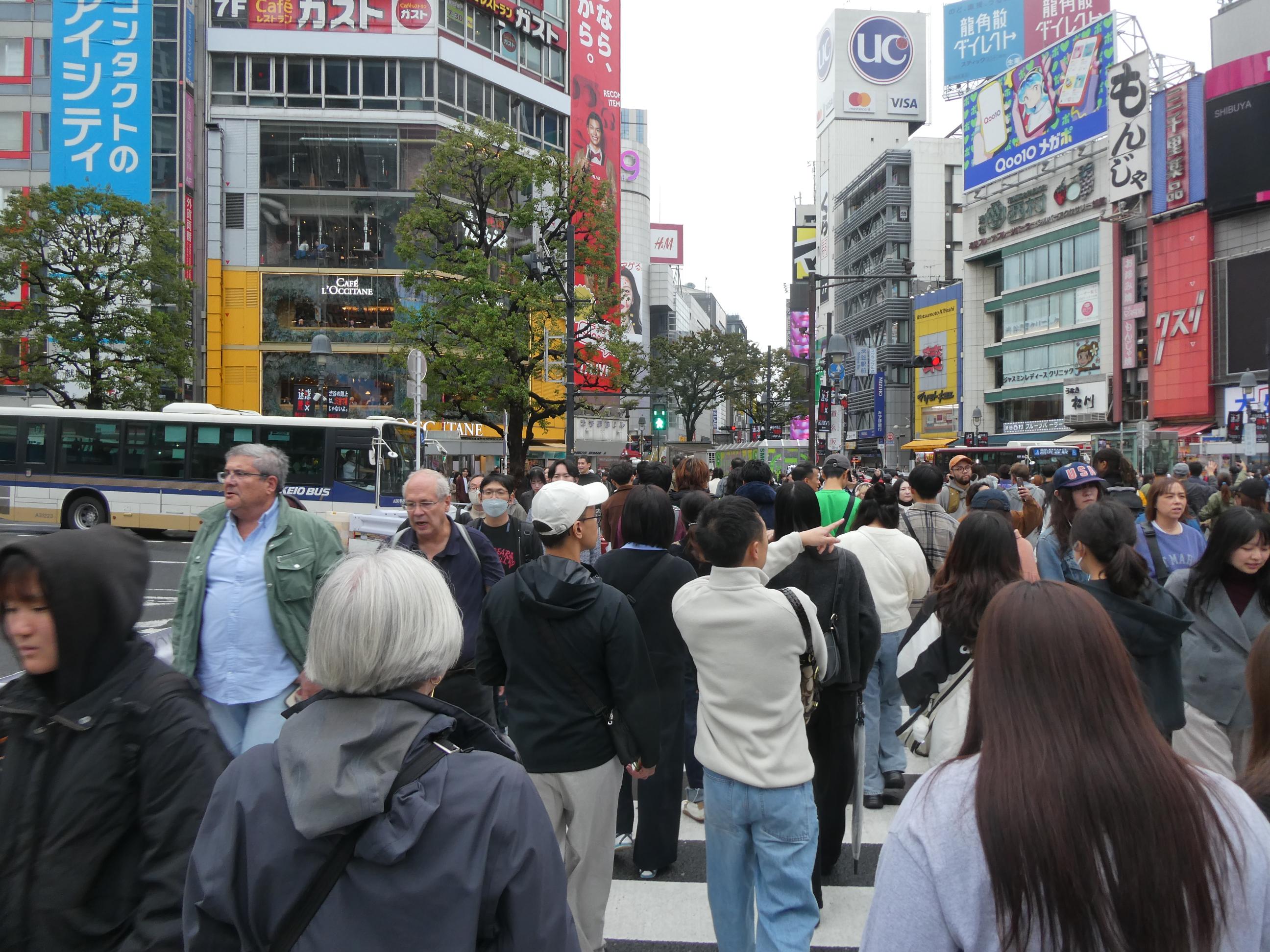
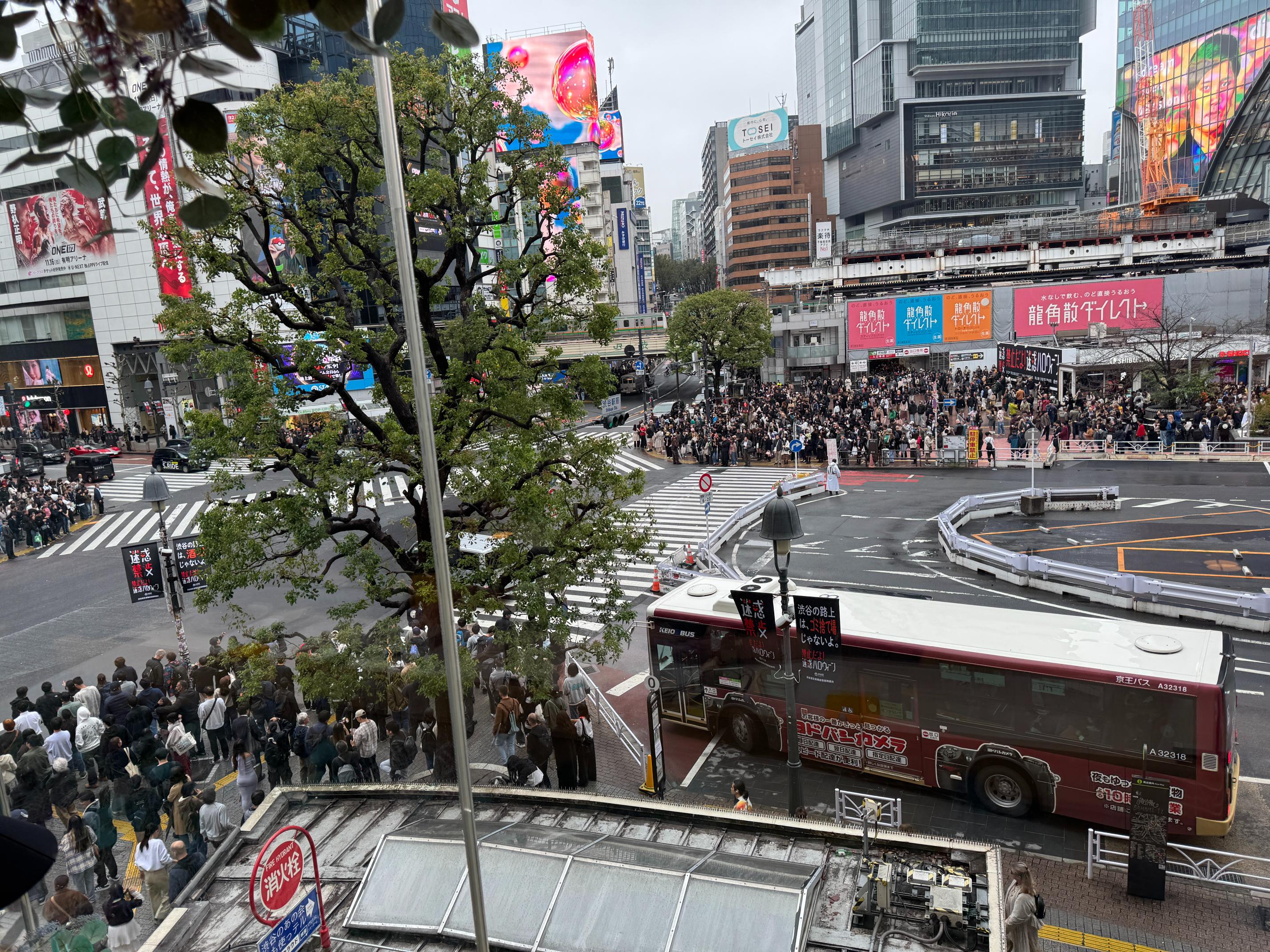
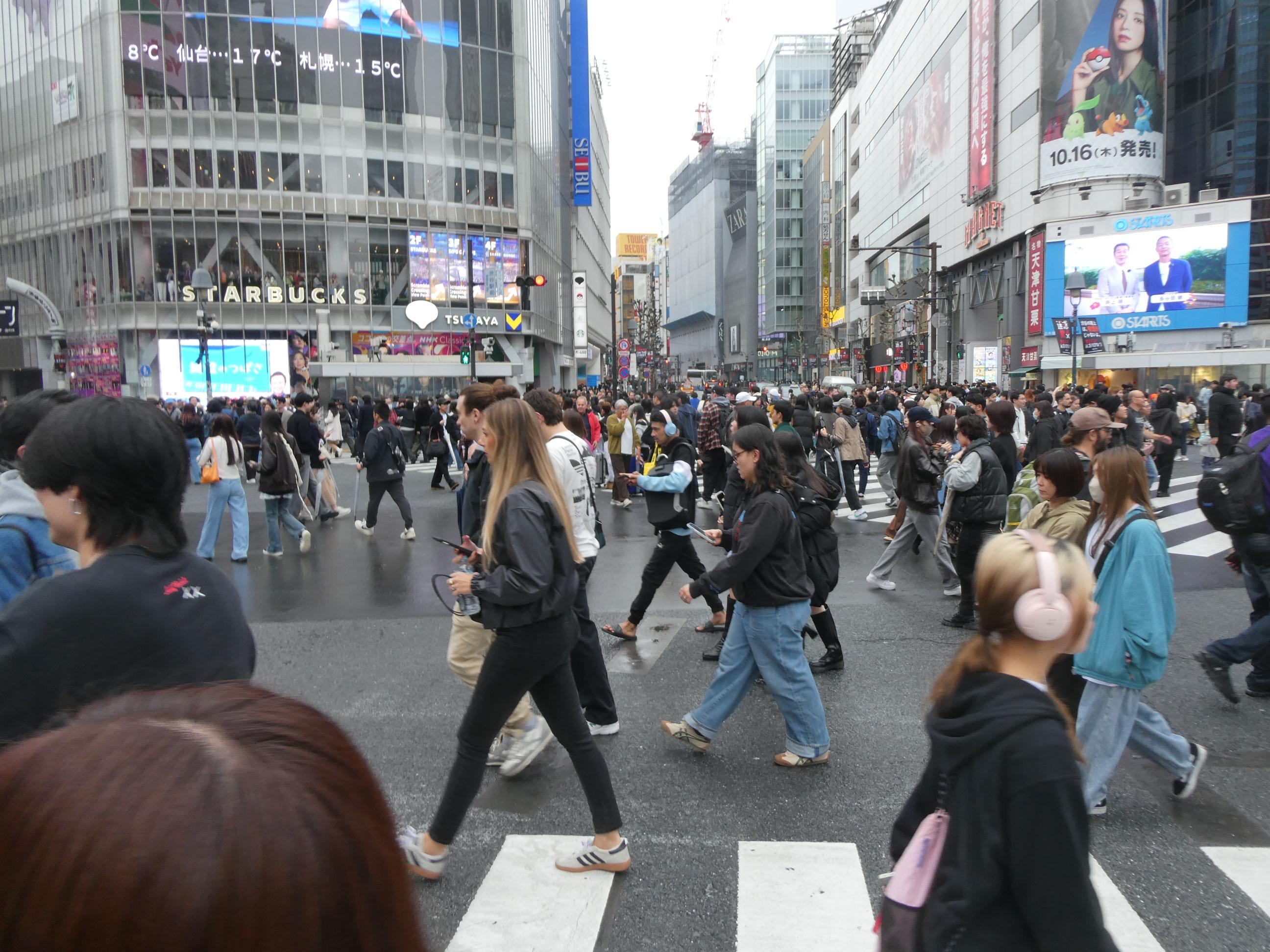
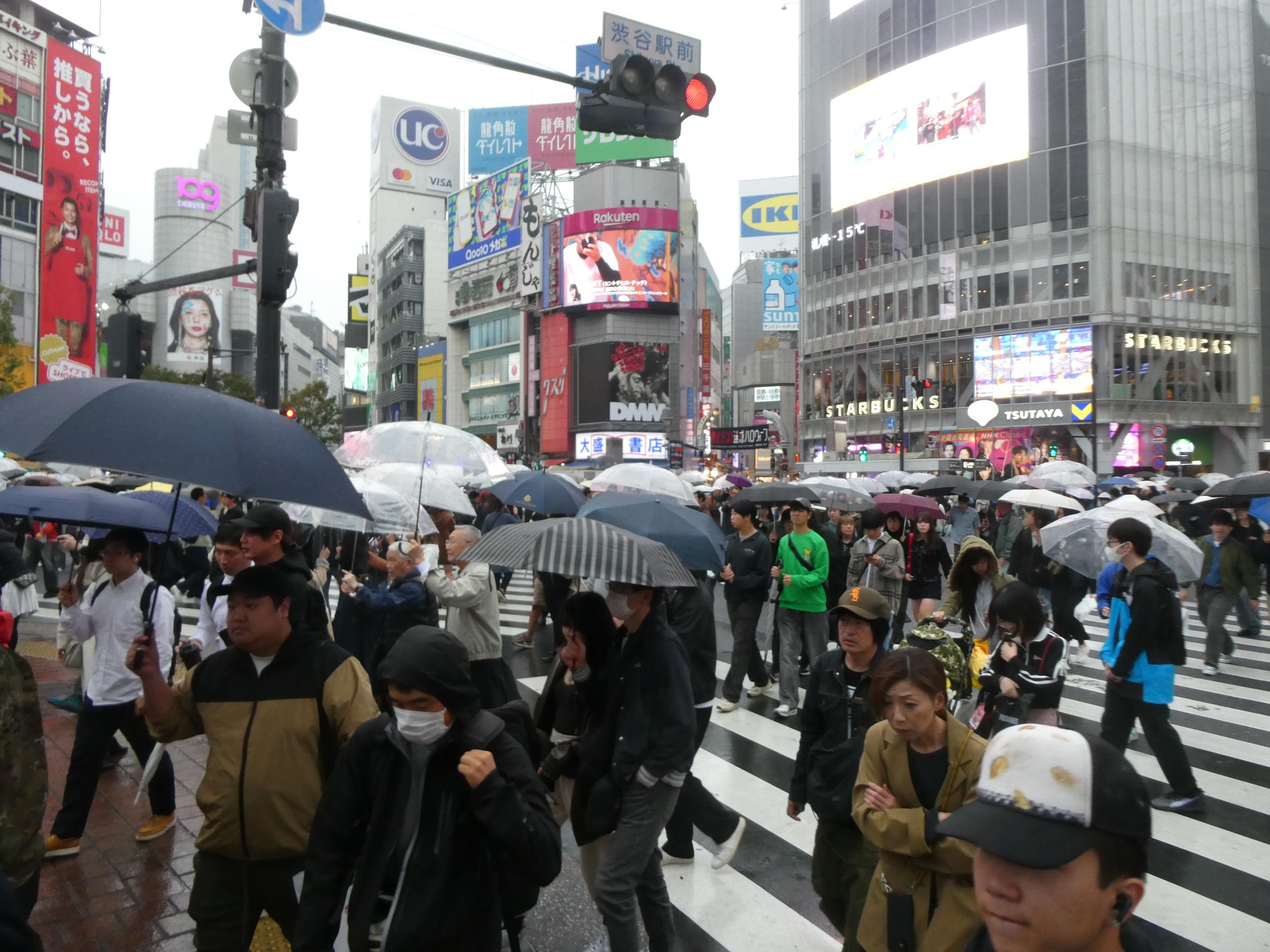
We boarded another train and alighted at the next station down the line, Shibuya. Shibuya’s claim to fame is that it is home to the world’s busiest pedestrian crossing. Multiple roads cross at a junction here. The traffic lights change fairly regularly, so cars don’t have to wait too long before it’s their turn to cross. A sole traffic controller waved cars through in front of us in a manner that almost gave the appearance of being choreographed. Then the lights on all the roads turned red and the vehicles came to a standstill. For a moment, nothing moved in the centre of the junction. Then the pedestrian light turned green and a swarm of humanity from all sides of the crossing moved across to another side. People moved in every imaginable direction, sometimes swerving to avoid those pedestrians who were more focused on filming their journey than actually watching where they were going. Soon, the lights changed again and the cars began crossing once more.
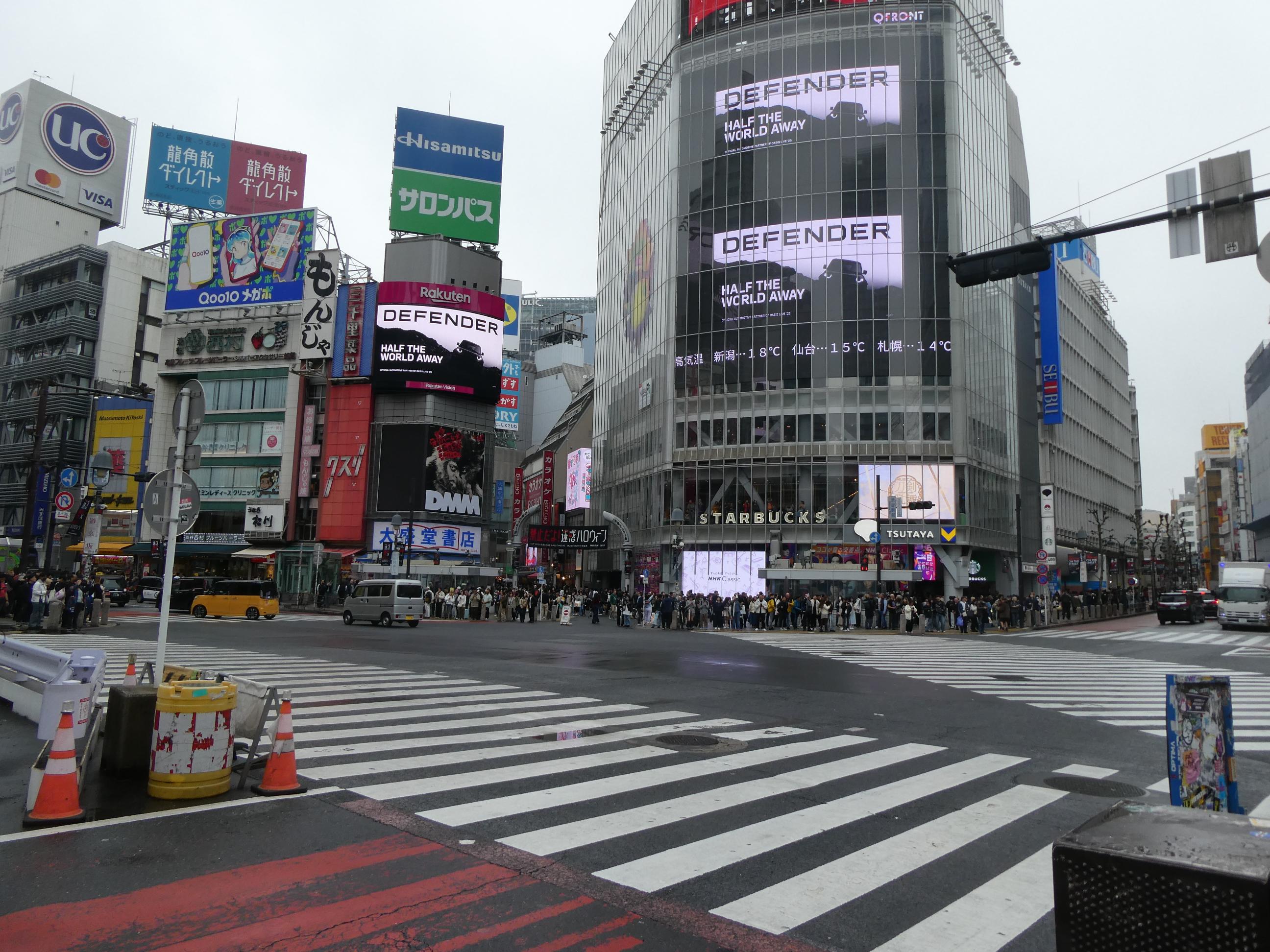
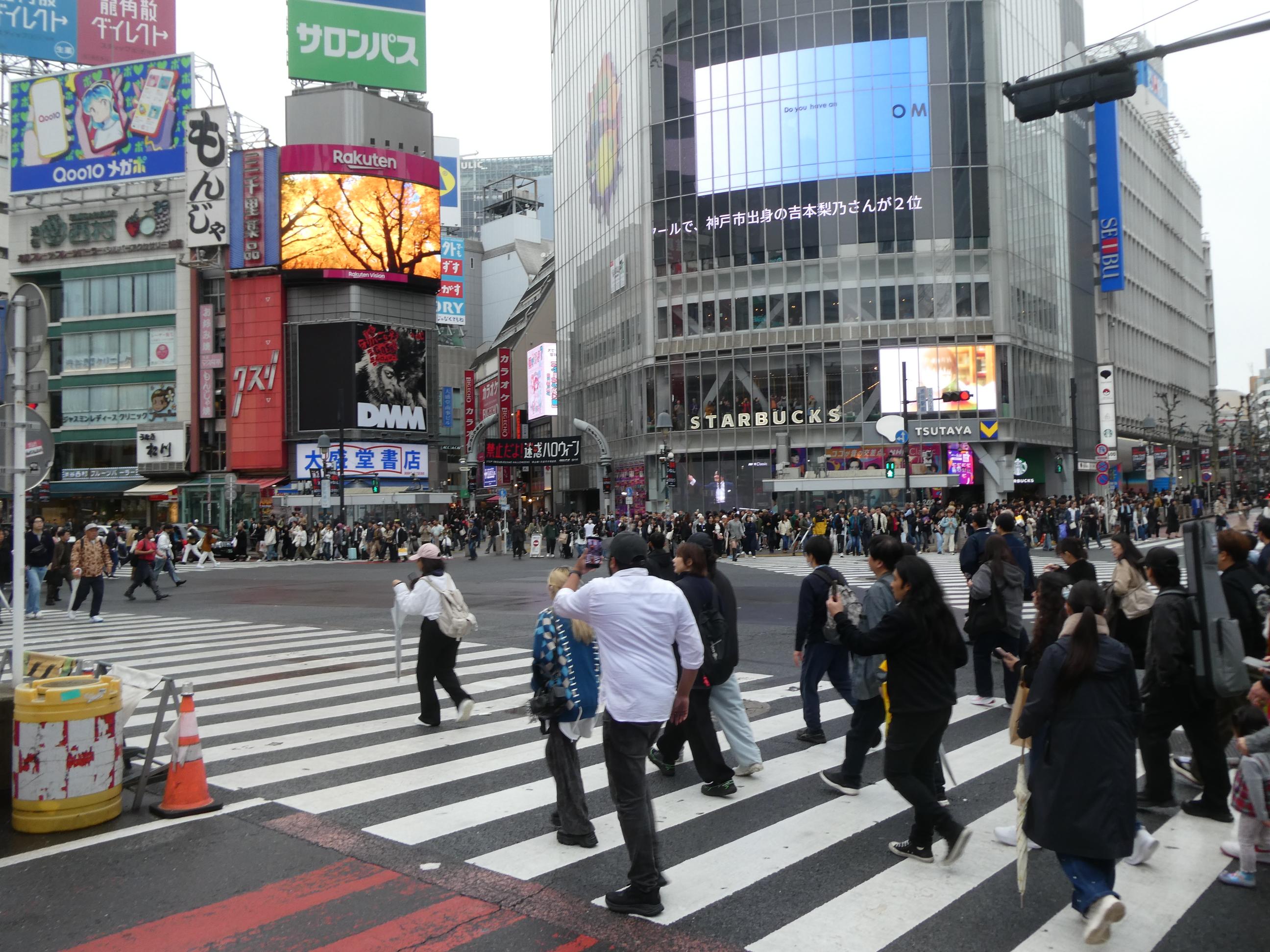
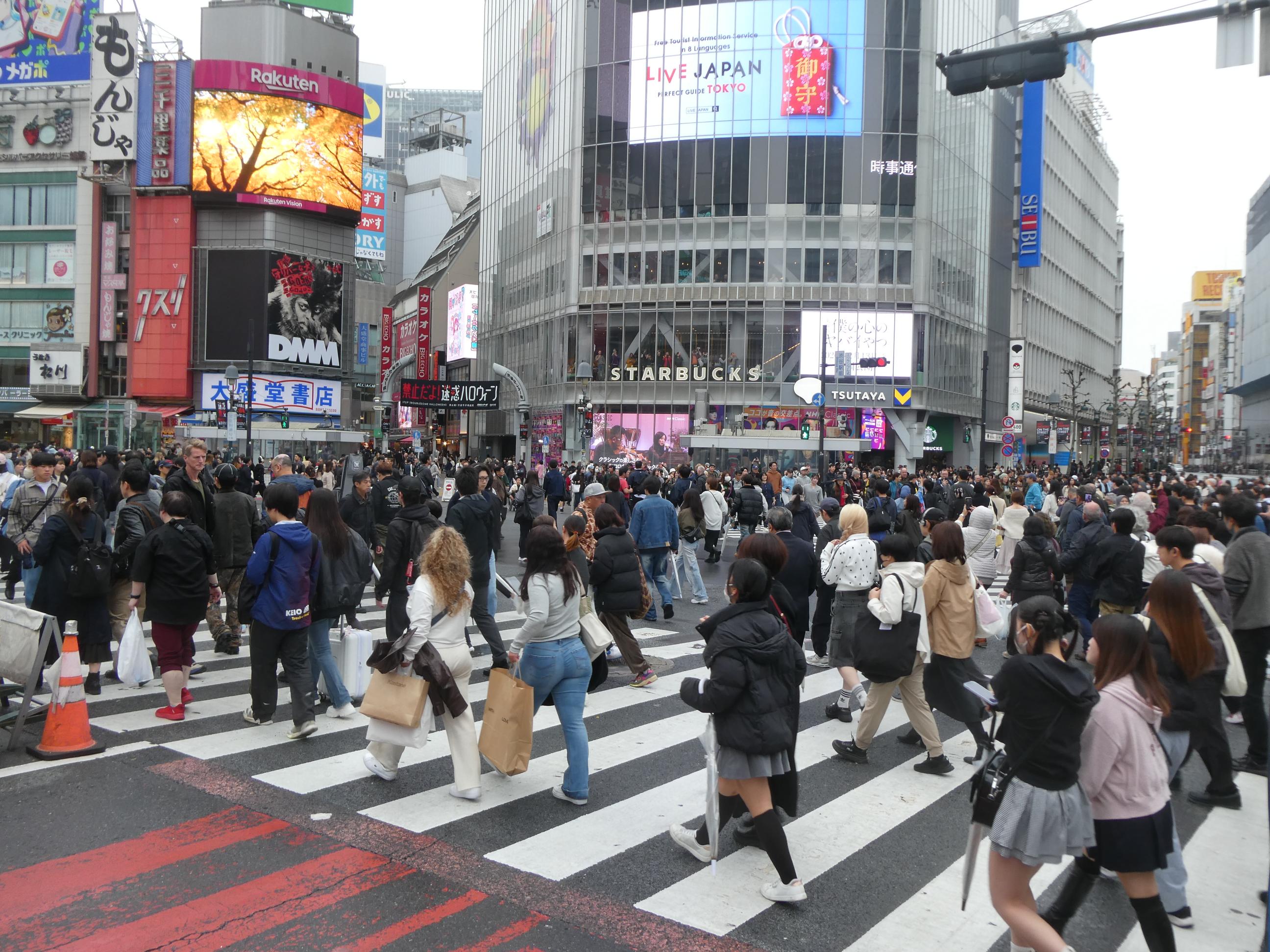
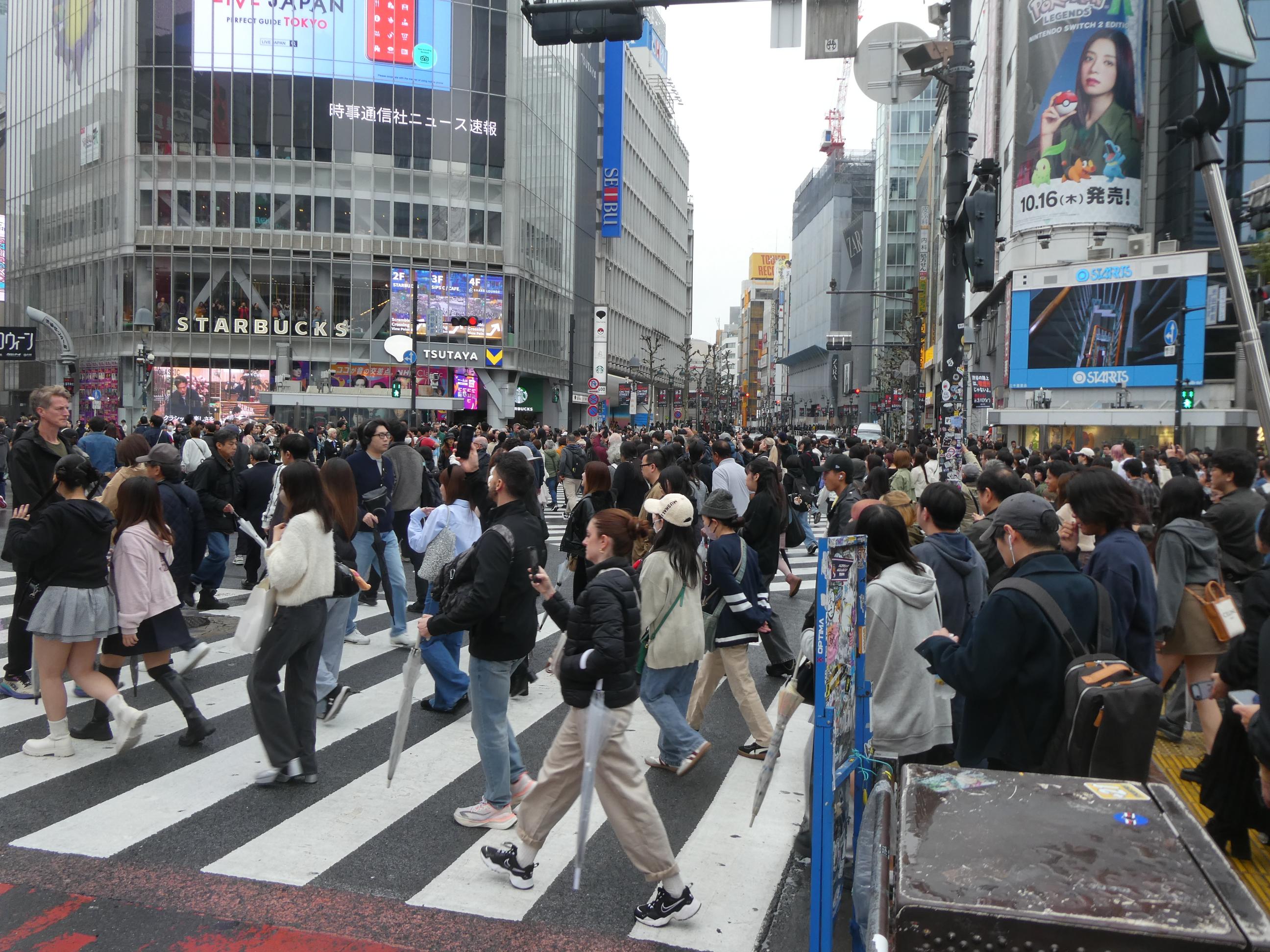
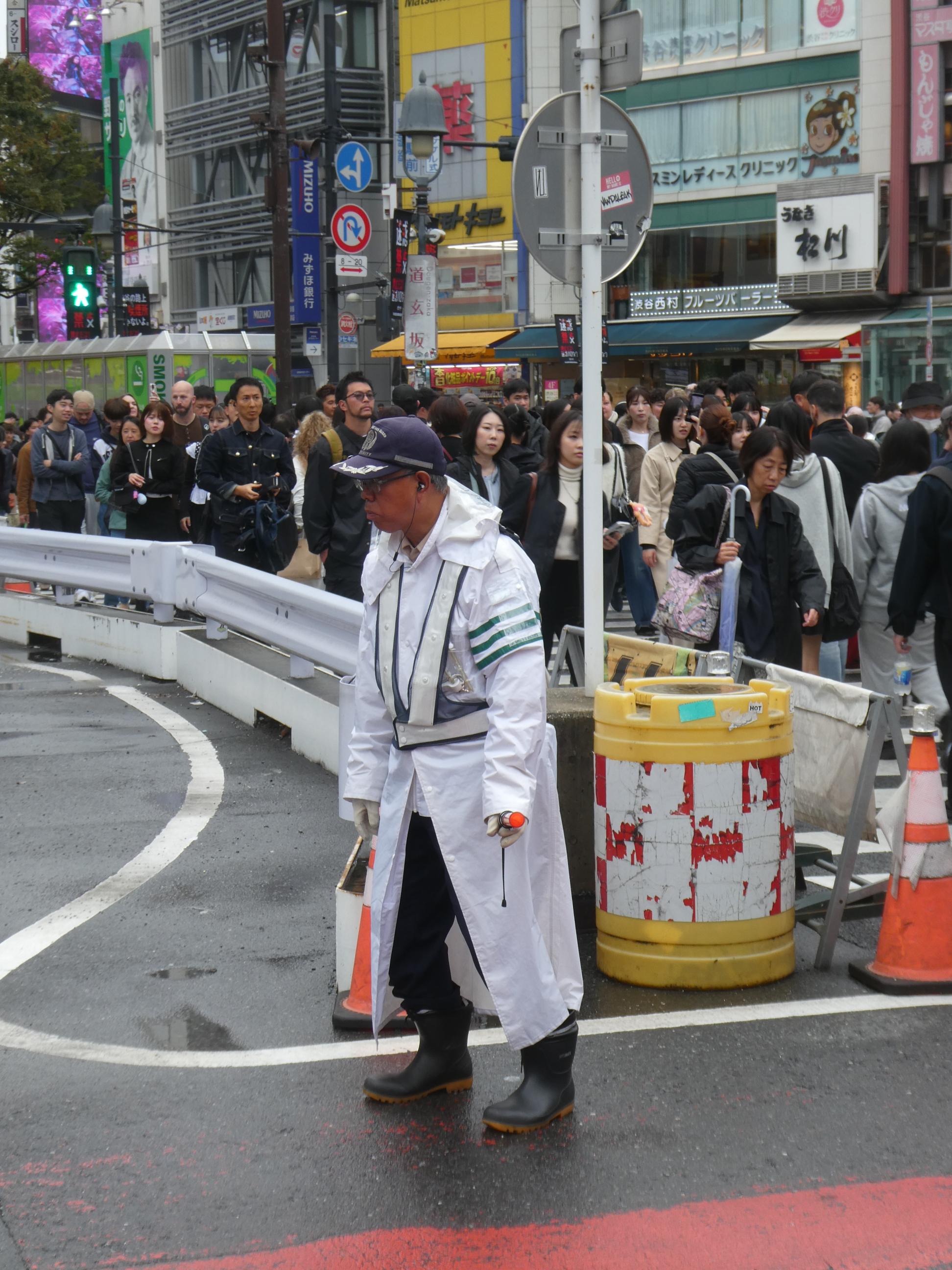
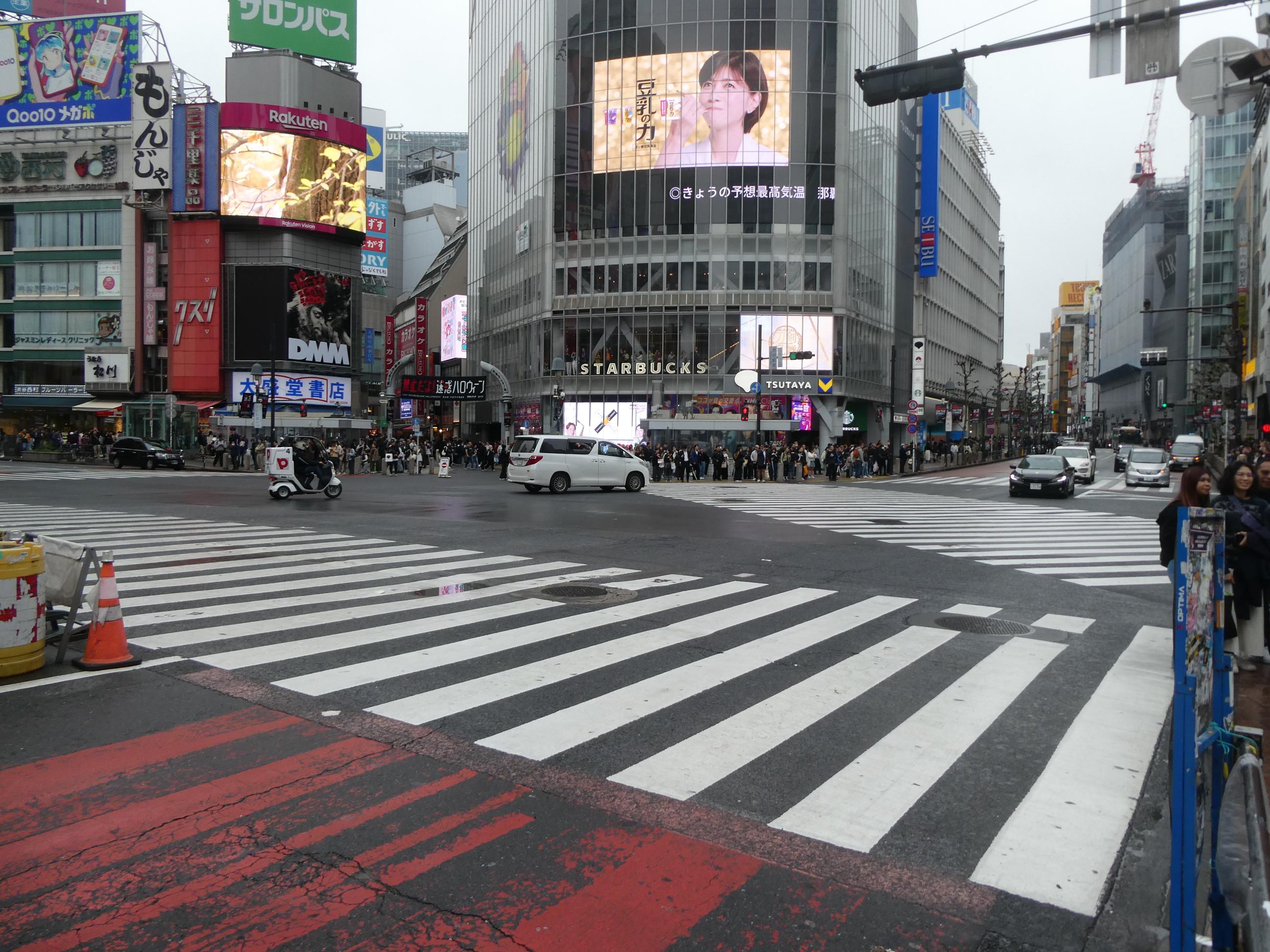
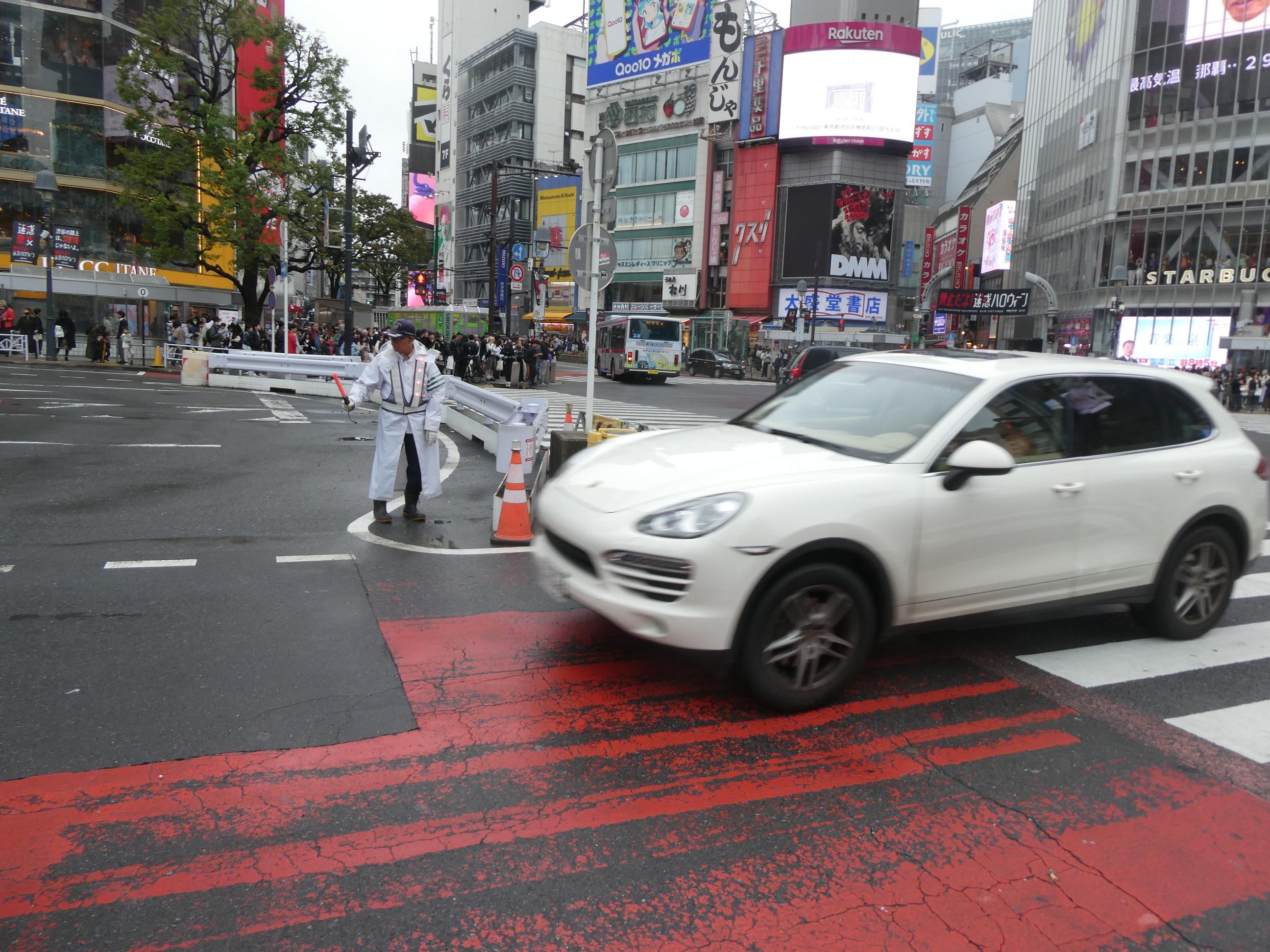
Of course, you don’t come to a place like Shibuya and NOT use the crossing, so over we went. I was quite chuffed to think that Marg and I had walked across the world’s two most famous pedestrian crossings within the space of only six months, after having visited Abbey Road back in May this year. But aside from them both being famous pedestrian crossings, that’s where the comparison ends. I wasn’t surprised to learn that up to 3000 people at a time cross at Shibuya. Only four people famously crossed the road at Abbey Road back in 1969. We found a good cafe for lunch and viewed the crossing from a couple of floors up. It didn’t hold our attention for too long, however. Once you’ve seen it and done the crossing, that’s basically all there is. It was raining when we finished lunch, so crossing back to the railway station was a little bit more challenging again as this time we were avoiding people filming as they walked AND people with umbrellas. You’ll be pleased to know we made it safely to the other side.



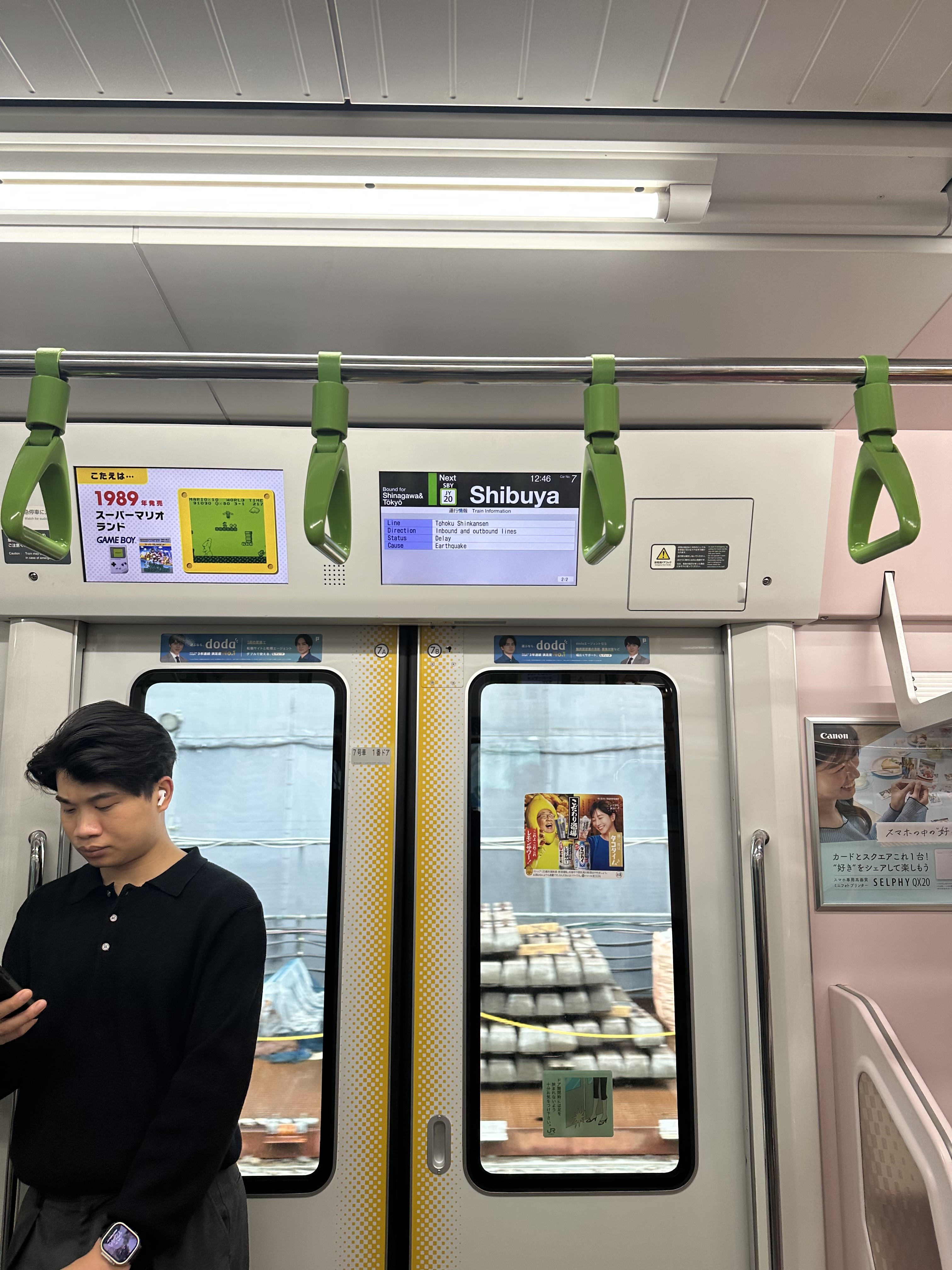
Given that we’re in a foreign country and that most signs are written in a text featuring characters we cannot read, it’s gratifying that the trains feature scrolling information in both languages above the doors. And, whereas the trains back home rarely inform us of the reasons why whenever a train is delayed, the trains in Tokyo make it perfectly clear why a train may not run on time. If you look closely at the sign above the door, you’ll note that the cause for a delay on one rail line is simply stated as an earthquake. Wow! That’s a bit more interesting than a faulty signal box back home.
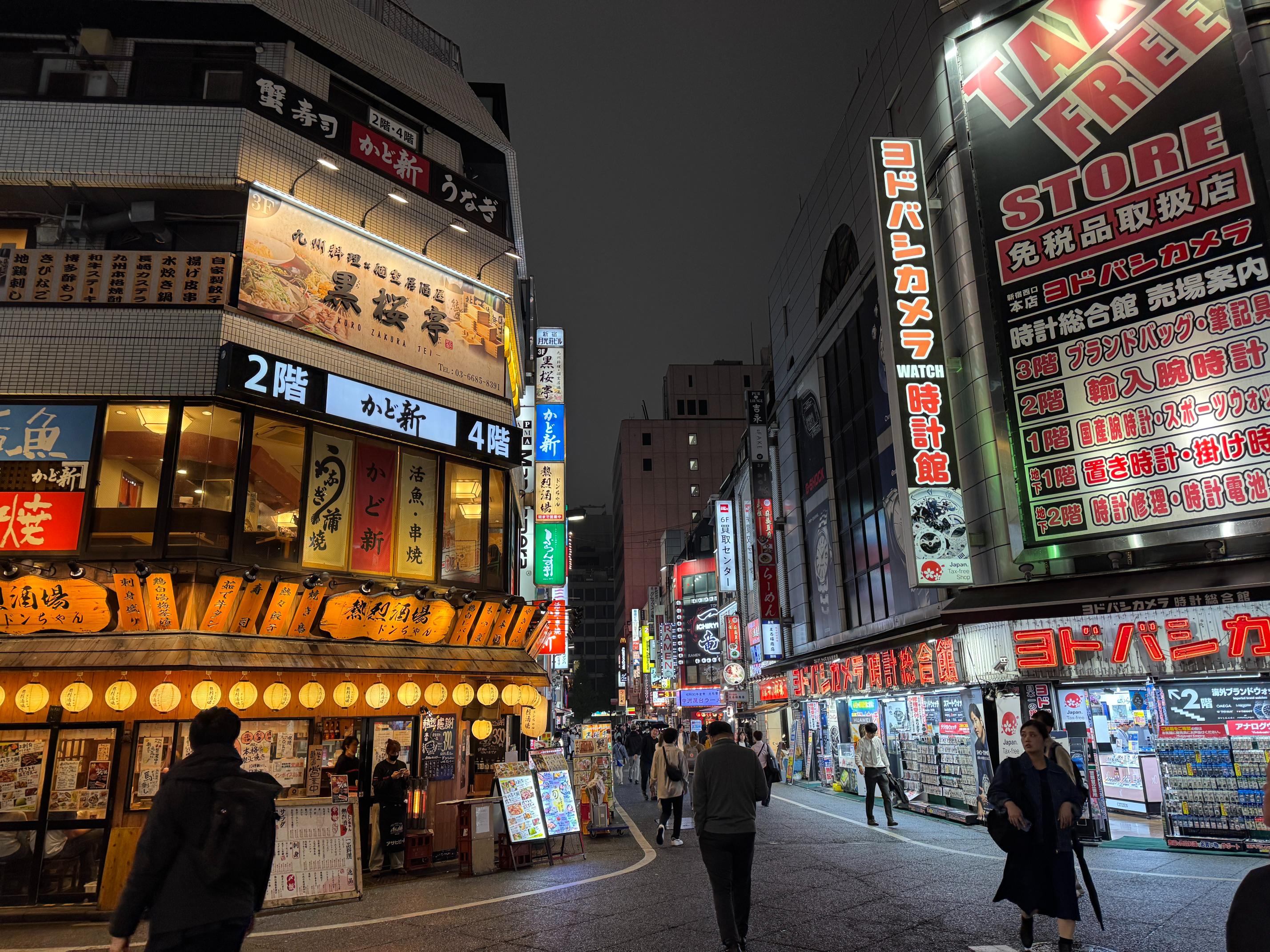
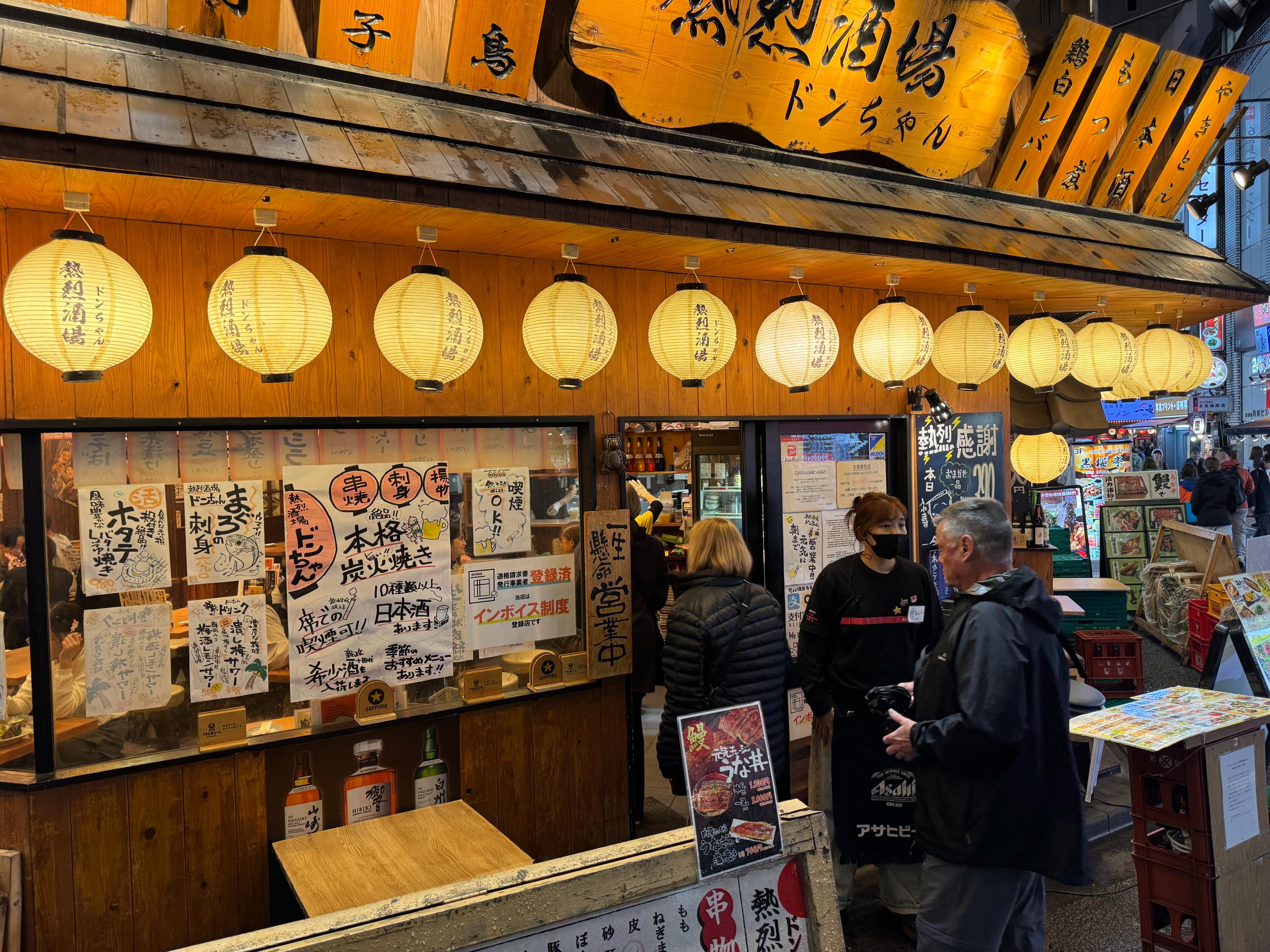
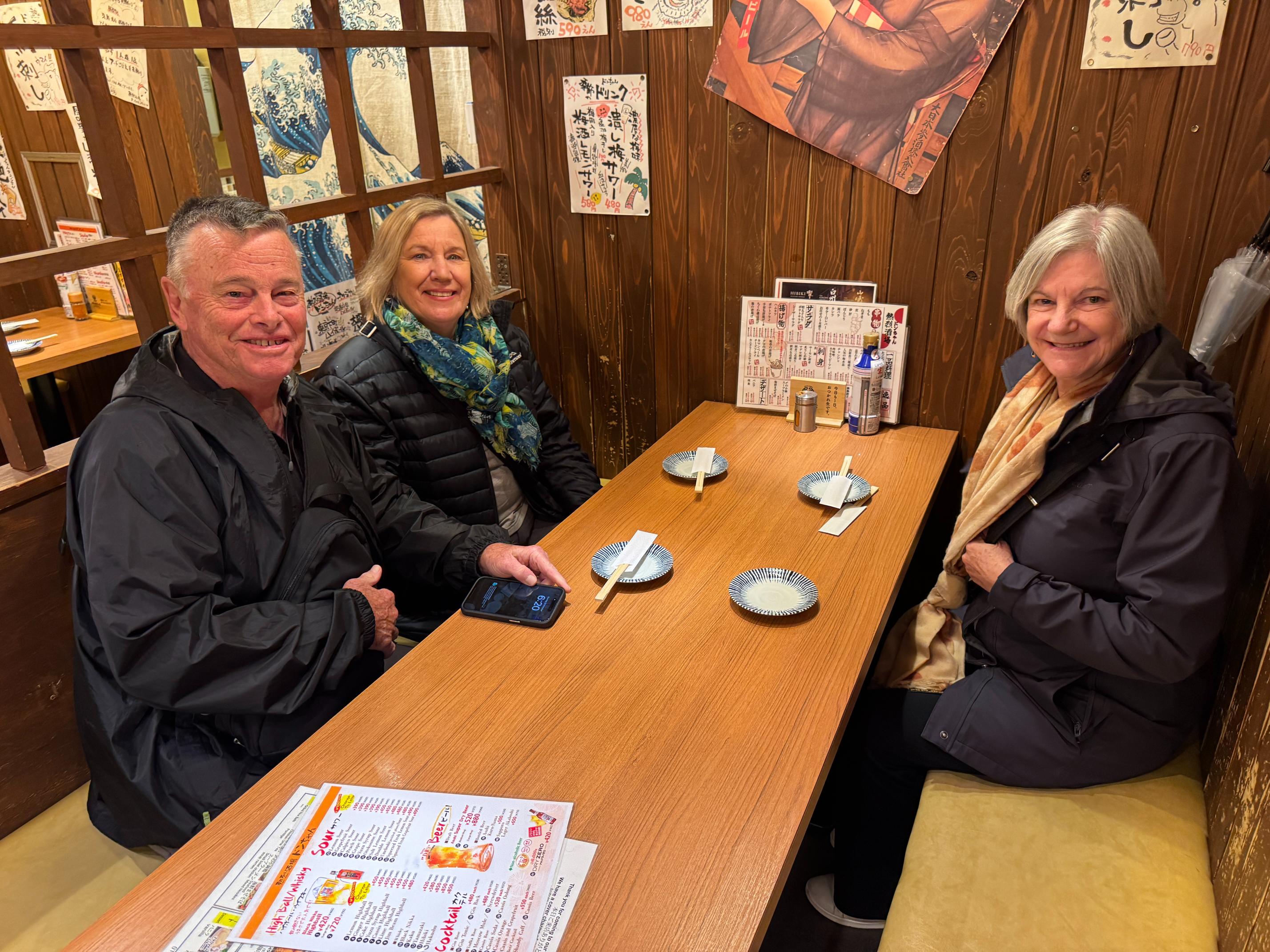
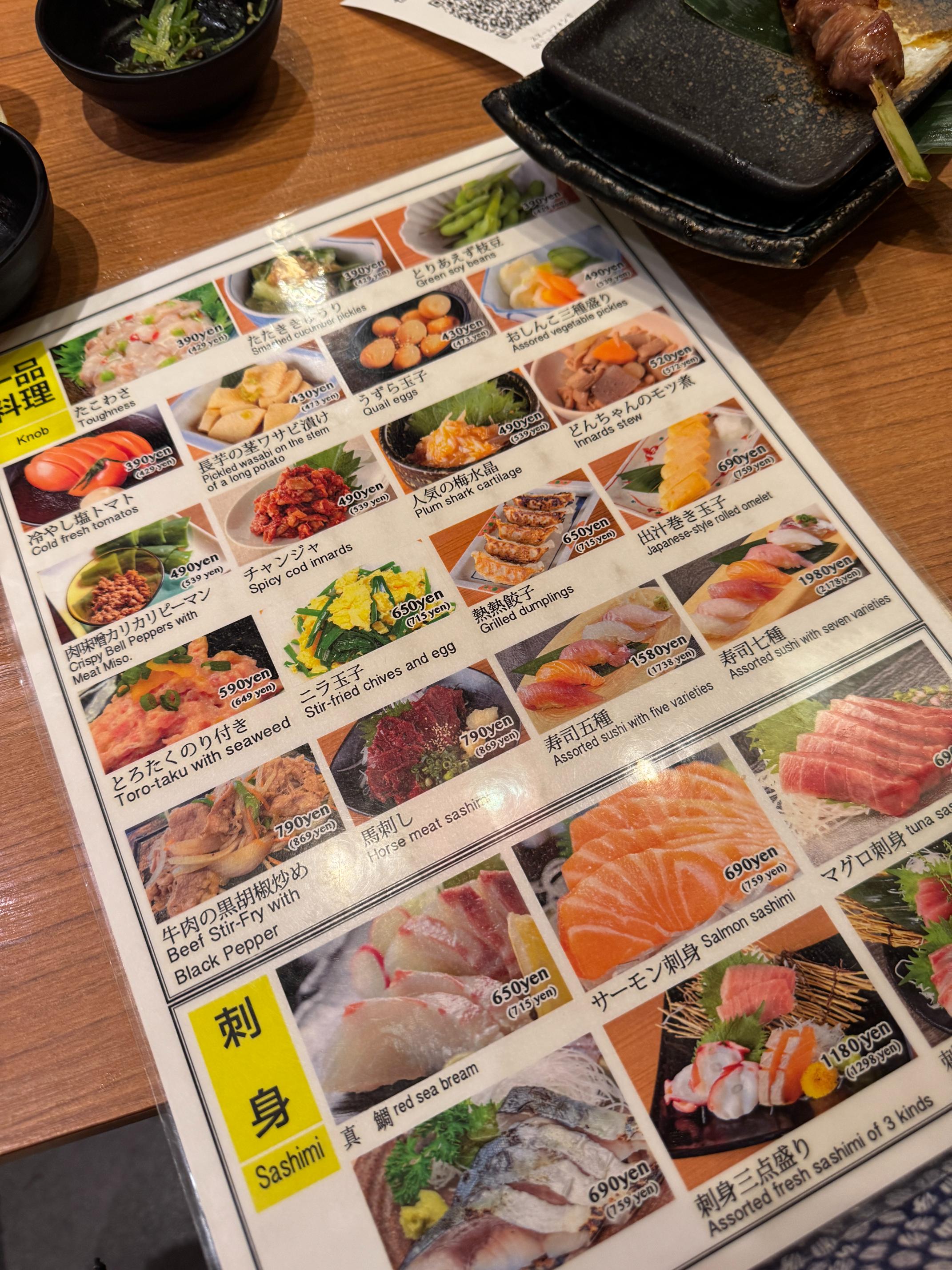
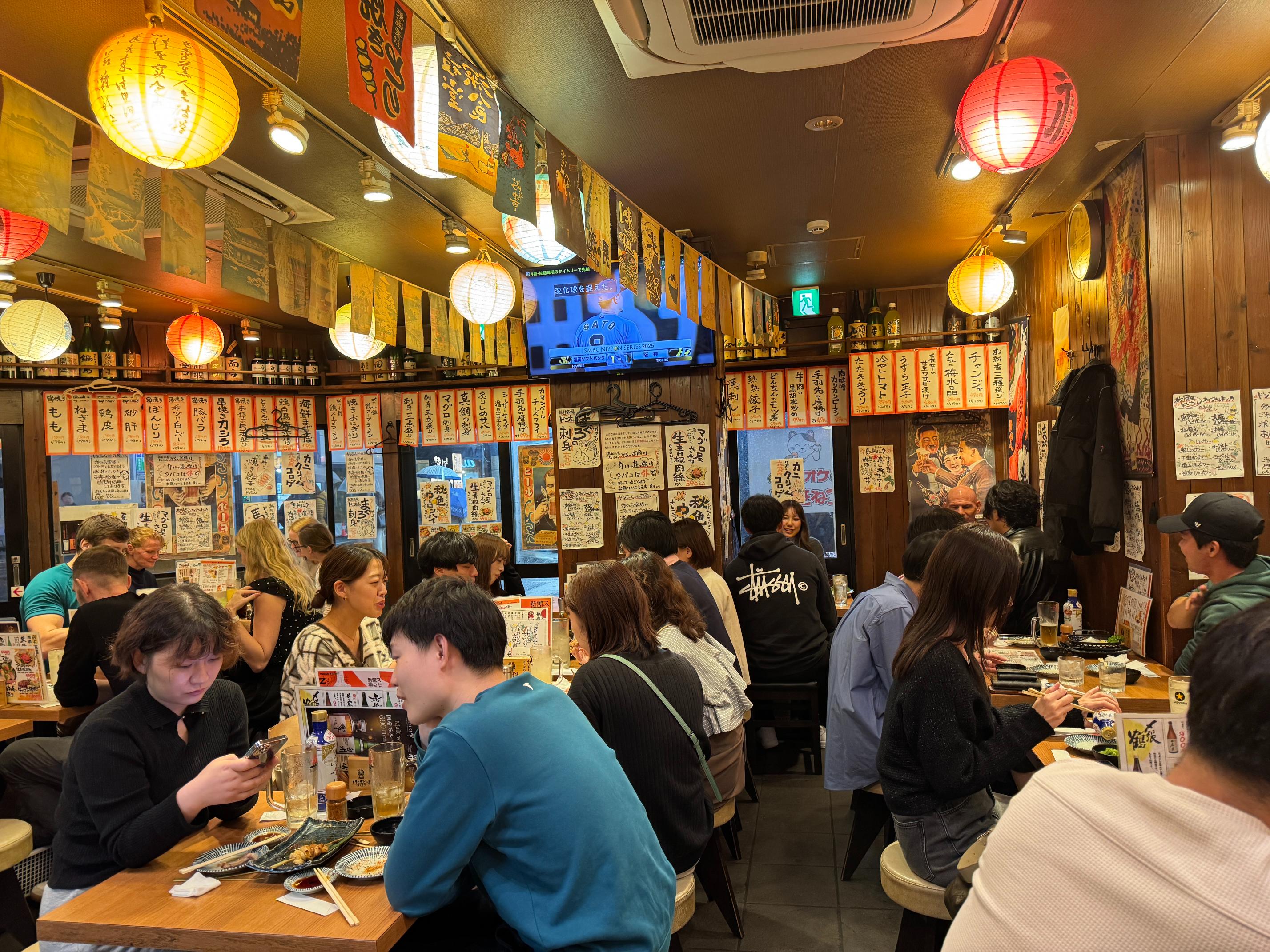
There’s a dining precinct just a short walk from our hotel, so tonight we ate with the locals and really enjoyed it. Strangely, the beer, which comes in a 500 mil bottle, is accompanied by a glass so small you might normally fill it with milk and give it to a pre-school kid. Fortunately for those who were drinking highballs and gin and tonics, they were being served in pint sized glasses. Only in Japan, I guess. We ordered our food from a colourful menu featuring appetising photos of the various dishes. Sometimes the photo of a dish looked very appealing but the word ‘innards’ was a turn-off. The skewers and the sashimi were delicious, but I was puzzled by the food category termed ‘Knob’ and I have no idea what the dish named ‘Toughness’ might be known as back home. Needless to say, I found other options.
All in all, despite the gloomy weather, it was another good day. Yesterday we struggled to get our heads around the trains and we experienced the calm and serenity of ancient Buddhist temples and gardens. Today we aced the trains and immersed ourselves in some of the weird and wonderful customs that belong to Japanese pop culture. The two days were worlds apart, but equally enjoyable.


 On The Road With Garry