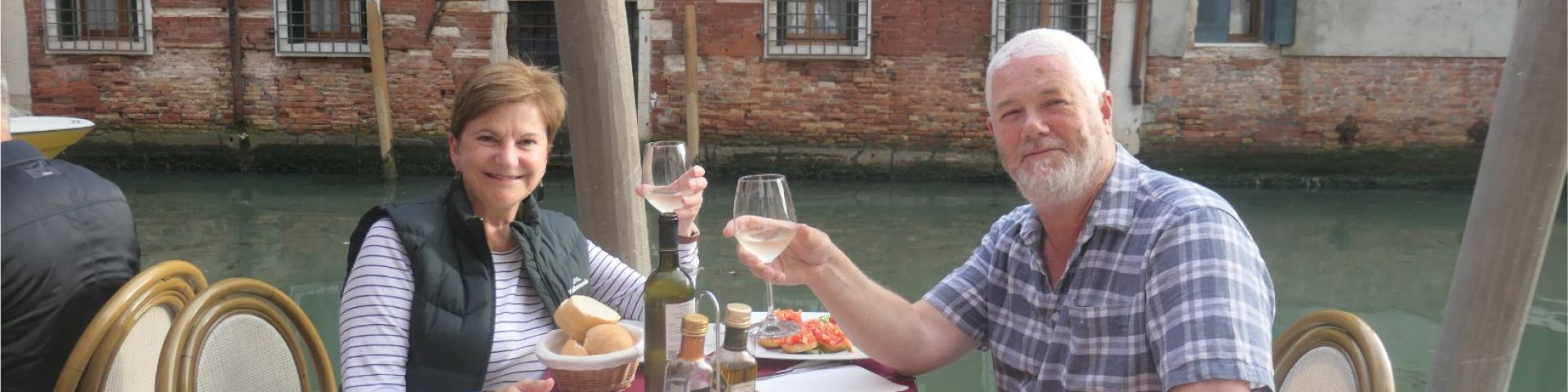
I woke up early this morning and I could hear it was blowing a gale outside. The wind was whistling through the tiny crack where we had opened our hotel room window just a fraction to let some fresh air in overnight. I could hear it rattling things in the bathroom. I could tell straight away that we might have some miserable weather for company today, though I was unaware just how bad it might become. I was crossing my fingers that it would all blow over later in the day and that calm weather would return by tomorrow morning when we take the ferry out to the Aran Islands.
Almost every morning on this trip, we share the breakfast rooms in our hotels with tour bus parties. They usually all file in to breakfast around about the same time, crowd all the coffee machines, toasters and buffet serveries, push in ahead of other guests to get their food first, then get up and leave at the same time. If we’re lucky, we get there a few minutes before they do so we can get a coffee and grab some food before the rush. When we check out of our hotel a half hour later, they’re usually blocking the exit and the footpath waiting for their luggage to be loaded on to the bus, which is usually pulled up right outside the front door. We might see the same people later in the day at tourist attractions. This morning, just as we were finishing our breakfast, a loud commotion started at a table just near us. A woman from a bus group had burst into the breakfast room and begun loudly berating another woman, still finishing her breakfast, for being late to board the bus. The diner said something quietly in response, only to receive another loud outburst from the angry woman standing over her. The lady at the table quickly pushed away her bowl, stood up and left the room. Then the aggressor turned on two more women at the other end of the same table and began loudly giving them a piece of her mind. She was like a border collie nipping at the heels of a lazy mob of sheep. The other two stood up, pushed in their chairs and headed for the exit. It was quite comical to watch. We left our table and walked around to catch the lift back up to our rooms. Suddenly a little old lady raced up behind us and waited anxiously for the lift to arrive. In her hands was a bowl of breakfast food and a spoon. We all crammed into the tiny lift first and there was just enough room for her to squeeze into the front corner. She turned her back to us and began shoveling her breakfast into her mouth as fast as her spoon would work while the lift slowly ascended to the first floor, where she hurried out and headed for her room, still furiously trying to finish her breakfast and get to the bus on time. That was our last sighting of her. We all looked at each other in the lift and cracked up laughing. Later in the day, Marg spotted the angry woman at the Cliffs of Moher. I’ll bet none of the other women from the breakfast fracas were keeping her company!
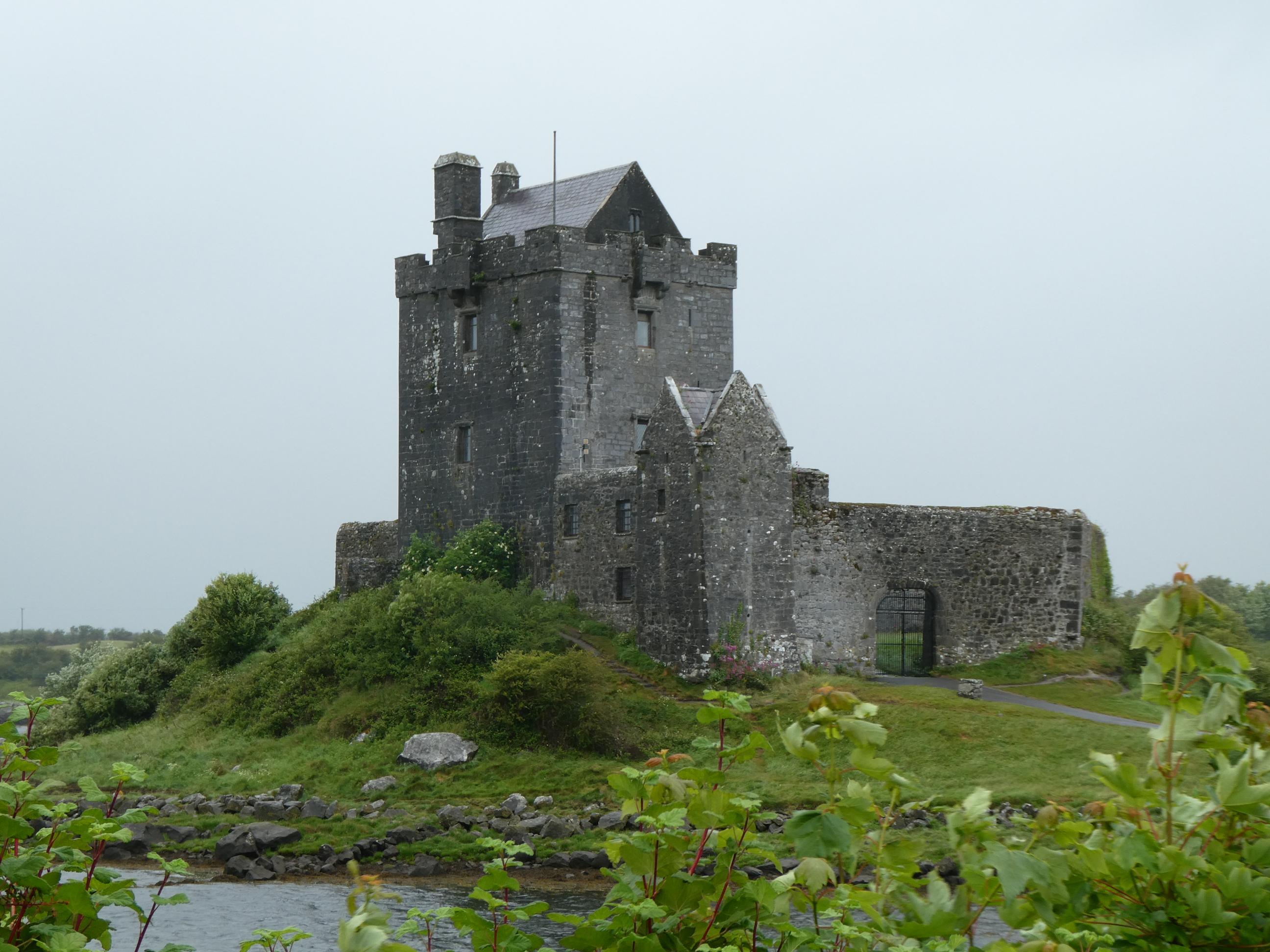
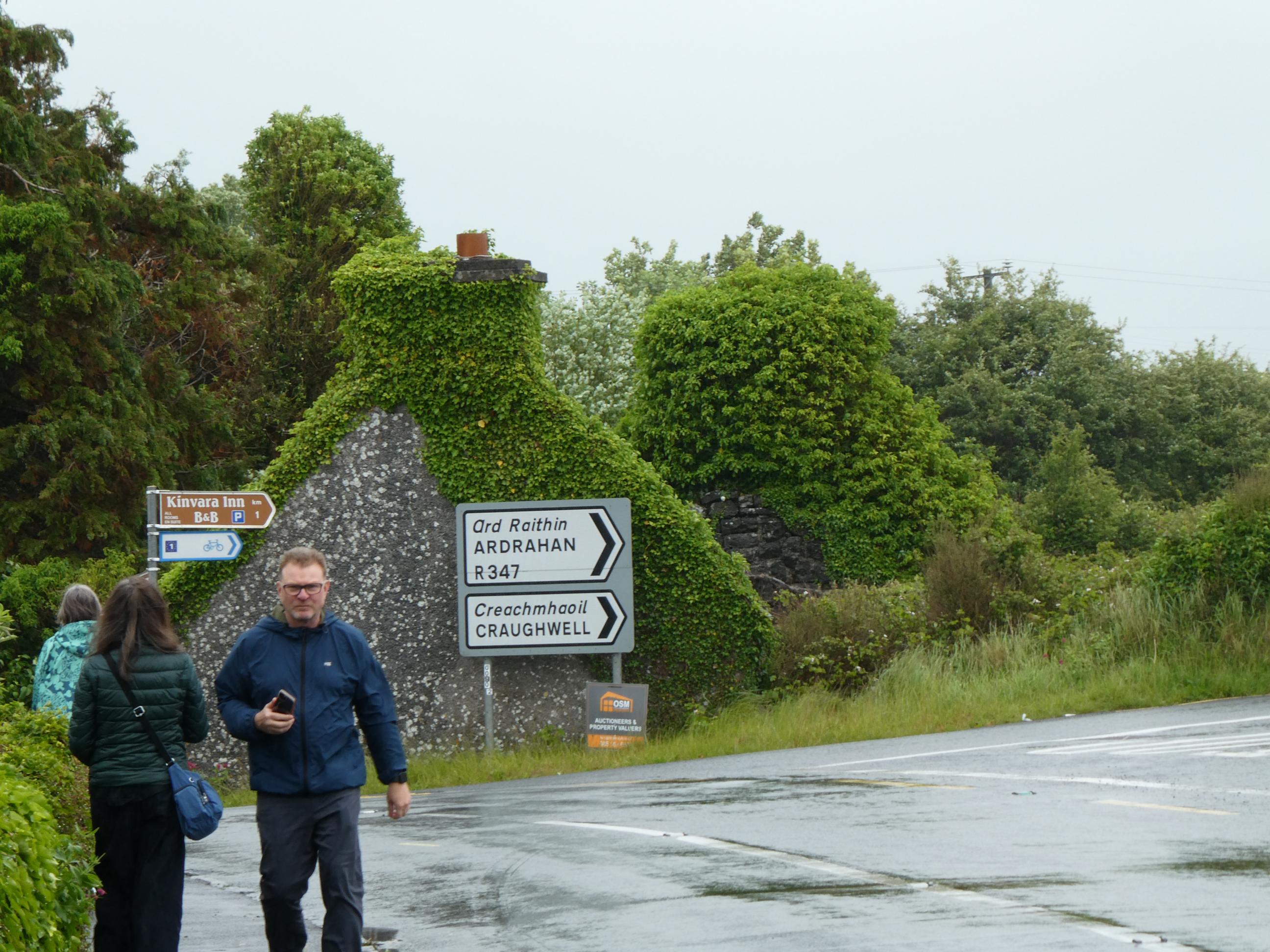
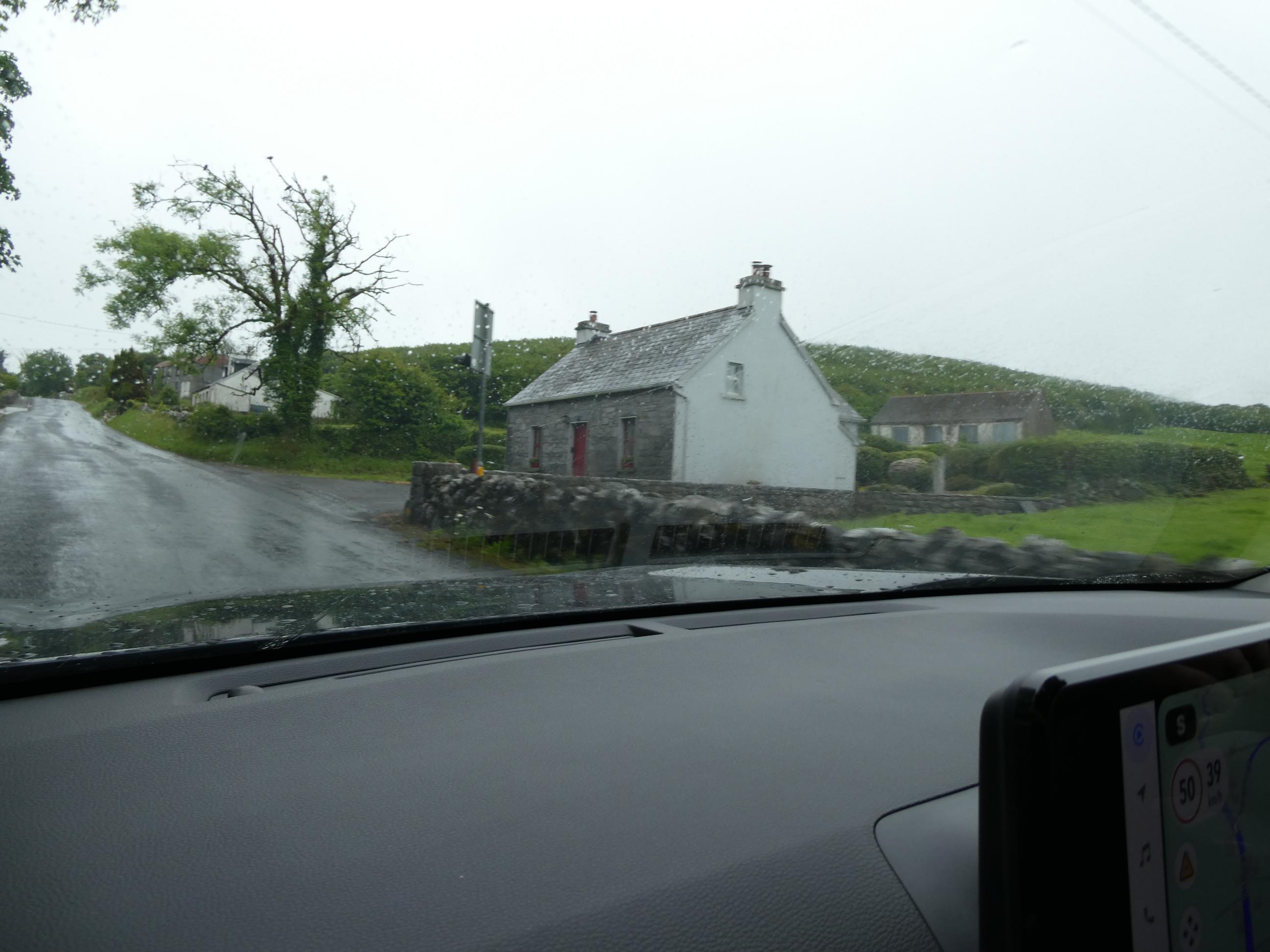
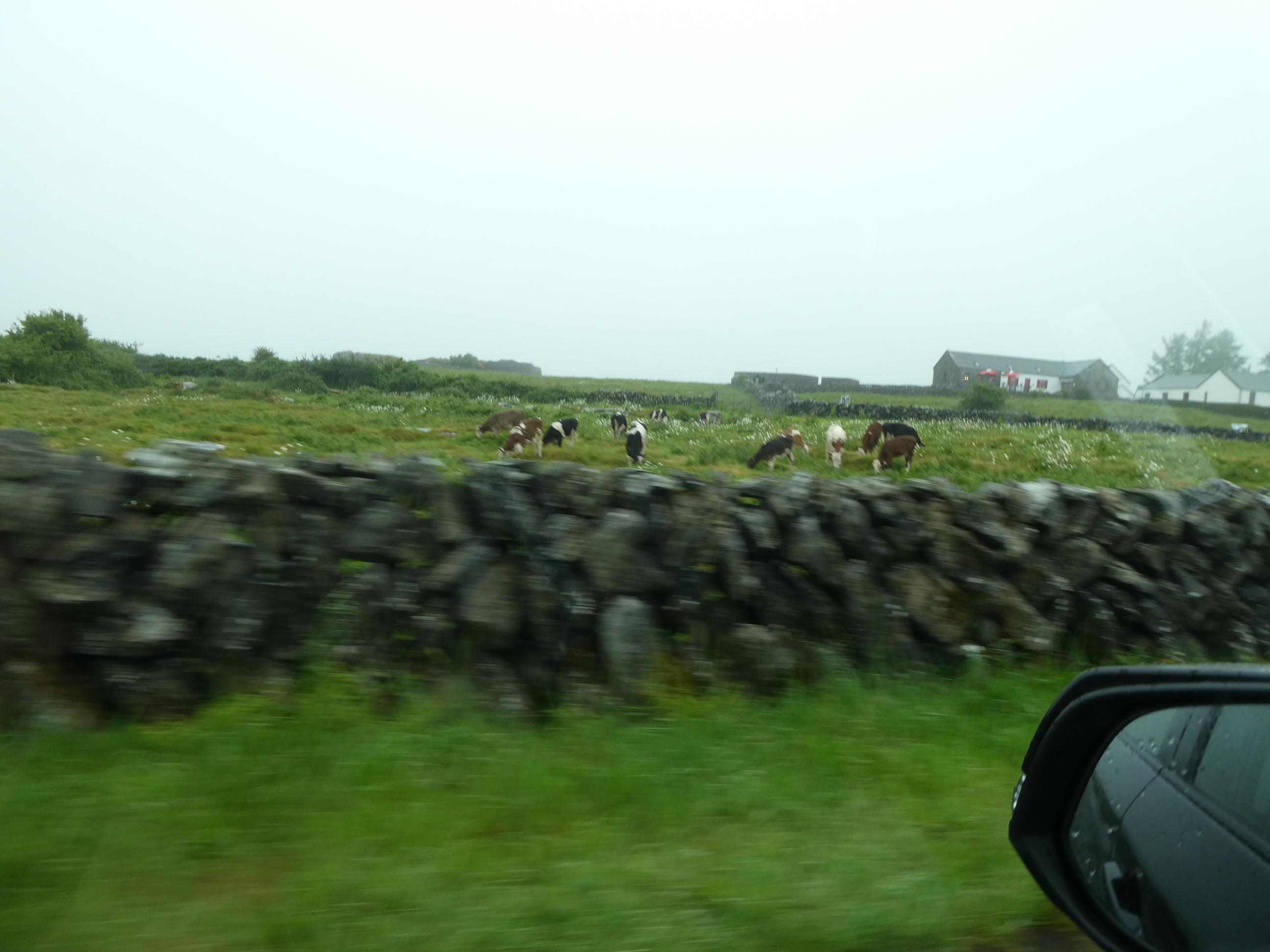
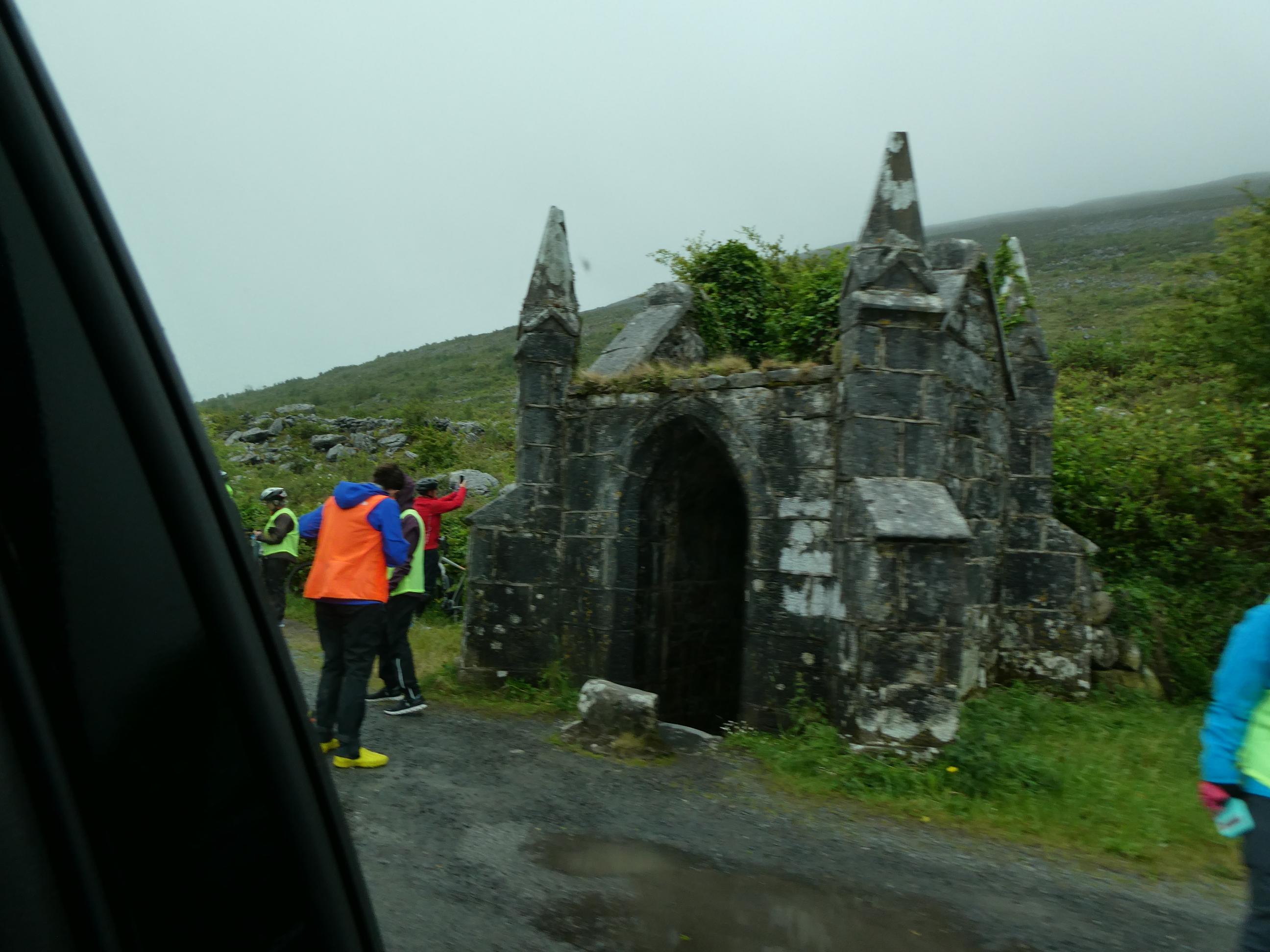
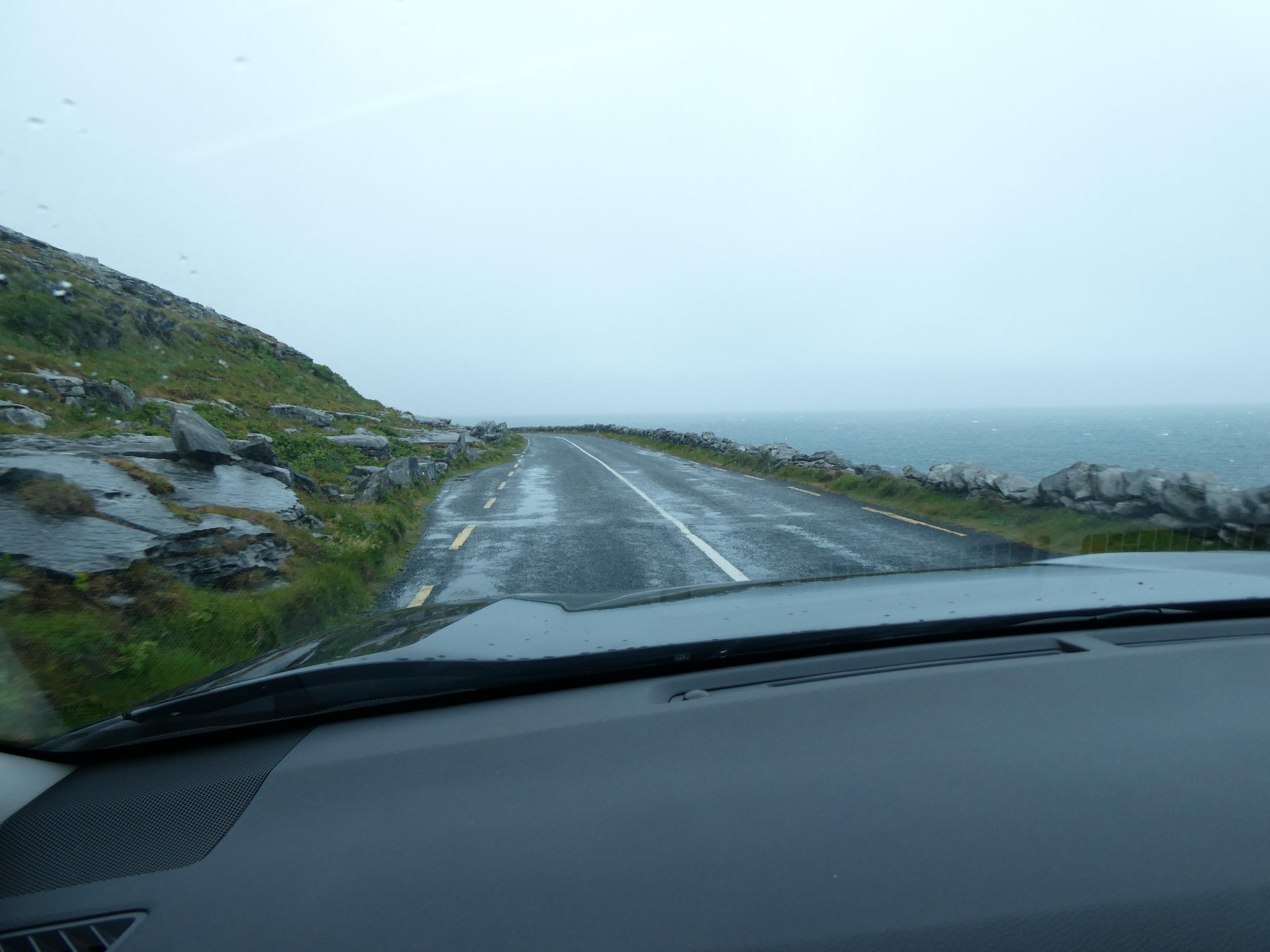
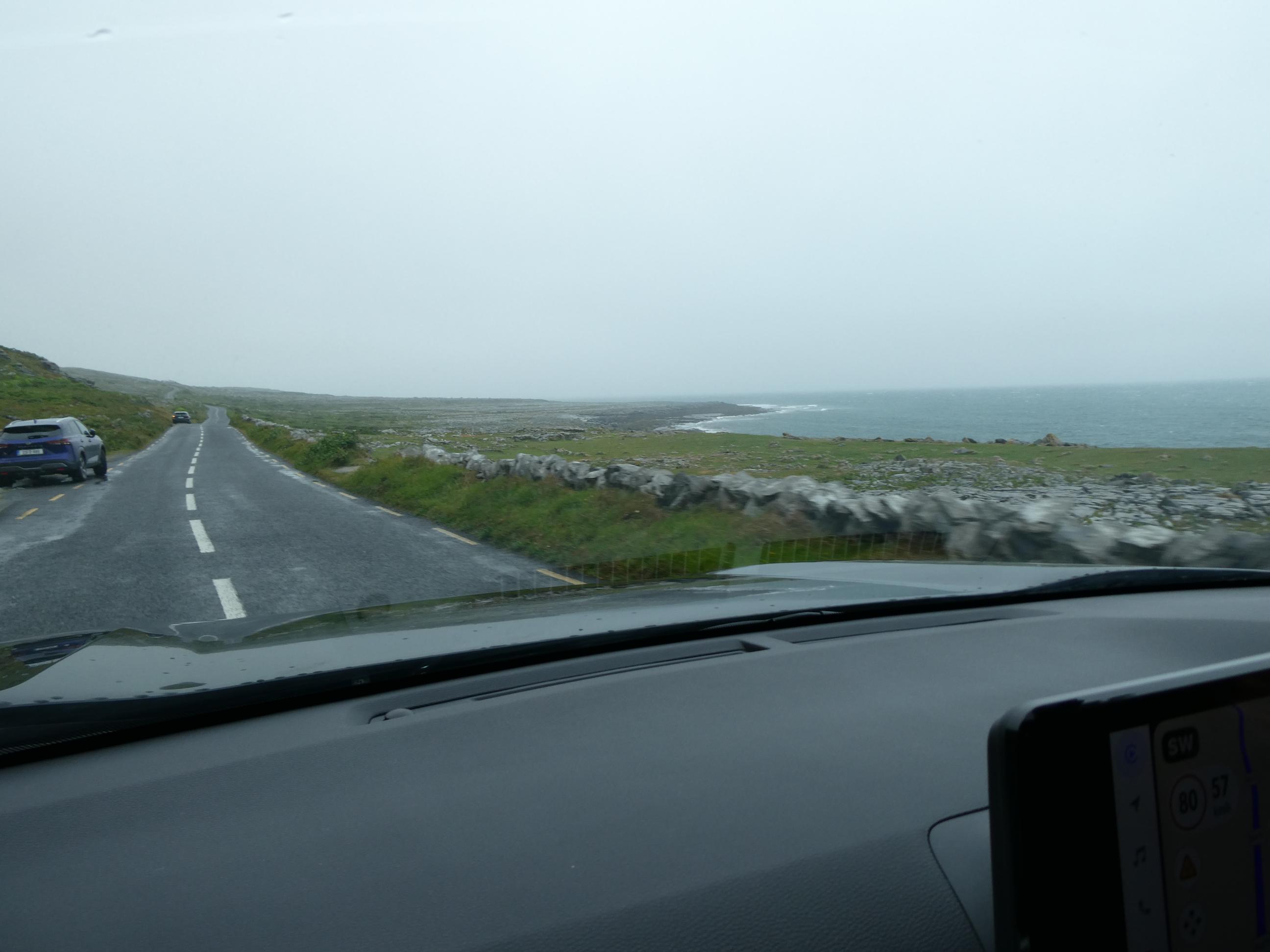
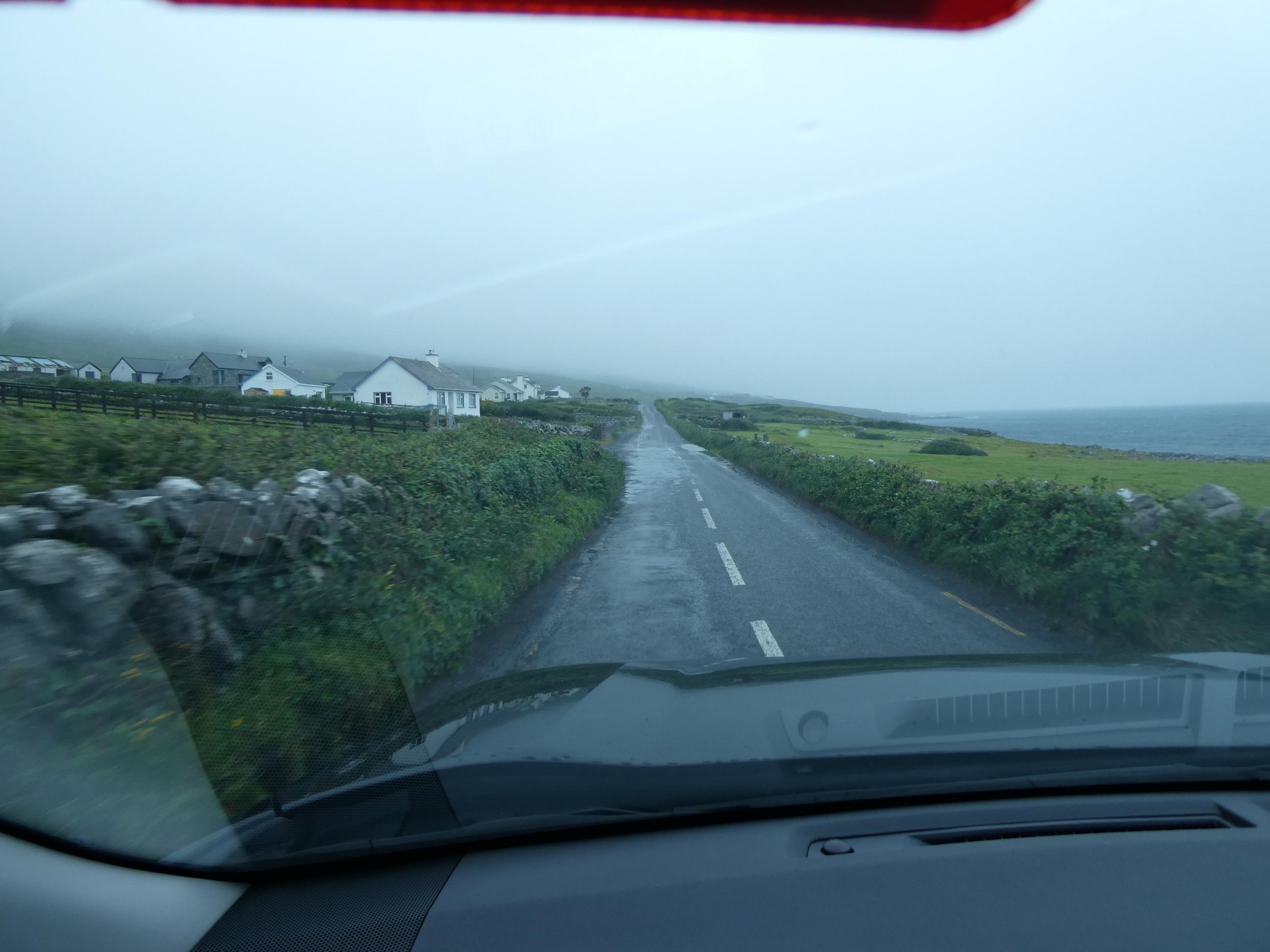
We left Galway, heading south along the Wild Atlantic Way coastal road. The weather was still atrocious. It was raining, windy and chilly. We pulled up at the side of the road near Kinvara for a very quick photo stop at Dunguaire Castle, then jumped back into the car and were on our way once more. I think the west coast of Ireland is quite beautiful with its green fields and hand built stone walls, but, when it’s constantly raining and there’s a heavy mist coming off the sea limiting the visibility, it can look a little dreary.


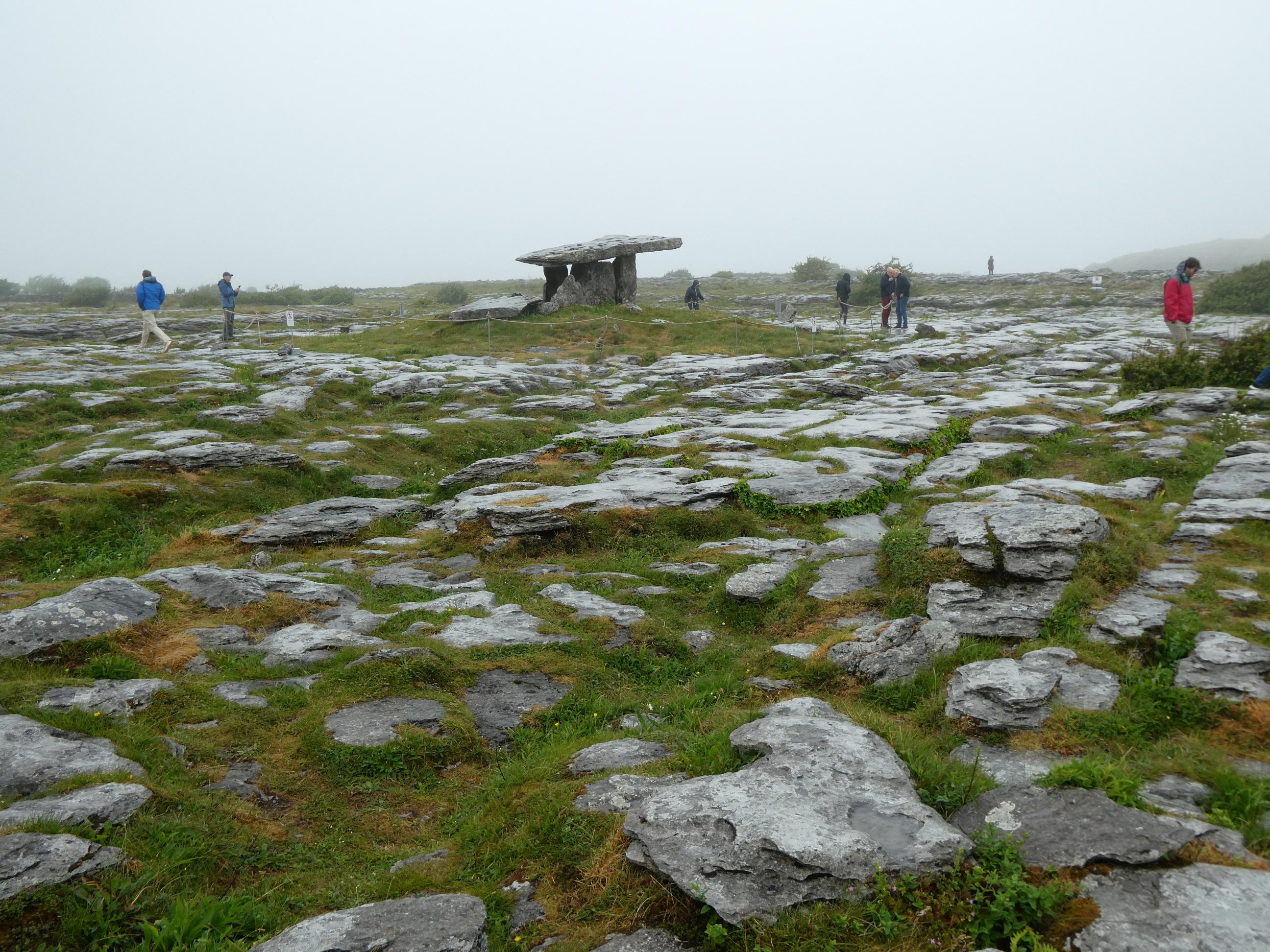
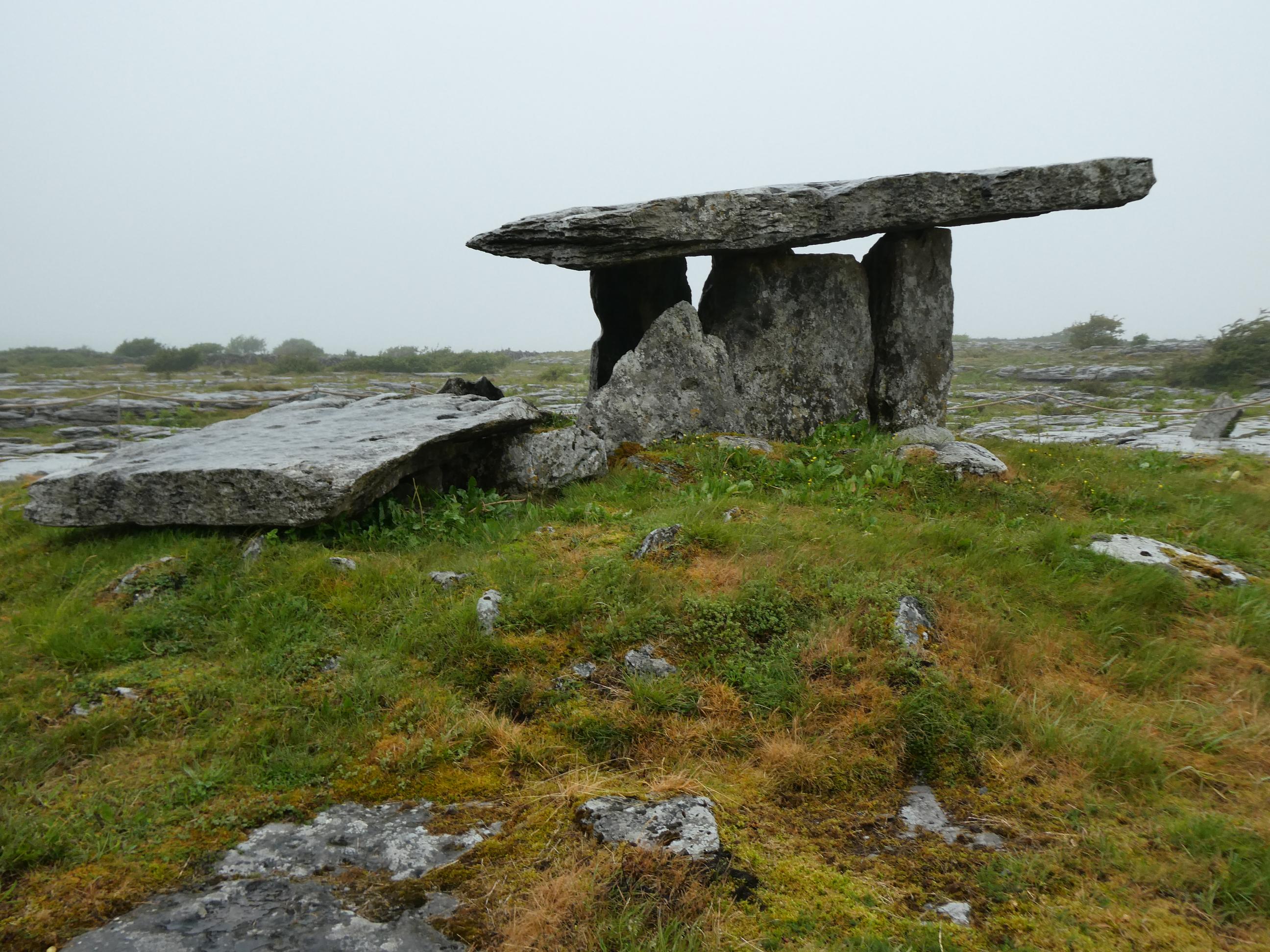
As we followed the coast road south through County Clare, we encountered a change to the landscape. Much of the terrain was covered with flat grey rocks, broken up by grass, small ferns and other plants. I found out that this region is known as The Burren, and that the rocky terrain is known as karst landscape, formed mainly from a bedrock of limestone and shaped by glacial activity. As limestone can be dissolved over long periods of time by water, sinkholes and depressions can form in the rocks and the ground surface can be rocky and barren. In the midst of this karst limestone plateau, we visited the oldest megalithic monument in Ireland. It’s known as Poulnabrone Dolmen, and it was once a portal tomb, used by the people who lived here between 5200 and 5800 BC. Archaeologists have discovered the bones of 33 people who were buried here during that period. We didn’t stay too long. The wind was really strong and the mist was quite heavy. We quickly got our photos and headed back to the comfort of the car.
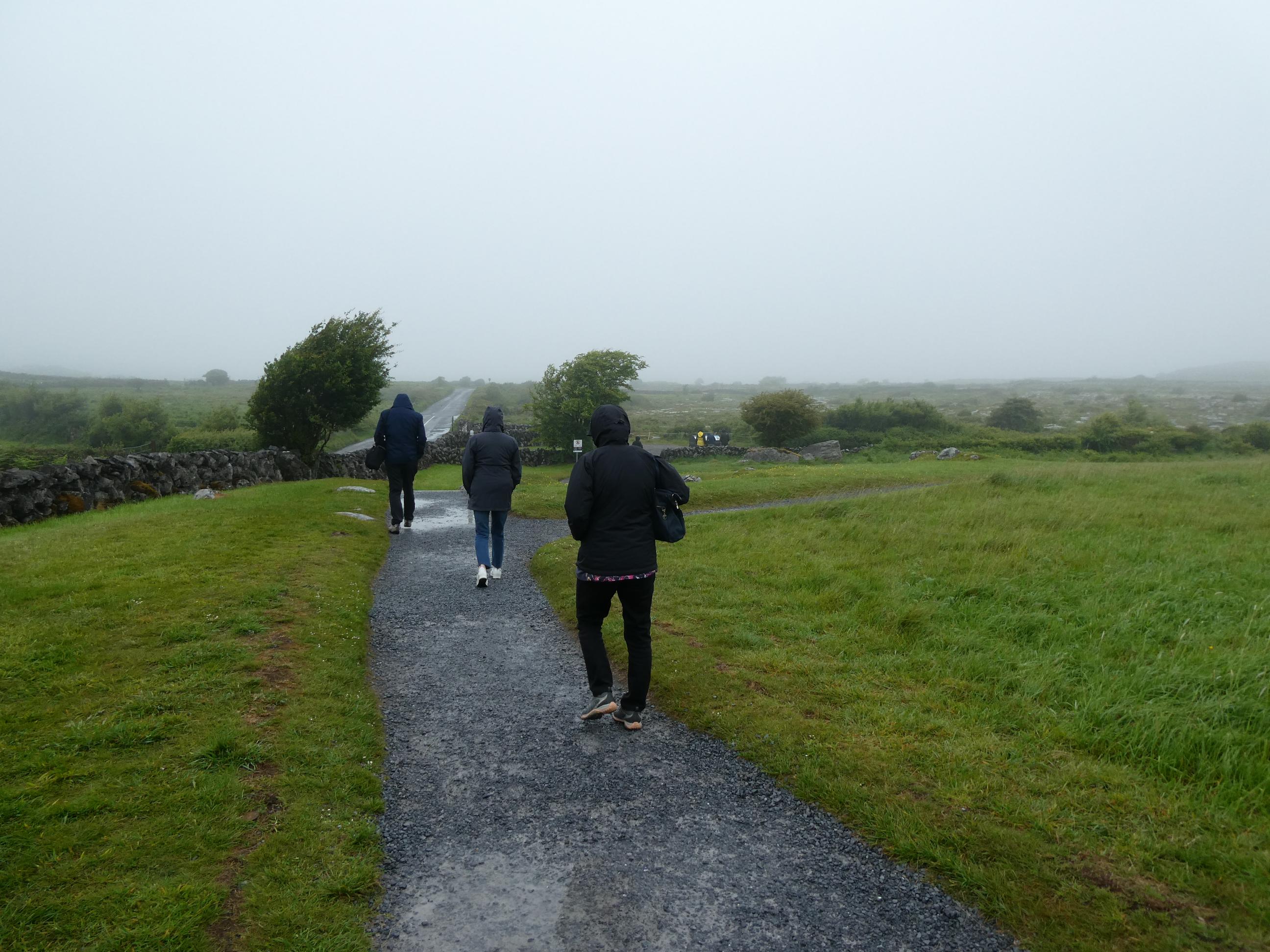

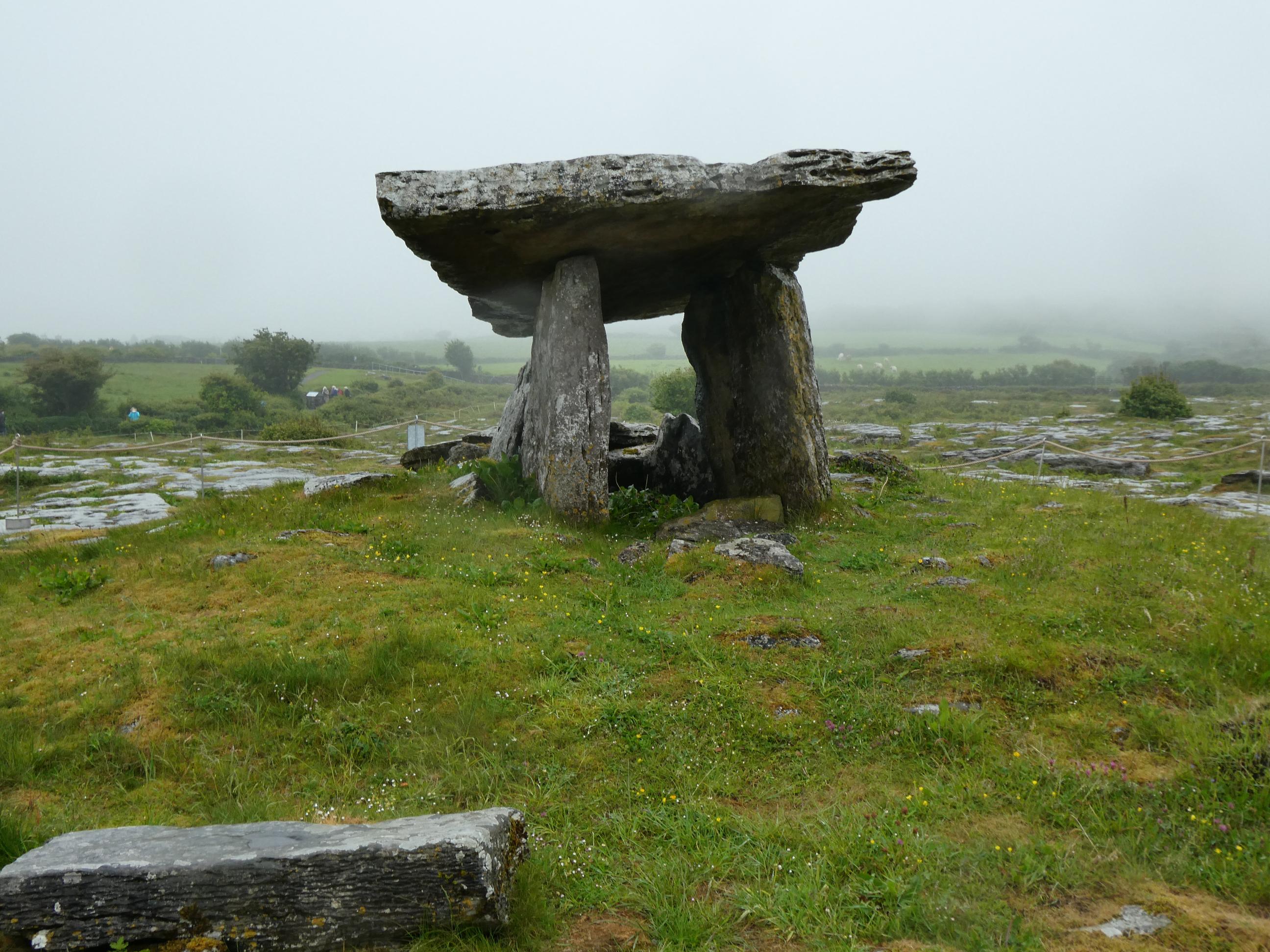

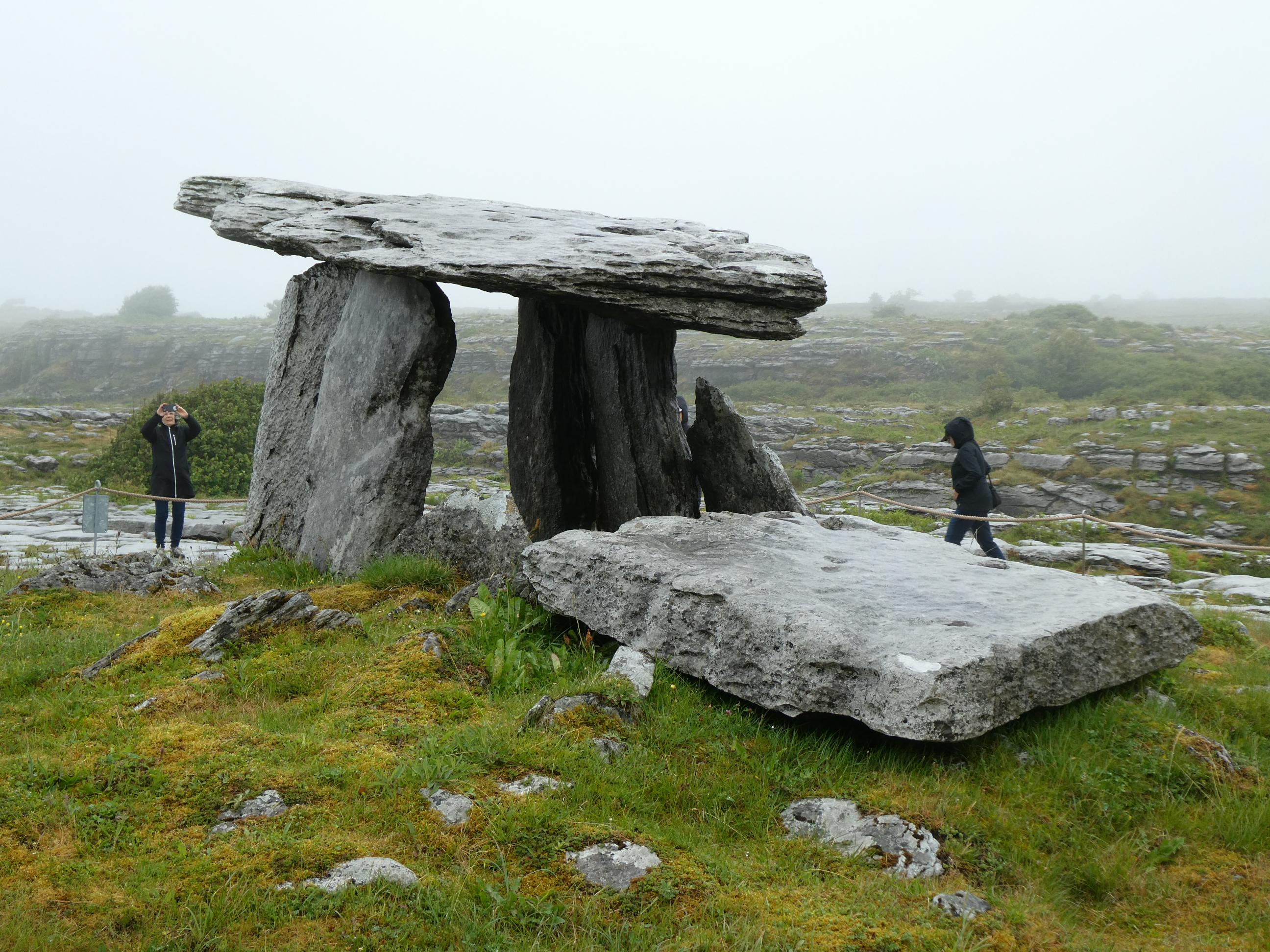

We stayed on the coastal road, which hugged the Atlantic coastline for much of the remaining journey to Doolin. The karst terrain was with us for much of that time. The poor weather made the landscape look particularly uninviting, and I wondered how anyone could have lived in such a barren landscape as this. There were a few cows and some sheep from time to time, so I imagine small farmers managed it somehow. I imagine they would have been desperately poor and would have faced many hardships in this harsh environment. When we entered Doolin, we should have been able to view the famous Cliffs of Moher beyond the town in the distance. But not today. Thick fog was rolling in from the Atlantic and we could not see the cliffs at all. I totally understand why the route that runs down the west coast of Ireland is named the Wild Atlantic Way. The name fits perfectly.
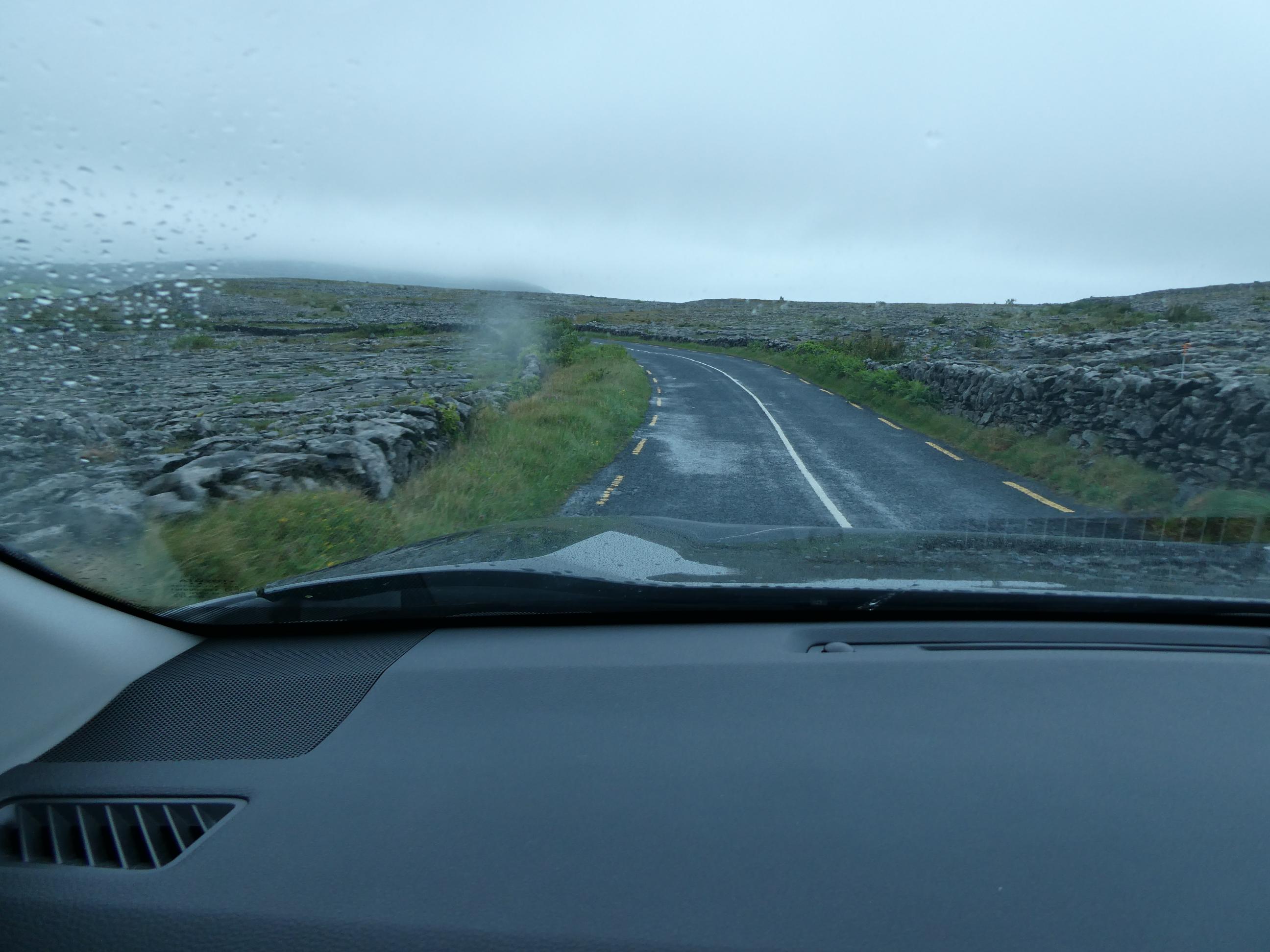


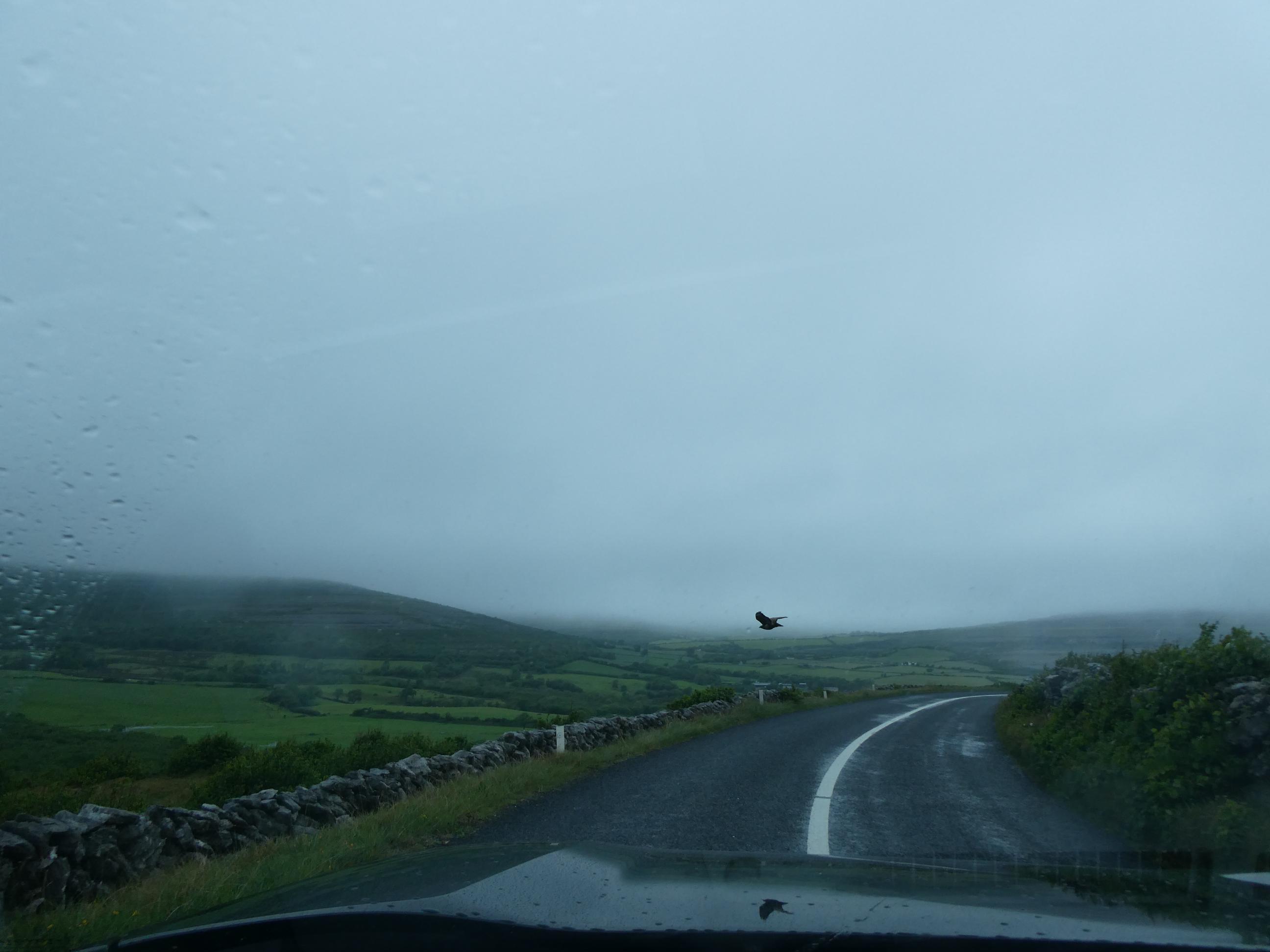


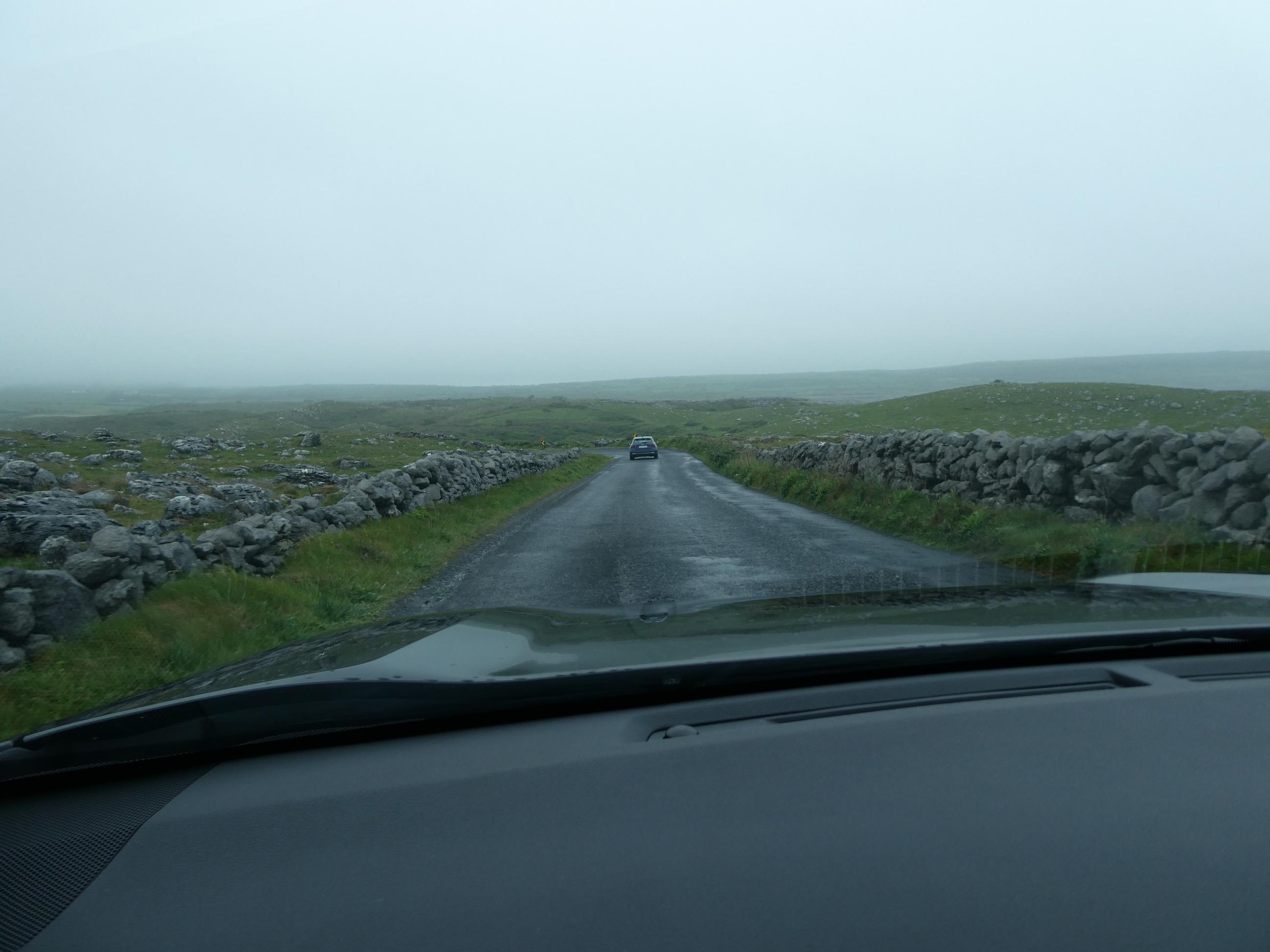
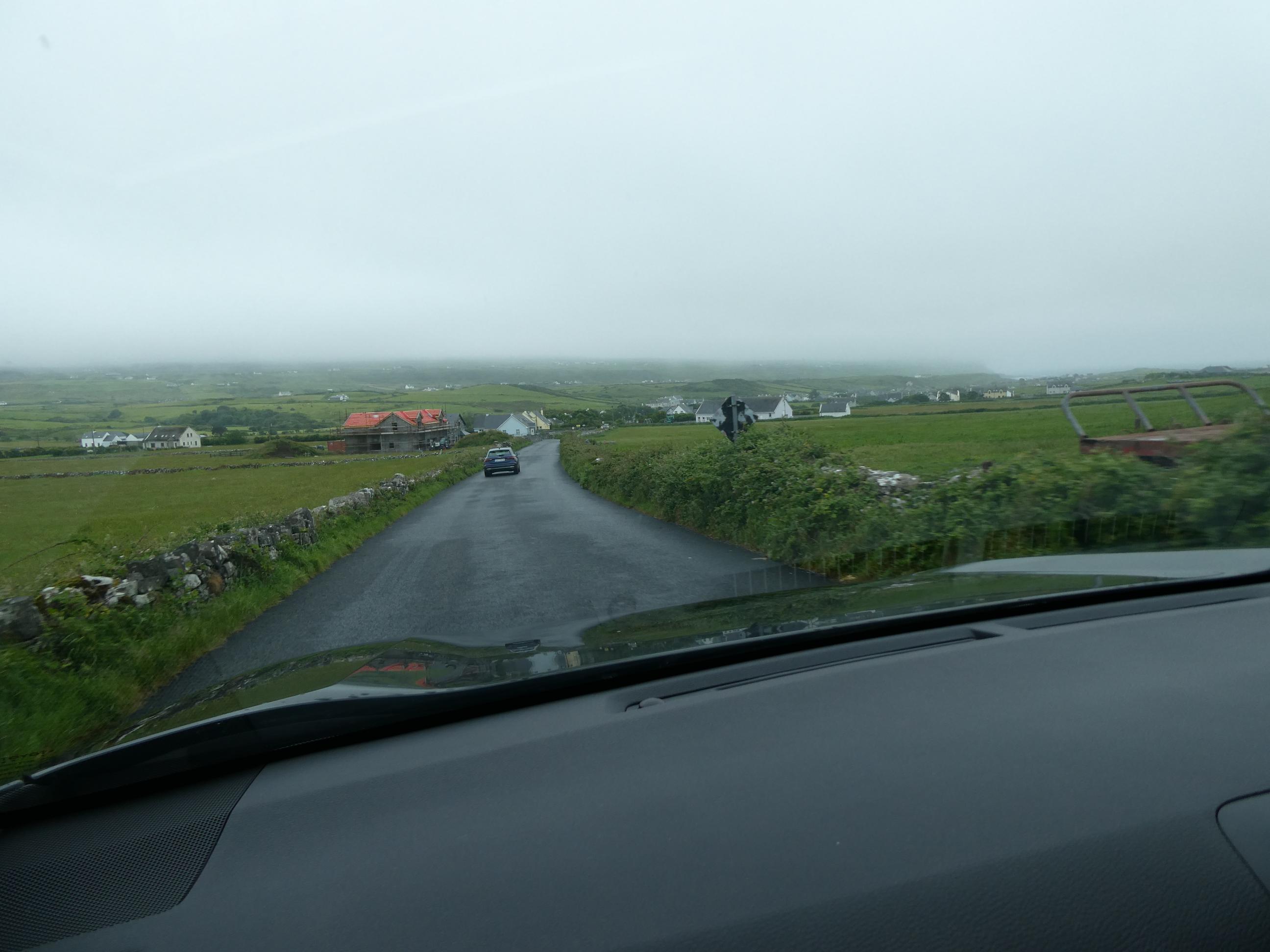

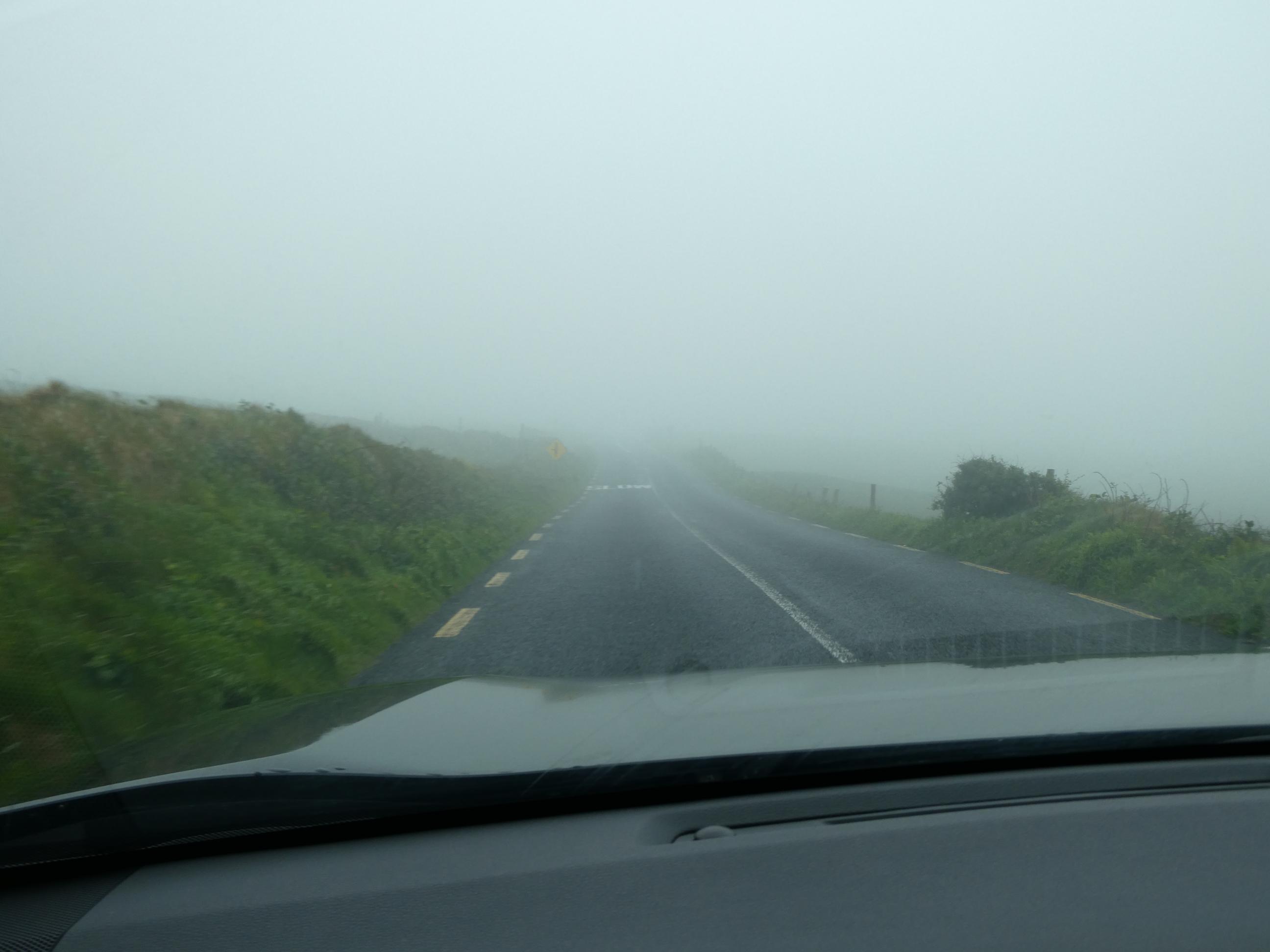
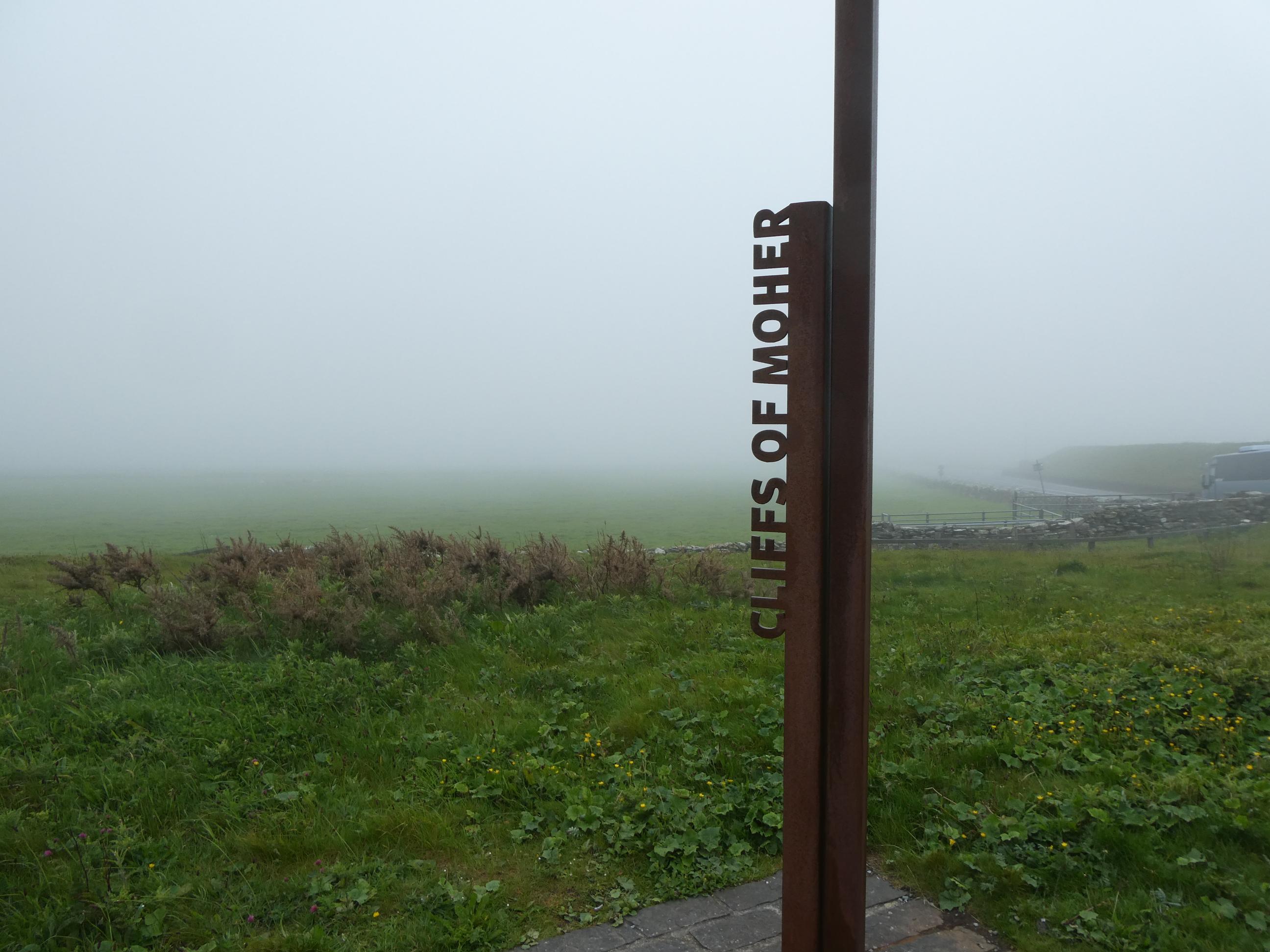
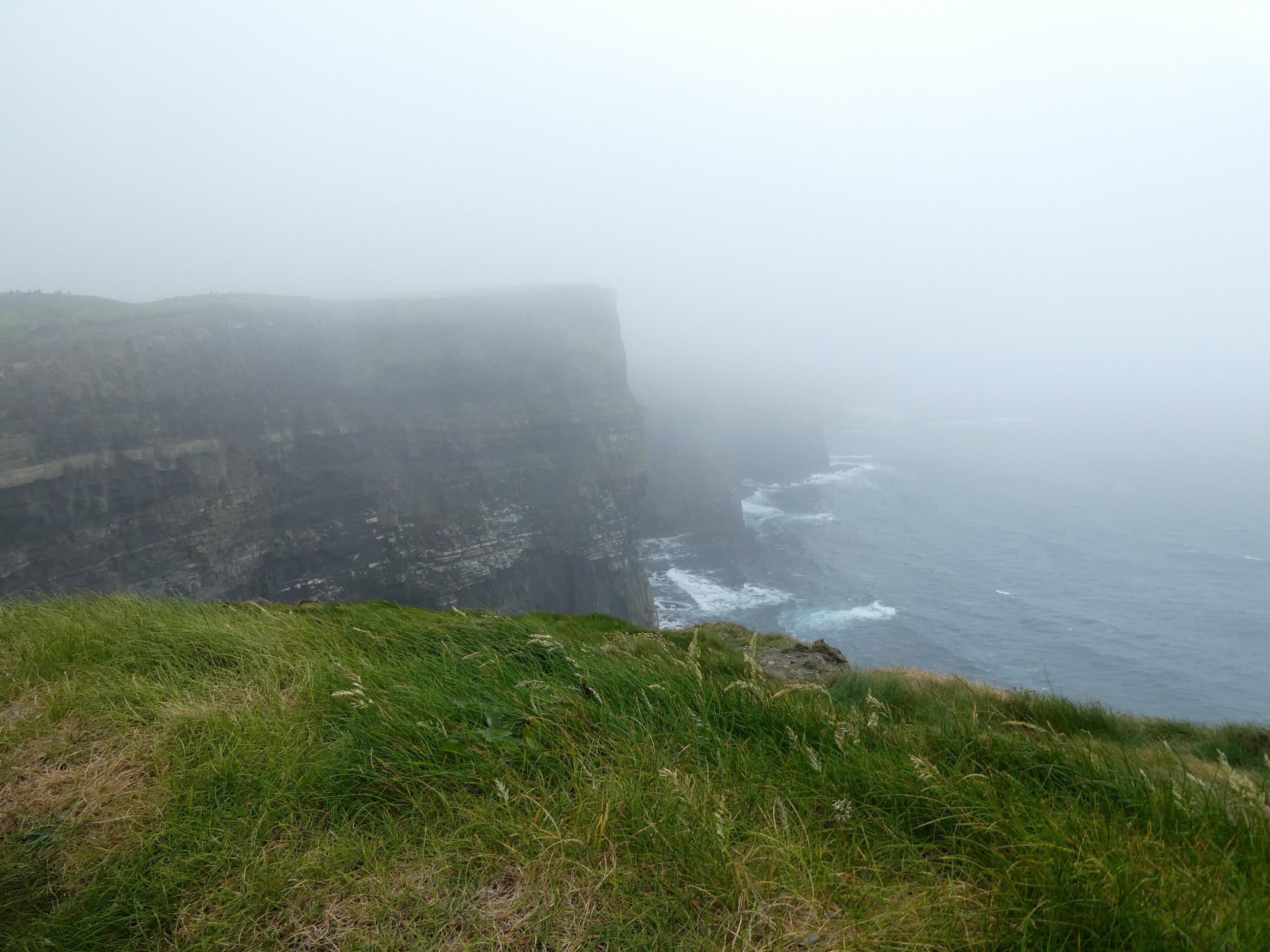
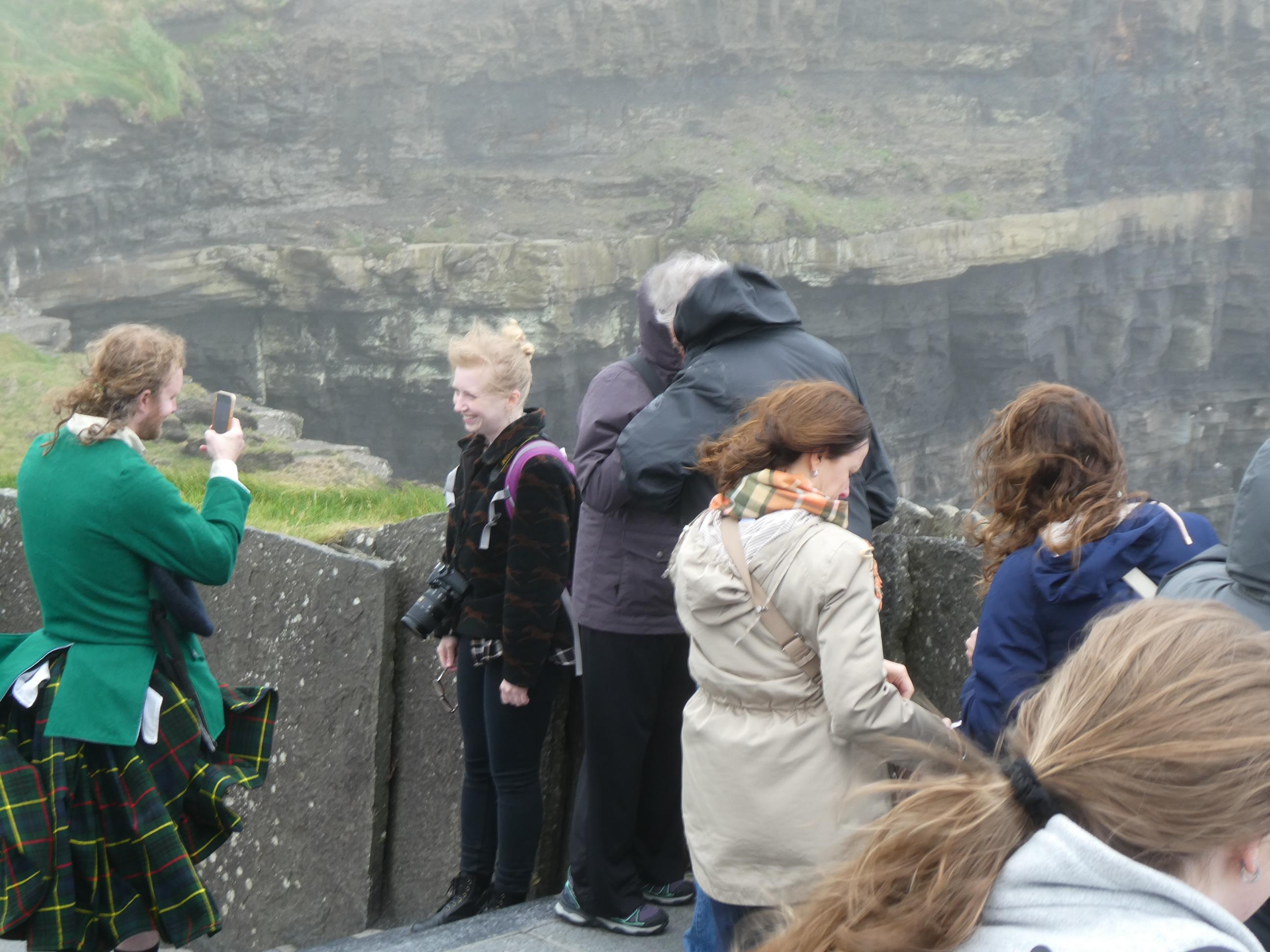
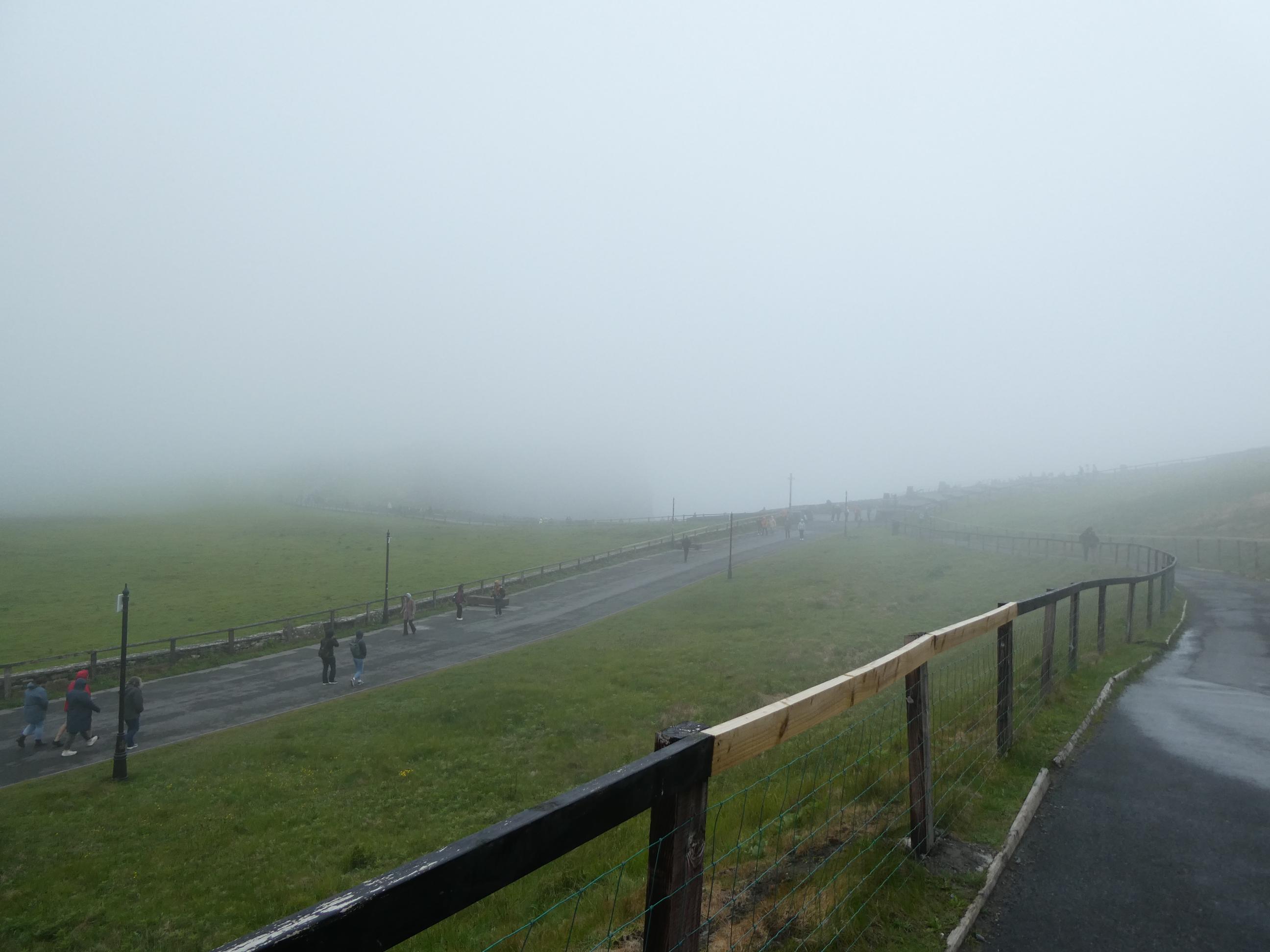
We queued up to enter the car park for the Cliffs of Moher. The fog coming straight off the Atlantic was now so thick we couldn’t see more than about 10-20 metres in front of us. And the wind was so strong that sometimes birds were flying backwards into it. On more than one occasion, a strong gust also caused me to take a couple of backwards steps before I steadied myself. The guy at the carpark ticket window said that at the moment there was zero visibility of the cliffs, and that they would honour our tickets tomorrow if we couldn’t see the cliffs today. We couldn’t check in to our accommodation until later in the day, and it was only five minutes away, so we decided to take a chance on it anyway as we had nothing better to do until hotel check-in at 3pm. Lots of other people must have also felt the way we did, because the large carpark was full and there were many, many tourist buses. Like us, a lot of people thought they might eat lunch first and hope that the fog would lift in the meantime. We’d seen enough prior to ordering lunch to know that currently our chances of sighting the cliffs were zero.
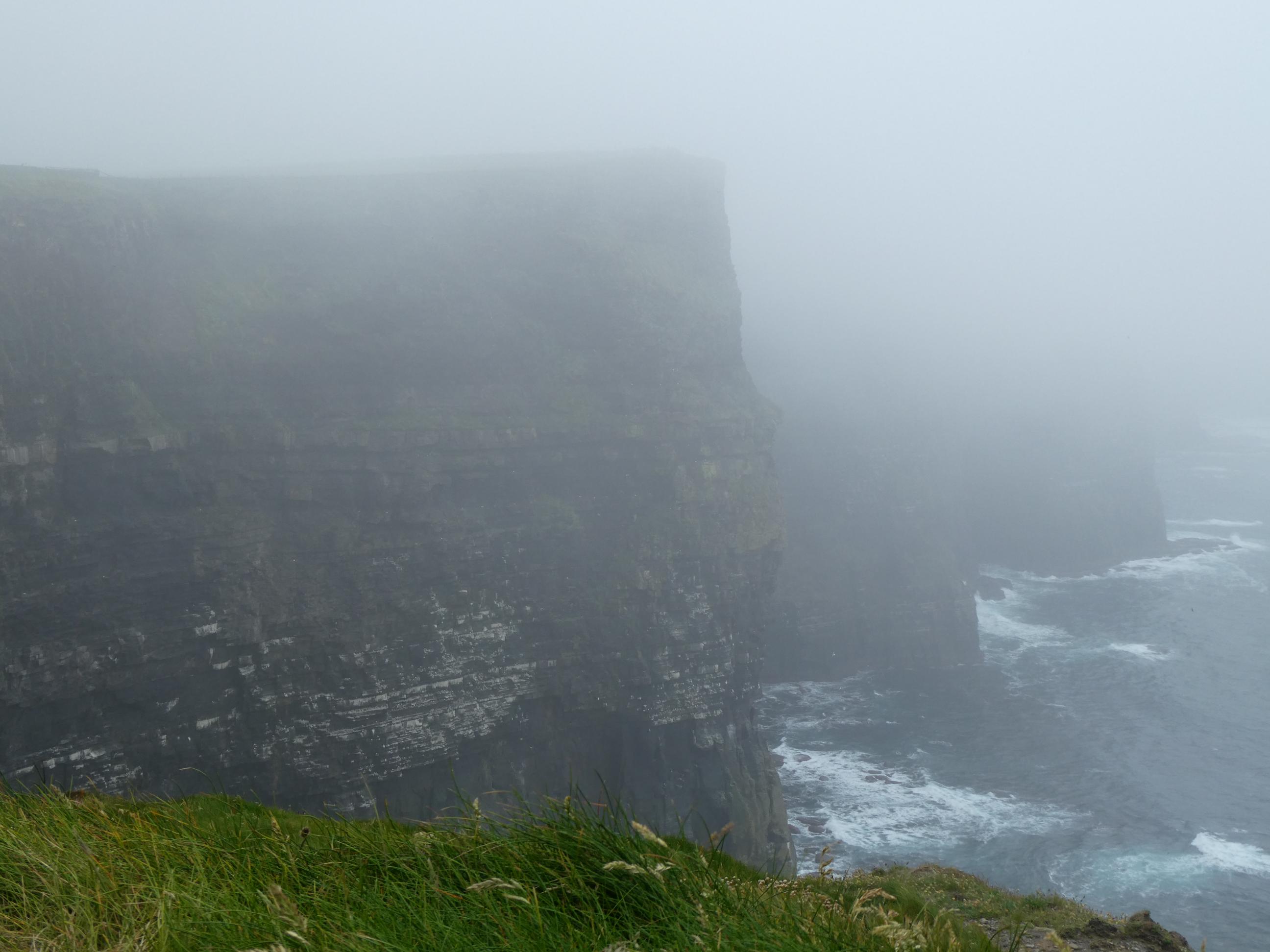
The Cliffs of Moher are very special for Irish people, in a similar way to how Australians consider Uluru to be very special, and they are one of the most popular sites in Ireland for tourists. The rugged cliffs rise over 100 metres above the sea below in some places. They can be viewed from many places along a coastal walking trail, although parts of the trail are no longer accessible because the cliffs are considered to be unstable in the places they’ve closed. On clear days, tourists can clearly see the stratification of the cliffs, created by layers of shale and sandstone of varying thickness. Wind, rain and wave action from the restless Atlantic Ocean continue to erode the cliffs, sometimes causing parts of the cliffs to break away and slip into the sea. Many seabirds nest in the nooks and crannies that exist on the cliff faces. Gulls, terns and guillemots were circling around overhead today. There were no puffins, but I know they are often seen here when it’s their nesting time.
Lunch took about an hour, and just as we were finishing we could make out the shape of a cliff through the fog in the distance. It seemed that maybe the fog was clearing. We hurried outside and, sure enough, there was enough of the cliff showing through the mist that I was able to capture it on film. I took some photos, turned my back on the cliff and moved up the slope about 15 or so metres to a different vantage point for another photo. When I turned back to face the cliff again, it was no longer there. Not in my vision anyway. Another heavy fog had rolled in and completely blanketed it. This was the pattern while we remained there. It wasn’t cold, and the rain had stopped, but the strong gusts from the sea almost literally blew us off our feet. After a time the wind slackened off and the fog dispersed, making the closest cliff clearly visible. I zoomed right in and could see the many seabirds sheltering on the narrow ledges. We decided to climb the viewing tower as high as the tower at the top of the viewing hill. The view was no different to what we’d experienced when we first arrived at the visitors’ centre today. Zero visibility! Five minutes later, the cliffs were back in sight. Of course, It was too good to last. They disappeared again … and again … and yet again periodically during our time there. If the weather tomorrow is kind to us and we have time up our sleeves, we might go back to the Cliffs again to see if we can get a better look at them.






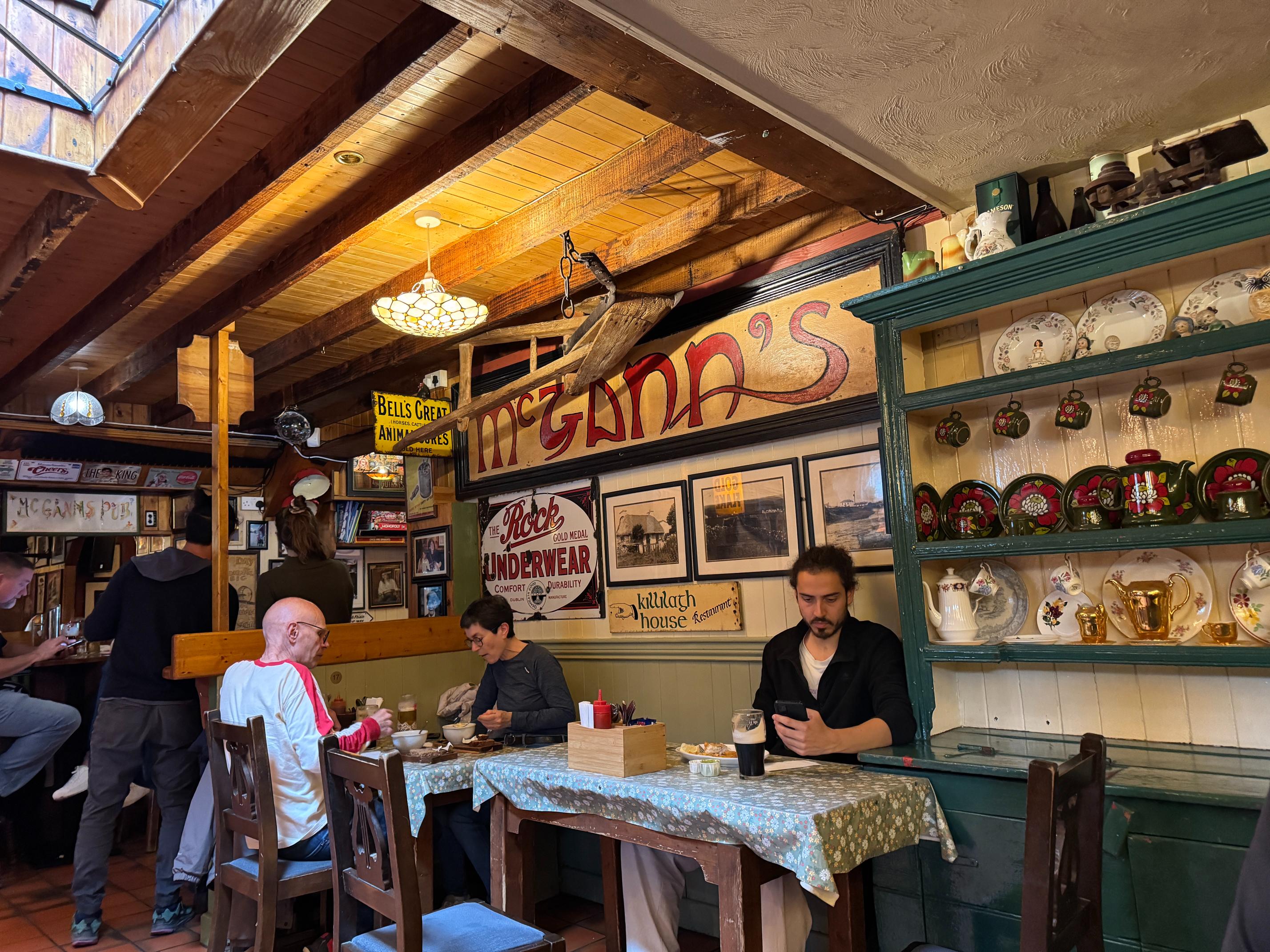
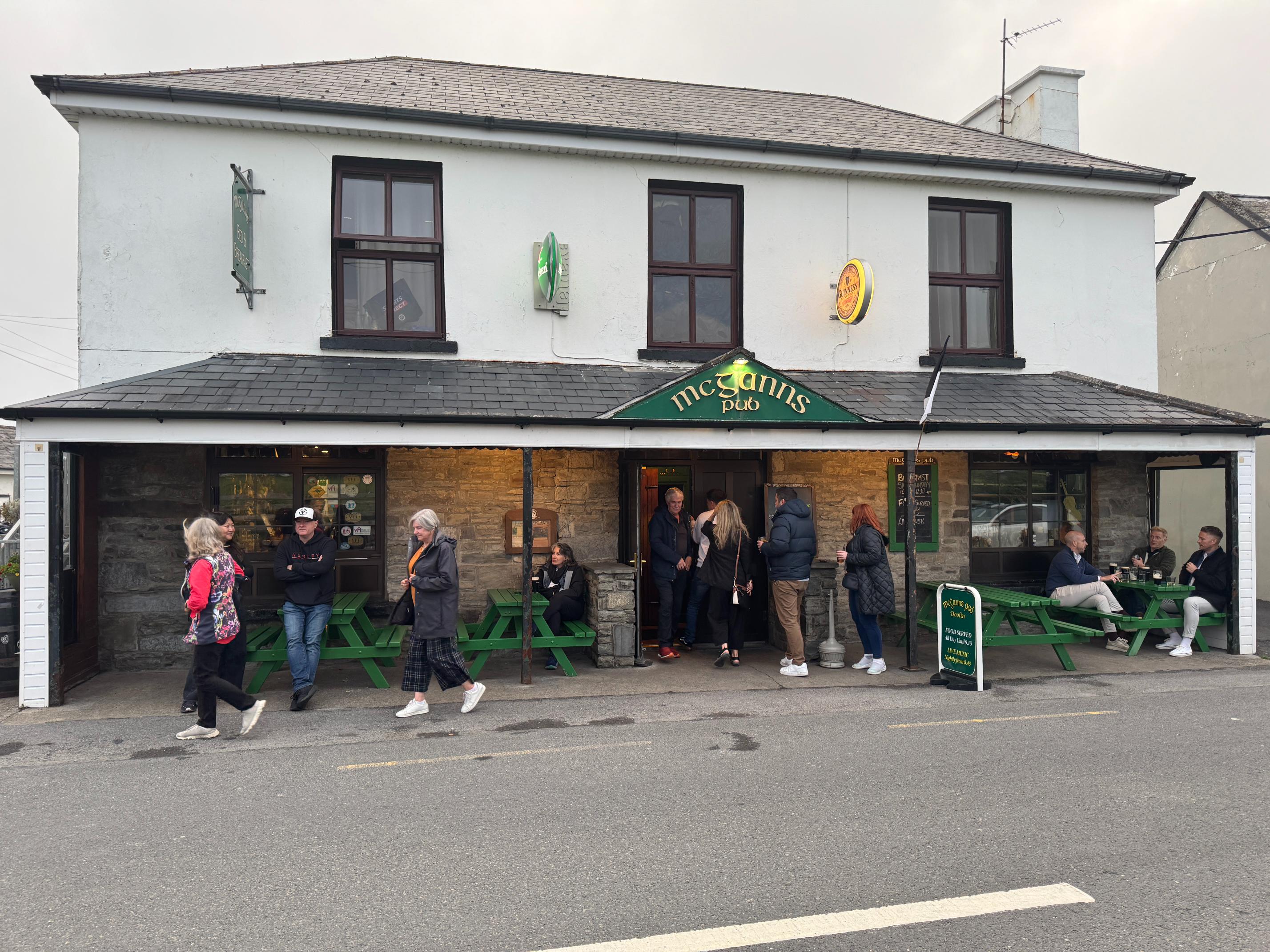
We checked in to our B&B around 3 pm. About 5 pm, I went out with Rod and Cornelia to check out a little more of Doolin and see if we could find a good pub for dinner. One with live music. We decided on McGann’s pub, which our host had recommended to us, and agreed to head down there for a bite to eat before the music started. Back at our accommodation, I discovered my glasses had gone missing on that little sojourn. I retraced my steps and Rod drove me back into Doolin trying to find them, but it was to no avail. They seem to be gone forever. Thankfully I had a couple of spares in my case, so they’ll do the job until I get home.
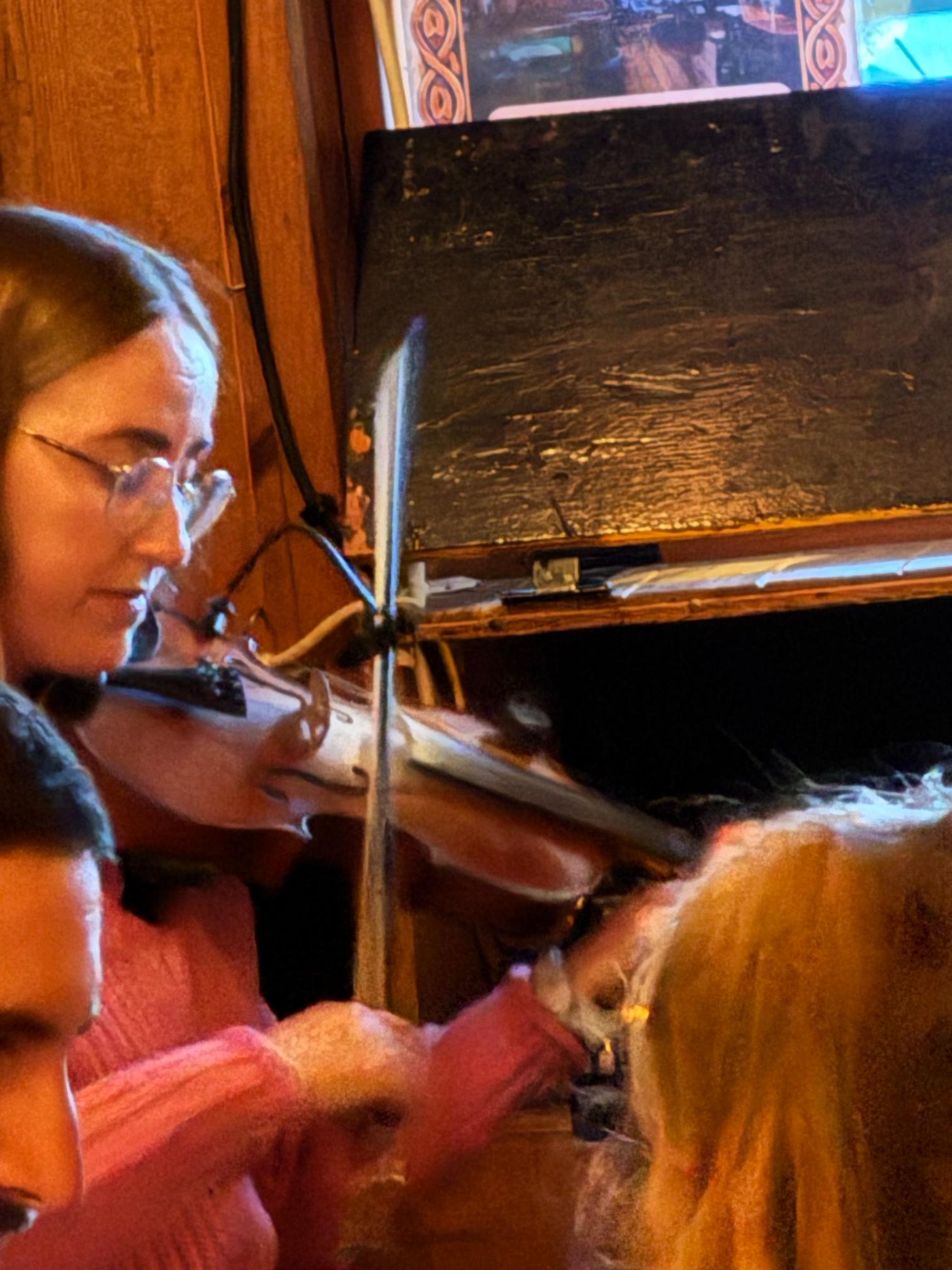
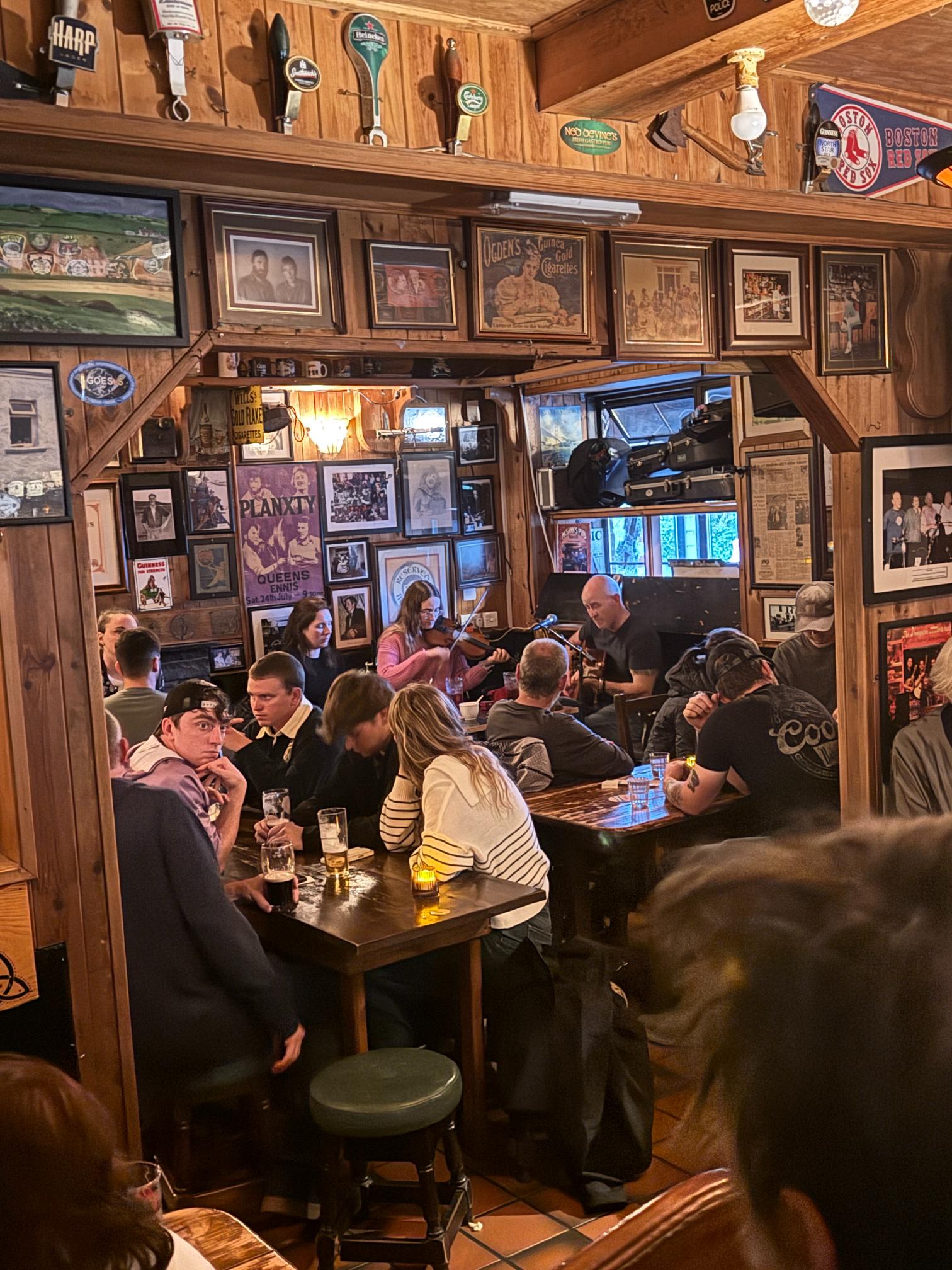
We went down to McGann’s for dinner and a couple of pints. It’s a lovely, traditional Irish pub. At 8.45pm, the live music bega. There was a guy on guitar and a couple of ladies – one on squeezebox and the other on fiddle. They started with a couple of Irish jigs and reels which got the feet tapping, and then the guitarist sang a couple of tunes – Gordon Lightfoot’s ‘Early Morning Rain’ and the traditional ‘Wild Mountain Thyme.’ We stayed on for about an hour enjoying the music. When we left the pub, the wind had eased and the cliffs were visible in the distance. We have our fingers crossed for much better weather tomorrow.


 On The Road With Garry