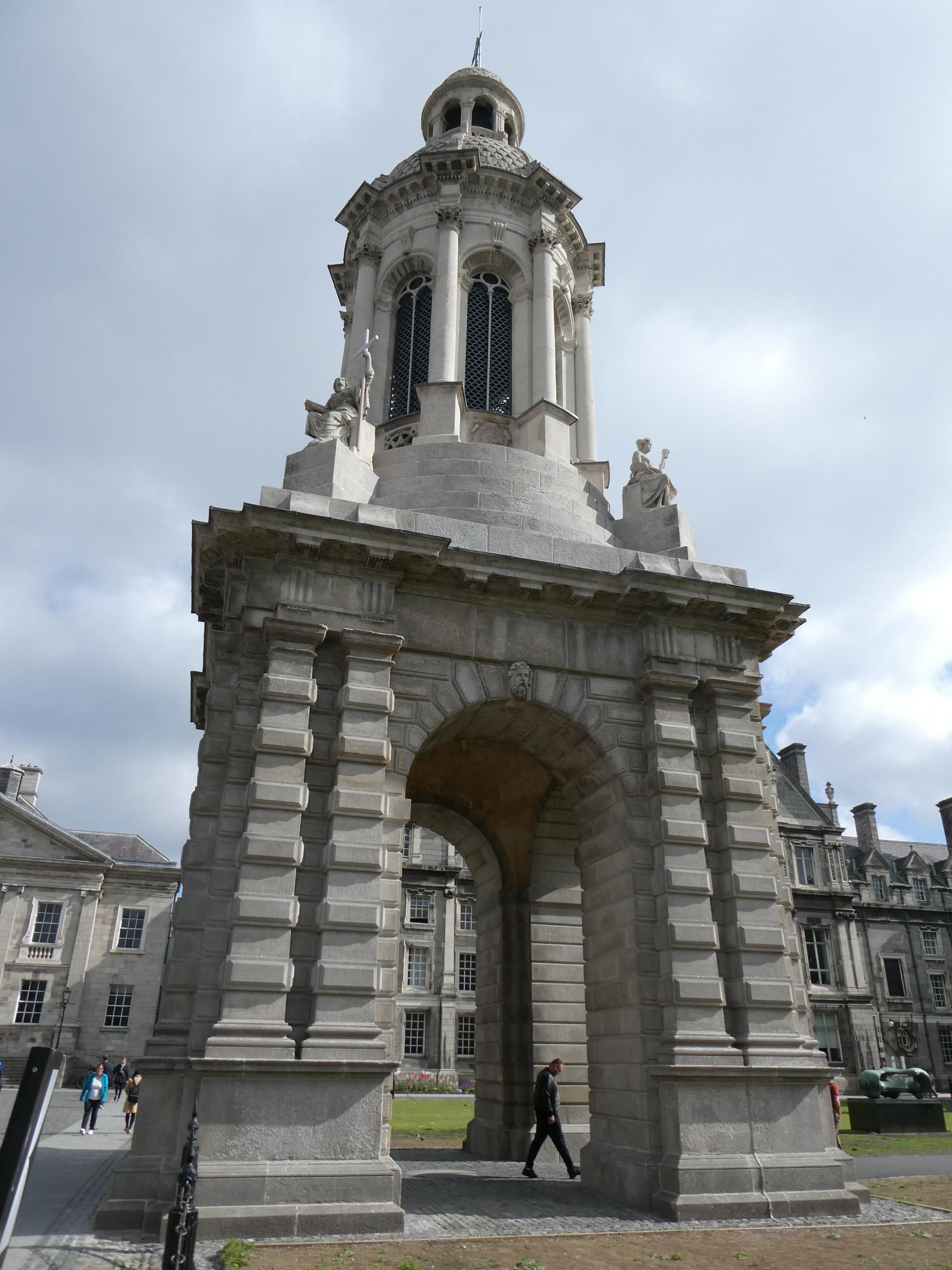
Our first booking today was a self guided tour of the Book of Kells and the Trinity College Library. Marg and I had viewed the Book of Kells and the library on our previous visit to Dublin, but I knew there were lots of changes to the library since the last time we saw it. We walked down O’Connell St and crossed the Liffey. Trinity College was not far over the bridge. We arrived a bit early, so took some time to wander round the college grounds. I overheard a tour guide telling her group that the college was established in the 1500s, mainly for literature-related studies. It took 200 years before Catholic students could enrol, and another 200 years before women could enrol. Over the years its alumni included famous Irish writers like Oscar Wilde, Samuel Beckett and murdered Irish journalist Veronica Guerin.

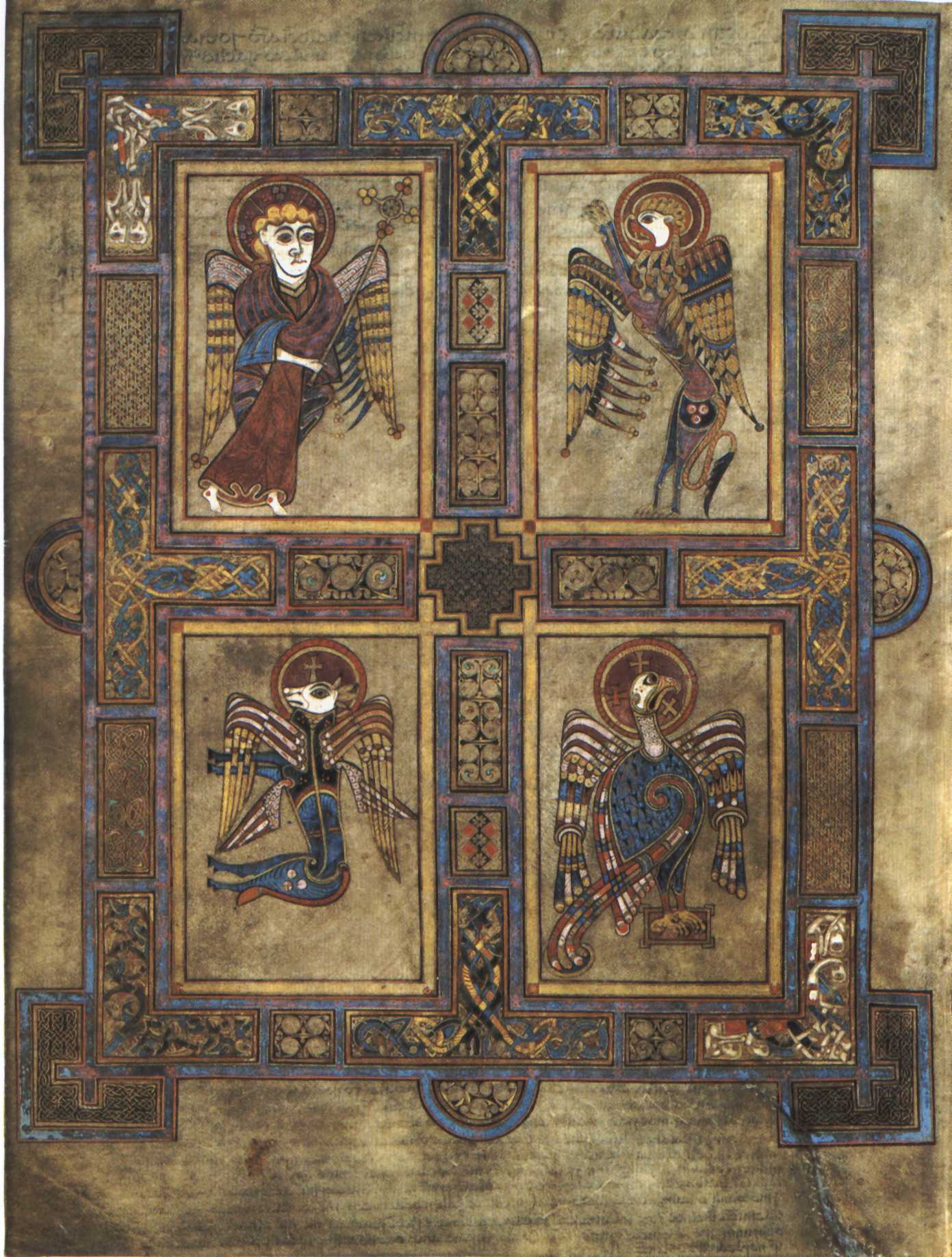
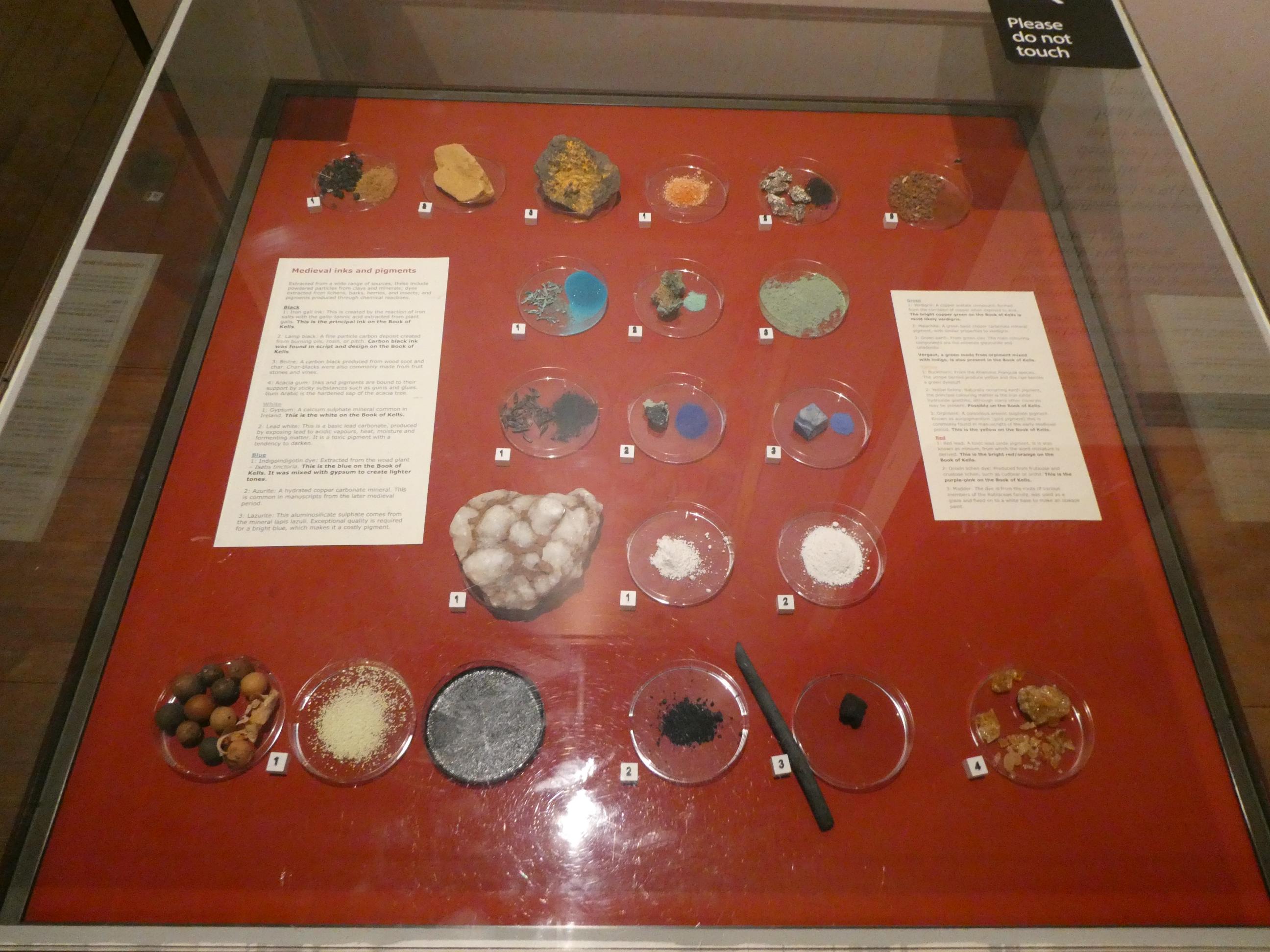
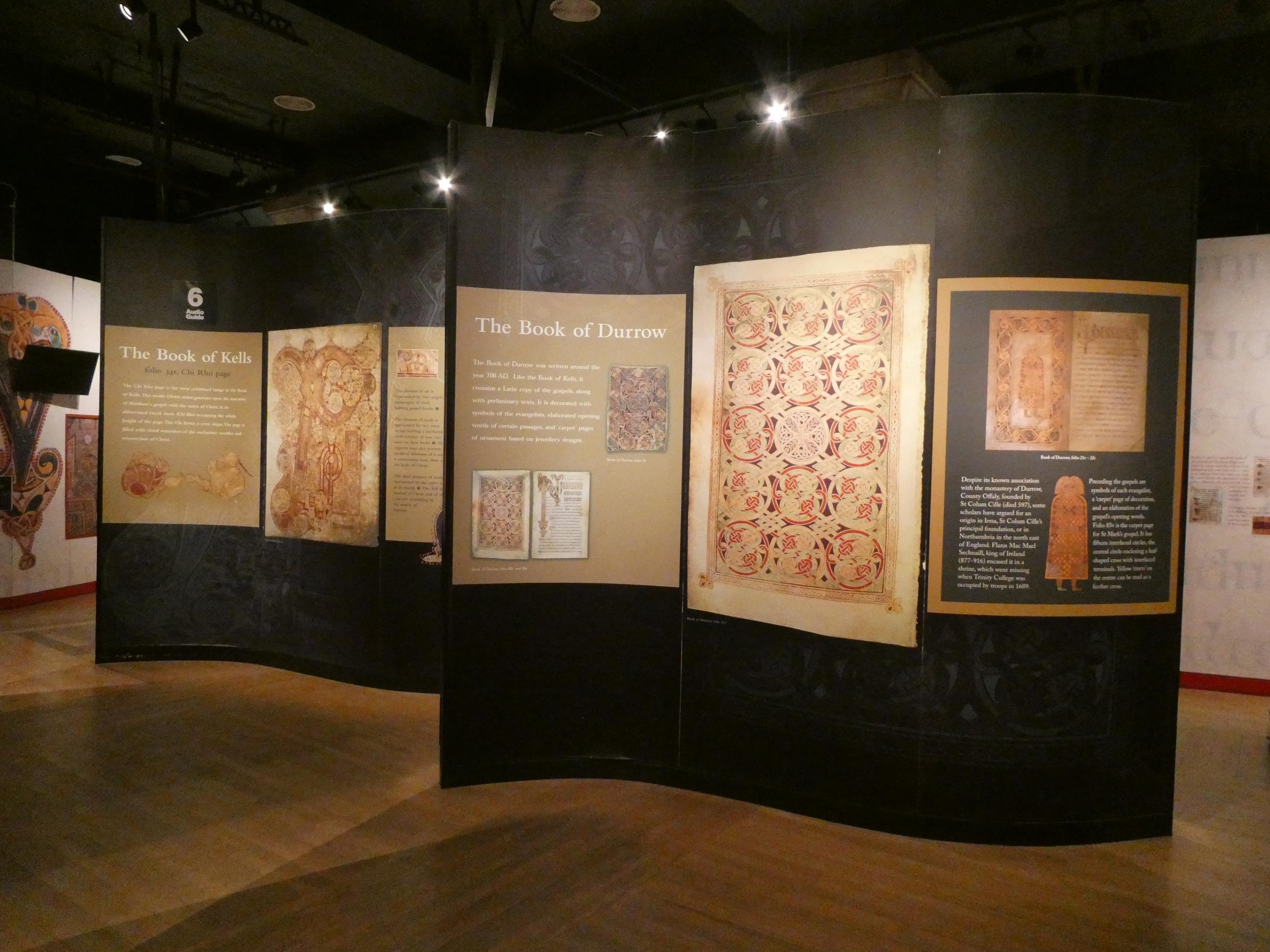
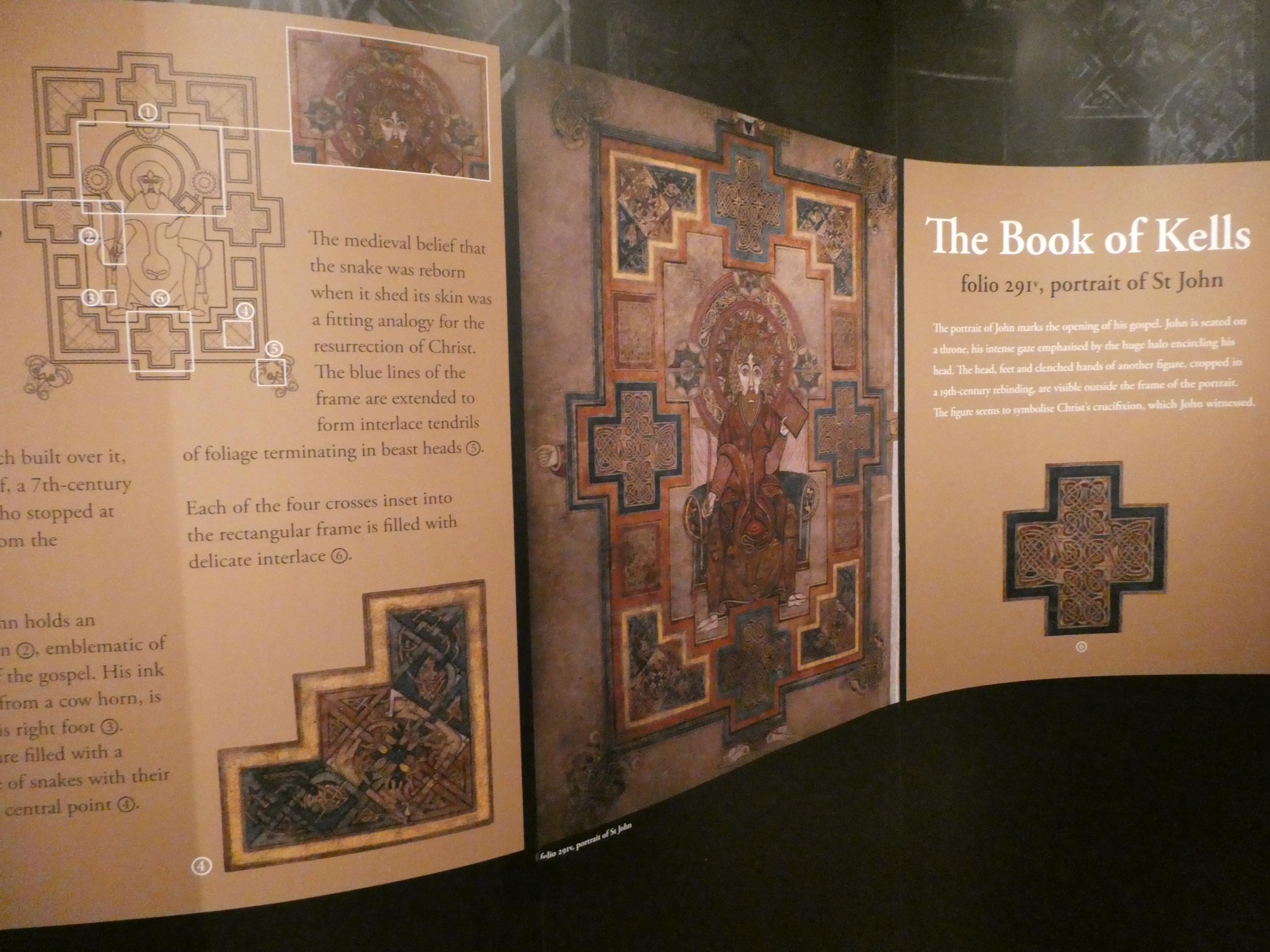
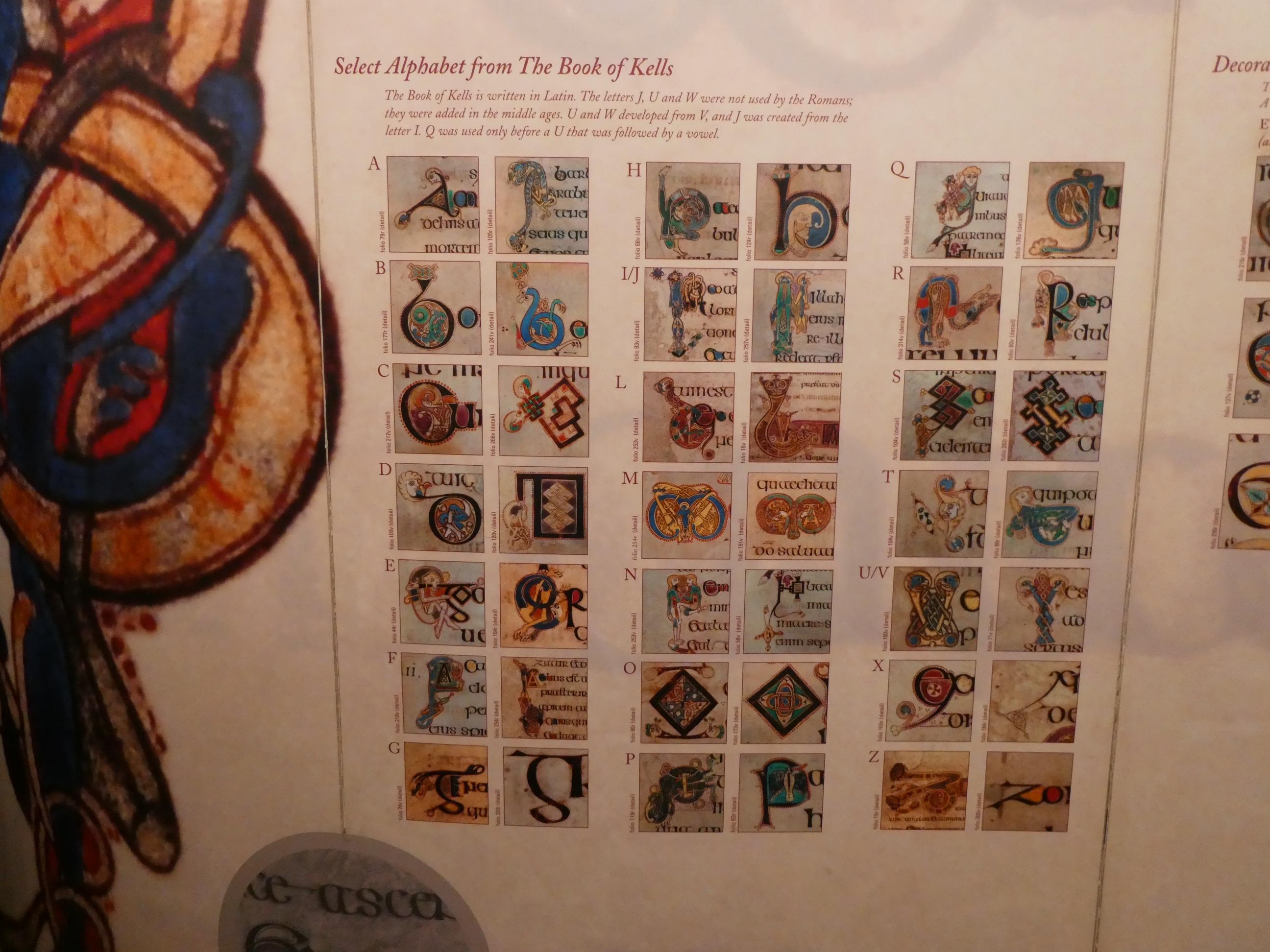
The Book of Kells exhibition was just as we remembered it. Little had changed, with two exceptions. One was that the pages that the book were opened to for public display were different to those we had seen previously, and the other was that we were no longer permitted to photograph the pages from the book – possibly due to too many people using flash photography to photograph the dimly lit manuscript. The exhibition essentially explained how people like medieval monks created stunning illustrated manuscripts using natural materials like vellum for the pages and a range of different minerals to create coloured inks. It told the stories behind some of the illustrated manuscripts that have survived. As I mentioned, the Book of Kells itself was on display in a dimly lit room. Exposure to light could cause permanent fading of the coloured inks, I presume. It is thought the monks who were followers of St Columba on the island of Iona off the Scottish west coast may have commenced work on the book, and brought it with them on a treacherous voyage across the Irish Sea when they escaped to Ireland to escape Viking raiders. Once on Irish soil, they made their way inland to a place named Kells, where they settled and perhaps continued to work on the book.
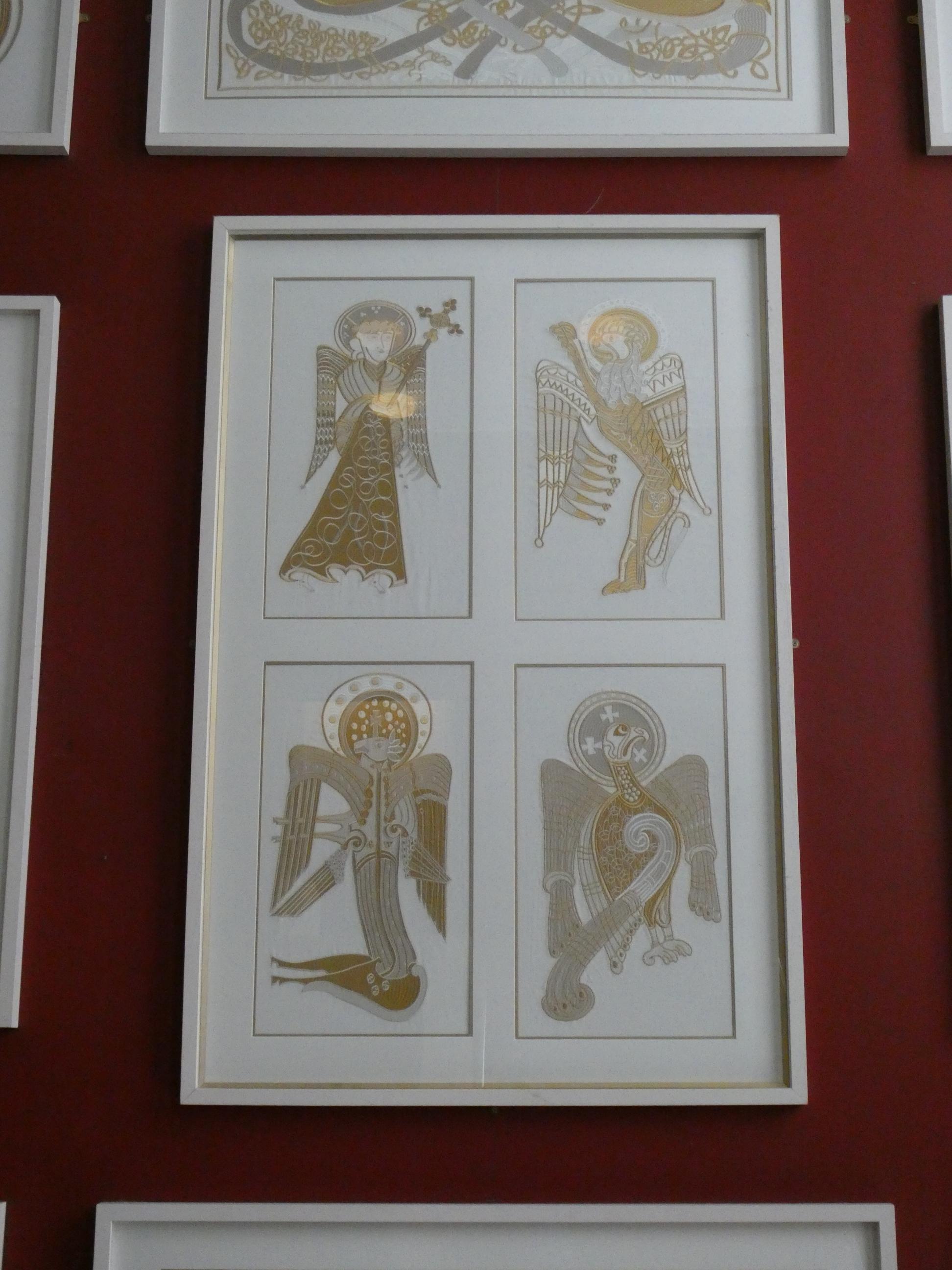

Above – Book of Kells, Public domain, via Wikimedia Commons
https://upload.wikimedia.org/wikipedia/commons/c/c2/KellsFol027v4Evang.jpg
One of the pages on display today from the Book of Kells depicted illustrations of the four Evangelists – Matthew, Mark, Luke and John. (Clockwise from top left): Matthew depicted as a man, Mark depicted as a lion, John depicted as an eagle, and Luke depicted as an ox (Luke). I was not permitted to photograph the page we saw from the Book of Kells today, I have sourced this copy of the page from Wikimedia Commons. It is considered to be a faithful photographic reproduction of a two-dimensional, public domain work of art.
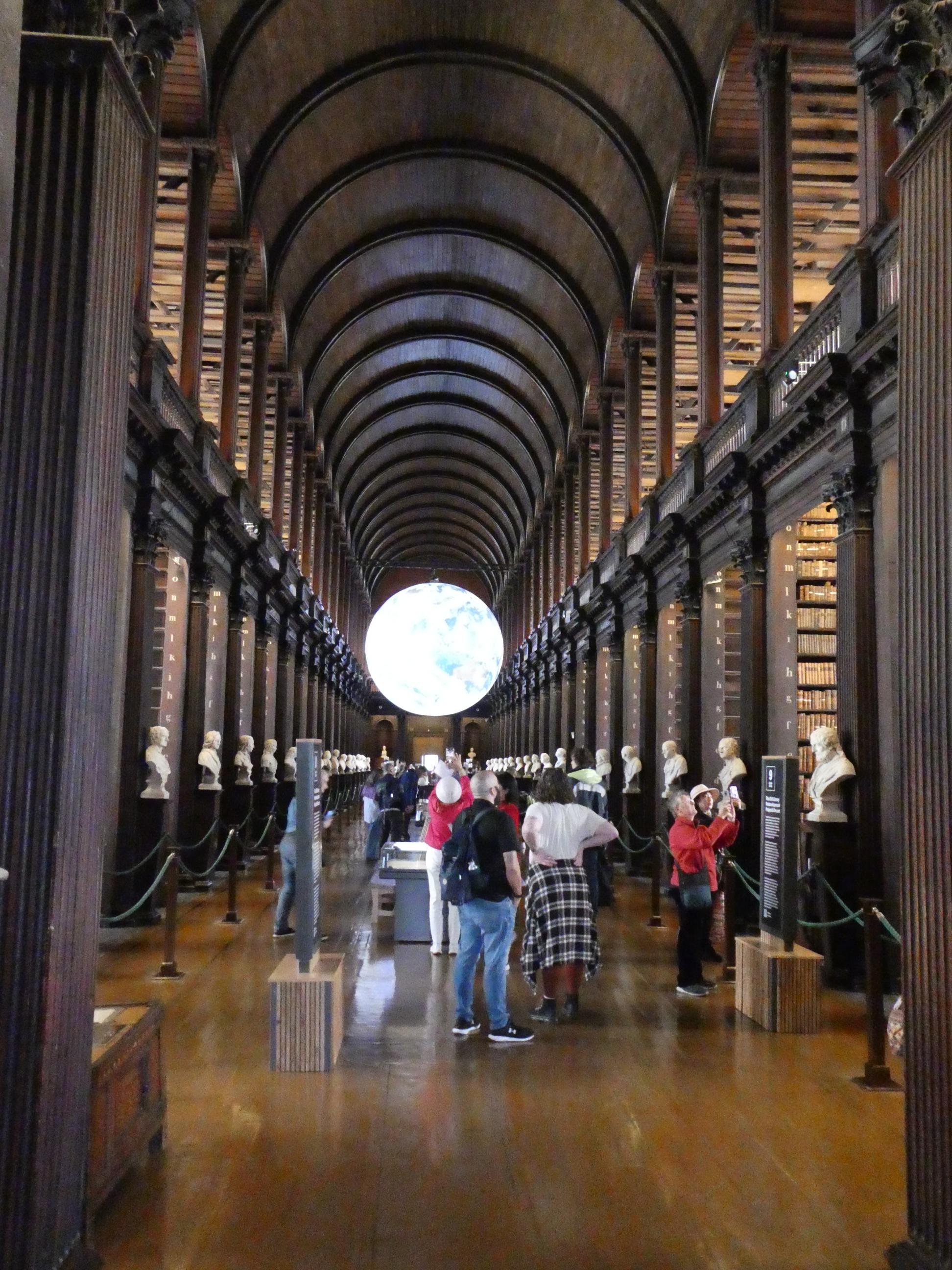
There have been two major changes to the Trinity College Library’s Long Room since we last saw it. The first one is a large, revolving orb-shaped work of art that hangs from the ceiling, known as Gaia. Gaia’s exterior surface uses satellite images of the Earth from space. You can’t miss it as you enter the Long Room. The second change is that most of the 200,000 oldest books in the Long Room’s collection have been removed since we were last here. Only the first four alcoves currently contain books, stacked on shelves that go all the way up to the high vaulted ceiling. The remaining shelves are empty. The building itself is in need of an upgrade that will make it less susceptible to fire and create environmental conditions, such as temperature, light and humidity control, that will prevent further deterioration of ancient books and manuscripts. And many of the books are in need of vital conservation and preservation work. Each book will be individually examined, cleaned by dusting and hoovering, and, in some cases, repaired. The work is being very carefully carried out by a team of experts. The books will be stored securely elsewhere and may not return to the Long Room for quite some time. It’s going to be a monumental task, but one which will future-proof Trinity’s priceless collection so that generations of people yet to be born will also have the ability to access these books and learn from their pages. Soon the library will be closed for up to three years, so the building modifications can take place.
Important items on display in the Long Room, which we also saw last time, include the oldest harp in Ireland, a medieval instrument which has become the country’s national symbol. You no doubt will recognise it from the Guinness label. The other is a poster proclaiming the formation of an Irish republic, that Patrick Pearse read aloud from outside the Dublin GPO during the 1916 Easter Uprising.


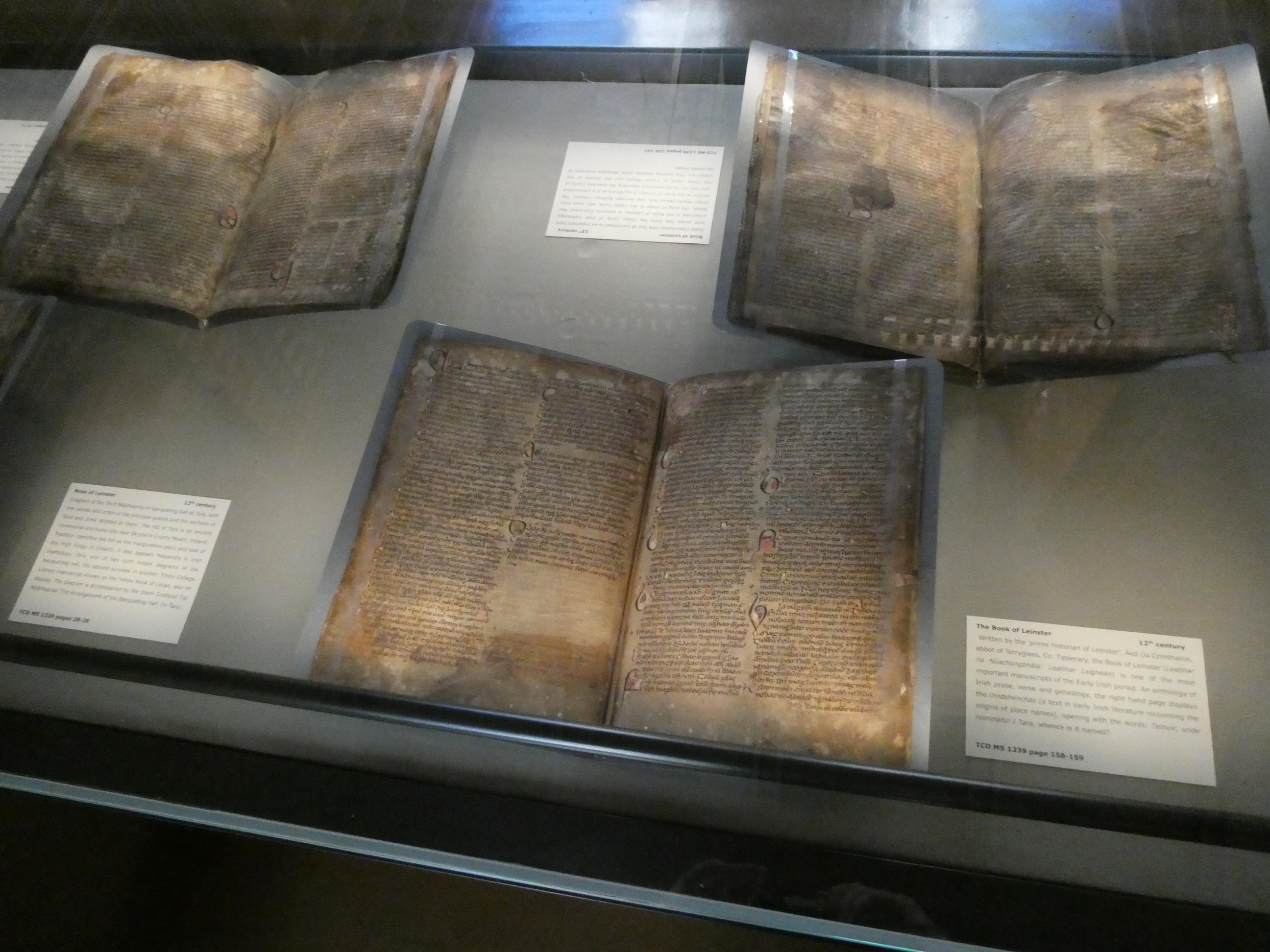
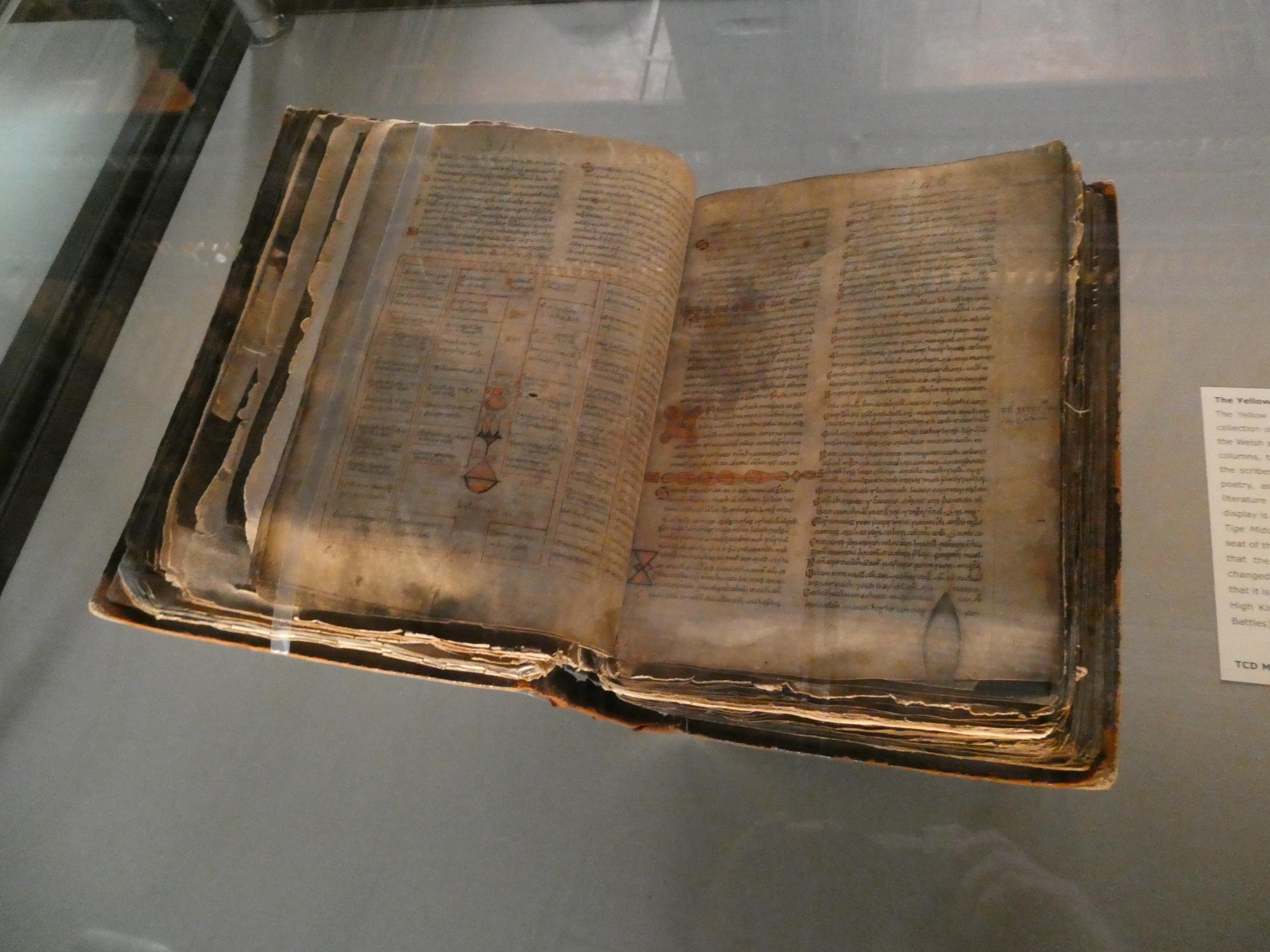
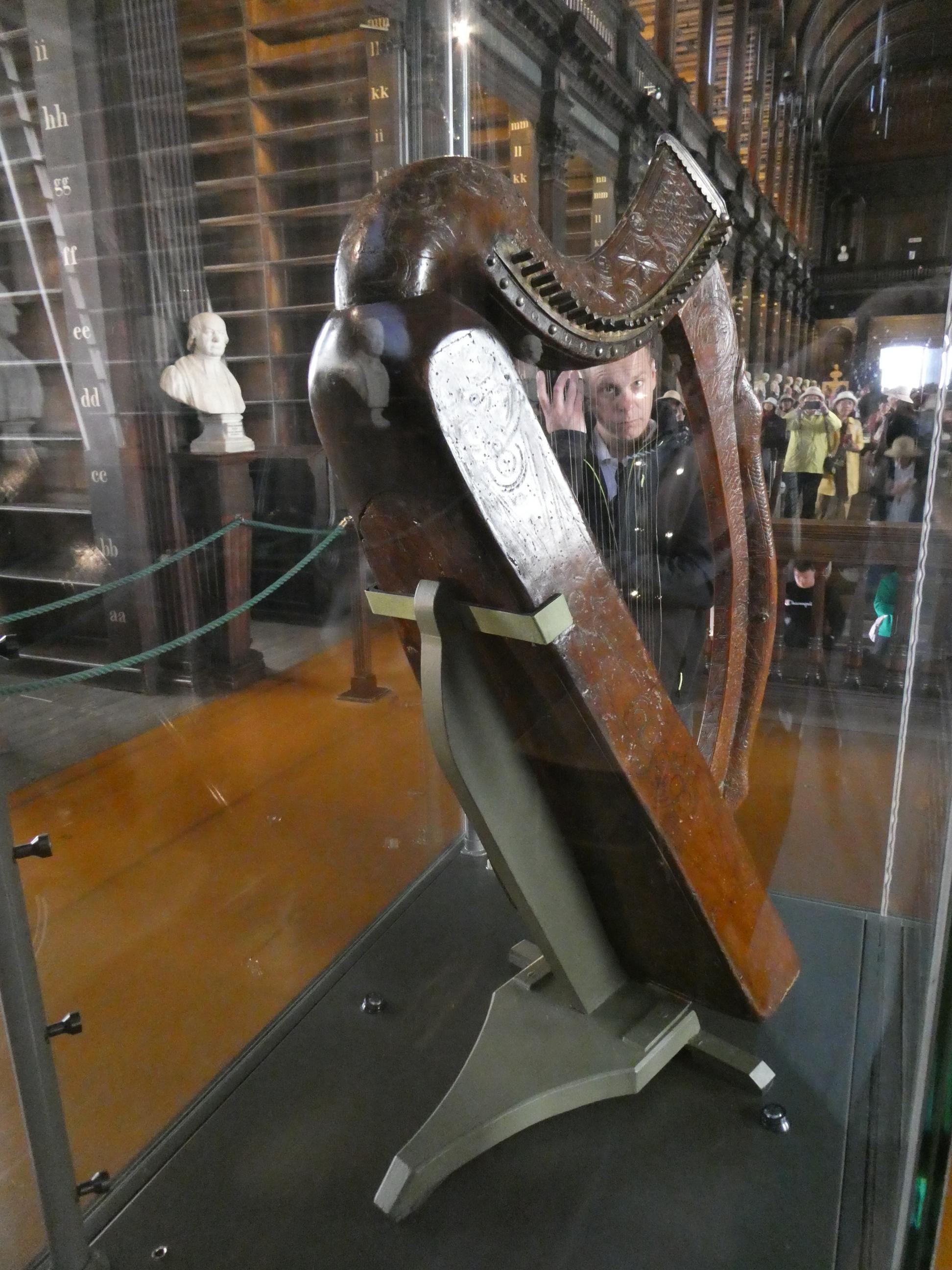

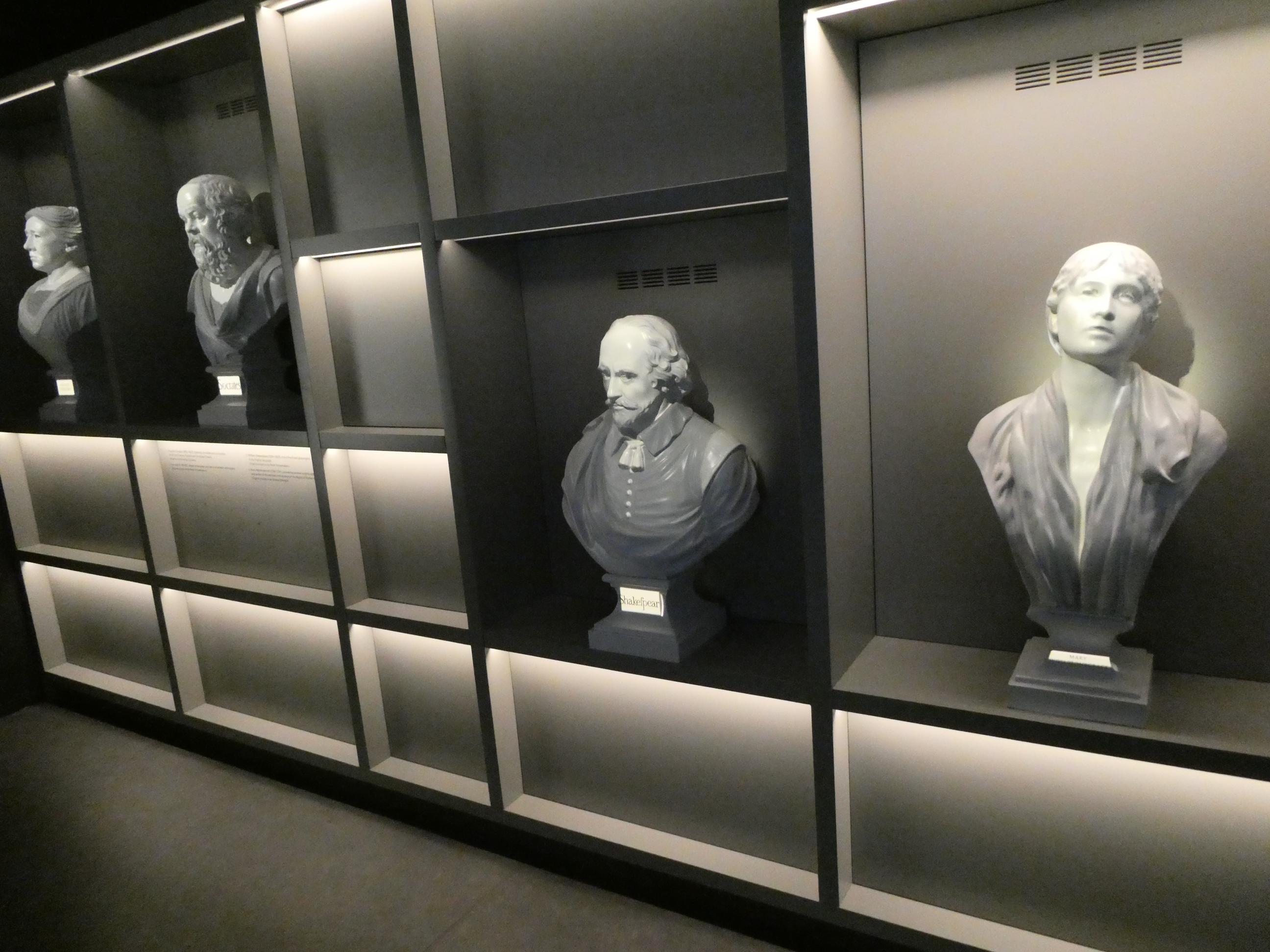
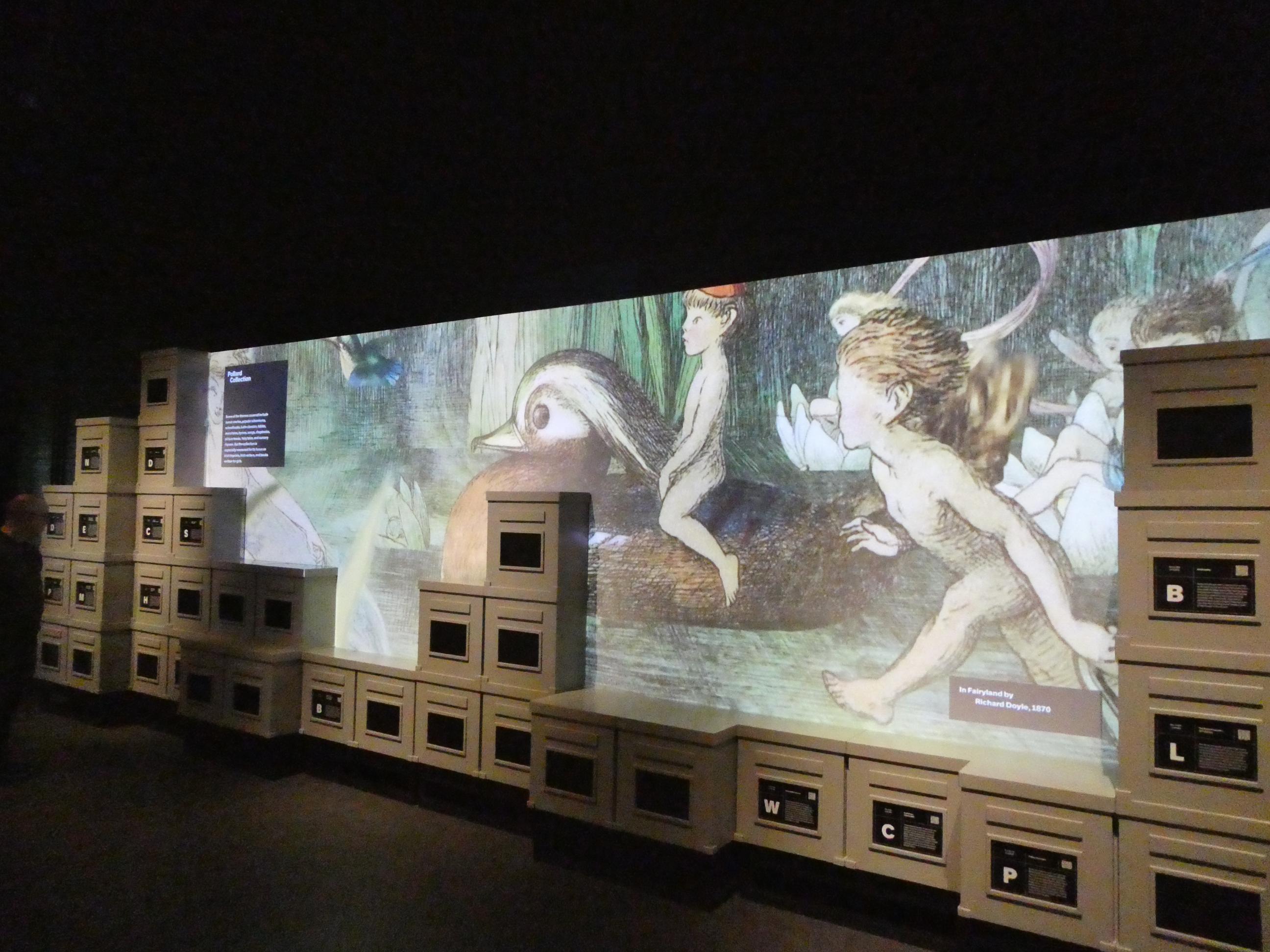
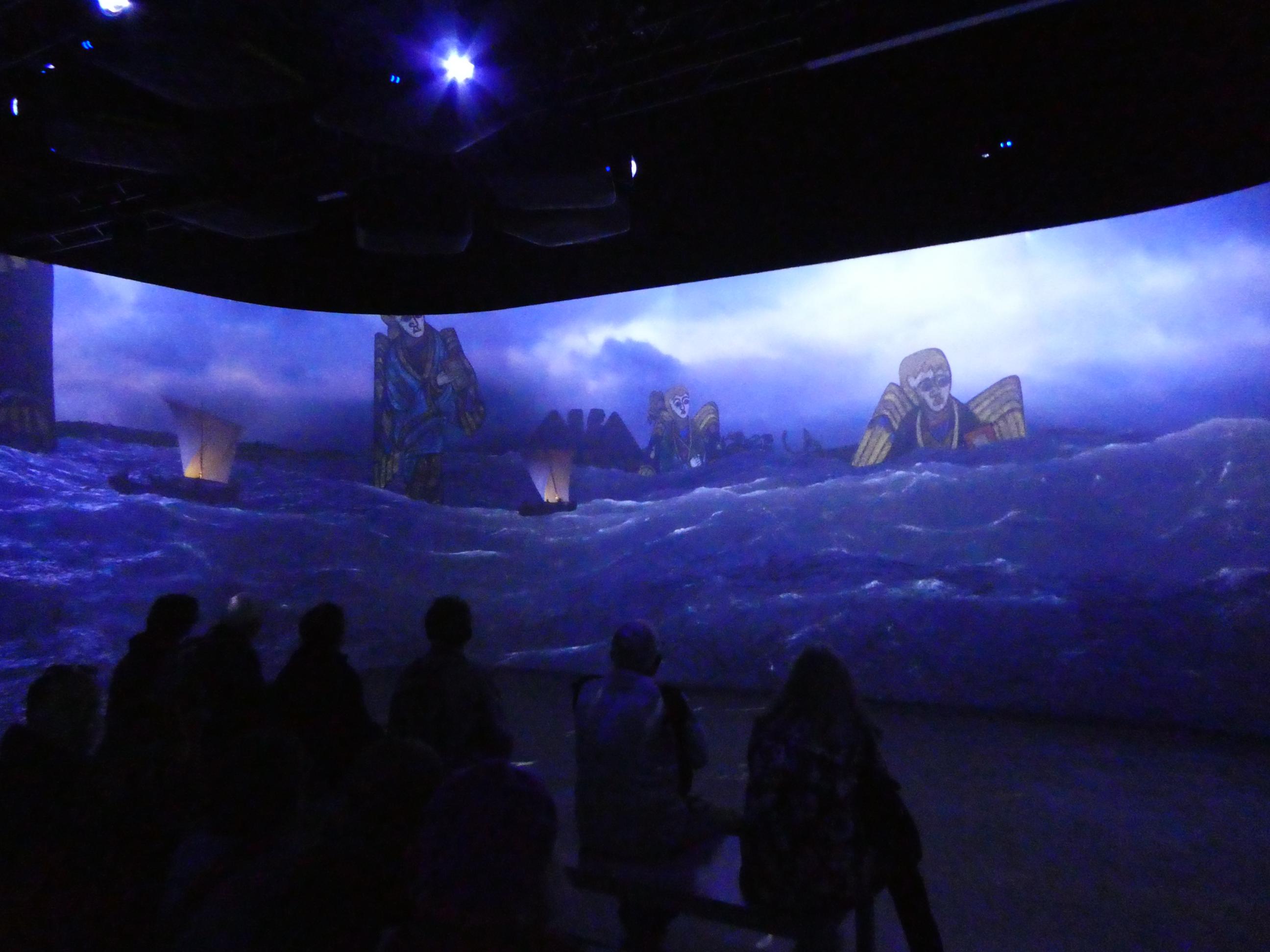
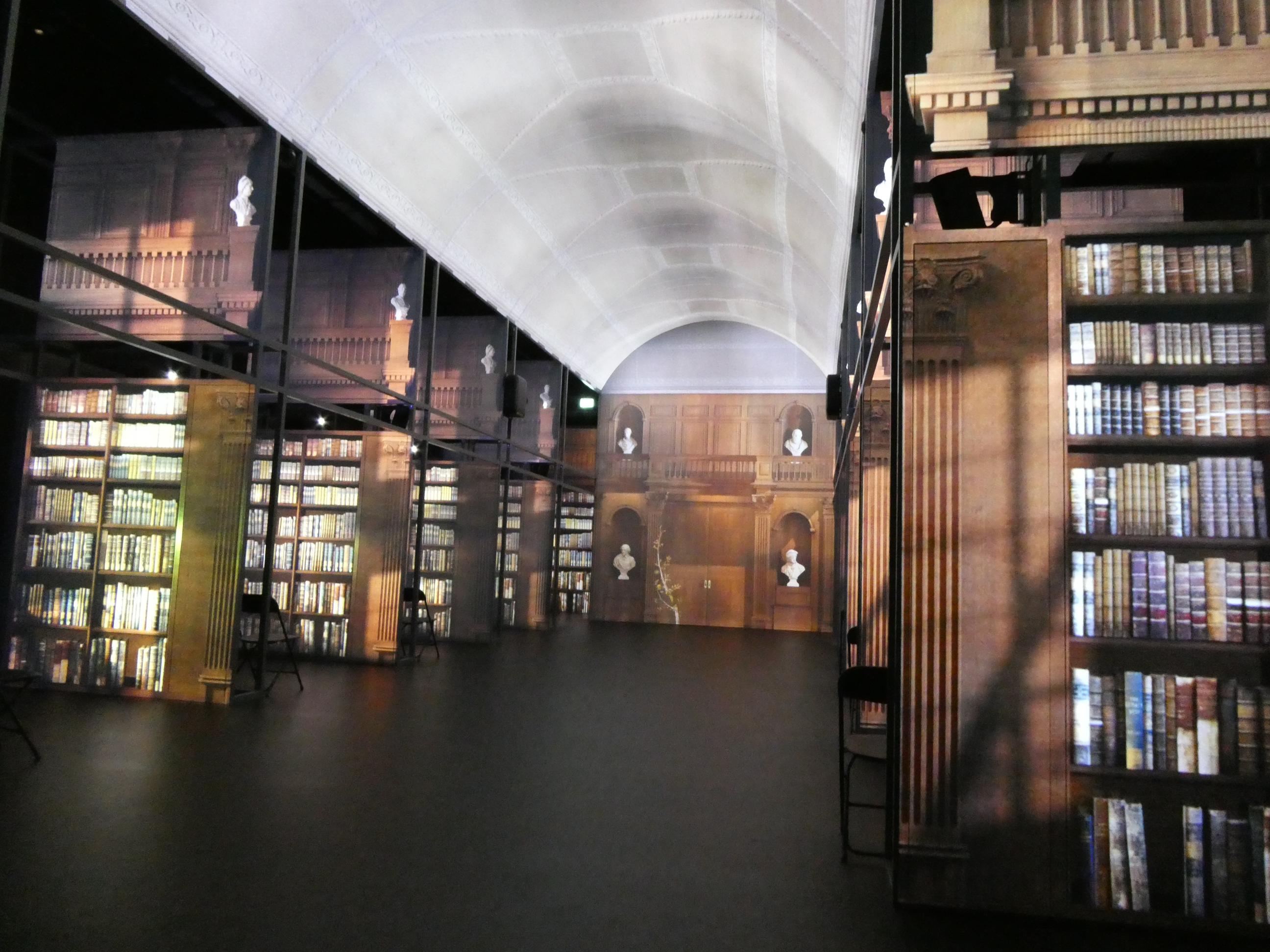
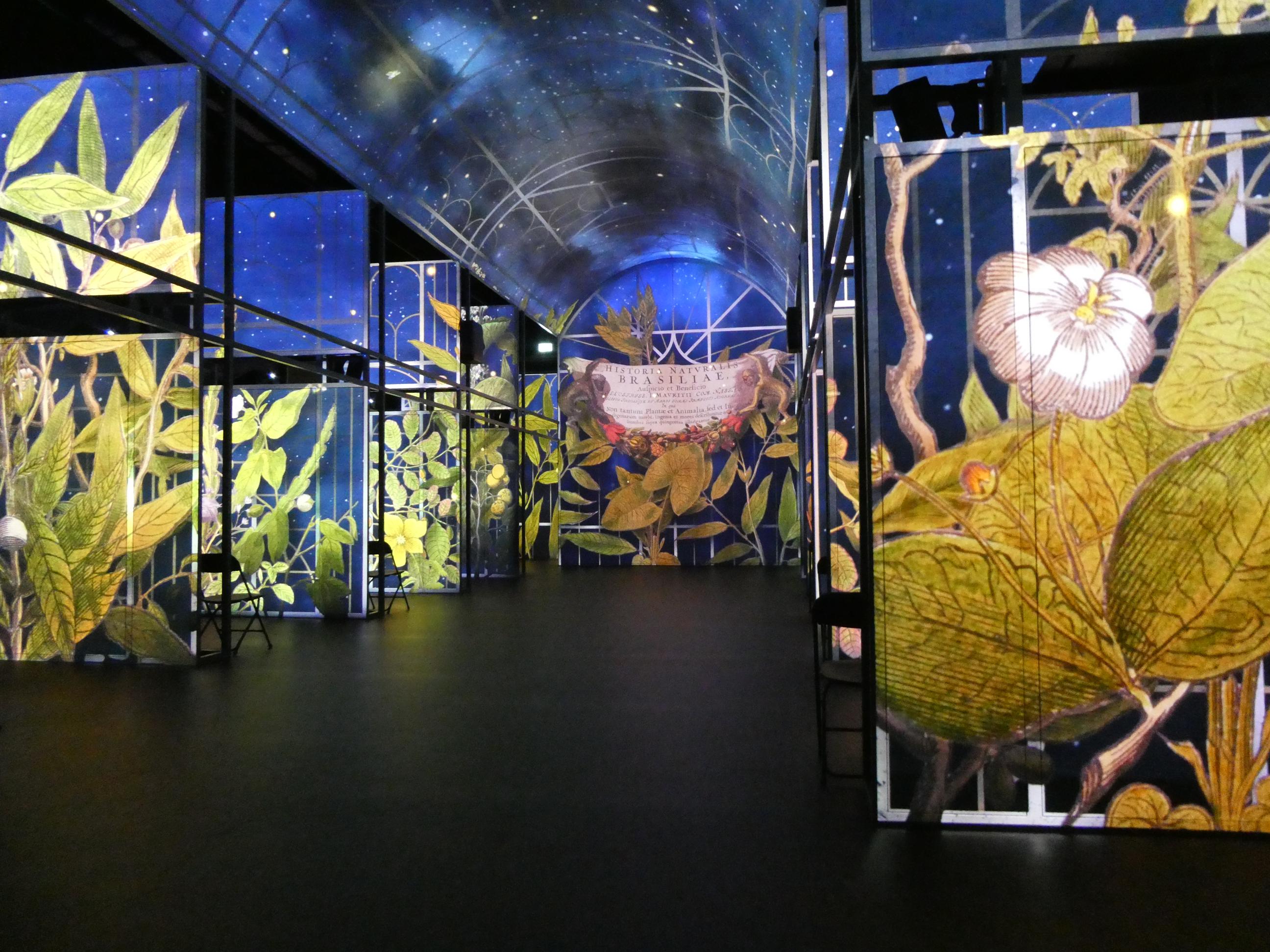
A wonderful digital exhibition that we hadn’t seen before was in the Red Pavilion nearby. It contains engaging and informative exhibits that help visitors to better understand the Long Room collection. A small number of animatronic versions of the busts from the Long Room engage in a conversation. Their lips move and they display a range of different facial expressions as they converse with one another. A large screen displays animations of works contained in the library’s collection. Streamed movies explain how the Columban monks brought the Book of Kells to Ireland, and another video display tells the stories behind the library and its restoration project. It was quite entertaining, and helped us to make sense of what we had seen in the Long Room.





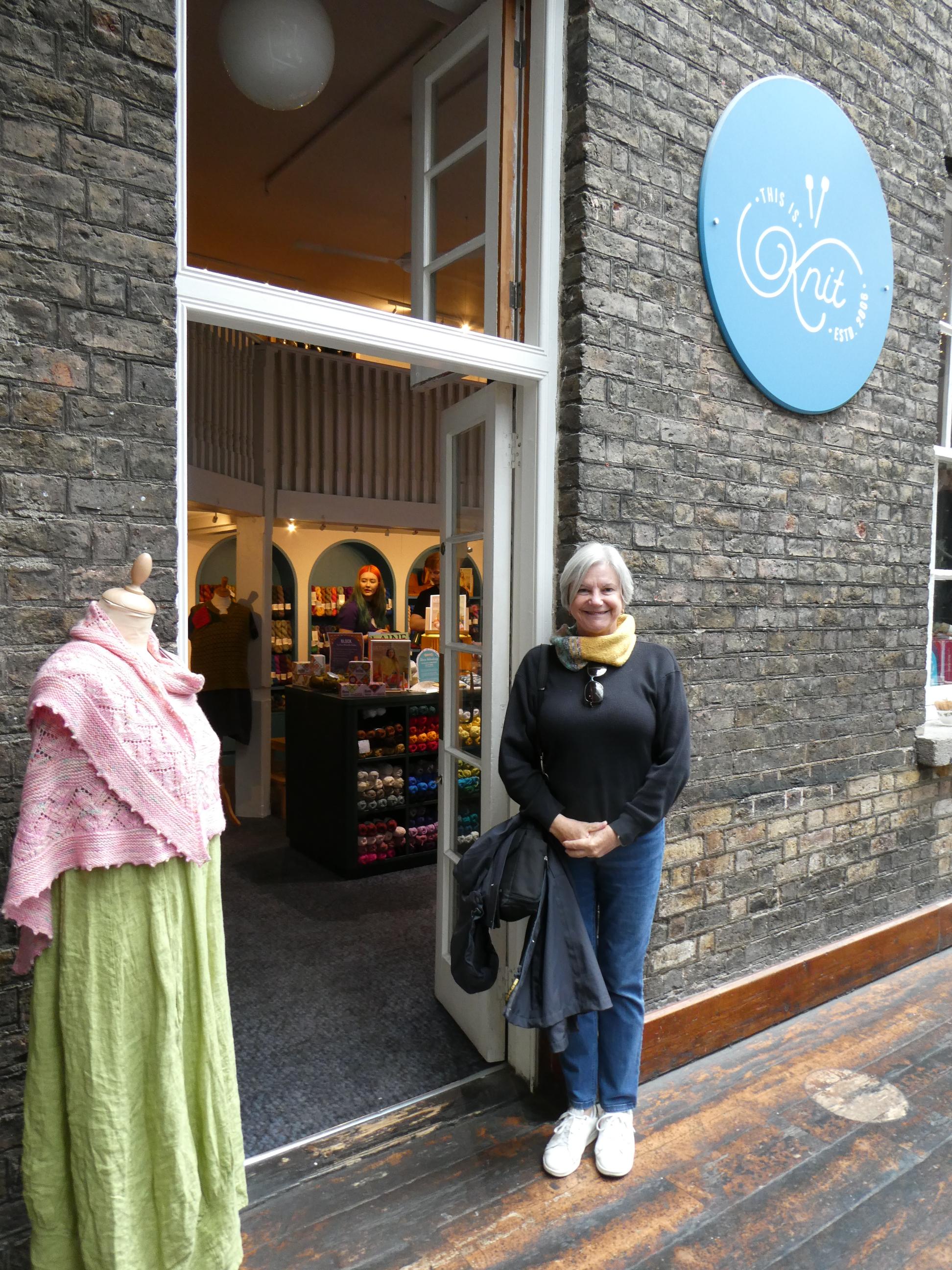
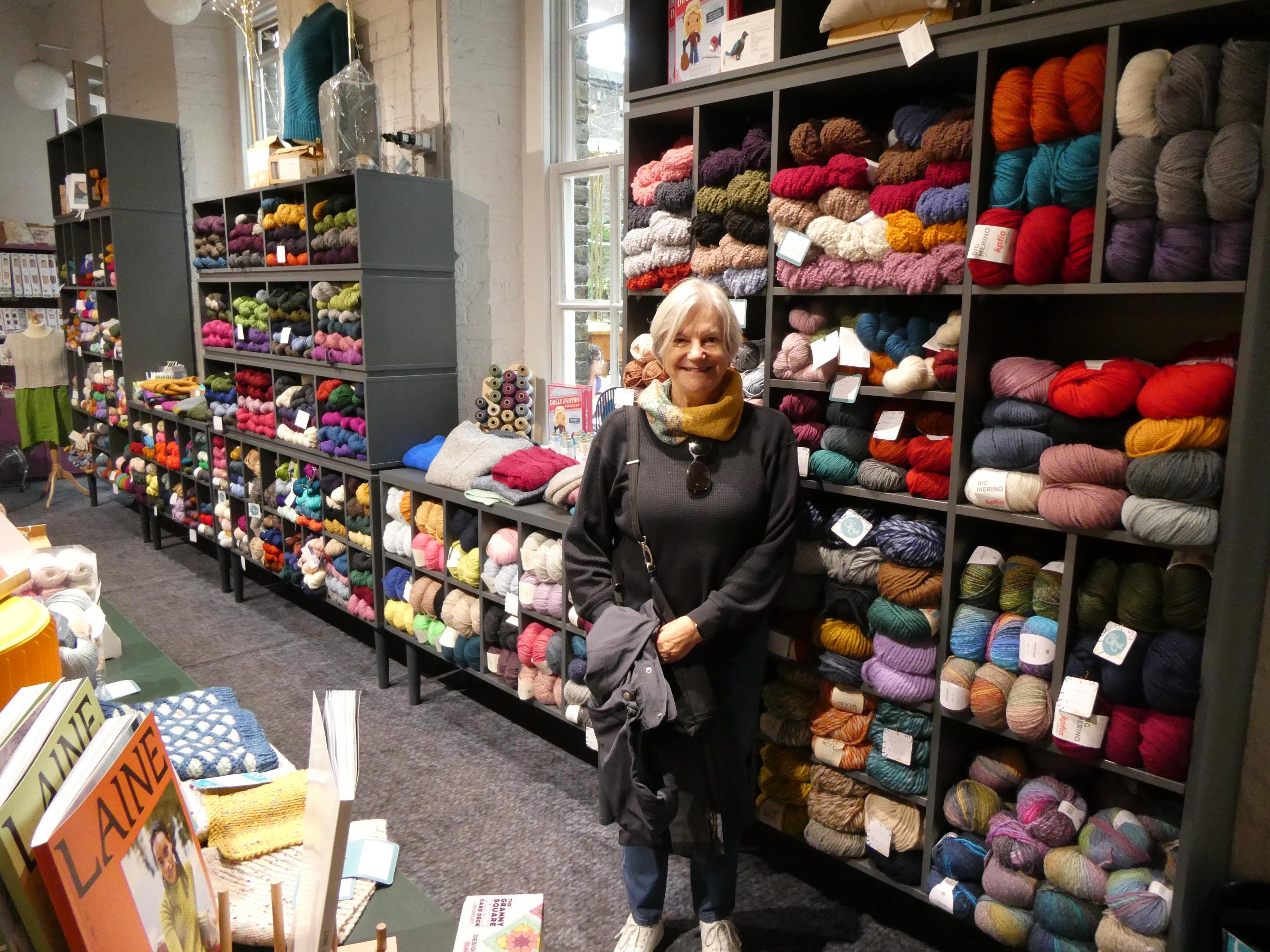
Marg had found the address of a yarn store which just happened to be situated between Trinity College and our next venue, Dublin Castle. Rod guided us there, much to Marg’s delight, and Rod and I waited outside while Marg and Cornelia were inside selecting wool for Marg’s next project.


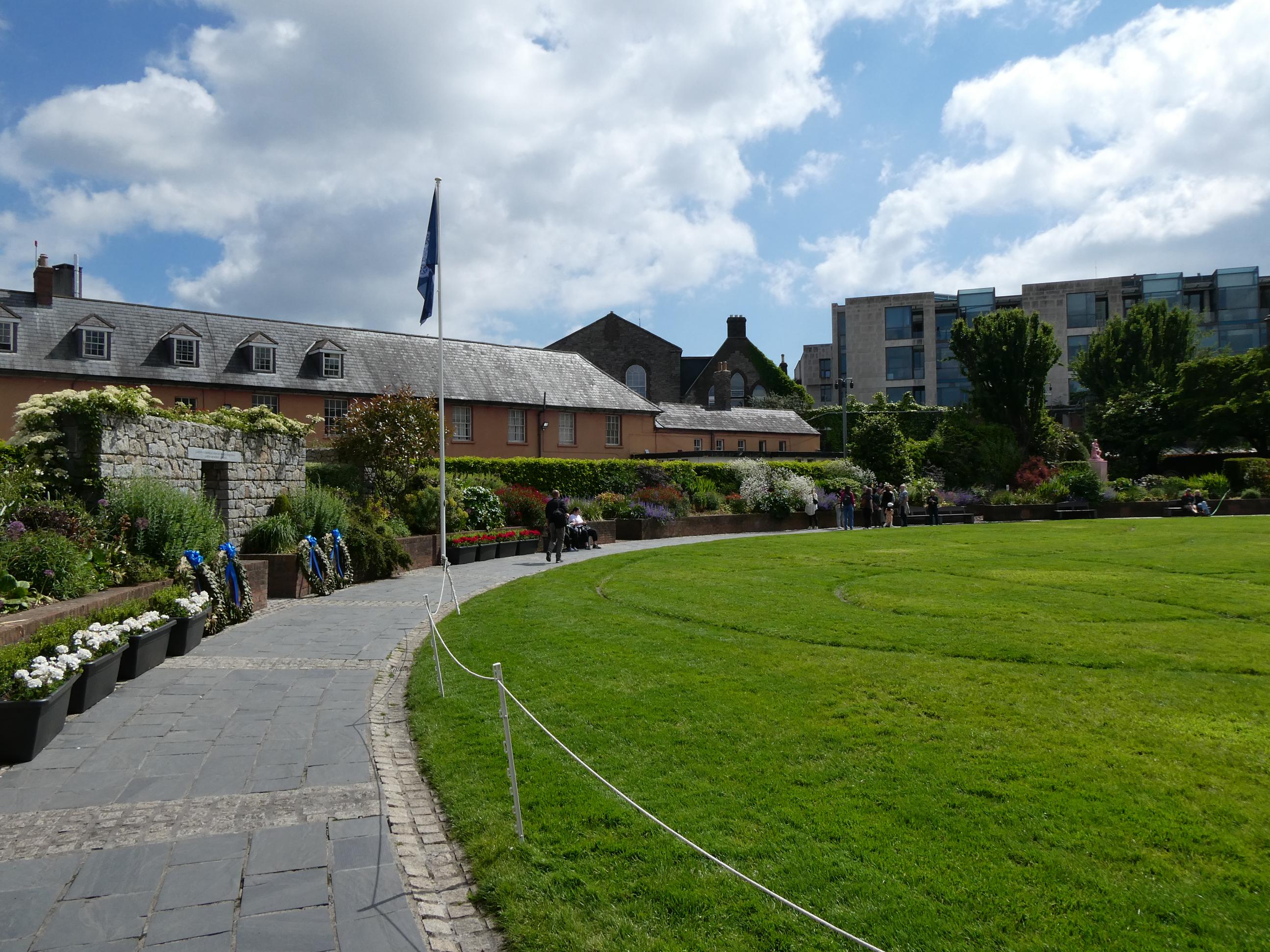
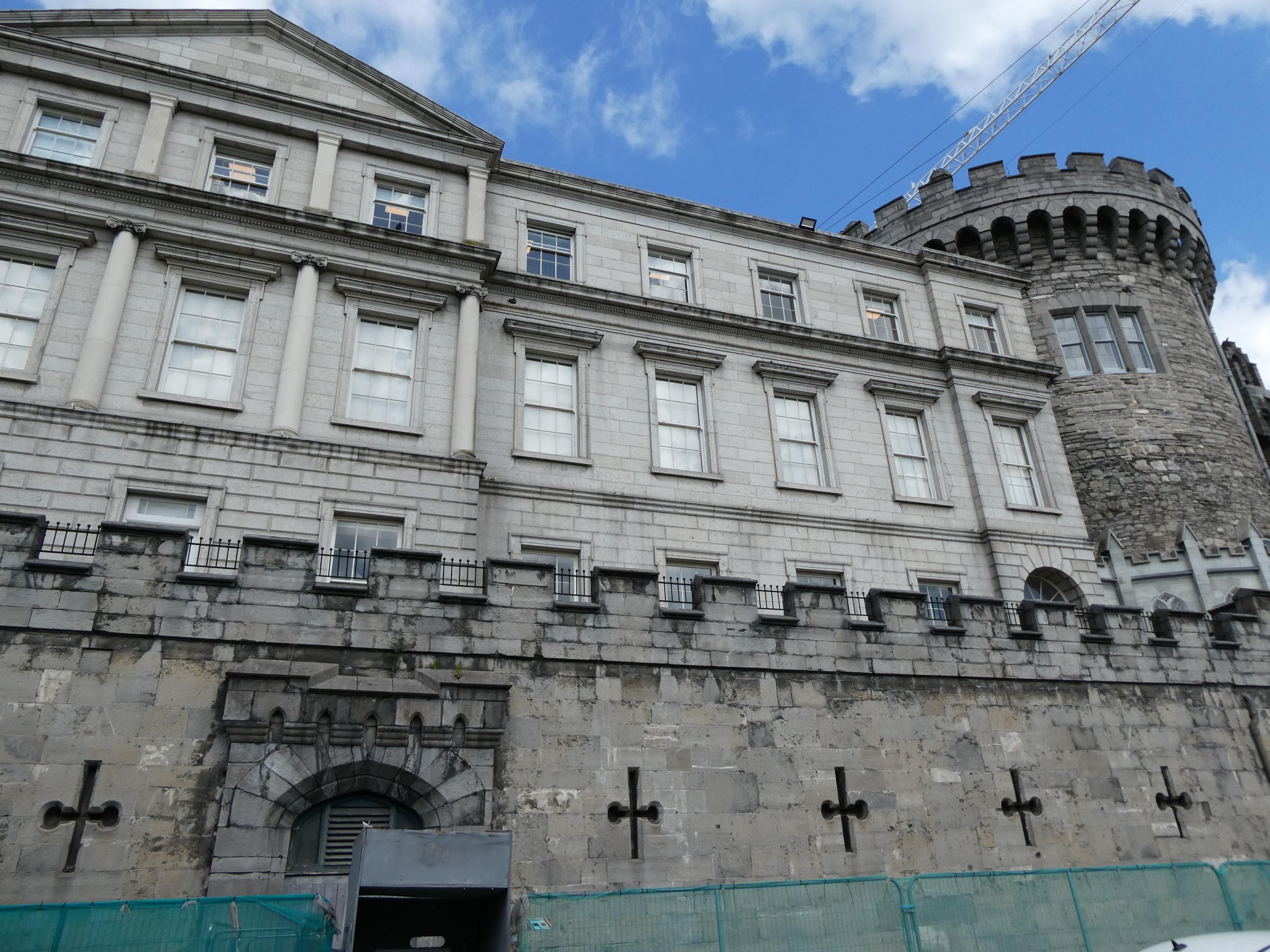
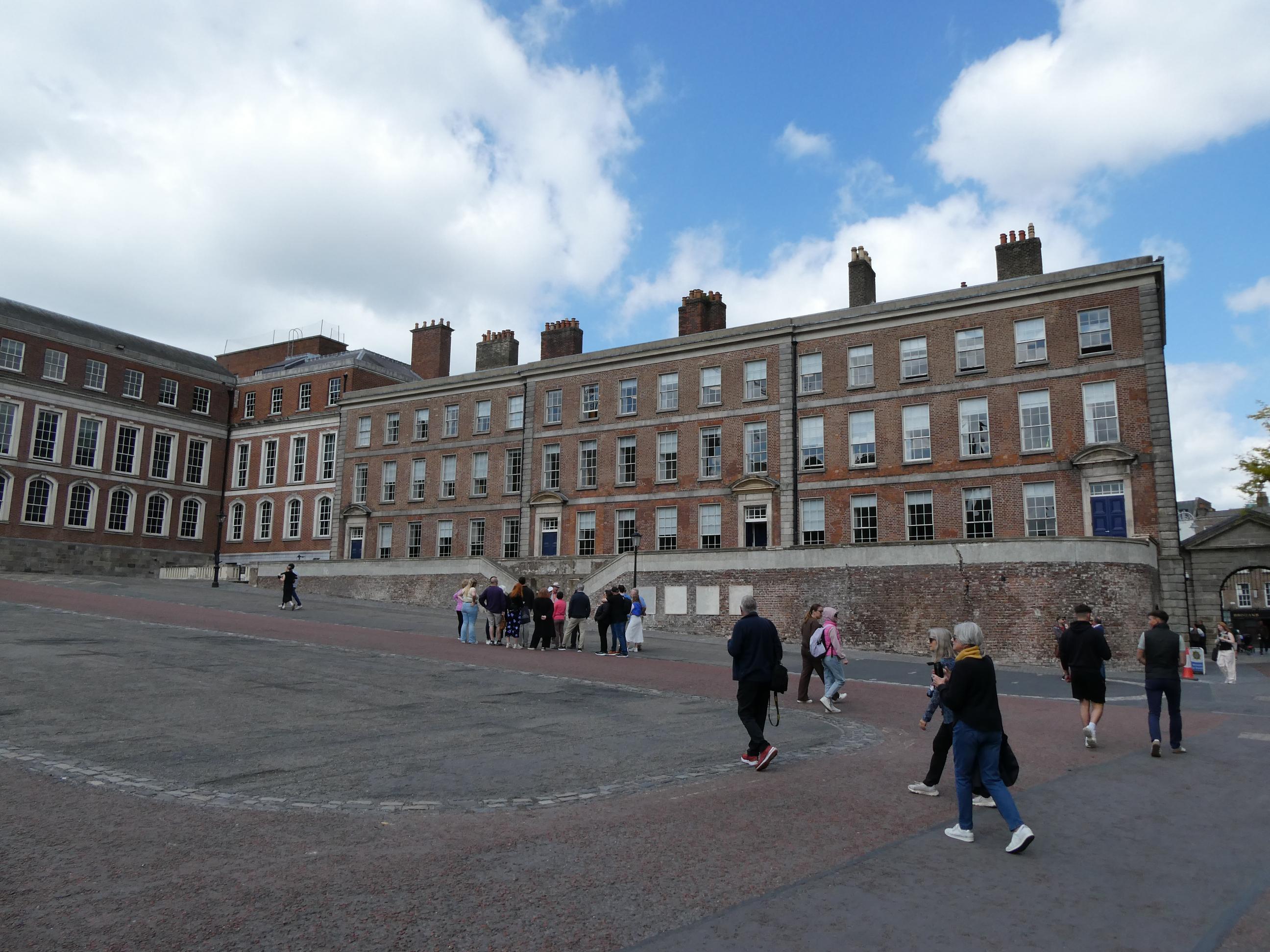
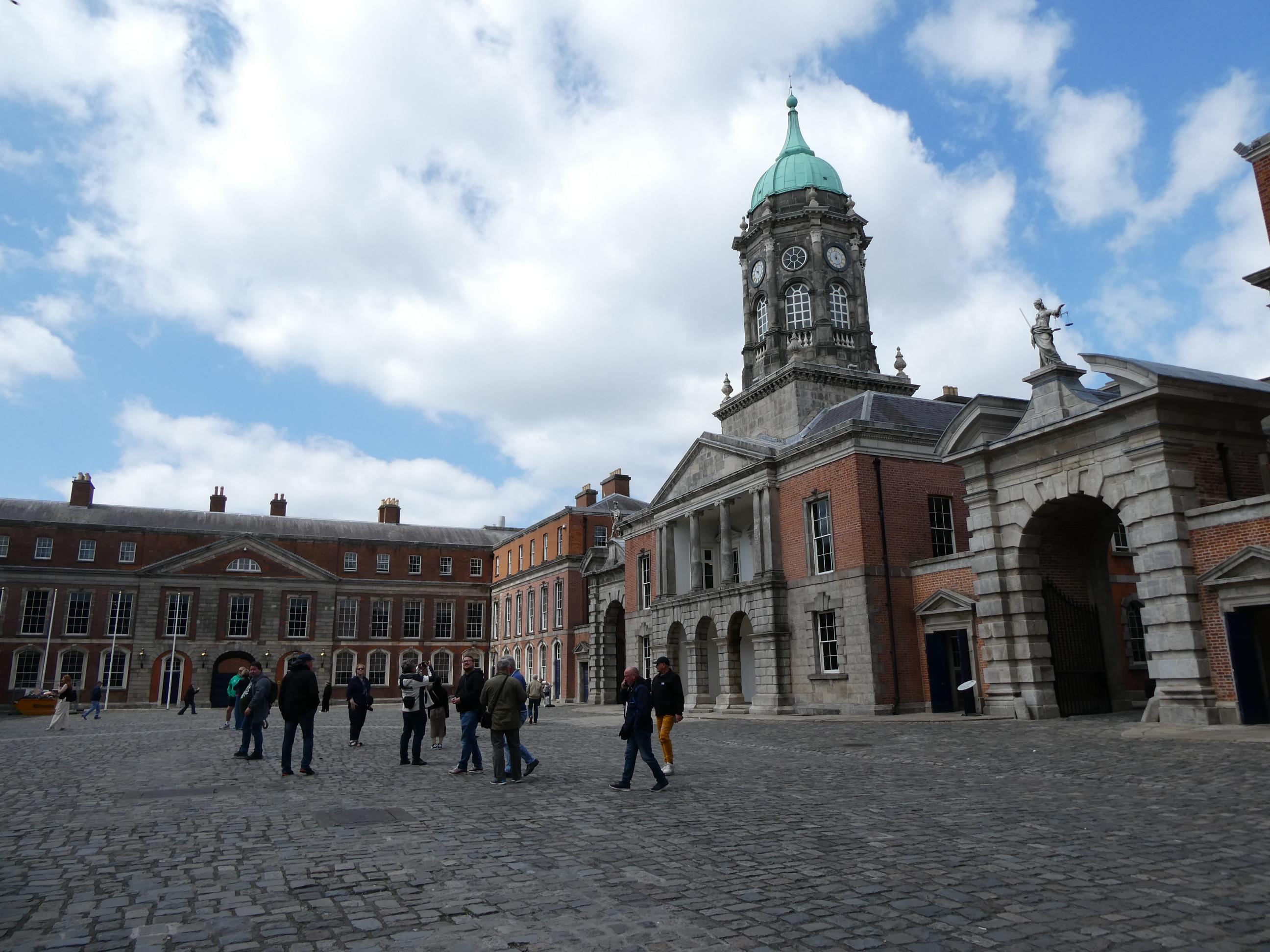
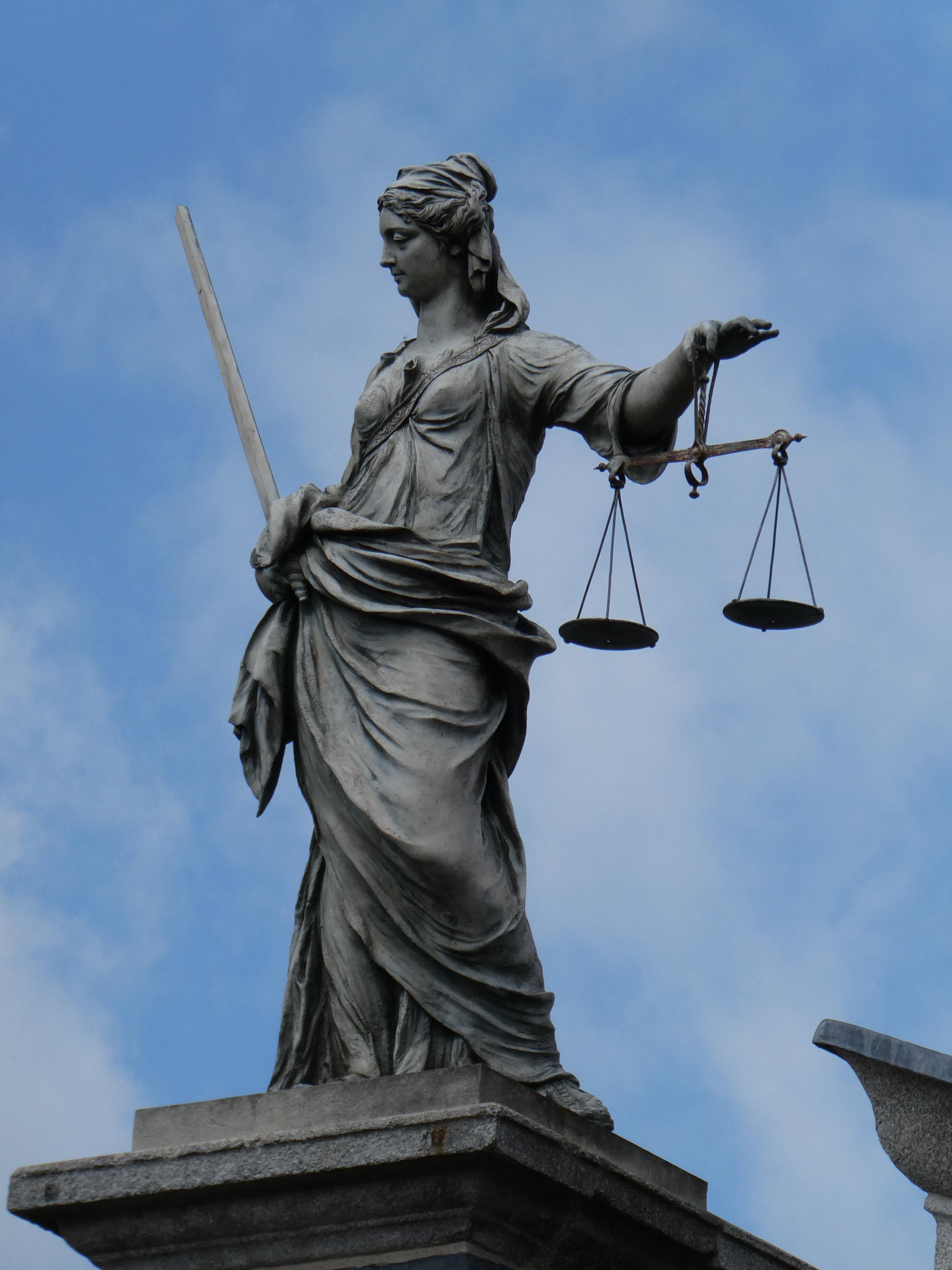
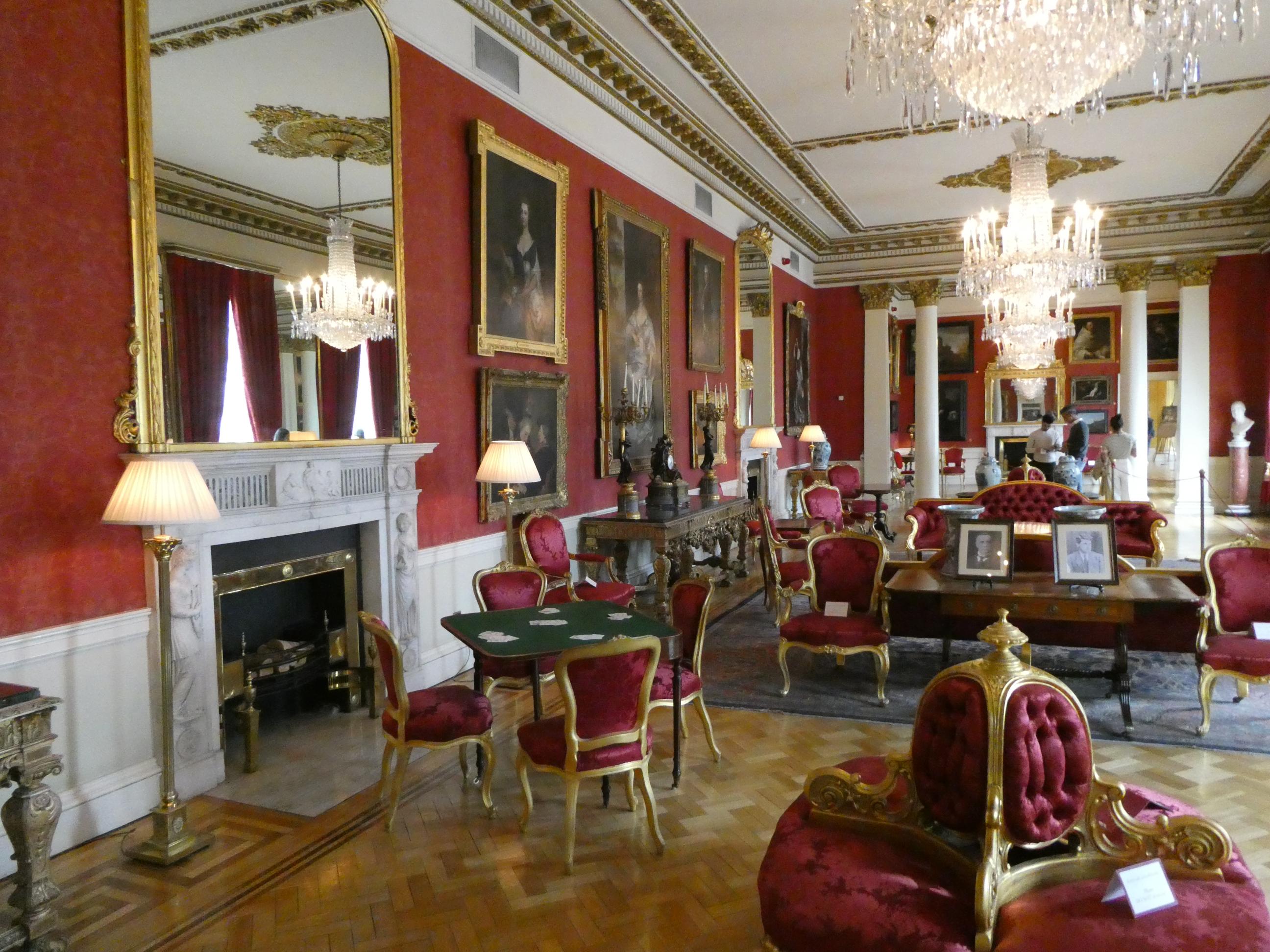
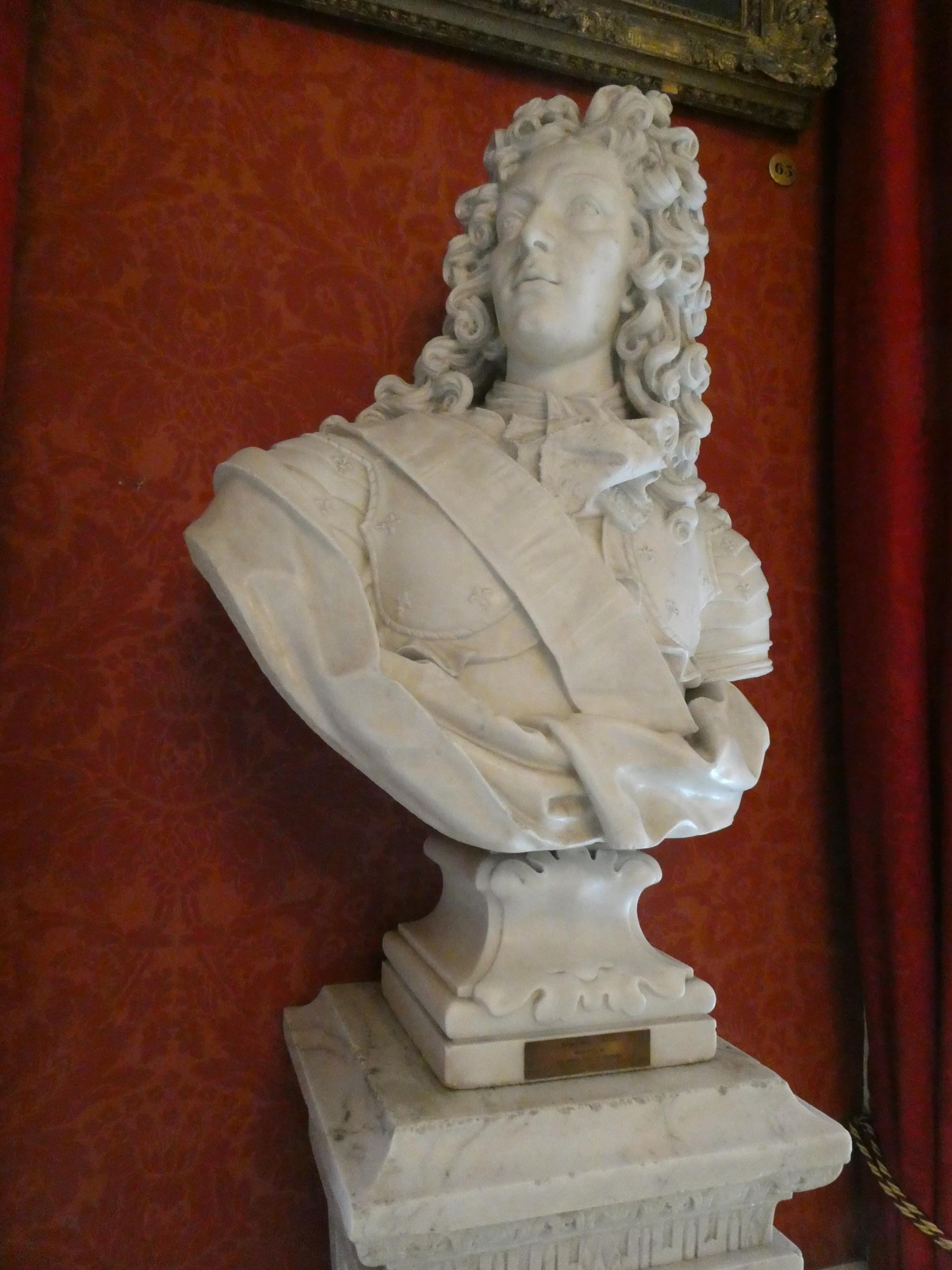
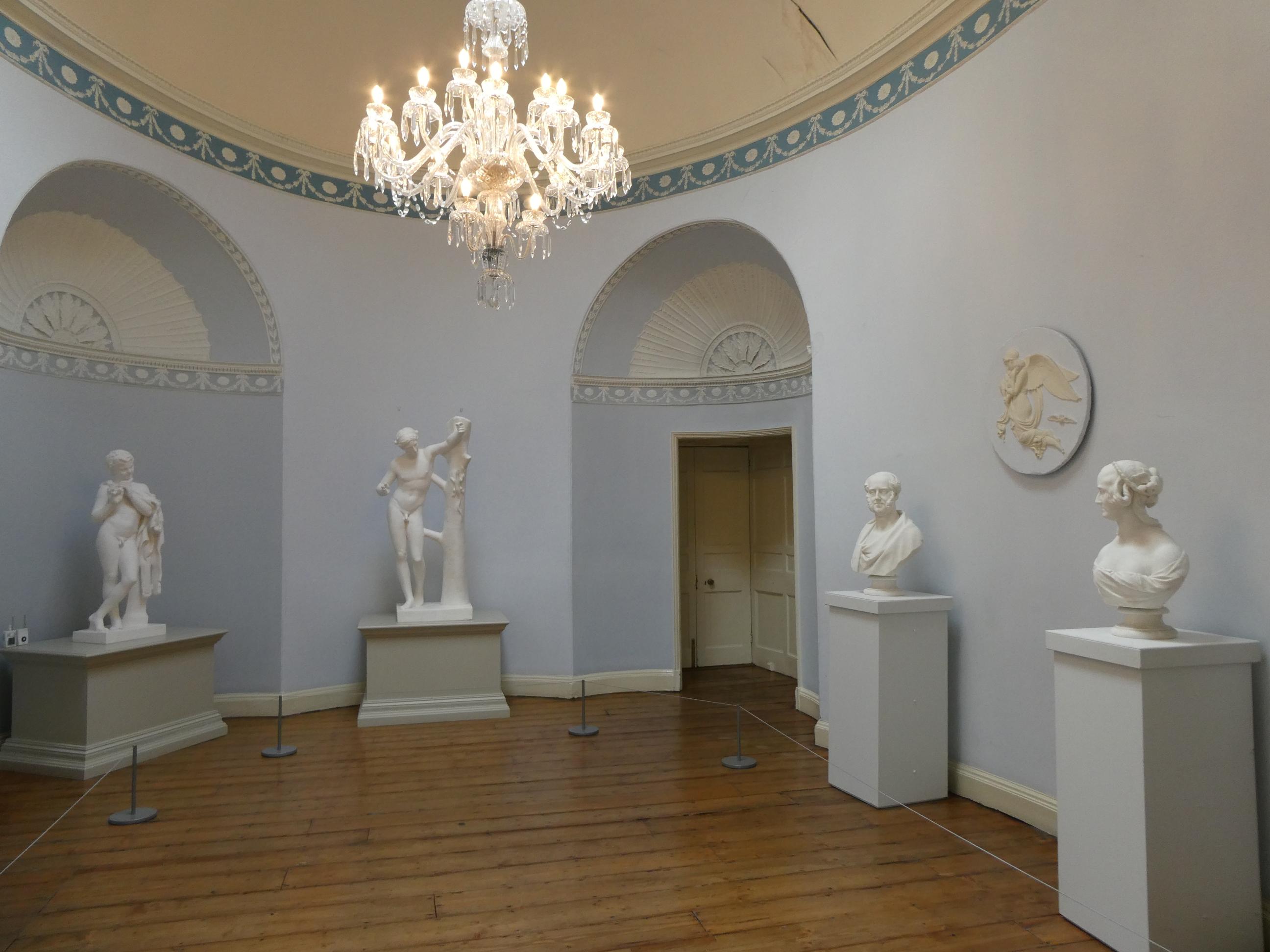
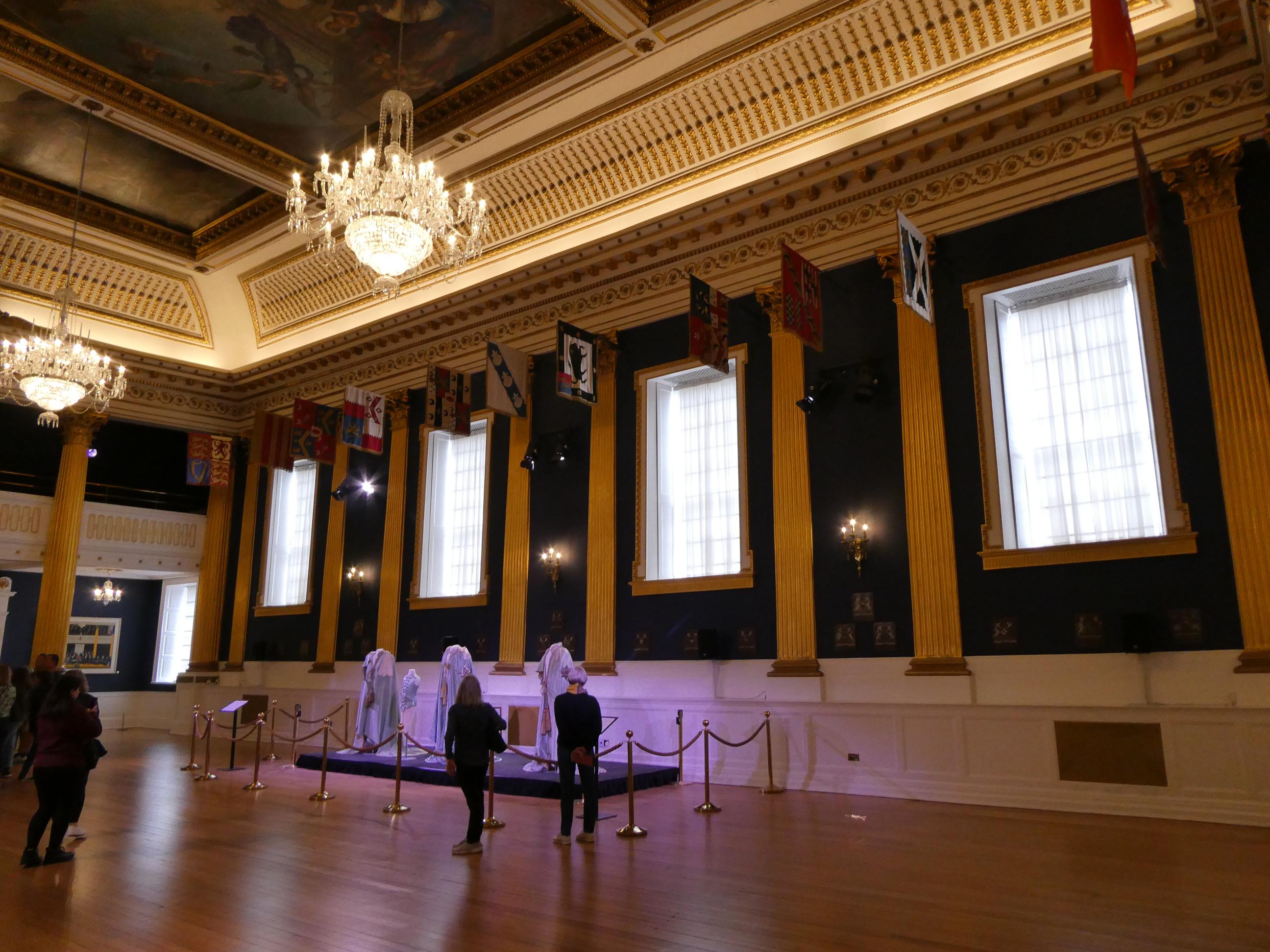
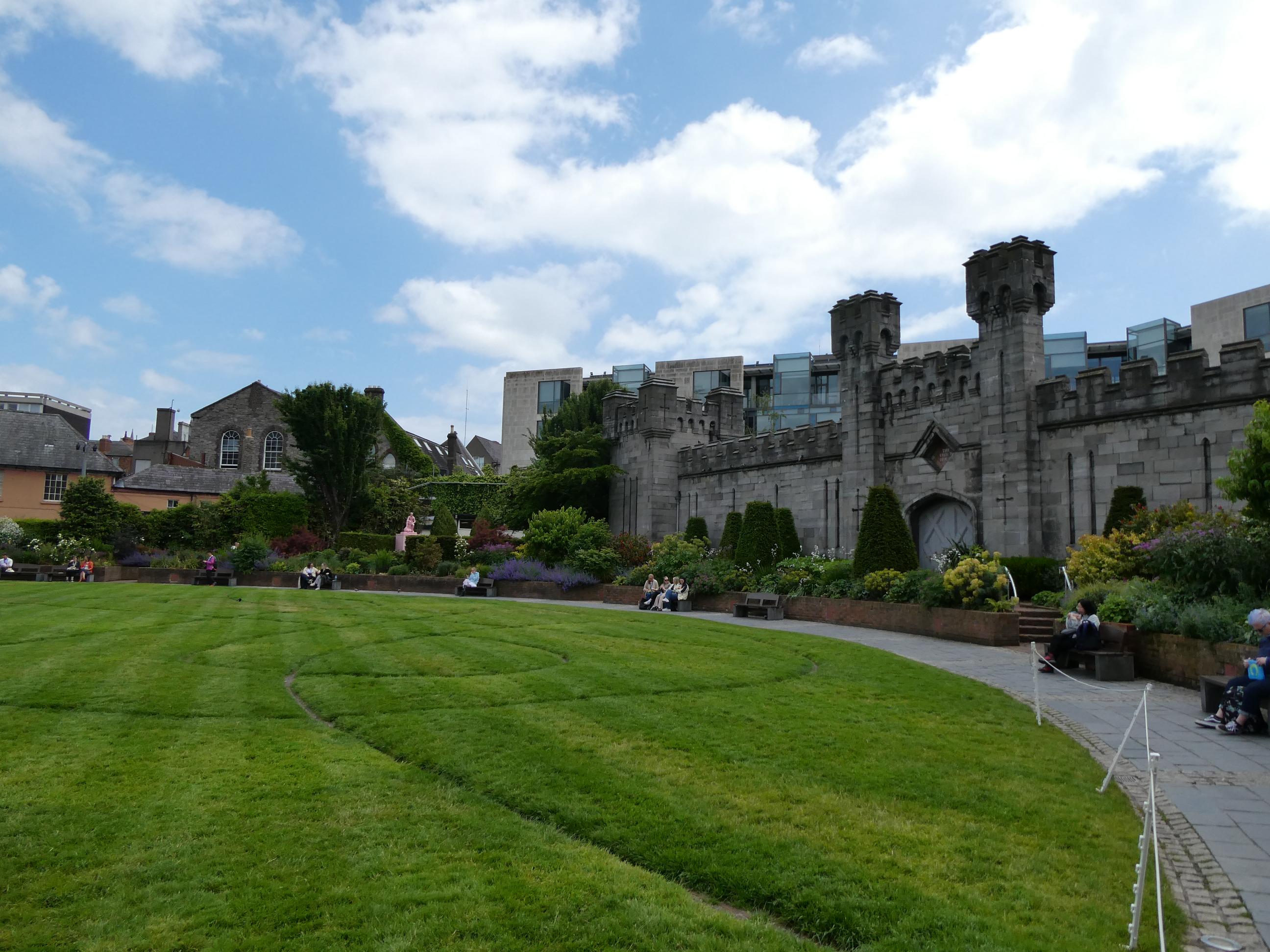
We walked the short distance to Dublin Castle. Parts of this castle date back over 1000 years. For hundreds of those years, it was the seat from which Britain ruled Ireland. The British left the castle in 1922 when Ireland gained its independence. Many Irish Presidents have been sworn into office at the castle, and many important visitors to Ireland have been welcomed here. They include Queen Victoria, Benjamin Franklin and Nelson Mandela. The tour of the castle is essentially a tour of the state apartments, which have been used by the people ruling Ireland at the time to host important state events such as visits from foreign leaders, investitures, official dinners and receptions, and national commemorative occasions. The castle also houses a very important collection of artworks. We took our time exploring the state apartments and viewing the many paintings on the walls.








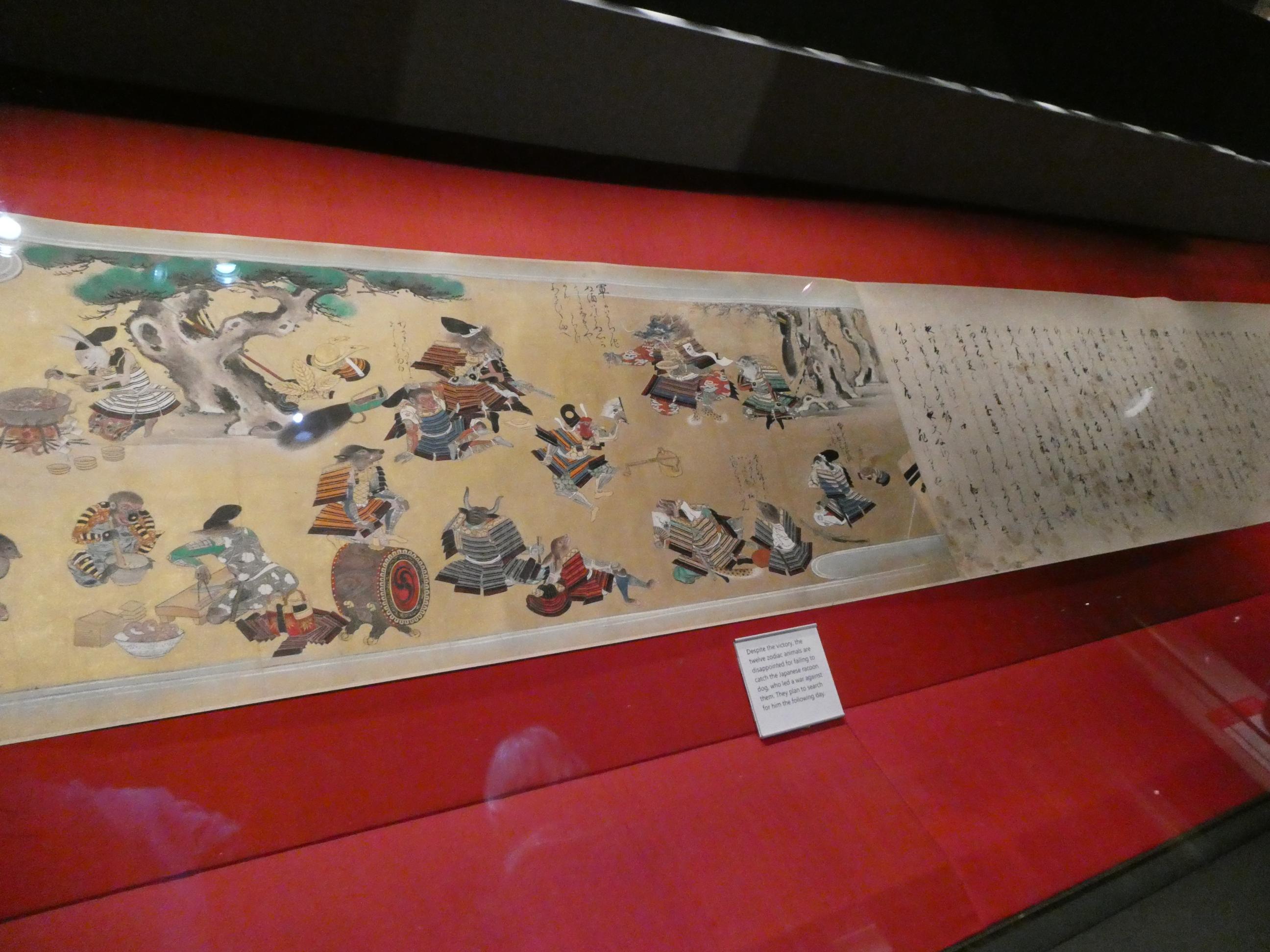
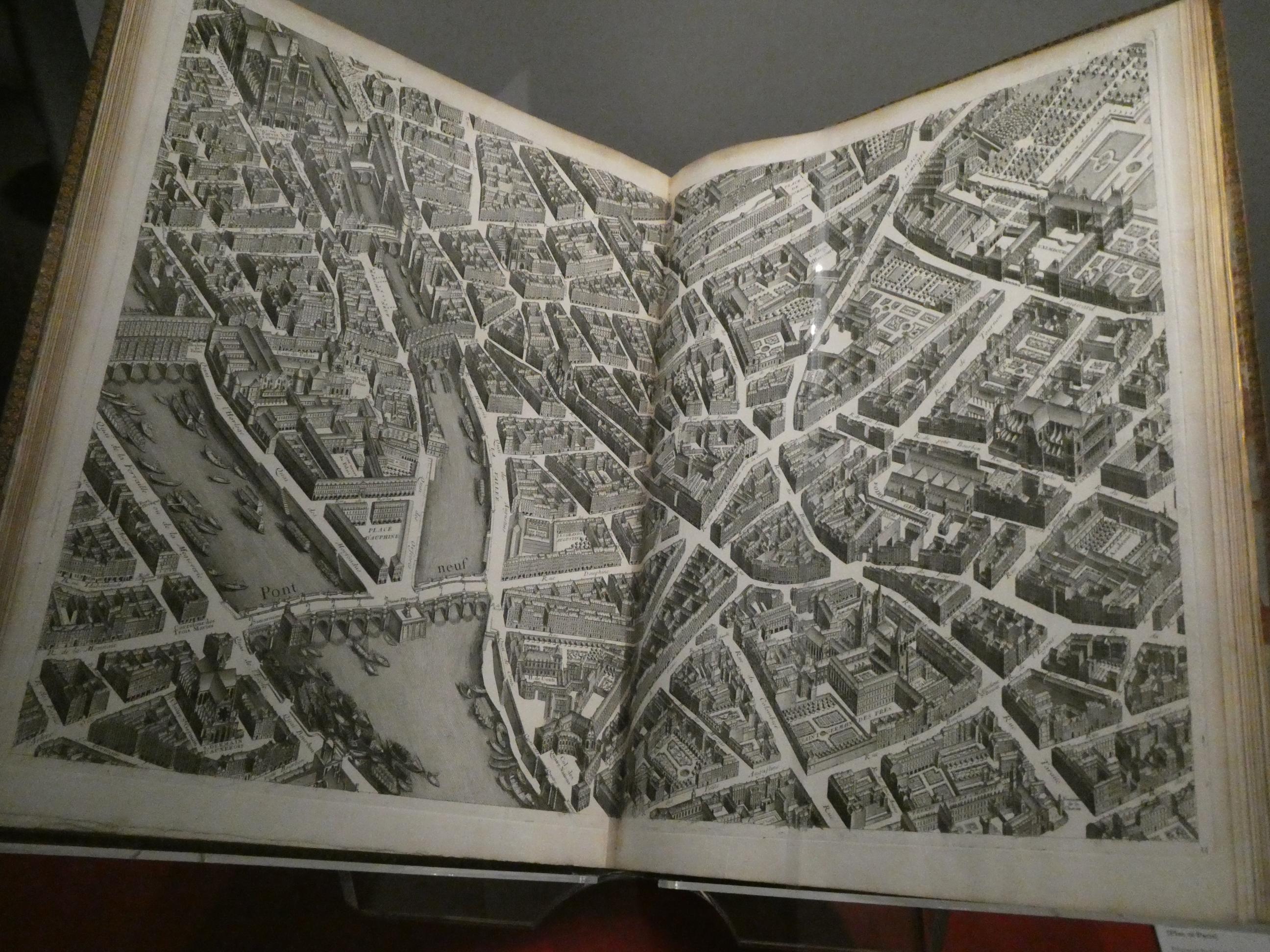
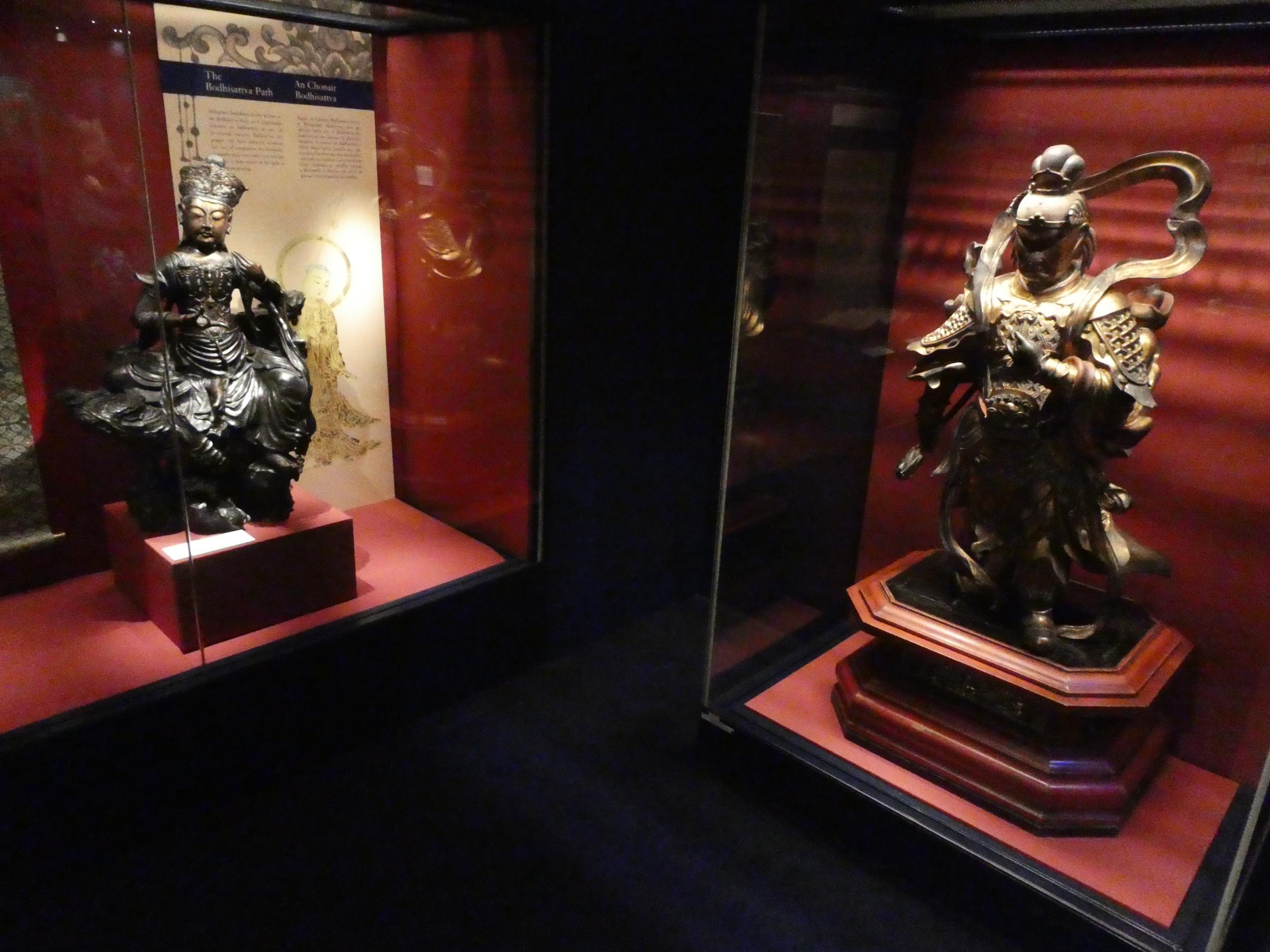
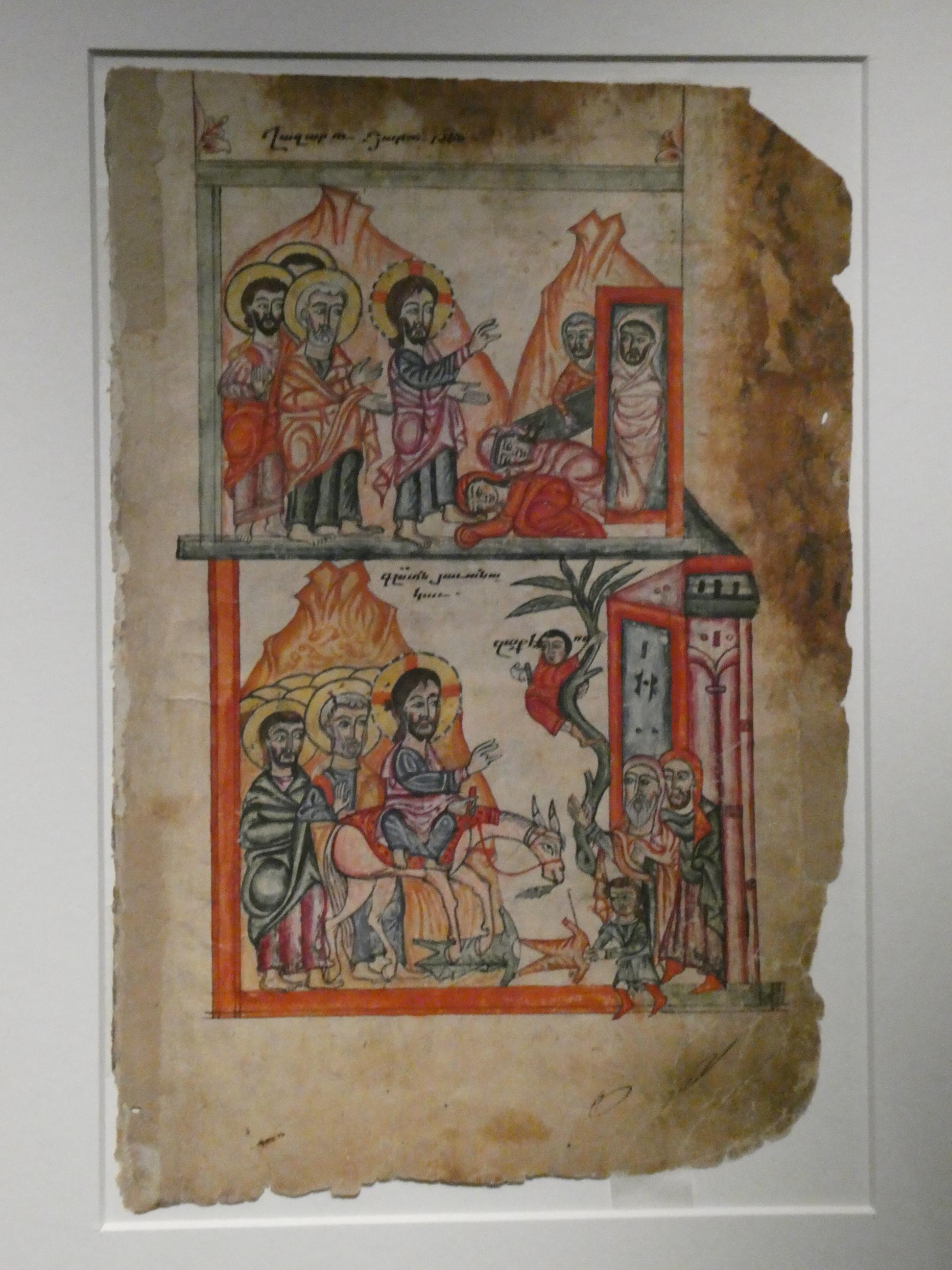
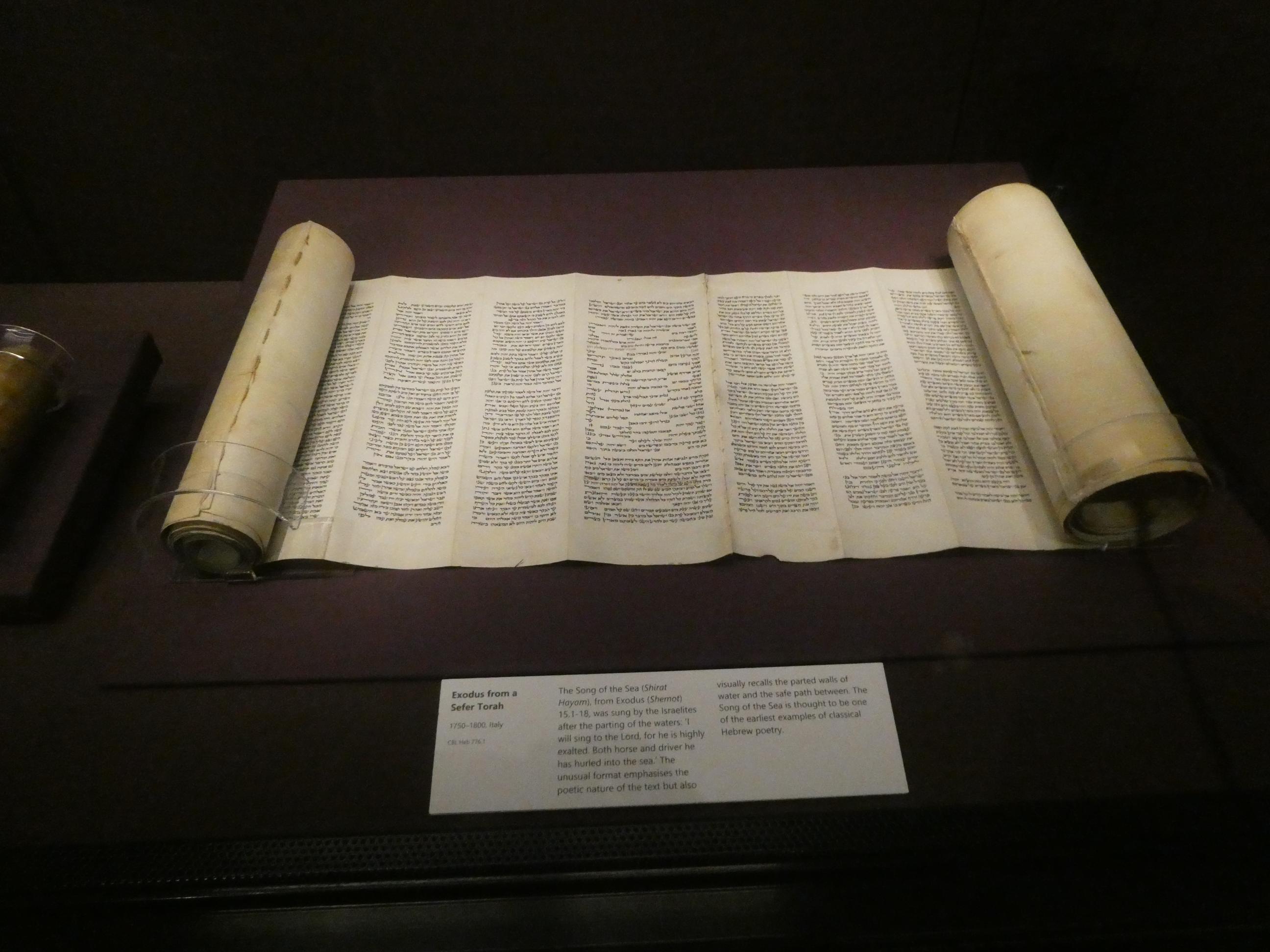
Adjacent to Dublin Castle was the Chester Beatty Library. After a light lunch in its cafe, we took the stairs to the first level to view Arts of the Book, an extensive exhibition featuring priceless rare books and manuscripts from multiple ancient and more recent civilisations, cultures and eras of history. On the second level was Sacred Traditions, an exhibition focusing on artworks, sacred texts and manuscripts from different world religious faiths. The collected artefacts and artworks once belonged to mining magnate Sir Alfred Chester Beatty and his wife Lady Edith Beatty. Chester Beatty was one of the world’s greatest collectors. Edith was also a collector. They had different interests, reflected in their collections. In addition to being a great collector, Chester Beatty was also a philanthropist. He bequeathed his entire extraordinary collection to the people of Ireland. I really enjoyed my visit and wished I had an extra hour up my sleeve so I could take more time to read the information panels. Unfortunately we had to cut the visit short because another important duty awaited. We had to get to a launderette.



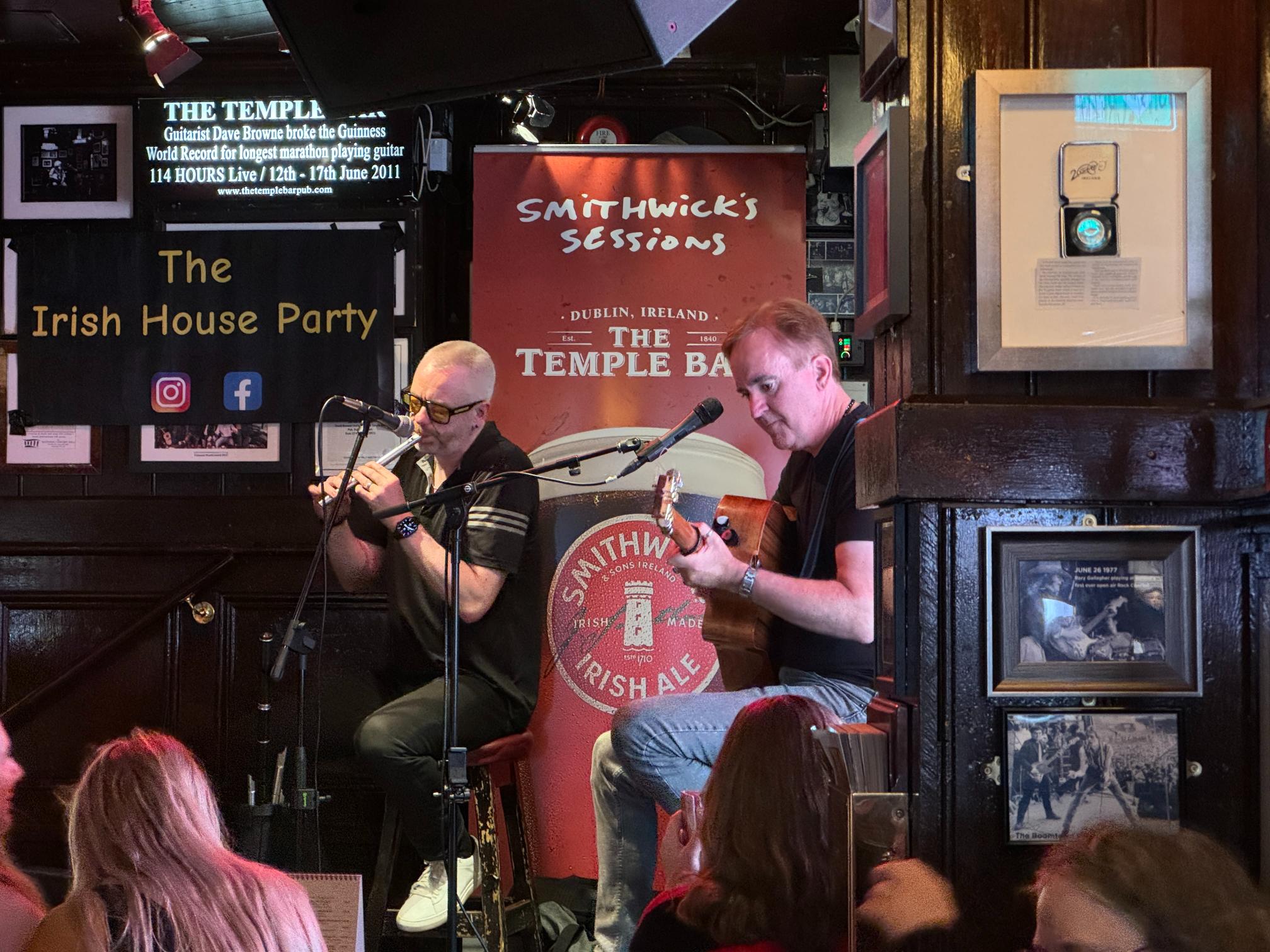
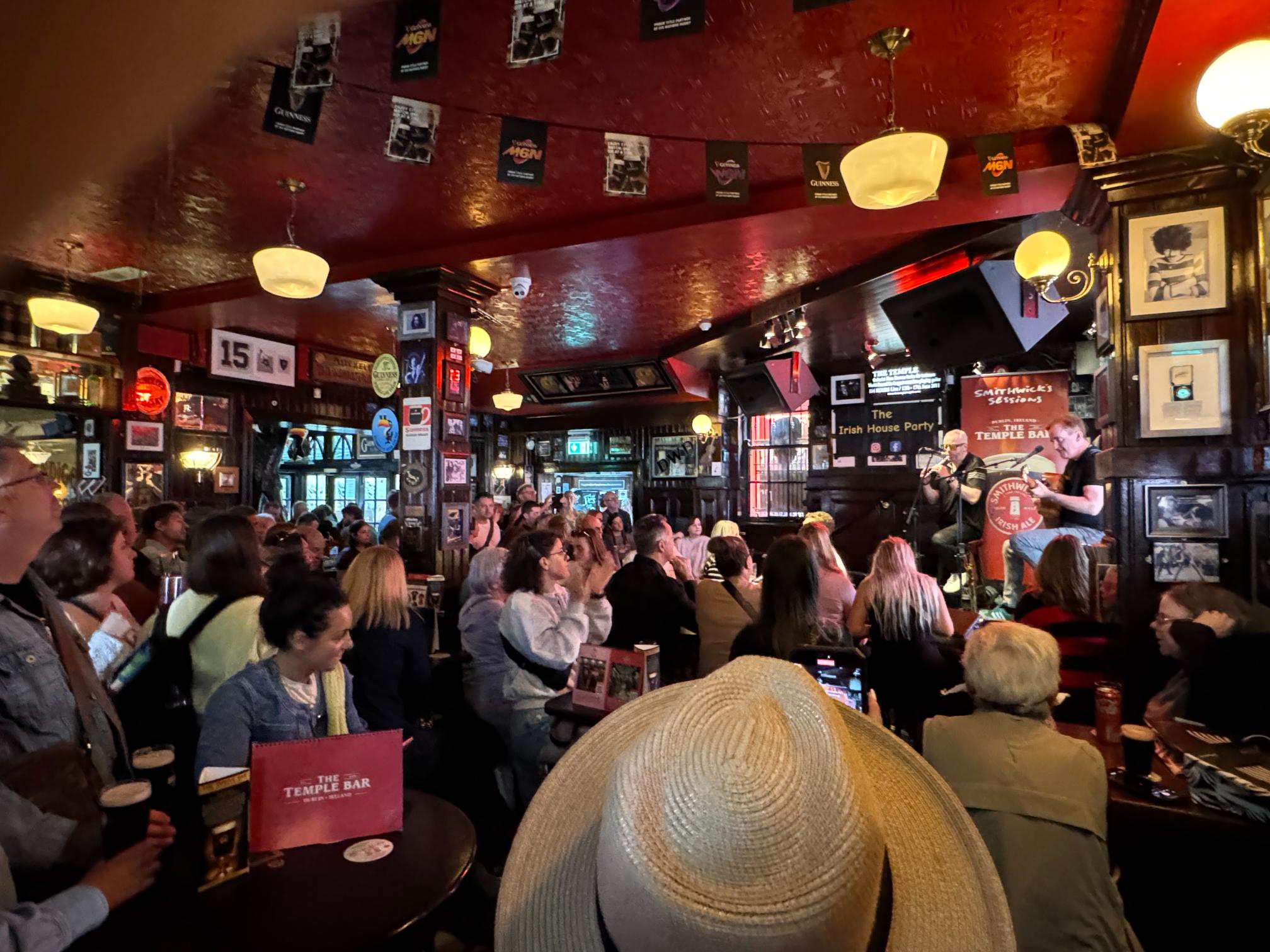
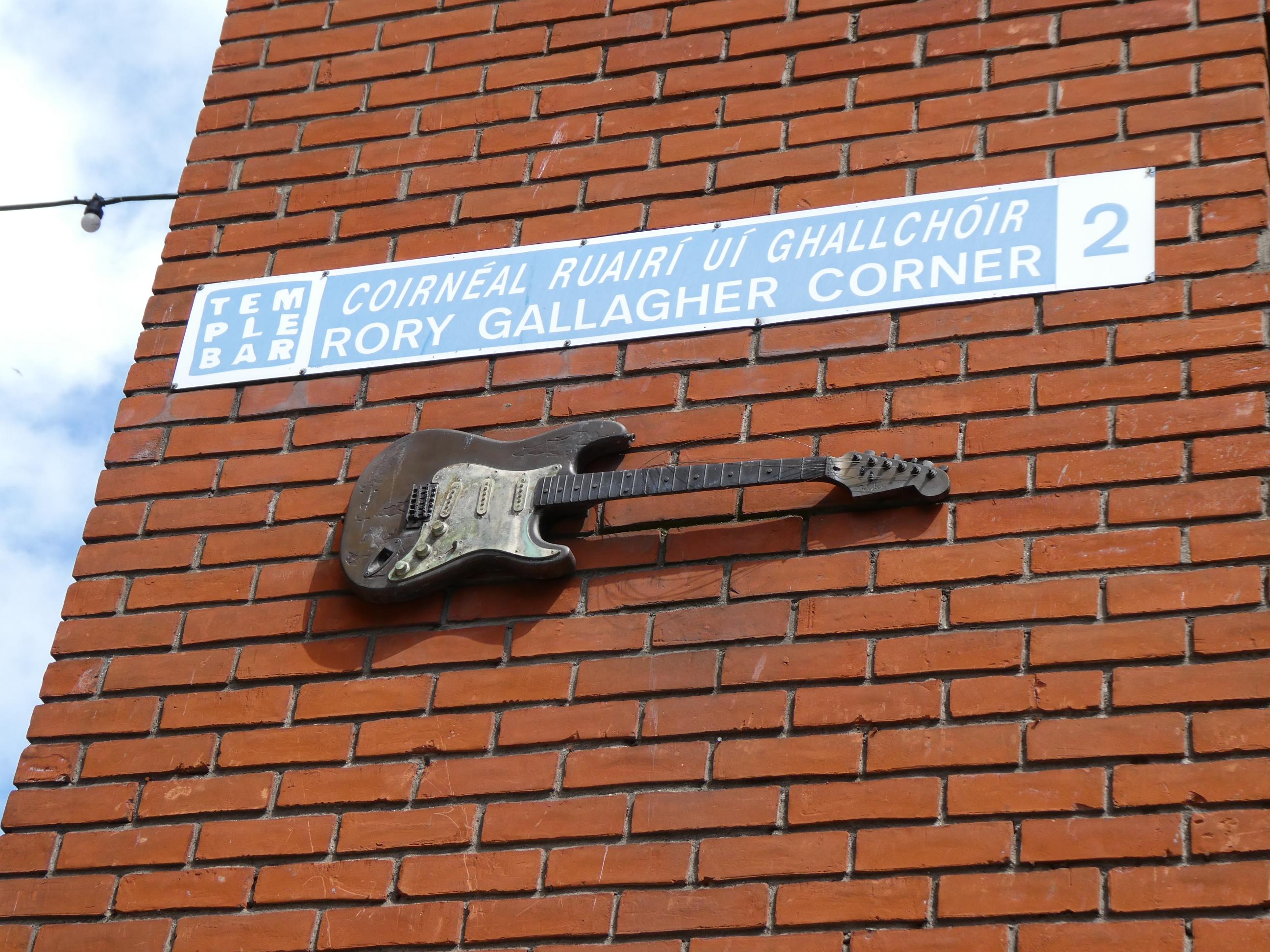
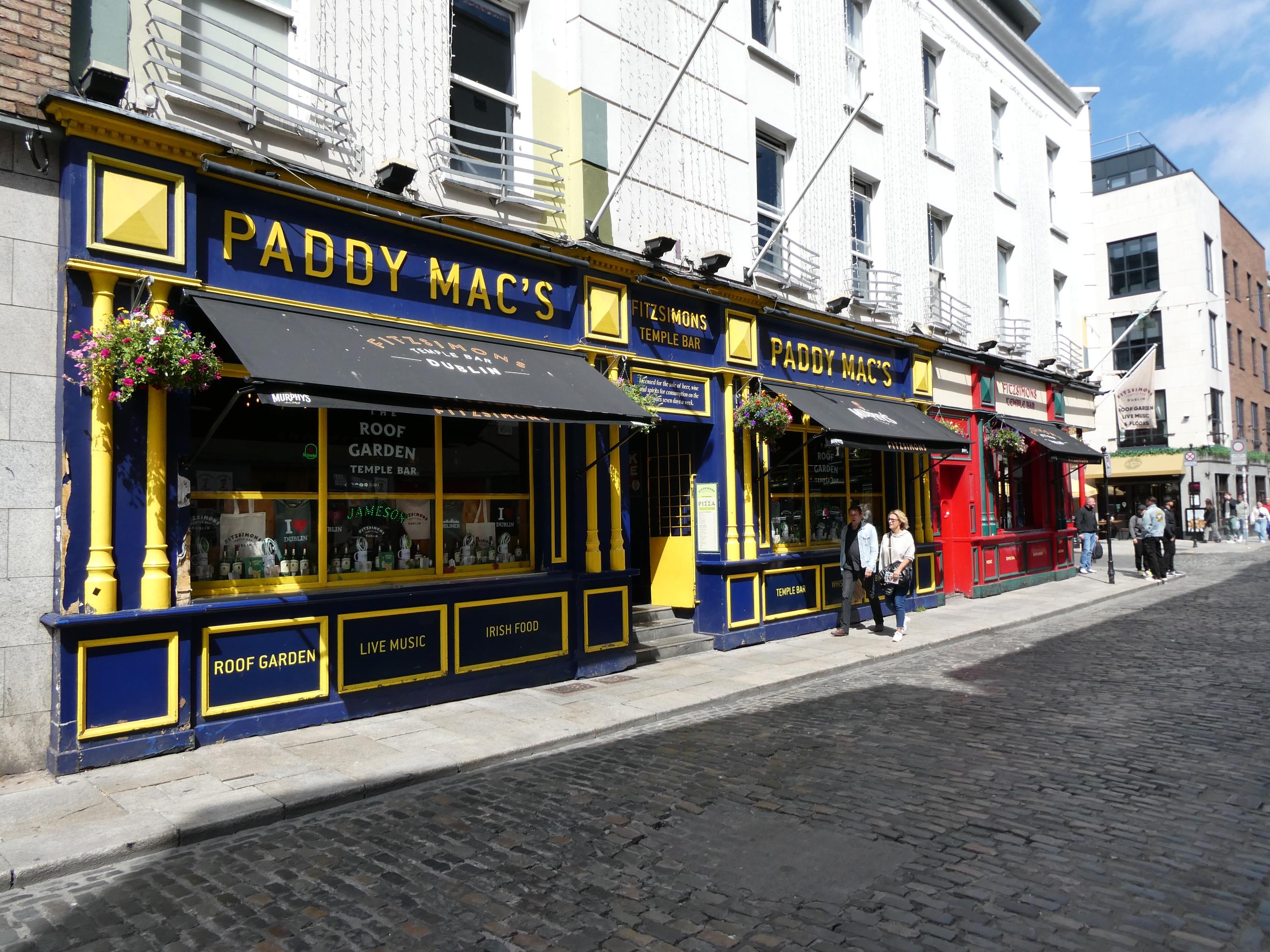
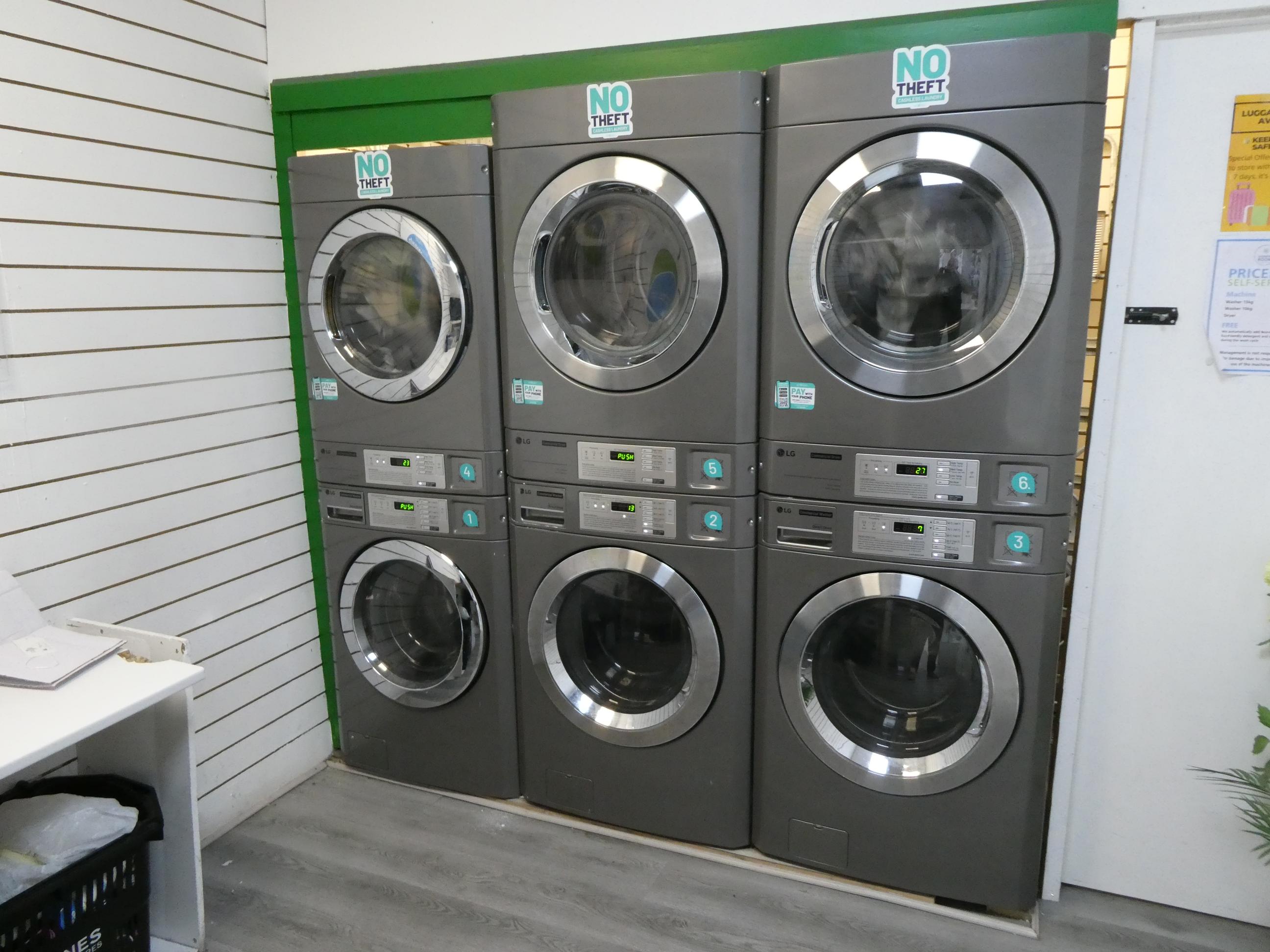
We wandered through Temple Bar on the way back to our hotel. It was packed again today and the music was great. We couldn’t stay long, however. Back at the hotel, we filled a couple of bags with all our dirty laundry and headed a couple of blocks over to a launderette at the back of a mobile phone shop. Marg and I were there for over an hour, first waiting for a washing machine to become available, and then waiting while one washing cycle and two drying cycles were completed. During that time we chatted with a young Mexican engineer who had just arrived in Ireland alone for eight months of intensive English language tuition, a couple of Canadian tourists, a couple of Kiwis, an Irish guy with a great sense of humour, and the Irish landlord who just happened to call in while we were there. Rod and Cornelia were there too, joining in the craic. Who would have ever thought a Dublin launderette would be the place to be for a fun time!


 On The Road With Garry