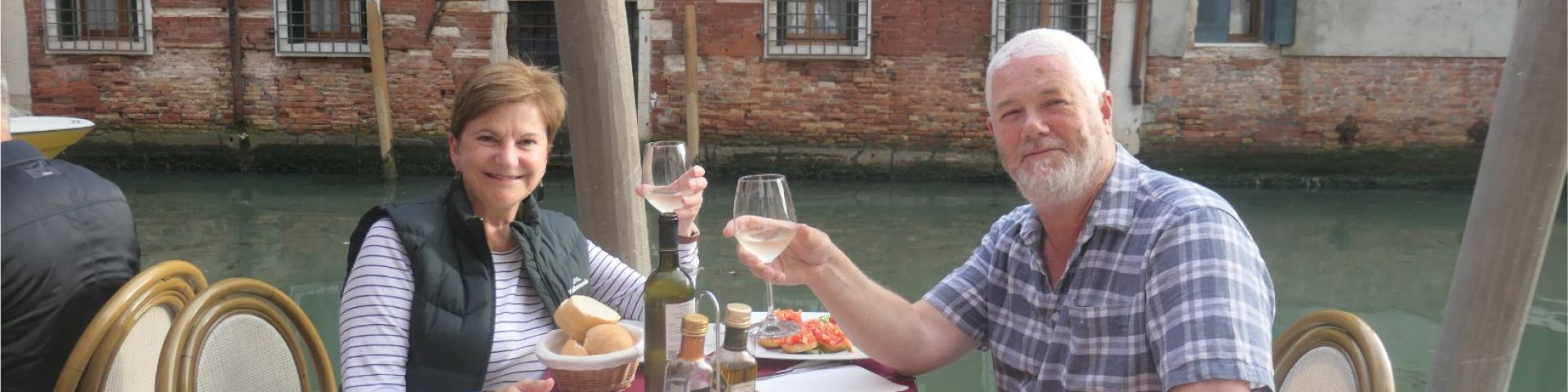
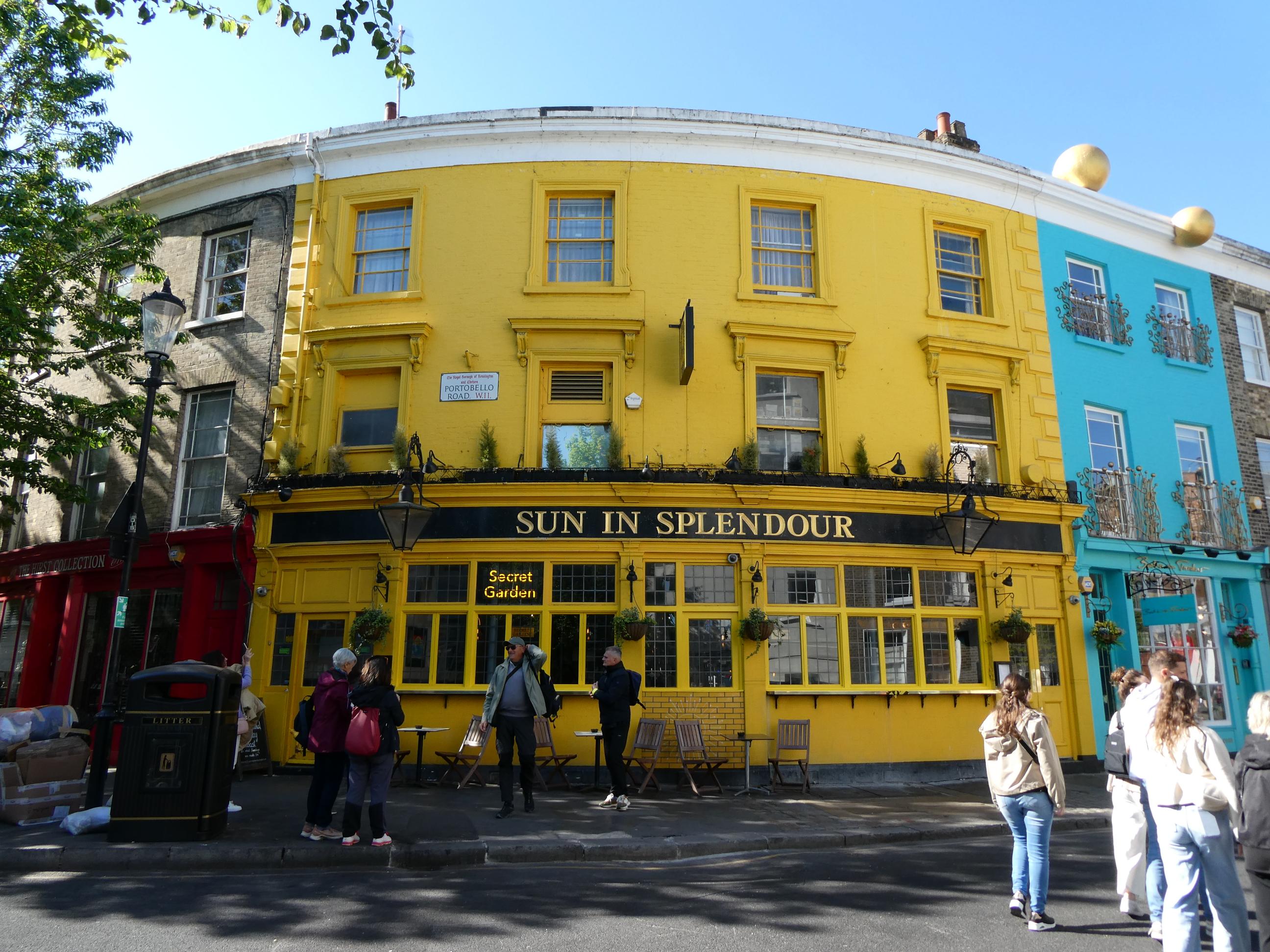
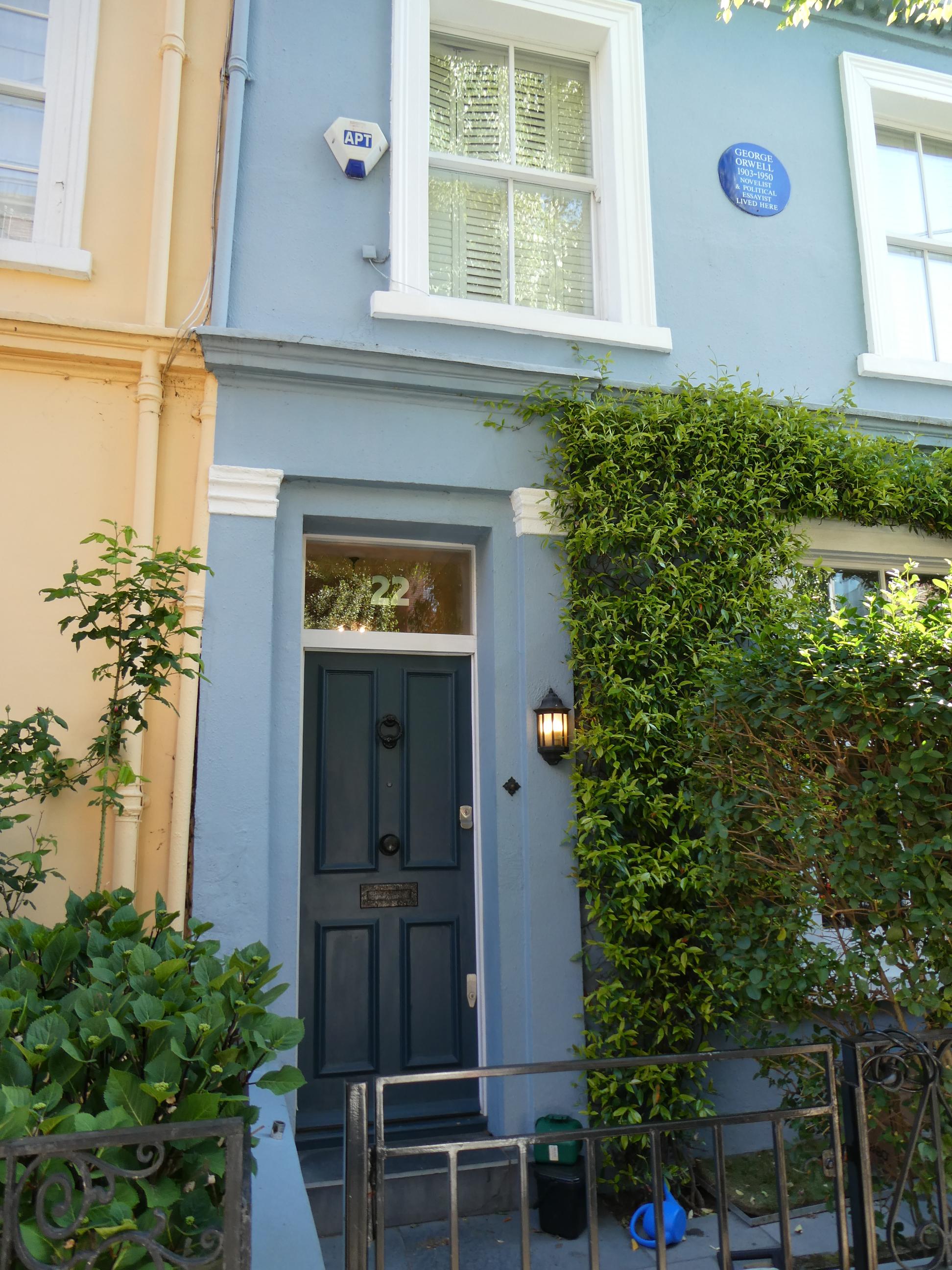
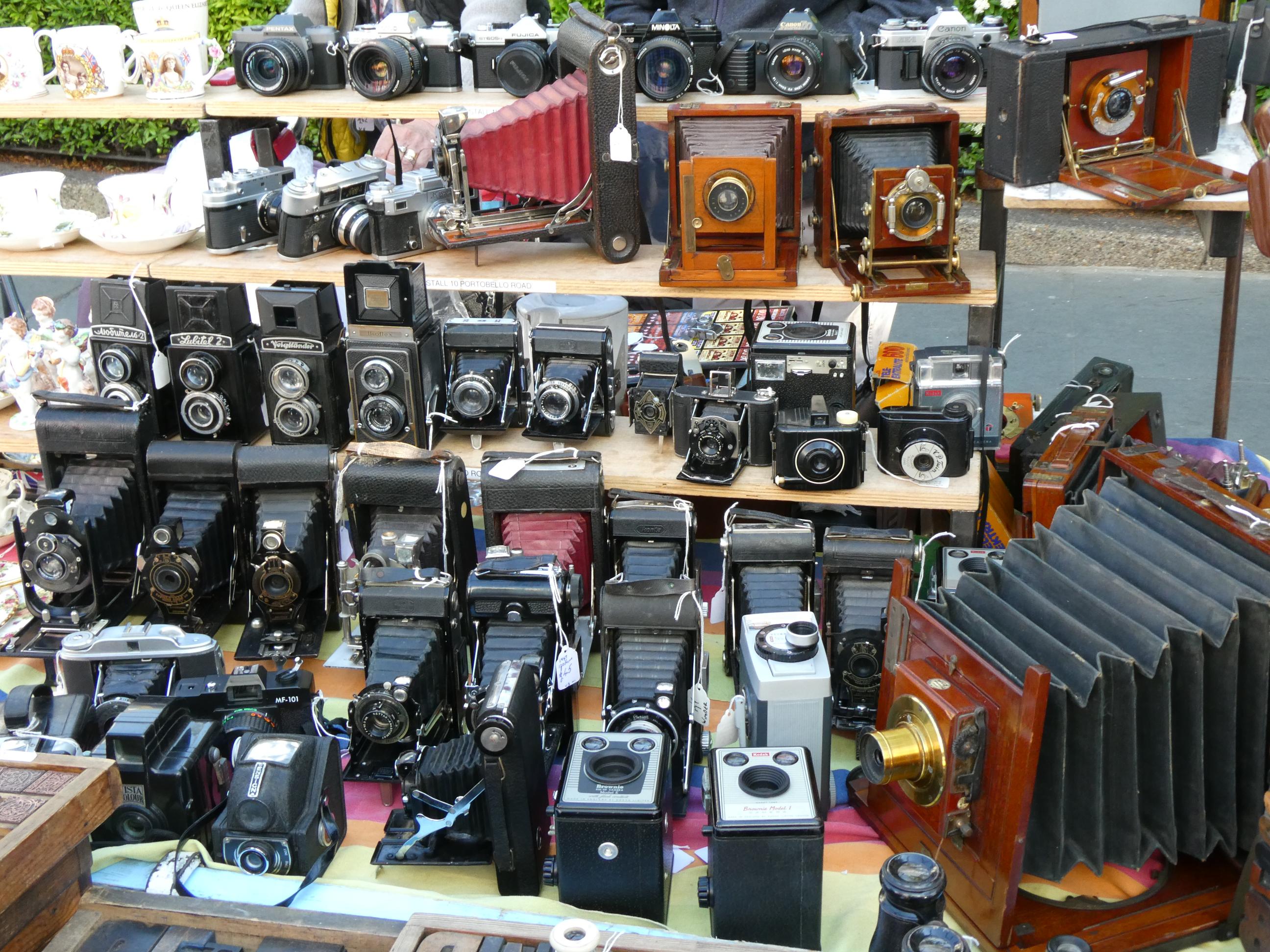
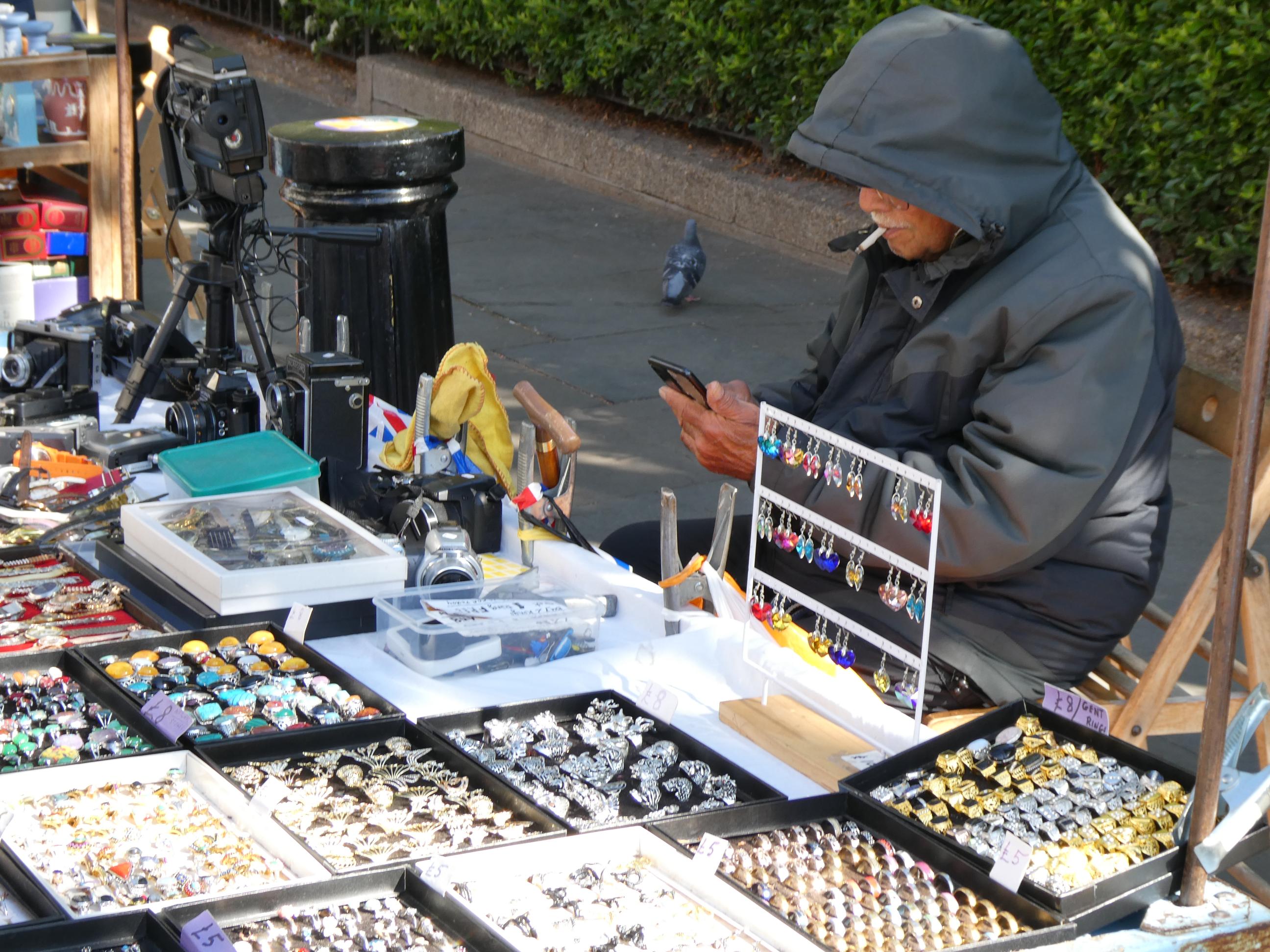
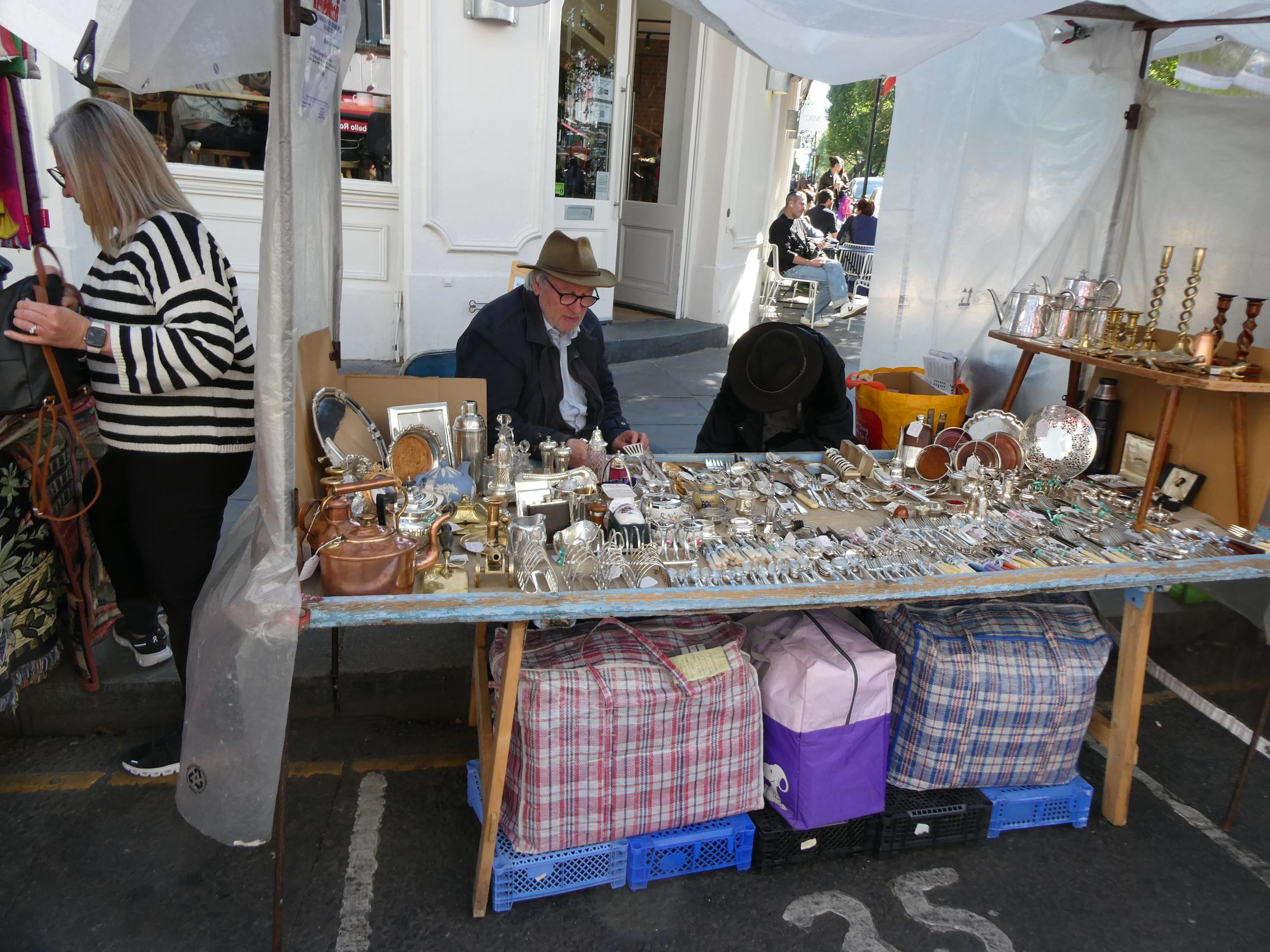
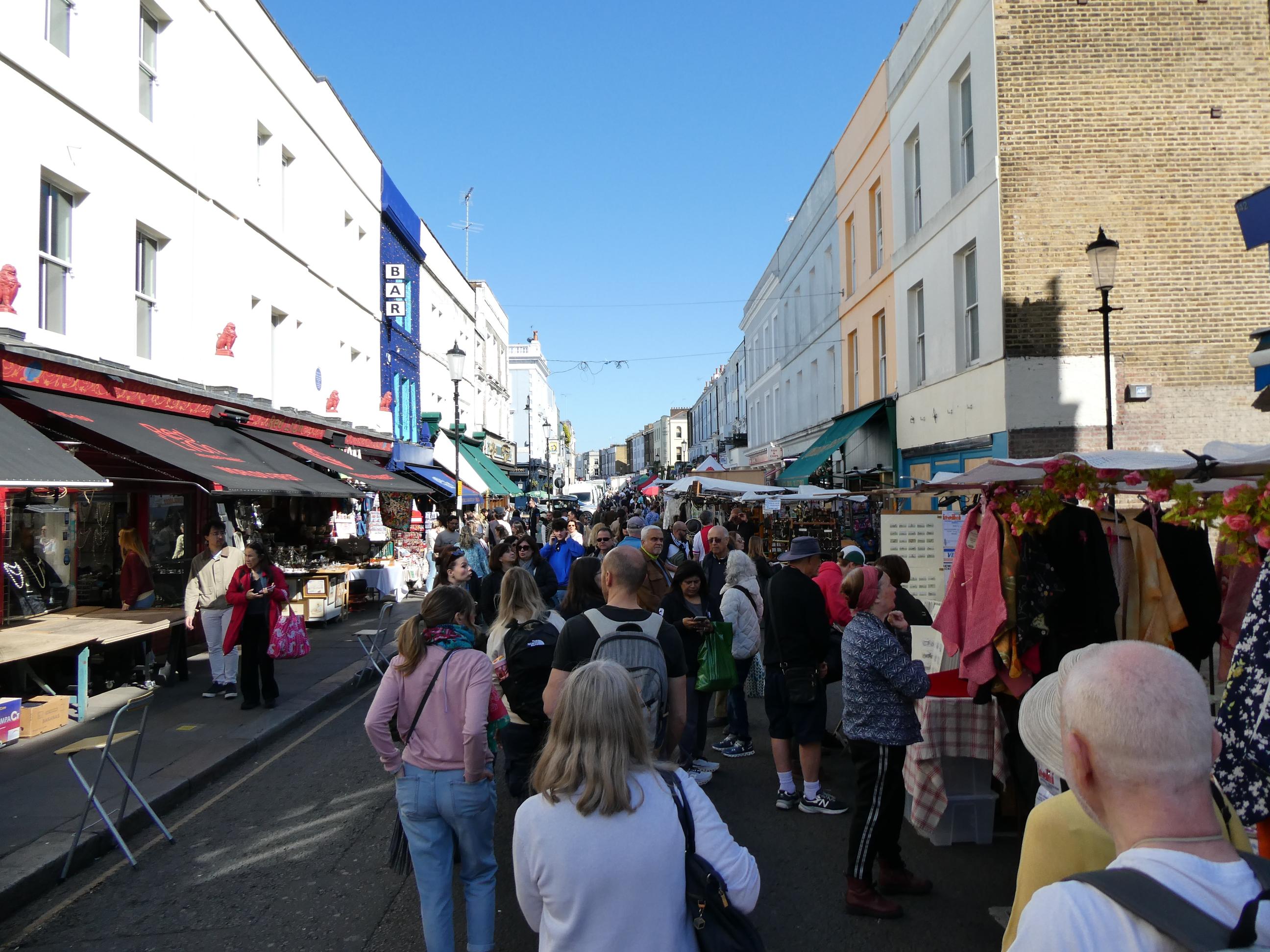
After breakfast, we walked to Portobello Road to spend some time at its famous market. On the way we passed a house bearing a blue plaque indicating that it was once the home of writer George Orwell. It immediately brought back memories of ‘Animal Farm’, which I remember studying in high school. Portobello Road Market in Notting Hill is one of London’s oldest street markets. On Saturdays the street becomes a vibrant sea of people squeezing past each other as they browse the many stalls and small shops in search of delicious foods, jewellery, antiques, vinyls, clothing, flowers and more. Many of the items for sale are pre-loved. The street was buzzing this morning in London’s current glorious weather. The sun was out and the sky was blue – the perfect day for a market like this. The market attracted a rich cultural mix of people. People everywhere were talking as we passed, and we heard many different languages spoken, as well as a broad range of British accents. We weren’t looking to buy anything, although Marg found a jumper she loved, and so did Cornelia. Nevertheless we really enjoyed the slow walk through the market and the people we came across. We also stopped for a brief photo opportunity at the bookstore made famous in the movie ‘Notting Hill’.






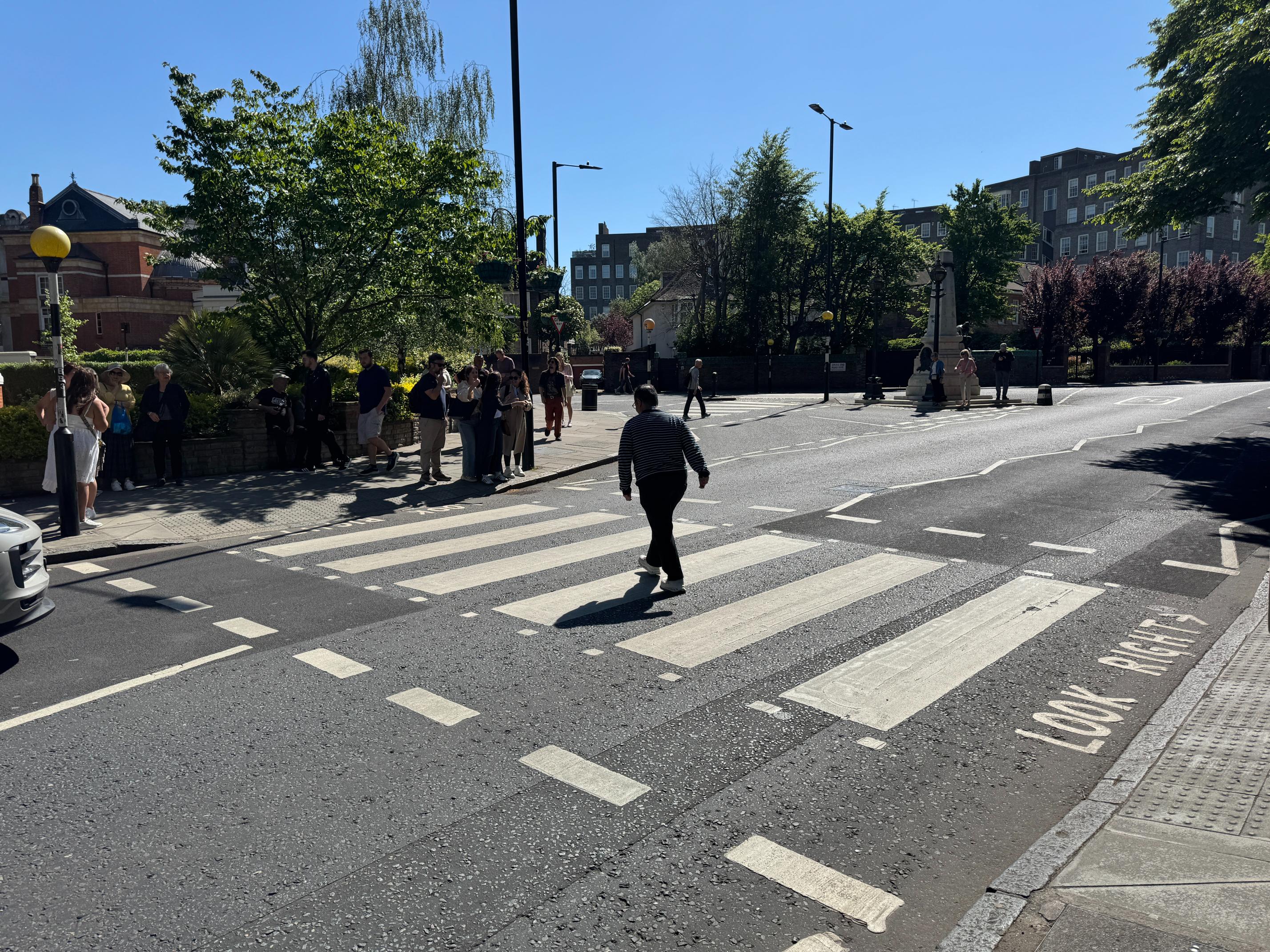
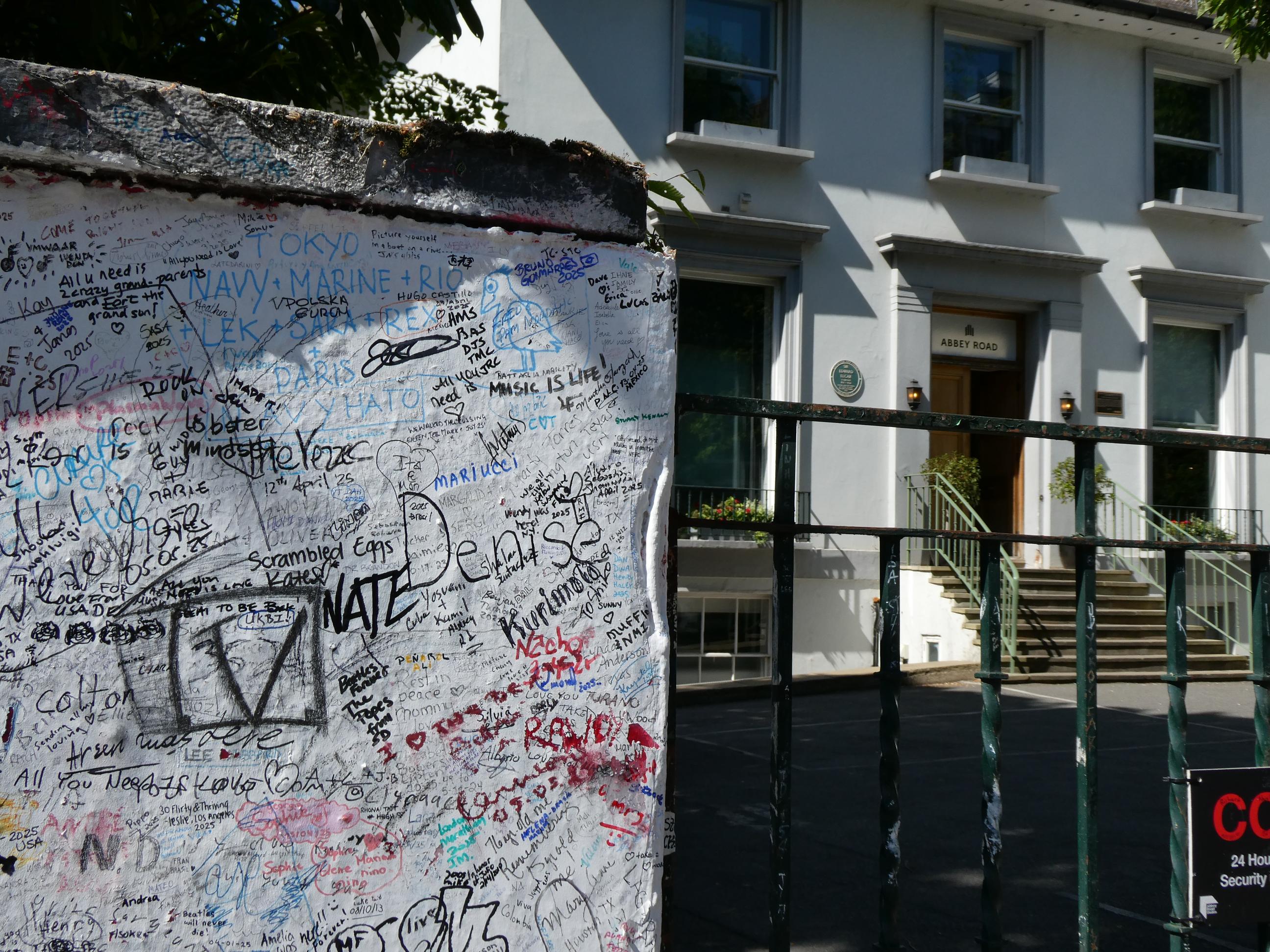
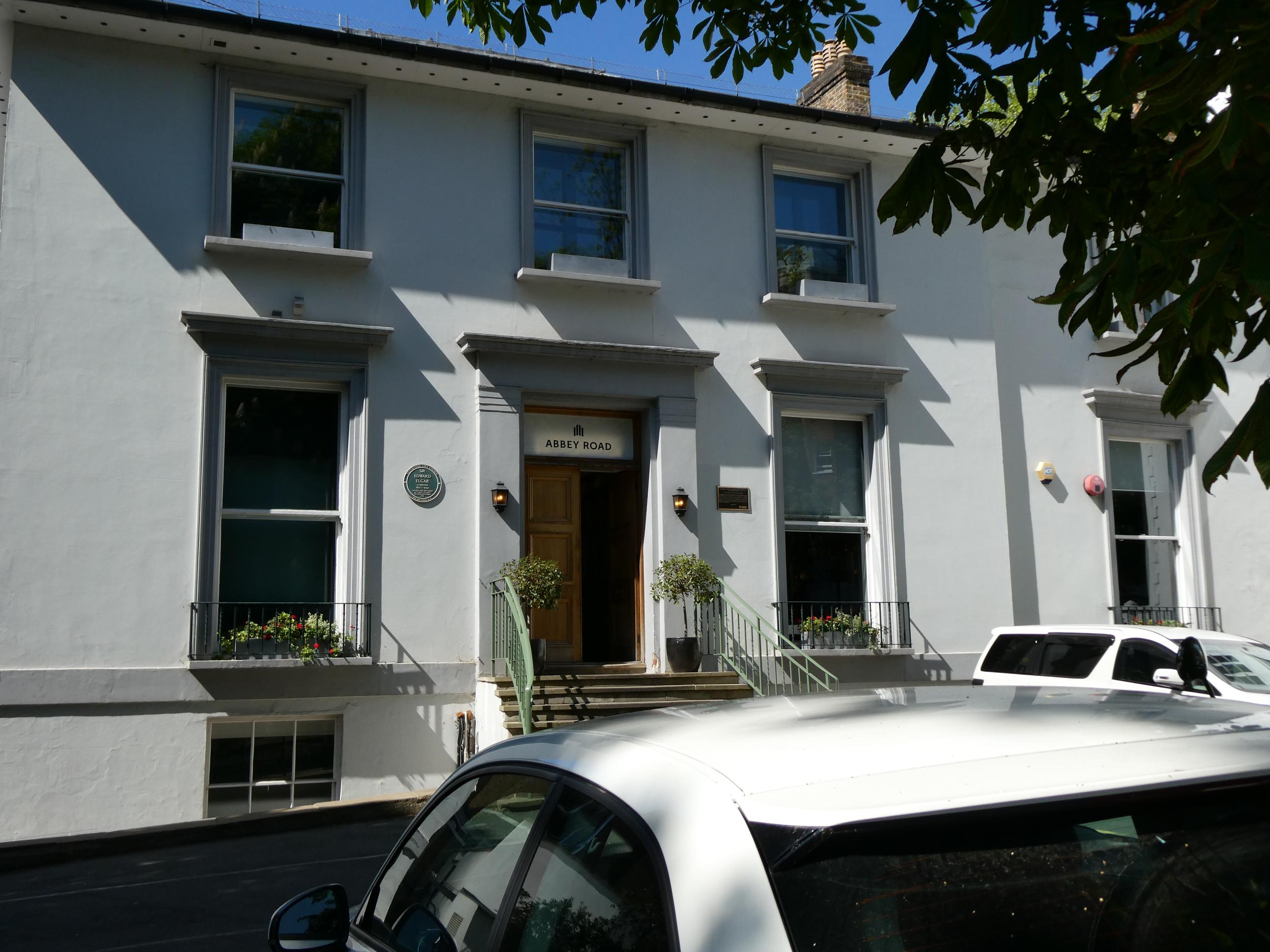
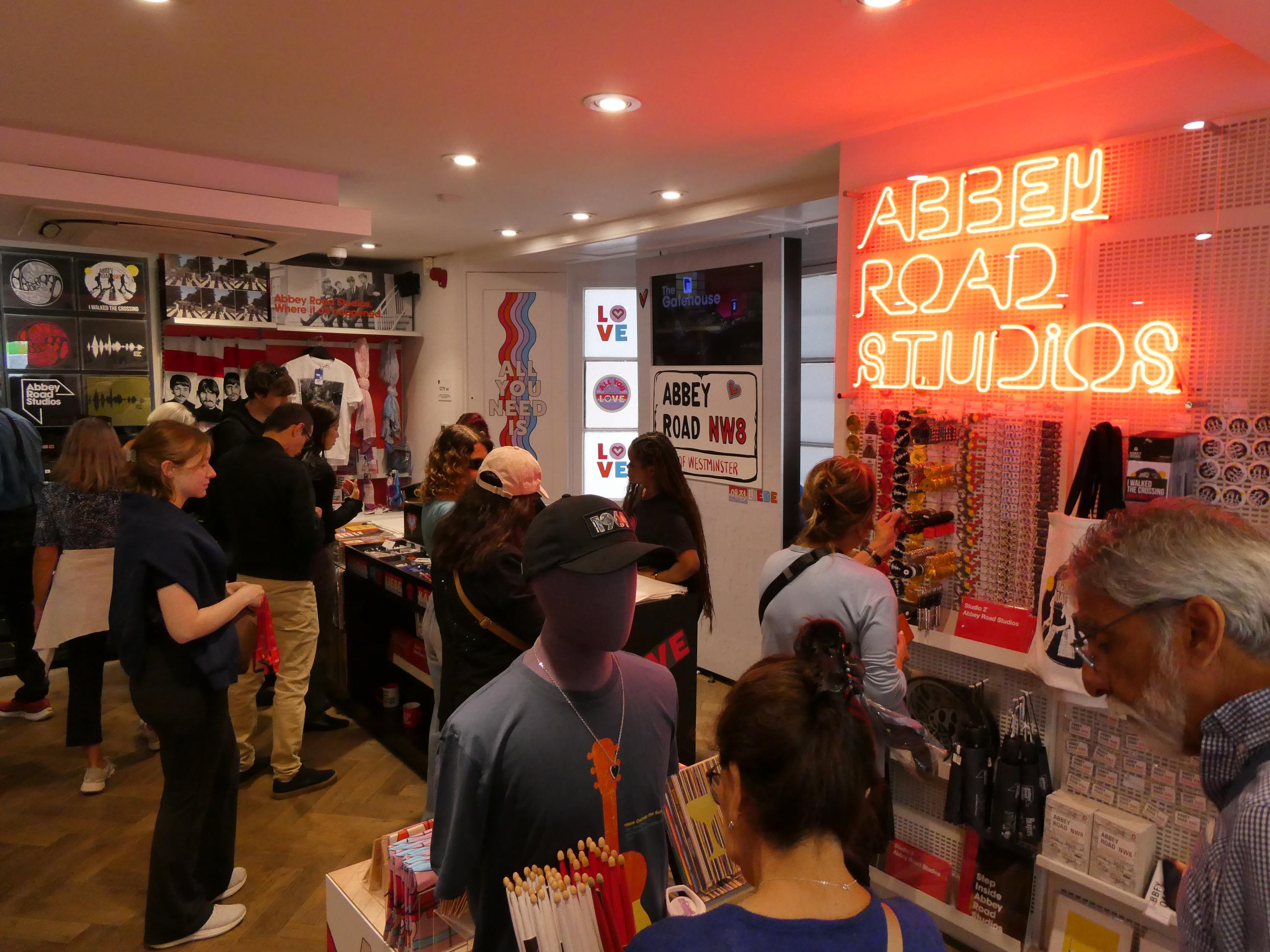
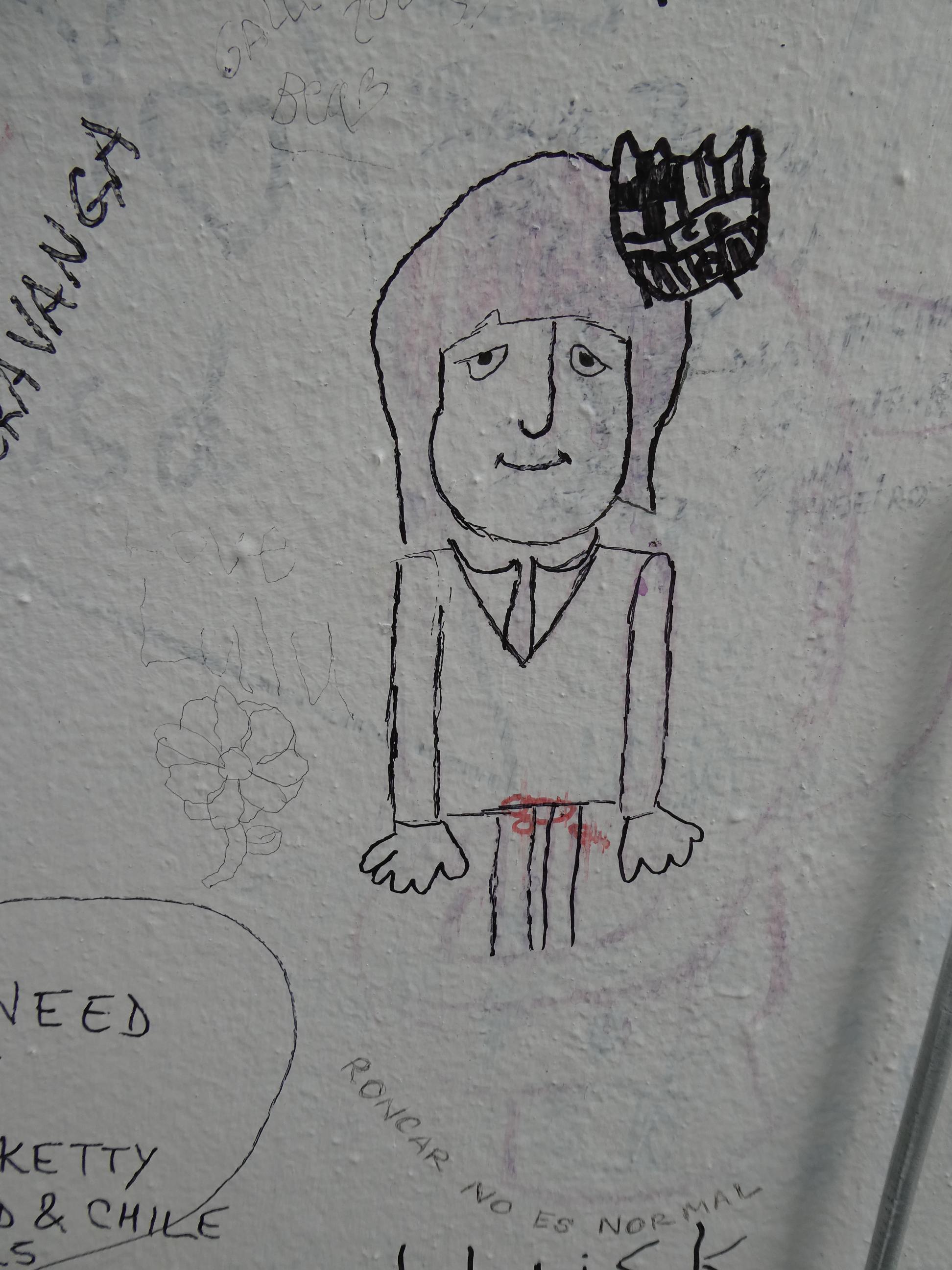
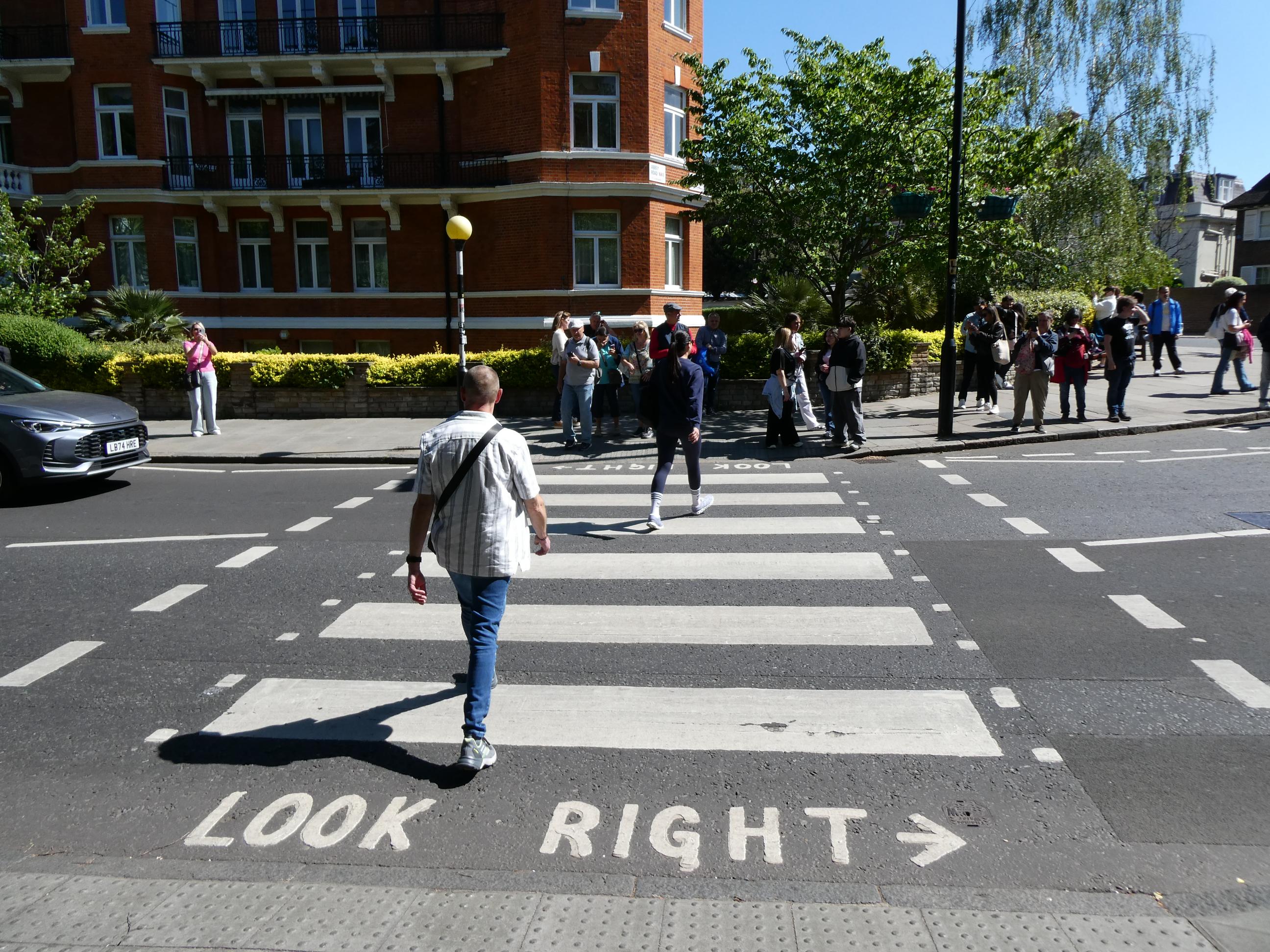
We took an Uber to Abbey Road. We’re all Beatles fans. For me, a visit here was a bucket list item. I felt so fortunate to have such a beautiful day with blue sky and sunshine, just as John, Paul, George and Ringo did when they made the famous walk across the crossing that was captured in the photo that adorned the cover of one of my favourite albums. Abbey Road recording studio is still a place where recorded music is made every day, so it can only be viewed from outside by tourists like me. Nevertheless, its become a mecca for music lovers to visit and many of them leave their mark by writing notes on its fence and gateposts. Some write on the fence of the property next door, prompting the owner to place some witty signs asking for it to cease. A steady stream of traffic drove past in both directions, so the large crowd of tourists lining up to have their photos taken on the crossing needed to choose their moment carefully and have their wits about them as they crossed. Despite the need to get quickly across to the other side, many of them stopped and adopted their best Beatles’ poses while their friends snapped away with their cameras and phones. I was happy enough just to walk in the Beatles’ footsteps and get to the other side. The Abbey Road shop was fantastic, filled with a broad range of items reflecting every Beatles album as well as many of the other famous albums recorded there, such as Pink Floyd’s ‘Dark Side of the Moon’. I didn’t plan to add any weight to my suitcase while I was over here, but the temptation to buy a couple of tee-shirts got the better of me and I succumbed.





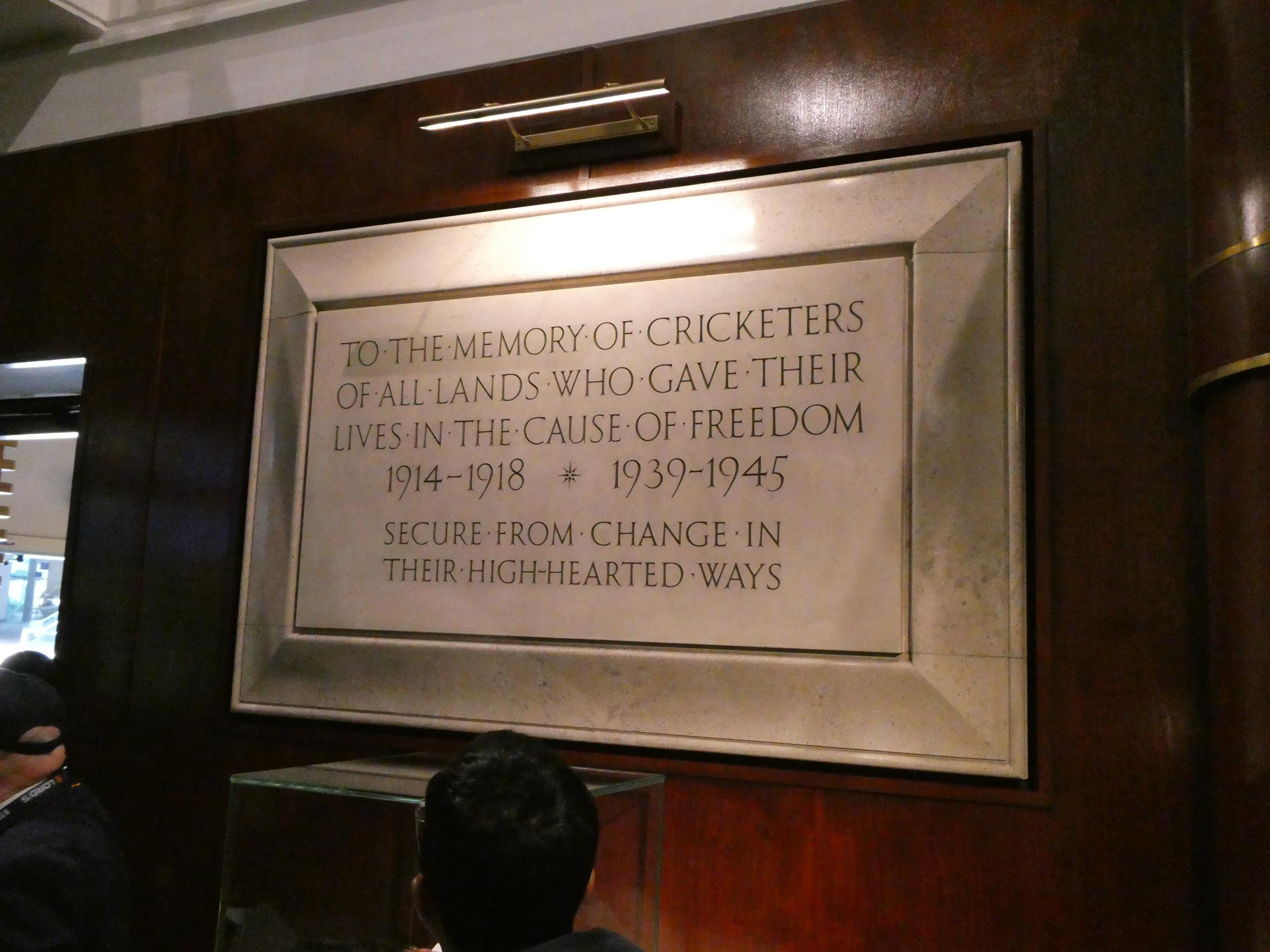
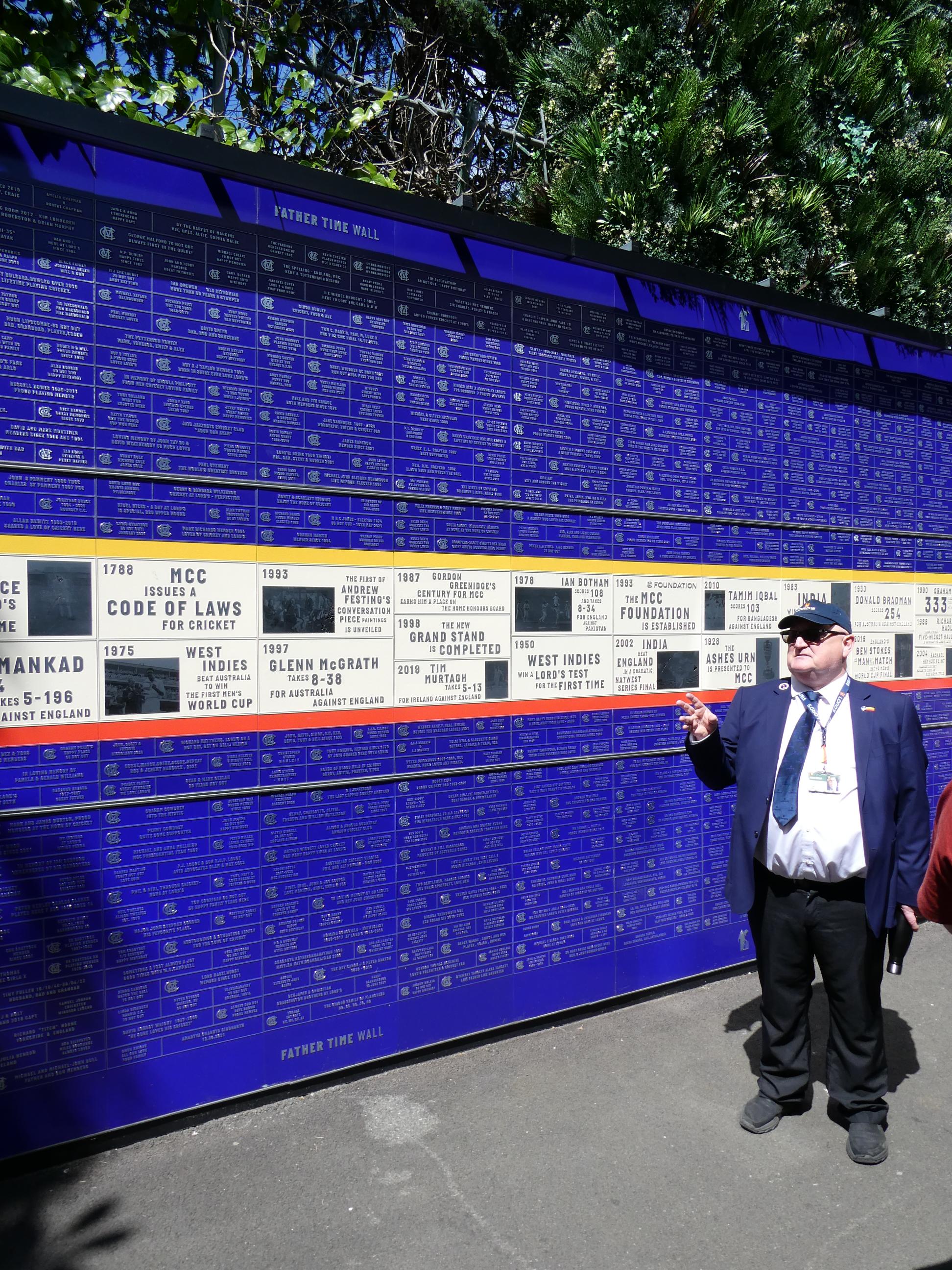
We walked to nearby Regent’s Park and ate lunch at a cafe. Rod and I took our leave and headed back to Lord’s Cricket Ground, which we had passed earlier. Marg, Cornelia and Ursula, who had joined us at Abbey Road, stayed on to enjoy a walk around the park. We arrived just as the tour was starting. Our tour guide, Neil from Newcastle, was a jolly man who not only told us the history of the ground and the people who played cricket there, but also entertained us with many witty anecdotes that the players he knew and loved had passed on to him. He identified the allegiances of the members of our group – some of us supported England, some India and some Australia, so he told stories about the players from those teams as he showed us around. Rod and I have loved cricket since we were little kids and played in the street with our friends. We both loved playing club cricket for many years. So, just like our visit to Abbey Road earlier in the day, this was a form of pilgrimage for us. Our first stop was the Members’ Pavilion and Long Room, made famous recently by the uproar that occurred there when the Australian players left the field for lunch after Alex Carey had stumped Jonny Bairstow when he negligently left his crease while the ball was still in play. As the Australian team made its way through the swarm of angry members towards its rooms, some hurled abuse and a few even made threats. The incident embarrassed Lord’s, and some members were even dismissed from the club for the way they responded.
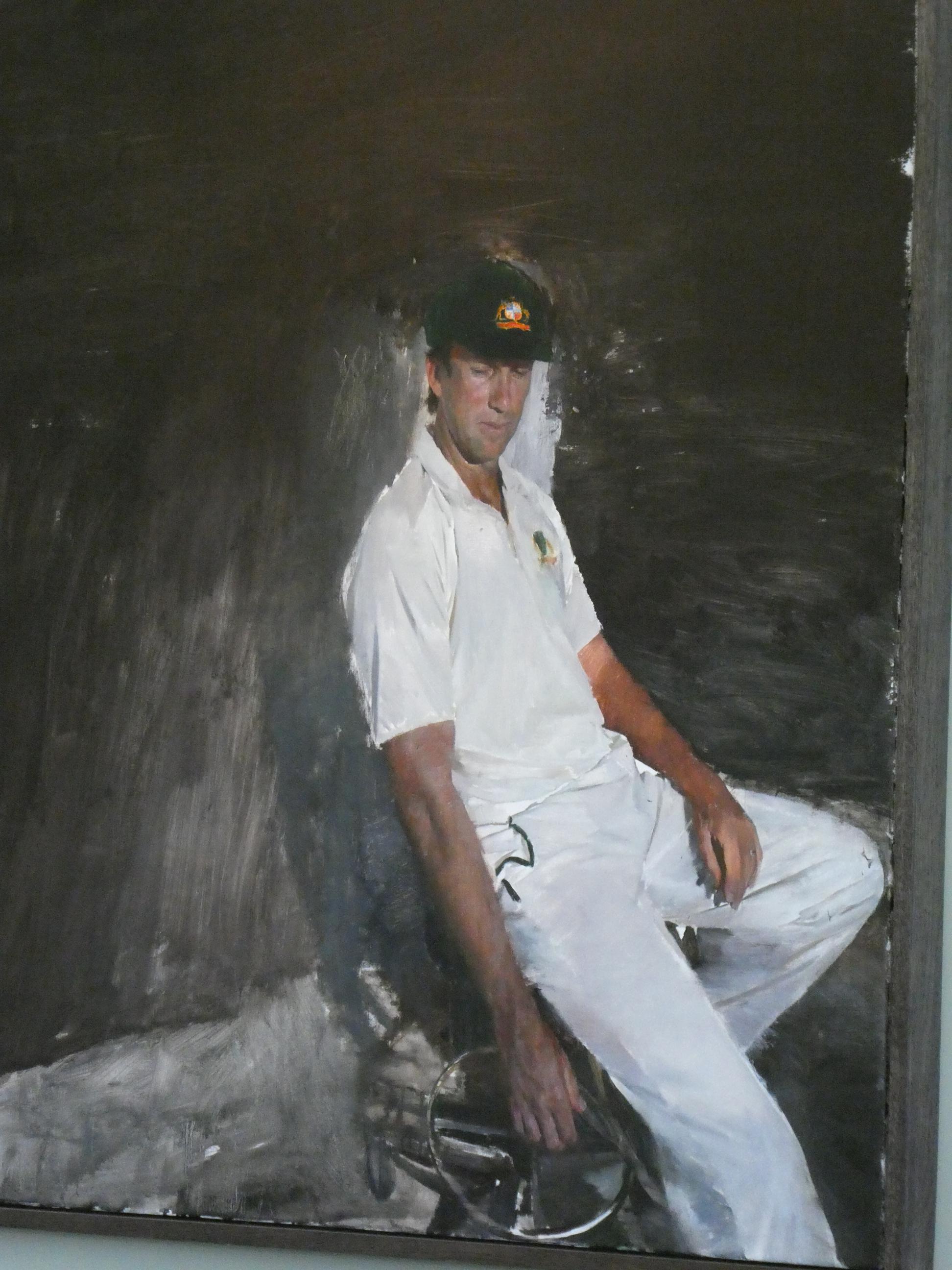
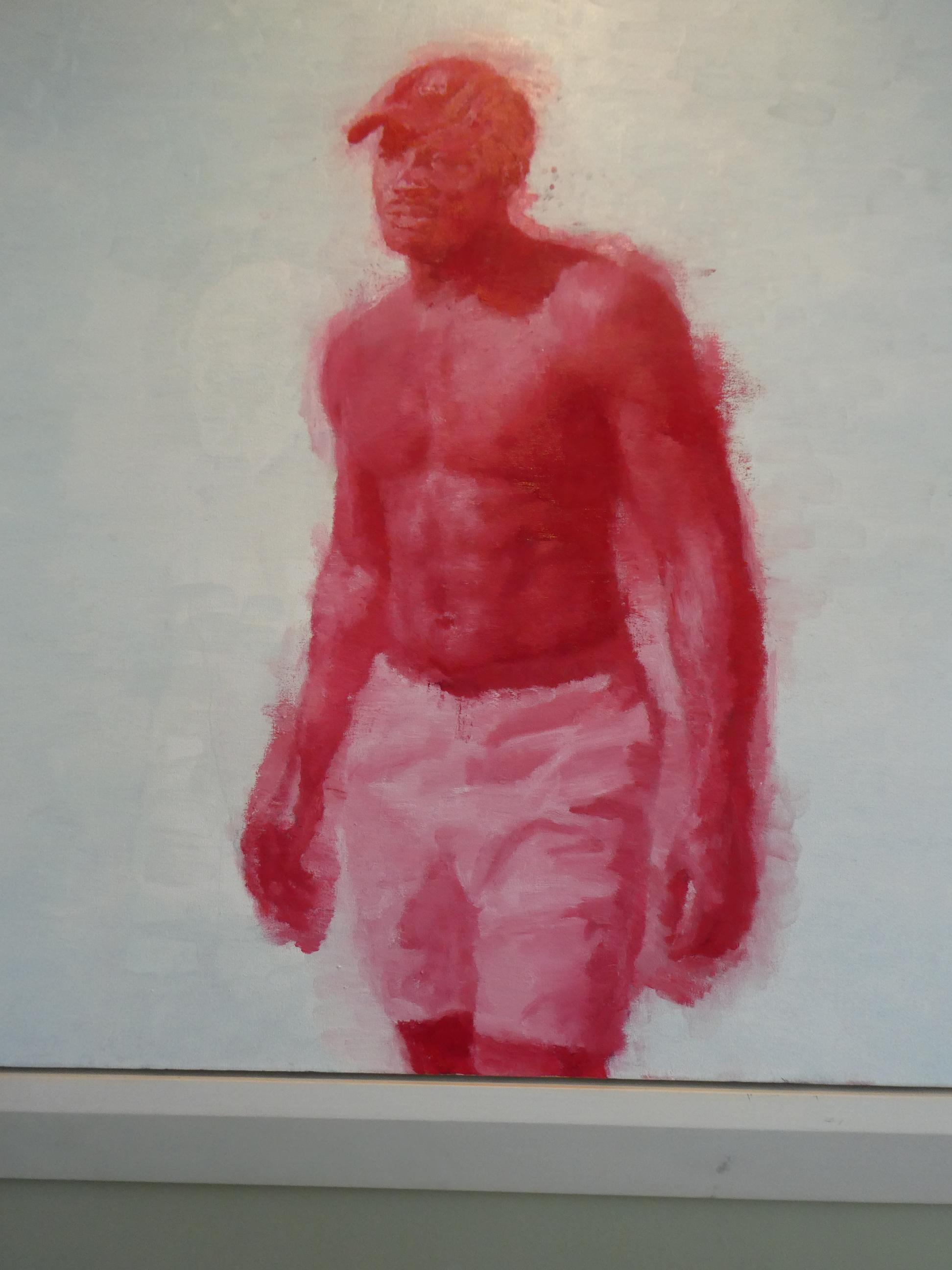
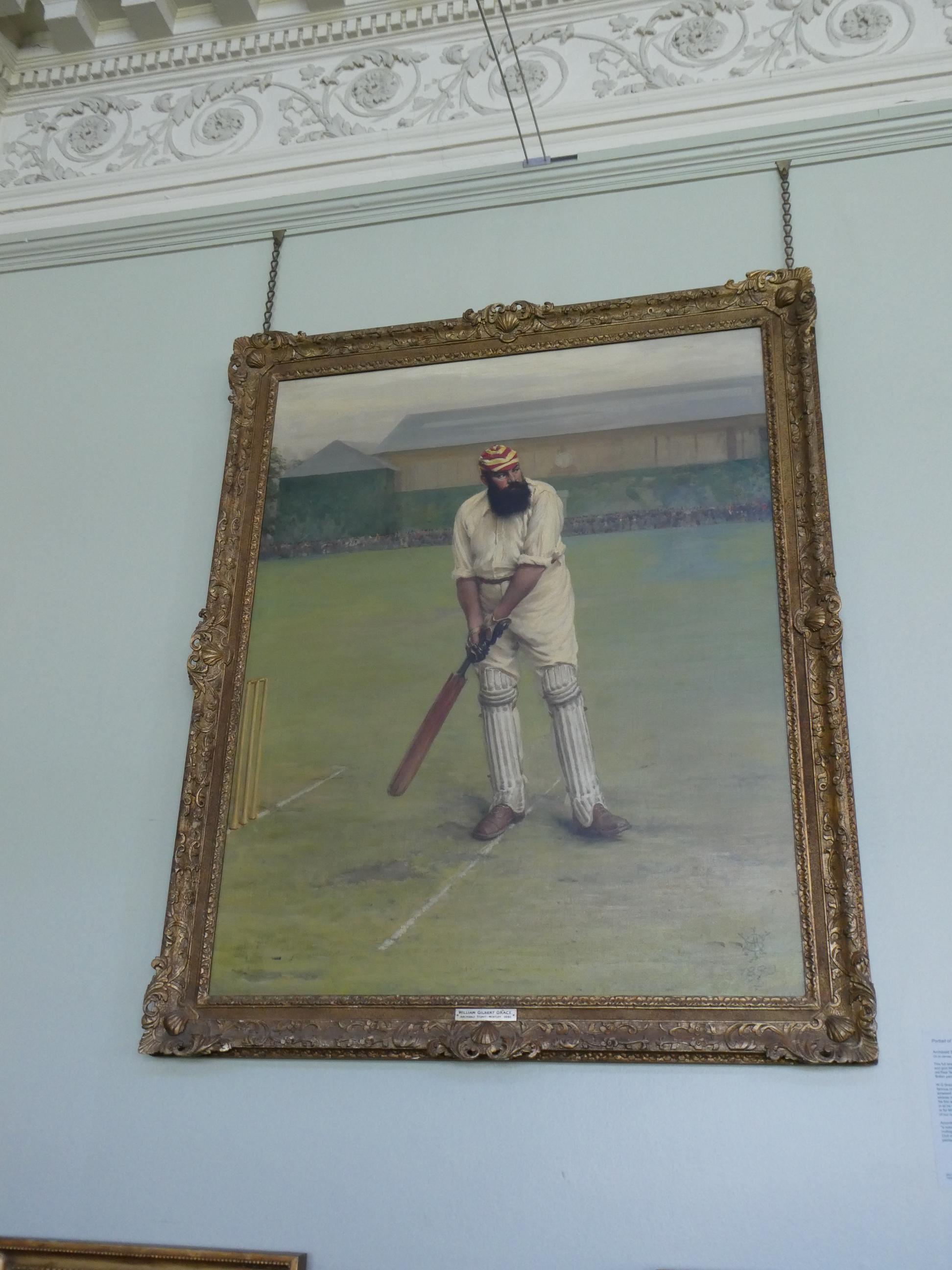
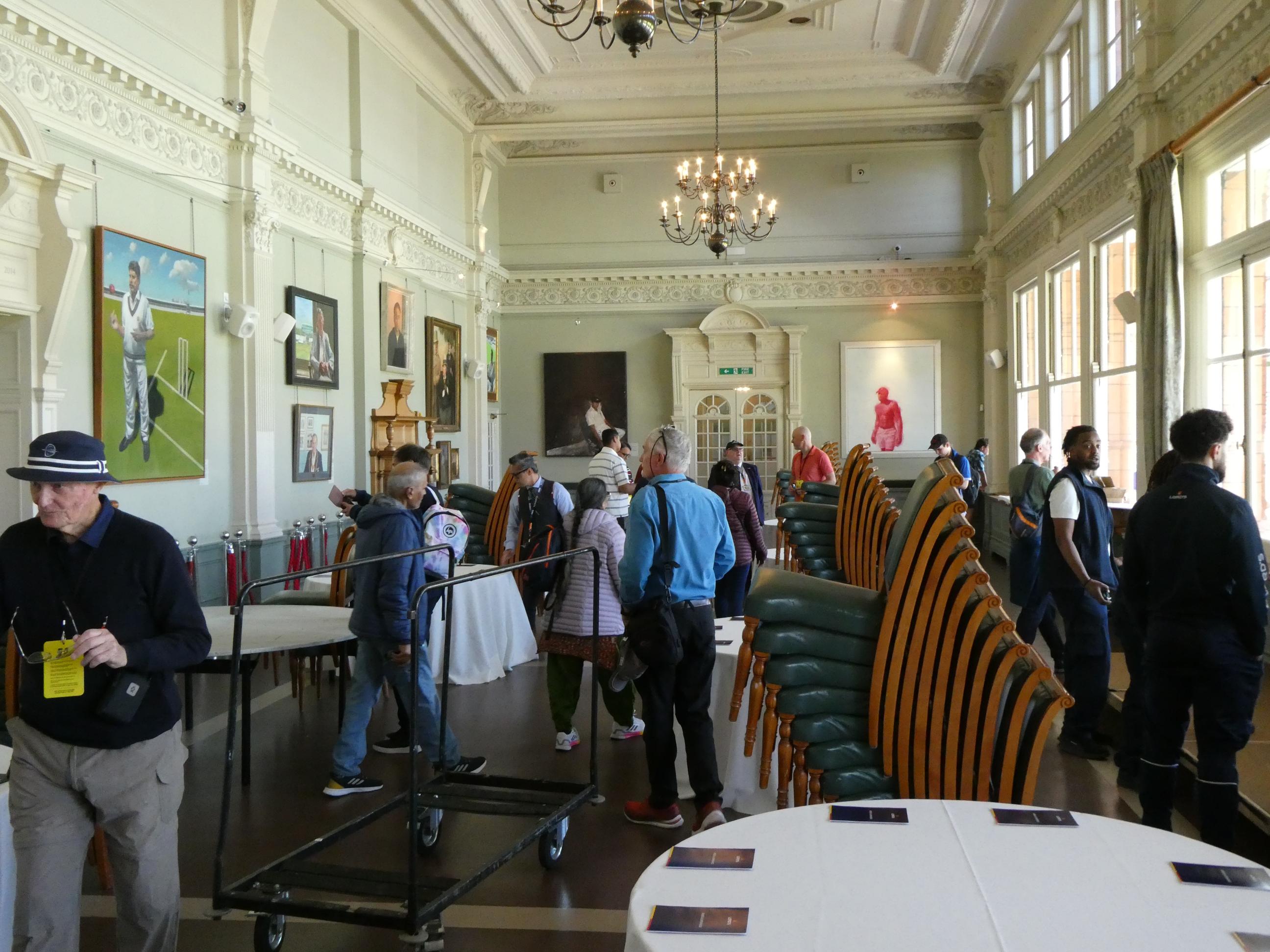
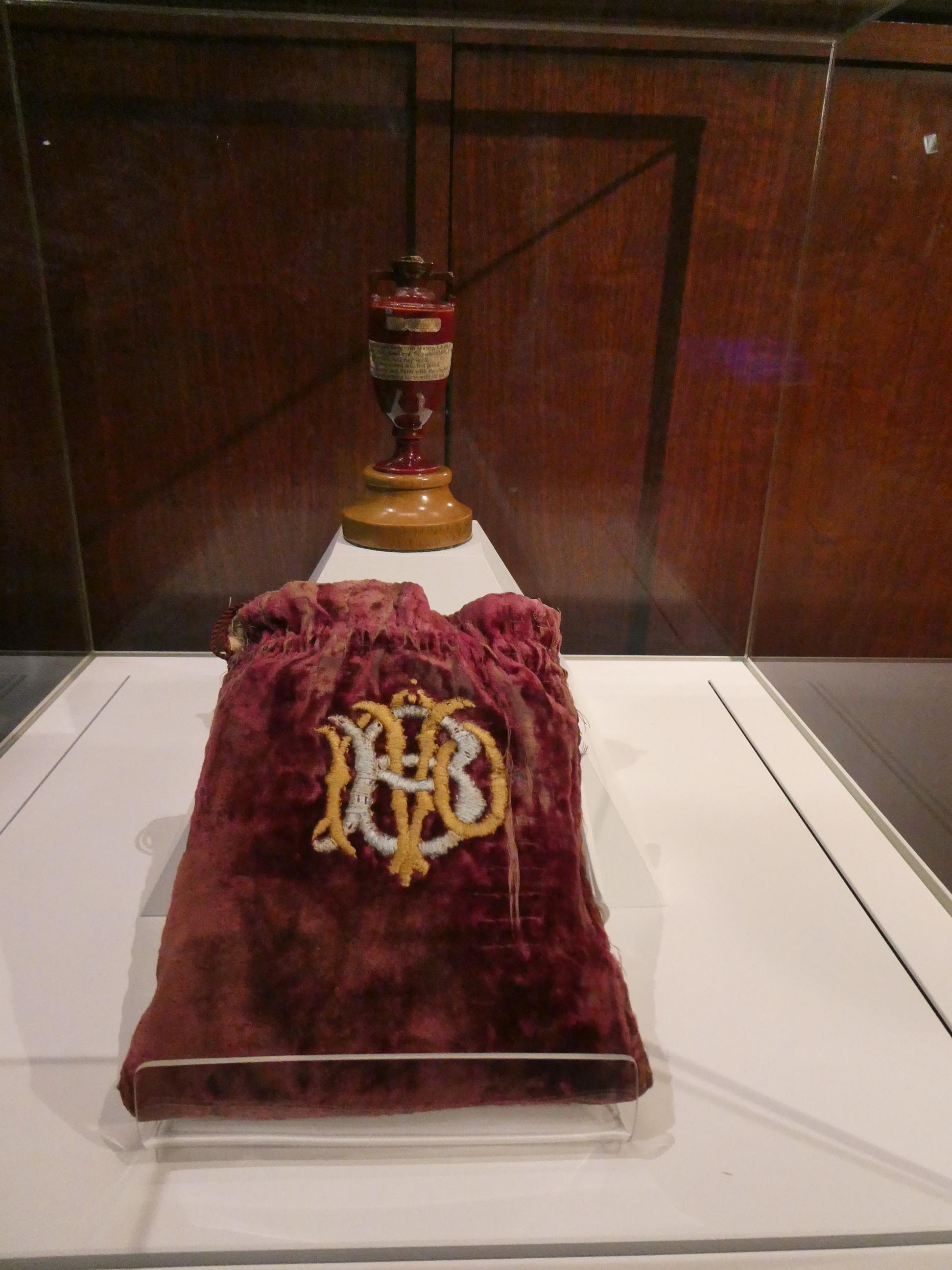
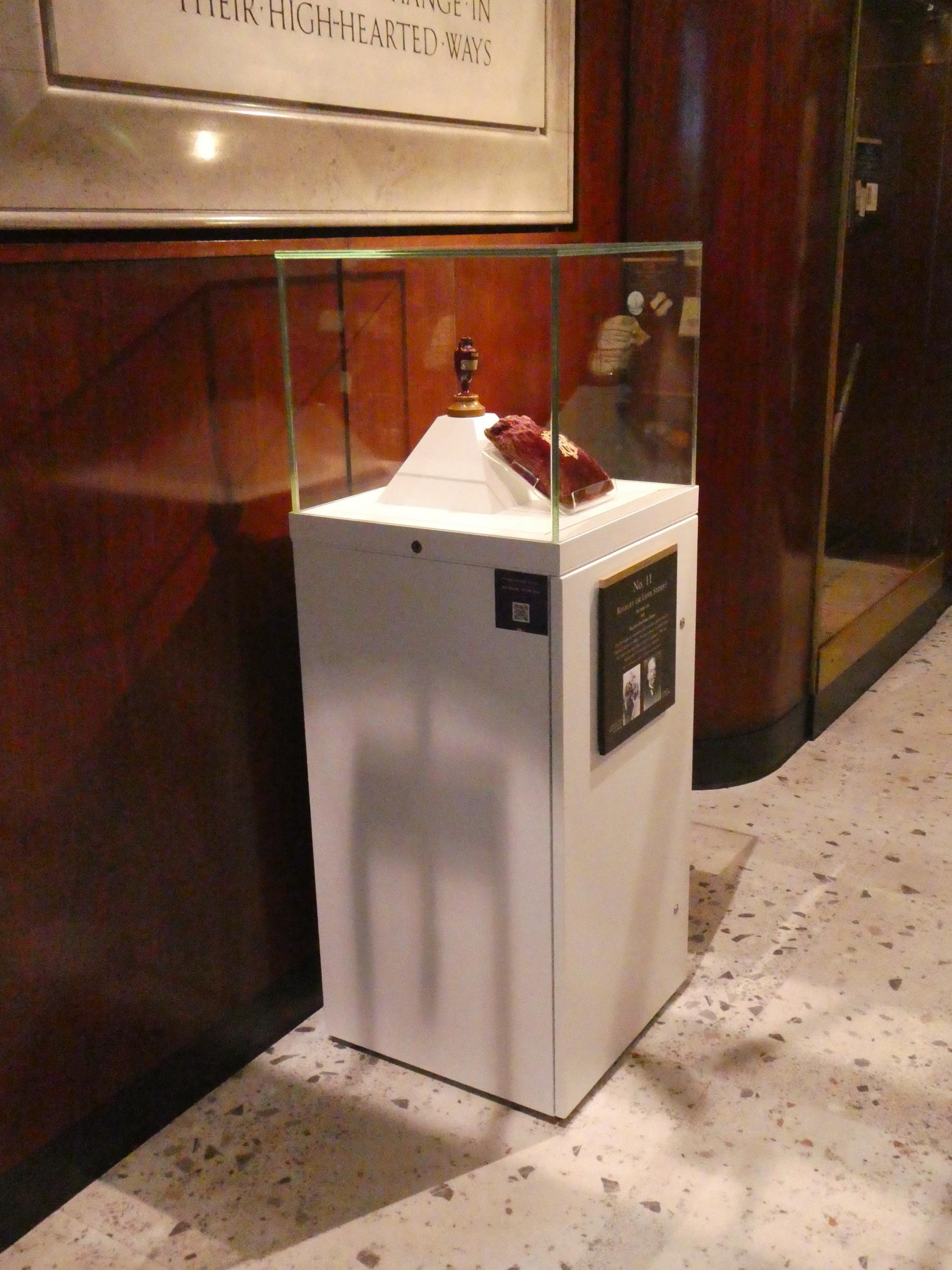
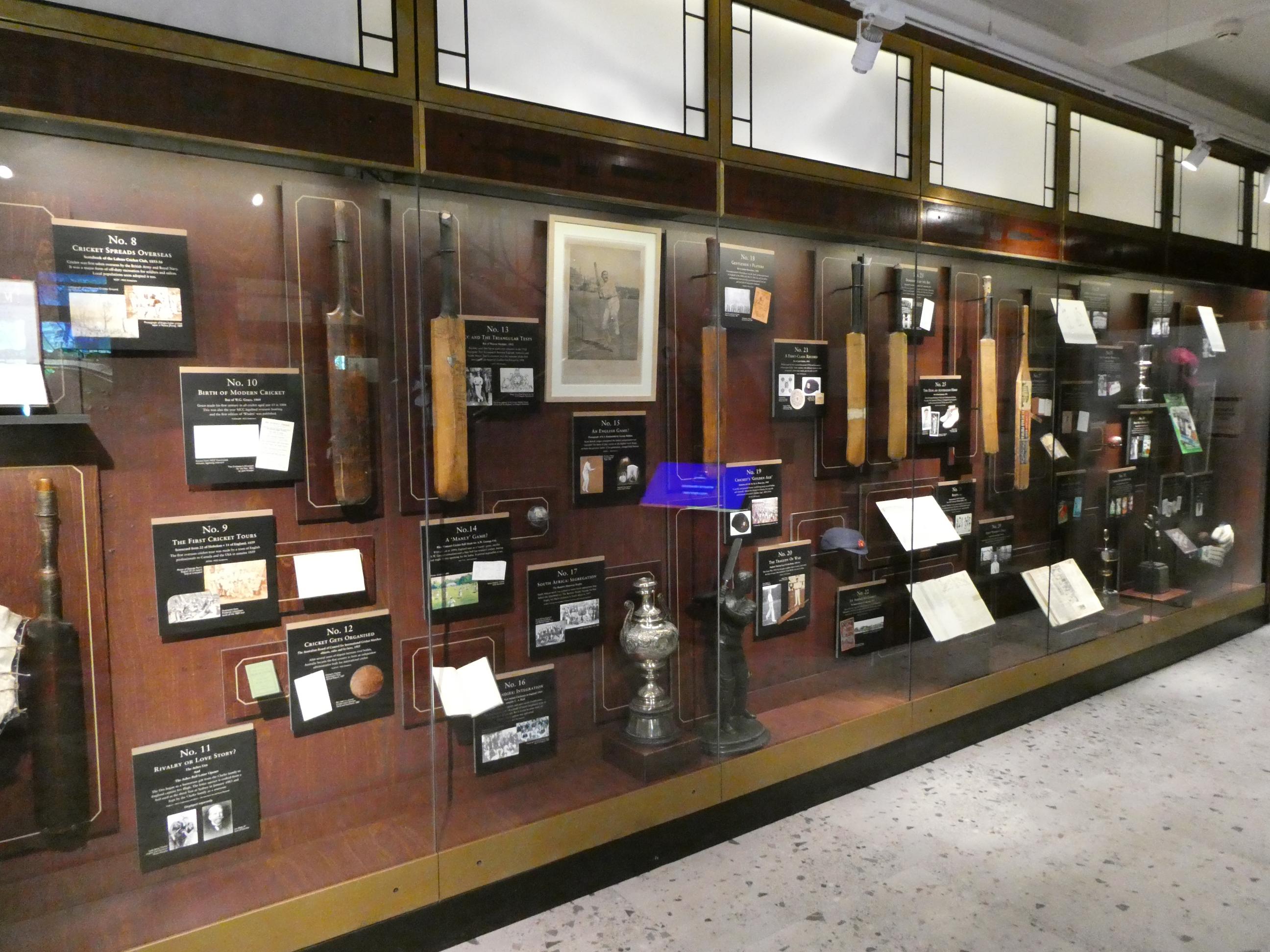
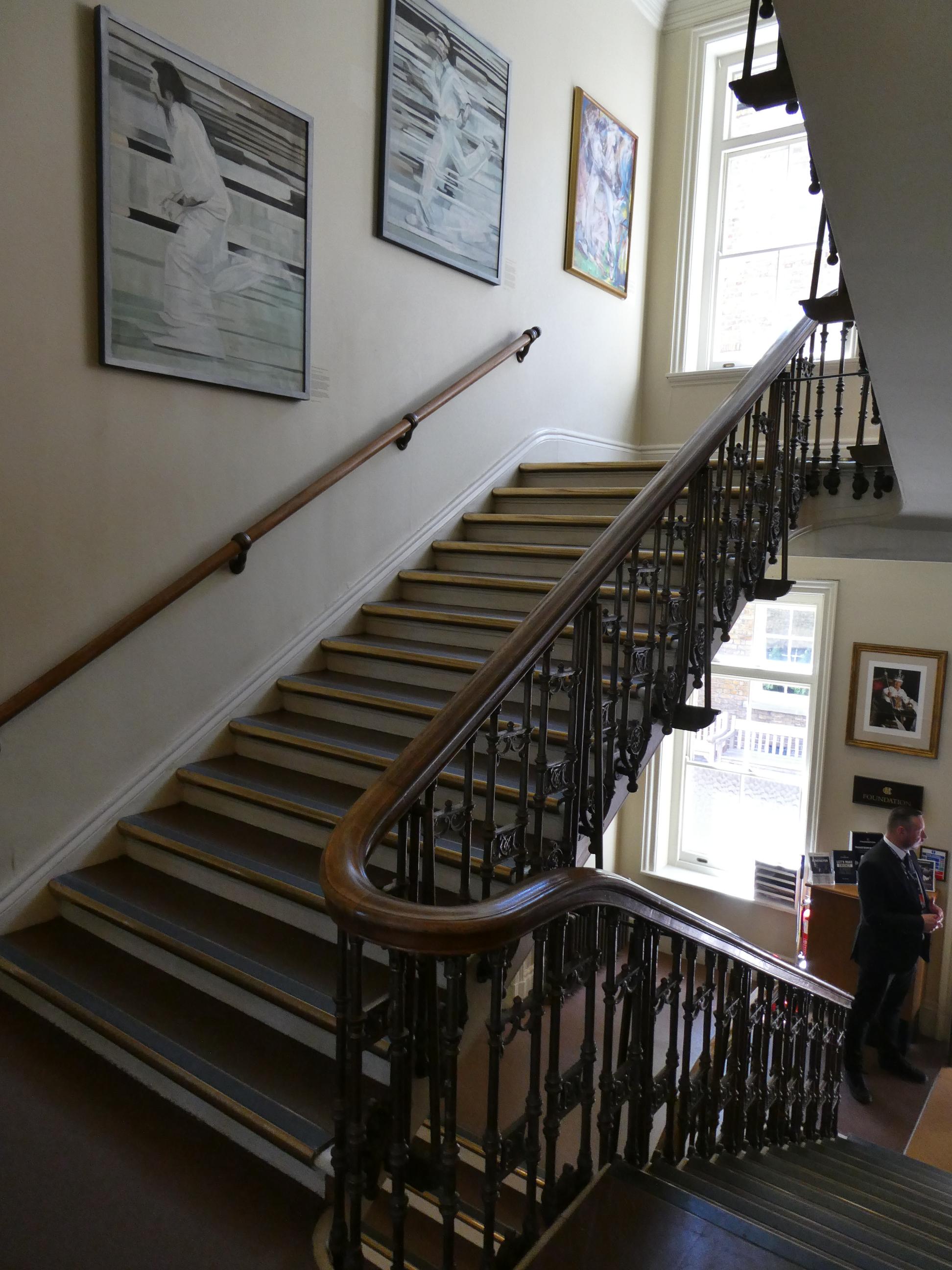
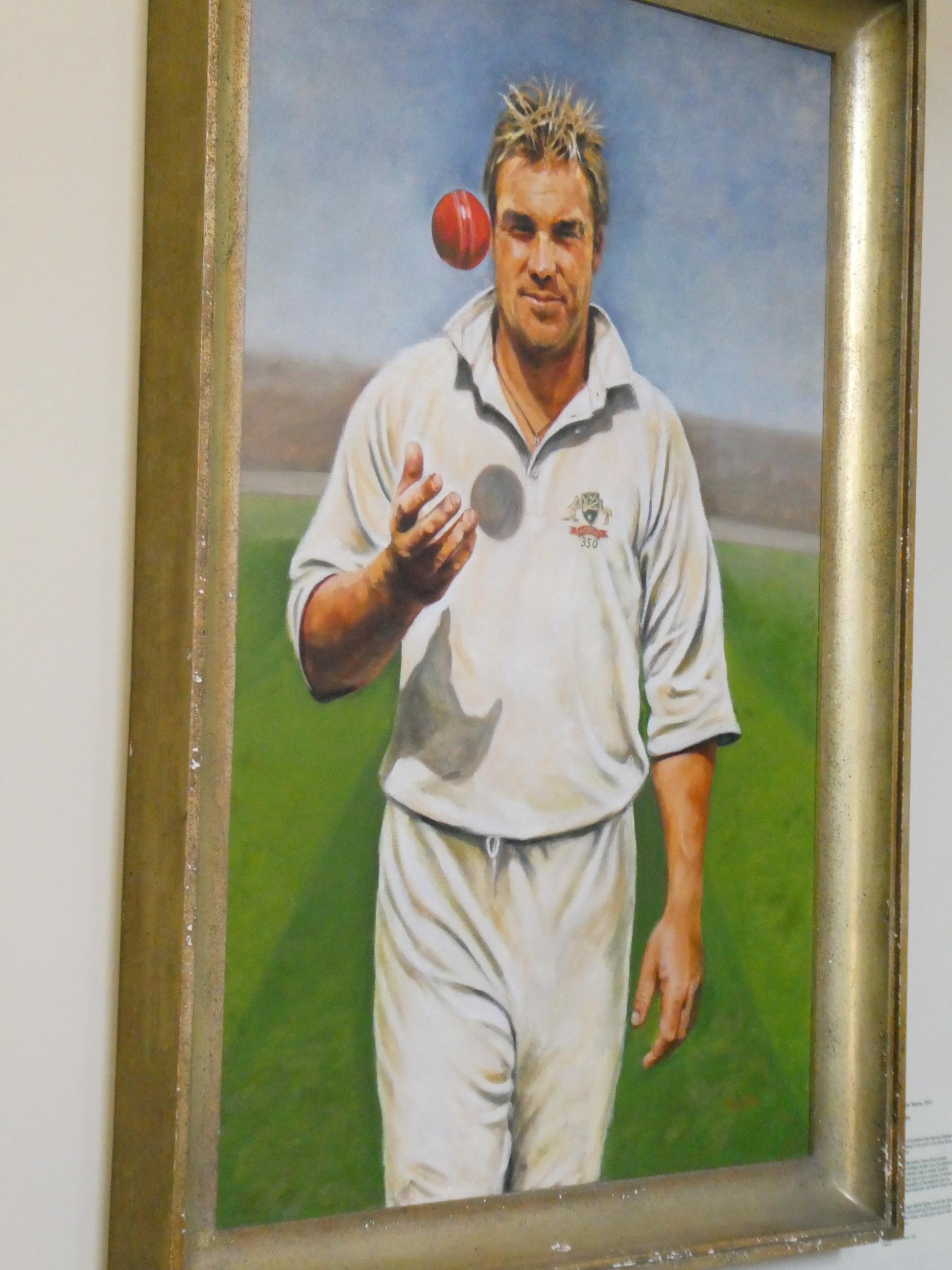
Rod and I walked past the stairs where some of the Australian players turned to face the angry mob and into the Long Room. We both were surprised by the size of the room. It was much smaller and plainer than the wonderful Long Room we have at the MCG. We were there while it was being prepared for an event, so it was being set up with tables which normally would not be there, but it became apparent that it was not such a large space for hundreds of members to cram into to watch the players enter and leave the field. It did have some impressive artwork on the walls, notably the portraits of Glenn McGrath and Brian Lara that you can see here. The art work is changed on a regular basis. Most portraits are commissioned after a player has retired from the game, with the notable exception of Shane Warne, who our guide Neil spoke very fondly of. Apparently he was much loved by many at Lord’s. Next stop was the museum for a quick look at the Ashes urn. It’s good to know it’s currently in our possession, even though it is so fragile that it can never leave England. I was surprised by the simplicity of its display cabinet.

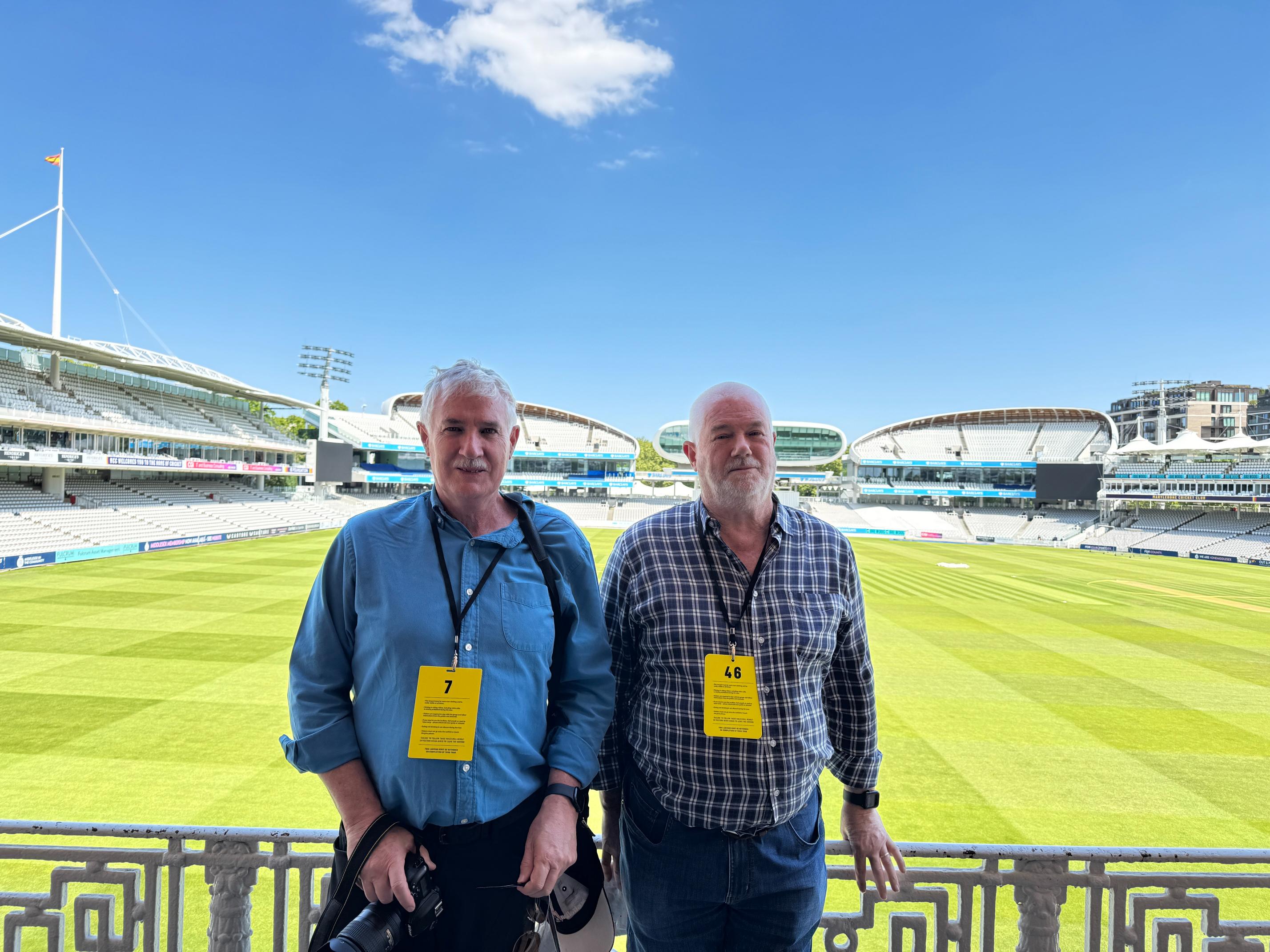





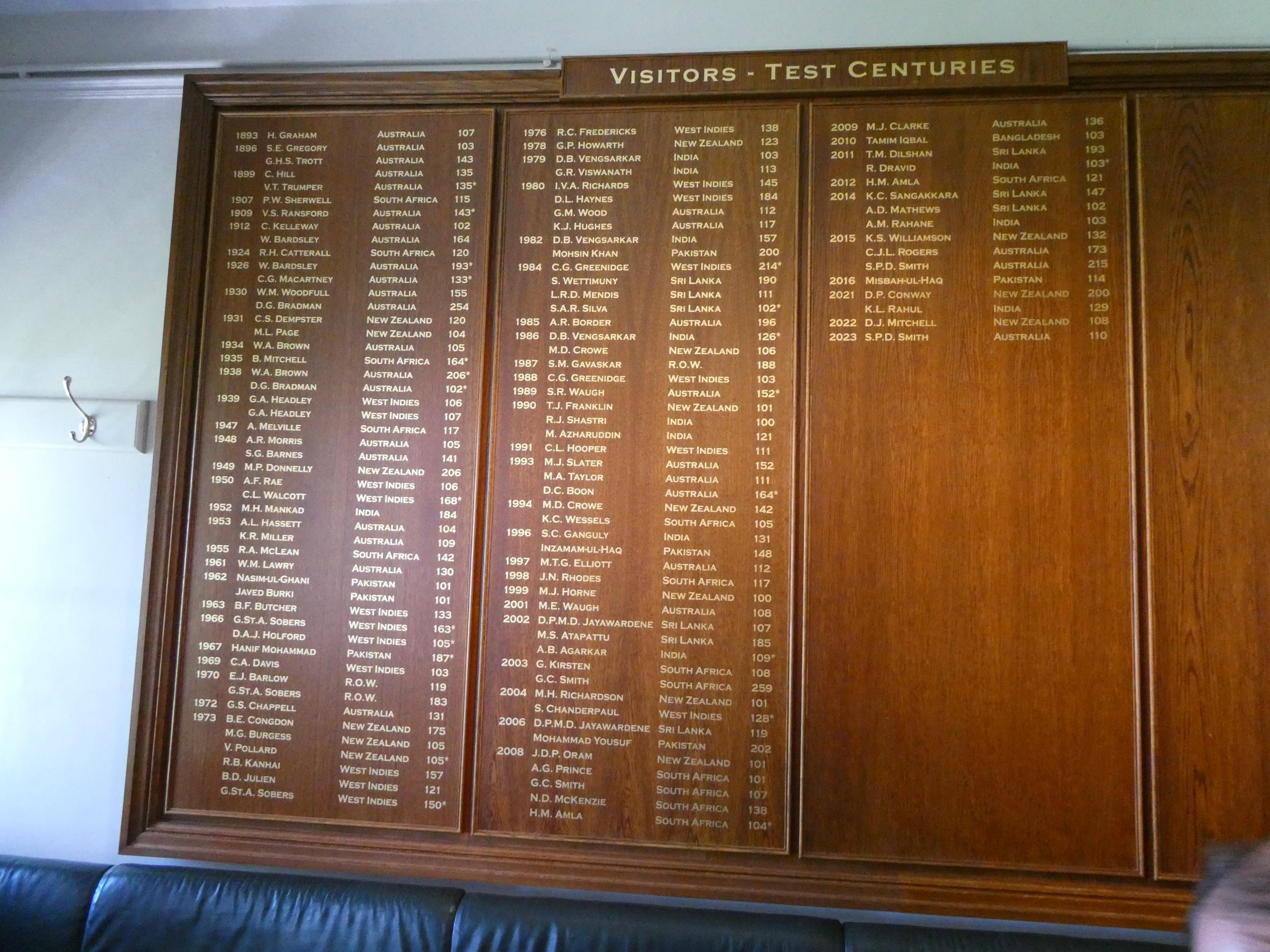
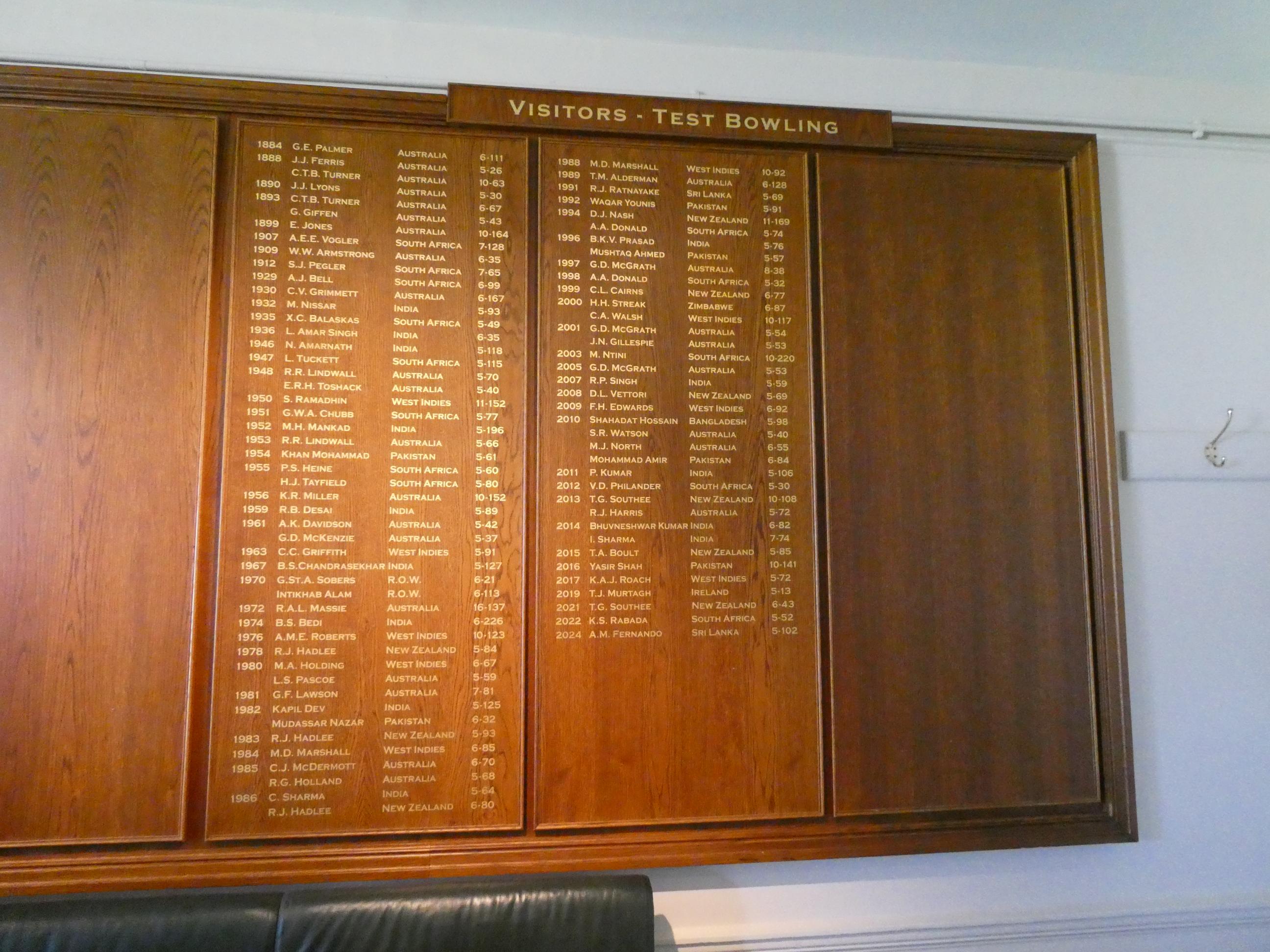
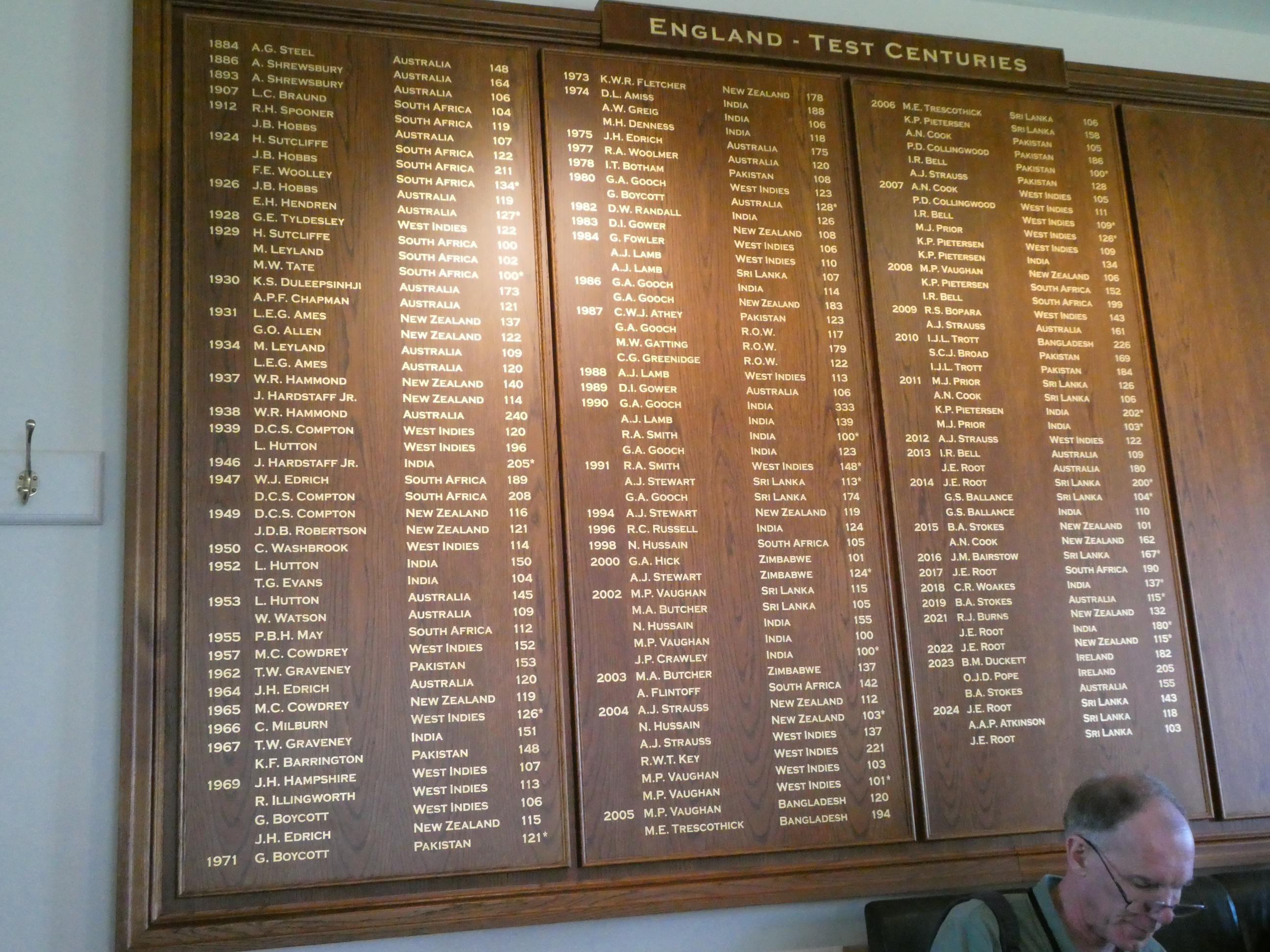
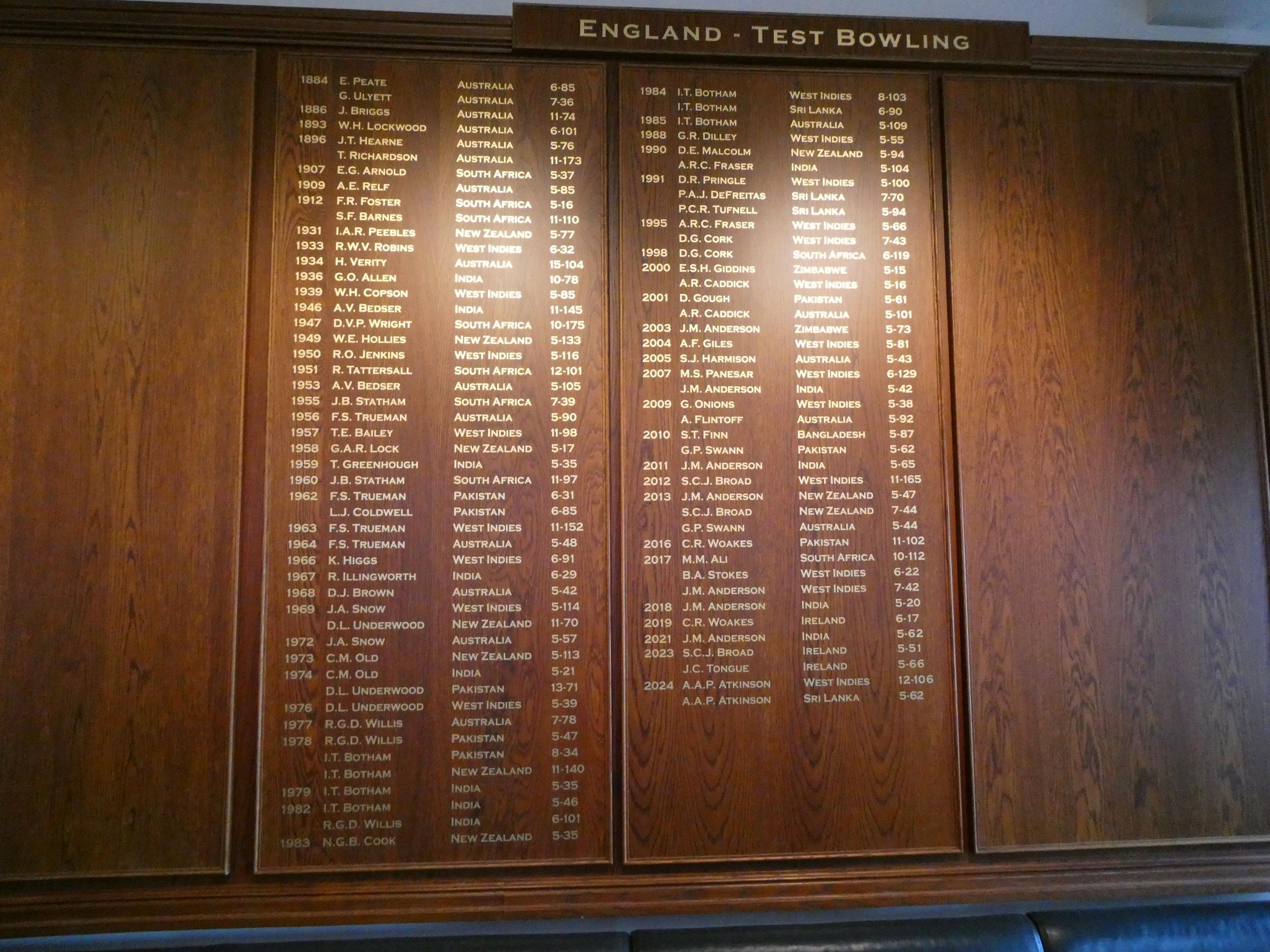
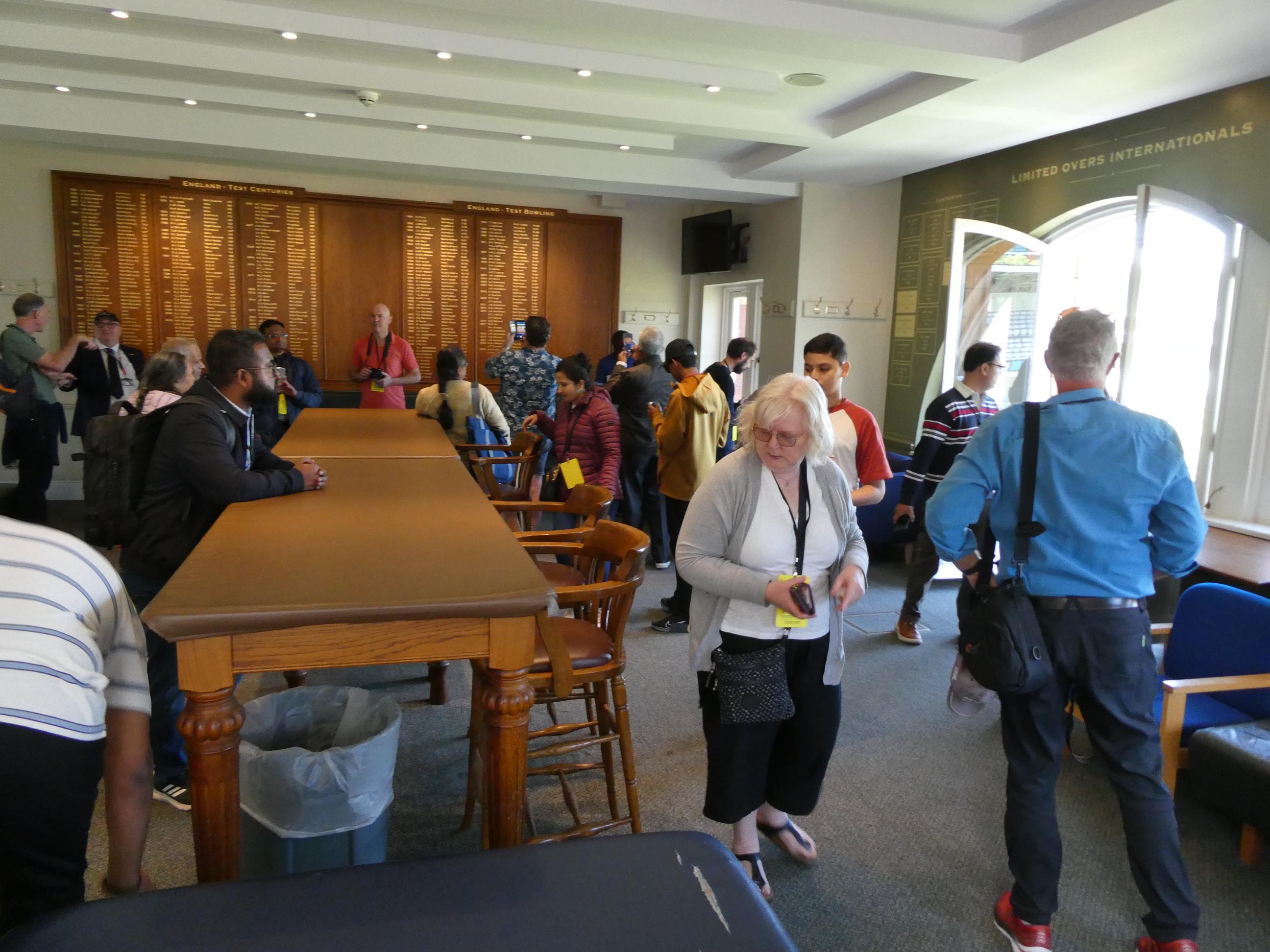
Neil took us into the visiting players’s room. Rod and I were surprised by how basic it was. Essentially it was just cushioned bench seating around the walls with coat hooks above some of the seating and a table and a few chairs in the centre of the room. I expected much more inviting furnishing and items would be on hand for the disposal of the great touring cricketers of the world. On the walls are the famous honour boards bearing the names of every visiting batsman who has scored a Test century here and every bowler who has captured five or more wickets in an innings. The list of names is impressive, though the boards themselves are quite unremarkable. I think some of the honour boards at Ivanhoe Grammar, where I taught for thirty years, were far more impressive than these. Rod and I posed for a photo on the famous players’ balcony, and were quite surprised to learn that only four people can be out there at a time. The English room was no different to that of the visitors’ room. Very plain, and again only its honour boards were a point of interest.
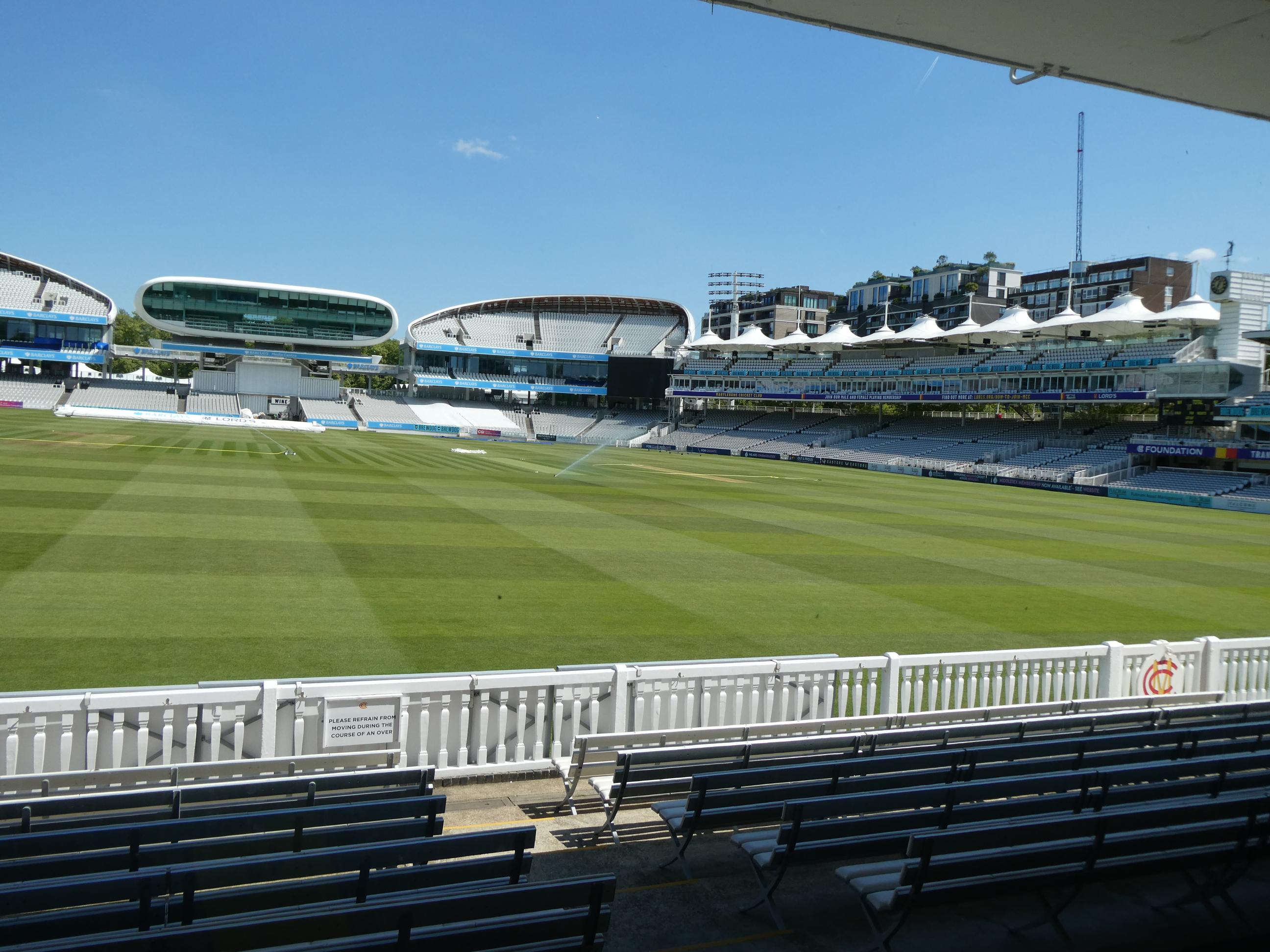
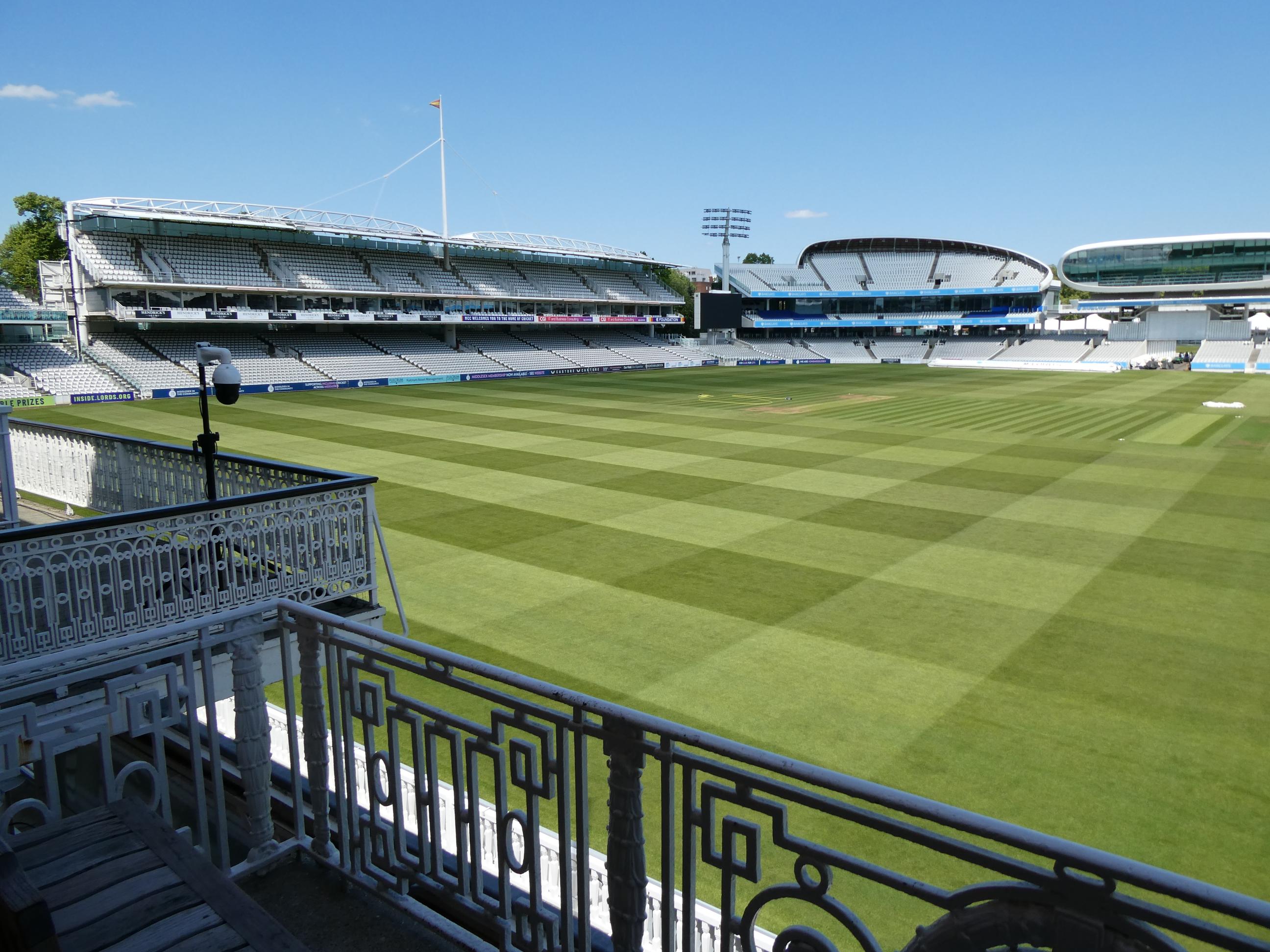
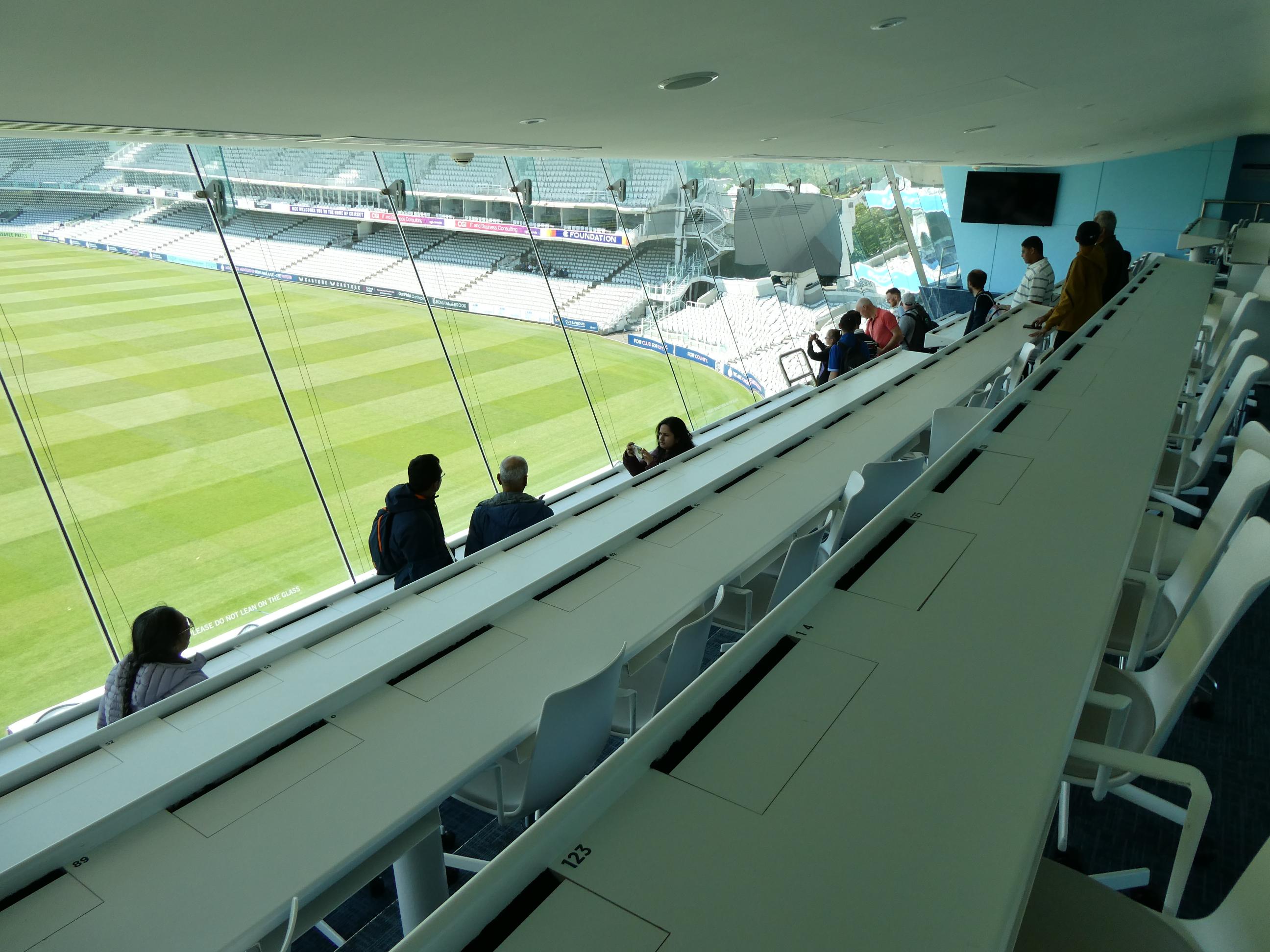
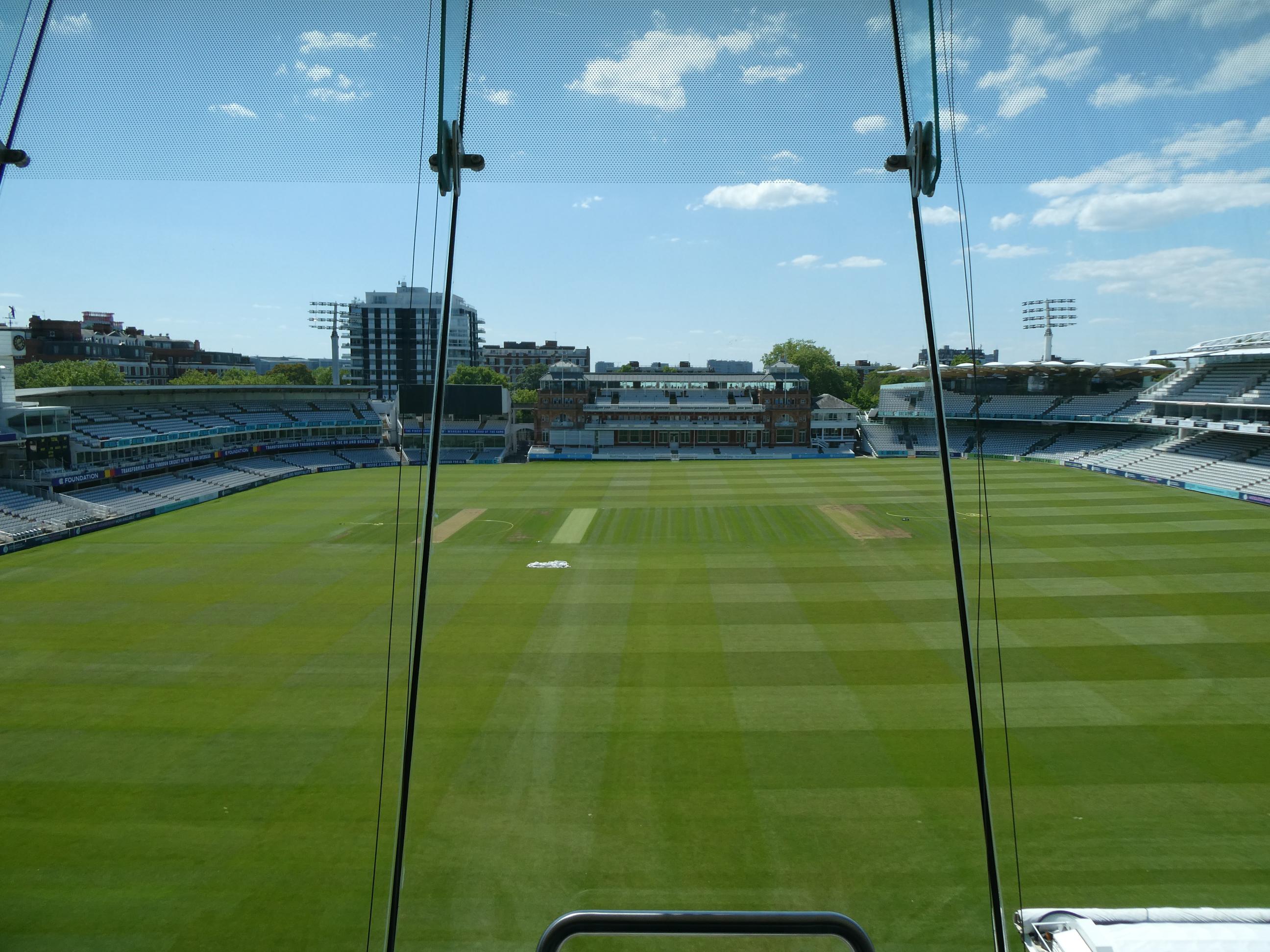
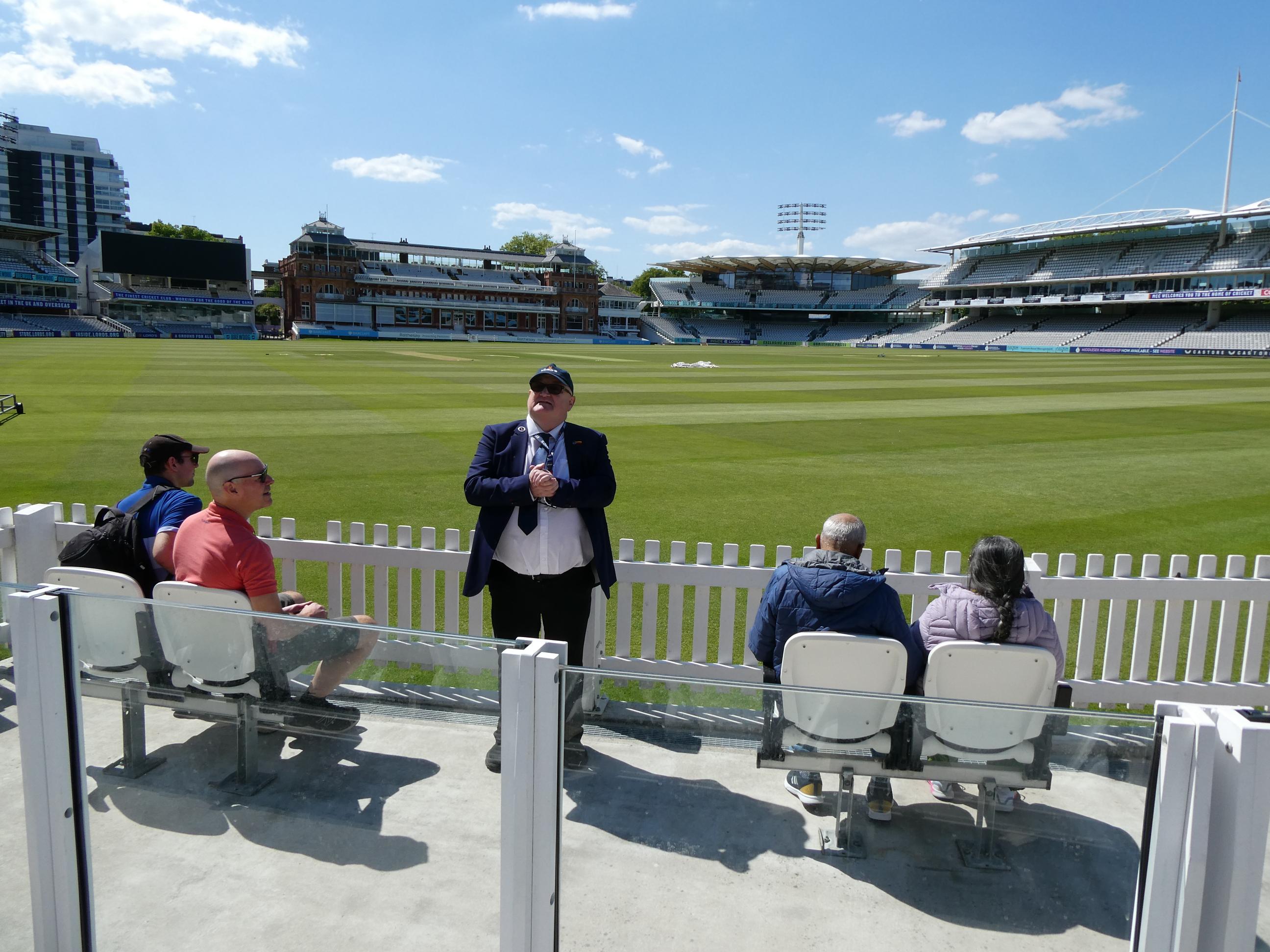
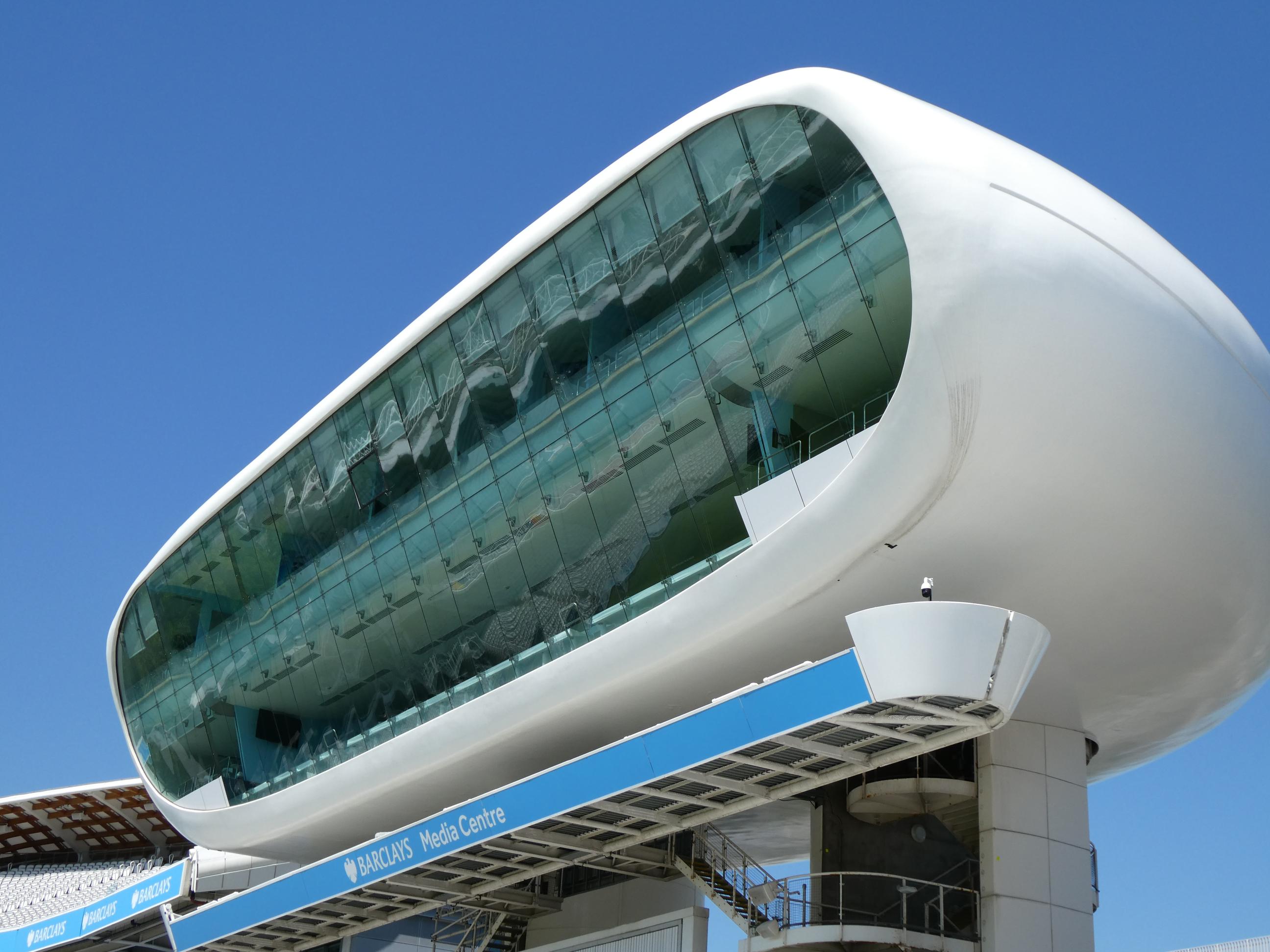
Neil walked us around the perimeter of the ground. On the way, I found a photo of a distant relative. Karl Nunes, who was the first man to captain the West Indies in Test cricket, is my third cousin two times removed. His mother was a Brandon, just as my great grandmother was. Neil led us up the 82 steps to the media centre, sometimes referred to as the ‘spaceship’. The view from up there is superb. I’d love to watch a game from up there. Lord’s is famous for the slope of the ground. It falls away by eight feet (about two and a half metres) from one side of the ground to the other, and the slope is quite visible when viewed from the media centre. From there we had a wonderful view across the ground to the Members’ Pavilion. Neil told us that because its heritage listing was classified so high, very little could be done to alter it inside or out, hence the simplicity of its players’r rooms. We finished our tour down by the fence, looking out over the hallowed turf. I can’t wait for the next Lord’s Ashes Test. I’ll view it through a different lens, I’m sure.







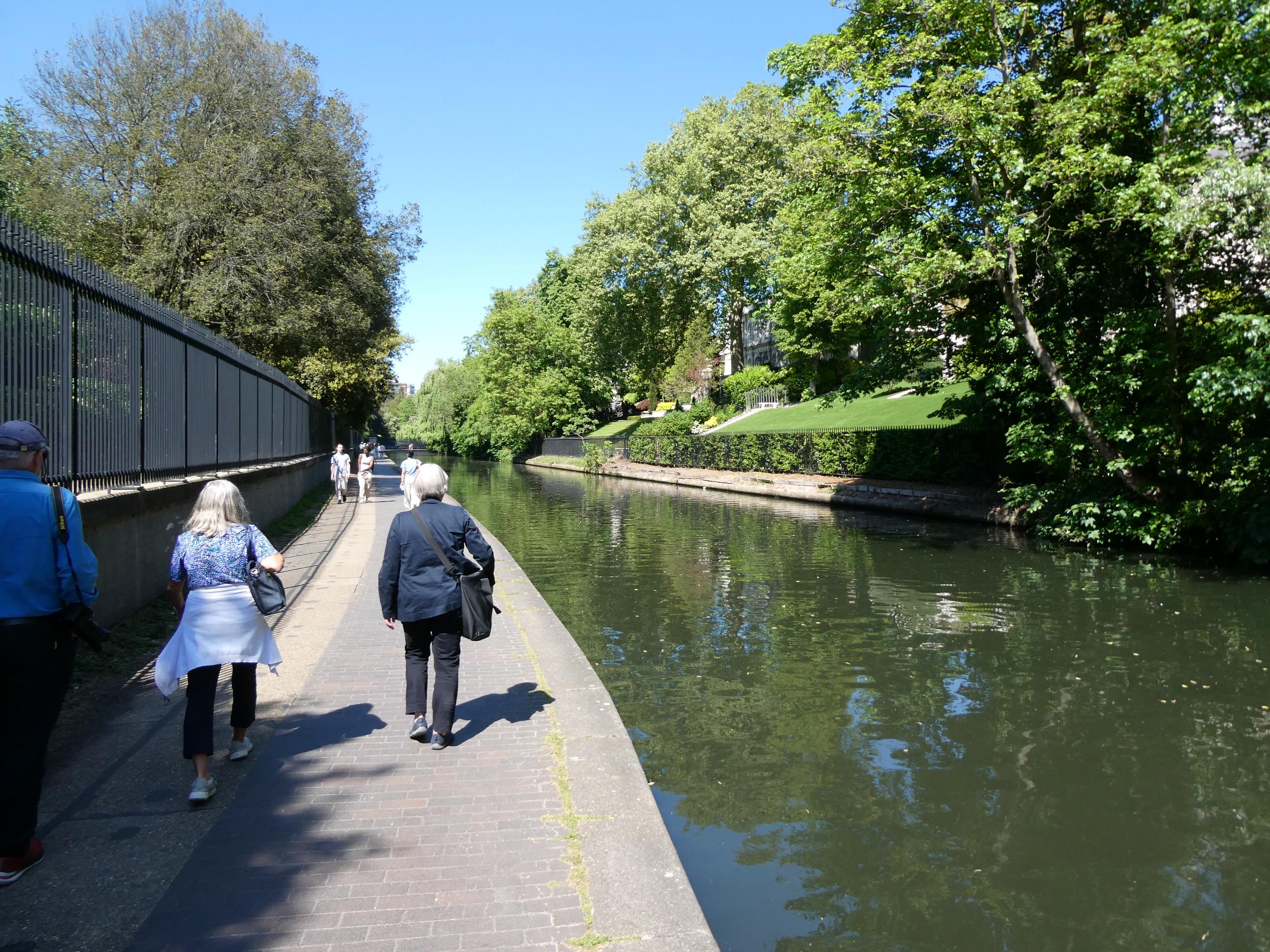
We took a long, leisurely stroll along the towpath of the Regent’s Canal, enjoying the sunshine and watching the slow passage of the barges. Canals were one of the great transport innovations of the Industrial Revolution, which was one of my favourite subjects to teach kids about, so I loved having a chance to see the canal and the barges up close on such a fine day.

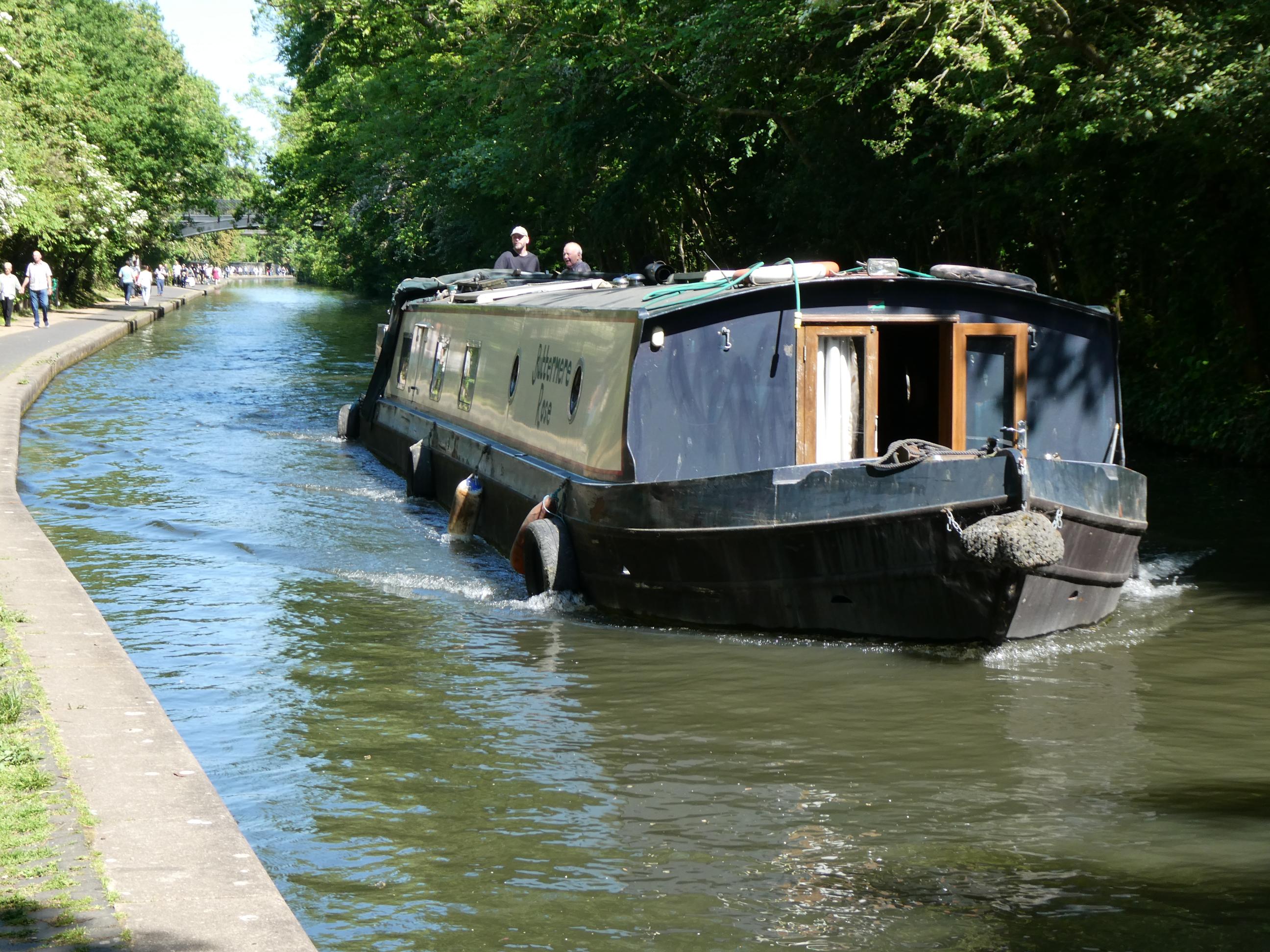




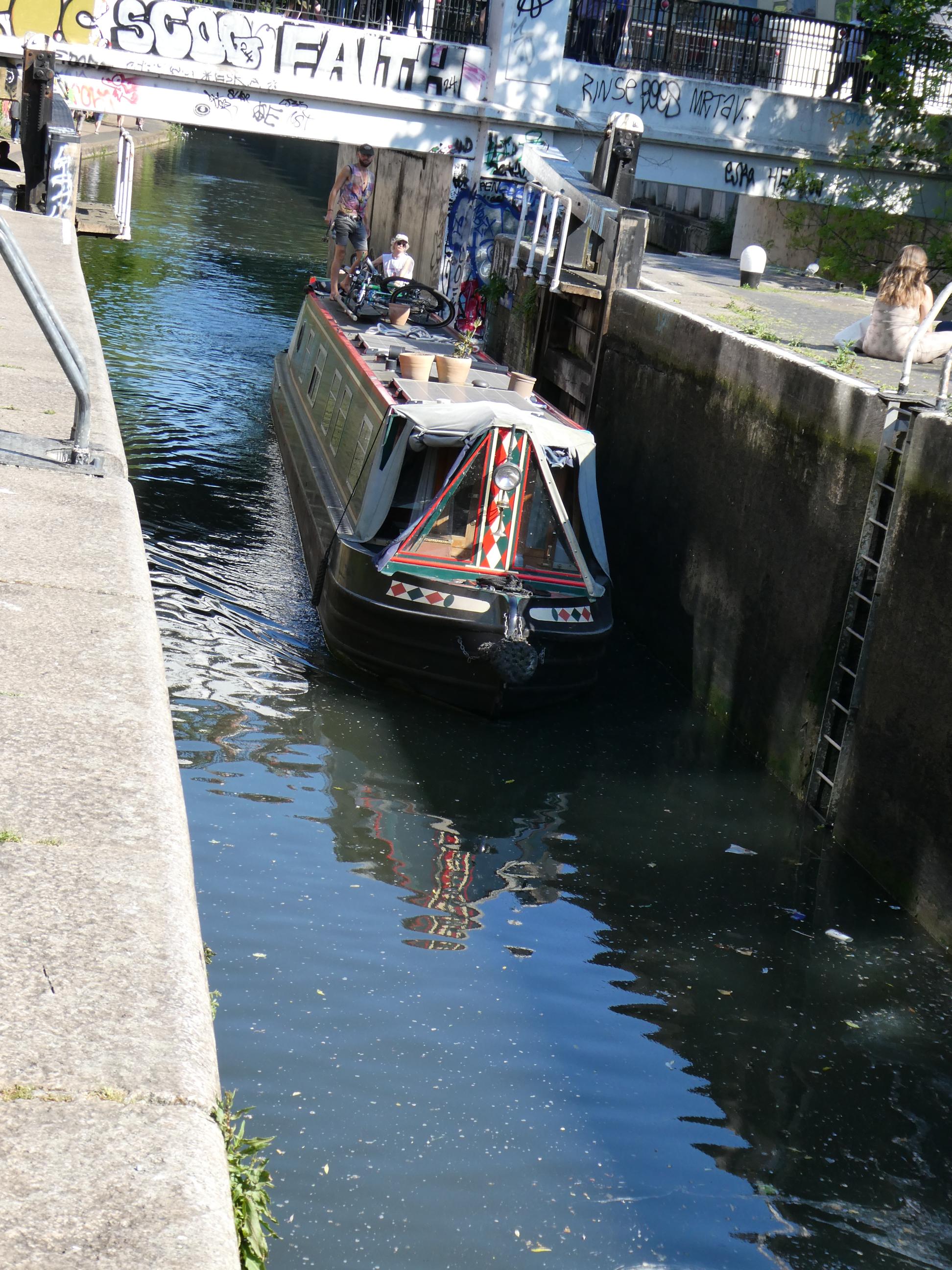
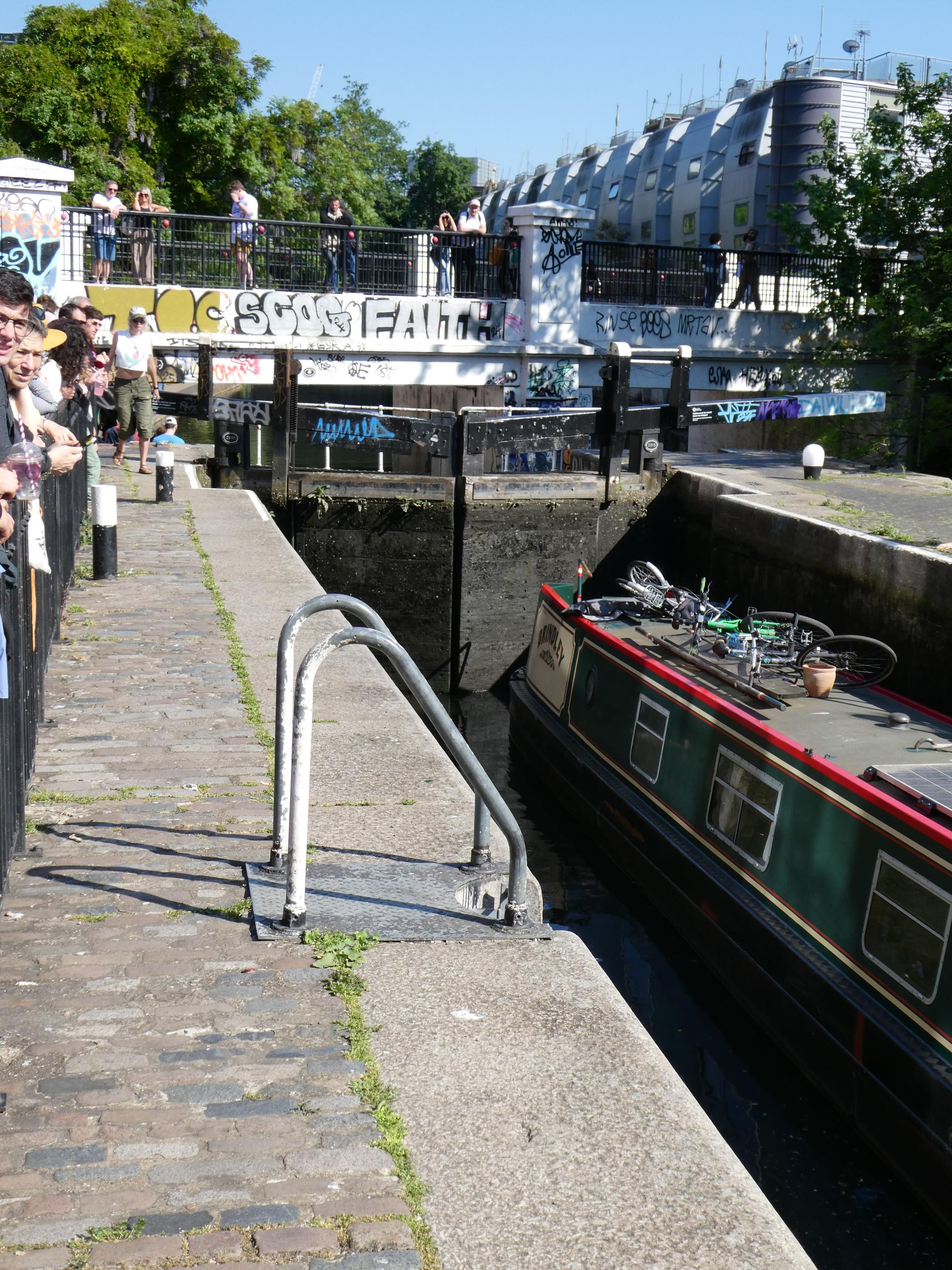
Camden was buzzing when we stopped there mid-afternoon for a drink. That didn’t surprise me on a day like this. It was a challenge to find an empty table, but worth the effort as the beer was good. We stopped to watch a barge pass through the lock. In the hi-tech world that we now inhabit, I take pleasure from some of the things that haven’t changed in centuries, such as the ingenious way of moving a boat through an area where the water level changes.


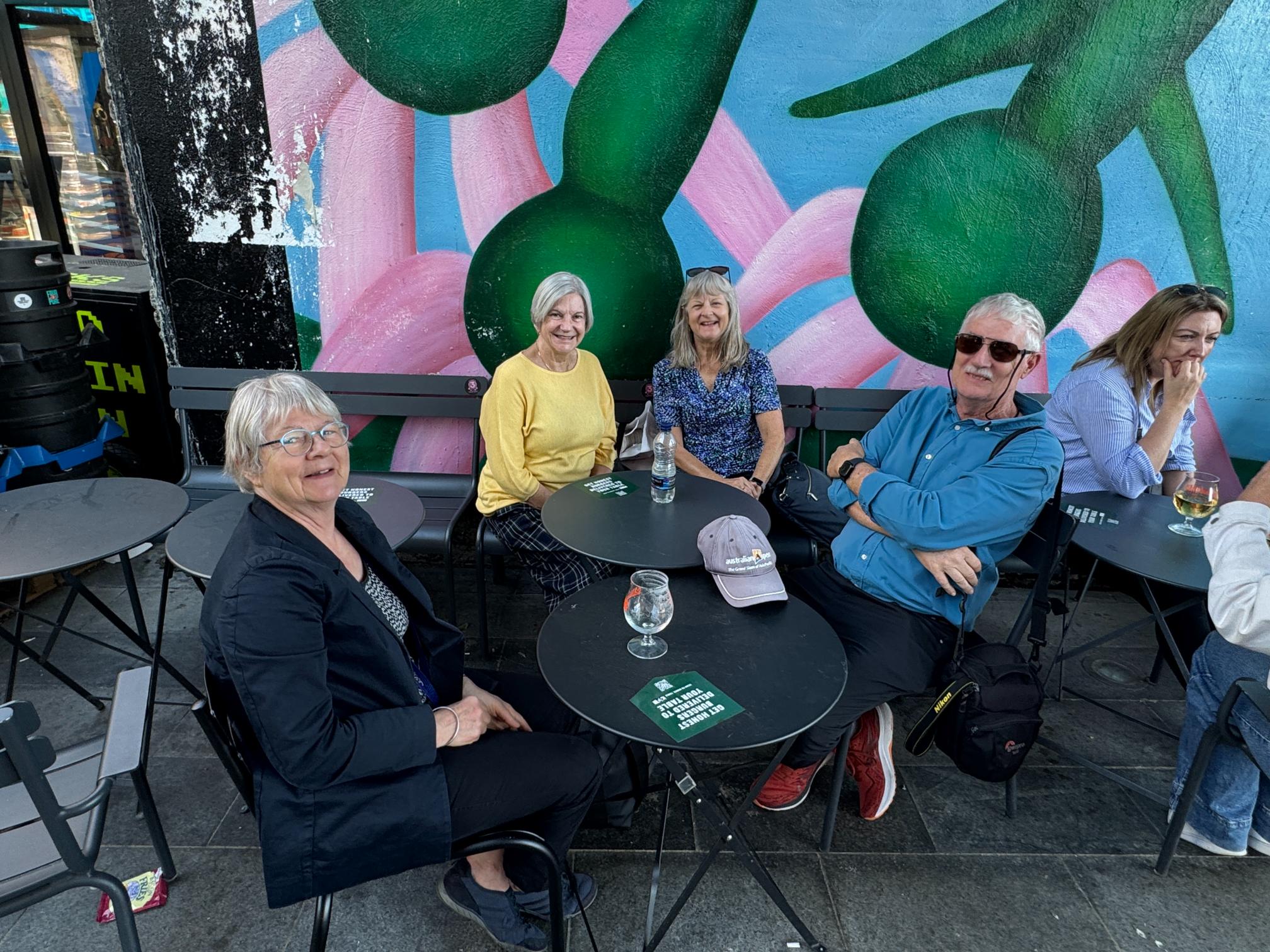
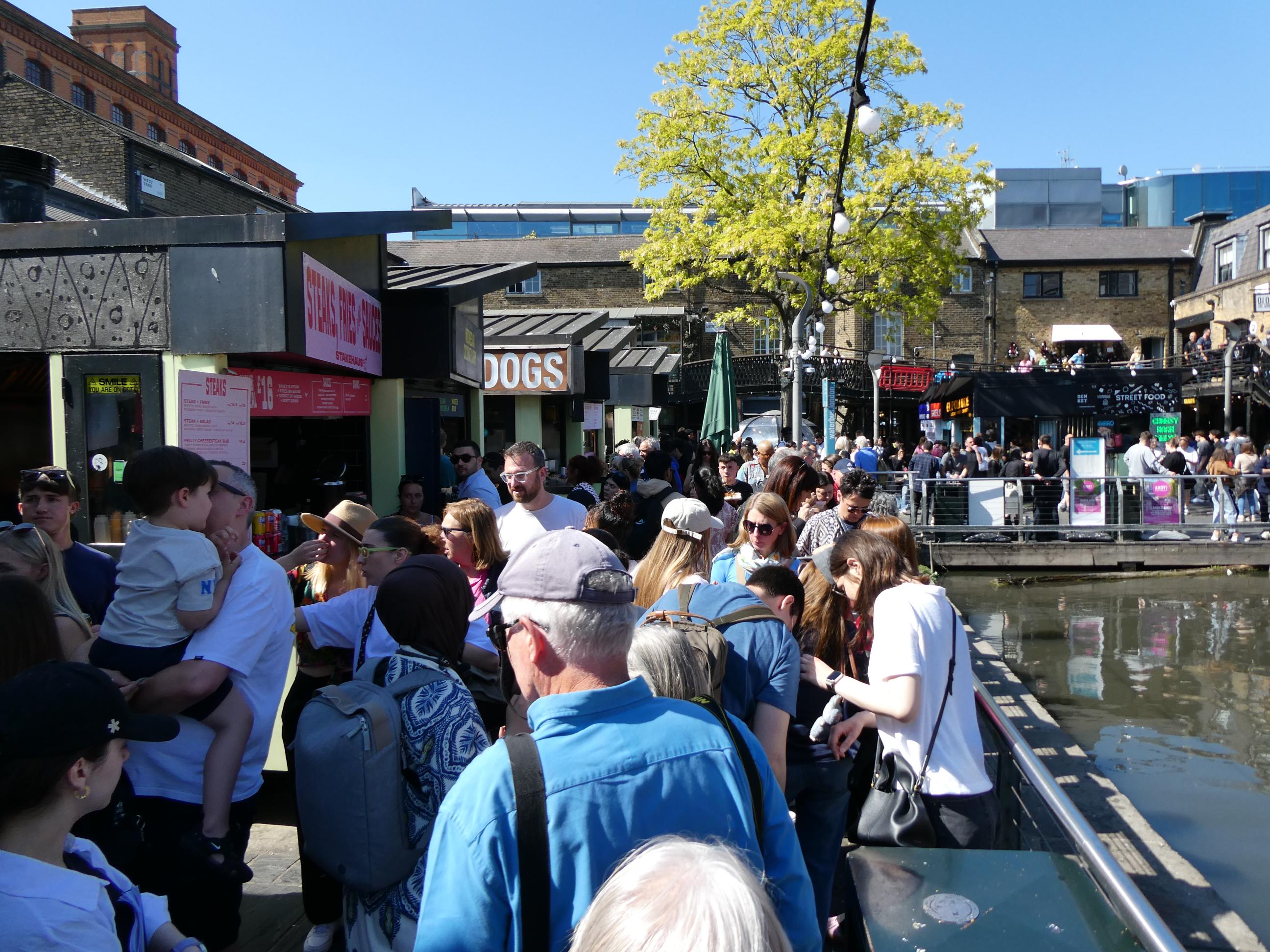
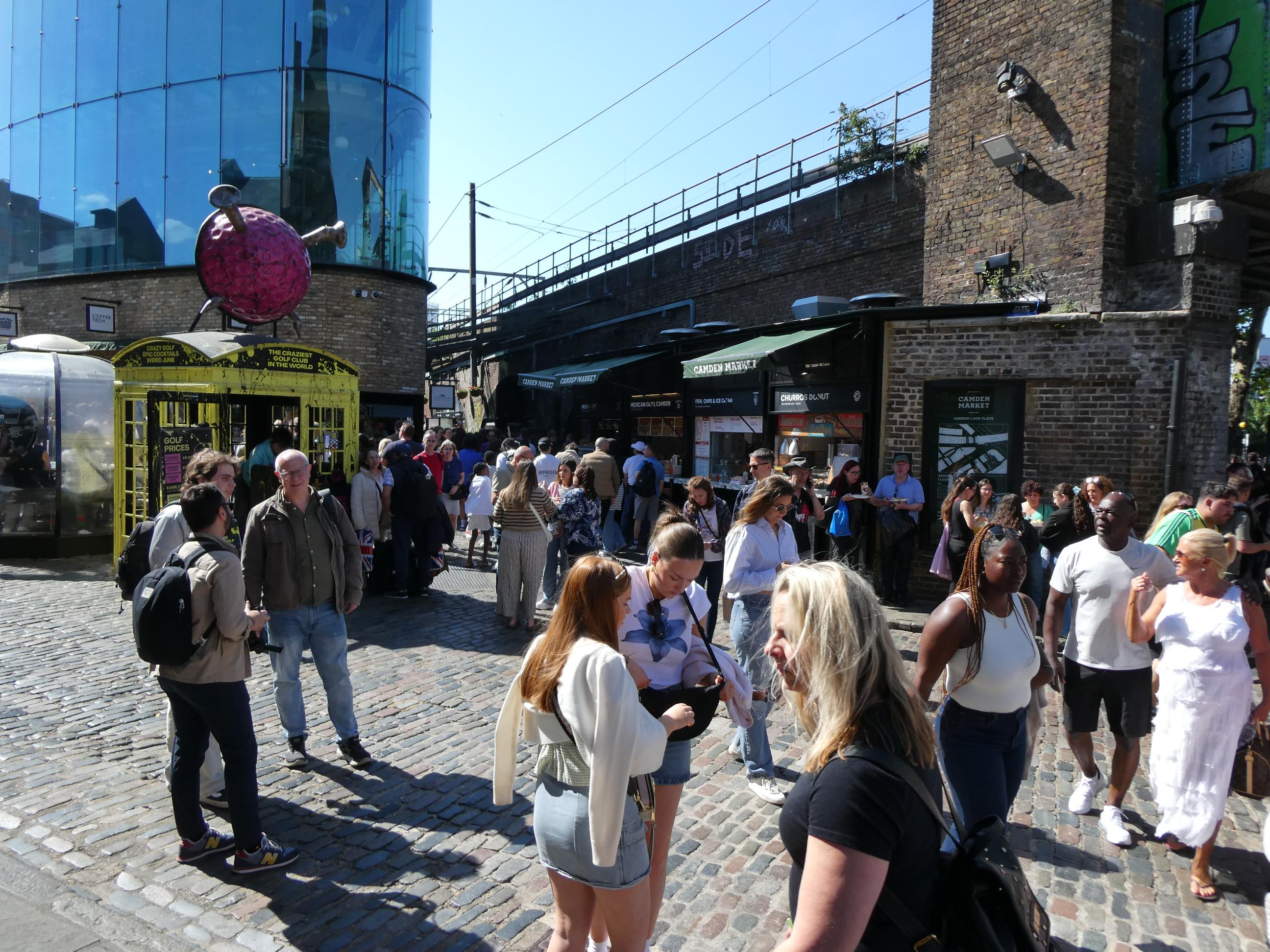
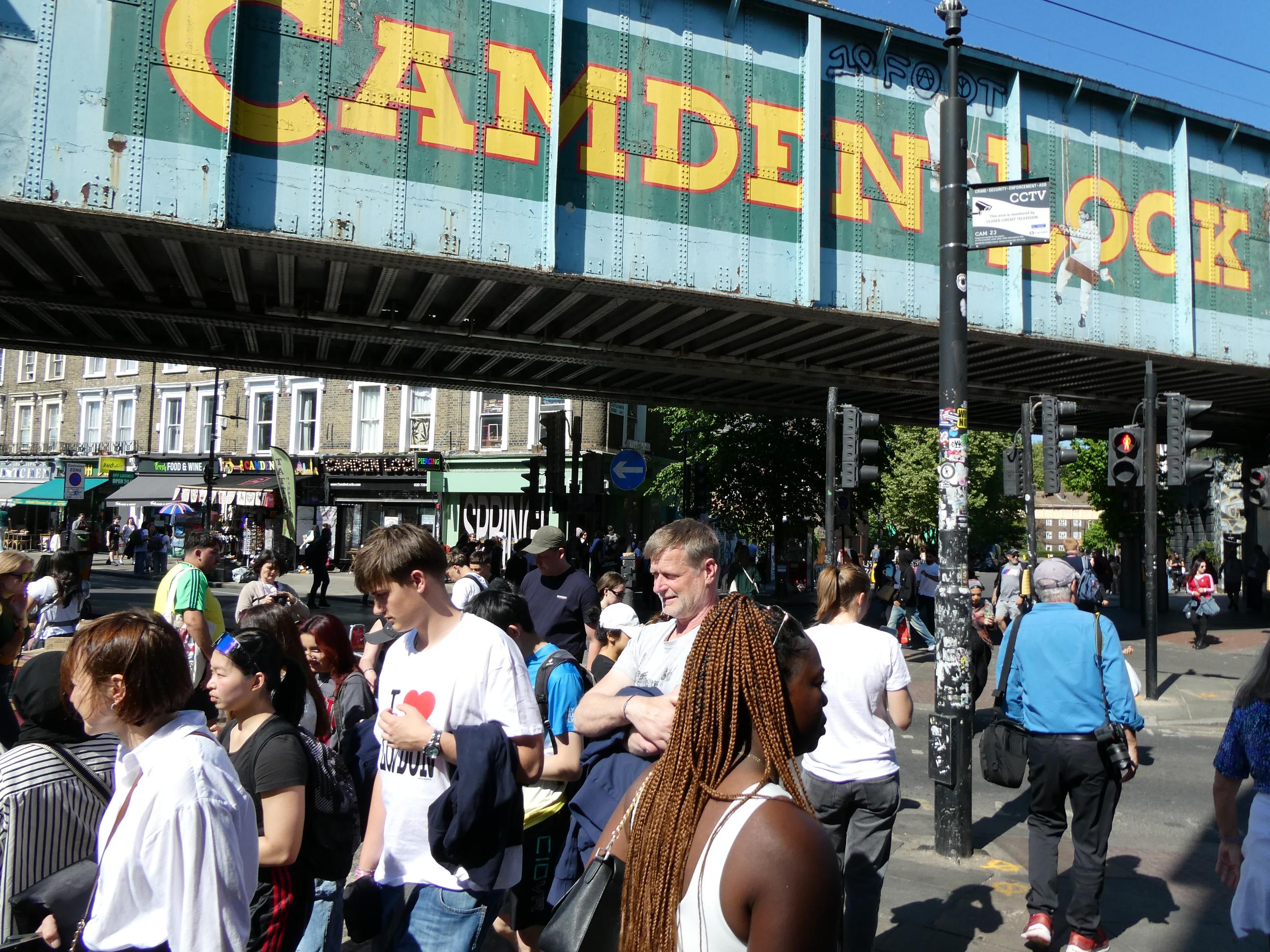
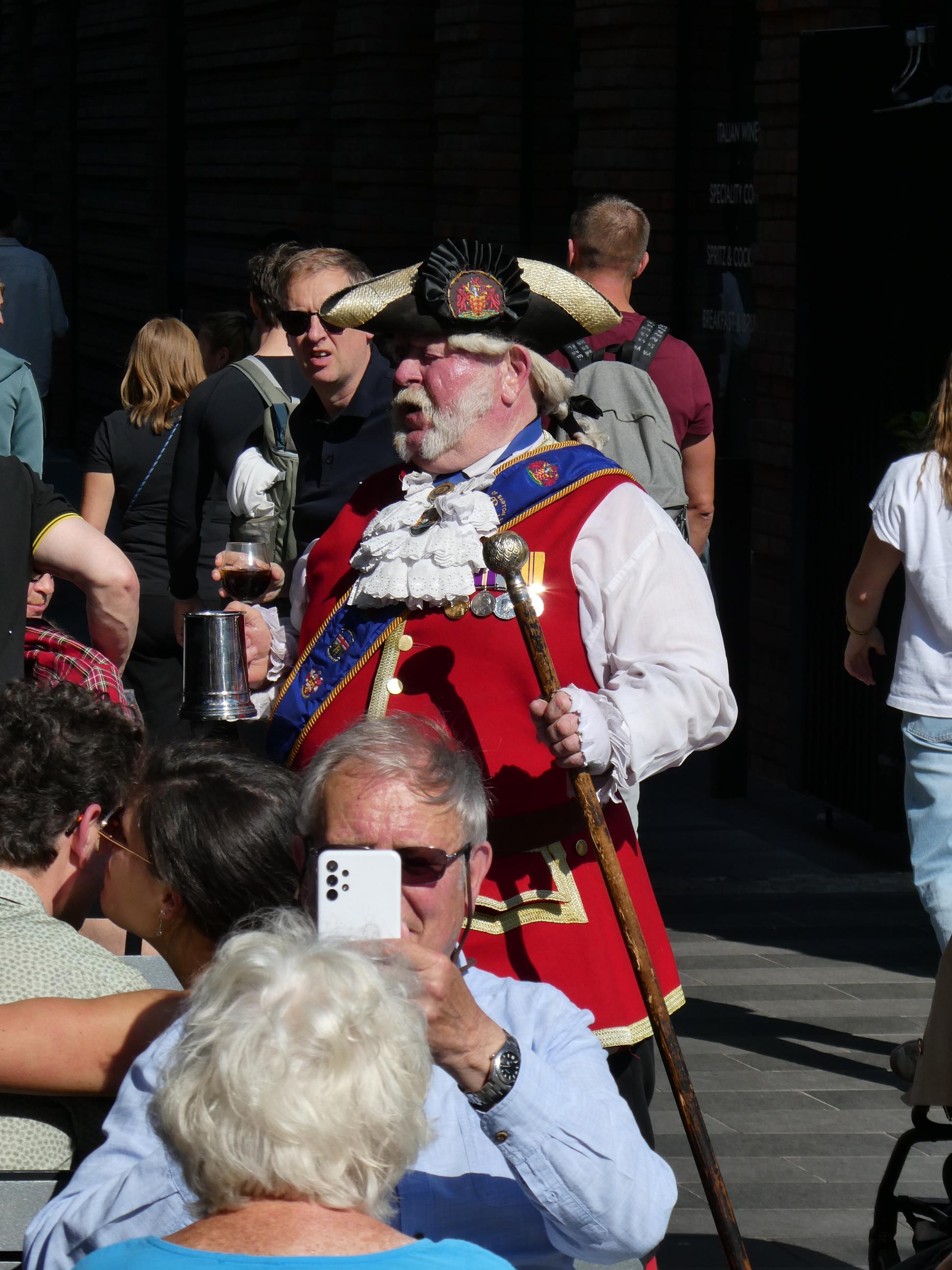



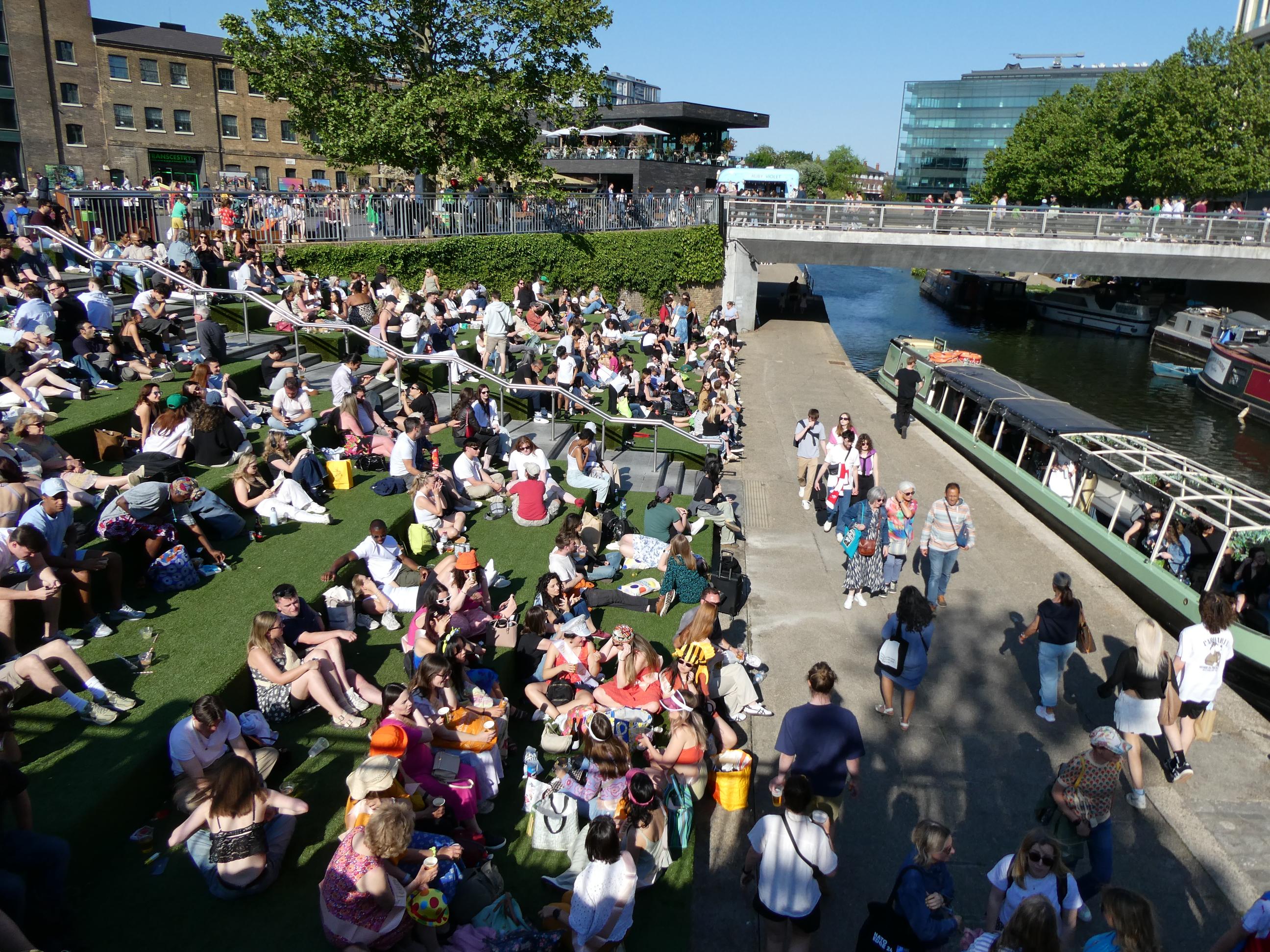
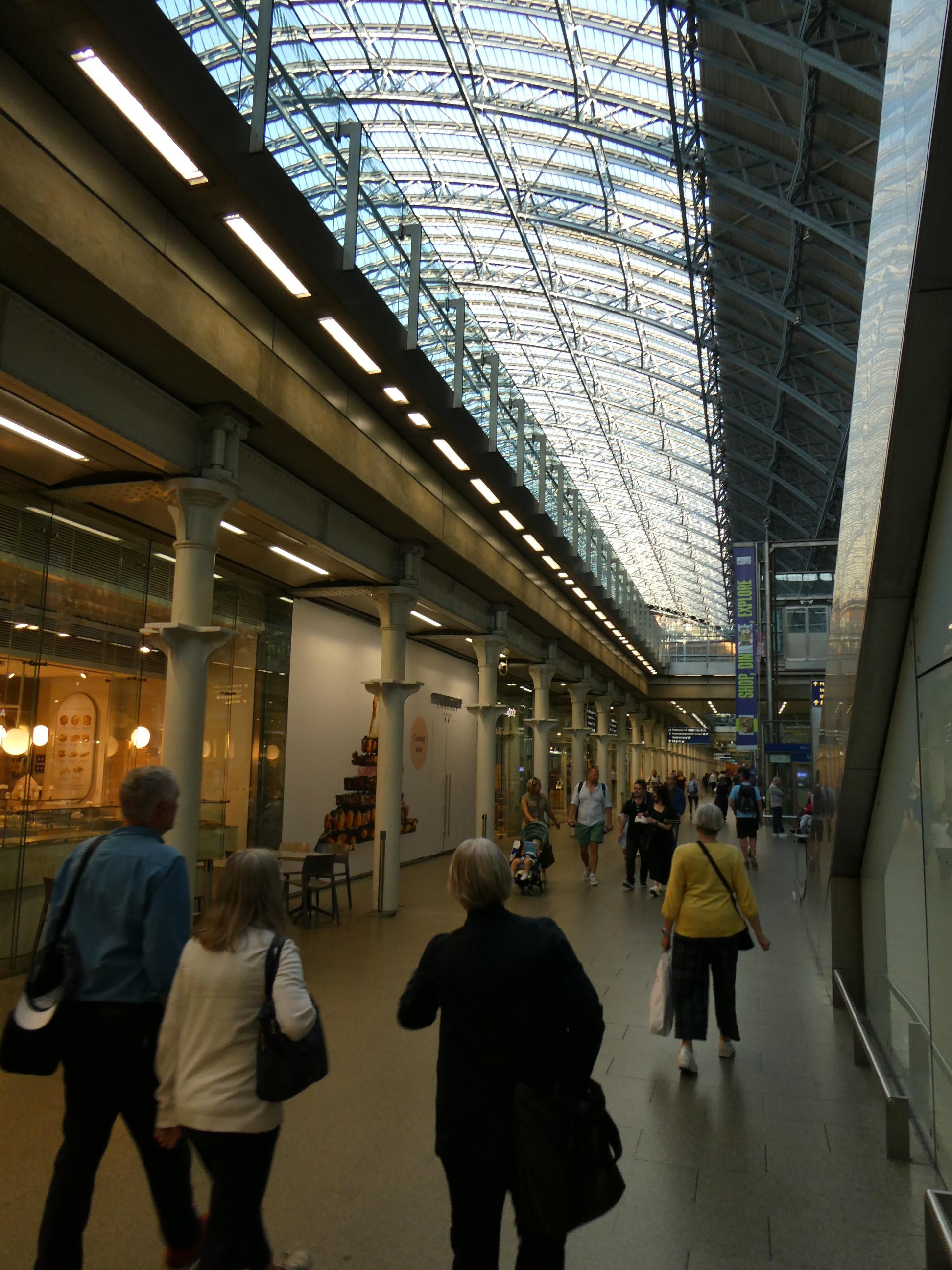
We walked on to King’s Cross, passing some gasometers that have been repurposed as residential units. What a great idea. The industrial heritage of the area had been honoured, yet now it was an inviting place for people to live. A little further on, former coal yards had become a vibrant shopping and dining area. A busy market was taking place as we arrived. It was great to see Londoners and tourists out and about on such a beautiful day. We found a place for dinner and another drink. When we stepped back into the market, the traders were all packing up for the day and going home. We were going home too. We made our way to Kings Cross St Pancras station and said goodbye to Ursula. We’ll see her again in Cardiff. We took the train back to Bayswater, pretty tired after lots of walking. I really enjoyed the day and was able to tick a couple of items off my bucket list.




 On The Road With Garry
Gaz, great narrative. Love the history and your observations. Pics are clear and crisp and colourful. Fantastic. Abbey Rd and Lords on one day. Extraordinary.
LikeLiked by 1 person