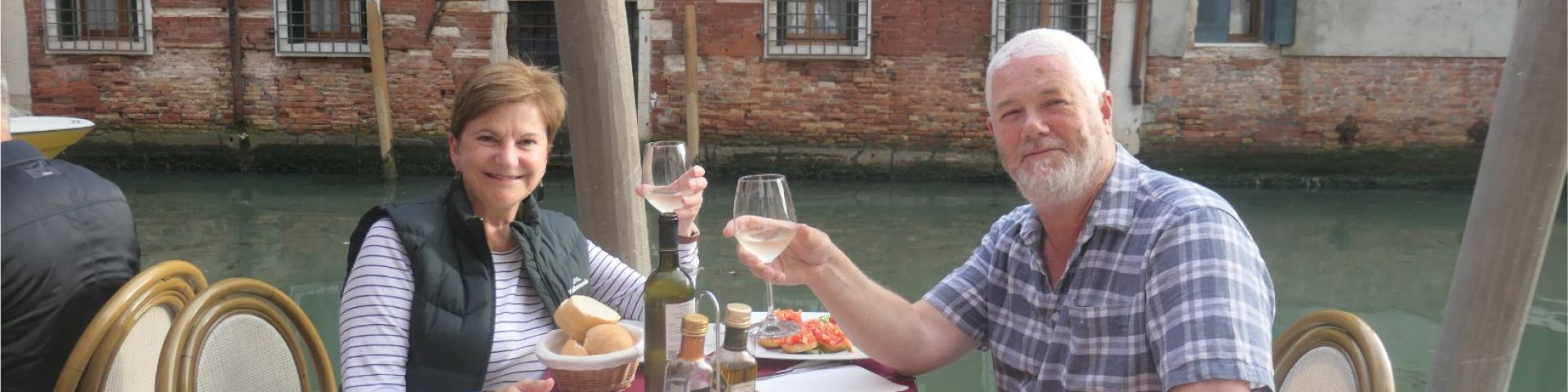
We had to drive a reasonable distance today with a few stops along the way, so we ate an early breakfast and left Margaret River by about 9.30am. We’d enjoyed our time in Margaret River, but never actually had an opportunity to visit a winery as we were always busy doing something else. I guess that’s a good reason for us to come back one day and spend a few more leisurely days here. Despite not visiting wineries in the region, we’ve made sure we sampled local wines every night at dinner and really enjoyed them.
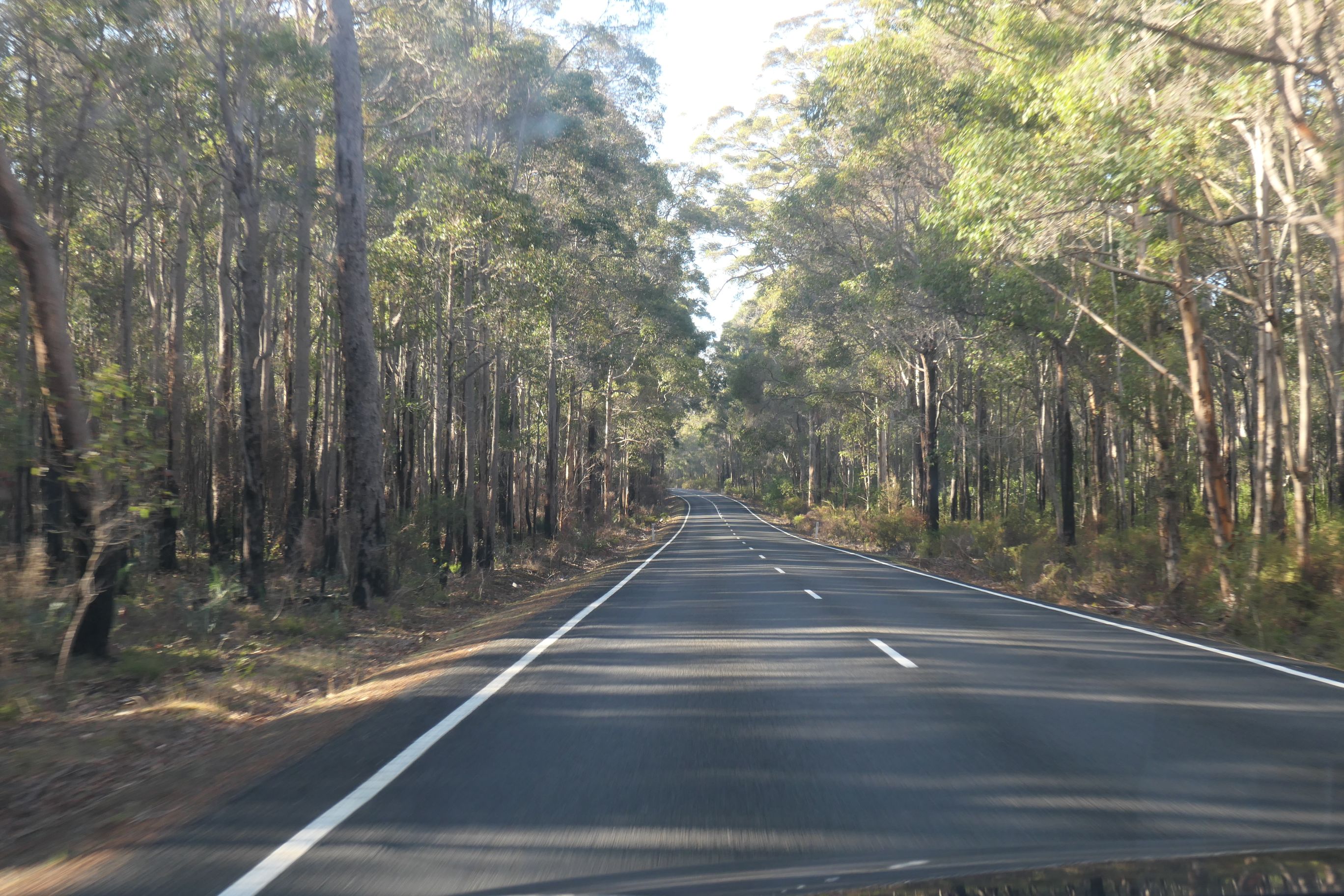
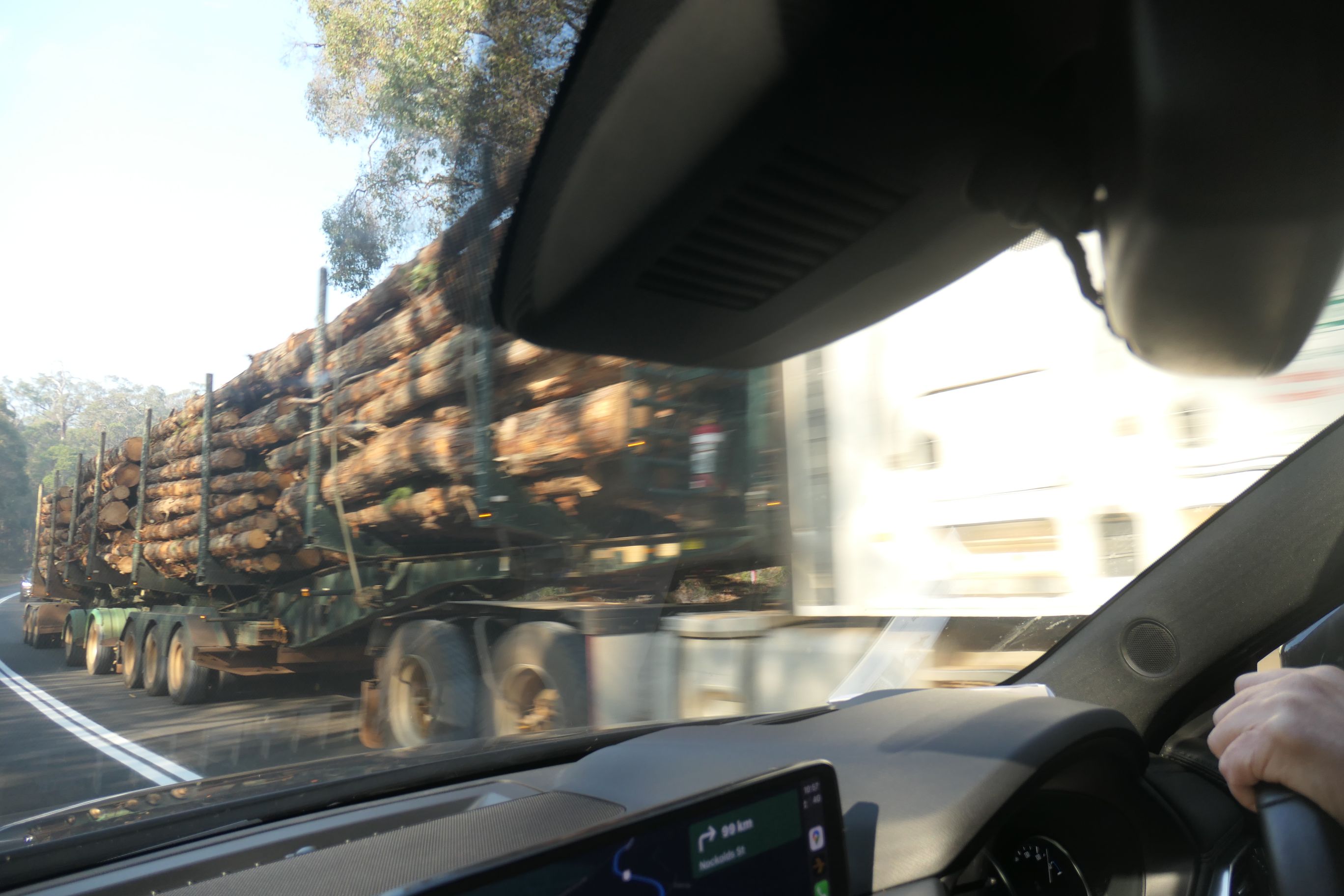
We headed south east through the magnificient karri forests. Towering trees flanked us on both sides of the road for a good part of our journey. The economy of this region once relied heavily on the timber industry, and it’s still an important industry here today. Several timber trucks bearing massive loads passed us, travelling in the opposite direction. The forests we saw today are still densely populated with huge karri trees, so to the naked eye it appears that conservation measures are in place to ensure the forests remain healthy long into the future. Agriculture is also an important part of the local economy. We passed through some lush green pastureland where sheep, cattle and alpacas grazed. Orchards, truffle farms, olive groves and strawberry fields, as well as wineries, added variety to the scenery along the way. Yesterday we saw an adult emu and five young ones by the roadside, and Cornelia spotted more of them today, once again in a similar family group. Unfortunately I didn’t have my camera ready on either day as we sped past them.




After 250 km we stopped at Walpole to refuel and grab a quick bite to eat. It was sunny with blue skies when we pulled up, but by the time we left the skies were grey and overcast, and there were a few spots of rain.


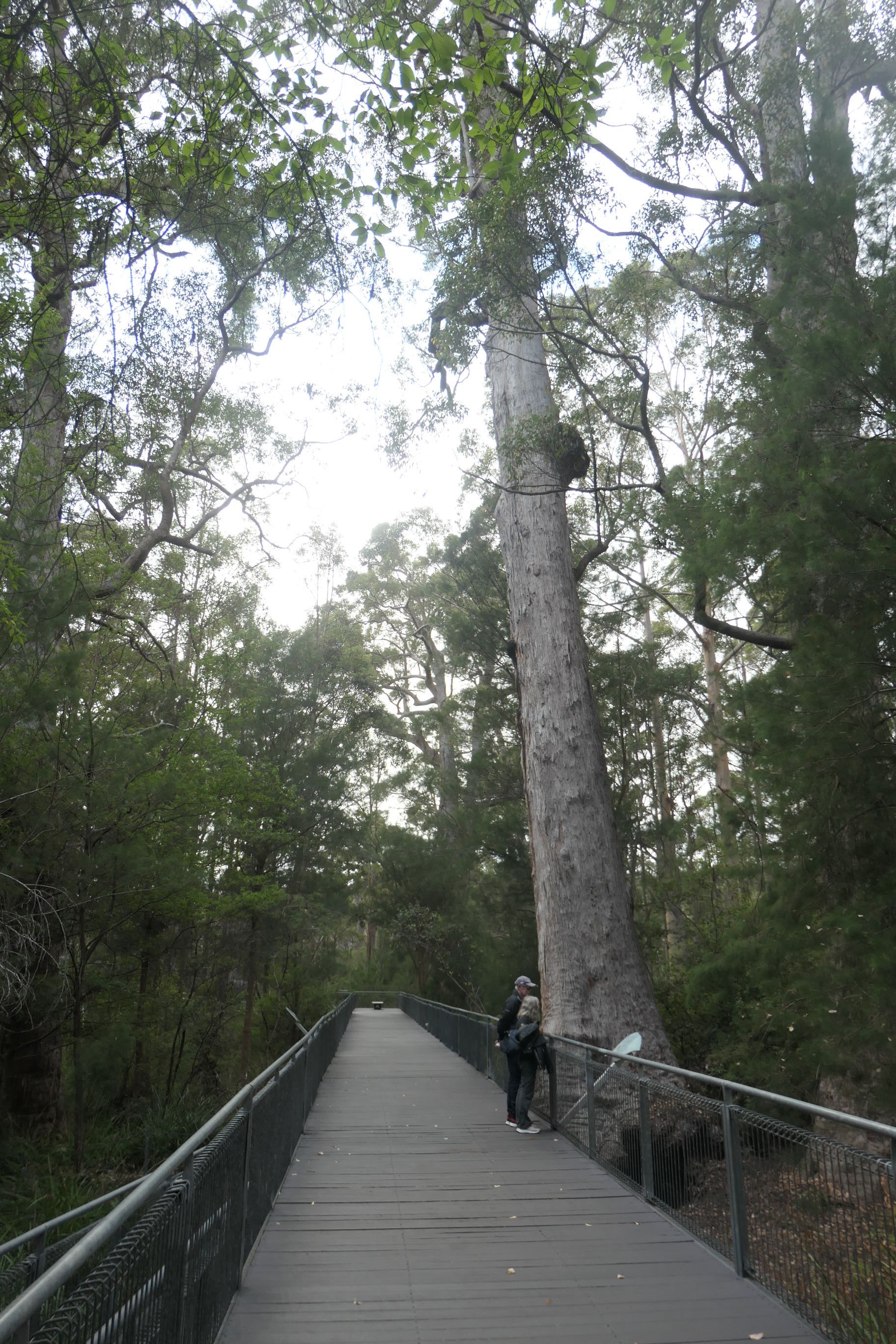
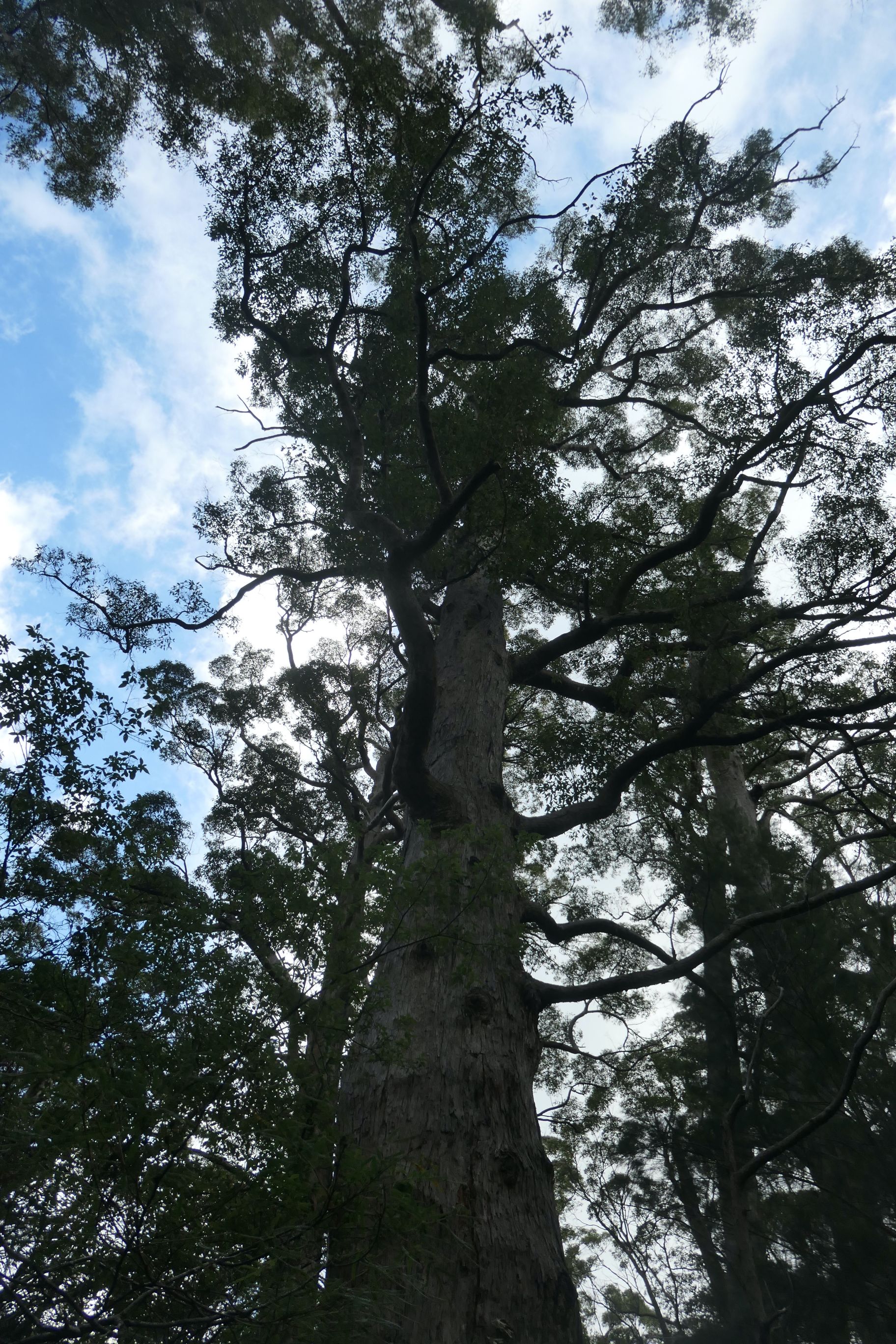
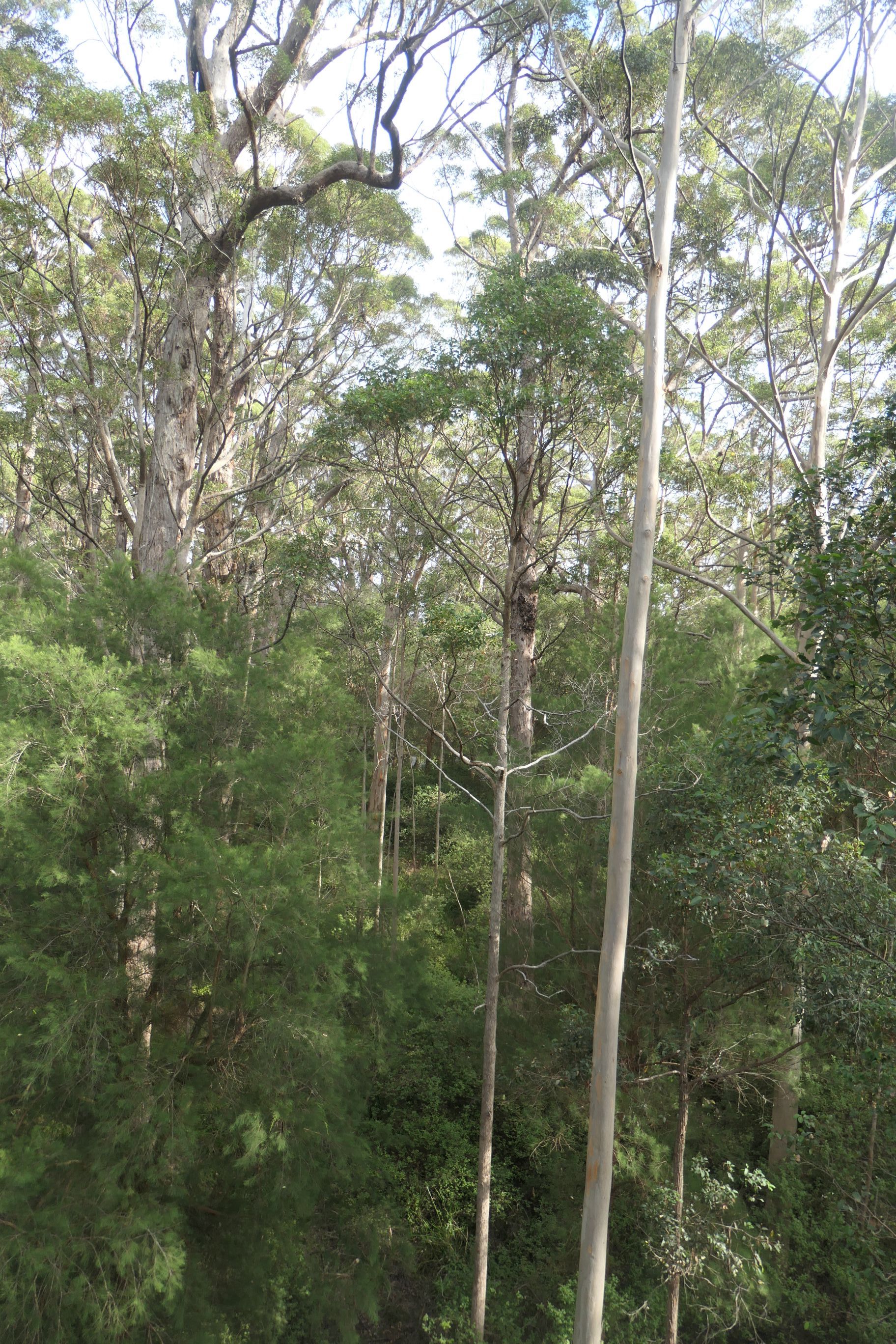
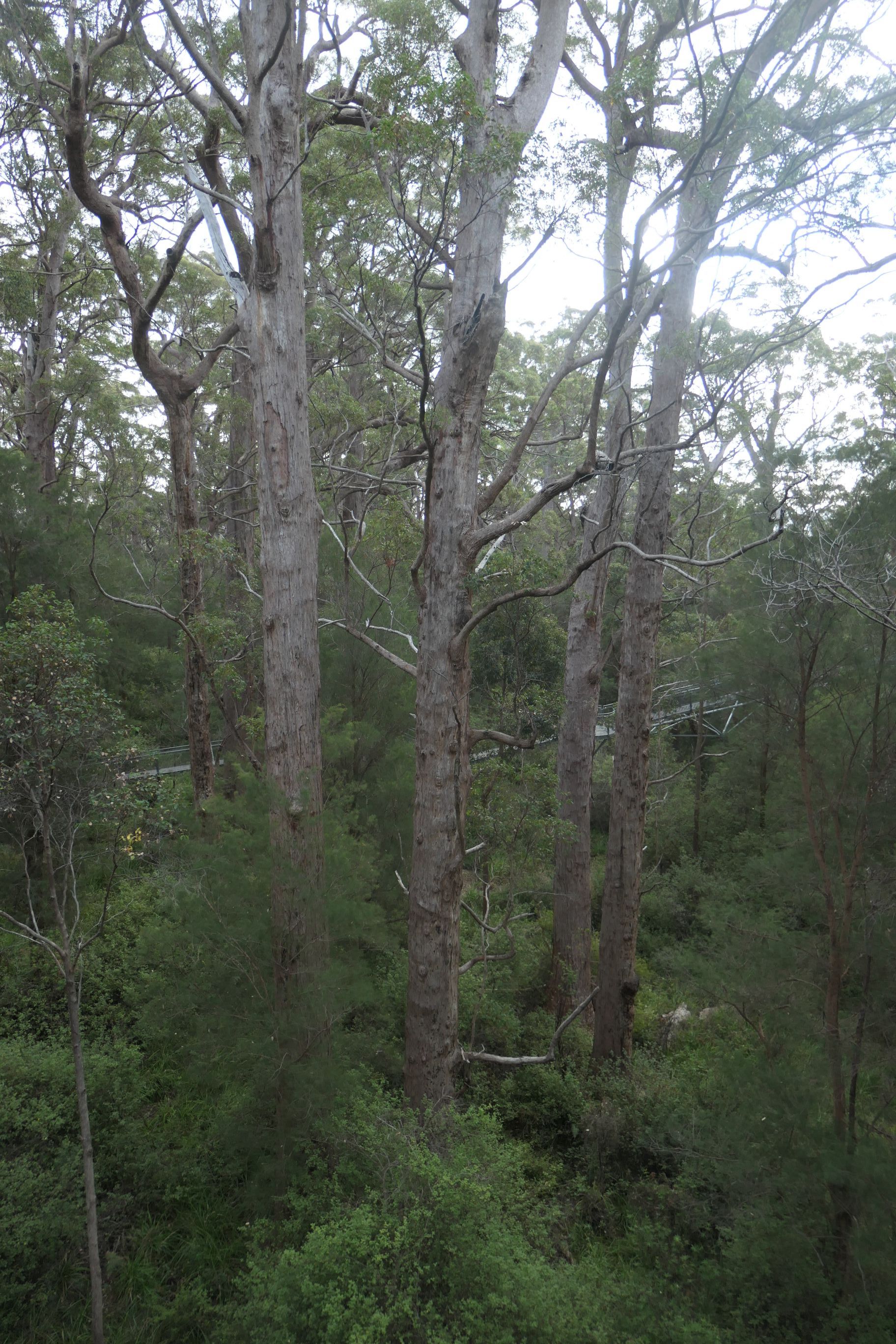
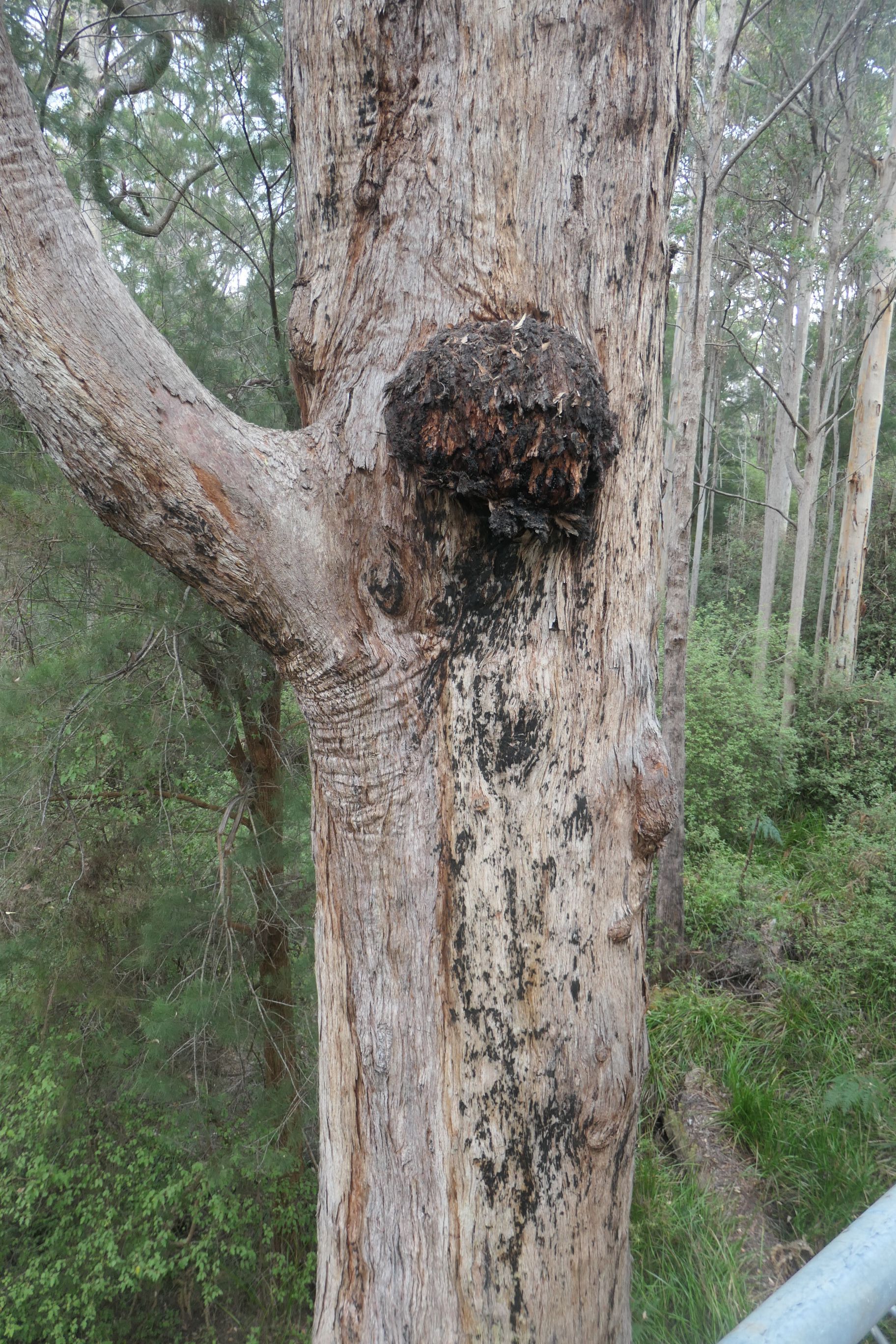
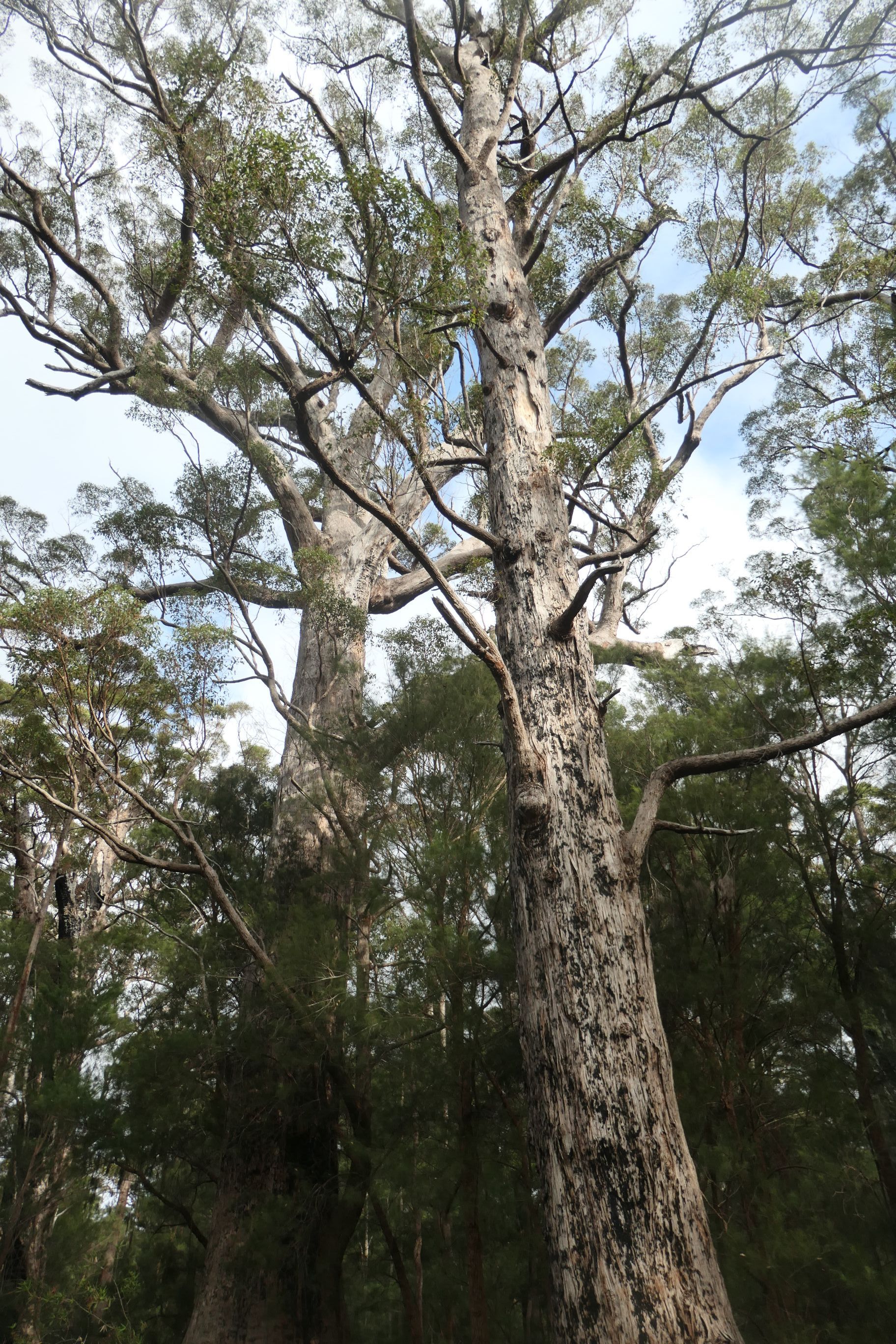
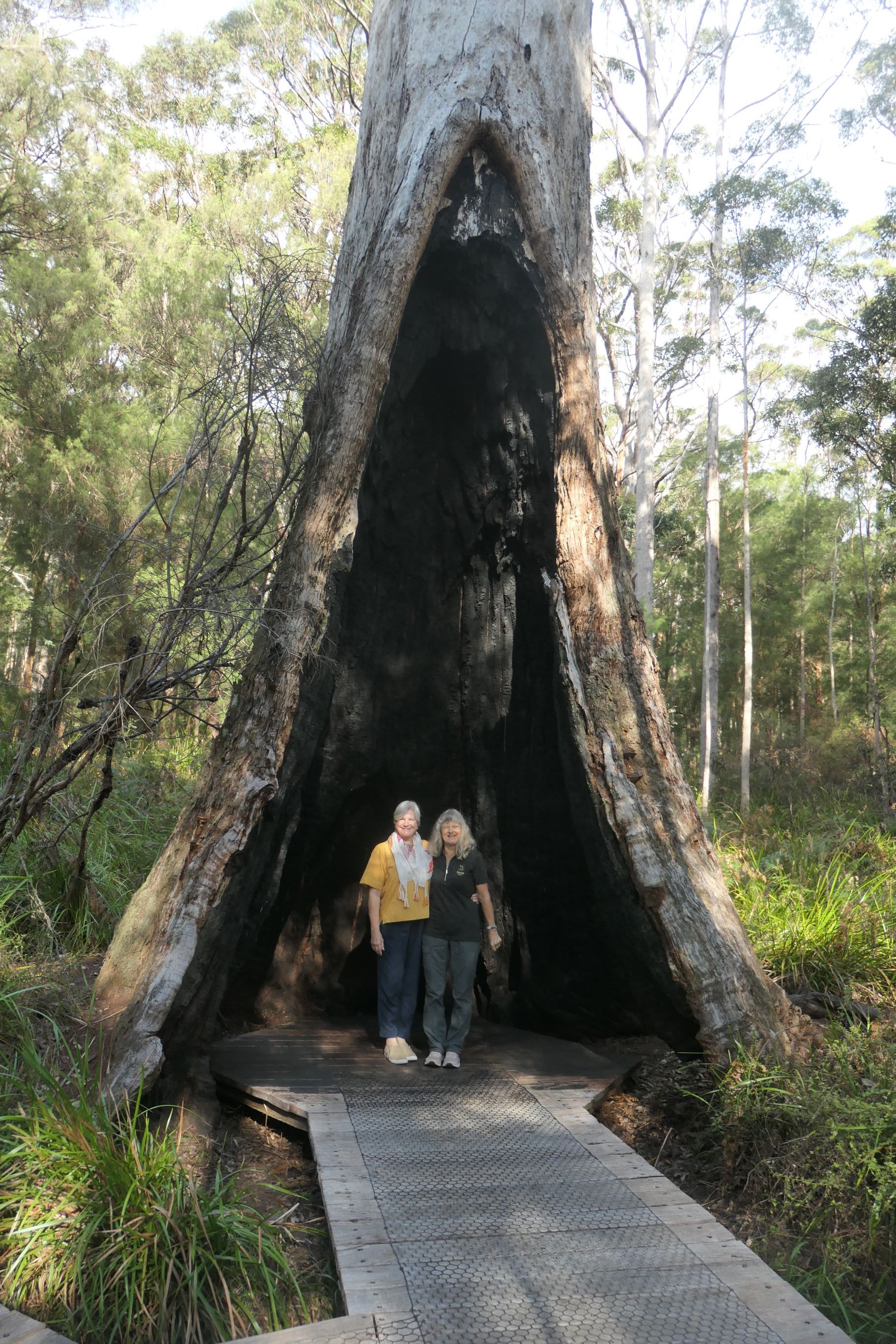
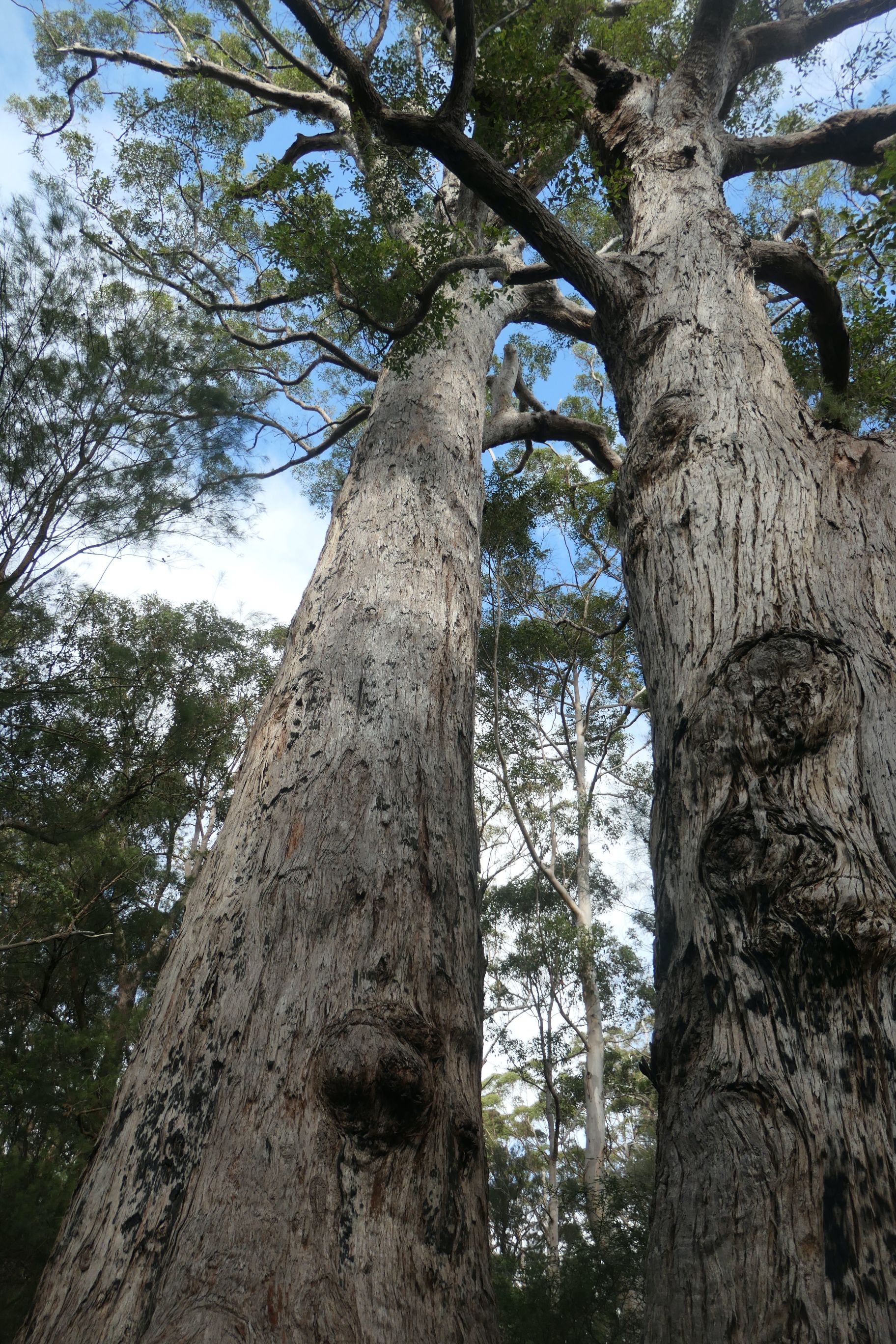
Another 20 km down the road brought us to the Valley of the Giants treetop walk. Signs warned us to keep an eye out for quokkas as we entered the carpark. That was a surprise, as we thought they could only be found on Rottnest Island, but apparently they’re quite common in this area, but usually hard to spot before dusk. The trees around us were gigantic. They’re a type of eucalypt known as tingle, which I’d never heard of before. The tingle trees have a thick layer of soft, stringy bark. They are often buttressed around a broad base, which gives them the stability to reach heights of 45 metres or more. Some even reach heights of 70 metres. A large number of the tingles have hollowed trunks near the base, where the wood has been consumed by fungi, insects and fire over a long period of time. The treetop walk is a series of elevated pathways that take you to a height of 40 metres and give you a unique view of the forest from the treetops. The pathways are suspended and gently move up and down as you walk along them. I found this really unnerving at one point. While my head was still in a good place, the motion of the suspended pathways made my legs feel rubbery and I was glad to get to the security of a steady platform so the motion would stop. I started thinking about my fear of heights and forgot for a while to appreciate the beauty of the trees. I just didn’t feel right about finishing the walk, and with no one coming up behind me, I turned around and returned the way I came. I just needed to get to one platform lower and I felt all right again. I started enjoying the trees once more. A forest floor walk completed the experience, allowing us to have a close look at the bases of the tingles and marvel at how the hollowed bases could still support such mighty trunks.





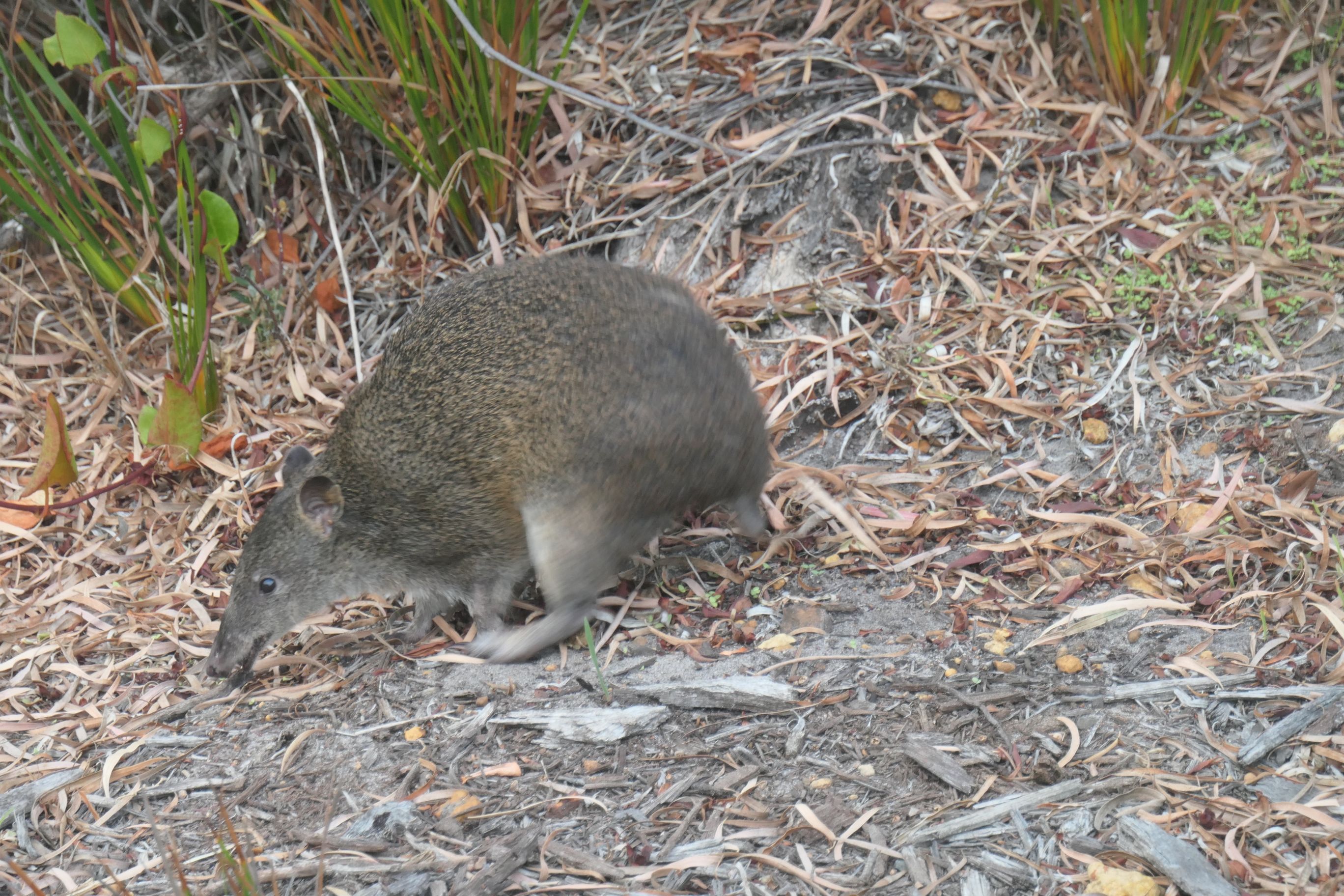
We headed east through farmland and forest until we reached William Bay National Park, near Denmark. Here we stopped at Greens Pool, a beautiful sheltered inlet protected by rocky boulders from the Southern Ocean’s waves that crash against them. Apparently many people bring their children here to teach them how to swim. It certainly looked inviting. It’s the sort of place we would have liked to spend more time at, but time was getting away from us and we still had a few things we wanted to do. A highlight was seeing a bandicoot at close range. Sadly, this little fella had lost his tail, but he seemed to be doing okay and he certainly wasn’t afraid to be in close proximity to humans.

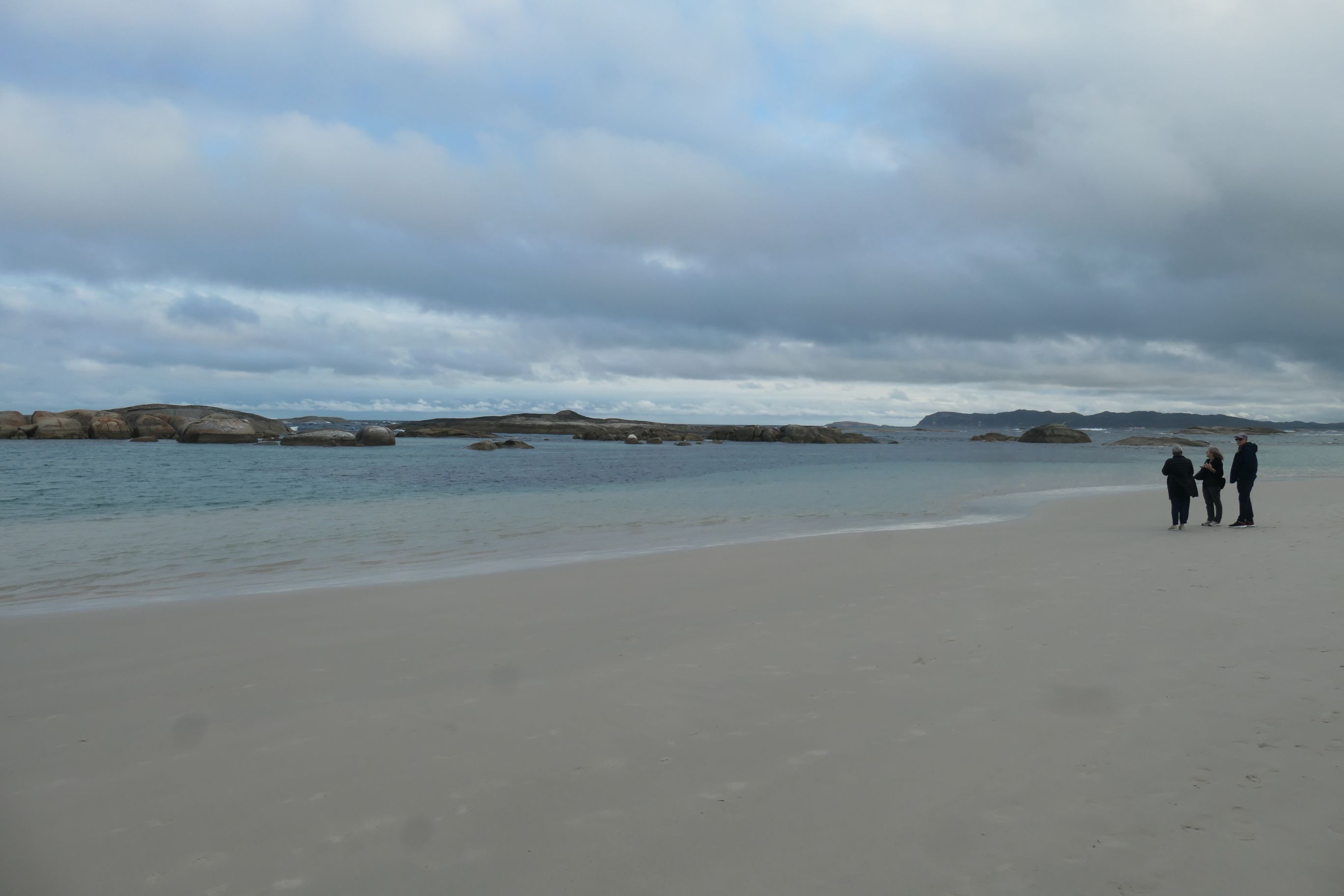
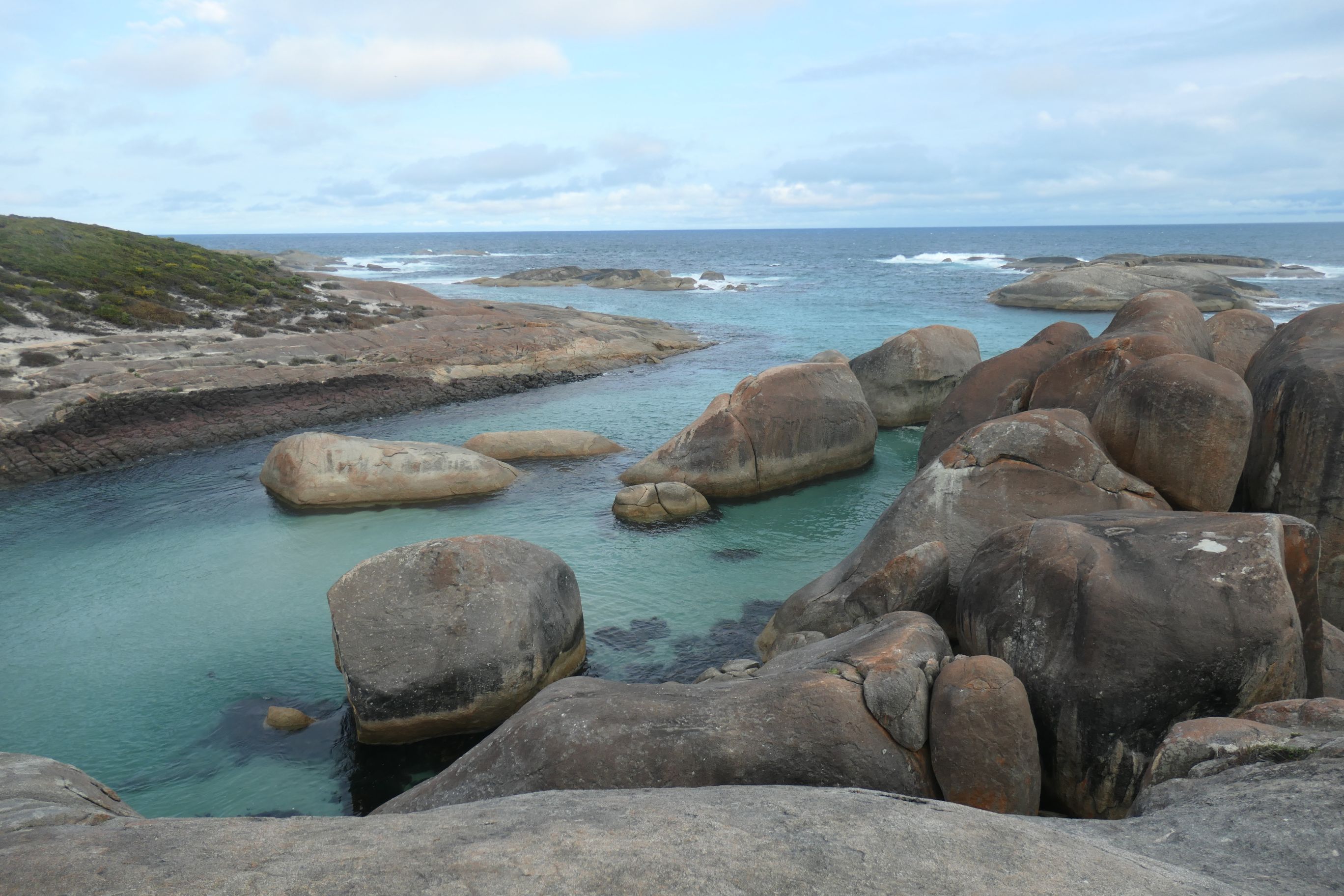
Adjacent to Greens Pool was Elephant Rocks, just a five minute walk away. Once again, time did not allow for much exploration other than a short stop, but this was another place of great natural beauty that we would have loved to have had more time for.


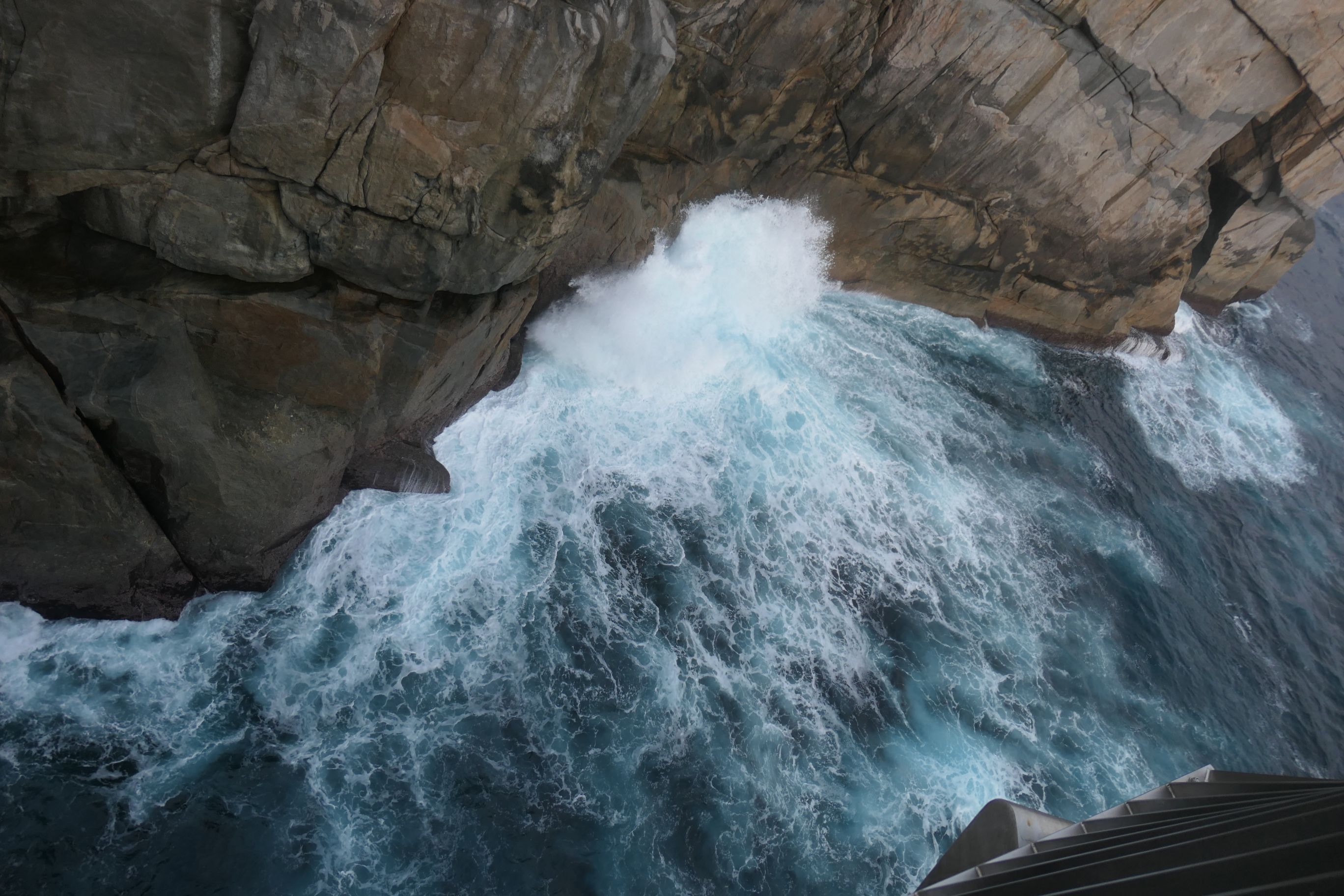
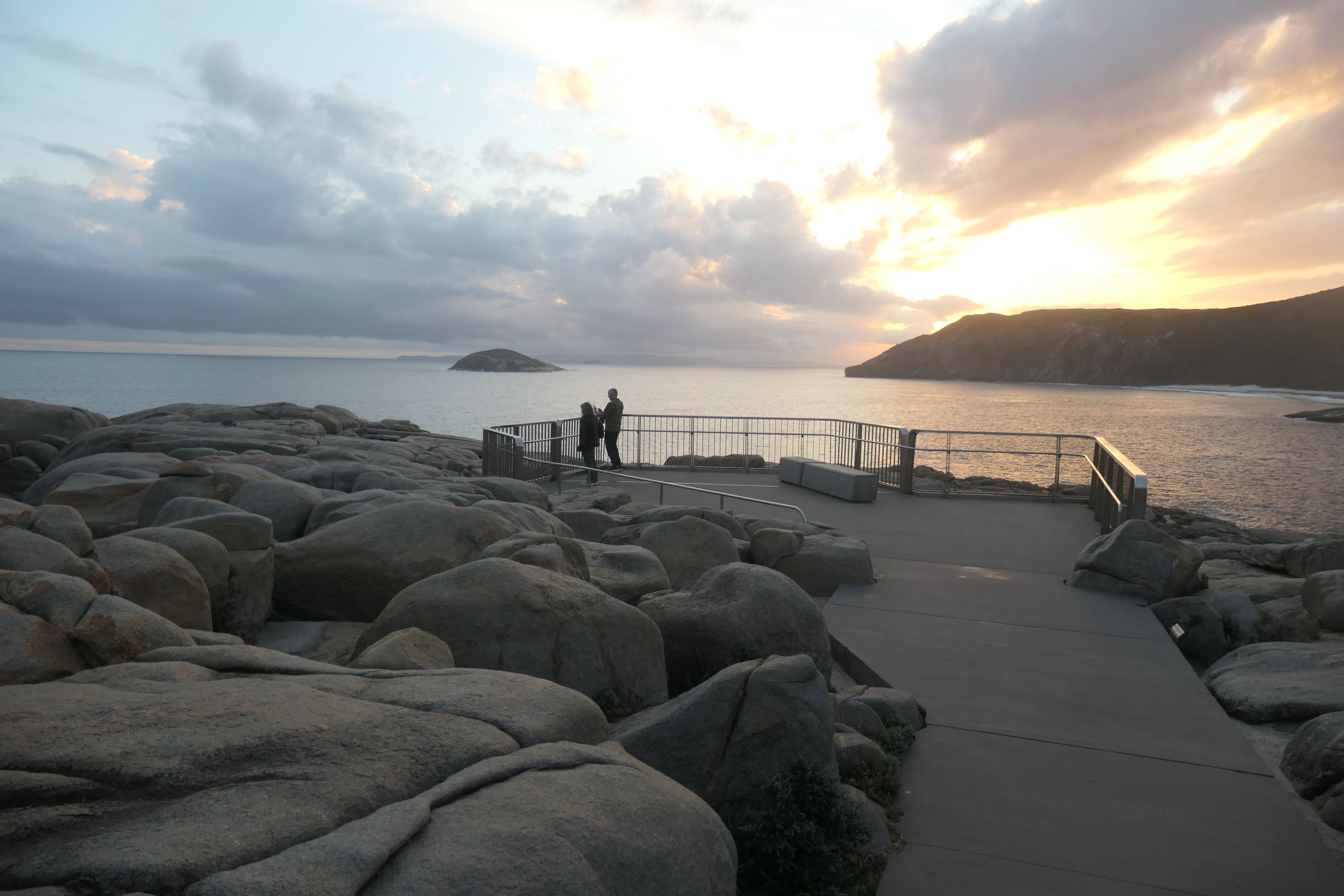
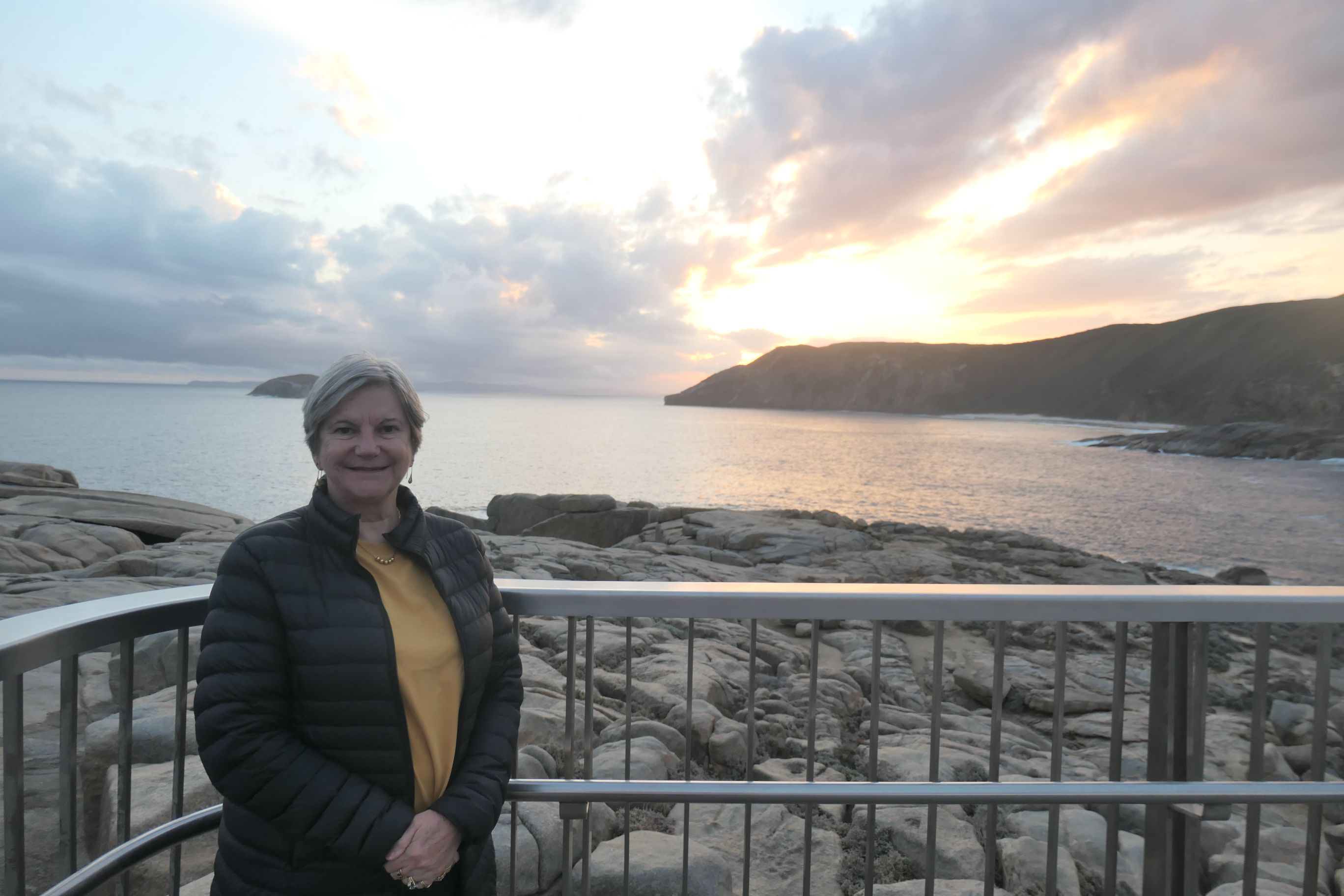
We had one more place to visit on our day’s itinerary. It was still another 100 km away, and it was the sort of place we probably couldn’t visit if darkness was falling. Thankfully the road conditions were very good, the weather had cleared and there were very few vehicles on the road to hinder us. We pulled into the carpark at The Gap, on the eastern side of Albany, at about 10 to 5 in the afternoon. The sky was getting dark. If we’d arrived another 15-20 minutes later we probably wouldn’t have seen much. The Gap is a channel between two 40-metre high rocky cliffs where the Southern Ocean waves come surging in to crash against the sides of the chasm. A lookout has been recently erected that allows visitors to walk out beyond the cliff’s edge and stand almost directly above the turbulent waters below. The views it provides are quite spectacular. Just a short walking distance away is the Natural Bridge. To the west, the dying sunlight was breaking through the clouds. We drove back to Albany, where we’ll spend the next two nights before returning to Perth.




 On The Road With Garry