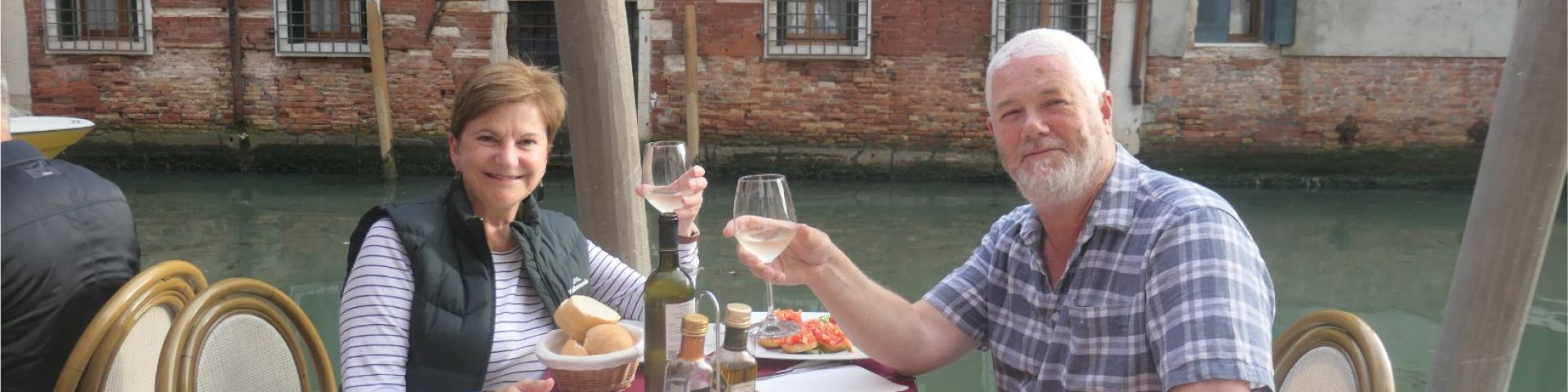
We had to get up very early this morning. We were doing a private nature tour of Unst, (click here for the link) the northernmost island of Shetland. In order to get to Unst, we had to drive to the north of Mainland, cross over to Yell on a ferry, then drive to the north of Yell and cross to Unst on another ferry. I’d been in touch with Dave, our guide, and he suggested we should get the 7.45 am ferry from Mainland to Yell and the 8.50 am ferry from Yell to Unst.
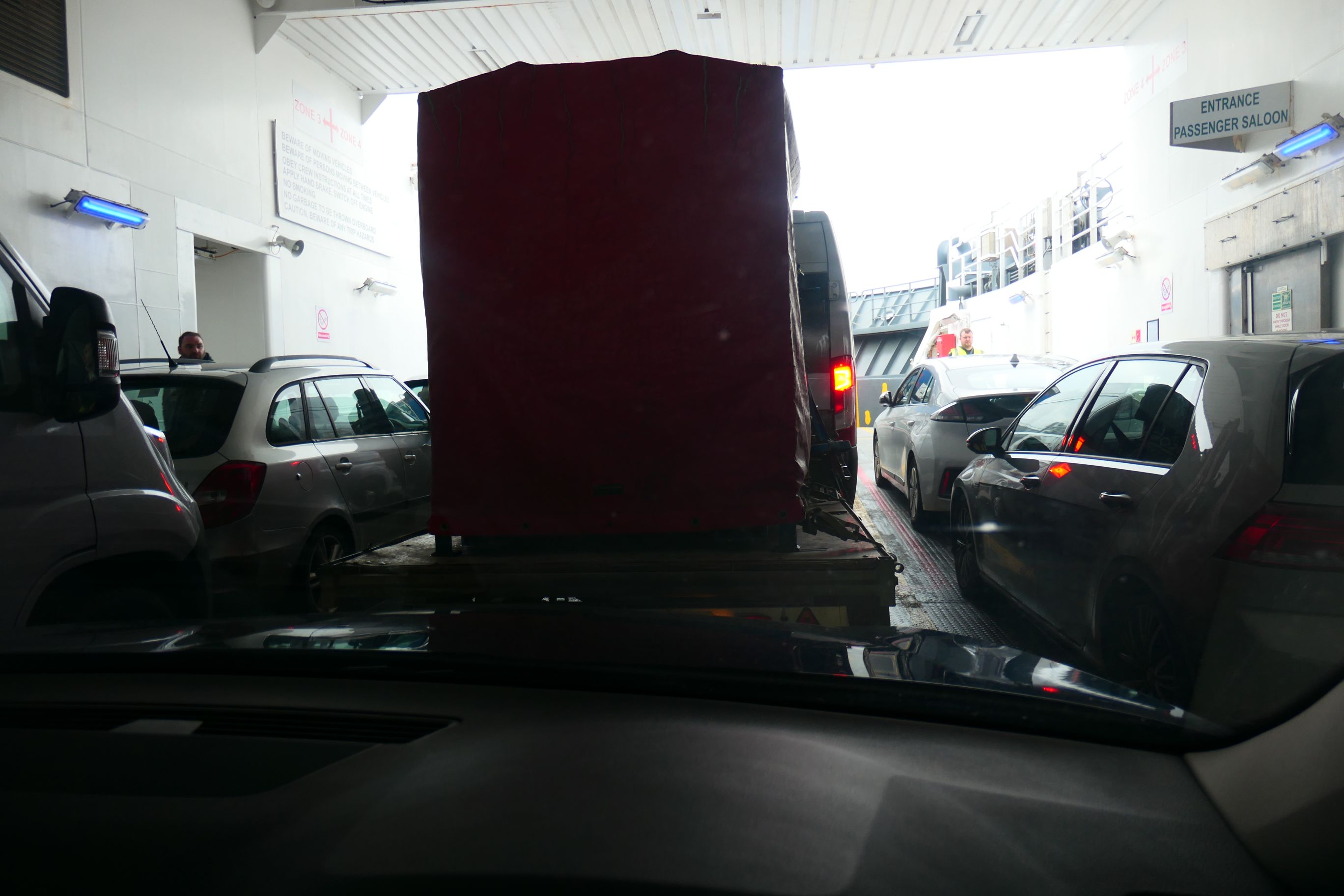
We left Lerwick at about 6.55 am and I drove north to Toft. We got there by 7.35 am and joined the queue of cars that had pre-booked tickets. There are no photos of the drive north because I was behind the wheel. We stayed in our car on the ferry. There were three vehicle lanes side by side and only minimal space between the vehicles. They got us onto the ferry quite quickly and within minutes we began to feel a gentle swell as we crossed over the channel to Yell. I think the crossing only took ten minutes at most, and we were driving north again, this time on the only major road on Yell. Once again, because I was driving there are no photos of Yell here. We made it to the ferry terminal at Gutcher in plenty of time. Dave had told us to park the hire car here and board the ferry as foot passengers. This was a good suggestion, as it was a much smaller ferry. The crossing was even quicker than the earlier one – it seemed like only five or six minutes. The swell in the middle of the crossing felt stronger than the previous one.


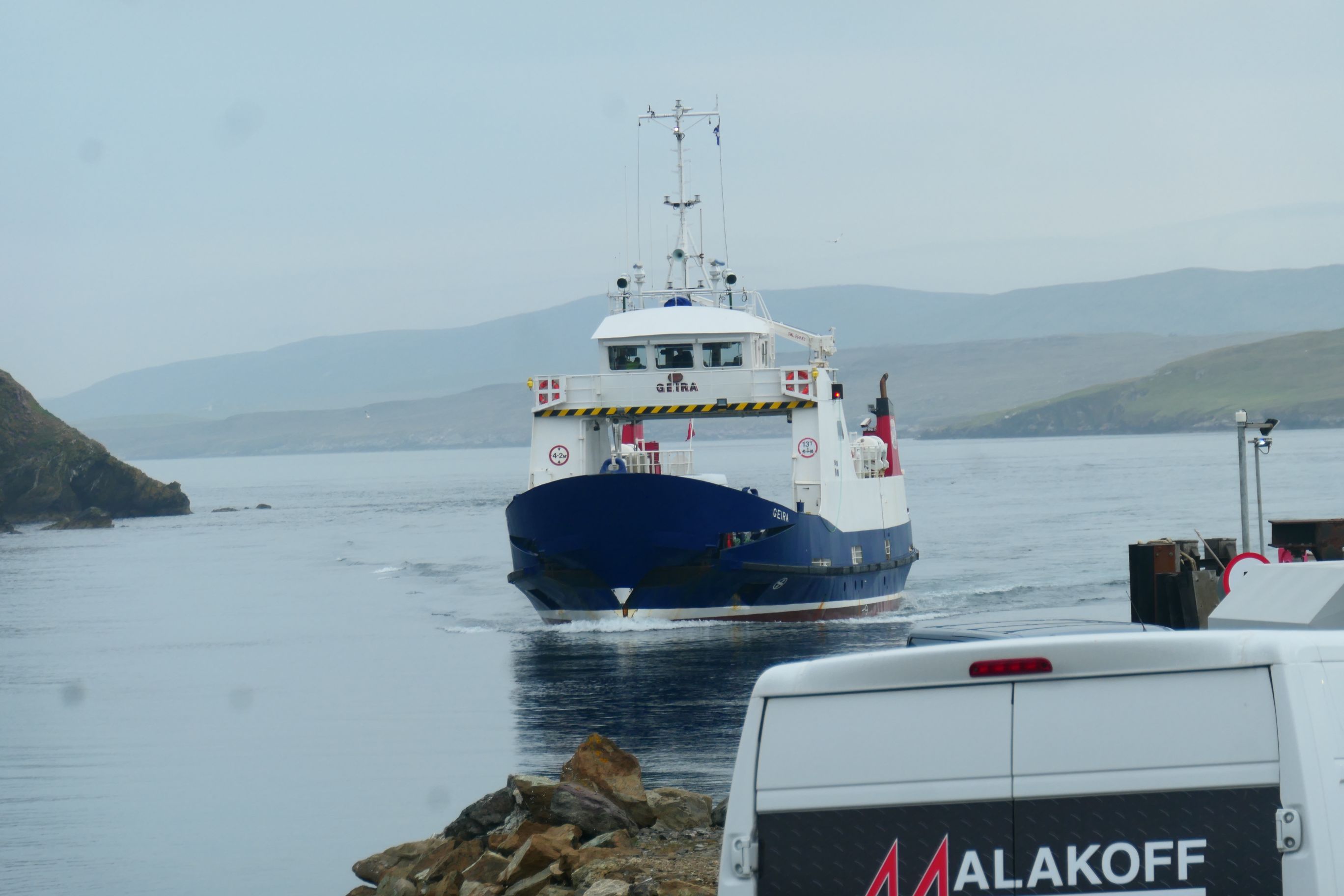
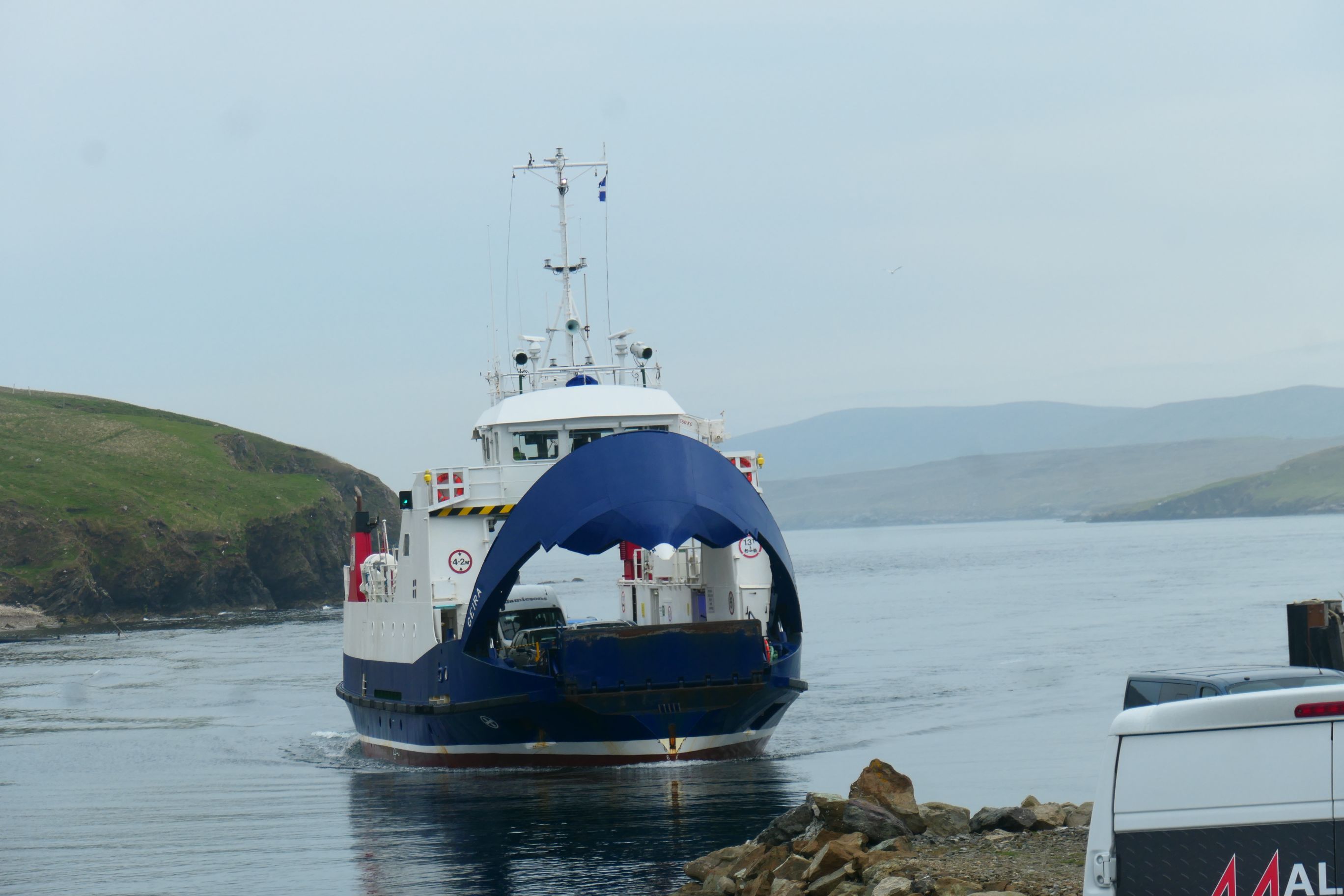


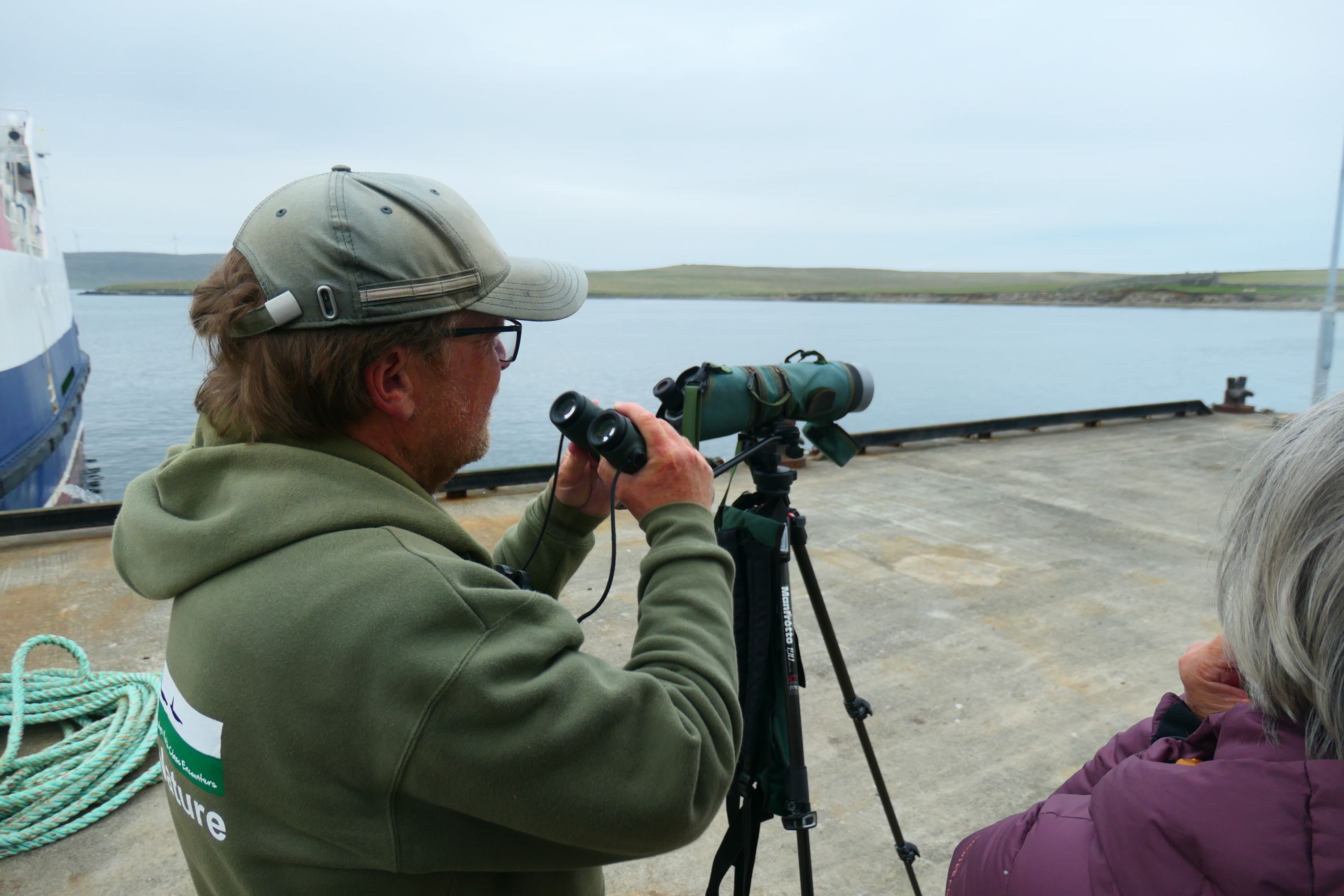
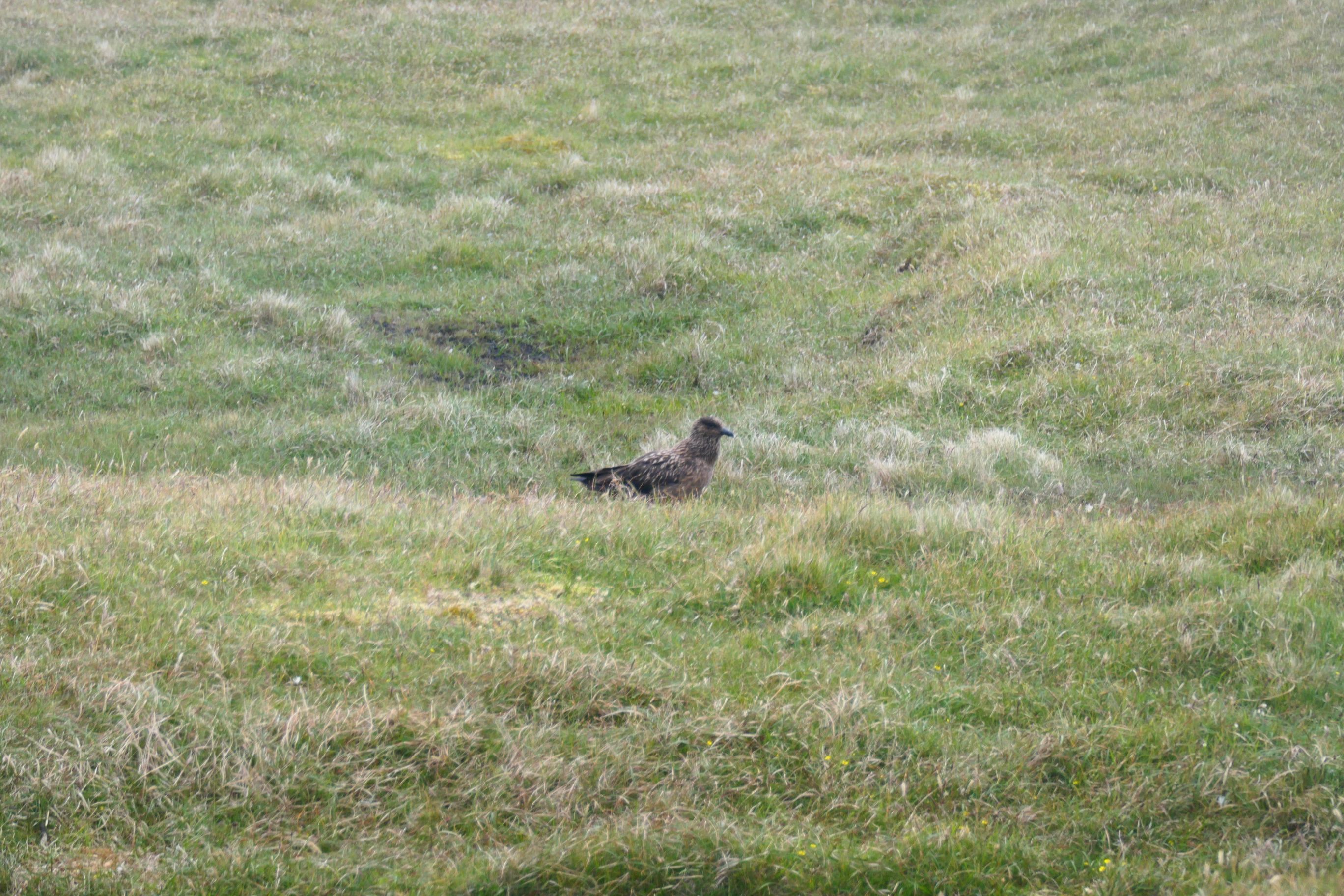
Dave was waiting for us with his tripod set up on the jetty and a powerful telescope focused on the beach. He’d spotted an otter on the beach before our ferry arrived and he was hoping it might come back. It didn’t, but instead he found a great skua, known here as a bonxie, standing in a pile of seaweed that had washed up. When he encouraged us to look through the telescope and started telling us about bonxies, it was quite obvious that he had deep knowledge of the natural world.
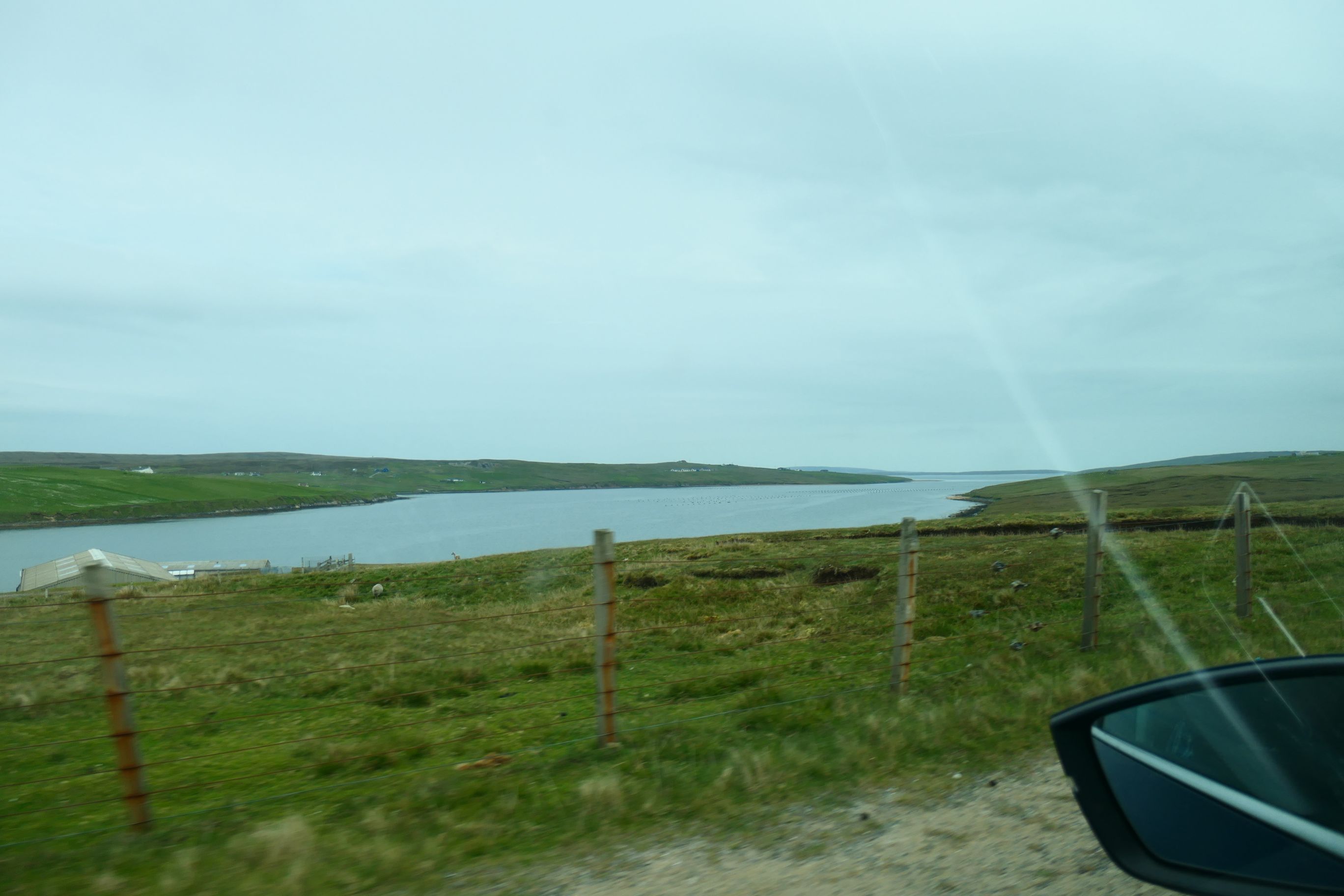
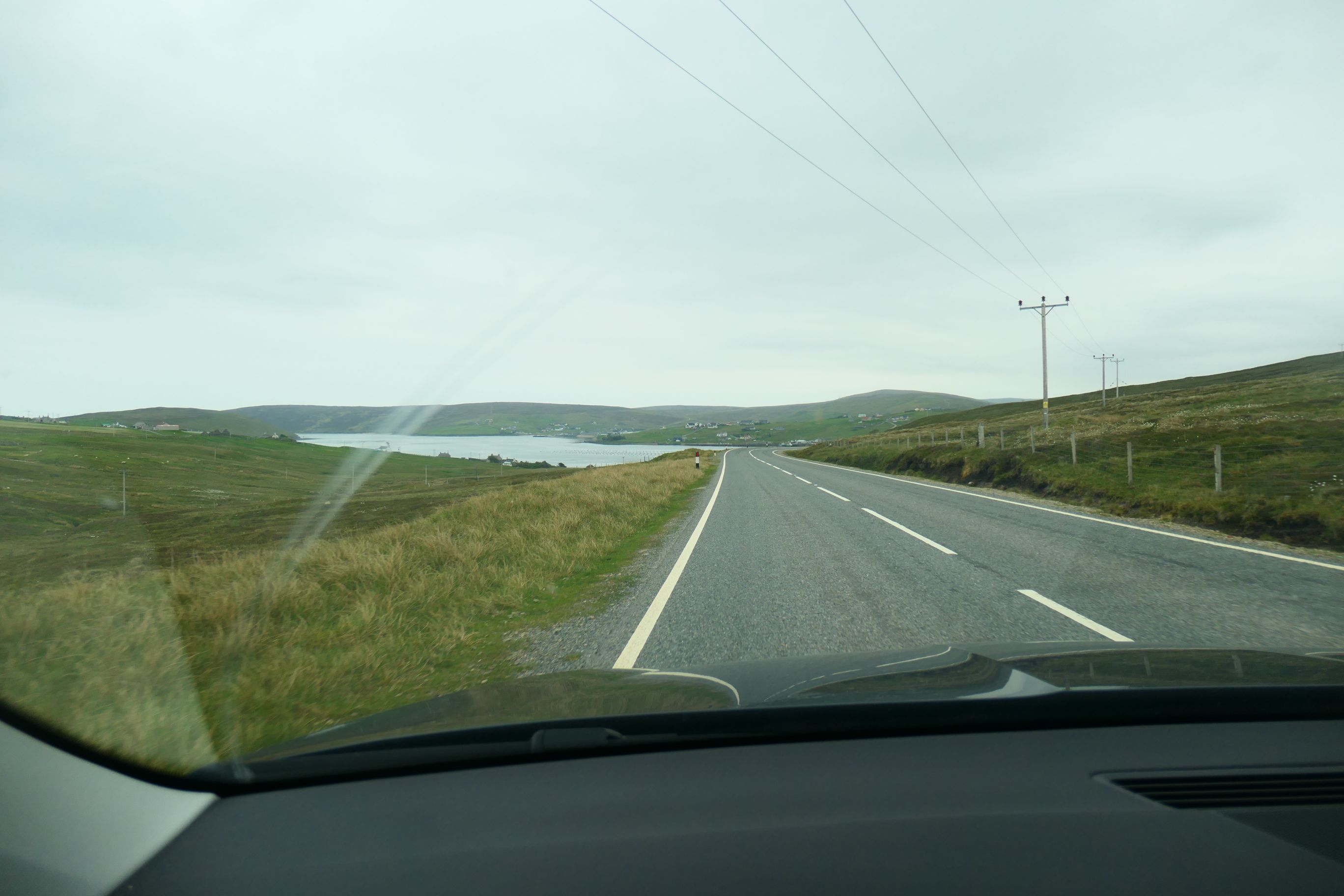
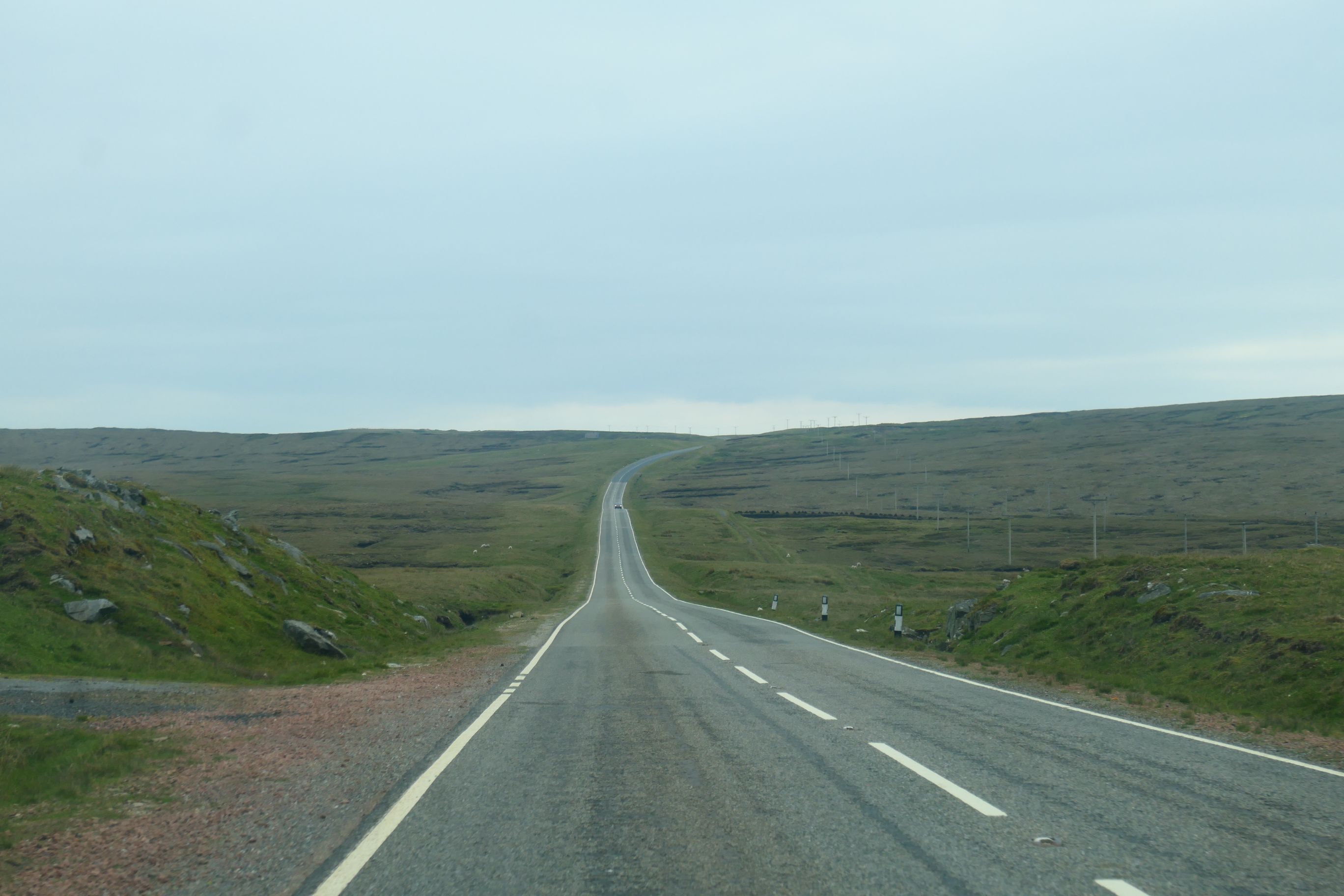
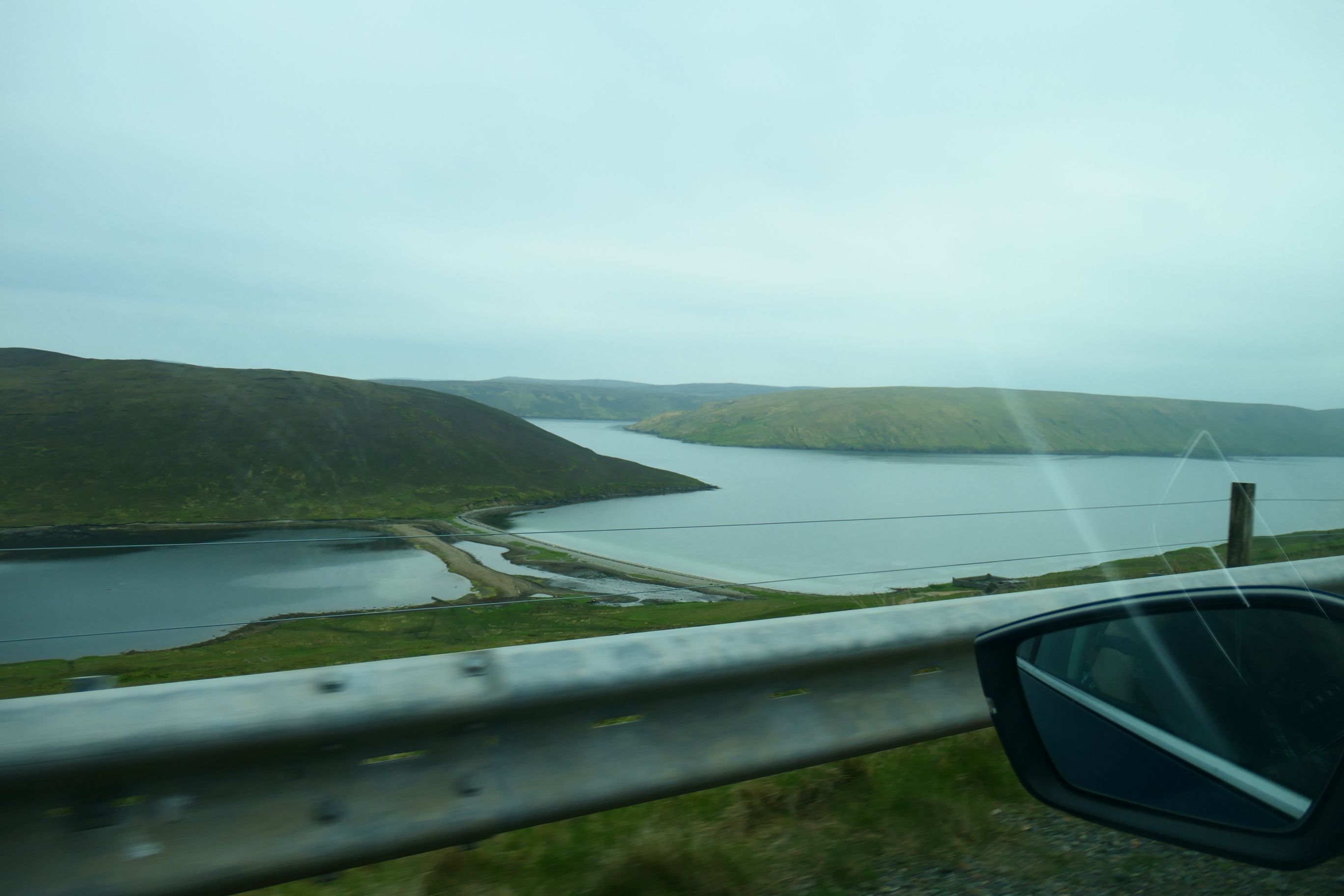
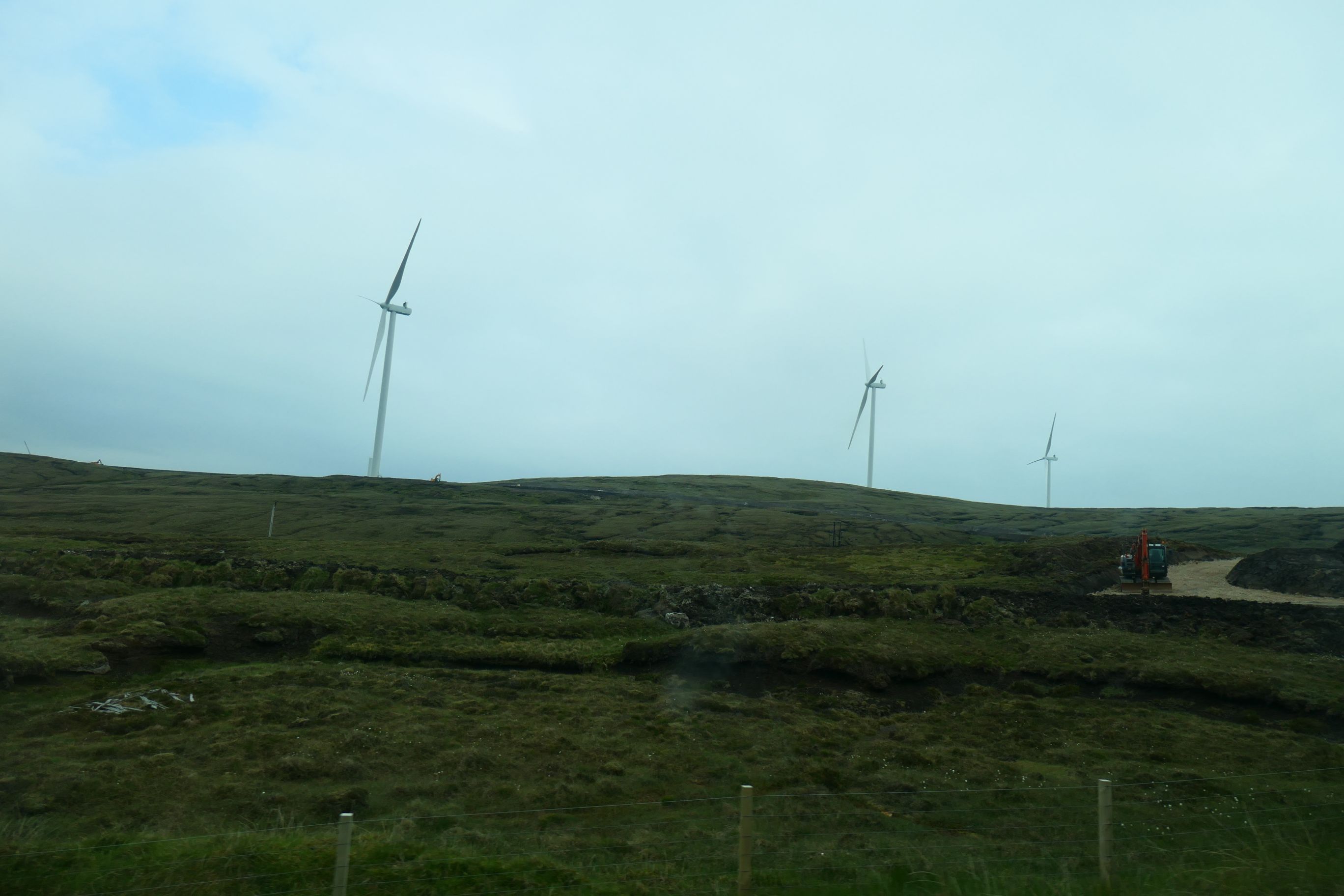
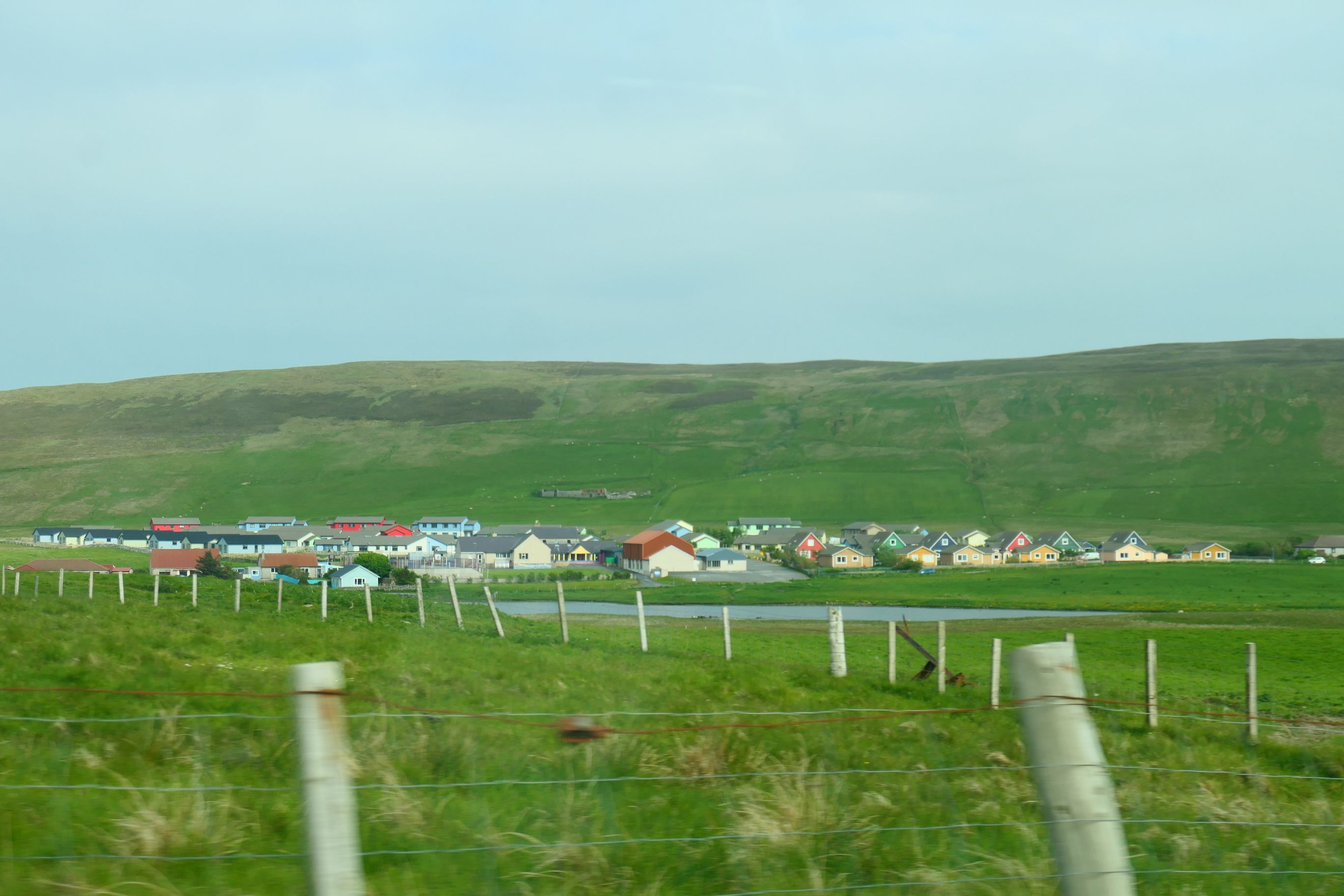
Dave kept stopping the van to point out birds. He told us about their migratory behaviour, often naming the day of the year when they would arrive in Shetland. He told us about their songs, they way they fly, their mating behaviours and how and where they nest. We were travelling through a part of Shetland that was more barren than what we had observed on Mainland. We saw quite a few abandoned crofts that had crumbled into ruins. There are fewer people living on the island these days.


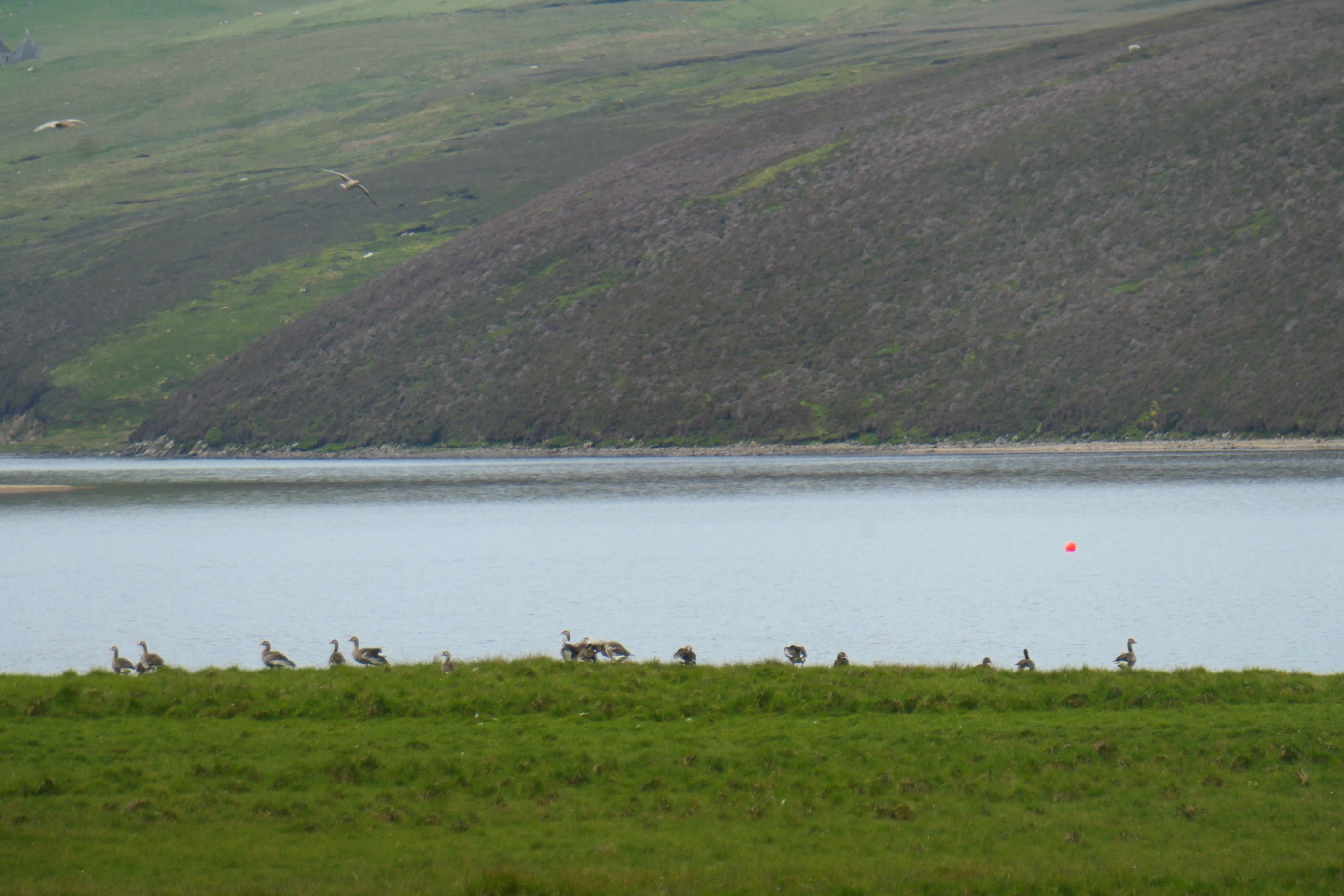
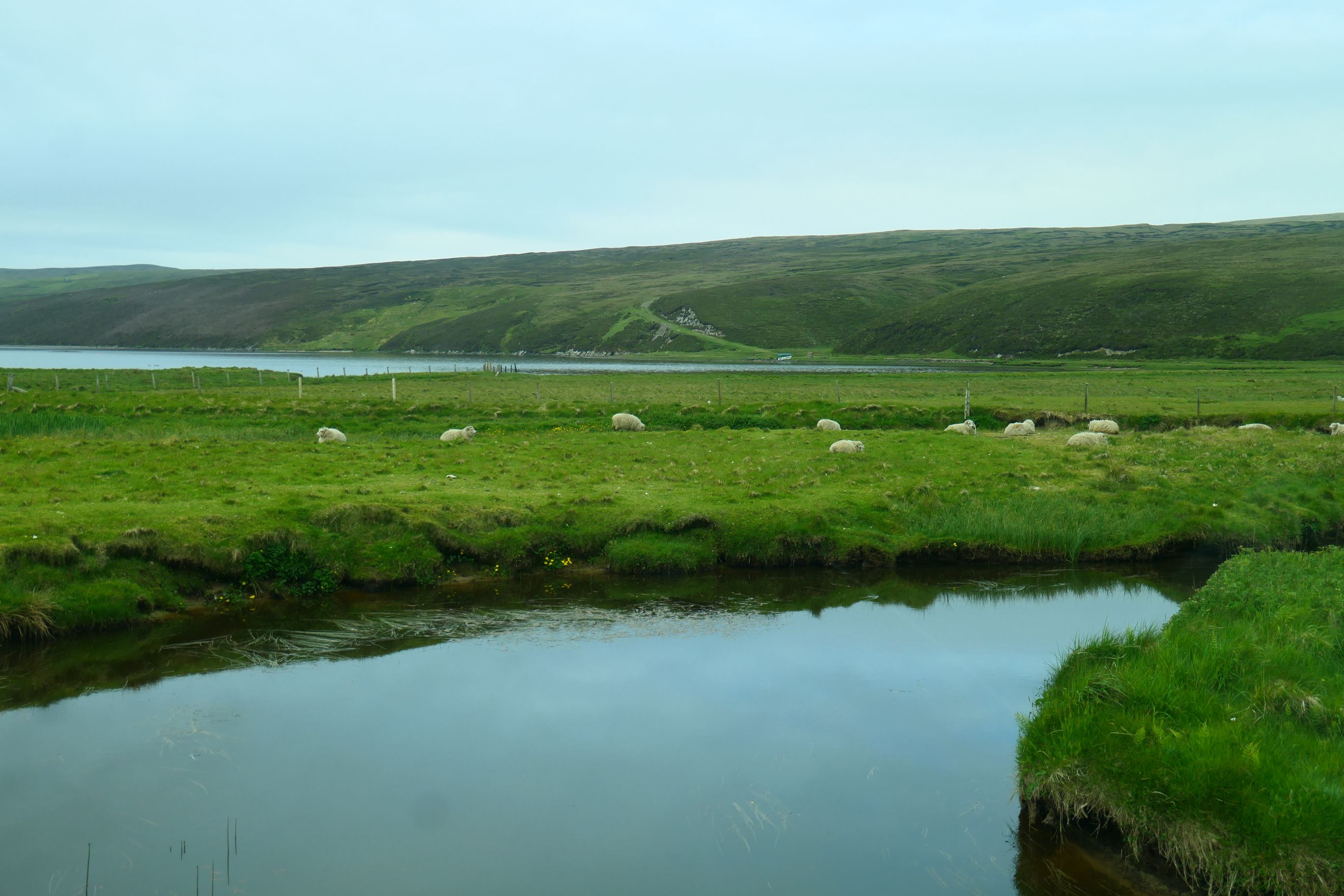

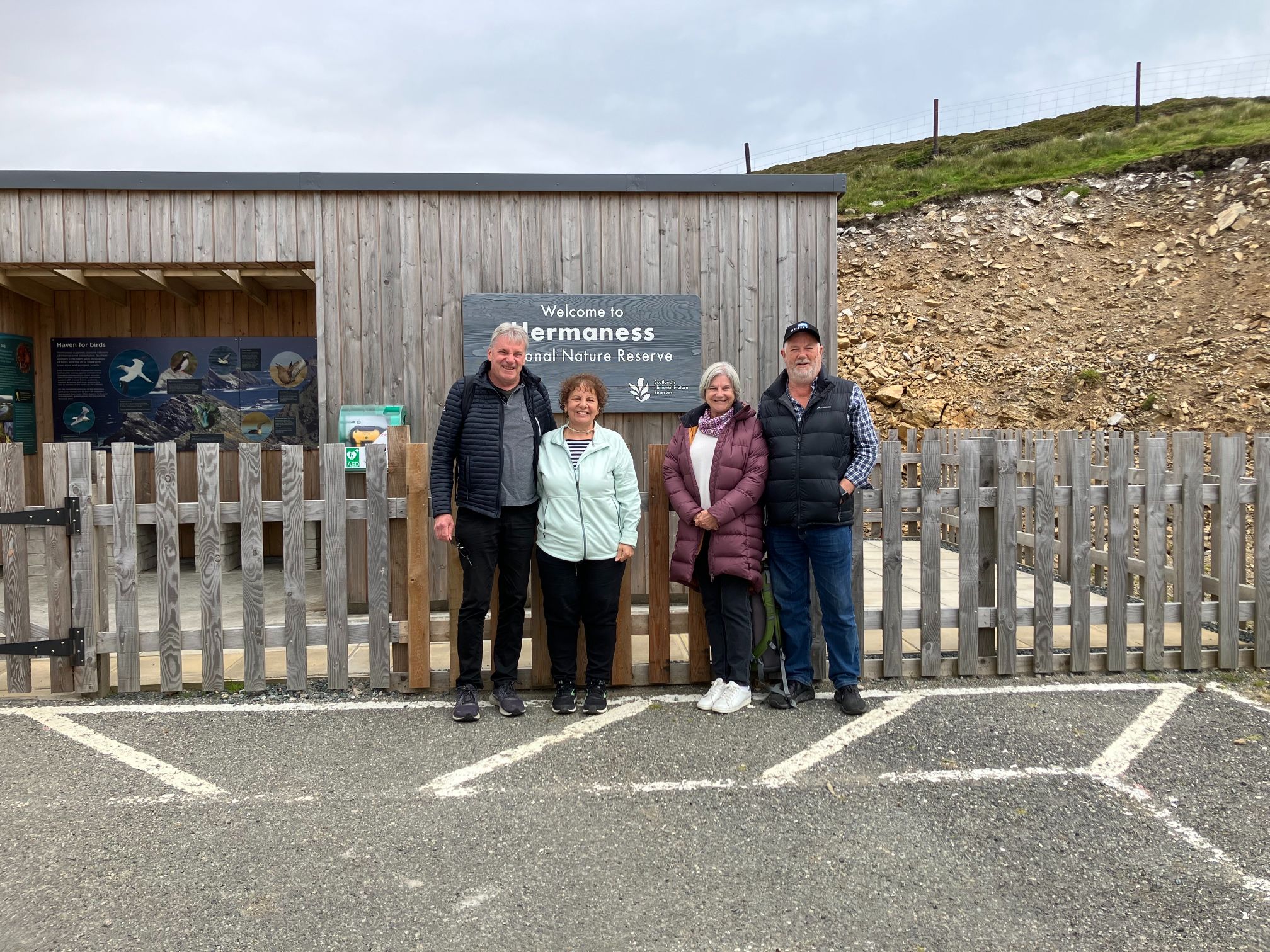
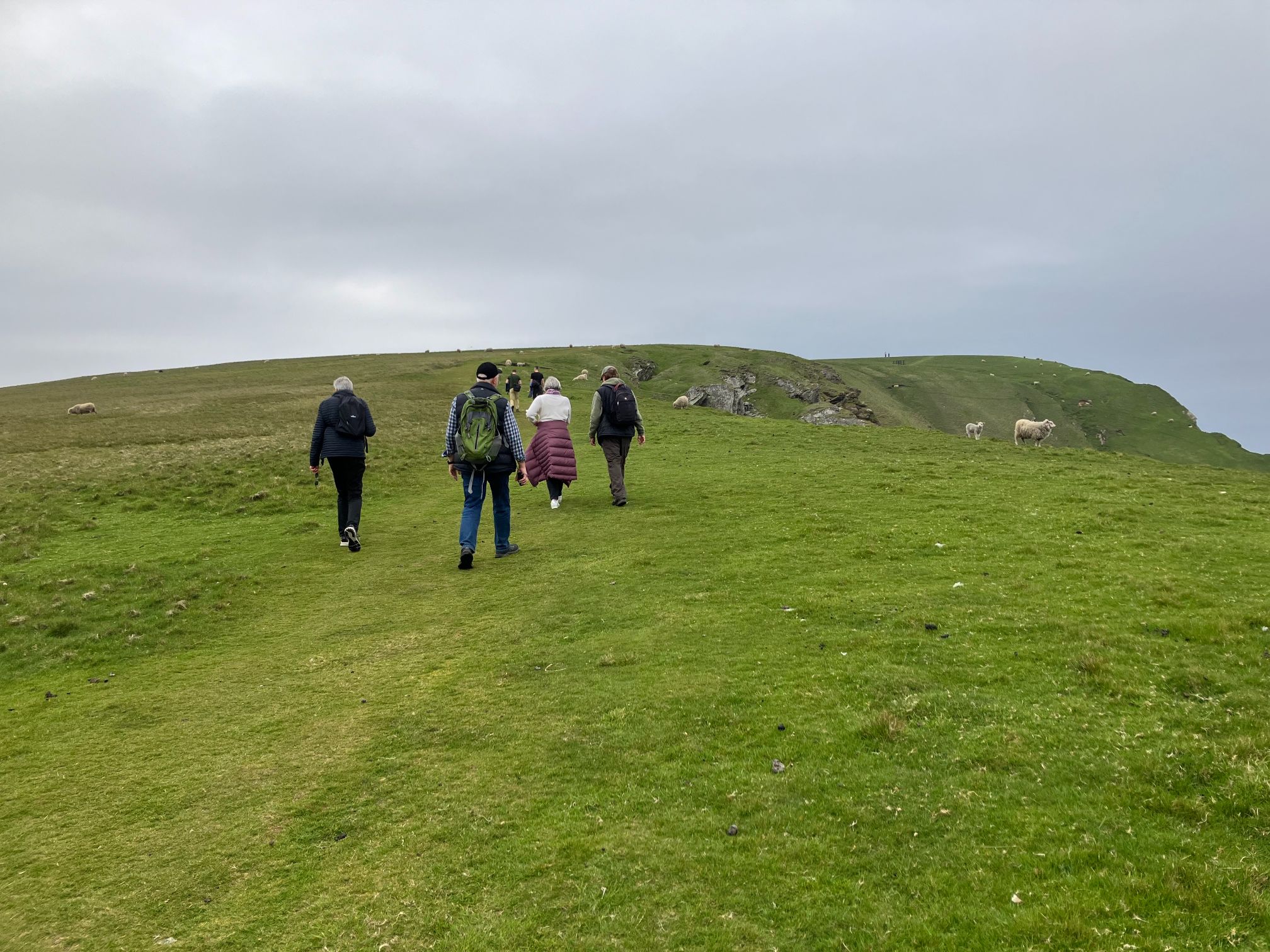
Dave pulled into the car park at the entrance to Hermaness Nature Reserve at the northern tip of Unst. He told us we had a long walk in to see the bird colonies. He said it would take us three hours, a return journey of about 5 km. The path into the reserve climbed steadily from the car park. After a short distance, the path was replaced by a boardwalk made of recycled plastic. It was only installed just over a year ago. Prior to that, walkers would hike through rugged moorland to reach the clifftops. Dave said it was a long, challenging and exhausting walk for many visitors. We were grateful for the new boardwalk. It made walking very comfortable.
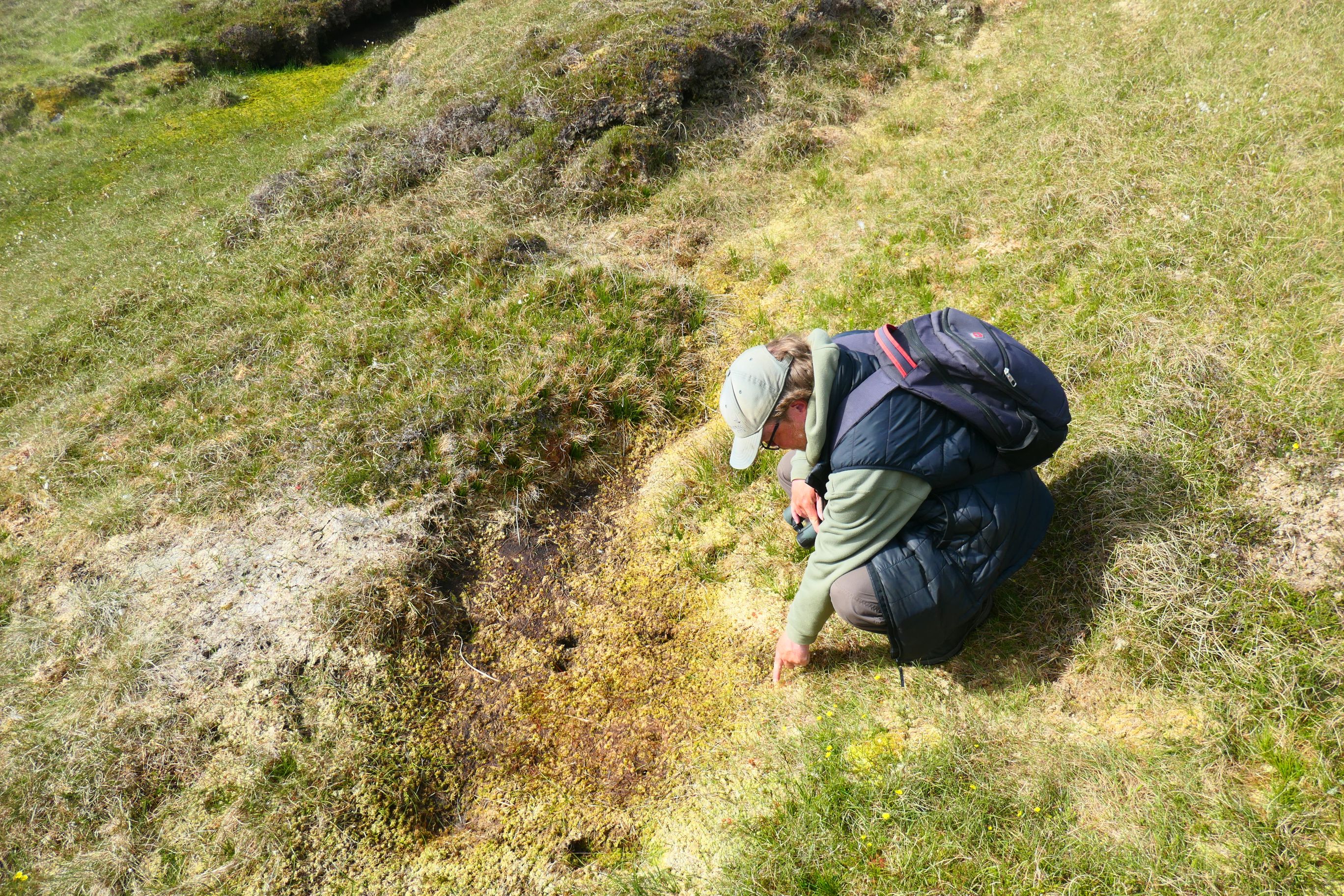
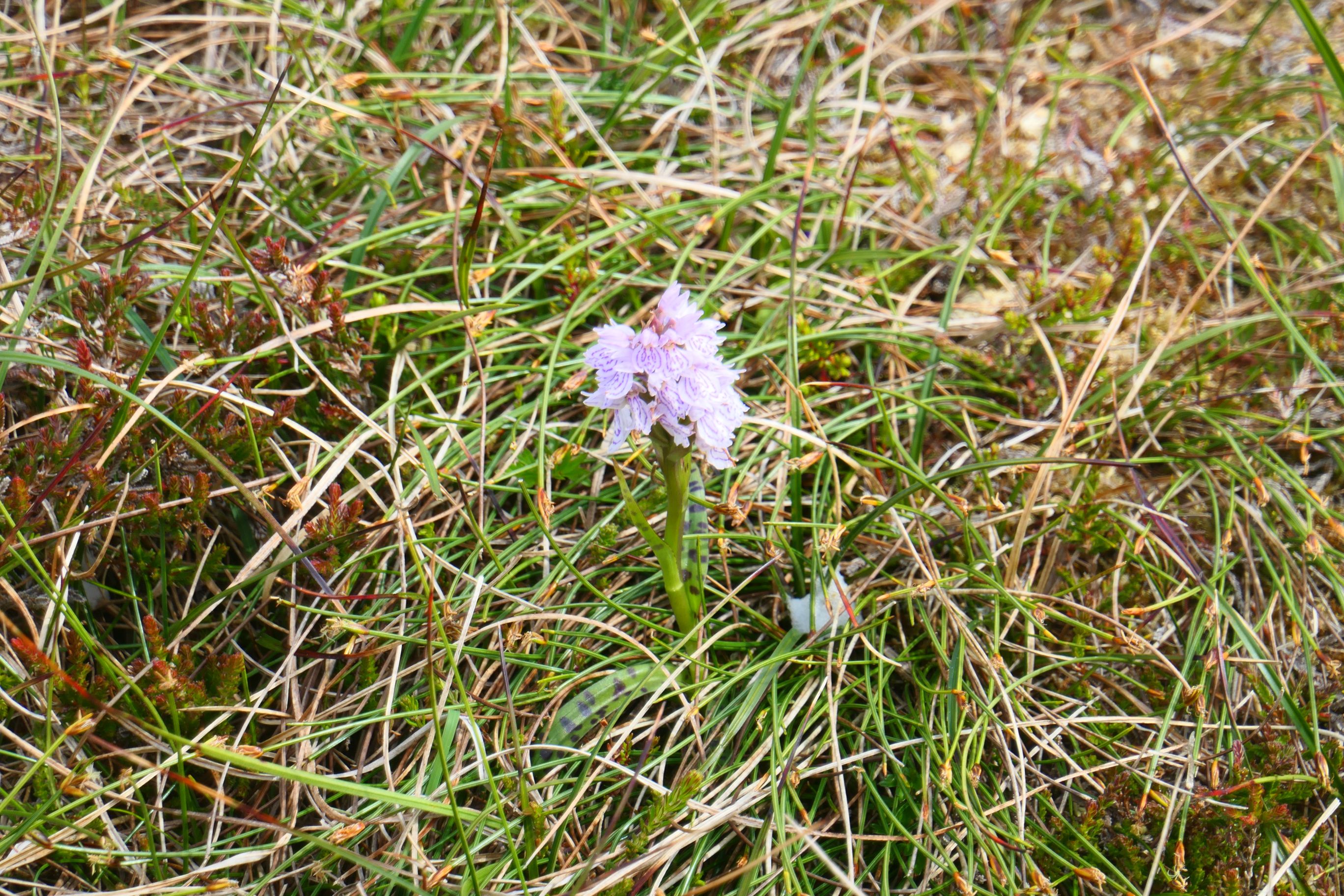
Dave stopped frequently to point out a bird or a plant and explain its peculiar characteristics or behaviour. He found tiny orchids and carnivorous plants like the honeydew. He pointed out the dangers of accidentally stepping onto an ‘oily’, in which case you might find yourself chest deep in slimy, sucking bog and struggling to pull yourself out again. He also told us how to respond if an aggrieved great skua flew straight at us in an attempt to scare us off. Apparently some walkers have been struck, causing significant injury, by the birds, which are trying to prevent people getting too close to their nests. Thankfully, Dave added, the skuas have become quite used to people using the boardwalk, so they tended to ignore us today, although Dave pointed out many of them flying overhead.
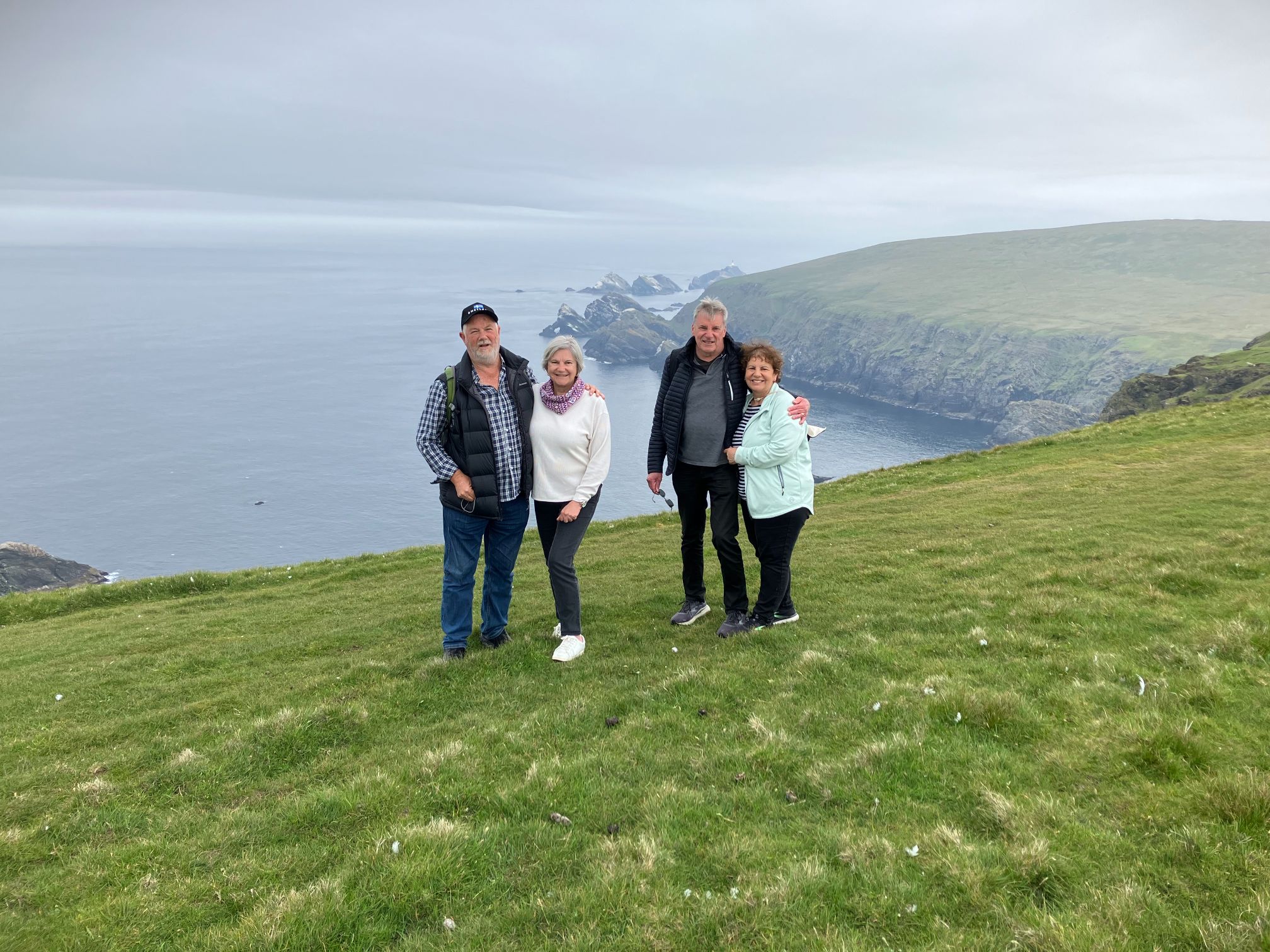
It was hot work walking, not necessarily due to the distance or the incline, but because the sun was out and it was very warm. Marg and I had expected that it would be icy cold and windy at the northernmost tip of the UK. We didn’t expect to find that it was so warm we were taking off layers. People passed us wearing tee-shirts as if it was the south of France!
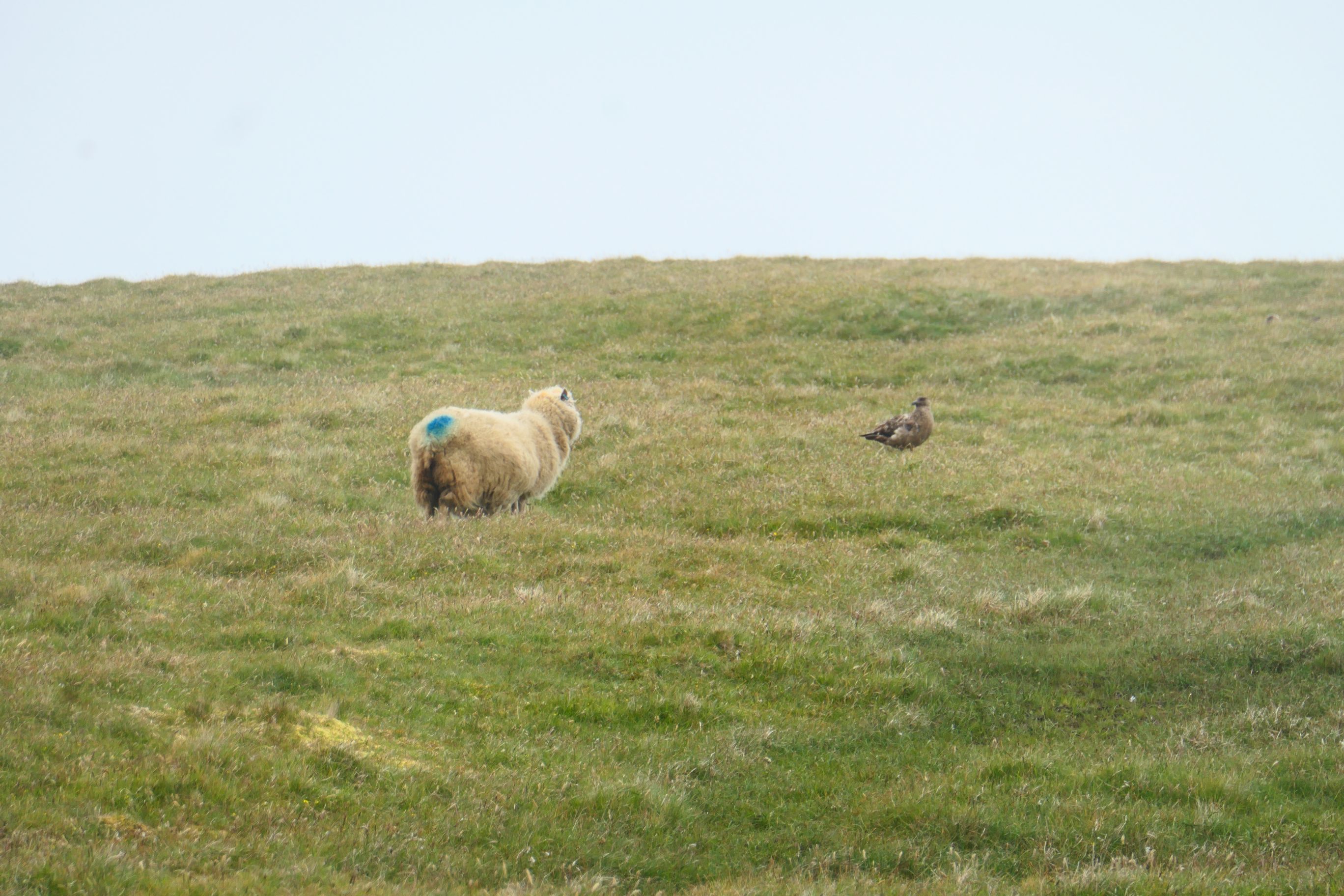
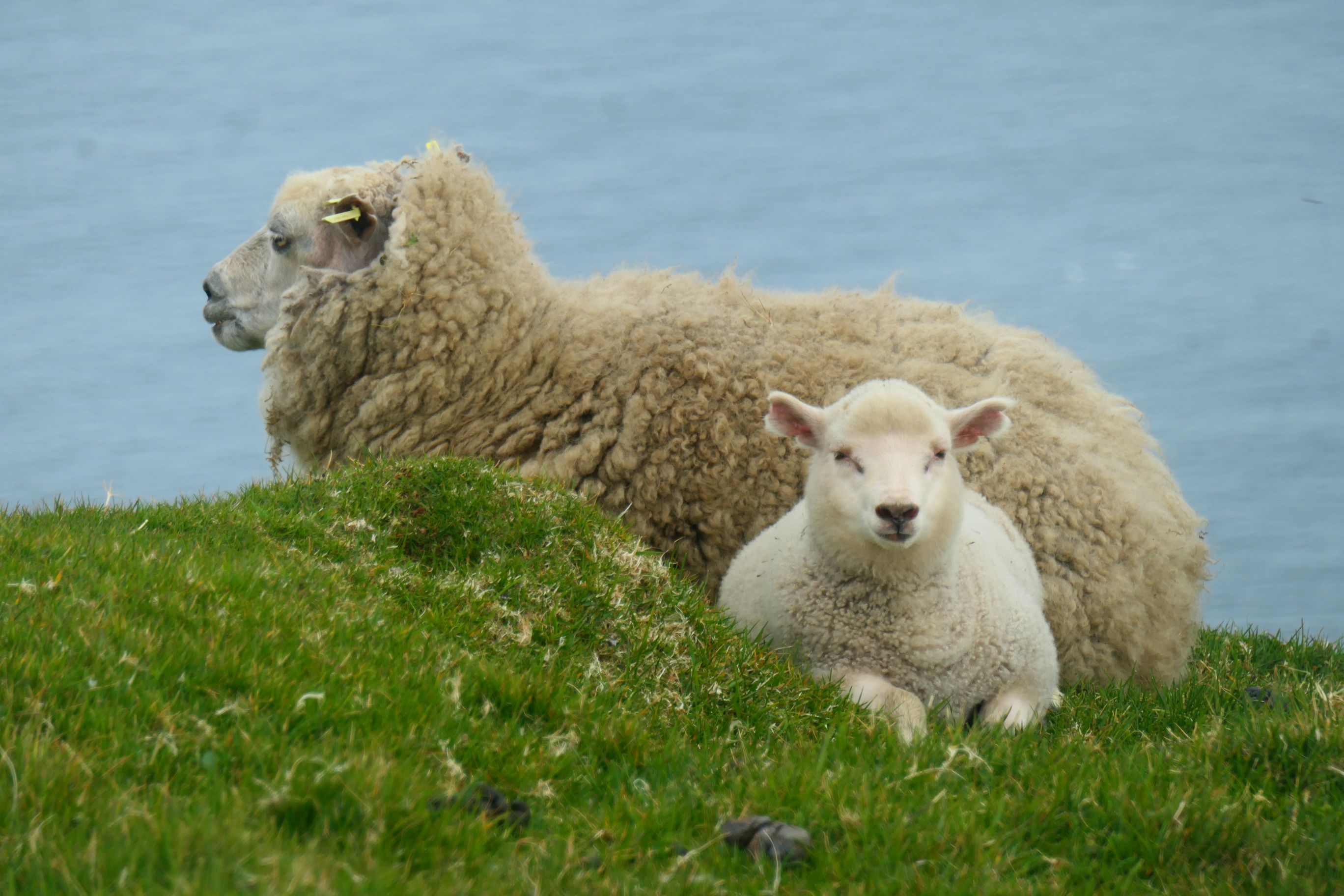
Approaching the end of the boardwalk, we were entertained by a standoff between a sheep and a bonxie. Dave told us the bonxie always wins.


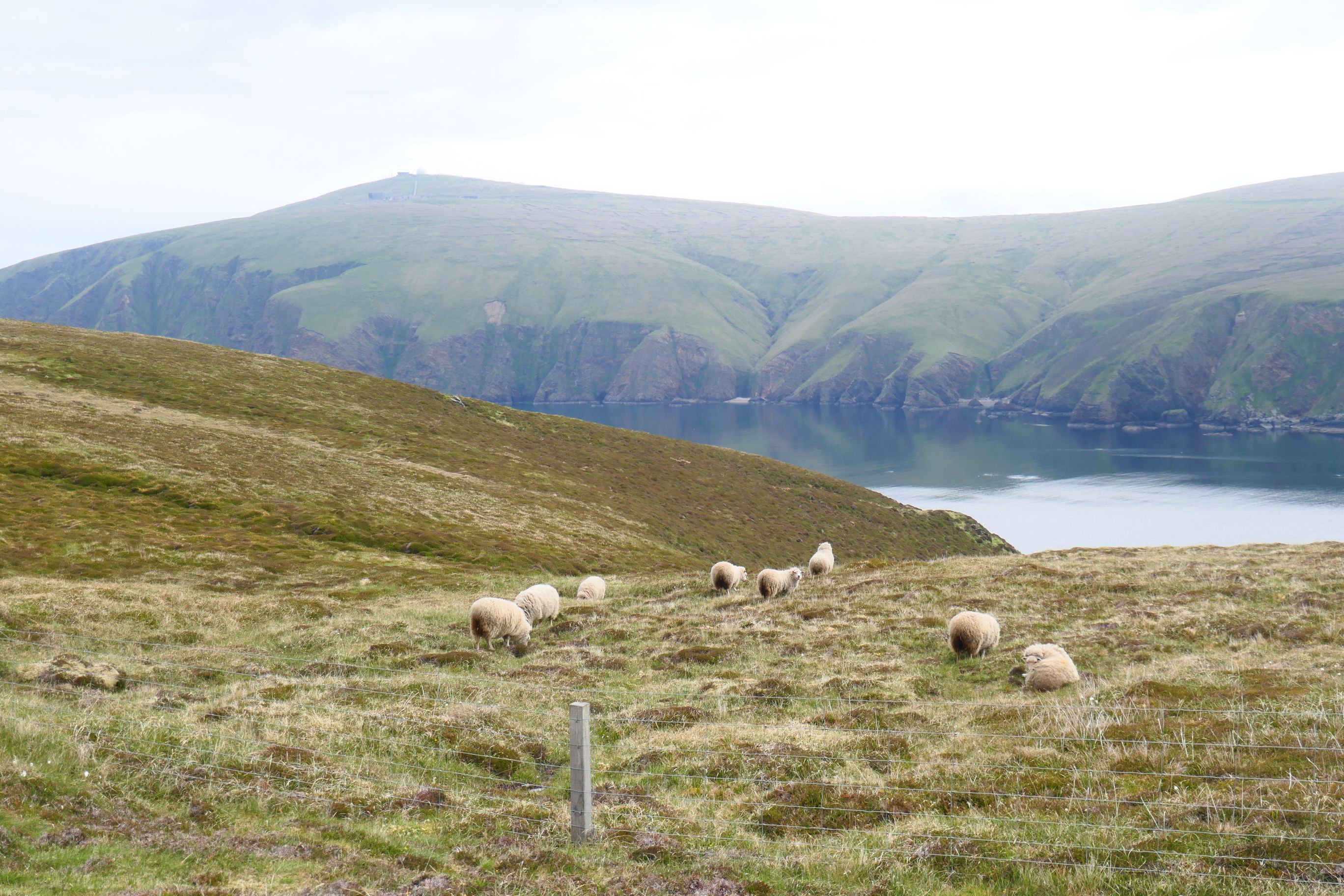






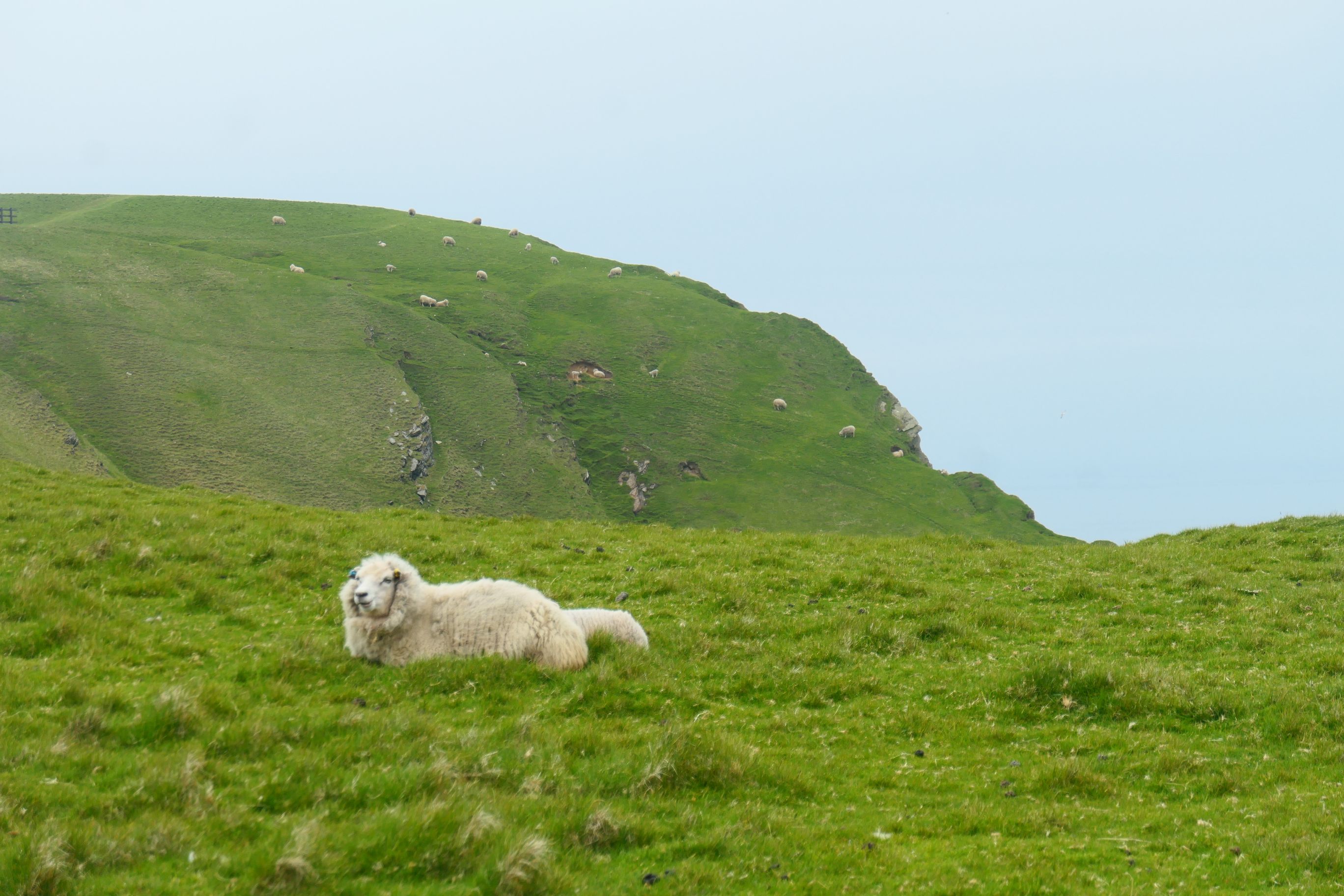
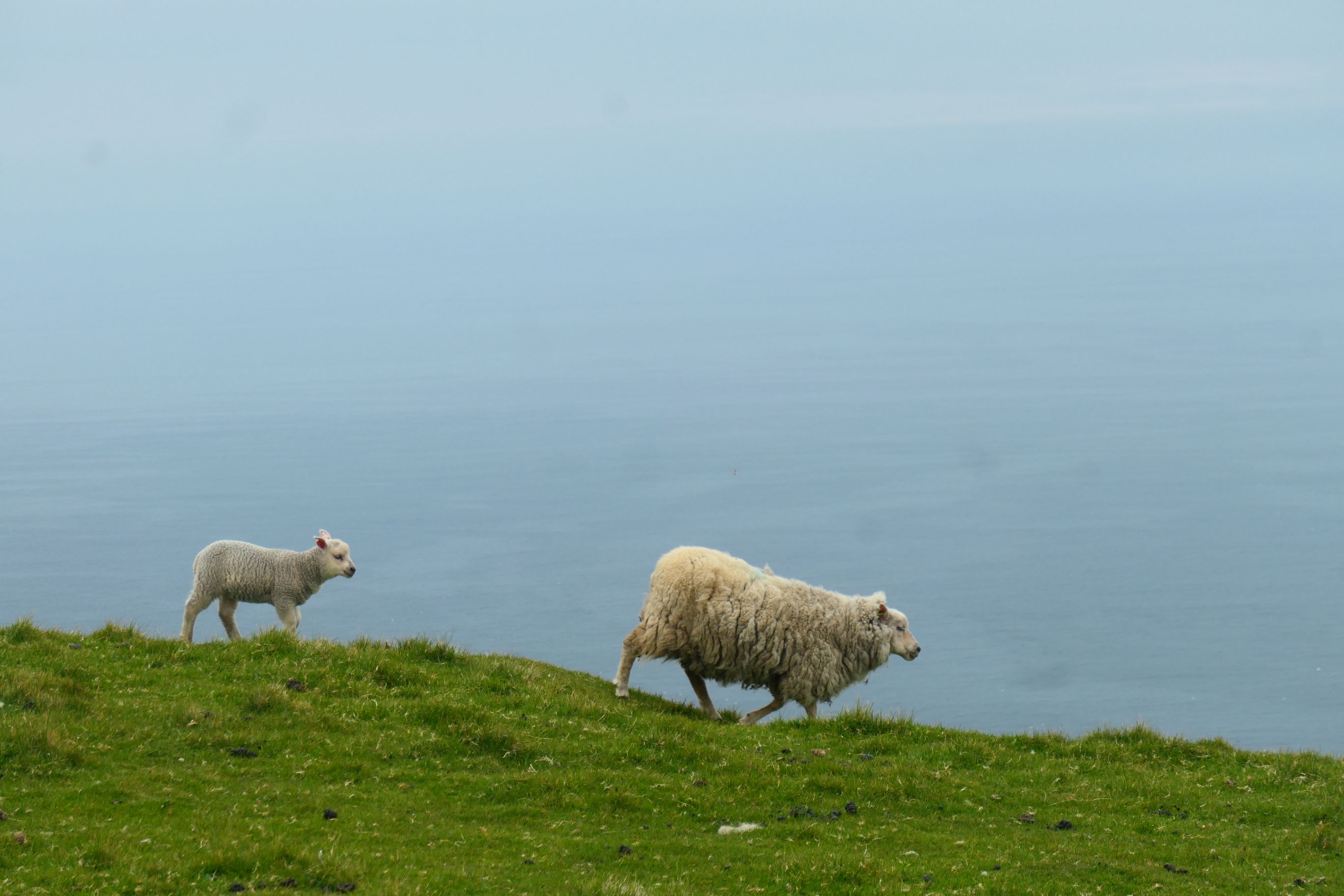
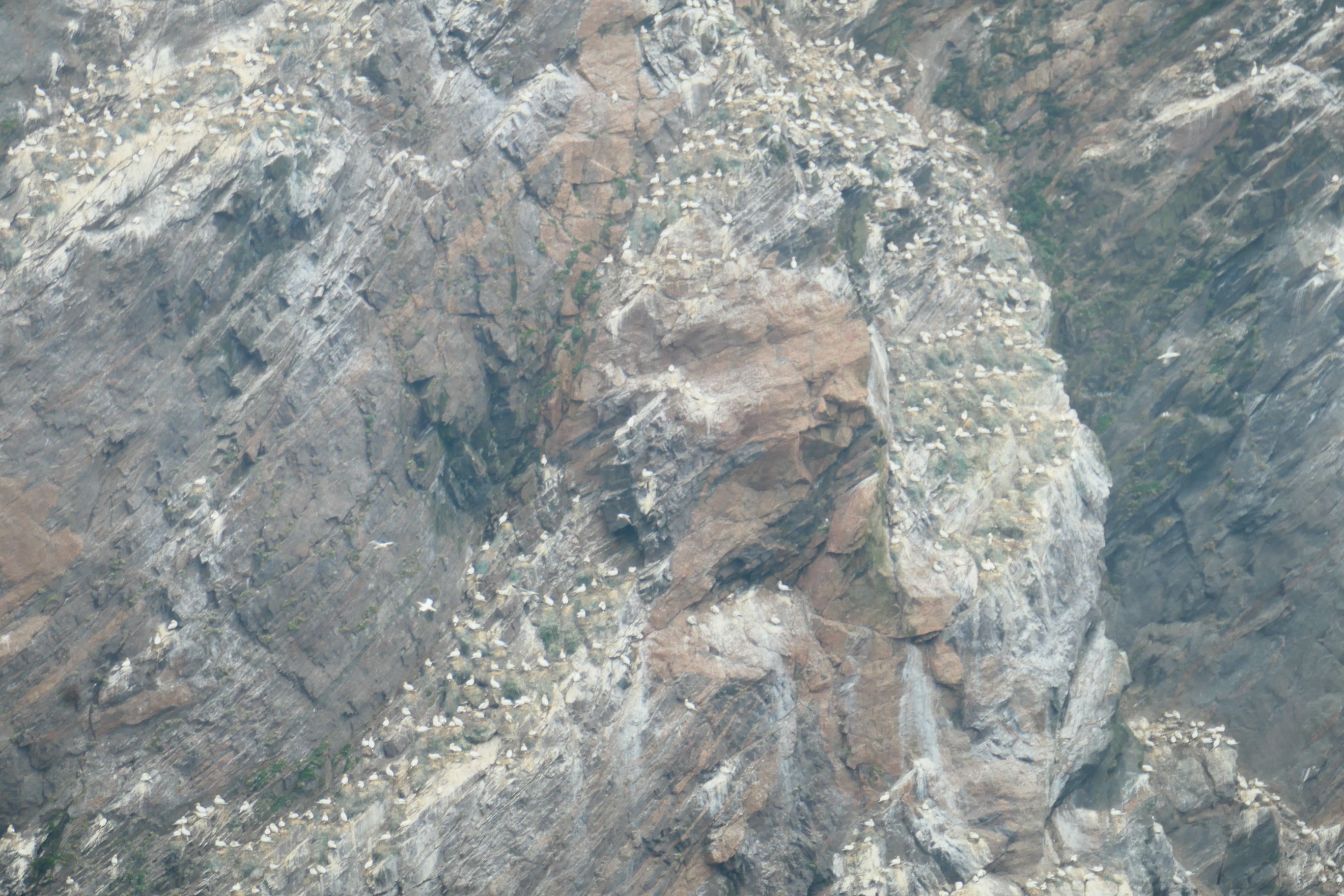
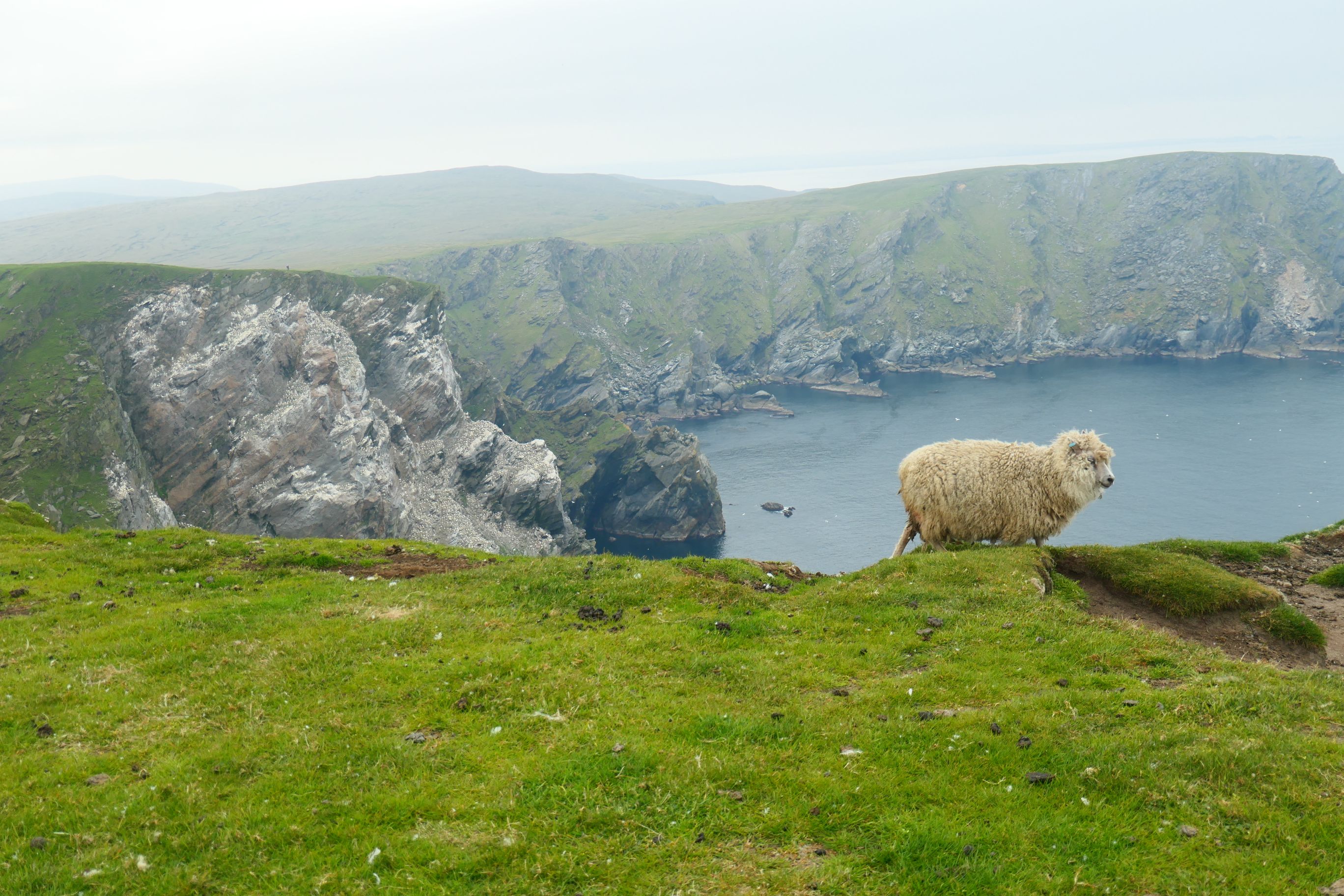
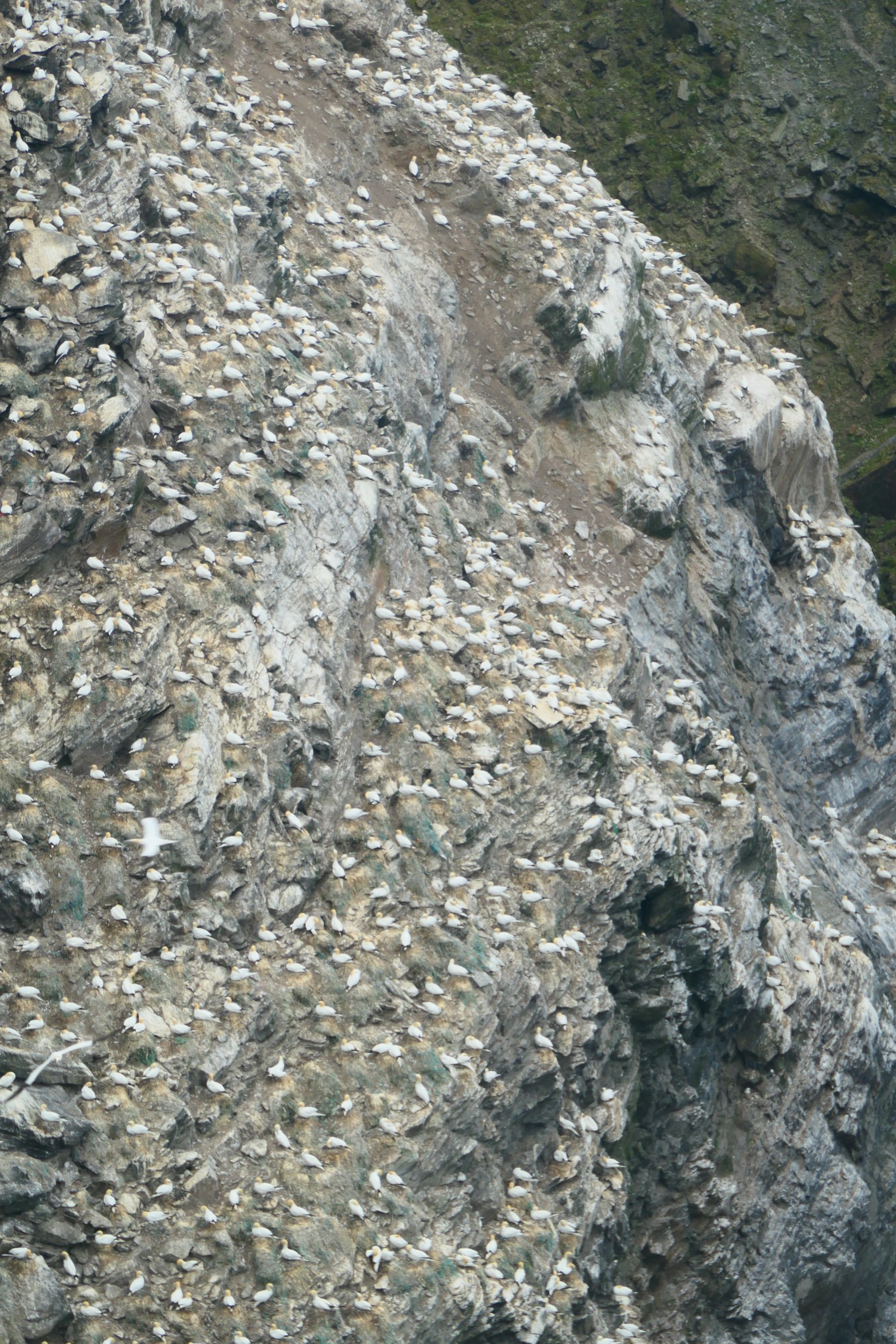
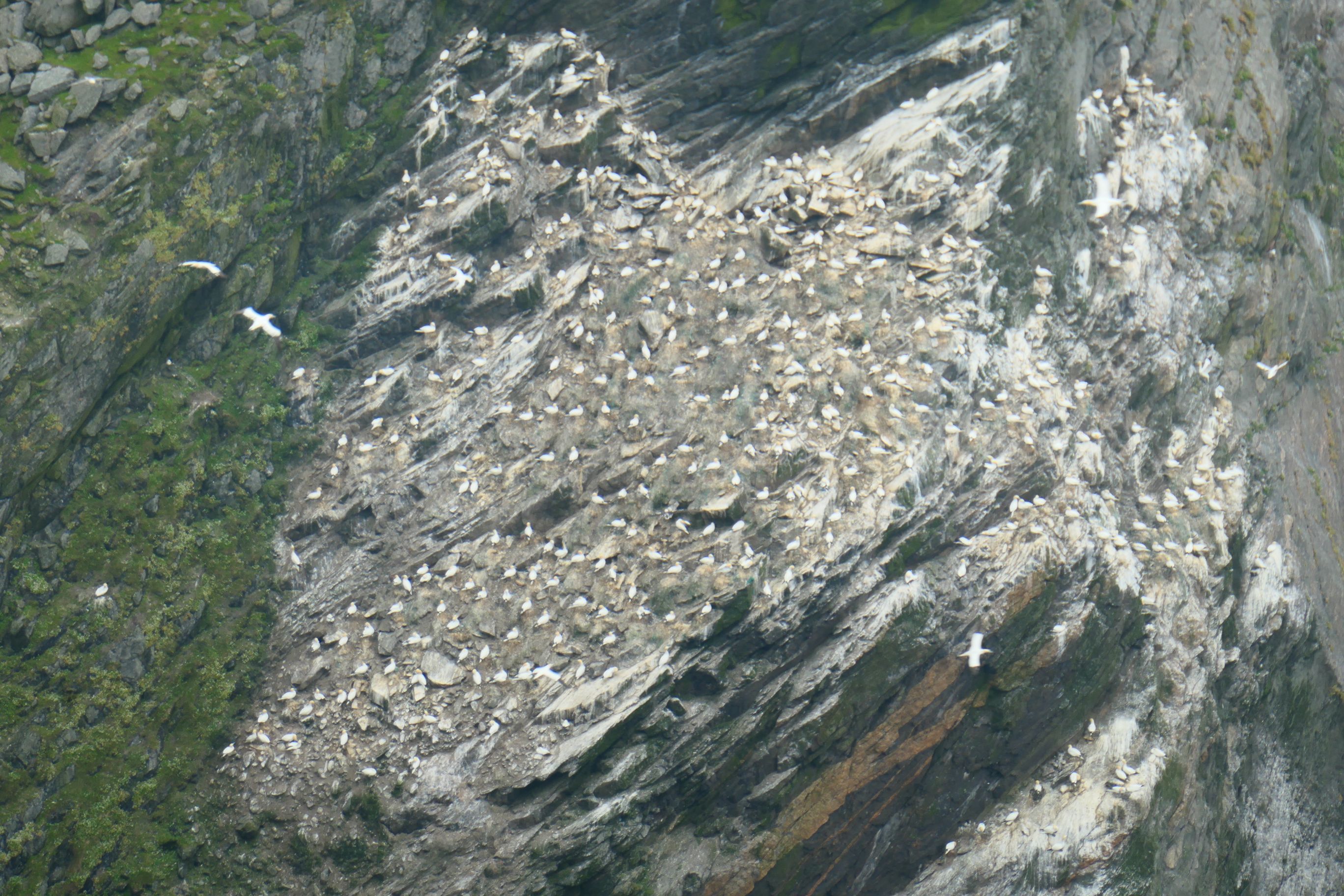
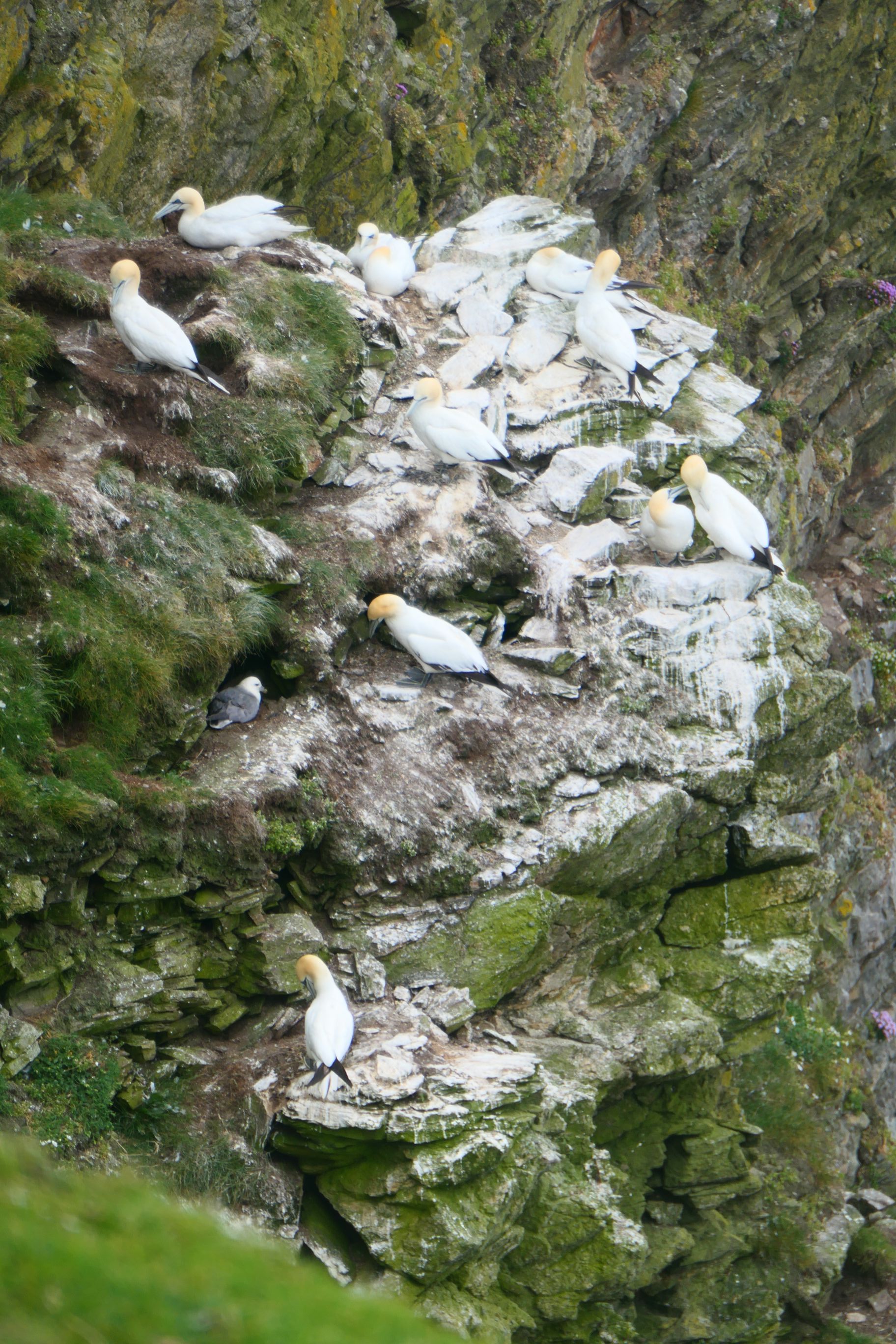
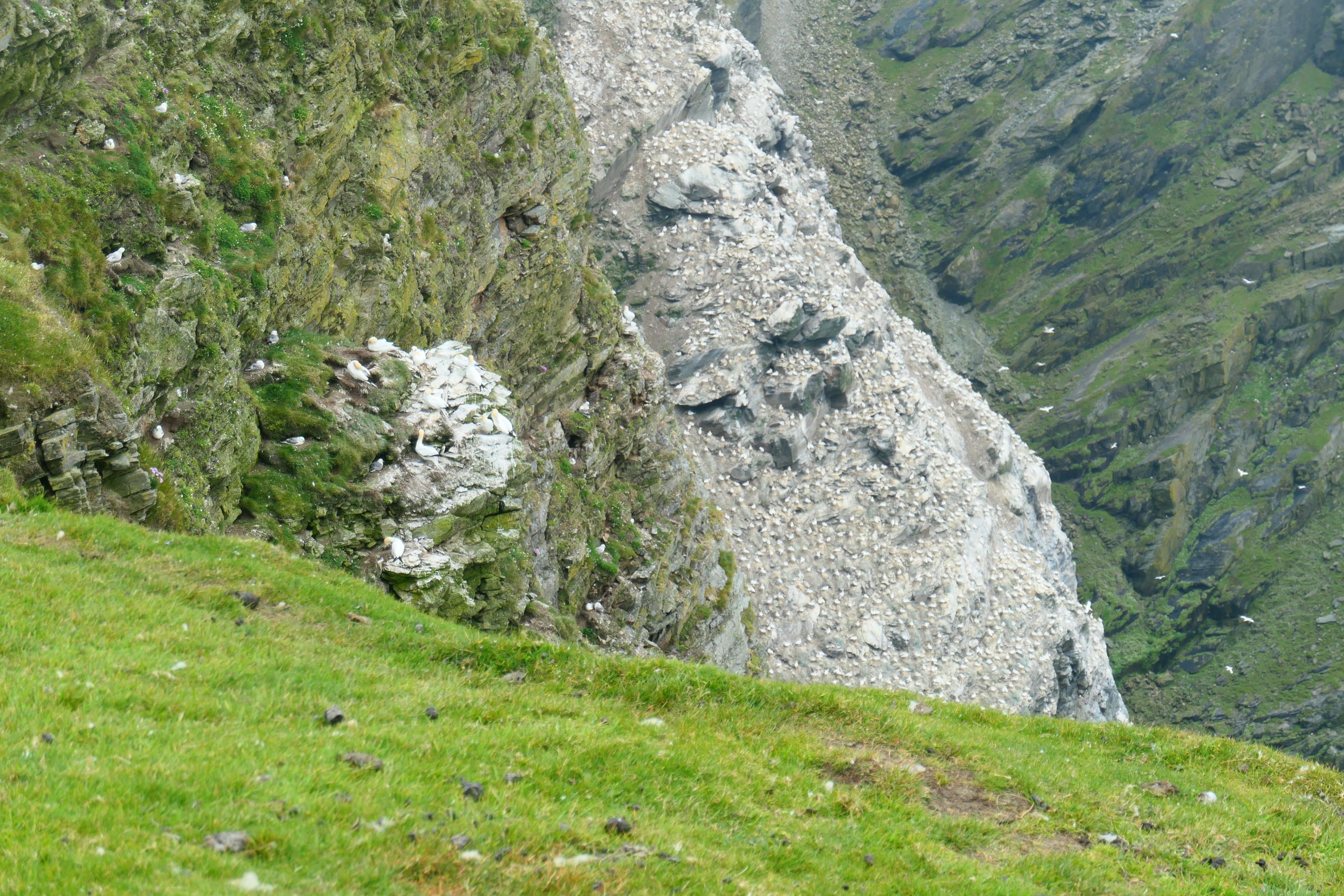
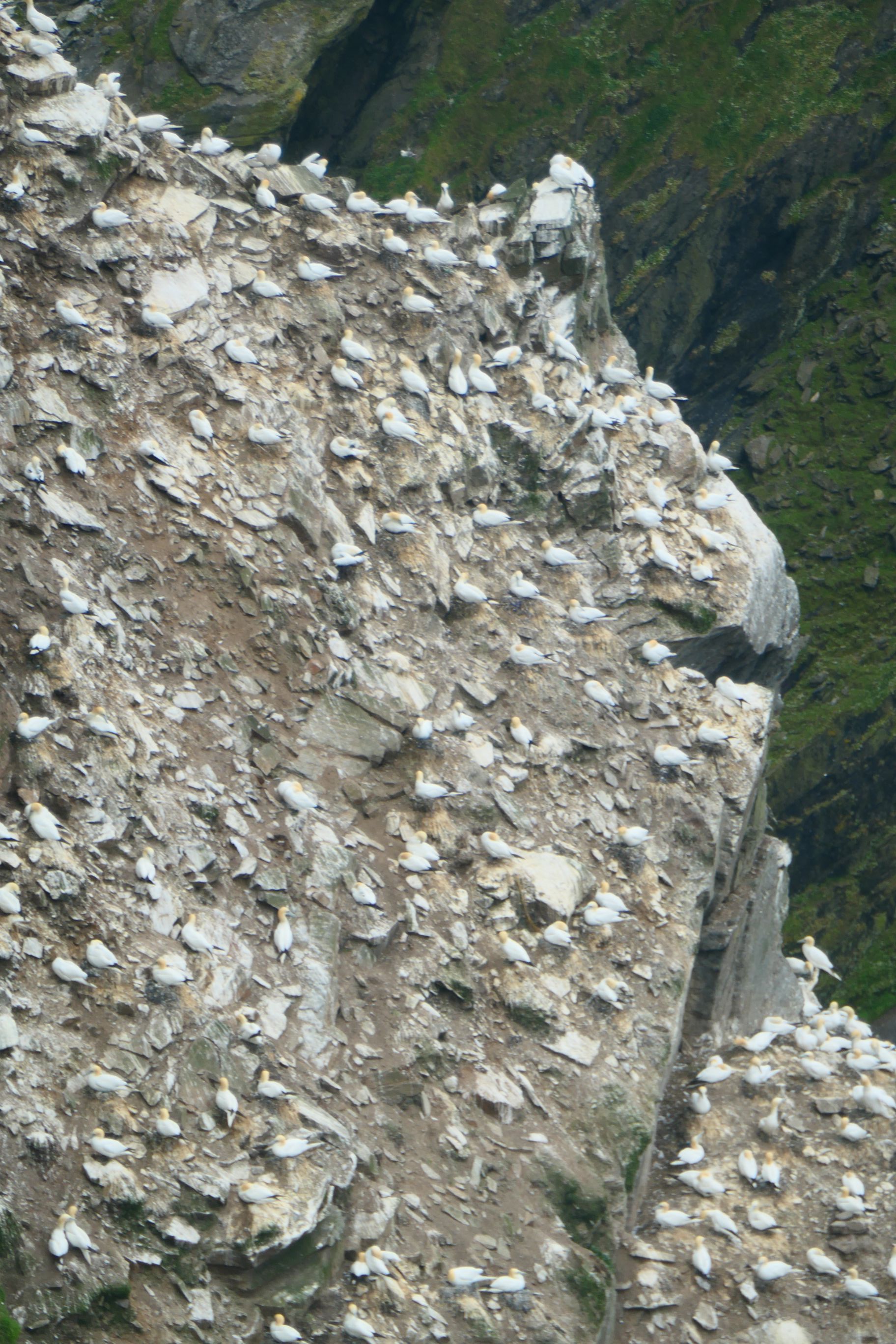
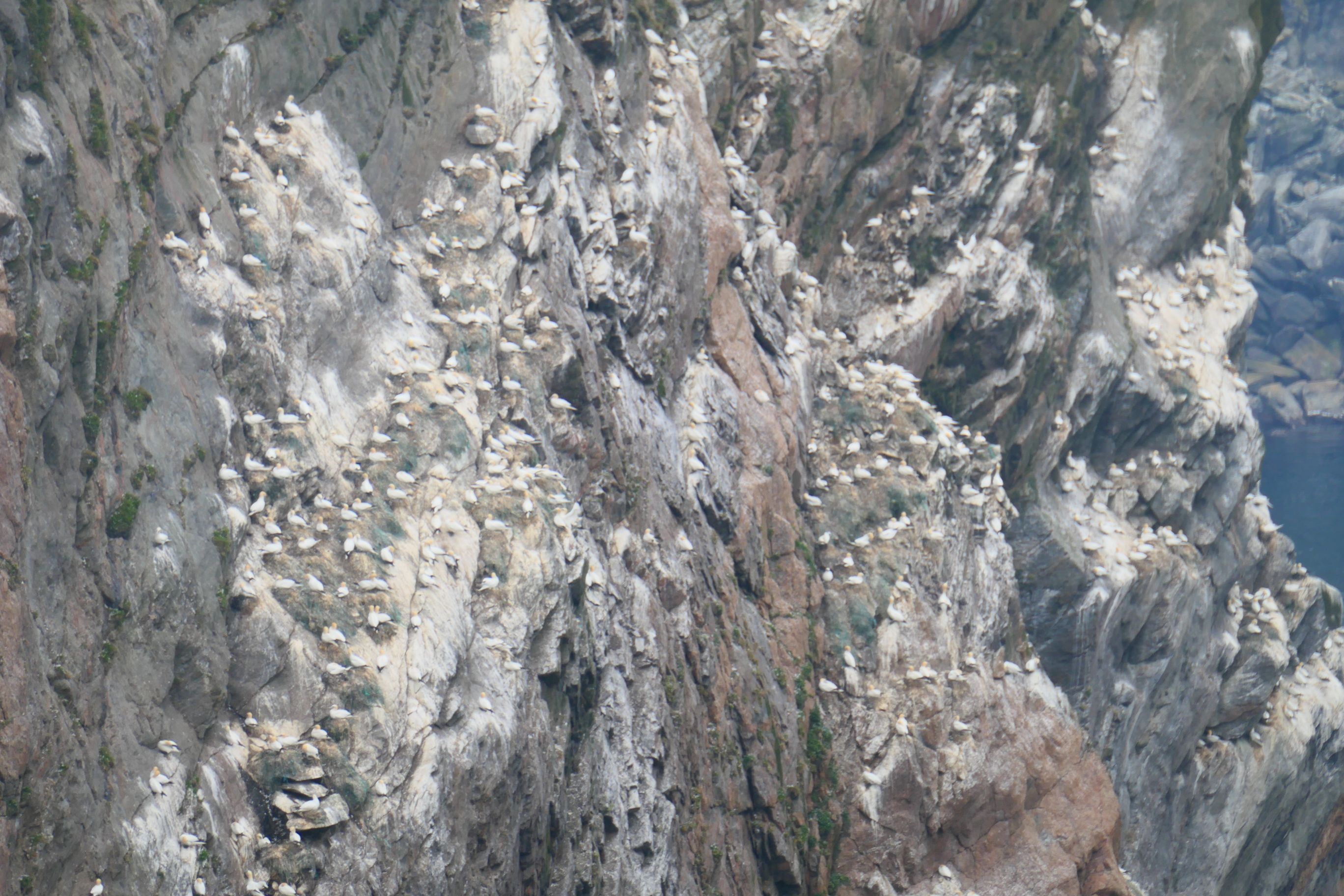
When we reached the clifftop, large rocky stacks to our right came into view. They were covered in white guano. A closer look revealed that they were also covered in gannet colonies Thousands of gannets sitting on nests covered all available rock surfaces. We stayed a respectable distance from the edge (there was a drop of 140 metres down to the water below), but the sure-footed Shetland hill sheep and their lambs stood, walked and rested right on the edge of, and sometimes part way down, the cliff face on the narrowest of ledges.
We turned south and followed the clifftop trail around to a place called Neap, and then again to Saito. It was here that I became aware of the smell of the guano from the bird colony for the first time – not surprisingly, it was a fishy smell. We could hear the gannets below, but it was not a deafening noise like I might have expected. We were standing right above one of Shetland’s largest gannet colonies, up to 30,000 breeding pairs nest here. Signs warned that the cliff edge was unstable and we should stay a few metres back. Someone should tell that to the sheep.
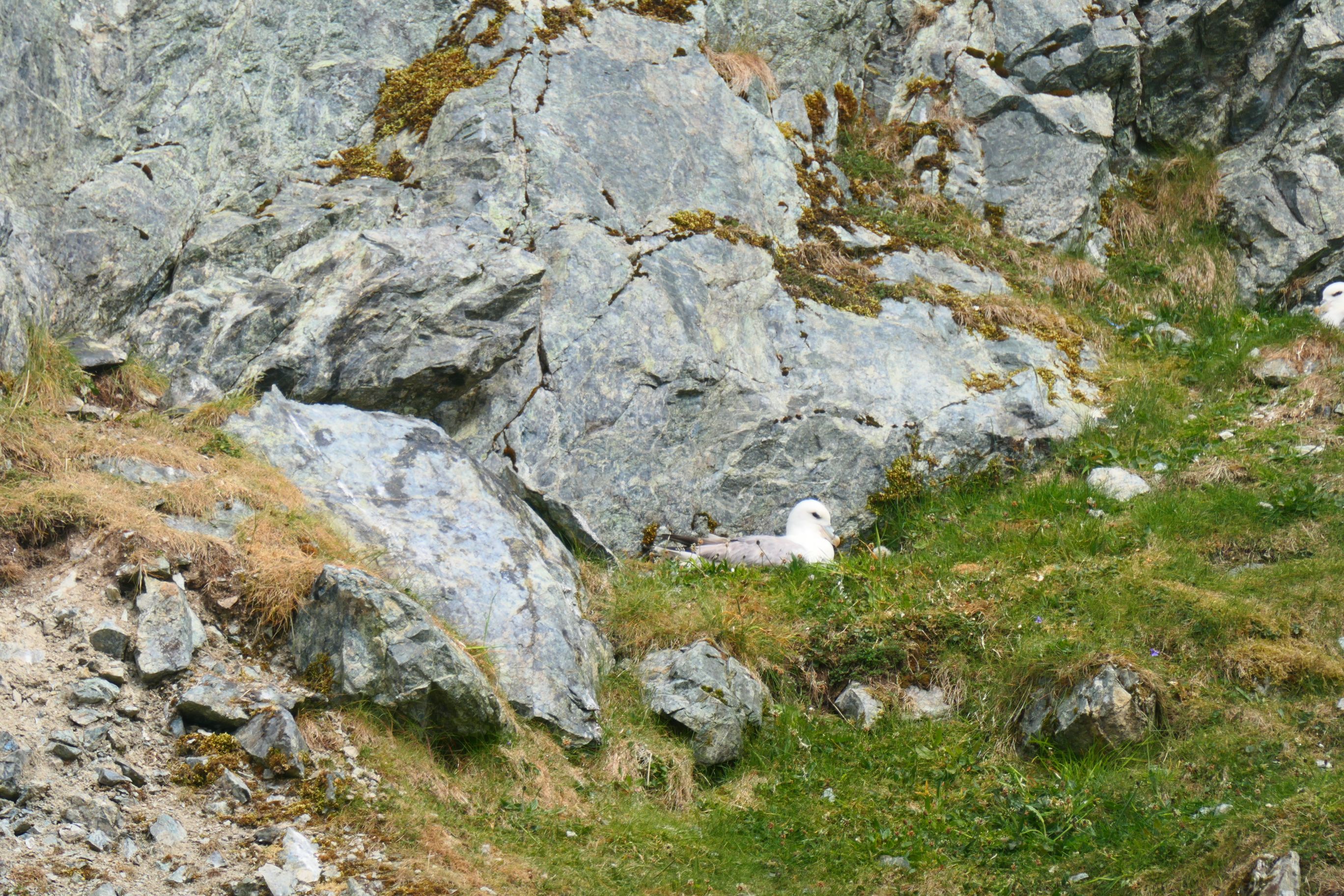
In addition to the gannets, we could see fulmars nesting in amongst them. Birds were always circling out over the water. Gannets dive vertically into the water to catch fish, though I didn’t observe this behaviour – I would have had to stand dangerously close to the edge to see that. Puffins could be seen at a distance. Occasionally a large bonxie flew past.
Dave told us that last year an avian flu epidemic had almost wiped out the great skua population, and had seriously impacted the gannets too. He described the tragedy of being here last year and finding dozens of dead birds. As birds migrate, he said he’d been waiting anxiously earlier this year for the birds to return to Shetland, and he said that when he saw the first great skuas return it appeared that up to 90% of their population had been wiped out by the avian flu. Now, he says, the numbers are looking a bit better and a revised count has put the numbers at much closer to 80% of the bonxies that have died. He hasn’t seen any evidence of the disease this year, thankfully.













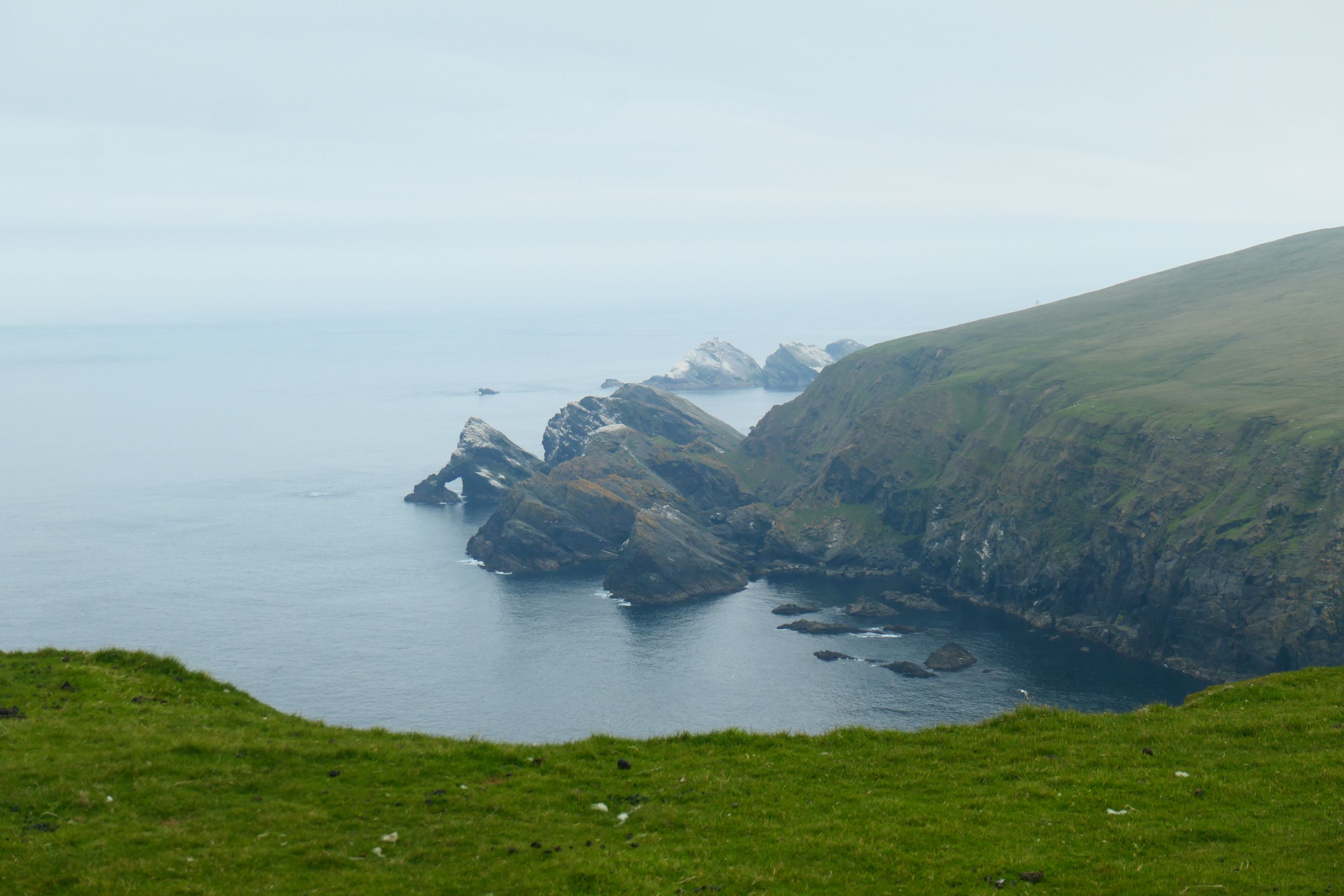

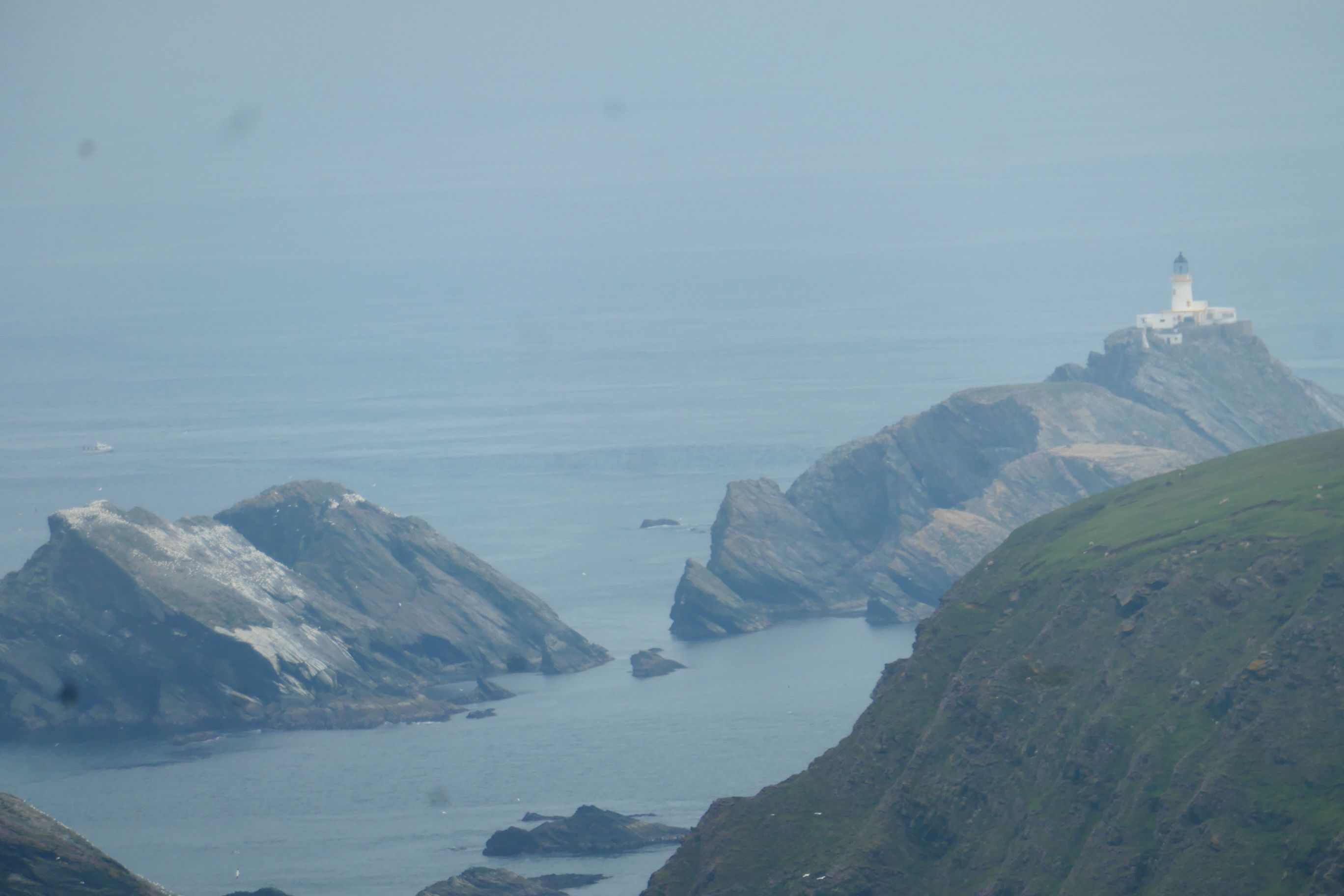
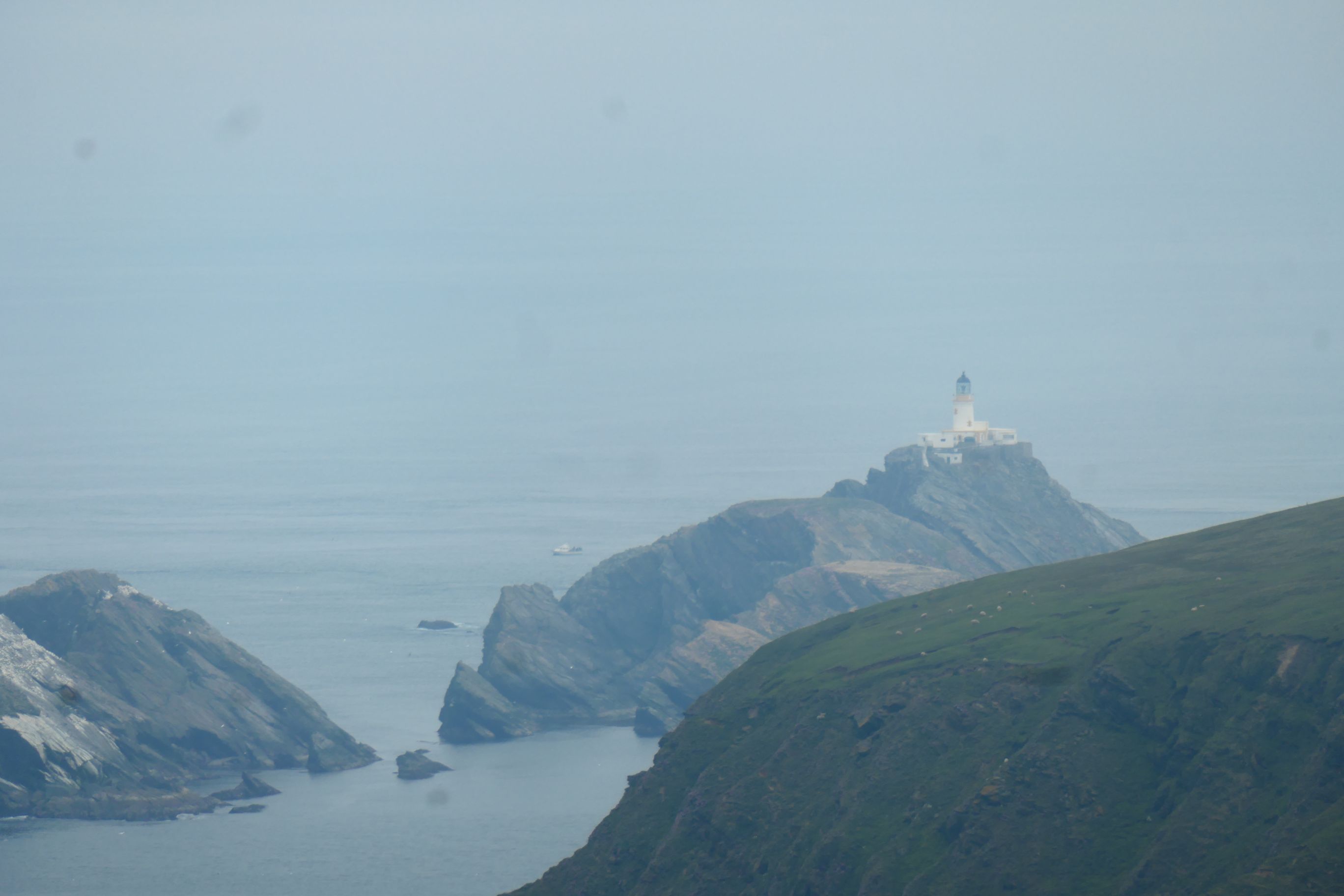
While standing at Saito, the lighthouse at Muckle Flugga was visible. It stands on a rock stack which is the northernmost land in the UK. It is a Stevenson lighthouse, designed and built by the grandfather of Robert Louis Stevenson, just like the one at the other end of Shetland at Sumburgh Head. The lighthouse is still operational, but today the light is operated automatically. In the past, there were two lighthouse keepers. One would spend a month on the rock, then his mate would replace him and spend the next month out there. I hope he had a good supply of books to read.
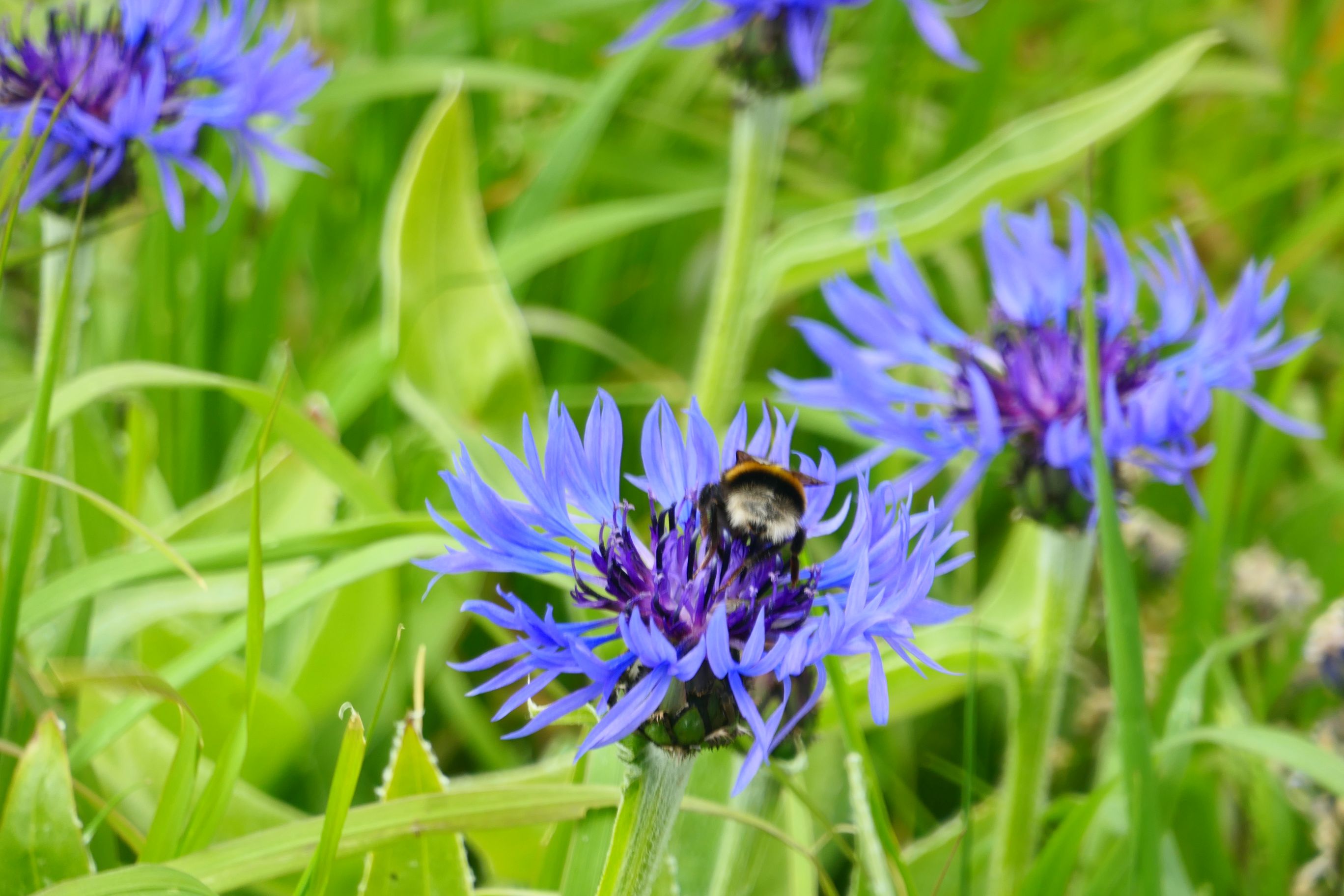
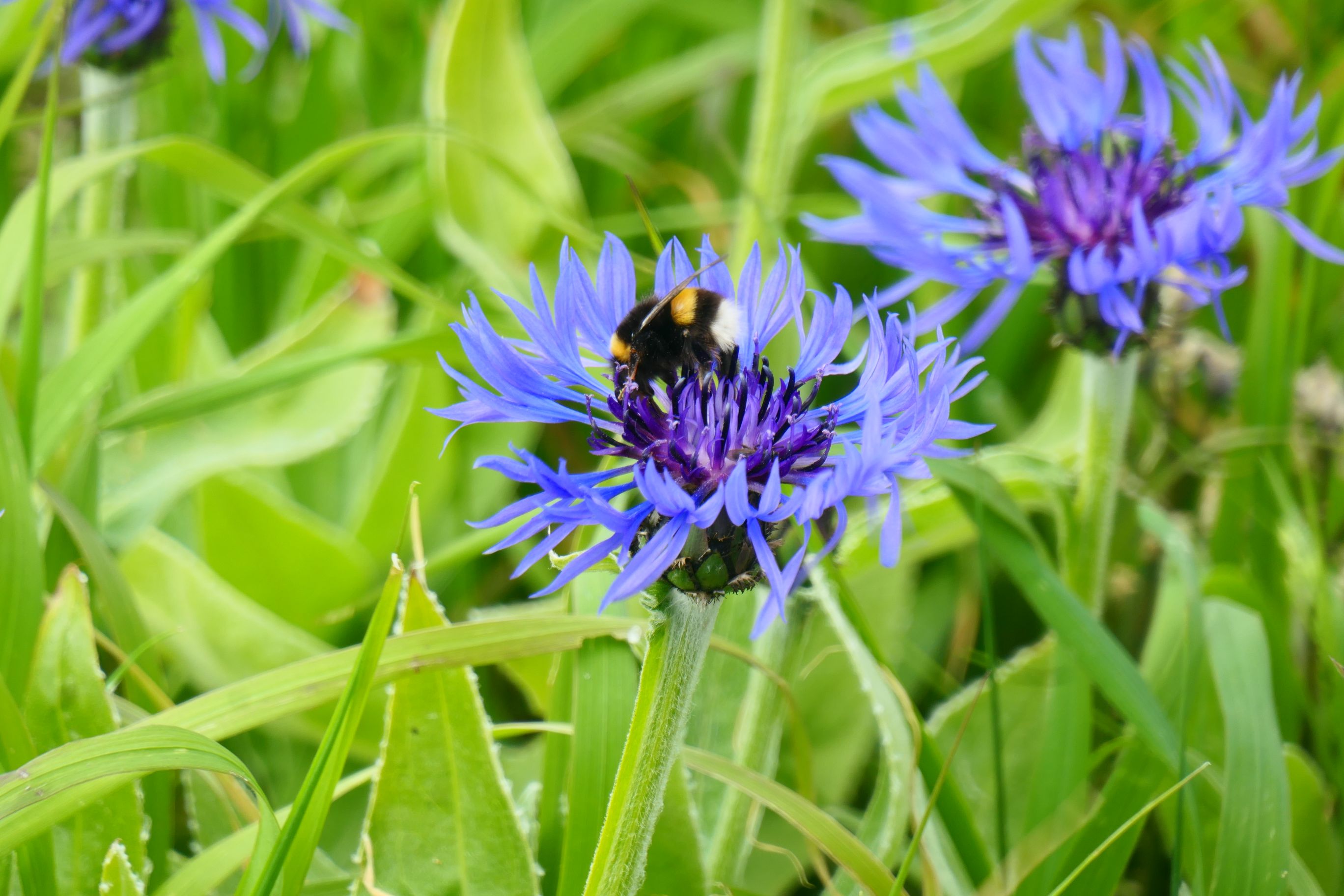
We walked straight back to the car park from the gannet colonies. Dave didn’t stop to point out flowers or birds anymore because we had a schedule to complete before we boarded the 3.55 pm ferry. We stopped to eat our packed lunch at Haroldswick, with a great view down the voe close to where they think Vikings first landed in Shetland. Then Dave took us into a garden in search of the Shetland bee, a form of bumblebee with an orange back. We didn’t see one, but I did enjoy seeing the regular bumblebees flitting amongst the flowers.
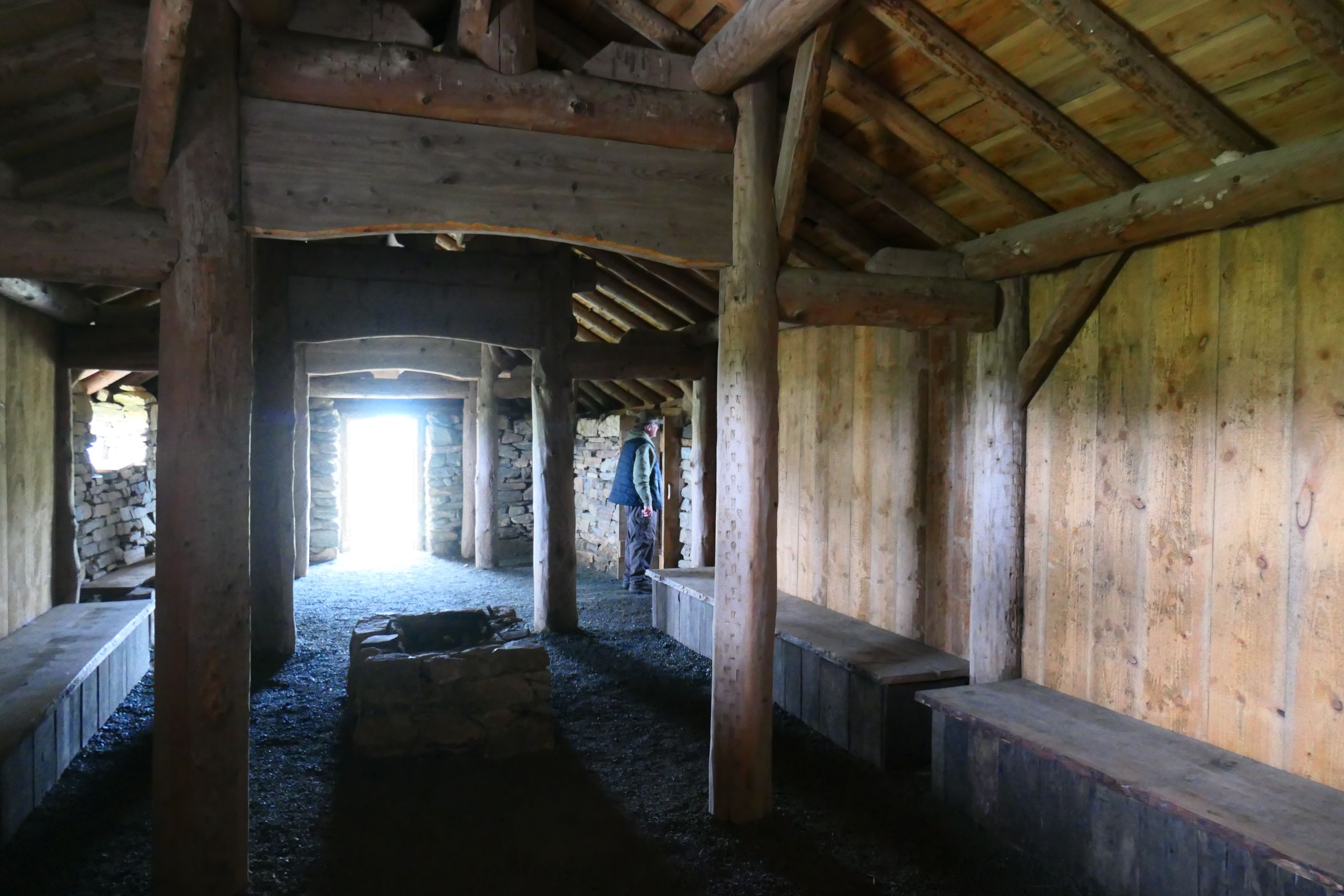
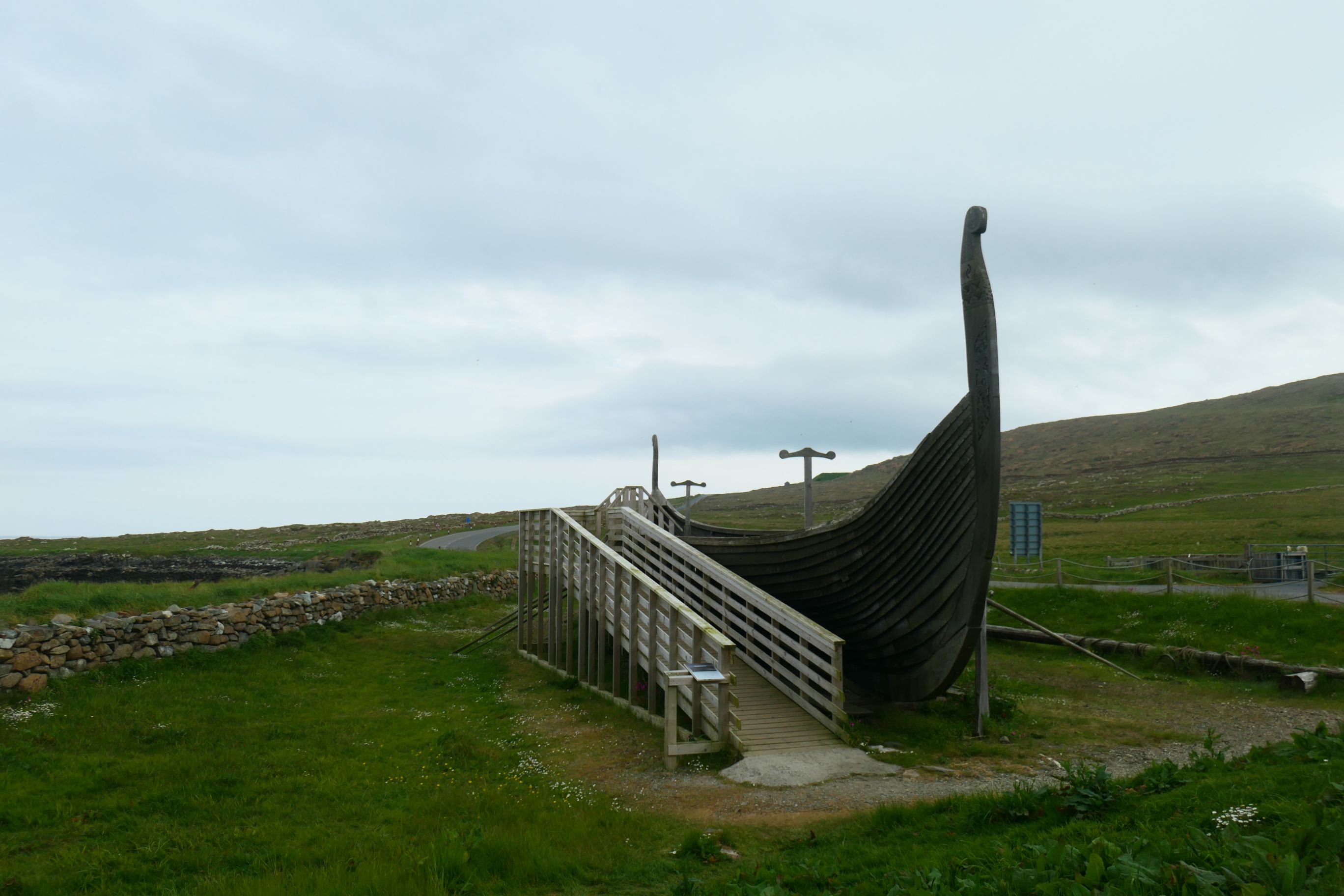
Just a short distance from our lunch stop we called in at the Viking Unst Project. There are the remains of about sixty Viking longhouses on Unst, which has led historians to believe that Unst was the first place in the North Atlantic where they landed. In order to increase people’s understanding of the Viking past of Unst, the Shetland Amenity Trust has reconstructed a longhouse on the shore of the voe that people can visit. Alongside it is a reconstructed Viking longship, known as the Skidbladner, that was built in Sweden and launched from there with the intention of sailing all the way to America. It struggled to get as far as Shetland, so the original quest was abandoned and the boat has been a tourist attraction here ever since. There is no information centre, no ticket window, no guard or attendant – there’s just a few information panels. People are free to walk through the longhouse and walk over the Viking ship. As we were leaving, Dave pointed out some very small purple orchids.




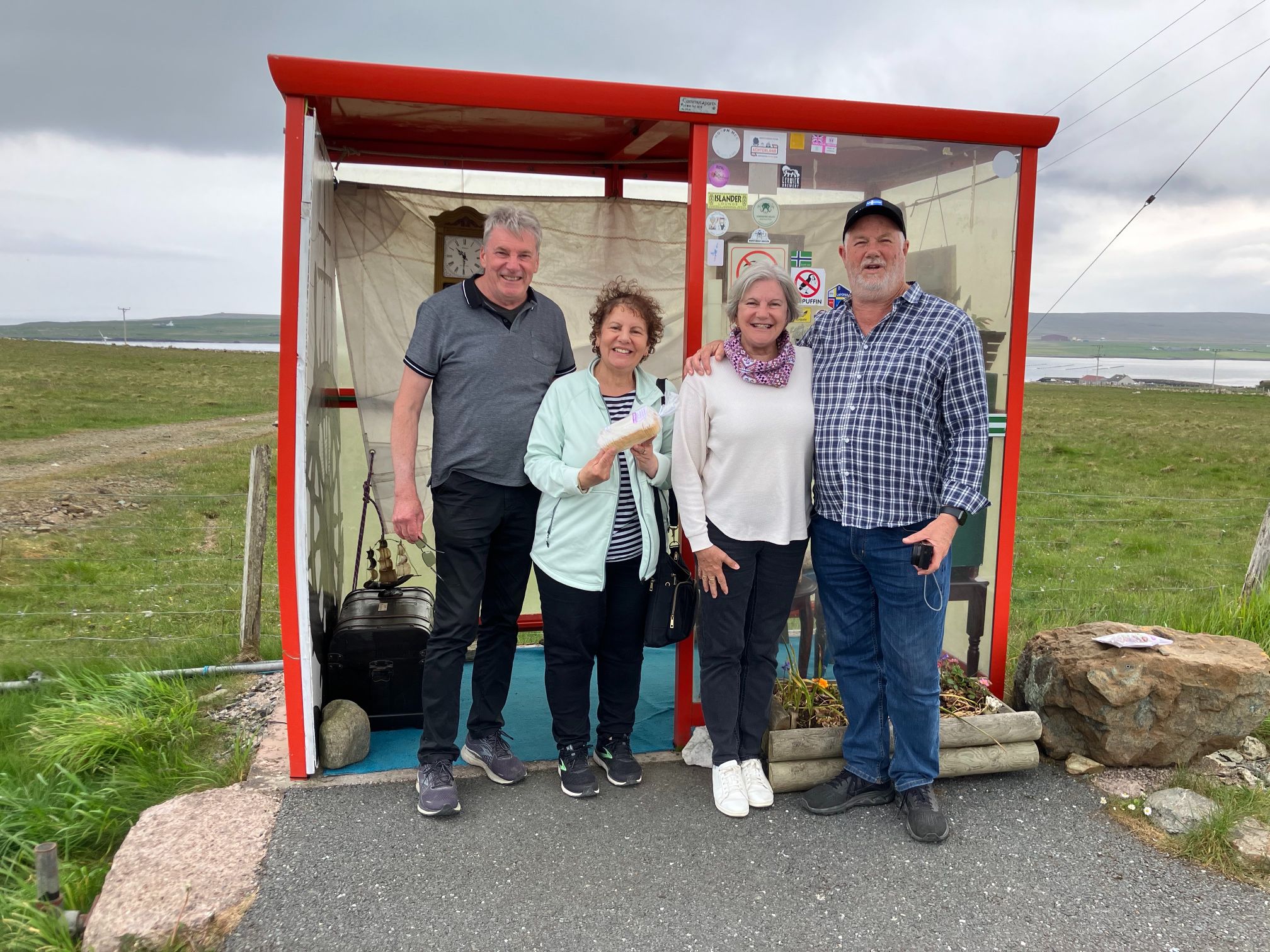
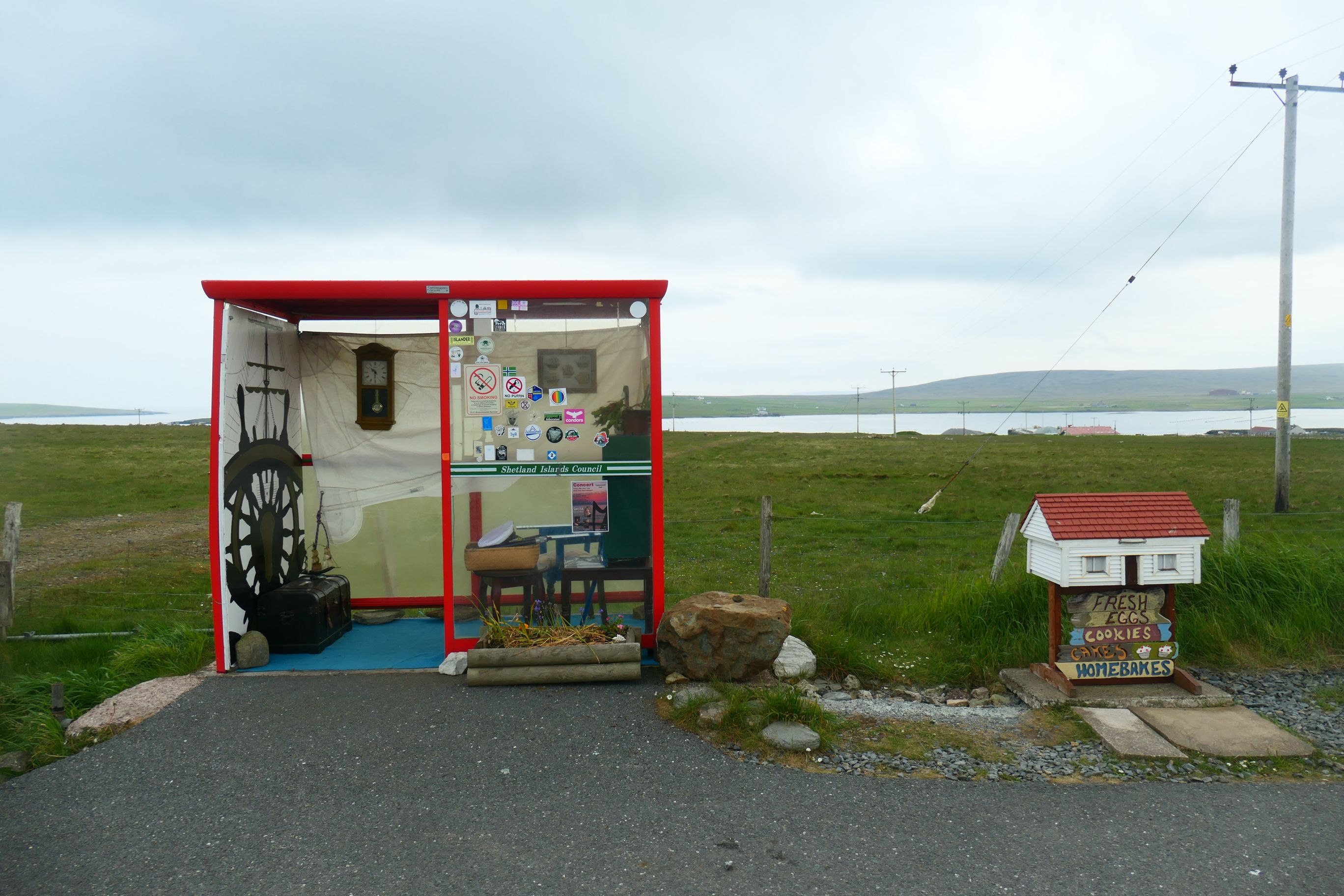
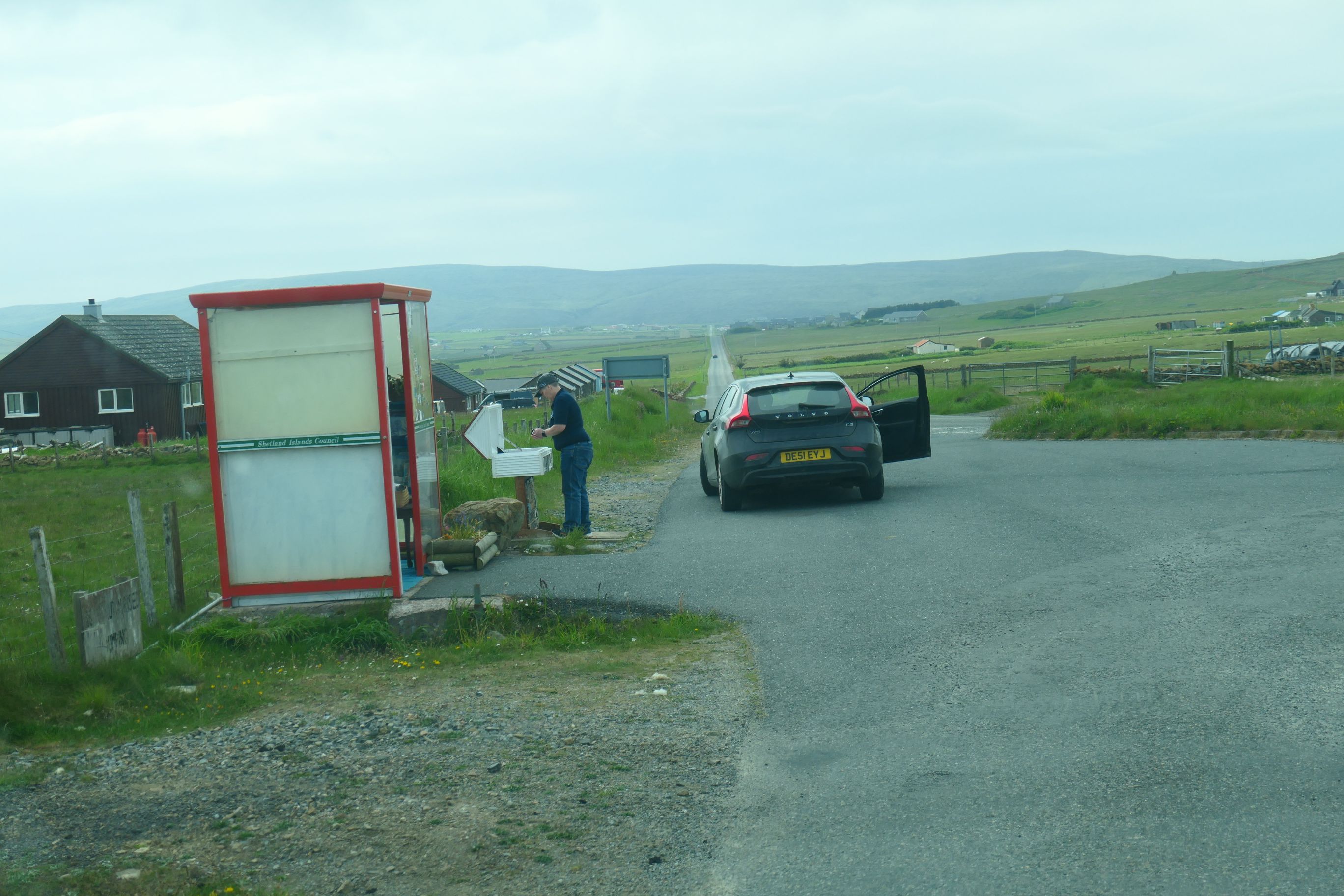
Our next stop was Bobby’s Bus Shelter, near Baltasound, which has become so well known, it now has its own Facebook page. It’s current theme is the Tall Ships, which will visit Shetland next month. Last month the theme was the coronation. Anyone who visits at the moment is encouraged to put on the captain’s hat and pose for a photo. Twenty years ago a small boy named Bobby used to wait in a bus shelter at this spot for the bus to come along to take them to school. Often the weather was bad and the shelter provided protection from the wind and rain. After a time, the weather beaten shelter was scheduled to be demolished. Bobby wrote to the local paper asking for a new one. After it appeared, items began mysteriously appearing inside it. It was always decorated anonymously, but, today, the council maintains the shelter. The theme changes on a regular basis.
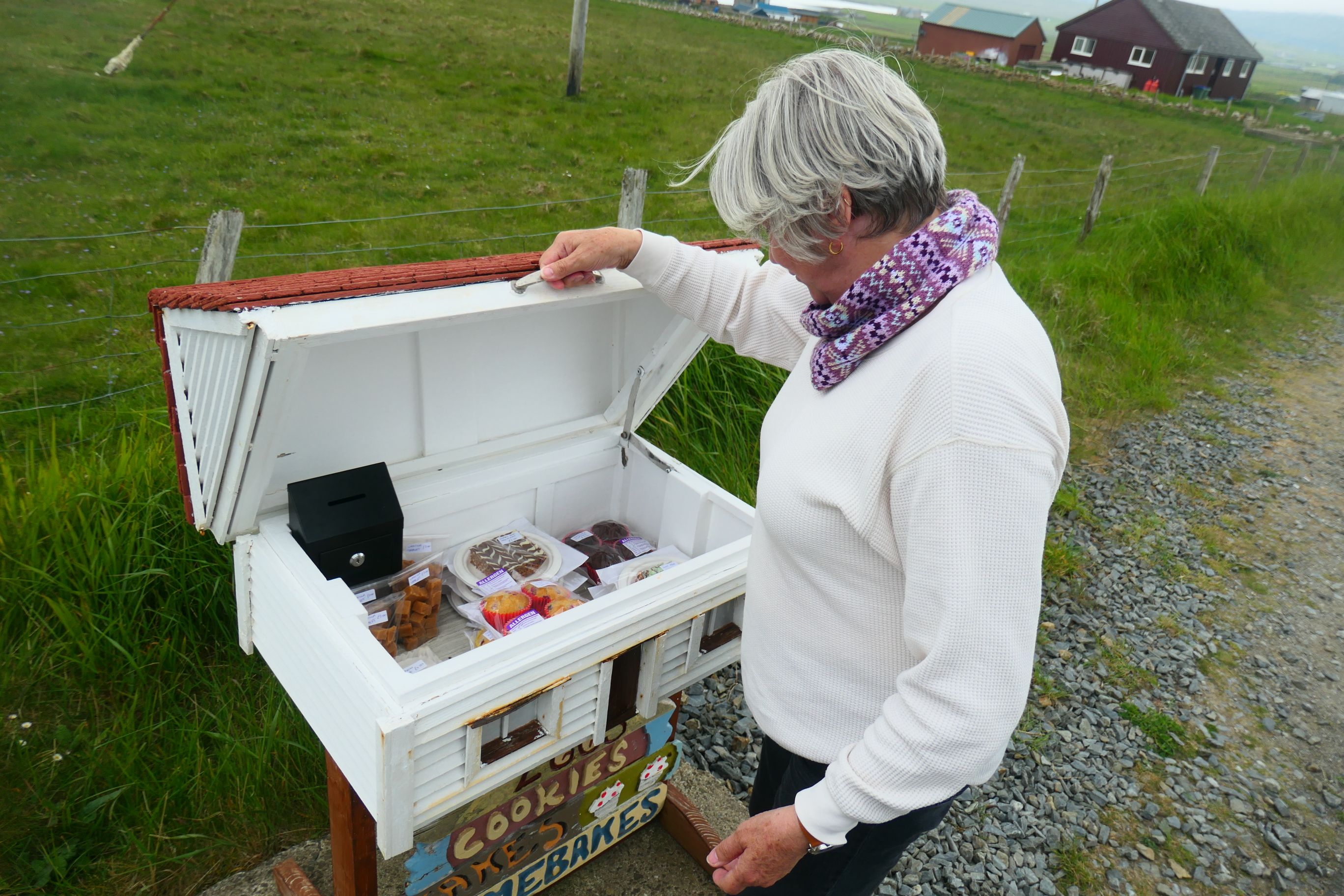
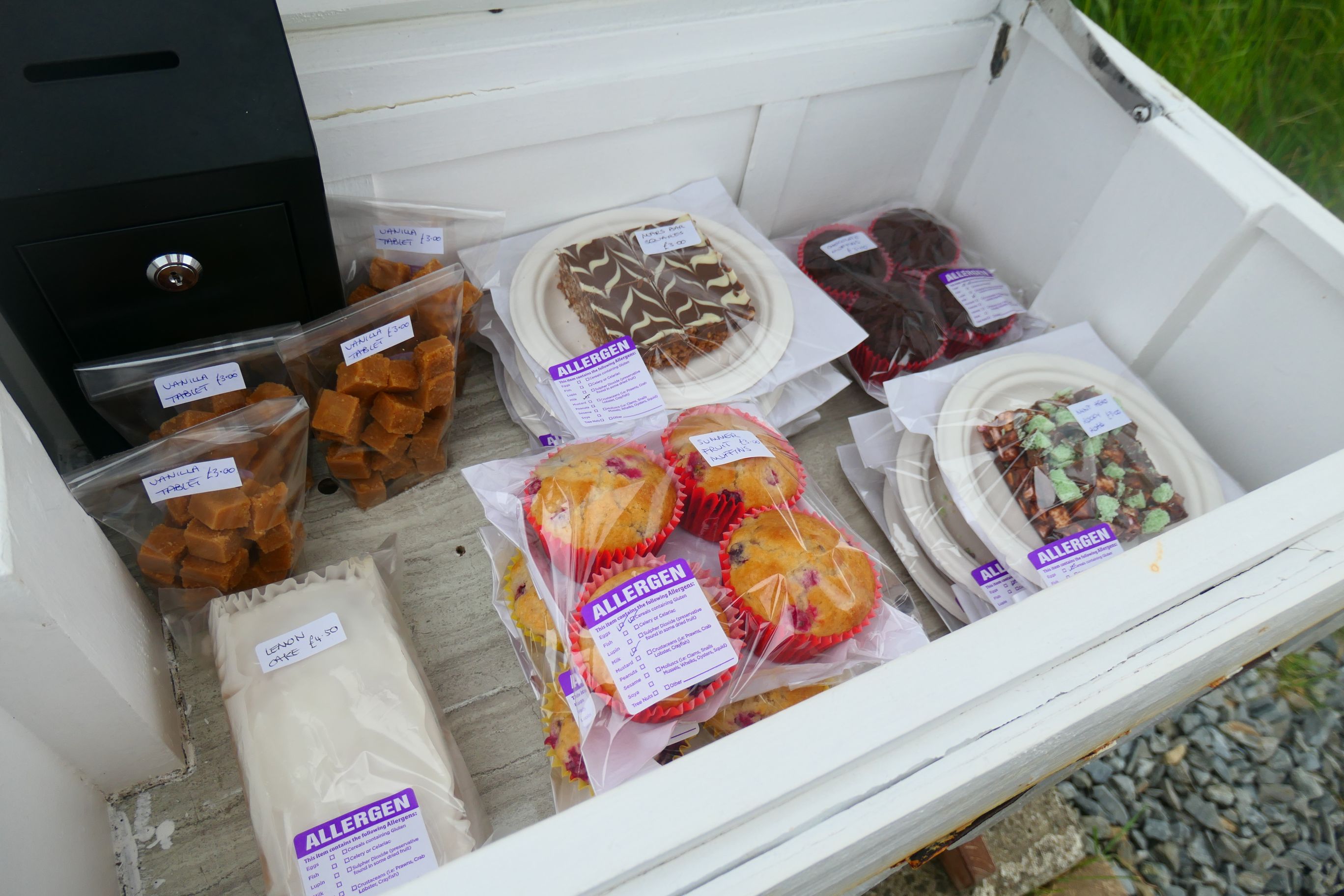
Alongside the bus shelter was an honesty box, full of homemade goodies, just like the one we found at Sand the other day. Janie bought a cake for our supper and some rocky road for Dave. About half an hour later, following our visit to the Keen of Hamar, we saw the lady who runs the Balta Light pub (the northernmost pub in the UK) pull up in her car and buy supplies for the bar.





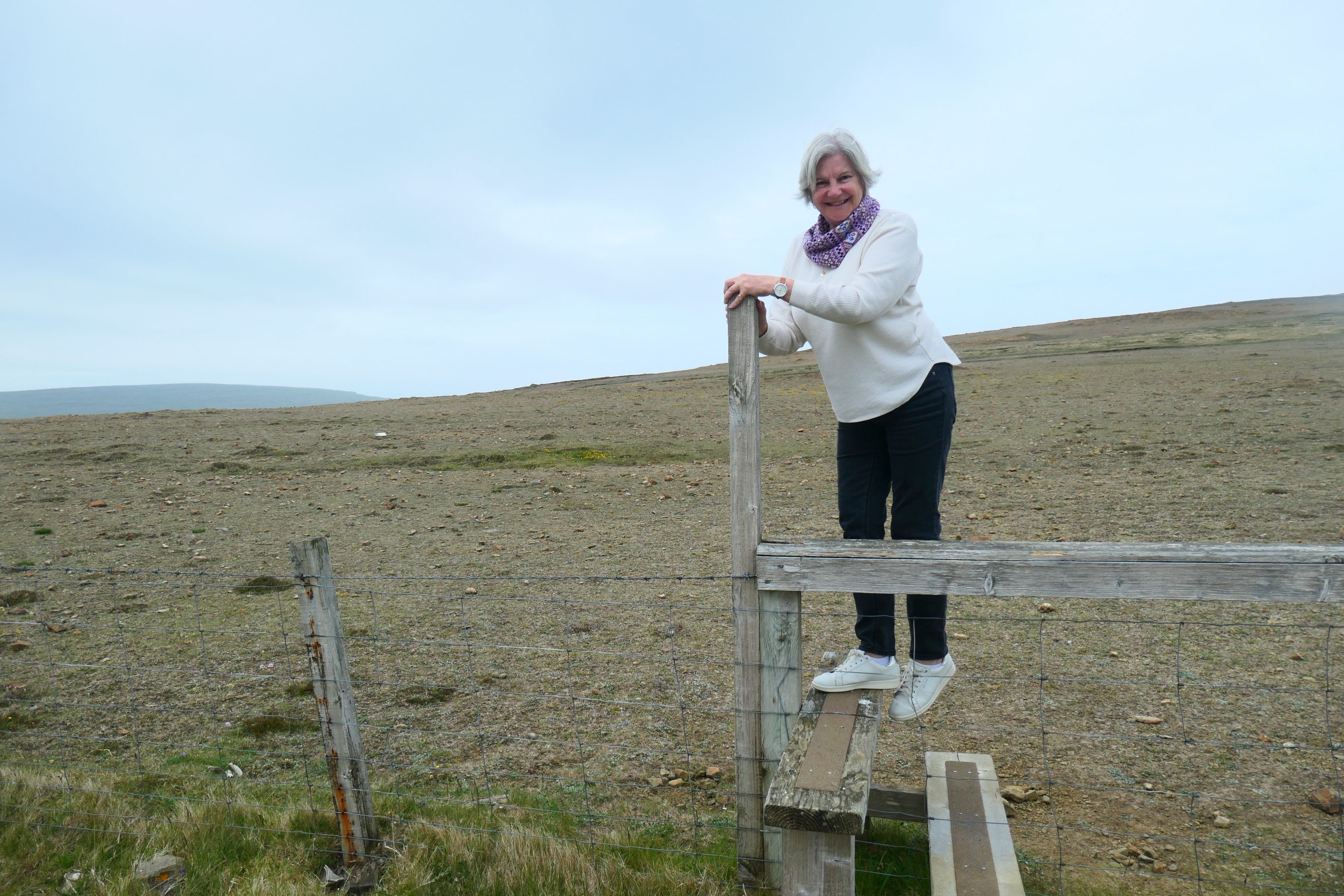
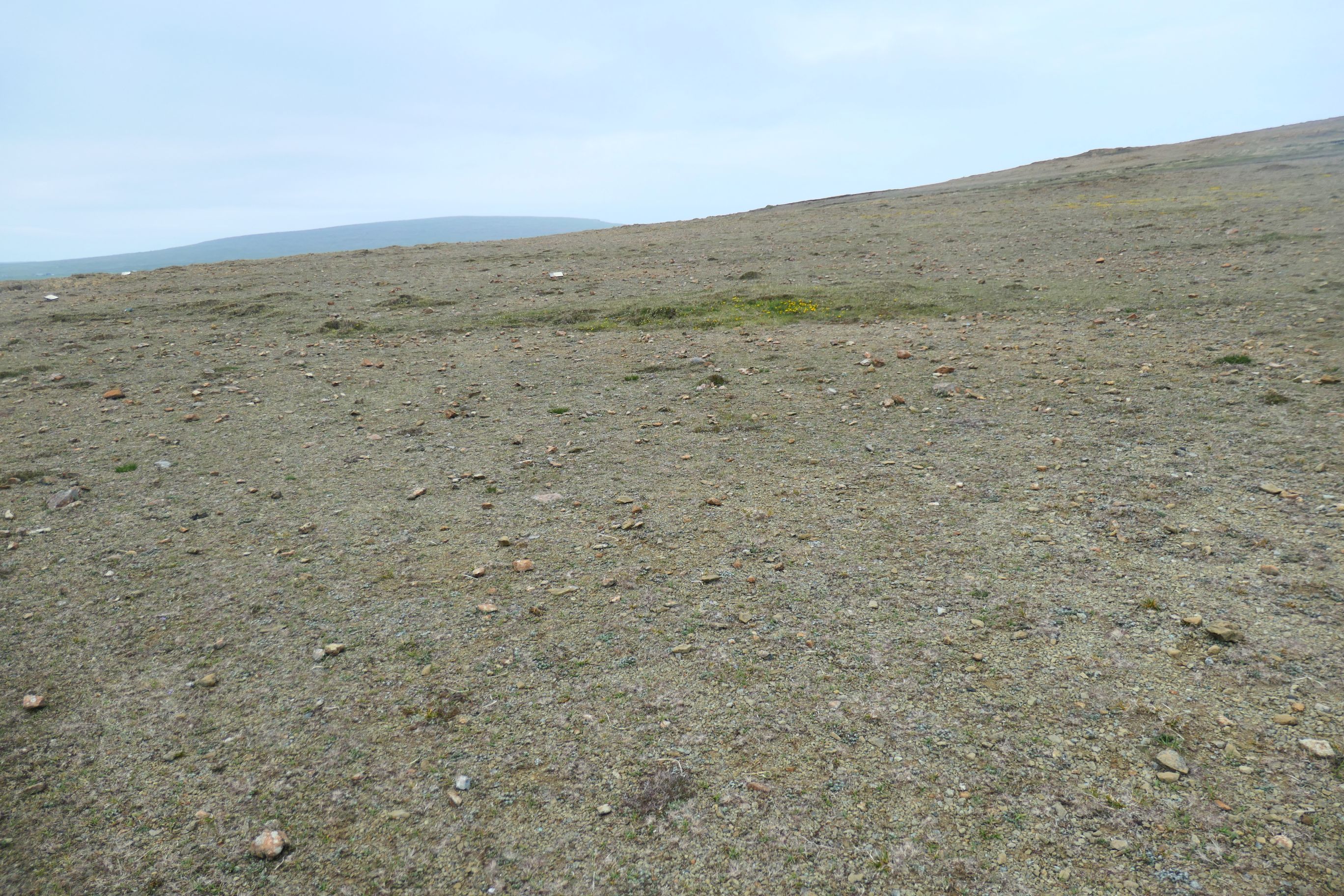
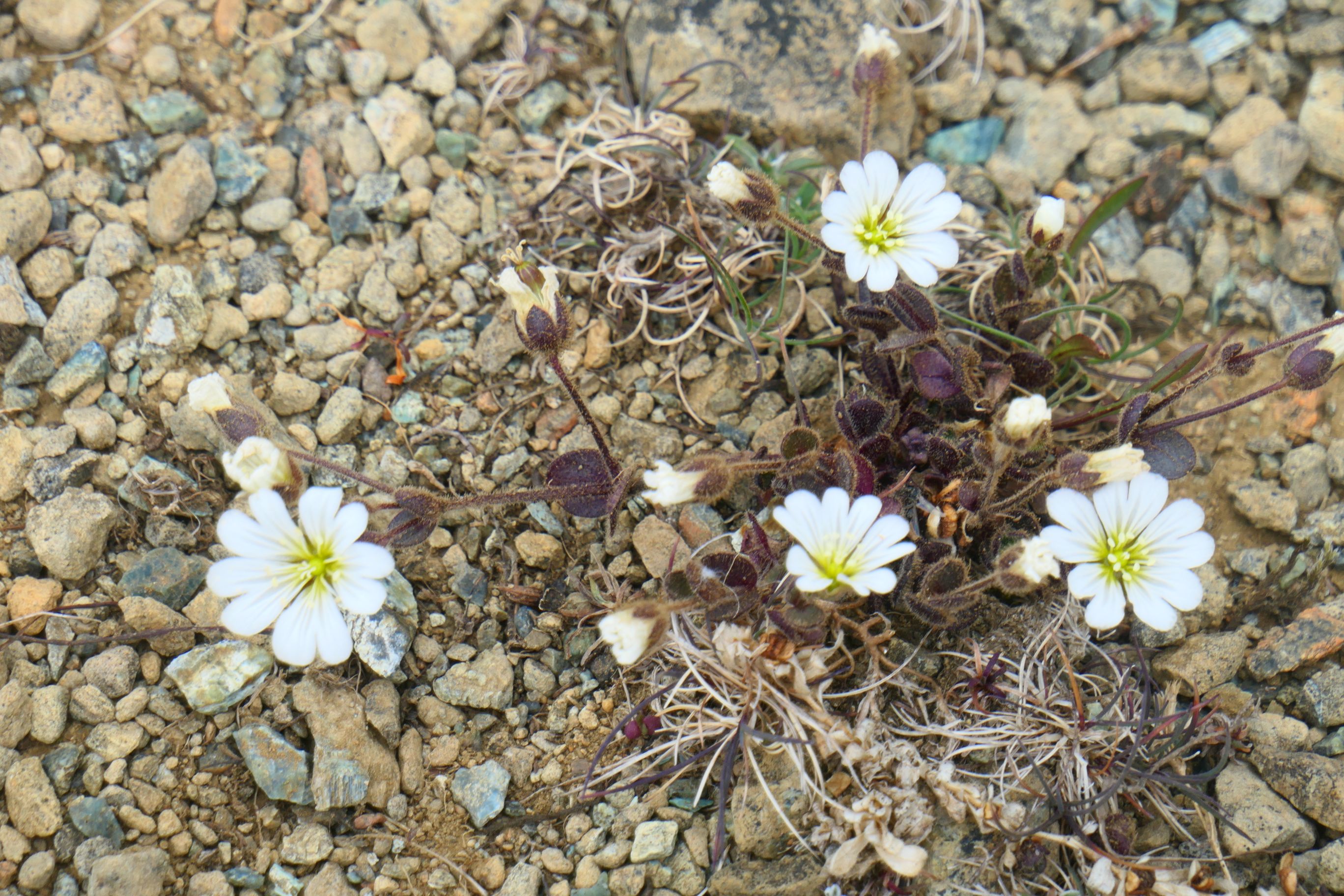
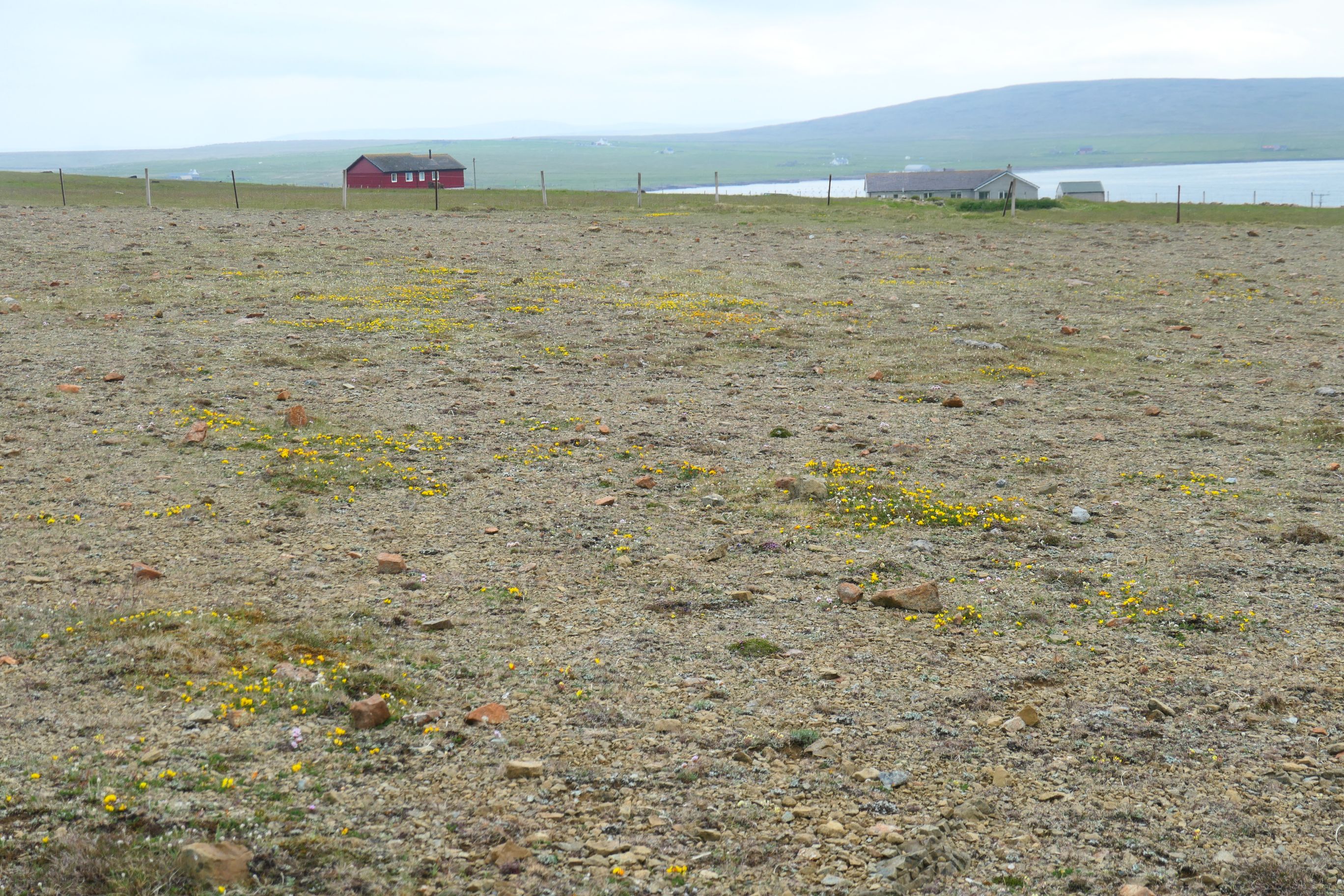
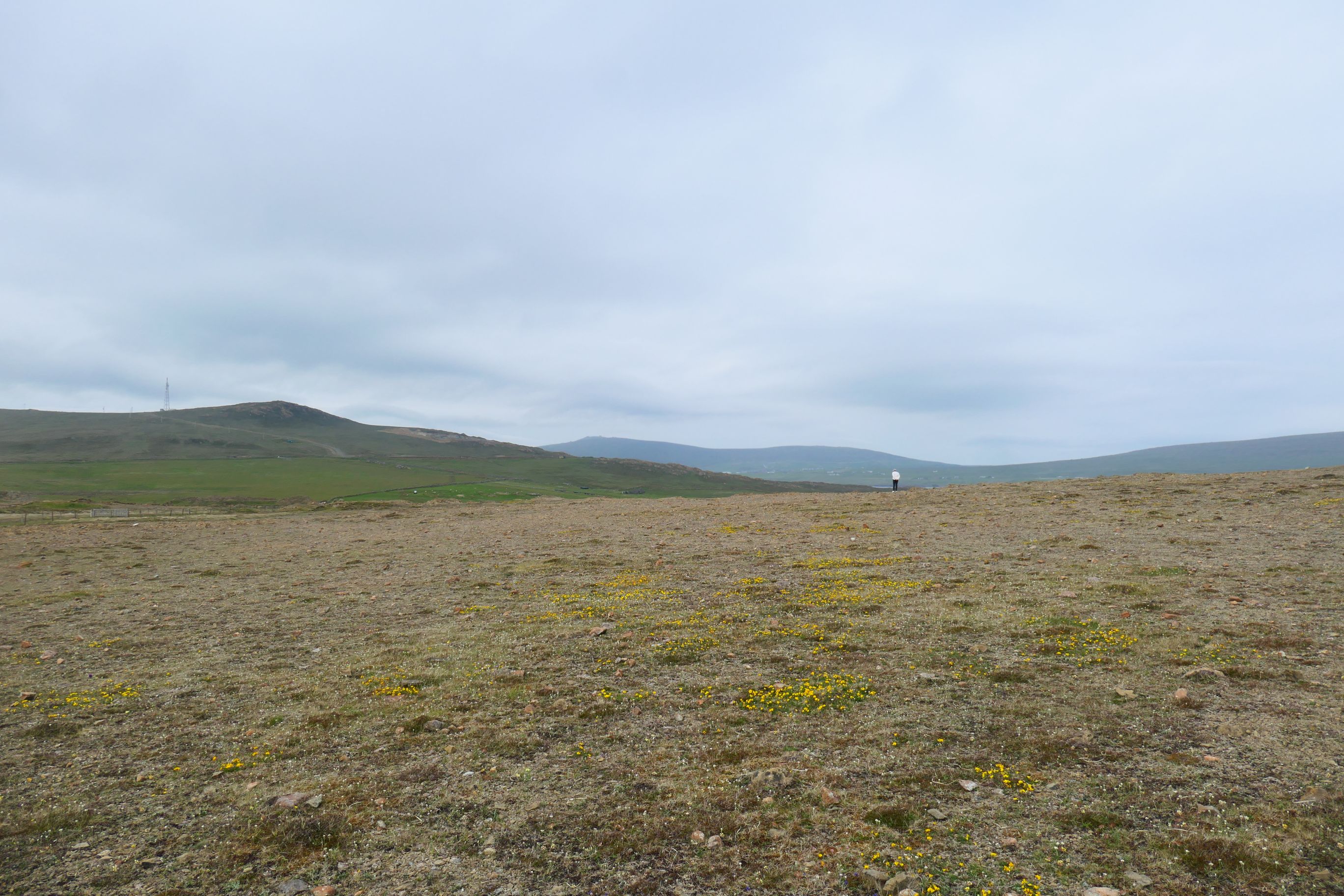
Just near the bus shelter lies the Keen of Hamar. It sits alongside a farm with green grass and grazing cattle, but the landscape of the Keen is quite a contrast to this. At first appearance it looks barren, rocky and desolate, but Dave encouraged us to keep our eyes to the ground and observe more closely. We discovered that the Keen is full of wildflowers – tiny Shetland wildflowers. When you learn how to look, it’s surprising how many there are. The Keen, which was purchased at the eleventh hour by the Shetland Amenity Trust to prevent the farmer who owned it from ploughing it and turning it to pasture, is the only place on earth where a small white flowering plant named Edmonston’s Chickweed can be found. If the farmer had ploughed the field, it would surely have become extinct. We discovered a few of them as we explored the Keen, taking care not to step on them.






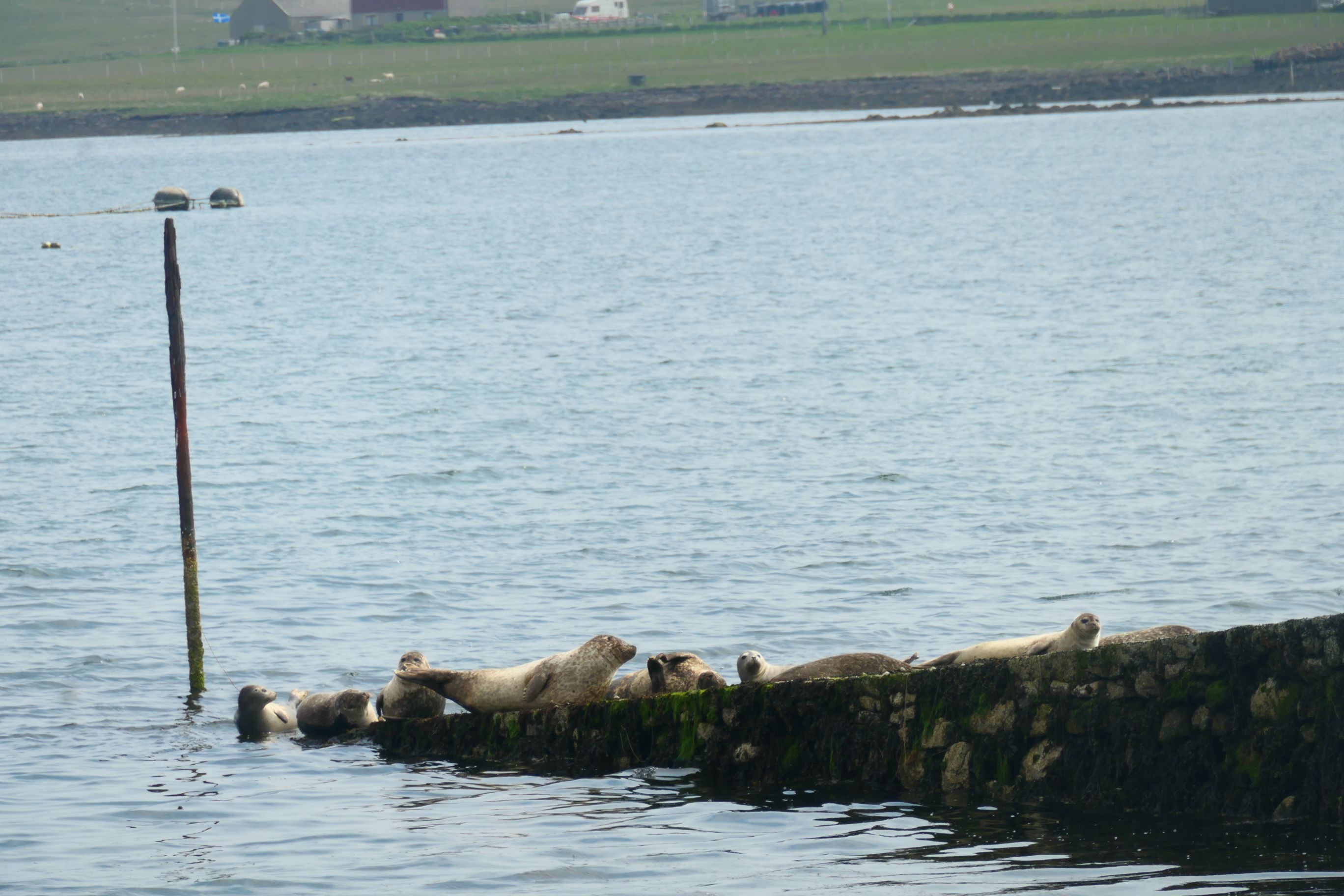
Returning to the ferry terminal, we passed some seals at the bottom of a boat ramp.
Dave dropped us at the ferry at the designated time. This was our final private day tour in Scotland, and once again, it had been a fantastic day. We boarded as foot passengers and less than ten minutes later we were walking ashore on Yell. Neil took the keys for the journey back to Lerwick. When I was driving across Yell in the morning, a couple of lambs had run out across the road directly in front of me, seeking the comfort of their mothers. So Neil was ready for them on the way home. We passed a few standing on the verge of the road, but thankfully no lambs ran out in front of us this time. Yell was a little greener than Unst and more heavily populated.
We had a good run through Yell and arrived about 25 minutes before our ferry booking. An earlier ferry was just about to pull out, but the guy directing traffic waved us to come on board, which saved us a long wait for the next one. Once again, it was a very short crossing. Quite a few cars were on this ferry and we followed most of them all the way back to Lerwick. We’d had another day of great weather and experiences we might never have imagined possible.







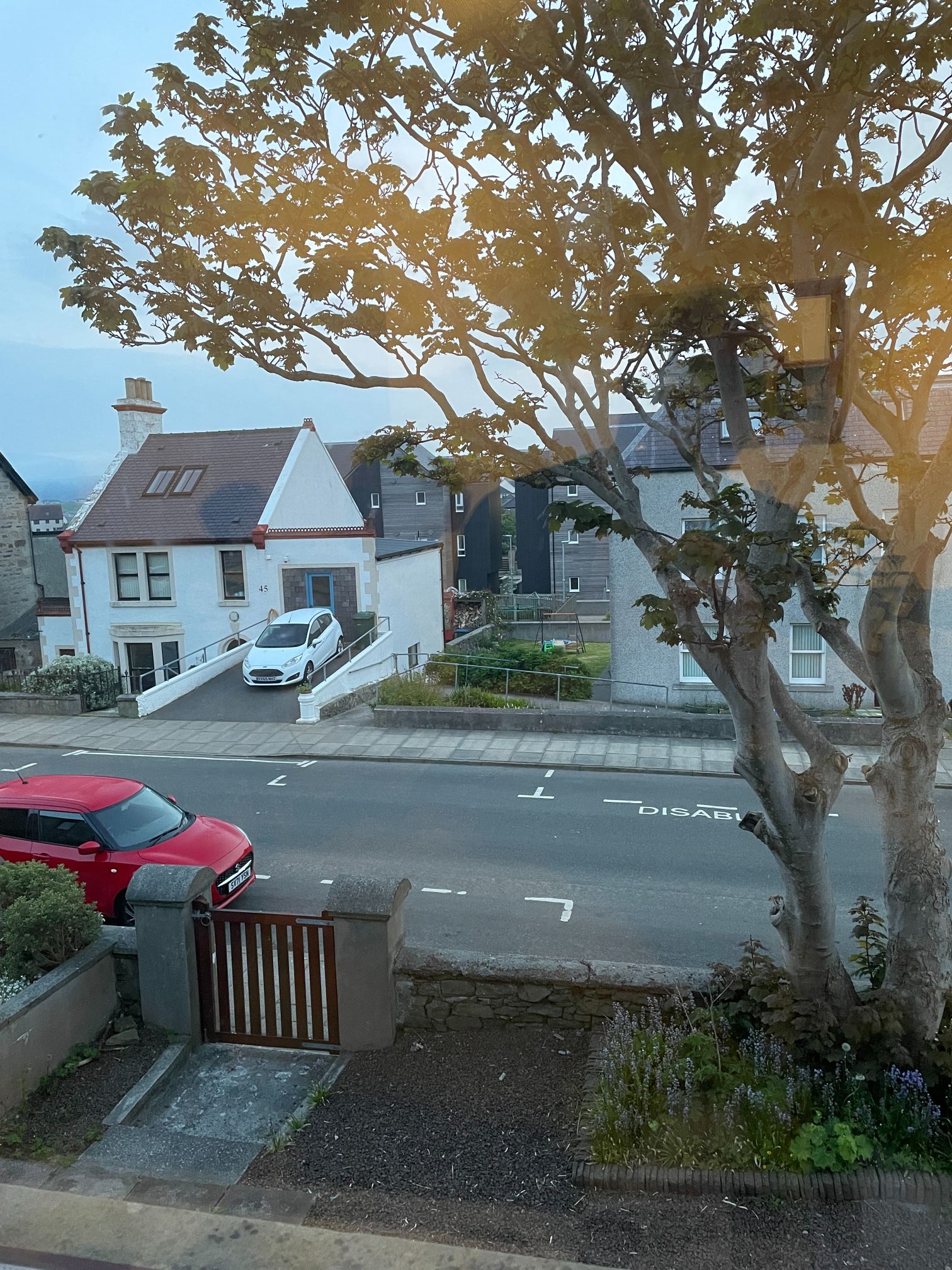
I started typing up this post after dinner and I’ve just finished. It’s 11 pm, and this is a photo I’ve just taken outside our window. It will still be light here for another hour or so, because we are situated more than sixty degrees north. Amazing!
 On The Road With Garry