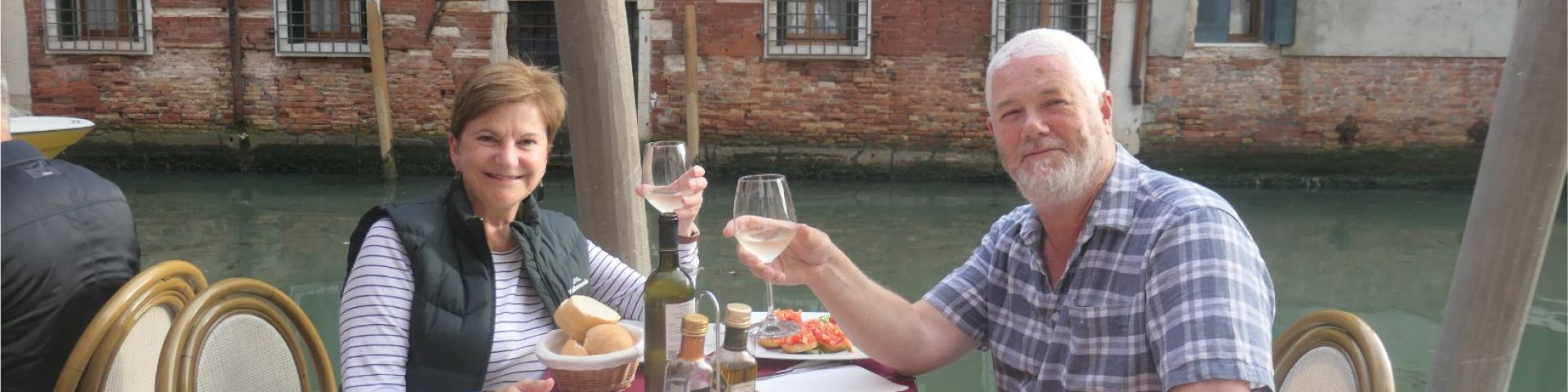
We woke to another beautiful day. After all the amazing weather we’ve had, I don’t think I’ll ever listen to another person telling me that it’s always raining in Scotland. Today was absolutely brilliant. Blue cloudless skies, bright sunshine, about twenty something degrees – a day for wearing short sleeve shirts and sun hats.
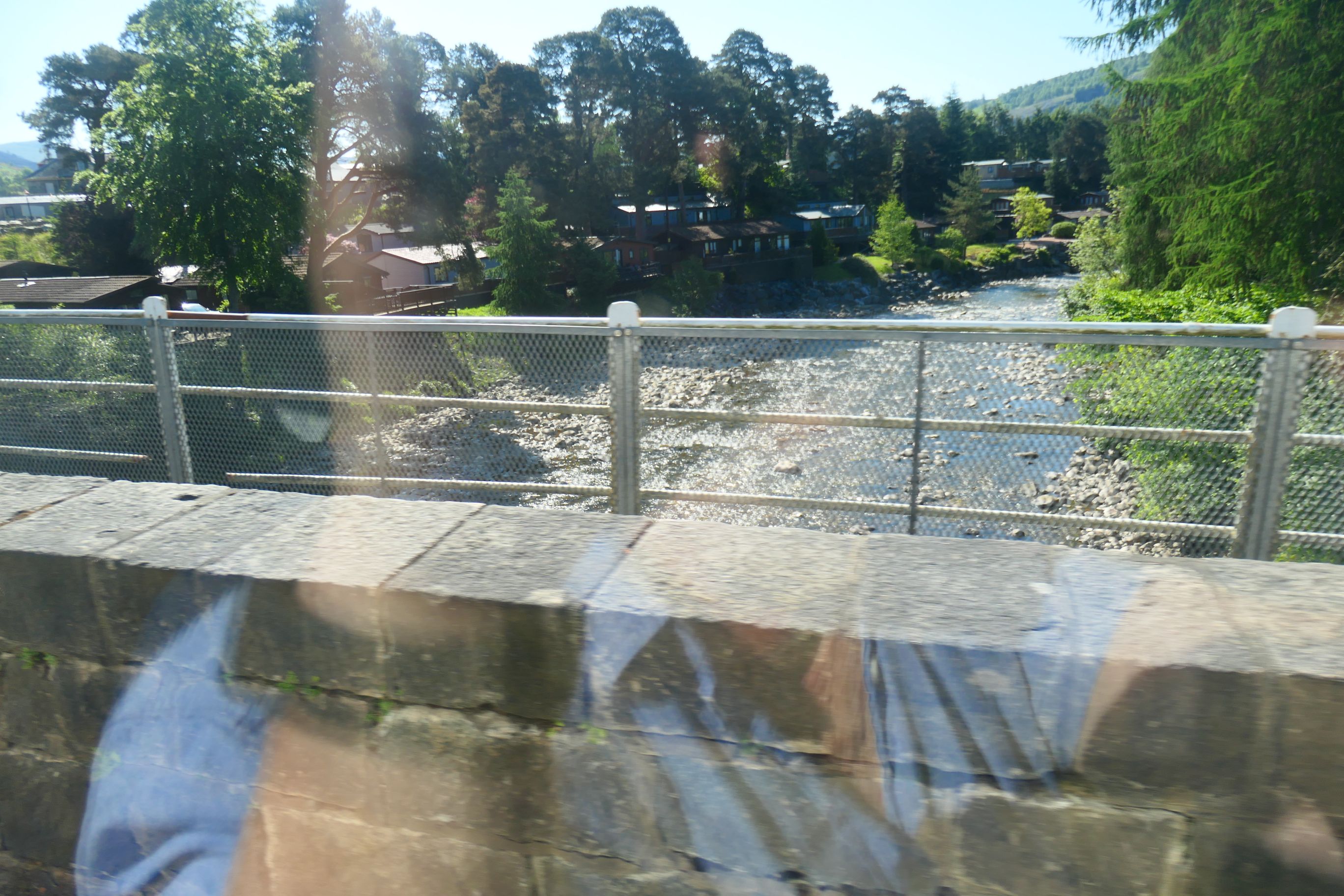
At 10 am we caught the local bus to Blair Castle, which is just a short distance outside the village of Blair Atholl. The bus left Pitlochry on the A9 road running parallel, for a time, with the railway line we’d come in on from Inverness. Just north of town, the road took us through Killiecrankie Pass, a gorge on the River Garry. It was here in 1689 that the Jacobites, despite being outnumbered, won a decisive battle over the English. Many government troops turned and fled down the gorge, pursued by the Jacobites. One English soldier is reputed to have leapt five and a half metres across the River Garry to make good his escape.

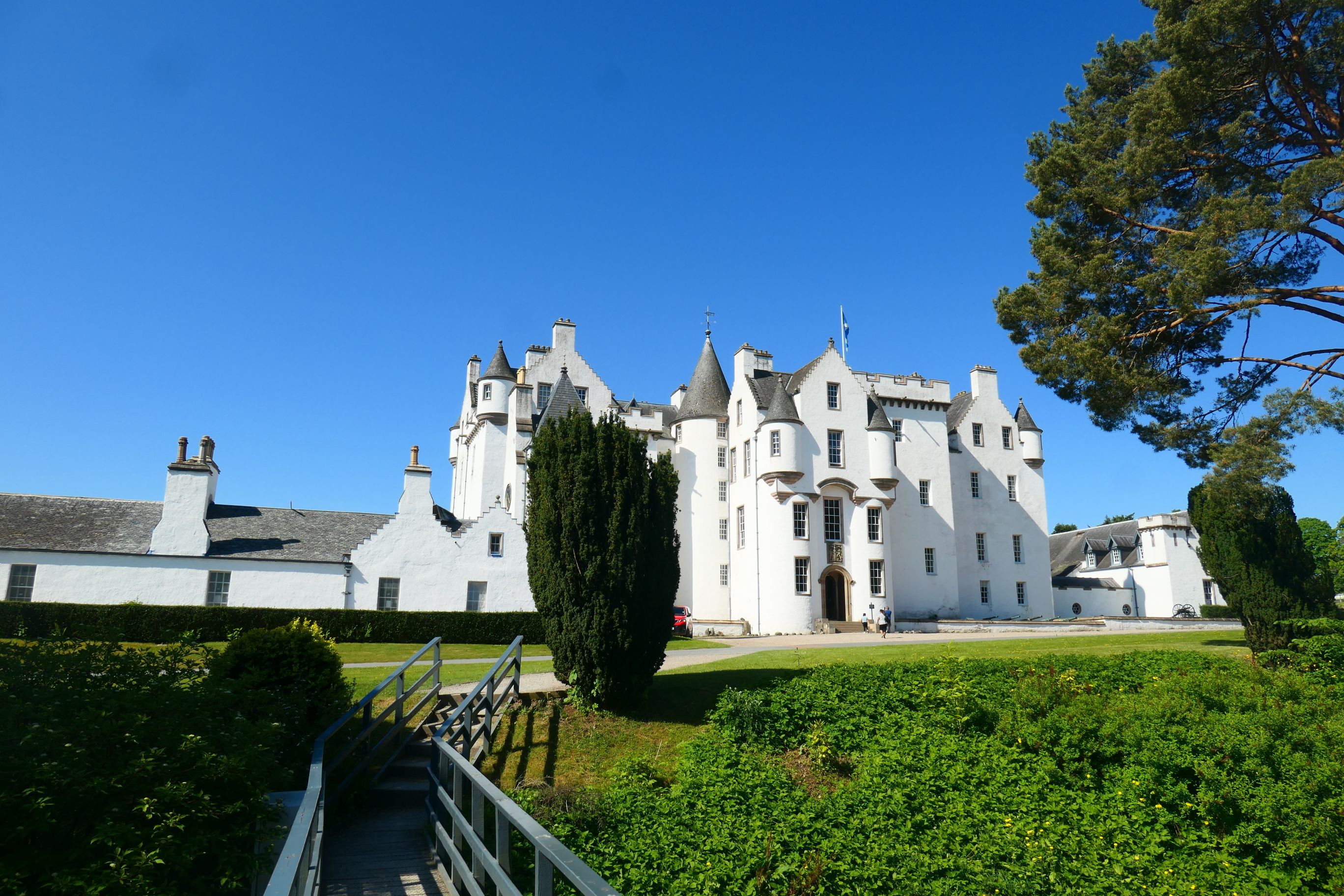
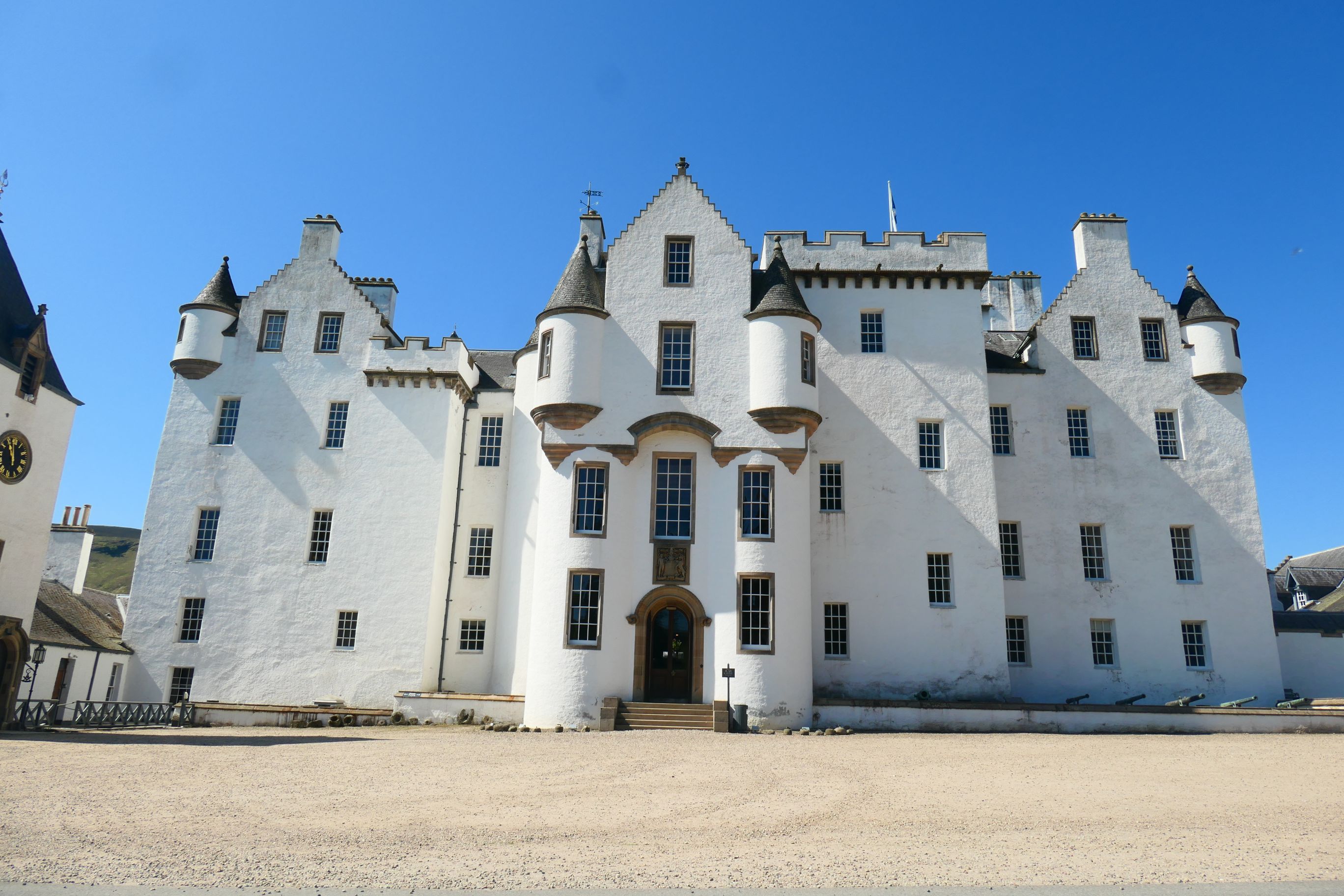
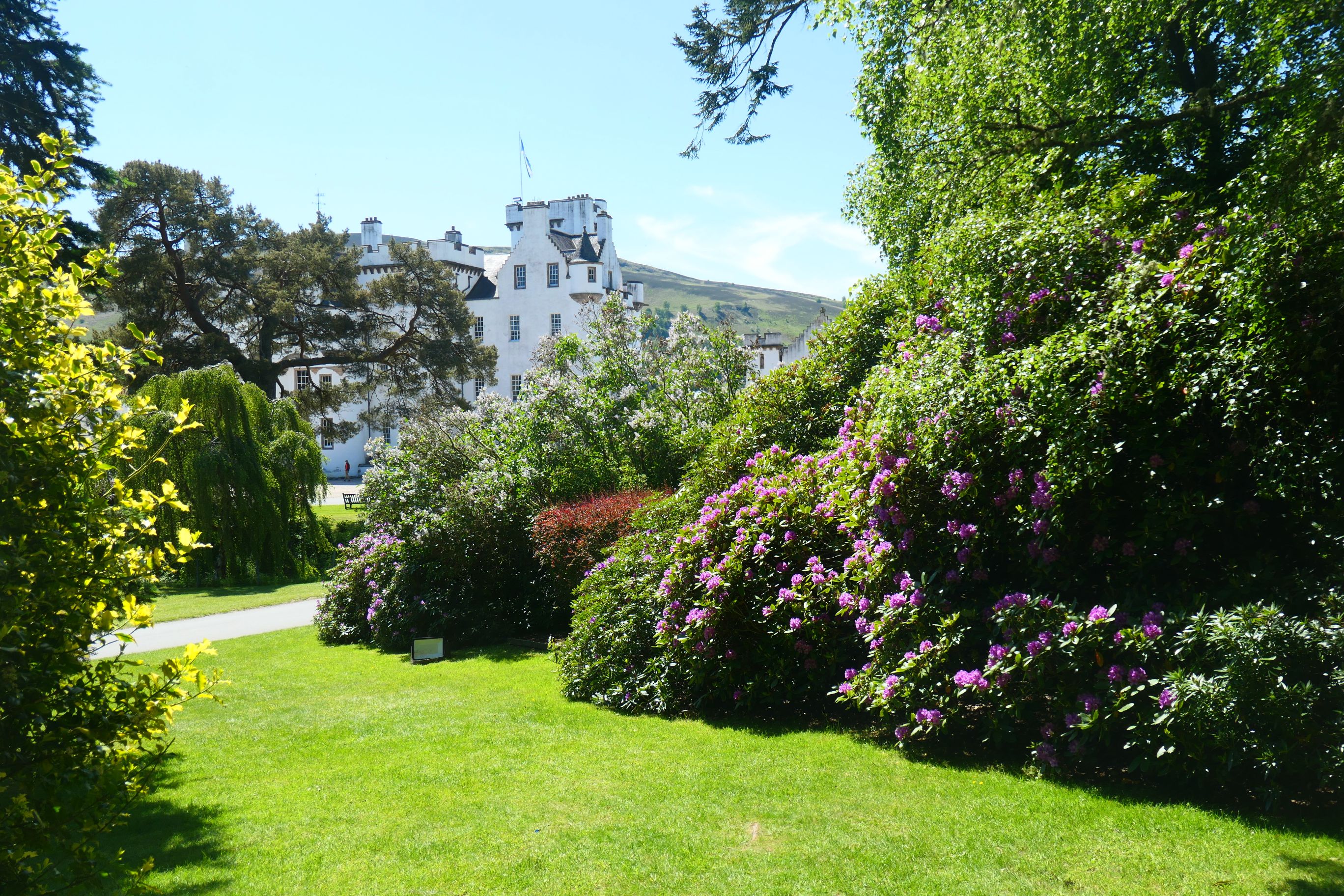
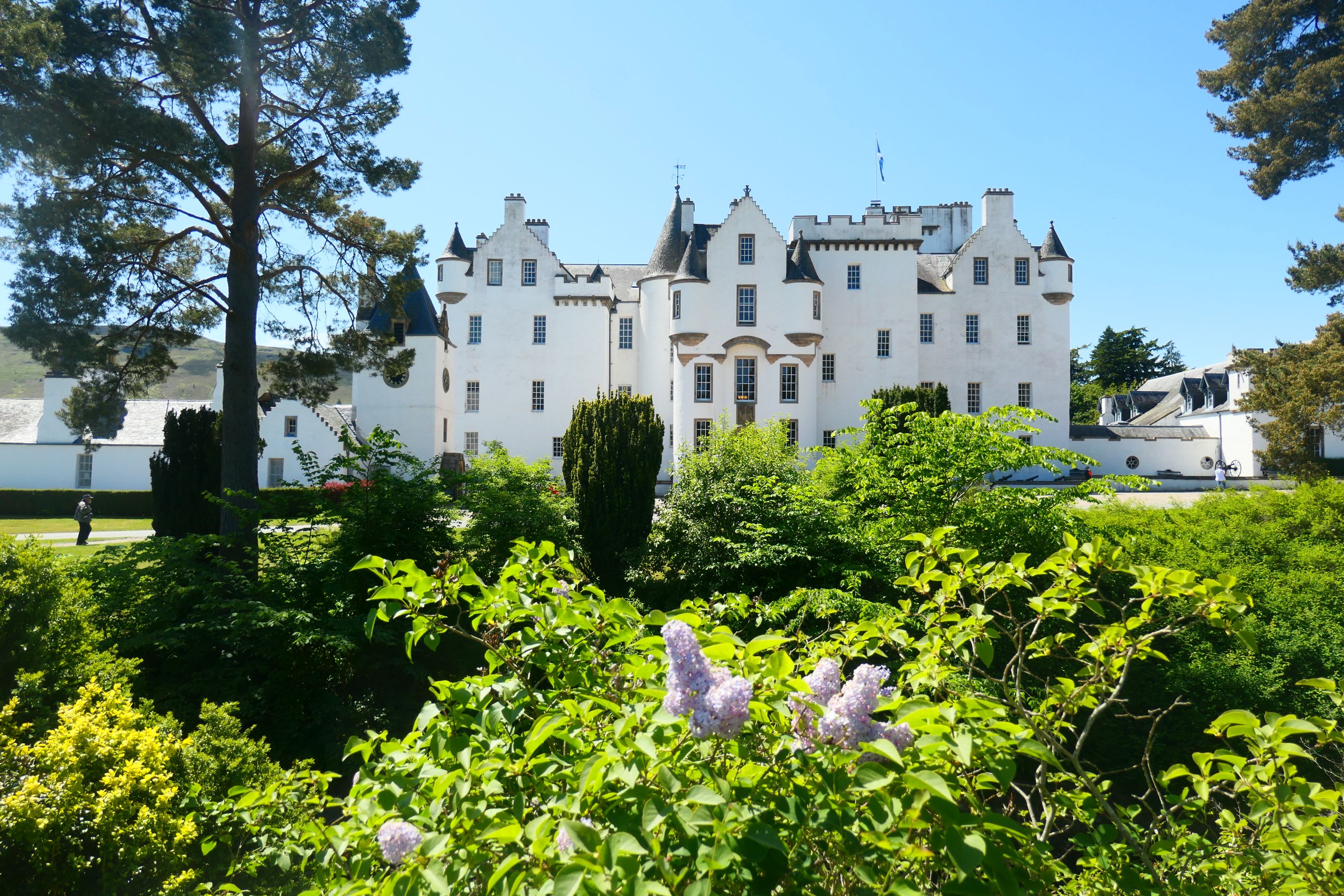
The bus drove into the grounds of Blair Castle and dropped us off by the carpark. In such amazing sunshine, the white castle walls set against the backdrop of a blue sky made a striking contrast. Marg and I had visited the castle four years ago, but it was a first visit for Janie and Neil. And it’s probably not quite correct to refer to it as a castle, because in the 1740s, the second Duke of Atholl transformed what had been a medieval castle into a grand Georgian mansion.
Blair Castle has been home to the Atholl family for over seven hundred years. In the 1700s, the beautiful gardens and Diana’s Grove were established.

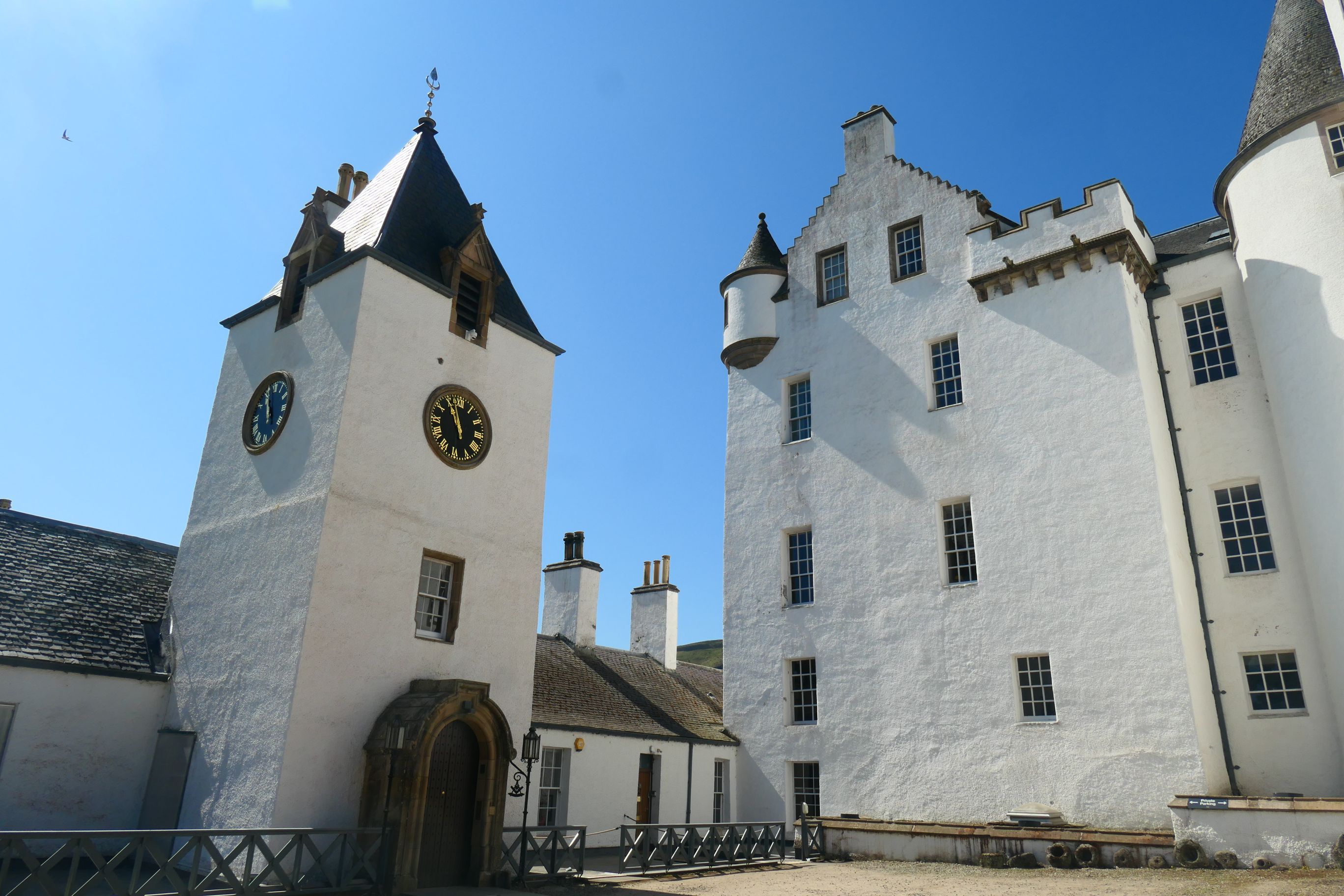
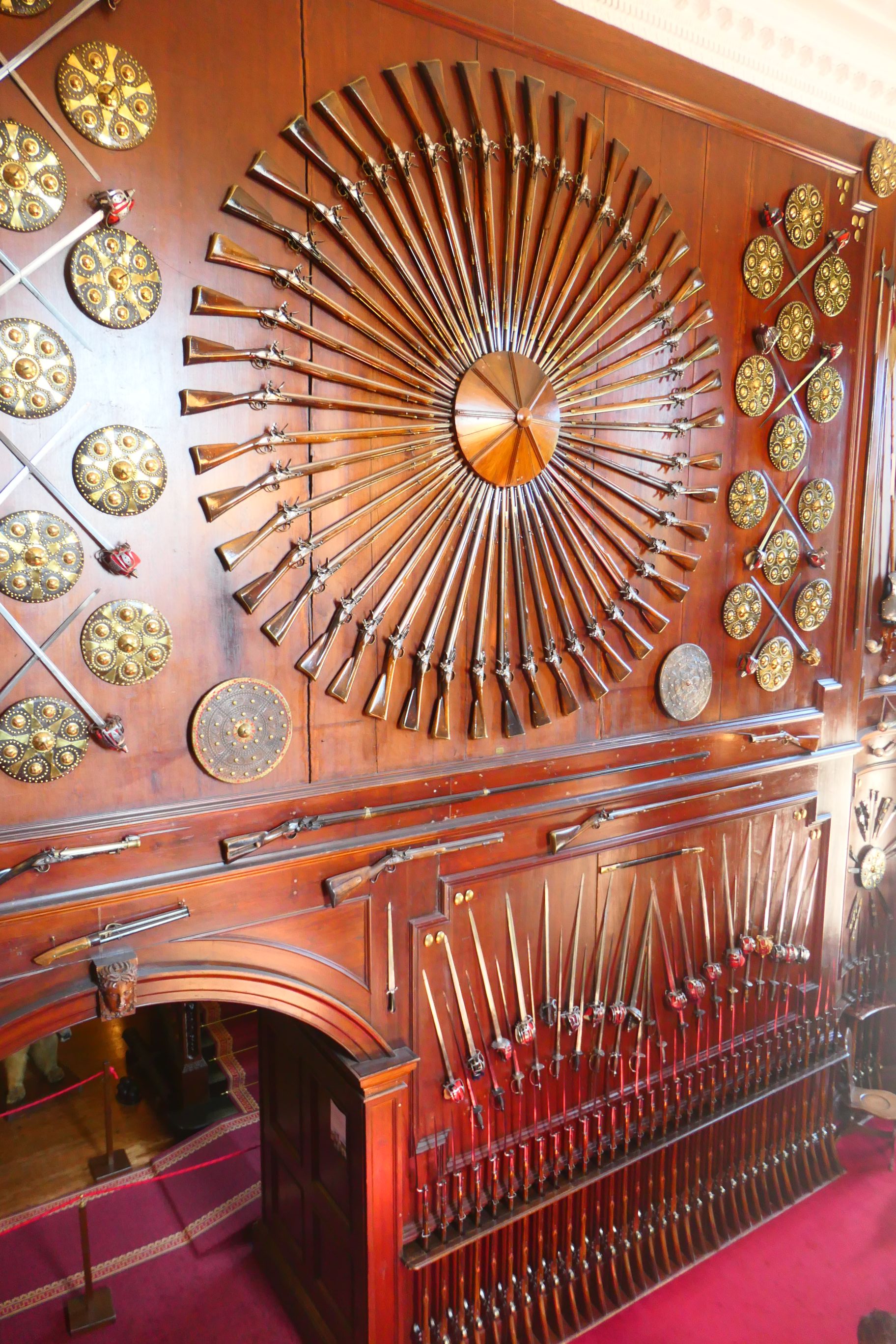
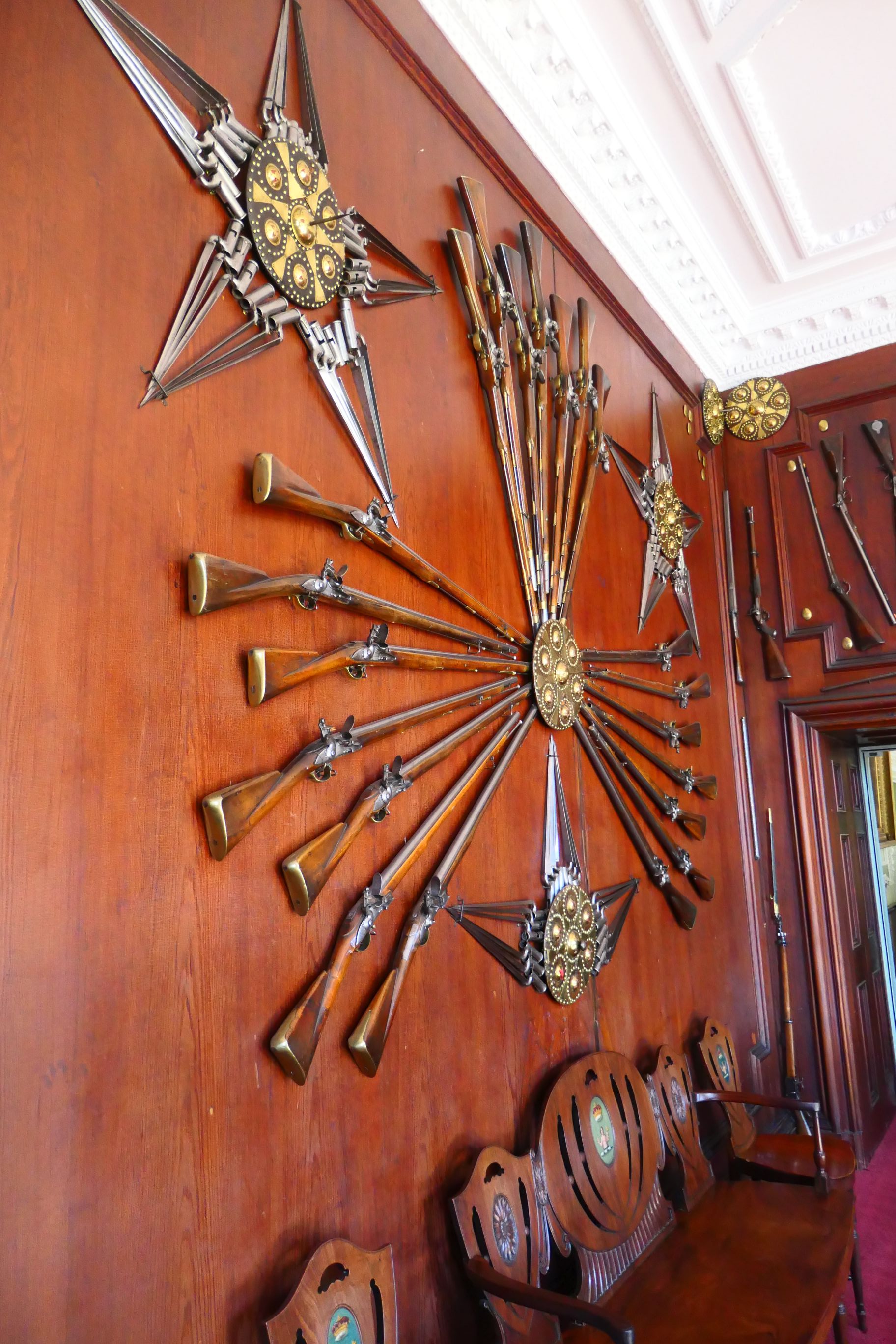
Setting foot inside the entrance to the castle, a striking display of weapons adorning the walls immediately catches your eye. This grand entrance was commissioned in the 1870s by the seventh Duke of Atholl, and includes muskets used at the Battle of Culloden. This Duke wanted to convert the mansion back to a castle.

Beginning at the entry, visitors follow a numbered route that takes them in an orderly way through the mansion. Ropes and marked signs make it easy to see where to go next. The first few rooms introduce the members of the Atholl family and tell the story of the Dukes of Atholl over the years.
The Duke of Atholl is the head of the Clan Murray. When the eighth Duke died childless in 1942 and was succeeded by his brother, the ninth Duke, who also died childless in 1957, the title of Duke of Atholl was passed on to a very distant cousin. Iain Murray was a fourth cousin twice removed. When the tenth Duke died, also childless, in 1996, the title went to his second cousin once removed. What a surprise it must have been for those last two guys to learn that they’d inherited a castle, a title and a seat in the House of Lords because someone had identified them on a distant branch of the Murray family tree. The eleventh Duke died and the title now belongs to his son, who lives in South Africa and only visits Blair Castle once a year to attend formalities.
The castle/mansion has been closely connected with many key events in Scottish history over the centuries. During the English Civil War the Murrays supported the Royalists and Oliver Cromwell and his army occupied the castle. In the first Jacobite uprising in 1689, the Murrays supported the government, but two of the Duke’s sons favoured the Jacobites. When the Jacobites seized control of Blair Castle, Lord John Murray, First Duke of Atholl, laid seige to his own family’s ancestral home. He eventually called off the seige just days before the Battle of Killiecrankie. In the months prior to the Battle of Culloden in 1746, with the castle still in Jacobite hands, Bonnie Prince Charlie and his army briefly held control, but then abandoned it and it fell under the control of government troops. This time it was the Jacobites who then laid seige to the castle, but this ended when they were called to fight the British at Culloden. During her reign, Queen Victoria visited Blair Castle with Prince Albert. The castle even played a role during WWI, being transformed into a convalescent hospital for wounded soldiers returning from the front.
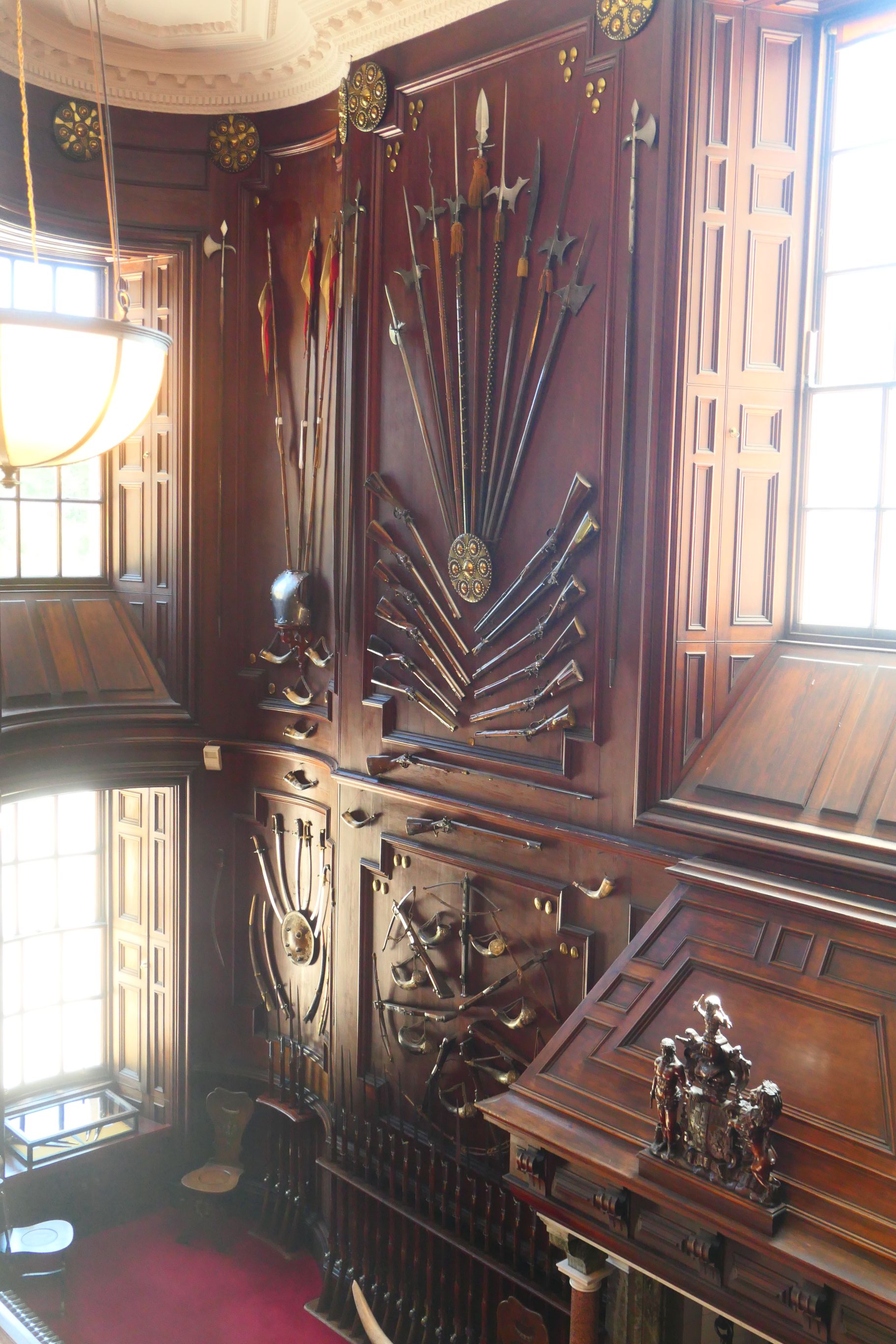
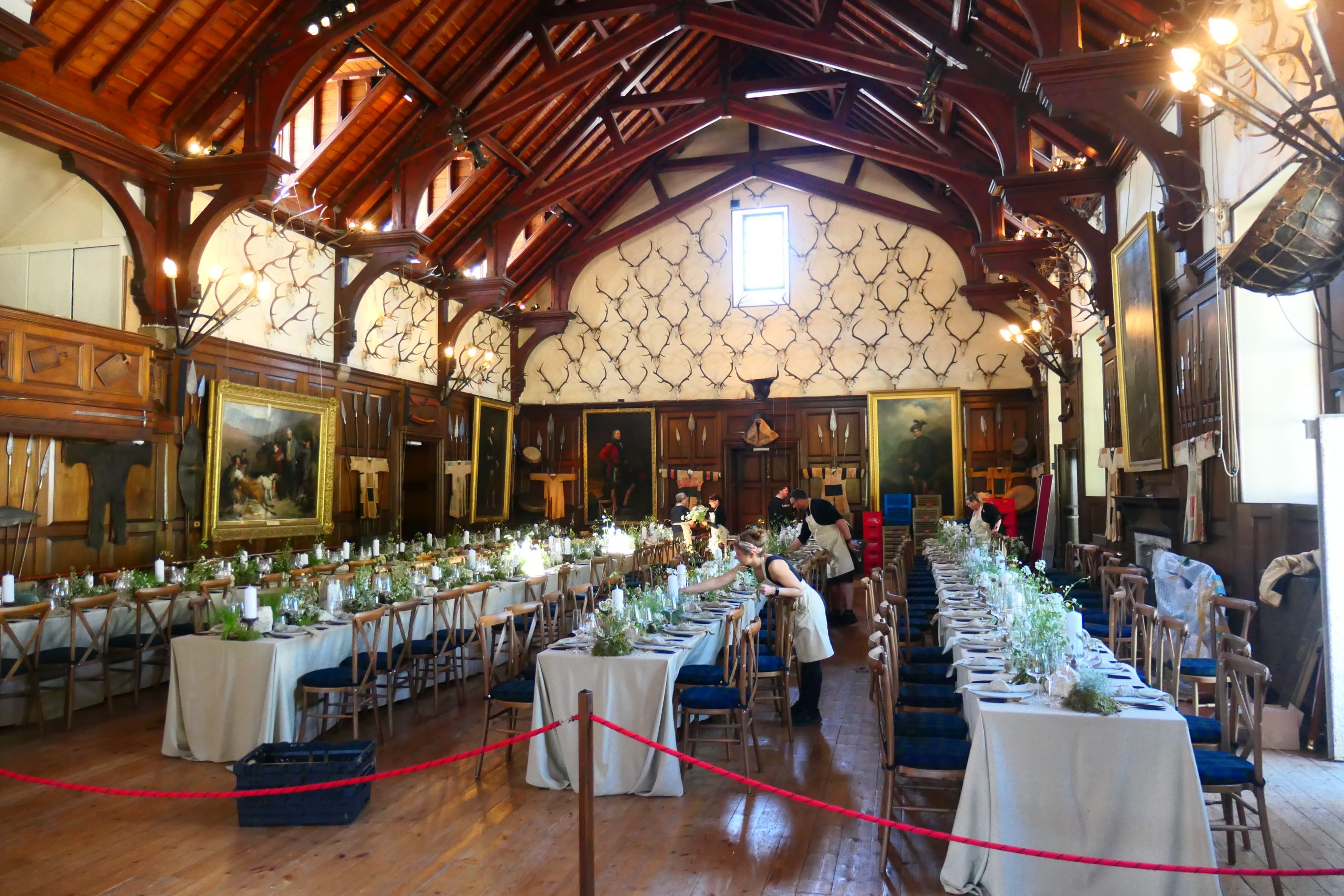
The photos below give an indication of what a grand mansion Blair Castle was. Stag horns and weaponry adorn the passageways and staircases. Fine hand-crafted furniture, painted portraits, silver tableware, ornate ceilings and mantlepieces, wall tapestries, fine china crockery and other adornments are all indicators of the status of the Murray family and their wealth.

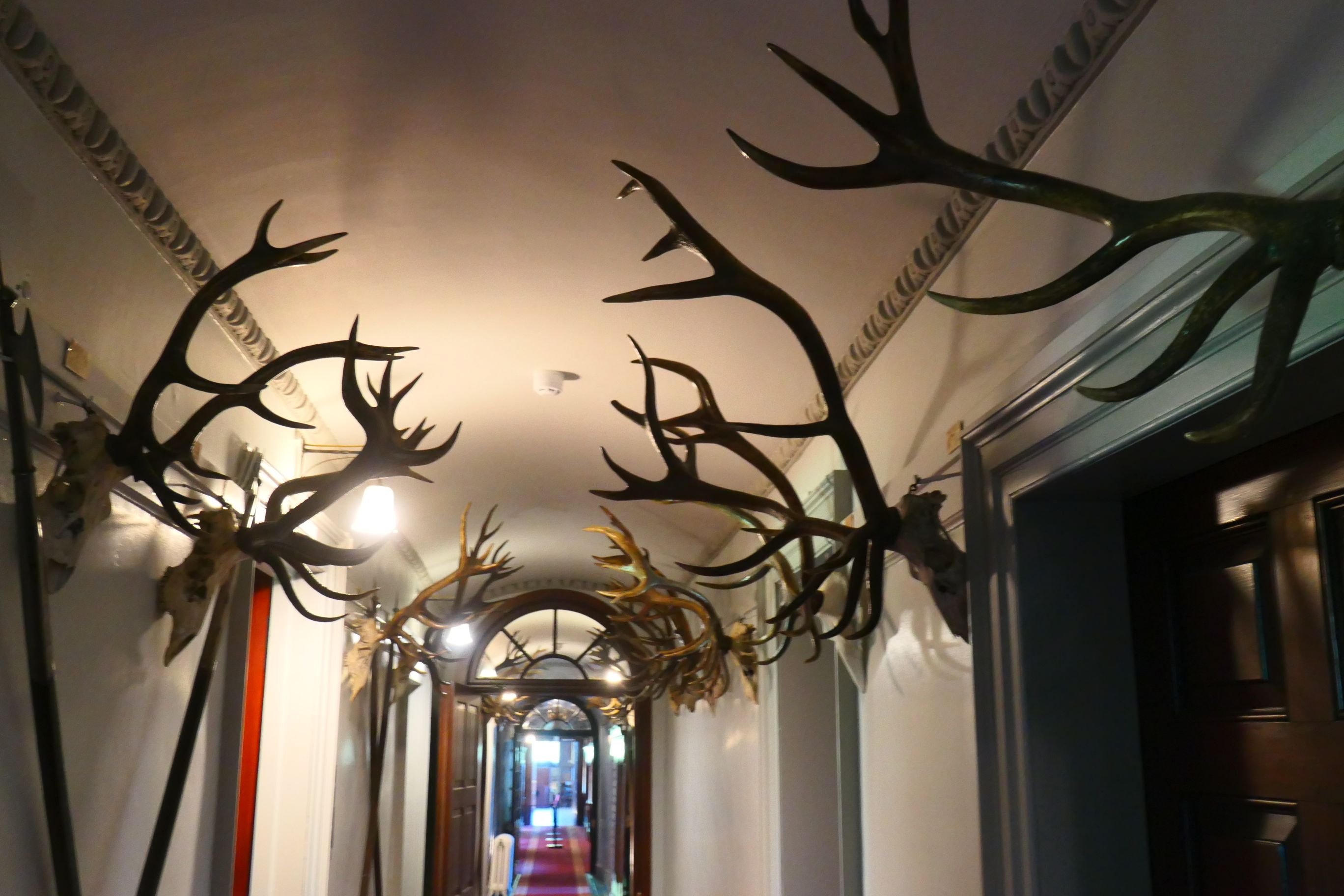
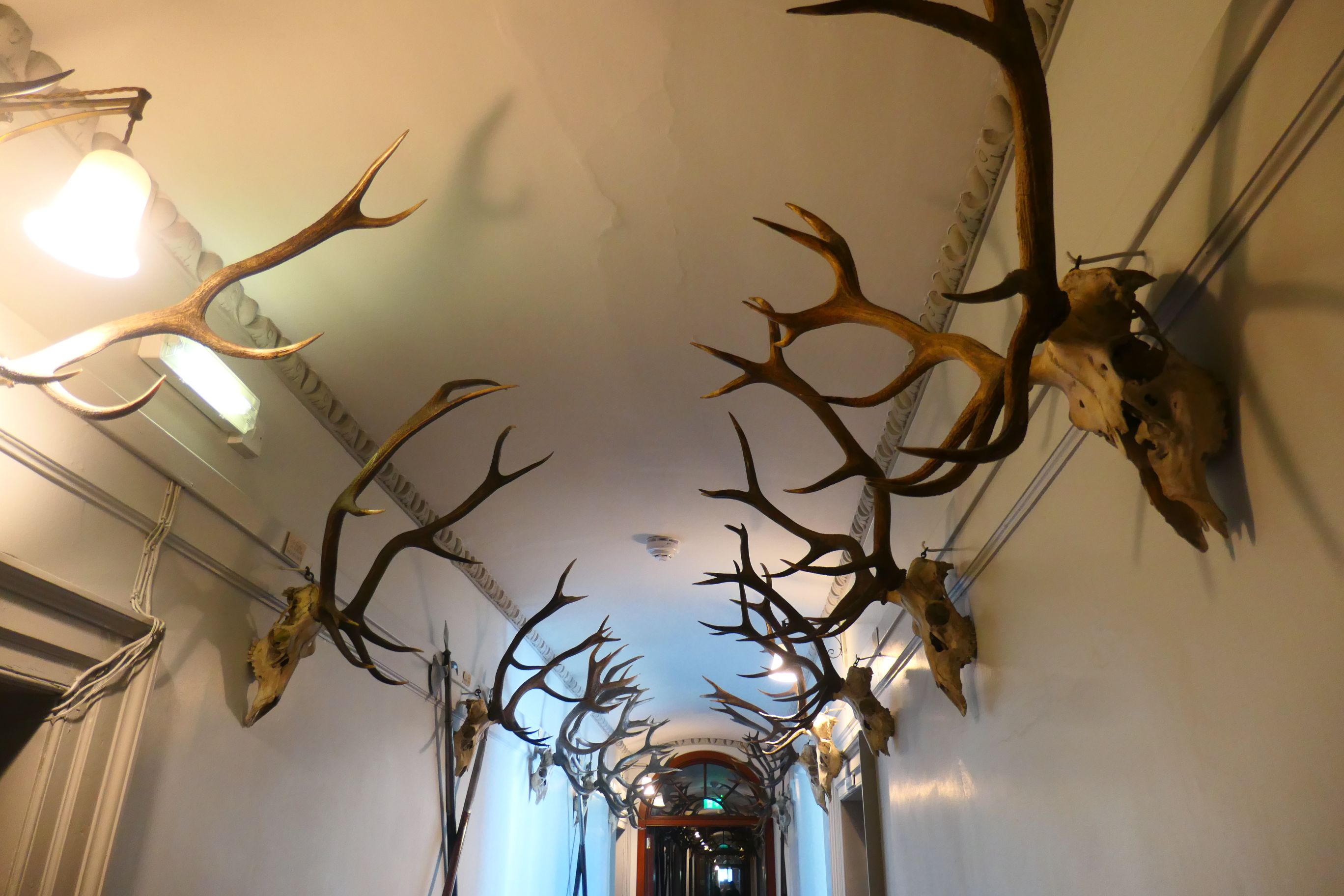
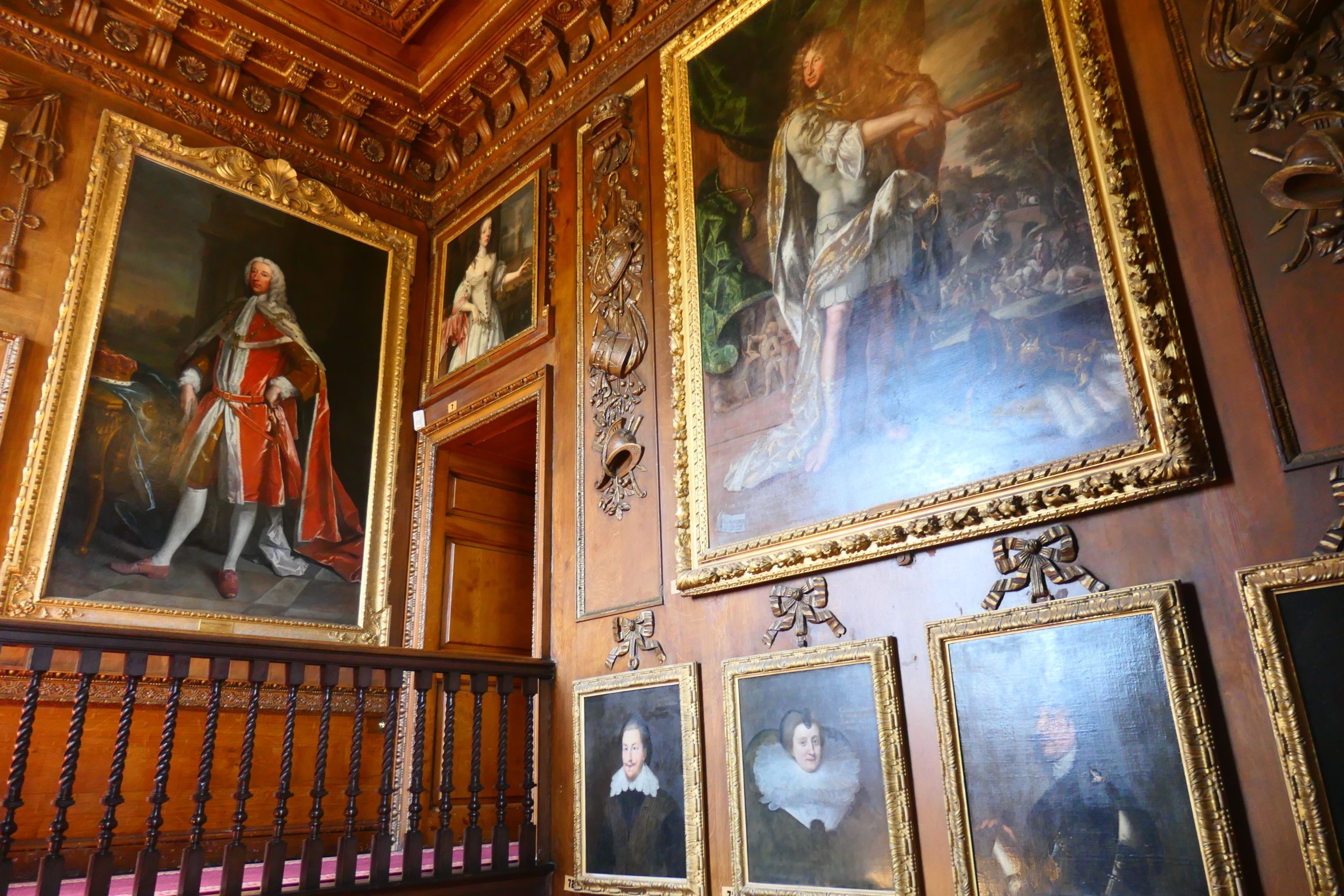


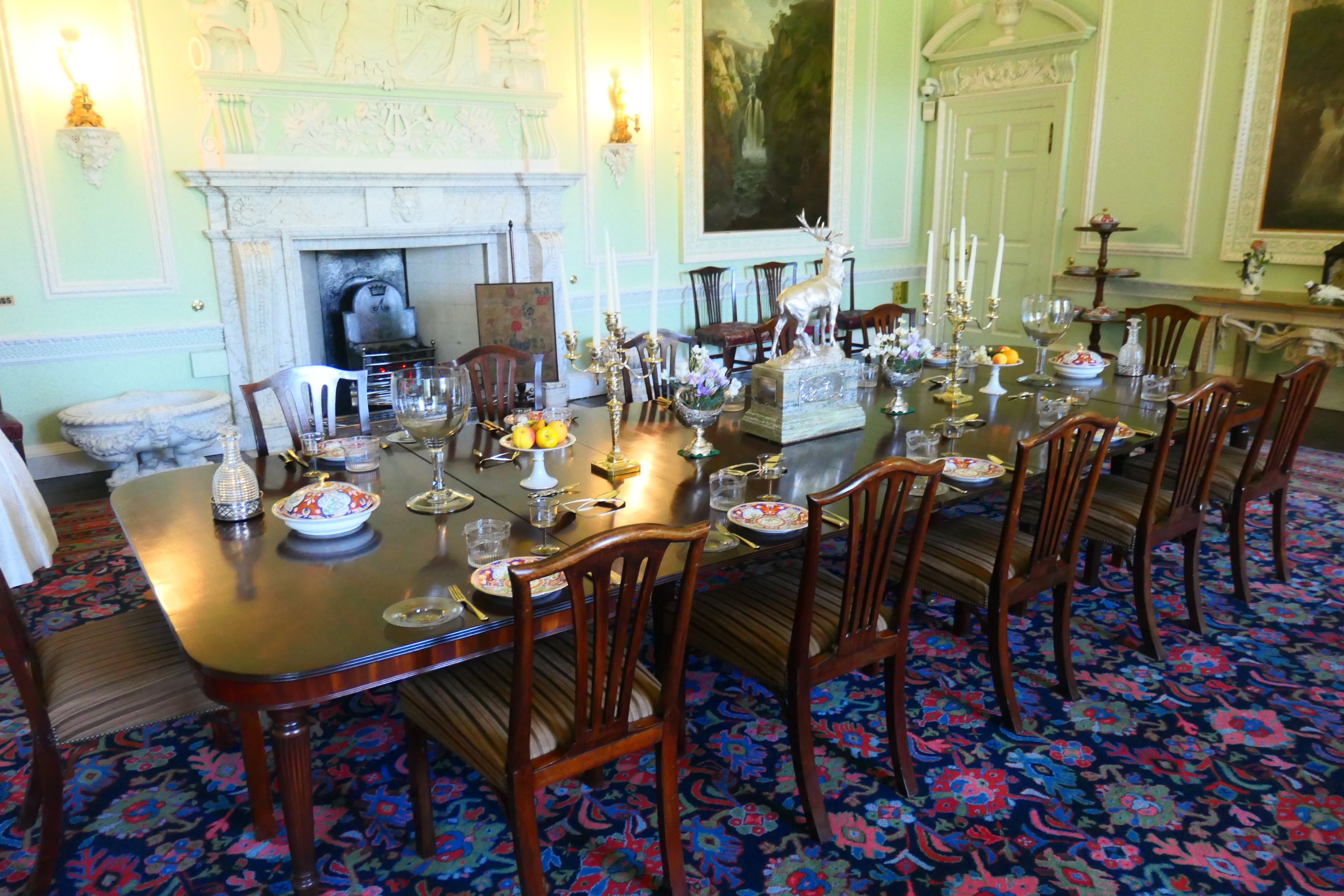
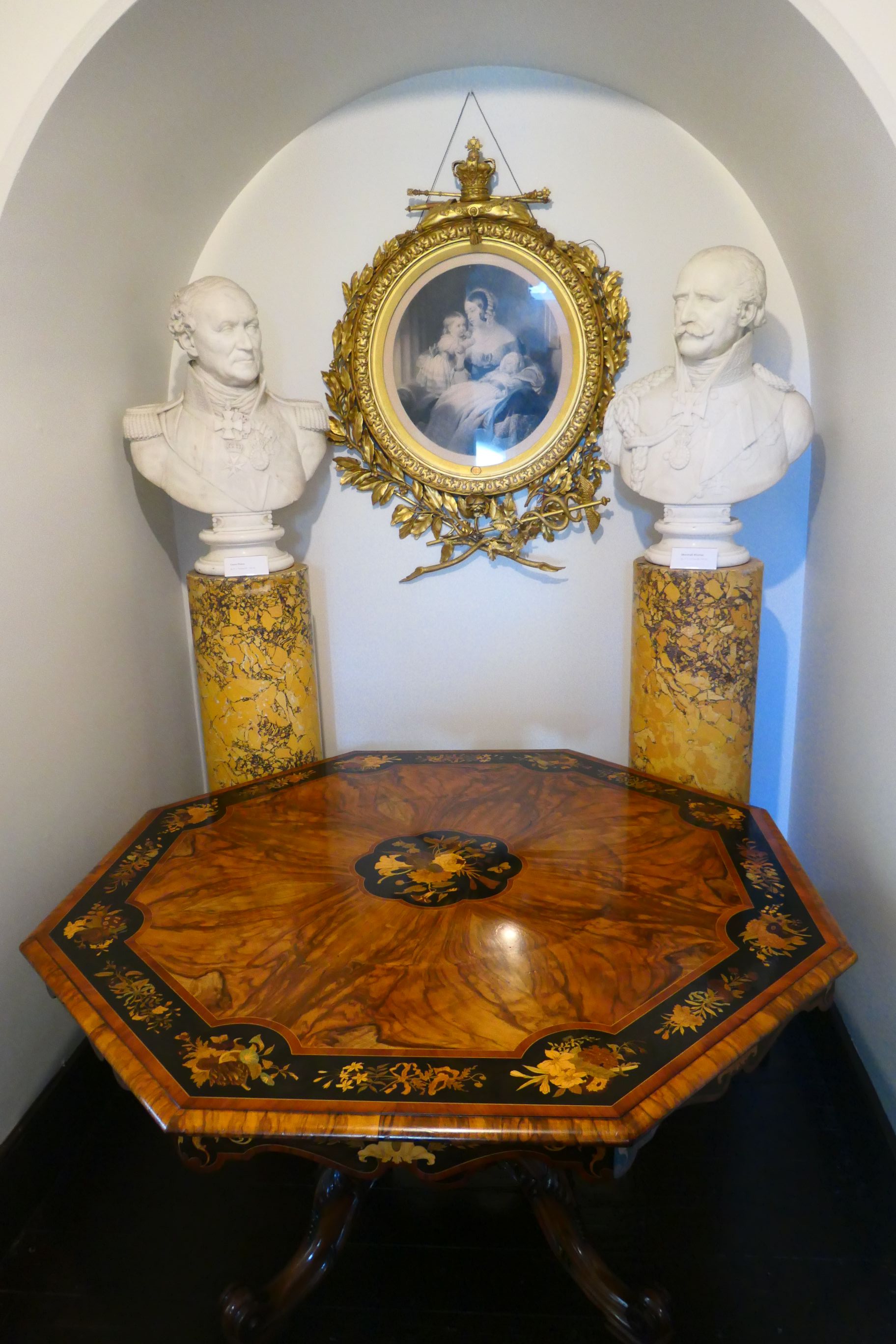


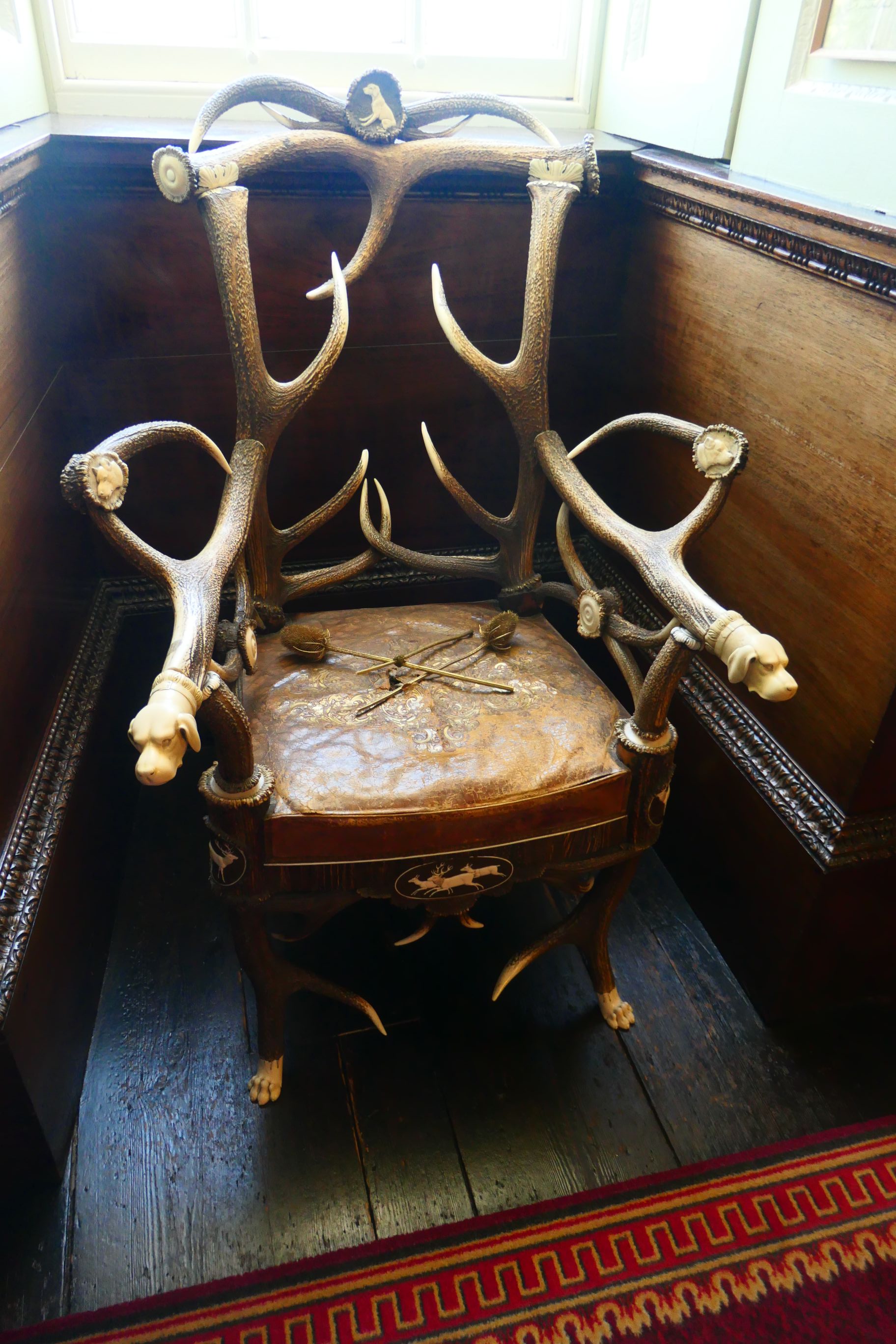
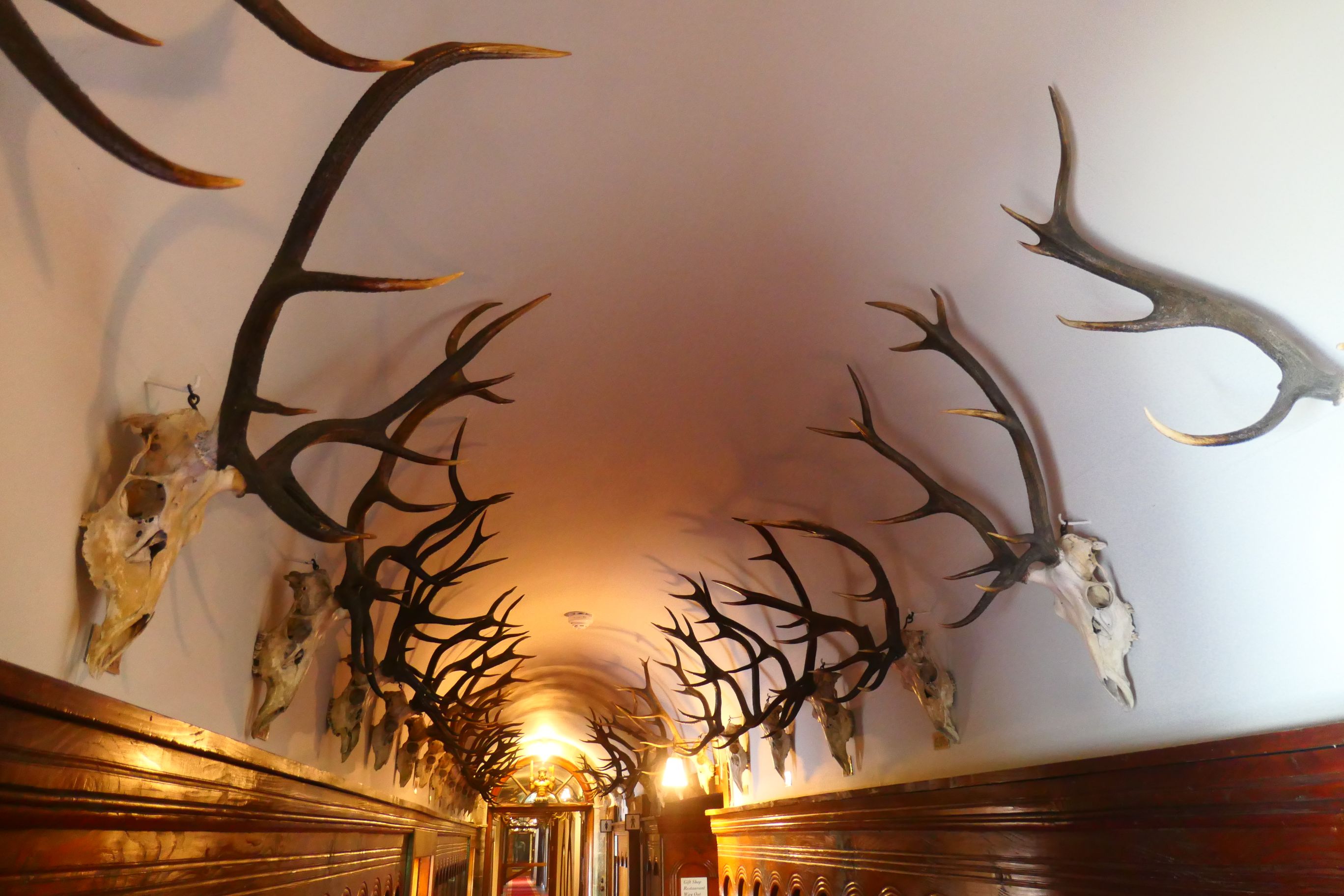
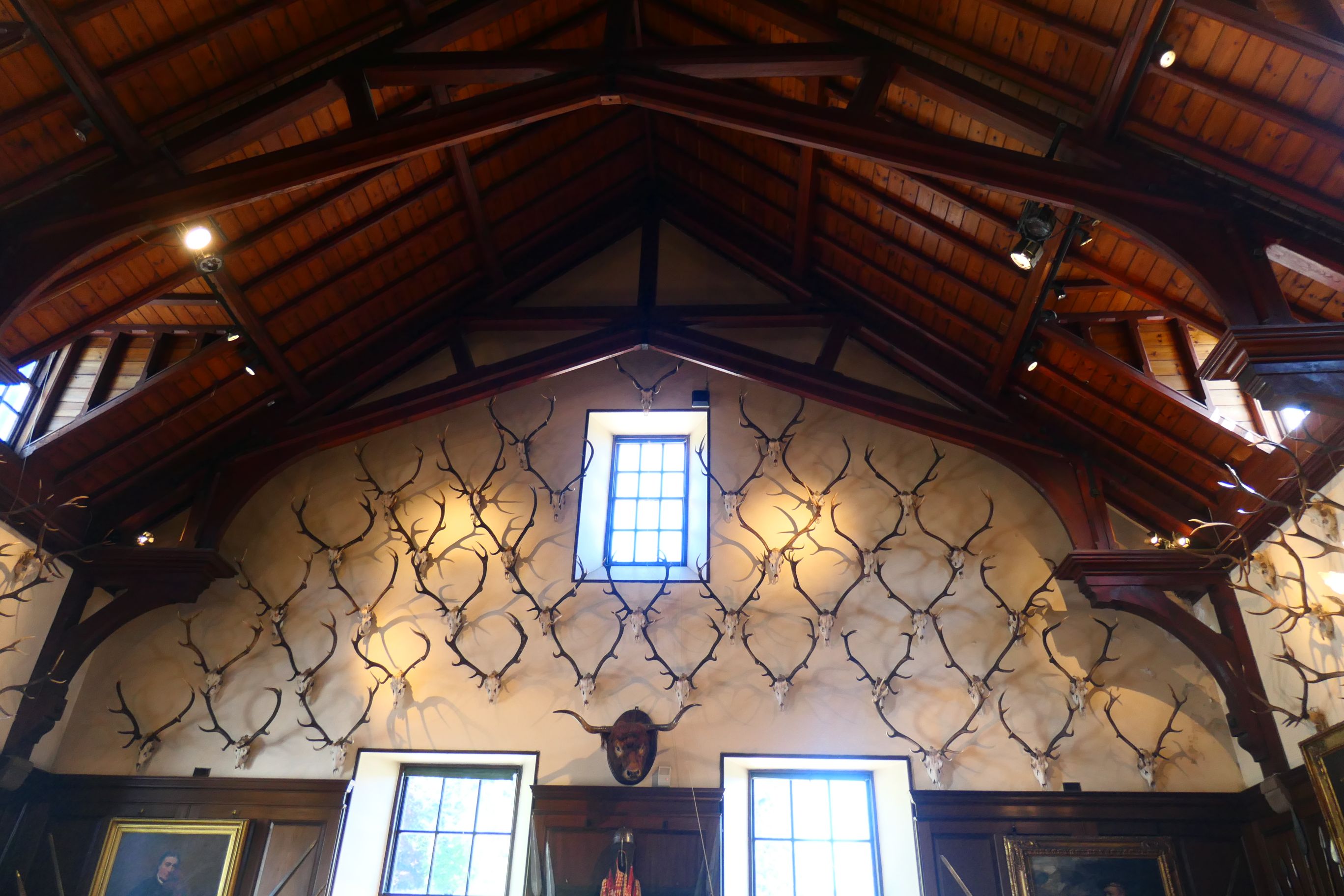

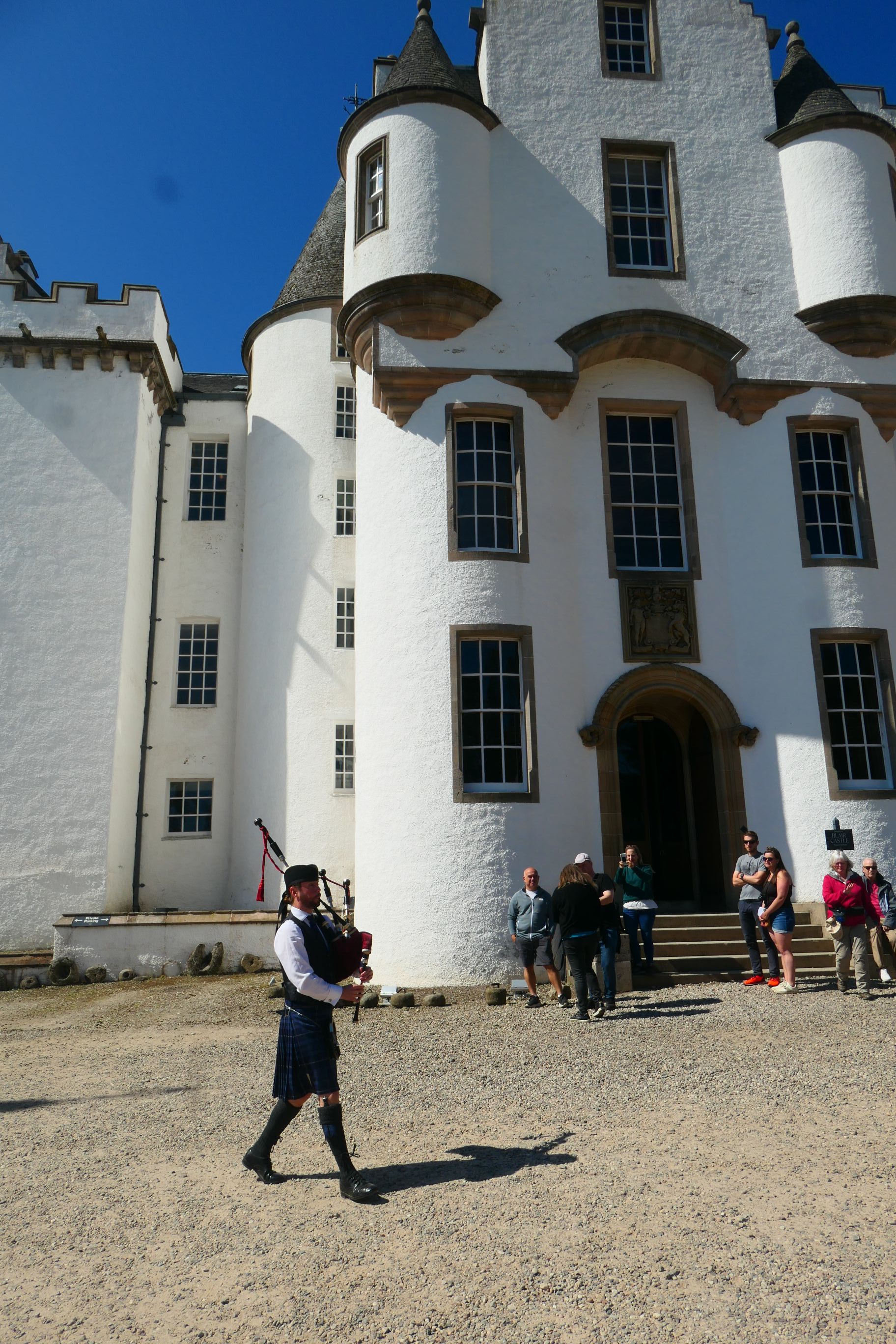
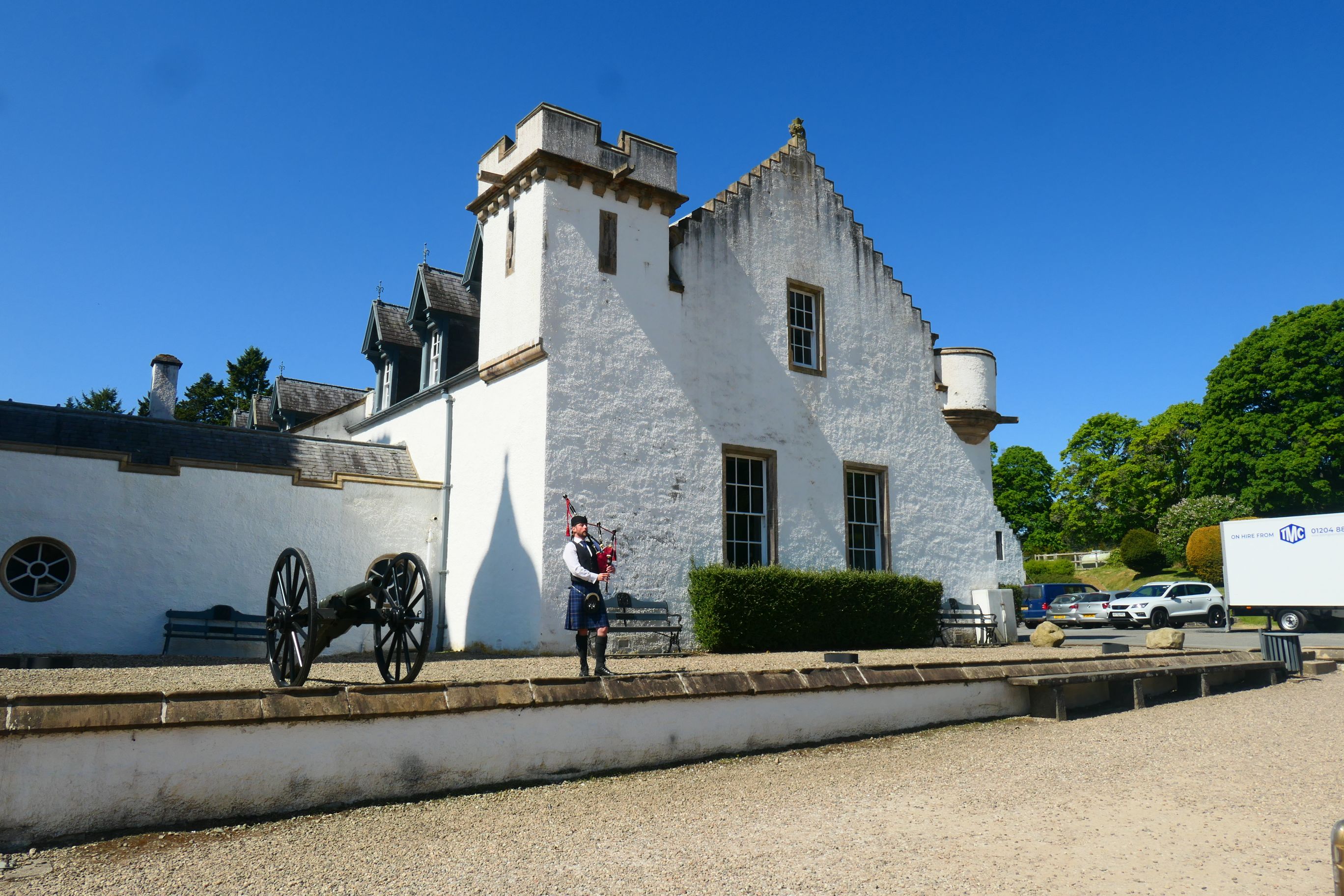
On the hour, a piper parades across the courtyard until he stands alongside a cannon. I went outside for the 11 am performance. It all seemed very fitting to hear bagpipes played in such a historic Scottish setting. His playing was exceptional. I enjoyed it.


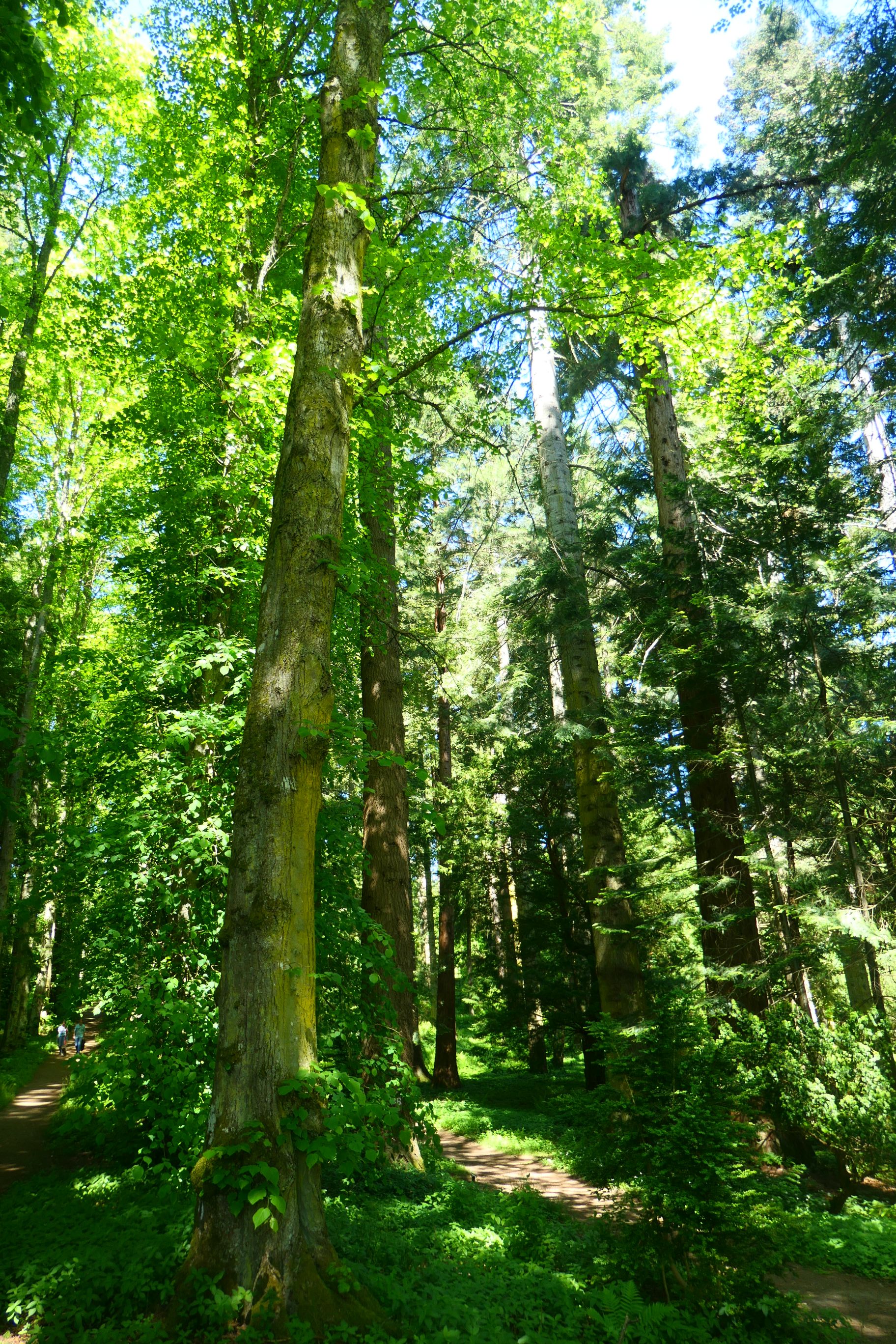
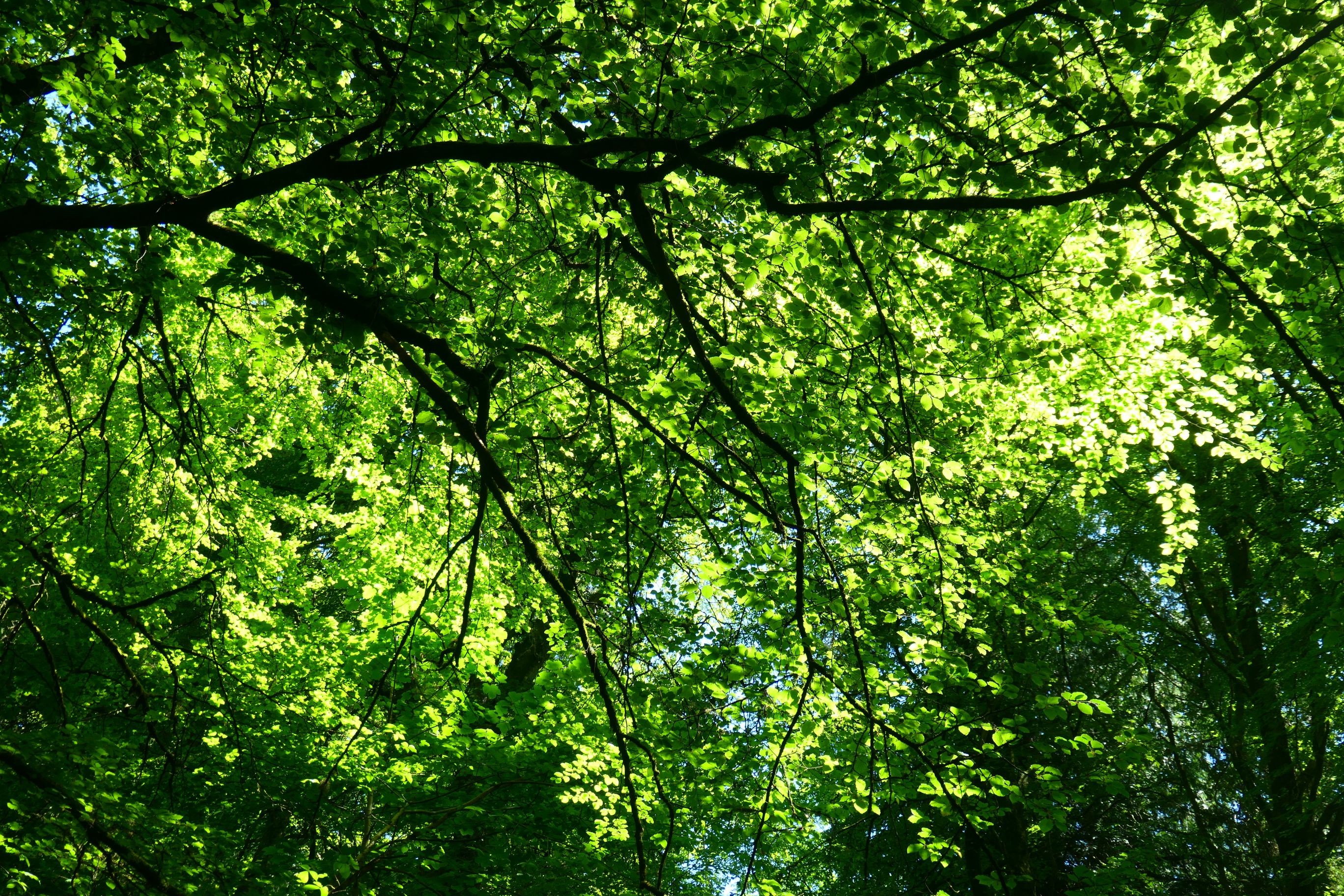
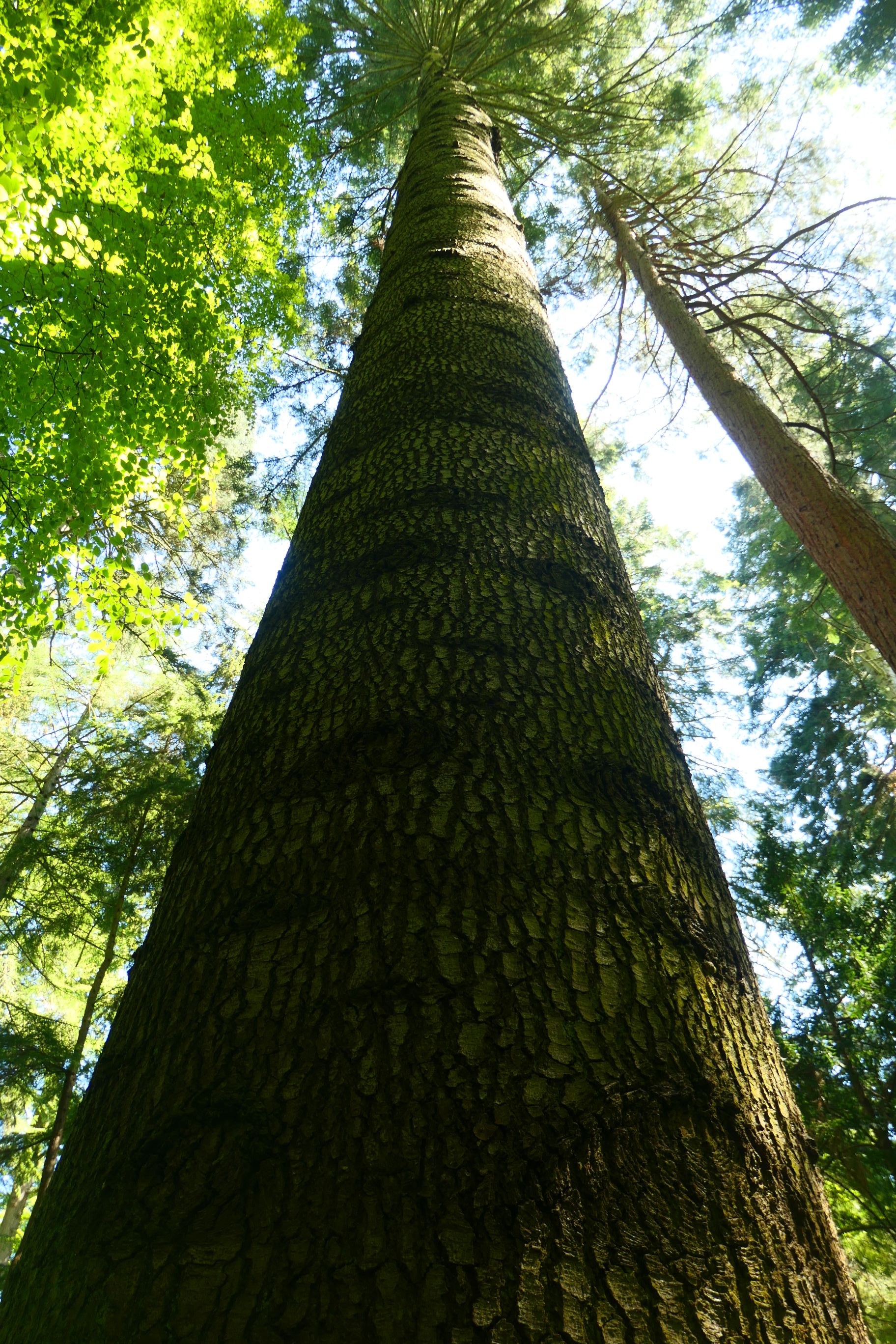
Beginning in the 1700s and continuing into the 1800s, several of the Dukes of Atholl created a wonderful wooded area within a few minutes’ walk from the castle. They became known as the ‘Planting Dukes’, and were responsible for planting over twenty million trees on their large estate. They called the forest they created Diana’s Grove, named after the Greek goddess of hunting. They introduced species that were native to other parts of the world, some of which had never been planted in Britain beforehand. Today the trees they planted have grown to be some of the tallest in the entire UK. Some of the trees found in the grove include sequoia, larch and several different species of fir. They towered over us as we wandered along the forest trail.
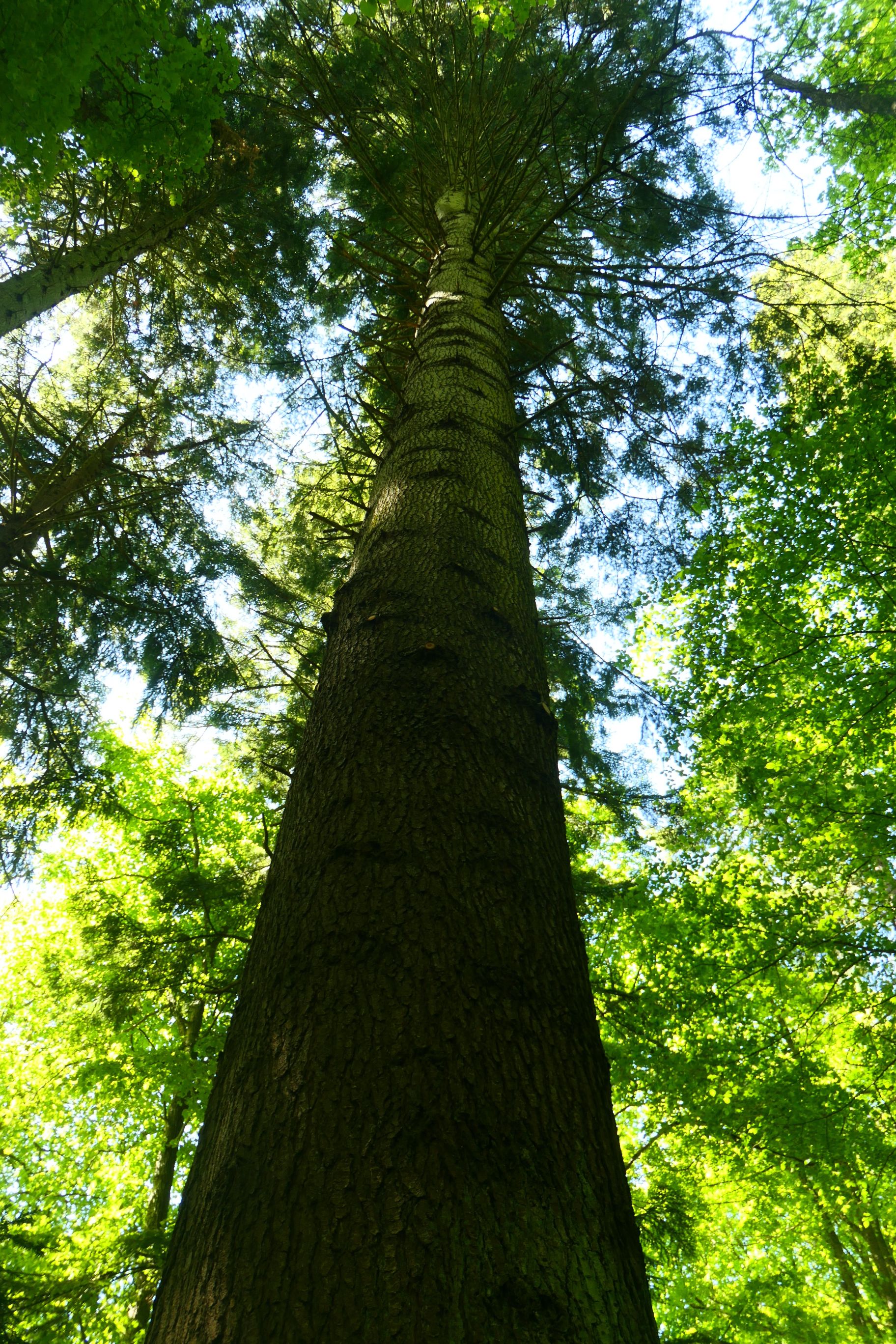
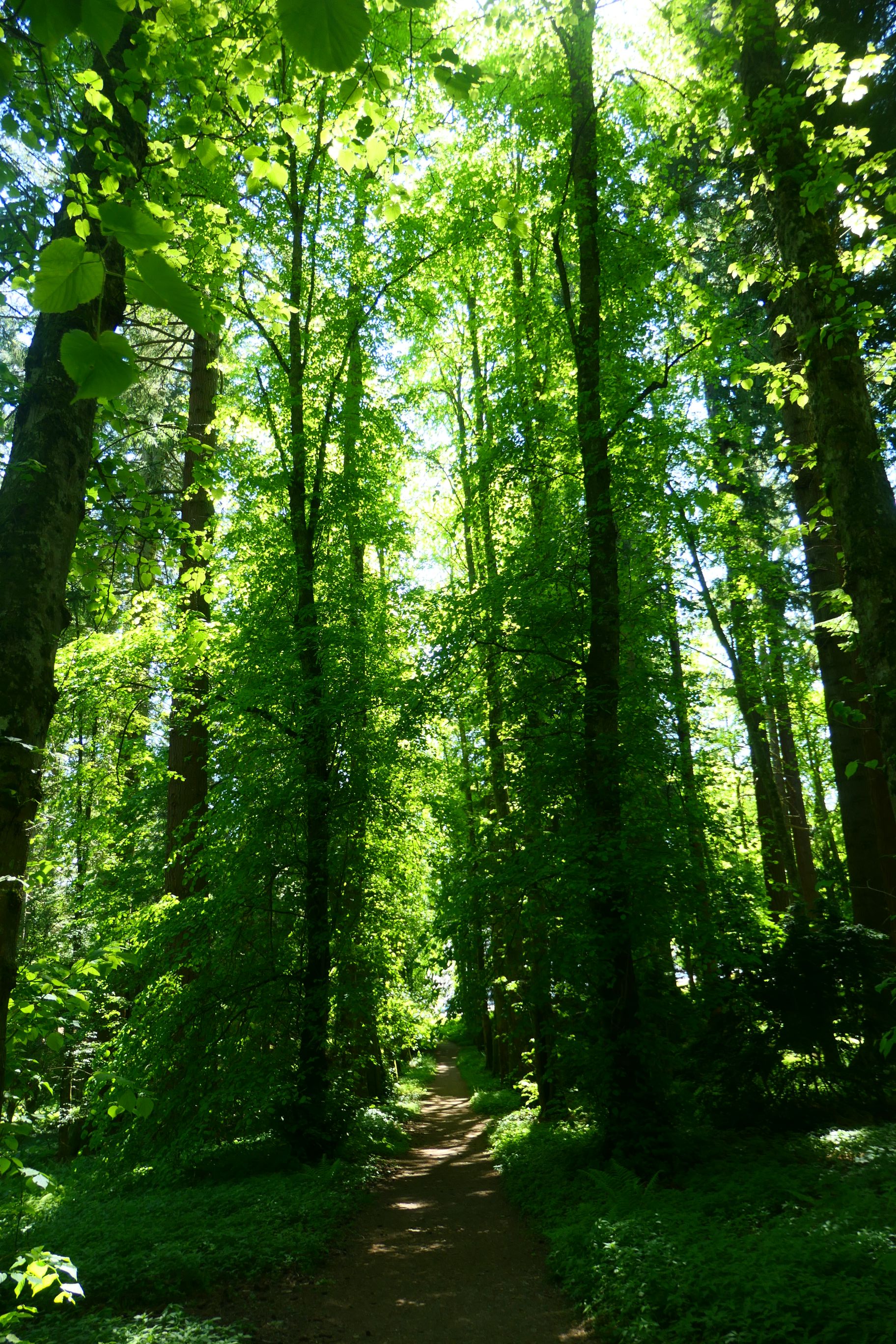
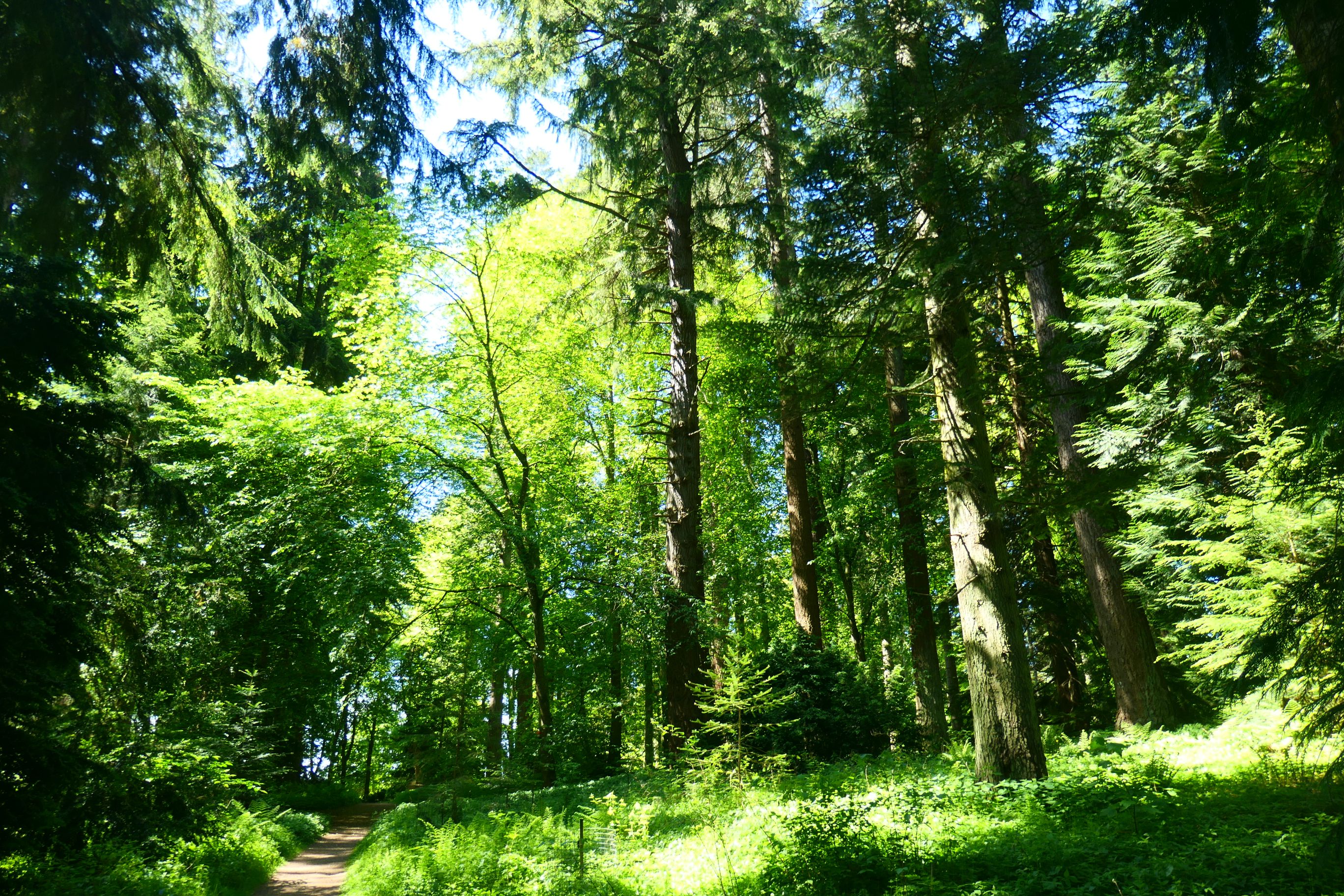
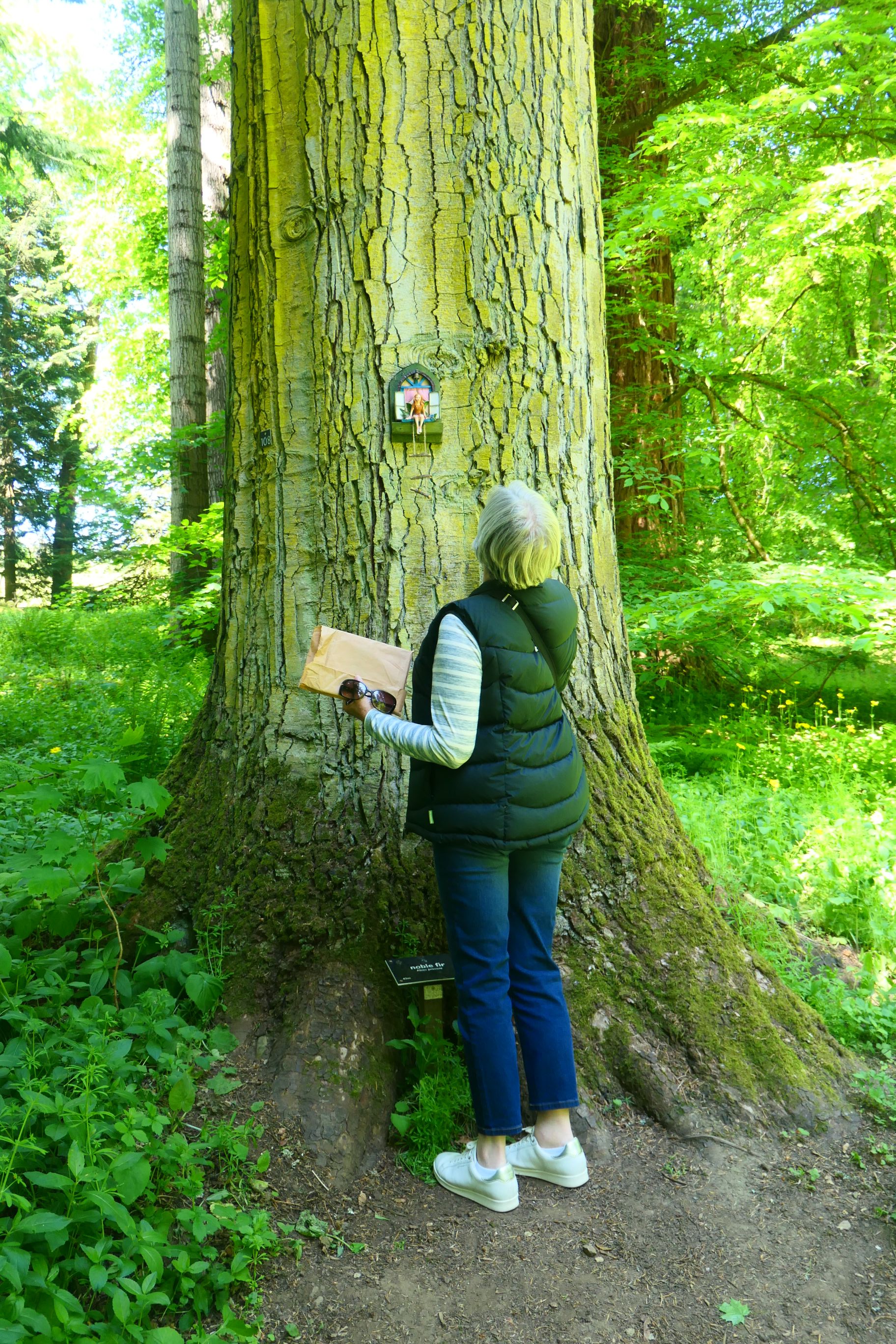
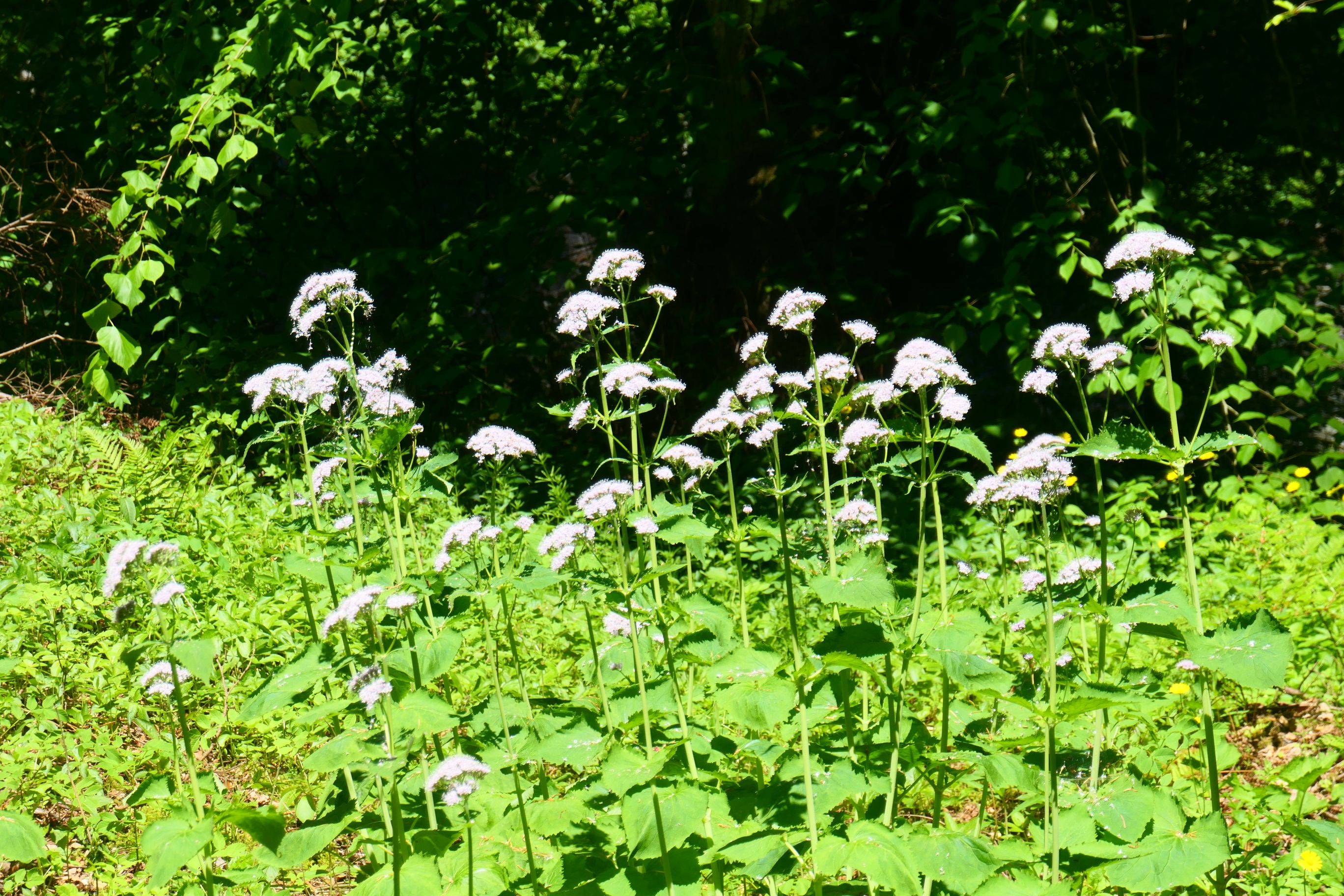


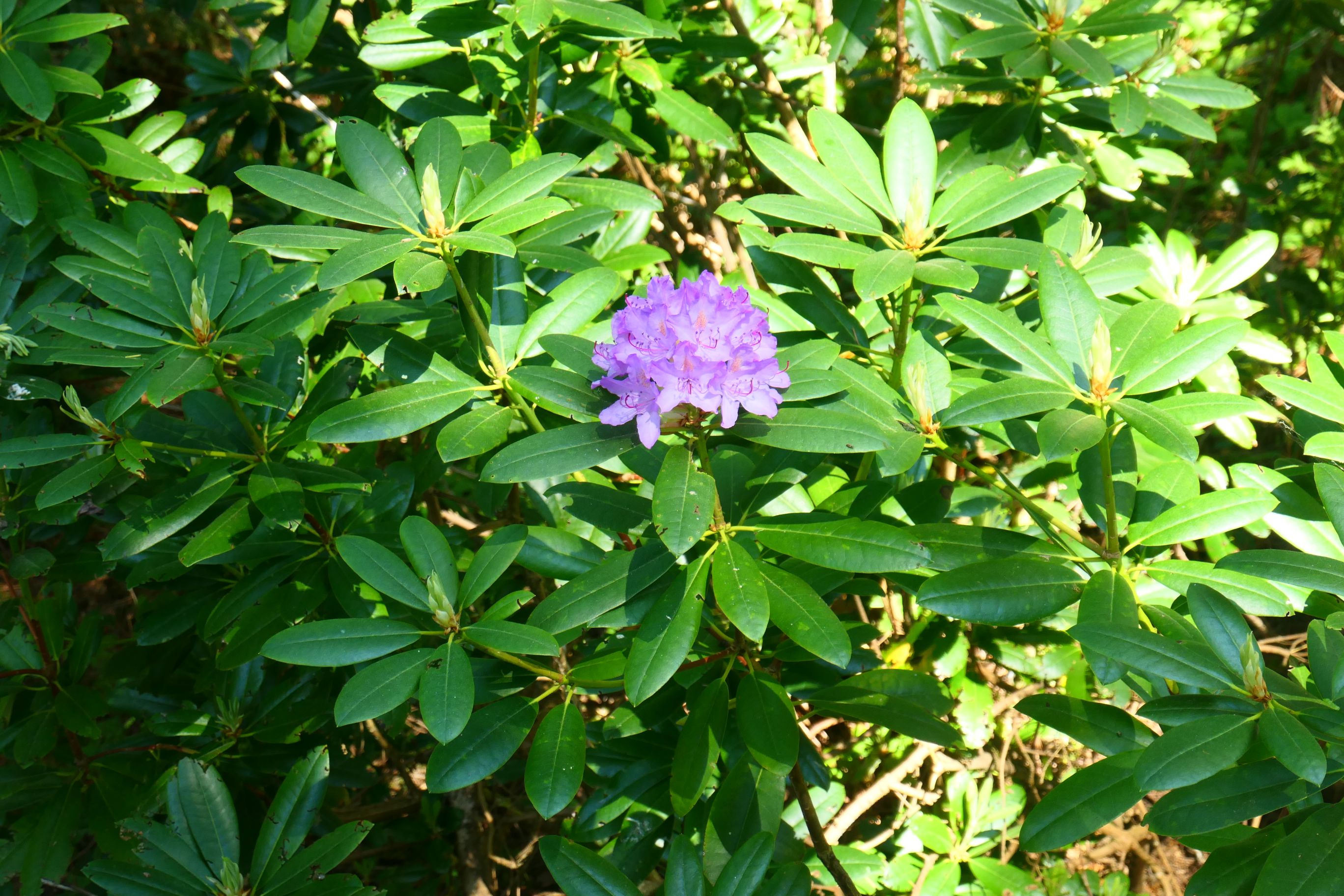
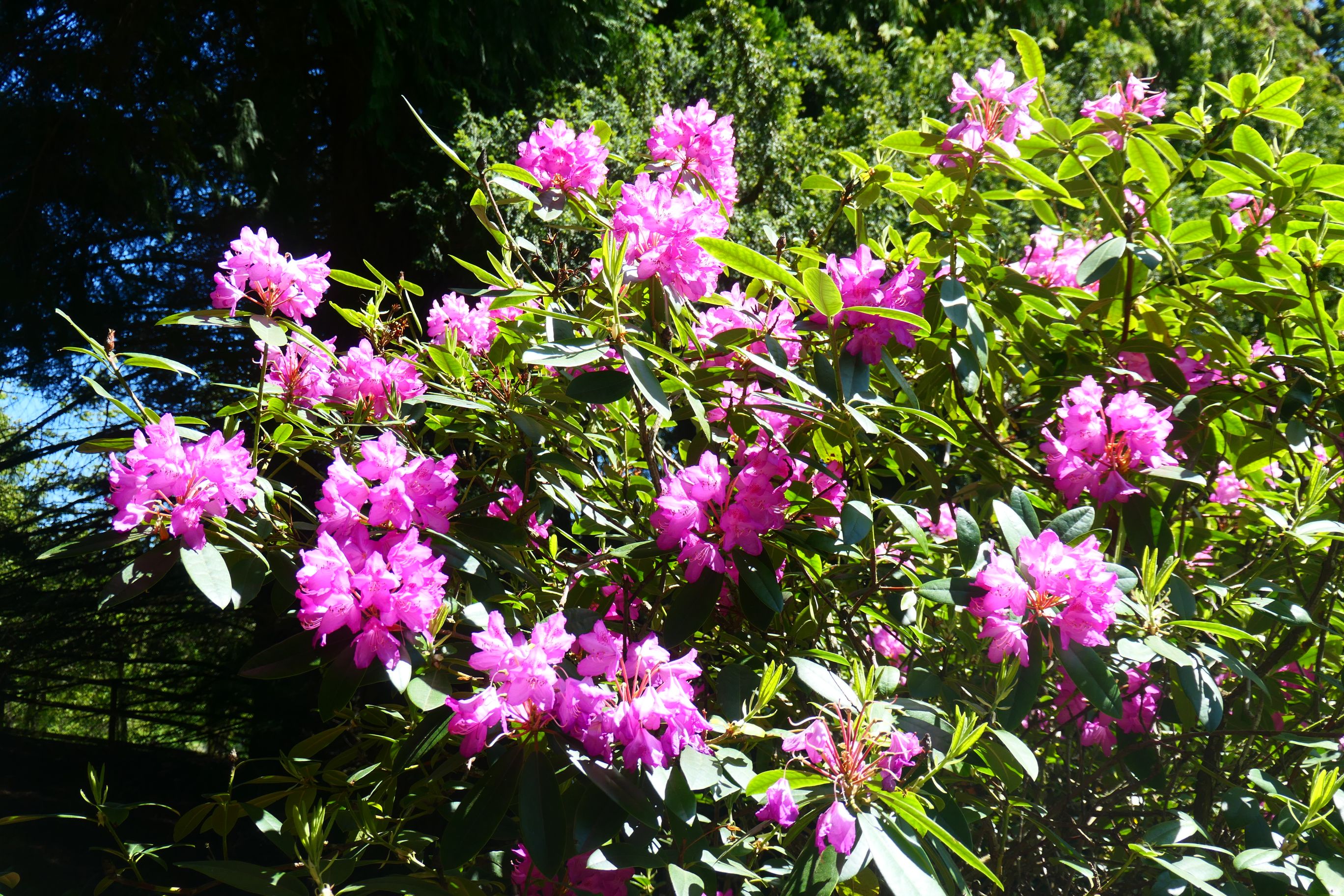
And, in keeping with the grandeur of the mansion and the majesty of the forest giants, the gardens are immaculate, featuring colourful rhododendrons, azaleas, lilacs and other varieties. In today’s perfect weather, in full sunshine, it really was a delight to stroll through them.


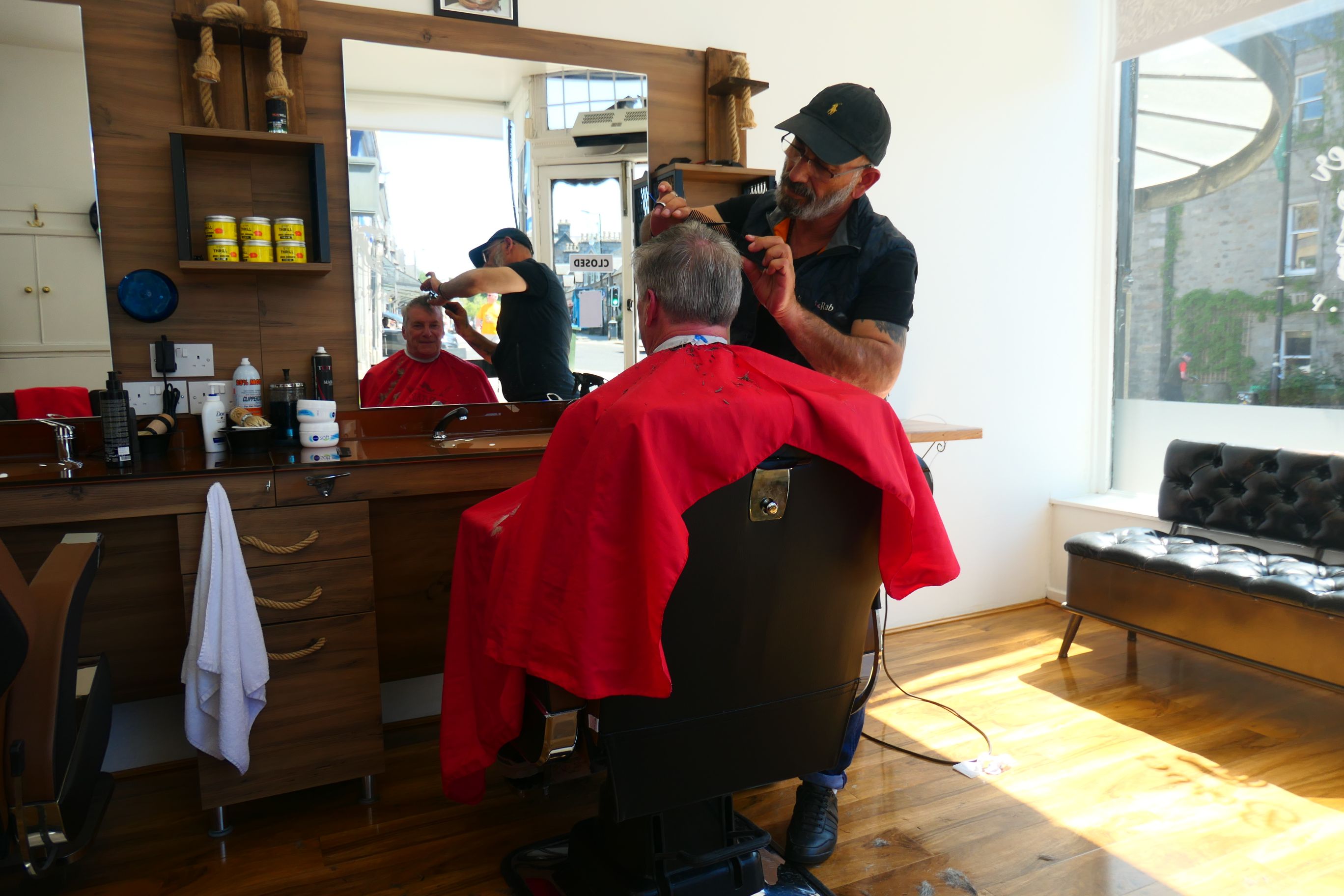
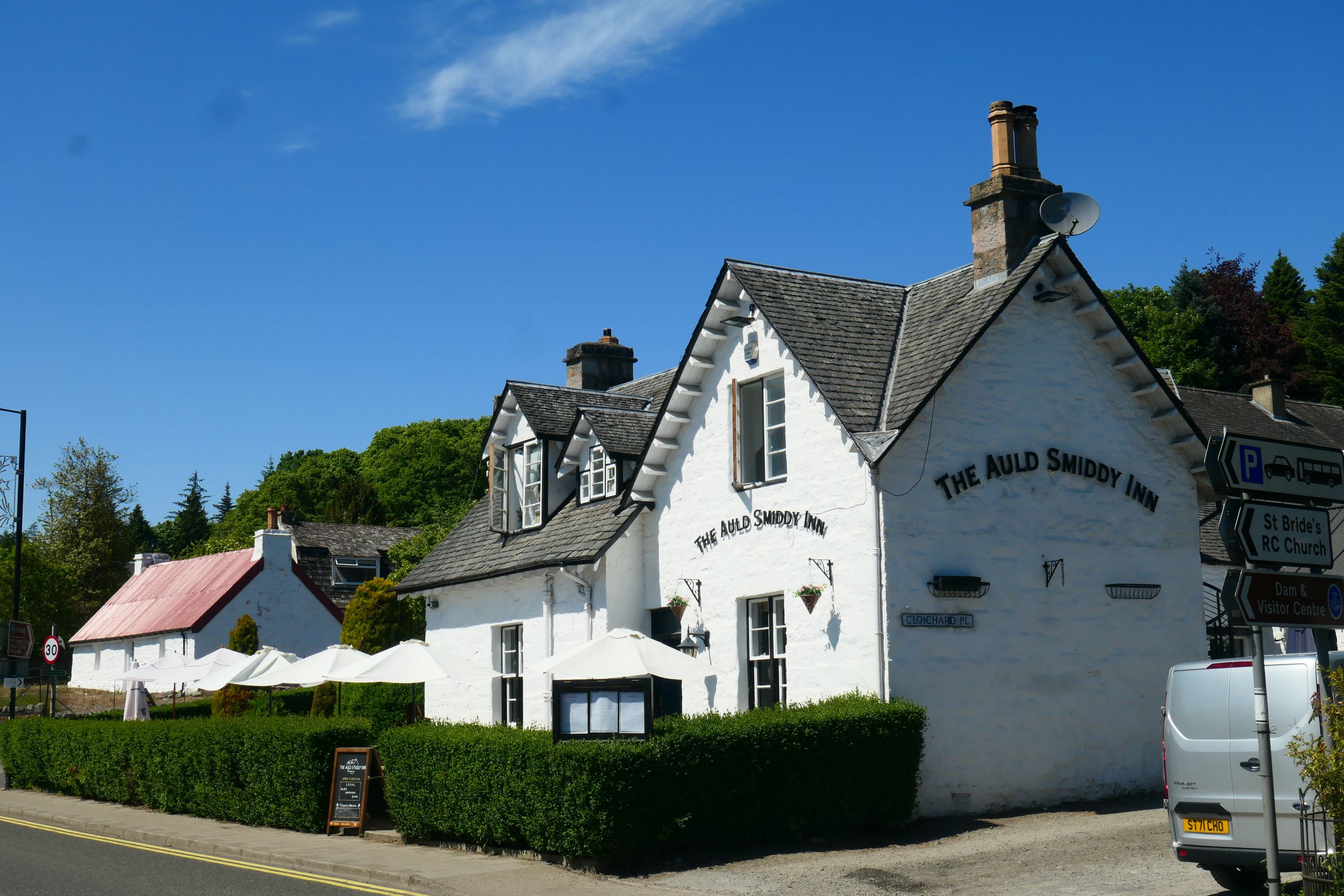
After a visit lasting almost three and a half hours, we took the bus back to Pitlochry. Marg and Janie wanted to visit a couple of shops, so Neil and I took the opportunity to call into a barber shop and get trimmed in readiness for the next part of our travels. Tonight’s dinner was at the Auld Smithy Inn, where we shared a table with our Canadian friends, Lynn and Don. It, too, looked resplendent in today’s brilliant sunshine.
 On The Road With Garry